New Dawn – World's Most Unusual Magazine

Tag: ancient wisdom

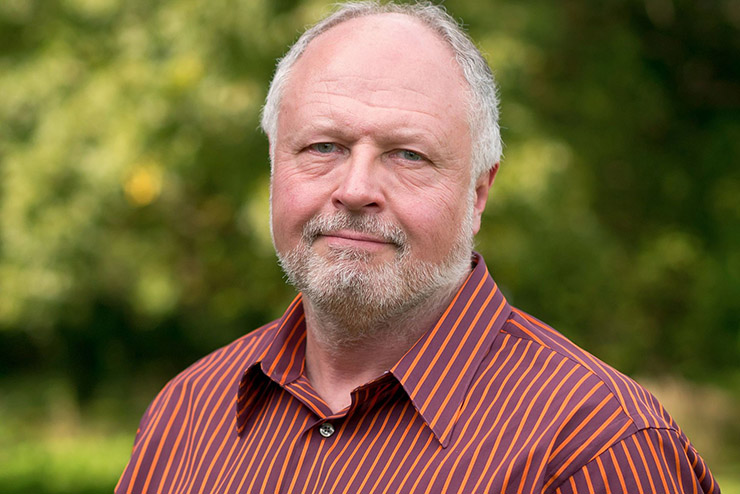
  • Quest for Hidden Wisdom: An Interview with Richard Smoley

    Quest for Hidden Wisdom: An Interview with Richard Smoley

    This article was published in New Dawn 98 (Sept-Oct 2006)

    Richard Smoley and Jay Kinney need no introduction to New Dawn readers. After successful careers as editors of Gnosis (1985-1999), the highly respected US journal of esoteric knowledge, in 1999 Richard and Jay published Hidden Wisdom: A Guide to the Western Inner Traditions to much acclaim (in May 2006, a revised edition of Hidden Wisdom incorporating new material and insights, was released).

    Richard Smoley has contributed numerous articles to New Dawn magazine, many of which can be found on the New Dawn website.

    In the following interview, Richard Smoley talks about Hidden Wisdom, spirituality, and the esoteric traditions….

    There seems to be a huge resurgence in interest in the hidden side of the Western tradition lately. There’s so much talk about Gnosticism, the Masons, the Templars, the hidden teachings of Jesus. What’s behind it all?

    Well, until fairly recently the story of Western religion was pretty much taken for granted. The Bible was seen as an accurate historical record, and the story the churches told about themselves was taken as the truth. But more and more people have come to see that isn’t the whole story.

    Over the last 200 years paleontologists came to realise that the earth really hadn’t been created 6,000 years ago. New Testament scholars took a closer look at the Gospels and decided that the life of Jesus they portrayed contains a lot of myth. Today archaeologists are saying that Moses couldn’t have led the children of Israel to freedom from Egypt in the land of Canaan, because Canaan was an Egyptian province at that time. The supposedly magnificent Jerusalem of King Solomon was probably a hill village with maybe 200 or 300 people. And so on.

    Much of this is not exactly news. “The quest for the historical Jesus,” as Albert Schweitzer famously called it, goes back to the 19th century. But it’s only in the last generation or so that this knowledge has begun to reach a widespread public. It’s led people to ask what was really going on back then. And it’s fueled a lot of speculation about the religious history of the West. Much of this speculation is pretty wild, but it shows that people are eager – maybe desperate – for some answers about their past that isn’t mostly propaganda.

    So what is this hidden truth? Was it true, for example, that Jesus was married to Mary Magdalene and that they had children?

    I’ve never seen any proof of this that seemed even remotely conclusive. There is a strange, fragmentary passage in a text called the Gospel of Philip saying that Jesus was very fond of Mary Magdalene and used to kiss her often on the mouth. The other disciples got jealous and said, “Why don’t you love us the way you love her?” And Jesus replies, “Why don’t I love you the way I love her?” The answer presumably being obvious.

    But the Gospel of Philip is very late. Most scholars date it to the third century CE. As such, it can’t be trusted as a terribly accurate historical source. All I can say is that there are legends, and it’s known that legends naturally accumulate around powerful figures. You only need look at the strange hagiography that’s congealed around Elvis Presley to see how this happened in very recent years. So the story of Jesus being married to Mary Magdalene is not something I personally would put any faith in.

    We may never know what happened in the time of Christ, how much of our information is factual, how much of it is suspect. For example, the Gospel in the Bible that is considered to be the most historically accurate is the Gospel of Mark. Strangely enough, the last page of this Gospel is missing. It was lost in antiquity, probably soon after it was written. What you find in the Bible – and most versions have these – are several different endings, all of them supplied later. This missing part of Mark would have told what happened after the Resurrection. Was this lost accidentally, or did somebody tear out the page and replace it with something more politically convenient? We may never know. And yet ultimately the hidden truth about our past is not some collection of buried facts.

    Then what’s the point of your work? 

    I do think there are buried truths, what in the title of our book Jay Kinney and I have called “hidden wisdom.” But it’s not factual knowledge as such. One of the key concepts in our book is gnosis, which is a term that’s bandied about a lot these days. Gnosis is knowledge, but knowledge of a very special kind. It’s not factual knowledge, not knowledge of something, but rather an inner awakening, an inner illumination. It’s quite similar, I would say, to what Eastern traditions often call enlightenment.

    Viewed in this way, the Bible becomes a story, not about people who lived in an increasingly remote past, but about our own inner awakening. In this way it becomes much more interesting and much more immediate. The story of Exodus is not about the liberation of several tribes of people from literal slavery, but about liberation from inner slavery. The story of Christ is not so much about a man, however remarkable, who lived 2,000 years ago, but about a process that begins in us as we awaken.

    But this just sounds like allegorising to me. People have been doing this for centuries. And it’s all very nice and good, but it doesn’t seem to have much to do with hard, cold facts.

    And what would facts prove? For example, the conventional Christian view is that Jesus literally rose from the dead. Not so long ago, I read a book about witchcraft in southern Africa, written by a very prosaic and down-to-earth British doctor who practiced there in the days of colonialism. He told this story of a chieftain who was dead and buried – and whose death he himself as a physician had verified. And he witnessed a ceremony in which this same chieftain was resurrected, sat on his throne, and ate a meal.

    Of course you can play the skeptic and doubt that this really happened. But beyond a certain point, what difference does it make? Would you believe something like that even if you saw it? Or would you laugh it off and tell yourself you just imagined it? People do this all the time with experiences that go past their concepts of reality. It’s that much harder to either accept or reject miracles that may or may not have happened thousands of years ago.

    Speaking of witchcraft, do you cover that topic in Hidden Wisdom?

    Yes, as a matter of fact we do.

    What is witchcraft about?

    Most people who call themselves witches are not Satanists. They are not cranky old ladies in black who live at the edge of town; nor are they playing at being Sabrina or Samantha Stevens. They are laying claim to what they call the “Old Religion” – the pagan tradition that thrived in Europe before Christianity.

    Witchcraft, Wicca, Neopaganism – these are all terms that loosely encompass a number of highly individualistic groups and people, not all of whom see things in the same way. In fact, they take many different forms. But one key thing they have in common is a reverence for the forces of nature, conceived as spiritual powers in their own right, and the belief that we can work with these powers consciously and creatively. Similarly with the powers of the mind.

    What you’re talking about is magic – not the sleight-of-hand type but the occult type. In your experience, does this kind of magic work?

    Not always, and not usually very well. But not for the reasons you might expect. From my experience, I’m convinced that these forces are real. But they’re difficult to master. It’s very hard to do anything like that that somehow doesn’t backfire or simply fail.

    Why?

    It’s not like a scientific experiment. In a scientific experiment, if you’re going into a lab to bombard subatomic particles or inject substances into some rat, your state of mind has very little to do with the results. In fact, it shouldn’t. A scientific experiment has to be replicable. Your report has to be like a cookbook recipe that a scientist on the other side of the earth can follow.

    Magical work is exactly the opposite. The state of mind you’re in, your concentration and your will – not only at the conscious but at the subconscious levels ­are the all-important factors, far more than whatever procedures you might use. And very few have the will and concentration to accomplish results anything like what they want.

    So is magic dangerous?

    Well, take the typical teenager who starts to dabble in such things. Either nothing happens, or the kid starts to get some results. He or she then usually gets scared and drops it right away. Very few are going to take magic to the point where they are going to get any effective results at all. If you do – and for some it is a true spiritual path – then your motivation becomes the question. Are you doing this for disinterested reasons – to form a link between heaven and earth, so to speak? Or are you just trying to find a shortcut to wealth and power? If it’s the latter, you may as well drop magic and take up stock brokering or politics or something that’s much more likely to achieve your aims. And if you’re doing anything for purely selfish motives, whether it’s magic or trading stocks, you will probably regret it eventually.

    What about the Kabbalah? That’s something we’re hearing a lot about lately.

    We have a chapter on it in Hidden Wisdom. Essentially the Kabbalah is the mystical tradition behind Judaism. It goes back to antiquity, but it took its present form in medieval times, in the twelfth and thirteenth centuries. By the time of the Renaissance, Christian intellectuals became interested in it, and after about 1500 it became incorporated into the general esoteric heritage of the West.

    Just now I mentioned serving as a link between heaven and earth. For many Kabbalists, this is the essential point of the enterprise. We are the only beings – at least the only ones we know of – who are capable of being aware of both the visible and invisible realms, and some Kabbalists say that this is our function here on Earth, to serve as a link between the two.

    By the way, “Kabbalah” comes from a Hebrew verb meaning “to receive.” And it means receiving in two ways. One is receiving the teachings as handed down over time, which is why Kabbalah is sometimes translated as “tradition.” But it’s also a matter of receiving spiritual impulses and translating them into action in this world. Apparently kabbalah is the word used in modern Hebrew for TV reception.

    What do you think of the pop versions of Kabbalah that are out there now?

    I don’t have a lot of direct experience of them. But generally speaking, you can say that the pop versions of any spiritual tradition are likely to be pretty watered-down. Zen and yoga, for example, were originally very intense and austere disciplines, but in the form in which they’ve made it to the public, they’re very bland and trite.

    It’d be easy to jump to conclusions about this fact, to deride all these things as mere vulgarisations. So they may be. But they do serve an important function. In the first place, they communicate some key ideas to the general public that aren’t likely to make it any other way. To take one fairly obvious example, it’s become almost a cliche to talk about living in the present, “the power of now,” and so on. But to be aware in the present is actually a very profound (and quite difficult) practice. It’s interesting, and I think, beneficial, to have these ideas out there, even if they’re often in rather a cliched form.

    You keep using the word “esoteric,” and that seems to be a central concept in your book. What does “esoteric” really mean?

    It comes from a Greek root that means “further in.” To really understand what these teachings are about, you have to go further into yourself. You have to look past the surface of your social identify, your bodily desires, and see what’s beneath. This may take you very deeply into yourself, and at some point you realise that what you really are is something very small and silent. It is nothing you can see, because it’s always what sees. St. Francis said, “What you are looking for is what is looking.” If you understand this point, a lot of highly cryptic mystical texts become remarkably clear.

    There is no end point to this process of going “further in” – none that I’ve ever seen in my own experience or from what I can tell of others’ experience. There’s always further to go.

    Where do you see these traditions going in the 21st century?

    That’s a very difficult question. There is a long, intricate, and poorly understood process by which esoteric ideas eventually make themselves public property. Things that were communicated only under the strictest secrecy 50 or 100 years ago can now be found in self-help bestsellers – for example, the simple truth that you are not your conditioning. It sounds obvious to say this now, but in the past it would have been a piece of knowledge that would have been communicated privately, often obliquely, possibly through some sacred rite of initiation.

    Some may decry this popularisation as a profanation of sacred knowledge. I don’t see it that way. Rather I see that over a very long period of time, humanity begins to accept certain truths and makes them its own. These are first known only to an extremely small vanguard – an elite, if you like, although I know that’s a dirty word these days. Gradually these ideas are disseminated and become common knowledge.

    Now if this so-called elite is doing its job, it won’t try to squirrel away its discoveries and keep them for itself. Rather, it will keep disseminating its discoveries in whatever form that makes most sense in the context of the times. It will also keep moving forward and trying to make new discoveries.

    If much of what was previously hidden is now in the public domain, where do these traditions have to go?

    I don’t have a clear answer to that at present. Much of it will depend on how much the mainstream religions will digest these insights. At this point esoteric teachings are often used as little more than marketing techniques. The rabbi talks about Kabbalah to get people back to the synagogue, or the Christian churches try to unearth some half ­forgotten contemplative tradition as a way of presenting an alternative to, say, Buddhist meditation.

    Will it go past this point? Possibly; possibly people will go on soon to the next new thing. Even so, out of all those numbers, a few actually do see beyond the surface and decide to go “further in” themselves. They become the esotericists of the next generation, and the chain continues.

    [alert type=”general” dismiss=”no”]This article was published in New Dawn 98.[/alert]

    [alert type=”success” dismiss=”no”]If you appreciate this article, please consider subscribing to help maintain this website.[/alert]

    Interview courtesy of Quest Books and copyright 2005 by Richard Smoley. Hidden Wisdom: A Guide to the Western Inner Traditions is available from all good bookstores & online retailers. Richard’s website is http://www.innerchristianity.com.

    © New Dawn Magazine and the respective author.
    For our reproduction notice, click here.
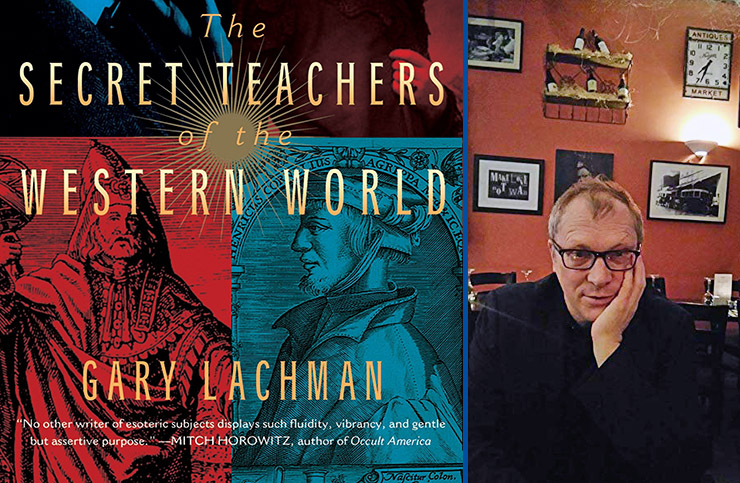
  • Freemasons, Secret Societies, Conspiracies, Consciousness & the Hidden Masters: An Interview with Gary Lachman

    Freemasons, Secret Societies, Conspiracies, Consciousness & the Hidden Masters: An Interview with Gary Lachman

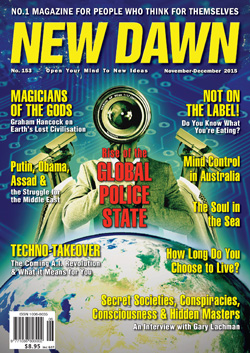
    From New Dawn 153 (Nov-Dec 2015)

    An overlooked but powerful current is flowing in our time. It’s found in a small group of writers and thinkers who are trying to overcome the materialism and rationalism of the present age and rediscover the perennial truths that lie behind all religion. These writers are grappling with the occult and esoteric paths of the past and present. They’re trying to explore these movements without falling into either credulity or blinkered scepticism. They include Jay Kinney, founder of Gnosis magazine and author of The Masonic Myth; Mitch Horowitz, a New York book editor whose own works include Occult America and One Simple Idea: How Positive Thinking Reshaped Modern Life; and Erik Davis, author of TechGnosis and Nomad Codes: Adventures in Modern Esoterica.

    In this small but distinguished company is Gary Lachman. He started out in the 1970s in the New York rock scene as one of the original members of the groundbreaking New Wave band Blondie. In 1996 he moved to London, where he established himself as a full-time writer, contributing to publications such as Fortean Times, The Guardian, and The Times Literary Supplement.

    Since 2001 Gary has produced a steady stream of books, including Turn Off Your Mind: The Mystic Sixties and the Dark Side of the Age of Aquarius; The Secret History of Consciousness; A Dark Muse: A History of the Occult; and Politics and the Occult: The Right, the Left, and the Radically Unseen. In recent years he has published biographies of major esoteric figures including P.D. Ouspensky, Emanuel Swedenborg, Rudolf Steiner, Carl Jung, and H.P. Blavatsky (see his interview in New Dawn 137).

    Gary’s latest work, published in December 2015 by Tarcher/Penguin, is The Secret Teachers of the Western World, a monumental work that unveils the esoteric masters who have shaped the intellectual development of the West, from Pythagoras and Zoroaster to little-known twentieth-century figures such as Jean Gebser and René Schwaller de Lubicz.

    In June 2015 I conducted an e-mail interview with Gary about secret currents in the Western tradition.

    RICHARD SMOLEY (RS): Many people have a sense, however dim, that what is going on in the news is only the thinnest skin upon a sea of struggles and forces that we can barely conceive of. Would you agree with this assessment?

    GARY LACHMAN (GL): I suspect that at most times what we are aware of is only a selection of what is actually taking place. I mean this in the broadest sense possible. In terms of the media, it’s reasonable to assume there are a variety of filters in place that result in an edited version of things getting to us. But then there are people who devote their energies to ‘uncovering’ the truth and ‘revealing’ the facts about this or that event. It does strike me that one could get lost in attempting to track down the ‘truth’ about things, in terms of the political, economic, social situation. I mean conspiracy theorists who pursue an elusive solution to the mystery of who ‘really’ is in power and what ‘really’ happened in this or that situation.

    I think it is important to be discriminating about what we accept from our sources and to be aware that every source has its bias. Personally, I am more interested in the kind of things that are outside this kind of ‘hermeneutics of suspicion’, in the philosopher Paul Ricoeur’s phrase. I mean philosophy, thought, etc. I think it’s always a good time to pursue the good, the true, and the beautiful, whoever is running the show. I also think there is less covert control than some people believe, but it seems de rigueur nowadays to feel that everything we see on the news is false. The show itself is ultimately unimportant. It is an unavoidable nuisance that we nevertheless need to be aware of in order to pursue our aims.

    RS: Novelist Ishmael Reed wrote, “Beneath or behind all political and cultural warfare lies a struggle between secret societies.” How much truth do you think there is in this statement?

    GL: Well, I don’t know. I first came across it, as many people did, in Robert Anton Wilson and Bob Shea’s conspiracy fantasy Illuminatus. Are there really secret societies at work, manipulating events and controlling the world? If there are, they don’t seem to be doing a particular good job of it.

    I think that at different times there have been societies or groups of people who have worked together to effect some change or introduce some idea into the societies of their time. I talk about some of them in my new book, The Secret Teachers of the Western World. But these were relatively small groups who were active at a certain time, and when you look at what they were doing, the aura of mystery and sensation around them being ‘secret’ dissolves. That isn’t what is important about them. Take the Fedeli d’Amore of Dante’s time and of whom Dante was a member. They weren’t secret in the way that we think of Skull and Bones or that kind of thing (and I should say here that my book isn’t about that kind of secret group). But they were a relatively private group of poets who wanted to introduce ideas about the divine feminine or Sophia into the consciousness of their time. They were more like what G.I. Gurdjieff and P.D. Ouspensky mean when they talk about the ‘inner circle of humanity’ or ‘esoteric school’. I’m not saying the Fedeli d’Amore were agents of esoteric schools, but that their objectives and practice were like theirs, rather than some cabal of powerful individuals directing events from behind the scenes, which is how secret societies are popularly imagined to be.

    In one sense I think conspiracy consciousness is a good sign, in the way that Jung said neuroses were, as an attempt by the psyche to deal with a problem. It shows that we have a hunger for meaning. We prefer feeling that someone is in charge, even if we don’t know who that is, to feeling that no one is and that everything is chance and arbitrary. The hunger for meaning is good; it’s the means of satisfying it that I find questionable. We are purposive beings who seek out patterns and meanings. The mainstream narratives – religion, progress – no longer satisfy our appetite for meaning, and so we seek it elsewhere. One of the ideas of the book is that the meaning is there, but we won’t find it by looking for it outside ourselves.

    RS: One period in which occult orders were especially influential was the eighteenth century, in which lodges like the Freemasons played a crucial role in transforming the old feudal and ecclesiastical order into the modern world. Do you have any thoughts or insights about this development?

    GL: Freemasonry was a very important means for some fundamental ideas about modernity to be disseminated. I mean ideas about tolerance, social justice, democracy, individual worth regardless of social or economic rank. It was the spread of these ideas through different lodges that helped prepare the eighteenth-century zeitgeist for the radical changes that happened with the American and French revolutions. It is a mistake, though, to think, with Abbé Barruel and more recent writers on the Masonic influence on these events, that Freemasonry arranged or stage-managed them. There were Masons on both sides of the American Revolution, and the Illuminati – the real society, not the popular romanticised idea of it that’s present on the Internet – wasn’t ‘responsible’ for the French Revolution. The ideas that informed Adam Weishaupt’s short-lived and ineffective Masonic offshoot certainly were active forces in the revolution, and they were spread through Masonic lodges. But I think we have to credit the zeitgeist more than Weishaupt and Co. for the storming of the Bastille. In fact in one sense we could say Freemasonry itself was a product of the shift in consciousness that began around that time.

    RS: Your new book is entitled The Secret Teachers of the Western World. If they were secret, how have they been able to have such influence?

    GL: Well, again, my secret teachers aren’t necessarily secret in the sense that no one knows about them. I mean, if they were that secret, how could I know about them? One can be a secret teacher by teaching secrets, or one can be a secret teacher in the sense that the influence and importance of your ideas haven’t been recognised or have been misunderstood. Or you can be secret in another sense, as with several important thinkers who have been marginalised or don’t fit into the standard model of Western consciousness. It’s a broad term referring to a variable status rather than specific group of people. Jesus Christ, for example, is one of my secret teachers, and most people know about him. But there is a whole school of thought that argues that what we have accepted as Christianity really has little to do with the original teachings associated with Jesus. The Gnostics, for example, are thought to be more in line with what Jesus actually taught then the Petrine church of Rome.

    Or take Madame Blavatsky. If people know about her at all, she is chalked up to be an entertaining but fraudulent nineteenth-century spiritualist with a lot of chutzpah. But she was enormously influential on the modern world, in everything from art, religion, and science to what became known as the ‘counterculture’. I am not saying that everything she said about science or religion is ‘true’. That’s not the point. True or not – and she is more often on the ball than you might think – her ideas were tremendously influential, and I am amazed that feminists haven’t appropriated her. I suspect the occult connotations put them off. She isn’t secret, but her influence is not generally recognised.

    I should say the central idea of my book is that the whole Hermetic, esoteric tradition is the victim of a war going on inside our heads. I mean the rivalry between our two cerebral hemispheres. One of the inspirations for the book came from reading Iain McGilchrist’s very important work The Master and His Emissary, which is about the left and right brain and the differences between them. Briefly put, McGilchrist revamps the left/right brain discussion by showing that the difference between them is not in what they do – as was originally believed – but in how they do it. They respond to the world in very different ways, and the way they present the world is also very different. In the simplest sense, the right brain presents a total picture of the world. Its mode of consciousness is relational, connective, holistic. It presents what McGilchrist calls the ‘big picture’, the overall pattern, but its picture is fuzzy, vague. It works with metaphor, symbols, and is focused on the living character of being. It is aware of implicit meanings, meanings that we know and feel but cannot express explicitly. (Think of our appreciation of music: we know a Beethoven string quartet means something, but we’d be hard pressed to say exactly what.)

    The left brain is aimed at breaking up the big picture into smaller bits and pieces that it can manipulate. Its main function, as Henri Bergson said long ago, is to help us survive. It reduces the living, flowing whole presented by the right brain to a kind of map that allows us to manoeuvre through the world effectively. It’s interested in the trees; the right brain is interested in the forest. One looks through a microscope, the other at a panorama.

    Both are necessary, and for the most part each gets along with the other in a system of checks and balances, each inhibiting the other’s excesses. But McGilchrist argues – convincingly, I believe – that in the last few centuries the left has increasingly gained an upper hand against the right and has, in a sense, gone on a smear campaign against it. One expression of right brain thinking that the left brain targeted was the Hermetic, esoteric tradition, which was cast into disrepute with the rise of mechanical science – itself an exemplar of left brain thinking. With the dismissal of the esoteric tradition it was transformed into what the historian James Webb called ‘rejected knowledge.’ What my secret teachers teach is this rejected knowledge.

    [alert type=”info” dismiss=”no”]If you appreciate this article, please consider a subscription to New Dawn magazine.[/alert]

    RS: Of the figures that you would include among these secret teachers, which do you consider the most influential?

    GL: That’s difficult to say, and I should point out that the book isn’t a ‘top ten’ or ‘ten best’ list or something like that. Plato is certainly one of the most influential; in many ways the esoteric, Hermetic roads all lead to him. He is believed to have ‘gone to school’ in Egypt, and whatever he learned there is supposed to inform his philosophy. But whether Plato studied in Egypt or not, his ideas about the Forms, the ideal essences of which the physical realities of time and space are merely shadows, is certainly at the heart of the esoteric tradition. And Platonism informed Christianity, Hermeticism, Gnosticism, and other esoteric teachings. We can argue with and reject or accept different aspects or elements of his philosophy, but I would say that for the West, Plato is certainly one of, if not the most, significant source of esoteric thought, or thought in general. Alfred North Whitehead said long ago that all Western philosophy is but a series of footnotes to Plato.

    In saying this I’m not saying I think Plato is the ‘best’. My own philosophical background is more in Nietzsche, Bergson, Whitehead, William James, and existentialism. But Plato is still there too.

    RS: Which of these figures do you admire the most?

    GL: I’m not quite sure how to answer that. There are plenty of admirable figures in the book, as well as more questionable ones, and also some martyrs, like Hypatia the Neoplatonist, and the Persian theosopher Suhrawardi, both of whom fell victim to religious persecution, as well as truly secret teachers like the so-called Dionysius the Areopagite who welded Neoplatonism to Christianity. We do not know who he really was, just as we have no names for the Hermeticists of ancient Alexandria.

    I can say who has been an influence on me. One of first writers on esotericism that I read was P.D. Ouspensky. His books Tertium Organum and A New Model of the Universe made a big impact on me, even before I read In Search of the Miraculous and became interested in Gurdjieff. I first read these books forty years ago, and Ouspensky seemed a model of the kind of thinker I wanted to be: he combined a romantic openness to ideas, and poetry and art with a rigorous critical mind and he remains the best writer from what I call the ‘golden age of modern esotericism’, which took place during the 1920s, when people like Ouspensky, Gurdjieff, Rudolf Steiner, Jung, Crowley, and others were all active. Again, I’m not saying Ouspensky is the ‘best’ – that’s as pointless as arguing about who’s the best guitarist. But reading his books excited me and made me want to learn more. I tend to like figures that combine imagination with critical thinking, which we can see as the right and left brain working together, which is another theme running through the book.

    RS: One theme that you advance in your new book is that the cosmos is a living, conscious being, and that we need to rediscover that fact. To what extent do you think this rediscovery is actually happening in the world today?

    GL: It seems some form of that idea has been revived and presented in a variety of different ways throughout the last century and into our own. Bergson argued a form of it as did Whitehead. In the nineteenth century we have Gustav Fechner, who wrote about the Earth as a living being well in advance of James Lovelock. The philosopher David Chalmers has argued for a kind of panpsychism, meaning that in some sense, the entire universe is conscious. What headway this idea has made in altering our ‘standard model’ of the cosmos is unclear. We’d have to interview lots of scientists, I guess, and go through the numbers. I think more people today have some sense of it than, say, in the nineteenth century – at least the kind of mechanistic picture of the world popular then is less so now. Of course, any scientist who takes the idea literally and talks about it is subject to the scorn of his peers. But that too is an expression of the rivalry between the two modes of thinking. The ‘hard’ left brain makes fun of the ‘soft’ right brain’s ‘need’ to see a nice, cozy universe that cares about him, while he shows how ‘tough’ he is by saying that he doesn’t need that and prefers the ‘truth’ about the cold, indifferent cosmos. I write about this in an earlier book, The Caretakers of the Cosmos, where the idea of a living cosmos is a central theme.

    RS: Thirty or forty years ago, it seemed possible to believe that we were on the verge of a new age of rising consciousness and compassion. It’s a little harder to believe this now. How do you personally respond to hopes and dreams of a coming new age (however imagined)?

    GL: I’m not that keen on predicting a new age. Western history is littered with them. I think the current pessimism, or, more accurately, nihilism is a kind of ‘sound barrier’ that our culture, our civilisation, has to break through. Nietzsche predicted it at the end of the nineteenth century. I think we have somewhat naïve ideas about a new age. I believe there are shifts in consciousness. One of the thinkers I refer to in the book and in others is the little-known German philosopher Jean Gebser, who talks about different ‘mutations’ of consciousness happening throughout history. But these come about through our own participation in them; I mean we are active players, not passive recipients of something happening in the stars or according to some ancient teachings.

    The real new age will come round when we learn how to master our own consciousness. This means coming to understand it. This takes hard, determined work. I don’t think the new age will come about because of nice thoughts or fun raves or because of a conference or a festival. It will start to appear in individuals who have an obscure hunger for some purpose higher or more demanding than what our ordinary life can provide. These types embody in embryonic form a new consciousness that demands a new kind of inner freedom.

    We tend to think of freedom as liberation, as being free from something. The new types want a more significant freedom, the freedom for some purpose greater than just fulfilling their individual needs. In The Caretakers of the Cosmos I borrow a term from the Russian existential philosopher Nikolai Berdyaev and talk of a ‘creative minority’. These are the individuals who quietly and solitarily confront the demands of the new consciousness emerging within them. We tend to think that a new form of consciousness will be lots of fun and full of ecstasy. But more often people experiencing a different kind of consciousness, with different needs and appetites, tend to feel like misfits and have to go through a long struggle to actualise their possibilities. I have a very evolutionary way of thinking. I feel that any important development at first makes life more difficult for those in whom it occurs. Those who can get through the initial difficulties develop a strength that will help them impose the new vision on the world around them.

    RS: Which living people do you consider to be most important and impressive in fostering this higher awareness?

    GL: The most important one for me has been Colin Wilson, who sadly died at the end of 2013 at the age of eighty-two. I have been a dedicated Wilson reader since 1975, when I first read The Occult. After that I tracked down and read as many of his books as I could find. I am in fact preparing to write a book about his work and ideas, which more or less form the basis for much of my own writing. Wilson spent a lifetime in a determined analysis of consciousness and developed what I find to be a very convincing argument for why our consciousness is how it is and what we can do to intensify it. It isn’t for everyone, but I personally have got the most out of following his leads.

    Gary Lachman’s The Secret Teachers of the Western World (Tarcher/Penguin) is available from all good bookstores and online retailers.

    [alert type=”general” dismiss=”no”]This article was published in New Dawn 153.[/alert]

    [alert type=”success” dismiss=”no”]If you appreciate this article, please consider subscribing to help maintain this website.[/alert]

    © New Dawn Magazine and the respective author.
    For our reproduction notice, click here.