New Dawn – World's Most Unusual Magazine

Tag: burroughs

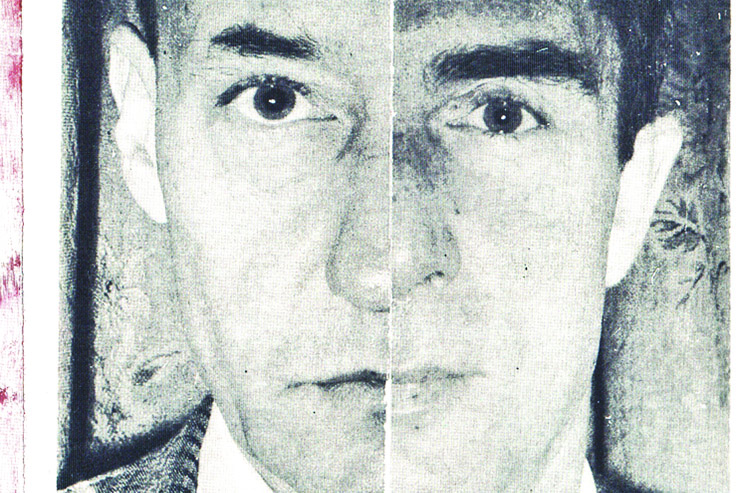
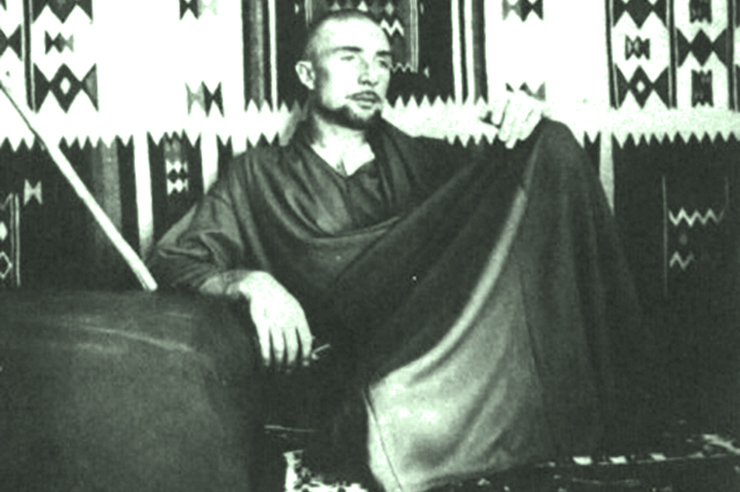
  • Nothing Is True, Everything is Permitted: The Untold Story of Brion Gysin

    Nothing Is True, Everything is Permitted: The Untold Story of Brion Gysin

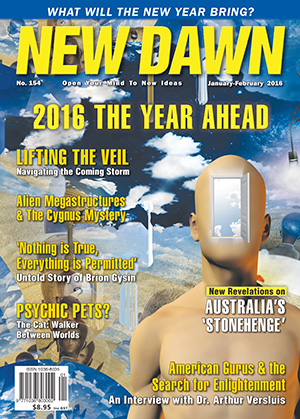
    From New Dawn 154 (Jan-Feb 2016)

    If Brion Gysin had not existed, it probably would have been necessary to invent him, as the saying goes. Pre-eminent multimedia psychedelic shaman of the latter-half of the twentieth century, Gysin was something of a jack-of-all-trades: artist, calligrapher, entrepreneur, kinetic sculptor, novelist, performance artist, photographer, poet, raconteur, restaurateur, and traveller in this-and-other worlds. Brion did it all.

    Even a brief list of the names he crossed paths with sounds like a veritable who’s who: Laurie Anderson, Francis Bacon, David Bowie, Paul Bowles, Ira Cohen, Ornette Coleman, Max Ernst, Marianne Faithfull, Leonor Fini, Jean Genet, Keith Haring, Billie Holliday, Brian Jones, Timothy Leary, Iggy Pop, Genesis P-Orridge, Patti Smith, Gore Vidal – and, of course, his long-term friend and collaborator, William Burroughs – are among the friends, fellow-travellers and sometimes collaborators that have spoken of their admiration for the man and his work. As his biographer, John Geiger, wrote:

    Brion Gysin may be the most influential cultural figure of the twentieth century that most people have never heard of.

    ‘Brion Gysin’ was originally John Clifford Brian Gysin, born 19 January 1916 in Taplow, Buckinghamshire, England. He never knew his English-born father, who had emigrated to Canada, just in time to marry and father a child, before joining up and getting sent back to Europe to die in the First World War. After moving back to Edmonton in Canada with his young widowed mother, Gysin always preferred to stress his Swiss ancestry via his paternal grandfather, but even then he would complain later in life concerning the ‘delivery’ of his birth:

    Wrong address! Wrong address! There’s been a mistake in the mail. Send me back. Wherever you got me, return me. Wrong time, wrong place, wrong colour.

    The young Gysin wanted to “have adventures and see visions” and figured that Paris was the place. Moving there at 18, his career as a painter should have got off to a spectacular start: a chance encounter with Marie-Beth Aurenche – then still the first Mrs Max Ernst – gave access to the hottest scene in town, the Surrealists. Without formal art tuition, Gysin got some basic tips from the Argentinian spitfire, Leonor Fini, but the main lesson came from visiting Ernst’s studio and seeing that the objective was “to make the paint make the painting.” Barely 19, Gysin was soon invited to exhibit alongside Ernst, Fini, and Valentine Hugo – as well as Dali, Magritte and Picasso – but before the show’s opening his work was taken down by poet Paul Eluard, on orders of the ‘Pope’ of Surrealism, André Breton. Gysin never really found out why, but he was sure the fact he had just come out as homosexual had something to do with it. Whatever the reason, it was a crushing blow.

    Disillusioned, Gysin took off travelling, first to Greece and then Algeria. On his return to the States in 1939 he met a number of former Surrealists who had fled war in Europe. He shared a studio with the Chilean Roberto Matta, the beginning of a lifelong friendship, and also worked on Broadway as a scene painter, befriending the successful songwriter John La Touche. A lifelong enthusiast of cannabis, Gysin also started to hang out and ‘turn on’ with Black Jazz musicians such as Billie Holliday. Another significant connection was Eileen Garrett, celebrated society medium and psychic, whose abilities landed her in trouble with the authorities. During a séance, Garrett had apparently been contacted by the spirit of the captain of the British dirigible R-101, who gave such convincing details concerning the airship’s terrible crash that she was arrested under the Official Secrets Act on suspicion of espionage!

    “That’s My Music!”

    Serving during the Second World War, Gysin became a naturalised American, changing his name officially from ‘Brian’ to ‘Brion’. In the army Gysin was sent on a 18-month course to learn Japanese, including calligraphy, later to have a major impact on his art. He also met Tex Hanson, grandson of Josiah Hanson – inspiration and basis for Harriet Beecher Stowe’s 1852 bestselling novel Uncle Tom’s Cabin. Through this friendship and the access it gave him to the world of Black Canadians, Gysin wrote To Master – A Long Goodnight, which was published in 1946 thanks to Eileen Garrett. This and the related text, A History of Slavery in Canada, won Gysin one of the first-ever Fullbright Scholarships. He used the money to travel to Tangier, Morocco with his new friend, composer and novelist Paul Bowles. Together they would explore the trance music of the ecstatic brotherhoods, and one day in 1950, attending a festival on the beach outside Tangier, Gysin had what would be for him a decisive encounter:

    …it was the first time I’d seen large groups of people going into trance – [that in itself] was enough to have kept my attention, but beyond and above all of that I heard this funny little music, and I said: “Ah! That’s my music! – I just want to hear that music for the rest of my life. I wanna hear it every day all day.”

    It turned out to be the music of the Master Musicians of Joujouka, a collective of Berber Sufi trance musicians originating from the small village of that name, south of Tangier in the foothills to the west of the Rif Mountains in northern Morocco. As Gysin would later write in respect of his first encounter with the stirring, primal, hypnotic music of reeds, pipes, and goat-skin drums:

    Magic calls itself The Other Method for controlling matter and knowing space. In Morocco, magic is practiced more assiduously than hygiene though, indeed, ecstatic dancing to music of the brotherhoods may be called a form of psychic hygiene. You know your music when you hear it one day. You fall into line and dance until you pay the piper.

    After managing to attend the Festival of Bou Jeloud in Joujouka for the first time, Gysin recognised that:

    Their secret, guarded even from them, was that they were still performing the Rites of Pan under the ragged cloak of Islam.

    Gysin’s interpretation was that Bou Jeloud was an avatar of the Greek god Pan that survived from pagan times, as had been put forward by the pioneering socio-biologist, Edvard Westermarck, in his 1933 study Pagan Survivals in Mohammedan Civilization. So, the “magical music” of the Master Musicians was, quite literally, a manifestation of the Pipes of Pan.

    Meeting William S. Burroughs

    In Tangier, Gysin would also meet the American writer William S. Burroughs – who later became his greatest friend and collaborator – but at first neither made a particularly favourable impression. Burroughs was still in the throes of a full-on heroin addiction, and had not yet written the monstrous masterpiece, Naked Lunch, that would make his name. He dismissed Gysin as catering – quite literally – to Tangier’s expat community of “uppity queens” with his restaurant, The 1001 Nights. It boasted Arab dancing boys, an in-house residency by the Master Musicians of Joujouka, and Gysin’s friend Hamri – ‘The Painter of Morocco’ – was main cook. It all ended in tears, though. Brion would later tell how he had been the target of a curse intended to oust him from his business:

    …while getting the restaurant ready I found a magic object, which was an amulet of sorts, a rather elaborate one with seeds, pebbles, shards of broken mirror, seven of each, and a little package in which there was a piece of writing, and the writing when deciphered by friends who didn’t even want to handle it, because of its magic qualities, which even educated Moroccans were not anxious to get in touch with, but it said something like, an appeal to one of the devils of fire, the devil of smoke – to take Brion away from this house: as the smoke leaves this chimney may Brion leave this house and never return…

    The Third Mind

    Relocating to Paris, after briefly enjoying the hospitality of the Princess Ruspoli, Gysin moved to completely the other end of the social spectrum, moving in to the nameless fleapit hotel at 9 Rue Gît-le-Cœur in the Latin Quarter. It was here in Paris that Gysin would run into Burroughs again, and this time they hit it off. Burroughs, likewise, moved into the so-called ‘Beat Hotel’ and the two of them embarked on their own equivalent of the poet Rimbaud’s “sustained and systematic derangement of all the senses” – the psychic fusion they referred to as “The Third Mind.” Gysin helped steer his new friend through the emotional rapids of heroin withdrawal, and allowed Burroughs to watch him at work on his art. Burroughs was wide open without the safety blanket of junk, and Gysin felt vulnerable and exposed working in front of his new friend. He rarely if ever let people see him paint, saying it was a more private act than masturbation. It must have been incredibly raw bonding indeed. It was as if the first cut-up they created together, this “project for disastrous success” as they called it, was with their very souls: and it was out of this commingling that all their subsequent collaborations would proceed. The very notion of ‘The Third Mind’ was itself a kind of psychic cut-up, named for the idea in Napoleon Hill’s 1937 self-help book, Think and Grow Rich:

    No two minds ever come together without, thereby, creating a third, invisible, intangible force which may be likened to a third mind.

    The atmosphere around Burroughs and Gysin in those early days at the Beat Hotel was steeped in the occult, with daily experiments in mirror-gazing, scrying, trance and telepathy, all fuelled by a wide variety of mind-altering drugs. Scrying is the very old and almost universal practice of gazing into a crystal ball, mirror, or other reflective surface, so as to access a form of spirit vision, usually for the purpose of divination. Brion conducted scrying marathons, sitting cross-legged in front of the mirrored armoire in his tiny room for up to 36 hours, tears streaming down his face from unblinking eyes, as friends passed the occasional cigarette, cup of coffee, or joint to help keep him going. He described how:

    …you see great galleries of characters, running through… scientists… in their sort of 19th century labs… whole events or whole scenes sort of frozen… And faces which never existed, and great chieftains of unknown races, and so forth and so on, going back and back further and further in time and history… after certainly more than 24 hours of staring… where there seemed it was a limited area that one could see only a certain distance into, uh, where everything was covered with a gently palpitating cloud of smoke which would be about waist-high… that was the end, there was nothing beyond that…

    From tales of Hassan-i Sabbāh, Old Man of the Mountain and Master of the Assassins, to magic and music in Morocco, Brion was a spellbinding storyteller. As psychedelic guru Timothy Leary later wrote:

    Brion dispenses blessings, visions, communications, poetic sermons, and wicked gossip – the world of the occult is his planet. Gysin is one of the great hedonic mystic teachers.

    [alert type=”info” dismiss=”no”]If you appreciate this article, please consider a subscription to New Dawn magazine.[/alert]

    The Cut-Up Technique

    September 1959, and Brion Gysin was using a Stanley knife to cut through paper to make mounts for some drawings he was working on. In the process Gysin sliced into copies of the New York Herald Tribune spread out as a cutting mat. Seeing the various strips of paper and reading the chance combinations his blade had produced, he laughed so uproariously the neighbours were concerned for his sanity. When Burroughs returned, Gysin showed him the results – almost as an afterthought, “an amusing Surrealist diversion” – but Burroughs was immediately struck by the technique and its potential:

    The cut up method brings to writers the collage which has been used by painters for fifty years. And used by the moving and still camera… And photographers will tell you that often their best shots are accidents… writers will tell you the same. The best writing seems to be done almost by accident but writers until the cut up method… had no way to produce the accident of spontaneity. You cannot will spontaneity. But you can introduce the unpredictable spontaneous factor with a pair of scissors.

    Gysin himself felt that, ultimately, he was unable to make the cut-ups work for him the way they worked for Burroughs. Instead, he focused more on permutations: he would take short, simple phrases and run them through every conceivable combination and juxtaposition, producing hypnotic, mantra-like formulae, such as:

    Come to free the words
    To free the words come
    Free the words to come
    The words come to free
    Words come to free thee!

    But even with such an apparently impersonal process as this, Brion the self-mythologiser was able to see occult forces at work, claiming:

    The permutations discovered me – because permutations have been around for a long time; in the whole magic world permutations are part of the Cabalistic secret…

    The notion of ‘Cabalistic secrets’ also applied to the latest developments in Gysin’s visual art: he had begun painting calligraphic works, based on the writing of Japanese in vertical columns and Arabic to be read right-to-left, overlaid in grids inspired by the very ‘magic square’ that had been used to curse him in Tangier. The results ranged from the subtle to the truly complex, each uniquely his own. As the painter George Condo would later remark:

    [Gysin] built up an authentic Eastern painting in an authentic Western manner.

    The Dreamachine

    A startling visionary experience Gysin had in the back of a bus in December 1958 lead to the next experimental revelation. As he recorded in his diary:

    Had a transcendental storm of colour visions today in the bus going to Marseilles. We ran through a long avenue of trees and I closed my eyes against the setting sun. An overwhelming flood of intensely bright colours exploded behind my eyelids: a multidimensional kaleidoscope whirling out through space. I was swept out of time. I was out in a world of infinite number. The vision stopped abruptly as we left the trees. Was that a vision? What happened to me?

    When Burroughs later read The Living Brain by W. Grey Walter, he made the connection with his friend’s strange visionary experience immediately. Walter, an American-born British neurophysiologist, had been researching the effect of controlled flicker on states of consciousness via the use of precisely calibrated stroboscopes, and with the help of early EEG equipment had put forward a model of varying brainwave frequencies corresponding to different states of consciousness. Apparently a flicker rate of 8-to-13 cycles a second induced what Walter dubbed “alpha rhythms” which “predominantly originate… during wakeful relaxation with closed eyes” and, interestingly, also during REM sleep (i.e. during dreaming.) Obviously Brion had experienced a spontaneously-occurring flicker experience, no doubt caused by the exact rhythm of the sunlight flickering through the trees as the bus drove past, thought Burroughs. The question was, though, how to reliably reproduce the flicker effect? The answer came from their young friend, Ian Sommerville, a gifted mathematician, who had also read Walter’s book, and wrote:

    I have made a simple flicker machine; a slotted cardboard cylinder which turns on a gramophone at 78 rpm with a light bulb inside. You look at it with your eyes shut and the flicker plays over the eyelids. Visions start with a kaleidoscope of colours on a plane in front of the eyes and gradually become more complex and beautiful, breaking like surf on a shore until whole patterns of colour are pounding to get in…

    Gysin was quick to promote both the ‘Dreamachine’ and his discovery of it – going so far as to register a patent, Procedure and apparatus for the production of artistic visual sensations (although many later felt that the credit really should have gone to Sommerville.) Ever the charismatic raconteur and self-mythologiser, Gysin spun a web of wonder about “his” flicker device, creating a suitably esoteric and esteemed pedigree, telling interviewers:

    …one knows of cases – in French history, Catherine de Medici for example, had Nostradamus sitting up on the top of a tower… and he used to sit up there and with the fingers of his hands spread like this would flicker his fingers over his closed eyes, and would interpret his visions in a way which were of influence to her in regard to her political powers… they were like instructions from a higher power… Peter the Great also had somebody who sat on the top of a tower and flickered his fingers like that across his closed eyelids…

    Of course, it was too good to be true. For all that the “cosmonauts of inner space” of the Beat Hotel thought that the Dreamachine could be “the drugless turn-on of the 60s” illuminating the world for the price of a light-bulb, it was never really going to have the kind of mass appeal they might have hoped for. Marianne Faithfull – who would meet Gysin for tea in Mayfair during her “lost years” – recalled her first impressions of the Dreamachine, and her answer gives some sense of the associations that probably stopped the device from catching on commercially:

    I remember going to an exhibition of Brion Gysin, and there was the Dreamachine… I mean I knew it was really special ‘cos I think I was tripping… Only a magical creature could think up something like that – it is like a wonderful idealistic idea, but you know it’s never gonna fly…
    Here To Go

    In his 1969 novel The Process, Gysin declared rather grandly:

    Of course the sands of Present Time are running out from under our feet. And why not? The Great Conundrum: ‘What are we here for?’ is all that ever held us here in the first place. Fear. The answer to the Riddle of the Ages has actually been out in the street since the First Step in Space. Who runs may read but few people run fast enough. What are we here for? Does the great metaphysical nut revolve around that? Well, I’ll crack it for you, right now. What are we here for? We are here to go!

    In 1974 Gysin was hit badly by a diagnosis of cancer, followed first by unsuccessful cobalt treatment and then a colostomy. He returned to Paris “to die” he said – but eventually began to rally, and with the help and encouragement of friends resumed work. He wrote to William Burroughs:

    …I have decided to come back and finish my life’s work. Like the Old Chinese Painter I intend to work on to the point where I can bow three times and disappear into my picture.

    At the recommendation of David Bowie, Iggy Pop looked up Brion in Paris, later remembering: “Brion Gysin – what a beautiful guy. His painting is beautiful. He was a real human being.” English Cut-Up writer Terry Wilson recorded interviews with Gysin for what would become his definitive statement, Here To Go: Planet R-101, and also helped edit The Last Museum. New York graffiti artist Keith Haring visited Brion and later paid this moving tribute:

    I feel honoured to have known Brion and shared a short but timeless moment of our lives. He was my teacher, a role he took on with great passion. Perhaps the greatest teacher I will ever have, for he taught by example…

    Others that made the pilgrimage to Paris to see Gysin included Genesis P-Orridge and Peter ‘Sleazy’ Christopherson of Industrial music pioneers Throbbing Gristle. They had been vocal about the influence of Burroughs, Gysin, Cut-Ups and the Third Mind from the beginning, and continued to pay tribute in successive projects Psychic TV and Coil. P-Orridge would later write, “Gysin was a transmediator, a 20th century renaissance man, a multi-media explorer and innovator,” and also that he and Burroughs were “cultural alchemists and practicing magicians,” while Christopherson’s partner in Coil, John Balance, simply acknowledged “Brion Gysin is a Teacher.” After his death, in a video tribute recorded for the Dublin Here To Go Show in 1992, Burroughs stated unequivocally:

    Brion Gysin is the only man I have ever respected, the only person of either sex. He was completely enigmatic because he was completely himself.

    In the final analysis, Gysin was perhaps right to complain that, as well as being born the “wrong colour” in the “wrong place,” he had also been born in the “wrong time”: what becomes more clear with each passing decade is that the single biggest misfortune of his various lives and careers was to have been born too soon. Brion Gysin is a prime example of the 21st century magical multimedia artist, psychedelic explorer, and techno-shaman, and he belongs to the Future. His Time is Now.

    I talk a new language. You will understand. I talk about the springs and traps of inspiration. Who Runs May Read.
    – Brion Gysin (1916–1986)

    [alert type=”general” dismiss=”no”]This article was published in New Dawn 154.[/alert]

    [alert type=”success” dismiss=”no”]If you appreciate this article, please consider subscribing to help maintain this website.[/alert]

    FURTHER READING

    Back In No Time: The Brion Gysin Reader, ed. Jason Weiss (Wesleyan Univ. Press, 2001)

    Brion Gysin: Dream Machine by L. Hoptman, w/ J. Geiger, J. Grauerholz, et al. (Merrell, 2010)

    Brion Gysin: Tuning in to the Multimedia Age, ed. J. Ferez Kuri (Thames & Hudson, 2003)

    Here To Go: Planet R-101 by Brion Gysin & Terry Wilson (RE/Search, 1982; Creation, 2001)

    The Last Museum by Brion Gysin (Grove/Atlantic, 1986)

    Nothing Is True, Everything Is Permitted: The Life of Brion Gysin by John Geiger (Disinformation, 2005)

    The Process by Brion Gysin (Jonathan Cape, 1969; Overlook, 2005)

    The Third Mind by William S. Burroughs & Brion Gysin (Viking, 1978; Grove, 1982)

    William S. Burroughs, Throbbing Gristle, Brion Gysin, ed. Vale & Juno (RE/Search, 1982)

    © New Dawn Magazine and the respective author.
    For our reproduction notice, click here.

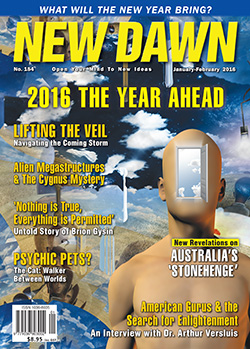
  • American Gurus & the Search for Enlightenment: An Interview with Arthur Versluis

    American Gurus & the Search for Enlightenment: An Interview with Arthur Versluis

    From New Dawn 154 (Jan-Feb 2016)

    Until recently the academic world paid almost no attention to the Western mystical and esoteric traditions. If any scholars strayed into these areas, they did so gingerly and apologetically, often feeling the need to sneer at these currents as a way of safeguarding their reputations.

    This situation began to change in the 1980s. A small group of academic scholars in mainstream universities began to pay serious attention to esotericism as a formative part of the Western spiritual and intellectual culture.

    Arthur Versluis (left) is one of the central figures in this development. Chairman of the department of religious studies at Michigan State University in the US, he has helped form a community of academics that share these interests. He is the founding president of the Association for Esoteric Studies, the leading academic research group in the US in this field, and founder of the online journal Esoterica.

    Versluis’s books include The Secret History of Western Sexual Mysticism: Sacred Practices and Spiritual Marriage (2008), Magic and Mysticism: An Introduction to Western Esotericism (2007); The New Inquisitions: Heretic-Hunting and the Intellectual Origins of Modern Totalitarianism (2006); Restoring Paradise: Esoteric Transmission through Literature and Art (2004); The Esoteric Origins of the American Renaissance (2001); Wisdom’s Book: The Sophia Anthology (2000); Wisdom’s Children: A Christian Esoteric Tradition (1999); and American Transcendentalism and Asian Religions (1993).

    His 2014 book, American Gurus: From Transcendentalism to New Age Religion, traces the rise of spiritual teachers outside the folds of religious traditions. Many of them claim to teach various forms of instant or immediate enlightenment.

    In October 2015, I conducted an e-mail interview with Versluis to discuss American Gurus.

    RICHARD SMOLEY (RS): One of the main themes of American Gurus is a phenomenon called immediatism. Could you talk a little bit about that?

    ARTHUR VERSLUIS (AV): Immediatism refers to a religious assertion of spontaneous, direct, unmediated spiritual insight into reality (typically with little or no prior training), which some claim is enlightenment. It refers to a claim of a “pathless path” to religious enlightenment, because the immediatist says “away with all ritual and practices!” and claims that direct spiritual awakening or enlightenment is possible at once, without meditation or years of guided praxis. In American Gurus, I show that an immediatist approach to enlightenment is deeply embedded in the contemporary religious scene, and is fundamentally a modern New Age phenomenon with some historical antecedents.

    RS: How has this quality of immediatism played itself out in the America of the last 150 years?

    AV: As I said, immediatism as discussed in the book is really a phenomenon of the last several decades. Of course, some antecedents are visible in Anglo-European American literature in much earlier authors. I argue that if contemporary American immediatism has a single ancestor to whom it owes the most, that figure is Ralph Waldo Emerson. In the book, I show that Emerson is much more deeply influenced by Platonism than is usually acknowledged today, and further, I discuss his work in terms of Emerson’s own gnostic experience. Literary critic Harold Bloom was right when he said that in American literature, the titanic figure is Emerson, and one can measure American literature as being before and after Emerson. Of course, Bloom wants to cordon off the term Gnostic to refer to the world-rejecting perspective attributed to it by Hans Jonas and those who follow his existentialist, early-twentieth-century interpretation of “Gnosticism” in late antiquity. However, in my usage, gnosis and gnostic have only their generic implications of one who claims direct spiritual insight, a “gnostic” being someone who experiences gnosis, or illumination. Emerson is the archetypal American figure in this regard.

    But strictly, speaking, Emerson is best described as a Platonist, whereas immediatism discussed in the latter half of the book is a contemporary or relatively recent New Age phenomenon based to a considerable extent, though by no means exclusively, in Neo-Advaitic Hinduism, or what is known as the “satsang movement.”

    RS: You contrast immediatism with Platonism. What are some of the main differences between the two?

    AV: Platonism, like Buddhism and Hinduism, includes contemplative practices and rituals. As I show in my new book Perennial Philosophy [see excerpt, ‘Leaving the Cave’, on page 60], Platonism centres on the contemplative ascent and illumination, and although it does not exclude the possibility of immediate illumination without praxis, it also certainly is not based in that. Immediatism, on the other hand, typically represents a claim that one does not need practices or ritual, but simply needs to be in the presence of a guru, or, sometimes, that one needs to do nothing at all. Immediatism is quite attractive in a New Age consumerist marketplace because it doesn’t ask anything in particular of us, but tells us that we’re “always already” “enlightened.”

    RS: Which of these do you feel more in sympathy with?

    AV: My admiration for and understanding of Platonism continues to grow. Plotinus is an extraordinary figure, whose work Enneads should be read by everyone in the West who feels called to an inner life. But Platonism is not like Buddhism, which has so many available teachers and gurus, as well as a wide range of practices and traditions.

    RS: One figure that you discuss at length is Robert Anton Wilson. Both in Wilson and the Discordian movement there’s obviously a great deal of spoofing going on. Where do you think the joking stops and the serious message begins? Could you comment on Wilson’s work a little and say why it’s significant?

    AV: Robert Anton Wilson is an entertaining figure, and of course Discordianism and variants of or like it are often quite funny. I think one of the more interesting connections mentioned in the book are the links between Wilson and various magical practitioners, authors, and groups, including Christopher Hyatt, Lon Milo DuQuette, and others who might be grouped roughly in the category of “left-hand” magic. In fact, one of the other authors in a volume Wilson contributed to says directly “We are Black Magicians.” I think Wilson’s work needs to be understood in the context of overcoming monotheistic and other forms of what he would call “programming” as well as in the context of going beyond dualities, but as an individualist and a spiritual anarchist. He specialises in semantic disorientation toward those ends.

    RS: Could you comment about William S. Burroughs and his relation to this tradition?

    AV: Burroughs is quite different from many of the other figures discussed in the book. He rejects traditional religions, and offers instead what he calls a “Magical Universe” full of gods and demons in conflict. His magical world is harsh, demonic, characterised by paranoia, and could be described as a kind of cosmic confidence game. He is a somewhat sinister and fascinating figure. I’d suggest readers take a listen to the Bill Laswell album that includes Burroughs reading passages from his novel The Western Lands to get a sense of his unmistakable voice. Critical accounts of his work have not fully taken into account his occultism, for the most part. But his work represents more of a reference point in the book, not a main subject.

    RS: Could you talk a little bit about the Traditionalist Frithjof Schuon and the kind of Sufism that he came to embrace?

    AV: The book really doesn’t focus on Schuon or Traditionalism, but rather mentions them in passing as a reference point. Broadly speaking, I think Traditionalists would dismiss many of the more recent figures discussed in the book as spiritually harmful and deluded. I think it’s pretty clear that Schuon and his circle emphasise spiritual practices and thus aren’t immediatist in the way that, say, Andrew Cohen might be.

    RS: Another figure you discuss is Peter Lamborn Wilson, who has embraced what he regards as a radical, heretical Islam. What would you say are some of the most significant things about Wilson and his work?

    AV: I know Peter – we published my conversation with him in JSR: Journal for the Study of Radicalism a few years back. I talk to him from time to time. He is one of the liveliest intellects I know, a voracious reader, and full of interesting and surprising ideas. I think the radical, antinomian aspects of some offshoots of Sufism both influenced and appeal to him. He is fundamentally what I call a spiritual anarchist, and a real American character.

    RS: At the end of your book you discuss a number of self-styled enlightened masters ranging from Andrew Cohen to Franklin Jones (Adi Da) to Ken Wilber. You mention that teachings of love and compassion seem more or less absent from their discourse. Could you say a little bit about why?

    AV: In the last chapter, I quote Georg Feuerstein’s critique of some of the guru figures you mention. He argues, as do a number of others, that it’s possible to believe one has reached the end of a spiritual path when one actually has only gone partially down it, for instance. It might well be that some people who claim enlightenment have realised something, but have not gone through all the stages as described, for instance, in Buddhist descriptions of the stages leading to enlightenment. Lama Surya Das refers to such claims, cleverly, as “premature immaculation.” One can’t discount the possibility of less charitable interpretations as well, of course.

    Get the issue this article appears in

    RS: One of the most striking conclusions in your book is that the whole immediatist strain in American spirituality could be viewed as part of the absorption of Asian religions, notably Hinduism and Buddhism, in American culture. Many of the self-styled enlightened masters seem to have an affinity for the Hindu Advaita tradition in particular. Could you suggest why this might be?

    AV: One of two epigraphs for the book as a whole is a remark by pollster George Gallup, Jr., who observed, “Americans want the fruit of religion, but not its obligations.” I think there’s a lot of truth to that, and it does help explain why what’s called “Neo-Advaita” Vedanta is popular; it tends to require only that one show up for satsang, or an audience with a Neo-Advaitic guru. But there’s a larger frame, which is the emergence of the New Age movement more generally. The basic idea of a “New Age” is that it just happens to you; it is fundamentally more passive and consumerist than based in traditional practices. It lends itself to spiritual consumerism.

    RS: How do you believe these impulses – notably the influence of Asian religions – will develop in our civilisation in the time to come?

    AV: This is really an interesting question to explore. Asian religions in America, in particular Buddhism and Hinduism, but also Taoism and others, are becoming acclimated, but also are beginning to be Americanised and, more broadly, Westernised. Thus there are a number of practitioners and teachers who see themselves as maintaining the essence of the religious tradition, but at the same time adapting it to the modern American or Western context. Of course, one argument is that some of them, for instance, many Neo-Advaitin teachers, have so essentialised the tradition as to have created something else, which critics argue is diminished into a variant of New Age consumerism. And that is the argument that may often be wielded. But one also has to recognise that as Asian religions become rooted in the West, especially the gnostic initiatory lineages, it is inevitable they also adapt and are adapted to new and very different cultural contexts. An example of this would be the German teacher of Zen Buddhism and mysticism, Willigis Jäger. Another would be B. Alan Wallace, who has a Ph.D. in religious studies and is also a teacher of Tibetan Buddhism. And there are many others, in different traditions. This phenomenon will continue to develop, I’m sure – it is arguably the most important religious development in the West since the emergence of Protestantism.

    American Gurus: From Transcendentalism to New Age Religion (Oxford University Press, 2014) is available from all good bookstores and online sellers. Professor Arthur Versluis has a website at www.arthurversluis.com.

    [alert type=”general” dismiss=”no”]This article was published in New Dawn 154.[/alert]

    [alert type=”success” dismiss=”no”]If you appreciate this article, please consider subscribing to help maintain this website.[/alert]

    © New Dawn Magazine and the respective author.
    For our reproduction notice, click here.
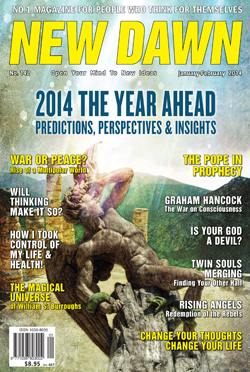
  • The Magical Universe of William S. Burroughs

    The Magical Universe of William S. Burroughs

    From New Dawn 142 (Jan-Feb 2014)

    When the American writer William S. Burroughs passed away at the ripe old age of 83 back in August 1997, the media coverage was definitely more in keeping with his status as a counter-cultural icon than it was for his literary fame – or infamy – alone. All the usual well-rehearsed lines were trotted out, about how he was the Harvard-educated product of the WASP elite and scion of the family that founded the Burroughs Corporation, who had turned his back on it all to become a junkie queer, trawling the steaming jungles of South America, sleazy ‘Interzone’ of Tangiers, and shady back-streets of Paris and London for drugs and boys. That somewhere along the line he became an unlikely mentor to Jack Kerouac, Allen Ginsberg and the Beats, who had opened the way for the Cultural Revolution of the 1960s.

    William Burroughs had originally exploded onto the literary scene back in 1959 with his breakthrough novel, Naked Lunch, causing hip critics everywhere to claim they had seen the future – even if nobody was really sure that they understood it. With his three-piece suit, glasses, hat and raincoat, Burroughs seemed like the ultimate undercover hipster, and that voice certainly didn’t hurt: pitched somewhere between T.S. Eliot and W.C. Fields, mixing camp twang and knowing drawl with the educated tones of an old-fashioned Southern gentleman. From the moment he received that ultimate 1960s imprimatur of cool, being included by The Beatles on the cover of Sgt. Pepper (he’s in there between Marilyn Monroe and Fred Astaire), William Burroughs was the rock rebel’s choice of Literary Outlaw: from David Bowie and Jimmy Page to Patti Smith and Tom Waits, experimental bands like Throbbing Gristle, Psychic TV, and Coil, even Nirvana’s Kurt Cobain – generations of alternative rock stars have collaborated and paid homage.

    Norman Mailer once famously said that William S. Burroughs was, “The only American novelist living and working today who may conceivably be possessed of genius,” and as often as this was repeated down the years, Burroughs himself was at pains to point out that it was not saying he had genius or was a genius, but that he may at times had been lucky enough to be possessed by genius. When I interviewed him at the October Gallery in London in 1988, he had this to say on the subject:

    To me ‘genius’ is the nagual: the uncontrollable – unknown and so unpredictable – spontaneous and alive. You could say the magical.

    The fact that his answer uses a term, nagual, derived from the world of the Yaqui Indian sorcerer, as described by Carlos Castaneda in The Teachings of Don Juan and subsequent books, is telling indeed…

    There is also another kind of ‘possession’ that was very much a concern for William Burroughs, Man and Writer. From an early age, as much as he felt a definite sense of being ‘Other’ and not really belonging or fitting in anywhere, as much as he knew he was homosexual, he also believed in the idea of the Magical Universe. He was aware that an integral part of that universe was that there were inimical – even hostile – forces that threaten us, that may need to be bargained with and from time-to-time appeased, and that one of the dangers posed is that of possession:

    My concept of possession is closer to the medieval model than to modern psychological explanations, with their dogmatic insistence that such manifestations must come from within and never, never, never from without (as if there were some clear-cut difference between inner and outer). I mean a definite possessing entity.

    Later, in the foreword for the autobiographical Queer (written in the 1950s but unpublished until 1985), Burroughs talks about the appalling circumstances of the so-called ‘William Tell’ shooting accident that caused the death of his common-law wife, Joan Vollmer:

    I live with the constant threat of possession, and a constant need to escape from possession, from Control. So the death of Joan brought me in contact with the invader, the Ugly Spirit, and manoeuvred me into a lifelong struggle, in which I have had no choice except to write my way out.

    The simple truth is that William Burroughs had always been a scribbler: in numerous articles and interviews he describes at length his literary efforts from childhood on, and the somewhat precocious sense that the bookish, physically awkward, shy young Billy had of himself as an aspirant writer – an image that was as hopelessly Romantic as it was coloured by a flouting of moral convention:

    As a young child I wanted to be a writer because writers were rich and famous. They lounged around Singapore and Rangoon smoking opium in a yellow pongee silk suit. They sniffed cocaine in Mayfair and they penetrated forbidden swamps with a faithful native boy and lived in the native quarter of Tangier smoking hashish and languidly caressing a pet gazelle.

    The Cut-Up Technique

    As well as the monstrous masterpiece that is Naked Lunch, William Burroughs is perhaps also best remembered for championing the experimental technique of the ‘cut-ups’ – what appears to be at first glance the almost ludicrously simple idea of introducing collage techniques into writing. Collage, in all its various forms, may very well be the pre-eminent creative breakthrough of the 20th century: for better or worse, such techniques probably more accurately mirror the way the world is experienced by most people in an increasingly accelerated, fragmentary, and seemingly random datascape. Sampling, montage, collage: these methods really do come closer to representing or expressing what the facts of perception are for most of us in this post-technological, post-modernist, information overload. As William Burroughs put it again and again throughout his career:

    As soon as you walk down the street… or look out the window, turn a page, turn on the TV – your awareness is being cut: that sign in the shop window, that car passing by, the sound of the radio… Life IS a cut-up.

    Almost from the beginning, there was another aspect to the cut-ups acknowledged just as emphatically: they had the potential to be oracular. To William Burroughs, who would undoubtedly become the greatest champion of the technique, they introduced an element of randomness and also of Time: as he would later put it, whereas the basis of fiction was “once upon a time” – with the cut-ups it was “once in future time.”

    Among Burroughs’ earliest cut-ups were phrases that meant nothing at the time, but in hindsight took on an eerie prescience. This was like the seemingly arbitrary content of dreams, which lead Burroughs to speculate:

    Perhaps events are pre-written and pre-recorded and when you cut word lines the future leaks out.

    In Here to Go: Planet R101, Brion Gysin described how Burroughs would work with the material – and I think his choice of words is instructive:

    On the wall hangs a nest of three wire-trays for correspondence which I gave him to sort out his cut-up pages. Later, this proliferated into a maze of filing cases filling a room with manuscripts cross-referenced in a way only Burroughs could work his way through, more by magic dowsing than by any logical system. How could there be any? This was a magic practice he was up to, surprising the very springs of creative imagination at their source.

    The cut-ups would get a more public airing when UK publisher John Calder arranged for Burroughs to appear at the Edinburgh Conference in August 1962. After Burroughs stole the show with his presentation of an attempted “new mythology for the Space Age” – and an explanation of the innovative techniques that had made it possible, the cut-ups and their further extension in the newly-developed fold-in – a curious comparison was made by Stephen Spender, who queried the analogy between science and writing:

    It sounds to me like a rather medieval form of magic rather than modern science.

    It is in fact informative to compare this with a statement Burroughs made himself, in which his comparison of cut-ups with mediumship is explicit:

    Cut ups often come through as code messages with special meaning for the cutter. Table tapping? Perhaps.

    Experiments in Magic – Subverting Control

    It is to be remembered that the atmosphere around Burroughs and Gysin in those early days at the Beat Hotel at 9 Rue Gît-le-Cœur in the Latin Quarter of Paris was steeped in the occult, with daily experiments in mirror-gazing, scrying, trance and telepathy, all fuelled by a variety of mind-altering drugs. It is not surprising to think they may have considered these new developments in such terms.

    Burroughs, for all his Harvard education and intellect, also possessed a worldview that was informed – you might even say overshadowed – by a fear and fascination with the supernatural that had been shaped in childhood, and stayed with him ever since. His first biographer, Ted Morgan, states in Literary Outlaw that the single most important thing about Burroughs was his belief in what he referred to as “the Magical Universe.” Gysin himself was naturally inclined to intrigue and mystery, and come back from Morocco full of tales of black magic, curses and possession. Burroughs was an all-too-eager audience for the spellbinding storyteller. He felt his own travels in exotic parts had opened his eyes to a Bigger Picture:

    Now anyone who has lived for any time in countries like Morocco where magic is widely practiced has probably seen a curse work. I have.

    When Gysin, allegedly in trance, told Burroughs, “The Ugly Spirit shot Joan because…,” he thought he had the answer that no amount of psychoanalysis or self-examination had been able to provide: the unforgiveable slip that caused the death of his common-law wife, Joan Vollmer, come about because he was literally possessed by an evil spirit. This was indeed a War Universe, and Brion had identified The Enemy. If the Word was indeed the basic mechanism or unit of Control – the ‘virus’ by which Control or the Ugly Spirit exerted its malevolent influence – then surely a real understanding of the Word, what words are and what can be done with them – was essential.

    All these explorations and obsessions were not merely diversions, experiments for artistic or literary amusement, or the creation of novelty, but part of a deadly struggle with unseen, invisible – perhaps even evil – psycho-spiritual enemies. The only hope for deprogramming and self-liberation was to subvert the methods of Control and its various agencies, understand the tools used so that they could become weapons to turn back on the Control Machine itself.

    Gradually, as the 1960s progressed, it was clear the cut-ups were an idea whose time had come. Helped by Burroughs and Gysin’s gradually emerging status as counter-culture gurus, their ideas and influence began to spread. By the 1970s William Burroughs was the epitome of hip as far as drug savvy musos with literary pretensions were concerned: a coked-out David Bowie explained how he used “the Burroughs cut-up method” in Alan Yentob’s 1974 BBC profile, Cracked Actor, and then demonstrated it (badly). His friend Brian Eno would name a track ‘Dead Finks Don’t Talk’ as a nod to Burroughs’ Dead Fingers Talk, but would also look for ways to introduce chance with his Obliques Strategies, a set of cryptic aphorisms intended to encourage creative solutions by lateral thinking. Jimmy Page would be interviewed by Burroughs for Crawdaddy magazine, and as the clarion call of Punk was heard in New York, Patti Smith was the first to cheer the return of the Beat Godfather to his native land.

    [alert type=”info” dismiss=”no”]If you appreciate this article, please consider a subscription to New Dawn magazine.[/alert]

    Genesis P-Orridge

    Around the same time that Punk was emerging in the UK, another home-grown genre drawing inspiration from Burroughs, Gysin and the cut-ups was the ‘Industrial’ music of Throbbing Gristle (TG) and related bands like Cabaret Voltaire and later, 23 Skidoo. TG prime-mover Genesis P-Orridge had actually met Burroughs while he was living on Duke Street in London in the early 1970s, and he and band-mate Peter ‘Sleazy’ Christopherson were directly inspired by the Outsider stance of the ‘Literary Outlaw’ as much as they were influenced by his theories. Along with Chris Carter and Cosey Fanni Tutti, P-Orridge and Christopherson would help to invent a new genre of music they dubbed ‘Industrial’ – stripping back music even further than the back-to-basics of Punk to create a kind of Garage musique concrète, in which the processing and manipulation of found sound was a key part of the semi-improvised mayhem that was as often sonic assault as it was about the alchemy of sound.

    When P-Orridge first visited Burroughs on Duke Street in 1973, he asked him, “Tell me about magick?” and whether or not he still used cut-ups in writing. Burroughs replied, “No, I don’t really have to anymore, because my brain has been rewired so it does them automatically.” He cracked open a bottle of Jack Daniels, poured them both a stiff drink, then put on the TV to watch The Man From U.N.C.L.E., explaining, “Reality is not really all it’s cracked up to be, you know…” He then began hopping through the channels on the TV with the remote – at the same time mixing in pre-recorded cut-ups from the Sony tape-recorder – until P-Orridge was experiencing a demonstration of cut-ups and playback in real-time – right there where he was sitting:

    I was already being taught. What Bill explained to me then was pivotal to the unfolding of my life and art: Everything is recorded. If it is recorded, it can be edited. If it can be edited then the order, sense, meaning and direction are as arbitrary and personal as the agenda and/or person editing. This is magick.

    As part of his explanation, Burroughs showed P-Orridge one of his journal scrapbooks in which he had posted two photos: a simple black and white street scene, with the relevant building clearly visible, and then another beneath it from which he had carefully sliced out the ‘target’ with a razor blade, gluing the two halves of the photo back together so as to create an image of the street with the offending institution removed. The same principle could clearly be applied to photos of people that you wanted to ‘excise’ from your life, he said. These principles would have a profound effect on P-Orridge and Christopherson, as well as many of the ‘anti-musicians’ and sound-artists that they would collaborate with or inspire in their turn. It wasn’t just the sonic application of the cut-ups with tape-recorders, but rather the whole approach to challenging conventional wisdom, deprogramming the self from the imposed beliefs and values of mainstream society.

    After TG had split, P-Orridge and Christopherson went on to form ‘Psychic Television Limited’ – with its attendant Conceptual Art gag masquerading as fan club pretending to be a cult, ‘Thee Temple ov Psychick Youth’, or TOPY as it was known. For a while there was an inner circle that revolved around a strange hybrid of the ideas of occultists Aleister Crowley and Austin Osman Spare regarding consciousness alteration, dream control, and sex-magic. The life and work of Burroughs and Gysin, with their cut-ups, Dreamachine, playback, and Third Mind equally offered a kind of toolkit for similar ends. It looked like if the Revolution was going to be televised after all, then Psychic TV were going to be first in line to put in their bid for the franchise…

    But all too soon cracks began to show, and P-Orridge and Christopherson parted company: Sleazy with partner John Balance to create a whole new world of magick and music as Coil, Genesis to develop PTV increasingly in the direction of Rave music. Each would continue finding ways to apply the cut-up methods of sampling, cut-and-paste and appropriation to the development of new music. TOPY became increasingly an umbrella for New Age Merry Prankster-style utopian tribalism, and Gen’s role as figurehead for these disparate anti-movements, and the cultural memes he was engineering – from cut-ups and sex-magick, to tattooing, piercing, and body modification – inevitably lead to conflict with the authorities, and P-Orridge had to flee England for a life of exile in the United States. Eventually he would come to perhaps the most radical application of his interpretation of the ideas of Burroughs and Gysin of all: Pandrogeny, in which P-Orridge and his spouse Lady Jaye would literally try and cut-up gender.

    Engaging the Magical Universe

    When I first met William S. Burroughs in London at the time of The Final Academy series of events in 1982, I asked him about magic, and whether he would care to recommend any books on the subject. Without hesitation, he mentioned Dion Fortune’s Psychic Self-Defense, even though he qualified it as “a bit old-fashioned.” As he began to talk of black magic and curses in North Africa, travelling with medicine men up the Amazon, and describing his experiments with tape-recordings and playback on the streets of London’s West End and in the midst of the 1968 Chicago Democrat’s Convention and ensuing riots, I realised that for Burroughs this was utterly real. He told me about a dream he had as a young man, working as an exterminator in Chicago: watching from a helpless out-of-body point of view floating above the bed as his body got up and went out with some unknown and sinister purpose that he was powerless to influence… with a shudder, he told me that possession was “still the basic fear.”

    Even towards the end of his life, William S. Burroughs’ engagement with the Magical Universe (and struggle against the Ugly Spirit) did not wane. The magical, psychic, spiritual and occult appear in his later fiction like never before, from depictions of astral travel and “sex in the Second State” to descriptions of actual rituals, referencing everything from Crowley and the Golden Dawn to the myths of ancient Egypt and even the Necronomicon… all interwoven with increasingly ‘neo-pagan’ concerns for the environment, the impact on Man and Nature of the Industrial Revolution with its emphasis on ‘quantity, not quality’ and standardisation – as well as perceived turning points in history. His adoption of the ancient Egyptian model of the Seven Souls, continuing development of a very personalised myth of Hasan-i Sabbah and the Assassins of Alamut, made him of increasing interest and relevance to the new occultists who were emerging from successive generations of counter-culture that Burroughs had helped to shape through the example of his Life and Work.

    There was also still the loss, the pain, and – perhaps more than ever – the Ugly Spirit. After settling in Lawrence, Kansas – a small university town, far from the distractions and temptation of New York, and very much a reminder of his mid-Western background in St. Louis, Burroughs became friends with William Lyon, a Professor of Anthropology who had been apprenticed to Sioux medicine man Black Elk. A full sweat-lodge purification ceremony was arranged in an attempt to evict the Ugly Spirit, which was described by the shaman as:

    A spirit with a white skull face, but no eyes, and sort of… wings.

    Burroughs was impressed by the “strength and heart” of the medicine man, and felt that just to clearly identify the enemy in such terms was in itself something of a victory:

    If you see it, you gain control of it. It’s just a matter of, well, if you see it outside, it’s no longer inside.

    In the early 1990s, the elderly Burroughs was initiated into the Illuminates of Thanateros, the leading Chaos Magic group. Perhaps this was not such a surprising development. Chaos Magic clearly felt a debt to Burroughs and his peers, sharing many of the same concerns as Thee Temple ov Psychick Youth: demystifying magic, yet at the same time distilling the best from Aleister Crowley and Austin Osman Spare, while taking advantage of the latest ideas emerging in computers, maths, physics and psychology.

    With the experiments started at the Beat Hotel that he then took out onto the streets of London, Paris and New York, William S. Burroughs was recognised as a pioneer and precursor: and with the later connections established through a younger generation of artist-occultists, the link from ‘cosmonaut of inner space’ to ‘psychonaut’ was assured.

    For more information about Matthew Levi Stevens, please see http://whollybooks.wordpress.com. The book-length version of his The Magical Universe of William S. Burroughs is available from Mandrake of Oxford. To order go here: http://mandrake.uk.net/the-magical-universe-of-william-s-burroughs/

    [alert type=”general” dismiss=”no”]This article was published in New Dawn 142.[/alert]

    [alert type=”success” dismiss=”no”]If you appreciate this article, please consider subscribing to help maintain this website.[/alert]

    © New Dawn Magazine and the respective author.
    For our reproduction notice, click here.