New Dawn – World's Most Unusual Magazine

Tag: China

  • The Untold Story of China’s Rise

    The Untold Story of China’s Rise

    This article was published in New Dawn Special Issue Vol 9 No 1 (Feb 2015)

    There are many untold stories about China’s rise. Initially, this story will begin almost four decades ago, but it will ultimately reach back as far as four millennia. It will close with the conclusion that we have today only witnessed the beginning of China’s rise.

    We begin in 1976 when the Australian Ambassador in Beijing completed a Dispatch exploring the implications for Australia were China to emulate Japan at that time and grow its economy by 10 percent each year. In Mao Zedong’s last year and at the end of the Cultural Revolution, this seemed improbable to most foreign policy officers, but Prime Minister Malcolm Fraser liked the Dispatch and used it to shape Australia’s China policy.

    The case for such rapid Chinese economic growth was based on a simple perception. After following Japan closely in the 1960s and as an Embassy officer who had studied economics at university, I was convinced that Japan’s unprecedented economic growth had little to do with the simple application of Western economic principles. Rather, it needed to be explained by distinctive cultural qualities.

    Considering much of Japan’s sense of civilisation, including the characters used in its language and the nature of its administrative class, derived from China, it was hard to see why the vast home of East Asian civilisation, China, would settle for second best, behind its off-shore, smaller neighbour. Moreover, by this time other Asian communities with a strong sense of Chinese tradition and civilisation were beginning to show the potential for economic growth similar to Japan.

    This line of thought poses many problems for the Western mind and for Western leaders. The implied irrelevance of ideologies like Capitalism and Communism has major implications not only for economic thought but also for political rhetoric and strategy.

    Consequently, although there was an emerging interest in the relationship between ‘Asian values’ and economic performance in the 1980s and 1990s, this was effectively killed off by the 1997 Asian Financial Crisis (AFC). A torrent of triumphalism about the failure of ‘Asian values’, Asian ‘crony capitalism’ and an associated unhealthy relationship between government and business seemed to discredit forever everything associated with the phrase ‘Asian values’. As a consequence, there has been little real follow up on the thought that inspired the 1976 Beijing Dispatch, although a public R G Neale Lecture in the Australian Department of Foreign Affairs and Trade in 2007, 31 years later, commended the foresight of the Dispatch.

    Even that lecture neglected to mention three books informed by the same insight that had used experience in Japan to predict China’s future rise. The Confucian Renaissance (1989), The Tyranny of Fortune: Australia’s Asian Destiny (1997), and A Confucian Daoist Millennium? (2007) were easily ignored as curiosities of no concern to men entrusted with practical commercial and political responsibilities.

    A decade after the 1997 AFC and a year after the 2007 R G Neale Lecture, the 2008 Global Financial Crisis revealed Western ‘crony capitalism’ to be far worse than the Asian version. Moreover, by this time Asia had again grown stronger. China had deftly managed Western attempts to exploit the AFC and was becoming the flag bearer of an Asian economic miracle that was transforming the global order. With typical discretion, however, this was branded ‘China’s peaceful rise’ and even used the 2008 Beijing Olympic Games to distract the attention of the West from its own rapidly declining economic power.

    In retrospect, global order has been discreetly reshaped since the American defeat and occupation of Japan in 1945 by the astute utilisation of China’s ancient cultural wisdom. This wisdom involved a form of ‘conquest through service’. It was first executed by Japan, then by other Asian communities and finally, and most critically and definitively, by China. Most remarkably, this strategy has continued, unrecognised by Western communities and their leaders for almost three quarters of a century.

    To a significant degree, this failure has been the unintended product of a political/intellectual strategy of ‘intellectual apartheid’ that marginalised and ridiculed in the Western mind all cultures but those shaped by the European Enlightenment and its ‘universal values’. By closing its own minds to the possibility of an alternative, more politically, administratively and strategically advanced culture, the West effectively ensured its own decline.

    While it might be suggested Australia used the 1976 Beijing Ambassador’s Dispatch to fully capitalise on the Asian economic miracle, this would be an exaggeration. Despite much rhetoric over more than half a century about being part of Asia, Australian leaders remain totally uneducated in terms of the Chinese classics that define Asian wisdom and success, and have done nothing to introduce such education for younger Australians. In addition, they have mirrored the folly of other Western nations in allowing themselves to be ‘conquered by service’, that is, for Australia, by the service of easily accessible and lucrative export markets.

    This may have been less insidious than in America and Europe, which have largely been stripped of their industry, technology and labour skills and left bankrupt and dependent on fiat currencies (printed paper serving as money) with less and less asset backing. Like Western communities in general, however, Australians have shown themselves to be incapable of understanding the irrelevance of their ideologies and, most importantly, their thought cultures in comprehending the transformation of the 21st century global community.

    The Source of Asian & Chinese Wisdom & Strategy

    It is critical to understand the sense in which Asia’s rise has been China’s rise. Everywhere in East and South East Asia, administrative and commercial elites are shaped and informed by Chinese tradition, classical wisdom and historical experience. This may be directly as in Japan, Korea, Vietnam and Singapore. Or it may be through elite minorities in the rest of the region, where Chinese traditions of education and thought set standards of excellence that other ethnicities must match to be competitive. Moreover, none of these peoples have been influenced in any comparable manner by their brief exposure to Western corporate and commercial intrusion and assertion.

    Today, there is a robust revival of traditional Chinese classical education in China and these other regions of Asia. In academies defined by ancient practices, children from the age of three learn the classics by rote and can recite whole chapters word perfect by the age of five.

    The best learning years of three to six are devoted to mastering texts in their original language from more than two thousand years ago. These texts are then effectively left in charge of shaping and guiding thought and life experience from a very early age. Early familiarity with classical Chinese language ensures ready access to China’s long, rich and continuously recorded historical experience.

    When one reflects on the content of the Confucian Analects, the Daodejing and the Book of Changes, it becomes obvious that this thought has many qualities not found in the Western tradition. Moreover, it is also evident the habit and discipline of learning that is nurtured at such an early age can be easily focused on mastering Western thought and tradition, but as an alternative and mostly less profound option. Consequently there are many educated Asians who are truly bicultural and capable of thinking and acting alternatively in competing thought cultures. For several reasons, there are very few, if any, comparably skilled Westerners.

    This poses a daunting challenge for most Western peoples. First, China has a thought culture that guides more than two billion people in East and South East Asia but that is little, if at all, understood in the West. Second, it also has deftly placed itself at the strategic and financial centre of new, potentially global initiatives like the BRICS Bank, an expanding Shanghai Cooperation Organisation and a transformative Eurasian trade zone. Third, it is becoming indisputably the world’s largest economy with the strongest financial reserves and almost certainly the global leader in educational depth and excellence as well as technological productivity. None of this fits comfortably with the mythologies that have guided the Anglo American powers over recent centuries in working towards a New World Order.

    All this is the contemporary manifestation of the renaissance of the world’s most remarkable continuous civilisation. Despite almost unanimous denial in Western communities, and, it must be recognised, much of the rest of the world, it is already impossible to think about the future in an informed and positive manner without basing one’s thought on the central and authoritative role that will be played by cities like Beijing and Shanghai.

    Even more important, wherever one goes in China, most parts of Asia and many parts of the world, it will be most advantageous to understand the pervasive and definitive role being played in contemporary affairs by the Chinese classics, Chinese history and Chinese political and commercial culture. Yet this will be made difficult by a common modesty, humility and discretion that characterises the behaviour of the classically educated Chinese gentleman or ‘junzi’.

    The Character of China’s Modern Rise

    In a major sense, it is a mistake to speak of China’s rise. It is more appropriate to speak of China’s renaissance. Until the Opium Wars in the middle of the 19th century, China had led the world in technology and economic production for much of human history. By the middle of the 20th century Mao Zedong’s revolution had begun to lay the foundations of China’s renaissance. This renaissance became apparent a little over a quarter of a century later when Deng Xiaoping took charge.

    The major new feature of contemporary China is the fact that the Anglo American powers have constructed a nascent global order and that China’s renaissance must take place at the centre of this global interconnectedness. This is the truly unique character of China’s contemporary rise, or renaissance. It is something which other powers have made unavoidable and not something that China’s leaders have taken the initiative in bringing about.

    Consequently, there is much in the rise of contemporary China that can only be understood by examining the interaction of modern Western influence with the renaissance of traditional Chinese culture. Until now, the impact of Western influence seems to have been dominant. Yet China’s success is only truly explicable in terms of the way in which its traditional culture has equipped it to out-strategise and out-compete the West.

    Equally, much Chinese activity has been dictated by imperatives imposed by the West’s modernity. Yet, as China becomes stronger, more independent and more Chinese in its choices, it is likely to expose many Western initiatives to profound re-evaluation.

    One needs only to look at the harm done to the environment, water, air, food and medicine by Western corporate imperatives to see possible benefits in this development. Of course, China today is a poor advertisement, having embraced many of these corporate imperatives in its rush to build its economy, re-establish its own cultural autonomy and gain some control over its future. It has, however, now largely achieved that and has the capacity to address such issues.

    China’s own traditions of law and government would seem much better designed to correct harmful corporate imperatives than common practices in Western democracies. Large corporations have increasingly demonstrated the capacity to write the policies and laws of elected governments through lobbyists, media influence, industry expertise and political funding, often with little regard to harm inflicted on the well-being of communities.

    In fact, exposure to the Chinese classics, history and political culture highlights the reality that many features of contemporary Anglo American civilisation have derived first from the imperial adventures of British corporations like the East India Company and more recently from the related initiatives of American corporations within a global institutional order constructed after victory in World War II.

    The rise of China and its Asian and other allies suggests that many Anglo American practices, values and priorities are likely to be reassessed from perspectives that have the capacity to surprise and marginalise today’s certainties. The failure of Anglo American strategists to understand vulnerabilities in their own culture and to explore the strengths of a culture with the world’s most outstanding historical record has led to both Western decline and Eastern rise. It is hard to see this situation now being reversed.

    Western peoples now have a diminishing period of time in which to educate and prepare themselves for a predictable future where past certainties and comforts will be subject to re-evaluation. The existing global order has been constructed on assertions of the superiority of Western values but these have proven vulnerable before an Asian challenge. It is still too early to outline the likely outcome of this competitive interaction of competing cultures but an understanding of traditional Chinese culture will be essential if Chinese approaches to the West are to be evaluated with any hope of strategic insight, accuracy and success.

    Classical Chinese Values

    China’s 21st century rise can only be appreciated in the context of the teachings of its classics. As already remarked, these are undergoing a revival of popularity as the foundation for shaping life and thought from a very early age. It must also be understood in the context of learnings from the use of those classics across several millennia, copiously recorded as a continuous account of the achievements and failings of the Chinese people. It is also critical to recognise that the fundamentals of traditional Chinese social, legal, economic and political behaviour are often very different from those of the modern West. Moreover, Western values are unlikely to have gained in authority from their failure to defend and preserve a position that seemed beyond challenge only several decades ago.

    It is also essential to appreciate that Chinese words and ideas rarely translate accurately into English or other European languages. The reverse also applies, as the respective cultures and histories are too different to allow simple verbal equivalences. Yet, even if one begins the examination of Chinese classics in translation, it is immediately apparent that the Western mind is entering unfamiliar territory. For instance, the first three lines of the Confucian Analects read in English translation:

    Is it not a pleasure, having learnt something, to try it out at due intervals?

    Is it not a joy to have like-minded friends come from afar?

    It is not gentlemanly not to take offence when others fail to appreciate your abilities?

    It is hard to deny that this seems immediately to be a strange way to commence perhaps China’s greatest classic text. A number of comments may be made. First, the Analects illustrate clearly the difficulty of translating Chinese, particularly classical Chinese, into contemporary English. Second, the Analects are best rote learned in the original language at an early age and then used as needed as a remarkable collection of guiding wisdom throughout life. Third, the Analects exude a type of practical, searching humility that contrasts starkly with the sense of intellectual or philosophical pride and superiority evident in key Greek classics.

    Nevertheless, having recognised those stumbling blocks for the Western reader in a foreign language, it is clear the text places the highest authority in life on a lifetime of practical education, on the cultivation of diverse and far-reaching friendships or networks and on the ultimate virtue in human life of humility. These qualities are readily identifiable in Asian elites and, as will be explained further, are fundamental to Asian strategic wisdom.

    It should also be remarked that the Analects and the Book of Changes constantly use the family and its continuity over time as a central organising theme that illustrates intuitively the importance of the group over the individual. This echoes the distinctive character of China’s flood story four thousand years ago. This does not show God’s preservation of a virtuous man but rather the virtuous man’s preservation of his community, through the practical construction of canals and embankments.

    This family and group focus serves to highlight something strange, even corrupting, about the contemporary West’s prioritising of the individual, freedom and equality. It is possible to see this fragmenting both family and society and working to reduce much of life to a quantitative calculation among contending individuals. Certainly, the group coherence of Asian economies seems to have played a central role in their success.

    The first two lines of the Daodejing also reward reflection, reading:

    The Dao which one can explain is not the unchanging Dao.

    The Name which one can name is not the unchanging Name.

    From personal experience, I know that it is possible to struggle with these words for twenty years and still be bemused by their meaning. Yet, then, in a flash they can assume a meaning that changes the whole character of one’s thought. For me, this was to conclude that while words, ideas, concepts, rational structures and theoretical frameworks can be critical in organising the thoughts of the human brain and in communicating between human beings, they do not capture the full organic complexity and dynamism of the natural world. In my experience, the Western tradition with its central role of belief, whether in Plato’s transcendent forms, the Church’s God, the Enlightenment’s ‘universal values’ or the economist’s marketplace, nurtures a type of rigid attachment to abstract ideas and theories which impose limits on practical opportunities if they do not fit established thought patterns.

    The Six Secret Teachings of Jiang Taigong, a strategist and general who helped King Wen establish the Zhou Dynasty three thousand years ago, needs to be mentioned here even if it is not one of the more commonly referenced classical or strategic texts. It contains Twelve Civil Offensives that detail how a weaker party can overcome a more powerful adversary, simply through disciplined humility. This explains the provision of a service that conquers, first through cultivating dependency and later vulnerability.

    Once familiar with East Asia and with the contents of this text, it becomes almost impossible not to conclude that it has been this strategic thought that made Asia rich and the West bankrupt since 1945. In particular, Japan’s behaviour in the face of defeat and occupation seems to have followed meticulously the prescriptions of this work as it built the foundations of its economic rise. Other Asian communities familiar with the work, and ‘conquest through service’, did not find it hard to follow Japan’s example.

    A comment on the importance of historical literacy and awareness also directs attention to an area where China has a strength that is little understood in the West, where end of empire talk often refers back almost two thousand years to the Roman Empire. The more recent Austro-Hungarian or Ottoman ends of empire are rendered irrelevant because of the fragmented character of Western experience and consciousness. In China, however, the sense of history embraces at least six major and a number of smaller end of empire experiences over the past two thousand years.

    A television series on the mid 19th century Han General Ceng Guofeng, who saved the Qing Dynasty and its Manchu aristocrats from the Taiping rebels, can be revealing. It shows Manchu aristocrats whose sense of privilege and certainty does not allow them to address the mounting challenges to their world in any coherent or strategic manner. It is remarkable how this invites comparison with contemporary Wall Street bankers and their neglect of the mounting challenges to their political certainties, all defined by the incestuous preoccupations of New York and Washington.

    It should also be noted that Chinese language and history are enriched with thousands of words and expressions that simply do not translate into English. One example is the opposing expressions ‘junzi’ (gentleman) and ‘xiaoren’ (small or petty man). Neither bracketed translation is adequate. ‘Junzi’ might be said to refer to those humbled and refined by classical knowledge and suitable for administrative responsibility. ‘Xiaoren’ refers to those with an eye to a quick, and possible nasty, profit. It is not difficult to raise a laugh with a Chinese friend by saying that an American MBA qualifies one to be a ‘xiaoren’, making an easy target for a ‘junzi’ aware of Jiang Taigong’s civil offensives.

    Any outline of Chinese classics, history and culture can hardly scratch the surface of this world. Many Chinese today understand it poorly, but all of China’s leaders since 1949, including Mao Zedong [see ‘Mao’s Communism’ on page 58], were deeply educated in it and this is unlikely to be any different with future leaders.

    The Challenges Inherent in the Untold Story of China’s Rise

    A recent American response to the challenge of civilisation posed by China’s rise has been remarkably misguided. It involves ramping up a campaign of misleading allegations against the Chinese attempt to share their understanding of civilisation through the expert and financial support of Confucius Institutes. This suggests that a continuing denial of obvious realities will characterise much of the Western response to China’s economic and cultural renaissance.

    In some ways, the challenge that confronts the West is comparable with that which confronted distant peoples colonised by the European people’s use of corporate organisation and aggressive technology to enhance their wealth several centuries ago. It is less violent but it is just as incomprehensible in terms of the familiar mythologies that shape Western certainties.

    History suggests that the Chinese custom of tributary states is much more benign and enriching than the West’s colonising or ‘civilising mission’. Yet this is dependent on an acceptance of reality in a peaceful and constructive way. Despite a widespread continuing assumption of Western pre-eminence, there is already much evidence there is little prospect of reversing established trends of growing Chinese strength and declining Western capacity. This seems true, whether in terms of political, military, technological or economic influence. Moreover, there is growing evidence that we have only seen the beginning of China’s rise, or renaissance.

    Any realistic assessment of the challenges ahead now needs to address questions related to the movement from the certainties of an Anglo American global order to the probabilities of a reborn Chinese civilisation that influences events in all parts of an interconnected global community. Policies that are already publicly understood, although minimally reported in mainstream Western media, make it clear that China is taking the lead in the construction of major infrastructure like very-fast trains, in the transformation of Siberia and Eurasia through unprecedented initiatives, in investing globally in previously undeveloped natural resources, and in acting independently of institutional forms long established and reinforced by Anglo American authority.

    The continued denial or distortion of such realities will only compound mistakes and misjudgments that have already damaged Western interests. Despite major failings in Australia’s response to China’s rise, its experience and that of other Western peoples offers evidence there can be as many opportunities as challenges in this rapidly changing environment. Political, commercial, educational and other leaders need to take the initiative. After all, Anglo American corporate and commercial culture has proven uncompetitive in a world where it made the rules. It is unlikely to do better in a world where it no longer makes the rules.

    An expectation and insistence that China conform with the often self-serving Anglo American norms of recent history can only prove increasingly counter-productive. In contrast, rewards will be won by those who display humility and initiative and commit to the arduous toil of mastering, if only in a limited way, the untold story of China’s remarkable economic and cultural rise, or renaissance.

    [alert type=”success” dismiss=”no”]If you appreciate this article, please consider subscribing to help maintain this website.[/alert]

    © New Dawn Magazine and the respective author.
    For our reproduction notice, click here.
  • Imperial End Times, Progress & the Water Dragon

    Imperial End Times, Progress & the Water Dragon

    English speaking people who have benefited from the past 200 years of Anglo-American global order have reason to view progress through 2012 with some sense of trepidation.

    Almost everywhere, comfortable certainties are under challenge, whether from the widespread sense of economic decline and overwhelming debt or from the sense of tectonic shifts in geopolitical power blocs. Clumsy responses to these challenges are beginning to raise serious questions about the viability of some leading democratic powers. This is particularly so as their ever more desperate initiatives engage them in lands where unfamiliar cultures and local resentment offer little more than quicksands to devour military and other already depleted resources.

    At the end of 2011 various commentators foreshadowed this from very diverse perspectives.

    The prolific Bartle Professor (Emeritus) of Sociology at Binghamton University New York, James Petras, titled an article that appeared on the Global Research website on 25 December 2011 Unrelenting Global Economic Crisis: A Doomsday View of 2012 and concluded it with the following words:

    “All indications point to 2012 being a turning point year of unrelenting economic crisis spreading outward from Europe and the US to Asia and its dependencies in Africa and Latin America. The crisis will be truly global. Inter-imperial confrontations and colonial wars will undermine any efforts to ameliorate this crisis.”

    The peripatetic Brazilian born journalist, Pepe Escobar, in a German interview by Lars Schall carried by Consortium News on 29 December 2011, gave a much more geopolitical slant. He commented on the evolving global scene with passages that highlighted the possible further substantial growth of the BRICS grouping, the Russian and Chinese dominance of Central Asia, the pervasive influence of the Chinese diaspora throughout South East Asia, the fact that US policy shapers know absolutely nothing about other cultures and don’t even travel and the way that US action and Chinese inaction is inevitably drawing Pakistan closer to China.

    The geopolitical environment was presented even more starkly by the Canadian based Mahdi Darius Nazemroaya in an article on the Global Research website on 1 January 2012:

    “Neither Russia nor China will be able to stand idly in the case that a war is launched against Iran. In one way or another, if Russia enters a war against the US and NATO then countries like Belarus, Ukraine, Kazakhstan, Kyrgyzstan, Tajikistan, and Moldova would all be dragged into the conflict as it broadens. The Collective Security Treaty Organisation (CSTO) and Shanghai Cooperation Organisation (SCO) would be collectively involved.”

    The Nobel prize winning economist, Joseph Stiglitz, in the Australian Financial Review of 2 January 2012, offered a profoundly gloomy assessment of leadership in the US, without even referring to the above geopolitical challenges:

    “Americans will have to choose between a leader who has proven that he can’t lead the US out of its economic morass and one who has not yet proven his inability to do so – but who could make matters even worse through policies that increase inequality and slow growth.”

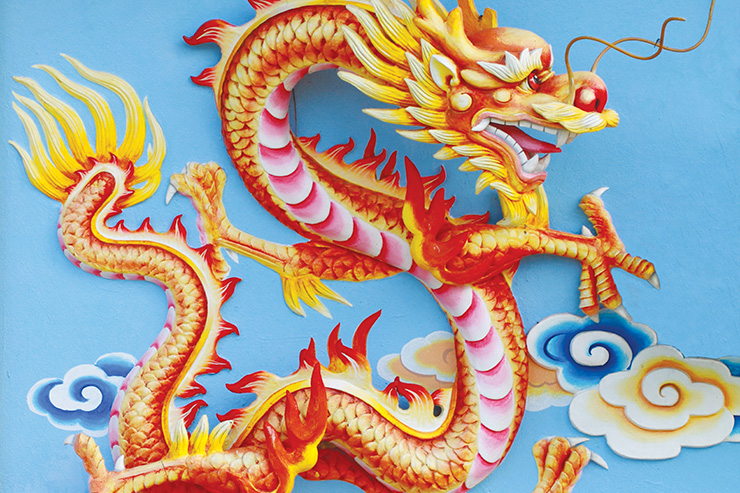
    In other words, it will be difficult to emerge from 2012, the Chinese Year of the Water Dragon, without an escalation of recent trends that have witnessed a steady decline in Western economic strength and a discreet but relentless growth in Asian wealth. This has been accompanied by the restructuring of political and economic order beyond the effective reach of Western power. On occasions, these trends can prompt acts like the “humanitarian intervention” in Libya and activities in Syria and Iran that may provide brief pyrrhic victories that only serve to strip away the last remaining threads of Western (NATO) credibility and authority.

    While Escobar hinted that China often has to do little more than allow American misjudgements and misadventures to run their course to advance its interests, Nazemroaya suggested that the SCO, including China, may be approaching the moment where it is pressed to openly oppose American initiatives.

    The weight of evidence suggests that China has been intent on a peaceful rise, committed to preserving the post-1945 Anglo-American United Nations based global order. The desperation that increasingly seems to infuse US leaders confronted with problems on many fronts has the capacity, however, to lead to a hastened decline in the authority of American led institutional structures, adding further to a sense of disintegration throughout the West.

    As someone who has followed closely the rise of Asia and the decline of the US for almost half a century, since arriving in Tokyo as a diplomatic language student in 1964, it has been a matter of profound puzzlement that US policy has increasingly shown itself to be totally inept in responding to the creative energies of diverse Asian peoples. These have all at various times sought to align themselves closely, and as tacit subordinates, with the world’s “indispensable power.”

    Today, the ASEAN plus Three grouping comprises over 2 billion people who lead the world in financial reserves, manufacturing production, applied technology, educational excellence and much else, and who are all led by administrative and commercial elites shaped by the Confucian tradition that derives from China. Over more than a decade since the 1997 Asian Financial Crisis, they have been exploring prospects for a new currency order and the recent China-Japan currency arrangement confronts America with a number of challenges with which it is ill equipped to cope. These include the further weakening of the US dollar as the global reserve currency, the growing consolidation of understanding across ideological boundaries between the Confucian communities of Asia, heightened questions about the longer-term allegiance of assumed US allies like Japan and Korea and the increasingly irresistible attraction of China’s economic dynamic, particularly when compared with American decline and financial distress.

    East and South East Asia showcase perhaps the fundamental weakness of the US, which is an inability to think beyond popular stereotypes and work strategically with peoples of unfamiliar cultural character. American policy has proven vulnerable to over-reliance on using its financial leverage to buy alliances and wield military muscle, while neglecting serious diplomacy that seeks to build bonds informed by an understanding of educational, economic and political values and practices.

    While America’s takeover of the British heritage of empire was skilfully managed by Franklin D. Roosevelt prior to and after 1945, it might be suggested that it has failed to use the British legacy to innovate successfully its own imperial tools. Perhaps the two central aspects of British success might be seen as fundamental to US failure. The invention of the modern corporation was used brilliantly by British leaders to motivate and mobilise young men to adventure out and discover and exploit wealth far from British shores. Moreover, the British were first movers in identifying and exploiting the power of fossil fuels – coal and oil – in seeking to extend power across the world’s seas.

    Unfortunately, American corporations might be described as having gone feral, shipping American manufacturing and technology to countries that now do it better than the US and all too often harming human well-being and environments by focusing on short-term profit rather than on adding quality to human lives. Added to this, the concern to maintain a near-monopoly hold over fossil fuels seems to have been a major motive in initiating several recent disastrous wars. Moreover, there is growing evidence that the US has failed to master all the financial tricks that Britain developed as a centre of empire and may have fallen victim to practices of rehypothecation encouraged by the City of London.

    In contrast, the peoples of East Asia, led initially by Japan but now by China, informed by the world’s longest continuous written tradition, and matured by the most colourful and enduring experience of imperial strength and weakness, have responded with tact, caution, imagination and strategy to the opportunities offered by poorly educated American political and business leaders. Indeed, education is probably the critical factor in the success of Asian communities, shaped as it is largely by a Confucian tradition that placed it above almost any other human endeavour. Educational deficiencies also seem to be a critical factor in US failures, as it repeatedly ignores clear warnings about its declining capacities.

    Confucian education has qualities the West has never properly recognised and that place ignorant people from advanced economies at a serious disadvantage. These include early rigorous rote learning that builds a lifetime skill for mastering new subjects quickly, a knowledge of key classics and historical experience that is rare in today‘s West, a highly disciplined and social approach to life from an early age, a broad foundation in lifetime knowledge and skills and a lively and active intelligence behind the most discreet and obedient of manners. In many ways, it is the antithesis to the profit driven corporate spirit that initially built and then sought, with less success, to maintain an empire.

    [alert type=”info” dismiss=”no”]If you appreciate this article, please consider a subscription to New Dawn magazine.[/alert]

    The excellence of Asian and Chinese education is increasingly taking on a new relevance. Many, of course, still dismiss rote learning as being a poor preparation for life where innovation and adjusting to continuing change plays a critical role, but this is simply pandering to comforting and deceiving delusions and prejudices. Those educated by rote practices may be allowed a little longer by their societies to mature and apply the benefits of their learning but their success is demonstrated by the manner in which first Japan and later China have taken monopoly leadership positions in many of the hi-tech materials and components that are now fundamental in technological innovation. Moreover, competition for the world’s fastest computer seems now to be a two horse race between China and Japan. Asian graduates regularly make up large numbers in advanced courses in science, technology and engineering at Western universities where they tend to excel. And China is now said to graduate more students from domestic universities each year than America and India combined. As a consequence, it is difficult to see America even today retaining any technological military advantage, except in the minds of poorly educated political aspirants.

    The situation is made no better by a little examination of American corporate culture. With the growing employment of mercenaries to undertake US military initiatives this has become even more critical in the projection of US power. Unfortunately, whether it is synthetic pharmaceuticals that not infrequently kill people quickly, processed food that poisons more slowly, chemical agriculture that depletes nutrition or financial services that can bankrupt a nation, the focus of US corporations on short-terms profit results has failed to guarantee quality in their products. It is difficult to believe that US military-industrial corporate culture is fundamentally different in basic quality.

    The recent Iranian hacking and capture of a US drone with the latest technology can only reinforce such conjecture. Moreover, an article on 9 January 2012 titled The Heritage Foundation: Then and Now released by Counterpunch reveals fundamental and shocking inadequacies in the latest US fighters, F22 and F35, and is explicit about a web of institutional corruption that feeds defense mega-corporations:

    “Here is a paradigm of the moral decay so visible among contemporary Washington defense ‘intellectuals’. These dabblers in defense pretend to serve seriously the real needs of our national defense and our people in uniform – when, in fact, they are serving the needs of foundations, universities, non-profits or politicians funded by defense mega-corporations seeking to expand their sources of government largesse.”

    The unique and curious dilemmas posed by America’s decline and China’s peaceful rise for Australia, a country with Western history and culture but overtaken by Asian geo-political and geo-commercial realities, were captured acutely by another 2 January 2012 article, this by Andrew Clark, in the Australian Financial Review:

    “So China – Australia’s biggest trading partner, the biggest foreign investor in Australia, the nation that generated the resources boom, transformed Australia’s terms of trade and has accumulated more spare cash than any other country – is about to take another great leap forward. This means a pervasive Chinese presence spreading from mining to farming, services, education, manufacturing, high tech industries, medicine and tourism and presenting a dilemma for Australian foreign policy traditionally wedded to retaining a strong US presence in the western Pacific.”

    By highlighting apparent Australian dilemmas, without seriously addressing the sources of the West’s economic and political malaise or the East’s unique cultural and educational strengths, the article can be seen to illustrate the lack of informed forward strategising in even a front-line Western community like Australia. As elsewhere, a narcissistic assumption of Western, and American, superiority has caused a prosperous, but critically situated, nation to neglect even basic preparations for a world that would be profoundly reshaped by another decade of 10 percent per annum Chinese growth.

    Of course, recently there have been a number of commentators warning of a bust in Chinese real estate and the decline of Chinese manufacturing markets in Europe and America. These, however, often have the character of wishful thinking or some form of political posturing and correctness. Invariably, they ignore China’s internal development strategies, growth of domestic markets and external strategic positioning in alternative global markets. In other words, there has been little or no reflection in the West on how best to accommodate China’s “peaceful rise.” In contrast, the “peaceful rise” itself has been achieved through careful and far-sighted strategising and sensitive diplomatic manoeuvring.

    The harsh reality from a Western perspective is that numerous dangers and uncertainties loom large as the Mayan calendar foreshadows an approaching critical moment in December 2012. Yet these are likely to be viewed somewhat differently from an Asian perspective, where the Year of the Water Dragon accompanies a pervasive if discreet understanding of Chinese political and strategic tradition. It would seem that China has now advanced to a strategic position of economic and technological power and influence where anything other than informed and disciplined understanding and acceptance will prove highly damaging to would be rival powers. In other words, the biggest threat to a world already confronting a growing number of problems may derive from ignorant attempts to defend positions of privilege that have already been surrendered through neglect and complacency.

    It is from this position that it will become increasingly important to address China’s peaceful rise from a perspective informed by an understanding of Chinese culture and history and accept with some resolution that those who achieve the best deals are likely to negotiate them by anticipating Chinese needs, goals and intentions. In this respect Russia’s Vladimir Putin seems to be well ahead of his Western rivals as he continues to show a keen interest in Chinese martial culture and traditions during frequent visits to his dynamic neighbour.

    While it remains to be seen how Hu Jintao’s successor, Xi Jinping, defines his responsibilities, he dropped some hints in a 1 September 2011 address to the Communist Party school when he strongly recommended the careful study of Chinese history, particularly since the mid-19th century Opium Wars. Western behaviour in China in the second half of the 19th century is not something that puts it in the best light. The time may be approaching for some serious and objective work on strategies of how to negotiate with a revitalised Confucian civilisation and how to move on from the false and misleading stereotypes of Communist authoritarianism that remain popular in Western discourse.

    Yet some Western comment suggests that many recent developments have been driven by a determination to strengthen the influence of the inter-generational financial families that control the West’s central banks and move towards a new and dominant global order. If this is true, such interests are approaching a decisive moment where they are far from well positioned to achieve their goals. Rather they seem to have created a global situation where they are in inevitable retreat and where a reluctant China will find itself in a dominant economic, technological and political position, desperately seeking to define strategies that do not impose on it the burdens of a monolithic global order.

    Nevertheless, it is hard to see any other power that is positioned to play a comparable role in the post Anglo-American world. Given its likely role in shaping the ASEAN plus Three and SCO communities, with which it has geo-political and historical intimacies and its likely capacity to influence events in most parts of the world through the growing reach and importance of the BRICS community, both America and Europe may find themselves struggling to establish their relevance and importance if present trends continue. Their disposition to understand the character of changes taking place around them in terms of their recent, but declining, global dominance and to disparage unfamiliar cultural norms and standards leaves them particularly vulnerable to the unintended consequences of their own actions.

    In this context, it is possible to see a situation evolving where the US, the UK and their close allies are the least aware and clear-sighted about the increasingly likely consequences of present trends and policies. Corporate and financial power, which fragmented private interests exercise within democratic communities, has so taken over media and academia that only the most determined and experienced alternative thinkers are likely to be able to formulate a sense of the rising influence of groups like ASEAN plus Three, SCO and BRICS and the inept and self-destructive actions of the global communities erstwhile leaders.

    The processes touched on above are now so far advanced that attempts to address and reverse them are only likely to harm the personal and professional fortunes of those so bold to attempt such work. The corporate energies and fossil fuels that built and maintained imperial structures have not been able to nurture a more subtle and mature sense of civilisation and means of exercising power. The Chinese experience of imperial decline at various times over three millennia will suggest to them that these situations are rarely if ever reversed. The absence of a comparable interest in and knowledge of history in the contemporary West only further reinforces, through neglect, the dynamics leading to Western decline.

    The concluding words of an article, appearing in Global Research on 7 January 2012, by Dr. Paul Craig Roberts, a senior Treasury official in the Reagan administration, reminds that US policies offer little hope of reversing its present decline:

    “I cannot predict how long policymakers can hold economic armageddon at bay with spin, money creation, currency swaps, intervention in gold and silver markets, and outright lies. The onset could be sudden and take place this year, but we shouldn’t underestimate the power of spin over a gullible public that trusts ‘their’ government and fervently believes that Muslim terrorists are out to get them and that the demise of the Constitution, the product of an eight hundred year struggle that produced Anglo-American civil liberty, is worth the price of ‘safety’.

    “There is no safety in a police state and a debauched currency. The comfortable world that Americans have known is falling apart at the seams.”

    Of course, US attempts to maintain its standing in the world through increasing and disruptive involvement in the domestic politics of those who are not “with us” and the incessant rhetoric and posing about Muslim terrorists has made the movement towards “a police state” an almost inescapable defence measure, necessary to avoid the deployment of US tactics against “the home of the free.” The simultaneous peaceful rise of China is in some respects the restoration of a global order where China led the world with forms of production and political authority until the Western intrusion into China’s domestic affairs with the Opium Wars in the mid 19th century.

    A peculiar question emerges from the probable end of a period of Anglo-American Empire – does it also signify the end of the mythologies of universal values that derive from the European Enlightenment, such as democracy, rule of law, human rights and, most intriguing of all, progress? After all, the innovative culture of the modern world has depended on a close alliance between capital and science and it might in future be said that this must be seen to have failed in terms both of human politics and natural order. While the profoundly cyclical and holistic consciousness of Chinese civilisation is unlikely to surrender its recent technological conquests, it remains to be seen whether it will continue to be enamoured with the Western illusion that humanity can continuously reconstruct nature for the better.

    [alert type=”general” dismiss=”no”]This article was published in 2012 New Dawn Collector’s Edition.[/alert]

    [alert type=”success” dismiss=”no”]If you appreciate this article, please consider subscribing to help maintain this website.[/alert]

    © New Dawn Magazine and the respective author.
    For our reproduction notice, click here.
  • The Chinese Nostradamus

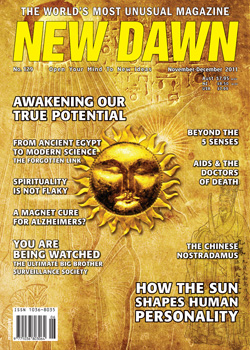
    The Chinese Nostradamus

    From New Dawn 129 (Nov-Dec 2011)

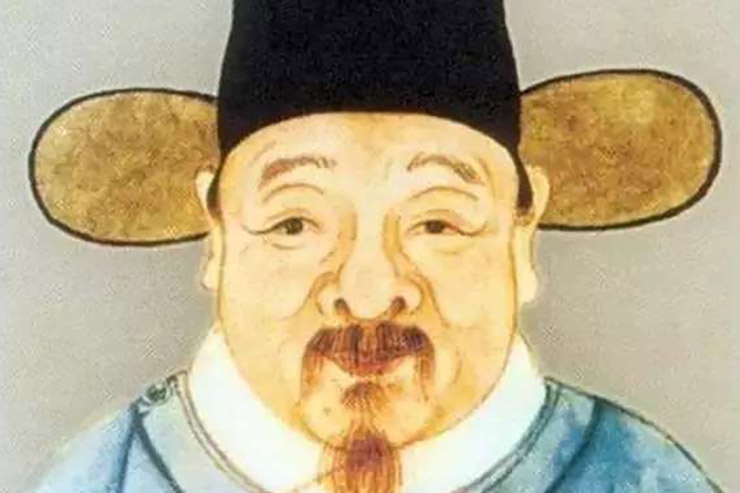
    This year [2011] is the 700th anniversary of the birth of Liu Ji (1311-1375), military commander of Chinese forces both on land and on sea and long-time advisor to the first Ming emperor Zhu Yuanzhang, whom he helped bring to power.

    Liu Ji, who eventually became grand chancellor at the imperial court, was a man of protean interests and the author or co-author of books on warfare including comprehensive treatises on the use of gunpowder in firearms (Huolongjing), and, in particular, on the use of the medieval Chinese firearm known as the fire lance. Liu Ji (who is at least as well-known by his honorific or “courtesy” name of Liu Bowen) also wrote works on astronomy, the calendar, magnetism, geomancy, feng-shui, and other subjects skirting the supernatural.

    In this latter category, he wrote one book that holds the same fascination for us today as it did for Liu Ji’s contemporaries. This is the Shaobing ge (The Baked Cake Ballad), a collection of prophecies of future events. The predictions are cloaked in a welter of abstract, allusive and arcane language. They seem to be stunningly accurate in their prediction of future events (such as the coming of Sun Yat Sen, founder of the Chinese Republic, in 1911). They bid fair to being compared to the prophetic Centuries of Michel de Nostradamus, the French prognosticator who wrote 200 years in Liu Ji’s future.

    Basing his calculations on knowledge of cycles covering 50-year periods, this Chinese Nostradamus prophesied that the 50-year period from 1860-1910 would unfold as follows:

    Strong nations will seek to subdue weak ones while oppressed nations and people will rise in strife to throw off their unvirtuous rulers. The people in China, likewise, will agitate and revolt against their foreign rulers from the North. The country will be weak and divided as it will be suffering from all these conflicts and other calamities.1

    In a discussion of Liu Ji and his prophecies, in Occult magazine, Sybil Leek writes that,

    In more specific terms, Liu Ji pointed out that his people would see great floods in the years of the swine (1873), the snake (1887) and the goat (1893) and 1911, another year of the swine. He indicated that within twenty-four years after the greatest flood, the existing rulership of the country would meet with great difficulties and dangers of an overwhelming nature, and the Wise Man in the name of the Moon would arise as the new sage and statesman to act for the cause and destiny of the country. The ‘Wise Man in the Name of the Moon’ is the birth name of Sun Yat Sen, the founder of the Chinese Republic.

    Leek goes on to explain:

    China was weakened by the Taiping Rebellion and the actions of the revolutionaries from 1860 onwards. The great flood took place in 1877, the year of the swine. There were wars with France, England and Japan in 1865, 1884 and 1895, each of which brought humiliation and losses of territory to the Manchu dynasty. The final crisis took place in 1911 when the Chinese revolution broke out to overthrow the once great and long Manchu regime, exactly 24 years after the great flood of the Yellow River. Other important historic events in this 50-year era were: the Russo-Japanese War of 1904-1905; the Japanese conquest of Korea in 1911; the Spanish-American War of 1898-1899; and the French annexation of Indochina in 1883.2

    Does the warrior, politician, prognosticator of the future and explorer of ancient “New Age” lore known as Liu Ji or Liu Bowen have the right to be called “the Chinese Nostradamus?”

    There are those who think so. Others contend that, while Liu Ji genuinely was a figure of great power and importance amidst the clashing ideologies, peoples, and life styles of fourteenth-century China, much of Shaobing ge was composed hundreds of years later, after many of the events it “predicts” had taken place, and was fraudulently credited with Liu Ji’s name in order to bestow divine legitimacy on those events. This school of thought traces the inception of the Shaobing ge not to the Ming or even the Qing era, but to the work of fiction writers and the propagandists of anti-Manchu sectarian organisations and secret societies that flourished in the early eighteenth century.3 

    Some hold there really was a Shaobing ge, composed by Liu Ji and consisting of prophetic messages – but it was greatly adumbrated, added to, and revised in later centuries, becoming the centrepiece of a number of Chinese messianic documents built on, in the words of Barend J. ter Haar, “the concrete expectation that one or more saviours will descend to earth to rescue a select group of human beings from imminent or currently raging apocalyptic disasters.”4

    What really happened may be a complex mixture of all the above – including the exciting if uncomfortable fact that Liu Ji may really have produced predictions for the future, some of which have come true in stunning fashion.

    The Chinese World of the 14th-15th Centuries

    A brief look at the tumultuous times in which Liu Ji lived and left his mark may provide the beginnings of an answer.

    Late fourteenth-century and early fifteenth-century China under the Ming dynasty saw the last great flowering of Chinese culture before a lengthy period of stagnation that ended only at the beginning of the twentieth century. Paper (100 BCE), the seismograph (132 CE), gunpowder (220 CE), and printing (movable wooden blocks by the sixth century CE, movable type by the eleventh) – all these were only a few of the inventions that China had developed centuries before the West, and it had pioneered such devices as the compass, the stirrup, suspension bridges, canal locks, iron chains, and water-powered mills and looms as well.

    Under the Ming, China brought these advanced technologies to the height of efficiency. Art (particularly pottery), printed texts of every sort (a preponderance of them being scholarly), and architecture (both sacred and profane), flourished as never before. Defences, paved highways, bridges, temples and shrines, stupas, tombs, memorial arches and rock gardens were built in profusion. The walls of some five hundred cities were reconstructed. According to a legend that has followed him up to modern times along with that of his prowess as a prognosticator, Liu Ji himself was “an ingenious builder of imperial cities.”5 

    From 1405 to 1433, the eunuch admiral Zheng He, born four years before Liu Ji died, would lead at least one expedition of 200 (perhaps even 371) ships, some of them the tallest in the world, on a diplomatic and exploratory mission to South-east Asia, Africa, the Indian subcontinent, the Persian Gulf, the Arab states and the Red Sea. Gavin Menzies speculates, in 1421: The Year China Discovered America, that this fleet, captained by its Chinese Vasco da Gama and carrying a crew of 28,000, even penetrated as far as the west coast of North America.6 To cap the achievements of this era in a literary mode: in 1403-1408 three thousand scholars laboured to compile and copy what is still the longest encyclopaedia ever produced, the Yung-Lo Ta Tien (Grand Encyclopedia of the Yung-Lo Ta Tien Reign-Period) – an astonishing 11,095 volumes, containing 50 million Chinese characters. (Only 370 volumes have survived, scattered in libraries around the world.)7

    Who Was Liu Ji (Liu Bowen)?

    Liu Bowen was an exemplar of, and helped to mould, this world of vibrant and many-faceted activity. He was born in Qingtian County (modern-day Wencheng County, Zhejiang Province) in 1311. Tall, wiry, eager and precocious, he rose swiftly in the imperial civil service, acquiring the skills of engineer, writer, soldier and administrator, and others. When one of the leaders of the Red Turban secret society, a former travelling monk, grotesque in appearance but highly capable, Zhu Yuanzhang (1328-1398), seized Nanking from the Mongols in 1356, Liu Ji was at his side. Twelve years later, Zhu drove the descendants of the Great Khan out of Beijing and became the first Ming emperor.8 Liu served in many administrative posts under Zhu Yuanzhang. He was a commanding officer in sea and land battles. He studied and wrote on a wider range of topics than any other man of his time, particularly in the fields of warfare and divination.

    Joseph Needham writes of him, in Science and Civilization in China (Volume Five, Part Seven), that, “Liu Chi [Ji]… was a striking personality, of remarkable qualities both civil and military. In philosophy he was a skeptical naturalist, interested in all kinds of science and proto-science – astronomy, the calendar, magnetism and geomancy – and a friend of the eminent mathematician and alchemist Chao Yu-Chin. But he was also concerned with administration, and for long an advisor to the first Ming emperor. In war he commanded at battles both on land and afloat, having in one instance (+1363) his flagship destroyed by a ‘flying shot’ (fei phao) just after he had transferred to another vessel.” Needham sums up Liu’s unique abilities: “Liu Chi was the sort of man who could successfully conjure a change in the wind just when the commander-in-chief needed it.”9

    Needham’s vivid description of Liu Ji brings out the adventurous side of his life, as no account of this remarkable man can fail to do. This action-oriented dimension of the prognosticator-warrior was exploited in full by Taiwanese TV in a 404-episode mega-series, Shen Ji Miao Suan Liu Bo Wen (The Amazing Strategist Liu Bowen), that aired five nights a week from August 23, 2006, to March 12, 2008. This TV spectacular tells how Liu Bowen’s amazing ability to predict the future helped Zhu Yuanzhang overthrow the Yuan emperor and establish the Ming empire. In actual fact, Liu Bowen’s death in 1375 is shrouded in mystery: his multifarious talents may have incurred the jealousy of Zhu, who, increasingly perceiving his lieutenant as a threat, harassed Liu Bowen so much that he died of sorrow and indignation; the emperor then erased much evidence of the warrior-seer’s accomplishments. The TV mega-series takes advantage of these blank spaces, writing in a passionate love affair between Bowen and Princess Nanfeng, daughter of the deposed Mongol emperor. (Did this high-powered liaison really take place? The best that can be said is that there is no strong reason to suppose that it did not.)

    In the early stages of the story, Princess Nanfeng tries to assassinate Emperor Yuanzhang, is blinded for her failed attempt, and seeks refuge in the shop of A Tian, who turns out to be Bowen’s best friend. There she meets Liu and his sister, A Xiu, who is training in the martial arts. When Liu discovers who this refugee is, he tries to restore her sight and keep her from trying to assassinate Emperor Yuanzhang again; Bowen wants to promote good relations between the present Ming emperor and the former Mongol emperor.

    A treacherous Ming official, Hu Weiyong, tries, for personal gain, to persuade the Ming emperor to have Nanfeng killed. A battle of wits ensues that pits the noble Liu Bowen against the evil Hu Weiyong. It’s this battle, filled with bloody combat, sizzling romance, and the wrenching encounters of Bowen with the gods from whom he channels searing images of the future, that kept millions of Taiwanese glued to their TV sets for more than eighteen months. At the end of 404 episodes, when the contest is decided in favour of the Ming dynasty, the aid of Liu and his paranormal powers has been indispensable.10 

    How much truth is there in this TV production, and the depiction of Liu Ji as a man of magical clairvoyant power? Did he really “channel” future-event predictions that, gathered into a volume called Shaobing ge, rival those of Nostradamus in their beguiling obscurity and – when they can be interpreted – their occasional striking accuracy?

    Liu Bowen’s Specially Encoded “Moon Cakes”

    Many modern scholars, as we’ve seen, tend to think not. Ter Haar writes that in the nineteenth century,

    One of the first paragraphs of the 1811 initiation manual [put together by secret societies plotting the downfall of the Manchu dynasty and the resurrection of the Ming in a series of divinely-ordained, messiah-led, apocalyptic battles] states that in 1643 an ‘Inscription by Liu Bowen’ was spit out by the (Yellow) River in Kaifeng… It predicted the return of the Ming under the Zhu family, bringing peace.11

    Perhaps not conscious fraud as much as powerful, self-deluding, emotional need – it must have seemed to the members of the society as if they were channelling the document! – wafted Liu Ji’s imprimatur into the ritualised agendas of these anti-Manchu secret societies. Nevertheless, there is a story, with some claim to historical truth, that suggests just how cryptic messages in baked cakes, prophesying China’s future, might have come to be associated with Liu Ji.

    The Chinese have a custom, said to date from the end of the Yuan Dynasty (1271-1368) of eating baked “moon cakes” at yearly mid-autumn festivals. The custom had its origins in the revolutionary times preceding the fall of the Yuan, when the general populace, lashed into fury by the oppressive regime, rose up again and again against their Yuan masters. The messages had to be transmitted in secret so that the insurrectionists could meet at the right time and the right place. Zhu Yuanzhang and Liu Bowen had the idea – or so the story goes – of spreading the rumour among the peasants that a deadly plague was afoot in the land and the only way to prevent it was by eating specially-prepared mooncakes. These special cakes were to be quickly distributed – each containing an encoded message coordinating the Han Chinese revolt for the fifteenth day of the eighth lunar month.

    The messages were in the form of a simple puzzle or mosaic printed on the surface of the cake. To read it, you had to cut the four mooncakes per package into four pieces each. The sixteen parts would then be put together in the right order to reveal the message. The evidence would be destroyed by eating.

    But Yuan government officials were everywhere, and it was almost impossible to send the messages without their being detected.

    Liu Bowen devised a new plan: the messages, particularly the critical one of “Uprising on August 15,” would be baked inside the mooncakes. This was done, and the buried-message cakes were successfully distributed. The insurrectionary armies converged on Beijing on August 15, and soon the city fell to Zhu Yuanzhang.

    The memory of this conspirators’ device, enhanced by legend and the life story of the charismatic Liu Bowen, could have been transformed into a legend of cryptic prophetic messages from the gods “hidden” inside a book called The Baked Cake Ballad.12

    According to legend, the Shaobing Song, as it is also known, predicted the future of China including the 1449 Mongol invasion, the 1911 founding of the Republic of China and much, much more.

    To further quote Sybil Leek:

    The next era of Liu Ji’s visions was the 50-year period from 1911 to 1960. Liu Ji predicted the Chinese-Japanese war which would come in the year of the ox (1937) and would last for 1,085 days. He did not see the end of the war as a lasting peace. But he foresaw that around 1947 a great statesman would arise to lead the Chinese into an era of peace.

    Among other major predictions he made were that a world war would involve every country and that 1917, the year of the snake, would be one of the most ominous dates in the period. He predicted an earthquake in Japan in 1923, the year of the swine; the great world depression in 1931, the year of the snake; and the European war in 1939, the year of the rabbit.

    Other interpreters believe that the Shaobing ge contains cryptic allusions to the rise of the great eunuch admiral of Ming times, Zheng He, the establishment of the Quin dynasty, the Opium Wars, and the first Sino-Japanese War, along with the founding of the Republic of China in 1911.13

    Another Text Accurately Forecasted China’s Future

    Liu Ji was not the first Chinese prognosticator of the future to be spoken of in the same breath as Nostradamus. In the reign of Emperor Tang Taizong (599-649 CE), Li Chun-feng and Yuan Tian-gang wrote a book that seems to contain a startlingly accurate forecast of China’s struggle against Japan in World War Two.

    This strange and ancient text, called Tui bei tu (“Back-Pushing Sketch,” apparently an allusion to the sixtieth, final, and farthest-in-the-future prophecy in the book), has never been translated into English. Dr. Yow Yit Seng writes in Chinese Dimensions: Their Roots, Mindset and Psyche that this prophetic work consists of

    sixty illustrated diagrams [called ‘surreal drawings’ by other commentators], each with lyrics and descriptions in a cryptic style. Each scenario uses a ‘Celestial Stem and Terrestrial Branch’ used in [the] Chinese calendar, as well as a scenario from the I Ching. Each scenario seems to have accurately predicted events in Chinese history from the Táng dynasty onwards. It accurately predicted that there would be twenty-one emperors in the [Tang] dynasty from the [Li] family, with one of them from outside the family. It also foretold the rise of Empress Wu Zetian, the only ruling empress in the history of China.

    To illustrate the difficulty of translating the Tui bei tu into English – or any language – in intelligible fashion, Dr. Yow provides a rough translation of Scenario 39, which depicts a bird standing on top of a mountain, with the rising sun at the bottom of the picture.

    The lyrics run somewhat as follows:

    Bird without leg, moon in the mountain.

    The sun rises, everyone cries.

    Disharmony in mid-December.

    Sparrows to the south of the mountain, traps to the north.

    One morning cries from metal rooster is heard.

    The sea is lifeless, the day is over.

    Dr. Yow writes that,

    the Chinese character of a legless bird with a mountain is the character ‘Island’. Hence the event refers to an island nation. The island nation is linked to the rising sun; hence, Japan. When a million soldiers invade China with unprecedented cruelty and inhumanity, everyone cries.

    In December of 1941, the Japanese talked peace in the United States, while secretly attacking Pearl Harbour. [This] fits the description ‘Disharmony in December’.

    There are sparrows (small birds) south of the mountain, referring to small nations in South East Asia being captured. In the picture there is certainly an eagle that could trap it, coming from in the North, symbolising the United States. (Incidentally, the word luo is also the first word of the Chinese name for President Roosevelt, the US president who subdued Japan.)

    Japan surrendered in August 1945. This corresponds to the Chinese calendar year of [the] rooster. The month of surrender was August, a ‘metal’ month.

    The sea is lifeless when Japanese troops surrender unconditionally. Ri refers either to the day, or in this case to Japan (riben).

    Dr. Yow concludes: “While the earlier scenarios depict events from the various dynasties, the later scenarios could probably describe events outside China.”14 

    The Tui bei tu, like the Shaobing ge (though in its vastly expanded form as the youthful adventures of Liu Bowen), had its moment in the television sun. From April 16, 2007, to May 11, 2007, Chinese TV aired in twenty instalments a serial called A Change of Destiny about two young men who hope to change their destiny by making use of the scenario-diagrams of the Tui bei tu. One tricks the other into buying a fake set of diagrams. This is straightened out; but the hopes of the two for an extraordinary future are dashed when they see that, every which way they interpret the scenarios, courting the future with the help of the Tui bei tu is always to court disaster. The future is our own responsibility, and not that of sixty predictive drawings. The 20-episode Change of Destiny series was extremely popular all across China, and shows the hold that divinatory practices still have on this country now embracing cut-throat capitalism.15 

    So odd and cryptic are the predictions of Shaobing ge that there are no translations, into any language, that are not to some extent creations of the translator almost as much as they are creations of Liu Ji and whatever gods, if any, communicated his predictions to him.

    Below are a few lines of text from the Baked Cake Ballad, in a translation so rough, so raw, and obscure, that it is virtually impenetrable. To try to interpret it is to be left fending for yourself in a forbidding if provocative jungle of words that are seemingly stand-alone because they seem to be completely unconnected.

    Yet a translation like this is so rough that it can never really mislead, even while it illuminates only with the greatest difficulty. Perhaps these words are worth trying to interpret, though, if only to catch a mention of what’s going to happen in 2012, in China and in the world.

    World hunger and cold are strange, the pillars of Germany by the baby dragon.

    10,000 Sun sub-stack layer, (Wanli descendants) ancestral mountain shell clothing line.

    Wu Zi Ji-Chou tangled everywhere, people are not at home, occasional famine bandits hair, safe guarding the good sweet-scented osmanthus.

    Chaos to the former pro-Western thief, no one dared to Zhongliang admonition, glad to see descendants of shame see the day, recession gas transported back to heaven, lack of ears on Kyrgyzstan in the middle and a Machine made to go West, East.

    Red Head Boy and Girl are bleeding, upside-down triple the total before I go, shall be synthesized Sichuan pages, (predicted emperor) eighteen wins between the fire and water.

    [alert type=”general” dismiss=”no”]This article was published in New Dawn 129.[/alert]

    [alert type=”success” dismiss=”no”]If you appreciate this article, please consider subscribing to help maintain this website.[/alert]

    Footnotes

    1. Leek, 42; 2. Ibid; 3. ter Haar, 154; 4. Ibid, 163; 5. Needham, Vol. 1, 144; 6. Seng, 100; 7. Needham, Vol. 1, 145; 8. Roberts, 444; 9. Needham et al, Vol. 5, Part 7, 25, 232; 10. Wikipedia: Addicts, http://wiki.d-addicts.com/Shen_Ji_Miao_Suan_Liu_Bo_Wen; 11. ter Haar, 158; 12. Liu Bowen and the Moon Cakes, http://history.cultural-china.com/en/47H2345H11800.html; 13. Leek, 43; 14. Seng, 252-254; 15. Wikipedia: Change of Destiny, http://en.wikipedia.org/wiki/A_Change_of_Destiny

    Works Consulted

    Sybil Leek, Sybil Leek’s Psychic Notebook,” Occult: New Dimensions of Life in the Field of Psychic Phenomena 5 (3) (October 1974): 42-45+.

    Liu Bowen and the Moon Cakes on Mid-Autumn Festival, http://history.cultural-china.com/en/47H2345H11800.html

    Gavin Menzies, 1421: The Year China Discovered America, New York: HarperCollins/Harper Perennial, 2008.

    Joseph Needham, Science and Civilization in China, Vol. 1, Introductory Orientations. Cambridge: Cambridge University Press, 1954.

    Joseph Needham, Gwei-Djen, Lu; Ping-Yi, Ho; and Ling, Wang. Science and Civilization in China. Vol. 5, Chemistry and Chemical Technology, Part 7, Military Technology: The Gunpowder Epic. Cambridge: Cambridge University Press, 1986.

    J.M. Roberts, The Penguin History of the World, London: Penguin Books, 1980.

    Yow Yit Seng, Chinese Dimensions: Their Roots, Mindset and Psyche, Selangor Darul Ehsan, Malaysia: Pelanduk, 2006.

    Barend J. Ter Haar, “Messianism and the Heaven and Earth Society: Approaches to Heaven and Earth Society Texts,” David Ownby en Mary Somers Heidhues, Eds., “Secret Societies” Reconsidered, New York: M.E. Sharpe, 1993, 153-176.

    Wikipedia: Addicts, http://wiki.d-addicts.com/Shen_Ji_Miao_Suan_Liu_Bo_Wen

    Wikipedia: Change of Destiny, http://en.wikipedia.org/wiki/A_Change_of_Destiny

    © New Dawn Magazine and the respective author.
    For our reproduction notice, click here.