New Dawn – World's Most Unusual Magazine

Tag: cover-up

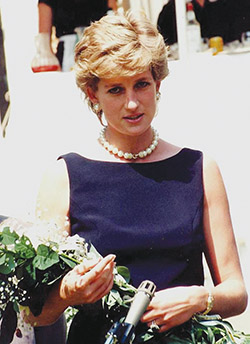
  • Assassination of the Humanitarian Princess: The Killing of Diana

    Assassination of the Humanitarian Princess: The Killing of Diana

    This article was published in New Dawn Special Issue Vol 9 No 1 (February 2015)

    1992 was the year that the relationship between Princess Diana and other senior British royals changed irreversibly. In June Diana collaborated with UK author Andrew Morton in a book which exposed Prince Charles’ relationship with his lover Camilla Parker-Bowles and Diana’s mistreatment by senior members of the royal family. The reaction was swift. Within 11 days of the book’s publication Diana received a bombshell letter from her father-in-law, Prince Philip. The letter alarmed her and Morton says that she sought out a solicitor to help draft a reply.1

    Within months the Queen had moved to set up the royal Way Ahead Group – a committee dedicated to helping the royal family deal with major issues and planning the way forward. Its first meeting was held in November 1992 and in the following month the Queen requested the formal separation between Charles and Diana. This was announced in the House of Commons on 9 December.

    In October 1995 Princess Diana penned a note in which she stated that she feared for her life and believed Prince Charles was “planning ‘an accident’ in my car.”2 She left the note with her butler, Paul Burrell, for safe-keeping. Later that month Diana met with her lawyer, Lord Victor Mishcon. He wrote the next morning that Diana had told him efforts could be made to “get rid of her… by some accident in her car such as pre-prepared brake failure.”3 Mishcon had this note typed up and kept it in his safe.

    Five days after that lawyer’s meeting Diana pre-recorded the famous ‘Panorama’ interview with BBC journalist Martin Bashir. In the program – which went to air on 20 November – Diana declared “there were three of us in this marriage,” that she doubted Charles could adapt to being King, recounted her mistreatment by the royals, and stated she was a “very strong person” who would “fight to the end.”4

    Diana also told several friends and family that she feared for her life and believed she could be killed in “an accident.”

    Later that month her fears were vindicated when the brakes in her regularly-serviced Audi failed as she drove through the streets of London. She wrote about it to her close friends. Simone Simmons said she received a letter that said: “The brakes on my car have been tampered with. If something does happen to me it will be MI5 or MI6.”5

    The month following the ‘Panorama’ interview, just seven days before Christmas, Diana received a hand-written letter from the Queen requesting her to divorce Prince Charles.

    The decree absolute came into effect on 28 August 1996, but it was much more than a marital divorce. The Queen also moved to strip the princess of her HRH title and effectively remove her from the royal family.

    Earlier, in March, Diana had been driving in London when she was hit by an out of control Fiat Uno. Her driver’s door was smashed in and witnesses said it was amazing she escaped unhurt. Although the police investigated this crash, their report has never been released.

    Diana Starts Campaigning to Eradicate Landmines

    Then around July 1996 Diana started taking an interest in the worldwide scourge of unexploded landmines and began collecting information and building a dossier on the industry. Her primary concern was humanitarian – to help the victims and to campaign for the eradication of all landmines.

    In January 1997, launching her involvement in the campaign, Diana made a highly-publicised visit to Angola – this was the nation with the highest number of victims. She was filmed walking through minefields and stated that she sought to “focus world attention on this… largely neglected issue.”6

    The following month she received a high-profile death threat. During a phone call from Nicholas Soames, Britain’s Minister of the Armed Forces, Diana was told to drop her anti-landmines campaign. Soames went on to say: “You never know when an accident is going to happen.”7

    Although shaken, Diana told her friend Simone Simmons – who witnessed the call – that she was undeterred: “We must do something. We cannot allow this slaughter to continue.”8

    Diana’s anti-landmine dossier grew in size to become several inches thick and she left copies with Simmons and another friend, Elsa Bowker. Her butler Paul Burrell said it contained “every fact of the landmine mission.”9

    On 12 June 1997, just under 12 weeks before she died, Diana delivered a landmark speech at the Royal Geographic Society in London. She outlined the nature and scope of the landmine problem, she talked about the “evil that men do” and spoke about her vision to “end this plague on Earth.”10

    Meeting the Al Fayeds

    It was around this time Princess Diana accepted an offer from long-time family friend and owner of Harrods, Mohamed Al Fayed, to holiday with his family at his St Tropez villa in mid-July. The offer extended to Diana and her two sons, William and Harry. At that time Al Fayed was viewed by the British Establishment as a person of ill-repute – he had recently been heavily involved in the “cash for questions” scandal that helped bring about the downfall of Britain’s Tory Government in May 1997.

    Both these actions – Diana’s increasingly public determination to eradicate the mines and taking William, the future King of England, on holiday with the Al Fayeds – were seen as a major challenge to the Establishment.

    In the following days two critical high-level decisions were made.

    First, senior royals called a special unscheduled meeting of the Way Ahead Group (WAG), chaired by the Queen. This meeting took place on 23 July and was preceded two weeks earlier by a special preparatory meeting attended by senior royal household officials, including the Queen’s private secretary, Robert Fellowes. The preparatory meeting was held on 8 July – three days before Diana and the princes left on the contentious Al Fayed holiday – and the full WAG meeting occurred on 23 July – three days after the holiday had concluded.

    The second decision was for an arrangement to be made for friend of Diana, Rosa Monckton, to organise a holiday with Princess Diana. Monckton was a person who had two very close connections to MI6 – her brother Anthony was a MI6 officer working in Zagreb and her husband Dominic Lawson was a MI6 agent who was editor of the Sunday Telegraph.

    Whilst in Hong Kong Monckton called Diana and arranged a one-on-one yachting holiday around the Greek islands, to take place in mid-August.

    Diana, William and Harry left for the St Tropez holiday on 11 July, amidst a storm of controversy. Following their return nine days later, a romance developed between Diana and Mohamed Al Fayed’s son, Dodi.

    On 30 July Diana broke off her nearly two year relationship with boyfriend Hasnat Khan and the following day left with Dodi on a week-long Mediterranean cruise.

    Their romance blossomed throughout August, interrupted only by two events – the pre-arranged Monckton cruise and Diana’s three-day anti-landmine visit to Bosnia on 8 August.
    [alert type=”info” dismiss=”no”]If you appreciate this article, please consider a subscription to New Dawn magazine.[/alert]

    Monckton Cruises with Diana for Intel

    Diana and Monckton left for the Greek islands on the 15th – “it was just the two of us” Monckton later told the inquest.11 What she didn’t say was that their hired 20 metre boat, the Della Grazia, was shadowed by three super-yachts chartered by MI6, the Marala, the Sunrise and the Sea Sedan. These were used as decoys to distract the media – who were not looking for a smaller vessel, and despite a massive search, never actually found the boat Monckton and Diana were on.12

    This strategy provided Monckton with five uninterrupted days on the ocean – time to seek inside information on Diana’s thoughts and intentions, to satisfy her intelligence masters.

    Diana and Monckton returned from that holiday on 20 August – and 11 days later Diana lay dead in a Paris hospital.

    On 22 August Diana and Dodi departed from Stansted airport headed for their final Mediterranean cruise. The two lovers would never see England again.

    The following day they visited Repossi’s jewellery store in Monte Carlo. Diana saw and liked an engagement ring from the “Tell Me Yes” range. Dodi later arranged for that same ring to be transferred to Repossi’s Paris – he purchased it from there just hours before the couple died.

    Diana and Dodi finished up their cruise in Sardinia and on the afternoon of Saturday, 30 August, they flew from Olbia to Paris, landing at Le Bourget airport at 3.20pm.

    They were met by French police who provided an escort for the initial part of the journey into the city.13 The police later denied they were aware of Diana’s presence in France, falsely claiming the first they knew she was there was when they heard about the crash that occurred later that night.14

    Threatened by Large, Dark Motorbikes

    During that journey and other travels through the streets of Paris that evening the couple’s Mercedes was threatened by large, dark motorbikes, some carrying pillions. Witnesses in the car and back-up Range Rover described these bikes as “behaving dangerously.”15 The Mercedes driver, Philippe Dourneau, said they were “coming from all angles, from front and behind – they were all over the place.”16 They took many flash photos on these trips – none of which have ever been published. The evidence indicates they were operating as fake paparazzi, helping to create an environment where later the real paparazzi could be falsely held culpable for the crash.

    Initially the couple travelled to Villa Windsor and then into the city, arriving at the Ritz Hotel – owned by Mohamed Al Fayed – at 4.35pm. Whilst there Diana made phone calls and had her hair done and Dodi visited Repossi’s and purchased the engagement ring.

    They left the hotel at 7pm, heading for Dodi’s apartment near the Arc de Triomphe. Once in the apartment – where their luggage had earlier been taken from the airport – the couple relaxed, showered and prepared to leave for dinner, which was to be back at the Ritz.

    They left for the hotel at 9.30pm. Didier Gamblin was on security at the apartment and said the fake paparazzi went “completely crazy” and “set off like lunatics to follow the car.”17

    Ritz CCTV records Diana and Dodi arriving at the front entrance of the hotel at 9.50pm. They initially went to the restaurant for dinner, but were stressed from the intimidating actions of the fake paparazzi and soon moved themselves upstairs to the sanctuary of the Imperial Suite.

    The Decoy Plan – But Who Planned It?

    It is after this that a decoy plan surfaced – a plan to leave for the return trip to the apartment from the rear of the hotel in a third car, whilst the primary Mercedes and the back-up Range Rover sat outside the front entrance, acting as decoys to divert the paparazzi.

    Dodi approved a plan for the use of a third car to leave from the rear – but he was not told there would be no back-up car, only one bodyguard and a driver who was not licensed to chauffeur.

    The evidence indicates the plan was devised by intelligence officers working from outside the hotel, employing two of the Ritz’s senior staff as agents – Henri Paul, the acting head of security and Claude Roulet, the vice-president of the hotel.

    Henri Paul was the designated chauffeur – but he was not a driver, had never driven any Ritz guests in his 11 years at the hotel, and did not possess the required chauffeur’s ‘Grande Remise’ licence. To top it off, his best friend, Claude Garrec, told the police Henri didn’t like driving and “If he could avoid [it] he would.”18

    Henri Paul had been receiving large sums of money from sources unknown in the months leading up to the crash. He had links to French and British intelligence agencies and on the night of his death was carrying 12,565FF ($2,500) on his person.

    The third car was the only other car available – a Mercedes S280 with untinted windows, whose regular driver was Olivier Lafaye. Every evening Lafaye would finish work, return to the Ritz and park his vehicle in the same section of the Vendôme car park. He told the police that the other chauffeurs took their vehicles home – he was the only one without a garage.19

    On that Saturday evening Lafaye parked his Mercedes S280 at 8.15pm. At 8.20 Claude Roulet is shown on CCTV leaving the Ritz Hotel. It is likely Roulet pointed out this Mercedes to other agents, who then had ample time to tamper with the vehicle prior to its final departure after midnight. Later evidence revealed that Diana – a person who many witnesses said always wore her seat belt – was sitting in the right rear seat with a jammed belt.20

    Henri Paul departed from the hotel at 7.01pm, but quickly returned at 10.06 following the couple’s arrival. After 11pm he made four separate visits to the paparazzi waiting out the front of the Ritz. Henri was providing regular updates on how long it would be before the couple appeared. It was essential to the MI6 plan that the paparazzi were still present when Diana and Dodi departed – they would try to follow the car and later be falsely blamed for the behaviour of the fake paparazzi, the assassins.

    Detailed Account of Diana’s Final Fatal Journey

    The Mercedes S280 departed from the rear of the Ritz Hotel at 12.18am – there was no back-up car, only one bodyguard, untinted windows and at least one jammed seat belt in the back.

    Some paparazzi were outside the rear and they immediately followed. Those out the front were quickly alerted and some of them joined the pursuit at the Place de la Concorde, where the Mercedes was held up by red lights.

    Large unidentified motorbikes also joined in from around the Concorde. The Mercedes was pressured by constant flashing of cameras – many photos were taken but they have never been published.

    The principal car left quickly from Concorde and witnesses on the riverside expressway saw a speeding Mercedes surrounded by several large, dark motorbikes. As the vehicle approached the exit it would take to head for Dodi’s apartment, a blocking motorbike was seen on its right.

    Failure to make the appropriate exit forced the Mercedes S280 towards the Alma Tunnel. As it neared the tunnel one witness saw the motorbikes “in a cluster, like a swarm around the Mercedes.”21 People saw photos being taken – again unpublished.

    Two separate witnesses saw the Mercedes – which was already in the left lane – overtaken on the left by one of the motorbikes carrying a pillion. At the same time, just as Henri entered the tunnel, he was confronted on the right by a slow-moving white Fiat Uno straddling the two lanes.

    As the motorbike got in front, a bright flash was seen and Henri immediately lost control of the Mercedes. A split-second later the Mercedes side-swiped the Uno and then zig-zagged left, right and left before crashing into the 13th central pillar of the tunnel, at around 100 kph.

    The car bounced back from the pillar, swung around 180 degrees and came to rest near the wall, facing the tunnel entrance.

    It was 12.23am on Sunday, 31 August 1997.

    Witnesses saw motorbikes and cars fleeing the tunnel – even though it is against the law in France to not stop and render assistance. None of the fleeing vehicles – including the white Fiat Uno – has ever officially been identified. And none of the drivers or riders have ever come forward.

    The two people on the driver’s side – Henri Paul and Dodi Fayed – died on impact, and the two on the passenger’s side – Princess Diana and bodyguard Trevor Rees-Jones – survived the crash.

    The French ambulance service (SAMU) immediately started receiving calls from passers-by. Dr. Arnaud Derossi was manning the phones and he allocated an ambulance carrying Dr. Jean-Marc Martino.

    That ambulance left the Necker Hospital base at 12.28am and arrived at the crash scene at 12.40am. It took 12 minutes to travel 2.3 km – Diana’s ambulance travelled to the scene at around 11½ kph.

    Upon arriving Martino straightaway phoned the base and spoke to Dr. Derossi, who then immediately left the base heading to the crash scene. It was left to an auxiliary to notify the base’s off-duty doctor, Marc Lejay, who was asleep at the time.22

    Death by Doctors?

    Princess Diana was heard talking by several witnesses, saying “Oh my God” and “what’s happened?”23 When the doctor performed the standard Glasgow Coma test to assess her condition in the car, she scored very well – 14 on a scale of 15.24

    However there was reason to suggest there could be an internal injury – Diana had been involved in a fatal, high speed crash and wasn’t wearing a seat belt. This possibility was confirmed after Diana was finally transferred into the ambulance, 43 minutes after the crash. The initial examination revealed there was thoracic trauma bruising.25

    From that point it became even more imperative that Diana was transferred immediately to a hospital – the thoracic trauma was a clear sign there could be a life-threatening internal injury.

    Instead though, these two doctors – Martino and Derossi – tarried. The ambulance remained in the Alma Tunnel until 1.41am, one hour and 18 minutes after the crash.

    And worse, they poured catecholamine into her to increase her blood pressure (BP), even though the BP was 70 and high enough to comfortably make the 5 km trip to the hospital.

    And on top of that, Dr. Derossi informed the base there was “nothing for the thorax,” twice, even though he already was aware of the thoracic trauma.26 This ensured the hospital would not have a thoracic specialist on hand when Diana arrived.

    After leaving the scene the ambulance travelled at what one witness described as “walking pace.”27 Then within sight of the hospital gates it stopped for five minutes. A journalist who followed the ambulance described it as “rocking” while stationary.28 He also witnessed a doctor transferring from the front to the back.29

    Whatever they were doing inside the ambulance, it required four people – Drs Martino, Derossi and two interns (Barbara Kapfer and a person called “Fadi”).

    There has never been a credible explanation for a stoppage so close to the hospital.

    Martino delivered Diana to the La Pitié Salpêtrière Hospital at 2.06am – it was now one hour and 43 minutes since the crash.

    Six minutes after arriving Princess Diana stopped breathing. She would never breathe again, despite the best efforts of the hospital’s doctors.

    Dr. Bruno Riou ticked the suspicious death box on the death certificate.30 The public prosecutor’s office was then forced to order an autopsy, which was conducted by Professor Dominique Lecomte. She found no suspicious circumstances.

    Dr. Riou was never asked why he was suspicious.

    Conflicting Evidence Points to the Cover-Up

    Later that morning Professor Lecomte carried out an autopsy on the driver, Henri Paul. Samples taken were tested early the following day – the results indicated the driver had a blood alcohol concentration (BAC) of 1.74, three times over the French limit.

    This conflicted with evidence in the hotel prior to the departure of the Mercedes. Many witnesses testified that Henri was not drunk and this was supported by the CCTV footage, which showed him walking and acting normally.

    Later testing revealed the blood had a carbon monoxide (CO) level of 20.7%. The combination of elevated BAC and CO meant Henri would have been incoherent, had a migraine headache and found it impossible to stay upright.

    Yet that is not what the CCTV and witnesses saw.

    A close analysis of Professor Lecomte’s autopsy of Henri Paul reveals she made at least 58 errors in her conduct and documentation.31 The police files reveal there were two lots of documentation for the one autopsy – each recording different samples taken and differing body measurements, weight and height.32

    The evidence points to two bodies being in the room at the time of the autopsy – one was Henri Paul’s and the other was a person who had died in a fire with smoke inhalation.

    Samples were taken from both bodies, but kept separate. The other person’s samples were used for the BAC testing and years later Henri’s true samples were used for DNA testing. The DNA-tested samples were never BAC tested and the BAC-tested samples were never DNA tested.

    The paparazzi and Henri Paul were fraudulently set up to take the blame for the death of Princess Diana.

    The truth is that the crash was orchestrated by MI6 (with assistance from the CIA and France’s DGSE and DST) on the orders of senior members of the British royal family, with the acquiescence of Tony Blair, Jacques Chirac and Bill Clinton – the leaders of the three leading Western arms-dealing nations.

    Diana Princess of Wales – our humanitarian princess – was murdered in one of the most shocking inter-governmental operations followed by one of the most extensive cover-ups of our time.

    The late John Morgan wrote two explosive books exposing the conspiracy to murder Princess Diana. Information on How They Murdered Princess Diana: The Shocking Truth, and Paris-London Connection: The Assassination of Princess Diana, can be found at princessdianadeaththeevidence.weebly.com. Both books can be purchased from Amazon.com.

    [alert type=”success” dismiss=”no”]If you appreciate this article, please consider subscribing to help maintain this website.[/alert]

    Footnotes

    1. Andrew Morton, Diana: In Pursuit of Love, Michael O’Mara Books, 2004, 76
    2. Inquest evidence: INQ0010117
    3. Inquest evidence: INQ0006335
    4. ‘The Panorama Interview’, BBC, 20 November 1995, www.bbc.co.uk/news/special/politics97/diana/panorama.html
    5. Simone Simmons with Ingrid Seward, Diana: The Last Word, St Martin’s Press, 2005, 179
    6. www.youtube.com/watch?v=rU0APrqxUxc
    7. Diana: The Last Word, 178-180
    8. Ibid., 180
    9. Inquest transcripts: 16 Jan 08: 27.11
    10. ‘Responding To Landmines: A Modern Tragedy And Its Consequences’ by Diana, Princess Of Wales. Keynote Address at a one day seminar co-hosted by the Mines Advisory Group and the Landmine Survivors Network, London, 12 June 1997, http://gos.sbc.edu/d/diana.html
    11. Inquest transcripts: 13 Dec 07: 139.18
    12. ‘The Media Swarm Greek Isles, In Search Of Diana’, Philadelphia Inquirer, 18 August 1997
    13. Rene Delorm, Diana & Dodi: A Love Story, Tallfellow Press, 1998, 154
    14. Inquest transcripts: 14 Nov 06 statement read out 21 Nov 07: 57.22
    15. Inquest transcripts: Kez Wingfield: 2 Sep 97 Statement read out 18 Dec 07: 145.9
    16. Inquest transcripts: 3 Sep 97 Statement read out 29 Oct 07: 67.17
    17. Inquest transcripts: 3 Oct 97 Statement read out 7 Mar 08: 103.14
    18. Paget Report, 14 December 2006, 162-3
    19. Paget Report, 14 December 2006, 244-5
    20. Paget Report, 14 December 2006, 421
    21. Paget Report, 14 December 2006, 439
    22. Inquest transcripts: 11 Dec 07: 7.13
    23. An example: Xavier Gourmelon: Paget Report, 14 December 2006, 513
    24. Inquest evidence: INQ0004774
    25. Inquest transcripts: 24 Jan 08:124.16; Inquest evidence: INQ0004774
    26. Inquest transcripts: 11 Dec 07: 14.9, 28.23
    27. Inquest transcripts: Pierre Suu: 28 Feb 06 Statement read out 11 Mar 08: 150.4
    28. Inquest transcripts: Thierry Orban: 23 Sep 97 Statement read out 17 Oct 07: 13.7
    29. Inquest transcripts: Thierry Orban: 23 Sep 97 Statement read out 17 Oct 07: 13.3; Pierre Suu:28 Feb 06 Statement read out 11 Mar 08: 150.22
    30. Prof. Bruno Riou, Witness Statement, 7 March 2006, reproduced in Diana Inquest: The Documents the Jury Never Saw, edited by John Morgan, 2010, 375-6
    31. John Morgan, Cover-Up of a Royal Murder: Hundreds of Errors in the Paget Report, 2007, 188-194
    32. John Morgan, Diana Inquest: The French Cover-Up, 2010, 50-68

    © New Dawn Magazine and the respective author.
    For our reproduction notice, click here.
  • Of Towering Infernos, False Flags & Terrorism

    Of Towering Infernos, False Flags & Terrorism

    From New Dawn Special Issue Vol 6 No 3 (Aug 2012)

    When Moscow’s Federation Tower skyscraper caught fire last April, images of the blazing inferno on its upper floors were grim reminders of the September 11, 2001 terror attacks on the Twin Towers of New York City’s World Trade Centre.

    However, had the “9/11 laws of physics” prevailed, Federation Tower would have collapsed into its footprint at free-fall speed and turned into an inches-deep dust carpet covering central Moscow. Clearly, that is not what happened…

    What did happen was that twenty Moscow fire brigades and helicopters fought the blaze throughout the night, bringing it under control and finally extinguishing it.

    Birth of the “Global War on Terror”

    Indeed, strange events surround the 9/11 terror attack, which has become the watershed event of our modern times. For it marks the beginning of Imperial Overdrive on the part of the United States, Britain and key allies in Europe and the Middle East, all masqueraded as the “Global War on Terror.” In just over a decade, this war has cost untold suffering, death and injury to millions of people and widespread violence in many countries, some of which have since been invaded and destroyed.

    Closer to home, 9/11 has served to “justify” today’s Gestapo-like 24/7 total surveillance police-state spying on the domestic populations of the US, UK, Europe, Australia, New Zealand and – even if to a lesser degree – in most other countries too.

    These are just two of the many significant reasons why the 9/11 Event needs to be revisited and reassessed until the full truth finally comes out: who really did it, why did they do it, how did they manage to pull it off, and who have been hiding or at least diverting the awful truth about it and why?

    We need not delve here on all the flagrant contradictions and damned lies propagated by US authorities and the mainstream media to this very day. In this respect, readers are recommended to visit the many excellent and well-researched and documented sites on the Internet, including Scholarsfor911Truth.com, 911Truth.org, wtc7.net, 911research.com, and wtc7.net, amongst others.

    Rather, it’s the dramatic geopolitical consequences of the flagrant 9/11 lies that need to be increasingly stressed. By now, all independent thinking people know that the World Trade Centre was not brought down by 19 suicidal fanatics led by some nut hiding inside a deep cave in Afghanistan.

    Funnily, this is the most grotesque and idiotic conspiracy theory ever told and yet… that is exactly what US, UK and European authorities expect the world to believe occurred. People everywhere, however, are increasingly waking up to the obvious fact that steel-framed buildings don’t just collapse the way the World Trade Centre did.

    Steel and Concrete Skyscrapers Do Not Crumble to Dust…

    Moscow’s Federation Tower is just one of many examples of high-rise steel buildings suffering catastrophic fires and yet remaining intact. Let’s take a quick look at other eloquent examples, some dating back many decades:

    On 17 October 2004, a fire broke out in Caracas, Venezuela’s tallest skyscraper housing the Ministry of Infrastructure. The upper 20 of its 50 floors were destroyed and yet… it did not collapse.

    On 12 February 2005, Madrid’s 33 storey Winsor Tower suffered a huge fire causing the outer parts of its 30 upper floors to partially collapse. It took fire fighters a full day to extinguish the blaze and yet the building… did not collapse.

    On 23 February 1991, a major fire at One Meridian Plaza, a 38 storey skyscraper in Philadelphia, gutted 8 floors, killed 3 fire fighters and causing US$100 million in direct fire losses. The fire burned for over 19 hours, broke most windows on the fire floors; vertical columns were not damaged but horizontal beams sagged as much as 3 feet. The building did not collapse and was finally demolished eight years later.

    28 July 1945: lost in heavy fog, a World War II twin-engine B-25 bomber rammed straight into New York City’s emblematic Empire State Building at the 78th, 79th and 80th floor levels igniting major fires and yet… the building did not collapse.

    On 15 November 2010 a 28-story high-rise apartment building in Shanghai, China was completely destroyed by fire killing dozens, but the building did not collapse.

    On 26 February 1993 – World Trade Centre’s North Tower suffered the detonation of a massive 600 kilogram Urea-Nitrate-Hydrogen gas-enhanced truck bomb deep under its basement level which was intended to topple the building, and yet… it did not budge an inch…

    Ground Zero: Criminal Destruction of a Major Crime Scene

    These and many other similar examples of catastrophic fires on high-rise buildings beg the question: what really happened on 9/11? Why did the two towers collapse at free-fall speed? Why did they turn into dust? Why was all the evidence immediately removed, whisked away and destroyed by US authorities?

    What happened to those massive foundation beams cut at exactly 45° – tell-tale signs of controlled demolitions – that quickly disappeared? Think about it: the world’s deadliest and most famous crime scene where over 3,000 people were murdered was quickly gutted by the FBI, FEMA, police and military authorities; all the evidence removed and destroyed so that no forensic analyses could be done. Whatever steel beams and trusses survived were quickly sold as scrap metal to steel mills in South Korea, Taiwan and other countries for immediate melting and re-forging.

    One would have at least expected US authorities to be curious to find out why two 110 storey towers lying next to each other collapsed so suddenly and catastrophically, if only to learn how to build stronger buildings in the future that won’t come down so very easily.

    Everyone knows that whenever a major airliner disaster occurs, civil aviation authorities carefully pick up all the pieces, trying to put the unlucky airliner back together in some far-off hangar so they can investigate and maybe discover what went wrong. The cause of the accident – a faulty rudder, fuel tank, wing strut, avionics, hydraulic system, or whatever – can be re-designed so that airplane type and model is made safer.

    Not on Ground Zero. US authorities cleared the area of all beams, trusses, bolts, burying whatever body parts turned up in the rubble, very fast. They only seemed concerned in ensuring Ground Zero quickly became “hallowed ground”: a mystical symbol inspiring the new-born Global War on Terror.

    Physicists, engineers and the WTC’s own architects and builders state that the Twin Towers were built to resist direct hits from the largest jetliner of the late 60’s – the Boeing 707 – which is about as big and carries about as much fuel as the more modern Boeing 767’s that rammed into both Towers on 9/11.

    What brought the towers down was the jets’ fuel, say government experts. And yet both fires inside the upper floors of the Twin Towers were not hot – certainly not hot enough to melt steel beams – hence their orange colour and thick black smoke, both evidence of bad or “cold” combustion. Why, even the blue flame coming out of your kitchen stove is much hotter than that, and yet your steel pots and pans do not melt every time you cook your food, right?

    Worse still: video images of both jet impacts were very dramatic, particularly the ones of the South Tower that showed a massive, huge fireball exploding… outside the building!! Yes, indeed: a large part – perhaps most – of the fuel exploded outside and away from the tower. And yet… the South Tower collapsed first whilst videos show signs of molten steel pouring down from a spot around the 80th floor, something that was clearly not caused by jet fuel, which is basically refined kerosene. Tell-tale signs perhaps of Thermite and Nano-thermite, both of which are high-power military explosives?

    That is what a report published in the April 2009 edition of The Open Chemical Physics Journal concludes. Led by University of Copenhagen chemistry professor Niels H. Harrit, a research team of nine chemists concludes they “…discovered distinctive red/gray chips in all the samples we have studied of the dust produced by the destruction of the World Trade Centre. Examination of four of these samples, collected from separate sites of… these red/gray chips show marked similarities in all four samples. …The red portion of these chips is found to be an unreacted thermitic material and highly energetic.”1

    Clearly a “smoking gun,” although not exactly the one George W. Bush, Dick Cheney, Donald Rumsfeld and Condoleezza Rice were looking for!

    WTC7 – The Solomon Building

    Then we have that 64 million dollar question that no one can answer: why did 47-storey World Trade Centre Tower No. 7 – that was not hit by any airplane and only suffered moderate fires on its 6th and 12th floors that were being extinguished at the time – suddenly collapse into its own footprint also at free-fall speed at 5:30pm on that fateful day?

    This nice and tidy controlled demolition even allowed for the authorities to evacuate the building so nobody got hurt. WTC7 was home to SEC (Securities & Exchange Commission) offices investigating Enron, WorldCom and high-tech stock market bubble scandals, as well as the Secret Service’s largest field office. Alas! All the evidence they had put together came down with the building…

    Further, was WTC7 also home to a secret ultra hi-tech Command Post housing all the hardware and electronics necessary to sequentially (and probably wirelessly) detonate bombs placed inside the Twin Towers to bring them down? Once that operation was achieved, how perfect to destroy all the evidence under thousands of tons of rubble from the collapsed building? It’s just too good (or bad!) to be true!

    Far Too Many “Significant Questions…”

    We could add to all of this the incredible NORAD, FAA, USAF air defence failures over New York City and Washington DC – the most defended airspace on planet Earth; or the ridiculously small hole left by a large (alleged) Boeing 757 airliner in the Pentagon; or the almost complete lack of commercial jetliner debris in all four crashes; or the fact war games were being carried out at exactly the same time, in the same places and under the same attack scenarios; or the exceptional volume of “put options” short-selling American and United airlines stock which reaped nice earnings for some anonymous people who never dared to show up to cash them; or the fact that Osama bin Laden was immediately accused of being 9/11’s mastermind and culprit and yet for almost a decade the FBI had him on their “Most Wanted” list for other attacks but not a word about 9/11; or the glaring omissions in the 9/11 Commission and NIST reports and their grotesque computer model “proofs”; or incredible cell phones that worked at 30,000 feet; or the very suspicious US government-sponsored Bin Laden family airlift ordered by President George W. Bush once full grounding of all aircraft had taken place on 9/11; or the fact that only a day before defence secretary Donald Rumsfeld admitted the Pentagon was “missing” a mere 2.3 trillion (US$2,300,000,000,000!) in unaccounted for assets; or the fact that the Port Authority of New York and New Jersey decided to privatise the WTC to Larry Silverstein just two months earlier and that Lucky Larry got billions of dollars in insurance indemnity, even after he admitted on public TV that he agreed to “pull” the building down on that dreadful afternoon; or the FBI’s “lucky find” of WTC1 suicide pilot Mohammed Atta’s intact passport on the sidewalk below; or….

    False Flag Attacks

    More and more lucid people inside and outside the US are waking to the fact that 9/11 can only be explained as foul play purposely perpetrated by extremely powerful groups of players that are embedded deep inside the public and private power structures of the United States and its key allies, notably Israel, who have their own independent agenda. 

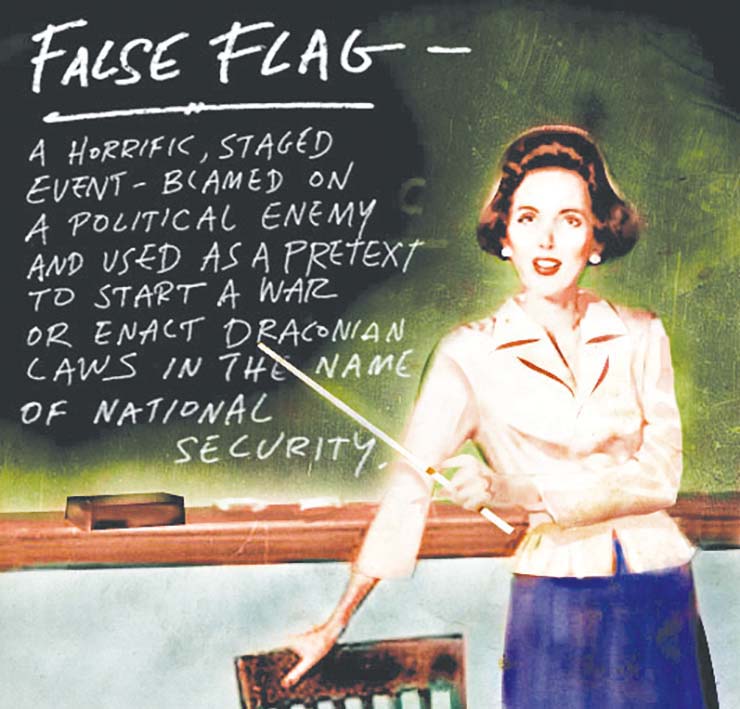
    They are “False Flag” attacks, and involve staging carefully calculated very high-profile attacks on one’s own country and interests, and then laying the blame on whichever “enemy” the perpetrators wish to wage war against.

    This is nothing new, especially in the United States where False Flag operations are a traditional foreign policy tool of deception. Intelligence agencies contingently partner and interact with discrete clandestine and criminal groups in order to plan and execute such vile acts of terrorism. They range from intentional provocation and “letting things happen,” to outright execution.

    Understanding False Flags as part of US/UK/Israel foreign policy and war efforts not only explains key high profile dramatic events that “justified” war against a wide assortment of “enemies” in the past, but also helps us understand present-day US, UK, French and Israeli behaviour in places like Syria, Iran, Libya, Africa and Latin America. In all cases, one key objective stands out: promoting US/UK & Allies’ imperial expansion and consolidation as global hegemons.

    A quick overview of historical False Flags:

    1898: The US battleship “Maine” was blown up in Havana Harbour, triggering the Spanish-American War won by the US. This left Cuba, Puerto Rico, Guam and the Philippines as war booty for the Americans. It also included an early media PsyWar exercise led by William Randolph Hearst’s yellow journalism press that whipped up hysterical war frenzy amongst US citizens with his “Remember the Maine, to hell with Spain!” rhetoric. Years later, it was proven the ship either suffered a coal explosion or, more likely, a bomb attack. Divers later found that the ship’s armour plates were blown from the inside out, and not from the outside as would be caused by an enemy bomb.

    In May 1915, the British passenger ship “RMS Lusitania” was sunk by the U20 German submarine, killing 1,200 of its almost 2,000 passengers; 128 of the dead were US citizens. A week earlier, Imperial Germany’s embassy in Washington DC had issued public warnings to passengers because “Lusitania” was known to regularly transport military supplies to Britain in its war effort against Germany and was, thus, a legitimate war target. Winston Churchill, then Britain’s First Lord of the Admiralty, used the “Lusitania” as bait knowing the Germans would try to sink it.2 On its last voyage, it carried 6 million pounds of shells and munitions shipped by JP Morgan Bank to clients in Britain and France, which explains the catastrophic explosion that quickly sank the vessel. Although it was illegal for passenger ships to transport war materials, it nevertheless “justified” US entry into World War I in 1917. Winston was very happy…

    7 December 1941 was US President Franklin D. Roosevelt’s “day that will live in infamy” when Japan attacked a US naval base at Pearl Harbour, Hawaii. In his famous speech, he went on to say, “The United states was at peace with that nation,” and yet for six months before the Pearl Harbour attack a US volunteer squadron known as The Flying Tigers had been running attack missions against Japanese forces in China causing the Japanese to lose 100 aircraft. Pearl Harbour was part of a war plan against Japan, where it served as bait for the Japanese to bite, and they did. The US had captured Japanese “Magic” decrypting machines, so they knew about an impending Japanese attack, and just “let it happen.” In fact, Roosevelt gave several of those decrypting machines to his British allies, but none to his US naval commanders in the Pacific. Hawaii’s navy commander Admiral Husband Kimmel and army commander Lt. General Walter Short were used as scapegoats, found “incompetent,” demoted and retired. However, it “justified” US entry into World War II.3

    In March 1963, “Operation Northwoods” planned by the US Joint Chiefs of Staff was described in a document titled “Justification for US Military Intervention in Cuba.” It included staging assassinations and terror attacks in the Miami area, “sinking a boatload of Cuban refugees (real or simulated),” faking a Cuban air force attack on a US civilian airliner and blowing up a US ship in Cuban waters. All to be then blamed on Fidel Castro. Then US President John F. Kennedy did not give his approval, which must have certainly earned him further internal enemies…

    2 August 1964: Another ‘day of infamy’ when North Vietnamese boats allegedly twice attacked the US destroyer Maddox in the Gulf of Tonkin. The truth is that, at the time, the South Vietnamese were running raids against the North in that area. The ‘incident’ was used as a pretext for massive escalation of the Vietnam War by the Lyndon B. Johnson Administration. The Pentagon Papers published in 1971 later showed that this ‘incident’ never even happened!

    During the June 1967 Six-Day War between Israel and its Arab neighbours, unmarked jet fighters repeatedly attacked and bombed the USS Liberty patrolling international waters off Palestine in the clear hope that its sinking could then be blamed on Gamel Nasser’s Egypt, thus dragging the US into a war for Israel. Unfortunately (for Israel) the American ship did not sink, although 35 of its crew were killed by Israeli napalm and bombs. Until his death in 1999, the USS Liberty’s commander William McGonagle demanded that secret documents on this perfidious case be released. They never were.

    These are but a few of the “fleet” of implicit staged False Flag events of which 9/11 is the “mother ship.” All we can add is, “Mission Accomplished!”

    Outside the US we also encounter incredible “coincidences” surrounding London’s Underground terror bombings of 7 July 2005, where private firm Visor Consultants admitted it was running a mock anti-terror drill in which the fictional scenario was exactly the same as the real attacks that were then taking place.

    Visor’s Managing Director Peter Power declared live on BBC Radio that day, “At half past nine this morning we were actually running an exercise for a company of over a thousand people in London based on simultaneous bombs going off precisely at the railway stations where it happened this morning, so I still have the hairs on the back of my neck standing up right now.” Yeah, sure… we believe you!

    Get the issue this article appears in

    Some Conclusions

    Clearly we see a pattern of covert False Flag attacks that are part of the imperial war strategy of the US, Britain, Israel and their allies. Of course, false flags require careful planning, ample financing, absolute secrecy, fully prepared media coverage using powerful PsyWar techniques, and a suitable assortment of smoke screens, scapegoats and patsies.

    High profile government officers – presidents, cabinet ministers, congressmen – must be kept as far away as possible from the entire planning and execution process.

    Even if they are the ones giving the final go ahead, they must never be perceived as having somehow been in the know regarding the “coming attack.” They must look and act as “surprised” as everybody else! And if doubts do start to arise afterwards, they must have full protection; it’s all part of the False-Flag Model.

    That, for instance, is what National Security secrecy legislation exists for: to ensure that sensitive and damning evidence can be put away, and finger-pointing information fully clamped down for 25, 50, 75, even 100 years if need be.

    The model always includes an “investigation” by a “committee” of notables. Like the 9/11 Commission chaired by insiders Thomas H. Kean and Lee H. Hamilton and directed by Philip Zelikow. If they summon top brass like George W. Bush and Dick Cheney to “testify,” that too must be done according to discrete rules of engagement, i.e., in full secrecy, both of them declaring together so they agree and correct their “answers” to ensure they are “the correct ones.”4

    They know only too well that, in the long run, the truth ends up surfacing as with the “attacks” on the Maine, Lusitania or Pearl Harbour. The important thing is to “buy time.” If enough time goes by, they can deal with and whitewash everything, as long as the public eye perceives such “revelations” not so much as a political issue, but rather as a historical issue.

    What harm can really arise today if we discover that Woodrow Wilson and F.D. Roosevelt tricked the US into two European wars? Even the Vietnam War is history today; for most people it boils down to several good Hollywood movies and some black-and-white images of hippy peace parades in the sixties.

    Once something becomes “history,” it can be suitably handled, controlled and sanitised. The great opportunity we have today is that the most hideous and dramatic false flag events like 11 September 2001 and 7 July 2005 in London are not “history” (not yet, anyway) but rather an integral part of the ongoing global political scene, that continues to be used to justify US, UK, Israeli & Allies Imperial Overdrive.

    If, thanks to technology, the Internet, the huge dissemination of information, we can somehow bring out the truth regarding these atrocities and who really committed them, to a sufficiently large portion of global public opinion, that will then spell real trouble – even the collapse – of today’s horrific clandestine, illegitimate, unelected and criminal Global Power Masters.

    They perpetrate their mischief enshrouded in deeply entrenched positions of power inside the formal public and private power structures of the US, UK, Israel, France and the EU.

    So, in a way, we have much to be optimistic about. All we need to do is persevere in our endeavours to bring the truth out. Once critical mass amongst the world’s collective psyche is reached, then a tipping point will no doubt be quickly reached in which this whole perverted system of global lies topples over and sinks. Just like the proverbial cruiser Poseidon; then shall this dark system disappear in a moment; in the twinkling of an eye!

    [alert type=”general” dismiss=”no”]This article was published in New Dawn Special Issue Vol 6 No 3.[/alert]

    [alert type=”success” dismiss=”no”]If you appreciate this article, please consider a contribution to help maintain this website.[/alert]

    Footnotes

    1. The Open Civil Engineering Journal, Volume 2, 2009, 7-31. Authors: Niels H. Harrit, Jeffrey Farrer, Steven E. Jones, Kevin R. Ryan, Frank M. Legge, Daniel Farnsworth, Gregg Roberts, James R. Gourley, Bradley R. Larsen
    2. www.lusitania.net
    3. Robert Stinnett, Day of Deceit: The Truth about FDR and Pearl Harbor, 2000.
    4. A grand example of insiders “investigating” insiders was the Warren Commission on the John F. Kennedy assassination. Of its seven members, four were top-level Council on Foreign Relations members: Senator Gerald R. Ford, Senator John Sherman Cooper, John J. McCloy and – last but not least – Allen Welsh Dulles, CIA director from 1953 until 1961 when he was forced to resign by JFK after the Cuban Bay of Pigs fiasco. The CIA is one of the most suspect players in the JFK killing!

    © New Dawn Magazine and the respective author.
    For our reproduction notice, click here.

  • Increasing Your Life Expectancy: Modern Medicine’s Impact on the Extension of Life

    Increasing Your Life Expectancy: Modern Medicine’s Impact on the Extension of Life

    All too often, we hear that the reason life expectancy has been increased is thanks to the marvellous developments in modern medicine. This is a message that is repeated many times and promoted by the medical industry – with little or no evidence.

    In fact, the opposite may be the truth. A combination of not understanding the concept of life expectancy, ignoring scientific facts, plus a willingness to take credit when it is not due has seen the medical industry promote itself as the reason we live longer. Behind the scenes, this is little more than a marketing strategy for the big pharmaceutical companies.

    Don’t get me wrong; this does not undermine the fantastic role medical doctors play in acute life-saving events. These make a huge contribution to an individual’s life expectancy but make an insignificant contribution to life expectancy for all of us.

    The overemphasis of modern medicine on the pharmaceutical model and “silver bullet” approach has led to a disempowerment of individuals over their own health during the past few decades, during which we have seen a huge rise in chronic illness. The more specialists and the bigger the medical budget, the poorer the health of the public.

    Let’s take an example: the US uses 50% of the world’s pharmaceuticals and spends more per person on medicine than any other nation, yet has one of the poorest health outcomes in the developed world.

    Modern medicine tends to focus on prescriptive treatment of disease, rather than health promotion, prevention and management.1,2 It is likely that everyday medical care provides little contribution to increased life expectancy of a population.3,4

    Gains in life expectancy worldwide have been greater during lastcentury than at any other time in recorded history.5,6 Statistical analyses show that since the early 1800s life expectancy at birth has seen a linear rate of increase.7

    Within this time, it has been human advances in sanitation, increased food supply, improved access to water, and basic preventative medicine that have helped drive these steady increases in the developed world – not pharmaceuticals. The majority of life expectancy gains were made before pharmaceuticals to treat heart attack, stroke and other forms of chronic illness were even developed.

    However, it is important to understand the concept of life expectancy. It is the average number of years of life remaining at a given age for a selected population. Life expectancy at birth is commonly used as the main indicator of human health and well-being. It is said to give an indication of the overall mortality of a population.5 However, it is a poor indicator of population health.8

    Life expectancy is poorly understood. Most people think it is increasing the age to which they can live; for example, people at 50 think that they are going to live longer because of an increase in life expectancy. This is not the case. Life expectancy is a statistical anomaly, which takes the average of the age of a person’s death. It includes everyone: infants, children, teenagers right through to those in their old age. This means that if the rates of infant mortality are reduced, the average life expectancy is dramatically increased overall.

    A simple example will highlight this. If 50% of the population died before one year of age and 50% of the population died at 80 years of age, the average age of life expectancy is around 40 years even though 50% lived to 80 years of age. If you eliminate the infant mortality the life expectancy goes up to 80 years of age. This does not mean people are living longer, they are still dying at 80 years of age but the statistical average, the “life expectancy,” has increased.

    This reduction of child mortality skews the life expectancy.9 Statistical analysis has revealed that the trends in cohort geriatric mortality follow those of reducing childhood mortality.10 This means that benefits from improvements in mortality rates of younger generations provide a false impression of the benefits to older generations. Furthermore, life expectancy at birth can only predict life expectancy with 95% confidence to within a fourteen-year range.9

    That is, we may live to 80 years of age plus or minus 14 years. Therefore it cannot be trusted as a reliable base to measure contribution of health interventions for whole population life expectancy. Reduced child mortality positively skews life expectancy statistics and gives the misconception of increased population lifespan.11,9,6

    To highlight the problems with this approach even further, the high rate of infant mortality in the 1900s was a result of the advent of pathological anatomy in the 1820s, and consequently the increase in number of conducted autopsies, is correlated to the incidence of fatal childbed fever. The decline in the 1840s and 1850s was a result of hygiene practices that the medical profession battled against for two decades. Why did it take so long?

    Research now also shows the supply of doctors has an insignificant relationship within infant mortality,11 that is, the number of doctors has no bearing on infant mortality rates. This becomes apparent when you look at non-medical home birthing rates in the Netherlands of up to 30% and 1% in Australia and the two countries have virtually identical infant mortality rates. But we have significantly higher wheeze, asthma, allergies and eczema, which are associated with interventionist births, in Australia.

    Life expectancy at birth does not provide adequate information as to the health or morbidity of a population prior to death.5,9 Better statistical analyses should be used that incorporate both morbidity and mortality measurements of population health. That is, continued increases in life expectancy in the future should only be considered worthwhile if accompanied by longer periods of good health.12 More consistent measures like the “potential years of life lost” should be used.9

    Modern medicine tends to focus on prescriptive treatment of disease rather than preventative avoidance and health management.13 We need to re-establish the balance between disease prevention for a population, as opposed to only treating consequences of disease to prolong individual life.14

    Billions of dollars are spentinventing and testing new drugs that only marginally extendthe benefits of those they replace, instead of using existing resourcesto better deliver effective services.15 Despite the billions of dollars spent, there is no population-based data to allow the direct connection of prescriptive medical care to the extension of life.4 In fact, numerous studies have shown the opposite.

    A major Australian study found an association between increasing mortality and an increase in the doctor supply,11 which is attributed to increasing adversities or complications caused by or resulting from medical treatment within society.11 This is known as autogenesis and has been the subject of much study. Depending upon how one uses statistics, autogenesis is now considered either first, second or third in comparison to cancer and cardiovascular rates. It is one of the biggest killers; most iatrogenic deaths are due to undesired effects of drugs when taken at a normal dose. In Australia alone, thousands of people die prematurely every year as a result of prescription drugs.

    There is no evidence to link increased medical spending and health outcomes, with many lower-spending nations such as Cuba tending to have better outcomes than higher-spending nations such as America.16 It is fascinating to consider that despite having one of the lowest doctor-to-patient ratios in the developed world, Okinawans and the Seventh Day Adventists living in California can expect one of the highest life expectancies.17

    Modern medicine cannot be given credit for increasing life expectancy at birth. Theory suggests that with increasing doctor supply, a population becomes increasingly dependent on their services to maintain health and ultimately neglects the more important lifestyle factors that contribute to longer, healthier life.18

    To the peril of preventative health care, there is often more short-term political capital to be gained from the construction of hospitals and investments in curative technology than from alleviating the causes of ill health.16,17

    With obesity and heart disease emerging as leading causes of mortality in the developed world, we must ask where life expectancy is headed in the future and give more political weight to preventative care. Theories of a time lag effect suggest a possible regression of life expectancy in the future, even with better health outcomes during infancy, which may very well be a result of contemporary approaches to healthcare.19,20

    Nowadays few people are ignorant of the dangers of smoking, drug and alcohol misuse, driving while intoxicated, risky sexual behaviour, fatty diets and so on.16 Reduction in these contributors to premature mortality must be considered significant for life expectancy gains.11 The cost of smoking cessation to save a life, not to mention the reduction in suffering and morbidity, is in the hundreds to a few thousand dollars per person21 and a recent Australian study reported favourable cost-effectiveness for smoking interventions, physicalactivity interventions and multiple behaviour interventionsin high-risk groups.22

    Okinawa, Japan boasts one of the longest life expectancies for its population in the world.23,17 There are also a significantly large population of centenarians living within the region.1 Despite being one of the poorest regions in Japan and being the bottom ranked in socioeconomic indicators for the country, Okinawa ranks at the top for its populations health and life expectancy.24 Okinawan people tend to live long and, most importantly, healthy lives. This is attributed to diet, high levels of physical activity, and strong cultural values that include good stress-coping abilities.17

    It just so happens that Okinawa culture embraces Hara Hachi Bu, which means to eat only until 80% full.25 Caloric restriction is the only consistently reproducible experimental means of extending mean and maximum lifespan. Laboratory experiments show markedly decreased morbidity in laboratory mammals that are fed to only 80% full.25,26 Much of the developed world stands to learn from this, as obesity linked to poor eating habits is an ever-increasing epidemic.

    Studies on populations with Okinawan ancestry living in Hawaii have supported claims that epigenetics are more influential to longevity than genetics.24 That is, Okinawans who leave the island do not live as long as those who live on the island. Furthermore, studies on the oldest living natural population in the world, the Seventh Day Adventists living in California, support these findings.12

    Any gains in life expectancy have to be seen in the context of the healthy habits in which a population engages. Those living longer – 80 years or more – right now were born in the 1920s and 1930s. They developed healthy eating and lifestyle habits that many of them still practice. It is unlikely that the next generation will enjoy these longer and healthier years due to poor habits.

    Our reliance on doctors and prescription medicine to ensure population longevity appears to be very narrow in light of its historical contribution to health. Starting down the right path with appropriatenutrition and lifestyle are important componentsof healthy aging and increasing your life expectancy.

    Acknowledgements: Thanks to Sean Allen for contributing to the research in this article.

    Professor Peter Dingle’s book on the truth about cholesterol and cholesterol lowering medication, The Great Cholesterol Deception, is available from all good bookstores or order at www.drdingle.com.

    [alert type=”general” dismiss=”no”]This article was published in New Dawn 125.[/alert]

    [alert type=”success” dismiss=”no”]If you appreciate this article, please consider a contribution to help maintain this website.[/alert]

    FOOTNOTES

    1. Raskin and Ripoll 2004
    2. Riley 2001
    3. Kamerow 2007
    4. Bunker 2001
    5. Michaud 2001
    6. Yin et al. 1985
    7. Oeppen and Vaupel 2002
    8. Robine 1999
    9. Murray 1988
    10. Cramming 2006
    11. Richarson and Peacock 2003
    12. Fraser 2001
    13. Riley 2001
    14. Dyer 2002
    15. Kamerow 2007
    16. Hunter 2003
    17. WHO 2008
    18. Illich 1975
    19. Terry et al. 2008
    20. Olshansky 2005
    21. Cummings et al. 1987
    22. Gordon et al 2007
    23. Oeppen and Vaupel 2002
    24. Cockerham 2008
    25. Willcox et al. 2006
    26. Bryant 2004
    Steven R. Cummings, MD; Susan M. Rubin, MPH; Gerry Oster, The Cost-effectiveness of Counseling Smokers to Quit. JAMA. 1989;261(1):75-79.
    Gordon L, N. Graves ,A. Hawkes, and E. Eakin A review of the cost-effectiveness of face-to-face behavioural interventions for smoking, physical activity, diet and alcohol. Chronic Illness, Vol. 3, No. 2, 101-129 (2007)
    Aaron, S, Ferguson, D. 2008. Exaggeration of treatment benefits using the “event-based” number needed to treat. Canadian medical association journal (Online) Vol 179, iss. 7, accessed: 12/01/09 via Google Scholar.
    Australian Institute of Health and Welfare, 2008. Australia’s national agency for health and welfare statistics and information, Australian Government http://www.aihw.gov.au/
    Bryant, R, 2004. Live longer: cut calories, exercise more. Dermatology Times: Clarifying Cosmetic Dermatology, International journal of epidemiology (Online) Vol 25, accessed : 09/12/09 via ProQuest.
    Bunker, J, 2001. The role of health care in contributing to health improvements within societies, International epidemiological association, (Online) Vol 30, accessed : 12/01/09 via Oxford Journals Online.
    Cockerham, W, Yamori, Y, 2008. Okinawa: an exception to the social gradient of life expectancy in Japan, (Online), accessed: 09/12/09 via Google Scholar.
    Crimmins, E, Finch, C, 2006. Commentary: Do older men and women gain equally from improving childhood conditions?, (Online) Vol. 35, accessed: 12/01/09 via Google Scholar.
    Dyer, O, 2002. Simple measures could increase life expectancy by 5-10 years. British Medical Journal (Online) Vol. 985, iss. 325, accessed: 17/01/09 via ProQuest.
    Fogel, W, 2004. The escape from hunger and premature death, 1700-2100. Europe America and the third world. University of Chicago, Cambridge University Press, New York.
    Fraser, G, Shavlik, D, 2001. ten years of life, is it a matter of choice?, (Online) Vol. 161, accessed: 11/01/09 via Google scholar.
    Halvorsen, P, Selmer, R, Kristiansen, I, 2007. Different Ways to Describe the Benefits of Risk-Reducing Treatments: A Randomized Trial. Annals of Internal Medicine, Vol. 12, 848-856, accessed: 19/01/09 via ProQuest.
    Hunter, D, 2003. Public health policy, Blackwell publishing, Oxford, UK.
    Illich, 1975. Medical Nemesis, Calder and Boyars, London. (Online Book) Vol. 161, accessed: 11/01/09 via Google scholar.
    Kamerow, D, 2007. Today’s doctor’s dilemma. British Medical Journal, Vol. 12, 848-856, accessed: 19/01/09 via Oxford Journals Online.
    Lubson, J, Hoes, A, Grobbee, D, 2000. Implications of trial results: The potentially misleading notions of number, (Online) Vol. 356, accessed: 04/01/09 via Google scholar.
    Martien, P, 2007. Who wants to live forever? Three arguments against extending the human lifespan. Journal of Medical Ethics (Online) Vol. 585, Iss. 33 accessed: 09/12/09 via ProQuest.
    Murray, C, 1988. The Infant Mortality Rate, Life Expectancy at Birth, and a Linear Index of Mortality as Measures of General Health Status, International Journal of Epidemiology (Online) Vol. 17, Iss. 1 accessed: 09/12/09 via ProQuest.
    Michaud, C, Murray, C, Bloom, B, 2001.Burden of Disease – Implications for Future Research, Vol. 285, accessed: 07/01/09 via Oxford Journals Online.
    Nakaji, S, Domhnall, M, O’Neill, S, McNally, O, Baxter, D, Sugawara, K, 2003.
    Life expectancies in the United Kingdom and Japan, Journal of Public Health Medicine (Online) Vol. 25, Iss. 2 accessed: 15/12/09 via ProQuest.
    Oeppen, J, Vaupel, J, 2002. Broken limits to life expectancy, Academic research library, Vol 296. accessed: 15/12/09 via Sciencemag.
    Olshansky, J, Passaro, J, Hershow, R, Layden, J, Carnes, B, Brody, J; Hayflick, L Butler, R, Allison, Ludwig, D, 2005. A Potential Decline in Life Expectancy in the United States in the 21st Century. Obstetrical & Gynecological Survey. Vol. 60 Iss. 7, accessed: 09/01/09 via Oxford Journals Online.
    Raskin, I, Ripoll, C, 2004. Can an Apple a Day Keep the Doctor Away? Current Pharmaceutical Design (Online) Vol. 27, Iss. 10 accessed: 09/12/09 via ProQuest.
    Richarson, J, Peacock, S, 2003. Will More Doctors Increase or Decrease Death Rates?, An econometric analysis of Australian mortality statistics, Centre for health programme evaluation, Working paper 137, Monash University, Australia.
    Riley, J, 2001. Rising life expectancy: a global history, Cambridge University Press, New York, (Online book) accessed : 20/12/08 via Google Scholar.
    Robine, J, Romieu, I, Cambois, E, 1999. Health expectancy indicators, World Health Organization, Bulletin of the World Health Organization, (Online) Vol 77, Iss 2 accessed : 11/01/09 via Google Scholar.
    WHO, 1999. Making a difference, World Health Report, World Health Organisation, http://www.who.int/whr/1999/en/index.html
    WHO 2002. Reducing risks, promoting healthy life. World Health Report, World Health Organisation,http://www.who.int/whr/2002/chapter1/en/index.html
    WHO 2008. Statitstical information system. World Health Organisation, http://www.who.int/whosis/data/Search.jsp
    Willcox, C, Willcox, B, Hidemi, T, Curb, D, Suzuki, M, 2006. Caloric restriction and human longevity: what can we learn from the Okinawans? (Online) accessed: 15/12/09 via ProQuest.
    Yin, P, Shine M, 1985. Misinterpretations of Increases in Life Expectancy in Gerontology Textbooks, The Cerontological Society of America (Online) Vol. 25, Iss.1 accessed : 15/12/09 via ProQuest.

    © New Dawn Magazine and the respective author.
    For our reproduction notice, click here.

  • The Great  Cholesterol Deception

    The Great Cholesterol Deception

    From New Dawn 123 (Nov-Dec 2010)

    Millions of Australians are prescribed cholesterol-lowering drugs – statins like Pravachol®, Zocor® and Lipitor® – each year at a cost of more than $1 billion dollars with very little, if any, benefit. In the US, some 40 million people currently take statins at a cost of more than $3.00 per pill, more than $1,000 per year, totalling more than $40 billion a year.

    While there are many exaggerated claims and a lot of hype about the benefits of statins, there are also many studies showing no benefits at all. The pro-statin hype is based on the misuse and abuse of statistics.

    Various independent studies in prestigious, peer-reviewed journals have shown that statin use in primary prevention – that is, to save lives – has minimal or no value in reducing mortality and certainly nothing that is considered anywhere near clinically significant to warrant their widespread use. It does not matter how one manipulates the statistics, the results just aren’t there.

    In data gathered in 2009 from six trials, a review of the efficacy in lowering the risk of death with statins found virtually no difference between the treatment group and the control group.1 There are many more of these studies.

    In an independent meta-analysis (when a number of studies are put together to achieve more statistical power) of randomised controlled trials in patients without CVD, statin therapy decreased the incidence of major coronary and cerebrovascular events and revascularisations but not coronary heart disease or overall mortality.2

    Taking statins for a number of years will not reduce mortality: “Primary prevention with statins provides only small and clinically hardly relevant improvement of cardiovascular morbidity/mortality.”3 “Hardly relevant” means there is virtually no clinical benefit; as the authors of these particular studies are independent, they gain nothing by stating this.

    Another review found that “current clinical evidence does not demonstrate that titrating lipid therapy (trying to lower cholesterol with statins) to achieve proposed low LDL cholesterol levels is beneficial or safe.”4 In other words, lowering lipids has no real benefit and has the potential for adverse effects.

    Following up on this, in a major independent review of studies funded by the Ministry of Health of British Columbia (Canada) on statins and primary prevention, researchers reported that “statins have not been shown to provide an overall health benefit in primary prevention trials.”5 This is a government report carried out by an independent university yet its findings are still ignored.

    The problem really comes down to vested interests and the abuse of statistics. To overcome the limitations of small studies, vested parties combine many studies into a meta-analysis. The researchers themselves select the studies used in the meta-analysis. A fundamental problem is that researchers with direct links to drug companies have the authority to select the most positive studies and ignore the rest – including independent studies not funded by pharmaceutical companies. Despite this, they have still not been able to show any clinically significant findings.

    As readers of the scientific journals, we should not be confused between statistical significance and clinical significance. For an outcome to be “statistically significant” means that the outcome was likely a result of the treatment – whether the result was 100% effective or less than 0.1% effective. That is, if you treat 1,000 people to save one life (0.1%) it may be statistically significant but it is not clinically significant. “Clinical significance” means 20% to 30% or more. The drug companies’ most positive studies on statins for prevention of CVD report statistical significance, mostly 1% or less, and none have found any clinical significance.

    Busy medical professionals don’t have time to review the statistics; few of them may be aware of the different ways the statistics are manipulated. So if the experienced professionals don’t understand the results of these studies, how do we expect the media or public to understand?

    More Deception

    The studies on statins also report “relative risk,” not “absolute risk” or “real risk.” The relative risk reduction is highly misleading6,7,8,9,10if not deceptive. An example of relative risk is: if you have four people in a study who die in the placebo group (no drug) compared to three people who die in the drug treatment group – that is, four were expected to die but with the drug only three did – then there is a 25% relative risk reduction. However, to get this effect of saving one life you would have to treat 1,000 people and the real risk reduction is 0.1%. Relative risk is like adding 1+1 to get 11 or 2+5 to get 25 or more. How can the pharmaceutical companies and the researchers working for them get away with this? This is probably because (at least in my experience) most people are afraid of statistics.

    In studies by the Medical Research Council dating back to the late 1980s, researchers found that of 1,000 men ranging in age from 35 to 64 who received treatment for mild hypertension over five years, there were six fewer strokes and two fewer cardiovascular events than would be expected.11,12 The real risk reduction over five years was 0.9%.

    Ten years later, a study of Pravachol® was released in the media, with much fanfare, as having a 22% drop (relative risk, not real risk) in mortality. However, when one looks at the numbers and statistics behind the calculations, treating 1,000 middle-aged men who had hypercholesterolemia (high cholesterol) and no evidence of a previous myocardial infarction with pravastatin for five years resulted in seven fewer deaths from cardiovascular causes, and two fewer deaths from other causes than would be expected in the absence of treatment.13 The real risk reduction, however, was a mere 0.9%, less than 1% or nine lives out of 1,000 when treated for five years. The research was sponsored by Bristol-Myers Squibb Pharmaceutical (West of Scotland Coronary Prevention Study).

    Conservatively, put another way, researchers treated 1,000 people for five years at a total cost of over $5 million to save seven people from CVD. One might wish to compare this to the cost and efficacy of adopting healthy lifestyle choices.

    In the Heart Protection Study in the United Kingdom, more than 20,000 participants aged 40 to 80 years with high risk of cardiovascular disease but average-to-low levels of total cholesterol and LDL cholesterol were treated with 40mg daily of simvastatin (marketed under several trade names including Zocor). Of 20,500+ study participants, 577 on statins died from a heart attack, 701 not treated died from a heart attack. That is a 25% relative risk reduction over five years.14 Sounds good, doesn’t it? The real percentage improvement is actually 1.7%. Over the five-year study, they saved 25 people per year in a high-risk population with previous cerebrovascular disease, peripheral artery disease, renal impairment or diabetes. These are seriously ill people and the researchers still achieved a benefit of only 1.7%. Researchers neglected to mention that around 30,000 people were not allowed in or dropped from the study and not counted in the percentage of people with side effects. There were 10,269 people on statins and 10,267 people on a placebo.15

    A study of 90,056 participants combining 14 randomised trials looked at the best outcome for people who had pre-existing conditions: 47% had pre-existing chronic heart disease, 21% had a history of diabetes and 55% a history of hypertension. The death rate was 8.5% among the statin group compared to 9.7% in the control group. This difference represents 1.2%.16

    The well-known JUPITER study compared a placebo group to a statin-taking group. The study found that there were 68 heart attacks in the placebo group and 31 heart attacks in the drug treatment group – a 58% relative risk reduction. There were 64 strokes in the placebo group, compared to 33 strokes in the treatment group, a relative risk reduction of 48%.17Sounds good, doesn’t it? However, the drug treatment group had 8,901 participants in it. In real terms, the heart attack risk went from a very low 0.76% to 0.35% and the risk of stroke went from 0.72% to 0.37%.

    Effectively, if you treat 300 people with expensive and dangerous drugs you might save one life. Under the best possible scenario, the real risk reduction was well under one half of one percent. The real risk reduction of consuming a handful of raw mixed nuts is much higher. It is interesting to note that one of the risk factors used to select the participants in the study was C-Reactive Protein (CRP) an indicator of inflammation, the real cause of CVD.

    In an independent assessment of the same statistics in 2010 titled “Cholesterol Lowering, Cardiovascular Diseases, and the Rosuvastatin-JUPITER Controversy. A Critical Reappraisal” by Michel de Lorgeril and her 8 colleagues found that “the JUPITER Study” was severely flawed.18 This recent analysis did a careful and independent review of both results and methods used in the JUPITER Study and reported that the “trial was flawed.”

    In an unprecedented attack on the study they (scientists other than myself usually don’t say boo even when it is serious) stated that, “The possibility that bias entered the trial is particularly concerning because of the strong commercial interest in the study.” In other words, the big pharmaceutical money influenced the study. And concluded, “The results of the trial do not support the use of statin treatment for primary prevention of cardiovascular diseases and raise troubling questions concerning the role of commercial sponsors.”

    This is a scathing attack in scientific terms of the earlier drug company sponsored study. Scientist do not go out of their way to create waves but these ones have not just found different results but also criticised the earlier studies link with pharmaceutical industry. It highlights not only that the studies don’t show any significant results but these studies and the education of our doctors is strongly influenced by the drug companies.19

    More recently, a study reported in the BMJ was a meta-analysis of 10 randomised clinical trials of about 70,000 people followed for an average of four years.20 In these trials, people with risk factors for cardiovascular disease but no history of existing disease were randomised to receive statins or no treatment. The relative risk reduction was 12% for total mortality, 30% for coronary event and 19% for a cerebrovascular event (stroke). However, the real risk reduction was 0.6%, 1.3% and 0.4% respectively. The actual number needed to treat to save one life was 167. Despite this outcome the authors of the study concluded, “In patients without established cardiovascular disease but with cardiovascular risk factors, statin use was associated with significantly (statistical not clinical) improved survival and large (statistical) reductions in the risk of major cardiovascular events.” (emphasis added.).

    In fact, the authors had significant associations with the drug companies and failed to mention it was statistically significant but not clinically significant. Again, busy medical professionals tend to read only the abstracts; claims like this are pretty convincing, though very misleading.

    More telling however, is the latest findings in June 2010 where two major independent studies, one the re-analysis of the Jupiter Study reported above and the other “A Meta-analysis of 11 Randomised Controlled Trials Involving 65,229 Participants” (don’t worry about the title) by Ray Kausik and 6 other independent researchers. The study, wait for it, found the use of statins in high-risk individuals was not associated with a statistically significant reduction in mortality. That is, they don’t save lives. Their data combined from 11 studies with 65,229 participants followed for approximately 244,000 person-years, a very big study, reported that this “meta-analysis did not find evidence for the benefit of statin therapy on all-cause mortality in a high-risk primary prevention set-up.” In other words they don’t save lives even in a high risk group. Even if you have all the elevated risk factors these drugs don’t work.

    How many more studies to we need to do to show these drugs don’t work?

    Professor Peter Dingle’s book on the truth about cholesterol and cholesterol lowering medication, The Great Cholesterol Deception, is available. To order, visit www.drdingle.com.

    [alert type=”general” dismiss=”no”]This article was published in New Dawn 123.[/alert]

    [alert type=”success” dismiss=”no”]If you appreciate this article, please consider subscribing to help maintain this website.[/alert]

    Footnotes

    1 Bartolucci, A.A., S. Bae, et al. (2009). A Bayesian meta-analysis approach to address the effectiveness of statins in preventing death after an initial myocardial infarction. 18th World IMACS/MODSIM Congress. Cairns, Australia. 2009. Cairns, Australia. http://mssanz.org.au/modsim09
    2 Thavendiranathan, P., A. Bagai, et al. (2006). “Primary prevention of cardiovascular diseases with statin therapy: A meta-analysis of randomized controlled trials.” Archives of Internal Medicine 166: 2307-2313.
    3 Vrecer, M., S. Turk, et al. (2003). “Use of statins in primary and secondary prevention of coronary heart disease and ischemic stroke. Meta-analysis of randomized trials.” International Journal of Clinical Pharmacology and Therapeutics 41(12): 567-577. M.Turk, S.Drinovec, J.Mrhar, A.International Journal of Clinical Pharmacology and Therapeutics. International Journal of Clinical Pharmacology and Therapeutics 567-57741122003
    4 Hayward, R.A., T.P. Hofer, et al. (2006). “Narrative review: Lack of evidence for recommended low-density lipoprotein treatment targets: A solvable problem.” Annals of Internal Medicine 145(7): 520-530.
    5 University of British Columbia (2003). “Do statins have a role in primary prevention? A review by the Therapeutics Initiative of the Department of Pharmacology & Therapeutics of the University of British Columbia.” Therapeutics Letter (48).
    6 Fidan, D., B. Unal, et al. (2007). “Economic analysis of treatments reducing coronary heart disease mortality in England and Wales, 2000–2010.” QJM 100: 277-289.
    7 Franco, O.H., A. Peeters, et al. (2005). “Cost effectiveness of statins in coronary heart disease.” Journal of Epidemiology and Community Health 59: 927-933. O.H.
    8 Franco, O.H., E.W. Steyerberg, et al. (2006). “Effectiveness calculation in economic analysis: the case of statins for cardiovascular disease prevention.” Journal of Epidemiology & Community Health 60: 839-845.
    9 Capewell, S. (2008). “Will screening individuals at high risk of cardiovascular events deliver large benefits? No.” British Medical Journal 337: a1395. S. British Medical Journal Capewell200816161617
    10 Nuovo, J., J. Melnikow, et al. (2002). “Reporting number needed to treat and absolute risk reduction in randomized controlled trials.” Journal of American Medical Association 287: 2813-2814.
    11 Medical Research Council Working Party (1985). “MRC trial of treatment of mild hypertension: principal results.” British Medical Journal 291: 97-104.
    12 Miall, W.E. and G. Greenberg (1987). Mild Hypertension: Is There Pressure to Treat? An account of the MRC trial. New York, Cambridge University Press.
    13 Shepherd, J., S.M. Cobbe, et al. (1996). “Prevention of coronary heart disease with Pravastatin in men with hypercholesterolemia.” New England Journal of Medicine 333: 1301-1307. P.W.McKillop, J.H.Packard, C.J.New England Journal of Medicine. New England Journal of Medicine 1301-13073331996
    14 Heart Protection Study Collaborative Group (2002). “MRC/BHF Heart Protection Study of cholesterol lowering with simvastatin in 20,536 high-risk individuals: A randomised placebo-controlled trial.” Lancet 360: 7-22.
    15 Ibid.
    16 Cholesterol Treatment Trialists’ Collaborators, C. Baigent, et al. (2005). “Efficacy and safety of cholesterol lowering treatment: Prospective meta-analysis of data from 90,056 participants in 14 randomised trials of statins.” Lancet 366: 1267-1278. L.Buck, G.Pollicino, C.Kirby, A.Sourjina, T.Peto, R.Collins, R.Simes, R.Lancet, Lancet 1267-12783662005
    17 Ridker, P.M., E. Danielson, et al. (2008). “Rosuvastatin to prevent vascular events in men and women with elevated C-reactive protein.” New England Journal of Medicine 359(21): 2195-2207. J.G.Nordestgaard, B.G.Shepherd, J.Willerson, J.T.Glynn, R.J.JUPITER Study Group, New England Journal of Medicine 2195-2207359212008
    18 Ray, K.K., S.R.K. Seshasai, et al. (2010). “Statins and all-cause mortality in high-risk primary prevention: A meta-analysis of 11 randomized controlled trials involving 65 229 participants.” Archives of Internal Medicine 170(12): 1024-1031.
    19 de Lorgeril, M., P. Salen, et al. (2010). “Cholesterol lowering, cardiovascular diseases, and the Rosuvastatin-JUPITER controversy: A critical reappraisal.” Archives of Internal Medicine 170(12): 1032-1036.
    20 Brugts, J.J., T. Yetgin, et al. (2009). “The benefits of statins in people without established cardiovascular disease but with cardiovascular risk factors: meta-analysis of randomised controlled trials.” British Medical Journal 338: b2376.

    .

    © New Dawn Magazine and the respective author.
    For our reproduction notice, click here.
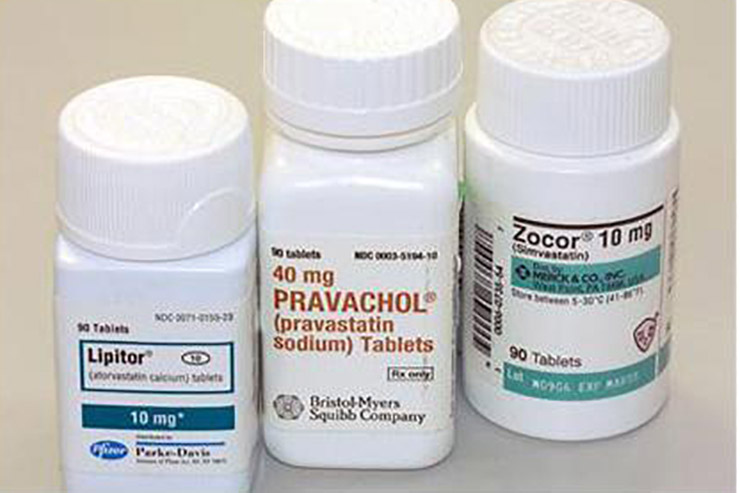
  • Water Fluoridation: Facts & Fallacies

    Water Fluoridation: Facts & Fallacies

    From New Dawn 107 (Mar-Apr 2008)

    Water fluoridation has been around for just over 60 years and whilst the practice has become widespread, particularly in Western nations, it’s always been a controversial and often passionately argued one.

    My formative moment in the fluoride ‘debate’, one that cathartically shunted me into the anti-fluoride lobby’s arms, came many years ago when I was sitting in a dentist’s chair in Cambridge, UK.

    I knew very little about fluoride at the time, so it was with an open mind and calm disposition that I opened my mouth in order for my dentist to pour in some fluoride solution which he said would give my teeth a strong protective coating. The problems started immediately after having dispensed the liquid into my mouth when he stammered, “…but don’t whatever you do swallow it!” “Why?” I gurgled, “Because it’s poisonous and could kill you,” came his reply.

    The swill, which was supposed to have lasted about one minute actually lasted about 10 seconds and ended up all over my lap and the surgery floor. The incident was funny. We laughed about it at the time, but I had learned something new and very disturbing about fluoride that has remained with me. It matured into an understanding and appreciation of matters concerning fluoride that, whether you have any concerns about ingesting this chemical or not, I feel compelled to share with you.

    The pro-fluoridation lobby, notably the dental and medical associations in several countries, together with armies of practitioners tethered to them, will tell you that fluoride is a naturally occurring substance,1 that it is safe and effective at preventing tooth decay when used in designated dosages, and that its use is strongly supported by credible scientific evidence. It has, they say, improved the quality of life and well being of millions of people around the world for decades.

    They will also say that because it is generally added to water supplies at less than 1 part per million, that it is extremely safe, but that ‘if’ young children get too much fluoride they may develop a condition called dental fluorosis which is mostly detectable by dentists and involves a mild discolouration of teeth enamel. All sounds pretty harmless and reassuring don’t you think?

    However, if you were to take a quick peek at even a small amount of the arguments that are levied against the use of fluoride by the anti-fluoride lobbyists, you might be in for a nasty, albeit rather compelling, surprise.

    Let me just pick off a few of them and in no particular order.

    On the history of fluoridation, despite what is written on the Australian Dental Association’s website2 – which states that interest began in the US more than 100 years ago when a Colorado dentist noticed that some of his patients were displaying mottled yet decay free teeth which he deducted was due to their drinking of local spring water that was naturally high in fluoride – the real and well documented origins of water fluoridation actually sprang from a pre-emptive public relations campaign commissioned by US military interests.3 They were attempting to stave off litigation arising out of the Manhattan Project, the one that was set up to produce the world’s first atomic bomb.

    Apparently atomic bomb production required enormous amounts of fluoride, which inevitably resulted in large amounts of fluoridated (not radioactive) effluent spewing out over the US countryside. People, animals and crops that were downwind began to get diseased causing the US government to become concerned (for its precious bomb project, not the people who were sick).

    For the US, with plans to use the A-Bomb as a defensive deterrent after WWII, it was a strategic imperative that bomb production be allowed to continue without the threat of massive class actions hanging over it, and that therefore the exposure of humans to ‘low’ levels of atmospheric fluoride be demonstrated to be biologically safe.

    Human studies developed and administered by institutions associated with the A-Bomb project were mainly focused on the town of Newburgh,4 New York from 1946-56 where the effects on health were observed following the addition of fluoride to the town’s drinking water supplies.

    Whilst the results of the research were heavily censored, the intended purpose of the findings had been to serve as evidence in favour of the safety of continued low, long term exposure of humans to fluoride.5

    The litigants, mainly farmers, were bought off and the results of the research will therefore probably never be dragged into the public spotlight. However, following incidental observations made during the water fluoridation research program, it was floated by one of the team leaders that it “might help to counteract a local fear of fluoride… through lectures on… fluoride toxicology and perhaps the usefulness of fluoride in tooth health.”6

    The rest is history! That the development of water fluoridation was motivated by a benevolent move to prevent dental caries was almost a total myth and it gets a lot worse than that.

    Fluoride production increased significantly since the immediate post-war years and is now a toxic by-product of the chemical industry that is produced in massive quantities. Most of the early research presented to support the notion that fluoride is both safe and effective for use in the prevention of tooth decay was conducted or funded by the very same interests7 that stood to benefit most from its use in the public domain. It was also done when there was a lot less environmental fluoride around too.

    That fluoride is toxic and dangerously so is not in doubt or contention, but the fact that it is poured into the water supply of any local council that so wishes to do so is nothing short of criminal, given the facts that are now available.

    Most European countries including Denmark, France, Germany, Italy, Holland and the whole of Scandinavia, have (in many cases after having embraced it) now rejected water fluoridation outright.8 As of today Europe is reportedly 90%+ free9 of fluoridated water. Indeed there have never been any transparently conducted scientific studies anywhere in the world,10 including Australia, that unequivocally demonstrated the safety of water fluoridation on human health, most of the research having been focused on the chemical’s dubious impact on oral health.

    Fluoride is a cumulative toxin, it gets stored mostly in bone tissue and has now found its way into dental products, food, soft drinks, polluted air and in fact it’s just about in anything manufactured using treated mains water.

    Although it varies from place to place, it is added to water in concentrations of around 1 part per million, a level deemed safe,11 yet is added to toothpaste products in concentrations as high as 1,500 p.p.m., easily enough to kill a small child if it swallowed a whole tube.

    Fluoride does indeed occur in nature in trace amounts, but the fluoride that we have in our water supplies is not the same thing at all. What we put into our mains water is, without exception, an industrial toxic waste product. Neither is fluoride in any of its forms essential for good nutrition.12 Tooth decay (contrary to what is implied by the likes of the Australian Dental Association and the Australian Medical Association) is not a symptom of fluoride deficiency. There is no such thing.

    The forms of fluoride placed into our water systems and then into our bodies are usually calcium fluoride, sodium fluoride or hydrofluorosilicic acid. They are all either industrial or pharmaceutical grades of fluoride compounds which, in the instance of the latter, is scraped from the inside of smokestack scrubbers during the production of phosphate fertilisers. If it were not dumped into our drinking water it would be considered a highly dangerous and toxic chemical to be disposed of at considerable expense and with significant health and safety precautions. Yet we happily consume it when we’re told to.

    Another way of looking at water fluoridation is as a form of forced mass medication not by doctors, but, effectively by dentists. We should remember that these are the same body of professionals who are still lodging tons of mercury in our mouths each year in the form of amalgam fillings. If I lived in an area where 25% of people suffered from headaches I’d be unhappy, to put it mildly, if my local council put paracetamol in my water supply as a preventive measure and on the advice of some doctor. I fail to see the difference with what they are doing with fluoride (except that fluoride is a toxic waste and not an approved medicine).

    If you absolutely do not want to take fluoride when it’s forced on you the only way to resist is to purchase a water filter that is good enough to filter the stuff out. Even if you did this, what about the water you bath and shower in, or those who live in places too small to accommodate an extra tank, or in institutions where you just don’t get the choice. It’s sometimes simply impossible to take evasive action.

    With mass medication there is no such thing as a safe nominated dose. Even if we did need extra fluoride, just like everything else in this world everyone’s needs are totally individual, as are indeed our levels of exposure to fluoride natural and otherwise. We’d do well to remember that early research into fluoride was done before it was widely dispersed into the atmosphere, our food, drinks and personal care products.

    Further, there are those amongst us who tend to drink more than others, sportspeople, the sick or the very young. What level of choice do they get if they don’t want to overdose on fluoride? Water fluoridation will give you the same dose per litre whether you drink a lot of water or not.

    I don’t trust any authority when, as the Australian Dental Association (ADA) does, it continues to claim that the side effects of fluoridation are limited to fluorosis13 and little else. Fluorosis is, in itself, evidence of excessive ingestion of fluoride and shouldn’t be tolerated at all – period. In order for the ADA to say this with any integrity and honesty it has to be ignoring, at the public’s expense, a large body of accumulating evidence that strongly indicates fluoride is neither as effective, nor as safe as it was once cracked up to be.

    New research indicates that the benefits of fluoride are equivalent to an average difference of less than one filling in baby teeth of younger children and “no significant difference” in the permanent teeth of older children,14 yet the pro-lobbyists are still claiming the outdated figure of between a 15-25% reduction in tooth caries in fluoridated areas! They’re having us on!

    Perhaps more to the point, the reduction in dental caries that we have seen (credit for which has been claimed by the pro-lobby) were in line with similar reductions in areas that were not fluoridated. In fact in fluoridated areas that were monitored after they had ceased fluoridation caries reduction was seen to peak immediately after cessation.15

    Other research tells us that for fluoride to be effective as a preventive measure against tooth decay it has to be used topically.16 This means that forced ingestion via the water supply is ineffective. The same research also indicates that fluoride works least well down among the crevasses and fissures of the teeth, where most decay occurs anyway.

    Coming closer to home and Australian research has recently debunked the myth that Australians living in fluoridated areas have healthier teeth and significantly lower levels of tooth decay than the rest of the nation. They don’t.

    Recent claims17 by the Queensland government that Townsville (fluoridated for 50 years or more) has 65% less decay is based on data from 1991 (!) and relates to a tiny 0.2% of a single tooth surface (there are 128 tooth surfaces in the average fully grown adult mouth). Therefore the claims and many others that it is using to support fluoridation, and the same goes for every other state, are misleading and unjustified.

    More recent surveys done between 2000-2002 clearly show that Townsville children have more decay in their permanent teeth than children in North Brisbane, the Gold Coast and several other Queensland Health Districts that do not have water fluoridation. Townsville, for all its decades of fluoridation, is smack in the middle, no better and no worse than any other area of Queensland. Do these sorts of results justify the continued dumping of a toxic waste into our drinking water?

    As the award-winning investigative reporter Christopher Bryson says in his book The Fluoride Conspiracy, “Fluoride science is corporate science, fluoride science is DDT science, it’s asbestos science, its tobacco science.”

    It’s happened in Europe, but when are our politicians going to stop this fluoride nonsense here in Australia?

    2006 was a good year for anti-fluoride lobbies. The National Research Council in the US, a highly reputable scientific organisation, issued a report called ‘Fluoride in Drinking Water: A Scientific Review of EPA’s Standards’.18 It is a lengthy report that was not commissioned to judge the safety or benefits of water fluoridation per se, but rather to assess the safety of the “maximum contaminant level goal,” which incidentally the report recommended should be lowered.

    But the report, despite keeping rigidly to the initial brief, gave strong support to the notion that US citizens are being constantly over-dosed with harmful levels of fluoride and that whilst bones and teeth were most affected, these were not the sole targets of the report’s concern.

    The report threw up a growing body of research linking fluoride exposure to crippling skeletal fluorosis (similar in effect to arthritis), bone fracture, joint pain and damaged teeth. It also pointed to fluoride’s disruption of the nervous and endocrine (hormone) systems with specific focus on the brain, the thyroid and the pineal glands. There is also evidence linking fluoride to behavioural disorders, clinical depression, dementia, lowered levels of I.Q. and migraines, and finally to osteosarcoma (a type of bone cancer that particularly affects young males).

    So, bad news is good news, but does it make you feel like taking a glass of tap water with added fluoride, or what? Small wonder then that there is this world wide phenomenon whereby whenever there is a publicised public debate on the merits or otherwise of the fluoridation of water, no one from the pro-lobby ever shows up.
    By way of reinforcing the reasons why this is so, it’s worth remembering that back in 1965 when fluoridation was well underway in the US, it was Joseph Flanagan of the American Medical Association which openly endorsed the use of fluoride for dental caries prevention. He wrote:

    “The AMA is not prepared to state that ‘no harm will be done to any person by water fluoridation’. The AMA has not carried out any research work, either long-term or short-term, regarding the possibility of any side-effects.”19

    Which brings me to the extraordinary turn of events that appears to be taking place in Queensland at the time of writing.

    Given all the evidence currently available which throws such extreme doubt and serious concerns on the practice of water fluoridation, the State government in Queensland has chosen 2008 to go open slather on water fluoridation.20

    Up until now Queenslanders had been given a choice on whether or not to fluoridate its local water supplies. Only 5% of Queensland has elected to do so, although some previously had done so and subsequently discontinued the practice. Yet according to the latest National Children’s Dental Survey (published in Dec. 2007),21 75.1% of Queensland children aged 5-12 years have no decayed teeth. This compares with figures of 76.9% for the national average and 72.9% and 79.7% in the ACT and South Australia respectively (both fluoridated and the ACT 100%). So why the sudden and urgent need to fluoridate Queensland’s water supply?

    This provides clear and irrefutable proof that fluoridation neither creates good dental health, nor performs any better at doing so than areas that do not have water fluoridation.

    No one is saying there is no problem with standards of dental health and that something really ought to be done about it. The key issue is that overwhelmingly water fluoridation is not the answer, and when it is mistakenly introduced as the answer it presents a plethora of serious new risks to the health of the people who drink it. The ADA doesn’t believe these risks exist and if you don’t believe me go and have a look at the FAQ section of its website.22

    Take any region of Australia whether it is fluoridated or not and compare the figures. The statistics,23 when carefully and thoroughly studied, strongly suggest that fluoridation makes only insignificant improvements to dental health in the early years (in all likelihood only because one of the effects of fluoride is to delay the eruption of first teeth) and none at all once kids reach 12 years or so. After drinking fluoridated water for 12 years, Townsville children have the same or more decay as children who never consumed fluoridated water!

    It isn’t all about the likes of Townsville either. Some of the other problems that water fluoridation hasn’t solved are: a) nursing bottle tooth decay, a problem affecting all areas in Australia, b) lower income groups which tend to have higher levels of tooth decay, yet still drink the same water as higher income groups, c) rural and remote areas where tooth decay is reportedly consistently worse, and finally d) Aboriginal and Islander communities where oral health has declined to levels well below the national average and have been headed in that direction ever since they stopped eating traditional, healthy diets.

    So where is all this going? Well, if Queensland is anything to go by, back to the dark ages. Will someone please tell the Queensland government this is not a good time to take the highly questionable step of forcing water fluoridation onto the rest of the State. It flies directly in the face of common sense, current wisdom, people’s rights and is not in the best interests of everyone’s long term health.

    As a spokesperson for Queenslanders Against Water Fluoridation recently articulated in an open letter to State Premier Anna Bligh,24 “If fluoride ingested water made a real difference to decay, the longer it was consumed, the more difference there would be.”

    So here, for what it is worth, are a few humble suggestions for the way forward from here. My first and number one priority would be to stop water fluoridation now. The evidence is very much against it and has already convinced most of Western Europe.

    My second would be that if you don’t accept the first point, then before anyone with sufficient power and totally lacking an enquiring mind makes a decision that could make us all ill, would someone please fund some good, objective and independent research so that the matter can once and for all be decided.

    Thirdly, whilst I’m not sure where everybody else stands on this issue, if you are quietly and rock solidly convinced that you as an individual need fluoride, especially if you have any affiliation with the ADA, then be my guest and go buy yourself a tube of fluoride toothpaste, but remember to spit it out when you’ve done brushing your teeth as it’s not too good for you if you swallow it.

    Finally, and just in case the whole nasty issue of poor dental health could even remotely have anything to do with poor diet, nutrition and generally poor standards of personal oral hygiene, perhaps we might be better off investing some money on trying to improve these things.

    The ADA can rubbish the anti-fluoridation lobby as unscientific all it likes, but for me I think that the US National Research Council in its 2006 report; theLancet,25 one of the medical world’s most pre-eminent journals, which published an article on fluoride as an emerging neurotoxin; Chinese studies linking fluoride to lowered I.Q.26Cancer, Causes & Control journal which linked osteosarcoma to water fluoridation27; the American Dental Association & Centre for Disease Control 2006 advising that infants under 12 months old not consume fluoridated water28; should all be given bravery awards for finally providing us with good evidence that links adverse health impacts to the practice of water fluoridation.

    Don’t expect the chemical industry to stop producing fluoride any time soon either. It’s a big industry and would probably come to a grinding halt if they found they couldn’t produce it any more. But please, can we make them take it away and store it somewhere safe at their own expense and not at ours?

    Ah well, these are just some thoughts and only mine at that!

    [alert type=”general” dismiss=”no”]This article was published in New Dawn 107.[/alert]

    [alert type=”success” dismiss=”no”]If you appreciate this article, please consider a contribution to help maintain this website.[/alert]

    Footnotes

    1. www.health.qld.gov.au/fluoride/default.asp
    2. Ibid.
    3. Australian Fluoridation News, ‘The Authentic Original History of Fluoridation’ by Glen S.R. Walker, Sept/Oct 2007, p.2.
    4. Ibid., p.6.
    5. Ibid., p.7.
    6. ‘Declassified documents, studies showing lower IQ bolster voter rejection of fluoridation’,Business Wire, 29 November 1996, www.mind-trek.com/arti-int/961202d.txt
    7. Australian Fluoridation News, ‘The Authentic Original History of Fluoridation’ by Glen S.R. Walker, Sept/Oct 2007, p.7.
    8. www.whocollab.od.mah.se/euro.html
    9. Ibid.
    10. ‘Scientists and Professionals Lash Out Against Water Fluoridation’ by Adam Miller, www.naturalnews.com/022008.html
    11. www.health.qld.gov.au/fluoride/q_and_a.asp
    12. ‘50 Reasons to Oppose Fluoridation’ by Paul Connett, Ph.D Prof. of Chemistry, St. Lawrence University, NY, USA, www.fluoridealert.org/50-reasons.htm
    13. www.health.qld.gov.au/fluoride/q_and_a.asp
    14. ‘Caries Experience Among Children in Fluoridated Townsville and Unfluoridated Brisbane’, by Gary D. Slale; John Spencer; Michael J Davies; Judy F. Stewart, Australian and New Zealand Journal of Public Health 1996 Dec; 20(6): 623-9.
    15. Olsson ’79; Retief ’79; Mann ’87 & ’90; Steelink ’92; Diesendorf ’86 and Colquhoun ’97, www.fluorideawareballarat.com/what_the_experts_say.htm
    16. Centers for Disease Control and Prevention (CDC ’99, 2001); http://bmj.bmjjournals.com/cgi/content/full/321/7265/904/a
    17. Water Fluoridation & Children’s Dental Health. The Child Dental Health Survey. Aust. 2002.
    18. National Research Council ‘Fluoride in Drinking Water: A Scientific Review of EPA’s Standards’, 2006, www.fluoridealert.org/health/epa/nrc/
    19. Letter dated 13.5.1965, J.E. Flanagan Jnr. (Assist.Dir. Dept. of Environmental Health, USA).
    20. www.health.qld.gov.au/fluoride/whats_new.asp
    21. National Children’s Dental Survey, Australia, published 17 December 2007.
    22. www.fluoridationqld.com
    23. National Children’s Dental Survey, Australia, published 17 December 2007 & Public Water Fluoridation & Dental Health in NSW (Australian and New Zealand Journal of Public Health 2005. Vol. 9 No.5).
    24. www.gawf.org
    25. ‘Developmental Neurotoxicity in Industrial Chemicals’, Lancet 368.
    26. Wang ’97; Guan ’98; Varner ’98; Zhang’99; Lu 2000; Shao 2000; Sun 2000; Bhatnagar 2002; Chen 2002
    27. Bassin B; Wypi D; David RB; ‘Age Specific Fluoride Exposure in Drinking Water and Osteosarcoma (US), 2006.
    28. www.ada.org/prof/resources/pubs/adanews/adanewsarticle.asp?articleid=2212

    © New Dawn Magazine and the respective author.
    For our reproduction notice, click here.