From New Dawn 147 (Nov-Dec 2014)
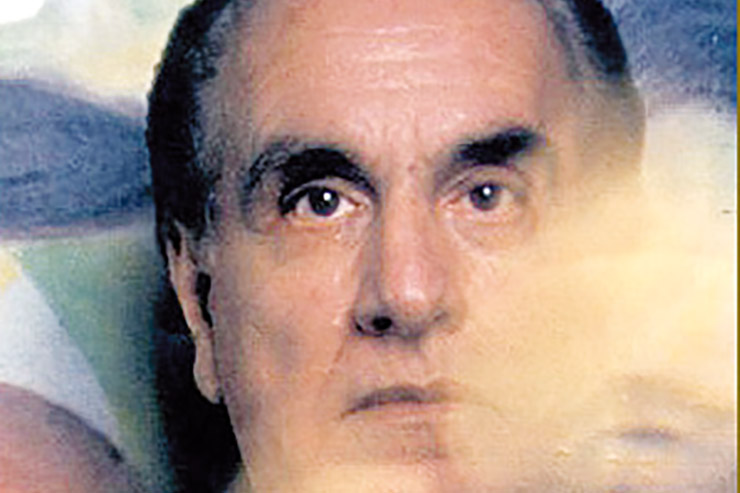
Traditionalists, for present purposes, means the loosely-constituted group inspired by René Guénon (1886-1951). Many of them also revere Ananda K. Coomaraswamy (1877-1947). Later Frithjof Schuon (1907-1998) became central to the group, while the work of Julius Evola (1898-1974) partly overlapped with the others. Any one of these four can serve as a gateway to the movement and its quest for the esoteric truth that transcends religious differences. That is their first mission. Secondarily, they invite one to realise this truth in oneself, and thirdly, they identify what furthers the process and what hinders it.
The Traditionalist mission rests on the belief that in some prehistoric time, a “primordial tradition” was revealed to mankind. It taught in symbols the nature of the universe and of the human being, and the way to realise our divine potential. The different religious traditions sprung like branches from the primordial trunk, each one revealed at the appropriate time and place for a certain people or region. Each one contains a facet of the “perennial philosophy,” accommodating both simple believers and those who pursue an esoteric and initiatic path. However, owing to spiritual degeneration over time, some traditions have been lost, others polluted, and false religions have sprung up in their place. The third object is to discriminate between the true and the false.
Given these principles, Guénon could write with equal authority on Hinduism, Taoism, Judaism, Christianity, Islam, Hermeticism, Druidism, and even Freemasonry, “believing” in all of them because he was able to discern their transcendent unity. He demonstrated this through what he called metaphysics, meaning the study of ultimate realities, beyond cosmology and beyond theology. Theologies differ (are there many gods, as in Hinduism, or only one, as in the Abrahamic religions?), but metaphysical principles do not. Eventually one hopes to know these principles directly, because we are microcosms and they are our own ultimate realities. Mystical experience and religious devotion may be intrinsic to the spiritual path, but the quest begins and ends with knowledge. Those who wish to follow Guénon into these rarefied realms will read Man and His Becoming According to the Vedanta, The Symbolism of the Cross, and The Multiple States of the Being.1
Guénon cleared the way for his doctrinal work with two polemical books. Theosophy: History of a Pseudo-Religion (first published 1921), whose title says it all, and The Spiritist Fallacy (1923), which shows that whatever is contacted in séances, it is not the spirits of the dead. After settling in Egypt in 1930, Guénon made a scanty living by writing hundreds of articles and book reviews for his French publishers. Now collected by themes such as Freemasonry, initiation, Christianity, time cycles, symbolism, etc., they make excellent reading for their insights, their curious facts, and global purview. Guénon may pontificate and annoy, but he is never a pious bore. However, it is his books that remain the core of his work, for they set out the metaphysical and cosmological framework that needs to be kept in mind through all his digressions.
One assumption, which goes entirely against modernist and scientific opinion, is a cyclical view of history. The cycle starts with the long Golden Age (Satya Yuga) and thence degrades in the quality of life and spirituality of mankind. Even the earth becomes more densely materialised until the low point of the Iron Age (Kali Yuga) is reached. Then the cycle ends in cataclysm, and above its ruins a new golden age dawns.2 Surveying the post-medieval period, Guénon sees the sacred giving way to the secular on every front: in religion, with the fragmentation of the Christian tradition, the driving of esoteric knowledge underground and its replacement by pseudo-traditions; in philosophy, with its denial of true metaphysics; in society, with the lower elements usurping the priestly and noble castes; and in the arts, a sure barometer of a civilisation’s soul. Ever since the Greeks, the West has been the leader in this process, but by now it has infected the entire earth.
Guénon’s The Crisis of the Modern World and The Reign of Quantity and the Signs of the Times are the testament of his devolutionary theory and probably the best entry-point to his work. The latter title is his description of the tail-end of the cycle, in which quantity usurps quality in every walk of life. After a metaphysical introduction (better skipped and read later), he offers memorable examples and images such as the “Degeneration of the Coinage” and the “Cracks in the Great Wall.” Overshadowing the whole work is the notion of a “Counter-initiation,” a conspiracy of false or inverted spirituality whose goal is to block humanity’s path to authentic initiation.
Some find Guénon’s approach too intellectual and even inhuman, but they cannot deny that it cuts like a razor through the sloppy thinking and sentimentality prevalent in religious and New Age types alike. It sets standards of integrity against which other spiritual teachings either stand or fall. It assumes that truth has always been there for the finding, so it has no use for the language-games of Western philosophy, nor for a science that thinks it is on track to discover the “God particle.” It also rejects cherished notions such as individualism, equality, and evolution. Instead, it teaches the impersonal Self, the hierarchy of beings (including humans), and the cyclic nature of time. In short, it turns the received world-view upside-down.
[alert type=”info” dismiss=”no”]If you appreciate this article, please consider a subscription to New Dawn magazine.[/alert]
Beyond Guénon: Traditionalism’s Founding Fathers
Such was evidently the experience of those who were later grouped under the Traditionalist banner. Ananda Kentish Coomaraswamy (1877-1947) was an art historian whose writings on comparative religion, symbolism, and the critique of modernity paralleled Guénon’s own, though in a more scholarly style. Frithjof Schuon (1907-1998), a German convert to Sufism, made a stir with his first book, The Transcendent Unity of Religions,3 its English translation helped by a promotional blurb by T.S. Eliot – himself a Christian Traditionalist of sorts. In 1962 Schuon’s English friends took over a parapsychology magazine called Tomorrow and later retitled it Studies in Comparative Religion.4 The collaborators included Titus Burckhardt (1908-1984), a Swiss publisher; Marco Pallis (1895-1989), a musician and traveller to Tibet; Martin Lings (1909-2005), an English scholar who assisted Guénon in his last years; Whitall Perry (1920-2005), a Bostonian who compiled a global bible of traditional sources;5 and many others who are now easy to find and research.6 Schuon settled in Bloomington, Indiana, heading a community that combined his personal devotion to “Maryam” (the Virgin Mary, as revered in Islam) with Native American traditions. His most eminent admirer was Seyyed Hossein Nasr (1933-), a highly-placed Iranian academic forced out by Khomeini’s revolution. Nasr became the movement’s most visible representative in the US and, beside his authority on all things Islamic, tried to give a more spiritual direction to the environmental movement.7
In order to put Guénon’s principles into practice, most of the Traditionalists joined one of the recognised religions, interpreting his critique as requiring an orthodox exoteric practice. Only that, they say, can provide a firm foundation for the higher flights of esotericism that many desire, but for which few are qualified. According to Federico González, the most faithful interpreter of Guénon in the Spanish language, Schuon’s influence betrayed the Perennial Philosophy by turning it into a Perennial Religion.8 Be that as it may, Schuon, Burckhardt, and Lings followed Guénon’s example by becoming Muslims. Those who remained within Christianity chose the Russian or Greek Orthodox churches, or isolated themselves on the extreme wing of traditional Catholicism. Protestantism was not an option, being by definition anti-traditional, though with the example of Eliot’s high-church Anglicanism, a chance was missed there. Orthodox Judaism would seem the obvious choice for Jews, but Leo Schaya, the only identifiable Jew in the group and author of a superb work on Kabbalah, converted to Islam.9 A fourth and last possibility was Buddhism, though Guénon considered it more as a heresy within Hinduism. Hinduism was excluded for Westerners on the grounds that one cannot be a traditional Hindu unless one was born into one of the castes and can follow its prescriptions. The traditions of Native Americans, Africa, and the Far East (Taoism, Shinto), though respected, were impracticable since living esoteric masters are almost impossible to find there. Moreover, in all cases only the most ancient and integral streams were acceptable: not the Sufism of Hazrat Inayat Khan, or the Hinduism of Vivekananda or Aurobindo. So the choice of an exoteric tradition was extremely limited.
There are of course degrees of leniency among Traditionalists, but to the stricter variety, the vast majority of Christians are schismatics and heretics, cut off – maybe for no fault of their own – from any authentic tradition. Some, like Rama Coomaraswamy (son of Ananda) accuse the Catholic Church of having disqualified itself through the innovations of the Second Vatican Council. Consequently the current pope is an impostor, priestly ordinations invalid, and the sacraments ineffectual. I find this a strange and constrictive view. It is generous enough in allowing that God has revealed himself through different religions, yet it imagines him as only willing to funnel his grace through a very narrow channel in each case.
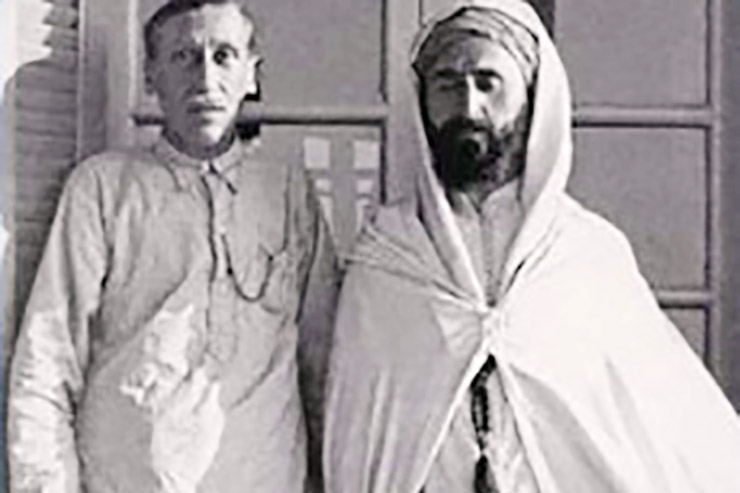
Can one have the Traditionalist cake, as it were, without eating it? To judge by the careers of the founding fathers, the answer is yes. Not one of them practiced what the orthodox now preach. Guénon was supposedly initiated by Hindus, entered Islam secretly as a young man, and married a Catholic wife, but was not known as a devout practitioner of any religion until he moved to Cairo in middle age. Coomaraswamy, as the child of a Hindu (Tamil) father and an English mother was strictly speaking an “untouchable” within the Hindu tradition, which of course bothered no one during his life in England and the United States. Buddhism and Neoplatonism seem to have been closest to his heart, but if he had any orthodox practice, no one remarked on it. Schuon, nominally a Muslim, made up his own syncretic rituals, which greatly embarrassed his more orthodox admirers when they were made known.10 In short, they all enjoyed the latitude that Traditionalism allows to independent geniuses, but not to the rest of us.
A broader concept of Traditionalism would recognise the value of some outsiders to the club. They include Alain Daniélou (1907-1994), who did convert to Hinduism (he was a Shaivite initiate) and lived for many years in Calcutta, corresponding with Guénon and writing fundamental works on Hindu polytheism and music. He also foresaw, and calculated, the inevitable end of the age.11 But this brilliant and charming scholar despised the monotheistic religions and was openly homosexual, so he does not figure on the approved roster. The absence of Henry Corbin (1903-1978) is more surprising, since he alerted the West to the richness of the Iranian philosophic tradition and its concept of the “imaginal world” as the locus of mysticism, symbolism, and art.12 Nasr recognised him as a great scholar and edited his Festschrift,13 but Corbin was a Protestant. Whether Julius Evola (1898-1974) should be included is a matter of dispute. He had a friendly correspondence with Guénon (though they never met), and wrote from a Traditionalist point of view on Taoism, Buddhism, Hermeticism, the Grail, paganism, esoteric sexology, metahistory, mountaineering, and to his lasting detriment, politics. But he rated the Kshatriya (warrior) caste superior to the priestly Brahmins, and had no time for exoteric religion. His work probably finds a wider readership than any other Traditionalist.14 To many he is the intellectual equal of Guénon and Coomaraswamy, and much more helpful with his practical advice on self-realisation in a hostile world.
In the 1980s the poet and Blake scholar Kathleen Raine (1908-2003) set an example of “broad-church” Traditionalism with her London-based Temenos Academy. It presented lectures, concerts, occasional conferences, and published a journal, benefiting from the patronage of the Prince of Wales – another liberal Traditionalist. Raine had been a member of an occultist order descended from the Golden Dawn. She loved the Neoplatonists, the Renaissance, and Romanticism, was not averse to Theosophy, and greatly admired Corbin. Her mission was to promote the “arts of the Imagination” as against the ugliness, soullessness, and commercialism of modern life and art. I believe she was the only woman to have contributed to Studies in Comparative Religion, and that, too is telling. Women are conspicuously absent from Traditionalism, no doubt because they know how badly the orthodox religions have treated their sex.
Traditionalism & Post-Modernity
After the death of Schuon, widely revered as an enlightened master, the movement lost its magnetic pole. Its chief enemy, modernity, was also moribund. But instead of a return to Tradition, the post-modern wave, beginning in France and flooding the whole intellectual world, had extinguished any presumption of metaphysical certainty. Guénon and Evola were less newsworthy than the right-wing extremists reputedly inspired by reading them. The spread of Islamic fundamentalism cast Muslim conversion in an unfavourable light. Most of those who sought a spiritual path outside their Christian, Jewish, or agnostic heritage preferred Zen or Tibetan Buddhism. And the New Age was the exoteric haven for all the rest.
As the post-Guénonian generation passed away, Traditionalism became ripe for the historians. The academic study of Western Esotericism, a relatively new discipline, took notice of it, though only as one current among many others. Mark Sedgwick’s Against the Modern World was the first attempt to encompass the whole Traditionalist phenomenon, and the first many academics had heard of it.15 Another is Setareh Houman’s From Philosophia Perennis to American Perennialism.16 (In the United States, home of the political euphemism, Traditionalists became “Perennialists.”) Houman explains how Guénon and his successors adapted the Renaissance concept of a perennial philosophy and a prisca theologia (primordial theology) as old as the human race, and supplies a wealth of historical details found nowhere else. Both books are essential to the dispassionate student of the movement.
Needless to say, the blogosphere swarms with passionate opinions on both sides. It is much less demanding to hang out there, or shoot one’s mouth off, than to read Guénon’s or Coomaraswamy’s books from cover to cover. At the serious end of the spectrum, Mark Sedgwick maintains a website (www.traditionalists.org) with a moderated discussion board. So does James Wetmore (www.sophiaperennis.com), the heroic publisher of Guénon’s Collected Works. James Cutsinger is gradually doing the same for Schuon’s works (www.cutsinger.net). Charles Upton, an ex-beat poet turned Sufi, brings the Traditionalists’ critique up to date with a series of books on the Reign of Quantity’s further products, such as UFO cults, drug mysticism, postmodernism, neopaganism, and the New Age.
Since the world failed to end or transmogrify in December 2012, the New Age dragons are hardly worth slaying, but Traditionalists are drawing on some of the apocalyptic energies that still hang in the air. One who claims, or is claimed, to be a Traditionalist is the Russian philosopher Alexander Dugin (b.1962). Is he the secret link through whom Guénon is influencing the political chess-game of Vladimir Putin?17 Some think so. Duginian geopolitics sees the Atlanticist hegemony as the tool of the Counter-initiation, and a united Eurasia under Holy Russia as the great hope of the future. Others, such as the Islamic eschatologist Imran Hosein, view the world situation through the myth of the Antichrist, whether they assign that role to the current pope, the US President, the State of Israel, radical Islam, or “Dajjal.” Like Jean Robin, author of “René Guénon, the Last Chance of the West”18 and many other books of occult history, they may actually cheer on the Counter-initiation for speeding the arrival of a post-apocalyptic golden age. Another French writer of Romanian origin, Jean Parvulesco (1929-2010), was apparently Dugin’s inspiration. Parvulesco’s books are like something imagined by Umberto Eco: convoluted, learned, hysterical, and infatuated with Guénon, necromancy, fascism, the cosmic destiny of France, and a collective death-wish.19
Lastly I must mention the longest book yet written about Guénon.20 The author, who goes by the name of Louis de Maistre, admires him tremendously but suspects that he was partly under Counter-initiation control. That movement, in de Maistre’s view, stemmed from the Manichean heresy that gave an independent and equal existence to the evil power, and the temptation to ally oneself with it. Its main agents in the modern world were the Sabbatian and Frankist movements, to whose infiltrations Guénon himself was not immune. Hence his early involvement with mediumship and his embrace of the sinister myth of Agarttha. In the view of this earnest and erudite author, even Guénon needs to be purified from anti-traditional tendencies.
Traditionalism for Seekers
Apart from these extremes, what does Traditionalism have to offer? First, it puts our spiritual destiny first and foremost. We are on earth to fulfil it, though we may do so in very earthly ways (Traditionalists love the crafts!). In looking for guidance, we have the option of joining one of the authentic traditions and regulating our lives through it. For the esoterically-inclined, each tradition has symbols that give access to a metaphysical teaching. Lacking effective mystery-schools, to penetrate to this level is the best initiation we can hope for. To take examples from the Abrahamic traditions, one can recite the Nicene Creed, read the Quran or the Torah, and understand them in an esoteric sense that would be incomprehensible to one’s fellow believers. This is of course what Kabbalists and Sufis do, though Christianity has lost the structures that once facilitated it.
But what if one has no attraction to religions which have so often brought out the worst in people, and continue to do so? There are, after all, other paths open. One might become a Bahai or a Mormon; join the A.M.O.R.C. or another Rosicrucian order; take up yoga and meditation, “transcendental” or otherwise; join an Anthroposophical (Rudolf Steiner) community or a Gurdjieff group; assert one’s ethnic roots in neopaganism; find a temple of the Hermetic Order of the Golden Dawn, or become a wiccan; join the OTO or some other group under Aleister Crowley’s influence; practice alchemy, physical or spiritual; try Chaos Magick; take an Ayahuasca vacation. The spiritual smorgasbord becomes so long that it is hard to choose from it.
Traditionalism rejects the lot. One of the characteristics of the Kali Yuga is the psychic influences which, in Guénon’s picturesque image, sneak through the cracks in the Great Wall that once protected traditional civilisations. Hence the proliferation of phony sects, channelled teachings, exploitative cults, and other spiritual dead ends. These include fundamentalism, a modern phenomenon distinct from regular exoterism because its agenda, hidden or overt, is always political. One does well to ask: (1) Do these purported spiritual paths have any roots in an authentic revelation, or are they personal inventions? (2) Do they give access to metaphysical realisation? (3) Are claims of filiation from some extinct tradition, such as Egyptian or Celtic, believable? (4) Do they exist to benefit their members, or to benefit themselves and their leaders? I am not saying that this disqualifies all the offerings mentioned above, but it certainly shortens the list.
After taking due notice of this negative and purgative side of Traditionalism, there remains the greater, positive side. It is the realisation through knowledge, which can come about without any institutional support, simply through reading and meditation. The Traditionalists’ books are themselves initiatic. If you are ripe for them, they hit like a bombshell. Part of you is blown out of the normal world, though other parts still have human feelings, desires, and faults. You pick up the newspaper the next day, and see everything in a different light, realising that a collective insanity has grasped the human race. Yet you are no longer entirely in its clutches, and there are allies across the centuries in those who have resisted the current. Art, poetry, literature, and music take on new meanings as gifts from an unpolluted source, and they may mean more to you than any religion. As you read on, you may discover the Hermetic, Gnostic, and Neoplatonic treasures hidden in the Abrahamic religions, and the philosophic teachings of the Far East (Vedanta, Taoism, Buddhism), interpreted with unprecedented clarity. If you are temperamentally suited to them, they bring an ineffable joy. In short, this is an adventure second to none, and also, as Plato promised, the ultimate love affair, for philosophy means the “love of wisdom.”
Minor parts of this article appeared in “Facing the Traditionalists” in Gnosis Magazine no. 7 (Spring 1988), 23-28, reprinted in Jay Kinney, ed., The Inner West (New York: Tarcher/Penguin, 2004), 292-302.
[alert type=”general” dismiss=”no”]This article was published in New Dawn 147.[/alert]
[alert type=”success” dismiss=”no”]If you appreciate this article, please consider subscribing to help maintain this website.[/alert]
Footnotes
- These and the rest of Guénon’s Collected Works are published in English translation by Sophia Perennis. See www.sophiaperennis.com
- See Joscelyn Godwin, “When Does the Kali Yuga End?” New Dawn 138 (May-June 2013).
- Frithjof Schuon, The Transcendent Unity of Religions, Faber & Faber, 1953.
- Just as Guénon had taken over an occultist journal, Le Voile d’Isis, and given it an academic-sounding title, Études traditionnelles.
- Whitall N. Perry, ed., A Treasury of Traditional Wisdom, George Allen & Unwin, 1971.
- Studies in Comparative Religion is now online at www.studiesincomparativereligion.com. A select anthology of articles from the journal, out of print but well worth finding, is Jacob Needleman, ed., The Sword of Gnosis, Penguin, 1974.
- See Seyyed Hossein Nasr, Religion and the Order of Nature, Oxford University Press, 1996.
- See Federico González Frías, Diccionario Simbólico-Iniciático y de Temas Misteriosos, Thot, 2013, and the special Guénon number of Symbolos: Revista Internacional de Arte, Cultura, Gnosis, nos. 9-10 (1995).
- See Leo Schaya, The Universal Meaning of the Kabbalah, tr. Nancy Pearson, George Allen & Unwin, 1971. Information on Schaya’s conversion is from www.sophiaperennis.com/frequently-asked-questions/.
- See Mark Sedgwick, Against the Modern World. Traditionalism and the Secret Intellectual History of the Twentieth Century, Oxford University Press, 2004, 170-77.
- See Alain Daniélou, While the Gods Play: Shiva Oracles and Predictions on the Cycles of History and the Destiny of Mankind, tr. Barbara Baker, Michael Baker, and Deborah Lawlor, Inner Traditions, 1987.
- See especially Henry Corbin, Spiritual Body and Celestial Earth from Mazdean Iran to Shi’ite Iran, tr. Nancy Pearson, Princeton University Press, 1977.
- S.H. Nasr, ed. Mélanges offerts à Henry Corbin, Teheran, Institute of Islamic Studies/Montreal: McGill University, 1977.
- See especially Julius Evola, Revolt against the Modern World, tr. Guido Stucco, Inner Traditions, 1995, and many other works from the same publisher.
- See note 11.
- Setareh Houman, From the Philosophia Perennis to American Perennialism, tr. Edin Lohja, Kazi, 2014
- See several articles in New Dawn 111 (Sep-Oct 2008).
- Jean Robin, René Guénon, la dernière chance de l’occident, Trédaniel, 1983. Also René Guénon, témoin de la Tradition, Trédaniel, 1986.
- See Jean Parvulesco, La spirale prophétique (Trédaniel, 1986), which was dedicated to Jean Robin. Also L’Étoile de l’empire invisible, Trédaniel, 1993.
- Louis de Maistre, René Guénon et les “Supérieurs Inconnus”: Contribution à l’étude de l’histoire mondiale “souterraine”, Arché, 2004. See my forthcoming review in Theosophical History.
© New Dawn Magazine and the respective author.
For our reproduction notice, click here.