New Dawn – World's Most Unusual Magazine

Tag: gnosis

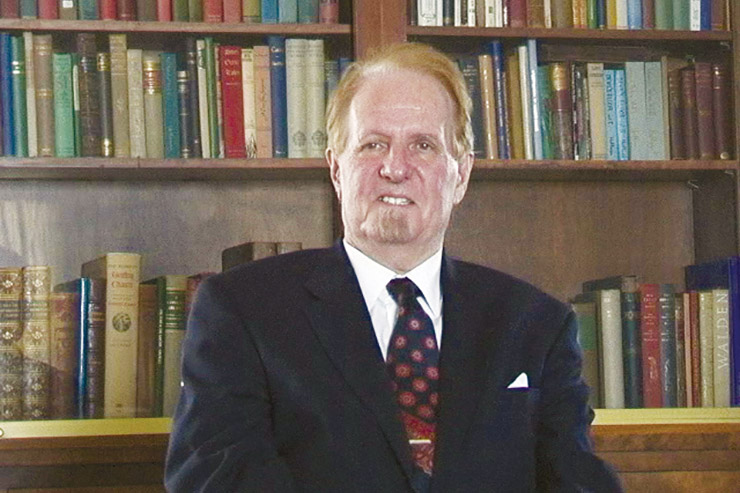
  • Quest for Hidden Wisdom: An Interview with Richard Smoley

    Quest for Hidden Wisdom: An Interview with Richard Smoley

    This article was published in New Dawn 98 (Sept-Oct 2006)

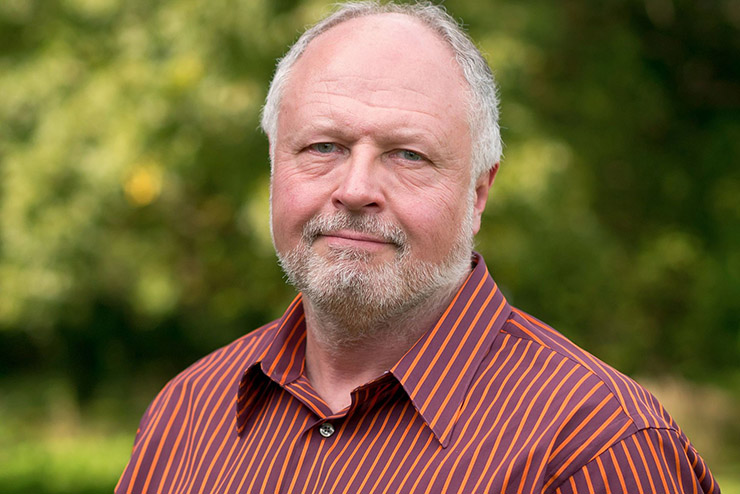
    Richard Smoley and Jay Kinney need no introduction to New Dawn readers. After successful careers as editors of Gnosis (1985-1999), the highly respected US journal of esoteric knowledge, in 1999 Richard and Jay published Hidden Wisdom: A Guide to the Western Inner Traditions to much acclaim (in May 2006, a revised edition of Hidden Wisdom incorporating new material and insights, was released).

    Richard Smoley has contributed numerous articles to New Dawn magazine, many of which can be found on the New Dawn website.

    In the following interview, Richard Smoley talks about Hidden Wisdom, spirituality, and the esoteric traditions….

    There seems to be a huge resurgence in interest in the hidden side of the Western tradition lately. There’s so much talk about Gnosticism, the Masons, the Templars, the hidden teachings of Jesus. What’s behind it all?

    Well, until fairly recently the story of Western religion was pretty much taken for granted. The Bible was seen as an accurate historical record, and the story the churches told about themselves was taken as the truth. But more and more people have come to see that isn’t the whole story.

    Over the last 200 years paleontologists came to realise that the earth really hadn’t been created 6,000 years ago. New Testament scholars took a closer look at the Gospels and decided that the life of Jesus they portrayed contains a lot of myth. Today archaeologists are saying that Moses couldn’t have led the children of Israel to freedom from Egypt in the land of Canaan, because Canaan was an Egyptian province at that time. The supposedly magnificent Jerusalem of King Solomon was probably a hill village with maybe 200 or 300 people. And so on.

    Much of this is not exactly news. “The quest for the historical Jesus,” as Albert Schweitzer famously called it, goes back to the 19th century. But it’s only in the last generation or so that this knowledge has begun to reach a widespread public. It’s led people to ask what was really going on back then. And it’s fueled a lot of speculation about the religious history of the West. Much of this speculation is pretty wild, but it shows that people are eager – maybe desperate – for some answers about their past that isn’t mostly propaganda.

    So what is this hidden truth? Was it true, for example, that Jesus was married to Mary Magdalene and that they had children?

    I’ve never seen any proof of this that seemed even remotely conclusive. There is a strange, fragmentary passage in a text called the Gospel of Philip saying that Jesus was very fond of Mary Magdalene and used to kiss her often on the mouth. The other disciples got jealous and said, “Why don’t you love us the way you love her?” And Jesus replies, “Why don’t I love you the way I love her?” The answer presumably being obvious.

    But the Gospel of Philip is very late. Most scholars date it to the third century CE. As such, it can’t be trusted as a terribly accurate historical source. All I can say is that there are legends, and it’s known that legends naturally accumulate around powerful figures. You only need look at the strange hagiography that’s congealed around Elvis Presley to see how this happened in very recent years. So the story of Jesus being married to Mary Magdalene is not something I personally would put any faith in.

    We may never know what happened in the time of Christ, how much of our information is factual, how much of it is suspect. For example, the Gospel in the Bible that is considered to be the most historically accurate is the Gospel of Mark. Strangely enough, the last page of this Gospel is missing. It was lost in antiquity, probably soon after it was written. What you find in the Bible – and most versions have these – are several different endings, all of them supplied later. This missing part of Mark would have told what happened after the Resurrection. Was this lost accidentally, or did somebody tear out the page and replace it with something more politically convenient? We may never know. And yet ultimately the hidden truth about our past is not some collection of buried facts.

    Then what’s the point of your work? 

    I do think there are buried truths, what in the title of our book Jay Kinney and I have called “hidden wisdom.” But it’s not factual knowledge as such. One of the key concepts in our book is gnosis, which is a term that’s bandied about a lot these days. Gnosis is knowledge, but knowledge of a very special kind. It’s not factual knowledge, not knowledge of something, but rather an inner awakening, an inner illumination. It’s quite similar, I would say, to what Eastern traditions often call enlightenment.

    Viewed in this way, the Bible becomes a story, not about people who lived in an increasingly remote past, but about our own inner awakening. In this way it becomes much more interesting and much more immediate. The story of Exodus is not about the liberation of several tribes of people from literal slavery, but about liberation from inner slavery. The story of Christ is not so much about a man, however remarkable, who lived 2,000 years ago, but about a process that begins in us as we awaken.

    But this just sounds like allegorising to me. People have been doing this for centuries. And it’s all very nice and good, but it doesn’t seem to have much to do with hard, cold facts.

    And what would facts prove? For example, the conventional Christian view is that Jesus literally rose from the dead. Not so long ago, I read a book about witchcraft in southern Africa, written by a very prosaic and down-to-earth British doctor who practiced there in the days of colonialism. He told this story of a chieftain who was dead and buried – and whose death he himself as a physician had verified. And he witnessed a ceremony in which this same chieftain was resurrected, sat on his throne, and ate a meal.

    Of course you can play the skeptic and doubt that this really happened. But beyond a certain point, what difference does it make? Would you believe something like that even if you saw it? Or would you laugh it off and tell yourself you just imagined it? People do this all the time with experiences that go past their concepts of reality. It’s that much harder to either accept or reject miracles that may or may not have happened thousands of years ago.

    Speaking of witchcraft, do you cover that topic in Hidden Wisdom?

    Yes, as a matter of fact we do.

    What is witchcraft about?

    Most people who call themselves witches are not Satanists. They are not cranky old ladies in black who live at the edge of town; nor are they playing at being Sabrina or Samantha Stevens. They are laying claim to what they call the “Old Religion” – the pagan tradition that thrived in Europe before Christianity.

    Witchcraft, Wicca, Neopaganism – these are all terms that loosely encompass a number of highly individualistic groups and people, not all of whom see things in the same way. In fact, they take many different forms. But one key thing they have in common is a reverence for the forces of nature, conceived as spiritual powers in their own right, and the belief that we can work with these powers consciously and creatively. Similarly with the powers of the mind.

    What you’re talking about is magic – not the sleight-of-hand type but the occult type. In your experience, does this kind of magic work?

    Not always, and not usually very well. But not for the reasons you might expect. From my experience, I’m convinced that these forces are real. But they’re difficult to master. It’s very hard to do anything like that that somehow doesn’t backfire or simply fail.

    Why?

    It’s not like a scientific experiment. In a scientific experiment, if you’re going into a lab to bombard subatomic particles or inject substances into some rat, your state of mind has very little to do with the results. In fact, it shouldn’t. A scientific experiment has to be replicable. Your report has to be like a cookbook recipe that a scientist on the other side of the earth can follow.

    Magical work is exactly the opposite. The state of mind you’re in, your concentration and your will – not only at the conscious but at the subconscious levels ­are the all-important factors, far more than whatever procedures you might use. And very few have the will and concentration to accomplish results anything like what they want.

    So is magic dangerous?

    Well, take the typical teenager who starts to dabble in such things. Either nothing happens, or the kid starts to get some results. He or she then usually gets scared and drops it right away. Very few are going to take magic to the point where they are going to get any effective results at all. If you do – and for some it is a true spiritual path – then your motivation becomes the question. Are you doing this for disinterested reasons – to form a link between heaven and earth, so to speak? Or are you just trying to find a shortcut to wealth and power? If it’s the latter, you may as well drop magic and take up stock brokering or politics or something that’s much more likely to achieve your aims. And if you’re doing anything for purely selfish motives, whether it’s magic or trading stocks, you will probably regret it eventually.

    What about the Kabbalah? That’s something we’re hearing a lot about lately.

    We have a chapter on it in Hidden Wisdom. Essentially the Kabbalah is the mystical tradition behind Judaism. It goes back to antiquity, but it took its present form in medieval times, in the twelfth and thirteenth centuries. By the time of the Renaissance, Christian intellectuals became interested in it, and after about 1500 it became incorporated into the general esoteric heritage of the West.

    Just now I mentioned serving as a link between heaven and earth. For many Kabbalists, this is the essential point of the enterprise. We are the only beings – at least the only ones we know of – who are capable of being aware of both the visible and invisible realms, and some Kabbalists say that this is our function here on Earth, to serve as a link between the two.

    By the way, “Kabbalah” comes from a Hebrew verb meaning “to receive.” And it means receiving in two ways. One is receiving the teachings as handed down over time, which is why Kabbalah is sometimes translated as “tradition.” But it’s also a matter of receiving spiritual impulses and translating them into action in this world. Apparently kabbalah is the word used in modern Hebrew for TV reception.

    What do you think of the pop versions of Kabbalah that are out there now?

    I don’t have a lot of direct experience of them. But generally speaking, you can say that the pop versions of any spiritual tradition are likely to be pretty watered-down. Zen and yoga, for example, were originally very intense and austere disciplines, but in the form in which they’ve made it to the public, they’re very bland and trite.

    It’d be easy to jump to conclusions about this fact, to deride all these things as mere vulgarisations. So they may be. But they do serve an important function. In the first place, they communicate some key ideas to the general public that aren’t likely to make it any other way. To take one fairly obvious example, it’s become almost a cliche to talk about living in the present, “the power of now,” and so on. But to be aware in the present is actually a very profound (and quite difficult) practice. It’s interesting, and I think, beneficial, to have these ideas out there, even if they’re often in rather a cliched form.

    You keep using the word “esoteric,” and that seems to be a central concept in your book. What does “esoteric” really mean?

    It comes from a Greek root that means “further in.” To really understand what these teachings are about, you have to go further into yourself. You have to look past the surface of your social identify, your bodily desires, and see what’s beneath. This may take you very deeply into yourself, and at some point you realise that what you really are is something very small and silent. It is nothing you can see, because it’s always what sees. St. Francis said, “What you are looking for is what is looking.” If you understand this point, a lot of highly cryptic mystical texts become remarkably clear.

    There is no end point to this process of going “further in” – none that I’ve ever seen in my own experience or from what I can tell of others’ experience. There’s always further to go.

    Where do you see these traditions going in the 21st century?

    That’s a very difficult question. There is a long, intricate, and poorly understood process by which esoteric ideas eventually make themselves public property. Things that were communicated only under the strictest secrecy 50 or 100 years ago can now be found in self-help bestsellers – for example, the simple truth that you are not your conditioning. It sounds obvious to say this now, but in the past it would have been a piece of knowledge that would have been communicated privately, often obliquely, possibly through some sacred rite of initiation.

    Some may decry this popularisation as a profanation of sacred knowledge. I don’t see it that way. Rather I see that over a very long period of time, humanity begins to accept certain truths and makes them its own. These are first known only to an extremely small vanguard – an elite, if you like, although I know that’s a dirty word these days. Gradually these ideas are disseminated and become common knowledge.

    Now if this so-called elite is doing its job, it won’t try to squirrel away its discoveries and keep them for itself. Rather, it will keep disseminating its discoveries in whatever form that makes most sense in the context of the times. It will also keep moving forward and trying to make new discoveries.

    If much of what was previously hidden is now in the public domain, where do these traditions have to go?

    I don’t have a clear answer to that at present. Much of it will depend on how much the mainstream religions will digest these insights. At this point esoteric teachings are often used as little more than marketing techniques. The rabbi talks about Kabbalah to get people back to the synagogue, or the Christian churches try to unearth some half ­forgotten contemplative tradition as a way of presenting an alternative to, say, Buddhist meditation.

    Will it go past this point? Possibly; possibly people will go on soon to the next new thing. Even so, out of all those numbers, a few actually do see beyond the surface and decide to go “further in” themselves. They become the esotericists of the next generation, and the chain continues.

    [alert type=”general” dismiss=”no”]This article was published in New Dawn 98.[/alert]

    [alert type=”success” dismiss=”no”]If you appreciate this article, please consider subscribing to help maintain this website.[/alert]

    Interview courtesy of Quest Books and copyright 2005 by Richard Smoley. Hidden Wisdom: A Guide to the Western Inner Traditions is available from all good bookstores & online retailers. Richard’s website is http://www.innerchristianity.com.

    © New Dawn Magazine and the respective author.
    For our reproduction notice, click here.
  • Gnostic Mysteries of Sex: An Interview with Tobias Churton

    Gnostic Mysteries of Sex: An Interview with Tobias Churton

    From New Dawn Special Issue Vol 10 No 3 (June 2016)

    Tobias Churton is one of today’s most visible and prolific writers on the Western esoteric tradition. He first came to the attention of the public in the UK in 1987, with the release of a four-part television series called “Gnostics.”

    Since then he has written nineteen books, including Gnostic Philosophy, The Invisible History of the Rosicrucians, and biographies of William Blake, the seventeenth-century British esotericist Elias Ashmole, and Aleister Crowley. He holds a master’s degree in theology from the University of Oxford and is an honorary fellow of the University of Exeter in the UK. His website is tobiaschurton.com.

    Churton was featured in a New Dawn interview that I conducted in 2005 (see New Dawn 91). In November 2015, I conducted another e-mail interview with him, this time focusing on his recent book Gnostic Mysteries of Sex: Sophia the Wild One and Erotic Christianity.

    RICHARD SMOLEY (RS): Your latest book is called Gnostic Mysteries of Sex. Could you start by briefly sketching out who the Gnostics were?

    TOBIAS CHURTON (TC): Not all Gnostics called themselves by the name, but it is a name attached by orthodox Church leaders from the second to the fifth centuries CE to leaders and groups of spiritual deviants from orthodoxy who regarded their experience or “knowledge” (Greek: gnosis) as a superior aspect of salvation to that of other Christians. Since Gnostics prided themselves on originality, personal revelations, and esoteric insights, their views on any number of doctrines vary considerably, but they share some speculative doctrines in common.

    The first and most fundamental is that the universe perceptible to the senses derives from a deformation of spiritual being into something unintended by the source of being. This unknowable “Father,” knowledge of whom Jesus brings to the gnostic, is called the “Depth” – as in an unfathomable ocean or abyss. The material universe results from a primal catastrophe: a fall from ideal into relative being. In this deformation drama, sparks of divine seed have become alienated in an unfamiliar realm and experience pain and longing. Insofar as the universe is imperfect, it is the work of a Demiurge or “fashioner,” working with relative, not absolute being. This being knows no higher than himself, like the classic egotist. Sometimes identified with the Elohim (“God” or “gods”) of Genesis, the creator of the world is regarded as the enemy of Man as a spiritually conceived being, opposed implacably to Man’s enlightenment. “Lord of this world,” the maker senses there’s something special about Man. Man has something within him. The master of matter is jealous of this spiritual substance and, while incapable of understanding it, wants it, and failing that, determines to keep fallen Man ignorant of it, lest Man escape from the world’s finite grip and become free.

    The hylic or material being (the earthly Adam), belonging to the sensual universe, dies with it, for the material universe is constrained by time, unlike spirit, which is eternal.

    The only means of escape is realisation of divine origin and destiny – gnosis. This means to be spiritually awake, able thereby to see beyond the universe and the Demiurge. To effect realisation, Christ descended to earth, appearing as mortal flesh, to summon the awakened spirits and raise the weak by awakening the dormant psyches of the soulful, but lost, children of divine Wisdom (Sophia). Gnostic writers present Jesus as an esoteric philosopher holding the keys to the door to eternity, for which the world rulers conspire to destroy him and those who follow him.

    The Gnostics presented sometimes highly intelligent twists on every aspect of established Gospel teaching. From alleged secret sources, they created an esoteric religion of wide-ranging meaning and applicability to Man, seen as being in existential distress. Gnosis has nothing to say to those comfortable with and in the world as it is.

    Moral teachings among Gnostics vary widely, for in their view state of mind is of vital significance and superior in essence to actual conduct. There were somewhat contradictory streams of interpretations in Gnostic thought and practice, and their enemies were not scrupulous in delineating greater or lesser factors, since all Gnostics were deemed a mortal threat to orthodox faith. Gnostics were, generally speaking, indifferent to religious authorities, and their radical individualism became intolerable to the growing monarchic episcopacy of the Catholic or Orthodox church.

    Brilliant enemies of gnosis, such as Tertullian in the late second to mid-third centuries CE, simply dismissed Gnostics for trying to turn the “saving faith” into philosophy, that is, something conformable to Socratic reasoning. This is not altogether fair, since the Gentile Church had from its beginnings been required to express its doctrines to people who used philosophy to justify religious practices. One thinks of St Paul in the Areopagus (Acts 17:16–34). After all, the Jewish faith never explained why the universe was created in terms philosophically explicable to the existential condition of human life. God willed it and thought it good, whether men could see it, or like it, or not. It is also important to recognise that a dominant stream of gnosis served essentially as a magical religion that sought God in the lowest effects as well as the highest causes. That is to say, the divine spirit or pneuma was not only scattered in Man for some Gnostic schools, but hidden in the recesses of Nature: such insights vitalised alchemy. The divine seed has been sown everywhere, as gnostic alchemists, or “Hermetists,” maintained.

    Contemporary Western esotericism and its historical antecedents are impossible to conceive of without the Gnostic phenomenon of late antiquity. Insofar as esotericism still thrives, so does gnosis, though mediated, as ever, in diverse forms, including philosophy of religion.

    RS: One of the most fascinating figures in your book is Simon Magus. Could you say a little about him and his views on sex?

    TC: He is fascinating, isn’t he? This Samaritan magician gets a nasty walk-on part in Acts, and contradictory accounts of him appear in patristic and sundry apocryphal works. He was obviously a major threat to the apostolic efforts of the primitive Church. Just why is not altogether clear, especially from Acts, where he tries to buy the power of the Holy Spirit. This is telling, in its way, of the style of the magician. He recognised the Holy Spirit experience as a psychic phenomenon that could be induced if you knew the trick: nothing new to a magician for whom what we today call hypnosis was a stock in trade.

    Acts does not mention the crucial detail that Simon was accompanied by a whore, Helen (= the “torch”), whom he saved from a Tyrian brothel to be his consort. Groups of Gnostics worshipped them both, at least by the second century, and it became established in that century that he was the first Gnostic heretic and that all the Gnostic streams derived from him. As for his teachings, or rather alleged teachings (we have no first-century evidence for his specific doctrines), we have fascinating accounts in the second-century writings of the orthodox Christian Hippolytus.

    I may be the first to have realised that while Hippolytus’s accounts of Simon’s doctrines try to trash them as absurd Greek philosophy, Hippolytus’s accounts nevertheless transmit – probably without Hippolytus even realising it – a fairly complete system of sexual magic, expressed in symbols. What Hippolytus misunderstood as philosophy was, I think, the basis for working magical practice.

    Simonian doctrine takes the view that sex has magical potential: it could be “redeemed” as a means to make supermen and superwomen. Looking at Simon anew was one of the most exciting things I discovered when writing the new book, and it became a real mind-opener: shocking perhaps, but definitely revelatory. It is no surprise that Simon had a work attributed to him called The Great Revelation. More intriguingly, he seems to have had some important link to John the Baptist.

    [alert type=”info” dismiss=”no”]If you appreciate this article, please consider a subscription to New Dawn magazine.[/alert]

    RS: A main theme in your book is the connection between sex and enlightenment. How did the Gnostics see this relation?

    TC: This is too big a question to be adequately dealt with in a magazine interview; the answer represents the substance of the book. Very briefly, the Gnostic understanding of sex is informed by the Platonist view that in the eternal world, there is a unity of substance. The eternal world, or world of the aeons, provides the eternal “ideas” that are used to fashion a copy or reflection of it and to make it manifest under the finite conditions of time and space. Those eternal characteristics are deformed and dissolved in the process or drama of pure radiant spirit descending into “darkness.” In order to create, we must move from one, unity, to two: reflection and manifestation. All reflection involves a measure of distortion.

    Therefore, to manifest the divine mind, as Divine Wisdom (in the form of Lady Sophia) precociously endeavours to do imperfectly in Gnostic systems (creating the Demiurge in the process), is to make distortion inevitable. The idea of harmonious syzygies of divine powers becomes unbalanced through the act of creation. When this principle is linked to the existence of men and women, we note that the perfect Man, like God, is, in Gnostic thought, androgynous, containing masculine and female characteristics in perfect harmony.

    In the sphere of manifestation, this harmony is lost, and man and woman appear separate and at odds. But gnosis can initiate the return to harmony. Gnostics made much of the Genesis story that Adam’s rib became the basis for woman, especially since it was extracted when Adam was asleep. Sleep, to a Gnostic, means the cosmic and spiritual unconsciousness or amnesia characteristic of material consciousness. Man and woman become each other’s tempters in the world of nature. This antipathy is reflected in the first human progeny, Cain and Abel, who are immediately opposed – opposition leading to the primal murder.

    Following the logic of androgyny as being the original human form in the spiritual sense, it followed that perfected sexual union could become a sacramental and spiritual pre-enactment of the ultimate destined unity of the Gnostic spirit, restored to the Pleroma or “Fullness” of the Godhead. The mutual infusion of male and female enacts and prefigures the apocatastasis, the restoration, or what Gnostics called “the healing of the passions of matter”: the return to the One.

    Obviously such sexual communion was a dedicated spiritual act. Interpretations of this essential dynamic of Gnostic sex varied very widely, but one can see echoes in the later theories associated with Hindu and Buddhist Tantric traditions. Enlightenment comes from manifestation and glorification of the divine seed. This seed is identified in many Gnostic traditions as the pneuma or spirit. In some groups, this identification was taken perfectly literally, but it is a feature I found to be of relevance to all Gnostic traditions, whether libertine or ascetic (the twin poles of Gnostic sexual morality).

    I think much that I have found will shock and perhaps awe those used to the contemporary “soft” exposition of Gnostic thought and practice. Not least is my discovery of the identity and origin of the Gnostic feminine archangel called Barbelo; it should change minds considerably, given time.

    RS: The Gnostics seem to have encompassed a wide range of attitudes toward sensuality, ranging from complete asceticism to a kind of hedonism. What inspired these differing stances?

    TC: The body is the locus both of union and disharmony. It is mortal and it contains, even imprisons, the immortal pneuma or spirit, which needs awakening. Since the body is mortal, what flesh does with itself may have no ultimate significance. Its role is strictly that of a vehicle of spirit.

    The body is linked to the lower worlds, so the Gnostic can afford to despise it, or, alternatively, use it for the spirit’s purposes. Gnostics, especially the followers of Carpocrates and those within the Sethian tradition, tended to believe that the spirit was so superior to flesh that flesh could not damage it. According to Irenaeus, these Gnostics said that the spirit is like gold: it can be mixed with dung but come up shining. On the other hand, the orthodox teaching was that acts of the body tarnish the spirit, injure it, and so such acts are culpable; moral choices indicate spiritual cleanliness or the lack of it.

    Gnostics of radical persuasion gave these kinds of teachings their own twists. Being radical in the face of the world for them meant turning the follies of matter and its creator on their heads: flouting decencies indicated that one had seen through the façade of conformity to the Demiurge’s spiritually destructive way, the false “God of the law.” The Law governed flesh, not spirit, for the governor of spirit is the heavenly Father, and the heavenly Father is not, in Gnostic thinking, the author of the Law. They took – or twisted – this idea from the liberty Paul offered to the redeemed Gentile: free of the Law through grace and, insofar as practicing spiritual love with conscience, a “law unto himself” (Romans 2: 10-15). So, in short, some Gnostics used sex as a weapon against the Demiurge and his order, and regarded such behaviour as heroic.

    There also appears to have been a movement that gained force in the third century and flourished in the fourth and fifth centuries called encratism (from the Greek enkrateia, meaning self-restraint). Encratite streams of gnosis advocated strict asceticism, bodily continence, and the maintenance of the seed in purity, as ordinarily understood. Sethian Gnostics, on the other hand, believed that sexual substances were changed in status when they were treated as sacraments, as bread and wine could be changed into body and blood of Christ by elevated intention. The book deals with all these complexities and sorts them out, I think; many are put in context for the first time. The subject remains highly charged, as it is so fundamental, and the basic issues are deeply relevant to us today, as we attempt to find a universal morality with spiritual authority behind it.

    RS: Catholic Christianity became increasingly puritanical over the centuries. It finally reached the point where it viewed all sex as bad to one degree or another. What inspired this trend?

    TC: We find encratism in the monastic movement with the third-century Egyptian Pachomius and his many followers, who persist to this day. Encratism’s essential fear of sex became critical in the final formation period of Catholic doctrine and is very much still with us, though finding itself greatly opposed by powerful commercialisation of the libido, and radically changed social mores. Originally seen as a heresy (by Clement of Alexandria, for example), encratism eventually triumphed over much of the Catholic and Orthodox churches, creating a two-tier morality: one for clergy, monks, and nuns, and one for the rest who were to aspire to the renunciation characteristic of the classes of the saved.

    Sex was the battleground. Curiously, Isaac Newton and others believed that encratism originated among Gnostic groups, on the basis of the ascetic wing of that “movement.” I rather think that encratism was a doctrine that insinuated itself through all the churches, including the Gnostic assemblies, eventually splitting and arguably dissipating the Gnostic ferment.

    There appears to have been a mood that hit the Roman Empire in the second century, a waning of the lamp, so to speak, when many considered having been born into this world a liability. In such a mood, it was not difficult to take on the widespread Christian doctrine that sin entered the world through the sin of Adam, transmitted every time a child was born. It was not difficult to conclude that by abstaining from procreation and sex, one was effectively contributing to the saving of souls, since it was deemed that lust conditioned most, if not all, births. Some countered that birth gave the opportunity for Christ and his Church to show God’s saving love. But this was, and is, something of a sop to comfort ordinary nonclerical Church members, while providing continued employment for the “sexless” pastors of the procreating sheep.

    RS: One part of your book I found particularly interesting was the discussion of the resurrection of the physical body as seen by different early Christian sects. To all appearances the apostle Paul specifically denied the idea of the physical resurrection, but a couple of centuries later it was a heresy not to believe in such a thing. Could you talk a bit about this process?

    TC: Paul inspired many Gnostics with his words that flesh and blood cannot inherit eternal life (1 Corinthians 15:50). It gave them fuel for the thought that only the destiny of the divine pneuma, spirit, mattered. The body had no part in salvation. However, the major heresiologists (Irenaeus, Tertullian, Hippolytus, Clement of Alexandria) considered it one of the Gnostics’ chief heresies that they regarded the body as being of no significance in salvation. So although the orthodox circles might have respected the writings of Paul, there was clearly a stronger tradition that the resurrection of the body, prefigured by Christ, was axiomatic, and supported in Old Testament prophecies such as that of the vivification of the valley of dry bones in Ezekiel. It was much more important to them than I think Christians today can possibly comprehend.

    As I say in the book, no one who accepts cremation really believes in the resurrection of the body, even though the Christian liturgy still explicitly refers to the resurrection of the body and the life everlasting. Now we know that cremation has only become acceptable recently in the Church’s history. Many modern Christians seem to share the priorities of the Gnostics nowadays where the body is concerned. That is, they don’t expect their flesh to be resurrected.

    Gnostics regarded the orthodox picture of Jesus’s body on the cross as “false vision.” The true body of Christ was spiritual. Rather – referring to the blindness of those without gnosis – it was “their man” who “they” nailed to the cross; it was in fact “their man,” their idea and their awareness of what they thought man was, that was seen being crucified. The enemies of Christ put themselves to death. The “lord of this world” defeated himself, as St Paul taught, for the “lord of this world” did not know the ancient secret of the Demiurge’s ultimate destruction by the secret processes of divine redemption. As Gnostics saw it, the real man, the spiritual, “living Jesus” was in reality above all that, high above the place of the skull (“Golgotha”) or “earth,” and was laughing at “their” folly, not so much laughing at the men who could not see spiritual reality, the crucifiers and blind onlookers, but the Demiurge himself, he who had thought in his jealousy he could frustrate the essential work of Christ by getting the powers-that-be to nail up Jesus of Nazareth to “their cross.” As the Gnostic Gospel of Philip has it: Jesus came “crucifying the world.” You see, there is a great subtlety to Gnostic doctrine here, and missing it makes it very easy for unsubtle orthodox evangelical minds simply to say that Gnostics were wicked because they denied that the Saviour suffered on the cross, and that therefore there is no salvation in gnosis. It’s not that simple.

    It is fascinating that today a key Gnostic doctrine has become accepted by most Christians in some way or other, even if they resort to Paul’s other doctrine of a “spiritual body” raised incorruptible. All this says a great deal. There may be more to the relation of “spirit” and “flesh” than we understand properly; certainly such debates used to enliven conferences of 1890s spiritualists in a manner we should definitely find strange today, but perhaps the wheel has turned and we must look again at what is meant by “body.”

    RS: There are many discussions of the sexual techniques of the Gnostics, but most of them are rather vague. What were they doing sexually, and what did they think it would accomplish?

    TC: One notable thing about my new book is that I have been able to locate actual techniques used by different Gnostic sodalities, and comparisons are made in technical detail between kundalini yoga, various Tantric practices, and the practices of Gnostic groups, especially Sethian, Simonian, and Valentinian groups. Understanding may have been vague before, Richard, but not so now. The Gnostics appear to have transmitted explicit practices of what, since Theodor Reuss’s time in the early twentieth century, esotericists have called “sexual magic” or “magick.” The Gnostic claims of some modern esoteric groups now have a greater basis in fact, I think.

    RS: Some Gnostic sects were accused of having a sacrament in which sexual fluids such as semen and menstrual blood were consumed. And in fact many magical traditions attribute considerable power to these substances. Do you think there is any truth to this idea?

    TC: Not for me to say. That is the belief of some persons. I describe what some Gnostics believed and practised and leave judgement to the reader’s interest and experience. I would simply offer these questions: Is the occult power of any substance in the substance itself, or in the way it is conceived? Or could it be that power lies in the relation between substance and mind? When pagans saw, or heard of, the Catholic eucharist, they could only conclude that eating the Saviour’s flesh and blood constituted gross cannibalism. The Gnostics of course had their own take on this, and it is revealed in the book.

    RS: You discuss William Blake and a tradition of sexual magic that he may have been heir to. Could you talk a little about Blake and how he fits into this theme?

    TC: I was very interested in the relation between Blake’s riddle in his epic poem Jerusalem (not the hymn called by that name):

    I give you the end of a golden string

    Only wind it into a ball

    It will lead you in at heaven’s gate

    Built in Jerusalem’s wall

    And Andrew Marvell’s poem “To his Coy Mistress,” written in the 1650s, a century and half earlier. In both there are clues to a powerful sexual magic, or mysticism if you prefer, consistent with Blake’s belief that the New Age would be characterised by the refinement of sensual knowledge, by which he was undoubtedly informed by the idea of an explosively sexual gnosis, which nonetheless had to be approached in a guarded form lest it be debased by debased minds.

    This is the perennial problem with esoteric sexual doctrines. They have been kept secret to try to prevent their perversion. Of course the enemy always thinks such matters are perverted, but that may only indicate the debasement of their own minds. Spiritual things are spiritually discerned.

    RS: To get more personal: what do think the connection is between sex and spirituality? Can sex really be used to move toward enlightenment?

    TC: At least in the fields enjoyed by readers of New Dawn, who doesn’t share this interest? We are sexual beings. We are, in essence, spiritual beings, if not actually, then at least in potentia. Sex is the means of creation. From one, two, from two: all. Spirituality raises the created to its highest potential, in theory.

    However, since you ask about my personal outlook, I rather accept that morality is not as relative as some antinomian Gnostics averred, and to understand the Ten Commandments seems to me to be a first vital step on the road to understanding divine love. We may approach spiritual things best with purity of mind, though I don’t think that means quite the same thing as puritanism of mind. In a sexual context, the Golden Rule might incur some moral debasement: do unto others as you would have them do unto you. Some folk want things done to themselves I think other folk might best avoid, or be protected from!

    Put in stark terms as you have – “sex used to move toward enlightenment” – well, I don’t really understand what that means. If I want “enlightenment,” I may go to the source of illumination. “Sexual magic,” as I understand it, is a discipline that is not for the foolhardy, or for anyone in search of a quick rush. In some ways, it may seem a very long way indeed up the hill, and clearly for most people it is far too long, difficult, and treacherous a process. There are abundant risks. But if the alternative to accepting that possibility is the idea that sex is a really bad thing and we’d be holier and safer without it, or that it’s solely for procreation, well, I think that’s pretty mechanical, uninteresting, and joyless.

    When we were young, was not sex an intimation of heavenly things? And did we not spoil it all as time went on and innocent romance turned to selfish lust? True marriage gives us a way back to the first intimation, so long as we understand what is really meant and implied by the word union. The Valentinian Gnostics really invented romantic, spiritual love, though as I show in the book, it was surprisingly different to what we might think when we hear those words today.

    Man is all potential, and precious little realisation. Gnostics give us a clue to what might be, perhaps even to what ought to be. Can we learn anything from their convictions, as well as their alleged errors? I think we can.

    Further reading: Gnostic Mysteries of Sex by Tobias Churton.

    [alert type=”general” dismiss=”no”]This article was published in New Dawn Special Issue Vol 10 No 3.[/alert]

    [alert type=”success” dismiss=”no”]If you appreciate this article, please consider subscribing to help maintain this website.[/alert]

    © New Dawn Magazine and the respective author.
    For our reproduction notice, click here.
  • Kindling the Divine Spark: The Secret to Awakening

    Kindling the Divine Spark: The Secret to Awakening

    From New Dawn 100 (Jan-Feb 2007)

    Blessed is he who has a soul, blessed is he who has none, but woe and grief to him who has it in embryo.1
    – G.I. Gurdjieff

    The United States Declaration of Independence proudly proclaims the mystical truth that “all men are created equal.” What happens after that, though, is anybody’s guess. Once we’ve been created equally, does that mean all our lives are the same? Do the essential differences between us come from genetics, environment, free will, the soul? Do we all end up in the same place again when we die? These questions have excited the myth-making faculties of humankind from antiquity down through to the present day.

    Working for a Soul

    The esoteric teachings of G.I. Gurdjieff, in many ways, fly in the face of traditional Western religious thought. Whereas it is accepted as a given within Judeo-Christian tradition that each human is born with a soul, Gurdjieff does not let us off so easy. Active in the early part of the 20th century, this Greek-Armenian mystic travelled the world, synthesising spiritual disciplines into a unique path called The Fourth Way. He taught that human existence is a kind of waking sleep, in which we live more or less automatically, unconscious and unaware of ourselves. He even went to the extreme of suggesting that humans are not born with souls at all, and that we can only create one while alive through intense personal suffering and what he called “work.” If we are not successful in this venture, he taught that our identities would not survive the shock of death, that we would “die like dogs” and that the ever-hungry Moon would gobble up our energy as part of its own evolution of consciousness.

    It’s a teaching which sounds strange to most people today, but which was perhaps more common to the ancient world. Consider the words of the Gospel of Philip, an ancient Gnostic codex recovered at Nag Hammadi in 1945:

    Those who say they will die first and then rise are in error. If they do not first receive the resurrection while they live, when they die they will receive nothing.2

    Like the other Gnostic texts recovered at Nag Hammadi, this type of information was declared heretical, banned and except for in a few lucky cases, completely destroyed by the early Catholic Church in an effort to consolidate both its teachings and its power structure. The Catholic story-system pivots around the idea that we will be resurrected at the end of time, not transmuted to higher levels of understanding and awareness here in our lifetimes. The Gnostic texts, on the other hand, seem to teach that humans are born with a spark of divinity which can either be left undeveloped or guarded and fanned into a full-on blaze.

    With the popularity of books like the Da Vinci Code, and a renewed interest in Gnosticism, many people today are left wondering why these alternative esoteric Christian teachings were so viciously eradicated. Who benefits by suppressing this ancient gnosis, and what happens to those of us left in the dark as a result?

    If Gurdjieff and the Gospel of Philip are at all correct in their teachings, then it may be that by waiting for our reward in the afterlife, by not working feverishly on our souls like a life raft on Gilligan’s Island, then we are lost. We miss our chance. We remain soulless automatons, vanishing at death or being consumed by insidious forces (if not well before then).

    The Inauthentic Human

    Science-fiction writer Philip K. Dick saw something very similar to this scenario happening in today’s world. Through the lens of trashy sci-fi novels, he explored questions of what is ultimately real, and what constitutes the authentic human. He used outlandish and bizarre plot devices to fling his characters through inverted realities and distorted mindscapes. And from his explorations, he came to believe that:

    … [T]he bombardment of pseudo-realities begins to produce inauthentic humans very quickly, spurious humans – as fake as the data pressing at them from all sides.… Fake realities will create fake humans. Or, fake humans will generate fake realities and then sell them to other humans, turning them, eventually, into forgeries of themselves. So we wind up with fake humans inventing fake realities and then peddling them to other fake humans.3

    Similar themes appear in popular and fringe culture. In the movie The Matrix, we see a false reality maintained by mysterious agents who can slip in and out of the bodies of ordinary people as though they were clothing. The paranormal investigations of people like John Keel, Jacques Vallee and others also posit the existence of ultraterrestrials, a race of entities who evolved right alongside us on the planet Earth. They are thought to camouflage themselves, adapting imagery pulled from the human minds and cultures they interact with. In other words, they appeared to the ancients as angels and demons, to medieval people as fairies and goblins, and to us today as alien visitors.

    Others threaten that the soulless human can play host to these and other types of entities and energies, acting as a sort of empty vessel, or organic portal.4 Carlos Castaneda’s don Juan echoes this sentiment in The Active Side of Infinity, suggesting that malicious beings or “predators” seek to control us by “giving us their mind” which is filled with “covetousness, greed, and cowardice,” and which keeps us “complacent, routinary and egomaniacal.”5

    Unfortunately for us though, it is not just science fiction authors and occultists who have explored ideas like this. In “real life,” similar notions of humans as fundamentally without soul took root among psychologists who espoused the philosophies of Behaviourism and Eliminative Materialism in the middle part of the 20th century. In short, these thinkers (perhaps paradoxically) believed that internal human states were nothing but a fiction, a primitive “folk psychology,” and that only externally observable behaviour had any real significance. They saw concepts such as belief, desire, fear, love – even the mind and soul – as untenable, unscientific and therefore ultimately unreal and useless. Noted Behaviourist B.F. Skinner encapsulated the quest to abolish “inner man” in his book Beyond Freedom and Dignity, with this chilling passage:

    What is being abolished is autonomous man – the inner man, the homunculus, the possessing demon, the man defended by the literatures of freedom and dignity.

    His abolition has long been overdue. Autonomous man is a device used to explain what we cannot explain in any other way. He has been constructed from our ignorance, and as our understanding increases, the very stuff of which he is composed vanishes. Science does not dehumanise man, it de-homunculises him, and it must do so if it is to prevent the abolition of the human species. To man qua man we readily say good riddance. Only by dispossessing him can we turn to real causes of human behaviour. Only then can we turn from the inferred to the observed, from the miraculous to the natural, from the inaccessible to the manipulable.6

    At first glance, strong thematic similarities tie together the cores of Skinner’s and esoteric philosophies such as that of Gurdjieff. Both strip humans of any kind of inherent soul. Skinner, however, seems to revel in the thought, because it means that human behaviour may be controlled by those with the power and drive to do so. It is, in essence, the Holy Grail of scientifically-driven totalitarian systems of governance. Applied to world events, it may help explain the inhuman atrocities we see played out on the global scale every day. On the other hand though, we have folks like Gurdjieff who follow in the footsteps of the ancient Gnostics, and after introducing us to our fundamental dilemma rather than celebrating it, chart for us a way out of the shackles of an empty, automatic and manipulable existence.

    Is God Insane?

    In his ground-breaking 1967 book, The Politics of Experience, psychiatrist R.D. Laing put forward the still-revolutionary idea that mental illness is not illness at all. Instead, it is (or can be) a healing process whereby an individual overcomes the impossibility of their own situation, and the insanity of the culture at large. In his vision, it was not individual humans who were fundamentally disturbed, but the culture which was dangerous and insane, warping and distorting the natural human into the artificial confines of local cultural existence.

    Ancient Gnostics took this idea several steps further. Certain sects taught that this material world was created by the Demiurge, an insane creator god who was conceived in error, and who egotistically took himself to be the only true god. Tradition identifies him either as the angry Yahweh of the Old Testament (“Thou shalt have no other gods before me”), as Satan in his role as Prince of this world, or with more overtly Gnostic variants such as Yaldabaoth, Samael or Saklas.

    Philip K. Dick mythologised this hierarchy of institutional insanity into what he called the Black Iron Prison, which is ruled over by a never-ending, infinitely destructive Empire. In his Tractates Cryptica Scriptura,7 an esoteric addendum to his novel VALIS, he wrote, “The Empire is the institution, the codification, of derangement; it is insane and imposes its insanity on us by violence, since its nature is a violent one.” Thus it would seem that the only rational course for an individual to become and stay sane is to overcome his culture, his society, and maybe even God himself (or at least the deranged being which the Gnostics believed masquerades as God).

    “Against the Empire,” Dick continued, “is posed the living information, the plasmate or physician…” Dick identified this cosmic force with the Holy Spirit, the Christian concept of the Logos, or the divine Word (hence, living information) which was made flesh in the person of Jesus Christ. Like the ancient Gnostics, Dick believed that this divine entity – the plasmate – could fuse with, not just Jesus, but with potentially anyone who was worthy. There is no indication that Dick believed humans fundamentally lacked souls, but he seems to have believed that the plasmate healed and restored people to sanity, and to their natural whole state.

    The Secret Gray-Robed Christians

    Dick himself underwent a series of transformative spiritual experiences which formed the basis of his understanding of the human situation. In his novels VALIS and Radio Free Albemuth, he fictionalised these experiences, describing numerous encounters in dreams, hallucinations and waking life with a benevolent higher order entity which he variously described as a cosmic artificial intelligence, ancient alien beings, the living information of the plasmate, and of divinity itself. Both his fictional characters and he himself underwent extreme pain, personal turmoil and intense soul-searching, which perhaps could be correlated to what Gurdjieff meant as the “work” required to fashion oneself a soul or subtle body with which to escape the obliteration of death.

    The exact nature of that work seems to deal with cultivating an intense awareness and a sustained “presence” within oneself at all times – as opposed to absent-mindedness, or living on auto-pilot, which seems to be the natural state of affairs. Here we may once again turn to the ancient Gnostics for inspiration and amplification. From The Apocryphon of John, another text recovered at Nag Hammadi, we find:

    When the life-spirit increases and the illuminating power of the body strengthens the soul, no one can lead you astray into the lessening of your humanity. But those on whom the counterfeit spirit preys are alienated from humanity and deviated…8

    In Dick’s worlds, once you have crossed that threshold and reconnected to the universal soul (or created a soul, as Gurdjieff’s teachings might indicate), others who have done the same will be revealed to you, so that you may strengthen one another and work toward a common goal. In VALIS, Dick referred to these kindred spirits as Secret Gray Robed Christians (or homoplasmates – those who had “cross-bonded” with the living information of Christ or the Holy Spirit, thereby attaining eternal life). Upon their shoulders lay the immense task of nothing less than the overthrow of the Black Iron Prison itself:

    Who had built the prison – and why – he could not say. But he could discern one good thing: the prison lay under attack. An organisation of Christians, not regular Christians such as those who attended church every Sunday and prayed, but secret early Christians wearing light gray-coloured robes, had started an assault on the prison, and with success. The secret, early Christians were filled with joy.

    Fat, in his madness, understood the reason for their joy. This time the early, secret, gray-robed Christians would get the prison, rather than the other way around.9

    The idea that not all humans have souls is a fascinating line of thought which invariably leads to dangerous and even violent territory when employed by the agents of Empire. One need look no further than Nazi Germany’s wholesale execution of what they claimed were the “sub-human” Jews as vivid examples of the extravagant danger of these ideas. It is one thing to explore mystical truth for the purposes of personal development; it is quite another altogether to use it as an excuse and explanation for violent, thoughtless, and inhuman action.

    The choice, ultimately, seems to rest in the hands of the individual as to whether or not we develop our divine spark into a full-fledged soul, or if we let it languish in darkness. We may all be created equal, but what do we do after that? The 12th century Sufi, Farid ud-Din Attar, in his “Conference of the Birds,” offered the following:

    A Sufi woke one night and said to himself “It seems to me that the world is like a chest in which we are all put and the lid is shut down, and we give ourselves up to foolishness. When death lifts the lid, he who has acquired wings, soars away to eternity, but he who has not, stays in the chest a prey to a thousand tribulations. Make sure then that the bird of ambition acquires wings of aspiration, and give to your heart and reason the ecstasy of the soul. Before the lid of the chest is opened become a bird of the spirit, ready to spread your wings.10

    [alert type=”general” dismiss=”no”]This article was published in New Dawn 100.[/alert]

    [alert type=”success” dismiss=”no”]If you appreciate this article, please consider subscribing to help maintain this website.[/alert]

    Footnotes:

    1. G.I. Gurdjieff, Gurdjieff’s Aphorisms, www.gurdjieff.org/aphorisms.htm
    2. The Gospel of Philip, www.gnosis.org/naghamm/gop.html
    3. Philip K Dick, “How to Build a Universe That Doesn’t Fall Apart Two Days Later,” 1978, http://deoxy.org/pkd_how2build.htm
    4. http://montalk.net/matrix/62/matrix-agents-profiles-and-analysis-part-i
    5. Carlos Castaneda, The Active Side of Infinity
    6. B.F. Skinner, Beyond Freedom and Dignity, see also www.conspiracyarchive.com/Commentary/Global_Skinner_Box.htm
    7. http://deoxy.org/pkd_tcs.htm
    8. The Apocryphon of John, see also www.metahistory.org/GnosticCatechism.php
    9. Philip K. Dick, VALIS
    10. Farid ud-Din Attar, The Conference of Birds

    © New Dawn Magazine and the respective author.
    For our reproduction notice, click here.
  • The Rebirth of Gnosticism: An Interview with Dr. Stephan A. Hoeller

    The Rebirth of Gnosticism: An Interview with Dr. Stephan A. Hoeller

    From New Dawn 143 (Mar-Apr 2014)

    One of the most compelling themes of current times is Gnosis – the idea of a transcendental knowledge that, like enlightenment, liberates the individual from bondage to the world of suffering. While Gnosis and Gnosticism were long relegated to the archives of memory as heretical and obsolete aspects of early Christianity, over the last few generations their ideas have resurfaced, displaying an unforeseen power and resonance.

    Stephan A. Hoeller is among the leading proponents of this revitalised Gnosticism. Born a Hungarian nobleman in 1931, he was exiled from his native country after World War II. He came to the United States in the early 1950s and in the decades since has attracted a small but influential nucleus of students of esotericism. He has delivered scores of lectures to organisations such as the Theosophical Society and the Philosophical Research Society in a number of nations, including Australia and New Zealand.

    Hoeller is the author of several books, including Gnosticism: New Light on the Ancient Tradition of Inner Knowing (2002); The Fool’s Pilgrimage: Kabbalistic Meditations on the Tarot (2004); Jung and the Lost Gospels: Insights into the Dead Sea Scrolls and the Nag Hammadi Library (1989); and The Gnostic Jung and the Seven Sermons to the Dead (1982). Among other accomplishments, Hoeller’s work ties the Gnostic stream to the ideas of the Swiss psychologist C.G. Jung.

    Hoeller is also a major figure in the independent sacramental movement. This loose collection of churches and societies is based on the apostolic tradition as carried on by bishops, many of whom have left the Catholic Church or other Christian bodies and who have consecrated bishops and ordain priests on their own. Hoeller was ordained to the priesthood of the American Catholic Church by Bishop Lowell P. Wadle in 1958, and to the Gnostic episcopate by Richard, Duc de Palatine (born Ronald Powell) in 1967. Today Hoeller is presiding bishop of the Ecclesia Gnostica in Los Angeles. For more information on his work, including his lectures, visit his website www.gnosis.org.

    This interview, conducted by e-mail in November 2013, focuses on Gnosticism and Hoeller’s connection to the Australian born ‘wandering bishop’ Richard, Duc de Palatine.

    Richard Smoley (RS): You have been an eloquent spokesman for a revitalised Gnosticism in our time. Could you say briefly what the features of this Gnosticism are?

    Stephan Hoeller (SH): Gnosticism is not a belief system in the accustomed sense, and therefore it is not easy to describe its features as you ask. The Gnostic tradition has no single prophet or founding revelator; rather it is based in the mystical experiences of a number of visionary individuals. These mystical experiences were generally characterised by these seers as “Gnosis,” a concept denoting salvific knowledge arrived at by superintellectual means. Since those partaking of Gnosis were diverse in their individual backgrounds, it has occurred to some scholars that it might not be accurate to subsume them under the appellation of Gnostics. Still, as the late foremost scholar of this field, Professor Marvin Meyer, has proven, there were some mystic seers in the early centuries A.D. who called themselves by the name “Gnostic,” and this name became a description for the teachings they left behind.

    In reality, the teachings of the various Gnostic teachers have a great deal in common. It is therefore quite possible to perceive a body of recognitions that is generally present in all the Gnostic schools of past and present. In my book Gnosticism: New Light on the Ancient Tradition of Inner Knowing (2002) I presented a fourteen-point summary of such Gnostic tenets, which I shall repeat here in an abbreviated form:

    1. There is an original and transcendental spiritual unity from which emanated a vast manifestation of pluralities.
    2. The original spiritual unity (the Fullness) did not create anything; rather the creation of the manifest universe was accomplished by spiritual beings of limited power and moral stature. These entities have a vested interest in the separation of humans from the unity (God).
    3. The universe of matter and mind, while it emanated originally from the unity, has become alienated from its source and now largely serves the lower creators, or rulers (archons). The human being, in contrast to other creations, possesses a divine spark, which is capable of being awakened and liberated by Gnosis.
    4. The ultimate unity has not abandoned the sparks of its own essence but periodically sends forth messengers whose function it is to awaken the slumbering units of divine consciousness by stimulating the experience of Gnosis in humans. Among these messengers we find the Divine Sophia; Jesus Christ, the Logos of God; the holy prophet Mani; and others. The ultimate objective of these messengers is the arising of salvific knowledge (Gnosis) in human beings, who thus come to freedom from embodied existence and return to the ultimate unity.

    RS: The Gnostic worldview has often been criticised as pessimistic and world-denying. How would you respond to this claim?

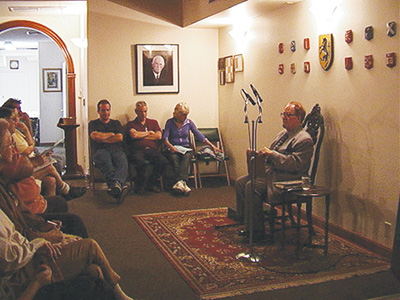
    Dr. Stephan Hoeller delivers a lecture at Ecclesia Gnostica, 3363 Glendale Blvd., Los Angeles, CA 90039, United States
    Dr. Stephan Hoeller delivers a lecture at Ecclesia Gnostica, 3363 Glendale Blvd., Los Angeles, CA 90039, United States

    SH: The accusation that Gnostics are world-hating pessimists was first voiced by the heresy-hunting church fathers of the early centuries A.D. It was false then, and it is false now. Most religious systems recognise that the world is imperfect, as indeed do Gnostics. The difference between the Gnostic position and others concerns the origins of this imperfect state of the world. Judeo-Christian orthodoxy places the blame on human beings: their original sin came to corrupt not only humans themselves, but all of creation. Gnostics, on the other hand, have always held that the world did not fall but was created in a grossly imperfect way to begin with.

    Professor Gilles Quispel, the late, great scholar, was wont to tell the tale that when observing the destruction of a British fighter plane over Holland in World War II, he had the sudden insight: “Valentinus the Gnostic was right: earthly life is tragic.” Gnostics, like Buddhists, recognise that earthly life is filled with suffering, cruelty, and impermanence. I have noted on occasions that we live in a gigantic slaughterhouse cum cafeteria – all forms of life kill and consume other forms to nourish themselves. Some creatures exhibit behaviour that is not related to stilling their hunger. Cats play cruelly with their prey. Some insects kill and eat their mates while copulating; indeed cannibalism is rampant among many species. Natural disasters bring much suffering and death in their wake. On the other hand, Gnostics have always felt that humans can attain to freedom from this suffering world by attaining to Gnosis, that is, a higher kind of consciousness, which allows the liberated Gnostic to soar above this tragic world.

    I must admit that many humans have a strong need to perceive life as in some sense benign and potentially happy. It is also evident that this need cannot be met if we do not experience a salvific change in consciousness, which allows us to perceive a greater, happier reality beyond the world of matter and sense. A secular person without access to such a liberating state of consciousness has one of two choices. The first involves looking the dark face of the world in the eye, while the second is what has been called “living in denial.” The Gnostic has a third possibility: being liberated by Gnosis.

    [alert type=”info” dismiss=”no”]If you appreciate this article, please consider a subscription to New Dawn magazine.[/alert]

    RS: In your book Gnosticism you cay that the Gnostic cosmology has meaning from both a psychological and a cosmic point of view. Could you explore this issue a little?

    SH: The cosmo-conception of the Gnostic tradition truly can be applied both externally and internally, and none of these interpretations need to cancel each other out. The Gnostic myth of the emanation of the divine essence, followed by the creation of physical and psychic reality by the lower creating entities, is to me a plausible explanation of the origin of the world. All such explanations – even the so-called scientific ones – are in reality mythical, and this myth is as meaningful as many others, and more meaningful than some.

    The modern depth psychologist C.G. Jung has come to the conclusion that the Gnostic cosmology may also be seen as a psychocosmology. The various regions of being such as the original unity (Fullness), the various aeonial regions, and ultimately the physical world with its malign archons can be seen as the collective and personal unconscious, the consciousness of the ego, and the functions of consciousness respectively, while the mighty messengers of light can be seen as archetypes proceeding from the collective unconscious. Once again, we may need to keep in mind that the external and internal applications of the Gnostic myth need not exclude each other.

    As noted, this understanding of the Gnostic myth comes to us chiefly from Jung, whom I see as the greatest Gnostic of our time, and about whose teachings I wrote my book The Gnostic Jung and the Seven Sermons to the Dead, which is regarded by many as a pioneering study of the relationship of Jung and Gnosticism.

    RS: From an esoteric point of view, what would you say is happening with humanity today?

    SH: Speaking of Jung, it is no doubt known to many that his mysterious and long-awaited book Liber Novus (The Red Book) has been published at last. One of the principal disclosures to be found in this work is Jung’s belief that the Age of Aquarius is upon us, that significant changes in the consciousness of humanity are taking place, and that more of the same may be expected in the future. The “Aeon of Aquarius,” as Jung calls it, will eventually bring great psychological changes in its wake, amounting to a new religious consciousness which will differ greatly from the religious consciousness of the Piscean Age. It will manifest primarily in a new God-image that was very important to the ancient Gnostics and that in various ways has made its appearance throughout history in the esoteric tradition.

    Two thousand and some years ago a new religion constellated itself in the Mediterranean region. With that religion came a new myth of redemption, centred in the image of Jesus, the Saviour God. Now Jung is telling us in The Red Book that the Aeon of Aquarius is upon us, and with it comes the new God-image of the God within. This image is of course none other than the God to whom St. Paul referred as “the Christ in you, our hope of glory.” It is also the indwelling Christ affirmed and venerated in the Gnostic tradition.

    There is no doubt that Jung saw in the new Gnostic Renaissance, which began with the discovery in 1945 of the Nag Hammadi library, a manifestation of his own prophecy in the then still secret Red Book. The connection of Jung’s prophecy with the tradition of Gnosis is unmistakable.

    In his Red Book, Jung stated clearly that the task of the present and near future was “to give birth to the ancient in a new time,” and he clearly meant the Gnostic tradition is in fact that ancient thing to which he and others were giving birth.

    I have spent a very large portion of my adult life studying and commenting upon the work of Jung and the Gnostic sacred writings. I should say, then, that humanity today is experiencing the rebirth of Gnosticism, and its principal God-image is being born in a new time. The esoteric as well as the exoteric implications of this process are momentous.

    RS: Unlike many figures in the world of alternative spirituality, you have been critical of the environmental movement. Could you discuss why?

    SH: The environmental movement, as I have come to observe it, is indeed a hybrid thing with many facets, some of which are not pleasing to me. If this movement would concentrate its attention on practical measures in improving the environment, I would look upon it with favour. I have resided for sixty years in one of the largest, and consequently greatly polluted, cities of the US, namely Los Angeles, California. In the early years of my residence here, the atmosphere was filled with an unwholesome mixture of smoke and fog, called “smog.” With the aid of various measures, the cooperative efforts of public agencies and private industry have improved the air in my city to a very great extent. Similarly, many helpful measures have been undertaken in the area of trash collection, recycling, and the like. These actions were performed as practical tasks to benefit humans in the city.

    We need to keep in mind that “environment” means “that which surrounds.” The next question is “Whom does it surround?” To which the answer is “Humans!” Here, I feel, is the crux of the issue. According to my understanding of the philosophy of Gnosticism, the human is a very important being on this earth because it is in the human that the divine spark resides, and it is this spark that is to experience Gnosis. Therefore it is important that we should have a fair environment for the human. On the other hand, the environment is not an all-important thing in and of itself. The material creation within which we live is a creation of the archons. When we begin to worship the environment, we worship a flawed creation. We need to cultivate our consciousness and with it make intelligent decisions about ourselves and about the environment. Large portions of the environmental movement have become pantheistic nature worshippers, often viewing humanity as a curse upon the world – a title I would like to reserve for crocodiles, bedbugs, and the AIDS virus, to mention but a few.

    There is much reverential talk in some esoteric circles about “the one life.” I would rather concentrate on “conscious life” and keep in mind that much life in this world is sordid, malign, unsavoury, and even evil.

    RS: Your spiritual lineage, I gather, comes from the “independent sacramental” line, sometimes called the line of “wandering bishops.” Could you tell us a little about this tradition and how it relates to your own work?

    SH: The lineage you refer to is that of the apostolic succession. As far as we can ascertain, most of the Gnostic schools in ancient times participated in the apostolic succession. They wrote, in the words of the Gospel of Philip, “The Lord anointed the Apostles and the Apostles anointed us.” Gnostic revival movements such as the French Gnostic Church, revived in the nineteenth century by Bishop Jules Doinel, all availed themselves of apostolic successions, mainly of Roman Catholic and Syrian Orthodox origin.

    I was a student and seminarian of the Cistercian order in Hungary. After I left my native land, I seriously considered further training for the Roman Catholic priesthood. What got in my way was Gnosticism, a secret tradition to which I became ever more attached.

    RS: I understand that you were consecrated as a bishop by a figure known as Richard, Duc de Palatine. Could you say a little bit about him, his teachings, and his own lineage?

    SH: Upon my arrival in the US in the early 1950s, I discovered there were a number of small denominations that were known as “independent Catholic churches.” A somewhat pejorative name that was sometimes applied to the bishops of these churches was “wandering bishops.” After a few years I became a cleric, and eventually a priest, in one of these churches, the American Catholic Church, which possessed a lovely church in Laguna Beach, California. The bishop was a very fine man, Dr. Lowell Paul Wadle.

    A number of years later, I met a British bishop, Richard, Duc de Palatine, who was on a lecture tour in the US. Unlike the bishop who ordained me a priest, who was an esotericist but not an outright Gnostic, Bishop de Palatine was a Gnostic and was in contact with the Gnostic churches in Europe. Thus I moved from one bishop to another, which proved prophetic, since my earlier bishop suddenly died a fairly short time thereafter. Thus my career as an openly Gnostic priest began.

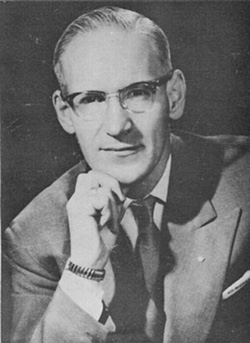
    Richard, Duc de Palatine, described by Dr. Stephan Hoeller as a learned and charismatic man, is regarded as restoring the Gnostic tradition in the English speaking world.
    Richard, Duc de Palatine, described by Dr. Stephan Hoeller as a learned and charismatic man, is regarded as restoring the Gnostic tradition in the English speaking world.

    This gentleman was an Australian by birth and upbringing. He studied at the University of Melbourne and during World War II served in the Australian armed forces. After the war he moved to London, where he became involved in various esoteric and ecclesiastical activities. Somewhat like me, he developed a great interest in Gnosticism quite early in his life. He joined the Theosophical Society in Australia, and I believe he belonged to the Melbourne Lodge, where, many years later, in the 1980s, I was a visiting lecturer myself. While some reference books claim that he had been a priest of the Liberal Catholic Church in Australia, he always denied this.

    Richard, Duc de Palatine’s clerical career began in London, shortly after he transferred his residence there. He became friendly with an English independent Catholic bishop, whose secular name was Hugh George de Willmott-Newman, and who was known as Mar Georgius I, bishop of Glastonbury. It was Mar Georgius who instigated that Richard should receive the title Duc (“duke”) de Palatine. There seems to have been a vogue among English independent bishops to receive titles of nobility at that time. Since these titles did not come from a reigning monarch of any country, they were considered somewhat spurious by some. Since I come from Austro-Hungarian nobility myself, with a title that dates back to the eighteenth century, I did not view this peculiar title-mongering with a great deal of favour, but I had more important concerns.

    Bishop de Palatine had a small organisation, headquartered in London, which possessed a certain membership in the US. He asked me to take charge of these members, and thus I became his personal representative for the US and the leader of the Los Angeles group of his members. This involved also starting up a Gnostic parish, which I did, and thus since 1959 I have headed a small Gnostic church in Los Angeles. I may say that this turn in my career was really a dream come true, for my great interest in Gnosticism now enabled me to serve this tradition in both a teaching and a priestly capacity.

    Thus Richard, Duc de Palatine became my teacher and superior formally in the early 1950s. He was an unusual person; charismatic, learned in certain areas, and – I am a bit reluctant to confess – I found him to be a person with unmistakable occult powers. He was what anciently was called a thaumaturge. I imagine there was a certain similarity between his powers and those of people like H.P. Blavatsky and G.I. Gurdjieff. Since these matters are somewhat private, no more shall be said of them. I served his church as a priest for ten years, after which he consecrated me a bishop.

    RS: There is a widespread teaching that speaks of a secret brotherhood that is constantly at work on behalf of human advancement and evolution. Do you personally believe in this concept, and if so, could you explain why?

    SH: The notion of such a brotherhood was chiefly publicised by H.P. Blavatsky and her followers, although some ideas of this nature existed in earlier esoteric traditions. The late nineteenth and early twentieth centuries saw much literature that exalted and exaggerated this concept. Names such as “Great White Brotherhood of Adepts” and even “the Hierarchy” came to be applied to it.

    As a student of esoteric history, I am aware of the presence of mysterious spiritual beings in the early Theosophical Society. Blavatsky often referred to her gurus, as did some of her successors.

    As to my own views on these matters, I freely accept the belief that esoteric teachers frequently have both embodied and also spiritual gurus. (For instance, Jung had a “ghostly guru” called Philemon.) But I draw the line at the idea that these gurus are organised in some sort of formal council that guides and advances the progress of humanity. In my view, this is a distortion of the data. One could also say that in view of the many frightful wars, holocausts, and gulags of recent history, the alleged beneficent efforts of such a brotherhood appear to have been singularly ineffective.

    RS: There seem also to be many forces that are working against human evolution and advancement. Could you comment a little on these? Do they have any relation to, say, the Gnostic concepts of the Demiurge and the archons?

    SH: The presence of forces that oppose human spiritual freedom was widely recognised by Gnostic teachers. Such forces are frequently personified as the archons, headed by the Demiurge of this world. Mythically, these beings are represented as entities who have been alienated from the ultimate divine source of the All, and who regard themselves as the proper overlords of creation and of humanity. A descriptive mythologem would be to see them as slave masters who wish to keep human souls in bondage, and who therefore try to prevent the liberation of human souls by Gnosis.

    It may be useful to mention that this view is not in the nature of a Gnostic demonology. The archons and the Demiurge are not so much evil as they are of limited consciousness; they do not recognise a reality superior to their own. (Gnostics stated that it was the Demiurge who exclaimed: “I am the only God and there are no other Gods beside me!”) These beings have fabricated a flawed creation and are determined to keep human souls confined therein.

    Fortunately, the domain of these beings is not universal. Mingled with the dark features of demiurgic creation, we find elements coming from the original Godhead, elements which have remained relatively free from corruption. Therefore, the manifest creation contains both light and dark. We walk on the checkerboard of the cosmos, which has been called the “tasselated pavement” in certain initiatory orders.

    As for myself, I believe neither in a great white brotherhood of benevolent adepts nor in a menacing assembly of evil black magicians, but rather in forces of unconsciousness opposed by forces of liberating consciousness. All of these may be personified or not. Among these forces we laboriously wind our way to the summit of salvific Gnosis.

    „You can learn more about Gnosticism and the work of Bishop Dr. Stephan A. Hoeller at the website of the Ecclesia Gnostica, www.gnosis.org/eghome.htm. Dr. Hoeller’s extensive library of lectures – on Gnosticism, Jung, Alchemy, Consciousness, Religion, & much more – are available for download from www.bcrecordings.net.

    [alert type=”general” dismiss=”no”]This article was published in New Dawn 143.[/alert]

    [alert type=”success” dismiss=”no”]If you appreciate this article, please consider subscribing to help maintain this website.[/alert]

    © New Dawn Magazine and the respective author.
    For our reproduction notice, click here.
  • The Gospel of Judas Revealed

    The Gospel of Judas Revealed

    From New Dawn 96 (May-June 2006)

    The secret account of the revelation that Jesus spoke in conversation with Judas Iscariot during a week three days before he celebrated Passover. …Jesus said to him, “Step away from the others and I shall tell you the mysteries of the kingdom. It is possible for you to reach it, but you will grieve a great deal.”
    – The Gospel of Judas1

    From an historical point of view this find is as important as the Nag Hammadi writings discovered half a century ago. Everything tells us that we are dealing with the Gospel of Judas referred to by Irenaeus in the second century AD. It is fantastic that something like that re-appears after 1800 years.
    – Dr. Stephen Emmel2

    The story of how the Gospel of Judas arrived in the Western world is a fascinating tale. Like many of the so-called Gnostic Gospels, it somehow travelled out of Egypt and arrived in the US with a large price tag. Unlike many manuscripts which vanish sight unseen, luck or providence if you like brought this manuscript not only to light but finally to restoration and publication. In the words of Professor Elaine Pagels, “the discovery of the Gospel of Judas is astonishing.”

    Originally unearthed by a farmer in 1978 near El Minya, Egypt, from where it had been hidden in a “tomb-like box” for some 1,600 years, the leather-bound papyrus codex was in superb condition. The farmer secretly sold the codex to an antiquities dealer in Cairo, without advising Egyptian Antiquities. In a clandestine meeting in 1983, the antiquities dealer offered the codex for sale to various scholars in Geneva, however with an asking price of over $3,000,000 and a dubious provenance, the price was considered extraordinary.

    Ironically, while the Gospel survived well in Egypt, it seriously deteriorated when stored for some 16 years in a safety deposit box in Hicksville, New York. Finally purchased by antiquities dealer Frieda Nussberger-Tchacos in 2000, the following year the codex was acquired by the Maecenas Foundation for Ancient Art in Switzerland. With the help of National Geographic and an agreement reached with the Egyptian government, restoration work soon began.

    Known as the Codex Tchacos (named after Dimaratos Tchacos, father of Frieda Nussberger-Tchacos), it is a 26-page document written on 13 sheets of papyrus leaf in ancient Egyptian, or Coptic. The codex contains not only the Gospel of Judas, but the First Apocalypse of James, the Letter of Peter to Philip, and a small fragment of text that scholars have called the Book of Allogene.

    If we focus on the Gospel of Judas, the document is a 3rd century Coptic translation of a now lost Greek text, thought to have been written by a group of early Gnostic Christians before 180 CE. While its significance is much debated, there is no question about its authenticity. There is universal agreement it is the genuine article. “All you had to do was look at this thing once,” said Bart Ehrman, a scholar of early Christianity. “I’ve seen a lot of ancient manuscripts, and there was no question.”3 According to James M. Robinson, America’s leading expert on ancient religious texts from Egypt, “I don’t know of any scholar who thinks this is fake.”4

    Heresy Hunting

    Back in the 2nd century of the Christian era, the Christian Bishop Irenaeus mentioned a Gospel of Judas was in use among the Kainites, an early Gnostic Christian sect. In part I of his Against Heresy, paragraph 31.1, he wrote:

    (Some) stated that Cain owes his existence to the highest power, while Esau, Korak, the Sodomites and all other men are dependants of each other. (…) They believe that Judas the Betrayer was fully informed of these things and that only he understanding the truth like no one else fulfilled the secret of betrayal that confused all things, both in heaven and on earth. They invented their own history called the Gospel of Judas.

    The Gospel had been known to exist for some time when discussed by Irenaeus around 180 CE, with his primary source being Justin Martyr. This moves the date back to around 140 CE, and most scholars therefore date the Gospel itself to around 120 CE or even earlier. This is significant because it places the Gospel of Judas within the same timeframe as the Biblical gospels of Matthew, Mark, Luke and John.

    The publication of the Gospel of Judas undertaken by National Geographic is unlikely to disturb the mainstream Christian church. In a recent interview, Monsignor Walter Brandmuller, president of the Vatican’s Committee for Historical Science, called it “a product of religious fantasy,” and went on to say, “There is no campaign, no movement for the rehabilitation of (Judas) the traitor of Jesus.”5

    From past experience with the Dead Sea Scrolls discovered in 1947 and the Nag Hammadi Library unearthed two years earlier, whatever the merits of a document it does not bring about a religious revolution. There is an entrenched power structure within Christendom and regardless of the strength of evidence presented, the Church will use spin, distortion and, if necessary, violence (remember the first crusades were against the Cathars) to preserve its dominion.

    The significance of the Gospel of Judas needs to be seen in the context of the larger picture provided by Gnosticism and current scholarship regarding Christian origins. Too often modern Christians live in a sort of self imposed ghetto. They read Christian books, subscribe to Christian magazines, and generally are not exposed to scholarship except through the lens of their chosen leaders or churches. In many cases even when a Christian leader tries to inject scholarship and critical thinking, it is still filtered through a very antiquated religious lens. There does seem to be a surprisingly large gap between modern research into Christian origins, even that generally available, and the information the average Christian receives within his or her community.

    Over the last 100 years the academic model that has arisen in regards to Christian origins is radically different from the traditional Christian worldview. It would be fair to say Christianity is sometimes even seen as a Gnostic heresy and not vice versa. While this is an inflammatory way of describing Christian origins, it does seem quite clear that within the early Christian “spectrum” there was an exceptionally wide range of traditions and practices. This diversity was not only tolerated but encouraged and embraced. Christianity was not a single, monolithic tradition handed down from one leader to another in succession; it was diverse and multi-faceted with many dispersed centres of power.

    Elaine Pagels, a professor of religion at Princeton who specialises in studies of the Gnostics, recently said in a statement, “These discoveries are exploding the myth of a monolithic religion, and demonstrating how diverse – and fascinating – the early Christian movement really was.”6

    Gnostic Christianity

    Although later denounced by certain leaders as ‘heretics’, many of these Christians saw themselves as not so much believers as seekers, people who ‘seek for God.’7
    – Elaine Pagels

    Early Christianity seems to have included many differing viewpoints from the rather staid Judaic Christian mix of James the Brother of Jesus to the esoteric Gnosticism of the followers of Mary Magdalene and Simon Magus. Variations in approach were such that within one movement there were libertine sects that used sex and mind altering substances, and others which were strictly ascetic and celibate. There were groups which were strictly Judaic in focus even to the point of keeping the old laws and festivals of Israel, while others were clearly influenced by the Greek Mysteries and even Buddhist traditions.

    Each of these communities had their own sacred texts and interpretations of the teachings of Jesus; the majority would now be considered Gnostic, i.e. they emphasised personal and direct experience of the divine. Accordingly, each of these groups acted like a “Mystery Cult” and had their own specialised practices, mythologies and rites. Many had distinct Gospels which included unique revelations from Jesus to their founders. For example, in the Pistis Sophia, we read of the secret teachings of Jesus to Mary Magdalene and the Gospel of Thomas begins… “These are the secret words which the living Jesus spoke, and Didymus Judas Thomas wrote them down.”8

    These secret writings and communities flourished for hundreds of years. It was only in the early 4th century that Bishop Athanasius of Alexandria wrote a letter to some Christians in Egypt ordering them to reject what he called “secret, illegitimate books.”9 In 363 CE the first synod (of Laodicea) was held to decide the official contents of the Bible.

    Certainly by the middle of the 4th century, Christianity had become a political force and dissenting views were not tolerated. Under threat and violent persecution, Gnostic communities withdrew from public view, to survive as an ‘underground’ movement. This continued right through to such groups as the Templars and Rosicrucians, and even to the present day.

    Clearly, early Christianity offered a wide spectrum of beliefs and practices catering to the unique needs of people with differing levels of spiritual development. This helps us understand the Gospel of Judas. While Christendom has attempted to downplay the significance of this Gospel, its message, like that of Gnosticism in general, is actually quite confronting and challenging.

    Secret Teachings

    The Gospel of Judas is a secret account of the revelation that Jesus spoke to Judas Iscariot. It portrays Judas as one of the initiates, a specially loved and favoured disciple who undertook one of the most painful missions asked by his teacher, to betray the saviour as part of a greater plan of spiritual import.

    The Gospel outlines a specifically Gnostic worldview, offering a cosmology which is fairly consistent with the radical Gnostic sects of the period. Cosmology in Gnosticism is a complex idea with many Aeons, worlds, dimensions and forms. It is impossible to appreciate the cosmology of the Gospel of Judas without these, however, I cannot give them comprehensive coverage here, but I will try to give a general outline.

    There is a world of light which is beyond all created forms. This spiritual realm contains various dynamic intelligences or energies, of which one, Barbelo, is discussed in the Gospel of Judas.

    For there exists a great and boundless realm, whose extent no generation of angels has seen.
    – Gospel of Judas

    There are many dimensions or worlds which exist between this higher reality and the physical world, and all are populated with forms of varying potencies.

    The physical world is depicted as flawed, even evil, and is beyond the boundary of these worlds. It is the product of a bloodthirsty and ignorant creator deity. His name is given as Nebro, which means ‘rebel’; while others Gnostics call him Yaldabaoth. There are many myths and stories about how he came to exist and create the physical world.

    Judas said to Jesus, “[What] is the long duration of time that the human being will live?”

    Jesus said, “Why are you wondering about this, that Adam, with his generation, has lived his span of life in the place where he has received his kingdom, with longevity with his ruler?”

    Judas said to Jesus, “Does the human spirit die?”

    Jesus said, “This is why God ordered Michael to give the spirits of people to them as a loan, so that they might offer service, but the Great One ordered Gabriel to grant spirits to the great generation with no ruler over it – that is, the spirit and the soul…
    – Gospel of Judas

    While the Gospel of Judas does not present a full account of the creation process, when interpreted in conjunction with other Gnostic texts it certainly presents a mythos which is very much at odds with the standard Judeo-Christian legend. Saklas, a demi-god under Yaldabaoth, creates the body of man while the angels Michael and Gabriel, emissaries of the world of light, allow spirits from the world of light to incarnate within these shells.

    This is very similar to Mandaean myths of creation where the physical bodies created by lesser spirits cannot even move off the ground, writhing and screaming in the dirt. In sympathy, emissaries of the light world allow spirits to enter them. But becoming trapped, fascinated by the allure of the flesh, these spirits now believe they are physical rather than spiritual beings.

    There is a suggestion, also found in other Gnostic literature, of various degrees of spiritual awakening. Some beings only have one soul, some have two, some have none. In the Gospel of Judas, those with one soul receive it from Michael, while those with both a soul and spirit have received them from Gabriel. Each of these classes are under varying degrees of control by the rulers (principalities and dominions) that manipulate our world.

    This model is found within the Gnostic schools where there are three levels of initiation:

    1. Hylic – most of sleeping humanity, under full control of rulers.

    2. Psychic partially awakened, under partial control of the rulers.

    3. Pneumatics – awakened.

    There is an essential dualism within the Gospel of Judas which helps explain the significance of Jesus’s death and the role of Judas. Since man’s origin is within the spiritual dimensions and the flesh is a cage, then death is not to be feared but a form of liberation. Accordingly, Judas helps Jesus escape his prison of flesh and liberate the essential true nature within him.

    You will exceed all of them. For you will sacrifice the man that clothes me.
    – Gospel of Judas

    The Gnostics taught that in some way or another we must each overcome the body and its demands and liberate the true Christ nature within. While individual praxis may vary from asceticism to libertinism, the goal is the same. In addition, these Gnostics also identify the creator of the physical world as our enemy, and hence see Yaldabaoth as the primary force holding us back from achieving true liberation.

    Indeed, in the Sethian tradition, Yaldabaoth is identified with Jehovah and the serpent of Genesis is actually seen as the liberator. This relates back to Irenaeus’ claim the followers of the Gospel of Judas were “Kainites” since in this interpretation, Cain is the saviour, not Abel, and the Sodomites are the people of God, not the slaughtering puritans and so on.

    We also find within the Gospel of Judas reference to both Seth and Adamas which is significant as they tie elements of the Gospel to the Naassene or Serpent Gnostic traditions. This has strong resonance with the Greek Orphic Tradition which is superbly covered in The Gnostic Secrets of the Naassenes by Mark Gaffney.

    There is a distinct absence of the saving power of the blood of Christ or the vicarious nature of the crucifixion in the Gnostic texts. Indeed the crucifixion and Resurrection are not even mentioned in the Gospel of Judas. The role of Judas shows the path to liberation is in awakening the Christ within and overcoming the restrictions created by both the physical body and the forces of the lower spiritual/physical worlds. These are sometimes represented as the planets, powers and dominions or rulers.

    The multitude of those immortals is called the cosmos –  that is, perdition – by the Father and the seventy-two luminaries who are with the Self-Generated and his seventy-two aeons. In him the first human appeared with his incorruptible powers. And the aeon that appeared with his generation, the aeon in whom are the cloud of knowledge and the angel, is called [51] El. […] aeon […] after that […] said, ‘Let twelve angels come into being [to] rule over chaos and the [underworld].’ And look, from the cloud there appeared an [angel] whose face flashed with fire and whose appearance was defiled with blood. His name was Nebro, which means ‘rebel’; others call him Yaldabaoth. Another angel, Saklas, also came from the cloud. So Nebro created six angels – as well as Saklas – to be assistants, and these produced twelve angels in the heavens, with each one receiving a portion in the heavens.
    – Gospel of Judas

    Judas works with Jesus to help liberate him from the power of the body; he plays an important role within the initiatory process of the crucifixion and Resurrection, which some suggest was actually an initiatory drama rather than a real historical event, but that is outside our discussion here.

    This Gospel needs to be interpreted within the larger framework of the dualist Gnostic tradition. The motif of Judas as special disciple and the negative interpretation of both the body and the world resonate through the vast majority of the Gnostic sects. In addition, the emphasis on Jesus as a giver of light, a transmitter of the message from the higher dimensions rather than as a sacrifice, is central to a Gnostic view of salvation.

    Jesus was seen as a way-shower, an emissary, a being whom we should emulate, not worship. This approach is central to the Gnostic vision; liberation comes through individual effort inspired perhaps by the life of Jesus, but ultimately through our own perseverance. In this way we move towards achieving our own state of divinity, our own theosis.

    The Gospel of Judas is certainly a fascinating revelation, though it does not necessarily add greatly to what we already know about the Gnostic vision. What it does do, however, is bring home the significance of this message for today’s world. If the Gospel of Judas had been taken seriously by the early Church and the Gnostics not suppressed, anti-Semitism and all its related violence may not have had such a disastrous effect within Western history. If Judas was only doing his job as a “special” disciple of Jesus, then the whole myth of “Judas the Christ Killer” dissolves and is replaced by Judas, the holder of the Mysteries.

    In 2006 with continued violence instigated by self-proclaimed religious fundamentalists, it is perhaps time we rehabilitate the Gnostic tradition. Gnosticism brings a spirit of openness, diversity, individual responsibility and freedom. With the publicity brought about by The Da Vinci Code and now the publication of the Gospel of Judas, it is time we let go of old prejudices, superstitions and narrowly held opinions and allow a different light to shine from beyond the confines of matter.

    [alert type=”general” dismiss=”no”]This article was published in New Dawn 96.[/alert]

    [alert type=”success” dismiss=”no”]If you appreciate this article, please consider subscribing to help maintain this website.[/alert]

    Recommended Reading

    Adam, Eve and the Serpent by Elaine Pagels
    Gnosis: The Nature and History of Gnosticism by Kurt Rudolph
    The Gnostic Bible: Gnostic Texts of Mystical Wisdom form the Ancient and Medieval Worlds by Willis Barnstone
    The Gnostic Gospels by Elaine Pagels
    Gnostic Philosophy: From Ancient Persia to Modern Times by Tobias Churton
    The Gnostic Religion by Hans Jonas
    The Gospel of Judas by Bart D. Ehrman, Rodolphe Kasser, Marvin Meyer, and Gregor Wurst
    Jesus and the Lost Goddess: The Secret Teachings of the Original Christians by Timothy Freke and Peter Gandy
    The Jesus Mysteries: Was the “Original Jesus” a Pagan God? by Timothy Freke & Peter Gandy
    The Other God: Dualist Religions from Antiquity to the Cathar Heresy by Yuri Stoyanov
    The Secrets of Judas: The Story of the Misunderstood Disciple and His Lost Gospel by James M. Robinson

    Footnotes

    1. The Gospel of Judas, as translated by a team led by Rodolphe Kasser and provided by the National Geographic Society.
    2. www.michelvanrijn.nl
    3. “Scholars have ‘no question’ on authenticity”, by Tom Avril, The Philadelphia Inquirer, 7 April, www.philly.com
    4. “Another Take on Gospel Truth About Judas, Manuscript Could Add to Understanding of Gnostic Sect”, by Stacy Meichtry, 25 February, Washington Post, www.washingtonpost.com
    5. Ibid.
    6. “In Ancient Document, Judas, Minus the Betrayal”, by John Noble Wilford & Laurie Goodstein, 7 April, New York Times, www.nytimes.com
    7. “The ongoing evolution of Christianity”, by Jane Lampman, May 15, 2003, Christian Science Monitor, www.csmonitor.com
    8. “The Gospel Truth”, by Elaine Pagels, April 8, New York Times, www.nytimes.com
    9. Ibid.

    © New Dawn Magazine and the respective author.
    For our reproduction notice, click here.