New Dawn – World's Most Unusual Magazine

Tag: gnostics

  • The Bogomils: Europe’s Forgotten Gnostics

    The Bogomils: Europe’s Forgotten Gnostics

    From New Dawn 106 (Jan-Feb 2008)

    Few people in the modern world have heard of the Bogomils, who existed during a seven-century time span in and around Bulgaria. Although almost forgotten, they represent an important movement that should be studied by anyone interested in Gnosticism, spiritual freedom, the Cathars of France (who succeeded them), and the history of religions.

    For most of their existence, from the mid 900’s to the late 1400’s CE, the Bogomils sought to restore the earliest and purest form of Christianity. Since their beliefs were considered a threat to the Church they experienced intense persecution.

    Their original home was probably in Macedonia and from there they spread throughout the Byzantine Empire, ultimately flourishing in Bulgaria, Serbia, and Bosnia. Their spiritual descendants were the better-known Cathars, so the extent of their influence reached as far as Italy and into southern France.1 Attacked over the centuries with both fire and sword by Catholic and Orthodox Christians, they finally surrendered – but to Islam rather than Christianity.2

    Origins

    Bogomilism was named after its founder, Bogomil, whose name means “friend of God” or “beloved of God.” He was a village priest who lived in the Macedonian mountains during the reign of Peter (927-968), a fact confirmed by two early Bulgarian manuscripts that are still extant.3

    The Bogomils’ long history had actually begun in the previous century. When Khan Boris I accepted a Christian baptism in 864, Greek missionaries soon arrived. Christianity spread rapidly, but many resisted and dissent began to spread.

    The Byzantine Empire was familiar with large groups of dissenters and usually deported them. As historian Donald M. Nicol explains, “Where heresy was widespread in a district, State officials would come and forcibly remove the population of whole villages to other parts of the Empire, where they would be swamped, or, it was rather hoped, converted by their new neighbours.”4 Instead of deporting recalcitrant Bulgarians, however, the Byzantines chose to resettle a group of Armenian heretics known as Paulicians on the Bulgarian frontier in 872. This was a mistake. Instead of adopting Orthodoxy, the Paulicians spread their Manichaean doctrines, which espoused a dualistic struggle between the forces of good and evil in the cosmos. Their beliefs strongly influenced the formation of the Bogomils and by about 950 Bogomilism had been born.

    Rituals and Beliefs

    Instead of having priests a group of elders were chosen by lot to lead each Bogomil service. Therefore, all interested believers had the potential to lead. Their meetings were held in any home or structure, or even outside, as they believed that God did not confine Himself to stone buildings designated by humans. The spirit of God, indwelling in every human heart, could be brought anywhere and recognised as such. This was a clear threat to the Church. Its popularity was also a threat. Bogomilism spread rapidly because a portion of the brethren’s earnings went to the poor, the sick, and toward the support of those who travelled and spread the Gospel.

    The early Bogomils rejected the Old Testament, relying primarily on the New Testament. The later Byzantine Bogomils accepted the Psalms and the sixteen books of the Prophets. Their version of worship was an effort to exemplify the beliefs of the Primitive Church in its purest form, before Christianity added to it. The Trinity was considered to be an illusion and rejected (overwhelming scriptural evidence shows this is a false doctrine; the concept never appears in the earliest Christian teachings). The cross was considered evil, having been the instrument used to kill Christ. They asked, “If someone killed the king’s son with a piece of wood, do you think the king would regard the weapon as holy?” Using the Sign of the Cross was also rejected; they preferred the Lord’s Prayer because it fails to support or glorify the murder of a spiritual leader.

    They rejected beliefs in the Second Coming, the Last Judgment, and the resurrection of the dead. They all relate to the redemption of the material body, and the Bogomils viewed matter as the principle of evil. Like the older Gnostics before them, they believed that the godly “spark” or spirit of man has been trapped in this evil, material world. To be united with God, man must avoid contact with the world of flesh. Therefore the “elect” abstained from sexual intercourse, meat, and wine, a practice that was successfully maintained throughout the greater part of Bogomil history.

    While the elect practiced such austerities, they accused the Orthodox clergy of idleness, drinking, and robbery – which in large part was probably true. The Bogomils contended that the Orthodox had forfeited the right to be called Christians because of their behaviour, and saw themselves as the true Christians of the time.

    To become a Bogomil required a simple two-part initiation, known as “the Baptism of Christ through the Spirit” in contrast to the Orthodox baptism, which the Bogomils rejected as being of St. John and by water only.5 The candidate was prepared through prayer, fasting, and confession of sins. At the ceremony the presiding authority laid the Gospel of John on the candidate’s head; then they invoked the Holy Spirit and said the Lord’s Prayer together. A probationary period of abstinence from sex, wine, red meats, and food with blood (except for fish) followed. Once completed, the initiate returned for the second part of the process by coming before the assembly. He faced the east, at which point the Gospel of John and the hands of the brethren present were laid on his head and a hymn of thanksgiving was sung. According to at least one scholar, it is possible that an initiate was declared a Bogomil upon completion of the first part, and completing part two moved him up from the rank of “believer” to that of the “perfect” or “chosen.”

    One of the major differences between the Bogomils and the Orthodox concerned their views of evil:

    The church teaches that God is the source of all perfection and that the whole world, visible and invisible, is His creation. Yet one does not need to be a philosopher to observe that in this world of ours moral and physical evil – suffering, cruelty, decay, death – is abundantly present. How then can God, the Supreme Good, be the cause of suffering and evil? Must He be held responsible for wars, epidemics, the oppression of the poor by the rich?… The Bogomils had an answer which was at least logical and consistent: evil and pain are inherent in this world because this world is the creation of the Evil One.6

    [alert type=”info” dismiss=”no”]If you appreciate this article, please consider a subscription to New Dawn magazine.[/alert]

    History and Persecutions

    Constantinople

    By 1050 the Bogomils had spread to the Byzantine Empire. Euthymius Zigabenus, a favourite monk of the emperor, returned from a journey and found the heresy had infested his monastery. Euthymius set out to uncover the heresy.

    One captured Bogomil, Diblatius, revealed under torture the names of high-ranking Bogomils, including their supreme leader, Basil, who had taught for over 50 years. Basil was approached through underhanded means. The Emperor Alexius and his brother pretended to be interested in converting to Bogomilism. As Basil was questioned in the palace, a secretary hid behind a curtain and took notes, documenting all that was said. When a full confession had been made, Alexius threw back the curtain and arrested him.

    Basil’s core followers and twelve main disciples were caught. Many refused to recant, so Alexius announced that all Bogomils would be burnt alive, but had a choice between being burnt on a pyre with a cross or on a pyre without one. Those who chose the cross were released as having proven their orthodoxy. The others were returned to prison, where they were subjected to daily exhortations to convert. Those who persisted in their beliefs stayed imprisoned for life, but, Anna adds, “were amply supplied with food and clothing.”7

    Basil was arrested in 1111 and burnt in either 1118 or 1119. A huge pyre was built in the Hippodrome where large crowds attended events. He had the choice of walking to a large wooden cross instead of the fire. Refusing the cross, he was thrown into the fire. Basil’s death ended Bogomil influence in Constantinople.

    With all the years of conflict between the Bogomils and the Orthodox Byzantines, it is amazing that there was only one public execution of Bogomils in the Byzantine Empire. As Obolensky observes, “It is to Alexius’s everlasting credit that in his dealings with heretics he used the weapon of persuasion in preference to any other.”8

    Bosnia

    In the late 1100’s the Bogomils were badly persecuted in Serbia, but Bosnia was a safe haven. The first great ruler in Bosnia was Kulin, the “Great Ban” (ban was the title given to local representatives of the Hungarian kings). His reign, from 1180 to 1204, was known for its prosperity. Bogomilism was hugely prevalent, involving many nobles and landowners. They formed a “Bosnian Church” of their own, headed by a “bishop” and served by a semi-monastic body of devotees who acted as missionaries.9 The biggest surprise was when Kulin himself and the Roman Catholic Bishop of Bosnia became Bogomils, shocking the Roman church. The papacy and the Catholic king of Hungary pressured Kulin to recant (under threat of war), which he did in 1203. In spite of Kulin’s “change of heart,” Bogomilism continued to grow and flourish.

    When Kulin died in 1204 the worried Pope appointed a Roman Catholic Ban. A group of missionaries arrived to convert the Bosnians. The result? The Roman Catholic Ban converted to Bogomilism and Bogomil churches spread like wildfire – not only in Bosnia, but in Slavonia, Croatia, Istria, Dalmatia and Carniola. As for the papal missionaries, by 1221 there were no other priests in Bosnia except for Bogomils.

    In 1222 Hungary invaded in what was to be the first of at least three crusades against the Bogomils, fashioned after the Albigensian Crusades in France. The Bosnians immediately threw the Roman Catholic Ban out of the country and appointed a Bogomil leader named Ninoslav. The war continued for years as a stalemate. Ninoslav received the same pressure to convert to Catholicism as Kulin did and complied, but the entire country saw through the same façade from before and continued being Bogomils without batting an eye. The warfare smashed up the countryside but whenever the invaders withdrew, the Bogomils went back to their faith, backed by the strength and prosperity of the people.

    By the late 1200’s, after more failed attempts, Hungary chose not to invade Bosnia. Frustrated voices in Rome began grumbling that Hungary herself should be the object of a crusade.

    In 1322, the powerful Subic family was toppled and Stephen Kotromanic, a Bogomil, was elected as ban. He successfully acquired the principality of Hum (later called Herzegovina) in 1326, foiling Serbian and Hungarian attempts and giving Bosnia access to the sea for the first time in its history. Its prosperous farms and mining operations now had a direct sea route for export. This was a hugely successful country, teeming with heretics. It was only a year earlier that the Pope had written to Kotromanic saying, “Knowing that thou art a faithful son of the Church, we therefore charge thee to exterminate the heretics in thy dominions,… their speech crawleth like a crab, and they creep in with humility, but in secret they kill, and are wolves in sheep’s clothing,” etc.

    Let’s read this again. Who was, in actuality, the one trying to “kill in secret,” by sending a letter to the king, asking that he “exterminate” his own people? A close study of the papacy and its history will expose almost as much corruption as the mafia. Those familiar with papal history will not find these tactics to be of any great surprise.
    Bulgaria

    The Bulgarian Tsar Boril, who ruled from 1207-1218, detested the Bogomils. He had usurped the throne, having driven the rightful heir, John Asen II, out of the country and into Russia. Anti-heretical laws were issued and carried out in 1211, making these events almost simultaneous with the Crusade against the Cathars in the West. 10 Many heretics were tried and went to prison.

    Followers of John Asen II dethroned Boril in 1218 and blinded him, restoring the rightful heir to the throne. Asen, who ruled from 1218-1241, is considered the greatest of all Bulgarian monarchs, and under his reign Bulgarian civilisation reached its peak.

    During Boril’s reign the Bogomils had supported the absent Asen, and John never forgot it. They now enjoyed complete protection and freedom under him, suggesting a link between Bulgaria’s greatness and the protection and support of the Bogomils. Pope Gregory IX complained to the king of Hungary (of which Bulgaria was a satellite) about the kind treatment the heretics were receiving. A crusade was attempted in 1235, but failed miserably.

    It was no coincidence that under the rule of John Asen II Bulgarian civilisation reached its peak. Bosnia achieved similar greatness while allowing the Bogomils to flourish. These were immensely successful nations that were Gnostic in character and belief. What gives any foreign country or pope the right to dictate what a certain nation’s beliefs should be when they are at the height of their civilisation and quite happy internally?

    The Cathar Legacy

    Bogomilism entered Russia, but its biggest influence was on the Cathars of southern France. Cathar origins have been traced to Bogomil missionaries who are believed to have passed through the Dalmatian coast and northern Italy to reach France in the tenth and eleventh centuries.11 Most serious researchers consider Catharism a direct legacy of the Bogomils. A lesser camp contends that the Cathars were formed independently by long-established Manichaean schools in France, then connected with the Bogomils at the end of the eleventh century.

    According to the late Romanian scholar Ioan Couliano, this difference stems from two distinct Cathar groups that existed, “…one that was simply Bogomil, and another one that preached a radical dualism of intellectual origin, made up of a concoction of Origenism and Manichaeism…. The two types of Catharism may not share common doctrines but they have similar ethics, stemming from Bogomilism.”12 Couliano reveals how this second Cathar group, in his view, also originated in the Balkans.

    Bogomilism directly influenced the Cathars by the twelfth century. In his book Aion, C.G. Jung mentions a heretical document that was found in the Archives of the Inquisition at Carcassonne, France. This work, he says, “concerns an alleged revelation which Christ’s favourite disciple John was vouchsafed as he ‘rested in the Lord’s bosom’.” Jung notes that this Latin text contained the Old Bulgarian word osob, which means something like “individuality” or “personality.” He also mentions how the Cathars, like the author of this text (hinting at two distinct persuasions), regarded the Devil as creator of this world and of man.13

    Jung’s account clearly resembles Obolensky’s description of the Cathar Secret Book, also known as the Liber Sancti Johannis or the Faux Evangile. It is “…a dialogue between Jesus Christ and His favourite disciple John the Evangelist. At the Last Supper St. John leans on the breast of his Master and questions Him on the origin of the world, the spiritual life, and the end of all things.”14 To the Bogomils, the books of John have always been the most revered. Moreover, on the Carcassonne manuscript the Inquisitors had written, “This is the Secret Book of the Heretics of Concoresso, brought from Bulgaria by Nazarius, their bishop, full of errors.”15

    The Cathar Secret Book thus is a Latin translation of a Slavonic work (only parts of which survive in the original) brought to the West by a high-ranking Bogomil named Nazarius. Hence the Bogomils, if not directly responsible for the Cathars’ teachings, at least provided a strong influence on them.

    This resemblance extends to similar initiatory prayer ceremonies and a number of doctrines, including an exclusive preference for the Lord’s Prayer, the disavowal of marriage, a rejection of the doctrine of the physical Incarnation, an emphasis on asceticism, opposition to the instituted church, and belief in the Devil as a son of God who is the unjust ruler of this world, and more.

    During the Albigensian crusades many Cathars reportedly found refuge in Bosnia. Reniero Sacconi, an Italian Inquisitor, stated that the Church of the Cathari extended from the Black Sea to the Atlantic. The Black Sea flanks the Balkans, where no official Cathar settlements had ever been established. He made this statement at least four years before the Cathar crusades began, so it reflects contact not only in time of need, but out of long-standing spiritual roots.

    The Cathars were brutally attacked in the Albigensian crusade starting 1208. By 1244 more than one million Cathars had been slaughtered in France. In 1209, for example, the Catholic bishop of Citeaux ordered the entire population of Beziers, a Cathar city of 20,000, put to death and their city destroyed. A minority of Catholics died because the papal legate ordered his soldiers, who wanted to save them, “Kill them all; God will sort them out.” In the Balkans murders did occur but the mass extermination of entire towns, including women and children, was not considered.

    The greatest time in the nations of Bosnia and Bulgaria was when this form of heresy was allowed to thrive, without outside interference. The Languedoc area of southern France, home of the Cathars, was equally prosperous before the Church launched its persecutions. This wealth and success may have been what drew their attention. Most of the nobles were Cathars, upper class children attended Cathar schools, literacy rates were the highest in Europe, citizens were the most educated in France, there was less class distinction, and Christians and Cathars lived peacefully together without considering themselves enemies before the Church cast its hawkish gaze upon them. This successful way of life was virtually the same blueprint, passed down from the Bogomils.

    Decline

    By the fourteenth century Bogomilism was in decline, partly because of what Obolensky calls the “general moral decline of the age,” partly because of the influence of Messalianism.16 The name comes from a Syriac word meaning “those who pray.” Their primary belief was that all are born with an indwelling demon that can be driven out only through prayer (rather than through baptism, as Orthodox Christians believed). For those who had expelled their demons, sin was no longer possible, so many Messalians indulged in sexual excesses that were frowned upon by their Orthodox opponents. They lived in strict poverty, did no manual labor, and women were allowed to teach among them.

    The Messalians entered Bulgaria during the eighth and ninth centuries and influenced Bogomilism strongly when it arose. The two sects existed separately up to and during the eleventh, but a fusion began to occur in the following century to the point where the two sects were fused completely together by the fourteenth century. The influence of the Messalians, with their extreme sexual indulgence, caused the Bogomils to lose their strongly puritanical streak.

    Hungary finally defeated Bosnia in 1408. 126 of Bosnia’s wealthiest and most influential noblemen were beheaded and thrown into the Bosna River from the rocks of Doboj. Remaining nobles like King Sigismund’s chief Bogomil opponent, Hrvoje, surrendered in early 1409.

    As a reward he was allowed to retain his former acquisitions, along with his title of Duke of Split, and he was appointed by Sigismund as his lieutenant in Bosnia. He also received possessions in Hungary, namely Pozega together with its county and its seigneury of Segesd in Somogy.17

    This arrangement didn’t last. In 1413 Hrvoje, whose outpost was in southern Bosnia, attacked Herzegovina, a neighbouring Hungarian protectorate. Sigismund immediately confiscated all of Hrvoje’s lands and declared him a rebel. The extensive lands of Hrvoje accepted their direct Hungarian seizure without a fuss, but Hrvoje did not. His protest to Hungarian barons went on deaf ears so Hrvoje, now an outcast, turned to the Turks.

    The Turks had made their first invasion into Bosnia in 1386 and from then on continued with raids and invasions. They took a permanent foothold in part of southern Bosnia around 1414, about the same time Hrvoje recruited them. In the winter of 1413-1414 combined forces of Bogomils and Turks took a number of castles back from the Hungarians. A larger merged force then went after the Hungarians. In 1415 they crushed the Hungarian army a few miles from the rocks of Dojob, in the battle of Usora. Most of the Hungarian soldiers were killed; those who survived were ransomed for a huge sum. This one battle devastated Hungary so badly that their influence in the region was reduced to almost nothing, and it took more than a decade for them to successfully return and restore some influence.

    Throughout the fifteenth century the Turks continued their expansion. Constantinople fell in 1453, Serbia, which had briefly regained its independence, was retaken in 1459, and a final invasion of Bosnia occurred in 1463. The last Bosnian king, Tomasevic, was the first and last to have been originally crowned with the approval of the Catholic Church. He was beheaded along with many of his supporting nobles in 1463.

    Many Bogomils welcomed the invasion. Having suffered continual persecution by both the Orthodox and Roman Catholic churches, “they preferred to be conquered by the Sultan than converted by the Pope.”18 The new rulers encouraged their subjects to convert to Islam; those who did were allowed to retain their land and feudal privileges. Some enjoyed even higher status: serfs who converted to Islam became free peasants. On the other hand, Christians who did not convert became serfs without rights of property or citizenship under Moslem law. As one source puts it, “In Bosnia and Herzegovina Christians were crushed and exploited both by Turks who became landowners and by their own converted upper classes.”19

    Who were these converted upper classes? Often they were Bogomil nobles. Retaining their own language, “they displayed the customary zeal of converts and out-Ottomaned the Ottomans in their religious fanaticism,” becoming, at times, “keener in the cause of Islam than the Commander of the Faithful himself.”20 By the end of the fifteenth century the Bogomils had merged into the general Muslim population.

    If the Church had made a deal with the Bogomils as had been done with Islam, allowing them spiritual freedom within the Christian fold, things might have been different. Hungary was continually manipulated as an invading force in Bosnia when everyone (Hungarians, Bosnians and Rome) could have fought against the Ottomans rather than fighting against each other. The spread of Islam could have been thwarted or diminished. Rebecca West summed it up well: “Had it not been for the intolerance of the Papacy we would not have had Turkey in Europe for five hundred years.”21

    Deunov and Aivanhov

    In more recent times we have had two Bulgarian-born mystics, Peter Deunov and his disciple Omraam Mikhael Aivanhov, who claim a spiritual descent from the Bogomils. They cannot be strictly classified as Bogomils, but could have been blood descendants, and their teachings clearly carry on in the same spirit.

    Peter Deunov (1864-1944) received a doctorate in theology in America before returning to Bulgaria, where he became a venerated saint. By the time of his death he had over 40,000 followers despite being accused by the Bulgarian clergy of corrupting the people. Deunov’s teachings are still practiced in at least 26 countries worldwide.

    Deunov’s student, Omraam Mikhael Aivanhov (1900-1986), left Bulgaria in 1938 to settle in France, but remained a devoted disciple for his entire life. Author Georg Feuerstein states, “Through Peter Deunov, who resuscitated the ancient gnostic heritage of his homeland, Aivanhov was in touch with a powerful lineage going back to the Bogomils of the tenth century A.D. and earlier gnostic schools.”22

    Aivanhov shared a similar interpretive style with the Bogomils, looking at the Bible in a deeper, more mystical sense. He spoke of many ancient truths, previously lost, that he felt were expressed in the Scriptures. Feuerstein calls him “a master at the task of interpreting the ancient esoteric lore to his contemporaries who have all but forgotten their own heritage of wisdom.”23

    The Bogomils are gone today. Their achievements have never been well known in the West, but remain an important part of Gnostic and religious history, showing us how one group with determination can not only survive, but flourish for hundreds of years in the midst of persecution.

    [alert type=”general” dismiss=”no”]This article was published in New Dawn 106.[/alert]

    [alert type=”success” dismiss=”no”]If you appreciate this article, please consider subscribing to help maintain this website.[/alert]

    Footnotes:

    1. Dmitri Obolensky, The Byzantine Commonwealth: Eastern Europe, 500-1453 (New York: Praeger, 1971), pp. 125-6.
    2. Will Durant, The Age of Faith (New York: Simon & Schuster, 1950), p. 769.
    3. James Hastings, ed., Encyclopedia of Religion and Ethics, vol. 1 (New York: Charles Scribner’s Sons, 1928), p. 784.
    4. Donald M. Nicol, Church and Society in the Last Centuries of Byzantium (London: Cambridge University Press, 1979), pp. 101-02.
    5. Dmitri Obolensky, The Bogomils (London: Cambridge University Press, 1948), p. 215.
    6. Obolensky, The Byzantine Commonwealth, p. 122.
    7. Quoted in Obolensky, The Bogomils, p. 203.
    8. Ibid., p. 205.
    9. H.C. Darby, R.W. Seton-Watson, et al., A Short History of Yugoslavia (London: Cambridge University Press, 1966), p. 59.
    10. Obolensky, The Bogomils, p. 234.
    11. Ioan P. Couliano, The Tree of Gnosis (New York: HarperCollins, 1992), p. 41.
    12. Ibid.
    13. C.G. Jung, Aion: Researches into the Phenomenology of the Self, trans. R.F.C. Hull (Princeton: Princeton University Press, 1959), pp. 145-48.
    14. Obolensky, The Bogomils, p. 227.
    15. Steven Runciman, The Medieval Manichee (Cambridge, England: Cambridge University Press, 1947), p. 108.
    16. The Bogomils, p. 264.
    17. Pal, Engel, The Realm of St. Stephen: A History of Medieval Hungary, 895-1526, trans. by Tamas Palosfalvi, (I.B. Tauris, Hungary, 2001), p. 234.
    18. Phyllis Auty, Yugoslavia (New York: Walker and Co., 1965), p. 50.
    19. Ibid.
    20. Darby, Seton-Watson, et al., p. 64.
    21. Rebecca West, Black Lamb and Grey Falcon: A Journey through Yugoslavia (MacMillan & Co., London, 1942), p. 301.
    22. Georg Feuerstein, The Mystery of Light: The Life and Teaching of Omraam Mikhael Aivanhov (Sandy, Utah: Passage Press, 1994), ms. p. 318.
    23. Ibid, p. 334.

    © New Dawn Magazine and the respective author.
    For our reproduction notice, click here.
  • The War  on the Cathars

    The War on the Cathars

    From New Dawn 110 (Sept-Oct 2008)

    The “Cathar heresy” that struck Southern France in the 13th century, and was viciously persecuted by the Roman Catholic Church, remains a pool of interest and intrigue. What really happened, and what did the Cathars actually believe? 

    Wars between nations or faiths are commonplace. Sometimes, the leaders of nations turn against a minority resident within their own borders. But the Albigensian Crusade is unique in history, as the Pope on March 10, 1208 proclaimed a crusade against a ‘heresy’ that was present inside Catholic Europe itself. “These heretics are worse than the Saracens!” he proclaimed.

    In retrospect, the crusade was one of the bloodiest episodes in European history. Indeed, the decades-long persecution of simple folk has often been seen as the event that prepared the way for the birth of Protestantism, as it awakened ordinary Europeans to the realisation that something was not ‘quite’ right within the papal corridors.

    Today, the ‘heretics’ are most commonly known as Cathars, but historically they went under a number of guises for, in fact, they were not a uniform organisation at all.

    The main focus, however, has always been on the Cathars (from the Greek word meaning ‘pure’), a name that is normally reserved for the dissident Christians who lived in Southern France and Northern Spain.

    Catharism arrived in southern France and northern Italy in the 11th century. It was present in Orléans as early as 1022, when thirteen Parfaits – the name for the ascetic Cathar elders – were condemned to the stake. At the time, the south of France (the Languedoc) was not yet under the political control of Northern France. In the Languedoc, Catharism, endorsed by the local nobility, became a popular alternative to the Catholic Church. The likes of the Count of Toulouse – one of the most important rulers of Southern France – supported Catharism.

    Cathar Beginnings

    The first Cathar Synod was held between 1167 and 1176 at St. Felix-de-Caraman, near Toulouse. The event, attended by many local notables, was presided over by the Bogomil papa Nicetas of the Balkan dualist church (see ‘The Bogomils: Europe’s Forgotten Gnostics’ by Paul Tice, New Dawn No. 106, January-February 2008), assisted by the Cathar bishop of (Northern) France and a leader of the Cathars of Lombardy.

    The Synod marked the start of the real struggle between the Catholic Church and Catharism, as the Church now had an organised body to fight. Of course, it meant ‘the enemy’ now had a name, and could thus be more easily fought.

    As early as 1178, Louis VII of France asked for a forceful intervention to stamp out the New Church. In 1208, Pope Innocent III repeatedly tried to use diplomacy to stop the spread of Catharism, but in that year his papal legate Pierre de Castelnau was murdered (allegedly by an agent serving the Count of Toulouse). The event pushed him from diplomacy into military action. Some now consider the death of de Castelnau a false flag operation, engineered so that the crusade would be declared.

    Whichever scenario is true, the end remains the same: an estimated 200,000 to one million people died during the twenty year campaign, which began in earnest in Béziers in July 1209. Papal troops marched to Béziers where they ordered that 222 people, suspected of being Cathars, be handed over to them by the town’s citizens. When this was refused, the papal troops decided to attack. One of the crusaders asked their leader, the Papal Legate Arnaud-Amaury, how to distinguish between the 222 heretics and the thousands of faithful Catholics that lived in the city. “Kill them all,” was the abbot’s alleged reply. “God will recognise his own!” The number of dead that day was between 7,000 and 20,000, the latter figure being the one quoted when Arnaud-Amaury reported back to the Pope.

    With such carnage, the other towns (e.g. Narbonne and Carcassonne) offered no resistance and soon the Southern counts had lost their territories and powers to the King of France and his allies. For these Northern lords, attaining the lands of the Languedoc had always been paramount; their mission had been accomplished.

    Though the crusade was over, only the powerbrokers who supported the spread of Catharism had been removed from power, their lands confiscated. What about the people? It is a known fact that the more one hunts down a group, the more convinced it becomes in its ways. Hence, at the end of the Albigensian Crusade, Catharism wasn’t by any means eradicated.

    For this purpose, the Inquisition was established in Toulouse in 1229 to guarantee that any future resurgence of this ‘heresy’ was nipped in the bud – literally – but also that a new phase of the campaign could commence: individual manhunts to track down Parfaits (the Cathars elders) who were still hiding and preaching within the general population.

    From 1233 onwards, hunting down Catharism was no longer done via wide-sweeping crusades, but on an individual basis. This meant any Cathars caught were ferociously interrogated about the secret network they were part of, their hideouts, their clandestine financiers and supporters, etc.

    Faced with the incredible pains subjected to their bodies, and the Cathar oath not to lie, the Inquisition learned important secrets about the underground network. Despite this, René Weis, author of The Yellow Cross, states: “The Cathar movement in the late-thirteenth-century Sabartès was an underground organisation, and the Inquisition of Geoffroy d’Ablis never penetrated to its core in spite of the fact that it executed most of their leaders.”

    Many Cathar elders realised the lethal dangers they faced and began to take refuge in the fortresses at Fenouillèdes and Montségur, while others were able to incite uprisings, which forced the Inquisition out of Albi, Narbonne and Toulouse. Count Raymond-Roger de Trencavel even led a military campaign in 1240, but was defeated at Carcassonne, surrendered and was exiled to Aragon.

    The Church felt victory was near and only those Cathars hiding in the castles remained to be eradicated. A siege began of the castle of Montségur, where 300 soldiers and 200 Parfaits stood off an army of 10,000. Among the Cathars inside Montségur were the Cathar bishop of Toulouse and the Cathar bishop of the Razès, Raymond Aguilher, leading members of the ‘heresy’.

    After a ten month siege, in March 1244, the castle surrendered. Though their life would be spared if they recanted, the Cathars preferred to be burnt, rather than reject their faith – a true sign of their conviction, which is one of the key reasons why Catharism today has such a wide appeal with the local people of Southern France.

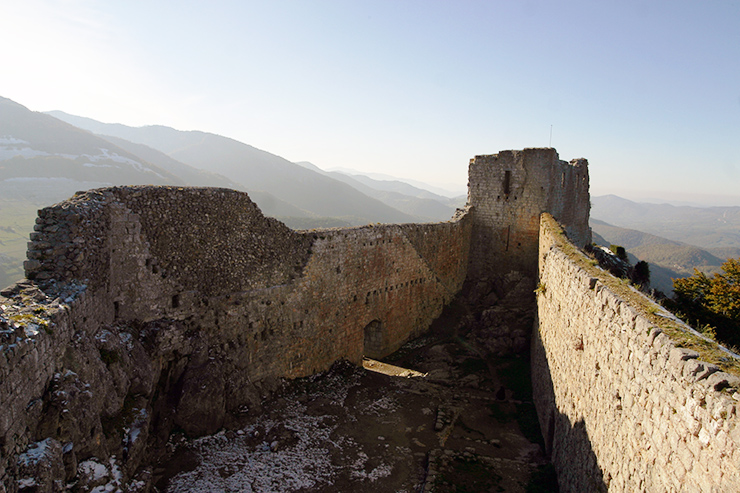
    Montségur. Photo courtesy of Andrew Gough, www.andrewgough.co.uk
    Montségur. Photo courtesy of Andrew Gough, www.andrewgough.co.uk

    The fall of a small, isolated but very idyllic fort, that of Quéribus, in August 1255, is often seen as the final demise of Catharism, but that is not true. In fact, in the following decades, there was something of a Cathar revival. The much hunted Cathar Parfait Pierre Authié even consoled the Count of Foix, Roger-Bernard III, in March 1302 in the hall of Tarascon castle, even though he was later buried by the Bishop of Carcassonne. It shows how many local lords still remained loyal to the Cathar cause.

    The underground survival of Catharism has become symbolised by the events that occurred in and to the small village of Montaillou, near Montségur, as it was the subject of Emmanuel Le Roy Ladurie’s pioneering book of the same name. From 1294 to 1324, the daily routines of Montaillou’s 250 inhabitants are known, as they survived in the records of Jacques Fournier, later to be Pope Benedict XII. It was Fournier, then the local Catholic bishop, who unleashed the Inquisition at Pamiers against the villagers, even resulting in the arrest of the entire village in 1308. One should, perhaps, be happy they weren’t all killed…

    Fournier also captured the last Cathar Parfait to be burnt at the stake: Guillaume Bélibaste, in 1321. Bélibaste’s bailiwick was the area between Rennes-le-Château – known for the mysterious 19th century priest Bérenger Saunière, who is at the core of the mystery of the so-called Priory of Sion and Dan Brown’s bestselling The Da Vinci Code – and the coastal city of Perpignan.

    Bélibaste was the son of a rich farmer from Cubières. He became a shepherd and a Parfait, the pupil of the Parfaits Pierre and Jacques Authié, whom had stayed with Bélibaste’s family in Cubières. As the Inquisition’s stranglehold tightened, Bélibaste settled across the border, in Catalonia, where the political regime did not persecute Cathars, and he was able to make baskets and carding combs, as well as become the mentor to a local Cathar community. He nevertheless decided to return to his homeland, but was caught, tried, and burnt at Villerouge-Termenès.

    Bélibaste’s death signalled the end of the official Occitan Cathar Church, which blossomed in the 11th century, organised in 1167, and perished in 1321. But though officially defeated in France, elsewhere, e.g. in Bosnia, Catharism continued to exist into the 15th century, when its adherents converted to Islam. Some, however, argue that Catharism in France may have disappeared as an organised Church in 1321, but that as a religion… it remains alive until today.

    Though it was the Inquisition – the accusers – that wrote down the life of Authié and Bélibaste, there is general consensus the insights the accounts provide into their lives and beliefs are credible. Indeed, what precisely the Cathars believed, remains somewhat of an enigma. Some have even used it as a blank canvas, to paint their own thoughts or convictions on. Hence, a lot of myths and falsehoods now exist about Catharism.

    The Cathar Revival

    At the core of the Cathar faith was the rejection of the material world, which was seen as a trap imprisoning the soul. All things material were seen as evil and to be opposed and rejected. Hence, they built no churches, were largely vegetarian and shared both common possessions and ate common meals. Though it is true that their doctrine had room for Jesus and the Bible, especially the Gospel of John, and that they proclaimed Christ had no real body (if he was the Son of God, how could he have a body of flesh, which was evil?) and hence also died no real death, all of these accommodations should be seen as educational tools so that they could explain to those that had been raised as Christians where both teachings differed.

    But in the end, their doctrine was appealing not so much for its core beliefs, but because the Catholic clergy were corrupt and as materialistic as one could be.

    Today, Catharism is largely seen as a dualist religion, like most Gnostic and oriental teachings. The man largely responsible for identifying Catharism as such was Déodat Roche (1877-1978), often referred to both as ‘the Cathar Bishop’, if not ‘the Cathar Pope’. However, outside of France, his name is relatively unknown, as is that of his friend and Professor of Sociology René Nelli of the University of Toulouse (and often referred to as ‘the vicar of Catharism’), who lectured on the subject all over France.

    Their fame has largely been eclipsed by the likes of Otto Rahn and Antonin Gadal, who saw the caves of the valley south of Foix as secret initiation centres for the Cathars – a theory that is now often widely accepted, but which has very little academic support.

    Gadal continued the work started by the local historian Adolphe Garrigou. From the 1930s onwards, circles were formed around Gadal and the already mentioned Roche and Nelli. Together, they formed “La Société du souvenir de Montségur et du Graal,” to promote the forgotten history of Catharism – but specifically tying it to the Holy Grail – and the promotion of Montségur, and the region as a whole. It is here that what is now known as ‘neo-Catharism’ was born, and it has little to do with the original belief.

    A second circle of Cathar enthusiasts had the countess Pujol-Murat as a key figure; she was one of Otto Rahn’s patrons. Rahn was a young German academic, whose books greatly advanced interest in Montségur and Catharism, both in the 1930s and now (see my article ‘The Strange Life of Otto Rahn: Author, Poet, Grail Seeker, SS Officer’, in New Dawn No. 109, July-August 2008). The countess claimed to be a descendent of Esclarmonde de Foix, who was seen (though historically inaccurately so) as one of the most esteemed Cathar Parfaits of the early 13th century and in some accounts held to be responsible for the rise of Montségur as the ‘Vatican’ of Catharism. It should be pointed out that these hilltop castles (like Montségur) were never ‘Cathar cathedrals’, as some would have it, but merely refuges for the Parfaits escaping the Inquisition.

    The Countess hoped to discover the lost treasure of the Cathars – and the Templars – which she believed was the Grail itself, supposedly hidden at Montségur by Esclarmonde, just before she threw herself off the mountain to escape from the papal troops. Some therefore believed the Grail was hidden there, whereas others felt the Grail had been secreted out of Montségur, days before its fall. It is said four Cathars descended down the steep slopes, carrying with them a ‘treasure’. Though the story of this escape is true, whether they carried anything is a matter of debate. Furthermore, as the descent was steep and arduous, whatever they carried must have been small.

    Amidst the wild speculation as to what they might have secured, some believe it was a holy book, containing the wisdom of the Cathar religion. It is indeed unlikely the Cathars secured a physical treasure, if only because it would have been too heavy, and in their eyes, unimportant: Catharism saw everything on this plane of existence as evil and despicable; money and wealth were chief amongst Earth’s – and Satan’s – vices.

    Authors such as Walter Birks and R.A. Gilbert, as well as Elizabeth van Buren, have suggested the Cathars guarded a manuscript, knowledge – a spiritual treasure. This manuscript is often said to be the ‘Book of Love’ and is linked with the Gospel of John, and is claimed to contain “sublime teachings, marvellous revelations, the most secret words confided by our Lord Jesus Christ to the beloved disciple [John the Evangelist]. Their power would be such that all hatred, all anger, all jealousy would vanish from the hearts of men. The Divine Love, like a new flood, would submerge all souls and never again would blood be shed on this earth.”

    It is known that books were very important to the Cathars, and some, such as “Stella,” by the Cathars of Desenzano, talk about the wars between God and Lucifer – underlining their dualist doctrine. But as Saint Dominic, founder of the Inquisition, is often depicted committing these books to the fire, it should come as little surprise that few have survived his ‘intervention’.

    However beautiful Montségur is, the ‘real’ Cathar heartland are somewhat gentler slopes where now desolate villages once thrived. One such village, Arques, near Rennes-le-Château, is where the hunted Parfait Pierre Authié preached and found refuge, and the modern Cathar researcher Déodat Roche was born and lived. Today there is a museum dedicated to him.

    Deodat Roche

    Though Roche was part of the modern Cathar Revival, he never focused too much on the promotion of Montségur or the ‘initiation caves’, which for him were distractions – tourist attractions. Roche focused on the true Cathar belief.  But the question needs to be asked whether he discovered this, or whether he knew so all along.

    For those who have studied and known Roche, there are hints that somehow Roche’s interest in Catharism was very fundamental – that he may have been one himself. He is known to have made solitary early morning walks to a hill just outside of Arques, where he was taken as a young child by his father. The site holds a statue of the Virgin Mary, and though this might appear typically Christian, the Cathars of the 14th century are known to have made similar pilgrimages to the nearby basilica of Notre-Dame-de-Marceille, which held a Black Madonna. As in Notre-Dame-de-Marceille, did the Virgin Mary in Arques have a secondary – dualist – meaning for Cathars – and Roche?

    As mentioned, his home town of Arques also had a strong connection with Authié. Roche once unearthed an image of Pierre Authié and both he and others who saw this noted how remarkably similar the two men looked. Roche was not only mayor of Arques; he had also held important positions within the French judicial system. He was also a very private individual. He never spoke about whether or not he felt that he was indeed the possible reincarnation of Authié. Roche must have understood that what he was doing was uncovering what had been buried with Authié. If he did feel that he was the incarnation of Authié, then it was clear that upon this Parfait’s death, he had after all not entered Heaven.

    So, what was Catharism? A dualist religion is primarily seen as a religion that believes in two competing forces, good versus evil, but it is much more than that. An insight into the Cathar cosmography comes from Authié himself. He preached that the Devil had sneaked into Paradise, after waiting 1,000 years at it doors. Once inside, he seduced the spirits, who all fell from a hole in Paradise for nine days and nine nights. After this Fall, they ended up on Earth. When Heaven had largely become depleted, God immediately plugged the hole. But the souls on Earth soon were saddened by their loss and the Devil offered them as comfort such overcoats that would make them forget the bliss of Heaven: the human body, which began a series of incarnations. It thus became Mankind’s mission to ascend back to Heaven, i.e. break the cycle of incarnations. By accepting this cosmography and performing the Consolamentum, one’s next death would end the soul’s odyssey and return it to Heaven.

    The two most important Cathar rituals were the Consolamentum and the Endura (see side bar on adjacent page).

    In conclusion, neo-Catharism had little to do with Catharism as such. The notion of Jesus as a man of flesh and blood was rejected by the Cathars, yet neo-Cathars underline how the Cathars believed that Mary Magdalene was the wife of Christ. Yuri Stoyanov has indeed confirmed that the Cathars claimed as such and that this belief had no counterpart in Bogomil doctrines, meaning that the Cathars were unique amongst the dualists to have this belief. Their religion was not at all based on the knowledge that Jesus and Mary Magdalene created a dynasty but that, instead, Cathars in Southern France, where Mary Magdalene was a popular saint, used her in their cosmography, to illustrate the feminine aspect of the divine duality.

    Cathars underlined the 1,000 years the Devil had to wait at the gates of Paradise before he entered it. Cathars saw it as their mission to have the soul repent for the sin of being seduced by the Devil, and once accomplished, it would return to Heaven. The Church, however, saw it differently, using especially Revelation 20:7, where it is said that after 1,000 years, Satan would be released from his prison. Seeing Catharism rose approximately one millennium after the death of Christ, chronicler Ralph the Bard and St Hildegard of Bingen – the latter who stated she had a vision in which she saw Satan released from his chains – said Catharism was in fact the return of Satan, there to destroy the Church. It was the very reason why it had to be destroyed; for many Christians, conquering Catharism meant slaying Satan. Thus, not only Catharism, but the Cathar Crusade itself, had an innate dualism to it too.

    [alert type=”general” dismiss=”no”]This article was published in New Dawn 110.[/alert]

    [alert type=”success” dismiss=”no”]If you appreciate this article, please consider subscribing to help maintain this website.[/alert]

    © New Dawn Magazine and the respective author.
    For our reproduction notice, click here.

  • The Mystery of Iniquity: Does Evil Exist or Do Bad Things Just Happen?

    The Mystery of Iniquity: Does Evil Exist or Do Bad Things Just Happen?

    On June 10, 1991, a cover story appeared in Time magazine on the topic of evil. The author, Lance Morrow, did not argue for a particular thesis and did not reach any conclusions. What he did, however, was in a sense more important. He began by stating three propositions:

    God is all-powerful.

    God is all-good.

    Terrible things happen.

    Citing several sources, Morrow said that you can match any two of these propositions, but not all three. You can declare that there is an all-powerful God who allows terrible things to happen, but this God could not be all-good. On the other hand, there might be an all-good God who lets terrible things happen because he does not have the power to stop them; thus he is not all-powerful.

    This analysis might easily have been stated by a Gnostic of the first three or four centuries of the Christian era, or for that matter by a contemporary Gnostic, such as the present writer. Not that Gnostics were the only ones who recognised this uniquely monotheistic predicament. The supreme medieval luminary of Catholic theology, St. Thomas Aquinas, admitted in his Summa Theologiae that the existence of evil is the best argument against the existence of God. If the concept of the monotheistic God is to be accepted, then the issue of evil has no viable explanation. Conversely, if evil exists, then the monotheistic God as presented by the mainstream religious traditions cannot exist.

    Whence Cometh Evil?

    Throughout history, religious traditions have accounted for the existence of evil in a number of ways. In primeval times, the undifferentiated nature of human consciousness allowed people to say that both good and bad come from the Divine. Thus archaic shamans would not have found it difficult to say that good and evil are visited upon human beings by the Great Spirit. In the more sophisticated context of Sumero-Babylonian traditions, it was believed that the gods amused themselves by creating terrible things – freakish beings, evil demons, and horrible conditions for human life.

    To employ a psychohistorical rationale, one might say that when people did not yet possess a differentiated consciousness (which we may equate with the conscious ego), it was relatively easy for them to envision God or the gods as being like themselves, so that the coincidence of good and evil was part of their nature. More advanced spiritual traditions have inherited some of this attitude; thus in mystical Jewish theology we find the notion that God partakes of both good and evil tendencies (yetzirim).

    With the growth of consciousness, the mind begins to differentiate between the beneficent and the malefic sides of being. The tension induced by trying to hold a God concept that unites good and evil becomes unbearable, so that it becomes necessary for the mind to separate the two. The notion of radical dualism thus arises. The most prominent example is that of Zoroastrianism. Here the true and good God, Ahura Mazda (sometimes called Ormazd), possesses a divine antagonist known as Angra Mainyu (Ahriman). The two are engaged in a perennial cosmic struggle for supremacy. Although Ahura Mazda is supreme and his ultimate victory is assured, as long as creation endures Angra Mainyu will continue to fight him and bring suffering into the world.

    A sophisticated but very impersonal view of evil and its origins can be found in the great religions that originated in India. Most of these imply that evil is part of the unenlightened state of existence, and that the cause of evil is ignorance (avidya). If one attains to a transformed or enlightened consciousness and thus rises above all dualities, one is liberated from karma and from all other conditions in which evil plays a role. Whether such liberation inevitably leads to the cessation of incarnate existence is not always clear, but it is clear that life as one has known it ceases, and with it evil ceases also.

    The fourth category is that of classical monotheism as found in mainstream Judaism and Christianity. As some of the other traditions ascribe the existence of evil to God, a malign counter-God, or human ignorance, this position ascribes the origin of evil to human sin.

    The creation myth of the mainstream Judeo-Christian tradition, with its story of the Garden of Eden and of the curious events that are said to have transpired there, forms the foundation for this view. This belief holds that the transgressions committed by the first human pair brought about a “Fall” of creation, resulting in the present state of the world. The sin of the original pair passed by inheritance to all members of the human race, who are born corrupt, afflicted by the weight of this “original sin.” Such evils as we find in this world, including natural disasters, plagues, and the ruthlessness of the food chain, are all somehow part of the momentous consequences of the Fall.

    As some scholars, notably Elaine Pagels, have pointed out, these mythologems inevitably exercise a profound influence on the cultures founded on them. Even in a secularised age like our own, the powerful shadow of such beliefs continues to cast a pall on our minds. One may wonder how differently our history would have proceeded had the guilt of the Fall not been present to oppress the souls of men and women in our culture!

    The Gnostic View

    All spiritual traditions acknowledge that the world is imperfect; they differ only in how they believe this happened and in what is to be done about it. Gnostics have always had their own views of these matters. They hold that the world is flawed not because of human sin, but because it was created in a flawed manner.

    Buddhism (regarded by many scholars as the Gnosticism of Asia) begins with the recognition that earthly life is filled with suffering. Gnostics, both ancient and modern, agree. Suffering is indeed the existential manifestation of evil in the world. Although humans, with their complex physiology and psychology, are subject to torments of a singularly refined nature, the fear, pain, and misery of all other creatures is evident as well. To recall St. Paul’s insight, all creation groans and travails in pain. Yet Gnostics have not been inclined to attribute such misfortunes to the sin of the first human pair. They reasoned that it makes much more sense to say that the world has not fallen but was made in a sadly imperfect manner to begin with. To put it in slightly more abstract terms, evil is part of the fabric of the world we live in; it is part and parcel of the existential reality of earthly life. If indeed there is a creator of this reality, then it is assuredly this creator who is responsible for the evil in it. Since, for the monotheistic religions, this creator is God, the Gnostic position appears blasphemous to conventional believers, and is often viewed with dismay even by those who consider themselves unbelievers.

    The Gnostic position may need to be considered in the light of the historical roots of the tradition. According to most contemporary scholars, Gnosticism originated in the Jewish religious matrix (probably in its heterodox manifestations) and then came to ally itself with the Jewish heresy that became Christianity.

    Thus the Gnostics were confronted with the image of the monotheistic God in the Old Testament and its adaptations in the New Testament. They faced a God who was often capricious, wrathful, vengeful, and unjust. It was easy for them to conclude that this flawed God might have created a world in his own flawed image. The greatest of all questions the Gnostics asked was this: is this flawed creator truly the ultimate, true, and good God? Or is he a lesser deity, who is either ignorant of a greater power beyond himself or is a conscious impostor, arrogating to himself the position of the universal deity?

    The Gnostics answered these questions by saying this creator is obviously not the true, ultimate God, but rather a demiurgos (“craftsman”), an intermediate, secondary deity. This Demiurge whom they equated with the deity of the Old Testament was the originator of evil and imperfection in the world.

    Thus the apparent blasphemy of attributing the world’s evil to the creator is revealed as originating in the Gnostics’ confrontation with the monotheistic God. Kindred movements, such as Hermeticism, did not face this predicament: being pagans, the Hermeticists did not inherit the dark, ambivalent figure of the Old Testament God, so they were able to adopt a less harsh position. (Ironically, today many people tend to favour Hermeticism over Gnosticism for this very reason.)

    Many have tried to evade recognition of this flawed creation and its flawed creator, but none of their arguments have impressed Gnostics. The ancient Greeks, especially the Platonists, advised people to look to the harmony of the universe, so that by venerating its grandeur they might forget their own afflictions as well as the innumerable grotesqueries of ordinary life. “Look at this beautiful world:” they said; “see its superbly orderly way of functioning and perpetuating itself, how can one call something so beautiful and harmonious an evil thing?” To which Gnostics have always answered that since the flaws, forlornness, and alienation of existence are also undeniable, the harmony and order of the universe are at best only partial.

    Those influenced by Eastern spirituality have at times brought up the teaching of karma whereby one’s misdeeds generate misfortune later in life or even in another life as explaining the imperfection of the manifest world. Yet a Gnostic might counter that karma can at best only explain how the chain of suffering and imperfection works. It does not tell us why such a sorrowful system should exist in the first place.

    Qualified Dualism

    As we noted earlier, one way of explaining the existence of evil was radical dualism, of which the Zoroastrian faith is a possible example. The Gnostic position, by contrast, is not of a radically dual nature; rather it might be called “qualified dualism.” In a simplified form one might define this position as declaring that good and evil are mixed in the manifest world; thus the world is not wholly evil, but it is not wholly good either. If the evil in the world should not blind us to the presence of good, neither should the good blind us to the reality of evil.

    Here we might resort to the approach that was most favoured by the Gnostics themselves – the mythological. (The power of this method has been rediscovered by such contemporary figures as C. G. Jung and Joseph Campbell.)

    Myths telling of the commingling of good and evil in creation predated the Gnostics. One of these tales is the Greek myth of Dionysus. When this god was torn apart by the Titans, Zeus came to his aid and blasted the malefactors with a thunderbolt. The bodies of both the Titans and Dionysus were reduced to ashes and mixed. When all sorts of creatures, including humans, rose from these ashes, the divine nature of Dionysus was mingled with the evil nature of the Titans. Thus light and darkness are at war with each other within human nature and in the natural world.

    The Gnostics had their own myth about the origins of good and evil. They began by speaking of a boundless, blissful fullness (Pleroma) that dwells beyond all manifest existence. The Pleroma is the abode of and constitutes the essential nature of the true, ultimate God (alethes theos).

    Before time and memory, this ineffable fullness extended itself into the lower regions of being. In the course of this emanation, it came to manifest itself in a number of intermediate-deities who were rather like great angels endowed with enormous talents of creativity and organisation. Some of these beings, or demiurgoi, became alienated from their supernal source, thus becoming replete with evil tendencies.

    Thus the world-creating will was tainted with self-will, arrogance, and the hunger for power; through the works performed by these alienated agencies, evil came to penetrate creation. Ever since then, as the Gnostic teacher Basilides reportedly said, “Evil adheres to created existence as rust adheres to iron.” As one of these created beings, the human entity partakes of the nature of his flawed creators. The human body, being a material creation, is subject to disease, death, and various other evils; even the soul (psyche) is not free from imperfection. Only the spirit (pneuma), deeply hidden within the human essence, remains free from the admixture of evil and tends toward the true God.

    Such mythic statements can convey insights in a fashion that is not possible through other methods of communication. At the same time it must be admitted that these myths were formulated long ago and far away and so may profit from certain amplifications and clarifications within a contemporary context.

    Contemporary Conclusions

    Terrible things do happen, as the Time essay stated. The world is filled with evil, with grotesque horror and universal suffering. Fiendish humans, often possessing great power, torment and slay others daily. The history of the twentieth century offers much proof of rampant wickedness in the world. Believers in the monotheistic God and/or in karma often tell us that this does not matter all that much, because in the final analysis evil really promotes good. They seem to be saying that evil is not really evil at all, but good masquerading in an unpleasant disguise. Yet this kind of topsy-turvy argument is an affront to all those who have looked evil in the face. To present this argument to survivors of the Holocaust or the Gulag or the killing fields would be insulting as well as ridiculous. For these victims, evil is evil, and all else is but an evasion.

    Moreover many terrible things happen that are in no way due to human volition. While the perversities of the human condition are responsible for some of the suffering in this world, much of it is not our fault. Frequently, however, we believe that it is. Yet, whether occasioned by the myth of Adam and Eve or by the propaganda of some trendy folk today who make out humans to be the sole villains in the environment, the cultivation of guilt in the human mind is no remedy for evil. On the contrary, guilt usually begets more sorrow in the long run. Let us be done with this self-flagellation and try to mitigate the evils over which we have some control while remembering that it is beyond our powers to eradicate misfortune altogether.

    Like the world, humans are a mixture of good and evil. Just as it is impossible to exorcise evil from the fabric of creation, so we cannot entirely get rid of it in ourselves. If human schemes and techniques were able to eliminate evil from human nature, they would have succeeded in doing so long ago.

    This is why so many spiritual traditions teach the need for redemption from outside. Every spiritual tradition worth its salt has always possessed a soteriology – a teaching about salvation. Gnostics ancient and modern do not perceive liberating gnosis as a do-it-yourself project. We cannot purify or psychoanalyse evil away by our own strength. The Messengers of Light recognised in the Gnostic tradition, such as Jesus, Mani, and others, have always been envisioned as the great facilitators of salvation. Their salvific mission is to enable the consciousness of the individual to experience gnosis. An early Gnostic source, Excerpta de Theodoto, defines this gnosis as the knowledge of “who we were, what we have become; where we were, whereinto we have been thrown; whither we hasten, whence we are redeemed; what is birth and what rebirth.”

    Many have noted the similarities between these Gnostic teachings and those of Hinduism and Buddhism. In all of these traditions, insight into the origin and nature of the manifest world is seen as liberating us from it and its evils, reuniting our spirits with transcendental reality. Unlike the great Eastern religions, however, Gnosticism specifically identifies the root of all evil as the faulty creation brought about by spiritual agencies of limited wisdom and goodness.

    The Gnostic view of the human condition thus also differs from the modern secular view. Gnostics do not share the assumption of many in our culture that there is a purely naturalistic and humanistic remedy for evil.

    Contemporary Gnostics for the most part agree with the fundamental insights of their ancient counterparts. Do modern Gnostics believe in the Demiurge? Do they believe in Messengers of Light? Do they regard such ideas as metaphysical truths or as mythologems hinting at more subtle and mysterious realities? The answer is that some Gnostics may believe these things more in a literal sense, while others may believe them symbolically; still others may hold a mixture of both views.

    What matters is not the precise form of these teachings but their substance. And this is clear enough. It speaks of the reality and power of evil, of its fundamental presence in all of manifest existence. It declares that while we may not be able to rid the world or ourselves of evil, we may and indeed will rise above it through gnosis. And when the task of this extrication is accomplished, then we shall indeed no longer fear the noonday devil or the terror that walks by night.

    This essay appeared in Gnosis: A Journal of the Western Inner Traditions, Winter 1999, and is reproduced here by permission of the author.

    You can find out more about the Lumen Foundation which published Gnosis by visiting http://www.lumen.org/index.html

    Dr. Stephan A. Hoeller has produced a series of recordings on metaphysical related subjects including Gnosticism. For further details, visit http://bcrecordings.net/store/
    [alert type=”general” dismiss=”no”]This article was published in New Dawn 96.[/alert]

    [alert type=”success” dismiss=”no”]If you appreciate this article, please consider subscribing to help maintain this website.[/alert]

    © New Dawn Magazine and the respective author.
    For our reproduction notice, click here.
  • The Gospel of Judas Revealed

    The Gospel of Judas Revealed

    From New Dawn 96 (May-June 2006)

    The secret account of the revelation that Jesus spoke in conversation with Judas Iscariot during a week three days before he celebrated Passover. …Jesus said to him, “Step away from the others and I shall tell you the mysteries of the kingdom. It is possible for you to reach it, but you will grieve a great deal.”
    – The Gospel of Judas1

    From an historical point of view this find is as important as the Nag Hammadi writings discovered half a century ago. Everything tells us that we are dealing with the Gospel of Judas referred to by Irenaeus in the second century AD. It is fantastic that something like that re-appears after 1800 years.
    – Dr. Stephen Emmel2

    The story of how the Gospel of Judas arrived in the Western world is a fascinating tale. Like many of the so-called Gnostic Gospels, it somehow travelled out of Egypt and arrived in the US with a large price tag. Unlike many manuscripts which vanish sight unseen, luck or providence if you like brought this manuscript not only to light but finally to restoration and publication. In the words of Professor Elaine Pagels, “the discovery of the Gospel of Judas is astonishing.”

    Originally unearthed by a farmer in 1978 near El Minya, Egypt, from where it had been hidden in a “tomb-like box” for some 1,600 years, the leather-bound papyrus codex was in superb condition. The farmer secretly sold the codex to an antiquities dealer in Cairo, without advising Egyptian Antiquities. In a clandestine meeting in 1983, the antiquities dealer offered the codex for sale to various scholars in Geneva, however with an asking price of over $3,000,000 and a dubious provenance, the price was considered extraordinary.

    Ironically, while the Gospel survived well in Egypt, it seriously deteriorated when stored for some 16 years in a safety deposit box in Hicksville, New York. Finally purchased by antiquities dealer Frieda Nussberger-Tchacos in 2000, the following year the codex was acquired by the Maecenas Foundation for Ancient Art in Switzerland. With the help of National Geographic and an agreement reached with the Egyptian government, restoration work soon began.

    Known as the Codex Tchacos (named after Dimaratos Tchacos, father of Frieda Nussberger-Tchacos), it is a 26-page document written on 13 sheets of papyrus leaf in ancient Egyptian, or Coptic. The codex contains not only the Gospel of Judas, but the First Apocalypse of James, the Letter of Peter to Philip, and a small fragment of text that scholars have called the Book of Allogene.

    If we focus on the Gospel of Judas, the document is a 3rd century Coptic translation of a now lost Greek text, thought to have been written by a group of early Gnostic Christians before 180 CE. While its significance is much debated, there is no question about its authenticity. There is universal agreement it is the genuine article. “All you had to do was look at this thing once,” said Bart Ehrman, a scholar of early Christianity. “I’ve seen a lot of ancient manuscripts, and there was no question.”3 According to James M. Robinson, America’s leading expert on ancient religious texts from Egypt, “I don’t know of any scholar who thinks this is fake.”4

    Heresy Hunting

    Back in the 2nd century of the Christian era, the Christian Bishop Irenaeus mentioned a Gospel of Judas was in use among the Kainites, an early Gnostic Christian sect. In part I of his Against Heresy, paragraph 31.1, he wrote:

    (Some) stated that Cain owes his existence to the highest power, while Esau, Korak, the Sodomites and all other men are dependants of each other. (…) They believe that Judas the Betrayer was fully informed of these things and that only he understanding the truth like no one else fulfilled the secret of betrayal that confused all things, both in heaven and on earth. They invented their own history called the Gospel of Judas.

    The Gospel had been known to exist for some time when discussed by Irenaeus around 180 CE, with his primary source being Justin Martyr. This moves the date back to around 140 CE, and most scholars therefore date the Gospel itself to around 120 CE or even earlier. This is significant because it places the Gospel of Judas within the same timeframe as the Biblical gospels of Matthew, Mark, Luke and John.

    The publication of the Gospel of Judas undertaken by National Geographic is unlikely to disturb the mainstream Christian church. In a recent interview, Monsignor Walter Brandmuller, president of the Vatican’s Committee for Historical Science, called it “a product of religious fantasy,” and went on to say, “There is no campaign, no movement for the rehabilitation of (Judas) the traitor of Jesus.”5

    From past experience with the Dead Sea Scrolls discovered in 1947 and the Nag Hammadi Library unearthed two years earlier, whatever the merits of a document it does not bring about a religious revolution. There is an entrenched power structure within Christendom and regardless of the strength of evidence presented, the Church will use spin, distortion and, if necessary, violence (remember the first crusades were against the Cathars) to preserve its dominion.

    The significance of the Gospel of Judas needs to be seen in the context of the larger picture provided by Gnosticism and current scholarship regarding Christian origins. Too often modern Christians live in a sort of self imposed ghetto. They read Christian books, subscribe to Christian magazines, and generally are not exposed to scholarship except through the lens of their chosen leaders or churches. In many cases even when a Christian leader tries to inject scholarship and critical thinking, it is still filtered through a very antiquated religious lens. There does seem to be a surprisingly large gap between modern research into Christian origins, even that generally available, and the information the average Christian receives within his or her community.

    Over the last 100 years the academic model that has arisen in regards to Christian origins is radically different from the traditional Christian worldview. It would be fair to say Christianity is sometimes even seen as a Gnostic heresy and not vice versa. While this is an inflammatory way of describing Christian origins, it does seem quite clear that within the early Christian “spectrum” there was an exceptionally wide range of traditions and practices. This diversity was not only tolerated but encouraged and embraced. Christianity was not a single, monolithic tradition handed down from one leader to another in succession; it was diverse and multi-faceted with many dispersed centres of power.

    Elaine Pagels, a professor of religion at Princeton who specialises in studies of the Gnostics, recently said in a statement, “These discoveries are exploding the myth of a monolithic religion, and demonstrating how diverse – and fascinating – the early Christian movement really was.”6

    Gnostic Christianity

    Although later denounced by certain leaders as ‘heretics’, many of these Christians saw themselves as not so much believers as seekers, people who ‘seek for God.’7
    – Elaine Pagels

    Early Christianity seems to have included many differing viewpoints from the rather staid Judaic Christian mix of James the Brother of Jesus to the esoteric Gnosticism of the followers of Mary Magdalene and Simon Magus. Variations in approach were such that within one movement there were libertine sects that used sex and mind altering substances, and others which were strictly ascetic and celibate. There were groups which were strictly Judaic in focus even to the point of keeping the old laws and festivals of Israel, while others were clearly influenced by the Greek Mysteries and even Buddhist traditions.

    Each of these communities had their own sacred texts and interpretations of the teachings of Jesus; the majority would now be considered Gnostic, i.e. they emphasised personal and direct experience of the divine. Accordingly, each of these groups acted like a “Mystery Cult” and had their own specialised practices, mythologies and rites. Many had distinct Gospels which included unique revelations from Jesus to their founders. For example, in the Pistis Sophia, we read of the secret teachings of Jesus to Mary Magdalene and the Gospel of Thomas begins… “These are the secret words which the living Jesus spoke, and Didymus Judas Thomas wrote them down.”8

    These secret writings and communities flourished for hundreds of years. It was only in the early 4th century that Bishop Athanasius of Alexandria wrote a letter to some Christians in Egypt ordering them to reject what he called “secret, illegitimate books.”9 In 363 CE the first synod (of Laodicea) was held to decide the official contents of the Bible.

    Certainly by the middle of the 4th century, Christianity had become a political force and dissenting views were not tolerated. Under threat and violent persecution, Gnostic communities withdrew from public view, to survive as an ‘underground’ movement. This continued right through to such groups as the Templars and Rosicrucians, and even to the present day.

    Clearly, early Christianity offered a wide spectrum of beliefs and practices catering to the unique needs of people with differing levels of spiritual development. This helps us understand the Gospel of Judas. While Christendom has attempted to downplay the significance of this Gospel, its message, like that of Gnosticism in general, is actually quite confronting and challenging.

    Secret Teachings

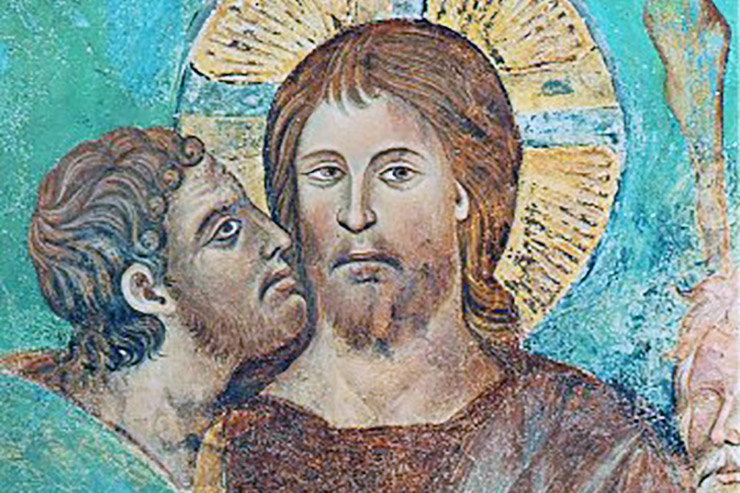
    The Gospel of Judas is a secret account of the revelation that Jesus spoke to Judas Iscariot. It portrays Judas as one of the initiates, a specially loved and favoured disciple who undertook one of the most painful missions asked by his teacher, to betray the saviour as part of a greater plan of spiritual import.

    The Gospel outlines a specifically Gnostic worldview, offering a cosmology which is fairly consistent with the radical Gnostic sects of the period. Cosmology in Gnosticism is a complex idea with many Aeons, worlds, dimensions and forms. It is impossible to appreciate the cosmology of the Gospel of Judas without these, however, I cannot give them comprehensive coverage here, but I will try to give a general outline.

    There is a world of light which is beyond all created forms. This spiritual realm contains various dynamic intelligences or energies, of which one, Barbelo, is discussed in the Gospel of Judas.

    For there exists a great and boundless realm, whose extent no generation of angels has seen.
    – Gospel of Judas

    There are many dimensions or worlds which exist between this higher reality and the physical world, and all are populated with forms of varying potencies.

    The physical world is depicted as flawed, even evil, and is beyond the boundary of these worlds. It is the product of a bloodthirsty and ignorant creator deity. His name is given as Nebro, which means ‘rebel’; while others Gnostics call him Yaldabaoth. There are many myths and stories about how he came to exist and create the physical world.

    Judas said to Jesus, “[What] is the long duration of time that the human being will live?”

    Jesus said, “Why are you wondering about this, that Adam, with his generation, has lived his span of life in the place where he has received his kingdom, with longevity with his ruler?”

    Judas said to Jesus, “Does the human spirit die?”

    Jesus said, “This is why God ordered Michael to give the spirits of people to them as a loan, so that they might offer service, but the Great One ordered Gabriel to grant spirits to the great generation with no ruler over it – that is, the spirit and the soul…
    – Gospel of Judas

    While the Gospel of Judas does not present a full account of the creation process, when interpreted in conjunction with other Gnostic texts it certainly presents a mythos which is very much at odds with the standard Judeo-Christian legend. Saklas, a demi-god under Yaldabaoth, creates the body of man while the angels Michael and Gabriel, emissaries of the world of light, allow spirits from the world of light to incarnate within these shells.

    This is very similar to Mandaean myths of creation where the physical bodies created by lesser spirits cannot even move off the ground, writhing and screaming in the dirt. In sympathy, emissaries of the light world allow spirits to enter them. But becoming trapped, fascinated by the allure of the flesh, these spirits now believe they are physical rather than spiritual beings.

    There is a suggestion, also found in other Gnostic literature, of various degrees of spiritual awakening. Some beings only have one soul, some have two, some have none. In the Gospel of Judas, those with one soul receive it from Michael, while those with both a soul and spirit have received them from Gabriel. Each of these classes are under varying degrees of control by the rulers (principalities and dominions) that manipulate our world.

    This model is found within the Gnostic schools where there are three levels of initiation:

    1. Hylic – most of sleeping humanity, under full control of rulers.

    2. Psychic partially awakened, under partial control of the rulers.

    3. Pneumatics – awakened.

    There is an essential dualism within the Gospel of Judas which helps explain the significance of Jesus’s death and the role of Judas. Since man’s origin is within the spiritual dimensions and the flesh is a cage, then death is not to be feared but a form of liberation. Accordingly, Judas helps Jesus escape his prison of flesh and liberate the essential true nature within him.

    You will exceed all of them. For you will sacrifice the man that clothes me.
    – Gospel of Judas

    The Gnostics taught that in some way or another we must each overcome the body and its demands and liberate the true Christ nature within. While individual praxis may vary from asceticism to libertinism, the goal is the same. In addition, these Gnostics also identify the creator of the physical world as our enemy, and hence see Yaldabaoth as the primary force holding us back from achieving true liberation.

    Indeed, in the Sethian tradition, Yaldabaoth is identified with Jehovah and the serpent of Genesis is actually seen as the liberator. This relates back to Irenaeus’ claim the followers of the Gospel of Judas were “Kainites” since in this interpretation, Cain is the saviour, not Abel, and the Sodomites are the people of God, not the slaughtering puritans and so on.

    We also find within the Gospel of Judas reference to both Seth and Adamas which is significant as they tie elements of the Gospel to the Naassene or Serpent Gnostic traditions. This has strong resonance with the Greek Orphic Tradition which is superbly covered in The Gnostic Secrets of the Naassenes by Mark Gaffney.

    There is a distinct absence of the saving power of the blood of Christ or the vicarious nature of the crucifixion in the Gnostic texts. Indeed the crucifixion and Resurrection are not even mentioned in the Gospel of Judas. The role of Judas shows the path to liberation is in awakening the Christ within and overcoming the restrictions created by both the physical body and the forces of the lower spiritual/physical worlds. These are sometimes represented as the planets, powers and dominions or rulers.

    The multitude of those immortals is called the cosmos –  that is, perdition – by the Father and the seventy-two luminaries who are with the Self-Generated and his seventy-two aeons. In him the first human appeared with his incorruptible powers. And the aeon that appeared with his generation, the aeon in whom are the cloud of knowledge and the angel, is called [51] El. […] aeon […] after that […] said, ‘Let twelve angels come into being [to] rule over chaos and the [underworld].’ And look, from the cloud there appeared an [angel] whose face flashed with fire and whose appearance was defiled with blood. His name was Nebro, which means ‘rebel’; others call him Yaldabaoth. Another angel, Saklas, also came from the cloud. So Nebro created six angels – as well as Saklas – to be assistants, and these produced twelve angels in the heavens, with each one receiving a portion in the heavens.
    – Gospel of Judas

    Judas works with Jesus to help liberate him from the power of the body; he plays an important role within the initiatory process of the crucifixion and Resurrection, which some suggest was actually an initiatory drama rather than a real historical event, but that is outside our discussion here.

    This Gospel needs to be interpreted within the larger framework of the dualist Gnostic tradition. The motif of Judas as special disciple and the negative interpretation of both the body and the world resonate through the vast majority of the Gnostic sects. In addition, the emphasis on Jesus as a giver of light, a transmitter of the message from the higher dimensions rather than as a sacrifice, is central to a Gnostic view of salvation.

    Jesus was seen as a way-shower, an emissary, a being whom we should emulate, not worship. This approach is central to the Gnostic vision; liberation comes through individual effort inspired perhaps by the life of Jesus, but ultimately through our own perseverance. In this way we move towards achieving our own state of divinity, our own theosis.

    The Gospel of Judas is certainly a fascinating revelation, though it does not necessarily add greatly to what we already know about the Gnostic vision. What it does do, however, is bring home the significance of this message for today’s world. If the Gospel of Judas had been taken seriously by the early Church and the Gnostics not suppressed, anti-Semitism and all its related violence may not have had such a disastrous effect within Western history. If Judas was only doing his job as a “special” disciple of Jesus, then the whole myth of “Judas the Christ Killer” dissolves and is replaced by Judas, the holder of the Mysteries.

    In 2006 with continued violence instigated by self-proclaimed religious fundamentalists, it is perhaps time we rehabilitate the Gnostic tradition. Gnosticism brings a spirit of openness, diversity, individual responsibility and freedom. With the publicity brought about by The Da Vinci Code and now the publication of the Gospel of Judas, it is time we let go of old prejudices, superstitions and narrowly held opinions and allow a different light to shine from beyond the confines of matter.

    [alert type=”general” dismiss=”no”]This article was published in New Dawn 96.[/alert]

    [alert type=”success” dismiss=”no”]If you appreciate this article, please consider subscribing to help maintain this website.[/alert]

    Recommended Reading

    Adam, Eve and the Serpent by Elaine Pagels
    Gnosis: The Nature and History of Gnosticism by Kurt Rudolph
    The Gnostic Bible: Gnostic Texts of Mystical Wisdom form the Ancient and Medieval Worlds by Willis Barnstone
    The Gnostic Gospels by Elaine Pagels
    Gnostic Philosophy: From Ancient Persia to Modern Times by Tobias Churton
    The Gnostic Religion by Hans Jonas
    The Gospel of Judas by Bart D. Ehrman, Rodolphe Kasser, Marvin Meyer, and Gregor Wurst
    Jesus and the Lost Goddess: The Secret Teachings of the Original Christians by Timothy Freke and Peter Gandy
    The Jesus Mysteries: Was the “Original Jesus” a Pagan God? by Timothy Freke & Peter Gandy
    The Other God: Dualist Religions from Antiquity to the Cathar Heresy by Yuri Stoyanov
    The Secrets of Judas: The Story of the Misunderstood Disciple and His Lost Gospel by James M. Robinson

    Footnotes

    1. The Gospel of Judas, as translated by a team led by Rodolphe Kasser and provided by the National Geographic Society.
    2. www.michelvanrijn.nl
    3. “Scholars have ‘no question’ on authenticity”, by Tom Avril, The Philadelphia Inquirer, 7 April, www.philly.com
    4. “Another Take on Gospel Truth About Judas, Manuscript Could Add to Understanding of Gnostic Sect”, by Stacy Meichtry, 25 February, Washington Post, www.washingtonpost.com
    5. Ibid.
    6. “In Ancient Document, Judas, Minus the Betrayal”, by John Noble Wilford & Laurie Goodstein, 7 April, New York Times, www.nytimes.com
    7. “The ongoing evolution of Christianity”, by Jane Lampman, May 15, 2003, Christian Science Monitor, www.csmonitor.com
    8. “The Gospel Truth”, by Elaine Pagels, April 8, New York Times, www.nytimes.com
    9. Ibid.

    © New Dawn Magazine and the respective author.
    For our reproduction notice, click here.
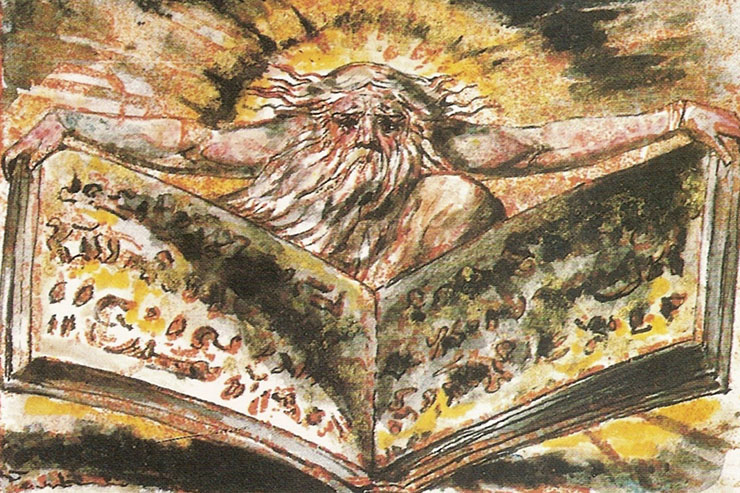
  • The Illuminati: Renegades of the Mystery Schools

    The Illuminati: Renegades of the Mystery Schools

    From New Dawn Special Issue 18 (Dec 2011)

    The word “Illuminati” has become a catch-all term for the defacto Rulers of Planet Earth. Definition is crucial because the words “Conspiracy” and “Illuminati” have themselves become code-words for the occult (hidden) machinations of the Powers That Be. With the advent of the internet and its rough cut of “news” and disinformation, what was once considered esoteric knowledge has been revealed for all to see. Even the cowans – a derogatory Masonic term for non-Masons – and the goys – a derogatory Yiddish term for non-Jews – are learning about the Illuminati black magic hoodoo that permeates the planetary matrix.

    Illuminati originally meant “the enlightened ones” in Latin, and it refers to those who control the political, economic and social infrastructures of the planet. By their reasoning, they believe they are the (self) designated rulers of Planet Earth.

    Also called “Olympians” and “Moriah Conquering Wind,” the Illuminati are a “network” of interconnected “bloodlines” who call themselves “The Family” or “The Circle.” Intergenerational satanism, or more accurately Luciferianism, is their primary Belief Structure (That’s BS to you, pardner).

    Also don’t forget their fatal flaw… The Illuminati consider themselves a tribe apart – Bande à part – a proud super-race who trace their genealogical origin back to the biblical Nimrod.

    To add to the confusion, people sometimes refer to the Illuminati as the Bavarian secret society which infiltrated Freemasonry – even as the term “Illuminatus” is an actual title in Freemasonry.

    Current understanding of the Illuminati comes from first-hand knowledge of mind control survivors like Arizona Wilder, Cathy O’Brien, author of Trance Formation of America, Brice Taylor, author of Thanks for the Memories, Kathleen Sullivan, author of MK, and Annie McKenna, author of Paperclip Dolls.

    Their accounts describe a parallel Illuminati “culture” whose primary goal is to keep the populace “productive” and under control, as their corporate motto promises to deliver, “Ordo ab Chao” (Order Out of Chaos).

    This parasitic Illuminati culture also uses mind control programming to keep its own members of the Family, as well as the rest of society, locked in a grid of compliance.

    Various authors have further introduced errors in their “exposés” of the Illuminati by interpreting history with a bias that reflects their own political and religious indoctrination.

    For example, the works of Fritz Springmeier and Cisco Wheeler, while informative about the Illuminati’s sociopathic “traditions” (no es mi costumbre) and psychopathic behaviour, which includes torture, human sacrifice and mind control, nevertheless belie a Christian programming which adds to the chaos and confusion of trying to untangle history from disinformation.

    Likewise even as the writings of John Coleman, author of The Committee of 300 and Eustace Mullins, author of The World Order, describe various Illuminati organisations which exercise political and religious control in pursuit of their oft-stated goal of establishing a New World Order (One World Government), their asides reveal a rigid Christian fundamentalist mindset which undermines their credibility.

    The greatest confusion, however, seems to lie in the connection between the Illuminati and the Gnostics. For example, authors like Nesta Webster in her book on Secret Societies claims the Illuminati can be traced back to the Gnostics. In other words, she frames her argument that Illuminati and the Gnostics are “bad” because they appear to be antithetical to Christianity.

    This conflict then refers to the perennial battle between the Gnostics, representing the Mystery Schools, and the Roman Catholic Church which fought fiercely against self-knowledge, mysticism and other metaphysical concepts, inimical to the mind control confabulations of the Vatican.

    Today this animosity is evident in the Belief Systems (BS) of Christian evangelicals, among others, who see all secret societies, Gnostics, New Agers, and the like as devil worshippers and ignorant (or conscious) agents of the Illuminati.

    Not so… The Mystery Schools were pre-Christian mystical communities that were in effect educational centres with libraries and workshops amid a vibrant cultural life.

    This just may be the scene of the crime, so to speak, and the origin of the current metaphysical confusion.

    Was this where the great ideological schism, or the Dividing of the Way, began?

    Gnostics vs. Illuminati

    Comparative mythologist John Lamb Lash, the world’s foremost authority on Gnosticism and esoteric traditions, is the author of the indispensable groundbreaking book Not In His Image: Gnostic Vision, Sacred Ecology and the Future of Belief.

    According to Lash, Mystery School adepts (so-called Gnostics) were originally members of the Magian order of shaman-initiates whose purpose was to guide humanity as teacher-mystics in pursuit of spiritual/ human evolution.

    The controversy began when certain initiates of the Mystery Schools began to abuse their mystical knowledge and redirect it into behavioural manipulation, psychological programming and mind control technology. In essence, the Illuminati gave up their role as teachers to become social engineers and advisors to the Ruling Class. This coincided with the rise of the patriarchal Abrahamic religions of Judaism, Islam and Christianity, which also required techniques of mind control to keep their followers (“believers”) in line.

    “Around 4000 BCE with the rise of urban civilisation in the Near East, some members of the Magian order chose to apply certain secrets of initiation to statecraft and social engineering,” writes Lash, describing the spiritual devolution of the Kali Yuga. “They became the advisors to the first theocrats of the patriarchal nation-states, but in fact the advisors were running the show.”

    “Their subjects were systematically programmed to believe they were descended from the gods,” continues Lash. “The Illuminati inaugurated elaborate rites of empowerment, or kingship rituals. These rituals were in fact methods of mind control exercised on the general populace through the collective symbology and mystique of royal authority.”

    Civilisation – the Civil Lie in Action – needed an iron fist in a velvet glove from the beginning, and the Illuminati were there to ensure compliance. “Kingship rituals were distinct from the rites of initiation that led to instruction by the Light and consecration to the Great Goddess,” writes Lash. “Their purpose was not education and enlightenment but social management.”

    The control freak tendencies of the Illuminati are evident everywhere now, as their failure in managing the world financial system is rushing the planet headlong into economic collapse.

    “Gnostics refrained from assuming any role in politics because their intention was not to change society, but to produce skilled, well-balanced, enlightened individuals who would create a society good enough that it did not need to be run by external management,” Lash continues. “The intention of the dissident Magians to run society by covert controls was based on their assumption that human beings are not innately good enough, or gifted enough, to create a humane world.”

    Of course Lash is being too “liberal” in labelling the Illuminati as “dissident” since their spiritual betrayal in the Mystery School was more of a bitch slap to Gaia, than the red flag of a covert rebellion.

    “The difference in views of human potential was the main force that precipitated the division of the Magians,” writes Lash, meaning that the judgmental arrogance of the Illuminati who believed they were indispensable, even as they think they’re nothing less than “God’s gift to mankind.”

    “It’s simple enough to see that this mind set would develop the hierarchal structures in society today,” Lash continues.

    True enough. The so-called Global Elite keep the planet under control utilising Illuminati Gofers known as politicians, military personnel, police officers, and religious leaders, whose function is to be the shepherds of society – guarding the sheep… until they’re ready for slaughter in their endless wars and intertribal rivalries.

    People who behave as sheep, or so-called “sheople,” are always the ones who suffer the most because of their programming. Meanwhile the Illuminati Gofers pretend that this is the way it’s supposed to be. This long-standing ideological disagreement in the Mystery Schools has, it appears, resulted in the gross inequities of life on Planet Earth.

    “The Illuminati program was (and still is) essential to patriarchy and its cover, perpetrator religion,” writes Lash, describing the global conspiracy which has conquered the world.

    “While it cannot be exactly said that the deviant adepts known as Illuminati created patriarchy, they certainly controlled it,” continues Lash. “And still do. The abuse of initiatory knowledge to induce schizophrenic states (‘entrainment’), manipulate multiple personalities in the same person (‘platforming’), and command behaviour through posthypnotic suggestion (The Manchurian Candidate technique) continues to this day, with truly evil consequences for the entire world.”

    Attempting to disentangle the erroneous idea that Gnostics and Illuminati refer to the same characters, Lash writes: “If we accept that the Mysteries were schools for Gaian co-evolution dedicated to the Goddess Sophia, they could not have been run by the Illuminati, as some contemporary writers (who believe they are exposing the Illuminati) have supposed. Everything the Gnostics did in the schools was intended to counterbalance and correct the machinations of the deviant adepts.”

    Right intent once again becomes critical and the radical difference in ideology between the Gnostics and the Illuminati become self-evident.

    “Initiation involved melting ego boundaries in preparation for deep rapport with nature, not lowering the ego consciousness, so that the subject could be behaviourally programmed using the power of suggestion, imprinting and other psychodramatic methods. These behavioural modification tools of the Illuminati were strictly forbidden in the Mysteries overseen by the Gnostics.”

    The metaphysical perverts known as the Illuminati have structured today’s society to reflect the manipulation of humankind through religious belief systems, political affiliations as well as the non-stop onslaught of media programming known as “news” and “entertainment.”

    The Defeat of the Illuminati

    As renegades from the Mystery Schools who betrayed the Mysteries and subverted Gnosis (“Knowledge”), the Illuminati plan to divide, conquer and rule the world has worked quite well because people are easily programmed into belief systems contrary to their own welfare.

    As Lash notes, “Skilled in theology and dialectical argument, the Gnostics were able to refute fanatical beliefs, but unable to protect themselves against the violence driven by those beliefs.”

    In other words Judeo-Christian Annihilation & Apocalyptic Theology sponsored by the Illuminati was responsible for the destruction of the Mystery Schools and the murder of the Gnostics, who were no match for those who perceived them as a threat to their planetary dominion.

    “Not only were the gnostokoi like [the female philosophy teacher] Hypatia [who was murdered by the Church] apolitical, they deliberately refrained from involvement in politics in order to dissociate themselves from the other type of initiates, the Illuminati who had been enmeshed in patriarchal and theocratic power games from their outset,” Lash concludes.

    The Illuminati may be considered to be apostate Gnostics who abandoned their role of enlightening humankind in order to reap the benefits and entitlements of the Ruling Class.

    Now as before the Illuminati continue to move towards their goal – a feverish dream of world domination culminating in the so-called New World Order (One World Government), which simply means Global Techno-Feudalism.

    This has always been Metaphysical Warfare. And humankind’s choice is once again – Freedom or Slavery.

    Maybe the “Know-It-Alls” – a derogatory term used by the Church against the Gnostics – might be able to help them out…

    [alert type=”general” dismiss=”no”]This article was published in New Dawn Special Issue 18.[/alert]

    [alert type=”success” dismiss=”no”]If you appreciate this article, please consider subscribing to help maintain this website.[/alert]

    © New Dawn Magazine and the respective author.
    For our reproduction notice, click here.