New Dawn – World's Most Unusual Magazine

Tag: paranormal

  • Mysteries, Miracles & Parapsychology

    Mysteries, Miracles & Parapsychology

    From New Dawn Special Issue 9 (Sept 2009)

    Parapsychology is full of anecdotal accounts of strange occurrences, which cause many people to simply shake their heads in disbelief.1 The phenomena of parapsychology grade into the mysteries and miracles that are the boon and bane of much religion. After all, to use a Christian example (and in no way am I making a statement about Christianity per se), not only can Jesus and the saints perform miracles, but so can Satan and his cohorts!

    When it comes to the question of whether or not parapsychological phenomena are real, for many people the stakes are high, as the answer has the potential to confirm or deny their worldview. Some are incredulous when it comes to telepathy, even though it has been statistically demonstrated time and again in laboratory settings, whereas the credulity of others stretches much, much further.

    In popular culture often the reality, or not, of the paranormal (viewed popularly as “miracles”) is seen as confirming, or refuting, one of the fundamental tenets of many religions, namely life after death. As the late parapsychologist and University of Virginia (Charlottesville) psychiatrist Dr. Ian Stevenson (1918 – 2007) wrote,

    Some persons can segregate beliefs about different aspects of non-material existences and events. This would be particularly likely to be true of persons who have made a special study of psychical phenomena…. However, I think that members of the general public do not usually make such a distinction. For most of them, a belief in life after death almost entails a belief in miracles, such as the phenomena described in the Bible, and also a belief in what we call paranormal cognition. Conversely, members of the general public who do not believe in life after death are also likely to be skeptical about all kinds of paranormal phenomena, the recognition of which would imply for them a soul that would survive bodily death.2

    The Incredulity Meter

    I am absolutely convinced that telepathy is real, even if a somewhat fickle and uncontrollable phenomenon. Given the choice between a telephone and telepathic rapport to communicate an important and specific message, I will use the phone. In my opinion there is nothing miraculous about telepathy, although how it occurs remains a mystery (there is still no generally agreed upon theory as to the mechanism for telepathic transmission).3 I should note, however, that I always attempt to maintain a healthy skepticism about any particular claim of telepathy (it is human nature to be disingenuous, or to fool one’s self), but there are plenty of well-documented cases of telepathy in the literature, and I have had my share personally.

    My incredulity meter really begins to perk up when it comes to physical parapsychological phenomena, such as psychokinesis and levitations, materialisations of solid substances out of “thin air,” or the ability to withstand physical trauma, such as walking on hot coals or applying extreme heat or fire directly to the skin without damage. Lacking good, indeed virtually impeccable, documentation for certain extreme feats of this nature, I instinctively dismiss them as nonsense, or at the least remain agnostic.

    Of all the cases that register high on my incredulity meter, however, some are classics and though they may boggle the imagination, it is difficult to dismiss them. Here I will focus on particular aspects of two such celebrated examples from the history of parapsychology, one from the seventeenth century and the other from the nineteenth century. They are, in the opinions of some, intimately tied to religious beliefs and the concept of miracles.

    The Flying Saint

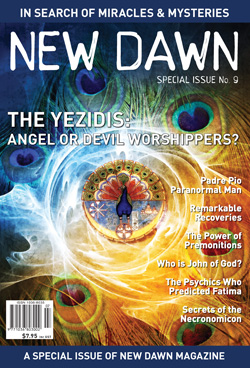
    Saint Joseph of Cupertino (San Giuseppe da Copertino, 1603-1663; born Giuseppe Maria Desa in Cupertino, southeastern Italy) was considered rather dull witted (in modern terms, he may have suffered from learning disabilities), and said to possess a violent temper (a point we will return to). Joseph was extremely pious, however, and became a Franciscan friar. Joseph exhibited various mental psychic phenomena; for instance, it is said he was aware of the thoughts of penitents and knew if they were not fully honest and forthright during confession. Due to his mental deficiencies, he could learn only a small amount of material at a time. When preparing for exams he simply studied one specific topic, and then prayed that that would be the very subject, of all possible subjects, that would be asked of him – and so it was. Was this an example of precognition, or was Joseph telepathically influencing or accessing (perhaps unconsciously) the examiners in terms of the questions they would put to him?

    Joseph was also said to have the power to heal the sick. But it was his bodily levitations, his literal flights in the air, that he is most famous for, and which by many are considered to be absolutely mysterious and miraculous, either justifiably earning Joseph the appellation of Saint (he was canonised in 1767), or in the skeptic’s opinion dismissal as either a fraud, or at the least someone who incited hallucinations among those witnessing the supposed levitations. At first glance, St. Joseph’s flights rank high on my incredulity meter.4

    Although we are separated from St. Joseph by three and a half centuries, and his time still contained a strong element of superstition and anti-scientific sentiment (after all, the Inquisition was in full swing during Joseph’s lifetime, persecuting Galileo in 1633), it is still difficult to dismiss all of the varied eyewitness accounts of Joseph’s flights. Reportedly the first levitation was in his hometown of Cupertino during an outdoor procession on the feast day of St. Francis of Assisi. Joseph took off, flying over the crowd. After it was over, in embarrassment, he fled to hide in his mother’s house. From then until the end of his life, Joseph experienced uncontrolled fits of bodily levitation. Various minor incidents could potentially initiate a levitation: a casual remark about the wonders of God, or viewing an image of the Virgin Mary, could send Joseph into ecstasy, and then with a loud sob or cry he would fly into the air.

    His reported flights were not trivial. On one occasion he flew from the middle of the church to the high altar, a distance of forty feet, and remained there for about fifteen minutes before descending. He once flew over the heads of bystanders to reach a statue of the Immaculate Conception, and then flew back again over their heads once more. Another time he reportedly flew eighty yards, over a pulpit, to a crucifix.5 During another levitation he ended up in a tree, and once he came out of his trance he was unable to get down until a ladder was fetched. On several occasions he carried another person up with him, holding them by the hand or hair.

    Although it is “only” eyewitness testimony (but what else can we have from the seventeenth century?), it is incredibly varied and consistent, and Joseph’s levitations were not always viewed positively. Indeed, his superiors often found Joseph to be an embarrassment. His unannounced flights during solemn ceremonies could cause a disruption. Once floating before the altar holding the Holy Sacrament, his sandals fell off. Joseph was at times banned from choir practices, public masses, and even from meals with his fellow friars. Joseph and his “miracles” attracted a huge following, and especially later in his life, the church authorities periodically attempted to place him in seclusion. In my mind, these facts only reinforce that the levitations may well have been genuine. Prominent witnesses to Joseph’s levitations were the High Admiral of Castile, Spanish Ambassador to the Papal Court (his wife fainted at the sight); John Frederick, Duke of Brunswick (who converted from Lutheranism to Catholicism as a result of witnessing Joseph levitate); and Pope Urban VIII (during a papal audience Joseph fell into ecstasy and levitated).

    The Inquisition and Poltergeists

    What do we make of Joseph’s levitations? Could they have been genuine? They are difficult to explain away as hallucinations on the part of the witnesses. Furthermore, they hardly fit the mold that would be expected of stories tailored to aid in the canonisation of a beloved friar. Due to the publicity he attracted, in 1638 Joseph was investigated by the Inquisition in Naples, but cleared of any wrongdoing. Joseph’s levitations were undisciplined, uncouth (he apparently cried out at the start of each incident), and disrupting to those around him. What is really pertinent in my mind is that Joseph is not the sole example of such levitations, for similar phenomena are reported widely in medieval church accounts, popular folklore, and in ethnographic accounts of “primitive” peoples and their myths.6

    Joseph’s levitations strike me as perhaps a form of self-directed “poltergeist” affliction. Derived from the German, meaning a boisterous or noisy ghost, typical poltergeist incidents include strange noises (scratching, raps, knocks, banging) and the movement of objects. In a typical poltergeist case objects inexplicably fall off of shelves or get thrown through the air even when nobody is close enough to reach them, and no physical means are apparent that could have caused the objects to move.

    As the physicist and early psychical researcher Sir William Barrett wrote in 1911, “Of the genuineness and inexplicable nature of the phenomena there can be no manner of doubt, in spite of occasional attempts at their fraudulent imitation.”7

    It appears that in most cases the affected objects are not being moved by spirits or ghosts, as traditionally believed, but unconsciously via paranormal means by a living person, someone who is typically emotionally or psychologically disturbed, with unresolved repressed feelings of deep guilt or fear, and intense “hysterical” tendencies. The poltergeist instances swirling around such a person are a sort of unconscious acting out and externalisation of the emotions.

    Interestingly, very similar types of poltergeist phenomena have been described for thousands of years in different cultures on different continents;8 such facts lend credence to the idea that poltergeist instances are genuine (and I will admit that I have witnessed a mild poltergeist instance first-hand). Modern researchers, such as Dr. William G. Roll,9 have intensively studied various modern poltergeist cases and it is clear that the paranormal movement of material objects against the forces of gravity and inertia is real (that is, objects are levitated) and such movements follow general patterns (as would be expected of a genuine set of phenomena).

    I believe that Joseph was a psychologically disturbed, highly conflicted, individual prone to extremes in temperament. This is evidenced by his reported fits of rapture and ecstasy, as well as his occasional violent temper (even the saints can have bad days, I suppose). His own frustration with his apparent learning disabilities and mental limitations probably added to his troubles. Joseph also suffered from cataleptic or epileptic fits, convulsions, and severe attacks of depression (melancholia, as it was called10). Joseph, I suggest, did genuinely levitate. I hypothesise that Joseph was essentially the centre of what we might now refer to as poltergeist activity (or to use the more modern terminology, recurrent spontaneous psychokinesis, RSPK), but in his case the activity (the levitation of objects, or an object) was directed unconsciously toward his own physical body. Joseph basically inflicted the levitations upon himself.

    The Levitations of Home

    In the nineteenth century the famous Scottish (though raised in America during his childhood) spiritualistic medium Daniel Dunglas Home (1833 – 1886) was known for his bodily levitations, as well as levitations of other objects, in séance settings.11 In one famous instance, Home reportedly went into a trance and was levitated out a window about seventy feet from the ground, observed to be floating in the air outside an adjacent window (seven and a half feet from the first window), and then glided in through the second window feet first.

    The well-known English physicist and chemist, Sir William Crookes (1832 – 1919; he was knighted in 1897), a careful laboratory experimentalist (among other things, he was a co-discoverer of the element thallium, invented the Crookes radiometer, and developed Crookes tubes), carried out investigations of D.D. Home and other so-called mediums. Crookes witnessed Home levitate numerous times, as he describes in his own words:

    The best cases of Home’s levitation I witnessed were in my own house. On one occasion he went to a clear part of the room, and, after standing quietly for a minute, told us he was rising. I saw him slowly rise up with a continuous gliding movement, and remain about six inches off the ground for several seconds, when he slowly descended. On this occasion no one moved from their places. On another occasion I was invited to come to him, when he rose eighteen inches off the ground, and I passed my hands under his feet, round him, and over his head when he was in the air. On several occasions, Home and the chair on which he was sitting at the table rose off the ground. This was generally done very deliberately, and Home sometimes then tucked up his feet on the seat of the chair and held up his hands in full view of all of us. On such occasions I have gone down and seen and felt all four legs were off the ground at the same time, Home’s feet being on the chair. Less frequently the levitating power extended to those next to him. Once my wife was thus raised off the ground in her chair.12 

    All Hallucinations?

    The reported incidents of levitation by Home, both of his own body and objects around him, are numerous, reported by many witnesses, and they fall into a larger pattern including not just St. Joseph. As the early psychical researcher and Scottish folklorist Andrew Lang (1844 – 1912) wrote,

    …when we find savage ‘birraarks’ in Australia, fakirs in India, saints in mediaeval Europe, a gentleman’s butler in Ireland, boys in Somerset and Midlothian, a young warrior in Zululand, Miss Nancy Wesley at Epworth in 1716, and Mr. Daniel Home in London in 1856-70, all triumphing over the law of gravitation, all floating in the air, how are we to explain the uniformity of stories palpably ridiculous?13

    Other than mechanical tricks, such as concealed strings, wires, and rods (which, in my opinion, really strain credulity as an explanation for the best cases of levitation in the likes of Joseph or Home – I hardly think Crookes would have overlooked a mechanical apparatus and they seem out of the question for Joseph), a classic “explanation” for levitations is that of “excited expectation” and “mass hallucination” on the part of the duped observers.

    Addressing this theory, Lang received the following information from Mr. Hamilton Aïdé (a member of the nineteenth century London literary scene):

    The argument of excited expectation and consequent hallucination does not apply to Mr. Hamilton Aïdé and M. Alphonse Karr… Both were extremely prejudiced against Home, and at Nice went to see, and, if possible, to expose him. Home was a guest at a large villa in Nice, M. Karr and Mr. Aïdé were two of a party in a spacious brilliantly lighted salon, where Home received them. A large heavy table, remote from the group, moved towards them. M. Karr then got under a table which rose in [the] air, and carefully examined the space beneath, while Mr. Aïdé observed it from above. Neither of them could discover any explanation of the phenomenon, and they walked away together, disgusted, disappointed, and reviling Home.14

    So, might at least some (if not all) of Home’s levitations have been genuine? Possibly. And possibly they were due to self-inflicted poltergeist-type manifestations. My sense, reading about his life and career, is that Home, like Joseph, suffered from various emotional and psychological issues, and it is documented that he was the focus of classic poltergeist manifestations during his youth. It is often stated that Home was never caught in any fraudulent behaviour. This is true to a point. In fact there were allegations of fraud made against Home, but these were investigated explicitly, and thoroughly, shortly after Home’s death by the meticulous psychical researches W.F. Barrett and F.W.H. Myers, who concluded “…we have found no allegations of fraud [italics in the original] on which we should be justified in laying much stress.”15
    Fire Ordeals

    Besides his levitations, Home was also well known for his ability to handle hot coals with immunity, and even to be able to transfer this ability to observers around him.16 Home could perform such feats as holding a handkerchief in his hand, and place a hot piece of charcoal on it, taken directly from a burning fire, and yet the handkerchief would not burn. Crookes studied these fire phenomena intensely, even subjecting such a handkerchief to laboratory analyses afterwards to test for fire retardants, but found nothing unusual. Likewise, hot coals applied to St. Joseph’s body had no effect when he was in an ecstatic trance.17 Indeed, incidents of handling hot charcoal, coal, and other hot objects, walking on fire, and other “ordeals by fire” are widely reported in the ethnological literature18 and in that sense are nothing unusual, but are they genuine or simple conjurers tricks?

    In 1959 the psychiatrist Berthold Eric Schwarz, M.D., investigated first-hand fire ordeals among members of a fundamentalist Christian sect, known as The Free Pentecostal Holiness Church, found in the rural mountain regions of Kentucky, Tennessee, Virginia, and North Carolina. On numerous occasions Schwarz observed church members place their hands and feet in kerosene flames with immunity.19

    In one instance, shortly after washing his hands (thus presumably precluding the possibility that they were coated with a fire retardant or non-conducting substance), an individual smeared fuel oil on his hands and feet, and held them in a flame for over ten seconds, but they did not burn. He poured a pool of oil into his cupped hand and attempted to light it with a torch, but it only flickered and would not burn. As a control, Schwarz reports that both an iron poker and a wooden dowel sprinkled with the fuel oil burst into flames when the torch was brought to them, and Schwarz himself could not keep his own hand closer than three centimetres to the torch flame for more than one or two seconds without pain or being burnt. Other examples of fire handling reported by Schwarz include:

    On three occasions, three different women held the blaze [from kerosene or fuel oil torches] to their chests, so that the flames were in intimate contact with their cotton dresses, exposed necks, faces and hair. This lasted for longer than a few seconds. [This is very similar to the immunity to fire that Home was said to be able to impart to handkerchiefs, clothing, and people. – Note by Schoch.] Twice, at separate times, one of the ‘most faithful of the saints’ slowly moved the palmar and lateral aspects of one hand and the fifth finger in the midpoint of an acetylene flame… He did this for more than four seconds, and then repeated the procedure, using the other hand…. Once this saint, when in a relatively calm mood, turned to a coal fire of an hour’s duration, picked up a flaming ‘stone coal’ the size of a hen’s egg and held it in the palms of his hands for 65 seconds while he walked among the congregation. As a control, the author could not touch a piece of burning charcoal for less than one second without developing a painful blister.20

    Although he did not observe it directly, Schwarz was told that during winter services the young girls would hug red-hot stovepipes and pass around hot glass lamp chimneys with immunity. The key to these miracles, at least according to his informants, was that one must be in a trance and truly believe that no harm will occur. When not entranced, even members of the sect suffer burns. Schwarz recounts a couple of examples. A male congregant was applying a kerosene torch to his hand with no ill effects, until he noticed that a piece of the wick was breaking off. This caused him to come out of his religious trance and he suffered a burn only in the one spot where the flame had touched his skin post-trance (the areas where the flame was applied to his skin during the trance were not affected). In a similar manner, a female congregant who had often handled hot glass lamp chimneys with immunity developed blistering burns when, one night when the electric power at the church failed, she reflexively grabbed a burning kerosene lantern hanging on a wall. She was not in a trance state at the time and so suffered.21

    Something Strange

    Are levitations and fire ordeals real? Is there something more to them than simple conjuring and fraud? If so, how do we explain what is happening? Mysteries and miracles? Do such phenomena support certain religious beliefs, or the value of faith? Do we need to extend our common sense concepts of what is possible? I will refrain from making pronouncements but, to quote the title of Professor Archie Roy’s book on the paranormal, I have “A Sense of Something Strange.”22

    [alert type=”general” dismiss=”no”]This article was published in New Dawn Special Issue 9.[/alert]

    [alert type=”success” dismiss=”no”]If you appreciate this article, please consider subscribing to help maintain this website.[/alert]

    Footnotes

    1. Parapsychology is the study of paranormal psychical phenomena such as direct mind-to-mind interactions (telepathy), precognition, and the possibility of mind-over-matter phenomena (also known as psychokinesis). For an introduction to parapsychology, see Robert M. Schoch and Logan Yonavjak, compilers and commentators, The Parapsychology Revolution: A Concise Anthology of Paranormal and Psychical Research, New York: Jeremy P. Tarcher/Penguin, 2008.

    2. Ian Stevenson, “Thoughts on the Decline of Major Paranormal Phenomena”, Proceedings of the Society for Psychical Research, vol. 57, part 215, pp. 149-162 (April 1990); quotation from p.155.

    3. See discussion of, and evidence for, telepathy in Schoch and Yonavjak, 2008.

    4. For information on Joseph’s life and paranormal feats, see Brian Inglis, Natural and Supernatural: A History of the Paranormal from Earliest Times to 1914 (Revised Edition), Dorset: Prism Press, 1992; Andrew Lang, Cock Lane and Common-Sense, London: Longmans, Green, and Co., 1894; Montague Summers, The History of Witchcraft, New York: The Citadel Press, 1970 (originally published 1956).

    5. Lang, 1894, p.104.

    6. Lang, 1894; see also, Andrew Lang, The Making of Religion, London: Longmans, Green, and Co., 1898.

    7. William F. Barrett, “Poltergeists: Old and New”, Journal of the Society for Psychical Research, vol.15, pp.36-40 (1911); quotation from page 37 and reprinted on page 103 of Schoch and Yonavjak, 2008.

    8. Lang, 1894, 1898; Caesar de Vesme, A History of Experimental Spiritualism, Vol. 1, Primitive Man (translated from the French by Stanley de Brath), London: Rider and Co., 1931; Caesar de Vesme, A History of Experimental Spiritualism, Vol. 2, Peoples of Antiquity (translated from the French by Fred Rothwell), London: Rider and Co., 1931.

    9. William G. Roll, “Poltergeists, Electromagnetism and Consciousness”, Journal of Scientific Exploration, vol. 17, no. 1, pp.75-86 (2003); reprinted in Schoch and Yonavjak, 2008, pp.105-122.

    10. Lang, 1894, p.102.

    11. For general information on the life and mediumship of D.D. Home, see W.F. Barrett and F.W.H. Myers, “Review of D. D. Home, His Life and Mission, by Madame Dunglas Home”, Journal of the Society for Psychical Research, vol.4, pp.101-136 (July 1889); Stephen E. Braude, “The Fear of Psi: It’s the Thought that Counts”, Darklore vol. 2, pp.98-111, 266-267 (Brisbane, Australia: Daily Grail Publishing, 2008); Hereward Carrington, The Physical Phenomena of Spiritualism, Fraudulent and Genuine, Boston: Small, Maynard & Co., 1908; William Crookes, Researches in the Phenomena of Spiritualism, London: J. Burns, 1874; David Fontana, Is There An Afterlife? A Comprehensive Overview of the Evidence, Blue Ridge Summit, Pennsylvania: O Books, 2005 [2007 reprint]; D.D. Home, Incidents in My Life, London: Longman, Green, Longman, Roberts & Green, 1863.

    12. Quoted in Carrington, 1908, p.380.

    13. Lang, 1894, pp.99-100.

    14. Lang, 1898, pp.362-363.

    15. Barrett and Myers, 1889, p.102.

    16. Carrington, 1908, pp.399-409.

    17. Lang, 1894, p.103.

    18. See discussion and references in Carrington, 1908; Berthold Eric Schwarz, Psychic-Nexus: Psychic Phenomena in Psychiatry and Everyday Life, New York: Van Nostrand Reinhold, 1980.

    19. See Schwarz, 1980, chapter 1, “Ordeal by Serpents, Fire and Strychnine: A Study of Some Provocative Psychosomatic Phenomena,” pp.3-24 (originally published in Psychiatric Quarterly, vol.34, pp.405-429 (July 1960).

    20. Schwarz, 1980, p.14.

    21. Schwarz, 1980, p.15.

    22. Archie E. Roy, A Sense of Something Strange: Investigations into the Paranormal, Glasgow: Dog and Bone Press, 1990. Archie Roy, Emeritus Professor of Astronomy at Glasgow University and a past president of the Society for Psychical Research, has carried out extensive research on paranormal phenomena; he agrees that there is “something to it” and psychical research deserves to be taken seriously.

    © New Dawn Magazine and the respective author.
    For our reproduction notice, click here.
  • Behind the Mask: Aliens or Cosmic Jokers?

    Behind the Mask: Aliens or Cosmic Jokers?

    From New Dawn Special Issue 17 (Sept 2011)

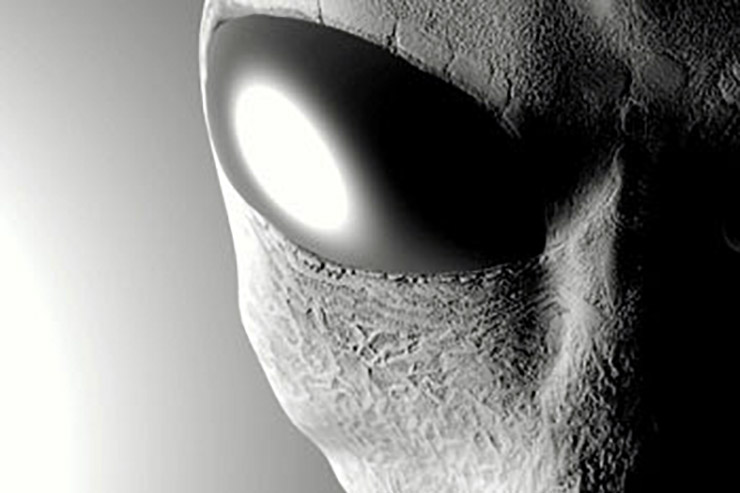
    In the 1970s, when we first became fascinated by the UFO phenomenon, opinion among researchers was divided between two views: the Extraterrestrial Hypothesis (ETH) – UFOs are spacecraft from other worlds; and the ‘Magonian Hypothesis’ (after the 1970 book by the intelligent Ufologists’ hero Jacques Vallée, Passport to Magonia). Pro-Magonians believe something from Earth is behind UFOs, a race of tricksters that surface from time to time as alleged angels, visions of the Virgin, demons, fairies – and now, space-travelling aliens? They’ve just updated their image.

    The theory acknowledges the close parallels between alien encounters and experiences with non-human entities that litter the annals of folklore. But it also recognises the often-reported absurdity and pointlessness – the ‘high strangeness’ – which challenge the simplistic notion of UFOs as technological craft crewed by biological entities. It was this Monty Pythonesque quality that led investigator John A. Keel to develop his ‘ultraterrestrial’ hypothesis – the aliens are visitors from another plane of existence – outlined in the 1973 classic UFOs: Operation Trojan Horse.

    However, since 1980 this approach has lost ground to the ETH – a pity, as it offers a more complete explanation of the whole phenomenon. Even ETH-ers usually acknowledge a paranormal component in alien contact, most obviously in the mental manipulation of abductees, often at a distance. There’s also the most direct psychic contact, the channelling of alleged extraterrestrial entities.

    The ETH has become so dominant partly because the Magonian approach challenges our cherished consensus reality so outrageously, whereas the concept of space ships from other planets doesn’t. Also, high-profile cases such as Roswell, Area 51 and Majestic 12 – all firmly based on the ET interpretation and centred on government conspiracies and cover-ups – came to dominate Ufology in the 1980s. But paradoxically they derive from the very agencies allegedly behind the conspiracy. In fact, trace any famous case back to its source and you will find that one way or another it originated within the military and intelligence community.

    (It always amazes us that Ufologists often obey the unwritten rule: never believe anything that anyone in government, the military or the intelligence community tells you – unless it’s that UFOs are real ETs in secret contact with world authorities. Then believe everything they tell you…)

    In fact, far from trying to cover up the existence of UFOs, government agencies have actively encouraged belief in them – specifically the ETH. Our own research has convinced us that this ‘Federal Hypothesis’ is the most accurate, and indeed there is a groundswell of similar opinion, as seen in Mark Pilkington’s recent Mirage Men and Lynn’s Mammoth Book of UFOs (2001). It does seem the whole UFO thing has been exploited – maybe even invented – to provide a convenient cover for all sorts of black ops, from testing secret aircraft to psychological warfare experiments. Even this, however, barely scrapes the surface of the sinister goings-on associated with over six decades of UFO research.

    Enter the Nine

    In the late 1990s we researched a story packed with all the paradoxes and questions just discussed, as detailed in our The Stargate Conspiracy (1999, updated 2000). These events represent either the biggest and most concerted attempt yet at extraterrestrial intervention – or a criminal manipulation of the belief in it. Either way, it’s sensational and terrifying.

    The central character is the American Army physician and parapsychologist Andrija Puharich (1918-1995) who experimented with stimulating psychic abilities using hypnosis, psychoactive drugs and electrical devices. He was also obsessed with the possibility of psychic communication with non-human intelligences.

    In 1948 – after being discharged from the army on medical grounds – Puharich created the Round Table Foundation in Maine, to carry out ostensibly private experiments with psychics such as Eileen Garrett and Peter Hurkos. The Foundation soon attracted wealthy backers, even including Henry A. Wallace, Vice President of the USA under Franklin D. Roosevelt, who funded Puharich through his Wallace Foundation. Another supporter was Ruth Forbes Young, from the stupendously rich Forbes family, and her husband, the ubiquitous inventor Arthur M. Young, besides Alice Bouverie, heiress to the Astor dynasty.

    From research in the 1990s we now know Puharich’s Round Table Foundation was also covertly funded by the US Army. He himself recorded several visits from military top brass, including the head of psychological warfare research. So was it a front for military psi experiments on civilian psychics, with his discharge merely a cover?

    Puharich was a passionate advocate of the military use of psi, presenting the paper: ‘An Evaluation of the Possible Usefulness of Extrasensory Perception in Psychological Warfare’ to the Pentagon in November 1952. He was redrafted the very next day…

    But before taking up his duties, a seminal event occurred at the Round Table Foundation. Puharich’s team were working with the Indian channeller Dr. D.G. Vinod, who on New Year’s Eve 1952 declared, in trance, “We are Nine Principles and Forces,” going on to channel them. The Nine described themselves as separate entities that function as one – claiming (with typical lack of modesty and lofty disdain for mere mortal grammar): “God is nobody else than we together, the Nine Principles of God. There is no God other than what we are together.” The communications continued for six months until Vinod’s return to India.

    Deeper and Darker

    In parallel with the Vinod communications, from February 1953 until April 1955, Puharich was stationed at the Army’s Chemical Centre at Edgewood, Maryland – although he often returned to the Round Table Foundation. The exact nature of his duties remains unknown, but Edgewood was the Army’s research facility into both chemical and psychological warfare – and at that time it was involved with a joint project with the CIA’s notorious MK-ULTRA.1 Puharich’s Army career certainly puts a different spin on the debut of the Nine.

    In 1956 the extraterrestrial element was spliced to the story. In Mexico, Puharich and Arthur Young encountered Charles and Lillian Laughead, who were working with a young man who claimed to be in psychic contact with aliens. The Laugheads sent Puharich messages from these ETs, containing cross-references to the earlier Vinod communications, apparently revealing that the same cosmic intelligences were contacting different people.

    In the 1960s Puharich devoted himself to parapsychological research and the development of patented medical devices. Then, in 1970, Puharich met Uri Geller in Israel, becoming convinced that his spoonbending and other talents were genuine. When he experimentally hypnotised Geller, the young Israeli channelled the entity ‘Spectra’, allegedly a conscious computer aboard a far-distant spaceship. Spectra said ETs had programmed Geller with his powers as a toddler, and effectively anointed him as a new Messiah for coming world changes, stating, “He is the only one for the next fifty years to come.”

    When Puharich then asked the somewhat leading question, “Are you of the Nine Principles that once spoke through Dr Vinod?” Spectra unsurprisingly replied, “Yes.” It then confirmed that the Nine were behind UFOs, right from Kenneth Arnold’s seminal 1947 sighting.

    ‘Oddly Monotonous Miracles’

    The hypnosis sessions and Spectra channellings continued, while strange phenomena dogged Puharich and Geller. In what Colin Wilson calls “a confusion of oddly monotonous miracles”2 machine-like voices spoke out of thin air, objects dematerialised and teleported (including Puharich’s dog – and once Geller himself). And several UFOs appeared over Tel Aviv and the Sinai desert.

    However, although Geller confirms the paranormality, he distances himself from the channelling. And although Puharich seemed convinced that Spectra and the Nine were real, Geller calls them “a civilisation of clowns”3 – a perfect description of the Ultraterrestrial/Cosmic Joker scenario.

    Puharich arranged for Geller to be tested at SRI International, the Californian institute where CIA-backed ‘psychic spying’ research – most famously remote viewing – was being conducted. In fact, during our research for The Stargate Conspiracy Geller told us Puharich was working for the CIA when he visited Israel to evaluate him. Another associate of Puharich’s, the physicist Jack Sarfatti, also confirmed it. Given his background, Puharich would of course have been their ideal head-hunter.

    Just as in the first contact with the Nine twenty years before we discover paranormal research secretly backed by military intelligence – which again centres on channelling the Nine… Perfect symmetry – but what does it mean?

    Exit the Messiahs

    Despite Puharich’s efforts to promote Geller as the Messiah of a new phase in human evolution, he bowed out in 1973, having risen to international superstardom. But the Nine continued to reach Puharich through new channellers. They seemed to forget they once declared Geller “the only one to come for the next fifty years.” First there was a young chef known only as ‘Bobby Horne’ who, hypnotised by Puharich, channelled the extraterrestrial ‘Corean’ – who agreed with Puharich’s suggestion that he/she/it was an emissary of the Nine. Horne was driven to the brink of suicide by the experience.

    He was replaced by medium Phyllis Schlemmer who was appointed the Nine’s official ‘transceiver’, a position she maintained for the next twenty years. Her guide ‘Tom’, who she had assumed was the spirit of her grandfather, suddenly announced he was an extraterrestrial and one of the Nine – now the ‘Council of Nine’.

    After Geller’s departure, Puharich established a new research facility in New Jersey, ‘Lab Nine’. This became the focus for two related series of events.

    First there was the mission of alerting the world to the Council of Nine’s existence and imminent return through mass landings of spaceships in the late 1970s. An important new player was the wealthy English baronet and spiritual seeker, Sir John Whitmore, a former racing driver.

    There was a concerted effort to get the Nine’s message to a wider audience, besides enticing influential individuals to hear Schlemmer dispense their cosmic wisdom. They included scientists interested in the interface between quantum physics and consciousness besides members of super-rich families, politicians and writers.

    But the biggest name was undoubtedly Gene Roddenberry, creator of Star Trek, who was involved with the Nine in 1974 to ‘75. Clearly hoping to exploit his cult status, Puharich urged him to write a movie screenplay about the Nine, although it was never finished. How far Roddenberry believed in or trusted them is unclear.

    Although it’s claimed that Roddenberry’s Lab Nine experiences had some influence over the first Star Trek movie and the Next Generation series a decade later (with its nine central characters), besides the Deep Space Nine spin-off, the series that undoubtedly reveals most about Roddenberry’s attitude to the Nine is his last, Earth: Final Conflict (1997-2002), produced after his death. This is set in the near future where an advanced alien race, the Taelon, arrive on Earth claiming to help mankind, but some humans are suspicious that they’re really bent on conquest…

    Roddenberry had turned the discarnate Nine into flesh-and-blood aliens – and the Taelon are ruled by a Synod or Council. Although the plot seemingly reflects his uncertainty about the Nine, since his death in 1991 Phyllis Schlemmer still claims he was unknowingly influenced by the Nine when creating the original Star Trek series.

    However, it was in response to a question by Roddenberry that ‘Tom’ finally revealed his – and the Nine’s – real identity. He was none other than Atum, chief god of the ancient Egyptian ‘Great Ennead’, the nine gods and goddesses beloved of the pyramid builders. However, perhaps it should be pointed out that after Vinod’s first contact, Puharich had begun to study the Ennead.

    The other project at Lab Nine was more disturbing. Using various techniques including hypnosis, he also got a group of children – the ‘Space Kids’ – to remote view political and military targets such as the Kremlin, and tried to make them channel alien intelligences.

    Virtually nothing is known about this project. The only record consists of visitors’ comments, disturbingly noting that some of the kids were clearly traumatised by the experience. As this happened in parallel with the CIA-backed remote viewing programme, it seems a way of involving children without arousing suspicions. After all, which would you be most ok with: sending your kids to a cool camp to become the new Uri Geller – or waving them off into the care of the CIA and military somewhere secret?

    In 1978 it all fell apart: Lab Nine mysteriously burned down, and Puharich fled to Mexico, claiming he was being targeted… by the CIA! Perhaps they feared revelations about the Space Kids through a scandal involving his associate Ira Einhorn, who was being investigated for the murder of his former girlfriend Holly Maddux (for which he was subsequently convicted). At the time of her disappearance, Maddux possessed papers relating to the Space Kids research. (Puharich returned to the USA three years later – odd for someone who feared assassination by the CIA – and continued his paranormal research, although apparently playing no further part in the Nine story. He died in 1995.)

    Onwards and Downwards

    The Council of Nine continues its mission. Schlemmer/Tom’s 1992 book, The Only Planet of Choice, remains a New Age bestseller, and although no longer actively channelling the Nine, she still promotes their message. Given she had been in touch with these ‘ancient gods’ almost daily since 1975, her book of just under 400 pages is clearly somewhat selective.

    Then the Nine entered the big time. In 1978 Whitmore introduced Englishwoman Jenny O’Connor to the Esalen Institute, the Californian centre for the alternative scene that attracted famous names from the worlds of art, entertainment, science and even politics. Incredibly, not only did the Nine give seminars at Esalen through her, but from 1979 until at least 1982 they effectively took over the Institute. In Esalen: America and the Religion of No Religion (2007), Jeffrey J. Kripal describes the founder Richard Price’s reliance on O’Connor: “Dick decided to ask Jenny and the Nine to help him make tough administrative decisions, which included firing and hiring individuals.” Esalen staff member and Price’s biographer Eric Erickson describes the Nine as “extraterrestrial hatchet men.”

    This period was particularly significant for Esalen. Many of those who attended O’Connor’s seminars became prominent in political circles both in America and the USSR (through the Institute’s Soviet Exchange Program), as Jack Sarfatti wrote (his emphasis):

    The fact remains… that a bunch of apparently California New Age flakes into UFOs and psychic phenomena, including myself, had made their way into the highest levels of the American ruling class and the Soviet Union and today run the Gorbachev Foundation.5

    It was through O’Connor that the Nine reached Washington, including the circles from which Al Gore – an unashamed fan of the paranormal – was to emerge. It isn’t known how much he was influenced by the Nine, but some of his associates – including his political mentor Senator Claiborne Pell – were certainly interested in their pronouncements. It’s a chilling thought that if Gore had become President, who – or what – would have influenced him?

    Joking Apart

    The Nine represent the most concerted effort ever to manufacture and sell a system of belief based on extraterrestrial contact. Built up over five decades, it involved persuading prominent politicians and cultural leaders of their reality and impending return, besides attempting to make them known globally through books and movies. This campaign was most successful in the New Age subculture, which is still largely – and unquestioningly – in thrall to the Nine.

    The Nine’s communications exhibit all the classic ambiguities and difficulties of alleged alien contact. At the very least they’re ‘anomalous’ – ostensibly extraterrestrial but laced with more traditional paranormality. And behind it all is the shadowy presence of government agencies.

    The facts outlined above fit two different scenarios. The first – preferred by the Nine devotees – is that the Nine are genuinely advanced ETs who created the human species and guided its development, and who were worshipped as gods in ancient Egypt. And now humankind has reached a crisis point through its own folly, they are about to return to get us out of the mess and (somewhat contradictorily) to launch humanity into the next evolutionary level.

    There are good reasons to doubt this explanation. Analysis of the Nine’s pronouncements reveals too many internal inconsistencies, besides often ridiculous historical and scientific errors. So what about the second scenario? Given Puharich’s sinister background, could the whole thing have been an experiment into the creation and manipulation of channelled contact? It is clear even from his own account that he directed the channelling, often asking leading questions of hypnotised channellers. And there is evidence suggesting that he also used chemical and electronic techniques.

    Was it all just an experiment to see how apparent contact with non-human intelligences could be induced, manipulated and exploited? If so, what do we make of the evidence from the late 1970s of the concerted effort to construct a new religion centred on the Nine? Like every cult, however, true power would lie with the ‘priesthood’ led by Puharich and his cohorts.

    But even that scenario, it seems to us, fails to cover the facts. There seems little doubt that something genuinely paranormal was happening. The British writer Stuart Holroyd, for example, was persuaded to write a book about the Nine – Prelude to the Landing on Planet Earth (1977) – after experiencing poltergeist-type activity in his house. This is harder to ascribe to CIA manipulation – unless we assume the CIA can induce paranormal events. And, of course, the Nine communications continued even after Puharich’s involvement, through several individuals. They include James J. Hurtak, Puharich’s second-in-command at Lab Nine and Carla Rueckert, a paranormal researcher who collaborated with him. Both produced books of channelled material from the same source – whatever that might have been. Hurtak’s The Keys of Enoch (1977) and Reuckert’s The Ra Material (1984) have both been New Age best sellers.

    Puharich wrote, “I do not doubt that discarnate intelligences exist, any more than I doubt that finite carnate intelligences exist.”6 But as someone who made a specific study of the subject, even becoming a kahuna, an initiate of Hawaiian shamanism, he must have known always to be on guard against trickster spirits – what Colin Wilson memorably called (in his introduction to Prelude to the Landing on Planet Earth) the “crooks and conmen of the spirit world.”7  

    Perhaps Puharich was indeed directing events, but was experimenting as much on the Nine as he was on their human channels – trying to discover how to sort the wheat from the chaff among discarnate entities. Or maybe even (terrifying thought) to find out if the entities themselves can be manipulated and controlled. But if true, what would it mean for the involvement of the military and intelligence agencies? Are they trying to establish a relationship with such beings?

    ‘An Awful Lot of Trouble’

    If, as the evidence increasingly suggests, the CIA and military are not trying to suppress belief in alien contact but to encourage it, why would they? The assumption of most advocates of the Federal Hypothesis is that those agencies want to use the phenomenon and people’s belief in it as a smokescreen for their own covert purposes. In other words, if the CIA want us to think UFOs exist then the truth is that they don’t. But in our view, there is another even more unsettling reason: they want us to think UFOs are extraterrestrial nuts-and-bolts machines and the aliens are flesh-and-blood in order to divert attention from the reality that the real ‘aliens’ co-exist invisibly with us on the Earth – and are the source of all cases of high strangeness.

    Jacques Vallée, one of the first to research the covert manipulation of the UFO scenario by official agencies, concluded: “someone is going to an awful lot of trouble to convince the world that we are threatened by beings from outer space.”8 But how does this fit in with his Magonian hypothesis? Vallée presented his most explicit statement of the big picture in the storyline of his 1996 novel Fastwalker (written with Tracy Tormé): a powerful group of human conspirators know that the UFO phenomenon is created by entities from a parallel world, but they aim to convince world leaders and the global population of the existence of ‘aliens’ – and then position themselves as the world’s go-betweens.

    Which is basically our own view of the case of the Council of Nine: they have the stamp of the Ultraterrestrial all over them – clowns, conmen and cosmic jokers – but there is also the pernicious presence of very human agencies lurking in the background. The joke is on all those who follow the Ultraterrestrials, however they choose to manifest themselves or however their human allies choose to present them to us. But, as history has shown, it may be no laughing matter.

    [alert type=”general” dismiss=”no”]This article was published in New Dawn Special Issue 17.[/alert]

    [alert type=”success” dismiss=”no”]If you appreciate this article, please consider subscribing to help maintain this website.[/alert]

    Footnotes

    1. John Marks, The Search for the ‘Manchurian Candidate’: The CIA and Mind Control, W.W. Norton & Co., 1979, Chapter 5.

    2. Colin Wilson, Alien Dawn: An Investigation into the Contact Experience, Virgin, 1998, 18.

    3. Andrija Puharich, Uri: The Original and Authorized Biography of Uri Geller, Futura, 1974, 173.

    4. Jeffrey J. Kripal, Esalen: America and the Religion of No Religion, University of Chicago Press, 2007, 366.

    5. Jack Sarfatti’s 1996 autobiographical online essay ‘Sarfatti’s Illuminati: In the Thick of It!’, widely distributed on the Internet, e.g. www.whale.to/b/sarfatti.html.

    6. Andrija Puharich, The Sacred Mushroom: Key to the Door of Eternity, Doubleday, 1974, 170.

    7. Stuart Holroyd, Prelude to the Landing on Planet Earth, W.H. Allen, 1977, 14

    8. Jacques Vallée, Revelations: Alien Contact and Human Deception, Souvenir Press, 1992, 247

    © New Dawn Magazine and the respective author.
    For our reproduction notice, click here.
  • Consciousness, Resonance & the Paranormal: Synchronised Swimming in the Quantum Sea

    Consciousness, Resonance & the Paranormal: Synchronised Swimming in the Quantum Sea

    As a kid, watching the synchronised swimming competition of the summer Olympic games, I was always struck by how silly the sport seemed. Not to mention how it looked! Later, as a wise adult, I came to understand and appreciate both the degree of difficulty of getting human bodies to move in perfect unison, and the beauty that results when they do.

    Humans often operate in synch with others. I am reminded of groups of women who work or live together menstruating at the same times, as if their hormonal systems sought a certain resonance of unity and harmony, and adjusted the individual bodies accordingly.

    But bodies are not the only things that resonate. Quantum physics has taught us that there is no such thing as empty space, and that the so-called vacuum of space often called the Zero Point Field (ZPF), is teeming with quantum fluctuations that display a resonance, a vibration. Nothing does not vibrate. There is no such thing as zero, dead, still. Everything that exists gives off some vibration of a certain frequency.

    Every planet, every person, every particle.

    Musicians know that when a guitar string is plucked on one instrument in a music store, all the other guitars in the same room will vibrate to that tone. Healers refer to this as “entrainment,” when two objects (or people!) in close proximity, vibrating on different frequencies, begin altering their vibrations until they are vibrating at the same, or nearly the same, frequency. The Zero Point Field could act as a field of “entrainment” or resonance, where the vibrations of particles tune to specific frequencies, creating different forms of matter, energy and interactions. Other scientists believe this field has different names.

    In 1998, physicist Paul Steinhardt and his colleagues coined a term that would describe a mysterious field of what they believed to be dark energy, or a “fifth essence.” They called it “quintessence.” Based upon an earlier idea proposed by Fermilab physicist Chris Hill and colleague Josh Freeman, quintessence suggested that, like the cosmological constant of Einstein’s vision, this essence fills all of “empty” space with a form of matter-energy that is changeable in strength. Some parts of space might have a thicker quintessence, others a thin “layer,” creating a field of invisible essence that has no direction, like a vector field, only magnitude, like a scalar field.

    Described as kinetic energy by Tom Siegfried in Strange Matters, the strength of this field would be measured by how quickly it approaches the zero point. Because quintessence is believed to exert negative pressure, it is said to be a slow rolling scalar field, one that does not change too quickly over a period of time. Whether or not quintessence is the dark energy so eagerly sought by physicists will decide the fate of the universe itself, because of its relationship to expansion. The presence of a negative energy in space would possibly stop the expansion.

    Aside from the role quintessence plays in the outcome of our universe’s destiny, it may also play a role in the way matter and energy interacts, or resonates. Nature is filled with signs of the importance of resonance and the beauty of synchronicity. From the physical foundation of all musical composition to the intricate mathematical ratios of the natural world, there seems to be an element of “arrangement” that results in a visible pattern.

    Physicist David Bohm believed that underlying the physical, tangible world, there was a far more mysterious, deeper order of “undivided wholeness.” He called the visible world the explicate order, and that deeper world the implicate order, and used the analogy of a flowing stream to describe his realisation of unbroken unity.

    “On this stream, one may see an ever-changing pattern of vortices, ripples, waves, splashes, etc., which evidently have no independent existence as such. Rather, they are abstracted from the flowing movement, arising and vanishing in the total process of the flow. Such transitory subsistence as may be possessed by these abstracted forms implies only a relative independence or autonomy of behaviour, rather than absolutely independent existence as ultimate substances.”

    Those rather philosophical words came from Bohm’s Wholeness and the Implicate Order, which he wrote in 1980, and suggested the world of the implicate order was similar to a hologram, where the complex interference patterns appear to be chaotic and disordered to the naked eye, yet on a deeper level possess a pattern that is hidden or “enfolded” into the whole object. Bohm even suggested the universe itself was like a flowing hologram, or “holomovement,” that contained order on an implicate level. The explicate order would be the projection from higher dimensions of reality, and any apparent stability of objects and entities are really a sustained process of enfoldment and unfoldment. Nothing solid is really solid at the implicate level.

    Bohm also believed there was a superquantum potential, or a higher “superimplicate” order operating in the universe, and that life and consciousness were enfolded within, with matter appearing in varying degrees of “unfoldment.” He even stated that the separation of matter and spirit is nothing but an abstraction, that the “ground is always one.”

    All is Vibration

    The study of music (and the patterns of sacred geometry) suggests an invisible, “implicate” vibratory nature. Sympathetic Vibratory Physics is a term assigned to a “musical universe,” an interesting alternative theory of reality proposed by Walter Russell in A New Concept of the Universe. Russell believes that there exists nothing in nature other than vibration. He attempts to create a paradigm of reality using wave and vibration theory based upon the work of John W. Keely’s concepts of a sympathetic vibration that connects all things and energies, and that the harmony of these vibrations creates what we see.

    Russell and Keely suggest that music can be thought of as a model of the order found in the universe, with organised vibration or sound following principles of structure and behaviour that make sound into harmonies. These principles mimic those governing other vibratory patterns in the universe.

    Take the idea that everything is the result of a vibration, and even Zero Point Energy in the quantum vacuum has been shown to “jiggle” or vibrate. Everything has its “jiggle.” We can go on to say that different things have different “chords” or “vibration signatures,” and that is what makes one thing discernible from the next. Sounds a lot like superstring theory, with tiny, vibrating cosmic strings at the very heart of existence.

    Vibrations are dynamic, interacting with one another and their environment, creating different tones and chords and harmonics. In a sense, vibrations are more fundamental to reality than the tiniest subatomic particle, because in a sense, that is what the tiniest particle is… a vibration.

    The most exciting thing about this invisible vibratory field, no matter what form it might take, is the potentiality it contains. Potential as a source of all other sources. Potential as a pure energy field upon which all matter is created and thrown out into the explicate order. Potential even is a doorway to other dimensions or levels of reality, where things like ghosts, UFOs and psychic abilities are the norm.

    “Subquantum Kinetics” & “Morphogenetic Fields”

    Physicist Paul LaViolette writes extensively about “transmuting ether” in his book, Genesis of the Cosmos: The Ancient Science of Continuous Creation. This ether, which is the basis of LaViolette’s theory of “subquantum kinetics,” is described as an active substrate that differs from the mechanical ethers once considered in previous centuries. LaViolette states, “The concentrations of the substrate composing this ether are the energy potential fields that form the basis of all matter and energy in our universe.” The ether reactions cause wave-like field gradients that emerge and form the “observable quantum level structures and physical phenomena,” including the various particles, forces, fields and electromagnetic waves.

    Subquantum kinetics, which LaViolette proposes as a unified field theory that fills in the gaps conventional physics cannot, rests on the existence of this “primordial” transmuting ether present throughout space. “The transmuting ether is the wellspring of Creation,” he states, adding that were its activity to diminish, everything physical would cease to exist, coming to a state of “multi-dimensional consciousness” from which the physical universe is generated. A ground state, or Source of all Sources.

    Rupert Sheldrake, biologist and co-author of The Evolutionary Mind: Conversations on Science, Imagination and Spirit refers to this vibratory field as the “morphogenetic field.” This “M-field” (and there can be many M-fields) is an underlying energy field that acts as an organising principle to give form to various levels of reality. He also suggests there is “morphic resonance,” or the resonance of memories sort of like Edgar Cayce’s “Akashic field” or the “collective unconscious” of Carl Jung. These memories shape our minds today, but subconsciously. Sheldrake, who has experimented with psychic pets and animals, theorises that the existence of an invisible field of influence, although unproven, could be the link between humans and their pets. “Morphic fields also contain attractors, which draw organisms towards future states.” This could explain how a dog might pick up a change in the morphic field that lets it know its owner is only a half block away.”

    The morphogenetic field itself could be made up of “morphic wavelets” of resonating, vibratory energy that differ in scale and frequency. The wave could have a resonance that synchs up with the resonance of a pet, or a human, who then displays some “psychic” ability to predict a coming earthquake or disaster. And if they are tapping into a field that contains memories of past, present and future, a time landscape so to speak, they could access any event throughout the space/time continuum.

    Obviously, it’s not that simple, or we would all be seeing ghosts, aliens, strange creatures, having precognitive dreams, major déjà vu episodes, and reading each other’s minds. But if even one small percentage of the claims of the paranormal is true, someone somehow is figuring out just how to do it.

    Terence McKenna, psychedelic visionary and co-author of The Evolutionary Mind, points out: “Once non-locality is accepted, some of the things we’re interested in are permitted – telepathy, information from other worlds arriving by the morphogenetic field, and so on.” We know that experiments have proven non-locality to be a reality on the quantum level. Two particles continue to affect one another at extreme distances. The same actually happens on a macrocosmic level all the time.

    The Synchronised Universe

    Advanced physics tells us that an event at Point A in the universe does not cause an event in Point B to occur a little later. Actually, both events occur at the same time. Carl Jung used the term “synchronicity” to describe this same phenomenon on a human level. In his amazing book Power Vs. Force, Dr. David R. Hawkins states that a “question can’t be asked unless there’s already the potentiality of the answer… there can be no ‘up’ without an already existent ‘down’.” Synchronicities are evidence of an all-inclusive field that goes against the normal cause-and-effect rationale for events that occur that challenge our illusion of the line between subjective and objective reality.

    Perhaps, the universe itself is based upon principles of synchronisation. Physicist Claude Swanson, educated at M.I.T. and Princeton, believes it is. He even believes his “synchronised universe” theory leaves the door wide open for a variety of paranormal phenomena to exist in a reality where our own matter operates in synchronised fashion with everything else.

    In his book, The Synchronized Universe, Swanson points out that parallel universes superimposed upon our own can differ in phase or frequency of their synchronisation. Basically, people can only access their own universal “sheet” of existence, and thus believe that is the only one that exists. Same goes for anything moving around on all the other parallel “sheet” universes.

    But alter the phase or frequency just so, and an object can disappear from one reality, and appear in another. Like a ghost.

    The synchronised universe theory could explain how UFOs can appear and vanish instantly, as reported in hundreds of sightings, and how teleportation might be achieved. It could also explain the existence of “subtle energy,” which, Swanson theorises, arises from the motions coupled across the layers of parallel universes. Subtle energies, Swanson states, are the “coherent structure which crosses several of these parallel realities, and therefore is ‘higher dimensional’.”

    The interesting thing about synchronisation is that it allows every particle a fundamental frequency proportional to its mass, and also explains how particles can become synchronised, like those Olympic swimmers, at small scales. This “synchronising” of matter and energy would indeed allow for paranormal events to occur, and would no doubt explain why they might occur in transient, unpredictable ways. Ghosts, out-of-body experiences, remote viewing, psychokinesis and poltergeist activity all may be the result of the synching of particles and matter between various levels of existence, creating a literal means for moving between dimensions of reality.

    Swanson states, “Paranormal effects and ‘subtle energy’ cause a synchronisation across adjacent parallel universes. When this occurs, these adjacent universes become to a degree synchronised with ours. The interaction becomes more coherent, more in phase.”

    When there is no synchronisation, we experience the other universe or dimension as “random noise.”

    Even teleportation fits into the synchronised universe theory. Swanson points out, “The behaviour and position of matter is dependent on its radiation field, which keeps it in place, gives it inertia and allows it to interact with other matter in the universe. If we shift the phases of radiation coming into the particle and coming out of it from the past and the future, we may be able to shift its position.” This may be the key to a form of “hyperdrive” that causes teleportation.

    An Explanation for Ghosts?

    Physicist F. David Peat suggests that synchronicities are “flaws” in the fabric of reality, momentary fissures that offer those sensitive to them a brief peek into the implicate, underlying order of nature.

    We know from the Law of the Conservation of Energy that the total inflow of energy into a system must equal the total outflow of energy from the system, plus the change in the energy contained within the system. In other words, energy never dies. It is converted into another form. Ghosts, if they represent trapped energy, may move between parallel dimensions or universes by this process of synchronisation (possibly using the ZPF as a vehicle for moving between the dimensions) and become visible in our world because they are still energy. Many ghost sightings involve balls of plasma and changes in electromagnetic field measurements, as well as visible signs of energy manipulations. Lights flicker or pop, static appears on radios and televisions, and people report the feeling of their hair rising on their skin or the back of their head. These are also widely reported elements of UFO sightings (stalled car engines, black-outs, phone interference…). Obviously, energy is present, and affecting its environment.

    Again, one is reminded of music. When two or more notes are played together, they either create a beautiful harmony, or a noisy discord. The notes that work well together create a resonance. Those that don’t “make sweet music” together create a dissonance.

    If paranormal events can only occur when the “right two notes are struck,” then something in the brain, or the body, is responding to those notes and “tuning in” to the phenomena that is otherwise beyond perception. All of these frequencies exist in the field, and… even our brains seem to have access to this field of all possibility.

    The Brain Works Like a Hologram

    Neurosurgeon Karl Pribram spent decades pondering the secrets of the human brain and memory, and eventually discovered that the brain worked somewhat like a hologram, and that when you first see something, specific frequencies resonate in the brain’s neurons, which then send information about the frequencies to other sets of neurons, and the process continues until your neurons construct an image of what you are looking at. That the brain seems to process information in wave-frequency patterns suggested that human memory could hold amazing amounts of information “in storage,” and, using the same holographic model, be able to access and recall a memory as a three-dimensional image.

    The holographic model of the brain could allow for ESP and telepathy, then, by the same process, according to Swanson. “If the sender can cause energy or information to refocus at some other point in space-time using the 4-D holographic principle, then it can be received if a person is there to sense the thought-form.”

    Pribram’s brain research didn’t stop with the holographic model and its implications for a variety of interesting abilities. He also showed that the brain acted like a frequency analyser that literally filters out unlimited wave information from the Zero Point Field, where all the information possible existed. This allows the mind to take and use only what it needs, and not be overwhelmed with a bombardment of unnecessary frequencies trying to compete for some “brain time.”

    Think about the simple experience of déjà vu, which may be our ability to access, albeit in very small doses, glimpses of ourselves in a parallel universe or dimension, or even the ZPF. When you have déjà vu, you are remembering what is happening to you in the present moment. That doesn’t make sense. If it is happening in the present moment, how can you yet have a memory of it? But if there exist parallel universes that have “branched off” each time we made a different choice, then it makes sense that we would, in many of those universes, be doing the same exact things at the same exact time. Déjà vu may then be our successful attempts to find and synch up with another reality, even just for a minute or two. Or perhaps we are accessing the Zero Point Field, which, like Edgar Cayce’s Akashic Record, supposedly contains the memories of every thought, action or event that ever happened or will ever happen in the universe.

    If déjà vu, dreams and out of body experiences, including near death experiences, allow us to wander for a while in other realities, it begs the question – why can’t we easily access these other realities all the time, any time we please? I might suggest that it is because if we could, we would go insane. Information overload. Our brains operate as information sorting machines, only bringing into our perceptive fields what we need to see, hear and know to survive, and hopefully thrive.

    That does not prevent us from being able to, when we meditate or go into a trance or zone out at our computer, have a peek into other dimensions of existence.

    People do this all the time when they dream, when they know who is on the phone after only one ring, when they get a “bad vibe” about a person they’ve just met. Remote viewers may be tuning into a frequency upon which the information they are either sending or receiving is naturally “broadcasting,” as a psychic might pick up on similar frequencies when doing a reading or having their own clairvoyant episode.

    If paranormal elements operate on a different frequency, again we must think of the dog that hears a high-pitched whistle that is soundless to us. Many species of snake have organs that allow them to perceive the infrared range of the electromagnetic spectrum and “see” the heat of another living thing. Sharks and eels are ultra-sensitive to changes in electrical fields, and some insects can see ultraviolet light. These creatures are obviously observing things we humans simply aren’t built to observe.

    Yet somewhere there are humans who can hear these whistles, and sense EMF alterations, just as there are humans that can see auras and other forms of light energy the rest of us cannot. It could just be a matter, then, of the level of one’s consciousness or perception.

    Whether energy is synching up, or emerging in a coherent pattern from the ZPF, or moving along a morphogenetic field, or even floating in a sea of quintessence, there is definitely fertile, dynamic ground for the movement of that energy between our world and the world of the paranormal (which could in fact be our own world, or one parallel to ours).

    We are limited to our five senses: sight, smell, sound, touch and taste. But what about this sixth sense? Perhaps that is the sense, underdeveloped in most, yet present in all, which allows us to turn on and tune in to the frequencies that reveal the other layers of existence.

    I think of years ago, long before cell phones, when I owned a CB radio and loved to listen to motorists and truckers chatter. Occasionally, there would be some bandwidth cross talk from a nearby Ham radio operator. Ghosts, UFOs, and other paranormal events may be cross-talk cutting into our normal bandwidth; chatter from another dimension, or universe, or somewhere in between. We don’t normally hear it because it is usually operating on another frequency altogether, but sometimes signals get crossed. Consciousness may be the key to knowing exactly which frequency to tune into to perceive paranormal phenomena. Think about that the next time you listen to the radio.

    Tune into the right frequency and you may find yourself face to face with a ghost.

    Reprinted, with permission of the publisher, from Psience: How New Discoveries In Quantum Physics And New Science May Explain The Existence Of Paranormal Phenomena © 2007 Marie D. Jones. Published by New Page Books a division of Career Press, Pompton Plains, NJ, USA. 800-227-3371. All rights reserved.
    [alert type=”general” dismiss=”no”]This article was published in New Dawn Special Issue 15.[/alert]

    [alert type=”success” dismiss=”no”]If you appreciate this article, please consider a contribution to help maintain this website.[/alert]

    © New Dawn Magazine and the respective author.
    For our reproduction notice, click here.

  • What Lives On? Investigating Life After Death

    What Lives On? Investigating Life After Death

    From New Dawn Special Issue 7

    Do we survive the death of our physical bodies? Is there such a thing as a postmortem continuation of the individual? If there is survival, what survives? Does everyone survive? What does it even mean to survive?

    Answers to these questions are central to the dogmas of many religions. These same issues are amongst the most refractory when addressed using the techniques of scientific inquiry: data gathering, hypothesis formulation and testing, logical analyses. Indeed, such topics are generally viewed as outside the scope of scientific inquiry, not worth serious thought. As Bertrand Russell commented, “most people would die sooner than think – in fact, they do so.”

    Sphinx Geology

    In my youth, I didn’t bother to give the afterlife much consideration. I never needed the threat of future hell and damnation to persuade me to be moral now. I identified with those ancient Hebrews who did not necessarily believe in an afterlife (de Vesme, 1931), yet still found it prudent to pursue an honourable life in this world. In college I pursued a very earthly field – the study of rocks – ultimately earning a Ph.D. in geology and geophysics from Yale University (1983).

    My life changed in 1990. At the invitation of independent Egyptologist John Anthony West, I took my first trip to Egypt – specifically to study the Great Sphinx from a geologic point of view. After several more trips, undertaking various tests and analyses, I came to the conclusion that the oldest portions of the Great Sphinx date back to a much earlier period than previously believed by most Egyptologists and historians. Conventional wisdom places the Great Sphinx in the reign of the Pharaoh Khafre (Chephren), circa 2500 BCE. My studies indicated that the oldest portions of the Great Sphinx (the statue has been repaired many times, and the head re-carved) date back to at least the period of 7000 BCE to 5000 BCE, and perhaps 9000 BCE or earlier.

    My Sphinx work immediately caused a firestorm and, though the controversy has abated somewhat two decades later, the implications have only deepened. Essentially, sophisticated culture and civilisation goes back much earlier than formally thought; “history must be rewritten.” Over the years I have been pleased to see confirmation of the crux of my work, as other very ancient sites have been uncovered. A good example is Gobekli Tepe in Turkey where a major monumental carved stone building phase dating to the period of 8000 BCE and earlier has been discovered.

    Egypt And Its Obsession With Death

    Working on the Great Sphinx, I could not help but become fascinated with the pyramids, temples, tombs, and other relics of ancient Egypt. According to the traditional view, what was the overriding preoccupation of ancient Egypt? Death and the afterlife. Say “Egypt” and pyramids (popularly interpreted as giant tombs), mummies, and the so-called Book of the Dead immediately come to mind.

    Having studied them in depth, it is clear to me that the pyramids, and the Great Pyramid in particular, were not solely or even primarily overblown mausoleums. Indeed, the Great Pyramid may have served both astronomical/astrological functions, literally being an observatory at one stage of its development, as well as ritualistic purposes. Many modern visitors describe powerful and life changing experiences in the Great Pyramid. One of the most famous is Napoleon Bonaparte. While in Egypt, August 1799, Napoleon visited the Great Pyramid. He entered the King’s Chamber and asked to be left alone. Upon emerging, Napoleon was pale, faint and silent. Asked by an aide what happened, Napoleon refused to say anything of substance, intimating that he had experienced a preview of his own fate. Just before his death in 1821, Napoleon appeared to be on the verge of telling a close friend what had occurred in the King’s Chamber. Then he hesitated. “No. What is the use? You would never believe me.”

    I have spent many hours, including several times almost the entire night (but not sleeping, mind you), in the Great Pyramid. And I have spent much time exploring other temples and tombs throughout Egypt, as well as pyramids, temples and sacred places elsewhere in the world. Initially I approached the ancient monuments as a geologist, focusing on the materials from which they were constructed. Soon, however, I became involved in studying not just the stones, but why past civilisations had erected the stones into magnificent edifices. The why behind the monuments, more often than not, apparently included religious beliefs and practices, initiation rites and rituals, which in many cases seemed to have an ostensible paranormal aspect, whether it was clairvoyance, divination or manifestations of higher levels of consciousness. Were, I asked myself, the ancient structures used to genuinely alter consciousness and possibly enhance paranormal phenomena? Or did superstition, perhaps combined with pious fraud on the part of a priest or priestess, account for the tales? Furthermore, I could not help but think about postmortem survival issues, particularly when studying ostensible tombs! Death, transformation, resurrection, union with the gods, attainment of immortality – was all this ritualistic hocus pocus and pure nonsense? Or were the ancients skilled psychic engineers, carefully manipulating the incorporeal with their megalithic stone monuments and occult practices?

    My formal training as a physical scientist certainly did not encourage the notion that paranormal and psychic phenomena, much less life after death, were anything other than imagination gone wild or charlatans preying on the gullible. According to a conventional materialistic and secular “scientifically rational” worldview, the paranormal does not exist and death is the final end. It was all too easy, and indeed comforting, to put such issues out of mind. Stick to the hard evidence of the rocks, the domain of the geologist.

    Exploring the Paranormal

    Issues of the paranormal and questions about survival kept nagging at me. Ultimately, I realised, I must address these topics head-on, if only for the sake of satisfying my intellectual curiosity. For me the first issue was to research various reputed anomalous psychic abilities among the living, such as telepathy (direct mind-to-mind transfer of information without utilising any of the conventional senses) and psychokinesis (PK, essentially the concept of mind-over-matter). I wanted to establish what, if anything, in terms of the paranormal is possible among the living before addressing the issue of postmortem survival.

    It took me over ten years from my first visit to Egypt to get to the point where I was prepared to take a serious look at the paranormal. I have taught fulltime at Boston University since 1984, and every year I have a new batch of students. Many simply want to take their courses and get a degree, but then there are those who really strive to go beyond their formal studies. One such student was Logan Yonavjak. She served as my field assistant on research expeditions to Egypt and Peru in 2003 and 2005, and she prodded me to take a serious look at the paranormal. She and I undertook a comprehensive survey of the serious scientific literature addressing psychical research and the paranormal (the field now generally referred to as parapsychology). We read literally thousands of papers, pro- and con-, and we both became involved with the field first-hand. The result of our collaboration was The Parapsychology Revolution: A Concise Anthology of Paranormal and Psychical Research.

    Our studies convinced me that, once the fraud, bunk, and self-delusion are eliminated, there is something to the paranormal. The best-documented class of paranormal phenomena is telepathy. There is strong laboratory evidence for telepathy, such as classic card-calling experiments as well as many more sophisticated tests. There is also a large and compelling body of evidence from spontaneous cases (non-laboratory experiments) supporting the reality of telepathy. For instance, crisis apparitions, veridical hallucinations, or “ghosts” are well known. The evidence for PK is also strong, including micro-PK studies at an atomic level using random event generators and similar devices, such as the evidence developed by the PEAR (Princeton Engineering Anomalies Research) labs over more than a quarter of a century, and the carefully studied incidents of macro-PK (affecting larger objects) associated with genuine spontaneous poltergeist cases. Another line of evidence for the reality of paranormal phenomena is research on presentiments or “pre-sponses,” essentially a form of short-term precognition as measured by physiological parameters (heart rate, electrodermal activity and so forth). Numerous replicated experiments have demonstrated the physiological responses of individuals to disturbing photographs, for instance, a second or two before they are actually viewed by the person. According to conventional science, this should not be possible.

    My research on parapsychological phenomena among the living continues, but at this point I agree with the following statement made by David Fontana, Professor of Transpersonal Psychology at Liverpool John Moores University and a well-known psychical researcher: “Psychic abilities are a matter of fact not of belief. What they are and what they mean for our view of reality is another matter, but one cannot dismiss them as fiction and yet retain credibility as an unbiased observer.” (Fontana, 2005, pp. 468-469)

    But how do we interpret paranormal phenomena? This brings us to the issue of postmortem survival.

    Survivalist Interpretations

    Serious study of psychical and paranormal phenomena dates back to at least 1882, the year when the Society for Psychical Research was founded. At that time, and right up to the present day, some psychical researchers have interpreted some of the phenomena they study as being communications from deceased persons or discarnate (non-bodily) entities. Indeed, among many people the prime interest in psychical studies is to establish the possibility of an afterlife. To give a classic example, let us suppose you attend a séance. The medium goes into trance and begins to speak in a different voice. The voice claims to have a message from the beyond, a message from your departed grandmother. Through the medium, you are told that your deceased grandmother still cherishes those moments you had with her, and a very private story is related, a story that you are certain you never shared with another person and only you and your grandmother knew about.

    So, is this proof that you received a communication from your beloved grandmother? Does she live on in the afterlife? Many people would say yes, absolutely (of course, we are assuming there is no fraud on the part of any involved in the séance). No one other than your grandmother knew the private story, and so it must be her who now relates it (indirectly through the medium). What other explanation can there be?

    Indeed, there is another explanation, and it gets to the crux of the arguments for and against postmortem survival. Instead of your grandmother contacting you from beyond the grave, perhaps the medium is telepathically picking up information from your brain, perhaps information that is stored away deep in the unconscious, and then relaying it in a form that is ostensibly a communication from your grandmother? (Granted, the medium is doing this unconsciously, and in no way intends to deceive. The medium truly feels that she or he is communicating with the dead on your behalf.)

    Let’s make the situation a little more complicated. What if the supposed communication from grandmother relays information unknown to you, perhaps concerning your aunt when she was young? After the séance you consult your aunt, and indeed the communication is true, and what is more, your aunt is shocked and flabbergasted because the information is something that only she and your grandmother shared, and absolutely no one else had ever known it. So, is this proof of the continued existence of your grandmother in the “ethers”? Some parapsychologists would counter that possibly the medium telepathically raided, if you will, your aunt’s mind to find interesting information that was then relayed to you at the séance, information that appeared to come from your grandmother.

    There are well-documented cases that become incredibly complex. For instance, at some séances entities, referred to as “drop-in communicators,” make themselves known (Gauld, 1971). Some such drop-ins are ostensibly deceased souls unknown to any of the séance sitters. The drop-in is simply taking advantage of the séance setting, attempting communication with the still living, perhaps asking that a relative or loved one (a living person unknown to any of the séance sitters) be contacted. Drop-ins can conveniently be dismissed by critics as simply figments of the imagination of the medium and/or séance sitters (the medium may pick up on the imagination of the sitters telepathically, expressing this imagination in the form of a supposed drop-in), except in the cases where the information given by a drop-in is verified later. For instance, a drop-in requests that a message be relayed to so-and-so at such-and-such address, and when a sitter at the séance goes to the indicated address it is found that the address exists, the person named lives there, and the message has significant private meaning for the indicated person. Could, just possibly, the medium have assessed all of the information paranormally and then created, unconsciously, the purported drop-in to “communicate” the information? (We assume that no fraud is involved, and in the best cases it seems clear that fraud is not an issue.) Yes, but to many this would seem a much more elaborate, concocted, and complex explanation than simply accepting that the drop-in was indeed a discarnate entity from the other side.

    Super ESP

    Basically, much of the evidence that ostensibly supports postmortem survival can conceivably be interpreted, with varying degrees of finesse, as due to the psychical and paranormal functioning (even if masked and at an unconscious level) of living persons. This is sometimes known as the Super-ESP hypothesis (ESP refers to extrasensory perception), but actually can include paranormal phenomena besides ESP, such as the movement of objects. Take poltergeist activity, unexplained movements of objects, such as items falling off shelves or being “thrown” through the air without any physical cause that can be observed, various unexplained noises and disturbances. Having observed a minor, but I believe absolutely genuine, poltergeist incident, I am convinced that such activities can be real.

    But is poltergeist activity due to literal ghosts (presumably mischievous departed spirits), or can the Super-ESP hypothesis adequately explain poltergeists? One theory is that many poltergeist manifestations are unconsciously caused by, or emanate from, the person who superficially appears to be the focus of the poltergeist activity. Poltergeist activity may be a method (at the unconscious level) of “working out” unresolved emotional and psychological tensions and conflicts.

    There are many other classes of evidence that some claim as support for the reality of survival beyond the grave. Classic séances sometimes include movements and levitations of tables and other items, strange sounds and voices, and even the supposed materialisation of objects and beings (deceased persons?). If, and it is a big if in many researcher’s minds given the amount of fraud documented in such settings, any of these types of phenomena are genuine, are they due to spirits from the “other side,” as is generally claimed by the medium? Or might a Super-ESP explanation be applicable?

    Near-Death experiences and Out-of-Body experiences are sometimes cited as supporting evidence for the survival hypothesis, but the counter argument is that many such experiences are subject to conventional (non-paranormal psychological and physiological factors) or Super-ESP explanations.

    Some researchers have attempted to utilise modern electronic apparatus as a means of communicating with those beyond the grave, a concept sometimes referred to as instrumental transcommunication. One form, known as electronic voice phenomena (EVP), consists of recording the static of a radio that is tuned to a frequency carrying no transmissions. When the recording is played back, perhaps at a different speed than originally recorded, voices or communications from the other side may be heard, or so it is claimed (Raudive, 1971). Even if such “voices” are independently verifiable, critics of the survivalist hypothesis can claim that the voices were encoded paranormally (and unconsciously) via a form of PK by those involved or associated with the experiments rather than by entities from the spirit world – Super-ESP strikes again!

    Reincarnation

    What about reincarnation? Isn’t reincarnation a type of afterlife, or the continuation of life after the dissolution of a particular physical body? While many supposed cases of reincarnation and past lives remain unsubstantiated by solid data, there are also a number of cases where something paranormal apparently is involved. The late Dr. Ian Stevenson (1918-2007), a psychiatrist associated with the University of Virginia (Charlottesville) for nearly half a century, collected, scrutinised, verified, and analysed literally thousands of cases of individuals who apparently demonstrated memories of former lives.

    Just because a living person claims memories of a past life, does that mean it is the same person inhabiting a new body? Or, is a person who appears to remember a past life (and in most cases it is simply bits and pieces of a presumed past life that are “remembered”) in reality paranormally accessing information about a former person and/or time, perhaps even from still living people? Many cases of supposed reincarnation, some would argue, are nothing more than the latter. That is, Super-ESP is the true explanation. Weakening the Super-ESP hypothesis in some presumed reincarnation cases, however, is the finding by Stevenson that in a few instances marks made on the body of a person after the person died apparently appear on the presumed incarnation of the deceased person. Here is a real example given by Stevenson. A young woman in Burma with congenital heart disease died during open-heart surgery. While preparing her body for burial, a mark was placed on the back of her neck with red lipstick. The woman’s presumed incarnation, born thirteen months later, had a prominent red birthmark at the back of her neck, a line of diminished pigment corresponding to the incision in her abdomen and chest made during the surgery, and when the baby began to speak she seemed to have knowledge of the previous life that she could not have acquired by normal means.

    If Stevenson’s data on birthmarks in subsequent presumed incarnations caused by marking or mutilation of a cadaver after death of the previous person stands up to scrutiny, it could have far-reaching implications. It is one thing to hypothesise that fragments or portions, or even the totality, of a personality might be transmitted from a dying person telepathically, including aspects of that person’s death, but to suggest that somehow a lingering discarnate personality is aware of what happens to its former physical body and incorporates marks or mutilations to the body in the next incarnation raises many theoretical and philosophical issues. Is this evidence for the existence of “ethereal beings,” “spiritual entities,” or “soul components”?

    Super ESP or Something Else?

    To quote Professor Fontana, “Given that the evidence supports the existence of psychic abilities, these abilities are either explicable as telepathy, clairvoyance, precognition and psychokinesis from the living (i.e. as Super-ESP), or as communications in one form or another from those who have survived death and live on in another dimension. There is no way around these two possibilities. The evidence either supports Super-ESP or supports survival.” (Fontana, 2005, p. 469)

    In his book Is There an Afterlife?, Fontana is adamant that he believes much of the evidence cannot be adequately explained by Super-ESP. The Super-ESP hypothesis becomes too complex and convoluted, and ultimately so complicated that many prefer, or even find it necessary, to discuss alternative explanations, such as postmortem survival.

    Fontana asserts there are two, and only two, ways to interpret the evidence: Super-ESP or survival (to be clear, Fontana leaves open the possibility that Super-ESP may explain some of the evidence while other evidence supports survival). But is it really an either/or situation? Are the only two viable alternatives Super-ESP and survival of humans (and possibly other organisms?) that once inhabited Earth in bodily form? It seems clear to me that there are additional possibilities (even if not actualities). What about the time-honoured notion of discarnate entities that perhaps never inhabited physical bodies: gods, angels, demons, spirits and so forth?

    Soul Components

    At another level, the concepts of Super-ESP and survival may not be totally distinct from one another. Another time-honoured concept is that of a World Soul, conscious of and remembering its past, that is all the past, and that individual souls may merge with and draw from this World Soul. Related to this is the concept of a spiritual record (sometimes known as the Akashic Records) of all that has transpired, a record that might be accessed from time to time by certain individuals or other beings.

    Rather than viewing the issue of postmortem survival as a simple dichotomy, you survive or you do not, I believe the issue is much more subtle, complex and nuanced. It is not simply is their life after death, yes or no? Rather is it a matter of which psychic components of a person may survive, in what states, for how long, and how such components may influence the living (for instance, via communication through a medium, haunting, reincarnation or possession).

    The ancient Egyptians took a much more sophisticated approach to afterlife issues than many modern people do. They had a number of terms for various psychic components of a person, not fully understood to this day, but we can list some as follows: ka (life force, vital force, spirit, double), ba (individual personality, soul), akh or khu (spirit form, transfigured spirit, ghost), ib or ab (heart, emotion, thought), sheut (shadow, hidden self), and ren (name, embodiment of power and personality). Upon death and dissolution of the body, the ancient Egyptians believed these components could separate and go their separate ways; part of Egyptian ritual involved reuniting the psychic components. When it comes to attempting to understand the subtleties of the psyche and the possibility of postmortem survival, I believe we can benefit by studying ancient wisdom.

    At this point I am not sure what exactly survives, what form or forms it takes, or how long it might survive (for a limited duration? forever?), but I believe the evidence supports the conclusion of the early psychical researcher F. W. H. Myers – something survives:

    I hold that certain manifestations of central individualities, associated now or formerly with certain definite organisms, have been observed in operation apart from those organisms, both while the organisms were still living, and after they had decayed. (Myers, 1907, p. 27)

    We have the foundation for serious studies of the survival issue, a topic that I will continue to pursue in this life – and perhaps the next.

    [alert type=”general” dismiss=”no”]This article was published in New Dawn Special Issue 7.[/alert]

    [alert type=”success” dismiss=”no”]If you appreciate this article, please consider subscribing to help maintain this website.[/alert]

    References:

    Caesar de Vesme, A History of Experimental Spiritualism. Vol. 2, Peoples of Antiquity (Translated from the French by Fred Rothwell), Rider, UK, 1931David Fontana, Is There An Afterlife?, O Books, UK, 2005
    Alan Gauld, “A Series of ‘Drop In’ Communicators”, Proceedings of the Society for Psychical Research, vol. 55, part 204, pp. 273-340 (1971)
    F. W. H. Myers, Human Personality and Its Survival of Bodily Death (edited and abridged by his son Leopold Hamilton Myers), Longmans, Green, USA, 1907
    Konstantin Raudive, Breakthrough: An Amazing Experiment in Electronic Communication with the Dead, Colin Smythe, UK, 1971
    Bertrand Russell, Mortals and Others: American Essays, 1931-1935, Routledge, USA, 1996 (quote cited originally published in Russell’s The ABC of Relativity, 1925.)
    Ian Stevenson, Where Reincarnation and Biology Intersect, Praeger, USA, 1997
    The Parapsychology Revolution: A Concise Anthology of Paranormal and Psychical Research

    © New Dawn Magazine and the respective author.
    For our reproduction notice, click here.
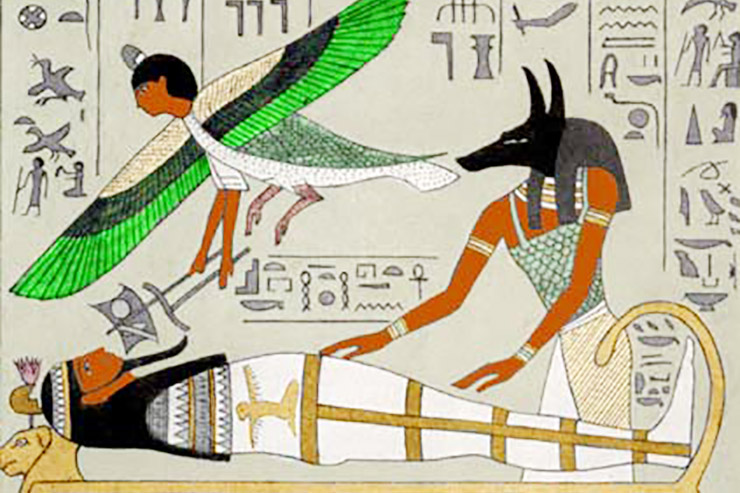
  • Padre Pio Paranormal Man

    Padre Pio Paranormal Man

    During the Second World War the Americans had an airbase in Bari, about seventy-five miles from San Giovanni Rotondo, a village in Southern Italy that houses Capuchin friary. According to US intelligence, the Germans had a munitions facility in the hills nearby; an officer was assigned the job of bombing it. As the planes neared San Giovanni, the officer saw in the sky before him the figure of a monk waving him back.

    Dumbfounded by this spectacle, the officer ordered the planes to turn back. When the war ended, he went to the friary and met the monk who had appeared in the sky. His name was Padre Pio (1887 – 1968).On a trip to San Giovanni Rotondo in 1979, I was unable to learn the officer’s name or any details confirming this fantastic story. According to Father Joseph Pius Martin, an American friar in San Giovanni, the pilot lives in Florida – the only additional lead I obtained.

    Stories like the flyer’s are legion. The work of sorting out fact from fiction is still underway. Many incredible claims about Padre Pio are well-documented; but many are based on hearsay, part of the folklore growing around the monk. One extraordinary thing about Padre Pio was his ability to induce belief in the extraordinary. He had a gift for catapulting people into a fairyland of living mythic powers. In Padre Pio’s world, ideas of fantasy and creatures of mythology come to life: Madonnas, guardian angels, shapeshifting demons, bilocation, magical cures, time-travel, and a good deal more. However you rate the literal truth of particular claims, his story is bound to disturb our routine picture of what is possible. Around the Padre, the incredible became credible, the impossible became actual.

    And yet, no matter how extraordinary the feats of Padre Pio, he was a human being. I assume therefore that his “miraculous” powers are latent powers of all human beings. I underscore this with reason. Some people will resist the claims about Pio because they might see them as meant to ratify church dogma. (The truth is that miracles have been used for propaganda.) However, while I grant that you cannot fully understand Padre Pio’s miracles apart from the symbols and archetypes of his Christian world, I also think they transcend that world and point to a universal human potential. Moreover, comparable phenomena from other traditions bear this out, the best contemporary example being the case of Sai Baba.1

    These phenomena point to possibilities rejected by the custodians of the intellectual and moral establishment: by scientific materialists, who make up the rank and file of academia, and by liberal and fundamentalist Christians, who wear their own conceptual blinkers. Since, however, a critical review of evidence is impossible here, I will restrict myself to trying to give a rough idea of the man, the range of his unusual powers, and to noting their possible implications for human evolution.

    EXTRAORDINARY ACCESS TO THE INTERNAL ENVIRONMENT

    From early childhood Francesco Forgione lived in a world of visionary hyper realities. At five he cried so much, especially at night, that his father once lost his temper and hurled him to the ground. Recalling these early years, Padre Pio said: “My mother would turn off the light, and a lot of monsters would come up close to me, and I would cry.”2 Padre Pio said of these early experiences: “It was the devil who was tormenting me.” Terrifying visions continued throughout his life, inseparable from his higher visions. Raptures, ecstasies, often lasting hours, in which his senses were suspended, occurred frequently. We know of these from his letters3 and from observations of his spiritual directors such as Father Agostino4 who eavesdropped on the Padre’s conversations with invisible beings. These included Jesus, Mary, Francis of Assisi, and his guardian angel. One has to read Agostino’s Diary to get a sense of the intense reality of Padre Pio’s visionary encounters.

    Padre Pio’s internal environment was also infested with dark hostile forces. The higher visions were preceded by shapeshifting diabolic apparitions: huge black cats, naked women who danced lasciviously before him, an invisible entity that spat in his face and tortured him with deafening noises, an executioner who whipped him. According to one of his confreres: “Padre Pio was very alert to unexpected movements and sounds. He said that the devil appeared to him in all shapes. He had fear even of a mouse, because the devil would start out as a mouse and turn into a claw and go for his eyes.”5

    These encounters were physical. In Pietrelcina, you can still see claw marks and splattered inkspots made by the alleged demons. Once, the iron bars of the monk’s cell were found twisted out of shape after a night of grappling with invisible forces. Although no one beside the Padre ever saw the demons, the din they made was often heard by eavesdropping monks. Even more striking, Padre Pio was often found unconscious, sometimes on the floor beside his bed, covered with bruises from the uncanny assaults.

    A well-witnessed event occurred in July 1964. A possessed woman was dragged to San Giovanni. When she saw Pio, she cried out in an unnaturally deep voice: “Pio, we will see you tonight.” That night the friars thought the house was struck by an earthquake. The Superior rushed to Pio’s room and found him on the floor, bleeding from the head. Oddly, there was a pillow under his head. Pio explained that the Madonna put it there. In the morning, the possessed woman (undergoing exorcism from another priest) shrieked: “Last night I was up to see the old man. I hate him so much because he is a fountain of faith. I would have done more, except the Lady in white stopped me.” This taxes my boggle-threshold as much as it must the reader’s; nevertheless, Schug based his account on eyewitnesses not disposed to sensationalism. Pio’s face was so disfigured he was unable to appear in public for five days. On another occasion he was found with broken bones in his arms and legs.

    The attacks lasted throughout his long life. In 1918 he wrote: “I cannot describe to you how those wretched creatures were beating me! Several times I thought I was near death. Saturday it seemed as if they really wanted to finish me….” (Epistolario, III, p.311.) Sometimes his afflictors came to him under the disguise of his spiritual director, Father Agostino, or as an apparition of a saint or guardian angel. Padre Pio had a technique for exposing these sinister masquerades, but not without having to endure a good deal of anguish and uncertainty.

    The psychologically sophisticated reader is bound to be skeptical about these reports of demonic assault. One might turn to Wilhelm Reich for an explanation. Reich believed such experiences were the result of repressed orgone energy turning against oneself. Or we could invoke the pathology of poltergeist phenomena to explain Padre Pio’s demons. I am not certain how smoothly these explanations would fit.

    The point I want to make about “demons” and evolution is this: It does appear, as a matter of psychological fact, that the more one advances in higher states of consciousness, the greater the likelihood of attracting combative, destructive forces that try to drag you back down to ordinary reality. The story of the Buddha struggling to meditate on the Immovable Spot under the Bo Tree is a classic Eastern illustration. In Pio’s case, the combat occurred at two levels: Throughout his life he was molested by invisible “diabolic” forces; but throughout his life he was also persecuted by jealous, envious, and malicious human beings, often individuals within the church hierarchy. It has, in fact, been argued by Ennemond Boniface6 that certain individuals in the church were responsible for the priest’s death.

    If Padre Pio had to battle sinister forces, he also received supernormal favours. In Padre Pio’s world, for instance, higher help took the form of his “guardian angel.” The notion of guardian angels may amuse modern rationalists; still, new age enthusiasts show a keen interest in the functional equivalent of such helping entities. Carlos Castaneda, you may recall, fascinated us with his talk of “allies,” those unspecified forces out there ready to help us. The phenomenon of “channelling,” its invocation of inner guides and otherworldly helpers, echoes the ancient doctrine of guardian angels. Similar parallels are notable in the UFO contactee literature.

    Padre Pio’s guardian angel was no slouch. One of his most striking achievements was to serve as translator of French and Greek, languages Pio was unacquainted with. Paranormal comprehension of Greek is more impressive than French, the latter being in many ways similar to Latin and Italian. In 1912, Agostino, by way of experiment, wrote letters to Pio in French and Greek. When Pio received them he was at Pietrelcina for medical reasons, under care of a parish priest, don Salvatore Pannullo. Pannullo wrote on August 25, 1919: “I, the undersigned, testify under oath, that when Padre Pio received this letter (a letter in Greek and in the Greek alphabet), he explained its contents to me literally. When I asked him how he could read and explain it, as he did not know even the Greek alphabet, he replied: ‘My Guardian Angel explained it all to me’.”

    The virtue of this report (unfortunately scant in detail) is that we must assume either that both Pio and Pannullo conspired in an act of pure deception or that the story is true. I personally doubt a conspiracy; the records point to Pio’s lifelong scrupulous adherence to truth.

    Guardian angel aside, we can assume the translation occurred by telepathy. But this would be telepathy of a rare order; for the telepathic transmission of skills (such as understanding a language) between living persons is unknown in experimental parapsychology. I might add that Agostino confirmed Pio’s ability to comprehend the letters written in French and Greek. There are also stories of Pio hearing confessions in languages he did not know.

    Apparently, guardian angels are well-rounded in their education; the following story shows they know something about automobile mechanics. In 1959, a woman was driving with her husband from Rome to San Severo. (The couple prefer to remain anonymous.) En route their car broke down; for two hours cars sped by without stopping. Toward nightfall, the woman grew anxious and began to pray to Padre Pio. Within ten minutes a black car pulled up and an elegant young man dressed in blue stepped out. He lifted the hood and said: “Look, you lost all the water from the radiator, and it’s burnt out. Take your can and fill it up with water. Near here, there is a farmhouse, which has a well; take the water from there.”

    The husband took the can from the car trunk and did as the young man said. The man then took a black box from his car, produced a roll of adhesive tape, and sealed the radiator. He had beautiful hands with agile rapered fingers. The dog, who normally barked at strangers, sat in the car’s back seat, strangely calm. The husband returned with the water and filled the radiator.

    “You can return home safely; anyhow, you are quite near,” said the mysterious helper, who then got in his car and drove off.

    The couple watched the car pull away and looked for the license plate. There was none! Instead they saw a white strip marked with hieroglyphics. The car moved away slowly on Via Aurelia; suddenly it vanished.

    Arriving home in a “dreamy state,” they reflected on further oddities: The young man somehow knew there was an empty can in the trunk; also, that they lived “quite near.” Later they tried to relocate the well and farmhouse but despite diligent efforts were unable to. There was no farmhouse in the area where their car broke down.7

    Padre Pio’s extraordinary access to his internal worlds included access to other people’s internal worlds. Two well-attested examples were his ability to read minds, especially in the confessional, and his ability to change or convert minds.

    Like Saint John Vianney, the famous Curè of Ars, Padre Pio displayed supernormal powers of mind reading in the confessional. Hearing confessions was paramount in Pio’s long ministry. Hour after hour, day after day for over fifty years, he sat in a wooden booth and listened to people pour out their most intimate secrets.

    John Schug, who wrote one of the more critical books in English on Pio,8 tells of a confessor who had the intention to murder his wife. “Murderer!” Padre Pio roared in the church. The man skulked away and returned the next day, penitent and purged of his intention.

    Schug provides a detailed first-person account of Federico Abresch’s confessional encounter with Pio. According to Abresch, a Lutheran convert, Pio recalled actions and thoughts he had long forgotten. “He enumerated with precision and clarity all of my faults, even mentioning the number of times I had missed Mass.” Pio reminded Abresch of something he had forgotten years ago when he got married. In fact, it was only through Pio’s remarks that Abresch was able to reconstruct his past. Pio apparently had a more exact knowledge of Abresch’s unconscious mental history than Abresch.

    Abresch, by the way, regarded this as proof that something more than merely human “thought-transference” was involved. The fact that Pio could “read” the unconscious of another person seemed evidence of God’s action, something totally beyond human potential. But Abresch is mistaken. Evidence from mediumship and experimental parapsychology show that telepathic leakage from another person’ s unconscious does in fact occur. Once again I believe we are dealing with a general potential of the human mind, brilliantly manifest in exceptional beings such as Pio.

    Padre Pio’s access to internal environments enabled him not just to read but to change or convert minds. The Gospels portray Jesus as a man who took immediate psychic possession of his disciples. Pio too apparently had this ability; consider the following example from Schug.

    Unemployed Laurino Costa sent Padre Pio a telegram asking for prayer to help him find a job. The Padre telegrammed back: “Come to San Giovanni Rotondo at once.” The young man arrived penniless and was standing with a crowd of men in the sacristy. Padre Pio, who had never met Laurino, shouted at him: “Laurino, come here. I see you have arrived.” Bewildered, the youth approached. “Laurino, you will feed my sick.” (A cook was needed in the new hospital.) “But Padre,” Laurino protested, “I’ve never cooked an egg in my life.” The Padre insisted: “Go and feed my sick. I’Il always be near you.” Laurino went to the hospital and rang the doorbell. The Mother Superior answered: “You must be the experienced cook we’ve been waiting for.” Within three hours he was at work. Laurino admitted to Schug: “To this day (14 years later) I still don’t know what happened. All day long I found myself calmly working and telling others what to do, as though I was carrying out a routine I had been used to.”

    MASTERY OF TIME AND SPACE

    Reports abound of Pio’s double appearing everywhere, from the American midwest to China and Africa. The idea of bilocation blatantly contradicts the belief that a human being is a physical object occupying one space. The idea that Jack could be at 42nd Street and Fifth Avenue in New York and simultaneously at Main and Third in Shebogan, Wisconsin, is obviously absurd. Nevertheless, the annals of saints, yogis, and psychics are full of bilocation stories, sometimes well attested.

    Padre Pio bilocated by means of his voice, his presence, his aroma; he appeared in people’s dreams and sometimes he appeared fully materialised.

    Mary Pyle, one-time secretary to Maria Montessori, spent the last 45 years of her life in San Giovanni Rotondo. In her diary she wrote: “One day I went into the sacristy and said to Padre Pio: ‘Father, I believe my mother is in Florence today.’ His immediate answer, given with certainty was: ‘No, she is in Umbria.’ Surprised I said, ‘No Father, I do not believe she was supposed to go to Umbria.’ But he insisted, looking far into space. ‘She’s been in Umbria.’ A few days later I received a letter from my mother who told me: ‘Thank Padre Pio for the visit he paid me while I was sick in bed in Perugia (which is in Umbria). I did not see him with my eyes, nor did I hear him with my ears, but I felt his presence near my bed’.”9

    Padre Pio knew in advance he would be able to bilocate at a particular place. The Vicar General of Uruguay, Monsignor Damiani, a frequent visitor at San Giovanni, once told him he wanted to die in San Giovanni; he wanted Pio to assist at his death. Pio said the Vicar would die in Uruguay, but promised assistance anyway when the day of reckoning came. In 1941, the Vicar died in Uruguay. Cardinal Barbieri was in the house where Damiani resided the night he died. Someone knocked on his half-open door. He noticed a Capuchin pass, got up and went to Damiani’s room. The Vicar had just died of a heart attack, but left a note on his dresser: “Padre Pio was here.”10

    Many bilocation stories revolve around healings. A typical example: June 12, 1952. Lucia Bellodi, stricken with pernicious diabetes was on her death bed when she sat up and began to wave her hands. She cried out that Padre Pio had appeared to her, told her she was cured and that she should come to his monastery. By June 16 she regained her speech and stopped having to consume twenty-five quarts of water a day. When she visited the Padre he smiled and said: “I’ve been waiting for you.”

    A tantalising case is that of Cardinal Mindszenty. According to a reliable Vatican source he once received a “visit” from Pio while imprisoned in Communist Hungary. The monk of course was in San Giovanni, but his double turned up with water, wine, and altar breads, served Mass and vanished. When Schug wrote to confirm this from Mindszenty, he received back a one-sentence letter: “I cannot say anything about that.” If the story were false, it’s not clear why the Cardinal didn’t say so, unless he meant to perpetuate a pious myth.

    This form of bilocation, if it actually occurred, implies materialisation of the double and teleportation of objects. There are, in fact, many reports, some of them reasonably compelling, of other saints bilocating at great distances and teleporting physical objects. Two outstanding examples are Saint Martin of Porres and Sister Maria Agreda of Spain. Scott Rogo’s book, Miracles,11 documents the prodigies of these two saints.

    I want to note in passing another phenomenon related to Pio’s bilocatability. He was, on many occasions, said to disappear from the confessional, a structure in full view and always surrounded by crowds of devotees. He would reappear in the rectory or sacristy. Asked about these disappearances, which occurred when he had a hard time breathing, the Padre would casually remark, “I flew over your heads.”

    Perhaps the best authenticated type of Pio’s bilocation was via his characteristic odour. The odour of sanctity is linked with the phenomenon of bodily incorruption.12 The incorrupt bodies of saints are known to give off inexplicable fragrances, but with Pio the paranormal fragrance made his presence known to people at a distance. The scent emanated from his person and also, contrary to nature, from the blood that came from his stigmata. The first doctors who examined him actually complained that the monk was using perfume. Padre Pio’s brand of “perfume” however, was noticed by people far away from him, sometimes thousands of miles.

    Bernard Ruffin, whose book on Pio is the best in English,13 gives a detailed account of the fragrance occurring to a Lutheran seminarian, Robert Hopcke, in Plainfield, New Jersey in 1978, ten years after Pio’s death. William Carrigan, normally skeptical of miracle stories, reported to Ruffin his perception of the aroma at his desk at Foggia (about twenty miles from the monastery): “I had no trouble in identifying the aroma as that of Padre Pio. It wasn’t something you could confuse with any other odour.” Padre Alberto D’Apolito, Pio’s confrere for many years, wrote in 1978: “The reality is that hundreds of thousands of individuals, even unbelievers, have testified and continue to testify that they have suddenly and inexplicably perceived the perfume of Padre Pio.” Emilio Servadio, a Jew and leading Roman psychoanalyst, had a powerful experience of Pio’s scent during a visit to San Giovanni in 1937.

    If the Padre had a knack for “prolonging his personality”14 in space, he could also prolong it in time. Precognition, if a fact of nature, wrenches our normal view of time, cause and effect. (It seems impossible for something that hasn’t occurred to influence us in any way). Even so, there are countless claims of Pio’s paranormal forays into the future. These were usually done offhandedly, never as public pronouncements. Pio was unusually prescient about what Italian cities would be bombed during the war and what soldiers would return.

    Like spiritual masters in other traditions, Pio foretold the year of his death. He often had prevision of others’ deaths. A young priest, Father Dionisio, on his way to Venice for studies, said goodbye to Pio. “Studies! Studies!” Pio muttered, “think of death, instead, so that when it comes…. “ His voice trailed off. A confrere who overheard commented on Pio’s strange way of saying goodbye. Pio shrugged wistfully. Twenty days later the young priest was dead. In 1983 Pope John Paul was almost assassinated; I watched a Vatican official on TV say that Pio had told the Polish Cardinal years ago he would one day be Pope; he also said the Polish Pope would be brought down in blood early in his tenure. I hope Pio’s prophetic gift is flawed, for he once said a war was coming which would destroy two thirds of humanity.

    SYMBOLIC TRANSFORMATION OF PHYSICAL REALITY

    In my view, supernormal psychic phenomena reflect an evolutionary trend toward increasing porousness of matter to the goals of consciousness. It is as if some restless shapeshifting creative spirit were struggling to make matter plastic and permeable to human dreams and desires – especially the matter of the human body.

    Eastern, occult, and Christian traditions speak of the subtle, astral, pneumatic, or light bodies. The physical phenomena of mysticism reflect this trend toward the symbolic transformation of the body of flesh into a more expressive body of light. Incorruption, luminosity, inedia, the odour of sanctity, levitation, and other phenomena may be looked at from this perspective.

    The stigmata illustrate the malleability of the human body to the power of the spiritual imagination. Francis of Assisi was the first to reproduce the wounds of Christ in his own body, and since Francis hundreds of cases have been reported. The Church by and large takes a dim view of these often bizarre lesions, recognising they may be symptoms of hysteria as much as signs of heroic sanctity.

    But Padre Pio’s stigmata were unique. Visible for over fifty years, the apertures in his palms were perfectly circular, and were never inflamed, infected, or suppurated; the blood, which gushed from all five wounds, was copious and bright red. It effused an unnatural fragrance. At his death the wounds healed without a trace of scar tissue, a fact that is dermatologically inexplicable. While some cases of stigmata can reasonably be ascribed to hysteria, let me at least note that nobody adequately informed would dare to characterise this down-to-earth, often uncouth, ironical, and fanatic-despising man as hysterical.

    With Francis and Pio, the wounds arose from a passionate identification with the crucified Christ. Whether we think of the stigmata as miraculous or pathological, at the very least they say something about the physical power of the imagination; if imagination can produce such extraordinary lesions, it could be mobilised for healing purposes. The stigmata show the power of the imagination to mold the human body. Here life imitates art; both men, be it noted, were first stigmatised while contemplating artworks showing the crucifixion. The stigmatised body is a living sculpture.

    Padre Pio’s fame is also due to his reputation as a healer. Reports of extraordinary healings continue even after his death. Many, if not most, of the healings ascribed to Padre Pio were probably psychosomatic. Intense faith, expectation, contact with an authoritative figure like Padre Pio might well lead to improvement in many functional, psychogenic disorders.

    But many stories, if true, imply a radically higher type of healing. For example, there is the account of Vera Calandra’s dying child materialising a new bladder; of Gemma di Giorgio’s pupilless blind eyes being made to see; and of Giovanni Savino’s blown out eye (due to a dynamite accident) being rematerialised. So far, however, the medical documentation I’ve seen for these claims is less than compelling.

    Claims for medical clairvoyance also exist. In the early 1950s Padre Costantino Capobianco had a sinus problem. X-rays were taken; three doctors recommended surgery. “What are these things?” asked Pio about the X-rays. “They’re all wrong.” A fourth specialist was consulted; the X-rays were misinterpreted, the surgery unnecessary.15

    Padre Pio once said his real work would begin after his death. Moreover, the Church requires of her duly canonised saints evidence of postmortem miracles. This seems like a tough requirement, but a possible example may be the following: Teacher Alice Jones of Liverpool, England, suffered from neurofibroma, which paralysed her from the left hip to the toe. Alice, 50, a Protestant, was visited by a Catholic priest, Eric Fisher, who prayed over her. “As he knelt there,” said Alice, “there appeared another figure rising from his body. I was so frightened I couldn’t move. The figure had the face of an old man with a white beard. He spread his hands in front of me and I could see the holes in his palms. I seemed to hear the words, ‘Stand up and walk.’ So I did. And I suddenly felt whole again. Suddenly I was no longer crippled and the man was gone.” Later she recognised the face of the man who cured her in a photo of Padre Pio. Dr. Francis Mooney, a Liverpool physician, testified: “I have very often come across neurofibroma and have never heard of a single case where it has cleared up spontaneously…. I had her X-rayed. There is no medical explanation for the fact that she is completely cured.”16

    The healed body is a foretaste of the resurrected body. Supernormal healings are symbolic of the transformation of the corporeal body into a spiritual body. The odour of sanctity is another example of the symbolic transformation of natural bodily existence. The symbolism is clearest in bodily incorruption. Once the Christian imagination projected the vision of a new man – a new spiritual body – the dead bodies of Christian saints begin to behave oddly. They don’t decay like other corpses. Perversely, they stay intact, moist, flexible, for months, for decades, sometimes for hundreds of years. They exude mysterious oils, occasionally bleed, and often give off remarkable fragrances. It is as though an energy has been released that opposes bodily decay, something that holds entropy in contempt and wants to revise the symbolism of death.

    Another phenomenon expressing this symbolic modulation of matter is levitation. Levitation is not well-attested in Pio’s life (whose speciality seems to have been bilocation). However, the phenomenon has been well-documented among the saints, notably Teresa of Avila and that all-time great, mystical acrobat, Joseph Copertino. Numerous creditable witnesses observed Joseph’s aerial antics for decades.17 Levitation strikes against one of the fundamental forces of nature – the forces of gravity. Among the saints, it is a dramatic physical expression of the soul’s ecstatic flight. Levitation, as displayed by Joseph and Teresa, symbolises the ascent toward the Most High.

    It shows humanly formed matter shedding fundamental limitations; I think in the case of Joseph we are witnessing one of the creative prodigies of the symbolic imagination, a phenomenon that throws open the doors to new worlds of speculative possibilities. A careful study of Joseph’s aerial flights will show that they were occasioned by specific types of imagery of a) heavenly elevation and b) the Madonna or archetype of the feminine. The levitations were physical expressions of imaginal worlds, and I would put them on a continuum with the stigmata or other types of expressive imaginally-guided human products such as works of art.

    As for Paranormal Man, perhaps the ecstasy of the saints holds the secret to our escape from planet Earth, our entree to navigating the galaxies. Anyone acquainted with the literature of flying saucers knows how frequently levitation phenomena are reported. The phenomena take many forms. Gravity-suspending beams of light, for instance, seem to lift individuals into apparent spacecraft. The alien spaceships themselves make light of the rules of terrestrial flight dynamics. In the case of Joseph of Copertino, the greatest levitator in recorded history, passionate sublimated love, aimed toward the archetypal figure of Mary in Heaven was the fuel enabling him to suspend the geometry of the universe. In Joseph’s future space technology, ecstatic love is the power that suspends the law of gravity.

    The funny sky epiphanies we call UFOs might, for all we know, be dislocated dreams or ecstatic projections of alien visionaries from other worlds. The phenomena of bilocation and levitation may be clues to the secrets of hyperspace travel and the answer to the great UFO mystery. Other beings on other worlds are likely to have had millions, if not billions, of years to evolve these crudely and fleetingly manifested capacities of our terrestrial saints and shamans.

    Another item in Pio’s supernormal physiology was hyperthermia. Padre Pio produced abnormal amounts of bodily heat. Doctors had to use huge bathroom thermometers to take his temperature, which often shot up to 125 degrees; the mercury in ordinary thermometers broke the glass. Extreme irregularities in bodily function are well known among shamans18 and other ascetic types. Teresa Neumann19 who had the stigmata and who evidently neither ate nor drank for years, is a modern case of an ecstatic plagued by bizarre bodily symptoms. In the case of Padre Pio, supernormal heat production is definitely related to what’s going on inside the man. It seems clear to me that we are dealing with a case of symbolic transformation.

    From his letters and statements, we know one thing for sure: The Capuchin was literally burning with love for Jesus. Young Pio wrote a letter to Padre Benedetto on October 22, 1919, describing what happened to him just before acquiring his fully visible stigmata: “I cannot tell you what happened in that moment,” he wrote, “which was a moment of sheer martyrdom. On the evening of the 5th, I was hearing a boy’s confession (a seminarian at San Giovanni Rotondo) when all of a sudden I saw a most exalted heavenly person. I was plunged into extreme terror. He stood before the eye of my mind, holding some kind of special instrument in his hand, like a very long iron spear with a well-sharpened point. It seemed that fire shot out of its point.

    “Seeing this person and watching him plunge the instrument violently into my soul happened in an instant. I groaned with pain and felt as if I were dying. I told the boy to go away because I felt ill.

    “This agony lasted without interruption until the morning of August 7…. It seemed that even my viscera were being pulled out by that spear. Every fibre of my being was consumed by fire.” The heat effects, observed in saints known for their holy ardours, proceed from internal causes; they do not seem to be produced by normal physical forces.

    When I spoke with reliable informants at San Giovanni I was told of even stranger powers the Padre had over physical nature. For instance, Pio had the apparent ability to direct the behaviour of animals; in one story, a woman with problems getting up on time for Mass was sent a bird to awaken her and a troop of local stray dogs to escort her to the church on time. Francis of Assisi tamed the Wolf of Gubbio with soultalk and (in a practical vein) with the help of a decent meal. Linnets and lambs, hares and songbirds were said to obey the commands of Joseph of Copertino.

    The Gospels tell us that Jesus calmed a storm at sea. There are contemporary reports of shamans commanding the elements. For instance, John Neihardt witnessed Black Elk conjure rain from a cloudless afternoon sky “during a season of drought, one of the worst in the memory of the old men.”20 David Barker, an anthropologist, was in Dharamsala, India, on March 10, 1973, when he observed a Tibetan priest-shaman, Gunsang Rinzing, stop a rainstorm to permit a festival of mourning. The shaman had built a large fire and recited with intense concentration mantras for 20 hours. Barker writes: “ …the rain had diminished to a drizzle, and by 10 o’clock it had become only a cold fog over a circle with a radius of about 150 meters. Everywhere else in the area it continued to pour, but the crowd of six thousand refugees was never rained on…” Barker observed that the atmosphere had an “airless” quality and reports feeling disoriented for weeks after the experience.21

    In light of these observations it is easier to entertain accounts such as those of a Roman engineer Pasquale Todini who said Padre Pio sent him away from the monastery during a torrential rainstorm but arrived in town dry. In the course of the engineer’s walk, the rain around him was reduced to a sprinkle. (See Carty’s account of this, pp.57-58.)

    Enough has been said to indicate the range of Padre Pio’s curious capacities: special access to internal environments, mastery of time and space, symbolic transformation of physical reality. I offer no attempt to explain any of this, or for that matter to prove it rigorously. Padre Pio, though a unique spiritual personality, is only one example of extraordinary types from the world of Western and Eastern mysticism, mediumship and shamanism. The interesting thing is what all this might be saying about the possible future of humanity.

    Alfred Russell Wallace, it may not be too well known, was the co-founder along with Charles Darwin of the modern theory of evolution. What is even less well known is the fact that Wallace, a scientist of unquestioned genius, was a close student of psychic phenomena. Most mainstream scientists prefer to shove this embarrassing fact under the rug. In my opinion, however, Wallace’s openness to psychic phenomena prove him to be an even greater scientist than is supposed; for Wallace took a second giant step in trying to build a bridge between psychical research and the theory of evolution.

    Wallace did firsthand investigations into the physical phenomena of mediumship and, as he said, found himself “beaten by the facts.” Wallace took spiritualism quite seriously. “It would appear then,” he wrote in 1878, “that if my argument has any weight, that there is nothing self-contradictory… in the idea of intelligences unrecognisable directly by our senses, and yet capable of acting more or less powerfully on matter.”22 Wallace suggested that some principle of psychic intelligence was needed to round out the approach to the problem of evolution. He stated emphatically that Natural Selection “is not the all-powerful, all-sufficient, and only cause of the development of organic forms.”

    Modern biology has followed Darwin, who was not interested in the strange phenomena Wallace had taken the trouble to investigate. But in my opinion, Alfred Wallace laid the groundwork for the better evolutionary paradigm. Open to all the crucial data, it was a paradigm based on the hypothesis of a general intelligence at work in evolution, capable of transcending space and time, and geared toward the transformation of organic nature in accord with the creative imagination of the human spirit. Wallace opened new horizons in our thinking on human evolution; he would have found an ally in Padre Pio.
    [alert type=”general” dismiss=”no”]This article was published in New Dawn Special Issue 9.[/alert]

    [alert type=”success” dismiss=”no”]If you appreciate this article, please consider subscribing to help maintain this website.[/alert]

    REFERENCES

    1. E. Haraldsson, Miracles Are My Calling Cards: An Investigative Report on the Psychic Phenomena Associated With Sathya Baba, Rider: London, 1987.
    2. Padre Pio of Pietrelcina: Acts of the First Congress of Studies Padre Pio’s Spirituality, Ed. Gerado Di Flumeri, San Giovan: Rotondo, 1972.
    3. Epistolario of Padre Pio, Vol. 1, San Giovanni Rotondo: 1973.
    4. Diario, Agostino da S. Marco in Lamis, San Giovanni Rotondo: 1975.
    5. J. Schug, Padre Pio: He Bore the Stigmata, Huntington, Indiana: Our Sunday Visitor, p.55, 1975.
    6. E. Boniface, Padre Pio Le Crucifie, Nouvelles Editions Latines: Paris, 1971.
    7. A. Parente, Send Me Your Guardian Angel, Our Lady of Grace Friary: San Giovanni Rotondo, 1983.
    8. Ibid.
    9. The Voice of Padre Pio, Vol. 5, No.3, 1975, pp.14-15.
    10. C.M. Carty, Padre Pio the Stigmatist, Rockford, Illinois: Tan, 1973.
    11. D.S. Rogo, Miracles, The Dial Press, New York, 1982.
    12. C. Cruz, The Incorruptibles, Rockford, Illinois: Tan, 1977.
    13. B. Ruffin, Padre Pio: The True Story, Huntington, Indiana: Our Sunday Visitor, 1982.
    14. This was the expression Padre Pio used to explain how he bilocated when someone asked. Other times he just said God sent him places. The interesting point is he himself continually affirmed the reality of his excursions through hyperspace. For another angle on the evidence, his confreres often heard him giving absolution or otherwise conversing with invisible or far-off beings.
    15. See Ruffin, p.266.
    16. The Friends of Padre Pio (newsletter), Vo1. 2, 3, pp.14-16.
    17. A. Pastrovicchi, Saint Joseph of Copertino, Rockford, Illinois: Tan, 1980.
    18. M. Eliade, Shamanism: Archaic Techniques of Ecstasy, Princeton: Princeton University Press, 1970.
    19. C.M. Carty, Who is Teresa Neumann?, Rockford, Illinois: Tan, 1974.
    20. J. Neihardt, Black Elk Speaks, New York: Pocket Book, 1972. See the postscript.
    21. D. Barker, Psi phenomena in Tibetan culture, Research in Parapsychology, 1978, Metuchen, New Jersey: Scarecrow, 1979, pp.52-55.
    22. A.R. Wallace, Miracles and Modern Spiritualism, London: Spiritualist Press, 1878.

    © New Dawn Magazine and the respective author.
    For our reproduction notice, click here.