New Dawn – World's Most Unusual Magazine

Tag: shamanism

  • Sacred Plant Healing: Shamanic Medicine & the New Science

    Sacred Plant Healing: Shamanic Medicine & the New Science

    From New Dawn Special Issue Vol 10 No 4 (Aug 2016)

    In our modern age, all of us have been touched in one way or another by mental illness, either directly or indirectly. Depression, anxiety, post traumatic stress, and an ever growing list of psychotic disorders and addictions are today rampant in our modern industrialised world. Most likely a direct result of our “keeping up with the Kardashians” lifestyle and ultra competitive, capitalist “greed is good” world.

    Whilst we may never be able to go back to more simpler times, what we can do is learn from the societies who still live a simpler life. Especially in the area of mental health, where we enter the mystical realm of the Shaman and shamanic plant medicine.

    After the false start of the 1950s–1970s psychedelic research, today cutting edge science has learned from the mistakes of the past and is once more entering the realm of the Shaman, this time (by necessity) in a far more measured and scientific way. The results of which will not only save lives, but show us a way that all of us can live happier, less stressful and healthier lives.

    It is repeated time and again in the science of anthropology that indigenous societies with little to no contact with modern civilisation simply do not have the same mental health issues that we do in our modern world.

    Psychiatrist E. Fuller Torrey, who conducted research in New Guinea, described it as “an unusually good country in which to do epidemiologic research because census records for even most remote villages are remarkably good.” After examining these records, he found, “there was over a twentyfold difference in schizophrenia prevalence among districts; those with a higher prevalence were, in general, those with the most contact with western civilisation.”

    In reviewing other research, Torrey concluded: “Almost all observers who looked for psychosis or schizophrenia in technologically undeveloped areas of the world agreed that it was uncommon. The striking feature is the remarkable consensus that insanity (in the early studies) and schizophrenia (in later studies) were comparatively uncommon prior to contact with European-American civilisation.” Interestingly, in traditional cultures the people we would call ‘schizophrenic’ or ‘insane’ often become the Shaman or Medicine men/women that go on to heal and counsel their people.

    The reasons for our mental maladies are many (and worthy of an entire article in their own right), but the main reason seems to be the level of coercion (with the threat of violence) in our modern society versus those of the traditional. In other words, from cradle to the grave we are taught to fear, we are controlled by fear, and have fear reinforced on a daily basis by the mainstream media.

    To many indigenous peoples, even the supposed majority rule that most westerners call democracy is problematically coercive as it results in the minority feeling resentful. Roland Chrisjohn, member of the Oneida Nation of the Confederacy of the Haudenausaunee (Iroquois) and author of The Circle Game, points out that for his people it is deemed valuable to spend whatever time necessary to achieve consensus so as to prevent such resentment. By the standards of western civilisation, this is highly inefficient. “Achieving consensus could take forever!” exclaimed an attendee of a talk given by Chrisjohn, who responded, “What else is there more important to do?”

    Unfortunately, we in the modern world simply cannot wait for such a consensus utopia to happen by itself, and accept that our modern world is exactly how the powers-that-be want it to be. That is the entire point of having power to begin with. Our modern way of life is literally killing so many of us, and the natural world around us, whilst the one percent at the top get to live their lives of luxury, at our and the world’s expense.

    What can we do about it? How can we achieve a happy consensus, instead of the coerced consensus imposed upon us, without the use of fear and the resulting resentment that is the root cause of many mental problems? I think it begins at home, not just in our recycling bins, but in our minds and gardens. We simply must break the shackles of fear if we are to be truly happy and mentally healthy. That is where the ancient methods of the Shaman and shamanic plant medicine come in, and now with the backing of cutting edge science, it can no longer be denied.

    [alert type=”info” dismiss=”no”]If you appreciate this article, please consider a subscription to New Dawn magazine.[/alert]

    The modern research into the use of shamanic plant medicine and modern psychedelic drugs such as LSD (which work the same way in the brain) for treating mental illness began in 1953 and was conducted until 1973 and the Richard Nixon led ‘war on drugs’. Psychedelic drugs (often derived from shamanic plants) were tested on alcoholics, people struggling with obsessive-compulsive disorder, depressives, autistic children, schizophrenics, terminal cancer patients, and convicts, as well as on perfectly healthy artists and scientists (to study creativity) and divinity students (to study spirituality). The results reported were almost always positive.

    However, many of the studies were, by modern standards, poorly designed and seldom well controlled, if at all. This is not what led to the prohibition of shamanic plant medicine and psychedelic drugs in general. The current legal standpoint came from the fear induced in the powers-that-be of the ‘flower power’ generation and their increasing unwillingness to fight in foreign wars for the benefit of the elite. Nothing could put more fear into the powers-that-be than an entire generation embracing peace, love and understanding through the use of shamanic plant medicine and psychedelics, when the elites made their money (and therefore power) from war, fear and propaganda.

    In today’s world of the ‘war on terror’ (an oxymoron if I ever heard one) we must remember that little has changed at the top. Luckily for us, the new breed of scientist has learned that instead of promulgating the ‘turn on, tune in and drop out’ slogan of Timothy Leary and the ‘acid gurus’, what we need is undeniable facts, hard science and proven repeatable results.

    Which brings us to the new dawn of psychedelic research and the return of shamanic plant medicine. Unfortunately, the new science must deal with the fear and propaganda of the past, which makes scientific research incredibly difficult. The simple fact is, most reputable scientific institutes simply do not want to go anywhere near ‘psychedelic research’ because of the stigma attached to it. The main problem is there just isn’t the money for this kind of research because the big pharmaceutical companies have no interest in developing drugs that people can grow at home. People are never going to pay their hard earned money for a ‘drug’ when they can get the plant it was derived from for free. You can’t patent all of nature and the vast majority of research is funded by and designed to benefit Big Pharma, not the patient. We must remember that businesses are in the business of making money, otherwise they would be called charities.

    Another problem with receiving funding for this kind of research is that shamanic plant medicine consistently proves effective at limited doses that are non-habit forming. Meaning there is little to no scope for consistent reliance (or addiction) upon a ‘drug’, and therefore no money for Big Pharma which has no interest in cures, only ‘treatments’ that have to be continued for a long period of time to be profitable. Take a look at modern pharmaceutical ‘treatments’ for depression that usually have to be taken for years at a time and say right on the box “May cause suicidal thoughts!” Once again, the powers-that-be have put their own profits over the people.

    Thankfully this has not stopped serious scientific researchers from making major breakthroughs in the field of psychedelic research. After almost thirty years since the last serious psychedelic research, Dr. Rick Strassman began to investigate the effects of N,N-dimethyltryptamine (DMT) between 1990 and 1995 in the General Clinical Research Center of the University of New Mexico Hospital. DMT is a powerful psychedelic found in hundreds of plants from all around the world and in every mammal (including ourselves) that have been studied. Literally everywhere in nature, DMT is the active ingredient in the Amazonian shamanic plant medicine ayahuasca, which is gaining popularity around the world for its therapeutic benefits, and is currently being reviewed by the Australian Therapeutic Goods Administration for religious use.

    Strassman refers to DMT as the “spirit molecule” because its effects include many features of religious experience, such as visions, voices, disembodied consciousness, powerful emotions, novel insights, and feelings of overwhelming significance. During the project’s five years, Strassman administered approximately 400 doses of DMT to nearly five dozen human volunteers, with more than half of the volunteers reporting profound encounters with non-human intelligences whilst under the influence of DMT. His team published a companion article characterising the psychological effects and preliminary results of a new rating scale, the Hallucinogen Rating Scale, or HRS. The HRS has seen wide acceptance throughout the international research community as a sensitive and specific instrument for measuring the psychological effects of a wide variety of psychoactive substances, with over fifty articles documenting its use as of 2016.

    The next major step was taken by Roland R. Griffiths, a professor of psychiatry and behavioural sciences and his team at the Johns Hopkins University School of Medicine. In 2006 they conducted a double blind study evaluating the acute and longer term psychological effects of a high dose of psilocybin (the active ingredient in the shamanic plant medicine commonly known as ‘magic mushrooms’) relative to a comparison compound administered under comfortable, supportive conditions. The researchers found that psilocybin produced a range of acute perceptual changes, subjective experiences, easily changeable moods and increased measures of mystical experience. Seventy percent of the volunteers went on to say they had one of the five most meaningful experiences of their lives. The volunteers rated the psilocybin experience as having substantial personal meaning and spiritual significance and attributed to the experience sustained positive changes in mental outlook, life satisfaction, attitude and behaviour consistent with changes rated by their community observers (the researchers relied on both self-assessments and the assessments of co-workers, friends, and family). Griffiths believes the personality changes found in this study are likely permanent since they were sustained for over a year by many. The fact that Johns Hopkins University School of Medicine (which is widely regarded as the premier medical centre in America) was now conducting psychedelic research literally opened the floodgates to new and exciting research into shamanic plant medicine and the new psychedelics such as LSD and MDMA (the active ingredient in the street drug ‘Ecstacy’).

    This was followed by Dr. Charles Grob at UCLA, who for a Phase I pilot study assessed the safety, dosing, and efficacy of psilocybin in the treatment of anxiety and existential stress in terminal cancer patients. The Phase II trials, concluded at both Johns Hopkins and NYU, involved higher doses and larger groups. In both phases of the study researchers found after receiving just a single dose of psilocybin the subjects involved experienced immediate and dramatic reductions in anxiety and depression, improvements that were sustained for at least six months, with no clinically adverse effects being noted. The subjects involved were reported as saying things like ‘I understand love is the most powerful force on the planet’, or ‘I had an encounter with my cancer, this black cloud of smoke’. People who had been palpably scared of death lost their fear of it and were able to be at peace during such a difficult time. The fact that a substance given once can have such an effect for so long is unprecedented; there has literally never been a substance so effective in the field of psychiatry, but of course it’s long been the staple of the Shaman.

    A Norwegian study in 2013 titled ‘Psychedelics and Mental Health: A Population Study’ by Teri S. Krebs and Pål-Ørjan Johansen, showed that the use of shamanic plant medicine and psychedelics had no negative effects on mental health. In lifetime users of shamanic plant medicine and psychedelics, there was a decrease in mental health issues.

    Rick Doblin and his team at the Multidisciplinary Association for Psychedelic Studies (MAPS) in 2013 published a follow up to their 2011 study into the safety and effectiveness of MDMA (Ecstacy) in treatment resistant post-traumatic stress disorder (PTSD) patients. Their study revealed that it can be used safely and effectively against this debilitating disorder and the positive effects are long term, without risk of addiction or the need for continued use of the substance.
    In 2014 the University of Zurich reported in a fascinating study that psilocybin inhibits the processing of negative emotions in the brain and positively effected mood. In 2015, the University of Alabama at Birmingham School of Public Health showed that the use of classic psychedelics like LSD, psilocybin and mescaline (the active ingredient in peyote and San Pedro cacti) had a protective effect on mental health and in suicide prevention. Again, in 2015, another Johns Hopkins study showed that shamanic plant medicine and psychedelic use had a protective effect against mental illness and suicide. Another University of Alabama at Birmingham study this year showed psychedelic use had an inhibitory effect on domestic violence and was useful in the treatment of problem behaviours. Many similar studies are currently ongoing and will be published in the years to come. Please note: the findings mentioned above were achieved under strict clinical conditions and controls.

    In most countries around the world the use of shamanic plant medicine such as magic mushrooms, ayahuasca, peyote, San Pedro and iboga, and even the mere possession of psychedelics like LSD and MDMA, are unfortunately illegal, thanks to the ridiculous and socially damaging ‘war on drugs’, despite their proven therapeutic benefits. In the countries where the traditional use of shamanic plant medicine is still undertaken, their legal status is usually protected and has created an ever growing ‘psychedelic tourism’ market of spiritual seekers and people looking for alternative medicines that actually work. People from all over the world are flooding into countries like Peru and Bolivia looking to heal their post-traumatic stress, anxiety and conquer depression and drug addictions.

    Unfortunately, not all of us can drop everything and run off to the Amazon to drink ayahuasca, but what we can do is garden (gardening itself has proven to be an anti-depressant), and freely purchase and grow the vast majority of these shamanic plant medicines, legally. We just aren’t allowed by law to ingest them or prepare them for ingestion. We are left in the unenviable position of medical marijuana patients, having to break the law to save lives.

    [alert type=”general” dismiss=”no”]This article was published in New Dawn Special Issue Vol 10 No 4.[/alert]

    [alert type=”success” dismiss=”no”]If you appreciate this article, please consider subscribing to help maintain this website.[/alert]

    References & Further Reading

    DMT: The Spirit Molecule by Dr. Rick Strassman
    ‘How Societies with Little Coercion Have Little Mental Illness’ by Bruce Levine, http://brucelevine.net/how-societies-with-little-coercion-have-little-mental-illness/
    ‘The Trip Treatment: Research into psychedelics, shut down for decades, is now yielding exciting results’ by Michael Pollan, www.newyorker.com/magazine/2015/02/09/trip-treatment
    ‘Magic Mushrooms vs the Fear of Death’ by Anne Harding, www.mindpowernews.com/Mushrooms.htm
    ‘Psilocybin can occasion mystical-type experiences having substantial and sustained personal meaning and spiritual significance’ by Griffiths RR, Richards WA, McCann U, Jesse R., www.ncbi.nlm.nih.gov/pubmed/16826400
    ‘Pilot Study of Psilocybin Treatment for Anxiety in Patients With Advanced Stage Cancer’ by Charles S. Grob, MD; Alicia L. Danforth, MA; Gurpreet S. Chopra, MD; Marycie Hagerty, RN, BSN, MA; Charles R. McKay, MD; Adam L. Halberstadt, PhD; George R. Greer, MD., http://archpsyc.jamanetwork.com/article.aspx?articleid=210962
    ‘Psychedelics and Mental Health: A Population Study’ by Teri S. Krebs, Pål-Ørjan Johansen, http://journals.plos.org/plosone/article?id=10.1371/journal.pone.0063972
    ‘The safety and efficacy of {+/-}3,4-methylenedioxymethamphetamine-assisted psychotherapy in subjects with chronic, treatment-resistant posttraumatic stress disorder: the first randomised controlled pilot study’ by Mithoefer MC, Wagner MT, Mithoefer AT, Jerome L, Doblin R., www.ncbi.nlm.nih.gov/pubmed/20643699
    ‘Durability of improvement in post-traumatic stress disorder symptoms and absence of harmful effects or drug dependency after 3,4-methylenedioxymethamphetamine-assisted psychotherapy: a prospective long-term follow-up study’ by Michael C Mithoefer, Mark T Wagner, Ann T Mithoefer, Lisa Jerome, Scott F Martin, Berra Yazar-Klosinski, Yvonne, Michel, Timothy D Brewerton, and Rick Doblin, www.ncbi.nlm.nih.gov/pmc/articles/PMC3573678/
    ‘Psilocybin inhibits the processing of negative emotions in the brain’ by University of Zurich, www.sciencedaily.com/releases/2014/05/140507095756.htm
    ‘Classic psychedelic use protective with regard to psychological distress and suicidality’ by SAGE Publications, www.sciencedaily.com/releases/2015/01/150121093544.htm
    ‘Psychedelic drug use could reduce psychological distress, suicidal thinking, study suggests’ by Johns Hopkins Medicine,
    www.sciencedaily.com/releases/2015/03/150309174507.htm
    ‘Hallucinogen may protect against intimate partner violence, researcher suggests’ by University of Alabama at Birmingham,
    www.sciencedaily.com/releases/2016/02/160205135508.htm

    © New Dawn Magazine and the respective author.
    For our reproduction notice, click here.
  • Secrets of Siberian Shamanism

    Secrets of Siberian Shamanism

    From New Dawn 110 (Sept-Oct 2008)

    Today, especially in New Age circles, the term ‘shamanism’ is often used in a generalised way to describe all kinds of indigenous magical practices in a wide range of cultures worldwide. It has also been projected back into a past that it never had, so we can find modern books on so-called ‘Celtic shamanism’ and even ‘Ancient Egyptian shamanism’. Modern writers on the subject such as Dr. Michael Harner have also created what is called ‘core shamanism’ or ‘urban shamanism’.

    This takes the essence of shamanic beliefs and practices and repackages them in a safe, sanitised and often diluted form that is acceptable for Western seekers of alternative spirituality. In this article, however, we examine and describe the real ‘core shamanism’ as it has been practised for hundreds of years in its homeland of Siberia and the Turkic-speaking areas of Mongolia, and where it is now being revived.

    In the late 16th and early 17th centuries the area known as Siberia was colonised by the Russians. They were led there by its abundance of wild animals that created a flourishing trade in animal skins and furs. The Tsars used the income from this enterprise to boost their economy and access the foreign currency that helped create the Russian empire. The influx of Russian hunters, fur traders and merchants drastically affected the local population, which consisted of many different tribes. By the 1900s the native population had dwindled to about 10% of the total people living in Siberia. Along with the fur traders there also came missionaries and, in later times, anthropologists. The former were interested in converting the indigenous population to Orthodox Christianity, while the latter wanted to study their tribal culture, spiritual beliefs and ritual practices. Both these groups of outsiders contacted the tribal shamans of Siberia and, for totally different reasons, recorded and commented upon their religious observances.

    The earliest references to magical practitioners that could be described as shamans in fact date back to the 13th century. It was then that the first Western travellers penetrated Central Asia and visited the court of the Mongol rulers. The explorer Marco Polo, for instance, met magicians who were healers and could diagnosis diseases by the use of divination. Polo says they became possessed by what he described as “a devil,” who then used their vocal chords to speak through them.

    However, it was an English explorer called Richard Johnston in the 16th century who first described what sounds very like the activities of shamans proper. He reported witnessing a tribal priest wearing animal skins and playing a drum “shaped like a great sieve” in “devilish rites.” During the ritual the drummer fell into a trance and was possessed by “evil spirits.”

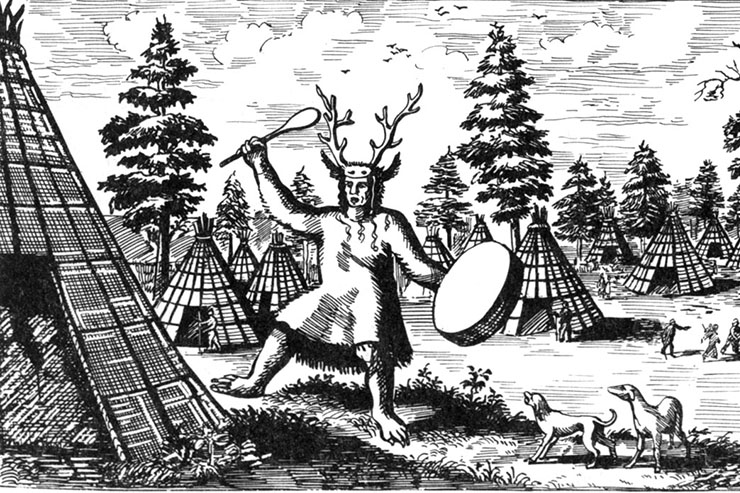
    In 1692 another Western explorer, Nicholas Witsen, described seeing a “shaman” or “priest of the Devil.” He was clad in ritual regalia, consisting of an antlered head-dress and a richly decorated robe, and chanted and beat on a drum to attract the spirits. Generally, reflecting the Catholic culture they came from, these Westerners regarded the shamans as fanatical “devil worshippers” who forced their ignorant and uneducated followers to serve evil spirits and demons.

    What is Siberian Shamanism?

    The meaning of the word ‘shaman’ is shrouded in linguistic mystery and various explanations have been put forward for its origin. One theory is that it is possibly derived from an ancient Chinese term for a Buddhist priest or monk. The Oxford English Dictionary defines its meaning as “a priest or witch-doctor [sic] of (a) class claiming to have sole contact with gods etc.” It says the word comes from the Russian “shaman” and is a translation of the Tungusion word “saman.” In Siberia and Mongolia, shamanism was known as Tengerism, meaning a reverence for sky spirits. It reflected an animistic belief system where everything in the natural world was alive, permeated by spirit force or, in simple terms, inhabited by spirits.

    These spirits had to be respected and appeased or else the land would become infertile and barren, the animals relied upon for food would disappear and eventually the world would come to an end. To achieve this essential and vital balance between humans, nature and the spirit world, a magical specialist was required and the shaman took that role. He or she acted as an intermediary or middle person between humanity and the Other, and a caretaker of cultural and magical tradition. Their job involved conducting blessings, especially on new-born babies, performing rituals of protection, divining the future, healing the sick, exorcising ghosts and demons, overseeing the burial of the dead, and generally communicating on behalf of the tribe with the spirit world and its denizens.

    Initiation into the shamanic cult could be achieved in several different ways. The easiest was the hereditary route where magical knowledge, power and skill were passed down from grandfather or father to son or, more rarely, from grandmother or mother to daughter. Sometimes children were chosen at a very early age or even at birth by the spirits and instructed by them through the medium of visions and dreams. Young people who suffered a serious illness or disease or from epileptic fits, were introverted and dreamy, or had any form of mental condition or disability, were regarded as natural shamans who had been specially chosen by the spirits.

    In later life those who felt a strong calling to become a magical practitioner would retreat from society, usually to a remote place in the wilderness, and undergo a vigil during which they invited the spirits to contact them and teach them the shamanic ways. When a person was actually taken on by another shaman as his assistant or sorcerer’s apprentice, a formal initiation rite was often carried out. The candidate offered an animal sacrifice, called on the spirits to aid them in their task, took an oath of loyalty to their shamanic master or spiritual clan, and accepted the special ritual regalia of a shaman’s office.

    Often these initiations by either another shaman or the spirits involved a traumatic visionary death and rebirth experience. Sometimes this included a journey to the underworld, meetings with deities and the would-be shaman’s body being dismembered and then put together again.

    The ritual regalia given to the new shaman reflected the fact that he or she was a special person who was separate and different from other members of the tribe. Siberian shamans wore robes made from animal hide and fur and decorated with embroidery, bird’s feathers, silk tassels, ribbons, bells, small mirrors, jewellery representing symbolic motifs such as the World Tree, and assorted metalwork such as copper discs. Headwear consisted of a conical or pointed cap made from felt or fur or the antlers of a reindeer. Some shamans wore iron-shod fur boots so when they stamped their feet they could drive away evil spirits.

    The majority of shamans carried a ritual drum similar in shape to the traditional Irish bodhran. These were made from an animal skin stretched over a wooden frame and decorated with feathers and magical symbols representing spirit journeys to the Otherworld or the shamanic cosmology. The drum was very important and represented the symbolic and magical steed that enabled the practitioner to travel from Middle Earth to the realm of the spirits. It was also a magical object in its own right that contained and focused spirit force or energy. By playing it the shaman could both attract spirits and exorcise them. In addition to the drum a magical staff was often carried. This was made of either wood or metal and was decorated with feathers, bells, ribbons and the pelts of small woodland animals.

    Different Types of Shaman

    Although Westerners used the generic term ‘shaman’ to describe all the tribal magical practitioners of Siberia and Mongolia, in practice they were divided into several different types, categories or classes with specific magical duties and responsibilities. Using English terminology, these included ‘conjurors’ who summoned and controlled spirits, prophets or psychics who foresaw the future, sorcerers who practised ‘black magic’, trance-workers who travelled in spirit form to the Otherworld, healers who were experts in folk medicine and herbalism, and guides to the dead who laid out corpses and conducted funeral rites.

    The shaman-healers were often female and they specialised in health matters connected with human and animal fertility, sexuality and children. They were recognisable by their distinctive skirts made from animal hide and brightly coloured woollen hats. Instead of the ritual drum used by the male shamans, they carried a silk fan and prayer beads. Unfortunately when Buddhism came to Siberia and Mongolia many of these female healers were ruthlessly persecuted and exterminated by the misogynist monks. As a result their extensive knowledge of herbs and plants used for natural healing was either lost completely or taken over by Buddhist healers and only practised in a debased or diluted form.

    Another female practitioner was the shaman-midwife, who inherited her power from the maternal line of familial descent. As well as ensuring that babies entered this world safely in a physical sense, she was also responsible for their spiritual protection from evil influences during birth and their well-being as children. In this sense she took on the role of a human fairy godmother. Immediately after a birth the shaman-midwife cut the umbilical cord and then purified the new-born baby with salt water and fire. Any (female only) witnesses to the birth could only be present if they had first been ritually purified by the midwife with fire and water. During the first few weeks of a baby’s life it was very important that the proper rituals were performed to protect the child until its spirit was fully established in the material world. If they were not performed properly then the baby’s spirit might return from whence it had come. These essential rites were the responsibility of the shaman-midwife and her assistants.

    Another type of shamanic healer was a bone-setter who called upon spirit guides to help them in their healing work. They mainly repaired broken and dislocated bones and torn ligaments, healed back pain caused by spinal injuries or disease and also skin infections such as boils, rashes, psoriasis and eczema. These gifts were inherited from the paternal side of the family and, because the bones of the human body were considered to be spiritually ‘masculine’ in nature, these shamanic bone-setters were always male.

    Most of the shamans worked with what modern New Agers call animal allies or spirit-helpers in animal form. These entities assisted them with their magical work and also taught them. For instance, the shaman-midwives described above worked with an animal spirit in the form of a mountain fox. The first bone-setter is supposed to have been taught his skills by a snake so that creature was sacred to the clan. Other shamanic practitioners were assisted by reindeer or wolves for attacking and destroying evil spirits, and ravens for getting rid of diseases. Other important animal spirit helpers included owls, wild ducks, geese, squirrels, bears, frogs and toads, dogs, seagulls and eagles.

    One of the most important and respected types of magical practitioners was the shaman-smith. In all cultures all over the world from Europe to Africa the smith took a central role in tribal society and was regarded as a powerful magician or sorcerer because of his mastery over fire and skill in working with metal. There are many legends about blacksmiths making pacts with demons, gods or the Devil or tricking and outwitting them to acquire their skills. There are also many smith gods in ancient mythology who were magicians, made weapons for the Gods or acted as cultural exemplars by inventing agricultural tools. In Siberia the shaman-smiths made and magically consecrated the ritual metal objects used by other shamans. They were only chosen by the spirits and instead of a drum they used their anvils to communicate with the spiritual realm.

    ‘Black’ & ‘White’ Shamans

    As well as the different types of magical practitioner, the shamans were also divided into two separate, but sometimes overlapping, categories – ‘black’ or ‘white’ shamans. The former were regarded as the most powerful of the two and were sometimes known as ‘warrior-shamans’ because they battled evil forces and were consulted as military advisors. They obtained their power from the north (possibly the North Pole or the North Star) and could be easily identified as they always wore black robes with very little, if any, decoration. The primary function of the black shaman was to deal with demons and the dark gods on behalf of their clients. In this role they were hired to curse their enemies and blight their crops and livestock.

    In wartime the black shamans attached themselves to the army rather like the modern padres and helped to win battles using their occult powers. In peacetime they took a more positive role as diplomats, political advisors and emissaries and they oversaw the preparation and signing of treaties with the appropriate magical rites. Black shamans were greatly feared, even after their deaths. In the 19th century when a famous one died she was placed in a coffin made from the ‘unclean’ wood of an aspen. Her corpse was then nailed down with aspen stakes so she could not become a ‘night walker’ and haunt the living.

    In contrast, the so-called ‘white’ shamans obtained their magical power from a westerly direction, the home of the benevolent deities and spirits. They operated at a tribal level almost exclusively as healers and diviners and they only had dealings with beneficent entities. It was their role to pacify angry or evil spirits, exorcise them if they possessed human beings and help the tribe live in harmony with their natural environment and the spirit world. To this end on a physical level they were often employed in an administrative role to oversee tribal affairs.

    The Yurt, the World Tree & Spirit Flight

    In Siberian and especially Mongolian shamanism the yurt, a traditional dwelling constructed from a framework of wooden poles covered with animal skins and with a central smoke-hole in the roof, was a microcosmic symbol or representation of the universe. For this reason all movement inside the yurt was conducted, if at all possible, in a deosil or sunways direction. This also reflected the traditional direction of movement used in shamanic rituals and dances. The centre of the yurt, where a fire burnt in a hearth and was seldom extinguished, was symbolic of the actual centre of the world or universe. The column of smoke that drifted up from the fire and left the yurt through the central smoke-hole in the roof was symbolic of the axis mundi – the World Mountain, World Pillar or World Tree. This links the underworld below with the heavens above and ends at the North and Pole Star around which all the other stars revolve in the night sky.

    The shamans believed in three worlds of existence connected together by the World Tree or Tree of Life. They were the lower world or underworld inhabited by the dead who are awaiting reincarnation, the middle world or Middle Earth, the material plane of existence in which human spirits are incarnated, and the upper world or Heaven, the dwelling place of the Gods. Numerous non-human spirits also inhabit each of these three worlds. The shaman can access these other worlds in trance by means of spirit travel. His soul body ascends the column of smoke from the fire and passes through the aperture in the roof of the yurt. It is interesting to note that in medieval times European witches were supposed to fly to their Sabbats by ascending the chimney on their broomsticks. It is obvious that this was not done physically so they also were practising a shamanic type of spirit flight.

    Shamans can also fly through the air when they spirit travel, either by shapeshifting into the form of birds (such as geese) or by riding on the back of a flying deer, horse or some other large animal. Again, there are many woodcuts dating from the Middle Ages depicting witches riding through the night sky on the backs of goats and rams. Sometimes the shaman visited the spirit world by ascending the World Tree itself or by travelling along a rainbow. This is another symbol that is found in Northern European paganism where a rainbow bridge connects Midgard (Middle Earth) with Asgard, the realm of the Gods.

    One of the methods used by the Siberian shamans to achieve trance and spirit travel was the hallucinogenic fungi amanita muscaria or fly agaric. This red capped white-spotted toadstool has a symbiotic relationship with both birch and fir trees, which grow profusely in northern and arctic climes. It is so closely associated with magical properties in myth and fairy tales that it is frequently depicted in illustrations to modern children’s stories about woodland elves, faeries and goblins. Fly agaric is reputed to be able to open up the ‘crack between the worlds’ and experiments in the 20th century by the two well-known ethonomycologists Gordon and Valentina Wasson revealed the ethenogenic qualities of this most famous of ‘sacred mushrooms’.

    In Siberia fly agaric was sometimes fed to reindeer and then the animal’s toxic urine is drank. The shamans said that taking it put them in touch with the spirit of the plant, who appeared as small mushrooms with eyes and arms and legs attached. Needless to say that in large quantities fly agaric is highly poisonous and can be deadly. It must, as with all hallucinogenic plants used in magical practice, be used in small quantities, treated with respect and only taken after the proper spiritual preparation and then only under expert supervision. It should also be noted that in many countries fly agaric and other psychedelic fungi are classified as dangerous drugs and the possession or partaking of them is illegal.

    In common with indigenous folk beliefs in the West, it was accepted in shamanism that the spirit world was not entirely separated from the material one. There are special places in the natural environment – sacra loci – where the two realms meet and touch and interconnect. These can be a sacred mountain or hill, a stone, a river, a lake, a forest or any natural landmark in the countryside. While the shaman may be able to access such ‘gateways’ or ‘portals’ between here and there easily, lesser mortals may be unaware of them or, if they are sensitive, they may feel they are ‘different’ or ‘other’. Spooky places, whether natural sites in the landscape or buildings, associated with folklore, paranormal phenomena and hauntings are usually spirit gateways.

    In shamanistic belief all inanimate objects were inhabited or possessed by spirit energy or force who controlled their environs. Some shamans taught that living beings, especially human ones, could have more than one spirit inhabiting their physical body. Many accepted that humans had an etheric, astral or spirit double and this could be projected in trance or spirit travel to roam over the Earth and also enter the Otherworld. The shamans believed that the soul of a human being resided in a spherical or ovoid energy field that surrounds each of us. It is probably what Western occultists would refer to as the auric field or aura. It was this energy field that was attacked by demons or black shamans when they psychically attacked their victims and in that way they could cause illness or death. It was the task of the white shaman to redress the balance by healing the damaged aura and if possible bring the victim back to full health.

    Earlier we saw how animals were important clan totems and spirit guides to the shaman. Before the 20th century and the rise of industrial scale food production, hunting was widespread on the Siberian steppes and in the forests. Unlike Christian belief, it was accepted without question that animals had souls and when hunting them down and killing them it was essential that their sprits were respected and appeased. If they were not, disaster and misfortune could befall the hunter, his family and tribe. When a hunter killed his prey it was always despatched quickly, cleanly and without cruelty. Before it was killed the hunter apologised for having to do so and after death its remains were treated with care and respect. The same rule applied to domestic animals. A master animal spirit ruled each species and prayers and sacrificial offerings of incense and fire were made to them before the hunt began. Hunting purely for pleasure, as practised in the West, was an unknown concept.

    Buddhism & the Stamping Out of Shamanism

    Despite the early arrival of the fur traders and merchants in Siberia and Mongolia, shamanism survived. In the 16th century, however, a Mongolian ruler called Altan Khan invited a Tibetan Buddhist mission to the country. His motives were political as he wanted to consolidate his own position as the supreme tribal leader by claiming to be the reincarnation of the great Kubla Khan. The Buddhists agreed to recognise his claim and in return the Khan gave the head of the Buddhist Order the spiritual title of Dalai Lama, which of course exists today even though the present holder is in exile in India. As a result of the Khan’s one conversion, he passed laws banning shamanic rituals and granted the Buddhist priesthood a special status in society and privileges that were not granted to the shamans.

    In the 17th century attempts were made by the Mongolian rulers to eradicate shamanic survival entirely. The black shaman brotherhood refused to submit to the new religion and many were killed. Some of the white shamans came to an accommodation with it. This led to the creation of a third way called ‘yellow shamanism’ that submitted to the control of the lamas and combined shamanic beliefs and practices with Tibetan Buddhism.

    During the 18th century in Siberia, Buddhist, Orthodox Christian and Muslim missionaries attempted to convert the native population and opposed the practice of all rival religions. Considering their modern peaceful and pacifist image, the Buddhist monks were the most severe in this respect and they hunted down shamans, beat them and destroyed their sacred sites, replacing them with their own image-filled shrines. The Russian Orthodox Church also forced the pagan tribes to accept baptism at the point of a sword and they flogged or imprisoned anyone who dared to practice shamanic rites such as divination and animal sacrifice.

    Despite this religious persecution, shamanism survived the forced conversions and it continued underground in remote rural areas. Sometimes shamanic elements were incorporated into an unorthodox form of folk Christianity that flourished despite the censure of the priests. This movement produced hybrid sects who coincided their sacrifices with Church festivals and made offerings to saints. Some shamans accepted the patron saints of Russia, SS George and Michael, as their deities. St Michael was even given the honorary title of ‘Master of the Shamans’ and blood sacrifices were made to his icons.

    After the Bolshevik Revolution in 1917, shamanism had a brief revival as the power and influence of the Orthodox Russian Church and Buddhism in Siberia faded away. However, with the beginning of the bloody Stalinist regime in the 1920s, the new policy of agricultural collectivism caused drastic changes in Siberian society. The Soviet communists regarded the shamans as an example of primitive superstition and social inequality and they were condemned as enemies of the state. There are horrific stories of KGB agents throwing shamans out of helicopters to prove to their followers that they could not fly and also randomly executing them by firing squad. In 1980 the central government in Moscow claimed that shamanism was extinct in Siberia.

    When Professor Ronald Hutton of Bristol University visited Siberia in the early 1980s he was told by experts in the field that there were no more shamans alive and shamanism had died out. At the time he accepted this, but later he came to believe that a number of former shamans had managed to survive the pograms. With the collapse of Soviet communism in the later 1980s and early 1990s there was a revival of traditional culture among the ethnic peoples of the former USSR. Professor Hutton has described an encounter by some British musicians visiting Siberia in 1997 with a person who claimed to be a hereditary shaman. He said he had inherited his powers and knowledge from his grandfather, who had been a blacksmith, and he used his skills for healing and exorcising evil spirits.

    Tengrism

    In the 1990s a neo-shamanic movement known as Tengrism arose in Central Asia and the new Russian Federation. It quickly organised itself and now claims a rather inflated membership of 500,000. One of its prominent leaders is a Kyrgyzstan Member of Parliament called Dastan Sarygulov, who also runs an international scientific centre for Tengrist studies. Its members have a political agenda and attempt to spread their beliefs and ideology in government circles. Apparently they have had some success as a former Kyrgyz president and the present President of Kazakhstan have both declared that Tengrism is the natural and national religion of the Turkic population.

    Unlike the shamanism of former times, Tengrism is a monotheistic form of religion with a cosmology that is suitable for the modern world. It is firmly based on trendy ‘green’ or environmental concerns and believes that humanity should live in harmony with the natural world. Forgetting or ignoring the persecution of the past, it also preaches tolerance towards other religions and seeks to co-exist with them in the spirit of interfaith. Strangely it is also a religion without dogma, prayers or a priesthood. The American academic Marlene Larvelle, who has studied Tengrism, claims that it has been influenced by the atheism of the Soviet years and contemporary ideas about modernity. Its political agenda calls for a recognition of Turkic national ideals and the ultimate unification of all Turkic-speaking peoples.

    The revival of shamanism in its modern Tengrist form would seem to hearken back to a romantic past that probably never existed in reality. Its increasing popularity among urban Russians is based on an idyllic image of yurts on the steppes, a nomadic lifestyle and living in harmony with nature. This is in direct contrast to the struggle of daily existence in a modern neo-capitalist and corrupt society governed by autocratic rulers.

    An inner desire to reconnect with the natural world and follow spiritual values in a technocratic consumer society, a romantic view of the past and an urge to ‘save the planet’ is also the driving force behind so-called ‘urban shamanism’ in the West. However, the Siberian shaman and his Mongolian counterpart were not so much interested in preserving the environment than surviving day by day appeasing the spirits they believed inhabited it. In that sense the shamanism of the past was an essential part of daily life.

    [alert type=”general” dismiss=”no”]This article was published in New Dawn 110.[/alert]

    [alert type=”success” dismiss=”no”]If you appreciate this article, please consider subscribing to help maintain this website.[/alert]

    Select Bibliography

    Dr. Mircea Eliade, Shamanism: Archaic Techniques of Ecstasy (Princetown University Press, USA, 1972)

    Professor Ronald Hutton, Siberian Shamanism and the Western Imagination (Hambledon and London, UK, 2001)

    Terence McKenna, Food of the Gods: A Radical History of Plants, Drugs and Human Evolution (Bantam Press, USA 1992)

    Marlene Laurelle, ‘Tengrism: In Search of Central Asia’s Spiritual Roots’ in Central Asia-Caucasus Institute Analyst, www.cacianalyst.org/?q=node/3837 (22 March 2008), and www.tengerism.org.

    © New Dawn Magazine and the respective author.
    For our reproduction notice, click here.
  • Credo Mutwa & the Alien Agenda: UFOs & Alien Abduction in the Eyes of a Zulu Shaman

    Credo Mutwa & the Alien Agenda: UFOs & Alien Abduction in the Eyes of a Zulu Shaman

    From New Dawn 111 (Nov-Dec 2008)

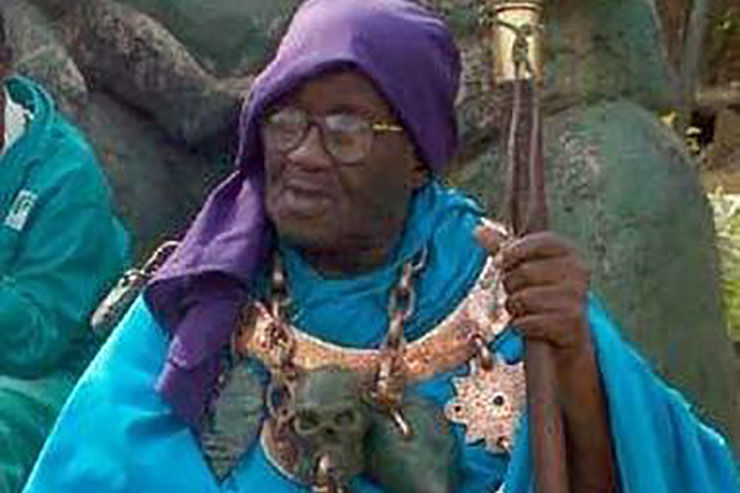
    The Zulu sangoma (a shaman or healer) and high sanusi (clairvoyant and lore-master) Vusamazulu Credo Mutwa (Editor’s note: Credo Mutwa passed away in 2020) is recognised by many as one of the most distinguished African traditional healers. He is, in fact, the spiritual leader of the sanusis and sangomas of South Africa.

    As well as being a successful artist, author and historian, Mutwa is also an outspoken victim of alien abduction, having allegedly been in contact by entities his people call the mantindane (‘the tormentors’), which are similar in nature to what we in the English speaking world call ‘the grays’. Stories of UFOs and alien beings make up a big part of African tribal culture, he says.

    Awakener of the Zulus

    Mutwa was born on July 21, 1921 in the South African province of Natal. The name Vusamazulu means ‘awakener of the Zulus’, and was appointed to Mutwa during his initiation as a sangoma. Mutwa means ‘little bush man’, and Credo means ‘I believe’. Born out of wedlock, Mutwa was considered “an illegitimate child, a child of shame.” Because his mother, who was descended from a long line of medicine men and women, refused to convert to Christianity, Mutwa’s parents separated shortly after his birth. Thus he was primarily raised by his Roman Catholic father, who frequently travelled from place to place, working as a builder.

    Mutwa claims that much of the knowledge he now possesses – of art, science, medicine, engineering and so on – can be attributed to the fact that, when he was child, he was taught by “strange companions.” These “little people,” he says, some of whom were blue in colour, used to make their presence known to other children as well. In fact, “all African children used to see such things.” Thanks to the help of these beings, he says, he was often more knowledgeable than some of his teachers at school.

    When, in 1937, Mutwa was brutally raped by a gang of mineworkers outside a mine compound, he experienced “a great shock and trauma,” remaining ill for a very long time. He developed a feverish condition, accompanied by nightmares and visions, which caused great pain and debilitation, and which, he says, almost killed him. It also caused him to become highly psychic, and he was sometimes able to read the minds of those around him, as well as perceive auras. The treatment he received from European doctors and Christian faith healers didn’t help at all.

    Shortly afterwards, Mutwa was brought to his mother’s village in Zululand, where his grandfather, Ziko Shezi, a sangoma and warrior – “whom my father despised as a heathen and a demon worshipper” – brought him back to health using traditional African methods. Mutwa was told by his grandfather that the illness he had undergone “had actually been a sacred illness which required that I had to become a shaman, a healer.” Mutwa agreed, and, having renounced Christianity, was initiated into the shamanic path by his aunt Myrna, a fully fledged sangoma. Mutwa’s ‘spiritual sickness’ had been part of the initiatory process of becoming a shaman, and is a common aspect of shamanic traditions all over the world.

    Sadly, when his father and stepmother learned that he had become a ‘heathen’, they immediately disowned him, telling him “never to set foot in their home again.” Virtually alone and homeless, Mutwa began to travel “for knowledge, in search of clarity of mind and in search of the truth about my people.” He journeyed all over the country, meeting, and studying under, a number of traditional healers. His first destination was Swaziland. He then made his way to Mozambique, and later, Rhodesia (now called Zimbabwe). At the end of this not only physical, but spiritual, journey, he realised his life’s purpose – to help preserve the culture of his people, and to help mend the problems in his country, of drugs, unemployment, crime, disease and poverty. Mutwa’s first book, Indaba, My Children: African Folk Tales, was published in 1964, and is considered a classic. His other works include: Africa Is My Witness (1966), My People (1971), Let Not My Country Die (1986), and Zulu Shaman: Dreams, Prophecies, and Mysteries (1996).

    Very much a cosmic thinker, Mutwa claims that many of humanity’s difficulties can be explained by the negative influence of manipulative extraterrestrial beings, particularly the mantindane, who “share the Earth with us. They need us. They use us. They harvest things from us.” It’s about time, he says, that we acknowledged the alien presence on this planet. “We are being watched, we are being explored and investigated, and we are being controlled, and yet there are those among us who refuse to accept this fact,” he explains in Zulu Shaman.

    A World Ruled by Aliens

    The late, great John E. Mack is among one of the first UFO researchers in the West to interview Mutwa. He has also been interviewed by the Australian UFO researcher Bill Chalker, the author and historian Zecharia Sitchin, as well as the controversial conspiracy theorist David Icke, who once called him “the most amazing and knowledgeable man it has been my privilege and honour to call a friend, a genius.” Supposedly, many of Icke’s speculations about ‘shape-shifting reptilian aliens’ – whom he believes to be the true rulers of this earth – have been confirmed by Mutwa. According to Mutwa, when he talks about extraterrestrials and other topics of this nature he often feels “caught between, on the one hand, Western thought, including the Christian religion, and African thought, which accepts these things without question.”

    Mack first met Mutwa in 1994, during a short trip to South Africa, the main purpose of which was to investigate the Ariel School incident in Zimbabwe. “Credo seemed a noble, even regal figure with his colourful robes and heavy metal adornments of the sangoma, which seemed as if they ought to weigh him down,” writes Mack in Passport to the Cosmos. During the interview, Mutwa spoke a great deal about his traumatic alien abduction experiences – experiences that Mack, a world-renowned expert on the subject, found difficult not to take seriously.

    Mutwa views the world as a mysterious and frightening place, controlled by alien forces that possess far more knowledge than – and are intellectually and technologically superior to – humanity. Some of these beings, he says, are wise, benevolent and wish to help us. But the same cannot be said of the mantindane, who are just as selfish and power-hungry as humans. They preserve humanity, he says, in order to protect their own self-interests, because they are “obsessed with self-preservation… This wish to play God over lesser beings is with us and with them. Throughout the cosmos vice is the same.”

    Some of these beings, says Mutwa, have covertly and profoundly influenced all human cultures and civilisations for millennia. They have aided our evolution and helped us survive by providing us with knowledge – of science, farming, medicine and so on. “Throughout Africa we are told that these mysterious beings taught human beings many things,” writes Mutwa. “They taught human beings how to have laws, knowledge of herbal medicine, knowledge of arts and knowledge of the mysteries of creation and the cosmos as a whole.”

    Some of them – the mantindane in particular – are “part of the Earth,” and should not be considered foreign. “We and the mantindane are one and the same stupid race,” says Mutwa. “Far from these creatures being aliens, they are our future descendants. I am sure of this.” Out of all the different types of alien beings that have been in contact with humanity, the mantindane are apparently the most important to Africans, who fear them greatly. Mutwa described these entities to Mack as troublesome and “parasitic,” claiming that they “instil superstition, sow discord, and may even cause disease.”

    A Difficult Life

    Given the fact that he has led such a difficult life, it is perhaps not surprising that Mutwa’s world view is less than optimistic. Over the years, he’s been a victim of violence on a number of occasions, and has lost many loved ones. In 1960, his fiancée was shot dead when South African police open fired on a crowd of people to which she belonged. In addition, his first-born son was knifed to death by a group of black activists, “murdering people under the banner of the mass democratic movement.”

    During the Soweto riots of June 16, 1976, Mutwa was attacked by a group of thugs who stabbed him repeatedly. “I could feel the knives going into my body,” he says. “The thing that always helps me happened then. I split into two, and so I escaped the pain.” Looking down, he saw his own body, a “bloodied mess that looked like me.” He was apparently pronounced clinically dead. On another occasion, Mutwa was almost burnt alive when a group of thugs doused him in gasoline. In Africa it’s widely believed that when a person is killed in this manner, their soul is destroyed along with their body, preventing them from reincarnating. Mutwa remembers this incident as one of the few times in his life when he felt genuinely terrified.

    Unbelievably traumatic though these experiences must have been, nothing compares to Mutwa’s 1958 alien abduction episode – assuming it actually took place, of course. The incident has been detailed in a number of books, including Passport to the Cosmos, Bill Chalker’s Hair of the Alien (2005), and Mutwa’s semi-autobiographical Zulu Shaman (also known under the title Song of the Stars).

    Caught by the God of the Mountains

    It all started in the bush, in the sacred Inyangani Mountains of Rhodesia, while Mutwa, at the time a sangoma apprentice, was busy searching for a particular type of herb, which he planned to use as medicine. All of a sudden the temperature dropped, says Mutwa, even though it was a very hot day. He was then engulfed by a bright blue mist, which, he says, “was swirling all around me, getting between me and the eastern landscape.” A moment later, he found himself in what looked like a mining tunnel lined with silver-greyish metal.

    The next thing he knew, he was lying on a table of some sort. His boots and trousers were missing. He was approached by a group of grey-skinned creatures, with “very large heads, very thin arms, and very thin legs.” He wanted to flee, but could not move, as his arms and legs were paralysed. “I just lay there like a goat on a sacrificial altar.” On closer inspection, he noticed that the creatures were short, “about the size of African Pigmy.” They looked, he says, identical in appearance to the ‘gray aliens’ (or grays) commonly reported by abductees in America and other Western countries.

    Mutwa noticed that what appeared to be the creatures’ eyes were actually black, goggle-like covers. Their ‘real’ eyes were “round, with straight pupils, like those of a cat.” At least one of the creatures – the one closest to him – had a potent and very unpleasant odour, “a throat-tightening chemical smell, which smelled like rotten eggs, and also like hot copper [sulphur].” Mutwa was then subjected to some kind of operation on his left thigh, which caused him to scream out in agony. An abundance of blood flowed from the wound. Next, one of the creatures stuck a silver, pen-like object up his right nasal passage; then yanked it out. “The pain,” he says, “was out of this world.”

    The pain subsided, however, when one of the creatures – who was bigger and taller than the others, and who possessed an air of authority – placed its hand on Mutwa’s forehead. Mutwa could ‘sense’ that the creature was female, despite the fact that ‘she’ lacked breasts and other feminine characteristics. Staring at Mutwa intently, it projected visions of destruction into his mind. He saw cities being destroyed by floods, fires and other natural disasters.

    One of the creatures pushed a small, black tubular instrument into Mutwa’s penis. As soon as the instrument was withdrawn, Mutwa’s bladder opened, and he urinated straight into the creature’s chest. It then “staggered away like a drunken insect, and left the room.” A moment later, two other creatures entered the room, one of whom appeared to be a large, metallic robot. Its eyes were bright, seemed to move, and seemed to change colour. The other creature, which was naked, had pink skin, blue eyes, high cheek-bones and looked almost human, yet its body was swollen and strangely out of proportion. Something about it reminded Mutwa of a doll, for it looked and felt “totally unnatural.”

    The creature mounted Mutwa “like a crazy Zulu girl,” and proceeded to have sex with him. But the experience was not at all pleasant – much the opposite, in fact. The creature’s body was cold, bony and lifeless, and Mutwa felt as if he were making love to a machine. To make matters worse, it attached something to his penis that made him ejaculate “too much.” It then left the room, leaving Mutwa alone with the tall, female creature. His penis “was burning as if I had put it in scalding water.”

    Gripping him violently by the head, the creature forced Mutwa off the table he was laying on, and he fell to the floor, landing on his hands and knees. He was then led roughly from room to room. One of the things that most captured his interest, and which, he says, is still “haunting my dreams,” was a collection of huge cylindrical objects, filled with greyish-pink liquid. They contained “small editions of the alien creatures floating round and round, like disgusting little frogs.”

    Mutwa witnessed other human beings being “tortured” by the aliens, one of whom was a white man, “smelling of sweat, urine, excrement and fear.” As Mutwa walked past him, they looked deeply into each others eyes. Incredibly, Mutwa claims to have run into this very same man about two years later, while delivering parcels in the city of Johannesburg. He was working at a curio shop at the time. The man asked Mutwa where he had seen him before, to which he replied, “in Rhodesia, in a certain place underground.” As though the realisation was too much to bear, the man turned away and walked off quickly down the street.

    The next thing he knew, Mutwa was once again in the bush. His mind was hazy, and it took him a moment to realise that something terribly wrong had occurred. He felt a pain in his left thigh, as well as his penis, which was starting to swell. He noticed, moreover, that his shorts and trousers were torn, and that his boots were missing. Clinging to his body was the god-awful stench of the place he had been earlier. Coating his skin was a fine, grey powder. He began to stagger home, making his way along a bush track.

    Mutwa eventually encountered a group of locals, who guided him back to the village, where his teacher, Mrs. Zamoya, informed him that he had been missing for three days. She believed his story straight away. She told him that he had been “caught by the God of the mountains,” and that many other people had similar experiences. He was lucky to have returned alive, she said, “because many people have disappeared in that part of the land, never to be seen again…”

    While staying in the village to recover, Mutwa was bathed every day, so as to wash away the tiny droplets of blood that continued to ooze from the pores of his itchy skin. He found a scoop mark on his left thigh, about a half-inch in diameter, which remains there to this day. Most unpleasant of all, however, skin started to peel off his penis. It also developed sores. This condition did not go away completely, he says, which is one of the reasons his first wife left him. Mutwa was eventually taken to Mrs. Zamoya’s ‘Solace Mission’ in western Rhodesia, where it took him several months to make a full recovery.

    The ‘Sky Gods’

    It would appear that the alien abduction phenomenon is alive and well in Mutwa’s homeland, just as it is in many Western countries, for he claims to have met numerous abductees like himself. During his long career as a sangoma, Mutwa has been approached by countless African women who insist that they have been impregnated by the mantindane and other alien beings. In each case, the pregnancy has mysteriously terminated, as though the foetus has been stolen. Because, says Mutwa, many of these women have been accused of committing abortion – which, in Africa, is regarded as an act “worse than murder” – it has been his job to “convince the family of the woman’s innocence, to try and heal the terrible spiritual and mental – as well as physical – trauma that the woman has undergone.”

    According to Mack in Passport to the Cosmos, many African tribes believe that the mantindane and other alien beings harvest sperm and ova from unsuspecting human victims. The Masai warriors, for instance, fear that the mantindane are able to drain a man’s semen, which is why they go into battle wearing codpieces to protect their genitals, whereas the women of the tribe wear certain ornaments to protect themselves from being sexually molested by these entities.

    “Once a mantindane has dealt with you,” says Mutwa, “you become afraid of making love to a woman…These beings scar you for the rest of your life.” Flawed though the mantindane may be, Mutwa points out that they are “part of us, part of our lives,” and that “they are moved by a desperate need.” Mutwa calls the mantindane “solvers of great problems.” Their technology, he says, may be “several million years ahead of ours.”

    Whether or not one accepts Mutwa’s claim that the mantindane and other alien beings are sexually compatible with human beings – or that such entities actually exist – it cannot be denied that these matters are a very big part of African tribal culture. The “sky people,” or “sky gods,” says Mutwa, have visited Earth for thousands of years, arriving from the heavens in “magic sky boats.” The Pygmies, the Kalahari Bushmen, the Ovahimba of Namibia, the tribes people of Zaire, and of course the Zulus – all of them accept the existence of extraterrestrials, and even believe that humanity is descended from such beings.

    The stars are revered by Mutwa’s people, who consider them more important than even the sun or the moon. The word ‘Zulu’, in fact, means ‘people from the stars’. It is from the stars that much knowledge and wisdom has originated, they say. The people of Botswana, explains Mack, “call a star naledi, which means ‘light of the spirit’, and have carved in wood, painted on rocks, or even scratched on metal ‘the so-called UFOs,’ the ‘magic vehicles’ in which the mantindane and the star gods of the various tribes travelled.”

    In addition to the somewhat sinister and repulsive mantindane, Mutwa speaks of another significant alien race – one that UFO enthusiasts and conspiracy theorists in the West call ‘the reptilians’. “Some say that these creatures were like crocodiles, with crocodile like teeth and jaws, but with very large round heads,” he says. Anyone who’s read Robert Temple’s impressive and scholarly The Sirius Mystery (1976) would be familiar with the enigma surrounding the Dogon people of Mali, west Africa, who possess advanced astronomical knowledge of the Sirius star system, and who claim that they gained this knowledge, many thousands of years ago, from the Nommo, a race of advanced reptilian or amphibian beings who hail from Sirius (more specifically, Sirius A). Throughout Africa, says Mutwa, these mysterious, reptilian gods are known by other names as well. “In West Africa, in the land of the Bumbara people, these amphibian or reptilian sky gods are known as Zishwezi… In West Africa again, these creatures are called the Asa, which means the mighty ones of magic…”

    Fact or Fiction?

    What, then, are we to make of Mutwa’s claims? Was he really abducted by alien beings? Or was his story a fabrication – either completely or partially? And what about his people’s beliefs that we are “descendants from gods who came out of the skies thousands of years ago,” and that these beings “share the earth with us,” and exploit us? Should this information be interpreted literally?

    According to Mack and Chalker, both of whom looked deeply into Mutwa’s story, these questions are difficult to answer with a simple yes or no. The truth may lie somewhere in the middle, they say. In Passport to the Cosmos, Mack points out that Mutwa and other indigenous people with whom he has discussed the UFO phenomenon and other related matters, do “not sharply distinguish material or literal reality from mythic truths.” He adds, moreover, that certain ideas of Mutwa’s, “like the dominant role of the mantindane and other extraterrestrial or star beings in human cultural history, seem related to tribal myth and legend.” Chalker is of much the same opinion as Mack. “‘Oral material’ like Credo’s is very difficult to judge,” he says.

    Given the kind of life he’s lead, it’s a miracle that Mutwa is still alive to this day. Now eighty-six or thereabouts and suffering from diabetes and asthma, his health is continuing to worsen at a rapid rate, and it’s fair to assume that he probably won’t be alive for very much longer. He claims that the ‘alien knowledge’ he has divulged in recent years, which he once pledged never to reveal, was supposed to be reserved for initiate sangomas like himself only. He decided to ‘break ranks’ and ‘reveal all’, however, because he lacks a successor onto whom he can pass his unique and sacred knowledge – knowledge he has earned during a lifetime of initiations. Plus, he insists, this information is too important to be withheld from humanity, and is needed in this time of great global crisis.

    This article was originally published, in a substantially different form, in the May 2008 issue of FATE (vol. 61, no.5, issue 697), under the title ‘Vusamazulu Credo Mutwa and the Alien Agenda’.

    [alert type=”general” dismiss=”no”]This article was published in New Dawn 111.[/alert]

    [alert type=”success” dismiss=”no”]If you appreciate this article, please consider subscribing to help maintain this website.[/alert]

    References:

    About Credo Mutwa, Credo Mutwa on Alien Abduction and Reptilians, www.bibliotecapleyades.net/esp_credo_mutwa03.htm

    About Credo Mutwa, Credo Mutwa – Biography, www.bibliotecapleyades.net/esp_credo_mutwa04.htm

    Bill Chalker, Hair of the Alien: DNA and Other Forensic Evidence of Alien Abduction, Paraview Pocket Books, USA, 2005

    Nancy Connor and Bradford Keeney, Shamans of the World: Extraordinary First-Person Accounts of Healings, Mysteries, and Miracles, Sounds True, Inc., USA, 2008

    David Icke, Children of the Matrix: How an Interdimensional Race has Controlled the world for Thousands of Years – and Still Does, Bridge of Love Publications, USA, 2001

    John E. Mack, Passport to the Cosmos, Crown Publishers, USA, 1999

    John E. Mack, Abduction: Human Encounters with Aliens, Simon & Schuster, UK, 1994

    Vusamazulu Credo Mutwa, Zulu Shaman: Dreams, Prophecies, and Mysteries, Destiny Books, USA, 1996

    © New Dawn Magazine and the respective author.
    For our reproduction notice, click here.
  • Magic & Mysticism in Java

    Magic & Mysticism in Java

    From New Dawn Special Issue 5 (May 2008)

    The death of ex-President Soeharto of Indonesia at the age of 86 [in 2008]  reminded me that I was present in Jakarta in 1967 during the bloodbath in which the Communist Party was decimated and General Soeharto rose to political power, along with the minority modernist Muslim party that supported him.

    At that time Indonesia was only nominally Muslim: under the charismatic President Soekarno it was animistic, feudal, steeped in an other-worldly mysticism, and was infested with starving beggars, superstition and black magic practices. General Soeharto, of humble village origin, had risen high in the military apparatus and married into a family of the minor nobility in Solo. His marriage gave his political aspirations legitimacy in the eyes of Indonesians, who believed in the ancient tradition that links royal status to the right to rule.

    The General was well known to have a close affiliation with a Javanese magico-mystical school believed to give him great occult powers, yet from the time of his ascension to the presidency he appeared, unlike ex-President Soekarno, to deny the affiliation, at least publicly. The new pro-Western president donned the Islamist black pitje and publicly espoused and supported the political arm of orthodox Islam, which in the main was vehemently opposed to any and all occult practices. It proved to be the best thing that could have happened to the country.

    Whatever President Soeharto’s questionable legacy in other areas, in this respect he dragged Indonesia from the dreaming Middle Ages into the modern world. Today, Indonesia is officially a member of the great Muslim international fraternity, and Islam’s austere religious mores have increasingly infiltrated the national culture, modifying its more primitive animistic traits and greatly strengthening its influence in Asia-Pacific politics.

    Nevertheless, Pak Soeharto retained to the end of his life his private allegiance to Javanese mysticism. Doctors who attended him in the last weeks of his illness, during which he rallied more than once from heart, lungs and kidney failure, said they were amazed and baffled by his recuperative powers. It was commonly believed, however, that the power of spirits and the implantation of many lucky charms inside his body was the factor keeping him alive. Indeed, those who were close to Soeharto in his home town of Solo, the heartland of the Javanese culture, have attributed his resistance to death to his devotion to the powerful occult forces that resided in him throughout his life.

    According to a recent article in the New York Times, all six presidents of Indonesia “paid respects to the spirit world, visiting sites said to hold mystical powers, consulting with seers and collecting tokens of magic like the Indonesian dagger called a kris.”1 Among these leaders, Soeharto was outstanding as a devotee of the occult. He studied as a boy with a spiritual teacher and performed ritual acts throughout his presidency, continuing to do so even after a popular uprising deposed him in May 1998.

    According to his aides, over the years he made frequent visits to sacred places, including mountains, caves, tombs and ruins, and took ritual baths in oceans and rivers sacred to Nyai Loro Kidul, the mighty Queen of the South Seas. He also collected hundreds of sacred objects in order to absorb their magical power.

    The Javanese Science

    Despite the ascendancy of modernist Islam throughout the nation, Soeharto’s private loyalty to Java’s spiritual past is mirrored in Javanese society in general, though its allegiance now tends to run underground in the face of Islamic disapproval, especially that of the strict Wahhabi sect, which over the years has become extremely influential. To the outsider today all Indonesians are strict Muslims, but under the pitje or the headscarf there is likely to be concealed a mystic of quite a different stripe. The people of the island of Java in particular are very proud of their indigenous pre-Islamic spiritual tradition, which they refer to as the Javanese Science, and while few may actually practice it now in its pure occult form, most have a proprietorial understanding of at least some of its sacred principles. They are evasive about discussing this hidden dimension of their society, especially with Western foreigners, but one would be mistaken in not taking the Science very seriously indeed as the essence of the Javanese culture even to the present day.

    The Javanese Science is a syncretic blend of Hindu-Buddhist, Sufi, Taoist and ancient animist strands, and evolved in the royal courts of Solo and nearby Jogjakarta in Central Java as a system of self-transformation confined solely to the aristocracy. But since the Revolution that ejected the Dutch rulers from the country after the Second World War, the Science emerged into the popular culture in the form of hundreds of kebatinan (or inner-being) sects, each one of which celebrates some aspect of the royal mother tradition. These esoteric sects have drawn a very large minority of the Indonesian population into their sphere, forming an immensely creative and diverse subculture at the leading edge of national life, very much as happened in Japan after the Second World War.

    The Kebatinan movement has in many respects evolved into an inherently new form of mysticism. Syncretism raised to a religious principle is its dominant keynote, a drive towards pluralistic unity that echoes a prominent feature of the New Age spirituality appearing elsewhere in the world. But the Javanese approach to the universe and the human situation generally, though at its best of a high metaphysical order, is in many respects quite different from that of the West. It doesn’t involve religious theories and dogmas so much as a science of inner energies perceived directly with a highly sensitised intuition – one might say, clairvoyantly – and manipulated directly by the will.

    This shamanistic approach can lend a disconcerting ambiguity to those moral categories that the Western mind likes to regard as eternally fixed: Justice, Compassion, Truth, Altruism, Duty and so on. To the Javanese, mystic things in the moral sphere are not good or bad according to what we in the West would regard as an ethical judgment, but according to whether the personal energies concerned balance out in a manner beneficial to the whole. Do they bring harmony to the individual, do they stabilise him or her? For the Science all is dynamic, all is in ever-transformative and purposive flux: good is what works in the present moment to the spiritual benefit of the whole; bad is what fails to do so. This stance contributes a relativistic and unpredictable note to the Javanese outlook that Western diplomats and others have famously found difficult to deal with, yet its creative power is undeniable.

    Javanese adepts with access to this underlying realm of subtle forces are reputed to have diagnostic powers and techniques of psychic healing of extraordinary efficacy, and are believed to understand the dynamics of spiritual physiology better than any other race on earth. The Javanese Science has much in common with other shamanistic Eastern paths such as have been found in Tibet and Japan, where syncretism has similarly been raised almost to a spiritual principle. These too have dealt in patterns of shifting subtle energies rather than fixed doctrinal systems. But there is something different and mysterious about the Javanese Science, a depth, a quality of purity that most researchers are agreed sets it apart from any other form of mysticism. What makes it unique?

    The Invisible People

    In a visit to Indonesia some years later, I was able to put this question to Pak Joyo, at one time the Director of a Christian Theological College in Central Java and the pastor of one of the largest charismatic Lutheran churches in the Reformed Dutch Church of Indonesia. Pak Joyo was a fourth-generation Christian whose great-grandfather was converted to Christianity at the point of his Sultan’s kris (the Sultan himself having been similarly converted by Dutch missionaries), and Pak Joyo followed in his family’s footsteps in deciding to train for the ministry. But halfway through his theological training, he decided to quit the church and give all his allegiance to a contemporary mystical sect called Hardopusoro which interested him a great deal more.

    However, he told me that in a vision Christ asked him to remain in the church, where he could be more useful than anywhere else; and after an internal struggle he obeyed. Pak Joyo went on to become a multilingual international emissary for Christian ecumenicalism – but, with the blessing of his bishop, privately continued in Hardopusoro, in which he became a high initiate. Such dual religious allegiances are entirely natural to the Indonesian temperament.

    Pak Joyo’s answer to my question surprised me. The source of his country’s spirituality, he said, was not familiar to other races. It was unique because it stemmed from the Invisible People, the Badui, who grew no bigger than a ten-year-old child and who lived in an inaccessible part of the mountainous jungle in South Bantam, about a hundred miles west of Jakarta. The Badui were “closer to the soul” than other people, said Pak Joyo, and were the X factor in the background of the Javanese Science. Invisibly they had instructed the Javanese people for nearly three thousand years, helping to guide them from their original primitive state to their present civilisation.

    The Badui were not Indonesian and had no part in the country’s laws or economy, but lived apart in forest territory forbidden to outsiders and had great spiritual knowledge and strange magical powers. Although rarely seen by outsiders, they were held in awe in the marketplaces throughout Indonesia. When Indonesian spiritual and political leaders needed advice, said Pak Joyo, even the most illustrious of them went into the jungle alone to consult the Badui seers, for the understanding of the Invisible People on spiritual matters was a universal one that embodied a primordial tradition beyond factions or institutions.

    President Soeharto would undoubtedly have been one of those top leaders who was not too proud to seek enlightenment, possibly of a political as well as a spiritual kind, from these strange priestly people of the jungle. Leaving behind his aides, bodyguard and driver, he would have had to ascend alone the jungle forest track that led to the Badui colony, there to consult with its leading prophets.

    Inexplicably, although remote from the teeming civilisation surrounding them, the Badui knew everything that happened in it long before the news was heard on television. They had prophesied the Second World War and that the Dutch would leave the country soon after peace was declared. They knew the destiny of peoples worldwide. The Badui, it was said, planted sacred trees – living trees, as they called them – representing their tribal leaders in a hallowed grove called the Artjas Domas, which was visited once a year by the highest-ranking Badui priests. By studying the growth on the trees clairvoyantly, they were able to read the fortunes and destiny not only of people, but of nations and the world. From this yearly examination everything of value to their leading families was recorded in a script known only to them. The Badui were said to have telepathic powers and a magical way of keeping others away from their settlements, especially from the Artjas Domas.

    I have recently learned that the Badui people have now inexplicably disbanded and their old territory has been settled by Indonesian farmers. But when I revisited Java in 1980, their colony was still a great focus of mystery and unanswered questions. Why were these strange forest-dwellers so influential? What kind of special wisdom did they possess? Where had they come from? And why did they live apart, alien, feared, invisible – and yet, according to Pak Joyo, all-seeing? Sir Stamford Raffles referred to them in his eighteenth-century History of Java, yet since then no traveller from the West had succeeded any better than the Indonesians themselves in setting foot on the Badui’s inner territory or penetrating their secrets.

    Eventually I learned more about this remarkable people from Dr. Paul Stange, an American lecturer in Asian Studies who grew up in Indonesia and who obtained a doctorate from the Michigan University in the US for his study of Sumarah, an akebatinan sect that has become influential in Indonesia since the Revolution.2 In his thesis, Dr. Stange was able to relate the Badui indirectly to the growth of kebatinan sects such as Subud and Sumarah as constituting a cutting edge phenomenon in the evolution of mystical consciousness.

    Custodians of the Soul World

    It seems that the Badui are of the dark-skinned Tamil race that is believed to have spread from Africa long ago into southern India, and from thence into Southeast Asia and the Pacific Islands, where they lived unmolested for thousands of years. But about eight thousand years ago the Malays, at that time a mainly Caucasian race from the north, crossed the Sunda Strait and displaced the Badui culture in the Sunda Islands, with the consequence that most of the indigenous race withdrew into the mountainous interior of Java, far from the spreading communities of the newcomers, while a remainder migrated further east.

    Some time in the first millennium BCE the remnant of the aboriginal Tamil people in Java was joined by a large group of Indian initiates – probably, some authorities think, refugees from the defunct Indus valley culture in which holy trees also played an important part – and the two groups, each with its heritage of ancient racial wisdom, together formed the Badui priesthood.

    Forty Indian Hindu-Buddhist families, constituting a sacred nucleus, inhabited a central group of three villages served by an outer ring of vassal Badui communities: together the two clans built a spiritual power-centre in Java which, isolated though it was for nearly three thousand years and finally greatly diminished in numbers, preserved unchanged its sacerdotal structure and identity and its pivotal place in Javanese religious life. Those in the inner esoteric circle wore white sarongs and turbans, were called the White Ones, had strict rules of conduct and were forbidden by their laws to have any communication whatever with the outside world, while those in the outer villages wore blue sarongs and turbans and were called the Blue Ones. There was no intermarriage between the two clans.

    Although the use of money or of weapons was forbidden to all in the colony, the ascetic laws of the Blue Ones were less severe than those of the others, and enabled them occasionally to visit an Indonesian village to obtain by barter the very few items the farming colony needed (mainly smoked fish and salt), and to serve where necessary as liaison officers and spokespersons for the White Ones.

    Despite their harshly primitive way of life, it would be a mistake to suppose these jungle people were not, in their own way, highly civilised. Nina Epton, a British journalist who is the only known Westerner to have met the Blue Ones and a few of their holy White Ones (although many Dutch researchers tried before her), speaks in her book The Palace and the Jungle of their aloof dignity, their air of having “a destiny apart from other mortals,” and above all, of what she calls “the Tibetan look.” This was a wide-eyed all-seeing look common to many of the Badui, which she describes as staring beyond this world into the spiritual realm. It was a look she associates especially with pictures of seers like Guru Padma Sambhava, the great Indian initiate who brought Buddhism to Tibet.3

    Ms. Epton has described the Badui physiognomy as varied and clearly of an older ethnicity than that of the Indonesians. But the elderly leader of the White Ones, reputed to have been a saint and a sage and obviously of a superior caste to the others, was plainly more ethnically advanced. She noted in particular that he had a worn, patient and ascetic face which reminded her of that of a well-mannered European intellectual. In other clothes he would have passed unnoticed in an English crowd, for he had a very light complexion, a narrow face and the gentle bearing of a civilised person. Altogether, Epton says, the Badui were not what one expects from the jungle.

    This assertion is borne out by the personal history of a young runaway, the son of a pu’un or chief of the White Ones, who in the seventeenth century escaped the colony to become a stable boy in the then Sultan’s palace. Soon he became the Sultan’s counsellor and then his son-in-law, and today his descendants are the Jajadiningrat family, one of the most aristocratic and politically influential families surrounding the Indonesian presidency. Throughout the intervening three hundred years, the Badui continued to “read” the sacred tree of the stable boy’s line, to visit his Jajadiningrat descendants once a year with predictions and advice for the coming year, and where necessary protect the members of the family from danger.

    In fact, the sole reason for Nina Epton’s unprecedented interview with the leader of the White Ones was that, through the Sultan, she obtained an introduction to the Jajadiningrat family, who asked the White Ones as a special favour to grant her an interview. In no other way would the meeting have been possible.

    The Badui priests continued to follow the destiny of the Jajadiningrats, says Epton, because for the Invisible People once a holy lineage is laid down it is laid down forever, it belongs to the timeless realm of the soul world. The Badui in fact denied the reality of time. Their sages believed that the rules of life were laid down once and for all at the Beginning of things by an ancestral divinity called Batarratunggal, who will one day return to govern the Badui and the world. In the meantime, it was their sacred obligation to maintain everything exactly as it was at the beginning, without change, without innovation. Nothing concerning their customs or belief system must be disturbed from their state of primordial perfection: hence the necessity of isolation.

    To the modern Javanese mystic this Badui belief is merely the folk expression of a deeper spiritual reality. He sees the concept of a Beginning-time or Dreamtime to which so many early races look back with longing, believing it to be a cosmic paradise that must be ritually preserved for the future, as simply a metaphor for the inner soul plane, which is both cosmic and interior at one and the same time. That inner place, eternally omnipresent within each human being, is really the cornucopia from which all spiritual paths and religions flow forth in their season. As a race we have long ago lost contact with such a high level of soul-consciousness, and so it is called by other names: the Garden of Eden, the Dreamtime, Paradise, the Kingdom of Heaven. But according to the Javanese view, it is in truth a soul-world present in each one of us, a celestial headwaters from which the river of the spirit flows continually into our bodily spacetime. This higher/inner world must be kept purified, as it once was and will be again in the future, and it was the task of the Badui to help do this, since we as a race cannot.

    No one knows for certain why the Badui people have now dispersed. But it is evident that deep changes reflected in its politics have overtaken Indonesia within the last few decades. The erratic occult climate that pervaded the early years of independence has yielded not only to a stricter Islamist discipline but also to the growing apparatus of democratic government, a maturing judicial system and economic reform, all of which has brought stability and prosperity to the people. The nation has come of age. According to Dr. Stange, who received a wealth of Javanese lore from the Sumarah cognoscenti, there is a school of thought that believes the Badui have now fulfilled their mission in the South Pacific, and that is why they have at last dispersed into the Indonesian population.

    The reign of animism in this region under the sovereignty of Nyai Loro Kidul had long been prophesied to end during the twentieth century, giving way to a new and higher religious and cultural dispensation for the Pacific races – one perhaps best represented by the modern Kebatinan movement in Java. It is thought that the Badui understood well that this prophesy has now been fulfilled. They understood that their reign is no longer needed – or indeed tolerable under the new conditions. Having played a custodial role by preserving in secret the pure and unsullied soul-conditions necessary for such a surge of higher consciousness, they have now been able to die out as a separate society.

    Whether or not there is any truth in this theory, it is undoubtedly the case that around the Pacific Rim a new religious spirit is rising. Akin to kebatinan and to the Javanese Science in general, it is based on principles of high shamanism known to the Badui many thousands of years ago, but forgotten by modern humanity. Recognising that enormous healing powers are locked in the ancient soul-ways, seekers visiting Indonesia today find common ground with the synthesising mysticism of the new kebatinan sects and are forming part of a spiritual network that stretches from Findhorn in Scotland to the esoteric centres of California. This development in the Pacific zone has in it the potential for creating a new religious paradigm of global significance. But how much of it is indebted to the heroic patience of the Invisible People of the Javanese jungle, as mystics like Pak Joyo believe, we shall probably never know.

    [alert type=”general” dismiss=”no”]This article was published in New Dawn Special Issue 5.[/alert]

    [alert type=”success” dismiss=”no”]If you appreciate this article, please consider subscribing to help maintain this website.[/alert]

    Footnotes:

    1. ‘As Suharto Clings to Life, Mystics See Spirits’ Power’, Seth Mydans, The New York Times, Jan. 27, 2008.
    2. Paul D. Stange, The Sumarah Movement in Javanese Mysticism, UMI Dissertation Information Service, Ann Arbor, Michigan, 1980.
    3. Nina Epton, The Palace and the Jungle, Oldbourne Press, London, n.d., 55.

    © New Dawn Magazine and the respective author.
    For our reproduction notice, click here.
  • John Perkins: From Economic Hitman to Shaman

    John Perkins: From Economic Hitman to Shaman

    I remember John Perkins. He was a real jerk. A gold-plated, super-slick lying little butthole shill for corporate gangsters; a snake-oil salesman with a movie-star grin, shiny loafers, a crooked calculator and a tooled leather briefcase full of high-blown bullshit.
    – Greg Palast (www.gregpalast.com)

    Despite Greg Palast’s spleenish dismissal from an earlier time, John Perkins has emerged as a spiritual, intellectual and political authority. He is an important leader of contemporary neo-shamanism, one of today’s most effective critics of American corporate culture, and a story teller capable of overshadowing the legendary Ian Fleming, who created James Bond, when it comes a tales of imperial adventure and conquest.

    He is working to offer a vision, or a ‘dream change’ as he calls it, designed to rescue America, and the world it dominates, from the destruction of rampant corporate energy. He works to achieve these ends by recounting in a disarmingly honest and sensitive way the personal adventures and dilemmas he has experienced in diverse and exotic parts of the world.

    Perkins first gained a reputation in the 1990s for a series of books on shamanic cultures amongst remote tribes and peoples. Around a decade later and prompted by the events of 9/11, he published Confessions of an Economic Hit Man in 2005. This describes life as part of an elite group trained to “utilise international financial organisations to foment conditions that make other nations subservient to the corporatocracy running our biggest corporations, our government, and our banks.”

    After twenty-seven publishers turned it down, the book came out of nowhere to be an international best seller, and is about to be made into a Hollywood movie. It went to number four on Amazon during its first week and was quickly on all best-seller lists. This was achieved without receiving any mainstream media attention.

    Most importantly, Confessions of an Economic Hit Man has provided credibility, authority and celebrity in opening up new areas of thought. These range across corporate power, American empire, shaman spirituality and environmental consciousness.

    Perkins has become a rallying figure for critics of the American ‘corporatocracy’. The harm it inflicts with casual neglect on the environment and local tradition is identified wherever there is the potential to seize cheap resources or some other commercial windfall. A second book has now been published in this genre. The Secret History of the American Empire again recounts wild, troubling conspiracies to grab resources from vulnerable third world leaders through the peddling of unserviceable loans. This is what makes it tempting, even if it is an injustice, to say that its author is becoming America’s Ian Fleming, with conscience.

    Intriguingly, the American hit man is a much more sophisticated and reflective operator than the British secret agent. He never dirties his own hands with an actual act of execution or termination. That is left to the jackal, a scavenger that cleans up after others and a figure much closer to the persona of James Bond. Yet both Fleming and Perkins leave the feeling that they have witnessed a time of transition, as the challenges of empire begin to outweigh its rewards. Each captures his readers through the exposure of perversely heroic excesses.

    John Perkins both writes and plays the story of the economic hit man, as he reveals an institutionalised imperial strategy of which few had previously been aware. This exposure may well make a contribution to constraining the role of laissez faire corporate plundering in maintaining empire. It may also help construct a vision for an American future more in tune with the values of its founding fathers and its constitution.

    It is a comment on the paradoxical character of the contemporary world that the legacy from time as an economic hit man is now committed to opposing and constraining such activity. Rarely have the costs and destruction that go with exercising power over vast areas of the world and the enormous demands of imperial authority on energy, talent and resources been rendered more transparent.

    Perkins sketches a highly complex world, both at the personal and imperial level. His own heroic personality reflects a messy, if robust, form of schizophrenia. Simultaneously, he confesses to ghastly deeds as an economic hit man, articulates a rare sensitivity to diverse indigenous forms of spirituality, uses his experience of malevolent deeds to awaken readers to the destructive power of corporations and comments on the complex feelings and questionings that accompany his actions and reflections.

    A simple, powerful and authoritative style makes it easy to follow these stories of endless exotic adventure. It is also easy to follow the author’s feelings as he learns and grows through personal involvement in a world of calculated intrigue and exploitation that no one had ever explained to him.

    The experience of many bright, inexperienced young men is captured with rare honesty. These innocents are recruited to maintain and extend the reach of empire by means that it would be politically unacceptable to explain in an academic text or a university course. Such stories are a powerful means of mocking much of the economic doctrine taught at Western universities and wielded like a weapon by the minions of the IMF and World Bank as self-serving theoretical nonsense.

    Greg Palast, in a piece titled John Perkins: Jerk, Conman, Shill posted on his website www.gregpalast.com, captures the profound ambiguity in the author’s character in the following colourful language:

    To steal millions, you need a top team of armed robbers. But to steal billions, you need PhD’s with colour charts and economic projections made of fairy dust and eye of newt. Perkins had it all – including a magical thing called a computer-generated spreadsheet (this was well before Excel)…..

    But, as in every moral tale, Perkins, the modern Dr. Faust, found redemption in confession…..

    And in his writings today, Perkins’ heart goes out to the Third World targets of this new empire ruled by shock troops and spread sheets. His empathy extends to those in the occupied territory known as the USA. Because, says Perkins, when the wretchedly ripped-off of the Earth rise in rebellion, the lash of the backlash is felt by the children of the lobstermen of New Hampshire, shivering under Humvees in Falluja, and never the EHM’s clients’ fortunate sons, frolicking in their Ferraris.

    While Perkins is best known today for his Confessions of an Economic Hit Man, he is best understood in the context of his earlier writing. This explores the wisdom and understanding of shamans in contrasting parts of the world. These revelations can be even more startling than his hit man stories. They raise serious questions about most readers’ perceptions of reality and can leave an elated sense of new possibilities and enhanced insight into the nature of life. It is even possible to read in an exchange with an Amazonian shaman an early contribution to the idea of carbon trading.

    Stories of the profound practical wisdom mobilised by forms of shamanic spirituality make this unfamiliar world surprisingly accessible. The struggle for survival in a world threatened with destruction by economic hit men adds further credibility.

    Stories of spiritual discovery amongst native shamans are built around a deep but shifting sensitivity. Initial days as a wide-eyed Peace Corps volunteer are followed by subsequent hit man travels surrounded by privilege, sycophantic attendants and murky conspiracies, and then by a role as guide and leader of small groups of spiritual explorers venturing into the Amazon and other threatened environments. A capacity to recognise the mundane daily imperatives of human life in many contrasting environments is a basic strength of these stories. Readers are introduced in a most convincing manner to the surprisingly practical uses to which native spiritual powers are put. These range from the power to track down and destroy a rogue tiger in the jungle to the capacity to navigate vast distances at sea without charts or other recorded knowledge.

    Pychonavigation: Techniques for Travel Beyond Time in 1990 displayed a writer and activist deeply concerned with the preservation of native traditions, the understanding of shamanic spirituality and the protection of the environment. It also highlighted the manner in which the contemporary world offers unprecedented opportunities to those with wealth, interest, understanding and accidental opportunity. Such individuals are able to explore and identify with diverse forms of spirituality amongst peoples from many different traditions of belief and behaviour.

    The world of shamans may be under threat, but there is also a sense in which the advanced and scientific West needs to turn increasingly to these influences. Christian and scientific dogmas have destroyed essential human qualities in the rush of spread sheets and bottom line calculations.

    These discoveries have been followed up and explored further in other books, such as Shapeshifting: Techniques for Global and Personal Transformation. This 1997 book gives readers an almost tactile sense of experience in uncovering new wonders. This powerfully encourages an opening of the mind and spirit to new possibilities. Not only is the reader’s preparedness to explore the seemingly unbelievable tested, but penetrating reflections on the contemporary world challenge many familiar certainties.

    The assertion of a sympathetic mentor, a Norwegian engineer and corporate power-broker, that capitalism is here to stay provides the basis for reflections on the future. It is essential to understand as deeply as possible the nature of the corporation, which need not necessarily be predatory and destructive. This gives context and balance to devastating comments about corporate fostering of consumerism and emasculation of education. These products of the European Enlightenment, and the way they have diminished the spiritual qualities and understanding of people in the developed world, are rarely exposed so aptly.

    Concern with corporate realities leads to discussion with a Mayan shaman about the need to distinguish dreams from fantasy. While dreams can nourish fulfilment in life and a deep sense of spiritual reality, fantasies only encourage illusion and can be very harmful. This distinction has great practical usefulness because we all vacillate between dreams and fantasies. Yet we rarely pause to recognise the need to distinguish between them, nourish our dreams and discipline our fantasies.

    Explorations with the Mayan shaman suggest that critical to realising the potential of dreams is an understanding at the most fundamental level that energy is everything, that spirit is energy and that the sighting of spirits is synonymous with the sighting of energy. From this it follows that the aura that surrounds organic life and that some healers can use to restore well-being is an emanation of spirit and energy. In bold reflections such as these, Perkins offers himself with a genuine sense of humility – attributing his insights to ‘primitive’ shamans – as a serious and profound commentator on the ills of Western progress and development.

    Books such as Pychonavigation and Shapeshifting in the 1990s reveal the depth of Perkins experience, reflection and spirituality. While they won him a substantial readership and group of followers, it was the political and corporate expose of Confessions of an Economic Hit Man that catapulted him into the ranks of bestsellers and made him a celebrity leader with a potential to transform many of the spiritual ailments that trouble the contemporary American imperial character.

    John Perkins was born in New Hampshire in 1945. He attended Tilton Boys High School, and later Middlebury College and Boston University, before joining the Peace Corps and working in Ecuador in the Amazon. He claims he was vetted by the National Security Agency before being recruited by the Boston strategic consulting firm, Chas T Main, where he rose to the position of chief economist. Not surprisingly, his claims have been disputed by the US State Department.

    Then followed some years of internal struggle over the role of persuading third world governments to accept large, unserviceable loans for infrastructure projects contracted to major US corporations. This anguish deepened as understanding grew about subsequent joint US government and international aid agency action, designed to control these governments and dispose of their oil and other resources to serve US interests. Being a witness to such activities all over the world – in Africa, Asia, Europe, Latin America and the Middle East – led to a decision to quit. Little doubt is left, however, that those who desired silence about earlier work assisted in the success of a subsequent independent energy company.

    After the sale of the energy company in the late 1980s Perkins became involved with non-profit work around the world. In addition to his writing, he became active in shifting consciousness and promoting sustainable lifestyles for the individual and global community.

    It is possible to question the veracity of accounts of American skulduggery. But there is much evidence to support them and they are rarely subjected to serious critical cross-examination. To the contrary, Confessions of an Economic Hit Man has been followed by books like A Game as Old as Empire: The Secret World of Economic Hit Men and the Web of Global Corruption, a collection of chapters by a variety of writers, edited by Steven Hiatt, which explores the range of such activity.

    Even more important, perhaps, unrelated writers such as the German-American William Engdahl have shown in books like A Century of War: Anglo-American Oil Politics and the New World Order that Anglo-American power-brokers have long made devastating use of discreet partnerships between corporate and governmental interests. When the record of the English East India Company is put together with the work of contemporary writers, it is difficult to avoid the conclusion that Anglo-American empire has largely been the product of the corporation.

    These organisations have been effective fronts for imperial expansion. They have been characterised by a remarkable capacity to mobilise adventurous, risk-taking individuals, by skilful, discreet control and manipulation of financial and commodity resources and by the ability to shroud their activities in high-sounding rhetoric about progress and universal values.

    The impact of Perkins in exposing this reality has been enhanced by several factors. First, he tells a great story from the perspective of personal involvement and personal anguish. Second, his earlier writings on indigenous spirituality in scattered parts of the world provided him with an established reputation amongst informed and reflective readers in the decade before the appearance of Confessions of an Economic Hit Man. Third, there is apparent coherence linking his stories of spiritual adventure and discovery and his stories of political adventure and discovery. Finally, 9/11 has created a world, with its enhanced electronic communications and troubled questioning of what has gone wrong, that is disposed to explore the issues raised by corporate excess and economic hit men.

    In one sense, the linkage of spiritual and financial adventure and discovery has created a 21st century everyman or icon. Educated and reflective members of economically advanced communities will find it increasingly difficult to avoid the type of issues and questions that are central to these themes.

    The fact that Perkins does not claim great erudition but simply recounts a story and a succession of dilemmas enhances the accessibility of the work. The sense of surprised discovery of hidden realities is one that is shared by increasing numbers in a world where even advanced levels of education tend to be narrow and excessively functional. It is easy for even the best intentioned and most responsible of workers to become jerk, con-man, and shill as they toil to fit in, accommodate peer group pressure, win the favour of superiors and build the reputation and wealth needed to support a family.

    The modern corporation (or government) demands a certain ignorance and naïvetè of its employees if they are to serve its purpose of maximising profit (or voter support). Only a few are privileged to have the opportunity to see through illusions, opt out and warn others. It is a role where success is improbable.

    The title chosen for Perkins’ second book on American financial strategies, The Secret History of the American Empire, invites the reader to revisit and reconsider events like the 1997 Asian Financial Crisis and ponder on it as the product of a team of economic hit men. It also raises daunting questions about the longer-term viability of major global institutions like the World Bank and IMF.

    There is one story of carrying a book by Joseph Stiglitz during travels to Tibet and of reflections about closely related concerns. Globalization and Its Discontents explains spreading discontent and criticism about the international financial institutions. It does this from the perspective of one who served on President Clinton’s Council of Economic Advisors, was Chief Economist and Senior Vice President of the World Bank and was the winner of the 2001 Nobel Prize for Economics. Yet, it is important to understand why it is John Perkins and not Joseph Stiglitz who will have the greater impact on the popular American consciousness.

    However much the authority of the American State Department may dispute them, Perkins’ stories take the reader directly into the action and personalities of events that have shaped the latter half of the 20th century. They involve the reader in the excitement, the fulfilments and the angst of such action and make the most implausible of conspiracies seem commonplace and mundane, even as they unfold in exotic and alien environments. Ultimately, they intensify many dilemmas by focusing on discoveries of the shamanic spirituality and wisdom of peoples whose cultural survival in the contemporary world seems condemned – limited to decades.

    Unfortunately, there is little about Japan and China, two large nations that have preserved ancient forms of spirituality while building robust and vibrant modern economies. A chapter on geishas in Secret History hints at great subtlety in Japanese traditions. It recounts a platonic, hungering and fleeting relationship with two geishas who are revealed to be mixed blood daughters of Taiwanese mothers abandoned by American fathers and rescued and raised by a shrewd but kindly Japanese businessman. These, in a single forthright conversation, educate a still naïve American in the way their charms are used to advance Japanese corporate interests. One suspects these are rarely matched by American finesse. Sadly, apart from this early chapter in the latest book nothing more is said about Japan.

    Another chapter, The Quiet Giant, reflects in passing, and not unsympathetically, on China in the context of a visit to Tibet. There are no insights of particular interest, however, and China is not addressed again.

    Both Japan and China have sheltered and preserved shamanic traditions, generally in the form of Shintoism and Daoism, but also in Zen and Chan Buddhism and other forms. Despite the fact that both Japan and China have been remarkably successful in exporting products of this shamanism in the form of martial arts, physical therapy and spiritual disciplines, it is not popular to recognise such successes in the West.

    While this issue is not explored directly by Perkins, exploration of less imposing shamanic traditions invites the thoughtful reader to reflect further on the costs inherent in the West’s ‘intellectual apartheid’. Deployed as a means of advancing the West’s civilising mission and imperial ambitions, ‘intellectual apartheid’ blinded most observers to the power of Japanese and Chinese shamanic spirituality. East Asian nations have shown that educated, disciplined and organised communities can defend themselves against Anglo-American economic hit men, whether it is through the use of geishas or other aspects of traditional practice.

    Ultimately, one may question whether Perkins offers serious readers any realistic way forward. He cannot be faulted for his criticism of economic hit men and their plundering corporations and one cannot but applaud his revelations about endangered shamanic cultures. But does he address these issues strategically?

    The 21st century world of rapid global communications is ruthless in exposing the vulnerability of communities that are not organised to advance their own interests. Perkins’ Anglo-American world is one that has used the corporation to great effect as an empire-building tool but is one that has neither the disciplined subtlety of the Japanese geisha nor the strategic wisdom inherent in Chinese tradition. These are the areas where Asian shamans have displayed their power but they are not areas where Perkins is well equipped to comment.

    It would be misguided to criticise Perkins on these grounds. He is modest in his claims to expertise. Yet his writing covers such a broad spectrum and is so authoritative in speaking of hope derived from tribal shaman traditions that it becomes necessary to probe broader issues. It is a reflection of his value that he gives grounds to address weighty matters and encourages recognition of the growing frailties in aggressive contemporary corporate culture.

    Unquestionably, John Perkins is a figure with convincing and disarming talent, with spiritual and moral depth and with political and economic discernment. Men with these qualities who are prepared to speak clearly are rare in America.

    Should the continuation of economic hit man stories lead to a series of adventure films that recall James Bond, this is only likely to increase Perkins’ influence and importance. It will be hard for such films not to be educational in terms of the way the world works and sobering in terms of exposing the strategies that have constructed Anglo-American Empire. They may also begin to open the popular imagination to long neglected spiritual realities that challenge false certainties. Perhaps no greater service could be rendered in these days of imperial strain and insecurity.
    [alert type=”general” dismiss=”no”]This article was published in New Dawn 104.[/alert]

    [alert type=”success” dismiss=”no”]If you appreciate this article, please consider subscribing to help maintain this website.[/alert]

    © New Dawn Magazine and the respective author.
    For our reproduction notice, click here.