New Dawn – World's Most Unusual Magazine

Author: Jack Fox-Williams

  • Alien Abductions & the Paranormal

    Alien Abductions & the Paranormal

    From New Dawn Special Issue Vol 13 No 1 (Feb 2019)

    Among the most influential and widely known alien abductions is the story of what happened to Betty and Barney Hill, an American couple from Portsmouth, New Hampshire, who were reportedly abducted by extraterrestrials while driving back from a vacation in Montreal. 

    The couple described being taken into an alien spacecraft where strange surgical operations were performed on them. The couple could not initially remember the incident, only waking up to discover that they had travelled 35 miles without any memory of the last two hours. It was only through hypnotic regression that they recalled encountering extraterrestrial beings, characterised by disproportionately large foreheads and black opaque eyes. Although the couple returned to their normal lives, after undergoing extensive hypnotherapy they continued to discuss the incident with friends, family and UFO researchers.1 

    Since Betty and Barney Hill’s encounter in 1961, alien abductions have become a widespread phenomenon. A study conducted by the sociologist Dr Ron Westrum suggests that nearly four million Americans have been abducted by aliens at some point during their lifetime.2 There are many explanations for these ‘alien’ encounters: some believe they are the result of sleep paralysis, or they are part of an undisclosed military project. Nevertheless, the phenomenon remains an intriguing mystery that has yet to be fully understood. 

    Paranormal Connections

    Many people are unaware there is a close relationship between alien abductions and the paranormal. Dr Richard Boylan, a clinical psychologist at California State University, has studied alien abductions for several decades. In his book, Close Extraterrestrial Encounters: Positive Experience with Mysterious Visitors (1994), Boylan lists twenty characteristics associated with alien abduction, several of which include the reception of telepathic messages and the development of psychic abilities.3 

    Kenneth Ring, professor of psychology at the University of Connecticut, has also found that many abductees report an increased sensitivity to electromagnetic fields, enhanced information-processing capacity, and the development of psychic abilities.4 It is also common for abductees to experience a greater connection with friends, family and the environment. The renowned alien contactee and author Whitley Strieber claims that many abductees experience paranormal phenomena as part of a wider spiritual transformation. He writes:

    “What basically happens is that the witness’s whole sense of reality explodes. People become psychic, they begin to believe that they can see into the future… they acquire wisdom and new compassion… they become deeply concerned with the welfare of the environment.”5

    The connection between alien abductions and the paranormal has been extensively studied by Denise Stoner and Kathleen Marden. In 2012, the independent researchers conducted a study in which 75 alien abductees were given a multiple-choice questionnaire and asked their personal background, religious/spiritual beliefs and other relevant information. They also completed a survey which contained 16 fill-in questions relating to their abduction experience. According to the data, 51% experienced paranormal activity for the first-time following contact, 89% reported receiving telepathic messages from their extraterrestrial visitors, and 72% claimed they were more sensitive to their surrounding environment.6 

    Poltergeist Activity 

    One paranormal phenomenon commonly associated with alien abductions is poltergeist activity. In a study conducted by Simon Brian Harvey-Wilson, 11 abductees were randomly selected from an abduction support group in Australia and interviewed about their alien encounter. 

    Wilson found that many subjects had experienced unusual activity in their homes following contact. A subject, named Angela, described “most electrical appliances not working, having a lot of static. And the television… often just goes to static.” Another subject, named Karen, explained how her stereo system would turn on“in the middle of the night and then it would actually flip through to my favourite song on the CD… and it would just play the song. And then it would stop and turn off.” One subject even recalled how objects would fly off the shelves without any sign of disturbance and the electrical system in her house would suddenly blow:

    “I had occasions when things would move off the shelf, and they wouldn’t smash on the floor… they would be able to move from one place very carefully to another… Other times, I would have enormous electrical activity in the house, so much so that it would blow. It would actually trigger the alarm system or trigger things to come on.”7

    These experiences correspond with the research conducted by Stoner and Marden, which found that 88% of abductees experienced poltergeist activity in their homes following contact. 68% of them reported malfunctions in electronic equipment such as computers, radios and televisions.8 Some of them also reported light bulbs turning on and off, street lights blinking when they walked underneath them, and the hands on their watches spinning.

    The connection between alien abductions and poltergeist activity became so apparent during Marden and Stoner’s research that they decided to measure the electromagnetic fields of their subjects.9 They used a TriField Natural EMF Meter to measure the surrounding environment and the bodies of abductees within four days of an abduction, as well as the bodies of a control group. The data suggested that the electromagnetic field of the abductees was significantly higher than the ambient environment and control group following an alien encounter. Although the sample size was too small to make definitive conclusions, the findings correspond with research undertaken by Professor Ring at the University of Connecticut who found that many abductees report a heightened sensitivity to electromagnetic fields.10

    Even more interesting is that many UFO researchers believe there is a fundamental connection between extraterrestrials and electromagnetism. UFO researcher Chris Line believes that extraterrestrial beings are vibrational in nature and therefore possess the ability to conceal themselves within the infrared part of the electromagnetic spectrum.11 

    The author Ann Druffel also believes that since reality is ultimately electromagnetic, “very close-up sightings, and particularly those which involve paralysis, abduction and other unpleasant experiences, might be from an interdimensional source, co-existing with our earth.”12 If these extraterrestrial beings exist as a purely energetic form of consciousness, it may be possible for them to interfere with the electromagnetic fields produced by physical objects as well as the human mind and body. Poltergeist activity could be representative of the same extraterrestrial intelligence encountered during alien abductions, but merely manifested in a different form. This would make sense considering that many abductees claim extraterrestrials have the ability to shapeshift and assume a variety of physical and non-physical forms. 

    Healing Abilities

    Poltergeist activity is not the only paranormal phenomenon associated with alien abductions. During his research, Simon Brian Harvey-Wilson found that many of his subjects developed healing abilities either prior or subsequent to contact.13 One subject, named Patricia, explained how her encounter with extraterrestrials resulted in her becoming a holistic healer. She claims to now have the ability to “pick up information about where trauma has occurred or where energy blocks are in the body that may have manifested… what information, what emotion is held in that… or what trauma is held in the body in those areas.”Another subject, named Angela, claimed that she developed healing abilities after she was abducted by aliens as a teenager, and could now “pick up on people’s feeling’s feelings and emotions and thoughts” and see “where they had problems, like diseases in their bodies.” 

    These accounts correspond with the research undertaken by the renowned psychiatrist and writer John E. Mack (1929–2004) who interviewed hundreds of abductees as part of a government-sponsored research project into the extraterrestrial phenomena. He found that a significant percentage of abductees developed healing abilities after contact as well as a greater connection with people, animals and nature.14 This corresponds with research undertaken by Stoner and Marden who found that 50% of abductees were able to heal others for a short period of time following an alien abduction, and 2% possessed healing abilities from a young age. Marden states that many subjects reported having their vibrational frequency raised during an abduction, which was apparently connected to the development of healing abilities.15

    John E. Mack (1929–2004) 

    The question as to why abductees develop psychic abilities remains a mystery. However, one explanation is that these extraterrestrials are benevolent and want to enhance humanity’s psychospiritual development. The idea of otherworldly beings assisting humanity is integral to the culture of shamanic societies in which the shaman communicates with spirit-helpers to acquire knowledge or wisdom that can benefit the community. The religious historian Mircea Eliade talks about how “the shaman frequently sees and consults with his guardian spirit… has it help him, and uses it to help others to recover from illness and injury.”16 Comparing shamanism and the strangeness of alien encounters, shamans and abductees could be essentially communicating with the same benevolent ‘alien’ intelligence that, in certain cases, aims to physically, emotionally and spiritually heal humans.

    Possible theories and explanations

    Much research has been undertaken into the psychological makeup of abductees to assess whether certain personality traits increase the probability of individuals experiencing paranormal occurrences.17 While these studies are valuable from a scientific perspective, they do not say anything meaningful about the experience itself. If paranormal occurrences are real but can only be experienced by a certain personality-type, it would make sense that abductees share a common psychological profile. This does not make their experiences invalid or delusional in any way, however.

    From a philosophical perspective, all sensory experience is mediated through the psychology of the mind. If you placed a highly attentive individual in the middle of a city, they would notice certain faces, objects and buildings that other people might not; this does not mean that what they are witnessing is purely imaginary. Rather, their psychological predisposition enables them to experience a wider range of sensory input than the ‘ordinary’ person. In this sense, it could be argued that abductees are more likely to experience paranormal phenomena because they are more perceptive, insightful and open to such experiences. 

    Empirical science may never be able to explain the relationship between alien abductions and the paranormal if these experiences are representative of a reality that exists outside the ordinary boundaries of sensory perception. As many UFO researchers have noted, the idea that abductees are communicating with entities from other worlds cannot be entirely dismissed. 

    The UFO researcher Nick Pope suggests that the “idea of abductions being explained in terms of our reality interacting with other realities must be considered. If abductions are taking place, then it is possible that those responsible might come from another dimension or parallel universe.”18 Writer C.D.B. Bryan also believes that “there might exist simultaneous other realities; further, that it is during, or within some sort of overlapping of these realities that alien abductions occur.”19In this sense, the relationship between alien abductions and the paranormal might be explained through the existence of other dimensional realities, which abductees are able to access through altered states of consciousness. 

    This explanation makes sense from the perspective that the brain operates like a television set and can ‘tune into’ different frequencies of reality. The writer and journalist Graham Hancock is a well-known proponent of this theory and says that “the relationship of consciousness to the brain may be less like the relationship to the generator to the electricity it produces and more like the relationship of the TV signal to the TV set.”20In this sense, the brain does not create consciousness but acts as a bioelectrical conduit for its reception; the world that we regularly perceive is one of many dimensions that theoretically exist but remain inaccessible during ordinary states of awareness. Abductees, however, possess the ability to ‘tune’ into other frequencies of reality and communicate with entities of an interdimensional nature. 

    While scientific materialism claims that consciousness is generated by the brain, this argument presents a profound philosophical problem: how do electrical circuits in the brain, which are non-conscious, produce consciousness? This question becomes much less problematic if we assume that the brain ‘receives’ consciousness and other realities can be accessed when the biochemical composition of the brain is altered. From this perspective, alien abductions and certain paranormal experiences are pointing to other dimensional realities that materialise during altered states of awareness. 

    Although this theory of consciousness contradicts the materialistic view that alien abductions result from biochemical activity in the brain, these perspectives are not incompatible. There is no reason to assume that because alien abductions occur within the brain that they have no dimensional reality. From a philosophical perspective, all sensory experience has a neurological explanation. Our entire perception – colour, shape, taste, smell, touch – is the product of biochemical processes that occur within the mind. If we assume that the brain acts as a receptor for different frequencies of reality, then it is possible that abductees are accessing alternate worlds and communicating with entities of an interdimensional nature. 

    ‘UFO invasion’ by Banksy

    Parallel Universes and Quantum Physics

    The idea there are multiple dimensions is increasingly supported by modern science, particularly in the field of quantum physics. In 1957, Princeton graduate Hugh Everett III proposed the ‘many worlds’ interpretation of quantum mechanics as a means by which to resolve the ‘wave-function collapse’ problem. The wave function is a mathematical expression of all potential states of a subatomic system, such as every possible location of a quantum particle. One cannot attribute a greater degree of reality to one state over any other; they all exist as mathematical potentialities until they are measured by a conscious observer, at which point the wave function ‘collapses’ and a single state becomes observable. This poses a problem in regard to what defines ‘measurement’ and why the act of observation affects reality at a subatomic level. In order to resolve this problem, Everett theorised that when a measurement is made one outcome occurs in the universe that we are currently occupying and another occurs in an alternate universe. In this sense, there are many different universes, not that different from our own, in which all possible outcomes occur.21 

    The ‘multiple-worlds’ theory has since been developed by other scientists. In 2014, physicists Michael Hal, Dirk-Andre Deckert and Howard M. Wiseman published an academic paper entitled ‘Quantum Phenomena Modelled by Interactions between Many Classical Worlds’, in which they propose there are an infinite number of universes that overlap one another and occupy the same region of space-time simultaneously.22 Furthermore, multidimensionality is a key component of string theory, which proposes that subatomic particles are comprised of multidimensional ‘strings’ or ‘string-loops’.

    As modern science finds more evidence for the existence of multiple universes, the interdimensional explanation for alien abductions and their connection to the paranormal starts to make a lot more sense. As the American ethnobotanist, mystic, and psychonaut Terence McKenna (1946–2000) observed, “if you take the broad world of the so-called mysteries – parapsychological, shamanic, extraterrestrial, and so forth – and hypothesize another spatial dimension, then all these mysteries become trivial… This sort of thing becomes quite the ordinary run of things if were hypothesize dimensions hidden from ordinary experience.”23 

    Conclusion

    As one can see, there is a close relationship between alien abductions and the paranormal. The research undertaken by Simon Brian Harvey-Wilson, Denise Stoner, Kathleen Marden and John E. Mack suggests that many abductees experience poltergeist activity and develop healing abilities. They also experience a greater connection with friends, family and the environment as part of a wider spiritual transformation. While scientific materialists might claim that abductees are more prone to paranormal experiences because of their neurology, this argument is redundant when one considers that all sensory experience originates in the brain. Just because a phenomenon has a neurological explanation does not make it invalid or implausible. 

    An intriguing explanation for alien abductions and the paranormal is that they reflect alternate dimensions existing outside the ordinary boundaries of sensory perception. From this perspective, the brain operates much like a television set and can ‘tune’ into different frequencies of reality. While this theory may seem absurd, modern science is finding increasing evidence for the existence of multiple dimensions. The ‘many worlds’ interpretation of quantum mechanics, as well as the theoretical framework of string theory, suggests there are multiple universes overlapping each other within the same region of space-time. 

    If abductees are able to somehow access these parallel worlds and communicate with beings of an interdimensional nature – or indeed ‘extraterrestrials’ are breaking through into our world – then paranormal phenomena could be the result of interacting with these alternate dimensions.  

    [alert type=”general” dismiss=”no”]This article was published in New Dawn Special Issue Vol 13 No 1.[/alert]

    [alert type=”success” dismiss=”no”]If you appreciate this article, please consider subscribing to help maintain this website.[/alert]

    FOOTNOTES
    1. https://en.wikipedia.org/wiki/Barney_and_Betty_Hill
    2. https://en.wikipedia.org/wiki/Alien_abduction_claimants
    3. Richard Boylan, Close Extraterrestrial Encounters: Positive Experiences with Mysterious Visitors, Wild Flower Press, 1997
    4. K. Ring, The Omega Project: Near-Death Experiences, UFO Encounters and Mind at Large, William Morrow & Co, 1992 
    5. W. Strieber, Confirmation: The Hard Evidence of Aliens Among Us, Simon & Schuster, 1998
    6. www.kathleen-marden.com/et-contact-what-experiencers-know.php 
    7. https://ro.ecu.edu.au/cgi/viewcontent.cgi?article=2390&context=theses
    8. www.kathleen-marden.com/et-contact-what-experiencers-know.php
    9. Ibid. 
    10. Ibid.
    11. C. Line, ‘The Jinn – From a scientific viewpoint’, Flying Saucer Review 34 (4) 13-18, (1989)
    12. A. Druffel, ‘Input into the infra-red/ultra-violet theory’, Flying Saucer Review, 37 (4), 5-10, (1992)
    13. https://ro.ecu.edu.au/cgi/viewcontent.cgi?article=2390&context=theses
    14. J.E. Mack, Abduction: Human Encounters with Aliens, Simon & Schuster, 1995
    15. www.kathleen-marden.com/et-contact-what-experiencers-know.php
    16. M. Eliade, Shamanism: Archaic Techniques of Ecstasy, Penguin Arkana, 1951/1989
    17. P. Hough & P. Rogers, ‘Individuals Who Report Being Abducted by Aliens: Investigating the Differences in Fantasy Proneness, Emotional Intelligence and the Big Five Personality Factors’, 2007, https://journals.sagepub.com/doi/abs/10.2190/IC.27.2.e 
    18. N. Pope, The Uninvited: An Expose of the Alien Abduction Phenomenon, Simon Schuster, 1997
    19. C.D.B. Bryan, Close Encounters of the Fourth Kind, Orion Books, 1996
    20. https://grahamhancock.com/the-consciousness-revolution-hancock/
    21. www.scientificamerican.com/article/hugh-everett-biography/ 
    22. https://arxiv.org/abs/1402.6144
    23. www.scribd.com/document/211958906/Z-Aliens-Archetypes-Terence-McKenna

    © New Dawn Magazine and the respective author.
    For our reproduction notice, click here.
  • Unveiling Nature’s Secrets: Interview with Stephen Harrod Buhner

    Unveiling Nature’s Secrets: Interview with Stephen Harrod Buhner

    From New Dawn 176 (Sept-Oct 2019)

    JACK FOX-WILLIAMS (JFW): Could you explain how you became interested in plant intelligence? Was there a particular event or piece of information that sparked your interest?

    STEPHEN HARROD BUHNER (SHB): I was born in 1952. There were only around 2.5 billion people on the planet then (compared to nearly 8 billion now).There was still a lot of wild land, places people didn’t go and I spent a lot of time in them. During those times I felt a real sense of communication from wild landscapes, a kind of touching that I think most people naturally feel (though they rarely talk about it except in the most general sense). In my 20s I moved to the high country of Colorado and began spending more and more time in wild forest ecosystems. And I began to have unusual experiences the more I allowed myself to drop down into those landscapes, become less mental but more experiential, my senses more alive. Every so often I would drop into a kind of dream state where a plant that had caught my attention would communicate incredibly detailed information about its medicinal uses. The experience was much like sitting and having tea with a friend and having a convivial chat. Well, of course, this kind of thing is strongly dismissed by our culture, presumed to be some kind of anthropomorphic projection, an irrational fantasy. Nevertheless, the experiences kept happening and the information I was getting, when I consulted medicinal herbals, turned out to be accurate.

    I am by nature extremely curious and not all that wedded to reductive ways of thinking, so I began to research the experiences I was having. (This was all pre-Internet of course.) In the basement of the University of Colorado library I found a great many ethnobotanical texts that contained interviews with tribal peoples of North America, among them many who used and knew plant medicines. All of them described similar experiences. When asked where they got their knowledge of plant medicines, all of them said from the plants, in a dream or vision. 

    Over the years, as I have explored this kind of information transmission, I found that it is root to most knowledge, even among scientists. It turns out that kind of dream state is very common among mathematicians (who often experience numbers as alive) and scientists such as Barbara McClintock who won the Nobel prize for her work with corn. She quite clearly talked as if the corn were communicating with her. 

    In my own experience, I found plants to be highly convivial, intelligent life forms, kindred to us and quite capable of communication with all of the life forms around them. This has been, of course, borne out by much research. Plant neurobiologists now understand that the root system of plants is a highly developed brain, much like our own, and uses the same neurochemicals as we do. It does conflict with older reductive (and extractive) ways of thinking and there is a lot of name calling going on. Still, it is clear that our approach to the natural world, that it is insentient and there for our use in any way we see fit, is not a sustainable way to live. We see the results of that all around us; the future is not looking too good. 

    JFW: What kinds of scientific experiments have been carried out which indicate that plants demonstrate some form of intelligence?

    SHB: I am not all that much a fan of reductive, extractive science which is only one small subset of what used to be called natural science. Cutting up a friend to see what makes him tick never really appeals to me. Despite this, I read a great deal of scientific research, perhaps some 30-35,000 journal studies in the past decade. Jagadis Chandra Bose did a lot of work in the early 20th century on plants that is still highly relevant, though it fell out of favour as more reductive thinking took hold. The people studying allelopathy have found that plants are highly communicative, that they utilise chemical signalling to talk to all the other plants in the ecosystem they are in about what is going on. They send chemical “words” telling about a particular insect predator that might be eating them, make and then release compounds that will deter the insect or even call the exact predator of that insect to that location. They send all this information to all the other plants in the region. If other plants are sick, plants will make and release the compounds needed to heal them. Plant neurobiologists have found that the brain system of plants is extensive, that they have memory, plan for the future, teach new generations, are complex tool makers and users (their chemical abilities far exceed our own), and have neural networks that, in some instances, far exceed our own. 

    The thing to keep in mind is that our brains are not the point, it is the neural network that our brains hold that is the essence. The brain is merely the organ that holds the neural network. Take it out of the brain and it is identical in appearance and function to the root system of plants. And while our neural net is limited by the size of our skulls, the neural network of plants, held in soil, is not limited at all. Some aspen root systems are over 100,000 years old and cover hundreds of acres. 

    JFW: What are the implications of plant intelligence in terms of thinking about the natural world and our connection to it? 

    SHB: We are in the midst of changing paradigms. The older, reductive, mechanistic paradigm that looked at the earth as a ball of non-sentient resources we could do with as we please has reached its limits. It is destroying the ability of most life forms to endure, for the ecosystems of the planet, and which allow us to live as well, to endure. Younger and less mentally restrictive scientists in every field are finding that the world around us is far different than the pictures that reductionists have created (and taught all of us to believe). All life is intelligent, none of it is mechanical, and you cannot use the ecosystems of the planet as resources for unlimited extraction. 

    Understanding that plants are highly intelligent (that every life form in fact is highly intelligent and communicative) forces a foundational shift in our human orientation. If we don’t care we will not be careful, and we as a species are not careful and in fact don’t really care about the other life forms on this planet. But if we kill them we kill ourselves. 

    The findings of newer researchers don’t bode well for the older system but that older system will fight very strongly to keep itself in place. It is just the way things work. 

    JFW: What is the significance of plant intelligence in shamanistic societies? Could it be argued that modern science is revealing what shamanistic cultures have known all along?

    SHB: All people, and I mean all, know that the earth and everything in it is alive. Four-year-old children naturally know this. They have to be forcefully taught that the world is dead. Ancient and indigenous cultures never killed that sensibility but rather developed it. I don’t actually like the term shamanistic since it refers to a specific cultural practice located in Siberia, but I do know what you mean. Indigenous cultures that understood the world is alive did regularly engage in dreaming and visionary experiences in which knowledge of the world and life around them was directly communicated to them; they were interwoven into the life web of the planet, not separate from it. It was not only indigenous cultures but all ancient cultures as well that knew this, no matter how developed they became. 

    The thing that we call science has taken the long way around. And yes, they are now getting back to where we started long ago, aware that all of nature is alive, intelligent and aware. That we are merely one part of a very large living scenario… and not all that important a part when it comes right down to it. We are merely one life form sitting in the council of life, a specific instance of a general condition. Still, the mechanical mindset that has been built the past two centuries will take a long time to dismantle; I fear that only as the world’s ecosystems begin to crumble will the species as a whole be willing to change. 

    JFW: Are there wider philosophical implications associated with plant intelligence? Does it change the way we should think about consciousness in any radical way?

    SHB: Of course there are philosophical implications. Monotheism and science have embraced the idea that humans are special, different in nature and essence than all other life on earth. But we are not. In many respects the most difficult thing that any person faces is their own unimportance. How much more difficult then will it be for an entire species to face that and be willing to change?

    This interview accompanies an article by Jack Fox-Williams on Plant Intelligence which can be read here.

    [alert type=”general” dismiss=”no”]This article was published in New Dawn 176.[/alert]

    [alert type=”success” dismiss=”no”]If you appreciate this article, please consider subscribing to help maintain this website.[/alert]

    © New Dawn Magazine and the respective author.
    For our reproduction notice, click here.

  • The Science of  Plant Intelligence Takes Root

    The Science of Plant Intelligence Takes Root

    From New Dawn 176 (Sept-Oct 2019)

    For centuries, Western philosophy has viewed animals and plants as unthinking automatons. The famous 17th scientist and philosopher, Rene Descartes, maintained that non-human organisms cannot reason or feel pain; they are robotic machines that purely act on impulse.1 

    While science has recently proven that animals are intelligent creatures, capable of logical thinking and emotional experience, the notion that plants possess a similar kind of intelligence is largely disregarded by the scientific community. It is assumed that because plants do not possess a brain, they have no conscious experience. 

    Goethe and other thinkers through history observed that plants constitute an intelligent life-form, develop symbiotic relationships with other organisms, and can respond to complex changes in the environment. While the scientific community explains the intelligence of plant behaviour in terms of electrical and chemical responses to sensory stimuli, others believe that plants could provide a valuable insight into other forms of consciousness. 

    One of the most famous scientists to observe plant intelligence was the English naturalist, geologist and biologist, Charles Darwin.2 While Darwin is most prominently known for the theory of evolution, he was deeply fascinated by the behaviour of plants and made a valuable contribution to the botanical sciences. Unlike many of his contemporaries, Darwin maintained that plants are not unthinking automatons but highly complex and receptive organisms. In one of his last works, The Power of Movement in Plants, published in 1880, Darwin suggests that the root of the plant operates in a similar way to the neural networks found in lower animals, receiving information about the external environment and communicating it to other areas of its structure, writing:

    “It is hardly an exaggeration to say that the tip of the radicle thus endowed (with sensitivity) and having the power of directing the movements of the adjoining parts, acts like the brain of one of the lower animals; the brain being seated within the anterior end of the body, receiving impressions from the sense-organs and directing the several movements.”3 

    Unfortunately, Darwin’s observations were rejected by leading scientists of the time, particularly the eminent plant physiologist Julius Sachs. He labelled Darwin an amateur scientist who performed careless experiments and acquired misleading results. However, in-depth analysis of plants is beginning to reveal they possess highly developed neural systems and even utilise the same neurotransmitters we do. 

    Modern Science & Plant Intelligence 

    While it is easy to dismiss these findings as pseudoscience, more and more scientists are recognising that plants exhibit brain like-functions and make sentient decisions. In 2009, researchers Dieter Volkmann, Stefano Mancuso, Peter W Barlow and Frantisek Baluska, published an article in the journal Plant Signal Behaviour entitled “The ‘root-brain’ hypothesis of Charles and Francis Darwin” in which they examined Darwin’s root hypothesis and whether current scientific literature supports his theory.

    Based on complex analysis of scientific data, they concluded that “recent advances in chemical ecology reveal the astonishing complexity of higher plants as exemplified by the battery of volatile substances which they produce and sense in order to share information with other organisms about their physiological state.”4 According to the paper, plants can recognise self from non-self and roots, even secrete signalling exudates that “mediate kin recognition.” Moreover, plants are “capable of a type of plant-specific cognition, suggesting that communicative and identity re-cognition systems are used, as they are in animal and human societies, to improve the fitness of plants and so further their evolution.” 

    Darwin’s theories were ridiculed at the time he was writing, but now more open-minded scientists are discovering that plants may possess some form of conscious awareness, a discovery that would have pleased Darwin immensely. 

    Monica Gagliano delivered a keynote speech on Plant Intelligence and the Importance of Imagination in Science at the 2018 National Bioneers Conference in San Rafael, CA, USA.

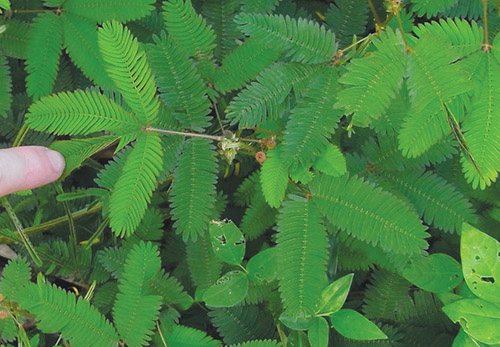
    One of the most interesting scientists to have undertaken research into plant intelligence is Monica Gagliano, associate professor at the University of Western Australia. In 2014, she conducted a series of experiments using Mimosa Pudicas plants to work out whether plants ‘memorise’ changes in their environment.

    In order to test her hypothesis, she placed the plants in pots and then loaded each one onto a specially designed plant-dropping device. Each plant was dropped from a height of six inches, sixty times in a row at five second intervals. The plants would fall onto a soft foam to prevent them from bouncing, with the drop quick enough to cause the plants to curl up their leaves. Since the plants were not harmed in any way, Gagliano wondered whether they would eventually realise the drop did not signify an external danger. After a short amount of time, she found that “some individuals did not close their leaves when fully dropped.”The plants realised that falling from six inches would not cause them any harm and no longer curled their leaves. 

    Members of the scientific community were cynical of Gagliano’s findings, suggesting the plants merely became exhausted. Gagliano disproved this theory by taking a group of plants and placing them in a shaker in order to deplete them of energy. She found that the plants still curled their leaves, indicating they only became unguarded when dropped from a height to which they had become accustomed.5 

    Mimosa pudica is known as the ‘sensitive plant’, and appears to be able to learn from experience. Image credit: Flickr/foam, CC BY-SA

    Gagliano’s research has significant implications in terms how we see plants. The fact that they respond differently to situations that present no harm to those that do, implies plants recall sensory information and ‘memorise’ changes around them. While there is much uncertainty as to how plants recall this information, Gagliano believes it could be representative of a distributed intelligence operating entirely different to the mammalian brain. 

    This corresponds with Rupert Sheldrake’s ‘morphic resonance’ hypothesis that memories are not stored in the brain but in a universal informational field. We should imagine the brain to be like a television set which tunes into different programmes we watch, rather than a memory hard-drive. From this perspective, the brain has limited memory. Most of the information is stored somewhere else in some sort of ‘quantum database’. As Sheldrake points out, it has been proven that animals have memories that are engendered in other members of their species, and past experience is passed onto future generations. For example, in the United States cows learned about cattle grids and now farmers simply paint lines on the road to trick them from crossing. They seem to know what a cattle grid is even if they never seen one before. Examples like this suggest memory may not be an entirely neurological phenomenon but exists in other forms; this may explain why plants are able to memorise information without possessing a physical brain structure.6 

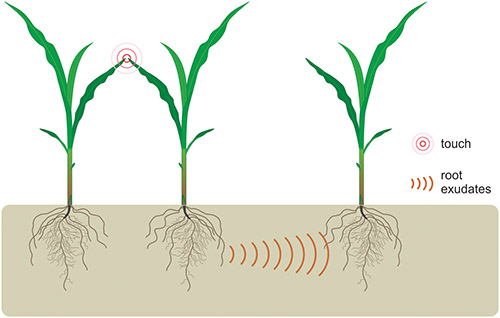
    The notion that plants operate within a wider intelligence network is supported by recent experiments in plant communication. In a study conducted by Dr Velemir Ninkovic and his associate researchers at the Swedish University of Agricultural Sciences, a soft brush was applied to corn seedlings, a stimulus that could represent different external stresses, such as new plants encroaching on their territory or an animal trying to eat it. New seedlings were then placed in the same soil as the recently touched plants to see whether it impacted their growth. The scientists discovered that the fresh seedlings responded by growing more leaves and fewer roots than the plants that had grown under unmodified conditions. This suggested that the corn seedlings were exposed to the chemical signals of the recently touched plants in the soil and therefore were preparing themselves against future stresses more effectively.7 

    Illustration of above ground interactions between neighbouring corn seedlings by light touch and their effect on below-ground communication. (Image credit: https://journals.plos.org/plosone/article?id=10.1371/journal.pone.0195646)

    In order to establish whether the plants were able to distinguish between the soil occupied by touched and untouched plants, the scientists offered corn seedlings the option of which medium they preferred growing in. When placed near both types of soil, the roots had a preference towards the growing solution that contained the untouched plants. These findings suggest that plants are able to communicate with each other even when they are not simultaneously present. This challenges the view that plants cannot exchange information in the way animals do and utilise complex communication networks to protect the interests of the group species. While science has historically depicted plants as inanimate and mechanical, in reality plants possess a profound ‘social’ intelligence that supports the continuation of their survival. 

    Plant Sentience in Shamanic Cultures

    The belief that plants constitute an intelligent life form is commonplace in shamanic cultures, particularly those found in South America. As Michael Winkelman, Associate Professor at Arizona State University states, “the self-identifications with the broader universe, particularly personification of the sentient cosmos which is a hallmark of ecopsychology, is a fundamental aspect of shamanism.” 

    Religious ceremonies, practised for hundreds of years in these cultures, often involve the consumption of entheogenic plants to access alternative realities and altered states of consciousness. During these ceremonies, the shaman assumes the role of a spiritual guide to direct the experience through chanting, drumming, singing and other psycho-dramatic practices. The plants are believed to hold sacred properties, with the potential to provide the participant with profound insights. 

    Many people who have ingested Ayahuasca, an entheogenic brew made from the Banisteriopsis caapi vine in South America, report telepathic communication with plants, animals and people during the experience; the natural world becomes personified as an animated fractal intelligence that is constantly adapting, changing and evolving. Many also say the experience had a long-lasting impact on their connection with animals, people and nature, helping them solve their existential issues more effectively.8

    In this sense, recent experiments into plant intelligence prove what shamanistic cultures have known all along – that plants are intelligent, sensitive and sentient life-forms.9 By observing their behaviour, we can learn more about the natural world and the complexity of all living things. Although modern science provided us with tremendous technological innovation and development, the reductionist belief that animals and plants are ‘mechanical’ in their nature, rather than a dynamic expression of intelligence and consciousness, has disconnected us from our environment and thus ourselves. As the independent scholar, author, teacher, and speaker on sacred plant medicine, Stephen Buhner, states:

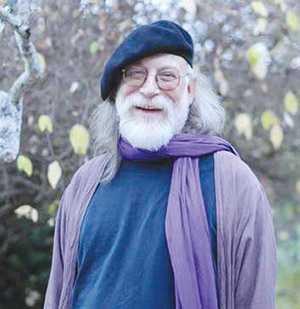
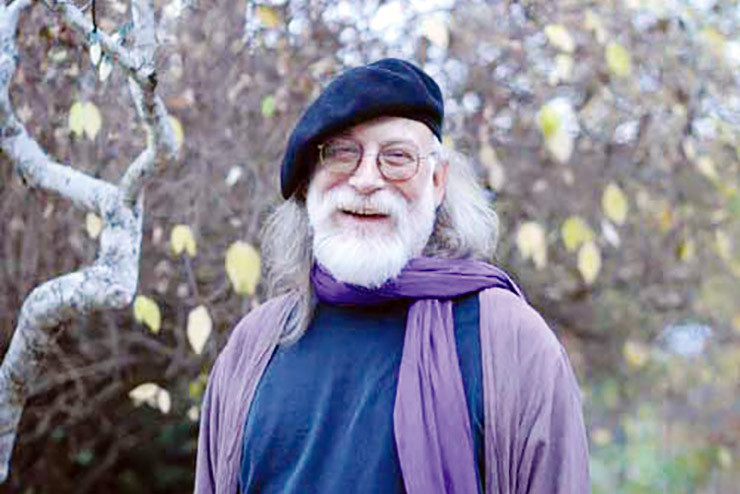
    Stephen Harrod Buhner

    “All people, and I mean all, know that the earth and everything in it is alive. Four-year-old children naturally know this. They have to be forcefully taught that the world is dead. Ancient and indigenous cultures never killed that sensibility but rather developed it. They were interwoven into the life web of the planet, not separate from it. But it was not only indigenous cultures but all ancient cultures that knew this, no matter how they developed… The thing that we call science has taken the long way around. And, they are now getting back to where we started long ago, aware that all of nature is alive, intelligent and aware. That we are merely one part of a very large living scenario.”10 (See my interview with Stephen Buhner in this issue.)

    A Challenge to Outmoded Paradigms & Thinking

    There are significant social, philosophical and religious implications for plant intelligence. It challenges the anthropocentric and monotheistic view that humans are the only species with a mind and a soul – we are not the most important entity in the universe but part of an interconnected web of life. There is great value in recognising nature’s extraordinary intelligence as we find ourselves on the brink of social, economic and environmental collapse. For decades, the capitalist economic model has depended on resources provided by non-human life forms in order to meet the needs of consumers. Perceiving plants as sentient life forms, rather than a mere resource for our consumerist habits, may prompt us to formulate new ways of living in harmony with the natural world. By expanding our view of how consciousness expresses, we can better appreciate the complexity of the ecological world and possibly halt the current path of environmental destruction. Buhner notes:

    “The older, reductive, mechanistic paradigm that looked at the earth as a ball of non-sentient resources, we do with as we please, has reached its limits. It is destroying the ability of most life forms to endure, and the eco-systems of the planet. Younger and less mentally restrictive scientists in every field are finding that the world around us is far different than the picture that reductionists have created and taught us to believe. All life is intelligent, none of it is mechanical, and you cannot use the ecosystems of the planet as resources for unlimited extraction.”11

    Plant intelligence also forces us to reconsider the nature of consciousness. Mainstream science currently posits the idea that consciousness is an epiphenomenon of the brain (it is generated by the brain). When we die, the brain ceases to operate, and consciousness switches off. In this reductionist perspective, plants and animals possess a very limited consciousness since their brains are not as neurologically complex. But the fact of the matter stands that modern science does not understand the mystery of consciousness and the process by which neural pathways, which are non-conscious, become self-aware as a complex web of connections in the brain. If plants have the ability to recall sensory information, socially communicate with each other, and respond to complex changes in the environment, we are forced to rethink our current models of consciousness. It may be the case that the human brain constitutes a very specific expression of consciousness, and intelligence manifests across a broad spectrum of life with plants possessing their own unique form of awareness which modern science does not currently understand. 

    To conclude, there is increasing evidence suggesting plants are an intelligent life-form. Recent scientific experiments indicate that plants are able to retain sensory information, respond to complex changes in their environment and even communicate with one another via complex biological networks. While we have yet to fully understand how plant intelligence works, these experiments challenge the orthodox scientific view that plants are non-sentient, and intelligence only emerges via neural pathways in the brain. 

    More free-thinking scientists and researchers are beginning to prove that plants possess brain-like functions and can make intelligent decisions, an idea accepted by shamanic societies for millennia. 

    There are significant philosophical implications for plant intelligence. Not only does it challenge reductionist explanations for consciousness but forces us to consider our treatment of the planet and agro-capitalism’s ongoing large-scale commodification of the plant kingdom.

    As we teeter on the brink of environmental collapse, and traditional social, economic and political models become increasingly redundant and outmoded, it is critical we start perceiving nature and plants in a different light, rather than a depletable, capitalist resource. 

    An interview with Stephen Harrod Buhner accompanies this article and can be read inside the same issue of New Dawn.

    Further reading: Stephen Harrod Buhner’s books, Secret Teachings of Plants: The Intelligence of the Heart in the Direct Perception of Nature and Plant Intelligence and the Imaginal Realm.

    [alert type=”general” dismiss=”no”]This article was published in New Dawn 176.[/alert]

    [alert type=”success” dismiss=”no”]If you appreciate this article, please consider subscribing to help maintain this website.[/alert]

    Footnotes

    1. The Philosophical Works of Descartes, Cambridge University Press, 1969
    2. See Plant Intelligence and the Imaginal Realm by Stephen Harrod Buhner (Bear & Co, 2014)
    3. Charles Darwin, The Power of Movements in Plants, John Murray, 1880
    4. F. Bulska, S. Mancuso, et al., The ‘root-brain’ hypothesis of Charles and Francis Darwin, Plant Signal Behaviour, 2009; Dec; 4(12): 1121-1127
    5. M. Gagliano, et al., Experience teaches plants to learn faster and forget slower in environments where it matters, Oecologia, 5 January 2014; doi: 10.1007/s00442-013-2873-7
    6. R. Nissen, Memory is not in your head, http://animalnav.org/memory-not-in-your-head/ 
    7. J. Gabbatiss, Plants use underground communication to learn when neighbours are stressed, The Independent, 2 May 2018 
    8. M. Winkelman, Shamanism and Psychedelics: A biogenetic structuralist paradigm of ecopsychology, European Journal of Ecopsychology
    9. J. Kounen, Advice for Encounters with Scary Serpents and Talking Plants During Ayahuasca Visions, https://kahpi.net/scary-serpents-talking-plants-ayahuasca-visions/
    10. Interview conducted with Stephen Buhner, 16 July 2019
    11. Ibid.

    © New Dawn Magazine and the respective author.
    For our reproduction notice, click here.