New Dawn – World's Most Unusual Magazine

Author: Joscelyn Godwin

  • Agarttha: Taking the Lid Off the Underground Kingdom

    Agarttha: Taking the Lid Off the Underground Kingdom

    In 1884 the French occultist Saint-Yves d’Alveydre (1842-1909) decided to take lessons in Sanskrit. Having just published his definitive work on the secret history of the world, called Mission des Juifs (“Mission of the Jews”),2 he was anxious to deepen his understanding of the sacred languages which, he felt sure, concealed the ultimate mysteries. Hebrew had already revealed much to him; now it was time to tackle the even more ancient language of Sanskrit, parent of all the Indo-European tongues.

    Saint-Yves’ Sanskrit teacher, who called himself Hardjji Scharipf, was a character of hazy origins and the subject of various rumours. Born on December 25, 1838, he supposedly left India after the Mutiny of 1857 and set up in the French port of Le Havre as a bird-seller and professor of Oriental languages. His name may have been a pseudonym; he may have been an Afghan; some called him Prince. But whatever his story, the manuscripts now in the Library of the Sorbonne in Paris show that Hardjji was a learned and punctilious teacher, and the source of two still unsolved enigmas: the underground kingdom of Agarttha, and its sacred language.

    Three times a week, Hardjji would come to Saint-Yves’ luxurious home with a beautifully scripted lesson of grammar and a reading from some Sanskrit classic. But his diligent pupil became more and more fascinated by Hardjji’s mysterious hints, which began when he signed the very first lesson as “Teacher and Professor… of the Great Agartthian School.”

    Saint-Yves must have asked him what this “Great Agartthian School” was. He might already have read in the books of the popular travel writer and historian Louis Jacolliot of an “Asgartha,” supposedly a great city of the ancient Indian priest-kings, the “Brahmatras.”3 Does such a place still exist, then? Apparently Hardjji gave him to believe so, and, what is more, that it preserves a language and a script, known as “Vattan” or “Vattanian,” that are the primordial ones of mankind. For someone in quest of the secret and sacred roots of language, the mention of such things must have been unbearably exciting.

    Curiosity overcame him on Christmas Day, 1885, when he asked Hardjji to write out his own name in Vattanian characters. The guru obliged, writing it on the back of the lesson sheet and adding wryly: “Here, according to your ardent desire; but really you are not yet sufficiently prepared for Vattan. Slowly and surely!” Later he must have taught Saint-Yves the Vattanian alphabet and the principles behind its 22 letter-forms, which Saint-Yves would correlate with the Hebrew alphabet and with the zodiacal and planetary symbols.

    By the end of the course of lessons, Agarttha and Vattanian had evidently become regular topics of conversation, while Saint-Yves’ interests shifted from Sanskrit to a kind of comparative Hermeticism. With Hardjji’s approval, he created a splendid manuscript in red and gold ink containing invocations, sigils, many alphabets, designs and arabesques made from Sanskrit and Vattanian letters; a list of Vedic and Biblical names encoded in a so-called “Hermetic or Raphaelic Alphabet”; eighty “Vedic” symbols representing the development of the cosmos; a passage on the “Hermetic Significance of the Zodiac” encoded in planet and zodiac signs; correlations of these signs with the names of angels and with Vattanian, Sanskrit, Hebrew, and Hermetic characters; breathing exercises for the hearing of the inner sound “M” and for soul-travel; notes on the properties of herbs; alchemical recipes.4

    Saint-Yves Writes a Book About Agarttha

    And this was not all. Did Hardjji know that Saint-Yves was writing another book – The Kingdom of Agarttha: A Journey into the Hollow Earth – under the influence of his Oriental studies? It seems doubtful, but in 1886 the book was finished, typeset, and printed by his regular publisher (Calmann Lévy).

    To put it bluntly, this book takes the lid off Agarttha. The reader will learn that it is a hidden land somewhere in the East, beneath the surface of the earth, where a population of millions is ruled by a Sovereign Pontiff, the “Brahatmah,” and his two colleagues the “Mahatma” and the “Mahanga.” This realm, Saint-Yves explains, was transferred underground and concealed from the surface-dwellers at the start of the Kali Yuga (the present dark age in the Hindu system of chronology), which he dates to about 3,200 BCE. Agarttha has long enjoyed the benefits of a technology advanced far beyond our own, including gas lighting, railways, and air travel. Its government is the ideal one of “Synarchy,” which the surface races have lost ever since the schism that broke the Universal Empire in the fourth millennium BCE, and which Moses, Jesus, and Saint-Yves strove to restore. (This was the theme of Mission des Juifs.) Now and then Agarttha sends emissaries to the upper world, of which it has a perfect knowledge. Not only the latest discoveries of modern man, but the whole wisdom of the ages is enshrined in its libraries, engraved on stone in Vattanian characters. Among its secrets are those of the true relationship of body to soul, and the means to keep departed souls in communication with the living. When our world adopts Synarchical government, the time will be ripe for Agarttha to reveal itself, to our great spiritual and practical advantage. In order to speed this process, Saint-Yves includes in the book open letters to Queen Victoria, Emperor Alexander III of Russia, and Pope Leo III, inviting them to join in the great project.

    Perhaps the oddest thing about this book is Saint-Yves’ own stance. Far from presenting himself as an authorised spokesman for Agarttha, he admits that he is a spy. Dedicating the book to the Sovereign Pontiff and signing it with his own name in Vattanian characters (just as Hardjji had written it out for him), he expatiates on how astounded this august dignitary will be to read the work, wondering how human eyes could have penetrated the innermost sanctuaries of his realm. Saint-Yves explains that he is a “spontaneous initiate,” bound by no oath of secrecy, and that once the Brahatmah gets over the shock, he will admit the wisdom of what Saint-Yves has dared to reveal.

    How did Saint-Yves obtain this information? Already in his first book, Clefs de l’Orient (1877), he was writing with the confidence of an eyewitness of the psychic phenomena accompanying birth, death, and the relation between the sexes.5 In the present work he seems to have extended his psychic vision, to say the least, and one can glean from here and there an idea of his methods.

    There is, for instance, a passage here describing in detail how the Agartthian initiates travel in their souls while their bodies sleep. Then there is the passage in the notebook already mentioned, on yogic exercises for separating the soul from the body. Thirdly, there is a snippet of occult gossip in a conversation with Saint-Yves recorded on August 16, 1896, by a psychical researcher, Alfred Erny:6

    “He has talked to Papus and [Stanislas de] Guaïta, but did not tell them what they wanted to know: the method of disengaging and re-engaging oneself in the astral body. It is dangerous: ‘I don’t want (he said) to put a loaded revolver into your hands which you don’t know how to use.’

    “A magnetiser, he said, runs less danger than others in duplicating himself, because he is more trained.

    “When one goes out of one’s body into the Astral, another evil spirit may replace you.”

    Saint-Yves presumably possessed the secret of this “somnambulistic” faculty, and used it to gather the information he presents in this book. But did he gather it, as he claims, from spying on a physical Agarttha beneath the surface of the earth? Or was it the result of his own projected fantasies or hallucinations? Or, again, did it come from some non-physical location or state which can be accessed under certain conditions, but which then merely supports the psyche’s own subjective expectations and prejudices? We will return to these questions at the end.

    No sooner was the book printed and ready for the bookshops than Saint-Yves withdrew it, destroying every copy but one. The work narrowly escaped oblivion, but this one copy passed after Saint-Yves’ death to Papus, who published it in 1910, with some omissions, under the auspices of a group of disciples, the “Friends of Saint-Yves.” Decades later, it turned out that the printer, Lahure, had secreted another copy.7 The late Jean Saunier, biographer and chief authority on Saint-Yves, used this as the basis for the complete French edition of 1981, now translated into English.

    Whatever reasons and motives were responsible for the sudden withdrawal of the book, there is no doubt that Saint-Yves remained true to his vision. For instance, he mentions Agarttha and names its three rulers in his epic poem of 1890, Jeanne d’Arc victorieuse. In his conversations with Erny in 1896, he stated outright that there exists a secret “Superior University” with a “High Priest” who is currently an Ethiopian, and other details just as they appear in this book. Finally, he mentions Agarttha in veiled terms in L’Archéomètre, the major work of his last years.

    Ossendowski Revives “Agharti”

    After the trauma of World War I, the very name of Agarttha might have been forgotten, as Saint-Yves himself was. But in 1922, a Polish “scientist” named Ferdinand Ossendowski (1876-1945) published a sensational travel and adventure book.8 It told of his flight through Central Asia in the aftermath of the Russian Revolution. While in Mongolia, he heard tell of a subterranean realm of 800,000,000 inhabitants called “Agharti”; of its triple spiritual authority “Brahytma, the King of the World,” “Mahytma,” and “Mahynga,” of its sacred language, “Vattanan,” and many other things that corroborate Saint-Yves. The book ended on a dramatic note of prophecy from one of Ossendowski’s informants: that in the year 2029, the people of “Aghardi” will issue forth from their caverns and appear on the surface of the earth. The prophecy was attributed to the King of the World when he appeared before the lamas in 1890. The King had then predicted that there would be 50 years of strife and misery, 71 years of happiness under three great kingdoms, then an 18-year war, before the appearance of the Agarthians.9

    An unprejudiced reader, finding in three chapters of Ossendowski’s book a virtual outline of Saint-Yves’ Agarttha, not omitting the most improbable details, would conclude that the author had capped an already good story with a convenient piece of plagiarism, altering the spellings so as to make his version, if challenged, seem informed from an independent source. At first Ossendowski denied this indignantly. When he was introduced to the esotericist René Guénon (1886-1951), he said that if it were not for the evidence of the daily journal he had kept, and of certain objects he had brought back, he would have thought that he had dreamed parts of this story, adding: “I’d much prefer that!”10

    Back in 1908, the young Guénon had taken part in automatic writing séances in which Agartthian matters had come up, though whether through the questioners or the channelled entity is now unclear.11 Now his interest was rekindled, and in 1925 he wrote about the striking parallels between Saint-Yves’ Agarttha and the Agharti of Ossendowki, whose sincerity, according to Guénon, there was no reason to doubt.12

    Two years later, Guénon took the matter into his own hands. In his most controversial book, Le Roi du Monde, he announced: “Independently of the evidence offered by Ossendowski, we know from other sources that stories of this kind are widely current in Mongolia and throughout Central Asia, and we can add that there is something similar in the traditions of most peoples.”13 Unfortunately Guénon does not support his claim to privileged access by telling us what these sources are, nor what degree of similitude is meant by “stories of this kind.”

    Near the end of Le Roi du Monde, Guénon faces the question of whether Agarttha really exists:

    Should its setting in a definite location now imply that this is literally so, or is it only a symbol, or is it both at the same time? The simple answer is that both geographical and historical facts possess a symbolic validity that in no way detracts from their being facts, but that actually, beyond the obvious reality, gives them a higher significance.14

    So Guénon at the very least did not deny a geographical Agarttha. To his way of thinking, if one were found to exist beneath the surface of the earth, it would only corroborate the superior reality of the symbolic one.

    Ossendowski’s account was later investigated by Marco Pallis (1895-1985), the traveller, writer on Buddhism, and translator of Guénon, with the advantage of his own contacts with highly-placed Indians, Tibetans, and Mongolians.15 One of the latter, now very old, had been the head lama of a monastery at the time of Ossendowski’s visit there. He testified that the latter’s stories of the King of the World and of Agarttha bore no relation to any authentic legend or doctrine whatsoever, and that Ossendowski’s command of the Mongolian language had not been nearly sufficient to understand what he claimed to have heard. Pallis’s Hindu friends, similarly, disclaimed any Sanskrit source for Agarttha. The inevitable conclusion was that the credulous Guénon had been misled by Saint-Yves’ fantasy, and that promoting belief in Agarttha in Le Roi du Monde had been a foolish mistake.

    Ossendowski himself had back-pedalled in November 1924 when pressed to appear before a group of prominent intellectuals and scholars. He confessed to this hard-boiled audience that Beasts, Men and Gods was not “scientific” but “exclusively a literary work,” and stated the same in a letter to the Royal Geographical Society.16 Never mind: once his best-seller had brought the Agarttha myth out of the esoteric closet, it began to enjoy a new lease on life. Often confused or contrasted with Shambhala, the spiritual city of Tibetan Buddhism, it became a recurrent theme of popular occult writers.17

    If we set aside Saint-Yves and Ossendowski, for reasons already explained, there remain only two independent witnesses to an Indian Agarttha tradition. Louis Jacolliot was led to place it in the past, as the ancient Brahmanic capital. For Hardjji Scharipf it was a living initiatic school with its own secret script. Until a reputable scholar comes forward with data on the myth of Agarttha, and especially on the Vattanian alphabet,18 my working hypothesis is that these were part of a mythology belonging to a restricted and obscure Indian school, which has only surfaced to Western notice on these two occasions.

    However, Saint-Yves wanted more than the tantalising taste that his Sanskrit teacher allowed him. He therefore decided to use his gift for astral travel to explore Agarttha further, and was rewarded by visions of an underground utopia and its Sovereign Pontiff, the spiritual Lord of the World. What is the source, and the ontological status, of such visions?

    The Astral World and Delusions of Grandeur

    There are, one gathers, definite places or complexes in the Astral World (also known as the “Inner Planes” of magic), which present to the clairvoyant visitor certain invariable features. But the incidental circumstances of such a place vary, according to the visitor’s own cultural conditioning and expectations. Some find themselves, for example, in what they believe to be the Alexandrian Library, or in Atlantis, i.e., a place of the past. To others, it seems current and contemporary, though preferably in an inaccessible location like the Himalayas. The décor is a trivial matter, of course, in comparison to the philosophical truths to be discovered there, but the glamour of it sometimes overwhelms the traveller. Then his attention fixates on irrelevant details, and an inflated sense of self-importance may result. Thus Saint-Yves, convinced that he has penetrated to the realm of the world’s spiritual ruler, writes about four-eyed tortoises, two-tongued men, levitating yogis, and ends up addressing pompous letters to Queen, Emperor, and Pope.

    I can accept that in some state of altered consciousness he saw what he claims to have seen. But like many who habitually indulge in altered states, he was not able to situate his visions, nor himself as witness to them, with the requisite philosophical detachment. The result is a classic case of the occupational hazard of occultists: misplaced concretism.

    Yet there is a grandeur to this book. Its vivid and elegant prose lift it far above the tedious wordiness of visionary and channelled writing. In sheer weirdness of imagination it rivals the fantasy fiction of H.P. Lovecraft or Jorge Luis Borges, while in deadpan seriousness and titanic self-confidence it compares to prophetic works like the Book of Ezekiel or the various Apocalypses. And it reminds us that the earth is a very strange place, with many unexplored corners, many enigmas, and many surprises in store for us surface-dwellers.

    [alert type=”general” dismiss=”no”]This article was published in New Dawn 109.[/alert]

    [alert type=”success” dismiss=”no”]If you appreciate this article, please consider subscribing to help maintain this website.[/alert]

    Footnotes

    1. Abbreviated from the author’s Introduction to Saint-Yves d’Alveydre, The Kingdom of Agarttha: A Journey into the Hollow Earth, trans. Jon Graham, Rochester, Vt.: Inner Traditions International, 2008.
    2. Saint-Yves d’Alveydre, Mission des Juifs (Paris: Calmann Lévy, 1884; reprinted Paris: Editions Traditionnelles, 1971, 2 vols.).
    3. See especially Louis Jacolliot, Le Fils de Dieu (Paris: Lacroix, 1873), 263-266, quoted in Jean Saunier, Saint-Yves d’Alveydre, une Synarchie sans énigme (Paris: Dervy, 1981), 350-353.
    4. Sorbonne, Ms. 1423, page 118 onwards. Some of this material would appear in the posthumously published work L’Archéomètre (Paris: Dorbon, 1911); English translation by Ariel Godwin as The Archeometer: Key to All the Religions and Sciences of Antiquity. Synthetic Reformation of All Contemporary Arts (n.p.: Sacred Science Institute, 2008).
    5. Saint-Yves d’Alveydre, Clefs de l’Orient (Paris: Didier, 1877; reprinted Nice: Belisane, 1980).
    6. Sorbonne, Ms. Carton 42, fragment G, pp. [7-8]. Erny was the author of Le Psychisme experimentale (Paris: Flammarion, 1895). His notes on conversations with Saint-Yves, dated August, 1896, are divided between the Sorbonne and the Bibliothèque Municipale de Lyon, Ms. 5493.
    7. See Introduction by Jean Saunier to Saint-Yves d’Alveydre, Mission de l’Inde (Nice: Bélisane, 1981).
    8. Ferdinand Ossendowski, Beasts, Men and Gods (New York: Dutton, 1922). The book was written in English, with assistance from Lewis Stanton Palen.
    9. Beasts, Men and Gods, 413.
    10. Quoted in Paul Chacornac, La Vie simple de René Guénon (Paris: Editions Traditionnelles, 1958), 77n.
    11. See Robert Amadou, “L’Erreur spirite de René Guénon,” in Sphinx (Beaugency), no. 3/4 (Autumn 1978), 21 unpaginated pages; no. 5 (Spring 1979), 45-60; no. 7/8 (Autumn/Winter 1979), 83.
    12. René Guénon, “Le Roi du Monde,” in Les Cahiers du Mois, 9/10: Les Appels de l’Orient (Paris: Emile Paul Frères, 1925), 210. This statement was modified in Guénon’s Le Roi du Monde (Paris: Bosse, 1927); see next note.
    13. René Guénon, The Lord of the World, trans. Anthony Cheke (Ellingstring: Coombe Springs Press, 1983), 2-3.
    14. The Lord of the World, 66.
    15. See Marco Pallis, “Ossendowski’s Sources” in Studies in Comparative Religion, vol. 15, no. 1/2 (1983), 30-41.
    16. See the anonymous review, “The Ossendowski Controversy,” in The Geographical Journal, 65/3 (1925), 251-254, which reproduces Ossendowski’s statements in French and English.
    17. See my Arktos: The Polar Myth in Science, Symbolism, and Nazi Survival (Grand Rapids: Phanes Press/London: Thames & Hudson, 1993; reissued Kempton, IL: Adventures Unlimited Press, 1996), 79-104, and the references given there.
    18. On Vattanian, see Mike Jay and Joscelyn Godwin, “Licked by the Mother Tongue,” in Fortean Times, 97 (April, 1997).

    © New Dawn Magazine and the respective author.
    For our reproduction notice, click here.
  • Antarctica in Myth, Fantasy & Reality

    Antarctica in Myth, Fantasy & Reality

    From New Dawn Special Issue Vol 11 No 1 (Feb 2017)

    At the Bottom of the World

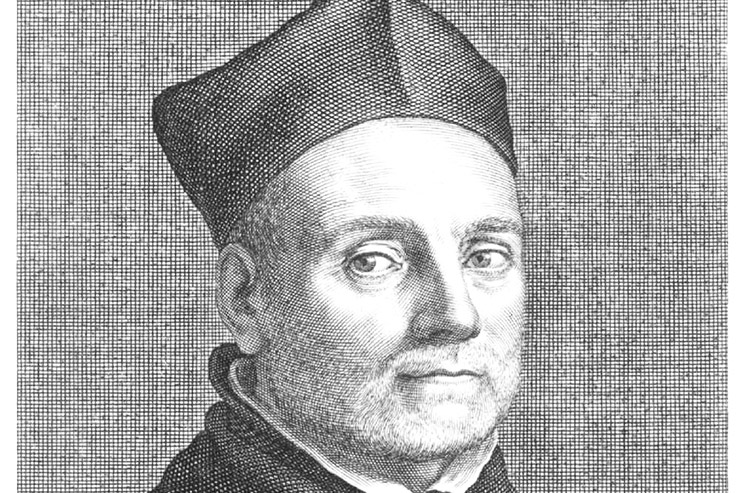
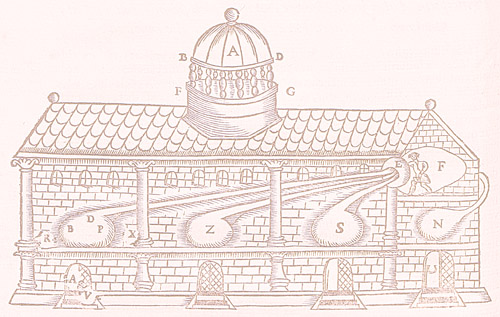
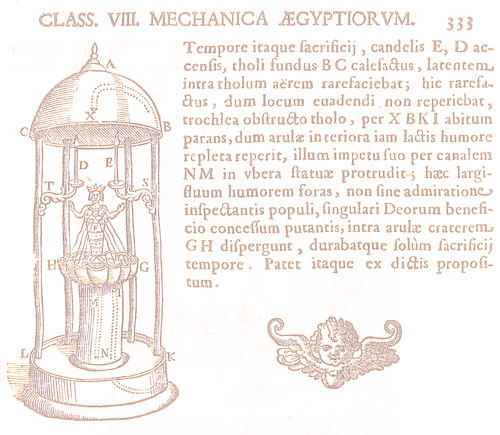
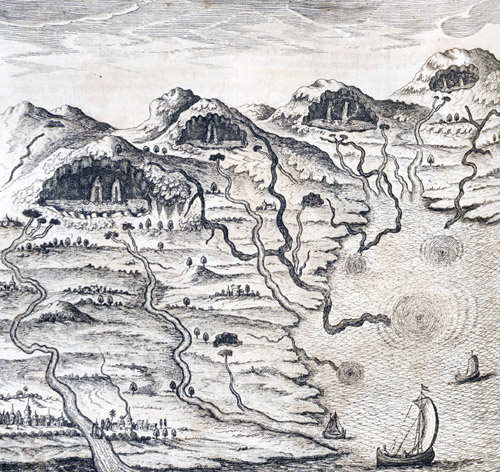
    Athanasius Kircher (1602-1680), in his book about the subterranean world, compares the earth to a human body. It drinks in the oceans at the North Pole, digests them in its interior, extracts the minerals, and expels the remains at the South Pole.2 This undignified image of Antarctica is not merely northern chauvinism, for the earth itself presents a marked contrast between its two polar regions. In the north, cities such as Oslo, Helsinki, Tallinn, and Leningrad cluster around the sixtieth parallel, to say nothing of Reykjavik at 64ºN. To their north extend vast tracts of useful land, supporting agriculture and abundant forest life. Coal and other minerals are mined on Norway’s Svalbard Islands (Spitsbergen), which reach beyond the 80th parallel. In the rosy days before the Nazis coopted the myth of Thule, the Canadian explorer Vilhjalmur Stefansson (1879-1962) claimed that “there is no northern boundary beyond which productive enterprise cannot go until North meets North on the opposite shore of the Arctic Ocean as East has met West on the Pacific”3 – and he should know, having spent five months marooned on an ice-floe. Nowadays ice-breakers open the Northwest Passage every spring for a busy sea traffic; airplanes crisscross the Pole, and nuclear submarines pass beneath the thin ice of the Arctic Ocean, even breaking through at the North Pole itself, as the USS Skate did in March 1959.

    In the South, things are quite different. As Charles Fort (1874-1932) phrased it, “History, like South America and Africa, tapers southward. […] Preponderantly peninsulas are southward droops.”4 Cape Horn, the last landfall of Chile, has drooped away by 56ºS, and by the sixtieth parallel one is nearing the uninhabited South Orkney Islands, the first straggling harbingers of the Antarctic Peninsular. There are beautiful things about Antarctica, still miraculously free from mining and territorial claims; one can enjoy real and imaginary pictures of its unspoilt scenery and largely untroubled wildlife. But the unattractive things about this continent, as big as the United States and Europe combined, are such that none but scientists want to live there. It is hard to reach, being surrounded on all sides by seas of notorious roughness. It is much colder than the Arctic, thanks to the absence of warming currents like the Gulf Stream; the eccentricity of the earth’s orbit, which makes the Antarctic summer a week shorter than that of the north; and the perpetual rolling down of chilled air from the icecap that covers the continent to a depth of up to three miles. Finally, apart from the creatures on its fringes supported by the krill – whales, seals, penguins, gulls, mites, etc. – virtually the only life of its interior is the alien one of clouds and frozen water.

    At least, that is the view in educated and scientific circles. But the kind of people who write about Commander Richard E. Byrd’s (1888-1957) flight beyond the pole into the hollow earth are also quick to ascribe to him the sighting of lushly vegetated lands, preferably with a mammoth blundering through the undergrowth. The German Antarctic expedition to Queen Maud Land in 1938-39 made some surprising discoveries, including “a group of low-lying hills sprinkled with many lakes and completely free of ice and snow,” resembling the barren hot springs region of Iceland.5 Claiming this Norwegian sector with swastika flags, the Germans renamed it Neuschwabenland (New Swabia).

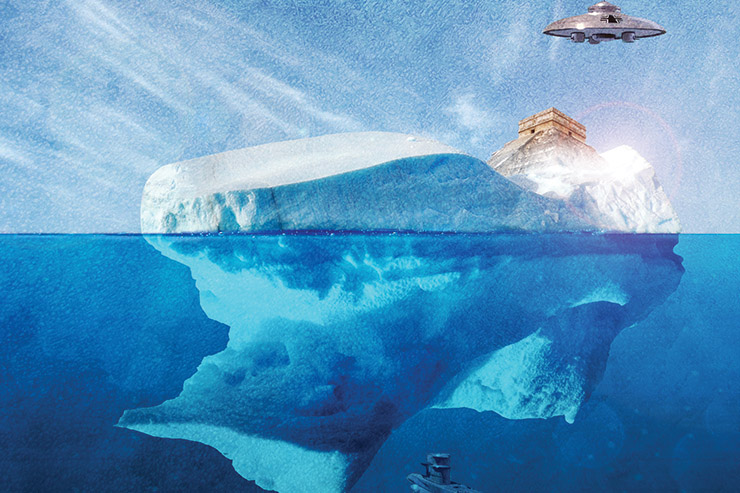
    According to the Chilean diplomat Miguel Serrano (1917-2009), the Germans also found there a way of communication with the Hollow Earth and its secret cities, where the First Hyperboreans had taken refuge from the disaster that reversed the Poles.6 There a secret base was prepared during the war years, and thither Adolf Hitler escaped in a vimana (flying saucer plane) to direct the “esoteric war” to this day. Serrano states this as fact in his philosophical testament, and supplies a diagram that blends the physical with the mythological: partly a cutaway diagram of the inner earth, it is also an explanation of the subtle currents at the two poles and their complementarity (see image to the left).7

    But Serrano was only repeating a favorite theme of neo-Nazi and sensational literature. In his well-documented study The Hitler Survival Myth (1981), Donald McKale identifies the earliest source of the myth of Hitler’s escape to the southern hemisphere as the unexpected surrender of a German submarine in early July 1945 at Mar del Plata, Argentina. Several Buenos Aires newspapers, in defiance of Argentine Navy statements, said that rubber boats had been seen landing from it, and other submarines spotted in the area. One paper, Critica, carried on 17 July 1945 the report that Adolf Hitler and Eva Braun had landed from a U-530 in Antarctica, and mentioned the 1938-39 expedition, as a result of which a “new Berchtesgaden” was “likely to have been built.” This report received wide distribution through quotation in Le Monde and the New York Times on 18 July; on the 16th, the Chicago Times had carried a sensational article on the Hitlers having slipped off to Argentina.8

    The myth of an Antarctic refuge, armed with flying saucers, reached its apotheosis in W. A. Harbinson’s thriller Genesis (1980). This develops the Jules-Vernian theme of a “Master of the World” who, thanks to the Nazi régime, has become a technocratic power before which even Washington and Moscow must quail. Harbinson supplements his fiction with an excellent list of factual sources about Nazi saucer-planes and Antarctic explorations.9 Another version of the myth appears in Opération Orth (1989), a strange and surely ironic work by Jean Robin, one of the foremost authorities on the Traditionalist René Guénon and no lover of the “Counter-initiation” of which he holds Hitler to have been a primary, if unconscious, agent.

    Jean Robin writes, supposedly on the evidence of a friend who had been there, of a subterranean complex of high technology entered near Valparaiso by a vimana which could pass through solid rock. There was found the new Asgard or Agartha, the headquarters of the Black Order, where 350,000 initiates await “Him Who Shall Come.”10 A mysterious green flame suspended in a niche of stone and called the Cheskin serves to recharge their energies and focus their cult.11

    Is Adolf Hitler “He Who Shall Come,” as Miguel Serrano believed him to be? No: in Robin’s book Hitler died in this subterranean retreat in 1953, and his body is enshrined and visible in a hexagonal casket – side by side with that of Raoul Wallenberg, the Swedish diplomat who saved thousands of Hungarian Jews during the war, and was “kidnapped” by the Soviets in Budapest.12 This dual presence, Robin’s friend was given to understand, poses no problem to the many Jews who belong to the Black Order: they blame their fellows for their “refusal to collaborate” with the evolutionary process.13

    Opération Orth poses every manner of problem, however, to the reader, who can only wonder what prompted Jean Robin to present the images of Hitler and Wallenberg reconciled, and the casual dismissal of the Holocaust by the Jews of his Black Order. In the context of Guénonian attitudes, which are nothing if not respectful of the Jewish people and their tradition, there is nothing to be said, unless it be that Robin actually accepts his friend’s account, and is warning us of the Counter-initiation’s final obscenity.

    Those who believe in the Nazi Antarctic bases, with or without Hitler alive or dead, will find it significant that Richard Byrd went there in 1946-47, and again in 1956, on expeditions massively supported by the United States Navy. But here is the most extraordinary thing: according to the official maps of his many flights, shown here,14 Byrd’s expeditions left Queen Maud Land absolutely unvisited. The conspiratorial literature has no difficulty in explaining this: Byrd was scared away by the protective power demonstrated by the secret center, and after losing four planes, kept his distance.15

    Poe, Verne, Lovecraft

    Writers of fictions about Antarctica seem anxious for their work to be mistaken for fact. This was a common affectation in nineteenth-century fiction, and often used by the first great imaginative writer on Antarctica, Edgar Allen Poe (1809-1849). The South Pole appears in the short story MS. Found in a Bottle (1833), which employs the common literary device of a ship blown off course to discover new worlds. Poe’s narrator, of course, goes one better: his own ship wrecked, he is hurled onto the rigging of a grotesquely antique, oversized galleon, manned by the living dead, which heads straight for the Pole. Scribbling frantically in the face of certain doom, he writes of his descent into a gigantic whirlpool:

    Oh, horror upon horror! – the ice opens suddenly to the right, and to the left, and we are whirling dizzily, in immense concentric circles, round and round the borders of a gigantic amphitheatre, the summit of whose walls is lost in the darkness and the distance. But little time will be left to me to ponder upon my destiny! The circles rapidly grow small – we are plunging madly within the grasp of the whirlpool – and amidst a roaring, and bellowing, and thundering of ocean and of tempest, the ship is quivering – oh God! and – going down!16

    Poe, who tried to be accurate in his facts, later felt obliged to add a note to the end of this tale, saying that it was only many years afterwards that, “I became acquainted with the maps of Mercator, in which the ocean is represented as rushing, by four mouths, into the (northern) Polar Gulf, to be absorbed into the bowels of the earth; the Pole itself being represented by a black rock, towering to a prodigious height.”17 Poe would make good his error in A Descent into the Maelstrom, which is set in the North. But his polar masterpiece, and the longest piece of fiction he ever wrote, was The Narrative of Arthur Gordon Pym (1838).

    At the time of Poe’s writing, Antarctica had been touched on but not yet “discovered” in any real sense. Captain James Cook, in 1775, had reported after his circumnavigation of Antarctica, that “no continent was to be found in this ocean but must lie so far south as to be wholly inaccessible on account of ice.”18 Subsequent explorations by the British and Russians were inconclusive, and mostly limited to the islands and peninsular. In 1825, John R. Reynolds of Ohio began vigorous agitations in favor of an American Antarctic expedition, twice addressing the U.S. Congress. (One notes circumstantially that John Cleves Symmes’ petition to explore the hole at the North Pole had been made to the General Assembly of Ohio, in 1824.) Public opinion eventually came to his aid, and in 1836 an Exploring Expedition was authorized. After all manner of controversies and delays, the expedition set sail in August 1838 under Charles Wilkes. Poe’s Narrative thus appeared in serial form in the full light of public interest and excitement about the Antarctic.

    The Narrative of Arthur Gordon Pym is too well-known a literary work to delay us long. Suffice it to recall that the narrator discovers, beyond the ice-floes, a warm land inhabited by disagreeable black-toothed savages who bring about the deaths of all but himself and the half-breed Dirk Peters. The natives of this black land have a superstitious horror of anything white, which draws from them the cry Tekeli-li! Although they now live in the most primitive of shelters, Pym discovers a system of underground passages that seem to have been made in significant shapes, and also records what may be archaic script from the wall of one of the chambers. After the usual privations and hair-raising adventures, the two men escape and enter a calm polar sea that becomes ever warmer and whiter in hue, while flocks of gigantic white birds pass overhead crying Tekeli-li! At last they find themselves driven towards a silent cataract of white vapor.

    And now we rushed into the embraces of the cataract, where a chasm threw itself open to receive us. But there arose in our pathway a shrouded human figure, very far larger in its proportions than any dweller among men. And the hue of the skin of the figure was of the perfect whiteness of snow.19

    Thus the Narrative ends; a Postscript apologizes for the loss of the “few remaining chapters” upon Pym’s recent death.

    There is little doubt that Symmes’ theory of the hollow earth furnished Poe with the unacknowledged basis for his story. The Antarctic hole would have to be far smaller than the 6,000-mile diameter Symmes gave to it – about 500 miles would fit Pym’s bearings. But Poe could well be describing the unknowing traversal of its rim and the entry into an inner world which, like Symmzonia, is entirely white.

    One person who could not bear to leave Pym’s narrative unfinished was Jules Verne (1828-1905). In his Le Sphinx des Glaces (The Sphinx of the Icy Regions, 1897), he reintroduces Dirk Peters on a voyage to Antarctica whose secret object is the rescue of Arthur Gordon Pym – not returned and dead as Poe’s informant had it, but abandoned and perhaps still alive in that mysterious polar land.

    Verne’s story takes his characters on open sea to the same black land, now devoid of its inhabitants who have perished in an earthquake. Still seeking Pym, they proceed northwards on the other side of the Pole until they find the curtain of mist which lifts to reveal the Sphinx of the title, presumably identical to the giant white figure of Poe’s conclusion. It is a mountain shaped naturally into a crouching sphinx – but a magnetic mountain, so powerful as to suck every piece of iron out of a ship. There they find Pym’s last and tragic resting-place, pinioned to the rock by his own musket. Dirk Peters dies of a broken heart at thus finding his “poor Pym”; the others just manage to clear the ice-barrier before winter freezes it, and so they come home.

    In a typically didactic digression, Jules Verne’s narrator tries to account for this magnetic mountain:

    The Trade-winds bring a constant succession of clouds or mists in which immense quantities of electricity not completely exhausted by storms, are stored. Hence there exists a formidable accumulation of electric fluid at the poles, and it flows towards the land in a permanent stream. […] it would suffice that a block of iron should be subjected to [these currents’] action for it to be changed into a magnet of power proportioned to the intensity of the current, to the number of turns of the electric helix, and to the square root of the diameter of the block of magnetized iron.20

    The turns of the coil of this giant electro-magnet are supplied, he supposes, by the windings of a metallic lode in the ground, connected with the base of the block. So the south polar vortex in this case is not a watery but an electrical one.

    Now we turn to the inheritor of Poe’s literary mantle, Howard Phillips Lovecraft (1890-1937). This writer of fantastic literature sketched in a handful of stories a whole mythological complex dealing – as any complete mythology must – with the origins of the human race. After Lovecraft’s death it was elaborated by other writers, especially August Derleth, into what the latter called the “Chthulhu Mythos,” after the monstrosity let loose upon the world in Lovecraft’s The Call of Chthulhu (1926). So far this resembles the continuation of Poe’s tale by Jules Verne. But in Lovecraft’s case there is more: the mythology which he himself regarded as no more than dream-inspired fiction was accepted as factual by the aficionados of the Shaver Mystery on the one hand, and, on the other, by certain highly educated practitioners of the “Magick” of the Left Hand Path, led by the prestigious mage of the Ordo Templi Orientis (OTO), Kenneth Grant.

    One of Lovecraft’s longest and by general consent finest tales, At the Mountains of Madness (written 1931, published 1936), is set in Antarctica, whither the narrator has gone on an expedition sponsored by the fictitious Miskatonic University. As Peter Cannon points out,21 Lovecraft had been fascinated by the Antarctic since boyhood; he was surely inspired by the recent expedition of Richard Byrd, who in 1929 was the first to fly over the South Pole; and he pays explicit tribute in the story to Poe’s Narrative of Arthur Gordon Pym.

    At the Mountains of Madness tells of the discovery of the star-headed, barrel-bodied, five-winged Old Ones,22 who came to earth before there was any life upon it, and when the continents had not yet drifted apart (Lovecraft was an early follower of Wegener’s theory). They created life on earth and built on the Antarctic “Plateau of Leng” a gigantic city of obsidian, which the explorers discover by airplane. Landing there at the risk of their lives, the narrator and one companion explore the city and learn from elaborate bas-reliefs of the incredible history of the Old Ones and the planet for which they have cared; of the other races that have evolved or arrived from elsewhere, usually to the detriment of the Old Ones’ utopian civilization. Lovecraft evokes sympathy for these primordial beings, gentle scientists and historians by nature, and for the pathetic end of the ones awoken by the explorers from their age-long sleep, only to be eaten by their own creations, the ghastly Shoggoths.

    Lovecraft’s mythopoeic methods were the antithesis of those of a Tolkien, who supported his mythology with carefully worked-out philological and geographical documents. This is why August Derleth took it upon himself to improve the Chthulhu Mythos through his own fictional contributions, filling out gaps and giving it a tighter organization. A case of Lovecraft’s casual accretion is the “Plateau of Leng.”23 In The Hound (1922), just after the first mention in any of Lovecraft’s works of the grimoire Necronomicon, comes an allusion to “the corpse-eating cult of inaccessible Leng, in Central Asia.”24 A few years later, in The Dream-Quest of Unknown Kadath (1927), the Plateau of Leng is a dream-place where the protagonist confronts a high priest masked in yellow silk. Finally, in At the Mountains of Madness, the explorers find an endless plateau and identify it as the true Plateau of Leng. “Mythologists,” explains the narrator, “have placed Leng in Central Asia; but the racial memory of man – or of his predecessors – is long.

    A hidden center in Central Asia inevitably recalls Agarttha, first described by Saint-Yves d’Alveydre (1842-1909),25 publicized by Ferdinand Ossendowski in Beasts, Men and Gods (1922), and confirmed by René Guénon in Le Roi du Monde in the same year (1927) as Lovecraft’s Dream-Quest. In the Traditionalist version of prehistory, the supreme spiritual center of the globe moved there from its previous Arctic location in “Hyperborea.” A separate study would have to be made of Arctic archetypes in modern fantasy-literature and the games derived from it. For a start, two of Lovecraft’s friends set their fantasy-novels in the uttermost North: Robert E. Howard, with his series on Conan the Barbarian, and Clark Ashton Smith, with his Commorian legends also set in frozen Hyperborea.

    Lovecraft’s ancient civilization in Antarctica is placed so far back in time that those who wish can actually reconcile it with geology. I follow here the scientific account of the Polar medalist Margaret Bradshaw,26 who writes that Antarctica, as part of the supercontinent of Gondwana, was probably in equatorial latitudes during the Cambrian Period (about 500 million years ago). By the beginning of the Permian Period (300 my), Gondwana was polar, the South Pole migrating in the course of twenty million years from the region that would later become Africa/South America, across Antarctica, to Australia. In the Triassic Period (240-190 my), Antarctica was richly forested and inhabited by reptiles. After that came the period of violent volcanic activity that eventually led to the breakup of Gondwana and the beginning of the continents’ progress to their present situations. In the course of the Tertiary Period (65-1.5 my), the major mountain chains were built on the continent, and the present ice-sheet was formed. The continent has been thoroughly glaciated for about twenty million years, so any later habitation is out of the question.

    While this is the large-scale story, there may have been variations within shorter spans of Antarctic history. Charles Hapgood (1904-1982), in his Maps of the Ancient Sea Kings (1979), reproduces the findings of geologists of impeccable credentials that show, in his words, that “during the last million years or so there have been at least three periods of temperate climate in Antarctica when the shores of the Ross Sea must have been free of ice.”27 In particular, there was a longish warm period that ended about 4,000 BCE. Hapgood’s book is subtitled Evidence of Advanced Civilization in the Ice Age, and presents a wide variety of ancient maps that show uncannily accurate knowledge not only of lands undiscovered until the modern age, such as the Antarctic coast, but also of lands invisible at any age of human existence, namely the shores of the Ross Sea. Alas, history has no room in its limited imagination for theories such as Hapgood’s, however persuasively argued and well-documented, because they would require too thorough a revision of the status quo. It is one thing for analyses of Antarctic sea-floor cores to be published in the Journal of Geology; it is quite another to ask prehistorians to imagine a civilization 6,000 years ago which was capable of mapping the whole globe. Like the cardinals who refused to look through Galileo’s telescope, lest they should see what he saw and suffer the same delusions, most prehistorians simply do not read books with subtitles such as Hapgood’s.

    Polarity of North and South

    The mythology surrounding the North Pole has tended to be positive: it is always the Arctic that is imagined as the location of the endless springtime and the cradle of noble races. The Antarctic, on the other hand, is negative: it evokes tales of gloom and destruction, and is populated by primordial horrors, or else by their recent representative, the Nazis. If the Arctic Ocean is still imaginable as open to the world within, from which the Aurora Borealis streams in all its wonder and beauty, any hole at the South Pole is firmly shut with a lid of ice three miles thick. In short, the North is the positive and the South the negative pole of the earth.

    In the accounts of this from “illumined” sources, there seems either to be confusion of the physical with the non-physical – magnetism and electricity with the soul, for instance – or else there is evidence of some occult unity which modern science, ignorant of the ways of souls, cannot fathom. For example, in 1845 an uneducated girl gave in mesmeric trance a number of answers to questions of cosmology and occultism that have a bearing on our subject. Her answers were recorded by Zadkiel (Richard Morrison) in his Almanac, and reprinted in Peter Davidson’s Occult Magazine.28 One of them states:

    The magnetism of the Earth is another modification of electricity, and also circulates through the system. It passes off from the Earth at the North Pole, producing the Aurora Borealis, circulates through the other planets, and returns to the Earth in a purified state…

    Another evokes the situation in which the earth’s axis lies parallel to the ecliptic, which would give each hemisphere six months of light and heat, and six of cold and darkness:

    [Question] Will you look at the Earth and say whether the pole be turned away from its course – the same as it was 10,000 years ago – or be less turned away?

    [Answer] Yes, it is less turned away. The Sun once went over the Pole of the Earth, but that was a long time ago – that was before Adam – there were other kinds of men on the Earth then.

    In Ghostland, an occult novel of 1876, the anonymous author writes of the great spirit Metron, tutelary angel of this planet. (Possibly he means Metatron, who in Kabbalah is the spirit of the Primum Mobile.) Metron governs the “electric life evolved from the galvanic action of metallic lodes threading their way like a gigantic nervous system through every globe; vast reservoirs of polar force generated in the Arctic North and Antarctic South.”29 These regions, we are told, “form the brain and feet of the living Earth,”30 but Metron’s station is in the “brain regions of the polar North.”31

    H.P. Blavatsky (1831-1891) concurs with this polarization of the earth. She writes in The Secret Doctrine (1888) of how when the first Atlanteans were born on Lemuria, they very soon began to divide into those who worshipped “the one unseen Spirit of Nature, the ray of which man feels within himself,” and those who offered “fanatical worship to the Spirits of the Earth, the dark Cosmic anthropomorphic Powers, with whom they made alliance.”32 It was the latter, one understands, who gravitated to the South Pole, called “the pit, cosmically and terrestrially – whence breathe the hot passions blown into hurricanes by the cosmic Elementals, whose abode it is.”33 Elsewhere she explains that the earth’s seven zones correspond to the Seven Principles of man, Mount Meru or the North Pole answering to the Seventh principle, “the region of Atma, of pure soul, and Spirituality.”34 Therefore the South, although Blavatsky does not spell it out, is probably to be taken as corresponding to the physical body, the lowest of the principles.

    We meet an interesting reference to Meru in Saint-Yves d‘Alveydre’s Mission de I’lnde:

    Everything has been plumbed [by the Agarthians], from the fiery entrails of the Globe to its subterranean streams of gas and water, both fresh and salt, even to the living beings who inhabit these flames, gases, and waters,

    Everything has been plumbed across the breadth and depth of the oceans, even the role of magnetic currents which interfere with one another longitudinally from pole to pole, and latitudinally from tropic to tropic. […]

    Everything has been revealed, even to the universal harmonies that produce the terrestrial seasons, and the ascending migrations of souls by the North Pole: that unfindable Mount Meru and that undecipherable Alborj of the Vedic and Pahlevi books.35

    Movement of souls, it seems, is from South to North, and that is what one would expect if the North is closer to the spiritual world.

    Among more recent philosophers whose polar theory is in accord with that of Theosophy, Schwaller de Lubicz (1887-1961) compares the poles to the active (North) and passive (South), or male and female principles.36 Commenting on ancient symbolism, he depicts the movement from one to another as literally as the circulation of Kircher’s oceans:

    Let us note something not generally known: that is, that the North Pole and the South Pole repels, with respect to the masses of these rotating bodies [planets, etc.]. Our North Pole hollows out the earth and it can be said to absorb the continents, whereas the South Pole extrudes earth and it can be said to create the continents. The entire mass of our continents is projected in a spiral motion toward the North Pole.37

    This passage, written in 1949, bears study in the context of what is now known of Continental Drift. In the scientists’ reconstruction of Gondwana, Antarctica lies between Africa, India, and South Australia. The other continents have gradually moved away from it to their present positions surrounding the Arctic Ocean. As for the extrusion and absorption of earth, one can at least say that ancient maps of the North Atlantic and Arctic Oceans record islands and mainland regions that have since disappeared.38

    The reversal of the two poles of the earth relative to the celestial poles, already a persistent theme in esoteric prehistory, naturally raises questions about this matter of polarity. Does the negativity of Antarctica derive from its position on earth, or from its orientation in space? Miguel Serrano thought that the reversal of the poles during the cataclysm of Hyperborea had raised Antarctica to the place of honor, and that for the “Last Avatar” to take up residence there in a revived Hyperborea was absolutely appropriate. But being Chilean must give one a certain parti-pris, which in Serrano’s case goes to the logical extreme of making his homeland, the southernmost country on earth, into the refuge for the Kali Yuga and the spiritual center of the New Age.39

    Another aspect of reversal occurs in the work of Kenneth Grant (1924-2011), dedicated to the exaltation of the god Set, or Shaitan, or Satan. “Shaitan,” he says in The Magical Revival (1972), “is the God of the South, yet his votaries face North when invoking him.” He explains this by the fact that “on entering Capricorn, the zodiacal house of Shaitan [Saturn], the sun turns northward. Consequently the worshipper identifies himself with the sun – Horus – which is therefore not the object of worship, for he is the god that dies and is reborn on entering the House of Set (Capricornus).” Grant also hints at a physical reversal of poles as he continues: “There was a time when the South had precedence and was the primary station of the Pole Star.”40 Later he says that Set “was Lord of the (South) Pole, first born of the seven sons, or stars, represented by the Northern Constellation of Typhon, the Great Bear. When primitive man moved northward from Equatoria, the Star of Set in the South sank beneath the horizon and was supposed to have ‘fallen’.”41

    It is a small step from Antarctica as the house of Satan or of the Führer, alive or dead, to the myth of the lurking Old Ones and Shoggoths of Lovecraft’s fantasy – and from there to the astonishing number of people who take this kind of myth literally. Here is an account of the “arch enemies of mankind” as presented by Robert Ernst Dickhoff in his Agharta:

    Agents of Venus are hidden in places on earth and in the earth, only known to themselves, which are at present in suspended animation, awaiting the coming of their rescuers from Venus when they are sure of success. […]

    If Kadath is one of the remaining ice-bound cities in Antarctica, of which there were an original seven, including Rainbow City now open for operation, and nature turns the keys of release at a time yet to come, it will reveal of what Rhani Khatani speaks, when she hints that there too will be found rows upon rows of crypts filled with serpents, awaiting this release from the strange gas which keeps them alive in suspended animation. They should be destroyed if found, before they are released by sympathetic humans obeying serpent commands.42

    Dickhoff was not making this up. He was merely reproducing and elaborating on the Rainbow City myth, which has its roots in a document known as the Hefferlin Manuscript, circulated privately since the 1940s.43 In a summary of this work by Timothy Green Beckley, we read that William C. and Gladys Hefferlin are now believed to be living in this Antarctic refuge, described as:

    an ancient center of culture called “Rainbow City,” which currently is in the hands of reincarnated descendants of the first colonizers from outer space who made tropical Antarctica the “Mother Land of the World” some two and a half million years ago. There also exist six other cities (all connected by vast underground tunnels), completely dormant, while “Rainbow City” is protected on all sides by warm hot springs. However to prevent its being discovered, and exploited by outsiders, ice walls some ten thousand feet high have been built around the city so that it can be reached only by those who know its exact location.44

    Rainbow City derives its name from its construction, which, like some monstrous Legoland, is entirely out of colored plastic blocks. It is part of the network of underground cities founded aeons ago by Martians, the first colonizers of our planet. Rani Khatani, mentioned by Dickhoff, is one of the “Ancient Three,” Martians reincarnated in human form. (One notices a correspondence to the triple rulership of Agartha’s Brahmatma, Mahatma, and Mahanga.) The serpent or crocodile-people are later interlopers from the planet Venus, enemies of the Martians and hostile to mankind whom they have periodically forced or tricked into worshipping them.45 It is H. P. Lovecraft who supplies the name of Kadath, and, in At the Mountains of Madness, anticipates the pattern of good colonizers usurped by evil ones; while in The Nameless City (1921) he describes a crypt-passage leading to an inner earth, lined with caskets holding the bodies of an unknown, pseudo-crocodilic race. The entrance to the Nameless City is in “the desert of Araby”; others place it at the North Pole, or under Mount Shasta – but that is another story.46 It little matters, if as the Hefferlins say the whole earth is honeycombed with passages through which trains pass at 2,000 m.p.h.47

    The Antarctic continent, fully discovered only in the twentieth century, is the ideal location for the favorite myths of our time: those of extraterrestrial visitations, secret technology, the eternal war of good against evil, and the coming New Age. Even as I write [in 1992], the Antarctic myth is taking on other accretions. What could be more appropriate than the reflection of the fabled hole at the South Pole in the ozone layer, allowing the ingress of evil influences which threaten us with cancer, and the whole region with the demise of its sustaining krill? What more symbolic than the placing of a United States base under a giant geodesic dome at the South Pole, where it can study impotently the rent in the sky, and, if the reports in the tabloids are to be believed, the chasm opening beneath its feet?48 And what exactly prompts the United States to dissent from the community of nations and refuse to sign an agreement to ban Antarctic mining for fifty years?49

    Postscript, 2017. As anyone can discover from the Internet, these questions can now be answered. After 30 years, the ozone hole is diminishing. The geodesic dome was taken down in 2009. The ban on mining, now with US support, has held up for 25 years.

    Joscelyn Godwin’s Arktos: The Polar Myth in Science, Symbolism, and Nazi Survival is available from all good bookstores.

    [alert type=”general” dismiss=”no”]This article was published in New Dawn Special Issue Vol 11 No 1.[/alert]

    [alert type=”success” dismiss=”no”]If you appreciate this article, please consider subscribing to help maintain this website.[/alert]

    Footnotes

    1. First published in Joscelyn Godwin, Arktos: The Polar Myth in Science, Symbolism, and Nazi Survival, Phanes Press and Thames & Hudson, 1993. Reprinted Adventures Unlimited, 1996; editions in French, Spanish, Italian, German, Greek, and Japanese. This excerpt is changed only by adding some dates and definitions, and clarifying references to other chapters of the book.
    2. Athanasius Kircher, Mundus Subterraneus, Rome, 1678, 169, 171.
    3. Vilhjalmur Stefanssson, The Northward Course of Empire, Macmillan, 1924, 19.
    4. Charles Fort, The Books of Charles Fort, Henry Holt, 1941, 732.
    5. Walter Sullivan, Quest for a Continent, McGraw Hill, 1957, 125-26; Christof Friedrich, Germany’s Antarcttic Claims: Secret Nazi Polar Expeditions, Samisdat, 1979, 60-72 with illustrations.
    6. Miguel Serrano, Adolf Hitler, el último avatãra, La Nueva Edad, 1984, 288.
    7. Serrano, 1984, 396, by permission.
    8. Donald McKale, The Hitler Survival Myth, Stein & Day, 1981, 62-63.
    9. See W. A. Harbinson, Genesis, Dell, 1982, 589-605; also Walter Kafton-Minkel, Subterranean Worlds, Loompanics, 1989, 217-42.
    10. Jean Robin, Opération Orth, ou l’incroyable secret de Rennes-le-Château, Trédaniel, 1989, 231.
    11. Robin 1989, 232.
    12. Robin 1989, 257.
    13. Robin 1989, 261.
    14. Sullivan 1957, 199, 341, by permission.
    15. See Friedrich Mattern, UFOs, Nazi Secret Weapon? Samisdat, 1979, 98; Friedrich 1979, 106, 111, with maps.
    16. Edgar Allen Poe, Poetry and Tales, Library of America, 1984, 199.
    17. Poe 1984, 199.
    18. Lawrence Kirwan, A History of Polar Exploration, Penguin, 1962, 69.
    19. Poe 1984, 1179.
    20. Jules Verne, Works, F. Tyler Daniels, 1911, XIV, 385.
    21. Peter Cannon, H. P. Lovecraft, Twayne, 1989, 101.
    22. See the analyses in S. T. Joshi, ed., H. P. Lovecraft: Four Decades of Criticism, Ohio University Press, 1980, 148-51; Cannon 1989, 102-5; Maurice Lévy, Lovecraft: A Study in the Fantastic, Wayne State University Press, 1988, 69-71.
    23. See Donald R. Burleson, H. P. Lovecraft: A Critical Study, Greenwood Press, 1983, 85.
    24. H. P. Lovecraft, Cry Horror! Avon, 1947, 158.
    25. See Joscelyn Godwin, “Agarttha: Taking the Lid off the Underground Kingdom,” New Dawn 109 (2008): 59-61.
    26. M. A. Bradshaw, “Geological History,” in Trevor Hatherton, ed., Antarctica: The Ross Sea Region, Dept. of Scientific and Industrial Research, 1990, 42-63.
    27. Charles Hapgood, Maps of the Ancient Sea Kings, Turnstone, 1979, 82.
    28. “Truths from Humble Sources,” The Occult Magazine, I/8 (Sept. 1885): 58.
    29. Ghostland, or Researches into the Mysteries of Occultism, Progressive Thinker, 1897, 262.
    30. Ghostland 1897, 291.
    31. Ghostland 1897, 293.
    32. H. P. Blavatsky, The Secret Doctrine, Theosophical Publishing Co., 1888, II, 273.
    33. Blavatsky 1888, II, 274.
    34. Blavatsky 1888, II, 403.
    35. Saint-Yves d’Alveydre, Mission de l’Inde en Europe; Mission de l’Europe en Asie, Bélisane, 1981, 89-90.
    36. R. A. Schwaller de Lubicz, Symbol and the Symbolic, Autumn Press, 1978, 67.
    37. R. A. Schwaller de Lubicz, The Temple in Man, Autumn Press, 1977, 85.
    38. See Hapgood 1979, 132.
    39. Serrano 1984, 50.
    40. Kenneth Grant, The Magical Revival, Frederick Muller, 1972, 55.
    41. Grant 1972, 61.
    42. Robert Ernst Dickhoff, Agharta, Bruce Humphries, 1951, 75-76.
    43. See Kafton-Minkel 1989, 154-67; Michael X, Rainbow City and the Inner Earth People, Saucerian Books, 1969, 14-18.
    44. Timothy Green Beckley, The Shaver Mystery and the Inner Earth, Health Research, 1985, 56; see also John Godwin, Occult America, Doubleday, 1972, 177-78.
    45. Dickhoff 1951, 28.
    46. See Kafton-Minkel 1989, 119-32; Joscelyn Godwin, Atlantis and the Cycles of Time, Inner Traditions, 2011, 246-47, 257-58.
    47. Beckley 1985, 62.
    48. See unidentified newspaper report in publisher’s appendix to Beckley 1985.
    49. New York Times, June 23, 1991.

    © New Dawn Magazine and the respective author.
    For our reproduction notice, click here.

  • Understanding the Traditionalists

    Understanding the Traditionalists

    From New Dawn 147 (Nov-Dec 2014)

    Traditionalists, for present purposes, means the loosely-constituted group inspired by René Guénon (1886-1951). Many of them also revere Ananda K. Coomaraswamy (1877-1947). Later Frithjof Schuon (1907-1998) became central to the group, while the work of Julius Evola (1898-1974) partly overlapped with the others. Any one of these four can serve as a gateway to the movement and its quest for the esoteric truth that transcends religious differences. That is their first mission. Secondarily, they invite one to realise this truth in oneself, and thirdly, they identify what furthers the process and what hinders it.

    The Traditionalist mission rests on the belief that in some prehistoric time, a “primordial tradition” was revealed to mankind. It taught in symbols the nature of the universe and of the human being, and the way to realise our divine potential. The different religious traditions sprung like branches from the primordial trunk, each one revealed at the appropriate time and place for a certain people or region. Each one contains a facet of the “perennial philosophy,” accommodating both simple believers and those who pursue an esoteric and initiatic path. However, owing to spiritual degeneration over time, some traditions have been lost, others polluted, and false religions have sprung up in their place. The third object is to discriminate between the true and the false.

    Given these principles, Guénon could write with equal authority on Hinduism, Taoism, Judaism, Christianity, Islam, Hermeticism, Druidism, and even Freemasonry, “believing” in all of them because he was able to discern their transcendent unity. He demonstrated this through what he called metaphysics, meaning the study of ultimate realities, beyond cosmology and beyond theology. Theologies differ (are there many gods, as in Hinduism, or only one, as in the Abrahamic religions?), but metaphysical principles do not. Eventually one hopes to know these principles directly, because we are microcosms and they are our own ultimate realities. Mystical experience and religious devotion may be intrinsic to the spiritual path, but the quest begins and ends with knowledge. Those who wish to follow Guénon into these rarefied realms will read Man and His Becoming According to the Vedanta, The Symbolism of the Cross, and The Multiple States of the Being.1

    Guénon cleared the way for his doctrinal work with two polemical books. Theosophy: History of a Pseudo-Religion (first published 1921), whose title says it all, and The Spiritist Fallacy (1923), which shows that whatever is contacted in séances, it is not the spirits of the dead. After settling in Egypt in 1930, Guénon made a scanty living by writing hundreds of articles and book reviews for his French publishers. Now collected by themes such as Freemasonry, initiation, Christianity, time cycles, symbolism, etc., they make excellent reading for their insights, their curious facts, and global purview. Guénon may pontificate and annoy, but he is never a pious bore. However, it is his books that remain the core of his work, for they set out the metaphysical and cosmological framework that needs to be kept in mind through all his digressions.

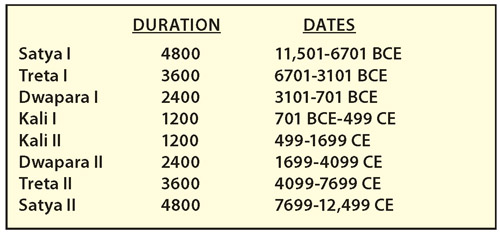
    One assumption, which goes entirely against modernist and scientific opinion, is a cyclical view of history. The cycle starts with the long Golden Age (Satya Yuga) and thence degrades in the quality of life and spirituality of mankind. Even the earth becomes more densely materialised until the low point of the Iron Age (Kali Yuga) is reached. Then the cycle ends in cataclysm, and above its ruins a new golden age dawns.2 Surveying the post-medieval period, Guénon sees the sacred giving way to the secular on every front: in religion, with the fragmentation of the Christian tradition, the driving of esoteric knowledge underground and its replacement by pseudo-traditions; in philosophy, with its denial of true metaphysics; in society, with the lower elements usurping the priestly and noble castes; and in the arts, a sure barometer of a civilisation’s soul. Ever since the Greeks, the West has been the leader in this process, but by now it has infected the entire earth.

    Guénon’s The Crisis of the Modern World and The Reign of Quantity and the Signs of the Times are the testament of his devolutionary theory and probably the best entry-point to his work. The latter title is his description of the tail-end of the cycle, in which quantity usurps quality in every walk of life. After a metaphysical introduction (better skipped and read later), he offers memorable examples and images such as the “Degeneration of the Coinage” and the “Cracks in the Great Wall.” Overshadowing the whole work is the notion of a “Counter-initiation,” a conspiracy of false or inverted spirituality whose goal is to block humanity’s path to authentic initiation.

    Some find Guénon’s approach too intellectual and even inhuman, but they cannot deny that it cuts like a razor through the sloppy thinking and sentimentality prevalent in religious and New Age types alike. It sets standards of integrity against which other spiritual teachings either stand or fall. It assumes that truth has always been there for the finding, so it has no use for the language-games of Western philosophy, nor for a science that thinks it is on track to discover the “God particle.” It also rejects cherished notions such as individualism, equality, and evolution. Instead, it teaches the impersonal Self, the hierarchy of beings (including humans), and the cyclic nature of time. In short, it turns the received world-view upside-down.

    [alert type=”info” dismiss=”no”]If you appreciate this article, please consider a subscription to New Dawn magazine.[/alert]

    Beyond Guénon: Traditionalism’s Founding Fathers

    Such was evidently the experience of those who were later grouped under the Traditionalist banner. Ananda Kentish Coomaraswamy (1877-1947) was an art historian whose writings on comparative religion, symbolism, and the critique of modernity paralleled Guénon’s own, though in a more scholarly style. Frithjof Schuon (1907-1998), a German convert to Sufism, made a stir with his first book, The Transcendent Unity of Religions,3 its English translation helped by a promotional blurb by T.S. Eliot – himself a Christian Traditionalist of sorts. In 1962 Schuon’s English friends took over a parapsychology magazine called Tomorrow and later retitled it Studies in Comparative Religion.4 The collaborators included Titus Burckhardt (1908-1984), a Swiss publisher; Marco Pallis (1895-1989), a musician and traveller to Tibet; Martin Lings (1909-2005), an English scholar who assisted Guénon in his last years; Whitall Perry (1920-2005), a Bostonian who compiled a global bible of traditional sources;5 and many others who are now easy to find and research.6 Schuon settled in Bloomington, Indiana, heading a community that combined his personal devotion to “Maryam” (the Virgin Mary, as revered in Islam) with Native American traditions. His most eminent admirer was Seyyed Hossein Nasr (1933-), a highly-placed Iranian academic forced out by Khomeini’s revolution. Nasr became the movement’s most visible representative in the US and, beside his authority on all things Islamic, tried to give a more spiritual direction to the environmental movement.7

    In order to put Guénon’s principles into practice, most of the Traditionalists joined one of the recognised religions, interpreting his critique as requiring an orthodox exoteric practice. Only that, they say, can provide a firm foundation for the higher flights of esotericism that many desire, but for which few are qualified. According to Federico González, the most faithful interpreter of Guénon in the Spanish language, Schuon’s influence betrayed the Perennial Philosophy by turning it into a Perennial Religion.8 Be that as it may, Schuon, Burckhardt, and Lings followed Guénon’s example by becoming Muslims. Those who remained within Christianity chose the Russian or Greek Orthodox churches, or isolated themselves on the extreme wing of traditional Catholicism. Protestantism was not an option, being by definition anti-traditional, though with the example of Eliot’s high-church Anglicanism, a chance was missed there. Orthodox Judaism would seem the obvious choice for Jews, but Leo Schaya, the only identifiable Jew in the group and author of a superb work on Kabbalah, converted to Islam.9 A fourth and last possibility was Buddhism, though Guénon considered it more as a heresy within Hinduism. Hinduism was excluded for Westerners on the grounds that one cannot be a traditional Hindu unless one was born into one of the castes and can follow its prescriptions. The traditions of Native Americans, Africa, and the Far East (Taoism, Shinto), though respected, were impracticable since living esoteric masters are almost impossible to find there. Moreover, in all cases only the most ancient and integral streams were acceptable: not the Sufism of Hazrat Inayat Khan, or the Hinduism of Vivekananda or Aurobindo. So the choice of an exoteric tradition was extremely limited.

    There are of course degrees of leniency among Traditionalists, but to the stricter variety, the vast majority of Christians are schismatics and heretics, cut off – maybe for no fault of their own – from any authentic tradition. Some, like Rama Coomaraswamy (son of Ananda) accuse the Catholic Church of having disqualified itself through the innovations of the Second Vatican Council. Consequently the current pope is an impostor, priestly ordinations invalid, and the sacraments ineffectual. I find this a strange and constrictive view. It is generous enough in allowing that God has revealed himself through different religions, yet it imagines him as only willing to funnel his grace through a very narrow channel in each case.

    Can one have the Traditionalist cake, as it were, without eating it? To judge by the careers of the founding fathers, the answer is yes. Not one of them practiced what the orthodox now preach. Guénon was supposedly initiated by Hindus, entered Islam secretly as a young man, and married a Catholic wife, but was not known as a devout practitioner of any religion until he moved to Cairo in middle age. Coomaraswamy, as the child of a Hindu (Tamil) father and an English mother was strictly speaking an “untouchable” within the Hindu tradition, which of course bothered no one during his life in England and the United States. Buddhism and Neoplatonism seem to have been closest to his heart, but if he had any orthodox practice, no one remarked on it. Schuon, nominally a Muslim, made up his own syncretic rituals, which greatly embarrassed his more orthodox admirers when they were made known.10 In short, they all enjoyed the latitude that Traditionalism allows to independent geniuses, but not to the rest of us.

    A broader concept of Traditionalism would recognise the value of some outsiders to the club. They include Alain Daniélou (1907-1994), who did convert to Hinduism (he was a Shaivite initiate) and lived for many years in Calcutta, corresponding with Guénon and writing fundamental works on Hindu polytheism and music. He also foresaw, and calculated, the inevitable end of the age.11 But this brilliant and charming scholar despised the monotheistic religions and was openly homosexual, so he does not figure on the approved roster. The absence of Henry Corbin (1903-1978) is more surprising, since he alerted the West to the richness of the Iranian philosophic tradition and its concept of the “imaginal world” as the locus of mysticism, symbolism, and art.12 Nasr recognised him as a great scholar and edited his Festschrift,13 but Corbin was a Protestant. Whether Julius Evola (1898-1974) should be included is a matter of dispute. He had a friendly correspondence with Guénon (though they never met), and wrote from a Traditionalist point of view on Taoism, Buddhism, Hermeticism, the Grail, paganism, esoteric sexology, metahistory, mountaineering, and to his lasting detriment, politics. But he rated the Kshatriya (warrior) caste superior to the priestly Brahmins, and had no time for exoteric religion. His work probably finds a wider readership than any other Traditionalist.14 To many he is the intellectual equal of Guénon and Coomaraswamy, and much more helpful with his practical advice on self-realisation in a hostile world.

    In the 1980s the poet and Blake scholar Kathleen Raine (1908-2003) set an example of “broad-church” Traditionalism with her London-based Temenos Academy. It presented lectures, concerts, occasional conferences, and published a journal, benefiting from the patronage of the Prince of Wales – another liberal Traditionalist. Raine had been a member of an occultist order descended from the Golden Dawn. She loved the Neoplatonists, the Renaissance, and Romanticism, was not averse to Theosophy, and greatly admired Corbin. Her mission was to promote the “arts of the Imagination” as against the ugliness, soullessness, and commercialism of modern life and art. I believe she was the only woman to have contributed to Studies in Comparative Religion, and that, too is telling. Women are conspicuously absent from Traditionalism, no doubt because they know how badly the orthodox religions have treated their sex.

    Traditionalism & Post-Modernity

    After the death of Schuon, widely revered as an enlightened master, the movement lost its magnetic pole. Its chief enemy, modernity, was also moribund. But instead of a return to Tradition, the post-modern wave, beginning in France and flooding the whole intellectual world, had extinguished any presumption of metaphysical certainty. Guénon and Evola were less newsworthy than the right-wing extremists reputedly inspired by reading them. The spread of Islamic fundamentalism cast Muslim conversion in an unfavourable light. Most of those who sought a spiritual path outside their Christian, Jewish, or agnostic heritage preferred Zen or Tibetan Buddhism. And the New Age was the exoteric haven for all the rest.

    As the post-Guénonian generation passed away, Traditionalism became ripe for the historians. The academic study of Western Esotericism, a relatively new discipline, took notice of it, though only as one current among many others. Mark Sedgwick’s Against the Modern World was the first attempt to encompass the whole Traditionalist phenomenon, and the first many academics had heard of it.15 Another is Setareh Houman’s From Philosophia Perennis to American Perennialism.16 (In the United States, home of the political euphemism, Traditionalists became “Perennialists.”) Houman explains how Guénon and his successors adapted the Renaissance concept of a perennial philosophy and a prisca theologia (primordial theology) as old as the human race, and supplies a wealth of historical details found nowhere else. Both books are essential to the dispassionate student of the movement.

    Needless to say, the blogosphere swarms with passionate opinions on both sides. It is much less demanding to hang out there, or shoot one’s mouth off, than to read Guénon’s or Coomaraswamy’s books from cover to cover. At the serious end of the spectrum, Mark Sedgwick maintains a website (www.traditionalists.org) with a moderated discussion board. So does James Wetmore (www.sophiaperennis.com), the heroic publisher of Guénon’s Collected Works. James Cutsinger is gradually doing the same for Schuon’s works (www.cutsinger.net). Charles Upton, an ex-beat poet turned Sufi, brings the Traditionalists’ critique up to date with a series of books on the Reign of Quantity’s further products, such as UFO cults, drug mysticism, postmodernism, neopaganism, and the New Age.

    Since the world failed to end or transmogrify in December 2012, the New Age dragons are hardly worth slaying, but Traditionalists are drawing on some of the apocalyptic energies that still hang in the air. One who claims, or is claimed, to be a Traditionalist is the Russian philosopher Alexander Dugin (b.1962). Is he the secret link through whom Guénon is influencing the political chess-game of Vladimir Putin?17 Some think so. Duginian geopolitics sees the Atlanticist hegemony as the tool of the Counter-initiation, and a united Eurasia under Holy Russia as the great hope of the future. Others, such as the Islamic eschatologist Imran Hosein, view the world situation through the myth of the Antichrist, whether they assign that role to the current pope, the US President, the State of Israel, radical Islam, or “Dajjal.” Like Jean Robin, author of “René Guénon, the Last Chance of the West”18 and many other books of occult history, they may actually cheer on the Counter-initiation for speeding the arrival of a post-apocalyptic golden age. Another French writer of Romanian origin, Jean Parvulesco (1929-2010), was apparently Dugin’s inspiration. Parvulesco’s books are like something imagined by Umberto Eco: convoluted, learned, hysterical, and infatuated with Guénon, necromancy, fascism, the cosmic destiny of France, and a collective death-wish.19

    Lastly I must mention the longest book yet written about Guénon.20 The author, who goes by the name of Louis de Maistre, admires him tremendously but suspects that he was partly under Counter-initiation control. That movement, in de Maistre’s view, stemmed from the Manichean heresy that gave an independent and equal existence to the evil power, and the temptation to ally oneself with it. Its main agents in the modern world were the Sabbatian and Frankist movements, to whose infiltrations Guénon himself was not immune. Hence his early involvement with mediumship and his embrace of the sinister myth of Agarttha. In the view of this earnest and erudite author, even Guénon needs to be purified from anti-traditional tendencies.

    Traditionalism for Seekers

    Apart from these extremes, what does Traditionalism have to offer? First, it puts our spiritual destiny first and foremost. We are on earth to fulfil it, though we may do so in very earthly ways (Traditionalists love the crafts!). In looking for guidance, we have the option of joining one of the authentic traditions and regulating our lives through it. For the esoterically-inclined, each tradition has symbols that give access to a metaphysical teaching. Lacking effective mystery-schools, to penetrate to this level is the best initiation we can hope for. To take examples from the Abrahamic traditions, one can recite the Nicene Creed, read the Quran or the Torah, and understand them in an esoteric sense that would be incomprehensible to one’s fellow believers. This is of course what Kabbalists and Sufis do, though Christianity has lost the structures that once facilitated it.

    But what if one has no attraction to religions which have so often brought out the worst in people, and continue to do so? There are, after all, other paths open. One might become a Bahai or a Mormon; join the A.M.O.R.C. or another Rosicrucian order; take up yoga and meditation, “transcendental” or otherwise; join an Anthroposophical (Rudolf Steiner) community or a Gurdjieff group; assert one’s ethnic roots in neopaganism; find a temple of the Hermetic Order of the Golden Dawn, or become a wiccan; join the OTO or some other group under Aleister Crowley’s influence; practice alchemy, physical or spiritual; try Chaos Magick; take an Ayahuasca vacation. The spiritual smorgasbord becomes so long that it is hard to choose from it.

    Traditionalism rejects the lot. One of the characteristics of the Kali Yuga is the psychic influences which, in Guénon’s picturesque image, sneak through the cracks in the Great Wall that once protected traditional civilisations. Hence the proliferation of phony sects, channelled teachings, exploitative cults, and other spiritual dead ends. These include fundamentalism, a modern phenomenon distinct from regular exoterism because its agenda, hidden or overt, is always political. One does well to ask: (1) Do these purported spiritual paths have any roots in an authentic revelation, or are they personal inventions? (2) Do they give access to metaphysical realisation? (3) Are claims of filiation from some extinct tradition, such as Egyptian or Celtic, believable? (4) Do they exist to benefit their members, or to benefit themselves and their leaders? I am not saying that this disqualifies all the offerings mentioned above, but it certainly shortens the list.

    After taking due notice of this negative and purgative side of Traditionalism, there remains the greater, positive side. It is the realisation through knowledge, which can come about without any institutional support, simply through reading and meditation. The Traditionalists’ books are themselves initiatic. If you are ripe for them, they hit like a bombshell. Part of you is blown out of the normal world, though other parts still have human feelings, desires, and faults. You pick up the newspaper the next day, and see everything in a different light, realising that a collective insanity has grasped the human race. Yet you are no longer entirely in its clutches, and there are allies across the centuries in those who have resisted the current. Art, poetry, literature, and music take on new meanings as gifts from an unpolluted source, and they may mean more to you than any religion. As you read on, you may discover the Hermetic, Gnostic, and Neoplatonic treasures hidden in the Abrahamic religions, and the philosophic teachings of the Far East (Vedanta, Taoism, Buddhism), interpreted with unprecedented clarity. If you are temperamentally suited to them, they bring an ineffable joy. In short, this is an adventure second to none, and also, as Plato promised, the ultimate love affair, for philosophy means the “love of wisdom.”

    Minor parts of this article appeared in “Facing the Traditionalists” in Gnosis Magazine no. 7 (Spring 1988), 23-28, reprinted in Jay Kinney, ed., The Inner West (New York: Tarcher/Penguin, 2004), 292-302.

    [alert type=”general” dismiss=”no”]This article was published in New Dawn 147.[/alert]

    [alert type=”success” dismiss=”no”]If you appreciate this article, please consider subscribing to help maintain this website.[/alert]

    Footnotes

    1. These and the rest of Guénon’s Collected Works are published in English translation by Sophia Perennis. See www.sophiaperennis.com
    2. See Joscelyn Godwin, “When Does the Kali Yuga End?” New Dawn 138 (May-June 2013).
    3. Frithjof Schuon, The Transcendent Unity of Religions, Faber & Faber, 1953.
    4. Just as Guénon had taken over an occultist journal, Le Voile d’Isis, and given it an academic-sounding title, Études traditionnelles.
    5. Whitall N. Perry, ed., A Treasury of Traditional Wisdom, George Allen & Unwin, 1971.
    6. Studies in Comparative Religion is now online at www.studiesincomparativereligion.com. A select anthology of articles from the journal, out of print but well worth finding, is Jacob Needleman, ed., The Sword of Gnosis, Penguin, 1974.
    7. See Seyyed Hossein Nasr, Religion and the Order of Nature, Oxford University Press, 1996.
    8. See Federico González Frías, Diccionario Simbólico-Iniciático y de Temas Misteriosos, Thot, 2013, and the special Guénon number of Symbolos: Revista Internacional de Arte, Cultura, Gnosis, nos. 9-10 (1995).
    9. See Leo Schaya, The Universal Meaning of the Kabbalah, tr. Nancy Pearson, George Allen & Unwin, 1971. Information on Schaya’s conversion is from www.sophiaperennis.com/frequently-asked-questions/.
    10. See Mark Sedgwick, Against the Modern World. Traditionalism and the Secret Intellectual History of the Twentieth Century, Oxford University Press, 2004, 170-77.
    11. See Alain Daniélou, While the Gods Play: Shiva Oracles and Predictions on the Cycles of History and the Destiny of Mankind, tr. Barbara Baker, Michael Baker, and Deborah Lawlor, Inner Traditions, 1987.
    12. See especially Henry Corbin, Spiritual Body and Celestial Earth from Mazdean Iran to Shi’ite Iran, tr. Nancy Pearson, Princeton University Press, 1977.
    13. S.H. Nasr, ed. Mélanges offerts à Henry Corbin, Teheran, Institute of Islamic Studies/Montreal: McGill University, 1977.
    14. See especially Julius Evola, Revolt against the Modern World, tr. Guido Stucco, Inner Traditions, 1995, and many other works from the same publisher.
    15. See note 11.
    16. Setareh Houman, From the Philosophia Perennis to American Perennialism, tr. Edin Lohja, Kazi, 2014
    17. See several articles in New Dawn 111 (Sep-Oct 2008).
    18. Jean Robin, René Guénon, la dernière chance de l’occident, Trédaniel, 1983. Also René Guénon, témoin de la Tradition, Trédaniel, 1986.
    19. See Jean Parvulesco, La spirale prophétique (Trédaniel, 1986), which was dedicated to Jean Robin. Also L’Étoile de l’empire invisible, Trédaniel, 1993.
    20. Louis de Maistre, René Guénon et les “Supérieurs Inconnus”: Contribution à l’étude de l’histoire mondiale “souterraine”, Arché, 2004. See my forthcoming review in Theosophical History.

    © New Dawn Magazine and the respective author.
    For our reproduction notice, click here.
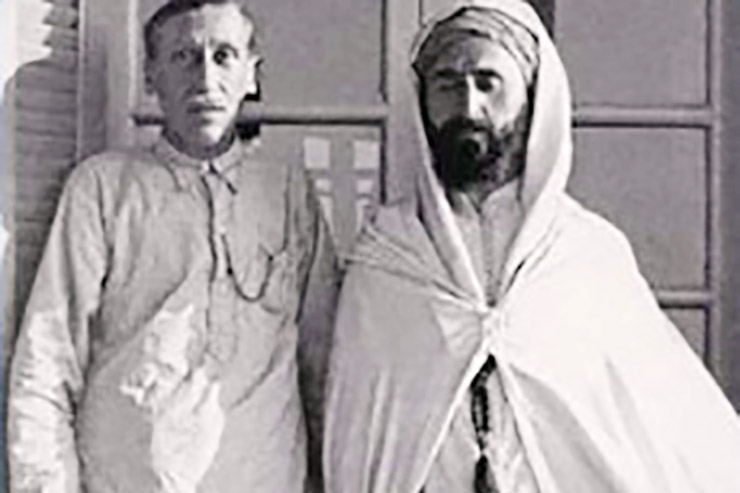
  • When Does the Kali Yuga End?

    When Does the Kali Yuga End?

    From New Dawn 138 (May-June 2013)

    The widespread belief that an age is ending and a new one dawning is part of a cyclical concept of time common to most philosophical cultures. The best known versions are the Four Ages of Greek mythology and the Hindu myth of the Four Yugas. The purpose of this article is to clarify some of the confusion that exists around them, to set out the actual figures as given by Eastern and Western authorities, and to discourage unthinking acceptance of a currently popular theory.1

    The earliest European source of the myth is Hesiod, a Greek poet of the eighth century BCE. In his Works and Days (lines 109-21) he describes the ages as a cycle of decline, from Golden to Silver, Bronze, and Iron. He adds the interesting idea that these ages do not only change the quality of life, but the after-death state of humans. The people of the Golden and Silver Ages, when they died, became spirits who watch over and benefit the human race. The people of the Bronze Age were not immortal in that sense, but went down to a twilight existence in Hades. Perhaps influenced by the Trojan War, Hesiod here inserts an “Age of Heroes” of whom a few crossed the ocean to enjoy a private Golden Age under its ruler Cronos (Saturn). But this did not stem the degeneration for the rest of mankind, which hurtled down to the nadir of the Iron Age. For Hesiod it was too soon to tell their after-death fate, but things were not looking good for them.

    Post-classical culture learned of the Four Ages mainly through Virgil and Ovid. In the first book of his Metamorphoses (I, 89-261) Ovid describes them and their races as declining in happiness and virtue until the universal Deluge. After that a new order of humans, animals, and plants was raised up from the earth. Christians saw a similarity with the biblical story of Noah’s Flood, but even more so in Virgil’s prophecy of a new Golden Age in his own time. It may have been intended to flatter the Emperor Augustus, who had brought peace after Rome’s civil war, but the mention of the Virgin made it applicable to Christ:

    Now comes the last age, sung by the Cumaean Sibyl:
    The great order of ages starts anew.
    The Virgin returns and Saturn’s reign resumes:
    A new race of men is sent from heaven.
    (Eclogue IV, 5-8)

    The Abrahamic religions (Judaism, Christianity, Islam) do not share the pagan concept of multiple cycles of creation and destruction. Monotheisms have room only for one cycle, with the Garden of Eden before the Fall as equivalent to the Golden Age. To continue the parallel, the Silver Age might be that of the biblical patriarchs who were still intimate with God; the Bronze Age that of the prophets and sacred kings; the Iron Age, from the Babylonian exile up to the present day. The cycle will end with Judgment, after which the Christian elect enter the New Jerusalem and Muslims the Garden of Paradise. Jews have their corresponding Messianic expectation. All three religions promise that in the end God will set things right, or in pagan language, that the reign of Cronos will return.

    Incidentally, one of the recurrent themes of the Golden Age is that during it, the earth’s axis was perpendicular to the ecliptic (a topic treated in my book Arktos2). If this were so there would be no seasons, but equal day and night throughout the year. Plants and trees would fruit continuously, and the years would pass uncounted. Eternity could well describe the human experience of time under such conditions, which ceased when the axis was knocked off kilter. It will be restored at the next Golden Age, when the earth resumes its proper axial position. Whether or not there is any scientific basis to this myth makes no difference to its power and the “thought experiment” that goes along with it.

    The Four Ages (Yugas) of Hinduism

    Hindu tradition has its own version of the Four Ages, and it was probably from there that it reached the Greeks and other Indo-European peoples. The Puranas and Laws of Manu agree that the four Yugas are in the proportion 4:3:2:1. Their names are Krita Yuga (fortunate age; also called Satya Yuga), Treta Yuga (age of three parts), Dwapara Yuga (age of two parts), and Kali Yuga (age of conflict), the four together constituting a Maha Yuga or Great Age.

    Each Yuga has a dawn and a twilight period, each a tenth of its length, called respectively Sandhyá and Sandyásana. The Vishnu Purana gives their durations in divine years, each counting for 360 human years, as follows:3

    ndmain138 64

    To relate these durations to history we need an actual date, and this is supplied by the Hindu astronomers. They agree that the Kali Yuga began at midnight between February 17 and 18, 3102 BCE. From that we can calculate that the transition to the Golden Age will occur around 427,000 CE. It hardly seems worth bothering about something so far outside the time-scale of human experience. But before we dismiss these figures as pure fantasy, we should know that they are not peculiar to Hinduism. Some of them appear in very different contexts, with such precision that there is no question of chance coincidence.

    Berossus, who records the Babylonian chronology, was a priest of Bel and had a school of astronomy on the island of Kos in the third century BCE. He gives the figures for the reigns of the ten Assyrian kings who preceded the Flood: they total 420,000 years.4

    In China, according to the early missionary researcher Père Prémare, the early dynasties were respectively of 13 and 11 kings, each of whom ruled or lived 18,000 years. Prémare understandably doubted this, but if we do the arithmetic, (13 + 11) x 18,000 comes to 432,000 years.5

    The Icelandic saga called the Poetic Edda describes the preparations for the apocalyptic battle at the end of time, when Valhalla’s warriors issue forth against the Fenris Wolf:

    Five hundred doors | and forty there are,
    I ween, in Valhall’s walls;
    Eight hundred fighters | through one door fare
    When to war with the wolf they go.6

    800 fighters going through each of 540 doors totals 432,000. So the number of warriors gathered in Valhalla on the last day is again the number of years in the Kali Yuga, the last age of the Maha Yuga cycle.

    The authors of Hamlet’s Mill, Giorgio de Santillana and Hertha von Dechend, called this a “remarkable and disturbing coincidence.”7 This is because the theory of an archaic worldwide culture with cosmological knowledge is anathema to official prehistory. One breach in the conventional view is due to Ernest McClain, one of the most original and ingenious researchers of our time. He has uncovered evidence of a kind of multidisciplinary game played with these self-same numbers which hinges on musical tuning systems. Those in the know included the Babylonians, the Vedic poets, Plato, the compilers of the Hebrew scriptures, the earliest Christians and Gnostics, and whoever gave the Quran its present form. For example, McClain interprets the Arks of Babylonian and Hebrew legend as multi-story diagrams that enclose, or “save” from the flood all possible numbers, the ones needed for calculating the calendar and the musical scale. In the case of Noah’s Ark, the significant number is none other than 432,000.8

    McClain is a radical with regard to the history of ideas, but even more so are the Traditionalists, who take the numbers not as a philosophical game but as encoding precise knowledge of cosmic and historical time-cycles. René Guénon (1886-1951), one of the few great thinkers to have worked from this assumption, accepted that the four Yugas are in the proportion of 4:3:2:1, but questioned the Puranic figures. The zeros were put there simply to mislead, he says,9 and for good reason. If people knew the real dates, they would try to predict the future, which is unwise “because in practice, such knowledge brings many more problems than advantages.”10 The essential thing is the number 4320, which Guénon takes as representing the Maha Yuga: the set of four Yugas that embraces the entire history of present humanity. But 4320 years is obviously too short a period, just as the 4,320,000 years of the Puranas is too long. There were two basic problems: first, to find the correct multiplier of 4320 in order to arrive at the true length of the Maha Yuga, and second, to find the anchor in known chronology. Guénon seems to have worked backwards from knowledge of another cycle, that of the precession of the equinoxes which is traditionally given as 25,920 years (4320 x 6). Assuming that the Krita Yuga or the “timeless” Golden Age lasted for a whole precessional cycle, this gives the following durations for the four Yugas in human years, with a total of 64,800 years or 4320 x 15:

    Krita, 25,920
    Treta, 19,440
    Dwapara, 12,960
    Kali, 6480

    For all his warnings about attempts to predict the future, Guénon planted straightforward clues, mostly in footnotes, to show how he connected these durations to known chronology. Writing about Atlantis, he says:

    We think that the duration of the Atlantean civilisation must be equal to a “Great Year,” understood as half the period of the Precession of the Equinoxes. As for the cataclysm that brought it to an end, certain concordant data seem to indicate that it took place 7200 years before the year 720 of the Kali Yuga: a year which is itself the departure point of a familiar era, but one whose origin and significance are no longer known to those who currently use it.11

    Guénon typically does not reveal the “concordant data,” but his commentator Jean Robin explains:

    If one knows that the era in question is none other than the Jewish one, whose beginning is traditionally placed 3761 years before the Christian era, it is easy to deduce… the “theoretical” end-date of the cycle. The beginning of the Kali Yuga would thus be in the year 4481 BCE (3761 + 720), and its end would have to come 6480 years later, i.e. in the year 1999 (6480 – 4481).12

    We can now reconstruct Guénon’s chronology as follows:

    ndmain138 65

    Robin was writing in the early 1980s. He reminds us that 1999 is the one date specifically mentioned by Nostradamus as when “a great King of Terror will come from the sky.” But like every other world-ending date, it has come and gone.
    [alert type=”info” dismiss=”no”]If you appreciate this article, please consider a subscription to New Dawn magazine.[/alert]

    The orientalist and musicologist Alain Daniélou (1907-1994) knew the Hindu tradition from the inside and was a correspondent of Guénon’s. He too could not accept the extremely large figures given in the Puranas, and reduced them in a different way. There are some problems with his method (explained in my book Atlantis and the Cycles of Time), but it is enough here to give his figures for comparison. Daniélou’s historical peg is the traditional date for the beginning of the Kali Yuga, 3102 BCE, which he says “represents a cosmological reality linked with an alternation in influx from the planetary spheres; it is not an arbitrary date.”13

    ndmain138 66

    By these calculations, the Kali Yuga’s final phase began with World War II. Daniélou, although a much more cheerful type than the saturnine Guénon, was a complete cultural pessimist. He writes that, “the final catastrophe will take place during this twilight. The last traces of this present humanity will have disappeared in 2442.”14 I can imagine him adding, with a smile, “et bon débarras!” [and good riddance!].

    Guénon also corresponded with Gaston Georgel (1899-?), an independent scholar of whom almost nothing is known. He had found that historical events tend to replicate each other at certain rhythmical intervals. Some of his parallels are impressive, such as that of the medieval kings of France with Louis XIV-XVI, at an interval of 539 years (77 × 7), or that of the English and French revolutions, 144 years apart. Georgel first published his cyclical theories in 1937 as Les rythmes dans l’histoire (Rhythms in history).15 He was as yet unaware of Hindu traditions, and his large-scale cycle was one of 2160 years. This is the traditional duration of an astrological age, twelve of which make up the precessional cycle of 25,920 years. Georgel renames the Age of Aries the “Cycle of Abraham,” and the Age of Pisces the “Cycle of Caesar,” which he dates from 130 BCE. He arrived at that date, he says, from “a deep study of the Christic cycle” and the fact that “according to Virgil’s Fourth Eclogue, the sun at autumn equinox then entered the sign of Virgo.”16 That sounds authoritative, but as anyone who has studied the astrological ages should know, the borders of the constellations are not fixed (unlike the regular, fictive constellations counting from the spring point as 0° Aries). Consequently the time when the equinoctial sun moves from one to the next is debatable. For instance, the dates given by various authorities for the beginning of the Aquarian Age range from 1760 (Godfrey Higgins) to 2160 (Paul Le Cour).17 

    Guénon agreed that many of Georgel’s coincidences were extraordinary. The next year he wrote his own contribution to the subject, “Some Remarks on the Doctrine of Cosmic Cycles” (1938), in which he interpreted the Puranic numbers as given above. After World War II their correspondence resumed. Georgel returned the compliment by adopting Guénon’s Yuga chronology but stuck to his own dating, saying that “to facilitate our research, we will here adopt the date of AD 2030 that was proposed as a working hypothesis in our first book, for the end of the Manvantara” (i.e. the Maha Yuga of 64,800 years).18

    Georgel found corroboration of the 2030 end-date in a book to which Guénon himself lent much credence: Beasts, Men and Gods by Ferdinand Ossendowski. This best-selling book published in 1922 plays a large role in the myth of Agarttha, which I have treated elsewhere.19 It culminated with a prophecy that the King of the World is supposed to have made in Mongolia in 1891:

    In the fiftieth year only three great kingdoms will appear, which will exist happily seventy-one years. Afterwards there will be eighteen years of war and destruction. Then the peoples of Agharti will come up from their subterranean caverns to the surface of the earth.20

    The fiftieth year from 1891 is 1941. The happy period of 71 years under three great kingdoms lasts from 1941 till 2012. Then 18 more years bring us exactly to 2030.21

    We now have four suggested dates for the end of the Kali Yuga, and with it the end of the present set of four ages. The Puranic figures, taken literally, place it about 427,000 years in the future. Jean Robin, following Guénon, reckoned that it would end in 1999. Daniélou calculated that the Kali Yuga entered twilight phase in 1939 and will end completely in 2442. Georgel’s multiple cycles converge on the year 2030. After that a new Krita/Satya Yuga initiates the next cycle.

    Sri Yukteswar’s Hindu Yuga system

    Many readers will be familiar with the system proposed by Sri Yukteswar Giri (1855-1936). It has had such favourable publicity in recent years that it is widely believed to be the authoritative Hindu Yuga system.22 Sri Yukteswar adopts as his Maha Yuga a 24,000 year period, supposedly that of the precession of the equinoxes. He assigns half these years to a set of descending Yugas in the traditional proportion 4:3:2:1. By taking the “divine years” of the Puranas (see the first table, page 64) as human ones, they total 12,000 years. Then comes his real innovation: the cycle does not repeat, but starts a new set of four Yugas in reverse order. The link to historical chronology seems to be the traditional Kali Yuga starting-date of 3102 BCE, but moved to 3101 and to a different place in the Yuga sequence. From this it is easy to construct a table of Yuketeswar’s system:

    ndmain138 67

    As in the Puranic system, each age is framed by sandhis or periods of mutation at its beginning and end, each worth 1/10 of the Yuga. Thus a Kali Yuga proper lasts 1000 years, with periods of 200 years preceding and following it. In 1894 Yukteswar wrote:

    In 1899, on completion of the period of 200 years of Dwapara Sandhi, the time of mutation, the True Dwapara Yuga of 2000 years will commence and will give to mankind in general a thorough understanding of the electricities and their attributes.23

    The essence of Yukteswar’s system is that it places present-day humanity in an ascending, rather than a descending curve. This is so contrary to all traditions that we must look for its source elsewhere. Upper-caste Indians like Yukteswar may have resented being colonised by the British, but they had bought into the European myth of progress through science. Yukteswar believed that around 1700 the world had entered an “electrical” age. The discovery of electricity and its uses signified to him that man was attaining a finer perception than in the purely materialistic age that had preceded it. Before that, in the dual Kali Yuga, “the intellectual part of man was so much diminished that it could no longer comprehend anything beyond the gross material of creation.”24

    Only historical ignorance can excuse such a statement. The period in question, from 701 BCE to 1699 CE, saw the birth of Buddhism, Zoroastrianism, Taoism, Jainism, and Vedanta; of the Orphic and Pythagorean movements, the mysteries of Isis, Serapis, and Mithras, the birth of post-exilic Judaism, Druidry, Christianity, Manicheanism, Gnosticism, Catharism, and Islam. On the esoteric side it witnessed Zen and Vajrayana Buddhism, Sankhya philosophy, Kabbalah, Sufism, theosophy both Neoplatonic and Christian, Rosicrucianism, and the arts of magic, alchemy, and astrology. Reports of miracles were commonplace, and belief in non-material realities such as oracles, curses, the Will of God, the Devil, transubstantiation, or witchcraft was so intense as to cause major wars and persecutions. Finally around 1700, with the scientific revolution and the Enlightenment, came a rising tide of disbelief in anything spiritual, leading to the atheism and scientific materialism of today’s elites.

    The Jains and some Buddhist sects also had an up-and down cyclical system, which may have been one of Sri Yukteswar’s inspirations, though their time-scale far exceeds his. His other ingredient was a rough approximation of the precessional cycle to 24,000 years instead of the astronomers’ 25,770 or the traditional 25,920. He anchored it in historical chronology with a clearly political motive, for, along with another future guru, Sri Aurobindo Ghose, he belonged to a secret anti-colonial movement called precisely Yugantar, meaning “New Age” or “Transition of an Epoch.”25 There was a strategic purpose behind the announcement in 1894 that the Kali Yuga was over and the Dwapara Yuga, a better age, already in progress; also behind the emphasis on 1899, only five years away, as the year that the new epoch would come into its own. In the early years of the twentieth century, the movement’s propaganda announced that the “sinful Iron Age was over” and urged insurrection. This is not an attack on Sri Yukteswar and those who respect him and his disciple Yogananda, but simply a reminder that even sages have their agendas. Guénon said as much about the authors of the Puranas!

    What is at stake here is more than allegiance to one authority or another. It is whether one’s world-view allows (1) that humanity as a whole passes through predetermined cycles, and (2) that these are fixed chronologically, hence predictable if one can find the key. For what it is worth, I lean towards the first but not the second, because I trust the microcosm as a guide to understanding the macrocosm, and vice versa. Every one of us is passing through a predetermined cycle whose dates are unpredictable. Barring accidents, we are making our way from the Golden Age of childhood, through the bitter-sweet Silver Age of adolescence and the combative Bronze Age of maturity, to the Iron Age of decline and death. Then we may start afresh, but we certainly don’t repeat the process in reverse! Just as one can estimate someone’s life expectancy by their age, state of health, habits, etc., so one can make a guess at that of civilisations and maybe the entire human race.

    The traditional descriptions of the Kali Yuga, and especially of what Guénon in 1944 called the “Reign of Quantity,” fit the modern world perfectly, and that may give us an idea of our position in the cycle. But like an old person recovering from one close call after another, we seem to be holding on and must be grateful for each new day.

    More information and extensive research on this subject matter can be found in Joselyn Godwin’s book Atlantis and the Cycles of Time (Inner Traditions, 2011).

    [alert type=”general” dismiss=”no”]This article was published in New Dawn 138.[/alert]

    [alert type=”success” dismiss=”no”]If you appreciate this article, please consider subscribing to help maintain this website.[/alert]

    Footnotes

    1. This article quotes and adapts material explained more fully in my book Atlantis and the Cycles of Time (Rochester, Vt.: Inner Traditions, 2011).

    2. J. Godwin, Arktos, The Polar Myth in Science, Symbolism, and Nazi Survival (Kempton: Adventures Unlimited, 1996), 13-18.

    3. Compiled from Vishnu Purana, 1:3; see also Linga Purana, 4:24-35; Laws of Manu, 1:68-82.

    4. Eusebius, Chaldaean Chronicle, 1:8.

    5. Joseph Henri Marie de Prémare, Discours préliminaire, in Joseph de Guignes, ed., Le Chou-King, un des livres sacrés des Chinois (Paris: Tilliard, 1770), li.

    6. The Poetic Edda, Grimnismol, 23, trans. Henry Adams Bellows.

    7. Giorgio de Santillana and Hertha von Dechend, Hamlet’s Mill: An Essay on Myth and the Frame of Time (Boston: Gambit, 1969), 162.

    8. Ernest G. McClain, The Myth of Invariance: The Origin of the Gods, Mathematics and Music from the Rig Veda to Plato (New York: Nicolas Hays, 1976), 149.

    9. What follows is summarised from René Guénon, “Quelques remarques sur la doctrine des cycles cosmiques,” in Formes traditionnelles et cycles cosmiques (Paris: Gallimard, 1970), 22-24.

    10. Ibid., 21.

    11. Ibid., 48n.

    12. Jean Robin, Les sociétés secrètes au rendez-vous de l’apocalypse (Paris: Guy Trédaniel, 1985), 67.

    13. Alain Daniélou, While the Gods Play: Shaiva Oracles and Predictions on the Cycles of History and the Destiny of Mankind, trans. Barbara Bailey et al. (Rochester, Vt.: Inner Traditions, 1987), 193.

    14. Daniélou, While the Gods Play, 197.

    15. Gaston Georgel, Les rythmes dans l’histoire, 3rd ed. (Milan: Archè, 1981; 1st ed. 1937).

    16. Ibid., 164.

    17. See Atlantis and the Cycles of Time, 346-48.

    18. Gaston Georgel, Les quatre âges de l’humanité (Exposé de la doctrine traditionnelle des cycles cosmiques) (Milan: Archè, 1976; 1st ed. 1949), 87.

    19. See J. Godwin, “Agarttha: Taking the Lid Off the Underground Kingdom,” New Dawn 109 (2008), 59-62; also the investigations by Marco Baistrocchi, “Agarttha: A Guénonian Manipulation?” trans. J. Godwin (Fullerton, Ca.: Theosophical History, 2011) and Louis de Maistre, Dans les coulisses de l’Agartha l’extraordinaire mission de Ferdinand Anton Ossendowski en Mongolie. (Paris: Arché, 2010).

    20. Ferdinand Ossendowski, Beasts, Men and Gods (New York: Dutton, 1922), 314.

    21. Gaston Georgel, Le cycle Judéo-Chrétien, sceau et couronnement de l’histoire humaine (Milan: Archè, 1983), 34.

    22. This system is explained in Jnanavatar Swami Sri Yukteswar Giri, The Holy Science (Los Angeles: Self-Realization Fellowship, 1990; 1st ed. 1949), 7-18.

    23. Ibid., 15.

    24. Ibid., 13.

    25. See Terrorism in Bengal: A Collection of Documents on Terrorist Activities from 1905 to 1939, ed. Amiya K. Samanta (Calcutta: Government of West Bengal, 1995), 1:155. Accessed through Wikipedia article “Mokshadacharan Samadhyayi.”

    © New Dawn Magazine and the respective author.
    For our reproduction notice, click here.
  • Athanasius Kircher’s  Theatre of  Marvels

    Athanasius Kircher’s Theatre of Marvels

    The museum of Athanasius Kircher (1602 – 1680) in the Jesuit College of Rome was an obligatory stop for high-class tourists, from John Evelyn the diarist to Queen Christina of Sweden, but they never knew what to expect. The college porter would report their arrival via an acoustic intercom (see illustration 1), and Kircher or some young assistant would set the machines going.

    As the visitors entered the museum, everything was abuzz. A statue of the Goddess Isis might greet them by spraying water from her multiple breasts (see illustration 2). A mechanical lobster might vomit up various liquids for their refreshment. Clocks played hymns and told the time in every country of the world. A statue called the ‘Delphic Oracle’ would answer any questions one put to it, probably in suitably gnomic terms, for to tell the truth it was connected by a tube to another room where a stooge was placed. Alternatively soft chamber music might issue from its mouth. A miniature of the Colossus of Memnon, the famous sounding statue of Egyptian Thebes, would greet the sun with the music of plucked strings.

    Once some visitors, coming inside on a cloudless day, were promised rain, and as they scoffed, Kircher turned on a hidden tap and drenched them with an artificial shower. Other devices simulated perpetual motion, or presented edifying religious themes, like the resurrection of Christ in a glass sphere. Much was done with mirrors and magnets, and of course there was the famous magic lantern, projecting a frightful image of a soul in Hell.

    While Father Kircher certainly had a sense of humour, every one of these contraptions had a serious side. One would have to plunge into his books, some of them a thousand pages long and all in Latin, to understand how magnets manifest the cosmic quality of attraction, which is in turn an image of Divine Love; how the ancients used machines just like Kircher’s to fake the miracles of their idolatrous and demonic religions; how water can be forced to defy gravity, as it does in Nature when the winds drive it into the vast caverns concealed beneath every mountain range (see illustration 3).

    Kircher explains how music enters the ear and stirs up the subtle spirits that permeate the body, causing delight; how the heavenly bodies mark time, which can be measured by sundials, moondials, and even a sunflower; how the metaphysical principles of light and darkness govern the visible world.

    1. Bugging a Building. The man in the upper room (F) is able to eavesdrop on conversations in all the other rooms of the building, as their sound is gathered in their domed ceilings (D, Z, S, N) and funnelled to point E. (Musurgia Universalis, 1650, II, 296)
    1. Bugging a Building. The man in the upper room (F) is able to eavesdrop on conversations in all the other rooms of the building, as their sound is gathered in their domed ceilings (D, Z, S, N) and funnelled to point E. (Musurgia Universalis, 1650, II, 296)

    2. The Great Mother Goddess. When the candles (D, E) heat the upper dome, expanding air goes down the columns and forces the milk in the lower cylinder up (as in a coffee percolator), to issue from the statue’s breasts. (Oedipus Aegyptiacus, 1652, II, ii, 333)
    2. The Great Mother Goddess. When the candles (D, E) heat the upper dome, expanding air goes down the columns and forces the milk in the lower cylinder up (as in a coffee percolator), to issue from the statue’s breasts. (Oedipus Aegyptiacus, 1652, II, ii, 333)

    3. Where Rivers Come From. The action of the wind causes the sea to form whirlpools, driving the water inland through underground channels. These disgorge in huge caverns beneath the mountains, whence the water issues as rivers and returns to the sea. (Mundus Subterraneus, 1665, I, 254)
    3. Where Rivers Come From. The action of the wind causes the sea to form whirlpools, driving the water inland through underground channels. These disgorge in huge caverns beneath the mountains, whence the water issues as rivers and returns to the sea. (Mundus Subterraneus, 1665, I, 254)

    If the visitor was not merely a tourist but a fellow scholar, Kircher could produce manuscripts in every known language – and he seemed to know them all. He had, after all, deciphered the most enigmatic of writings, the Egyptian hieroglyphs. There was a large collection of artefacts from non-European cultures, for the Jesuits were busy as missionaries in every known land. They had special instructions to send reports and anything portable back to the museum in Rome (and a few of them are still there).

    Kircher explained that idols from China and India, Mexico and Peru were nothing but degraded images of Egyptian gods, and these in turn were the personifications of the forces of nature, mistakenly worshiped. He could show how the human race had all descended from the four couples saved in Noah’s Ark, and how the universal language had split into today’s multiple tongues. That was the fault of Nimrod, the presumptuous builder of the Tower of Babel, which was supposed to reach the Moon but now lies in a heap of ruins. Kircher could pass around a brick salvaged by an explorer from that very tower.

    Along the centre of the museum stood a series of model obelisks, copies of the ones that had been shipped from Egypt and erected by various Roman emperors. With irresistible conviction, Kircher read their hieroglyphic inscriptions, not as the dull records of pharaohs but as sonorous prose-poems treating the origin of the cosmos, the workings of the elements, and the wonders of Egypt’s life-giving river.

    In Kircher’s mind, everything was connected to everything else. “All things are at rest, bound by secret knots,” he wrote in his book on magnetism. The past was an open book: given sufficient erudition, it would be possible to trace all languages, migrations and religions to their source, as surely as the River Nile sprang from a cavern beneath the ‘Mountains of the Moon.’

    He held to the Hermetic doctrine that the human body, a microcosm, reflected the macrocosm, so that every organ was ruled by a planet, every part by a sign of the Zodiac from Aries at the head to Pisces at the feet. Every beast, bird, tree, plant, and rock had its place in the same scheme of universal correspondences. To understand these, and to put them to work for healing and other purposes, was the task of the natural magician.

    He also knew how to exploit the invisible powers of nature such as the magnet. But Kircher’s magic was strictly natural, for he was a faithful son of the Catholic Church, and a member of its most zealous monastic order, the Society of Jesus. Any other type of magic, such as the invocation of the planetary spirits or the juggling of kabbalistic formulae, he considered as extremely dangerous, and more than likely to invite demons in disguise.

    By the time of his death Kircher’s world view was already under demolition by the Scientific Revolution. For much of his life he had passed as the man who knew everything, but now his reputation for universal knowledge crumbled, his open mind dismissed as credulity. Some critics suggested that his decipherment of the hieroglyphs, once the admiration of popes and emperors, was sheer fantasy, and when Champollion finally found the key to them in the 1830s, this was confirmed.

    But consider his list of ‘firsts.’ The books that Kircher dedicated to the Coptic language, Egyptology, geology, acoustics, and China were the first works in their field. His successors might disagree with his conclusions, but nowhere else could they find such a rich collection of material on which to base their own theories. Kircher published the first map explaining how ocean currents work; the first map showing how the continental shelves were once dry land; the first map of the source of the Nile, and the first of the mythical island of Atlantis.

    In the oriental field, his book on China contained the first Western picture of a Dalai Lama and of the Potala monastery-palace in Lhasa. It was the first to show the letters of Sanskrit and images of the Ten Incarnations of Vishnu. It reproduced an inscription of over 1,000 Chinese characters that proved there had been Nestorian Christians in China.

    Kircher was the first to compile a Coptic dictionary, to make a scientific study of volcanoes (descending into the crater of Vesuvius as it was erupting); the first to build a machine for composing music and another for sending messages in code. He was the first to propose that diseases were caused by germs, rather than by an imbalance of humors, pestilential vapours, or the wrath of God. If he did not actually invent the magic lantern, ancestor of the cinema, he first illustrated and explained it.

    But in other respects, Kircher came last. He was a late relic of the medieval frame of mind, obedient to the Bible as a source of scientific as well as salvific knowledge. In another respect he was the last Renaissance man, proudly mastering all human knowledge while this still seemed possible. More accurately, he was the last of the Renaissance Hermeticists in the line of Ficino and Pico della Mirandola, faithful to their idea that not just the Jews but the pagans had received a revelation of divine wisdom. He was one of the last scientists to insist that the earth was the centre of the universe (see illustration 4), though it is never clear whether he was just following the party line, as Jesuits were obliged to do until the nineteenth century. He did not believe in unicorns (he knew that their “horns” came from the narwhal) but was sure that Adam and Eve spoke Hebrew, and that dragons still lived in the Swiss Alps.

    4. The Sphere of Love. Kircher invented this hieroglyphic diagram to show how the World Mind (represented by the scarab beetle) infuses the entire universe with love. The concentric spheres represent the fixed stars, the five planets, the sun, moon, and earth. The letters in the corners spell “love” in Coptic letters (PHILO) and in Latin (AMOR). Kircher believed he had discovered them on the Isiac Table, a pseudo-Egyptian artefact from Rome, and made them the basis of his decipherment of the Egyptian hieroglyphs. (Oedipus Aegyptiacus, 1652, II, ii, 112)
    4. The Sphere of Love. Kircher invented this hieroglyphic diagram to show how the World Mind (represented by the scarab beetle) infuses the entire universe with love. The concentric spheres represent the fixed stars, the five planets, the sun, moon, and earth. The letters in the corners spell “love” in Coptic letters (PHILO) and in Latin (AMOR). Kircher believed he had discovered them on the Isiac Table, a pseudo-Egyptian artefact from Rome, and made them the basis of his decipherment of the Egyptian hieroglyphs. (Oedipus Aegyptiacus, 1652, II, ii, 112)

    These facts aside, Kircher had an exuberance and a theatrical flair typical of his own, Baroque era. It is this flair that led him to have his books copiously illustrated, first by local artists in woodcuts, then, as his reputation grew, with the more expensive medium of engraving. After he switched publishers from Rome to Antwerp, his books became more splendid still. The illustrated volumes on the Subterranean World, China, Latium, Noah’s Ark, and the Tower of Babel have always been treasured by book collectors, whether or not they read them.

    The illustrations of Kircher’s works range over tarantulas and snake stones, machines of past and present, suggestions for future machines, mummies, obelisks, oriental scenes, giants, pictures in rocks, pagan divinities, diagrams of the earth’s interior and of Noah’s Ark, wonders of the ancient world, musical instruments, magnetic devices, and much more. They are a delight in themselves (especially, I find, to precocious children), but many also contain enigmas and meanings that need to be teased out, if their full import is to be appreciated. This is especially true of the frontispieces that summarise the whole message of a book in visual form (see illustration 5).

    5. Hermetic Inspiration. Old Father Time has toppled the Pamphilian Obelisk. It lies among the undergrowth, its Fame sadly chained to it. But there is hope! Hermes has come to interpret the hieroglyphs to Kircher’s Muse, who sits backed by ancient texts and ready to write. Harpocrates, infant god of silence, subdues the evil crocodile and indicates that only part of the mysteries are revealed here: we must wait for Kircher’s masterwork Oedipus Aegyptiacus to learn the rest. (Obeliscus Pamphilius, 1650, frontispiece designed by Giovanni Angelo Canini, engraved by Cornelis Bloemaert)
    5. Hermetic Inspiration. Old Father Time has toppled the Pamphilian Obelisk. It lies among the undergrowth, its Fame sadly chained to it. But there is hope! Hermes has come to interpret the hieroglyphs to Kircher’s Muse, who sits backed by ancient texts and ready to write. Harpocrates, infant god of silence, subdues the evil crocodile and indicates that only part of the mysteries are revealed here: we must wait for Kircher’s masterwork Oedipus Aegyptiacus to learn the rest. (Obeliscus Pamphilius, 1650, frontispiece designed by Giovanni Angelo Canini, engraved by Cornelis Bloemaert)

    I like to imagine how Kircher wrote out his thousands of pages by hand, with their multiple languages and scripts, sketched the hundreds of illustrations, submitted his work to the church censors, and then sent it to the Low Countries by wagon, hopefully avoiding war zones. Joannes Jansson, the publisher, organised a small army of engravers who cut every sketch into blocks of boxwood. He or Kircher hired more prestigious artists to draw the frontispieces and the major illustrations, which were then copied onto copper plates, in mirror image, and had to be printed by a special process. Some of them are folding plates two feet tall. Then the whole thing was assembled, indexed, proofed, printed, bound, and shipped around the world with no more delay than a modern publisher takes from manuscript to finished book. And all this without the communications systems that facilitate and bedevil our lives.

    No one today can rival Kircher in knowledge and industry, but that is no reason to give up on understanding what his work was about, and what it has to offer us. He could not be otherwise than Catholic in his core beliefs, any more than people today can abandon their ingrained faith in scientific and political principles. But he gives access to something beyond religion, science, and politics. These come and go, but the nature of things does not change, and exceptional humans have periodically gained some insight into it. This is the meaning of the Renaissance concepts of the prisca theologia (ancient theology) and the philosophia perennis (perennial philosophy), handed down in the writings attributed to Hermes Trismegistus, the Chaldaean Oracles of Zoroaster, the Hymns of Orpheus, the Golden Verses of Pythagoras, the dialogues of Plato, and the treatises of Neoplatonists such as Plotinus, Iamblichus, and Proclus.

    The Hermetic writings seem to sum it up with their teaching of the intelligent design and harmony of the universe, the essential goodness of the world, the invisible web linking all things together, the place of the human microcosm in the cosmic hierarchy, and the destiny of the soul as it descends into the body and leaves it again. This is the heart of the Western Esoteric Tradition. It does not threaten eternal damnation, despise nature, or condemn the material world as evil. To embrace it is a gai savoir, a joyful learning, and Kircher’s example, with all his earnestness, oddity, curiosity, and humour, is an inspiration to do so.

    Illustrations 1-5 courtesy of Cornell University Library.

    Athanasius Kircher’s Theatre of the World is published by Thames & Hudson, London, 2009 (hardcover, 320 pages, 431 illustrations, ISBN 9780500258606). The book is also published in the USA by Inner Traditions, www.innertraditions.com, ISBN 9781594773297.
    [alert type=”general” dismiss=”no”]This article was published in New Dawn Special Issue 9.[/alert]

    [alert type=”success” dismiss=”no”]If you appreciate this article, please consider subscribing to help maintain this website.[/alert]

    © New Dawn Magazine and the respective author.
    For our reproduction notice, click here.