New Dawn – World's Most Unusual Magazine

Author: James O’Neill

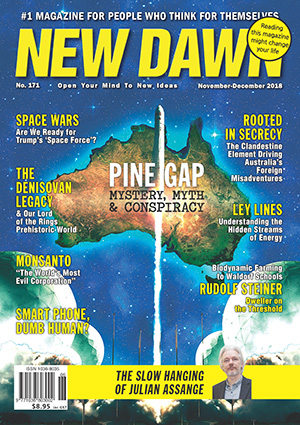
  • Rooted in Secrecy: The Clandestine Element Driving  Australia’s Foreign Misadventures

    Rooted in Secrecy: The Clandestine Element Driving Australia’s Foreign Misadventures

    From New Dawn 171 (Nov-Dec 2018)

    The dominant feature of all Australian politics is that governments come and go, with Labor alternating with the Liberal National coalition, but changes in Australian foreign policy are so slight as to be almost invisible.

    Not since the Whitlam Government was elected in 1972 and promptly recognised the Beijing government as the proper representative of China, and withdrew Australian troops from the enduring fiasco known as the Vietnam war, but more accurately described by Vietnamese themselves as the American war, has there been a truly bold and principle based foreign policy innovation.

    It is one of history’ revealing vignettes that Whitlam’s pre-election trip to China and obvious intention to recognise the PRC as the legitimate government was heavily criticised by Billy McMahon, the Liberal prime minister at the time. McMahon was adhering to what he thought was the Washington line when the United States itself, under Richard Nixon, was already moving to normalise US-China relations. It seems that no one in the United States administration thought to tell McMahon that the policy had changed, thereby exposing McMahon to embarrassment and ridicule. 

    The Whitlam era was notable for another aspect of foreign policy that Australian historians are loathe to approach, but which arguably has had an impact up to and including the present foreign policy stance of both major political parties.
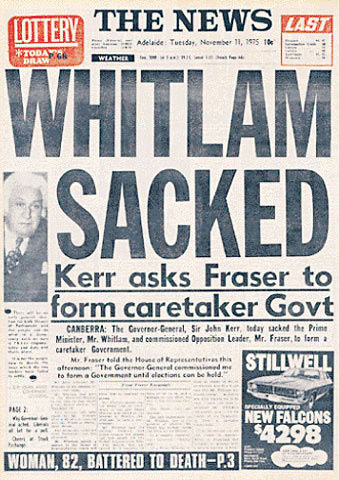
    The day before Whitlam was to make a speech in parliament announcing that the United States run spy facility at Pine Gap in the Northern Territory would be closed, he was deposed in a coup d’état by the Governor General Sir John Kerr. That much is common knowledge and has been widely analysed, in particular by historian Jenny Hocking who is engaged in an ongoing battle to access Kerr’s papers, in particular communications between Kerr and the British Queen.

    His next role was in Indonesia where he was instrumental in the 1965 coup that brought Suharto to power. Between 500,000 and three million Indonesians were murdered in the coup’s aftermath, many of them from a CIA supplied kill list of communists or suspected communist sympathisers.
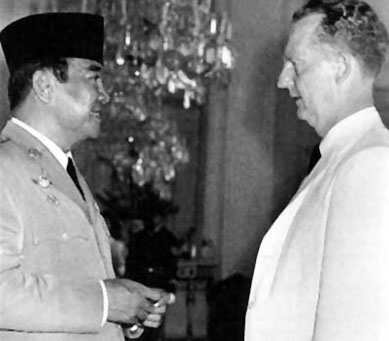
    Marshall Green (right), US ambassador to Indonesia between 1965 and 1968, meeting with Indonesia President Sukarno.

    Less well known was the role of the United States embassy in Canberra where Marshall Green was the ambassador. Green had an interesting career. He had been assigned to South Korea as charge d’affaires where he organised the 1961 coup that brought the dictatorship of Park Chung-Hee to power.

    He was similarly dispatched to Chile where he oversaw the resolution of the ‘problem’ being created for the United States by its left-wing president Allende. Allende was murdered and replaced by a military dictatorship under General Pinochet. Again, hundreds of thousands of Chileans were murdered or ‘disappeared’.

    Whitlam posed a similar ‘problem’ for the Americans with his intention to disclose the CIA’s role in Pine Gap. Thanks to Edward Snowden, it is established beyond doubt that Pine Gap is a giant electronic vacuum cleaner, spying on the communications of Australia and a range of other countries, friend and foe alike.
    Green, known in State Department and CIA circles as the “coup master,” was sent to Canberra as United States ambassador in 1974, specifically to deal with the Whitlam ‘problem’.
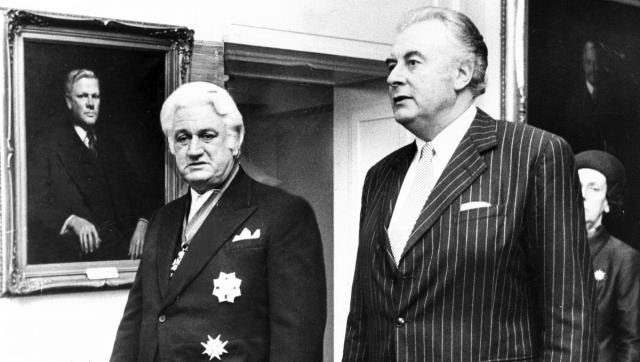
    1974: Sir John Kerr (left) and Australian Prime Minister Gough Whitlam, King’s Hall, Parliament House, Canberra. The day before Whitlam was to inform parliament he intended to close Pine Gap, he was sacked by Kerr. 

    Whitlam was unaware of Kerr’s close ties to the CIA. Neither did he know until 1975 that Britain’s MI6 had been intercepting secret foreign affairs communications for Whitlam’s Office, and passing those onto the Americans.

    On 10 November 1975 Whitlam was shown a Telex message later sourced to the notorious Ted Shackley of the CIA that described Whitlam as a security threat to his own country. The following day Kerr used his power to dismiss Whitlam.

    It has subsequently become clear that Green, Shackley, MI6 head Maurice Oldfield and CIA head William Colby co-ordinated the dismissal of the Whitlam Government, knowing that they could rely on “their man” Kerr to solve the Whitlam ‘problem’.

    My argument is that without knowledge of this historical background it is not possible to fully understand the foreign policy of Australia in subsequent decades.

    Not in Australia’s Interest

    Time and again Australia has undertaken foreign policy initiatives that if viewed from the perspective of Australia’s vital national interests are simply inexplicable. That process has if anything accelerated in recent years.

    In August 1990 Iraq invaded its neighbour Kuwait. Iraq had some legitimate grievances with Kuwait, but the decision to invade, otherwise a blatant violation of international law, was only made after the United States ambassador to Iraq told Saddam Hussein that the United States was not really interested in the argument between Iraq and Kuwait. Saddam took that as a green light.

    There followed a massive propaganda campaign against Iraq, perhaps best exemplified by the appearance of a young woman on US television describing how Iraqi soldiers took Kuwaiti babies from their cots in a Kuwait hospital and smashed them on the concrete floor.

    That the young woman concerned was the daughter of the Kuwaiti ambassador to the United States (not disclosed to viewers) and that she had witnessed no such thing was only part of the lie.

    The Americans assembled a “coalition of the willing” to force the Iraqis to leave Kuwait. Australia was a member of that coalition. The Iraqis were quickly defeated, but that did not prevent the slaughter of the retreating troops. Worse was to come. Sanctions were imposed on Iraq, supported by Australia, resulting in the deaths of more than half a million civilians, including women, children and old persons. This was infamously described by US Secretary of State Madeleine Albright as “worth it.”

    In what sense it was “worth it” for Australia to join this war in the first place, to sustain a role in the blockade and sanctioning of Iraq (tempered by dubious Wheat Board dealings), has never been adequately explained.

    In 2001 Australia again joined a United States led coalition in the attack upon, invasion and occupation of Afghanistan, an occupation still ongoing 17 years later. That the invasion was illegal under international law cannot be seriously argued against. We now know that the decision to invade Afghanistan was made in July 2001, two months prior to the ostensible excuse of the events of 11 September 2001, themselves one of the most distorted and falsified accounts of recent history.

    Nor can Australia explain why, 17 years later, it is still in Afghanistan, the Taliban government having been defeated before Christmas 2001. The official explanation, in so far as it is ever proffered, is that Australia is helping to train Afghan forces. The manifest absurdity of this claim, especially in the face of what are known to be the real reasons for the American invasion, is never questioned in the Australian mainstream media.

    Acknowledging the vital role the heroin crop plays in financing off the books United States operations; control of the gas pipeline from the Caspian Sea basin; the $3 trillion worth of unexploited mineral deposits; and providing a springboard for hybrid warfare operations in Central Asia and China is not permitted in mainstream discourse.

    The Afghanistan misadventure was closely followed by the 2003 invasion of Iraq, now widely regarded as one of the most disastrous United States foreign policy decisions of recent decades. Like so many of these foreign policy ventures, the 2003 Iraq invasion was built upon a multi-tiered pyramid of lies. Weapons of mass destruction are only the best known of these. The repercussions of that disastrous invasion are well documented. Three aspects from the Australian perspective are worth briefly noting.

    The first is that the Howard government did not need to be asked twice to participate. To their credit, they did table in the House of Representatives the legal opinion, poor as it was, that provided the ostensible justification for joining the invasion. But even an abysmal legal argument could not conceal the absolute lack of a national interest argument as to why Australia should join an invasion of a country that posed no threat whatsoever to Australia’s national interests.

    The second consequence was that the invasion spawned a plethora of terrorist groups. That these same terrorist groups are supported with arms, money, political cover and military intervention by the United States and its allies such as Israel and Saudi Arabia is never acknowledged, much less discussed, in either the Australian mainstream media or in political circles.

    Thirdly, the so called “terrorist attack” of 11th of September 2001 has spawned an avalanche of legislation ostensibly aimed at protecting Australia from terrorist threats, but in reality posing the greatest threat of all to human rights and civil liberties in Australia.

    More than 600 pieces of legislation have been passed that directly threaten what many Australians would regard as their basic human rights. Most are unaware of the draconian nature of that legislation. Australia is the only country in the so-called democratic world that does not have a national Bill or Charter of Rights.

    Significant portions of those 600+ Acts or Amendments would not survive judicial scrutiny in those democratic countries that do have a Bill of Rights or equivalent. It is difficult to know what is of more concern: that such legislation could be passed with the willing compliance of the opposition party (regardless of who is in power) or that such systematic erosion of civil liberties is not met with outrage and protest from media and public alike.

    Is Australia any longer a democracy?

    It is now legitimate to ask the question one never expected ever having to pose: is Australia any longer a democracy in any meaningful sense of the word?

    The other military misadventure that should be noted in this context is Australia joining, yet again, a United States led “coalition” attacking Syria. This war, while Australia’s involvement from a military point of view is largely inconsequential, nonetheless reveals several aspects of Australian foreign policy.

    For example, the then prime minister and foreign minister Tony Abbott and Julie Bishop respectively, announced in August 2015 that no decision would be made on joining the Syrian war until the government received legal advice on the matter. In September 2015 they announced that they were going to join that war. What they did not say was that they had received legal advice more than a year earlier. The government has refused (unlike the Howard government in 2003) to release that advice.

    When asked on ABC Radio what was the legal basis for joining the war, Bishop claimed it was pursuant to a request from the Iraqi Government, and also pursuant to the collective self-defence provisions of Article 51 of the United Nations Charter.

    The Iraqi Government issued a statement denying having made such a request; and Article 51 manifestly does not apply. In short, the ostensible reasons were as much a lie as the reasons given for the 2001 Afghanistan invasion and for the 2003 Iraq invasion.

    The real reasons are therefore different. Based on comments made by various government ministers over time, the inference may be drawn that Australia sees involvement in unwinnable, costly and illegal wars with no discernible benefit to Australia as premium payments on the national security insurance policy, the ANZUS Treaty.

    Australia helps the Americans, the argument runs, because in the event that Australia is attacked the Americans will come to their aid under the ANZUS Treaty. Like so many of the justifications put forward by the politicians for involvement in these various wars, this argument also does not withstand scrutiny.

    Unlike Article 5 of the NATO treaty, the ANZUS Treaty requires the parties, effectively now only Australia and the United States, to “consult” in accordance with their constitutional procedures. Notwithstanding the vagueness of this commitment, which is far from any kind of security guarantee, it appears to be an article of faith the United States will in fact come to Australia’s aid in the event that it is ever attacked. Like most faith-based systems, it lacks any empirical basis for the belief that motivates its adherents.

    That adherence to such a policy basis can result not only in involvement in wars, especially illegal ones such as Afghanistan, Iraq and Syria, and done with no discernible national interest, it can actually operate contrary to Australia’s national interest.

    Russia & China

    Two recent examples are the anti-Russian campaign waged by the United States and the United Kingdom in particular, and the trade wars being waged against China by the United States, itself part of a wider anti-China policy that has essentially been a centrepiece of American foreign policy since 1949.

    The anti-Russian campaign manifests itself in endless demonisation of Russia in general and of President Vladimir Putin in particular. Current illustrations of this are the alleged Russian “interference” in the 2016 US presidential election; Russia’s support for the legitimate Syrian government which is alleged to wage chemical warfare on its own people; the assault upon Sergei Skripal and his daughter Yulia in the English city of Salisbury; and the shooting down of MH17 over Ukraine in 2014.

    That there is not a shred of verifiable evidence to support any of these allegations, but rather, conclusive evidence to the contrary, is never acknowledged by the politicians, nor even given reasonable coverage by the mainstream media.

    When confronted with rebuttal evidence, or even shown the manifest absurdities and contradictions of the official narrative, the standard response is either denial or, more commonly, simply ignoring the evidence. A collateral response is to attack the intellectual integrity of the person(s) making the criticism.

    The hostility toward China is even less explicable. China is Australia’s largest trading partner by a very considerable margin. It is the largest source of foreign tourists, the largest source of foreign students, and the third largest source of foreign investment. Australia’s recent decades of prosperity and wealth accumulation owe more to China than to any other country. It is difficult therefore to comprehend the overt hostility, manifesting itself for example in the absurd claims about Chinese intentions in the South Pacific.

    It cannot be only ignorance and prejudice that explains the constant misreporting of China’s Belt and Road Initiative, or issues in the South China Sea, Tibet, Xinjiang province and elsewhere. One possible explanation is proffered by Hugh White who suggests that Australia has never really come to terms with the unique historical phenomenon of where Australia’s largest trading partner (and source of prosperity) is not also its ally.

    While this is undoubtedly true, it does not sufficiently explain the extraordinary degree of obeisance to Australia’s “joined at the hip” American ally. Even the recent revelations of obvious Russian and Chinese military superiority over the Americans have done little or nothing to shake what must now be described as blind and irrational faith.

    From UK colony to American Colony

    One possible explanation, and it is not suggested that it is a sufficient or complete explanation, lies in the history of 1975 outlined above and the multiple other examples of like behaviour by the Americans before and since.

    That is, Australian politicians are acutely aware of the coup organised against Whitlam when he was implementing policies, past and proposed, that the Americans perceived as a threat to their vital interests. That those vital interests include waging perpetual wars for perpetual profit; attempting to maintain a unipolar hegemony over all other nations; and moving ruthlessly to invoke “regime change” upon recalcitrant nations irrespective of their designation as friend or foe, is a lesson not lost upon the Australian body politic.

    Australia has gone from being a British colony to an American one without ever being truly independent. There is nothing in its current policy framework to suggest any imminent change in that position. When accompanied as it is by a progressive erosion of the structural elements of a functioning democracy, the future looks very bleak.

    There is another consequence of having a foreign policy that is in effect no more than an echo of the Washington line. Australia’s region, the “near North,” is undergoing major transformation. In part this transformation is a re-assertion of the traditional dominance of the East, interrupted as it was by the Anglo-American-European imperialism of the past three centuries. That transformation is being driven by the China led Belt and Road Initiative, creating trade and political linkages not only through Eurasia, but also to South America and Africa.

    The BRI in turn is linked to other major trade and security organisations such as the Shanghai Corporation Organisation and Eurasian Economic Union. There are parallel developments in the financial world leading inexorably to the demise of the Dollar based system.

    The unipolar hegemonic world of the past few decades is rapidly disappearing. Australia risks isolation from the prospects offered by this new multipolar world, clinging as it does to the discredited structures of the US dominated system. Even more than a change in policy, Australia needs a change in mindset. A failure to make that adjustment to the geopolitical realities of the 21st century will inevitably lead to Australia fulfilling Lee Kuan Yew’s prophecy of becoming the white trash of Asia.

    [alert type=”general” dismiss=”no”]This article was published in New Dawn 171.[/alert]

    [alert type=”success” dismiss=”no”]If you appreciate this article, please consider subscribing to help maintain this website.[/alert]

    References

    George Williams & Daniel Reynolds, A Charter of Rights for Australia, UNSW Press 2017
    Jenny Hocking, The Dismissal Dossier: Everything you were never meant to know about November 1975, Amazon Australia, 2016
    William Blum, America’s Deadliest Export, Zed Books, 2014
    www.theblogmire.com (on Skripal)
    Alfred McCoy, In the Shadows of the American Century, Haymarket Books, 2017
    Andrei Martyanov, Losing Military Supremacy, Clarity Press, 2018
    David Ray Griffin, Bush & Cheney: How They Ruined America and the World, Olive Branch Press, 2018

    © New Dawn Magazine and the respective author.
    For our reproduction notice, click here.
  • Trending to a Multipolar World: Opportunities & Challenges

    Trending to a Multipolar World: Opportunities & Challenges

    From New Dawn Special Issue Vol 13 No 3 (June 2019)

    At the conclusion of the Second World War, the United States was the overwhelmingly dominant military and economic power. The other major colonial powers, in particular France and the United Kingdom, had been financially exhausted by the war. Germany was shattered, its industry in ruins. The United States had a monopoly on nuclear weapons, and there were serious plans to use those weapons on the Soviet Union (Operation Unthinkable).1

    The Soviet Union had borne the vast brunt of the fighting against the Germans, losing at least 28 million soldiers and civilians, a sacrifice of people and treasure that has never received the acknowledgement in the West that it is due. Generations of Australians and New Zealanders, among others, were raised on the mythology of “plucky Britain” standing alone against the Nazi hoards.

    In fact, as many Russians died during the siege of Leningrad (September 1941– January 1944) as total US and UK casualties combined for the whole war. Nearly half a million Russians were killed in the battle of Stalingrad (July 1942–February 1943), which is more than total US losses for the whole war.

    Had Churchill’s plan for a surprise nuclear attack on the Soviet Union after the defeat of the Germans in May 1945 eventuated, additional casualties would have been incalculable. It is the memory of those horrendous losses during the war, and the treachery of the British and the Americans after the defeat of Germany, that is essential to an understanding of the reaction of Soviet, then Russian, leaders ever since to the actions of the Western powers. 

    Any thoughts of a military confrontation between the West and the USSR was resolved in 1949 when the Soviet Union successfully exploded its own nuclear bombs. Instead of a ‘hot’ war, the two sides engaged in what is generally referred to as a Cold War. That term is somewhat of a misnomer as war was indeed waged on a number of fronts: ideological, propaganda, economic and via a series of proxy actions in third countries.

    The other great shock to American sensibilities in 1949 was the defeat of the Chiang Kai Shek nationalist forces in the Chinese civil war. In what was to be a precedent for the following decades, the United States refused to accept Mao’s Government as the legitimate rulers of China and fought to retain the nationalists as China’s representative on the United Nations Security Council. US Navy ships patrolled the narrow straight between Formosa (known later as Taiwan) and the Chinese mainland. The fiction of Taiwan as representative of China in the United Nations persisted until 1971.

    In an echo of Operation Unthinkable, the United States military command in the Korean War (1950–53) urged US President Truman to allow the use of nuclear weapons against China,2 after China entered the war on the side of the North Koreans. US and Allied forces defied the clear intention of United Nations Security Council Resolution 82 and invaded North Korea, continuing to the Yalu River which marked the border between North Korea and the People’s Republic of China.

    The Allied forces were quickly driven back to the North/South border, itself a unilateral creation by the Americans in 1945 without reference to the citizens of either the North or the South.3 From then until the armistice of 27 July 1953, the United States and Allied troops waged a relentless war against the North. The entire country was devastated with civilian infrastructure almost completely destroyed. That, together with the use of chemical and biological weapons, amount to a sustained war crime against North Korea.4 As is the case with all atrocities committed by the United States and its allies in the almost continuous warfare waged since 1945 against mostly poor and relatively defenceless nations, the issue of accountability for war crimes is a non-issue as far as the Western powers are concerned.

    In the American case, not only do they not subscribe to the International Criminal Court, they have threatened sanctions and worse5 should that body ever have the temerity to investigate the actions of its military personnel or those of its allies, much less prosecute them.

    As a result of that war, North Korea lost an estimated 8 to 9 million people or about one-third of its total population at that time. By comparison, the United Kingdom lost 0.94% of its population during World War II, which lasted twice as long as the Korean War.

    An understanding of that war, as well as the history of United States intervention in Korean affairs, which dates back to the 1880s,6 is essential to understanding the contemporary geopolitical situation on the Korean peninsula.

    Exceptional Interventionism

    The post-World War II military and economic dominance of the United States and its imperviousness to international law had a number of other consequences. In particular, it bred an attitude best expressed in their own self-description of being the “exceptional nation.” The ordinary definition of the word exceptional implies being atypical, extraordinary, or out of the common or usual mode.

    In the American case, however, it came to be equated with much more, in particular a profound belief in all levels of society that their way was the only way. Deviations from their defined path were not to be tolerated, and recalcitrant nations or individuals were subject to “regime change” operations, economic and financial sanctions, and in extreme cases invasion and occupation.7

    These actions always justified in terms of “bringing democracy” or “upholding the rules-based international order” or some other patently self-serving justification.

    It is difficult to reconcile these high-minded concepts with the actual behaviour of the United States and its allies. Operation Boot (UK name) Ajax (US title) on behalf of the Anglo Persian Oil Company overthrew the democratically elected Iranian government in 1953. That coup was reversed with the Islamic Revolution in 1979, an outcome that still dominates United States attitudes and behaviour towards Iran.

    That was followed in 1954 by Operation PBSuccess, the overthrow of the Guatemala government, to the great benefit of the United Fruit Company. Operation Condor from 1968 to 1989 involved the assassination or disappearance of tens of thousands of Latin American civilians, and the installation of a series of brutal dictatorships, all supported by and paying obeisance to the United States.

    The “Whitlam problem”

    From an Australian perspective, there is a common thread running through many of the CIA coups of the post-war era. There was a coup in South Korea in 1961; in Indonesia in 1965 (where more than 500,000 were killed at the instigation of the CIA); Chile in 1973 and Australia in 1975. The common denominator to all four was US State Department diplomat Marshall Green, named in CIA and State Department circles as the “coupmaster.”

    Declassified CIA and State Department documents show that Green was sent to Canberra as US ambassador in 1973 with a specific brief to deal with the “Whitlam problem.”8

    Whitlam was threatening to close Pine Gap spy station; the United States lease was due to expire in December 1975. The Governor General sacked him in November 1975, the day before he was to make an announcement in the Australian Parliament about Pine Gap.

    Again, to return to the earlier point, it is impossible to understand the stance taken by Australia viz a viz the Americans and their illegal wars without understanding the effect that the coup had on successive Australian governments.

    Historian Jenny Hocking makes worthy efforts to uncover the role of the British, and in particular the correspondence between Governor-General Kerr and Buckingham Palace, but in this writer’s view she misses the main point.9 By 1975 the British had become of peripheral relevance to Australia’s geopolitical perspective. Then, as now, Australia was an appendage to US foreign policy, “joined at the hip” in former Prime Minister Malcolm Turnbull’s infamous phrase.

    Australia joined illegal wars in Afghanistan, Iraq and Syria to support the Americans when any vital Australian interest is vanishingly small. 

    Hubris & Containment

    American hubris reached its pinnacle following the collapse of the Soviet Union in December 1991. Boris Yeltsin became president and the following decade was catastrophic for the Russians. Life expectancy plummeted. State assets were sold off at fire-sale prices to Western corporations and Russian oligarchs. Yeltsin, an incompetent drunk, would in all probability have lost the 1996 presidential election were it not for blatant and large-scale US interference to his benefit.10

    That they had “their” man in office only added to the sense of US triumphalism. This history is bitterly ironic given the hysterical and wholly fake allegations of Russian interference in the 2016 US presidential election.

    From an American perspective, the demise of the Soviet Union and the election of a pliable puppet in the form of Yeltsin meant they had won the Cold War. In what was a common and disturbing pattern, the undertaking given by George HW Bush to Mikhail Gorbachev that NATO “would not advance one inch to the east” was almost immediately broken. Successive US presidents have overseen the expansion of NATO and US military bases right up to Russia’s borders.

    This was a pattern repeated in the east with a steady increase in US military bases on China’s borders. They made no secret of the fact that the policy was to “contain” China.11

    Despite the frequent invocation of phrases such as “Chinese assertiveness” or “a threat to America’s allies” in the Asian region, there was never any evidence to support such claims.

    What the US sought to “contain” in fact was the rise of an economic and military powerhouse that threatened US hegemony of the world. On the basis of parity purchasing power, China is now the world’s largest economy, and the gap is destined to widen for the foreseeable future. The US reaction to this has been an increase in economic warfare through sanctions, tariffs, and an unrelenting propaganda barrage to paint each and every positive development emanating from China in negative terms.

    Managing the News

    This is not a new phenomenon. Victor Marchetti told the United States Congress decades ago that the CIA provided $250 million annually (in modern value) to the Asia Foundation for anti-communist academics to disseminate a negative view of China, and paid journalists and publishers elsewhere in the world to do the same.

    Operation Mockingbird was a large-scale CIA program that began in the 1950s to infiltrate student organisations, newspapers and magazines, and other forms of media outlets to “manage” the news in such a way as to favour US interests.12 Any resemblance to the truth was coincidental. The only thing that changed since the 1950s is the scale and the sophistication of the penetration of news outlets.

    The German journalist Udo Ulfkotte’s book Gehanfte Journalisten (Bought Journalists, 2014) which exposed how German mainstream journalists had been compromised, had its English rights bought by a Canadian company but was never published. Amazon does not stock it, although it can be purchased (in German) on Book Depository.

    What is a unipolar world?

    When Vladimir Putin replaced Yeltsin as President of Russia, he initially sought to cooperate with the United States. He has been criticised within Russia for persisting in seeking détente in the face of constant rebuffs and unilateral moves such as the United States withdrawal from the antiballistic missile treaty in 2002, and the aforementioned constant expansion of NATO.

    Putin’s change of heart became most clearly evident when he addressed the Munich Security Conference on 10 February 2007. His speech included the following remarks that are worth quoting:

    “What is a unipolar world?…. It refers to one type of situation, namely one centre of authority, one centre of force, one centre of decision-making. It is a world in which there is one master, one sovereign. At the end of the day, this is pernicious not only for all those within the system but also for the sovereign itself because it destroys itself from within.

    “I consider that the unipolar model is not only unacceptable but impossible in today’s world. Today we are witnessing an almost uncontained hyper use of force in international relations, force that is plunging the world into an abyss of permanent conflicts…. we are seeing a greater and greater disdain for the basic principles of international law. One State, first and foremost the United States, has overstepped its national borders in every way.”

    If the unipolar world is not only unacceptable but “impossible in today’s world,” what then is the alternative?

    The pattern of voting in the United Nation’s General Assembly over the past few decades, in particular, reveals that the overwhelming majority of the world’s nations want a better alternative than the unipolar model dominated by the United States.

    Rise of China

    Those nations see, for example, the transformation of China in the 40 years since the “reform and opening up” of the Chinese economy and society that officially began under Deng Xiaoping. Those reforms have seen more than 600 million Chinese (more than the whole of Europe’s population) lifted into the middle class since the turn of the century.

    China outspends the United States on basic science and technology research by a ratio of 4:1. It leads the world in patent applications with more than twice the number of the United States (1.38 million versus 606.9 thousand in 2017) which in turn represented more than a third of all the world’s patent applications in that year.

    Significantly, Chinese patent applications to the World Intellectual Property Organisation in Geneva grew by 14.2% over the previous year, while United States applications grew by 0.2% (so much for allegations of intellectual property theft).

    The fundamental difference between the rise of China to a dominant position compared to that of the United States is that China does not seek either to dominate the world or to impose its system on others.

    The philosophy underlying China’s international posture was clearly set out by President Xi Jinping in his speech to the World Economic Forum in Davos in January 2017. Again, it is worth quoting some key passages from Xi’s speech:

    “The global economic landscape has changed profoundly in the past few decades. However, the global governance system has not embraced these new changes and is therefore adequate in terms of representation and inclusiveness.

    “(Red Cross founder) Henry Dunant once said ‘our real enemy is not the neighbouring country: it is hunger, poverty, ignorance, superstition and prejudice’.

    “We should pursue a well-coordinated and connected approach to develop a model of open and win-win cooperation. There is a growing call from the international community for reforming the global economic governance system, which is a pressing task for us.

    “We should adhere to multilateralism to uphold the authority and efficacy of multilateral institutions. We should honour promises and abide by rules. One should not select or bend rules as he sees fit. No country should view its own development path as the only viable one, still less should it impose its own development path on others.”

    It is not difficult to identify which country Xi had in mind. The Chinese model of development is seen for example in the following organisations.

    The Belt and Road Initiative (BRI) is the best known of these modern vehicles for multilateral development, but it is far from the only one. Others include the BRICS nations (Brazil, Russia, India, China and South Africa), which has as a primary aim the establishment of an equitable, democratic and multipolar world. Dating from 2001, BRICS developed its own bank and other forms of financial cooperation. It is not a coincidence that both Brazil and India are targets of United States’ foreign policy aimed at undermining their growing relationship with China.

    The Shanghai Cooperation Organisation (SCO) also began in 2001 with six original members (China, Kazakhstan, Kyrgyzstan, Russia, Tajikistan and Uzbekistan). Pakistan and India both joined at the same time in 2017. In addition, there are four observer States (Afghanistan, Belarus, Iran and Mongolia) and six dialogue partners (Armenia, Azerbaijan, Cambodia, Nepal, Sri Lanka and Turkey).

    Countries as diverse as Egypt, Israel and Ukraine among others have applied for observer or dialogue partner status and others in the Middle East such as Iraq, Bahrain and Qatar have expressed interest.

    The North South Transportation Corridor (NSTC) grew out of the Ashgabat Agreement in 2011 and a rail link from Mumbai to Moscow via Iran, Armenia and Azerbaijan is now up and running. Again, a range of countries in proximity to the original route have expressed an interest in becoming part of this transformative transport project. As with the major rail projects that are an integral component of the BRI, these developments have the potential to slash both transport times and costs for goods traversing Eurasia.

    Eurasian Economic Union. This organisation was formalized in 2015 and incorporates Armenia, Belarus, Kazakhstan, Kyrgyzstan and Russia, with Iran signing a free trade agreement in 2018.

    There is a notable overlap of membership of these organisations. They increasingly trade in their own currencies, part of a rapidly increasing move toward the elimination of the United States dollar as the principal medium of international trade. The demise of the dollar from its central role will remove one of the United States’ most powerful tools for imposing its policy preferences upon sovereign nations.

    The reserve status of the dollar has enabled the United States to defy economic logic, running huge internal and balance of payments deficits without the consequences that would ordinarily flow. That day of reckoning is rapidly approaching.

    The United States has for decades neglected its own vital infrastructure and educational standards as more than half of each federal dollar is spent on its military industrial intelligence complex. It has not been value for money, as both Russian and Chinese military technology is significantly superior, as even the Americans now acknowledge.13

    War or Peaceful Development?

    There is little evidence, however, that the United States recognises the cause and effect between its preference for military expenditure over civilian needs; the political, economic and reputational costs of endless wars for and on behalf of vested interests; and its steady decline in the world both in absolute and relative terms.

    The United States will undoubtedly continue waging its wars, whether they are hybrid wars using terrorist proxies which it has done since at least Operation Cyclone in the 1970s, or overt invasions and destruction of sovereign states as in Korea, Vietnam, Laos, Cambodia, Afghanistan, Iraq, Libya and Syria, to name but a few.

    There is a remarkable correlation between victim countries of the past two decades and the “seven countries in five years” identified by US General Wesley Clark.14 

    The world tires of this endless aggression and the chaos which ensues. For an increasing number, the win-win philosophy expanded by President Xi is the most attractive option. This is why more than 128 nations have now signed a Memorandum of Understanding with the BRI, in Africa, Latin America, Island States in the Pacific and Indian Oceans, the Middle East and throughout the Eurasian continent. They clearly view the multipolar world as the preferable alternative. The question is whether they will be able to continue to develop along their preferred path or will the frankly insane US political class make one final attempt at regaining world hegemony, and in the process destroy us all. 

    [alert type=”general” dismiss=”no”]This article was published in New Dawn Special Issue Vol 13 No 3.[/alert]

    [alert type=”success” dismiss=”no”]If you appreciate this article, please consider subscribing to help maintain this website.[/alert]

    Footnotes

    1. J. Walker, Operation Unthinkable: the Third World War, The History Press 2013

    2. C. Posey, ‘How the Korean War almost Went Nuclear’, www.airandspacemag.com, July 2015

    3. B. Cumings, The Korean War: A History, Modern Library 2011

    4. J. Kaye, ‘Revealed: The Long Suppressed Official Report of US Biowarfare on North Korea’, www.medium.com, 20 February 2018

    5. S. Vasaliev, ‘Not Just another Crisis’, www.ejiltalk.com, 19 April 2019 (Part 1); 20 April 2019 (Part 2)

    6. M. Pembroke, Korea: Where the American Century Began, One World Publications 2018

    7. W. Blum, America’s Deadliest Export: Democracy, Zed Books 2013

    8. J. Jiggens, ‘11 November Coup? What Coup?’ www.greenleft.org, 20 November 2010

    9. J. Hocking, The Dismissal Dossier, Melbourne University Press 2015

    10. S. Shane, ‘Russia Isn’t the Only One Meddling in Elections: we do it too’, www.nytimes.org, 17 February 2018; S. Cohen, Failed Crusade: America and the Tragedy of Post Communist Russia, Norton & Co (updated edition) 2001

    11. J. Reed, ‘Surrounded: How the US is Encircling China with Military Bases’, www.foreignpolicy.com, 20 August 2013

    12. C. Bernstein, ‘CIA & The Media’ www.rollingstone.com, 20 October 1977; J. Tracy, ‘The CIA and the Media’, www.globalresearch.ca, 30 January 2018

    13. A. Martyanov, Losing Military Supremacy, Clarity Press 2018; The Saker, ‘Newly Revealed Russian Weapons Systems’, www.southfront.org, 9 March 2018; R. Ridenour, ‘Has the US Lost its Military Supremacy over Russia’, www.counterpunch.org, 4 April 2019

    14. J. Conason, ‘Seven Countries in Five Years’, www.salon.com, 12 October 2007

    © New Dawn Magazine and the respective author.
    For our reproduction notice, click here.