New Dawn – World's Most Unusual Magazine

Author: Louis Proud

  • The Changing Face of Russian Psi Research

    The Changing Face of Russian Psi Research

    From New Dawn 104 (Sept-Oct 2007)

    Were the Soviets really experts in paranormal research? Were they, as some researchers claimed during the Cold War, light years ahead of the rest of the world in the field of parapsychology? If so, what kind of work are the Russians up to today?

    The mysterious case of Robert Toth may shed some light on the matter.

    The Toth Incident

    Robert C. Toth, a Los Angeles Times correspondent, was arrested and detained in Moscow on June 11, 1977. He had been given papers by a Soviet scientist named Valery G. Petukhov, who claimed to be Chief of the Laboratory of Bio-Physics at the State Control Institute of Medical and Biological Research. The papers supposedly disclosed ‘state secrets’ and Toth, of course, had obtained them illegally. He was arrested before he had a chance to examine them properly.

    The papers were supposed to offer proof of Petukhov’s grounding breaking scientific research in the field of parapsychology. When living cell undergo division, Toth had been told, they emit certain particles that can be “detected and measured.” These particles can “carry information,” and their function could “explain the basis for telepathy” and other phenomena of this nature.

    Toth claimed that seconds after he had been given the papers, a small car pulled up beside him, from out of which emerged five men, dressed as civilians. They threw him inside the vehicle, which then sped off. “Our car drove through red lights and down one-way streets the wrong way to a militia [police] station,” writes Toth. “My captors were firm and polite, offering me cigarettes… I was ushered into a room with an inspector who declined my requests to phone the US Embassy but said a Soviet Foreign Ministry official would be called.”

    Toth was detained for a period of several days. He was interrogated by police officers and KGB officials. A senior researcher of the USSR Academy of Sciences, Professor I.M. Mikhailov, was asked to provide expert testimony on the information Toth had been given by Petukhov. “This material is secret and shows the kind of work done in some scientific institutes of our state,” he declared.

    Suddenly told he was free to go, Toth caught the next flight back to America. The Toth incident hit newspapers all over the world, including The Washington Post and The New York Times. The story was quickly forgotten, however – at least by the public. “But,” writes the late Martin Ebon, “intelligence analysts understood that Toth had gotten into his hand, if only for a few moments, one of the tips of the enormous iceberg of top secret Soviet research into psychic powers of the human mind.”

    The Psi Warfare Gap

    Another possibility is that the Toth incident was a Soviet orchestrated conspiracy – a set up, in other words. Between 1969 and 1971, during the height of the Cold War, American intelligence sources discovered the Soviets had a deep interest in parapsychology, were researching the subject extensively, and that this research was being well-funded by the Soviet military and the KGB.

    In 1967, it was learned, the Soviets were spending an estimated US$500 million a year on parapsychological related research. The money was being used to fund fourteen separate research institutes. This naturally worried the Americans, who deduced a hostile intent behind the Soviet’s actions.

    As to why the Soviets were spending so much money on psi research, a brief explanation needs to be given. In the aftermath of World War II, Soviet authorities feared the prospect of becoming involved in yet another war – this time with the West – much in the same way that the US authorities were greatly concerned about a possible ‘communist takeover’ and nuclear war with the Soviet Union.

    Acting as an important catalyst for the Soviet ‘psychic boom’ was a story that appeared in the French periodical Constellation, entitled ‘Thought Transmission – Weapon of War’. The article, published in 1959, told of supposed telepathy experiments that were being conducted by the US military. The article claimed that the ‘receivers’ in the experiment, located onboard the submerged nuclear submarine Nautilus, had successfully managed to pick up telepathic transmissions from the ‘senders’ back on land.

    When the US Navy denied the story, the Soviets assumed they were lying, deciding to take it seriously. Not wanting to be left behind in the field of psi research, the Soviets took immediate action. The father of Soviet parapsychology, the physiologist Leonid L. Vasiliev, who, in 1923, had been ordered by Joseph Stalin to investigate telepathy, made the following remark in April 1960, while addressing a group of top Soviet scientists: “Today the American Navy is testing telepathy on their atomic submarines. Soviet scientists conducted a great many successful telepathy tests over a quarter of a century ago. It’s urgent that we throw off our prejudices. We must again plunge into the exploration of this vital field.”

    One theory is that the Nautilus story was a clever piece of American disinformation, aimed to lead the Soviets astray, so that they would start to invest money and energy into a decided waste of time. “Whether telepathic communication experiments were ever carried out aboard the USS Nautilus is a topic that generates much doubt and dispute among paranormal enthusiasts,” explains W. Adam Mandelbaum in his book The Psychic Battlefield.

    Regarding the Toth incident, the parapsychologist Elmar R. Gruber has some interesting comments to offer: “The feeling remains that the Soviets were attempting to impart deliberate disinformation in their power game with the Americans… Did they intend to create the impression that they were far more advanced in this field than the Americans?”

    Intentional or not, the impression was certainly there, as proven by a now declassified 1972 Defence Intelligence Agency (DIA) report, entitled ‘Controlled Offensive Techniques’. The report begins by stating that parapsychology in the Soviet Union is very different to that in West, the former being a “multi-disciplinary field consisting of the sciences of bionics, biophysics, psychophysics, psychology, physiology and neuropsychology.” The Soviets had named this field ‘psychotronics’. The nearest English equivalent to the word is mind (psycho) energy applications (-tronics).

    The report mentions that Soviet scientists had explored “detrimental effects of subliminal perception techniques,” which, using “telepathic means,” might be “targeted against the US or allied personnel in nuclear missile silos.” The report continues: “The potential applications of focusing mental influences on an enemy through hypnotic telepathy have surely occurred to the Soviets… Control and manipulation of the human consciousness must be considered a primary goal. Soviet knowledge in this field is superior to that of the United States.”

    Psychic Discoveries Behind The Iron Curtain

    The year 1970 marked the publication of a now classic book on Soviet psychic research. Called Psychic Discoveries Behind the Iron Curtain, it was written by two Western journalists, Sheila Ostrander and Lynn Schroeder. During their stay in what was then the Soviet Union, Ostrander and Schroeder travelled far and wide, interviewing numerous scientists who were conducting groundbreaking research in the field of parapsychology.

    When Psychic Discoveries was first released, it caused quite a stir, sparking both public and government interest in ‘psychic warfare’. Had it never been written, the US government’s fear of ‘Soviet psychic mind control’ would probably not have reached the extreme that it did.

    Kirlian photography, dowsing, telepathy, eyeless sight, telekinesis, hypnosis – these are just some of the subjects that Ostrander and Schroeder investigated and wrote about. Their book showed that Soviet scientists had already managed to gain a practical understanding of how these types of phenomena were possible, while the rest of the world was lagging far behind.

    So what had the Soviets discovered about the unknown powers of the human mind? And how did they approach the study of this enigmatic subject?

    Experiments In Distance Influence

    Existing in the Soviet Union were two different types of parapsychology – one official, the other secret. The former was allowed to exist in public, while the latter was taking place at well-funded, top secret state-controlled research institutes, and was largely military-based. Parapsychologists who wanted to do research in non-military areas often had difficulty obtaining funding.

    To divert attention away from the real research they were doing, the Soviets had established, in Moscow, a military-based parapsychology centre called the Institute of Problems of Information Transmission. To help it look authentic, the Soviets made sure it was well-guarded at all times. As for the real research, that was being conducted in a remote region of western Siberia, near the pioneer town of Novosibirsk, in a massive research facility named Akademgorodok, ‘Science City’.

    Built after World War II, Science City was composed of around 40 scientific centres, and housed tens of thousands of scientists and their families. It was developed, says Martin Ebon, “with such single-mindedness that even the names of the streets and city squares reflect its nature. For example, one could take a bus down Thermophysics Street, get off at the corner of Calculators Street, and walk across the Institute of Hydrodynamics Square.”

    One of its scientific centres was called the Institute for Automation and Electrometry. Located here was the mysterious Special Department 8, where entry was not permitted unless one had access to a special code. Security was such that the code was changed on a weekly basis. For the sixty or so scientists employed at No. 8, their job was to investigate telepathy and distant influence, otherwise called ‘biocommunication’.

    For psi to be possible, thought Soviet scientists, there had to be an exchange of energy taking place. At No. 8, writes Ebon, “physicists sought to discover the nature of ‘psi particles’, the elusive elements that some Soviet scientists regarded as essential to the function of such psychic techniques as biocommunication and bioenergetics.”

    In one series of experiments, telepathic communication was tested among people. Experiments in telekinesis were also conducted. Some of the subjects used were Tibetan monks and Siberian shamans, who had been carefully selected by the KGB for their remarkable psychic abilities. The American journalist Jim Marrs says the KGB “laboriously screened more than a million people in an effort to locate ‘super naturals’, persons with the greatest amount of psychic power.”

    In another series of experiments – which were conducted at No. 8 before it was closed down in 1969 – August Stern, one of the scientists who worked there, and his colleagues tested the properties of biophotons, to see if they could account “for some inexplicable forms of communication.” Photons, by the way, are the smallest physical units of light, the quanta of electromagnetic radiation. Biophotons are a type of photon that radiate from living cells. In this experiment, bacteria was placed on two sides of a glass plate, “to see whether a fatal disease could be transmitted through the glass” with the help of biophotons. “There were also experiments with photon waves, in which frogs’ eyes were used as a more sensitive measuring instrument than a machine,” recalls Stern, who migrated to France in 1977.

    Due to the shutting down of No. 8, the photon communication experiments conducted by Stern and his colleagues were not fully realised. Several years later, however, three Soviet scientists attempted the same problem, achieving impressive results. Their names were Vlail Kanachevy, Simon Shchurin and Ludmilla Mikhailova. In their experiments, two groups of cells were used, one of which was contaminated with a virus, the other of which was not. They were placed adjacent to each other, but remained physically separate. When the two groups were isolated by quartz glass, which ultra-violet waves are able to penetrate, the non-contaminated cells suddenly became contaminated; they ‘caught the disease’, in other words. When regular glass was used, which ultra-violet waves cannot penetrate, this did not occur; the non-contaminated cells remained healthy.

    These results confirmed what many Soviet scientists in the field of bioenergetics had previously theorised – that living cells can ‘communicate’ with each other over distances, and in a non-chemical way. When the affected cells were attacked by the virus, says Shchurin, they “virtually cried out loud about the danger” and “their cry freely penetrated the barrier of quartz glass… Something highly improbable happened. These waves were not only perceived by the neighbouring cells, they also conveyed the sickness to the neighbouring cells.”

    The KGB Takes Control

    No later than 1970, the KGB had taken control of the country’s research in parapsychology. It should be mentioned, however, that the KGB was an integral part of everyday life in the Soviet Union, permeating society on all levels, so their influence on psi research was not exactly sinister.

    During the 1970s, more and more KGB-controlled parapsychology research institutes were established. Because the nature of Soviet psi research was becoming increasingly secret, many Western parapsychologists lost contact with their colleagues ‘behind the iron curtain’. In addition, rumours began to circulate about sinister ‘mind control’ experiments being conducted in clandestine Soviet labs, as well as the development of dangerous ‘psi weapons’ to be used against the West. As mentioned in Psychic Discoveries, a Czech engineer named Robert Pavlita claimed to have invented a ‘psychotronic generator’, which could apparently store, enhance and radiate ‘psychotronic’ energy.

    Also known as ‘bioplasmic’ energy, Soviet scientists claimed that this energy was behind all manner of psychic phenomena, that it filled and animated all living things, and could also be harnessed for healing purposes. Using a process called Kirlian photography, the ‘bioplasmic body’ – or aura – could allegedly be photographed. The Austrian-American scientist Dr. Wilhelm Reich called this energy ‘orgone’. He invented a device called an ‘orgone energy accumulator’, consisting of a box lined with alternating layers of organic and inorganic materials, which was apparently able to trap this energy.

    “A psychotronic generator can influence an individual or a whole crowd of people. It can affect a person’s psyche mentally and emotionally. It can affect memory and attention span. A psychotronic device can cause physical fatigue, disorientation, and alter a person’s behaviour,” asserts the Soviet biologist Edward Naumov. According to Ostrander and Schroeder, “certain generators can arouse fear, anxiety, anger, insomnia, depressions and suicidal thoughts and even lead to cerebral thrombosis.” The KGB, says Naumov, spent more than half a billion roubles on developing psychotronic technology.

    When it comes to alleged Soviet mind control technology, nothing can compare to the immensity of project ‘Woodpecker’. Apparently, using an array of giant transmitters, the Soviets began to beam extremely low frequency (ELF) modulated signals all over Western Europe, Australia, North America and the Middle East. These transmissions, claims Tim Rifat, were designed to “permanently rewire the neural networks in the brains of the entire Western population, thereby destroying their social cohesiveness…” The KGB, it is said, had copied the brain frequencies of pathological criminals, mental patients, clinically depressed people and socio-psychopaths, whose brain wave maps they had studied. It is these negative frequencies that were beamed down on the West – from the early 1980s until the collapse of the Soviet Union in 1991. Assuming it was real, project Woodpecker appears to have been a tremendous success!

    Apparently, the Soviets were not the only ones who managed to create advanced ‘psi weapons’ and large scale ‘mind control’ devices; so had countries in the West – most notably the US. This technology was allegedly used against the Soviet Union, in an attempt to bring about its destruction.

    Soviet journalist Emil Bachurin claimed in Young Guard magazine that Yuri Andropov, the head of the KGB, spoke of several “psi weapons centres” in Canada, adding that “Canadian research must be surpassed.” The information was given to Bachurin by a KGB general. Other members of the Soviet intelligence community have mentioned the existence of advanced ‘psi weapons’ created by the West, even claiming that such devices have been used many times against civilian populations in the Soviet Union.

    Comments made by the late Aleksander Lebed, a distinguished General and popular politician, seem to support such charges. As mentioned in New Dawn No. 43, Lebed insisted that Western secret services had carried out a series of psychological operations (or PSYOPS) against the Soviet Union, involving “tech­nologies of psycho-semantic pro­gramming,” brainwashing and hypnosis. One such psychological operation, claimed Lebed, was the collapse of the Soviet Union itself, which had been artificially organised by the West.

    Modern Psi Research

    Since the collapse of the Soviet Union, some interesting psi experiments have been conducted in Russia, many of which involved animals and other living things. The Russians have long tried to develop biological ‘psi detectors’ – and so far they’ve been partially successful. Their theory is that psi is primarily a biological process, and that living systems react far more strongly to mental influence than do material systems. Researchers in the US have also attempted to develop psi detectors, or ‘thought switches’ – electronic devices that respond to mental intention.

    The eminent American parapsychologist Dean Radin has already managed to construct a prototype of such a device, which, he says, “incorporated a new type of physical detector, involving a matrix of random-number generators, and some advanced statistical and signal-processing techniques to detect the predicted psi-influence.” As Radin explains in his book The Conscious Universe, countless laboratory experiments have shown that random number generators – devices that produce a stream of random digits – can be influenced by a focused mind. These ‘electronic coin flippers’ are designed to operate in a truly random fashion, producing an equal number of ‘heads’ and ‘tails’. Due to the influence of consciousness, however, these devices begin to function in a more ordered way, producing statistically less probable results, such as more heads than tails, for instance.

    Georgi Gurtovoy, head of the Laboratory on Applying Isotopes in Ophthalmology in Moscow, and Alexander Parkhamov, a physicist, have done some interesting research on the distant influence of living systems that produce random fluctuations. Some of their instruments have been able to register micro-PK effects. They have also carried out anomalous distant influence experiments involving a species of fish called Gnathonemus petersii. These fish are known for their ability to emit pulsed electric signals, which they use to assist navigation in the darkness. Psychics were asked to slow down the rate of the fishes’ pulses – allegedly with much success.

    Also compelling are the experiments of Sergei Speransky, a toxicologist at the Institute of Hygiene in Novosibirsk. His findings seem to confirm the existence of ‘morphogenetic fields’, as proposed by the controversial British biologist Dr. Rupert Sheldrake. In one experiment, a population of mice that had grown up together in the same cage were split into two groups. The mice in one group were fed as usual, while the mice in the other group were made to starve. Almost instantly, noticed Speransky, the non-starving mice began to consume much more food than before, as though trying to compensate for their ‘friends’. There appeared to be a telepathic link between the two groups. Had the non-starving mice picked up a signal from the starving mice, warning them that food was scarce and that they needed to increase food consumption and storage within their bodies?

    Out of the thirty experiments conducted, twenty-seven had a positive outcome. Speransky then carried out an additional series of experiments, so as to refine his methodology, varying weight, sex and other variables. Once again, the results were nothing less than astonishing. Speransky concluded that the “biological significance of the rapid increase in weight in mice which received signals about starvation from their ‘friends’ is clear: a danger of starvation has to give them an additional stimulus to be sated.”

    It’s interesting to note that the famous British biologist Sir Alister Hardy had formulated a similar theory to Speransky’s, stating that telepathic communication between animals might play a role in evolution and adaptation. Animal habits, he suggested, might be spread by “telepathic-like means.” He further suggested that a “psychic pool of existence” might operate among members of a species.

    This brings us back to the work of Sheldrake. He believes morphogenetic fields contain the information that is required to shape the form of living things, much in the same way that certain frequencies of sound ‘contain the information’ to create complex geometric patterns in sand. We are reminded here of the bioplasmic body, which, as mentioned in Psychic Discoveries, was thought by Soviet scientists to be “some kind of matrix, some kind of invisible organising pattern inherent in living things.” Morphogenetic fields also serve a social function, shaping behaviour on both an individual and group level.

    Furthermore, due to a process called ‘morphic resonance’, remarkable forms of ‘communication’ – not limited by space or time – are able to occur within a species. “The fields organising the activity of the nervous system are likewise inherited through morphic resonance, conveying a collective, instinctive memory,” writes Sheldrake. “Each individual both draws upon and contributes to the collective memory of the species. This means that new patterns of behaviour can spread more rapidly than would otherwise be possible.”

    A Revolutionary New Approach

    When, in the 1920s, parapsychology was beginning to establish itself as a legitimate scientific field in the Soviet Union, Leonid Vasiliev greatly influenced the course of its development – more so, by far, than anyone else. In his highly influential books, articles and presentations, he continued to assert that the study of psi phenomena should be approached in a purely physiological manner, as he feared it would be exploited by proponents of “religious superstition.”

    Nowadays, parapsychology in Russia is undergoing a gradual yet fundamental transformation, thanks partly to a growing interest in transpersonal psychology. New approaches to psi research are being sought out, with an emphasis on Asian religious concepts. Scientists, moreover, are no longer so averse to ‘spiritual’ ideas. Ever since the end of the totalitarian communist regime, explains Gruber, “spirituality and religion, the pre-eminent features of the Russian soul, which were forced underground for so many decades, are again raising their claims to be the guiding principles in the understanding of man and his position in the world.”

    Russia’s leading expert on parapsychology, Alexander Dubrov, who is regarded as the spokesman for the modern approach to psi research, believes there is more to psychic phenomena than biology and neurophysiology. Psi phenomena, he says, is a quantum-mechanical process, and man is a ‘quantum subject’. Be that as it may, says Dubrov, the physical side of psi and the psychophysics of altered states of consciousness should also be taken into account, so as to gain a complete understanding of the matter.

    [alert type=”general” dismiss=”no”]This article was published in New Dawn 104.[/alert]

    [alert type=”success” dismiss=”no”]If you appreciate this article, please consider subscribing to help maintain this website.[/alert]

    References

    Lucid Viewing – The Way Forward in Remote Viewing, How it all Started – In Russia, www.bibliotecapleyades.net/vision_remota/esp_visionremota_9a.htm

    Compare Martin Ebon, Amplified Mind Power Research in the Former Soviet Union, 1996-7, www.biomindsuperpowers.com/Pages/Ebon1.html

    Deep Black Magic: Government Research into ESP and Mind Control, Ingo Swann on CIA/ESP Connection, 1995, www.mindspring.com/~txporter/iswann.htm

    Rupert Sheldrake, Biologist and Author, Morphic Fields and Morphic Resonance – an Introduction, 2005, www.sheldrake.org/Articles&Papers/papers/morphic/morphic_intro.html

    Elmar R. Gruber, Psychic Wars: Parapsychology in Espionage – and Beyond (Blandford, UK, 1999)

    Jim Marrs, Psi Spies (AlienZoo Publishing, US, 2000)

    Sheila Ostrander and Lynn Schroeder, Psychic Discoveries (Marlowe & Company, USA, 1970

    Adam Mandelbaum, The Psychic Battlefield: A History of the Military-Occult Complex (St. Martin’s Press, USA, 2000)

    Dean Radin, The Conscious Universe: The Scientific Truth of Psychic Phenomena (HarperCollins, USA, 1997)

    Tim Rifat, Remote Viewing – What is it, Who uses it and How to do it (Vision Paperbacks, UK, 2001)

    Holly DeNio Stephens, The Occult in Russian and Soviet Culture (Cornell University Press, 1997)

    © New Dawn Magazine and the respective author.
    For our reproduction notice, click here.

  • The Russian Occult Revival

    The Russian Occult Revival

    Known in certain new age circles as the focus of the Aquarian age, Russia is currently undergoing a massive ‘occult revival’. Interest in paranormal phenomena, occultism and parapsychology has never been more prevalent. With the end of the communist system, which brought with it the elimination of censorship, the Russian people were no longer forced to repress their interests in spiritual and religious matters. This led to a ‘spiritual renaissance’ of sorts – which is very much in full force today. 

    According to the British paranormal expert Colin Wilson, “occult powers seem to be a matter of temperament.” When it comes to second sight and telepathy, he says, the Irish are by far the most gifted. The Germans seem to produce the world’s best astrologers, while a significant number of talented clairvoyants are of Dutch origin – Croiset and Hurkos being two examples.

    Russia, claims Wilson, “tends to produce mages – men or women who impress by their spiritual authority; no other nation has produced a spiritual equivalent of Tolstoy and Dostoyevsky, or even of Rozanov, Merezhkovsky, Soloviev, Fedorov, Berdaev, Shestov. Certainly no other nation has come near to producing anyone like Madame Blavatsky, Gregory Rasputin or George Gurdjieff. Each is completely unique.”

    To find further evidence of Russia’s deep involvement in matters of a spiritual nature, one needn’t look very far. Simply by visiting bookshops and street vendors in Moscow, St. Petersburg, Kazan, Novosibirsk and other Russian cities, one will notice an abundance of titles on occult topics. Birgit Menzel, a professor of Russian Culture and Literature, says “it is almost impossible to understand contemporary Russian literature without being equipped with an encyclopaedia of the occult.” In the 1990s, around 39 percent of all non-fiction publications in the humanities dealt with topics of an occult-esoteric nature.

    Not surprisingly, television programs on paranormal phenomena are also very popular in Russia. One such show is called ‘Inexplicable, But True’, which first aired on Russian television in early-2005. “The show’s creators are betting that the Russian audience’s readiness to believe in psychic powers and UFOs will guarantee good ratings,” says Brian Droitcour, a Moscow Times journalist. In the first episode of the program, its host, Sergei Druzhko, an actor and singer with a passionate interest in the paranormal, spoke about his near-death experience. While skiing near Mount Elbrus, Druzkho had a serious accident, and was buried in a snowy ravine for several hours, before being found by rescue workers. Were it not for the help of “supernatural forces,” believes Druzko, he would not have survived the incident.

    In a nationwide survey conducted in 2005, involving 1500 respondents in 100 residencies in 44 regions, Russian interviewees were asked the following question: “Are you interested in publications and television programs dedicated to various paranormal phenomena (UFOs, telepathy, ESP, magic, astrology, etc.)?” An astonishing 48 percent of respondents answered yes. Forty-eight percent said no, and four percent were unsure.

    One of the most popular television shows in Russia during the late-1980s and early-1990s was called ‘120 Minutes’, featuring the faith healer Allan Chumak. While working as a reporter and TV journalist, Chumak set out to expose faith healers, researching the subject extensively. He soon discovered, however, that he himself had healing powers and “an extremely strong aura” – or so he claimed. David Remnick, a Washington Post journalist, describes his own experience of watching the show: “Sitting behind a desk, the owlish middle-aged man with a mane of white hair stares at the camera and flings his hands about, as if he were petting an irritable cat. Five minutes of silent thrashing, and he is done.”

    The thousands of fans who watched the show early each morning were firmly convinced that Chumak had genuine healing powers. People would place water and jars of cold cream in front of their television screens, waiting for them to be ‘charged’ with Chumak’s healing ‘energy’. Since Chumak made very little money from his ‘gift’, the possibility that he was a charlatan seems unlikely.

    In a fascinating book called The Occult in Russian and Soviet Culture, one of the authors, Holly DiNio Stephens, provides great insight into the numerous occult beliefs and practices that form an intrinsic part of contemporary Russian culture. One of the most popular spiritual practices in Russian today is yoga, says Stephens, which is commonly regarded as a means of psychic development, and an effective way of enhancing one’s psychic energies. Iury M. Inanov, a prolific Russian author and ‘extrasensitive’ (psychic), believes the practice of yoga enables one to develop the psychic abilities that are needed to become a successful healer, such as the capacity to perceive and interpret ‘biofields’ (auras).

    Another widespread occult belief is that of energy vampirism. “Discussion about energy vampirism,” explains Stephens, “may be heard in Russia on city streets, in cafes, in institutes and universities, and in private residences.” As the name suggests, an energy vampire is someone who steals the ‘life force’ (or prana) from the auras of others. These individuals are believed to be deeply egocentric, yet ostensibly altruistic and benevolent.

    Because they have ‘locked energy fields’, energy vampires are unable to absorb ‘cosmic energy’ like most people, which is why they are driven to take energy from others.

    In 1992, the St. Petersburg School of Spiritual Development of the Personality, published what is now an extremely popular pamphlet, entitled, ‘How to Avoid Energy Vampirism and How Not to Become a Vampire Yourself’. Says Stephens, “the average Russian does believe in the existence of auras and energy vampires, and in the havoc such people can wreak on a person’s biofield and health.”

    As well as having an influence on popular culture and the humanities, the Russian occult revival has also left its mark on science and politics. In recent years, numerous cosmism-based organisations have sprung into existence, such as the Association for a Complex Survey of the Russian Nation, which collaborates closely with the Mir Station as well as the Slavic International Union of Aviation and Aeronautics. Based on the work of a number of great Russian thinkers, including the philosopher Nikolai Fyodorov, the geochemist Vladimir Vernadsky, the space scientist Konstantin Tsiolkovsky and the cosmobiologist Alexander Chizhevsky, cosmism was developed in the 1920s, and is now gaining wide popularity.

    Defined as a broad theory of natural philosophy concerning the origin, evolution and future existence of the universe and humankind, cosmism is a combination of scientific, parapsychological and theosophical ideas. “The impact of cosmism on science in Russia today can be seen in the growing number of conferences, projects and college textbooks on topics ranging from bioenergy and the so-called ‘torsionic fields’ to UFOs and extrasensory psychic phenomena,” explains Menzel.

    Also gaining popularity in Russia today are Transpersonal Psychology and shamanism, the latter of which is being practised as a form of alternative medicine, and has now entered the realm of scientific discourse, not just in Russia, but also in the West. In July 2005 the International Congress of Transpersonal Psychology was held for the first time in Moscow. The event attracted a large number of Russian psychologists and psychiatrists.

    But not everyone in Russia has greeted the occult revival with open arms. In 1998, a commission within the Russian Academy of Sciences was established to combat the spread of what it called ‘pseudoscientific’ ideas within Russian society, the scientific community in particular. A report written by the commission begins as follows: “At the present time in our country parascience and paranormal beliefs are widely proliferated and propagandised: astrology, charlatanism, occultism, etc.

    “Attempts to carry out various senseless projects at state expense, like the creation of torsion generators. The Russian population is being duped by TV and radio programs, articles and books with openly anti-scientific content.” The report continues: “These irrational and basically amoral trends doubtless present a serious threat to the normal intellectual development of the nation.”

    Given the fact that spirituality and religion are an intrinsic part of the Russian soul and always have been, it’s fair to assume that these “irrational” trends won’t be going away any time soon.

    An interview with Louis Proud about his new book The Secret Influence of the Moon appears in New Dawn 143 (March-April 2014).

    [alert type=”general” dismiss=”no”]This article was published in New Dawn 104.[/alert]

    [alert type=”success” dismiss=”no”]If you appreciate this article, please consider a contribution to help maintain this website.[/alert]
    References:

    FOM: Public Opinion Foundation, Paranormal Phenomena and Occultism, 2005 (http://bd.english.fom.ru/report/cat/man/mistika/etb054412)

    Brian Droitcour, ‘Freak Show’, The Moscow Times, 2005 (http://context.themoscowtimes.com/story/140333/)

    Birgit Menzel, ‘The Occult Revival in Russia Today and Its Impact on Literature’ (The Harriman Review, vol. 17, no. 1, Trustees of Columbia University, 2007)

    Sheila Ostrander and Lynn Schroeder, Psychic Discoveries (Marlowe and Company, 1970)

    Bernice Glatzer Rosenthal, The Occult In Russian and Soviet Culture (Cornell University Press, 1997)

    Colin Wilson, The Occult (Grafton Books, UK, 1979)

    © New Dawn Magazine and the respective author.
    For our reproduction notice, click here.

  • Credo Mutwa & the Alien Agenda: UFOs & Alien Abduction in the Eyes of a Zulu Shaman

    Credo Mutwa & the Alien Agenda: UFOs & Alien Abduction in the Eyes of a Zulu Shaman

    From New Dawn 111 (Nov-Dec 2008)

    The Zulu sangoma (a shaman or healer) and high sanusi (clairvoyant and lore-master) Vusamazulu Credo Mutwa (Editor’s note: Credo Mutwa passed away in 2020) is recognised by many as one of the most distinguished African traditional healers. He is, in fact, the spiritual leader of the sanusis and sangomas of South Africa.

    As well as being a successful artist, author and historian, Mutwa is also an outspoken victim of alien abduction, having allegedly been in contact by entities his people call the mantindane (‘the tormentors’), which are similar in nature to what we in the English speaking world call ‘the grays’. Stories of UFOs and alien beings make up a big part of African tribal culture, he says.

    Awakener of the Zulus

    Mutwa was born on July 21, 1921 in the South African province of Natal. The name Vusamazulu means ‘awakener of the Zulus’, and was appointed to Mutwa during his initiation as a sangoma. Mutwa means ‘little bush man’, and Credo means ‘I believe’. Born out of wedlock, Mutwa was considered “an illegitimate child, a child of shame.” Because his mother, who was descended from a long line of medicine men and women, refused to convert to Christianity, Mutwa’s parents separated shortly after his birth. Thus he was primarily raised by his Roman Catholic father, who frequently travelled from place to place, working as a builder.

    Mutwa claims that much of the knowledge he now possesses – of art, science, medicine, engineering and so on – can be attributed to the fact that, when he was child, he was taught by “strange companions.” These “little people,” he says, some of whom were blue in colour, used to make their presence known to other children as well. In fact, “all African children used to see such things.” Thanks to the help of these beings, he says, he was often more knowledgeable than some of his teachers at school.

    When, in 1937, Mutwa was brutally raped by a gang of mineworkers outside a mine compound, he experienced “a great shock and trauma,” remaining ill for a very long time. He developed a feverish condition, accompanied by nightmares and visions, which caused great pain and debilitation, and which, he says, almost killed him. It also caused him to become highly psychic, and he was sometimes able to read the minds of those around him, as well as perceive auras. The treatment he received from European doctors and Christian faith healers didn’t help at all.

    Shortly afterwards, Mutwa was brought to his mother’s village in Zululand, where his grandfather, Ziko Shezi, a sangoma and warrior – “whom my father despised as a heathen and a demon worshipper” – brought him back to health using traditional African methods. Mutwa was told by his grandfather that the illness he had undergone “had actually been a sacred illness which required that I had to become a shaman, a healer.” Mutwa agreed, and, having renounced Christianity, was initiated into the shamanic path by his aunt Myrna, a fully fledged sangoma. Mutwa’s ‘spiritual sickness’ had been part of the initiatory process of becoming a shaman, and is a common aspect of shamanic traditions all over the world.

    Sadly, when his father and stepmother learned that he had become a ‘heathen’, they immediately disowned him, telling him “never to set foot in their home again.” Virtually alone and homeless, Mutwa began to travel “for knowledge, in search of clarity of mind and in search of the truth about my people.” He journeyed all over the country, meeting, and studying under, a number of traditional healers. His first destination was Swaziland. He then made his way to Mozambique, and later, Rhodesia (now called Zimbabwe). At the end of this not only physical, but spiritual, journey, he realised his life’s purpose – to help preserve the culture of his people, and to help mend the problems in his country, of drugs, unemployment, crime, disease and poverty. Mutwa’s first book, Indaba, My Children: African Folk Tales, was published in 1964, and is considered a classic. His other works include: Africa Is My Witness (1966), My People (1971), Let Not My Country Die (1986), and Zulu Shaman: Dreams, Prophecies, and Mysteries (1996).

    Very much a cosmic thinker, Mutwa claims that many of humanity’s difficulties can be explained by the negative influence of manipulative extraterrestrial beings, particularly the mantindane, who “share the Earth with us. They need us. They use us. They harvest things from us.” It’s about time, he says, that we acknowledged the alien presence on this planet. “We are being watched, we are being explored and investigated, and we are being controlled, and yet there are those among us who refuse to accept this fact,” he explains in Zulu Shaman.

    A World Ruled by Aliens

    The late, great John E. Mack is among one of the first UFO researchers in the West to interview Mutwa. He has also been interviewed by the Australian UFO researcher Bill Chalker, the author and historian Zecharia Sitchin, as well as the controversial conspiracy theorist David Icke, who once called him “the most amazing and knowledgeable man it has been my privilege and honour to call a friend, a genius.” Supposedly, many of Icke’s speculations about ‘shape-shifting reptilian aliens’ – whom he believes to be the true rulers of this earth – have been confirmed by Mutwa. According to Mutwa, when he talks about extraterrestrials and other topics of this nature he often feels “caught between, on the one hand, Western thought, including the Christian religion, and African thought, which accepts these things without question.”

    Mack first met Mutwa in 1994, during a short trip to South Africa, the main purpose of which was to investigate the Ariel School incident in Zimbabwe. “Credo seemed a noble, even regal figure with his colourful robes and heavy metal adornments of the sangoma, which seemed as if they ought to weigh him down,” writes Mack in Passport to the Cosmos. During the interview, Mutwa spoke a great deal about his traumatic alien abduction experiences – experiences that Mack, a world-renowned expert on the subject, found difficult not to take seriously.

    Mutwa views the world as a mysterious and frightening place, controlled by alien forces that possess far more knowledge than – and are intellectually and technologically superior to – humanity. Some of these beings, he says, are wise, benevolent and wish to help us. But the same cannot be said of the mantindane, who are just as selfish and power-hungry as humans. They preserve humanity, he says, in order to protect their own self-interests, because they are “obsessed with self-preservation… This wish to play God over lesser beings is with us and with them. Throughout the cosmos vice is the same.”

    Some of these beings, says Mutwa, have covertly and profoundly influenced all human cultures and civilisations for millennia. They have aided our evolution and helped us survive by providing us with knowledge – of science, farming, medicine and so on. “Throughout Africa we are told that these mysterious beings taught human beings many things,” writes Mutwa. “They taught human beings how to have laws, knowledge of herbal medicine, knowledge of arts and knowledge of the mysteries of creation and the cosmos as a whole.”

    Some of them – the mantindane in particular – are “part of the Earth,” and should not be considered foreign. “We and the mantindane are one and the same stupid race,” says Mutwa. “Far from these creatures being aliens, they are our future descendants. I am sure of this.” Out of all the different types of alien beings that have been in contact with humanity, the mantindane are apparently the most important to Africans, who fear them greatly. Mutwa described these entities to Mack as troublesome and “parasitic,” claiming that they “instil superstition, sow discord, and may even cause disease.”

    A Difficult Life

    Given the fact that he has led such a difficult life, it is perhaps not surprising that Mutwa’s world view is less than optimistic. Over the years, he’s been a victim of violence on a number of occasions, and has lost many loved ones. In 1960, his fiancée was shot dead when South African police open fired on a crowd of people to which she belonged. In addition, his first-born son was knifed to death by a group of black activists, “murdering people under the banner of the mass democratic movement.”

    During the Soweto riots of June 16, 1976, Mutwa was attacked by a group of thugs who stabbed him repeatedly. “I could feel the knives going into my body,” he says. “The thing that always helps me happened then. I split into two, and so I escaped the pain.” Looking down, he saw his own body, a “bloodied mess that looked like me.” He was apparently pronounced clinically dead. On another occasion, Mutwa was almost burnt alive when a group of thugs doused him in gasoline. In Africa it’s widely believed that when a person is killed in this manner, their soul is destroyed along with their body, preventing them from reincarnating. Mutwa remembers this incident as one of the few times in his life when he felt genuinely terrified.

    Unbelievably traumatic though these experiences must have been, nothing compares to Mutwa’s 1958 alien abduction episode – assuming it actually took place, of course. The incident has been detailed in a number of books, including Passport to the Cosmos, Bill Chalker’s Hair of the Alien (2005), and Mutwa’s semi-autobiographical Zulu Shaman (also known under the title Song of the Stars).

    Caught by the God of the Mountains

    It all started in the bush, in the sacred Inyangani Mountains of Rhodesia, while Mutwa, at the time a sangoma apprentice, was busy searching for a particular type of herb, which he planned to use as medicine. All of a sudden the temperature dropped, says Mutwa, even though it was a very hot day. He was then engulfed by a bright blue mist, which, he says, “was swirling all around me, getting between me and the eastern landscape.” A moment later, he found himself in what looked like a mining tunnel lined with silver-greyish metal.

    The next thing he knew, he was lying on a table of some sort. His boots and trousers were missing. He was approached by a group of grey-skinned creatures, with “very large heads, very thin arms, and very thin legs.” He wanted to flee, but could not move, as his arms and legs were paralysed. “I just lay there like a goat on a sacrificial altar.” On closer inspection, he noticed that the creatures were short, “about the size of African Pigmy.” They looked, he says, identical in appearance to the ‘gray aliens’ (or grays) commonly reported by abductees in America and other Western countries.

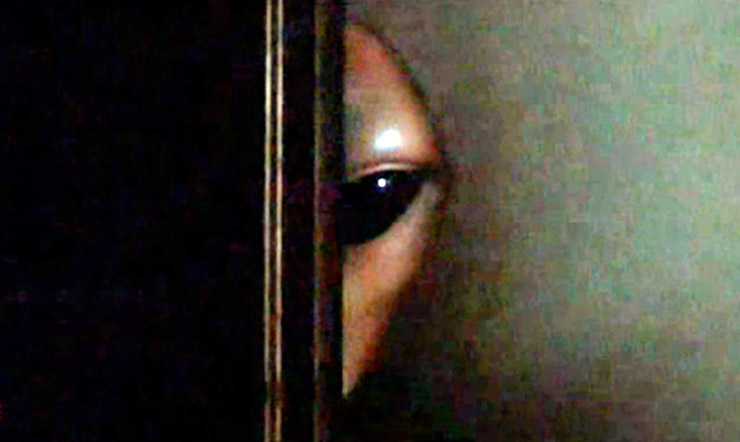
    Mutwa noticed that what appeared to be the creatures’ eyes were actually black, goggle-like covers. Their ‘real’ eyes were “round, with straight pupils, like those of a cat.” At least one of the creatures – the one closest to him – had a potent and very unpleasant odour, “a throat-tightening chemical smell, which smelled like rotten eggs, and also like hot copper [sulphur].” Mutwa was then subjected to some kind of operation on his left thigh, which caused him to scream out in agony. An abundance of blood flowed from the wound. Next, one of the creatures stuck a silver, pen-like object up his right nasal passage; then yanked it out. “The pain,” he says, “was out of this world.”

    The pain subsided, however, when one of the creatures – who was bigger and taller than the others, and who possessed an air of authority – placed its hand on Mutwa’s forehead. Mutwa could ‘sense’ that the creature was female, despite the fact that ‘she’ lacked breasts and other feminine characteristics. Staring at Mutwa intently, it projected visions of destruction into his mind. He saw cities being destroyed by floods, fires and other natural disasters.

    One of the creatures pushed a small, black tubular instrument into Mutwa’s penis. As soon as the instrument was withdrawn, Mutwa’s bladder opened, and he urinated straight into the creature’s chest. It then “staggered away like a drunken insect, and left the room.” A moment later, two other creatures entered the room, one of whom appeared to be a large, metallic robot. Its eyes were bright, seemed to move, and seemed to change colour. The other creature, which was naked, had pink skin, blue eyes, high cheek-bones and looked almost human, yet its body was swollen and strangely out of proportion. Something about it reminded Mutwa of a doll, for it looked and felt “totally unnatural.”

    The creature mounted Mutwa “like a crazy Zulu girl,” and proceeded to have sex with him. But the experience was not at all pleasant – much the opposite, in fact. The creature’s body was cold, bony and lifeless, and Mutwa felt as if he were making love to a machine. To make matters worse, it attached something to his penis that made him ejaculate “too much.” It then left the room, leaving Mutwa alone with the tall, female creature. His penis “was burning as if I had put it in scalding water.”

    Gripping him violently by the head, the creature forced Mutwa off the table he was laying on, and he fell to the floor, landing on his hands and knees. He was then led roughly from room to room. One of the things that most captured his interest, and which, he says, is still “haunting my dreams,” was a collection of huge cylindrical objects, filled with greyish-pink liquid. They contained “small editions of the alien creatures floating round and round, like disgusting little frogs.”

    Mutwa witnessed other human beings being “tortured” by the aliens, one of whom was a white man, “smelling of sweat, urine, excrement and fear.” As Mutwa walked past him, they looked deeply into each others eyes. Incredibly, Mutwa claims to have run into this very same man about two years later, while delivering parcels in the city of Johannesburg. He was working at a curio shop at the time. The man asked Mutwa where he had seen him before, to which he replied, “in Rhodesia, in a certain place underground.” As though the realisation was too much to bear, the man turned away and walked off quickly down the street.

    The next thing he knew, Mutwa was once again in the bush. His mind was hazy, and it took him a moment to realise that something terribly wrong had occurred. He felt a pain in his left thigh, as well as his penis, which was starting to swell. He noticed, moreover, that his shorts and trousers were torn, and that his boots were missing. Clinging to his body was the god-awful stench of the place he had been earlier. Coating his skin was a fine, grey powder. He began to stagger home, making his way along a bush track.

    Mutwa eventually encountered a group of locals, who guided him back to the village, where his teacher, Mrs. Zamoya, informed him that he had been missing for three days. She believed his story straight away. She told him that he had been “caught by the God of the mountains,” and that many other people had similar experiences. He was lucky to have returned alive, she said, “because many people have disappeared in that part of the land, never to be seen again…”

    While staying in the village to recover, Mutwa was bathed every day, so as to wash away the tiny droplets of blood that continued to ooze from the pores of his itchy skin. He found a scoop mark on his left thigh, about a half-inch in diameter, which remains there to this day. Most unpleasant of all, however, skin started to peel off his penis. It also developed sores. This condition did not go away completely, he says, which is one of the reasons his first wife left him. Mutwa was eventually taken to Mrs. Zamoya’s ‘Solace Mission’ in western Rhodesia, where it took him several months to make a full recovery.

    The ‘Sky Gods’

    It would appear that the alien abduction phenomenon is alive and well in Mutwa’s homeland, just as it is in many Western countries, for he claims to have met numerous abductees like himself. During his long career as a sangoma, Mutwa has been approached by countless African women who insist that they have been impregnated by the mantindane and other alien beings. In each case, the pregnancy has mysteriously terminated, as though the foetus has been stolen. Because, says Mutwa, many of these women have been accused of committing abortion – which, in Africa, is regarded as an act “worse than murder” – it has been his job to “convince the family of the woman’s innocence, to try and heal the terrible spiritual and mental – as well as physical – trauma that the woman has undergone.”

    According to Mack in Passport to the Cosmos, many African tribes believe that the mantindane and other alien beings harvest sperm and ova from unsuspecting human victims. The Masai warriors, for instance, fear that the mantindane are able to drain a man’s semen, which is why they go into battle wearing codpieces to protect their genitals, whereas the women of the tribe wear certain ornaments to protect themselves from being sexually molested by these entities.

    “Once a mantindane has dealt with you,” says Mutwa, “you become afraid of making love to a woman…These beings scar you for the rest of your life.” Flawed though the mantindane may be, Mutwa points out that they are “part of us, part of our lives,” and that “they are moved by a desperate need.” Mutwa calls the mantindane “solvers of great problems.” Their technology, he says, may be “several million years ahead of ours.”

    Whether or not one accepts Mutwa’s claim that the mantindane and other alien beings are sexually compatible with human beings – or that such entities actually exist – it cannot be denied that these matters are a very big part of African tribal culture. The “sky people,” or “sky gods,” says Mutwa, have visited Earth for thousands of years, arriving from the heavens in “magic sky boats.” The Pygmies, the Kalahari Bushmen, the Ovahimba of Namibia, the tribes people of Zaire, and of course the Zulus – all of them accept the existence of extraterrestrials, and even believe that humanity is descended from such beings.

    The stars are revered by Mutwa’s people, who consider them more important than even the sun or the moon. The word ‘Zulu’, in fact, means ‘people from the stars’. It is from the stars that much knowledge and wisdom has originated, they say. The people of Botswana, explains Mack, “call a star naledi, which means ‘light of the spirit’, and have carved in wood, painted on rocks, or even scratched on metal ‘the so-called UFOs,’ the ‘magic vehicles’ in which the mantindane and the star gods of the various tribes travelled.”

    In addition to the somewhat sinister and repulsive mantindane, Mutwa speaks of another significant alien race – one that UFO enthusiasts and conspiracy theorists in the West call ‘the reptilians’. “Some say that these creatures were like crocodiles, with crocodile like teeth and jaws, but with very large round heads,” he says. Anyone who’s read Robert Temple’s impressive and scholarly The Sirius Mystery (1976) would be familiar with the enigma surrounding the Dogon people of Mali, west Africa, who possess advanced astronomical knowledge of the Sirius star system, and who claim that they gained this knowledge, many thousands of years ago, from the Nommo, a race of advanced reptilian or amphibian beings who hail from Sirius (more specifically, Sirius A). Throughout Africa, says Mutwa, these mysterious, reptilian gods are known by other names as well. “In West Africa, in the land of the Bumbara people, these amphibian or reptilian sky gods are known as Zishwezi… In West Africa again, these creatures are called the Asa, which means the mighty ones of magic…”

    Fact or Fiction?

    What, then, are we to make of Mutwa’s claims? Was he really abducted by alien beings? Or was his story a fabrication – either completely or partially? And what about his people’s beliefs that we are “descendants from gods who came out of the skies thousands of years ago,” and that these beings “share the earth with us,” and exploit us? Should this information be interpreted literally?

    According to Mack and Chalker, both of whom looked deeply into Mutwa’s story, these questions are difficult to answer with a simple yes or no. The truth may lie somewhere in the middle, they say. In Passport to the Cosmos, Mack points out that Mutwa and other indigenous people with whom he has discussed the UFO phenomenon and other related matters, do “not sharply distinguish material or literal reality from mythic truths.” He adds, moreover, that certain ideas of Mutwa’s, “like the dominant role of the mantindane and other extraterrestrial or star beings in human cultural history, seem related to tribal myth and legend.” Chalker is of much the same opinion as Mack. “‘Oral material’ like Credo’s is very difficult to judge,” he says.

    Given the kind of life he’s lead, it’s a miracle that Mutwa is still alive to this day. Now eighty-six or thereabouts and suffering from diabetes and asthma, his health is continuing to worsen at a rapid rate, and it’s fair to assume that he probably won’t be alive for very much longer. He claims that the ‘alien knowledge’ he has divulged in recent years, which he once pledged never to reveal, was supposed to be reserved for initiate sangomas like himself only. He decided to ‘break ranks’ and ‘reveal all’, however, because he lacks a successor onto whom he can pass his unique and sacred knowledge – knowledge he has earned during a lifetime of initiations. Plus, he insists, this information is too important to be withheld from humanity, and is needed in this time of great global crisis.

    This article was originally published, in a substantially different form, in the May 2008 issue of FATE (vol. 61, no.5, issue 697), under the title ‘Vusamazulu Credo Mutwa and the Alien Agenda’.

    [alert type=”general” dismiss=”no”]This article was published in New Dawn 111.[/alert]

    [alert type=”success” dismiss=”no”]If you appreciate this article, please consider subscribing to help maintain this website.[/alert]

    References:

    About Credo Mutwa, Credo Mutwa on Alien Abduction and Reptilians, www.bibliotecapleyades.net/esp_credo_mutwa03.htm

    About Credo Mutwa, Credo Mutwa – Biography, www.bibliotecapleyades.net/esp_credo_mutwa04.htm

    Bill Chalker, Hair of the Alien: DNA and Other Forensic Evidence of Alien Abduction, Paraview Pocket Books, USA, 2005

    Nancy Connor and Bradford Keeney, Shamans of the World: Extraordinary First-Person Accounts of Healings, Mysteries, and Miracles, Sounds True, Inc., USA, 2008

    David Icke, Children of the Matrix: How an Interdimensional Race has Controlled the world for Thousands of Years – and Still Does, Bridge of Love Publications, USA, 2001

    John E. Mack, Passport to the Cosmos, Crown Publishers, USA, 1999

    John E. Mack, Abduction: Human Encounters with Aliens, Simon & Schuster, UK, 1994

    Vusamazulu Credo Mutwa, Zulu Shaman: Dreams, Prophecies, and Mysteries, Destiny Books, USA, 1996

    © New Dawn Magazine and the respective author.
    For our reproduction notice, click here.

  • UFOs, the Government & Faking an ET Invasion: An Interview with Norio Hayakawa

    UFOs, the Government & Faking an ET Invasion: An Interview with Norio Hayakawa

    From New Dawn Special Issue Vol 6 No 5 (Oct 2012)

    Norio Hayakawa, a resident of Rio Rancho, New Mexico, has been engaged in the study of UFOs for more than fifty years. An expert on Nevada’s Area 51 and the alleged underground base near Dulce, New Mexico, he was responsible for organising ‘The Dulce Base: Fact or Fiction?’ conference – the first event of its kind ever held – which took place in the town of Dulce in March 2009. During his many years as a UFO lecturer, activist, and researcher, he’s brushed shoulders with such well-known figures as the late William ‘Bill’ Cooper, Bob Lazar and the late Gabe Valdez.

    Much of Hayakawa’s research focuses on the technological-militaristic and socio-political aspects of the UFO phenomenon – an area overlooked by most other UFO researchers. A unique and discerning voice in the field of UFOlogy, he suggests there’s been an effort on the part of the authorities, for reasons both disturbing and far-reaching, to manipulate the public’s beliefs concerning UFOs and aliens. Like Dr. Jacques Vallée and others, he isn’t afraid to point out the shortcomings of the extraterrestrial hypothesis (ETH), while at the same time maintaining an open-mind. Hayakawa kindly agreed to discuss his work with New Dawn magazine.

    LOUIS PROUD (LP): Can you please describe your background and how you came to develop an interest in the UFO phenomenon?

    NORIO HAYAKAWA (NH): I started getting really involved with UFO research around 1961, when I was a sophomore in high school. However, when I was in elementary school beginning in the early 1950s I had already known about ‘flying saucers’ because I used to listen to my father tell me of his sighting of a strangely manoeuvring green ‘ball’ of fire, which took place when he was fishing one summer night in 1947, in the Bay of Yokohama, Japan. My father was quite familiar with shooting stars and other astronomical phenomena, because he had spent years night fishing and was so used to looking at night skies. But that particular summer night in 1947 was definitely unforgettable to him, he used to tell our family at our dining table as he enthusiastically described his sighting to us.

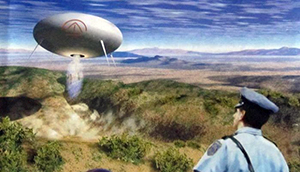
    Artist’s impression of the famous Socorro incident in 1964.

    From 1961, I started getting involved and began to subscribe to newsletters of NICAP [National Investigations Committee On Aerial Phenomena] and APRO [Aerial Phenomena Research Organization] and other groups in the US, even though I was living in Japan. I also began to attend meetings of UFO investigation groups in the Yokohama and Tokyo areas. In 1964, when I was attending college in Tokyo, I became fascinated by a newspaper article about a strange encounter involving a highway patrol officer named Lonnie Zamora who claimed to have witnessed a flying saucer sitting on the desert, just outside of a sleepy little town in New Mexico, US, by the name of Socorro. Of course, that was the famous Socorro incident of 1964. The sighting really convinced me that I have to get to the bottom of this strange phenomenon.

    LP: You say the authorities have exploited and benefited from the UFO phenomenon, by using it as a smokescreen for various top secret militaristic projects.

    NH: Many defence contractors in the US periodically create ‘cover’ stories in order to detract attention away from covert military projects by some curious segment of the population. These ‘cover’ stories sometimes involve false UFO sighting reports. Such reports are frequently used when contractors come up with new military weapons systems or new military aircraft and so on – for example, new generations of remotely-controlled platforms for various programs. Creating the so-called ‘laughter curtain’ (i.e., bringing up the subject of UFOs or aliens) is one way to curtail serious scrutiny of certain military bases or programs. A very good example is how Area 51, a very important military research, development and testing location, has become associated with rumours of UFOs or aliens. This may well have been concocted by the Air Force itself, for example.

    Cellphone photo of UFO taken on 1 March 2011 by Dulce resident Dory Vigil (supplied by Norio Hayakawa).

    LP: You seem to disagree with the mainstream scientific notion that we have all the answers concerning UFO activity on Earth – or in other words there is no UFO “cover up.” In fact, you’ve stated the authorities are just as baffled by the UFO phenomenon as the general population. Moreover, you suggest the authorities have tried (and are still trying) to promote among the public certain beliefs concerning UFOs – namely, that UFOs are extraterrestrial spacecraft piloted by physical entities – as part of a sinister and elaborate psychological manipulation program.

    NH: I am of the opinion that the government, or ‘authorities’, are just as perplexed about the nature of the UFO phenomenon as the public. The only reason they have not disclosed anything conclusive despite many years of research and collection of vital sighting report files is because they are unable to explain it to the public, having long known that the phenomenon cannot be sufficiently explained simply through contemporary, empirical science. The government has never been in the business of explaining anything that is outside of empirical scientific explanations. The UFO phenomenon seems to go beyond just being a physical phenomenon.

    LP: What is your perspective on Operation Paperclip?

    NH: We cannot underestimate the importance of Operation Paperclip in the aftermath of WWII. Operation Paperclip was a US sanctioned program through which hundreds of former Nazi German scientists and engineers (and even former SS intelligence officers) were brought to the US in order for the US to acquire some of the interesting military technologies that the Germans already had in the late 1930s and early 1940s, such as advanced rocket science and development of prototypes of flying wing aircraft – some of which were even equipped with ramjet engines and attained speeds of up to 500 or 600 miles per hour. New Mexico was one of the primary locations for these scientists because New Mexico already had important laboratories such as Los Alamos, and also important rocket testing ranges such as White Sands. Even today, White Sands Missile Range is the location of the most advanced testing of directed energy weapons systems, with the use of lasers and microwaves.

    LP: What is Project Blue Beam and how does it tie into your research and the notion of a coming global crisis?

    NH: Project Blue Beam is an alleged secret and futuristic NASA program in which advanced technologies (such as the use of airborne holographic projection devices and manipulation of various frequency waves) could be utilised to create fake visual/audio simulations to convince the public (or the enemy) that they are witnessing a real event – whatever that scenario may be.

    The late Canadian investigative journalist Serge Monast, with whom I corresponded in 1993 and 1994, was the first to come up with the allegation that NASA will develop this technology in the near future. HAARP, which began to be talked about in the early 1990s, was basically another version of Project Blue Beam, utilising some of the Tesla technologies. According to some researchers, programs such as HAARP and the Blue Beam Project could be utilised in the future to generate panic (such as by creating a fake ‘extraterrestrial invasion’ scenario) so that the frightened and deceived public would clamour for some type of global authority and unity to fend off such ‘threats’.

    LP: Could you please elaborate on the notion of a “fake ‘extraterrestrial invasion’ scenario,” using Project Blue Beam and HAARP technologies, as a way to enforce a totalitarian one-world government, or ‘New World Order’?

    NH: If there really exists a global cabal whose long-term plan is to enforce a global government, the most logical way to carry out this plan would be to create an absolutely convincing need for such an authority. The ultimate means to achieve such a plan would be to artificially generate worldwide panic by staging a fake ‘extraterrestrial threat’ through the use of such technologies as HAARP and the alleged Project Blue Beam. An unprecedented series of global crises such as natural catastrophes or conflagrations (both of which could also be created) would be the final condition under which such schemes would be realised.

    LP: During a recent interview on Truth Connections Radio you made a comment to the effect that there would no UFO history were it not for the US state of New Mexico.

    NH: The importance of New Mexico can be seen from the fact that the atomic bomb was first tested in this state. New Mexico is the location of Los Alamos National Laboratory, probably the world’s largest conglomerate military/scientific research community. Los Alamos, by the way, has the world’s most advanced DNA, human genome, and genetics facilities in the world. Albuquerque, New Mexico is the headquarters of Sandia National Laboratories, which, located inside Kirtland Air Force Base, is probably the world’s largest military research, development and testing conglomerate.

    New Mexico is such a huge state in size (the fifth largest in the Union), yet is scarcely populated in proportion to its huge area. Even today, the total population of New Mexico is about two million. It has enough space to conduct any kind of covert military research, development and testing programs. By the way, there are more scientists per population in New Mexico than in any other state. Yet the irony is that the level of public education in New Mexico ranks about 48th in the nation.

    As I stated earlier, the White Sands Missile Range is today the location of the world’s most advanced directed energy weapons testing programs, involving lasers and microwaves. If aliens really exist, then this, for obvious reasons, would definitely be the primary place of interest to them. In fact, many people seem to believe that an extraterrestrial spacecraft has already crashed in New Mexico (the famous Roswell UFO incident of 1947).

    LP: There is said to be a clandestine (and possibly extraterrestrial) underground facility near the town of Dulce, New Mexico – a topic on which you’ve conducted an extensive amount of research. What are some of the discoveries you’ve made concerning Dulce?

    NH: Although I have been involved with investigations into the claims of an alleged underground joint US-alien base in Dulce (alleged biological laboratory) for many years, I have yet to see any solid, tangible, physical, irrefutable documentary evidence whatsoever of its existence. Yet, I can also say there seems to be lots of circumstantial evidence that there is ‘something’ there. What that ‘something’ is, I still do not know.

    LP: What is your take on the cattle mutilation mystery?

    NH: The cattle mutilation mystery, to my knowledge, began to be reported primarily in the mid-1970s in the Dulce, New Mexico and southern Colorado areas. It is my conjecture that it may have had something to do with the government’s monitoring of radiation levels of certain cows in the northern New Mexico region, especially in the aftermath of alleged radiation leaks that began to affect animals and even humans in the Dulce vicinity, after the US exploded an atomic device deep underground, about 22 miles southwest of Dulce in 1967. This experiment, codenamed Project Gasbuggy, was realised by the US Atomic Energy Commission, ostensibly to help ease the flow of natural gas trapped deep beneath hard rocks in the Dulce region. The high rate of cancer in the Dulce area as well as widespread fertility problems among young women in the area is quite noticeable, even today. Plus, there is a possibility the government may have used the Dulce area as a dumping ground for toxic waste materials, besides possibly conducting some form of bio-warfare research involving substances such as anthrax.

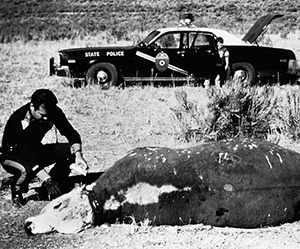
    Gabe Valdez, working as a New Mexico state patrol officer in charge of the Dulce, New Mexico area, investigates a cattle mutilation incident in the mid-1970s.

    The cattle mutilation incidents may also have been a series of staged events by the government to cause local people and the public to believe that Dulce is somehow associated with alien visitation. The late Gabe Valdez, a former New Mexico state patrol officer in charge of the entire Dulce region for many years, also seemed to come to that conclusion. He further concluded that UFO incidents were staged by the government with the use of holographic projections and other mind-control technologies then being developed at places such as Sandia National Laboratories.

    LP: Please shed some light on your association with the late Milton William Cooper (otherwise known as William ‘Bill’ Cooper) – the famous conspiracy theorist and author of Behold a Pale Horse – and how his work is of relevance to your own.

    NH: When William ‘Bill’ Cooper first came on the scene in 1989 in Los Angeles, I was quite impressed with his speeches. He had brought a new, global conspiracy-type angle to the UFO phenomenon, which sounded very fresh and exciting to lots of us in the so-called UFO community, including myself. I even helped him launch his first public lecture at Hollywood High School in 1989.

    As the years went by, Cooper began to disassociate himself from UFOlogy. He went into the ‘militia’ or ‘Patriot’ movement and, unfortunately, met a violent death in 2001 in Arizona. What I admired about Cooper, despite his well-known obnoxious and rather egotistical personality, was the fact that he began to admit that he may have been purposely shown disinformation by the Navy concerning UFOs. He also began to believe that in the future a secret global government could even stage a ‘fake’ extraterrestrial event to create panic in order to establish a forced global governance of some type.

    LP: What do you make of the claims of Robert ‘Bob’ Lazar – who says he took part in a top secret government project, based at Area 51 [Nevada, USA], to reverse-engineer recovered extraterrestrial spacecraft – and others who’ve come forward with similar sensational stories?

    NH: The claims of Bob Lazar are simply claims and cannot be verified. However, over all these years Lazar has never changed his story. The very fact that Lazar still has a scientific equipment business in Michigan (United Nuclear) and still seems to be doing occasional work indirectly with some defence contractors seems to indicate he is indeed knowledgeable in the scientific applications associated with military technologies. But there is also a theory that Lazar was intentionally manipulated by the government to strengthen the ‘extraterrestrial’ element to the Area 51 story, thus bringing about the ‘laughter curtain’ whenever discussion of this important military base is brought up by the public.

    LP: In your opinion, the UFO phenomenon is non-physical in nature, having nothing to do with flesh-and-blood extraterrestrial beings. Alternately, you’ve expressed a strong appreciation of Dr. Jacques Vallée’s extra-dimensional hypothesis, which interprets UFO events in terms of other “dimensions” or “realities” existing alongside our own.

    NH: The vast majority of the world’s scientists as well as the public at large seem convinced there has to be advanced extraterrestrial civilisations elsewhere in the universe. However, when it comes to the question of UFOs most of them do not support the theory that we have ever been (or are being) visited by physical extraterrestrial beings in physical spacecraft; physically it is impossible, they say. Even Stephen Hawking, one of the world’s most brilliant minds, while acknowledging the existence of extraterrestrial civilisations are almost certain, says that no aliens have ever come to earth in UFOs.

    But the UFO phenomenon seems to be real. I totally agree with Vallée, who continues to support the extra-dimensional origins of UFOs. I also tend to believe that UFOs are not objects nor are they flying. I tend to believe they are temporarily materialising and dematerialising – in other words, intruding into our dimension for reasons unknown and receding back quickly into their dimension. UFO reports have existed from time immemorial. Even today we do not comprehend the true nature of this puzzling phenomenon.

    LP: You once worked as a licensed funeral director, while some of your blog posts concern philosophical topics such as death and the afterlife. Do you believe these topics are of relevance to the UFO phenomenon and, if so, how?

    NH: The world is filled with mysteries. There are things in this world that cannot be sufficiently explained. Life and death are mysteries unto themselves. So, in this sense, the UFO phenomenon is no different from the mysteries of life and death. The phenomenon, which has existed from time immemorial (i.e. sighting reports), has not been solved yet. This is the reason I am so fascinated with the topic. The world would be dull without such mysteries. In fact, as I’ve stated many times in my public presentations, the UFO phenomenon is perhaps the most important topic of mankind.

    [alert type=”general” dismiss=”no”]This article was published in New Dawn Special Issue Vol 6 No 5.[/alert]

    [alert type=”success” dismiss=”no”]If you appreciate this article, please consider subscribing to help maintain this website.[/alert]

    © New Dawn Magazine and the respective author.
    For our reproduction notice, click here.

  • Aliens, Predictions & the Secret School: Decoding the Work of Whitley Strieber

    Aliens, Predictions & the Secret School: Decoding the Work of Whitley Strieber

    From New Dawn Special Issue No 4 (Feb 2008)

    Anyone who knows anything about the subject of UFOs and alien abduction would have heard of Louis Whitley Strieber, the successful horror novelist, who, in 1987, published a book called Communion which still stands as one of the most terrifying, factual and powerful accounts of alien abduction ever written.

    But far from being just an abductee and author, Strieber is also something of an undeclared mystic and prophet. It seems he has much to say about humanity’s spiritual, political and environmental future. Is he, as some have claimed, nothing but a prophet of doom, or do his words contain genuine wisdom and an important message?

    Now a host of the online radio program Dreamland, which covers the latest news in paranormal phenomena, Strieber continues to write about the mysterious non-human beings he calls the ‘visitors’, and has recently been doing so in a fictional way. Within the last two years Strieber has published two new novels, The Grays and 2012: The War for Souls, both of which are soon to be made into big budget films.

    The grays, says Strieber, are just one of the many different types of non-human being, or visitor, that he has been in close contact with. “These people were not androids or robots. They were complex, richly alive beings who were obviously incredibly and totally different from us,” he says. The grays feature commonly in accounts of alien abduction, and are believed to be behind much of the UFO phenomena witnessed in our skies. Strieber says he decided to write The Grays because the truth about these beings “is too elusive to bring to genuinely sharp focus in factual narrative.”

    Strieber came up with the term ‘visitor’ to replace ‘alien’ because he does not necessarily believe that aliens, in the true sense of the word, are behind the close encounter phenomenon, preferring instead to leave the question of their origin open until further evidence comes to light. Plus, he considers the word ‘alien’ to have a negative connotation. The word ‘visitor’, on the other hand, could not be more neutral, and was chosen for this very reason.

    Strieber was already a successful author before he decided to risk his reputation by publishing Communion. His previous books, of which there are many, deal with issues like nuclear war and environmental catastrophe. Along with childhood friend James Kunetka, Strieber wrote the 1984 New York Times bestselling novel Warday, which concerns the subject of nuclear holocaust. He also wrote a number of highly acclaimed horror novels, such as The Hunger and The Wolfen, both of which were adapted into films.

    When Communion was first published, it quickly shot to number 1 on the New York Times non-fiction bestseller list. It then went on to become an international bestseller. Although Strieber allegedly received six figures from publishing company William Morrow (now an imprint of HarperCollins), it seems unlikely that Communion was a hoax, and that he wrote it for the money – which is what some critics have claimed. In a 1987 interview for the San Francisco Examiner, Strieber said: “I didn’t need to write it. I could have written another novel… Why would I hold myself up to the ridicule that a book like Communion brings? I felt that I had to write this book.”

    POST-COMMUNION

    Following the publication of Communion, Strieber went on to write four additional books about his intimate contact experiences, each one (with the exception of Confirmation) far more ‘spiritual’, and a little more ‘out there’, than the last. First came Transformation, then Breakthrough, then The Secret School and, lastly, Confirmation. Along the way, Strieber lost a few members of his readership – those who wanted to read about his bloodcurdling abduction experiences, rather than the spiritual significance of the contact phenomenon.

    Referring to these books in a recent interview, Communion and Transformation in particular, Strieber described them as “texts about the articulation of certain questions.” What is important about these books, he said, “is the way they lead you to thinking about questions about the nature of perception and what exactly the physical world is.”

    Considering that Strieber was a student of the Gurdjieff Foundation for more than fifteen years, it is perhaps not surprising that his work revolves around such matters. “Gradually I branched out from the readings from Gurdjieff himself and the people around him to much deeper studies,” he says. Speaking about his spiritual orientation in a recent interview, Strieber remarked that he was brought up a Roman Catholic, and has always considered himself one.

    Those familiar with the deeper meaning of Strieber’s work would realise that each and every one of his non-fiction books, including some of his novels, are all connected in some way, and on a very deep and obscure level. One could describe them as pieces of a puzzle that make up a message – a message about mankind’s future. There can be little doubt, moreover, that all of his books about the visitors have been trying to push an agenda, beginning, of course, with Communion, which was largely responsible for catapulting the alien abduction phenomenon into public consciousness. According to journalist Randall Fitzgerald, Communion, along with Budd Hopkin’s Intruders (also published in 1987), “heralded, or helped initiate, a major wave of abduction stories continuing through the remainder of the 20th century.”

    Given the nature of his writing, Strieber is a highly controversial figure, who’s been criticised by just about everyone, even by those in the UFO community. In his book Architects of the Underworld, UFO researcher Bruce Rux points out that Strieber’s numerous books about the visitors have earned him “well-timed millions of dollars,” having been published at very ‘suspicious’ times, when he desperately needed to be pulled out of debt. Rux even goes so far as to suggest that Strieber may be a member of the intelligence community, “a cat set among the pigeons by interested parties to keep a close tab on abductees, not to mention researchers.”

    That Strieber is somehow a part of the secret government – possibly a CIA agent – is a rumour that’s persisted for some time. Budd Hopkins has implied as such many times in his lectures, saying that Strieber probably knows a great deal about what goes on inside the government. Referring to this accusation, Strieber said he “loathes the whole concept of insiders,” and considers “official secrecy a crime against the constitution.”

    Although it’s highly questionable as to whether or not Strieber is a member of the intelligence community, the same cannot be said of his now deceased uncle, Colonel Edward Strieber. An Air Force officer, Edward Strieber spent much of his career at Wright-Patterson Air Force Base, which, incidentally, is where the debris from the alleged Roswell UFO crash is supposed to have been sent. Edward Strieber was a close friend of General Arthur Exon’s, and a member of his command. Exon was the commanding officer at Wright-Patterson from 1964 – 1966.

    According to what Strieber was told by Exon and his uncle, the Roswell incident was indeed caused by a crashed alien spacecraft. Furthermore, both men claimed to have first-hand knowledge of the incident. Among other things, Strieber was told by his uncle that “alien materials, artefacts and biological remains” had been delivered to Wright Field from the Roswell Army Air Base.

    When asked about his uncle in a recent interview, Strieber had very little to say, beyond “mostly his career remains classified.”

    THE SECRET SCHOOL

    By far the most ambiguous of Strieber’s books about the visitors would have to be The Secret School. Strieber claims to have been contacted by the visitors from a very early age, and it is in this book that he explores some of those childhood memories, many of which, he says, remained repressed for a very long time.

    As a child growing up in San Antonio, Texas, in the 1940s and 1950s, Strieber says he lived a kind of double life, in which he and numerous other ‘child abductees’ belonged to a ‘secret school’, run by the visitors. While a member of this school, Strieber was taught nine important lessons, presented in three triads. The first lesson involved an apparently non-physical journey to Mars, where Strieber caught a glimpse of the so called ‘Face’, many decades before the first satellite photos of the Cydonia region were taken in 1976 by the Viking Orbiter.

    In 1986 Strieber was shown a photo of the ‘Face on Mars’ by scientist friend Dr. John Gliedman, “an enormous event in my life, far larger than I could ever have imagined or even – until recently – understood.” He even suggests that the event may have triggered his first conscious meeting with the visitors on December 26, 1985, which eventually led to the writing of Communion. “The mystery of Mars and the secret school, it would turn out, were deeply bound together,” writes Strieber.

    In Breakthrough, Strieber mentions having been acquainted with Richard C. Hoagland, whom he met through Gliedman in 1984, three years before the publication of Communion. Hoagland, of course, was involved in a group known as the Mars Anomalies Research Society (MARS), and has written several books claiming that ancient civilisations once existed on the Moon, Mars and on some of the moons of Jupiter and Saturn.

    Hoagland believes that evidence of these civilisations, such as the ‘Face on Mars’, have been kept secret by NASA and the US government. Strieber donated money to Hoagland’s group, and soon became a member. The aim of the group was to conduct further research on the ‘Face on Mars’ photograph – which they succeeded in doing. Among those involved in the group were Dr. David C. Webb, a former member of Reagan’s National Commission on Space, astronaut and planetologist Dr. Brian O’Leary, physicist John Brandenburg, and an imagining specialist named Dr. Mark Carlotta, who, according to Strieber, was a contractor for an intelligence agency.

    “It should be remembered,” insists Strieber, “that my encounters started after I became interested in the face, not before.”

    TIME TRAVEL

    The Secret School is primarily concerned with the subject of time-travel, and how this relates to prophecy. “The nine lessons,” writes Strieber, “involved the manipulation of time, because learning how to use time as a tool is the key to reaching higher consciousness…” Unbelievable though it sounds, Strieber claims to have physically journeyed through time on a number of occasions. According to him, the ninth lesson of the secret school involved such an experience, whereby, in the summer of 1954, at age nine, he found himself suddenly transported into the future.

    During the experience, Strieber saw a flat-screen TV, obviously unlike any kind of TV available in 1954. The TV was switched to a news channel, and on the screen he saw a number of scenes that have “remained in my mind all of my life – not exactly as a conscious memory, but rather as a reservoir of visual images that I have come to draw on in my work.” Some of the scenes were of catastrophic events that appear to have since come true, such as the Great Malibu Fire of 1993.

    The other scenes that he witnessed – most of them also catastrophic – were of events that have not materialised, but which, according to Strieber, could materialise in the not-so-distant future. Images from these scenes, says Strieber, feature in his 1986 book Nature’s End, written in collaboration with James Kunetka. Set in the year 2025, Nature’s End concerns the subject of environmental destruction and overpopulation.

    Strieber says that he and Kunetka “prophesied effectively” during the writing of Nature’s End, “not because we were special, but because we tried.” Apparently, in 1985, Kunetka wrote a description of a nuclear accident that unfolded in exactly the same way as the one at Chernobyl in 1986, and which also took place in a similar reactor. But because the event was deemed too improbable at the time, this description was edited out of the published version of the book. As further proof of the book’s prophetic nature, Strieber cites the name of a Korean-made car that features in the book, called the Hunyadi, which he came up with long before the Hyundai was introduced.

    At the end of The Secret School is a tenth lesson, involving another time travel experience, which Strieber says took place in late 1995. The significance of the way the book is structured, with nine lessons in three groups of three, followed by a tenth lesson, can be found in Transformation. In it, Strieber describes a visitor experience that occurred in 1986, in which he was sitting downstairs late at night reading a book on quantum physics, when suddenly there came, on the side of the cabin, nine loud knocks, “in three groups of three, followed by a tenth lighter double knock that communicated an impression of finality.” Strieber says the knocks could not have been produced by ordinary human means, but formed a cryptic message from the visitors.

    Although Strieber makes no reference to it in his work, the nine lessons – or nine knocks – seem to be related to the Kabbalistic Tree of Life, with its ten holy Sephiroth. The first nine Sephiroth exist in groups of three, as equilibrated triangles. But the final Sephirah, Malkuth, the kingdom of the earth, does not. In The Mystical Qabalah, Dion Fortune describes it as a “fallen Sephirah, for it was cut off from the rest of the Tree by the Fall…” Considering that Strieber is very much a student of Western esotericism, it’s fair to assume that he’s familiar with the Kabbalah, and has probably studied it.

    As for Strieber’s 1995 time travel experience, this involved a journey into the future, to the year 2036. Regarding the question of whether or not the experience was physically real, Strieber says it seemed to be, but that it “also bore some reference to dream.” He adds: “I would argue just as vehemently that it was no conventional dream and that we have not even begun to understand this state.”

    Strieber was shocked to find his surroundings in almost total ruins. Because, he says, he was able to gain access to some of the memories of his future-self – the one living in 2036 – Strieber was aware of what had caused the destruction. Apparently it was due to an atomic bomb planted by terrorists. The bomb had been detonated in Washington, D.C., effectively destroying the government. As a result, the US had become a corrupt military dictatorship. Strieber offers few more details than this.

    But no matter how bleak the future may seem, says Strieber, there is still hope, because one day time will “come to be a tool, and travel in time will become practical.” This, by the way, is just one of the many prophecies that Strieber has included at the end of The Secret School. In an interview concerning the subject of the book, Strieber said: “The purpose of prophecy is to warn us against negative events that will transpire if we continue on the path that we’re on at the time that the prophecy is made…” He explains this further:

    “We need to unlearn the assumption that the future is in front of us, the present is where we are, and the past is behind us. That is a false view of time. The visitors offer a much better idea of time. They say the future is to the right, and it’s like water. The present is here and now, and it’s like a compressor. And the past is like ice. The water has now been turned into ice because the present has decided the shape the water will take, the shape the past will take. And this leaves room for entry into many different possible futures. We can change that water into any number of different shapes simply by the way we address it… What we have to learn to do – and this is as much an inner movement as an artefact of some potential technology – is to learn to move out of the time stream so that we can examine it more carefully and come to understand its real meaning.”

    THE ‘MASTER OF THE KEY’

    In his book The Uninvited, British UFO expert Nick Pope gives a humorous description of the time he met Strieber in London, in 1996. Pope mentions that Strieber “seemed so casual about the most bizarre experiences. Here was a man, I suspected, who would describe these [visitor] encounters in the same sentence as an account of a trip to the shops, and might well use the same tone of voice.” Slightly critical though these words sound, Pope says he did not find Strieber to be “a crank and an eccentric,” as he is commonly reputed to be.

    It would be easy to dismiss Strieber’s paranormal experiences – particularly those that involve travelling through time – as nothing more than the delusions of someone with an over-active imagination. He is, after all, a horror/sci-fi novelist, and a highly acclaimed one at that. Strieber has even admitted publicly that some of his claims are rather difficult to swallow, and that he is not asking anyone to believe the things he says. In a 1998 journal entry, he wrote: “Who knows what a mind like mine might dream up? All I can say is this: I believe myself. But I don’t want that to convince YOU. You weren’t there, you didn’t see. So don’t believe me. Listen, observe, and keep the question.”

    Provided Strieber is telling the truth about his experiences, it would not be a stretch to classify him as a kind of shaman, an intermediary between this world and the world of the gods – the gods being the visitors. In an interview with Sean Casteel, Strieber made a comment that seems to support this view. “You know, Sean, I wonder who the hell I am. I wonder who I am… There are many things that have happened that I’ve never even put into books. Just incredible. It’s like I live with my two feet in two different worlds. And they’re both equally real.” In the introduction to his book The Key, Strieber makes a similar statement: “I have had the incredible privilege of living between the worlds, in the sense that I have actually spent a substantial amount of time in my life with people who were not physical in the way that we know the physical.”

    If Strieber is indeed a shaman of sorts, it might help explain an alleged incident that occurred in the pre-dawn hours of June 6, 1998, in which Strieber met an apparent human who claimed to “belong to many worlds.” Strieber says he was awoken by the man knocking on his hotel room door. As soon as he opened the door, the man burst into the room. They then proceeded to have a “remarkable” conversation about spiritual matters, with Strieber taking notes. Strieber describes the man, whom he has come to refer to as the ‘Master of the Key’, as he did not give a name, as someone “in possession of the most incredible knowledge that I’ve ever encountered in my life about the meaning of mankind. Where we came from, where we’re going, what’s happening to us and why.”

    Strieber’s 2001 self-published book The Key is a transcript of this discussion, though not an exact transcript, because Strieber says his notes did not cover the entire conversation word for word. Some of it he committed to memory. Interestingly, he says the notes “had a strange quality to them, as if each word was capable of causing a whole spring to flow in my mind,” and that they “unlocked something in my mind.”

    Among other things, the ‘Master of the Key’ spoke about sudden environmental change, and the ending of this current age. There is, he said, a great cycle of climate change, involving “sudden shifts back and forth from ice ages to temperate periods.” Although this cycle is natural, it has been sped up by human activity, and we are about to enter a new ice age, “that will lead to the extinction of mankind, or to a massive reduction in population.” To avoid this, he said, we must find a way to expand off the planet.

    Strieber says that this information served as an inspiration for his 1999 book The Coming Global Superstorm, written in collaboration with Art Bell. It’s a little-known fact that the 2004 science-fiction blockbuster The Day After Tomorrow is a rough adaptation of this book. That Strieber’s work has had a significant impact on public thinking cannot be denied.

    As regards the Mayan calendar end date of December 21, 2012, a topic that has received much attention of late, Strieber says he’s not sure if anything particularly special will occur on this specific date, but sees it more as a general marker for global and spiritual transformation. The Mayan 2012 end date seems to tie in with the information given by the ‘Master of the Key’ – which is something that Strieber acknowledges. In a 2007 journal entry, he wrote: “Just as the Maya predicted, an age is indeed ending now. No matter what happens, in 50 years, this world is going to be a radically different place…”

    Strieber’s latest novel, 2012: The War for Souls, is an imaginative exploration of what might occur in 2012, when the Mayan Long Count calendar finally completes its cycle, and a new age is believed to begin. In the novel there are three parallel earths, one positive, one negative, and the other a balance between the two. As 2012 approaches, the barriers between these universes begin to collapse, and those from the positive side of the triad begin to attack those on the negative side of the triad, attempting to take over their world. “The harmonising side of the triangle becomes involved, when a man there has to balance between dark and light in order to take the whole species to a new level,” explains Strieber. Interestingly, the character in the story referred to by Strieber is a sci-fi author named Wiley Dale, and the only difference between the names ‘Whitley’ and ‘Wiley’ is the exclusion of two letters…

    Throughout Strieber’s work there are countless references to triads. The visitors, he says, often present themselves in groups of three, while there have been numerous sightings over the years of triangular UFO formations, often appearing over large crowds. In Communion, Strieber devotes a whole chapter to the importance of triads, and how this relates to mankind’s relationship with the visitors. He writes: “We could be part of a triad that includes the visitors. They might be the aggressive force, entering us, enforcing our passivity, seeking to draw from the relationship some new creation.”

    The importance of triads in Strieber’s work can be better understood when one considers the Kabbalistic Tree of Life with its two side pillars – the pillar of mercy and the pillar of severity, and, balancing these, the pillar of equilibrium. The two side pillars are opposite in polarity, “each of which is evil when carried to success, both of which give rise to evil if insufficient for equipoise,” explains Fortune. This proves, once again, that Strieber’s work is heavily encoded with rich esoteric significance.

    Get the issue this article appears in

    STRIEBER VERSUS PINCHBECK

    Regular listeners of Dreamland radio would have heard the much talked about argument between Strieber and Daniel Pinchbeck, who appeared on the show in September 2007. A journalist, author and ‘psychedelic advocate’, Pinchbeck recently published a new book entitled 2012: The Return of Quetzalcoatl. It was the subject of this book that Strieber and Pinchbeck’s discussion centred around.

    Pinchbeck’s view of the alleged transformation that will occur on, or around, the year 2012 is almost the complete opposite to Strieber’s, being unrealistically optimistic. This very marked difference of opinion is what caused the argument, especially after Strieber said that the supposed 2012 transition will lead to “a tremendous decline and dieback of the human species…”

    Pinchbeck told Strieber that he “has a tendency to harp on the negative perspective.” And perhaps this statement contains a grain of truth. He even accused Strieber of being “in league with dark alien forces that do not have the best interests of the human species at heart.” He was, of course, referring to the grays. Pinchbeck writes: “On a subliminal or subconscious level, Strieber appears to have made a Faustian pact with these Mephistophelean entities, and unfortunately he is helping disseminate their negative and destructive frequency into human culture and consciousness, at this point in time.”

    Having been told that his mind was being manipulated by so called evil entities, Strieber was rather offended – and understandably so. He responded by saying that Pinchbeck doesn’t know “jack shit about those entities, because you’ve never had any contact with them at all.” Later in the ‘discussion’, after much shouting back and forth, Strieber said: “Nature is numbers. There is nothing mysterious about it… There are too many human beings on the planet now. There will not be this many in 50 to 100 years… The environment cannot sustain the number of human beings who are here, living as they do now.”

    Whoever ‘won’ the argument is simply a matter of opinion, and is probably of little importance. It should be borne in mind, however, that if Pinchbeck had come on the show with a much deeper understanding of Strieber’s work, the argument would probably not have occurred, because Strieber’s perspective of the alleged transition that is about to take place is far from pessimistic. Proof of this can be found in the following quote, taken from the final chapter of The Secret School: “Our moment in time, when population reaches its limit and the world as we know it ends, is not about death at all. It is about ascending into a new kind of life. Such is the message of the secret school, secret no more.”

    These words can be better understood when linked to another quote of Strieber’s, taken from Transformation, which reads: “Perhaps our fate is eventually to leave the physical world altogether and join them [the visitors] in that strange hyper-reality from which they seem to emerge.”

    [alert type=”general” dismiss=”no”]This article was published in New Dawn Special Issue 4.[/alert]

    [alert type=”success” dismiss=”no”]If you appreciate this article, please consider subscribing to help maintain this website.[/alert]

    REFERENCES

    Dion Fortune, The Mystical Qabalah, Williams and Norgate, Ltd., UK, 1935

    Jim Marrs, Alien Agenda, HarperCollins, USA, 1997

    Nick Pope, The Uninvited, Simon & Schuster, UK, 1997

    Bruce Rux, Architects of the Underworld, Frog Ltd., USA, 1996

    Whitley Strieber, Communion, Century, UK, 1987

    Transformation, Century Hutchinson Ltd., 1988

    Breakthrough, HarperCollins, USA, 1995

    The Secret School, Simon & Schuster, UK, 1997

    Confirmation, Simon & Schuster, UK, 1998

    The Grays, Tom Doherty Associates, LLC, UK, 2006

    The Key, Walker & Collier, Inc., USA, 2001

    © New Dawn Magazine and the respective author.
    For our reproduction notice, click here.