New Dawn – World's Most Unusual Magazine

Author: Louis Proud

  • A Brief Look at the Life & Ideas of John A. Keel

    A Brief Look at the Life & Ideas of John A. Keel

    From New Dawn Special Issue Vol 10 No 1 (Feb 2016)

    There is a tragic lack of intelligent and original thought on the part of those who research Fortean phenomena. Year after year, the same tired ideas get thrown into the washing machine, to be sloshed around again and again like so many pairs of dirty socks, so that very little progress is made in terms of advancing and elevating the discussion. UFOs and their supposed occupants are explained in terms of extraterrestrials; Bigfoots and other cryptids are argued to be flesh-and-blood creatures; and the authorities are perceived to have all the answers regarding these and just about every other mystery on the planet.

    A young John Keel 

    Years ago, when I myself was a nuts-and-bolts flying saucer adherent, I stumbled upon an amazing and radical collection of books that forever changed my view of the UFO mystery and Fortean phenomena in general. More than anything, reading these books made me realise that UFOs, poltergeists, lake monsters, and so forth, are not separate mysteries but in fact different pieces of the same puzzle.

    The books to which I refer, of course, are those of John A. Keel, easily the greatest Fortean thinker since Charles Fort himself. Were it not for his amazing contribution, our understanding of Fortean phenomena, and the UFO mystery in particular, would be decades behind what it is now.

    Born on 25 March 1930, in Hornell, New York, Alva John Kiehle spent much of his early childhood under the care of his grandparents, owing to the breakdown of his parents’ marriage. In his book Jadoo (1957), he describes his mother as “a lively, pretty girl with a strong sense of humour and a talent for mixing with people” and his father, a singer and bandleader, as “sober and introverted,” and adds that their marriage “soon went flat because of their contrasting personalities and the hardships of the depression.”

    As a child, he possessed a voracious appetite for knowledge, devouring books on those topics that interested him – in particular, magic, humour, science, travel and aviation. He was especially passionate about magic, earning him the nickname “Houdini” from his peers. Determined to become a writer, he had his first story published in a magicians’ magazine at the age of 12. At the age of 14, he had his own column, “Scraping the Keel,” with a local newspaper, was publishing his own science-fiction fanzine, The Lunarite, as well as contributing pieces to other publications. After moving to Manhattan in 1947, his literary accomplishments expanded to include scripts for radio and television programs.

    Though it wasn’t until later in his life that Keel began actively pursuing the Fortean, his involvement in such matters began in childhood, and he states that he was born with a high degree of psychic ability. Apparently, at the age of around 11, there was a period of poltergeist activity in his home in the form of strange knocking sounds on the walls of his bedroom. He found that, if he asked the “poltergeist” a question, it would respond by delivering the correct number of knocks.

    At 18, while living in a furnished room near Times Square, he underwent an “illuminating experience” whereby the place became “filled with an indescribable light, a pinkish glow” and his mind was “flooded with a torrent of information.” He adds: “For a few brief moments I suddenly understood everything and was really one with the cosmos. The next morning I could remember very little of it but I’m sure it was all entered into my subconscious.”

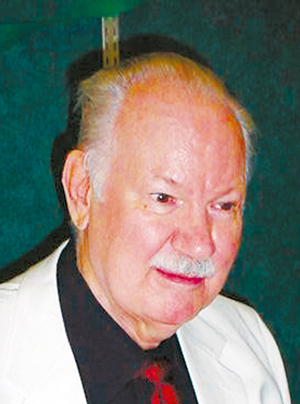
    John Keel as older gentleman

    Following a stint in the US Army during the Korean War, in which he served on the staff of the American Forces’ Network, Keel worked as a foreign radio correspondent in Paris, Berlin, Rome and Egypt. One of his broadcasts took place from inside the Great Pyramid, earning him a great deal of publicity. Restless and hungry for adventure, he resigned in order to explore the Middle East and Asia, while earning a living writing stories and articles for various pulp magazines. (Typical titles include “I Fed My Arm to a Tiger,” “Bosoms, Blood, and Baloney,” and “German Sex Traps.”)

    Throughout this four year period, Keel spent much of his time investigating magic, such as the Indian rope trick and the ability to drive hatpins through the tongue and cheeks, as well as alleged demonstrations of “real magic,” or psychic phenomena. He describes his adventures and findings in the aforementioned Jadoo (a Hindu word meaning “magic”), one of the funniest and most fascinating travel books ever written. A pioneer cryptozoologist, Keel mentions how, while staying in the Himalayan kingdom of Sikkim, he attempted to track down the Abominable Snowman, or Yeti, at one point catching sight of what appeared to be a group of huge, ape-like creatures.

    Later, back in America, Keel’s interest turned to the UFO phenomenon, after Playboy commissioned him to write an article on the topic. Determined to get to the bottom of the mystery, he began travelling the country to interview UFO witnesses and “contactees.” His investigations led him, in 1966, to the small town of Point Pleasant, West Virginia, where a great deal of UFO activity was being reported at the time, in conjunction with sightings of a mysterious six-foot-tall winged-humanoid with glowing red eyes, which the press dubbed “Mothman.”

    The latter sightings, which involved scores of reliable witnesses, were focused around an abandoned World War Two munitions manufacturing-storage complex on the edge of town, known among the locals as the “TNT area,” although the creature was spotted in other areas too, and was said to be able to rise straight up into the air like a helicopter and pursue automobiles at speeds approaching a hundred miles an hour.

    Not only was the Point Pleasant area found to be a hotspot for winged-humanoid sightings and strange aerial lights, but also, observed Keel, to a host of other paranormal manifestations, including poltergeist hauntings, electrical disturbances in the form of television sets “burning out at an alarming rate” and telephones “going crazy, ringing at all hours of the day and night with no one on the other end.” Even creepier, “Some people were getting calls from mysterious strangers speaking a cryptic language.”

    It didn’t take Keel long to recognise that all of these bizarre occurrences were related, and, further, that they had nothing to do with extraterrestrials and more to do with psychic phenomena and the occult. He explains: “Some UFOs were directly related to the human consciousness, just as ghostly apparitions are often the product of the percipient’s mind. There are deeply rooted psychic and psychological factors in the UFO phenomenon, and the sudden appearance of a light in the sky triggers and releases the human energy that stimulated seemingly supernatural events.”

    On 15 December 1967, roughly a year after the first Mothman sighting, the Silver Bridge, which stretched across the Ohio River, connecting Point Pleasant to Gallipolis, Ohio, collapsed while loaded with rush-hour traffic, resulting in the deaths of 46 people. As there were few additional Mothman sightings following the tragedy, the belief emerged that the two were related, and the Mothman came to be seen as a harbinger of doom. Keel’s book on the mystery, The Mothman Prophecies (1975), was made into a successful movie starring Richard Gere.

    As a very real example of the idiom “we attract that which we think about,” Keel found himself targeted by the very phenomena he was trying to unravel, causing him many headaches and countless bouts of paranoia. Cryptic messages kept appearing on his answering machine, he was plagued by strange men in dark suits who drove black Cadillacs (the so-called “men in black”), and he discovered that his phone was being tapped and his mail interfered with. Although some of these bizarre incidents were likely the work of the intelligence community, others defy logical explanation and instead point towards those “cosmic pranksters” he called the “Ultraterrestrials.”

    Get the issue this article appears in

    These mysterious entities, reasoned Keel, are somehow indigenous to Earth yet inhabit a dimension beyond time and physical matter. By shifting up and down through the electromagnetic spectrum, they can materialise and dematerialise as they please. Though they can be either good or evil, they seem to delight in manipulating and tricking human beings. Throughout different cultures and periods in history, we’ve referred to them by such names as gods, demons, spirits, fairies, angels, and monsters. Encounters with them have spawned entire religions – for example, Joseph Smith’s visit from the angel Moroni, which led to the birth of Mormonism. Today we perceive them as extraterrestrial in nature.

    From Keel’s perspective, then, the UFO mystery is simply a modern version of the same “game” the Ultraterrrestrials have been playing on humanity since time immemorial. As to what these entities are trying to achieve, he speculated that they operate as part of a “subtle cosmological system of control [that] has been in effect since the dawn of humanity.” This view mirrors that of the French computer scientist and UFO researcher Jacques Vallee, who hypothesised that the UFO phenomenon is “a control system for human consciousness.”

    Besides the Ultraterrestrial hypothesis, which is one of the more intelligent theories to explain the origin of UFOs, another contribution of Keel’s is the finding that UFO sightings tend to recur within specific geographical locations he called “window areas,” perhaps due in part to local geomagnetic factors. “The earth’s magnetic field is probably the culprit in many cases of seemingly inexplicable phenomena,” he wrote. “Our planet is pockmarked with magnetic anomalies and aberrations.”

    Keel, who passed away on 3 July 2009, at the age of 79, left behind countless articles and many books. The latter include UFOs: Operation Trojan Horse (1970), Strange Creatures from Time and Space (1970), Our Haunted Planet (1971), The Eighth Tower (1975), Disneyland of the Gods (1988) and the comedic novel The Fickle Finger of Fate (1966). Humble and possessed of a dry wit, he stressed that “nobody is an authority on UFOs,” including himself, and that he expected to be remembered “as a novelist and playwright – if I am remembered at all.”

    [alert type=”general” dismiss=”no”]This article was published in New Dawn Special Issue Vol 10 No 1.[/alert]

    [alert type=”success” dismiss=”no”]If you appreciate this article, please consider subscribing to help maintain this website.[/alert]

    © New Dawn Magazine and the respective author.
    For our reproduction notice, click here.

  • Haunted by Hungry Ghosts: The Joe Fisher Story

    Haunted by Hungry Ghosts: The Joe Fisher Story

    From New Dawn Special Issue No 5 (Winter 2008)

    Of those of us who do take mediumship and channelling seriously, and believe wholeheartedly in the existence of discarnate entities, very few of us are willing to concede that such beings may be liars and manipulators – and not just that, but purposely malevolent. There is, acknowledges the novelist Michael Prescott, “a dark side to the paranormal. It is not all benevolent angels and comforting words from deceased relatives. There can be obsession, deterioration of rational thought, shared fantasy, even a descent into madness. There can be hungry ghosts.”

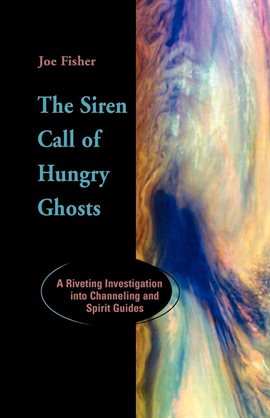
    When it comes to encounters with ‘hungry ghosts’, no story is more disturbing and tragic than that of Canadian journalist and best-selling author Joe Fisher. Fisher committed suicide at age 53 on May 9, 2001, throwing himself off a limestone cliff at Elora Gorge, Canada. One newspaper suggested he may have been murdered. Shortly before his death, Fisher’s final book, The Siren Call of Hungry Ghosts, an investigation into channelling and spirit guides – described by its publisher as “his gripping journey into a realm of darkness and deception” – was republished by Paraview Press. What gives this story a strange twist is that, in one of his last communications with his editor-in-chief Patrick Huyghe, Fisher stated that the spirits he had allegedly angered as a result of writing the book were still causing him trouble. 

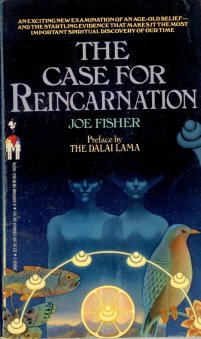
    Fisher’s works include the metaphysical classics Life Between Life, Predictions and The Case for Reincarnation, the last of which includes a preface by the 14th Dalai Lama. 

    In an article on the topic of ‘spirit possession’, famous British author Colin Wilson, who acknowledges Fisher as a friend, mentions that he “had been cheerful and normal, and no one, including myself, could believe that he had killed himself.” He mentions, moreover, that Fisher believed in life after death, and subscribed to the theory of reincarnation. “What baffled me was that he must have been convinced that suicide would only leave him with another set of problems.” Wilson has a point, because in The Case for Reincarnation, Fisher had written: 

    “Those who learn that they have killed themselves in past lives are quickly brought to the realisation that suicide, far from being an answer to life’s problems is (instead) the violent breaking of the lifeline. If the (suicide) could only realise the resulting intensification of difficulty which must enter the life to come, (suicide) would never be (attempted).”

    That Fisher’s death was caused by a group of malevolent discarnate entities – who perhaps influenced his mind – might sound far-fetched and sensational to some. It is, however, a possibility that cannot be ignored, as anyone who’s read Hungry Ghosts would probably agree. Unable to accept that an optimistic, spiritually-minded man like Fisher would want to take his own life, Wilson writes: “I find myself speculating whether his suicide had anything to do with a weird experience he had in the 1980s.”

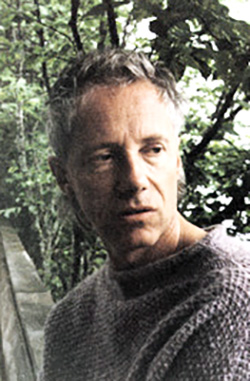
    Canadian journalist and best-selling author Joe Fisher in his younger days.

    FISHER MEETS HIS ‘SPIRIT GUIDE’ 

    That “weird experience” began in 1984, when Fisher met an Australian-Canadian medium named Aviva Nuemann, who suffered from chronic leukaemia. Aviva had contacted Fisher, suggesting he attend a channelling session at her house, because, she said, she did not feel entirely comfortable being a ‘mouthpiece’ for discarnate entities, and was hoping that he, an expert on metaphysics, might be able to shed some light on the matter. When they first met, Aviva, a laboratory technologist, stressed the point that she had “never believed in the so-called psychic world. I think astrology is absolute crap, and I’ve got no time for anything that’s supposed to be paranormal…” She told him the remarkable story of how she became a channeler for ‘the guides’. 

    It all started, she said, when she agreed to allow her friend and neighbour, Roger Belancourt, to try to heal her under hypnosis. His aim was to administer positive medical suggestions to her subconscious mind, such as “Your bone-marrow will start immediately to manufacture the extra red blood cells needed by your body.” These hypnotic sessions took an experimental turn when Roger began probing Aviva’s mind for past-life memories. In an emotionless voice, and in the third-person, Aviva described having been a peasant woman named Svetlana who lived through the Russian revolution, as well as a Punjabi infant who died of malnutrition before his first birthday. Other ‘past lives memories’ were described as well. 

    Probing deeper still, Roger managed to contact another part of Aviva’s mind, even more knowledgeable than her subconscious. It referred to itself as the ‘alter-consciousness’. Roger discovered that every organ of Aviva’s body, and every aspect of her personality, appeared to possess its own alter-consciousness, each with its own voice. He used the ‘voices’ to monitor Aviva’s health. By communicating with the blood’s alter-consciousness, for instance, Roger was able to tell whether Aviva’s red blood cell count had increased or decreased. This higher aspect of Aviva’s mind – what one might term her ‘superconsciousness’ – proved to be very knowledgeable about spiritual matters. The aim of reincarnation is “forward development,” it said, which is “understanding of oneself.” When brought back to full consciousness, Aviva had no memory of what had transpired while in trance. It was as though she had been deeply asleep. 

    Seeing as her alter-consciousness seemed to know just about everything, Roger decided to ask it if ‘spirit guides’ actually existed, for he had long suspected that he was watched over by a deceased Tibetan Lama named Jai-Lin. Roger found to his delight that he could communicate with Jai-Lin via Aviva’s alter-consciousness, which, in Fisher’s words, “acted as intermediary, relaying messages from the next world.” Roger was told by his ‘guide’ that he “must always think positive thoughts,” and that “you have much to learn in self-discipline.” 

    Annoyed by the fact that Roger was unable to control his negative emotions, Jai-Lin told Roger that he must move on to meet fresh challenges elsewhere. Jai-Lin was eventually replaced by another ‘guide,’ an affectionate entity named Hanni, who claimed to have been Roger’s mother in a previous life in the Netherlands. Every incarnate individual was administered a spirit guide, Roger was told. But this did not necessarily mean that one had the same guide throughout the whole course of their life – or, for that matter, several life times. Sometimes a guide would leave their ‘charge’ – the incarnate person whom they were required to ‘watch over’ – and another guide would fill their place. 

    Having mastered the ability to manipulate Aviva’s vocal cords – a process that was said to take some time – Hanni was able to speak through the entranced Aviva. Fisher describes Hanni’s voice as “soft and tenderly,” and totally dissimilar to Aviva’s. While channelling her own guide – a Yorkshire farmer named Russell who claimed to have last lived on earth during the 19th century – the voice that issued from Aviva’s mouth was also unlike her own, so much so that it left Fisher stunned. “Gone was the high-pitched jocularity with the pronounced Australian lilt,” he says. “Her enunciation was now unequivocally masculine; the English accent was unmistakable.” 

    Speaking to Russell, Fisher was not only surprised by Aviva’s change in voice, but by her change in personality too. “This was an entirely different Aviva,” he says, “strangely assertive and uncompromising.” Fisher felt as though he were talking to a separate being, and not, for instance, a fragment of Aviva’s unconscious mind.  

    Fisher was told by Russell that humanity was divided into two groups – souls and entities. Souls were said to be “created from desire,” and entities “born of knowledge.” Neither one of the groups was superior, said Russell. Although he found the concept difficult to accept, Fisher was glad to be hailed as an entity – clearly the more appealing of the two groups. Entities were classified as individuals, while souls were said to have more of a group mentality.

    Fisher’s guide turned out to be a young Greek woman named Filipa Gavrilos. Three centuries earlier, said Russell, she and Fisher had been lovers in a little Greek village called Theros. Apparently they had been together over many lifetimes. The news blew Fisher away, for he had always been strongly drawn to Greece, and, as a child, the name Phillipa had appealed to him. Russell described Filipa as an “excitable young lady.” Eventually, he said, she would be able to speak through Aviva. In the meantime, Fisher tried to develop mind-to-mind contact with Filipa. Each day, Fisher would close his eyes and will Filipa to communicate with him, a regimen he followed religiously for the next three years. 

    In late-1984, Filipa spoke through Aviva for the very first time. Initially, admits Fisher, he was rather unimpressed with Filipa, and had “serious doubts about her intelligence… Her initial responses were almost juvenile, prompting me to remark to Roger and Aviva that I had attracted a ‘disco queen’ for a guide.” As the sessions continued, however, Filipa quickly became “an advisor, a best friend. And my ideal lover.” He adds: “Filipa and I seemed to think alike, feel alike and see the world from a near-identical perspective.”

    The guides said they could read the minds of their charges, which seemed to be true. They knew certain things about their charges that only their charges knew. They could, for instance, describe what their charge had been doing or thinking on a particular day, and at a particular time – information that could only have been gained psychically. 

    Fisher’s daily attempts to communicate with Filipa on a mind-to-mind basis began to yield some interesting results. Whenever contact had been successfully established, “a loud buzzing would reverberate in my ears, a sound that could be likened to an internal droning of cicadas.” During these meditative sessions, images would sometimes appear in his mind. One time he saw the image of woman walking towards him. She was wearing sandals and a long white wrap, her face partially hidden by a garment. He knew the woman was Filipa. “Within seconds, my body was racked with the most profound and unrestrained emotion. I wept out of joy and sadness and loss and anguish, yet to this day I don’t really know why.” It was, he says, “one of the most moving experiences of my life.” 

    Joe Fisher (1947-2001)

    Mind-to-mind contact could best be achieved when Fisher was in a particularly relaxed mood, with very few thoughts running through his head. Sometimes he’d imagine himself hugging Filipa, and this she appreciated greatly. Fisher could tell that she longed for a physical body. Filipa and the other guides disliked nothing more than to be referred to as ‘spirits’, and to be reminded of the fact that they no longed occupied physical bodies. To call one of the guides a spirit was to make them annoyed, even angry. “We’re not spirits!” Russell once shouted. “We’re people just like you. It’s just that we don’t have bodies any more.” Fisher found it a little dubious that the guides were so attached to the ‘physical plane’, even though they stressed that they were no more ‘spiritually evolved’ than their charges. 

    Occasionally, said Fisher, conversations with Filipa “would erupt in my head.” Once, while running up a steep hill, Fisher heard “a voice or implanted thought-form.” So as to make the climb much easier, the ‘voice’ told him to imagine that his feet were not touching the ground. The technique had a positive effect. When next at Aviva’s house, Fisher asked Filipa if she had spoken to him while he was out running. She answered yes, and was able to relate exactly what she had told him. “Somehow,” explains Fisher, “Filipa had to be either living inside me or hovering perpetually close by, picking up via some otherworldly antenna my organism’s every twitch and shudder.” 

    SUSPICIONS ARISE

    The guides appeared to have access to an almost unlimited amount of information. They even claimed to know “the nature of God.” However, they said, the amount of time required to explain it would take some three hundred sessions; for this reason, the project was never attempted. Fisher admits to being impressed by the teachings and advice offered by the guides. They were taught, among other things, about the history of Atlantis and Lemuria; about the workings of the mind; about reincarnation, karma and spiritual development. And so on and so forth. “So rich and so abundant were the insights and observations that there were times when I felt overwhelmed by the veritable geyser of information,” he says. Communicating with the guides was an addictive and thrilling experience. 

    As time went on, Fisher grew slightly suspicious of the guides. When, during one session, Filipa said she was aware of every thought he ever had about her, “the remark left me weak with ardent appreciation. Every time I thought of her, she knew. How attentive, I asked myself, can you get?” The guides gave long lectures about the importance of peace and love, but in many ways their teachings rang empty, and possessed little substance. Also worrying is that they intervened, both physically and emotionally, in the lives of their charges, while at the same time stressing the importance of free will. Such a massive contradiction was impossible to explain. 

    In his book The Paranormal, Stan Gooch describes the teachings of ‘spirit guides’ as “a kind of intellectual candy-floss… when you chew on these utterances, there is nothing there. The mouth is empty.” The late D. Scott Rogo, a prolific writer and researcher of parapsychological phenomena, was of much the same opinion as Gooch. “I find that most channelled discourses possess the spiritual and philosophical sophistication of a Dick-and-Jane book,” he explains in The Infinite Boundary.  

    In 1871, more than a century before Joe Fisher’s contact with “Filipa,” the Italian poet-painter Rossetti was commissioned to paint this illustration of his poem “The Blessed Damozel,” about lovers separated by death, waiting to be reunited. By 1879 Rossetti added a predella showing the earthbound lover gazing up at the heavens.

    Mischievous Spirits  

    “The more I loved Filipa,” writes Fisher, “the more I hungered for tangible proof of her existence.” For this reason, and because he wished to write a book about discarnate beings and life in the ‘next dimension’, Fisher set about trying to prove the identities of the guides. He wanted to know if they had lived the lives they said they had. Fisher knew enough about spirits to realise that they were rarely who they claimed to be. He had, in fact, been warned about this by Russell, who, during one of their first conversations, clearly stated that mischievous spirits sometimes like to pose as wise and knowledgeable spirit guides.

    The guides were more than happy with Fisher’s desire to prove their identities, and were eager to offer him specific details about their lives on earth. First of all, decided Fisher, he would try to follow up on the information given by ex-RAF bomber pilot William Alfred Scott, the guide of a man named Tony. Scott said he had been born in Bristol in 1917, had started his RAF career in 99 Squadron at Mildenhall, Suffolk, and, ironically, had not been killed in the air, but in a German bombing raid on Coventry in 1944. Scott knew everything about the squadron, its operations, and his fellow officers. However, discovered Fisher, there had been no Flying Officer William Scott in the Squadron, as proven by a visit to the Public Record Office at Kew. Numerous other details were found to be bogus too.  

    When, back in Canada, and in a bitter mood, Fisher confronted Scott as to why he had lied, the once calm and polite entity became peevish and irritable. “I do not wish for my privacy to be violated,” he said. “I have given you all the information you need and, as such, it will stand.” Worming his way out of the situation, Scott claimed that he was unable to stick around for very much longer, because he had made plans to reincarnate soon. A suitable “bodily vehicle” had been located in Southern England, he said. After saying farewell, Scott departed for the ‘physical plane’. Much later on, Russell provided details of Scott’s ‘new incarnation’ – his name, DOB, place of birth, and the names of his parents. Surprisingly, the information checked out, and Fisher managed to obtain a birth-certificate for the infant. Fisher contacted the parents, who, although intrigued by the matter, were unwilling to get involved. He respected their decision. 

    If the guides had wanted to be believed, thought Fisher, wouldn’t they have claimed to have been people who had actually existed? Were they, perhaps, drawing on the knowledge and memories of other people – either living or dead – to create their identities? 

    As for his beloved Filipa, she too was found to be a liar and deceiver – or, in Fisher’s words, “a master of deception.” During his travels through Greece, Fisher was unable to find the ruins of Theros, let alone any evidence that the village had actually existed. And not only that, the city of Alexandroupolis, which Filipa had mentioned visiting during the eighteenth century, had not even existed at that point in history. In fact, discovered Fisher, the city had been named after a twentieth-century monarch!  

    During the remainder of his stay in Greece, while lying in bed late at night and brooding on Filipa’s betrayal, “her buzzing returned to plague me. Once so comforting and reassuring, the noise in my ears took on a shrill and sinister aspect, leaving me sleepless.” At that point, says Fisher, he began to grow afraid of Russell, Filipa and the other guides. “If they knew us all so intimately – as they had demonstrated on countless occasions – who could say what power they wielded over our lives?” 

    After the guides had been unmasked, only one or two members left the group. Overall, their faith in the guides had hardly been shaken. Fisher describes Russell – clearly the leader of the guides – as “devious, manipulative and potentially dangerous,” and “as slippery as the proverbial eel and a master psychologist to boot.” Fisher was unable to talk to Filipa, because, said Russell, “You’ve quite completely shut her out.” They never spoke again. In an article on the Joe Fisher story, the philosopher and paranormal investigator Jonathan Zap suggests that the guides may have actually been one entity – “a single shape-shifting entity who, like the devil, ‘hath power to assume a pleasing shape’ and was capable of performing a whole cast of characters of both genders.” 

    An-ex member of the group, Sandford Ellison, told Fisher how the guides had almost ruined his life. During private sessions with the guides, particularly with Russell, Ellison was told that if he didn’t leave his wife – a soul, not an entity – he would die. They even said “that she was trying to kill me by projecting powerful negative energies my way.” While working with the guides, who were teaching him to channel ‘healing energies’, Ellison suffered from “fierce emotional fluctuations and bouts of muddled thinking.” When no longer in their presence, he felt much better. During his final conversation with Russell, whereby he explained that he wanted nothing further to do with the guides, Ellison was told “that I would commit suicide in a fit of depression.” Before splitting with the guides, Fisher, like Ellison, had felt poorly. “I was more jittery than usual,” he says, “more susceptible to insomnia and nervous tension… I could not shrug off a cloying sense of contamination which could neither be pinpointed nor explained.”

    Having spent years listening to, and talking intimately with, the entities channelled through Aviva, and having spoken with a number of other channelled entities, Fisher was forced to accept, somewhat ruefully, that these ostensibly wise and benevolent beings – “who have wormed their way into that juicy apple of spiritual regeneration known as The New Age” – were nothing more than ‘lower astral entities’ or ‘hungry ghosts’. Fisher defines these vampiric beings, these poor, wretched souls, as “individuals whose minds, at the point of physical death, have been incapable of disentangling from desire. Thus enslaved, the personality becomes trapped on the lower planes even as it retains, for a while, its memory and individuality. Hence the term ‘lost soul,’ a residual entity that is no more than an astral corpse-in-waiting. It has condemned itself to perish; it has chosen a ‘second death’.” 

    Get the issue this article appears in

    SUICIDED BY HUNGRY GHOSTS?

    In his aforementioned article on ‘spirit possession’, Colin Wilson asks the question: “Was his suicide an attempt to rejoin Filipa?” To support this theory, Wilson explains how Fisher’s involvement with Filipa had “spoiled him for a normal sex life,” as revealed in the following quote, taken from Hungry Ghosts: “My terrestrial love life was doomed. No woman of flesh and blood could hope to emulate Filipa’s love and concern. No incarnate female could ever begin to understand me in the fashion to which I had become accustomed. In a sense, I was lost to the world, living in a limbo land…”

    Wilson offers another compelling theory:

    “I talked about the mystery of Joe’s suicide to Suzanna McInerny, who is the president of the College of Psychic Studies in South Kensington. Suzanna confirmed that long-term involvement with ‘hungry ghosts’ can cause difficult inner problems. A kind of dirt sticks to the medium’s ‘aura’ (or vital energies), which has to be cleaned off by another medium, like a window cleaner polishing off grime. This dirt can cause depression and a sense of unreality. And sometimes, Suzanna said, a ‘hungry ghost’ can even hang around inside somebody, quite unsuspected, and can only be evicted by a medium who understands such matters. She agreed with me that this could well be the explanation of Joe’s suicide.”

    Fisher was of the opinion “that no highly-evolved, spiritual being would ever speak through a medium.” He quotes the late Tibetan Buddhist lama Namgyal Rinpoche, founder of the Dharma Centre of Canada, who makes the same point: “As a general spiritual law, no enlightened being would speak through an ordinary human. The discarnate spirits who are making themselves known through channelling are united in their desperate need for love. Their audience is a generation that is also hungry for love.” 

    In light of Fisher’s unfortunate story, it would be easy to form the opinion that all channelled entities are troublesome – possibly even malevolent – lower astral entities, and that, as is written in 2 Corinthians 14, “Satan himself masquerades as an angel of light.” For a fundamentalist Christian – which your author is not – such a facile view would be deeply satisfying. But nothing in life is that black and white. Perhaps the last word should go to Zap, who warns, “We need to consider the subtle ways that discarnates may influence our thoughts, emotions, sexuality and behaviour. Joe Fisher’s apparent suicide adds an ominous implication that these entities are not to be underestimated…”

    Dedicated to the memory of Joe Fisher (1947 – 2001)

    [alert type=”general” dismiss=”no”]This article was published in New Dawn Special Issue No 5.[/alert]

    [alert type=”success” dismiss=”no”]If you appreciate this article, please consider subscribing to help maintain this website.[/alert]

    REFERENCES

    Loren Coleman, The Anomalist, The Sudden Death of Joe Fisher, www.anomalist.com/milestones/fisher.html
    Jonathan Zap, The Siren Call of Hungry Ghosts, 2006, www.zaporacle.com/textpattern/article/110/the-siren-call-of-hungry-ghosts
    Suhotra Swami, Channeling – Extrasensory Deception?, 1998, http://krishnascience.com/Vaisnava%20Library/Philosophy/Articles%20from%20Suhotra%20Swami/Channeling.htm
    Emanuel Swedenborg, The Heavenly Doctrines, www.heavenlydoctrines.org
    Joe Fisher, The Siren Call of Hungry Ghosts, Paraview Press, USA, 2001
    Stan Gooch, The Origins of Psychic Phenomena, Rider & Co, UK, 1984
    Stan Gooch, The Paranormal, Wildwood House, Ltd, 1978
    Jon Klimo, Channeling: Investigations on Receiving Information from Paranormal Sources, Jeremy P. Tarcher, Inc., USA, 
    D. Scott Rogo, The Infinite Boundary, Dodd, Mead & Co, USA, 1987
    Wilson Van Dusen, The Natural Depth in Man, Harper & Row, USA, 1972

    © New Dawn Magazine and the respective author.
    For our reproduction notice, click here.
  • Allan Kardec and the Way of the Spirit

    Allan Kardec and the Way of the Spirit

    From New Dawn Special Issue No 5 (Winter 2008)

    In Allan Kardec’s The Spirits’ Book, which is considered by many to be the bible of Spiritism, the characteristics of “impure spirits” are listed. They are “inclined to evil,” it says, and “give to men perfidious counsels, stir up discord and distrust, and assume every sort of mask in order the more effectually to deceive.” According to Spiritist doctrine, moreover, “imposition is one of the distinctive characteristics of bad spirits. They command and want to be obeyed. The good never impose.” 

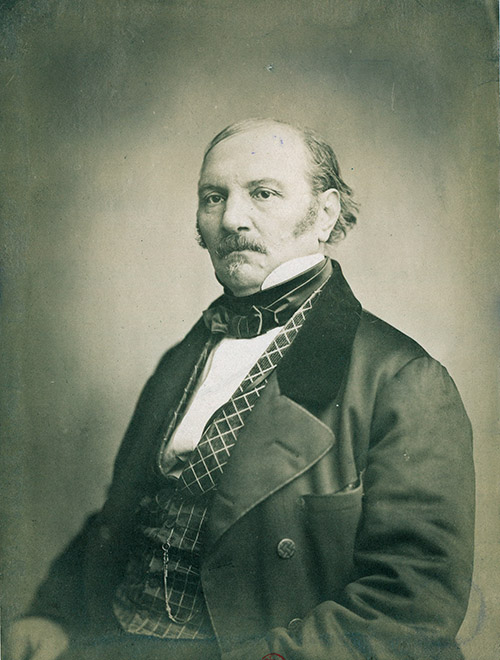
    Most people know about the religious movement Spiritualism, which flourished in Europe and America from the 1840s to the 1920s, and whose followers believed, and still believe, that the spirits of the dead can be contacted by mediums. But few of us in the English speaking world are familiar with the philosophical doctrine Spiritism, which was established in France in the mid-nineteenth century. An offshoot of Spiritualism, Spiritism began with the aforementioned Frenchman Allan Kardec, whose real name was Hippolyte Leon Denizard Rivail. 

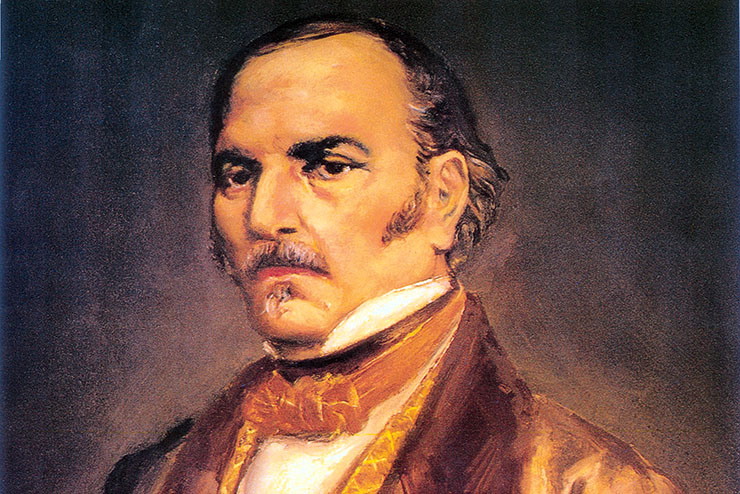
    Allan Kardec was the pseudonym of the French teacher and educator Hippolyte Leon Denizard Rivail (1804 – 1869), who is known today as the ‘codifier’ of Spiritism.

    Universal Educator

    Born in Lyon, France, in 1804, Rivail was educated at the distinguished Yverdon Institute in Switzerland, a school founded and run by the famous educational reformer J.H. Pestalozzi. Rivail was so influenced by Pestalozzi and his revolutionary teaching methods that he decided to become a teacher too, eventually establishing his own school in Paris, which, unfortunately, he was forced to close down after just eight years, due to financial reasons. But Rivail’s career as an educator didn’t end there. He wrote textbooks on French grammar, mathematics and educational reform, and also taught free courses in the sciences. Possessed of a great intellect, he apparently spoke six languages. By the early-1850s, writes British parapsychologist Guy Lyon Playfair, Rivail had become “well-established as a progressive, free-thinking writer and educator.” British author Colin Wilson describes him as “a kind of universal educator, willing to dispense knowledge on any and every topic.”

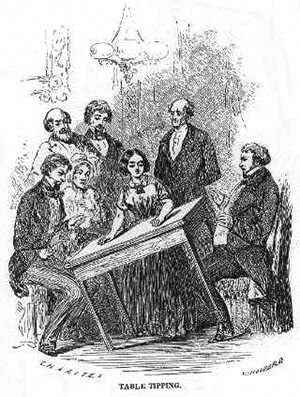
    Rivail’s initial reaction to the Spiritualist ‘table-turning’ craze was one of scepticism. Originating in 1848 with the Fox sisters in Hydesville, New York, the exciting phenomenon quickly spread to Europe. 

    Being, in Anna Blackwell’s words, “unimaginative almost to coldness” and “a close, logical reasoner,” it’s little surprise that Rivail’s initial reaction to the Spiritualist ‘table-turning’ craze was one of scepticism. Originating in 1848 with the Fox sisters in Hydesville, New York, the exciting phenomenon quickly spread to Europe. Almost everyone, it seems, were conducting séances in their homes, communicating with the spirits of the dead with the use of a table. 

    In 1854, while discussing the subject with a friend, Rivail remarked, “I will believe it when I see it.” He attended his first séance about a year later, and was greatly impressed by what he witnessed, which not only included table-turning, but also a demonstration of automatic writing. “I glimpsed,” he explains, “beneath the apparent frivolities and entertainment associated with these phenomena something serious, perhaps the revelation of a new law, which I promised myself I would explore.”

    Questioning the Spirits

    Rivail was later introduced to a Mr. Baudin, who held weekly séances at his home. Present at these sessions were his two daughters, both of them excellent mediums. The methods they used to communicate with the ‘spirit world’ were that of table-turning and planchette writing. Because the girls were frivolous and not the sharpest crayons in the box, so to speak, and because mediumship works on the principal that ‘like attracts like’, nothing particularly special was obtained from these communications – except, of course, when Rivail was present, who appeared to have acted as a ‘beacon’ for wise and knowledgeable spirits. 

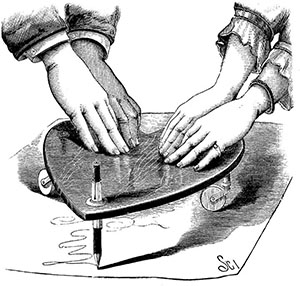
    A planchette is used to assist automatic writing. The board is used to hold a pencil and is supported on small wheels that allow for easy movement. The medium simply places his or her hand on the board, which is then manipulated by a spirit. Some sceptical researchers attribute the movement to the subconscious. 

    No longer were the spirit communications of a banal and superficial nature. The spirits began to talk philosophy of “a very grave and serious character,” and Rivail used the opportunity to ask them the most penetrating questions he could think of. He came to each session with a list of new questions. Examples include, “What is God?”, “Do spirits foresee the future?”, and “Is it possible for man to enjoy perfect happiness upon the earth?” Their answer to the first question was simple yet elegant. God, they said, is “the Supreme Intelligence – First Cause of all things.” Rivail, by the way, was not a medium himself, and thus he relied on others to act as his ‘telephone line’ with ‘the other side’.

    Another group of researchers, no doubt as earnest and sincere as Rivail and his colleagues, also conducted numerous ‘question and answer sessions’ with apparently wise and knowledgeable spirits, collecting, in the end, over fifty notebooks full of compelling material, which they ended up handing to Rivail. He added it to the other communications he had obtained himself. Overall, the information seemed entirely logical, and possessed an impressive inner-consistency. That it had a profound impact on Rivail, spiritually, intellectually and philosophically, is proven by the following statement, which he made to his wife: “My conversations with the invisible intelligences have completely revolutionised my ideas and convictions. The instructions thus transmitted constitute an entirely new theory of human life, duty, and destiny, that appears to me to be perfectly rational and coherent, admirably lucid and consoling, and intensely interesting.” 

    The Spirits’ Book

    After two years of scrutinising the material, Rivail decided that it might be a good idea to collate, edit, and publish it. When he asked his ‘spirit communicators’ what they thought of the notion, they replied in the affirmative, giving him specific instructions as to how he should go about it: “To the book… you will give, as being our work rather than yours, the title of Le Livre des Espirits (The Spirits’ Book); and you will publish it, not under your own name, but under the pseudonym of Allan Kardec.” (‘Kardec’ was an old Breton name in his mother’s family.)

    Rivail spent a considerable amount of time organising and verifying the communications. He only wanted to publish the best and most credible material – credible in the sense that the information could be confirmed by a number of different ‘sources’, and that it fitted in with the overall ‘theme’ of the work. If he wasn’t satisfied with the answer to a question – perhaps because it conflicted with the rest of the information he had collected – he would submit the question again, sometimes to a different medium than the one he had originally consulted. Rivail’s method, although not perfect, was certainly far more credible than that of most people who receive communications from the ‘spirit world’, who are often willing to believe almost anything they’re told. 

    The Spirits’ Book was finally published in 1857, causing quite a stir. It was so successful, in fact, that a second edition, containing additional material, was printed the following year, and the name Allan Kardec became known all over France. That its ‘author’ was a respected intellectual – and not the sort of person one would expect to publish such material – astonished the public. Almost everyone was able to find something of value in the book, even those of a scientific disposition, as it deals with such a wide range of topics, and in a very intelligent and enlightening manner. According to Steve Hume in an article that appeared in The Noah’s Ark Review, the French working classes took to Spiritism the most, “perhaps for the simple reason that the spirits had nothing good to say about the inequity that was, and still is, inherent in human society.” He points out, for instance, that the Spiritist teachings utterly condemn selfishness; proof of this can be found in The Spirits’ Book, which reads, “it is from selfishness that everything evil proceeds. Study all the vices, and you will see that selfishness is at the bottom of them all.” 

    Few can deny that The Spirits’ Book is an impressive piece of work, and that much food for thought can be found within its pages. One might describe it as an attempt to answer many of the ‘big questions’. As well as the nature of God, some of the topics it covers include ‘reincarnation’, ‘spirits and their relations with man’, ‘spiritual advancement’, and ‘the structure of the universe’. Some of the information is ahead of its time. On the topic of ‘universal space’, for instance, we are told than an absolute void does not exist in any part of space, but that “what appears like a void to you is occupied by matter in a state in which it escapes the action of your senses and of your instruments.” It’s exciting to think that ‘quantum field theory’ (QFT), which postulates the existence of a ‘quantum vacuum’, did not originate until the 1920s – more than half-a-century after the publication of The Spirits’ Book. According to QFT, in article available on Wikipedia, “the vacuum state is not truly empty but instead contains fleeting electromagnetic waves and particles that pop into and out of existence.” 

    Get the issue this article appears in

    Reincarnation

    In addition to The Spirits’ Book, also written – or, in Rivail’s words, “compiled and set in order” – under the name of Allan Kardec are four other fundamental works. They include The Mediums’ Book, The Gospel According to Spiritism, Heaven and Hell, and The Genesis According to Spiritism. All five books – known collectively as The Spiritist Codification – were published before Rivail’s death in 1869. Playfair describes them as “the clearest and most comprehensive survey of the invisible world yet written.” 

    The major difference between Spiritualist doctrine and Spiritist doctrine is that the latter advocates reincarnation, while the former does not. This had the effect of dividing the two movements. Automatic writing was the type of mediumship most favoured by Rivail, who considered it among the most safe, describing it as a method “by which the spirits best reveal their nature, and the degree of their perfection or inferiority.” The Spiritualists, on the other hand, were, and still are, fond of practising trance mediumship, while most of their mediums – or, rather, the spirits speaking through them – mentioned nothing at all about reincarnation. For this reason, explains Wilson in his book Poltergeist!, “Rivail was inclined to be critical about trance mediums, while the trance mediums and their followers denounced Rivail as a dogmatic old man.” 

    Buried in Paris’ famous Père Lachaise Cemetery Allan Kardec’s tomb, which features a large dolma, annually draws more visitors than any other.

    Following Rivail’s death, interest in Spiritism almost completely died out in France and other parts of Europe. It eventually spread to Brazil, attracting millions of followers. According to the last IBGE census data, in Brazil more than 4 million people declare themselves “Kardecist Spiritists.” Much like the Salvation Army volunteers, Brazilian Spiritists are known for their inspiring humanitarian efforts, and, according to Playfair, “have carried out some of the most impressive social welfare projects to be found anywhere.”

    When approaching the world of the spirits, it is worth keeping in mind what is said in The Mediums’ Book by one of its non-physical authors: 

    “Repel all spirits who counsel exclusiveness, division, isolation. Such spirits are always vain and shallow; they impose on the weak and credulous by exaggerated praises, in order to fascinate and to domineer over them. They are generally spirits who, having been public or private despots while on earth, still desire to have victims to tyrannise over after their death.”

    [alert type=”general” dismiss=”no”]This article was published in New Dawn Special Issue No 5.[/alert]

    [alert type=”success” dismiss=”no”]If you appreciate this article, please consider subscribing to help maintain this website.[/alert]

    REFERENCES

    Steve Hume, The Career of ‘Allan Kardec’ (originally published in The Noah’s Ark Society Review)
    Allan Kardec, The Spirits’ Book, Brotherhood of Life, USA, 1989
    Allan Kardec, The Book of Mediums, Samuel Weiser, Inc., USA, 1970
    Guy Lyon Playfair, The Way of the Spirit, The Unexplained magazine, vol. 3, issue 26, 1981
    Colin Wilson, Poltergeist!, Caxton Editions, UK, 1981

    © New Dawn Magazine and the respective author.
    For our reproduction notice, click here.

  • Transformed by Lightning: Real Life Stories

    Transformed by Lightning: Real Life Stories

    There is little that’s positive about being struck by lightning. Generally, those unfortunate enough to be struck either die more or less instantly or, more likely, survive yet sustain much damage to their bodies. Most lightning strike survivors battle with depression and some commit suicide.

    Partly as a result of the changes in personality experienced by many lightning strike survivors, which can involve becoming grouchy, short-tempered, and irritable, it’s not uncommon for marriages to break down and for survivors to end up living in isolation. Yet it’s not all doom and gloom. Cases exist where people have been healed of medical conditions after being struck by lightning. Then there are cases where survivors have developed alleged psychic abilities. Some survivors insist they are better for the experience and even grateful they were struck.

    Harold Deal

    One survivor who views his ordeal in a remarkably positive light is Harold Deal, a former maintenance electrician in his 70s from Greenwood, Missouri. After being struck by lightning on 26 July 1969, while standing in the driveway of his home (in Lawson, Missouri), Deal developed severe memory problems, whereby occasionally he could no longer recall how to talk, walk, and perform other simple tasks. Strangely, he also lost his sense of smell and the ability to experience pain and cold. Because he doesn’t “notice the cold like most people,” some of his fellow townsfolk call him “Weird Harold.”1 He explains: “They call me this because I never wear a coat or long-sleeve shirt no matter what the weather is outside… I have worked outside in twenty-six degrees [F] below zero, plus I have worked in weather with a wind chill as low as fifty-six degrees below zero… I have also worked in twenty-three degrees below zero for up to seven hours at a time. A T-shirt and overalls is what I always wear… whether it is summer or winter.”2 Today a dedicated Christian and charity worker, Deal feels that, looking back on the accident, it made his life “so much richer and so much fuller.”3

    Betty Galvano

    Betty Galvano of Sebring, Florida, a former high-fashion model and widow of the late celebrity golfer Phil Galvano, is a remarkable example of someone who’s been healed by lightning. In 1993, Galvano fell off a seawall and broke her right leg. The accident necessitated an operation in which two 14-inch steel bars were permanently inserted in her leg. Although the operation enabled Galvano to walk again, it left her in pain and unable to use her leg to the extent she could before the accident. She explains: “[I] couldn’t jump or raise my leg. I couldn’t stand on one leg. I couldn’t walk without dipping. My leg always felt like a sandbag.”4

    On the afternoon of 11 June 1994, while cutting up broccoli in her son’s kitchen with the window open, Galvano heard “the most unbelievable tremendous blast of thunder.”5 The next thing she knew, she was slumped over the counter, the knife and broccoli having flown from her hands. The bolt of lightning that struck Galvano had entered via the open window. Her husband, who’d been sitting four feet away from her when the incident occurred, helped her to the couch so she could lay down.

    While lying on the couch, Galvano experienced a strange sensation in her crippled right leg, as though “a thousand needles had entered the toes and foot.”6 All of a sudden her leg felt “full of vitality.”7 She recalls: “I stood up and everything was fine. I could walk normally.”8 The pain had also vanished. Galvano claims that not only did the lightning strike “miraculously heal” her leg, but that she didn’t suffer any ill effects from it, not even the slightest amount of memory loss. The day after the incident she paid a visit to her doctor, who confirmed that her leg had indeed been healed.

    Although the effects of being struck by lightning vary from one individual to another, no one is ever the same as before they were struck. Some survivors undergo a kind of “spiritual awakening,” or at the very least acquire a deeper interest in spiritual matters. Something of this nature happened to Galvano. At the moment she was struck by lightning she saw “gold particles everywhere” and experienced “a beautiful, peaceful feeling that God loves us [and] that the only thing that’s worth anything is love.”9 She adds: “Lightning was a spiritual experience for me. It energised me, it made me feel better.”10 It also left her feeling “totally immersed in God,” so that now “He is with me all the time.”11

    According to Galvano, her unique relationship with lightning dates back to when she was a newborn infant in Atlanta, Georgia, in 1935. She claims that a tremendous thunderstorm occurred on the day her mother brought her home from the hospital. The storm caused an electrical cable outside the house to break, which then produced an electrical shortage inside the house and much electrical arcing. Later, when she was three months old, she developed blue baby syndrome and fell into a coma. There was a high chance she might die. As the infant Galvano lay ill in hospital, a raging thunderstorm took place outside. Galvano picks up the story: “My mother looked out the window, and on the lawn she saw a ball of lightning. It floated up, came through the window, and rested on top of me. At that moment a nurse came into the room and watched with her mouth wide open as I came out of the coma.”12

    As tempting as it is to dismiss Galvano’s ball lightning story as the product of an overactive imagination, it’s not unheard of for ball lightning to approach an individual and brush against their body without causing any harm. So it’s conceivable she had a ball lightning encounter as an infant where the object “rested on top of me.” Whether the object healed her, though, is another matter entirely.

    Robert Davidson

    The case I’m about to describe is hardly an example of someone being healed by lightning, though it involved a healing of sorts. In June 1980, Robert Davidson, then aged 38, was riding his motorbike down Interstate 74 on his way to Indianapolis when suddenly it started to rain. Seated behind him on the motorbike was his wife. The two decided to pull off the road to put on their wet weather gear. Davidson’s wife dismounted the motorbike first. Just as Davidson was dismounting, with his left foot on the ground and his right leg still on the seat, he was struck on the shoulder by a bolt of lightning. Davidson was sent flying through the air and landed on the ground without a pulse. A physician who happened to be driving by at the moment the accident occurred pulled over to assist Davidson, giving him CPR and calling an ambulance.

    Both the physician and the team of ambulance paramedics desperately tried to restore Davidson’s heartbeat, but with no luck. As their attempts continued without success, it began to look inevitable that Davidson wouldn’t make it. What happened next sounds like something out of a Stephen King novel. A woman carrying a Bible and wearing an old fashioned-style black dress suddenly arrived at the scene. “Let me touch him,” she yelled out, as she made her way toward Davidson.13 Given the hopeless nature of Davidson’s condition, the paramedics decided they had nothing to lose by letting the woman approach him. “She knelt down beside me,” Davidson said, “and placed the Bible and one hand on my chest and the other hand on the ground. She proceeded to lift the Bible to the sky and muttered something that no one understood.”14 The woman – who came to be known as the “woman in black” – then got up and walked away, and was never seen again. Moments later Davidson had a pulse.

    The identity of the woman in black remains a mystery to this day. She appeared in an instant and vanished in an instant. Although some of the witnesses and paramedics at the scene say they didn’t see the woman, others are adamant they saw her and that she indeed saved Davidson’s life. Paramedic Marylou Shafer belongs in the latter group. “There is no doubt in my mind,” she commented. “She was there.”15 Davidson was taken immediately to hospital, where he remained in a comatose state for seven weeks then spent several additional weeks relearning how to walk. The lightning strike damaged his vocal cords, and it was two years before he was able to talk again and nine years before he was well enough to return to his job at General Motors.

    Peculiar Aftereffects

    Davidson claims that for many years following the accident he was unable to wear a wristwatch without it malfunctioning within a matter of days. The only watch he could wear that didn’t malfunction (and in fact continued to keep perfect time) was the one he had on his wrist at the time of the accident. Actually, many lightning strike and electric shock survivors claim they exert an odd effect on wristwatches. Furthermore, the claims don’t apply exclusively to wristwatches but involve all manner of electrical gadgets – from computers to automatic garage doors to streetlamps.

    In June 1989, former storm chaser Steve Melvin of Ohio, now in his early-50s, happened to get struck by lightning at the precise moment he was taking a photo. The camera was partly melted by the lightning, yet the film inside was undamaged. Remarkably, the photo he took at the moment he was struck shows the ghostly outline of a human surrounded by lightning, even though neither he nor anyone else was situated in front of the lens at the time. Melvin commented: “Some say it was me having an out-of-body experience. Some say it was my grandmother coming down from heaven to push me out of the way of the lightning. Some say it was a glimpse of an entirely different dimension. I’ll never know.”16 Ever since the incident, Melvin has had to replace on a frequent basis the batteries inside the pager he carries on his person; they go flat within days yet are supposed to last for months.

    Could there be a mundane reason why the batteries in Melvin’s pager appear to mysteriously go flat? Perhaps the device is damaged in such a way that it uses more power than it should. Or perhaps, due to brain damage sustained during the accident, Melvin has difficulty remembering when he last put batteries in the device. The only reliable way to get to the bottom of the matter would be to carry out a series of experiments involving Melvin and his pager. This aside, the fact that many lightning strike and electric shock survivors make claims similar to Melvin’s means we’re faced with a genuine mystery.

    In a 2009 USA Today article titled “Florida Lightning Survivors Share Stories,” one of the stories featured is that of Ralph Weidner of Bonita Springs. Since being struck by lightning in 1968 during a camping trip in Colorado, Weidner has had “difficulty using electronic devices.”17 He elaborates: “Battery-operated watches last only a few months and cellphones are a problem as well. I have had my cellphone keypad fail to work, but when I hand it to someone else, it works just fine. This has happened several times.”18

    In Out of the Blue, Friedman presents a number of cases where “lightning survivors have claimed electrical or magnetic powers…”19 One of the cases presented is that of Gabrielle Blanstein. After being struck by a bolt of lightning that entered through the open window of her home in Haydenville, Massachusetts, in 1996, Blanstein became “supersensitive to electrical current.”20 She can tell when an electrical device is plugged in nearby because she can feel in the form of vibrations the EM field surrounding the device. Blanstein claims to have demagnetised by accident two bank cards and a credit card. Could it be that Blanstein suffers from electromagnetic hypersensitivity (EHS)? Her ability to sense EM fields certainly suggests as much.

    Another case presented by Friedman is that of Nina Lazzeroni, a dental assistant and part-time motorcycle safety instructor in her late-50s from Dover, Delaware. On the afternoon of 8 April 1995, Lazzeroni was struck by lightning while standing in a parking lot in Troy, Ohio, in front of a number of students to whom she was delivering a lesson on motorcycle safety. Her students witnessed the entire event. She said, “They told me I flew up like a rag doll and landed on my head.”21 Lazzeroni spent a week in hospital. The accident left her with a shattered left eardrum (which later healed but developed into tinnitus), an abnormal heart rhythm, permanent numbness in parts of both feet, memory issues, personality alterations, and difficulty reading and talking. Lazzeroni surmises that the lightning entered her brain and fried her pituitary gland and other parts of her endocrine system, because after the accident she began to experience “such drenching menstrual periods that I was forced to have a hysterectomy.”22

    Fortunately, Lazzeroni has made a dramatic recovery and now finds it much easier to read and talk. Of those symptoms that remain from the accident, one is extremely peculiar: Lights of all kinds, particularly ones in public places like streetlamps and billboard lights, have a tendency to switch off in her presence, though at unpredictable moments. She explains: “They come back on after I leave the area and turn off again if I return. It’s not uncommon to have three or four go out while I’m driving somewhere at night. I feel no electricity or any other sensation – I just find myself in the dark periodically.”23 The phenomenon described by Lazzeroni falls into the category of streetlamp interference (SLI). [For more on this, see Louis Proud’s article “Streetlamp Interference: A Modern Day Paranormal Mystery” in New Dawn Special Issue Vol.7 No.2.]

    Kurt Oppelt, who with Sissy Schwarz won a gold medal at the 1956 Winter Olympics in the pairs figure skating event, was struck by lightning in 1989 while standing in his bathroom. Doctors he consulted the following day could find nothing wrong with him. And yet, explains Oppelt, “audio receivers, cash registers, and computers broke when I touched them… A friend of mine gave me a laptop, but I can’t use it. I told my cardiologist that my ‘electrical system’ was disturbed, but the doctors say they have no scientific proof. I told another doctor what happens when I touch electrical gadgets, and he said, ‘So don’t touch them’.”24

    Psychic Abilities

    The alleged development of psychic abilities is not an uncommon feature among cases where people have survived a lightning strike. While looking through the many lightning strike “survivor stories” posted on the National Oceanic and Atmospheric Administration (NOAA) website, I came across two claims of psychic ability. The first claim concerns a woman named Missy. Missy was struck by lightning through a landline telephone while ordering pizza during a thunderstorm. At the moment the strike occurred, she heard a “loud explosion” and noticed at her feet “a bright white light… which was football shaped and had spikes.”25 (This is a perfect description of ball lightning, which can indeed emerge from telephone handsets and also assume a “spikey” appearance.)

    The explosion knocked Missy backwards, and for a moment she remained on the floor in an unconscious state. She then experienced a strange “numbing feeling” work its way up one side of her body. Missy was taken to the hospital emergency room, where doctors confirmed she’d been struck by lightning. After the accident, according to Missy, she developed as a “side effect” (her term) extrasensory perception (ESP). She explains: “There have been times where I speak someone’s name, someone that I haven’t heard from or seen in many years and all of a sudden they walk in the door… I’ve had eerie feelings about things just before they actually happen… Most people that know me are amazed. And so am I. This periodic thing only started after my lightning incident.”26

    The second claim of psychic ability on the NOAA website concerns a nurse in Nashville, Tennessee, named Thais. Thais was struck by lightning on two separate occasions. The first time, in May 1985, she had been standing next to an open window drawing blood from a patient seated on a chair when lightning entered the building through the window and struck both her and the patient. The event was witnessed by the patient’s wife, who described the bolt of lightning as orange in colour and added that it appeared to go around as well as pass through the bodies of both Thais and the patient.

    Thais’s encounter with lightning left her with few if any injuries. A couple of months after the incident, however, she noticed two strange aftereffects. First, she could no longer wear a watch without it “losing 10-20 minutes and becoming unreliable.”27 She adds: “At first I kept thinking I was buying watches that were too inexpensive. It took a couple [of] years to realise it wasn’t the watches but me that was the problem!”28 The second strange aftereffect is that her psychic abilities became heightened. She comments: “This [heightened psychic abilities] is not something I previously had interest in and definitely not something I was looking for. I have always been a very private person and didn’t want to know things about other people, but I found myself somehow knowing things about folks I didn’t know well.”29

    The second time Thais was struck by lightning was while talking on the telephone during a Thanksgiving weekend some six to eight years after the first strike. Since then, she says, the well pump at her home has been struck by lightning twice.

    Greta Alexander

    Greta Alexander (1932–1998) of Delevan, Illinois, was a famous psychic whose expertise included palmistry, numerology, “medical intuition,” and assisting police with missing persons cases. Born on a farm in Manito, Illinois, she spent the first part of her adult life as a regular mother and housewife. One night in April 1961, while pregnant with her fifth child, she was lying in bed watching a thunderstorm out the window when “a white light came at me through the window, and the next thing I knew the Venetian blinds were wrapped around me and there was a fire burning a hole in the bed.”30 Although the bolt of lightning damaged her bedroom window, knocked down the chimney, and set fire to her bed, it didn’t harm her or her unborn child in any apparent way.

    Shortly afterwards, she suffered an electric shock while plugging a second-hand refrigerator into a faulty electrical outlet. It was soon after the lightning strike and subsequent electric shock that Alexander’s psychic abilities were “awakened.” She found herself answering the telephone moments before it rang, and noticed she was able to “read” the minds of others. She eventually established herself as a professional psychic, being paid by clients to perform palm readings and the like.

    Her work assisting police with missing persons cases (for which she received no payment) began in 1974. Perhaps the best known case in which her psychic talents proved useful was the 1983 murder of Mary Cousett by her boyfriend Stanley Edward Holliday Jr. At the time Alexander was asked to assist in the case, Holliday had already been charged with Cousett’s murder, yet the whereabouts of Cousett’s body remained unknown. Thanks in part to Alexander’s help, the police located Cousett’s body on 29 October 1983. “She told us a lot of things that turned out to be true – 20-some points that fit,” commented Lt. Donald Sandidge, “like that the head and foot would be separated from the [victim’s] body, [and] that a man with a crippled hand would find her.”31 (The man who found her body, an auxiliary officer by the name of Stephen M. Trew, had a deformed left hand due to an injury he’d sustained in the past.)

    That Alexander was highly psychic is difficult to refute. However, the reason she deserves mention here is not to illustrate the fact that psychic abilities are genuine and can be used to help solve crimes but that both lightning strike and electric shock play an important role in the “awakening” or attainment of psychic abilities. Given that Alexander was struck by lightning then soon after sustained an electric shock, there’s no way to know which of the two incidents was responsible for her “psychic awakening.” Very likely both were.

    Lightning Shamans

    Had Alexander lived in a society where shamanism is practiced, it’s likely she would have been considered a shaman as opposed to a mere psychic. According to German ethnologist and psychologist Holger Kalweit, in shamanic traditions the world over, being struck by lightning is one of the ways by which people are initiated into shamanism. “The Greeks believed a person struck by lightning was in possession of magical powers,” he explains, “and in tribal cultures throughout the world lightning shamans are often venerated and feared as the mightiest of shamans.”32

    To be initiated into shamanism is to take up the shamanic path. Apparently, this happens not by personal choice but under the will of a higher power. During shamanic initiation, the initiate symbolically dies (undergoes dismemberment) and is reborn (put back together). They acquire as a result of this challenging and traumatic process mediumistic and other psychic abilities.

    There is a belief among the North American Indian tribes known collectively as the Sioux that when a person is struck by lightning or has visions featuring Wakinyah (“thunderbirds” or “thunder beings”) it can indicate they’ve been chosen to become a special type of medicine man called a Heyoka (“thunder dreamer.”) A Heyoka differs from a conventional medicine man in that he does everything in a contrary fashion. He is a sacred fool, whose clownish antics are a source of amusement to others. The powers with which Heyokas are gifted derive from the thunderbirds. A thunderbird is a spirit of lightning and thunder in the form of a huge Eagle-like bird. Lightning they produce from their beaks; thunder they produce through the beating of their wings. They are also responsible for the production of rain.

    The famous Sioux Indian warrior and holy man Black Elk (1863–1950) followed the path of Heyoka. At the age of nine he was taken deathly ill and confined to bed for approximately twelve days. During this period of illness, he experienced a great vision in which he was visited by the thunder beings and taken to see the “grandfathers.” The grandfathers taught him important lessons that contributed to his eventually becoming a shaman. “Only those who have had visions of the thunder beings of the west can act as heyokas,” he explains. “They have sacred power, and they share some of this with all the people, but they do it through funny actions.”33 These “funny actions” can include running around naked in the middle of winter and shivering and complaining of the “cold” in the middle of summer; answering “yes” when one actually means “no”; and wearing one’s clothing and boots back-to-front. (One is reminded of Harold Deal’s inability to feel the cold.)

    Since, in spiritual terms, lightning is sacred and powerful because it originates from heaven, to be struck by lightning and survive is to be rendered powerful and sacred. To be struck by lightning and die, on the other hand, is to be punished for having done something to challenge fate.

    [alert type=”general” dismiss=”no”]Reprinted, with permission of the publisher, from Strange Electromagnetic Dimensions: The Science of the Unexplainable, © 2015 Louis Proud. Published by New Page Books a division of Career Press, Pompton Plains, NJ, USA, 800-227-3371. All rights reserved.[/alert]

    [alert type=”general” dismiss=”no”]This article was published in New Dawn 148.[/alert]

    [alert type=”success” dismiss=”no”]If you appreciate this article, please consider subscribing to help maintain this website.[/alert]

    Footnotes

    1. John S. Friedman, Out of the Blue: A History of Lightning: Science, Superstition, and Amazing Stories of Survival, Random House, 2008, 183
    2. Ibid, 183
    3. Megan Varner, “We Are All Survivors of Some Sort,” Index-Journal, 10 May 2006, www.zoominfo.com/p/Harold-Deal/851209311 (accessed 31 December 2013)
    4. Friedman, Out of the Blue, 184
    5. Ibid, 184
    6. Friedman, Out of the Blue, 184
    7. Ibid, 184
    8. Ibid, 184
    9. Dayna Harpster, “Florida Lightning Survivors Share Stories,” USA Today, 1 July 2009, http://usatoday30.usatoday.com/weather/2009-07-01-lee_lightning_survivors_N.htm (accessed 31 December 2013)
    10. Mireya Navarro, “When Lightning Strikes, Lives Are Changed,” 1 September 1998, The New York Times, www.nytimes.com/1998/09/01/us/when-lightning-strikes-lives-are-changed.html (accessed 31 December 2013)
    11. Ibid, 201
    12. Ibid, 202
    13. Ibid, 219
    14. Ibid, 219
    15. Ibid, 219
    16. Chris Rodell, “Unlucky Strikes,” The Independent, 7 November 1999, www.independent.co.uk/arts-entertainment/unlucky-strikes-1124177.html (accessed 31 December 2013)
    17. Dayna Harpster, “Florida Lightning Survivors Share Stories.”
    18. Ibid
    19. Friedman, Out of the Blue, 186
    20. Ibid, 186
    21. “The Will to Live,” Prevention, November 2011, www.prevention.com/health/healthy-living/stories-medical-miracles?page=3 (accessed 31 December 2013)
    22. Ibid
    23. Friedman, Out of the Blue, 187
    24. Ibid, 187
    25. “Survivor Story: Missy: High Price for Pizza? Supernatural Side effect?,” NOAA, www.lightningsafety.noaa.gov/survivors/story_missy.htm (accessed 31 December 2013)
    26. Ibid
    27. “Survivor Story: Thais: Open Window Results in Strike,” NOAA, www.lightningsafety.noaa.gov/survivors/story_thais.htm (accessed 31 December 2013)
    28. Ibid
    29. Ibid
    30. Wes Smith, “Seeing Things: Downstate Psychic Greta Alexander Is Known Worldwide As A Woman of Visions,” Chicago Tribune, 9 June 1991, http://articles.chicagotribune.com/1991-06-09/features/9102210281_1_psychic-abilities-unsolved-murder-case (accessed 1 January 2014)
    31. “Psychic Key to Cops Finding Remains of Slain Woman,” The Evening News, 16 November 1983, http://news.google.com/newspapers?nid=1982&dat=19831116&id=2tBeAAAAIBAJ&sjid=t20NAAAAIBAJ&pg=2498,1826524 (accessed 1 January 2014)
    32. Holger Kalweit, Shamans, Healers, and Medicine Men, Shambhala Publications, Inc., US, 1992, 46
    33. John G. Neihardt, Black Elk Speaks: Being the Life Story of a Holy Man of the Oglala Sioux, State University of New York Press, US, 2008, 149

    © New Dawn Magazine and the respective author.
    For our reproduction notice, click here.
  • Remote Viewing Revelations From the US Military to the MoD

    Remote Viewing Revelations From the US Military to the MoD

    From New Dawn 102 (May-June 2007)

    Surprising new evidence reveals that the British Government showed an active interest in using psychics for espionage purposes. In a document obtained under the Freedom of Information Act by UFO author and investigator Timothy Good, it was discovered that the British Ministry of Defence (MoD) undertook a study between 2001 and 2002 to investigate the efficiency of remote viewing.

    For those who don’t know, remote viewing – also called ‘travelling clairvoyance’ – is the ability to perceive places, persons and actions using psychic means. As is now well known, the US Army and various other tax payer supported government agencies, including the CIA, investigated and utilised remote viewing during the 1970s and 1980s.

    Now that it’s been declassified, all of the documentation pertaining to the British MoD’s remote viewing study can be obtained from their website – or so they claim. In one section it states that the results they obtained were largely unsuccessful and “undoubtedly disappointing with no one achieving any useful performance as an RV subject.” However, given the fact that untrained novices were used in the study, as well as the fact that the remote viewing methods they employed left much to be desired, this is not surprising.

    The MoD initially attempted to recruit 12 ‘known’ psychics who had advertised their abilities on the Internet. When every single one of them refused to be a part of the program, however, novice volunteers were drafted instead. One of the tests conducted involved blind-folding participants, and asking them to psychically determine the contents of sealed brown envelopes. Around 28% of the participants were successful in this endeavour. Most of them, the report states, were hopelessly off the mark.

    According to a spokeswoman for the MoD, their £18,000 remote viewing study “was conducted to assess claims made in some academic circles and to validate research carried out by other nations on psychic ability.” She adds: “The study concluded that remote viewing theories had little value to the MoD and was taken no further.”

    UFO investigator and author Nick Pope, who worked for the MoD for 21 years, suggests there may have been an undisclosed purpose to the study. Given its timing, he says, the study may have concerned military operations in Iraq and Afghanistan. “It can only be speculated,” he says, “but you don’t employ that kind of time and effort to find money down the back of the sofa. You go to this trouble for high value assets. We must be talking about Bin Laden and weapons of mass destruction.”

    In response to media criticism for “wasting taxpayer’s money” on a project seen as being ludicrous, MoD defended their actions, perhaps indicating they take the subject of parapsychology – a so called “pseudoscience” – far more seriously than they would have the public believe.

    “I don’t think this was a waste of public money,” says Pope. “Many people will say so, but I think it is marvellous that the government is prepared to think outside the box. And this is as outside the box as it gets.”

    Parapsychology – the scientific study of psychic phenomena – has been around since at least the 1800s. However, it wasn’t until the 1930s, when J.B. Rhine began conducting ESP experiments under controlled laboratory conditions at Duke University, that parapsychology became a legitimate scientific field. Since that time, knowledge in this area has rapidly advanced, and, thanks to improvements in experimental design, the presence of psi (psychic or paranormal phenomena) – which is generally weak and inconsistent – can now be detected far more easily. Also of aid to this process is the use of meta-analysis, a new statistical tool, whereby the results of many different studies can be successfully combined to render the aggregate result statistically significant.

    In his fascinating book Entangled Minds, parapsychologist Dean Radin – a man with impressive credentials, who once served as a scientist at Stanford Research Institute (SRI) where he worked on a highly-classified program investigating psi phenomena for the US government – says we should no longer be trying to determine if psi exists, but how psi works. “After a century of increasingly sophisticated investigations and more than a thousand controlled studies with combined odds against chance of 10104 to 1, there is now strong evidence that some psi phenomena exist,” he explains.

    In light of the fact that parapsychology is now a sophisticated and legitimate branch of science, and has been for many years, one can’t help but wonder why the MoD’s rather expensive remote viewing study was of such poor standard. It simply defies logic. Why, in other words, didn’t their study draw more heavily from the impressive body of knowledge accumulated over years and years of parapsychological research? And why didn’t their methodology follow the well-known and highly successful controlled remote viewing (CRV) protocols developed by Ingo Swann and utilised in STAR GATE and other programs? And how come, when they couldn’t recruit the twelve ‘known’ psychics for the study, they settled for novice volunteers?

    By tracing the history of modern remote viewing, we can begin to answer these questions.

    Ingo Swann

    One of the most important figures responsible for today’s understanding of remote viewing is Ingo Swann, a scholar, artist, scientist and natural psychic. After acquiring a pet chinchilla, which, he discovered, “could read and apprehend” his thoughts, Swann developed an interest in psychic phenomena. When he began to move into the circles of those studying such phenomena, he soon became acquainted with Cleve Backster. Backster, a New York polygraph operator, is famous for his experiments in “primary perception,” in which he demonstrated, with the use of polygraph equipment, that every single type of living tissue, even the bacilli in yoghurt, possesses some degree of sentience. Swann worked in Backster’s laboratory for a year.

    Soon after that, Swann participated in a series of psychic experiments for the American Society for Psychical Research (ASPR). According to Time-Life, a typical experiment would take place as follows: “Swann would sit in an easy chair illuminated by a soft overhead light, virtually immobilised by wires that hooked him up to a polygraph machine, which monitored his brain waves, respiration and blood pressure. Puffing away on his cigar, he would, as he put it, ‘liberate his mind’; then he would be asked to describe or draw his impression of objects that were set out of sight in a box on a platform suspended from the ceiling.”

    “At first,” says Swann, “I was not very good at this kind of ‘perceiving’, but as the months went on, I got even better at it.” The term “remote viewing,” coined by Swann and a research assistant at the ASPR named Janet Mitchell, was used to describe a particular kind of experiment conducted by Swann at around this time. Whilst in an out-of-body state, Swann would attempt to “see,” then report on the weather conditions in distant cities.

    Swann became more heavily involved in parapsychological research, when, in 1972, he agreed to work at SRI for Harold Puthoff, a highly successful physicist. Puthoff, after reading the seminal book Psychic Discoveries Behind the Iron Curtain in which he heard about the work of Cleve Backster, was eager to conduct some parapsychological experiments of his own. The research project conducted by Puthoff – then later by him and another physicist named Russell Targ – was initially funded by the Sciences Research Foundation of San Antonia, Texas. Later on, when their successful remote viewing work at SRI began to gain wider attention, they started to receive funding from other government agencies, including the CIA.

    In one early remote viewing experiment at SRI, Swann was accurately able to describe – and sketch in great detail – the features of a uniquely designed magnetometer buried six feet in concrete beneath the floor. Not only that, he managed to affect the equipment’s output signal, as displayed on a strip chart recorder. Another subject, a photographer by the name of Hella Hammid, was able to accurately describe five out of nine target sites, resulting in odds against chance of more than 500,000 to 1.

    Thanks to the advent of coordinate remote viewing (CRV) – now called controlled remote viewing – numerous complications were eliminated. For example, it was no longer necessary for a person – known as the ‘beacon’ – to visit the spot that was chosen as the remote viewer’s target. This enabled remote viewing to be more easily used for espionage purposes.

    CRV is a method by which coordinates are employed to identify the target to be viewed. The coordinates used, however, needn’t be geographical in nature. They can be, and usually are, completely random numbers. Once a particular target has already been ‘visited’ by a remote viewer, and this target has been assigned a set of random coordinates, it is possible for another remote viewer to ‘visit’ the same location – which could be any point in time and space – simply by focusing on the same set of coordinates. The theory behind how this works is based on Jung’s notion of the collective unconscious. “Once these numbers have been assigned,” writes British author and paranormal expert Colin Wilson, “they become part of the psychic ether, much as the letters assigned to a website on the Internet will enable anybody to access the site.”

    During the Cold War, when the American government discovered they were lagging behind the Soviet Union in paranormal research, they grew concerned, thinking the Soviets might use their newly acquired knowledge for hostile purposes. Psychic Discoveries Behind the Iron Curtain, published in 1970 by two Western authors named Sheila Ostrander and Lynn Schroeder documented that numerous scientists throughout the Soviet Union and Eastern Europe were starting to take parapsychological research – or ‘psychotronics’ – very seriously indeed.

    “But interest in psychic phenomena within the ruling circles of Cold War leaders on both sides of the Atlantic remained very much a hidden agenda,” writes Jim Marrs in Psi Spies. “Officially, the United States had no interest in nonexistent phenomena.” However, a 1972 CIA report, released years later, proves agency officials were concerned about Soviet psychic research, even though, at the time, organisations such as the Committee for the Scientific Investigation of Claims of the Paranormal (CSICOP) were beginning to give parapsychology a bad name, as was the media.

    As quoted by the editors of Time-Life, the aforementioned CIA report stated, “Soviet efforts in the field of psi research, sooner or later, might enable them to do some of the following: (a) Know the contents of top secret US documents, the movement of our troops and ships and the location and nature of our military installations. (b) Mold the thoughts of key US military and civilian leaders at a distant. (c) Cause the instant death of any US official at a distance. (d) Disable, at a distance, US military equipment of all types, including spacecraft.”

    The first remote viewing research program conducted by Puthoff and Targ with CIA funding was named project SCANATE. Held at SRI, the program went on for two years, yielding some remarkable results. The CIA, happy with the success of the program, felt their money was being well-spent. A CIA intelligence consultant named Joseph A. Ball, who, according to Mind Wars author Ronald McRae, was commissioned to evaluate SCANATE, allegedly said the project “produced manifestations of extrasensory perception sufficiently sharp and clear-cut to justify serious considerations of possible applications.”

    According to McRae, the AiResearch Manufacturing Company of Torrence, California, another consulting firm, was also contracted by the CIA to evaluate SCANATE, reaching essentially the same conclusion as Ball.

    As well as Swann, another notable member of the SCANATE team, and an equally successful remote viewer, was a former police commissioner named Patrick H. Price, who died suddenly of a heart attack in July of 1975. As a result of conducting a highly successful operational test for the CIA, in which his descriptions of a missile and guerrilla training site in Libya were confirmed by the CIA’s Libyan Desk officer, Swann helped ensure that government funding for project SCANATE would continue. Also of help to this process was the publication of SRI’s remote viewing research in a prestigious technical periodical, Proceedings of the IEEE, the editor of which was almost fired for choosing to deal with such controversial material.

    [alert type=”info” dismiss=”no”]If you appreciate this article, please consider a subscription to New Dawn magazine.[/alert]

    Operation GRILL FLAME

    By the late 1970s, when the SRI team began receiving sponsorship from the US Army instead of the CIA, an operational unit of soldiers trained in remote viewing – known by many as the ‘psi spies’ – was created in order to help gather intelligence during the Cold War. One of the first units of remote viewers created by the US Army was called GRILL FLAME, previously named GONDOLA WISH. According to Joseph McMoneagle, one of the original psi spies, the Army interviewed around 3,000 people for GRILL FLAME, selecting, in the end, a total of six.

    Early on, the members of GRILL FLAME practised remote viewing using a variety of different experimental methods. Consciousness-altering techniques such as Transcendental Meditation (TM) and biorhythm were tested, but proved to be of little value. Remote viewing in an out-of-body state was also found to be largely unsuccessful, in that, although it could be achieved, the viewer would often lose interest in the mission at hand, focusing instead on the awe-inspiring nature of the experience. The team decided, in the end, to adhere to Swann’s structured CRV methodology, as this produced the most consistently accurate results.

    While in an out-of-body state, Robert Monroe, founder of the Monroe Institute for Applied Sciences – which, among other things, was used to screen remote viewers for GRILL FLAME and other programs – discovered he was being ‘observed’ by a group of strangers, one of whom appeared to be a powerful female psychic. He felt they were trying to probe his mind. Shaken by the experience, Monroe asked the GRILL FLAME team to investigate the matter. They soon discovered that the Soviet Union had a psi spies team of their own. “The Soviet KGB,” says Marrs, “laboriously screened more than a million people in an effort to locate ‘super naturals’, persons with the greatest amount of psychic power. These super psychics became the Soviet Union’s psi spies, sometimes assigned to seek out their Western counterparts.”

    For many years, the two teams indulged in a game of harmless psychic cat and mouse with each other, but that’s as far as the matter went. According to former military remote viewer Mel Riley, the two teams had a kind of “gentleman’s agreement” with each other, which involved keeping the existence of the opposing team a secret from their respective bosses, so as not to cause trouble for each other.

    In 1985 GRILL FLAME came under control of the Defence Intelligence Agency (DIA). From that point onwards, the unit codename underwent several changes. GRILL FLAME became CENTER LANE, then SUN STREAK, and finally STAR GATE.

    According to many of the original psi spies, the unit went downhill once it was placed under civilian control during the late 1980s. At around this time, two female trainees named Angela and Robin showed up. Called “the witches” by the others, they practised channelling, tarot card reading and automatic writing in place of CRV, consequently obtaining poor results in their work. The entire unit became something of a joke, especially when congressmen began to visit for psychic “readings.” By 1990, all of the military-trained psi spies had left the unit, leaving “the witches” in charge. Some of them retired. Others joined different units within the US Army.

    During its full operational period, before things went awry, the psi spies unit provided information of critical intelligence in hundreds of very specific cases. “On scores of occasions,” writes Swann, “this information was also described within government documents as being unavailable from any other source(s).” He continues: “Also contrary to popular belief, the program operated throughout its history under the very watchful eyes of numerous oversight committees, which were both scientific and governmental. During the seventeen and a half years it ran, it provided support to nearly all of the United States intelligence agencies.”

    Early on, most of the operational missions conducted by the psi spies involved investigating targets in the Soviet Union. Being highly classified and concerning issues of national security, the unit received little or no feedback about the success of these missions. One of the most talked about missions that the psi spies were asked to undertake was conducted by McMoneagle, who managed to correctly describe, in thorough detail, a new type of Soviet Submarine, which was then being constructed in a secret facility in Severodvinsk.

    Another mission noted for its stunning success was undertaken in May of 1978, in response to a plane crash that occurred in Zaire (now the Democratic Republic of Congo). The plane, a Soviet Tupolev-22 bomber, was seen as being invaluable to the Americans, who wanted to recover the wreckage in order to examine its communication equipment. Two remote viewers working independently of one another, Frances Bryan and Gary Langford, each managed to draw detailed sketches of the area where the plane crash occurred. The plane was eventually located within barely 5 kilometres of the spot they had both described.

    The story of military remote viewing hit the mainstream press in late 1995, but not before the CIA had arranged for the American Institute of Research (AIR) to conduct a biased review concerning the value and success of STAR GATE. Their aim was to discredit remote viewing and other psi abilities, in order to thwart public interest in the subject. Jessica Utts, a professor of statistics with a positive opinion on psi phenomena, and Dr. Raymond Hyman, a professor of psychology and luminary of CSICOP – in other words, a fanatical sceptic of anything remotely ‘paranormal’ – were chosen to lead the review. “It was a good strategy to select evaluators from opposite camps; it gave the appearance of balance to the evaluation – an appearance that is deceiving,” writes W. Adam Mandelbaum in his book The Psychic Battlefield.

    The report evaluated only three remote viewing projects, which were carried out within one year towards the end of STAR GATE, a period of decline for the program. The other 16 or so years that it ran (though under numerous different codenames) were totally disregarded. Moreover, according to Dr. Edwin May, former director of remote viewing research, the AIR panel was denied access to an estimated 80,000 pages of program documents, due to their highly-classified nature. And, to make matters worse, the panel interviewed only three remote viewers involved in the program, all of whom were of “the witches” variety, in that they commonly relied upon tarot card reading, automatic writing and other unconventional methods to obtain their information. Ergo, only the very weakest data was used in the AIR evaluation.

    The AIR report states, “The evidence accrued from research, interviews and user-assessments all indicate that the remote viewing phenomenon has no real value for intelligence operations at present.” It also mentions, however, that a “statistically significant effect” had been observed in laboratory remote viewing experiments. Despite these findings, the report goes on to mention that, “no compelling explanation has been provided for the observed effects… to say a phenomenon has been demonstrated we must know the reason for its existence.”

    One can’t help but wonder if the real purpose of the British MoD’s remote viewing study was to further discredit the phenomenon. It was, after all, something of a joke – especially in comparison to the remote viewing program undertaken by the US government. Or, perhaps, as Nick Pope suggests, its real purpose has not been disclosed to the public.

    In his book Psi Spies, Marrs claims that several separate unofficial sources have informed him the US government’s remote viewing program never truly ended. It only ended in the eyes of the public – just as the CIA intended. According to these sources, says Marrs, “the remote viewing methodology was simply moved to even more secret government agencies where its use continues today.”

    [alert type=”general” dismiss=”no”]This article was published in New Dawn 102.[/alert]

    [alert type=”success” dismiss=”no”]If you appreciate this article, please consider subscribing to help maintain this website.[/alert]

    References

    ‘MoD Defends Psychic Powers Study’
    ‘Defence Chiefs Spend £18,000 on a Mystic Experiment to Find Bin Laden’s Lair’
    Ministry of Defence – Remote Viewing

    http://www.dailygrail.com – ‘Remote Viewing Revelation’

    Buchanan, Lyn, The Seventh Sense (Paraview Pocket Books, New York, NY, 2003)
    Graff, Dale E., Tracks in the Psychic Wilderness (Element Books, Inc, Boston, MA, 1998)
    Gruber, Elmar R., Psychic Wars: Parapsychology in Espionage – and Beyond (Cassell plc, UK, London, 1999)
    Mandelbaum, W. Adam, The Psychic Battlefield: A History of the Military-Occult Complex (Thomas Dunn Books, New York, NY, 2000)
    Marrs, Jim, Psi Spies (AlienZoo Publishing, Phoenix, AZ, 2000)
    McMoneagle, Joseph, Remote Viewing Secrets (Hampton Roads Publishing Company, Inc., Charlottesville, VA, 2000)
    Radin, Dean, Entangled Minds: Extrasensory Perception in a Quantum Reality (Paraview Pocket Books, New York, NY, 2006)
    Wilson, Colin, Alien Dawn: An Investigation into the Contact Experience (Virgin Publishing Ltd., 1998)

    © New Dawn Magazine and the respective author.
    For our reproduction notice, click here.