New Dawn – World's Most Unusual Magazine

Author: Michael Howard

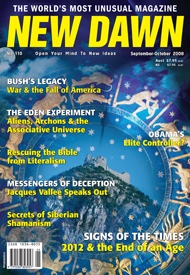
  • Secrets of Siberian Shamanism

    Secrets of Siberian Shamanism

    From New Dawn 110 (Sept-Oct 2008)

    Today, especially in New Age circles, the term ‘shamanism’ is often used in a generalised way to describe all kinds of indigenous magical practices in a wide range of cultures worldwide. It has also been projected back into a past that it never had, so we can find modern books on so-called ‘Celtic shamanism’ and even ‘Ancient Egyptian shamanism’. Modern writers on the subject such as Dr. Michael Harner have also created what is called ‘core shamanism’ or ‘urban shamanism’.

    This takes the essence of shamanic beliefs and practices and repackages them in a safe, sanitised and often diluted form that is acceptable for Western seekers of alternative spirituality. In this article, however, we examine and describe the real ‘core shamanism’ as it has been practised for hundreds of years in its homeland of Siberia and the Turkic-speaking areas of Mongolia, and where it is now being revived.

    In the late 16th and early 17th centuries the area known as Siberia was colonised by the Russians. They were led there by its abundance of wild animals that created a flourishing trade in animal skins and furs. The Tsars used the income from this enterprise to boost their economy and access the foreign currency that helped create the Russian empire. The influx of Russian hunters, fur traders and merchants drastically affected the local population, which consisted of many different tribes. By the 1900s the native population had dwindled to about 10% of the total people living in Siberia. Along with the fur traders there also came missionaries and, in later times, anthropologists. The former were interested in converting the indigenous population to Orthodox Christianity, while the latter wanted to study their tribal culture, spiritual beliefs and ritual practices. Both these groups of outsiders contacted the tribal shamans of Siberia and, for totally different reasons, recorded and commented upon their religious observances.

    The earliest references to magical practitioners that could be described as shamans in fact date back to the 13th century. It was then that the first Western travellers penetrated Central Asia and visited the court of the Mongol rulers. The explorer Marco Polo, for instance, met magicians who were healers and could diagnosis diseases by the use of divination. Polo says they became possessed by what he described as “a devil,” who then used their vocal chords to speak through them.

    However, it was an English explorer called Richard Johnston in the 16th century who first described what sounds very like the activities of shamans proper. He reported witnessing a tribal priest wearing animal skins and playing a drum “shaped like a great sieve” in “devilish rites.” During the ritual the drummer fell into a trance and was possessed by “evil spirits.”

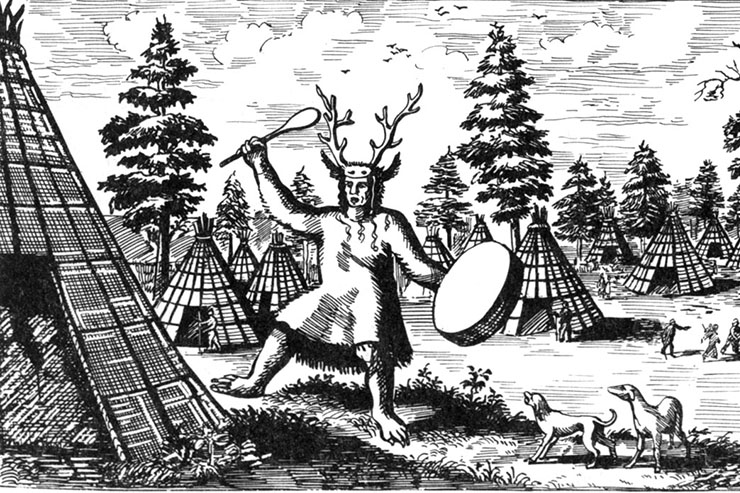
    In 1692 another Western explorer, Nicholas Witsen, described seeing a “shaman” or “priest of the Devil.” He was clad in ritual regalia, consisting of an antlered head-dress and a richly decorated robe, and chanted and beat on a drum to attract the spirits. Generally, reflecting the Catholic culture they came from, these Westerners regarded the shamans as fanatical “devil worshippers” who forced their ignorant and uneducated followers to serve evil spirits and demons.

    What is Siberian Shamanism?

    The meaning of the word ‘shaman’ is shrouded in linguistic mystery and various explanations have been put forward for its origin. One theory is that it is possibly derived from an ancient Chinese term for a Buddhist priest or monk. The Oxford English Dictionary defines its meaning as “a priest or witch-doctor [sic] of (a) class claiming to have sole contact with gods etc.” It says the word comes from the Russian “shaman” and is a translation of the Tungusion word “saman.” In Siberia and Mongolia, shamanism was known as Tengerism, meaning a reverence for sky spirits. It reflected an animistic belief system where everything in the natural world was alive, permeated by spirit force or, in simple terms, inhabited by spirits.

    These spirits had to be respected and appeased or else the land would become infertile and barren, the animals relied upon for food would disappear and eventually the world would come to an end. To achieve this essential and vital balance between humans, nature and the spirit world, a magical specialist was required and the shaman took that role. He or she acted as an intermediary or middle person between humanity and the Other, and a caretaker of cultural and magical tradition. Their job involved conducting blessings, especially on new-born babies, performing rituals of protection, divining the future, healing the sick, exorcising ghosts and demons, overseeing the burial of the dead, and generally communicating on behalf of the tribe with the spirit world and its denizens.

    Initiation into the shamanic cult could be achieved in several different ways. The easiest was the hereditary route where magical knowledge, power and skill were passed down from grandfather or father to son or, more rarely, from grandmother or mother to daughter. Sometimes children were chosen at a very early age or even at birth by the spirits and instructed by them through the medium of visions and dreams. Young people who suffered a serious illness or disease or from epileptic fits, were introverted and dreamy, or had any form of mental condition or disability, were regarded as natural shamans who had been specially chosen by the spirits.

    In later life those who felt a strong calling to become a magical practitioner would retreat from society, usually to a remote place in the wilderness, and undergo a vigil during which they invited the spirits to contact them and teach them the shamanic ways. When a person was actually taken on by another shaman as his assistant or sorcerer’s apprentice, a formal initiation rite was often carried out. The candidate offered an animal sacrifice, called on the spirits to aid them in their task, took an oath of loyalty to their shamanic master or spiritual clan, and accepted the special ritual regalia of a shaman’s office.

    Often these initiations by either another shaman or the spirits involved a traumatic visionary death and rebirth experience. Sometimes this included a journey to the underworld, meetings with deities and the would-be shaman’s body being dismembered and then put together again.

    The ritual regalia given to the new shaman reflected the fact that he or she was a special person who was separate and different from other members of the tribe. Siberian shamans wore robes made from animal hide and fur and decorated with embroidery, bird’s feathers, silk tassels, ribbons, bells, small mirrors, jewellery representing symbolic motifs such as the World Tree, and assorted metalwork such as copper discs. Headwear consisted of a conical or pointed cap made from felt or fur or the antlers of a reindeer. Some shamans wore iron-shod fur boots so when they stamped their feet they could drive away evil spirits.

    The majority of shamans carried a ritual drum similar in shape to the traditional Irish bodhran. These were made from an animal skin stretched over a wooden frame and decorated with feathers and magical symbols representing spirit journeys to the Otherworld or the shamanic cosmology. The drum was very important and represented the symbolic and magical steed that enabled the practitioner to travel from Middle Earth to the realm of the spirits. It was also a magical object in its own right that contained and focused spirit force or energy. By playing it the shaman could both attract spirits and exorcise them. In addition to the drum a magical staff was often carried. This was made of either wood or metal and was decorated with feathers, bells, ribbons and the pelts of small woodland animals.

    Different Types of Shaman

    Although Westerners used the generic term ‘shaman’ to describe all the tribal magical practitioners of Siberia and Mongolia, in practice they were divided into several different types, categories or classes with specific magical duties and responsibilities. Using English terminology, these included ‘conjurors’ who summoned and controlled spirits, prophets or psychics who foresaw the future, sorcerers who practised ‘black magic’, trance-workers who travelled in spirit form to the Otherworld, healers who were experts in folk medicine and herbalism, and guides to the dead who laid out corpses and conducted funeral rites.

    The shaman-healers were often female and they specialised in health matters connected with human and animal fertility, sexuality and children. They were recognisable by their distinctive skirts made from animal hide and brightly coloured woollen hats. Instead of the ritual drum used by the male shamans, they carried a silk fan and prayer beads. Unfortunately when Buddhism came to Siberia and Mongolia many of these female healers were ruthlessly persecuted and exterminated by the misogynist monks. As a result their extensive knowledge of herbs and plants used for natural healing was either lost completely or taken over by Buddhist healers and only practised in a debased or diluted form.

    Another female practitioner was the shaman-midwife, who inherited her power from the maternal line of familial descent. As well as ensuring that babies entered this world safely in a physical sense, she was also responsible for their spiritual protection from evil influences during birth and their well-being as children. In this sense she took on the role of a human fairy godmother. Immediately after a birth the shaman-midwife cut the umbilical cord and then purified the new-born baby with salt water and fire. Any (female only) witnesses to the birth could only be present if they had first been ritually purified by the midwife with fire and water. During the first few weeks of a baby’s life it was very important that the proper rituals were performed to protect the child until its spirit was fully established in the material world. If they were not performed properly then the baby’s spirit might return from whence it had come. These essential rites were the responsibility of the shaman-midwife and her assistants.

    Another type of shamanic healer was a bone-setter who called upon spirit guides to help them in their healing work. They mainly repaired broken and dislocated bones and torn ligaments, healed back pain caused by spinal injuries or disease and also skin infections such as boils, rashes, psoriasis and eczema. These gifts were inherited from the paternal side of the family and, because the bones of the human body were considered to be spiritually ‘masculine’ in nature, these shamanic bone-setters were always male.

    Most of the shamans worked with what modern New Agers call animal allies or spirit-helpers in animal form. These entities assisted them with their magical work and also taught them. For instance, the shaman-midwives described above worked with an animal spirit in the form of a mountain fox. The first bone-setter is supposed to have been taught his skills by a snake so that creature was sacred to the clan. Other shamanic practitioners were assisted by reindeer or wolves for attacking and destroying evil spirits, and ravens for getting rid of diseases. Other important animal spirit helpers included owls, wild ducks, geese, squirrels, bears, frogs and toads, dogs, seagulls and eagles.

    One of the most important and respected types of magical practitioners was the shaman-smith. In all cultures all over the world from Europe to Africa the smith took a central role in tribal society and was regarded as a powerful magician or sorcerer because of his mastery over fire and skill in working with metal. There are many legends about blacksmiths making pacts with demons, gods or the Devil or tricking and outwitting them to acquire their skills. There are also many smith gods in ancient mythology who were magicians, made weapons for the Gods or acted as cultural exemplars by inventing agricultural tools. In Siberia the shaman-smiths made and magically consecrated the ritual metal objects used by other shamans. They were only chosen by the spirits and instead of a drum they used their anvils to communicate with the spiritual realm.
    ‘Black’ & ‘White’ Shamans

    As well as the different types of magical practitioner, the shamans were also divided into two separate, but sometimes overlapping, categories – ‘black’ or ‘white’ shamans. The former were regarded as the most powerful of the two and were sometimes known as ‘warrior-shamans’ because they battled evil forces and were consulted as military advisors. They obtained their power from the north (possibly the North Pole or the North Star) and could be easily identified as they always wore black robes with very little, if any, decoration. The primary function of the black shaman was to deal with demons and the dark gods on behalf of their clients. In this role they were hired to curse their enemies and blight their crops and livestock.

    In wartime the black shamans attached themselves to the army rather like the modern padres and helped to win battles using their occult powers. In peacetime they took a more positive role as diplomats, political advisors and emissaries and they oversaw the preparation and signing of treaties with the appropriate magical rites. Black shamans were greatly feared, even after their deaths. In the 19th century when a famous one died she was placed in a coffin made from the ‘unclean’ wood of an aspen. Her corpse was then nailed down with aspen stakes so she could not become a ‘night walker’ and haunt the living.

    In contrast, the so-called ‘white’ shamans obtained their magical power from a westerly direction, the home of the benevolent deities and spirits. They operated at a tribal level almost exclusively as healers and diviners and they only had dealings with beneficent entities. It was their role to pacify angry or evil spirits, exorcise them if they possessed human beings and help the tribe live in harmony with their natural environment and the spirit world. To this end on a physical level they were often employed in an administrative role to oversee tribal affairs.

    The Yurt, the World Tree & Spirit Flight

    In Siberian and especially Mongolian shamanism the yurt, a traditional dwelling constructed from a framework of wooden poles covered with animal skins and with a central smoke-hole in the roof, was a microcosmic symbol or representation of the universe. For this reason all movement inside the yurt was conducted, if at all possible, in a deosil or sunways direction. This also reflected the traditional direction of movement used in shamanic rituals and dances. The centre of the yurt, where a fire burnt in a hearth and was seldom extinguished, was symbolic of the actual centre of the world or universe. The column of smoke that drifted up from the fire and left the yurt through the central smoke-hole in the roof was symbolic of the axis mundi – the World Mountain, World Pillar or World Tree. This links the underworld below with the heavens above and ends at the North and Pole Star around which all the other stars revolve in the night sky.

    The shamans believed in three worlds of existence connected together by the World Tree or Tree of Life. They were the lower world or underworld inhabited by the dead who are awaiting reincarnation, the middle world or Middle Earth, the material plane of existence in which human spirits are incarnated, and the upper world or Heaven, the dwelling place of the Gods. Numerous non-human spirits also inhabit each of these three worlds. The shaman can access these other worlds in trance by means of spirit travel. His soul body ascends the column of smoke from the fire and passes through the aperture in the roof of the yurt. It is interesting to note that in medieval times European witches were supposed to fly to their Sabbats by ascending the chimney on their broomsticks. It is obvious that this was not done physically so they also were practising a shamanic type of spirit flight.

    Shamans can also fly through the air when they spirit travel, either by shapeshifting into the form of birds (such as geese) or by riding on the back of a flying deer, horse or some other large animal. Again, there are many woodcuts dating from the Middle Ages depicting witches riding through the night sky on the backs of goats and rams. Sometimes the shaman visited the spirit world by ascending the World Tree itself or by travelling along a rainbow. This is another symbol that is found in Northern European paganism where a rainbow bridge connects Midgard (Middle Earth) with Asgard, the realm of the Gods.

    One of the methods used by the Siberian shamans to achieve trance and spirit travel was the hallucinogenic fungi amanita muscaria or fly agaric. This red capped white-spotted toadstool has a symbiotic relationship with both birch and fir trees, which grow profusely in northern and arctic climes. It is so closely associated with magical properties in myth and fairy tales that it is frequently depicted in illustrations to modern children’s stories about woodland elves, faeries and goblins. Fly agaric is reputed to be able to open up the ‘crack between the worlds’ and experiments in the 20th century by the two well-known ethonomycologists Gordon and Valentina Wasson revealed the ethenogenic qualities of this most famous of ‘sacred mushrooms’.

    In Siberia fly agaric was sometimes fed to reindeer and then the animal’s toxic urine is drank. The shamans said that taking it put them in touch with the spirit of the plant, who appeared as small mushrooms with eyes and arms and legs attached. Needless to say that in large quantities fly agaric is highly poisonous and can be deadly. It must, as with all hallucinogenic plants used in magical practice, be used in small quantities, treated with respect and only taken after the proper spiritual preparation and then only under expert supervision. It should also be noted that in many countries fly agaric and other psychedelic fungi are classified as dangerous drugs and the possession or partaking of them is illegal.

    In common with indigenous folk beliefs in the West, it was accepted in shamanism that the spirit world was not entirely separated from the material one. There are special places in the natural environment – sacra loci – where the two realms meet and touch and interconnect. These can be a sacred mountain or hill, a stone, a river, a lake, a forest or any natural landmark in the countryside. While the shaman may be able to access such ‘gateways’ or ‘portals’ between here and there easily, lesser mortals may be unaware of them or, if they are sensitive, they may feel they are ‘different’ or ‘other’. Spooky places, whether natural sites in the landscape or buildings, associated with folklore, paranormal phenomena and hauntings are usually spirit gateways.

    In shamanistic belief all inanimate objects were inhabited or possessed by spirit energy or force who controlled their environs. Some shamans taught that living beings, especially human ones, could have more than one spirit inhabiting their physical body. Many accepted that humans had an etheric, astral or spirit double and this could be projected in trance or spirit travel to roam over the Earth and also enter the Otherworld. The shamans believed that the soul of a human being resided in a spherical or ovoid energy field that surrounds each of us. It is probably what Western occultists would refer to as the auric field or aura. It was this energy field that was attacked by demons or black shamans when they psychically attacked their victims and in that way they could cause illness or death. It was the task of the white shaman to redress the balance by healing the damaged aura and if possible bring the victim back to full health.

    Earlier we saw how animals were important clan totems and spirit guides to the shaman. Before the 20th century and the rise of industrial scale food production, hunting was widespread on the Siberian steppes and in the forests. Unlike Christian belief, it was accepted without question that animals had souls and when hunting them down and killing them it was essential that their sprits were respected and appeased. If they were not, disaster and misfortune could befall the hunter, his family and tribe. When a hunter killed his prey it was always despatched quickly, cleanly and without cruelty. Before it was killed the hunter apologised for having to do so and after death its remains were treated with care and respect. The same rule applied to domestic animals. A master animal spirit ruled each species and prayers and sacrificial offerings of incense and fire were made to them before the hunt began. Hunting purely for pleasure, as practised in the West, was an unknown concept.

    Buddhism & the Stamping Out of Shamanism

    Despite the early arrival of the fur traders and merchants in Siberia and Mongolia, shamanism survived. In the 16th century, however, a Mongolian ruler called Altan Khan invited a Tibetan Buddhist mission to the country. His motives were political as he wanted to consolidate his own position as the supreme tribal leader by claiming to be the reincarnation of the great Kubla Khan. The Buddhists agreed to recognise his claim and in return the Khan gave the head of the Buddhist Order the spiritual title of Dalai Lama, which of course exists today even though the present holder is in exile in India. As a result of the Khan’s one conversion, he passed laws banning shamanic rituals and granted the Buddhist priesthood a special status in society and privileges that were not granted to the shamans.

    In the 17th century attempts were made by the Mongolian rulers to eradicate shamanic survival entirely. The black shaman brotherhood refused to submit to the new religion and many were killed. Some of the white shamans came to an accommodation with it. This led to the creation of a third way called ‘yellow shamanism’ that submitted to the control of the lamas and combined shamanic beliefs and practices with Tibetan Buddhism.

    During the 18th century in Siberia, Buddhist, Orthodox Christian and Muslim missionaries attempted to convert the native population and opposed the practice of all rival religions. Considering their modern peaceful and pacifist image, the Buddhist monks were the most severe in this respect and they hunted down shamans, beat them and destroyed their sacred sites, replacing them with their own image-filled shrines. The Russian Orthodox Church also forced the pagan tribes to accept baptism at the point of a sword and they flogged or imprisoned anyone who dared to practice shamanic rites such as divination and animal sacrifice.

    Despite this religious persecution, shamanism survived the forced conversions and it continued underground in remote rural areas. Sometimes shamanic elements were incorporated into an unorthodox form of folk Christianity that flourished despite the censure of the priests. This movement produced hybrid sects who coincided their sacrifices with Church festivals and made offerings to saints. Some shamans accepted the patron saints of Russia, SS George and Michael, as their deities. St Michael was even given the honorary title of ‘Master of the Shamans’ and blood sacrifices were made to his icons.

    After the Bolshevik Revolution in 1917, shamanism had a brief revival as the power and influence of the Orthodox Russian Church and Buddhism in Siberia faded away. However, with the beginning of the bloody Stalinist regime in the 1920s, the new policy of agricultural collectivism caused drastic changes in Siberian society. The Soviet communists regarded the shamans as an example of primitive superstition and social inequality and they were condemned as enemies of the state. There are horrific stories of KGB agents throwing shamans out of helicopters to prove to their followers that they could not fly and also randomly executing them by firing squad. In 1980 the central government in Moscow claimed that shamanism was extinct in Siberia.

    When Professor Ronald Hutton of Bristol University visited Siberia in the early 1980s he was told by experts in the field that there were no more shamans alive and shamanism had died out. At the time he accepted this, but later he came to believe that a number of former shamans had managed to survive the pograms. With the collapse of Soviet communism in the later 1980s and early 1990s there was a revival of traditional culture among the ethnic peoples of the former USSR. Professor Hutton has described an encounter by some British musicians visiting Siberia in 1997 with a person who claimed to be a hereditary shaman. He said he had inherited his powers and knowledge from his grandfather, who had been a blacksmith, and he used his skills for healing and exorcising evil spirits.

    Tengrism

    In the 1990s a neo-shamanic movement known as Tengrism arose in Central Asia and the new Russian Federation. It quickly organised itself and now claims a rather inflated membership of 500,000. One of its prominent leaders is a Kyrgyzstan Member of Parliament called Dastan Sarygulov, who also runs an international scientific centre for Tengrist studies. Its members have a political agenda and attempt to spread their beliefs and ideology in government circles. Apparently they have had some success as a former Kyrgyz president and the present President of Kazakhstan have both declared that Tengrism is the natural and national religion of the Turkic population.

    Unlike the shamanism of former times, Tengrism is a monotheistic form of religion with a cosmology that is suitable for the modern world. It is firmly based on trendy ‘green’ or environmental concerns and believes that humanity should live in harmony with the natural world. Forgetting or ignoring the persecution of the past, it also preaches tolerance towards other religions and seeks to co-exist with them in the spirit of interfaith. Strangely it is also a religion without dogma, prayers or a priesthood. The American academic Marlene Larvelle, who has studied Tengrism, claims that it has been influenced by the atheism of the Soviet years and contemporary ideas about modernity. Its political agenda calls for a recognition of Turkic national ideals and the ultimate unification of all Turkic-speaking peoples.

    The revival of shamanism in its modern Tengrist form would seem to hearken back to a romantic past that probably never existed in reality. Its increasing popularity among urban Russians is based on an idyllic image of yurts on the steppes, a nomadic lifestyle and living in harmony with nature. This is in direct contrast to the struggle of daily existence in a modern neo-capitalist and corrupt society governed by autocratic rulers.

    An inner desire to reconnect with the natural world and follow spiritual values in a technocratic consumer society, a romantic view of the past and an urge to ‘save the planet’ is also the driving force behind so-called ‘urban shamanism’ in the West. However, the Siberian shaman and his Mongolian counterpart were not so much interested in preserving the environment than surviving day by day appeasing the spirits they believed inhabited it. In that sense the shamanism of the past was an essential part of daily life.

    [alert type=”general” dismiss=”no”]This article was published in New Dawn 110.[/alert]

    [alert type=”success” dismiss=”no”]If you appreciate this article, please consider subscribing to help maintain this website.[/alert]

    Select Bibliography

    Dr. Mircea Eliade, Shamanism: Archaic Techniques of Ecstasy (Princetown University Press, USA, 1972)

    Professor Ronald Hutton, Siberian Shamanism and the Western Imagination (Hambledon and London, UK, 2001)

    Terence McKenna, Food of the Gods: A Radical History of Plants, Drugs and Human Evolution (Bantam Press, USA 1992)

    Marlene Laurelle, ‘Tengrism: In Search of Central Asia’s Spiritual Roots’ in Central Asia-Caucasus Institute Analyst, www.cacianalyst.org/?q=node/3837 (22 March 2008), and www.tengerism.org.

    © New Dawn Magazine and the respective author.
    For our reproduction notice, click here.
  • Rock’s Sympathy for the Devil

    Rock’s Sympathy for the Devil

    From New Dawn 121 (Jul-Aug 2010)

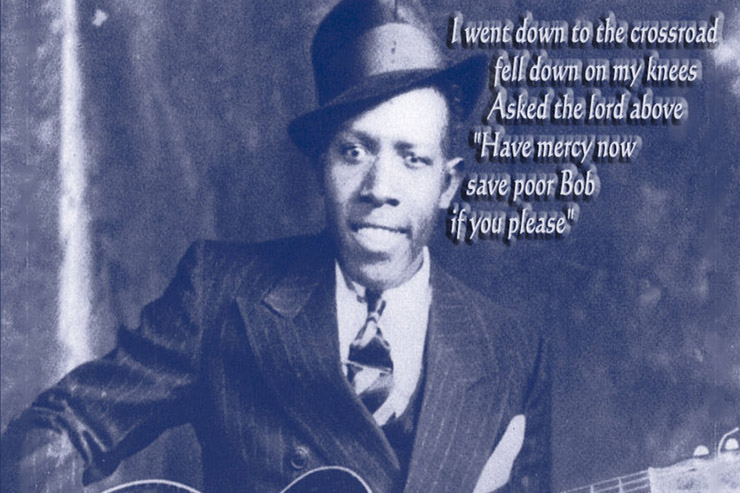
    It was popularly believed in the 1930s that the legendary bluesman Robert Johnson, who inspired Muddy Waters, Bob Dylan, the Rolling Stones and Eric Clapton, sold his soul to the Devil in exchange for his musical gifts. It was believed Johnson had the ‘Evil Eye’ and was murdered because of his alleged power over women. He seduced the wife of a beer hall owner who in revenge laced the musician’s whisky with arsenic. Many moralists saw his fate as a punishment for dealing with the powers of darkness.

    Johnson is said to have sold his soul to Old Nick during a midnight ceremony at a crossroads. However, that story did not originate with him. In the 1920s and 1930s there are numerous tales of black musicians and gamblers signing a pact with a mysterious ‘man in black’ at the crossroads. Famous examples are the black singer Clara Smith and Robert Johnson’s namesake Tommy Johnston, a decade before him. The dark stranger has been identified by some writers as either the Christian Devil or the West African trickster god Eshu, worshipped in voodoo and taken to the southern states of America by black slaves.

    While there is little evidence of modern pop and rock musicians actually ‘selling their souls’ to the ‘Devil’, the link between popular music and the occult is a strong one. Christian fundamentalists have predictably seen the widespread use of magical and occult symbols in rock music as evidence it is the work of Satan, but the truth is far stranger than their religious fantasies.

    Sometimes the alleged connections of famous rock musicians with occultism surfaced in apocryphal showbiz gossip or rumour. For example, everyone knows that ill-fated glam rock star Marc Bolan studied as a sorcerer’s apprentice with a magician in a French chateau (in fact he actually admitted it), that the late pop diva Dusty Springfield allegedly belonged to a satanic group called the Temple of the Prince in Manchester, and that Jim Morrison of The Doors married a Wiccan high priestess (which was true).

    Then there was the 1970s British musician Graham Bond, accused by his fellow R & B artist Long John Baldry of sacrificing his pet cat in a magical ritual. Bond told his groupies he was one of the illegitimate sons of the infamous ‘black magician’ Aleister Crowley, and that his musical output was designed to contact “higher forces.” Bond also believed he had been cursed by a fellow occultist. When in 1974 the musician fell in front of a train on the London Underground in mysterious circumstances, many thought the curse had worked.

    The Beatles & the Rolling Stones

    The Beatles are well known for flirting with Eastern mysticism and transcendental meditation during their psychedelic hippy stage in the late 1960s. They may also have had darker interests. For instance, the Great Beast 666, Aleister Crowley, is featured (top left corner above) in the photomontage of “people we most admire” on the cover of the Fab Four’s famous album Sergeant Pepper’s Lonely Hearts Club Band.

    Antiquarian bookseller and Crowley bibliographer Timothy D’Arch Smith relates how the Beatles attended an exhibition of rare books on witchcraft and the occult he held in Swinging London. Jane Asher, Paul McCartney’s then girlfriend, had suggested the visit to him and, according to D’Arch Smith, encouraged him to buy rare books as an investment.

    If the Beatles were mildly interested in the occult, then their main rivals for the pocket money and affection of teenage girls, the Rolling Stones, were definitely involved in a more dramatic way. Despite their respectable middle-class backgrounds, in the Sixties the Stones were deliberately promoted as the ‘bad boys of pop’. It now seems this was a marketing ploy by their then manager Andrew Oldham, and is summed up in the famous newspaper headline, ‘Would you let your daughter marry a Rolling Stone?’ If the parents of Middle England had known about their dabbling in the occult, the answer may have been in the negative.

    Lucifer Rising

    The so-called ‘satanic’ influence on the Stones was through the avant-garde filmmaker, Luciferian and Tinseltown gossip-queen Kenneth Anger. He had become interested in the band’s career and particularly in guitarist Brian Jones and his girlfriend Anita Pallenberg, a German film actress and model. Jones had some unusual interests, and both he and the pop singer Robert Palmer were fascinated by the master musicians of Joujouka in the Atlas Mountains of Morocco in North Africa. These musicians claimed to be still practising the ancient rites of the goat-footed god Pan. Jones went so far as to travel to North Africa to record an album of the tribal music performed by this pre-Islamic cult.

    In an interview with Rolling Stone magazine Robert Palmer described how he had witnessed one of these rites to Pan. He said the dancing tribesmen appeared to be in an ecstatic trance with their eyes rolled back in their heads. Palmer said that when “the power came down” the dancer was suddenly “not there.” In fact “something else” was looking out of his eyes, which began to “glow like ruby lasers” (Rolling Stone, 23 March 1989).

    Kenneth Anger believed that Anita Pallenberg and Brian Jones, who was to drown in mysterious circumstances in the swimming pool of his Sussex mansion, were witches. Allegedly, Jones showed the filmmaker an extra nipple he had on his inner thigh and told him: “In another time they would have burned me [as a witch].” Extra nipples were regarded by witch-hunters as a sign of the Devil’s Mark. A friend of Anita Pallenberg, Tony Sanchez, believed she kept her drug stash hidden in an old carved wooden chest in her flat. One day he looked inside. Instead of drugs he found it contained bones and pieces of fur and skin from “strange animals.” Mick Jagger’s one time girlfriend Marianne Faithfull described how she and Pallenberg used to sit for hours reading aloud passages from Robert Graves’ book The White Goddess and studying the ancient Celtic tree alphabet.

    In her autobiography Marianne Faithfull claims the gay Anger had a crush on the bisexual Stones’ singer which was not reciprocated. When the filmmaker’s sexual overtures were rejected he became a bit of a nuisance. One day he turned up at the couple’s house in Cheyne Walk, Chelsea and bizarrely threw several books by the 18th century poet and mystic William Blake through the window. Jagger responded in disgust at this stunt by burning all the copies of the occult works that Anger had given him by Crowley and the French occultist Eliphas Levi.

    Despite this, Marianne Faithfull got involved in Anger’s experimental movie Lucifer Rising, allegedly financially sponsored by Anita Pallenberg, and with a score originally to be composed by Mick Jagger. Initially the Stones’ singer was to play the leading role in the film, but he got cold feet and backed out of the project altogether. In the first version, made in 1967, the lead was taken by his brother Chris Jagger. Marianne Faithfull became involved in the second version filmed in 1972 and she agreed to take the part of the demon-goddess Lilith.

    Faithfull described the baby-slaying Lilith as one of the classic female archetypes and compared her with pagan goddesses such as Diana, Astarte, Ishtar, Aphrodite and Demeter. However, she added: “From the view of patriarchy, of course, she was the pure incarnation of evil” (Faithfull by Marianne Faithfull with David Datton, 224). Interestingly, the part of the ancient Egyptian god Osiris in the film was played by Donald Cammell, son of Charles Cammell, a friend and biographer of Crowley. The younger Cammell made his own films including the controversial Performance in co-operation with Nic Roeg. It starred Mick Jagger, Anita Pallenberg and the archetypal English actor Edward Fox. Donald Cammell committed suicide in the 1990s.

    The shooting of Lucifer Rising took place in Egypt and Faithfull claims that as soon as the crew and cast arrived in the country it was obvious Anger did not know what he was doing as either a film director or a magician. At that stage in her life Faithfull was seriously addicted to heroin and admits she did not know what she was doing on the set either. The whole thing was a recipe for disaster. The last sequence of the film was a winter solstice rite shot at a Neolithic site in Germany. During it, Faithfull managed to fall off a mountain. She somersaulted and landed on her feet without sustaining any injury. This convinced her that her magic was stronger than Anger’s. In her autobiography she dismissed him as a “kitsch occultist” and “a witch out of a Hollywood tabloid.”

    Marianne Faithfull claims that both Mick Jagger and the Stones’ lead guitarist Keith Richards were also sceptical about Anger’s “satanic hocus-pocus” and did not take any of it seriously. However, after an incident involving the magician at the house in London now shared by Richards and Anita Pallenberg, Faithfull became seriously spooked out. As a result, she believed she was under psychic attack. Allegedly, she wore a clove of garlic around her neck and slept in a circle of lit candles for protection. Whether this paranoid behaviour was connected to her heroin addiction is not known.

    One of Marianne Faithfull’s tracks on her comeback album Broken English is called ‘Witches Song’. She dedicates it as “my ode to the wild pagan woman I know and have always around me.” Faithfull says she got the idea for the song after she and Mick Jagger visited an exhibition in Madrid of paintings on the theme of the Witches Sabbath by the Spanish artist Goya. Her autobiography also describes an incident when she and Jagger took LSD before visiting Primrose Hill in North London “where the ancient ley lines are supposed to run” and where modern neo-druids hold their seasonal ceremonies. Under the influence of the acid the couple saw “a great face in the sky” they were convinced was the head of the Celtic giant god Bran. This seems to fit with Faithfull’s professed pagan beliefs. In her autobiography she says she believes not in God the Father, but in the Great Goddess and her consort Pan.

    Jimmy Page & Aleister Crowley

    In 1969 the satanic aura around the rock mega-group Led Zeppelin reached such a pitch that, in echoes of Robert Johnson, rumours circulated in the Los Angeles music scene that its members had signed a pact in their own blood with the Devil to gain fame.

    James Patrick ‘Jimmy’ Page’s well-known interest in the occult fuelled these rumours of the group’s alleged satanic activities. Described by the magazine AllMusic as “one of the all-time most influential, important and versatile [rock] guitarist and songwriters,” Page had been interested in alternative religions since childhood. While a member of the Yardbirds, he had hung out with Brian Jones and Anita Pallenberg at their studio flat in South Kensington. Page has never hidden his interest in Aleister Crowley, and Led Zeppelin’s famous album Rune has a photograph of the Great Beast on its cover. In an interview with Sounds magazine in 1976 Page is quoted as saying that Crowley was “a misunderstood genius of the twentieth-century.”

    Jimmy Page purchased as many artefacts and first edition books belonging to Crowley that he could find. In 1969, Kenneth Anger rented Crowley’s old (seriously haunted) house Boleskine on the shores of Loch Ness where he lived in the 1900s for a few months. When it came on the market for sale, Anger suggested to Page he should buy it. This he did and hired an occult artist called Charles Pace to paint suitable atmospheric magical murals in each room. The Led Zeppelin guitarist could be seen driving around the area like a Scottish laird in a Land Rover with a stack of stag’s antlers on the bonnet. Page also visited Sicily and contemplated buying the old villa where Crowley established his ‘Abbey of Thelema’ in the 1920s.

    In the early 1970s Page opened an occult bookshop in Kensington called The Equinox. It was done out in a futuristic style with glass bookshelves and display cabinets and chrome steel pillars. Under its auspices, Page published a facsimile of Crowley’s 1904 edition of the medieval grimoire Goetia.

    Kenneth Anger approached Jimmy Page and asked him to provide a soundtrack for his ongoing film project Lucifer Rising. Unfortunately, the two men fell out when Page only managed to produce 23 minutes of music and Anger wanted 28 minutes. The filmmaker accused Page of being a mere dabbler in the occult and a drug addict so out of his mind he could not finish the film score. However, in 1976 Page lent Anger the basement of his London house for film editing purposes. Again, the two men did not see eye to eye and Page allegedly cursed the filmmaker. Page later branded the incident as “silly and pathetic” and said he still respected Anger as an occultist.

    There has been a lot of debate about whether Jimmy Page ever belonged to one of the modern versions of Crowley’s magical group the OTO (Ordo Templis Orientis or Order of the Eastern Temple). In fact, the jury seems to be out on whether Page is an actual magical practitioner at all. In this respect New Musical Express journalist Nick Kent dismisses rumours the guitarist spends his time with “his head in a cowl ritually slaughtering various species of livestock.” Kent instead says from his experience Page is “just another seeker after esoteric knowledge, a collector of dusty old books, and committed student of the ‘magical’ information that was supposedly contained in their yellowed pages.”

    Although Jimmy Page’s interest in Crowley and the occult is well known, his Led Zeppelin colleague Robert Plant also has esoteric interests. These manifest in a study of folklore, Norse and Germanic mythology, and reading ‘sword and sorcery’ novels. Plant spent most of his life living on the Welsh Border and in an interview with the rock music magazine Kerrang! he said he often visited the Black Mountains in South Wales. There he rediscovered his roots in the local Celtic culture. Using an ordnance survey map, he wandered the hills visiting Bronze Age sites and places where the Welsh had battled with the Saxons.

    David Bowie

    Another famous rock star who openly admits an interest in the occult, magic and Crowley is David Bowie (born David Robert Jones). In the 1970s he says he studied the Kabbalah and “Crowleyism” and more recently became interested in Gnosticism. On a practical level the singer used Tarot cards and a crystal ball for divination, an ouija board to contact spirits, and performed magical rituals for exorcism and psychic protection. His early album Hunky-Dory features a song called ‘Quicksand’ that references both Crowley and the Victorian magical group Hermetic Order of the Golden Dawn.

    According to David Bowie’s wife Angie in her autobiography, her husband’s interest in the occult was due to his desire to outdo Jimmy Page. Allegedly, he saw the Led Zeppelin guitarist as a magical rival. Bowie eventually decided, possibly because of Page’s interest in him, that Crowley and his works were “small shit.” For that reason he began studying Tibetan magic which he claimed was far more powerful than anything the Great Beast or Page had ever done.

    In an interview with New Musical Express (February 1997) David Bowie admits he had been into “old fashioned magic” in the 1970s, and said he always believed Crowley was a charlatan. He reveals that Arthur Edward Waite, a member of the Order of the Golden Dawn, and the Welsh-born occultist Dion Fortune, author of Psychic Self-Defence, have been important to him. In fact, Bowie used Fortune’s book extensively when he believed he was under psychic attack. Talking of a house he rented in Los Angeles in 1975, Bowie said he decorated it with ancient Egyptian artefacts. This was because, “I had this more than passing interest in Egyptian mysticism and the Kabbalah…” (Stage Fascination: David Bowie the Definite Story by David Buckley, 235).

    Angie Bowie says the musician was heavily involved with occult activities in 1975-76. This coincides with a period when he used cocaine and she believed this made him paranoid. Apparently, Bowie stored bottles of his own urine in the fridge and carefully disposed of his nail and hair clippings. This was in case magical practitioners obtained these personal items in order to cast spells on him. He also set up an altar in his sitting room with black candles on it, painted occult symbols on the walls, and performed magical banishing rituals for protection. Angie Bowie once witnessed him exorcise a swimming pool he believed was haunted.

    When the couple were viewing properties to rent or buy in Hollywood they came across an old house with a pentagram of five-pointed star painted on the floor. Bowie freaked out and said he could not live there as the building had been used for black magic rites. One day he phoned his wife and told her witches were trying to steal his semen. Allegedly they wanted to create a test-tube baby and then sacrifice it in a satanic rite. It turned out the ‘witches’ were just some innocent groupies he met in a bar.

    At this difficult point in his life Bowie also flirted with neo-Nazism. He explained in an interview with the British rock music journalist Tony Parsons in 1993 that this was only because he was fascinated by the use of occult symbols like the swastika by the original Nazi Party in Germany. He was interested in their quest for the Holy Grail because he was also searching for its meaning (Stage Fascination: David Bowie the Definite Story by David Buckley, 235-236). Bowie once said that it might be a good idea to have a fascist dictatorship in Britain, although he later denied he was serious and claimed it was a joke.

    Black Sabbath & Heavy Metal

    Partly as a reaction to the hippy ‘flower power’ and ‘peace and love’ movement of the late Sixties, heavy metal bands began to appear using violent satanic imagery and playing loud over-amplified rock music. Groups such as Warlock, Saxon, Venom, Motley Crue, W.A.S.P., Slayer, Iron Maiden, Incubus and Bathory put out albums with covers decorated with human skulls, pentagrams, hooded figures, gravestones, goat-headed demons and vampires. One of the most famous and pioneering heavy metal bands Black Sabbath came out of Birmingham in the industrial Midlands of England in 1969. They combined heavy guitar riffs with satanic inspired lyrics and an obsession with the gothic dark side that soon gave them a dedicated, if rather odd, fan base.

    The band’s distinctive name was taken from an old horror movie starring English actor Boris Karloff, famous for his movie interpretation of Dr. Frankenstien’s monster. Originally, Black Sabbath started out as a jazz-blues band until they became influenced by the ‘black magic’ novels of the thriller writer Dennis Wheatley and books by Aleister Crowley. Their leader ‘Geezer’ Butler was lent a 16th century grimoire or book of magic. Its contents so freaked him out that he locked it in a cupboard before going to bed. During the night he had a spectral visitation from a dark shadowy figure who stood at the end of his bed. In the morning when Butler opened the cupboard the grimoire had vanished and it was never seen again.

    Butler claims the band was invited to play a gig at a Witches Sabbath at Stonehenge, which sounds like something out of a Dennis Wheatley novel. When the boys refused the chief “warlock” of the coven ritually cursed the band. Geezer says he consulted a “white witch” to get the curse lifted and was told the band had to wear crosses to ward off the evil forces directed at them. Apparently, lead singer Ozzy Osbourne’s father, who was a bit of a handyman, made the crosses for each of the band members to wear.

    Ozzy Osbourne always denies he was seriously into the occult, although he did have his Tarot cards read – twice. Famously he said the only evil spirits that interest him are whisky, gin and vodka! He describes the strange people attracted to the band, who habitually wear white face make-up and black hooded robes, as “freaks.” Ozzy says the only good thing about all the satanic stuff is it gave the band free publicity increasing their record sales and bank accounts.

    Some of the heavy metal bands took their interest in witchcraft and magic more seriously. One of these, for a while, was Black Widow who played a mixture of progressive rock and folk music and used demonic imagery in their act based on serious research. In 1968 the group’s manager approached Maxine and Alex Sanders, the so-called ‘King and Queen of the Witches’. He wanted to know if the couple could recommend a nubile young witch with dancing skills to take part in their new stage act. This featured a magician played by one of the band’s members conjuring up a demon who was once an ancient goddess called Ashtaroth.

    Several professional dancers auditioned for the part of the demon-goddess. Each one suffered fainting fits during rehearsals and felt they were being possessed by an evil spirit. In desperation the band wanted to hire a real witch who would not be fazed by the magical goings-on. Black Widow’s manager said the Sanders were happy to help and he described them as “clever business people” only interested in making money in any way they could.

    A member of the Sanders’ coven volunteered for the role and the rehearsals were successful. Unfortunately, on the day of the first performance at the Lyceum Theatre in London, she fell ill. Alex Sanders volunteered his wife and the high priestess of the coven Maxine as a suitable stand-in. When the lead singer of Black Widow playing the sorcerer invoked the demon-goddess and accidentally stepped out of the protective magical circle, she was supposed to attack him. In her autobiography Maxine Sanders says the singer complained afterwards about the bruises he suffered from the physical assault by the ‘Queen of the Witches’.

    Danny Carey

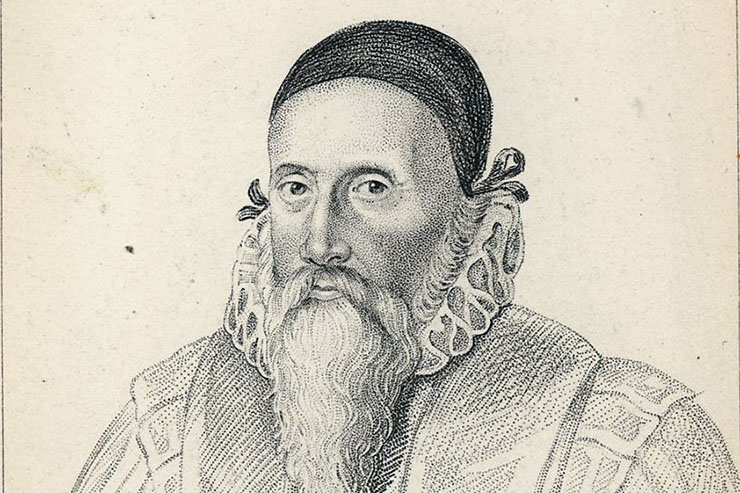
    Another more contemporary band called Tool and its lead singer Danny Carey are well known for their interest in all things magical. Carey collects rare limited edition publications by such modern occult practitioners as Crowley, Kenneth Grant, Austin Osman Spare and Andrew D. Chumbley. During their recordings of albums, Tool use magical banishing rituals to get rid of unwelcome influences left in the studio by previous performers. They have also been known to employ talismans and occult sigils used by the Elizabethan magician and astrologer Dr. John Dee in their gigs. During a South American tour, local Christian workers refused to handle the band’s equipment because it was “satanic.”

    The 1990s saw a sinister link established between rock music and Satanism with the rise of the so-called ‘black metal’ or ‘death metal’ groups. These new bands were committed to an anti-Christian philosophy of anarchism, nihilism, violence and an obsession with death that made Black Sabbath stage appearances look like a vicar’s tea party. Possibly the most dramatic and violent manifestation of this new trend was in Scandinavia. A new cultural trend united satanic beliefs with atavistic forms of neo-paganism and extreme nationalist right-wing politics promoting racism and white supremacy. This deadly combination was to lead to arson and murder.

    In 1992 an ancient wooden stave church was burnt down in a firebomb attack. Rumours began circulating that hard-core black metal fans were responsible for the outrage. It was alleged they were pagan Viking revivalists who expressed neo-Nazi views. Further church burnings and graveyard desecrations took place followed by murders involving rival groups of black metal fans and biker gangs. Media reports said that self-styled teenage satanists saw neo-Nazism and rock music as cultural stepping stones to a revival of Aryan-based paganism. Because the historic Christian churches were built on the site of pagan temples, they had to be destroyed before the heathen ‘old religion’ could be established again.

    Today the number of rock bands using satanic and occult imagery is increasing. The new ‘high priest’ of the Church of Satan in the USA, Boyd Rice, is himself a musician. Critics have dubbed his musical output as “sonic terrorism as an art form.” Strangely enough, his satanic master, Anton LaVey, who found the Church of Satan in the 1960s, preferred Gershwin and Cole Porter with his bedtime cocoa.

    It seems certain that in the future wherever and however rock music is played, there will always be those who claim, quite literally, the Devil has the best tunes.

    [alert type=”general” dismiss=”no”]This article was published in New Dawn 121.[/alert]

    [alert type=”success” dismiss=”no”]If you appreciate this article, please consider subscribing to help maintain this website.[/alert]

    Bibliography

    Heavy Metal Thunder by Neil Aldis and James Sherry, Mitchell Beazley, 2006

    Backstage Passes: Life on the Wild Side with David Bowie by Angie Bowie and Patrick Carr, Orion, 1993

    Stage Fascination: David Bowie the Definite Story by David Buckley, Virgin Books, 1999

    Robert Plant: Led Zeppelin, Jimmy Page & the Solo Years by Neil Daniels, Independent Music Press, 2008

    The Lives of John Lennon and the Beatles by Hunter Davies, McGraw Hill Books USA, 1985

    Hammer of the Gods: Led Zeppelin Unauthorised by Stephen Davies, Pan Books, 1995

    The Book of the Beast by Timothy D’Arch-Smith, Mandrake Press 2010

    Faithfull by Marianne Faithfull with David Datton, Michael Joseph, 1994

    No One Gets Out of Here Alive: Jim Morrison and the Doors by Danny Hopkins and Sugarman, Warner Books USA, 1980

    Apathy for the Devil: A 1970’s Memoir by Nick Kent, Faber and Faber Limited, 2010

    I Am Ozzy by Ozzie Osbourne with Chris Agnes, Sphere, 2009

    Firechild: The Life and Magic of Maxine Sanders ‘Witch Queen’ by Maxine Sanders, Mandrake Press, 2008

    Bowie: Loving the Alien by Christopher Sandford, Little, Brown and Company, 1996

    When Giants Walked the Earth: A Biography of Led Zeppelin by Mick Wall, Orion Books, 2008

    Led Zeppelin: From Early Days to Page and Plant by Ritchie Yorke, Virgin Books, 1999.

    © New Dawn Magazine and the respective author.
    For our reproduction notice, click here.
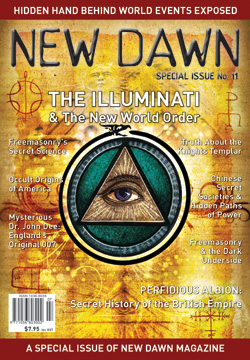
  • The Enlightened Ones: The Illuminati and the New World Order

    The Enlightened Ones: The Illuminati and the New World Order

    From New Dawn Special Issue 11 (Autumn 2010)

    The world is governed by far different personages from what is imagined by those who are not behind the scenes.
    – Benjamin Disraeli, nineteenth century British prime minister, in a speech to Parliament

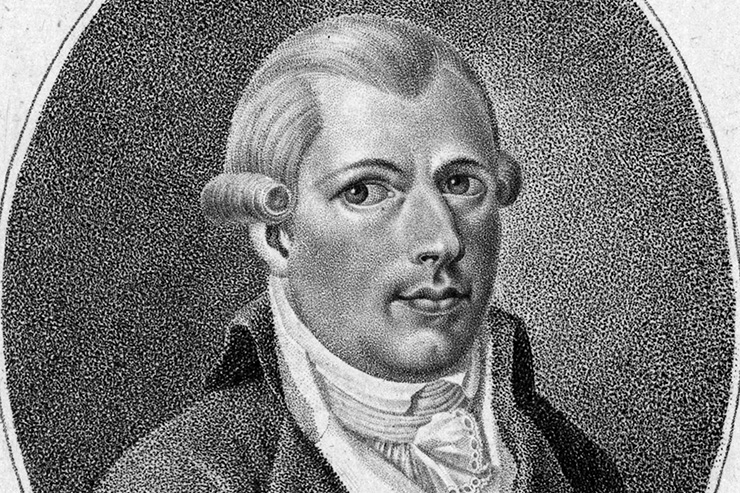
    On 1 May 1776, the year of the beginning of the American revolution against British colonial rule, a young university professor, Adam Weishaupt (1748–1830), from Bavaria, founded the Order of Perfectibilists, later to become world famous as the Illuminati or ‘Enlightened Ones’.

    Weishaupt’s family had Jewish ancestry, but he was brought up in the Roman Catholic faith and educated by the Jesuits. His father died when he was seven and he was fostered by his godfather, a German aristocrat called Baron Ickstett. Although schooled by priests from the Society of Jesus, the young boy spent hours in his godfather’s extensive library reading learned works on philosophy and science. As an undergraduate at university, Weishaupt studied the ancient Greek Eleusian Mysteries and the mystical doctrines of the Greek philosopher Pythagoras. Even at this young age he was thinking about forming a secret society based on the pagan mystery schools. He later wrote:

    At a time, however, when there was no end of making game of and abusing secret societies, I planned to make use of this human foible for a real and worthy goal, for the benefit of people. I wished to do what the heads of the ecclesiastical and secular authorities ought to have done by virtue of their offices.

    Adam Weishaupt became a lay professor in canon law at the Jesuit-run University of Ingoldstat near Munich while still a young man. His sudden rise to prominence in the university and his radical views caused consternation among the Jesuit priests. This led him to become involved in many bitter disputes with them about matters pertaining to religion.

    In 1774 in either Hanover or Munich Weishaupt became interested in Freemasonry. However, he was disappointed in what he found, believing the Freemasons did not understand Masonry’s occult significance, and refused to accept its roots in the ancient pagan religions. In 1777, he finally joined the Masonic Lodge of the Strict Observance Rite in Munich, which practised a form of neo-Templar-Masonry.

    At this time the Order of Perfectibilists also became known as the Order of Illuminists or the Order of the Illuminati, sometimes known to its members as the Society of the Hidden Hand. Illuminati was the plural of the Latin Illuminatus, from illumino meaning lighten or enlighten, or ‘enlightened one’, a term used to describe the initiates of the pagan Mysteries. At first the Order had only five members who were radical freethinkers, but they soon attracted the attention of Bavarian society and within ten years of its foundation there were over 2,000 members.

    Illuminism spread from Ingoldstat all over Bavaria and then to other German regions such as Saxony, Westphalia and Franconia that were at the time ruled by feudal princes. It was also exported abroad to the Austria-Hungarian Empire, France and Italy. The Illuminati’s membership was largely drawn from the middle and upper classes and in this respect it is ironic that revolutionary movements are seldom started by the working-class. Instead, they are usually led by intellectuals and disenchanted members of the ruling power elite. Members of the Illuminati allegedly included doctors, teachers, lawyer, judges, university professors, priests, police and military officers, and aristocrats such as Duke Ferdinand of Brunswick, Duke Ernst of Gotha, Duke Karl of Saxe-Weiner, Prince Augustus of Saxe-Gotha, Prince Carl of Hesse, and Baron Dalberg.

    The inclusion of these aristocratic and royal rulers in its membership roll seems strange considering the aims of the Illuminati. Adam Weishaupt’s personal vision was a utopian pacifist society without monarchy, private property, social inequality, national identity and religious affiliation. In this new state people would live together in harmony in a universal brotherhood based on peace, free love, spiritual wisdom, intellectual and scientific knowledge, and equality. According to Weishaupt’s doctrine in his own words:

    Salvation does not lie where strong theories are defended by swords, where the smoke of censers ascends to heaven, or where thousands of strong men pace the rich fields of harvest. The revolution which is about to break [the French Revolution] will be sterile. It is not complete.

    The Illuminati’s main targets for criticism were the rule of the European royal families, the power of the Roman Catholic Church and the rich landowners who kept the peasants in a feudal state of servitude and poverty. According to its enemies, this doctrine was represented in the oath of allegiance taken by new members when they joined the Order. They allegedly promised to hate and resist, “The altar [the Church] and the throne [monarchy] and to crush the God of the Christians and utterly extirpate the kings of Earth.”

    Initiation into the Illuminati

    The anti-royalist and anti-clerical nature of the Illuminati was also reflected in its initiation ceremony. The candidate was led into a small room where, in front of an empty throne, a table stood with the traditional symbols of kingship – a sceptre, sword and crown – on it. The candidate was invited to pick up these objects, but if he did then he would be refused entry into the Order. Having passed this test, he was led into a second room with a table draped in black cloth. On this table were a plain wooden cross and a red Phrygian cap as worn by initiates of the ancient Mithraic Mysteries. The cap was given to the initiate and he was told to wear it proudly as it was worth far more than the crown of any king.

    New members were called Minervals, from the pagan goddess of wisdom Minerva, and the Order’s primary symbol was a wreath of oak leaves surrounding an owl sitting on an open book. This represented the essential combination of wisdom and knowledge, and the owl was also the sacred bird of Minerva. This symbol was made into a pendant that the Illuminati could wear secretly under their ordinary everyday clothes. It is tempting to see a connection between this emblem and the giant statue of an owl that features in the modern rituals at Bohemian Grove in California. At this private estate an annual gathering of male politicians, businessmen and media executives takes place, and it is claimed by some conspiracy theorists to be an Illuminati front.

    Adam Weishaupt believed in the eventual redemption of humanity and the restoration of human beings to the state of perfection that is supposed to have existed before the Fall and the expulsion of Adam and Eve from the Garden of Eden. He also believed this redemption was only obtainable by following the esoteric teachings preserved by the pagan mystery schools who were the guardians of the Ancient Wisdom. Both men and women could become members of the Illuminati and they were taught religious freedom, and the choice to follow any or no religious belief. To live without the moral straitjacket of the sexually puritanical and corrupt Church was their birthright as human beings.

    How the Illuminati Recruited and Expanded Across Europe

    The new member was expected to recruit others into the Order like a modern form of pyramid selling. Because of Weishaupt’s involvement with Freemasonry, it was decided to use the movement to spread the Illuminati message and members were encouraged to join Masonic lodges. In 1780 Baron Adolf Franz Freidrich Knigge (1752–1796), a German diplomat, was initiated as an Illuminist. He was already a Freemason and under his direction Illuminism spread throughout the Masonic lodges of Europe. He also introduced several degrees or grades of initiation into the Order. These grades were Novice, Minerval, Illuminatus Minor, Illuminatus Major, Knight, Priest, and Magus. A Priest for instance was a person who taught the other members the occult sciences, philosophy, history, politics and the arts and crafts.

    Weishaupt established a network of Illuminist agents throughout Europe with access to prominent politicians, priests and cardinals, nobility and royalty. They reported back to the Grand Master of the Illuminati supplying him with intelligence and gossip collected and used for his own personal purpose. It is possible the aim was to blackmail people in powerful positions and thereby control them. By this time his enemies were claiming Weishaupt had decided his utopian anarcho-libertarian society could not be achieved peacefully. Allegedly he began plotting to overthrow the monarchies and governments of Europe using force if necessary.

    In 1784 Baron Knigge and Adam Weishaupt quarrelled about the direction of the Order and this coincided with the exposure by police spies of an alleged Illuminist plot to overthrow the ruling Habsburg dynasty of the Austro-Hungarian Empire. In the same year a royal edict was issued by Duke Karl Theodor, the ruling elector of Bavaria and a prince of the Holy Roman Empire, banning membership of all secret societies not officially recognised by the state. This edict specifically mentioned the Order of Perfectibilists, which was described as a renegade branch of Freemasonry.

    Soldiers, police officers, judges, university professors, schoolteachers and anyone working for the civil service were forced to admit to their membership of secret societies and had to either leave or be dismissed from their posts. In 1785 Adam Weishaupt was removed from his own position at the University of Ingoldstat and banished from the city of Munich to live in the countryside on a state pension. He moved to Regensburg where he was protected by Duke Ernst of Saxe-Gotha, an ancestor of the present British royal family who are of German descent. In World War I they changed their family name from Saxe-Gotha-Coburg to the House of Windsor after anti-German protests.

    In October 1786 the Bavarian authorities seized a cache of Illuminati secret documents from the home of a member of the diplomatic corp, Xavier Zwack, in Landstut and the castle of Sondersdorf belonging to Baron Bassus, both prominent members of the Illuminati. These were published in Munich in 1787 under the title Einige Originalschiften des Illuminaton Ordens. They revealed the full extent of the Illuminati’s alleged plans to destroy Christianity, topple the monarchy, overthrow the civil governments of Europe and eventually extend their influence worldwide. Even though it was claimed these documents were blatant forgeries, as a result of their publication the Order was legally prohibited and membership of it could result in the death penalty.

    Many critics of the Illuminati saw its ‘hidden hand’ behind both the French and American Revolutions in the eighteenth century and believed it survived underground after its prohibition. The fact that Adam Weishaupt lived for another forty-three years in apparent obscurity led to speculation the Illuminati also survived. One of the founders of the French Revolution, the Comte de Mirabeau, was rumoured to have been a secret Illuminist. Some claim the plan for the original uprising to storm the Bastille prison in Paris that sparked the Revolution was discussed and agreed at a closed session of the Grand Masonic Convention in 1782. Count Mirabeau is supposed to have addressed the delegates and said his aim was to destroy the French monarchy and the Roman Catholic Church in France. In its place he said a “religion of love” would be established to replace it. In fact, during the French Revolution religious observance was temporally replaced with the secular worship of the Goddess of Liberty.

    Groups Claiming to Inherit the Mantle of the Illuminati

    Following the prohibition of the Order of Perfectibilists, several occult secret societies claimed to have inherited its mantle and to be carrying on its work. These included the Society of Illuminists founded in Avignon in the late 1780s by the unlikely partnership of an excommunicated Catholic priest and a Polish count. It later changed its name to the Academy of True Free Masons when it moved its headquarters from Avignon to Montpelier. Although it is rumoured the group still existed in 1812, it actually stopped functioning during the French Revolution and the Reign of Terror that followed it.

    The Concordists were a Russian secret society founded around 1790 as the alleged successor of the Bavarian Illuminati. They were suppressed in turn in the early 1800s by the Russian government who outlawed them as a subversive political organisation. In the early 1900s a journalist and spy for the Prussian secret police called Albert Karl Theodor Reuss (1855–1923) used a charter of authority supplied by the English Freemason John Yarker to establish a new Academy of Masonry. The Academy was later amalgamated into the Ordo Templi Orientis, the Order of the Eastern Temple or Order of Oriental Templars founded by high-ranking German Freemason Karl Kellner.

    The OTO was connected with John Yarker’s Masonic Ancient and Primitive Rite of Memphis and Mizraim and was supposed to possess the key to all the Masonic-Hermetic mysteries. Kellner claimed to have been taught these ‘secrets’ by three Eastern adepts. Theodor Reuss is mostly remembered today for initiating the notorious twentieth century occultist and magician Aleister Crowley into the OTO in 1912. The Great Beast 666, as he called himself, and known to the sensational newspapers as ‘The Wickedest Man in the World’ (surely not compared with his contemporaries Stalin and Hitler?) became the head of the Order in Britain and Europe. He claimed that the OTO was a Rosicrucian-Illuminatist group descended from the Bavarian Illuminati. Crowley was also a long-term secret agent working for MI6 or the British Secret Intelligence Service.

    In the twentieth century the alleged surviving Illuminati in its various clandestine forms was seen as the eminence gris behind World Wars I & II, the Bolshevik Revolution and fall of the Romanovs in Russia in 1917, and the rise of both communism and fascism in Europe in the 1920s and 1930s. It was widely believed by conspiracy theorists that the organisation would back any political group or doctrine or social movement and indulge in left and right-wing politics to achieve its age-old aims. Because Adam Weishaupt was of Jewish descent, the Illuminati became connected with Zionism, the international banking system, and even the entertainment industry and Hollywood where Jews are prominent.

    In the modern world the Illuminati have been seen as a major factor and influence in international power politics, allegedly fomenting wars, civil disorder and revolutions in their attempt to establish a one-world government. They have variously been seen behind the contrasting ideologies of globalism and neo-conservatism, multiculturism, environmentalism and ‘green’ politics, the 1960s ‘permissive society’, and the New Age spiritual movement. The Illuminati have also been held responsible for the fall of the Soviet Union (which paradoxically they are supposed to have created) and the military policing actions by the United Nations, the Anglo-American alliance and NATO since the end of World War II.

    It is claimed the draconian anti-terrorism laws introduced by Western governments in the wake of 9/11 and the emergence in recent years of a ‘Big Brother’ electronic surveillance society, where human rights and freedoms are restricted or infringed, is the work of the Illuminati from behind the scenes. Organisations such as the European Union (EU), the proposed North American Union (NAU) of the USA, Canada and Mexico, the UN, and the World Bank, are seen as Illuminati projects.

    Secret ‘Shadow Government’ Groups

    So-called ‘shadow government’ groups such as the Council on Foreign Relations (CFR), the Bilderberg Group and the Trilateral Commission set up after World War II, are also said to be fronts for the modern manifestation of the Illuminati. The CFR was founded in 1921 by Colonel Edward House, a political advisor to President Woodrow Wilson and financed by wealthy international bankers. Colonel House was denounced by his political enemies as a Marxist seeking to establish a socialist government in the USA leading to a one-world government. Paradoxically before World War II the CFR was accused of supporting and financing the rise of Hitler and the Nazi party in Germany. After the war it was labelled a populariser of international socialism through the UN. The CFR’s apparently contradictory political aims were explained by conspiracy buffs as typical of the Illuminati fronts that use both left and right politics. That is why the organisation recruited its US members from both the Democrat and Republican parties.

    Allegedly, another sinister arm of the modern ‘shadow government’ and the Illuminati is said to be the Bilderberg Group. Founded in May 1954, it held its first meeting at the Bilderberg Hotel in Osterbeck near Arnhem in the Netherlands. The Bilderberg Group was organised with the support of the CIA by Dr. Joseph Retinger, a mysterious figure involved in international Freemasonry and secret intelligence work, and Prince Bernard of the Dutch royal family. In 1946 Retinger told a meeting of the CFR in London that his personal political vision was a united Europe as a bulwark against anti-Americanism and communism. His plans took a step forward eight years later when the Bilderberg Group began its annual meetings attended by representatives of the business world, international banking, the media, the military-industrial complex and politics.

    Few people attending Bilderberg meetings have ever talked publicly about what happened or what was discussed. However, Denis Healey, a larger-than-life character who was Chancellor of the Exchequer in the Labour government of the 1970s, once let the proverbial cat out of the bag in a television interview. Asked what the Bilderberg Group was, Healey admitted its ultimate political aim was “a single community throughout the world” or a one-world government.

    The 2009 Bilderberg Conference was held from 14-17 April at a hotel in a town near Athens, Greece. Among the participants were the queen of the Netherlands, former prime ministers and prominent government ministers from the host country Greece, the USA, the United Kingdom, Turkey, Belgium, the Netherlands and France, representatives of NATO, the UN, the American National Security Agency (NSA), directors of international banks, and the World Trade organisation, and the editors of national and international financial newspapers and magazines.

    According to conspiracy theorists and professional Bilderberg watchers, those who attended this meeting apparently agreed to produce a false picture for the public of imminent economic recovery from the global recession and banking crisis. The attendees were to encourage banks and private investors to put their money back into the stock markets. The plan is apparently to create a new financial crisis in 2010 that will plunge the world into a deeper and more serious recession than we have so far experienced. This would cause high levels of unemployment and civil disorder and pave the way for more draconian laws to control the population. Eventually the situation would get so bad that martial law would have to be declared and there would be calls for a one-world government to be set up to restore global order. The meeting also allegedly backed the Lisbon treaty, which will eventually create a European federal super-state or United States of Europe with a single currency, the Euro.

    In his State of the Union address in January 1991, President George H. Bush told US Congress the impending Gulf War to liberate the oil-state of Kuwait from Iraqi occupation was part of a new “big idea” he called the New World Order. He described it as bringing together diverse nations in a common cause to achieve “the universal aspirations of humankind, peace and security, freedom and the rule of law.” Many of those who heard or read the address interpreted President Bush’s remarks as a coded reference to the Illuminati’s aim of a global government.

    With the election of the first black president in American history, Barack Obama, in November 2008, it seemed as if the neo-con forces with their New World Order agenda had been defeated. It was widely predicted by media commentators and political experts that America was entering a new stage in its development, a time of hope and change when the discredited right-wing policies of the neo-cons would be consigned to the garbage can of history. This was illustrated by postcards on sale in the UK showing the new president as a shining knight on a white horse. The picture was simply captioned ‘Hope’.

    It has been pointed out that for the first time in a generation there appeared to be no known links between President Obama and ‘shadow government’ groups such as the Bilderbergers. However, rumours of a secret tryst between Senator Hilary Clinton and Senator Obama in Virginia during the Bilderberg Group meeting of 2008 held in that state raised suspicions. It was suggested both politicians may have secretly attended the meeting. Also several prominent members of the Obama administration have been identified as Bilderberg attendees and members of the CFR and Trilateral Commission, which as its name suggests brings together leading past and present politicians from Europe, the United States and Japan. This is not surprising considering that, Illuminati front or not, the so-called ‘shadow government’ acts as a training and recruiting agency for the Western world’s aspiring politicians.

    This ongoing story of the Illuminati, and the secret societies claiming to succeed it, is one of a conflict between opposing forces seeking ultimate power for different reasons. It exposes a sinister agenda on those who have hijacked democracy and the idealistic concept of a utopian form of government guaranteeing real freedom to all its citizens. It is a noble concept corrupted for selfish political purposes using xenophobia, religious intolerance and fear as its weapons of choice.

    The modern heirs of the Illuminati, if that is what they really are, are hardly ‘enlightened ones’ as they are only interested in the acquisition of personal power, the suppression of knowledge, and the control of the masses who they want to keep in a state of ignorance. However, there is still hope that genuine initiates of the Ancient Wisdom are working secretly behind the scenes of international politics to improve our modern world and lead it to a brighter future.

    [alert type=”general” dismiss=”no”]This article was published in New Dawn Special Issue 11.[/alert]

    [alert type=”success” dismiss=”no”]If you appreciate this article, please consider subscribing to help maintain this website.[/alert]

    © New Dawn Magazine and the respective author.
    For our reproduction notice, click here.
  • The British Occult Secret Service, The Untold Story

    The British Occult Secret Service, The Untold Story

    From New Dawn 107 (Mar-Apr 2008)

    Since the time of Elizabeth I, British secret services have worked according to the principle of ‘the end justifies the means’. Money, bribery, blackmail – these are their recruitment methods…
    – Nikolai Patrushev, head of the Russian Federal Security Service (FSB), October 2007

    It is not really surprising that historically occultism and espionage have often been strange bedfellows. The black art of espionage is about obtaining secret information and witches, psychics and astrologers have always claimed to be able to predict the future and know about things hidden from ordinary people.

    Gathering intelligence is carried out under a cloak of secrecy and occultists are adept at keeping their activities concealed from sight. Like secret agents they also use codes, symbols and cryptograms to hide information from outsiders. Occultists and intelligence officers are similar in many ways, as both inhabit a shadowy underworld of secrets, deception and disinformation. It is therefore not unusual that often these two professions have shared the same members.

    The ‘father of the British Secret Service’ was the Elizabethan lawyer, politician, diplomat and spymaster Sir Francis Walsingham. He was a Protestant and as a young man during the bloody reign of the Catholic Queen Mary was forced to flee abroad to escape persecution. While in exile, Walsingham learnt Italian and French and became acquainted with the work of the famous Venetian Secret Service that used its spying skills for trade and commerce under the cloak of diplomacy.

    When Queen Elizabeth I was crowned Francis Walsingham returned to England. He was appointed as a secretary to the English ambassador to the French court in Paris and also worked as a secret agent reporting back the intelligence he gleaned to Queen Elizabeth’s Secretary of State, Sir William Cecil, later Lord Burghley. Between 1568 and 1570 Walsingham, who had become a Member of Parliament, worked in England in domestic counter-espionage exposing Catholic plots against the monarchy.

    In 1570 Walsingham was appointed as the new ambassador to France. He proceeded to set up his own network of undercover agents in France, Italy, Spain and the Low Countries. The late Cecil Williamson, who worked for British Intelligence during World War II and later ran a witchcraft museum, told this writer that Walsingham often used witches as spies.

    The Mysterious Dr Dee

    One of the famous occultists he is known to have recruited was Queen Elizabeth’s court astrologer and the magical architect of the British Empire, the Welsh magician Dr John Dee. Walsingham was involved in the machinations for the proposed marriage of the Duc d’Anjou and Elizabeth. At the spy master’s personal recommendation, the queen dispatched Dee to France with orders to report back on the progress of the marriage negotiations. The magus travelled to the Duchy of Lorraine and drew up the birth charts of both the Duc and his brother, who was also regarded as a possible husband for the English monarch. Dr Dee, probably influenced by Walsingham, diplomatically reported back to London that the stars suggested a political alliance would be far wiser than matrimony and the queen took his advice.

    In 1573 Sir Francis returned to London and became a privy councillor. This placed him at the heart of government and he proceeded to set up what amounted to the first organised foreign espionage service to operate from England. In 1566 he had put in place a pan-European network of spies extending as far to the east as Turkey and Russia, where Dr Dee reported on the goings-on at the Tsar’s court. This network mostly gathered intelligence on the military activities of the Spanish, who were England’s primary enemies at this time. Walsingham was also responsible for foiling the Catholic plot whose exposure led to the execution of Mary, Queen of Scots. Using Dr Dee’s psychic powers, he was apparently able to discover that the plotters were passing secret messages to the imprisoned Scottish queen hidden in bottles of wine.

    While travelling in Europe in 1562, Dr Dee had come across a book written by Abbot Trimethus of Spanhiem (1462-1516). This was a guide to writing ciphers and secret codes for magical purposes and Dee informed Sir William Cecil about his discovery. On his return to England Dr Dee adapted the abbot’s cryptography and gave it to Sir Francis Walsingham for use by his secret agents. He also passed on the political and military intelligence he had acquired during his travels across Europe. It has been alleged that Dee used the famous Enochian magical alphabet as a code to disguise this information. If he had been arrested his captors would not have understood it and dismissed it as nonsense.

    In 1587 Dee even claimed he had received a spirit message from one of his angelic contacts concerning a threat to the English Fleet. The message said that a group of disguised Frenchmen working for the Spaniards was secretly visiting the Forest of Dean. The forest was the centre for English ship-building and the French agents planned to bribe disloyal foresters to burn it down. Dr Dee sent his supernatural intelligence to Walsingham and the saboteurs, who were masquerading as squatters, were arrested.

    Information supplied to Sir Francis Walsingham from his European spy network convinced him that a Spanish armada would be launched against England in 1588. He asked Dee to use his knowledge of astrology to calculate the weather prospects for an invasion. The magus told him there would an impending disaster in Europe caused by a devastating storm. When news of this prophecy was leaked and reached Spain, naval recruitment fell and there were desertions of sailors from the Spanish Fleet. In Lisbon an astrologer who repeated the prediction was charged with spreading false information. In an act of psychological warfare, Dr Dee also informed Emperor Rudolf of Bohemia (the modern Czech Republic) and King Stephen of Poland that the predicted storm would “cause the fall of a mighty empire.” Rudolf, who was an occultist and Dee’s patron when he stayed in Bohemia, passed on the warning to the Spanish ambassador.

    It is a fact that in 1588 a great storm did scatter the ships of the Spanish Armada in the English Channel and aided the English victory. This metrological event was popularly credited to a magical ritual performed by the buccaneer Sir Francis Drake on the cliffs at Plymouth. Superstitious people believed Drake was a wizard and sold his soul to the Devil in exchange for success over the Spanish. It is claimed that he also organised several covens of witches to work magically to raise the storm and prevent the invasion. Meanwhile, as a result of scrying in his shewstone or crystal, Dr Dee saw a symbolic vision of a castle with its drawbridge drawn up (England) and the image of the elemental king of fire. As a result he urged the Navy to employ fire-ships against the Armada and they did so with good results.

    After Sir Francis Walsingham’s death in 1590, and the ascension to the English throne of the Scottish king James, Dr John Dee fell into royal disfavour. The new king had an unhealthy obsession with witchcraft and his early reign was dominated by this preoccupation. It led him to employ the Secret Service in his own personal vendetta against suspected witches. James I ordered its agents to hunt down alleged practitioners of witchcraft and expose their alleged plots against the monarchy. One of those involved was the Earl of Bothwell, accused of high treason for organising a coven of Scottish witches to work magic against the king in an attempt to seize the throne. To assist his secret agents in their new witch-hunting activities, King James persuaded Parliament in 1604 to pass a new and stronger Witchcraft Act to deal with the problem. The Bill was rushed through and it was made law within three months.

    Dashwood & the Hellfire Club

    In the 18th century the Secret Service became concerned at the activities of the so-called ‘Hellfire Club’ founded by Sir Francis Dashwood, later the Chancellor of the Exchequer and a close friend and political adviser of King George III. As a young man Dashwood went on the Grand Tour of Europe that was compulsory for aristocrats and he was initiated into a Masonic lodge in France. While visiting Italy he developed anti-Catholic views, violently broke up a celebration of the Mass and insulted the Pope. Even though he was an aristocrat, Dashwood was disgusted at the vast wealth of the Roman Church compared with the poverty of its devoted worshippers. He also became fascinated by classical mythology and decorated his country house at West Wycombe in Buckinghamshire with murals, paintings and statues of Greek and Roman gods and goddesses.

    Sir Francis Dashwood founded a secret society called the Order of the Friars of St Francis of Medmenham (more popularly known as the Hellfire Club) named after the abbey he had purchased on the banks of the River Thames where its meetings were held. Rumours circulated in the coffee houses of London that the Friars practised sexual orgies featuring aristocratic ladies and prostitutes dressed up as nuns. There were also satanic rites such as Black Masses where the naked body of a noblewoman acted as an altar. However, according to one senior member of the Hellfire Club, this occult mummery was just an amusing diversion for the dandies. The inner circle of the Order was actually dedicated to the serious revival of the pagan Eleusian Mysteries and the worship of the Bona Dea or Great Mother Goddess. Dashwood’s present-day descendant, also called Sir Francis, confirmed this fact in a BBC radio interview some years ago,

    It has been claimed secret agents infiltrated the Hellfire Club because of its many famous members. They included the Earl of Sandwich, John Montagu, who was the First Lord of the Admiralty, the Paymaster General Thomas Potter, several members of Parliament, the Lord Mayor of London, a son of the Archbishop of Canterbury, the Earl of Bute, who was the prime minister, and it has been claimed even the Prince of Wales. At least four members of the group were known to be actively involved in espionage. They was a radical MP called John Wilkes, a transvestite French diplomat, Chevalier D’Eon de Beaumont, the American statesman and philosopher Benjamin Franklin, and Sir Francis Dashwood himself. Wilkes had allegedly recruited the chevalier into the British Secret Service.

    During his stay in Russia on the Grand Tour Dashwood had spied on the court of the Tsar through his close friendship with the Grand Duchess Catherine. In Italy he gathered intelligence on the exiled Stuart dynasty and their supporters, although the head of the British Secret Service in Rome believed Dashwood was a Jacobite agent. In fact he was only pretending to support the Stuart cause and was passing on information about their activities directly back to London. In later years Sir Francis and Benjamin Franklin were involved in a clandestine plan to reconcile the American colonists and the British government to prevent the War of Independence.

    Rudolf Hess & the British Occult Connection

    During World War II British Intelligence invited many occultists into its ranks because it needed their specialist knowledge and skills. The assistant director of Naval Intelligence during the war was Lt. Commander Ian Fleming RN, best known later as a thriller writer and the creator of the famous fictional spy James Bond 007. Fleming was also interested in astrology and numerology and he was a friend of the notorious magician Aleister Crowley, who had worked for MI6 (the Secret Intelligence Service) during World War I and in the 1920s and 1930s spying on Germans with occult interests (see ‘The Magus Was A Spy’ by Dr Richard Spence in New Dawn No. 105, November-December 2007).

    Ian Fleming conceived an audacious plan to lure a high-ranking member of the German government into defecting to Britain so as to provide a morale-boosting propaganda coup. This idea had been inspired by a novel written by Fleming’s brother, Peter, called Flying Visit (Jonathan Cape 1940). Peter Fleming was a journalist and also worked for both MI5 (the Security Service) and the propaganda section of the clandestine Special Operations Executive (SOE). The novel imagined that Hitler’s plane crash-landed in England and he was captured. The Reichminister and deputy fuehrer himself, Rudolf Hess, was chosen as a suitable candidate for the actual plot. This was because he was a supporter of peace with Britain and was also under the influence of astrologers and occultists. It was believed this could be used against him.

    Commander Fleming recreated The Link, a defunct Anglo-German friendship society of the 1930s that had a wealthy membership of Nazi sympathisers drawn from the British Establishment. Ironically, or perhaps coincidentally, The Link had been founded by Admiral Sir Barry Domville, an ex-director of the Naval Intelligence Department (NID), after he retired in 1930. Domville was arrested and interned in May 1940 because MI5 believed he was plotting a fascist coup d’etat supported by aristocratic peacemongers. The admiral was a friend of Major-General J.F.C. ‘Boney’ Fuller CBE, a famous military analyst who designed the tactics for the first tank battle in World War I. Fuller also invented the concept of blitzkrieg used so successfully in World War II by the German Panzers. Fuller was an open admirer of Hitler (he attended the fuehrer’s 50th birthday party in 1939), a leading member of Sir Oswald Moseley’s British Union of Fascists (BUF), a friend of Ian Fleming and a leading disciple of Aleister Crowley. In the 1930s Fuller formed the extreme-right wing Nordic League (aka the White Knights of Britain), allegedly established by Nazi agents. However in the 1950s he was a member of a MI6 supported group of Russian émigrés engaged in anti-communist propaganda. It has been suggested that Fuller was not interned during the war with other leading fascists such as Mosley and Domville because he was a MI6 double-agent.

    Ian Fleming’s idea was to persuade the German High Command in Berlin, and especially Rudolf Hess, that when war broke out The Link had not disbanded but had gone underground. It had allegedly regrouped and recruited even more prominent pro-Nazi members in the British Establishment including aristocrats and royalty. These were represented by the NID as influential people with the political muscle to overthrow prime minister Winston Churchill’s national wartime government, call a ceasefire and agree to a peace treaty with Germany. Under its terms Britain would keep control of its Empire and Germany would have free reign in occupied Europe. The Nazis also hoped that British troops would be sent to fight alongside the German Wehrmacht and the SS against the Soviet Union in a joint anti-communist crusade.

    Hitler did not want to invade and occupy Britain. Instead he would have preferred to negotiate a treaty with a sympathetic new government in London. It has been suggested that the only reason the fuehrer abandoned Operation Sea Lion – the proposed invasion of Southern England – and instead invaded the Soviet Union was to force Churchill to accept peace terms. If the Red Army had been defeated Britain would truly have been standing alone, as Hitler did not believe the Americans had the political will to enter the war. Unfortunately he underestimated the ability and resolve of the Soviets to defend their motherland and also the clandestine support that the US was already offering Great Britain.

    The NID plot to ensnare Rudolf Hess used bogus astrological predictions combined with political intelligence. Hess was persuaded that a Scottish aristocrat, the Duke of Hamilton, was willing to negotiate peace terms on behalf of the influential people at the top of British society who wanted to end the war. The duke had met Hess at the Berlin Olympics in 1936 and the deputy fuehrer for some reason thought he was a member of the surviving Hermetic Order of the Golden Dawn. Ian Fleming commissioned an astrologer to produce a faked astrological forecast indicating that 10 May 1941 would be a propitious date for Rudolf Hess to fly to Scotland and meet secretly with the Duke of Hamilton and other members of the so-called British ‘peace party’. Hess’ occult advisors had also told him there would be an unusual planetary conjunction on 10 May. On that day six planets would be aligned in the zodiac sign of Taurus and conjoined to the full moon. At the same time Hitler’s chart showed ‘malefic’ astrological aspects. Hess saw himself in the role of a messianic hero saving Germany from possible future defeat by making peace with the British. All the (false) reports reaching the deputy fuehrer about the political situation in England and the astrological aspects convinced him that his mission would be a success.

    Rudolf Hess flew to Scotland on 10 May 1941 in the firm belief that on landing he would be met by the Duke of Hamilton and the Duke of Kent and whisked off to London for a private audience with King George VI. He had been convinced by the misinformation fed to him by British Intelligence that these three men represented a genuine peace movement capable of removing the warmonger Churchill and agreeing to German terms. Hess had also previously met the Duke of Windsor when he had visited Berlin before the war. As a result Hess was persuaded that some members of the German-descended royal family were sympathetic to Nazism. Certainly the Duke of Saxo-Coburg, formerly Prince Charles Edward, a grandson of Queen Victoria and a close friend of the Duke of Windsor, had willingly embraced Nazism. In fact Hitler had appointed him as the head of the German branch of the Red Cross that was responsible for exterminating the mentally sick and physically disabled.

    Unfortunately instead of meeting pro-Nazi aristocrats and royals when he landed, Hess was captured by a local farmer and a Home Guard unit. They handed him over to the police and he was transferred to London to be interrogated by MI5. Unfortunately the British government completely mishandled the capture of Hess. It has been suggested that Churchill believed the subterfuge by the NID and SIS suggesting leading members of the British Establishment might be pro-German may have been based on fact. For that reason the government did not capitalise on Hess’ ‘peace mission’. The German High Command had also disowned him and said that his flight had been unauthorised. They also suggested that Hess might be insane so his value for propaganda purposes was undermined and diminished.

    Rudolf Hess’ apparent defection caused widespread panic in Berlin concerning the influence of occultism on the Nazi Party. The Gestapo immediately launched Operation Aktion Hess. On the direct orders of Hitler, they rounded up hundreds of occultists, psychics and astrologers, including Hess’s leading occult advisor Ernst Schulte-Strathaus. In June 1941 a decree was issued banning all public performances of clairvoyance, astrology, fortune-telling or telepathy. Anybody associated with Hess and his esoteric interests was thrown into concentration camps and occult secret societies were closed down. Because of staff shortages in the Gestapo, officers from the Naval Intelligence Service were drafted in to interrogate some of the arrested psychics. It has been claimed that they recruited some of them for secret operations using dowsing on maps with pendulums to hunt down British submarines.

    It has also been claimed that Ian Fleming and the NID was involved in a plot to silence the Spiritualist medium Helen Duncan, the penultimate person to be charged under the old Witchcraft Act of 1736. She was arrested in 1944 after holding a séance during which allegedly the spirit of a dead sailor from the sinking of the HMS Bolham physically manifested. As the news of the loss had not been publicly released, and the Admiralty was keeping it secret for morale purposes, Duncan became a target for the security services. She and other psychics were regarded as a serious threat to national security and they became the object of a MI5/NID dirty tricks operation to silence leaks. This suggests that the Intelligence Services actually believed these mediums had genuine powers. Duncan’s arrest and subsequent trial, which in fact was condemned by Winston Churchill as a waste of public funds, was allegedly meant to deter other mediums. The War Office was paranoid that military secrets about the forthcoming D-Day landings in Normandy would be revealed at séances and become public knowledge or passed to the Germans.

    [alert type=”general” dismiss=”no”]This article was published in New Dawn 107.[/alert]

    [alert type=”success” dismiss=”no”]If you appreciate this article, please consider subscribing to help maintain this website.[/alert]

    Bibliography:

    Derek Wilson, Sir Francis Walsingham (Constable 2007)
    Richard Deacon, John Dee (Muller 1968)
    Donald McCormack, The Hellfire Club (Jarrolds 1958)
    P. Mannix, The Hellfire Club (Four Square 1961)
    M.R.D. Foot, SOE: The Special Operations Executive 1940-46 (BBC publications 1984)
    J.M. McKenzie The Secret History of the SOE 1940-1945 (St Ermins Press 2000)
    Nigel West, The Secret War: The Story of SOE (Hodder & Stoughton 1992)
    Richard Deacon, The History of British Secret Service (Frederick Muller 1979)
    Donald McCormick, The Life of Ian Fleming (Peter Owen 1993)

    © New Dawn Magazine and the respective author.
    For our reproduction notice, click here.