New Dawn – World's Most Unusual Magazine

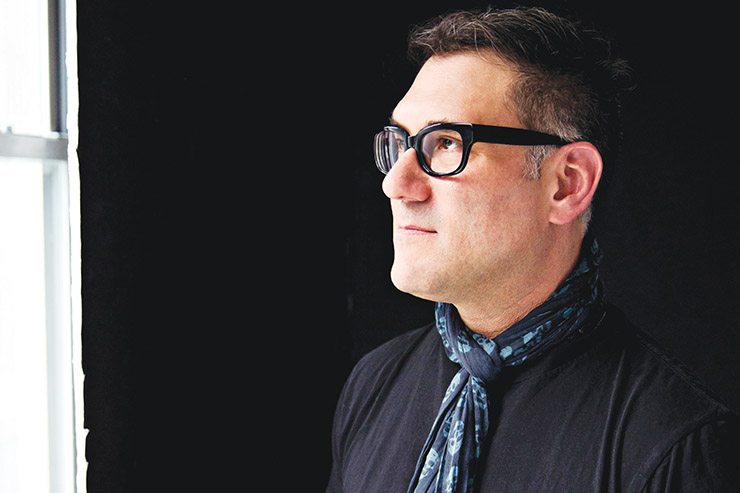
Author: Mitch Horowitz

  • The Black Arts after Fifty Years

    The Black Arts after Fifty Years

    From New Dawn Special Issue Vol 11 No 4 (Aug 2017)

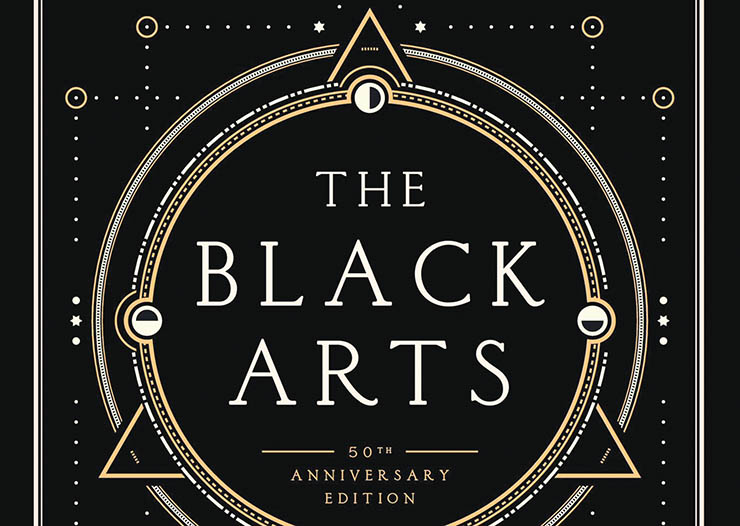
    This year marks the 50th anniversary of Richard Cavendish’s classic study of the occult, The Black Arts. The year of Cavendish’s book – 1967 – could be seen as a banner moment for the rebirth of occult and esoteric spirituality in the modern West.

    In 1967, the toy giant Parker Brothers relaunched the Ouija Board, having bought rights the prior year from descendants of manufacturer William Fuld, and sold a record two million talking boards, surpassing sales of its leading game Monopoly, and installing the mediumistic device into playrooms across America.

    As governor-elect of California, Ronald Reagan in January 1967 raised eyebrows by scheduling his inauguration at the perplexing hour of 12:10 A.M., prompting persistent questions – which ran throughout his presidency – over the extent of his and wife’s dedication to astrology. Reagan would admit only that “Nancy and I enjoy glancing at the daily astrology charts in our morning paper.” At that time, about 1,250 out of 1,750 daily papers featured daily horoscope columns, a post-war high.

    In 1967, The Beatles learned Transcendental Meditation (TM) from the Maharishi Mahesh Yogi, indelibly marrying the youth culture to the pursuit of Eastern and esoteric wisdom. The following year, The Beatles’ famous sojourn to the Maharishi’s northern Indian ashram in Rishikesh resurrected the ideal of the Westerner seeking wisdom in the Far East, a template laid in the late 1870s by Russian-born occult explorer Madame HP Blavatsky, who left behind the relatively cushy environs of New York City to move to India, a place then as alien to most Westerners as the surface of another planet.

    Also in 1967, the bestselling biography of psychic Edgar Cayce, Edgar Cayce: The Sleeping Prophet by tabloid journalist Jess Stearn, brought renewed attention to the early twentieth-century medical clairvoyant. Cayce’s popularity was followed by a wave of “channelled” literatureCayce first used the term channel in the mystical sense – under the names of such other-dimensional entities as Seth, Ramtha, and Abraham.

    This ferment of occult and mystical enthusiasm soon exploded across the culture as Americans were urged to “be here now,” try psychedelics to “tune in” to higher energies, use new practices in yoga and Zen, rediscover native shamanism (or variants of it) in the books of Carlos Castaneda, and shiver over evils, new and ancient, with the shock of the Manson murders, and the popularity of movies like The Exorcist and Rosemary’s Baby.

    Into this atmosphere, British historian Cavendish (1930–2016) launched his enduring and influential study of occult history and practice, The Black Arts. The book won immediate popularity, gaining the affections of Mick Jagger, author Isaac Bashevis Singer, and, well, me, when I first began seriously studying the occult about twenty years ago. I discovered the book on the backlist of the publisher for which I now work, and was immediately enchanted with the green-blue-black psychedelic-goth graphics of the original cover art. At a later date, the book was redesigned in the more ordinary style of a heavy-metal album cover, which hyped up the sinister (serpents coiling from eye sockets of skulls), and played down the mysterious, alluring, and mature. For its 50th anniversary edition, TarcherPerigee has restored the mood of the original, and returned a few missing images to the interior. Mercury, rejoice.

    • • •

    In the minds of many modern people, the occult stands for the sinister and satanic. This is a mistake, historically and spiritually. The term occult comes from occultus, Latin for hidden. Classically speaking, occult philosophy posits the existence of an unseen dimension of life, whose forces are felt on and through us. In the late ancient world, when the temple orders of Egypt, Greece, and Rome, and the folk beliefs and nature-based religions of Europe, were losing appeal to Christianity, the church fathers did what we as humans have always done: labelled the other side, i.e., the historical and theological losers, in terminology of our own liking, in this case as demon worshippers and purveyors of dark sorcery, a characterisation that pre-Christians and pagans had never claimed for themselves. Indeed, for readers who were or are put off by Cavendish’s malevolent-sounding term “black arts” in the title, he quickly explained his choice: “No one is a black magician in his own eyes, and modern occultists, whatever their beliefs and practices, think of themselves as high-minded white magicians” – yet they are driven, as we all are, by the “titanic attempt to exalt the stature of man… this gives it [magic] a certain magnificence.”

    Isaac Bashevis Singer, in a shrewd and admiring critical essay on The Black Arts in Book Week on April 9, 1967, agreed with Cavendish noting: “We are all black magicians in our dreams, in our fantasies, perversions, and phobias.”

    And, to this I would add, in the pursuit of our highest ideals. As Cavendish and Singer detected, we are not very different from the classical magician when we strive, morally and materially, to carry forth our plans in the world – to ensure the betterment of ourselves and our loved ones; to heal sickness; to create, sustain, and, above all, to generate things which bear our markings, ideals, and likenesses. All of this is the expenditure of power, the striving to physically establish our inner drives and images.

    I do not view the search for individual power, including through supernatural means, as necessarily maleficent, and neither, I think, did Cavendish. Historically and psychologically, it is a fundamental human trait to evaluate, adopt, or avoid an idea based upon whether it builds or depletes our sense of personal agency. “A living thing,” Nietzsche wrote in Beyond Good and Evil, “seeks above all to discharge its strength – life itself is will to power…” The difficulty is in making our choices wisely.

    We sometimes deny or overlook this power-seeking impulse in ourselves, associating it with the tragic fate of Faust or Lady Macbeth. It can be argued, however, that all of our neuroses and feelings of chronic despair, aside from those with identifiably biological causes, grow from the frustrated expression of personal power. We may spend a lifetime (and countless therapy sessions) ascribing our problems to other, more secondary phenomena – without realising that, as naturally as a bird is drawn to the dips and flows of air currents, we are in the perpetual act of trying to forge, create, and sustain, much like the ancient alchemist or wizard.

    The ultimate frustration of life is that, while we seem to be granted godlike powers – giving birth, creating beauty, spanning space and time, devising machines of incredible might – we are bound to physical forms that quickly decay. “Ye are gods,” wrote the Psalmist, adding “but yet shall die as princes.” Immortality and the reversal of bodily decline is the one magic no one has ever mastered. The wish to surpass the boundaries of our physicality is behind some of our most haunting myths and parables, from the Trojan prince Tithonus, to whom the gods granted immortality but trapped in a shell of misery and decay for failing to request eternal youth, to the doomed scientist Victor Frankenstein, who sought the ultimate alchemy of creating life only to bring destruction on everyone around him.
    • • •

    In The Black Arts, Cavendish captures the human striving and universality behind the magical search. He also demonstrates virtuosity for explaining ancient and more recent rituals, rites, and esoteric philosophies with splendid clarity. Although he casts a critical eye toward some of the customs he explores, Cavendish never places himself above or in opposition to them. The historian realises that these practices, whether they are to his or your private liking, reflect a basic human need. Nor does the author evaluate his facts from a distant remove. Cavendish, as Singer noted, “does discreetly hint that there may be a kernel of truth in the magicians’ fantastic assertions.”

    First appearing in 1967, The Black Arts narrowly predated (and helped foresee) the explosion of mainstream interest in New Age and spiritual-therapeutic philosophies. The book also arrived just as the modern world was experiencing the rebirth of Wicca or witchcraft, a nature-based religion now officially recognised within the US military (whose service members and veterans may select the pentagram from among more than 65 “emblems of belief”). By many accounts, Wicca is one of the fastest-growing religions in the Western world today. It is not difficult to imagine a cohort of aspiring teen witches among Cavendish’s earliest readers (some of whom probably graduated to his magisterial 24-volume encyclopedia Man, Myth & Magic, which he edited in 1970).

    To learn more about the current occult scene, in its popular and esoteric variants, you can select among dozens of twenty-first century books. Indeed, you will get much more from recent books for having read Cavendish’s. But make no mistake: The Black Arts is much more than a well-timed period piece. It stands nearly alone as a simultaneously comprehensive and inviting guide to the world of pre-modern esoterica. Cavendish performed an epic feat of distillation in this well-sifted compendium. He created vivid descriptions of philosophies that many writers botch, such as Kabbalah (an area where Singer felt the book displayed distinction), European spellcasting, and the messy topic of Satan worship, which is not exactly a tradition so much as a patchwork of historical experiments, foibles, and, not infrequently, frauds.

    Cavendish’s descriptions are so clear that the intrepid reader can use his book, as I admittedly once did, not only as a historical work but also as a guide to practice. If you are bold enough (and I hope it’s boldness and not fickleness or venom) you can try your hand at variants of numerology, astrology, and divination. I believe strongly that to understand the meaning and ideas behind any faith or spiritual practice (by spiritual I mean belief in extra-physicality), a participatory approach is necessary, even if only temporarily. Whether you view the occult critically or sympathetically, and there are grounds for both responses, you will never understand the pull of the religious or occult appeal without getting involved in it. Messy hands are the fee of entry.

    Soon after Cavendish published his study, another writer and journalist, Lewis Lapham, followed The Beatles to the Rishikesh ashram for a firsthand view of their encounter with the Maharishi. Lapham was a progenitor of the “New Journalism” (not a term he claimed for himself), an approach to reportage that included an expressly participatory element. In this vein, Lapham took measure of the charismatic, bearded guru’s influence on The Beatles in a two-part 1968 article for The Saturday Evening Post, “There Once Was a Guru from Rishikesh.” The journalist viewed the Maharishi and his flowered acolytes with immediate suspicion, and regarded them from a sardonic remove. Yet it never occurred to Lapham, who sat in on rap sessions, group meals, and other events, to use the easiest and plainest means available to test his instinct that there was something fishy about the robed man selling bliss: Namely, placing his bottom on a cushion and trying the TM technique. A mantra, if you desire one, is about as easily attained as a learner’s permit to drive – and, indeed, at that particular time and place was much easier.

    In 2017, almost fifty years after his visit, I asked Lapham, a gentlemanly and approachable man, whether he had learned TM in Rishikesh or another time. His reply: “Even in Rishikesh I didn’t practice Transcendental Meditation. The Maharishi furnished me with a mantra, but I failed to employ it as a stairway to the stars.” There was no discernible curiosity toward the thing being judged. This is the opposite of Cavendish’s approach. That intellectual quality in Cavendish – to place his hands (and yours) on the driver’s wheel – is what has given his book its posterity, and won it unlikely dedication from both mainstream literary voices and contemporary occult seekers.

    • • •

    As I have written in my Occult America and elsewhere, occult philosophy is the kernel that gave rise to most of today’s modes of therapeutic and self-help spirituality. Indeed, the idea of an individual spiritual search today now seems like a birthright. This was not always so. During the Renaissance, when occult forms of worship and magic were being rediscovered, translators, artists, and religious scholars began to enunciate the first modern conception of a personal spiritual search, located beyond the parameters of any one congregation or faith. That impulse pulled Thoreau into the woods, set Blavatsky on her globe-spanning search, drew The Beatles to Rishikesh – and lured many readers to this book.

    In the closing pages of Occult America, I identified five spiritual principles with which most modern people agree, even those who are disinclined toward religion. These beliefs came into vogue – and have grown only stronger – in the years of occult ferment immediately following Cavendish. These principles found their earliest sounding in Western life through occult and mystical practices. They are:

    • Belief in the therapeutic value of spiritual and religious ideas.
    • Belief in a mind–body connection in health.
    • Belief that human consciousness is evolving to higher stages.
    • Belief that thoughts, to some greater or lesser measure, determine reality.
    • Belief that spiritual understanding is available without allegiance to any specific religion or doctrine.

    The encounter between modern people and occultism, including many of the practices explored in this book, resulted in a vast morphing and reframing of arcane beliefs from the Old World into the new, boundary-free spiritual culture of our own era. This new spiritual culture is often called the New Age – a term critics use derisively but that I use with respect. New Age spirituality is, quite simply, therapeutic spirituality, and the seeking of self-potential through metaphysical understanding. The New Age extols religious egalitarianism and has, in my view, responded more fully than any other movement in history to the inner needs and personal search of the individual.

    In reading The Black Arts you will discover much more than magical systems from the past; you will also discover ideas that have shaped us as a culture – and that likely reflect aspects of your interior life.

    This article is adapted from Mitch Horowitz’s introduction to the 50th anniversary edition of The Black Arts: A Concise History of Witchcraft, Demonology, Astrology, and Other Mystical Practices Throughout the Ages, available in all good bookstores.

    [alert type=”general” dismiss=”no”]This article was published in New Dawn Special Issue Vol 11 No 4.[/alert]

    [alert type=”success” dismiss=”no”]If you appreciate this article, please consider subscribing to help maintain this website.[/alert]

    © New Dawn Magazine and the respective author.
    For our reproduction notice, click here.
  • What Do You Mean The Occult? A Brief Introduction

    What Do You Mean The Occult? A Brief Introduction

    MITCH HOROWITZ was raised in a world of Bigfoot stories, UFO sightings, and Carlos Castaneda books. He grew determined to find the truth behind it all – and today is a PEN Award-winning historian and the author of Occult America and One Simple Idea: How Positive Thinking Reshaped Modern Life.

    Mitch cares deeply about outsider spiritual views, particularly with regard to the esoteric, supernatural, and occult. He has written on everything from the war on witches to the secret life of Ronald Reagan for a wide range of publications. The Washington Post says Horowitz “treats esoteric ideas and movements with an even-handed intellectual studiousness that is too often lost in today’s raised-voice discussions.”

    “Many academics and journalists simply cannot wrap their minds around the principle that you can study an arcane topic without propagating it,” Mitch noted recently in an on-line article. He continued by pointing out that the “false choice to ‘take it or leave it’ is perhaps the most limiting factor in how people view the world. It makes it difficult to discuss esoteric topics….”

    New Dawn magazine asked Mitch to share his thoughts on the theme of Special Issue Vol 11 No 4.

    NEW DAWN (ND): What do you mean by the Occult?

    MITCH HOROWITZ (MH): The term itself comes from the Latin occultus, meaning secret. It was adopted by Renaissance thinkers looking for a way of discussing the Greco-Egyptian and other pre-Christian teachings being rediscovered and newly translated, particularly the Hermetic literature. The occult, very simply, is the inquiry into an unseen dimension of life whose forces can be felt on and through us.

    ND: Why do people often associate the occult with evil, negative powers, satanism and alike?

    MH: That is, in many respects, a leftover from the religious struggles of late antiquity when the ascendant church fathers characterised the pagan powers in maleficent terms, associating them with demonology, which the pagan world had never identified with. It’s human nature to depict one’s theological or ideological foes in terms chosen by the victor, and often negatively.

    ND: You’ve written extensively about the influence of occult ideas on modern society. Can you share some examples of how the occult has impacted contemporary America?

    MH: In many respects, America’s alternative spiritual culture, and much of its self-help movement, had its earliest roots in occult thought. Consider, for example, the widely domesticated idea of “positive thinking.” The notion that thoughts are causative, and that events and circumstance respond to thought, was very much an occult-mystical principle, and it remained so until the late 19th and early 20th centuries, at which time writers like James Allen and Prentice Mulford reframed these ideas in language that drew less upon Mesmerism and related movements, and more upon Scripture. The language of occult and mystical movements has been rendered into terms that prove acceptable to large swaths of the public. Plus, many current mainstream practices, from yoga to meditation to acupuncture, first entered public awareness from the margins of occult subcultures. It is nearly impossible to meet anyone today who does not know their “sun sign” and something about it. That, in a sense, reflects how deeply occult ideas permeate everyday life.

    ND: Much media coverage of the occult is either wildly sensationalist or treats the area with disdain and credulity. Why is this?

    MH: A great deal of conformity touches all aspects of our society – this is true in almost every walk of life. Educated people and many people in the media are brought up to believe that occult figures like Madame Blavatsky, if they’ve heard of them at all, were carnival-type characters, whose lives hold nothing of interest for serious people. I’m personally very interested in ESP research, and I work hard to get people in the mainstream media to understand this research, which is almost impossible if they rely upon ‘what they’ve heard’, or the top five Google search results. Misunderstanding of the occult is really just a kind of conformity, and this way of thinking touches all of us.

    ND: When examining the broad spectrum of ideas and practises categorised as occult, what is the best approach?

    MH: I think it is vitally important to have an ethical teaching at your back, whether the Gospels, the Bhagavad Gita, the Talmud, or another ancient ethical source. Without that, it is very easy to get lost.

    [alert type=”general” dismiss=”no”]This article was published in New Dawn Special Issue Vol 11 No 4.[/alert]

    [alert type=”success” dismiss=”no”]If you appreciate this article, please consider subscribing to help maintain this website.[/alert]

    © New Dawn Magazine and the respective author.
    For our reproduction notice, click here.
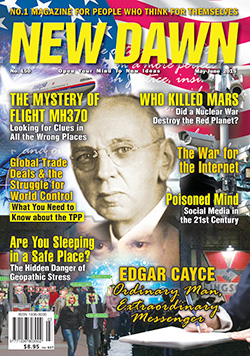
  • Edgar Cayce: Ordinary Man, Extraordinary Messenger

    Edgar Cayce: Ordinary Man, Extraordinary Messenger

    From New Dawn 150 (May-June 2015)

    The year 1910 marked a turning point in Western spirituality. It saw the deaths of some of the most luminous religious thinkers of the nineteenth century, including psychologist-seeker William James; popular medium Andrew Jackson Davis; and Christian Science founder Mary Baker Eddy. These three figures deeply impacted the movements in positive thinking, prayer healing, and psychical research.

    Their death that year was accompanied by the rise to prominence of a new religious innovator – a figure who built upon the spiritual experiments of the nineteenth century to shape the New Age* culture of the dawning era.

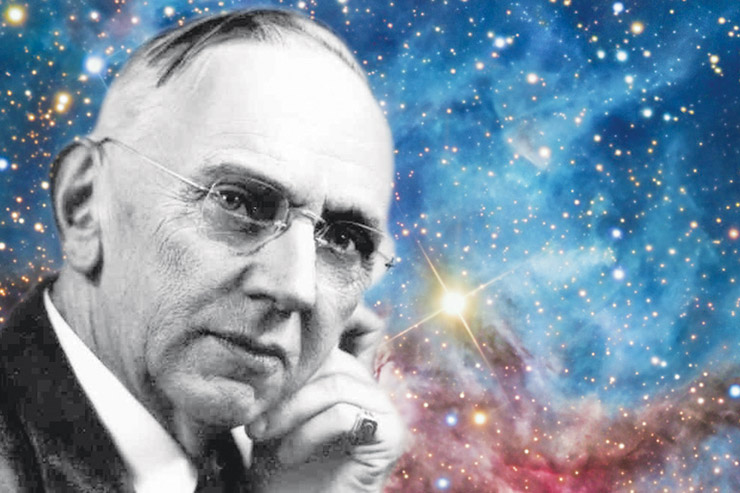
    In autumn of 1910 The New York Times brought the first major national attention to the name of Edgar Cayce, a young man who later became known as the “father of holistic medicine” and the founding voice of alternative spirituality.

    The Sunday Times of 9 October 1910 profiled the Christian mystic and medical clairvoyant in an extensive article and photo spread: Illiterate Man Becomes a Doctor When Hypnotized. At the time Cayce (pronounced “Casey”), then 33, was struggling to make his way as a commercial photographer in his hometown of Hopkinsville, Kentucky, while delivering daily trance-based medical “readings” in which he would diagnose and prescribe natural cures for the illnesses of people he had never met.

    Cayce’s method was to recline on a sofa or day bed, loosen his tie, belt, cuffs, and shoelaces, and enter a sleep-like trance; then, given only the name and location of a subject, the “sleeping prophet” was said to gain insight into the person’s body and psychology. By the time of his death in January 1945, Cayce had amassed a record of more than 14,300 clairvoyant readings for people across the nation, many of the sessions captured by stenographer Gladys Davis.

    In the 1920s, Cayce’s trance readings expanded beyond medicine (which nonetheless remained at the core of his work) to include “life readings,” in which he explored a person’s inner conflicts and needs. In these sessions Cayce employed references to astrology, karma, reincarnation, and number symbolism. Other times, he expounded on global prophecies, climate or geological changes, and the lost history of mythical cultures, such as Atlantis and Lemuria. Cayce had no recollection of any of this when he awoke, though as a devout Christian the esotericism of such material made him wince when he read the transcripts.

    Contrary to news coverage, Cayce was not illiterate, but neither was he well educated. Although he taught Sunday school at his Disciples of Christ church – and read through the King James Bible at least once every year – he had never made it past the eighth grade of a rural schoolhouse. While his knowledge of Scripture was encyclopaedic, Cayce’s reading tastes were otherwise limited. Aside from spending a few on-and-off years in Texas unsuccessfully trying to use his psychical abilities to strike oil – he had hoped to raise money to open a hospital based on his clairvoyant cures – Cayce rarely ventured beyond the Bible Belt environs of his childhood.

    Since the tale of Jonah fleeing from the word of God, prophets have been characterised as reluctant, ordinary folk plucked from reasonably satisfying lives to embark on missions that they never originally sought. In this sense, if the impending New Age – the vast culture of Eastern, esoteric, and therapeutic spirituality that exploded on the US national scene in the 1960s and 70s – was seeking a founding prophet, Cayce could hardly be viewed as an unusual choice, but, historically, as a perfect one.

    * The term “New Age” is often used to denote trendy or fickle spiritual tastes. I do not share in that usage. I use New Age to reference the eclectic culture of therapeutic and experimental spirituality that emerged in the late-twentieth century.

    A Seer in Season

    It was this Edgar Cayce – an everyday man, dedicated Christian, and uneasy mystic – whom New England college student and future biographer Thomas Sugrue encountered in 1927. When Sugrue met Cayce, the twenty-year-old journalism student was not someone who frequented psychics or séance parlours. Sugrue was a dedicated Catholic who had considered joining the priesthood. Deeply versed in world affairs and possessed of an iron determination to break into news reporting, Sugrue left his native Connecticut in 1926 for Washington and Lee University in Lexington, Virginia, which was then one of the only schools in the nation to offer a journalism degree to undergraduates. (Sugrue later switched his major to English literature, in which he earned both bachelor’s and master’s degrees in four years.)

    As a student, Sugrue rolled his eyes at paranormal claims or talk of ESP. Yet Sugrue met a new friend at Washington and Lee who challenged his preconceptions: the psychic’s eldest son, Hugh Lynn Cayce. Hugh Lynn had planned to attend Columbia but his father’s clairvoyant readings directed him instead to the old-line Virginia school. (The institution counted George Washington as an early benefactor.) Sugrue grew intrigued by his new friend’s stories about his father – in particular the elder Cayce’s theory that one person’s subconscious mind could communicate with another’s. The two freshmen enjoyed sparring intellectually and soon became roommates. While still cautious, Sugrue wanted to meet the agrarian seer.

    Edgar and his wife Gertrude, meanwhile, were laying new roots about 250 miles east of Lexington in Virginia Beach, a location the readings had also selected. The psychic spent the remainder of his life in the Atlantic coastal town, delivering twice-daily readings and developing the Association for Research and Enlightenment (A.R.E.), a spiritual learning centre that remains active there today.

    Accompanying Hugh Lynn home in June 1927, Sugrue received a “life reading” from Cayce. In these psychological readings, Cayce was said to peer into a subject’s “past life” incarnations and influences, analyse his character through astrology and other esoteric methods, and view his personal struggles and aptitudes. Cayce correctly identified the young writer’s interest in the Middle East, a region where Sugrue later issued news reports on the founding of the modern state of Israel. But it wasn’t until Christmas of that year that Sugrue, upon receiving an intimate and uncannily accurate medical reading, became an all-out convert to Cayce’s psychical abilities.

    Sugrue went on to fulfil his aim of becoming a journalist, writing from different parts of the world for publications including the New York Herald Tribune and The American Magazine. But his life remained interwoven with Cayce’s. Stricken by debilitating arthritis in the late 1930s, Sugrue sought help through Cayce’s medical readings. From 1939 to 1941, the ailing Sugrue lived with the Cayce family in Virginia Beach, writing and convalescing. During these years of close access to Cayce – while struggling with painful joints and limited mobility – Sugrue completed There Is a River, the sole biography written of Cayce during his lifetime, now available in a new edition. When the book first appeared in 1942 it brought Cayce national attention that surpassed even the earlier Times coverage.

    Documenting the Prophet

    Sugrue was not Cayce’s only enthusiast within the world of American letters. There Is a River broke through the sceptical wall of New York publishing thanks to a reputable editor, William Sloane, of Holt, Rinehart & Winston, who experienced his own brush with the Cayce readings.

    In 1940, Sloane agreed to consider the manuscript for There Is a River. He knew the biography was highly sympathetic, a fact that did not endear him to it. Sloane’s wariness faded after Cayce’s clairvoyant diagnosis helped one of the editor’s children. Novelist and screenwriter Nora Ephron recounted the episode in a 1968 New York Times article.

    “I read it,” Sloane told Ephron. “Now there isn’t any way to test a manuscript like this. So I did the only thing I could do.” He went on:

    A member of my family, one of my children, had been in great and continuing pain. We’d been to all the doctors and dentists in the area and all the tests were negative and the pain was still there. I wrote Cayce, told him my child was in pain and would be at a certain place at such-and-such a time, and enclosed a check for $25. He wrote back that there was an infection in the jaw behind a particular tooth. So I took the child to the dentist and told him to pull the tooth. The dentist refused – he said his professional ethics prevented him from pulling sound teeth. Finally, I told him he would have to pull it. One tooth more or less didn’t matter, I said – I couldn’t live with the child in such pain. So he pulled the tooth and the infection was there and the pain went away. I was a little shook. I’m the kind of man who believes in X-rays. About this time, a member of my staff who thought I was nuts to get involved with this took even more precautions in writing to Cayce than I did, and he sent her back facts about her own body only she could have known. So I published Sugrue’s book.

    Many literary journalists and historians since Sugrue have traced Cayce’s life. Journalist and documentarian Sidney D. Kirkpatrick wrote the landmark record of Cayce in his 2000 biography Edgar Cayce. Historian K. Paul Johnson crafted a deeply balanced and meticulous scholarly analysis of Cayce with the 1998 Edgar Cayce in Context. And the intrepid scholar of religion Harmon Bro – who spent nine months in Cayce’s company toward the end of the psychic’s life – produced insightful studies of Cayce as a Christian mystic in his 1955 University of Chicago doctoral thesis (a groundbreaking work of modern scholarship on an occult subject) and later in the 1989 biography Seer Out of Season. While Harmon Bro died in 1997, his family has a long – and still active – literary involvement with Cayce. Bro’s mother, Margueritte, was a pioneering female journalist in the first half of the twentieth century who brought Cayce national attention in her 1943 profile in Coronet magazine: “Miracle Man of Virginia Beach.” Bro’s wife June and daughter Pamela actively teach and interpret the Cayce ideas today.

    There exist many other works on Cayce – it would take several paragraphs to appreciate the best of them. But it was Sugrue, an accomplished print journalist who worked and convalesced with Cayce for several years, who fully – and this word is chosen carefully – captured Cayce’s goodness.

    Sugrue’s historical Edgar Cayce is the man who grew from being an awkward, soft-voiced adolescent to a national figure who never quite knew how to manage his fame – and less so how to manage money, often foregoing or deferring his usual $20 fee for readings, leaving himself and his family in a perpetual state of financial precariousness. In a typical letter from 1940, Cayce replied to a blind labourer who asked about paying in instalments: “You may take care of the [fee] any way convenient to your self – please know one is not prohibited from having a reading… because they haven’t money. If this information is of a divine source it can’t be sold, if it isn’t then it isn’t worth any thing.”

    Sugrue also captured Cayce as a figure of deep Christian faith struggling to come to terms with the occult concepts that ran through his readings beginning in the early 1920s. This material extended to numerology, astrology, crystal gazing, modern prophecies, reincarnation, karma, and the story of mythical civilisations, including Atlantis and prehistoric Egypt. People who sought readings were intrigued and emotionally impacted by this material as much as by Cayce’s medical diagnoses. What’s more, in readings that dealt with spiritual and esoteric topics – along with the more familiar readings that focused on holistic remedies, massage, meditation, and natural foods – there began to emerge the range of subjects that formed the parameters of therapeutic New Age spirituality in the latter twentieth century.

    [alert type=”info” dismiss=”no”]If you appreciate this article, please consider a subscription to New Dawn magazine.[/alert]

    Esoteric Philosopher

    Cayce did more than assemble a catalogue of the dawning New Age. The spiritual ideas running through his readings, combined with his own intrepid study of Scripture, supplied the basis for a universal approach to religion, which, in various ways, also spread across American culture. Sugrue captures this especially well in chapter fifteen, which recounts Cayce’s metaphysical explorations with an Ohio printer and Theosophist named Arthur Lammers. Cayce’s collaboration with Lammers, which began in the autumn of 1923 in Selma, Alabama, marked a turn in Cayce’s career from medical clairvoyant to esoteric philosopher.

    Licking his wounds after his failed oil ventures, Cayce had resettled his family in Selma where he planned to resume his career as a commercial photographer. He and Gertrude, who had long suffered her husband’s absences and unsteady finances, enrolled their son Hugh Lynn, then sixteen, in Selma High School. The family, now including five-year-old Edgar Evans, settled into a new home and appeared headed for some measure of domestic normalcy. All this got upturned in September, however, when the wealthy printer Lammers arrived from Dayton. Lammers had learned of Cayce during the psychic’s oil-prospecting days. He showed up at Cayce’s photo studio with an intriguing proposition.

    Lammers was both a hard-driving businessman and an avid seeker in Theosophy, ancient religions, and the occult. He impressed upon Cayce that the seer could use his psychical powers for more than medical diagnoses. Lammers wanted Cayce to probe the secrets of the ages: What happens after death? Is there a soul? Why are we alive? Lammers yearned to understand the meaning of the pyramids, astrology, alchemy, the “Etheric World,” reincarnation, and the mystery religions of ancient Egypt, Greece, and Rome. He felt certain that Cayce’s readings could part the veil shrouding the ageless wisdom.

    After years of stalled progress in his personal life, Cayce was enticed by this new sense of mission. Lammers urged Cayce to return with him to Dayton, where he promised to place the Cayce family in a new home and financially care for them. Cayce agreed, and uprooted Gertrude and their younger son, Edgar Evans. Hugh Lynn remained behind with friends in Selma to finish out the school term. Lammers’s financial promises later proved elusive and Cayce’s Dayton years, which preceded his move to Virginia Beach, turned into a period of financial despair. Nonetheless, for Cayce, if not his loved ones, Dayton also marked a stage of unprecedented discovery.

    Cayce and Lammers began their explorations at a downtown hotel on 11 October 1923. In the presence of several onlookers, Lammers arranged for Cayce to enter a trance and to give the printer an astrological reading. Whatever hesitancies the waking Cayce evinced over arcane subjects vanished while he was in his trance state. Cayce expounded on the validity of astrology even as “the Source” – what Cayce called the ethereal intelligence behind his readings – alluded to misconceptions in the Western model. Toward the end of the reading, Cayce almost casually tossed off that it was Lammers’s “third appearance on this [earthly] plane. He was once a monk.” It was an unmistakable reference to reincarnation – just the type of insight Lammers had been seeking.

    In the weeks ahead, the men continued their readings, probing into Hermetic and esoteric spirituality. From a trance state on 18 October, Cayce laid out for Lammers a whole philosophy of life, dealing with karmic rebirth, man’s role in the cosmic order, and the hidden meaning of existence:

    In this we see the plan of development of those individuals set upon this plane, meaning the ability (as would be manifested from the physical) to enter again into the presence of the Creator and become a full part of that creation. Insofar as this entity is concerned, this is the third appearance on this plane, and before this one, as the monk. We see glimpses in the life of the entity now as were shown in the monk, in his mode of living. The body is only the vehicle ever of that spirit and soul that waft through all times and ever remain the same.

    These phrases were, for Lammers, the golden key to the mysteries: a theory of eternal recurrence, or reincarnation, that identified man’s destiny as inner refinement through karmic cycles of rebirth, then reintegration with the source of Creation. This, the printer believed, was the hidden truth behind the Scriptural injunction to be “born again” so as to “enter the kingdom of Heaven.”

    “It opens up the door,” Lammers told Cayce. “It’s like finding the secret chamber of the Great Pyramid.” He insisted that the doctrine that came through the readings synchronised the great wisdom traditions: “It’s Hermetic, it’s Pythagorean, it’s Jewish, it’s Christian!” Cayce himself wasn’t sure what to believe. “The important thing,” Lammers reassured him, “is that the basic system which runs through all the mystery traditions, whether they come from Tibet or the pyramids of Egypt, is backed up by you. It’s actually the right system…. It not only agrees with the best ethics of religion and society, it is the source of them.”

    Lammers’s enthusiasms aside, the religious ideas that emerged from Cayce’s readings did articulate a compelling theology. Cayce’s teachings sought to marry a Christian moral outlook with the cycles of karma and reincarnation central to Hindu and Buddhist ways of thought, as well as the Hermetic concept of man as an extension of the Divine. Cayce’s references elsewhere to the causative powers of the mind – “the spiritual is the LIFE; the mental is the BUILDER; the physical is the RESULT” – melded his cosmic philosophy with tenets of New Thought, Christian Science, and mental healing. If there was an inner philosophy unifying the world’s religions, Cayce came as close as any modern person in defining it.

    Cayce’s “Source”

    Religious traditionalists could rightly object: Just where are Cayce’s “insights” coming from? Are they the product of a Higher Power or merely the overactive imagination of a religious outlier? Or, worse, are his phrases the type of muddle-fuddle produced by haunts at Ouija board sessions?

    Cayce himself wrestled with these questions. His response was that all of his ideas, whatever their source, had to square with Gospel ethics in order to be judged vital and right. Cayce addressed this in a talk that he delivered in his normal waking state in Norfolk, Virginia, in February of 1933, just before he turned fifty-six:

    Many people ask me how I prevent undesirable influences entering into the work I do. In order to answer that question let me relate an experience I had as a child. When I was between eleven and twelve years of age I had read the Bible through three times. I have now read it fifty-six times. No doubt many people have read it more times than that, but I have tried to read it through once for each year of my life. Well, as a child I prayed that I might be able to do something for the other fellow, to aid others in understanding themselves, and especially to aid children in their ills. I had a vision one day which convinced me that my prayer had been heard and answered.

    Cayce’s “vision” has been described differently by different biographers. Sugrue recounts the episode occurring when Cayce was about twelve in the woods outside his home in western Kentucky. Cayce himself places it in his bedroom at age thirteen or fourteen. One night, this adolescent boy who had spoken of childhood conversations with “hidden friends,” and who hungrily read through Scripture, knelt by his bed and prayed for the ability to help others.

    Just before drifting to sleep, Cayce recalled, a glorious light filled the room and a feminine apparition appeared at the foot of his bed telling him: “Thy prayers are heard. You will have your wish. Remain faithful. Be true to yourself. Help the sick, the afflicted.”

    Cayce did not realise until years later what form his answered prayers would take – and even in his twenties it took him years to adjust to being a medical clairvoyant. As his new powers took shape he laboured to use Scripture as his moral vetting mechanism. Yet he consistently attributed his information to the “Source” – another subject on which he expanded at Norfolk:

    As a matter of fact, there would seem to be not only one, but several sources of information that I tap when in this sleep condition. One source is, apparently, the recording that an individual or entity makes in all its experiences through what we call time. The sum-total of the experiences of that soul is “written,” so to speak, in the subconscious of that individual as well as in what is known as the Akashic records. Anyone may read these records if he can attune himself properly.

    Cayce’s concept of the “Akashic records” is derived from ancient Vedic writings, in which akasha is a kind of universal ether. This idea of universal records was popularised to Westerners in the late nineteenth-century through the work of occult philosopher, world traveller, and Theosophy co-founder Madame H.P. Blavatsky.

    A generation before Cayce, Blavatsky told of a hidden philosophy at the core of the historic faiths – and of a cosmic record bank that catalogs all human events. In Blavatsky’s 1877 study of occult philosophy, Isis Unveiled, the Theosophist described an all-pervasive magnetic ether that “keeps an unmutilated record of all that was, that is, or ever will be.” These astral records, wrote Blavatsky, preserve “a vivid picture for the eye of the seer and prophet to follow.” Blavatsky equated this archival ether with the “Book of Life” from Revelation.

    Returning to the topic in her massive 1888 study of occult history, The Secret Doctrine, Blavatsky depicted these etheric records in more explicitly Vedic terms (having spent several preceding years in India). In the first of her two-volume study, Blavatsky referred to “Akâsic or astral-photographs” – inching closer to the term “Akashic records” as used by Cayce.

    Cayce was not the first channeller to credit the “Akashic records” as his source of data. In 1908, a retired Civil War chaplain and Church of Christ pastor named Levi H. Dowling said that he clairvoyantly channelled an alternative history of Christ in The Aquarian Gospel of Jesus the Christ. In Dowling’s influential account, the Son of man travels and studies throughout the religious cultures of the East before dispensing a message of universal faith that encompasses all the world’s traditions. Dowling, too, attributed his insights to the “Akashic records,” accessed while in a trance state in his Los Angeles living room.

    Cayce, like Blavatsky, equated akasha with the Scriptural Book of Life. This was an example of how Cayce harmonised the exotic and unfamiliar themes of his readings with his Christian worldview. In a similar vein, he reinterpreted the ninth chapter of the Book of John, in which Christ heals a man who had been blind from birth, to validate ideas of karma and reincarnation. When the disciples ask Christ whether it was the man’s sins or those of his parents that caused his affliction, the Master replies enigmatically: “Neither hath this man sinned, nor his parents: but that the works of God should be made manifest in him” (John 9:3). In Cayce’s reasoning, since the blind man was born with his disorder, and Christ exonerates both the man and his parents, his disability must be karmic baggage from a previous incarnation. Cayce made comparable interpretations of passages from Matthew and Revelation.

    In another effort to unite the poles of different traditions, Cayce elsewhere associated his esoteric search with Madame Blavatsky’s. On four occasions he reported being visited by a mysterious, turbaned spiritual master from the East – one of the mahatmas, or great souls, whom Blavatsky said had guided her.

    The Legacy

    Neither Cayce nor Sugrue lived long enough to witness the full reach of Cayce’s ideas. The psychic died at age sixty-seven in Virginia Beach on 3 January 1945, less than three years after There Is a River first appeared. Sugrue updated the book that year. After struggling with years of illness, the biographer died at age forty-five on 6 January 1953 at the Hospital for Joint Diseases in New York.

    The first popularisations of Cayce’s work began to appear in 1950 with the publication of Many Mansions, an enduring work on reincarnation by Gina Cerminara, a longtime Cayce devotee. But it wasn’t until 1956 that Cayce’s name took full flight across the culture with the appearance of the sensationally popular book The Search for Bridey Murphy by Morey Bernstein. Sugrue’s editor Sloane, having since warmed to parapsychology, published both Cerminara and Bernstein.

    Bernstein was an iconic figure. A Coloradan of Jewish descent and an Ivy League-educated dealer in heavy machinery and scrap metal, he grew inspired by Cayce’s career – partly through the influence of Sugrue’s book – and became an amateur hypnotist. In the early 1950s, Bernstein conducted a series of experiments with a Pueblo, Colorado, housewife who, while under a hypnotic trance, appeared to regress into a past-life persona: an early nineteenth-century Irish country girl named Bridey Murphy. The entranced homemaker spoke in an Irish brogue and recounted to Bernstein comprehensive details of her life more than a century earlier.

    Suddenly, reincarnation – an ancient Vedic concept about which Americans had heard little before World War II – was the latest craze, ignited by Bernstein, an avowed admirer of Cayce, to whom the hypnotist devoted two chapters in his book.

    In the following decade, California journalist Jess Stearn further ramped up interest in Cayce with his 1967 bestseller, Edgar Cayce, The Sleeping Prophet. With the mystic sixties in full swing, and the youth culture embracing all forms of alternative or Eastern spirituality – from Zen to yoga to psychedelics – Cayce, while not explicitly tied to any of this, rode the new vogue in alternative spirituality. During this time, Hugh Lynn Cayce emerged as a formidable custodian of his father’s legacy, presiding over the expansion of the Virginia Beach-based Association for Research and Enlightenment, and shepherding to market a new wave of instructional guides based on the Cayce teachings, from dream interpretation to drug-free methods of relaxation to the spiritual uses of colours, crystals, and numbers. Cayce’s name became a permanent fixture on the cultural landscape.

    The 1960s and 70s also saw a new generation of channelled literature – Cayce himself originated the term channel – from higher intelligences such as Seth, Ramtha, and even the figure of Christ in A Course in Miracles. The last was a profound and enduring lesson series, channelled beginning in 1965 by Columbia University research psychiatrist Helen Schucman.

    A concordance of tone and values existed between Cayce’s readings and A Course in Miracles. Cayce’s devotees and the Course’s wide array of readers discovered that they had a lot in common; members of both cultures blended seamlessly, attending many of the same seminars, growth centres, and metaphysical churches.

    Likewise, a congruency emerged between Cayce’s world and followers of the twelve steps of Alcoholics Anonymous. Starting in the 1970s, twelve-steppers of various stripes became a familiar presence at Cayce conferences and events in Virginia Beach.

    Cayce’s universalistic religious message dovetailed with the purposefully flexible references to a Higher Power in the “Big Book,” Alcoholics Anonymous, written in 1939. AA cofounder Bill Wilson, his wife Lois, his confidant Bob Smith, and several other early AAs were deeply versed in mystical and mediumistic teachings. Whether they viewed Cayce as an influence is unclear. But all three works – the Cayce readings, A Course in Miracles, and Alcoholics Anonymous – demonstrated a shared sense of religious liberalism, an encouragement that all individuals seek their own conception of a Higher Power, and a permeability intended to accommodate the broadest expression of religious outlooks and backgrounds.

    The free-flowing tone of the therapeutic spiritual movements of the twentieth and early twenty-first centuries had a shared antecedent, if not a direct ancestry, in the Cayce readings.

    Sugrue provided an irreplaceable record of Cayce’s development as a spiritual messenger and pioneer. The biographer captured the seer as the person who Cayce himself said he was: An ordinary man who struggled with his apparent psychical abilities and the universal religious ideas that travelled through him.

    But Sugrue’s work accomplished more than just that. His portrait of Cayce, in its own right, became a formative document of New Age spirituality. In exploring Cayce’s career, Sugrue highlighted and popularised core themes from the Cayce readings – including past-life experiences, alternative medical treatments, the imperative of the individual spiritual search, and the idea of religion as a practical source of healing.

    Sugrue demonstrated how Cayce – a committed Christian, a Sunday school teacher, and, by his own reckoning, an everyday man – developed into the founding prophet of Aquarian Age spirituality. In capturing the drama and events of Cayce’s journey, Sugrue elevated the clarity and endurance of the seer’s message.

    [alert type=”general” dismiss=”no”]This article was published in New Dawn 150.[/alert]

    [alert type=”success” dismiss=”no”]If you appreciate this article, please consider subscribing to help maintain this website.[/alert]

    © New Dawn Magazine and the respective author.
    For our reproduction notice, click here.
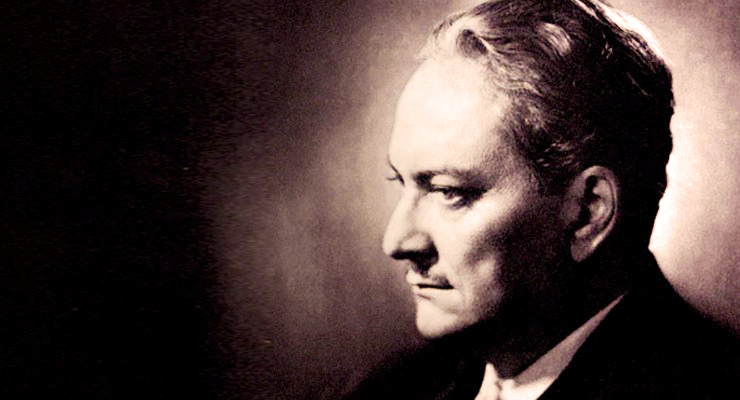
  • Secret Teachings Reborn: The Mysterious Life of Manly P. Hall

    Secret Teachings Reborn: The Mysterious Life of Manly P. Hall

    This article was published in New Dawn 96 (May-June 2006)

    The late nineteenth and early twentieth centuries saw an explosion of spiritual teachers and impresarios dealing in “secret wisdom.” Their ranks included hacks and frauds – as well as more than a few genuine scholars of esoteric traditions. Most have vanished from memory, their writings a historical footnote.

    There exists one distinct figure, though, whose movement and teachings not only survived his passing but are even experiencing a revival in our day. His name is Manly P. Hall. While few academicians will ever know of him, Hall was among the twentieth century’s – and perhaps any century’s – most commanding and unusual scholars of esoteric and mythological lore. Yet the source of his knowledge and the extent of his virtuosity can justly be called a mystery.

    While working as a clerk at a Wall Street banking firm – the “outstanding event” of which involved “witnessing a man depressed over investment losses take his life” – the 28-year-old Hall self-published one of the most complex and thoroughgoing works ever to catalogue the esoteric wisdom of antiquity, The Secret Teachings of All Ages. Hall’s Secret Teachings is almost impossible to classify. Written and compiled on an Alexandrian scale, its hundreds of entries shine a rare light on some of the most fascinating and little-understood aspects of myth, religion, and philosophy.

    Today, more than seventy-five years after its initial publication, the book’s range of material astonishes: Pythagorean mathematics; alchemical formulae; Hermetic doctrine; the workings of Kabala; the geometry of Ancient Egypt; the Native American myths; the uses of cryptograms; an analysis of the Tarot; the symbols of Rosicrucianism; the esotericism of the Shakespearean dramas – these are just a few of Hall’s topics. Yet his background betrays little clue to his virtuosity.

    A Man Unknown

    Hall was born in Peterborough, Ontario, in 1901 to parents who would shortly divorce, leaving the young Manly in the care of a grandmother who raised him in Sioux Falls, South Dakota. He had little formal schooling. But there was a spark of some indefinable brilliance in the young man, which his grandmother tried to nurture in trips to museums in Chicago and New York.

    Tragedy struck early, when his grandmother died when he was 16. Afterward, a self-styled Rosicrucian community in California took him in. At age 19, suspicious of the community’s claims to ancient wisdom, Manly moved on his own to Los Angeles where he began a precocious career in public speaking – first giving an address on reincarnation in a small room above a bank in Santa Monica, and soon rising to the rank of minister at a liberal evangelical congregation called The Church of the People.

    Word spread of the boy wonder’s mastery of arcane and metaphysical subject matter. He attracted benefactors and eventually began travelling the world in search of hidden wisdom. Yet Hall’s early letters from Japan, Egypt, China, and India are, in many respects, fairly ordinary: They contain little of the eye-opening detail or wonder of discovery that one finds in the writings of other early twentieth-century seekers encountering the East for the first time. More often they read like prosaic, if somewhat sensitive, linear travelogues of their day.

    Like a bolt from the blue, however, one is astounded to discover a short work of immense power from the young Hall – a book that seems to prefigure that which would come. In 1922, at the age of 21, Hall wrote a luminescent gem on the mystery schools of antiquity, Initiates of the Flame. Though brief, one sees in it the outline of what would become The Secret Teachings of All Ages. On its frontispiece, Initiates of the Flame boldly announces: “He who lives the Life shall know the Doctrine.”

    The short book goes on to expound passionately and in detail on Egyptian rites, Arthurian myths, and the secrets of alchemy, among other subjects. Feeling the power and ease in its pages, the reader can almost sense the seeds of greatness that were beginning to take hold in Hall’s grasp of esoteric subjects.

    The Secret Teachings Born

    Hall soon returned to America, where he tried his hand at banking – though he found his true path in the beaux arts Reading Room of the New York Public Library. Entering this cavernous space today, it is not difficult to picture the large-framed, young Manly P. Hall surrounded by books of myth and symbol at one of the room’s huge oaken tables. Like a monk of the Middle Ages, Hall copiously, almost superhumanly, pored over hundreds of the great works of antiquity, distilling their esoteric lore into his volume.

    By the age of 28, having pre-sold subscriptions for nearly 1,000 copies (and printing 1,200 more), Hall published what would become known as “The Great Book” – and it has never gone out of print since.

    Indeed, Hall is an exception to most of his contemporaries as someone whose work is actually building in influence today. In its day, the Secret Teachings was expensive, hefty, and cumbersome. As a result, the book spent much of its existence as an underground classic. In late 2003, however, the Secret Teachings found new life in a reset and redesigned “reader’s edition,” which has sold a remarkable 40,000 copies in less than three years.(For further details, see “Bringing the Secret Teachings Into the 21st Century” by Mitch Horowitz at www.lapismagazine.org). A little-known 1929 companion volume by Hall, called Lectures on Ancient Philosophy, has also been recently reissued.

    After publishing his magnum opus, Hall opened a campus in 1934 in the Griffith Park neighbourhood of Los Angeles called The Philosophical Research Society (PRS), where he spent the rest of his life teaching, writing, and amassing a remarkable library of esoterica. A self-contained property designed in a pastiche of Mayan, Egyptian, and art deco styles, PRS remains a popular destination for LA’s spiritually curious.

    Following Hall’s death in 1990, PRS barely survived simultaneous legal battles – one with Hall’s widow, who claimed the group owed her money, and another with a bizarre father-son team of con artists who, in the estimation of a civil court judge, had befriended an ailing, octogenarian Hall to pilfer his assets. The Los Angeles Police Department considered Hall’s death sufficiently suspicious to keep it under investigation for several years.

    Secret Wisdom, Practical Wisdom

    For all his literary output, Hall revealed little about his private life. His most lasting record is a frequently trite, unrevealing childhood memoir called Growing Up with Grandmother (in which he refers to his guardian as “Mrs. Arthur Whitney Palmer”). As an adult, Hall’s close relations were few. He did not marry until well into middle age, in a union some surmise was never consummated.

    Hence, when Hall disclosed something about his background, it was purposeful. He wrote this in a PRS newsletter in 1959: “As a result of a confused and insecure childhood, it was necessary for me to formulate a personal philosophy with which to handle immediate situations.”

    Here was someone with a tremendous interest in the arcane philosophies of the world, in the occult and metaphysical philosophies, but he wasn’t fixated on immortality, or a will to power, or on discovering keys that unlock the universe. Rather, he was focused on harnessing inner truths in a very practical way. How, he wondered, could such ideas lend clarity to daily life?

    We’ll take a byroad that steers us in another direction before returning to this point. Our byroad involves one of the most famous novels in history, Mary Shelley’s Frankenstein. The work has many facets, among them a portrait – not sympathetic, but not as unsympathetic as one might suppose – of the European occult in the Enlightenment era. The portrait comes in the character of a young Victor von Frankenstein, a budding scientist torn between the occult teachings that drew him to science as a child and the prevailing rationalism of his teachers. Victor confides his interest in the great alchemists and occult philosophers, such as the Renaissance-era magus Cornelius Agrippa, but his professors dismiss him with complete condescension.

    One day in his room, Victor ponders the unbridgeable gap between his magical visions and the scholasticism of his peers:

    I had a contempt for the uses of modern natural philosophy. It was very different when the masters of science sought immortality and power; such views, although futile, were grand; but now the scene was changed. The ambition of the inquirer seemed to limit itself to the annihilation of those visions on which my interest in science was chiefly founded. I was required to exchange chimeras of boundless grandeur for realities of little worth.

    In a sense, Victor spoke for generations of occultists when describing his ideal of boundless grandeur, immortality, power, and visions. (And who wouldn’t sympathise with the rebellious young Victor – whose dreams and ambitions, while hopeless, exist on a grand scale – versus the certainties of his crusty professors?)

    An occult scholar born at the cusp of the twentieth century, Manly P. Hall signalled a different kind of ideal. Hall told of “a personal philosophy with which to handle immediate situations.” After Hall’s death, a reporter in the Los Angeles Times noted, “Followers say he believed in reincarnation and in a mixture of the Golden Rule and living in moderation.”

    For Hall, the very act of writing The Secret Teachings of All Ages was an attempt at formulating an ethical response to the age he lived in. While the book is at times speculative and some of its sources are limited by the constraints of their era, it is the only codex to esoteric ideas that treats its subject with total seriousness. Contemporaneous works, such as The Golden Bough, regarded indigenous religious traditions as superstition – interesting museum pieces worthy of anthropological study but of no direct relevance to our current lives. Hall, on the other hand, felt himself on a mission to re-establish a connection to the mystery traditions at a time when America, as he saw it, had given itself over to the Jazz-Age materialism he witnessed at his banking job.

    “After I thought the matter over,” he wrote a few years before his death, “it seemed necessary to establish some kind of firm ground upon which personal idealism could mingle its hopes and aspirations with the wisdom of the ages.”

    In this sense, the prodigious scholar achieved more than a cataloguing of esoteric truths. He turned the study of occult ideas into an ethical cause.

    [alert type=”general” dismiss=”no”]This article was published in New Dawn 96.[/alert]

    [alert type=”success” dismiss=”no”]If you appreciate this article, please consider subscribing to help maintain this website.[/alert]

    © New Dawn Magazine and the respective author.
    For our reproduction notice, click here.