New Dawn – World's Most Unusual Magazine

Author: Robert Schoch

  • Searching for the  Dawn & Demise of Ancient Civilisation

    Searching for the Dawn & Demise of Ancient Civilisation

    From New Dawn Special Issue 8 (June 2009)

    When and where did civilisation begin? How far back in time does high culture go? Indeed, what do we mean by such terms as civilisation, or sophisticated and high culture?

    When I was in college, more years ago than I perhaps care to remember, I learned the standard story which still holds sway in many circles: Civilisation and high culture date back to, at most, perhaps five or six thousand years ago. A handy marker for recognising a true civilisation was written language, and it was generally agreed that the earliest true writing could be dated to the late fourth millennium BCE (that is, circa 3500 to 3000 BCE).

    The Sumerians are generally credited with developing writing about 3300 to 3200 BCE, although the earliest Egyptian hieroglyphics may date back to the same period, or even a century or so earlier, and there is also evidence of writing possibly from as far back as 3500 BCE found at Harappa, the Indus Civilisation, in what is now modern Pakistan.1

    But then there are reports of much earlier possible writing from Henan Province, China, dated to 6600 to 6200 BCE, inscribed on tortoise shells.2 I recollect a book I read while still an undergraduate, The Roots of Civilization by Alexander Marshack, which argued that various lines, notches, and “scratchings” on ancient bone artefacts dating to 10,000 BCE and earlier, before the end of the last Ice Age, were in fact symbolic systems, including lunar calendar notations. Maybe our ancestors were not so primitive and stupid after all.

    Maybe defining civilisation and high culture in terms of a written language (or more accurately our knowledge of a recorded language; we can easily miss things in the archaeological record) simply is not a fruitful approach. This is the conclusion I have come to while pursuing my own research.

    Re-Dating the Great Sphinx of Egypt

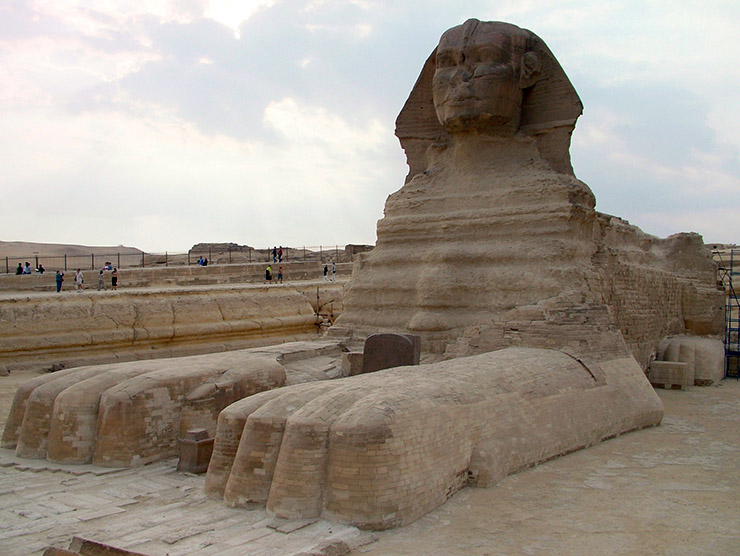
    I first came to the problem of the origin of civilisation through my studies of the Great Sphinx of Giza, Egypt. Combining a Ph.D. in geology and geophysics from Yale University (1983) with a lifelong enthusiasm for ancient cultures, on my first trip to Egypt in 1990 I was primed to take a careful look at the Sphinx.

    As I have recounted elsewhere,3 my colleague and friend John Anthony West had suggested to me various silly notions that the Great Sphinx might be older than the standard Egyptological attribution of circa 2500 BCE. I figured that through a careful analysis of the geology, I could show the error in such thinking. Surely all those professional Egyptologists could not be wrong. It turns out they were.

    Based on my geological and seismic analyses, utilising the weathering and erosion patterns correlated with the palaeoclimatology and subsurface features,4 I concluded that the oldest portions of the Great Sphinx date back to at least the period of 7000 BCE to 5000 BCE, and perhaps back to 9000 BCE or earlier. To oversimplify a bit, the core body of the Great Sphinx shows features that place it well back before the onset of the current arid regime (the Giza Plateau is on the edge of the Sahara Desert) some 5,000 years ago.

    Such a conclusion has deep implications, suggesting that high culture and civilisation dates back much earlier than previously believed. I have been told on more than one occasion that my conclusions cannot be true because if they are, then “history must be rewritten.” Certainly, we cannot have that, can we? Vested interests run high, and I have been attacked from many sides, both by orthodox Egyptologists and historians, and by various people not as closely associated with mainstream academia.

    Through it all over the last two decades, I have looked at the alternative theories suggested to explain the data, and I continue to maintain that the evidence clearly points to the origins of the Great Sphinx being much older than 2500 BCE. Indeed, the attacks and criticisms, forcing me to carefully scrutinise and enlarge my dataset, have served only to reaffirm my conclusions.

    The Sphinx Under Water, or Under Fire?

    Recently my work on the Great Sphinx has come under fire from a self-described anti-Establishmentarian. Given the number of people who have been asking me about this latest “Sphinx theory,” I feel it is imperative that I briefly address it here.

    Robert Temple5 has proposed a moat theory (that is, the Sphinx Enclosure was purposefully filled with water such that the body of the Sphinx was submerged and sat as a statue in a small artificial lake) to explain the clear signs of water weathering and erosion on the body of the Great Sphinx and on the walls of the Sphinx Enclosure.

    Temple contends that the moat theory explains the data adequately without hypothesising that the Great Sphinx dates back to a much earlier period during which there was more rainfall than at present. (Here I will not address his hypotheses, which I do not find persuasive, that the Sphinx was the jackal [wild dog] Anubis and the face seen on the Sphinx is that of the Middle Kingdom pharaoh Amenemhet II, though I would point out that the original Sphinx has been reworked and the head has been re-carved, perhaps more than once.)

    The body of the Sphinx, carved from the bedrock, sits largely below ground level, and various moat, pool, or artificial fountain hypotheses have been suggested for the Sphinx from time to time. I considered such notions carefully as far back as my early analyses of the geology of the Sphinx, starting in 1990. In summary, such moat and related theories do not hold water (to use a bad pun) and are not compatible with the features of the actual Great Sphinx, the Sphinx Enclosure, and the general geology and palaeohydrology of the Giza Plateau.

    Scrutinising the Sphinx

    While in Egypt recently (March 2009) I made it a point to look at the Great Sphinx and Sphinx Enclosure with fresh eyes to see if there could be anything to the moat class of theories. I will summarise briefly a half dozen points.6

    1) Based on my observations and analyses, the Sphinx Temple (built out of blocks removed from the Sphinx Enclosure when the body of the Sphinx was initially carved) and the so-called Valley Temple to the south of the Sphinx Temple show clear signs of heavy precipitation-induced weathering on the limestone core blocks. These limestone temples were subsequently refurbished with Aswan granite ashlars during the Old Kingdom (as evidenced by an Old Kingdom inscription still found on a block located at the Valley Temple). The moat theory cannot explain the nature of the very ancient weathering seen under the Old Kingdom granite veneer.

    2) There is much heavier surface erosion on the western end of the Sphinx Enclosure, and the surface erosion tapers off dramatically toward the eastern end of the enclosure. This is exactly what is to be expected based on the palaeohydrology of the Giza Plateau and is incompatible with a moat theory where it is hypothesised that water was brought in from the Nile to the east. Furthermore, the nature of the surface erosion throughout the enclosure and on the body of the Sphinx is as expected if there were water running over or raining down on the rock layers. The erosion actually observed is not compatible with pooled water in the enclosure.

    3) The highest levels of the middle member strata, as seen in the Sphinx Enclosure on the western end, are most severely eroded, which is compatible with the agency of precipitation. If the moat theory were true, then the lower strata on the eastern end of the Sphinx Enclosure would be most heavily eroded (caused by water being brought in via canals from the Nile), but the opposite is seen in reality.

    4) The subsurface seismic data demonstrating the depth of weathering below the floor of the Sphinx Enclosure, based on my analyses (using areas excavated during the Old Kingdom for comparison), even when calibrated very conservatively, gives an age of initial carving for the core body of the Great Sphinx of at least 5000 BCE. More than one geological colleague has suggested to me that a more realistic calibration gives a date thousands of years earlier. And no, standing water in the Sphinx Enclosure would not accelerate the depth of weathering below the floor of the enclosure.

    5) The vertical fissures observed in the walls of the Sphinx Enclosure show diagnostic signs of having been formed by precipitation and water runoff. In my opinion, they do not show any characteristics that are diagnostic or even suggestive of having been formed by artificial dredging of the Sphinx Enclosure, as some have suggested.

    6) If the Great Sphinx actually had sat in an artificial pool or lake, either the water level around the Sphinx would have had to have been the same as that of the surrounding water table, or the walls and floor of the pool in which the Sphinx sat would have had to have been sealed up and watertight (and any artificial walls, such as on the eastern end, would have had to have been strong enough to withstand the pressure of the water). Clearly, the ancient water table was well below the level of the floor of the Sphinx Enclosure (or else the Sphinx Temple, for instance, would have been flooded). The Sphinx Enclosure, if simply carved from the bedrock (as all the evidence suggests) would not have held a deep pool of standing water. The bedrock in the enclosure is highly faulted, and characterised by a karst morphology that would leak like a sieve (another bad pun, perhaps). The enclosure would have had to have been fully sealed up (with some kind of mortar or cement, perhaps), and there is no evidence of such sealing. Furthermore, if the enclosure had been sealed in such a manner, this would not be compatible with the dredging theory for the vertical fissures mentioned in the previous point. I would also note that the chambers and tunnels under the Great Sphinx would have been flooded from above if the Great Sphinx had been sitting in a pool of water, unless the Sphinx Enclosure had been watertight; yet the evidence suggests the enclosure was not watertight.

    Could the Sphinx be Hundreds of Thousands of Years Old?

    Even as my re-dating of the Great Sphinx has been attacked as impossible by some authorities, other serious researchers have suggested that I have underestimated the true age of the oldest portions of the Great Sphinx by a factor of ten or more!

    For instance, two members of the National Academy of Sciences of Ukraine, Vjacheslav I. Manichev and Alexander G. Parkhomenko,7 citing my work, have reinterpreted the geology and erosional features on the Great Sphinx to mean that the core body of the statue could date back as far as 800,000 years ago. And they are not referring to simply a natural outcropping that may have existed 800,000 years ago that was later shaped into a statue. (Remember, too, that to carve the core body of the Sphinx huge multi-ton blocks were removed from the Sphinx Enclosure and assembled as the Sphinx Temple, so the original Sphinx Temple is as old as the core body of the Great Sphinx).

    The dating of Manichev and Parkhomenko could push the age of the Great Sphinx into a very remote time period, one that has been suggested for possible, but ambiguous, ancient structures, sculptures, or simulacra that are found in many parts of the world, such as Markawasi in Peru,8 the Romanian Sphinx,9 or a possible stone circle dubbed Adam’s Calendar by researchers Johan Heine and Michael Tellinger with a claimed date of 75,000 years ago.10 Personally, I am not convinced that the Great Sphinx is anywhere close to the age postulated by Manichev and Parkhomenko, or that various claimed very ancient, very eroded statues are anything more than natural formations, but the prospects are intriguing. Without going off on such limbs, there is clear evidence for early high culture at a remote period beyond just that of the Great Sphinx.

    Nabta Playa

    In the Sahara Desert of southern Egypt, west of Aswan, is an area known as Nabta Playa. Here an ancient stone calendar circle, as well as many other megalithic erections and structures, was identified by archaeologist Fred Wendorf (Southern Methodist University) and his team and dated to circa 4000 BCE and earlier.11 

    Thomas Brophy12 has carried out extensive analyses of Nabta. According to Brophy, three stones inside the Nabta calendar circle represent the belt of Orion (just as the three pyramids of Giza represent the belt of Orion according the research of Robert Bauval13). The stones on the Playa and the corresponding stars in the sky aligned on summer solstice nights between about 6400 BCE and 4900 BCE. Brophy found even more correlations, however. Three other stones in the Nabta calendar circle correspond to the configuration of Orion’s head and shoulders as they appeared in circa 16,500 BCE, about half a precessional cycle earlier than the previously mentioned alignment. Based on these and other analyses of monoliths in the area, Brophy concludes that the early inhabitants of Nabta Playa possessed incredibly sophisticated knowledge, the type of knowledge we associate with high culture and civilisation. Furthermore, the dates of the Nabta structures are in line with my dating of the oldest portions of the Great Sphinx, and at both Giza and Nabta the constellation of Orion (which represented the god Osiris during dynastic times) was of prime importance.

    Göbekli Tepe

    If the dating of the Great Sphinx remains controversial (after all, old ideas die hard), and the analyses of Nabta Playa are questionable in the eyes of some researchers, there is one site that even the most ensconced conventional archaeologists cannot ignore.

    In modern Turkey, just north of the border with Syria, is a site known as Göbekli Tepe that has yielded dozens of carved limestone megaliths, many of which date back to the extraordinarily early period of 9000 BCE to 10,000 BCE.14 Klaus Schmidt, of the German Archaeological Institute, has been heading an excavation team there since 1994, and there is no doubt as to the importance, authenticity, and dating (based in part on radiocarbon) of Göbekli Tepe. This is a discovery made by mainstream academics.

    Göbekli Tepe boggles the imagination on many accounts. The date is incredibly early, even earlier than my “conservative” estimate for the date of the Great Sphinx. Göbekli Tepe dates back to the end of the last Ice Age. The monolithic megaliths are in the range of two to seven metres high (the latter is the height of an unfinished megalith left where it was being quarried). Sculpted onto the surfaces of the monoliths are a variety of animals, including snakes, boars, foxes, vultures, spiders, scorpions, a centipede, and a three-dimensional figure that has been interpreted as a lion. The megaliths excavated thus far had been erected into four distinct stone circles, ranging from ten to thirty metres in diameter. Based on geophysical surveys, the entire site may cover three dozen hectares (about 90 acres) and contains another twenty or so stone circles.

    Although very different from the Great Sphinx and the Sphinx Temple, in my estimation, taking the entire Göbekli Tepe site as a whole into account, just as much effort, social organisation, and sophisticated or high culture must have been required to construct the Göbekli Tepe complex as the Sphinx complex. When I first presented my findings on the age of the Great Sphinx, I was told over and over again by mainstream archaeologists and historians that my dating was simply impossible because it was well known that nothing so elaborate and sophisticated, requiring an advanced level of social organisation, could occur so early. Göbekli Tepe proves these assertions false and helps place the Great Sphinx in a larger context.

    The work at Göbekli Tepe has literally just begun. Most of the site has yet to be excavated and who can predict what surprises might be in store for us? Who were the people that built the site, and why did they build it? So far there is no evidence that the site was inhabited; no living areas have been excavated, though the thousands of animal bones found (the most common animal represented is the aurochs, a type of extinct ox) are evidence of feasting at the site. Was it a holy, sacred site? An area for religious pilgrimages? Or perhaps an ancient centre of knowledge? My instinct is that the positions of the monoliths, and the specific carvings on their surfaces, probably encode information… but what? And what happened to the people who built and used Göbekli Tepe? Curiously, the site did not simply fall into disuse and gradually decay. It was intentionally buried somewhere around 8000 BCE. Why? The mystery only deepens.
    The Origin and Demise of Early High Culture

    There has been space here to mention only a few examples of archaeological sites that challenge the conventional view of when high culture, advanced knowledge, and civilisation arose. Admittedly, I have dwelt on those that most interest me, including the Great Sphinx with which I have become entwined. Put all the evidence together and there is no doubt in my mind that what we can term high culture existed at least 11,000 years ago (and possibly much earlier).

    Where did early civilisation originate? And what happened to it? Is there a lost primordial ancient civilisation, one that was destroyed in some cataclysmic natural catastrophe? Could the legend of Atlantis have some truth to it? These are questions I have pondered long and hard for many years.

    Being a geologist, I view Earth and our environment as unstable, full of unexpected surprises, at least over the long term. Climates change, sea levels rise and fall, volcanoes erupt, earthquakes rock the land and sea, and objects fall from the sky. I have discussed how such natural cataclysms may have influenced the history of ancient civilisations,15 and in particular I have pointed out that Earth has experienced a series of encounters with comets during historical and prehistoric times.16

    Depending on the severity of the encounter (size of the comet, whether it actually touched the surface of Earth or perhaps resulted in a mid-atmosphere explosion, and so forth), dramatic climatic changes could be affected on Earth, which in turn could affect sea levels, and weather extremes can wreck havoc on animal and human populations, causing famines.17

    In 2003 I suggested that the end of the last Ice Age may have been brought about in part by comets bombarding Earth,18 and this hypothesis has received dramatic support with physical evidence for an impact around 10,900 BCE.19 There is also evidence for impacts around 7600 BCE, 4400 BCE, 3150 BCE, 2345 BCE, 1628 BCE, 1159 BCE, 207 BCE, 536 CE, and 1178 CE.20 

    Bottom line, based on all the evidence, there is no doubt in my mind that these incidents, these cosmic catastrophes, had a profound influence on ancient civilisations. In some cases migrations were sparked, in other cases entire cultures may have been wiped out.

    At the end of the last Ice Age, from before around 18,000 BCE to perhaps 11,000 BCE or later (dates at such a far remove are approximate), when sea levels were significantly lower (by seventy-five to a hundred and twenty metres), a sub-continental expanse of land was exposed in Southeast Asia where there is now only water in the area bounded by Indochina, the Malay Archipelago, the islands of Indonesia, and Borneo. To geologists this drowned region is known as Sundaland, and there is a variety of evidence that here an early civilisation was located; they fled as the waters rose and the comets came down.21 Could this be the primordial lost civilisation that so many of us suspect once existed?

    And what about that intentional burial of the structures at Göbekli Tepe? Did they see their fate in the skies? As the comets rained down did those ancient builders do their best to cover and preserve that which they had so carefully created, perhaps hoping to return one day to uncover their monuments? Or did they leave them for us to recover?

    [alert type=”general” dismiss=”no”]This article was published in New Dawn Special Issue 8.[/alert]

    [alert type=”success” dismiss=”no”]If you appreciate this article, please consider subscribing to help maintain this website.[/alert]

    FOOTNOTES

    1. David Whitehouse, “‘Earliest Writing’ Found”, BBC News Online, 4 May 1999; John Nobel Wilford, “Who Began Writing? Many Theories, Few Answers”, The New York Times on the Web, Science, 6 April 1999.

    2. Paul Rincon, “‘Earliest Writing’ found in China”, BBC Science.

    3. Robert M. Schoch with Robert Aquinas McNally, Voices of the Rocks: A Scientist Looks at Catastrophes and Ancient Civilizations, New York: Harmony Books, 1999.

    4. Robert M. Schoch, “Redating the Great Sphinx of Giza”, KMT, A Modern Journal of Ancient Egypt, vol. 3, no. 2, pp. 52-59, 66-70 (Summer 1992); Robert M. Schoch with Robert Aquinas McNally, Voyages of the Pyramid Builders: The True Origins of the Pyramids from Lost Egypt to Ancient America, New York: Jeremy P. Tarcher/Penguin, 2003; Robert M. Schoch & Robert Aquinas McNally, Pyramid Quest: Secrets of the Great Pyramid and the Dawn of Civilization, New York: Jeremy P. Tarcher/Penguin, 2005; T.L. Dobecki & R.M. Schoch, “Seismic Investigations in the Vicinity of the Great Sphinx of Giza, Egypt”, Geoarchaeology, vol. 7, no. 6, pp. 527-544 (1992); Robert M. Schoch, “Life with the Great Sphinx: Some Personal Reflections”, Darklore, vol. 1, pp. 38-55, 291 (2007).

    5. Robert Temple, “What was the Sphinx?”, New Dawn, no. 112, pp. 47-52 (January-February 2009); Robert Temple with Olivia Temple, The Sphinx Mystery: The Forgotten Origins of the Sanctuary of Anubis, Rochester, Vermont: Inner Traditions, 2009.

    6. For more details pertaining to some of these points, as well as various comments on the criticisms of K. Lal Gauri and his colleagues as cited by Temple with Temple [2009], see Robert M. Schoch, “Geological Evidence Pertaining to the Age of the Great Sphinx”, in New Scenarios on the Evolution of the Solar System and Consequences on History of Earth and Man (Eds. Emilio Spedicato and Adalberto Notarpietro), 2002. Proceedings of the Conference, Milano and Bergamo, June 7-9th, 1999, Università degli Studi di Bergamo, Quaderni del Dipartmento di Matematica, Statistica, Informatica ed Applicazion, Serie Miscellanea, Anno 2002, N. 3, pp. 171-203.

    7. Vjacheslav I. Manichev & Alexander G. Parkhomenko, “Geological Aspect of the Problem of Dating the Great Egyptian Sphinx Construction”, in Geoarchaeology and Archaeomineralogy (Eds. R. I. Kostov, B. Gaydarska, and M. Gurova) 2008. Proceedings of the International Conference, 29-30 October 2008, Sofia, Publishing House, “St. Ivan Rilski”, Sofia, pp.308-311.

    8. Robert M. Schoch, “Introduction”, in Markawasi: Peru’s Inexplicable Stone Forest (Ed. and Author, Kathy Doore, with a foreword by Peter E. Schneider), Surprise, Arizona: Kathy Doore, 2006, pp. 14-20.

    9. Anonymous, “THE BUCEGI – Sphinx,” article dated 10 October 2002 and posted at: www.ici.ro/romania/en/turism/c_sfinx.html. Accessed 4 April 2009.

    10. Angelique Serrao, “‘Oldest Man-Made Structure’ Unearthed”, Article dated 14 July 2008 and posted at: www.iol.co.za/index.php?from=rss_South%20Africa&set_id=1&click_id=13&art_id=vn20080714062546858C113827. Accessed 4 April 2009.

    11. J. McKim Malville, “Oldest Astronomical Megalith Alignment Discovered in Southern Egypt by Science Team”, Press release dated 31 March 1998 and posted at: www.colorado.edu/news/releases/1998/101.html. Accessed 5 April 2009.

    12. Thomas G. Brophy, The Origin Map: Discovery of a Prehistoric, Megalithic, Astrophysical Map and Sculpture of the Universe (Foreword by Robert M. Schoch and Afterword by John Anthony West), New York: Writers Club Press (iUniverse), 2002; Mark H. Gaffney, “The Astronomers of Nabta Playa: New Discoveries Reveal Astonishing Pre-Historic Knowledge”, Atlantis Rising, no. 56, pp. 42-43, 68-70 (March/April 2006).

    13. Robert Bauval & Adrian Gilbert, The Orion Mystery: Unlocking the Secrets of the Pyramids, New York: Crown Trade Paperbacks, 1994.

    14. Graham Chandler (photographs by Ergun Çağatay), “The Beginning of the End for Hunter-Gatherers”, Saudi ARAMCO World, vol. 60, no. 2, pp. 2-9 (March/April 2009); Andrew Curry (photographs by Berthold Steinhilber), “The World’s First Temple? Predating Stonehenge by 6,000 years, Turkey’s Stunning Gobekli Tepe Upends the Conventional View of the Rise of Civilization”, Smithsonian, vol. 39, no. 8, pp. 54-58, 60 (November 2008).

    15. Schoch with McNally, 1999.

    16. Schoch with McNally, 2003.

    17. For a discussion of the effects of a sixth century CE cometary event, see Ker Than, “Comet smashes triggered ancient famine”, New Scientist, issue 2689, p.9 (7 January 2009).

    18. Schoch with McNally, 2003.

    19. R.B. Firestone, A. West, J.P. Kennett, L. Becker, T.E. Bunch, Z.S. Revay, P.H. Schultz, T. Belgya, D.J. Kennett, J.M. Erlandson, O.J. Dickenson, A.C. Goodyear, R.S. Harris, G.A. Howard, J.B. Kloosterman, P. Lechler, P.A. Mayewski, J. Montgomery, R. Poreda, T. Darrah, S.S. Que Hee, A.R. Smith, A. Stich, W. Topping, J.H. Wittke, and W.S. Wolbach, “Evidence for an extraterrestrial impact 12,900 years ago that contributed to the megafaunal extinctions and the Younger Dryas cooling”, Proceedings of the National Academy of Sciences, vol. 104, no. 41, pp. 16016-16021 (9 October 2007).

    20. Schoch with McNally, 2003; Undoubtedly this list is incomplete, especially for the period between 10,900 BCE and 3150 BCE.

    21. Schoch with McNally, 2003.

    © New Dawn Magazine and the respective author.
    For our reproduction notice, click here.
  • The Mystery of Göbekli Tepe and Its Message to Us

    The Mystery of Göbekli Tepe and Its Message to Us

    From New Dawn 122 (Sept-Oct 2010)

    What were our ancestors like 10,000 or more years ago? The most common image is one of small nomadic bands endlessly in pursuit of the next meal. Men hunted game while women and children gathered fruits, seeds, roots, shoots, insects, and other edibles.

    The height of technology was a finely worked stone knife blade or spear point; nets, baskets, and cordage were also put to good use. Permanent structures were superfluous, for the group never stayed in one place very long. Material goods were sparse as possessions had to be limited to those easily carried. Jewellery (perhaps beads, animal teeth, or shells strung on a cord) and personal decoration (body paint, tattoos) were prized. In colder climates appropriate clothing was fashioned from animal skins. Social institutions were minimal. Not until the Neolithic Revolution, beginning about 10,000 years ago, did agriculture and domestication appear. This in turn allowed permanent settlement, leading to specialisation of labour, the development of crafts (including pottery and metalworking), the building of substantial structures, long-distance trade, and the slow and gradual evolution of complex societies.

    None of this happened overnight. It took thousands of years, and it was not until around 4000 to 3000 BCE that true signs of high culture first appeared, such as fine artistry in decorative crafts, written records, scientific observations of the heavens, complex political organisations, and megalithic building projects. This level of achievement was reached in Mesopotamia, the Nile Valley, and the Indus Valley by the beginning of the third millennium BCE. A well-known example is the rise of dynastic Egypt about 3200 to 3100 BCE and the building of the Djoser pyramid circa 2630 BCE. Stonehenge in England dates from the same period.

    Although accepted as dogma by many, this nice neat scenario may be completely wrong.

    Questioning Accepted History

    Back in 1991, I had the temerity to announce that the Great Sphinx of Egypt, conventionally dated to 2500 BCE (the reign of Pharaoh Khafre), actually has its origins in the 7000 to 5000 BCE range, or possibly earlier.

    My announcement was done via a presentation at the October 1991 annual meeting of the Geological Society of America (this was allowed only after a formal abstract, submitted with my colleague John Anthony West, was accepted based on positive professional peer review).1 I made my case utilising scientific analyses, comparing erosion and weathering profiles around the Sphinx to the ancient climatic history of Egypt.

    In brief, the Sphinx sits on the edge of the Sahara Desert, a hyper-arid region for the past 5,000 years; yet the statue shows substantial rain-induced erosion. The original structure must date back thousands of years prior to 3000 BCE (the head was re-carved in dynastic times).

    I had pushed the Great Sphinx, arguably the grandest and most recognisable statue in the world, back into a period when humanity was supposedly just transitioning from a hunter-gatherer economy to a sedentary life. People 7,000 or more years ago were still brutish and unsavoury, at least by modern civilised standards. Certainly they were not carving giant statues (the Sphinx is about 20 meters tall by over 70 meters long) out of solid limestone bedrock. Immediately after my announcement of an older Sphinx, I was under attack. Archaeologist Carol Redmount (University of California, Berkeley) was quoted in the media, “There’s just no way that could be true.” The article continued, “The people of that region would not have had the technology, the governing institutions or even the will to build such a structure thousands of years before Khafre’s reign, she said.”2

    The initial hoopla peaked in February 1992 at a “debate” on the age of the Great Sphinx held at the Chicago meeting of the American Association for the Advancement of Science.3 As the New York Times put it, “The exchange was to last an hour, but it spilled over to a news conference and then a hallway confrontation in which voices were raised and words skated on the icy edge of scientific politeness.” Egyptologist Mark Lehner could not accept the notion of an older Sphinx, personally attacking me by labelling my research “pseudoscience.” Lehner argued, “If the Sphinx was built by an earlier culture, where is the evidence of that civilisation? Where are the pottery shards? People during that age were hunters and gatherers. They didn’t build cities.”4 

    At the time I lacked any pottery shards. But I was sure of my science, and I persisted. Two decades later, we have something better than pottery shards, and even earlier than my conservative Sphinx date of circa 5000 BCE to 7000 BCE (I now currently favour the older end of this range, or an even earlier date for the original Sphinx). Göbekli Tepe dates from over 10,000 years ago.

    Pages from ndmain122
    Pages from ndmain122-2

    (Article Continues Below)

    Better than Pot Shards

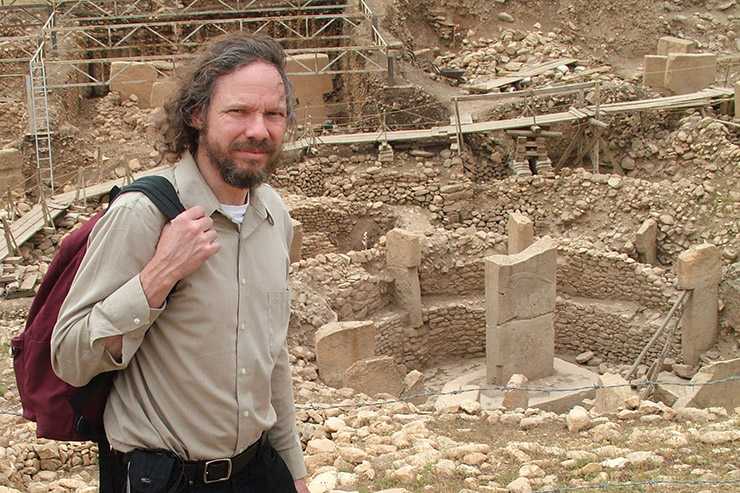
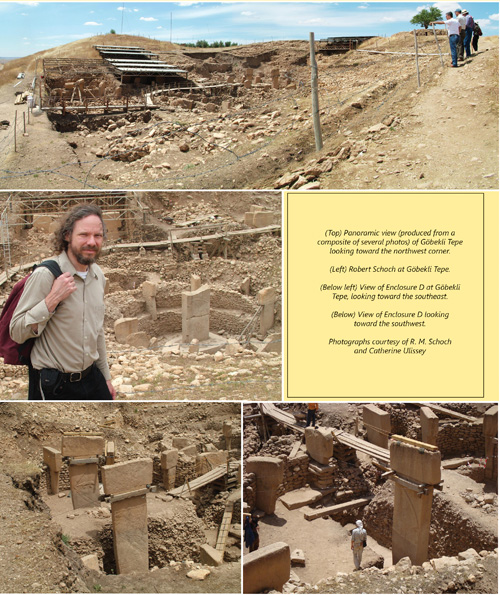
    A short drive from Urfa (alternatively Sanlıurfa), southeastern Turkey, atop a mountain north of the Harran Plain, sits Göbekli Tepe. Since 1995 Prof. Dr. Klaus Schmidt of the German Archaeological Institute has been excavating the site.5 Recently I visited it for myself. I was amazed.

    At Göbekli Tepe immense finely carved and decorated T-shaped limestone pillars, many in the range of two to five and a half meters tall and weighing up to an estimated 10 to 15 tons, stand in Stonehenge-like circles. The workmanship is extraordinary, with clear sharp edges that would do any modern mason proud. It may be a cliché, but I cannot help but think of the opening scene of the classic 1968 movie 2001: A Space Odyssey. A group of ape-like proto-humans discovers a giant monolith; influenced by it, they learn to use tools, leading to civilisation.6 

    Various pillars at Göbekli Tepe are decorated with bas-reliefs of animals, including foxes, boars, snakes, aurochs (wild cattle), Asiatic wild asses, wild sheep, birds (cranes, a vulture), a gazelle, and arthropods (scorpion, ants). The carvings are refined, sophisticated, and beautifully executed. Not only are there bas-reliefs, but also carvings in the round, including a carnivorous beast, possibly a lion or other feline, working its way down a column, apparently in pursuit of a boar carved in relief below. In the round, carvings of lions and boars have been uncovered, now housed in the Museum of Sanlıurfa, as is a life-sized statue of a man, which, though from Urfa, apparently dates to the Göbekli Tepe era.

    Also from Göbekli Tepe are perfectly drilled stone beads. And, according to Prof. Schmidt, while some of the stone pillars were set in the local bedrock, others were set into a concrete- or terrazzo-like floor. Looking only at style and quality of workmanship, one might easily suggest that Göbekli Tepe dates between 3000 and 1000 BCE. How wrong one would be. Based on radiocarbon analyses, the site goes back to the period of 9000 to 10,000 BCE, and was intentionally buried circa 8000 BCE.7 That is, the site dates back an astounding 10,000 to 12,000 years ago!

    This was supposedly the time of the brutish, nomadic, hunters and gatherers who, according to many academics, did not have the technology, governing institutions, or will to build structures such as those found at Göbekli Tepe. Clearly there is a disconnect between what conventional historians and archaeologists have been teaching all these years and the clear evidence on the ground.

    As Stanford University archaeologist Ian Hodder commented, Göbekli Tepe is “unbelievably big and amazing, at a ridiculously early date… huge great stones and fantastic, highly refined art… Many people think that it changes everythingIt overturns the whole apple cart. All our theories were wrong.”8 Like my redating of the Great Sphinx, Göbekli Tepe forces us to reconsider our antiquity.

    And like my work on the Sphinx, the specialists are perplexed by Göbekli Tepe. Patrick Symmes wrote in Newsweek, “But the real reason the ruins at Göbekli remain almost unknown, not yet incorporated in textbooks, is that the evidence is too strong, not too weak. ‘The problem with this discovery’, as [Glenn] Schwartz of Johns Hopkins puts it, ‘is that it is unique’. No other monumental sites from the era have been found. Before Göbekli, humans drew stick figures on cave walls, shaped clay into tiny dolls, and perhaps piled up small stones for shelter or worship. Even after Göbekli, there is little evidence of sophisticated building.”9

    In a nutshell, we have evidence of high culture and civilisation circa 10,000 to 8000 BCE, but then an apparent decline or hiatus for thousands of years, until the “rise” of civilisation once again in Mesopotamia, Egypt, and elsewhere. What happened?

    A Record of Precession at Göbekli Tepe

    A hallmark of civilisation is precise scientific observation. Astronomy is often considered the earliest yet most sophisticated of the sciences. A particularly subtle astronomical phenomenon, the discovery of which is generally credited to Hipparchus of Rhodes in the second century BCE,10 is the slow movement of the stars relative to the equatorial coordinate system. This is commonly referred to as the precession of the equinoxes. The entire cycle, with stars returning to their “starting points,” takes somewhat under 26,000 years. Some researchers suggest that precession was known to the ancient Egyptians and other early civilisations, and is reflected in myths worldwide.11 Others dispute such assertions. I found evidence of precession at Göbekli Tepe, adding another layer of sophistication to this remarkable site.

    The excavated portions of Göbekli Tepe lie on the southern slope of a hill looking out to the southern skies. Thus far, the better part of four stone circles (enclosures) has been excavated in an area measuring about 40 by 40 meters square. Additional, later and smaller, pillars and structures have been partially uncovered both 20 to 30 meters north and about 80 meters west of the major area of circles,12 and eighteen or more stone circles still under the earth have been identified. Enclosure D is located furthest north. To the southeast lies Enclosure C, and to the south of Enclosure D lies Enclosure B and finally A. The enclosures are very close to each other, almost abutting. Each enclosure possesses a pair of tall central parallel pillars ringed by a circle of shorter pillars with later stonewalls between the pillars. If at some point the enclosures were covered over, they may have been entered from above; indeed, possible carved stone “portals” have been found that may have been set in a roof.

    The central pairs of pillars are oriented generally toward the southeast, as if forming sighting tubes toward the sky. The central pillars of Enclosure D include arms and hands, with the hands holding the belly or navel area, and it is clear that the anthropomorphic pillars are facing south. The orientations vary from enclosure to enclosure, however. For Enclosure D the central pillars are oriented approximately 7º east of south. Those for Enclosures C, B, and A are approximately 13º east of south, 20º east of south, and 35º east of south respectively.13 These varying angles suggest the builders were observing stars and building new enclosures oriented progressively toward the east as they followed particular stars or star clusters over hundreds of years.

    What were the builders observing? This is a difficult question to answer, but we can hypothesise. On the morning of the Vernal Equinox of circa 10,000 BCE, before the Sun rose due east at Göbekli Tepe, the Pleiades, Taurus, and the top of Orion were in view in the direction indicated by the central stones of Enclosure D, with Orion’s belt not far above the horizon (as seen from the best vantage points in the area) as dawn broke.14 A similar scenario played out for the orientation of the central stones of Enclosure C in circa 9500 BCE and for Enclosure B in circa 9000 BCE. Enclosure A is oriented toward the Pleiades, Taurus, and Orion on the morning of the Vernal Equinox circa 8500 BCE, but due to precessional changes, the entire belt of Orion no longer rose above the horizon before dawn broke. By about 8150 BCE the belt of Orion remained below the horizon at dawn on the morning of the Vernal Equinox. These dates fit well the timeframe established for Göbekli Tepe on the basis of radiocarbon dating.

    The Vernal Equinox is easily observed and noted, and since the beginning of recorded history has been an important marker, celebrated with festivities. It marks the first day of the year in numerous calendars, and is tied to cosmological creation stories. I suspect that these traditions go back to Göbekli Tepe times, and even earlier.

    The Orion-Taurus region of the sky has been a focus of ancient humans for tens of thousands of years in Europe and the Middle East. Here are located the asterisms of Orion’s belt and the Hyades, as well as the Pleiades. Researchers such as Michael Rappenglueck, Frank Edge, and Luz Antequera Congregado have identified the constellation Taurus and the Pleiades among the paintings of Lascaux cave, France, dating back 16,500 years ago.15 Additionally, Rappenglueck asserts that a tiny tablet from Germany, carved of mammoth ivory and dating back at least 32,500 years, depicts the constellation Orion in the familiar guise of a narrow-waist male with outstretched arms and legs.16 

    Given such evidence, it is reasonable that the Göbekli Tepe people recognised Orion as a human figure, even as a hunter. The mammal remains found while excavating Göbekli Tepe (including numerous gazelle, aurochs or wild cattle, wild ass, fox, wild sheep/goat species, and boars), as well as the reliefs on the pillars, can be taken to indicate a hunting society. Indeed, studying the anthropomorphic pillars of Enclosure D, they may represent, in stylised form, Orion. Not only do they have arms (which could be interpreted as the arms of Orion brought down to the body), but also prominent belts (the belt stars of Orion) and fox pelt loincloths that may represent the Orion Nebula and associated features.

    My suggestion that the Göbekli Tepe people were observing the Orion-Taurus-Pleiades region of the sky on the morning of the Vernal Equinox is simply a hypothesis. If they were observing stars (versus the Sun, for instance), then they needed to readjust their observations over the centuries due to precessional changes. And maybe they were observing something more than just the Sun, Moon, planets, and stars.

    Göbekli Tepe, Easter Island, and the Plasma Connection

    Having returned from Easter Island (January 2010) not long before visiting Göbekli Tepe (May 2010), I was surprised to see numerous iconographic similarities between the two. I believe these similarities are real, but I might have missed them if I had not been to both sites in succession. Furthermore, both Easter Island and Göbekli Tepe may relate to powerful plasma events in the skies at the end of the last ice age.

    The outstanding feature of Easter Island is the moai, those huge stone heads and torsos that dot the island. In the case of Göbekli Tepe, stone pillars dominate the scene. Amazingly, both the moai and the anthropomorphic central pillars of Enclosure D at Göbekli Tepe have arms and hands positioned similarly against the body, with hands and fingers extended over the belly and navel region. The moai are looking up at the skies, and I believe the Göbekli Tepe pillars are also looking towards the skies. Are they looking to identical phenomena?

    As I have discussed elsewhere,17 the indigenous Easter Island rongorongo script may record a major plasma event in the skies thousands of years ago, at the end of the last ice age. Plasma consists of electrically charged particles. Familiar plasma phenomena on Earth today include lightning and auroras, the northern and southern lights. In the past, much more powerful plasma events may have taken place, perhaps due to coronal mass ejections from the Sun or emissions from other celestial objects. Powerful plasma phenomena could cause strong electrical discharges to hit Earth, burning and incinerating materials on the planet’s surface.

    Los Alamos plasma physicist Anthony L. Peratt and his associates have established that petroglyphs found worldwide record an intense plasma event (or events) in prehistory.18 Peratt has determined that powerful plasma phenomena observed in the skies would take on characteristic shapes resembling humanoid figures, humans with bird heads, sets of rings or donut shapes, and writhing snakes or serpents – shapes reflected in the ancient petroglyphs. Plasma events may be a dominant theme found among the ancient remains of Easter Island. Likewise, plasma may be important to understanding Göbekli Tepe.

    One of the strange and perplexing aspects of Göbekli Tepe is that it was not simply abandoned and left to oblivion, but intentionally buried around 8000 BCE. Furthermore, before its final burial, stonewalls were built between the finely wrought pillars. These walls are, in my opinion, clearly secondary as in many cases they cover over the fine relief carvings on the pillars. They are also much cruder than the pillars. Additionally, some pillars appear to have fallen over and broken, and were subsequently repaired or re-erected when the walls were built. In several cases the bases of the broken pillars are missing or lying horizontally under the tops of the broken pillars that were set to the correct height on a pile of stones. At this late stage the walls and pillars may have been roofed over.

    Among the oddities of Easter Island are the low-lying, solid, thick-walled stone buildings with narrow entrances that look like bunkers or fallout shelters. These stone “houses” of Easter Island are similar to the structures formed by the walls and pillars of Göbekli Tepe. Could they, in both cases, have been protection from some type of phenomena emanating from the skies, such as plasma strikes?

    Some might criticise comparisons between Easter Island and Göbekli Tepe not only on the basis that they are on opposite sides of the globe, but are also ostensibly separated by thousands of years (Göbekli Tepe dating from 8000 BCE and before, whereas according to standard chronologies Easter Island was not inhabited until a mere millennium and a half ago). In counterargument, I question whether we really know when Easter Island was first colonised. Even if surviving Easter Island antiquities and structures are from a relatively late period, they may reflect earlier traditions and styles, perhaps brought by settlers from elsewhere, that date back to a time of intense plasma outbursts. The rongorongo tablets may carefully preserve ancient texts that were copied over and over.

    Just as I have argued that the Easter Island rongorongo script records plasma events in the ancient skies, so too might certain carved motifs found at Göbekli Tepe. Peratt has made the connection between birdman petroglyphs and plasma phenomena around the world. On Easter Island we find birdman petroglyphs as well as birdmen and bird symbols among the rongorongo hieroglyphs. At Göbekli Tepe a very similar bird form was carved into one of the pillars. Peratt records many plasma phenomena that can be interpreted as having the appearance of snakes. An abundance of snakes are found on the pillars of Göbekli Tepe, slithering vertically up and down the ends of some of the columns. Could these represent huge bolts of plasma?

    Buried for Posterity

    Based on the evidence slowly being pieced together, it appears there may have been a major plasma event, or events, in antiquity. In a previous article (see New Dawn 121)19 I posited that a major plasma event, circa 9700 BCE, helped bring about the end of the last ice age. If the radiocarbon dating of Göbekli Tepe, to circa 10,000 to 8000 BCE is correct, perhaps the first-built stone circle was initiated in response to this plasma event of circa 9700 BCE.

    The plasma phenomena were observed originating from the south, the direction toward which the Göbekli Tepe complex is oriented. Plasma events may have continued for centuries, and they may correlate with the additions and elaborations – stonewalls and more stone circles – seen at Göbekli Tepe. Perhaps ultimately the plasma was too much for the Göbekli Tepe people to bear, and they abandoned the site, but not before carefully covering it over. Whether their intention was to return once the skies calmed down, or to preserve their work for posterity, we do not know.

    What happened at Göbekli Tepe? What were the people of that time doing? What were they experiencing? Why did they bury their creation and leave? Where did they go? These may be more than simple academic questions.  I suspect that the Göbekli Tepe people experienced something dramatic, something so important they felt compelled to memorialise it in a record of stone that could last for over ten thousand years. They expended enormous resources to leave a message, possibly a warning, for us. Now it is time to fully uncover it and decipher what they had to say.

    [alert type=”general” dismiss=”no”]This article was published in New Dawn 122.[/alert]

    [alert type=”success” dismiss=”no”]If you appreciate this article, please consider subscribing to help maintain this website.[/alert]

    Footnotes

    1. Robert M. Schoch and John Anthony West, “Redating the Great Sphinx of Giza, Egypt”, Geological Society of America abstracts with programs, vol. 23, no. 5, A253 (1991). For further discussion of the date of the Great Sphinx, see: Robert M. Schoch. “Redating the Great Sphinx of Giza”, KMT, A Modern Journal of Ancient Egypt, vol. 3, no. 2, 52-59, 66-70 (Summer 1992); Robert M. Schoch, “Geological Evidence Pertaining to the Age of the Great Sphinx”, in New Scenarios on the Evolution of the Solar System and Consequences on History of Earth and Man (Eds. Emilio Spedicato and Adalberto Notarpietro), Proceedings of the Conference, Milano and Bergamo, June 7-9th, 1999, Università degli Studi di Bergamo, Quaderni del Dipartmento di Matematica, Statistica, Informatica ed Applicazion, Serie Miscellanea, Anno 2002, N. 3, 171-203 (2002); Robert M. Schoch, “Life with the Great Sphinx: Some Personal Reflections”, Darklore, vol. 1, 38-55, 291 (2007); Robert M. Schoch with Robert Aquinas McNally, Voices of the Rocks: A Scientist Looks at Catastrophes and Ancient Civilizations, New York: Harmony Books, 1999; Robert M. Schoch with Robert Aquinas McNally, Voyages of the Pyramid Builders: The True Origins of the Pyramids from Lost Egypt to Ancient America, New York: Jeremy P. Tarcher/Penguin, 2003; Robert M. Schoch and Robert Aquinas McNally, Pyramid Quest: Secrets of the Great Pyramid and the Dawn of Civilization, New York: Jeremy P. Tarcher/Penguin, 2005; Robert M. Schoch and John Anthony West, “Further Evidence Supporting a Pre-2500 B.C. Date for the Great Sphinx of Giza, Egypt”, Geological Society of America abstracts with programs, v. 32, no. 7, A276 (2000); T. L. Dobecki and R. M. Schoch, “Seismic Investigations in the Vicinity of the Great Sphinx of Giza, Egypt”, Geoarchaeology, vol. 7, no. 6, 527-544 (1992).

    2. Lee Dye, “Sphinx’s New Riddle–Is It Older Than Experts Say? Archeology: Geologists cite study of weathering patterns. But Egyptologists say findings can’t be right”, Los Angeles Times, October 23, 1991. Posted at: http://articles.latimes.com/1991-10-23/news/mn-183_1_great-sphinx (Accessed 14 June 2010).

    3. Robert M. Schoch, “How old is the Sphinx?”, Abstracts for the 1992 Annual Meeting of the American Association for the Advancement of Science, Chicago, 202 (1992).

    4. Anonymous, “Scholars Dispute Claim That Sphinx Is Much Older”, New York Times, February 9, 1992. Posted at: www.nytimes.com/1992/02/09/us/scholars-dispute-claim-that-sphinx-is-much-older.html (Accessed 14 June 2010).

    5. Klaus Schmidt, Sie bauten die ersten Tempel: Das rätselhafte Heiligtum der Steinzeijäger, Die archäologische Entdeckung am Göbekli Tepe, München: Deutscher Taschenbuch Verlag, 2006/2008; Klaus Schmidt, Tas Çagi Avcılarının Gizemli Kutsal Alanı Göbekli Tepe En Eski Tapınagı Yapanlar, Istanbul: Arkeolojí ve Sanat Yayınları, 2007; K. Schmidt, “Göbekli Tepe, Southeastern Turkey: A Preliminary Report on the 1995-1999 Excavations,” Paléorient, vol. 26, no. 1, 45-54 (2001); Joris Peters and Klaus Schmidt, “Animals in the symbolic world of Pre-Pottery Neolithic Göbekli Tepe, south-eastern Turkey: a preliminary assessment”, Anthropozoologica, vol. 39, no. 1, 179-218 (2004). For popular discussions of Göbekli Tepe, see: Graham Chandler (photographs by Ergun Çagatay), “The Beginning of the End for Hunter-Gatherers”, Saudi ARAMCO World, vol. 60, no. 2, 2-9 (March/April 2009); Andrew Curry (photographs by Berthold Steinhilber), “The World’s First Temple? Predating Stonehenge by 6,000 years, Turkey’s Stunning Gobekli Tepe Upends the Conventional View of the Rise of Civilization”, Smithsonian, vol. 39, no. 8, 54-58, 60 (November 2008); Patrick Symmes, “History in the Remaking: A temple complex in Turkey that predates even the pyramids is rewriting the story of human evolution”, Newsweek, 1 March 2010, article published online 19 February 2010 at: www.newsweek.com/id/233844 (Accessed 29 April 2010).

    6. Stanley Kubrick and Arthur C. Clarke, directed by Stanley Kubrick, 2001: A Space Odyssey (film), Metro-Goldwyn-Mayer, 1968.

    7. I briefly discussed the dating of Göbekli Tepe on site with Prof. Schmidt. It is based not only on calibrated radiocarbon dates of circa 9000 BCE or earlier on organic remains found in the material used to fill the site (these dates would be later than the actual occupation of the site), but also dates of circa 8000-7500 BCE on pedogenic carbonate coatings and micro-stalactites on wall stones (see Peters and Schmidt, 2004, 182 [note 5.]). These carbonate coatings and micro-stalactites would have formed only after the burial of the site and after soil formation began, thus indicating that the site itself was buried by circa 8000 BCE. Taken together, I am convinced that the evidence indicates that the site was actively used in the tenth and ninth millennia BCE and intentionally buried (as indicated by the systematic layers of the fill material and the material the fill contains, including flint tools and waste, animal and plant remains) circa 8000 BCE. The older Enclosures (A, B, C, and D) belong to Schmidt’s “Layer III.” Overlying Layer III is the younger Layer II, which contains smaller pillars and structures, and may date to the same period as the Neolithic site of Nevali Çori, an area northwest of Göbekli Tepe and similar in many respects to the Layer II period at Göbekli Tepe. Nevali Çori was excavated in the 1990s, but has since been flooded as a result of the Atatürk Dam built on the Euphrates River. Nevali Çori and Layer II of Göbekli Tepe may date to the second half of the ninth millennium BCE. In the catalog to accompany a 2007 exhibit at the Badisches Landesmuseum Karlsruhe (Die ältesten Monumente der Menschheit. Vor 12.000 Jahren in Anatolien, Stuttgart: Konrad Theiss, 2007), the earlier material at Göbekli Tepe, that of Layer III, is referred to 9500-8800 BCE whereas the material from Layer II is referred to 8800-8000 BCE and material from Nevali Çori is dated to circa 8500-7900 BCE. Prof. Schmidt suggested that some of the carved depressions and gouges, for instance on the tops of pillars, may date to a time when the site was buried but still remembered as an important or holy site, and people came to partake of the energy of the site. As Veysí Yildiz, son of the local landowner, explained, even before the archaeological remains were discovered at Göbekli Tepe, the area was held in reverence (stone-covered graves are found on the top of the mound to this day).

    8. Quoted by Patrick Symmes in Newsweek [see note 5.].

    9. Patrick Symmes [see note 5.]

    10. Giulio Magli, “On the possible discovery of precessional effects in ancient astronomy,” article from 2004 posted at: http://arxiv.org/ftp/physics/papers/0407/0407108.pdf (Accessed 17 June 2010); Giulio Magli, Mysteries and Discoveries of Archaeoastronomy: From Giza to Easter Island, New York: Copernicus Books, 2009.

    11. See for instance, J. Norman Lockyer, The Dawn of Astronomy, New York: Macmillan, 1894 (reprinted, with a preface by Giorgio de Santillana, Cambridge, Mass.: MIT Press, 1964); Giorgio de Santillana and Hertha von Dechend, Hamlet’s Mill: An Essay on Myth and the Frame of Time, Boston: Gambit, 1969.

    12. The main, and older, portion of Göbekli Tepe under discussion in this article belongs to Schmidt’s Layer III; the younger and smaller pillars and structures belong to Schmidt’s Layer II [see note 7.].

    13. These measurements are only approximate, and are based on the plan of Göbekli Tepe on page 186 of Peters and Schmidt, 2004 [note 5.].

    14. Alignments discussed here were determined using the computer program “Starry Night Pro 4.5” (Toronto: Space Holding Company, 2003).

    15. Christopher Seddon, “Ice Age Star Maps?” article dated 1 January 2008, posted at www.christopherseddon.com/2008/01/ice-age-star-maps.html (Accessed 5 June 2010); Gary D. Thompson, “Paleolithic European Constellations – star maps in Lascaux cave in France 16,500-13,000 B.C.”, article dated 2001-2007, posted at: www.mazzaroth.com/ChapterOne/LascauxCave.htm (Accessed 5 June 2010); David Whitehouse, “Ice Age star map discovered”, article dated 9 August 2000, posted at: http://news.bbc.co.uk/2/hi/871930.stm (Accessed 5 June 2010).

    16. David Whitehouse, “ ‘Oldest star chart’ found”, article dated 21 January 2003, posted at: http://news.bbc.co.uk/2/hi/science/nature/2679675.stm (Accessed 5 June 2010).

    17. Robert M. Schoch, “An Ancient Warning, A Global Message, From the End of the Last Ice Age”, New Dawn 121, 15-22 (July-August 2010).

    18. Anthony L. Peratt, “Characteristics for the Occurrence of a High-Current, Z-Pinch Aurora as Recorded in Antiquity”, Institute of Electrical and Electronics Engineers Transactions on Plasma Science, vol. 31, no. 6, 1192-1214 (December 2003); Anthony L. Peratt, John McGovern, Alfred H. Qöyawayma, Marinus Anthony Van der Sluijs, and Mathias G. Peratt, “Characteristics for the Occurrence of a High-Current, Z-Pinch Aurora as Recorded in Antiquity Part II: Directionality and Source”, Institute of Electrical and Electronics Engineers Transactions on Plasma Science, vol. 35, no. 4, 778-807 (August 2007); A. L. Peratt and W. F. Yao, “Evidence for an Intense Solar Outburst in Prehistory”, Physica Scripta (The Royal Swedish Academy of Sciences), 13 pages (December 2008).

    19. See note 17.

    © New Dawn Magazine and the respective author.
    For our reproduction notice, click here.
  • Mysteries, Miracles & Parapsychology

    Mysteries, Miracles & Parapsychology

    From New Dawn Special Issue 9 (Sept 2009)

    Parapsychology is full of anecdotal accounts of strange occurrences, which cause many people to simply shake their heads in disbelief.1 The phenomena of parapsychology grade into the mysteries and miracles that are the boon and bane of much religion. After all, to use a Christian example (and in no way am I making a statement about Christianity per se), not only can Jesus and the saints perform miracles, but so can Satan and his cohorts!

    When it comes to the question of whether or not parapsychological phenomena are real, for many people the stakes are high, as the answer has the potential to confirm or deny their worldview. Some are incredulous when it comes to telepathy, even though it has been statistically demonstrated time and again in laboratory settings, whereas the credulity of others stretches much, much further.

    In popular culture often the reality, or not, of the paranormal (viewed popularly as “miracles”) is seen as confirming, or refuting, one of the fundamental tenets of many religions, namely life after death. As the late parapsychologist and University of Virginia (Charlottesville) psychiatrist Dr. Ian Stevenson (1918 – 2007) wrote,

    Some persons can segregate beliefs about different aspects of non-material existences and events. This would be particularly likely to be true of persons who have made a special study of psychical phenomena…. However, I think that members of the general public do not usually make such a distinction. For most of them, a belief in life after death almost entails a belief in miracles, such as the phenomena described in the Bible, and also a belief in what we call paranormal cognition. Conversely, members of the general public who do not believe in life after death are also likely to be skeptical about all kinds of paranormal phenomena, the recognition of which would imply for them a soul that would survive bodily death.2

    The Incredulity Meter

    I am absolutely convinced that telepathy is real, even if a somewhat fickle and uncontrollable phenomenon. Given the choice between a telephone and telepathic rapport to communicate an important and specific message, I will use the phone. In my opinion there is nothing miraculous about telepathy, although how it occurs remains a mystery (there is still no generally agreed upon theory as to the mechanism for telepathic transmission).3 I should note, however, that I always attempt to maintain a healthy skepticism about any particular claim of telepathy (it is human nature to be disingenuous, or to fool one’s self), but there are plenty of well-documented cases of telepathy in the literature, and I have had my share personally.

    My incredulity meter really begins to perk up when it comes to physical parapsychological phenomena, such as psychokinesis and levitations, materialisations of solid substances out of “thin air,” or the ability to withstand physical trauma, such as walking on hot coals or applying extreme heat or fire directly to the skin without damage. Lacking good, indeed virtually impeccable, documentation for certain extreme feats of this nature, I instinctively dismiss them as nonsense, or at the least remain agnostic.

    Of all the cases that register high on my incredulity meter, however, some are classics and though they may boggle the imagination, it is difficult to dismiss them. Here I will focus on particular aspects of two such celebrated examples from the history of parapsychology, one from the seventeenth century and the other from the nineteenth century. They are, in the opinions of some, intimately tied to religious beliefs and the concept of miracles.

    The Flying Saint

    Saint Joseph of Cupertino (San Giuseppe da Copertino, 1603-1663; born Giuseppe Maria Desa in Cupertino, southeastern Italy) was considered rather dull witted (in modern terms, he may have suffered from learning disabilities), and said to possess a violent temper (a point we will return to). Joseph was extremely pious, however, and became a Franciscan friar. Joseph exhibited various mental psychic phenomena; for instance, it is said he was aware of the thoughts of penitents and knew if they were not fully honest and forthright during confession. Due to his mental deficiencies, he could learn only a small amount of material at a time. When preparing for exams he simply studied one specific topic, and then prayed that that would be the very subject, of all possible subjects, that would be asked of him – and so it was. Was this an example of precognition, or was Joseph telepathically influencing or accessing (perhaps unconsciously) the examiners in terms of the questions they would put to him?

    Joseph was also said to have the power to heal the sick. But it was his bodily levitations, his literal flights in the air, that he is most famous for, and which by many are considered to be absolutely mysterious and miraculous, either justifiably earning Joseph the appellation of Saint (he was canonised in 1767), or in the skeptic’s opinion dismissal as either a fraud, or at the least someone who incited hallucinations among those witnessing the supposed levitations. At first glance, St. Joseph’s flights rank high on my incredulity meter.4

    Although we are separated from St. Joseph by three and a half centuries, and his time still contained a strong element of superstition and anti-scientific sentiment (after all, the Inquisition was in full swing during Joseph’s lifetime, persecuting Galileo in 1633), it is still difficult to dismiss all of the varied eyewitness accounts of Joseph’s flights. Reportedly the first levitation was in his hometown of Cupertino during an outdoor procession on the feast day of St. Francis of Assisi. Joseph took off, flying over the crowd. After it was over, in embarrassment, he fled to hide in his mother’s house. From then until the end of his life, Joseph experienced uncontrolled fits of bodily levitation. Various minor incidents could potentially initiate a levitation: a casual remark about the wonders of God, or viewing an image of the Virgin Mary, could send Joseph into ecstasy, and then with a loud sob or cry he would fly into the air.

    His reported flights were not trivial. On one occasion he flew from the middle of the church to the high altar, a distance of forty feet, and remained there for about fifteen minutes before descending. He once flew over the heads of bystanders to reach a statue of the Immaculate Conception, and then flew back again over their heads once more. Another time he reportedly flew eighty yards, over a pulpit, to a crucifix.5 During another levitation he ended up in a tree, and once he came out of his trance he was unable to get down until a ladder was fetched. On several occasions he carried another person up with him, holding them by the hand or hair.

    Although it is “only” eyewitness testimony (but what else can we have from the seventeenth century?), it is incredibly varied and consistent, and Joseph’s levitations were not always viewed positively. Indeed, his superiors often found Joseph to be an embarrassment. His unannounced flights during solemn ceremonies could cause a disruption. Once floating before the altar holding the Holy Sacrament, his sandals fell off. Joseph was at times banned from choir practices, public masses, and even from meals with his fellow friars. Joseph and his “miracles” attracted a huge following, and especially later in his life, the church authorities periodically attempted to place him in seclusion. In my mind, these facts only reinforce that the levitations may well have been genuine. Prominent witnesses to Joseph’s levitations were the High Admiral of Castile, Spanish Ambassador to the Papal Court (his wife fainted at the sight); John Frederick, Duke of Brunswick (who converted from Lutheranism to Catholicism as a result of witnessing Joseph levitate); and Pope Urban VIII (during a papal audience Joseph fell into ecstasy and levitated).

    The Inquisition and Poltergeists

    What do we make of Joseph’s levitations? Could they have been genuine? They are difficult to explain away as hallucinations on the part of the witnesses. Furthermore, they hardly fit the mold that would be expected of stories tailored to aid in the canonisation of a beloved friar. Due to the publicity he attracted, in 1638 Joseph was investigated by the Inquisition in Naples, but cleared of any wrongdoing. Joseph’s levitations were undisciplined, uncouth (he apparently cried out at the start of each incident), and disrupting to those around him. What is really pertinent in my mind is that Joseph is not the sole example of such levitations, for similar phenomena are reported widely in medieval church accounts, popular folklore, and in ethnographic accounts of “primitive” peoples and their myths.6

    Joseph’s levitations strike me as perhaps a form of self-directed “poltergeist” affliction. Derived from the German, meaning a boisterous or noisy ghost, typical poltergeist incidents include strange noises (scratching, raps, knocks, banging) and the movement of objects. In a typical poltergeist case objects inexplicably fall off of shelves or get thrown through the air even when nobody is close enough to reach them, and no physical means are apparent that could have caused the objects to move.

    As the physicist and early psychical researcher Sir William Barrett wrote in 1911, “Of the genuineness and inexplicable nature of the phenomena there can be no manner of doubt, in spite of occasional attempts at their fraudulent imitation.”7

    It appears that in most cases the affected objects are not being moved by spirits or ghosts, as traditionally believed, but unconsciously via paranormal means by a living person, someone who is typically emotionally or psychologically disturbed, with unresolved repressed feelings of deep guilt or fear, and intense “hysterical” tendencies. The poltergeist instances swirling around such a person are a sort of unconscious acting out and externalisation of the emotions.

    Interestingly, very similar types of poltergeist phenomena have been described for thousands of years in different cultures on different continents;8 such facts lend credence to the idea that poltergeist instances are genuine (and I will admit that I have witnessed a mild poltergeist instance first-hand). Modern researchers, such as Dr. William G. Roll,9 have intensively studied various modern poltergeist cases and it is clear that the paranormal movement of material objects against the forces of gravity and inertia is real (that is, objects are levitated) and such movements follow general patterns (as would be expected of a genuine set of phenomena).

    I believe that Joseph was a psychologically disturbed, highly conflicted, individual prone to extremes in temperament. This is evidenced by his reported fits of rapture and ecstasy, as well as his occasional violent temper (even the saints can have bad days, I suppose). His own frustration with his apparent learning disabilities and mental limitations probably added to his troubles. Joseph also suffered from cataleptic or epileptic fits, convulsions, and severe attacks of depression (melancholia, as it was called10). Joseph, I suggest, did genuinely levitate. I hypothesise that Joseph was essentially the centre of what we might now refer to as poltergeist activity (or to use the more modern terminology, recurrent spontaneous psychokinesis, RSPK), but in his case the activity (the levitation of objects, or an object) was directed unconsciously toward his own physical body. Joseph basically inflicted the levitations upon himself.

    The Levitations of Home

    In the nineteenth century the famous Scottish (though raised in America during his childhood) spiritualistic medium Daniel Dunglas Home (1833 – 1886) was known for his bodily levitations, as well as levitations of other objects, in séance settings.11 In one famous instance, Home reportedly went into a trance and was levitated out a window about seventy feet from the ground, observed to be floating in the air outside an adjacent window (seven and a half feet from the first window), and then glided in through the second window feet first.

    The well-known English physicist and chemist, Sir William Crookes (1832 – 1919; he was knighted in 1897), a careful laboratory experimentalist (among other things, he was a co-discoverer of the element thallium, invented the Crookes radiometer, and developed Crookes tubes), carried out investigations of D.D. Home and other so-called mediums. Crookes witnessed Home levitate numerous times, as he describes in his own words:

    The best cases of Home’s levitation I witnessed were in my own house. On one occasion he went to a clear part of the room, and, after standing quietly for a minute, told us he was rising. I saw him slowly rise up with a continuous gliding movement, and remain about six inches off the ground for several seconds, when he slowly descended. On this occasion no one moved from their places. On another occasion I was invited to come to him, when he rose eighteen inches off the ground, and I passed my hands under his feet, round him, and over his head when he was in the air. On several occasions, Home and the chair on which he was sitting at the table rose off the ground. This was generally done very deliberately, and Home sometimes then tucked up his feet on the seat of the chair and held up his hands in full view of all of us. On such occasions I have gone down and seen and felt all four legs were off the ground at the same time, Home’s feet being on the chair. Less frequently the levitating power extended to those next to him. Once my wife was thus raised off the ground in her chair.12 

    All Hallucinations?

    The reported incidents of levitation by Home, both of his own body and objects around him, are numerous, reported by many witnesses, and they fall into a larger pattern including not just St. Joseph. As the early psychical researcher and Scottish folklorist Andrew Lang (1844 – 1912) wrote,

    …when we find savage ‘birraarks’ in Australia, fakirs in India, saints in mediaeval Europe, a gentleman’s butler in Ireland, boys in Somerset and Midlothian, a young warrior in Zululand, Miss Nancy Wesley at Epworth in 1716, and Mr. Daniel Home in London in 1856-70, all triumphing over the law of gravitation, all floating in the air, how are we to explain the uniformity of stories palpably ridiculous?13

    Other than mechanical tricks, such as concealed strings, wires, and rods (which, in my opinion, really strain credulity as an explanation for the best cases of levitation in the likes of Joseph or Home – I hardly think Crookes would have overlooked a mechanical apparatus and they seem out of the question for Joseph), a classic “explanation” for levitations is that of “excited expectation” and “mass hallucination” on the part of the duped observers.

    Addressing this theory, Lang received the following information from Mr. Hamilton Aïdé (a member of the nineteenth century London literary scene):

    The argument of excited expectation and consequent hallucination does not apply to Mr. Hamilton Aïdé and M. Alphonse Karr… Both were extremely prejudiced against Home, and at Nice went to see, and, if possible, to expose him. Home was a guest at a large villa in Nice, M. Karr and Mr. Aïdé were two of a party in a spacious brilliantly lighted salon, where Home received them. A large heavy table, remote from the group, moved towards them. M. Karr then got under a table which rose in [the] air, and carefully examined the space beneath, while Mr. Aïdé observed it from above. Neither of them could discover any explanation of the phenomenon, and they walked away together, disgusted, disappointed, and reviling Home.14

    So, might at least some (if not all) of Home’s levitations have been genuine? Possibly. And possibly they were due to self-inflicted poltergeist-type manifestations. My sense, reading about his life and career, is that Home, like Joseph, suffered from various emotional and psychological issues, and it is documented that he was the focus of classic poltergeist manifestations during his youth. It is often stated that Home was never caught in any fraudulent behaviour. This is true to a point. In fact there were allegations of fraud made against Home, but these were investigated explicitly, and thoroughly, shortly after Home’s death by the meticulous psychical researches W.F. Barrett and F.W.H. Myers, who concluded “…we have found no allegations of fraud [italics in the original] on which we should be justified in laying much stress.”15

    Fire Ordeals

    Besides his levitations, Home was also well known for his ability to handle hot coals with immunity, and even to be able to transfer this ability to observers around him.16 Home could perform such feats as holding a handkerchief in his hand, and place a hot piece of charcoal on it, taken directly from a burning fire, and yet the handkerchief would not burn. Crookes studied these fire phenomena intensely, even subjecting such a handkerchief to laboratory analyses afterwards to test for fire retardants, but found nothing unusual. Likewise, hot coals applied to St. Joseph’s body had no effect when he was in an ecstatic trance.17 Indeed, incidents of handling hot charcoal, coal, and other hot objects, walking on fire, and other “ordeals by fire” are widely reported in the ethnological literature18 and in that sense are nothing unusual, but are they genuine or simple conjurers tricks?

    In 1959 the psychiatrist Berthold Eric Schwarz, M.D., investigated first-hand fire ordeals among members of a fundamentalist Christian sect, known as The Free Pentecostal Holiness Church, found in the rural mountain regions of Kentucky, Tennessee, Virginia, and North Carolina. On numerous occasions Schwarz observed church members place their hands and feet in kerosene flames with immunity.19

    In one instance, shortly after washing his hands (thus presumably precluding the possibility that they were coated with a fire retardant or non-conducting substance), an individual smeared fuel oil on his hands and feet, and held them in a flame for over ten seconds, but they did not burn. He poured a pool of oil into his cupped hand and attempted to light it with a torch, but it only flickered and would not burn. As a control, Schwarz reports that both an iron poker and a wooden dowel sprinkled with the fuel oil burst into flames when the torch was brought to them, and Schwarz himself could not keep his own hand closer than three centimetres to the torch flame for more than one or two seconds without pain or being burnt. Other examples of fire handling reported by Schwarz include:

    On three occasions, three different women held the blaze [from kerosene or fuel oil torches] to their chests, so that the flames were in intimate contact with their cotton dresses, exposed necks, faces and hair. This lasted for longer than a few seconds. [This is very similar to the immunity to fire that Home was said to be able to impart to handkerchiefs, clothing, and people. – Note by Schoch.] Twice, at separate times, one of the ‘most faithful of the saints’ slowly moved the palmar and lateral aspects of one hand and the fifth finger in the midpoint of an acetylene flame… He did this for more than four seconds, and then repeated the procedure, using the other hand…. Once this saint, when in a relatively calm mood, turned to a coal fire of an hour’s duration, picked up a flaming ‘stone coal’ the size of a hen’s egg and held it in the palms of his hands for 65 seconds while he walked among the congregation. As a control, the author could not touch a piece of burning charcoal for less than one second without developing a painful blister.20

    Although he did not observe it directly, Schwarz was told that during winter services the young girls would hug red-hot stovepipes and pass around hot glass lamp chimneys with immunity. The key to these miracles, at least according to his informants, was that one must be in a trance and truly believe that no harm will occur. When not entranced, even members of the sect suffer burns. Schwarz recounts a couple of examples. A male congregant was applying a kerosene torch to his hand with no ill effects, until he noticed that a piece of the wick was breaking off. This caused him to come out of his religious trance and he suffered a burn only in the one spot where the flame had touched his skin post-trance (the areas where the flame was applied to his skin during the trance were not affected). In a similar manner, a female congregant who had often handled hot glass lamp chimneys with immunity developed blistering burns when, one night when the electric power at the church failed, she reflexively grabbed a burning kerosene lantern hanging on a wall. She was not in a trance state at the time and so suffered.21

    Something Strange

    Are levitations and fire ordeals real? Is there something more to them than simple conjuring and fraud? If so, how do we explain what is happening? Mysteries and miracles? Do such phenomena support certain religious beliefs, or the value of faith? Do we need to extend our common sense concepts of what is possible? I will refrain from making pronouncements but, to quote the title of Professor Archie Roy’s book on the paranormal, I have “A Sense of Something Strange.”22

    [alert type=”general” dismiss=”no”]This article was published in New Dawn Special Issue 9.[/alert]

    [alert type=”success” dismiss=”no”]If you appreciate this article, please consider subscribing to help maintain this website.[/alert]

    Footnotes

    1. Parapsychology is the study of paranormal psychical phenomena such as direct mind-to-mind interactions (telepathy), precognition, and the possibility of mind-over-matter phenomena (also known as psychokinesis). For an introduction to parapsychology, see Robert M. Schoch and Logan Yonavjak, compilers and commentators, The Parapsychology Revolution: A Concise Anthology of Paranormal and Psychical Research, New York: Jeremy P. Tarcher/Penguin, 2008.

    2. Ian Stevenson, “Thoughts on the Decline of Major Paranormal Phenomena”, Proceedings of the Society for Psychical Research, vol. 57, part 215, pp. 149-162 (April 1990); quotation from p.155.

    3. See discussion of, and evidence for, telepathy in Schoch and Yonavjak, 2008.

    4. For information on Joseph’s life and paranormal feats, see Brian Inglis, Natural and Supernatural: A History of the Paranormal from Earliest Times to 1914 (Revised Edition), Dorset: Prism Press, 1992; Andrew Lang, Cock Lane and Common-Sense, London: Longmans, Green, and Co., 1894; Montague Summers, The History of Witchcraft, New York: The Citadel Press, 1970 (originally published 1956).

    5. Lang, 1894, p.104.

    6. Lang, 1894; see also, Andrew Lang, The Making of Religion, London: Longmans, Green, and Co., 1898.

    7. William F. Barrett, “Poltergeists: Old and New”, Journal of the Society for Psychical Research, vol.15, pp.36-40 (1911); quotation from page 37 and reprinted on page 103 of Schoch and Yonavjak, 2008.

    8. Lang, 1894, 1898; Caesar de Vesme, A History of Experimental Spiritualism, Vol. 1, Primitive Man (translated from the French by Stanley de Brath), London: Rider and Co., 1931; Caesar de Vesme, A History of Experimental Spiritualism, Vol. 2, Peoples of Antiquity (translated from the French by Fred Rothwell), London: Rider and Co., 1931.

    9. William G. Roll, “Poltergeists, Electromagnetism and Consciousness”, Journal of Scientific Exploration, vol. 17, no. 1, pp.75-86 (2003); reprinted in Schoch and Yonavjak, 2008, pp.105-122.

    10. Lang, 1894, p.102.

    11. For general information on the life and mediumship of D.D. Home, see W.F. Barrett and F.W.H. Myers, “Review of D. D. Home, His Life and Mission, by Madame Dunglas Home”, Journal of the Society for Psychical Research, vol.4, pp.101-136 (July 1889); Stephen E. Braude, “The Fear of Psi: It’s the Thought that Counts”, Darklore vol. 2, pp.98-111, 266-267 (Brisbane, Australia: Daily Grail Publishing, 2008); Hereward Carrington, The Physical Phenomena of Spiritualism, Fraudulent and Genuine, Boston: Small, Maynard & Co., 1908; William Crookes, Researches in the Phenomena of Spiritualism, London: J. Burns, 1874; David Fontana, Is There An Afterlife? A Comprehensive Overview of the Evidence, Blue Ridge Summit, Pennsylvania: O Books, 2005 [2007 reprint]; D.D. Home, Incidents in My Life, London: Longman, Green, Longman, Roberts & Green, 1863.

    12. Quoted in Carrington, 1908, p.380.

    13. Lang, 1894, pp.99-100.

    14. Lang, 1898, pp.362-363.

    15. Barrett and Myers, 1889, p.102.

    16. Carrington, 1908, pp.399-409.

    17. Lang, 1894, p.103.

    18. See discussion and references in Carrington, 1908; Berthold Eric Schwarz, Psychic-Nexus: Psychic Phenomena in Psychiatry and Everyday Life, New York: Van Nostrand Reinhold, 1980.

    19. See Schwarz, 1980, chapter 1, “Ordeal by Serpents, Fire and Strychnine: A Study of Some Provocative Psychosomatic Phenomena,” pp.3-24 (originally published in Psychiatric Quarterly, vol.34, pp.405-429 (July 1960).

    20. Schwarz, 1980, p.14.

    21. Schwarz, 1980, p.15.

    22. Archie E. Roy, A Sense of Something Strange: Investigations into the Paranormal, Glasgow: Dog and Bone Press, 1990. Archie Roy, Emeritus Professor of Astronomy at Glasgow University and a past president of the Society for Psychical Research, has carried out extensive research on paranormal phenomena; he agrees that there is “something to it” and psychical research deserves to be taken seriously.

    © New Dawn Magazine and the respective author.
    For our reproduction notice, click here.
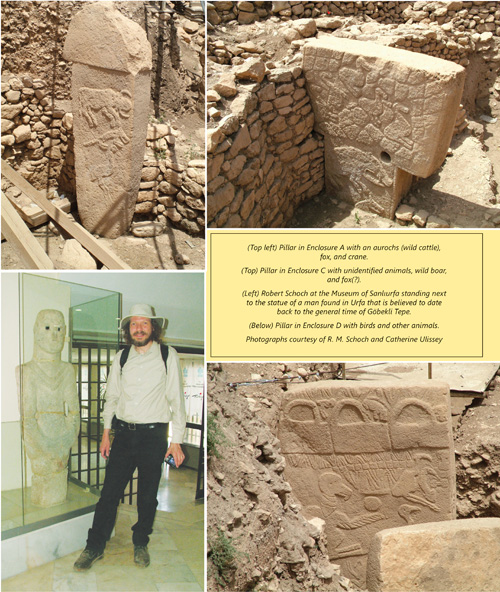
  • Stan Gooch & the Neanderthal Legacy

    Stan Gooch & the Neanderthal Legacy

    From New Dawn 125 (Mar-Apr 2011)

    On the 13th of September 2010, in a Swansea, South Wales hospital, an embittered and reclusive man, hailed as a genius by some, yet marginalised by many mainstream scientists and academics, passed away at the age of seventy-eight.1

    In his later years Stan Gooch lived “virtually destitute” in “a rented caravan in a nearly abandoned Welsh trailer park – with neither telephone nor computer, his correspondence inked on the backs of galley proofs, and scarce personal contact – wholly lacking family, right at life’s raw edge.”2

    This was the sad end for a man who made incredibly original contributions to our understanding of the origins and nature of our own humanity. Colin Wilson once wrote of Gooch, “It has seemed to me for many years that Stan Gooch is one of the most underrated writers of our time.”3 We agree with this assessment.

    Born in 1932 among the slums of southern London to working-class parents, Gooch raised himself from his dreary surroundings, ultimately earning a degree in Modern Languages at King’s College, London, and a degree in Psychology at Birkbeck College, London.4 After spending time, between earning his degrees, variously working in the scrap metal business, teaching in Coventry (English Midlands), and serving as “Head of Department” in a London grammar school, in 1964 Gooch was appointed a senior research psychologist at the National Children’s Bureau. He wrote scholarly articles and coauthored books on psychology.

    On the surface it seemed that Gooch was off to a respectable and potentially prosperous career.5 However, Gooch’s life would take a different turn, driven by his overwhelming interest in two subjects that on the surface might seem quite distinct, but for Gooch were intimately related: 1) psychical research (the paranormal, or what is now often referred to as parapsychology) and 2) understanding and reconstructing the mental and cultural world of Neanderthals and their bearing on modern humanity.

    Ultimately Gooch gave up his secure position, turning down both the directorship of the National Children’s Bureau, and a professorship of Psychology at Brunel University, London, to pursue his research and writing full-time.

    Unfortunately for Gooch, his books never had the mass appeal, with the concomitant income, he hoped for. Furthermore, psychical research is a subject that is viewed as fairly marginal at best by most academics, and Gooch’s conclusions concerning Neanderthal mentality and culture diverged so radically from the common conceptions of the time that mainstream scholars systematically ignored his work.

    At the time of his death Gooch was depressed, bitter, and even angry that his ideas had not garnered the recognition that he felt they rightfully deserved. Perhaps he was ahead of his time, as many of his ideas about Neanderthals in particular are now being independently confirmed (although still generally without citing or crediting Gooch).

    From the Paranormal to Neanderthals

    While teaching in Coventry in the late 1950s, Gooch began attending weekly séances, his introduction to the paranormal. This sparked a deep lifelong interest in psychic phenomena. Moreover, Gooch found that he personally had telepathic and mediumistic talents. At one séance Gooch and the other members of the circle became aware of “a crouching, ape-like shape” in the corner of the room that “approximated to most people’s idea of what an ancient cave-man would look like.”6 After a while the figure faded away and the séance continued.

    Nearly two decades later Gooch would write,

    As regards the figure of the cave-man, which so very much impressed and haunted me both then and afterwards (in a wholly agreeable way, I must add) – I had [not] and could not have had any inkling that one day I would write books about Neanderthal man.7

    Gooch summarised his own work during this period as

    Looking always for further knowledge about the human condition, I was at the same time prospecting for a framework which could accommodate all the information that was accumulating.8

    Ultimately Gooch developed a framework and theory of human personality in terms of dualities, such as unconscious versus consciousness, religion versus science, magic versus logic, dreaming versus waking. In his list are two key comparisons: psychic phenomena versus materialism, and Neanderthal man versus modern man.9

    Gooch’s great insight was that while modern humans might manifest occasional psychic phenomena,10 Neanderthals “certainly possessed abilities in respect of the purely paranormal that far exceeded our own.”11 According to Gooch, we modern humans are literally the result of the dualities coming together, the biological interbreeding of Neanderthals and Cro-Magnons (that is so-called “modern humans,” Homo sapiens) and the melding of Neanderthal religious beliefs and cultural practices with Cro-Magnon societal elements even as Cro-Magnons may have come to physically dominate, and even apparently exterminate, the earlier Neanderthals.

    The Neanderthal Question

    Who, or what, the Neanderthals were has been a much discussed issue ever since their remains were first recognised in the middle nineteenth century.12 The popular conception of Neanderthals is that of big-browed, short, stocky, stooping, grunting, ape-like cave men (and women) eking out a meagre existence during the harsh conditions of ice age Europe, the Near East, and Southwest Asia.

    Classic Neanderthals in Europe date from around 130,000 years ago to perhaps as recently as 24,000 years ago in Gibraltar, but Neanderthal characteristics and antecedents are seen in fossil forms going back to perhaps half a million years ago or earlier.

    In many people’s minds Neanderthals are a primitive side branch of the human tree at best, a totally separate species from us, that was driven to extinction by the more intelligent and better armed “Cro-Magnon Man” group (archaic Homo sapiens, essentially the direct ancestors of living humans) who progressively migrated from East Africa into Eurasia during the period of about 60,000 to 30,000 years ago.13

    Stan Gooch had a very different view of the place and importance of Neanderthals – in Gooch’s view modern humanity is a result of the intermixing, both biologically and culturally, of Cro-Magnon and Neanderthal elements. In his words,

    A biological supernova occurred when Cro-Magnon and Neanderthal man met. We can, if we will listen, still clearly hear the echoes of that explosion and observe its after-effects… [B]ehind these echoes and tendrils we can also then detect the still fainter traces of Neanderthal civilisation itself, and hear the still fainter echoes of falling cities of dreams.14

    According to Gooch, Neanderthals possessed an intricate, psychically-charged, magical culture.15 Neanderthals built a long-lasting “high civilisation of dreams.”16 Neanderthal culture, more sophisticated than that of the Cro-Magnons when they first arrived in Europe, served as a primary source for much so-called ancient wisdom.

    Gooch argued that Neanderthals were the original creators, the innovators, of high culture, of symbolic values and religious sensibilities, which early modern humans (Cro-Magnons) copied and adopted without genuine understanding. Neanderthal culture was not a civilisation of high technologies, but one of the mind and spirit that survives today in our beliefs, myths, folklore, and religious practices.

    Neanderthal Culture

    Neanderthals developed in time a culture of the mind of a very high order, but also of a strangeness that is extremely difficult for us to imagine.

    Neanderthals, according to Gooch, worshipped the cave bear, the spider, and the serpent – animals with whom they shared their caves. Neanderthals were the first humans to fully develop religious cults, and cave bear worship was their most significant cult. Neanderthals worshipped the number 13, associated with the moon and the lunar calendar, a number that is still considered magical today. Neanderthals developed a profound knowledge of crystals and minerals. According to Gooch, Neanderthals developed their own unique symbols, signs, and sophisticated language systems.17

    Neanderthals weaved and sewed embroidery, wore jewellery, painted their faces and bodies, danced, had an elaborate mythology and cosmology, built stone circles, utilised sacred fires, and made ceremonial sacrifices. They had their own grand celebrations and feasts, which were spectacularly colourful and creative performances.

    They worshipped the moon and other celestial bodies including constellations still worshipped today worldwide such as The Big Bear, Little Bear, and Draco (the dragon or serpent in the sky). Gooch asserted that Neanderthals had a strong religious life, based on an earth-magic religion, and they believed in the afterlife, practicing complex burial rituals.18

    Neanderthals, as Gooch emphasised, were capable of great cultural innovations that included wearing jewellery and decorating their bodies and faces with colourful paints for special ceremonies. There is evidence that the sophisticated Chatelperronian culture of France belonged to the Neanderthals and not, as was formerly believed, to modern humans.19 This culture included symbolic artefacts, such as jewellery. The Uluzzian culture in Italy, also now attributed to Neanderthals, is another example – an innovative culture that included a variety of very sophisticated tools that were similar to modern humans’ tools.20 Neanderthals in Spain were painting perforated shells for decoration, using pigments, and engaged in other ritual behaviour.21 As archaeologist João Zilhão, has stated,

    The one thing these finds make clear is that Neanderthals were behaviourally modern. They were not like early modern humans anatomically, but they were cognitively as advanced or more so.22

    In many ways Neanderthal culture and Cro-Magnon culture were diametrically opposed. Gooch wrote,

    I believe the actuality of Neanderthal man – of whom archaeologists find only a handful of skeletons, a few altars, traces of ritualised burial, a range of flint tools, and an apparent knowledge of herbal remedies – was this: his was a moon-goddess-worshipping, matriarchal, food-gathering society, where women governed all matters. The only tasks delegated specifically to men were those where muscle power was directly and literally required, as in fighting, for example. The structure and nature of Cro-Magnon life was diametrically opposite. This was a patriarchal, hunter-warrior society, of which men governed all aspects, including religious life. Women were mere adjuncts in all things, whose main purpose was to bear sons and to comfort and care for the male. The supreme deity worshipped was the sun god.23

    Gooch believed that Neanderthals were a mostly nocturnal species, and came out at night. Observing the skies and the moon for thousands of generations, they had become experts in all phenomena of the stars, having a great understanding of cycles and time, equinoxes and solstices, the phases of the moon.

    Cro-Magnons would have come to know Neanderthal religion and knowledge initially through secret observation during 10,000 years (or more) of co-existence. When Cro-Magnons arrived in Europe they were shocked by the knowledgeable Neanderthals, and wanted the Neanderthal magic for themselves; so, they slowly and carefully spied on Neanderthals, copied them, and in the process stole all of their knowledge and wisdom, including writing systems and rituals.

    The meeting of Classic Neanderthals and Cro-Magnons in Europe some 35,000 years ago was an immense culture shock for both parties… The two species were culturally opposite to each other in every way.24 At the purely psychological/cultural level,… Neanderthal dealt Cro-Magnon a culture-shock of such magnitude that its consequences are still with us today. Though it left little physical trace, there is in fact… not one aspect of our present lives, our attitudes and our institutions which does not today bear that ancient [Neanderthal] culture’s stamp.25

    According to Gooch, Cro-Magnon was dazzled by the religious rituals, symbolism, cosmology, and deep intimate knowledge of the natural world the Neanderthals possessed.

    Cro-Magnon took over all the ‘magic’ and ritual of Neanderthal for his own. But he took it over without any real understanding of most of it, and also with certain appropriate changes to suit his own world view, his own existing social structure, his own biological imperatives. He took over essentially empty forms, while losing the priceless content.26

    The Cerebrum and Cerebellum

    The vertebrate brain includes the cerebrum and the cerebellum. In modern humans the cerebrum consists of the cerebral hemispheres that fill most of the skull. In humans the cerebellum is smaller than the cerebrum and situated at the back of the head tucked behind and under the cerebrum. Gooch points out that essentially the cerebrum and the cerebellum are two different brains (“we are each of us ‘in two minds’”27) that correspond to two different ways of approaching the world (“Two Brains – and Two Universes”28). The cerebrum is associated with “logical” and “rational” thinking, versus the cerebellum is associated with “dreaming” and “magic.”

    [T]he cerebellum… is responsible for trance states, for dreams, for telepathy, for psychic healing, for spontaneous wounds, for poltergeist phenomena, and all other such matters. It is also the source of and the impetus for religious belief.29

    Here we have the anatomical/physiological explanation for the duality of human personality. The Cro-Magnon and Neanderthal brains both consisted of larger cerebrums and smaller cerebellums, but the Neanderthal brain had a much larger and more powerful cerebellum than that found in Cro-Magnons. The more developed Neanderthal cerebellum gave rise to their “high civilisation of dreams.”30

    Neanderthals developed a deep understanding of the natural world, but they did not necessarily do so in the rational, logical, “scientific” manner that modern humans have come to expect and accept. “I think that they [the ancients, Neanderthals]” Gooch stated, “obtained their knowledge not logically and scientifically but intuitively.”31

    Hybridisation Between Neanderthals & Cro-Magnons

    The taxonomic status of Neanderthals has long been debated. Were they a species distinct from modern humans? Even if they were a distinct species, could they have interbred with our species, at least to a limited extent?32 Or were Neanderthals simply a subspecies or variety of our own species? Is the grouping of fossil forms currently labelled “Neanderthals” actually a collection of different types of humans, perhaps different species or varieties or races? Gooch believed there were several different varieties of Neanderthals, separated geographically and temporally, in Europe, Africa,33 the Middle East, and Asia. Furthermore, a key point of his thesis is that Neanderthals, at least some Neanderthals, could and did interbreed with our direct ancestors, the Cro-Magnons.

    In recent decades it has become apparent that human diversity tens of thousands of years ago was much more complex than previously believed. Some 50,000 to 30,000 years ago, for instance, there may have been half a dozen or more distinct species of humans inhabiting Earth. Besides Cro-Magnons (archaic Homo sapiens) and Neanderthals (Homo neanderthalensis) in Eurasia, in what is now modern Indonesia there was the diminutive “hobbit” form Homo floresiensis34 as well as apparently the last remnant populations of Homo erectus.35 In southern Africa were found the Boskop people, Homo capensis, reputedly with brains 25 to 35 percent larger than those of modern humans.36 In Siberia about the same time there was another population of humans, who may have been a species distinct from those listed above (though perhaps most closely related to Neanderthals), at present simply referred to as the “Denisovans.”37 To add to the list, the indigenous aboriginal Homo sapiens populations of Australia and New Guinea may have been relatively isolated for the last 50,000 years or more.38

    Leaving aside at this time the issue of the numerous other human species (how they interacted with one another, and what contributions they made to the modern human lineage, remain open questions), Gooch believed that aggressive and battle-skilled Cro-Magnons both massively exterminated some populations of Neanderthals and also interbred with them. He wrote,

    The genetic crossing of Cro-Magnon and Neanderthal produced not just (a) highly gifted individuals (‘the mighty men of old, the men of renown’) but (b) an entirely new species of human – ourselves…. [T]his new product was… either entirely or very largely due to Cro-Magnon men fertilising Neanderthal women – not the other way around. These offspring would have been accepted into Cro-Magnon groups…. And so Neanderthal genes were introduced into the Cro-Magnon gene pool…39

    This was a radical, unconventional view – to believe that Cro-Magnons and Neanderthals interbred and therefore Neanderthal genes should still be found among us. However, recent studies of the Neanderthal genome reveal that today an estimated 1% to 4% of the modern Eurasian genome appears to come from Neanderthals.40 That is, Neanderthals and Cro-Magnons must have interbred. Gooch’s ideas appear to be corroborated! (As an aside, we can also point out Gooch suggested that at least some Neanderthals may have been redheaded, another prediction since corroborated by modern science.41)

    Gooch also asserted that Neanderthals never fully went extinct, writing,

    [A]ctual Neanderthals at this very moment in time – that is, now, today – still survive and live at the edges of our civilisation…42

    Gooch cites, for instance, the research of anthropologist Myra Shackley, who tantalisingly suggests that the legendary Almas (“wildmen”) of the Caucasus and Outer Mongolia may in fact represent relict Neanderthals.43 In one famous account a female Almas was captured in the nineteenth century. She was described as having skin of “a grayish-black colour, covered with reddish hair, longer on her head than elsewhere… She had a large face with big cheek bones, muzzle-like prognathous jaw and large eyebrows, big white teeth and a ‘fierce expression’.”44 She sounds very much like a Neanderthal! First kept for some years in a stone enclosure, she later was kept in a cage, and finally in a house. She learned to obey simple orders and used branches and stones as tools. She became pregnant by her captors and while her first several infants died, she subsequently gave birth to two sons and two daughters who in turn produced children of their own via mating with other humans. This is all in line with Gooch’s hypotheses concerning Neanderthals. Note that the “primitive” state of the Almas may be because they are relict populations who have degenerated from the Neanderthal prime of 50,000 or so years ago.

    The Neanderthal Legacy

    The Neanderthals left us a lasting legacy, one that remains an undercurrent of modern human psychology, society, and culture. It is important, even critical, to understand this Neanderthal legacy – and the work of Stan Gooch may provide the fundamental key to unlocking the secrets of the Neanderthals.

    We are personally further exploring, testing, and developing Gooch’s ideas concerning Neanderthal culture, including through first-hand study of the evidence, such as sites visited and used by Neanderthals. Thus during the summer of 2010 we mounted a small expedition to Neanderthal territory, including caves where Neanderthal remains have been found, in the Bucegi Mountains region of Romania. Rather than hypothetically reconstruct Neanderthal lifestyles and modes of thinking purely intellectually, our aim is to actually experience (as much as possible) what it was like to have been a Neanderthal. Future potential research includes attempting to reconstruct Neanderthal rituals and cave usage, for instance. This may be a tall order, but we are sanguine about the prospects.

    We will close with a final tantalising note on the life and death of Stan Gooch. At the end of his last book, Gooch writes

    The number thirteen figures centrally in my work because it is the most important number of the moon religion [according to Gooch, the religion of the Neanderthals]. And it just so happens that I was born on June 13 [1932]. And the day, it just so happens, was a Monday. And Monday is, of course, Moon Day.45

    Gooch died on 13 September 2010, which also just happened to be a Moon Day. “Well, well, well…” (as Gooch himself might have written46).

    The above was co-authored by OANA R. GHIOCEL who received an M.A. in Documentary and Audio Production from Emerson College and she holds previous degrees in screenwriting and filmmaking. Born in Bucharest, Romania, she is an award-winning media producer, consultant, and screenwriter, and currently the Vice-President of Hyperion Media Inc. She has done extensive research on Neanderthals.

    [alert type=”general” dismiss=”no”]This article was published in New Dawn 125.[/alert]

    [alert type=”success” dismiss=”no”]If you appreciate this article, please consider subscribing to help maintain this website.[/alert]

    Books by Stan Gooch:

    Total Man, Allen Lane, 1972.

    Personality and Evolution, Wildwood House, 1973.

    The Neanderthal Question, Wildwood House, 1977.

    The Paranormal, Harper and Row, 1978.

    Cities of Dreams (subtitle on the cover of the 2001 paperback edition: When Women Ruled the Earth), Aulis Books, 1995, reprinted 2001.

    The Dream Culture of the Neanderthals: Guardians of the Ancient Wisdom, Inner Traditions, 2006.

    The Origins of Psychic Phenomena: Poltergeists, Incubi, Succubi, and the Unconscious Mind, Inner Traditions, 2007.

    The Neanderthal Legacy: Reawakening Our Genetic and Cultural Origins, Inner Traditions, 2008.

    Footnotes

    1. Anonymous, “Stan Gooch 1932-2010”, posted at www.aulis.com/index.html (Accessed 23 October 2010); Geoff Ward, “A Sad End for Reclusive Writer Stan Gooch”, posted 26 October 2010, www.suite101.com/content/a-sad-end-for-reclusive-writer-a301122 (Accessed 20 November 2010).

    2. Brent Logan, “An Urgent Appeal to Help the Acclaimed Author, Stan Gooch”, posted at www.brentlogan.net/sg/stan_gooch.htm (Accessed 8 June 2009).

    3. Colin Wilson, posted 11 September 2007 under the title “Colin Wilson writes about me”, posted on a Stan Gooch blog at www.myspace.com/stangooch/blog/308876837 (Accessed 9 June 2009); for other comments by Wilson on Gooch, see for instance: Colin Wilson, Atlantis and the Kingdom of the Neanderthals: 100,000 Years of Lost History, Rochester, Vermont: Bear and Company, 2006 (pp. 272-277, 281), and various remarks in Colin Wilson, Mysteries, New York: A Wideview/Perigee Book, G. P. Putnam’s Sons, 1978/1980.

    4. For biographical details, see: Brent Logan, “Stan Gooch, Biography”, posted at www.brentlogan.net/sg/bio.htm (Accessed 8 June 2009); “Colin Wilson writes about me” (note 3, above); and autobiographical comments in Stan Gooch, The Paranormal, New York: Harper and Row, 1978.

    5. Of the time around during which he was at the National Children’s Bureau, Gooch comments dryly, “I was also married and divorced. So there were events enough to take up my days.” (The Paranormal [note 4], 17)

    6. Gooch, The Paranormal, 7.

    7. Gooch, The Paranormal, 8.

    8. Gooch, The Paranormal, 17.

    9. Gooch, The Paranormal, 18; Gooch outlined his theory of human personality in the following trilogy: Stan Gooch, Total Man, London: Allen Lane, 1972; Stan Gooch, Personality and Evolution, London: Wildwood House, 1973; and Stan Gooch, The Neanderthal Question, London: Wildwood House, 1977.

    10. For a review of Gooch’s ideas on the paranormal, see Louis Proud, “Forces of the Unconscious Mind: Exploring the Work of Stan Gooch”, New Dawn 105 (November-December 2007), posted at www.newdawnmagazine.com/Article/Forces_of_the_Unconscious_Mind.html (Accessed 15 December 2008); see also Stan Gooch, The Origins of Psychic Phenomena: Poltergeists, Incubi, Succubi, and the Unconscious Mind, Rochester, Vermont: Inner Traditions, 2007 (Originally published under the title Creatures from Inner Space, London: Rider, 1984).

    11. Stan Gooch, The Dream Culture of the Neanderthals: Guardians of the Ancient Wisdom, Rochester, Vermont: Inner Traditions, 2006, 105 (Originally published under the title Guardians of the Ancient Wisdom, London: Wildwood House, 1979).

    12. Neanderthal is alternatively spelled Neandertal. The species Homo neanderthalensis was named in 1864 (see William King, “The Reputed Fossil Man of Neanderthal”, The Quarterly Journal of Science, 1, 88-97 with two lithographic plates [January 1864]) based on a skullcap found in the Neander Valley, Germany, in 1856 and first described in 1857, although remains subsequently recognized as Neanderthal had been found earlier in Belgium and Gibraltar. For general information on Neanderthals, see the following (and references cited therein): Clive Finlayson, The Humans Who Went Extinct: Why Neanderthals Died Out and We Survived, Oxford and New York: Oxford University Press, 2009; C. David Kreger, “Homo neanderthalensis”, posted at www.archaeologyinfo.com/homoneaderthalensis.htm (Accessed 5 January 2011); Dennis O’Neil, “Evolution of Modern Humans: Neandertals”, posted at anthro.palomar.edu/homo2/mod_homo_2.htm (Accessed 5 January 2011); James Shreeve, The Neanderthal Enigma: Solving the Mystery of Modern Human Origins, New York: Harper Perennial, 1996; Robert Munro, “The Rise and Progress of Anthropology” (Address delivered 7 May 1894), Proceedings of the Royal Society of Edinburgh, 20, 215-244 with a plate (1895).

    13. For background information, see discussion in Erik Trinkaus, “European early modern humans and the fate of the Neandertals”, Proceedings of the National Academy of Sciences of the United States of America, 104 (18), 7367-7372 (1 May 2007).

    14. Stan Gooch, Cities of Dreams (subtitle on the cover of the 2001 paperback edition: When Women Ruled the Earth), London: Aulis Books, 1995, reprinted 2001, 7 (first published as Cities of Dreams [subtitle on the dust jacket of the hardback edition: The rich legacy of Neanderthal Man which shaped our civilisation], London: Rider [An imprint of Century Hutchinson], 1989).

    15. Our summary of Gooch’s ideas concerning Neanderthals is based primarily on his books The Neanderthal Question (note 9), The Dream Culture of the Neanderthals (note 11), Cities of Dreams (note 14), and Stan Gooch, The Neanderthal Legacy: Reawakening Our Genetic and Cultural Origins, Rochester, Vermont: Inner Traditions, 2008.

    16. Gooch, Cities of Dreams, 242 (Chapter 16 title).

    17. Paleogeneticist Carles Lalueza-Fox discovered that modern humans and Neanderthals share a version of a gene called FOXP2, associated with language abilities. Most likely Neanderthals were able to speak their own languages, exactly as Gooch predicted. See Zach Zorich, “Should We Clone Neanderthals? The Scientific, Legal, and Ethical Obstacles”, Archaeology 63 (2) (March/ April 2010), available from www.archaeology.org/1003/etc/neanderthals.html (Accessed 6 January 2011).

    18. For instance, Neanderthal burials with flowers were discovered at Shanidar Cave in Northern Iraq, indicating complex mortuary rituals. See Ralph Solecki, Shanidar: The First Flower People, New York: Alfred A. Knopf, 1971; Owen Edwards, “Beyond Bones: A Rare Cache of Hominid Fossils Offers a Window on Neanderthal Culture”, Smithsonian (March 2010).

    19. See discussion in Paul Mellars,Brad Gravina,and Christopher Bronk Ramsey, “Confirmation of Neanderthal/modern human interstratification at the Chatelperronian type-site”, Proceedings of the National Academy of Sciences of the United States of America, 104 (9): 3657–3662 (27 February 2007), available from www.ncbi.nlm.nih.gov/pmc/articles/PMC1805566/ (Accessed 7 January 2011).

    20. Ann Wuyts, “Rehabilitating the Neanderthals – Accusations Uluzzian Man Took H. Sapiens Tools Prove False”, 22 September 2010, posted at heritage-key.com/blogs/ann/rehabilitating-neanderthals-accusations-uluzzian-man-took-h-sapiens-tools-prove-false (Accessed 7 January 2011); Julien Riel-Salvatore, “A Niche Construction Perspective on the Middle–Upper Paleolithic Transition in Italy”, Journal of Archaeological Method and Theory 17 (4), 323-355 (2010), available from www.springerlink.com/content/t6g625nx3744766x/ (Accessed 7 January 2011); Anonymous, “Neanderthals More Advanced Than Previously Thought: They Innovated, Adapted Like Modern Humans, Research Shows”, ScienceDaily (22 September 2010), posted at www.sciencedaily.com/releases/2010/09/100921171412.htm (Accessed 6 January 2011).

    21. João Zilhão, Diego E. Angelucci, Ernestina Badal-García, Francesco d’Errico,Floréal Daniel, Laure Dayet, Katerina Douka, Thomas F. G. Higham, María José Martínez-Sánchez, Ricardo Montes-Bernárdez, Sonia Murcia-Mascarós, Carmen Pérez-Sirvent, Clodoaldo Roldán-García, Marian Vanhaeren, Valentín Villaverde, Rachel Wood, and Josefina Zapata, “Symbolic use of marine shells and mineral pigments by Iberian Neandertals”, Proceedings of the National Academy of Sciences of the United States of America, Published online before print January 11, 2010, www.pnas.org/content/early/2010/01/06/0914088107 (Accessed 7 January 2011); see also supporting material posted at www.pnas.org/content/suppl/2010/01/07/0914088107.DCSupplemental/pnas.200914088SI.pdf (Accessed 7 January 2011).

    22. João Zilhão [interview with], “Did Neandertals Think Like Us?”, Scientific American, June 2010, pp. 72-75 (quotation from p. 75); for online version see www.scientificamerican.com/article.cfm?id=did-neandertals-think-like-us (Accessed 6 January 2011); PDF of the article available from www.bris.ac.uk/archanth/staff/zilhao/scientificamericanjune2010.pdf (Accessed 10 January 2011).

    23. Gooch, The Dream Culture of the Neanderthals, 56.

    24. Gooch, The Neanderthal Legacy, 59, italics in the original.

    25. Gooch, Cities of Dreams, 5, italics in the original.

    26. Gooch, Cities of Dreams, 37.

    27. Gooch, The Neanderthal Legacy, 118.

    28. Gooch, The Neanderthal Legacy, 118 (Chapter 11 title).

    29. Gooch, The Neanderthal Legacy, 131, italics in the original.

    30. Gooch, Cities of Dreams, 242 (Chapter 16 title).

    31. Gooch, The Dream Culture of the Neanderthals, 92.

    32. Note that in some cases well-established species can on occasion interbreed and produce fertile offspring, such as lions and tigers producing hybrids.

    33. Gooch considered “Rhodesian Man”, for instance, to be a Neanderthal representative (The Neanderthal Legacy, 11).

    34. P. Brown, T. Sutikna, M. J. Morwood, R. P. Soejono, Jatmiko, E. Wayhu Saptomo, and Rokus Awe Due, “A new small-bodied hominin from the Late Pleistocene of Flores, Indonesia,” Nature 431, 1055-1061 (28 October 2004); available from www-personal.une.edu.au/~pbrown3/nature02999.pdf (Accessed 11 January 2011); see http://www.nature.com/nature/journal/v431/n7012/full/nature02999.html (Accessed 29 July 2010).

    35. Mark Rose, “Homo erectus Survival”, Archaeology 50 (2) (March/April 1997), available from www.archaeology.org/9703/newsbriefs/h.erectus.html (Accessed 2 January 2011); Hillary Mayell, “Java Skull Raises Questions on Human Family Tree” (27 February 2003), posted at news.nationalgeographic.com/news/2003/02/0227_030227_javaskull.html (Accessed 6 January 2011); note that, as often used, Homo erectus may be a taxon that includes a collection of closely related species and subspecies.

    36. R. Broom, “The Evidence Afforded by the Boskop Skull of a New Species of Primitive Man (Homo capensis)”, Anthropological Papers of the American Museum of Natural History 23 (2): 63–79 (1918), available from digitallibrary.amnh.org/dspace/bitstream/2246/287/1/A023a02.pdf (Accessed 10 January 2011);  Gary Lynch and Richard Granger, Big Brain: The Origins and Future of Human Intelligence, New York: Palgrave Macmillan, 2008; note that there is disagreement as to whether or not Homo capensis represents a distinct species or variety.

    37. Anonymous, “Denisovans? Fossil Discovery Is Neither Modern Human Nor Neanderthal”, 22 December 2010, posted at www.science20.com/news_articles/denisovans_fossil_discovery_neither_modern_human_nor_neanderthal (Accessed 28 December 2010); Carl Zimmer, “Siberian Fossils Were Neanderthals’ Eastern Cousins, DNA Reveals”, New York Times, 22 December 2010, available from http://www.nytimes.com/2010/12/23/science/23ancestor.html (Accessed 28 December 2010).

    38. Hamish Clarke, “DNA confirms Aboriginal Australian origins”, Cosmos Magazine (8 May 2007), available from www.cosmosmagazine.com/news/1286/dna-confirms-aboriginal-australian-origins (Accessed 6 January 2011).

    39. Gooch, The Neanderthal Legacy, 72, italics in the original.

    40. Richard E. Green, Johannes Krause, Adrian W. Briggs, Tomislav Maricic, Udo Stenzel, Martin Kircher, Nick Patterson, Heng Li, Weiwei Zhai, Markus Hsi-Yang Fritz, Nancy F. Hansen, Eric Y. Durand, Anna-Sapfo Malaspinas, Jeffrey D. Jensen, Tomas Marques-Bonet, Can Alkan, Kay Prüfer, Matthias Meyer, Hernán A. Burbano, Jeffrey M. Good, Rigo Schultz, Ayinuer Aximu-Petri, Anne Butthof, Barbara Höber, Barbara Höffner, Madlen Siegemund, Antje Weihmann, Chad Nusbaum, Eric S. Lander, Carsten Russ, Nathaniel Novod, Jason Affourtit, Michael Egholm, Christine Verna, Pavao Rudan, Dejana Brajkovic, Zeljko Kucan, Ivan Gušic, Vladimir B. Doronichev, Liubov V. Golovanova, Carles Lalueza-Fox, Marco de la Rasilla, Javier Fortea, Antonio Rosas, Ralf W. Schmitz, Philip L. F. Johnson, Evan E. Eichler, Daniel Falush, Ewan Birney, James C. Mullikin, Montgomery Slatkin, Rasmus Nielsen, Janet Kelso, Michael Lachmann, David Reich, and Svante Pääbo, “A Draft Sequence of the Neandertal Genome,” Science 328 (5979), 710-722 (7 May 2010), available from www.sciencemag.org/cgi/reprint/328/5979/710.pdf (Accessed 7 January 2011); Paul Rincon, “Neanderthal genes ‘survive in us’ ”, BBC News (6 May 2010), posted at news.bbc.co.uk/2/hi/science/nature/8660940.stm (Accessed 6 January 2011).

    41. Paul Rincon, “Neanderthals ‘were flame-haired’ ”, BBC News (25 October 2007), posted at news.bbc.co.uk/2/hi/7062415.stm (Accessed 7 January 2011); Anonymous, “Ancient DNA Reveals That Some Neanderthals Were Redheads”, ScienceDaily (26 October 2010), posted at www.sciencedaily.com/releases/2007/10/071025143311.htm (Accessed 7 January 2011).

    42. Gooch, The Neanderthal Legacy, 33, italics in the original.

    43. Myra Shackley, Still Living? Yeti, Sasquatch and the Neanderthal Enigma, New York: Thames and Hudson, 1983 [Paperback edition, 1986], 161-164.

    44. Shackley, Still Living?, 112; this particular Almas, also referred to as an abnauayu, was named Zana and she is further described in: Igor Bourtsev, “A Skeleton Still Buried and a Skull Unearthed: The Story of Zana” (From: In the Footsteps of the Russian Snowman by Dmitri Bayanov, 1996, Moscow, Russia: Crypto-Logos, pp. 46-52), available from www.bigfootencounters.com/articles/zana.htm (Accessed 10 January 2011).

    45. Gooch, The Neanderthal Legacy, 132.

    46. Gooch’s last three closing words (before the appendices) of The Neanderthal Legacy (page 132). Besides his work on Neanderthals, Gooch made other contributions to the study of ancient history, such as his quite rational suggestion that the ancients could have figured out, based on its approximately 50-year “wobble” (and possibly using simple lenses), that Sirius has a small, dark, heavy companion star (The Dream Culture of the Neanderthals, 227-240). This information was passed down, for instance to the Dogon tribe of Africa, and despite various sensational claims (see Robert Temple, The Sirius Mystery: New Scientific Evidence of Alien Contact 5,000 Years Ago, Rochester, Vermont: Destiny Books, 1998; see also Blair MacKenzie Blake, “Dark Seed: The ABCs of the Sirius Mystery”, Darklore 5, 117-133 [2010]) no alien contact was required.

    © New Dawn Magazine and the respective author.
    For our reproduction notice, click here.
  • Thoughts Have Wings

    Thoughts Have Wings

    From New Dawn 124 (Jan-Feb 2011)

    Telepathy is real. Thoughts have wings. Of this I am certain. It is a shame that telepathy, direct mind-to-mind interaction independent of the known senses (vision, hearing, smell, taste, touch, balance, and so on), is still shunned and mocked by many people. This despite the extensive studies of telepathy, precognition, and similar mental phenomena, carried out for more than a century by some of the best minds, including Ph.D. scientists and Nobel laureates.1

    The basic phenomena of telepathy have been demonstrated over and over again, and even put to practical use. A vast scientific literature on parapsychology (which encompasses the study of telepathy) exists, with specialised journals and societies.2

    There is strong laboratory evidence for telepathy, from classic card-calling studies to controlled experiments where an agent inserts material telepathically into a subject’s dreams, through more sophisticated tests for telepathic information transfer in the fully conscious state or at the threshold of consciousness between sleep and waking (hypnagogia).

    A large and compelling body of evidence from spontaneous cases supports the reality of telepathy, such as crisis events when a person has telepathic awareness, or even “sees” an apparition, of a loved one experiencing emotional turmoil, pain, suffering, or death. Telepathy and related parapsychological phenomena have been successfully applied to intelligence gathering. Jimmy Carter, 39th President of the United States (1977-1981), testified to their efficacy.

    The proven results of these exchanges between our intelligence services and parapsychologists raise some of the most intriguing and unanswerable questions of my presidency… They defy logic, but the facts are undeniable.3

    Recently Dr. Daryl J. Bem of Cornell University released the results of nine experiments, involving over a thousand participants, documenting consistently significant positive results for precognition and retroactive influences, important components of parapsychology.4 Despite the overwhelming evidence for telepathy and related phenomena, many scientists do not consider parapsychology a science and, knowing nothing about the subject, feel free to make disparaging statements concerning the field and its practitioners.

    At this point I believe it is time to move beyond assuaging the debunkers and scoffers, for no amount of evidence will ever convince some that telepathy is genuine. Let us concentrate on studying the phenomena and unravelling the secrets of telepathy. Thoughts may have wings, but how far can they fly?

    Telepathy is often considered independent of distance; that is, thoughts are free to fly as far as they desire. But, is this really the case? There are well-attested instances of telepathy occurring over thousands of kilometres, but to conclude that all telepathy is literally independent of distance is premature. It is extremely difficult to measure the strength of a telepathic signal apart from the delivery of the message (in analogy, an audible message may be received across a room whether yelled or whispered).

    A few controlled studies indicate that at least sometimes telepathy may attenuate with distance.5 Attenuation might be expected unless perhaps telepathy is a nonlocal quantum mechanical phenomenon. Possibly there are multiple forms of telepathy: information carried on extremely low frequency electromagnetic waves, information transferred by quantum mechanical means, and information propagated via some other mechanism.

    We must also consider the psychological aspects of telepathy. A person may preferentially focus telepathically on the thoughts and emotions of someone who is psychologically “near,” even if far removed in physical space.

    There is another, most curious, aspect of telepathy. Telepathic-type phenomena are not limited to the present, but transcend the boundaries of time. Telepathic information can be received from the future and the past, with the proviso that telepathic experiences drop off dramatically as one moves temporally further away from the present.6 Various forms of precognition, such as those confirmed by Dr. Bem, can be explained in terms of telepathic information received from the future, the future agent in some cases being the same person as the receiver (the percipient) in the present. You can receive telepathic information from your future self! Perhaps this sounds strange, but it may just be the way the world is. Indeed, if you think about it, who is closer emotionally and psychologically to you than yourself?

    [alert type=”general” dismiss=”no”]This article was published in New Dawn 124.[/alert]

    [alert type=”success” dismiss=”no”]If you appreciate this article, please consider subscribing to help maintain this website.[/alert]

    Footnotes

    1. For example, Charles Richet, Nobel Prize in Physiology/Medicine, 1913, and Brian Josephson, Nobel Prize in Physics, 1973.
    2. See articles reprinted in, and references cited in, Robert M. Schoch and Logan Yonavjak, compilers and commentators, The Parapsychology Revolution: A Concise Anthology of Paranormal and Psychical Research, New York: Jeremy P. Tarcher/Penguin, 2008.
    3. Jimmy Carter quoted in a Politico article, “Carter’s weird science” by Patrick Gavin, posted on the Internet 20 October 2010 at:  www.politico.com/click/stories/1010/carters_weird_science.html  (Accessed 20 October 2010).
    4. Daryl J Bem, “Feeling the Future: Experimental Evidence for Anomalous Retroactive Influences on Cognition and Affect”, Journal of Personality and Social Psychology, in press. Manuscript posted at: http://dbem.ws/FeelingFuture.pdf (Accessed 11 November 2010).
    5. See discussion in Schoch and Yonavjak (note 2), 346-347; William Braud, “Psi and Distance: Is a Conclusion of Distance Independence Premature?”, 2010, article posted at: http://inclusivepsychology.com/uploads/Psi_and_Distance_-_A_Premature_Conclusion.pdf (Accessed 20 November 2010).
    6.  See discussion in Schoch and Yonavjak (note 2), 345-346 & 347-349..

    © New Dawn Magazine and the respective author.
    For our reproduction notice, click here.