New Dawn – World's Most Unusual Magazine

Author: Robert Schoch

  • Camille Flammarion & the Mystery of Death

    Camille Flammarion & the Mystery of Death

    From New Dawn 123 (Nov-Dec 2010)

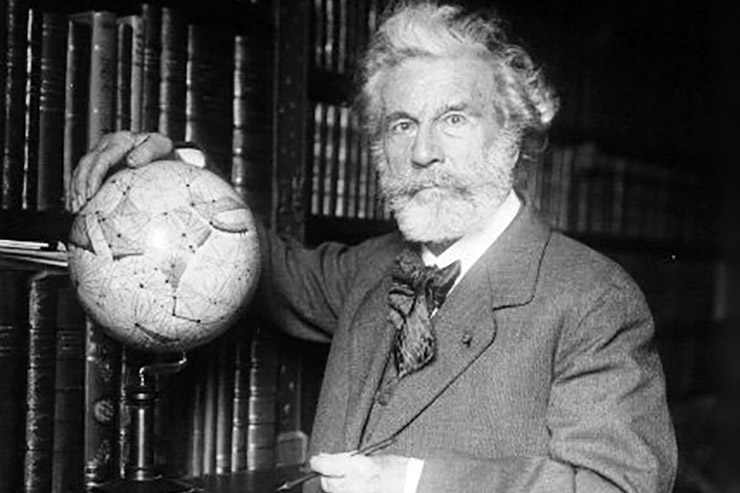
    In late nineteenth- and early twentieth-century France, a famous, and favourite, personality was the astronomer, science populariser, and science fiction writer Camille Flammarion (1842-1925).1 It is difficult today to gauge the celebrity status that Flammarion held. Men, at least some men, admired and emulated Flammarion, and many a woman swooned over him. As the saying goes, some would “give their right arm” to be in any way associated with the great Flammarion – indeed, in a bizarre but true story, Flammarion received a body part from a deceased young female admirer. How this may have influenced his serious scientific interest in the possibility of life after death is unclear.

    The Skin Off Her Back

    A young French Countess became amorously infatuated with Flammarion. She is reported to have had an image of Flammarion tattooed on her body. She came down with tuberculosis and, before dying prematurely, she instructed her physician, upon her death, to cut a large piece of skin from her back and deliver it to Flammarion with the request that he have it tanned and use the leather as the binding of his latest book, in honour of her (and thus she would always be close to him, at least in some sense). The desires of the Countess were carried out, and the skin delivered to Flammarion. He duly had it prepared and used to bind a copy of his book Les Terres du Ciel (The Land of the Sky), which he kept in the library of his private observatory in Juvisy-sur-Orge, France. On the cover in gold he placed the following inscription: “Pious fulfilment of an anonymous wish. Binding in human skin (woman) 1882.”2

    The basic truth of this story has been confirmed (the skin was received and the book bound with it), but there are tantalising details and variations that may or may not be true. In one version, before her death the beautiful Countess invites Flammarion to her chateau, he compliments her on her shoulders, and as a way to ensure that he will never forget her, she arranges for the macabre gift upon her death. In another variation which Flammarion stated was the real truth of the matter, he had never met the Countess in life, and may not have known her name.3

    The Mystery of Death

    Apart from his anthropodermic adventures, Flammarion had a long and continuing fascination with psychical studies (in modern terms, we would call them parapsychological studies) and the question of what, if anything, lies beyond bodily death. Indeed, this was apparently one of the consuming passions of his life.

    By his own account, Flammarion’s serious researches into psychical studies began in 1861 and continued until his death some six and a half decades later. In his lifetime he published such works as The Unknown (1902) and Mysterious Psychic Forces (1907), but his masterpiece and grand synthesis was the three-volume work Death and Its Mystery (1921-1923) – volume 1, Before Death; volume 2, At the Moment of Death; and volume 3, After Death.4

    Death and Its Mystery is a massive compilation of evidence, with Flammarion’s analyses, bearing on psychical phenomena and the evidence for an afterlife. In many ways it encapsulates the work of the first generation of serious afterlife researchers, beginning in 1882 with the founding of the Society for Psychical Research (SPR) in London. Yet despite the wealth of case studies it contains, many modern investigators of the afterlife have not cited Flammarion’s opus.5 I find this situation rather strange, even inexplicable, unless it is possibly due to Flammarion’s style, which can be rather opinionated, to the point of perhaps alienating the modern reader. Be that as it may, here I will briefly introduce some of Flammarion’s main themes, and also place his work into historical context.

    A Plurality of Worlds, in this Life and the Next

    One reason Flammarion was so popular with the public is that he was not afraid to speculate. He was not satisfied with simply recounting data and hard facts, but would extrapolate from those facts, mixing in his own speculations. This is seen in his astronomical work from the start. His first book, La Pluralité des Mondes Habités (The Plurality of Inhabited Worlds),6 originally published in 1862 (Flammarion had barely reached adulthood), was a bestseller, going through dozens and dozens of editions. Part of its amazing success was no doubt due to the stance taken by Flammarion, namely that the universe is teaming with life, exotic species, and even intelligent beings on other worlds. Extraterrestrial life, at least according to Flammarion, undoubtedly exists. Such themes were followed up in many of the dozens of books, both nonfiction and fiction, that Flammarion authored during his lifetime.7

    Given this “speculative” and “open” attitude of Flammarion, many of his devoted readers expected him to also be open, even supportive of, the concept that there may be more to life than simple material existence – more than the physicists’ matter and energy, as we know it. That is, if there is life on other planets out there in the universe, could not there be the continued existence of life, or something, in some “dimension” or “space” after the dissolution of our material bodies? As Flammarion wrote,

    When the first editions of my book “La Pluralité des Mondes habités” were published (1862-64), a certain number of readers seemed to expect the natural sequel: “La Pluralité des existences de l’âme” [The Plurality of the Existence of the Soul]. If the first problem has been considered solved by my succeeding books…, the second has remained an open question, and the survival of the soul, either in space or on other worlds or through earthly reincarnations, still confronts us as the most formidable of problems.8

    But, though they may have had to wait nearly sixty years, ultimately Flammarion’s readers received their answer with publication of Death and Its Mystery.

    Spiritualism & Psychical Research

    The nineteenth century saw the rise of modern Spiritualism, essentially the belief in both survival after death and the ability to communicate with the deceased, for instance during a séance.9 Flammarion was not the only person of the educated classes to take a serious interest in the subject. The SPR was established by a group of Cambridge scholars to seriously and scientifically investigate, among other subjects, spiritualist claims and the possibility of an afterlife.10

    Before addressing the question of life beyond the grave directly, the SPR first explored the issue of the reality of telepathic (direct mind-to-mind) interactions. This was seen as important both in its own right and as a possible way that discarnate spirits might communicate with living body-bound individuals. The initial study, spearheaded by SPR member Edmund Gurney (1847-1888), polled 5,705 people concerning possible telepathic experiences and resulted in the two-volume 1886 work titled Phantasms of the Living.11 The evidence in Phantasms of the Living supported the reality of telepathy, but not everyone was convinced, so more data were collected, resulting in a truly massive study.

    Between April 1889 and May 1892, 17,000 sane and healthy people were polled as to whether they had ever had any hallucinatory experiences (the vast majority had not), and if so, the details of their experiences. The large number of people polled for the Census of Hallucinations was necessary in order to develop meaningful statistical analyses of the data.12 As the authors of the study realised, given the labour it involved, it was unlikely that such an extensive study would ever be undertaken again. So far, this is true.

    While information on all kinds of hallucinations was collected, a special focus of the study was to collect data that could add to the “examination of the evidence for telepathy.”13 In particular, there was a special examination of death coincidences. Here is an example, which I have paraphrased, collected as part of the Census:

    Mr. S. Walker-Anderson was living in Australia, while an aunt of his, Mrs. P., was in England. During the night of 17 November 1890 Mr. Walker-Anderson woke up from his sleep and saw his aunt standing near the foot of his bed. He watched her lips move, and although he could hear no sound, he understood that she meant to say “good bye.” The figure of his aunt then gradually vanished. Early the next morning he told his wife about the incident, being convinced that his aunt had died. Both Mr. Walker-Anderson and his wife made written notes of the time and date of the hallucination (or apparition). Some weeks later they learned from first an English newspaper, and later via a personal letter, that the aunt died on the same day and about the same time as Mr. Walker-Anderson’s hallucination (within a few hours, taking the time difference between England and Australia into account).14

    This, like all material collected for the study, was carefully examined and cross-examined by the researchers, so that no false evidence would be included.

    The authors analysed 65 attested death coincidences collected as part of the Census. A death coincidence was defined as a hallucination, similar to the case described above, occurring within twelve hours before or after the death of an individual. Eliminating all questionable cases, for the purposes of statistical calculations, only 30 of these death coincidences were accepted. These death coincidences were compared to other hallucinations found among the Census participants, the probability of a person dying on any particular day, and various other factors.

    Ultimately, the result was that even though death coincidences are very rare, they occur at least 300 to 400 times more often than should due to chance alone! The authors wrote,

    Between deaths and apparitions of the dying person a connexion [connection] exists which is not due to chance alone. This we hold as a proved fact.15

    The authors of the Census were less sanguine concerning possible evidence for postmortem existence. Although they had received some tantalising suggestions of possible communication from the dead, they did not regard the evidence as conclusive.

    Frederic W.H. Myers (1843-1901), who had helped author both Phantasms of the Living and the Census of Hallucinations, continued to study the issue of the afterlife until his own death. In his massive, posthumous, two-volume work Human Personality and Its Survival of Bodily Death, Myers assembled the best evidence up to his time for life after death.16 His conclusions are summarised as follows:

    I hold that certain manifestations of central individualities, associated now or formerly with certain definite organisms, have been observed in operation apart from those organisms, both while the organisms were still living, and after they had decayed.17

    Thus, in a limited and somewhat circumspect way, Myers asserted that there is an afterlife, at least to some degree for at least some people (and possibly other organisms). This was farther than Phantasms or the Census had taken the subject, but still did not match either spiritualistic or everyday conceptions of an afterlife. Enter Camille Flammarion.

    The Psychic Soul

    The first task that Flammarion set for himself was to prove the existence of the soul independent of the material body. The second task was to demonstrate that the soul persists even after the dissolution of the physical organism. Let us see how he approached each issue.

    Flammarion devotes much of the first volume of his trilogy, Before Death, to a discussion of the evidence for, in his terminology, “supra-normal faculties.” These include the ability to receive information psychically at a distance, classic telepathy, and precognition. Like the SPR studies, Flammarion is absolutely convinced of the reality of telepathy.18 He also argues strongly for the reality of precognition. Flammarion essentially equates the “psychic element differing from the material organism”19 with the concept of the soul. As he states at the end of volume one,

    To solve the mystery of death, to establish the survival of the soul, we first had to prove that the soul does exist, individually, an existence proved by special, extra-corporeal faculties, which cannot be included among the properties of the material brain, or among chemical or mechanical reactions; faculties essentially spiritual, such as the will, acting without the spoken word; …telepathy; …the sight by the spirit of a far-off country, of a future scene or event – all phenomena outside the sphere of our physical organism, lacking any common measure with our organic sensations and proving that the soul is a substance which exists in itself.20

    Flammarion discusses the possibility that at least some psychic phenomena might be due to unknown, but nonetheless physical or material or energetic causes, for instance something analogous to radio waves as the mode of telepathic transmission, but essentially dismisses such arguments as unrealistic.21 In particular, Flammarion places great importance on the fact that precognition can occur. Even if there is some chance that other “psychic” phenomena, such as telepathy, might ultimately be explainable by some sort of matter or energy phenomena, currently not understood, in Flammarion’s opinion there is no conceivable manner by which precognition – seeing or knowing the future – will ever be explainable by “conventional” physics. (I am not so sure this is actually true given recent developments in physics.22) For Flammarion the reality of precognition proves incontrovertibly that the “psychic element,” the soul, is real and distinct from the physical, mechanical, and chemical organism.

    Given its importance to Flammarion’s reasoning, what evidence is there for the reality of precognition? Flammarion cites several examples to make his case, but perhaps the best can be summarised as follows.

    On June 27, 1894, at nine a.m. Dr. Gallet (at the time a medical student) was absorbed in studying for an examination in Lyons, France, when he was suddenly obsessed with a sentence that came to his mind: “Monsieur Casimir-Perier is elected President of the republic by four hundred and fifty-one votes.” He not only wrote down the sentence, but told a fellow student. After lunch the two students met a couple of other friends, and all had a good laugh at the “prophecy” since Casimir-Perier was not considered a serious candidate. The election took place at Versailles at two p.m., and that afternoon the students heard a newsboy shouting “Monsieur Casimir-Perier is elected President of the republic by four hundred and fifty-one votes!”23

    Given the fact (at least as established to Flammarion’s satisfaction) that the soul can somehow access the future, Flammarion posits that the soul, as an independent being, can survive into the future after the dissolution of the physical body. Volume 3 of Death and Its Mystery is devoted to the supposed occurrences or manifestations of the once living at time periods that clearly fall well after physical death. (The second volume is devoted to manifestations of the dying, death coincidences, that may be explainable by telepathy among the living, even if some of the “living” are about to die or in the throes of death.)

    Flammarion cites numerous reputed manifestations and apparitions of the dead. Here is one, which for the sake of space, I have paraphrased.

    On September 2, 1916, Madame A. Clarinval suddenly and inexplicably “knew” that her son, a pilot with the French air forces, was in danger. Two days later she was informed that at that very day and hour her son had disappeared behind German lines. After the end of the war, the family found out that the son had died and was buried in a soldiers’ graveyard at Dieppe, France. Madame Clarinval and her husband made four trips to the graveyard, but were unsuccessful in locating their son’s body. Then, on May 25, 1920, Madame Clarinval had a vision. She saw the face of her son in a group of trees, and on either side of him were the faces of two young men, a Russian and a German. It was subsequently discovered that her vision happened when, to the day, bodies were being exhumed from the graveyard and moved. Ultimately she and her husband went back to the cemetery area and found the body of their son buried between that of a Russian soldier and a German soldier. Madame Clarinval was convinced that her son had come back from the grave to direct her to the location of his bodily remains.24

    As Flammarion acknowledged, the issue is whether or not such cases necessarily require the manifestation of the dead to explain all the details.

    In general we can eliminate only with great difficulty the possibility of influence exerted by living persons’ minds.25

    In the incident of Madame Clarinval, everything could conceivably be explained by telepathy (between her and her son when he died, and possibly between her and grave workers, although she did not know the grave workers), perhaps combined with her own precognition of the future – namely a precognition of finding her son’s grave. However, if we are to posit a precognition on her part of finding the grave, that precognition also seems to be the very factor that allows her to find the grave. How can this be? Flammarion and like-minded thinkers find the argument that the son is actually communicating from the beyond more convincing.

    Reincarnation on Venus and Mars

    Flammarion, like Myers before him, concluded that apparitions or manifestations of the dead are real, but they decline sharply with time after death.26 The vast majority occur within the first days and weeks after death, and by the end of the first year, manifestations of the dead are exceedingly rare, although Flammarion contends that some have occurred up to decades after death.

    What do we make of this pattern? Do the deceased, perhaps occasionally, remain in our everyday terrestrial realm for a short period of time, before leaving? The longer the temporal duration after bodily death, perhaps the more likely it is that the deceased will have left the terrestrial realm? Such a hypothesis would account for the rapid drop off of apparitions as we become farther removed temporally from the death incident. But what happens to the deceased? Where do they go? I will conclude this article with Flammarion’s speculations:

    In our total ignorance, from a scientific point of view, of the conditions of ultra-terrestrial life, we can only make conjectures as to this life. We know, and shall know henceforth, that the soul exists. To admit this survival leads us to admit preëxistence. Earthly life is but a phase in the life of the spirit. The doctrine of reincarnation is, moreover, the only one which remains admissible after we have pondered all metaphysical considerations, and it is the oldest of definite religious beliefs. There must be both a previous existence and an after life.27

    Ever the astronomer, Flammarion adds,

    There is no reason for thinking that the reincarnations of the human soul are limited to our planet. Nor is it unscientific to attribute to psychic monads the faculty of voyaging through the immensities of space, of passing from one planet to another – from the earth to Mars, Venus, or some other world.28


    [alert type=”general” dismiss=”no”]This article was published in New Dawn 123.[/alert]

    [alert type=”success” dismiss=”no”]If you appreciate this article, please consider subscribing to help maintain this website.[/alert]

    Footnotes

    1. His full name was Nicolas Camille Flammarion, but he went by Camille Flammarion.
    2. The original French reads, Exécution pieuse dun voeu anonyme. Reliure en peau humaine (femme) 1882; see, Steven Connor, The Book of Skin, Ithaca, New York: Cornell University Press, 2004, 45. See also, Dan Alban, “Books Bound in Human Skin; Lampshade Myth?”, Harvard Law Recored, article dated 11 November 2005, updated 29 September 2009, posted at: www.hlrecord.org/2.4462/books-bound-in-human-skin-lampshade-myth-1.579032?pagereq=2 (Accessed 18 September 2010); David Darling, “Flammarion, (Nicolas) Camille (1842–1925)”, posted at: www.daviddarling.info/encyclopedia/F/Flammarion.html (Accessed 18 September 2010).
    3. With regard to the bookbinding incident, Flammarion wrote to Dr. Cabanès, editor of a French medical journal: “My Dear Doctor: The story has been somewhat elaborated. I don’t know the name of the person whose dorsal skin was delivered to me by a physician to use for binding. It was a matter of carrying out a pious vow. Some newspapers, especially in America, published the portrait, the name, and even the photograph of the chateau where ‘The Countess’ dwelt. All of that is pure invention. The binding was successfully executed by Engel, and from then on the skin was unchanging. I recollect I had to carry this relic to a tanner in the Rue de la Reine-Blanche, and three months were required for the job. Such an idea was assuredly bizarre. However, in point of fact, this vestige of a beautiful body is all that survives of it today, and it can endure lastingly in a perfect state of respectful preservation. The desire of the unknown woman was to have my last book published at the time of her death bound in this skin: the octavo edition of the Terres du ciel, published by Didier enjoys this honor. Your reader and admirer, Flammarion.” Note that even though Flammarion supposedly did not know the name of the person who left him her skin, he considered it a “vestige of a beautiful body.” My instinct is that he may well have known what she looked like, and may have admired her physically, or else he would have written something to the effect of “a beautiful soul,” especially in the light of his studies, even in the early 1880s, of the distinction between the material body and the immaterial soul. I suspect he had an eye for the young, beautiful, intelligent woman. His second wife, astronomer Gabrielle Renaudot (1876–1962; they married in 1919), was over thirty years younger. [English translation of Flammarion’s letter quoted from: Kathy Lechuga, “Flesh and Ink: A Brief Overview of Books Bound in Human Skin”, paper dated Fall 2007. Posted at: www.ischool.utexas.edu/~klechuga/human%20skin%20bindings%20paper.pdf (Accessed 18 September 2010).]
    4. Here I am here citing the American versions of his books: Camille Flammarion, The Unknown, New York: Harper and Bros., 1902; Camille Flammarion, Mysterious Psychic Forces, Boston: Small, Maynard and Co., 1907; Camille Flammarion, Death and Its Mystery: Before Death: Proofs of the Existence of the Soul (Translated by E. S. Brooks), New York: The Century Co, 1921 [there was also a 1922 Century Co. edition]; Camille Flammarion, Death and Its Mystery: At the Moment of Death: Manifestations and Apparitions of the Dying; ‘Doubles;’ Phenomena of Occultism (Translated by Latrobe Carroll), New York: The Century Co, 1922; Camille Flammarion, Death and Its Mystery: After Death: Manifestations and Apparitions of the Dead; The Soul after Death (Translated by Latrobe Carroll), New York: The Century Co, 1923. Death and Its Mystery was originally published in France under the title La Mort et son Mystère, in three volumes, 1) La Mort et son Mystère: Avant la Mort, 2) La Mort et son Mystère: Autour de la Mort, and 3) La Mort et son Mystère: Après la Mort, Paris, Ernest Flammarion [Camille Flammarion’s brother], 1920-1922. In France tens of thousands of copies of La Mort et son Mystère were printed in the first few years after initial publication, and Flammarion revised and added to subsequent printings.
    5. For instance, I failed to find any discussion of Flammarion in: Stephen E. Braude, Immortal Remains: The Evidence for Life after Death, Lanham, Maryland: Rowman and Littlefield, 2003; David Fontana, Is There An Afterlife?, Ropley, Hants, UK: O Books, 2005 [reprinted 2007]; Gary Doore, editor, What Survives? Contemporary Explorations of Life After Death, Los Angeles: Jeremy P. Tarcher, 1990.
    6. Camille Flammarion, La Pluralité des Mondes Habités: Étude où l’on expose les conditions d’habiabilité des Terres célestes (septieme edition), Paris: Didier, 1865.
    7. For examples of his fictional work, see: Camille Flammarion, Omega: The Last Days of the World, New York: The Cosmopolitan Company, 1894; Camille Flammarion, Urania, Boston: Estes and Lauriat, 1890.
    8. Flammarion, 1921, 3-4.
    9. According to Latrobe Carroll, translator of volumes 2 and 3 of Death and Its Mystery into English, Flammarion considered Spiritualism to be “the general doctrine that departed spirits hold intercourse with mortals” while Spiritism refers to “mediumistic research” (footnote to Flammarion, 1923, 319). Mediumistic research is basically the concept of using a person, a medium, as the go-between for communication between this world and the next.
    10. See: Robert M. Schoch and Logan Yonavjak, editors and compilers, The Parapsychology Revolution: A Concise Anthology of Paranormal and Psychical Research, New York: Jeremy P. Tarcher/Penguin, 2008, 15; William G. Roll, “My Search for the Soul,” Chapter 2 (50-67) in Body, Mind, Spirit: Exploring the Parapsychology of Spirituality, edited by Charles T. Tart, Charlottesville, Virginia: Hampton Roads Publishing Company, 1997, 52; Charles E. Tart, “World Parliament of Superstition? Scientific Evidence for a Basic Reality to the Spiritual,” Chapter 1 (33-49) in Body, Mind, Spirit: Exploring the Parapsychology of Spirituality, edited by Charles T. Tart, Charlottesville, Virginia: Hampton Roads Publishing Company, 1997, 44.
    11. Edmund Gurney, Frederic W. H. Myers, and Frank Podmore, Phantasms of the Living, two volumes, London: Rooms of the Society for Psychical Research and Trübner and Co., 1886.
    12. Henry Sidgwick, Alice Johnson, Frederic W. H. Myers, Frank Podmore, and Eleanor Mildred Sidgwick, “Report of the Census of Hallucinations”, Proceedings of the Society for Psychical Research, vol. 10, part 26, 25-422 (1894).
    13. Sidgwick, et. al., 1894, 26.
    14. Sidgwick, et. al., 1894, 211-213.
    15. Sidgwick, et. al., 1894, 394, italics in the original.
    16. Frederic W. H. Myers, Human Personality and Its Survival of Bodily Death, two volumes, New York: Longmans, Green and Co., 1903 [1954 reprint].
    17. Frederic W. H. Myers, Human Personality and Its Survival of Bodily Death (edited and abridged by his son Leopold Hamilton Myers), New York: Longmans, Green, and Co., 1907, 27.
    18. In my opinion, any open and unbiased thinker, after carefully reviewing all of the evidence, will conclude that telepathy can genuinely occur; see Schoch and Yonavjak, 2008.
    19. Flammarion, 1922, 12.
    20. Flammarion, 1921, 321, italics in the original.
    21. See Chapter 1, “The Positive Method”, in Flammarion, 1922, 3-33.
    22. For discussions of precognition, see: Robert Schoch, “Can We See into the Future? A Scientist Looks for Evidence of Precognition”, Atlantis Rising, no. 71, 40, 67-69 (September/October 2008); Robert M. Schoch, “Grasping the Future: Can We Change It or Is Free Will an Illusion?”, Atlantis Rising, no. 73, 23, 59-61 (January/February 2009); Robert M. Schoch, “E’ possibile prevedere il futuro? La realtà della precognizione”, Hera, no. 123, 80-81 (April 2010).
    23. Flammarion was particularly impressed by this case, and he cites it both in volume 1 (pages 270-272) and volume 2 (pages 11-12) of Death and Its Mystery.
    24. Flammarion, 1923, 282-290.
    25. Flammarion, 1923, 282.
    26. Flammarion, 1923, 299; Myers, 1903/1954, vol. 2, 14.
    27. Flammarion, 1923, 388.
    28. Flammarion, 1923, 391.

    © New Dawn Magazine and the respective author.
    For our reproduction notice, click here.

  • Can We See the Future? Exploring the Science of Precognition

    Can We See the Future? Exploring the Science of Precognition

    This article was published in New Dawn 155 (Mar-Apr 2016)

    The theme of this article is precognition. I will begin by relating an example, one included in a collection of precognitions compiled by the great psychical researcher of the late nineteenth century Frederic W. H. Myers (1843-1901).1

    Mr. Haggard of the British Consulate, Trieste, Austria, gives the following account of a premonitory dream and its fulfilment:—

    September 21st, 1893.

    A few months ago I had an extraordinarily vivid dream, and waking up repeated it to my wife at once. All I dreamt actually occurred about six weeks afterwards, the details of my dream falling out exactly as dreamt.

    There seems to have been no purpose whatsoever in the dream; and one cannot help thinking, what was the good of it.

    I dreamt that I was asked to dinner by the German Consul General, and accepting, was ushered into a large room with trophies of East African arms on shields against the walls. (N.B. – I have myself been a great deal in East Africa.)

    After dinner I went to inspect the arms, and amongst them saw a beautifully gold-mounted sword which I pointed out to the French Vice-Consul – who at that moment joined me – as having probably been a present from the Sultan of Zanzibar to my host the German Consul General.

    At that moment the Russian Consul came up too. He pointed out how small was the hilt of the sword and how impossible in consequence it would be for a European to use the weapon, and whilst talking he waved his arm in an excited manner over his head as if he was wielding the sword, and to illustrate what he was saying.

    At that moment I woke up and marvelled so at the vividness of the dream that I woke my wife up too and told it to her.

    About six weeks afterwards my wife and myself were asked to dine with the German Consul General; but the dream had long been forgotten by us both.

    We were shown into a large withdrawing room which I had never been in before, but which somehow seemed familiar to me. Against the walls were some beautiful trophies of East African arms, amongst which was a gold-hilted sword, a gift to my host from the Sultan of Zanzibar.

    To make a long story short, everything happened exactly as I had dreamt – but I never remembered the dream until the Russian Consul began to wave his arm over his head, when it came back to me like a flash.

    Without saying a word to the Russian Consul and French Vice-Consul (whom I left standing before the trophy) I walked quickly across to my wife, who was standing at the entrance of a boudoir opening out of the withdrawing room, and said to her:– “Do you remember my dream about the Zanzibar arms?” She remembered everything perfectly, and was a witness to its realisation. On the spot we informed all the persons concerned of the dream, which naturally much interested them.

    Myers and members of the Society for Psychical Research (SPR, founded in London, 1882) thoroughly researched and verified to their satisfaction all cases that were published in their official Proceedings. In this example, there was a separate signed corroboration from Mr. Haggard’s wife as well as signed statements from the Russian Consul and the German Consul General.

    Mr. Haggard’s dream illustrates some salient points of a precognition as opposed to a prediction. It includes various details, in this case details that are apparently quite trivial, which could not have been foreseen rationally by inferring from past and present information. I can rationally predict (or calculate), based on past experience, that the Sun will rise above the horizon tomorrow morning. If I dream that a dear friend whom I have not seen in five years, and last I heard was in excellent health (and indeed is in excellent health at the time of the dream as far as anyone is aware), will die of a heart attack three weeks hence, and this in fact occurs (as I later learn from a mutual colleague), such would be a precognition and not a prediction. Sometimes the term premonition is used as somewhat synonymous with precognition (as Myers did in introducing Mr. Haggard’s dream as a “premonitory dream”), but usually a premonition is more of a vague feeling that something – generally something of a negative nature – is going to happen. A strict premonition lacks the specificity of a fully developed precognition; for purposes of discussion, premonitions can be considered poorly developed precognitions. Genuine premonitions are probably quite common, but easily ignored as simply coincidences and also difficult to verify as genuine and fulfilled due to the lack of specificity as to what the future event will be.2 Retrocognition is the equivalent of precognition, but in the opposite temporal direction; that is, the reception of information about the past by other than ordinary means.

    There are literally thousands of well-attested cases of spontaneous (as opposed to laboratory induced) precognition recorded in the literature.3 In an early overview, Harold Francis Saltmarsh (1881-1943) analysed and evaluated records of spontaneous precognitions collected by the SPR during the first fifty years of the society. After sifting through 349 cases of apparent precognition and rejecting 68, Saltmarsh identified 134, which he was satisfied were well documented and contained the necessary details to establish true precognition (as opposed to prediction); Mr. Haggard’s dream was included among them. Saltmarsh counted another 147 cases, which “by themselves… would not afford a sufficient basis for belief in precognition, but when they are considered as a part of the whole evidence, they certainly lend collateral support…”4 Due to the careful work of the members of the SPR, collections such as that analysed by Saltmarsh remain a mainstay of spontaneous precognition research. Personally I agree with Saltmarsh and other researchers in the field who contend that the evidence for precognition is so overwhelming that it cannot be ignored.

    To suggest, as some sceptics (a.k.a. debunkers and scoffers) assert, that it is all due to false memories, chance coincidence, misunderstandings, or pure lies and fabrications, is simply a convenient but invalid way to dismiss data that perhaps threatens one’s deepest beliefs and philosophical premises concerning such topics as cause and effect, temporal relationships, and free will versus determinism. As Saltmarsh noted, “Many people overcome the difficulties involved in the problem by the simple expedient of ignoring the whole thing: they refuse to listen to the evidence and behave as though it did not exist.”5

    Beyond spontaneous cases, there are numerous laboratory studies that confirm the reality of precognition. Classic precognition experiments are of the forced-choice kind. For instance, a participant is told that there is a picture behind one of two curtains and the task is to guess behind which curtain the picture is located. If no paranormal means are involved, the correct answer should be chosen by chance 50% of the time. As described so far, this would be a test of “clairvoyance.” However, if the position of the picture (and in some cases, the picture itself drawn from a number of possibilities) is not determined until after the participant makes a guess (for instance, the picture position can be subsequently determined using a random number generator), then the experiment becomes a test of precognition.6 Another example of a forced-choice precognition experiment is simply to guess which of two lights will flash next, where of course the guess is placed first and the randomly generated decision of which light will flash is made after the guess.7

    Hundreds of forced-choice precognition experiments have been carried out in numerous laboratories around the world with positive results indicative of the presence of precognition.8 Meta-analyses have been carried out on such studies (taking into account experiments that included both positive and negative results), reconfirming the reality of some sort of anomalous processes taking place. For instance, in one meta-analysis of 309 such studies reported by 62 different senior authors, statistically significant results were found overall. Particularly interesting is the finding that immediate feedback (as to whether the guess was correct or incorrect) to the participant resulted in the most significant evidence for precognition (highest number of correct hits) whereas progressively delayed feedback resulted in decreasingly significant results. In studies where the participant was never told the results, the evidence for precognition apparently dropped to effectively zero. As Jessica Utts (University of California, Davis) summarised the situation, “The mean effect sizes [a measure of the significance of the data, where larger values indicate higher significance] showed a clear trend, decreasing in order as the time interval increased from minutes to hours to days to weeks to months.”9 This confirms somewhat anecdotal observations from spontaneous cases of precognition that the numbers of such cases overall drop off with increasing amounts of time between the precognition and the actual event. Complicating factors in real life occurrences include the “strength” or “significance” of the precognition and event. Thus, the precognition of the death of a loved one (a not uncommon type of spontaneous precognition) may be “stronger” or send a “stronger signal,” and thus be more likely to be received “earlier” than a precognition of a more “trivial” nature. Even in laboratory studies, the nature of the object or event can have an effect on the success of a precognition being received; for instance, in one particular forced-choice precognition experiment with college undergraduates, significant results were obtained only when erotic pictures were used.10

    Laboratory studies have also been carried out to test for the reality of “premonitions.” Here I am referring to a series of experiments on phenomena known as presentiments or “pre-sponses.” These are essentially a form of short-term vague and subconscious “premonitions” as measured by physiological parameters (heart rate, electrodermal activity, and so forth). Numerous replicated experiments have demonstrated physiological responses of individuals to disturbing photographs, for instance, a second or two before they are actually viewed by the person. According to conventional wisdom, it should not be possible for a person to respond to a stimulus that has not yet occurred, even if the response is only a second (or less) before the stimulus. However, modern experiments show that this does happen.11 If we have a physiological precognition or premonition ability at a basic subconscious or unconscious level, this only reinforces for me the possibility that precognition at a conscious level might also be manifested.

    Given the strong evidence that precognition really does occur, what does this say about the future? Does it already exist? Is the future fixed? What are the implications of genuine precognition for free will? As Saltmarsh astutely noted, just because some future events have been foreseen by precognition, it does not follow that all future events can be foreseen. Occasional instances of precognition do not prove that the future is completely determined (if the future were fully determined, it could be argued that free will does not exist).12 Rather, the future may, indeed it seems it must, exist to a certain extent, but some aspects of the future may also be plastic, malleable, subject to change depending on what occurs in the present (and has occurred in the past and perhaps will occur in the more distant future, if influences can traverse time in all directions). Although I cannot argue the case here, based on the evidence, I am of the opinion that certain aspects of the past are “malleable” and in a state of “uncertainty” until “fixed.”13 Ultimately these are deep and thus far unresolved issues that most people might prefer to brush off and ignore; however, the reality of even a few well-documented occurrences of precognition should force us to face them honestly.

    Precognition is just one form of what is often referred to collectively as psi phenomena.14 Besides precognition (and retrocognition), psi phenomena are generally considered to include: 1) telepathy – direct mind-to-mind transfer of information from one person to another through some means other than the normal senses and without the intervention of any conventionally known or understood processes, 2) clairvoyance (remote viewing) – the reception of information about objects or events in the physical world by means other than telepathy, and 3) psychokinesis – mind over matter effects, where thoughts or intentions can influence directly physical processes (psychokinesis acting upon biological systems, whether human or non-human, is sometimes distinguished as psychic healing or DMILS (Direct Mental Interactions with Living Systems). I will not address psychokinesis further here, as this is a complex topic (including both laboratory studies and spontaneous incidents, such as poltergeist phenomena), which is not directly relevant to our current discussion of precognition.15

    I have long been of the opinion that telepathy, clairvoyance, and precognition (in a broad sense, including premonitions and retrocognition, as discussed above) are not distinguishable from one another, and all may be different (or not so different) aspects of the same basic phenomenon. The way I usually think about these psi phenomena is that they are all forms of telepathy – with the understanding that telepathic information transfer can occur not only in the present, but rather telepathically transmitted information may also be transmitted from the future to the present or past and vice versa. Telepathy that transcends the present can be viewed as precognition (if the information comes from the future) or retrocognition (if it comes from the past). It also appears that telepathic information transfer is favoured between “minds” (whether human or otherwise) that are somehow “close” or “bonded” (one can think in terms of close emotional bonds). Typically, the individual who is closest to a particular person is himself or herself. That is, the person one will typically have the strongest telepathic rapport with is oneself. In this sense, many well-documented cases of precognition can be viewed as the telepathic reception of information by a person from their future self. Thus, simplistically, one has a precognition of seeing an event or learning about an event (transferred telepathically from one’s future self), and this is subsequently fulfilled in terms of later seeing the event or learning about the event in the “present.”

    However, one can turn the issue around and suggest that perhaps all phenomena generally viewed as telepathic might actually be forms of precognition. For instance (to give a genuine example), waiting to be served at a restaurant, I mentally concentrated on the number 46 and my wife commented that for some reason the number 46 had popped into her head and she could not shake it. I then told her verbally that I was concentrating on 46 and attempting to send it to her telepathically. Could it be rather that “telepathically” receiving the 46 from me, she “precognized” that I would tell her that I had attempted via telepathy to place the number 46 in her head? Likewise, in typical tests of telepathy and clairvoyance, the subject is told or learns the correct answers afterwards, so perhaps when she or he arrives at a correct answer paranormally it is via precognition and not by telepathy nor by true clairvoyance – or it is by telepathy from one’s future self who knows the answer. Thus, in my assessment, the case can be made that telepathy and precognition are (at least in many cases) functionally indistinguishable and perhaps two different aspects of the same underlying phenomenon.16

    Regarding clairvoyance, which now often goes by the name “remote viewing,” I have never viewed this as a phenomenon distinct from either telepathy or precognition. In many cases of “clairvoyance” there are other minds involved, for instance persons at the scene or event that is being “clairvoyantly viewed,” that could be tapped into telepathically. Or, in the case of “clairvoyant viewing” of a scene or event with no persons present, later some person will view the scene or learn of the event and thus this information can be transmitted telepathically or precognitively to the person performing the clairvoyant viewing (this is particularly true if the viewer is given feedback as to whether or not she or he was correct in the information that was gained “clairvoyantly”).

    Thus, one might view telepathy, clairvoyance, and precognition/retrocognition as different names for diverse aspects of what is ultimately the same underlying phenomenon. The focus of this article is the aspect generally recognised as precognition. Arguably a new name to encompass the entire complex of phenomena may be advisable – perhaps a term such as “teletempocognition” (distance and time transcendent cognition). Such terms as “anomalous cognition” or “ESP” (extrasensory perception) might serve the same purpose as teletempocognition, except that they have been used in various ways, more or less restrictively, and also carry the baggage of various connotations, both negative and positive. To use the “46” example, the number was shared by my wife and me “teletempocognitively”; we need not ask whether it was a telepathic incident (and perhaps further ask, who was the “sender” and who was the “receiver”?) or alternatively whether it was an example of precognition. Indeed, the reality may be that the universe (or whatever or however one wants to think of such things) does not distinguish between senders and receivers, telepathy or clairvoyance or precognition/retrocognition. Rather, to use a perhaps over popularised and often misunderstood term from quantum theory, the persons or minds involved are “entangled” in mutual relationships that transcend linear distance and time differentiation.17 In this context, entanglement might be viewed as a metaphor, but not necessarily. Recent theoretical work in quantum mechanics suggests that entanglement at the quantum level may be the essence of what we know as space-time. To quote physicist Mark Van Raamsdonk (University of British Columbia, Vancouver), “Space-time is just a geometrical picture of how stuff in the quantum system is entangled.”18

    Rather than being some sort of anomalous phenomenon of a rather trivial nature, and thus easily ignored or dismissed, precognition (teletempocognition) may be inherent in the very fabric of our universe at the most fundamental level.

    [alert type=”general” dismiss=”no”]This article was published in New Dawn 155.[/alert]

    [alert type=”success” dismiss=”no”]If you appreciate this article, please consider subscribing to help maintain this website.[/alert]

    Footnotes

    1. Quoted from: Proceedings of the Society for Psychical Research, 1895, vol. XI, 491-492. Also note that the first name of Myers is spelled “Frederic” and not “Frederick.”
    2. Premonitions may occur, and in some cases be acted upon, at a subconscious or unconscious level. Here is a possible example: In late 2007 or thereabout, I was driving on a crowded highway in a torrential downpour, doing my best to focus and not lose my way. By “mistake” I took a wrong branch where the highway split and found myself on an exit where I did not want to be. I circled around and got back on the highway again, only to encounter the cars just beginning to back up. I saw that a multi-car accident had just occurred, and I suddenly realised that if I had not taken that wrong turn, there was a very high likelihood that I would have been involved in the accident. Is it possible that at an unconscious level I had a premonition of the accident about to happen and took the wrong turn to get off the highway briefly so as to avoid it? It makes me wonder.
    3. See references and discussion in: Daryl J. Bem, “Feeling the Future: Experimental Evidence for Anomalous Retroactive Influences on Cognition and Affect.” Journal of Personality and Social Psychology, vol. 100, no. 3, 407-425 (2011); E. Douglas Dean, “Precognition and Retrocognition,” in Edgar D. Mitchell and John White, editors, Psychic Exploration: A Challenge for Science, New York: A Perigee Book, G. P. Putnam’s Sons, 1974, 153-177; Michael S. Franklin, Stephen L. Baumgart, and Jonathan W. Schooler, “Future Directions in Precognition Research: More Research Can Bridge the Gap Between Skeptics and Proponents.” Frontiers in Psychology, vol. 5, article 907, 1-4 (August 2014); Archie E. Roy, A Sense of Something Strange. Glasgow, Scotland: Dog and Bone, 1990; Robert M. Schoch and Logan Yonavjak, editors and compilers, The Parapsychology Revolution: A Concise Anthology of Paranormal and Psychical Research, New York: Jeremy P. Tarcher/Penguin, 2008.
    4. H. F. Saltmarsh, Foreknowledge, London: G. Bell & Sons, Ltd., 1938, page 9. (Reprinted in full, with a foreword by Charles T. Tart, in: H. F. Saltmarsh, The Future and Beyond: Evidence for Precognition and the Survival of Death, Charlottesville, Virginia: Hampton Roads Publishing Company, Inc., 2004.)
    5. Saltmarsh [note 4, above], page 67.
    6. See, for example, Bem 2011 [note 3, above] for a more detailed description of this type of forced-choice precognition experiment.
    7. George Karolyi, An Excursion into the Paranormal (revised edition), Upper Sturt, South Australia: The Paranormal Research Foundation, 2009. If one accepts the concept of psychokinesis (mind over matter effects), then it is also possible to hypothesise that certain of these experiments are actually testing for psychokinesis – that is, the subject psychokinetically influences the machine (such as a random event generator) to turn on the light that the subject previously guessed.
    8. See for instance references cited in Franklin et al. 2014 [note 3, above].
    9. Jessica Utts, “Replication and Meta-Analysis in Parapsychology.” Statistical Science, vol. 6, no. 4, 363-403 (1991); reprinted in Schoch and Yonavjak 2008 [note 3, above]; quotation is from page 194 of The Parapsychology Revolution.
    10. Bem 2011 [note 3, above].
    11. See Schoch and Yonavjak 2008 [note 3, above], 339-340, for more details.
    12. Saltmarsh 1938 [note 4, above], 108-109.
    13. See discussion in: Robert M. Schoch, Forgotten Civilization: The Role of Solar Outbursts in Our Past and Future, Rochester, Vermont: Inner Traditions, 2012, 247-249.
    14. Psi phenomena are known by many diverse names, and include a variety of phenomena, such as parapsychological phenomena, paranormal mental phenomena, anomalous cognition and anomalous perturbation or anomalous energy transfer, ESP [extrasensory perception] and psychokinesis, and psychical phenomena, to name just a few. See discussion in Schoch and Yonavjak 2008 [note 3, above].
    15. See Schoch and Yonavjak 2008 [note 3, above] for discussions of psychokinetic phenomena.
    16. For similar ideas see: Jessica Utts, “An Assessment of Evidence for Psychic Functioning.” Chapter 3, Review 1, in Michael D. Mumford, Andrew M. Rose, and David A. Goslin, An Evaluation of Remote Viewing: Research and Applications. [Washington, D.C.]: The American Institutes for Research, 1995, 3-2 to 3-40.
    17. This is not to say that all entanglements are “stable” over vast distances of space and time. Rather, as the distance (either in space or time) increases, the coherence or strength of the entanglement may decrease, as is often seen in telepathy (see discussion in Schoch and Yonavjak 2008 [note 3, above], 346-347) and precognition (as noted in the text of this article).
    18. Quoted on page 291 of: Ron Cowen, “Space. Time. Entanglement.” Nature, vol. 527, 290-293 (19 November 2015).

    © New Dawn Magazine and the respective author.
    For our reproduction notice, click here.
     

  • Is Our Sun Conscious?

    Is Our Sun Conscious?

    This article was published in New Dawn Special Issue Vol 10 No 6 (Dec 2016)

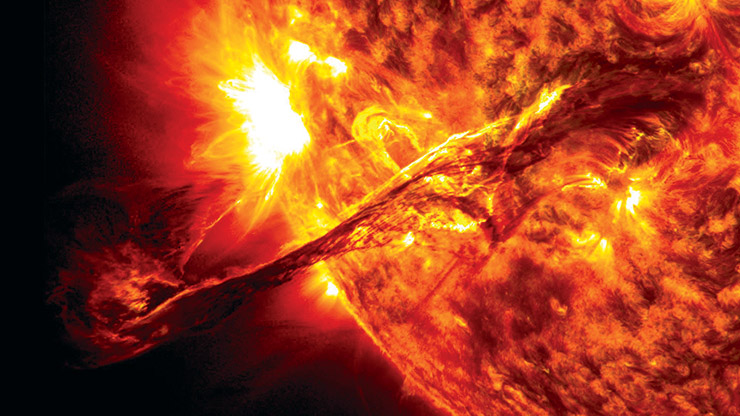
    I have been studying our Sun for some years, focusing on the influence of erratic solar behaviour (erratic from a modern human perspective) on the course of human development and civilisation. One of my major conclusions is that the last ice age ended abruptly circa 9700 BCE due to a major solar outburst (or series of outbursts). Solar activity is intimately tied to climate changes on Earth, which in turn have major effects on life on our planet, including humanity.

    Following the solar agitation and disturbances that ended the last ice age and possibly continued for several millennia, during the last 8,000 years or so the Sun has been relatively stable, with periods of quiescence.1 For example, in historical times during the Maunder Minimum (circa 1645 to 1715) the Sun appeared to “shut down” or go dormant (as reflected in the rarity of sunspots), corresponding on Earth to the middle of the “Little Ice Age” (which in totality lasted from circa 1500 to circa 1860). At the end of the “Little Ice Age,” in 1859, the Sun “burped,” spewing out two coronal mass ejections (CMEs), accompanied by solar flares and other solar activity, that hit Earth. This become known as the Carrington Event (named after British astronomer Richard Carrington who observed a solar flare that preceded the main event). At the time unusual auroras were seen around the world due to the solar outburst, and the primitive mid-nineteenth century telegraph lines were overloaded by the incoming charged particles and accompanying geomagnetic storm.

    Overall, in 1859 the solar outburst caused little more than minor damage and a bit of an inconvenience for those who utilised the telegraph lines. If a Carrington-level event were to hit today, the story would be much different! A Carrington-level event could knock out modern electronics around the globe, bringing computer systems, electrical grids, the Internet, communications, satellites, and much more to a standstill.2

    In modern times, that is since about the middle of the twentieth century, the Sun has shown increasing signs of agitation, of variability, of erratic behaviour, of “mood swings,” the likes of which have not occurred since the solar outbursts that ended the last ice age. And the solar outbursts of circa 9700 BCE and the succeeding millennia were orders of magnitude greater than the 1859 Carrington Event. Prior to 9700 BCE sophisticated cultures – civilisation – had developed (witnessed dramatically by the archaeological remains found at Göbekli Tepe in southeastern Turkey). This early cycle of civilisation was devastated by the solar outbursts of circa 9700 BCE and a solar-induced dark age (or SIDA for short, an acronym coined by my wife Catherine Ulissey) ensued for thousands of years until civilisation fully re-emerged in places such as Mesopotamia and Egypt during the period of circa 4000 BCE to 3000 BCE.

    If we were to witness a repeat of the events, the solar outbursts, that ended the last ice age, there is no doubt our modern technological civilisation would be utterly decimated. We would be thrown back to a “stone age” and worse. Why do I say “and worse”? Because today we have hundreds of nuclear power plants around the globe. If a Carrington-level event, much less a solar outburst at the level of that at the end of the last ice age, were to hit us today, power lines would be disabled, the cooling systems and other components of nuclear power plants would be compromised, and we would have Fukushima type situations or worse around the world releasing radioactivity into the environment, compounding all of the other problems brought on by the failure of modern electronic and electrical systems.3

    What are the chances of a Carrington-level event, much less a 9700 BCE-level event, occurring in the foreseeable future? I suspect very high! I do not want to be a scaremonger or doomsayer, but there is evidence to suggest that our Sun is going through a volatile period, with major ups and downs in activity.4 Some researchers suggest that although the Sun was very active in the last few decades, it has in recent years gone into a quiescence period. Some even claim we might be headed for another “ice age” (whether a mini or major ice age).5 I feel this is an invalid extrapolation of the limited data we have.

    Activated Sun

    It could be that the Sun is once again going through a period of extreme variability, manifesting as a pattern of highs and lows in solar activity. That is, we should not extrapolate from a few years (or even a couple of decades) of relatively low solar activity to the conclusion that we are imminently entering another ice age. Indeed, the Sun may suddenly become active again, or it might undergo a major solar outburst even in the midst of an overall period of relative inactivity. The 1859 Carrington Event occurred between a solar minimum and a solar maximum during a rather mediocre solar cycle; based on short-term methods of analyses, it is unlikely to have been predicted even with modern techniques (at the time, scientists were not even aware of the modern concept of major solar outbursts so no one was even attempting such predictions).

    Looking at the longer term pattern of solar activity over the last 12,000 years (reconstructed from such data as isotope concentrations in Greenland ice cores), my judgment is that our Sun is showing all of the same signs of extreme variability and disequilibria which occurred at the end of the last ice age.6 The implication is we may experience a major solar outburst in the very near future. Indeed, in July 2012 a significant solar outburst barely missed hitting Earth.7 If the eruption had occurred just a week or so earlier it would have been Earth-directed, and most likely destroyed or compromised much of our modern electronic and electrical technology and infrastructure. Even now, years later, we would still be attempting to rebuild the modern world. And the July 2012 event occurred during our current solar cycle,8 which has been unusually quiet overall, to the point that (as noted above) some people predict a partial solar shutdown and a “mini ice age” or even the beginning of a true ice age.

    With this introduction, I want to turn to the subject of the title of this article: Is Our Sun Conscious? I wonder, in all seriousness, if it was just luck or good fortune that the July 2012 solar event was a near miss from Earth’s perspective, or if there was possibly something else involved?

    A Conscious Sun?

    For the past several years my wife, Catherine (Katie) Ulissey, has been following observations of the Sun on a regular – usually daily – basis. Solar flares and accompanying coronal mass ejections (CMEs) can erupt from sunspots, so sunspots and their activity are a potential short-term indicator of an impending major solar outburst that, if Earth-directed, could cause massive devastation to our modern technological society, as might have happened if the July 2012 solar eruption had hit us.

    Katie often comments to me that otherwise very active sunspots strangely lessen the severity of their activity, producing smaller solar flares and so forth, or even appear to become temporarily dormant and shut down their activity, when they are Earth-facing. Then, as they move around to the side and back of the Sun (as viewed from Earth; the Sun rotates on its axis and of course Earth revolves around the Sun), these same sunspots begin firing again, increasing their activity dramatically. It is as if the Sun is aware of Earth’s presence and is attempting to avoid spewing a major solar outburst (whether a solar flare, CME, or some other type of solar eruption) directly at us.

    Katie is not the only observer to comment anecdotally on this apparent pattern;9 others have independently suggested, perhaps in jest, that our Sun is consciously attempting to protect us from being hit by a major solar outburst. In analogy, imagine a person who is about to sneeze, but is able to hold it long enough to turn away and avoid sneezing on someone else.

    This may seem like a very weak basis for suggesting our Sun has the property of consciousness, but there is additional evidence. The Sun is a fairly typical star, and it has been found stars exhibit anomalous behaviours that are not easily explained by the theories of standard physics.

    As physicist Gregory Matloff (New York City College of Technology) has discussed,10 stars do not appear to move in the ways that standard theories, such as formulations based on Newton’s theory of gravity, predict. Stars typically move around the centre of the galaxy in which they are located. Standard theory predicts that stars closest to the galactic centre should revolve more rapidly than those farther from the centre (just as Mercury travels more rapidly around the Sun than does Saturn, which is much farther from the Sun). However, this proves not to be the case. On the whole, stars farther from the galactic centre move more rapidly than stars closer to the galactic centre; it is as if all of the stars are mounted on a huge rotating wheel. Another problem with standard theory is that the masses of clusters of galaxies (as best as can be calculated based on our observations) are not great enough to hold the clusters together gravitationally. To address these issues, the concept of “Dark Matter” has been hypothesised. In simple terms, Dark Matter, which according to its advocates is said to compose the majority of matter in the universe, is essentially undetectable except for its gravitational effects on visible matter and radiation. Supposedly, Dark Matter can explain the anomalous movements of stars and the clustering of galaxies.

    Do Stars have a Will of Their Own?

    There is another explanation that could also account for the anomalous behaviour of stars, an explanation that does not need to invoke undetected Dark Matter: stars are conscious and move according to their own will or volition. In one of his articles, Gregory Matloff defines “a conscious entity as one capable of volition – it has enough self-awareness that it can decide to take (or not take) a selected action.” Thus “a conscious star can decide to alter its motion to participate in the great stellar dance as stars orbit the centres of their galaxies. Such a star need not have a human-level or god-like consciousness. A simple herding instinct is enough.”11 The existence of such consciousness in stars, which are following a herding instinct (similar to a school of fish swimming together or a flock of birds flying together), would adequately explain their otherwise anomalous motions. Is this a simpler explanation than invoking Dark Matter?

    Matloff has also discussed several potential mechanisms by which stars might be able to express their will and consciously change their trajectories. The best established mechanism is the use of jets of material emitted from the star. Young stars emit intense jets of material, often bipolar but not necessarily symmetrical. Asymmetric jets exuded by young stars could be used to preferentially change and adjust their trajectories. Mature stars, such as our Sun, emit a “solar wind” consisting of electrically-charged particles. Variations in the intensity, in various directions, of the solar wind could change the path of the star. One must remember that, as Matloff points out, changes in the trajectory of a star that may be “significant” to the star over its long lifetime of millions or billions of years (our Sun is estimated to be nearly five billion years old) may appear trivial or imperceptible to us. The use by our Sun of jets and variations in the solar wind to express will and volition could be related to the idea that our Sun may consciously attempt to avoid throwing solar eruptions toward Earth – and if this is the case, it is then also the case that the Sun could consciously decide at some point to hit Earth with a major solar outburst. Is this what happened at the end of the last ice age, circa 9700 bce? Or was the solar outburst at that time an “accident”?

    Matloff tentatively suggests two other mechanisms by which our Sun, or any conscious star, might theoretically change its trajectory: 1) Variations in the pressure of electromagnetic radiation, including visible light, given off by the star; and 2) by psychokinesis. Electromagnetic radiation pressure seems like a plausible possibility, although little work has been done to model how great the variation would have to be to change a star’s trajectory. Possibly changes in electromagnetic radiation could be used volitionally by stars for other purposes, such as communication among themselves. Psychokinesis (also known as telekinesis or mind-over-matter) has, to my satisfaction, been demonstrated to exist among biological organisms such as humans.12 Whether psychokinesis could (or does) exist among other conscious entities, such as possibly stars, is currently unknown – although I am not aware of any theoretical reason why it should not.

    But how can the Sun and stars be conscious when they are not even biological organisms, at least not in the sense of carbon-based cellular creatures like ourselves? A common notion, which is not to say it is correct (all too often common notions and “common sense” are wrong), is that consciousness and volition (at least in nature) can only occur in carbon-based forms of biological organisms, and many people would limit the notion of consciousness to “advanced” biological organisms like vertebrates, mammals, or, according to some, only human beings. However, various researchers have argued that consciousness may arise at a quantum level and may not be limited to familiar biological organisms such as ourselves.

    For instance, the British physicist Sir Roger Penrose (University of Oxford) and anesthesiologist Stuart Hameroff (The University of Arizona Medical Center) have developed the theory of orchestrated objective reduction as an explanation for how consciousness arises. Essentially, an orchestrated coherent series of quantum reductions (wave function collapses) result in moments and sequences of consciousness and choice or decision-making.13 As it turns out, according to such analyses, the conditions conducive to the manifestation of consciousness may occur on and in stars. Indeed, at a more fundamental level, consciousness may be inherent to the manifestation of matter and exist throughout the universe – with most conscious beings taking forms other than “biological organisms,” yet we as carbon-based life forms may have a difficult time recognising consciousness in other forms of matter. The physicist Max Tegmark (Massachusetts Institute of Technology, Cambridge, USA) has suggested consciousness may be a “state of matter” (“perceptronium”)14 – perhaps this is a state of matter that our Sun, and stars more generally, possess.

    “Afterthoughts” of Our Sun

    Possibly related to the concept of a conscious Sun is research that found a correlation between patterns in solar activity and earthquakes on Earth.15 Furthermore, there may be a correlation between earthquakes and major atmospheric disturbances, such as cyclone activity, on our planet.16 If our Sun is conscious, does it consciously influence storm activity, weather patterns, and earthquake activity on our planet? Or are these types of phenomena linked to the Sun, yet “afterthoughts” from the Sun’s perspective? Is the Sun sometimes rather oblivious to its influence on Earth, just as we might be rather oblivious when we unknowingly destroy a colony of bacteria or step on an ant mound by mistake?

    When we look at traditional mythologies and ancient beliefs, many past cultures considered the Sun and stars to be conscious entities – and this can perhaps be seen as the basis of astrology. The gods were associated with stars (including objects in the sky that we now classify as planets), and the ancient Egyptians (to give but one example) hoped to be united with the Sun and stars upon death. Plato in Timaeus (circa 360 bce) wrote, “And when he [the Artificer] had compounded the whole, he portioned off souls equal in number to the stars and distributed a soul to each star…”17

    Building on such ideas, my wife Katie has speculated that perhaps when human beings die their hydrogen is released (hydrogen can potentially carry information, and many would argue that information is an essential element of consciousness) and at least some of the hydrogen escapes to space where it collects as clouds, collapses under gravitational attraction, is compressed, and ultimately gives rise to stars – stars which may retain some of the information, some of the consciousness aspects, of the former beings who gave up their hydrogen. In this way, perhaps we (and possibly all biological organisms) may be reborn as stars. Of course, this is a highly speculative hypothesis,18 but if we can demonstrate our Sun and other stars are conscious, it may lend support to the idea that ultimately (perhaps after a number of incarnations on Earth) we join our consciousnesses with those of the Sun and stars.

    At this point some would suggest I have crossed the boundary from “science” to “science fiction,” but I prefer in this case the label of “speculative science.” What might we conclude? Is our Sun conscious? While the consciousness of our Sun and the stars has yet to be definitively demonstrated, I do not think we should simply dismiss the idea. Indeed, a conscious Sun and stars may go a long way toward explaining various “anomalies” that standard paradigms cannot readily accommodate.

    [alert type=”general” dismiss=”no”]This article was published in New Dawn Special Issue Vol 10 No 6.[/alert]

    [alert type=”success” dismiss=”no”]If you appreciate this article, please consider subscribing to help maintain this website.[/alert]

    Footnotes

    1. S. K. Solanki, I. G. Usoskin, B. Kromer, M. Schüssler, and J. Beer, 2004, “Unusual activity of the Sun during recent decades compared to the previous 11,000 years”, Nature vol. 431, 1084-1087; G. Usoskin, S. K. Solanki, and G. A. Kovaltsov, 2007, “Grand minima and maxima of solar activity: new observational constraints”, Astronomy and Astrophysics, vol. 471, 301-309.
    2. For more detailed discussion of the topics in this paragraph, see: Robert M. Schoch, Forgotten Civilization: The Role of Solar Outbursts in Our Past and Future, Inner Traditions, 2012.
    3. See Note 2.
    4. See Notes 1 and 2.
    5. Anonymous, 2015, “Diminishing solar activity may bring new Ice Age by 2030”, available at https://astronomynow.com/2015/07/17/diminishing-solar-activity-may-bring-new-ice-age-by-2030/, article dated 17July 2015, accessed 29 October 2016; Zoë Schlanger, 2015, “An atmospheric scientist explains why that ‘mini ice age’ is bogus”, available at www.newsweek.com/mini-ice-age-bogus-global-cooling-climate-change-354632, article dated 17 July 2015, accessed 29 October 2016; Michael J. I. Brown, 2015, “The ‘mini ice age’ hoopla is a giant failure of science communication”, available at http://phys.org/news/2015-07-mini-ice-age-hoopla-giant.html, article dated 24 July 2015, accessed 29 October 2016.
    6. See Notes 1 and 2.
    7. NASA, 2014, “Near Miss: The Solar Superstorm of July 2012”, available at https://science.nasa.gov/science-news/science-at-nasa/2014/23jul_superstorm, article dated 23 July 2014, accessed 29 October 2016; Jason Samenow, 2014, “How a solar storm two years ago nearly caused a catastrophe on Earth”, available at www.washingtonpost.com/news/capital-weather-gang/wp/2014/07/23/how-a-solar-storm-nearly-destroyed-life-as-we-know-it-two-years-ago/, article dated 23 July 2014, accessed 29 October 2016.
    8. Solar Cycle 24, which began in 2008; this is the twenty-fourth cycle of magnetic polarity changes and minima to maxima to minima in sunspots since astronomers began systematically recording and numbering such cycles, starting in 1755. The average solar cycle is about eleven years in duration.
    9. This apparent phenomenon is also noted in Ben Davidson, Observing the Frontier: Eyes Open, No Fear, 2015, Space Weather News, LLC, 68-71.
    10. Greg Matloff, 2012, “Stars That Wander, Are You Bright: Are Stars Conscious?”, available at www.baen.com/starsconscious, article dated 2012, accessed 29 October 2016; see also, Gregory L. Matloff, 2012, “Star Consciousness: An Alternative to Dark Matter”, available at www.centauri-dreams.org/?p=23203, posted 13 June 2012 by Paul Gilster, accessed 29 October 2016; Greg Matloff (introduced by Paul Gilster), 2015, “Greg Matloff: Conscious Stars Revisited”, available at www.centauri-dreams.org/?p=33995, dated 18 September 2015, accessed 29 October 2016.
    11. Matloff quotations from www.baen.com/starsconscious, accessed 29 October 2016; italics in the original.
    12. See discussion, articles, and references in: Robert M. Schoch and Logan Yonavjak, The Parapsychology Revolution: A Concise Anthology of Paranormal and Psychical Research, Tarcher/Penguin, 2008.
    13. See my discussion of their work in: Robert M. Schoch, 2014, “Life, Death, and Raymond: Exploring the Nature of Death and Consciousness”, Darklore, vol. 8, 189-212.
    14. Max Tegmark, 2015, “Consciousness as a State of Matter”, available at https://arxiv.org/abs/1401.1219 and https://arxiv.org/pdf/1401.1219v3.pdf, accessed 29 October 2016 (original paper dated 6 January 2014, revised version of 18 March 2015 consulted).
    15. See, for instance, the following works and also references cited therein: John F. Simpson, 1967, “Solar activity as a triggering mechanism for earthquakes”, Earth and Planetary Science Letters, vol. 3, 417-425; A. Zátopek and L. Krivsky, 1974, “On the correlation between meteorological microseisms and solar activity”, Astronomical Institutes of Czechoslovakia, Bulletin, vol. 25, no. 5, 257-262; A. L. Morozova, M. I. Pudovkin, and T. V. Barliaeva, 2000, “Variations of the Cosmic Ray Fluxes as a Possible Earthquake Precursor”, Physics and Chemistry of the Earth, vol. 25, 321–324; S. Odintsov, K. Boyarchuk, K. Georgieva, B. Kirov, and D. Atanasov, 2006, “Long-period trends in global seismic and geomagnetic activity and their relation to solar activity”, Physics and Chemistry of the Earth, vol. 31, 88–93; Jean-Paul Poirier, Jean-Louis Le Mouël, and Vincent Courtillot, 2009, “Microseismicity, meteorology and the solar cycle”, Académie des Sciences, Comptes Rendus Geoscience, vol. 341, 977–981; Jeffrey J. Love and Jeremy N. Thomas, 2013, “Insignificant solar-terrestrial triggering of earthquakes”, Geophysical Research Letters, vol. 40, pp. 1165-1170; Mikhail Kovalyov and Selena Kovalyov, 2015, “On the relationship between cosmic rays, solar activity and powerful earthquakes”, available from https://arxiv.org/abs/1403.5728 and https://arxiv.org/pdf/1403.5728v2.pdf, accessed 29 October 2016 (original paper dated 23 March 2014, revised version of 10 February 2015 consulted); Ben Davidson, Kongpop U-yen, and Christopher Holloman, 2015, “Relationship between M8+ Earthquake Occurrences and the Solar Magnetic Fields”, New Concepts in Global Tectonics Journal, vol. 3, no. 3, 310-322. Interestingly, various seismic events on our Moon (moonquakes) are apparently correlated with, or triggered by, some phenomenon or phenomena outside of our Solar System; see Cliff Frohlich and Yosio Nakamura, 2006, “Possible extra-Solar-System cause for certain lunar seismic events”, Icarus, vol. 185, 21–28. If this is true, it suggests the possibility that in at least some cases phenomena on our Sun and earthquake activity on Earth (as well as moonquakes) may be correlated with each other because both the Sun and Earth (or Earth-Moon system) are responding to common phenomena outside of our Solar System, or perhaps the Sun is responding to something from outside the Solar System and then causing effects on Earth (and presumably on other planets and bodies in our Solar System as well). Such studies are still in their infancy.
    1. See discussion in: B. Davidson, Observing the Frontier [see Note 9].
    2. R. D. Archer-Hind, The Timaeus of Plato, edited with Introduction and Notes, London and New York: Macmillan and Co., 1888, 141 and 143.
    3. Discussed further in: Forgotten Civilization [see Note 2], 255-259.

    © New Dawn Magazine and the respective author.
    For our reproduction notice, click here.
  • Time, Entanglement & Consciousness

    Time, Entanglement & Consciousness

    From New Dawn Special Issue Vol 6 No 4 (Aug 2012)

    Over the past year [2011-2012] a number of new, potentially momentous, discoveries have been made in the realms of quantum and particle physics. On the one hand, they stand to rock the very foundations of modern physics and the common-sense reality that most people live their everyday lives by. On the other hand, these same discoveries lend further support to the reality of both paranormal phenomena and the literal veracity of ancient wisdom. In particular, I am here referring to three recent announcements:

    1) In late April 2012 a research team from the US National Institute of Standards and Technology reported on an experiment involving the generation of light pulses travelling faster than the speed of light in a vacuum. This work involved forcing a wave peak on a pulse of light to move from back to front along the light beam as the light itself was travelling at the standard speed of light, such that the pulse travelled faster than the speed of light in a vacuum.1 If refined, such a technique could possibly allow information to be sent faster than the speed of light. This work follows on the heels of a major brouhaha over another alleged instance of faster than light speeds.

    A consortium of scientists reported in September and November 2011 that subatomic particles known as neutrinos had been measured travelling faster than the speed of light while passing through 730 kilometres of rock from the CERN (European Organization for Nuclear Research, formerly known as the Conseil Européen pour la Recherche Nucléaire) particle physics laboratory in Geneva, Switzerland, to the OPERA (Oscillation Project with Emulsion-tRacking Apparatus) particle detector in the Laboratori Nazionali del Gran Sasso, Italy.2

    Standard modern mainstream physics theories, many based in large part on Albert Einstein’s special theory of relativity (first proposed in 1905), have long assumed that the speed of light in a vacuum is the upper limit of how fast anything can travel, and therefore if these experimental results are correct, some of the most basic assumptions in modern physics will need to be reevaluated.

    For months the debate raged over whether the neutrinos really were travelling faster than the speed of light; the consensus view held that there was some flaw in the apparatus, calculations, and/or analysis. Ultimately, based on carrying out further experiments, including at other labs, it was announced that “the original OPERA measurement can be attributed to a faulty element of the experiment’s fibre optic timing system.”3 Still, given the apparently solid work on light pulses mentioned above, I personally wonder if, just perhaps, OPERA did indeed capture some superluminal (faster than the speed of light) neutrinos, even if not all neutrinos travel so fast.

    A major objection to the possibility of superluminal travel of any form is that it will upset cherished notions of time and temporal ordering (conventional thinking asserts that the past must occur before the present which must occur before the future). From our perspective, particles (including particles of light, or ‘particles’ of information) travelling faster than light might be viewed as travelling backwards in time (arriving one place before they depart from another place), or through other dimensions, and open the possibility of effects occurring before causes (although exactly what ‘before’ means in this new notion of time is open to debate). That is, the concept of retrocausality (the future influencing the present and the past), which many people (including many theoretical physicists) instinctively reject, would have to be taken seriously.

    2) In quantum mechanics the concept of entanglement occurs when particles interact and are then separated, but they are still somehow correlated (or more accurately, anti-correlated) in terms of their characteristics. Acting on one particle will result in an effect or outcome on the other particle, even if a considerable distance physically separates the particles and there is no direct conventional physical or energetic link between them. To use a crude analogy, if two different roulette wheels in two different casinos are entangled in a quantum mechanical sense, whenever one roulette wheel comes up red the other will come up black.

    Einstein referred to quantum entanglement as “spukhafte Fernwirkung” (spooky action at a distance), but it has been demonstrated experimentally numerous times, and the effects of entanglement seem to propagate either instantaneously or at a speed thousands of times faster than the speed of light (which is highly perplexing). Up until now quantum entanglement has generally been limited to very small microscopic objects, such as subatomic particles, atoms, isolated molecules, and microscopic crystalline structures. In December 2011 a group of physicists from the University of Oxford, the National Research Council of Canada, and the National University of Singapore announced the successful quantum entanglement of two macroscopic (approximately 3 mm in size) diamonds at room temperature and separated by a distance of about 15 cm.4

    3) The wave function in quantum mechanics can be viewed as a mathematical or statistical way to describe the probabilities that certain properties will occur in a system of quantum particles (and ultimately, one can argue, everything – all of the known universe – can be reduced to a system or systems of quantum particles). And ‘quantum collapse’ (collapse of the state vector) can be viewed as the ‘freezing’ of this set of probabilities into one possibility or outcome, the one observed or measured, in the ‘real world’. But is the wave function simply, or truly, just a mathematical and statistical convention describing our limited knowledge of reality (perhaps with some currently unknown ‘reality’ underlying it)? Is the wave function to be understood as a description of the state of our knowledge? Or is the wave function itself a ‘real’ entity, a distinct state of reality – that is, is there a tangible, physically real, wave? Is the quantum state a real physical property of a system and not just a statistical description of our knowledge, and does ‘quantum collapse’ correspond to a real physical process?

    In November 2011 researchers M. F. Pusey, J. Barrett, and T. Rudolph (MFP and TR are in the Department of Physics at the Imperial College London, and JB is in the Department of Mathematics at the University of London) presented a new analysis and theorem as to the meaning of the wave function in quantum mechanics.5 According to their analysis, given some basic assumptions, the wave function must have a physical reality. However, in my opinion, they have not ultimately ‘proven’ that the wave function is objectively real. Rather, they have logically limited the possible interpretations of the wave function. By my view, their analysis appears to demonstrate that unless all quantum particles (that is, in effect, all entities in the universe) are somehow related or connected to each other through both space and time, then the wave function must be a real physical object. They seem to reject the notion that everything in the universe could be connected in some manner, for it is generally assumed that although quantum entanglement occurs in some cases, not everything is entangled with everything else. Furthermore, it appears to me that one of the assumptions underlying the analysis of Pusey, Barrett, and Rudolph is that retrocausality (the possibility of the future affecting the past) is impossible.

    Each of these three developments in physics is important, and fundamentally paradigm shattering. The least controversial of the three is the quantum entanglement of the diamonds, for the experimental results are clear and definitive. But the entanglement of macroscopic diamonds at ordinary room temperature under ordinary conditions demonstrates, I believe, that those who have long argued that quantum entanglement (and other ‘mysterious’ quantum effects as well) is limited to the microscopic world and can have no real consequences in our everyday lives are wrong.

    Quantum Entanglement & Telepathy

    Indeed, in a general (and, I would add, rather unconvincing) way, there has long been talk in some circles that certain psychic or paranormal phenomena such as telepathy (direct mind-to-mind communication) could be due to quantum entanglement.6 Now the entangled diamonds appear to provide strong evidence that such entanglement and correlation of information is possible. In my experience telepathy tends to work best when one is in a mental state decoupled from the immediate surrounding environment, which allows the mind of one individual to couple or entangle with the mind of another individual (or individuals). Like minds in telepathic rapport, diamonds best maintain their quantum entanglement when they can be decoupled from ‘distractions’ or the entanglement is stronger than the ‘distractions’ (in the case of the diamonds, ‘distractions’ might include such phenomena as being ‘excited’ by environmental changes, like temperature or physical movement). Of course most hardcore physicists tend to dismiss telepathy as nonsense even though they accept the quantum entanglement of diamonds.

    Solid Support for Retrocausality

    The issue of anything with the ability to carry information travelling faster than the speed of light, be it particles or light pulses, is highly controversial. As the edifice of modern physics has been constructed, with so many fundamental equations dependent on the speed of light as a constant and upper limit for temporal relationships, superluminal transfer of information breaks down the conventional concept of time, the future and past become confused, and the spectre of retrocausality raises its ugly head (well, ugly for status quo thinkers!).

    Yet there is solid support for retrocausality on several fronts. A group centred in Vienna, Austria, headed by Anton Zeilinger, has experimentally demonstrated that the decision as to whether or not two particles at a quantum level are entangled or in separate quantum states can be made after the particles have been measured (and may no longer exist).7 This means that at a quantum level actions in the present or future can reach back into the past!

    However, actions reaching back into the past are not limited to a quantum level. There is now strong parapsychological support for retroactive influences on the human mind. As I briefly mentioned in a previous edition of New Dawn,8 Dr. Daryl J. Bem of Cornell University has carried out a successful series of “retroactive facilitation of recall” experiments demonstrating that the future can influence the present and the past (in the case of the studies by Dr. Bem, students studying for a test after the fact improved their performances on a test already taken – that is, classic retrocausality, or effects occurring before their causes, was demonstrated).9

    As in the case of the entangled diamonds, the experimental physical evidence – in this case light pulses travelling at superluminal speeds and actions at a quantum level reaching back into the past – helps supply a theoretical foundation for psychic or paranormal phenomena that, although well attested to by competent researchers, are generally dismissed by mainstream scientists.

    The theoretical work on the wave function of quantum mechanics dovetails, in my assessment, with that which many mystics and psychics have been espousing since ancient times: In a fundamental way we, the entire universe, all entities, are interconnected at some level (the level of interconnectedness differing among various entities) and time is not what it superficially appears to be. In my opinion the work of Pusey, Barrett, and Rudolph opens, at the level of quantum mechanics, the age-old argument between the ‘physicalists-materialists’ who fundamentally believe there is nothing more to reality than matter and energy, and those who believe ‘ultimate reality’ involves something more and beyond matter-like and energy-like entities as generally construed by classical physics.

    Consciousness is Fundamental

    But what could be beyond matter and energy? One possibility is consciousness, and I believe that consciousness can be equated with thought, mind, mental constructs, information, and ultimately knowledge. And rather than being a secondary phenomenon that arises from matter and energy, at the most fundamental level consciousness may be independent of matter and energy. Max Planck (1858-1947), the originator of quantum theory and winner of the 1918 Nobel Prize in Physics, stated in a 1931 interview:

    I regard consciousness as fundamental. I regard matter as derivative from consciousness. We cannot get behind consciousness. Everything that we talk about, everything that we regard as existing, postulates consciousness.10

    This is a very interesting, and powerful, statement. In these terms, the statistical or probabilistic interpretation of the quantum wave function can be viewed as a genuine description of a system in a ‘pre-matter’ and ‘pre-energy’ state that only takes on a physical reality when affected by consciousness (and simple observation will affect any quantum system).

    Returning to the analysis of Pusey, Barrett, and Rudolph, I believe they conclude that the quantum state and wave function are ‘real’ in a physical-material-energy sense based on several assumptions. They assume that a quantum system can be isolated from the rest of the universe, both spatially and temporally – and in particular they assume that the future will not influence the past, so an apparatus or system separated by “a sufficient time period” will not affect an earlier apparatus or system. They also assume that measuring devices respond only to the physical properties of the entities that they are measuring. If the assumptions of Pusey, Barrett, and Rudolph can be shown to be wrong, their work can then be interpreted to demonstrate that rather than the wave function and quantum state being physically real, there must be something more to the universe and cosmos beyond simple matter and energy.

    I interpret various lines of experimental evidence, ranging from modern physics (such as the work on faster-than-light particles and quantum effects that may be interpreted as going backwards in time) to parapsychological studies (demonstrating that the future can influence the past), as clearly falsifying the assumptions of Pusey, Barrett, and Rudolph. At a most fundamental level it appears there are connections throughout space and time. Just as diamonds can be entangled, nothing is truly isolated. Ultimate reality lies beyond the physical and material. What is this ultimate reality? Our best conception may be encoded in what we think of as consciousness. The mystics and sages of the ages, as well as Max Planck, were right. Consciousness is fundamental. Consciousness underlies and is the source of everything else, including all that we regard as the material universe.

    [alert type=”general” dismiss=”no”]This article was published in New Dawn Special Issue Vol 6 No 4.[/alert]

    [alert type=”success” dismiss=”no”]If you appreciate this article, please consider subscribing to help maintain this website.[/alert]

    Footnotes:

    1. Ryan T. Glasser, Ulrich Vogl, and Paul D. Lett, “Stimulated Generation of Superluminal Light Pulses via Four-Wave Mixing”, Physical Review Letters, PRL 108, 173902, 5 pages, 26 April 2012.
    2. T. Adam, N. Agafonova, A. Aleksandrov, O. Altinok, P. Alvarez Sanchez, A. Anokhina, S. Aoki, A. Ariga, et al, “Measurement of the neutrino velocity with the OPERA detector in the CNGS beam”, article dated 17 November 2011, available from http://arxiv.org/abs/1109.4897 and http://arxiv.org/ftp/arxiv/papers/1109/1109.4897.pdf (Accessed 18 November 2011). See also: Adrian Cho, “Where Does the Time Go? One experiment sees neutrinos traveling faster than light. If the result can’t be replicated, it may never be explained away”, Science, vol. 334, 1200-1201 (2 December 2011); Alex Knapp, “New Evidence Casts Doubt On Faster-Than-Light Neutrinos”, article dated 28 December 2011, available from www.forbes.com/sites/alexknapp/2011/12/28/new-evidence-casts-doubt-on-faster-than-light-neutrinos/ (Accessed 20 January 2012); Clara Moskowitz, “Warped Physics: 10 Effects of Faster-Than-Light Discovery”, article dated 24 September 2011, available from www.livescience.com/16214-implications-faster-light-neutrinos.html (Accessed 20 November 2011); Jason Palmer, “Light speed: Flying into fantasy”, article dated 23 September 2011, available from www.bbc.co.uk/news/science-environment-15034414 (Accessed 18 November 2011); Jason Palmer, “Neutrino experiment repeat at Cern finds same result”, article dated 18 November 2011, available from www.bbc.co.uk/news/science-environment-15791236 (Accessed 18 November 2011); Jason Palmer, “Speed-of-light results under scrutiny at Cern finds same result”, article dated 23 September 2011, available from www.bbc.co.uk/news/science-environment-15017484 (Accessed 18 November 2011); Natalie Wolchover, “What Would It Be Like to Travel Faster than the Speed of Light?”, article dated 23 September 2011, available from www.lifeslittlemysteries.com/neutrinos-faster-speed-light-2044/ (Accessed 20 November 2011).
    3. Sergio Bertolucci, “Neutrinos sent from CERN to Gran Sasso respect the cosmic speed limit”, article dated 8 June 2012, available from http://press.web.cern.ch/Press/PressReleases/Releases2011/PR19.11E.html (Accessed 19 June 2012).
    4. K. C. Lee, M. R. Sprague, B. J. Sussman, J. Nunn, N. K. Langford, X.-M. Jin, T. Champion, P. Michelberger, K. F. Reim, D. England, D. Jaksch, and I. A. Walmsley. “Entangling Macroscopic Diamonds at Room Temperature”, Science, vol. 334 no. 6060, 1253-1256 (2 December 2011).
    5. Matthew F. Pusey, Jonathan Barrett, and Terry Rudolph, “The quantum state cannot be interpreted statistically”, article dated 14 Nov 2011, available from http://arxiv.org/abs/1111.3328 and http://arxiv.org/PS_cache/arxiv/pdf/1111/1111.3328v1.pdf (Accessed 19 January 20120).
    6. Note that phenomena generally regarded as “telepathic” may include a mixture of phenomena due to different causal mechanisms; thus some forms of telepathy may be the result of quantum entanglement and other forms of telepathy may be due to electromagnetic radiation, particularly in the extremely long wavelength and extremely low frequency range.
    7. Xiao-song Ma, Stefan Zotter, Johannes Kofler, Rupert Ursin, Thomas Jennewein, Caslav Brukner, and Anton Zeilinger, “Experimental delayed-choice entanglement swapping”, Nature Physics, www.nature.com/naturephysics, DOI: 10.1038/NPHYS2294, 6 pages, published online 22 April 2012; Caslav Brukner, “Quantum physics mimics spooky action into the past”, press release date 23 April 2012, available from www.eurekalert.org/pub_releases/2012-04/uov-qpm042312.php (Accessed 8 May 2012).
    8. Robert M. Schoch, “Thoughts Have Wings”, New Dawn, January-February 2011, 11.
    9. Daryl J. Bem, “Feeling the Future: Experimental Evidence for Anomalous Retroactive Influences on Cognition and Affect”, Journal of Personality and Social Psychology, vol. 100, no. 3, 407-425 (March 2011); abstract available from http://psycnet.apa.org/journals/psp/100/3/407/ (Accessed 20 August 2011); author’s typescript version of the paper available from http://dbem.ws/FeelingFuture.pdf (Accessed 20 August 2011).
    10. Max Planck, [Interview comments] The Observer (London), 25 January 1931; quoted in Joseph H. Fussell, “Review and Comment” on the book Where is Science Going? by Max Planck (1933), The Theosophical Path, vol. 43, no. 2, 198-213 (October 1933).

    © New Dawn Magazine and the respective author.
    For our reproduction notice, click here.
  • Beyond the Five Senses: The Powers Latent in Humankind

    Beyond the Five Senses: The Powers Latent in Humankind

    From New Dawn 129 (Nov-Dec 2011)

    The traditional five senses – sight, hearing, smell, taste, and touch – are these the only ways to perceive the world, to gain information, to experience reality? In fact there are more than five senses, taking different forms, in various types of organisms, including humans. For instance, humans can also sense balance and acceleration, temperature, and pain due to nerve damage. There are other types of physiological receptors as well, some found in humans, some found in other organisms. To cite just a few examples, directional awareness based on Earth’s magnetic field occurs in birds and bacteria, various species of fishes as well as dolphins can detect electric fields, and for many types of fishes water pressure detection used to maintain buoyancy is critical.

    But is there something more than the sorts of physiological-based senses described in the last paragraph? The answer to this question is of profound importance, as it fundamentally divides the world into two philosophical and metaphysical camps.

    On the one hand we have the “physicalists-materialists” who believe there is nothing more to reality beyond matter and energy as construed by classical physics and western science more generally. This position devolves to a dogmatic scientism (sometimes referred to as naturalism1) that posits the so-called scientific method, involving empiricism, observations, and laboratory experiments (generally with a heavy emphasis on measurements), as the only way to gain knowledge.

    On the other hand, in sharp contrast to extreme scientism, are found a wide array of “ways of knowing.” These include a diverse range of experiences with equally diverse labels: religious insight, ecstasy, spiritual knowledge, meditative contemplation, divine illumination, aesthetic and symbolic revelation, visionary trances, out-of-body experiences, soul travelling, channelling of supernormal entities, and so forth.

    In sum, scientism is often contrasted with spirituality, religiosity, and the preternatural, supernatural, or supersensitive in all of their disparate forms. Another way of putting this is that scientism denies any inner or beyond this material world aspects, such as the concept of consciousness, that are divorced from or in addition to physical matter and energy as perceived either directly or indirectly (using appropriate instrumentation) via the five senses. Those following the dogmatism of scientism often make a sharp distinction between the objective and the subjective; based on my research, this is a false dichotomy that often blurs under close scrutiny.

    In terms of the mind-body problem, scientism essentially denies that consciousness is anything more than an epiphenomenon arising from physical-chemical processes taking place in the brain. The alternative extreme view is that consciousness exists outside of and beyond matter, and it is consciousness that in fact infuses the universe and makes matter manifest. Based on his understanding of modern physics, Amit Goswami (author of a standard textbook on quantum mechanics2) has written:

    “I propose that the universe exists as formless potentia in myriad possible branches in the transcendent domain and becomes manifest only when observed by conscious beings.”3

    It is not only from a quantum mechanical point of view that one can reach the conclusion that consciousness may be prior to matter. Erik Verlinde (Institute for Theoretical Physics, University of Amsterdam) developed a new theory of gravity based on the concept that the universe is essentially a holograph where the structure of space-time emerges from information.4 Elaborating on Verlinde’s work, I came to the following conclusion:

    “The most fundamental aspect of the universe… is information. Information can be equated with thought or mind or mental constructs independent of any material everyday conception…. The universe of mass and energy and forces, as we experience it on an everyday practical level, may have had its origin in a thought that inserted information into an otherwise blank (data free) holographic system…. Inserting more thoughts, more information, expands and changes the system…”5

    For me the bottom line is that not only can consciousness exist independent of matter, but consciousness – thought, information – is prior to matter in a most fundamental sense. This position is diametrically opposed to dogmatic scientism and opens, even demands, the acknowledgment that not only is there more to reality than can be perceived by the “five senses,” but in order to gain a complete picture and understanding of reality we must gain knowledge in ways that go well beyond the five senses, beyond the simplistic so-called scientific method. We need philosophical, religious, transcendent experiences and the genuine knowledge such experiences bring. Those who limit themselves to their material physiology can never aspire to understand the ultimate nature and meaning of the universe.

    This assertion that consciousness is beyond matter is not just an empty statement for me. We have latent powers to exercise, and such powers have been expressed in a variety of contexts through the ages. Various forms of paranormal and parapsychological experiences elicit and highlight these latent powers, most often expressed as telepathic interactions (direct mind-to-mind, direct consciousness-to-consciousness, connections) or psychokinetic interactions (consciousness directly affecting matter and energy).6

    Make no mistake; telepathy and psychokinesis are genuine.7 Remote viewing, which is essentially telepathy and clairvoyance8 dressed in modern terminology, has been successfully demonstrated over and over again under controlled laboratory conditions.9

    Indeed, telepathy may be the most fundamental way to connect directly with the universal consciousness, with the numinous, with the divine. What is silent prayer but telepathy put to action to communicate with one’s god?

    Numerous techniques can be used to cultivate and elicit paranormal experiences, experiences that scientism either dismisses or fails to take seriously, and these have been developed within many different religious and cultural contexts, from the rituals of tribal African societies to the yogis of the Indian subcontinent to Zen practitioners to classic shamanism to séances in all their diverse forms to western occult and esoteric studies.10 All, at their core, elicit different but complementary ways of gaining access to legitimate knowledge that is beyond the five senses.

    [alert type=”general” dismiss=”no”]This article was published in New Dawn 129.[/alert]

    [alert type=”success” dismiss=”no”]If you appreciate this article, please consider subscribing to help maintain this website.[/alert]

    Footnotes

    1. Alex Rosenberg, “Why I Am a Naturalist”, 17 September 2011, article posted at: http://opinionator.blogs.nytimes.com/2011/09/17/why-i-am-a-naturalist/?ref=opinion (Accessed 26 September 2011); Timothy Williamson, “What Is Naturalism?”, 4 September 2011, article posted at: http://opinionator.blogs.nytimes.com/2011/09/04/what-is-naturalism/ (Accessed 26 September 2011).

    2. Amit Goswami, Quantum Mechanics (second edition), New York: McGraw-Hill, 1997.

    3. Amit Goswami (with Richard E. Reed and Maggie Goswami), The Self-Aware Universe: How Consciousness Creates the Material World, New York: Jeremy P. Tarcher/Putnam, 1993 [paper trade edition, 1995], 141, italics in the original.

    4. Erik Verlinde, “On the Origin of Gravity and the Laws of Newton”, paper dated 6 January 2010, 29 pages, available from http://arxiv.org/PS_cache/arxiv/pdf/1001/1001.0785v1.pdf (Accessed 28 July 2010).

    5. Robert M. Schoch, “Moving the Moai: Easter Island as a possible psychokinetic laboratory”, Darklore, vol. 5 (2010), pp. 134-155, 268-270 [endnotes]; quotation from page 145.

    6. It has not escaped my notice that some forms of paranormal and parapsychological phenomena may ultimately be explainable, or at least partially elucidated, by “conventional” physical and energetic systems, such as if for instance cases of telepathy (or some forms of telepathy) are electromagnetic phenomena in the extremely low frequency range. However, I am not convinced that all paranormal and parapsychological phenomena can be explained using a purely physicalist/materialist paradigm.

    7. The reality of these phenomena has been established despite the numerous charlatans who make fraudulent claims; as the saying goes, just because counterfeit money exists, that does not mean genuine currency does not exist. For evidence supporting the reality of paranormal and parapsychological phenomena, see: Robert M. Schoch, “Thoughts Have Wings”, New Dawn, January-February 2011, page 11; Robert M. Schoch and Logan Yonavjak, compilers and commentators, The Parapsychology Revolution: A Concise Anthology of Paranormal and Psychical Research, New York: Jeremy P. Tarcher/Penguin, 2008; and references cited therein.

    8. “Clear vision,” or the reception of information about objects, persons, or events, whether in the past, present, or future, by other than normal sensory means.

    9. Paul H. Smith, “Remote Viewing: State of the Field”, Edgescience, Number 8, July-September 2011, 13-16.

    10. See for instance: P. G. Bowen, The Occult Way, London: Rider and Company, circa 1936; Ernesto de Martino, Primitive Magic: The Psychic Powers of Shamans and Sorcerers, Bridport, Dorset: Prism, 1972/1988/1999; Caesar de Vesme, A History of Experimental Spiritualism (two volumes), Volume I, Primitive Man, Volume II, Peoples of Antiquity, London: Rider and Company, 1931; S. M. Shirokogoroff, Psychomental Complex of the Tungus, London: Kegan Paul, Trench, Trubner, 1935 [Reprinted: Berlin: Reinhold Schletzer Verlag, 1999.].

    © New Dawn Magazine and the respective author.
    For our reproduction notice, click here.