New Dawn – World's Most Unusual Magazine

Tag: magic

  • The Magical Universe of William S. Burroughs

    The Magical Universe of William S. Burroughs

    From New Dawn 142 (Jan-Feb 2014)

    When the American writer William S. Burroughs passed away at the ripe old age of 83 back in August 1997, the media coverage was definitely more in keeping with his status as a counter-cultural icon than it was for his literary fame – or infamy – alone. All the usual well-rehearsed lines were trotted out, about how he was the Harvard-educated product of the WASP elite and scion of the family that founded the Burroughs Corporation, who had turned his back on it all to become a junkie queer, trawling the steaming jungles of South America, sleazy ‘Interzone’ of Tangiers, and shady back-streets of Paris and London for drugs and boys. That somewhere along the line he became an unlikely mentor to Jack Kerouac, Allen Ginsberg and the Beats, who had opened the way for the Cultural Revolution of the 1960s.

    William Burroughs had originally exploded onto the literary scene back in 1959 with his breakthrough novel, Naked Lunch, causing hip critics everywhere to claim they had seen the future – even if nobody was really sure that they understood it. With his three-piece suit, glasses, hat and raincoat, Burroughs seemed like the ultimate undercover hipster, and that voice certainly didn’t hurt: pitched somewhere between T.S. Eliot and W.C. Fields, mixing camp twang and knowing drawl with the educated tones of an old-fashioned Southern gentleman. From the moment he received that ultimate 1960s imprimatur of cool, being included by The Beatles on the cover of Sgt. Pepper (he’s in there between Marilyn Monroe and Fred Astaire), William Burroughs was the rock rebel’s choice of Literary Outlaw: from David Bowie and Jimmy Page to Patti Smith and Tom Waits, experimental bands like Throbbing Gristle, Psychic TV, and Coil, even Nirvana’s Kurt Cobain – generations of alternative rock stars have collaborated and paid homage.

    Norman Mailer once famously said that William S. Burroughs was, “The only American novelist living and working today who may conceivably be possessed of genius,” and as often as this was repeated down the years, Burroughs himself was at pains to point out that it was not saying he had genius or was a genius, but that he may at times had been lucky enough to be possessed by genius. When I interviewed him at the October Gallery in London in 1988, he had this to say on the subject:

    To me ‘genius’ is the nagual: the uncontrollable – unknown and so unpredictable – spontaneous and alive. You could say the magical.

    The fact that his answer uses a term, nagual, derived from the world of the Yaqui Indian sorcerer, as described by Carlos Castaneda in The Teachings of Don Juan and subsequent books, is telling indeed…

    There is also another kind of ‘possession’ that was very much a concern for William Burroughs, Man and Writer. From an early age, as much as he felt a definite sense of being ‘Other’ and not really belonging or fitting in anywhere, as much as he knew he was homosexual, he also believed in the idea of the Magical Universe. He was aware that an integral part of that universe was that there were inimical – even hostile – forces that threaten us, that may need to be bargained with and from time-to-time appeased, and that one of the dangers posed is that of possession:

    My concept of possession is closer to the medieval model than to modern psychological explanations, with their dogmatic insistence that such manifestations must come from within and never, never, never from without (as if there were some clear-cut difference between inner and outer). I mean a definite possessing entity.

    Later, in the foreword for the autobiographical Queer (written in the 1950s but unpublished until 1985), Burroughs talks about the appalling circumstances of the so-called ‘William Tell’ shooting accident that caused the death of his common-law wife, Joan Vollmer:

    I live with the constant threat of possession, and a constant need to escape from possession, from Control. So the death of Joan brought me in contact with the invader, the Ugly Spirit, and manoeuvred me into a lifelong struggle, in which I have had no choice except to write my way out.

    The simple truth is that William Burroughs had always been a scribbler: in numerous articles and interviews he describes at length his literary efforts from childhood on, and the somewhat precocious sense that the bookish, physically awkward, shy young Billy had of himself as an aspirant writer – an image that was as hopelessly Romantic as it was coloured by a flouting of moral convention:

    As a young child I wanted to be a writer because writers were rich and famous. They lounged around Singapore and Rangoon smoking opium in a yellow pongee silk suit. They sniffed cocaine in Mayfair and they penetrated forbidden swamps with a faithful native boy and lived in the native quarter of Tangier smoking hashish and languidly caressing a pet gazelle.

    The Cut-Up Technique

    As well as the monstrous masterpiece that is Naked Lunch, William Burroughs is perhaps also best remembered for championing the experimental technique of the ‘cut-ups’ – what appears to be at first glance the almost ludicrously simple idea of introducing collage techniques into writing. Collage, in all its various forms, may very well be the pre-eminent creative breakthrough of the 20th century: for better or worse, such techniques probably more accurately mirror the way the world is experienced by most people in an increasingly accelerated, fragmentary, and seemingly random datascape. Sampling, montage, collage: these methods really do come closer to representing or expressing what the facts of perception are for most of us in this post-technological, post-modernist, information overload. As William Burroughs put it again and again throughout his career:

    As soon as you walk down the street… or look out the window, turn a page, turn on the TV – your awareness is being cut: that sign in the shop window, that car passing by, the sound of the radio… Life IS a cut-up.

    Almost from the beginning, there was another aspect to the cut-ups acknowledged just as emphatically: they had the potential to be oracular. To William Burroughs, who would undoubtedly become the greatest champion of the technique, they introduced an element of randomness and also of Time: as he would later put it, whereas the basis of fiction was “once upon a time” – with the cut-ups it was “once in future time.”

    Among Burroughs’ earliest cut-ups were phrases that meant nothing at the time, but in hindsight took on an eerie prescience. This was like the seemingly arbitrary content of dreams, which lead Burroughs to speculate:

    Perhaps events are pre-written and pre-recorded and when you cut word lines the future leaks out.

    In Here to Go: Planet R101, Brion Gysin described how Burroughs would work with the material – and I think his choice of words is instructive:

    On the wall hangs a nest of three wire-trays for correspondence which I gave him to sort out his cut-up pages. Later, this proliferated into a maze of filing cases filling a room with manuscripts cross-referenced in a way only Burroughs could work his way through, more by magic dowsing than by any logical system. How could there be any? This was a magic practice he was up to, surprising the very springs of creative imagination at their source.

    The cut-ups would get a more public airing when UK publisher John Calder arranged for Burroughs to appear at the Edinburgh Conference in August 1962. After Burroughs stole the show with his presentation of an attempted “new mythology for the Space Age” – and an explanation of the innovative techniques that had made it possible, the cut-ups and their further extension in the newly-developed fold-in – a curious comparison was made by Stephen Spender, who queried the analogy between science and writing:

    It sounds to me like a rather medieval form of magic rather than modern science.

    It is in fact informative to compare this with a statement Burroughs made himself, in which his comparison of cut-ups with mediumship is explicit:

    Cut ups often come through as code messages with special meaning for the cutter. Table tapping? Perhaps.

    Experiments in Magic – Subverting Control

    It is to be remembered that the atmosphere around Burroughs and Gysin in those early days at the Beat Hotel at 9 Rue Gît-le-Cœur in the Latin Quarter of Paris was steeped in the occult, with daily experiments in mirror-gazing, scrying, trance and telepathy, all fuelled by a variety of mind-altering drugs. It is not surprising to think they may have considered these new developments in such terms.

    Burroughs, for all his Harvard education and intellect, also possessed a worldview that was informed – you might even say overshadowed – by a fear and fascination with the supernatural that had been shaped in childhood, and stayed with him ever since. His first biographer, Ted Morgan, states in Literary Outlaw that the single most important thing about Burroughs was his belief in what he referred to as “the Magical Universe.” Gysin himself was naturally inclined to intrigue and mystery, and come back from Morocco full of tales of black magic, curses and possession. Burroughs was an all-too-eager audience for the spellbinding storyteller. He felt his own travels in exotic parts had opened his eyes to a Bigger Picture:

    Now anyone who has lived for any time in countries like Morocco where magic is widely practiced has probably seen a curse work. I have.

    When Gysin, allegedly in trance, told Burroughs, “The Ugly Spirit shot Joan because…,” he thought he had the answer that no amount of psychoanalysis or self-examination had been able to provide: the unforgiveable slip that caused the death of his common-law wife, Joan Vollmer, come about because he was literally possessed by an evil spirit. This was indeed a War Universe, and Brion had identified The Enemy. If the Word was indeed the basic mechanism or unit of Control – the ‘virus’ by which Control or the Ugly Spirit exerted its malevolent influence – then surely a real understanding of the Word, what words are and what can be done with them – was essential.

    All these explorations and obsessions were not merely diversions, experiments for artistic or literary amusement, or the creation of novelty, but part of a deadly struggle with unseen, invisible – perhaps even evil – psycho-spiritual enemies. The only hope for deprogramming and self-liberation was to subvert the methods of Control and its various agencies, understand the tools used so that they could become weapons to turn back on the Control Machine itself.

    Gradually, as the 1960s progressed, it was clear the cut-ups were an idea whose time had come. Helped by Burroughs and Gysin’s gradually emerging status as counter-culture gurus, their ideas and influence began to spread. By the 1970s William Burroughs was the epitome of hip as far as drug savvy musos with literary pretensions were concerned: a coked-out David Bowie explained how he used “the Burroughs cut-up method” in Alan Yentob’s 1974 BBC profile, Cracked Actor, and then demonstrated it (badly). His friend Brian Eno would name a track ‘Dead Finks Don’t Talk’ as a nod to Burroughs’ Dead Fingers Talk, but would also look for ways to introduce chance with his Obliques Strategies, a set of cryptic aphorisms intended to encourage creative solutions by lateral thinking. Jimmy Page would be interviewed by Burroughs for Crawdaddy magazine, and as the clarion call of Punk was heard in New York, Patti Smith was the first to cheer the return of the Beat Godfather to his native land.

    [alert type=”info” dismiss=”no”]If you appreciate this article, please consider a subscription to New Dawn magazine.[/alert]

    Genesis P-Orridge

    Around the same time that Punk was emerging in the UK, another home-grown genre drawing inspiration from Burroughs, Gysin and the cut-ups was the ‘Industrial’ music of Throbbing Gristle (TG) and related bands like Cabaret Voltaire and later, 23 Skidoo. TG prime-mover Genesis P-Orridge had actually met Burroughs while he was living on Duke Street in London in the early 1970s, and he and band-mate Peter ‘Sleazy’ Christopherson were directly inspired by the Outsider stance of the ‘Literary Outlaw’ as much as they were influenced by his theories. Along with Chris Carter and Cosey Fanni Tutti, P-Orridge and Christopherson would help to invent a new genre of music they dubbed ‘Industrial’ – stripping back music even further than the back-to-basics of Punk to create a kind of Garage musique concrète, in which the processing and manipulation of found sound was a key part of the semi-improvised mayhem that was as often sonic assault as it was about the alchemy of sound.

    When P-Orridge first visited Burroughs on Duke Street in 1973, he asked him, “Tell me about magick?” and whether or not he still used cut-ups in writing. Burroughs replied, “No, I don’t really have to anymore, because my brain has been rewired so it does them automatically.” He cracked open a bottle of Jack Daniels, poured them both a stiff drink, then put on the TV to watch The Man From U.N.C.L.E., explaining, “Reality is not really all it’s cracked up to be, you know…” He then began hopping through the channels on the TV with the remote – at the same time mixing in pre-recorded cut-ups from the Sony tape-recorder – until P-Orridge was experiencing a demonstration of cut-ups and playback in real-time – right there where he was sitting:

    I was already being taught. What Bill explained to me then was pivotal to the unfolding of my life and art: Everything is recorded. If it is recorded, it can be edited. If it can be edited then the order, sense, meaning and direction are as arbitrary and personal as the agenda and/or person editing. This is magick.

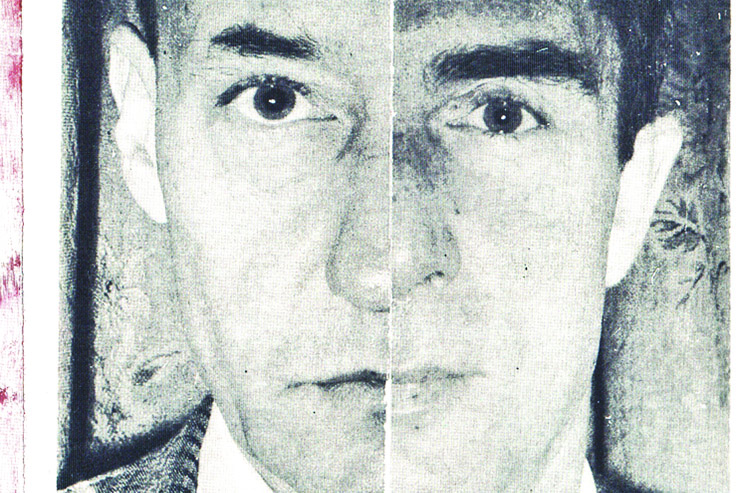
    As part of his explanation, Burroughs showed P-Orridge one of his journal scrapbooks in which he had posted two photos: a simple black and white street scene, with the relevant building clearly visible, and then another beneath it from which he had carefully sliced out the ‘target’ with a razor blade, gluing the two halves of the photo back together so as to create an image of the street with the offending institution removed. The same principle could clearly be applied to photos of people that you wanted to ‘excise’ from your life, he said. These principles would have a profound effect on P-Orridge and Christopherson, as well as many of the ‘anti-musicians’ and sound-artists that they would collaborate with or inspire in their turn. It wasn’t just the sonic application of the cut-ups with tape-recorders, but rather the whole approach to challenging conventional wisdom, deprogramming the self from the imposed beliefs and values of mainstream society.

    After TG had split, P-Orridge and Christopherson went on to form ‘Psychic Television Limited’ – with its attendant Conceptual Art gag masquerading as fan club pretending to be a cult, ‘Thee Temple ov Psychick Youth’, or TOPY as it was known. For a while there was an inner circle that revolved around a strange hybrid of the ideas of occultists Aleister Crowley and Austin Osman Spare regarding consciousness alteration, dream control, and sex-magic. The life and work of Burroughs and Gysin, with their cut-ups, Dreamachine, playback, and Third Mind equally offered a kind of toolkit for similar ends. It looked like if the Revolution was going to be televised after all, then Psychic TV were going to be first in line to put in their bid for the franchise…

    But all too soon cracks began to show, and P-Orridge and Christopherson parted company: Sleazy with partner John Balance to create a whole new world of magick and music as Coil, Genesis to develop PTV increasingly in the direction of Rave music. Each would continue finding ways to apply the cut-up methods of sampling, cut-and-paste and appropriation to the development of new music. TOPY became increasingly an umbrella for New Age Merry Prankster-style utopian tribalism, and Gen’s role as figurehead for these disparate anti-movements, and the cultural memes he was engineering – from cut-ups and sex-magick, to tattooing, piercing, and body modification – inevitably lead to conflict with the authorities, and P-Orridge had to flee England for a life of exile in the United States. Eventually he would come to perhaps the most radical application of his interpretation of the ideas of Burroughs and Gysin of all: Pandrogeny, in which P-Orridge and his spouse Lady Jaye would literally try and cut-up gender.
    Engaging the Magical Universe

    When I first met William S. Burroughs in London at the time of The Final Academy series of events in 1982, I asked him about magic, and whether he would care to recommend any books on the subject. Without hesitation, he mentioned Dion Fortune’s Psychic Self-Defense, even though he qualified it as “a bit old-fashioned.” As he began to talk of black magic and curses in North Africa, travelling with medicine men up the Amazon, and describing his experiments with tape-recordings and playback on the streets of London’s West End and in the midst of the 1968 Chicago Democrat’s Convention and ensuing riots, I realised that for Burroughs this was utterly real. He told me about a dream he had as a young man, working as an exterminator in Chicago: watching from a helpless out-of-body point of view floating above the bed as his body got up and went out with some unknown and sinister purpose that he was powerless to influence… with a shudder, he told me that possession was “still the basic fear.”

    Even towards the end of his life, William S. Burroughs’ engagement with the Magical Universe (and struggle against the Ugly Spirit) did not wane. The magical, psychic, spiritual and occult appear in his later fiction like never before, from depictions of astral travel and “sex in the Second State” to descriptions of actual rituals, referencing everything from Crowley and the Golden Dawn to the myths of ancient Egypt and even the Necronomicon… all interwoven with increasingly ‘neo-pagan’ concerns for the environment, the impact on Man and Nature of the Industrial Revolution with its emphasis on ‘quantity, not quality’ and standardisation – as well as perceived turning points in history. His adoption of the ancient Egyptian model of the Seven Souls, continuing development of a very personalised myth of Hasan-i Sabbah and the Assassins of Alamut, made him of increasing interest and relevance to the new occultists who were emerging from successive generations of counter-culture that Burroughs had helped to shape through the example of his Life and Work.

    There was also still the loss, the pain, and – perhaps more than ever – the Ugly Spirit. After settling in Lawrence, Kansas – a small university town, far from the distractions and temptation of New York, and very much a reminder of his mid-Western background in St. Louis, Burroughs became friends with William Lyon, a Professor of Anthropology who had been apprenticed to Sioux medicine man Black Elk. A full sweat-lodge purification ceremony was arranged in an attempt to evict the Ugly Spirit, which was described by the shaman as:

    A spirit with a white skull face, but no eyes, and sort of… wings.

    Burroughs was impressed by the “strength and heart” of the medicine man, and felt that just to clearly identify the enemy in such terms was in itself something of a victory:

    If you see it, you gain control of it. It’s just a matter of, well, if you see it outside, it’s no longer inside.

    In the early 1990s, the elderly Burroughs was initiated into the Illuminates of Thanateros, the leading Chaos Magic group. Perhaps this was not such a surprising development. Chaos Magic clearly felt a debt to Burroughs and his peers, sharing many of the same concerns as Thee Temple ov Psychick Youth: demystifying magic, yet at the same time distilling the best from Aleister Crowley and Austin Osman Spare, while taking advantage of the latest ideas emerging in computers, maths, physics and psychology.

    With the experiments started at the Beat Hotel that he then took out onto the streets of London, Paris and New York, William S. Burroughs was recognised as a pioneer and precursor: and with the later connections established through a younger generation of artist-occultists, the link from ‘cosmonaut of inner space’ to ‘psychonaut’ was assured.

    For more information about Matthew Levi Stevens, please see http://whollybooks.wordpress.com. The book-length version of his The Magical Universe of William S. Burroughs is available from Mandrake of Oxford. To order go here: http://mandrake.uk.net/the-magical-universe-of-william-s-burroughs/

    [alert type=”general” dismiss=”no”]This article was published in New Dawn 142.[/alert]

    [alert type=”success” dismiss=”no”]If you appreciate this article, please consider subscribing to help maintain this website.[/alert]

    © New Dawn Magazine and the respective author.
    For our reproduction notice, click here.
  • Ritual Magic in Theory & Practice

    Ritual Magic in Theory & Practice

    Several years ago I decided to do an evening-long introduction to ritual magic at the New York Open Center, one of the city’s best-known gathering places for mind, body, and spirit activities. Soon before it was about to start I told myself, with some surprise, “My God! I’m about to do ritual magic with a bunch of people who have walked in off the streets of New York!”

    Despite my apprehensions, the evening went off well. Power was raised, channelled in a certain direction, and then the ritual was closed. The only negative result was a comment I got back on a feedback sheet from a participant, who said she was shocked that I did not begin the ritual by invoking the holy archangels of the four directions (usually given as Michael, Gabriel, Raphael, and Uriel).

    The person who complained was both right and wrong. In ritual magic, it is essential to create a sacred space to work in. But it is not essential to do this by invoking the four archangels specifically. In fact there are many ways to do it. Invoking the archangels is part of the Western tradition of high magic, particularly as handed down by the extremely influential Victorian occult society known as the Hermetic Order of the Golden Dawn. Here is another, quite different way to create a sacred space, from the Native American medicine man Rolling Thunder (known as “RT” to his friends), as described by one of his students:

    We started a fire in the fire pit and formed a circle around it, warming ourselves in the chilly weather. RT pulled out a pouch of Five Brothers Tobacco, pure tobacco with no artificial ingredients. He passed the pouch around, each of us taking a little bit of tobacco in our hands. RT then led us in a prayer, starting out with Father Sun, Mother Earth, Grandmother Moon, and All Our Relations. He would include “the East where the Sun rises, to the South where the heat comes from, to the North where the cold comes from, and to the West where the sun sets.” RT would vary the order and the wording from time to time, just to maintain our attention.1

    This is somewhat simpler than a lengthy invocation and visualisation of archangels. The version I used in the ritual in New York was simpler still; at the outset I simply asked the participants to visualise a pillar of light in each corner of the room.

    This anecdote illustrates two basic concepts of ritual magic: (1) it is important to create a sacred space in which to work; and (2) there are many methods for accomplishing the same purpose. While many people associate the word “ritual” with something rigid and formalised, ritual magic, practiced at its best, is neither. Rather it’s a flexible system, with enough structure to give form to one’s intention, and with enough pliability to give the practitioner a great deal of leeway in actual practice.

    In my brief description of the New York ritual, I mentioned another important part about ritual magic – raising power. No one knows what power is (used in this sense), and at the same time everyone knows what it is. We cannot say whether it is a form of electromagnetic energy, the life force known as chi, or something quite different from either of these. But all of us have experienced its effects, and, moreover, all of us have raised it ourselves, usually without knowing what we are doing.

    Remember the last time you entered a room in which an argument was about to break out. Although probably nothing was different about the air or the lighting or any of the physical aspects of the room, you undoubtedly noticed a feeling of tension and perhaps danger in the atmosphere. This tension becomes even more palpable if the room is silent, and the pressure that you feel to dispel it becomes extremely intense. One way of dispelling it is to express it somehow, and if the tension is not too strong, it can be broken when someone simply speaks. At other times, it erupts in an argument or even a physical fight.

    Another example is the classic situation of the teenage dance. At the outset the boys are ranged at one end of the hall, the girls at the other. Everybody is too shy to begin dancing, and again an extreme amount of tension accumulates in the room. Finally one courageous couple breaks the tension and begins to dance. The energy starts to flow. It is expressed through dancing (and perhaps later on, sexually).

    Most of the time this raising of power is completely unintentional and undesired. Its presence causes a great deal of discomfort, and depending upon an individual’s personality type, he may try to get rid of it by giving in, arguing, or simply leaving. The magician, by contrast, wants to raise this power. But he (or she) chooses to do it only in certain circumstances and for specific results.

    The raising of power partially explains another feature we have seen in ritual magic – the creation of a sacred space of some kind. It can be done, as we have seen, by marking out the four directions; traditional magicians have also done it by drawing a geometric figure, such as a circle or a pentagram, with the point of a wand or a sword in the space around them. The actual shape does not matter as much as building an invisible sanctuary where certain forces are kept in and stray influences are kept out.

    I’ve said that the magician raises power for specific intention, and in this context it’s important to note that power in this sense, like the Force in the Star Wars films, is morally neutral. It can be used for good or evil or for that matter mixed ends. Using it for good purposes – such as healing or blessing or cleansing – is known as white magic. Using it for harmful purposes, such as cursing or coercion, is black magic. These terms are well-known; a less familiar one is grey magic, which is done for mixed motives. In all likelihood few magicians probably practice grey magic intentionally, although most have probably done so without entirely realising it. I personally would characterise doing a magical ritual to find a lover as grey magic; doing a ritual to make a specific person fall in love with you would be closer to black magic, since it intentionally interferes with the free will of another person.

    All these reflections lead to some questions: Does ritual magic work? If so, how? And since practicing magic for selfish ends is at best morally ambiguous, why do it at all?

    The Astral Light

    To look at how magic works, it’s helpful to understand a concept that has fallen into disuse in recent years but still occupies a central place in Western magic: the astral light. Esoteric texts from the Renaissance and early modern era often refer to it as the anima mundi, or “the soul of the world.”

    “God is light,” the Bible tells us (1 John 1:5). Esotericism regards this image as a specific and accurate picture of reality. This light pervades the universe; there is nowhere and nothing it is not, but it is modified, its purity and intensity are filtered and diluted, as it proceeds through various levels of manifestation. Esoteric theory holds that this light reaches us on earth only after passing through the zones of the stars and planets, whose influences it absorbs; hence its name.

    Astral light must not be confused with physical starlight. It is a subtle matter, imperceptible to the five senses and to the implements of science. “It is the common mirror of all thoughts and forms,” writes the nineteenth-century French magus Éliphas Lévi, “the images of all that has been are preserved therein and sketches of things to come, for which reason it is the instrument of thaumaturgy and divination.”2

    To form a more or less accurate picture of this light, one need only ask, what is the substance of a thought? Neurochemical responses, a scientist may say. While that may be true up to a point, we don’t experience these images as neurochemical events; we experience them subjectively as images and forms. In this latter form, they can be said to be made up of astral light.

    A more topical analogy comes from the world of computers. Hardware, software, and networks together form cyberspace, a dimension that, while in no way separate from the workings of computers, seems to obey its own laws and possess its own reality. This resemblance between the apparently outmoded world of the occult and the sophisticated ideas of cutting-edge science has not gone unnoticed: Silicon Valley is a hotbed of interest in the esoteric, and computer aficionados sometimes speak of cyberspace as a kind of bardo – a term used in The Tibetan Book of the Dead to designate the astral plane.

    The fine matter of the astral light is also believed to form the subtle or “astral body” of humans, giving literal force to the words of Shakespeare’s Prospero: we are indeed “such stuff as dreams are made on.” Shakespeare probably meant these words metaphorically; he was saying that we are frail, transitory, ephemeral. But then so are dreams and mental images.

    This is not to say that the astral light is itself a frail substance; occultists consider it indestructible. But this subtle matter does not hold shapes well. Dream figures constantly shift form, and even before our waking eyes mental images rise and fall like waves. For this reason some esoteric teachings figuratively refer to this substance as “water.” Under most circumstances, practically none of the thoughts or images formed in this “water” ever come into physical manifestation; there is not enough force behind them to make that happen. Hence, the central aspects of occult magic has to do with forming, holding, and energising a shape composed of astral light. If enough power and skill are used in its creation, the image will sooner or later manifest in the physical world.
    [alert type=”info” dismiss=”no”]If you appreciate this article, please consider a subscription to New Dawn magazine.[/alert]

    Manifestation

    In theory the process sounds simple enough, and in a way it is, but it is not so easy to accomplish. To begin with, in order to manifest in the physical world, an image must have a steady, consistent form in the mind’s eye. In practice, however, few things are more difficult to achieve, since it is notoriously hard to hold an image in one’s mind for all but the briefest time. This may be partly due to a lack of mental discipline, but it also reflects the nature of the astral light itself. It is fluid and slippery; trying to hold it is like trying to grab water with one’s bare hands. Much of magical practice consists of moulding this elusive substance. Hence magical training emphasises, above all else, mental concentration and will.

    Look at some object near you. Now close your eyes and try to visualise it. Then open your eyes again, and compare your mental picture of the object with the object itself.

    If you’re like most people, you’ll find some discrepancy between the object and your picture of it. You may find that you were able to imagine some parts of it better than others, or that you could imagine it as seen from one angle but not from another. You’ll probably find not only that it’s hard to keep your mind on the same picture, but that it’s difficult to create an entirely accurate image even of an everyday object right in front of you.

    One part of magical training is intended to hone the skill of visualisation. The magician may begin by taking extremely simple objects or forms – geometric shapes, for example, like triangles and circles – and attempting to visualise them. Later on, the aspirant may be able to proceed to more complicated things like three-dimensional objects. A piece of fruit, an orange, for example, is a good thing to use, since one can imagine not only its appearance, but also its taste, smell, and texture.

    Visualisation and imagination form only one aspect of the discipline. The second and equally important part is the conditioning of the will. The mind is not likely to enjoy concentrated imagination at first; it will probably rebel and drift on to its ordinary worries and fantasies. The only way to train it is to constantly bring it back to the object.

    Such work is often tedious, and the beginner may be able to practice for only a few minutes a day before concentration gives out. Gradually, however, these practices will achieve their end. The act of constantly bringing the mind back to the object, despite boredom or frustration, begins to form a small core around which the will can constellate. And the will is the magician’s principal tool.

    So far this procedure resembles the “creative visualisation” described in many books. Creative visualisation, however, generally doesn’t go past this point. Nothing more may be needed: sometimes the greatest hurdle lies in simply formulating a clear goal. But often the enterprise requires some sacrifice: an additional investment of vital energy to literally give life to the desired image.

    This brings us back to the need to raise power. For a process of ritual magic to be complete, it must have a clear and specific form in the mind of the practitioner – and enough power must be directed toward it to ensure it manifests.

    This does not always happen. To cite another personal experience, about fifteen years ago I was on a retreat with a group holed up in a country house in Derbyshire, England, learning to practice magical techniques. One of the chief things taught was raising power, which was done by having the group (of about a dozen people) channel mental energy in a certain direction. Throughout most of the retreat this power was directed to an actual sink – a drain in the floor of one of the utility rooms. The reason for doing this was quite clear. We were learning to raise power, but this power could not be allowed to float around in the atmosphere. It would create enormous tension (and there was tension enough anyway); given enough momentum, it would start to cause mayhem. So for training purposes the power was directed to the ground – it was literally “earthed.”

    Such was the practice for most of the retreat, but toward the end each of us was allowed to raise power and direct it toward whatever we wished. We all took turns: we sat in a room on our own while the other members of the group directed power toward us. When it came to be my turn, I decided to channel this power toward realising a particular project I had in mind at the time.

    But it was no good. I could not focus the power in the direction I wanted; it felt as if it kept slipping and sliding away from me. I tried to recoup my efforts more than once, but soon the time was up. The whole experience had the depressing quality of a premature ejaculation.

    Where did the failure lie? I certainly felt power being sent in my direction; that was not the problem. And the project I was developing was clear enough in purpose and intent. Rather the failure came from my own will. Although I did my best to work with the power through the exercise, there was some level at which I was not interested enough in this project to make it manifest.

    It was, as a matter of fact, a book project, and it came as no surprise to me a few weeks later when I learned that all the publishers to whom my agent had submitted the project rejected it. None of this was especially tragic; all writers have projects that they come up with and never manage to materialise; in fact, these generally far outnumber the successful ones. But the whole experience taught me something about the nature of will.

    Will, as I’ve said, is a chief characteristic of the ritual magician, and from my experience, I would say that the will is in many ways as subtle and elusive as the astral light itself. Where exactly is my will? In my superficial wishes and desires? In my gut? In the deep and inaccessible reaches of my heart? I would say that for the will to be truly effective, it must lie in, and encompass, all these parts of one’s being; if one is conflicted or ambivalent, the results will be nil.

    All this helps to answer a question that was posed earlier: Does ritual magic work? It does work, but it is a subtle and difficult process that requires a great deal of training and mastery – and especially self-knowledge – in order to succeed.

    The Importance of Ritual

    Ritual magic, as practiced in the West, is an elaborate and somewhat cumbersome discipline. Fully devoted practitioners devote an enormous amount of effort to making and obtaining robes, wands, swords, cups, talismans, incense, and other appurtenances of the magician’s craft. Are these necessary? They are – nearly every ritual of any kind requires some kind of paraphernalia – but the complexity and elaborateness of these things can vary greatly. Purists among magicians tend to say that tools that the practitioner makes himself, from scratch, are the ones that have most power. And from what we’ve already seen in this article, we can understand why. Power follows attention. And something that has had a great deal of effort and attention directed toward it, even if it is crudely executed, is likely to have more power than a more polished object that has been manufactured.

    Is ritual necessary in order to make one’s will manifest? After all, if it’s simply a matter of raising power and focusing it on an image, what need is there for a ritual at all? Can’t it be done by thought power alone?

    In fact, it can; and that is the theory behind creative visualisation and what some portions of the New Age world call “manifesting.” In these techniques it’s enough to work exclusively through thought power – if the will is strong enough. These practices differ from prayer in that they don’t necessarily invoke the favour of God or a god in order to operate; rather it is a matter of simply using certain universal (though little-known) occult laws. They differ from ritual magic in that no physical operation is necessary.

    Given all this, the reason for practicing ritual magic is twofold: in the first place, ritual magicians are drawn to this kind of activity. For them the more inward and sedentary acts of prayer and meditation may seem a little bloodless. There is a certain satisfaction to be gained from making and wielding magical implements in a way that’s perhaps not very different from the reasons people sometimes prefer to build their own bookcases or brew their own beer. This may seem fairly obvious, but it is not trivial. There is a part of the mind that will not take anything seriously that it cannot see or touch, and ritual magic is meant to address – and involve – this part of the mind.

    The second reason is both grander and more abstract. Man, it is said, is a bridge between worlds. He is the only creature that we know of who is capable both of extending his mind to sublime and mystical levels of experience and of doing and acting in physical reality. Some esoteric teachings would go so far as to say that this is our function as human beings, and that many of our sufferings and discontents occur because we have forgotten it. In light of this idea, we can see how ritual magic can be valuable and effective in its own right, quite apart from whatever apparent results it might achieve. It enables the magician to serve as a conduit between the higher and lower worlds, and to assist in the work of unifying them.

    There is a great deal about ritual magic that I haven’t been able to discuss in an article of this length – divination, for example, which in its many forms attempts to take a kind of reading of the patterns in the astral light in order to find out what is likely to happen in the physical world. (The Tarot and the I Ching are two common methods used by magicians today to do this.) Nor have I been able to explore the issue of raising and interacting with spirits – invisible entities that, under the right circumstances, can communicate with us and can also have an effect in the physical world. These are large and important subjects in their own right, and serve to indicate that ritual magic, practiced in the West for centuries, retains its fascination and its power.
    [alert type=”general” dismiss=”no”]This article was published in New Dawn Special Issue Vol 7 No 2.[/alert]

    [alert type=”success” dismiss=”no”]If you appreciate this article, please consider subscribing to help maintain this website.[/alert]

    Footnotes

    1. Sidian Morning Star Jones and Stanley Krippner, Ph.D., The Voice of Rolling Thunder: A Medicine Man’s Wisdom for Walking the Red Road, Bear & Co., 2012, 6.
    2. Éliphas Lévi, Transcendental Magic: Its Doctrine and Ritual, trans. A.E. Waite, 1896; repr., Bracken Books, 1995, 15.

    © New Dawn Magazine and the respective author.
    For our reproduction notice, click here.
  • Magic & Mysticism in Java

    Magic & Mysticism in Java

    From New Dawn Special Issue 5 (May 2008)

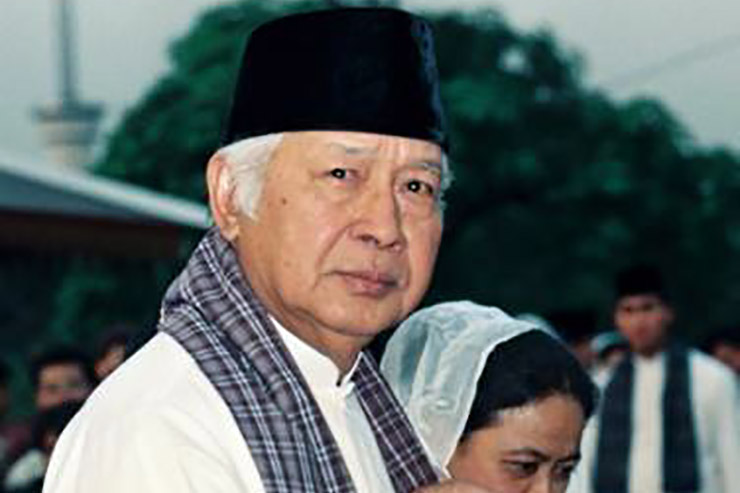
    The death of ex-President Soeharto of Indonesia at the age of 86 [in 2008]  reminded me that I was present in Jakarta in 1967 during the bloodbath in which the Communist Party was decimated and General Soeharto rose to political power, along with the minority modernist Muslim party that supported him.

    At that time Indonesia was only nominally Muslim: under the charismatic President Soekarno it was animistic, feudal, steeped in an other-worldly mysticism, and was infested with starving beggars, superstition and black magic practices. General Soeharto, of humble village origin, had risen high in the military apparatus and married into a family of the minor nobility in Solo. His marriage gave his political aspirations legitimacy in the eyes of Indonesians, who believed in the ancient tradition that links royal status to the right to rule.

    The General was well known to have a close affiliation with a Javanese magico-mystical school believed to give him great occult powers, yet from the time of his ascension to the presidency he appeared, unlike ex-President Soekarno, to deny the affiliation, at least publicly. The new pro-Western president donned the Islamist black pitje and publicly espoused and supported the political arm of orthodox Islam, which in the main was vehemently opposed to any and all occult practices. It proved to be the best thing that could have happened to the country.

    Whatever President Soeharto’s questionable legacy in other areas, in this respect he dragged Indonesia from the dreaming Middle Ages into the modern world. Today, Indonesia is officially a member of the great Muslim international fraternity, and Islam’s austere religious mores have increasingly infiltrated the national culture, modifying its more primitive animistic traits and greatly strengthening its influence in Asia-Pacific politics.

    Nevertheless, Pak Soeharto retained to the end of his life his private allegiance to Javanese mysticism. Doctors who attended him in the last weeks of his illness, during which he rallied more than once from heart, lungs and kidney failure, said they were amazed and baffled by his recuperative powers. It was commonly believed, however, that the power of spirits and the implantation of many lucky charms inside his body was the factor keeping him alive. Indeed, those who were close to Soeharto in his home town of Solo, the heartland of the Javanese culture, have attributed his resistance to death to his devotion to the powerful occult forces that resided in him throughout his life.

    According to a recent article in the New York Times, all six presidents of Indonesia “paid respects to the spirit world, visiting sites said to hold mystical powers, consulting with seers and collecting tokens of magic like the Indonesian dagger called a kris.”1 Among these leaders, Soeharto was outstanding as a devotee of the occult. He studied as a boy with a spiritual teacher and performed ritual acts throughout his presidency, continuing to do so even after a popular uprising deposed him in May 1998.

    According to his aides, over the years he made frequent visits to sacred places, including mountains, caves, tombs and ruins, and took ritual baths in oceans and rivers sacred to Nyai Loro Kidul, the mighty Queen of the South Seas. He also collected hundreds of sacred objects in order to absorb their magical power.

    The Javanese Science

    Despite the ascendancy of modernist Islam throughout the nation, Soeharto’s private loyalty to Java’s spiritual past is mirrored in Javanese society in general, though its allegiance now tends to run underground in the face of Islamic disapproval, especially that of the strict Wahhabi sect, which over the years has become extremely influential. To the outsider today all Indonesians are strict Muslims, but under the pitje or the headscarf there is likely to be concealed a mystic of quite a different stripe. The people of the island of Java in particular are very proud of their indigenous pre-Islamic spiritual tradition, which they refer to as the Javanese Science, and while few may actually practice it now in its pure occult form, most have a proprietorial understanding of at least some of its sacred principles. They are evasive about discussing this hidden dimension of their society, especially with Western foreigners, but one would be mistaken in not taking the Science very seriously indeed as the essence of the Javanese culture even to the present day.

    The Javanese Science is a syncretic blend of Hindu-Buddhist, Sufi, Taoist and ancient animist strands, and evolved in the royal courts of Solo and nearby Jogjakarta in Central Java as a system of self-transformation confined solely to the aristocracy. But since the Revolution that ejected the Dutch rulers from the country after the Second World War, the Science emerged into the popular culture in the form of hundreds of kebatinan (or inner-being) sects, each one of which celebrates some aspect of the royal mother tradition. These esoteric sects have drawn a very large minority of the Indonesian population into their sphere, forming an immensely creative and diverse subculture at the leading edge of national life, very much as happened in Japan after the Second World War.

    The Kebatinan movement has in many respects evolved into an inherently new form of mysticism. Syncretism raised to a religious principle is its dominant keynote, a drive towards pluralistic unity that echoes a prominent feature of the New Age spirituality appearing elsewhere in the world. But the Javanese approach to the universe and the human situation generally, though at its best of a high metaphysical order, is in many respects quite different from that of the West. It doesn’t involve religious theories and dogmas so much as a science of inner energies perceived directly with a highly sensitised intuition – one might say, clairvoyantly – and manipulated directly by the will.

    This shamanistic approach can lend a disconcerting ambiguity to those moral categories that the Western mind likes to regard as eternally fixed: Justice, Compassion, Truth, Altruism, Duty and so on. To the Javanese, mystic things in the moral sphere are not good or bad according to what we in the West would regard as an ethical judgment, but according to whether the personal energies concerned balance out in a manner beneficial to the whole. Do they bring harmony to the individual, do they stabilise him or her? For the Science all is dynamic, all is in ever-transformative and purposive flux: good is what works in the present moment to the spiritual benefit of the whole; bad is what fails to do so. This stance contributes a relativistic and unpredictable note to the Javanese outlook that Western diplomats and others have famously found difficult to deal with, yet its creative power is undeniable.

    Javanese adepts with access to this underlying realm of subtle forces are reputed to have diagnostic powers and techniques of psychic healing of extraordinary efficacy, and are believed to understand the dynamics of spiritual physiology better than any other race on earth. The Javanese Science has much in common with other shamanistic Eastern paths such as have been found in Tibet and Japan, where syncretism has similarly been raised almost to a spiritual principle. These too have dealt in patterns of shifting subtle energies rather than fixed doctrinal systems. But there is something different and mysterious about the Javanese Science, a depth, a quality of purity that most researchers are agreed sets it apart from any other form of mysticism. What makes it unique?

    The Invisible People

    In a visit to Indonesia some years later, I was able to put this question to Pak Joyo, at one time the Director of a Christian Theological College in Central Java and the pastor of one of the largest charismatic Lutheran churches in the Reformed Dutch Church of Indonesia. Pak Joyo was a fourth-generation Christian whose great-grandfather was converted to Christianity at the point of his Sultan’s kris (the Sultan himself having been similarly converted by Dutch missionaries), and Pak Joyo followed in his family’s footsteps in deciding to train for the ministry. But halfway through his theological training, he decided to quit the church and give all his allegiance to a contemporary mystical sect called Hardopusoro which interested him a great deal more.

    However, he told me that in a vision Christ asked him to remain in the church, where he could be more useful than anywhere else; and after an internal struggle he obeyed. Pak Joyo went on to become a multilingual international emissary for Christian ecumenicalism – but, with the blessing of his bishop, privately continued in Hardopusoro, in which he became a high initiate. Such dual religious allegiances are entirely natural to the Indonesian temperament.

    Pak Joyo’s answer to my question surprised me. The source of his country’s spirituality, he said, was not familiar to other races. It was unique because it stemmed from the Invisible People, the Badui, who grew no bigger than a ten-year-old child and who lived in an inaccessible part of the mountainous jungle in South Bantam, about a hundred miles west of Jakarta. The Badui were “closer to the soul” than other people, said Pak Joyo, and were the X factor in the background of the Javanese Science. Invisibly they had instructed the Javanese people for nearly three thousand years, helping to guide them from their original primitive state to their present civilisation.

    The Badui were not Indonesian and had no part in the country’s laws or economy, but lived apart in forest territory forbidden to outsiders and had great spiritual knowledge and strange magical powers. Although rarely seen by outsiders, they were held in awe in the marketplaces throughout Indonesia. When Indonesian spiritual and political leaders needed advice, said Pak Joyo, even the most illustrious of them went into the jungle alone to consult the Badui seers, for the understanding of the Invisible People on spiritual matters was a universal one that embodied a primordial tradition beyond factions or institutions.

    President Soeharto would undoubtedly have been one of those top leaders who was not too proud to seek enlightenment, possibly of a political as well as a spiritual kind, from these strange priestly people of the jungle. Leaving behind his aides, bodyguard and driver, he would have had to ascend alone the jungle forest track that led to the Badui colony, there to consult with its leading prophets.

    Inexplicably, although remote from the teeming civilisation surrounding them, the Badui knew everything that happened in it long before the news was heard on television. They had prophesied the Second World War and that the Dutch would leave the country soon after peace was declared. They knew the destiny of peoples worldwide. The Badui, it was said, planted sacred trees – living trees, as they called them – representing their tribal leaders in a hallowed grove called the Artjas Domas, which was visited once a year by the highest-ranking Badui priests. By studying the growth on the trees clairvoyantly, they were able to read the fortunes and destiny not only of people, but of nations and the world. From this yearly examination everything of value to their leading families was recorded in a script known only to them. The Badui were said to have telepathic powers and a magical way of keeping others away from their settlements, especially from the Artjas Domas.

    I have recently learned that the Badui people have now inexplicably disbanded and their old territory has been settled by Indonesian farmers. But when I revisited Java in 1980, their colony was still a great focus of mystery and unanswered questions. Why were these strange forest-dwellers so influential? What kind of special wisdom did they possess? Where had they come from? And why did they live apart, alien, feared, invisible – and yet, according to Pak Joyo, all-seeing? Sir Stamford Raffles referred to them in his eighteenth-century History of Java, yet since then no traveller from the West had succeeded any better than the Indonesians themselves in setting foot on the Badui’s inner territory or penetrating their secrets.

    Eventually I learned more about this remarkable people from Dr. Paul Stange, an American lecturer in Asian Studies who grew up in Indonesia and who obtained a doctorate from the Michigan University in the US for his study of Sumarah, an akebatinan sect that has become influential in Indonesia since the Revolution.2 In his thesis, Dr. Stange was able to relate the Badui indirectly to the growth of kebatinan sects such as Subud and Sumarah as constituting a cutting edge phenomenon in the evolution of mystical consciousness.

    Custodians of the Soul World

    It seems that the Badui are of the dark-skinned Tamil race that is believed to have spread from Africa long ago into southern India, and from thence into Southeast Asia and the Pacific Islands, where they lived unmolested for thousands of years. But about eight thousand years ago the Malays, at that time a mainly Caucasian race from the north, crossed the Sunda Strait and displaced the Badui culture in the Sunda Islands, with the consequence that most of the indigenous race withdrew into the mountainous interior of Java, far from the spreading communities of the newcomers, while a remainder migrated further east.

    Some time in the first millennium BCE the remnant of the aboriginal Tamil people in Java was joined by a large group of Indian initiates – probably, some authorities think, refugees from the defunct Indus valley culture in which holy trees also played an important part – and the two groups, each with its heritage of ancient racial wisdom, together formed the Badui priesthood.

    Forty Indian Hindu-Buddhist families, constituting a sacred nucleus, inhabited a central group of three villages served by an outer ring of vassal Badui communities: together the two clans built a spiritual power-centre in Java which, isolated though it was for nearly three thousand years and finally greatly diminished in numbers, preserved unchanged its sacerdotal structure and identity and its pivotal place in Javanese religious life. Those in the inner esoteric circle wore white sarongs and turbans, were called the White Ones, had strict rules of conduct and were forbidden by their laws to have any communication whatever with the outside world, while those in the outer villages wore blue sarongs and turbans and were called the Blue Ones. There was no intermarriage between the two clans.

    Although the use of money or of weapons was forbidden to all in the colony, the ascetic laws of the Blue Ones were less severe than those of the others, and enabled them occasionally to visit an Indonesian village to obtain by barter the very few items the farming colony needed (mainly smoked fish and salt), and to serve where necessary as liaison officers and spokespersons for the White Ones.

    Despite their harshly primitive way of life, it would be a mistake to suppose these jungle people were not, in their own way, highly civilised. Nina Epton, a British journalist who is the only known Westerner to have met the Blue Ones and a few of their holy White Ones (although many Dutch researchers tried before her), speaks in her book The Palace and the Jungle of their aloof dignity, their air of having “a destiny apart from other mortals,” and above all, of what she calls “the Tibetan look.” This was a wide-eyed all-seeing look common to many of the Badui, which she describes as staring beyond this world into the spiritual realm. It was a look she associates especially with pictures of seers like Guru Padma Sambhava, the great Indian initiate who brought Buddhism to Tibet.3

    Ms. Epton has described the Badui physiognomy as varied and clearly of an older ethnicity than that of the Indonesians. But the elderly leader of the White Ones, reputed to have been a saint and a sage and obviously of a superior caste to the others, was plainly more ethnically advanced. She noted in particular that he had a worn, patient and ascetic face which reminded her of that of a well-mannered European intellectual. In other clothes he would have passed unnoticed in an English crowd, for he had a very light complexion, a narrow face and the gentle bearing of a civilised person. Altogether, Epton says, the Badui were not what one expects from the jungle.

    This assertion is borne out by the personal history of a young runaway, the son of a pu’un or chief of the White Ones, who in the seventeenth century escaped the colony to become a stable boy in the then Sultan’s palace. Soon he became the Sultan’s counsellor and then his son-in-law, and today his descendants are the Jajadiningrat family, one of the most aristocratic and politically influential families surrounding the Indonesian presidency. Throughout the intervening three hundred years, the Badui continued to “read” the sacred tree of the stable boy’s line, to visit his Jajadiningrat descendants once a year with predictions and advice for the coming year, and where necessary protect the members of the family from danger.

    In fact, the sole reason for Nina Epton’s unprecedented interview with the leader of the White Ones was that, through the Sultan, she obtained an introduction to the Jajadiningrat family, who asked the White Ones as a special favour to grant her an interview. In no other way would the meeting have been possible.

    The Badui priests continued to follow the destiny of the Jajadiningrats, says Epton, because for the Invisible People once a holy lineage is laid down it is laid down forever, it belongs to the timeless realm of the soul world. The Badui in fact denied the reality of time. Their sages believed that the rules of life were laid down once and for all at the Beginning of things by an ancestral divinity called Batarratunggal, who will one day return to govern the Badui and the world. In the meantime, it was their sacred obligation to maintain everything exactly as it was at the beginning, without change, without innovation. Nothing concerning their customs or belief system must be disturbed from their state of primordial perfection: hence the necessity of isolation.

    To the modern Javanese mystic this Badui belief is merely the folk expression of a deeper spiritual reality. He sees the concept of a Beginning-time or Dreamtime to which so many early races look back with longing, believing it to be a cosmic paradise that must be ritually preserved for the future, as simply a metaphor for the inner soul plane, which is both cosmic and interior at one and the same time. That inner place, eternally omnipresent within each human being, is really the cornucopia from which all spiritual paths and religions flow forth in their season. As a race we have long ago lost contact with such a high level of soul-consciousness, and so it is called by other names: the Garden of Eden, the Dreamtime, Paradise, the Kingdom of Heaven. But according to the Javanese view, it is in truth a soul-world present in each one of us, a celestial headwaters from which the river of the spirit flows continually into our bodily spacetime. This higher/inner world must be kept purified, as it once was and will be again in the future, and it was the task of the Badui to help do this, since we as a race cannot.

    No one knows for certain why the Badui people have now dispersed. But it is evident that deep changes reflected in its politics have overtaken Indonesia within the last few decades. The erratic occult climate that pervaded the early years of independence has yielded not only to a stricter Islamist discipline but also to the growing apparatus of democratic government, a maturing judicial system and economic reform, all of which has brought stability and prosperity to the people. The nation has come of age. According to Dr. Stange, who received a wealth of Javanese lore from the Sumarah cognoscenti, there is a school of thought that believes the Badui have now fulfilled their mission in the South Pacific, and that is why they have at last dispersed into the Indonesian population.

    The reign of animism in this region under the sovereignty of Nyai Loro Kidul had long been prophesied to end during the twentieth century, giving way to a new and higher religious and cultural dispensation for the Pacific races – one perhaps best represented by the modern Kebatinan movement in Java. It is thought that the Badui understood well that this prophesy has now been fulfilled. They understood that their reign is no longer needed – or indeed tolerable under the new conditions. Having played a custodial role by preserving in secret the pure and unsullied soul-conditions necessary for such a surge of higher consciousness, they have now been able to die out as a separate society.

    Whether or not there is any truth in this theory, it is undoubtedly the case that around the Pacific Rim a new religious spirit is rising. Akin to kebatinan and to the Javanese Science in general, it is based on principles of high shamanism known to the Badui many thousands of years ago, but forgotten by modern humanity. Recognising that enormous healing powers are locked in the ancient soul-ways, seekers visiting Indonesia today find common ground with the synthesising mysticism of the new kebatinan sects and are forming part of a spiritual network that stretches from Findhorn in Scotland to the esoteric centres of California. This development in the Pacific zone has in it the potential for creating a new religious paradigm of global significance. But how much of it is indebted to the heroic patience of the Invisible People of the Javanese jungle, as mystics like Pak Joyo believe, we shall probably never know.

    [alert type=”general” dismiss=”no”]This article was published in New Dawn Special Issue 5.[/alert]

    [alert type=”success” dismiss=”no”]If you appreciate this article, please consider subscribing to help maintain this website.[/alert]

    Footnotes:

    1. ‘As Suharto Clings to Life, Mystics See Spirits’ Power’, Seth Mydans, The New York Times, Jan. 27, 2008.
    2. Paul D. Stange, The Sumarah Movement in Javanese Mysticism, UMI Dissertation Information Service, Ann Arbor, Michigan, 1980.
    3. Nina Epton, The Palace and the Jungle, Oldbourne Press, London, n.d., 55.

    © New Dawn Magazine and the respective author.
    For our reproduction notice, click here.
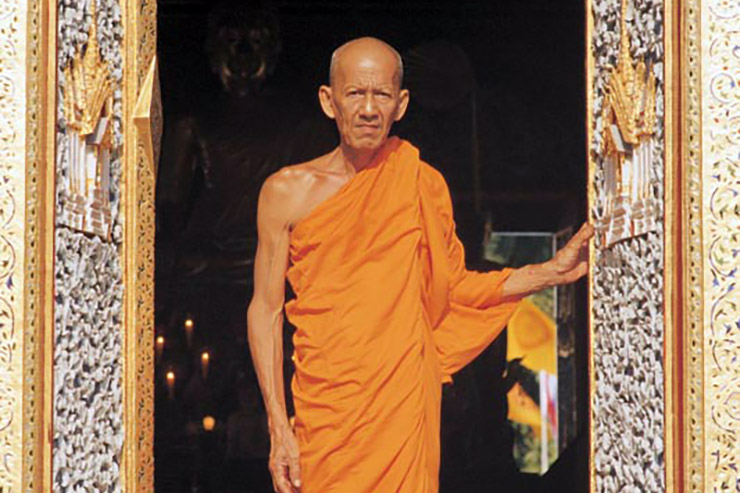
  • Monks & Magic: Buddhism and the Supernatural in Thailand

    Monks & Magic: Buddhism and the Supernatural in Thailand

    From New Dawn Special Issue 7 (Mar 2009)

    In August 2008 Bun Rany, the wife of the Cambodian Prime Minister Hun Sen, led Buddhist monks and soldiers to the site of the historic Hindu temple Preah Vihear to call upon their ancestors to protect the temple. The site of this temple is located on disputed land, perched atop a cliff on Cambodian soil but with the most accessible entrance to the site located on the Thai side of the border.

    This 11th century temple is located on the border between the two countries, but the borderline itself has never been clearly demarcated because the area is littered with landmines left over from decades of war. Ownership of the temple was originally awarded to Cambodia, but dispute between the two countries flared up when Preah Vihear was granted United Nations World Heritage status.

    Desperate to resolve the issue, both sides deployed military forces – but when they were unable to reach a solution to the conflict, Cambodia and Thailand resorted to supernatural means. Fearing that the magical abilities of Cambodia‘s Buddhist monks would weaken Thailand, residents throughout the province of Si Sa Ket wore yellow to help protect Thailand from Cambodian magic.

    Though Buddhism is not often thought of as a religion that practices magic, in such communities as those found in Thailand and Cambodia, there can be no doubt that Buddhism shares common ground with belief systems that are primarily associated with the use of magic.

    Both countries have a long history of engagement in spiritualist and animistic magical practices. When Buddhism first arrived in these areas it came into contact with pre-existent traditions that believed in spirits, both benevolent and malevolent, and a developed system of magic which was to be feared or revered, depending on whether or not it was used for good or ill.

    For Buddhism to flourish under such conditions in Thailand, it was necessary to develop a complex system of interaction between Buddhism and what has been called the Spirit religions. Debate still exists as to whether or not the two systems have become completely integrated or not, although the interaction of the two systems is sometimes referred to as an example of syncretism. On the subject of interaction between Buddhism and the Spirit religions in Thailand, the academician B.J. Terwiel says the following:

    When I interviewed villagers in Central Thailand on the relationship between Buddhist and non-Buddhist aspects of their religion, a variety of reactions were observed. The more sophisticated informants generally stated that the Lord Buddha had never forbidden rituals of ancient origin. Other persons hesitatingly made up their minds with regard to the orthodoxy of the ritual, but on subsequent occasions contradicted their own judgment. Many were at a loss to classify rituals or beliefs under rubrics such as ‘Buddhist’ and ‘non-Buddhist’.1

    It would appear from this statement that the boundary between the use of magic by the indigenous tradition of Thailand and the practice of Buddhism is not apparent to many of the inhabitants of Thailand themselves. This is most likely due to the fact that the people of rural Thailand are raised in a society where the two systems are found closely entwined together.

    The religious traditions of Thailand have always included the belief in spirits and the ability to manipulate them by means of magic. For example in Thailand preservation of the spirit of life (khwan) is considered to be of the utmost importance, as is ensuring that malevolent spirits (phii) do not enter the body. Control of these spirits is greatly emphasised in rural Thai culture, as the service of these spirits can be employed to improve the qualities of day to day existence.

    Magic and the Sangha

    In the lives of ordinary Thai people, more value is placed upon the improvement of their current existence than on transcending the cycle of rebirth, as is advocated by Buddhism. The relationship between the members of the Sangha (community of Buddhist monks) and the practitioners of magic in Thailand combine in a variety of ways, as one system (the Spirit religions) deals with the aspects of gain in this world (laukika), whilst the other (Buddhism) advocates the importance of salvation and ideas of transcendence (lokottara).

    This relationship is complicated even further by the fact that in Thailand almost every adult male will become a member of the Sangha at some stage in his life, for in rural areas the taking of vows is considered to be an essential element in preparation for adult life. Given the wide range of magic and animistic beliefs which operate within rural Thailand, these men will carry a variety of beliefs and practices with them into the Sangha, not all compatible with the ethics of Buddhism.

    In accordance with this, religious opinions are not questioned during ordination. As a direct result, villagers can be found entering the Sangha for a variety of reasons, as is reflected in the following Thai rhyme:

    Ordination to fulfil a promise to the Gods,

    Ordination to escape poverty,

    Ordination to flee from a wife,

    Ordination to save money,

    Ordination to eat better food than at home,

    Ordination to join one’s friends in the monastery.2

    Thai belief does not only consist of beneficial Gods and spirits. It also abounds with belief in ferocious spirits of pure malevolence, from who the villagers seek magical protection. Amongst these classes of malevolent spirits are such beings as the preed (a giant, looming shape with a small head that emits a sharp, piercing sound, as a reflection of its past sins), the phii krasy (a type of parasite which inhabits human bodies, feeds on excrement, and is shaped like a human head with entrails protruding from beneath), and the phii baan (the ghosts of ancestors that hover around their previous home and watch their descendants with malignant jealousy).

    Whilst it is possible for these spirits to be exorcised, Buddhism chooses to deal with their interfering presence in another way; the correct approach for a Buddhist to cause these spirits to cease meddling in the affairs of their human victims is to preach to them, thus converting the spirits involved to a more benign nature. There are certain canonical texts which serve this purpose of protection, which can also be recited at specific times in order to avert misfortune. These texts are known as the phraa parit. The source of the magical power of these texts has not yet been clearly identified, but Y. Ishii, author of Sangha, State & Society: Thai Buddhism in History, claims that whilst some possessed a magical content from the beginning, as modifications of Hindu rites, others such as the Mangalasutta originally had no magical connotations.3

    Indeed, for most people, including some who chant them, the parit are incomprehensible, being in Pāli. Rather, I believe, the magic of the parit stems from three factors: the social recognition that parit should be chanted for certain purposes (e.g. blessing); the existence of an established formula for their chanting; and the sanctity attributed to the chanter.4

    The use of parit is a means by which to ensure protection; it provides good luck and disperses misfortune whether caused by the presence of spirits or not. As is seen in the above passage the presence of magic being used by the Sangha is not overtly explicit in the parit texts, rather it is interpreted to be so by the lay audience. They do not understand the words the monks recite, but because of the respected state of the Sangha in Thailand, the lay community assumes that it must be not only beneficial, but also powerful.

    Amulets

    Another type of magic practiced by the Thai Sangha is the manufacture of amulets. These amulets are employed for a variety of reasons, including protection from diseases, black magic and accidents. Of these amulets the ones portraying the Buddha are the most popular, although some also are made in the likeness of famous monks and King Chulalongkorn (also known as Rama V, one of Thailand‘s most revered kings).

    The sanctity of the subjects portrayed upon the amulets is a reflection of the beneficial powers they are thought to contain. The Buddha images vary in size, from anywhere between two and eight centimetres, and can be manufactured from wood, metal, ivory or resin, although frequently they are made from a selected combination of these elements, pressed into a mould and baked.5 To create a pressed or printed image (phraaphim), a monk needs not only a mould, recipe and the proper ingredients; he also requires an advanced knowledge of spells and sacred script.6

    The inherent sanctity of the amulet is not always thought to be sufficient; hence its power needs to be enhanced by means of the correct recitation of spells and sacred scripts. The most simple of these sacralisation rites is known as plugseeg.7At the culmination of plugseeg the monk will either blow upon the Buddha image or draw over the amulet with the index finger of his right hand.8

    During the manufacture of amulets the Sangha is also invited to perform a consecration rite known as phutthaphisek.9The use of magic within the phuttaphisek is illustrated by the fact that it is desirable for at least one of the monks participating in the phutthaphiseek to be either advanced in meditative technique or in the Brahmanic rites known as saiyasat.10

    These rites are intimately entwined with another type of Thai ritual, namely the ceremony held to consecrate Buddha images which infuse the representation with the auspicious wisdom and power associated with Prince Siddhārtha’s victory over the demon Māra and the obtainment of enlightenment by Siddhārtha. During this ritual monks chant in Pāli or preach in Northern Thai several texts including the Buddha Abhiseka (Consecrating the Buddha [Image]).11 This text focuses on the powers of the mind attained by the Buddha that are associated with his enlightenment. Both the consecration of images and amulets draws their impetus from this core idea.

    One specific example of a text dealing with the extraordinary supernatural powers of the Buddha that occupies a position of prominence in Thailand is Bimbās Lament. (Bimbā is the Buddha’s wife, who he left to pursue the life of an ascetic.) 

    By his magical power he created a crystal path in the sky from the eastern boundary of the city of Kapilavastu to its western perimeter. Then, ascending into the air, the Tathāgata, surrounded by many previous Buddha’s, walked on the sky-bridge he had miraculously created… he also preformed other miracles, such as appearing to walk above the heads of the Śākyans.12

    Tattooing is another magical practice that is widespread throughout Thailand. At some stage in their adult life many Thai males will receive a tattoo of some description or another. This is of significance because in the culture of rural Thailand tattoos are representative of magical power. The magical power of these tattoos stems in part from the tattooist, for whilst both layman and monk may be a tattooist, there is vast difference in the scope of their work and the designs used.

    The types which may be employed by the monk are restricted. As a monk, he is limited to tattooing the upper parts of the body, for not only would it be seen as sexual misconduct on the part of the monk to tattoo the lower areas, the upper parts of the body represent the higher, more spiritual aspects of humanity, whereas the lower regions represent mankind’s more base, animalistic attributes. The tattoos done by the monk are also limited in application. The monk may bestow tattoos that are of a beneficial or protective nature. Other tattoos, such as those which bestow things such as sexual virility, can only be performed by members of the lay community.

    Another Thai rite involving magical skills of the members of the Sangha is the Wong Dai Sai (Encircling with Holy Thread).13 This is a type of consecration rite designed to protect a place from evil. It is believed that the consecrated place will be protected by the power of the Three Gems and the phraa parit.14 During this rite cotton is affixed to an image of the Buddha, stretched clockwise (as is the way of beneficial magic; anticlockwise is considered to be used for evil purposes) around the place to be consecrated, and finally wound back to its point of origin, at the Buddha image.15 If the thread should snap at any stage, it is considered to be an ill omen.

    The main doctrinal link between Buddhism and the Spirit religions is found in the incidences where magic is employed by the Sangha as a transfer of merit. The theory of the transference of merit is based upon the concept that when a member of the lay community performs a virtuous deed, such as making a donation or feeding a monk, the Gods witness the act and empathise with the process. The Sangha themselves are referred to as being a ‘field for merit’ (na bun), as is found in the Sanghnussati-bhavana.

    Well practiced is the Exalted One’s Order of Disciples, practiced in integrity, practiced in intellectual methods, in right lines of action – to wit the four pairs, the eight groups of persons – this is the Exalted One’s Order of Disciples, worthy of offerings, oblations, gifts, salutations, the world’s peerless field for merit.16

    Monk’s Superior Magical Status

    The greater the purity of the monk, the more magical power/merit he is said to generate. The sanctity of the monk himself is the source of belief in the efficacy of his magical power. The magical power that is generated by the monk is also classed as being superior to that of the layman, but by its very nature it is also more limited in its application. A monk is also deemed to be superior to a spirit, and thus a monk should never be seen to supplicate himself before a spirit. When a member of the Sangha addresses a spirit, he never raises his hands in supplication, in contrast to the layman who will raise his hands when requesting a favour from a spirit.

    The superior magical status of the monk stems from his purity; the monk must not do anything to compromise his superior position. Part of the magical power which results from the monks’ purity is derived from celibacy. A monk should never touch a female (human or animal), and is forbidden to even receive an object that is directly given to him by a woman.17 In order to receive an object given by a woman, the monk must first take a piece of cloth and place it upon the floor, upon which the woman will then place the gift in whilst the monk holds the edges of the cloth.18 The cloth is used as a medium by which to transfer merit since there can be no direct contact between a monk and a woman. The merit flows from the fingers of the monk holding the cloth, to the woman who has donated the cloth. The medium of cloth must be used so as not to deprive the female donor of the merit she would otherwise not receive. One of the reasons for which a monk may not have contact with women is not only due to the temptation of sexual misconduct, but also because women are believed to be associated with a type of magical power said to be diametrically opposed to that of the monk.19 This is due to the fact that menstruation is associated with dangerous magical power, and is classed as being capable of destroying some of the beneficial power of the Sangha.20

    Another aspect of magic in Thailand which needs to be considered is the import of magical systems via India. The branch of Buddhism found in Thailand is an older form known as Theravāda, and its links to Hinduism are much stronger than those of the later Buddhist schools. For example, in the book A Summary of the Seven Books of the Abhidhamma (Abhidhamma Chet Khamphi Ruam) there are elements of cosmology, cosmogony, buddhology, ethics, epistemology and language that are integrated into a yantric/mantric system.21 This system is very much similar to that found in Indian magic, and it is reasonable to assume that many of the formulas found within are directly based on the use of Hindu mantras. These are broken down into component syllables for recitation by the Buddhist practitioner. The mantra Namo Buddhāya (Homage to the Buddha), is correlated with the five vowels, symbolising the five elements (dhatū) – water, earth, fire, air and atmosphere.

    Furthermore, in the following passage from the Seven Books of Abhidahamma, we also find a formula which contains correlations with the Hindu Tantric Yoga techniques, dividing the body into a solar right and lunar left, and creating what appears to be Buddhist chakra centres. This integration of the occult, Tantra and Buddhism is by no means unique for it is prolific in Tibetan Buddhist texts and practices.

    Na = the Buddha Kakusandha at the right eye

    Mo = the Buddha Konagāmana at the left eye

    Bhud = the Buddha Kassapa at the back

    Dhā = the Buddha Gotama at the naval

    Ya = the Buddha Ariya Metteyya at the forehead22

    Get the issue this article appears in

    Transmission of Occult Techniques

    One possible explanation of how this similarity between Thai Buddhist and Hindu occult techniques occurred can be found by examining the magical history of a third South East Asian country – namely Myanmar (Burma).

    In the late eighteenth and early nineteenth centuries, Burmese kings imported large numbers of Sanskrit texts from India on topics such as medicine, alchemy, incantation and astrology.23 In Burma, these Buddhist wizards are practitioners of what is called the weikza-lam (path of occult knowledge). This tradition still exists today in Burma, and the largest of the groups practicing this occult path is based in the city of Pegy, and is called the Manosetopad Gaing. Like their Thai counterparts, this organisation bases an interest in the occult on the powers attained by the Buddha on the path to enlightenment. They also believe that the relics of the Buddha (Burmese dat-daw) (Pāli dhātu) are possessed of a kind of majestic power that he infused in them through the force of his samādhi.24 The similarity between this branch of Burmese magic with that of the Thai people is amply illustrated in the following extract from a magical treatise by the Manosetopad Gaing:

    A person wishing to practice the path must first suffuse his mind with thoughts of the Three Jewels, and cultivate loving kindness toward the various grades of nats… the nats referred to here include powerful nature spirits dwelling in trees, the earth, and mountains, minor deities who preside over the use of magical incantations and diagrams, and medicine spirits whose domain includes the well-known herbs and minerals of alchemical lore.25

    From this passage it is clear that the Manosetopad Gaing not only use Buddhist motifs, they are also drawing upon a much older tradition of Spirit religions and animistic world views. These Buddhist wizards, however, are also drawing upon Hindu texts on supernatural lore; and if such texts entered the Burmese magico-religious system then it is entirely possible that influences from India may help to explain what appears to be a yantric/mantric tradition within the Thai Seven Books of Abhidahamma.

    With their magical prowess and the protection of the Sangha, why do the Thai people fear the magic of the Cambodians? Cambodia is also a country with a long history of occult practices. For instance, in the Khmer book The Tale of Ancient History there is a legend of Prince Chey Ahca who led a ghost army against the Siamese – Siam being an earlier name for Thailand. More recently, we also find record of Po Kambo, who in 1866 protested against French colonial rule and was alleged to know a magical formula that deflected bullets. Even as recently as the 1970s and 1990s, Khmer soldiers utilised magical tattoos, in a similar manner to that of their Thai enemies, and used mantras written in Pāli and Sanskrit, the holy languages of Buddhism and Hinduism, to protect them in battle.

    All of the magic employed by the Sangha in Thailand is based on one important concept: the sanctity and purity of the Sangha themselves. The forms of magic the Sangha use is limited in scope by this fact, for they can use only what is generally referred to as ‘white’ magic: that which benefits another and causes no harm. Use of magic to harm another or for personal gain would result in expulsion from the Sangha. Similarly, a monk may not use magic that serves to improve the virility of a layman or create love charms, as this could severely impair the powers of the monk which stem from his sexual abstention. A monk may not request the spirit world for aid, for this would compromise the superior status of the monk who is deemed to be beyond the mundane affairs of this world.

    Whilst the power of the Sangha is more limited in application than that of laymen, it is also deemed as stronger for it stems from other worldly sources, as opposed to the spirits who remain bound to this world. As such, villagers come to the monk knowing that when they treat the monk with a proper attitude of respect, the cosmic forces shall share their merit and transfer it to demonstrate approval. The transfer of merit thus benefits not only the Sangha, but the laity as well – even providing protection in times of conflict.

    [alert type=”general” dismiss=”no”]This article was published in New Dawn Special Issue 7.[/alert]

    [alert type=”success” dismiss=”no”]If you appreciate this article, please consider subscribing to help maintain this website.[/alert]

    Footnotes:

    1. B.J. Terwiel, Monks and Magic: An Analysis of Religious Ceremonies in Central Thailand (Curzon Press, 1975), 3.
    2. Ibid., 20.
    3. Y. Ishii, Sangha, State & Society: Thai Buddhism in History (University of Hawaii Press, 1986), 21.
    4. Ibid., 21.
    5. B.J. Terwiel, Monks and Magic: An Analysis of Religious Ceremonies in Central Thailand, 74.
    6. Ibid., 75.
    7. Ibid., 77.
    8. Ibid., 78
    9. Y. Ishii, Sangha, State & Society: Thai Buddhism in History, 23.
    10. Ibid., 25.
    11. D. K. Swearer, Consecrating the Buddha, in ed. D. S. Lopez, Jr., Buddhism in Practice (Princeton University Press, 1995), 50.
    12. D. K. Swearer, Bimba’s Lament, in ed. D. S. Lopez, Jr., Buddhism in Practice (Princeton University Press, 1995), 543.
    13. Y. Ishii, Sangha, State and Society: Thai Buddhism in History, 22.
    14. Ibid., 22.
    15. Ibid., 22.
    16. Ibid., 14.
    17. B.J. Terwiel, Monks and Magic: An Analysis of Religious Ceremonies in Central Thailand, 114.
    18. Ibid., 114.
    19. Ibid., 115.
    20. Ibid., 115.
    21. D. K. Swearer, A Summary of the Seven Books of Abhidamma, in ed. D. S. Lopez, Jr., Buddhism in Practice (Princeton University Press, 1995), 336-7.
    22. Ibid., 340.
    23. P. Pranke, On Becoming a Buddhist Wizard, in ed. D. S. Lopez, Jr., Buddhism in Practice (Princeton University Press, 1995), 343.
    24. Ibid., 345.
    25. Ibid., 351.

    © New Dawn Magazine and the respective author.
    For our reproduction notice, click here.