New Dawn – World's Most Unusual Magazine

Tag: occult

  • The Russian Occult Revival

    The Russian Occult Revival

    Known in certain new age circles as the focus of the Aquarian age, Russia is currently undergoing a massive ‘occult revival’. Interest in paranormal phenomena, occultism and parapsychology has never been more prevalent. With the end of the communist system, which brought with it the elimination of censorship, the Russian people were no longer forced to repress their interests in spiritual and religious matters. This led to a ‘spiritual renaissance’ of sorts – which is very much in full force today. 

    According to the British paranormal expert Colin Wilson, “occult powers seem to be a matter of temperament.” When it comes to second sight and telepathy, he says, the Irish are by far the most gifted. The Germans seem to produce the world’s best astrologers, while a significant number of talented clairvoyants are of Dutch origin – Croiset and Hurkos being two examples.

    Russia, claims Wilson, “tends to produce mages – men or women who impress by their spiritual authority; no other nation has produced a spiritual equivalent of Tolstoy and Dostoyevsky, or even of Rozanov, Merezhkovsky, Soloviev, Fedorov, Berdaev, Shestov. Certainly no other nation has come near to producing anyone like Madame Blavatsky, Gregory Rasputin or George Gurdjieff. Each is completely unique.”

    To find further evidence of Russia’s deep involvement in matters of a spiritual nature, one needn’t look very far. Simply by visiting bookshops and street vendors in Moscow, St. Petersburg, Kazan, Novosibirsk and other Russian cities, one will notice an abundance of titles on occult topics. Birgit Menzel, a professor of Russian Culture and Literature, says “it is almost impossible to understand contemporary Russian literature without being equipped with an encyclopaedia of the occult.” In the 1990s, around 39 percent of all non-fiction publications in the humanities dealt with topics of an occult-esoteric nature.

    Not surprisingly, television programs on paranormal phenomena are also very popular in Russia. One such show is called ‘Inexplicable, But True’, which first aired on Russian television in early-2005. “The show’s creators are betting that the Russian audience’s readiness to believe in psychic powers and UFOs will guarantee good ratings,” says Brian Droitcour, a Moscow Times journalist. In the first episode of the program, its host, Sergei Druzhko, an actor and singer with a passionate interest in the paranormal, spoke about his near-death experience. While skiing near Mount Elbrus, Druzkho had a serious accident, and was buried in a snowy ravine for several hours, before being found by rescue workers. Were it not for the help of “supernatural forces,” believes Druzko, he would not have survived the incident.

    In a nationwide survey conducted in 2005, involving 1500 respondents in 100 residencies in 44 regions, Russian interviewees were asked the following question: “Are you interested in publications and television programs dedicated to various paranormal phenomena (UFOs, telepathy, ESP, magic, astrology, etc.)?” An astonishing 48 percent of respondents answered yes. Forty-eight percent said no, and four percent were unsure.

    One of the most popular television shows in Russia during the late-1980s and early-1990s was called ‘120 Minutes’, featuring the faith healer Allan Chumak. While working as a reporter and TV journalist, Chumak set out to expose faith healers, researching the subject extensively. He soon discovered, however, that he himself had healing powers and “an extremely strong aura” – or so he claimed. David Remnick, a Washington Post journalist, describes his own experience of watching the show: “Sitting behind a desk, the owlish middle-aged man with a mane of white hair stares at the camera and flings his hands about, as if he were petting an irritable cat. Five minutes of silent thrashing, and he is done.”

    The thousands of fans who watched the show early each morning were firmly convinced that Chumak had genuine healing powers. People would place water and jars of cold cream in front of their television screens, waiting for them to be ‘charged’ with Chumak’s healing ‘energy’. Since Chumak made very little money from his ‘gift’, the possibility that he was a charlatan seems unlikely.

    In a fascinating book called The Occult in Russian and Soviet Culture, one of the authors, Holly DiNio Stephens, provides great insight into the numerous occult beliefs and practices that form an intrinsic part of contemporary Russian culture. One of the most popular spiritual practices in Russian today is yoga, says Stephens, which is commonly regarded as a means of psychic development, and an effective way of enhancing one’s psychic energies. Iury M. Inanov, a prolific Russian author and ‘extrasensitive’ (psychic), believes the practice of yoga enables one to develop the psychic abilities that are needed to become a successful healer, such as the capacity to perceive and interpret ‘biofields’ (auras).

    Another widespread occult belief is that of energy vampirism. “Discussion about energy vampirism,” explains Stephens, “may be heard in Russia on city streets, in cafes, in institutes and universities, and in private residences.” As the name suggests, an energy vampire is someone who steals the ‘life force’ (or prana) from the auras of others. These individuals are believed to be deeply egocentric, yet ostensibly altruistic and benevolent.

    Because they have ‘locked energy fields’, energy vampires are unable to absorb ‘cosmic energy’ like most people, which is why they are driven to take energy from others.

    In 1992, the St. Petersburg School of Spiritual Development of the Personality, published what is now an extremely popular pamphlet, entitled, ‘How to Avoid Energy Vampirism and How Not to Become a Vampire Yourself’. Says Stephens, “the average Russian does believe in the existence of auras and energy vampires, and in the havoc such people can wreak on a person’s biofield and health.”

    As well as having an influence on popular culture and the humanities, the Russian occult revival has also left its mark on science and politics. In recent years, numerous cosmism-based organisations have sprung into existence, such as the Association for a Complex Survey of the Russian Nation, which collaborates closely with the Mir Station as well as the Slavic International Union of Aviation and Aeronautics. Based on the work of a number of great Russian thinkers, including the philosopher Nikolai Fyodorov, the geochemist Vladimir Vernadsky, the space scientist Konstantin Tsiolkovsky and the cosmobiologist Alexander Chizhevsky, cosmism was developed in the 1920s, and is now gaining wide popularity.

    Defined as a broad theory of natural philosophy concerning the origin, evolution and future existence of the universe and humankind, cosmism is a combination of scientific, parapsychological and theosophical ideas. “The impact of cosmism on science in Russia today can be seen in the growing number of conferences, projects and college textbooks on topics ranging from bioenergy and the so-called ‘torsionic fields’ to UFOs and extrasensory psychic phenomena,” explains Menzel.

    Also gaining popularity in Russia today are Transpersonal Psychology and shamanism, the latter of which is being practised as a form of alternative medicine, and has now entered the realm of scientific discourse, not just in Russia, but also in the West. In July 2005 the International Congress of Transpersonal Psychology was held for the first time in Moscow. The event attracted a large number of Russian psychologists and psychiatrists.

    But not everyone in Russia has greeted the occult revival with open arms. In 1998, a commission within the Russian Academy of Sciences was established to combat the spread of what it called ‘pseudoscientific’ ideas within Russian society, the scientific community in particular. A report written by the commission begins as follows: “At the present time in our country parascience and paranormal beliefs are widely proliferated and propagandised: astrology, charlatanism, occultism, etc.

    “Attempts to carry out various senseless projects at state expense, like the creation of torsion generators. The Russian population is being duped by TV and radio programs, articles and books with openly anti-scientific content.” The report continues: “These irrational and basically amoral trends doubtless present a serious threat to the normal intellectual development of the nation.”

    Given the fact that spirituality and religion are an intrinsic part of the Russian soul and always have been, it’s fair to assume that these “irrational” trends won’t be going away any time soon.

    An interview with Louis Proud about his new book The Secret Influence of the Moon appears in New Dawn 143 (March-April 2014).

    [alert type=”general” dismiss=”no”]This article was published in New Dawn 104.[/alert]

    [alert type=”success” dismiss=”no”]If you appreciate this article, please consider a contribution to help maintain this website.[/alert]
    References:

    FOM: Public Opinion Foundation, Paranormal Phenomena and Occultism, 2005 (http://bd.english.fom.ru/report/cat/man/mistika/etb054412)

    Brian Droitcour, ‘Freak Show’, The Moscow Times, 2005 (http://context.themoscowtimes.com/story/140333/)

    Birgit Menzel, ‘The Occult Revival in Russia Today and Its Impact on Literature’ (The Harriman Review, vol. 17, no. 1, Trustees of Columbia University, 2007)

    Sheila Ostrander and Lynn Schroeder, Psychic Discoveries (Marlowe and Company, 1970)

    Bernice Glatzer Rosenthal, The Occult In Russian and Soviet Culture (Cornell University Press, 1997)

    Colin Wilson, The Occult (Grafton Books, UK, 1979)

    © New Dawn Magazine and the respective author.
    For our reproduction notice, click here.

  • The Necronomicon

    The Necronomicon

    From New Dawn Special Issue 9 (Sept 2009)

    In 1977, America had barely heard of Iraq or of Saddam Hussein. The first Gulf War was more than a decade away; the second, more than twenty-five years away. The attacks on the World Trade Centre in New York City – the first during the administration of American President Bill Clinton, the second during the administration of George W. Bush – were likewise in the distant and unimaginable future.

    In New York, those of us who lived there were consumed with news of the Son of Sam killings: a spate of cultic serial murders that thrummed the nerve endings of the “city that never sleeps.” There is a reason for this metropolitan insomnia. Dangers lurk in the darkness of our dreams. Like characters in a Freddy Krueger film, we are afraid to close our eyes lest our nightmares prove fatal.

    But seeds were being sown like dragon’s teeth in that forgotten decade of the 1970s. The Soviets invaded Afghanistan, and the contours of the twenty-first century were being drawn like a blueprint for Armageddon. With the end of the Afghan conflict came the rise of the Taliban, and eventually of Osama bin Laden. A “mad Arab,” indeed!

    Yet in 1977 the attention of a relatively small number of occultists had been drawn to a document whose spiritual focus was the country now known as Iraq but known to its author as Babylon. That the single-most influential occult text of the last three decades should have been a grimoire whose origins are to be found in the ancient civilisations of Iraq may be proof enough of its supernatural origins. Like Aleister Crowley’s Book of the Law and its prophetic utterances concerning the 1940s and the 1980s, the Necronomicon gave us a panicked and desperate warning about the dire consequences of opening the Gate: a Gate that had been opened before, in Iraq.

    Of course, H.P. Lovecraft had “invented” the Necronomicon, and thought little of those who were absolutely certain that it existed in reality. So much ink has been spilled already (much of it by myself!) in claims and counter-claims concerning the book’s authenticity that it would be tiresome to repeat those charges, or to defend them, here. There has also been a concerted attempt to “unmask” me and reveal my “true” identity. The assumption seems to be that revealing my identity will go some distance towards proving or disproving the Necronomicon’s authenticity. Like many such assumptions, it is based on a false premise. Is a search for Thomas Pynchon’s home address a viable strategy for determining the worth of Gravity’s Rainbow? Even then, the analogy falls apart since Pynchon is undoubtedly the author of that encyclopedic novel, and not merely the editor. But what if “Thomas Pynchon” was the author’s nom-de-plume, like George Sand or one of Stephen King’s many aliases? Would that disqualify Gravity’s Rainbow as a major literary work of the twentieth century?

    In any event, the story of the Necronomicon and its discovery is told at length in my Dead Names. Much supporting documentation is provided, and anyone with a genuine desire to prove the facts of the case need only begin with the references given there. Rather, I would prefer to speak of the mysterious nature of the text, in deference to the theme of this issue of New Dawn magazine.

    In Gates of the Necronomicon, I write of the nature of magic and the occult. We agree that there is a world we can see, and a world we cannot see; and that actions that take place in the world we see can influence events in the world we can’t see, and vice versa. The former is called magic. An example of the latter is astrology, or divine intervention, or even “coincidence.” There is a point of tangence between these two worlds which is referred to by many cultures as a “gate.”

    The word “Babylon” refers to a Gate: bab-ilu, or “gate of the gods.” The science of sacred space may have had its first written origins here, for Babylon was a Gate and the city of Cutha was also a Gate: a Gate to the Underworld, the site of a massive necropolis and a city sacred to Nergal, the God of War. I have suggested that the infamous Lovecraftian term Cthulhu may, indeed, refer to Cutha and its associated realm of the Dead.

    We know there is a world we cannot see because of death itself. If no one died, if all were immortal, there would be no recognition of an afterlife and thus no “other world.” It is death that provides us with a glimpse of other possibilities and which motivates us to do what we can to postpone death as long as possible so that we may discover the true nature of the afterlife: so that we may have dominion over it or at the very least communication with it. In ancient times, that task was given to the magician, the sorcerer, the shaman, the occultist.

    With the scientific revolution came the division between science and spirituality. The Church had famously attacked scientific discoveries because they contradicted biblical statements. The scientists thus were forced to extricate themselves from ecclesiastical bondage, but not before a group of scientists tried mightily to integrate the two. One need only think of Elias Ashmole or Isaac Newton to understand the degree to which spiritual men struggled with the task of using science to understand theology, and vice versa. The noble art of alchemy is one of the most obvious attempts to explain the one with the other. Today, quantum mechanics and the movement known as quantum consciousness is a modern attempt to accomplish the same mission.

    With these latest discoveries, we come to see that the “gate” can be accessed through our own physiologies. The microtubules that are part of our brain’s neurological system may represent the physical means of reaching through to other realities and are, according to proponents of quantum consciousness theories, quantum computers. They may provide a biological link to such quantum phenomena as non-locality, among others. There is evidence to suggest that they are involved in information processing and communication on a scale far beyond our “rational” imaginings, but known only too well to those who Walk the Gates.

    Thus, the Lovecraftian characterisation of the “Mad Arab” may be explained by using this model to amplify what so many since then have insisted: that to attain altered states of consciousness one needs to go temporarily insane. One needs to break down the superstructure of social expectations and norms in order to “see” clearly that which society has deemed harmful, or evil, or unclean. Kenneth Grant has understood this quite clearly and has expressed this in a detailed manner in his many books that unite Lovecraftian concepts with Hindu Tantra and western ceremonial magic. He has understood the connection between the Necronomicon and these extra-dimensional workings of the dark magicians who travel in unknown manner to unseen realms.

    That all of this may be linked to human DNA and the legacy of our ancient ancestors going back to prehistoric times is another field of conjecture. The chanting of ancient Sumerian and Babylonian incantations may stimulate long-buried memories of rituals that took place among the ziggurats and shrines of Mesopotamia and what is now Iraq. The invasions of Iraq, the intense bombings, and the looting of the museum in Baghdad may have activated these sacred spaces and contributed to a growing sense of unease around the world as the old gods – dead but dreaming – are shaken violently awake from their millennial slumbers. Conversely, the summoning of these dark forces by priests and magicians Walking the Gates may have resulted in the desperate attempt by the western world to control and “pacify” the lands of ancient Mesopotamia and Babylon as the ancient deities struggled to proclaim their existence on the earth.

    That there is a link between the Necronomicon and today’s Iraq is not in question. The Necronomicon and its Babylonian mythos was published in 1977, long before Iraq made international headlines on a daily basis. Thus the connection between the two can only be a supernatural one, however we define that term. It may be a result of the discovery of the text; or the discovery of the text might have been a prediction of what was to occur. Either way, there is a message encoded in the rituals and concepts of the Necronomicon. The message may reveal a solution to the conflict in the Middle East. Or it may be that the Middle East conflict is a metaphor for a deeper spiritual struggle – a jihad – taking place within our own hearts and minds as our modern sensitivities wrestle with our ancient instincts.

    Get the issue this article appears in

    However we characterise it, a Gate has been opened. It has physical and biological components as well as purely spiritual or psychological ones. Indeed, at this level, there are no differences among these various parameters for understanding the world. It will take determination, skill, and a little madness to confront the demons that are slithering through the narrow window of opportunity like those that preceded the goddess Ishtar when she ascended from the Underworld.

    The last thirty-two years have seen tremendous advances made in science and technology, as well as a renaissance of occultism and other spiritual practices. I am proud of the contribution made to this effort by the Necronomicon and by its many and varied practitioners around the world.

    Good hunting!

    [alert type=”general” dismiss=”no”]This article was published in New Dawn Special Issue 9.[/alert]

    [alert type=”success” dismiss=”no”]If you appreciate this article, please consider subscribing to help maintain this website.[/alert]

    © New Dawn Magazine and the respective author.
    For our reproduction notice, click here.
  • Hidden London: Secrets of the City Revealed

    Hidden London: Secrets of the City Revealed

    This article was published in New Dawn 133 (Jul-Aug 2012)

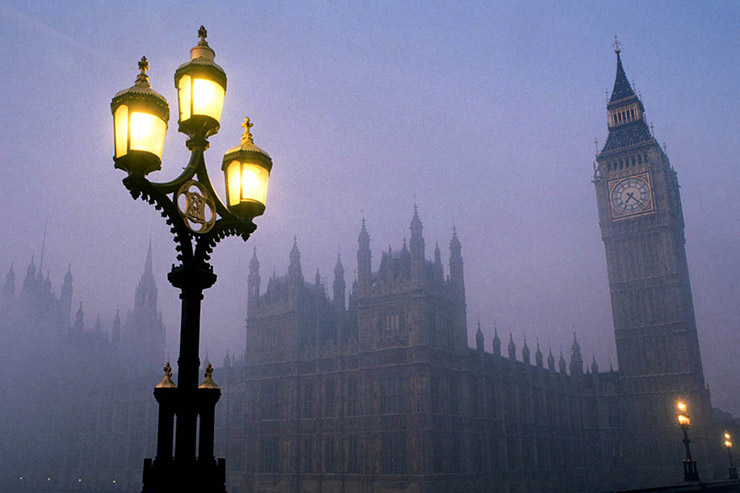
    American by birth, I have lived in London for fifteen years and consider it my home. During that time I have explored many of the city’s esoteric sites and have concluded that this remarkable metropolis is only just beginning to reveal its true occult significance.

    London has been inhabited for thousands of years and the diversity of its settlements has resulted in a rich, if not peculiar, collection of occult traditions. The earliest humans hunted here over four hundred thousand years ago. While a rich abundance of wildlife and a strategic riverside base would have attracted many different colonies of people, one wonders how the ancients truly saw their landscape, and how many were drawn here due to the distinctive snake-like curvature of the River Thames.

    The serpent is one of the oldest occult symbols, representing many esoteric concepts, including duality, good and evil, and harmony with the earth. Thanks to the wonders of technology, an image of the serpent in the form of the winding Thames has been broadcast daily to millions of viewers across the globe for nearly three decades, courtesy of the television programme Eastenders, whose opening credits feature the unique landscape from the air.

    Like other ancient settlements in Europe, London was inhabited by megalithic societies who constructed stone circles and burial mounds. The Iron Age introduced more sophisticated settlements and hill forts which, sadly, can only really be appreciated today by aerial photography. These include settlements at Wimbledon Common, Heathrow and the present-day Houses of Parliament, to name a few. Urbanisation has all but erased the megalithic footprint of London, but some remnants, such as Primrose Hill, with its curious burial mound and breathtaking views of London, remain. In fact, Primrose Hill would become a haunt of occultists William Blake and Dion Fortune, amongst others, and plans, albeit later aborted, would be made to construct a colossal pyramid burial complex on top of the hill, complete with over five million honeycomb-shaped tombs.

    There is considerable evidence for occult practices having occurred in London in ancient times: beeswax effigies, thought to be five thousand years old, have been found in the Thames, representing man’s attempt at harnessing occult powers via shamanism and many stylised Bronze Age swords have also been discovered in the Thames, suggestive of votive offerings to Celtic deities. Similarly, albeit over a thousand years later, a golden-horned, apparently ceremonial Viking helmet was discovered in the Thames, near Waterloo. The amazing artefact is unique in Europe and appears to reinforce the occult tradition of London’s ancestors and their reverence for the serpentine river.

    The Trojan leader Brutus established a city here in 1100 BCE and named it Troia Nova, or Trinovantum. Later, the 1st-century BCE King Lud renamed it Caer Lud, which evolved into Caerlundein, Londinium and finally London. It is said that giants lived in London in Brutus’s day and that he captured two, Gog and Magog, and employed them as porters at the gate of his palace. Brutus is also associated with another legend, the London Stone, a curious rock of which little is known for certain. Some say it came from Troy, others believe it was a druid stone or even the stone from which Arthur extracted Excalibur.

    A medieval proverb states, “So long as the stone of Brutus is safe, so long shall London flourish.” William Shakespeare wrote about the stone and, intriguingly, many believe that his plays were actually written by Francis Bacon or Christopher Marlowe, both of whom were esoterically connected. Another London occultist, William Blake, wrote of the London Stone in his poem, Jerusalem (1820): “At length he sat on London Stone and heard Jerusalem’s voice.” Clearly, the relic once cast a magical spell on the city. Sadly, it is now embedded in an abandoned building across from Cannon Street Tube Station, its former glory but a distant memory.

    For the best reading experience, obtain the full digital version of this magazine with all this article’s illustrations.

    Hail the Romans: As Above So Below

    The arrival of the Romans marked a significant milestone in the evolution of London’s occult tradition and in 54 BCE Julius Caesar and his men crossed the Thames in West London, signalling the new era.

    The Romans were especially threatened by the Druids, who, according to Caesar, were involved in divine worship and human sacrifice, including the burning of prisoners, or even innocents, in ‘wicker men’. Sure enough, London’s native tribes appear to have paid homage to their gods for protection from the Romans, as indicated by a decorative bronze shield with inlaid coloured glass found in the Thames near Battersea that dates to this time. The original inhabitants of London were incredibly resilient and fought bravely to maintain their cultural identity. One hundred years later Queen Boudica sacked the city and soundly, if not brutally, defeated the Romans in retaliation for the rape of her daughters and the killing of the Druids; but the Romans would soon avenge this attack and all but extinguish the Druids and their largely oral occult traditions.

    The Roman invasion changed the landscape, language, culture and thought process of native Britons forever. There are many museum exhibits in London that document these changes via artefacts and re-creations. From an occult perspective there was a less tangible, but no less fundamental, change in consciousness starting to take place: the introduction of Mithraism, and the theology of ‘as above, so below’.

    Not much is known of this ancient mystery school, other than it involved Mithras, the Roman God of Light, but we do know that it also involved the ritualistic slaughter of bulls and included a seven-grade system of initiation. Like the Masonic rituals that would be conducted some fifteen hundred years later in London’s Grand Lodge, Mithraism included ritual meals and a secret handshake.

    The Romans conducted their rituals in underground temples called mithraea, and several of these evocative temples have been discovered in London, including one remarkable 60-feet long, 26-feet wide temple beneath the now underground River Wallbrook.

    The origins of Mithraism are uncertain, although it is known to have been popular amongst Roman soldiers, most likely because it provided a comforting framework for the afterlife, and understandably so. In their profession a premature death was almost inevitable. The cult is thought to be Roman or Persian in origin and the name ‘mi-it-ra’ has been found inscribed in a 1400 BCE peace treaty between the Hittites and the kingdom of Mitanni in Northern Syria. This is interesting, for both regions have a rich tradition of bull veneration and each was contemporary with Dynastic Egypt, where I believe the tradition of Mithraism originated. In Egypt, the slaughter of Apis (‘bee’ in Latin) bulls resulted in 1,000 souls, represented as bees, being born out of the body of the dead bull. The occult tradition of bull slaughter, which is referenced in the Mesopotamian Epic of Gilgamesh and the Egyptian Opening of the Mouth ceremony, commemorates what the ancients observed in the constellation of Taurus: a hunter killing a bull with distinctive marks (3 stars) on its forehead, just as the Apis bull has distinctive marks on its forehead.

    I believe London’s adoption of the occult tradition of ‘as above so below’ can also be found in the legend of King Arthur, whom every Celtic nation claims as their own, most notably England. In a recent documentary on King Arthur that I presented for the National Geographic Channel, I expressed my belief, much to the producer’s chagrin, that the ambiguity around Arthur’s origins is due to the fact that he never existed. Rather, he was an archetypical hero, who lived in the constellation of Ursa Major, known as the ‘Great Bear’, meaning Arthur. Man would have observed the Big Dipper, which resembles a platter (the object that was considered to be the Grail in the first complete account) rotating around the Pole Star, promising to return, like Arthur. The night sky also includes an outline of a man with a wounded thigh, which sounds very much like the Fisher King. And, of course, Arthur fought twelve battles and there were twelve knights of the ‘round’ table; one for each of the twelve constellations perhaps? Was the legend of King Arthur just another archetype, much like Mithraism?

    The Arrival of the Knights Templar

    The Order of the Hospital of St John of Jerusalem was founded in 1099, shortly after the First Crusade. Less than fifty years later they established their headquarters at the Priory in Clerkenwell, the remains of which are now a museum. Across town, the Knights Templar established a base in High Holborn, in a Roman temple once revered by Hugues de Payens. The Knights Templar outgrew their headquarters and built Temple Church between Fleet Street and the River Thames, a round church based on the Church of the Holy Sepulchre in Jerusalem. In keeping with their power elsewhere in Europe, the Order installed the Master of Temple Church in Parliament, thus ensuring that their powerful occult views would become part of the nation’s legislature.

    The land between Fleet Street and the Thames was owned by the Knights Templar and divided into Outer Temple and Middle Temple, with Temple Church serving as Inner Temple. Each existed above the covered-up River Fleet and, in occult tradition, an underground stream provides divine augmentation to rituals and spiritual attainment.

    Come the middle of the 19th century the tale of Sweeney Todd, the demon barber of Fleet Street, began to emerge. The gory urban myth appears to be without historical merit, causing some to speculate that the legend of a serial killer in the vicinity of the Templar precinct may be a memory of former ritual sacrifices. Today a dragon guards the entrance to Temple Bar and reminds one of the esoteric traditions once practiced there.

    Despite the recent Hollywood movie starring Johnny Depp and Helena Bonham Carter, the legend of Sweeny Todd has largely been superseded by one that took place half a century later, in 1888, when a serial killer by the name of Jack the Ripper murdered five women, forming a 5-sided pentagram in the process and removing their organs along the way, including, in some instances, their hearts.

    Ritual killings continue in London, and the river Thames continues to be the depository for the ritual remains of victims. In recent years the analysis of limbless torsos discovered in the Thames has prompted authorities to suspect ritual murder and superstition as the reason for the crimes. This is not a new tradition in London. The nursery rhyme, ‘London Bridge is falling down’, is said by English Myths and Legends author Henry Bett to be the folk memory of the ancient practice of human sacrifice at the building of a bridge.

    Summoning the Spirit World

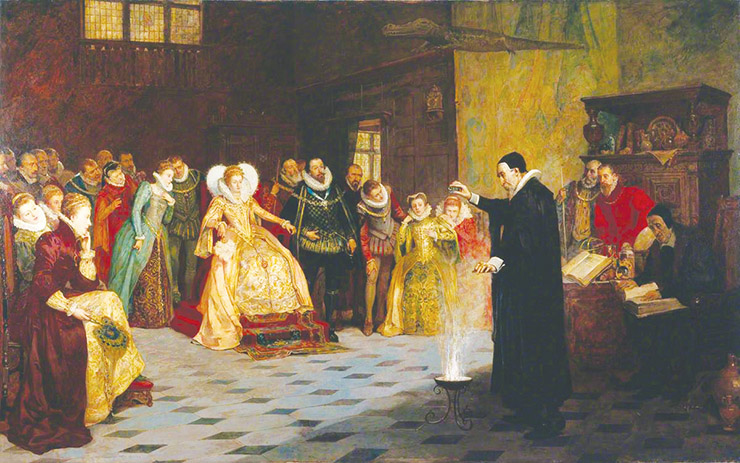
    A belief in the occult appears to have helped London achieve prosperity during periods of pending adversity. Dr. John Dee (1527-1608), who used a crystal ball and scrying mirror to guide Queen Elizabeth through one of the most challenging eras in British history, is perhaps the most renowned example (see “John Dee and the Enochian Apocalypse”).

    But there are many other examples of occult traditions in the court of the king and queen. Take, for example, the peculiar tale of King Charles II (1630-1685), who presented his mistress, a resident of West London, with a griffin. The dog-like figure with wings fell into a local river, survived and ended up in the Thames, near the point at which Caesar had crossed. It was later paired with a second griffin that Joseph Banks, a scientist who accompanied Captain Cook on his voyages, had brought back from an exotic island in the Pacific Ocean. The account leads us to believe that the griffin may have been a real animal, which multiplied before fading from history, only to be seen once more in the 1980s, and on multiple occasions by various upstanding citizens of West London.

    Charles II also domesticated the ravens at the Tower of London, a tradition summed up as follows: “If the Tower of London ravens are lost or fly away, the Crown will fall and Britain with it.” The belief appears to stem from the legend of the Celtic god, Brân the Blessed, whose name means ‘Blessed Raven’ in Welsh and who was killed in an otherwise successful battle against an adversary, the Irish King, Matholwch. Brân’s head was buried beneath the spot where the Tower now stands, facing France as a talisman against further foreign invaders. Could the legend of the griffin and the raven somehow be related?

    Henry VIII (1491-1547) created a religious revolt with great consequence when he severed ties from Rome in an act known as the Dissolution of the Monasteries. Given the many cathedrals and orders that were subsequently transformed into ruins, any number of different sects could have been culpable of the act of desecration that awaited the king after his death. On his way from London to Windsor, where he would be buried, the King’s funeral procession rested overnight at Syon Abbey in West London. In the morning it was discovered that wild dogs had ripped open his casket and ravaged his body, leading some to speculate that the attack was a deliberate act of revenge enacted by a member or group of individuals from one of the aggrieved monastic orders he had defied.

    Phoenix Rising

    The Great Fire of 1666 devastated London, destroying over 13,000 buildings. What is less widely known, however, is that occult beliefs prevented an otherwise manageable outbreak from being extinguished. This is confirmed by first-hand accounts of Londoners whose belief in the prophecies of Mother Shipton and Nostradamus, each of whom was thought to have predicted the catastrophic fire, led them to feel disempowered and unworthy of extinguishing the fire and thus saving the city from its destiny.

    Out of the ashes came a vision of a New Jerusalem, masterminded by the Freemason and architect, Christopher Wren, who drew on the occult traditions of the Kabbalah, and the tree of life in particular, in addition to the sacred geometry of the Old Testament. Wren reintroduced the hallowed number of 2,000 cubits, or roughly 2/3 of a mile, which represented the distance from the Mount of Olives to Jerusalem (the furthest a Jew was allowed to walk during the Sabbath), and proposed that many of London’s newly-constructed buildings be set 2,000 cubits apart.

    Foremost amongst Wren’s impressive, occult inspired designs is Saint Paul’s Cathedral, which not surprisingly is aligned 2,000 cubits from Temple Bar to the West and 2,000 cubits from St Dunstan’s in the East. Miraculously, the stunning edifice survived the bombings of a world war, and it is no wonder that Prime Minister Winston Churchill addressed his staff each morning with the pensive question; “Is Saint Paul’s still standing?” Poignantly, Saint Paul’s is where Wren is buried. Fortunately for all, the fabulous monument still stands like the esoteric beacon it was always intended to be.

    Other buildings erected after the fire, such as the Monument and Nelson’s Column, were either designed with occult-inspired dimensions or aligned to the solstices. Further, Wren’s student Nicholas Hawksmoor followed in the occult tradition by placing Egyptian obelisks on top of churches, forming, in the estimations of some, a pentagram on the ground across London. The tradition of creating buildings with occult dimensions had been re-born and continued in later periods of development, such as the nude, winged statue of Anteros, the Greek avenger God of requited love, erected in Piccadilly Circus in 1892, and which was originally orientated in the direction of Parliament, presumably to send ‘love’ and to produce greater synergies within government.

    King George III (1738-1820) was a remarkable man and one of England’s many occult-minded kings. In 1769 George III anxiously awaited the completion of an alchemist observatory in the London Borough of Richmond upon Thames. In commissioning the work, George III was creating his personal observatory and meridian, despite the fact that the official and Royal Observatory – and meridian, the naval of the country – had been established in Greenwich a hundred years earlier. The King was passionate about astronomy and instructed his architect, the renowned occultist Sir William Chambers, to complete the work in time to view the transit of Venus, which occurred that year on 3rd June.

    Meridians have existed since ancient times. While the placement of a meridian is arbitrary, its function is quite specific: to project an imaginary line across earth’s surface, stretching from the North Pole to the South Pole, esoterically connecting all locations within a given longitude. In the case of George III, he projected his own meridian straight down the serpentine Thames, a stunning riverside landscape, rich in history and renowned for its visionary inhabitants, innovators such as J M W Turner, Alexander Pope, James Thompson, Horace Walpole, David Garrick and William Hogarth, to name a few. The Meridian was special, for it intersected sacred sites along the way, which were part of what George envisaged as a new Arcadia; a diamond in the rough – a paradise amidst the urban chaos of London.

    Dawn of the Occultists

    Arguably the greatest spiritual explorer of the 18th century, Emanuel Swedenborg (1688-1722), hailed from Stockholm, but spent much of his time in London. He eventually moved to Wellclose Square, a former hotbed of esoteric notables, including Rabbi Falk, ‘The Ba’al Shem of London’. Also in the 18th century the London-born poet, painter and esotericist William Blake (1757-1827) became one of a long tradition of writers whose work may need to be reconsidered in the context of a recent discovery; not a temple, book or artefact, but a portal, supposedly concentrated in the garden of Saint Marylebone Church.

    The portal is said by modern occultists to be a stargate to an alternative dimension and consciousness, accessible only by initiates. The so-called energy field/cosmic doorway is said to stretch all the way to Primrose Hill, which is precisely the expanse of land that Blake was writing about in his epic poem, Jerusalem. Lord Byron was born in the church; Francis Bacon was married there, as were Robert Browning and Elizabeth Barrett. Lord Nelson had his daughter christened at the church and Charles Dickens lived but a short distance away. May each have drawn on the occult energy of the portal to enhance their art?

    As the 20th century neared, London became esoterically linked to ancient Egypt and other sacred cities, when an obelisk from the ancient capital of Heliopolis was installed on the south bank of the Thames. Like Rome and Paris before it, and New York shortly thereafter, London now possessed one of the most highly charged artefacts in the ancient tradition, an Egyptian obelisk; a powerful talisman to the sun god. Cleopatra’s Needle, as the London obelisk is known, is flanked by two replica sphinxes that appear to guard the ancient structure. In fact, sphinxes adorn the whole of London’s Embankment, including armrests on the benches along the Thames. In 1917, during World War I, a bomb from a German air raid landed near the obelisk, but, inexplicably, produced no real damage. Had the sphinx protected London from a disastrous fate?

    Come World War II an urban myth arose in which British witches were said to have gathered to assist Winston Churchill in deterring Hitler from advancing on Britain. Given the occult traditions of London at this time, who is to say that the witches did not play their part in the war effort?

    The Victorians were obsessive about all matters of the supernatural and the legend of Spring-Heeled Jack, the Bogeyman of London, persisted throughout the reign of Queen Victoria. It is said that the creature could walk through walls, had a pointed nose and ears and fiery eyes. Half a century or so later the creature would return, or so it would appear, this time as a 20th century apparition of a vampire in Highgate Cemetery.

    The legend of the Highgate vampire has its roots in tales of creatures that roamed the north London district of Dracula author Bram Stoker. The practice of Satanism was not uncommon in London and some believe that the creature with the fiery eyes was manifested by satanic rituals and remained in this realm, only later becoming known as Spring-Heeled Jack and the Highgate Vampire. Speculation aside, one wonders if the legend of Dracula was inspired by London’s secret traditions.

    Cults Wars

    The Theosophical Society, co-founded by Madame Blavatsky (1831-1891), introduced the notion that the evolution of mankind was governed by a chosen elect known as the ‘brotherhood’. The Ukraine-born spiritualist believed the occult and science worked in tandem, and the occult was simply accessing realms that science had yet to conquer. 

    Despite its success at displacing Victorian spiritualism, the Theosophical Society had its own competition, the Hermetic Order of the Golden Dawn, whose first temple, Isis-Urania, was created by Samuel Liddell Mathers in 1888, and which conducted its first tomb-based rituals at Thavies Inn, off Holborn Circus. The ritual was said to have included the enactment of the death and rebirth of Christian Rosencreuz, the founder of the Rosicrucian Order. The Golden Dawn was alleged to have been based on rituals contained in a coded ‘cipher manuscript’. Others believed it was a ruse to compete with the Theosophical Society. Regardless, the Golden Dawn grew rapidly, converting 50 members in its first year and another 250 in its second, before starting to implode into more offshoots than Clapham Station has train tracks.

    Aleister Crowley was initiated as the group began to fragment into various offshoots, such as the Alpha et Omega which formed in around 1900. Crowley had a fierce reputation as an occultist and his own mother believed him to be the Anti-Christ of the Apocalypse and the ‘Great Beast’. Crowley studied at Cambridge before moving to a flat at 67 & 69 Chancery Lane in London, where his occult studies flourished with the help of a mentor by the name of Allan Bennett, who introduced him to Buddhism. Here the two men sought to perform the ‘Abramelin Operation’, an intense six-month ritual designed to conjure the Holy Guardian Angel. One account suggests that Crowley succeeded, for he is said to have returned home one night only to find his door open and ‘semi-materialised beings’ marching around his flat. Crowley had his hands in all sorts of secret traditions, and despite his Masonic involvement elsewhere in Europe, the United Grand Lodge of England denied him admission.

    Another famous occultist of the 20th century was Dion Fortune, who left Alpha et Omega and joined another Golden Dawn derivative, the Stella Matutina (Morning Star), a group originally known as the Mystic Rose or Order of the M R in the Outer. Fortune left because she feared she was under psychic attack, and proceeded to write the definitive book on psychic and occult protection. In 1924 she formed her own cult, the Fraternity of the Inner Light, which met in Primrose Hill.

    In 1960 the French poet and occultist Jean Cocteau, an alleged Grand Master of the Priory of Sion, visited the Church of Notre Dame de France in Leicester Square. Here, he created a mural dedicated to the Virgin Mary, which features a Black Sun and references layer upon layer of veiled knowledge.

    The year 2000 came and went, with the only homage to the millennium being the creation of a ‘dome’ (now called the ‘O2’), which was nestled in one of the curvatures of the serpent Thames. However, the previous year, 1999, had seen the creation of an even more esoterically potent edifice, the London Eye. This huge, slow-moving Ferris wheel amusement ride stands majestically on the banks of the Thames. The structure dominates the landscape, recalling many occult circular symbols, from the zen-like concepts of completeness and wholeness, to the brutal death of heretics upon the Catherine Wheel. It also includes a brazen Masonic compass in its centre, as well as being named after another ancient occult symbol, the all-seeing eye. The ‘Eye’ became a powerful part of the landscape in a very short period of time and one that is colourfully lit during special occasions, such as New Year’s Eve.

    Fast forward to 2012 and the London Olympics, whose logo inexplicably resembles the word ‘Zion’ and whose stadium sits amidst symbolically named streets (see “The London Olympics Conspiracy”). One wonders how much invisible influence occult powers may have in Parliament.

    The foundations of London’s occult traditions run wide and deep and represent a microcosm of the esoteric tradition the world over. If history is any indication, it is unlikely these traditions will fade any time soon, although they may move underground, much the same as London’s forgotten rivers, in order to survive.

    [alert type=”general” dismiss=”no”]This article was published in New Dawn 133.[/alert]

    [alert type=”success” dismiss=”no”]If you appreciate this article, please consider subscribing to help maintain this website.[/alert]

    © New Dawn Magazine and the respective author.
    For our reproduction notice, click here.
  • John Dee & the Enochian Apocalypse

    John Dee & the Enochian Apocalypse

    Doctor John Dee (1527-1609) remains one of London’s most intriguing historical figures. Dee was a renaissance man; an occultist, mathematician, astronomer, astrologer and navigator. In addition to his prodigious skills, Dee was a confidant of Queen Elizabeth I, who guided the nation through one of its most challenging eras, partly based upon Dee’s unique blend of alchemy, divination and Hermetic philosophy. In fact, the Queen had so much faith in Dee’s calculations she had him choose her coronation date.

    By all accounts Dee was a distinctive looking gentleman, respected and admired by many, as John Aubrey describes: “Dee had a very cleare rosie complexion… a long beard as white as milke. A very handsome man… he was tall and slender. He wore a gowne like an artist’s gowne, with hanging sleeves, and a slitt. A mighty good man he was.”

    Dee lived in Mortlake, a West London village mentioned in the 1086 ’Domesday Book’. Here, his modest residence along the River Thames provided easy access for Elizabeth and other dignitaries, especially other occultists, for Dee had amassed what was arguably the grandest esoteric library of his day. Sadly, fashionable apartments now stand where Dee once lived, and a block of council flats across the street boasts his name.

    What is less known is that Dee was obsessed with the apocalypse, and believed he had opened a supernatural gateway leading to a powerful and disgruntled spirit world. But this came later. During the early part of his career Dee had little interest in the supernatural. He was a devoutly religious man and deeply ambitious. From the 1550s until the 1570s he honed his skills as a writer as well as a navigator with unique technical expertise. Few recall that he coined the phrase ‘British Empire’ and helped shape the emerging ideology of the nation.

    Dee became frustrated with his perceived inability to uncover more occult secrets than he already had obtained, and so began his fascination with the supernatural. During the 1580s he focused his attention on contacting angels in the spirit realm in order to obtain greater wisdom. Initially Dee tried his hand at using a ‘scrying’ mirror or crystal ball, each of which can be found in the British Museum.

    Dee struggled to achieve the results he was hoping for and thus reached out to someone who professed to have expertise in these matters. Enter the occultist and spirit medium Edward Kelley, who stumbled upon a ration of magical red powder, which he had received from an innkeeper in Glastonbury, who had acquired the powder from tomb robbers. In a different version of the story, Elias Ashmole, who wrote the first account of Kelley’s discovery, recounts how Kelley found a book containing the curious powder in the ruins of Glastonbury Abbey. Regardless, Kelley’s desire to learn as much as possible about the magical substance, which he believed could turn base metals into gold, led him to Dee, whose library attracted many such seekers.

    Like Dee, Kelley was a fascinating man; a seer whose ritual expertise in the black art of necromancy, combined with his passion for alchemy, and his quest for the Philosopher’s Stone in particular, so impressed Dee that the two soon became inseparable. Together they embarked on a journey that would transform their lives and quite possibly ours too.

    Dee and Kelley held various ‘spiritual conferences’; a quest that Dee believed would render immeasurable benefit to mankind. Kelley’s integrity, on the other hand, is the subject of continued debate and in fact before coming to London he was convicted of forging title deeds in Lancaster. Nevertheless, Kelley became Dee’s regular scryer and the two men appear to have achieved, if not exceeded, their goals, for Dee began to write truly remarkable, albeit sublime, works that he maintained were the product of angels who spoke in language known as Enochian.

    In 1583, Dee and Kelley embarked for Europe, seeking the patronage of Emperor Rudolf II in Prague and King Stefan of Poland in Kraków, amongst others. The two occultists continued their alchemical pursuits on the continent for a number of years. One incident in particular stands out, which stems from their involvement in necromancy. An inquisition by the Catholic Church proved messy, yet both men were acquitted in 1587. That same year the angels instructed Dee, through Kelley, that the two were to share everything, including their wives, which they did. Dee’s wife gave birth nine months later to what is now thought to be Kelley’s child.

    At the best of times the two men had what could be called a terse relationship, and the ‘sharing’ mandate of the angels angered Dee and led to his break up with Kelley, who later died in prison. Dee returned to his residence in Mortlake, only to find that his world had changed. Much of his library had been pillaged and his political stature fallen. What little that remained of his relationship with the Queen enabled him to assume the office of Warden at Christ’s College, Manchester in 1595. He returned to Mortlake in 1605, where he died in 1609 and was buried under the high altar of his parish church.

    In retrospect, we can glean that the essence of the Enochian dialogues centred upon a coming apocalypse, which Dee’s angels referred to as ‘the Harvest’. Dee and Kelley succeeded in manifesting the spiritual beings they had summoned, and what followed appears to have been the process of opening the gates to another dimension and obtaining the keys required to activate the angels’ agenda, an apocalypse of the mind – a poisoning of man’s spiritual essence and the rapid degeneration of society. In one instance the angel, Mapsama, instructs Dee as to his role in the whole affair:

    Mapsama: These Calls are the keyes into the Gates and Cities of wisdom. Which [Gates] are not able to be opened, but with visible apparition.

    Dee: And how shall that be come unto?

    Mapsama: Which is according to the former instructions: and to be had, by calling of every Table. You called for wisdom, God hath opened unto you, his Judgement: He hath delivered unto you the keyes, that you may enter; But be humble. Enter not of presumption, but of permission. Go not in rashly; But be brought in willingly: For, many have ascended, but few have entered. By Sunday you shall have all things that are necessary to be taught; then (as occasion serveth) you may practice at all times. But you being called by God, and to a good purpose.

    Dee: How shall we understand this Calling by God?

    Mapsama:  God stoppeth my mouth, I will answer thee no more.

    The exchange is intriguing and hints at the angels’ selection of Dee as the wick by which the fuse to ignite the end of days would be lit. Had Dee and Kelley unknowingly ushered in the Enochian Apocalypse?

    Three centuries later the Golden Dawn incorporated many of its teachings and one of their initiates, Aleister Crowley, picked up where Dee and Kelley had left off. He wrote: “Much of their work still defies explanation.” Crowley is known to have concentrated on Dee’s ‘Apocalypse Working’, although it is not known whether he accessed the elusive occult key necessary to usher in the apocalypse. Nevertheless, Crowley died in 1947, believing he had opened the gate of the apocalypse almost 45 years earlier, in 1904, when he spiritually ‘received’ The Book of the Law.

    Today, we are uncertain if Dee, Kelley or Crowley did in fact unlock the door of the apocalypse, for it is said the apocalypse is a slow-working mental transformation within the collective unconscious of the human race.

    The year is 2012. Now, as then, we contemplate the possibility we are living in an Enochian end of days. Doctor Dee influenced history at the highest levels of government. His legacy influenced perhaps the most notorious of occult groups, which in turn influenced the ‘New Age’ and modern occult movement. But was he also instrumental in the opening of a door in human consciousness that would allow the apocalypse to manifest?

    (For more on Dr. Dee, see Glyn Parry’s article John Dee & the Magical Origins of the British Empire in this same issue of New Dawn. Use link below to purchase.)
    [alert type=”general” dismiss=”no”]This article was published in New Dawn 133.[/alert]

    [alert type=”success” dismiss=”no”]If you appreciate this article, please consider subscribing to help maintain this website.[/alert]

    © New Dawn Magazine and the respective author.
    For our reproduction notice, click here.
  • Magic & Mysticism in Java

    Magic & Mysticism in Java

    From New Dawn Special Issue 5 (May 2008)

    The death of ex-President Soeharto of Indonesia at the age of 86 [in 2008]  reminded me that I was present in Jakarta in 1967 during the bloodbath in which the Communist Party was decimated and General Soeharto rose to political power, along with the minority modernist Muslim party that supported him.

    At that time Indonesia was only nominally Muslim: under the charismatic President Soekarno it was animistic, feudal, steeped in an other-worldly mysticism, and was infested with starving beggars, superstition and black magic practices. General Soeharto, of humble village origin, had risen high in the military apparatus and married into a family of the minor nobility in Solo. His marriage gave his political aspirations legitimacy in the eyes of Indonesians, who believed in the ancient tradition that links royal status to the right to rule.

    The General was well known to have a close affiliation with a Javanese magico-mystical school believed to give him great occult powers, yet from the time of his ascension to the presidency he appeared, unlike ex-President Soekarno, to deny the affiliation, at least publicly. The new pro-Western president donned the Islamist black pitje and publicly espoused and supported the political arm of orthodox Islam, which in the main was vehemently opposed to any and all occult practices. It proved to be the best thing that could have happened to the country.

    Whatever President Soeharto’s questionable legacy in other areas, in this respect he dragged Indonesia from the dreaming Middle Ages into the modern world. Today, Indonesia is officially a member of the great Muslim international fraternity, and Islam’s austere religious mores have increasingly infiltrated the national culture, modifying its more primitive animistic traits and greatly strengthening its influence in Asia-Pacific politics.

    Nevertheless, Pak Soeharto retained to the end of his life his private allegiance to Javanese mysticism. Doctors who attended him in the last weeks of his illness, during which he rallied more than once from heart, lungs and kidney failure, said they were amazed and baffled by his recuperative powers. It was commonly believed, however, that the power of spirits and the implantation of many lucky charms inside his body was the factor keeping him alive. Indeed, those who were close to Soeharto in his home town of Solo, the heartland of the Javanese culture, have attributed his resistance to death to his devotion to the powerful occult forces that resided in him throughout his life.

    According to a recent article in the New York Times, all six presidents of Indonesia “paid respects to the spirit world, visiting sites said to hold mystical powers, consulting with seers and collecting tokens of magic like the Indonesian dagger called a kris.”1 Among these leaders, Soeharto was outstanding as a devotee of the occult. He studied as a boy with a spiritual teacher and performed ritual acts throughout his presidency, continuing to do so even after a popular uprising deposed him in May 1998.

    According to his aides, over the years he made frequent visits to sacred places, including mountains, caves, tombs and ruins, and took ritual baths in oceans and rivers sacred to Nyai Loro Kidul, the mighty Queen of the South Seas. He also collected hundreds of sacred objects in order to absorb their magical power.

    The Javanese Science

    Despite the ascendancy of modernist Islam throughout the nation, Soeharto’s private loyalty to Java’s spiritual past is mirrored in Javanese society in general, though its allegiance now tends to run underground in the face of Islamic disapproval, especially that of the strict Wahhabi sect, which over the years has become extremely influential. To the outsider today all Indonesians are strict Muslims, but under the pitje or the headscarf there is likely to be concealed a mystic of quite a different stripe. The people of the island of Java in particular are very proud of their indigenous pre-Islamic spiritual tradition, which they refer to as the Javanese Science, and while few may actually practice it now in its pure occult form, most have a proprietorial understanding of at least some of its sacred principles. They are evasive about discussing this hidden dimension of their society, especially with Western foreigners, but one would be mistaken in not taking the Science very seriously indeed as the essence of the Javanese culture even to the present day.

    The Javanese Science is a syncretic blend of Hindu-Buddhist, Sufi, Taoist and ancient animist strands, and evolved in the royal courts of Solo and nearby Jogjakarta in Central Java as a system of self-transformation confined solely to the aristocracy. But since the Revolution that ejected the Dutch rulers from the country after the Second World War, the Science emerged into the popular culture in the form of hundreds of kebatinan (or inner-being) sects, each one of which celebrates some aspect of the royal mother tradition. These esoteric sects have drawn a very large minority of the Indonesian population into their sphere, forming an immensely creative and diverse subculture at the leading edge of national life, very much as happened in Japan after the Second World War.

    The Kebatinan movement has in many respects evolved into an inherently new form of mysticism. Syncretism raised to a religious principle is its dominant keynote, a drive towards pluralistic unity that echoes a prominent feature of the New Age spirituality appearing elsewhere in the world. But the Javanese approach to the universe and the human situation generally, though at its best of a high metaphysical order, is in many respects quite different from that of the West. It doesn’t involve religious theories and dogmas so much as a science of inner energies perceived directly with a highly sensitised intuition – one might say, clairvoyantly – and manipulated directly by the will.

    This shamanistic approach can lend a disconcerting ambiguity to those moral categories that the Western mind likes to regard as eternally fixed: Justice, Compassion, Truth, Altruism, Duty and so on. To the Javanese, mystic things in the moral sphere are not good or bad according to what we in the West would regard as an ethical judgment, but according to whether the personal energies concerned balance out in a manner beneficial to the whole. Do they bring harmony to the individual, do they stabilise him or her? For the Science all is dynamic, all is in ever-transformative and purposive flux: good is what works in the present moment to the spiritual benefit of the whole; bad is what fails to do so. This stance contributes a relativistic and unpredictable note to the Javanese outlook that Western diplomats and others have famously found difficult to deal with, yet its creative power is undeniable.

    Javanese adepts with access to this underlying realm of subtle forces are reputed to have diagnostic powers and techniques of psychic healing of extraordinary efficacy, and are believed to understand the dynamics of spiritual physiology better than any other race on earth. The Javanese Science has much in common with other shamanistic Eastern paths such as have been found in Tibet and Japan, where syncretism has similarly been raised almost to a spiritual principle. These too have dealt in patterns of shifting subtle energies rather than fixed doctrinal systems. But there is something different and mysterious about the Javanese Science, a depth, a quality of purity that most researchers are agreed sets it apart from any other form of mysticism. What makes it unique?

    The Invisible People

    In a visit to Indonesia some years later, I was able to put this question to Pak Joyo, at one time the Director of a Christian Theological College in Central Java and the pastor of one of the largest charismatic Lutheran churches in the Reformed Dutch Church of Indonesia. Pak Joyo was a fourth-generation Christian whose great-grandfather was converted to Christianity at the point of his Sultan’s kris (the Sultan himself having been similarly converted by Dutch missionaries), and Pak Joyo followed in his family’s footsteps in deciding to train for the ministry. But halfway through his theological training, he decided to quit the church and give all his allegiance to a contemporary mystical sect called Hardopusoro which interested him a great deal more.

    However, he told me that in a vision Christ asked him to remain in the church, where he could be more useful than anywhere else; and after an internal struggle he obeyed. Pak Joyo went on to become a multilingual international emissary for Christian ecumenicalism – but, with the blessing of his bishop, privately continued in Hardopusoro, in which he became a high initiate. Such dual religious allegiances are entirely natural to the Indonesian temperament.

    Pak Joyo’s answer to my question surprised me. The source of his country’s spirituality, he said, was not familiar to other races. It was unique because it stemmed from the Invisible People, the Badui, who grew no bigger than a ten-year-old child and who lived in an inaccessible part of the mountainous jungle in South Bantam, about a hundred miles west of Jakarta. The Badui were “closer to the soul” than other people, said Pak Joyo, and were the X factor in the background of the Javanese Science. Invisibly they had instructed the Javanese people for nearly three thousand years, helping to guide them from their original primitive state to their present civilisation.

    The Badui were not Indonesian and had no part in the country’s laws or economy, but lived apart in forest territory forbidden to outsiders and had great spiritual knowledge and strange magical powers. Although rarely seen by outsiders, they were held in awe in the marketplaces throughout Indonesia. When Indonesian spiritual and political leaders needed advice, said Pak Joyo, even the most illustrious of them went into the jungle alone to consult the Badui seers, for the understanding of the Invisible People on spiritual matters was a universal one that embodied a primordial tradition beyond factions or institutions.

    President Soeharto would undoubtedly have been one of those top leaders who was not too proud to seek enlightenment, possibly of a political as well as a spiritual kind, from these strange priestly people of the jungle. Leaving behind his aides, bodyguard and driver, he would have had to ascend alone the jungle forest track that led to the Badui colony, there to consult with its leading prophets.

    Inexplicably, although remote from the teeming civilisation surrounding them, the Badui knew everything that happened in it long before the news was heard on television. They had prophesied the Second World War and that the Dutch would leave the country soon after peace was declared. They knew the destiny of peoples worldwide. The Badui, it was said, planted sacred trees – living trees, as they called them – representing their tribal leaders in a hallowed grove called the Artjas Domas, which was visited once a year by the highest-ranking Badui priests. By studying the growth on the trees clairvoyantly, they were able to read the fortunes and destiny not only of people, but of nations and the world. From this yearly examination everything of value to their leading families was recorded in a script known only to them. The Badui were said to have telepathic powers and a magical way of keeping others away from their settlements, especially from the Artjas Domas.

    I have recently learned that the Badui people have now inexplicably disbanded and their old territory has been settled by Indonesian farmers. But when I revisited Java in 1980, their colony was still a great focus of mystery and unanswered questions. Why were these strange forest-dwellers so influential? What kind of special wisdom did they possess? Where had they come from? And why did they live apart, alien, feared, invisible – and yet, according to Pak Joyo, all-seeing? Sir Stamford Raffles referred to them in his eighteenth-century History of Java, yet since then no traveller from the West had succeeded any better than the Indonesians themselves in setting foot on the Badui’s inner territory or penetrating their secrets.

    Eventually I learned more about this remarkable people from Dr. Paul Stange, an American lecturer in Asian Studies who grew up in Indonesia and who obtained a doctorate from the Michigan University in the US for his study of Sumarah, an akebatinan sect that has become influential in Indonesia since the Revolution.2 In his thesis, Dr. Stange was able to relate the Badui indirectly to the growth of kebatinan sects such as Subud and Sumarah as constituting a cutting edge phenomenon in the evolution of mystical consciousness.

    Custodians of the Soul World

    It seems that the Badui are of the dark-skinned Tamil race that is believed to have spread from Africa long ago into southern India, and from thence into Southeast Asia and the Pacific Islands, where they lived unmolested for thousands of years. But about eight thousand years ago the Malays, at that time a mainly Caucasian race from the north, crossed the Sunda Strait and displaced the Badui culture in the Sunda Islands, with the consequence that most of the indigenous race withdrew into the mountainous interior of Java, far from the spreading communities of the newcomers, while a remainder migrated further east.

    Some time in the first millennium BCE the remnant of the aboriginal Tamil people in Java was joined by a large group of Indian initiates – probably, some authorities think, refugees from the defunct Indus valley culture in which holy trees also played an important part – and the two groups, each with its heritage of ancient racial wisdom, together formed the Badui priesthood.

    Forty Indian Hindu-Buddhist families, constituting a sacred nucleus, inhabited a central group of three villages served by an outer ring of vassal Badui communities: together the two clans built a spiritual power-centre in Java which, isolated though it was for nearly three thousand years and finally greatly diminished in numbers, preserved unchanged its sacerdotal structure and identity and its pivotal place in Javanese religious life. Those in the inner esoteric circle wore white sarongs and turbans, were called the White Ones, had strict rules of conduct and were forbidden by their laws to have any communication whatever with the outside world, while those in the outer villages wore blue sarongs and turbans and were called the Blue Ones. There was no intermarriage between the two clans.

    Although the use of money or of weapons was forbidden to all in the colony, the ascetic laws of the Blue Ones were less severe than those of the others, and enabled them occasionally to visit an Indonesian village to obtain by barter the very few items the farming colony needed (mainly smoked fish and salt), and to serve where necessary as liaison officers and spokespersons for the White Ones.

    Despite their harshly primitive way of life, it would be a mistake to suppose these jungle people were not, in their own way, highly civilised. Nina Epton, a British journalist who is the only known Westerner to have met the Blue Ones and a few of their holy White Ones (although many Dutch researchers tried before her), speaks in her book The Palace and the Jungle of their aloof dignity, their air of having “a destiny apart from other mortals,” and above all, of what she calls “the Tibetan look.” This was a wide-eyed all-seeing look common to many of the Badui, which she describes as staring beyond this world into the spiritual realm. It was a look she associates especially with pictures of seers like Guru Padma Sambhava, the great Indian initiate who brought Buddhism to Tibet.3

    Ms. Epton has described the Badui physiognomy as varied and clearly of an older ethnicity than that of the Indonesians. But the elderly leader of the White Ones, reputed to have been a saint and a sage and obviously of a superior caste to the others, was plainly more ethnically advanced. She noted in particular that he had a worn, patient and ascetic face which reminded her of that of a well-mannered European intellectual. In other clothes he would have passed unnoticed in an English crowd, for he had a very light complexion, a narrow face and the gentle bearing of a civilised person. Altogether, Epton says, the Badui were not what one expects from the jungle.

    This assertion is borne out by the personal history of a young runaway, the son of a pu’un or chief of the White Ones, who in the seventeenth century escaped the colony to become a stable boy in the then Sultan’s palace. Soon he became the Sultan’s counsellor and then his son-in-law, and today his descendants are the Jajadiningrat family, one of the most aristocratic and politically influential families surrounding the Indonesian presidency. Throughout the intervening three hundred years, the Badui continued to “read” the sacred tree of the stable boy’s line, to visit his Jajadiningrat descendants once a year with predictions and advice for the coming year, and where necessary protect the members of the family from danger.

    In fact, the sole reason for Nina Epton’s unprecedented interview with the leader of the White Ones was that, through the Sultan, she obtained an introduction to the Jajadiningrat family, who asked the White Ones as a special favour to grant her an interview. In no other way would the meeting have been possible.

    The Badui priests continued to follow the destiny of the Jajadiningrats, says Epton, because for the Invisible People once a holy lineage is laid down it is laid down forever, it belongs to the timeless realm of the soul world. The Badui in fact denied the reality of time. Their sages believed that the rules of life were laid down once and for all at the Beginning of things by an ancestral divinity called Batarratunggal, who will one day return to govern the Badui and the world. In the meantime, it was their sacred obligation to maintain everything exactly as it was at the beginning, without change, without innovation. Nothing concerning their customs or belief system must be disturbed from their state of primordial perfection: hence the necessity of isolation.

    To the modern Javanese mystic this Badui belief is merely the folk expression of a deeper spiritual reality. He sees the concept of a Beginning-time or Dreamtime to which so many early races look back with longing, believing it to be a cosmic paradise that must be ritually preserved for the future, as simply a metaphor for the inner soul plane, which is both cosmic and interior at one and the same time. That inner place, eternally omnipresent within each human being, is really the cornucopia from which all spiritual paths and religions flow forth in their season. As a race we have long ago lost contact with such a high level of soul-consciousness, and so it is called by other names: the Garden of Eden, the Dreamtime, Paradise, the Kingdom of Heaven. But according to the Javanese view, it is in truth a soul-world present in each one of us, a celestial headwaters from which the river of the spirit flows continually into our bodily spacetime. This higher/inner world must be kept purified, as it once was and will be again in the future, and it was the task of the Badui to help do this, since we as a race cannot.

    No one knows for certain why the Badui people have now dispersed. But it is evident that deep changes reflected in its politics have overtaken Indonesia within the last few decades. The erratic occult climate that pervaded the early years of independence has yielded not only to a stricter Islamist discipline but also to the growing apparatus of democratic government, a maturing judicial system and economic reform, all of which has brought stability and prosperity to the people. The nation has come of age. According to Dr. Stange, who received a wealth of Javanese lore from the Sumarah cognoscenti, there is a school of thought that believes the Badui have now fulfilled their mission in the South Pacific, and that is why they have at last dispersed into the Indonesian population.

    The reign of animism in this region under the sovereignty of Nyai Loro Kidul had long been prophesied to end during the twentieth century, giving way to a new and higher religious and cultural dispensation for the Pacific races – one perhaps best represented by the modern Kebatinan movement in Java. It is thought that the Badui understood well that this prophesy has now been fulfilled. They understood that their reign is no longer needed – or indeed tolerable under the new conditions. Having played a custodial role by preserving in secret the pure and unsullied soul-conditions necessary for such a surge of higher consciousness, they have now been able to die out as a separate society.

    Whether or not there is any truth in this theory, it is undoubtedly the case that around the Pacific Rim a new religious spirit is rising. Akin to kebatinan and to the Javanese Science in general, it is based on principles of high shamanism known to the Badui many thousands of years ago, but forgotten by modern humanity. Recognising that enormous healing powers are locked in the ancient soul-ways, seekers visiting Indonesia today find common ground with the synthesising mysticism of the new kebatinan sects and are forming part of a spiritual network that stretches from Findhorn in Scotland to the esoteric centres of California. This development in the Pacific zone has in it the potential for creating a new religious paradigm of global significance. But how much of it is indebted to the heroic patience of the Invisible People of the Javanese jungle, as mystics like Pak Joyo believe, we shall probably never know.

    [alert type=”general” dismiss=”no”]This article was published in New Dawn Special Issue 5.[/alert]

    [alert type=”success” dismiss=”no”]If you appreciate this article, please consider subscribing to help maintain this website.[/alert]

    Footnotes:

    1. ‘As Suharto Clings to Life, Mystics See Spirits’ Power’, Seth Mydans, The New York Times, Jan. 27, 2008.
    2. Paul D. Stange, The Sumarah Movement in Javanese Mysticism, UMI Dissertation Information Service, Ann Arbor, Michigan, 1980.
    3. Nina Epton, The Palace and the Jungle, Oldbourne Press, London, n.d., 55.

    © New Dawn Magazine and the respective author.
    For our reproduction notice, click here.