New Dawn – World's Most Unusual Magazine

Tag: psychic

  • Awakening Your Psychic Powers: An Interview with Kurt Leland

    Awakening Your Psychic Powers: An Interview with Kurt Leland

    This article was published in New Dawn Special Issue Vol 10 No 3 (October 2016)

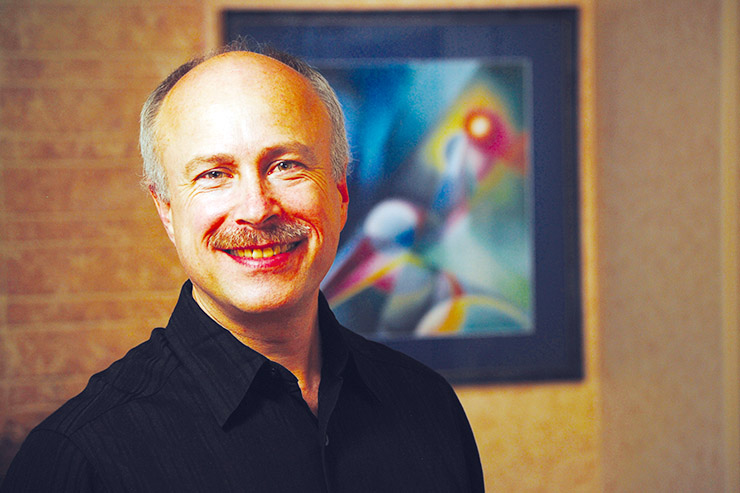
    Kurt Leland is one of today’s most intrepid explorers of the inner planes. A musician and author as well as a visionary, he has written books including Otherwhere: A Field Guide to Nonphysical Reality for the Out-of-Body Traveler and The Multidimensional Human. His latest work is Invisible Worlds: Annie Besant on Psychic and Spiritual Development (Quest Books, 2013). It is an anthology of writings by the Theosophist Annie Besant (1847–1933). Kurt’s website is www.KurtLeland.com.

    I met Kurt during his visit to the Theosophical Society’s American headquarters in Wheaton, Illinois, in the fall of 2011. I was immediately impressed with the depth of his knowledge of, and experience in, the astral and mental realms, which are for most people little more than vaguely understood concepts. He is one of the most lucid and intelligent writers on the inner planes working today. The following conversation was conducted by e-mail in April 2016.

    RICHARD SMOLEY (RS): A lot of people these days are interested in developing their psychic powers. What advice would you give them?

    KURT LELAND (KL): The mind tends to conceptualise a term such as psychic powers, thinking of them as something other than normal, from an unknown realm or level of being – something to be afraid of or acquired by force of will or perpetual practice. Typically such powers come under headings such as telepathy, precognition, clairvoyance (seeing auras), second sight (perceiving ghosts), remote viewing, astral travel, even magical influence over people and events. Some people want to prove to themselves and others that such things are possible and they can do them, not once only (spontaneously or by accident) but regularly (at will or on demand).

    However, I think of psychic powers as the natural concomitant of living within and evolving our subtle bodies:

    An etheric body, having to do with life force and health and offering us the ability to perceive such things as nature spirits, fairies, the recently dead, even angels, as well as to sense events hours or days before they occur;

    An astral body, having to do with desire and emotion, and allowing us to experience our dreams and visit the dead in the afterlife;

    A mental body, having to do with our thoughts and beliefs and allowing us to perceive and travel within a world of ideas and sometimes to contact and learn from them; worldviews of famous dead people;

    A causal or soul body, allowing us to know our past lives, meld minds with others, and perceive and alter the forces in play that create the events of our present life;

    And other bodies whose abilities are less easy to describe.

    My advice to people who want to develop so-called psychic powers is not to target specific name-brand abilities, but rather to develop the subtle bodies and see what shows up. The will- and proof-based approach often leads to frustration and feelings of failure. The approach of developing the special senses of subtle bodies can unfold naturally and organically and enrich our lives with a multitude of adventures in consciousness we may never have heard of before.

    For example, one of my first psychic experiences was sensing the fear of a tree in a wooded area in my neighbourhood after I’d climbed it. At seventeen, I didn’t know trees could feel fear, and I didn’t know this was a psychic experience – until I went back to climb the tree a few days later and it was no longer there, having been bulldozed down to clear the land for a new house. That was an etheric-body experience, not one that could be easily sought after or named or conceptualised. It just showed up, indicating a possible avenue to explore, and gradually developed into a more or less constant, wonderfully enriching awareness of the beingness and inner life of trees.

    RS: How did you develop your own abilities?

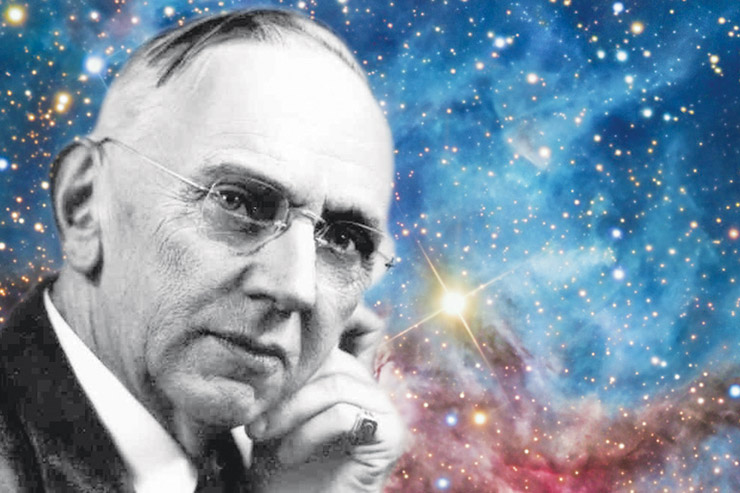
    KL: My grandfather on my mother’s side introduced me to the writings of the famous American psychic Edgar Cayce when I was ten or eleven years old. My grandfather knew how to read palms and had some predictive ability, but renounced palm reading when he accurately predicted the age of onset of a serious illness in one of my aunts. Though he taught me the mechanics of palm reading, I can’t say I had any notable psychic experiences when I was a child – yet, after reading about Cayce, I desperately wished for such experiences.

    It wasn’t until I met a woman in college who was a natural psychic from birth that I began regularly having experiences of my own. She had recurring dreams that came true, including dreams about meeting me before we both arrived on campus in the fall of 1976. She knew when people close to her had died, scolding her mother for withholding the information so as not to bother her at school. We developed a telepathic rapport that climaxed with my inventing a place in my imagination that she could see and describe back to me. Whenever I added anything to it, she could tell me what it was. Somehow in the process of hanging out with her, my own abilities began to develop. She had nothing to teach me, she knew nothing about how her abilities worked. Yet somehow my being near her opened up new possibilities for me. Now I understand she was awake and aware within, and could use the senses of a subtle body I had little or no access to – perhaps the etheric body – and that her being awake in that body somehow stimulated mine.

    Otherwise, I’ve never had a formal teacher. I learned much from books, especially the Seth material channelled by the American medium Jane Roberts. When I began to experiment with the Ouija board and automatic writing in the fall of 1980, there was no evidence that I had any talent for such things. Yet I was persistent. It was as if I never stopped knocking on the door, and finally someone let me in. I met my inner teacher by means of these experiments about six months later.

    It certainly seems that my college friend represented nature and I represented nurture. But using the Theosophical framework of subtle bodies, there may be another explanation that encompasses both the notion of being born psychic and that of developing psychic abilities. If we’ve developed any of our subtle bodies in a past life to the point of being able to use their inner senses for clairvoyant (seeing) or projective (travelling) abilities, then we can carry those capacities with us into a subsequent life. The real issue is how soon we recall and realise them – a process I call self-remembering. By this light, my friend self-remembered her use of the etheric body very early and therefore seemed to be a born psychic, whereas I self-remembered my use of this body much later and seemed to develop psychic abilities.

    To extrapolate from this, any spontaneous psychic experience may indicate the possibility of self-remembering the use of a particular body, as in my case with the fearful tree. The challenge is not so much developing psychic powers as finding a way to recall the proper use of one or more of our subtle bodies. Even so, there may be a leading edge of our growth – a body we haven’t mastered yet, which challenges us to develop new inner-sense abilities and the powers of awareness and action within that body.

    RS: Why would you say people today feel so distant from the unseen, subtle levels?

    KL: They’re locked in their mental bodies, a result of family and social conditioning along the lines of scientific materialism, rationality, scepticism, and agnosticism. An overdeveloped mental body is like an overdeveloped physical body – it’s muscle-bound; the focus on increasing size and strength (mathematical, linguistic, and reasoning abilities) has reduced its flexibility or receptivity. The result is alienation from the physical and emotional bodies on one side and from the soul or causal body on the other. The mental body becomes like a fearful teenager hiding in his or her bedroom, with thoughts speeded up through overstimulation by social media, electronic devices, and computer games, and dominated by what one spiritual teacher calls “the tyranny of likes and dislikes.” This results in anxiety, indecisiveness, and black-and-white thinking. To the mental body isolated in this way, the physical body seems bent on betraying us, there’s no soul to guide us, and the whole purpose of life seems to be managing our anxiety.

    The physical body needs quality sense experience – exercise, healthy food, beautiful surroundings, bare feet on the grass or beach, a tempered yet satisfying sex life. The emotional body needs authentic heart-to-heart connection with others. The mental body needs the experience of a community of others who share our beliefs and values. The causal body needs a sense of usefulness and purpose, usually along the line of service to humanity. When the subtle bodies are nurtured in these ways, the boundaries between them soften and we start using them for more than we normally do (acting, feeling, thinking, and serving). That’s when our spiritual powers begin to unfold. We start seeing with the eyes of each body, its inner senses, providing new ways of looking at the world we normally experience and glimpses of the invisible worlds beyond. Eventually we learn to travel in those worlds.

    [alert type=”info” dismiss=”no”]If you appreciate this article, please consider a subscription to New Dawn magazine.[/alert]

    RS: One major issue with psychic powers is self-delusion. You see something uncanny, either visually or with the mind. It seems real. But sometimes it isn’t. How does a person develop discrimination with such things?

    KL: There are many tests and challenges in developing accurate perception from the perspective of each subtle body. I’ve experienced them as a graded course set up by inner teachers and guides, unfolding in projections from the dream state over decades. One example would be learning to identify the same guide under different appearances. Another would be learning the difference in inner-sense impressions associated with a dream character, a deceased individual, a guide, a nonhuman entity, and so on.

    In Invisible Worlds, my anthology of Annie Besant’s Theosophical writings on psychic and spiritual development, she says that the more excited you are about what you’ve perceived, the less likely it is to be real – for example, seeming to receive a mission from some high being. A real experience of receiving such a mission would come with a sobering sense of responsibility and self-examination about what might be required and how to achieve it, not an orgy of self-congratulation over one’s putative spiritual status. 

    RS: Another area of interest is astral travel – the ability to go out of the body in a trance state. Could you start by telling us a bit about this?

    KL: I’m interested in your use of the phrase trance state. Some people may project in that way. My adventures along these lines generally begin from a dream.

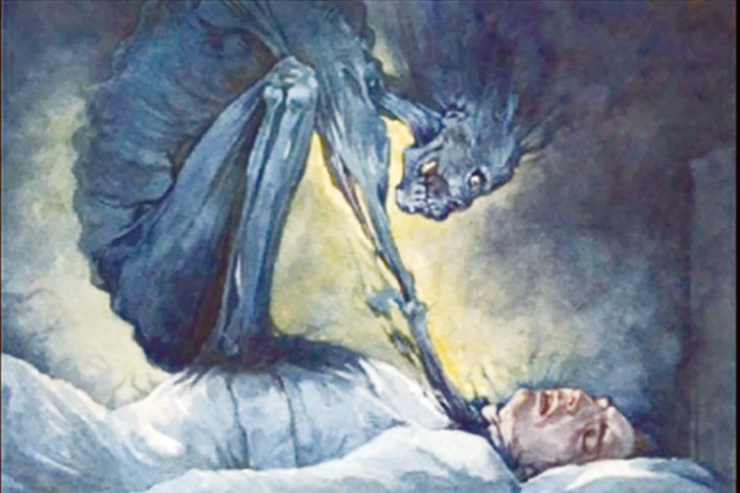
    In its simplest form, astral projection is an out-of-body experience in which the etheric body separates from the physical body in a twilight state between waking and sleeping, often accompanied by so-called sleep paralysis (indicating that one’s consciousness is no longer primarily focused in the physical body and so can’t control its movements), a loud vibration during separation, and the ability to view the physical body from a vantage point several inches or feet away. Such experiences are often spontaneous rather than intentionally produced, as a trance state would be.

    Some people report that they can free up a higher body, such as the astral, mental, or causal body, through meditative states, and go travelling on the physical plane or some higher plane. I suppose an intentionally produced trance state, as by self-hypnosis, would be just as effective. But it seems to me that the actual mechanism of so-called astral travel is that we shift the focus of our consciousness from one layer of our energy field (aura) to another. Each layer is actually one of our subtle bodies. When such a shift is successful, we can perceive the plane associated with that body and perhaps travel on that plane. Thus the word astral in the term astral travel is used in a general way to describe any experience in a nonphysical body.

    For most people, the hope or aim is to travel in the astral body on the physical plane to distant places or people. A related ability is remote viewing, which places you on location without the sense of travel. I suppose the only difference between projection and travel is that the first term emphasises the act of leaving the location of the physical body and the other only the experience away from the physical body. Not everyone recalls the actual exit from or return to the physical body. In the case of shifting the focus of consciousness to a different layer of the energy field, there may be no sense of exit or travel from one plane or location to another. You’re just there, wherever it is. 

    RS: Is it a good idea to learn to do astral travel?

    KL: I believe astral travel to be an inevitable outcome of the process of developing our subtle bodies. First, we have what Besant calls a sheath. It allows us to act at the physical, feel in the emotional, think in the mental, and serve in the causal levels of being. Then we develop a body, which begins to perceive on the physical, astral, or mental planes. We all have a well-developed physical body in that sense. Our dreams indicate that we have an astral body capable of perceiving on the astral plane. Mental and causal body dreams are less common. Finally, we develop a vehicle of consciousness, capable not only of perceiving, but also of moving through every level of the physical, astral, mental, or some higher plane. Lucid dreamers and people who can project on the astral plane, knowing the difference between dream characters and locations and the actual scenes, dwellers, and phenomena of the astral plane, are developing the astral body as a vehicle of consciousness.

    My first projections took place when I was fourteen. They terrified me and I avoided them for several years. Subsequently, I learned to develop my etheric, astral, and mental bodies under the guidance of teachers encountered in such projections. Forty-five years later, I think it safe to say that I have fully functional vehicles of consciousness on the physical, astral, and mental planes.

    RS: Whom would you advise not to undergo psychic development?

    KL: Anyone who is anxious, depressed, or prone to exaggerated states of enthusiasm or elation or to obsessive or addictive behaviour. These indicate strains in the relationship between the bodies and the occupying consciousness that we call ourselves. Such strains need to be overcome (along the lines recommended in connection with what our bodies need) before psychic development can be pursued safely.

    The problem with anxieties and fears is that they attract what we’re afraid of, resulting in interactions with undesirable scenes, dwellers, and phenomena of the astral plane. Undesirable interactions may also occur with depression. The problem with enthusiasm or elation is that it makes everything we experience seem more glamorous than it really is, resulting in self-deception or deception by prankish or malevolent astral entities. Obsessive or addictive behaviour can result in our coming under the control of negative entities, as in possession.

    In the end, each of these situations is nothing more than a challenge to be overcome in the development of the bodies. We need to learn how to maintain a balanced, clear-headed perspective as we investigate the possibilities of these bodies. The real shame is when we do so prematurely and frighten ourselves off from further exploration because some passing mood has distorted our perception or attracted unpleasant experiences or made us seem foolish to ourselves or others.

    RS: Is there a connection between the astral level and the post-mortem state?

    KL: I like to think of the astral plane as comprising a number of realms or zones. One such realm is the astral Dream Zone, where our dreams ordinarily take place. Another is the astral Afterdeath Zone, where the initial stages of our journey through the afterlife take place. I’ve explored both realms for many years in projections from the dream state. They’re similar in that their primary function is dealing with emotions and desires. Dreams frequently allow us to satisfy our unfulfilled desires and experience our unexpressed emotions, such as fear, lust or anger. We purge such things through our dreams so we don’t have to act them out on the physical plane. In the astral stage of the afterlife, we perform similar purges of a lifelong accumulation of unfulfilled desires and unexpressed emotions, thus rising from darker to lighter experiences of this realm, as in the Catholic notion of purgatory.

    On the mental plane, there is also a Dream Zone and an Afterdeath Zone. These realms involve exploring our lives in terms of learning and growth – what we have or haven’t learned among the lessons our soul may have intended for us. They’re full of exciting opportunities for exposure to the world’s great minds and cultural achievements. For example, I once visited an area in which it was possible to experience any opera from the vantage point of each of its characters. In the mental Afterdeath Zone, we review our life on earth and fulfil the plans for learning and growth that we were blocked from implementing there, because of lack of courage or extenuating circumstances. This can be a joyful, even heavenly experience.

    RS: Can you contact dead people through psychic means?

    KL: I believe this is possible and I’ve experienced it, though not in the way most people expect. I don’t ordinarily perceive people who have passed on in the auras of others or as ghostly presences hanging about with a desire to give messages. Nor do I go into a trance state so that others can communicate through me with people who have died. When I channel, the being who works through me is almost exclusively the inner teacher I call Charles. I suppose he could be described as a dead person, since as far as I know he’s not currently embodied on the physical plane.

    But I think you mean dead relatives and friends. My interactions with the latter take place in astral projections, usually from the dream state. I visit them in situ, wherever they may be in their progression through the afterlife, from the death of the current body to their preparation for reincarnation. Usually these are people I have a close association with.

    For example, I tracked the afterlife progress of one of my uncles through several stages over a course of eight years – his orientation to the afterlife, the beginning and completion of his long and detailed life review, and his being informed of certain lessons to be learned in his next life just prior to rebirth. Though I observed my uncle without communicating with him, others among the dead have shared with me their thoughts and feelings about their earth life and post-mortem existence. One was a counselling client who died of a reaction between prescription and recreational drugs and was passing through a rehabilitation program on the Other Side because his death had been classified as an unpremeditated suicide.

    I’ve rarely gone looking for people whom I’ve never met at someone else’s request – though Charles has sometimes commented on the progress of a client’s deceased loved one through the afterlife. This is not my favourite kind of work, since some elements of the afterlife can seem distressing to people who think only in terms of happiness in heaven

    RS: Why is so much of society today dead set against believing in the existence of the psychic realms? 

    KL: Religious teachings in many cultures indicate that such things are at best distractions on the spiritual path and at worst the product of malevolent beings such as the Christian devil. Scientific materialism has persuaded us that psychic realms, spiritual paths, malevolent beings, and the devil are nothing but superstitions. Yet I believe such things are what the Buddha called views. The point isn’t to dismiss one view in favour of another, but to try each on for size, to meditate on it, and investigate and explore where it takes us, what it does for us.

    The scientific view that the physical body is a machine that gradually wears out and needs to be ‘fixed’ by an ever-expanding medicine chest of only partially effective remedies isn’t terribly hopeful or inspiring, though it provides the opportunity to explore the function and dysfunction of body parts in relation to each other, time, and illness. The metaphysical view that the body is a conscious entity that needs care, that it could be our friend, that we might have ways of learning from and dialoguing with it, is unprovable in scientific terms, but can yield favourable results when explored as a provisional belief or object of meditation, to be lived as if it were true to see where it takes us. Notions of an etheric, astral, mental, or causal body could be treated in the same way.

    RS: One of your books is called The Multidimensional Human. In what ways are we multidimensional?

    KL: I believe reality consists in as many descriptions of it (views) as we have tolerance for. Each view opens up new possibilities for exploration – new dimensions – and none absolutely excludes another. I’ve gotten the best results in my personal exploration of psychic and spiritual development by adopting the Theosophical view of multiple bodies, each fitted to a particular plane of existence by a specialised set of inner senses that carry us from sheath to body to vehicle of consciousness. The planes themselves are ranged along a continuum of human potential from lowest physical to highest spiritual, and each body and its corresponding level of being is an adventuresome dimension to be explored as we develop our multidimensional humanity – our ability to respond appropriately to each other and to other realms and beings for the mutual benefit of all.

    Kurt Leland’s Spiritual Orienteering website is www.KurtLeland.com, which lists his books and services.

    [alert type=”success” dismiss=”no”]If you appreciate this article, please consider subscribing to help maintain this website.[/alert]

    © New Dawn Magazine and the respective author.
    For our reproduction notice, click here.

  • Thoughtforms, Tulpas & Egregores

    Thoughtforms, Tulpas & Egregores

    From New Dawn 146 (Sept-Oct 2014)

    What are thoughts – are they real, and once created are they things that exist independent of our minds? Are they constructs created by our soul’s mental and emotional faculties? If so, how do these faculties mould consciousness into the creation of thoughts? In many of the world’s religions, mystical and esoteric traditions there is a belief that once a thought comes into being it becomes a real entity that exists separately from the thinker.

    The first time I became aware that our thoughts had a profound effect on our personal reality was as an adolescent in reference to Mark 7:15 in the Bible. In this passage Jesus says, “There is nothing that enters a man from outside which can defile him; but the things which come out of him, those are the things that defile a man.” In explaining that we are not what we eat but what we think, Jesus was alluding to Proverbs 23:7: “For as he thinketh in his heart, so is he.” It was during this time I began seriously contemplating what these two passages meant, but could not fathom their true implications.

    In the late 1960s I began studying a Kabbalistic meditation known as pathworking and had some profound experiences in which I could visualise mythological figures on the lower paths of the Tree of Life. The questions I asked then was, am I creating these figures out of my own thoughts and are those figures real on some level? I had no answers.

    Several years later I began studying a new method of meditation form – the Diamond Way tradition of Tibetan Buddhism – a form of Vajrayana or Tantric Buddhism. In studying Buddhism, it became evident from their teachings the physical world we experience is created from our thoughts and our reality is an illusion. Trying to sort through the implications of what I was learning, I stumbled upon the writings of Prentice Mulford, one of the founders in the late 1800s of the New Thought movement. In his book Thoughts Are Things he explained how our thoughts influence our spiritual, mental and physical health. Our thoughts create sickness as well as wellness.

    I was becoming convinced that our thoughts in some way were creating our reality. It was at this point I re-connected with the Kabbalah, this time magical Kabbalah. This led me into the many streams of magic, especially Renaissance magic and later Tibetan Buddhist magic. I soon discovered in the Western magical traditions the practitioner, through ceremonial rituals, moulds reality into their bidding through their thoughts and emotions. I also discovered this was true with Tibetan Buddhist magic as well.

    I became very curious; do these rituals actually work? So I began an intense study of rituals from various Renaissance grimoires (magical books) and performed a specific ritual with a specific intention. To my surprise, within a few months I got the results I asked for. I asked myself, did I actually use my thoughts in the ritual to produce the results? And if so, was there a scientific basis for my experience? At the time I was a polymer researcher in the chemical industry and ordered a book on quantum mechanics from a scientific book club that added some clarity. It, too, presented a picture of reality similar to Buddhism in that reality does not exist until it is observed in some way, which means that through our thoughts we create the world around us.

    On the heels of being exposed to quantum physics, I discovered two related concepts on reality creation, one from Jungian psychology on the imaginal realm and the other from the theosophical literature on thoughtforms. I discovered there is a reality that exists separate from physical reality called the imaginal realm. In the imaginal realm there exist animated beings that are created by our thoughts and emotions called thoughtforms and tulpas. Thoughtforms in general are created by our intentions both consciously and unconsciously. However, tulpas are thoughtforms that are created with conscious intention.

    What are Thoughtforms and Tulpas?

    The word thoughtform has various spellings. In some cases, it is spelled thought form or thoughtform, but I have put the two words together as one word, thoughtform, reflecting a single construct. Thoughtforms and tulpas are created by focusing on a single thought and infusing that thought with intense emotions, becoming a separate mental/energetic thing. Once created, thoughtforms and tulpas exist in all spiritual realities and make up what is known as the imaginal realm. The imaginal realm interpenetrates all existence and is the repository of collective thought formations and energies. Thoughtforms and tulpas can be experienced physically, but in most cases they are experienced as apparitions. Nonetheless, they exist as separate entities manifesting both as physical and apparitional formations.

    Tulpas are thoughtforms that have their origin in Tibetan Buddhism and the Bön religion. In these traditions tulpas are consciously created beings or objects. The word tulpa literally means to build or to construct. In Tibetan Buddhism those who create tulpas are naljorpas and tulkus. Naljorpas are ascetics possessing magical powers and tulkus are special lamas that consciously incarnate into their next lifetime as bodhisattvas (highly evolved spiritual beings). In the Bön religion, magicians known as ngagspas create tulpas.

    According to Theosophists Annie Besant and C.W. Leadbeater,1 there are three classes of thoughtforms. The first class is “that which takes the image of the thinker.” The second class is “that which takes the image of some material object.” The third class is “that which takes a form entirely its own, expressing its inherent qualities in the matter which it draws around it.” To this list I will add a fourth class – that which takes the collective form of a group mind known as an egregore. Although there are four distinct classes of thoughtforms presented here, they nonetheless have overlapping qualities that will be evident in the following cases.

    The thoughtform of the first class, taking the image of the thinker, is when a person intensely imagines and focuses that they are somewhere else, such as in another city, an area of the city or another country. With intense focusing they see themselves in another locale performing various activities. They have created a thoughtform of themselves that exists separately from them, has autonomy and mental awareness. In some cases other people can see and sense the thoughtform of that person as an apparition.

    The Franciscan friar Padre Pio is one such case. He was able to be at the friary and then project the thoughtform of himself to various locales. People in those locales would see him or smell the fragrance of roses indicating his presence. In one documented case during World War II, Padre Pio projected his thoughtform appearance in the air over San Giovanni Rotondo in southern Italy. American bombers were getting ready to bomb the city when a brown-robed friar appeared before their aircraft and all attempts to bomb the city failed.

    The possible explanation for this case is that Padre Pio, through intense prayer to keep the city safe, focused intensely on protecting his city. The intense prayer coupled with detailed images of how he would keep the city safe created a thought structure. Added to that thought structure were strong emotions solidifying the thought structure into a specific form. Once solidified, an image of Padre Pio split off creating a thoughtform of himself, which manifested before the airplane as the brown-robed friar.

    In another case, the philosopher Michael Grosso2 reported an experience he had with a lover named Windy. He met Windy in London and they had an intense love affair. Michael had to return to New York and Windy was to join him there soon, but there were visa problems that prevented her from joining him. They could not get each other out of their minds. At times, in their intense imagination they could see, feel, smell and touch each other. One night, Michael in an intense imaginative love experience projected the thoughtform of himself to Windy.

    [alert type=”info” dismiss=”no”]If you appreciate this article, please consider a subscription to New Dawn magazine.[/alert]

    Several days later Michael received a letter from Windy that read, “I’m writing this in haste before I go to work. A strange thing happened to me this morning. It was Sunday morning, about eight o’clock. I was lying in bed, half-awake, wishing I didn’t have to get up. In the back of my mind, I kept thinking I had to go to the loo, but I didn’t move. I was somewhere between sleeping and waking, when it happened. Believe me, I’m not crazy, and my life’s not so miserable that I have to make stories up. But the truth is, suddenly you were in bed with me. You were there! Making love to me! I knew it was you, I couldn’t see, but I knew it was you. I felt your body, recognised your voice. I knew I wasn’t asleep, it wasn’t a dream. I would appreciate it, philosopher, if you would explain this to me. Nothing like this has ever happened to me before. It was very peculiar. I do hope this isn’t a prelude to my going completely mad.”

    The possible explanation for this case is similar to Padre Pio. Michael in an intense love making fantasy created a detailed image with strong emotions of making love with Windy. The inner image coupled with intense emotions created a thoughtform of him making love in a real situation. The thoughtform of himself split off and was projected to Windy. That thoughtform took on some physical characteristics allowing Windy to know it was Michael.

    The second class, taking the image of some material object, can be applied to the phenomenon called doppelgänger as well as tulpas. In these instances, the doppelgänger and the tulpa exist as separate material objects. In 1991 Debra Mann reported on an unusual case of the doppelgänger manifestation of George Hensley.3 George was heading back to college in Laramie, Wyoming and discovered the route he was taking through Telephone Canyon was blocked by snow and police were redirecting traffic onto another route. George decided he would take the route anyway because it was the shortest. He waited until the police left and started driving his jeep down the canyon. He noticed a hitchhiker along the road, picked him up and asked the hitchhiker if he wouldn’t mind driving because he (George) was very tired and needed to sleep.

    The hitchhiker accepted the invitation, got in the driver seat and started driving. George noticed the hitchhiker looked like a younger version of himself even wearing his good-luck Eisenhower jacket that he wore during World War II. Unbeknownst to George, while he slept the middle of the canyon was completely blocked with snow, but somehow when he awoke the hitchhiker had made it through the canyon. Near Laramie at Bosler Junction, the hitchhiker got out of the jeep and later George discovered that Telephone Canyon had been totally blocked with snow. How did George get through the canyon and who was the hitchhiker?

    I can only give a partial explanation for this case. George intensely focused on getting back to college going the shortest route. On some level, he knew the trip was fraught with danger. Knowing that danger, he created in his mind detailed images coupled with intense emotions for a safe route through the canyon. This created a thoughtform of himself as a doppelgänger. The doppelgänger was a split-off part of himself manifesting as a protective guardian angel thoughtform, smoothing out a safe route. In this case, the thoughtform was a solid physical manifestation that took on a life of its own. The part of the story that baffles me is how the material thoughtform manoeuvred the jeep through the blocked snow filled canyon.

    The next case is that of Alexandra David-Neel4 the Tibetan explorer and the first female lama from the Western world. Alexandra studied the dubthabs rite5 that is used in Tibet to create Yidams, which are particular types of tulpas. In most cases, in Tibetan Buddhism, Yidams are deities that are created through intense focusing and imagination. Alexandra had heard that certain lamas could create tulpas, so she decided to see if she could create one as well. Rather than creating a Yidam deity, which she saw all around her in painting and statues, she chose instead to create a short fat jolly monk.

    Alexandra shut herself in tsams, which means living in seclusion. In Tibetan tsams literally means a barrier or border, usually a tent, hut or cave. In some cases, tsams are non-material in which the lama isolates himself or herself in a state of meditation. While she was in tsams, most likely a tent, Alexandra performed the required thought concentration of the dubthabs rite as well as other rites. Within several months, the monk tulpa manifested and grew into a life-like figure becoming her companion. The monk became animated and visible even to others. At times, she could feel his robe and his hand touching her shoulder.

    Over time, the monk began to change into a slender creature with a “sly malignant look.” He became so animated that she could no longer control him. At this point, she decided to dissolve him. It took her six months of constant struggle, but she finally succeeded. In reference to what she created, Alexandra wrote: “There is nothing strange in the fact that I may have created my own hallucination. The interesting point is that in these cases of materialisation, others see the thought-forms that have been created.”

    The explanation for this case is similar to the creation of the doppelgänger. However, Alexandra consciously created the tulpa by using the dubthads rite, which means a method of success. In similar fashion as to the doppelgänger, Alexandra’s tulpa became a solid material object at times, took on a life of its own and manifested physically in which others could see it. Once animated and having a life of its own, the tulpa became a separate entity in which Alexandra was losing control. Eventually, she was able to reverse the process dissolving her creation.

    The third class, taking a form entirely its own, expressing its inherent qualities in the matter which it draws around it. In this class, a positive or negative thoughtform is projected into an individual’s aura, the protective energy field surrounding the body. The mental and astral bodies of the soul create this energy field. The auric field is either strongly intact preventing outside influences from entering, or weak and diffused allowing unwanted influences to invade. There are cases where mothers intensely pray for a guardian angel to protect her child. She creates an angelic thoughtform using her energetic thoughts coupled with the energetic material of her child’s aura. Once created, the thoughtform penetrates her child’s aura and remains there to keep out negative influences.

    In Western magical traditions there are protection rituals the magician uses to strengthen and protect their auric field. In the late 1800s the magical fraternity The Hermetic Order of the Golden Dawn used a specific ritual known as the Lesser Banishing Ritual of the Pentagram to create a strong auric field to protect the magician from intruding influences.

    In creating guardian angels and using the Banishing Ritual, the mental and astral bodies of the soul uses the energetic properties of the aura and surrounding energies to create the protective field as a positive thoughtform. However, there are cases in which the auric field’s thoughtform is not positive but negative. The following two cases pertain to the third class of thoughtforms and they come from my personal archives when I was a psychotherapist and paranormal investigator.

    The first case is a male client I worked with around issues regarding his possessive mother. After the father died when my client was a child, his mother became over protective, fearing something would happen to him. She focused on protecting him with intense emotions to keep him safe. Her intense focusing intruded into his aura, setting up a strong symbiotic relationship in which her protective thoughtforms mingled with his auric energetic field. Their two mental and emotional energies merged creating an unconscious possessive thoughtform that prevented him from separating from her and maturing.

    My client moved from the state of Washington to Cincinnati, Ohio to get away from his mother, but she still possessed him. He could constantly feel the thoughtform of her all around him and could see her image in his mind’s eye continuously. We used various imagery techniques and protective rituals to strengthen his aura. Finally, after a year we were able to cut the energetic stream that animated her possessing thoughtform. Once free of her possessing thoughtform, he continued daily protective rituals to keep his auric field strong.

    The explanation for this case is my client’s mother had good intentions in trying to protect her child, but her own fears and insecurities got in the way. She intentionally created a protective thoughtform that went awry because unconsciously she infused her fears and insecurities into the thoughtform. Being a child when this happened, his auric field was weak and diffused allowing his mother’s thoughts and emotions to invade and use his auric energies along with hers to create the thoughtform. Her constant focusing on his safety allowed the thoughtform to become possessive as well as using the energies from his auric field to exist.

    The second case is of a woman who contacted me regarding her haunted house. After working with her for a while, I managed to convince her to move. After she moved, the haunting activity ceased. Within a few months she contacted me again, the haunting activity had reoccurred and it was now more like a poltergeist. She moved again, only for the haunting activity to follow her. It became evident at this point that she was haunted and not the houses. As I dug deeper into the case, I discovered soon after her divorce was when the haunting activity began. It became evident that either she or her husband had created a negative thoughtform that had affected her auric field and was haunting her. Now being part of her auric field, the thoughtform followed her from place to place. With all the methods I used, including spirit releasement techniques, we were unable to free her from the thoughtform. It was this fact that persuaded me to believe she was the one creating the thoughtform and not her former husband.

    The explanation for this case is my client created the poltergeist thoughtform out of anger and frustration over her failed marriage. She resented and hated her husband over the way he had treated her, but would not stand up for herself. Rather than releasing her anger onto her husband, she turned it inward affecting her auric field, which was already weak and diffused. Her negative thoughts and emotions created the thoughtform that remained attached to her and her anger and resentment kept it alive.

    Egregores: Collective Thoughtforms

    The fourth class is the collective form of a group mind known as an egregore. An egregore is a special class of thoughtforms experienced mentally as images, feelings, complete structures with or without animated beings. According to Gaetan Delaforge6 egregores are “created when people consciously come together for a common purpose. Whenever people gather together to do something an egregore is formed, but unless an attempt is made to maintain it… it will dissipate. However… (if) people wish to maintain it and know the techniques of how to do so, the egregore will continue to grow in strength and can last for centuries. An egregore has the characteristic of having an effectiveness greater than the mere sum of its individual members. It continuously interacts with its members, influencing them and being influenced by them…. If this process is continued a long time the egregore will take on a kind of life of its own, and can become so strong that even if all its members should die, it would continue to exist on the inner dimensions (the imaginal realm)…”

    In this description, Delaforge is discussing egregores in general. However, when egregores are created through “spiritual or esoteric activities its influence will be even greater. People who discover the keys to tap in on a powerful egregore representing… a spiritual or esoteric tradition,” as described above, they can activate the egregore, gaining “access to the abilities, knowledge, and drive of all that has been accumulated in that egregore since its beginnings.”

    Delaforge’s focus is creating egregores through conscious intention by group minds. However, as with all thoughtforms, egregores can also be created unconsciously by group minds such as political parties, organisations of various kinds, religious denomination as cited above, ethnic groups as well as a variety of inner world structures within the imaginal realm. These egregores exist separately and can be accessed consciously or unconsciously. If accessed, the energies and thought formations can have a profound influence on individuals and groups motivating them into specific directions and actions.

    I have had several spontaneous experiences with egregores as well as creating four with conscious intention. There are two spontaneous experiences, I wish to discuss, one visual and the other emotional. Living in North Carolina I have made many trips to the coast driving on a road in the southern part of the state. On one occasion I was passing a cotton field I had driven by many times. I glanced over at the field and saw the cotton in bloom as I had seen many times before, except this time I saw many African Americans in period clothes picking cotton. I turned back to the road and then back to the cotton field, and this time I saw no one in the field just cotton in bloom. On that occasion, I tapped into the visual egregore of the slaves who had worked that field before the Civil War.

    The second experience occurred when I took a retreat in a Trappist Monastery. I hiked up a small mountain to a large cross overlooking the monastery grounds. It was July and the day was very hot. By the time I reached the top of the mountain where the cross stood, I was exhausted. I sat down to rest leaning against the cross when suddenly my exhaustion was lifted; finding myself in a deep state of calmness and not at all tired, but energised. I was bathed in the sacred egregore energies left there by people who had meditated and prayed at that very spot.

    After being introduced to the imaginal realm and egregores, I decided to create my first egregore in the mid-1980s. This egregore was a cave where a wise woman lived and was created specifically to help one of my psychotherapy clients. My second egregore was an inner temple based on the Hermetic Order of the Golden Dawn. My third egregore was a special room in a large house which I used to contact those who have passed on. The fourth egregore I created recently and it is a combination of the special room and the inner temple. All of these egregores I created consciously and they worked for the purpose they were created.

    Keep in mind the imaginal realm is the plasticised reality we mould through our thoughts, emotions, imagination and focused intention. The imaginal realm is that reality that exists between the physical reality and the realm of the light, which we experience at death. This landscape of the imaginal realm also includes our material reality as well.

    Summary

    Thoughtforms are created from the soul’s mental and astral bodies through imagination, desire, willpower and intention. In many cases, once thoughtforms are created they exist as real things separate from their creator. Thoughtforms are created from energised thoughts, and from this perspective thoughts are real things. Once created, thoughts exist as separate entities all on their own. The take-a-way lesson – beware of what you desire because you may actually create it.

    [alert type=”general” dismiss=”no”]This article was published in New Dawn 146.[/alert]

    [alert type=”success” dismiss=”no”]If you appreciate this article, please consider subscribing to help maintain this website.[/alert]

    Footnotes

    1. Annie Besant & C.W. Leadbeater, Thought-Forms, 1901, 26-30
    2. Michael Grosso, ‘Trans-Atlantic Sacred Sex: A Psi-Related Story’ Ecstasy: The Journal of Divine Eroticism, 1993, Vol. II, Num. 3, 5-9
    3. Debra D. Mann, ‘George Hensley and the Doppelgänger’, Fate Magazine, Feb 1991, 70-75
    4. Alexandra David-Neel, Magic and Mystery in Tibet, Dover, 1971, 306-320
    5. Alexandra David-Neel, Initiation and Initiates in Tibet, Dover, 1993, 91-99
    6. Gaetan Delaforge, ‘The Templar Tradition Yesterday and Today’, Gnosis, 1988, No. 6, Winter, 8-13

    © New Dawn Magazine and the respective author.
    For our reproduction notice, click here.

  • Erik Jan Hanussen: Hitler’s Jewish Psychic

    Erik Jan Hanussen: Hitler’s Jewish Psychic

    From New Dawn Special Issue Vol 8 No 3 (June 2014)

    On the morning of 7 April 1933, south of Berlin, workmen came upon a grisly discovery. Near the road that linked the German capital to the town of Baruth was the bullet-riddled body of a man, dressed in evening clothes. Death had come, execution-style, from two shots to the head. Beyond that, it was hard to tell much. The corpse was maggot-ridden, and animals had gnawed the face making it practically unrecognisable. Investigation by Berlin police Kriminalrat Hermann Albrecht quickly determined that the deceased was Erik Jan Hanussen, a well-known Berlin clairvoyant, astrologer and public figure who had gone missing two weeks earlier.

    The critical questions, of course, were who killed Hanussen and why. It seemed the dead man had many enemies. Rival psychics, embittered ex-employees, jilted lovers, cuckolded husbands, blackmailed victims, and underworld denizens all had reasons to wish him dead. Albrecht perhaps wisely concluded that the psychic had been “taken for a ride” by Berlin gangsters.1 The case remained unsolved.

    As Albrecht certainly knew, Hanussen’s real assassins were members of the Nazi Brownshirts (SA) organisation in Berlin. This was odd, because up to his demise, Hanussen was a conspicuous friend of many Nazis, not to mention a Party member and an honorary member of the SA. He knew Adolf Hitler himself and his accurate, pro-Nazi predictions had earned Hanussen the nicknames “The Prophet of the Third Reich,” “The Nazi Rasputin,” “Hitler’s Nostradamus,” and others. Odder still was the fact that Hanussen was a Jew.

    Hanussen’s story is fascinating, improbable and perplexing and has been dissected in various biographies, perhaps most notably Mel Gordon’s Erik Jan Hanussen: Hitler’s Jewish Clairvoyant (2001) and Arthur J. Magida’s The Nazi Séance: The Strange Story of the Jewish Psychic in Hitler’s Circle (2011).2

    This article will offer a brief overview of Hanussen’s career, but focus attention on a few questions that merit closer examination. First, are there any clues to Hanussen’s talents and behaviour to be found in his family background? Was Hanussen involved in espionage, or did he have any connection to intelligence services? Finally, what was the nature of his relationship with the future Fuhrer?

    Who Was “Erik Jan Hanussen”?

    Hanussen wasn’t Hanussen at all. His true name was Hershmann Chaim (later Hermann) Steinschneider. He was born in Vienna in 1889, the son of Siegfried Steinschneider, a ne’er-do-well Jewish vaudevillian and travelling salesman. Herschmann’s birth was registered in Prossnitz (today Prostejov in the Czech Republic), the Moravian town which was the traditional home of the Steinschneiders. The family and the place have interesting histories.

    In the 18th century, Prossnitz had a thriving Jewish community which produced an impressive array of rabbis and Talmudic scholars. Among these were Rabbis Daniel Prossnitz the Younger and his son Aaron Daniel Prossnitz, who adopted the surname Steinschneider. Both were vunder-rebbes reputed to have “magical and curative” powers.3 Mel Gordon speculates that Steinschneider, meaning “stone-cutter” or “stone tailor,” derived from Aaron Daniel’s practice of making Kabbalistic paper amulets from carved stone blocks.4

    But all was not as it seemed in Prossnitz. The town’s Jewish community was a hotbed of the Sabbatian heresy, a secretive sect which revered the 17th century “Messiah” Sabbatai Zevi.5 Sabbatians not only regarded Zevi as the Messiah, but also followed his antinomian teachings that advocated the deliberate transgression of Jewish Law and a Gnostic-like idea of “redemption through sin.”6 Moreover, Prossnitz was infiltrated by the even more radical and occultic Frankist sect whose practices included orgiastic rituals.7 In the opinion of Gershom Scholem, Sabbatian influence completely subverted Orthodox rabbinic culture in Prossnitz.8 One infamous proselytizer of Sabbatian beliefs was Judah Leib (Loebele) Prossnitz who claimed to be able to invoke the Shekinah (the Divine Presence), a stunt he pulled off with a back-lit set that made magical letters appear on his chest.9

    The trick sounds very much like something Hanussen might have tried two centuries later. But, given that he never lived in Prossnitz, how much could he have been influenced by its sectarian culture? Rabbi Marvin Antelman alleges that the Steinschneiders were a “Sabbatian family” and singles out Hanussen’s great uncle Moritz Steinschneider as a prime example.10 Hanussen doubtless learned something about Prossnitz from his father. He did visit, and amazed locals by performing an exorcism on a milk maid.11 Consciously or not, Hanussen’s later behaviour, from his denial of his Jewish roots, to his rejection of sexual and other mores, obsession with mysticism, and even his association with virulent anti-Semites, all more or less conformed to the Sabbatian-Frankist mould.

    A fundamental problem in dealing with Hanussen pre-1920s is that most of what is known about him comes from a single source, his 1930 autobiography, Meine Lebenslinie (“My Lifeline”). To call it self-aggrandising is an understatement, though it seems accurate enough as regards time and place. The author dances around the matter of ethnic origins, stating that he was born in Vienna (true), not in Denmark, Sicily or Tarnopol, the latter a largely Jewish town in the far reaches of the old Empire.12 If he is to be believed, his psychic powers first manifested in the womb, when he willed his unwed parents to marry.13

    Hermann “Harry” Steinschneider followed in his father’s footsteps and spent his youth travelling around Central Europe with circuses and vaudeville shows where he rubbed-elbows with fortune-tellers, strongmen, hypnotists, magicians and faith-healers. He picked up many of their tricks, invented a few his own, and put together a stage act based on mind-reading and hypnotism. He also ventured into journalism. In the years before WWI, he worked for a notorious Viennese scandal-sheet, Der Blitz, which earned most of its income by taking money to keep stories out of its pages.14 Steinschneider would apply this lesson well in his subsequent career.

    During the war, Harry served in the Austro-Hungarian Army where his evident talents as a mind-reader and dowser got him out of the trenches and into cushy duty in the rear. He even organised a séance or two. Whether this was proof of genuine extra-sensory ability or just clever trickery was, as always, a matter of opinion.

    Steinschneider played around with several aliases, among them Siegfried Krakauer and Saul Absolom Herschwitter, which still carried a strong hint of Semitic ancestry.15 Around 1919, he finally latched onto Erik Jan Hanussen, claiming to be a Dane of noble background whose telepathic powers led him to become a showman, psychic investigator and student of the occult. There was, of course, nothing Danish about him, and no one seems to have taken the role too seriously, least of all Hanussen. On a 1919 visit to Prague, he openly boasted of his “Czech-Jewish” heritage.16 Hanussen was whatever the circumstances best suited he should be.

    In postwar Vienna, he earned notoriety as a stage mentalist and hypnotist. He even tried his hand at movie star in the low-budget Hypnose (“Hypnosis”) in which he portrayed a clairvoyant gumshoe battling the evil schemes of a Svengali swami. He earned more attention, and money, playing psychic detective in real life. His most famous case involved mysterious thefts from the printing bureau of the Austrian State Bank. Newly-printed bills were vanishing and authorities were at a loss to explain how. Hanussen solved the case by the simple deduction that the caper had to be an inside job. He correctly fingered the culprits which led to the recovery of most of the purloined notes.17

    His crime-solving exploits, however, earned him the enmity of Vienna’s Polizeidirektion who suspected him, not without reason, of either setting-up crimes he purported to solve or being privy to inside information. But Hanussen found at least one champion among the police. Dr. Leopold Thoma was a psychoanalyst, paranormal researcher, and chief of the Psychologische Abteilung of the Viennese police. In 1921 he formed his own Institut fur Kriminal Telepatische Forschung (“Criminal Telepathic Research”). His and Hanussen’s paths would cross again a few years later.

    When Viennese authorities cracked down on the exhibition of hypnotism, Hanussen looked for greener pastures. With Austrian tobacco magnate Hans Hauser, Hanussen became part of a scheme to sell surplus military equipment to the Greeks who at the time were engaged in a bitter war against the nascent Turkish Republic. The affair reeks of international intrigue, though Hanussen’s job, supposedly, was to use his hypnotic power as added leverage in negotiations.18

    It may be significant that in the Balkan tobacco trade, Hauser almost certainly dealt with the Tobacco Company Ltd, a British firm which also happened to “provide cover in Europe for S.I.S [MI6] agents and ex-employees of the secret service.”19 Moreover, the British backed the Greeks, while the French, Italians and Soviets quietly supplied weapons to the Turks. Hanussen recalled that he and a companion were refused landing on the Italian controlled island of Rhodes on suspicion that they were Greek spies.20 His subsequent wanderings through the Levant and North Africa added much to his knowledge of Eastern mysticism but also provided ample opportunity for spying. He claimed to have aided Egyptian police in combating a ring of hashish smugglers, though one has to wonder if it wasn’t Hanussen doing the smuggling.21

    In 1924, Hanussen crossed the Atlantic for an American tour but found Yankee audiences largely unresponsive to his act. In Europe, however, especially in Germany, Hanussen became a big draw and by 1928 billed himself as the “Wizard of the Ages” and expanded his repertoire to include, palmistry, graphology and astrology.22 His bread and butter, however, remained mind-reading. Typically, audience members handed written questions to an assistant and the Amazing Hanussen divined the query and the answer through his mental powers – plus a secret code between him and the assistant. He continued to consult in criminal cases, among them the “Vampire of Düsseldorf,” a serial murderer who terrorised the city during 1929-30. He also offered private readings to rich clients and allegedly became an “adviser to European royalty.”23

    Fame, however, drew opposition. In 1928, a prosecutor in the Czechoslovak town of Leitmeritz charged Hanussen with fraud and larceny, basing his case on the fact that clairvoyance did not exist. In a long, public trial Hanussen won acquittal by successfully demonstrating his “powers” to the judge, or by faking them so well no one could catch him.24

    [alert type=”info” dismiss=”no”]If you appreciate this article, please consider a subscription to New Dawn magazine.[/alert]

    Berlin & Hanussen’s Rise to Power

    By 1930, Hanussen pitched his tent more or less permanently in Berlin where he became a celebrity of the first order and a symbol of the decadent hedonism of the dying Weimar Republic. His ability to gain such recognition is all the more remarkable given the competition. The German Capital was home to thousands of seers, hypnotists, faith-healers, and mystics of one variety or another.25 His lavish performances at the La Scala and other theatres were attended by the likes of Marlene Dietrich, Sigmund Freud, Peter Lorre, Fritz Lang – and Hermann Goering. Hanussen acquired fancy cars, a yacht, and an airplane, as well as a small publishing empire of books, magazines and newspapers which tirelessly promoted him, his products and his predictions.

    His wealth was enhanced through blackmail (harkening back to his Blitz days) and influence peddling. Dubbed by Mel Gordon the “Magister Ludi of Sex,” Hanussen hosted, and secretly filmed, private séances that attracted a heady mix of politicians, aristocrats, movie stars and industrialists.26 The affairs catered to all sexual persuasions, and some guests wound up in compromising positions which they were willing to pay to keep quiet.27 He also extended private loans to “special friends,” among them prominent Nazis such as Wolf Heinrich Graf von Helldorf, chief of the SA organisation in Berlin, a libertine, degenerate gambler and reputed connoisseur of the “black arts.”28

    Whatever his occult abilities, Hanussen was a clever, unscrupulous and venal character who insinuated himself into the confidence of important people in Germany, and elsewhere. He clearly had a talent, one way or another, for obtaining secret information. His currency as an informant only increased when he gained access to Hitler. All this made the phony Dane an asset that any intelligence agency would have been anxious to exploit.

    Interestingly, another occultist making his home in Berlin during 1930-32 was the notorious Aleister Crowley. Crowley had a long connection to British intelligence, and part of his purpose in Germany was watching and reporting on certain individuals.29 Given Hanussen’s prominence and his proclaimed expertise in hypnotism and tantric sex, there is no way the Great Beast would have ignored him. Oddly, there is no discernible mention in Crowley’s period diaries of Hanussen or anything relating to him.30

    However, they were not without indirect connections. By 1930, the aforementioned Dr. Leopold Thoma had again cropped up in Hanussen’s life and become one of his closest collaborators. Thoma was well-acquainted with fellow Austrian psychoanalyst Alfred Adler, a man Crowley claimed to know personally and to work with in Berlin.31 Moreover, Thoma became pals with Dr. Alexander Cannon, another psychiatrist, paranormal researcher and friend of Crowley who crossed paths with Hanussen.32 Cannon, sometimes dubbed the “Yorkshire Yogi” or the “leader of black magic in England,” would later face accusations of being a Nazi sympathiser and German spy.33 Last, but not least, the phony Dane was a confidant of Hanns Heinz Ewers, a German writer and occultist who was at the time a fervent Nazi with access to Hitler plus an old associate of Crowley.34 Thus, the latter had a number of channels through which he could have gleaned information from or about Hanussen.

    The Crowley-Hanussen connection may be at the root of René Guénon’s later assertion that the Beast infiltrated Hitler’s circle and made himself a “secret counsellor” of the Nazi leader.35 There is no indication that Crowley got anywhere near the future Fuhrer, but Hanussen certainly did.

    There is also the possibility that Thoma was working for Austrian intelligence. The Vienna Polizeidirektion, with which he remained connected, was involved in intelligence and counterintelligence activity.36 Finding out what was on the mind of native son Adolf Hitler would have been a high priority. Hanussen, again, could have been a very valuable source of information.

    In 1933, Pierre Mariel, a writer with ties to French intelligence, authored (as “Teddy Legrand”) a curious book, Les Sept Tetes du Dragon Vert (“The Seven Heads of the Green Dragon”). It claimed to reveal the machinations of an international conspiracy which, among others things, was behind Hitler’s rise to power. Hanussen appears thinly disguised as the “Man with the green gloves,” an agent of the conspiracy.37 Years later, in a book on Nazi occultism, Mariel, writing as “Werner Gerson,” claimed that “Hanussen was a spy for Britain” based on the alleged admission of ex-British agent John Goldsmith.38 If there were no spy agencies exploiting Hanussen, there certainly should have been.

    Hanussen & Hitler

    Exactly when and how Hanussen met Hitler is a matter of uncertainty and debate. Writer Juri Lina asserts, improbably, that their association began in 1920.39 Gordon argues that the pair met, via Helldorf, in late June or early July 1932. Palacios thinks the intermediary may have been Ewers and that the meeting occurred towards the end of 1932, while Magida wonders if the two ever met at all.40 In 1943, Walter Langer compiled a “Psychological Profile” of Hitler for the American OSS. One of his sources was dissident Nazi Otto Strasser, himself a former admirer of Hanussen, who reported that “during the early 1920’s Hitler took regular lessons in speaking and in mass psychology from a man named Hamissen [sic] who was also a practicing astrologer and fortune teller.”41 In his own writing, Strasser simply puts the meeting in the “post-war period” and describes Hanussen as a “super-clairvoyant” who acted as Hitler’s “medium.”42 In World Diary, contemporary American journalist Quincy Howe identifies 1930 as the year in which Hitler “constantly consulted a Jewish hypnotist who had changed his name from Steinschneider to Hanussen.”43

    By 1932, however, what Adolf wanted from the psychic wasn’t elocution lessons but glimpses into the future. As early as 1930, Hanussen had prophesied that Germany would receive a dictator of radical-socialist stripe, though his publications satirised politicians, including Hitler. That changed in early 1932. Hitler was running for president against the incumbent, Paul von Hindenburg. Hanussen predicted that Hindenburg would win (he did) but that Hitler would become chancellor within a year. From this point on, Hanussen and his publications took a decidedly pro-Nazi stance.

    However, the incident that may most have attracted Hitler’s notice, as it did other’s, had nothing to do with politics. In May 1932 racers gathered in Berlin for the AVUS Grand Prix. One of them was young Czech nobleman Georg Christian von Lobkowicz. A few days before the race, Hanussen prophesied that Lobkowicz would have a fiery accident. A few minutes into the event, his Mercedes racer crashed, killing him instantly.44 Investigation showed the tragedy was the result of a freak mechanical failure. Even Hanussen’s most stubborn doubters were hard-pressed to explain how he could have faked this. Enemies were not above suggesting that the psychic connived to sabotage Lobkowicz’s car, possibly in league with gamblers. The young Czech also had caught the fancy of a woman Hanussen desired, so jealously was another possible motive. To most, though, the crash was proof positive that the Dane really was a seer. Arthur Magida wonders if through years of mental discipline, Hanussen had actually developed some psychic ability.45

    A meeting with Hitler followed soon after and Hanussen assured jittery Adolf he need not worry about the upcoming elections. Sure enough, the Nazis scored a huge success in the July balloting, doubling their seats to become the biggest party in the Reichstag. On New Years Day 1933, Hanussen cast a horoscope and declared Hitler would be Chancellor by months end. That, too, came to pass.

    Palace of the Occult & The Reichstag Fire

    Hanussen seemed at the peak of his power. He wasn’t just associating with Nazis, he was one. Even his trusted secretary, Ismet Dzino, was a Party and SA man. In addition to being the favoured soothsayer of the new regime, he was about to open his opulent Palace of the Occult. The Capital’s elite clamoured for invitations. But there was trouble brewing. His tilt to the Nazis earned Hanussen the enmity of the Communist press which had published proof of his Jewish ancestry. Hanussen did his best to brush off the matter and his Nazi pals like Helldorf remained steadfast, for the time being anyway.

    The Palace of the Occult opened its doors on the evening of 26 February. In a semi-private séance, one of Hanussen’s mediums, a former actress, Maria Paudler, had a fateful vision. In a trance, she claimed to see a “great building” on fire.46 The press attributed the prediction to Hanussen himself. Less than 20 hours later, the Reichstag was ablaze. The Nazis blamed the fire on a Communist plot and rammed through emergency powers that gave Hitler dictatorial control. Berlin police arrested Marinus van der Lubbe, a Dutchman with Communist connections and a history of arson. The general assumption is that the Nazis were behind the blaze and used van der Lubbe as a patsy. Kugel suggests that the hypnotic puppet master controlling the Dutchman was Hanussen.47 Gerson/Mariel suggests another possibility: that the psychic instigated the fire at the behest of someone who wanted to discredit Hitler. If so, the plot backfired badly.48

    By mid-March, most of Hanussen’s Nazi friends, including Helldorf, found themselves ousted or re-assigned. On 24 March, a brace of SA dragged the psychic to Gestapo headquarters for questioning. They cut him loose, but the next evening three men snatched him off the street, and he was never seen alive again. The easiest guess is that the Nazis killed Hanussen because they discovered he was a Jew, but it really makes no sense. Evidence of his Hebraic origins had been available for months, and his Party comrades had not rejected him. There was no compelling reason for them to do so now. Another theory, that Helldorf and others murdered him to escape their debts, ignores the fact that they would be killing the golden goose. There is no indication Hanussen made any attempt to collect his debts or that he was unwilling to loan more.

    Hanussen’s demise is almost certainly tied to the Reichstag Fire, but there could be more to it. Most of Hanussen’s Nazi contacts were linked to the SA, and most of them to Ernst Roehm, Hitler’s only remaining serious rival. Just over a year later, Hitler and the SS would kill Roehm and dozens more SA leaders in the so-called Night of the Long Knives. Several, including Roehm, were ex-associates of Hanussen. Helldorf escaped, but took part in anti-Hitler intrigues and died for his part in the failed 1944 assassination attempt on the Fuehrer. In contrast the three SA men later identified as Hanussen’s killers all survived to perish in WWII and one of them, Rudolf Steinle, rose to become an officer of the Gestapo and the SS. Hanussen, therefore, may have been an early casualty of intra-Nazi intrigues.

    An interesting epilogue to the story involves Hanussen’s secretary, Ismet Dzino. Variously described as a Bosnian, Turk or Lebanese, he married a young Englishwoman, Grace Cameron, against his master’s advice. Hanussen warned him that if they married, she would die and Dzino would become a murderer and suicide.49 The Gestapo arrested Dzino immediately after Hanussen’s death, but Grace, using her contacts at the British Embassy, secured his release. According to a report in a Swiss paper, they later appeared in London where Dzino told friends that the Gestapo was after him because he possessed “important documents about the friendship of his master with certain Nazi leaders.”50 The documents remained in London, but Dzino and wife took up residence in Vienna. Did Dzino or his wife have links to British intelligence? Who took charge of the documents? Did Crowley or Cannon play any part in this?

    In Austria, Dzino fell on hard times and eked out a living as croupier. He became possessed by jealously which drove Grace to flee. In September 1937, he talked her into a reunion where he shot her, their four-year-old son and then turned the gun on himself. Hanussen’s prediction came true.

    There was the inevitable rumour that the corpse wasn’t Hanussen, that the Trickster avoided his enemies by again changing form and disappearing. It’s another doubtful, but intriguing, possibility.

    [alert type=”general” dismiss=”no”]This article was published in New Dawn Special Issue Vol 8 No 3.[/alert]

    [alert type=”success” dismiss=”no”]If you appreciate this article, please consider subscribing to help maintain this website.[/alert]

    Footnotes

    1. “Seer Who Foretold Hitler’s Rise Found Slain,” New York Times (9 April 1933), 12, and “Hellseher-Leiche im Wald – Vor 80 Jahren wurde Erik Jan Hanussen von einem SA-Kommando nahe Zossen erschossen,” Maerkische Allgemeine (Online), 21 March 2013 (accessed 10 April 2014).
    2. German readers should also consult Wilfried Kugel’s Hanussen: Die wahre Geschichte des Hermann Steinschneider (1998), and for Spanish readers there is also Jesus Palacios, Erik Jan Hanussen, la vida y los tiempos del mago de Hitler (2005).
    3. Mel Gordon, Erik Jan Hanussen: Hitler’s Jewish Clairvoyant. Los Angeles: Feral House, 2001, 4.
    4. Ibid.
    5. “Prossnitz,” The Jewish Encyclopedia (1906), www.jewishencyclopedia.com/articles/12394-prossnitz (10 April 2014). The sect name is also commonly rendered Sabbatean.
    6. Gershom Scholem, “Redemption Through Sin,” The Messianic Idea in Judaism. New York: Schocken, 1971, 78-141.
    7. Ibid. and Jay Michaelson, “Heretic of the Month: Jacob Frank.” American Jewish Life Magazine (March/April 2007), www.ajlmagazine.com/content/032007/heretic.html (28 March 2014).
    8. Scholem, 141.
    9. “Prossnitz, Loebele (Prostiz),” The Jewish Encyclopedia (1906), www.jewishencyclopedia.com/articles/12395-prossnitz-lobele-prostiz (10 April 2014).
    10. Marvin S. Antelman, To Eliminate the Opiate, Vol. 1. Jerusalem, 1974, 137.
    11. Gordon, 40-41.
    12. Hanussen, Meine Lebenslinie (orig. 1930), Kindle edition, Frankfurt a. M.: Wunderkammer Verlag, 2012, location 74.
    13. Ibid.
    14. Markus Kompa (with Wilfried Kugel), “Erik Jan Hanussen – Hokus-Pokus-Tausendsassa.” Telepolis Magazin, www.heise.de/tp/artikel/27/27562/1.html (10 April 2014).
    15. Hanussen, Ibid.
    16. Gordon, 77.
    17. Hanussen, loc. 2359-2434.
    18. Hanussen, loc. 2447-2482.
    19. Robin Lockhart, Reilly: Ace of Spies. New York: Penguin Books, 1984, 136n.
    20. Hanussen, loc. 2977.
    21. Kugel, 60.
    22. Kompa. Ibid.
    23. New York Times, Ibid.
    24. “Clairvoyant Proves Power in Czech Court,” New York Times (29 May 1930), 8.
    25. Gordon, 181.
    26. Mel Gordon, Voluptuous Panic: The Erotic World of Weimar Berlin. Los Angeles: Feral House, 2008, 216.
    27. Kompa, Ibid.
    28. Gordon, Hanussen, 213, and Kompa, Ibid.
    29. Richard B Spence, Secret Agent 666: Aleister Crowley, British Intelligence and the Occult. Los Angeles: Feral House, 2008, 210-213.
    30. My thanks to William Breeze and the OTO Archives for this information.
    31. Spence, 214-215.
    32. Gordon, Hanussen, 252. After the Nazis came to power, Cannon (and maybe Crowley) helped Thoma emigrate to Britain.
    33. “Edward VIII’s Links to a Mystic,” BBC News (6 Dec. 2008). http://news.bbc.co.uk/2/hi/uk_news/7767919.stm.
    34. Werner Gerson (Pierre Mariel), “Mage ou Espion?,” in Le Nazisme: societe secrete. Paris: J’ai Lu, 1972, http://humanisme.canalblog.com/archives/2010/08/22/18871564.html (10 April 2014) and Gordon, Hanussen, 195. Like most of Hanussen’s Nazi associates, Ewers later was an outcast from the Party.
    35. Guénon to Marcelo Motta, 1949, as quoted in Giorgio Galli, Hitler e il nazismo magico. Milan: Rizzoli, 1989, 129.
    36. Mario Muigg, “Geheim-und-Nachrichten-Dienste in und aus Oesterriech, 1918-1938.” SIAK-Journal, #3 (2007), 64-72.
    37. Richard B. Spence, “Behold the Green Dragon: The Myth and Reality of an Asian Secret Society.” New Dawn 112 (Jan-Feb 2009), 69.
    38. Gerson, Ibid.
    39. Juri Lina, Architects of Deception. Stockholm: Referent, 2004, 422.
    40. “Jesus Palacios nos habla sobre el mago de Hitler.” Akasico (1 April 2006), www.akasico.com/noticia/492/Ano/Cero-Entrevistas/Jesus-Palacios-nos-habla-sobre-el-mago-de-Hitler.html (19 April 2014); Arthur J. Magida, The Nazi Séance: The Strange Story of the Jewish Psychic in Hitler’s Circle. New York: Palgrave Macmillan, 2011, 169-170.
    41. Walter C. Langer, A Psychological Profile of Adolf Hitler: His Life and Legend. Washington, DC: Office of Strategic Services [1943], 9. www.nizkor.org/hweb/people/h/hitler-adolf/oss-papers/text/profile-index.html (3 April 2014).
    42. Otto Strasser, Hitler and I. London: Jonathan Cape, 1940, 37.
    43. Quincy Howe, World Diary, 1929-1934. New York: McBride, 1934, 54.
    44. “Motor Race Tragedy,” Singapore Free Press and Mercantile Advertiser (24 May 1932), 9.
    45. Magida, 138.
    46. Geoffrey Ashe, Encyclopedia of Prophecy. Santa Barbara: ABC-Clio, 2001. 99.
    47. Kugel, 231-234.
    48. Gerson, Ibid.
    49. Gordon, Hanussen, 254.
    50. “Après avoir tue sa femme et sa fils, l’ancien secretarie du mage Hanussen se suicide a Vienne,” L’Impartiale (29 Sept. 1937), 3.

    © New Dawn Magazine and the respective author.
    For our reproduction notice, click here.
  • Confessions of a Reluctant Ghost Hunter: Encounters with Malevolent Entities & Other Disembodied Spirits

    Confessions of a Reluctant Ghost Hunter: Encounters with Malevolent Entities & Other Disembodied Spirits

    From New Dawn 147 (Nov-Dec 2014)

    A dark, brooding spirit that disguised itself as a child and strangled people asleep in a mobile home in the woods changed my attitude about haunted houses forever. That was the last time I tried to remove a spirit for someone and the last of my three difficult, dangerous hauntings on Mount Hood in Oregon, USA.

    Before I was trained to remove ghosts, I used to think that all spirits who haunted houses and other buildings were simply the reluctant, confused, or stubborn spirits of deceased people who refused to move on. Perhaps they were surprised and disoriented by their death. Perhaps they were afraid to fully leave the physical world behind. Or maybe they felt attached to a place or person.

    I’ve always been able to sense spirits in rooms when they would come out to play. I wouldn’t see them all of the time, but sometimes I would ‘hear’ them or sense them on another level. I would sense an unusual coldness in one corner of a room or feel something amiss in that space. Often, I would see something out of the corner of my eye, if I shifted my gaze slightly left and out of focus. Then there are times when spirits just don’t want to be discovered and hide.

    It’s important to remember that disembodied spirits have no physical form and cannot actually speak, make footsteps, or appear to us in a solid form. What they do is project thought forms whenever they want to be noticed. And they project very specifically who receives the thought projection and the message that person receives. They can be cunning and deceptive. You might believe that you are witnessing your dear, departed grandmother, only because that’s what the spirit wants you to perceive. So I never have put much stock in the value of recording equipment or everyone being able to see and hear the same unearthly spirits at once. Some spirits don’t play fair and don’t want to be bothered. When bothered, they can become dangerous.

    Consequently, the recent outcropping of movies, books, and television programs that glorify ghost hunting worries me. What makes people think that spirits who haunt buildings are merely ghosts of dead people and what makes people think that stalking spirits who hide in buildings is a fun and safe sport? And why don’t we respect the dead enough to help them fully move on beyond this earthly plan and leave the rest of these spirits at peace?

    My formal training as a ghost hunter was one-on-one instruction by an experienced psychic who would remove ghosts by establishing contact and encouraging them to move on. Moving on, she maintained, was a natural transition that every deceased person should be able to do. The shell of troubled people that sometimes remains behind is only a dim memory of the personality, emotional body, and lower mental body. The higher spiritual side of them would evolve spiritually beyond this physical plane, taking the soul or essential life force with them. The empty half-life that remained behind is stuck in time and place, walking through the same troubled events daily in mindless rituals, often oblivious of any physical forms or living people.

    My teacher knew how to help troubled ghosts move on spiritually, which is the greatest gift that any ethical ghost hunter could give. Unfortunately, my teacher did not prepare me for the other things that go bump in the night – unearthly spirits that never lived a human life and never did belong here.

    Actually nobody sees them in the normal sense with eyes or hears them in the normal sense with ears. Keep in mind that spirits have no material form and, hence, cannot make a sound or appear physically. They cannot make footsteps or shout out anything to you in the normal manner. Instead, they project thought forms using consciousness that remains with us beyond our physical demise. And we receive these conscious thought forms in much the same manner we ‘read’ people on a daily basis, often knowing what they are thinking long before they utter a sound.

    As a result, phantom spirits can project just about any thought they want to imprint on us. They can make us believe they are shouting our names or posing as your dearly departed aunt. They can manipulate and trick you. Consequently, attempts to stalk them down and record them can prove deceiving. They have no mouths to speak or bodies for us to photograph in a physical sense, but will project onto your consciousness or recording equipment only what they want you to know about them. It’s questionable if we can ever truly trust what we think we see or hear.

    Ghost Hunting in Oregon

    Take, for example, my experience in attempting to remove a spirit who haunted a mobile home parked in dense woods in a national forest in Oregon. The old travel trailer sat in a dense thicket of old-growth trees that towered all around it. The owner of the trailer had been unable to rent, lease or sell it. So he offered it to a Native American herbalist, her husband, and teenage daughter to live there without payment, as long as they maintained it and kept a good eye on the property for the owner. In front of the mobile home was an old tree with many dog names and dates carved on it. In the back was a storage shed with many jars of carefully labelled and stacked preserves that had somehow been left behind, as though people had left hastily.

    I met the herbalist and her daughter while mushroom hunting in the national forest near their home. She took my son and me on herbal walks and taught us how to identify eatable foliage while foraging in the old forest. Her daughter drew pictures of herbs we encountered for later study.

    Unfortunately, the herbalist and her daughter both believed their mobile home was haunted. The daughter liked the little girl with golden curls who would sit with her on her bed while she sketched – something only she could see, apparently. Her mother and stepfather, on the other hand, reported an invisible spirit who choked them in their sleep. The daughter explained that her invisible friend did not like adults or dogs.

    Knowing that I had been trained to remove ghosts from haunted houses, the family asked me to go into their home to see what I could do. I believed that I was dealing with the spirit of a deceased person, perhaps a small girl who had died in that trailer home.

    I wandered through the trailer home and sat on the daughter’s bed, holding her sketch pad to attract the spirit. I grounded myself and got very still deep inside myself to receive an impression or message. Then I walked the length of the trailer and sat for a while, waiting for communication of some sort in the parent’s back bedroom. Particularly frightening was the dog’s gate that I had to remove before I could walk down a narrow, dim hallway with a washer and dryer jammed in there so that you needed to slip past them in the dark.

    I went back outside where I had asked the family to wait on the front porch to ask the herbalist’s husband for a flashlight. I knew that he’d recently worked as a night watchman and had one of those big, long flashlights in his car. Armed with the flashlight, I entered the trailer home once again to walk in the dark with the flashlight.

    On my second pass through the narrow hallway, I kept the light on the floor below to guide my feet. Halfway through the corridor, however, I bumped into the washer and dryer and then looked up at them.

    To my amazement, a distorted, dark creature sat perched there! He glared down at me with contempt in red, brooding eyes. I was so startled by what I saw that I blurted out the first thing that came to mind.

    “YOU are no little girl with golden curls!” I said.

    Its lips curled into a sort of snarl, followed by a sort of twinkling of its eyes. Then to my surprise, it turned into a little girl with golden curls. I ran out of the hallway.

    My teacher Helen had taught me certain tricks to encourage a reluctant ghost to move on, only I was not dealing with any ghost that I ever imagined. I didn’t know whether the bag of tricks Helen had taught me to bring would have much effect upon this spirit in the trailer.

    Nonetheless, I tried. I sat on the daughter’s bed and called to it. I sensed it hovering and moving about the small area, upset with me.

    At last, I remembered the mirror that Helen had instructed me to bring. I set the mirror against the back of the front door. I could see my face in the mirror faintly and smiled halfheartedly into the mirror.

    “Wouldn’t you like to see yourself in the mirror, too?” I taunted the spirit. “You cannot do that, because you have no physical form. But I could help you. I could help you see yourself in the mirror. Then you would be whole and have form like me and the girl. Would you like that?”

    I began playfully running the light from the flashlight around the area of the room in a sort of teasing manner. I was forming a pattern or labyrinth path that seemed to capture the attention of the spirit. I talked to it about wanting to be in the light, to possess the light, to feel the glow and energy of light all around it and inside it, as only a living being in the physical world could realise.

    “Follow the light,” I urged it. At last, I brought the light of the flashlight to the base of the mirror. “Go ahead,” I urged. “Go into the mirror. Become whole. Become manifest.”

    Then I flashed the light directly onto the mirror, causing a bright and garish glare of intense, distorted light on glass shining backward.

    I sensed the spirit had wrapped itself around the mirror in an attempt to possess it. Immediately, I jumped up to grab the mirror and carry it outdoors.

    I smashed the mirror on the front porch and stomped on it.

    “Dispose of this, and I think your troubles will be over,” I told the herbalist.

    From my bag of tricks I removed a box of kosher salt and spread an unbroken light of salt around the house. Then I staked out the four cardinal corners to the house with spikes and called on the four archangels with domain over the four corners to form a watchtower over the house. I ordered the spirit to stay outside the house and ordered it to be gone.

    But asking for something doesn’t always make it happen. And some spirits are devilishly hard to chase away.

    When I climbed into my little Triumph roadster and headed down the gravel logging trail from their home, I assumed that the spirit was now roaming the woods somewhere outside the trailer home. Suddenly the lights went out on my car. When I stopped to checked under the bonnet, the windshield wipers started working when I tried the lights again. Then I couldn’t get the car to start.

    At last, I was heading home down the mountain road again and all seemed to be running well. Only then I felt something touch my back and then tickle my neck. Something grabbed my neck and started to strangle me. I slammed on the brakes and jumped out of the car to avoid the grasp. A car going the other direction came around the bend out of nowhere and nearly hit me in the narrow, gravel roadway.

    I decided that I probably had two choices. Either I could try to drive down the mountain again, hoping that something dangerous didn’t happen to me in my descent homeward, or else I could return whatever was in my car to the herbalist’s camp. That’s where I sensed it wanted to be left alone. I thought about possibly surviving the drive home and then having a spirit in my own home. I wondered whether the spirit would stay outside the trailer home, if I brought it back to that small clearing in the forest. I am not proud of my decision.

    After I pulled up to the trailer home, I knocked on the door and explained what had happened. I told them that I had little choice, really, and that the spirit would probably stay outside the trailer home now, content to roam the woods.

    The herbalist and I agreed to give it a day to see whether the spirit had returned to their home. We talked about going mushroom hunting that weekend.

    The next day I was busy catching up with work at our community newspaper. So I didn’t visit the family in the trailer house the very next day. The second day, a Sunday, I was also working late at the newspaper. I felt guilty about not making it back earlier and made myself a vow to do it soon.

    Later that night the fire and police scanners in our newspaper office came alive with response calls to a fire. Since I had my camera and strobe nearby, I decided to trail the emergency responders and possibly get some news photographs.

    The cars all headed up the mountain with me in the rear. They would occasionally stop, as though lost. After all, these were rural logging trails, and it was hard to see where they needed to go to find the spot on the mountain that was ablaze.

    They got higher and higher up the mountain and I began to fear that the fire might spread through the dry timber to the herbalist’s home. Then they reached their final turnout and I could see the results of the fire myself.

    The herbalist’s family trailer had burned to a crisp. Outside mother and daughter were crying in an embrace. A captain from the regional fire department was trying to question them.

    They reported that nobody had been cooking, running the heat, or burning candles inside the home. They had no idea how the trailer suddenly burned. Stranger still, their dog which they never tethered had died under the trailer home. It was tied there with some chain which they didn’t recognise.

    Then I remembered all of the dog names and dates carved on the tree in front of their home and understood. This mayhem had been going on for some time. It explained why the trailer couldn’t be rented or sold and why carefully stacked and labelled preserves had been hastily abandoned.

    Understanding Spirits

    I used to tell people that spirits could not harm us because they have no physical form. I no longer say that because I know differently now. I used to think of haunted buildings as places where deceased people and pets were stuck in time and space, unwilling or reluctant to fully move on. I feel now that some spirits have never lived what we might term a normal, physical life among us on this earth. Some are unearthly and too dangerous to handle. If they prove bothersome, it’s probably wisest to walk around them or vacate the premises.

    Nor do I encourage people to communicate with ghosts of deceased people. The dead deserve some respect and some peace. If some aspects of their lower selves have lingered here – confused or disturbed by their physical demise – then it should be the work of psychics trained to communicate and counsel them to leave on their own accord, which should be natural for them to accomplish once their reluctance, fear, or confusion has been removed.

    It is natural for all people and animals in this earthly plane of existence to die physically, at which time their essential life force, soul, or higher spirit ascends or evolves. In the case of some deaths, however, people or pets might die suddenly and in a confused, startled state. So the lower self remains here, trying to grapple with the transition. What’s left is a shell of the total person or animal. We see in such a ghost the lower personality, emotional body, astral body, and dim memories of the deceased.

    Spirits of deceased people who stay earthbound too long become entrenched and bitter. They live out ritualistic patterns of behaviour, based on dim memories and confusion. They often hide from view and often resent being stalked by so-called ghost hunters who try to taunt and expose them. Such entrenched ghosts might cluster with other ghosts who lived in other time periods but now form spirit communities that hide in buildings, disoriented and bitter. They will project their consciousness to resemble the way they once looked as they recall, including the clothes they once wore. But, when provoked, they can distort the way they appear to someone else, as well.

    This sad situation with disoriented spirits of former family members and other loved ones brings to mind the importance of preparing ourselves to die without confusion or attachments. As suggested in The Tibetan Book of the Dead, we must prepare throughout all of our physical lives for the moment of death, so that we enter this transition seamlessly and without confusion or reservation. People who work with haunted buildings often encounter phantom fragments of deceased people who were startled or reluctant to die and had not prepare themselves on all levels to make a complete transition from this material plane.

    Perhaps the only safe and ethical contact most people should have with ghosts of deceased people are cases when the recently departed come to visit us to say goodbye. The cat that pounces on your bed after death might do so only for a few days before fully moving on. Your relatives or loved ones might visit you shortly after death to say goodbye. Then we should leave them in peace.

    The other spirits that go bump in the night might not be so friendly and should be avoided.

    Read more on the above in Von Braschler’s book Confessions of a Reluctant Ghost Hunter: A Cautionary Tale of Encounters with Malevolent Entities and Other Disembodied Spirits, available from all good bookstores and online retailers.

    [alert type=”general” dismiss=”no”]This article was published in New Dawn 147.[/alert]

    [alert type=”success” dismiss=”no”]If you appreciate this article, please consider subscribing to help maintain this website.[/alert]

    Suggested Reading

    Von Braschler, Confessions of a Reluctant Ghost Hunter, Destiny Books, 2014
    Louis Gittner, There Is a Rainbow, Louis Foundation, 1981
    Anton Gross, Letters to a Dying Friend: What Comes Next Based on the Tibetan Book of the Dead, Quest Books, 1989
    Elisabeth Kubler-Ross, On Death and Dying, Scribners, 2014
    Elisabeth Kubler-Ross & Caroline Myss, On Life after Death, Revised, Celestial Arts, 2008
    Brad Steiger, Words from the Source, Prentice Hall, 1975

    © New Dawn Magazine and the respective author.
    For our reproduction notice, click here.

  • Edgar Cayce: Ordinary Man, Extraordinary Messenger

    Edgar Cayce: Ordinary Man, Extraordinary Messenger

    From New Dawn 150 (May-June 2015)

    The year 1910 marked a turning point in Western spirituality. It saw the deaths of some of the most luminous religious thinkers of the nineteenth century, including psychologist-seeker William James; popular medium Andrew Jackson Davis; and Christian Science founder Mary Baker Eddy. These three figures deeply impacted the movements in positive thinking, prayer healing, and psychical research.

    Their death that year was accompanied by the rise to prominence of a new religious innovator – a figure who built upon the spiritual experiments of the nineteenth century to shape the New Age* culture of the dawning era.

    In autumn of 1910 The New York Times brought the first major national attention to the name of Edgar Cayce, a young man who later became known as the “father of holistic medicine” and the founding voice of alternative spirituality.

    The Sunday Times of 9 October 1910 profiled the Christian mystic and medical clairvoyant in an extensive article and photo spread: Illiterate Man Becomes a Doctor When Hypnotized. At the time Cayce (pronounced “Casey”), then 33, was struggling to make his way as a commercial photographer in his hometown of Hopkinsville, Kentucky, while delivering daily trance-based medical “readings” in which he would diagnose and prescribe natural cures for the illnesses of people he had never met.

    Cayce’s method was to recline on a sofa or day bed, loosen his tie, belt, cuffs, and shoelaces, and enter a sleep-like trance; then, given only the name and location of a subject, the “sleeping prophet” was said to gain insight into the person’s body and psychology. By the time of his death in January 1945, Cayce had amassed a record of more than 14,300 clairvoyant readings for people across the nation, many of the sessions captured by stenographer Gladys Davis.

    In the 1920s, Cayce’s trance readings expanded beyond medicine (which nonetheless remained at the core of his work) to include “life readings,” in which he explored a person’s inner conflicts and needs. In these sessions Cayce employed references to astrology, karma, reincarnation, and number symbolism. Other times, he expounded on global prophecies, climate or geological changes, and the lost history of mythical cultures, such as Atlantis and Lemuria. Cayce had no recollection of any of this when he awoke, though as a devout Christian the esotericism of such material made him wince when he read the transcripts.

    Contrary to news coverage, Cayce was not illiterate, but neither was he well educated. Although he taught Sunday school at his Disciples of Christ church – and read through the King James Bible at least once every year – he had never made it past the eighth grade of a rural schoolhouse. While his knowledge of Scripture was encyclopaedic, Cayce’s reading tastes were otherwise limited. Aside from spending a few on-and-off years in Texas unsuccessfully trying to use his psychical abilities to strike oil – he had hoped to raise money to open a hospital based on his clairvoyant cures – Cayce rarely ventured beyond the Bible Belt environs of his childhood.

    Since the tale of Jonah fleeing from the word of God, prophets have been characterised as reluctant, ordinary folk plucked from reasonably satisfying lives to embark on missions that they never originally sought. In this sense, if the impending New Age – the vast culture of Eastern, esoteric, and therapeutic spirituality that exploded on the US national scene in the 1960s and 70s – was seeking a founding prophet, Cayce could hardly be viewed as an unusual choice, but, historically, as a perfect one.

    * The term “New Age” is often used to denote trendy or fickle spiritual tastes. I do not share in that usage. I use New Age to reference the eclectic culture of therapeutic and experimental spirituality that emerged in the late-twentieth century.

    A Seer in Season

    It was this Edgar Cayce – an everyday man, dedicated Christian, and uneasy mystic – whom New England college student and future biographer Thomas Sugrue encountered in 1927. When Sugrue met Cayce, the twenty-year-old journalism student was not someone who frequented psychics or séance parlours. Sugrue was a dedicated Catholic who had considered joining the priesthood. Deeply versed in world affairs and possessed of an iron determination to break into news reporting, Sugrue left his native Connecticut in 1926 for Washington and Lee University in Lexington, Virginia, which was then one of the only schools in the nation to offer a journalism degree to undergraduates. (Sugrue later switched his major to English literature, in which he earned both bachelor’s and master’s degrees in four years.)

    As a student, Sugrue rolled his eyes at paranormal claims or talk of ESP. Yet Sugrue met a new friend at Washington and Lee who challenged his preconceptions: the psychic’s eldest son, Hugh Lynn Cayce. Hugh Lynn had planned to attend Columbia but his father’s clairvoyant readings directed him instead to the old-line Virginia school. (The institution counted George Washington as an early benefactor.) Sugrue grew intrigued by his new friend’s stories about his father – in particular the elder Cayce’s theory that one person’s subconscious mind could communicate with another’s. The two freshmen enjoyed sparring intellectually and soon became roommates. While still cautious, Sugrue wanted to meet the agrarian seer.

    Edgar and his wife Gertrude, meanwhile, were laying new roots about 250 miles east of Lexington in Virginia Beach, a location the readings had also selected. The psychic spent the remainder of his life in the Atlantic coastal town, delivering twice-daily readings and developing the Association for Research and Enlightenment (A.R.E.), a spiritual learning centre that remains active there today.

    Accompanying Hugh Lynn home in June 1927, Sugrue received a “life reading” from Cayce. In these psychological readings, Cayce was said to peer into a subject’s “past life” incarnations and influences, analyse his character through astrology and other esoteric methods, and view his personal struggles and aptitudes. Cayce correctly identified the young writer’s interest in the Middle East, a region where Sugrue later issued news reports on the founding of the modern state of Israel. But it wasn’t until Christmas of that year that Sugrue, upon receiving an intimate and uncannily accurate medical reading, became an all-out convert to Cayce’s psychical abilities.

    Sugrue went on to fulfil his aim of becoming a journalist, writing from different parts of the world for publications including the New York Herald Tribune and The American Magazine. But his life remained interwoven with Cayce’s. Stricken by debilitating arthritis in the late 1930s, Sugrue sought help through Cayce’s medical readings. From 1939 to 1941, the ailing Sugrue lived with the Cayce family in Virginia Beach, writing and convalescing. During these years of close access to Cayce – while struggling with painful joints and limited mobility – Sugrue completed There Is a River, the sole biography written of Cayce during his lifetime, now available in a new edition. When the book first appeared in 1942 it brought Cayce national attention that surpassed even the earlier Times coverage.

    Documenting the Prophet

    Sugrue was not Cayce’s only enthusiast within the world of American letters. There Is a River broke through the sceptical wall of New York publishing thanks to a reputable editor, William Sloane, of Holt, Rinehart & Winston, who experienced his own brush with the Cayce readings.

    In 1940, Sloane agreed to consider the manuscript for There Is a River. He knew the biography was highly sympathetic, a fact that did not endear him to it. Sloane’s wariness faded after Cayce’s clairvoyant diagnosis helped one of the editor’s children. Novelist and screenwriter Nora Ephron recounted the episode in a 1968 New York Times article.

    “I read it,” Sloane told Ephron. “Now there isn’t any way to test a manuscript like this. So I did the only thing I could do.” He went on:

    A member of my family, one of my children, had been in great and continuing pain. We’d been to all the doctors and dentists in the area and all the tests were negative and the pain was still there. I wrote Cayce, told him my child was in pain and would be at a certain place at such-and-such a time, and enclosed a check for $25. He wrote back that there was an infection in the jaw behind a particular tooth. So I took the child to the dentist and told him to pull the tooth. The dentist refused – he said his professional ethics prevented him from pulling sound teeth. Finally, I told him he would have to pull it. One tooth more or less didn’t matter, I said – I couldn’t live with the child in such pain. So he pulled the tooth and the infection was there and the pain went away. I was a little shook. I’m the kind of man who believes in X-rays. About this time, a member of my staff who thought I was nuts to get involved with this took even more precautions in writing to Cayce than I did, and he sent her back facts about her own body only she could have known. So I published Sugrue’s book.

    Many literary journalists and historians since Sugrue have traced Cayce’s life. Journalist and documentarian Sidney D. Kirkpatrick wrote the landmark record of Cayce in his 2000 biography Edgar Cayce. Historian K. Paul Johnson crafted a deeply balanced and meticulous scholarly analysis of Cayce with the 1998 Edgar Cayce in Context. And the intrepid scholar of religion Harmon Bro – who spent nine months in Cayce’s company toward the end of the psychic’s life – produced insightful studies of Cayce as a Christian mystic in his 1955 University of Chicago doctoral thesis (a groundbreaking work of modern scholarship on an occult subject) and later in the 1989 biography Seer Out of Season. While Harmon Bro died in 1997, his family has a long – and still active – literary involvement with Cayce. Bro’s mother, Margueritte, was a pioneering female journalist in the first half of the twentieth century who brought Cayce national attention in her 1943 profile in Coronet magazine: “Miracle Man of Virginia Beach.” Bro’s wife June and daughter Pamela actively teach and interpret the Cayce ideas today.

    There exist many other works on Cayce – it would take several paragraphs to appreciate the best of them. But it was Sugrue, an accomplished print journalist who worked and convalesced with Cayce for several years, who fully – and this word is chosen carefully – captured Cayce’s goodness.

    Sugrue’s historical Edgar Cayce is the man who grew from being an awkward, soft-voiced adolescent to a national figure who never quite knew how to manage his fame – and less so how to manage money, often foregoing or deferring his usual $20 fee for readings, leaving himself and his family in a perpetual state of financial precariousness. In a typical letter from 1940, Cayce replied to a blind labourer who asked about paying in instalments: “You may take care of the [fee] any way convenient to your self – please know one is not prohibited from having a reading… because they haven’t money. If this information is of a divine source it can’t be sold, if it isn’t then it isn’t worth any thing.”

    Sugrue also captured Cayce as a figure of deep Christian faith struggling to come to terms with the occult concepts that ran through his readings beginning in the early 1920s. This material extended to numerology, astrology, crystal gazing, modern prophecies, reincarnation, karma, and the story of mythical civilisations, including Atlantis and prehistoric Egypt. People who sought readings were intrigued and emotionally impacted by this material as much as by Cayce’s medical diagnoses. What’s more, in readings that dealt with spiritual and esoteric topics – along with the more familiar readings that focused on holistic remedies, massage, meditation, and natural foods – there began to emerge the range of subjects that formed the parameters of therapeutic New Age spirituality in the latter twentieth century.

    [alert type=”info” dismiss=”no”]If you appreciate this article, please consider a subscription to New Dawn magazine.[/alert]

    Esoteric Philosopher

    Cayce did more than assemble a catalogue of the dawning New Age. The spiritual ideas running through his readings, combined with his own intrepid study of Scripture, supplied the basis for a universal approach to religion, which, in various ways, also spread across American culture. Sugrue captures this especially well in chapter fifteen, which recounts Cayce’s metaphysical explorations with an Ohio printer and Theosophist named Arthur Lammers. Cayce’s collaboration with Lammers, which began in the autumn of 1923 in Selma, Alabama, marked a turn in Cayce’s career from medical clairvoyant to esoteric philosopher.

    Licking his wounds after his failed oil ventures, Cayce had resettled his family in Selma where he planned to resume his career as a commercial photographer. He and Gertrude, who had long suffered her husband’s absences and unsteady finances, enrolled their son Hugh Lynn, then sixteen, in Selma High School. The family, now including five-year-old Edgar Evans, settled into a new home and appeared headed for some measure of domestic normalcy. All this got upturned in September, however, when the wealthy printer Lammers arrived from Dayton. Lammers had learned of Cayce during the psychic’s oil-prospecting days. He showed up at Cayce’s photo studio with an intriguing proposition.

    Lammers was both a hard-driving businessman and an avid seeker in Theosophy, ancient religions, and the occult. He impressed upon Cayce that the seer could use his psychical powers for more than medical diagnoses. Lammers wanted Cayce to probe the secrets of the ages: What happens after death? Is there a soul? Why are we alive? Lammers yearned to understand the meaning of the pyramids, astrology, alchemy, the “Etheric World,” reincarnation, and the mystery religions of ancient Egypt, Greece, and Rome. He felt certain that Cayce’s readings could part the veil shrouding the ageless wisdom.

    After years of stalled progress in his personal life, Cayce was enticed by this new sense of mission. Lammers urged Cayce to return with him to Dayton, where he promised to place the Cayce family in a new home and financially care for them. Cayce agreed, and uprooted Gertrude and their younger son, Edgar Evans. Hugh Lynn remained behind with friends in Selma to finish out the school term. Lammers’s financial promises later proved elusive and Cayce’s Dayton years, which preceded his move to Virginia Beach, turned into a period of financial despair. Nonetheless, for Cayce, if not his loved ones, Dayton also marked a stage of unprecedented discovery.

    Cayce and Lammers began their explorations at a downtown hotel on 11 October 1923. In the presence of several onlookers, Lammers arranged for Cayce to enter a trance and to give the printer an astrological reading. Whatever hesitancies the waking Cayce evinced over arcane subjects vanished while he was in his trance state. Cayce expounded on the validity of astrology even as “the Source” – what Cayce called the ethereal intelligence behind his readings – alluded to misconceptions in the Western model. Toward the end of the reading, Cayce almost casually tossed off that it was Lammers’s “third appearance on this [earthly] plane. He was once a monk.” It was an unmistakable reference to reincarnation – just the type of insight Lammers had been seeking.

    In the weeks ahead, the men continued their readings, probing into Hermetic and esoteric spirituality. From a trance state on 18 October, Cayce laid out for Lammers a whole philosophy of life, dealing with karmic rebirth, man’s role in the cosmic order, and the hidden meaning of existence:

    In this we see the plan of development of those individuals set upon this plane, meaning the ability (as would be manifested from the physical) to enter again into the presence of the Creator and become a full part of that creation. Insofar as this entity is concerned, this is the third appearance on this plane, and before this one, as the monk. We see glimpses in the life of the entity now as were shown in the monk, in his mode of living. The body is only the vehicle ever of that spirit and soul that waft through all times and ever remain the same.

    These phrases were, for Lammers, the golden key to the mysteries: a theory of eternal recurrence, or reincarnation, that identified man’s destiny as inner refinement through karmic cycles of rebirth, then reintegration with the source of Creation. This, the printer believed, was the hidden truth behind the Scriptural injunction to be “born again” so as to “enter the kingdom of Heaven.”

    “It opens up the door,” Lammers told Cayce. “It’s like finding the secret chamber of the Great Pyramid.” He insisted that the doctrine that came through the readings synchronised the great wisdom traditions: “It’s Hermetic, it’s Pythagorean, it’s Jewish, it’s Christian!” Cayce himself wasn’t sure what to believe. “The important thing,” Lammers reassured him, “is that the basic system which runs through all the mystery traditions, whether they come from Tibet or the pyramids of Egypt, is backed up by you. It’s actually the right system…. It not only agrees with the best ethics of religion and society, it is the source of them.”

    Lammers’s enthusiasms aside, the religious ideas that emerged from Cayce’s readings did articulate a compelling theology. Cayce’s teachings sought to marry a Christian moral outlook with the cycles of karma and reincarnation central to Hindu and Buddhist ways of thought, as well as the Hermetic concept of man as an extension of the Divine. Cayce’s references elsewhere to the causative powers of the mind – “the spiritual is the LIFE; the mental is the BUILDER; the physical is the RESULT” – melded his cosmic philosophy with tenets of New Thought, Christian Science, and mental healing. If there was an inner philosophy unifying the world’s religions, Cayce came as close as any modern person in defining it.

    Cayce’s “Source”

    Religious traditionalists could rightly object: Just where are Cayce’s “insights” coming from? Are they the product of a Higher Power or merely the overactive imagination of a religious outlier? Or, worse, are his phrases the type of muddle-fuddle produced by haunts at Ouija board sessions?

    Cayce himself wrestled with these questions. His response was that all of his ideas, whatever their source, had to square with Gospel ethics in order to be judged vital and right. Cayce addressed this in a talk that he delivered in his normal waking state in Norfolk, Virginia, in February of 1933, just before he turned fifty-six:

    Many people ask me how I prevent undesirable influences entering into the work I do. In order to answer that question let me relate an experience I had as a child. When I was between eleven and twelve years of age I had read the Bible through three times. I have now read it fifty-six times. No doubt many people have read it more times than that, but I have tried to read it through once for each year of my life. Well, as a child I prayed that I might be able to do something for the other fellow, to aid others in understanding themselves, and especially to aid children in their ills. I had a vision one day which convinced me that my prayer had been heard and answered.

    Cayce’s “vision” has been described differently by different biographers. Sugrue recounts the episode occurring when Cayce was about twelve in the woods outside his home in western Kentucky. Cayce himself places it in his bedroom at age thirteen or fourteen. One night, this adolescent boy who had spoken of childhood conversations with “hidden friends,” and who hungrily read through Scripture, knelt by his bed and prayed for the ability to help others.

    Just before drifting to sleep, Cayce recalled, a glorious light filled the room and a feminine apparition appeared at the foot of his bed telling him: “Thy prayers are heard. You will have your wish. Remain faithful. Be true to yourself. Help the sick, the afflicted.”

    Cayce did not realise until years later what form his answered prayers would take – and even in his twenties it took him years to adjust to being a medical clairvoyant. As his new powers took shape he laboured to use Scripture as his moral vetting mechanism. Yet he consistently attributed his information to the “Source” – another subject on which he expanded at Norfolk:

    As a matter of fact, there would seem to be not only one, but several sources of information that I tap when in this sleep condition. One source is, apparently, the recording that an individual or entity makes in all its experiences through what we call time. The sum-total of the experiences of that soul is “written,” so to speak, in the subconscious of that individual as well as in what is known as the Akashic records. Anyone may read these records if he can attune himself properly.

    Cayce’s concept of the “Akashic records” is derived from ancient Vedic writings, in which akasha is a kind of universal ether. This idea of universal records was popularised to Westerners in the late nineteenth-century through the work of occult philosopher, world traveller, and Theosophy co-founder Madame H.P. Blavatsky.

    A generation before Cayce, Blavatsky told of a hidden philosophy at the core of the historic faiths – and of a cosmic record bank that catalogs all human events. In Blavatsky’s 1877 study of occult philosophy, Isis Unveiled, the Theosophist described an all-pervasive magnetic ether that “keeps an unmutilated record of all that was, that is, or ever will be.” These astral records, wrote Blavatsky, preserve “a vivid picture for the eye of the seer and prophet to follow.” Blavatsky equated this archival ether with the “Book of Life” from Revelation.

    Returning to the topic in her massive 1888 study of occult history, The Secret Doctrine, Blavatsky depicted these etheric records in more explicitly Vedic terms (having spent several preceding years in India). In the first of her two-volume study, Blavatsky referred to “Akâsic or astral-photographs” – inching closer to the term “Akashic records” as used by Cayce.

    Cayce was not the first channeller to credit the “Akashic records” as his source of data. In 1908, a retired Civil War chaplain and Church of Christ pastor named Levi H. Dowling said that he clairvoyantly channelled an alternative history of Christ in The Aquarian Gospel of Jesus the Christ. In Dowling’s influential account, the Son of man travels and studies throughout the religious cultures of the East before dispensing a message of universal faith that encompasses all the world’s traditions. Dowling, too, attributed his insights to the “Akashic records,” accessed while in a trance state in his Los Angeles living room.

    Cayce, like Blavatsky, equated akasha with the Scriptural Book of Life. This was an example of how Cayce harmonised the exotic and unfamiliar themes of his readings with his Christian worldview. In a similar vein, he reinterpreted the ninth chapter of the Book of John, in which Christ heals a man who had been blind from birth, to validate ideas of karma and reincarnation. When the disciples ask Christ whether it was the man’s sins or those of his parents that caused his affliction, the Master replies enigmatically: “Neither hath this man sinned, nor his parents: but that the works of God should be made manifest in him” (John 9:3). In Cayce’s reasoning, since the blind man was born with his disorder, and Christ exonerates both the man and his parents, his disability must be karmic baggage from a previous incarnation. Cayce made comparable interpretations of passages from Matthew and Revelation.

    In another effort to unite the poles of different traditions, Cayce elsewhere associated his esoteric search with Madame Blavatsky’s. On four occasions he reported being visited by a mysterious, turbaned spiritual master from the East – one of the mahatmas, or great souls, whom Blavatsky said had guided her.

    The Legacy

    Neither Cayce nor Sugrue lived long enough to witness the full reach of Cayce’s ideas. The psychic died at age sixty-seven in Virginia Beach on 3 January 1945, less than three years after There Is a River first appeared. Sugrue updated the book that year. After struggling with years of illness, the biographer died at age forty-five on 6 January 1953 at the Hospital for Joint Diseases in New York.

    The first popularisations of Cayce’s work began to appear in 1950 with the publication of Many Mansions, an enduring work on reincarnation by Gina Cerminara, a longtime Cayce devotee. But it wasn’t until 1956 that Cayce’s name took full flight across the culture with the appearance of the sensationally popular book The Search for Bridey Murphy by Morey Bernstein. Sugrue’s editor Sloane, having since warmed to parapsychology, published both Cerminara and Bernstein.

    Bernstein was an iconic figure. A Coloradan of Jewish descent and an Ivy League-educated dealer in heavy machinery and scrap metal, he grew inspired by Cayce’s career – partly through the influence of Sugrue’s book – and became an amateur hypnotist. In the early 1950s, Bernstein conducted a series of experiments with a Pueblo, Colorado, housewife who, while under a hypnotic trance, appeared to regress into a past-life persona: an early nineteenth-century Irish country girl named Bridey Murphy. The entranced homemaker spoke in an Irish brogue and recounted to Bernstein comprehensive details of her life more than a century earlier.

    Suddenly, reincarnation – an ancient Vedic concept about which Americans had heard little before World War II – was the latest craze, ignited by Bernstein, an avowed admirer of Cayce, to whom the hypnotist devoted two chapters in his book.

    In the following decade, California journalist Jess Stearn further ramped up interest in Cayce with his 1967 bestseller, Edgar Cayce, The Sleeping Prophet. With the mystic sixties in full swing, and the youth culture embracing all forms of alternative or Eastern spirituality – from Zen to yoga to psychedelics – Cayce, while not explicitly tied to any of this, rode the new vogue in alternative spirituality. During this time, Hugh Lynn Cayce emerged as a formidable custodian of his father’s legacy, presiding over the expansion of the Virginia Beach-based Association for Research and Enlightenment, and shepherding to market a new wave of instructional guides based on the Cayce teachings, from dream interpretation to drug-free methods of relaxation to the spiritual uses of colours, crystals, and numbers. Cayce’s name became a permanent fixture on the cultural landscape.

    The 1960s and 70s also saw a new generation of channelled literature – Cayce himself originated the term channel – from higher intelligences such as Seth, Ramtha, and even the figure of Christ in A Course in Miracles. The last was a profound and enduring lesson series, channelled beginning in 1965 by Columbia University research psychiatrist Helen Schucman.

    A concordance of tone and values existed between Cayce’s readings and A Course in Miracles. Cayce’s devotees and the Course’s wide array of readers discovered that they had a lot in common; members of both cultures blended seamlessly, attending many of the same seminars, growth centres, and metaphysical churches.

    Likewise, a congruency emerged between Cayce’s world and followers of the twelve steps of Alcoholics Anonymous. Starting in the 1970s, twelve-steppers of various stripes became a familiar presence at Cayce conferences and events in Virginia Beach.

    Cayce’s universalistic religious message dovetailed with the purposefully flexible references to a Higher Power in the “Big Book,” Alcoholics Anonymous, written in 1939. AA cofounder Bill Wilson, his wife Lois, his confidant Bob Smith, and several other early AAs were deeply versed in mystical and mediumistic teachings. Whether they viewed Cayce as an influence is unclear. But all three works – the Cayce readings, A Course in Miracles, and Alcoholics Anonymous – demonstrated a shared sense of religious liberalism, an encouragement that all individuals seek their own conception of a Higher Power, and a permeability intended to accommodate the broadest expression of religious outlooks and backgrounds.

    The free-flowing tone of the therapeutic spiritual movements of the twentieth and early twenty-first centuries had a shared antecedent, if not a direct ancestry, in the Cayce readings.

    Sugrue provided an irreplaceable record of Cayce’s development as a spiritual messenger and pioneer. The biographer captured the seer as the person who Cayce himself said he was: An ordinary man who struggled with his apparent psychical abilities and the universal religious ideas that travelled through him.

    But Sugrue’s work accomplished more than just that. His portrait of Cayce, in its own right, became a formative document of New Age spirituality. In exploring Cayce’s career, Sugrue highlighted and popularised core themes from the Cayce readings – including past-life experiences, alternative medical treatments, the imperative of the individual spiritual search, and the idea of religion as a practical source of healing.

    Sugrue demonstrated how Cayce – a committed Christian, a Sunday school teacher, and, by his own reckoning, an everyday man – developed into the founding prophet of Aquarian Age spirituality. In capturing the drama and events of Cayce’s journey, Sugrue elevated the clarity and endurance of the seer’s message.

    [alert type=”general” dismiss=”no”]This article was published in New Dawn 150.[/alert]

    [alert type=”success” dismiss=”no”]If you appreciate this article, please consider subscribing to help maintain this website.[/alert]

    © New Dawn Magazine and the respective author.
    For our reproduction notice, click here.