New Dawn – World's Most Unusual Magazine

Tag: psychic

  • The Amazing Story of the Clairvoyants Who Observed Atoms

    The Amazing Story of the Clairvoyants Who Observed Atoms

    From New Dawn Special Issue Vol 6 No 4 (Aug 2012)

    In few, if any, science textbooks or records of Nobel laureates will you find the name of a bona fide and publicly acknowledged occultist or clairvoyant. This, however, is not because such individuals never contributed anything to the history of science. On the contrary, it is due to a profound hubris and acute myopia within the institution of Science that talented metaphysical pioneers have not been credited with scientific discoveries and insights that were ahead of their time. In this material, excerpted from Chapter 6 of my book The Grand Illusion (Vol. 1), we hone in on the startling work of two such metaphysicists in particular.

    Occult Chemistry: Leadbeater and Besant

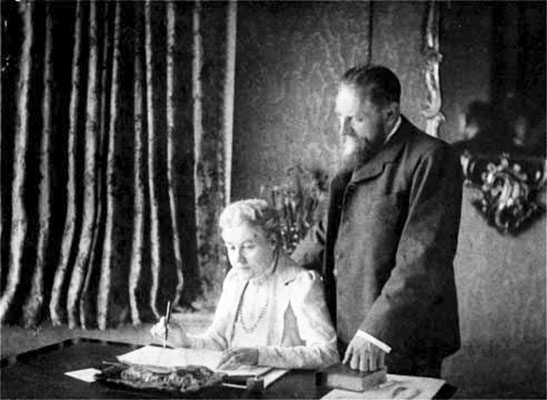
    From 1895 to 1933, Annie Besant (1847-1933) and Charles Leadbeater (1854-1934), two of the best known theosophists and metaphysicians of the 20th century, conducted clairvoyant investigations into all of the then known elements and certain compounds in order to observe the so-called “fundamental building blocks” that composed them, as well as their general structure. This involved the apprehension of visual information at sub-microscopic levels far beyond the ability of the eyes to perceive. The term for this kind of clairvoyant perception today is micro-psi (Besant and Leadbeater referred to it as “magnifying clairvoyance”).

    The initial investigations were collected and published in the first edition of Occult Chemistry in 1908 (the book was subtitled Investigations by Clairvoyant Magnification into the Structure of the Atoms of the Periodic Table and Some Compounds). A second edition of the 1908 material was issued in 1919. The sum total of Besant and Leadbeater’s clairvoyant observations of the chemical elements were collected and published posthumously in a third edition of Occult Chemistry in 1951.

    An article entitled “Occult Chemistry” appeared in the Theosophical publication Lucifer in 1895 (the year Leadbeater and Besant began their collaboration) and was reprinted as a separate pamphlet in 1905. In it, three chemical elements, hydrogen, nitrogen, and oxygen, were clairvoyantly examined and their analyses presented tentatively to the public by Besant and Leadbeater.

    Hydrogen, the first chemical atom selected for analysis, and possessing the lowest atomic weight, was found to be composed of eighteen smaller entities. Clairvoyantly it was seen to consist of six small bodies, contained in an egg-like form. According to Leadbeater/Besant, it rotated with great rapidity on its own axis, vibrating at the same time, and the internal bodies performed similar gyrations. “The whole atom spins and quivers, and has to be steadied before exact observation is possible,” they wrote.

    The six little bodies are arranged in two sets of three, forming two triangles that are not interchangeable. Further, the six bodies are not all alike; they each contain three smaller bodies – each of these being an ultimate physical atom – but in two of them the three atoms are arranged in a line, while in the remaining four they are arranged in a triangle.1

    The Ultimate Physical Atom (UPA)
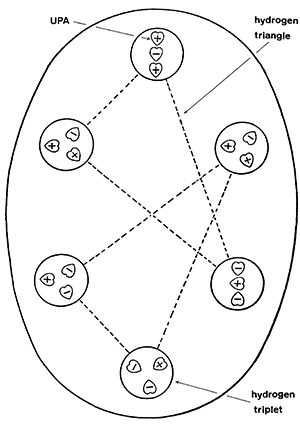
    Figure 1. The hydrogen “micro-psi atom.” The UPAs are the heart-shaped objects designated a plus or minus sign denoting either an inflow (minus) or outflow (plus) of energy. Stephen M. Phillips argues that each triangle is a single hydrogen nuclei and that the micro-psi observation has somehow bonded two together. The mid-sized circles are therefore quarks, and the heart-shaped entities sub-quarks. (Source: Occult Chemistry by Annie Besant and C.W. Leadbeater.)
    Figure 1. The hydrogen “micro-psi atom.” The UPAs are the heart-shaped objects designated a plus or minus sign denoting either an inflow (minus) or outflow (plus) of energy. Stephen M. Phillips argues that each triangle is a single hydrogen nuclei and that the micro-psi observation has somehow bonded two together. The mid-sized circles are therefore quarks, and the heart-shaped entities sub-quarks. (Source: Occult Chemistry by Annie Besant and C.W. Leadbeater.)

    As noted, in 1895 – when physical atoms were still thought to be the most basic unit of matter – Leadbeater and Besant observed in the early stages of their investigation that hydrogen was not a unity but was composed of eighteen smaller units. These smaller units they dubbed an “ultimate physical atom” (UPA), and later took to referring to them as “Anu” (singular and plural) – the Sanskrit term for this new entity. They had no way to determine the exact size of the UPA but they found it existed in two varieties: positive and negative (or Yin and Yang). The positive and negative aspects wound around each other in opposite directions (somewhat like the snakes on the caduceus, or the helical structure of DNA), forming the UPA.2

    According to Besant and Leadbeater, the UPA was a very complex entity, with only its main characteristics provided in their diagram. “It is composed entirely of spirals, the spiral being in its turn composed of spirillae, and these again of minuter spirillae.”3 In addition to this reference to the subatomic fractality of “matter,” they correctly declared that the Anu was definitely not the electron. The spirals composing the UPA, if unwound, would actually be found to be circles or strings – twisted around on themselves many times to create the helical form depicted.

    Oxygen was found to consist of 290 minor atoms and nitrogen of 261. Now, this is where it gets even more interesting. When Besant and Leadbeater divided the number of UPAs in oxygen by the number of UPAs comprising hydrogen (18), they arrived at 16.11, almost exactly the atomic weight of the oxygen atom (16). This procedure yielded the same precision with nitrogen, an even more complex structure than oxygen, and therefore much more challenging to apprehend clairvoyantly for the occultists. In fact, this uncanny precision continued right through the entire table of known elements of the time (minor human counting errors notwithstanding).

    Although science had not identified such a thing as the ultimate physical atom, Besant and Leadbeater had identified this tiny entity as comprising physical atoms. Moreover, by using hydrogen as the standard (being the first element in the periodic table – itself being composed of eighteen UPA), they were able to ascertain the atomic weight of the elements by dividing the number of UPA they observed by eighteen. Should Besant and Leadbeater have been merely “delusional cranks,” we should not expect this kind of amazing result.

    As a matter of fact, this ability to deduce the accepted atomic weights of the elements from the number of UPAs they observed was the only thing Occult Chemistry had in common with the chemistry of 1895.4

    Noteworthy is the way the UPA was depicted by Leadbeater/Besant as being created by an upwelling of force from a higher-dimensional source – just as in the hyperdimensional physics advocated by Paul LaViolette, David Wilcock, Richard Hoagland, and others researching aether physics. (Those readers interested in the notion of an aetheric medium and its false elimination from mainstream science are referred to in my The Grand Illusion 1.) The models of physics on the cutting edge have been left with no choice but to incorporate other dimensions or ‘levels’ of reality to account for today’s scientifically observable phenomena. Furthermore, Leadbeater and Besant’s clairvoyant analysis provides intimate and detailed verification of the hyperdimensional torsion and/or spin forces embedded in the ‘aether’, which I write about extensively in The Grand Illusion 1.
    [alert type=”info” dismiss=”no”]If you appreciate this article, please consider a subscription to New Dawn magazine.[/alert]

    How They Arrived at the UPA

    Leadbeater and Besant explained: “Any gaseous chemical atom may be dissociated into less complicated bodies; these, again, into still less complicated… [T]he fourth dissociation gives the ultimate physical atom. This may vanish from the physical plane, but it can undergo no further dissociation on it.”5 (emphasis added)

    Note that in their description of the UPA is a hint of multidimensional behaviour (this becomes relevant shortly). Interestingly, in 1888, the co-founder of Theosophy (it was founded in 1875), Helena P. Blavatsky, pre-empting Leadbeater and Besant by at least seven years, explained in The Secret Doctrine that on the next higher plane (etheric), what then-current science considered an undecomposable unity would – to higher perception – prove very complex. Water, for example would feature “many other constituents” besides just hydrogen and oxygen.

    As theosophists, Leadbeater and Besant would have anticipated the composition of the elements they clairvoyantly inspected (having obtained some hard-to-get samples via Sir William Crookes) to be much more complex than scientists of their time believed. They were right.

    Believe it or not, there appears to have been another earlier clairvoyant ahead of the game. At a time when Isaac Newton (a Hermeticist, though not clairvoyant) was arguing that matter was composed of impenetrable atoms given motion by outside forces, Emmanuel Swedenborg taught that matter was made up of a series of particles in ascending order of size, each of which was composed of a closed vortex of energy which spiralled at infinite speeds to give the appearance of solidity.6

    Two types of UPAs were observed by Besant and Leadbeater (see Figure 2), and they were identical in every way except “the direction of their whorls and of the force which pours through them. In the one case force pours in from the ‘outside,’ from fourth-dimensional space, and passing through the atom, pours into the physical world [‘male’]. In the second, it pours in from the physical world, and out through the atom into the ‘outside’ again, i.e., vanishes from the physical world.”7 (This was the “female” UPA.)
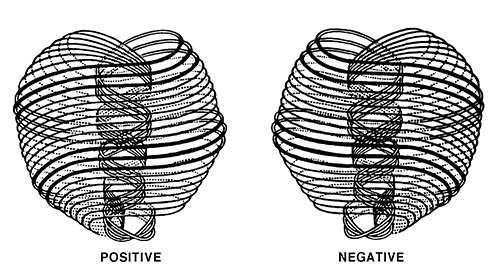
    Figure 2: The Two Types of Ultimate Physical Atoms, Male and Female (Source: Occult Chemistry by Annie Besant and C.W. Leadbeater)
    Figure 2: The Two Types of Ultimate Physical Atoms, Male and Female (Source: Occult Chemistry by Annie Besant and C.W. Leadbeater)

    In agreement with present-day aether researcher Paul LaViolette, David Yurth states in Seeing Past the Edge that these two opposite or mirror image particles constitute what we now refer to as matter and anti-matter states.8 This makes sense in light of Leadbeater and Besant’s comments that the positive/male UPA flows its creative energy outwards into our reality while the negative/female (anti-matter) counterpart transmutes energy from our reality back into the aether.

    Leadbeater and Besant said that if the higher-dimensional energy flow was stopped even momentarily, the whole manifest universe would disappear, “as a cloud melts away in the empyrean. It is only the persistence of that flow which maintains the physical basis of the universe.”9 LaViolette (among many others) has vindicated our two eminent occultists on this point, agreeing that without this constant flow,

    the subatomic particles and energy waves composing our physical universe would gradually dissipate, disolving [sic] into a state of uniformity. What would remain would be the ever-present, vast, and unfathomable multi-dimensional consciousness, of which we are a part, and whose now featureless calm “surface” had once generated our beautiful physical universe.10

    Physicist Nassim Haramein also supports this view, stating that, “without spin, none of reality can come to exist. All things spin!” Haramein agrees that “spin is fundamental to creation and objects that appear to be inanimate exist solely because spinning atoms within allow the objects to radiate, and hence, appear in our reality.”11 How did Leadbeater and Besant (and Swedenborg) know with such certainty so far in advance of science that our “physical” world’s source of origin is the aetheric medium’s spin dynamics?

    Besant and Leadbeater described the ultimate physical atom as a sphere, slightly flattened, with a depression at the point where the force flows in, causing a “heart-like” form. “Each atom is surrounded by a field,” they wrote, “formed of the atoms of the four higher planes, which surround and interpenetrate it.”12 If this is accurate, then etheric, astral and mental particles are of increasingly large size (physicists are searching for these “super particles” without realising they have already been quietly discovered).

    Leadbeater and Besant’s depiction of the UPA was fundamentally toroidal and way ahead of their time: “It turns incessantly upon its own axis, spinning like a top; it describes a small circle with its axis, as though the axis of the spinning top moved in a small circle; it has a regular pulsation, a contraction and expansion, like the pulsation of the heart.”13 Spin was first proposed in physics thirty years later by Goudsmit and Uhlenbeck in 1925 and was confirmed in electrons by Phipps and Taylor in 1927. The circular precessional motion described by the axis of the spinning UPA would later become known in physics as Larmor precession. Though the expansion and contraction (radial pulsation) described by Leadbeater and Besant is still unknown to physicists today, LaViolette points out that this description is quite plausible in the context of the ancient aether physics.14

    The UPA’s spinning motion is common to globules in complex plasmas,15 and as we see in Chapter 9 of The Grand Illusion, many of Leadbeaters’ and other metaphysicists’ clairvoyant observations can be accounted for in light of plasma dynamics. For instance, when exposed to an electric current the UPAs, as depicted by Besant and Leadbeater in 1919, arranged themselves in physical rows of “particle chains” – just like globules in complex plasma, as illustrated by A. Piel et al.16 In this UPA formation the depression of one UPA receives the aetheric flow of its neighbouring particle and then passes it out through its own apex, and so on.

    In Occult Chemistry Leadbeater refers to the UPA as having a certain level of apparent consciousness, and our best occultists and mystics (and scientists) all seem to agree that the universe is indeed conscious at all levels. It is interesting, as Jay Alfred points out, that David Bohm’s research into plasmas yielded the observation that electrons in a plasma configuration began to act as if they were part of a larger, interconnected whole, so much so that he frequently had the impression that the electron sea was “alive.” Mircea Sanduloviciu and colleagues have even created plasma spheres that can grow, replicate and communicate, fulfilling most traditional requirements for biological/living cells.17

    The links between consciousness and the spiralling energy inherent in the multidimensional fabric of the cosmos are increasingly being elaborated on by modern science. It is interesting to note some of the parallels between modern toroidal models and the fundamentally toroidal model Besant and Leadbeater described during their clairvoyant investigations. While Wilcock states that the aether’s substance naturally forms itself into a spherical formation because of the near-uniformity of the aetheric pressure on all sides, as well as the fact that it is the most ‘harmonic’ shape, he acknowledges that changing energy densities in the aether can cause these spheres to warp to some extent. For instance, they may stretch and flatten to create a donut-like shape, otherwise known as the torus, a model employed by Wilcock, Haramein18 and string theory.
    Occultists’ Vindication Arrives Via Dr. Phillips

    In the late 1970s Stephen Phillips, then a physics graduate student at the University of California, happened across some of the diagrams from Occult Chemistry. Contrary to what we might expect of most physicists, he took a serious interest in the material, and the end result was a major technical validation of the data obtained by Leadbeater and Besant.

    Dr. Phillips discovered that “Besant and Leadbeater’s clairvoyant descriptions of the chemical elements are completely consistent with the Quark, Quantum Chromodynamic and Super-String theories of modern subatomic physics.”19 This he detailed in depth in his 1980 book The Extra-Sensory Perception of Quarks, in which Phillips reconciled Occult Chemistry with modern physics. Because of his work, “Occult Chemistry now stands as a glittering testimony to the validity of Besant and Leadbeater’s claims.”20

    To clarify, a UPA’s ‘whorls’ are the ‘strings’ of modern string theory. Phillips suggests, based on comparisons between the occultists’ whorls and the ‘strings’ of string theory, that “[a] whorl is a closed, 26-dimensional, bosonic string (the reported presence of spherical ‘bubbles in koilon’ in 7th-order spirillae imply that whorls extend beyond the sixth, compactified dimension, so that they must be 26-, not 10-, dimensional strings,)” and also that “[t]he UPA is a subquark state of a superstring composed of ten strings, i.e. the superstring is itself a composite object.”21

    Thus, Phillips has reinterpreted Besant and Leadbeater’s observations to be not those of atoms, but of subquarks and quarks. The notion of quarks was only introduced into modern physics decades later in 1964 by Gell-Mann and Zweig.22 Quarks are the building blocks of so-called ‘elementary’ particles, and are generally accepted as existing by the scientific community today.

    However, Phillips’ model is actually a subquark (or composite quark) model. In it subquarks make up quarks, quarks make up elementary particles (protons, etc.), elementary particles make up atoms, and so on. Thus, Phillips has identified the UPAs as subquarks, and, as Donald DeGracia reports in Beyond the Physical: A Synthesis of Science and Occultism, he calls his subquarks “omegons” to indicate they are the final and smallest form of physical matter (omega is the final letter of the Greek alphabet). Phillips shows, through rigorous quantitative procedures, that “the sub-quark combinations predicted by his model are almost in exact agreement with the detailed structures presented by Besant and Leadbeater.”23 He has successfully correlated the structure of the UPA with superstring models: the UPA itself is the ‘superstring’ of modern subatomic physics.

    However, please note: the only way Phillips could get the numbers generated by his theory to match the actual observations of Besant and Leadbeater was to infer that when they were observing the subquark structure of an atom, they were not observing one atom but two atoms that had somehow fused together – as a result of their interference with and observations of these entities – to create a diatomic arrangement. This might have resulted from the spreading of the particles’ wave packets/de Broglie waves caused by the mental stabilisation of the particles by the theosophists, removing the uncertainty in their momentum, therefore increasing the uncertainty of their spatial locations.

    From a slightly different angle, the procedure, in effect, may have ‘teased out’ some of the inherent non-locality of the particles’ de Broglie waves/wave packets in time-space or ‘reciprocal space’ so as to influence their locations in space-time:

    [E]ach particle would become so delocalised that there would now be just as much chance of finding it near an adjacent atomic nucleus as there was in finding it in the much smaller space occupied by the nucleus prior to its coming under observation… their wave functions would eventually overlap significantly, leading to a non-vanishing probability of their mutual strong interaction.24

    The clairvoyantly observed structure of micro-psi atoms (MPAs) consisted of two overlapping triangular formations, with each triangle containing nine UPAs, while the contemporary view of hydrogen is of a lone electron orbiting a nucleus of one proton. However, from the viewpoint of modern quark theory, that lone proton is actually an arrangement consisting of three quarks. Phillips further claims that each quark is in turn made up of three subquarks, meaning the hydrogen atom consists of nine subquarks. Because in Besant and Leadbeater’s hydrogen there were two triangles each of nine UPAs, Phillips’ conclusion is that each triangle must correspond to an atom of hydrogen as understood by modern science, meaning that the hydrogen structure observed by Besant and Leadbeater was actually made up of two atoms of hydrogen.

    In the end, there are far too many correspondences between what Besant and Leadbeater observed and what is now scientifically known about subatomic behaviour, to dismiss their work.

    The shapes they described, the fact that they observed isotopes… before isotopes were widely recognised in science… and a host of other relevant observations; all of these are ideas that were completely unknown to the science of their day.25

    The table on page 62 provides a partial overview of Leadbeater and Besant’s clairvoyant observations as compared with subsequent scientific discoveries.
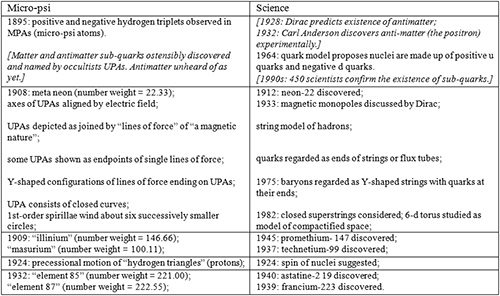
    “Some micro-psi anticipations of scientific discoveries and ideas.” Note: Brendan Murphy’s comments in italicised brackets. (Source: Stephen Phillips, Extrasensory Perception of Subatomic Particles, Journal of Scientific Exploration, 9(4), 489–525, 1995.)
    “Some micro-psi anticipations of scientific discoveries and ideas.” Note: Brendan Murphy’s comments in italicised brackets. (Source: Stephen Phillips, Extrasensory Perception of Subatomic Particles, Journal of Scientific Exploration, 9(4), 489–525, 1995.)

    As DeGracia points out, Phillips has shown that to comprehend the finer points of Occult Chemistry one requires an advanced understanding of modern physics. Besant and Leadbeater described the quantum nature of physical matter in 1895, exactly as science would thirty years later and more. How did they know about quarks and subquarks so far in advance of their official scientific discovery?

    To gain some comprehension of how controversial the terrain we tread here, the existence of sub-quarks was only recently scientifically accepted, and even then not unanimously. Yurth reports that in the 1990s an armada of 450 scientists confirmed the existence of sub-quarks with an “unprecedented” level of scrutiny, and still physicists at the American Physical Society, MIT, Princeton and Columbia University succeeded in suppressing the publication of the research data in such mainstream publications as Scientific American, Physics Letters, Physics Review and Nature.26 Thank goodness for free scientific enquiry, eh?

    Regardless, Besant and Leadbeater were obviously capable of perceiving the fundamental nature of matter using occult means, the siddhis. According to Leadbeater, there is a tube-like structure that protrudes from the Ajna, or third-eye chakra of the etheric body, and it is by means of utilising this tube as an organ of vision that one can exercise micro-psi. As we can see, there is good reason to believe him. This psi faculty/ability is one of the siddhis Patanjali wrote about in his Yoga Sutras circa 400 BCE.
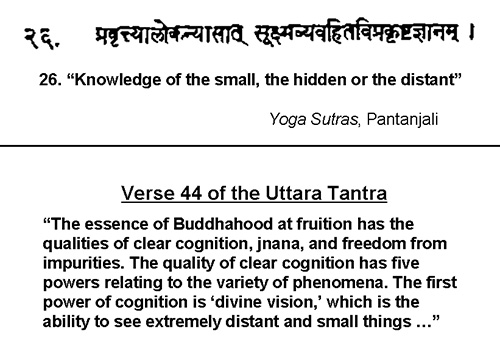
    In Aphorism 3.26 of the Yoga Sutras (c. 400 BCE), the earliest known treatise on yoga, its author Patanjali refers to a particular siddhi in which a yogi can gain “knowledge of the small, the hidden or the distant by directing the light of a superphysical faculty.”
    In Aphorism 3.26 of the Yoga Sutras (c. 400 BCE), the earliest known treatise on yoga, its author Patanjali refers to a particular siddhi in which a yogi can gain “knowledge of the small, the hidden or the distant by directing the light of a superphysical faculty.”

    One more interesting thing about sub-quarks highly pertinent to our occult leitmotif: the sub-quark’s track looks the way it does because in our space-time continuum the particle exists and then does not exist, exists and then does not exist. The discovery of the sub-quark constituted the very first scientifically verified instance of multi-dimensional behaviour in a measurable physical entity: “…in the rarified environment of the particle accelerator, the sub-quark exists-disappears-exists-disappears with a consistent, repeated, predictable frequency pattern…”27

    Leadbeater and Besant stated that the UPA – like the sub-quark today – could vanish from its plane but could undergo no further subdivision. It is truly the most fundamental aspect of physical matter at our density level. The scientific verification of Leadbeater and Besant’s observations clearly indicates the human ability to peer into domains non-existent to our ordinary senses and science’s conventional equipment – domains our most fundamental known ‘particles’ (standing wave structures) venture rhythmically in and out of. Yurth comments that this brings us “literally to the Edge of creation.”28 Do pause and let all of that sink in for a moment.

    Conclusions

    Our occultists are quantitatively and qualitatively vindicated from almost every conceivable angle. (I cover more angles than we have space for here in The Grand Illusion 1.) If we accept Phillips’ conclusion that ultimate physical atoms (UPAs) are sub-quarks rather than atoms, as Leadbeater/Besant once thought, then it is from dedicated occultists that we have obtained the first and possibly most accurate and detailed depictions of them and the aetheric medium that spawns them. On top of that, we must credit the initial discoveries of several isotopes to Leadbeater and Besant.

    Overall, the interrelated combination of clairvoyant observations, string theory, and ‘anomalous’ research findings that the Standard Model cannot explain – but which aether models easily incorporate – is too powerful to ignore.

    Brendan D. Murphy’s website is http://www.brendandmurphy.net.

    [alert type=”general” dismiss=”no”]This article was published in New Dawn Special Issue Vol 6 No 4.[/alert]

    [alert type=”success” dismiss=”no”]If you appreciate this article, please consider subscribing to help maintain this website.[/alert]

    Footnotes:

    1. Annie Besant & Charles W. Leadbeater, Occult Chemistry: Clairvoyant Observations on the Chemical Elements, 1919
    2. Annie Besant & Charles W. Leadbeater, Occult Chemistry, 1950
    3. Ibid
    4. Donald DeGracia, Beyond the Physical, 109
    5. Besant & Leadbeater, 1919
    6. See Victor Zammit, A Lawyer Presents the Case for the Afterlife, Ch. 2, www.victorzammit.com
    7. Besant & Leadbeater, 1919
    8. David Yurth, Seeing Past the Edge, 252
    9. Besant & Leadbeater, 1919
    10. Paul LaViolette, Subquantum Kinetics: A Systems Approach to Physics and Cosmology
    11. Nassim Haramein, What is the Origin of Spin?, www.theresonanceproject.org/pdf/origin_of_spin.pdf
    12. Besant & Leadbeater, 1919
    13. Ibid
    14. Paul A. LaViolette, Genesis of the Cosmos, 238-9
    15. Jay Alfred, Our Invisible Bodies, 49
    16. Ibid., 50
    17. Ibid., 65-8, 133-4
    18. See www.theresonanceproject.org/research.html for Haramein’s model
    19. DeGracia, 110
    20. Ibid. See also Phillips
    21. Stephen Phillips, Extrasensory Perception of Subatomic Particles, Journal of Scientific Exploration, Vol. 9, No. 4, 1995, 489-525
    22. Ibid., 110-11
    23. Ibid., 111
    24. Phillips, 1995
    25. DeGracia, 113-5
    26. Yurth, 255
    27. Ibid, 54-5
    28. Ibid, 55

    © New Dawn Magazine and the respective author.
    For our reproduction notice, click here.

  • Remote Viewing Revelations From the US Military to the MoD

    Remote Viewing Revelations From the US Military to the MoD

    From New Dawn 102 (May-June 2007)

    Surprising new evidence reveals that the British Government showed an active interest in using psychics for espionage purposes. In a document obtained under the Freedom of Information Act by UFO author and investigator Timothy Good, it was discovered that the British Ministry of Defence (MoD) undertook a study between 2001 and 2002 to investigate the efficiency of remote viewing.

    For those who don’t know, remote viewing – also called ‘travelling clairvoyance’ – is the ability to perceive places, persons and actions using psychic means. As is now well known, the US Army and various other tax payer supported government agencies, including the CIA, investigated and utilised remote viewing during the 1970s and 1980s.

    Now that it’s been declassified, all of the documentation pertaining to the British MoD’s remote viewing study can be obtained from their website – or so they claim. In one section it states that the results they obtained were largely unsuccessful and “undoubtedly disappointing with no one achieving any useful performance as an RV subject.” However, given the fact that untrained novices were used in the study, as well as the fact that the remote viewing methods they employed left much to be desired, this is not surprising.

    The MoD initially attempted to recruit 12 ‘known’ psychics who had advertised their abilities on the Internet. When every single one of them refused to be a part of the program, however, novice volunteers were drafted instead. One of the tests conducted involved blind-folding participants, and asking them to psychically determine the contents of sealed brown envelopes. Around 28% of the participants were successful in this endeavour. Most of them, the report states, were hopelessly off the mark.

    According to a spokeswoman for the MoD, their £18,000 remote viewing study “was conducted to assess claims made in some academic circles and to validate research carried out by other nations on psychic ability.” She adds: “The study concluded that remote viewing theories had little value to the MoD and was taken no further.”

    UFO investigator and author Nick Pope, who worked for the MoD for 21 years, suggests there may have been an undisclosed purpose to the study. Given its timing, he says, the study may have concerned military operations in Iraq and Afghanistan. “It can only be speculated,” he says, “but you don’t employ that kind of time and effort to find money down the back of the sofa. You go to this trouble for high value assets. We must be talking about Bin Laden and weapons of mass destruction.”

    In response to media criticism for “wasting taxpayer’s money” on a project seen as being ludicrous, MoD defended their actions, perhaps indicating they take the subject of parapsychology – a so called “pseudoscience” – far more seriously than they would have the public believe.

    “I don’t think this was a waste of public money,” says Pope. “Many people will say so, but I think it is marvellous that the government is prepared to think outside the box. And this is as outside the box as it gets.”

    Parapsychology – the scientific study of psychic phenomena – has been around since at least the 1800s. However, it wasn’t until the 1930s, when J.B. Rhine began conducting ESP experiments under controlled laboratory conditions at Duke University, that parapsychology became a legitimate scientific field. Since that time, knowledge in this area has rapidly advanced, and, thanks to improvements in experimental design, the presence of psi (psychic or paranormal phenomena) – which is generally weak and inconsistent – can now be detected far more easily. Also of aid to this process is the use of meta-analysis, a new statistical tool, whereby the results of many different studies can be successfully combined to render the aggregate result statistically significant.

    In his fascinating book Entangled Minds, parapsychologist Dean Radin – a man with impressive credentials, who once served as a scientist at Stanford Research Institute (SRI) where he worked on a highly-classified program investigating psi phenomena for the US government – says we should no longer be trying to determine if psi exists, but how psi works. “After a century of increasingly sophisticated investigations and more than a thousand controlled studies with combined odds against chance of 10104 to 1, there is now strong evidence that some psi phenomena exist,” he explains.

    In light of the fact that parapsychology is now a sophisticated and legitimate branch of science, and has been for many years, one can’t help but wonder why the MoD’s rather expensive remote viewing study was of such poor standard. It simply defies logic. Why, in other words, didn’t their study draw more heavily from the impressive body of knowledge accumulated over years and years of parapsychological research? And why didn’t their methodology follow the well-known and highly successful controlled remote viewing (CRV) protocols developed by Ingo Swann and utilised in STAR GATE and other programs? And how come, when they couldn’t recruit the twelve ‘known’ psychics for the study, they settled for novice volunteers?

    By tracing the history of modern remote viewing, we can begin to answer these questions.

    Ingo Swann

    One of the most important figures responsible for today’s understanding of remote viewing is Ingo Swann, a scholar, artist, scientist and natural psychic. After acquiring a pet chinchilla, which, he discovered, “could read and apprehend” his thoughts, Swann developed an interest in psychic phenomena. When he began to move into the circles of those studying such phenomena, he soon became acquainted with Cleve Backster. Backster, a New York polygraph operator, is famous for his experiments in “primary perception,” in which he demonstrated, with the use of polygraph equipment, that every single type of living tissue, even the bacilli in yoghurt, possesses some degree of sentience. Swann worked in Backster’s laboratory for a year.

    Soon after that, Swann participated in a series of psychic experiments for the American Society for Psychical Research (ASPR). According to Time-Life, a typical experiment would take place as follows: “Swann would sit in an easy chair illuminated by a soft overhead light, virtually immobilised by wires that hooked him up to a polygraph machine, which monitored his brain waves, respiration and blood pressure. Puffing away on his cigar, he would, as he put it, ‘liberate his mind’; then he would be asked to describe or draw his impression of objects that were set out of sight in a box on a platform suspended from the ceiling.”

    “At first,” says Swann, “I was not very good at this kind of ‘perceiving’, but as the months went on, I got even better at it.” The term “remote viewing,” coined by Swann and a research assistant at the ASPR named Janet Mitchell, was used to describe a particular kind of experiment conducted by Swann at around this time. Whilst in an out-of-body state, Swann would attempt to “see,” then report on the weather conditions in distant cities.

    Swann became more heavily involved in parapsychological research, when, in 1972, he agreed to work at SRI for Harold Puthoff, a highly successful physicist. Puthoff, after reading the seminal book Psychic Discoveries Behind the Iron Curtain in which he heard about the work of Cleve Backster, was eager to conduct some parapsychological experiments of his own. The research project conducted by Puthoff – then later by him and another physicist named Russell Targ – was initially funded by the Sciences Research Foundation of San Antonia, Texas. Later on, when their successful remote viewing work at SRI began to gain wider attention, they started to receive funding from other government agencies, including the CIA.

    In one early remote viewing experiment at SRI, Swann was accurately able to describe – and sketch in great detail – the features of a uniquely designed magnetometer buried six feet in concrete beneath the floor. Not only that, he managed to affect the equipment’s output signal, as displayed on a strip chart recorder. Another subject, a photographer by the name of Hella Hammid, was able to accurately describe five out of nine target sites, resulting in odds against chance of more than 500,000 to 1.

    Thanks to the advent of coordinate remote viewing (CRV) – now called controlled remote viewing – numerous complications were eliminated. For example, it was no longer necessary for a person – known as the ‘beacon’ – to visit the spot that was chosen as the remote viewer’s target. This enabled remote viewing to be more easily used for espionage purposes.

    CRV is a method by which coordinates are employed to identify the target to be viewed. The coordinates used, however, needn’t be geographical in nature. They can be, and usually are, completely random numbers. Once a particular target has already been ‘visited’ by a remote viewer, and this target has been assigned a set of random coordinates, it is possible for another remote viewer to ‘visit’ the same location – which could be any point in time and space – simply by focusing on the same set of coordinates. The theory behind how this works is based on Jung’s notion of the collective unconscious. “Once these numbers have been assigned,” writes British author and paranormal expert Colin Wilson, “they become part of the psychic ether, much as the letters assigned to a website on the Internet will enable anybody to access the site.”

    During the Cold War, when the American government discovered they were lagging behind the Soviet Union in paranormal research, they grew concerned, thinking the Soviets might use their newly acquired knowledge for hostile purposes. Psychic Discoveries Behind the Iron Curtain, published in 1970 by two Western authors named Sheila Ostrander and Lynn Schroeder documented that numerous scientists throughout the Soviet Union and Eastern Europe were starting to take parapsychological research – or ‘psychotronics’ – very seriously indeed.

    “But interest in psychic phenomena within the ruling circles of Cold War leaders on both sides of the Atlantic remained very much a hidden agenda,” writes Jim Marrs in Psi Spies. “Officially, the United States had no interest in nonexistent phenomena.” However, a 1972 CIA report, released years later, proves agency officials were concerned about Soviet psychic research, even though, at the time, organisations such as the Committee for the Scientific Investigation of Claims of the Paranormal (CSICOP) were beginning to give parapsychology a bad name, as was the media.

    As quoted by the editors of Time-Life, the aforementioned CIA report stated, “Soviet efforts in the field of psi research, sooner or later, might enable them to do some of the following: (a) Know the contents of top secret US documents, the movement of our troops and ships and the location and nature of our military installations. (b) Mold the thoughts of key US military and civilian leaders at a distant. (c) Cause the instant death of any US official at a distance. (d) Disable, at a distance, US military equipment of all types, including spacecraft.”

    The first remote viewing research program conducted by Puthoff and Targ with CIA funding was named project SCANATE. Held at SRI, the program went on for two years, yielding some remarkable results. The CIA, happy with the success of the program, felt their money was being well-spent. A CIA intelligence consultant named Joseph A. Ball, who, according to Mind Wars author Ronald McRae, was commissioned to evaluate SCANATE, allegedly said the project “produced manifestations of extrasensory perception sufficiently sharp and clear-cut to justify serious considerations of possible applications.”

    According to McRae, the AiResearch Manufacturing Company of Torrence, California, another consulting firm, was also contracted by the CIA to evaluate SCANATE, reaching essentially the same conclusion as Ball.

    As well as Swann, another notable member of the SCANATE team, and an equally successful remote viewer, was a former police commissioner named Patrick H. Price, who died suddenly of a heart attack in July of 1975. As a result of conducting a highly successful operational test for the CIA, in which his descriptions of a missile and guerrilla training site in Libya were confirmed by the CIA’s Libyan Desk officer, Swann helped ensure that government funding for project SCANATE would continue. Also of help to this process was the publication of SRI’s remote viewing research in a prestigious technical periodical, Proceedings of the IEEE, the editor of which was almost fired for choosing to deal with such controversial material.

    [alert type=”info” dismiss=”no”]If you appreciate this article, please consider a subscription to New Dawn magazine.[/alert]

    Operation GRILL FLAME

    By the late 1970s, when the SRI team began receiving sponsorship from the US Army instead of the CIA, an operational unit of soldiers trained in remote viewing – known by many as the ‘psi spies’ – was created in order to help gather intelligence during the Cold War. One of the first units of remote viewers created by the US Army was called GRILL FLAME, previously named GONDOLA WISH. According to Joseph McMoneagle, one of the original psi spies, the Army interviewed around 3,000 people for GRILL FLAME, selecting, in the end, a total of six.

    Early on, the members of GRILL FLAME practised remote viewing using a variety of different experimental methods. Consciousness-altering techniques such as Transcendental Meditation (TM) and biorhythm were tested, but proved to be of little value. Remote viewing in an out-of-body state was also found to be largely unsuccessful, in that, although it could be achieved, the viewer would often lose interest in the mission at hand, focusing instead on the awe-inspiring nature of the experience. The team decided, in the end, to adhere to Swann’s structured CRV methodology, as this produced the most consistently accurate results.

    While in an out-of-body state, Robert Monroe, founder of the Monroe Institute for Applied Sciences – which, among other things, was used to screen remote viewers for GRILL FLAME and other programs – discovered he was being ‘observed’ by a group of strangers, one of whom appeared to be a powerful female psychic. He felt they were trying to probe his mind. Shaken by the experience, Monroe asked the GRILL FLAME team to investigate the matter. They soon discovered that the Soviet Union had a psi spies team of their own. “The Soviet KGB,” says Marrs, “laboriously screened more than a million people in an effort to locate ‘super naturals’, persons with the greatest amount of psychic power. These super psychics became the Soviet Union’s psi spies, sometimes assigned to seek out their Western counterparts.”

    For many years, the two teams indulged in a game of harmless psychic cat and mouse with each other, but that’s as far as the matter went. According to former military remote viewer Mel Riley, the two teams had a kind of “gentleman’s agreement” with each other, which involved keeping the existence of the opposing team a secret from their respective bosses, so as not to cause trouble for each other.

    In 1985 GRILL FLAME came under control of the Defence Intelligence Agency (DIA). From that point onwards, the unit codename underwent several changes. GRILL FLAME became CENTER LANE, then SUN STREAK, and finally STAR GATE.

    According to many of the original psi spies, the unit went downhill once it was placed under civilian control during the late 1980s. At around this time, two female trainees named Angela and Robin showed up. Called “the witches” by the others, they practised channelling, tarot card reading and automatic writing in place of CRV, consequently obtaining poor results in their work. The entire unit became something of a joke, especially when congressmen began to visit for psychic “readings.” By 1990, all of the military-trained psi spies had left the unit, leaving “the witches” in charge. Some of them retired. Others joined different units within the US Army.

    During its full operational period, before things went awry, the psi spies unit provided information of critical intelligence in hundreds of very specific cases. “On scores of occasions,” writes Swann, “this information was also described within government documents as being unavailable from any other source(s).” He continues: “Also contrary to popular belief, the program operated throughout its history under the very watchful eyes of numerous oversight committees, which were both scientific and governmental. During the seventeen and a half years it ran, it provided support to nearly all of the United States intelligence agencies.”

    Early on, most of the operational missions conducted by the psi spies involved investigating targets in the Soviet Union. Being highly classified and concerning issues of national security, the unit received little or no feedback about the success of these missions. One of the most talked about missions that the psi spies were asked to undertake was conducted by McMoneagle, who managed to correctly describe, in thorough detail, a new type of Soviet Submarine, which was then being constructed in a secret facility in Severodvinsk.

    Another mission noted for its stunning success was undertaken in May of 1978, in response to a plane crash that occurred in Zaire (now the Democratic Republic of Congo). The plane, a Soviet Tupolev-22 bomber, was seen as being invaluable to the Americans, who wanted to recover the wreckage in order to examine its communication equipment. Two remote viewers working independently of one another, Frances Bryan and Gary Langford, each managed to draw detailed sketches of the area where the plane crash occurred. The plane was eventually located within barely 5 kilometres of the spot they had both described.

    The story of military remote viewing hit the mainstream press in late 1995, but not before the CIA had arranged for the American Institute of Research (AIR) to conduct a biased review concerning the value and success of STAR GATE. Their aim was to discredit remote viewing and other psi abilities, in order to thwart public interest in the subject. Jessica Utts, a professor of statistics with a positive opinion on psi phenomena, and Dr. Raymond Hyman, a professor of psychology and luminary of CSICOP – in other words, a fanatical sceptic of anything remotely ‘paranormal’ – were chosen to lead the review. “It was a good strategy to select evaluators from opposite camps; it gave the appearance of balance to the evaluation – an appearance that is deceiving,” writes W. Adam Mandelbaum in his book The Psychic Battlefield.

    The report evaluated only three remote viewing projects, which were carried out within one year towards the end of STAR GATE, a period of decline for the program. The other 16 or so years that it ran (though under numerous different codenames) were totally disregarded. Moreover, according to Dr. Edwin May, former director of remote viewing research, the AIR panel was denied access to an estimated 80,000 pages of program documents, due to their highly-classified nature. And, to make matters worse, the panel interviewed only three remote viewers involved in the program, all of whom were of “the witches” variety, in that they commonly relied upon tarot card reading, automatic writing and other unconventional methods to obtain their information. Ergo, only the very weakest data was used in the AIR evaluation.

    The AIR report states, “The evidence accrued from research, interviews and user-assessments all indicate that the remote viewing phenomenon has no real value for intelligence operations at present.” It also mentions, however, that a “statistically significant effect” had been observed in laboratory remote viewing experiments. Despite these findings, the report goes on to mention that, “no compelling explanation has been provided for the observed effects… to say a phenomenon has been demonstrated we must know the reason for its existence.”

    One can’t help but wonder if the real purpose of the British MoD’s remote viewing study was to further discredit the phenomenon. It was, after all, something of a joke – especially in comparison to the remote viewing program undertaken by the US government. Or, perhaps, as Nick Pope suggests, its real purpose has not been disclosed to the public.

    In his book Psi Spies, Marrs claims that several separate unofficial sources have informed him the US government’s remote viewing program never truly ended. It only ended in the eyes of the public – just as the CIA intended. According to these sources, says Marrs, “the remote viewing methodology was simply moved to even more secret government agencies where its use continues today.”

    [alert type=”general” dismiss=”no”]This article was published in New Dawn 102.[/alert]

    [alert type=”success” dismiss=”no”]If you appreciate this article, please consider subscribing to help maintain this website.[/alert]

    References

    ‘MoD Defends Psychic Powers Study’
    ‘Defence Chiefs Spend £18,000 on a Mystic Experiment to Find Bin Laden’s Lair’
    Ministry of Defence – Remote Viewing

    http://www.dailygrail.com – ‘Remote Viewing Revelation’

    Buchanan, Lyn, The Seventh Sense (Paraview Pocket Books, New York, NY, 2003)
    Graff, Dale E., Tracks in the Psychic Wilderness (Element Books, Inc, Boston, MA, 1998)
    Gruber, Elmar R., Psychic Wars: Parapsychology in Espionage – and Beyond (Cassell plc, UK, London, 1999)
    Mandelbaum, W. Adam, The Psychic Battlefield: A History of the Military-Occult Complex (Thomas Dunn Books, New York, NY, 2000)
    Marrs, Jim, Psi Spies (AlienZoo Publishing, Phoenix, AZ, 2000)
    McMoneagle, Joseph, Remote Viewing Secrets (Hampton Roads Publishing Company, Inc., Charlottesville, VA, 2000)
    Radin, Dean, Entangled Minds: Extrasensory Perception in a Quantum Reality (Paraview Pocket Books, New York, NY, 2006)
    Wilson, Colin, Alien Dawn: An Investigation into the Contact Experience (Virgin Publishing Ltd., 1998)

    © New Dawn Magazine and the respective author.
    For our reproduction notice, click here.

  • The Changing Face of Russian Psi Research

    The Changing Face of Russian Psi Research

    From New Dawn 104 (Sept-Oct 2007)

    Were the Soviets really experts in paranormal research? Were they, as some researchers claimed during the Cold War, light years ahead of the rest of the world in the field of parapsychology? If so, what kind of work are the Russians up to today?

    The mysterious case of Robert Toth may shed some light on the matter.

    The Toth Incident

    Robert C. Toth, a Los Angeles Times correspondent, was arrested and detained in Moscow on June 11, 1977. He had been given papers by a Soviet scientist named Valery G. Petukhov, who claimed to be Chief of the Laboratory of Bio-Physics at the State Control Institute of Medical and Biological Research. The papers supposedly disclosed ‘state secrets’ and Toth, of course, had obtained them illegally. He was arrested before he had a chance to examine them properly.

    The papers were supposed to offer proof of Petukhov’s grounding breaking scientific research in the field of parapsychology. When living cell undergo division, Toth had been told, they emit certain particles that can be “detected and measured.” These particles can “carry information,” and their function could “explain the basis for telepathy” and other phenomena of this nature.

    Toth claimed that seconds after he had been given the papers, a small car pulled up beside him, from out of which emerged five men, dressed as civilians. They threw him inside the vehicle, which then sped off. “Our car drove through red lights and down one-way streets the wrong way to a militia [police] station,” writes Toth. “My captors were firm and polite, offering me cigarettes… I was ushered into a room with an inspector who declined my requests to phone the US Embassy but said a Soviet Foreign Ministry official would be called.”

    Toth was detained for a period of several days. He was interrogated by police officers and KGB officials. A senior researcher of the USSR Academy of Sciences, Professor I.M. Mikhailov, was asked to provide expert testimony on the information Toth had been given by Petukhov. “This material is secret and shows the kind of work done in some scientific institutes of our state,” he declared.

    Suddenly told he was free to go, Toth caught the next flight back to America. The Toth incident hit newspapers all over the world, including The Washington Post and The New York Times. The story was quickly forgotten, however – at least by the public. “But,” writes the late Martin Ebon, “intelligence analysts understood that Toth had gotten into his hand, if only for a few moments, one of the tips of the enormous iceberg of top secret Soviet research into psychic powers of the human mind.”

    The Psi Warfare Gap

    Another possibility is that the Toth incident was a Soviet orchestrated conspiracy – a set up, in other words. Between 1969 and 1971, during the height of the Cold War, American intelligence sources discovered the Soviets had a deep interest in parapsychology, were researching the subject extensively, and that this research was being well-funded by the Soviet military and the KGB.

    In 1967, it was learned, the Soviets were spending an estimated US$500 million a year on parapsychological related research. The money was being used to fund fourteen separate research institutes. This naturally worried the Americans, who deduced a hostile intent behind the Soviet’s actions.

    As to why the Soviets were spending so much money on psi research, a brief explanation needs to be given. In the aftermath of World War II, Soviet authorities feared the prospect of becoming involved in yet another war – this time with the West – much in the same way that the US authorities were greatly concerned about a possible ‘communist takeover’ and nuclear war with the Soviet Union.

    Acting as an important catalyst for the Soviet ‘psychic boom’ was a story that appeared in the French periodical Constellation, entitled ‘Thought Transmission – Weapon of War’. The article, published in 1959, told of supposed telepathy experiments that were being conducted by the US military. The article claimed that the ‘receivers’ in the experiment, located onboard the submerged nuclear submarine Nautilus, had successfully managed to pick up telepathic transmissions from the ‘senders’ back on land.

    When the US Navy denied the story, the Soviets assumed they were lying, deciding to take it seriously. Not wanting to be left behind in the field of psi research, the Soviets took immediate action. The father of Soviet parapsychology, the physiologist Leonid L. Vasiliev, who, in 1923, had been ordered by Joseph Stalin to investigate telepathy, made the following remark in April 1960, while addressing a group of top Soviet scientists: “Today the American Navy is testing telepathy on their atomic submarines. Soviet scientists conducted a great many successful telepathy tests over a quarter of a century ago. It’s urgent that we throw off our prejudices. We must again plunge into the exploration of this vital field.”

    One theory is that the Nautilus story was a clever piece of American disinformation, aimed to lead the Soviets astray, so that they would start to invest money and energy into a decided waste of time. “Whether telepathic communication experiments were ever carried out aboard the USS Nautilus is a topic that generates much doubt and dispute among paranormal enthusiasts,” explains W. Adam Mandelbaum in his book The Psychic Battlefield.

    Regarding the Toth incident, the parapsychologist Elmar R. Gruber has some interesting comments to offer: “The feeling remains that the Soviets were attempting to impart deliberate disinformation in their power game with the Americans… Did they intend to create the impression that they were far more advanced in this field than the Americans?”

    Intentional or not, the impression was certainly there, as proven by a now declassified 1972 Defence Intelligence Agency (DIA) report, entitled ‘Controlled Offensive Techniques’. The report begins by stating that parapsychology in the Soviet Union is very different to that in West, the former being a “multi-disciplinary field consisting of the sciences of bionics, biophysics, psychophysics, psychology, physiology and neuropsychology.” The Soviets had named this field ‘psychotronics’. The nearest English equivalent to the word is mind (psycho) energy applications (-tronics).

    The report mentions that Soviet scientists had explored “detrimental effects of subliminal perception techniques,” which, using “telepathic means,” might be “targeted against the US or allied personnel in nuclear missile silos.” The report continues: “The potential applications of focusing mental influences on an enemy through hypnotic telepathy have surely occurred to the Soviets… Control and manipulation of the human consciousness must be considered a primary goal. Soviet knowledge in this field is superior to that of the United States.”

    Psychic Discoveries Behind The Iron Curtain

    The year 1970 marked the publication of a now classic book on Soviet psychic research. Called Psychic Discoveries Behind the Iron Curtain, it was written by two Western journalists, Sheila Ostrander and Lynn Schroeder. During their stay in what was then the Soviet Union, Ostrander and Schroeder travelled far and wide, interviewing numerous scientists who were conducting groundbreaking research in the field of parapsychology.

    When Psychic Discoveries was first released, it caused quite a stir, sparking both public and government interest in ‘psychic warfare’. Had it never been written, the US government’s fear of ‘Soviet psychic mind control’ would probably not have reached the extreme that it did.

    Kirlian photography, dowsing, telepathy, eyeless sight, telekinesis, hypnosis – these are just some of the subjects that Ostrander and Schroeder investigated and wrote about. Their book showed that Soviet scientists had already managed to gain a practical understanding of how these types of phenomena were possible, while the rest of the world was lagging far behind.

    So what had the Soviets discovered about the unknown powers of the human mind? And how did they approach the study of this enigmatic subject?

    Experiments In Distance Influence

    Existing in the Soviet Union were two different types of parapsychology – one official, the other secret. The former was allowed to exist in public, while the latter was taking place at well-funded, top secret state-controlled research institutes, and was largely military-based. Parapsychologists who wanted to do research in non-military areas often had difficulty obtaining funding.

    To divert attention away from the real research they were doing, the Soviets had established, in Moscow, a military-based parapsychology centre called the Institute of Problems of Information Transmission. To help it look authentic, the Soviets made sure it was well-guarded at all times. As for the real research, that was being conducted in a remote region of western Siberia, near the pioneer town of Novosibirsk, in a massive research facility named Akademgorodok, ‘Science City’.

    Built after World War II, Science City was composed of around 40 scientific centres, and housed tens of thousands of scientists and their families. It was developed, says Martin Ebon, “with such single-mindedness that even the names of the streets and city squares reflect its nature. For example, one could take a bus down Thermophysics Street, get off at the corner of Calculators Street, and walk across the Institute of Hydrodynamics Square.”

    One of its scientific centres was called the Institute for Automation and Electrometry. Located here was the mysterious Special Department 8, where entry was not permitted unless one had access to a special code. Security was such that the code was changed on a weekly basis. For the sixty or so scientists employed at No. 8, their job was to investigate telepathy and distant influence, otherwise called ‘biocommunication’.

    For psi to be possible, thought Soviet scientists, there had to be an exchange of energy taking place. At No. 8, writes Ebon, “physicists sought to discover the nature of ‘psi particles’, the elusive elements that some Soviet scientists regarded as essential to the function of such psychic techniques as biocommunication and bioenergetics.”

    In one series of experiments, telepathic communication was tested among people. Experiments in telekinesis were also conducted. Some of the subjects used were Tibetan monks and Siberian shamans, who had been carefully selected by the KGB for their remarkable psychic abilities. The American journalist Jim Marrs says the KGB “laboriously screened more than a million people in an effort to locate ‘super naturals’, persons with the greatest amount of psychic power.”

    In another series of experiments – which were conducted at No. 8 before it was closed down in 1969 – August Stern, one of the scientists who worked there, and his colleagues tested the properties of biophotons, to see if they could account “for some inexplicable forms of communication.” Photons, by the way, are the smallest physical units of light, the quanta of electromagnetic radiation. Biophotons are a type of photon that radiate from living cells. In this experiment, bacteria was placed on two sides of a glass plate, “to see whether a fatal disease could be transmitted through the glass” with the help of biophotons. “There were also experiments with photon waves, in which frogs’ eyes were used as a more sensitive measuring instrument than a machine,” recalls Stern, who migrated to France in 1977.

    Due to the shutting down of No. 8, the photon communication experiments conducted by Stern and his colleagues were not fully realised. Several years later, however, three Soviet scientists attempted the same problem, achieving impressive results. Their names were Vlail Kanachevy, Simon Shchurin and Ludmilla Mikhailova. In their experiments, two groups of cells were used, one of which was contaminated with a virus, the other of which was not. They were placed adjacent to each other, but remained physically separate. When the two groups were isolated by quartz glass, which ultra-violet waves are able to penetrate, the non-contaminated cells suddenly became contaminated; they ‘caught the disease’, in other words. When regular glass was used, which ultra-violet waves cannot penetrate, this did not occur; the non-contaminated cells remained healthy.

    These results confirmed what many Soviet scientists in the field of bioenergetics had previously theorised – that living cells can ‘communicate’ with each other over distances, and in a non-chemical way. When the affected cells were attacked by the virus, says Shchurin, they “virtually cried out loud about the danger” and “their cry freely penetrated the barrier of quartz glass… Something highly improbable happened. These waves were not only perceived by the neighbouring cells, they also conveyed the sickness to the neighbouring cells.”

    The KGB Takes Control

    No later than 1970, the KGB had taken control of the country’s research in parapsychology. It should be mentioned, however, that the KGB was an integral part of everyday life in the Soviet Union, permeating society on all levels, so their influence on psi research was not exactly sinister.

    During the 1970s, more and more KGB-controlled parapsychology research institutes were established. Because the nature of Soviet psi research was becoming increasingly secret, many Western parapsychologists lost contact with their colleagues ‘behind the iron curtain’. In addition, rumours began to circulate about sinister ‘mind control’ experiments being conducted in clandestine Soviet labs, as well as the development of dangerous ‘psi weapons’ to be used against the West. As mentioned in Psychic Discoveries, a Czech engineer named Robert Pavlita claimed to have invented a ‘psychotronic generator’, which could apparently store, enhance and radiate ‘psychotronic’ energy.

    Also known as ‘bioplasmic’ energy, Soviet scientists claimed that this energy was behind all manner of psychic phenomena, that it filled and animated all living things, and could also be harnessed for healing purposes. Using a process called Kirlian photography, the ‘bioplasmic body’ – or aura – could allegedly be photographed. The Austrian-American scientist Dr. Wilhelm Reich called this energy ‘orgone’. He invented a device called an ‘orgone energy accumulator’, consisting of a box lined with alternating layers of organic and inorganic materials, which was apparently able to trap this energy.

    “A psychotronic generator can influence an individual or a whole crowd of people. It can affect a person’s psyche mentally and emotionally. It can affect memory and attention span. A psychotronic device can cause physical fatigue, disorientation, and alter a person’s behaviour,” asserts the Soviet biologist Edward Naumov. According to Ostrander and Schroeder, “certain generators can arouse fear, anxiety, anger, insomnia, depressions and suicidal thoughts and even lead to cerebral thrombosis.” The KGB, says Naumov, spent more than half a billion roubles on developing psychotronic technology.

    When it comes to alleged Soviet mind control technology, nothing can compare to the immensity of project ‘Woodpecker’. Apparently, using an array of giant transmitters, the Soviets began to beam extremely low frequency (ELF) modulated signals all over Western Europe, Australia, North America and the Middle East. These transmissions, claims Tim Rifat, were designed to “permanently rewire the neural networks in the brains of the entire Western population, thereby destroying their social cohesiveness…” The KGB, it is said, had copied the brain frequencies of pathological criminals, mental patients, clinically depressed people and socio-psychopaths, whose brain wave maps they had studied. It is these negative frequencies that were beamed down on the West – from the early 1980s until the collapse of the Soviet Union in 1991. Assuming it was real, project Woodpecker appears to have been a tremendous success!

    Apparently, the Soviets were not the only ones who managed to create advanced ‘psi weapons’ and large scale ‘mind control’ devices; so had countries in the West – most notably the US. This technology was allegedly used against the Soviet Union, in an attempt to bring about its destruction.

    Soviet journalist Emil Bachurin claimed in Young Guard magazine that Yuri Andropov, the head of the KGB, spoke of several “psi weapons centres” in Canada, adding that “Canadian research must be surpassed.” The information was given to Bachurin by a KGB general. Other members of the Soviet intelligence community have mentioned the existence of advanced ‘psi weapons’ created by the West, even claiming that such devices have been used many times against civilian populations in the Soviet Union.

    Comments made by the late Aleksander Lebed, a distinguished General and popular politician, seem to support such charges. As mentioned in New Dawn No. 43, Lebed insisted that Western secret services had carried out a series of psychological operations (or PSYOPS) against the Soviet Union, involving “tech­nologies of psycho-semantic pro­gramming,” brainwashing and hypnosis. One such psychological operation, claimed Lebed, was the collapse of the Soviet Union itself, which had been artificially organised by the West.

    Modern Psi Research

    Since the collapse of the Soviet Union, some interesting psi experiments have been conducted in Russia, many of which involved animals and other living things. The Russians have long tried to develop biological ‘psi detectors’ – and so far they’ve been partially successful. Their theory is that psi is primarily a biological process, and that living systems react far more strongly to mental influence than do material systems. Researchers in the US have also attempted to develop psi detectors, or ‘thought switches’ – electronic devices that respond to mental intention.

    The eminent American parapsychologist Dean Radin has already managed to construct a prototype of such a device, which, he says, “incorporated a new type of physical detector, involving a matrix of random-number generators, and some advanced statistical and signal-processing techniques to detect the predicted psi-influence.” As Radin explains in his book The Conscious Universe, countless laboratory experiments have shown that random number generators – devices that produce a stream of random digits – can be influenced by a focused mind. These ‘electronic coin flippers’ are designed to operate in a truly random fashion, producing an equal number of ‘heads’ and ‘tails’. Due to the influence of consciousness, however, these devices begin to function in a more ordered way, producing statistically less probable results, such as more heads than tails, for instance.

    Georgi Gurtovoy, head of the Laboratory on Applying Isotopes in Ophthalmology in Moscow, and Alexander Parkhamov, a physicist, have done some interesting research on the distant influence of living systems that produce random fluctuations. Some of their instruments have been able to register micro-PK effects. They have also carried out anomalous distant influence experiments involving a species of fish called Gnathonemus petersii. These fish are known for their ability to emit pulsed electric signals, which they use to assist navigation in the darkness. Psychics were asked to slow down the rate of the fishes’ pulses – allegedly with much success.

    Also compelling are the experiments of Sergei Speransky, a toxicologist at the Institute of Hygiene in Novosibirsk. His findings seem to confirm the existence of ‘morphogenetic fields’, as proposed by the controversial British biologist Dr. Rupert Sheldrake. In one experiment, a population of mice that had grown up together in the same cage were split into two groups. The mice in one group were fed as usual, while the mice in the other group were made to starve. Almost instantly, noticed Speransky, the non-starving mice began to consume much more food than before, as though trying to compensate for their ‘friends’. There appeared to be a telepathic link between the two groups. Had the non-starving mice picked up a signal from the starving mice, warning them that food was scarce and that they needed to increase food consumption and storage within their bodies?

    Out of the thirty experiments conducted, twenty-seven had a positive outcome. Speransky then carried out an additional series of experiments, so as to refine his methodology, varying weight, sex and other variables. Once again, the results were nothing less than astonishing. Speransky concluded that the “biological significance of the rapid increase in weight in mice which received signals about starvation from their ‘friends’ is clear: a danger of starvation has to give them an additional stimulus to be sated.”

    It’s interesting to note that the famous British biologist Sir Alister Hardy had formulated a similar theory to Speransky’s, stating that telepathic communication between animals might play a role in evolution and adaptation. Animal habits, he suggested, might be spread by “telepathic-like means.” He further suggested that a “psychic pool of existence” might operate among members of a species.

    This brings us back to the work of Sheldrake. He believes morphogenetic fields contain the information that is required to shape the form of living things, much in the same way that certain frequencies of sound ‘contain the information’ to create complex geometric patterns in sand. We are reminded here of the bioplasmic body, which, as mentioned in Psychic Discoveries, was thought by Soviet scientists to be “some kind of matrix, some kind of invisible organising pattern inherent in living things.” Morphogenetic fields also serve a social function, shaping behaviour on both an individual and group level.

    Furthermore, due to a process called ‘morphic resonance’, remarkable forms of ‘communication’ – not limited by space or time – are able to occur within a species. “The fields organising the activity of the nervous system are likewise inherited through morphic resonance, conveying a collective, instinctive memory,” writes Sheldrake. “Each individual both draws upon and contributes to the collective memory of the species. This means that new patterns of behaviour can spread more rapidly than would otherwise be possible.”

    A Revolutionary New Approach

    When, in the 1920s, parapsychology was beginning to establish itself as a legitimate scientific field in the Soviet Union, Leonid Vasiliev greatly influenced the course of its development – more so, by far, than anyone else. In his highly influential books, articles and presentations, he continued to assert that the study of psi phenomena should be approached in a purely physiological manner, as he feared it would be exploited by proponents of “religious superstition.”

    Nowadays, parapsychology in Russia is undergoing a gradual yet fundamental transformation, thanks partly to a growing interest in transpersonal psychology. New approaches to psi research are being sought out, with an emphasis on Asian religious concepts. Scientists, moreover, are no longer so averse to ‘spiritual’ ideas. Ever since the end of the totalitarian communist regime, explains Gruber, “spirituality and religion, the pre-eminent features of the Russian soul, which were forced underground for so many decades, are again raising their claims to be the guiding principles in the understanding of man and his position in the world.”

    Russia’s leading expert on parapsychology, Alexander Dubrov, who is regarded as the spokesman for the modern approach to psi research, believes there is more to psychic phenomena than biology and neurophysiology. Psi phenomena, he says, is a quantum-mechanical process, and man is a ‘quantum subject’. Be that as it may, says Dubrov, the physical side of psi and the psychophysics of altered states of consciousness should also be taken into account, so as to gain a complete understanding of the matter.

    [alert type=”general” dismiss=”no”]This article was published in New Dawn 104.[/alert]

    [alert type=”success” dismiss=”no”]If you appreciate this article, please consider subscribing to help maintain this website.[/alert]

    References

    Lucid Viewing – The Way Forward in Remote Viewing, How it all Started – In Russia, www.bibliotecapleyades.net/vision_remota/esp_visionremota_9a.htm

    Compare Martin Ebon, Amplified Mind Power Research in the Former Soviet Union, 1996-7, www.biomindsuperpowers.com/Pages/Ebon1.html

    Deep Black Magic: Government Research into ESP and Mind Control, Ingo Swann on CIA/ESP Connection, 1995, www.mindspring.com/~txporter/iswann.htm

    Rupert Sheldrake, Biologist and Author, Morphic Fields and Morphic Resonance – an Introduction, 2005, www.sheldrake.org/Articles&Papers/papers/morphic/morphic_intro.html

    Elmar R. Gruber, Psychic Wars: Parapsychology in Espionage – and Beyond (Blandford, UK, 1999)

    Jim Marrs, Psi Spies (AlienZoo Publishing, US, 2000)

    Sheila Ostrander and Lynn Schroeder, Psychic Discoveries (Marlowe & Company, USA, 1970

    Adam Mandelbaum, The Psychic Battlefield: A History of the Military-Occult Complex (St. Martin’s Press, USA, 2000)

    Dean Radin, The Conscious Universe: The Scientific Truth of Psychic Phenomena (HarperCollins, USA, 1997)

    Tim Rifat, Remote Viewing – What is it, Who uses it and How to do it (Vision Paperbacks, UK, 2001)

    Holly DeNio Stephens, The Occult in Russian and Soviet Culture (Cornell University Press, 1997)

    © New Dawn Magazine and the respective author.
    For our reproduction notice, click here.

  • Developing Your Unseen Powers: A Practical Guide

    Developing Your Unseen Powers: A Practical Guide

    Repeated ignorant or stubborn denial of the existence of certain powers does not keep them from existing – except for us! 
    – Harold M. Sherman, psychic

    Everyone has some level of innate intuitive capability, as has been demonstrated repeatedly over several decades of experiments by the parapsychological community through tens of thousands of trials utilising thousands of regular people with no known or presupposed psychic gifts. (That is to say nothing, of course, of those many successful experiments carried out with people having well established reputations for performing “paranormal” feats.)

    While some people are born with obvious psychic talents, most of us have to invest time and effort over the long-term in order to develop them from their latent state. In this article we will look at some guidelines and relevant principles for unblocking and developing your innate intuitive abilities.

    Open Your Mind & Eliminate Closed Ones

    Have you ever noticed how closed-minded sceptics (CMS) rarely if ever have any experiences with the siddhis (psychic faculties) or “the paranormal” in general? Soviet research into psychokinesis involving Nina Kulagina demonstrated qualitatively that a sceptic’s mere presence has an effect on a psychic’s ability to function properly. Hence, with a CMS (or several) in the room or otherwise involved in the experiment, a psychic is more likely to “fail,” thus “proving” the CMS right (at least in his own narrow reality tunnel). It is merely a case of self-fulfilling prophecy. Thus, regarding your own psi abilities what you believe is true, to a large extent – and unfortunately the presence of non-believers nearby or within the experimental setup can be detrimental.

    Dr. Valerie Hunt’s research in Infinite Mind showed a correlation between electromagnetic auric frequencies and the “level” of consciousness occupied by the individual. Healers, mediums and mystics show higher frequencies in their electromagnetic fields than others not of those categories, illustrating that those possessed of “higher” consciousness are, in some sense, literally “on a higher frequency.” Those fixated on or believing solely in “material reality” exhibited lower dominant frequencies and were bereft of the higher.

    In fact, gamma frequencies in the brain of 40-100 Hertz – the highest of the better known bands of brainwave frequencies (the higher band being Lambda, reaching up to about 200 Hz1) – have been linked to the ability to manifest intention in the world. Gamma states represent the brain in hyperdrive, working at its most intensity. “This oscillation is conducive to creating links across many parts of the brain,”2 facilitating an integrated whole-brain state. Paradoxically, the extreme high and low ends of the brainwave spectrum have the same states of consciousness associated with them, and different oscillations can be present at once in different parts of the same brain.3

    To illustrate, Russian psychokinetic (PK) psi star Nina Kulagina (1926–1990) – who, under controlled experimental conditions, could (among other things) separate an egg yoke from the white from a distance of 6 feet while it floated in a saline solution using only her intention – exhibited low frequency theta brainwaves of 4 Hz – normally associated with a deeply relaxed trance – whilst simultaneously showing extreme physiological agitation/arousal, including a pulse rate of 240 bpm. These strenuous efforts left her absolutely exhausted, and temporarily blind on that particular occasion.4

    Perhaps all of the above explains why Kulagina’s PK abilities “worked better in an atmosphere of friendly mutual trust and belief” – PK, as we know, generally requires intense states of physiological arousal and higher frequency brainwave activity, all of which drains large reserves of bioenergy. PK is a higher brain function. Kulagina experienced less stress when working alone and it was said that her PK ability was mood-dependent (both her own mood and that of the observers) and expended more energy in a hostile or sceptical atmosphere5 (where the local consciousness fields would have been less coherent). Hostile sceptics have something of an innate psi- or consciousness-damping effect; they literally operate at a lower frequency, their mind fields interfering with those of the test subject (and even the target). The fact that separate minds interact via measurable electromagnetic fields (and some not-so-measurable fields) has been proven by Hunt and others, and I detail much of this research in The Grand Illusion (TGI).

    Negativity causes chaos and/or entropy in the personal and local ambient energy fields, whereas positivity, gratitude, or love – heart-based emotions – cause coherence, beauty and order – just look at the instances of saints and yogis whose dead bodies have remained impervious to decay for weeks, months, and even years!6 This is worth considering before any psi endeavour where you intend to act as a receiver of information. Firstly, open-mindedness is a bare minimum requirement (confidence and trust in the process is even better). Additionally, being in a state of peaceful heart-based coherence is likely to enhance receptive abilities. In combination with deliberate intention, this has been shown to also be enough to wind and unwind DNA samples at will in laboratory conditions, with powerful implications for self-healing possibilities (see TGI).

    In 1942 psychologist and parapsychologist Gertrude Schmeidler initiated her infamous “sheep-goat” experiments, designed to test whether belief and open-mindedness would enhance psi function in contrast to scepticism. Two groups, “sheep” who believed in or were simply open to psi, and “goats” who did not believe it could happen for them under test conditions (but were not hostile to the possibility of it happening to or for other people), were put through identical standard controlled Extrasensory Perception (ESP) tests. The outcome indicated that believers in the possibility of ESP scored better than those who did not: the disbelievers scored lower, ergo belief is a legitimate variable mediating psi functions.7 “A meta-analysis by [psychologist Tony Lawrence], covering 73 experiments by 37 different researchers, clearly confirms that subjects who believe in psi obtain, on the average, higher results than those who do not believe in it.”8

    American psychic and author Harold Sherman (1898–1987) had noted in the early 1940s that while it is possible to receive thought impressions from a sceptic, it is extremely difficult for someone of that mindset to act as receiver.9 Sherman, who was ahead of his time, explained that telling yourself with certitude there is no such thing as psi is tantamount to instructing your subconscious mind to shut down the psi faculties so they do not operate for you.10 In a dream-like reality such as ours, it pays to be open-minded – especially if you want to be more intuitive.

    Meaning, Emotion, Need, Novelty & Other Factors in Psi

    Need, novelty, and emotion have long been known to play a part in psi phenomena. Carl Jung (1875–1961) – the originator of the theory of psychological archetypes – noted with interest that the English medium Eileen Garrett fared poorly in parapsychologist J.B. Rhine’s card-guessing experiments because she was unable to conjure any feelings for Rhine’s “soulless” test-cards.11 Much experimentation has also shown that psi effects have a tendency to start out higher in the initial stages of testing and then drop off as the participants lose interest and boredom sets in (the “decline effect”).

    Charles Tart actually went so far as stating that card-guessing experiments are, ironically, “a technique for extinguishing [psi] in the laboratory,” that is, they bore the subjects into a decline effect.12 Rhetorically, Sherman asked how he could possibly be expected to get excited over five abstract symbols that had nothing to do with his emotional system or that of the sender (they lacked meaning/personal significance or relevance).13

    Biologist and author Lyall Watson notes in Supernature that the most effective telepathic messages generally are bound up in trauma and crisis – and we see plenty of evidence to that effect in The Grand Illusion Vol. 1. He continues to explain that it makes sense biologically, since states of well-being and pleasure produce no sense of urgency – such information can be leisurely conveyed by the “normal” channels. However, for alarm signals to be of real use, they have to travel the fastest way possible.14 That “way” is superluminally/nonlocally. Much as Cleve Backster’s plants could detect the death of bacteria and brine shrimp nearby, our human telepathic connections must – even if only subliminally – serve a biological imperative, helping us survive and propagate as a species by sensing and avoiding danger.

    The limbic system, which includes the amygdala and hippocampus, is considered today to be the emotional centre in the brain, as well as the seat of our survival instinct. We might therefore suppose that life-threatening events, usually being highly emotionally charged, might ignite the temporal lobe and related structures in the brain into downloading nonlocal psi information from the vacuum/aether. Dr. Melvin Morse believes humans have a sixth sensory ability located “within” the right temporal lobe, hippocampus, and related limbic structures. According to him, this region “interprets information obtained through communication with an interactive universe,” and allows for telepathic communication with other people through their right temporal lobes. “It involves perception of other realities.” He states that we perceive the operation of the right temporal lobe as “intuition.”15

    In 1889 a committee of psychical researchers began a five-year project of compiling what they named a Report on the Census of Hallucinations – the first major research effort of the English Society for Psychical Research, featuring 410 data collectors. The committee included Henry and Eleanor Sidgwick, Alice Johnson, arch-sceptic Frank Podmore, and the esteemed Frederick Myers. Out of the 17,000 responses, 2,273 people reported having had “hallucinations” (psi experiences). Tellingly, most occurred in a crisis, usually a death crisis, signifying the importance of emotion, need, and above all, meaning in paranormal events.16 These were some of the earliest scientific results illustrating nonlocal correlations between well-acquainted (meaningfully connected) people.

    Aside from raw emotion, biological threats to loved ones (or oneself), and so on, another factor conducive to psi is simply novelty. Russell Targ and Harold Puthoff in their scientific remote viewing research in the 1970s found that the more difficult and challenging a remote viewing (RV) task they devised for test subjects, the more likely the results were to be good. They, too, observed a need-serving theme in their RV research at Stanford (see Chapter 12 of TGI). As a result of consistently challenging and interesting tests and protocols (with the added benefits of feedback and encouragement), they found that their subjects actually improved their psi performance over time, in contrast to Rhine’s and others’ results with card-guessing and other repetitious and dull forms of testing, where decline effects were often observed.

    In Sherman’s view, the absence of a strong or even an ordinary emotional factor is the greatest handicap in any psychic endeavour. Since his pioneering long-distance telepathy experiment with Sir Hubert Wilkins decades ago (detailed in New Dawn 136 and Chapter 11 of TGI), much data has accumulated indicating there is a great deal of truth in this. The stronger the emotional charge, the greater the likelihood that psi data will penetrate from the “subconscious” to the conscious mind.

    It is well known by occultists that emotionally charged events are more likely to impress themselves, inadvertently or otherwise, on the mind of another than are events with little emotional content. In occult terms, this interaction beyond the standard space-time realm is occurring via the astral plane/octave – the home of emotion. The more strongly the plasma-like astral body/field (or mind-field) can be made to vibrate in response to emotional content, the more likely the relevant data penetrates through from the subconscious to the conscious level of awareness. When sleep is involved, the conditions seem to be even more conducive to accidental telepathic contact, as it is an altered state of consciousness (theta and delta brainwave states) that opens us up to the frequencies of the astral or even mental planes while simultaneously eliminating most data/noise from the physical senses.

    Undoubtedly, much “paranormal phenomena” (including poltergeist phenomena, PK, and telepathy) can be linked to strong emotional content. There are indications that what we experience as presentiment or precognition may be, in some sense, the strong emotional content of a probable “future” event (which is actually occurring in a parallel universe in present time, along with all our “past” and “future” lives) then filtering “back” through time into our subconscious or even conscious awareness. (See Chapter 12 of TGI.)

    Hypnosis

    Hypnosis can aid our ability to peer into these “future” events and timelines. The young actress Irene Muza was in a hypnotic trance when she was asked if she could see what awaited her in her future. She wrote that her career would be short and her death would be “terrible,” though she dared not specify how she would die. The experimenters erased what Muza had written before bringing her out of the trance so she would not see it. She therefore had no conscious knowledge of what she had written. Some months later, however, in 1909, her prediction of a short career and terrible death was unexpectedly fulfilled when her hairdresser allowed some drops of an antiseptic lotion made of mineral essences to fall on a lighted stove, instantly enveloping Muza in flames. Her hair and clothing set alight, she was severely burned and tragically died in hospital a few hours later.17

    Hypnosis has been successfully employed for psychokinetic purposes as well. Take American Ted Serios, the “thoughtographer” born in 1918 who could create colour pictures on unexposed film simply through sheer will and intention while he stared into the lens of a Polaroid camera. His talent grew out of a DIY hypnosis experiment with a friend (a fellow bellhop at the Chicago Conrad Hilton Hotel) who instructed Serios under hypnosis that he could take photos of the contents of his mind. And thereafter, so he could – somewhat erratically, mind you. (Serios was tested extensively under controlled conditions.)

    Interestingly, Serios had to work himself virtually into a state of rage to be effective during these experiments. Notably, Israeli “paranormalist” Uri Geller has been able to achieve similar feats, taking photos of himself on high-speed black and white film through a solid black lens cap. Dr. Chris Humphrey explains this is due to quantum tunnelling: if the quantum de Broglie probability wave exists on both sides of a barrier, then its particle (photons in this case) can sometimes be on one side, and sometimes on the other, without ever passing through the barrier.18

    PK: Set Your Intent, Let Go & “Let God”

    During his first stay at the Stanford Research Institute (SRI – now Stanford Research Institute International), Ingo Swann worked on experiments with physicist Hal Puthoff, who was making forays into researching psi ability. This example demonstrates that we can and do interact with matter via our minds, whether we intend to consciously or not (and even under pressure and in the presence of sceptics in this case).

    On the evening of the 6th of June 1972, Swann was asked to try to influence a magnetometer located in the basement, which he was duly escorted down to, with one catch: the magnetometer – inside a quark detector, in actual fact – was buried under five feet of concrete underneath his feet, and thus invisible to him. What was visible to the extremely chagrined Swann (who was not forewarned by Puthoff of the nature of the experiment) was a chart recorder with its pen slowly tracing out a graceful wavy line. It was “monitoring the magnetic stability of the magnetometer and had been doing so for some weeks without any change in the rhythmic fluctuations,” Swann recalls. “The whole of this contraption was encased in an aluminium container and insulating copper canister. As well, it was in a supercooled, hence superconducting shield.” The Josephson junction inside the detector would detect any variation of magnetic flux in the supercooled equipment and the effect would show up as a change in the steady sine wave recording on the chart which they could all see.

    Swann started “probing” mentally to see if he could identify the expensive underground device, and when he sensed some “metallic differences” he tried to affect them, stating so as he went along. With all eyes glued on the sine wave, Swann attempted several times to perturb the well-shielded system, but to no avail. Insisting that he could see something, Swann proposed that sketching it out might assist the process. When no paper could be found to draw on, Puthoff suggested he draw directly onto the chart paper. “So I sketched a this, and then a that: ‘Is this the Josephson junction?’ I asked. ‘If so, I think I can see it quite well’.”

    With that comment, the ink pen gave a tiny jerk, and then stopped momentarily. Then it lifted up above its previous pattern, and “somewhat above this it wobbled along for no less than about TEN SECONDS – long enough for two wavy line intervals to have occurred.”19

    The point here is that when the distortion in the sine wave took place Swann was not trying to affect the equipment – he was simply trying to sketch what he could see with his mind’s eye. In those moments where his volitional mind was distracted and his goal momentarily suspended, the desired outcome occurred effortlessly. In laboratory tests with PK in ordinary people (Swann is known to be a gifted psychic, though more in the realm of remote viewing than PK), effects often fail to appear until the subject has their attention diverted.20 This is something that astral traveller Sylvan Muldoon wrote of some 80 years ago, explaining that charging the mind with desire or intent creates “stress” for which the mind seeks an outlet or release via a part of the subconscious he called the cryptoconscious Will: “Then [it] gets a chance to work on the ‘stress,’ and that which you had given up trying to attain ‘materialises’!”21

    Tips for Development

    • Open your mind to the possibility that psi can work for you
    • Believe in yourself
    • Operate in a peaceful state of heart-based coherence for receptive psi (such as receiving a telepathic signal)
    • Remove yourself from distractions and hostile or sceptical parties whose chaotic energy fields may negatively influence your own
    • Meditate for psi development (the more the better). If you can participate in a group of people with a mutual interest in their perceptual development, then all the better. I used to attend a trance mediumship group – not necessarily because I wanted to “channel,” but it did accelerate my clairvoyant development. The coherent group energy will heighten and refine your own through a “quantum additive” effect, accelerating your development. When I stopped attending the group my nascent clairvoyant faculties unfortunately regressed back to square one.
    • For PK, a less passive, more aroused state of heightened emotion may be desirable. If you want to bend spoons or change the weather it might help to get fired up!
    • Eliminate psi-negative beliefs at the conscious level by being well informed on the reality of the psi faculties (reading my book TGI 1 will definitely achieve that goal).
    • Eliminate subconscious negative (psi-blocking) beliefs through techniques such as Psyche-K and perhaps also EFT.
    • Try letting go and “getting out of the way.” Sometimes your intention has a way of manifesting when you direct your attention on to something else, or, as some have put it, when you “let go and let God.” Try setting your intention, letting the thought go, and trusting that the deed will be done.
    • A slightly different tactic: be grateful in advance that your attempt has already been successful. “All great masters know in advance that the deed has been done.” The aether/vacuum doesn’t “do” linear time. It only “knows” the present moment. Thus, what is true for you in the present is what will continually present itself to you until that truth changes.
    • If you want to design experiments or tests for receptive/perceptual psi, find ways to make it novel, interesting, and meaningful to you personally. Avoid boredom at all costs!
    • Practise some form of pranayama (yogic breathing) on a daily basis for maximal development of your health and psychic faculties.

    You can read more about this subject matter in Brendan Murphy’s book The Grand Illusion: A Synthesis Of Science And Spirituality – Book 1, available for purchase at www.brendandmurphy.net.
    [alert type=”general” dismiss=”no”]This article was published in New Dawn Special Issue Vol 7 No 2.[/alert]

    [alert type=”success” dismiss=”no”]If you appreciate this article, please consider a contribution to help maintain this website.[/alert]

    Footnotes

    1. Extraordinary States, www.bethcoleman.net/gamma.html.

    2. D. Church, The Genie in Your Genes, Energy Psychology Press, 2009, 99.

    3. Extraordinary States.

    4. L. Watson, Supernature, Coronet Books, Hodder Paperbacks Ltd, 1974, 139-40.

    5. J.D. LaMoth & L.F. Maire III (Defence Intelligence Agency), Soviet and Czechoslovakian Parapsychology Research, 1975.

    6. See B.D. Murphy, The Grand Illusion: A Synthesis of Science & Spirituality Vol. 1, Balboa Press, 2013.

    7. I. Swann, Dr. Gertrude Schmeidler, www.biomindsuperpowers.com/Pages/RealStoryCh9.html

    8. Who is Mario Varvoglis?, www.parapsych.org/members/m_varvoglis.html.

    9. H. Wilkins & Harold Sherman, Thoughts Through Space, Hampton Roads, 2004, xx.

    10. Thoughts Through Space, xxi.

    11. C.G. Jung, Synchronicity, First Princeton/Bollingen Paperback Edition, 1973, 18.

    12. Russell Targ & Harold Puthoff, Mind-Reach, Hampton Roads, 2005, 11.

    13. Thoughts Through Space, 129.

    14. Supernature, 260.

    15. P.M.H. Atwater, The Big Book of Near-Death Experiences, Hampton Roads, 2007, 340.

    16. M. Grosso, Experiencing the Next World Now, Paraview Pocket Books, 2004, 27-8.

    17. C. Wilson, The Occult, Watkins Publishing, 2004, 127-8.

    18. C. Humphrey, UFOs, Psi and Spiritual Evolution, Adventures Unlimited Press, 2004.

    19. I. Swann, The Varian Hall of Physics, www.biomindsuperpowers.com/Pages/RealStoryCh37.html.

    20. Supernature, op. cit., 151-2.

    21. S. Muldoon & Hereward Carrington, The Projection of the Astral Body, Rider Books, 1992.

    © New Dawn Magazine and the respective author.
    For our reproduction notice, click here.

  • Thoughts Have Wings

    Thoughts Have Wings

    From New Dawn 124 (Jan-Feb 2011)

    Telepathy is real. Thoughts have wings. Of this I am certain. It is a shame that telepathy, direct mind-to-mind interaction independent of the known senses (vision, hearing, smell, taste, touch, balance, and so on), is still shunned and mocked by many people. This despite the extensive studies of telepathy, precognition, and similar mental phenomena, carried out for more than a century by some of the best minds, including Ph.D. scientists and Nobel laureates.1

    The basic phenomena of telepathy have been demonstrated over and over again, and even put to practical use. A vast scientific literature on parapsychology (which encompasses the study of telepathy) exists, with specialised journals and societies.2

    There is strong laboratory evidence for telepathy, from classic card-calling studies to controlled experiments where an agent inserts material telepathically into a subject’s dreams, through more sophisticated tests for telepathic information transfer in the fully conscious state or at the threshold of consciousness between sleep and waking (hypnagogia).

    A large and compelling body of evidence from spontaneous cases supports the reality of telepathy, such as crisis events when a person has telepathic awareness, or even “sees” an apparition, of a loved one experiencing emotional turmoil, pain, suffering, or death. Telepathy and related parapsychological phenomena have been successfully applied to intelligence gathering. Jimmy Carter, 39th President of the United States (1977-1981), testified to their efficacy.

    The proven results of these exchanges between our intelligence services and parapsychologists raise some of the most intriguing and unanswerable questions of my presidency… They defy logic, but the facts are undeniable.3

    Recently Dr. Daryl J. Bem of Cornell University released the results of nine experiments, involving over a thousand participants, documenting consistently significant positive results for precognition and retroactive influences, important components of parapsychology.4 Despite the overwhelming evidence for telepathy and related phenomena, many scientists do not consider parapsychology a science and, knowing nothing about the subject, feel free to make disparaging statements concerning the field and its practitioners.

    At this point I believe it is time to move beyond assuaging the debunkers and scoffers, for no amount of evidence will ever convince some that telepathy is genuine. Let us concentrate on studying the phenomena and unravelling the secrets of telepathy. Thoughts may have wings, but how far can they fly?

    Telepathy is often considered independent of distance; that is, thoughts are free to fly as far as they desire. But, is this really the case? There are well-attested instances of telepathy occurring over thousands of kilometres, but to conclude that all telepathy is literally independent of distance is premature. It is extremely difficult to measure the strength of a telepathic signal apart from the delivery of the message (in analogy, an audible message may be received across a room whether yelled or whispered).

    A few controlled studies indicate that at least sometimes telepathy may attenuate with distance.5 Attenuation might be expected unless perhaps telepathy is a nonlocal quantum mechanical phenomenon. Possibly there are multiple forms of telepathy: information carried on extremely low frequency electromagnetic waves, information transferred by quantum mechanical means, and information propagated via some other mechanism.

    We must also consider the psychological aspects of telepathy. A person may preferentially focus telepathically on the thoughts and emotions of someone who is psychologically “near,” even if far removed in physical space.

    There is another, most curious, aspect of telepathy. Telepathic-type phenomena are not limited to the present, but transcend the boundaries of time. Telepathic information can be received from the future and the past, with the proviso that telepathic experiences drop off dramatically as one moves temporally further away from the present.6 Various forms of precognition, such as those confirmed by Dr. Bem, can be explained in terms of telepathic information received from the future, the future agent in some cases being the same person as the receiver (the percipient) in the present. You can receive telepathic information from your future self! Perhaps this sounds strange, but it may just be the way the world is. Indeed, if you think about it, who is closer emotionally and psychologically to you than yourself?

    [alert type=”general” dismiss=”no”]This article was published in New Dawn 124.[/alert]

    [alert type=”success” dismiss=”no”]If you appreciate this article, please consider subscribing to help maintain this website.[/alert]

    Footnotes

    1. For example, Charles Richet, Nobel Prize in Physiology/Medicine, 1913, and Brian Josephson, Nobel Prize in Physics, 1973.
    2. See articles reprinted in, and references cited in, Robert M. Schoch and Logan Yonavjak, compilers and commentators, The Parapsychology Revolution: A Concise Anthology of Paranormal and Psychical Research, New York: Jeremy P. Tarcher/Penguin, 2008.
    3. Jimmy Carter quoted in a Politico article, “Carter’s weird science” by Patrick Gavin, posted on the Internet 20 October 2010 at:  www.politico.com/click/stories/1010/carters_weird_science.html  (Accessed 20 October 2010).
    4. Daryl J Bem, “Feeling the Future: Experimental Evidence for Anomalous Retroactive Influences on Cognition and Affect”, Journal of Personality and Social Psychology, in press. Manuscript posted at: http://dbem.ws/FeelingFuture.pdf (Accessed 11 November 2010).
    5. See discussion in Schoch and Yonavjak (note 2), 346-347; William Braud, “Psi and Distance: Is a Conclusion of Distance Independence Premature?”, 2010, article posted at: http://inclusivepsychology.com/uploads/Psi_and_Distance_-_A_Premature_Conclusion.pdf (Accessed 20 November 2010).
    6.  See discussion in Schoch and Yonavjak (note 2), 345-346 & 347-349..

    © New Dawn Magazine and the respective author.
    For our reproduction notice, click here.