New Dawn – World's Most Unusual Magazine

Tag: Theosophy

  • Awakening Your Psychic Powers: An Interview with Kurt Leland

    Awakening Your Psychic Powers: An Interview with Kurt Leland

    This article was published in New Dawn Special Issue Vol 10 No 3 (October 2016)

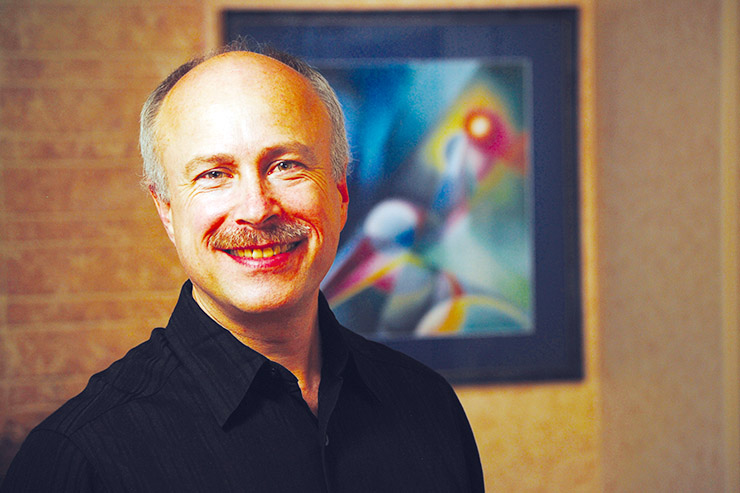
    Kurt Leland is one of today’s most intrepid explorers of the inner planes. A musician and author as well as a visionary, he has written books including Otherwhere: A Field Guide to Nonphysical Reality for the Out-of-Body Traveler and The Multidimensional Human. His latest work is Invisible Worlds: Annie Besant on Psychic and Spiritual Development (Quest Books, 2013). It is an anthology of writings by the Theosophist Annie Besant (1847–1933). Kurt’s website is www.KurtLeland.com.

    I met Kurt during his visit to the Theosophical Society’s American headquarters in Wheaton, Illinois, in the fall of 2011. I was immediately impressed with the depth of his knowledge of, and experience in, the astral and mental realms, which are for most people little more than vaguely understood concepts. He is one of the most lucid and intelligent writers on the inner planes working today. The following conversation was conducted by e-mail in April 2016.

    RICHARD SMOLEY (RS): A lot of people these days are interested in developing their psychic powers. What advice would you give them?

    KURT LELAND (KL): The mind tends to conceptualise a term such as psychic powers, thinking of them as something other than normal, from an unknown realm or level of being – something to be afraid of or acquired by force of will or perpetual practice. Typically such powers come under headings such as telepathy, precognition, clairvoyance (seeing auras), second sight (perceiving ghosts), remote viewing, astral travel, even magical influence over people and events. Some people want to prove to themselves and others that such things are possible and they can do them, not once only (spontaneously or by accident) but regularly (at will or on demand).

    However, I think of psychic powers as the natural concomitant of living within and evolving our subtle bodies:

    An etheric body, having to do with life force and health and offering us the ability to perceive such things as nature spirits, fairies, the recently dead, even angels, as well as to sense events hours or days before they occur;

    An astral body, having to do with desire and emotion, and allowing us to experience our dreams and visit the dead in the afterlife;

    A mental body, having to do with our thoughts and beliefs and allowing us to perceive and travel within a world of ideas and sometimes to contact and learn from them; worldviews of famous dead people;

    A causal or soul body, allowing us to know our past lives, meld minds with others, and perceive and alter the forces in play that create the events of our present life;

    And other bodies whose abilities are less easy to describe.

    My advice to people who want to develop so-called psychic powers is not to target specific name-brand abilities, but rather to develop the subtle bodies and see what shows up. The will- and proof-based approach often leads to frustration and feelings of failure. The approach of developing the special senses of subtle bodies can unfold naturally and organically and enrich our lives with a multitude of adventures in consciousness we may never have heard of before.

    For example, one of my first psychic experiences was sensing the fear of a tree in a wooded area in my neighbourhood after I’d climbed it. At seventeen, I didn’t know trees could feel fear, and I didn’t know this was a psychic experience – until I went back to climb the tree a few days later and it was no longer there, having been bulldozed down to clear the land for a new house. That was an etheric-body experience, not one that could be easily sought after or named or conceptualised. It just showed up, indicating a possible avenue to explore, and gradually developed into a more or less constant, wonderfully enriching awareness of the beingness and inner life of trees.

    RS: How did you develop your own abilities?

    KL: My grandfather on my mother’s side introduced me to the writings of the famous American psychic Edgar Cayce when I was ten or eleven years old. My grandfather knew how to read palms and had some predictive ability, but renounced palm reading when he accurately predicted the age of onset of a serious illness in one of my aunts. Though he taught me the mechanics of palm reading, I can’t say I had any notable psychic experiences when I was a child – yet, after reading about Cayce, I desperately wished for such experiences.

    It wasn’t until I met a woman in college who was a natural psychic from birth that I began regularly having experiences of my own. She had recurring dreams that came true, including dreams about meeting me before we both arrived on campus in the fall of 1976. She knew when people close to her had died, scolding her mother for withholding the information so as not to bother her at school. We developed a telepathic rapport that climaxed with my inventing a place in my imagination that she could see and describe back to me. Whenever I added anything to it, she could tell me what it was. Somehow in the process of hanging out with her, my own abilities began to develop. She had nothing to teach me, she knew nothing about how her abilities worked. Yet somehow my being near her opened up new possibilities for me. Now I understand she was awake and aware within, and could use the senses of a subtle body I had little or no access to – perhaps the etheric body – and that her being awake in that body somehow stimulated mine.

    Otherwise, I’ve never had a formal teacher. I learned much from books, especially the Seth material channelled by the American medium Jane Roberts. When I began to experiment with the Ouija board and automatic writing in the fall of 1980, there was no evidence that I had any talent for such things. Yet I was persistent. It was as if I never stopped knocking on the door, and finally someone let me in. I met my inner teacher by means of these experiments about six months later.

    It certainly seems that my college friend represented nature and I represented nurture. But using the Theosophical framework of subtle bodies, there may be another explanation that encompasses both the notion of being born psychic and that of developing psychic abilities. If we’ve developed any of our subtle bodies in a past life to the point of being able to use their inner senses for clairvoyant (seeing) or projective (travelling) abilities, then we can carry those capacities with us into a subsequent life. The real issue is how soon we recall and realise them – a process I call self-remembering. By this light, my friend self-remembered her use of the etheric body very early and therefore seemed to be a born psychic, whereas I self-remembered my use of this body much later and seemed to develop psychic abilities.

    To extrapolate from this, any spontaneous psychic experience may indicate the possibility of self-remembering the use of a particular body, as in my case with the fearful tree. The challenge is not so much developing psychic powers as finding a way to recall the proper use of one or more of our subtle bodies. Even so, there may be a leading edge of our growth – a body we haven’t mastered yet, which challenges us to develop new inner-sense abilities and the powers of awareness and action within that body.

    RS: Why would you say people today feel so distant from the unseen, subtle levels?

    KL: They’re locked in their mental bodies, a result of family and social conditioning along the lines of scientific materialism, rationality, scepticism, and agnosticism. An overdeveloped mental body is like an overdeveloped physical body – it’s muscle-bound; the focus on increasing size and strength (mathematical, linguistic, and reasoning abilities) has reduced its flexibility or receptivity. The result is alienation from the physical and emotional bodies on one side and from the soul or causal body on the other. The mental body becomes like a fearful teenager hiding in his or her bedroom, with thoughts speeded up through overstimulation by social media, electronic devices, and computer games, and dominated by what one spiritual teacher calls “the tyranny of likes and dislikes.” This results in anxiety, indecisiveness, and black-and-white thinking. To the mental body isolated in this way, the physical body seems bent on betraying us, there’s no soul to guide us, and the whole purpose of life seems to be managing our anxiety.

    The physical body needs quality sense experience – exercise, healthy food, beautiful surroundings, bare feet on the grass or beach, a tempered yet satisfying sex life. The emotional body needs authentic heart-to-heart connection with others. The mental body needs the experience of a community of others who share our beliefs and values. The causal body needs a sense of usefulness and purpose, usually along the line of service to humanity. When the subtle bodies are nurtured in these ways, the boundaries between them soften and we start using them for more than we normally do (acting, feeling, thinking, and serving). That’s when our spiritual powers begin to unfold. We start seeing with the eyes of each body, its inner senses, providing new ways of looking at the world we normally experience and glimpses of the invisible worlds beyond. Eventually we learn to travel in those worlds.

    [alert type=”info” dismiss=”no”]If you appreciate this article, please consider a subscription to New Dawn magazine.[/alert]

    RS: One major issue with psychic powers is self-delusion. You see something uncanny, either visually or with the mind. It seems real. But sometimes it isn’t. How does a person develop discrimination with such things?

    KL: There are many tests and challenges in developing accurate perception from the perspective of each subtle body. I’ve experienced them as a graded course set up by inner teachers and guides, unfolding in projections from the dream state over decades. One example would be learning to identify the same guide under different appearances. Another would be learning the difference in inner-sense impressions associated with a dream character, a deceased individual, a guide, a nonhuman entity, and so on.

    In Invisible Worlds, my anthology of Annie Besant’s Theosophical writings on psychic and spiritual development, she says that the more excited you are about what you’ve perceived, the less likely it is to be real – for example, seeming to receive a mission from some high being. A real experience of receiving such a mission would come with a sobering sense of responsibility and self-examination about what might be required and how to achieve it, not an orgy of self-congratulation over one’s putative spiritual status. 

    RS: Another area of interest is astral travel – the ability to go out of the body in a trance state. Could you start by telling us a bit about this?

    KL: I’m interested in your use of the phrase trance state. Some people may project in that way. My adventures along these lines generally begin from a dream.

    In its simplest form, astral projection is an out-of-body experience in which the etheric body separates from the physical body in a twilight state between waking and sleeping, often accompanied by so-called sleep paralysis (indicating that one’s consciousness is no longer primarily focused in the physical body and so can’t control its movements), a loud vibration during separation, and the ability to view the physical body from a vantage point several inches or feet away. Such experiences are often spontaneous rather than intentionally produced, as a trance state would be.

    Some people report that they can free up a higher body, such as the astral, mental, or causal body, through meditative states, and go travelling on the physical plane or some higher plane. I suppose an intentionally produced trance state, as by self-hypnosis, would be just as effective. But it seems to me that the actual mechanism of so-called astral travel is that we shift the focus of our consciousness from one layer of our energy field (aura) to another. Each layer is actually one of our subtle bodies. When such a shift is successful, we can perceive the plane associated with that body and perhaps travel on that plane. Thus the word astral in the term astral travel is used in a general way to describe any experience in a nonphysical body.

    For most people, the hope or aim is to travel in the astral body on the physical plane to distant places or people. A related ability is remote viewing, which places you on location without the sense of travel. I suppose the only difference between projection and travel is that the first term emphasises the act of leaving the location of the physical body and the other only the experience away from the physical body. Not everyone recalls the actual exit from or return to the physical body. In the case of shifting the focus of consciousness to a different layer of the energy field, there may be no sense of exit or travel from one plane or location to another. You’re just there, wherever it is. 

    RS: Is it a good idea to learn to do astral travel?

    KL: I believe astral travel to be an inevitable outcome of the process of developing our subtle bodies. First, we have what Besant calls a sheath. It allows us to act at the physical, feel in the emotional, think in the mental, and serve in the causal levels of being. Then we develop a body, which begins to perceive on the physical, astral, or mental planes. We all have a well-developed physical body in that sense. Our dreams indicate that we have an astral body capable of perceiving on the astral plane. Mental and causal body dreams are less common. Finally, we develop a vehicle of consciousness, capable not only of perceiving, but also of moving through every level of the physical, astral, mental, or some higher plane. Lucid dreamers and people who can project on the astral plane, knowing the difference between dream characters and locations and the actual scenes, dwellers, and phenomena of the astral plane, are developing the astral body as a vehicle of consciousness.

    My first projections took place when I was fourteen. They terrified me and I avoided them for several years. Subsequently, I learned to develop my etheric, astral, and mental bodies under the guidance of teachers encountered in such projections. Forty-five years later, I think it safe to say that I have fully functional vehicles of consciousness on the physical, astral, and mental planes.

    RS: Whom would you advise not to undergo psychic development?

    KL: Anyone who is anxious, depressed, or prone to exaggerated states of enthusiasm or elation or to obsessive or addictive behaviour. These indicate strains in the relationship between the bodies and the occupying consciousness that we call ourselves. Such strains need to be overcome (along the lines recommended in connection with what our bodies need) before psychic development can be pursued safely.

    The problem with anxieties and fears is that they attract what we’re afraid of, resulting in interactions with undesirable scenes, dwellers, and phenomena of the astral plane. Undesirable interactions may also occur with depression. The problem with enthusiasm or elation is that it makes everything we experience seem more glamorous than it really is, resulting in self-deception or deception by prankish or malevolent astral entities. Obsessive or addictive behaviour can result in our coming under the control of negative entities, as in possession.

    In the end, each of these situations is nothing more than a challenge to be overcome in the development of the bodies. We need to learn how to maintain a balanced, clear-headed perspective as we investigate the possibilities of these bodies. The real shame is when we do so prematurely and frighten ourselves off from further exploration because some passing mood has distorted our perception or attracted unpleasant experiences or made us seem foolish to ourselves or others.

    RS: Is there a connection between the astral level and the post-mortem state?

    KL: I like to think of the astral plane as comprising a number of realms or zones. One such realm is the astral Dream Zone, where our dreams ordinarily take place. Another is the astral Afterdeath Zone, where the initial stages of our journey through the afterlife take place. I’ve explored both realms for many years in projections from the dream state. They’re similar in that their primary function is dealing with emotions and desires. Dreams frequently allow us to satisfy our unfulfilled desires and experience our unexpressed emotions, such as fear, lust or anger. We purge such things through our dreams so we don’t have to act them out on the physical plane. In the astral stage of the afterlife, we perform similar purges of a lifelong accumulation of unfulfilled desires and unexpressed emotions, thus rising from darker to lighter experiences of this realm, as in the Catholic notion of purgatory.

    On the mental plane, there is also a Dream Zone and an Afterdeath Zone. These realms involve exploring our lives in terms of learning and growth – what we have or haven’t learned among the lessons our soul may have intended for us. They’re full of exciting opportunities for exposure to the world’s great minds and cultural achievements. For example, I once visited an area in which it was possible to experience any opera from the vantage point of each of its characters. In the mental Afterdeath Zone, we review our life on earth and fulfil the plans for learning and growth that we were blocked from implementing there, because of lack of courage or extenuating circumstances. This can be a joyful, even heavenly experience.

    RS: Can you contact dead people through psychic means?

    KL: I believe this is possible and I’ve experienced it, though not in the way most people expect. I don’t ordinarily perceive people who have passed on in the auras of others or as ghostly presences hanging about with a desire to give messages. Nor do I go into a trance state so that others can communicate through me with people who have died. When I channel, the being who works through me is almost exclusively the inner teacher I call Charles. I suppose he could be described as a dead person, since as far as I know he’s not currently embodied on the physical plane.

    But I think you mean dead relatives and friends. My interactions with the latter take place in astral projections, usually from the dream state. I visit them in situ, wherever they may be in their progression through the afterlife, from the death of the current body to their preparation for reincarnation. Usually these are people I have a close association with.

    For example, I tracked the afterlife progress of one of my uncles through several stages over a course of eight years – his orientation to the afterlife, the beginning and completion of his long and detailed life review, and his being informed of certain lessons to be learned in his next life just prior to rebirth. Though I observed my uncle without communicating with him, others among the dead have shared with me their thoughts and feelings about their earth life and post-mortem existence. One was a counselling client who died of a reaction between prescription and recreational drugs and was passing through a rehabilitation program on the Other Side because his death had been classified as an unpremeditated suicide.

    I’ve rarely gone looking for people whom I’ve never met at someone else’s request – though Charles has sometimes commented on the progress of a client’s deceased loved one through the afterlife. This is not my favourite kind of work, since some elements of the afterlife can seem distressing to people who think only in terms of happiness in heaven

    RS: Why is so much of society today dead set against believing in the existence of the psychic realms? 

    KL: Religious teachings in many cultures indicate that such things are at best distractions on the spiritual path and at worst the product of malevolent beings such as the Christian devil. Scientific materialism has persuaded us that psychic realms, spiritual paths, malevolent beings, and the devil are nothing but superstitions. Yet I believe such things are what the Buddha called views. The point isn’t to dismiss one view in favour of another, but to try each on for size, to meditate on it, and investigate and explore where it takes us, what it does for us.

    The scientific view that the physical body is a machine that gradually wears out and needs to be ‘fixed’ by an ever-expanding medicine chest of only partially effective remedies isn’t terribly hopeful or inspiring, though it provides the opportunity to explore the function and dysfunction of body parts in relation to each other, time, and illness. The metaphysical view that the body is a conscious entity that needs care, that it could be our friend, that we might have ways of learning from and dialoguing with it, is unprovable in scientific terms, but can yield favourable results when explored as a provisional belief or object of meditation, to be lived as if it were true to see where it takes us. Notions of an etheric, astral, mental, or causal body could be treated in the same way.

    RS: One of your books is called The Multidimensional Human. In what ways are we multidimensional?

    KL: I believe reality consists in as many descriptions of it (views) as we have tolerance for. Each view opens up new possibilities for exploration – new dimensions – and none absolutely excludes another. I’ve gotten the best results in my personal exploration of psychic and spiritual development by adopting the Theosophical view of multiple bodies, each fitted to a particular plane of existence by a specialised set of inner senses that carry us from sheath to body to vehicle of consciousness. The planes themselves are ranged along a continuum of human potential from lowest physical to highest spiritual, and each body and its corresponding level of being is an adventuresome dimension to be explored as we develop our multidimensional humanity – our ability to respond appropriately to each other and to other realms and beings for the mutual benefit of all.

    Kurt Leland’s Spiritual Orienteering website is www.KurtLeland.com, which lists his books and services.

    [alert type=”success” dismiss=”no”]If you appreciate this article, please consider subscribing to help maintain this website.[/alert]

    © New Dawn Magazine and the respective author.
    For our reproduction notice, click here.
  • The Mystique of the Manor: Australia’s Occult Centre Revealed

    The Mystique of the Manor: Australia’s Occult Centre Revealed

    From New Dawn 152 (Sept-Oct 2015)

    Pilgrims have been drawn to the other-worldly auras of hallowed sites, both natural and man-made, all around the globe since antiquity. One such sanctuary sits right in the heart of Sydney and, although it has slipped from prominence today, it played a significant role in Australia’s spiritual and esoteric history.

    While its narrative has primarily been expressed through the descriptions of the characters who have occupied it, the magnetism of the building and the ground it stands on are worthy of examination in their own right. Today it has become less visibly conspicuous, surrounded as it is by so many other grand dwellings. However, a century ago the world was a different place and it was quite the topic of conversation in Sydney society.

    The late nineteenth century saw a surge of spiritual and metaphysical pursuits in the Western world, springing from Europe and Britain and streaming into the United States, Canada, Australia and New Zealand. While the British Victorian era is generally associated with industrial and scientific advances, not to mention Darwinism, many Victorians (including the Queen herself) embraced Spiritualism, séances and other forms of mysticism. At what is now considered the birth of the New Age movement, independent thinkers in England freed themselves from centuries of religious dogma and placed their faith in the powers of ESP, experimenting in telepathy and clairvoyance. Many enthusiastically explored new branches of knowledge with exotic names like mesmerism, electro-biology and crystal-gazing.

    On the other side of the Atlantic, Americans felt no sense of conflict in having a Ouija board on their desk alongside the Bible. Spiritualism seemed quite compatible with Christianity inasmuch as it provided reassurance on the existence of souls and the afterlife. Madame Helena Petrovna Blavatsky (HPB) was the daughter of a White Russian princess and had been involved in the Spiritualist movement early on.1 On moving to the USA she befriended Henry Steel Olcott and together they founded the Theosophical Society (TS) in 1875. In the early twentieth century, as Americans were becoming fascinated with psychic phenomena, Harvey Spencer Lewis was initiated into a Rosicrucian order during a visit to France, thereby enabling him to establish the order known as AMORC on his return to the USA.

    Australia was not impervious to the ground-swell of New Age beliefs and Sydney became a focal point for their proponents – some of them more colourful than saintly – along with their mystical doctrines, which concocted a curious blend of Christianity with the occult. The popularity of Spiritualism soared, counting among its adherents such notables as Prime Minister Alfred Deakin and the newly arrived American architect Walter Burley Griffin. A hundred years ago, while James Wedgwood was founding the Liberal Catholic Church (LCC) back in Britain, his friend Charles Webster Leadbeater had already decided to settle in Sydney and would, in the succeeding years, establish the Australian headquarters of both the LCC and Theosophy, together with various other societies, at Mosman in Sydney. A number of theosophists first rented, then purchased under trust deed, the capacious 55-room mansion and its grounds at Clifton Gardens that was to be known as The Manor.

    Gateway to Heaven or Simply a Grand Old Mansion?

    While The Manor became the focal point for Theosophy and associated societies almost a century ago, it had originally been built by wealthy businessman William Bakewell and was known to the locals as ‘Bakewell’s Folly’. He purchased six building blocks of what is now prime real estate at Clifton Gardens. The entire district of Mosman is rich with Aboriginal heritage, with over a hundred known sites found across the municipality, particularly along the foreshore area. After the North Shore population of several thousand original inhabitants witnessed the arrival of the first British colonisers, their numbers were decimated by the smallpox epidemic of 1789.

    Was this grand and mysterious building at Mosman, which had been described by a TS member almost eight decades ago as a “specially selected Centre of the power of the Masters of the Wisdom,”2 really a kind of cosmic portal and, if so, should it be revered as a sacred site today? Perhaps we should consider the possibility that an other-worldly force guided even William Bakewell from the outset when he selected the location for his construction. Quoting Nicholas Van Gelder:

    He began with a simple purpose: to build an eight-room house. What passed through his mind over the next 8 years is not known. Suffice that by 1913 the house had become a rambling 55-room mansion with many rooms lined with copper. Perhaps he foresaw the days when the Australian security service could listen in on conversations by using laser or microwave devices.3

    The fact that most rooms have pressed metal ceilings, as well as copper lined walls, is claimed by some occultists to serve the purpose of conserving magnetism. Following his death in 1917, William’s family declined to live there and the house stood vacant for five years, until it was acquired by TS members.

    In 1922 the imposing building would become home to a commune of fifty-plus people. As explained by Theosophy Forward on their website:

    It was Theosophist Lucius Van Gelder who had the idea for an experimental community to make life more “reasonable, cheaper, and more useful” for the families and individuals concerned.… Leadbeater, who became the focus for the community, invited Van Gelder to assume the task of managing it; and the residence became known as “The Manor”…. A trust was formed, whose purposes were “the formation of a spiritual centre where people may be trained in religious matters and the formation of a community based on Theosophical ideals.” The appointment of trustees was placed in the hands of Annie Besant, then the International President of the Theosophical Society, and her successors.4

    According to the authoritative booklet The Manor: A Short History5, The Manor became an important centre for the Society and was regarded as a great “occult forcing-house.” Curuppumullage Jinarājadāsa (known simply as Raja), the Theosophical Society’s international vice-president, asserted that Leadbeater was directed to the house by command of the King of Shamballa, and promptly settled in it, declaring, “In June 1922, the Great White Brotherhood established in the City of Sydney an occult Centre, charged directly from Shamballa.” “Thus was born the notion that The Manor was the occult nexus for the Southern Hemisphere.” And writer C.V. Williams added: “In 1922 Theosophist families began to move in with him (Leadbeater), feeling secure in the idea that they were close to heaven.”

    What marks The Manor as a keystone in Australia’s alternative spiritual heritage is that it served as a passageway, like the neck of an hourglass, by which so many doctrines and societies were funnelled into this country, before being disseminated throughout the land. The sheer number of activities including Theosophy, Co-Freemasonry, the LCC and other less well-known societal offshoots anchored to this geographical location at Mosman, poses the question: was it, and is it still, an occult centre of power? Had it always been, as the commune’s founders believed, a kind of heavenly gateway, or did it really derive its power from the “égrégore”6 of its human participants?

    The following are some of the principal known organisations, alongside their commonly used acronyms:

    TS         The Theosophical Society
    OSE      Order of the Star in the East
    LCC      The Liberal Catholic Church
    ES         The Esoteric Section; also The Eastern School
    Co-M   Co-Masonry

    According to a biographical study of Charles Webster Leadbeater (CWL) by Gregory Tillett:

    The arrangement of a weekly schedule posed no small difficulty, since it involved regular meetings of the TS, both those for members only and those open to the public, and of the OSE, together with the ES and Co-Masonry, and now the Liberal-Catholic Church. The considerable overlap between the TS, the LCC and Co-Masonry can be seen from examining lists of Co-Masonic Lodge officers around this time: the officers of Sydney Lodge No.404 in 1918 included Mr and Mrs Kollerstrom, Leadbeater, Hazel, and L.W. Burt, all of them (as they were by then being described) TS, ES, OSE, LCC and Co-M.7

    Gregory Tillett adds, in a book co-written with Nevill Drury:

    Another ceremonial movement which he (CWL) established, the Egyptian Rite of Ancient Freemasonry, also meets there (The Manor); in this rite Leadbeater hoped to bring together the angels of Freemasonry and of the Church, and it was regarded as “the most powerful occult rite in the world.”8

    One newspaper article reports that, in the 1920s,

    The Manor had its own theatre company performing Shakespearean plays on the gently sloping lawns. Painters, writers and poets congregated in its meeting rooms to discuss modernism, materialism and the importance of patriotism in nation building. There were Greek garden fetes, fairy dances, light operas and musicals.9

    In keeping with the times, TS launched radio station 2GB in 1926, using The Manor and two outlying cottages on the property. The initials GB stood for sixteenth century philosopher Giordano Bruno, whom they believed was a former incarnation of Annie Besant. The station is still a household name in Sydney radio ninety years on. Alfred Edward ‘A.E.’ Bennett (not to be confused with Frank Bennett) was appointed general manager and the first broadcast took place on Armistice Day, 1926. Bennett wrote, “The intention is to conduct the station on ideal principles and solely with the object of uplifting our Australian people.”10 Raja, however, was concerned this sacred ground was being disturbed by the psychically enervating signals emanating from the antennae.

    A Hidden Fraternity

    What unseen guiding hand drew this array of key personalities together and why at this particular location? Was the torch being lit for an ‘Antipodean Utopia’ and, if so, did the flame fizzle out, or does it continue to flicker away from the public eye in preparation of a new Golden Age? Those confraternities we dub ‘secret societies’ always have twin facets: the overt aspect, consisting of their beliefs and philosophies, which these days can be readily researched in books and online; then their practical agenda which forms the basis of their secrecy – the initiation rites, rituals and techniques that are intended to raise consciousness, quicken one’s psychic abilities and ultimately allow communion with higher intelligence, sometimes including ‘invisible Masters’.

    Who are these ‘Masters’ that are said to have appeared to, and spoken with, the likes of Madame Blavatsky, Annie Besant, Alice Bailey and Charles Leadbeater? They are called by various names, including The Ascended Masters, The Great White Brotherhood, The Elder Brothers or The Secret College. They form a Hierarchy, which Phillip Lindsay defines as a “Group of spiritual beings on the inner planes of the solar system who are the intelligent forces of nature and who control the evolutionary processes. Divided into twelve hierarchies. The Occult Hierarchy or Masters of Wisdom, of which disciples and initiates are a reflection.”11 They exist on subtle planes known as the Etheric or the Astral, transparent to normal physical sight. In addition to Masters there are angelic, devic and elemental entities.

    [alert type=”info” dismiss=”no”]If you appreciate this article, please consider a subscription to New Dawn magazine.[/alert]

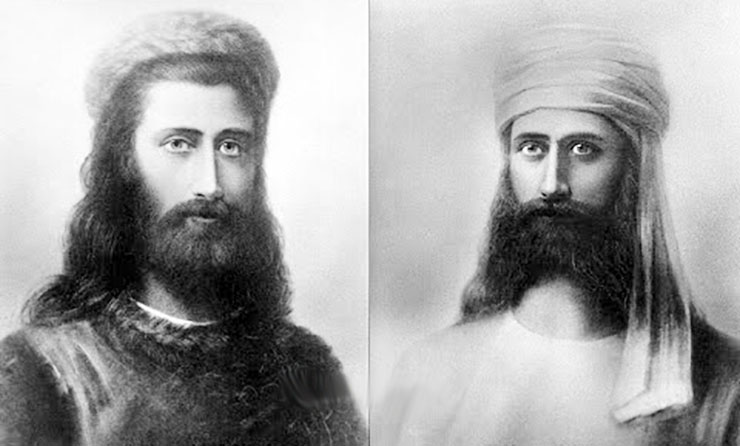
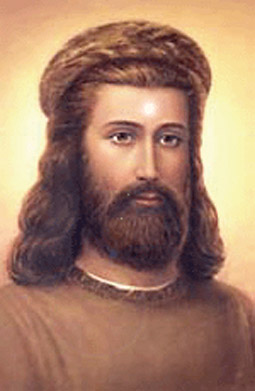
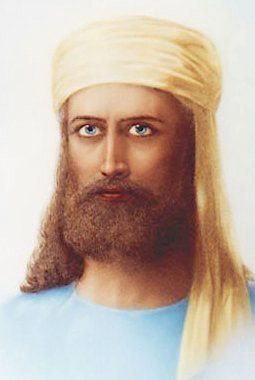
    Also known as Mahatmas, the Masters of Ancient Wisdom are those who once lived as human beings. The enlightened ones who most often imparted their teachings to Theosophists and other occultists from the late nineteenth century are identified as Morya, Kuthumi (or Koot Hoomi), Djwal Kul (usually just known by the initials DK), and Count Saint Germain – although there are many more. While many of these Masters dwell on a non-physical plane, some do take corporeal form and they often attach themselves to specific earthly retreats, the most well-known being in and around the Himalayas.

    Author Edmund Harold states:

    There are momentous periods in our evolution, times when we recommence the age-old search for self-purpose. At such times we re-acquire awareness of the existence of a spiritual hierarchy, one that is represented by highly evolved beings. These are known as The Great White Brotherhood, or the Brotherhood of the Light.12

    The voices of the masters have been silent at The Manor for a long time, but perhaps another one of these ‘times’ approaches again.

    The Pioneering Spirit

    The modern Theosophical movement first reached Australia in 1879 when Gilbert Elliot of Melbourne joined the TS. By 1891 when Henry Steel Olcott, as the Society’s international president, came for a brief tour, there were enough branches to form what was called “a Section.” While in Sydney, Olcott also chartered the Sydney Lodge. The Australian Section was given a further boost in 1894 when Annie Besant, a persuasive orator, arrived to give a series of lectures on Theosophical topics. In 1905 Charles Leadbeater toured the country to wide acclaim and then, three years later, membership skyrocketed on Besant’s return.

    The LCC and the Co-Freemasonry movement that developed alongside the TS in Sydney can be traced to one man: James Ingall Wedgwood (JIW). In 1915 Wedgwood, who first met Leadbeater in 1906, arrived in Sydney. As a gay clergyman, JIW suffered an ongoing inner turmoil between “the angel and the beast within” – a dilemma that haunts some clerics to this day. He swung between alternating extremes of spiritual fervour and the temptations of the flesh. Eminent British Theosophist E.L. Gardner said of him privately, “JIW was a ‘dual’ – at times skilled, able and impressive. Then, a bout of sensualism of the worst grade, sexual perversion.”13

    In 1909 Leadbeater identified the 14 year-old Jiddu Krishnamurti as a vehicle for the coming World Teacher, the Bodhisattva Maitreya, by way of clairvoyant perception of his aura. From then on Krishnamurti was groomed by both CWL and Annie Besant, eventually coming to Sydney in 1925. He did not stay at The Manor, but lived at a nearby house in Mosman with his brother, Nitya, with whom he was very close. The OSE’s raison d’être was to prepare the way for the arrival of this new messiah. With this advent in mind, CWL and Besant guided the construction of the ambitiously conceived Star Amphitheatre at nearby Balmoral Beach.14

    Built in ancient Greek style and completed in 1924, the Amphitheatre had seating accommodation for 2,500 people and was intended as a venue for lectures by the expected World Teacher, embodied by Krishnamurti. Just as The Manor earned the reputation of being a folly, surely the Amphitheatre is to be remembered as an extravagance – perhaps even an eccentric one at that. Stories circulated that it was located for the best view of the expected ‘second coming’ that would see “Jesus Christ come through the Heads of Sydney Harbour.”15 Clearly this never eventuated and, a quarter of a century later, the Star Amphitheatre was demolished. These days a rather ordinary looking apartment block stands on the site.

    In the same year The Manor was first occupied by TS members, Krishnamurti and Nitya travelled from Sydney to Ojai in California, where they experienced a new sense of freedom accompanied by a fresh perspective on worldly matters. A big upheaval for Krishnamurti came when he was asked to attend a function in India marking the golden anniversary of TS in 1925, while his brother stayed in Ojai. Nitya had been in poor health, but George Arundale (more about him shortly) had assured Krishna that he would not die, promising that the Masters would protect him. But Nitya did die, causing Krishnamurti’s dedication to the TS to wane, until finally in 1929 he dissolved the Order of the Star in the East (OSE) and stated he was not going to be the new messiah, with the famous words, “The moment you follow someone you cease to follow Truth.” He did not renounce public life, however, continuing on his own path with the Krishnamurti Foundation. His mentors at the TS felt sadly let down and distanced themselves from him over the years.

    The Momentum of The Arundale Years

    George Sydney Arundale joined the TS in England during 1895 and, seven years later, followed Annie Besant to India where he became principal of her Central Hindu College. Life there revolved around Krishnamurti, who had become Besant’s adopted son. Arundale instituted the OSE in Europe and also took on the role as regional bishop for LCC in India. Soon after, he claimed himself to be clairvoyant and then, late in 1925, began openly expressing doubts about Krishnamurti’s intended role as the earthly vehicle for Maitreya. This caused a slight rift with Besant, after which he transferred to Sydney to join Charles Leadbeater at Mosman.

    He launched himself so enthusiastically into the affairs of The Manor that the ensuing period is remembered as ‘The Arundale Years’. In quick succession he became general secretary, chairman of 2GB, editor of the Australian Theosophist, and co-editor of the Australian Star News. An able preacher and experienced publicist, he competently formulated political commentary and supported advanced causes, from a Theosophical angle. Together with his wife Shrimati Rukmini Devi, a well-known Indian dancer, he stayed at The Manor until 1931. It seems George Arundale’s assessment of Krishnamurti was correct and in fact the 1930s was the last great decade for the TS at The Manor.

    Attention Wanes

    The defection of Krishnamurti along with the deaths of Annie Besant and Charles Leadbeater led to a period of decline for the TS in the 1930s, from which it never fully recovered. It appears the Society, like many temporal vehicles on this material plane, carried at its nucleus the elements of its own decline. Author Nicholas Van Gelder portrays the Esoteric Section as the cause of the eventual downturn in the fortunes of the TS, although today’s Manorites deny there has ever been a schism in Theosophical ranks. HPB formed the ES as an inner group back in 1888, consisting of students who were members of the Society, but separate from it and controlled solely by her. Unfortunately it came to be seen by some non-members as an elitist group. It remains a separate entity today.

    Perhaps the reason that a number of the groups that put down roots at The Manor failed to endure is that Charles Webster Leadbeater held no clear vision for their future nurturing and growth. As noted by author Frank Joseph, he “departed for Australia, settling in Sydney in 1914, where he felt particularly called to fulfil some as yet ill-defined mission (italics added). His instinct was correct, judging from the profound public success he enjoyed there.”16 CWL left Australia for India in 1929, to take over the leadership of the TS from Annie Besant, whose health was failing. He returned to Sydney for short periods but died during a stopover in Perth in 1934.

    James Wedgwood left Australia and in the late 1920s resumed his activities with the TS in Holland, allegedly with increasingly frequent visions and meetings with masters, angels, archangels and denizens of the higher realms. He would eventually return to England in poor health and battling dementia, dying in 1951 after a heavy fall.

    George Arundale ended up returning to India where he died in 1945. The ‘Arundale Years’ had helped stabilise the TS and perhaps presented a more acceptable, scandal-free image to the Australian public.

    There is a conviction held by organisations and individuals concerned with esotericism that Australia has a special role to play in the dawn of a new Golden Age. In a series of lectures delivered in Sydney in August 1915, CWL had proclaimed “Australia and New Zealand as the home of a new sub-race.” He detected in Australia “children and young people of a distinctly new type.” A new antipodean human type characterised by intuition and the powers of synthesis.17 This is consistent with the New Age concept of ‘Indigo Children’. In the last years of his life, CWL claimed to have been instructed by the ‘World Mother’ to establish a ministry for her worship, including an apostolic succession to be passed on through women and for the foundation of a feminine religion to parallel the masculine-dominated Christianity. To date this has not made any public appearance, but the tradition is said to be perpetuated within Theosophical circles privately.

    Guarding its Secrets and its Grandeur, A Century On

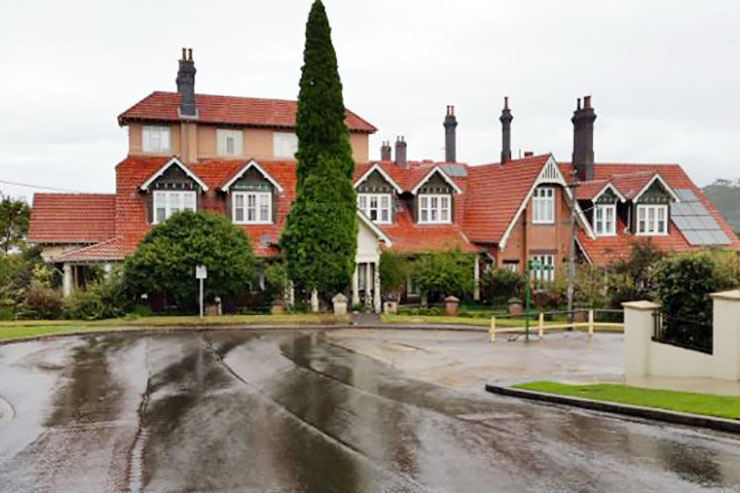
    Today, as one approaches The Manor from the road above, its sprawling grandeur first reveals itself by way of the dormers and gables of the red tiled roof, including the impressive 18-metre long studio perched atop the eastern wing. Most first-time visitors can’t resist trying to count the host of chimney pots that crown it. The very ground that The Manor stands on exudes a palpable magnetism and benign spiritual presence. One does not have to be psychic to experience the peaceful calm emanating from the mansion’s walls, and it is not hard to see why many have claimed to feel closer to the divine here.

    Whether or not Australia fulfils its secret occult destiny and hosts a new Golden Age remains to be seen. So long as the Manorites maintain the high energy levels through their esoteric rites, this site will remain sacred and, should the Masters decide the time is right to publicise their messages once again and guide the populace, surely this will be the prime spot for their transmission.

    This article’s graphics are viewable in the print or digital version of New Dawn 152.

    [alert type=”general” dismiss=”no”]This article was published in New Dawn 152.[/alert]

    [alert type=”success” dismiss=”no”]If you appreciate this article, please consider subscribing to help maintain this website.[/alert]

    Footnotes

    1. It should be noted that Madame Blavatsky (and Theosophy) rejected Spiritualism, however: “By the early 1870s, Blavatsky was involved in the Spiritualist movement; although defending the genuine existence of Spiritualist phenomena, she argued against the mainstream Spiritualist idea that the entities contacted were the spirits of the dead.” (https://en.wikipedia.org/wiki/Helena_Blavatsky)
    2. ‘The Manor Family: Australia’s oldest urban commune’ by Bill Metcalf, JRAHS Vol 100, 9
    3. ‘The Manor: A Short History’ by Nicolas Van Gelder, Theosophical History Occasional Papers, Vol XIV, 1
    4. www.theosophyforward.com/theosophical-encyclopedia/521-manor-the
    5. Nicolas Van Gelder, 14-15
    6. An egregore is a ‘group thought form’ or ‘collective group mind.’ See: http://en.wikipedia.org/wiki/Egregore
    7. ‘Charles Webster Leadbeater 1854-1934: A Biographical Study’ by Gregory John Tillett, http://leadbeater.org/tillettcwlchap17.htm
    8. Other Temples Other Gods by Nevill Drury & Gregory Tillett, Hodder & Stoughton, 1982, 32-33
    9. ‘Age of reason’ by John Zubrzycki, Sydney Morning Herald, Good Weekend supplement, 29 Nov 2014
    10. Nicolas Van Gelder, 24
    11. Masters of the Seven Rays by Phillip Lindsay, Apollo Publishing, 2000, 119
    12. The Ascended Masters of The Great White Brotherhood by Edmund Harold, Grail Publications, 2002, 13
    13. http://en.wikipedia.org/wiki/J._I._Wedgwood
    14. “Mary Rocke, a retired doctor, member of the Theosophical Society, secretary and physician to Leadbeater, purchased three adjacent blocks of land sloping from Wyargine Street, Balmoral to the beach. With a loan of 4,000 pounds and the rest of the cost raised by selling subscription seats, the Star Amphitheatre was built on this site.” (www.mosman.nsw.gov.au/file_download/1865/The-Star-Amphitheatre-Balmoral.pdf)
    15. “Leadbeater, Charles” by Garry Wotherspoon, http://dictionaryofsydney.org/entry/leadbeater_charles
    16. ‘C.W. Leadbeater: Saint or Sinner?’ by Frank Joseph, New Dawn 96 (May-June 2006)
    17. ‘Esoteric Australia’ by Mehmet Sabeheddin, New Dawn Special Issue 3

    © New Dawn Magazine and the respective author.
    For our reproduction notice, click here.

  • The Amazing Story of the Clairvoyants Who Observed Atoms

    The Amazing Story of the Clairvoyants Who Observed Atoms

    From New Dawn Special Issue Vol 6 No 4 (Aug 2012)

    In few, if any, science textbooks or records of Nobel laureates will you find the name of a bona fide and publicly acknowledged occultist or clairvoyant. This, however, is not because such individuals never contributed anything to the history of science. On the contrary, it is due to a profound hubris and acute myopia within the institution of Science that talented metaphysical pioneers have not been credited with scientific discoveries and insights that were ahead of their time. In this material, excerpted from Chapter 6 of my book The Grand Illusion (Vol. 1), we hone in on the startling work of two such metaphysicists in particular.

    Occult Chemistry: Leadbeater and Besant

    From 1895 to 1933, Annie Besant (1847-1933) and Charles Leadbeater (1854-1934), two of the best known theosophists and metaphysicians of the 20th century, conducted clairvoyant investigations into all of the then known elements and certain compounds in order to observe the so-called “fundamental building blocks” that composed them, as well as their general structure. This involved the apprehension of visual information at sub-microscopic levels far beyond the ability of the eyes to perceive. The term for this kind of clairvoyant perception today is micro-psi (Besant and Leadbeater referred to it as “magnifying clairvoyance”).

    The initial investigations were collected and published in the first edition of Occult Chemistry in 1908 (the book was subtitled Investigations by Clairvoyant Magnification into the Structure of the Atoms of the Periodic Table and Some Compounds). A second edition of the 1908 material was issued in 1919. The sum total of Besant and Leadbeater’s clairvoyant observations of the chemical elements were collected and published posthumously in a third edition of Occult Chemistry in 1951.

    An article entitled “Occult Chemistry” appeared in the Theosophical publication Lucifer in 1895 (the year Leadbeater and Besant began their collaboration) and was reprinted as a separate pamphlet in 1905. In it, three chemical elements, hydrogen, nitrogen, and oxygen, were clairvoyantly examined and their analyses presented tentatively to the public by Besant and Leadbeater.

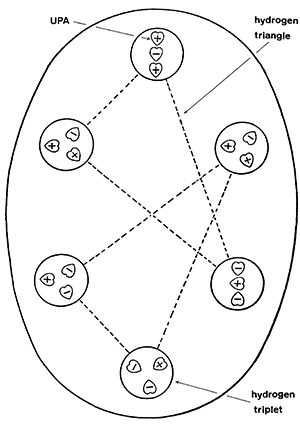
    Hydrogen, the first chemical atom selected for analysis, and possessing the lowest atomic weight, was found to be composed of eighteen smaller entities. Clairvoyantly it was seen to consist of six small bodies, contained in an egg-like form. According to Leadbeater/Besant, it rotated with great rapidity on its own axis, vibrating at the same time, and the internal bodies performed similar gyrations. “The whole atom spins and quivers, and has to be steadied before exact observation is possible,” they wrote.

    The six little bodies are arranged in two sets of three, forming two triangles that are not interchangeable. Further, the six bodies are not all alike; they each contain three smaller bodies – each of these being an ultimate physical atom – but in two of them the three atoms are arranged in a line, while in the remaining four they are arranged in a triangle.1

    The Ultimate Physical Atom (UPA)

    Figure 1. The hydrogen “micro-psi atom.” The UPAs are the heart-shaped objects designated a plus or minus sign denoting either an inflow (minus) or outflow (plus) of energy. Stephen M. Phillips argues that each triangle is a single hydrogen nuclei and that the micro-psi observation has somehow bonded two together. The mid-sized circles are therefore quarks, and the heart-shaped entities sub-quarks. (Source: Occult Chemistry by Annie Besant and C.W. Leadbeater.)
    Figure 1. The hydrogen “micro-psi atom.” The UPAs are the heart-shaped objects designated a plus or minus sign denoting either an inflow (minus) or outflow (plus) of energy. Stephen M. Phillips argues that each triangle is a single hydrogen nuclei and that the micro-psi observation has somehow bonded two together. The mid-sized circles are therefore quarks, and the heart-shaped entities sub-quarks. (Source: Occult Chemistry by Annie Besant and C.W. Leadbeater.)

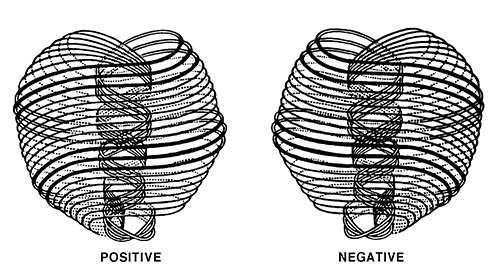
    As noted, in 1895 – when physical atoms were still thought to be the most basic unit of matter – Leadbeater and Besant observed in the early stages of their investigation that hydrogen was not a unity but was composed of eighteen smaller units. These smaller units they dubbed an “ultimate physical atom” (UPA), and later took to referring to them as “Anu” (singular and plural) – the Sanskrit term for this new entity. They had no way to determine the exact size of the UPA but they found it existed in two varieties: positive and negative (or Yin and Yang). The positive and negative aspects wound around each other in opposite directions (somewhat like the snakes on the caduceus, or the helical structure of DNA), forming the UPA.2

    According to Besant and Leadbeater, the UPA was a very complex entity, with only its main characteristics provided in their diagram. “It is composed entirely of spirals, the spiral being in its turn composed of spirillae, and these again of minuter spirillae.”3 In addition to this reference to the subatomic fractality of “matter,” they correctly declared that the Anu was definitely not the electron. The spirals composing the UPA, if unwound, would actually be found to be circles or strings – twisted around on themselves many times to create the helical form depicted.

    Oxygen was found to consist of 290 minor atoms and nitrogen of 261. Now, this is where it gets even more interesting. When Besant and Leadbeater divided the number of UPAs in oxygen by the number of UPAs comprising hydrogen (18), they arrived at 16.11, almost exactly the atomic weight of the oxygen atom (16). This procedure yielded the same precision with nitrogen, an even more complex structure than oxygen, and therefore much more challenging to apprehend clairvoyantly for the occultists. In fact, this uncanny precision continued right through the entire table of known elements of the time (minor human counting errors notwithstanding).

    Although science had not identified such a thing as the ultimate physical atom, Besant and Leadbeater had identified this tiny entity as comprising physical atoms. Moreover, by using hydrogen as the standard (being the first element in the periodic table – itself being composed of eighteen UPA), they were able to ascertain the atomic weight of the elements by dividing the number of UPA they observed by eighteen. Should Besant and Leadbeater have been merely “delusional cranks,” we should not expect this kind of amazing result.

    As a matter of fact, this ability to deduce the accepted atomic weights of the elements from the number of UPAs they observed was the only thing Occult Chemistry had in common with the chemistry of 1895.4

    Noteworthy is the way the UPA was depicted by Leadbeater/Besant as being created by an upwelling of force from a higher-dimensional source – just as in the hyperdimensional physics advocated by Paul LaViolette, David Wilcock, Richard Hoagland, and others researching aether physics. (Those readers interested in the notion of an aetheric medium and its false elimination from mainstream science are referred to in my The Grand Illusion 1.) The models of physics on the cutting edge have been left with no choice but to incorporate other dimensions or ‘levels’ of reality to account for today’s scientifically observable phenomena. Furthermore, Leadbeater and Besant’s clairvoyant analysis provides intimate and detailed verification of the hyperdimensional torsion and/or spin forces embedded in the ‘aether’, which I write about extensively in The Grand Illusion 1.
    [alert type=”info” dismiss=”no”]If you appreciate this article, please consider a subscription to New Dawn magazine.[/alert]

    How They Arrived at the UPA

    Leadbeater and Besant explained: “Any gaseous chemical atom may be dissociated into less complicated bodies; these, again, into still less complicated… [T]he fourth dissociation gives the ultimate physical atom. This may vanish from the physical plane, but it can undergo no further dissociation on it.”5 (emphasis added)

    Note that in their description of the UPA is a hint of multidimensional behaviour (this becomes relevant shortly). Interestingly, in 1888, the co-founder of Theosophy (it was founded in 1875), Helena P. Blavatsky, pre-empting Leadbeater and Besant by at least seven years, explained in The Secret Doctrine that on the next higher plane (etheric), what then-current science considered an undecomposable unity would – to higher perception – prove very complex. Water, for example would feature “many other constituents” besides just hydrogen and oxygen.

    As theosophists, Leadbeater and Besant would have anticipated the composition of the elements they clairvoyantly inspected (having obtained some hard-to-get samples via Sir William Crookes) to be much more complex than scientists of their time believed. They were right.

    Believe it or not, there appears to have been another earlier clairvoyant ahead of the game. At a time when Isaac Newton (a Hermeticist, though not clairvoyant) was arguing that matter was composed of impenetrable atoms given motion by outside forces, Emmanuel Swedenborg taught that matter was made up of a series of particles in ascending order of size, each of which was composed of a closed vortex of energy which spiralled at infinite speeds to give the appearance of solidity.6

    Two types of UPAs were observed by Besant and Leadbeater (see Figure 2), and they were identical in every way except “the direction of their whorls and of the force which pours through them. In the one case force pours in from the ‘outside,’ from fourth-dimensional space, and passing through the atom, pours into the physical world [‘male’]. In the second, it pours in from the physical world, and out through the atom into the ‘outside’ again, i.e., vanishes from the physical world.”7 (This was the “female” UPA.)

    Figure 2: The Two Types of Ultimate Physical Atoms, Male and Female (Source: Occult Chemistry by Annie Besant and C.W. Leadbeater)
    Figure 2: The Two Types of Ultimate Physical Atoms, Male and Female (Source: Occult Chemistry by Annie Besant and C.W. Leadbeater)

    In agreement with present-day aether researcher Paul LaViolette, David Yurth states in Seeing Past the Edge that these two opposite or mirror image particles constitute what we now refer to as matter and anti-matter states.8 This makes sense in light of Leadbeater and Besant’s comments that the positive/male UPA flows its creative energy outwards into our reality while the negative/female (anti-matter) counterpart transmutes energy from our reality back into the aether.

    Leadbeater and Besant said that if the higher-dimensional energy flow was stopped even momentarily, the whole manifest universe would disappear, “as a cloud melts away in the empyrean. It is only the persistence of that flow which maintains the physical basis of the universe.”9 LaViolette (among many others) has vindicated our two eminent occultists on this point, agreeing that without this constant flow,

    the subatomic particles and energy waves composing our physical universe would gradually dissipate, disolving [sic] into a state of uniformity. What would remain would be the ever-present, vast, and unfathomable multi-dimensional consciousness, of which we are a part, and whose now featureless calm “surface” had once generated our beautiful physical universe.10

    Physicist Nassim Haramein also supports this view, stating that, “without spin, none of reality can come to exist. All things spin!” Haramein agrees that “spin is fundamental to creation and objects that appear to be inanimate exist solely because spinning atoms within allow the objects to radiate, and hence, appear in our reality.”11 How did Leadbeater and Besant (and Swedenborg) know with such certainty so far in advance of science that our “physical” world’s source of origin is the aetheric medium’s spin dynamics?

    Besant and Leadbeater described the ultimate physical atom as a sphere, slightly flattened, with a depression at the point where the force flows in, causing a “heart-like” form. “Each atom is surrounded by a field,” they wrote, “formed of the atoms of the four higher planes, which surround and interpenetrate it.”12 If this is accurate, then etheric, astral and mental particles are of increasingly large size (physicists are searching for these “super particles” without realising they have already been quietly discovered).

    Leadbeater and Besant’s depiction of the UPA was fundamentally toroidal and way ahead of their time: “It turns incessantly upon its own axis, spinning like a top; it describes a small circle with its axis, as though the axis of the spinning top moved in a small circle; it has a regular pulsation, a contraction and expansion, like the pulsation of the heart.”13 Spin was first proposed in physics thirty years later by Goudsmit and Uhlenbeck in 1925 and was confirmed in electrons by Phipps and Taylor in 1927. The circular precessional motion described by the axis of the spinning UPA would later become known in physics as Larmor precession. Though the expansion and contraction (radial pulsation) described by Leadbeater and Besant is still unknown to physicists today, LaViolette points out that this description is quite plausible in the context of the ancient aether physics.14

    The UPA’s spinning motion is common to globules in complex plasmas,15 and as we see in Chapter 9 of The Grand Illusion, many of Leadbeaters’ and other metaphysicists’ clairvoyant observations can be accounted for in light of plasma dynamics. For instance, when exposed to an electric current the UPAs, as depicted by Besant and Leadbeater in 1919, arranged themselves in physical rows of “particle chains” – just like globules in complex plasma, as illustrated by A. Piel et al.16 In this UPA formation the depression of one UPA receives the aetheric flow of its neighbouring particle and then passes it out through its own apex, and so on.

    In Occult Chemistry Leadbeater refers to the UPA as having a certain level of apparent consciousness, and our best occultists and mystics (and scientists) all seem to agree that the universe is indeed conscious at all levels. It is interesting, as Jay Alfred points out, that David Bohm’s research into plasmas yielded the observation that electrons in a plasma configuration began to act as if they were part of a larger, interconnected whole, so much so that he frequently had the impression that the electron sea was “alive.” Mircea Sanduloviciu and colleagues have even created plasma spheres that can grow, replicate and communicate, fulfilling most traditional requirements for biological/living cells.17

    The links between consciousness and the spiralling energy inherent in the multidimensional fabric of the cosmos are increasingly being elaborated on by modern science. It is interesting to note some of the parallels between modern toroidal models and the fundamentally toroidal model Besant and Leadbeater described during their clairvoyant investigations. While Wilcock states that the aether’s substance naturally forms itself into a spherical formation because of the near-uniformity of the aetheric pressure on all sides, as well as the fact that it is the most ‘harmonic’ shape, he acknowledges that changing energy densities in the aether can cause these spheres to warp to some extent. For instance, they may stretch and flatten to create a donut-like shape, otherwise known as the torus, a model employed by Wilcock, Haramein18 and string theory.

    Occultists’ Vindication Arrives Via Dr. Phillips

    In the late 1970s Stephen Phillips, then a physics graduate student at the University of California, happened across some of the diagrams from Occult Chemistry. Contrary to what we might expect of most physicists, he took a serious interest in the material, and the end result was a major technical validation of the data obtained by Leadbeater and Besant.

    Dr. Phillips discovered that “Besant and Leadbeater’s clairvoyant descriptions of the chemical elements are completely consistent with the Quark, Quantum Chromodynamic and Super-String theories of modern subatomic physics.”19 This he detailed in depth in his 1980 book The Extra-Sensory Perception of Quarks, in which Phillips reconciled Occult Chemistry with modern physics. Because of his work, “Occult Chemistry now stands as a glittering testimony to the validity of Besant and Leadbeater’s claims.”20

    To clarify, a UPA’s ‘whorls’ are the ‘strings’ of modern string theory. Phillips suggests, based on comparisons between the occultists’ whorls and the ‘strings’ of string theory, that “[a] whorl is a closed, 26-dimensional, bosonic string (the reported presence of spherical ‘bubbles in koilon’ in 7th-order spirillae imply that whorls extend beyond the sixth, compactified dimension, so that they must be 26-, not 10-, dimensional strings,)” and also that “[t]he UPA is a subquark state of a superstring composed of ten strings, i.e. the superstring is itself a composite object.”21

    Thus, Phillips has reinterpreted Besant and Leadbeater’s observations to be not those of atoms, but of subquarks and quarks. The notion of quarks was only introduced into modern physics decades later in 1964 by Gell-Mann and Zweig.22 Quarks are the building blocks of so-called ‘elementary’ particles, and are generally accepted as existing by the scientific community today.

    However, Phillips’ model is actually a subquark (or composite quark) model. In it subquarks make up quarks, quarks make up elementary particles (protons, etc.), elementary particles make up atoms, and so on. Thus, Phillips has identified the UPAs as subquarks, and, as Donald DeGracia reports in Beyond the Physical: A Synthesis of Science and Occultism, he calls his subquarks “omegons” to indicate they are the final and smallest form of physical matter (omega is the final letter of the Greek alphabet). Phillips shows, through rigorous quantitative procedures, that “the sub-quark combinations predicted by his model are almost in exact agreement with the detailed structures presented by Besant and Leadbeater.”23 He has successfully correlated the structure of the UPA with superstring models: the UPA itself is the ‘superstring’ of modern subatomic physics.

    However, please note: the only way Phillips could get the numbers generated by his theory to match the actual observations of Besant and Leadbeater was to infer that when they were observing the subquark structure of an atom, they were not observing one atom but two atoms that had somehow fused together – as a result of their interference with and observations of these entities – to create a diatomic arrangement. This might have resulted from the spreading of the particles’ wave packets/de Broglie waves caused by the mental stabilisation of the particles by the theosophists, removing the uncertainty in their momentum, therefore increasing the uncertainty of their spatial locations.

    From a slightly different angle, the procedure, in effect, may have ‘teased out’ some of the inherent non-locality of the particles’ de Broglie waves/wave packets in time-space or ‘reciprocal space’ so as to influence their locations in space-time:

    [E]ach particle would become so delocalised that there would now be just as much chance of finding it near an adjacent atomic nucleus as there was in finding it in the much smaller space occupied by the nucleus prior to its coming under observation… their wave functions would eventually overlap significantly, leading to a non-vanishing probability of their mutual strong interaction.24

    The clairvoyantly observed structure of micro-psi atoms (MPAs) consisted of two overlapping triangular formations, with each triangle containing nine UPAs, while the contemporary view of hydrogen is of a lone electron orbiting a nucleus of one proton. However, from the viewpoint of modern quark theory, that lone proton is actually an arrangement consisting of three quarks. Phillips further claims that each quark is in turn made up of three subquarks, meaning the hydrogen atom consists of nine subquarks. Because in Besant and Leadbeater’s hydrogen there were two triangles each of nine UPAs, Phillips’ conclusion is that each triangle must correspond to an atom of hydrogen as understood by modern science, meaning that the hydrogen structure observed by Besant and Leadbeater was actually made up of two atoms of hydrogen.

    In the end, there are far too many correspondences between what Besant and Leadbeater observed and what is now scientifically known about subatomic behaviour, to dismiss their work.

    The shapes they described, the fact that they observed isotopes… before isotopes were widely recognised in science… and a host of other relevant observations; all of these are ideas that were completely unknown to the science of their day.25

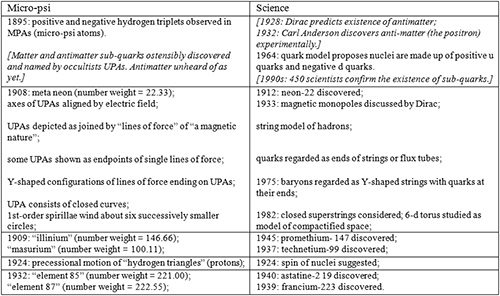
    The table on page 62 provides a partial overview of Leadbeater and Besant’s clairvoyant observations as compared with subsequent scientific discoveries.

    “Some micro-psi anticipations of scientific discoveries and ideas.” Note: Brendan Murphy’s comments in italicised brackets. (Source: Stephen Phillips, Extrasensory Perception of Subatomic Particles, Journal of Scientific Exploration, 9(4), 489–525, 1995.)
    “Some micro-psi anticipations of scientific discoveries and ideas.” Note: Brendan Murphy’s comments in italicised brackets. (Source: Stephen Phillips, Extrasensory Perception of Subatomic Particles, Journal of Scientific Exploration, 9(4), 489–525, 1995.)

    As DeGracia points out, Phillips has shown that to comprehend the finer points of Occult Chemistry one requires an advanced understanding of modern physics. Besant and Leadbeater described the quantum nature of physical matter in 1895, exactly as science would thirty years later and more. How did they know about quarks and subquarks so far in advance of their official scientific discovery?

    To gain some comprehension of how controversial the terrain we tread here, the existence of sub-quarks was only recently scientifically accepted, and even then not unanimously. Yurth reports that in the 1990s an armada of 450 scientists confirmed the existence of sub-quarks with an “unprecedented” level of scrutiny, and still physicists at the American Physical Society, MIT, Princeton and Columbia University succeeded in suppressing the publication of the research data in such mainstream publications as Scientific American, Physics Letters, Physics Review and Nature.26 Thank goodness for free scientific enquiry, eh?

    Regardless, Besant and Leadbeater were obviously capable of perceiving the fundamental nature of matter using occult means, the siddhis. According to Leadbeater, there is a tube-like structure that protrudes from the Ajna, or third-eye chakra of the etheric body, and it is by means of utilising this tube as an organ of vision that one can exercise micro-psi. As we can see, there is good reason to believe him. This psi faculty/ability is one of the siddhis Patanjali wrote about in his Yoga Sutras circa 400 BCE.

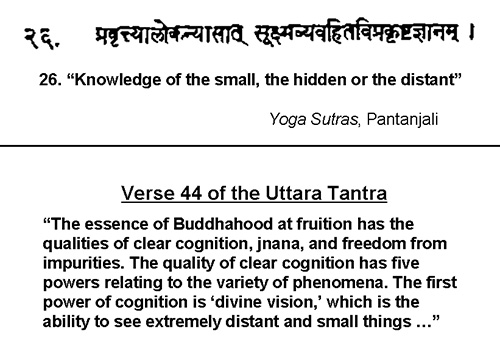
    In Aphorism 3.26 of the Yoga Sutras (c. 400 BCE), the earliest known treatise on yoga, its author Patanjali refers to a particular siddhi in which a yogi can gain “knowledge of the small, the hidden or the distant by directing the light of a superphysical faculty.”
    In Aphorism 3.26 of the Yoga Sutras (c. 400 BCE), the earliest known treatise on yoga, its author Patanjali refers to a particular siddhi in which a yogi can gain “knowledge of the small, the hidden or the distant by directing the light of a superphysical faculty.”

    One more interesting thing about sub-quarks highly pertinent to our occult leitmotif: the sub-quark’s track looks the way it does because in our space-time continuum the particle exists and then does not exist, exists and then does not exist. The discovery of the sub-quark constituted the very first scientifically verified instance of multi-dimensional behaviour in a measurable physical entity: “…in the rarified environment of the particle accelerator, the sub-quark exists-disappears-exists-disappears with a consistent, repeated, predictable frequency pattern…”27

    Leadbeater and Besant stated that the UPA – like the sub-quark today – could vanish from its plane but could undergo no further subdivision. It is truly the most fundamental aspect of physical matter at our density level. The scientific verification of Leadbeater and Besant’s observations clearly indicates the human ability to peer into domains non-existent to our ordinary senses and science’s conventional equipment – domains our most fundamental known ‘particles’ (standing wave structures) venture rhythmically in and out of. Yurth comments that this brings us “literally to the Edge of creation.”28 Do pause and let all of that sink in for a moment.

    Conclusions

    Our occultists are quantitatively and qualitatively vindicated from almost every conceivable angle. (I cover more angles than we have space for here in The Grand Illusion 1.) If we accept Phillips’ conclusion that ultimate physical atoms (UPAs) are sub-quarks rather than atoms, as Leadbeater/Besant once thought, then it is from dedicated occultists that we have obtained the first and possibly most accurate and detailed depictions of them and the aetheric medium that spawns them. On top of that, we must credit the initial discoveries of several isotopes to Leadbeater and Besant.

    Overall, the interrelated combination of clairvoyant observations, string theory, and ‘anomalous’ research findings that the Standard Model cannot explain – but which aether models easily incorporate – is too powerful to ignore.

    Brendan D. Murphy’s website is http://www.brendandmurphy.net.

    [alert type=”general” dismiss=”no”]This article was published in New Dawn Special Issue Vol 6 No 4.[/alert]

    [alert type=”success” dismiss=”no”]If you appreciate this article, please consider subscribing to help maintain this website.[/alert]

    Footnotes:

    1. Annie Besant & Charles W. Leadbeater, Occult Chemistry: Clairvoyant Observations on the Chemical Elements, 1919
    2. Annie Besant & Charles W. Leadbeater, Occult Chemistry, 1950
    3. Ibid
    4. Donald DeGracia, Beyond the Physical, 109
    5. Besant & Leadbeater, 1919
    6. See Victor Zammit, A Lawyer Presents the Case for the Afterlife, Ch. 2, www.victorzammit.com
    7. Besant & Leadbeater, 1919
    8. David Yurth, Seeing Past the Edge, 252
    9. Besant & Leadbeater, 1919
    10. Paul LaViolette, Subquantum Kinetics: A Systems Approach to Physics and Cosmology
    11. Nassim Haramein, What is the Origin of Spin?, www.theresonanceproject.org/pdf/origin_of_spin.pdf
    12. Besant & Leadbeater, 1919
    13. Ibid
    14. Paul A. LaViolette, Genesis of the Cosmos, 238-9
    15. Jay Alfred, Our Invisible Bodies, 49
    16. Ibid., 50
    17. Ibid., 65-8, 133-4
    18. See www.theresonanceproject.org/research.html for Haramein’s model
    19. DeGracia, 110
    20. Ibid. See also Phillips
    21. Stephen Phillips, Extrasensory Perception of Subatomic Particles, Journal of Scientific Exploration, Vol. 9, No. 4, 1995, 489-525
    22. Ibid., 110-11
    23. Ibid., 111
    24. Phillips, 1995
    25. DeGracia, 113-5
    26. Yurth, 255
    27. Ibid, 54-5
    28. Ibid, 55

    © New Dawn Magazine and the respective author.
    For our reproduction notice, click here.

  • The Inscrutable Madame Blavatsky: An Interview with Gary Lachman

    The Inscrutable Madame Blavatsky: An Interview with Gary Lachman

    This article was published in New Dawn 137 (Mar-Apr 2013)

    I was in search of the unknown…
    – Madame H.P. Blavatsky (1831-1890)

    Gary Lachman is one of today’s most intelligent and prolific authors on the world of the occult. He started out in the 1970s in the New York rock scene as one of the original members of the groundbreaking New Wave band Blondie. In 1996 he moved to London, where he established himself as a full-time writer, contributing to publications such as Fortean Times, The Guardian, and The Times Literary Supplement.

    Since 2001 he has produced a steady stream of books, including Turn Off Your Mind: The Mystic Sixties and the Dark Side of the Age of Aquarius; The Secret History of Consciousness; A Dark Muse: A History of the Occult; and Politics and the Occult: The Right, the Left, and the Radically Unseen. In recent years he has published biographies of major esoteric figures including P.D. Ouspensky, Emanuel Swedenborg, Rudolf Steiner, and Carl Jung.

    I first came to know Gary in the ’90s, when he was a frequent contributor to the now-defunct Gnosis magazine, for which I was editor. Although we’ve been in constant touch over the years, the last time I saw him in person was in 2006, when he was in New York to be inducted into the Rock and Roll Hall of Fame as part of Blondie. We had a long conversation over lunch that led to his book Politics and the Occult. In 2012 Gary published Madame Blavatsky: The Mother of Modern Spirituality, a biography of the pioneering nineteenth-century spiritual figure H.P. Blavatsky (also known as HPB). In January 2013 I conducted an e-mail interview with him about the book and about Blavatsky.

    RICHARD SMOLEY (RS): To begin with, could you say a little bit about who H.P. Blavatsky was for those who aren’t familiar with her?

    GARY LACHMAN (GL): Helena Petrovna von Hahn was born in 1831 into a family of the lower Russian nobility. Around her eighteenth year, she fled a brief and unconsummated marriage to an older man, Nikifor Blavatsky, and embarked on what by all accounts was a twenty-odd-year-long global quest for secret knowledge, triggered by her reading of her great-grandfather’s occult library and her own mystical experiences. During this time, she said, she met her Master Morya in London, who charged her with a mission: to reach Tibet, where she would be tutored in the control of her psychic abilities. She surfaced in New York City in 1873, where she lived in a woman’s cooperative on the Lower East Side. A meeting with Colonel Henry Steel Olcott led to a lifelong Platonic relationship, and in 1875, she, Olcott, and William Quan Judge founded the Theosophical Society. The rest is history.

    RS: What made you choose her as the subject of a biography?

    GL: I had already written studies of Ouspensky, Jung, Swedenborg, and Rudolf Steiner. As I argue in the book, HPB was a seminal influence on practically the whole of modern spirituality and esotericism. All of my work is centred on the idea of an evolution of consciousness, both in the individual and in culture at large. It seemed to make sense to take a new, fresh look at someone who kick-started a whole movement dedicated to this idea. Also, it struck me that much of what we think we know about HPB was really a myth, made up of hearsay and misperception, repeated for more than a century. I can’t say I’ve told the truth about Blavatsky, but I’ve tried to point out what others haven’t.

    RS: What influence does Blavatsky continue to have on the current spiritual scene?

    GL: Well, the Theosophical Society, in its many different forms, continues today. Much of what we think of as New Age really has its roots in Blavatsky’s early work. Tibetan and Mahayana Buddhism, as we understand it in the West, for example, emerged from her and her early followers. W.Y. Evans-Wentz, who collected the funerary texts we know as The Tibetan Book of the Dead, was a Theosophist, and much of his work is informed by Theosophical ideas. Also, our contemporary interfaith and multifaith sensibilities, our striving toward a broad religious tolerance, has its roots in Blavatsky’s belief that all the major religions have their source in an ancient, ‘secret’ doctrine. She was very much ahead of her time.

    RS: There is a broad spectrum of opinion about Blavatsky. On one end there are those who regard her as a fraud pure and simple. On the other end are those who see her as a much-maligned saint. Where would you place yourself on this continuum?

    GL: Well, I don’t see her as a fraud or as a saint, so I guess I am in the middle, or rather, perhaps ‘above’ this either/or opposition. In the book I refer to a concept I borrow from the novelist Hermann Hesse. In an essay on Dostoyevsky, Hesse speaks of what he calls ‘Russian Man’, who is an antinomian character, “an hysteric, drunkard, criminal, poet and saint, all wrapped up in one.” Think of Rasputin, the ‘holy devil’. HPB was what we call a ‘trickster’, although that is something of a cliché. She wasn’t above mystical high jinks when she felt it was necessary – or when she got exasperated with the sanctimonious devotees who often wasted her time. But she was also a deeply spiritual, I would even say religious, moral character; I liken her to the Russian startzi – deeply spiritual individuals who gave off a kind of spiritual electricity. But she didn’t wear this on her sleeve.

    RS: After having done so much research on Blavatsky, do you personally believe that her alleged occult powers were genuine?

    GL: I keep an open mind about her powers. For one thing, I’ve had enough anomalous experiences to accept that the standard ‘scientific’ view of reality simply doesn’t cover all the bases, things like precognitive dreams, telepathy, and very convincing synchronicities. Of course, some of the things claimed about HPB – materialising teacups and other items – do seem impossible. But I point out in the book other examples of similar abilities. I look at a few of the most well known examples, and, given what we know about them – and we can only go by the accounts that have come down to us – I try to see how she could have faked them – if she did. Of course, because I can’t see how she could have faked the teacup or some other ‘materialisation’, doesn’t mean she couldn’t have. But I did rack my brain quite a bit about it, and I think I covered every possible angle. So my take is that, yes, they are incredible, but perhaps not impossible. I mean, look at what science tells us about dark matter, dark force, super strings, and n-dimensions. That seems pretty incredible too. Were her ‘phenomena’ important? That’s a different question.

    RS: Blavatsky made much of her connection with the hidden Masters Morya and Koot Hoomi, as well as other Masters. Some take these to be actual men endowed with superhuman capacities who guided her in her path and in the creation of the Theosophical Society. Others say they are figments of her imagination. What’s your own position on this issue?

    GL: Blavatsky’s Masters seem to me to be composed of several different things. There was the ‘mysterious Hindu of my dreams’ that came to her in her earlier life, and more than once saved her life – at least that was the story she told in her later years. Then there was the idea of ‘unknown superiors’, high-ranking individuals in the Rosicrucian Freemasonry her great-grandfather practised. Reading of these mysterious powerful but ‘hidden’ men, Blavatsky became committed to finding them and to realising the vision of a progressive, united Europe they championed. The Theosophical Society was her way of trying to make their goal of a universal fraternity come true. Then there were the actual men and women she encountered in her quest for knowledge; people like herself who were pursuing a similar quest. She considered many of these ‘Masters’ – a title of respect and gratitude. But of course the most significant Masters were Morya and Koot Hoomi, flesh-and-blood men who had mastered their own psychic powers and who taught her how to master her own. Whether they had the powers she claimed is still up for debate, but I believe they did exist. HPB lived out a myth and she saw these people as embodiments of the inner guides she believed were helping her on her path. So the Master she knew from her childhood dreams and the Master she met in London in 1851 may not have been the same actual person, but for her we can say that they fulfilled the same role.

    RS: In your book you allude to unseen hands that work behind the scenes of history. Do you think there are such forces, and if so, how did they use Blavatsky?

    GL: I’m not sure about the ‘hidden hand’ version of history – and the phrase ‘hidden hand’ comes from the esoteric scholar Joscelyn Godwin. That idea is a kind of staple of occult history, and also of our contemporary conspiracy consciousness. In one sense I’m not partial to it – I think we need to solve our problems ourselves, rather than expect a saviour, either some ‘inner circle’ of humanity or benevolent aliens or extradimensional beings or Mayan calendars, to do it for us. But on the other hand, given the dominance of the ‘rational’ view that history is meaningless, or, at best, the result of purely material forces, I think the idea of something at work ‘behind the scenes’ can be positive. At least it posits some meaning or intelligence at work. But the notion of some cabal of advanced individuals, holed up in the Himalayan fastness – or at the centre of the earth, or in the Arctic – does seem a bit de trop. I tend to see the idea as a metaphor for the evolutionary urge. But then perhaps there are angelic beings who drop us hints from time to time.

    RS: Could you tell us a bit about Blavatsky’s major works, Isis Unveiled and The Secret Doctrine?

    GL: In the book I say that I am more partial to Isis Unveiled than to The Secret Doctrine. One reason is that Isis Unveiled is often overlooked compared to her other major work. I think it is a remarkable achievement. It is one of the first occult compendiums, a fascinating, if often exhausting, collection of what esoteric and occult literature and philosophy was available at the time. It is the source of so much of what we see as ‘alternative’ literature today. In a way it is like Charles Fort’s books, only much better-written and containing more cogent argument. Basically, with Isis Unveiled Blavatsky tried to resurrect the Hermetic wisdom, which had been in eclipse since the 1600s. If nothing else she deserves credit for formulating the first philosophical – not religious – criticism of Darwinian evolution in it; credit for this is usually given to Samuel Butler (author of Erewhon), who wrote a remarkable series of books attacking Darwin in the 1870s and ’80s. Unfortunately these are forgotten today, but their arguments are still quite pertinent. (Someone should send copies to Richard Dawkins.) But Blavatsky got there ahead of Butler by a few months. She should be recognised in the history of ideas for this.

    The Secret Doctrine is a kind of bible of esoteric and occult thought. It presents a full scale esoteric history of humanity and the universe, and presents the occult wisdom that Blavatsky says she learned during her tutelage in Tibet. It has more of a ‘carved in stone’ character than Isis Unveiled and has given rise to numerous offshoots, some good, some not so good.

    RS: The Secret Doctrine presents an elaborate alternative history of human evolution, with references to things like Atlantis and Lemuria. What do you personally make of this history?

    GL: I found it most profitable to read HPB’s occult history as a gigantic sci-fi or fantasy epic, a modern mythology, something along the lines of, say, Olaf Stapledon’s ‘future histories’ Last and First Men and Starmaker. I felt the same about Rudolf Steiner’s similar readings of the akashic record. I also think, though, that while the details in both Steiner’s and Blavatsky’s readings of Atlantis and Lemuria and so on can seem frankly unbelievable, the general sense of an earlier form of consciousness they present has much of value. With most such spiritual visions – William Blake’s can fit in here, as can Jung’s as depicted in The Red Book – we have to sift through what is personal, what is simply the unconscious being creative, and what may be a symbolic presentation of our actual spiritual reality. At the same time, there is much cogent argument for the idea that civilisations existed well before what we considered the beginning of history. In fact, the ‘official’ accounts are regularly pushed further and further back. Will archaeology eventually prove HPB was absolutely right? I doubt it. But it may and probably will show that she was right in saying that we aren’t the first ones to spend time on our planet.

    RS: One criticism that is frequently levelled at Blavatsky was that she was a racist, and that her views on what she called the ‘Aryan root race’ inspired Nazism and similar ideologies. Where does the truth lie on this issue?

    GL: Basically, although some of HPB’s remarks about race break the cringe barrier and are unacceptable to us, she was no more racist than what the prevailing sensibilities of the time accepted. Sadly, her remarks about root and subraces in The Secret Doctrine inspired some proto-Nazi characters in Austria and Germany – if you can call what they did with her brief remarks ‘inspired’. We can’t hold her responsible for that, or for any other appropriation of her ideas by less tolerant characters. In a sense, HPB is in the same position Nietzsche was in when the Nazis appropriated some of his work – he was in no way racist, nor was he a war monger, but Nazi hacks presented him in this way. It wasn’t until serious scholars repaired his reputation that he was cleared of any Nazi taint. The same needs to be done for HPB, and if I’ve helped in this effort, I am glad. I saw no evidence of Blavatsky being personally racist, and indeed, she abandoned her white, European privilege to live with Hindus and Sinhalese during her time in India and Ceylon (Sri Lanka). She was more anti-European, even anti-white, we can say, given her remarks about the British Raj and the Christian missionary movement. Some have called her anti-Semitic, but what this really means is that she had little fondness for the Judeo-Christian religion. One forgets that her central mission was the founding of a universal fraternity, regardless of race, creed, sex, or colour. One also forgets that she had much more influence on Gandhi than she did on Hitler. Gandhi found his life’s work through his contact with Theosophy.

    RS: Could you say a little bit about the Theosophical Society and its place in twentieth- and twenty-first-century spiritual currents? What influence does it continue to have?

    GL: Well, I’m not a Theosophist and am not associated with any Theosophical group, so I can only speak of what I’m aware of peripherally, as it were. But the Theosophical Society in its different forms – there are quite a few different incarnations of it – is still alive and kicking. I know here in London the Theosophical Society is a centre for a wide-ranging series of talks, lectures, and other activities, all linked to the themes of spirituality, consciousness, and ‘lost knowledge’. There is quite a lively Theosophical presence on the Internet, with several different sites devoted to different aspects of Theosophy in general and Blavatsky in particular. My book itself seems to have stimulated some discussions. So I think it will continue to maintain an important place in the ‘alternative’ world. What I have found with practically all of the movements or groups associated with the people I’ve written about – Steiner, Swedenborg, Ouspensky, etc. – is that they are all looking for ways to reboot themselves, to attract a wider, younger audience, to make themselves more inclusive. I think this is also paralleled in the broader, outer world. I’ve been involved with some art events in Europe and England at major museums and galleries that have had spirituality at their centre, and Theosophy is a frequent element in these. In fact, I am supposed to be involved in a major retrospective of the work of the Swedish Theosophical painter Hilma af Klint in Stockholm later this year. I think in general the official world is starting to see what many of us have been aware of for years: that esotericism has had a much bigger influence on the modern world that we realise.

    RS: What are your own views of human evolution, particularly as it relates to the current era? What do you think is happening with the human race as a whole at this stage of the game?

    GL: As I say, pretty much all my work is focused on the idea of an evolution of consciousness. My view is informed by the work of people like Colin Wilson, Owen Barfield, Jean Gebser, and others; I write about it at length in my book A Secret History of Consciousness. In a general sense, I think we are seeing the beginning of the breakdown of the kind of scientific reductionism that has been the dominant mode of consciousness for the last four centuries. This doesn’t mean that a neon sign will rise up over the horizon announcing the start of a new age. It doesn’t work like that, and we shouldn’t look for signs of this change in the news. Changes in consciousness don’t necessarily mean immediate changes in society or the world. All work begins with the individual. But I do think that in the last century or so, more and more people have realised that science, or rather, scientism, is simply no help when it comes to the big questions, such as ‘What is this all about?’ Science is very good on know-how but useless on ‘know why’. The Higgs boson can’t tell me why I exist and what I am supposed to do now that I’m here. For a long time we went along with the notion that if science can’t answer these questions, then they are nonsense. But that doesn’t work any more. The main challenge is for us to understand how our own consciousness works, not try to explain it away, as much contemporary neuroscience and philosophy of mind have tried to do. Science can’t tell me the meaning of my life, and the established religions – which once were able to satisfy this need for meaning – seem no longer capable of it. I think the answer lies in ourselves, in our own minds. I think HPB would have agreed.

    Gary Lachman’s biography of the pioneering nineteenth-century spiritual figure H.P. Blavatsky is titled Madame Blavatsky: The Mother of Modern Spirituality (352 pages, Tarcher 2012). It’s available from all good bookstores. Gary Lachman’s website is www.garylachman.co.uk.
    [alert type=”general” dismiss=”no”]This article was published in New Dawn 137.[/alert]

    [alert type=”success” dismiss=”no”]If you appreciate this article, please consider subscribing to help maintain this website.[/alert]

    © New Dawn Magazine and the respective author.
    For our reproduction notice, click here.
  • Wise Men From the East: Is There a Secret Brotherhood of Masters Who Direct the Spiritual Progress of Humankind?

    Wise Men From the East: Is There a Secret Brotherhood of Masters Who Direct the Spiritual Progress of Humankind?

    From New Dawn 91 (Jul-Aug 2005)

    There is a strange and persistent legend that probably originates in the East. It proposes that in some hidden locations on the Earth (generally the highlands of Central Asia, particularly Tibet, although other sites, such as the Andes and even some mountains in the US, such as the Grand Tetons and Mt. Shasta, are mentioned at times), there exists a group of persons who possess both exceptional powers and a highly perfected character and consciousness. They are known variously as the Hierarchy of Adepts, the Great White Lodge, the Great White Brotherhood, the Masters, or simply the Hierarchy.

    While most sources emphasise the Eastern (particularly Indian and Tibetan) nationality of these persons, Western embodiments of the legend are not unknown. Some have suggested that portions of this legend travelled westward during the Crusades or even earlier and that their sources are thus primarily to be found in secret and semisecret Islamic traditions.

    Beginning with the publication of the mysterious Rosicrucian document Fama Fraternitatis in 1614, the existence of certain “unknown superiors” or “Brothers of the Rosy Cross” who live and work in secret and yet direct much of the spiritual destiny of the world became a part of the beliefs of many Western esotericists.

    To these transmissions may be added diverse strands of legends connected with Arabian poetry, wise men wandering among the troubadours, the fabled kingdom of an adept priest-king named Prester John in Africa, alchemical masters of an elusive and potent aspect led by Elias Artista, as well as the Templars and the esoteric Freemasons. By the 19th century, the foundations for a major unfolding of the adeptic myth were laid. This unfolding took place by way of the Theosophical movement, without which the entire myth would probably have remained forever in obscurity.

    Blavatsky and Her Masters

    The position of current wisdom about the Masters is well-stated by one of the better popularisers of esoterica, Richard Cavendish, who calls it “a glamorous simplification of the tradition common to both East and West from time immemorial, of the searching spirit who asked: ‘Master, what shall I do to inherit eternal life?’”1

    This question, of biblical origin, is not without poignancy. As Jesus was regarded as a master of things relating to the life beyond earthly existence, so the Theosophical tradition of the last 130 years has looked to personages of superior insight and power to assist mortals in gaining consciousness of a greater life. Not only did it proclaim the existence and availability of such personages, but it also regarded them as the fount and origin of its teachings.

    In one of the very first academic treatises on the subject, published in 1930 in a series sponsored by Columbia University, Alvin Boyd Kuhn wrote:

    Theosophists tell us that before the launching of the latest “drive” to promulgate Theosophy in the world, the councils of the Great White Brotherhood of Adepts, or Mahatmas, long debated whether the times were ripe for the free propagation of the secret Gnosis; whether the modern world… could appreciate the secret knowledge, without the risk of serious misuse of high spiritual forces, which might be diverted into selfish channels. We are told that in these councils it was the majority opinion that broadcasting the Ancient Wisdom over the Occidental areas would be a veritable casting of pearls before swine; yet two of the Mahatmas settled the question by undertaking to assume the karmic debts of the move, to take the responsibility for all possible disturbances and ill effects.2

    These two Mahatmas eventually became known as Morya and Koot Hoomi (or Kut Humi), and their contact person par excellence was Helena Petrovna Blavatsky.

    Koot Hoomi (or Kut Humi), one of Mme. Blavatsky’s Masters, has been identified by the researcher K. Paul Johnson with a Sikh spiritual leader, Sirdar Thakar Singh Sadhanwalia.
    Koot Hoomi (or Kut Humi), one of Mme. Blavatsky’s Masters, has been identified by the researcher K. Paul Johnson with a Sikh spiritual leader, Sirdar Thakar Singh Sadhanwalia.

    The story of the colourful, controversial, erudite, and intuitive Mme. Blavatsky has been told many times, most recently and accurately by Sylvia Cranston.3 The issue of her involvement with her adeptic inspirers has also been thoroughly investigated by a most valiant researcher, K. Paul Johnson.4 Johnson’s work merits some comment here because in certain ways it represents a novel development of the treatment of the subject. It is Johnson’s thesis that the Adepts and Mahatmas of Blavatsky were all historical figures living in her lifetime, for whom she found suitable disguises in mysterious personae and a set of equally mysterious pseudonyms, under which they entered the mythos of Theosophy and of all modern occultism.

    According to Johnson, Morya was a Maharajah of Kashmir by the name of Ranbir Singh, while Koot Hoomi is identified with a Sikh spiritual leader, Sirdar Thakar Singh Sadhanwalia. Johnson also identifies other adeptic figures of Blavatsky’s, such as “the Chohan” (or Maha Chohan) and the “Master Djual Kul” (later publicised by Alice Bailey), with Sikh and Muslim gurus and leaders of the time.

    The Living Masters

    It is not without interest that Johnson should pick so many Sikh personages as the models for Blavatsky’s occult Masters. The variety of Indian spirituality that is most comparable to modern Theosophy is perhaps the Sant tradition, which some scholars regard as a close relative of Western Gnosticism. This tradition has been allied with the Sikhs since the time of Guru Nanak in the 16th century. Its latest embodiment, the Radhasoami movement, had just appeared on the scene in Blavatsky’s time in the person of Shiv Dayal Singh (1818-78), who was well-known in Indian religious circles and certainly came to the attention of the Theosophists.

    The Sant tradition has innumerable doctrinal similarities to Theosophy, including the teaching of the “living masters” who are the chief agents of the initiatory redemption of their followers.5 It is regrettable that in spite of recognising the Sikh connection, Johnson failed to trace it to the Sant tradition, where he might have found a far more valuable model for Blavatsky’s concept of the Masters. The subject is still in great need of exploration. We shall do so briefly here.

    Mahatma Morya, according to K. Paul Johnson, was a Maharajah of Kashmir by the name of Ranbir Singh.
    Mahatma Morya, according to K. Paul Johnson, was a Maharajah of Kashmir by the name of Ranbir Singh.

    For a Westerner the term “saint” denotes a person in whom the ordinary human virtues have been exercised to a heroic degree. The ancient Greeks may be credited with having first established a category of humans known as heroes, who stood between mortals and the immortal gods. The Sant tradition recognises persons of a similar kind. They are usually called sants (“saints” or “men of truth”) or satgurus (“true teachers”). Such persons have merged their own spiritual core with the Supreme Identity to the extent that they are no longer subject to any illusion or any sense of ego apart from the Divine.

    As one contemporary researcher says, “What we are confronted with in the [sat]guru is a classic hierophany: a profane object which manifests the sacred.”6 The satguru is an embodied being, a human, not a disembodied god or angel and for this reason is known as a “living master.” Neither is it sufficient in this tradition to follow a teacher who has died:

    According to the Sant tradition… one must follow a living guru. It is said that past Sants cannot take the soul back to God. This is due to two main reasons: (1) the original message of the Sants is believed to be misconstrued after the Sant passes away, while the teachings of a living Sant are pure and charged; and… devotion to one’s guru aids one’s spiritual progress; (2) it is believed to be easier to love someone alive and tangible than someone who has been dead for centuries.7

    Let us compare this with some statements concerning the Theosophical Mahatmas. According to Blavatsky,

    A Mahatma is a personage who, by special training and education, has evolved those higher faculties and has attained that spiritual knowledge, which ordinary humanity will acquire after passing through numberless series of reincarnations during the process of cosmic evolution… The real Mahatma is then not his physical body but that higher [mind] which is inseparably linked to the [spirit] and its vehicle.8

    We also have statements to this effect from what would appear to be the Mahatmas themselves. During Blavatsky’s residence in India after 1879, the Anglo-Indian journalist A.P. Sinnett became interested in her teachers. In 1880 he instituted a correspondence with Morya and Koot Hoomi. The replies to Sinnett’s letters have been preserved in the British Museum in London and have also been published in book form. In one of these letters, Koot Hoomi writes:

    An adept – the highest as the lowest – is one only during the exercise of his occult powers… Whenever these powers are needed, the sovereign will unlock the door to the inner man (the adept), who can emerge and act freely, but on condition that his jailer – the outer man – will be either completely or partially paralysed.9

    Allowing for certain differences in psychological orientation, such a statement could have readily come from a “living master” of the Sant tradition.

    Adepts Embodied and Disembodied

    These considerations leave little doubt that Blavatsky’s mysterious teachers were regarded as living human personages, albeit of a highly unusual order. At the same time it is also necessary to recognise that along with the mythos of the embodied Masters another mythos played an important part in the development of the idea of the adeptic Hierarchy. This was 19th century Spiritualism, a movement that attracted great numbers and much publicity in its day.

    Today Spiritualism is largely confined to the practice of attempting contacts with rather nondescript spirits. Professed Spiritualists are not very numerous and their social and intellectual standing is on the whole unremarkable. Yet another kind of Spiritualism has become much more prominent: the phenomenon of channelling. Here we primarily find attempts to disseminate occult information, often pertaining to humanity or the cosmos as a whole. Channellers in general do not have the personalistic preoccupations of Spiritualists, who often seem largely concerned with the exploits of their dead relatives in non-physical realms. Channellers’ utterances are frequently doctrinal, prophetic, even at times archetypal.

    It would be fair to say that Spiritualism has always possessed two sides, one personalistic and consequently shallow, the other revelatory and touching upon the numinous. The origins of the Theosophical adeptic myth are connected with the latter. At the time of the founding of the Theosophical Society in 1875, there was a spirit entity who made frequent appearances in Spiritualist gatherings in America and England and who identified himself as “John King.” Blavatsky seems to have thought quite highly of this entity and said he was in some way connected with her adeptic superiors.

    Although for some years she engaged in an uneasy cooperation with the Spiritualists and had been ordered to break with them by her superiors in 1875, her relationship with “John King” remained close. Eventually she identified him squarely as a messenger of the adepts who inspired her to found the Theosophical Society.10 It would seem that a disembodied spirit – and one who was, moreover, active in Spiritualist séances – could be an associate of the embodied adepts, who generally disapproved of the Spiritualists and their “spooks,” as Blavatsky called them.

    Another interesting episode inspired the launching of a major esoteric revival in French occult circles which still exists and has spread to several continents. Blavatsky had a friend living in France who was quite influential in the occult revival there. Her maiden name was Mary, Lady Caithness, and she was married to the Duc de Pomar. She resided in a large palace in Paris, complete with an ornate chapel in which occult activities were carried out.

    In the fall of 1889, a former Catholic seminarian, high-grade Freemason, and visionary poet named Jules Doinel was visited in this chapel by the spirit of the Cathar Bishop Guilhabert de Castres accompanied by the spirits of other medieval Cathars. The spirits, speaking through a seeress, commissioned Doinel to revive the Gnostic Church, of which he became the first Patriarch. Detailed instructions for the organisation of the Gnostic Church were given to Doinel at this time. This event marked the beginning of the Eglise Gnostique Universelle (Universal Gnostic Church, also known under other names), which became closely associated with the Martinist Order under Papus. The church has many branches in France, Haiti, and other countries.11

    Doinel’s founding of the modern Gnostic Church may be taken as an instance of a certain kind of adeptic inspiration, not entirely unlike that of Blavatsky, and possibly even known to her. Yet the messages here profess to come from disembodied beings who are of a different order from the entities encountered at most séances. As such they may be likened to some of the more valuable forms of contemporary channelling such as A Course in Miracles.

    The notion of spiritual guides who might or might not be associated with each other in some sort of mystical fraternity became widely accepted in many quarters. Even C.G. Jung, who was skeptical about many aspects of Theosophical and related teachings, was not immune to such ideas. In his Memories, Dreams, Reflections he wrote at great length about a mysterious “phantasy figure” whom he called Philemon and from whom he received much instruction. He also recounted a conversation he had with a “highly cultivated elderly Indian, a friend of Gandhi’s,” who, after informing Jung that his own guru was Shankaracharya, the long-deceased founder of Vedanta, went on to say, “Most people have living gurus. But there are always some who have a spirit for a teacher.” Jung said he was immediately reminded of Philemon.12

    A curious convergence between the Theosophical lore of embodied Masters and the channelling phenomenon occurred in 1972, when the British painter and medium Benjamin Crème, greatly influenced by Alice Bailey’s modified version of the Theosophical hierarchy of the Masters, began to channel messages stating that the appearance of the Lord Maitreya was imminent. (Maitreya, who is regarded in Buddhism as the coming Buddha, has been incorporated into the Theosophical hierarchy; early in this century Jiddu Krishnamurti was said to be Maitreya’s vehicle.) Crème fixed 1982 as the year of the reappearance of Maitreya. It was foretold that the event would be accompanied by various technological miracles, including the use of all public media in the world by the returning savior. Although the phenomenon failed to occur, devotees are still undaunted.

    Secret Directorate or Archetypal Myth?

    In the biblical legend of the Three Wise Men from the East we have an archetypal prefiguration of the myths and speculations about the mysterious adepts who are involved with the fate of the world. The term “Secret Directorate” was coined in this regard by British author Ernest Scott, who, drawing primarily on Islamic sources, has made an impressive plea for the reality of an assembly of men known in some Middle Eastern circles as the “Friends of God” or “People of the Secret.”13 Although the Theosophical dispensation of esotericism may have brought the subject into prominence, even now, when Theosophy functions mainly as a “grandfather movement” to innumerable teachings and organisations, the idea of the Adepts is far from outmoded.

    In this still quite vital idea of a hierarchy of adepts, we are faced with a mystery that no one has succeeded in solving. Recent efforts, such as K. Paul Johnson’s, have shed light on a few dark corners but have failed to illumine the whole subject. While new dimensions have been opened up, others remain obscure. The following thoughts are offered as feeble attempts to penetrate the mystery.

    First, is there evidence that the events of cosmic or terrestrial development, particularly the affairs of humankind, are subject to direction by a hierarchy of superhuman intelligences and that these intelligences have made contact with humanity at certain times? The answer, it would seem, is no. The sorrowful course of history, the fierce expressions of a “blind world-creating will” (to use Schopenhauer’s words) do not intimate the handiwork of such intelligences. If there is an “inner government” or a “secret directorate,” it would have to be a rather ineffectual one.

    By the same token, it is possible that some people possessing a high form of gnosis may indeed labor in concert, not as a hierarchical government but as a band of enlightened and compassionate helpers. Some of the statements purporting to have come from such personages (notably in connection with Blavatsky) would point to this possibility. Notions of godlike, omniscient beings pulling the strings of history from their secret residences may be inspiring to some of us, but they have little warrant in reality. Certainly Blavatsky’s Masters never claimed to be of that species. (Schools of occultism, such as the Alice Bailey movement or the descendants of the “I Am” movement of the 1930s, who insist most strenuously on the deific and all-powerful of such beings are generations removed from the original impulse of these teachings.)

    On the other hand, the image of the adept, whether as a living master or as a disembodied spiritual instructor, carries definite connotations of what might in Jungian terms be called an archetypal being. Some might counter that such a description is tantamount to substituting one mystery for another. Still it is undeniable that behind all science and mysticism, behind all the approaches of West and East, there is but one area of reality and realisation: the human psyche. Whatever preternatural realities might make themselves known to us, they must do so by way of the psyche or else go unnoticed.

    The psychic reality of archetypes may thus be taken to be of great relevance to the subject at hand. Archetypes possess many of the characteristics of numinosity, authority, and commanding power attributed to the Adepts. When indicating to her disciples how they might come closer to the greater mysteries of being, Blavatsky once stated that she “could tell them how to find those who will show them the secret gateway that opens inwardly only.” Is it so difficult to imagine that those who open such inner gateways must dwell at least in part, if not wholly, in the inward recesses of the psyche?

    And if the assembly of archetypal being resides largely within us and not in the Himalayas or on some secret plateau in Afghanistan, might it not also be present in the immediate environment of our lives? Certainly some have thought so. One was the French poet and esotericist Maurice Magre, who, in the epilogue of his book The Return of the Magi, wrote:

    There have been men whose names are unknown because they cared little for fame, and truth radiated from them without knowing it. There have been revealers who were unaware of the revelation that was in them; modest sages who mingled their wisdom with their daily life… We have all of us met, at least once in our lives, one of these unheralded initiators, and received from them a priceless gift, by a kindly word, a certain look of sadness, a sincere expression in the eyes.14

    It is in this direction that we might direct our inquires if we desire the greatest reward. Be that as it may, the myth of the adeptic assembly may still have secrets to disclose that might benefit us beyond measure.

    The article first appeared in Gnosis: A Journal of Western Inner Traditions, Vol.36, Summer 1995, and is reproduced here by the kind permission of the author.

    [alert type=”general” dismiss=”no”]This article was published in New Dawn 91.[/alert]

    [alert type=”success” dismiss=”no”]If you appreciate this article, please consider subscribing to help maintain this website.[/alert]

    Footnotes

    1. Richard Cavendish, Encyclopaedia of the Unexplained: Magic, Occultism, and Parapsychology (London: Routledge, 1974), p. 286.
    2. Alvin Boyd Kuhn, Theosophy: A Modern Revival of Ancient Wisdom (New York: Henry Holt & Co., 1930), p. 2.
    3. Sylvia Cranston, H.P.B.: The Extraordinary Life and Influence of Mme. Helena Petrovna Blavatsky, the Founder of the Theosophical Movement (New York: Jeremy P. Tarcher/Putnam, 1992).
    4. K. Paul Johnson, The Masters Revealed: Mme. Blavatsky and the Myth of the Great White Lodge (Albany, N.Y.: State University of New York Press, 1994) An earlier version of this work was In Search of the Masters: Behind the Occult Myth (South Boston, Va.: Privately published, 1990).
    5. Andrea Grace Diem, The Gnostic Mystery: A Connection between Ancient and Modern Mysticism (Walnut, Calif.: Mt San Antonio College Press, 1992).
    6. Ibid., p. 24.
    7. Ibid., p. 25. Emphasis here and in other quotes is in the original.
    8. H.P. Blavatsky, Collected Writings, vol. 6 (Los Angeles: Blavatsky Writings Publication Fund, 1954), pp. 239-41.
    9. A.T. Barker, ed., The Mahatma Letters to A.P. Sinnett, second edition (London: Rider & Co., 1948), p. 180.
    10. C. Jinarajadasa, ed., The Golden Book of the Theosophical Society (Adyar, Madras, India: Theosophical Publishing House, 1925), pp. 15-16.
    11. Massimo Introvigne, Il Ritorno dello Gnosticismo (Carnago, Italy: SugarCo Edizioni, 1993), pp. 106-08.
    12. Aniela Jaffe, ed., Memories, Dreams, Reflections by C.G. Jung (New York: Vintage Books, 1965), p. 184.
    13. Ernest Scott, The People of the Secret (London: Octagon Press, 1983).
    14. Maurice Magre, The Return of the Magi, trans. Reginald Merton (London: Sphere Books, 1975), pp. 223-24.

    © New Dawn Magazine and the respective author.
    For our reproduction notice, click here.