New Dawn – World's Most Unusual Magazine

Tag: Theosophy

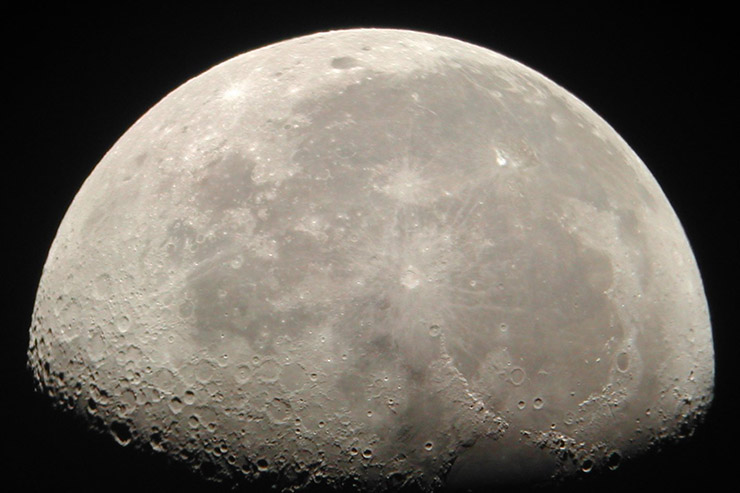
  • Are We Food for the Moon?

    Are We Food for the Moon?

    From New Dawn 96 (May-June 2006)

    If man is not affected in some way by the Moon, he is the only thing on Earth that isn’t.
    – Robert Millikan (1868-1953), US physicist & 1923 Nobel Prize winner

    Probably no heavenly body has received as much attention down through the ages as our Moon. The causes of this fascination are obvious: the Moon enlightens the night and appears as a remarkable and large object in the sky. As a regulator of Earth’s tides and life’s biological cycles, the Moon’s importance to our physical existence is second only to that of the Sun.

    Sacred scriptures, ancient myths, and even modern day pagans, all exalt the Moon in one way or another. Omens, spells, wishes, oracles, divination, and calendars cluster around it throughout history. Moon magic, the belief that working rituals at the time of different phases of the Moon brings about physical or psychological changes, is essential to various pagan and witchcraft systems. Witches in Greek and Roman literature were regularly accused of ‘drawing down the Moon’ by use of a magic spell.

    Nevill Drury, a respected authority on mystical and occult traditions, says “traditionally… the Moon has been regarded as a ‘funnel’ drawing on the light of the stars and constellations and transmitting their energies to the Earth.”1

    In Western astrology the Moon is said to represent the feeling intuitive nature of the individual as well our deepest personal needs, our basic habits and reactions, and our unconscious. In esoteric astrology the Moon represents attachment to form, and under certain circumstances a variety of limiting conditions are related to the Moon, ranging from blatant materialism to subtler forms of limitation such as debilitating nostalgia, sentiment and regret.

    The word “lunacy” – which derives from the Latin for Moon, “luna” – denotes the traditional link made in folklore between madness and the phases of the Moon. Several studies have tried to get to the bottom of this age-old belief. A 1976 report compared 34,318 crimes against lunar cycles. It found offences occurred more frequently during a full Moon. Other research, however, failed to find any firm link between the cycles of the Moon and irrational behaviour.

    England’s Lunacy Act of 1842 gave allowances for uncharacteristic crimes committed during the full and new Moon. This law distinguished between the chronically insane and the lunatic. It was argued the lunatic became deranged at these times because of the Moon’s power and thus could not be held accountable for his or her actions.

    Interestingly, a study of the Moon’s effect on mental health patients, conducted by the University of Liverpool in 2000, found a significant change at the time of the full Moon, but only in subjects with a diagnosis of schizophrenia.

    Whether we are conscious of it or not, the Moon exerts some sort of influence upon our biological and psychological states. But does it go any deeper than this?

    Gurdjieff and Ouspensky

    The Fourth Way philosophy claims to help individuals cease to be slaves of external and internal influences by building up a core of heightened consciousness. Its ultimate goal is the realisation of the full potential of human evolutionary possibilities. Its founder, George Gurdjieff (1872-1949), frequently spoke of the thoughtless mechanical behaviour of humanity, and was fond of commenting humans are “food for the Moon.”

    What did Gurdjieff mean by this phrase? Many interpreted “food for the Moon” as a figure of speech – perhaps Gurdjieff meant we are slave to our mechanical conditioning and feed our baser impulses. But while it can be interpreted in this fashion, Gurdjieff was primarily being literal.

    Peter Ouspensky, Gurdjieff’s most famous disciple, lectured at length concerning the Moon’s role in human affairs and its place in the cosmological scheme of things.

    Ouspensky said the Moon drives the individual’s mechanical aspects like a pendulum moves the gears of a clock. The degree to which one’s actions are driven by the Moon is proportional to one’s level of contact with higher influences. For people incapable of moving themselves through life by nobler spiritual impulses, the Moon provides a propulsive force. Without this force, mechanical individuals would be passive as puppets without a puppeteer.

    In the cosmological scheme proposed by Gurdjieff and Ouspensky, Earth is like a mother to the Moon which is still a fetus in the sense it cannot yet “breathe” on its own, hold an atmosphere, or support life. Someday, the Earth will evolve into a being like the Sun, while the Moon will transform into a second Earth. Humanity was simply a stage in this process.

    “The Moon is actually a fragment of this Earth, which must now constantly maintain the Moon’s existence,” Gurdjieff said.2 In that sense, the Moon is like a parasitic thought form. Nevertheless, the equation is balanced because in exchange for the Moon propelling our mechanical movement, we feed the Moon so that it may grow and one day be born as a living planet.

    As to how organic life feeds the Moon, Gurdjieff taught that most human beings are mere “slugs” with no souls and that following death their remaining psychic energy is “food for the Moon.” Like a magnet, the Moon draws the fine matter of human souls into it: “Everything living on the Earth, people, animals, plants, is food for the Moon. The Moon is a huge living being feeding upon all that lives and grows on the Earth.”

    Only through an intensive effort of conscious evolution – what he called “self-remembering” – was it possible for an individual to escape being eaten by the Moon. “The liberation that comes with the growth of mental powers and faculties is liberation from the Moon.” Gurdjieff always maintained Man is not truly conscious, and his actions are entirely mechanical: “Everything ‘happens,’ he cannot ‘do’ anything. He is a machine controlled by accidental shocks from outside.”

    To escape these deleterious lunar influences, Ouspensky said we must “create Moon within ourselves.”3 By this he meant we must develop within a driving mechanism that takes the place of the external lunar influence; in this way we can break free of the puppeteer.

    Boris Mouravieff, who was an associate of both Gurdjieff and Ouspensky, formulated an esoteric system for spiritual evolution founded upon the inner traditions of Eastern Orthodoxy and Fourth Way principles. His extensive three volume work, Gnosis, deals extensively with the question of lunar influences and spiritual development.

    He concurs with Gurdjieff and Ouspensky on the role of the Moon, but also warns “that organic life functions as a transmitter station sending refined energy to the Moon to assist its growth. Despite increases in the human population and thus an increase in quantity of energy transferred, times of peace do not produce sufficient energy and so catalysts for suffering such as wars and catastrophes arise to sustain the process.”4

    Mouravieff and Ouspensky emphasise that despite the hypnotic nature of the Moon and the urgent necessity for individuals to overcome its influence, there is still an important cosmological reason for its existence. If nothing else, the Moon’s unique position in relation to the Earth was paramount in making physical ‘conscious’ life possible.
    Theosophy

    Together with Henry Steel Olcott, Madame H.P. Blavatsky founded the Theosophical Society in 1875. Theosophy, the “grandmother” of today’s “New Age” movement, tells us the Moon was home to an earlier “life wave” which has since migrated to Earth.

    In The Secret Doctrine, Madame Blavatsky states the Moon served a dual purpose in religious rites: “Personified as a female goddess for exoteric purposes, or as a male god in allegory and symbol, in occult philosophy our satellite was regarded as a sexless Potency to be well studied, because it was to be dreaded… But whether male or female…, the Moon is the Occult mystery of mysteries, and more a symbol of evil than of good.”

    Perhaps the Moon is identified with evil rather than good because it is now what Madame Blavatsky calls “a dead planet.”

    How did this occur? An article by William Quan Judge elaborates: “in a remote period, when there was no Earth, the Moon existed as an inhabited globe, died, and at once threw out into space all her energies leaving nothing but the physical vehicle. Those energies revolved and condensed that matter in space nearby and produced our Earth; the Moon, its parent, proceeding towards disintegration but compelled to revolve around her child, this Earth.”5

    To fully appreciate why all this happened, a study of Theosophical cosmology is required, but space does not permit a full explanation here.

    Elsewhere in The Secret Doctrine, Madame Blavatsky’s view of the Moon’s relationship to the Earth is similar to Fourth Way thinking:

    “The moon is now the cold residual quantity, the shadow dragged after the new body, into which her living powers are transfused. She now is doomed for long ages to be ever pursuing the Earth, to be attracted by and to attract her progeny. Constantly vampirised by her child, she revenges herself on it, by soaking it through and through with the nefarious, invisible and poisonous influence which emanates from the occult side of her nature. For she is a dead, yet a living body. The particles of her decaying corpse are full of active and destructive life, although the body which they had formed, is soulless and lifeless.”

    Theosophy differs from the Fourth Way which holds the Moon is not yet ready to sustain life. But they both agree the Moon is vampirising the life forms of Earth.

    Are we food for the Moon, or are these warnings the ravings of lunatics? Although modern science tells us we have nothing to worry about, ancient wisdom and folklore paint a very different picture. Ignoring these dangers has perhaps left us wide open, more so when we do not recognise the signs or symptoms of the Moon’s ‘drawing up’ effect.

    Whatever the reality, the Fourth Way, Theosophy and all schools of esoteric philosophy have the solution. By overcoming our mechanical tendencies, we strengthen our resistance to the lunar effect, and for that matter all planetary influences. And by “creating Moon” within ourselves – that is, building up our essential self – we not only gain victory over the negative lunar influence, but awaken to a higher level of consciousness.

    [alert type=”general” dismiss=”no”]This article was published in New Dawn 96.[/alert]

    [alert type=”success” dismiss=”no”]If you appreciate this article, please consider subscribing to help maintain this website.[/alert]

    Footnotes

    1.  The Dictionary of the Esoteric by Nevill Drury, Watkins Publishing, London 2002
    2.  In Search of the Miraculous by P. Ouspensky, 1949
    3. The Fourth Way by P. Ouspensky, 1957
    4.  Gnosis II: Study And Commentaries On The Esoteric Tradition Of Eastern Orthodoxy, Book Two, Mesoteric Cycle, by Boris Mouravieff, Praxis Institute, 1992
    5.  “Moon’s Mystery and Fate”, Path, June, 1894

    © New Dawn Magazine and the respective author.
    For our reproduction notice, click here.
  • C.W. Leadbeater: Saint or Sinner?

    C.W. Leadbeater: Saint or Sinner?

    This article was published in New Dawn 96 (May-June 2006)

    Rare is the man or woman whose controversy in life outlives their death into the next century. But such were H.P. Blavatsky and C.W. Leadbeater, the founder and promoter, respectively, of Theosophy. Their legacy of notoriety and fame are generated less by the unorthodox, even heretical ideas they espoused with such unrepentant vigour during an era of Victorian sensibilities, than their outrageous personal behaviour which, even today, would have gotten them both into deep trouble. But of the two, Charles Webster Leadbeater was the most influential Theosophic spokesperson of the twentieth century, the man who some now regard as the true founding-father of the so-called “New Age” movement.

    At a time when Western civilisation was almost exclusively Christian, he boldly presented an alternative spirituality based on the psychic powers innate in all human beings, obviating the need for any priestly intermediaries in a direct (or virtually direct) personal relationship with the Compassionate Mind that organises all Creation. To best achieve that gnostic awareness, teachers like himself and an occult college of elusive (if mostly invisible) Masters from the higher planes of existence exist to serve the nobler spiritual aspirations of man. It was an unlikely stance taken by an established English clergyman locally renowned for his devotion to conventional religion.

    Born in 1854, Leadbeater was a twenty nine year-old Anglican priest when he was welcomed into the Theosophical Society by Helena Petrovna Blavatsky, who celebrated his membership as a personal triumph over mainstream churchmen, with whom she was at logger-heads. “I was revenged,” she later recalled. Leadbeater’s defection stemmed from his restless dissatisfaction with contemporary Christianity, particularly as it was preached in Britain. He felt it had ossified over the centuries into a meaningless repetition of traditional ceremonialism that extinguished the original enlightenment initiated two thousand years ago by Jesus.

    To India With Madame HPB

    In Theosophy, whose followers strove to penetrate the mystical truth they believed was at the core of every religion, he found the authentic mystical experience he sought. They convinced him that a synthesis of Buddhist and Hindu beliefs combined with exercise of mankind’s innate psychic powers could elevate our species to its godlike destiny. Madame Blavatsky warned him, however, that attaining the lofty spiritual illumination he desired was no easy matter. She urged him to address a personal letter to the Master Kuthumi, a usually invisible entity of great wisdom who chose to interact with mortal men of particular promise.

    In his missive to this profound spirit, Leadbeater asked if he should go to India for enlightenment. Madame Blavatsky alone knew how to put his request before the Master, so it was entrusted to her. A response was promptly received in the affirmative, and the former church official set out with Madame Blavatsky, who undoubtedly forged the letter, the envelope of which, in fact, had been stamped with a London postmark indicating the very neighbourhood where she resided at the time. Nonetheless impressed, Leadbeater and his dowdy mentor sailed across the Eastern Mediterranean, through Suez, and into the Indian Ocean.

    While on board, Madame Blavatsky put her enthusiastic follower through a series of exercises meant to humble his spirit, all the better to strengthen him for the transformation ahead. As part of this preparatory regimen, she had him walk around the deck of the steamer carrying a chamber-pot brimming with human waste, something the other passengers could never forget. Nor, apparently, did Madame Blavatsky. In later years, she alluded to his on-board performance by addressing him as “W.C. Leadbeater.”

    Once at Adyar, the Theosophical headquarters located outside Madras, his unquestionable abilities as a writer and speaker combined with his impressive physical appearance as a kind-eyed, wise-bearded teacher. Even so, years were to pass before he gained the clairvoyant insight that was later to make his fame. How he acquired it was recounted by Leadbeater after he became Theosophy’s most articulate spokesman. He recalled his stay in 1885 at the Adyar headquarters, which was virtually empty, the Society having fallen on hard times. Until then, he said:

    I possessed no clairvoyant faculty, nor had I ever regarded myself as at all sensitive. I remember that I had a conviction that a man must be born with some psychic powers and with a sensitive body before he could do anything in the way of that kind of development, so that I had never thought of progress of that sort as possible for me in this incarnation, but had some hope that if I worked as well as I knew how in this life I might be born next time with vehicles more suitable to that particular line of advancement.

    One day, however, when the Master Kuthumi honoured me with a visit, He asked me whether I had ever attempted a certain kind of meditation connected with the development of the mysterious power called kundalini. I had of course heard of that power, but knew very little about it, and at any rate supposed it to be absolutely out of reach for Western people. However, He recommended me to make a few efforts along certain lines, which He pledged me not to divulge to anyone else except with His direct authorisation, and told me that He would Himself watch over those efforts to see that no danger should ensue.

    I worked at it for forty-two days, and seemed to myself to be on the brink of the final victory, when the Master Himself intervened and performed the final act of breaking through which completed the process, and enabled me thereafter to use astral sight while still retaining full consciousness in the physical body — which is equivalent to saying that the astral consciousness and memory became continuous whether the physical body was awake or asleep. It must not for a moment be supposed, however, that the attainment of this particular power was the end of the occult training. On the contrary, it proved to be only the beginning of a year of the hardest work that I have ever known. He would make a vivid thought-form, and say to me: “What do you see?”

    And when I described it to the best of my ability, would come again and again the comment: “No, no, you are not seeing true; you are not seeing all; dig deeper into yourself, use your mental vision as well as your astral; press just a little further, a little higher.”

    The result achieved is assuredly far more than worth while, for it leads directly up to the union of the lower and the higher self and produces an utter certainty of knowledge based upon experience which no future happenings can ever shake.2

    Thus enlightened, Leadbeater was credited with discovering Jiddu Krishnamurti, who was staying at the Theosophical Society’s headquarters with his family for some months. They met while walking along the private beach that formed part of the Adyar complex. Leadbeater declared to his companion Ernest Wood that the boy would become a great spiritual teacher and speaker. He also told Wood that Krishnamurti was in all probability to become the “Vehicle” for the coming “World Teacher” in the incarnational pattern of Moses, Buddha, Zoroaster, Christ, and Muhammad. Leadbeater personally supervised the raising of Krishnamurti, under conditions occasionally less than tender. Annoyed at the young man’s habit of sometimes staring with a blank expression into vacant space, with mouth open, he reprimanded Krishnamurti by striking him violently on the chin, an act of violence that spoiled the hitherto “blessed relationship” between them.

    Australia

    Thereafter, the temperamental tutor departed for Australia, settling in Sydney in 1914, where he felt particularly called to fulfill some as yet ill-defined mission. His instinct was correct, judging from the profound public success he enjoyed there. Attendance at his lectures swelled with overflow crowds of people to whom the ancient principles he described so beautifully were entirely new. For all the accusations of his critics, it was chiefly Charles Leadbeater, in the tradition of his predecessor Madame Blavatsky, who introduced the contemporary Western world to the age-old spiritual ideas of the East.

    In Sydney, he became a leading member of the Liberal Catholic Church. A flurry of booklets, manuals, and full-length books flowed from him in a spate of creativity that brought the Theosophical Society much-needed prestige, income and membership in the tens of thousands.

    As his modern biographer, Gregory Tillett, writes in The Elder Brother:

    The range of his writings, and the wealth of material that flowed from his prolific pen, was vast. Some forty volumes, even more pamphlets, and for much of his life probably five or six journal articles a week constituted his literary output. The modern occult revival owes more to him than to anyone else; his concepts and ideas, his popularising of occult and Theosophical terms and principles, run through all modern works on these subjects.

    Leadbeater’s written words were as successful as those he spoke, and his readership was truly international. A sampling from his very many published materials provides a glimpse of his active mind: “The Astral Plane: Its Scenery, Inhabitants and Phenomena”; “The Aura: An Enquiry into the Nature and Functions of the Luminous Mist Seen about Human and Other Bodies”; “Invisible Helpers: A Story of Helping at Night the So-called ‘Dead’ by Those Who Are Still in the Land of the Living”; “Dreams: What They Are and How They Are Caused”; “Thought-Forms: A Record of Clairvoyant Investigation”; “Man Visible and Invisible: Examples of Different Types of Men Seen by Means of Trained Clairvoyance”; “The Other Side of Death: Scientifically Examined by Clairvoyant Observation and Carefully Described”; “Guardian Angels and Other Unseen Helpers”; “The Perfume of Egypt and Other Weird Stories”; “The Life After Death, and How Theosophy Unveils It”; “To Those Who Mourn: Solace for Bereaved Person based on Principles of Evolution and Reincarnation”; “Vegetarianism and Occultism: On the Effects of Meat Eating and Slaughter of Animals”; “Australia and New Zealand as the Home of a New Sub-race”; “The Hidden Side of Christian Festivals”.

    As author Alvin Boyd Kuhn observed in Theosophy: A Modern Revival of Ancient Wisdom:

    He wrote elaborate descriptions of these things in a style of simplicity and clearness. He asserted that such powers enabled one to review any event in the past history of the race, inasmuch as all that ever happened is imprinted indelibly on the substance of the Astral Light or the Akasha, and the psychic faculties of trained occultists permit them to bring these pictures under observation. With the same faculties he asserted his ability to investigate the facts of nature in both her realms of the infinite and the infinitesimal. For years he stood as perhaps the world’s greatest ‘seer,’ and in books dealing with Clairvoyance, Dreams, The Astral Plane, The Inner Life, The Hidden Side of Things, etc., he labored to particularise and complement Madame Blavatsky’s sweeping outline of cosmic evolution and human character, as given in The Secret Doctrine.

    Scandal and Seership

    At the height of Leadbeater’s renown, however, serious moral charges were brought against him. As Nevill Drury and Gregory Tillett explain in their authoritative study of the occult in Australia, “the police undertook an investigation into Leadbeater and his relationships with his pupils, although Leadbeater himself would not be interviewed.

    The official conclusions of the enquiry were that there was no evidence to sustain any charge, however the officers undertaking the investigation were satisfied Leadbeater did have a sexual relationship with at least some of his young male pupils, although he denied this. He did not deny habitually sleeping with his pupils, or sharing his bath with them. The precise details of Leadbeater’s sexual relationship with his pupils, and his occult teachings of these matters remain one of the mysteries in his life.3

    Many of Leadbeater’s public pronouncements were igniting no less heated controversy, both inside and outside the Society. He stated that mankind originated on the Moon, eventually came to Earth several hundred thousand years ago, and is destined to some day leave this world, resettling on the planet Mercury. Mars, he said, was a pleasant place inhabited by human beings not much unlike ourselves, though more spiritually and intellectually elevated, and go around like Buddhist monks, bare-footed and dressed in common robes. In the midst of this balderdash, there nevertheless appear flashes of apparent psychic insight. For example, Leadbeater stated that Mars,

    is a smaller planet than the Earth and more advanced in age, and was in much the same condition as is the Earth at the present time; that is to say, there was much more water than land on its surface. Now it has passed into comparative old age, and the water surface is far less than that of the land. Large areas of it are at present desert, covered with a bright orange sandwich giving the planet the peculiar hue by which we so readily recognise it.4

    In his book The Masters and the Path, Leadbeater told of a secluded ravine in Tibet, where ancient records documenting an otherwise forgotten prehistory were preserved at an occult “museum” staffed by initiates of the Great White Brotherhood. “The museum houses images of every type of man which has existed on the planet,” he wrote, “from gigantic, loose-jointed Lemurians to pygmy remains of even earlier and less human races.”

    More than sixty years after the publication of The Masters and the Path, American scientists found suggestions of unusual early human habitation at Liang Bua, a “cool cave” in the local Manggarai language, extending 130 feet into a hillside on Flores, a remote Indonesian island east of Java and northwest of Australia. They eventually revealed a virtually complete human skeleton unlike any they had ever seen. Beginning in September 2003, excavators undertook the laborious task of reassembling and identifying each of its bones in a Jakarta laboratory. Thirteen months later, the restored skeleton represented “a fundamentally new being,” according to Joseph B. Verrengia, science writer for the Associated Press, “a discovery that could rewrite the history of human evolution. It would be the eighth species in the Homo category.”

    Homo floresiensis, or Flores Man, declared George Washington University anthropologist Bernard Wood, “is arguably the most significant discovery concerning our own genus in my lifetime.” The proportionally formed adult female stood just three feet tall, weighed no more than fifty-five pounds, and had a brain less than a third the volume of a modern human’s, small even for a chimpanzee. Although far smaller than any member of the genus Homo, her brain was complexly convoluted, suggesting a higher level of intelligence that belied its grapefruit size.

    Dean Falk, a paleoneurologist at Florida State University, declared that the creature’s brain “has features I’ve not seen in anything this size.” She was not “some kind of ‘freak’ that we just happened to stumble across,” added Richard G. Roberts from Australia’s University of Wollongong, but an example of the first-known human dwarf species, as additionally confirmed by six other specimens found in the Liang Bua cave. They range in age from 9,500 to 12,000 years old, although the best-preserved skeleton belonged to a woman who lived 18,000 years ago. Nicknamed “Hobbit” after J.R.R. Tolkien’s Lord of the Rings trilogy, she inhabited a real-life Middle Earth populated by giant tortoises large enough to ride, midget elephants no bigger than ponies, and monster rats the size of full-grown black Labrador hunting dogs.

    Leadbeater’s “pygmies of even earlier and less human races” had become anthropological reality.

    But it was his outspoken views on World War One that most divided his audiences. He seemed to contradict the concepts of humanity and compassion forming the bedrock of their faith, so much so, members, particularly new recruits and originally sympathetic followers, left the Theosophical Society in droves. The stampede of the disaffected had been prompted by Leadbeater’s uncharacteristically brutal remarks:

    I am stating the facts based on knowledge and not on supposition when I say that it is actually a kindness to these ruffians [common German soldiers] to kill their bodies, for in that way we save their souls from this madness; we actually help in carrying out the training which will show them that they must not again let themselves be misled and hypnotised as they have been at this time. They are simply dangerous wild beasts who must be sent back into the savage tribes to which they belong.5

    Leadbeater’s listeners were utterly divided by such comments, unsure he was speaking from a higher compassion or from his own, deeply engrained Tory conservatism. In any case, it seems strange that the founder of today’s New Age movement should have been almost totally forgotten by its modern followers. Throughout the early twentieth century, he was a father figure of global reputation, despised and revered by millions. Routledge & Kegan Paul, the publisher of Leadbeater’s biography, asked:

    Is he the world’s greatest occultist and psychic? Or the worst sort of charlatan and con-man? These widely ranging views of Charles Leadbeater were current in his lifetime and even now, years after his death in 1934, he remains a controversial icon even for Theosophists. His disciples hailed him as the greatest seer of their age. His enemies attacked him as a fraud or worse. Yet, he has exerted great influence on modern ideas about the occult.6

    Clearly, the controversy his life set in motion has not yet abated.

    [alert type=”success” dismiss=”no”]If you appreciate this article, please consider subscribing to help maintain this website.[/alert]

    Footnotes

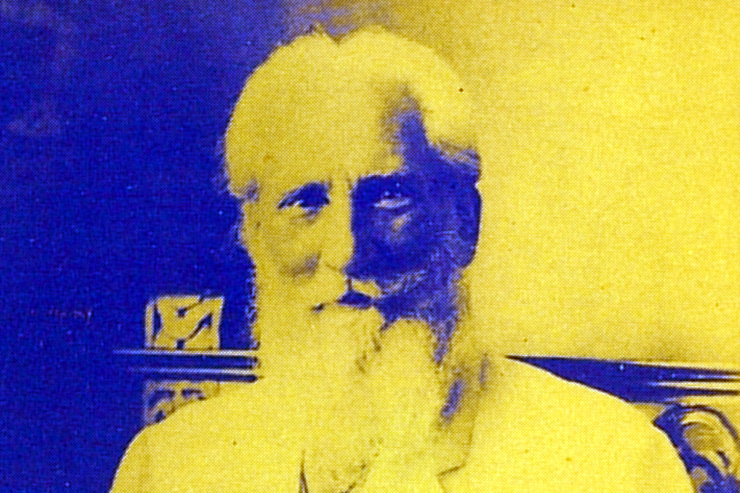
    1. Artist’s impression of C.W. Leadbeater which adorned the cover of a 1973 edition of his book The Inner Side of Christian Festivals published by the St Alban Press.
    2. “The Third Object of the Theosophical Society”, Adyar Pamphlet Number 184, Adyar, India, 1930.
    3. Other Temples, Other Gods: The Occult in Australia, Nevill Drury and Gregory Tillett, Hodder & Stoughton Australia Pty Ltd, 1982
    4. The Inner Life by C.W. Leadbeater, Madras, India:  Theosophical Pub. House, 1912.
    5. The Hidden Side of Christian Festivals by C.W. Leadbeater, as quoted in The Elder Brother: A Biography of Charles Webster Leadbeater by Gregory Tillett.
    6. The Elder Brother: A Biography of Charles Webster Leadbeater,  Routledge & Kegan Paul Books, 1982.

    © New Dawn Magazine and the respective author.
    For our reproduction notice, click here.