New Dawn – World's Most Unusual Magazine

Author: Dr Tim Coles

  • Bubbles of Hate: How Social Media Keeps Users Addicted, Alone, & Ill-Informed

    Bubbles of Hate: How Social Media Keeps Users Addicted, Alone, & Ill-Informed

    From New Dawn Special Issue Vol 14 No 6 (Dec 2020)

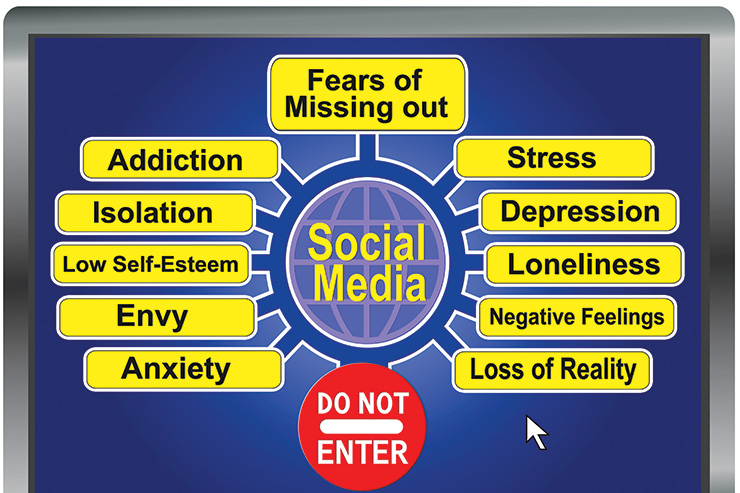
    Internet communication has gone from emails, messaging boards, and chatrooms, to sophisticated, all-pervasive networking. Social media companies build addictiveness into their products. The longer you spend on their sites and apps, the more data they generate. The more data, the more accurately they anticipate what you’ll do next and for how long. The better their predictions, the more money they make by selling your attention to advertisers. 

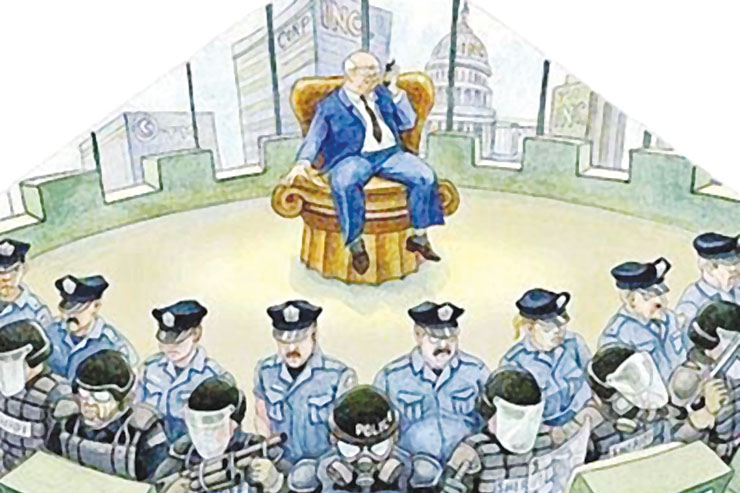
    Depressed and insecure about their value as human beings, the younger generations grow up knowing only digital imprisonment. Older users are trapped in polarised bubbles of political hate. As usual, the rich and powerful are the beneficiaries. 

    Masters of Manipulation

    Humans are social animals. But big business wants us isolated, distracted, and susceptible to marketing. Using techniques based on classical conditioning, social media programmers bridge the gap between corporate profits and our need to communicate by keeping us simultaneously isolated and networked.

    The Russian psychologist, Ivan Pavlov (1849–1936), pioneered research into conditioned reflexes, arguing that behaviour is rooted in the environment. His work was followed by the Americans John B. Watson (1878–1958) and B.F. Skinner (1904–90). Their often cruel conditioning experiments, conducted on animals and infants, laid the basis for gambling and advertising design. As early as the 1900s, slot machines were designed to make noises, like bell sounds, to elicit conditioned responses to keep the gambler fixed on the machine: just as Pavlov used a bell to condition his dogs to salivate. By the 1980s, slot machines had incorporated electronics to advantage particular symbols whilst giving the gambler the impression that they are near victory. “Stop buttons” gave the gambler the illusion of control. Sandy Parakilas, former Platform Operations Manager at Facebook, says: “Social media is very similar to a slot machine.”

    Psychologist Watson’s experiments “set into motion industry-wide change” in TV, radio, billboard, and print advertising “that continued to develop until the present,” says historian Abby Bartholomew. Topics included emotional arousal in audiences (e.g., sexy actress → buy the product), brand loyalty (e.g., Disney is your family), and motivational studies (e.g., buy the product → look as good as this guy). 

    Many of these techniques involve stimulating so-called “feel good” chemicals like dopamine, endorphins, oxytocin, and serotonin. These are released when eating, exercising, having sex, and engaging in positive social interactions. Software designers learned that their release can be triggered by simple and unexpected things, like getting an email, being “friended,” seeing a retweet, and getting a like. The billionaire co-founder of Facebook and Napster, Sean Parker, said that the aim is to “give you a little dopamine hit every once in a while because someone liked or commented on a photo or a post.” But Parker also said of his company: “God only knows what it’s doing to our children’s brains.” 

    Facebook’s former Vice President of User Growth, Chamath Palihapitiya, doesn’t allow his children to use Facebook and says “we have created tools that are ripping apart the social fabric.” Tim Cook, the CEO of the world’s first trillion-dollar company Apple, on whose iPhones the addictions mainly occur, bluntly said of his young relatives: “I don’t want them on a social network.”
    With the understanding that “the biggest companies in Silicon Valley have been in the business of selling their users” (technology investor, Roger McNamee), social media designers built upon the history of behaviourism and game addiction to keep users hooked. For example: In the good ol’ days, sites including the BBC and YouTube had page numbers (“pagination”), which gave users a sense of where they were in their search for an article or video. If the search results were poor, the user knew to skip to the last page and work backwards. But pages were phased out and replaced with “infinite scroll,” a feature designed in 2006 by Aza Raskin of Jawbone and Mozilla. Pagination, for instance, gives the user a stopping cue. Designers have systematically removed stopping cues. Likening infinite scroll to “behavioural cocaine,” Raskin said: “If you don’t give your brain time to catch up with your impulses, you just keep scrolling.” 

    How They Do It & How It Hurts

    Users think that they have control over their social media habits and the information being fed to them, including news and suggested webpages, are coming to them organically. But, unbeknownst to them, the framework is calculated. The US Deep State, for instance, helped to develop social networks. Sergey Brin and Larry Page developed their web crawling software, which they later turned into Google, with money from the US Defense Research Projects Agency. Referring to the Massive Digital Data Systems, the CIA-funded Dr Bhavani Thuraisingham confirmed that “[t]he intelligence community’s MDDS program essentially provided Brin seed-funding.”

    Consider how the technologies were commercialised. “Growth” means advertising money accrued from sites visited, content browsed, links clicked, pages shared, etc. “Growth hackers” are described by former Google design ethicist Tristan Harris as “engineers whose job is to hack people’s psychology so they can get more growth.” Designers build applications into software that manipulate users’ unconscious behavioural cues to lead them in certain directions. 

    To give an example: The feel-good chemical oxytocin is released during positive social interactions. It is likely stimulated when social media companies send an email alert that family have shared a new photo. Other human foibles include novelty-seeking (for potential rewards) and temptation (fear of missing out or FOMO). These are linked to the feel-good chemical dopamine. Rather than including the new family photo in the email, the email is designed with a URL feature to tempt the user to click the link which directs them to the social media site in order to see the new photo. The chemical-reward response chain is as follows: family (oxytocin) → novelty/new photo (dopamine), temptation to click/FOMO → reward from positive social interaction after clicking and seeing the new photo (oxytocin-dopamine stimulation). 

    This convoluted chain of events is designed to sell the user’s attention to advertisers. The more time spent doing these things, the more adverts can be directed at the user and the more money for the social media company. Harris says “you are being programmed at a deeper level.” 

    In addition, tailored psychological profiles of users are secretly built, bought from, and sold to data brokers, like Experian. User behavioural patterns feed deep learning programmes which aim to predict the user’s next online move according to their personal tastes and previous browsing patterns. The more accurate the prediction, the more likely their attention is drawn to an advert and the more money social media firms accrue. Says former Mozilla’s Raskin: “They’re competing for your attention.” He asks: “How much of your life can we get you to give to us?”

    Instagram was developed in 2010 by Facebook as a photo and video sharing service. It is used by a billion people globally and, unlike the teen-loving Snapchat, is used mainly by 18-44-year-olds. Instagram falls into the so-called “painkiller app” category. One designer explains that such apps “typically generate a stimulus, which usually revolves around negative emotions such as loneliness or boredom.”

    Snapchat is a messaging app designed in 2011 that stores pictures (“Snaps”) for a short period of time. The app is used by 240 million people per day. Unlike YouTube, most of whose users are male, the majority of Snapchat users are female. Only 17 per cent of users are over 35. Its model is Snapstreak: a tracker that counts the days since the user replied to the Snap. Designers built FOMO (noted above) into Snapchat. The longer the user’s non-reply, the greater their credit score decline. This can lead to addiction because, unlike Facebook, Snapchat tags are “strong ties” (e.g., close friends, family), so the pressure to reply is greater.

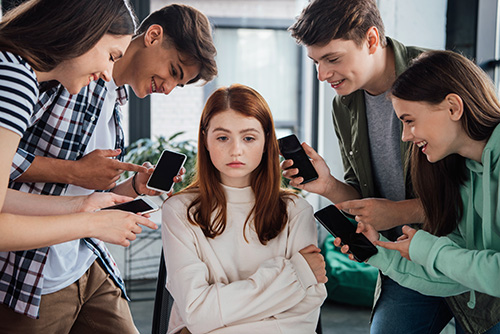
    In addition to the harmful content of social media – sexualised children, impossible and ever-changing beauty standards, cyberbullying, gaming addiction, loss of sleep, etc. – the very design of social media hurts young users. We all need to love ourselves and to feel loved by a small circle of others: friends, family, and partners. Young people are particularly susceptible to self-loathing and questioning whether someone loves them. 

    The introduction of social media has been devastating. A third of all teens who spend at least two hours a day on social media, i.e., the majority, have at least one suicide risk factor. The percentage increases to nearly half for those who spend five hours or more. A study of 14-year-olds found that those with fewer social media likes than their peers experienced depressive symptoms. Teens who are already victimised at school or within their peer-group were the worst-affected.

    Divided & Conquered

    Another feature built into social media is the polarisation of users along political lines; a phenomenon that mainly concerns people of voting age. One of the many human foibles exploited by social media designers is homophily: our love of things and people similar and familiar to us. Homophily makes us feel safe, understood, validated, and positively reinforced. It stimulates feel-good chemicals and, in social media contexts, is exploited to keep us inside an echo-chamber so that our biases are constantly reinforced, and we stay online for longer. But is this healthy?

    Referring to Usenet group discussions, the lawyer Mike Godwin formulated the Rule of Hitler Analogies (or Godwin’s Law), which correctly posits that the longer an online discussion, the higher the probability that a user will compare others to Hitler. The formula was a reflection of users’ lack of tolerance toward the views of others. 

    A projection published in 2008 asked if people will be more tolerant due to the internet. Nearly six in 10 participants disagreed, compared to just three in 10 who agreed. In many ways, the industry specialists were fatalistic. Internet architect, Fred Baker of Cisco Systems, said: “Human nature will not have changed. There will be wider understanding of viewpoints, but tolerance of fundamental disagreement will not have improved.” Philip Lu of Wells Fargo Bank Internet Services said: “Just as social networking has allowed people to become more interconnected, this will also allow those with extreme views… to connect to their ‘kindred’ spirits.” Dan Larson of the PKD Foundation said: “The more open and free people are to pass on their inner feelings about things/people, especially under the anonymity of the Internet – will only foster more and more vitriol and bigotry.”

    Users can artificially inflate their importance and the strength of their arguments by creating multiple accounts with different names (“sock puppets”). Some websites sell “followers” to boost users’ profiles. It is estimated that half of the Twitter followers of celebrities and politicians are bots. Gibberish-spewing algorithms have been programmed to write fake reviews on Amazon to hurt competitors’ sales. In at least one case, a pro-Israeli troll was unmasked posing as an anti-Semite in order to give the impression that anti-Semitism is rampant online and thus users should have more sympathy with Israel. Content creators increasingly find themselves de-platformed because of their political views while others’ social media accounts are suppressed by design (“shadow-banning”). 

    In the age of COVID, disinformation on both sides is spread: the severity of the disease, efficacy of vaccines, necessity of lockdowns, etc. As with US politics, Brexit, climate change, etc. neither side wants to talk rationally and open-mindedly with the other. The very designs of social media make this very difficult. 

    It should be emphasised that some social media are designed to create echo-chambers, and others are not. Cinelli et al. studied conversations about emotive subjects – abortion and vaccines – and found that while Facebook and Twitter show clear evidence of the echo-chamber effect, Reddit and Gab do not. Sasahara et al. demonstrate that due to users’ need for validation, when likes and friendships are withdrawn the network tends to descend into an echo-chamber. 

    Conclusion: What Can We Do?
    Noted above is Google’s seed-funding from the Deep State. More recently, the ex-NSA contractor Edward Snowden revealed that Apple, Facebook, Google, Microsoft, and others were passing user data onto his former employer. Government and big tech became “the left hand and the right hand of the same body.” In the UK, the NSA worked with Government Communications Headquarters on the Joint Threat Research Intelligence Group. Leaks revealed an unprecedented, real-time surveillance and disruption operation that included hacking users’ social media accounts, posting content in their name, deleting their accounts, luring them into honey-traps, planting incriminating evidence on them, and more. 

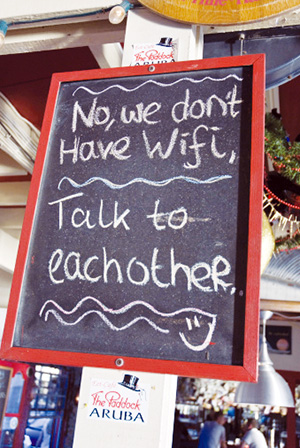
    To beat the antisocial social network, we need to remember who we are and what real communication is. We need to protect the young from the all-pervasive clutches of “social media” and to realise that we are being sold. 

    Ask yourself: Do you use social media solely to organise protests, alert friends to alternative healing products, and spread anti-war messages? Or do you use it to send irrelevant information about your day-to-day habits in anticipation that an emoji or “like” will appear? 

    Taking a step back can allow us to see outside and indeed prick the bubble of digital hatred in which the Deep State and corporate sectors have imprisoned us. 

    Dr Tim Coles’s new book The War on You can be obtained from online booksellers & www.amazon.com/exec/obidos/ASIN/B08HB68N97

    [alert type=”general” dismiss=”no”]This article was published in New Dawn Special Issue Vol 14 No 6.[/alert]

    [alert type=”success” dismiss=”no”]If you appreciate this article, please consider subscribing to help maintain this website.[/alert]

    Footnotes

    1. Roger Collier (2008) Canadian Medical Association Journal, 179(1): 23-24
    2. Quoted in Hilary Andersson, BBC Panorama, 3 July 2018, www.bbc.co.uk/news/technology-44640959
    3. Abby Bartholomew (2013) University of Nebraska, https://digitalcommons.unl.edu/cgi/viewcontent.cgi?article=1042&context=journalismdiss
    4. Quoted in Mike Allen, Axios, 9 November 2017, www.axios.com/sean-parker-unloads-on-facebook-god-only-knows-what-its-doing-to-our-childrens-brains-1513306792-f855e7b4-4e99-4d60-8d51-2775559c2671.html
    5. Quoted in James Vincent, The Verge, 11 December 2017, www.theverge.com/2017/12/11/16761016/former-facebook-exec-ripping-apart-society
    6. Quoted in Samuel Gibbs, Guardian, 19 January 2018, www.theguardian.com/technology/2018/jan/19/tim-cook-i-dont-want-my-nephew-on-a-social-network
    7. Interviewed in The Social Dilemma (2020), Netflix. 
    8. Adam Alter (2017) Irresistible, London: Penguin
    9. Quoted in Sean Keane, CNet, 4 July 2018, www.cnet.com/news/facebook-twitter-are-designed-to-be-like-behavioural-cocaine-for-users-insiders/
    10. Quoted in Nafeez Ahmed, Insurge Intelligence, 22 January 2015, https://medium.com/insurge-intelligence/how-the-cia-made-google-e836451a959e
    11. Interviewed in The Social Dilemma (2020), Netflix
    12. Ibid. 
    13. Ibid. 
    14. J. Clement, Statista, 29 October 2020, www.statista.com/statistics/325587/instagram-global-age-group/
    15. Quoted in Hannah Schwär & Qayyah Moynihan, Business Insider, 5 April 2020, www.businessinsider.com/facebook-has-been-deliberately-designed-to-mimic-addictive-painkillers-2018-12
    16. J. Clement, Statista, 21 October 2020, www.statista.com/statistics/545967/snapchat-app-dau/
    17. J. Clement, Statista, 29 October 2020, www.statista.com/statistics/933948/snapchat-global-user-age-distribution/
    18. Sara Fischer, Axios, 17 October 2017, www.axios.com/teens-are-addicted-to-snapchat-1513306234-2b836b56-97c9-4b50-af8e-391fe68681ff.html
    19. Leah Shafer, Usable Knowledge (Harvard), 15 December 2017, www.gse.harvard.edu/news/uk/17/12/social-media-and-teen-anxiety
    20. Hae Yeon Lee et al. (2020) Child Development: DOI: 10.1111/cdev.13422
    21. Rebecca Moore (2018) Nova Religio, 22(2): 145-54
    22. All quoted in Janna Quitney Anderson and Lee Rainie, The Future of the Internet III, Pew Internet and American Life Project, 14 December 2008, pp. 38-46, www.pewresearch.org/internet/wp-content/uploads/sites/9/media/Files/Reports/2008/PIP_FutureInternet3.pdf
    23. Caroline Forsey, HubSpot, 18 October 2020, https://blog.hubspot.com/marketing/buy-instagram-followers
    24. Rand Fishkin, SparkToro, 9 October 2018, https://sparktoro.com/blog/we-analyzed-every-twitter-account-following-donald-trump-61-are-bots-spam-inactive-or-propaganda/
    25. See my CounterPunch article, 4 October 2019, www.counterpunch.org/2019/10/04/robot-trolls-on-amazon-how-fake-reviews-could-undermine-progressive-politics/
    26. Lance Tapley, Common Dreams, 20 August 2014, https://www.commondreams.org/hambaconeggs
    27. Caroline Forsey, HubSpot, 27 August 2019, https://blog.hubspot.com/marketing/instagram-shadowban
    28. Matteo Cinelli (2020) “Echo Chambers on Social Media: A comparative analysis,” arXiv:2004.09603
    29. Kazutoshi Sasahara et al. (2020) Journal of Computational Social Science: https://link.springer.com/content/pdf/10.1007/s42001-020-00084-7.pdf
    30. Quoted in Katie Collins, CNet, 4 November 2019, www.cnet.com/news/edward-snowden-says-facebook-amazon-and-google-engage-in-abuse/
    21. JTRIG (2014) The Art of Deception: Training for a New Generation of Online Covert Operations, https://assets.documentcloud.org/documents/1021430/the-art-of-deception-training-for-a-new.pdf

    © New Dawn Magazine and the respective author.
    For our reproduction notice, click here.

  • UFOs Interfering with Nuclear Weapons?

    UFOs Interfering with Nuclear Weapons?

    From New Dawn Special Issue Vol 14 No 1 (Jan 2020)

    The first nuclear weapons were successfully tested in the 1940s and have been designed with increasing sophistication and lethality ever since. They allow great powers to dominate smaller ones. They also risk the lives of everyone on the planet as even a ‘small’ nuclear exchange by accident or war could trigger a catastrophic, crop-killing nuclear winter. Yet, since the 1940s, military personnel and investigators have raised concerns in secret about unidentified flying objects (UFOs) in or around sensitive nuclear weapons installations. 

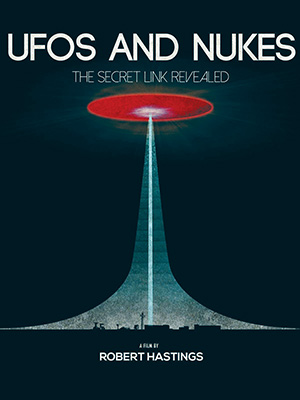
    Robert Hastings is a world-renowned expert on the subject, having written the book UFOs & Nukes: Extraordinary Encounters at Nuclear Weapons Sites, and produced the documentary UFOs and Nukes: The Secret Link Revealed. We asked for his thoughts on this important topic. 

    TIM COLES (TC): Tell us a bit about your background and how you became interested in UFOs and nukes.

    Robert Hastings

    ROBERT HASTINGS (RH): My interest in the topic of UFO activity at nuclear weapons sites began in March 1967, when I was a teenager living in Montana. Although I was never in the military myself, my father, Senior Master Sergeant Robert E. Hastings, was stationed at Malmstrom Air Force Base, where 200 nuclear missiles were deployed in the surrounding countryside. After witnessing a radar tracking of five unknown aerial craft at the base air traffic control tower, where I worked as a janitor three nights a week after high school, I excitedly told my dad about the incident. He subsequently made inquiries at his workplace – the main radar facility on base – and was told that five UFOs had indeed been tracked by multiple radars that night. Moreover, he was told, they had been manoeuvring near nuclear missile sites southeast of Malmstrom. When my dad later conveyed all of that to me, I was hooked! UFOs are real?! They’re flying around our ICBMs?! Wow! 

    Years later, in 1973, I read a magazine article by Dr J. Allen Hynek – the Air Force’s civilian, scientific UFO consultant – in which he openly discussed UFO incursions at nuclear missile sites at another base, Minot, in North Dakota. At that point, I knew that the situation at Malmstrom had definitely been real and quite serious. Shortly thereafter, at first to satisfy my curiosity, I began seeking out and interviewing Air Force veterans to learn all I could about UFOs’ apparent interest in nukes. Over time – 46 years and counting – more than 160 of those individuals have told me about their personal involvement in such incidents.

    A drawing from a declassified US Air Force report, made by an unidentified missile security policeman at Minot AFB, North Dakota, relating to a UFO incursion in August 1966.

    TC: Why do you think that UFOs at nuclear weapons sites, as opposed to say non-nuclear military installations, are so important?

    RH: Nuclear weapons have fundamentally changed the nature of warfare, given their nearly unbelievable destructive power and ability to radioactively poison the environment on a planetary scale. As we all know, during the Cold War the US and the USSR effectively held humanity hostage with their unending, nuclear sabre-rattling. The Cuban Missile Crisis, in 1962, demonstrated just how fragile our collective security really was, and how quickly a potentially civilisation-ending conflict might erupt. Apparently, someone else – an outside third party possessing revolutionary aerial craft – became interested in this existential situation and, at some point, began intervening in a limited, covert manner. Dozens of US Air Force veterans – most of whom were initially interviewed by me – have now openly discussed UFOs tampering with American ICBMs, rendering them temporarily inoperable. Documents smuggled out of Russia, in 1993, confirm that similar incidents occurred in the Soviet Union in the 1980s. 

    So, for whatever reason, the outside third party – which I believe to be aliens from another world – surreptitiously made their presence known to the superpowers’ military leaders during a dangerous period in history, perhaps as a heavy hint or a warning: “Hey, humans! Nukes pose an unprecedented threat to your species and your planet. Get rid of them!” But I am, of course, speculating. Regardless, the now well-documented UFO incidents at our ICBM sites are longstanding, widespread and, I am told by my sources, ongoing.

    TC: You say that the UFOs are intelligently operated, but is it possible that they are unexplained terrestrial phenomena such as electromagnetic lights or some kind of as-yet undiscovered lifeform living at high altitudes?

    RH: If one reviews the eyewitness reports relating to the nuclear missile cases, it is immediately apparent that they involved unknown aerial craft of some kind. Go to www.ufohastings.com/documents and read the North American Aerospace Defense Command (NORAD) log entries relating to the incidents at Malmstrom AFB in November 1975. For example, “The [Launch Control Facility] at Harlowton, Montana, observed an object which emitted a light which illuminated the site driveway.” Or, “[Missile Site] L-1 reports that the object to their northeast seems to be issuing a black object from it, tubular in shape.” Or, “[Malmstrom Command Post] reports UFO southeast of Lewistown, orange white disc object.” Or, “L-5 reported object increased in speed – high velocity, raised in altitude and now cannot tell the object from stars.” And then there is this entry, “From four different points: Observed objects and fighters; when fighters arrived in the area, the lights went out; when fighters departed, the lights came back on.” In other words, as security personnel at four different locations watched, the UFOs played cat-and-mouse with two F-106 jet fighters that had been launched to chase them, extinguishing their illumination as the aircraft approached their position and re-illuminating themselves after the fighters returned to base.

    And I might add, the only reason jets were scrambled is because the UFOs were tracked on the base’s radar, just as any non-Stealth aircraft would be. This is only one of dozens of declassified documents that summarise similar incidents at other bases’ missile sites, or at nuclear weapons storage facilities. So, no, the UFOs themselves are not some undiscovered life form; the objects look like machines, act like machines, and are undoubtedly piloted or remotely controlled by someone who, in this instance, reacted to the attempted intercept of them by US Air Force fighters by taking evasive actions. 

    Are the craft terrestrial in origin? The first known UFO sightings at a nuclear facility occurred in January 1945, seven months before the atomic bombings in Japan. Declassified US Army documents confirm three separate incursions of unknown aircraft, which were tracked on radar, that hovered over the plutonium production plant known as the Hanford Site, in Washington State. US Navy fighters based nearby actually chased the objects. In 2009, I interviewed one of the pilots, Bud Clem, who told me that each UFO looked like “a bright ball of fire… so bright that you could hardly look directly at it.” The unidentified aerial craft easily outran the propeller-driven F6F Hellcat fighters sent up to pursue them. 

    Now, is there any credible evidence that any country on Earth was flying such an aircraft in 1945? No, there isn’t. Despite the exotic claims one sees on the internet, there is no verifiable information confirming that the Nazis manufactured a functional flying saucer. Nevertheless, someone was operating one – or, at least, a self-illuminated flying sphere – at the Hanford plant before the end of the war. 

    Illustration from the film UFOs and Nukes: The Secret Link Revealed of a UFO directing a beam of light onto a Minuteman missile silo near Ellsworth AFB, South Dakota, in 1967, as described by retired US Air Force launch officer Major Gaylan King. 

    I again maintain that the UFOs seen at nuclear sites – from 1945 to the present day – are technologically superior vehicles being operated by some third party. According to the radar data, they can hover, perform tremendous accelerations, make instantaneous right-angle turns, and fly thousands of miles per hour. There might possibly be some secret, recently developed, ultra-sophisticated US aerial craft hidden at Area 51 capable of doing some or all of those things, but there sure as hell wasn’t any such airplane flying during World War II, or above the ICBM sites in Montana in the 1960s and ‘70s. And remember, we now know that the Soviets were being subjected to UFO incursions at their missile sites as well, some involving systems disruptions. We can’t point the finger at the Russians when attempting to explain the events at Malmstrom. No, those unidentified aerial craft were clearly not being operated by any government on Earth. So who does that leave us? 

    TC: What’s really impressive about your book UFOs & Nukes is your reliance on primary documentation: first-hand eyewitness accounts, military documents, FBI memos, and so on. But if I were in government counterintelligence, I would try to neutralise the anti-nuclear weapons movement by having people believe that some outside force is looking after us by sabotaging nukes. How do you check that military and other documents are not just disinformation?

    RH: Respectfully, you misunderstand the situation. No military or intelligence group, hidden or not, was actively promoting the “UFOs are Here to Save Us” narrative by disseminating data that would further your hypothetical disinformation ploy. On the contrary, the documents confirming UFO activity at nuclear weapons sites were jealously guarded and only forcibly released to researchers via the Freedom of Information Act. Sometimes, decades passed before they became available to the public. Similarly, all of my US military witnesses only went public with their accounts after I implored them to do so. Like me, they believe that Americans – and the rest of humanity – deserve to know the truth about the UFO reality and their link to nuclear weapons. 

    The suggestion that the US government has been releasing bogus information to further a false history of events to influence public opinion in some manner is simply untenable. Actually, over time, the US Air Force has been doing the exact opposite, steadfastly claiming that UFOs don’t exist, even though they are secretly aware of, and are extremely concerned about, the nuclear cases. The last incident that I’ve heard about occurred at a Malmstrom-operated missile site in January 2018, so the situation is still active. 

    Importantly, at the present time, we have no assurance that the disruptive activity at ICBM sites – UFOs tampering with our missiles – necessarily indicates that whomever is operating the craft is “looking after us,” as you put it. Other scenarios can be advanced to explain what has been reported by the veterans whom I’ve interviewed. For example, it’s entirely possible that the UFO beings have some nefarious plan for humans, even an invasion of Earth, and are investigating whether they can disarm us before they strike. I don’t think that’s even remotely true, but we can’t rule it out at the moment given the limited evidence in our possession.

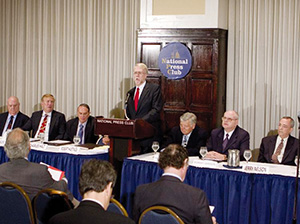
    TC: Can you tell us more about the 160 eyewitnesses: their rank, how you approached them or vice versa, and how the famous Press Club conference in 2010 was arranged?

    The 27 September 2010 UFOs and Nukes press conference in Washington D.C. during which seven USAF veterans discussed their involvement in nuclear weapons-related UFO incidents.

    RH: My sources are mostly US Air Force veterans, although a handful were in the Army or Navy, and range from low-level airmen to colonels. Usually, they worked with or guarded nuclear weapons, but some were radar operators, counterintelligence personnel, or pilots. In every case, they directly witnessed or were involved in follow-up activities related to UFO incursions at ICBM sites, missile warhead or bomb storage facilities, nuclear materials production sites or weapons test areas. 

    In the 1970s and 80s, I asked every pertinent military veteran I encountered if they had any information they would be willing to share. From the mid-1990s onward, I’ve used the internet to locate potential witnesses who are members of Air Force alumni groups, who can be contacted via email. In other cases, the veterans had attended my lectures and approached me afterward or read one of my articles or my book, and subsequently contacted me. Not surprisingly, most of the individuals whom I randomly approached over the years had no knowledge of UFO incidents at the bases where they worked. However, slowly but surely, I amassed a body of testimony from scores of veterans who knew about such incidents, occurring from the 1950s onward. I always secured their military history record, called a DD214, before interviewing them, to confirm that they had indeed been missile officers or missile guards, and so on. In other words, all of my sources are vetted.

    Regarding the 2010 press conference, one of the veterans, former Minuteman missile launch officer Captain Bob Salas – whose ten missiles were shut down by a UFO at Malmstrom AFB in 1967 – and I decided to try to get the media’s attention by co-hosting the event. CNN streamed it live and a number of major US news organisations covered it as well, as did several in foreign countries. I think we succeeded in our efforts to get some publicity for the UFO-nukes topic. But, as is the case with most news stories, it faded quickly and had no lasting impact on public perceptions, at least to any significant degree.

    TC: What is the most extraordinary case discussed in your book?

    RH: Another former Air Force missile launch officer, Captain David Schuur, revealed his involvement in an ICBM-activation incident at Minot AFB, North Dakota, in 1967. His security personnel reported seeing a bright aerial object moving from missile to missile, among the ten that he controlled. Meanwhile, down in the underground launch capsule, Schuur was horrified to see that the ICBMs began going into launch mode, one by one, just as the UFO hovered over a given missile. He had to flip an “Inhibit Switch” to deactivate the countdown in each one. This type of incident was also reported by another former launch officer, Captain Larry Manross, who witnessed an identical event at Minot on a different occasion. Moreover, one of the Soviet UFO-related documents smuggled out of Russia by investigative reporter George Knapp, in 1993, confirms such an incident occurring at a missile base in Soviet Ukraine in October 1982. 

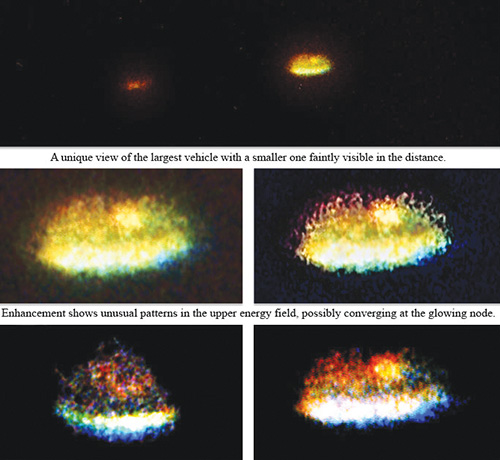
    Still-frames from a motion picture film of UFOs hovering over the Manzano Weapons Storage Area, at Kirtland AFB, New Mexico, in 1980. Taken by Dr Paul Bennewitz.

    Now, I don’t think that those aboard the UFOs were trying to start World War III by launching the superpowers’ ICBMs; more likely they were activating the missiles to see how the systems worked – assuming that they had the ability to monitor them remotely – probably knowing that the launch officers could disrupt the countdowns if they needed to do so in an emergency situation. Or perhaps the entities merely wished to scare the hell out of the military in both countries, in effect sending the message that they could control the ICBMs if they so chose. But I obviously don’t know the reason for the missile activations and am of course speculating.

    TC: Please tell us about your film UFOs and Nukes: The Secret Link Revealed. How did it come about and what is the strongest evidence in the film?

    RH: A wealthy benefactor provided the funding for the film. Between 2008 and 2015, I had declined offers to participate in 18 different UFO programs on American, British, Canadian and French television because I would have had no control over how my material was presented. When broadcast, I saw that most of those shows were factually inaccurate and sensationalised, just as I predicted. I didn’t want to lend my work to a dumbed-down presentation on UFOs meant to entertain the public. When I mentioned all of this to my benefactor, he generously gave me the money to make my own film. I’m quite happy with the result; it’s available at Vimeo.com.

    As far as the most important case referenced in the film, I would say that the Big Sur Incident is unmatched for its shocking nature and historic significance. Two former US Air Force officers, Drs. Bob Jacobs and Florenz Mansmann, say that a telescopic motion picture camera inadvertently caught a UFO on film during a missile test launch at Vandenberg AFB, California, in 1964. Analysis of the film confirmed that a domed, disc-shaped craft manoeuvred near the missile’s dummy nuclear warhead in flight and then shot it down with weaponised beams of light! All of this was clearly visible when the film was analysed frame-by-frame with a magnifier. They say that the amazing motion picture was quickly confiscated by the CIA. Debunkers have unsuccessfully attempted to discredit the case by misstating the facts, but the available evidence substantiates that the event actually took place. Apparently, the entities operating the UFOs can not only tamper with the ICBMs in their underground silos but can also disrupt them in mid-flight. This is an incredible revelation!

    TC: Have you been threatened or intimidated for the work that you’re doing? If so, what forms have they taken and who do you think is responsible?

    RH: Yes, someone has been trying to intimidate me via my telephone for years. Often, when speaking with a military veteran about his particular UFO incident, shortly after I hang up I get a second, mysterious call where the person says nothing but breathes heavily into the phone before hanging up. I gather that they – whoever “they” are – want me to know they are keeping an eye on me and know to whom I am talking. This kind of harassment has happened dozens of times and has been going on since 1982. I suspect that the CIA is responsible but can’t prove that. Furthermore, emails between a given veteran and myself often disappear in cyberspace. We later discover, via follow-up phone calls, that our correspondence to each other never arrived. This happens routinely, always involving persons who witnessed UFO activity at nuclear weapons sites and is clearly suspicious. I knew that my activities would incur the displeasure of one or more US government agencies so none of this was unexpected. It’s so frequent that I’m used to it and not bothered by it these days. I just keep moving forward.

    TC: What projects are you working on at the moment?

    RH: I suspect that my answer will make some persons reading this very uneasy. The fact is, in addition to my research activities and public speaking relating to the UFO-Nukes connection, I have had, over the past 31 years, a series of unsettling-to-terrifying encounters with what I have come to believe are non-human entities. In other words, I am an experiencer or, stated more dramatically, an alien abductee. I wish this were not the case and deeply regret that this “thing” has entered my life. Whether it is a consequence of my investigations or some other factor is unknown, but I am convinced that these encounters are physical in nature and not merely misinterpreted prosaic events, or due to an overactive imagination, or the result of sleep paralysis – all theories advanced by the sceptics to explain away the abduction phenomenon. 

    Moreover, seven of the 160-plus veterans whom I’ve interviewed have revealed their own face-to-face alien encounters to me. Yes, I understand that all of this is rather bizarre and hard to believe, nevertheless it is unfortunately quite real. After decades of secrecy I have now “come out” about my secret life in a new book, Confession: Our Hidden Alien Encounters Revealed, co-written with Dr Bob Jacobs who witnessed the Big Sur UFO incident mentioned earlier. In the early 1980s, he began having entity encounters as well. When I learned this fact in 2012, we began updating each other after our independent visitation/abduction experiences, which are ongoing. 

    Finally, in early 2019, Jacobs and I decided to go public regarding all of this, even though we knew that our credibility would be negatively impacted and that some people – who had previously been interested in, and believed, our revelations regarding UFO incursions at nuclear weapons sites – would now recoil in sceptical disbelief at our new revelations. But it is what it is, and these strange, frightening experiences are continuing and obviously beyond our control. Openly talking about them, however belatedly, is no different than our previous efforts to publicly divulge the hidden nuclear weapons-related cases. Although not yet recognised as valid by most scientists and much of the public, the alien abduction phenomenon is real, global, and tremendously important. That these non-human entities are somehow part of humankind’s overall future seems clear to experiencers; one day it will undoubtedly be obvious to everyone.

    [alert type=”general” dismiss=”no”]This article was published in New Dawn Special Issue Vol 14 No 1.[/alert]

    [alert type=”success” dismiss=”no”]If you appreciate this article, please consider subscribing to help maintain this website.[/alert]

    © New Dawn Magazine and the respective author.
    For our reproduction notice, click here.
  • Architects of Power: How the Global Elite Profit from Extreme Inequality & Pre-empt the Backlash

    Architects of Power: How the Global Elite Profit from Extreme Inequality & Pre-empt the Backlash

    From New Dawn Special Issue Vol 13 No 3 (June 2019)

    There is a new, mega-rich global elite consisting of a small number of billionaires and multibillionaires. Many of them made their money in the technology sector. Others play financial markets or inherit fortunes. They are wealthier and more powerful than some entire nation-states. 

    The British Ministry of Defence (MoD) says: “Whilst there have always been differences between the wealthier, better educated and the less privileged, these differences appear likely to widen in the coming decades.” 

    The mega-rich deliberately order the world in ways that guarantee their wealth by institutionalising inequality. Occasionally, this is admitted. In 1997, a book published by the Royal Institute for International Affairs in the UK acknowledged: “The present international order may not be the best of all possible worlds, but for one of the ‘fat cats of the West’ enjoying a privileged position in an international society that is structured and organised in ways which perpetuate those privileges, there are good reasons for not pursuing radical change.” 

    This is also true of internal policymaking. The third richest man in the world, Warren Buffett (worth over $80bn), confirmed this: “There’s been class warfare for the last 20 years, and my class has won.” This echoes his statement in 2006, just prior to the global financial crisis: “There’s class warfare all right… but it’s my class, the rich class, that’s making war, and we’re winning.” Around the same time, the liquidity firm Citigroup circulated an investor memo, stating: “Society and governments need to be amenable to disproportionately allow/encourage the few to retain that fatter profit share.” More recently, the UK MoD admitted: “In the coming decades, the very highest earners will almost certainly remain rich, entrenching the power of a small elite. Vested interests could reduce the prospect of economic reforms that would benefit the poorest.”

    Consider the enormous concentration of wealth and power that results from this imbalance. 

    Ever-Increasing Power

    Global and national inequality is staggering and getting worse. By 2011, a mere 147 – mainly US and European – corporations owned and controlled 40% of world trade and investment. Just four corporations influence the profitability and power of these 147: McGraw-Hill, which owns Standard & Poor’s ratings agency; Northwestern Mutual, owner of the indexer Russell Investments; the CME Group, which owns 90% of the Dow Jones market index; and Barclay’s bond fund index. Evaluative decisions by analysts at these firms affect the wealth and performance of each of the 147 giants.

    That’s corporate wealth concentration. But what about wealth concentration among individuals?

    There are 7.7 billion people in the world. Of those, just 2,153 are billionaires. According to Forbes, their combined wealth totals $8.7 trillion. The list of billionaires reflects where power is most concentrated: in the US. While China and Europe’s number of billionaires declined in the previous 12 months, the US and Brazil gained billionaires. The US is home to 607 billionaires or 0.000001% of the population. It is worth noting that President Donald Trump was a billionaire before he came to power. Trump has cut taxes for his fellow billionaires. As an indication of continued wealth concentration, consider the wealth disparity among the billionaire class itself. He Xiangjian, founder of the Midea Group, is the joint-50th richest person, worth over $19.8bn. Jeff Bezos, by comparison, the founder of Amazon, is the richest man in the world, worth over $131bn – more than six times He Xiangjian.

    Part of the problem has been the US-led imposition of an economic dogma called “neoliberalism” (which is neither new nor liberal) on much of the rest of the world. 

    Neoliberalism can be roughly defined as: 

    1) Financialisation, i.e., allowing investors to make money from money as opposed to tangible things; 

    2) Deregulating financial services; 

    3) Taking out government insurance policies so that working people bail out financial institutions; 

    4) Cutting taxes for the wealthy; 

    5) Privatising public services to reduce social mobility; 

    6) Imposing austerity to make markets more attractive to investors. 

    Neoliberalism has cut taxes for the super-rich, enabling them to hold onto their wealth at the expense of others. According to Oxfam, the average rate of personal income tax for the wealthy was 62% in 1970. In 2013, it was 38%. In the UK, the poorest 10% pay a higher proportion of their income in taxes than the richest 10%. Global GDP, i.e., how much money there is in the world, is $80 trillion. But, of this, $7.6 trillion is untaxed. In the decade since the financial crisis, the number of billionaires doubled. This reveals that the system rewards greed. In 2017, 43 people owned as much wealth as half the world’s poorest. In 2018, the number was 26.

    To put all this into perspective, Jeff Bezos owns as much wealth as the poorest fifty countries. When it comes to more ‘developed’ nations, Bezos’s wealth equals the entire GDP of Hungary. Consider how Bezos makes his money. Amazon is a corporation that primarily advertises and delivers products. The innovation, design, and investment in and of those products is the work of others. Amazon treats “workers like robots” by spying on them, discouraging unions, offering insecure contracts, and encouraging long hours. Amazon is also notorious for paying little or no corporation tax. Amazon is an online retailer. The Internet was developed by the US Defense Department in the 1960s as ARPANET, with public money. The satellites that enable online transactions are first and foremost military hardware. Not only did Amazon take advantage of state-funded innovation, but it also rewards government investors by selling the CIA cloud technology and the Pentagon artificial intelligence.

    Bezos is far from being the only one. Bill Gates’s Microsoft and the late Steve Jobs’s Apple, which became the first trillion-dollar company, also enjoy low taxes, technologies developed with government grants, and procurement contracts. 

    Consider also the immoral activities of other hi-tech nouvelle méga riche. Without making it clear to users, Facebook founder Mark Zuckerberg (worth $66bn) has made his money by selling personal data to insurers and advertisers. Scientists have used Facebook in social media experiments without the knowledge or consent of users in an effort to see how memes affect mood. 

    Other mega-rich, including the hedge fund manager Robert Mercer of Renaissance Technologies, used Facebook to market political candidates. Other tech billionaires include Google founders Larry Page and Sergey Brin. Google technology was funded by the CIA’s venture capital firm In-Q-Tel. Also relying on technologies developed by the Pentagon with workers’ tax dollars, the company cooperates with the National Security Agency to spy on citizens and it has even enabled US assassination programmes. 

    Consequences

    How do the billionaires get away with it, and what are the social and political consequences? The examples below are from the US, but it should be noted that the US exports its mega-wealth model. 

    A study by Martin Gilens and Benjamin I. Page on plutocracy (government by the rich) notes that the rich buy political parties. Politicians draft and/or vote for laws that help the rich. The authors analysed 1,779 policy issues in the US and conclude that “average citizens and mass-based interest groups have little or no independent influence.” Unlike the public, “economic elites and organised groups representing business interests have substantial independent impacts on US government policy.” Other research into wealth inequality in the US finds that “[c]ertain policies, such as the decreased support for unions and tax cuts favouring the relatively well-off and corporations, have benefitted a small minority of the population at the expense of the majority and have thus contributed to widening income inequality.” 

    At the turn of the last century, 9% of American families owned 71% of the nation’s wealth. The elite of the day included familiar names: John D. Rockefeller (oil), J.P. Morgan (banking), W. Averell Harriman (industry), and so on. Things balanced out after the Second World War, with the majority of Americans becoming middle class. Gradually, state controls over the economy were removed, and the situation reverted to the inequality of bygone centuries. 

    Since the 1970s, the US middle class has been shrinking. Until recently, the middle classes of Asia grew, precisely because strong Asian economies (notably China, South Korea, and Singapore) either retained some state controls or refused to adopt the US neoliberal model. 

    Alan B. Krueger, a labour economist and key Obama advisor, explains that, “since the 1970s income has grown more for families at the top of the income distribution than in the middle, and it has shrunk for those at the bottom.” Between 1979 and 2007, the top 1% ((multi)millionaires and (multi)billionaires) enjoyed a 278% increase in their after-tax incomes. But 60% of Americans saw their incomes rise by just 40%, which when adjusted for rising living costs means stagnation. Krueger notes that during that period, $1.1 trillion of annual income was moved to the top 1%. “Put another way, the increase in the share of income going to the top 1% over this period exceeds the total amount of income that the entire bottom 40 percent of households receives.”

    The exportation of this model means that Australia, Britain, and Canada became what the billionaire-dollar liquidity firm Citigroup calls “plutonomies,” economies in which the rich drive luxury goods markets such as jewellery, fashion, cruises, and sports cars: hence the recent entry of celebrity Kylie Jenner into the billionaire class. The Citigroup document also notes that in plutonomies the top 1% owns 40% as much wealth as the bottom 95%. No matter where you live, you can’t escape the institutional structures that create inequality. 

    The US military exists, in part, to maintain the unjust status quo. Yet, it acknowledges the dangers of dominance: “A global populace that is increasingly attuned and sensitive to disparities in economic resources and the diffusion of social influence,” thanks in part to the very technologies that enrich the rich, “will lead to further challenges to the status quo and lead to system rattling events,” like Brexit or the Yellow Vest protestors in France. 

    The mega-rich and international think tanks and forums they sponsor are beginning to reluctantly accept that their status quo political puppets might get voted out of office and give way to so-called far-left or far-right parties unless they address wealth inequality. 

    New Paradigms of Control

    The question, then, is how to deal with the restless and disaffected majority while not radically altering the system and taking away the privileges of the elite. In 1961, US President John F Kennedy said: “If a free society cannot help the many who are poor, it cannot save the few who are rich.” In the 1980s, World Economic Forum founder Klaus Schwab said: “Economic globalisation has entered a critical phase. A mounting backlash against its effects… is threatening a very disruptive impact on economic activity and social stability in many countries… This can easily turn into revolt.” More recently, he said: “Today, we face a backlash against that system and the elites who are considered to be its unilateral beneficiaries.” Likewise, the billionaire Johann Rupert of Cartier jewellery (one of the many luxury services driving plutonomies) said: “We are destroying the middle classes at this stage and it will affect us.” Similarly, the British MoD discusses
    “[m]anagement of societal inequalities,” as opposed to the elimination of social inequality.

    Many of the new elites make people redundant by automating the workplace. While Amazon still relies on human shelf-stackers and delivery drivers, it uses an increasing number of physical robots to stack shelves and algorithmic robots to assist online customers. Likewise, Facebook and Google’s content filters rely on heavy automation. This is creating precarious employment conditions. According to the Washington Post (which is owned by Bezos): “…the modern emerging workforce of tech, urbanised professionals, and ‘gig economy’ labourers all represent an entirely new political demographic.” Politicians then “focus more on education, research and entrepreneurship, and less on regulations and the priorities of labour unions.” 

    But there are many problems. For one thing, the financial services economy, which markets everything, has made “education” a form of unsustainable debt. The quality of US education is notoriously low by world standards, and many young people are “overqualified” for menial jobs, like delivering for Uber or stacking shelves in Amazon warehouses. The UK MoD acknowledges that, “Freelance work is… often low-paid, lacking the benefits and security of formal employment and, therefore, the growth of the gig economy could increase inequality.”

    The crisis of what to do with a young, indebted, restless population automated out of steady work by – and competing with – algorithms and physical robots has been considered for at least 50 years. 

    Traditionally, ‘education’ meant brainwashing children to work in menial jobs for life in adulthood. But as the economy changes and employment becomes less stable, new methods of ‘education’ for re-skilling adults are required. In the late 1960s, future political advisor Zbigniew Brzezinski authored a book in which he advocated for lifelong learning as a way of re-skilling an aging population that finds its employment opportunities diminished, as small-to-medium-sized businesses get overtaken by tech giants. Around the same time, the British Labour Party (when it was a real labour party) introduced the Open University with the aim of providing lifelong learning. Likewise, in the 1980s, futurist Alvin Toffler envisaged an “electronic village” in which flexible working hours and lifelong learning would be required in a hi-tech economy.

    To keep the poor from rioting while trapping them in a system that works for those who design it, today’s multibillionaire elites help to privatise public services and education by offering scholarships and infrastructure investments. In doing so, they train poor people to work for their system by developing others’ technology skills while hiding their own taxable wealth in charity foundations. 

    Howard G. Buffett is the son of Warren. While enjoying largely tax-free wealth that further impoverishes the global poor, the Buffetts, via Howard’s foundation, invest in dams and irrigation in the poorest nations of Africa. Bezos’s foundation awards scholarships for STEM courses (Science, Technology, Engineering, Mathematics). Zuckerberg’s foundation seeks “to find new ways to leverage technology, community-driven solutions, and collaboration to accelerate progress in Science, Education, and within our Justice & Opportunity work.” 

    Conclusion

    By using free online services, we have allowed ourselves to be the products that tech giants sell to advertisers. By not organising to raise taxes on the mega-wealthy, we have underfunded our public services. By not keeping an eye on who’s funding what, we’ve allowed our political parties to hoover up donations from elites. By failing to understand the economy, we’ve allowed a new normal of instability and political uncertainty to flourish to the advantage of asset managers and hedge fund investors. As the US pursues global domination, this model will continue to be exported. It’s time to wake up. 

    The footnotes for this article are published in the print and PDF versions of this magazine.

    [alert type=”general” dismiss=”no”]This article was published in New Dawn Special Issue Vol 13 No 3.[/alert]

    [alert type=”success” dismiss=”no”]If you appreciate this article, please consider subscribing to help maintain this website.[/alert]

    © New Dawn Magazine and the respective author.
    For our reproduction notice, click here.