New Dawn – World's Most Unusual Magazine

Author: Harrell Rhome

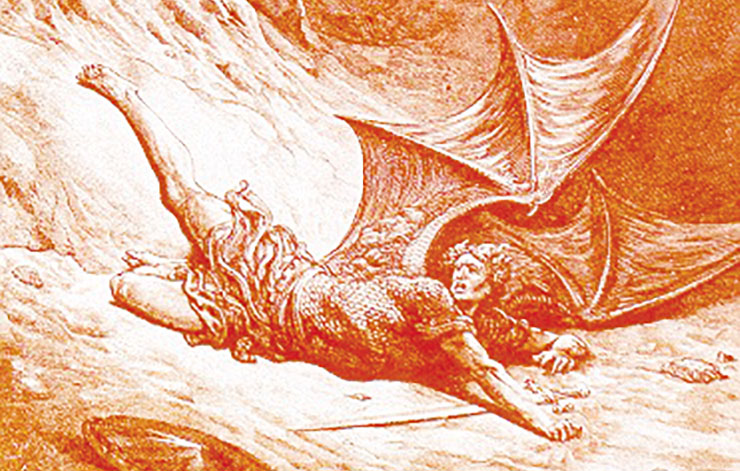
  • A Lucid Look at Lucifer

    A Lucid Look at Lucifer

    From New Dawn Special Issue 10 (Dec 2009)

    We have to literarily, philosophically and theologically deconstruct certain concepts before we can really understand them. This is a process where we look beneath and beyond the commonly assumed folklore.

    Some readers may think Lucifer is a clearly designated biblical character, the same figure as Satan. Lucifer is the fallen angel in the Bible, in the Book of Genesis. Right? Of course, the answer is no on all counts.

    Surprisingly, the word Lucifer appears only once in the Bible in Isaiah 14:12, translating the Hebrew word helel meaning shining one. In the Greek Septuagint translation, it was rendered as heosphoros (Ηωσφόρος) or light-bearer. This word comes from Hesperus, a Greek goddess of the dawn. When the Romans took over the Christian scriptures in the 300s, Jerome translated helel and heosphoros as Lucifer in his Latin Vulgate Bible. Whether in old Hebrew, Greek or Latin, the word was the common name for Venus, the brightest planet, the Morning Star, the Light-Bearer, the Day Star. So in the real meaning of Isaiah 14:12, Lucifer merely describes the vainglorious image that the arrogant King of Babylon would seek to affect.

    Some Protestant translations from John Wycliffe and others followed the Vulgate. But the respected Protestant biblical exegete Matthew Henry (Matthew Henry’s Commentary, 1721) says nothing about Lucifer being Satan, focusing on the real meaning of the text, which has to do with the nation of Babylon and its rulers who oppressed the Old Testament Hebrews.

    It goes without saying that a simple internet search will bring up mountains of material to the contrary, supporting the “traditional” view that Lucifer is the fallen angel, the Devil, the same as the Satan cited in Luke 10:18. But in truth, the very same term, Day Star, is also applied to the Christ himself in II Peter 1:19, Revelation 22:16, and in the ancient Latin Easter hymn, the Exultet.

    In an interesting coincidence, an early Christian theologian and bishop back in the 300s was named Lucifer, so it was obviously not a negative name back then. What’s more, I’m pretty sure Jerome would have known of him since they were contemporaries in the early Church.

    In some ways, the personification of Lucifer as Satan is crucial to certain versions of Christianity. Otherwise, if the so-called Fall of Lucifer does not account for the origin of Satan, then the Old Testament is silent on the matter. Regardless of that, only a few Bible versions follow Jerome’s translation. Early Protestants differed. The English King James version used Lucifer, but Martin Luther’s German translation did not. When Luther was in seminary, he studied the Vulgate, so he purposefully differed from Jerome by not using Lucifer. We begin with the King James version:

    “How art thou fallen from heaven O Lucifer, son of the morning? How are thou cut down to the ground which didst weaken the nations!” (Isaiah 14:12, King James version)

    “Quomodo cecidisti de caelo Lucifer, qui mane oriebaris corruisti in terram qui vulnerabas gentes?” (Jerome’s Latin Vulgate)

    “O Lucifer who didst rise in the morning! How art thou fallen to the earth, that didst wound the nations!” (Douay Rheims English translation of the Vulgate)

    “Du schöner Morgenstern.” (You beautiful morning star.) (Luther Bible)

    “O morning star, son of the dawn!” (New International)

    “O Day Star, son of the morning.” (Revised Standard)

    “Bright morning star.” (New Revised Standard)

    “O Day Star, son of Dawn!” (New English Bible)

    “O star of the morning, son of the dawn!” (New American Standard)

    Lucifer or Dawn or Venus is also a figure in ancient Canaanite mythology, having nothing to do with Satan or an evil.

    The dwelling of the gods and the riding of the clouds are both known to us from the Ras Shamra texts at Ugarit in N. Syria, and so too is Dawn a deity, of whom this figure is described as a son. The most high is Elyon, the title so often used of God…. All these elements may be paralleled in the Old Testament, suggesting how richly Canaanite religion and mythology have influenced Old Testament thought. (Interpreters One Volume Commentary of the Bible, 1971)

    Old and new reference sources tell us more:

    Lucifer Isa. 14:12. This word, signifying light bearer, occurs but once in our Bible, and then applies to the king of Babylon to indicate his glory as a morning star, or figuratively, a son of the morning. Tertullian and some others suppose the passage to relate to the fall of Satan; and hence the term is usually applied in that way; though, as it seems, without specific warrant. (The Union Bible Dictionary, 1842)

    Its application, from St. Jerome downwards, to Satan in his fall from heaven, arises probably from the fact that the Babylonian Empire is in scripture represented as the type of tyrannical and self-idolizing power, and especially connected with the empire of the Evil One in the Apocalypse. (Smith’s Bible Dictionary, 1884)

    In spite of this rendering, the proper name ‘Lucifer’ is not in the original Hebrew text. In Hebrew ‘Lucifer, son of the morning’ is helel ben shachar. It could be translated ‘shining one, son of the dawn.’ It is not a proper name, but an epithet for the king of Babylon. (Bryan Knowles, ‘Who Is Lucifer?’, www.godward.org)

    Hence, Jerome’s use of Lucifer as a capitalised proper name is not correct. The Roman Church concocted the Lucifer-as-Satan myth after they took over emergent Christianity in the early 300s, as evidenced by references to both Tertullian and Jerome.

    If Lucifer is so important, why is nothing else ever said? Light Bearer, Morning Star; nothing negative about that. Lucifer not only does not mean anything negative, as a matter of fact, it doesn’t really seem to mean anything at all, biblically speaking. Out of the over 800,000 words in the Bible and the Apocrypha, Lucifer appears once, and then in an ambiguous reference. Whatever the word means to certain Christian sects, theosophical and metaphysical groups, or secret societies, as you can clearly see it does not come from the Bible!

    The Pagan Origins of Satan

    Satan (Hebrew ha-Satan, in Arabic Shaitan) translates as adversary or accuser. In all three Semitic religions, Satan refers to the opposite of the good god, or the so-called Devil. This is, of course, a direct transplant from Persian Zoroastrianism into the ancient Hebrew religion and then into the Talmud, Kabala, the New Testament and lastly in the Qur’an. Zoroastrianism poses two gods, one responsible for good and another responsible for evil. The polyglot god traditions found in Genesis reflect this Persian pagan influence.

    For some, the image and persona of the Satan is quite fascinating, indeed, perhaps even noble. As readers of English literature know, John Milton addressed this theme in his famous 1667 poetic magnum opus, Paradise Lost. Consider the following hypothesis, based on the multiple Semitic deities portrayed in Genesis.

    El in Egyptian is also the Child, who in the early Sabean age, was Sut, the planetary type, Saturn. Later El was transformed into Satan, whom Job introduces as one of the sons of god. Satan was accounted a son and an Angel of God by all Semitic nations. The learned Kabalist, Eliphas Lévi, speaks of Satan thus:

    ‘It is the angel who is proud enough to believe himself god; proud enough to buy his independence at the price of eternal suffering and torture; beautiful enough to have adored himself in full divine light; strong enough to reign in darkness amidst agony, and to have built himself a throne on his inextinguishable fire.’

    He further says that the true name of Satan is that of Jehovah reversed, for Satan is not a black god but the negation of Deity. The Devil of the early Christians, with horns, hoofs and tail was introduced from Babylon through the Jewish Talmud. The Christian religion transforms Satan into an enemy of God, whereas in reality by Satan the highest divine spirit or Occult Wisdom on earth is meant. (E. Valentia Straiton, Celestial Ship of the North)

    Eliphas Lévi explains the symbolism of Lucifer:

    What is more absurd and more impious than to attribute the name of Lucifer to the devil, that is, to personified evil. The intellectual Lucifer is the spirit of intelligence and love; it is the Paraclete, it is the Holy Spirit, while the physical Lucifer is the great agent of universal magnetism. To personify evil and exalt it into an intelligence which is the rival of God, into a being which can understand but love no more – this is a monstrous fiction. To believe that God permits this evil intelligence to deceive and destroy his feeble creatures is to make God more wicked than the devil. By depriving the devil of the possibility of love and repentance, God forces him to do evil. Moreover a spirit of error and falsehood can only be a folly which thinks, nor does it deserve indeed the name of spirit. The devil is God’s antithesis, and if we define God as He who is we must define His opposite as he who is not. (Eliphas Lévi, The Mysteries of Magic)

    Alexander S. Holub in his The Gospel Truth: The Heresy of History (2004), notes:

    The Yahwists and Elohists reflected a very early stage of the Israelite religion. This is when it was still essentially a nature/fertility religion much the same as the other pagan religions of the same time and region. It contained things like angels (in the text called Elohim), talking animals, dreams, and the idea of an anthropomorphic deity. This deity brought forth both good and evil as any anthropomorphic deity does. There was no Satan to bring the natural disasters. It was God. It was God also when (he was) displeased with someone simply ‘removed’ him by taking his life. So it was necessary to propitiate and worship this deity in order not to anger him in any way. It was later, after the Babylonian ‘captivity’, that this God became patient, just, and merciful, just like [the Zoroastrian good god called] Ahura Mazda.

    When we deconstruct the words, symbols and images, it turns out that Lucifer-Satan-Devil, the source of all evil, is originally neither a Hebrew, Christian nor a Muslim concept, springing directly from much earlier Persian pagan roots. Naturally, all this biblical revisionism is not popular with the priests and preachers. If they couldn’t scare you with Lucifer, the Devil and visions of burning with Satan in Hell, there might be fewer donations. We can’t have that!

    Lucifer in Theosophy and Secret Societies

    Now that we understand more about the real origins of the word as misused in the Vulgate Bible, we see that various metaphysical groups, Illuminati orders and secret societies essentially created their own deity centred on the image of Lucifer as Light Bearer. Madame Blavatsky, like Eliphas Lévi, said the Holy Spirit and Lucifer are the same entity.

    Lucifer, or Luciferus, is the name of the angelic Entity presiding over the light of truth as over the light of day… to the profane [the uninitiated] the Astral Light [universal Soul, the Matrix of the Universe] may be God and Devil at once…. Lucifer is divine and terrestrial light, the “Holy Ghost” and “Satan” at one and the same time…. The Fall was the result of man’s knowledge, for his “eyes were opened.” Indeed, he was taught Wisdom and the hidden knowledge by the “Fallen Angel”…. And now it stands proven that Satan, or the Red Fiery Dragon, the “Lord of Phosphorus,” and Lucifer, or “Light-Bearer,” is in us: it is our Mind – our tempter and Redeemer, our intelligent liberator and Saviour from pure animalism. Without this principle – the emanation of the very essence of the pure divine principle Mahat (Intelligence), which radiates direct from the Divine mind – we would be surely no better than animals. (Helena Petrovna Blavatsky, The Secret Doctrine, 1888)

    For those wanting to explore beyond this, all the sources cited, and lots more, are not hard to find. Neither have we dealt with the myriad of modern belief systems called Satanism, yet another complex and diverse topic, but that will have to be at another time. For now, read the quotes on page 63 and see what the secret initiatic orders and their high adepts have to say about their god/demigod/demon-god/holy spirit.
    Get the issue this article appears in

    Lucifer in Summary

    Several conclusions present themselves. Firstly, the Lucifer of the Bible is a minor character at best, mentioned only once, not really standing out or signifying much of anything. The real character portrayed in the Isaiah text is an arrogant Babylonian monarch who oppressed the Hebrew people. Secondly, the mystical interpretations about Lucifer as Satan were added by Kabalistic rabbis, Catholic priests, Islamic mullahs, and Protestant preachers, all with clearly vested self-interests. Thirdly, various occult philosophers and metaphysicians explored and enlarged the Lucifer paradigm, creating an odd sort of god-demigod figure. Lastly, on the outer fringes of this magic and mysticism are the secret societies and Illuminati initiatic orders, especially Freemasons of one kind or another.

    Remember, there are secret lodges, degrees and rituals, unknown outside the upper level adepts of the Illuminati orders. Their peculiar Luciferian doctrines and dogma always have had and still do have a significant impact on world history and geopolitical affairs. Not so much because of the rituals themselves, but because of the people who practice this strange cultic religion. Like any belief system, its dogma and doctrines, its morals and values, colour the decisions made by its truly devoted believers. Certain ones are in very high positions in government, the churches and the social order.

    I hope some of you will continue your explorations into the occult underground and its impact on the world around us. If my deconstruction of the Lucifer legends and lore has been a literary Light Bearer, then let it be!

    [alert type=”general” dismiss=”no”]This article was published in New Dawn Special Issue 10.[/alert]

    [alert type=”success” dismiss=”no”]If you appreciate this article, please consider subscribing to help maintain this website.[/alert]

    © New Dawn Magazine and the respective author.
    For our reproduction notice, click here.
  • The Magic & Mysticism of Eliphas Lévi: The Father of Modern Occultism

    The Magic & Mysticism of Eliphas Lévi: The Father of Modern Occultism

    From New Dawn Special Issue 10 (Dec 2009)

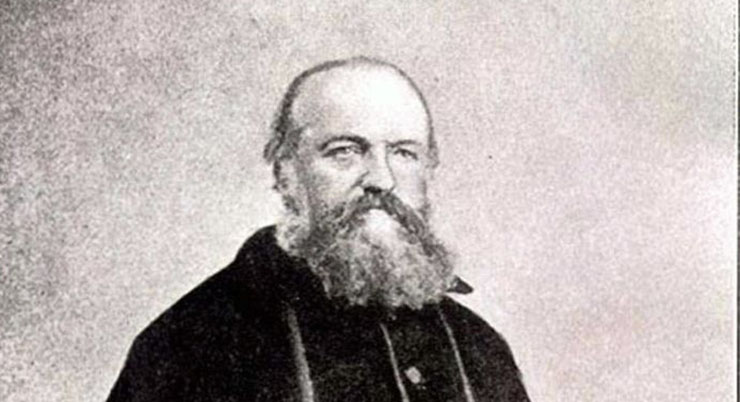
    The most influential figure in the centuries old story of Western magic and the Judaic Kabala (“the receiving”) was neither a Jew by birth or conversion. That being said and further contributing to the confusion, he learned Hebrew in order to master Kabala and adopted a Hebraic name.

    The famous philosopher, metaphysician and sorcerer has a magical seal containing his name. Seals are a vital part of ceremonial magic rooted in the Kabala, and greatly popularised through the works of our protagonist. Those who follow Kabalistic numerology and gematria see that his name is spelled differently on the seal, thus changing its magical meaning.

    Eliphas Lévi is one of the most important figures in magical theory and practice during the nineteenth century metaphysical literary renaissance. He probably coined and certainly popularised the modern usage of the word occult.

    While some say he was a Roman priest who became a Jew (or vice versa), they are mistaken. Born a French Catholic and son of a modest shoemaker, Alphonse Louis Constant (1810–1875) trained to be a priest. But the precocious young man fell in love while in seminary. As a matter of fact, he had almost graduated, having already been ordained a celibate deacon. Because of this amorous affair, he was never ordained to the priesthood. Further confusing the issue, French newspapers often referred to him as Abbe Constant, since he spoke of spiritual matters and often wore black robes reminiscent of Catholic clerical garb. Even though rejected by the church, he did not give up Catholicism, writing Christian books and tractates.

    In 1846 at age 36, he married a girl half his age. They had a child who died shortly after birth, but produced no other offspring. The couple separated in 1853 when the younger woman fell in love with another man. Constant, apparently still observing some Catholic dogma, later had the marriage annulled.

    During the revolutionary era around 1848, he wrote some rather radical leftist political works, and spent two short terms in jail. It was only after this that he fully turned his mind and life toward spiritual and esoteric matters. New Age was not a term in vogue in his era, but through his work, the great majority of the teachings coming under this genre today have their roots in his writings.

    His esoteric and occult interests began when he was in seminary. One of his professors was quite interested in Mesmerism, Animal Magnetism and Spiritualism, and the young seminarian began exploring metaphysical literature and connecting with French occultists and mystics of the day.

    The intelligent young Parisian not only discovered and deeply adopted both European occultism and Hebraic Kabalism as his own faith, in a rather short time he became a major voice and influence. While he learned Hebrew and mastered Kabala as well as most of the mystical Hasidic rabbis, he did not formally convert to Judaism. But, as some converts do, Alphonse Louis changed names. His new moniker and nom de plume was a somewhat loose translation of his two birth names into Hebrew.

    His influence is still quite pervasive. Eliphas Lévi’s writings on mysticism and magic as well as his personal magnetism spoke boldly. His books are sometimes a bit arcane, but always thoroughly organised and presented in a clear and honest way, without the pretensions often found in such literature.

    After his marriage failed, he visited England in 1854. He quickly connected with British authors and occultists, being accepted into their social circles. While in the company of these spiritual and literary comrades, he wrote a profound work of higher metaphysics. His classic two volume Dogme et Rituel de la Haute Magie came out in 1855, but it was not until 1896 that it was translated by leading English occultist and writer Arthur E. Waite as Transcendental Magic, Its Doctrines and Rituals. Here is a short selection from the Introduction. As Lévi says, all magic utilises similar forces and rituals from primordial archetypal origins.

    Behind the veil of all the hieratic and mystical allegories of ancient doctrines, behind the darkness and strange ordeals of all initiations, under the seal of all sacred writings, in the ruins of Nineveh or Thebes, on the crumbling stones of old temples and on the blackened visage of the Assyrian or Egyptian Sphinx, in the monstrous or marvellous paintings which interpret to the faithful of India the inspired pages of the Vedas, in the cryptic emblems of our old books on alchemy, in the ceremonies practised at reception by all secret societies, there are found indications of a doctrine which is everywhere the same and everywhere carefully concealed.

    Who/What is Baphomet?

    Haute Magie is perhaps most famous for the image and hypothesis about the occult entity called Baphomet. This is exemplary of Lévi’s metaphysical revisionism. Before making a decision based on your immediate reaction to the graphic image, please read what Lévi said and my short comments.

    The goat on the frontispiece carries the sign of the pentagram on the forehead, with one point at the top, a symbol of light, his two hands forming the sign of hermetism, the one pointing up to the white moon of Chesed, the other pointing down to the black one of Geburah. This sign expresses the perfect harmony of mercy with justice. His one arm is female, the other male like the ones of the androgyn of Khunrath, the attributes of which we had to unite with those of our goat because he is one and the same symbol. The flame of intelligence shining between his horns is the magic light of the universal balance, the image of the soul elevated above matter, as the flame, whilst being tied to matter, shines above it. The ugly beast’s head expresses the horror of the sinner, whose materially acting, solely responsible part has to bear the punishment exclusively; because the soul is insensitive according to its nature and can only suffer when it materialises. The rod standing instead of genitals symbolises eternal life, the body covered with scales the water, the semi-circle above it the atmosphere, the feathers following above the volatile. Humanity is represented by the two breasts and the androgyn arms of this sphinx of the occult sciences.

    All of this had a direct effect on the symbology of modern occultism. It was Eliphas Lévi who wrote about the pentagram as a symbol for both good and black magic. The goat god Baphomet was incorporated into the inverted pentagram, making it a symbol of evil. Some neo-pagans disagree, pointing to the inverted pentagram as an earlier and more ancient Indo-European symbol. According to my understanding, they are correct. But even so, this does not distract from the brilliance of Lévi’s Baphomet paradigm and symbology, yet another major development in modern ceremonial magic (thaumaturgy) and occultism. As to any evil spirits or diabolic developments, in most cases we “magically” create our own reality. Hence, we create our own possessive demons as well! It seems Lévi understood this quite well.

    When one creates phantoms for oneself, one puts vampires into the world, and one must nourish these children of a voluntary nightmare with one’s blood, one’s life, one’s intelligence, and one’s reason, without ever satisfying them.

    Kabala and Tarot

    One of his major accomplishments was recreating and reinvigorating not only Western interest in the Judaic mysticism of the Kabala, but combining this with the powerful Tarot symbolism.

    Lévi proposed a close relationship between Tarot and Kabala. Some occultists and scholars of magic scoffed at this, saying he imagined the relationships he wrote about. Whatever the case, his speculation was prolific, well written, ongoing and long-lasting. In Haute Magie he wrote 22 chapters based on the 22 Major Arcana of the Tarot, matching each to one of the 22 letters of the Hebrew alphabet and all the accompanying myriad of Kabalistic symbolism. This was supplemented by a later work, Magical Rituals of the Sanctum Regnum. Many readers found all of this to be quite profound and intriguing, and as a result of his writings and teachings Tarot became an important tool in divination, Western magic and occultism.

    Both Tarot and Kabala are ubiquitous topics for New Age devotees of all sorts, not to mention a host of books, magazines, websites, DVDs, seminars and workshops. This did not just spontaneously pop up. Today’s fascination with Kabala and Tarot and all the accompanying symbolism is largely due to the groundwork of Eliphas Lévi.

    Eliphas Lévi and Christianity

    While many of his critics love to characterise him as evil, Luciferian and Satanic, a close reading shows that, in some ways, he never really turned all that far away from the basic Christian faith. This may surprise some readers, both Christians and occultists. Read from the Sanctum Regnum, beginning with words from its editor in the first paragraph below.

    The very curious manuscript volume, from which the preceding pages have been translated, concludes with a passage which appears to retract the whole of the foregoing instruction. It is a very notable illustration of the second mind of its author. Mr. Waite, who published an English translation of much that Lévi has written, has in his Preface called especial attention to the evidence that Lévi was drawn in a most mysterious fashion in two different directions by opposing forces. From his early training he tended to be a devout Catholic; from his Hebrew studies he became a Kabalist and a Magician. So even in this short occult treatise we find him, after carefully giving magical instruction through twenty-two chapters, making at its end a solemn recantation, and pointing out that the duty of a Christian is to the Church of Christ, which is the best and highest aim to which a man can attain….

    You will now need to learn the last secret of magical force and the final grade of human will power. It is Resistance to the Universal Attraction; this is the conquest of nature, it is the Royal Authority of Soul over Body – it is Continence. To have the power and opportunity to do what give pleasure, yet to abstain because one wills it; this shows the Royal power of Soul over body. Happy is the man who can be so placed, and yet so act: thus it is that the most sublime use of liberty is absolute obedience. Without obedience no society can continue to exist. This is why the Magi worshipped the Christ in the stable at Bethlehem. Christ, that son of God, greatest of initiates, and the last initiator.

    But Christ had, as all great teachers have had, one teaching for the people and also an esoteric doctrine. To John, the beloved disciple, he confided the deepest mysteries of the Holy Kabalah; and John in after years revealed or re-veiled them in his Apocalypse, which is indeed a synthesis of all earlier magical, prophetic, and Kabalistic works.

    The beauty of self-sacrifice is taught in the Church of Christ, Catholic and Roman; and it is an article of faith, that anyone who denies himself and takes up this cross, and follows the Mediator to the Altar, assumes at once the offices both of Priest and Victim.

    Glory be to the Christ, who has brought to their completion the symbols of the Ancient Mysteries, and who has prepared the reign of knowledge by faith. Will you now be greater than all Magi? Hide away your science in the recesses of your mind. Become a Christian, simple and docile; be a faithful servant of the Church, believe, mortify yourself, and obey.

    Well, if you’re feeling a bit confused, don’t feel alone. These are truly deep thoughts, whether you are a professed Christian or not.

    The Passing of a Sage and Savant

    The great magus and mystic passed away at age 65. It is said that he reconciled with the Roman Church while on his deathbed, and this may be so. Catholicism, especially when including a seminary education, does have a lifelong effect. Under a different set of circumstances, Alphonse Louis Constant might have become yet another happy and satisfied parish priest or perhaps even an important Catholic theologian. From a psychological standpoint, one might speculate that after he was alienated from the Roman Church, he then created his own religion in response.

    While quite influential during his lifetime, he was even more so after his departure. Eliphas Lévi was both an inspired and very inspiring writer, motivated by a strong inner spiritual force combined with a scholarly mind working to provide knowledge for those willing to receive it. While he did earn a living from his writings and his work as a consultant and ceremonial magician, he never earned a great fortune. Indeed as the case was, he died in poverty. As has been shown year after year, his readers are his sons and daughters, his successors and heirs. Their writings and speculations based on his groundwork have projected his philosophy well into the future.

    Maxims and Aphorisms

    If you have not yet read this author, rest assured there are many more jewels to be found. These are compiled from his various works.

    Every idle word is a fault.

    Show your learning by your actions.

    The Word is Life, and the First Principle of Life.

    The quality of a life is shown by its actions.

    An idle word is either without meaning or is of the nature of a lie.

    An idle word in religious matters is a sin.

    He who is content with idle words is as if he were dead.

    He who does not make his worship manifest has no religion.

    Better is superstition than impiety.

    God judges actions rather than vain thoughts.

    He who is religious will do works which accord with the Word of his religion; he who has no religion and believes not in any word, yet he also must be judged by his actions, for to every man shall it be according to his works.

    True religion is that which showeth a form of worship which is pure and living; the perfection of worship, however, lieth in self-sacrifice, which is complete and enduring.

    No man has ever seen the Light; but we see by reason of it those objects which reflect the light.

    There is nothing occult which shall not be known: there is nothing concealed which shall not be revealed.

    The Word is the garment of the Truth.

    To tell the Truth to those who cannot understand it is to lie to them. To unveil the Truth to such persons is to profane it.

    [alert type=”general” dismiss=”no”]This article was published in New Dawn Special Issue 10.[/alert]

    [alert type=”success” dismiss=”no”]If you appreciate this article, please consider a contribution to help maintain this website.[/alert]

    Bibliography

    Lévi was a very productive and prolific author. Below is a partial listing of his many works; some publication dates may vary. Almost all his books are in print or available online. A simple internet search will produce a myriad of results.

    Des Moeurs et des Doctrines du Rationalisme en France (Of the Moral Customs and Doctrines of Rationalism in France), 1839.

    L’Evangile du Peuple (The Gospel of the People) 1840.

    La Mère de Dieu (The Mother of God), 1844.

    Le Testament de la Liberté (The Testament of Liberty), 1848.

    Dogme et Rituel de la Haute Magie, 1855. A. E. Waite translation, Transcendental Magic, its Doctrine and Ritual, two volumes, 1896.

    Histoire de la Magie, 1860.

    La Clef des Grands Mystères (The Key to the Great Mysteries), 1861.

    Fables et Symboles (Stories and Images), 1862.

    La Science des Esprits (The Science of Spirits), 1865.

    Magical Rituals of the Sanctum Regnum, c.1870.

    Le Grand Arcane, ou l’Occultisme Dévoilé (The Great Secret, or Occultism Unveiled), posthumous, 1898.

    © New Dawn Magazine and the respective author.
    For our reproduction notice, click here.