New Dawn – World's Most Unusual Magazine

Author: Edward Malkowski

  • Before The Pharaohs: The Evidence for Advanced Civilisation in Egypt’s Mysterious Prehistory

    Before The Pharaohs: The Evidence for Advanced Civilisation in Egypt’s Mysterious Prehistory

    From New Dawn 97 (Jul-Aug 2006)

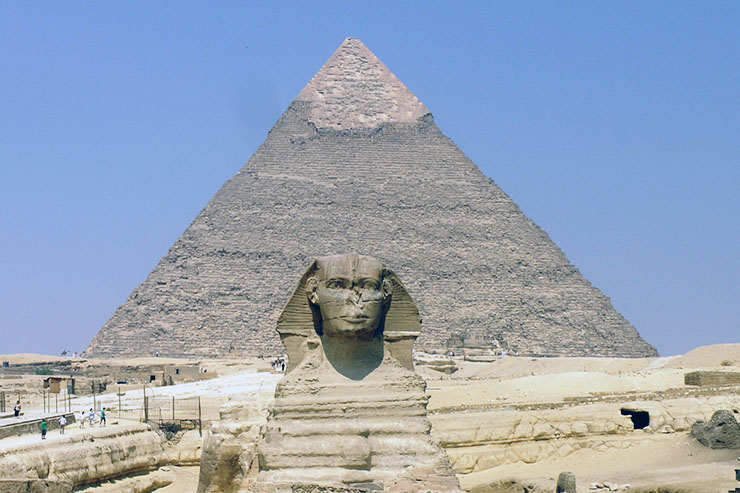
    There is no other place on Earth like Egypt’s Giza Plateau. Anyone with even a slight interest in history and civilisation is aware of this fact. For on this plateau there stands the Great Pyramids and their sculpted guardian, the Great Sphinx.

    Although there are plenty of theories, no one really knows who built the Giza Pyramids or carved the Sphinx, or when they were constructed. Any statement as to who built them, or when they were built, is pure theory. In light of all the various theories concerning these mysterious structures, I don’t think the theoretical nature of the pyramid builders can be emphasised enough.

    What stands out at Giza more than anything else is not only the magnitude of the construction of the pyramids, but the internal design of the Great Pyramid; three chambers, of which one is subterranean, and their connecting passageways. The passageway that leads to the so-called King’s Chamber rises to a height of thirty-six feet! On the other hand, all other passageways were not built tall enough to accommodate the average man or woman.

    There is also the unique configuration of the King’s Chamber as well as the Queen’s Chamber. Both of these contain two shafts, one on each side of the chamber. The Queen’s Chamber contains a corbelled niche built into its east wall, and the King’s Chamber’s ceiling is composed of five granite slabs stacked one atop the other. Why these chambers were constructed in this manner is unknown.

    The official theory is that the pyramids were tombs, and that King Khufu kept changing his mind where his burial chamber was to be placed; thus, the reason for three chambers in the Great Pyramid. However, in comparison to typical Egyptian burial methods (the mastaba and the tombs in the Valley of the Kings), the Giza pyramids, and particularly the Great Pyramid, do not fair well within the Egyptian concept of a tomb.

    The Ancient Egyptian View of the Afterlife

    The Egyptians believed in an afterlife, and the tomb was an important part of that belief. As the tomb of King Tutankhamun testifies, the deceased’s chamber of internment was to be decorated with art and filled with that person’s possessions. Why they practiced this ritual was not for superstitious reasons, as one might suspect. It was practical, according to their beliefs, and aimed at preventing that person’s energy (spirit) from being re-absorbed into Nature’s spiritual force.

    For the ancient Egyptians, Ba animated a living person, whereas Ka was the energy emanating from that person. Although not an exact analogy, the Ka and the Ba are what traditional Western thought might refer as spirit and soul. Another important aspect of Egyptian belief represented immortality, the ankh, depicted as the crested ibis.

    The Ka, represented in art by up-stretched arms, was believed to be the part of man’s consciousness and energy (man’s spirit or inner quality) that related to the immediate world. It is the part of us connected to the physical body; where it lived, its possessions, as well as the people he or she was acquainted with. The Ka can be likened to one’s personality, which upon death is separated from the body, and naturally seeks a way to once again take form. The Ba, represented by a winged human head, or sometimes a human-faced bird, represented the part of consciousness that is immortal.

    When someone passed away, it was their goal as well as the hope of the family, that the deceased’s Ka would seek a way to remain united with their Ba. To help accomplish this eternal union, the possessions of the deceased were gathered together by the family and placed in the tomb with the mummified body. Mummification prevented the body from decomposing and returning to the soil of the Earth, whereas the tomb, with the deceased’s possessions, served as a ‘home’ for the Ka. As a result, the Ka maintained its identity in the spiritual world and could seek out its Ba in order to achieve ankh, which resulted in the resurrected and glorified form of the deceased beyond the limits of an earthly realm.

    Pyramids and the Concept of the Egyptian Tomb

    Like the pharaonic tombs carved into the Valley of the Kings, royal mastabas built during the early dynasties – some as early as 3000 BCE – were also designed with ‘home’ in mind, as that home relates to a person’s Ka. Case in point: from the sixth dynasty, Mereruka’s mastaba was crafted in mansion-like proportion with thirty-two rooms and adorned with statues and art depicting, for example, scenes of wildlife along the Nile River.

    The traits of Egyptian domestic life, so beautifully incorporated into the design of their tombs, are not found in the Giza pyramids. The Giza pyramids contain no art or hieroglyphics of any kind, very uncharacteristic of Egyptian tombs. So why is it the case that the Giza pyramids are generally considered to be tombs of fourth dynasty Pharaohs? The reason is because of an association of the Giza complex with another development ten miles south at Sakkara where the Egyptians really did build tombs as pyramids.

    At Sakkara in 1881, the French Egyptologist, Gaston Maspero (1846–1916) discovered that the subterranean chamber of the Pepi I Pyramid (second ruler of the sixth dynasty) was engraved with hieroglyphics. Over the course of subsequent explorations, it was discovered that a total of five pyramids at Sakkara also contained inscriptions, from the fifth, sixth, seventh, and eighth dynasties of the Old Kingdom. In 1952, Dr. Samuel A.B. Mercer (1879–1969), Professor of Semitic Languages and Egyptology at the University of Toronto, published a complete English translation of “The Pyramid Texts” in a volume of the same name. According to Mercer, The Pyramid Texts contained ‘words to be spoken’ concerning funerary ritual, magical formulae, and religious hymns, as well as prayers and petitions on behalf of the deceased king.1

    With the pyramids at Sakkara being confirmed as tombs the associative logic came to be that all pyramids must be tombs. Furthermore, since there are two cemeteries (mastaba fields) to the east and west of the northernmost Giza pyramid, assuming that all pyramids are tombs was a likely conclusion. However, the condition of the Sakkara pyramids – most of which are believed constructed after the Giza pyramids – poses serious problems in this logical association. Of the pyramids at Sakkara only Djoser’s ‘Step Pyramid’ is in good condition, although not really a true pyramid. (The Step Pyramid was originally a mastaba that was modified into a pyramid.) All other pyramids at Sakkara, most of which belong to the fifth and sixth dynasties are in ruins today and resemble mounds of rubble.

    According to a consensus of Egyptologists, Djoser’s Step Pyramid at Sakkara was constructed during the third dynasty and was the forerunner to the fourth dynasty pyramids on the Giza Plateau. After pyramid development at Giza, for whatever reason, the focus of pyramid building shifted back to Sakkara.

    The Great Pyramid – A Device

    The easily observable and obvious differences in the Giza pyramids and the Sakkara pyramids, which were all supposed to have been built during the same era, are a problem. Clearly, the construction techniques, as well as materials, for the Giza pyramids were different than those at Sakkara, or else we would expect pyramids at both sites to have stood the test of time in a similar manner. They did not. The important point is why. Did the engineers and construction workers of the Old Kingdom not pass along their methods from the fourth to the fifth dynasty? It seems they did not, which is a very curious occurrence given the stability of Egyptian civilisation. It may also be the case that the fourth dynasty Egyptians did not build the Giza pyramids.

    No other pyramid in Egypt (the world for that matter) is like the Giza pyramids, and in particular the Great Pyramid. Additionally, there is no direct evidence to support the claim that the Great Pyramid, or the other Giza pyramids were tombs. Nor is there any record left by its builders as to what it was for or when it was built. This creates a problem of explanation. If the Great Pyramid was not a tomb, then what was it? A mystical temple for initiation ritual, or a public works project designed to unify the country? Or, was it something else entirely? Theories are abundant, but the only theory I am aware of that covers all aspects of the Great Pyramid’s interior design, is Christopher Dunn’s theory that it was a device. According to Dunn, the Great Pyramid was a machine for producing power by converting tectonic vibration into electricity.

    There are a number of reasons to accept Dunn analysis. First, he explains the interior design and all other evidence within the Great Pyramid in a cohesive manner. Second, he demonstrates the technical skills required to accomplish precision construction. Third, Dunn’s expertise and career is in the precision fabrication and manufacturing industry, which makes him uniquely qualified to express a professional opinion on the techniques and tools of the Giza pyramid builders.

    The fact is, modern construction companies could not build the Great Pyramid today without first inventing specialised tools and techniques in order to deal with blocks of stone that vary in weight from ten to fifty tons. Such an endeavour would be on a magnitude equivalent to building a hydroelectric dam or a nuclear power station requiring tens of billions of dollars in resources. Although our modern economy is different than that of the ancient world, the resource required now as compared to then is the same! The stone must be quarried and moved and the workers must be paid. The fact that an extremely large amount of resources were dedicated to Giza pyramid development over a long period of time demands, in my opinion, that pyramid building was utilitarian, and not for any fourth dynasty pharaonic vanity of having the largest headstone in the world.

    Prehistory – Evidence and Perspective

    For me, the evidence clearly tells a very different story of early dynastic Egypt. Sometime around 3000 BCE, the establishment and growth of permanent settlements in the Lower Nile Valley led to the development of civilisation. Why Giza and the surrounding area were chosen as the focal point for early Dynastic Egypt was because ‘civilisation’ had been there before, as the three pyramids and the Great Sphinx testify. Without knowing what the pyramids were designed for, the early Egyptians also assumed they must have been tombs. As a result, they rejuvenated the Giza Plateau and turned it into a Necropolis, then expanded to Sakkara where they built tombs in pyramid form, albeit of lesser quality and not brandishing the skills the original builders of the Giza pyramids demonstrated. Pyramid building, even the smaller ones at Sakkara, was resource intense, so the Egyptians reverted to burying their nobility in the traditional mastaba.

    This scenario, which calls for an earlier civilisation with advanced technical skills, poses another problem. It does not fit the standard model of history. However, the notion that an earlier civilisation existed does not rest on the Giza pyramids alone. There is also the Sphinx, which in 1991 was geologically dated to between 7,000 and 9,000 years old by the team of John Anthony West and geologist Dr. Robert Schoch. Add to that the megaliths of Nabta Playa in southwestern Egypt, which is believed to have been a star viewing diagram, according to astrophysicist Dr. Thomas Brophy, that relates not only the distance from Earth to the belt stars of Orion, but their radial velocities as well. Another ‘head scratching’ discovery is the 1260-ton foundation stones of the Baalbek temple, west of Beirut in Lebanon, one of which was left in its quarry.

    Clearly history has its secrets, but there is enough evidence to validate, as theory, that civilisation is much older than we have previously believed. History, according to the ancient Egyptians themselves, confirms this. According to the Papyrus of Turin, which is a complete list of kings up to the New Kingdom, before Menes (before 3000 BCE) the:

    …venerables Shemsu-Hor, [reigned] 13,420 years
    Reigns up to Shemsu-Hor, 23,200 years2

    These two lines in the king’s list are explicit. According to their documents, the total years of Egyptian history goes back 36,620 years. The argument that the years in the king’s list do not represent actual years, but some other, shorter, measurement of time seems more of an attempt to explain away than to explain. The ancient Egyptians employed a sophisticated calendar system that involved a 365-day year, which was periodically corrected through the predictable and cyclical nature of the star Sirius. Every 1,461 years, the heliacal rising of Sirius marked the beginning of the new year. A single Sirius cycle corresponds to 1,461 years, where each year is equivalent to 365.25 days. In essence, the marking of the New Year at the heliacal rising of Sirius was the ancient Egyptian’s ‘leap year.’ Of course, determining the length of Sirius’ cyclical nature requires stellar observation over thousands of years which means the origins of pharaonic Egypt, or its source of knowledge, must originate in the remote past.

    Late twentieth century Egyptologist Walter Emery seems to have agreed in principle that the origins of ancient Egypt date well into prehistory. Emery believed that ancient Egypt’s written language was beyond the use of pictorial symbols, even during the earliest dynasties, and that signs were also used to represent sounds, along with a numerical system. When hieroglyphics had been stylised and used in architecture, a cursive script was already in common use. His conclusion was that:

    All this shows that the written language must have had a considerable period of development behind it, of which no trace has as yet been found in Egypt.3

    Ancient Egyptian religion also testifies to a considerable period of development. Their religion, which is more of a philosophy of nature and life than it is a ‘religion,’ is based on a level of sophistication that, in all respects, appears more scientific than it does mythical.

    Symbolism and Nature: The Method of Egyptian Thought

    From a modern Western perspective their religion has been billed as primitive and polytheistic, and appears as a mythological menagerie of gods. Nothing could be further from the truth. The source of this misunderstanding stems from the Egyptian word neter being translated into Greek as ‘god,’ which later took on the Westernised meaning of deity. The true meaning of neter was to describe an aspect of deity, not a deity to be worshipped. In essence, neters referred to principles of nature in a practical scientific way.

    Yet, the meaning of a specific neter was communicated in a visually symbolic manner. When a human was depicted with an animal head, this signified the principle as it occurs in man. If the whole animal was depicted it was a reference to a principle in general. Alternatively, a human head depicted on an animal represented that principle as it relates to the divine essence within mankind, not any person in particular, but the archetypal; as the immortal Ba is represented by a human-faced bird.

    Another example is Anubis (the jackal), who presided over the process of mummification. He did so as a representation of the decomposition or fermentation process. In nature, the jackal keeps its prey and allows it to decompose before consumption. Therefore, he who presided over the mummification ritual was depicted in art as a man with the head of the jackal, thereby representing man’s death as the digestive principle found in nature. From a universal perspective, the decomposition of a body is, to Nature, digestion. Hence, those organs associated with digestion, after being removed from the deceased, were placed in a Canopic jar with a lid shaped in the image of the jackal’s head.

    Before the Pharaohs

    The sudden emergence of Dynastic Egypt, at the beginning of the third millennium BCE, is one of civilisation’s greatest mysteries. How did this supposedly primitive North African culture organise itself into a civilisation of such magnificence? One aspect that I believe has been overlooked is that mankind – anatomically modern humans – has been around for a very long time. According to recent genetic studies, all people today are the descendents of a single African woman who walked the Earth 150,000 years ago. According to geneticists, her mitochondrial DNA exists in all of us.

    This is a long time, 147,000 years, for our ancestors to have remained in a relatively primitive state. In my opinion, the evidence, some of which is incredibly anomalous (in particular the Great Pyramid) suggests they did not remain primitive. Given the evidence of ancient Egypt’s technical abilities (their monument, temples, and other crafted artifacts still exist), as well as their sophisticated symbolism in describing Nature, it appears that in establishing a dynastic society, the Egyptians of the third millennium BCE benefited from a legacy of knowledge.

    Skeptics of this approach to history, of course, would want to know where the evidence of this technical and prehistoric civilisation is. If such a civilisation existed, surely there would be overwhelming evidence to support its existence. If an exclusively uniformitarian approach to geologic formation were generally accepted as fact, I would agree with the skeptic.

    However, mass extinctions, as a result of environmental catastrophism because of volcanism, asteroid or comet impact, or stellar (gamma) radiation, now seems to be a reality.

    According to geologists there have been five large mass extinctions in Earth’s history: the Ordovician (440–450 mya), Devonian (408–360 mya), Permian (286–248), Triassic (251–252 mya), and Cretaceous (144–65 mya). Although all of these cataclysms occurred well before the modern human form, there are two global disasters that occurred relatively recently.

    Approximately 71,000 years ago Mount Toba, in Sumatra, erupted spewing an enormous amount of ash into the atmosphere. It was the largest volcanic eruption in the last two million years, nearly 10,000 times larger than the Mount St. Helen’s explosion in 1980. The resultant caldera formed a lake 100 kilometres long by 60 kilometres wide, with devastating and lasting climatic consequences. A six-year long volcanic winter followed, and in its wake an ice age that lasted for a thousand years. With its sulfuric haze, the volcanic winter lowered global temperatures, creating drought and famine decimating the human population.

    According to geneticist’s estimates, the population was reduced to somewhere between 15,000 and 40,000 individuals. Professor of Human Genetics at the University of Utah, Lynn Jorde, believes it may have been as low as 5,000.4

    Even closer to our time is the mysterious cataclysm at the end of the Ice Age, only 10,000 years ago. No one really knows if it was the result of natural phenomenon or an asteroid impact. What is known is that the climate drastically altered life for those who lived at that time. It is a known geologic fact that at the end of the Ice Age many North American species became extinct, including the mammoth, camel, horse, ground sloth, peccaries (pig-like hoofed mammals), antelope, American elephant, rhinoceros, giant armadillo, tapirs, saber-toothed tigers and giant bison. It also affected the climates of lower latitudes in Central and South America, as well as Europe in a similar way. Those lands have also revealed evidence of mass extinction. Yet, the mechanism that brought on this Ice Age ending cataclysm remains a mystery.

    If an ancient technical civilisation existed during the remote past, what would be the likelihood of that civilisation surviving a global catastrophe intact? Estimates from the Toba eruption are not encouraging. Neither are the scenarios that astronomers and climatologists build today for a theoretical asteroid impact.

    According to the archeological evidence, anatomically modern man (Cro-Magnon) appeared in Western Europe 40,000 years ago. Where they came from has been a long-standing mystery. The logical deduction is that they migrated from Africa. However, such a migration requires a host culture, of which there is no evidence.

    Nevertheless, a likely location for this host culture would have been along the shores of the Mediterranean Sea, which were likely a series of fresh water lakes during the remote past.

    If ancient civilisation existed in the region of the Mediterranean, it would not have survived the conflagration that turned those lakes into a salt-water sea.

    If that were indeed the case, the remnants of those who lived on the perimeter of that civilisation would appear to us, today, as anomalies such as the Giza pyramids and the giant stones of Baalbek.

    Cro-Magnon cultures of Western Europe, although once a part of a great Mediterranean civilisation, would also appear as an anomaly. For us, it would be as if they appeared from nowhere.

    [alert type=”general” dismiss=”no”]This article was published in New Dawn 97.[/alert]

    [alert type=”success” dismiss=”no”]If you appreciate this article, please consider subscribing to help maintain this website.[/alert]

    Footnotes

    1. Samuel A. B. Mercer, The Pyramid Texts, Longmans, Green and Co., 1952, p.2.

    2. René Schwaller de Lubicz, Sacred Science: The King of Pharaonic Theocracy, Inner Traditions, 1982, p.86.

    3. Walter B. Emery, Archaic Egypt, Penguin Books, 1961, p.192.

    4. ‘Supervolcanoes’, BBC2, 3 February 2000, also see www.bbc.co.uk/ science/horizon/1999/supervolcanoes_script.shtml.

    © New Dawn Magazine and the respective author.
    For our reproduction notice, click here.
  • A New Theory for the Great Pyramid: How Science is Changing Our View of the Past

    A New Theory for the Great Pyramid: How Science is Changing Our View of the Past

    This article was published in New Dawn Special Issue 13 (Sept 2010)

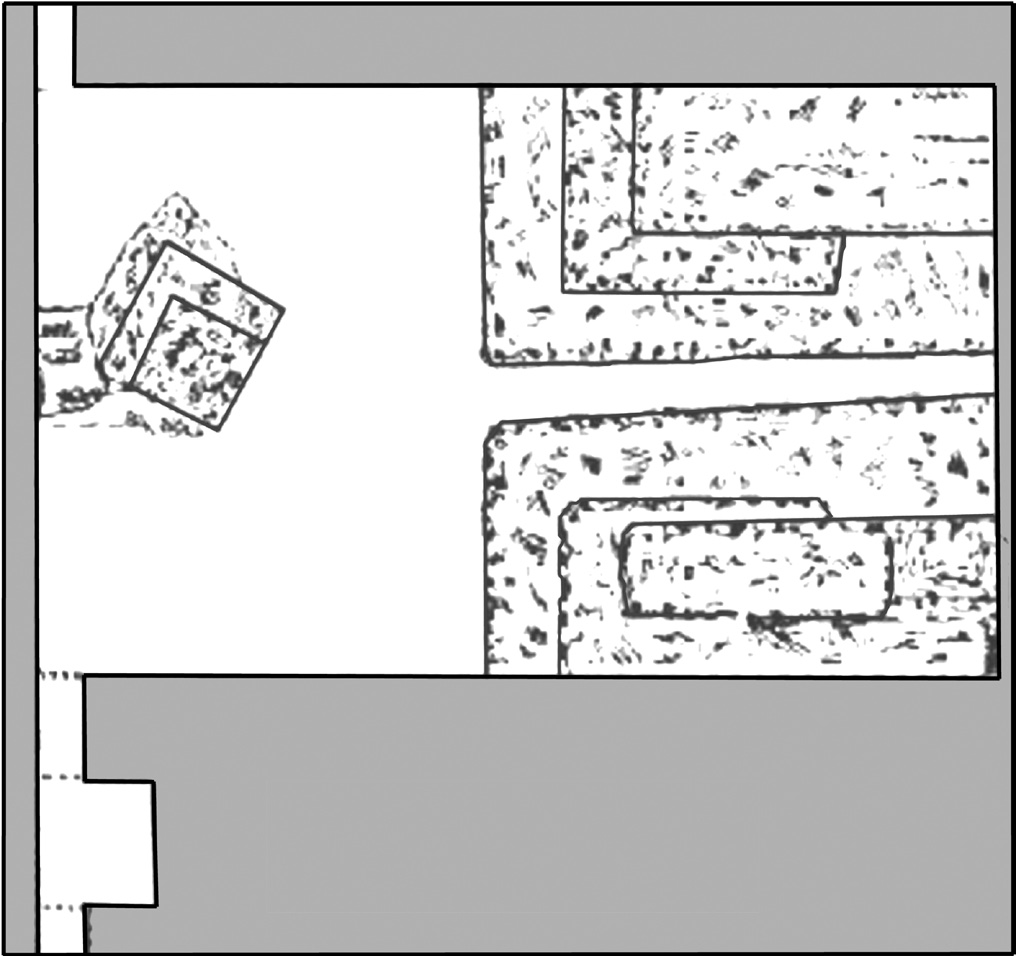
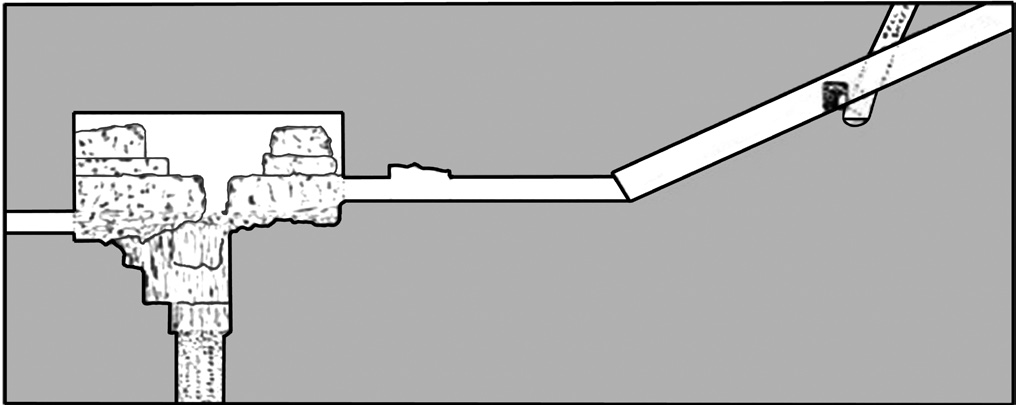
    Of all the chambers in the Great Pyramid, the subterranean chamber is the largest, as well as the most mysterious. It is 46 feet long, 27 feet wide, hewn into the limestone bedrock, and difficult to describe. The descending passageway’s entrance to the subterranean chamber is near the floor at the northeast corner. A six-foot-wide square pit shaped like a funnel has been tunnelled in the middle of the floor, near the east wall. This square-shaped pit is actually the mouth of a shaft that is eleven feet deep, although in 1816 the Italian explorer Count Caviglia drilled into the pit another thirty feet.

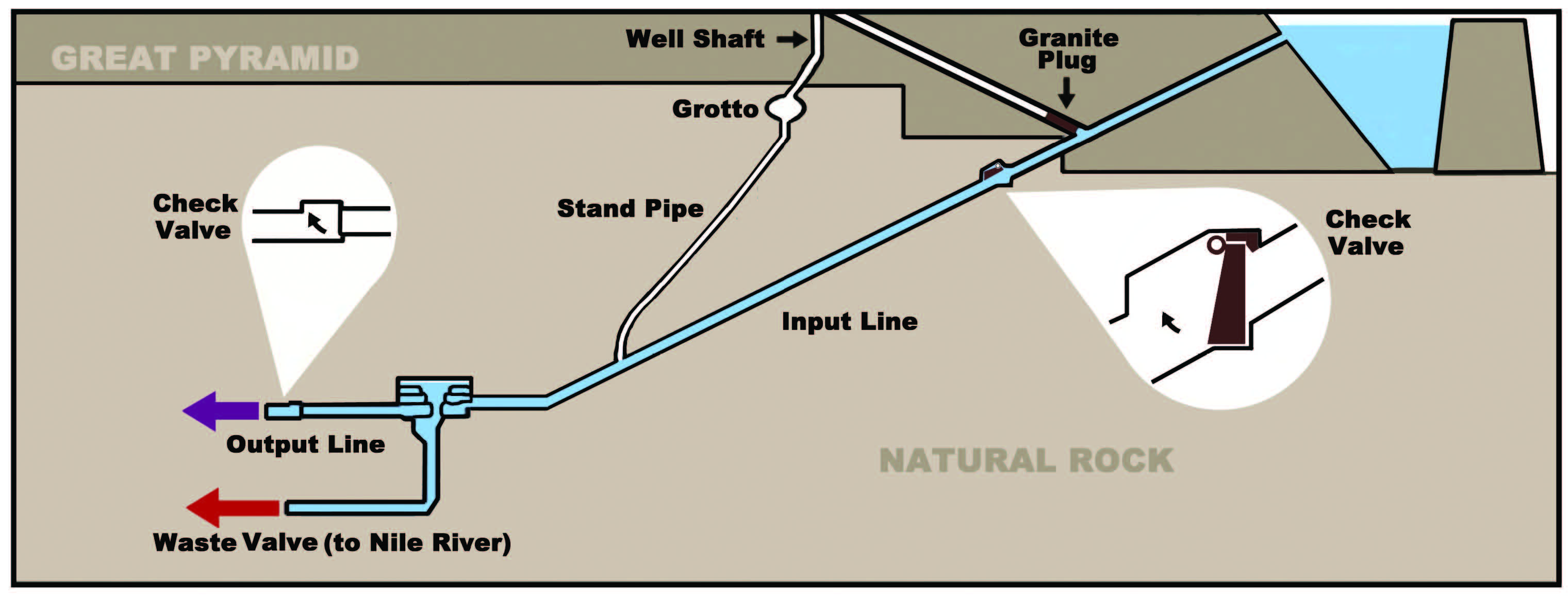
    The western half of the chamber has been carved nearly six feet higher than the eastern half and sculpted into several large finlike protrusions. All these finlike protrusions are situated east to west and are nearly as tall as the ceiling. Between the large protrusions, a stepped channel starts at the floor and flows toward the back of the chamber. In its centre there is a channel leading to the western wall. In the southeastern corner, a tunnel known as the “dead end shaft,” thirty inches in height and width, runs south fifty-seven feet, then ends at a wall. There are two other features in the design of the Great Pyramid that appear to be part of the work performed in the bedrock, the well shaft and the “grotto” (see figures 1 & 2)

    Figure 1. © Edward Malkowski
    Figure 2. © Edward Malkowski

    If the subterranean chamber was nothing more than a mistake, and was originally designed to be a burial vault, an enormous amount of resources was wasted. On the other hand, if the chamber was an integral part of the overall design of the Great Pyramid and performed a function, then what could that function possibly be?

    Everything from a tomb to temple of initiation to a device of some kind, there’s never been a lack of theories over the years describing what the Great Pyramid of Giza and the other pyramids was originally designed for. What has been lacking, though, is a theory describing why all the ancient Egypt pyramids were built. More importantly, what’s been lacking in any theory is scientific experimentation.

    To the best of my knowledge no one has built a scale model of the Great Pyramid. However, without any idea of what the Great Pyramid was, assuming it was a device, there would be no theory to test. Marine engineer, John Cadman, saw something that had been passed over for decades. In 1962, in a book entitled The Pharaoh’s Pump, a man named Edward Kunkel put forth the theory that the Great Pyramid was in its entirety a water pump. Cadman ran across the book one day browsing titles in a used bookstore. Intrigued, he purchased Kunkel’s book and after reading it realised that Kunkel was not far off the mark with his water pump theory. Being familiar with hydraulics and machines that rely on hydraulics, Cadman noticed that the design of the Great Pyramid’s subterranean chamber and its associated tunnels looked familiar.

    Cadman’s Experiment

    Figure 3. © Edward Malkowski

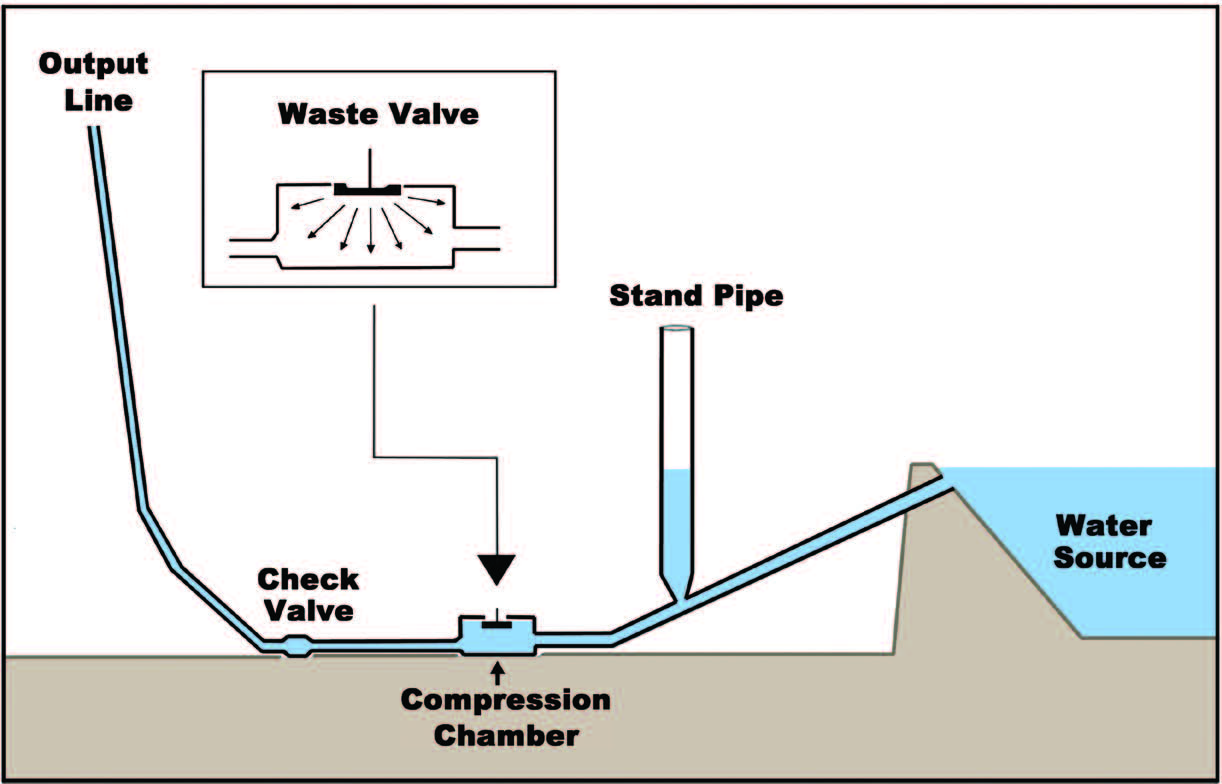
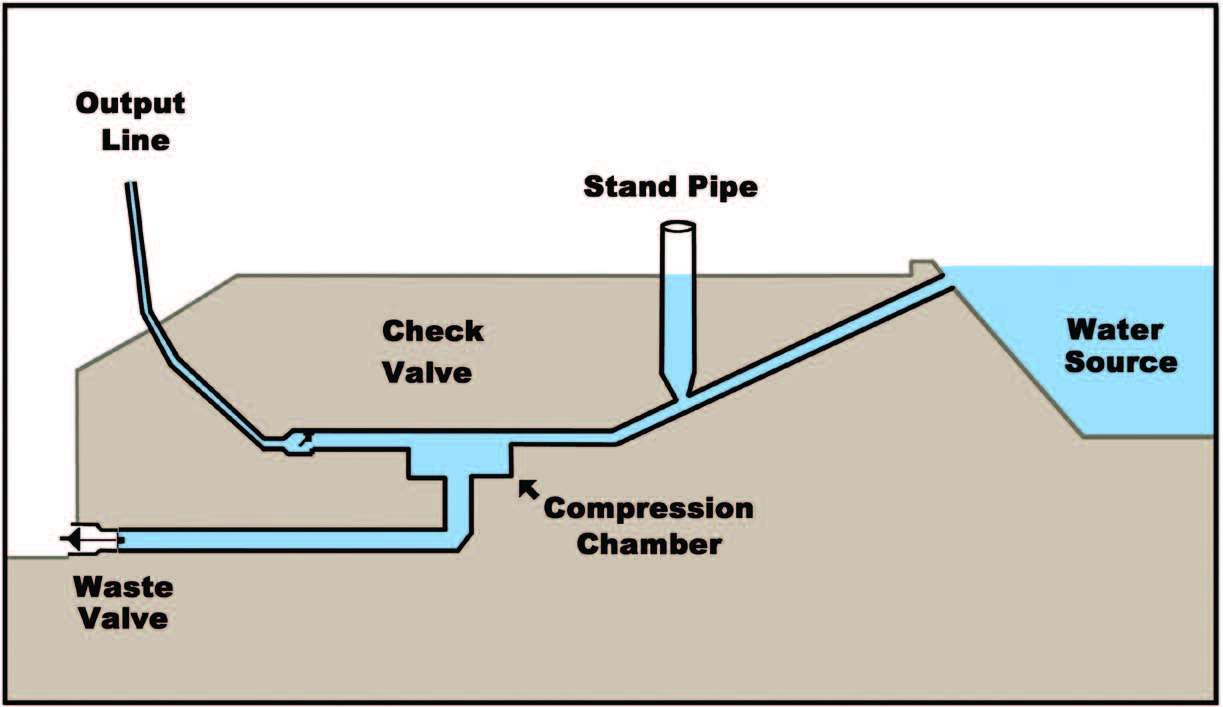
    Before the invention of the electric water pump the ram pump was used to move water from a reservoir to another location through a simple system that had only two moving parts, a weight loaded waste valve and check valve. Under the force of gravity, water in a reservoir flows down the input pipe and forces the waste value closed (see figure 3). With the waste valve closed, water continues to flow down the input pipe increasing the pressure inside the pump. The increased pressure opens the delivery valve forcing water into the output pipe. Since the water is being forced to a higher elevation faster than the water flowing down the input pipe the flow of water reverses which closes the check valve and the process begins again.

    Inspired by Kunkel’s work, Cadman learned as much as he could about the Great Pyramid’s subterranean chamber and associated tunnels, and in June of 1999 he made his first model. It leaked then cracked, neither would it function. Several months later he began work on a second model and connected a new line to the bottom of the pit shaft, believing this new line had to be the pressurised output. But the pump still didn’t operate the way he thought it should so he began building a third model which he completed on April 3, 2000, and it worked flawlessly.

    What Cadman discovered was that the subterranean chamber absorbed much of the reverse pulse. He also observed that without the subterranean chamber, the reverse pulse was large and the output flow was more erratic, confirming for him that the output in the Great Pyramid’s subterranean chamber travelled through what is called the dead end shaft. It also confirmed his suspicion that the ancient oral tradition that a tunnel exists connecting the subterranean chamber’s pit to the Nile River.

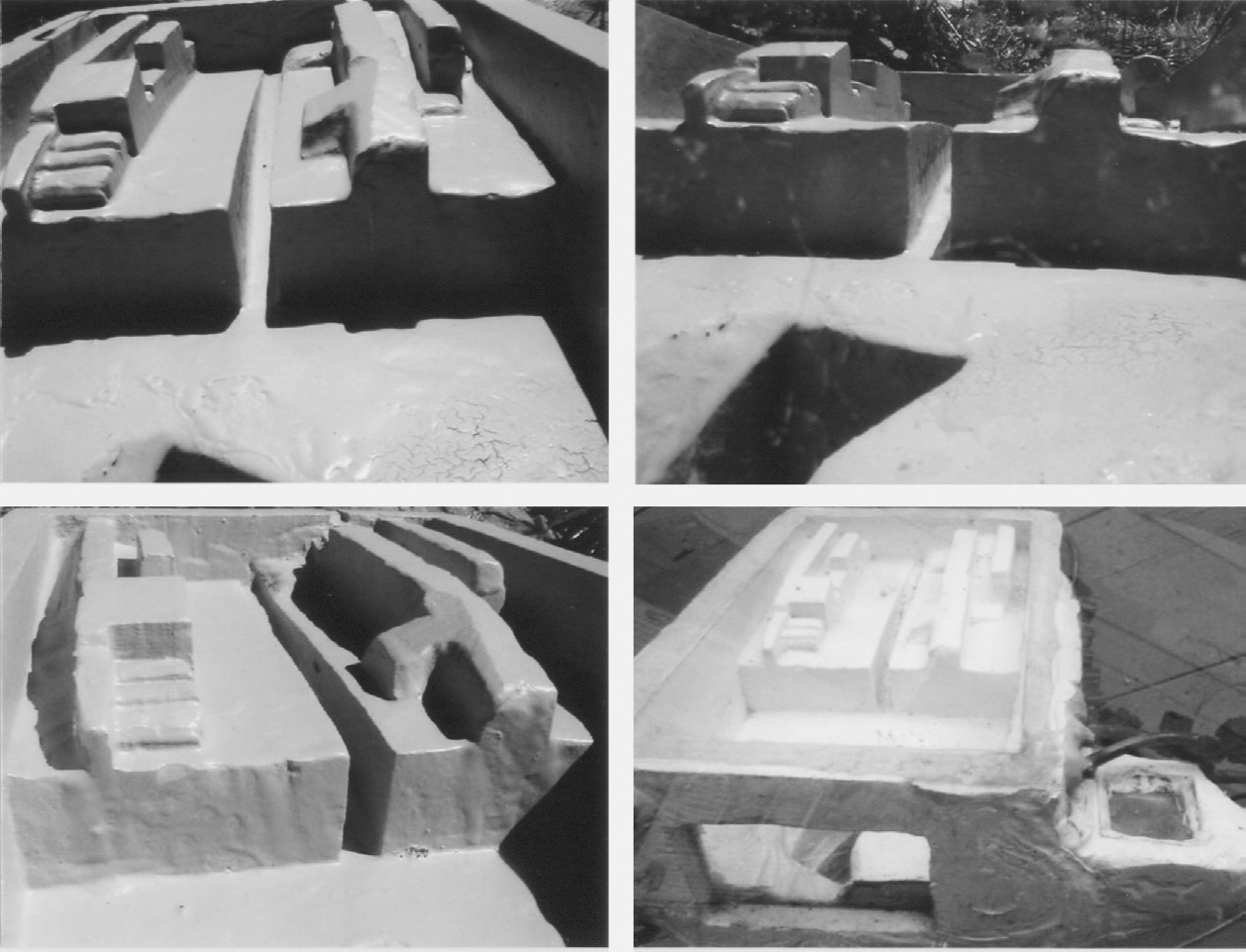
    A few weeks later Cadman moved the model to a seasonal creek with a pond serving as a reservoir, and experimented further. To simulate the effect of being underground he encased the pump assembly in concrete (see figures 4 and 5). Interestingly, the action of the pump, which was now embedded in concrete, created a vertical compression wave. This, according to Cadman, meant that the Great Pyramid’s subterranean ram pump also had an acoustical element. So, he built two more models to study the acoustics and fluid dynamics.

    The acoustic model, which was made of fibreglass and epoxy and encased in concrete, weighed five hundred pounds. When operating, the characteristic heartbeat-like thump of the pump could be felt through the ground twenty feet away and heard nearly a hundred feet away. Because of the powerful pulses it generated, Cadman named it the “pulse generator.”

    Figure 4. © Edward Malkowski
    Figure 5. © Edward Malkowski

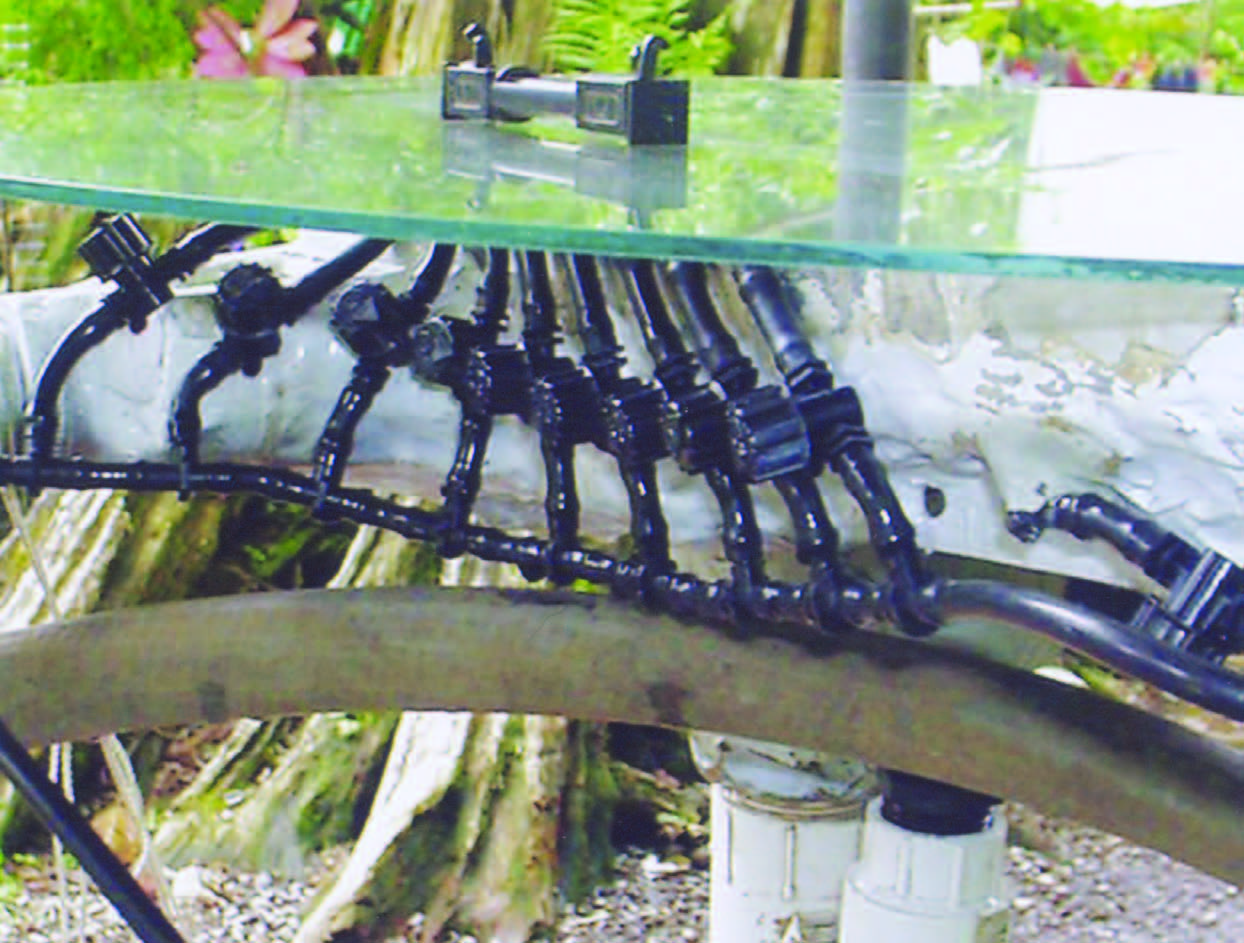
    Cadman constructed a fourth model to study how water moved through the subterranean chamber and could operate in two different modes. This model was fitted with twenty-five individual ink injection locations and a glass top (see figure 6). It had a glass wall on its east side to view water flow, although Cadman discovered that the glass top quickly shattered when the model was operating in pump/pulse mode. Nevertheless, when not in pump/pulse mode, it was clear by studying the movement of water within the modelled subterranean chamber that the flow was complex and precise.

    What he discovered was that the sound wave striking the perpendicular surface reflects the majority of the pulse back toward the source. He also discovered that when the fluid jet strikes a perpendicular surface, it spreads in a 360° pattern perpendicular to the jet. Thus, he concluded that the design of the subterranean chamber incorporated fluid dynamics as well as acoustical dynamics. In his own words, “The dynamics are on par with that of computerised storm analysis: somewhere between hurricane dynamics and tornado dynamics.”

    Cadman’s model also revealed some performance issues that were built into the Great Pyramid’s subterranean pump. An additional “assist” line, from the compression chamber to a secondary location, speeds the movement of water through the output pipe. It also focuses the shock wave in the line leading to the compression chamber. The result is that a pulse is transmitted through the ceiling of the compression chamber. Thus, the line that connects the waste valve to the compression chamber acts as a waveguide, forcing the shock wave into a pulse. Therefore, the pulse is transmitted vertically (through the ceiling) as well as down the waste-valve line.

    Figure 6. © Edward Malkowski

    Cadman’s modelling of the subterranean chamber and its tunnels provides a better understanding of the Great Pyramid, as well as the Giza Plateau. In its completed state the Great Pyramid required a moat, which was fed by a system of aqueducts from the Western Nile (the Ur Nile); an ideal source for a gravity-fed water system, since the Western Nile was at a higher elevation than the plateau. It also explains the remains of a retaining wall that once surrounded the pyramid. The wall served as an embankment for an onsite reservoir, which in appearance was a moat. Tunnels, such as the “well” at the pyramid’s entrance, connected the Great Pyramid complex to an ancient lake, Lake Moeris, and the Western Nile.

    Lake Moeris (Egyptian Mer-Wer, meaning “Great Lake”) was an ancient lake fifty miles southwest of Cairo. At one time it was very large and occupied the entire Faiyum depression. It was also called the Pure Lake and the Lake of Osiris by the ancient Egyptians. During prehistoric times the waters of Lake Moeris stood nearly 120 feet above sea level, but by 10,000 BCE they had dropped to nearly twenty-five feet below sea level, possibly as a result of the Nile channel being naturally diverted. With increases from rain, between 9000 BCE and 4000 BCE the lake rose again, but gradually subsided. And as the climate became increasingly more arid, a canal connected Lake Moeris to the Nile; over the years it slowly silted. During the Middle Kingdom, 2000 BCE to 1600 BCE, dynastic Egyptians widened and deepened the channel, thereby restoring its flow. At that time the lake was believed to be fifty-five feet above sea level.

    There is little doubt that the lake served as a means of flood control as well as a reservoir for irrigation. Egypt’s Ptolemaic kings of the third century BCE partially drained Lake Moeris to make available 450 square miles of rich alluvial soil, which was irrigated by canals and extensive cultivation. Since then the water level of Lake Moeris has continually declined, and it is now the small, shallow saltwater Lake Qārūn.

    When the Great Pyramid pulse pump was functioning, the descending passage, subterranean chamber, dead end shaft, pit, well shaft, and grotto made up the components (see figure 7). According to Cadman, it could be operational today if all the tunnels associated with the pyramid could be cleared. Besides the well shaft that connects the descending passage to the middle chamber of the pyramid, there are two other tunnels that would need to be cleared. Clearing the pit associated with the dead end shaft (where the check-valve exists) would expose the horizontal shaft. If these shafts were cleared, the moat reservoir was in place, and the well in front of the pyramid connected to a Lake Moeris substitute, the pump could be operational.

    Figure 7. © Edward Malkowski

    One of the most important results from Cadman’s experiments was discovering the significance of the well shaft and its effect on the pump’s pulse rate. This specific design issue leads to the intent of the Great Pyramid’s designer. The well shaft begins near the bottom of the descending passageway and extends upward 170 feet. In the water-pump assembly, the well shaft functions as a standpipe, providing a shortcut for the reverse shock wave to reach air. In essence, it maximises the pulse rate of the pump.

    Although standpipes are typically twice the diameter of the input (drive) pipe, in the Giza assembly the standpipe (well shaft) is actually 25 percent smaller than the input pipe (descending passageway), which has a peculiar effect on the system. It lowers the elevation of the pulsing water below the water level of the moat reservoir. Interestingly, this specific elevation correlates to the height of the grotto, which serves as a reservoir, allowing for stabilisation and regulation of the reverse pulse. A block of granite, existing within the grotto that fits within the pipe, is believed to function as some type of choke or regulator.

    According to Cadman, the well shaft was part of the original design of the pyramid, and as a standpipe in the pump assembly, it served to maximise the pulse rate of the pump. The standpipe also reduced the reverse surge out of the descending passage, as well as reduced pumping efficiency and pulse intensity.

    The Importance of Pump Efficiency

    Cadman tested four different pump configurations, two circulating and two elevating, to gauge the well shaft’s affect efficiency. When in a circulating-pump mode, the well shaft reduced the efficiency by 29 percent. And, in an elevating-pump mode, the well shaft reduced the efficiency by 68 percent. The increase in efficiency of the well shaft provided an extra twenty pulses per minute, from sixty to eighty. Since the Giza configuration of the subterranean chamber included a well shaft, for the builders of the pyramid, pumping efficiency did not appear to be of primary importance. So if pumping efficiency was not of primary importance then what was?

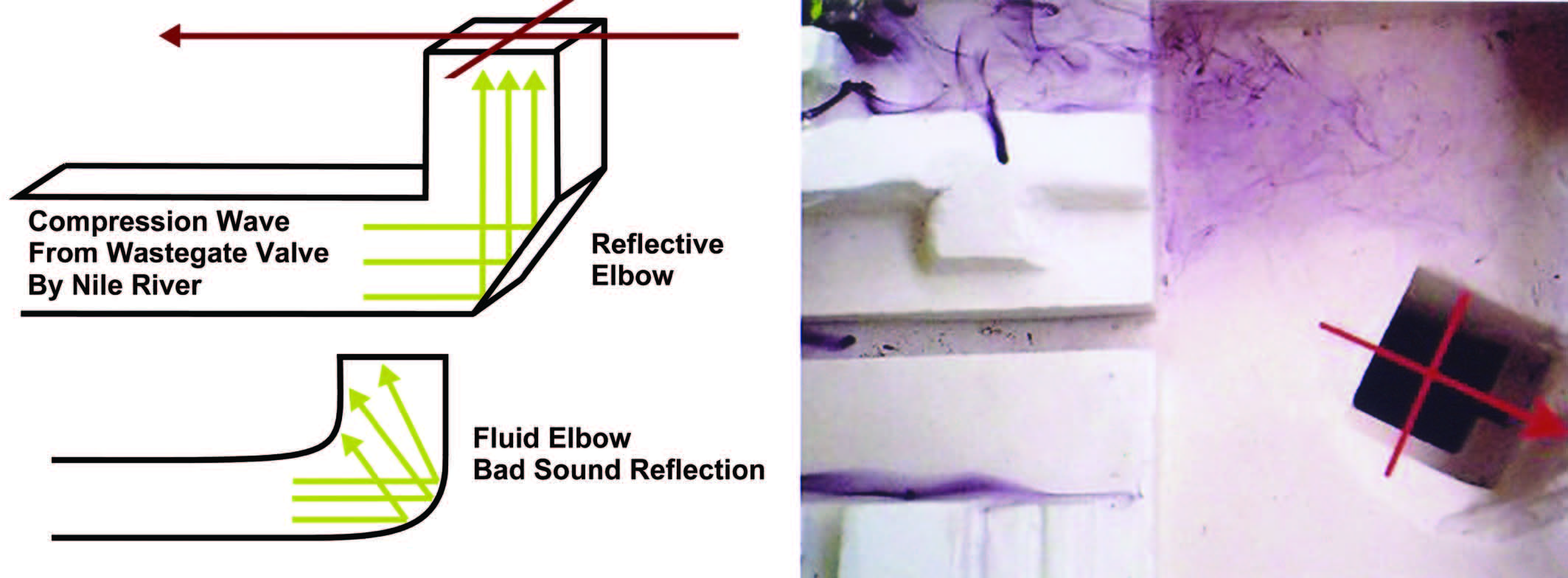
    One way to approach this question is to review the general layout of the subterranean chamber. The subterranean chamber pit is offset by 45° in relation to the general configuration of the chamber and is aligned northwest to southeast. According to Cadman, this is so because a plane placed at a 45° angle will maintain the unidirectionality and consistency of the compression wave. In other words, this reflective elbow ensures the consistency of the compression wave. Any other type of elbow at the pit’s bottom would diffract (scatter) the compression wave. So the pit’s alignment is strictly for acoustical dynamics and for creating a standing wave in the waste line and subterranean chamber.

    Figure 8. © Edward Malkowski

    To create the standing wave in the waste gate line and subterranean chamber, it would be imperative to have the reflective elbow. The pit’s offset is exactly aligned with the tunnel (see figure 8, right; the red arrow is aligned with the exit tunnel). Not only does the reflective elbow completely explain the pit’s diagonal offset, but it also confirms that the compression wave is a major design consideration. The designers thoroughly understood complex fluid dynamics as well as complex acoustics (see figure 8, right; the red arrow shows the direction of the tunnel at the bottom of the pit; the ink injection photo shows some of the flows in the step area).

    Another way to approach the question is to review the engineering significance of the dead end shaft. It allows for a pressure change, which in turn changes the frequency of the compression wave. A gate valve at the end of the dead end shaft provides a means for accomplishing this. Adjusting the back pressure by adjusting the gate valve allows for changes in timing. In essence, this is a simple method to compensate for different water temperatures and atmospheric pressure, which are factors that affect the velocity of the compression wave.

    Cadman’s testing demonstrated that the pulse rate can be altered by at least 30 percent, between sixty and eighty pulses per minute. He also discovered that adjusting the back pressure changed the water’s density and, as a consequence, altered the compression wave’s velocity and frequency. In essence, such an assembly allows for easy fine tuning of the lower portion of the Great Pyramid to create the standing wave in the subterranean chamber and waste gate shaft.

    These experimental results confirm that the compression wave was a major design consideration. Also, according to Cadman, the square pit carved into the subterranean chamber created a whirlpool as water moved through the system of tunnels – apparently another design feature to efficiently move water to the chamber and out the waste line.

    If pump efficiency – in other words, pumping water – was not of prime importance to the ancient Egyptians, then what was? According to the experimental evidence, the answer is a compression wave, which, of course, creates another question. Why was a compression wave of primary interest to the Great Pyramid’s builders?

    A New Theory

    The question I have always had in the back of my mind concerning the pyramids is one of economics. Resources are resources whether a construction project occurs today or thousands of years ago. Man-hours and tools are required, so is pay for the management team, supervisors, and workers. If it cost 35 billion dollars to build a large structure today it would also cost that much in resources to build the same structure many thousands of years ago, the only difference being the nominal value of money used. In the case of the Great Pyramid that’s 380 billion dollars, according to engineer Markus Schulte of the global design and business consulting firm Arup.1 The limestone blocks for the Great Pyramid, alone, would cost today 18 billion dollars. With such a high dollar amount for a single pyramid, and more than ten were built comparable in size, then there had to be a very good reason why the Great Pyramid and the other pyramids were built, a reason that would benefit the whole of society.

    If the Great Pyramid was exclusively a water pump as John Cadman demonstrated in his experiments, then there wouldn’t be a need for another chamber located in the middle of the pyramid and a third chamber located in its upper regions. These chambers as well as the shafts in these two chambers need to be explained.

    Assuming Cadman is correct that the compression wave was what the pump was designed for, then the middle and upper chamber would likely have been designed to somehow react with the vibrations emanating from the pump. The upper chamber, known as the King’s Chamber, in its entirety was built from slabs of granite – the floor, walls, and ceiling – and located just above the chamber the builders of the Great Pyramid placed five rows of granite beams. So, it is obvious that granite was of primary importance in the uppermost chamber. The question is why.

    The high-fidelity stereo industry uses granite not only to provide a stable base for equipment but also because of its resonance qualities. All materials have a natural resonance frequency meaning that all materials will vibrate at certain frequencies. In the world of high-fidelity, the resonance of other materials in a room distorts the stereo’s sound, including the rack where the components of the sound system are housed. However, with granite as a base for stereo components not only are extraneous sounds dampened, but full sound is produced through the granite’s resonance. And by further isolating the granite base from the stereo rack with rubber washers or other polymer fixtures, the granite’s resonance properties can be further controlled. With this in mind, it might be the case that the purpose of building a granite chamber in the Great Pyramid was to create resonance.

    According to Tom Danley, the sound engineer featured in the documentary film The Mystery of the Sphinx, the Great Pyramid makes strange sounds because the granite chamber resonates from the rigidity of the stone. What he also discovered was that a number of low-frequency components existed even without a test signal present in the pyramid implying that the chamber was constructed for its resonance, and that it naturally creates a frequency. Most likely, he added, the low frequencies were a result of “Helmholtz resonances caused by the wind blowing across the entry tunnel.”2

    However, a compression wave emanating from the subterranean chamber would likely have a marginal effect on the granite in the upper chamber. What would be needed to localise the granite is a way to transform the compression wave into sound. This would create enough vibration to activate the granite beams and create a standing wave of resonance. With devices such as Helmholtz resonators built into the Grand Gallery those vibrations would become sound and cause the granite to resonate or ‘sing’. The question is ‘why’, to what effect? With shafts leading to the Great Pyramid’s exterior, the ‘singing’ granite would project its sound into the atmosphere. This, in turn, would create an electrical field in the atmosphere according to physics research.

    Again, we are left with the question ‘why’? The subtle electrical field created by the Great Pyramid would be of little use for means of powering equipment. However, such a field would deflect very low frequencies (VLF) and extremely low frequencies (ELF), frequencies that exist at all times in the atmosphere as a result of thunderstorms around the world. In agricultural experiments, VLF and ELF have been shown to promote plant growth. With the Great Pyramid operating as the engine, all of the pyramids could be connected by a subtle electrical field to create a canopy of sorts thereby deflecting VLF and ELF into the surrounding fields.

    In might sound mundane that the pyramids were agricultural devices, but it provides the best of reasoning for a civilisation to spend an immense amount of resources on any given project. Without food society would gradually fall into anarchy and civilisation would cease to exist.

    Illustrations courtesy of © Edward Malkowski. Further information on the above theory and a whole lot more can be found in Edward Malkowski’s new book Ancient Egypt 39,000 BCE: The History, Technology, and Philosophy of Civilization X (Bear & Company, 2010), available from all good bookstores.

    [alert type=”general” dismiss=”no”]This article was published in New Dawn Special Issue 13.[/alert]

    [alert type=”success” dismiss=”no”]If you appreciate this article, please consider subscribing to help maintain this website.[/alert]

    Footnotes

    1. ‘Where Did It Come From? Ancient Egypt: Iconic Structures’, Popular Arts Entertainment, The History Channel, September 21, 2006.

    2. “ProSoundWeb Live Chat with Tom Danley,” March 12, 2002, transcript, at www.prosoundweb.com/chat_psw/transcripts/danley3.shtml (Accessed September 29, 2009).

    © New Dawn Magazine and the respective author.
    For our reproduction notice, click here.
  • Was There a Civilisation X?: Evidence Indicates There Was

    Was There a Civilisation X?: Evidence Indicates There Was

    From New Dawn Special Issue 8

    Atlantis: everyone knows the name and almost everyone knows that the name refers to a mythical, sunken island continent in the Atlantic Ocean, according to a story told by the Greek philosopher Plato sometime during the 4th century BCE. Whether or not Atlantis existed has been a matter of conjecture for nearly four hundred years, ever since Francis Bacon published his novel The New Atlantis in 1626. Atlantis is a controversy that continues to this day.

    For some folks, Atlantis existed just as Plato explained, but for others the idea alone runs across the grain of prevailing scholarship and archaeological investigation. For those who are sure Atlantis did exist, it is a belief. But for the skeptic, a prehistoric civilisation with technical sophistication is pure fiction. Unfortunately, for those who believe there is no proof, Atlantis has been ‘discovered’ by researchers in almost every part of the world, from South America to the Eastern Mediterranean to the British Isles.

    Although scholarly consensus is convinced that Plato’s fictitious tale of Atlantis was based on the Island of Thera’s destruction in 1628 BCE, Atlantis remains as the Holy Grail of archaeology, even if archaeologists won’t admit it. Discovering evidence – even the smallest artefact – that the lost continent of Atlantis really existed would be the greatest find in the annals of all historical disciplines. History would not only be made, but have to be rewritten. However, until that evidence is discovered and confirmed, the controversy will rage on between believers and skeptics, with the skeptics having a distinct advantage. It’s all about evidence.

    Solid evidence is important and there is no direct evidence that Atlantis existed. No ancient stone or sign has ever been found stating ‘Atlantis this Way’ or ‘Welcome to Atlantis.’ No artefact has been discovered proving that sophisticated Atlantean equipment was used by any culture or civilisation during prehistoric times. This being the case, why do some people insist that the story of Atlantis is fact?

    The answer to this question lies in the Valley of the Nile, ancient Egypt, and the enigmatic Old Kingdom period. It’s where my hunt for Atlantis began.

    STANDARD EXPLANATION MISINTERPRETS THE EVIDENCE

    The ruins of ancient Egypt are unique. Nowhere else in the world are there such magnificent megalithic structures as well as fields of granite. It’s obvious that the builders of ancient Egypt’s temples and pyramids used granite, as well as limestone and basalt, as primary materials in their architectural designs. The importance of this fact cannot be overlooked.

    Working with stone is not easy and working with granite – the hardest rock known to man – and achieving any scale of economy in order to build big and build everywhere, like the ancient Egyptians did, is impossible without diamond studded tools. Today, such large and numerous projects on a big scale require specialised tools and equipment. Case in point: Giza’s Great Pyramid was the tallest structure in the world until France erected the Eiffel Tower in 1889.

    So, how could the ancient Egyptians build an entire civilisation out of limestone, basalt and granite using little more than copper chisels, stone hammers, dolerite pounding rocks, and brute strength? How could a large number of granite statues, some in excess of forty feet tall, be carved with such detail and perfection and then erected?

    The traditional explanation is that they did it with copper chisels, stone hammers, dolerite pounding rocks, and brute strength. However, for me, since no culture or civilisation was able to duplicate in complexity, scale, and quantity, the Old Kingdom construction efforts during the next 4,000 years, then the traditional understanding must be an incorrect interpretation of the evidence – the most erroneous being the Great Pyramid. Skepticism is a two-way street.

    The idea that the Great Pyramid was a tomb defies logical and cogent reasoning. First, funeral items were never found within any of the pyramid’s chambers. Nor are there any inscriptions describing it as a tomb. Second, its internal design is strange and does not accommodate human beings. Passageways that lead to its three chambers are a little more than three feet in height and width. Nor are there any steps; so, to move about you have to crawl on your hands and knees. This makes moving about inside the pyramid next to impossible for anyone, let alone a ritual funerary party. Third, the walls and ceiling of the uppermost chamber, the alleged burial chamber, was built from seventy-ton slabs of granite with another five layers of granite in the area directly above its ceiling. Finally, as any good detective would consider important, a colossal structure such as the Great Pyramid requires enormous resources to build which, consequently, requires a valid and reasoned motive. A tomb is not one of them.

    At a cost of thirty-five billion in adjusted (US) dollars, according to engineer Markus Schulte, there had to be a very good reason to build the Great Pyramid; a reason or a cause that united a nation in mind and in spirit. To be sure, the currently accepted idea that the Great Pyramid’s construction was a national project is an accurate interpretation of what likely happened. However, any large scale operation that consumes billions of dollars in resources must return some type of social benefit. In the case of the Great Pyramid, the benefit somehow involved water.

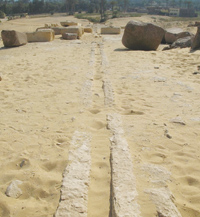
    image_15
    A trough links the pyramid/temple site to the valley below at Abu Sir. Image courtesy of the author.
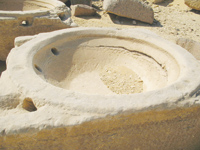
    image_17
    Basin at Abu Gorab (1 mile north of Abu Sir). Image courtesy of the author.

    On the Giza Plateau just south of the middle pyramid, a granite trough emerges from the sand (see illustration). At Abu Sir, south of Sakkara, a limestone trough runs the course of the hill on which a pyramid was built, and at both Abu Sir and its neighbour pyramid, Abu Gorab, there are numerous stone basins. Although denied by most Egyptologists, there is also evidence that a system of tunnels exists under the Giza Plateau. The so-called ‘Tomb of Osiris’ runs deep into the ground as does ‘the pit’ in the Great Pyramid’s subterranean chamber. Near the granite trough there is also two square tunnels drilled into the bedrock, although now filled with sand. Furthermore, the Great Pyramid’s original design included a perimeter wall, which might have functioned as a retaining wall for a reservoir for fresh water that flowed through a canal from the ancient Lake Moeris.

    A DEVICE, NOT A TOMB

    In his 1967 book The Pharaoh’s Pump, Edward Kunkel put forth the idea that the Great Pyramid was a hydraulic device. According to Kunkel, the Great Pyramid served as a ‘ram’ style water pump in order to facilitate moving large quantities of stone. Through a series of locks, stone blocks arriving from Upper Egypt were moved onto the Giza Plateau by barge, through a system of canals that linked the Nile River to the Great Pyramid. In Kunkel’s theory, the Great Pyramid housed two pumps. One was built underground and a second pump was built above ground. The underground pump consisted of the subterranean chamber and its associated passageways, and the above ground pump, the middle and upper chambers.

    The underground ‘ram’ style water pump used energy created by compressing water to maintain water flow, as did the middle chamber for the upper pump. In the lower pump, the subterranean chamber functioned as a compression chamber, and in the upper pump, the middle chamber functioned as a compression chamber. The odd niche in the middle chamber, according to Kunkel, was a safety value, and the upper (King’s) chamber, a secondary compression chamber.

    Kunkel’s theory is not as wild as it first seems. In his book he discusses the archaeological evidence that supports his idea. However, the notion that the middle and upper chambers functioned as compression chambers is a stretch of engineering imagination. For the upper pump to function, water would have to enter the Grand Gallery from the lower pump and then flow into the middle and upper chambers. Once in the upper chamber, the continuous flow of water from below would create two streams exiting the pyramid through the shafts built into the north and south sides.

    Unfortunately, Kunkel’s upper pump theory requires the creation of a vacuum, a number of valves, and some type of combustible fuel and combustion chamber to drive the pump, which according to Kunkel was located above the uppermost chamber. None of which appear plausible, although the theory that the subterranean chamber functioned as a ‘ram’ style water pump makes sense.

    According to marine engineer John Cadman, Kunkel made the mistake of theorising that the entire pyramid was a water pump. Cadman realised that only the subterranean chamber and associated passageways would have functioned as a pump. So, Cadman set out to solve it the engineering way.

    With as many photos of the subterranean chamber as he could find, Cadman built a model to test his theory, the first of which didn’t work. Accordingly, he went over the model’s design looking for weak points, and built a second model. This one worked the first time. He then built two more models, one which was made with a glass top and ink injectors in order to study the flow of the water inside the chamber. After studying this model he concluded that the chamber was designed to efficiently circulate and move water through the output and waste line.

    Cadman experimented further by adding a vertical pipe connected to the input pipe, called a ‘stand pipe’. In a ram pump, water enters the compression chamber from an elevated source. Inside the compression chamber an opened valve allows water to flow out until the velocity forces the valve shut; when the valve closes high pressure forces water past the check valve and through the output line. When the valve reopens, water once again flows down the input pipe into the compression chamber. A vertical pipe connected to the input line facilitates the pressure wave exiting the system and thereby allows greater cycling, i.e. water is moved through the pump at a faster rate. He also discovered that the stand pipe increases the intensity of the compression wave inside the chamber.

    Cadman’s conclusion: whoever carved the subterranean chamber out of bedrock knew exactly what they were doing. The chamber’s design was deliberate and engineered to quickly move water through the system. Furthermore, the compression wave resulting from the pump’s action was apparently more important to the builders of the pyramid than the water being pumped. This leads to another question: why would the pyramid builders design a device that intentionally sent a compression wave up through the body of the pyramid?

    Although the answer to that question still lies in the future, the significance of Cadman’s modelling of the Great Pyramid’s subterranean area is obvious. The builders of the Great Pyramid understood engineering physics, at least in the area of hydraulics which requires scientific inquiry and the application of science; in other words, technology.

    Herein is the answer to how the pyramid builders built an entire civilisation out of limestone, basalt and granite. If they had achieved an understanding of hydraulics sufficient to build a large ram pump, certainly they also achieved an understanding of physics sufficient to develop some type of machine technology.

    Of course, skeptics would argue if they used machines to build, then where are the machines now?

    I, too, would like to know what happened to the machines, but the reality is the machines they used, or what is left of them, probably disintegrated and returned to the elements from which they were made long ago. Exposed to weathering, only rock can withstand the corrosiveness of the environment for extremely long periods of time, although the possibility exists that beneath the Saharan sands lies the machining treasure of Civilisation X. Even so, there is another way to demonstrate that powered machines were used in the process of building the Old Kingdom’s magnificent structures.

    Whether a hand tool or power tool, every tool leaves its mark, and marks from hand tools are very different than those made by machines. Anyone who has taken metals or wood shop in high school knows this to be true. A cut made from a table saw is flat and straight where as a cut made by a person using a hand saw is less precise, not quite as flat or straight.

    The telltale signs of a power tool or machine are the minute marks the blade’s teeth make as they remove material. Although difficult to see, close up the marks from the blade are visible and make a regular pattern across the surface of the cut material. These marks are called ‘feed lines’ and are left by the machine as the operator feeds the material into the cutting blade. Finding evidence of feed marks on stone at one of Egypt’s ancient sites would be the equivalent of finding the machine that made those marks.

    THE STONE AT ABU RAWASH

    With the Great Sphinx and three pyramids, the Giza Plateau is the jewel of Egypt’s modern day tourist economy, and rightfully so. Without question there is no other place with such magnificence. However, there’s little-known ancient ruins five miles to the north, just off the road to Alexandria, called Abu Rawash. It’s not on the tourist map, but is as spectacular as Giza, although in a very different way.

    According to Egyptology, Abu Rawash’s pyramid was built 4,570 years ago during the fourth dynasty by Djedefre, that dynasty’s third ruler. What’s fascinating about this pyramid is that it was never finished. Only fifteen or so courses of the pyramid were laid and the descending passage is exposed to the sky. It’s a fantastic site to visit and provides insight into pyramid construction and design.

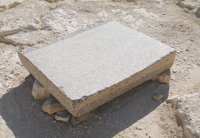
    image_19
    Machined granite slab at Abu Rawash. Image courtesy of the author.

    The most intriguing aspect of Abu Rawash, though, lies on its south side, a hundred feet or so from the base of the pyramid. There is a pink granite slab approximately four feet in length, three feet wide, and a foot in thickness. It’s propped up on a dozen or so stones the size of a softball. The granite stone is pristine, as if it was hidden away for thousands of years and only recently uncovered. The surface of the stone is smooth to the touch and at its top is an arc, precise in its edge, which separates the stone’s smooth surface from its rough. On the smooth surface there are two slice marks, one near the top and another toward the bottom. And as you look close at the stone’s surface, minute horizontal striations are clearly visible in the same pattern of the separating arc.

    Unmistakably, this pink granite slab was cut using a machine; irrefutable evidence that whatever construction crew was responsible for the pyramid at Abu Rawash, they were using some type of power saw. Abu Rawash isn’t the only place, either.

    There is evidence elsewhere that powered equipment was used by the pyramid builders – on the Giza Plateau, on the east side of the Great Pyramid at the north end of the basalt patio. Originally, the machine marks on these stones were not visible, hidden by adjoining blocks of a finished patio. But sometime over the course of the last four thousand years or more scavengers removed a number of blocks from the patio’s periphery, particularly the north end, exposing what the pyramid builders did not want anyone to see. Mistakes made by the men who operated the saws. At Giza, the evidence is just as compelling as what exists as Abu Rawash.

    WAS THERE A CIVILISATION X?

    Since the ancient Egyptians that lived from the third through the first millennium BCE were not known to have developed machine technology, and no other civilisation since has until modern times, the builders responsible for the stone at Abu Rawash and the Great Pyramid’s basalt patio must have existed at a remote time in prehistory. The evidence speaks for itself.

    There was Civilisation before Civilisation. I like to refer to it as Civilisation X.

    Who were they? Was Egypt a colony of Atlantis as some theorists have put forth? Or were they an unknown culture never described by ancient peoples?

    Although everyone knows that the story of Atlantis is attributed to the Greek philosopher Plato, most people don’t realise the story of Atlantis is Egyptian in origin. According to Plato’s dialogues Timaeus and Critias, he heard the story second hand from his uncle Solon who originally heard it from the temple priests at Sais where the Atlantis tale was said to be inscribed upon the temple’s pillars. Unfortunately, such an inscription has never been found. So no one knows whether or not Plato’s story of Atlantis is fact or fiction.

    There’s no question that Plato’s tale of Atlantis was a social moral. The pertinent question is, in my opinion, was there a kernel of truth to the story? In other words, was Plato inspired to write Timaeus and Critias from known history of the time?

    I think that is likely the case. There are a number of ancient cataclysm myths such as the Greek’s Deucalion’s Flood, the Hopi’s ‘Blue Star’, Sumer’s ‘The Epic of Gilgamesh’, and Egypt’s story of ‘Hathor as the Eye of Ra’, just to name a few. There are also two tales of catastrophe in the biblical Genesis, Noah’s Flood and the Tower of Babel.

    In modern times these ancient stories of death and destruction have been attributed to fantasy or a way of explaining life’s mysteries. I think such an interpretation is not only superficial but an insult to our ancestors. Who are we to say they were primitive and ignorant in their understanding of the world around them?

    Indeed, we should understand these ‘myths’ for what they are, ancient history told as a story in oral tradition that was designed to be understood as metaphor to be interpreted, and not a literal account. With that in mind, a fresh look at the biblical Tower of Babel story allows unique insight into our remote past. On its surface, the Tower of Babel story is just another fable where God’s wrath befalls an unsuspecting world:

    The whole world had one language and a common speech. Mankind was capable of planning and completing just about anything. Now the whole world had one language and a common speech. As men moved eastward, they found a plain in Shinar [Babylon] and settled there.

    They said to each other, “Come, let’s make bricks and bake them thoroughly.” They used brick instead of stone, and tar for mortar. Then they said, “Come, let us build ourselves a city, with a tower that reaches to the heavens, so that we may make a name for ourselves and not be scattered over the face of the whole earth.”

    But the LORD came down to see the city and the tower that the men were building. The LORD said, “If as one people speaking the same language they have begun to do this, then nothing they plan to do will be impossible for them. Come, let us go down and confuse their language so they will not understand each other.”

    So the LORD scattered them from there over all the earth, and they stopped building the city. That is why it was called Babel – because there the LORD confused the language of the whole world. From there the LORD scattered them over the face of the whole earth.

    – Genesis 11:1-9

    Taken literally the story makes little sense. However, as metaphor the imagery is easy to understand. First, the word Babel in Hebrew sounds like the Hebrew word for confused. In my opinion what they were building was not a literal tower. In fact, the tower they were building was not a tower at all. The tower represents the technical state humanity had achieved at that time and that they were building a great civilisation. The text is clear on this point: “mankind was united through a single language and could accomplish just about anything.”

    It’s ludicrous to think that some magic event occurred that picked people up and moved them across the world while at the same time mysteriously altering their language. This, too, is metaphor.

    In the insurance industry customers are protected from floods, fires, tornados, and other unfortunate events. They are referred to as ‘Acts of God’ and are nothing more than natural disasters. Today, although we know that the disaster is a result of nature, we still perceive these events as acts of God. And a number of people, particularly those who hold spiritual views, assign their responsibility to God. Why would it be any different five thousand years ago?

    I don’t think it would. We still blame God today for all sorts of personal disasters.

    What the Tower of Babel story is expressing in metaphor is that a natural disaster of immense proportions occurred that decimated civilisation. Over many generations, isolated pockets of survivors struggled back onto the road of civilisation, and because of their isolation unique languages developed in diverse regions.

    HISTORY UNLEASHED

    According to history pundits, civilisation emerged around the world at about the same time, around 3000 BCE; in the Nile Valley, the Indus Valley, Mesopotamia, as well as South America at Caral, Peru and Japan from within the Jomon culture. Scholars interpret the sudden rise in societal organisation as an evolutionary phenomenon, a natural progression of humankind. But how do we know that as a fact?

    We don’t. It’s an assumption based solely on archaeological evidence, and given the evidence for the use of powered equipment at Abu Rawash and Giza, and the scientific modelling of the subterranean section of the Great Pyramid, it appears to be a false assumption.

    Maybe we should pay more attention to ancient myth such as the story of Hathor as the Eye of Ra and ancient records such as the Palermo Stone or the Turin Papyrus.

    According to the Turin Papyrus, before Egypt’s first dynasty – preceding 3000 BCE – the ‘Followers of Horus’ ruled for 13,000 years and before them ‘the gods’ ruled for 20,000 years. Thus, according to the ancient Egyptians their civilisation’s history dates back 36,000 years.

    What happened to obscure this history?

    Between 14,000 BCE and 9,000 BCE catastrophe occurred on our planet, a cataclysm we simply refer to as ‘the end of the Ice Age’; science refers to it as the Terminal Pleistocene Extinction. We know for a fact that during that time many large mammalian species became extinct. If civilisation existed at that time, and the evidence is convincing that it did, the women and men living at that time would also have suffered the consequences of global calamity. For the survivors it would have been a long and difficult journey on the road to re-establishing civilisation.

    Edward Malkowski‘s book – Ancient Egypt 39,000 BCE: The History, Technology & Philosophy of Civilization X – takes a fresh look at the physical and textual evidence for a technical, prehistoric civilisation.

    [alert type=”general” dismiss=”no”]This article was published in New Dawn Special Issue 8.[/alert]

    [alert type=”success” dismiss=”no”]If you appreciate this article, please consider subscribing to help maintain this website.[/alert]

    © New Dawn Magazine and the respective author.
    For our reproduction notice, click here.