New Dawn – World's Most Unusual Magazine

Author: New Dawn Magazine

  • Synchronicity: The Art of Coincidence – An Interview with Dr. Kirby Surprise

    Synchronicity: The Art of Coincidence – An Interview with Dr. Kirby Surprise

    The experience of meaningful coincidences is universal. They are reported by people of every culture, every belief system, and time period. Traditionally these synchronistic events are made acceptable by ascribing them to outside supernatural forces such as divinities, or in modern times, impersonal archetypal influences.

    Dr. Kirby Surprise demonstrates that synchronistic events, based on the activity of the mind, are actually caused by the person who perceives them, and reflect many levels of their consciousness.

    His research reveals that what we believe and the way we look for patterns in the world generates synchronistic events that mirror our own assumptions. By decoding the science of synchronicity, Dr. Kirby uncovered how we actually create events and how we co‐create our reality.

    A licensed psychologist who makes his living assessing, diagnosing and treating delusions and thought disorders, Dr. Kirby Surprise is certainly qualified to untangle the web of reflected meanings and false assumptions about synchronistic events.

    His groundbreaking new book is titled Synchronicity: The Art of Coincidence, Change, and Unlocking Your Mind (New Page Books, 2012).

    New Dawn recently spoke to Dr. Surprise.

    NEW DAWN (ND): Dr. Surprise, doesn’t it seen strange for someone named Surprise to be writing a book on coincidences?

    DR. KIRBY SURPRISE (KS): Yes, Surprise is actually my family name, and I am a licensed psychologist. It’s definitely a meaningful coincidence that I wound up writing a book on synchronicity. Having a name like Surprise is probably one of the reasons the book seems to have had a charmed life in the publication process. The name and the book itself are their own synchronistic event.

    ND: What exactly are synchronistic events?

    KS: Synchronistic events (SE) are coincidences in which a meaning or message seems to be conveyed by the events to the observer. They happen when the inner and outer worlds become synchronised. Here’s an example from the book that helped fuel my own fascination with SE:

    One cool autumn day I was sitting in my car waiting to pick up a friend. I was listening to the radio to pass the time. During a commercial break an ad for the movie Carrie was played. The movie is about a teenager who discovers she has the ability to move objects at a distance. I started having fantasies about what it would actually be like to experience moving an object this way. I had seen the film; during its climax, Carrie uses her power to crush her family’s home. I looked across the street and saw an old cottage. Focusing on the house, I fantasised about what being able to move an object that large would be like. I was remembering a National Inquirer headline about a house that supposedly was turned over on its side by some psychic force. I was wondering what effect such a power would have on a person, how it might feel to move a house.

    As I stared at the house the entire cottage shuddered violently. The house started to move. It rolled over onto its side. The roof was now facing me. I was astonished and felt panicky. I stared at the overturned house and wondered, could I have really done this? I wondered if this was just a vivid dream. I decided I was awake and the event was real.

    “OK,” I said to myself. “If I just did that, then I want to see the house crushed like in the movie.”

    As I stared, awestruck, the house again began to shudder. The roof started to collapse inward as if the centre of the house were slowly imploding. Beams burst through walls and windows shattered as the house began to tear itself apart. A moment later, I saw a flash of yellow paint above the house, then the largest bulldozer I’d ever seen climbed lazily over the centre of the house, crushing the structure into rubble in a few moments. It then started to load the debris into waiting dump trucks. The house had obscured the demolition equipment from sight. With the radio on and windows up, I couldn’t hear the tractor engine. My fantasy had come to pass, my wish fulfilled through a series of synchronistic events.

    ND: You’re claiming that not only are these events real, but that we all create them every day. But isn’t it possible that we are just interpreting what we experience wrong, that synchronistic events are a trick of the mind?

    KS: Many SE are based solely on the way we interpret events around us. SE can seem like miracles, violating the laws of time and space. You are the actual miracle. You have billions of sensory neurons pointed out into the environment. Each neuron is literally a digital biological computer operating like a binary circuit sending signals to the brain. Your brain is the known universe’s most powerful supercomputer. Your brain has a hundred billion neurons, each as powerful as a small desktop computer, each networked to as many as two hundred thousand others.

    One of the things you’re doing with all that computing power is taking trillions of bits of digital sensory information, and constructing, in areas of memory, the universe as you are experiencing it as you read these words. You, the conscious executive functioning in the frontal lobes, is about the size of a walnut. You have no direct contact with the outside world. You experience a neurological representation of the world constructed for you on a stage of the brain’s memory. You are, in effect, your own “Matrix” computer.

    The automated systems of the brain that construct this reality for you make vast changes to the information before you experience the data as the reality around you. The brain evolved to match patterns. It looks over vast rivers of sensory information, and memory, to find the patterns you, the executive function, has been interested in.

    We evolved as grassland hunters. Our task was to look out over the miles of waving patterns in the savannah, and see through the camouflage of other creatures. We survived by looking at all that data, and deleting the patterns that had no meaning, and completing the partial patterns that meant dinner, or predator. We do this because there is millions of times more information in the environment than we could consciously process.

    So, the brain evolved automated systems to do the editing for us. The brain deletes most of the sensory data from the reality you’re experiencing right now. Patterns you have looked for in the past get enhanced, missing pieces added, until patterns with some meaning emerge.

    Consider this: the typical reader reads only the first three or four letters of each word in a sentence. The brain deletes the rest of the word, and then fills in the meaning by using the context of the sentence and subject matter. This speeds up pattern recognition while reading. As you read, you have been hallucinating parts of this very sentence. So, when you say we are “just” interpreting events, you’re describing a miraculously complex process.

    SE do not appear as “tricks of the mind.” They partially result from the automated systems of the brain searching out and enhancing patterns in your environment. The patterns are always there, but unless they have some emotional relevance to you, what psychologists call “Emotional Valence,” they are deleted and no memory of them is created. SE often appear because you have been consciously, or unconsciously, thinking about something, and the automated pattern recognition systems in your bio-supercomputer highlight matching patterns in the environment for you.

    Even more amazingly, you are also altering the randomness of events in the external world as well based on your thoughts and emotions. You are not just altering sensory data, you actually change the probabilities in the outside world as well.

    ND: So, you’re saying that we create our own reality?

    KS: Only in the sense that I believe some well meaning people often mistake our brain’s creation and editing of our neurological representation of reality for creating objective external reality. Clearly, none of us creates actual reality. We do have some influence over the randomness of events around us though. We create SE that mirror our thoughts and emotions. This happens with all thought processes, conscious, unconscious and transpersonal. We don’t create or change the physical matter and energy around us, but we do influence the relationships between events to create SE.

    ND: How much influence do we have over the events around us?

    KS: Research is telling us that we do change the randomness of events around us by around 3-5%. The best experimental designs are called “Double Blind Experiments.” In this design the subjects have been randomly selected, and subjects don’t know what the experiment is actually about. The person performing the experiment does not know what the expected outcome of the experiment is either. The experimenter and subjects are both “Blind” to the expected outcome. The core problem this method is meant to help eliminate is a basic, hard-to-swallow, scientific fact: the expectations of the researcher change the outcome of the events in the experiment just by the act of observation and expectation.

    The estimation of SE influence being 3-5% comes from Dr. J.B. Rhine. He was a psychologist and researcher. Back in the 1930s a man came to his office with a strange claim. He said he was a gambler, and he could control dice rolls with his mind. Not all the time, but enough so that it was a noticeable effect that turned the odds in his favour. Rather than dismiss this claim, Rhine did what a good scientist does. He said “show me.” They took six pairs of dice; the gambler’s task was to have more dice come up with the number six than could be expected by chance. They tossed the dice. Again, and again, and again. It works. The amount of change over random hovered at about 3-5% above chance. The effect was real. Rhine spent decades doing rigorous experiments on the ability of subjects to change random events. He was having people produce SE on demand. The research, reproduced and confirmed by peers, states the odds are millions to one in favour of us being the cause of this effect.

    Rhine concluded events could be changed in the direction of the subject’s desire and attention. These random events included series of coin tosses, die throws, the position objects landed in when dropped in a random manner, the values of randomly generated electrical currents, and the rate of particle release from a radioactive source, among others. In each instance, he found that the probability of these physical events was changed by the psychological expectation and attention of the observers, even though no physical force was detected.

    Rhine’s work went beyond proof of personal causation. He found emotional states, such as interest or boredom, affected the subjects’ ability to influence SE. Boredom and anxiety decreased the ability to change the randomness of events in their desired direction. Focused attention and positive expectation increased the occurrence of the targeted events. He found alcohol or caffeine lowered or raised scores respectively. He found emotions and personal physiological states can facilitate or inhibit SE. My book shows people that not only do they do this all the time, but that very complex ideas and emotions can be reflected by SE as well.

    ND: If this is the way our reality works, then why aren’t more people aware of doing this?

    KS: There is a measure of self-awareness called “The Mirror Test” developed by biopsychologist Gordon Gallup. Animals are shown their own reflection in a mirror. If they recognise the reflection in the glass as their own, it is taken as an indication it is a self-aware being. Humans, some great apes, elephants, and dolphins generally recognise their own reflections; a few birds do as well. Interestingly, some birds and dogs that can’t initially recognise their own reflections can be trained to do so.

    Synchronicity is a form of mirror test. People see in the mirror of events around them the image of their own inner life. They see what they think, feel and believe. They even see their fantasies about what causes these reflections. Everyone has experienced meaningful coincidences. They are explained by supernatural and religious beliefs, archetypal influences, or more exotic personal mythologies. SE mirrors these beliefs back to the observer. SE often are mistaken for confirmations of the objective reality of personal beliefs. Most people are looking into the mirror of SE every day. They don’t realise the images they see are their own thoughts.

    You have an amazing ability. Your thoughts and feelings, your memories and experiences, are reproduced in the events around you as coincidences. The world presents you with meaningful coincidences based on your inner life. Everyone creates their own SE, constantly. The ability is innate to the way our brains process information into meaning. This seemingly magical ability goes largely unnoticed, unexplained and misunderstood, until it presents itself in spectacular form, simply because people never question the everyday SE in their mirror.

    ND: In the book you state religion has nothing to do with spirituality. What did you mean by that?

    KS: Many religious doctrines were created to keep people under control and to maintain civil order. You can spot them pretty easily: they consist mainly of behavioural instructions and commands. Jared Diamond describes in Guns, Germs, and Steel: The Fates of Human Societies the evolution of the concept of a single, all-powerful God. When we lived in tribal groups without fixed laws, we generally had social communities of about 60 people. We can’t keep track of everyone in larger groups. This makes it impossible to make good pattern matches about everyone, so we break up into smaller groups. We answered this problem by creating a social technology that allowed many more people to live together. Tribal groups came under the law of a single king, whose authority came from the Gods we created and the punishments imposed on heretics.

    Alternately, some spiritual doctrines don’t focus on behaviour; they focus on achieving states of consciousness. They change the frame of reference to creating experiences of connectedness. Christian Gnosticism, Islamic Sufism, Zen Buddhism, and the shamanism of our ancestors, often focused on creating states of ecstatic union. In these states of consciousness, the practitioner experiences existence without boundaries. The subject/object relationship we experience as separateness ceases to exist. You become one with everything. SE demonstrates this connectedness. This connection is not something you earn; it is what you already are. SEs are not something you learn to create, you learn to recognise you are already creating them.

    I have heard people ask if someone was “enlightened,” as if it were a possession that enhanced their value. Enlightenment is the recognition of your essential unity and connection with existence. You don’t have to earn it, you are it. Spirituality is connectedness. The stock and trade of most religion is having people trade that natural connection for a code of behaviour.

    ND: You’re saying that we all see a reality created by the meanings we look for, and that we do this naturally and unconsciously?

    KS: Absolutely. All of us have known decent, rational, people who have what we would consider extreme religious, political or philosophical views. You may wonder, “How could they possibly believe that?” It’s because beliefs are patterns of thought that become reflected in the world around us. People mistake their reflected SE for confirmation of their version of the nature of reality, when in fact they have just come to believe what they think.

    As a psychologist, I see people replaying the patterns of past traumas and relationships in their lives over and over. The unconscious recreates these patterns in our lives as a way of trying to process them. SE work the same way. Researchers have commented that one of the most consistent types of SE patterns that manifest around people are reflections of either traumatic or spiritual experiences. The commonality in both is the emotional valence around the events that seems to directly drive the SE.

    ND: What are the implications for the way people experience their spiritual life?

    KS: Most of us live in what Joseph Campbell would call a “Personal Mythology.” A Christian looks for help from Jesus, and SE appear that seem to be from their deity. Muslims look for Allah, and find the pattern of their thoughts reflected back to them. Pagans look for the mother Goddess, and are answered by however they believe their deity to be. I love to study mythology, what Campbell would call “Other people’s Religion.” I have several dictionaries of Gods and Goddesses. They contain descriptions of thousands of Deities, all of which were the centre of people’s spiritual life and belief, and all, but for a very few, are now considered mere myths of our ancestors.

    What has endured are the shamanic and mystical traditions, most of which have a strikingly similar teaching: there is only one being, one consciousness, and we are it. Again, as Campbell would say, “You are, in your deepest identity, God.” The implication here is that when you create SE, you are not altering an external environment. You are seeing a demonstration that your thoughts are not separate from the environment. You are experiencing an aspect of yourself that is not limited to the cause and effect of time and space. There is much more to you than meets the eye, you are connected to everything.

    ND: You claim that modern science and String theory support the idea that we are all navigating in many realities at once – can you say more about that?

    KS: I am offering an explanatory fiction of SE that fits the facts of String theory, as we now understand them. I have read, I believe in your magazine, articles by people who have come to understand that the Planes of consciousness described by our traditional mystics are actually the newly speculated on dimensions of reality String theory has given us. This is a great step forward, to realise that all matter and dimensions have their own flavours of consciousness.

    In String theory our universe has 11 dimensions, all particles being extensions of dimensions linked to other dimensions in various patterns. But beyond even that, it appears our universe is projected onto what’s being called a “Membrane.” It’s as if we exist as Flatlanders on the surface of a thin bubble in what is being called M space. We are not the only bubble universe out there. The separation between membranes is probably as small as the smallest quantum state. This means a virtually infinite number of alternate physical universes in the space around you right now. It used to be a joke when someone said Elvis is performing on stage in Vegas in a parallel probability. It’s not a joke anymore; it’s the standard model of physics.

    In the book I’m saying we don’t just live in one probability. We don’t jump from one to another, we live in an almost infinite range of them simultaneously. I believe our experience of the passage of time itself is the result of our movement, at the speed of light, as described in the Special and General theory, through these probability membranes. Our trajectory through these probabilities is altered by our thoughts and emotions because, as our not so ignorant mystics have told us, thought and emotion are dimensions that underlie the physical reality.

    Whether this explanation proves to be accurate or not, it is useful. If you believe it, it allows you to navigate probability just a bit, 3-5%, by choosing your thoughts and emotions, to create SE. The problem with explaining SE has always been a kind of “flat earth” thinking that mandated something to “cause” SE. It appears as if the entire structure of the universe would have to be altered to create SE. With an infinite number of probability membranes being travelled through, you do not alter anything: your mental patterns move you through probabilities in which events around you reflect your internal processes. You are already a multidimensional being.

    ND: If I wanted to try to prove to myself that my thoughts are being mirrored in the environment around me, exactly how would I go about it?

    KS: The best way, as self-serving as it sounds, is to first read the book so that you have a safe context to start with. SE are so responsive that people sometimes get trapped in the house of mirrors of their own thoughts. The book was created to ground people and give them a working context. It also contains a series of exercises that starts at the creation of simple SE, and progresses to creating more complex full personal mythologies. The easiest way to create SE is to simply regularly think about them, then look out into the world as if it is a single, responsive being trying to communicate with you through SE. Expect a response SE, and eventually they will appear. Just don’t forget you are seeing your thoughts mirrored in external events.

    ND: What advice do you have for people who are experiencing synchronistic events and might be scared or confused by them?

    KS: Relax. SE are not dangerous. The meanings they convey are just thoughts, and only have the reality you chose to give them. They are not even paranormal. They are extremely normal. Everyone is creating SE. You were born creating SE, you have been doing it all your life. SE are part of the natural survival skills you evolved to help you through your life. The best way to use them is as a form of communication with other parts of yourself, to teach yourself connectedness. Choose the patterns you want to look for and expect them to appear as SE. If you become scared or anxious, ask yourself why you are choosing to scare yourself, then move on to creating something fun with SE. Because SE are driven by the attention you put into them, any pattern of SE you don’t want can be extinguished by either looking for a different pattern, or ignoring them until they fade away. If you signal the brain you’re not interested in them, it will gradually stop presenting them.

    Synchronicity: The Art of Coincidence, Choice, and Unlocking Your Mind by Kirby Surprise (New Page Books, 2012) is available from all good bookstores. 

    [alert type=”general” dismiss=”no”]This article was published in New Dawn 132.[/alert]

    [alert type=”success” dismiss=”no”]If you appreciate this article, please consider subscribing to help maintain this website.[/alert]

    © New Dawn Magazine and the respective author.
    For our reproduction notice, click here.
  • Science Was Wrong: An Interview With Stanton Friedman

    Science Was Wrong: An Interview With Stanton Friedman

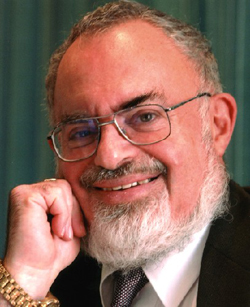
    Stanton Friedman is one of the world’s most famous ufologists, and a man who understands the workings of mainstream science and academia. Employed for 14 years as a nuclear physicist for companies like General Electric, General Motors, Westinghouse and Aerojet General Nucleonics, he worked on highly classified US programs involving nuclear aircraft, fission and fusion rockets.

    In 1958, UFOs caught his attention, and Friedman has since lectured about this subject at more than 600 colleges and professional groups in all 50 states of the US and around the world.

    His most significant and controversial book Top Secret/Majic revealed much about how the US government dealt with the 1947 crash of a “flying saucer” near Roswell, New Mexico.

    In their new book Science Was Wrong: Startling Truths About Cures, Theories, and Inventions “They” Declared Impossible, Friedman and social scientist Kathleen Marden discuss various examples throughout history when scientists misjudged or ignored scientific evidence or breakthroughs.

    Having worked as an insider for many years, Friedman understands what is wrong with the system and the reasons why otherwise intelligent people refuse to acknowledge hard truths and continue to resist change.

    New Dawn magazine recently spoke to Stanton Friedman…

    What do you think about Global Warming and Cold Fusion?

    There is no question that climate changes – sometimes the world gets warmer and sometimes it gets colder. The much more important question is whether man is responsible for these changes (so called Anthropogenic Global Warming) and whether billions of dollars should be spent to control evil CO2. The data do not support the claims of the Intergovernmental Panel on Climate Change (IPCC) and Al Gore. Mother nature has far more to do with overall weather cycles than man. Contrary to the IPCC’s claim that all scientists agree with them, there are many examples of serious scientists who do not. Politics has become the major issue not science.

    Cold Fusion is still being investigated by such respectable institutions as Toyota, The Electric Power Research Institute and the US Navy. More and more supporting evidence has been found that scientists Stanley Pons and Martin Fleischmann were on the right track, even if not “politically correct.” Their debunkers were guilty of the typical false claims based on bias rather than on the facts. It will be interesting to see how this story plays out.

    Several of the chapters in Science Was Wrong deal with medical issues such as the Hemophilia Holocaust. Why are they important?

    The medical chapters, with most of the work being done by Kathleen Marden, are important because they demonstrate there can be serious consequences (often fatal) when well educated authority figures make totally wrong claims. 10,000 American hemophiliacs were made HIV positive because it was claimed that the chance of HIV being transmitted via transfusions was one in a million. The clotting factor used by hemophiliacs is batch processed from many thousands of individual units of blood. If one was contaminated, the entire batch would be. It was already known that heat treatment could get rid of the viruses. But that was considered too much trouble and expense and not required anyway. Strong claims were made without any supporting evidence.

    Why is that so many smart people make what turns out to be stupid statements?

    I am a physicist not a psychiatrist, but I have certainly encountered many “smart” debunkers. There seem to be major problems of arrogance and ignorance. The “smart person” assumes that if something as obviously significant as alien visitations were taking place, that would be important and therefore he would know about it because he keeps track of what is important. Since he doesn’t know about it, it must not be true and there is no point in wasting his time becoming familiar with the relevant data since there must not be any.

    The basic rules for these arrogant opinion setters are: 1. Don’t bother me with the facts, my mind is made up; 2. What the public doesn’t know, I won’t tell them; 3. If one can’t attack the data, attack the people, it is easier, and 4. Do “research” by proclamation rather than admitting ignorance and doing a serious investigation.

    From a more philosophical viewpoint I would like to quote a serious debunker, Dr. Michael Shermer, founder of the Skeptics Society and author of Why People Believe Weird Things, for why he believes such a weird notion there is no evidence indicating some UFOs are alien space craft.

    First comes this on page 283: “Smart people believe weird things because they are skilled at defending beliefs they arrived at for non-smart reasons.” BINGO. Clearly this applies not only to Michael, but to Dr. Joseph Nickell, the paid “scientific” investigator for the newly named “Committee for Skeptical Inquiry” which used to be CSICOP. His three degrees in English and experience as a magician (master of deception) hardly provide scientific training as demonstrated by his nonsensical explanation of a six foot owl for the Flatwoods, W.V. Monster. He did actually visit Flatwoods but didn’t talk to the witnesses nor visit the site.

    The second quote from Michael’s book that applies to the debunkers is on page 299: “The Confirmation Bias, or the tendency to seek or interpret evidence favourable to already existing beliefs, and to ignore or reinterpret evidence unfavourable to already existing beliefs.”

    It was no wonder that at the end of a three hour debate that Michael and I had about UFOs on Coast to Coast Radio, the audience voted on a winner. I got 80% of the vote. He, of course, had not read any of my books.

    Have there really been serious consequences resulting from the wrong claims made by scientists?

    As documented in Science Was Wrong, thousands died because of the resistance to the use of vaccinations against smallpox. When Dr. Ignatz Semmelweiss was forced out of his hospital in Vienna because he insisted doctors seriously wash their hands between doing autopsies and delivering babies, 20% of the woman came down with child bed fever and died as did their babies. Fewer than 3% delivered by mid wives with clean hands died. Many women were sterilised because of the loud advocacy of the leaders of the Eugenics movement bound on creating a super race by eliminating reproduction by those not deemed suitable. Hitler used their justifications for his ethnic cleansing work.

    Development in space and communication technology and in aviation were often seriously delayed by the arrogance of the leaders claiming man would never fly, space travel was utter bilge, battleships could not be sunk by bombs dropped from an airplane, planes couldn’t go faster than the speed of sound, jet engines had no place in aviation, etc. One expert in the use of explosives insisted to US President Truman that the notion of an atomic bomb was ridiculous.

    Have you personally encountered many closed minds in the academic world?

    I have encountered a number. Professors seem to believe that only PhDs in academia publishing in standard peer reviewed scientific journals can do research. They seem totally oblivious to the huge amounts of money being spent in classified programs in industry and in the various major laboratories operated for the government. They are shocked when I point out that when I worked for the General Electric Aircraft Nuclear Propulsion Department near Cincinnati in 1958, we spent $100,000,000 that year and employed 3,500 people of whom 1,100 were engineers and scientists. We published many classified reports, but were certainly not in the publish or perish mode of academia. The three nuclear weapons labs (Los Alamos, Sandia, Lawrence Livermore) several years ago each employed over 8,000 people and each had an annual budget over $1 billion. Together just those three labs were spending more than the amount spent on all its projects by the National Science Foundation.

    When it comes to flying saucers and the notions of interstellar travel, the academics seem to think the only possibility would be chemical rockets… the Pony Express of the propulsion system business. In contrast, the first nuclear powered submarine was operated in 1956. Hundreds have been built since. There are several nuclear powered aircraft carriers that can operate for 18 years without refuelling. Think how many tankers of diesel fuel would be required. The academic astronomers all know that the stars produce their energy via nuclear fusion. But they are totally unaware of the studies done in industry using appropriate nuclear fusion reactions for deep space propulsion. Using the right isotopes, particles can be ejected having 10 million times as much energy per particle as can be obtained in a chemical rocket. They have all heard of nuclear weapons, but can provide no sensible context. A World War II big bomb was a 10 ton blockbuster. Hiroshima was about 15,000 tons of TNT equivalent. The first H Bomb released 10 million tons of TNT equivalent and had a three mile wide fireball. The biggest Russian bomb was equivalent to 57 million tons of TNT and these guys are thinking of chemical rockets. I worked on a study of fusion rockets back in 1962.

    You spent 14 years working in industry, but have lectured at over 600 colleges and universities. Did you find industry different from academia?

    Industry was much more concerned with results – not the publish or perish business, not outside honours, or tenure – but how can we get our systems to work. We had access to fine equipment, sophisticated facilities, exotic materials. Yes, much work was done under security. The academic guys don’t understand the national security aspects of flying saucer reality. Every country would surely like to duplicate the flight behaviour. Young engineers and scientists had great opportunities as programs expanded and could learn a lot from working closely with more experienced professionals.

    In universities I have found many are afraid to even talk about such unacceptable topics as flying saucers and the cosmic Watergate. Sometimes I have had to wake them up with the fact that Lockheed built the Stealth aircraft at a cost of $10 billion dollars over 10 years in total secrecy. The existence of the Corona spy satellite wasn’t revealed until 35 years after the first one obtained more data about Soviet military installations than all the U-2 flights that preceded it.

    Astronomers seem to be a favourite target in Science Was Wrong. Can you give some examples?

    An astronomer (British Astronomer Royal) in 1956 said space travel was utter bilge and nobody would pay the cost, and what good would it be anyway. Astronomy has benefitted more from the space program than any other science. One claimed in 1903 that man would never fly in a machine. The Wright brothers’ flight happened quietly two months later. The negative attitudes had discouraged many from seeking development funds or doing experiments. One astronomer computed in 1941 that to send a man to the moon and back would require an initial launch weight of a million tons. Turns out he was too high by a factor of 300 million. Turns out, as one might expect, that he was totally unfamiliar with the literature that already had been published, that he made all the wrong assumptions. He like other academics think you can determine feasibility from basic physics. In the real world the initial assumptions are very important. He assumed a single stage rocket launched vertically with much too low an exhaust velocity and much too low an acceleration and using a retrorocket to slow the vehicle down upon return. We use the atmosphere and take advantage of cosmic freeloading at every turn including taking advantage of the moon’s gravitational field.

    The SETI [Search for Extra-Terrestrial Intelligence] cultists assume that interstellar travel is impossible even though they know nothing about it. They assume that aliens would send signals using technology compatible with our techniques roughly 100 years into the age of radio. There are stars less than 40 light years away that are over a billion years older than the sun. Surely their technology is more advanced. Rarely do astronomers point out how terribly wrong they have been in the past. Venus is not a tropical jungle. Mars has had water, and electromagnetic effects are very important in the solar system. Obviously if aliens are visiting, listening for signals using our technology makes no sense. So many cases of arrogance coupled with ignorance. They even would have us believe that they know how aliens would behave. They don’t understand earthlings no less aliens.

    Why are you better equipped to deal with topics such as space travel than the Professors who claim there is nothing to UFOs or to star travel?

    I have studied an enormous amount of evidence, books, documents, and reports about the UFO evidence. When I discuss five large scale scientific UFO studies at my lectures, I ask how many have read each one. Usually fewer than 1%. Dr. Seth Shostak’s SETI specialists had read none of the five, yet claimed as did Dr. Jill Tartar there is no evidence.

    I have worked on far out propulsion systems such as nuclear airplanes, fission nuclear rockets, fusion nuclear rockets. Our most powerful nuclear rocket operated at a power level of 4400 megawatts or twice the power output of Grand Coulee dam. They are totally ignorant about such matters, but hate to admit it. They know nothing about these topics. I worked under security for 14 years, have visited 20 document archives, wrote many classified reports. They know nothing about the work being done in secret.

    Tell us about space travel and other topics you discuss in Science Was Wrong?

    I discuss fission and fusion rockets and the need to take advantage of what has been learned in the programs. I also refer readers to the chapter in my 2008 book Flying Saucers and Science which has pictures of fission nuclear rockets, nuclear airplane propulsion systems etc., and other exotic propulsion systems such as the electromagnetic submarine.

    You seem to be an admirer of the late Dr. Immanuel Velikovsky and yet many scientists have heaped ridicule on him. Why do you support many of his views?

    The first reason is that it turns out he was correct about high temperatures on Venus, radiation from Jupiter and the importance of electromagnetic fields in the solar system. He carefully reviewed many stories from various societies about events in the planet’s past history. Often his opponents attacked him because his background was in medicine and psychiatry not in astronomy. Often they attacked without even reading his books such as Worlds in Collision. He was a true scholar.

    Do you believe that the changes in the energy output of the sun are the real cause of climate change as opposed to the production of CO2?

    The data seems to strongly support these conclusions. New satellites that can carefully observe the sun, solar storms, particulate radiation etc., are backing up these views. Many scientists also have finally been willing to speak out about the phony arguments such as the Himalayan glaciers will soon melt. That notion was nonsense.

    Dr. Robert O. Becker is somebody you obviously admire and consider to have been a pioneer in relating the effects of magnetic fields on people including not only treating certain medical conditions, but influencing people’s behaviour. Can you give some examples of his work?

    He did some great work on using magnetic fields to speed healing in fractures that otherwise seemed unable to heal. He looked at limb regeneration in animals that do indeed regenerate limbs such as salamanders. He did a massive study on admissions to Veterans mental hospitals and behaviour in them as a function of the earth’s electric and magnetic field environment. There was indeed a strong connection. He was a fine scientist with the courage to dig in areas where others were unwilling to follow the evidence. His work was a fine example of my mantra that technological progress comes from doing things differently in an unpredictable way. Think about it. Lasers aren’t just better light bulbs. Nuclear rockets aren’t just better chemical rockets. In both cases there were entirely different physics involved.

    Can you tell us the general rules as you see them for the methods of approach of scientists who try to debunk such topics as UFOs, Cold Fusion, space travel?

    The basic approach is always to assume there is nothing to the crazy notions being put forth. Assume if there had been you would already have known about it. Read only the work of those who think the topics are nonsense. I almost never see an anti-UFO professional refer to the large scale scientific studies or to the more than 10 PhD theses that have been done on UFO related topics, or to the many papers presented by scientists at the 40 annual MUFON Symposia. They never subscribe to the journals. Never admit there has been a great deal of sophisticated research done outside of academia.

    Twice I have had academics claim that Roswell couldn’t have happened because if it had loads of academic scientists would have been pulled from their universities to work on figuring out what was going on. I had to strongly point out this was nonsense.

    During World War II the US established a large number of major laboratories with all the requisite equipment and facilities for examination of alien wreckage, data on flight performance, biology of aliens, and also large budgets etc. What they required was top notch professionals who already had high level security clearances, access to top notch equipment, places for storing and preparing classified reports. There were well over a dozen such large scale labs available to those wanting very high level work, all outside academia. These academics were totally ignorant about this huge resource. And still their thinking is the equivalent of assuming that the most advanced communication system is the pony express instead of the internet!

    Science Was Wrong: Startling Truths About Cures, Theories, and Inventions “They” Declared Impossible (New Page Books, 2010) is a fascinating collection of stories about the pioneers who created or thought up the “impossible” cures, theories, and inventions “they” said couldn’t work. How many have suffered or died because cures weren’t accepted? How many inventions have been quashed? You will end up shaking your head in disbelief and even disgust as you learn the answers. 
    [alert type=”general” dismiss=”no”]This article was published in New Dawn 123.[/alert]

    [alert type=”success” dismiss=”no”]If you appreciate this article, please consider a contribution to help maintain this website.[/alert]

    © New Dawn Magazine and the respective author.
    For our reproduction notice, click here.

  • The Real Men in Black: Government Agents or Visitors from Beyond?

    The Real Men in Black: Government Agents or Visitors from Beyond?

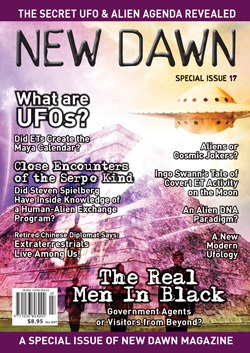
    From New Dawn Special Issue 17 (Sept 2011)

    Who are the “Men in Black”? In the blockbuster Hollywood movie of the same name, they were fictional characters. In real life, they are fearsome individuals who attempt to silence the witnesses of UFO and other paranormal phenomena.

    In his latest book, The Real Men in Black: Evidence, Famous Cases, and True Stories of These Mysterious Men and Their Connection to the UFO Phenomena, the popular, bestselling author Nick Redfern delves deep into the strange world of these mysterious operatives. Originally from England, Nick Redfern lives in Arlington, Texas with his wife, Dana, and his website is www.nickredfern.com.

    New Dawn magazine spoke to Nick about the Men in Black – their origins, some classic cases, previously unknown reports, secret government files, and the many theories that have been presented to explain the mystery.

    NEW DAWN (ND): What prompted you to write about the Men in Black (MIB)?

    NICK REDFERN (NR): In speaking to people about the MIB phenomenon, two things became clear to me. The first was that, even in the UFO research community, many people assumed that the mystery of the Men in Black was one that was mainly set in the 1950s and 1960s. In other words, many people assumed the MIB had gone away and aren’t active today. However, I had in my files cases as late as 2009. So, that was one reason to write the book – to demonstrate that the phenomenon is still very much ongoing, and not just a mystery of the past. The second reason was because many people’s views on the MIB were kind of based on the Hollywood Men in Black movies starring Will Smith and Tommy Lee Jones. The films are good fun, and entertaining. But, they only portray the MIB as agents of a secret arm of the government. The reality, however, is that most MIB are described as being far stranger than that – they sound almost alien, creepy, weird, and not even human in many respects. So, that was the other, main purpose in writing the book: to reveal that while the government secret-agent angle is certainly valid, it doesn’t tell the whole story.

    ND: The Men in Black first appeared in the early 1950s, to a UFO investigator named Albert Bender. Can you tell us about his encounters with the MIB?

    NR: Albert Bender was a man who, in the early 1950s, established a UFO research group – called the International Flying Saucer Bureau – in his home-town of Bridgeport, Connecticut, USA. Bender was an unusual character, who lived in the attic of his step-father’s home, and who was deeply interested in not just UFOs, but also the world of the occult, and was very knowledgeable in both areas. Bender’s IFSB attracted a huge amount of attention, and created links with UFO groups and researchers all around the world, including Australia and England. In other words, the group became very successful, very quickly. Then something strange happened: without warning Bender suddenly shut down the IFSB and quit Ufology. The rumour-mill – based on what Bender had quietly told a few friends and colleagues, albeit in a brief, enigmatic fashion – was that he had been silenced by three men in black-suits who warned him to leave UFO research, which he did until 1962 when he briefly resurfaced with his own book on the events in question, Flying Saucers and the Three Men.

    ND: Gray Barker was a legendary UFO researcher and writer from the 1950s onwards who chronicled the exploits of the MIB. Can you tell us about Barker and what he uncovered?

    NR: Barker was a man who, like Bender, was heavily into both UFOs and the occult, and also horror movies, gothic horror stories and things like that. So they kind of gravitated to each other and became friends. Barker was also an excellent, atmospheric writer who quickly and astutely realised there was a fascinating story to be told about Bender’s silencing by the three men, and Barker told the story in his 1956 book, They Knew Too Much about Flying Saucers. In that book, Barker relates the silencing of Bender, but alludes to the theory the MIB were from the US Government. However, in 1962, Barker – who was a publisher as well as an author – published Bender’s very own book, the aforementioned Flying Saucers and the Three Men. Bender portrays the MIB as very different from anything that might surface out of the Pentagon! In Bender’s book, the MIB come across as definitively supernatural entities. He talks about them materialising in his bedroom, along with accompanying overpowering odours of brimstone – which is a classic facet of supernatural encounters. They have weirdly glowing, or self-illuminated, eyes. And they have the ability to render Bender unconscious or place him into an altered state of mind. So, it’s very ironic that the man who arguably started the MIB mystery – which many people assume is all about government agents – actually described the MIB as nothing like CIA or FBI people. They were much, much stranger.

    ND: The Men in Black turned up during the famous “Mothman” sightings at Point Pleasant, West Virginia, in the 1960s – which became the subject of the Hollywood movie, The Mothman Prophecies, starring Richard Gere. What is the story behind the Mothman‐MIB connection?

    NR: The link between Mothman and the MIB is just as weird as the saga of Albert Bender a decade earlier. The Mothman Prophecies movie was based on the book of the same title written by legendary Fortean author, John Keel, and told the story of this ominous, glowing-eyed, winged creature seen in and around Point Pleasant in the mid-to-late 1960s. Despite its cartoon-style name, Mothman was a very unsettling, shadowy thing that haunted the town’s old TNT plant and hung around in the shadows, like some grim-reaper-style thing. And, on this latter point, sightings of Mothman culminated in the collapse of the town’s Silver Bridge that spanned the Ohio River, and which led to the deaths of dozens of people who were on the bridge and drowned. Some researchers saw Mothman as the cause of the disaster. But, today, more seem to take the view that Mothman is some form of warning phenomenon; that it tries to warn people of impending disaster, rather than actually causing it. And when the Mothman encounters were at their height, UFOs were buzzing about, and the Men in Black were seen roaming all around Point Pleasant, making veiled threats to Mothman witnesses and local journalists, and even plaguing people like Keel and Gray Barker, who also wrote a book on the affair called The Silver Bridge. It’s almost as if the MIB were trying to prevent people from learning the truth about both the UFO presence and the true nature of Mothman.

    ND: John Keel had his own face‐to‐face encounter with the MIB. Will you tell us about that?

    NR: Yes, this is an extremely bizarre story that was provided to me by the well-known author on all-things paranormal, Brad Steiger. Steiger said to me: “I’ve never put this in any of my books, and I feel a little awkward, but on the other hand, what I am about to tell you really happened.” Steiger added that Keel “…began to tell me of the visitations he’d had with three men who had not knocked, but had entered, his apartment. They literally came through the door. He told me of an evening when they were challenging him to lay off the whole Mothman thing; to lay off UFOs, if he knew what was good for him.” Well, having heard that astounding aspect of the story – which sounds astonishingly like Albert Bender’s experiences with the three MIB that materialised in his attic – you might think: could it get any stranger? Yes, it could; and it certainly does, as Steiger added to me: “John was the sort of person who responded to threats like the red flag to the bull. But, he said to me that, on this occasion, they reached under his sink and took out a jug of Clorox. They said: ‘What is this?’ and John said: ‘That’s disinfectant, it’s very powerful.’ They brought it over to him, took the cap off, and gave him a smell. John wrinkled his nose, and when they asked if it was Clorox, he said ‘Yes, that’s what it is. Now put it back before you spill it.’ Whereupon, the three of them – in front of him – put it to their lips one at a time and took large gulps of it. Now, by the time John had finished the evening, telling me stories like this, I decided that maybe I wouldn’t be quite so brave and quite so powerful. I began thinking: we’re not dealing with FBI agents or the Air Force.”

    ND: Some people have suggested the MIB are government agents. Does evidence exist to support this theory?

    NR: There’s absolutely no doubt at all that at least some Men in Black do originate with official agencies. For example, in the book I cite several significant cases from the 1960s – including one from England and one from the United States – where people had classic encounters of the MIB variety, with the MIB turning up in a black car, wearing black suit and hat, and making a veiled comment to the witness about not speaking publicly on their encounter. However, the significant thing is that thanks to the Freedom of Information Acts in each country, we now have the files on both events. In the English case, the documents identify the Man in Black as being attached to the British Royal Air Force’s Provost & Security Services. The P&SS get involved in cases ranging from espionage and counter-intelligence, to national security issues. In the US case, the files identify the MIB as agents of the FBI. So, clearly some cases of MIB are indeed government-originated. But these incidents are far outweighed by the weirder, Albert Bender-type encounters with the MIB.

    ND: Another scenario suggests the Men in Black are aliens themselves. What do you think about that?

    NR: Well, as bizarre as that may sound, the fact is that most of the Men in Black do look very, very odd, and they act equally as odd, too! For example, many of the MIB are described as only being about five-feet-tall. They have either olive-coloured skin or almost completely white-coloured skin. They have oddly shaped, and strangely spaced, eyes and are painfully thin, almost to the point of looking practically anorexic. On top of that, they don’t seem accustomed to our ways, customs and languages to the degree they should if they’re from the government. They also seem to have the ability to literally appear and disappear – and I do mean literally! This has all led to the theory that perhaps the MIB are human-alien hybrids. In other words, creatures that – with a bit of camouflage, such as pulled-down hats, large wrap-around sunglasses, turned-up trench-coat collars, and largely only surfacing at night and keeping in the shadows – look enough like us to where they can move among us, and perhaps even infiltrate us, if they’re careful about how they do it. The imagery is kind of like an underground alien army working its way into our lives, slowly and subtly, in other words.

    ND: In the 1960s, a number of UFO researchers and authors actually managed to photograph the Men in Black. Can you tell us about their experiences?

    NR: Yes, there are at least two cases on record where the MIB have been captured on film. The first story comes from two long-time UFO researchers/authors: Tim Green Beckley and Jim Moseley. Back in the 1960s there was a UFO investigator in Jersey City, USA named Jack Robinson. Jack was married to Mary, and in 1968 they began to experience weird activity – when they would return home at night, after maybe going out for dinner, it looked like someone had been in their apartment and had been rummaging through Jack’s UFO files. Then, during the day when she was at home, Mary started seeing a Man in Black staring up at the apartment from a ground-floor doorway in the building directly opposite them. Mary said he had an unsettling look on his face, kind of unemotional and zombie-like. Mary happened to mention this to Tim and Jim, and because the guy appeared three days in a row, they decided to drive over early one morning and see if they could see the Man in Black for themselves. Sure enough, he was there, staring ahead, with the black sunglasses, long black coat, and enigmatic stare. Tim, in the busy morning traffic, managed to get a photo of the MIB, and which he believes is one of the few authentic photos of a genuine Man in Black.

    ND: In your book, you discuss a weird MIB experience reported by a notable author in London, England, in the early‐1980s. What is that story about?

    NR: This is the story of Colin Bennett, who has written a number of acclaimed biographies on such people as Charles Fort and George Adamski. Back in the early 1980s, Colin had a very unusual experience in London. He was walking home late one night, and saw a UFO in the sky. Even stranger, it began to shape-shift, from a bright-light in the sky, to an old Second World War bomber, and finally to a large, black, triangular-shaped craft. He raced home to tell his girlfriend, and as he entered the apartment, there was this MIB sitting on the couch! The man had claimed to Colin’s girlfriend that he was due to meet someone who lived on the floor above, and as the person was out, asked if he could wait. Mary, Colin’s girlfriend, said yes. Although, it’s clear that as the evening progressed, the MIB was far more interested in learning about Colin’s UFO experience than he was waiting on a friend. This is made more likely by the fact that as soon as Colin finished relating the account, the MIB stood up, seemingly satisfied, and walked out into the London night, as mysteriously as he first arrived!

    ND: Marie Jones is a best‐selling author of books on mysteries of this world and beyond. What is the story concerning how she was terrorised by the MIB?

    NR: Marie is a respected author and a very credible one, too. In the mid-1990s she was deeply involved in alien abduction research, which seems to have led her to be targeted by the Men in Black. She allowed me to interview her for the book, and told me some very disturbing things, such as how the MIB would make intimidating phone-calls to her home, even telling her what she was wearing, and what book was on the bedside table. It disturbed her to such an extent that she walked away from the abduction phenomenon, which may very well have been the goal of the MIB.

    ND: Will you discuss the theories of paranormal author Joshua P. Warren, who has speculated that the Men in Black may be time‐travellers from our very own future?

    NR: This is a very intriguing theory. Granted, it’s speculative to a degree. But Josh asks the question: why are the MIB always seen in old-style clothes? Why, even in the 1980s, 1990s and 2000s do they always wear the 1940s/1950s-type Fedora hats and skinny black ties? Why do they drive old-style black cars? In other words, everything about the MIB seems to be out of time. Josh speculates that perhaps the MIB are, in simple terms, time-cops, whose role it is to guard the timelines, to prevent time-paradoxes from occurring, and to ensure that the past, present and future don’t fall into disarray. It’s a fascinating scenario to think about.

    Get the issue this article appears in

    ND: What surprised you most while you were researching the book?

    NR: That’s an easy one: it was without doubt the fact that MIB encounters are occurring on a scale that easily parallels – if not even exceeds – the number of reports from the 50s and 60s. Even I was amazed at how active the MIB still are.

    ND: What is your personal opinion on who the Men in Black are?

    NR: My personal conclusion is that there are at least two things going on. There are the government-originated MIB, and there are the weirder MIB. As for the former, I prove in the book that some can be traced back to official agencies of at least several governments. As for those stranger MIB, my personal view is that they are paranormal. Of course, much of this depends on how we define the paranormal! My personal view is that the MIB may be the inhabitants of multi-dimensions or extra-dimensions that co-exist with ours, and whose role it is to keep us away from the truth about not just UFOs, but a whole range of strange phenomena too. But as for why, that is the big question still eluding us!

    ND: What do you hope the publication of your new book, The Real Men in Black, will achieve?

    NR: I hope it will help people to realise that the MIB mystery is very much an ongoing one, that the MIB are not just the stuff of Hollywood fiction, fantasy or hoaxing, and that they are a very real, menacing and disturbing phenomenon not to be treated lightly. In fact, I have already received dozens of new reports since publication of the book.

    [alert type=”general” dismiss=”no”]This article was published in New Dawn Special Issue 17.[/alert]

    [alert type=”success” dismiss=”no”]If you appreciate this article, please consider subscribing to help maintain this website.[/alert]

    © New Dawn Magazine and the respective author.
    For our reproduction notice, click here.
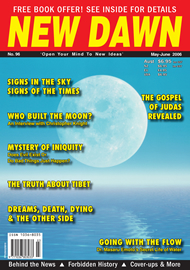
  • Who Built the Moon? An Interview With Christopher Knight

    Who Built the Moon? An Interview With Christopher Knight

    From New Dawn 96 (May-June 2006)

    Many New Dawn readers will know of British writer Christopher Knight from his first book The Hiram Key, which he co-authored with Robert Lomas and published in 1996.

    Quickly becoming a best seller, The Hiram Key was acclaimed a classic in the field of alternative history, going on to influence a generation of researchers among them The Da Vinci Code’s Dan Brown.

    In the last ten years Knight has written six books, four with Robert Lomas and two, including his latest Who Built the Moon?, with Alan Butler. In Who Built the Moon?, Knight and Butler raise some fascinating and challenging questions, foremost: Could it be that the Moon is artificial? Could it even be hollow? And does the Moon really exist through some happy accident, or is a blueprint apparent – and if so, who was the architect? New Dawn recently spoke with Christopher Knight about his controversial new book and his astonishing conclusions.
    – New Dawn

    NEW DAWN: All of mankind’s visits to the Moon have not answered some of the most basic questions about its origin and importance. Your new book Who Built the Moon? (co-authored with Alan Butler) brings to light some extraordinary facts about the Moon, and comes to a mind-blowing conclusion about its origin. Could you briefly outline some of these little known and ignored facts?

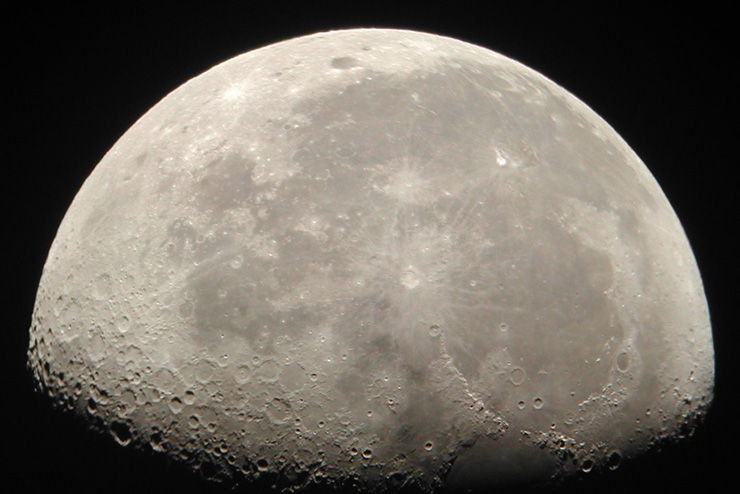
    CHRISTOPHER KNIGHT: The Moon sits very close to the Earth yet it is widely regarded as the strangest object in the known universe. It is a bit like knowing that every person in the world is completely normal except the person you live next door to, who has three heads and lives on a diet of broken razor blades.

    The book lists the strangeness of the Moon, which includes the fact that it does not have a solid core like every other planetary object. It is either hollow or has a very low-density interior. Bizarrely, its concentration of mass are located at a series of points just under its surface – which caused havoc with early lunar spacecraft. The material the Moon is made from came from the outer surface of the Earth and left a shallow hole that filled with water and we now call the Pacific. This rock left the Earth to produce the Moon very quickly after our planet had formed around 4,6 billion years ago.

    The Moon is not only extremely odd in its construction; it also behaves in a way that is nothing less than miraculous. It is exactly four hundred times smaller than the Sun but four hundred times closer to the Earth so that both the Sun and the Moon appear to be precisely the same size in the sky – which gives us the phenomenon we call a total eclipse. Whilst we take this for granted it has been called the biggest coincidence in the universe.

    Furthermore, the Moon mirrors the movement of the Sun in the sky by rising and setting at the same point on the horizon as the Sun does at opposite solstices. For example, this means the Moon rises at midwinter at the same place the Sun does at midsummer. There is no logical reason why the Moon mimics the Sun in this way and it is only meaningful to a human standing on the Earth.

    ND: What led you to write Who Built the Moon? And does this latest book relate to your earlier research when writing Civilization One and Uriel’s Machine?

    CK: All of the six books I have had published over the last ten years are part of a continued single piece of research. I came to write Who Built the Moon?with Alan Butler after we had finished Civilization One, because our research led us to study the Moon very closely.

    We had found that the superbly advanced measuring system in use over 5,000 years ago was based on the mass, dimensions and movements of the Earth.

    However, for thoroughness we checked every planet and moon in the solar system to see if there was any pattern. Amazingly, it worked perfectly for every aspect of the Moon but did not apply at all to any other known body – except the Sun.

    It was as though we had found a blueprint where the Moon had been ‘manufactured’ using very specific units taken from Earth’s relationship with the Sun. The more we looked, everything fitted – and fitted perfectly in every conceivable way.

    ND: Most astoundingly, you found that an ancient system of geometry and measurement used in the Stone Age works perfectly on the Moon. What exactly is this system and how could the ancients have attained this knowledge?

    CK: It is not possible to describe the greatness of this ancient system of geometry and measurement without repeating the content of Civilization One.

    The work of Alexander Thom, a brilliant professor of engineering from Oxford University, was our starting point. He identified the existence of what he called the Megalithic Yard. This was a precise unit of measurement that was the basis of late Stone Age structures across Western Europe – such as Stonehenge. Most archaeologists have written his work off as a mistake but when one looks coldly at their objections they are baseless.

    Alan and I were able to show how they made these highly precise linear units based on the rotation of the Earth and how they were also the basis of all time, capacity and weight units in use today. Once again these are exact – not approximations or close fits.

    Where the ancients got such knowledge is quite baffling. All we can be certain of is that they were way ahead of us today! It’s easy to check out by anyone with a calculator.

    ND: Your conclusion is there are more than enough anomalies about the Moon to suggest it is not a naturally occurring body and was quite possibly engineered to sustain life on Earth. How did you reach this conclusion?

    CK: Not only is the Moon an apparently impossible object, it has some unique benefits for us humans. It has been nothing less than an incubator for life. If the Moon was not exactly the size, mass and distance that it has been at each stage of the Earth’s evolution – there would be no intelligent life here. Scientists are agreed that we owe everything to the Moon.

    It acts as a stabiliser that holds our planet at just the right angle to produce the seasons and keep water liquid across most of the planet. Without our Moon the Earth would be as dead and solid as Venus.

    Get the issue this article appears in

    ND: If the Moon is an artificial construct, what are your theories on who or what built it, and why?

    CK: In Who Built the Moon? we explain that we could not come to any other conclusion than the Moon is artificial. Because it is certain that it is 4.6 billion years old that raises some interesting points. Another factor was the obvious message that has been built into the Moon to tell us it’s artificial. The language of the message is base ten arithmetic so it looks as though it is directed to a ten digit species that is living on Earth right now – which seems to mean humans.

    The question of why the Moon had to be built is easy to answer: To produce all life, especially humans. As to who did it – well that’s a lot tougher! We give the three possibilities we can think of, namely: God, aliens or humans. The only one of these that is 100% scientifically possible is the last one. Time travel is universally accepted as being physically possible and a number of scientists are close to sending matter back in time. We can envisage that machines could be built in the future that could be sent back to remove matter from the young Earth to construct the Moon – probably using mini black hole technology.

    [alert type=”general” dismiss=”no”]This article was published in New Dawn 96.[/alert]

    [alert type=”success” dismiss=”no”]If you appreciate this article, please consider subscribing to help maintain this website.[/alert]

    © New Dawn Magazine and the respective author.
    For our reproduction notice, click here.