New Dawn – World's Most Unusual Magazine

Author: Richard Spence

  • Basil Zaharoff: Man of Mystery

    Basil Zaharoff: Man of Mystery

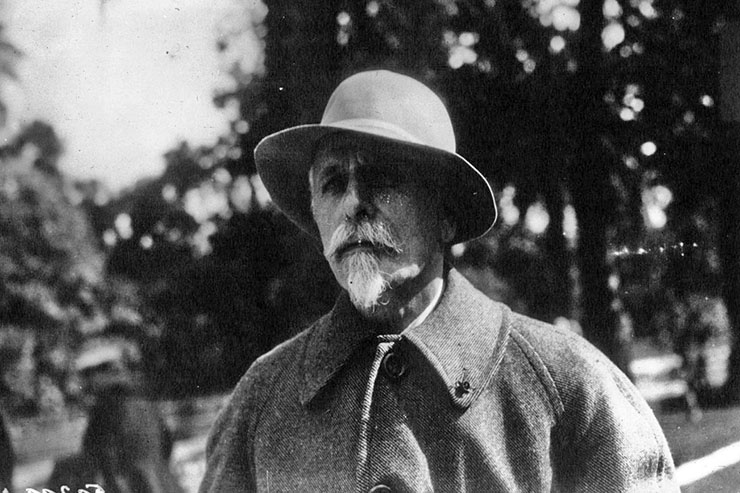
    If an Illuminati exists, then Basil Zaharoff was surely part of it, and if he wasn’t, he should have been. In the course of his long life (1849-1936), he garnered some 300 honours from thirty-one nations including two British knighthoods. But how many of those who bestowed the honours, or who despised him, really knew him?

    Best known as a premier arms merchant, and for decades a key figure in the Vickers cartel, he was many things to many people. To his detractors Zaharoff was the “Merchant of Death,” whose “monument is the graves of millions; his epitaph their dying groans.”1 To his friends and accomplices, who dubbed him “Zedzed” (ZZ), he was a veritable wizard. A British ambassador to Paris, Lord Bertie of Thame, boasted of his “great personal regard” for Zaharoff, his “very just… though hard” character, his immense wealth, and the fact that he was said to have “many of the leading French politicians in his pocket.”2 On the other hand, the Infanta Eulalia of Spain proclaimed him a manifestation of sinister “occult forces” dominating Europe.3

    French muckraker Roger Mennevee saw him as part of an “international oligarchy,” while his compatriot Jacques Bonzon believed Zaharoff to be an insidious agent of British imperialism. Another Frenchman, Rene Guenon, suspected Zaharoff of being nothing less than a secret master of the “counter-initiation,” while Church of Satan founder Anton Sandor LaVey praised him as an embodiment of Satanic virtue.4 Still others dismissed Zaharoff as a “mountebank who indulged in self-mystification and encouraged fabulous rumours.”5

    Fabulous or not, Zaharoff’s reputation has left its mark on popular culture. He crops up as an influence in two of Orson Welles’ creations, Citizen Kane, and the lesser known Mr. Arkadin.6 Tintin creator Herge (Georges Remi) thinly disguised Zaharoff as – what else? – an unscrupulous arms dealer named Bazil Bazaroff and Ezra Pound invoked him in the guise of Zenos Metevsky in two of his Cantos.7 And this author has described him as a model for Ian Fleming’s SPECTRE kingpin Ernst Stavro Blofeld.8

    Zaharoff was undoubtedly most of these things, perhaps all of them. He has been the subject of several biographies over the years, all of which leave questions unanswered.9 What follows makes no attempt to survey his whole, complex career. Rather it will try to illuminate some new or lesser known facts about the “Man of Mystery” and counter some common myths and misconceptions. Most importantly, it will explore his alleged role as an agent of British imperial interests.

    The Mystery of Zaharoff’s Birth Place

    The basic question about Zaharoff, and one that defies a definitive answer, is just who he really was. The usual answer, because it’s the only one supported by documentation, is that he was born a Greek subject of the Ottoman Empire in the Anatolian town of Mugla, on 6 October 1849. The problem is that said documentation consisted of the statement, more than forty years after the fact, by an aged cleric who never met Zaharoff and who may have been paid for his “recollection.” The family name, probably originally Zacharias or Zachariadis, supposedly changed to the Russianised Zacharoff/Zaharoff during a brief residence in Odessa. Yet other sources insist the original name was Zarapoulos or Zaharopoulos.10 The one consistent factor is that young Zacharias Basileos and his parents were Greeks.

    Zaharoff could never keep the story straight. He variously gave his birth year as 1849, 1850 or 1851, and swore at different times and places that he had been born in Mugla, or the poor Constantinople district of Tatavla, or the upscale Phanar section.11 Still other sources claimed Athens.12 He muddied the waters further by claiming a Polish father and Levantine mother, a Greek mother and Russian father, or a Romanian birth and Romanian mother. A real possibility, of course, is that even Zaharoff wasn’t sure. One biographer, Robert Neumann, summed up the situation thusly:

    “[Zaharoff] did everything he could to confuse the picture. You ask for his birth certificate. Alas! A fire destroyed the church registers. You search for a document concerning him in the archives of the Vienna War Office. The folder is there, but it is empty…. You obtain permission to inspect the papers of a law case. The papers are requested, but alas! no one in the office can find them.”13

    Zaharoff also had a penchant for conjuring up phony educations which included Rugby and Oxford. Rugby, in fact, was quite pleased to claim him as an alumnus even though they had no record of his attendance!14 This is evidence that with sufficient wealth and prestige, one can manufacture a past and get others to help you. Yet, as we’ll see, some sort of English education may not have been total fantasy.

    There were those who denied that Zaharoff was any sort of Greek at all, and with his fair hair and light blue eyes, he did not fit the stereotypical Hellenic profile. Rather, they insisted, he was an Armenian, or Albanian, or Bulgarian or Russian. In support of the latter, besides his name, biographer Donald McCormick claims that a Tsarist secret police dossier identified our man as a Russian deserter, while yet another biographer, Guiles Davenport, trots out the improbable tale that the future Sir Basil was a disgraced Russian Orthodox bishop cum jewel thief!15

    If not Greek, Zaharoff was most commonly alleged to be Jewish. This was a particularly attractive notion to anti-semites as it made perfect sense to them that anyone as rich and unscrupulous as Zaharoff just had to be a Jew.16 But there is more to the notion than that. In the early 1920s, the Soviets provided the Turks with documentation proving that Zaharoff was the scion of an Odessite Jewish family named Sahar.17 French writer Jacques Bonzon claimed much the same and even insisted there was a rabbinical certificate to prove it.18 The most insistent proponent of this idea was himself a Jew, Haim Sahar, a Russian immigrant living in Birmingham, England. In 1911, Sahar stepped forward to claim that the illustrious Mssr. Zaharoff was none other than his long-lost father, Manel Sahar, formerly of Wilkomir, Lithuania. Haim, who later changed his name to Hyman Barnett Zaharoff, had no evidence to back his claim and his purported daddy simply ignored him. It turns out, though, that a Manel Efroimovich Sahar had lived in Wilkomir and as of 1877 he was “absent.”19 That, of course, in no way proves that he and Basil Zaharoff were the same.

    Zaharoff surely had secrets to hide. For the first thirty odd years of his life, the future confidante of moguls, prime ministers and kings amassed a tawdry record of theft, embezzlement, bigamy, fraud and God only knows what else. As Orson Welles’ once opined, Zaharoff was “a shabby character,” at least early on.20 Yet he always managed to skate past potential ruin and resurface, phoenix-like, with a new name in a new place. It was almost as if he had a guardian angel – or some very influential friends.

    The British Connection

    The most persistent thread running through Zaharoff’s career is his connection to Britain and British interests. It begins with his father. He, also named Basileios, was said to “have seen a good bit of the world. On one occasion he had even come to England as a cloth merchant.”21 By all indications, Zaharoff pere was a man of some means and education, and with commercial connections that stretched not only to England, but also to Russia.22 He also lived in interesting times. The early decades of the 19th century saw ferment among the Greeks of the Ottoman Empire and the Diaspora, culminating in the War of Independence that re-established a free Greece. A key factor in this was Masonic lodges and Freemasonry-based secret societies like the Philike Hetairia, the hidden nexus that bound together Greeks and their cause all over the world. It seems logical to suppose that Basileios Zaharoff was acquainted with this nexus and that he would have passed on such connections to his son.

    The first hint of a British connection in Zaharoff’s life was when a wealthy family friend or relation, Iphestidi, offered to pay his tuition to an English school in Constantinople. However, biographer Anthony Allfrey wonders whether the school may not have been in England after all. Zaharoff once recommended to a friend that a good and affordable education could be secured for a boy in “plenty of English schools in & about London.”23 According to one of Zaharoff’s contemporaries, Stephanos Zinopoulos, “Zaharoff had even as a youth regarded Britain as the one nation which could give him the kind of career he wanted.”24 Whether in Constantinople or London, a British schooling afforded opportunity for someone to take notice of a bright, eager boy with a knack for numbers and languages. A young man like that might be useful and would be someone to watch, groom, and when necessary, protect.

    The first documented presence of Basil Zaharoff, or the man who would become him, is in London in 1872. Three significant things happened over late 1872 and early 1873: he would apply to change his name, he would get married, and he would be arrested. Records show that a Z. B. Zacharoff of 41 Threadneedle St., “merchant and interpreter,” applied to change his name to Zacharoff-Gortzacoff.25 On 16 October 1872, Zacharius Basilius Gortzacoff, “General de Kieff,” wed Emily Ann Burrows, a builder’s daughter, at the All Saints’ Church in Westminster.26 The Threadneedle St. office put Zacharoff in the heart of London’s City, the epicentre of the British Empire’s financial power. Not unimpressive for a twenty-three year old Greek immigrant. But what inspired him to restyle himself a Russian officer and nobleman? Was the point to impress his bride and her family, or was there someone else in mind?

    In any event, the marriage proved his undoing, since news of it reached far-off Constantinople where a certain Hephistidez (another version of the above Iphestidi), sometimes described as an “uncle,” recognised the groom as the man who had absconded with goods and money.27 Hephistidez raised a complaint which led to the culprit facing a judge in the Old Bailey. The case was duly covered in the press. A felony charge of larceny was dropped over a question of jurisdiction, but in January 1873, “Zacharia Basileus Zacharoff” pled guilty to a misdemeanour charge of “making consignment of goods entrusted to him.”28 He put up a £100 bond and was bound over for sentencing. That would never come, because he soon afterwards fled England.

    He next surfaced, later that year, in Cyprus, where he was “using a British passport in the name of Z. Z. Williamson” and making a living buying and selling whatever he could.29 One can only wonder how he, a foreigner and a fugitive, managed to obtain it. Years later, Zinopoulos offered this explanation:

    “In London [Zaharoff] had tried to ingratiate himself in intelligence circles, not without some success…. The trial had been a setback in one sense, but in another it had enabled him to invoke help from intelligence sources which, to some extent at least, caused him to be dealt with leniently…. Zaharoff needed a new alias; intelligence work on the British side provided it for him.”30

    He simultaneously was doing a thriving real estate business as Zacharias Vasilios Zachariades.31 In 1873, Cyprus was still a possession of the Ottoman Sultan, but given its proximity to Egypt and the new Suez Canal, British interest in the island increased. By the time he departed seven years later, Cyprus was firmly under London’s control. Did Zaharoff’s acquisition of property anticipate this, or even facilitate it?

    His most important associate in this period was a British “commercial merchant,” William Shaw.32 It seems fair to suppose that Shaw was more than a mere tradesman; his travels and contacts in the Near East mark him as an archetypal political and intelligence agent. Shaw had many acquaintances among the Greek expat community in Britain, so he likely knew all about the new arrival’s recent difficulties. Ignoring unsavoury stories circulating about Williamson/Zachariades, Shaw became the young Greek’s partner or, perhaps more to the point, his controller. In 1877, when Shaw stepped down as the local representative of the Swedish Nordenfelt Guns and Ammunition Co., Zaharoff stepped into his shoes. And thus, Sir Basil’s career as a merchant of death got its start. Not incidentally, to seal the deal with Nordenfelt, Zaharoff “let it drop that he had connections with British Intelligence.”33

    According to Xavier de Hauteclocque, Zaharoff had all the necessary qualities for a good British agent; he was “young, brave, physically attractive and a polyglot.”34 Plus, he had demonstrated a “large conscience.” Hauteclocque also speculated that Z belonged to “one of the Near Eastern Freemasonic lodges.” “The British Freemasons,” he added, were “their protectors” and had “helped these lodges win independence for the Balkan states….”

    Zaharoff’s Cyprus period includes a peculiar incident in which he “died.” Around 1875, an Athens newspaper described how one Zacharias Basileios Zaharoff had been shot dead while attempting to escape a local prison.35 Inquiries from Zaharoff’s family and friends led to an exhumation which determined that the body was not his but that of a Canadian seaman. Sir Basil later dismissed the episode as a dirty trick by enemies, but it seems fair to wonder if it wasn’t he who was trying to literally kill off his past. Could the corpse have been the real Zacharoff/Zachariadis born in Mugla, an identity that our man stole for his own purposes?

    In 1879, Zaharoff paid a brief return visit to England where he was received as an important man of affairs by the likes of Nathaniel Rothschild and Lord Salisbury.36 Again, surprising access for a young man widely seen as a crook back in Cyprus and Athens and convicted of being one in London. This may explain why he soon moved on to greener pastures. The next place he can be fixed with any certainty is Ft. Wayne, Indiana. On 13 July 1882, the Ft. Wayne paper noted that Z. Z. Zacharoff-Williamson, “a gentleman from London, England,” had checked into a local hotel.37 Zaharoff’s five years in the USA is a story in itself, but suffice it to say that it involved speculation in land, railroads and oil along with activities that can only be characterised as those of a con man.

    As in Cyprus, Zaharoff played front man buying up property and making investments for bigger, British clients. One of these was the 7th Earl of Aylesford, a close friend of the Prince of Wales.38 In New York, the Greek assumed the temporary guise of an Egyptian mystic, Zanat el-Zahan.39 But his most daring and successful imposture was that of “Count Zaharoff,” a flamboyant, fez-wearing Russian whose visiting card identified him as an officer of the imperial guard and an aide-de-camp to His Majesty the Emperor of Russia.40 He eventually landed a position as general secretary of the Mann Boudoir Car Co., a sleeping car concern catering to the lavish tastes of patrons like opera diva Adelina Patti. The story went that he was “a nobleman who had consented to accept an important executive position because of his disinclination to lead a life of idleness.”41

    “Count Zaharoff” Embroiled in Scandal

    For a time the bogus Count was the toast of San Francisco and Broadway, but once more, his undoing was matrimony. In August 1885, the suave Russian convinced an impressionable heiress, Jeanne Frances Billings, to be his bride. Her family was not pleased. Some digging unearthed his earlier life in London and his long-abandoned first wife. Zaharoff convinced his new spouse to flee with him to Holland where he hoped to dodge the scandal, but upon arrival in Rotterdam, he faced a swift-footed American detective and a very angry Emily Ann. The charade came crashing down, Jeanne slunk back home to file for divorce, and “Count Zacharoff” vanished. The whole tawdry tale was spread far and wide in the American press.

    A detail buried in American coverage of the scandal is that Zaharoff “was generally believed to be dead by his English acquaintances.”42 A story had circulated some years earlier that he had been killed trying to escape a Persian prison! Was this a muddled version of the Athens tale, or had Zaharoff planted a fresh rumour to cover his tracks before heading to America?

    However, back in May 1883, papers in the US had carried another story: Count Zaharoff, agent for the Allan Steamship Co, had been anonymously threatened with death if he did not leave Galway, Ireland, where he was recruiting factory girls for jobs in Boston. This peculiar incident may hint that Zaharoff’s comic-opera antics in the USA were more serious than they seemed. Zaharoff’s American interlude coincides with one of the strangest episodes in the long struggle between Irish nationalists and the British Empire. In 1881, not long before ZZ arrived, Irish-American inventor John Phillip Holland launched a submarine dubbed the “Fenian Ram.” The vessel had been commissioned by the Irish Republican Brotherhood, “Fenians,” who planned to use it to terrorise the Royal Navy. In the end, it came to naught; when the Fenians and Holland fell out over payment, the former stole the sub and carried it off to New England, where it sat, since no one knew how to operate it.

    Allfrey offhandedly mentions that the “possibility that Zaharoff was behind this coup has never been explored.”43 As Count Zaharoff was busy in Galway, Holland’s sub was undergoing sea trials in the waters around New York. Galway was Holland’s home town and it also was a prime spot for hiding or basing the Ram once it had been smuggled across the Atlantic. The Count’s soliciting of local girls, therefore, may have been a cover for spying on Fenian intrigues. Moreover, as a Russian he could pass as an agent of the Tsar and a potential friend and benefactor to Irish rebels. Might he have promised, and then withheld, money at the critical moment? Or was he simply spying on Holland and trying to bankrupt him through promoting bad deals with the Irish? The greatest naval power in the world was bound to be interested in what Holland was up to, and if the Admiralty didn’t have Zaharoff watching him, they had someone.

    It’s also curious that once back in Europe, Zaharoff was very, very interested in all things submarine. In 1886, now calling himself plain Basil Zaharoff, he showed up in Spain. While drumming up business for Nordenfelt, the Greek took keen interest in the sub design of Spanish engineer Isaac Peral. Although technically sound, Peral’s invention was plagued by sabotage and eventually killed by political opposition, all, it is alleged, masterminded by Zaharoff.44

    Not coincidentally, Nordenfelt, now based in England, was working on his own submarine. In 1886, Zaharoff had the privilege of selling a prototype to Greece and, a little while later, two more advanced designs to Turkey.45 For the time being, Britain, not America or Spain, had cornered the sub market.

    The Budding Merchant of Death

    1888 was a stellar year for the budding Merchant of Death. First, Nordenfelt merged with its chief rival, American Hiram Maxim (inventor of the Maxim Gun), and Zaharoff became lead salesman. Next, he took up residence in Paris at 54 rue de la Bienfaissance; the city would remain his headquarters for decades to come. The French government had recently recognised the private trade in arms and munitions, but his arrival also coincided with something else. The same year witnessed the first rumblings of the Panama Scandal, a financial debacle that would engulf the country. Caught up in this was another Parisian resident of uncertain background, Dr. Cornelius Herz. A wealthy entrepreneur and confidant of the rich and powerful, including the French Rothschilds, when the storm finally broke a few years later, Herz stood accused of being an agent for bribes and influence-peddling. He found refuge in England, and he remained there, despite frantic French efforts to extradite him, until his death in 1898.46 Among the many rumours was that Herz had been the resident agent of British intelligence in France which explained why London granted him sanctuary.47 Whether there was any truth to this, or whether is was just Gallic paranoia, remains uncertain.

    In years following, some believed that Zaharoff’s appearance just as Herz began to fall was no coincidence, and that the mysterious Greek had simply taken over as the eyes and ears of L’Intelligence Service in the upper echelons of French politics and finance.48 Jacques Bonzon later fingered Zaharoff a tool of the Intelligence Service and the “reincarnation” of Cornelius Herz.49 Even at the time, some thought it curious that the arms dealer became a habitué of the Café Anglais, an infamous gathering place for schemers and high-rollers, as well as spies.

    But 1888 is also notable for another development; in that year Vickers & Sons went into the weapons business. Ten years later it had absorbed Maxim-Nordenfelt to become Vickers-Maxim. Zaharoff became its “General Representative for business abroad” and within a few years was earning annual commissions in the range of £100,000.50 There were some who wondered if he hadn’t been working for Vickers all along and that its absorption of Maxim and Nordenfelt had been finessed by the wily Greek.

    The notion makes some sense if one considers who – or what – stood behind Vickers. Zaharoff’s two closest associates in the firm were its general manager, Commander Sir Trevor Dawson, and its financial chief, Vincent Caillard. Both were firmly connected to intelligence circles. Dawson spent almost twenty years in the Royal Navy and served as Vickers’, and Zaharoff’s, liaison to the Admiralty’s Naval Intelligence Division.51 Caillard had acted as a British agent in the Balkans and Middle East since the 1870s, and it’s likely that his and Zaharoff’s paths crossed early on. He served openly with the “Intelligence Department” in the 1880s, and his unofficial connection to such circles continued at least through WWI.52

    A third close associate of the Greek’s at Vickers was its chief naval architect, George Owens-Thurston. In January 1918, Thurston wrote a letter of recommendation for one Sidney George Reilly which helped him secure a job with the Secret Intelligence Service. Thurston mentioned that he had known Reilly since 1905, and that the subject had been involved in a great deal of “Russian business,” business connected with or beneficial to Vickers.53 Reilly, later famed (if undeservedly) as Britain’s “Ace of Spies” had been Zaharoff’s cat’s paw for years and would continue to be.

    Zaharoff did not, as sometimes claimed, own Vickers, or even control a large part of its shares, nor did he control the Monte Carlo Casino, though he sat on the board. His wealth and influence were not based on what he owned but on the diversity of his investments which included banks, oil, construction, shipping, salvage, railways, grain, and newspapers. He founded his first bank, in Paris, in 1891, a surprisingly audacious move for a then minor arms merchant. At its peak in the 1920s Roger Mennevee mapped Zaharoff’s empire embracing three spheres.54 The first was the “Vickers Group” which included banks and naval construction companies. Next was the “Anglo-Persian Group” based on oil, and third was the “Marconi Group” based around radio communications. Zaharoff, among other things, was one of the first media barons.

    The Secret of Zaharoff’s Scheming

    The soul of Zaharoff’s empire and the secret of his success was le Systeme. According to Jean Marie Moine, it rested on four “pillars.” The first was corruption: bribery, blackmail and insider trading. The second was the “double game”; backing and profiting from both sides in a conflict. Next was finance; if a client couldn’t afford Zedzed’s weapons, he would loan them the money. Finally, there was espionage, which provided the information to make everything else work. To handle this sensitive business, Zaharoff operated his own, far-reaching intelligence service, the “Reseau ZZ.”55

    The Greek endeavoured, with varying success, to exert political influence, even to the extent of playing kingmaker. He helped bankroll Greece’s successful campaigns in the 1911-13 Balkan Wars, as well as its disastrous effort to reclaim Anatolia in the early 1920s.56 In 1914, he stage-managed Prince Wilhelm of Wied’s placement on the Albanian throne, while he failed in a bid to place a Greek prince on the Portuguese one.57 He also plotted to put his longtime Spanish mistress (and briefly, wife), the Duchess of Villafranca, on the throne of Monaco.58

    In these and similar gambits, Zaharoff’s scheming was almost always in line with interests in London, if not directly sanctioned by them. During WWI, Zaharoff used his money and connections to unseat pro-German Greek King Constantine and secure the country’s adherence to the Allies. In 1918 he was the front man in British backdoor efforts to bribe the Ottomans out of the war. In late October of that year he put up £600,000 of his own money to persuade the Turks to accept an armistice, and by the end of the month they had.59 For such services, Zaharoff became a Knight Grand Cross of the British Empire in 1918 and a Knight Grand Cross of the Order of Bath a year later. Since he was a French citizen, these were honorary titles which meant he wasn’t really a “Sir.” He used it anyway, and no one made a fuss.

    Another Frenchman, de Hauteclocque, believed that Zaharoff was an important asset of British intelligence and suspected his hand in the questionable deaths of three prominent men. The first was Count Leon Radziwill, who succumbed to a mysterious “lethal injection” administered in Monte Carlo in March 1927. A year later, the second, Luxembourg steel magnate Emile Mayrisch, perished in a car accident. In July 1928, Belgian financier and industrialist Alfred Loewenstein inexplicably fell out of his own airplane over the English Channel. He and Radziwill had crossed swords with Zaharoff. But what really united the trio, besides untimely demises, was that led by Loewenstein they had conspired to create a continental steel cartel.60 This represented a serious challenge not only to Vickers, but also to the British economy as a whole.

    Zaharoff as Occult Adept

    It was yet another Frenchman, esotericist Rene Guenon, who conjured up the darkest suspicions about the “Man of Mystery.” He found reason to suspect that Zaharoff was not simply an important British agent, but more importantly an occult adept and a “hidden master” of the Theosophists (see sidebar on page 69). Guenon believed the Greek to be none other than the modern incarnation of “Master Rakoczi,” an earthly representative of the even spookier “Unknown Superiors.”61 Theosophists believed that “Master R.” had been earlier embodied by the infamous Count de St. Germain, and before that by the titular Count Rakoczi, as well as both Francis and Roger Bacon.62 It’s easy to argue that Guenon had no facts and a very active imagination. He even expressed some doubt when Sir Basil’s death was announced on 27 November 1936 and thought it somehow significant that it occurred just as the abdication crisis of King Edward VIII reached its climax.63

    In his last years, the Merchant of Death became a near recluse, shuttling between his residences in Monte Carlo, Paris and his Chateau de Balincourt. To the outside world, he had become little more than a morbid curiosity.64 When he finally shuffled off his mortal coil, he was laid to rest at Balincourt beside his beloved duchess. Whoever Zaharoff really was, whatever his wealth, whatever his connections to intelligence and the occult, the old man took most of his secrets to the grave. In the end, about the only thing that can be said with absolute certainty about Basil Zaharoff is that he existed. That’s probably just the way he wanted it.

    A sidebar titled ‘Zaharoff & the Dark Side’ appears alongside the above article and can be read by purchasing a digital version of New Dawn 134.

    [alert type=”general” dismiss=”no”]This article was published in New Dawn 134.[/alert]

    [alert type=”success” dismiss=”no”]If you appreciate this article, please consider a contribution to help maintain this website.[/alert]

    Footnotes

    1. E. C. Knuth, The Empire of the City: The Secret History of British Financial Power, San Diego: Book Tree (2006), 40. Originally printed 1944.
    2. Richard Davenport-Hines,” Zaharoff, Basil,” in Oxford Dictionary of National Biography. Online ed., May 2009. (Accessed 1 May 2012).
    3. Infanta Eulalia, Courts and Countries after the War, New York: Dodd, Mead (1925), 283.
    4. LaVey commends Zaharoff, alongside the likes of Rasputin and Cagliostro, in his Satanic Bible.
    5. Davenport-Hines, op. cit.
    6. Peter Bogdanovich, “Interview with Orson Welles”. In Naremore, James, Orson Welles’s Citizen Kane: A Casebook, Oxford University Press (2004), 48–49
    7. Robert Luongo, “Sir Basil and Ezra Pound” (22 Sept. 2010), http://robertluongo.blogspot.com/2010/09/sir-basil-and-ezra-pound_22.html. (Accessed 10 May 2012).
    8. Richard B. Spence, “Aleister Crowley, Sidney Reilly, Basil Zaharoff: Their Influence on the Creation of James Bond and His World,” in Jack Becker, Freedonia Paschall and Robert Weiner (eds.), James Bond and Popular Culture: The Films Are Not Enough, Cambridge Scholars Press, 2010.
    9. Some examples: Anthony Allfrey, Man of Arms: the Life and Legend of Sir Basil Zaharoff, London: Weidenfeld & Nicolson (1989); Dr. Richard Lewinsohn, The Mystery Man of Europe: Sir Basil Zaharoff, Philadelphia: J. B. Lippencott (1929); Donald McCormick, Peddler of Death: the Life and Times of Sir Basil Zaharoff, New York: Holt, Rinehart and Winston (1965); Robert Neumann, Zaharoff, New York: Knopf (1935).
    10. Tristan Gaston-Breton, “Basil Zaharoff,” Les Echos (29 July 2009), http://archives.lesechos.fr/archives/2009/lesechos.fr/07/29/300366299.htm.
    11. Jean Marie Moine, “Basil Zaharoff,” Ethnologie francaise, Vol. 36, #1 (2006), 141. And special thanks to Bina Tiferet.
    12. “Reputed Richest Man in the World,” Kansas City Star (31 May 1920), 13.
    13. Neumann, 9.
    14. “Sir Basil Zaharoff,” Augusta Chronicle (6 Nov. 1924), A3.
    15. McCormick, 70, Davenport, 59-60.
    16. Lindsay Nicholson, Zaharoff the Jew: Europe’s Greatest Enemy, Metairie, LA: Sons of Liberty (1972). Originally printed, 1937.
    17. Moine, 148, n.12.
    18. Jacques Bonzon, “La reincarnation de Cornelius Hertz, Sir Basil Zaharoff,” L’Activite francaise et etrangere, (July, Sept., Oct, Nov. 1922, and Feb. 1923).
    19. Kaunas Regional Archives, Tax rolls, I-49/1/12938, p. 247.
    20. “Orson Welles on ‘Mr. Arkadin’,” Cahiers du Cinema interview (1958), www.wellesnet.com/?p=35. (Accessed 10 May 2012).
    21. Lewinsohn, 19.
    22. Allfrey, 9.
    23. Allfrey, 4.
    24. McCormick, 38.
    25. W. P. W. Phillimore and E. A. Frye, An Index to Changes in Name, 1760-1901, London (1905).
    26. Marriage certificate, reproduced in McCormick, 48, facing.
    27. Lewinsohn, 23.
    28. UK, The National Archives (TNA), HO 27, Criminal Register, England and Wales, 1791-1892, file 165, pp. 170, 173. See also, The Times, 17 Jan. 1873, 10.
    29. McCormick, 33.
    30. McCormick, 38, citing a 1963 interview with Zinopoulos.
    31. Allfrey, 14.
    32. Biographical note, William Shaw Letters, Columbia University Library Archival Collections, www.columbia.edu/cu/lweb/archival/collections/ldpd_4079329/ (Accessed 10 May 2012).
    33. Allfrey, 17.
    34. Xavier de Hauteclocque, “Zaharoff: Merchant of Death,” The Living Age (May 1932), 206.
    35. See, for instance, Lewinsohn, 51-55 and Neumann, 57-59.
    36. Allfrey, 23.
    37. Ft. Wayne Daily Gazette (13 July 1882), 6.
    38. Allfrey, 31.
    39. “A Marriage of Local Interest,” Springfield Republican, (29 Aug. 1885), 8.
    40. Ibid.
    41. Ibid.
    42. “Adventurer Zacharoff,” San Francisco Bulletin (15 Oct 1885), 4.
    43. Allfrey, 41.
    44. Javier Sanmateo Isaac Peral, El Submarino Peral, La gran conjura, Cartagena: Divum y Mare (2009).
    45. Richard Compton-Hall, The First Submarines, Penzance: Periscope Publications (1983), 67-69.
    46. New York Times, 7 July 1898, 7.
    47. Charles Rochat-Cenise, Roi des Armes: La vie mysterieuse de Basile Zaharoff, Bienne: Editions du Chandelier (1943), 77, and New York Times, 21 Jan. 1893, 2.
    48. Rochat-Cenise, 77.
    49. Bonzon, op. cit.
    50. TNA, FO 371/10604, Caillard to Chamberlain, 23 April 1925.
    51. Matthew S. Seligmann, Spies in Uniform: British Military and Naval Intelligence on the Eve of the First World War, New York:OUP (2006), 257-258.
    52. UK, House of Lords Record Office, David Lloyd George Papers (LGP), F6/1/23, Caillard to Lloyd George 12 Oct. 1918.
    53. TNA, KV2/827, “Reilly, Sidney G.,” Thurston, 19 January 1918.
    54. Roger Mennevee, Sir Basil Zaharoff: L’homme mysterieux de l’Europe, Paris: Documents politiques (1928).
    55. Moine, 143.
    56. Ibid., 145.
    57. Louis de Maistre, L’Enigme René Guénon et les “Supérieurs Inconnus”: Contribution à l’étude de l’histoire mondiale “souterraine”, Milan: Arche (2004), 612, 615. And special thanks to Markus Osterrieder.
    58. Neumann, 259-265.
    59. LGP, F/30/2/52, Walter Long to Lloyd George, 22 Oct. 1918, an F/44/3/47, Unsigned note, 22 Jan. 1918.
    60. Hauteclocque, “L’Intelligence Service et ses mysteres,” Le Crapouillot, #11, 1931, 72-73, and “Radziwill and Loewenstein, The Living Age, May 1933, 203-211.
    61. De Maistre, 611-612, 619 and Jean Reyor, Quelques souvenirs sur René Guénon et les Études Traditionnelles” (Dossier confidentiel inédit), 9 Dec. 1996, 6.
    62. Aart Jurrianse, “Individual Masters,” www.esoteric-philosophy.net/mast-indiv.html.
    63. De Maistre, 623-624.
    64. “A Lonely, Old Man,” Canton Repository (11 Sept. 1933), 4.

    © New Dawn Magazine and the respective author.
    For our reproduction notice, click here.
  • The Magus Was A Spy: Aleister Crowley and the Curious Connections Between Intelligence and the Occult

    The Magus Was A Spy: Aleister Crowley and the Curious Connections Between Intelligence and the Occult

    From New Dawn 105 (Nov-Dec 2007)

    In Magick Without Tears, Aleister Crowley observed a fundamental similarity between the “Secret Chiefs,” the invisible and inaccessible Masters to whom he professed obedience, and “Captain A. and Admiral B. of the Naval Intelligence Service.” Both, he noted, “keep in the dark for precisely the same reasons; and these qualities disappear instantaneously the moment They want to get hold of you.”1

    Crowley, arguably the most famous – or infamous – occultist of the last century, spoke from personal experience. Throughout his career, Mr. Crowley, aka “The Great Beast 666” and “the Wickedest Man in the World,” maintained some kind of connection with one or another aspect of British intelligence, most notably the Admiralty’s Naval Intelligence branch. His case is by no means exceptional. Many of his associates in the occult realm, among them Everard Feilding, Theodore Reuss, Hanns Heinz Ewers, and Maxwell Knight, also had links to one spy agency or another.

    The inter-connection of occultism and espionage goes back at least to the Elizabethan intrigues of Dr. John Dee, and certainly is much older than that. For Crowley, Dr. Dee was a role-model in more ways than one. Occult orders and spy agencies do share much in common. Both are focused on the acquisition and safeguarding of specialised knowledge and embrace secrecy as a cardinal virtue. They are selective in recruitment and members are bound by oaths of silence and loyalty. They operate, so much as possible, outside public view or even public awareness. The pursuit of occult knowledge provides an excellent training ground for espionage and kindred intrigue, and vice versa. As Crowley’s literary creation Sir Anthony Bowling put it, “investigation of spiritualism makes a capital training ground for secret service work, one soon gets up to all the tricks.”2

    What follows is a selective and inevitably brief survey of various persons who were involved in intelligence work and occult pursuits. The common denominator and main object of attention will be Crowley himself.

    Crowley makes scattered allusions to intelligence work in his autobiographical writings but never offers any details. Generally, friend and foe have dismissed such claims as flights of fancy. However, far from inventing or exaggerating his clandestine exploits, he deliberately downplayed them or avoided mentioning them at all. A case in point is Crowley’s reference in his Confessions to his involvement in a 1899 conspiracy to foment a rebellion in Spain with the aim of restoring Don Carlos II to the country’s throne.3 Crowley teasingly offered to someday reveal the full and true story of the incident, but he never did.

    There was much more involved in this affair than Crowley let on. The key figure in the British-based plot was Lord Betram Ashburnham. He was the leader of a small but determined cabal of British “Legitimists” whose aim was the replacement of Queen Victoria and her line with a restored Stuart dynasty. Ashburnham also reigned as grand master of a neo-Templar outfit dubbed the Order of St. Thomas of Acon. Another leading light among the Legitimists was S. L. MacGregor Mathers, who just happened to be the dominating figure of the Hermetic Order of the Golden Dawn (HOGD) and Crowley’s mentor and promoter in that esoteric organisation. The HOGD included a number of persons, among them William Butler Yeats, who were sympathetic to Irish nationalism and Celtic revivalism, ideas actively encouraged by the Legitimists.

    Such sentiments inevitably aroused the curiosity of the guardians of the realm. The Spanish plot fizzled when someone, odds are Crowley, betrayed it from within. The Golden Dawn soon splintered as the result of internal rivalries in no small part exacerbated by Crowley’s disruptive antics. This episode represents one of his first forays into clandestine work and reveals the primary roles he played later on: infiltrator, informer and provocateur.

    Crowley had good reason to stay mum about such things. First, there was the Official Secrets Act, a legal Sword of Damocles that threatened to come down on the head of anyone who revealed too much. Beyond that, Crowley’s services to the State bought him tolerance and even protection from the temporal powers-that-be. For all his outrageous behaviour, and despite public outcries that he be hanged or worse, the self-proclaimed Beast never ran into any serious legal difficulty in his homeland. Even his apparent treason during WWI was conveniently ignored.

    I first stumbled upon Crowley’s intelligence angle while researching British espionage activities in WWI New York. More out of curiosity than anything else, I retrieved a small file from the records of the US Army’s Military Intelligence Division (MID). What immediately jumped out was a September 1918 report from the MID officer at West Point, New York. In this, he noted that as a result of his investigation of a strange Englishman who had been camping out on nearby Esopus Island, he discovered that the subject, one Aleister Crowley, “was an employee of the British Government on official business of which the British Consul, New York City has full cognizance.”4 Moreover, “the British Government was fully aware of the fact that Crowley was connected with… German propaganda and had received money for writing anti-British articles.” Clearly, the Beast’s later claims were not just flights of fancy.

    The then British Consul in New York was Charles Clive Bayley, a career diplomat who had encountered Crowley in Russia a few years prior. The Beast’s 1913 visit to Moscow also seems to have included an intelligence dimension. However, the men at the New York Consulate most intimately involved with his clandestine activities were Captain (later Admiral) Guy R. Gaunt and Major Norman G. Thwaites. The first was the Australian-born naval attaché who ran British intelligence operations in New York early in the war. To all outward appearances, he was not the type to look kindly on Crowley or anything smacking of the occult. He cooperated with Crowley with evident reluctance and no doubt on the orders of higher-ups.

    Thwaites worked for MI1c, then the operative cover for the Secret Intelligence Service (SIS) later best known as MI6. As second-in-command to the station chief, Sir William Wiseman, Thwaites effectively ran the operation from 1917. Regarding things occultish, Thwaites was more open-minded. In his memoirs, Thwaites devotes an entire chapter to “Spiritism” and tells how in New York he used trance mediums and a Ouija board to expose a German plot.5 While he makes no overt mention of Crowley, it does not seem far-fetched to suppose that the Beast might have offered some sage advice.

    A better example of the intelligence-occult connection among Crowley’s associates is the man who recruited him for secret work in 1914, his long-time friend, the Right Honourable F. H. Everard Feilding. Feilding was for years the secretary of London’s Society for Psychical Research (SPR) and had much experience in the investigation of mediums and paranormal phenomena. Of course, some in the SPR might argue that their pursuits were scientific, not “occult.” Still, Feilding’s interests definitely veered in the latter direction. In addition to being a longtime chum of Crowley, he was a member of the Beast’s very exclusive and very occult A.’.A.’. order.6

    Soon after the outbreak of the war, Feilding nabbed a commission in the Royal Naval Volunteer Reserve (RNVR), a common accommodation for intelligence work, and started out serving Admiral Reginald “Blinker” Hall and the Naval Intelligence Division (NID). By 1915, Feilding was in Athens attached to the East Mediterranean Special Intelligence Bureau, another branch of MI6, and spent the rest of the war in intelligence-related posts in Egypt and Syria. Sir Compton Mackenzie, who served with Feilding in Greece, later wrote of him that “his approach to the whole question of intelligence was that of one investigating a house alleged to be haunted.”7

    Despite the great distance separating them, Crowley and Feilding kept in touch during the war. Indeed, Feilding received at least some of the Beast’s reports, intervened when Crowley ran into difficulty and overall acted as a kind of remote case officer.

    Back in the summer of 1914, Crowley had hoped to land a commission like Feilding’s, but the latter, or his boss Admiral Hall, had something different in mind: an “unofficial” undercover mission in America. Crowley’s secret service in wartime America is a surprisingly complex story, so for now it must suffice that his single greatest accomplishment was the infiltration of a German propaganda ring headed by the German-American writer George Sylvester Viereck. From this vantage, Crowley spun a web of influence among German diplomats and spies and garnered the secrets of propaganda, sabotage and Berlin’s support to Irish and Indian nationalists. According to George Langelaan, a future British intelligence officer who later befriended Crowley in Paris, the Beast believed that he had played an indirect part in the sinking of the Lusitania by helping to convince gullible Germans that such brazen and bloodcurdling tactics would frighten the Yankees into curtailing trade with the Allies.8 It was no coincidence that back in London Admiral Hall hoped to push the Germans in the same direction.

    The presumed source of Crowley’s influence with German schemers in the USA was his skill as a propagandist and his improbable profession of Irish nationalism (he not being in the least bit Irish). However, his reputation and connections as an occultist must have played some part as well. For instance, Viereck took at least an amateur interest in occultism and his penchant for orgiastic sex hints at an affinity for the sex-magic rites of the Ordo Templi Orientis (OTO), the esoteric body of which Crowley claimed to be the anointed head in America.

    A “magickal” connection is even stronger in another German Crowley cultivated in New York, Hanns Heinz Ewers, who had at least some acquaintance with the OTO. Ewers was a serious student of the occult and a writer whose works reflected a fascination with the supernatural and sexual perversion.9 He also was a veteran agent of the German secret service and after coming to the US in 1914, Ewers undertook a series of secret missions to Spain and Mexico.

    In the latter place, Ewers encountered another German mystic involved in clandestine affairs, Heinrich Arnold Krumm, better known as Dr. Arnoldo Krumm-Heller. Thanks in part to his masonic and Rosicrucian pedigrees, Krumm-Heller had finessed a position of influence near pro-German Mexican President Venustiano Carranza. In 1916, Krumm-Heller quietly passed through the New York area on his way back to Germany as a special emissary of Carranza. Unfortunately for him, someone tipped-off the British authorities, who pulled Krumm-Heller off the boat and sent him back to the States. Once again, that someone most likely was Crowley who could have pried the secret from a too trusting Ewers. In any case, someone kept Maj. Thwaites very well informed about Ewers’ contacts and activities.

    It may be significant that Ewers, Viereck and others in the German secret apparatus were members of a quasi-masonic fraternal order called Schlaraffia. Ewers, in fact, was one of the organisation’s top officers. Outwardly, the society was dedicated to fellowship and good times, which did not rule out some members taking a deeper interest in occult matters. American and British intelligence pegged Schlaraffia as a “Secret German Propaganda Society” tasked with doing Berlin’s work “in a silent, secret way.”10

    Crowley’s credibility among Germans like Ewers may have been enhanced by his association with a venerable member of both the German occult and intelligence milieus, Theodor Reuss. Reuss’ work for Berlin’s secret services dated back to the 1880s when he infiltrated the Socialist League in London. His chosen trade of journalist, as in so many other cases, provided a handy cover for intelligence-gathering of one sort or another. Reuss made London his home base for several years before 1914, where he probably acted as a talent-scout or recruiter for German intelligence.

    Reuss also had a passion for joining or forming occult secret societies. His most notable association was with the above-mentioned Ordo Templi Orientis. Reuss became head of the Order around 1905, and in 1910 he recruited Aleister Crowley into its ranks. Two years later, he proclaimed the Beast head of the London branch. One can only wonder as to whether Crowley’s enlistment in the OTO included an overt or covert effort to draw him into Germany’s service. Might Crowley’s association with Reuss have been encouraged by someone in Britain’s secret service? Perhaps the OTO link was one reason that Feilding and Hall picked him for the New York job.

    Crowley maintained contact with Reuss during the war. The latter, after a brief stint with German counter-intelligence (hunting English spies on the Dutch border), surfaced in neutral Switzerland where he schemed to entice expatriate radicals and other avant-garde types into the German net. His main such effort was the “Anational Lodge and Mystic Temple” which hosted a Congress at Monte Verita (a counter-culture haven in southern Switzerland) in the summer of 1917. Reuss featured Crowley’s Gnostic Mass in the ceremonies, but in New York Crowley quietly denounced Reuss’ efforts to the British and the Americans. For example, the Beast assured New York State Deputy Attorney General Alfred Becker that Reuss was an “out and out German” and a dangerous propagandist “whom he always thought might have some considerable official position in Germany.”11 He even hinted that Reuss had made a secret wartime visit to New York.

    One more German of occult stripe with whose name Crowley’s ended-up linked in intelligence reports was Rudolf Steiner. He is best known as the founder and guiding light of Anthroposophy, the spiritual movement he founded after splitting with Annie Besant’s brand of Theosophy. Steiner’s wartime connection to the Beast is alleged in reports attached to Crowley’s MID file. Crowley and two other men, George Winslow Plummer, head of the Societas Rosicruciana in America, and a British mystic, the Rev. Holden Sampson, reportedly belonged to an “occult German order, the head of which is Dr. Rudolf Steiner in Berlin.”12 More ominously, they were supposed to be able to communicate with Steiner “without using any cable or telegraph system in public use.”

    The precise “occult order” referred to was a mystery at the time and still is. Steiner was never head of the OTO, and the description does not fit Anthroposophy. The best that MID could determine was that it was some sort of Rosicrucian group. Of course, maybe it never existed at all, and Steiner’s followers could insist that their leader would never have sunk so low as to become involved in anything smacking of espionage.

    However, Steiner devotees might be more bothered by a 1923 report titled “Rudolf Steiner and the Anthroposophical Society” also found in the American MID files. The document appears to be of British origin and is an addendum or response to previous MI6 communiqués about Steiner. There is no indication of the author’s identity, although he or she was well-versed in Steiner’s business and other affairs. It is not out of the question that Crowley was involved in its concoction one way or another. The gist of the report states:

    “[Steiner’s] early training as a Jesuit, when he was probably initiated into occult secrets, of which this body makes a special study… and his friendship with Lenin in Switzerland in 1909; were all preparing him for a career of subtle, underground political intrigue, cleverly disguised under the cloak of religious illumination, which was to make him in future years such a dangerous power to Church and State.”13

    Naturally, such accusations are not proof, but the document is evidence that Steiner and his ventures were matters of curiosity and suspicion to both American and British intelligence.

    The above barely scratches the surface of Crowley’s 1914-19 escapades, but we need to look elsewhere to find further evidence of his and others’ involvement in espionage.

    In the wake of WWI, the Beast established a small spiritual community/mystical school, dubbed the Abbey of Thelema, in an abandoned farmhouse near Cefalu on the northern coast of Sicily. In 1922, Italian authorities expelled him from the country, allegedly because of the unorthodox sexual practices at the Abbey. Oddly, they made no effort to shut down the place or give the boot to anyone save him. In 1926, an apparently deranged British woman named Violet Gibson tried to assassinate Italy’s new dictator, Benito Mussolini. The Fascist police discovered a link between the would-be assassin, Theosophist circles, and the above-mentioned Annie Besant.14 This spurred Italian authorities to take another look at papers seized from Crowley’s residence at Cefalu. Among them, a subsequent report noted, were documents from the “special espionage service” of the British Government and reports to same concerning conditions in Italy.15 The Beast seems to have been up to his old tricks.

    Other materials linked Crowley to the British Consul in nearby Palermo. His name was Reginald Gambier MacBean and, as might be expected, he was a member of more than one occult organisation. First and foremost, he was a passionate follower of Besant and Theosophy. He held the allegiance as far back as 1917 which had once prompted an investigation by MI5. Shortly after Crowley set-up shop at Cefalu, MacBean assumed the title of Grand Master of a restored Memphis-Mizraim Masonic Lodge in Italy. According to Crowley, this esoteric branch of Freemasonry was aligned with the OTO. The question remains as to whether Theosophists, MacBean or Crowley had anything to do with the attempt on Mussolini, but there were more than enough tangled threads to make any sensible Fascist policeman suspicious.

    Next, in 1928, Crowley’s name surfaced in correspondence between the India and Foreign Offices regarding the Russian artist, Theosophist and suspected Soviet asset, Nikolai Roerich. Arthur Vivian Burbury, who recently had spent three years as an MI6 man inside Britain’s Moscow Embassy advised that:

    “As to possible sources about Roerich – his connection with Russia,  Thibet… Theosophists… and various ‘secret’ organisations… leads me to think that information as to him might be obtained from an (undesirable) Englishman who has curiously intimate knowledge of all such things. His real name is Aleister Crowley.”16

    Just how or when Burbury came to be acquainted with the Beast is another mystery, as are Crowley’s sources of information regarding Roerich. Nevertheless, it does demonstrate that however “undesirable” Crowley may have been in some circles, he still counted as a useful informant in others.

    This much is certain: whatever his personal involvement, Roerich’s Central Asian expeditions during 1925-28 were backed and infiltrated by Soviet intelligence. The Kremlin’s chief agent-on-the-spot was Yakov Blumkin, an adventurous trouble-shooter who was himself alleged to be a student of the occult. Behind Blumkin stood the sinister chekist Gleb Bokii and his “parapsychologist” ally Alexander Barchenko, both men steeped in occult lore and practice.17

    Around 1936-37, Crowley entered into a curious relationship with Maxwell Knight, head of the MI5 branch that handled “subversives” and their contacts with foreign agents. The basis of this relationship usually is presumed to be Knight’s keen interest in the occult, especially “black magic.” However, it seems probable that Knight also tapped the Beast’s vast reservoir of knowledge for more practical purposes. For example, in what arguably was Knight’s greatest counter-intelligence coup, the infiltration and breakup of a pro-Nazi ring during the early part of WWII, he employed at least one agent specifically chosen to exploit “interest in spiritualism, clairvoyance, astrology and anything to do with the occult.”18

    In truth, Knight’s interest in Crowley began years earlier. His onetime agent Joan Miller recalled a rumour around MI5 that Knight’s former wife had perished “in some sort of occult misadventure in which the notorious Aleister Crowley was involved.”19 The tale is apocryphal; the unfortunate Mrs. Knight died from an accidental (?) drug overdose. But that does not rule out she or her husband having had previous knowledge of the Beast. In the early ‘20s, Maxwell was the “director of intelligence” for the British Fascisti, and in that capacity he worked very closely with a certain George Makgill. Makgill was obsessed with uncovering nefarious cults and conspiracies, one of which he was convinced was headed by the horrid Mr. Crowley.

    Get the issue this article appears in

    Last but no means least, there is the vague if persistent tale that Crowley was involved in the affair of Rudolf Hess, the high-ranking Nazi who flew to Scotland in early 1941 on an ill-fated peace mission. The basic story comes from Ian Fleming, creator of James Bond, who at the time was an officer in British Naval Intelligence and right-hand-man to NID’s chief, Admiral John Godfrey. Fleming later confessed that one of his unfulfilled wartime schemes was to have Hess, a man strongly influenced by occult beliefs, interviewed by Aleister Crowley.20 According to Fleming, the Beast was more than willing, but the one who stepped forward to kill the idea was none other than Maxwell Knight.

    Interestingly, immediately after the war’s outbreak, Crowley had received a note from Fleming’s boss, Admiral Godfrey, extending his greetings and summoning Crowley to an interview at the NID offices.21 Godfrey directed the Beast to a Commander C. J. M. Lang. A veteran intelligence officer, Lang was then connected to the NID section dealing with the interrogation of POWs. Yet another story, though no more, claims that Crowley ultimately did encounter Hess at a hush-hush MI5 interrogation facility known as Camp 020 or Latchmere House.22 If so, did Max Knight quash Fleming’s plan because he had his own plans for Hess and Mr. Crowley?

    In conclusion, the preceding by no means exhausts the connections between Crowley, intelligence and the wider occult realm. The names of George Gurdjieff, Jack Parsons, Nikola Tesla and even Crowley’s “widow,” Patricia Deirdre Doherty, could be invoked along with many others.

    Hopefully, this brief article offers a glimpse into what was – and no doubt still is – a significant cross-pollination between the two spheres, a connection about which much remains to be learned.

    [alert type=”general” dismiss=”no”]This article was published in New Dawn 105.[/alert]

    [alert type=”success” dismiss=”no”]If you appreciate this article, please consider subscribing to help maintain this website.[/alert]

    Footnotes:

    1. A. Crowley, Magick Without Tears. New York: Ordo Templi Orientis, 1954, pp.61-62, or www.hermetic.com/crowley/mwt/mwt_09.html.
    2. Ibid., Moonchild. London: Mandrake Press, 1929, 308, or www.hermetic.com/crowley/moonchild/mc22.html. “Sir Anthony Bowling” was Crowley’s alias for Everard Feilding.
    3. Ibid., The Confessions of Aleister Crowley: An Autohagiography. London: Mandrake Press, 1930, p.120.
    4. US National Archives, Military Intelligence Division (MID), General Summary, Intelligence Officer, West Point, N.Y., 23 Sept. 1918, p.4.
    5. Thwaites, Velvet and Vinegar, London: Grayson & Grayson, 1932, pp.233-240.
    6. Commonly assumed to stand for Ordo Astrum Argentum or Argenteum Astrum (“Silver Star”) though the true meaning is known only to initiates.
    7. Compton Mackenzie, Greek Memories. London: Chatto & Windus, 1939, pp.29-34.
    8. George Langelaan, “L’agent secret, fauter de paix,” Janus (#2, Sept. 1964), pp.49-51.
    9. On Ewers’ career see Wilfried Kugel, Der Unverantwortliche: Das Leben des Hanns Heinz Ewers. Duesseldorf: Grupello Verlag, 2001.
    10. MID, 10516-474/31, “In Re: Hans [sic] Heinz Ewers,” 24 June 1918.
    11. US National Archives, Department of Justice, Bureau of Investigation, Old German Files, Case # 365,985, Report of Agent O’Donnell, 30 July 1919.
    12. MID, 9140-808, Office of Naval Intelligence, “German Suspects,” 10 July 1917, etc.
    13. MID 9140-808, 21 April 1923.
    14. These events are presented in novelised form in Claudio Mauri’s La Catena Invisibile: Il giallo del fascismo magico. Milan: Mursia, 2005.
    15. Marco Pasi, Aleister Crowley e la tentazione della politica. Milan: FrancoAngeli, 1999, pp.175-176, pp.196-199.
    16. Phil Tomaselli to author, 18 Dec. 2003, extracted from July 1926 correspondence between the India Office and the Foreign Office Library.
    17. On these people and connections see Aleksandr Andreev, Okkul’tist strany sovetov. Moscow: Eksmo, 2004, Oleg Shishkin, Bitva za Gimalei. Moscow: Eksmo, 2003, and Markus Osterrieder, “From Synarchy to Shambhala: The Role of Political Occultism and Social Messianism in the Activities of Nicholas Roerich,” paper presented at the international conference on “The Occult in 20th Century Russia,” Berlin, March 2007.
    18. Bryan Clough, State Secrets: The Kent-Wolkoff Affair. Hove: Hideaway Pub., 2005, p.31.
    19. Joan Miller, One Girl’s War: Personal Experiences in MI5’s Most Secret Section. Dingle, Eire: Brandon Books, 1986, p.45.
    20. John Pearson, The Life of Ian Fleming. London: Companion Books, 1966, pp.117-118.
    21. Martin Booth, A Magick Life: A Biography of Aleister Crowley. London: Hodder & Stoughton, 2000, p.395.
    22. P. R. Koenig, “Crowley Met Rudolf Hess,” www.groups.yahoo.com/thelema93-1/messsage/2733, 31 August 2000.

    © New Dawn Magazine and the respective author.
    For our reproduction notice, click here.

  • Erik Jan Hanussen: Hitler’s Jewish Psychic

    Erik Jan Hanussen: Hitler’s Jewish Psychic

    From New Dawn Special Issue Vol 8 No 3 (June 2014)

    On the morning of 7 April 1933, south of Berlin, workmen came upon a grisly discovery. Near the road that linked the German capital to the town of Baruth was the bullet-riddled body of a man, dressed in evening clothes. Death had come, execution-style, from two shots to the head. Beyond that, it was hard to tell much. The corpse was maggot-ridden, and animals had gnawed the face making it practically unrecognisable. Investigation by Berlin police Kriminalrat Hermann Albrecht quickly determined that the deceased was Erik Jan Hanussen, a well-known Berlin clairvoyant, astrologer and public figure who had gone missing two weeks earlier.

    The critical questions, of course, were who killed Hanussen and why. It seemed the dead man had many enemies. Rival psychics, embittered ex-employees, jilted lovers, cuckolded husbands, blackmailed victims, and underworld denizens all had reasons to wish him dead. Albrecht perhaps wisely concluded that the psychic had been “taken for a ride” by Berlin gangsters.1 The case remained unsolved.

    As Albrecht certainly knew, Hanussen’s real assassins were members of the Nazi Brownshirts (SA) organisation in Berlin. This was odd, because up to his demise, Hanussen was a conspicuous friend of many Nazis, not to mention a Party member and an honorary member of the SA. He knew Adolf Hitler himself and his accurate, pro-Nazi predictions had earned Hanussen the nicknames “The Prophet of the Third Reich,” “The Nazi Rasputin,” “Hitler’s Nostradamus,” and others. Odder still was the fact that Hanussen was a Jew.

    Hanussen’s story is fascinating, improbable and perplexing and has been dissected in various biographies, perhaps most notably Mel Gordon’s Erik Jan Hanussen: Hitler’s Jewish Clairvoyant (2001) and Arthur J. Magida’s The Nazi Séance: The Strange Story of the Jewish Psychic in Hitler’s Circle (2011).2

    This article will offer a brief overview of Hanussen’s career, but focus attention on a few questions that merit closer examination. First, are there any clues to Hanussen’s talents and behaviour to be found in his family background? Was Hanussen involved in espionage, or did he have any connection to intelligence services? Finally, what was the nature of his relationship with the future Fuhrer?

    Who Was “Erik Jan Hanussen”?

    Hanussen wasn’t Hanussen at all. His true name was Hershmann Chaim (later Hermann) Steinschneider. He was born in Vienna in 1889, the son of Siegfried Steinschneider, a ne’er-do-well Jewish vaudevillian and travelling salesman. Herschmann’s birth was registered in Prossnitz (today Prostejov in the Czech Republic), the Moravian town which was the traditional home of the Steinschneiders. The family and the place have interesting histories.

    In the 18th century, Prossnitz had a thriving Jewish community which produced an impressive array of rabbis and Talmudic scholars. Among these were Rabbis Daniel Prossnitz the Younger and his son Aaron Daniel Prossnitz, who adopted the surname Steinschneider. Both were vunder-rebbes reputed to have “magical and curative” powers.3 Mel Gordon speculates that Steinschneider, meaning “stone-cutter” or “stone tailor,” derived from Aaron Daniel’s practice of making Kabbalistic paper amulets from carved stone blocks.4

    But all was not as it seemed in Prossnitz. The town’s Jewish community was a hotbed of the Sabbatian heresy, a secretive sect which revered the 17th century “Messiah” Sabbatai Zevi.5 Sabbatians not only regarded Zevi as the Messiah, but also followed his antinomian teachings that advocated the deliberate transgression of Jewish Law and a Gnostic-like idea of “redemption through sin.”6 Moreover, Prossnitz was infiltrated by the even more radical and occultic Frankist sect whose practices included orgiastic rituals.7 In the opinion of Gershom Scholem, Sabbatian influence completely subverted Orthodox rabbinic culture in Prossnitz.8 One infamous proselytizer of Sabbatian beliefs was Judah Leib (Loebele) Prossnitz who claimed to be able to invoke the Shekinah (the Divine Presence), a stunt he pulled off with a back-lit set that made magical letters appear on his chest.9

    The trick sounds very much like something Hanussen might have tried two centuries later. But, given that he never lived in Prossnitz, how much could he have been influenced by its sectarian culture? Rabbi Marvin Antelman alleges that the Steinschneiders were a “Sabbatian family” and singles out Hanussen’s great uncle Moritz Steinschneider as a prime example.10 Hanussen doubtless learned something about Prossnitz from his father. He did visit, and amazed locals by performing an exorcism on a milk maid.11 Consciously or not, Hanussen’s later behaviour, from his denial of his Jewish roots, to his rejection of sexual and other mores, obsession with mysticism, and even his association with virulent anti-Semites, all more or less conformed to the Sabbatian-Frankist mould.

    A fundamental problem in dealing with Hanussen pre-1920s is that most of what is known about him comes from a single source, his 1930 autobiography, Meine Lebenslinie (“My Lifeline”). To call it self-aggrandising is an understatement, though it seems accurate enough as regards time and place. The author dances around the matter of ethnic origins, stating that he was born in Vienna (true), not in Denmark, Sicily or Tarnopol, the latter a largely Jewish town in the far reaches of the old Empire.12 If he is to be believed, his psychic powers first manifested in the womb, when he willed his unwed parents to marry.13

    Hermann “Harry” Steinschneider followed in his father’s footsteps and spent his youth travelling around Central Europe with circuses and vaudeville shows where he rubbed-elbows with fortune-tellers, strongmen, hypnotists, magicians and faith-healers. He picked up many of their tricks, invented a few his own, and put together a stage act based on mind-reading and hypnotism. He also ventured into journalism. In the years before WWI, he worked for a notorious Viennese scandal-sheet, Der Blitz, which earned most of its income by taking money to keep stories out of its pages.14 Steinschneider would apply this lesson well in his subsequent career.

    During the war, Harry served in the Austro-Hungarian Army where his evident talents as a mind-reader and dowser got him out of the trenches and into cushy duty in the rear. He even organised a séance or two. Whether this was proof of genuine extra-sensory ability or just clever trickery was, as always, a matter of opinion.

    Steinschneider played around with several aliases, among them Siegfried Krakauer and Saul Absolom Herschwitter, which still carried a strong hint of Semitic ancestry.15 Around 1919, he finally latched onto Erik Jan Hanussen, claiming to be a Dane of noble background whose telepathic powers led him to become a showman, psychic investigator and student of the occult. There was, of course, nothing Danish about him, and no one seems to have taken the role too seriously, least of all Hanussen. On a 1919 visit to Prague, he openly boasted of his “Czech-Jewish” heritage.16 Hanussen was whatever the circumstances best suited he should be.

    In postwar Vienna, he earned notoriety as a stage mentalist and hypnotist. He even tried his hand at movie star in the low-budget Hypnose (“Hypnosis”) in which he portrayed a clairvoyant gumshoe battling the evil schemes of a Svengali swami. He earned more attention, and money, playing psychic detective in real life. His most famous case involved mysterious thefts from the printing bureau of the Austrian State Bank. Newly-printed bills were vanishing and authorities were at a loss to explain how. Hanussen solved the case by the simple deduction that the caper had to be an inside job. He correctly fingered the culprits which led to the recovery of most of the purloined notes.17

    His crime-solving exploits, however, earned him the enmity of Vienna’s Polizeidirektion who suspected him, not without reason, of either setting-up crimes he purported to solve or being privy to inside information. But Hanussen found at least one champion among the police. Dr. Leopold Thoma was a psychoanalyst, paranormal researcher, and chief of the Psychologische Abteilung of the Viennese police. In 1921 he formed his own Institut fur Kriminal Telepatische Forschung (“Criminal Telepathic Research”). His and Hanussen’s paths would cross again a few years later.

    When Viennese authorities cracked down on the exhibition of hypnotism, Hanussen looked for greener pastures. With Austrian tobacco magnate Hans Hauser, Hanussen became part of a scheme to sell surplus military equipment to the Greeks who at the time were engaged in a bitter war against the nascent Turkish Republic. The affair reeks of international intrigue, though Hanussen’s job, supposedly, was to use his hypnotic power as added leverage in negotiations.18

    It may be significant that in the Balkan tobacco trade, Hauser almost certainly dealt with the Tobacco Company Ltd, a British firm which also happened to “provide cover in Europe for S.I.S [MI6] agents and ex-employees of the secret service.”19 Moreover, the British backed the Greeks, while the French, Italians and Soviets quietly supplied weapons to the Turks. Hanussen recalled that he and a companion were refused landing on the Italian controlled island of Rhodes on suspicion that they were Greek spies.20 His subsequent wanderings through the Levant and North Africa added much to his knowledge of Eastern mysticism but also provided ample opportunity for spying. He claimed to have aided Egyptian police in combating a ring of hashish smugglers, though one has to wonder if it wasn’t Hanussen doing the smuggling.21

    In 1924, Hanussen crossed the Atlantic for an American tour but found Yankee audiences largely unresponsive to his act. In Europe, however, especially in Germany, Hanussen became a big draw and by 1928 billed himself as the “Wizard of the Ages” and expanded his repertoire to include, palmistry, graphology and astrology.22 His bread and butter, however, remained mind-reading. Typically, audience members handed written questions to an assistant and the Amazing Hanussen divined the query and the answer through his mental powers – plus a secret code between him and the assistant. He continued to consult in criminal cases, among them the “Vampire of Düsseldorf,” a serial murderer who terrorised the city during 1929-30. He also offered private readings to rich clients and allegedly became an “adviser to European royalty.”23

    Fame, however, drew opposition. In 1928, a prosecutor in the Czechoslovak town of Leitmeritz charged Hanussen with fraud and larceny, basing his case on the fact that clairvoyance did not exist. In a long, public trial Hanussen won acquittal by successfully demonstrating his “powers” to the judge, or by faking them so well no one could catch him.24

    [alert type=”info” dismiss=”no”]If you appreciate this article, please consider a subscription to New Dawn magazine.[/alert]

    Berlin & Hanussen’s Rise to Power

    By 1930, Hanussen pitched his tent more or less permanently in Berlin where he became a celebrity of the first order and a symbol of the decadent hedonism of the dying Weimar Republic. His ability to gain such recognition is all the more remarkable given the competition. The German Capital was home to thousands of seers, hypnotists, faith-healers, and mystics of one variety or another.25 His lavish performances at the La Scala and other theatres were attended by the likes of Marlene Dietrich, Sigmund Freud, Peter Lorre, Fritz Lang – and Hermann Goering. Hanussen acquired fancy cars, a yacht, and an airplane, as well as a small publishing empire of books, magazines and newspapers which tirelessly promoted him, his products and his predictions.

    His wealth was enhanced through blackmail (harkening back to his Blitz days) and influence peddling. Dubbed by Mel Gordon the “Magister Ludi of Sex,” Hanussen hosted, and secretly filmed, private séances that attracted a heady mix of politicians, aristocrats, movie stars and industrialists.26 The affairs catered to all sexual persuasions, and some guests wound up in compromising positions which they were willing to pay to keep quiet.27 He also extended private loans to “special friends,” among them prominent Nazis such as Wolf Heinrich Graf von Helldorf, chief of the SA organisation in Berlin, a libertine, degenerate gambler and reputed connoisseur of the “black arts.”28

    Whatever his occult abilities, Hanussen was a clever, unscrupulous and venal character who insinuated himself into the confidence of important people in Germany, and elsewhere. He clearly had a talent, one way or another, for obtaining secret information. His currency as an informant only increased when he gained access to Hitler. All this made the phony Dane an asset that any intelligence agency would have been anxious to exploit.

    Interestingly, another occultist making his home in Berlin during 1930-32 was the notorious Aleister Crowley. Crowley had a long connection to British intelligence, and part of his purpose in Germany was watching and reporting on certain individuals.29 Given Hanussen’s prominence and his proclaimed expertise in hypnotism and tantric sex, there is no way the Great Beast would have ignored him. Oddly, there is no discernible mention in Crowley’s period diaries of Hanussen or anything relating to him.30

    However, they were not without indirect connections. By 1930, the aforementioned Dr. Leopold Thoma had again cropped up in Hanussen’s life and become one of his closest collaborators. Thoma was well-acquainted with fellow Austrian psychoanalyst Alfred Adler, a man Crowley claimed to know personally and to work with in Berlin.31 Moreover, Thoma became pals with Dr. Alexander Cannon, another psychiatrist, paranormal researcher and friend of Crowley who crossed paths with Hanussen.32 Cannon, sometimes dubbed the “Yorkshire Yogi” or the “leader of black magic in England,” would later face accusations of being a Nazi sympathiser and German spy.33 Last, but not least, the phony Dane was a confidant of Hanns Heinz Ewers, a German writer and occultist who was at the time a fervent Nazi with access to Hitler plus an old associate of Crowley.34 Thus, the latter had a number of channels through which he could have gleaned information from or about Hanussen.

    The Crowley-Hanussen connection may be at the root of René Guénon’s later assertion that the Beast infiltrated Hitler’s circle and made himself a “secret counsellor” of the Nazi leader.35 There is no indication that Crowley got anywhere near the future Fuhrer, but Hanussen certainly did.

    There is also the possibility that Thoma was working for Austrian intelligence. The Vienna Polizeidirektion, with which he remained connected, was involved in intelligence and counterintelligence activity.36 Finding out what was on the mind of native son Adolf Hitler would have been a high priority. Hanussen, again, could have been a very valuable source of information.

    In 1933, Pierre Mariel, a writer with ties to French intelligence, authored (as “Teddy Legrand”) a curious book, Les Sept Tetes du Dragon Vert (“The Seven Heads of the Green Dragon”). It claimed to reveal the machinations of an international conspiracy which, among others things, was behind Hitler’s rise to power. Hanussen appears thinly disguised as the “Man with the green gloves,” an agent of the conspiracy.37 Years later, in a book on Nazi occultism, Mariel, writing as “Werner Gerson,” claimed that “Hanussen was a spy for Britain” based on the alleged admission of ex-British agent John Goldsmith.38 If there were no spy agencies exploiting Hanussen, there certainly should have been.

    Hanussen & Hitler

    Exactly when and how Hanussen met Hitler is a matter of uncertainty and debate. Writer Juri Lina asserts, improbably, that their association began in 1920.39 Gordon argues that the pair met, via Helldorf, in late June or early July 1932. Palacios thinks the intermediary may have been Ewers and that the meeting occurred towards the end of 1932, while Magida wonders if the two ever met at all.40 In 1943, Walter Langer compiled a “Psychological Profile” of Hitler for the American OSS. One of his sources was dissident Nazi Otto Strasser, himself a former admirer of Hanussen, who reported that “during the early 1920’s Hitler took regular lessons in speaking and in mass psychology from a man named Hamissen [sic] who was also a practicing astrologer and fortune teller.”41 In his own writing, Strasser simply puts the meeting in the “post-war period” and describes Hanussen as a “super-clairvoyant” who acted as Hitler’s “medium.”42 In World Diary, contemporary American journalist Quincy Howe identifies 1930 as the year in which Hitler “constantly consulted a Jewish hypnotist who had changed his name from Steinschneider to Hanussen.”43

    By 1932, however, what Adolf wanted from the psychic wasn’t elocution lessons but glimpses into the future. As early as 1930, Hanussen had prophesied that Germany would receive a dictator of radical-socialist stripe, though his publications satirised politicians, including Hitler. That changed in early 1932. Hitler was running for president against the incumbent, Paul von Hindenburg. Hanussen predicted that Hindenburg would win (he did) but that Hitler would become chancellor within a year. From this point on, Hanussen and his publications took a decidedly pro-Nazi stance.

    However, the incident that may most have attracted Hitler’s notice, as it did other’s, had nothing to do with politics. In May 1932 racers gathered in Berlin for the AVUS Grand Prix. One of them was young Czech nobleman Georg Christian von Lobkowicz. A few days before the race, Hanussen prophesied that Lobkowicz would have a fiery accident. A few minutes into the event, his Mercedes racer crashed, killing him instantly.44 Investigation showed the tragedy was the result of a freak mechanical failure. Even Hanussen’s most stubborn doubters were hard-pressed to explain how he could have faked this. Enemies were not above suggesting that the psychic connived to sabotage Lobkowicz’s car, possibly in league with gamblers. The young Czech also had caught the fancy of a woman Hanussen desired, so jealously was another possible motive. To most, though, the crash was proof positive that the Dane really was a seer. Arthur Magida wonders if through years of mental discipline, Hanussen had actually developed some psychic ability.45

    A meeting with Hitler followed soon after and Hanussen assured jittery Adolf he need not worry about the upcoming elections. Sure enough, the Nazis scored a huge success in the July balloting, doubling their seats to become the biggest party in the Reichstag. On New Years Day 1933, Hanussen cast a horoscope and declared Hitler would be Chancellor by months end. That, too, came to pass.

    Palace of the Occult & The Reichstag Fire

    Hanussen seemed at the peak of his power. He wasn’t just associating with Nazis, he was one. Even his trusted secretary, Ismet Dzino, was a Party and SA man. In addition to being the favoured soothsayer of the new regime, he was about to open his opulent Palace of the Occult. The Capital’s elite clamoured for invitations. But there was trouble brewing. His tilt to the Nazis earned Hanussen the enmity of the Communist press which had published proof of his Jewish ancestry. Hanussen did his best to brush off the matter and his Nazi pals like Helldorf remained steadfast, for the time being anyway.

    The Palace of the Occult opened its doors on the evening of 26 February. In a semi-private séance, one of Hanussen’s mediums, a former actress, Maria Paudler, had a fateful vision. In a trance, she claimed to see a “great building” on fire.46 The press attributed the prediction to Hanussen himself. Less than 20 hours later, the Reichstag was ablaze. The Nazis blamed the fire on a Communist plot and rammed through emergency powers that gave Hitler dictatorial control. Berlin police arrested Marinus van der Lubbe, a Dutchman with Communist connections and a history of arson. The general assumption is that the Nazis were behind the blaze and used van der Lubbe as a patsy. Kugel suggests that the hypnotic puppet master controlling the Dutchman was Hanussen.47 Gerson/Mariel suggests another possibility: that the psychic instigated the fire at the behest of someone who wanted to discredit Hitler. If so, the plot backfired badly.48

    By mid-March, most of Hanussen’s Nazi friends, including Helldorf, found themselves ousted or re-assigned. On 24 March, a brace of SA dragged the psychic to Gestapo headquarters for questioning. They cut him loose, but the next evening three men snatched him off the street, and he was never seen alive again. The easiest guess is that the Nazis killed Hanussen because they discovered he was a Jew, but it really makes no sense. Evidence of his Hebraic origins had been available for months, and his Party comrades had not rejected him. There was no compelling reason for them to do so now. Another theory, that Helldorf and others murdered him to escape their debts, ignores the fact that they would be killing the golden goose. There is no indication Hanussen made any attempt to collect his debts or that he was unwilling to loan more.

    Hanussen’s demise is almost certainly tied to the Reichstag Fire, but there could be more to it. Most of Hanussen’s Nazi contacts were linked to the SA, and most of them to Ernst Roehm, Hitler’s only remaining serious rival. Just over a year later, Hitler and the SS would kill Roehm and dozens more SA leaders in the so-called Night of the Long Knives. Several, including Roehm, were ex-associates of Hanussen. Helldorf escaped, but took part in anti-Hitler intrigues and died for his part in the failed 1944 assassination attempt on the Fuehrer. In contrast the three SA men later identified as Hanussen’s killers all survived to perish in WWII and one of them, Rudolf Steinle, rose to become an officer of the Gestapo and the SS. Hanussen, therefore, may have been an early casualty of intra-Nazi intrigues.

    An interesting epilogue to the story involves Hanussen’s secretary, Ismet Dzino. Variously described as a Bosnian, Turk or Lebanese, he married a young Englishwoman, Grace Cameron, against his master’s advice. Hanussen warned him that if they married, she would die and Dzino would become a murderer and suicide.49 The Gestapo arrested Dzino immediately after Hanussen’s death, but Grace, using her contacts at the British Embassy, secured his release. According to a report in a Swiss paper, they later appeared in London where Dzino told friends that the Gestapo was after him because he possessed “important documents about the friendship of his master with certain Nazi leaders.”50 The documents remained in London, but Dzino and wife took up residence in Vienna. Did Dzino or his wife have links to British intelligence? Who took charge of the documents? Did Crowley or Cannon play any part in this?

    In Austria, Dzino fell on hard times and eked out a living as croupier. He became possessed by jealously which drove Grace to flee. In September 1937, he talked her into a reunion where he shot her, their four-year-old son and then turned the gun on himself. Hanussen’s prediction came true.

    There was the inevitable rumour that the corpse wasn’t Hanussen, that the Trickster avoided his enemies by again changing form and disappearing. It’s another doubtful, but intriguing, possibility.

    [alert type=”general” dismiss=”no”]This article was published in New Dawn Special Issue Vol 8 No 3.[/alert]

    [alert type=”success” dismiss=”no”]If you appreciate this article, please consider subscribing to help maintain this website.[/alert]

    Footnotes

    1. “Seer Who Foretold Hitler’s Rise Found Slain,” New York Times (9 April 1933), 12, and “Hellseher-Leiche im Wald – Vor 80 Jahren wurde Erik Jan Hanussen von einem SA-Kommando nahe Zossen erschossen,” Maerkische Allgemeine (Online), 21 March 2013 (accessed 10 April 2014).
    2. German readers should also consult Wilfried Kugel’s Hanussen: Die wahre Geschichte des Hermann Steinschneider (1998), and for Spanish readers there is also Jesus Palacios, Erik Jan Hanussen, la vida y los tiempos del mago de Hitler (2005).
    3. Mel Gordon, Erik Jan Hanussen: Hitler’s Jewish Clairvoyant. Los Angeles: Feral House, 2001, 4.
    4. Ibid.
    5. “Prossnitz,” The Jewish Encyclopedia (1906), www.jewishencyclopedia.com/articles/12394-prossnitz (10 April 2014). The sect name is also commonly rendered Sabbatean.
    6. Gershom Scholem, “Redemption Through Sin,” The Messianic Idea in Judaism. New York: Schocken, 1971, 78-141.
    7. Ibid. and Jay Michaelson, “Heretic of the Month: Jacob Frank.” American Jewish Life Magazine (March/April 2007), www.ajlmagazine.com/content/032007/heretic.html (28 March 2014).
    8. Scholem, 141.
    9. “Prossnitz, Loebele (Prostiz),” The Jewish Encyclopedia (1906), www.jewishencyclopedia.com/articles/12395-prossnitz-lobele-prostiz (10 April 2014).
    10. Marvin S. Antelman, To Eliminate the Opiate, Vol. 1. Jerusalem, 1974, 137.
    11. Gordon, 40-41.
    12. Hanussen, Meine Lebenslinie (orig. 1930), Kindle edition, Frankfurt a. M.: Wunderkammer Verlag, 2012, location 74.
    13. Ibid.
    14. Markus Kompa (with Wilfried Kugel), “Erik Jan Hanussen – Hokus-Pokus-Tausendsassa.” Telepolis Magazin, www.heise.de/tp/artikel/27/27562/1.html (10 April 2014).
    15. Hanussen, Ibid.
    16. Gordon, 77.
    17. Hanussen, loc. 2359-2434.
    18. Hanussen, loc. 2447-2482.
    19. Robin Lockhart, Reilly: Ace of Spies. New York: Penguin Books, 1984, 136n.
    20. Hanussen, loc. 2977.
    21. Kugel, 60.
    22. Kompa. Ibid.
    23. New York Times, Ibid.
    24. “Clairvoyant Proves Power in Czech Court,” New York Times (29 May 1930), 8.
    25. Gordon, 181.
    26. Mel Gordon, Voluptuous Panic: The Erotic World of Weimar Berlin. Los Angeles: Feral House, 2008, 216.
    27. Kompa, Ibid.
    28. Gordon, Hanussen, 213, and Kompa, Ibid.
    29. Richard B Spence, Secret Agent 666: Aleister Crowley, British Intelligence and the Occult. Los Angeles: Feral House, 2008, 210-213.
    30. My thanks to William Breeze and the OTO Archives for this information.
    31. Spence, 214-215.
    32. Gordon, Hanussen, 252. After the Nazis came to power, Cannon (and maybe Crowley) helped Thoma emigrate to Britain.
    33. “Edward VIII’s Links to a Mystic,” BBC News (6 Dec. 2008). http://news.bbc.co.uk/2/hi/uk_news/7767919.stm.
    34. Werner Gerson (Pierre Mariel), “Mage ou Espion?,” in Le Nazisme: societe secrete. Paris: J’ai Lu, 1972, http://humanisme.canalblog.com/archives/2010/08/22/18871564.html (10 April 2014) and Gordon, Hanussen, 195. Like most of Hanussen’s Nazi associates, Ewers later was an outcast from the Party.
    35. Guénon to Marcelo Motta, 1949, as quoted in Giorgio Galli, Hitler e il nazismo magico. Milan: Rizzoli, 1989, 129.
    36. Mario Muigg, “Geheim-und-Nachrichten-Dienste in und aus Oesterriech, 1918-1938.” SIAK-Journal, #3 (2007), 64-72.
    37. Richard B. Spence, “Behold the Green Dragon: The Myth and Reality of an Asian Secret Society.” New Dawn 112 (Jan-Feb 2009), 69.
    38. Gerson, Ibid.
    39. Juri Lina, Architects of Deception. Stockholm: Referent, 2004, 422.
    40. “Jesus Palacios nos habla sobre el mago de Hitler.” Akasico (1 April 2006), www.akasico.com/noticia/492/Ano/Cero-Entrevistas/Jesus-Palacios-nos-habla-sobre-el-mago-de-Hitler.html (19 April 2014); Arthur J. Magida, The Nazi Séance: The Strange Story of the Jewish Psychic in Hitler’s Circle. New York: Palgrave Macmillan, 2011, 169-170.
    41. Walter C. Langer, A Psychological Profile of Adolf Hitler: His Life and Legend. Washington, DC: Office of Strategic Services [1943], 9. www.nizkor.org/hweb/people/h/hitler-adolf/oss-papers/text/profile-index.html (3 April 2014).
    42. Otto Strasser, Hitler and I. London: Jonathan Cape, 1940, 37.
    43. Quincy Howe, World Diary, 1929-1934. New York: McBride, 1934, 54.
    44. “Motor Race Tragedy,” Singapore Free Press and Mercantile Advertiser (24 May 1932), 9.
    45. Magida, 138.
    46. Geoffrey Ashe, Encyclopedia of Prophecy. Santa Barbara: ABC-Clio, 2001. 99.
    47. Kugel, 231-234.
    48. Gerson, Ibid.
    49. Gordon, Hanussen, 254.
    50. “Après avoir tue sa femme et sa fils, l’ancien secretarie du mage Hanussen se suicide a Vienne,” L’Impartiale (29 Sept. 1937), 3.

    © New Dawn Magazine and the respective author.
    For our reproduction notice, click here.
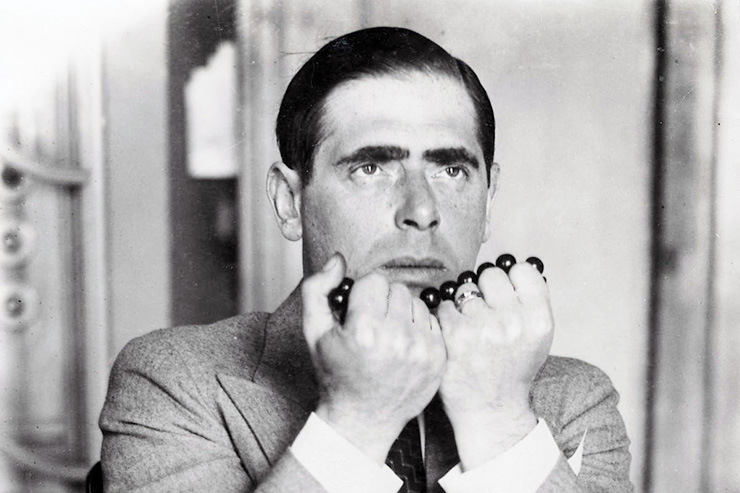
  • Perfidious Albion: An Introduction to the Secret History of the British Empire

    Perfidious Albion: An Introduction to the Secret History of the British Empire

    From New Dawn Special Issue 11 (Mar 2010)

    Perfidious Albion – “Treacherous England,” “Faithless England,” or, if you prefer, “Dirty, Low-down, Sneaky England” – is commonly assumed to derive from the French La Perfide Albion. The epithet’s best known appearance is in the 1793 poem “L’ere de Francais” by the Marquis de Ximenez. The year is not without significance. In February 1793, the increasingly radical and beleaguered French Republic declared war on Britain, and Ximenez exhorted his revolutionary countrymen to carry the fight to the enemy’s shores. One wonders what he would have made of the theory, advance many years later, that the very Revolution he praised was the clandestine handiwork of Perfide Albion.

    In any event, the good Marquis was hardly the first or the last to invoke the term. References to something of the kind date back to the late Middle Ages. In 1919, Canon Charles O’Neil enshrined it in the lyrics of “Foggy Dew,” which lauded Ireland’s Easter Rebellion. The Spanish, recalling the ill-fated Armada and the depredations of Sir Francis Drake, speak of Perfida Albion, the Italians of Perfida Albione, and the Germans of Perfides Albion. In any language, it boils down to the same thing: the English displayed a special knack for underhanded behaviour and more that they were damned good at it.

    Is such sniping just the reflexive bitterness of losers, or was the rise and success of the British Empire really abetted by dirty tricks and not just hardy seamen, stiff upper lips and the will of the Almighty? If so, much of the dirty work falls into that category loosely termed espionage or “secret service.” But the English did not invent spying, which if not the world’s second oldest profession, must be the third. Nor can it be that Britain’s alleged sin was simply putting its interests above that of any other nation, be it friend or foe. What other country can really claim to have done otherwise, and why should anyone expect them to?

    Of course, we are talking about more than mere intelligence gathering; suborning treason, inciting rebellion, even war, not to mention blackmail and assassination are neither the least nor the greatest crimes of which Perfidious Albion stands accused. Indeed, some might argue that the British Empire was born and maintained through a pact with the Devil himself. In any case, the likes of Stephen Dorril and Robin Ramsay argue that the long history of skulduggery manifests the hand of a British “Secret State” which continues to guide the policies and destiny of the United Kingdom.1

    The notion than England possessed a special talent for deceit and underhandedness may be a myth, but it has proved an effective and enduring one. After all, though the Empire is gone, the most famous secret agent in the world, James Bond, remains a Briton. The long list of historical figures who stand accused of being Albion’s tools (whether they knew it or not) includes Christopher Marlowe, Benjamin Franklin, Karl Marx, Leon Trotsky and Adolf Hitler. Those who, to one degree or another, definitely were, include Aleister Crowley, Harry Houdini, Benito Mussolini and Noel Coward. What follows will take a necessarily very selective look at some of the persons and events involved in Britain’s clandestine affairs from the era of Elizabeth I to the Second World War. Some may be familiar, others definitely obscure, but each played a part in the Secret History of the British Empire.

    Sir Francis Walsingham

    Credit for creating the first “regular” English secret service usually goes to Elizabeth I’s spymaster, Sir Francis Walsingham.2 He faced a predicament shared by many of his successors; the need to combat both external and internal threats and the collaboration of the two. In the case of the Protestant Walsingham and his Protestant Queen, the unifying factor among their enemies was devotion to Catholicism. Walsingham battled this menace by recruiting agents at home and abroad and waging an aggressive campaign of counter-subversion. His most successful weapon was the provocateur or “mole” who penetrated and compromised hostile conspiracies. He also followed the maxim that England’s enemy’s enemy was her friend, or at least an exploitable tool. In addition to Protestant sympathisers and dissident Catholics, he is also supposed to have enlisted the help of witches, sorcerers and atheists in Albion’s cause.3

    Little surprise that one of Walsingham’s better known operatives was an Elizabethan occultist whose interests included hermeticism, alchemy, astrology and conversing with “angels.” This was Dr. John Dee (1527–1608), a man whose encoded signature – a stylised representation of handled spectacles – was later appropriated by Ian Fleming for his “007.”4 Among other things, Dee was a prophet of England’s Manifest Destiny. He allegedly coined the term “Britannia” and conjured up the image of the small island kingdom as the centre of a world-girdling maritime empire.

    While Dee served Walsingham well, he was first and foremost a scholar and seems to have lacked the ruthless quality often required of a secret agent. Thus, it surely was Walsingham’s hand that in 1582 steered Edward Kelley into his path. Dee wished to commune with the spirits but lacked mediumistic powers. Kelley had them – or claimed to – and the pair formed a team which endured for some seven years. Kelley was a dubious character, a convicted forger and counterfeiter whose occult interests included necromancy and maybe outright diabolism.5 Since the angels “spoke” through Kelley, and Dee was inclined to do whatever they decreed, Kelley was ideally positioned to “manage” Dee. Kelley would have had no qualms about doing whatever Walsingham required. Little wonder that some three centuries later another English occultist-spy, Aleister Crowley, would proclaim himself the reincarnation of Edward Kelley.

    Dee and Kelley’s most important mission was their extended visit to Central Europe in the 1580s. This brought them to the court of Habsburg Emperor Rudolf II, nephew of England’s nemesis, Philip II of Spain, and host to a dangerous cabal of Catholic exiles. Kelley ultimately infiltrated and betrayed this group and their co-conspirators in England. Dee ingratiated himself (and by extension, Kelley) to Rudolf by providing the Emperor with rare tomes of esoterica. Dee is generally assumed to have sold Rudolf a very strange volume later dubbed the Voynich Manuscript after the book dealer who rediscovered it in the early 20th century.6 It is an illustrated manuscript depicting mysterious plants and rituals and written in an unknown and indecipherable alphabet. Among the multitude of theories about the book is one that holds Dee concocted it as cryptographic experiment based on the angelic or “Enochian” revelations received through Kelley.

    Britain’s Alliance with the Jews

    Half a century after Dee’s death, England was under a very different political regime but facing a remarkably similar security predicament. In the mid-1650s, power rested in the hands of a Puritan dictator, Lord Protector Oliver Cromwell. Cromwell’s principle enemies were the royalist partisans of the dethroned Stuarts who brewed sedition at home and plotted abroad with the Catholic kings of Spain and France.

    At this time there lived in London a wealthy Portuguese-Spanish merchant named Antonio Fernandez de Carvajal. In fact, Carvajal was a Marrano or crypto-Jew, a descendent of Iberian Jews compelled to accept Catholicism in the previous century. Like many of his secret co-religionists, Carvajal hated Spain and all it stood for. He also sought to legitimise his and other crypto-Jews’ status in England and permit other Sons of Judah to live there openly. The obstacle was Edward I’s 1290 Edict of Expulsion which forbade Jews to dwell in England. In 1655, Carvajal arranged for Rabbi Menasseh ben Israel to come from Amsterdam and make a personal appeal to Cromwell. The Lord Protector formally repealed the Edict two years later. Part of the quid pro quo was that Carvajal put Cromwell’s agents in contact with a far-flung network of “Jewish Intelligencers” who operated in the Netherlands, the Levant, Spanish America and inside Spain itself.7 As early as 1656 this secret alliance proved its value when Carvajal’s agents exposed royalist intrigues in Holland.

    Jump ahead 260 years and British agents in the Middle East, among them a certain T. E. Lawrence, were being aided by another network of Jewish spies, this one the Zionist NILI ring which worked against the Ottoman Turks.8 At the same time, Albion’s operatives spun visions of independence before the Arabs while quietly plotting to divide up the whole region with France. The leading light of the NILI ring, Aaron Aaronsohn perished in a mysterious plane crash over the English Channel in 1919. As in the later cases of the Duke of Kent (1942) and General Wladyslaw Sikorski (1943), suspicious minds saw the hidden hand of Perfidious Albion ridding itself of an “inconvenience.”9

    At the very least, had Edward I’s Edict remained in force, British history would have been very different. No Rothschilds would have lent their weight to London’s financial might, no Benjamin Disraeli would have become prime minister, nor would a Polish Jew named Shlomo Rozenblium have become Sidney Reilly, the Ace-of-Spies.

    The French Revolution has spawned its share of conspiracy theories. Perhaps the most resilient of these is the “Illuminati-Masonic Conspiracy” promoted by Abbe Augustin de Barruel in his Memoirs Illustrating the History of Jacobinism (1797–98) and John Robison’s Proofs of a Conspiracy against All Religions and Governments of Europe… (1797). Both writers point accusing fingers at the recently disbanded Bavarian Illuminati who, they allege, infiltrated French Freemasonry and spawned the head-chopping excesses of the Jacobins. It is worth noting that both Barruel and Robison wrote their books in Britain and that the government of Sir William Pitt the Younger embraced and promoted their ideas. At the very least, Pitt exploited the conspiracy theory to effectively discredit and demonise the French Revolution.

    In the 20th century, the doggedly anti-British researchers associated with Lyndon Larouche’s Executive Intelligence Review argue that the hidden hand of England both helped to get the Revolution rolling and steered it into the hands of the fanatical Jacobins. In modern parlance, it was all a “destabilisation” effort designed to cripple France economically and politically. Even the storming of the Bastille was part of the plot.10 In the “Bestial British Intelligence of Shelburne and Bentham,” Jeffrey Steinberg singles out Lord Shelburne (William Petty) the evil genius of the venture who used the monetary power of the East India Company to carry out a silent coup against weak King George III.11 According to this view, British intelligence ever since has been the tool of the same secret power. If so, were the works of Barruel and Robison sponsored disinformation designed to divert attention away from the real conspiracy to a manufactured one?

    Throughout the 19th and early 20th centuries, the British secret services had to negotiate a shifting landscape of alliances and real or potential enemies. In the 1850s, Britain joined traditional foe France in the Crimean War against Russia, but in the 1890’s France allied itself with Russia, a combination that was almost as troubling to Britain as it was to the rising power on the block, Germany. Up to the first years of the 20th century, Tsarist Russia remained the Empire’s #1 adversary, but when, after 1900, the Germans embarked on the creation of a big navy, British interests demanded an alliance with France (1904) and subsequently Russia (1907).

    Of course, just because you were allied to someone, didn’t mean you would or should stop spying on them. To better manage intelligence operations, a War Office Intelligence Division appeared in 1873. The Admiralty followed suit with a Foreign Intelligence Committee in 1882 which became the Naval Intelligence Department (NID) a few years later.

    William Melville

    Nevertheless, the man who was the closest thing to a British spymaster in the late 19th century, and who arguably laid the basis for British intelligence in the 20th, came from the London Metropolitan Police – Scotland Yard. His name was William Melville and he was, of all things, a Catholic Irishman from County Kerry. Originally a baker, Melville entered the Metropolitan Police in 1872 and ten years later joined its new Irish Branch. The latter was designed to combat Fenian conspiracies, particularly bomb attacks in London. Despite his background, Melville became an implacable enemy of the Irish rebels and a bitter foe of anarchists and radicals generally.

    In 1887, Melville was involved in ferreting out the so-called Jubilee Plot in which a Fenian cabal aimed to blow up Queen Victoria and most of her cabinet in Westminster Abbey.12 The key instigator turned out to be a British agent. Much the same emerged five years later when Melville masterminded the destruction of the Walsall Plot in which a group of anarchist workmen went to prison for scheming to build a bomb. Once again, the man at the centre of plot turned out to be one of Melville’s provocateurs.13

    Befitting a servant of Perfidious Albion, such deviousness did not go unrewarded. In 1893 Melville became Superintendent of Special Branch and earned an almost mythical reputation as the ever-watchful guardian of public order. Always on the lookout for new angles in trickery and deception, in 1900 Melville enlisted the talents of American magician Harry Houdini. He even inveigled Houdini to spy for him during his tours of Germany and Russia.14

    Still, this did not inhibit Melville from establishing cooperative arrangements with the secret services of those very same countries. In 1901, he worked with German agents to forestall an assassination attempt against Kaiser Wilhelm II at Queen Victoria’s funeral.15 He evolved a more elaborate relationship with Pyotr Rachkovsky, the equally cunning chief of the Russian Government’s Okhrana section in Paris. Melville’s men spied on Russian exiles in London, while Rachkovsky supplied Melville with intelligence gleaned from radical circles on the Continent. They even shared agents.

    A case in point is the Pilenas brothers, Casimir and Peter. They were Lithuanian subjects of the Russian Empire who fled to London in the 1890s and moved in revolutionary circles. Casimir became a spotter and informant for Scotland Yard around 1896 and he and his brother worked as London operatives for the Okhrana.16 Their recruiter was one of Melville’s officers, Michael Thorpe who also, with Melville’s approval, worked for Rachkovsky.

    The Okhrana came to doubt the Pilenas’ reliability and cut them loose in 1913. This may have had something to do with their peripheral involvement in a sensational robbery-murder in London in December 1910. The so-called Houndsditch Murders resulted from a botched burglary attempt by a group of Latvian-Russian anarchists.17 Three policemen were shot dead and not long after two of the suspects died in a fiery shoot-out in the East End’s Sidney Street. Despite what first appeared to be overwhelming evidence, the surviving robbers were all acquitted. One reason for the acquittals may have been that there was one or more police agents among the accused.

    The group’s shadowy ringleader, “Peter the Painter,” was never found, but among those suspected was Peter Pilenas who conveniently left England for America just days before the robbery went down. Peter soon was followed to the States by brother Casimir. When the First World War broke out, British intelligence in New York re-mobilised him as an agent, and he similarly returned to Albion’s service (if he ever left) in 1939.

    There is something fishy about the Houndsditch/Sidney Street business, and the suspicion that it involved State-inspired provocation is not unjustified. In that respect, a not insignificant detail is that the Home Secretary who personally oversaw the Sidney Street shoot-out was Winston Churchill, a man who some believe “had already sealed an indissoluble bond” with the Realm’s secret services.18

    Melville resigned his Scotland Yard post in October 1903 but immediately opened a private detective agency under the name William Morgan. In fact, Melville’s outfit was a cut-out for the War Office and served the Empire’s secret needs at home and abroad. Basically, Melville’s agents did the Empire’s dirty work under a cover of complete deniability. In 1909, most of his organisation was subsumed into two new agencies created to handle domestic and foreign intelligence (what would become MI5 and MI6) and Melville served as MI5’s Chief Detective until his real retirement in 1917.

    Sidney George Reilly

    One of Melville’s most notable recruits was the Russo-Polish Jew mentioned earlier, Shlomo, or Salomon, Rozenblium. He would be much better known as Sidney George Reilly. His career is too convoluted to summarise here, but among other things, he is frequently cited as the role model for James Bond.19 Like so many things about Reilly, it turns out to have no basis in fact. In reality, Reilly was more a confidence man than a spy, and his loyalty to Britain, or anything else, was doubtful. A report on his character in early 1918 concluded that he was “a shrewd businessman of undoubted ability, but without patriotism or principles and therefore not to be recommended for any position which requires loyalty….”20 Other terms applied to him included “untrustworthy” and “unscrupulous.” Among the few things said in his favour was that he had excellent sources of information and “connections in almost every country.”21 Reilly liked to hint of his connections to the “Occult Octopus,” his name for the more secretive aspects of international business and finance.22

    Nevertheless, despite his mercenary reputation, or maybe because of it, in the spring of 1918 the chief of London’s Secret Intelligence Service (SIS or MI6), chose Reilly to undertake an ultra-secret mission inside newly Bolshevised Russia. The main fruit of this venture was the so-called Lockhart or Ambassadors’ Plot which reached its crescendo in late August of that year. The plot centred on a plan, spearheaded by Reilly, to subvert the Latvian troops guarding the Kremlin and use them in a palace coup against Lenin’s government. The goal was less the total overthrow of the Red regime than a change in its leadership, and there is little doubt that an almost simultaneous, but botched, effort to kill Lenin was connected.23 The Latvian gambit abruptly fell apart with the result that all the Allied secret services in Russia were compromised. Reilly and his British colleagues escaped unscathed, but his American counterpart, the unlikely named Xenophon Kalamatiano, was not so lucky. He alone was tried, convicted and imprisoned by the Bolsheviks for three gruelling years. To his dying day Kalamatiano maintained that Reilly had deliberately betrayed him and other Allied agents.24 What he never seemed quite sure of was why.

    Sidney Reilly disappeared on another mission to Russia in the fall of 1925. According to contradictory Soviet accounts, either he was executed soon after his capture or almost two years later. In London there were routine denials and whispers of defection. In what purports to be an account of his interrogation, Reilly emphatically states that there had been no British agents in Russia since 1919.25 It may be that one purpose of Reilly’s mission was to convince his Soviet captors that this was true. Persons in London may have willingly sacrificed Reilly to make that point.

    It was vital that the Soviets believe him, because nothing could be further from the truth. As researcher Phil Tomaselli has unearthed, from the fall of 1919 through at least mid-1923, MI6 received scores of reports, many very detailed, from a source with access to the highest levels of the Soviet Government. The source was also particularly well-versed in the secret collaboration between the Russians and the German military. Codenamed D-57, the agent’s identity was carefully disguised; indeed, it is not clear whether D-57 was an individual or a network of informants. As far as can be determined, the information provided was reliable.

    D-57 was only a part of a much more extensive British intelligence operation in Red Russia. As a 1927 American military intelligence summary put it, “Just what agencies are maintained [by the British] in Russia, of course, cannot be found out, but according to recent Soviet claims, which are undoubtedly exaggerated, the British have an extensive system of espionage in that country.”26 Actually, the Soviets were not hallucinating. London had intelligence officers imbedded in its trade and diplomatic missions, and in the ranks of private firms operating in Russia. Through the 1920s, a super-secret MI6 station existed in Moscow, though, like D-57, it remains completely unacknowledged in that agency’s official history.27 Why? Why would such a seemingly outstanding success be covered-up? Could it be that to reveal the story of D-57 and related affairs would also reveal some darker secrets of the Empire, those that must forever remain in the file of Things That Never Happened?

    Dr. Cornelius Herz

    The Soviets were not the only ones who had to fret about the nefarious activities of English spies. The French had ample reason to maintain a healthy paranoia about L’Intelligence Service. Around 1877, a certain Dr. Cornelius Herz appeared in Paris. Although supposedly born in France, Herz claimed American citizenship, but his origins are, to say the least, obscure. He used his not inconsiderable wealth, the source of which was also a mystery, to dabble in finance and politics, initially to great success. He cultivated political figures in the Third Republic, most notably the sabre-rattling General Georges Ernest Boulanger, who almost staged a coup against the Republican regime at the end of the 1880s. Herz also befriended a rising politico named Georges Clemenceau, the future “Tiger of France.”

    However, Herz’s little empire came crashing down when, along with another wheeler-dealer, the Baron de Reinach, he became mixed-up in the Panama Canal Scandal that hit France at the beginning of the 1890s. The Scandal, which included charges of bribery and official malfeasance, rocked the Republic to its foundations. To avoid prosecution, Herz, like others implicated, fled aboard, but it was the place of refuge he chose that raised eyebrows. Herz decamped to England in 1892 where, despite vigorous French efforts to force his extradition, he remained safe and silent until his rather untimely (some might argue convenient) death six years later.28 In France it became an article of faith that Herz had been an “agent-of-influence” of Perfide Albion and that his aim all along was to destabilise the Third Republic any way he could. Some of his critics charged that Herz was nothing less than the “chief of the Intelligence Service in France.”29 Herz, naturally, denied any such thing.

    It was not lost on certain persons, among the outspoken anti-semite Eduoard Drumont, that Herz and Reinach were Jews, and this played into another scandal that hit the Republic in 1894 and raged for several years – the infamous Dreyfus Affair. By 1898–99, it had polarised France into pro- and anti-Dreyfusard camps and again brought the Third Republic to the brink of collapse. Britain’s secret services were not above fishing in these troubled waters. One man who thought the Republic’s crisis might be his opportunity was Victor Bonaparte, Prince Napoleon, or as die-hard Bonapartists referred to him, Napoleon V. From his exile in Belgium, he boasted of organising a march on Paris to seize control and restore order. Among the surviving records of War Office Intelligence, there is reference to the fact that in May 1901, British agents met with Prince Napoleon in Holland where they “sounded out” his views about affairs in France and elsewhere.30 So, the Empire’s agents now connived with the heir of the man they had worked so hard to bring down almost ninety years before.

    Basil Zaharoff

    Some thought it more than coincidence that just as Herz’s star began to fade, another foreigner of mysterious wealth and provenance popped up in Paris.31 This was Basil Zaharoff, who had already gone through half a dozen aliases and careers in places as far ranging as Constantinople, London, Cyprus and America.32 No one was certain, or ever would be, whether Zaharoff was of Greek, Jewish, or Russian origin. He established a special relationship with British interests in the 1870s and that endured, to one degree or another, until his death in Monte Carlo in 1936. In the interim, Sir Basil, as he was later known, earned infamy and vast wealth as the world’s paramount arms dealer or, as the less charitable termed him, the “Merchant of Death.” Zaharoff later spread his tentacles into ship-building, banking, radio communications and, perhaps most prescient of all, oil. The basis of his business success was what he called the “System.” In essence, this involved selling arms to both sides in a conflict and even instigating conflicts when need or opportunity arose.

    Zaharoff maintained an official residence in Paris and was rewarded by the French with enrolment in the Legion of Honor. But it was London which gave him an Order of the British Empire and a Knight Grand Cross of the Bath for his special services. Sir Basil was intimately connected with the British-owned Vickers firm and British politicians like future Prime Minister David Lloyd George.33 His influence reached its peak during the First World War. According to T. P. O’Connor, “Allied statesmen and leaders were obliged to consult with him before planning any great attack.”34 He was also rumoured to operate a private intelligence service which put the French Surete to shame.35 His legion of sub-agents allegedly included the above-mentioned Sidney Reilly and arch-schemer Ignatius Trebitsch-Lincoln.36 French investigative journalist Roger Menevee, the first to attempt a biography of Zaharoff, was convinced that not only was he a key British asset, but also was a kingpin in a shadowy “International Oligarchy” which dominated the world’s economy. One can only wonder how that connected to Reilly’s “Occult Octopus” or to the “High Cabal” alluded to by Winston Churchill.37 Was Zaharoff a manifestation of the link between British imperial interests and some sort of “Illuminati”? If so, who was running who?

    Yet another example of British spying on France, this one in the wake of the First World War, provides a little comic relief. In December 1925, the Surete arrested three male British subjects and two French female accomplices on charges of espionage. All were convicted in subsequent proceedings. The leading figure in the case, Capt. John Henry Leather, and his two colleagues, Ernest Phillips and William Fischer, were employees of the Paris office of the Burndept Wireless Co. They also all had recent backgrounds in British military intelligence. As of 1925, in fact, Leather was still attached to MI2(b), the War Office outfit handling intelligence in Western Europe.38

    The Foreign Office, Air Ministry and Admiralty ritually denied any connection to the men. Naturally, no one asked the “Agency That Didn’t Exist,” MI6. But there was no doubt about the guilt of Leather and his pals. Their undoing came about because he and Fischer had developed rival romantic interests in one of the French femmes, Marthe Moreuil, better known as “Mlle. Foxtrot,” whom they had used to coax information out of smitten French officers. For reasons never made clear, Moreuil tossed a packet of love letters out the window of a train, but managed to include a stash of compromising documents. These were retrieved by a curious farmer who dutifully turned them over to authorities. The main target of the Leather gang’s espionage was the French air force, then reckoned by London as the only air force that could pose a threat to Britain.39

    Sir William Wiseman

    British intrigues in France pale in comparison with those conducted in America during and between the two World Wars. In the fall of 1918 Sir William Wiseman, who for the past three years had headed the MI1c (MI6) station in New York, assured his Chief that “the details and extent of our organisation [the Americans] have never known, and don’t know to this day.”40 Sir William and his colleagues had conducted an aggressive, devious and very successful campaign against German operations in the US as well as the Irish and Indian nationalists with whom the Germans plotted. For instance, in 1917 San Francisco, British agents instigated a high-profile mass prosecution of Indians and Germans in the so-called “Hindu Conspiracy Trial.”41

    No small part of this success was due to the fact that Wiseman and friends were able to finesse or coerce the collaboration of ostensibly neutral Americans. A vital part of this network of influence was the financial alliance between the British Crown and the 500-lb. gorilla of American finance, J.P. Morgan & Co.42 With utter disregard for policies in Washington, the Morganites aligned themselves with London in 1914 and used their clout to compel other American firms to do likewise. In this regard, Wiseman’s pre- and postwar career as an investment banker is not insignificant. It again smacks of Reilly’s “Occult Octopus,” and that is fitting because Reilly, along with Aleister Crowley and Casimir Pilenas, was among Wiseman’s small army of agents and informants.

    By far Wiseman’s greatest achievement was his cultivation of the man who arguably was the second most powerful man in Washington, President Wilson’s confidential adviser and all-around eminence grise, Col. Edward Mandell House. The English-educated House was probably London’s man from start, and he had close ties to the Morgan interests. Wiseman credited House with making the President believe that Britain and America were joined in a “special relationship” to combat German militarism and that Wilson needed to consider British views and needs ahead of any others.43 Wiseman could credit himself and his organisation with achieving the Great Work of British imperial alchemy in the First World War – bringing America into the war.

    Some American officials, among them J. Edgar Hoover, were bothered by the fact that British intelligence operations on American shores did not cease on 11 Nov. 1918.44 Not only did British surveillance of Irish and others continue, but so did their meddling in US immigration matters and the blatant collection of commercial information. Wiseman’s replacements took a keen interest in the American radical scene and infiltrated agents into the nascent US Communist movement. Some British agents were even accused of funding radical activity.45 In 1920, then British Director of Intelligence Sir Basil Thomson admitted that his organisation had enticed one of the leaders of the Communist Party of America, Louis Fraina, into London’s employ.46

    William Wiseman returned to New York soon after the war and joined one of Wall Street’s biggest investment banks, Kuhn, Loeb & Co. In the 1930s, he became the firm’s point man in Hollywood and used his influence to encourage a favourable portrayal of the British Empire in American films. He never ceased to be Albion’s agent-of-influence. When war again broke out in 1939, Sir William was back in the saddle where he conducted back door negotiations with German and Japanese diplomats and helped set up the British Security Coordination (BSC) later headed by Sir William Stephenson.47 Following the pattern established by Wiseman in the last war, the BSC ran roughshod over American neutrality laws while it mounted a vast propaganda campaign aimed once again at bringing the US into the fray. Among those recruited for this effort was the influential press and radio columnist, Walter Winchell.48

    As noted, the above examples barely scratch the surface in exploring the exploits of British intelligence and the “secret history” of the Empire it served. However, they hopefully offer a little glimpse of the history, reasoning and methods of Perfidious Albion.

    [alert type=”general” dismiss=”no”]This article was published in New Dawn Special Issue 11.[/alert]

    [alert type=”success” dismiss=”no”]If you appreciate this article, please consider subscribing to help maintain this website.[/alert]

    Lead image courtesy of www.micahwright.com.

    Footnotes:

    1. See, for example, Dorril and Ramsay’s Smear: Wilson and the Secret State, London: HarperCollins, 1992 and, more broadly, Lobster: The Journal of Parapolitics.
    2. See Stephen Budiansky, Her Majesty’s Spymaster: Elizabeth I, Sir Francis Walsingham and the Birth of Modern Espionage, New York: Viking, 2005.
    3. Ellen Wilson, “Raleigh’s Secret Society: Sir Walter Raleigh’s ‘School of Night’ in Elizabethan England” (7 May 2008), www.tudorhistory.suite101.com/article.cfm/the_school_of_night.
    4. Richard Deacon, John Dee: Scientist, Geographer, Astrologer and Secret Agent to Elizabeth I, London: Frederick Muller, 1968, 5.
    5. Ibid., 123-125.
    6. For a good overview, see Rene Zandbergen, “The Voynich Manuscript,” www.voynich.nu. The dealer, a Pole named Wilfrid Voynich, also happened to be an early associate of Sidney Reilly.
    7. Lucien Wolf, “Cromwell’s Jewish Intelligencers,” in C. Roth (ed.), Essays in Jewish History, London: Jewish Historical Society of England, 1934, 93-112.
    8. Ronald Florence, Lawrence and Aaronsohn: T. E. Lawrence, Aaron Aaronsohn and the Seeds of the Arab-Israeli Conflict, New York: Viking (2008).
    9. Ben Cohen, “The Amazing Life of Aaron Aaronshon,” The Daily Banter (14 Aug. 2007), www.thedailybanter.com/tdb/palestine/.
    10. Pierre Boudry, “Jean-Sylvain Bailly: The Benjamin Franklin of the French Revolution,” www.schillerinstitute.org/educ/hist/bailly.html.
    11. Jeffrey Steinberg, “The Bestial British Intelligence of Shelburne and Bentham,“ www.hiddenmysteries.org/conspiracy/history/bestialbrits.shtml.
    12. Andrew Cook, M: MI5’s First Spymaster, Stroud, Gloucestershire: Tempus, 2004, 60-63.
    13. Ibid., 87-93.
    14. William Kalush and Larry Sloman, The Secret Life of Houdini: The Making of America’s First Superhero, New York: Atria, 2006, 99-101, 135.
    15. Cook, 134-135.
    16. Hoover Institution Archives, Stanford, CA, Okhrana Records, IIIf, Deep Cover Agents – Russian, (L-Z).
    17. See Donald Rumbelow, The Houndsditch Murders and the Siege of Sidney Street, London: MacMillan, 1973.
    18. Guido Preparata, Conjuring Hitler: How Britain and America Made the Third Reich, London: Pluto Press, 2005, 109.
    19. Donald McCormick, 17F: The Life of Ian Fleming. London: Peter Owen, 1993, 208.
    20. UK, Secret Intelligence Service (MI6), File CX 2616, CX 023100, 13 March 1918.
    21. Ibid., CX 023996, 20 March 1918.
    22. Gill Bennett, Churchill’s Man of Mystery: Desmond Morton and the World of Intelligence, London: Routledge, 2007, 61.
    23. Re the “Lockhart Plot,” see Richard B. Spence, Trust No One: The Secret World of Sidney Reilly, Los Angeles: Feral House, 2002, 200-229.
    24. Richard B. Spence, “The Tragic Fate of Kalamatiano: America’s Man in Moscow,” International Journal of Intelligence and CounterIntelligence, Vol. 12, #3 (Fall 1999), 354.
    25. Richard B. Spence, (ed.), “Sidney Reilly’s Lubianka ‘Diary’, 30 October – 4 November 1925,” Revolutionary Russia, Vol. 8, #2 (December 1995), 183.
    26. U.S. National Archives, Records of the Military Intelligence Division (MID), 9944-A-81, G-2 Report 6110, “England (military)”, 5 July 1927.
    27. Phil Tomaselli, “C’s Moscow Station – The Anglo-Russian Trade Mission as Cover for SIS in the Early 20s,” Intelligence and National Security, Vol. 17, #3 (Sept. 2002), 173-180, and Tomaselli to author.
    28. “Dr. Cornelius Herz Dead,” New York Times (7 July 1898), 7.
    29. Charles Rochat-Cenisse, Roi des Armes: La Vie Mysterieuse de Basile Zaharoff. Bienne: Editions du Chandlier, 1943, 77.
    30. U.K. National Archives, Intelligence Department Records, HD3/111, Pt. 1.
    31. Rochat-Cenisse, 76-77.
    32. Donald McCormick, Peddler of Death: The Life and Times of Sir Basil Zaharoff, New York: Holt, Rinehart, Winston, 1965, 22-47.
    33. Ibid., 98-99.
    34. Ibid., 150.
    35. George Tallas and Anthony Stephen, Peddler of Wars: The Sir Basil Zaharoff Story, Bloomington, IN: AuthorHouse, 2007, vii.
    36. Re Trebitsch, see: Richard B. Spence, “The Mysteries of Trebitsch-Lincoln: Con-Man, Spy, ‘Counter-Initiate’?”, New Dawn, #116 (Sept-Oct 2009).
    37. Moss David Posner, “The High Cabal,” The American Chronicle (15 Sept. 2005), www.americanchronicle.com/articles/view/2406.
    38. Phil Tomaselli, Tracing Your Secret Service Ancestors, Barnsley, S. Yorkshire: Penn & Sword, 2009, 123
    39. Ibid., 124.
    40. Yale University, Sterling Library Special Collections, Sir William Wiseman Papers, Box 6, File 174, Wiseman to Chief, 6 Sept. 1918, 2.
    41. Richard B. Spence, “Englishman in New York: the SIS American Station, 1915-21,” Intelligence and National Security, Vol. 19, #3 (Autumn 2004), 518-919.
    42. Richard B. Spence, “Sidney Reilly in America, 1914-1917,” Intelligence and National Security, Vol. 10, #1 (Jan. 1995), 95.
    43. Spence, “Englishman in New York,” 523.
    44. MID, 9944-A-178, “British Espionage in the United States,” 15 Feb. 1921, 1-2.
    45. U.S. Department of Justice, Bureau of Investigation Investigative Files, #8000-357986, “Emma Goldman, Alexander Berkman, Mina Lowensohn,” 29 December 1919, 16-17.
    46. MID, “British Espionage in the United States,” 6.
    47. William Stephenson, British Security Coordination: The Secret History of British Intelligence in America, 1940-45, New York: Fromm International, 1999, 233-235.
    48. Thomas E. Mahl, Desperate Deception: British Covert Operations in the United States, 1939-44, Dulles, VA: Brassey’s, 1998, 202.

    © New Dawn Magazine and the respective author.
    For our reproduction notice, click here.

  • The Mysteries of Trebitsch-Lincoln: Con-man, Spy, ‘Counter-Initiate’?

    The Mysteries of Trebitsch-Lincoln: Con-man, Spy, ‘Counter-Initiate’?

    From New Dawn 116 (Sept-Oct 2009)

    Whatever else may be said about Ignatius Timothy Trebitsch-Lincoln, few can match his resume. He started life in Hungary in 1879 as plain Ignacz Trebitsch, the son of a prosperous orthodox Jewish family. He ended it sixty-four years later in Shanghai as the Abbot Chao Kung. Or at least he probably did. In between, using innumerable aliases, Trebitsch played the parts of actor, petty thief, convicted forger, Christian missionary, Anglican curate, Buddhist monk, member of Parliament, oil tycoon, fugitive, self-proclaimed genius, international spy, adviser to warlords and arch-conspirator. And those are just the ones we can be sure of.

    Trebitsch’s picaresque career has spawned at least a half-dozen biographies, including his own Autobiography of an Adventurer (1932). By far the most thorough is Bernard Wasserstein’s 1988 The Secret Lives of Trebitsch Lincoln. But even Wasserstein’s diligent detective work cannot fill in all the blanks. His portrait of Trebitsch, as with most of the other biographies, is a chameleon-like megalomaniac whose quest for fame and fortune mostly ended in failure and disappointment. Trebitsch comes off as a mentally-unstable confidence man; a mendacious, back-stabbing scoundrel.

    I. T. Trebitsch-Lincoln was all those things, but he may have been something more. While anything he claimed, or anything claimed about him, must be taken with a large dose of salt, the standard view of Lincoln may be too quick to dismiss some “unsupported” assertions as pure fantasy.

    In contrast, writers such as French esotericist Rene Guenon and Jean Robin, see a more secretive and sinister side to Trebitsch. To Guenon, Trebitsch was an obvious “agent of the Counter-Initiation,” a tool of hidden forces which sought to thwart and misdirect human enlightenment. Robin puts him in the service of the dreaded “72 Unknown Superiors” whose manifestations included the mysterious Green Dragon Society.1 Robin, among others, even makes him an influence on the up-and-coming Adolf Hitler.2 Historian Guido Preparata dubs Trebitsch a “midwife to Nazism.”3 Preparata also insists that Trebitsch was “neither a spy nor an imposter, [but] in all likelihood was, like [Alexander Helphand] Parvus one of those ‘specialists’ fluent in the art of subversion, who were part of a wider network of mercenaries fascinated in one form or another by the ways of power.”4 It’s an intriguing possibility, to say the least, but not one easy to prove.

    Trebitsch-Lincoln’s career is much too long and convoluted to summarise in this article. It will focus instead on two areas of mystery regarding his person and actions. First, to what degree was Trebitsch actually involved in espionage? Next, what were his links to the realm of secret societies and the occult and how did these influence his fascination with Buddhism and Tibet?

    Trebitsch-Lincoln the Spy

    Wasserstein sees Trebitsch’s secret agent exploits as largely imaginary and finds “not a shred of convincing evidence” that Mr. Lincoln engaged in espionage prior to World War I.5 However, clandestine activities, by their very nature, are difficult to pin down. Done right, they should not leave incriminating records.

    A firm proponent of Trebitsch’s spy career is British writer Donald MacCormick, aka Richard Deacon. If Wasserstein seldom strays from the security (false security?) of official documentation, McCormick eagerly embraces informal and undocumented sources, including rumour and hearsay. However, MacCormick was a British naval intelligence officer and had first-hand experience with the clandestine world and its inhabitants.

    McCormick suspects that Trebitsch’s early religious conversions and travels (1897-1902) provided cover for some sort of intelligence gathering, though for just who is uncertain.6 The same may apply to his later conversion to Buddhism.

    McCormick accepts Trebitsch’s claim to have early on visited South America, whereas Wasserstein observes that there is “no independent corroboration of this story.”7 McCormick links Trebitsch to Argentina and a Welsh immigrant there named Isaac Roberts. Roberts, claims McCormick, introduced young Mr. Trebitsch to an up-and-coming British politician, David Lloyd George.8 McCormick further argues that Trebitsch’s pre-war investigations into European social conditions were really political intelligence gathering for Lloyd George.9 McCormick alleges that Trebitsch served Lloyd George as a secret adviser on oil, a realm that also brought him into contact with, and possibly the employment of, the infamous “Merchant of Death,” Basil Zaharoff.10 Another source puts Trebitsch among Zaharoff’s intimates as early as 1909, though there is, of course, no real evidence.11 According to McCormick, who quotes Isaac Roberts, a “triangular association” existed among Zaharoff, Lloyd George and Trebitsch based on the fact that “each knew a secret about the other.”12 Zaharoff, for instance, knew that Trebitsch was a spy, and not just for himself and the little Welshman, but also for the Germans. McCormick believes that Trebitsch began selling information to the Germans as early as 1911.

    World War I was a turning point for Trebitsch. From his arrival in London around 1897, he had pursued a path which led him into the Anglican Church, secured him British nationality and culminated in 1910 with his election to Parliament. In 1914, things took a very different path. Trebitsch committed forgery and then compounded his difficulties with a blundering attempt to play double agent for British and German intelligence. Fleeing to the neutral USA, he made a splash in New York with his sensational and very anti-British Confessions of an International Spy. This purported to reveal the secret origins of the war and Britain’s underhanded part in them. After arrest and long delay, and a headline-grabbing jailbreak, he was extradited to Britain in 1916 where he was convicted and imprisoned on the forgery charge. In the years following, Mr. Lincoln’s hatred of England was matched only by His Majesty’s loathing of him. Or so it seemed.

    A contrary view holds that Trebitsch’s estrangement from Britain was all part of an elaborate cover scheme. According to this, Trebitsch remained a secret British agent for many years, perhaps for the rest of his life. That regular British officialdom had no inkling of this and vilified and harassed him at every turn was just as it should be; as an apparent enemy of the British Empire, he thus gained the attention and confidence of the Empire’s real foes.

    It seems a ludicrous idea, yet there are things that give pause. For instance, in December 1914 Admiral William Reginald “Blinker” Hall, chief of the Admiralty’s Naval Intelligence Division, caught Trebitsch red handed in the clumsy attempt to double-deal the British and Germans. Instead of arresting him, however, Hall suggested that Trebitsch take advantage of the time remaining on his passport and go to New York. Given that Trebitsch was about to be picked-up for forgery, it was good and timely advice.

    As noted, in the States Trebitsch turned his hand to anti-British propaganda and also tried to ingratiate himself with the Kaiser’s officials and spies. This was precisely the modus operandi employed by a British operative who arrived in America just a few months before Trebitsch – Aleister Crowley. While Crowley never lived down his outwardly treasonous behaviour, he also suffered no retribution from the British Government whose employee he was. This does not stop Rene Guenon from labelling Trebitsch and Crowley as “brothers” both as double-agents for London and Berlin and as agents of the Counter-Initiation.13 Of course, in stark contrast to Crowley, Trebitsch ended up in prison. The simple answer may be that Trebitsch was a real turn-coat while Crowley only pretended to be one. Or, it may be that while the self-proclaimed Beast was successful in penetrating the German apparatus in the US, Trebitsch was not. His German associates seem to have thought so little of him that one of them turned him for the reward. So, was Trebitsch’s extradition and trial really damage control to cover and punish a failed agent?

    The notion that Trebitsch was and remained a British agent seems especially popular in French circles. According to McCormick, the French held him in suspicion since 1914 when they detected him sniffing out oil in Algeria, presumably for Perfide Albion.14 Guenon accepted the notion, noting later links between Trebitsch and British agents in Central Asia. As late as 1937, French writer Robert Boucard labelled Trebitsch an agent of L’Intelligence Service alongside T. E. Lawrence and Gertrude Bell.15

    Trebitsch’s name does pop up alongside Lawrence’s in some late 20s press reports. In January 1929, the Indian Government felt obliged to issue an official denial regarding the alleged involvement of the two adventurers in recent troubles in Afghanistan.16 Trebitsch was supposed to be fishing in these waters as a Soviet agent – a charge, as we will see, that surfaces elsewhere.

    The staunchest advocate of the Trebitsch-as-British-agent theory is Guido Preparata. He points in particular to Trebitsch’s post-war shenanigans in Germany. Preparata even wonders whether Trebitsch was ever in a British prison or simply kept on ice waiting a new assignment. Wasserstein clearly documents Lincoln’s jail time, but he and Preparata do agree that Trebitsch was stripped of his British nationality and booted from England in the summer of 1919.

    He landed on his feet, as he always did, in post-war Berlin where the fragile Weimar Republic clung to power. Somehow, he wormed his way into the confidence of a cabal of right-wing conspirators. In March 1920, in the so-called Kapp Putsch, the plotters seized control of Berlin, only to back down and flee a few days later. Trebitsch briefly basked in the limelight as press chief of the revolutionary regime and dreamed of becoming its future propaganda minister (a la Goebbels).

    Trebitsch’s precise role in the Kapp affair is murky. Some dismiss him as a mere hanger-on, but a contemporary report reaching American intelligence labelled him the “organiser of the Kapp Putsch” and “the leader of the whole Revolution.”17 Robin believes that Trebitsch played a critical role in his brief alliance with the German militarists by convincing them that the Reich’s “road to glory” lay in the East, an idea that coincidentally or deliberately meshed with the concept of Lebensraum proclaimed by another early influence on the Nazis, “Geopolitician” Karl Haushofer.18 Robin sees Trebitsch, like Haushofer, as a source of “inspiration” for Hitler and the Nazis and, as such, another representative of the “72 Greens” or “Unknown Superiors.”19 The latter, he claims, were linked to the shadowy Green Dragon Society and the legendary kingdom of Agharthi.

    The Hitler-Trebitsch web is spun more elaborately by Hennecke Kardel who insists that in the early 20s Trebitsch Lincoln was identical with Moses Pinkeles, a mysterious Jew who allegedly helped fund the early Nazi movement.20 Just who or what Pinkeles actually was remains an intriguing question, but it seems clear that he was not Trebitsch who was otherwise occupied adventuring and spying in China.

    Preparata has another take on Trebitsch’s role in the Kapp business. He believes that the British used Trebitsch as “an agent steeped in counter-insurgency tactics and disinformation to thwart, expose and burn all the monarchist conspiracies against the Weimar Republic.”21 Preparata cites a British report which provocatively suggests that Trebitsch came to Germany at the instigation or with the encouragement of then Secretary for War Winston Churchill.22 Another reference to Trebitsch-Churchill collusion appears in a March 1921 US military intelligence report which unambiguously declares that I. T. T. Lincoln “was and still is an English agent.”23 Planned or not, Trebitsch soon fell out with his monarchist co-conspirators and absconded with their documents which he sold to the Czech Government.

    One “friend” he preserved from the Kapp misadventure was a Prussian officer, Max Bauer. In the aftermath of the Putsch, Bauer surfaced in Moscow as a military adviser to the Red Army. His presence there was related to the secret collusion between the German and Soviet militaries, but there also is reason to suspect that Bauer acted as an agent of Soviet military intelligence in Germany and later in China. Preparata has Bauer and Trebitsch conniving with the Soviets as far back as 1919 and it is more than curious that the duo escaped post-Putsch Berlin with papers supplied by the Soviet Embassy.24

    Was Mr. Lincoln also a Red agent? In 1919 British authorities delayed his departure from England until a short-lived Bolshevik regime in Hungary collapsed supposedly because they feared he would return to his homeland and join the Revolution. The aforementioned US intelligence report claims that when the rightist Kapp plot began to lose momentum, Trebitsch shifted gears and began “working to bring about Bolshevism in Germany.” Then again, by helping to undermine both the socialist Weimar regime and its right-wing opponents, Trebitsch may have been serving Moscow’s interests all along. More accusations of Bolshevik intrigue show up in reports reaching the US Bureau of Investigation. In April 1921, word came that Trebitsch was “actively engaged in the ‘Red Movement’” and “working in the interest of the Soviet Government in Austria and Hungary.”25 US officials were concerned by reports that he was coming to the States.

    Trebitsch-Lincoln the Occultist

    In October, under the name of Patrick Keelan, he did just that, but he was soon on to China. There, he became adviser and financial agent to a succession of warlords and likely peddled influence and information for anyone who would pay him. McCormick contends that Trebitsch worked for German interests in China which gains credibility from one of the “acquaintances” he made on the voyage to New York. This was Albert T. Otto, a German-American businessman who apparently was so impressed by Keelan/Trebitsch that he handed him some $50,000.26 Otto, however, was himself a man with an interesting history. Prior to 1917 he had been a representative of the Krupp armaments firm in the US and subsequently came under investigation as a German agent.27 He may have played the same part in 1921 by serving as a cut-out for Berlin’s financing of Trebitsch.

    In the East, Trebitsch found someone else interested in his services: the Japanese. “Lincoln had long been watched and even courted by some Japanese secret agents,” says McCormick, among them Col. Kenji Doihara, the so-called “Lawrence of Manchuria” and a key figure in the secretive Black Dragon Society which served Imperial Japan’s espionage and subversive interests.28 McCormick believes that Trebitsch became an “active co-conspirator” with the Black Dragons, and that may not have been all.29

    To get a handle on this and other connections, we need to look at Trebitsch’s known and alleged links to the occult. The first reference is about 1898, soon after his nominal conversion to Christianity. Briefly returning to Hungary, he “evidenced an interest in esoteric religion by becoming editor of a spiritualist paper.”30 A few years later, as an Anglican curate in Appledore, Kent, Trebitsch reportedly encountered Harold Beckett, an ex-Indian Army officer who became the young clergyman’s Western “initiator.”31 Beckett allegedly had contact with Continental occults such as Maitre Philippe and his pupil, Gerard “Papus” Encausse. Among the secrets Beckett supposedly revealed was that in each generation there were only seventy-two “true men.”32 Whether Trebitsch believed that he was one of these elect, or whether they were the same as the “72 Unknown Superiors” is also unclear. With this kind of guidance, claims Serge Hutin, Trebitsch went on to join numerous secret societies including the Freemasons, the Ordo Templi Orientis and Chinese triads.33

    Nothing more is heard of his esoteric leanings until October 1925 when he underwent a “mystical experience” in a hotel room in Tientsin. “I made a great renunciation, I quitted the world,” he declared.34 What he embraced, however, was not Buddhism but Theosophy, that amalgam of Eastern-mysticism-for-Westerners concocted by Helena Petrovna Blavatsky.

    Trebitsch’s revelation awoke in him a burning desire to visit Tibet, the Holy Land of mystics and seekers of various stripes. He repeatedly petitioned British authorities to allow him to reach Tibet via India, only to be turned down each time. Whether he ever accessed Tibet through Chinese territory is unknown, but remains an intriguing possibility.

    Trebitsch’s interest in Buddhism and Central Asia actually dated as far back as 1916. While awaiting extradition in New York, he boasted that before the war he had been “an active spy in Central Asia, working as a Buddhist monk.”35 Moreover, he claimed to have come up with a scheme to foment a “grand religious revival in the East,” which would destroy British power in Asia.36 One must wonder whether his 1925 conversion was simply the emergence of a long-prepared plan.

    Tibet, of course, was widely perceived as the strategic high ground of the Eurasian landmass and figured in Haushofer’s theory of “geo-politics.” In the mid-20s, British, Soviet, German and Japanese agents all maneuvered for influence and advantage there, and Trebitsch would not have been the only operative to try to do so under the guise of religion.37

    Instead of the Land of Eternal Snows, Trebitsch next surfaced in Sri Lanka as a novice in a Buddhist monastery. What brought him out of this splendid seclusion was the imminent execution in England of his eldest son, convicted of murder. Thanks again to the obstruction of British officialdom, he was unable to reach the boy before he hanged but claimed that he had been in psychic communication with his doomed son as well as his spiritual teacher back in Sri Lanka.38

    Over the next several years, Trebitsch continuously shuttled between the Far East and Europe, his purposes and finances remaining, as ever, vague. In August 1926, he arrived in New York under the name of Hermann Ruh, a German engineer. His declared destination was Japan, but before proceeding there he spent months in San Francisco lodged in a Japanese hotel and studying with Zen master Nyogen Senzaki. This brings us back to McCormick’s charge that Trebitsch had fallen in with Japanese intelligence, and again raises the spectre of the mysterious Green Dragon. As discussed in a previous article for New Dawn, there is no consensus on what the Green Dragon Society was, or if it even existed, but there is persistent linking of the Society with Japan and Zen Buddhism. It is worth noting that Karl Haushofer is alleged to have been one of only two or three Westerners admitted to the Green Dragon Society.39 Was Ignatius Trebitsch-Lincoln one of the others? Under the name of the Lama Dordji Den, Trebitsch is even invoked in Teddy Legrand’s (Pierre Mariel) 1933 novel, Les Sept Tetes du Dragon Vert (“The Seven Heads of the Green Dragon”) which purports to reveal the Dragon as a sinister international conspiracy bent on world domination.40

    Trebitsch’s whereabouts c. 1928-30 is especially hazy. He is identified in places as far flung as Shanghai, Tibet, Afghanistan, and perhaps most intriguing of all, Nice, France. According to Robin, Trebitsch, again as Dordji Den, lived there in the Villa Bleue.41 Overseen by a wealthy Swedish countess, the Villa was said to be the meeting place of occultists and “grand adepts” from across Europe. While there, Trebitsch reportedly impressed the denizens with his “magnetic [hypnotic?] powers” and received, in turn, access to further secret knowledge.42 While Trebitsch certainly was in France in 1929 and likely in Nice, there is no solid proof of the Villa Bleue’s existence.

    Trebitsch is further alleged to have received initiation as Dordji Den at the Sera Monastery outside Lhasa.43 In fact, he supposedly received two initiations in Tibet, the second in 1930. This flies in the face of Wasserstein’s research which finds no demonstrable evidence that Trebitsch ever reached Tibet, and shows quite conclusively that he received the title of bhikkhu, or monk, at the Pao-hua Shan Monastery, near Nanking, in May 1931. It was here that he acquired the new name of Chao Kung, to which he promptly added the prefix of “The Venerable.” So, was Dordji Den just a figment of Guenon’s and others’ imaginations, someone else entirely, or was Trebitsch initiated three times. And initiated into what, exactly?

    Trebitsch-Lincoln a Bodhisattva

    Trebitsch surely demonstrated more commitment to Buddhism than he did to his previous religious affiliations. Barely a week after his ordination as monk, he received elevation to the rank of bodhisattva. In preparation for this, he endured the painful branding of twelve small stars on his scalp which represented the dozen spokes of the Wheel of Becoming. He also embraced a strict vegetarian diet and ever after only appeared in public in his monk’s robes.

    In the summer of 1932, the newly-minted Chao Kung again sailed for Europe. His first stop was Marseilles where he was met by a delegation of Buddhists from Nice. These he apparently knew from his visit four years earlier. He remained in Nice for a few weeks and then headed for his real destination – Berlin.

    Germany in the fall of 1932 was living through the death throes of the Weimar Republic. Hitler’s Nazi Party had scored huge gains in recent elections and in a few months he would be named chancellor. Riding high at the same time was the popular psychic Erik Jan Hanussen, a favourite of the Nazis until his predictions came a bit too close to home. Hanussen (like Trebitsch, of Jewish origin) was at least aware of Chao Kung’s presence in Berlin and publicly defended his reputation in the psychic’s newsletter.44 Also said to be haunting Berlin at this time was the mysterious “Man (or Lama) with the Green Gloves,” an Asiatic mystic variously linked to Tibetan adepts, the Green Dragon or even said to be Trebitsch himself.45

    The new Nazi regime refused to renew Trebitsch’s visa, and he was forced to return to Shanghai in early 1933. However, his European trip was not without some success; he brought back to China a dozen or so acolytes, including several from the Nice group. Now in command of his own tiny sect, he proclaimed himself abbot. His band of followers was formally initiated in the autumn of that year.

    Curiously, among the attendees at the initiation was the Soviet ambassador to China, Dmitrii Bogomolov. While Wasserstein dismisses this and other details as “probably coincidental,” Trebitsch’s name continued to be linked with Soviet officials or agents throughout the 30s.46 For instance, in 1936 Trebitsch was reported to make regular visits to the Chinese offices of Wostvag, a German trading firm that was a known front for the Comintern and Soviet military intelligence.

    His name also continued to pop up in relation to Japanese agents and interests. McCormick claims that Trebitsch played an obscure part in drawing the ex-Manchu Emperor Pu-Yi into the Japanese camp and installing him as the puppet-ruler of Manchuria.47 Wasserstein acknowledges allegations that Trebitsch was a friend and confidant of Pu-Yi but again notes that there is no documentary evidence to back them up.

    In 1934 the Venerable Chao Kung formed the League of Truth which aimed to promote Trebitsch’s personal blend of Buddhism. Its insignia was a reverse swastika over two hemispheres. Some argue that he conjured up the sect as a new tool in his war with the British Empire and, perhaps, to better serve his employers in Tokyo.48 Oddly, it also was in 1934 that he made his last attempt to enter Britain. He got as far as Liverpool before being arrested and put on a boat back towards Shanghai. On the way he was interrogated by Japanese police in Kobe. Of course, this also provided an ideal cover for an intelligence debriefing.

    He never stopped trying to reach Tibet. Around 1935, he joined forces with a Russian-born adventurer named Gene Roubin (another Soviet connection?) who actually had visited Tibet for one dubious purpose or another. Three years later, alarming but unsubstantiated reports reached British officials in China that the determined Trebitsch was on his way to Lhasa claiming to be the simultaneous reincarnations of the Dalai and Panchen Lamas!49

    In the late 30s, Chao Kung established a more or less permanent home in Shanghai. Soon after the outbreak of World War II, he grandiosely issued a call for world peace. He demanded the immediate resignation of the British French, German and Soviet governments (but not Japan’s) and warned that “otherwise, the Tibetan Buddhist Supreme Masters… will unchain forces and powers whose very existence are unknown to you and against whose operations you are consequently helpless.”50 Was he speaking on behalf of the “72” or the masters of Agharthi, or was he just blowing his own horn? In any case, the warring leaders paid him no heed.

    In wartime Shanghai, Trebitsch collaborated with Nazi and Japanese officials. In 1942 he was reported to be part of a “group of fifth columnists who broadcast propaganda talks from Japanese secret radio stations in Tibet.”51 The chief of the German XRGS radio station in Shanghai definitely did solicit him to go to Tibet and set up propaganda broadcasts aimed at India. Trebitsch is also known to have collaborated with the Abwehr’s station in Shanghai, Buero Siefkin, which in 1941 informed Berlin that Chao Kung had long been a member of the “Grand Council of Yellow Cap Lamas” who exercised great influence in Tibet and India.52 He even won the confidence of the Gestapo’s local representative, Joseph “The Butcher of Warsaw” Meisinger who concocted a half-baked scheme to send Trebitsch to Berlin.

    But so far as can be determined, Trebitsch never left Shanghai. He died there in the Japanese-run General Hospital on 6 October 1943. Reportedly, he feared being poisoned. Rumours spread that he had committed suicide or had been murdered by his erstwhile Nazi friends. Naturally enough, tales also surfaced that he still lived. McCormick notes one that appeared in the Times of Ceylon after the war stating that the former member of parliament had been sighted in Darjeeling, India, living peacefully on the doorstep of Tibet.

    Whether or not Ignatius Timothy Trebitsch Lincoln was more than a venal megalomaniac remains a debatable proposition and probably will never be definitively settled. Myths and speculation clearly outnumber facts where he is concerned, but it also seems likely that the known facts alone do not tell the whole story. The possibility that he may have been among the most secret of British secret agents is tantalising as is his apparent connection to Soviet intelligence. So too are the hints that he was in contact with or at least aware of higher, secretive powers at work in the world. Whether these were the lords of Guenon’s “counter-initiation” we will never know for sure and, perhaps, neither did Trebitsch.

    [alert type=”general” dismiss=”no”]This article was published in New Dawn 116.[/alert]

    [alert type=”success” dismiss=”no”]If you appreciate this article, please consider subscribing to help maintain this website.[/alert]

    Footnotes:

    1. Jean Robin, Hitler: l’elu du dragon (Paris: Guy Tredaniel, 2009), 140

    2. Ibid., 77, and Serge Hutin, Governantes Invisiveis e Sociedades Secretas (Sao Paulo: Hemus, 2004), 46.

    3. Guido Preparata, Conjuring Hitler: How Britain and America Made the Third Reich (Ann Arbor, MI: Pluto Press, 2005), 111.

    4. Ibid., 102.

    5. Bernard Wasserstein, The Secret Lives of Trebitsch Lincoln (New York: Penguin Books, 1988), 122.

    6. Richard Deacon, A History of the British Secret Service (New York: Taplinger, 1969), 197.

    7. Wasserstein, 31.

    8. Deacon, BSS, 198.

    9. Ibid., 198-199.

    10. Ibid., BSS, 199.

    11. George Tallas and Anthony Stephen, Peddler of Wars: Sir Basil Zaharoff Story (Bloomington, IN: Author-House, 2007), 83.

    12. Donald McCormick, Peddler of Death: The Life and Times of Sir Basil Zaharoff (New York: Holt, Rinehart & Winston, 1965), 10.

    13. Rene Guenon to Rene Schneider, 13 Sept. 1936.

    14. Deacon, BSS, 199.

    15. Robert Boucard, Paris Soir, (24 Oct. 1937).

    16. “Afghan Throne,” The Argus [Melbourne)] (24 Jan. 1929), 7.

    17. Investigative Case Files of the Bureau of Investigation (BI), #202600-1356, “Trebitsch Lincoln and the Kapp Putsch,” AmMission, Budapest, c. 1920.

    18. Robin, 94.

    19. Ibid., 90, 140.

    20. Hennecke Kardel, Adolf Hitler—Founder of Israel (San Diego: Modjeskis Society, 1996), 53-54.

    21. Preparata, 90.

    22. Ibid., 108.

    23. BI, #202600-1356-2, 5 March 1921, Col. Smith, MID to Baley, BI.

    24. Preparata, 106, and BI, #202600-1356, “Trebitsch Lincoln and the Kapp Putsch.”

    25. BI, #202600-1356, Baley to B. Morton, 22 April 1921.

    26. Wasserstein, 231.

    27. BI, #200975, Senes Detective Bureau to BI, 20 May 1918.

    28. Richard Deacon, Kempei Tai: A History of the Japanese Secret Service (New York: Beaufort Books, 1983),134-135.

    29. Ibid., 134

    30. Wasserstein, 35.

    31. Hutin, 28.

    32. Robin, 103.

    33. Hutin, 46.

    34. Wasserstein, 256.

    35. David Lampe and Laszlo Szenasi, The Self-Made Villain: A Biography of I. T. Trebitsch-Lincoln (London: Cassell, 1961), 79.

    36. Ibid.

    37. See, Richard Spence, “Red Star over Shambhala: Soviet, British and American Intelligence & the Search for Lost Civilization in Central Asia,” New Dawn, #109 (July-Aug. 2008), 53-58.

    38. Bernard Grant, To the Four Corners. London: Hutchinson & Co., 1933, 181.

    39. Wulf Schwartzwaller, The Unknown Hitler (New York: Berkley Books, 1990), 100.

    40. Richard Spence, “Behold the Green Dragon: The Myth and Reality of an Asian Secret Society,” New Dawn, #112 (Jan.-Feb. 2009), 71.

    41. Robin, 95-96.

    42. Ibid.

    43. Ibid.

    44. Mel Gordon, Erik Jan Hanussen: Hitler’s Jewish Clairvoyant (Los Angeles: Feral House, 2001), 224.-225

    45. Hutin, 47, and “El Lama de los Guantes Verdes,” www.bolinfodecarlos.com.ar/020906_lama_guantes.htm.

    46. Wasserstein, 301.

    47. Deacon, BSS, 151.

    48. “Trebitsch Lincoln, el Espia Ingles Que Se Convirtio en Enemigo de la Gran Bretana,” Prensa (23 Feb. 1936).

    49. Wasserstein, 306-307.

    50. Ibid., 309.

    51. Lampe, 204.

    52. Wasserstein, 311.

    © New Dawn Magazine and the respective author.
    For our reproduction notice, click here.