New Dawn – World's Most Unusual Magazine

Author: Richard Smoley

  • The Real Secret of The Secret

    The Real Secret of The Secret

    From New Dawn 103 (Jul-Aug 2007)

    The latest in the blockbusters of alternative spirituality is The Secret, now both a film and a book. Both have been huge successes. The film version has sold 1.5 million copies in DVD format, while at this writing in early June 2007, the book version of The Secret has been on The New York Times’s best-seller list in the US for “advice nonfiction” for twenty weeks, and currently sits on the top.

    No wonder. In breathless, gee-whiz language, The Secret’s Web site promises the key to human existence: “The Secret has existed throughout the history of humankind. It has been discovered, coveted, suppressed, hidden, lost and recovered. It has been hunted down, stolen, and bought for vast sums of money. Now for the first time in history, The Secret is being revealed to the world over two breathtaking hours.”

    Well, then, what is the Secret? Was it the source of the success of great men throughout history, including Plato, Aristotle, Galileo, Napoleon, and Einstein, as its promoters claim?

    The Secret as a film is the brainchild of Australian documentary producer Rhonda Byrne, who began reading self-help literature while going through a rough patch in her life in 2004. Through such books as The Secret of Getting Rich, The Master Key System, and The Secret of the Ages, Byrne was exposed to an idea that has long fascinated seekers and self-promoters alike: your health, wealth, and success in love, work, and life depend not on what you do but what you think. “That principle can be summed up in three simple words: thoughts become things,” proclaims Mike Dooley, one of the ‘teachers’ featured in The Secret.

    That, in essence, is the Secret. Whether it was “hunted down, stolen,” or “bought for vast sums of money” and whether Plato, Aristotle, and other great men had any knowledge of it remains highly open to question, but there’s nothing particularly astonishing about the Secret itself. As the film’s promoters concede, the idea has been a part of occult philosophy for centuries, although it entered the mainstream only about 150 years ago.

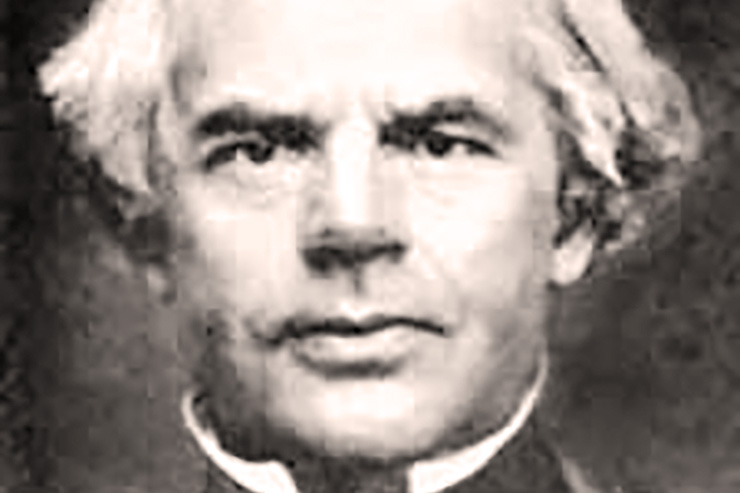
    The seminal figure in promoting the Secret was a now little-known American healer named Phineas Parkhurst Quimby (1802–66). Quimby, like many men of his time, was a jack of all trades. He started as a clockmaker but eventually became a healer. Eventually he realised that it didn’t matter what remedy he prescribed; it was the faith of the patient that made the difference. By simply convincing the individual that he or she was already well, Quimby became a tremendous success. His office filled with patients, many of whom went away feeling completely healed. He often treated people for free when they could not pay.

    Around 1859, Quimby began to write down his ideas. Believing he had discovered the secret by which Christ had performed his miracles, he wanted to make his discoveries known to all. “My philosophy,” he said, “will make man free and independent of all creeds and laws of man, and subject him to his own agreement, he being free from the laws of sin, sickness, and death.” The cardinal tenet of this philosophy was this: “Every phenomenon in the natural world has its birth in the spiritual world…. Instead of your happiness being in the world, the world’s happiness is in you. Here is your true position, and this is the struggle you will have to go through. Shall the world lead you, or shall you lead the world? This is the point that is to be settled in your mind.”

    Quimby, like his most famous pupil, Mary Baker Eddy, founder of Christian Science (a term coined by Quimby), focused mostly on health and healing. “Disease,” wrote Quimby, “is false reasoning. True scientific wisdom is health and happiness. False reasoning is sickness and death.” But as these ideas – which came to pervade nineteenth century American religion under the rubric of New Thought – grew more widespread, practitioners began to use ‘the Secret’ for prosperity and success. One of the most famous promoters of this idea was Napoleon Hill, who, in his 1937 book Think and Grow Rich, contended, “TRULY, THOUGHTS ARE THINGS – and powerful things that when they are mixed with definiteness and purpose, persistence, and a BURNING DESIRE for their translation into riches and other material objects.”

    The idea proved irresistible to the success-crazed American public, and Hill’s book became a perennial best-seller. In the 1960s it attracted a reader named Jerry Hicks, who would claim that the ideas in Hill’s book helped him succeed in business. Hicks would become responsible for the latest flowering of this perennial of American spirituality.

    In 1980, Hicks married. His wife, Esther, was at first indifferent to his interests in spirituality, but soon both of them became fascinated with the Seth books by Jane Roberts, which described Roberts’ activity as a channel for an entity named Seth. (‘Channelling’ is a term used to describe a situation in which the speaker believes he or she is serving as a mouthpiece for a invisible, spiritual being.) Later the Hickses began to meditate on their own, and in 1986 Esther began to channel a collective entity (that is, a number of related spiritual beings) called Abraham.

    “I have no real way of understanding how it is that Esther is able to allow Abraham to speak through her,” Jerry writes in the Hickses’ latest book The Law of Attraction. “From my point of view, Esther closes her eyes and breathes a few very deep, soft breaths. Her head gently nods for a few moments, and then her eyes open and Abraham addresses me directly.” The voice that speaks is slightly different from Esther’s own; a New York Times reporter characterises it as “rounder, quicker and more computerlike than Ms. Hicks’s natural voice,” and from the one Abraham session I attended, I would say it has a quality that I can only describe, somewhat imperfectly, as metallic.

    The Hickses first began publicising the Abraham material in 1988 with a series of recorded cassettes, and in the years since, the output has blossomed to include books, radio and television interviews, calendars, and even decks of cards. The Hickses regularly offer week-long ‘Well-Being Adventure Cruises’ and ‘Art of Allowing’ workshops, in which participants can ask their own questions of Abraham. At US$195 for a single day, the workshops aren’t cheap, particularly since they can include hundreds of people, making it fairly unlikely that you’ll be able to chat with Abraham yourself.

    At any rate, the Abraham material forms the core of The Secret’s teachings. Early versions of the film featured Esther and Abraham, although after disputes with Rhonda Byrne over revenues and distribution, the Hickses asked to be removed from the film entirely. “I’ve got to give Rhonda credit,” Esther has said. “I’ve never seen anybody do that like she’s doing it. And never mind honesty, and never mind doing what you said you were going to do, and never mind anything. Just stay in alignment.”

    Do what? Stay in alignment with what? Here lies the Secret. In The Law of Attraction, Jerry Hicks spells out the three “Eternal Universal Laws” that lie at the centre of the teaching.

    The first is the Law of Attraction. It says that “That which is like unto itself, is drawn [sic]” – or, less clumsily, like attracts like.

    The second is the Science of Deliberate Creation:That which I give thought to and that which I believe or expect – is.” In short, you get what you are thinking about, whether you want it or not.

    The third is the Art of Allowing: “I am that which I am, and I am willing to allow all others to be that which they are.”

    From this it’s easy to see how Abraham’s teachings resemble those of New Thought. What you create in your mind manifests in physical reality. If you have positive thoughts, you’ll have positive results in your life. The same is true if you hold negative thoughts.

    But, you may reply, how many people go around wanting bad things to happen to them? What about all the people who are constantly saying, “I don’t want this to happen,” but have it happen anyway?

    According to Abraham, the Law of Attraction is working in any case. To focus on something that you don’t want is still to think about it – and thus to bring it into your life. The book version of The Secret explains:

    The law of attraction doesn’t compute ‘don’t’ or ‘not’ or ‘no,’ or any other words of negation. As you speak words of negation this is what the law of attraction is receiving:

    “I don’t want to spill something on this outfit.”

    I want to spill something on this outfit and I want to spill more things.

    “I don’t want a bad haircut.”

    I want bad haircuts.

    This, in essence, is the Secret. As we’ve seen, it’s surfaced in many books and articles over the years, and it has become a central component of what one might call the American Religion. Does it really work?

    Yes and no. The ideas in The Secret do work, but the information it presents is incomplete in some serious ways, and incomplete information is wrong information.

    In the first place, it’s true that, as esoteric doctrine has always held, thought is creative. The world of thoughts and images – what the Kabbalists call Yetzirah and which Theosophy calls the astral realm – exists prior to the physical world and underlies it. What comes into being in physical form manifests first in the realm of images. This explains not only the ideas behind The Secret but the possibility of such things as precognition: under certain (highly limited) circumstances, you may be able to tap into the astral realm and see the future. (For more on this, see my article “Prophecy: Does It Work?” in New Dawn, Jan-Feb 2007.) Much of occult magic also involves forming a particular thought-form, infusing it with vital energy so that it makes its way into actuality, sometimes in odd and even quasi-miraculous ways.

    But there are some major caveats. Both The Secret and Abraham tell us to focus very specifically and precisely on what we want. Joe Vitale, one of the ‘teachers’ featured in The Secret, says, “Your job is to declare what you would like to have from the catalogue of the Universe. If cash is one of them, say how much you would like to have. ‘I would like to have twenty-five thousand dollars, unexpected income, within the next thirty days’.” Abraham also recommends having a ‘Magical Creation Box’ in which you put pictures of anything you want to manifest in your life – “furniture, clothing, landscaping, buildings, travel destinations, vehicles…. if it feels appealing to you in any way, clip it, and drop it into your Creation Box. And say, as you drop it in, ‘whatever is contained in this box – IS!’”

    The problem with these procedures is not that they don’t work, but that they do. The subconscious – the part of the mind that is involved in shaping the image and giving it energy – is slavishly literal-minded. As we’ve seen, it doesn’t understand negative commands terribly well, so if you ask it not to do something, it may end up doing that very thing. But the problem doesn’t stop there. You could have your wish fulfilled in a way that you don’t want. A friend of mine once used Secret-like techniques to get $10,000 to help her boyfriend start a business. Her car was robbed on the day she was moving, with all her belongings in it. The insurance settlement amounted to $10,000. As the proverb says, “Be careful what you wish for. You might just get it.”

    Sophisticated practitioners avoid this problem by making sure to leave the request more open-ended, and also to specify that no harm come to anyone through the wish. Florence Scovel Shinn, an American New Thought teacher of the early twentieth century, taught her students to say, for example, “Perfect work with perfect pay comes to me now under grace in a perfect way.” Adding the rider “under grace in a perfect way” should – at least theoretically – prevent any harm from resulting from one’s wish.

    Another equally serious omission in The Secret lies in its exclusive emphasis on thought. To read The Secret, and much of New Thought literature, you might conclude that it is thought alone that makes the difference. This is not really true. A small detail here has been overlooked because it (quite accurately) makes the process look like far more work than the best-sellers would have us believe. To sit around and visualise enormous cheques arriving in the mail is not much trouble; in fact, it’s a great deal like daydreaming. Sometimes the cheques do come. But sometimes they don’t. In what are, I would say, by far the most common cases, what really works is thought combined with action – a process that requires will, concentration, and effort. If you’re looking for the perfect job, the visualisation and affirmation techniques of various New Thought teachings may be helpful, but in all likelihood they will be far more so if you combine them with your own best efforts in finding the job – even if, in the end, the job seems to manifest in a completely unexpected way. This is not as breezily simple as The Secret and its kin like to make out, but it is so.

    A crucial issue is lying under the surface here. What you wish for comes true: that is the Secret. But it’s what you wish for with all your being – and much of your being is concerned with action, with doing. If you are thinking with your mind that you want the perfect job while your body is sitting on the couch all day watching cartoons, you may not get anywhere. What’s still worse is that you will tend to induce an inner dissociation that lies behind much of today’s mental illness: one part of your mind is doing one thing while another part is doing quite the opposite. This, in fact, is one of the dangers of simplistic applications of The Secret.

    Another difficulty with The Secret has to do with its ethical component. From The Secret’s point of view, you create your own reality. Which means that other people create theirs as well. Which means that you are not responsible for them. Which means that you are not your brother’s keeper. The Secret does, of course, talk about love (“There is no greater power in the Universe than the power of love. The feeling of love is the highest frequency you can emit”) and the Law of Allowing does teach a tolerance that can be helpful in enabling certain types of people to be less compulsive and controlling. But the emphasis in The Secret and in the Abraham teachings is on feeling love: “The greater the love you feel and emit, the greater the power you are harnessing.” And yet ‘feeling’ and ‘emitting’ love are not necessarily the same as doing loving things. The Secret does not leave much room for compassion. If everyone is creating their own reality, ultimately, it would seem, that is their business, and all one can do is cultivate one’s own garden.

    We can see this problem echoed in Esther Hicks’ comment about Rhonda Byrne’s behaviour: “Never mind honesty, and never mind doing what you said you were going to do, and never mind anything. Just stay in alignment.” Fortunately or unfortunately, “staying in alignment” is more than feeling good or thinking nice thoughts. The universe has a profoundly moral dimension, and you can’t “stay in alignment” with it by acting dishonestly or deceitfully. While I personally have no idea of the rights and wrongs in the Hickses’ differences with Byrne, I can see how they might directly result from Abraham’s ideas. The Hickses may have gotten a taste of their own medicine.

    This leads to another inaccuracy in The Secret. It is not only our thoughts that create reality, it’s also what Hindus and Buddhists call samskaras – a word that can be roughly translated as ‘karmic dispositions’ or ‘seeds of karma’. Put extremely simply, these are imprints left by one’s past actions on the mind at its deepest and most inaccessible level. These samskaras are a key component in creating our current reality. They can be eradicated by a persistent process of cleansing and release (one aspect of which is The Secret’s own “letting go of the past”), but they also require what the Twelve-Step programs call “a searching and fearless moral inventory” of oneself and “making direct amends” to those we have harmed. If you ignore these facts, your mightiest efforts at visualisation might go for nothing. No one is perfect, but if you’re to “be in alignment” with the universe, you are going to have to hold yourself to moral standards that are at least as high as those of ordinary decency and kindness.

    The ultimate problem with The Secret and the Abraham teachings may, however, be what they focus on. It’s almost entirely a matter of attracting abundance, of finding love, success, money, nice things. In fact, if you believe Abraham, that is what we’re here to do. The universe is an enormous vending machine that operates using the coinage of our thoughts.

    What’s striking about this advice is how directly it contradicts practically all of the great spiritual teachings. These teachings, as I’ve suggested, have no quarrel with the fundamental concepts of The Secret: mind does create its own reality. But they differ very much with The Secret about what we’re supposed to create. Most of the great spiritual traditions insist that the ‘abundance’ The Secret urges us to generate is nothing more than a distraction from discovering the truth of our own nature. You can call this enlightenment, liberation, gnosis, or whatever you like, but the goal is the same. Material wealth is nothing more than an impediment to this goal.
    While it would be possible to find examples of this truth in practically all the world’s spiritual traditions, I can cite only a very small number in this space. The Hindu master Ram Chandra has said, “Sit in loneliness for some time, and think of God with at least as much power as you have bestowed to your own difficulties. What then? It is as easy to realise your own God as it is to realise the worldly things in crude form.” There’s also the advice of A Course in Miracles, another extraordinarily popular channeled text, supposedly dictated by Jesus Christ to a New York psychologist named Helen Schucman in the 1960s. The Course has this to say about material wealth:

    The world you see holds nothing that you need to offer you; nothing that you can use in any way, nor anything at all that serves to give you joy. Believe this thought, and you are saved from years of misery, from countless disappointments, and from hopes that turn to bitter ashes of despair. No one but must accept this thought as true, if he would leave the world behind and soar beyond its petty scope and little ways.

    Each thing you value here is but a chain that binds you to the world, and it will serve no other end but this. For everything must serve the purpose you have given it, until you see a different purpose there. The only purpose worthy of your mind this world contains is that you pass it by, without delaying to perceive some hope where there is none. Be you deceived no more. The world you see holds nothing that you want.

    Passages like this one explain why, in my view, a single page of the Course is worth The Secret and all the utterances of Abraham put together.

    What, then, are we to want? The Course explains this in a lesson entitled “I want the peace of God,” adding:

    To say these words is nothing. But to mean these words is everything. If you could but mean them for just an instant, there would be no further sorrow possible for you in any form; in any place or time. Heaven would be completely given back to full awareness, memory of God entirely restored, the resurrection of all creation fully recognised.

    The Course, like much channeled material (including Abraham’s pronouncements), makes the process sound easier than it often is in practice; perhaps channeled entities don’t understand how difficult life can feel to those of us on earth. Nonetheless, a goal of manifesting inner peace strikes me as far superior to manifesting lovers and cheques and SUVs.

    On the other hand, it requires a certain amount of illumination even to see through the deception of appearances. Up to a point, we are going to desire the solid satisfactions of life because they are all we can trust in. A time will come, however, when disillusion sets in, when the desirable things of the world start to seem not so desirable after all, and one realises that there is something more to life. This recognition will come to each of us according to his or her own readiness. Until then, I suspect, many will use the ideas of The Secret and similar teachings as elementary lessons in the truth that the world is more than we can see with our physical eyes, and also as a mild but helpful form of cognitive therapy. After all, it’s better to focus the mind on good things than on bad.

    [alert type=”general” dismiss=”no”]This article was published in New Dawn 103.[/alert]

    [alert type=”success” dismiss=”no”]If you appreciate this article, please consider subscribing to help maintain this website.[/alert]

    © New Dawn Magazine and the respective author.
    For our reproduction notice, click here.
  • New Dawn Interview With Tobias Churton

    New Dawn Interview With Tobias Churton

    From New Dawn 91 (Jul-Aug 2005)

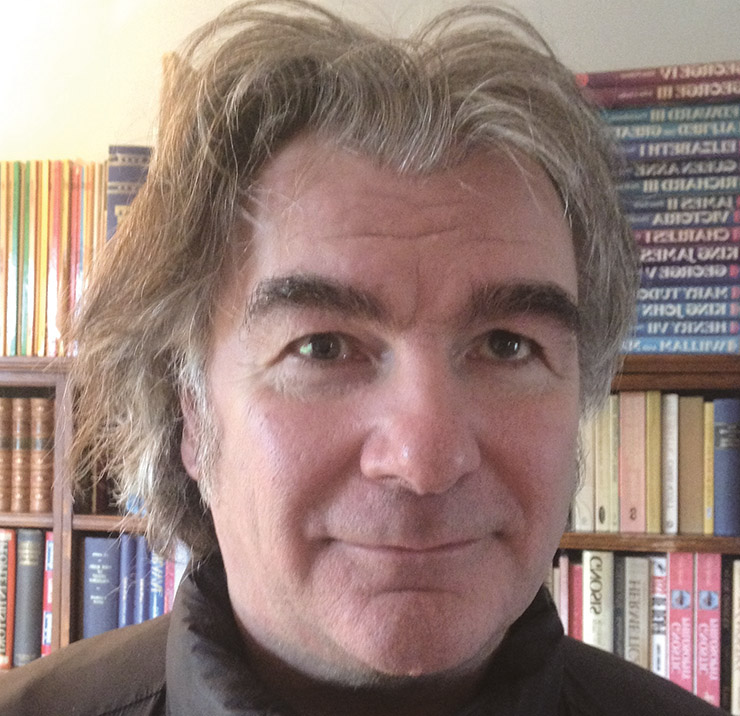
    Tobias Churton is one of today’s most lively and spirited investigators of that underground stream of the Western tradition known as Gnosticism. He first became interested in the Gnostics while reading for a degree in theology at the University of Oxford in the 1970s.

    Soon after leaving, he became interested in exploring these ideas for television. “I’d got it into my head that there had never been any religious television – only programmes about religion,” he later recalled. “I had written a paper on the subject which recommended a new kind of television for this most neglected area, something on the lines of television, a kind of programme which would enter into the very nature of the religious experience and not simply observe it.” Churton got his opportunity in the mid-1980s, when he produced a series on the Gnostics for British television. To accompany his series, he wrote his first book, The Gnostics, a history of this elusive esoteric movement from early Christianity to modern manifestations in such figures as Giordano Bruno and William Blake, and even in Mary Shelley’s Frankenstein.

    In the years since then, Churton has pursued and deepened his appreciation for the Western esoteric traditions. He was the Founder Editor of Freemasonry Today magazine, and during the last year has published two new books. The Golden Builders: Alchemists, Rosicrucians, and the First Freemasons explores the background of Masonry from its antecedents in the alchemical and Hermetic traditions of antiquity through its modern manifestations. His latest book, Gnostic Philosophy: From Ancient Persia to Modern Times, casts an even wider net, tracing the Gnostic heritage from its roots in Zoroastrianism, Mithraism, and the Essenes to the 20th century magus Aleister Crowley and manifestations of gnosis in pop culture. Churton currently makes his home in Britain.
    – Richard Smoley

    How exactly would you describe gnosis? What does it mean to you?

    How would I describe gnosis? I should like to describe gnosis as the experience of knowing or having intimacy with what we call God. God, the Bible tells us, wishes to be known. The word ‘Gnostic’ – one who has experienced gnosis – was first used as a nickname by those who opposed the whole idea or thought it was all too much for human beings to claim.

    In a way, it really is the most enormous act of cheek to say that one has had experience of God! John’s Gospel for example says that “no man hath seen God at any time.” Hospitals for the mentally sick are full of people who claim the most extraordinary intimacy with powers beyond themselves. In the Gnostic tradition broadly, sanity or peace of mind is a fruit of gnosis. And ‘sanity’ means becoming clean, or ‘whole’ so there is a moral as well as a physical and psychological dimension to be considered. It might be argued that one has got to share in Christ to know God. But clearly there has been gnosis outside of the Christian tradition. So God obviously wants to be known by everyone!

    Gnosis to me personally means receiving a gift – a gift that carries with it certain responsibilities. It’s quite a heavy thing to be lightened – or enlightened! There’s a lot we carry that prevents us from rising and growing in divine knowledge. For me, gnosis means a love of truth, a sensitivity to the magical aspects of life, and above all, a permanent struggle with material consciousness. People would rather see a person burnt than their own money burnt. That, we would say, is only natural. Politicians are adept at appealing to us on this level. Being gnostic does involve an unusual attitude to the natural order. The merely human in us does come under scrutiny – the light shows up the shadows and darkness in us, if you like. Obviously, no one likes being ‘shown up’, so we persecute the light-bringers and hide ourselves behind images of who we think we are. Gnosis is light and, if I may say so, “my burden is light.”

    Is it possible to experience gnosis for oneself?

    I obviously believe it is possible to experience gnosis for oneself. One could hardly experience it for other people! But the experience changes and one might not always be aware that one is experiencing gnosis. It is not a single state. It is not the same as ‘instant satori’. The universe itself is a projection of gnosis, if limited. I should say that if one has no experience of gnosis, one can hardly say one has been truly alive.

    Could you explain a little about the Gnostic schools of antiquity, and what happened to them?

    There were many Gnostic schools in late antiquity, as far as we can tell, surrounding some particular teacher, or the self-proclaimed followers of such a teacher. They had visions, dreams, statements, stances and orders of followers. Some were probably charlatans and some ‘the real thing’, as one would expect.

    The orthodox Christian teachers who made it their business to denigrate and destroy the Gnostic movement in the Church always tended to isolate the teacher. Naming names was a big part of the anti-Gnostic propaganda. Thanks to their efforts, we have some dim records of men like Basilides, Carpocrates, Marcus, Marcion, Valentinus, Simon Magus, Dositheos. The orthodox apologists Irenaeus, Hippolytus, Epiphanius and Tertullian, for example, made it their business to present these Gnostic teachers as demented quacks leading their followers into what Irenaeus called – in about 180 CE – “an abyss of madness and blasphemy.” I don’t know how seriously one can take their presentations of the evidence. It’s a bit like asking George Bush whether he prefers Sergeant Pepper’s Lonely Hearts Club Band to Revolver!

    The Gnostics represented a kind of counter-culture and therefore exposed themselves to persecution and ridicule. You can’t imagine Gnostics wandering around in suits and ties with briefcases talking about real estate values! Some seem to have met in catacombs and private places. There were Gnostics in the first ever monasteries of Saint Pachom in the Thebaid of Egypt. Indeed, it is arguable that the first monastic movement was chiefly inspired by the desire for a place to get away from the world and experience God, i.e.: a Gnostic inspiration. Clearly the monasteries have always had a special role in promoting authentic spiritual life, if usually in secret. The walls had ears.

    Sadly, the British and German Reformations, in attacking the monasteries in the name of the Protestant tendency, tended to throw the baby out with the bath-water, so the position of today’s Gnostic has some kinship with that of the early Christian Gnostics. Where do we go?, they might ask. San Francisco obviously didn’t work for everyone!

    However, as we know from the story of the Nag Hammadi Library, even in the desert monasteries the Gnostics were not safe. Official visitations weeded out the offending literature and condemned it to the flames. Soon the offending Gnostics would meet the same fate. The Church hooked up with the State in the 4th century CE and the true Gnosis was exiled. Just one good reason to keep religion out of politics!

    How did this Gnostic legacy survive after the end of the old Gnostic schools? What sort of heritage did they bestow on our civilisation?

    Thanks be to God, the Gnostic experience and challenge did just survive the end of the Roman eagle’s flight. As one might expect, it survived on the fringes of the old Empire – in Syria, Iraq, Bulgaria, Turkestan and Bosnia – possibly Ireland. Even, for a while, in Mongolia and China. The flame was kept alive through untold numbers of military campaigns, massacres and violent conflicts of kings, sultans, demigods, semi-gods, dictators and emperors. It was carried into the bosom of the Islamic Empire after the 7th century in the form of Hermetic philosophy as an inspiration to science and philosophy – examining God in His works and wonders. The Sabians of Harran – who were not Muslims but Sabians and permitted by the Koran – their role is extraordinarily important in keeping the flame alive.

    The appearance of Islamic mysticism – or rather, gnosis – among the so-called Sufis in the ninth and tenth centuries was highly significant. Magic, philosophy, science, mysticism – in short, human progress, were fostered by the enlightened circles of the Islamic world – always playing, it should be noted, a kind of shadow-boxing game with the hard-line authorities who cared as little for personal experience of the divine kingdom as did the Roman Church in the west.

    The annihilation of the so-called ‘Cathars’ in southern France and northern Italy in the 13th century showed just how far the authorities were prepared to go in attempting to destroy spiritual existence that was not controlled by the status quo – the ever-present authorities we find in every age: the manifest powers of invisible spiritual opposition, as the Gnostic sees it. The Gnostics have been the light of the world and the leaven in the bread. A world without gnosis would be a very dark place indeed. The Gnostic greets the Sun, the ‘visible god’. He or she is first to see the dawn – first, you might say, in the garden of resurrection.

    Some scholars suggest that the term “Gnostic” is too problematic to be valuable, and should be replaced by something else. Do you agree?

    Some scholars, you say, suggest the term ‘Gnostic’ is too problematic and should be replaced. Well, I’m sorry for them. Gnosis itself will always be problematic in this world. The day it fits cosily into some scholar’s dictionary will be the day it has ceased to have power. No, ‘Gnostic’ – like ‘Christian’ – began as a nickname and like all such names should be borne with pride in a blind world. Yes, there are problems of definition. In 1966 there was a Colloquium of scholars at Messina intended to define the term ‘Gnosticism’, but it could not hold the term down. So I, without even the benefit of the Italian sun, cannot do it for you in this interview. The subject could fill a book. There is, however, another tack we can follow. That is, Why should it be defined? Definition – like a census – leads to control. Much better that the Gnostic tradition bears the unique quality of resisting definition! There is no doubt that the issue has been muddied by the activities of the Christian churches that dominate thinking in the West to a greater degree than we perhaps realise.

    When I was a student at Oxford University for example, it took me a long time to realise the full implications of the fact that the Theology courses were run by church leaders chiefly for their benefit. Admittedly, it would have been odd if they had been run by industrial chemists! But the point was that ‘Gnosticism’ for example dealt with a universal experience in terms only of its presence or exile from the orthodox Christian Church. Theologising it denied its root in authentic experience. If we cannot trust our deepest most personal and absolutely authentic experience, what can we trust? Anyhow, it would have been better, I think, in retrospect, to study the entire field of Gnostic philosophy, religion and so on as a stream of its own that interpenetrates – necessarily – with all of the so-called ‘great religions’ of the world.

    One of the interesting things about the orthodox Church – if we may for just a second see the plethora of conflicting bodies as a broad unity – is that it finds it can eventually accommodate everything – everything, that is, except gnosis! By this I mean that Darwin was more or less accepted by the Church of England by the time of World War One. Church leaders – by no means all, I know – made accommodations with Hitler, Stalin and Mussolini and – let’s face it, the Church has pretty well made its peace with the world. Gnostic types do not find themselves in such a comfortable position with regard to the world as it is.

    There are many people who are on the road to gnosis who perhaps do not realise it, who out of love of God and fear of God – and fear of themselves and others – find themselves wasting years in very unsatisfactory Church gatherings which – in the name of God – demand their sacrifice and allegiance. I’ve always found that it was the most selfish groups that preached self-abnegation.

    But to get back to the point, what other tame word could replace the tattered glory and battered bread of the words Gnostic, Gnosis – even that scholars’ word ‘Gnosticism’? Mysticism is too misty. Magick has been bowdlerised and Disneyfied. Spirituality – well! It used to have meaning, now it means anything and probably nothing. It’s only a matter of time before car manufacturers come up with a car that meets your spiritual needs! I really don’t know what people mean when they talk about ‘spirituality’. It’s so vague as to be useful to every pseudo-religious charlatan and greedy politician in the world! When you say ‘Gnostic’, you always have to explain it. And when you do, people are always fascinated, whether they admit it or not! So that’s what we’ve got and we have to make the best of it. Gnosis means knowledge. Get it?

    What do you make of current attempts to revive Gnosticism? What value do they have?

    You ask about recent attempts to revive Gnosticism. This is a difficult question for people like myself who prefer authentic experiences with some real history attached. This is the scholar and antiquarian in me speaking. My path is not your path.

    I don’t believe ‘Gnosticism’ – that word really refers to the Gnostic groups that came into conflict with Christian orthodox authorities in the first five centuries of the known life of the Christian Church – can or needs to be ‘revived’. The patient is not dead – though the world might well be. “The dead are not alive,” as the Gnostic gospel has it, “and the living will not die.” This is my personal favourite among the many great Gnostic logia. The dead are not alive and the living will not die. How true.

    Besides, there are several great authentic Gnostic streams still going strong – though at least one of them is severely persecuted. The Yezidis of northern Iraq, western Iran, Georgian Armenia – that is to say Transcaucasian Kurdestan – have the most unbelievably inspiring tradition. There’s nothing to compare with it in the whole world. It is in a class of its own. The Yezidis have been persecuted cruelly by those in power about them because they are not regarded as “people of a book” as defined – there’s that word again! – in the Koran. They have long been accused of ‘Devil worship’, but that kind of cruelty has been common among oppressors since Jesus was accused of being a devil’s mouthpiece all those years ago. It’s the oldest trick in the book and works because people fear every type of evil – except their own.

    Yezidis are today being attacked and killed in and around Mosul and denied police protection in Georgian Armenia. This is fact.

    The second tradition I was thinking of was that of the Mandaeans of lower Iraq, who claim John the Baptist as a special prophet and have referred, interestingly, to ‘Christ the Roman’. As far as ‘Gnostics’ go, these people are undoubtedly the ‘real thing’.

    When I made the TV series Gnostics in 1985-87, we wrote to the Iraqi Embassy in London, and they denied any knowledge of the Mandaeans. I was worried that they had been wiped out under the last miserable Iraqi regime, but to my delight, I now observe that they have survived – though still having to justify themselves, surrounded as they are by the various Islamic traditions. I think they qualify as Sabians in the Koran and are therefore protected. The wonderful Yezidis, on the other hand, have been persecuted for 1300 years and have no such protection.

    An independent Kurdistan would probably offer these unique and admirable people a future that may otherwise be in jeopardy. This would be a very good thing to come out of the current mess in Iraq. The great powers have been screwing up the Middle East since the fall of the Roman Empire, so one may legitimately question whether the mad, bad game of sharing out the property of the vulnerable will end in our lifetimes. We must hope, have faith and love. Spare some love for the Yezidis – even though most people have probably never heard of them.

    This, to answer your question, would be a good way to care for the Gnostic tradition – the tradition, I should say, of the authentic spirit of man, enslaved in, and by, the world. The love of money is the root of all evil. The way to revive Gnosis, is to be revived by Gnosis.

    Why are people so interested in Gnosticism these days?

    I think people are interested in Gnosticism these days because there is clearly a spiritual vacuum at the heart of our culture. Science and mass production have done much for the outside of the cup, but the inside is empty and cannot be sated by drugs, sex and rock ‘n’ roll. The promised liberation is a brief delight followed by a swift fall. Grace looks away and the victim, must, if he or she be lucky, look within.

    Even in countries which have not been so saturated by big business as we have – where washing machines, central heating and personal stereos and computers might be very welcome – there is a now well-articulated complaint that with all the money and the “promise of freedom and liberty for all” comes a great threat.

    The threat is to the life of the heart and the delicate, invisible life – the thousand links with God – which have kept people alive for centuries in the face of countless dangers and privations. I don’t wish to romanticise here, but one must ask, ‘Who needs the most help?’ The East or the West? Clearly both suffer from poverty – material poverty and spiritual poverty – and, of course there is plenty of material poverty in the West and doubtless spiritual poverty in the East. But can’t we help each other? And thereby help ourselves? But how do we do this?

    Well, Jesus offers a clue: “First clean the inside of the cup.” Clean it? we may cry – most of us don’t even know it’s there! Where is this ‘inside of the cup’? Where is this kingdom of heaven (a kingdom, note, not a democracy!) that is supposed to be “nigh and within” us? Well, the example and uncompromising commitment to spiritual reality is such a strong and powerful river surging through the Gnostic tradition, that it would be extraordinary if our bone-dry world did not desire to take a dip in its life-giving waters!

    Until we sort ourselves out, we can only export our own confusion.

    Could you say a little bit about the Western esoteric traditions as a whole? What is their situation today? What do they have to contribute to our civilisation?

    You have asked me to say a little bit about the Western esoteric traditions as a whole and what they may contribute to our civilisation. The second part of that question is simple. What they have to contribute is civilisation. What is civilisation? It is clearly not power and might or the ability to force change. Otherwise we must rank Attila the Hun and Chingiz Khan as leaders of civilisation! Civilisation really boils down to the ability of a range of people to live in a city, organise themselves and get on with each other without falling into chaos. That which promotes the life of the busy hive may be described as a civilising influence. Civilisation is not then an arbiter of truth but of what works well. However, wise men and women have tended – against the odds – to the ancient conviction that nothing works quite as well as the truth, and that a rotten branch – rotten with corruption – will not even support itself for very long – never mind the burden of civilisation. Truth is good.

    When I think of Western civilisation with all its inequalities of ability and social status, its wide variety of racial and religious types, its sheer density of pulsating human existence, its vulnerability to natural forces, disease, despair, hysteria, false expectation, boredom and so on, I can’t help thinking that organisations like Freemasonry and discreet societies of personal development are important. While corrupting forces always aim to work within the carcass, the healing agents must also work within the fabric of the human hive – not in fearful secrecy but with a modesty and love that is suspicious of fame, vainglory and social attention. The cool breeze works well unseen. This is perennial wisdom. I think the best of the masonic tradition has contributed hugely to understanding of tolerance and barrier-breaking social idealism. Occasionally, we even find a spiritual insight occurring in some of the most stubborn mental material!

    Whatever good men and women try to achieve with this floppy idiot called man, the sincere busy bee is always up against our biological and moral heritage. This inheritance is surely dark enough to make strong men and women weep and give ample reason to despair or take refuge in a cynical stoicism of the type that Gore Vidal, for example, exemplifies with such taste and class.

    There is much to be said for contemporary Rosicrucian societies for introducing people to the world of imaginative spiritual development. Many find insight in the worlds of Theosophy, Thelema and Anthroposophy, for example. This is all well and good, as far as it goes, but human society can be corrosive – even destructive.

    Human beings really aren’t very nice – unless they’re in some kind of love with one another – and even then… well! The divorce rates with all their sad tales of acrimony and greed testify to the fragility of oaths built on enthusiasm and a lottery win. The Psalmist was being simply realistic when he uttered the words: “None is righteous. No, not one.” Involving oneself in groups may stifle the creative and divine spirit. But aloneness can be hard, and loneliness is, as Jimi Hendrix sang, “a drag.” Perhaps we need to revive in some adapted way the concept of the monastery – not, may I stress, that sad alternative, the ‘commune’. The hippies were hip to everything but their own depravity. Peter Coyote and the Diggers would doubtless tell me I just never saw the real hippies. He would be right. Maybe I was one of them – and how often do we see ourselves?

    I suppose in the life of a person, one will, as one puts one’s hand into the hand of God – as much as we may know of Him – for guidance, one will find oneself encountering all kinds of groups and people. No one way works for all people or all occasions. That is how it must be. Those who require absolute certainties will be prepared to believe anything. The One is always present, if unseen.

    Experience shows that there are many hidden veins to the cosmic life of humanity and I – for one – am glad – and have reason to be glad – that they exist. Gnosis is, as I said earlier, a gift. One has to be in the right place to receive it. No organisation can do that for anyone. The Spirit bloweth where it listeth. Heed the Spirit above all – and keep the powder dry!

    Could you talk a little bit about your own background, how you came to be interested in this area, and what meaning it has for you personally?

    You ask about my background. I am an Englishman born in Birmingham – the English Midlands – in 1960, who grew up to believe that something was seriously ‘out of kilter’ in my own dear country and in the world at large. This was something I found in myself as I grew older and travelled about the busy world. I had no special financial or educational advantages, but my father – a railwayman by choice in his later years – said “Seek and ye shall find.” I loved the past and had great respect for the ancients. I was always suspicious of words like ‘modern’ and ‘new’. No one knows the future and if, as someone once said, “the future is a poor place to store our dreams,” then I should say that a dream stored is a dream over. King Arthur will sleep so long as we do.

    I cannot remember when I first became interested in the authentic tradition of spiritual life. It seems to have always been with me. I suppose studying the Gnostics at Oxford in the late 70s made me realise that I was not alone, but there were always shadows and intimations of gnosis in books, films – especially old films (the new stuff is generally too cocksure, superficial and loud to have anything to say worth hearing) – and in music.

    I have often tried to ‘get away’ from Gnosis, rather like Jonah sailing to sea to avoid Nineveh, but I keep coming back to port, whether I like it or not. Often, I don’t like it at all. I’ve spent a fair amount of time in the cold belly of the whale. The world, however, needs this insight, even if for me it now seems an old story. Somehow, it comes alive afresh again with each telling. And I discover so many new aspects to it, each time I willingly return to its study. It makes us wise and makes fools of us. Gnosis means creation because we do what we know. Creation is the fiery dragon whose scolding breath burns away the void and leaves the golden tree. We pick its fruit and create nothing.

    I was lucky (by modern standards) to have both parents and that both parents believed in the individual and believed in the mystery and magick of life, and that they were plain speaking, virtuous and down to earth as well as being receptive to higher influence. That was a gift too. Come to think of it – it’s all been a gift. I’ve done little to deserve such a theatre of sorrow and joy! There’s so much more to do and life is really both too long and too short. We’re here and we’d better make the best of it. Long may She reign over us.

    Could you tell us about your recent books, The Golden Builders and Gnostic Philosophy? What are they about?

    My books The Golden Builders and Gnostic Philosophy took me ten years to write and were continuations of a work begun in 1986 when I wrote my first book, The Gnostics, at the age of 25. You could say that the new books are the considered works of research and experience – an attempt to bring readers of the first book into deeper acquaintance with the extraordinary Gnostic tradition. I was very aware that some terrible books have appeared in the last 20 years which have exploited the whole subject area and confused people with a lot of journalistic twaddle and conspiracy tales. Some have inspired a recent best-selling novel that suggested Leonardo Da Vinci worked with a code that could be understood by an idiot demented by marijuana.

    I wanted to put the record straight. The truth is stranger than fiction and a good deal more interesting. The trouble with fiction is that you can’t live on it; you always want more. Perhaps if you wanted to define the Truth, you might – with tongue in cheek – call it NON FICTION. There is NON FICTION in magick, Gnosis, mysticism and spiritual understanding – but then, I suppose, your readers know this already, or they would not be suffering this interview with a distant star.

    [alert type=”general” dismiss=”no”]This article was published in New Dawn 91.[/alert]

    [alert type=”success” dismiss=”no”]If you appreciate this article, please consider subscribing to help maintain this website.[/alert]

    © New Dawn Magazine and the respective author.
    For our reproduction notice, click here.