New Dawn – World's Most Unusual Magazine

Category: New Science/Consciousness

  • What if the New Agers Were Right All Along?

    What if the New Agers Were Right All Along?

    From New Dawn Special Issue Vol 18 No 6 (Dec 2024)

    I believe that some of us dedicated to experimental spirituality and mind metaphysics must attempt to theorise the mechanics and delivery systems behind what we experience and observe. There exist, of course, manifold risks of personal bias toward a favoured thesis. But to limit the wish to “know thyself” to clinical study is to eviscerate the principle itself. This is my effort to describe “what happens” in the process of thought causation or what is popularly, though inadequately, called positive thinking or manifestation.

    Everyone hates The Secret. Mainline cultural commentators and “serious” spiritual seekers routinely resurrect the nearly 20-year-old work for excoriation, presumably allowing H.L. Mencken (1880–1956) to sleep undisturbed after writing the first “take down” piece on mind metaphysics more than a century ago. In 1910, the Bard of Baltimore wrote in “Mental Vibrations”:

    The New Thought, that fantastic magic, goes marching on… There is, in brief, little if any truth in the belief that good wishes may be transformed into objective phenomena, that mind influences matter – and little, even, in the belief that mind influences mind.

    To today’s cutting-edge rationalists who would lift our spiritual blinkers: we’ve been there.

    Mapping a Theory of Thought Causation

    My task in this article is neither to defend alternative spirituality nor enumerate its flaws – of which I write often – but rather to consider why, from a spiritual or extra-physical perspective, positive thinking, “manifestation,” or the “Law of Attraction” just might work. Before you cry confirmation bias! (materialism’s equivalent of lock her up!), take a beat.
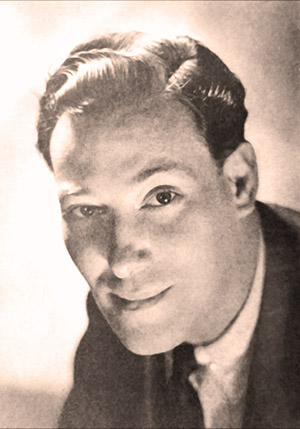
    Neville Goddard (1905–1972)

    I venture to map a seeker’s theory of mind causation – but one that also stands defensible within parameters of accepted (if not always understood) knowledge. My theory may be wrong. It may be grossly incomplete. But I believe that those of us engaged in the search for practical spirituality must at least attempt to theorise from the intersection of testimony, science, and experience. Each generation owes the labour of verification to the search of the next, which will have its own ideas and critiques.

    Indeed, today’s seekers must move beyond inherited decisions and templates. We need our own experiments and results, including failures. Those of us who care about New Thought, or mind causation, owe the spiritual culture – and ourselves – a supportable hypothesis of how it works. We must be equally willing to discard cherished hypotheses. In that vein, I conclude this essay with articles of personal experimentation.

    I start by quoting mystic Neville Goddard (1905–1972) from a 1948 series of lectures in Los Angeles:

    Scientists will one day explain why there is a serial universe. But in practice, how you use this serial universe to change the future is more important.

    It was a striking observation. The mononymous Neville is, I believe, the most penetrating voice to emerge from New Thought tradition – because it was not until years later that quantum physicists began discussing the many-worlds theory, devised by physicist Hugh Everett III (1930–1982) in 1957.

    A Short Overview of Quantum Physics

    Everett was attempting to make sense of some of the extraordinary findings that had been occurring for about three decades in quantum mechanics. For example, scientists are able to demonstrate, through various interference patterns, that a subatomic particle occupies a wave state or state of superposition – that is, an infinite number of places – until a sentient observer or automatised device takes a measurement: it is only when measurement is taken that the particle collapses, so to speak, from a wave state into a localised state. At that point, it occupies a definite, identifiable, measurable place. Before measurement is taken, however, the localised particle exists only in potential.

    Now, I have just about squeezed all of quantum physics into a couple of sentences. I think it is an accurate description, but obviously I am reducing huge complexities into the dimensions of a marble. I believe I am faithfully stating what has been observed in the last ninety-plus years of particle experiments (as well as emerging experiments on larger objects, such as hydrogen molecules). We are seeing that on the subatomic scale matter does not behave as we are conditioned to expect.

    Measurement & Observation: The Role of Mind

    Starting about twenty years ago, it became fashionable for New Agers and laypeople, like me, to put quantum theory at the back of cherished spiritual principles. It became equally fashionable for professional sceptics and mainstream journalists to pushback, crying B.S. and sophistry. That position, while still heard, has quieted. Not because sceptics have grown more pensive or attenuated to media-speak, but because the proposition of mind-over-matter, strange as it may seem, now resounds in debates on theoretical physics in mainline journals and magazines.

    In 2009, I attended a presentation on the “quantum measurement problem” delivered by parapsychologist Dean Radin before an audience of scientists, social thinkers, and scholars of religion. I asked Radin to address the 800-pound gorilla in the room: If observation and perspective alter material on a micro level, in the world of waves and particles, might that say something about the legitimacy of the New Thought or mind-power thesis? “It’s not complete bullshit,” Radin replied. “There may be an inkling of something to it.” Another physicist and longtime military researcher was also present. “As the resident sceptic,” he said, “I concur.”

    Our understanding of matter in our macro world generally comes from measuring things through our five senses and experiencing them as singularities. There is one table. It is solid and definable. It is not occupying an infinite number of spaces. But contemporary quantum physicists have theorised that we may not normally see or experience superposition phenomena because of what is sometimes called information leakage.

    This means that we gain or lose data based on fineness of measurement. When you measure things with exquisitely well-tuned instruments, like a microscope, you see more and more of what is going on, i.e., actual reality. But when you pan the camera back, so to speak, your measurements coarsen and you see less and less of what is actually happening. To cite the most basic example, to all ordinary appearances, a table is solid. The floor beneath your feet is solid. Where you are sitting is solid. But measuring through atomic-scale microscopes, we realise that if you go deeper and deeper, space appears within these objects. Particles make up the atom and still greater space appears. We do not experience that; we experience solidity. But no one questions that space prevails among particles composing an atom.

    Furthermore, we possess decades of data demonstrating that when subatomic particles are directed at a target system, such as a double slit, they appear in infinite places at once until a measurement is made; only then does locality exist. But we fail to see this unless we are measuring things with comparative exactitude. Hence, what I am describing seems unreal based on lived experience – but it is actual.

    In any event, my supposition is this: if particles appear in an infinite number of places at once until a measurement is taken; and if, as we know from studying the behaviour and mechanics of subatomic particles, there exists an infinitude of possibilities; and if we know, as we have since the inception of Einstein’s theories, that time is relative, then it is possible to reason – and it is almost necessary to reason – that linearity itself, by which we organise our lives, is illusory.
    Linearity is a useful and necessary device for five-sensory beings to get through life; but it does not stand up objectively. Linearity is conceptual – a subjective interpretation of what is really going on. It is not reflected in Einstein’s theory of relativity, which demonstrates that time slows for an object approaching the speed of light. (The individual travelling in a metaphorical spaceship at or near light speed experiences time slowing, not from their perspective but in comparison to those not at near light speed. And this is no mere thought exercise: space travellers in our era, although they are obviously approaching nowhere near that velocity, experience minute effects of time reduction.) Nor is linearity reflected in quantum mechanics, where particles appear in an infinitude of places and obey no orderly modality. Linearity is not replicated when measurement of a particle serves to localise the appearance or existence of the object.

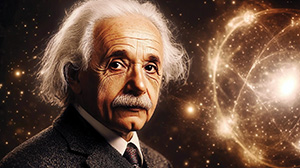
    This begins to clarify why Einstein famously wrote in a letter of March 1955:

    People like us, who believe in physics, know that the distinction between past, present, and future is only a stubbornly persistent illusion.

    If we pursue this line of thought further – and this is where Everett’s many-worlds theory comes into play – the very decision to take a measurement (or not take one) not only localises a particle but creates a past, present, and future for that particle. Hence, an observer’s decision to log a measurement creates a multidimensional reality for the particle.

    There exists debate over whether a device represents a method of measurement distinct from an observer, as well as whether the “collapse” from wave to particle results from an observer’s individual psyche or “transpersonal mind behaving according to natural laws,” as observed by Bernardo Kastrup, Henry P. Stapp, and Menas C. Kafatos in a May 29, 2018, Scientific American article “Coming to Grips with the Implications of Quantum Mechanics.” This transpersonal mind, the writers continue, “comprises but far transcends any individual psyche,” a description similar to the Hermetic concept of Nous or an over-mind. The authors compellingly argue that even if a device is used for measurement – and thus localisation – perception and intent, either of the individual, the meta-mind, or both, remains the determining force.
    Schrödinger’s Cat

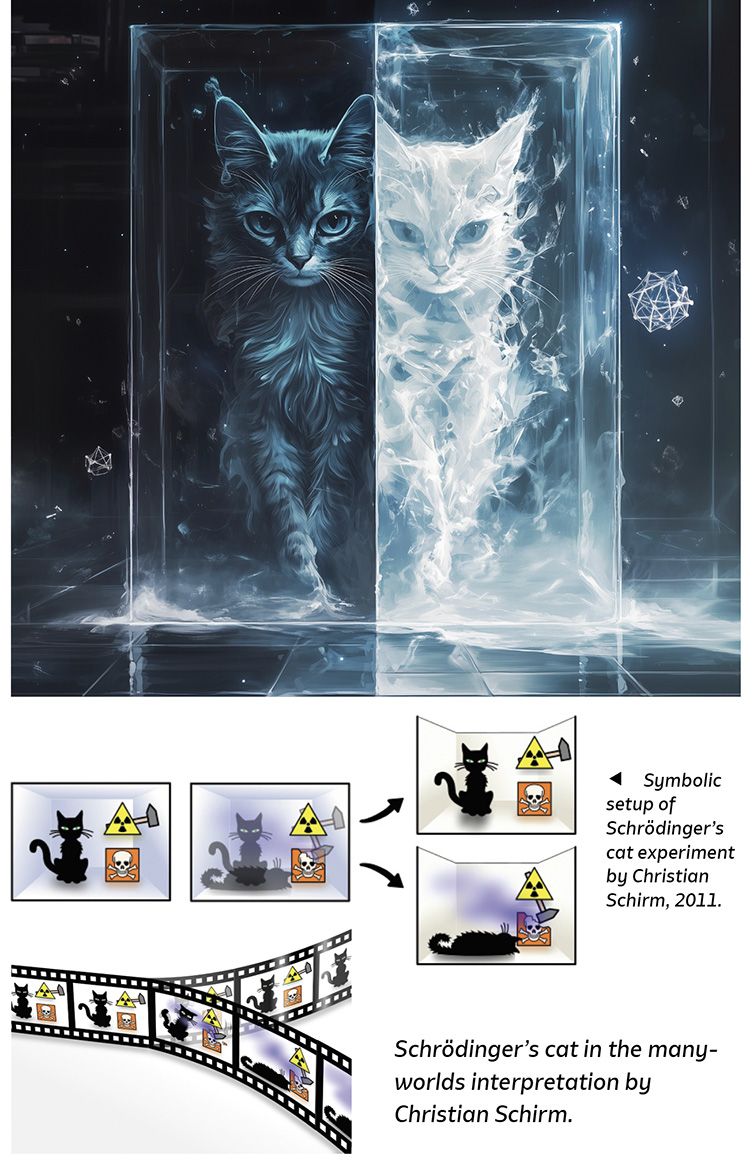
    Multidimensional reality is implied in the famous thought experiment called Schrödinger’s Cat. 20th-century physicist Erwin Schrödinger (1887–1961) was frustrated with the evident absurdity of quantum theory, which showed objects simultaneously appearing in more than one place at a time. Such an outlook, he felt, violated all commonly observed physical laws. In 1935, Schrödinger sought to highlight this predicament through a purposely absurdist thought experiment, which he intended to force quantum physicists to follow their data to its ultimate degree.

    Schrödinger reasoned that quantum data dictates that a sentient being, such as a cat, can be simultaneously alive and dead. Here is a variant of the Schrödinger’s Cat experiment: a cat is placed into one of a pair of boxes. Along with the cat is a collar fitted with a device which, if exposed to an atom, releases a deadly poison. An observer then fires an atom at the boxes. The observer subsequently uses some form of measurement to check which box the atom is in: the empty one or the one with the cat and the poisoning device. When the observer goes to check, the wave function of the atom (the state in which it exists in both boxes) collapses into a particle function (the state in which it is localised to one box). Once the observer takes his measurement, convention says that the cat will be discovered to be dead or alive. But Schrödinger reasoned that quantum physics describes an outcome in which the cat is both dead and alive. This is because the atom, in its wave function, was, at one time, in either box, and either outcome is real.

    Of course, all lived experience tells us that if the atom went into the empty box, the cat is alive; and if it went into the box with the cat and the poisoning device, the cat is dead. But Schrödinger, aiming to highlight the frustrations of quantum theory, argued that if the observations of quantum-mechanics experiments are right, you would have to allow for each outcome.

    To take it even further, many-worlds theorists in the 1950s posited that if an observer waited some significant length of time – say, eight hours – before checking on the dead-alive cat, he would discover one cat that was dead for eight hours and another that was alive for eight hours (and now hungry). In this line of reasoning, conscious observation effectively manifested the localised atom, the dead cat, and the living cat – and also manifested the past, or in other words, created a history for both a dead cat and a living one. Both outcomes are true.

    So, whatever a particle is doing, the very fact that a sentient observer has chosen to take a measurement at that time, place, moment, and juncture creates a whole past, present, and future – an infinitude of outcomes. A divergent set of outcomes would exist if that measurement were never taken. A divergent set of outcomes would also exist if that measurement were taken one second later, or five minutes later, or tomorrow. And what is tomorrow? When particles exist in superposition until somebody takes a measurement, there is no such thing as tomorrow, other than subjectively.

    Consider too: the cat, from its perspective, is local; the observer, from its perspective, is local – but both, in fact, are in a wave state or superposition. We can speak of them as concrete, singular beings only from their personal perspective. From the quantum perspective, they are infinite. Expanding on this idea, research physician Robert Lanza, adjunct professor at Wake Forest University School of Medicine, argues that death itself is ultimately a mental phenomenon: we “die” only insofar as an observer perceives demise; the consciousness of the “deceased” branches off into one of Everett’s many worlds. (This begs the question of who experiences these effects if there’s no such thing as “one” person/life. I consider this in my book Daydream Believer.)

    And what, finally, are our five senses but a technology by which we measure things? Are our five senses anything other than a biological technology, not necessarily different in intake from a camera, photometer, digital recorder, or microscope? So, it is possible that within reality – within this extra-linear, super-positioned infinitude of possibilities in which we are taking measurements – we experience things based upon our perspective. This is why in considering mind causation I use the term select rather than manifest.

    Neville Goddard: Thoughts Have Wings
    Here, we return to mystic Neville Goddard. His instinct was, I believe, correct in the schema just considered. Neville taught that you can take a measurement by employing the visualising forces of your imagination. You are taking a measurement within the infinitude of possible outcomes. The measurement localises or actualises the thing itself.

    In the 1948 lectures quoted earlier, Neville further noted:

    Man can prove the existence of a dimensionally larger world by simply focusing his attention on an invisible state and imagining that he sees and feels it. If he remains concentrated in this state, his present environment will pass away, and he will awaken in a dimensionally larger world where the object of his contemplation will be seen as a concrete objective reality.

    I feel intuitively that, were he to abstract his thoughts from this dimensionally larger world and retreat still farther within his mind, he would again bring about an externalisation of time. He would discover that, every time he retreats into his inner mind and brings about an externalisation of time, space becomes dimensionally larger. And he would therefore conclude that both time and space are serial, and that the drama of life is but the climbing of a multitudinous dimensional time block.

    Again, note how foresightful Neville’s ideas and language proved of the many-worlds theory.

    Aleister Crowley, the confounding and brilliant British occultist and artist, made a statement related to Neville’s. Writing in the introduction to his 1904 channelled text The Book of the Law – later published in a general edition in 1938 – Crowley observed:

    Each of us has thus an universe of his own, but it is the same universe for each one as soon as it includes all possible experience. This implies the extension of consciousness to include all other consciousnesses. In our present stage, the object that you see is never the same as the one that I see; we infer that it is the same because your experience tallies with mine on so many points that the actual differences of our observation are negligible… Yet all the time neither of us can know anything… at all beyond the total impression made on our respective minds.

    Neville’s formula is simplicity itself: an assumption, if persisted in, hardens into fact. But the assumption must be persuasive; it must be convincing. That is why emotions and feeling states must come into play. And Neville observed that you can use hypnagogia – the state of cognizant pre-sleep or drowsy relaxation – to help facilitate that process.

    Hypnagogia naturally occurs twice daily: just prior to and following sleep. It is a period of hallucinatory sentience during which we are nonetheless capable of controlling attention; what’s more, your rational defences are lowered. This can be considered “prime time” to visualise a desired end. (Hypnagogia is also a period of heightened ESP-related activity, as recorded in academic psychical research.)

    Another way of using Neville’s approach to mental creativity is to enter an inner state of theatrical or childlike make-believe. Not childish but childlike: a state of internal wonder and pretending. Children excel at this. We grow embarrassed about this quality as we age, but Neville spoke ingenuously about walking the streets of Manhattan imagining that he was in the treelined lanes of his native Barbados, boarding a ship to some desired destination, or in a location where he wanted to be.

    He would say: “Unfoldment will come. You will see.” Again, he argued that an assumption, although false, if persisted in, eventually hardens into fact. He further advised, “Assume the state of the wish fulfilled. Live from the end.” Remember, the teacher reminded listeners, you are not in a state of wanting; you are in a state of having received. Your aim is simply to occupy the emotional and mental condition that you would experience following fulfilment.

    Of course, you must also continue to go about your adult life in this world of Caesar, currency, and commerce – fulfilling your obligations and remaining accountable. You must cooperate with the world. You must do the normative things that life requires. The crisis of the New Age is the inability of an outsized number of its adherents to abide this. In my observation, until a person demonstrates accountability, competency, and agency in outer life, the spiritual path is a diversion, possibly a disastrous one.

    Should you accept this challenge, how long will it take to witness your desired changes in outer life? How long is required for outer life to conform to your internal focus, your act of living “from the end” of your ideal? The question of time intervals is deeply fraught because with all the stresses that life throws at us, it is very difficult to adopt a feeling state and stick with it for weeks. At times, psychological barriers and stresses make it impossible.

    Neville noted that there could fall a substantial time interval between your visioning and experience of the wished-for state or thing. He would point out that the gestation period of a human life is nine months. The gestation period of a horse is eleven months. The gestation period of a lamb is five months. The gestation period of a chick is twenty-one days. There is almost always going to be some time interval. You will find that naturalness of persistence comports with depth of passion for your aim. It can appear more a matter of the aim holding you than you it. This is one reason why clarity of aim and self-honesty are essential: we follow emotions, acknowledged or not.

    Careful What You Wish For

    Johann Wolfgang von Goethe (1749–1832) made an interesting observation in this vein. We have all heard the expression, “Be careful what you wish for; you just might get it.” It is rooted in Goethe. Taking a leaf from the philosopher and dramatist’s play Faust (c.1772–1775),Ralph Waldo Emerson noted this dynamic in his 1860 essay “Fate,” which led to the popular adage. Emerson wrote:

    And the moral is that what we seek we shall find; what we flee from flees from us; as Goethe said, “what we wish for in youth, comes in heaps on us in old age,” too often cursed with the granting of our prayer: and hence the high caution, that, since we are sure of having what we wish, we must beware to ask only for high things.

    We are being warned to act with perspective: what we wish for when we are young will visit us in waves when we are old.

    Goethe’s observation relates to Neville’s remarks about the perceived passage of time and the gestation between thought and actualisation. Many people would reasonably object that they have all kinds of unfulfilled wishes. But unlocking the truth of this observation requires peeling back the layers of your mind and probing formative images and fantasies from when you were very young.

    What is the earliest dream you recall from when you first gained conscious memories, maybe at age three or four? What fantasies occupied your earliest recollective years? Children lead very intense fantasy lives, even at ages four or five. If you take Goethe’s counsel, you might be surprised – barring extreme countervailing events (to which I return) – to discover remarkable symmetry between things you are living out today and concepts you harboured when very young. These can be positive, negative, or numerous stations between.
    Neville recommended against thinking in terms of, “It will happen this way” or, “I’ll do something to make it happen.” His attitude was that the event will unfold in its own natural manner. In his system, your job is not to draw the map – it is to live from the destination.

    I must, finally, add a word about suffering on both an intimate and global scale. New Thought has proven woefully inadequate in addressing matters of implacable tragedy and catastrophe, a topic on which I’ve written widely.

    My contention is that even if awareness or consciousness is the ultimate arbiter of existence, we still experience many different laws and forces within the physical framework we know. I used to say that we live under many different laws and forces; I’m not sure if that’s entirely right. But we certainly experience diffuse laws and forces, and these experiences are hard-baked into us.

    So, it stands to reason that even if emotive thought, perspective, and awareness are determinative of what reality gets concretised into our individual experiences, there exist different laws and possibilities that are also playing out at the same time. There are physical facts which also form part of the nature of our experience within the framework that we find ourselves. And it could be that there are other frameworks in which our psyches are much freer. There may be frameworks in which we experience fewer laws and forces that seem to interrupt a sense of continuity between you, the individual – you, the seeker – and that which you experience.

    That said, suffering and catastrophe must, for every ethical being, be understood as fundamental, urgent, and, where possible and according to personal conviction, requiring of amelioration and solidarity.

    I believe that Neville is going to be remembered – and is already seen today – as having created the most elegant mystical analogue to quantum physics.

    When I started writing about Neville in 2005 – the first journalistic coverage of his life since the 1940s – he was a figure of obscurity even among most New Thoughters. But today Neville’s voice and work net millions of results in search engines. At a 2022 tech conference, I was floored by the number of programmers and engineers (not the usual suspects) who approached me to talk about him.

    As seen, Neville espoused a variant of the many-worlds theory long before the popularisation of quantum physics. Indeed, he had a series of remarkable instincts in the 1940s that have since been tantalisingly, if indirectly, reiterated by quantum theorists – most of whom have not (yet) heard his name.

    Indeed, it would not surprise me if, within a generation, some physics students begin to read Neville as a philosophical adjunct to their work. That may seem a stretch, but remember that many of today’s senior cohort of physicists, people in positions of academic and grant-making authority, were inspired by Star Trek, Arthur C. Clarke,and Zen and the Art of Motorcycle Maintenance. There is visibly greater openness in the field today to matters of perspective and thought causation.
    Get the issue this article appears in

    Living by the Inner Light of Conviction

    As I’ve suggested, you can use several different techniques in connection with Neville’s ideas, including those of your own devising: I challenge you to try them and see what happens. You are entitled to results. I believe that every therapeutic, ethical, or spiritual philosophy should produce some concrete and desired change in your life and conduct; if it does not, then such an idea warrants no hold on you.

    I feel similarly that the ability to observe and note an outcome in your life is vitally important. Testimony forms a critical source of ideas, a meaningful record, and a warranted inducement to others.

    We all live by philosophies, spoken or not. Even if we say we do not have an ideology, we obviously harbour assumptions by which we navigate life. When I look back on figures like Neville or pioneering parapsychologist J.B. Rhine (1895–1980), I realise that their greatness is that they lived by the inner light of their ideas. That is rare. We are a world of talkers. People are sarcastic or cruel over Twitter and think they are taking a principled stand. Is it courageous or honourable for a keyboard warrior (often under a pseudonym) to call out people online? That is no victory. It is make-believe morality.

    When we look back on iconic figures in the social, cultural, artistic, or spiritual milieu, we remember those few who lived by the inner light of conviction; who struggled to comport their ideals with conduct. Such private philosophies are the only ones that last. Indeed, if you cannot keep your word, apologise, demonstrate solidarity or loyalty, then write nothing of an ethical or spiritual bent. You’ll be writing on sand.

    I must state the following and I mean it in my heart: if you sincerely attempt what I am theorising in this article, I believe that you will find greatness; because, if nothing else, you will be attempting to live by the inner light of an idea. Try.

    [alert type=”general” dismiss=”no”]This article was published in New Dawn Special Issue Vol 18 No 6.[/alert]

    [alert type=”success” dismiss=”no”]If you appreciate this article, please consider subscribing to help maintain this website.[/alert]

    © New Dawn Magazine and the respective author.
    For our reproduction notice, click here.
  • Ancient Extreme Biohacking: Is Deforming Your Skull & Drilling a Hole in it the Key to Higher Consciousness?

    Ancient Extreme Biohacking: Is Deforming Your Skull & Drilling a Hole in it the Key to Higher Consciousness?

    From New Dawn Special Issue Vol 18 No 2 (April 2024)

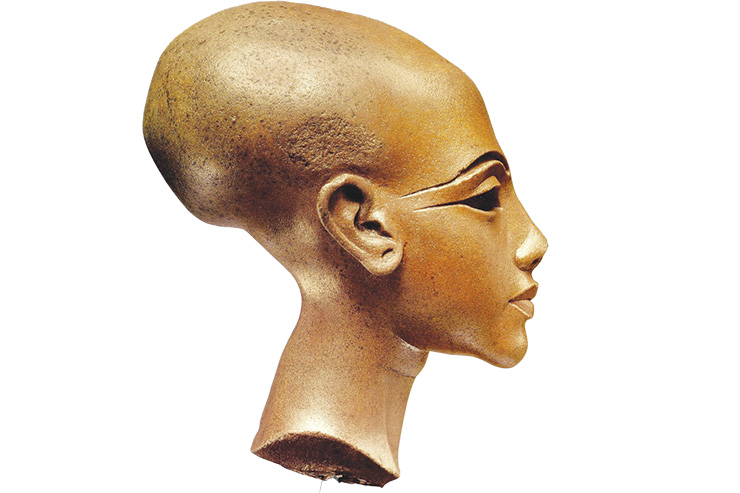
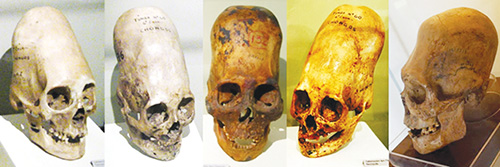
    In 1929 something unexpected was discovered in a country that was already brimming with the unexpected. A burial ground containing the remains of 300 individuals with elongated skulls was found in the township of Paracas in Peru. Believed to have lived around 3,000 years ago, these people were unique in their morphology – they had massively elongated skulls, they were tall, they were of all ages and genders, and a large number of them had the remnants of red hair clinging to their skulls.

    Some of the ‘massively’ elongated skulls of Paracas – the skulls are unique in their morphology, there are hundreds of them of all ages and genders, and a number of them have the remnants of red hair clinging to their heads.

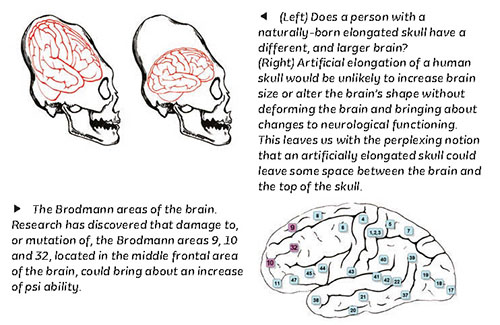
    These skeletons have been the subject of great debate for almost 100 years and are generally agreed to be examples of artificial skull deformation, which is the practice of deforming the head to redirect the growth of the skull. However, a human skull that is elongated after birth displays flattening of both the forehead and the back of the head, and the skull volume is not changed. The Paracas skulls are somewhat different – they are larger than an artificially elongated human skull and have a correspondingly larger internal volume.

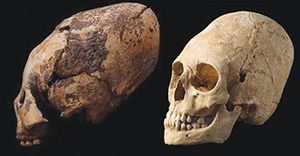
    Examples of elongated skulls found outside the Americas include the ‘M72’ skull (left) found in China and estimated to be 12,000 years old, and (right) a 1,600-year old elongated skull from France.

    In addition, the skull morphology is quite different – the skull is not flattened, and a number of physiological differences can be easily identified. For example, the sagittal suture, which runs across the top of a human skull, is entirely absent, and the foramen magnum (the hole in the bottom of the skull that connects the neck) is situated towards the very back of the skull. The eye sockets are greatly enlarged, and it appears there are some foramina (the openings in the skull for nerves and blood vessels) in different places, all of which precludes these skulls from being able to be considered truly human.

    Mummified infant with elongated skull, Peru. 

    Samples of 18 Paracas skulls were obtained by researcher Brien Foerster, of which only 12 proved suitable for analysis. Two separate laboratories provided results which showed that four of the samples contained mitochondrial DNA identified as Haplogroup B consistent with a Native American, Asian or Pacific ancestry, but the other eight skulls were genetically quite different.

    These eight mystery samples returned DNA readings for Haplogroup U2 (a group found in Europe, the Middle East and Central Asia), group K (Western Asia), and J/H (North Africa, Arabia and the Middle East) – none of which accounts for the unusual skull shape, but which might go far in accounting for the mysterious red hair.

    It also raises somewhat of a mystery as to how and why these long-headed individuals traversed half the globe to get to South America, or vice-versa, around 3,000 years ago.

    Lord Pacal

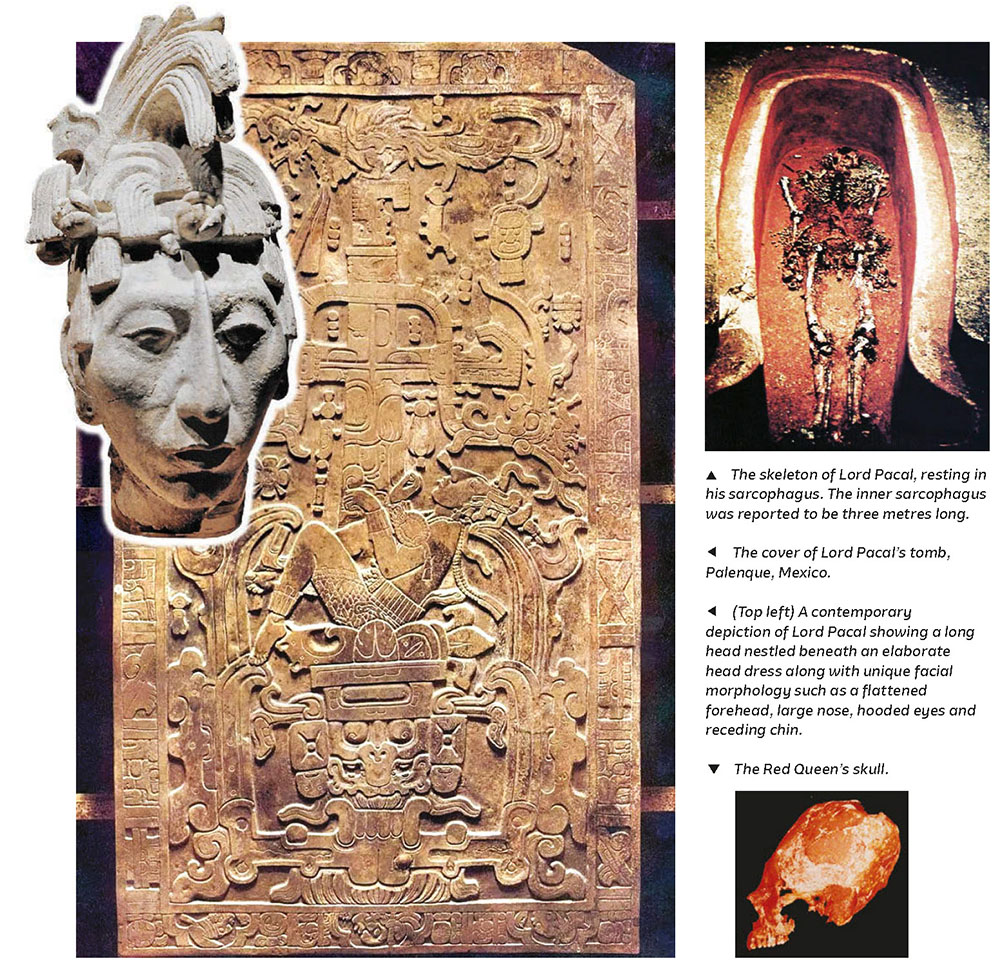
    The Mayan city of Palenque is situated four thousand kilometres north of Paracas in Mexico. Palenque is famous for the tomb of Lord Pacal who ruled his kingdom between 603 and 683 CE. Pacal’s tomb was discovered in 1948, and Erich von Däniken made much of it in his Ancient Astronauts theory when he claimed the infamous lid of the sarcophagus showed a carving of Pacal seated inside a space capsule. This beautiful, intricate and eternally enigmatic carving sprawls across an incredible 5-ton slab of rock that is 3.6 metres long, 2.2 metres wide and 29 centimetres thick, and was situated over a sarcophagus that was equally enormous by human standards, measuring 1.7 metres high, 2.5 metres wide, and 3 metres long.

    Verbal reports from the time of the excavation stated that the skeleton was tall and had an elongated skull. An image of Pacal’s skeleton, still reclining in his tomb, unfortunately has the skull obscured, but it does show a long-legged individual who almost entirely takes up the length of his sarcophagus. In support of Pacal’s unusual size and appearance, Mayan legends recount that he was “a god and… a giant monster.” The words of the South American god Viracocha also come to mind when he said, “If ever my subjects were to see me, they would run away.”

    Hidden in a pyramid beside Pacal’s tomb were the remains of the Red Queen, discovered fairly recently in 1994. There is an image of the Red Queen’s skull in the public domain, and it is most definitely elongated. The most interesting thing about the image of the Red Queen’s skull is the fact that we have one – Pacal’s skull may never again come to light. In 1977 the townsfolk of Palenque protested the removal of Pacal’s remains so vehemently that the tomb was sealed back up and Pacal’s bones are now forever safe from prying eyes. Fortunately for posterity, the Maya were consummate artists who accurately depicted the world around them, so there are depictions of Pacal carved in stone all around the Palenque pyramid site. It is clear from these contemporary images that Pacal’s head was elongated.

    Numerous examples of elongated skulls are on display in museums across Mexico, and tall personages with these strange heads are often depicted alongside their human counterparts in Mayan art.

    A Global Phenomenon

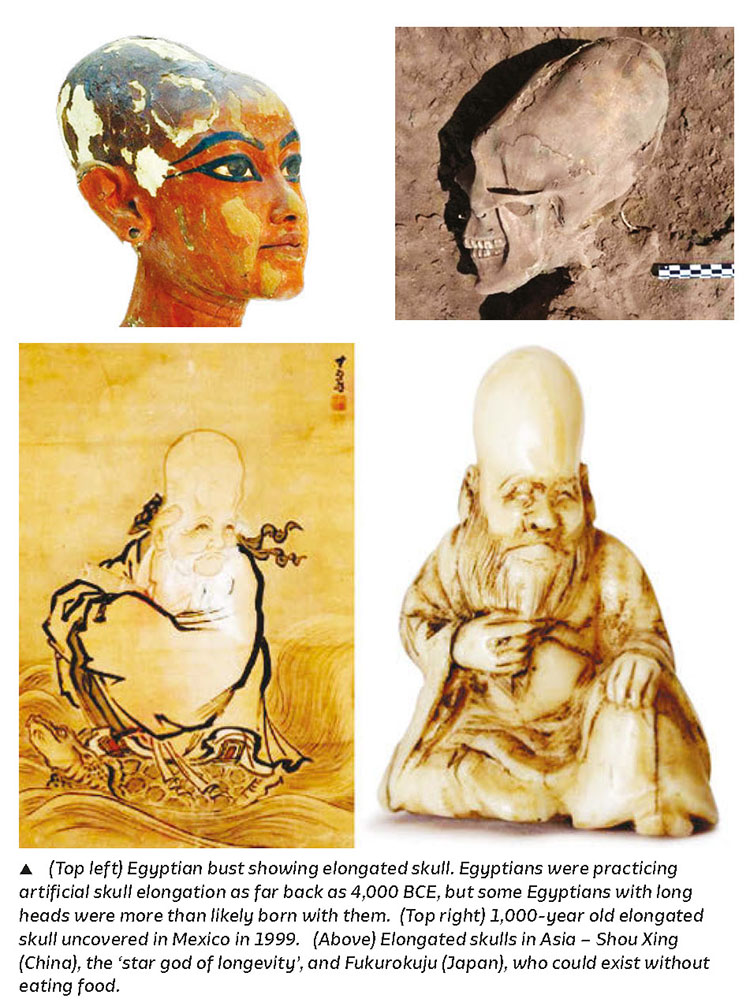
    No elongated skulls are found in the fossil record for the evolutionary ascent of man, although there is some contention over whether some Neanderthal skulls dating back 50,000 years display artificial elongation. Apart from this single outlier, elongated skulls only began to appear with regularity once Homo Sapiens did. They show up in every centre of civilisation across our planet, and apart from the large group of 300 individuals found in Paracas, South America, the next largest centre of skull elongation was half a world away amongst the dynastic nobility of Egypt of 2,000 BCE.

    Elongated skulls have been found in North America, and examples have been uncovered in China, Korea, Egypt, the Middle and Near East, the Pacific Islands, Africa, and all across Europe, some of them dating as far back as 30,000 years. There are even reports that Australian Aboriginals indulged in the practice, with one Kow Swamp skeleton purportedly displaying signs of artificial deformation. Reviewing the archaeological record, it becomes apparent that skull elongation was a global phenomenon.

    It is suggested that elongated skulls are the motherlode of ancient alien proofs, and very possibly they are. However, alongside those individuals who appear to have been born with elongated skulls, as evinced by their slightly non-human morphology, it is clear there also existed an abundance of regular humans with a penchant for artificial cranial deformation. In the deep dark recesses of history, there seems to have been two groups of people with elongated skulls extant on this planet – those people who came by their long heads naturally, and those who were seeking to emulate the natural-born long heads… but for what purpose?

    According to a Spanish account from the early 1500s, the Mayans said they elongated their heads “because our ancestors were told by the gods that if our heads were thus formed we should appear noble.” Emulating royalty, or emulating a being held in even higher regard than royalty – i.e., a ‘god’ – might account for the practice of skull elongation among humans continuing on into modern times. However, this doesn’t explain how or why the god-like personages being imitated came by their elongated heads in the first place, except to say that somewhere in the recesses of history came the appearance of gods and kings who not only looked different to us but were also greatly superior, and humanity has attempted to imitate them ever since.

    Elongation in Modern Times

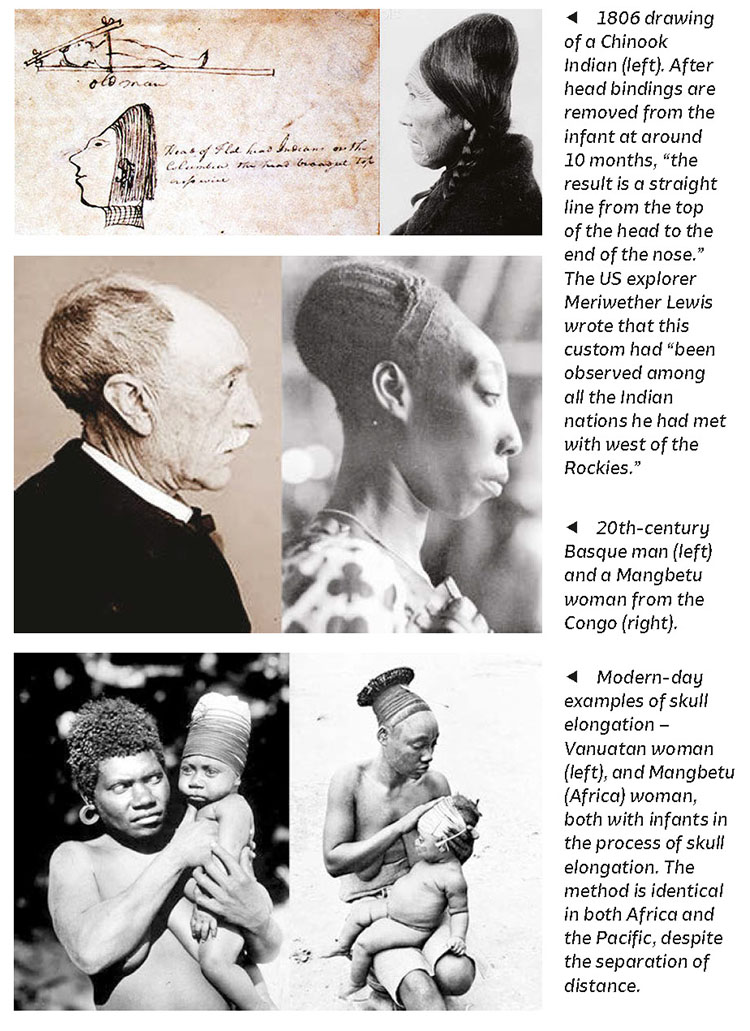
    In the 1840s, the Chinook Indians of North America were found to be actively practising skull elongation on their infants by the use of boards. The Basque people of Europe were practising skull elongation well into the 20th century, and the Mangbetu people of the Congo, who have roots that can be traced back to Egypt, are still practising cranial deformation today, as are some people on the island nation of Vanuatu who, we are told, never had historical contact with cultures outside of the South Pacific. This cannot possibly be true, however, considering the method of skull elongation employed in the South Pacific is identical to that employed in Africa. Could the same process extant across both Africa and Polynesia really be the result of nothing more than coincidence?

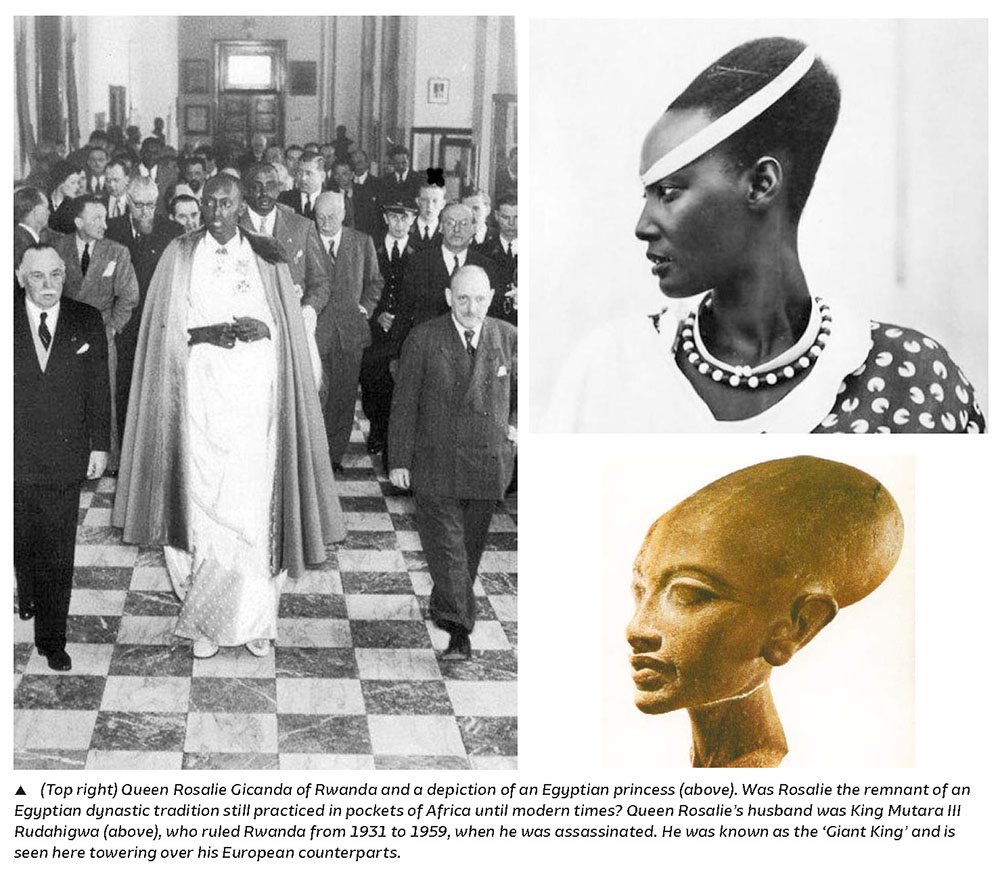
    One personage from modern times who possessed a very fine elongated skull was Queen Rosalie of Rwanda. Rosalie was assassinated in 1994 (coincidentally the same year the Red Queen of Palenque was discovered), so we may never know what circumstances led to her skull elongation – although it must be assumed that, like the Egyptian Pharaohs, it was to signify or emulate a royal lineage. Rwanda is quite a distance from Egypt – nearly 5,000 kilometres – but given that both countries are situated on the African continent and given that Rosalie was a bona-fide African queen, it’s possible she was heir to a 4,000-year-old dynastic Egyptian practice. Adding to the mystery, Rosalie’s husband, King Mutara III Rudahigwa, was known as the ‘Giant King’ of Rwanda, reminding us of the tall people of Paracas and the unnaturally tall Lord Pacal of the Maya kingdoms, all of whom sported elongated skulls.

    If Isolationism is to be accepted as the dominant paradigm of evolution, then how do we explain the emergence of elongated skulls across the planet and in such disparate populations and communities?

    Size Versus Volume

    It is often said that while artificial cranial deformation can alter the shape of a human skull, it cannot alter the volume of a skull. However, this is not quite true, and a small change in volume is indeed occurring at the expense of the thickness of the bone.

    The volume of a naturally-born elongated skull is estimated to be in the range of 2,000 to 2,500 cubic centimetres, compared to the 1,300 to 1,500 cubic centimetre capacity of the average human head. Thanks to Darwinian evolution, we have been led to believe that larger brain size leads to higher intelligence, which led to the assumption that the neurological processing power of a person with an elongated head must be equally as large. Unfortunately, it also leads to the uncomfortable notion that the brain shape of an individual with a naturally-born elongated skull must be quite different, along with the equally uncomfortable proposition of trying to apportion its varying lobes and other component parts. If any endocasts (brain casts) of elongated skulls have been made, they are not publicly available, so at this point in time we are unable to know if the brain of such individuals entirely filled the brain case or not.

    Following on from this train of thought is the assumption that a human who has endured skull elongation must also have a similarly enormous brain, however it is highly unlikely that a human brain would increase in volume just because the container it resides in has changed, which leaves us with the possibility of a normal-sized and relatively normal-shaped human brain resting inside an over-sized and elongated skull.

    As for any imagined changes to its shape, the human brain is such a delicate organ that deformation of any one of its myriad parts is generally sufficient to bring about neurological impairment, if not death. The frontal lobe is the most likely part of the human brain to be adversely affected during artificial skull elongation; damaging the brain’s frontal lobe causes issues with “memory, emotions, impulse control, problem solving, social interaction, and motor function,” along with a host of other impairments. Persons with frontal lobe damage would become incapable of fending for themselves, or at best turn into behavioural misfits.

    Given that artificial skull elongation can only be undertaken in the first few months of life, it begs the question of why any parent would wilfully deform their child, knowing that a single misstep in the process could lead to impairment or death. It is unlikely that elongation of the skull as a practice would continue from prehistoric to modern times if these were to be the expected neurological outcomes. And given that modern populations with elongated skulls display no negative side effects, it is safe to assume that most humans with artificially elongated skulls somehow avoided damaging their brains. But is it possible that some kind of change to the frontal lobe is brought about by skull elongation, but with entirely unexpected outcomes?

    Psychic Developments?

    According to recent research, it seems that it is possible, under the right conditions, to modify the frontal lobes of the brain and bring about an enhancement of functioning. A 2023 research paper reported evidence of increased psi ability in individuals with damage to, or mutation of, the frontal regions of the brain, specifically the Brodmann areas 9, 10 and 32, which are all located in the area of the brain which would experience the direct pressure of artificial skull elongation.

    In order to prove their hypothesis, the researchers induced reversible damage to this area of the brain using magnetic fields and, incredibly, logged an observable increase in psychokinetic ability in the participants.

    These same researchers have suggested that our “nervous system may have evolved to inhibit psi” in order to prevent “exposure to constant bombardment with irrelevant stimuli from telepathy, precognition and clairvoyance that might divert attention away from environmental events threatening survival.” They also suggest that the “frontal lobes of the brain act as a filter to inhibit psi” and that humans may have “innate psi abilities that are suppressed by this frontal lobe filter.”

    Is it possible that the flattening of the forehead during artificial skull elongation does indeed impact the frontal lobe of the brain – not enough to damage its functioning, but just enough to subtly alter the mid-frontal cortex and accentuate or bring about psi abilities? If this is true, then our most ancient of ancestors may have practised skull modification as a means to revive psi abilities that had been lost due to the biomechanical structure of the human brain. Given their supposed ignorance and primitive natures, how did they come by this most esoteric of knowledge?

    Trepanation

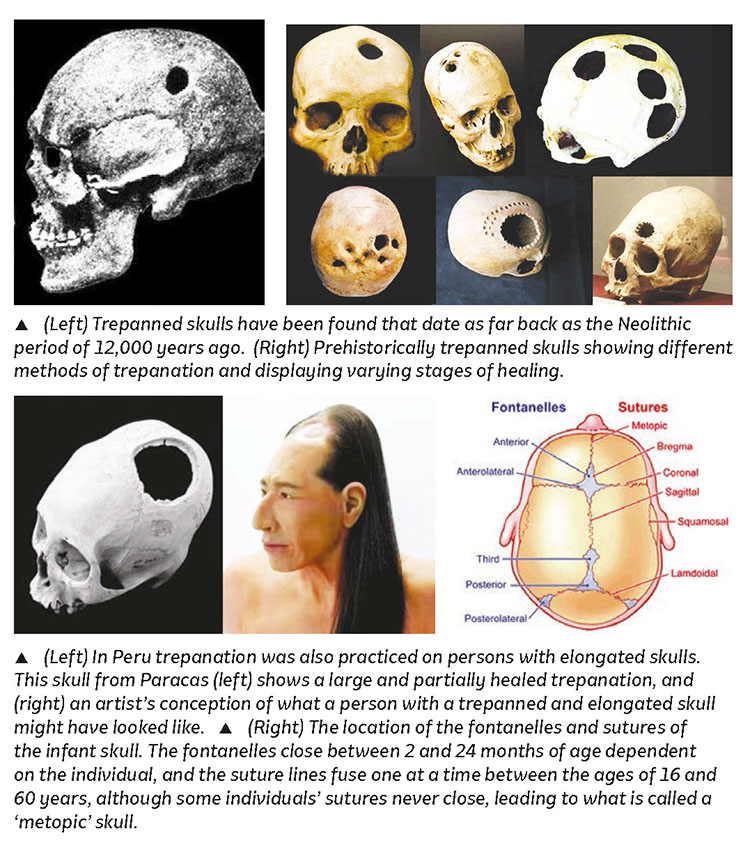
    If there is anything to be learned from history, it is that a number of cultures felt that human heads required modification. A vast number of skulls unearthed from all over the world from as far back as 10,000 BCE display evidence of trepanation, which in plain terms is the practice of putting a hole in your head. The only use for skull trepanation in modern times is medical, and because of this modern understanding of trepanation, it is assumed that the same understanding of the practice has held true throughout history – a difficult concept for archaeologists to swallow since it implies that ‘primitive’ humans not only understood the mechanisms of the brain but also appeared to be in possession of surgical techniques that we discovered for ourselves only recently.

    Trepanation is not an easy process, even for practised professionals. The skin and muscle covering the head must be cut in order to expose the skull, then a portion of the skull itself must be removed. In addition, the practitioner needs to have an intimate understanding of cerebral pressure and infection control, and has to perform the trepanation without damaging nerves, blood vessels, the three layers of meninges surrounding the brain, and the brain itself.

    It has been suggested that in prehistoric times the technique used for trepanation was scraping with stones, shells, obsidian or shark teeth, but experiments have shown that these implements were “incapable of cutting with regularity and precision.” Despite this finding, it is still believed that scraping the skull with stone or flint must be the only probable process involved. However scraping a hole in a skull takes a long time – fifty minutes “counting the periods of rest due to fatigue of the hand” according to one attempt at re-creation. Without the use of anaesthetics, which are assumed to have been unavailable in 10,000 BCE, a fifty-minute procedure with the practitioner huffing and puffing with a stone or a shark’s tooth would surely have been untenable for the patient.

    From a survey of prehistorically trepanned skulls with signs of bone regrowth, the survival rate is estimated to be as high as 90%. In some parts of the world, trepanation continued to be practised until Medieval times with a comparably high survival rate, despite the lack of proper tools, anaesthetic and sterilisation procedures. Trepanation for medical purposes continued successfully in Europe up until the early 1800s, when ‘ownership’ of the practice was transferred into the fledgling Western medical paradigm. But there was such a dismal survival rate – only 10% – due to the constant penetration of the meninges that it was discontinued until modern times. Unsurprisingly, it was the pathetic survival rate produced by 19th-century Western practitioners, along with the burgeoning ego of modern medicine, that made the discovery of prehistorically trepanned skulls so impossible to accept for the archaeologists who kept digging them up.

    Trepanation in Palaeolithic and Neolithic times was widespread across the planet – North, Central and South America have produced the most trepanned skulls, but the oldest come from Europe and China. Trepanned skulls have also been found in Africa and Asia, and in the southern hemisphere have been found in Melanesia, Micronesia, New Guinea, Tahiti, the Solomons, New Caledonia and New Zealand, indicating the practice was widely dispersed even across the disparate and isolated islands of Oceania.

    Talismanic Attributes

    One unexpected practice associated with trepanation is the collection of the extracted skull piece and its use as an amulet. Such amulets have been found in Neolithic burials across China and Europe, indicating that bone scraping could not have been the method used in these particular cases as the skull section needed to be extracted in one piece. This practice also suggests some kind of magical or talismanic aspect imbued upon the individual being trepanned, as though the process conferred upon them mystical, shamanic, or godlike powers such that they became worthy of reverence on every level.

    It is the accepted wisdom that trepanation was performed for medical reasons – conditions such as trauma to the skull that causes a fracture, bleeding or pressure on the brain. Other suggested reasons include headache or epilepsy, ‘bad behaviour’, mental illness, or to release demons from the inside of the head. Some pundits have been daring enough to suggest that tumours could also have been removed from the brain by prehistoric practitioners, but this intimates that the ancients had ways of locating the position of the tumour before they began drilling the hole, along with highly developed skills as neurosurgeons. Since it is assumed that CT scans were unavailable until they were invented in 1967, the location of the tumours could only have been divined by magic. The removal of the tumour must have been performed by magic, too.

    However, the situation gets worse for the anthropologist because from the inspection of trepanned skulls held in museums all over the world, which are all quite ancient, not only did the majority of trepanned individuals survive, but there are quite often no injuries apparent on the skulls at all. On some skulls, the trepanations have been performed multiple times, and some of the holes are surprisingly ornate and decorative.

    It is no doubt true that medical emergencies have been the motivation behind a number of prehistorically trepanned skulls, but there may have been a more esoteric reason for ancient peoples to endure the risk and trauma of skull trepanation.

    Room to Move

    Both the practice of trepanation and the artificial elongation of skulls have the same ultimate effect – they give the brain ‘room to move’. It’s this notion of giving the brain ‘room to move’ that we need to explore.

    In 1962 Bart Huges, a Dutch medical student who was denied his degree because of his cannabis advocacy, theorised that man’s state of consciousness was related to the volume of blood in the brain. He theorised that the upright stance of modern humans limited the flow of blood to the brain and consequently reduced the range of human consciousness. As an additional consequence, some parts of the brain ceased to function entirely, while others, particularly the speech and reasoning centres, increased their functions to compensate.

    In connection to this, when humans are born, the plates of their skulls are separated by suture lines such that the pulsation of blood in the brain can be observed in the fontanelles (the soft parts of a baby’s skull). Huges believed the closing of the sutures and the sealing of the skull into a hard shell suppressed the pulsation of the brain’s arteries, and that some parts of the brain were deprived of blood and ceased to properly function.

    Adding to the blood flow impairment caused by the closing of the skull’s sutures, Huges posited that our transition from all fours to standing upright with our heads positioned above our hearts might have improved our chances of survival by permitting us to “see further, run faster, and make tools with our bare hands.” But this new position disadvantaged us in other ways. Blood was draining from our brains and impairing its metabolism of glucose and oxygen, consequently reducing the range of human consciousness.

    Huges hypothesised that an increase in brain metabolism should therefore increase our level of consciousness, citing drugs that produce a ‘high’ also serve this function in their action of capillary expansion inside the brain, leading to increased levels of glucose and oxygen and, theoretically, bringing about an expanded level of consciousness.

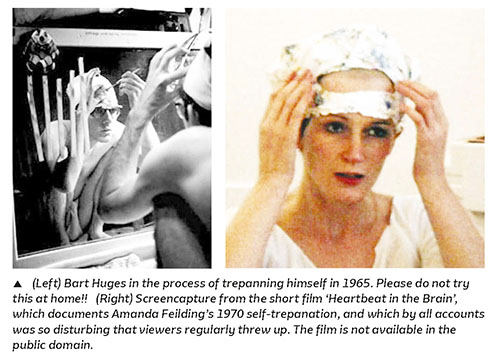
    In an attempt to rectify Nature’s attempt to keep us from reaching enlightenment by sealing our brains inside a fixed, hard case, Huges reasoned that trepanation could be one way to reverse the sealing of the sutures. It would enable the brain to pulse again and the membranes around the brain to expand. To test his theory, Huges trepanned himself in 1965 and experienced such beneficial results that he decided to bring the world’s attention to the trepanation miracle.

    Joe Mellen – The Experimenter

    Joe Mellen met Huges in the late 1960s and became instantly intrigued by his ideas. After a couple of failed attempts, Mellen successfully trepanned himself in 1970 and described the process and its results in his book Bore Hole. Mellen recounted the difficulties encountered as he attempted to drill a hole in the front part of his skull. On his third attempt, he reported:

    “Over the next three or four hours I got gradually higher; the feeling I had was of increasing lightness, literally as if a weight was being lifted from my mind. In the days that followed, I realised it was a permanent change in my consciousness that had taken place.”

    Mellen believed that his increased awareness and altered level of consciousness were a direct consequence of the increased brain metabolism that resulted from the increase of blood to his brain, which caused more cells in his brain to function simultaneously. Both Huges and Mellen described similar benefits of their brains being free to pulse again:

    “This expanded consciousness brings the realisation that love and health are greater than money or power. It transcends the Ego. It lifts one above the petty level of blind faith and intolerance to a place where one sees all that we have in common, irrespective of language.”

    Allowing the brain to pulse again brought other benefits as well, such as: “expanded consciousness, intensified awareness of sensory perceptions; increased efficiency in social operations, increase in cooperation and social harmony, less conflict and chaos; restoration of creativity, [and] comprehension of the ‘bigger picture’.”

    As time passed and Mellen’s bore hole began to seal itself over, he discovered it was reducing the benefits he had been enjoying. This may be why so many skulls extracted from Palaeolithic and Neolithic burial grounds display multiple bore holes to maintain their higher state of awareness. Or perhaps a more permanent and less-invasive solution was found by our ancestors, which was the elongation of the skull in order to provide the brain with ‘room to move’.

    These ideas raise perplexing questions:

    • Were human skulls modified in order to emulate abilities that other beings seemed to naturally possess?
    • Were trepanation and skull elongation a mechanical means designed to bring about a higher, or different, level of consciousness and/or psychic ability?
    • Were ancient civilisations purposely transforming themselves into superior beings?

    Proof?

    Bart Huges made many attempts to produce verifiable evidence of the effects of trepanation and the improvement of what he called ‘bloodbrainvolume’, but unfortunately the diagnostic tools available in the 1960s were insufficient for the task. Not so in 2005 when the International Trepanation Advocacy Group, formed in 1997, were finally able to show that the “blood flow enhancement attained by skull trepanation resembles the blood flow characteristics of youth, and on this basis the reduced blood flow through the brain characteristic of middle age can be restored to a youthful level,” exactly as Huges had theorised in 1965.

    Unsurprisingly, both Huges and Mellen were briefly forced into psychiatric care after their self-trepanations – it appears that modern medical professionals do not accept that a hole in our heads could promote a higher level of consciousness. However, the allopath’s utilitarian approach to the human body means they often miss – or wilfully ignore – the more subtle, energetic aspects of the human body, which it seems can be modified, accentuated and revitalised by changes to our physiology.

    Despite this medical censure, a small group of individuals remain committed to researching the effects of trepanation. Aside from the International Trepanation Advocacy Group, there is also the Beckley Foundation, which uses “cutting-edge brain imaging technologies to examine the neurophysiological changes underlying altered states of consciousness” and was founded by Joe Mellen’s partner Amanda Feilding in 1998. Fielding self-trepanned herself in 1970, filmed it, and released it as the documentary ‘Heartbeat in the Brain’.

    Get the issue this article appears in

    Elongation and Trepanation – Two Sides of the Enlightenment Coin?

    If you’ll pardon the pun, it is time for modern man to review our close-minded understanding of prehistoric trepanation and elongation of skulls. Given that modern-day persons who have been trepanned display a calmer demeanour and level of enlightenment that many of us aspire to, while at the same time possibly having access to a level of mental processing denied to the closed-headed individuals surrounding them, would it be beyond possibility for such individuals to have once been treated as ‘other’ and be revered as enlightened members of their community, perhaps performing functions as shamans, healers, rulers or arbiters of law?

    And would these same honours be bestowed upon individuals with elongated skulls, who no doubt enjoyed the same kind of beneficial increase of blood flow to their brains as well an increase in psychic abilities, and who could also have been revered as superior human beings?

    Evidence suggests we have the potential to evolve beyond the ‘thinking animal’ and join the more enlightened civilisations of the universe, but as long as our skulls remain sealed tightly shut, our brains are unable to transcend their physical limitations. While some choose psychedelics to overcome this disability, the path to enlightenment could be as simple as a hole in the head. 

    Image sources available upon request. Footnotes available in the purchased edition.

    [alert type=”general” dismiss=”no”]This article was published in New Dawn Special Issue Vol 18 No 2.[/alert]

    [alert type=”success” dismiss=”no”]If you appreciate this article, please consider subscribing to help maintain this website.[/alert]

    © New Dawn Magazine and the respective author.
    For our reproduction notice, click here.
  • Introducing the Field of Psychedelic MindMelds

    Introducing the Field of Psychedelic MindMelds

    From New Dawn Special Issue Vol 18 No 6 (Dec 2024)

    My wife asks, “Can I enter your brain?” We are in the middle of a magic mushroom trip. With a smile and glint in my eye and on the backbone of long-established trust, I respond with a “Yes.” Immediately, my head bowls over. Even though my eyes are open, my vision is filled with complex, swirling rainbow fractals. Her consciousness is in my brain! I am filled with glee and her love. She energetically penetrates my lobes. My wife’s simple thought of ‘entering my brain’ was actioned when I agreed to her request. We were now sharing consciousness in a telepathic mindmeld.

    Little has been written on using psychedelics to manifest psi abilities. While shamanic traditions take the skilful use of psychedelic plant medicines to enhance their psi abilities for granted, mainstream Western society is generally oblivious to such possibilities.

    There are several possible reasons for this lack of awareness.

    First, the illegal status of psychedelics for the past several decades has severely restricted usage, never mind research into psychedelic psi. Second, Western religions and their cultural influences typically identify such explorations of consciousness as demonic or occult, both major taboos. Third, atheists, inculcated by dominant Western cultural materialist beliefs, deny psi abilities are a possibility and are consequently not interested. Underlying this third reason is the arrogance of the industrialised world towards what shamans have shared through the millennia of what they see as the nature of reality and what humans are innately capable of. Fourth, many people fear exploring consciousness, particularly their unconscious, and especially using psychedelics to do so. The remaining balance of folks are more simply unaware of the general potential of psi and psychedelics.

    But light is beginning to shine on what is possible when using higher doses of psychedelics like ayahuasca, LSD, and magic mushrooms to purposefully induce psi effects. To help in this effort, I offer insights into the power of thought forms and provide some introductory techniques for attaining psi effects when using psychedelics.

    The fields of Out-of-Body and Astral Projection have developed a great depth of knowledge about the power of our thoughts in shaping our experiences in nonordinary states of consciousness. These insights can be applied to psychedelic states. With proper understanding and wisdom, one can cultivate the skilful use of thought to manifest internally projected realities, including psychic powers.

    The Out-of-Body and Astral Projection literature tells us how to reprogram our subconscious mind with thoughts to leave the body at will and explore multiple dimensions or planes through either meditative trance states or dream states. When we leave the body and our conscious awareness moves away from the physical body and physical reality, the more our thoughts and emotional states create the reality we inhabit. Thought and emotion become action and form. Think of these elements existing on an energetic continuum, influencing each other and what is experienced when out of the body. As such, unconscious thought and emotion can manifest as chaotic and challenging experiences, but purposeful thought becomes a tool to create one’s reality consciously, including influencing one’s emotional state. Below, I briefly explore the contribution of thought and emotion to out-of-body states.

    When out of the body, thought, or mental matter can, consciously and unconsciously, create the reality that is perceived visually and direct the course of the journey direction. Based on one’s beliefs and biography, including cultural background, visualised energetic experiences usually manifest as familiar objects of awareness. For example, when meeting a higher discarnate being, a Christian may see Jesus, while a Buddhist could see Buddha. This is not to say that the “real” Christ and Buddha cannot present themselves or that the discarnate being can’t be seen in its original form. Still, a person’s cultural background usually manifests in their view of the energetic beings they meet and the realms they enter.

    Mental matter can go a step further. With stability and focus, one can choose, for example, a specific destination to travel to. Concerning the physical world, this ability is often called remote viewing. When leaving the body but travelling around the physical realm, reality appears similar to the physical world. But at this level of journeying, there are limits to the influence of thought. While the astral body can be mentally directed to do things like pass through physical objects such as walls or fly, one cannot usually change the nature of an object or the attributes of the world, like the colour of the sky.

    As one’s consciousness moves further away from physical reality, one can enter dimensions or planes of the collective unconscious and the archetypal. In these cases, the thought forms of millions of living and passed humans, possibly billions in some cases, create all-encompassing thought-based realms. Here, too, there is little capacity to change the realities one enters, whether it be a Christian heaven or hell or the heaven or hell from any of the world’s other main religions.

    However, when one moves beyond realms created in the collective unconscious, skilful people can enter spaces where they can create worlds of their own. At this fount of creativity, one can manifest fantastic crystal castles in the clouds, adorned by the rainbow light from three different suns, shaped as double-tetrahedrons. The adept can create such powerful thought forms that they are lasting and can be visited by others when out of the physical body. Other examples of directing out-of-body experiences are manifesting the best feast you have ever eaten or having the best sexual encounter you have ever had. This is the power of thought form.

    At the same time, emotions have a powerful momentum that can shape thought expression in the journey and become action. We all hold all possible personality traits and emotional states within ourselves as a mosaic of seeding potentialities. However, as individuals with unique biographies, we have our dominant patterns of emotional states. These states are often a mix of negative and positive energies. Because some emotional states can have stronger momentum than others and may not be easily influenced by thought, they can profoundly influence the context and environment of the journey. For example, someone who consistently struggles with anger may be more likely to process it by manifesting an aggressive bear or angry bogeyman who confronts them or chases them down a chaotic city street during a thunderstorm. On the other hand, someone abiding more in a calm, loving awareness may be transported to a heavenly realm and engage with angelic beings.

    Most people are unaware of how chaotic their minds are. Buddhists refer to the untamed mind as the monkey mind. Where there is no steering of thoughts, the mind jumps haplessly around from branch to branch like a monkey in the loud and busy jungle of the unconscious. With training and experience, one develops skills to be more purposeful in the journey, where intention more clearly becomes intent, and intent immediately becomes reality and action.

    Let’s look at some examples of what can be achieved using thought forms during a psychedelic session. For over fifteen years, I have engaged in psychedelic mindmelding, the telepathic sharing of physical and psychic energies and consciousness. Mindmelding is commonly discussed in the Out-Of-Body literature. It is the primary means of communication between discarnate beings where energies are shared telepathically and information is exchanged instantly.

    When two humans mindmeld and share physical and psychic content, a telepathic link is established between their minds and bodies, manifesting a co-creative and shared experience. The dyad experiences its “interbeingness.” There can be an empathic or intuitive sharing of emotions. The joint exploration of emotional processes can induce psychic expansiveness, process energetic traumas stuck in the mind and body, enhance cognitive fluidity, and creatively lead to attitudinal changes and greater internal harmony. The communion can lead to physical and mental healing and regeneration. The mindmeld can go even further to a complete sharing of consciousness where shared visions and exploration into other dimensions and realms are possible. At its most extraordinary profundity, when the borderlands of super-consciousness are breached in the mindmeld, both participants can find themselves in non-dual states of consciousness. Here, there is no distinction between one another – both participants are absorbed in unity consciousness.

    To attain such states of telepathy, one must meditatively engage with one’s partner. In my book, The Psychedelic Mindmeld: Telepathically Exploring Shared Consciousness, I describe detailed techniques and thought forms for manifesting telepathic states, emphasising a safe set and setting.

    Much more is possible for higher psychic attainment, whether in the mindmeld, or when going alone in a psychedelic session. What psi states can be achieved using thought forms? The list is long and varied. Below, I briefly summarise what appears in the literature from the traditions of shamanism, Eastern wisdom yogic traditions, and out-of-body and astral projection. The list of psychic abilities includes:

    Astral projection or out-of-body experience; automatic writing; bilocation; clairvoyance; channelling and mediumship; healing; levitation; materialising objects; precognition and prophesy; psychic surgery; psychometry; remote viewing; retrocognition; shapeshifting; telekinesis or psychokinesis; telepathy; time travel; and xenoglossy.

    While I have not experienced all of these abilities, I have my favourites. I have connected to past lives and my future self and interacted with varied different beings, including plant intelligence. I have channelled the souls of the dead. I have contributed to healing others, sometimes using x-ray vision, bilocated into the bodies of others (and had others in me). I have sometimes experienced being different animals (though not physically shapeshifting). There have been journeys to the cellular level, travels to other dimensions and planets, including connecting to the archetypal energies of planets, the moon, and the Sun, journeys to the Akashic Library where I connected to past and future events, connections to the zeitgeist of whole human populations in various countries, and embodiment of various mythical archetypes. My body has been filled with divine heavenly light and bliss. I have telepathically shared consciousness to travel with others to other dimensions and planes and interact with discarnate beings. And, finally, but most rewarding, is visiting heavenly realms and entering nondual states of consciousness.

    These experiences sometimes occurred intentionally using thought forms. But often, they occurred without conscious intent, instead with the guidance of spiritual guides or through the grace of the Divine. So, not all psychic ability flows from conscious intent, but using one’s mind purposely makes it more likely.

    To attain psychic states during a psychedelic session, it is helpful to plan to work with particular thought forms beforehand. Be mindful and strategic. Before sessions, one can repeat several longer and more complex affirmations or intentions. However, the trick is to focus on only one specific thing while in the session. When formulating specific thought forms, use simple language and a short sentence. It is essential to be clear and directive in the thought form you choose to manifest. Examples are: “Show me a past life” or “Spirit guide, reveal yourself.” Don’t hesitate to ask your spirit guides for help, saying something like, “Show me what I need to learn for my highest evolution.”

    There is much more. You can be specific about the emotional state you want to enter. You can specify a destination on earth or elsewhere you want to journey to. If you go to the Akashic Library, go with a specific question you want answered. You can state an intent to visit a person, alive or dead. Try asking how you can be of the most valuable service to others. When engaged in healing work, state the health issue or body part and then, “Healed to completion now.”

    If you are floundering or struggling with confusion during a session, use direct commands like “Clarity now!” “No illusions!” or “Raise my vibration now!” If you are caught in fear, try, “There is nothing to fear because I am infinite. I am eternal. All experience is God manifesting itself, and I am that.”

    Because remembering the otherness and vastness of what can occur in a session when it ends can be challenging, it can be valuable to affirm you will recall everything. Try, “My memory shall recall everything from this session.” Then, consciously put the effort into writing down the session’s events immediately afterwards.

    Get the issue this article appears in

    The most potent experience to manifest is the loving light of God, the Divine, or Source, whichever word and concept resonates best for you. Opening a heavenly portal can help. To do this, call in God’s holy angels, ask for their help, and open the heavenly portal. Then try using a statement like, “Take me to the heavens.” To enter emotional states of bliss, try “Loving awareness, now,” “Heavenly bliss, now,” or “I am infinite and have God’s loving light in every single cell in my body.”

    To work towards being adept in manifesting your reality in psychedelic states, train yourself in thought control using various meditation techniques. Pre-program your subconscious mind with mantras and well-chosen, succinct thought forms. Practice keeping your body completely still, which contributes to hypnogogic states and is a strong base for manifesting psi abilities. Work with different breathing techniques to centre yourself. There can also be a need to clear the negative and traumatic energies trapped in your physical body to journey to higher planes and more effectively work with thought forms, which can be accomplished through repeated psychedelic sessions, meditation, physical yoga, and other similar modalities, dream yoga, psychotherapy, and different types of physical energetic healing and massage work. Keep your body healthy with exercise and a predominantly plant-based diet; avoid toxins like alcohol. Try using trance-inducing music with a strong, positive, energetic signature during sessions.

    A word of caution. When working with the psyche and psychic states of consciousness using psychedelics, beware of ego-inflation, fantasy and delusion, psychological projection, manifesting the negative, and working with unprocessed trauma.

    In closing, journey purposefully and safely with gratitude, patience, and perseverance. Trust in your intuitive guidance and ability. Remember, you can access all of the universe because you are a finger on the infinite hand of God. Know that the inner healer is within you, and your higher self is your most trusted guide.

    Like my wife’s spontaneous wish to enter my conscious experience, you may open a portal into a psychic experience with your name on it.

    I wish you the best in your explorations of consciousness.

    For more insights and techniques, check out my book, The Psychedelic Mindmeld. I also highly recommend books on out-of-body experience by William Buhlman, Kurt Leland, and Robert Monroe. 

    Wade Richardson’s new book The Psychedelic Mindmeld: Telepathically Exploring Shared Consciousness is available from Inner Traditions.

    [alert type=”general” dismiss=”no”]This article was published in New Dawn Special Issue Vol 18 No 6.[/alert]

    [alert type=”success” dismiss=”no”]If you appreciate this article, please consider subscribing to help maintain this website.[/alert]

    © New Dawn Magazine and the respective author.
    For our reproduction notice, click here.
  • Inorganic Intelligent Beings May Dominate The Universe

    Inorganic Intelligent Beings May Dominate The Universe

    From New Dawn 192 (May-June 2022)

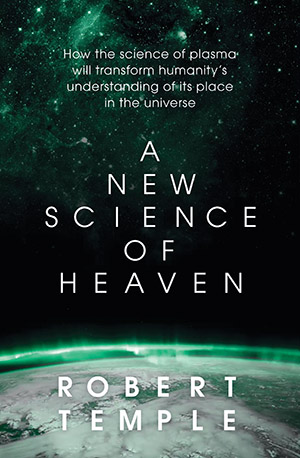
    My new book, A New Science of Heaven (Hodder & Stoughton), gives a full scientific description of the nature of inorganic, non-biological, intelligent beings in space. 

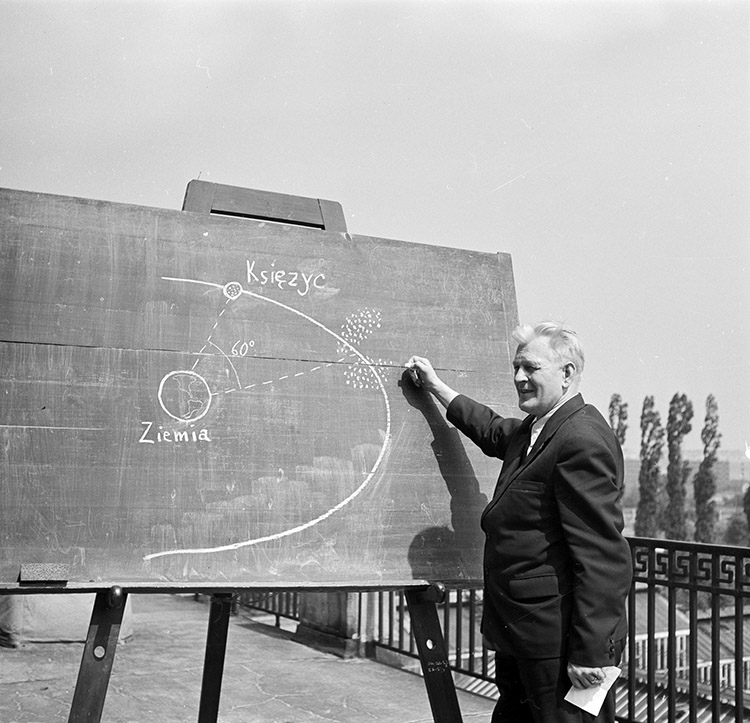
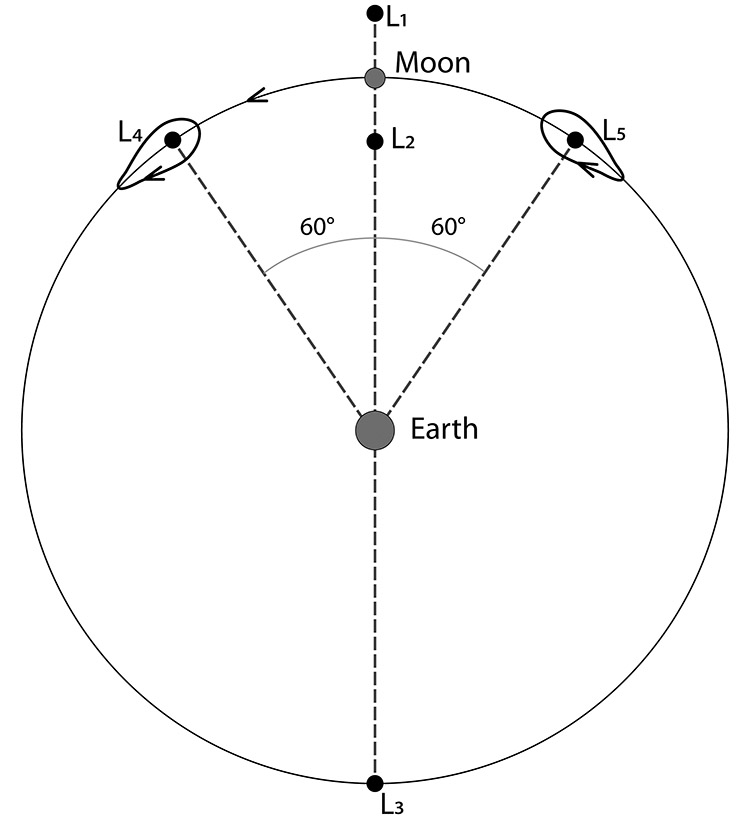
    We have two such ‘creatures’ close to our own planet. They are the recently confirmed Kordylewski Clouds, which together are eighteen times the size of the Earth. They reside between the Earth and the Moon, but not in a direct line of sight. They are 60o behind and 60o in advance of the line of sight to the Moon. They exist at the two points known as L4 and L5, the ‘L’ standing for ‘Lagrange’ (named after a famous scientist and mathematician of the past). 

    At these two Lagrange Points, the gravitational pulls of the Earth and the Moon cancel out, so that clouds can rest there free of gravitational pull in either direction.

    The Kordylewski Clouds were discovered in 1961 by the Polish astronomer Dr. Kazimierz Kordylewski (1902-1981.

    As the Clouds emit no light and are largely transparent, it was difficult for Kordylewski’s discovery to be confirmed by others. But in 2019, the existence of the Clouds was confirmed using modern techniques which did not exist in Kordylewski’s day. This was done by a group of Hungarian astronomers. 

    I noticed this very soon after their initial publication and contacted them to ask whether they were studying the plasma aspects of the Clouds. They replied saying no, they were only considering the celestial mechanics. (The plasma aspects do not seem to have occurred to them, as they were only observational astronomers, not physicists.) 

    I phoned my friend Professor Chandra Wickramasinghe, a brilliant astrophysicist, told him about the Clouds and suggested that we publish a joint article immediately calling attention to these two entities from the more important perspective of space plasma. Our article appeared in the journal Advances in Astrophysics shortly thereafter, and is reprinted in its entirety as an appendix to my book.

    Dr. Kazimierz Kordylewski in 1961 drawing a picture of the Kordylewski Cloud at Lagrange Point L5. Ziemia in Polish means “the Earth.” Księzyc in Polish means “the Moon.” The 60o angle away from the direct line of sight to the Moon is clearly shown. The Cloud is depicted as a collection of dust particles, which we now know must be charged and form a dusty complex plasma. Each one of the Kordylewski Clouds measures 65,000 miles by 45,000 miles across, which is equivalent to 30 x 20 lunar discs as seen from Earth. Each one is now known to be nine times the size of the Earth, so that the two together are 18 times the size of the Earth. They thus entirely dominate what until now has been called ‘the Earth-Moon System’, and which is now known to be a four-entity system, not a two-entity one. 

    ‘Dusty Complex Plasma’

    The Clouds are composed of tiny dust particles and grains only a few nanometres in size, whereas our satellites can only detect particles of 100 nanometres or larger, which is why no satellites have detected them. The dust is highly electrically charged (10,000 electrons can cling to a single dust particle, and for positively charged dust, protons and ions of a somewhat lesser number because they are bulkier). 

    The Clouds are constituted of what is now called ‘dusty complex plasma’, and they are cold plasmas rather than hot plasmas such as our Sun. 

    Plasma is a distinct form of matter which is not made of atoms. Our own bodies and the world in which we live are made of what we call physical matter, or more accurately, atomic matter. But plasma is non-atomic matter. It is not made of atoms at all, but of atomic particles

    Recognition of it as being literally a new form of matter occurred in 1879 when it was discovered by the British scientist Sir William Crookes (inventor of the vacuum tube), who called it “radiant matter.” Its name was changed to ‘plasma’ in 1928 by the American scientist Irving Langmuir. It has no connection to blood plasma, familiar to doctors and nurses, which is a different use of the word, which derives from ancient Greek.

    This diagram shows the locations of the ‘Lagrange Points’ known as L4 and L5 of the Earth–Moon system, indicating the positions of the two clouds. In this diagram, the Earth is at the centre, and the Moon directly above it. Although distinct, bounded balls of plasma can form anywhere at modest scales (as for instance, the tiny balls of ball lightning on the Earth), for really big ones in space it is helpful for them to come to rest in spaces free of gravitational pulls, and when such a niche appears it is pretty certain that it will soon be filled by plasma which will form a ball as big as the niche allows. And that is why the L4 and L5 points are perfect homes for huge plasma clouds, for they are the only two points between the Earth and the Moon free of gravitational pull from either the Earth or the Moon. The image is not drawn to scale and the relative sizes of the bodies shown here bear no relation to their true sizes; this image is intended solely to show the geometrical spatial configuration. Seen at this scale, the Earth and the Moon would be extremely tiny or perhaps even too small to see. The Clouds can cohere despite being continuously blasted by the solar wind, details of how that happens being explained in the book. (Image drawn for the author by Eric Wright.)

    Plasma Universe

    Astronomers and astrophysicists agree that the Universe consists of 99.9% plasma and at the most 0.1% atomic matter such as we have here on Earth. Our Sun is entirely composed of plasma, and so are all the stars in the Universe. 

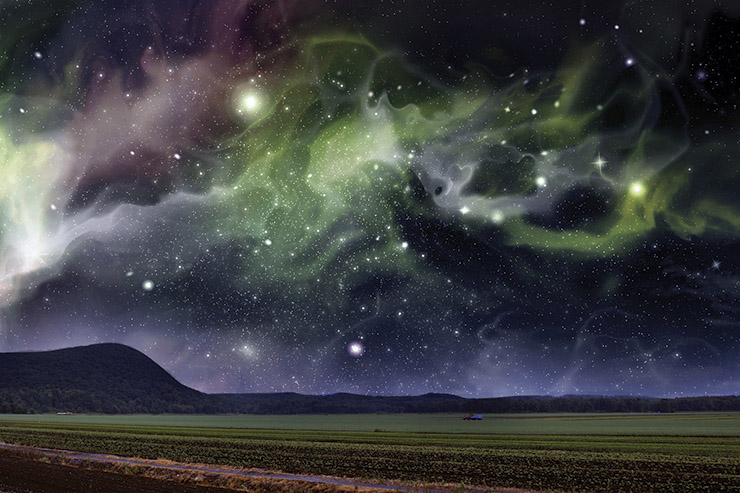
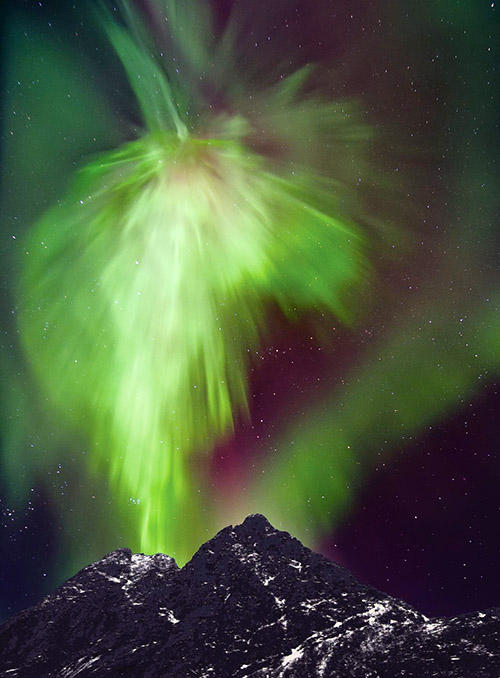
    Solar plasma, ejected from the Sun, is seen here in this aurora, an effect of the plasma penetrating Earth’s magnetic shield. Photograph by Lars Tiede, island of Kvaløya, Norway, 2011. 

    Plasma occurs frequently on Earth because lightning is plasma. When you turn on a neon light, the neon gas in the centre of the tube is changed to plasma, the temperature of which has been measured to be approximately 12,000 degrees Celsius. But despite that, you can hold such a tube in your hand and it feels cool. The surface of our Sun, known as the photosphere, is about half the temperature of the interior of a neon light tube. 

    Knowing this, one begins to understand the weird and wonderful world of plasma. With plasma, the seemingly impossible frequently occurs. Extreme heat and extreme cold can exist side by side inside a plasma because the interior regions or cells are protected by what are called ‘sheaths’, which are double layers of charge.

    Most people have no idea that the Universe is a plasma universe because there has been a massive failure of the media at all levels to report this to the public. Nor is the situation any better in schools and universities. Many ordinary physicists who do not concern themselves with astrophysics have never even heard of this. 

    It is a sad commentary upon the disintegration of Science as a coordinated field of enquiry. The people in one lab simply do not know what the people in the next lab down the hall are doing. Even if they did, the jargon is different in the next lab, certain terms and words are unknown to outsiders, and they even frequently change the conventional uses of mathematical symbols in their equations, so that even the equations, which used to be ‘the Latin of Science’ which could be understood by all, now exist in a fragmented world. The Tower of Babel of Scientific Communication largely collapsed long ago. 

    Self-Organisation & Intelligence

    A large part of my book (which contains no equations!) is devoted to explaining in detail, for the general reader, precisely how a large charged dusty complex plasma cloud can self-organise into an entity even more complex than an organic body. 

    Such a cloud becomes filled with filaments carrying currents, which act like blood vessels, or cells which act like organs, of semi-conductors which modulate current flow, of current pinches which act as nodes and so on and so on. 

    All that I have said is based upon sound scientific discoveries. Such plasma clouds can definitely develop an interior structure more complex than an organic body, and by the now recognised processes of ‘emergence’, ‘entanglement’, and self-organisation, can spontaneously develop intelligence. 

    The Kordylewski Clouds are so gigantic that their processing power exceeds by many orders of magnitude all the computers and brains on Earth. Furthermore, the Clouds are apparently billions of years old, whereas humans have only existed for about two million years. Anyone who needs convincing about all of this will find plenty of evidence in the book. And there is an audio book as well, narrated by myself.

    If these giant clouds in space are intelligent entities, what would their personalities be like? Very different from ours. From our point of view they would appear disturbingly aloof and indifferent to our sufferings. They would be interested in events but would not care greatly about how we might feel about those events. 

    I explain at great length why we all exist as double creatures: we all have bioplasma bodies (called souls or spirits in daily speech) and physical bodies which I call “smart overcoats,” jettisoned when they wear out or are destroyed. A plasma cloud would not necessarily waste energy worrying about our ‘deaths’ because they would know that we did not really die, we merely transitioned back to the plasma state. Do I believe that anyone ever really dies? No. I believe we continue to exist, and that therefore we had better take the long view and try to be less obsessed with ‘things’. You can’t take your smart overcoat with you, nor anything you have which is made of atomic matter. 

    UFOs & Ball Lightning

    I suggest that, based on this knowledge, lightning balls and many UFOs are likely to be plasma drones. There are thousands of reports of ball lightning seeming to be intelligently directed, inspecting things for instance. I suggest that they are constantly prowling around looking at everything as drones. And as for UFOs, while I would never presume to try and explain all of them, when you know enough about plasma it is painfully obvious that many of them must be plasma entities, presumably controlled either remotely or by robotic means based on miniature super computers. As to whether they contain creatures, that is another matter. But if one presumes that the creatures called ‘the greys’ really exist (I have no idea, and have never encountered one), it seems to me likely that they would be semi-organic robots. 

    Have the Kordylewski Clouds ever attempted to communicate with us? I believe they have. But no one ‘gets it’. We need to smarten up. If we really want to find extraterrestrial life, it is not necessary to look even as far as the Moon. It’s right here.

    What’s more, the Universe is clearly filled with dusty complex plasma clouds, most of them presumably of gigantic intellectual capacity, at all scales. Our Sun is probably alive and conscious. All stars presumably are. And the vast nebulae and clouds throughout space both within and beyond our Galaxy must be inorganic intelligent entities. In other words, inorganic life forms dominate the Universe, and have done so for billions of years. The truth is, therefore, that the Universe is an endless society of beings. And they are not like us. They have charged particles flowing through their ‘veins’ rather than blood. And our local Kordylewski Clouds, which may seem enormous to us, are small fry. 

    Get the issue this article appears in

    A New Science of Heaven

    Are the Kordylewski Clouds hostile to us? Hardly likely, as we would not have survived if that were the case. And they must have some reason to want us and need us. They may even have arranged for organic life to appear here in the first place. It may be that the Clouds wish to engage in dialogue with us. After all, being inorganic themselves, they may wish to experience vicariously through us what organic life is like. This would be part of their intellectual curiosity. They may regard us as their probes. Without intelligent organic beings they could never hope to do this directly. We may therefore, despite our small size and seeming insignificance, be part of what they hope to make into a shared experience. Without us, they are missing an entire aspect of Reality. And they must know this.

    The first thing we need to do is wake up and realise that inorganic beings exist. Then we need to gather our thoughts and think this through. If the Kordylewski Clouds and our Sun are conscious, intelligent inorganic beings, then we are part of the family. We are all here in the same solar system together. Let’s get talking. 

    Finally, I wish to make clear that I believe that there is a ‘plasma world’ which is essentially what religious people have always called ‘the spiritual world’. It is the same as a ‘parallel world’ or ‘a world in another dimension’, except that it is not in another dimension, it just seems as if it were. It is invisible to us because we and our sensory organs are made of atomic matter, which cannot perceive plasma matter unless the plasma is glowing or shining. Cold plasma is dark and emits no light. I believe that ‘dark matter’ is really plasma which is in the dark mode, and hence invisible to observation. 

    The age-old argument between science and religion can be resolved as follows: the materialists are correct, in that ‘the Other World’ is not immaterial, but is made of matter. But the religious spiritual people are also correct, for there is indeed ‘another World’. All we have to do is understand plasma, and we can stop wasting our breath disagreeing with one another and settle down instead to trying to understand Plasma Reality. 

    We ourselves are plasma beings who have come here temporarily, donning our ‘smart overcoats’ for a brief sojourn in ‘the physical world’ in order to test our characters against all the obstacles it presents to us and experience successes and failures, loves and losses, ups and downs, in the wild tempestuous world of physical matter.

    Robert Temple’s A New Science of Heaven (Hodder & Stoughton) is available from all good bookstores. A review of A New Science of Heaven can be read in this issue of New Dawn.

    [alert type=”general” dismiss=”no”]This article was published in New Dawn 192.[/alert]

    [alert type=”success” dismiss=”no”]If you appreciate this article, please consider subscribing to help maintain this website.[/alert]

    © New Dawn Magazine and the respective author.
    For our reproduction notice, click here.
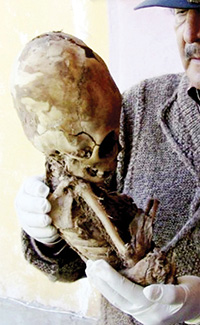
  • Cosmic Life: Dawn of a New Paradigm

    Cosmic Life: Dawn of a New Paradigm

    From New Dawn 165 (Nov-Dec 2017)

    If it can be firmly established that we are not alone in the Universe the implications for humanity will be profound. It could be even more important if we know that alien life in the form of microbes – bacteria and viruses – exist in our midst even now and continually rains down on our planet. Such microbes may sometimes cause devastating pandemics of disease, but more positively they have the potential to augment our genomes and over long intervals of time unravel an ever-changing panorama of cosmic life. In either case – whether as alien microbes in our vicinity or alien intelligence on distant planets – the acceptance of the emerging facts of cosmic life will mark an important turning point in human history. 

    The much publicised scientific developments of recent months – the conclusion of the successful Cassini Mission to Saturn, the Rosetta Mission to comet 67P/Churyumov–Gerasimenko (Comet 67P/C-G), the New Horizons Mission to planet Pluto, and the ongoing Kepler Mission to search for habitable planets – all spell out a single cosmic truth: Homo Sapiens as a sentient species appears to be hard-wired to seek out its cosmic origins, perhaps intuitively sensing that we are not alone. 

    Ingredients crucial for life on Earth, including the simple amino acid glycine and phosphorus – key components of DNA and cell membranes – were recently discovered on Comet 67P/Churyumov-Gerasimenko.

    How did life arise? Not just on the Earth, but anywhere in the Universe? Does life emerge spontaneously on every Earth-like planet by processes involving well-attested laws of physics and chemistry? Or did the first-ever origin of life involve an extraordinary unrepeatable event involving stupendous volumes of the Universe in the most distant cosmological past? These age-old questions have recently acquired a new sense of urgency.

    The primary requirement for the emergence of creatures like ourselves would be for the existence of rocky planets with water and an atmosphere generally similar to Earth. In 1995 Cambridge-based astronomer Didier Queloz together with Michel Mayor discovered definite evidence of planets outside our solar system. The first of these so-called exoplanets orbited a star 50 light years away in the constellation of Pegasus; it was a giant planet with a mass similar to Jupiter located too close to its parent star for any life to be possible. In 2009 NASA launched its orbiting Kepler telescope, which was specifically designed to discover planets that are the size of Earth. The detection process involved tracking down minute blinks (dimming) in the star’s light when a planet transited periodically in front of it during its orbit. At present nearly 4,000 definite as well as probable detections of habitable planets have been made within only a very small sampling volume of our Milky Way. Most of these planets orbit red dwarf stars that are on the average twice the age of our sun. Extrapolating from the sample of present detections, the estimated total number of habitable planets in our Milky Way galaxy is reckoned to be in excess of 100 billion. On many of these planets one might speculate that life may have begun, evolved, and perhaps long since disappeared. 

    Another related enterprise that has captured the news recently is the search for extraterrestrial intelligence using arrays of radio telescopes to scan the skies for evidence of intelligent signals. Over half a century ago Philip Morrison and Giuseppe Cocconi first drew attention to the possibility of searching the microwave spectrum of cosmic sources for intelligent signals and suggested particular frequencies as well as a set of potential targets. The SETI program (Search for Extraterrestrial Intelligence) began tentatively in 1960 and was first supported by NASA, and later by a host of private or semi-private entrepreneurs. Except for a single brief and mysterious “Wow!” signal discovered in August 1977, there has been a deathly silence across all of the prospective sources that have been scanned. 

    There could be a case for saying that the lack of progress in this venture was the result of organisations like NASA backing off. This may have been the thinking behind Russian billionaire Yuri Milner’s 100 million dollar SETI initiative that was recently announced with much pomp. Buying more telescope time, increasing the range of wavelengths, enhancing detector sensitivity and extending sky coverage have been argued as prerequisites if a breakthrough within a decade is to be achieved. But a positive result from SETI would be contingent on the emergence and widespread dispersal of primitive life capable of evolving into intelligent creatures. How often does this happen?

    The idea that microbial life springs up de novo on billions of Earth-like habitable planets is an unproven, and most likely erroneous proposition. Such a belief is an extension of the canonical “primordial soup theory” for life’s beginnings on the Earth, which is a dogma with no hard evidence to support it. The dogma, in turn, can be traced back to the Greek Philosopher Aristotle (384–322 BCE) who proposed that life arose spontaneously from inorganic, inanimate matter whenever favourable conditions prevailed, e.g. fireflies from a mixture of warm earth and morning dew! Unfortunately, because of his stature as a philosopher, Aristotle’s views prevailed and still prevail almost to the present day. Experimental demonstrations against the validity of spontaneous generation have consistently been ignored, in particular, the 19th century experiments of Louis Pasteur showing that life at a microbial level is always derived from preexisting microbial life.

    The Horsehead Nebula (also known as Barnard 33) is a dark nebula in the constellation Orion. If we are all made of stardust, then we are also organically connected to the star systems of the Universe.

    If there was a deep principle of nature that drove inorganic systems towards the emergence of primitive life – bacteria rather than fireflies – the evidence for this would have long since been discovered in the laboratory. With calculations showing grotesquely low a priori probabilities for the transition from non-life to life, only two options remain. The origin of life was an extremely improbable event that occurred on Earth (because we are here!) but will effectively not be reproduced elsewhere. In that case we would indeed be hopelessly alone. Or, a very much vaster cosmic system than was available on Earth, and a very much longer timescale was involved in an initial origination event, after which life was transferred to Earth and elsewhere by processes that the present writer and the late Sir Fred Hoyle proposed many years ago – panspermia. The essence of our theory of cosmic life is that the entire galaxy – perhaps the entire Universe – is one single connected biosphere. Physical transfer involving exchange of meteorites, comets, and dust with an intermingling of genes on a cosmological scale is far more probable than independent life origination events that are assumed in conventional science.

    The discovery of microorganisms occupying the harshest environments on Earth continues to provide indirect support for this point of view. Transport of microbial life (and viruses) from one cosmic habitat to another requires endurance of space conditions for millions of years. The closest terrestrial analogue to this latter situation exists for microbes exposed to the natural radioactivity of the Earth. Quite remarkably, microbial survival under such conditions is now well documented. Dormant microorganisms in the guts of insects trapped in amber have been revived after 25-40 million years. And some species of bacteria have even been found to thrive in the interiors of working nuclear reactors. All this goes to show that arguments used in the past to discredit panspermia on the grounds of survivability during interstellar transport are seriously flawed.

    If a single discovery is to serve as a watershed in the journey to accepting our cosmic origins, it is a recent study of two related species, the squid and the octopus. The squid has an antiquity in the geological record that goes back to the great metazoan explosion of multi-celled life 540 million years ago. The octopus apparently branches out from the squid line about 400 million years ago, presumed to evolve from an ancestral squid. Recent DNA sequencing of the squid and octopus genomes has exploded a bombshell. The squid contains a very meagre compliment of genes adequate to serve its modest survival needs. The emergent octopus, on the other hand, has over 40,000 genes (the human has only 25,000 genes) and many of these genes code for complex brain function. Others code for a highly sophisticated camouflage capability including rapid switches of colour. The octopus is incredibly more complex in structure and performance than its squid predecessor. Where did the suite of genes coding for complex brain function come from? They were not present in the ancestral squid or in any other living form that existed on the Earth at the time. The clear implication is that they came from outside the Earth – external to terrestrial biology – part of the cosmic milieu of life.

    Another lead in this story has come from the study of interstellar dust clouds conducted over several decades. The list of organic molecules present in interstellar clouds has increased dramatically in number since their first discovery in the 1970s, and also has their degree of complexity. The first astronomical discovery showing interstellar (cosmic) dust to mimic closely the infrared absorption pattern (spectrum) of bacteria was made by Dayal Wickramasinghe and David Allen using the Anglo-Australian telescope. Decisive evidence for complex aromatic and aliphatic carbon-based molecules (ring molecules and long chain molecules) now exists everywhere in our galaxy, and even beyond in galaxies as far away as 8 billion light years. While all such data still tends to be interpreted avoiding “biology” with the suggestion that we may be witnessing exceedingly improbable “primordial soup-type events” on a cosmic scale, cosmic biology remains by far the most attractive logical option. This is further evidence of panspermia in action – the organic molecules in interstellar space being degradation products of itinerant bacteria and viruses.

    Comets in our solar system have been targeted by several space missions since 1986 following ESA’s Giotto successful mission to Halley’s comet. The Giotto mission showed clearly that the prevailing theory that comets are dirty snowballs had to be abandoned in favour of comets rich in organic molecules, and most likely also containing viable bacteria and viruses. 

    Artist’s depiction of microorganisms from outer space bombarding an Earth-like planet.

    More recent explorations of comets, culminating in the Rosetta Mission to Comet 67P/C-G, have yielded a formidable body of evidence all showing consistency with the existence in comets of microbial material. Many species of fermenting bacteria are known to be able to produce ethanol from sugars, so the recent discovery that Comet Lovejoy emits ethyl alcohol amounting to 500 bottles of wine per second would appear to be a clear indication that such a microbial process is operating.

    The reluctance of some scientists to endorse these discoveries lies not in the quality of the data involved but in a desire to maintain a conservative position in relation to life on Earth and its purely terrestrial origins. It is only in this way that public funding of their research projects (and livelihoods!) can be assured. Although the Earth was demoted from its privileged position of physical centrality in the Universe over 500 years ago (and not without anguish), the trend to regard life as being centred on our home planet has persisted almost to the present day. But a paradigm shift with far-reaching consequences is imminent now, and public support also seems to be growing. 

    Get the issue this article appears in

    During the past decade, tantalising evidence of microorganisms currently entering Earth has accumulated but has been largely ignored and not pursued. This data was acquired from relatively inexpensive projects that involve balloon flights to the stratosphere and recovery of in-falling cometary dust. The first in a series of such experiments was conducted by the Indian Space Research Organisation in 2001 and 2006 with staggering results, indicating an inflow of microorganisms at the rate of a tenth of a tonne per year. Some years later a team of investigators at the University of Sheffield led by Milton Wainwright obtained very similar results. It is obviously of the utmost importance that these experiments are repeated by independent bodies, but this has not happened. More expensive and sophisticated investigations need to be carried out, even on the samples collected so far, if we are to prove beyond doubt that these microbes are unequivocally alien. The sad truth is that funding for such vitally important experiments is well-nigh impossible to secure. Compared with other Space Projects for solar system exploration, the budgets involved here are trivial, but the scientific and societal pay-off could be huge. 

    Fred Hoyle (1915–2001) and Chandra Wickramasinghe at the University of Peradeniya, Sri Lanka, 1981. The pair worked jointly for over 40 years as influential proponents of panspermia.

    Our ultimate goal must be to confirm beyond a shadow of a doubt that life is a truly cosmic phenomenon. The evolution of life takes place not just within a closed biosphere on our minuscule planet Earth but extends over a vast and connected volume of the cosmos. It is to be expected on this basis that the emergence of intelligent life is a logical consequence of the same process and must, therefore, be commonplace on a cosmic scale. 

    The author’s book Cosmic Womb: The Seeding of Planet Earth (co-authored by Robert Bauval) explores the latest findings in support of a cosmic origin for humanity. 

    [alert type=”general” dismiss=”no”]This article was published in New Dawn 165.[/alert]

    [alert type=”success” dismiss=”no”]If you appreciate this article, please consider subscribing to help maintain this website.[/alert]

    Further Reading

    Chandra Wickramasinghe, The Search for our Cosmic Ancestry (World Scientific Publishing, Singapore), 2015a
    Chandra Wickramasinghe, A Journey with Fred Hoyle (World Scientific Publishing, Singapore), 2015b
    Chandra Wickramasinghe and Robert Bauval, Cosmic Womb: The Seeding of Planet Earth (Inner Traditions, USA), 2017

    © New Dawn Magazine and the respective author.
    For our reproduction notice, click here.