New Dawn – World's Most Unusual Magazine

Category: Technology/Mind Control

  • Where Are We Going? Dystopian Futures & the Work of Philip K. Dick

    Where Are We Going? Dystopian Futures & the Work of Philip K. Dick

    From New Dawn Special Issue Vol 15 No 5 (Oct 2021)

    Founded in the aftermath of the first nucleus-splitting explosions in the 1940s, the Bulletin of the Atomic Scientists is a panel of nuclear and other specialists. Every year, they estimate how close we are to Armageddon. They use a clock to analogise the dangers. In 1947, with the technology for global destruction, but not the means to deliver it, the time was “7 minutes to midnight.” 

    When in 1953 the Soviet Union exploded the hydrogen bomb, scientists at the politicised Bulletin moved the symbolic clock hands to 2 minutes to midnight. The creation of intercontinental ballistic missiles (ICBMs) provided states with the means of carrying weapons that could destroy the world. Last year, the rabidly anti-Donald Trump Bulletin moved the clock hands to the closest they have ever been to midnight: 100 seconds. [Editor’s note: On 24 January 2023, the Bulletin of the Atomic Scientists moved its “Doomsday Clock” forward to just 90 seconds to midnight.]

    Much more likely than nuclear war is nuclear accident: computer error, miscalculation, strategic escalation, etc. 

    If we survive possession of nuclear weapons and, crucially, the means to deliver them, what kind of future can humans in Western societies expect over the next century? In nearly 200 stories, including shorts and novels, the late science-fiction novelist Philip K. Dick (1928–82) offered dozens of scenarios, some of which seem to be happening today. 
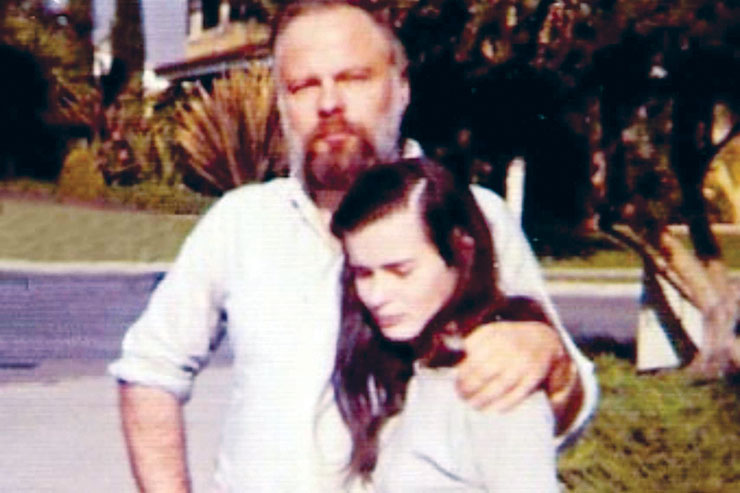
    Philip K Dick with his wife Leslie (Tessa) Busby (married between 1973-1977). Photo courtesy of Tessa Dick.

    In the novel Dr Bloodmoney (1965), the eponymous character accidentally destroys the world in an effort to counter Soviet and Chinese nukes. Survivors, like the limbless Hoppy Harrington, rely on augmentation technologies to function. In real-life since the 1960s, the US Defense Advanced Research Projects Agency has been using brain-machine interfaces to augment human capacities, such as wiring armless veterans to machines to enable them to control robotic limbs with their thoughts. This technology will be used to design next-generation killers that can operate in harsh environments, including irradiated zones and deep space.

    SYNTHETIC REALITIES
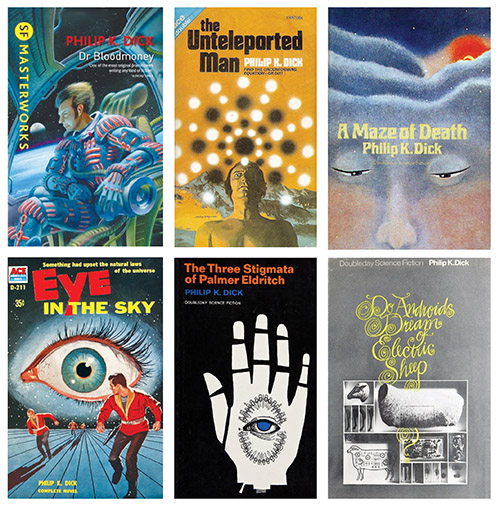
    Selection of recent and first edition paperback and hardback editions of Philip K Dick’s works.

    What is “real”? For millennia, philosophers and theologians have grappled with this issue. In his novel Eye in the Sky (1957), Dick writes about a multiverse in which half a dozen people are trapped as projections of their subjective unconscious. The novel explores themes of solipsism and the limits of conscious knowledge, asking how much or little we know about ourselves. Similar themes were explored by the psychoanalyst Carl Jung, whose work has been compared to Dick’s explorations of human motivations. Both dealt with end-time themes and humanity’s (in)ability to adjust to civilisational changes.

    Technology has augmented representation to the point where it is hard to distinguish that which is “real” from that which is modified or complete fiction. According to the UK Ministry of Defence, out to the year 2036: “simulation and representatives will have a significant and widespread impact on the future and will become an increasingly powerful tool to aid policy and decision-makers. It will also blur the line between illusion and reality” (emphases in original). Deepfakes pose national security challenges, as videos of leaders in compromising positions can be invented from whole cloth with 1s and 0s and targeted at naïve audiences to influence their opinions. Holographic projections could fool observers into thinking they’ve seen something tangible which actually consists of pure light. Such technologies can be marketed at pop concerts that “resurrect” dead singers, just as much as they can for military operations.

    Some philosophers have abandoned the word “reality” when speaking in generalities because the denotation is subjective and vague. Yet, we all believe that we are present in a physical world and that we are conscious: if not, we’d stop eating and drinking because food and hunger, etc., would not be “real.” This, too, leads to more intellectual problems because physics suggests that what is “physical” is merely potential in quantum fields. Consciousness, too, is considered a “hard problem” by neuroscientists and psychologists because there is no scientific framework for investigating consciousness, just aspects of what we call consciousness. 

    In The Unteleported Man (1964, later Lies, Inc. 1966), Dick tells a tale of commercialised, physical teleportation to an Earth-like utopia, which turns out to be an advertising ploy to hook unhappy colonists. In “reality,” the US Defense Department recorded the teleportation of light particles over small distances in the mid-2000s. The results do not appear to have been widely reported, if at all. Today, Chinese scientists are unwittingly feeding the New Cold War propaganda machine in the West with their own, much better-publicised teleportation experiments. Using virtual reality (VR), like the Oculus corporation’s headset, Facebook’s Reality Labs is trying to create a “metaverse” of augmented reality in which users can be digitally teleported into another’s VR space. 

    With reality under question, some philosophers advocate giving up intellectual searches and favouring spiritual ones: to de-condition oneself from sensory experience and just “be.” But here we get back to the circular argument: what is “just being”? Dick suggests that such questions can never be answered because of the limits of the human mind and the structure of that which we call reality. In A Maze of Death (1970), Dick’s characters talk of being “prisoners of our own preconceptions and expectations.” Dick’s work was Gnostic: a broad term for those who believe that existence is a kind of veneer of a deeper, more fulfilling experience kept from us by invisible forces. 

    “Reality,” for Gnostics like Dick, is an artificial construct; a kind of con-trick at best and prison at worst, designed and sustained by powers that cannot ordinarily be detected or defeated. Dick’s novels concerned themselves with antiheroes who found themselves in situations in which the “real” them was indistinguishable from the fake them and real or fake others. Do Androids Dream of Electric Sheep? (1968), for instance, adapted into the movie Blade Runner (1982), concerns human life in a society permeated with “replicants” who, for all intents and purposes, could be human. Although physically human-looking robots are a long way off, chatbots already trick humans into thinking they are real. The first successful bot was “Eugene Goostman,” which tricked a significant number of participants into believing it was a human. Untold numbers of troll bots post fake reviews on Amazon.

    From this, we can ask: if “reality” is unreal in the sense of it being someone or something else’s construct and that there is some kind of “true reality,” how much of you is “real” and how much of you is the result of unchecked, unquestioned, and unchallenged conditioning? The conditioning can be from nature (limited consciousness, sensory conditioning), from other people (who tell you what to do and to believe from infancy), and your own internalised conditioning that perpetuates the tricks and lies. 

    Anthropologists and sociologists call personality a social construct. In other words, if you developed your mind and personality in a cultural vacuum – no religion, no politics – how different would you be? But without social inputs, including those of culture, the infant brain does not develop. So, we are back in the trap: you need input to develop but are you the sum of those inputs or do you have unique qualities? Is the uniqueness your true self? 

    THE POLITICS OF THE TRUE SELF

    One perennial philosophy is: know yourself. But can the self be known in the contradictory circumstances in which we find ourselves? Corporations that seek to maximise profit and politicians who seek to control the public take advantage of our lack of self-knowledge. They use education, culture, propaganda, and fear to construct artificial personalities, turning us into a kind of “replicant.” 
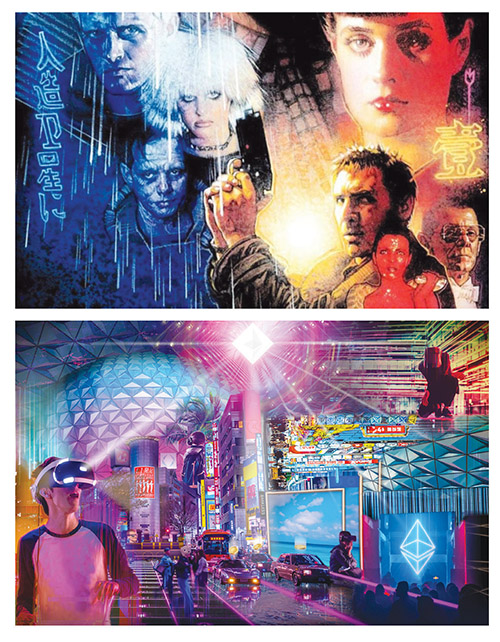
    Top: Philip K Dick’s 1968 book Do Androids Dream of Electric Sheep? was adapted into the 1982 movie Blade Runner. The theme concerns human life in a society permeated with “replicants” who, for all intents and purposes, could be human. Above: Promotion graphic for Facebook’s “metaverse” – an augmented reality in which users digitally teleport into virtual reality space. Spend enough time in these manipulated virtual spaces and people soon won’t tell the difference between real humans and the humanoid robots under development right now.

    In the film The Adjustment Bureau (2011), based on Dick’s short story Adjustment Team (1954), non-human interventionists interfere in the life of an upcoming politician. At first, the audience thinks that these beings are political rivals, but (spoiler alert) they are nudging him away from his soul mate to pursue the higher goal of self-sacrifice for the greater social good. 

    In today’s online culture, you are the product. The World Wide Web spins its threads in which to trap the surfer. Instead of doing work for the greater good, the surfer is manipulated by myriad institutions and individuals to follow certain paths beneficial only to the manipulators. Brokers and ad agencies steal your data. We live in a performance, for-profit culture in which the self can be commodified in online spheres. 

    One of Dick’s famous quotes is: “There will come a time when it isn’t ‘They’re spying on me through my phone’ anymore. Eventually, it will be ‘My phone is spying on me’.” Today, the phone is life for millions of people. It allows us to access emails, the news, take photos, purchase goods and services, surf the net, check our health status, and even prove vaccination. Dependence on technology gives intelligence agencies and Big Data endless opportunities to control and manipulate. In Dick’s day, spy agencies would listen in through the phone, but today the technology inside the phone automatically passes data to the given agency. 

    Cell towers triangulate the user’s geolocations, even when the phone is switched off. The International Mobile Equipment Identity is a 15-digit number that identifies phones on a network. Phones also store user IP addresses. Apps can also spy on users. Angry Birds, CamScanner, DoorDash, Grindr, Ring Doorbell, Tinder, Weather apps, WhatsApp, and Zombie Mod, have all been found to be Trojan horses for the US National Security Agency and/or covertly passing user data to brokers. Caveni Digital Solutions founder Raffi Jafari says: “If you are looking for apps to delete to protect your information, the absolute worst culprit is Facebook,” as well as its WhatsApp, Messenger, and Instagram. “The sheer scale of their data collection is staggering, and it is often more intrusive than companies like Google.”
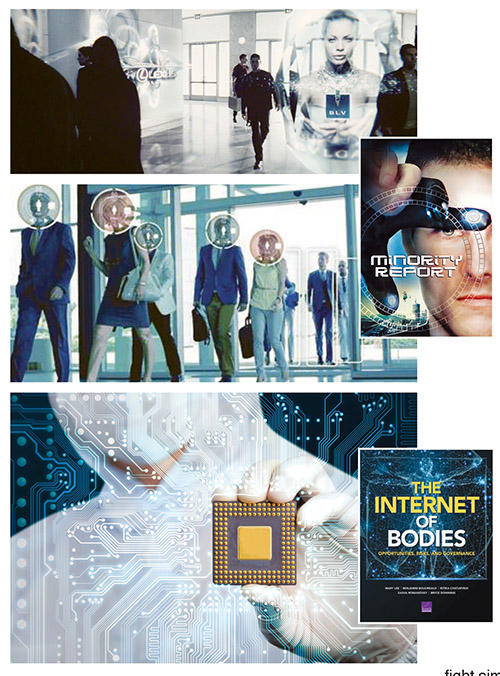
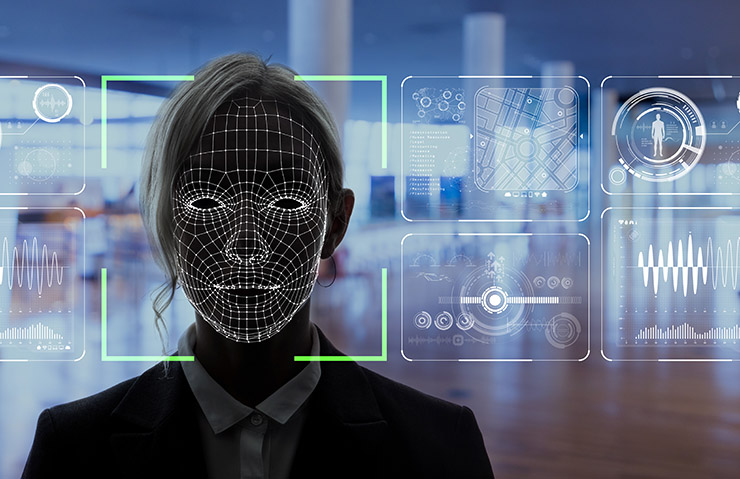
    Top: Based on Dick’s short story, the 2002 movie Minority Report predicted a society saturated with advertising in which your personal data is poached to deliver targeted ads in manufactured realities. Centre: Facial recognition systems are under development today for tracking, surveillance and data collection. Above: RAND Corporation report on integrating the Internet-of-Bodies into the Internet-of Things.

    In the movie Minority Report (2002), based on Dick’s short story, society is saturated with advertising: from interactive ads on cereal packets to voice-to-skull technology that beams commercials into the heads of people passing by. Today, real-life adverts are targeted at the users, but data to refine targeted ads is sucked out of “personal” devices, creating a feedback loop. “[T]oday we live in a society in which spurious realities are manufactured by the media, by governments, by big corporations, by religious groups, political groups – and the electronic hardware exists by which to deliver these pseudo-worlds right into the heads of the reader, the viewer, the listener.” Dick said this in 1978. “I ask, in my writing, What is real? Because increasingly we are bombarded with pseudo-realities manufactured by very sophisticated people using very sophisticated electronic mechanisms. I do not distrust their motives; I distrust their power.”

    Whatever is “real” about the human is being gathered and uploaded into myriad VR programmes that benefit our controllers but, crucially, make us superficially happy in the process so that we do not rebel, like the contented slave of Aldous Huxley’s Brave New World (1932). The military-industrial complex is trying to aestheticize the technologies of control to make them appealing to users. One designer worked with the RAND Corporation on the concept of “Internet of Bodies,” a biological step up the ladder of the “Internet of Things.” In this new age of bioconnectivity, Bluetooth-connected apps tell parents when their babies have shat. Artificial pancreases send real-time data on glucose levels to algorithms that automate insulin dosing. Wearable Attention Monitors use brain activity to track inattentiveness during scenarios like driving. Digital pills transmit biodata on reactions to ingested tablets.

    In The Three Stigmata of Palmer Eldritch (1965), Dick wrote about the blend of VR and genetic enhancement. In our real world, the “real” is being modified at the genetic level to create new physical biorealities: from engineered babies to enhanced food, from gene editing to mRNA vaccines. But who benefits? GMO food is sold to international consumers as a cure for global hunger, while domestic consumers are often not told that modified products are in their foods. 

    The human body has receptor cells (7 and 8) that shut down host cell protein synthesis, thereby preventing the use of certain materials as vaccine vectors. Modified messenger RNA enables the vector to escape detection, triggering the immune system to help the body fight similar infection: in theory. mRNA research developed into the 2010s, some of it with funding from the US Defense Advanced Research Projects Agency. But the untested (on humans) technology had no chance of being mass-marketed until COVID came along. Pfizer, BioNTech, and Moderna developed mRNA vaccines accordingly. 
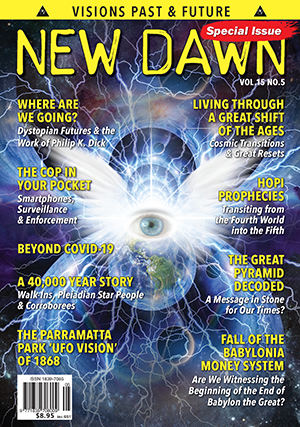
    Get the issue this article appears in

    Transcendence & Control

    Dick also prophesied that “[c]omputer use by ordinary citizens… will transform the public from passive viewers of TV into mentally alert, highly trained information-processing experts.” But the price of mental alertness is addiction to screens. It is also losing our physical selves in a digital realm. The human is not merely a data processor; humans themselves become data that unseen powers buy, sell, manipulate, and use to create further synthetic realities. With so much online influence in the form of peer pressure, propaganda, targeted marketing, biosurveillance, and non-physical interaction, what it means to be human is challenged in the constant environment of Internet-of-Things. What it means to be physically human is also challenged as unaccountable corporations tinker with food, vaccines, and even the cells that produce humans. Dick’s characters, and indeed Dick himself, struggled to navigate this ever-shrinking minefield. 
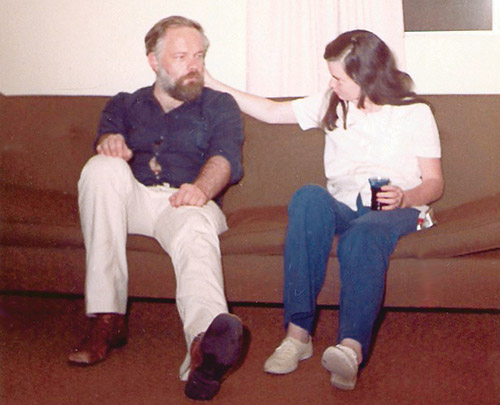
    Philip K Dick in a moment of reflection, consoled by his fifth wife Tessa. Photo courtesy of Tessa Dick.

    Perhaps more important than outer, modified constructs is the inner world inhabited by the characters. Our techno overlords have not yet mastered how the inner self projects reality externally and how the external world conditions the individual to internalise their control. The latter fascinated Gnostics like Dick, who felt the glimmer of transcendence in the darkness of matter and synthetic reality. 

    [alert type=”general” dismiss=”no”]This article was published in New Dawn Special Issue Vol 15 No 5.[/alert]

    [alert type=”success” dismiss=”no”]If you appreciate this article, please consider subscribing to help maintain this website.[/alert]

    Footnotes

    1. Bulletin of the Atomic Scientists, “It is 7 minutes to midnight,” Timeline, https://thebulletin.org/doomsday-clock/timeline
    2. Eugene Rabinowitch (1953) “The Narrowing Way,” Bulletin of the Atomic Scientists: 294-98, https://thebulletin.org/sites/default/files/1953%20Clock%20Statement%201.pdf
    3. John Mecklin, “Closer than ever: It is 100 seconds to midnight,” Bulletin of the Atomic Scientists, https://thebulletin.org/doomsday-clock/2020-doomsday-clock-statement
    4. Konrad Szocik and Martin Braddock (2019) “Why Human Enhancement is Necessary for Successful Human Deep-space Missions,” New Bioethics, 25(4): 295-317
    5. Stuart Douglas (2018) The Apocalypse of the Reluctant Gnostics: Carl G. Jung and Philip K. Dick, Routledge
    6. Development, Concepts and Doctrine Centre, “Strategic Trends Programme: 2007-2036,” January 2007, Ministry of Defence, p. 21, https://ia600702.us.archive.org/28/items/strat_trends_23jan07/strat_trends_23jan07.pdf
    7. Congressional Research Service, “Deep Fakes and National Security,” 26 August 2020, https://apps.dtic.mil/sti/citations/AD1117081
    8. Tomoko Sano, “Holography: The Next Disruptive Technology,” Army Research Laboratory, April 2017, ARL-TR-8007, https://apps.dtic.mil/sti/pdfs/AD1033176.pdf
    9. For instance, Noam Chomsky (2003) Chomsky on Chomsky: Language, Mind, and Freedom: The Stony Brook Interviews, www.academia.edu/35999655/Chomsky_Interview.docx
    10. D.M. Cabaret et al. (2021) “Elementary Particles: What are they? Substances, elements and primary matter,” Arxiv, https://arxiv.org/pdf/2103.05522.pdf
    11. David J. Chalmers (1996) The Conscious Mind: In Search of a Fundamental Theory, Oxford University Press
    12. Eric W. Davis, “Teleportation Physics Study,” Air Force Research Laboratory, AFRL-PR-ED-TR-2003-0034, August 2004, https://sgp.fas.org/eprint/teleport.pdf
    13. Emerging Technology, “First Object Teleported from Earth to Orbit,” MIT Technology Review, 10 July 2017, www.technologyreview.com/2017/07/10/150547/first-object-teleported-from-earth-to-orbit
    14. Kif Leswing, “Facebook creates exec team to work on Mark Zuckerberg’s vision for a digital universe,” CNBC, 26 July 2021, www.cnbc.com/2021/07/26/facebook-creates-exec-team-to-work-on-metaverse.html
    15. Jiddu Krishnamurti, “Being free of the deepest conditioning,” Public talk, Brockwood Park, 4 September 1971, https://jkrishnamurti.org/content/being-free-deepest-conditioning.
    16. Quoted in Lejla Kucukalic (2009) Philip K. Dick: Canonical Writer of the Digital Age, Routledge, p. 115
    17. Lorenzo DiTommaso (2001) “Gnosticism and Dualism in the Early Fiction of Philip K. Dick,” Science Fiction Studies, 28(1): 49-65
    18. Karen L. King (2003) What Is Gnosticism?, Harvard University Press
    19. Doug Aamoth, “Interview with Eugene Goostman, the Fake Kid Who Passed the Turing Test,” TIME, 9 June 2014, https://time.com/2847900/eugene-goostman-turing-test
    20. See my “Robot Trolls on Amazon: How Fake Reviews Could Undermine Progressive Politics,” CounterPunch, 4 October 2019, www.counterpunch.org/2019/10/04/robot-trolls-on-amazon-how-fake-reviews-could-undermine-progressive-politics
    21. Mitchell S. Green (2018) Know Thyself The Value and Limits of Self-Knowledge, Routledge.
    22. Shauna L. Shames and Amy L. Atchison (2019) Survive and Resist: The Definitive Guide to Dystopian Politics, Columbia University Press, eBook
    23. ExpressVPN, “10 ways the NSA is spying on you right now,” 10 August 2021, www.expressvpn.com/blog/8-ways-the-nsa-spies-on-you
    24. GlitchMind, “How Your Cell Phone Spies on You by Edward Snowden,” 11 November 2019, https://glitchmind.com/how-your-cell-phone-spies-on-you
    25. Cyber Security Intelligence, “Your Phone Is Spying On You,” 17 June 2020, www.cybersecurityintelligence.com/blog/your-phone-is-spying-on-you-5029.html
    26. Quoted in Leah Campbell, “If These Apps Are Still on Your Phone, Someone May Be Spying on You,” Reader’s Digest, 16 June 2021, www.rd.com/list/phone-apps-spying-on-you
    27. Philip K. Dick (1995) The Shifting Realities of Philip K. Dick: Selected Literary and Philosophical Writings, Pantheon Books, p. 262
    28. Georgia Lupi, “Internet of Bodies: Our Connected Future,” RAND, www.rand.org/about/nextgen/art-plus-data/giorgia-lupi/internet-of-bodies-our-connected-future.html
    29. Kenneth R. Chien, Lior Zangi and Kathy O. Lui (2015) “Synthetic Chemically Modified mRNA (modRNA): Toward a New Technology Platform for Cardiovascular Biology and Medicine,” Cold Spring Harbor Perspectives in Medicine, 5(1): a014035
    30. DARPA, “ADEPT,” www.darpa.mil/attachments/ADEPTVignetteFINAL.pdf
    31. Ariadne A. Nichol (2020) “Potential Implications of Testing an Experimental mRNA-Based Vaccine During an Emerging Infectious Disease Pandemic,” The American Journal of Bioethics, 20(7): W1-W3
    32. Shifting Realities, op. cit., p. 102

    © New Dawn Magazine and the respective author.
    For our reproduction notice, click here.

  • Making Social Media Work for You

    Making Social Media Work for You

    From New Dawn Special Issue Vol 16 No 1 (Feb 2022)

    You are the product. Your personal data are sold to brokers and advertisers against your informed consent to profit the uber-rich, like Facebook’s (now “Meta”) co-founder, Mark Zuckerberg.1 But it gets worse. Much worse. Your very reputation as a human is built or demolished on “social media” as it is sold to prospective employees, lenders, and landlords.2 

    So-called social media, which are really anti-social media,3 are merging into the tech-pharma industrial complex. They are creating a biofascist system in which your body and behaviour are potential money-makers for tech monopolies. The artificial intelligence (AI) economy is morphing into the “internet-of-bodies,” where genetic engineers and for-profit health companies will acquire all-pervasive, ubiquitous data about your most personal information.4 Not only this, but anticipatory artificial intelligence markets are under development. 

    GRIM FUTURE… AND PRESENT

    In these future markets, the omnipresent surveillance will be fed to algorithms programmed to guess your mood, reactions, and thoughts. We can imagine the nightmarish social applications.5 In public spaces, individuals with anxiety, for instance, might be analysed by AI, which could send adverts for stress pills to their phones, while security guards are dispatched to detain the individual, suspecting them of plotting crimes. Any public performance by, for instance, a populist politician will see their every facial and bodily movement scrutinised by behavioural AI in real-time for the public to assess and judge. Mainstream media delivering the given political debate will rank the “confidence” and “calmness” of the favoured candidate higher than those of the underdog, shattering voter confidence in the populist. 

    The present is already grim enough. Generation Z and the maturing Generation Alpha (perhaps named accordingly to anticipate and create generational divisions?)6 were born and are being born into a connected world, never knowing a moment of being off-line or having to wait for gratification. 

    Early so-called social media appealed to users’ egos; YouTube, MySpace. But they also played on our need, as humans, to be part of communities. “Social media” liberated the individual from the physical and restricting geography of their dwellings, but also from their cultures. The lonely and misunderstood teen could find the kinds of like-minded people online that they could not at school or in their hometown. The niche hobbyist could do likewise. The conformist could post about themselves to receive validation from fellow conformists.7 

    But users initially had no clue that their habits, connections, thoughts, interests, and posts were being harvested for profit. They had no idea that the military-intelligence complex was also hoovering up their data to build character profiles and engineer society. Pretty soon, users entered carefully crafted filter bubbles in which ever-increasing niche trends of favoured sites, products, “friends,” and personalities would play up to those traits to attract more users to the bubble. Behind the scenes, social media companies worked with cognitive psychologists to devise ways of keeping users addicted to their devices by simple reward-based conditioning (a dopamine hit from getting “likes,” a serotonin rise from checking inboxes, etc.). 

    This sign, held by a protester during the so-called Arab Spring uprising in Egypt in 2011, directed people to anti-regime Facebook groups.

    Anti-social media became weapons. When the Obama administration wanted to topple the regime of Hosni Mubarak in Egypt, it trained hordes of social media users8 to radicalise the peoples of Egypt to risk their lives to remove the dictator. But it was a trap. The US and Britain did not want “democracy” in Egypt. After Mubarak resigned, they fully backed the military under General al-Sisi against the democratically-elected government of Mohamed Morsi, who was soon deposed. The same occurred in Libya against Muammar Gaddafi. In Cuba, the CIA set up a fake Twitter-type social media app, ZunZuneo, against the Castro dynasty, their long-time target.9 Today, anybody or any organisation too far left or right is censored, “fact-checked,” and de-platformed, including the President of the USA. 

    As the tech-pharma complex imposes its biofascist framework on the world, anybody who opposes, questions, or investigates alleged health mandates is directed to the approved narrative or shut down entirely. But it doesn’t have to be this way. Nothing in this system is yours. Money is not your invention. You did not design or build the roads on which you walk, nor the computers on which you work. You may have voted for a politician, but you have no input in the political system beyond putting a cross periodically on a piece of paper. Nothing is yours, yet everything about you is theirs: where you live (census), your present space (geolocation), your physical health (medical records), your working, leisure, and buying habits (online data). 

    There is no balance in this equation. However, we still use the system that we did not invent and over which we have no control to benefit ourselves. The same can be said of “social media”: they use us, we don’t use them; but we could strategically use them to our advantage, like an army capturing a piece of enemy technology. How do we do it? It depends on who we are and what interests us.

    DETOX: RETRAIN YOUR BRAIN

    The social media companies with the most active users are as follows: Facebook (Meta, 2.8 billion users), YouTube (2.2bn), WhatsApp (owned by Meta, 2bn), Instagram (Meta, 1.3bn), Messenger (Meta, 1.3bn), WeChat (1.2bn), and TikTok (1bn). Other companies like Douyin, QQ, Sina Weibo, Telegram, and Snapchat have less than half of the market share of most of the above companies.10 With 400 million worldwide users, Twitter is nothing compared to FB. Seventy-seven million Americans use Twitter compared to over 200 million who use FB.11 Eight in 10 FB users access the site on a mobile device, not computer/laptop. Over 11 million Australians use FB compared to 4.6 million who use Twitter.12

    More males than females use Facebook. Worldwide (Australia included),13 it is most popular among the 18 to 24 age group (a fifth of people in this age range use it, 9 per cent females, 13 males) and the 25 to 34 age group (a third use it, 12 per cent female, 19 male).14 The numbers are surprisingly similar for US FB users, where given the larger number of connected people (compared to, say Africa,) we could expect FB user numbers to be larger.15 Seven in 10 American adults use Facebook. Nearly half of the company’s revenue comes from North America, with 40 per cent of US ad revenue coming from Instagram. The average user clicks on 12 adverts per month, and 75 per cent click on local business pages.16 Given their monopolies over the so-called market, when talking about western social media we really mean FB and YouTube. 

    Seven in 10 Americans of all ages between 15 and 56+ use YouTube.17 Like FB, slightly more users are male than female. Two billion people visit YouTube per month, spending an average of 18 minutes per day on the site. User time on YouTube varies. Millennials, for instance, have a higher tendency to binge on content than younger or older viewers.

    Social media companies sell user attention for advertisers. The more attention you give your phone, the more money FB et al. raise in ad revenue, hence their designers’ purposeful engineering of addiction into the architecture of their software. Before the pandemic, more than six in 10 Americans checked their phones 160 times a day, of whom 65 per cent checked the phone at night. One third spend more time with their phone than with their partner, and nearly half would rather give up sex for a year than their phone.18 By 2018, British users checked their phones every 12 minutes.19 The FB engineers have exploited three of the brain’s four dopamine pathways, the so-called neurotransmitters: the mesocortical, mesolimbic, and nigrostriatal. The more responses that stimulate rewards, the stronger the long-term potentiation (the strengthening of neural connections). Through a process called reward prediction error encoding, the brain can anticipate that it will receive a dopamine reward from an external stimulus.20 

    A recent study claimed that taking a break from social media, otherwise known as a digital detox, did nothing to improve mood. But the study was flawed. The length of the detox was short. It is well-known that addicts experience initial withdrawal symptoms that make them unhappy in the short term.21 Other studies that include these key considerations suggest that longer-term digital detox works. For example, the so-called “fear of missing out” factor was paired with the user’s sense of social connectedness and mental wellbeing. For most participants, a seven-day social media absence significantly increased mental wellbeing and, to an extent, social connectedness; which is interesting because social media are supposed to connect us, so we would expect the feeling of social connectedness to decline during detox. But what happens is that real social connectedness starts to occur.22

    BEAT THE ALGORITHMS

    Now that you have detoxed and reprogrammed your brain against those dopamine hits, you can use social media in a disciplined and constructive way: to organise protests, share real news, and create original content. How can these things be achieved when the tech giants are censoring everyone except the neoliberal-approved “centre”? So-called “fringe” terms flagged by Google, for instance, include “who shot JFK,” “proof earth is flat,” “do vaccines cause autism,” and “is global warming real” (sic). Google’s so-called “conspiracies & fake news” topics include “Vaccines: The truth behind vaccinations.”23 

    There are alternative search engines, though researchers note that they yield poor results because they cannot compete with Google’s computing power. The paradox, however, is that Google censors content. To avoid the strike-through, in which Google displays results not entirely relevant to your search, put each key phrase into inverted commas. Try changing your location, as results vary according to region. To avoid being successfully profiled, regularly search for things you are not really interested in. Wipe your cookies and browser history each day. None of the above presents a perfect solution to beating censors, remaining anonymous, or confusing the algorithms, but they can at least limit the power that these monopolies have over you and your browsing experience. 

    In addition to using alternative search engines like DuckDuckGo, avoiding the censors is possible when creating and sharing content. 

    One publication suggests five ways to beat the algorithms. Some might not be relevant now if buttons and programmes have changed, but the creative solutions can inspire ways to defeat the system. 1) Activate the “most recent posts” FB function by tapping the See More function so that you are not limited to posts the algorithm is programmed to promote. 2) Because FB is driven by the popularity of the page, person, and content, add friends and pages to Favourites so that the algorithm drives their content to your notifications. 3) Post screenshots instead of text of content dubbed “fake news” by the system. Programmes are less good at scanning images than text. 4) Engage with your political opposites to create an algorithmic crossover so that your content is less likely to be censored. 5) Send alerts out to smaller groups to limit the chance of the algorithm listing your content as spam.24 

    Strategies to fight censorship. This graphic, which went under the radar of Facebook censors, is of an old Arabic font saying: “Death to Israel: let the algorithms benefit you, Mr Mark.” 

    Following America’s Israel policy, FB has deleted and censored anti-occupation accounts and pages, but Arabic-speaking peoples have beaten the anti-Palestine robots by using old Arabic fonts that the software can’t recognise. We could take a cue from this and find ways to create content with fonts that algorithmic eyes cannot understand.25

    It is feasible to communicate with deepfake amateurs to create algorithm-beating political content modified enough to evade censors but not so much that the human user doesn’t understand. For instance, a deepfake-modified video of a prominent “vaccine”-sceptic might be tweaked to make it appear that they are talking about something else, though those sharing the content know what the video really refers to. The sceptic’s face could be altered so that the system doesn’t recognise and flag them. Trigger words like “vaccine” could be replaced with something unrelated like “orange juice.” Chinese dissidents beat the censors with similar techniques.26 

    Social media and indeed the very architecture of smartphones means that it’s not just users’ online activities that are being monitored. Phones are designed to create a digital trail of your physical movements. In so-called western democracies, police have identified protestors from their locations at particular times from data gleaned from those protestors’ phones. For instance, prior to the G8 summit in Heiligendamm (Germany) in June 2007, one thousand police raided the homes of 40 activists from data acquired from intercepted telecommunications.27 Similar tactics are being used in western “democracies” to surveil and arrest protestors opposing injection mandates and lockdowns. 

    Civil liberties organisations offer advice to demonstrators on how to evade detection. Tips include turning off the location (though signals can still be triangulated), particularly when posting from a particular location to social media,28 downloading encrypted messaging applications such as Signal and Threema,29 and, of course, keeping your phone in a separate room when having conversations because the microphone is recording.30 

    Get the issue this article appears in

    Harnessing Informational Tools

    As programmes and moderators become increasingly censorious – i.e., Google memory-holing content, Facebook sending users to digital prison, YouTube demonetising original work as punishment for non-conformity – it is important to go to other social media platforms: Bitchute, Gab, Telegram, Parler, Rumble. But this itself creates a dialectic in which everything bland, PR-friendly, and pro-corporate is permitted to appear on the monopoly platforms, and everything else jumps ship to alternative sites. Just as the monopolies create echo-chambers of dullness in which corporate media content is promoted over independent producers whose work gains grassroots momentum, filter-bubbles are generated on alternative platforms. It is, therefore, important to recognise and be suspicious of the motives of those posting on such sites. It is easy to get sucked into rabbit holes as a consequence of avoiding the ever-restrictive social media giants. 

    The political left has not helped itself in this regard. It has been quick to de-platform. Not only has the left found itself being de-platformed by corporate monopolies, but it has also helped push the political right into a new social media sphere in which ideas are reinforced instead of being challenged. 

    This is a perfect dialectic for our rulers, who paint everything as a battle between good and evil, ignoring the bad on all sides and good on all sides. In this age of biofascist control, we must find the good on each side and use informational tools to fight the new tech-pharma complex. 

    [alert type=”general” dismiss=”no”]This article was published in New Dawn Special Issue Vol 16 No 1.[/alert]

    [alert type=”success” dismiss=”no”]If you appreciate this article, please consider subscribing to help maintain this website.[/alert]

    Footnotes

    1. Stephen Beake (2014) Data Brokers and the Need for Transparency and Accountability, Nova Scientific
    2. Nora A. Draper (2019) The Identity Trade: Selling Privacy and Reputation Online, New York University Press
    3. Siva Vaidhyanathan (2018) Antisocial Media: How Facebook Disconnects Us and Undermines Democracy, Oxford University Press
    4. Eleonore Pauwels and Sarah W. Denton (2018) “Searching for privacy in the internet of bodies,” Wilson Quarterly, www.wilsonquarterly.com/quarterly/living-with-artificial-intelligence/searching-for-privacy-in-the-internet-of-bodies
    5. Kate Crawford, “Time to regulate AI that interprets human emotions,” Nature, 6 April 2021, www.nature.com/articles/d41586-021-00868-5
    6. Caroline Bologna, “What’s The Deal With Generation Alpha?,” Huffington Post, 11 August 2019, www.huffpost.com/entry/generation-alpha-after-gen-z_l_5d420ef4e4b0aca341181574
    7. Educational, Psychological and Behavioral Considerations in Niche Online Communities, Information Science Reference
    8. James K. Glassman, “Public Diplomacy 2.0: A New Approach to Global Engagement,” US Department of State, https://2001-2009.state.gov/r/us/2008/112605.htm
    9. Associated Press, “US secretly created ‘Cuban Twitter’ to stir unrest and undermine government,” Guardian, 3 April 2014, www.theguardian.com/world/2014/apr/03/us-cuban-twitter-zunzuneo-stir-unrest
    10. Statista, “Global social networks ranked by number of users 2021,” 16 November 2021, www.statista.com/statistics/272014/global-social-networks-ranked-by-number-of-users
    11. Statista, “Leading countries based on number of Twitter users as of October 2021,” 19 November 2021, www.statista.com/statistics/242606/number-of-active-twitter-users-in-selected-countries
    12. FIBER Marketing, www.fiber.com.au/post/social-media-statistics-worldwide-australia
    13. Thomas Hinton, “Distribution of Facebook users in Australia 2021, by age and gender,” Statista, 15 October 2021, www.statista.com/statistics/680607/australia-facebook-user-distribution-by-age-and-gender
    14. Statista, “Facebook: distribution of global audiences 2021, by age and gender,” 19 November 2021, www.statista.com/statistics/376128/facebook-global-user-age-distribution
    15. Statista, “Facebook user share in the United States 2021, by age group,” 15 October 2021, www.statista.com/statistics/187549/facebook-distribution-of-users-age-group-usa
    16. Salman Aslam, “63 Facebook Statistics You Need to Know in 2021,” Omnicore, 4 January 2021, www.omnicoreagency.com/facebook-statistics
    17. L. Ceci, “YouTube usage penetration in the United States 2020, by age group,” 19 October 2021, www.statista.com/statistics/296227/us-youtube-reach-age-gender
    18. Gabrielle Pickard-Whitehead, “66% of Americans Check Phone 160 Times a Day, Here’s How Your Business Can Benefit,” Small Business Trends, 3 March 2020, https://smallbiztrends.com/2020/03/2020-mobile-phone-usage-statistics.html
    19. Press Association, “Brits Now Check Their Mobile Phones Every 12 Minutes,” 2 August 2018, www.huffingtonpost.co.uk/entry/brits-now-check-their-mobile-phones-every-12-minutes_uk_5b62bf60e4b0b15aba9fe3cb
    20. Trevor Haynes, “Dopamine, Smartphones and You: A battle for your time,” Harvard University, May 2018, https://sitn.hms.harvard.edu/flash/2018/dopamine-smartphones-battle-time
    21. Andrew K. Przybylski, Thuy‑vy T. Nguyen, Wilbert Law, and Netta Weinstein (2021) “Does Taking a Short Break from Social Media Have a Positive Effect on Well‑being? Evidence from Three Preregistered Field Experiments,” Journal of Technology in Behavioral Science, 6: 507-14 
    22. Lorna Brown and Daria J. Kuss (2020) “Fear of Missing Out, Mental Wellbeing, and Social Connectedness: A Seven-Day Social Media Abstinence Trial,” Environmental Research and Public Health, 17(4566): doi:10.3390/ijerph17124566
    23. Google, “Fringe ranking/classifier: Defining channel quality,” Google Groups, “Breitbart and Google Ads,” February 2017, https://fdocc2.wordpress.com/2020/08/31/here-in-pdf-the-full-set-of-zach-vorhies-released-from-google-dont-be-evil-files-a-whistleblower-denouncing-the-current-criminal-removal-of-truths
    24. Andy Hogue, “Combat Facebook Censorship With These 5 Simple Steps,” The Hayride, 23 September 2020, https://thehayride.com/2020/09/combat-facebook-censorship-with-these-5-simple-steps
    25. Mustafa Abu Sneineh, “Facebook users deploy old Arabic font to bypass algorithm, support Palestinians,” Middle East Eye, 23 May 2021, www.middleeasteye.net/news/israel-palestine-facebook-algorithm-old-arabic-font
    26. Ritu R. Patil (2014) “A Method to Evade Keyword Based Censorship,” Master’s thesis, University of Texas at Arlington, https://rc.library.uta.edu/uta-ir/bitstream/handle/10106/24979/Patil_uta_2502M_12978.pdf
    27. Ben Hayes, “NeoConOpticon: The EU Security-Industrial Complex,” Transnational Institute and statewatch, June 2009, statewatch.org/media/documents/analyses/neoconopticon-report.pdf, p. 68
    28. Privacy International, “How social media monitoring can be used at a protest,” 6 May 2021, https://privacyinternational.org/explainer/4509/how-social-media-monitoring-can-be-used-protest
    29. Amelia Nierenberg, “Signal Downloads Are Way Up Since the Protests Began,” New York Times, 12 June 2020, www.nytimes.com/2020/06/11/style/signal-messaging-app-encryption-protests.html
    30. Kim Komando, “You’re not paranoid: Your phone really is listening in,” USA Today, 19 December 2019, https://eu.usatoday.com/story/tech/columnist/2019/12/19/your-smartphone-mobile-device-may-recording-everything-you-say/4403829002

    © New Dawn Magazine and the respective author.
    For our reproduction notice, click here.

  • Silent Weapons for the Secret War on You

    Silent Weapons for the Secret War on You

    From New Dawn Special Issue Vol 16 No 2 (June 2022)

    The world of non-lethal weaponry has opened the door to technologies that allow the control of one’s mind, thoughts, actions, and behaviours via the use of pulsed high-frequency microwave blasts, electrical transmissions, and directed heat and sound waves. These can bypass our regular inhibitors and enter the human body and brain unbeknownst to the targeted person until they suffer the consequences.

    It’s been going on for decades and not just for war purposes, but to stop protests and riots, silence and incapacitate dissenters, and bring unruly crowds under control.

    LRAD

    The massive crowd of people at Parliament House, Canberra, protesting vaccine mandates.

    For years, law enforcement has been using non-lethal weapons, including LRAD – Long-Range Acoustic Device – which blasts sound waves to cease behaviour by temporarily disorienting the intended victims. But while these devices serve practical and easily identifiable purposes for both military and law enforcement, there exists a more insidious use for this kind of technology. 

    In February of 2022, alternative media reported on the use of LRAD during anti-vaccine mandate protests in Canberra. Australian Federal Police admitted using the device during a Canberra Convoy Freedom rally outside Parliament House. A number of videos and images hit social media showing people with various injuries, such as heat sores, rashes, and what looked like allergy-induced welts. There were also reports of sunburn and heatstroke symptoms, weakness, and temporary and permanent hearing damage. 

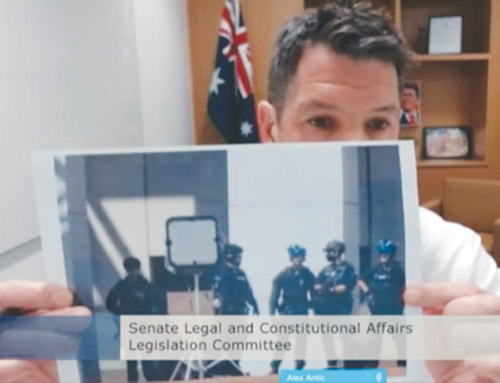
    In the Australian Federal Senate, Sen. Alex Antic raised the issue of police use of LRAD at the Canberra protest against vaccine mandates.

    One Nation Senator Malcolm Roberts and Liberal Senator Alex Antic brought the issue before the Senate after Roberts’ office was inundated with complaints from protestors who had been at the rally. Senator Antic showed photos of a LRAD deployed beside members of the police force. Protestors took photos of LRAD speakers on cars near the rally sites, but the response was typical. They were told that LRAD was only used to broadcast communications to the crowd. 

    Despite the onslaught of injuries, there was a mocking tone to many of the responses to claims LRAD was used to debilitate the crowd. The Conversation reported on 20 February 2022 that sonic weapons such as LRAD were used for “crowd control and communication” and that reports of injuries were “inconsistent with what an LRAD can really do.” LRAD was also employed at a Black Lives Matter protest in New South Wales. NSW Police responded to concerns by stating at a press conference that “it was a normal loud-hailer.”

    The first official application of LRAD happened in the year 2000 on the American guided-missile destroyer, USS Cole, when it was bombed by a small boat in a terrorist attack. Naval personnel on the Cole used LRAD to hail the boat but were unsuccessful. Since then, LRAD has become a staple weapon of choice used to deal with riots and protests. Portable LRAD units were photographed with police during the Canadian Truck Convoy Freedom protests in Ottawa, Canada, in February 2022.

    LRAD is often used in loudspeaker mode for crowd communications, but it can also be turned on in infrasound and ultrasound modes to cause different injuries and sicken and debilitate rioters or protestors. Because we cannot hear infrasound or ultrasound, we have no idea the weapon is being used on us until it’s too late. Using a Long-Range Acoustic Device to direct sound has raised concerns with human rights groups about volumes of sound over 90 dB, which can damage a person’s hearing. Because the LRAD beam doesn’t discriminate, anyone in its path will be injured, including innocent bystanders and children.

    In an article, “Did Police Use Sonic Weapons Against Australians Peacefully Protesting Covid Tyranny?”, Reignite Democracy Australia warned that the use of LRAD was “another move towards militarised suppression of legal protests in Australia.” They said this was an outrageous attack by the government on its people. The media, as expected, churned out propaganda to suppress the story, but Canberra protesters used every social media outlet to show what was happening on the ground and, for them, how far democracy in Australia had fallen.

    Bringing the Heat

    In September 2020, Gizmodo reporter Matt Novak wrote an article titled “U.S. Troops Asked About Using ‘Heat Ray’ Weapon Against Protesters, According to Whistleblower.” According to sworn testimony by said whistleblower, federal troops in Washington, D.C. considered using high-tech sound cannons and heat rays against protestors outside the White House in June of that year. 

    Heat weapons were nothing new in 2020. Active Denial System (ADS) is the fancy name for using invisible microwave beams that cause incredible pain by burning the skin of people even at a distance. US troops first used ADS in Iraq after the invasion in 2003. Some speculate the US government uses them on their own soil.

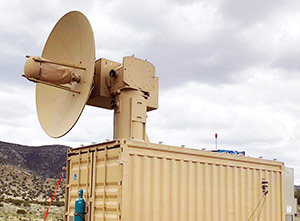
    The ADS produces scalding heat not designed to kill but to injure. Like sound weapons, heat weapons are considered non-lethal and meant to induce pain to disperse a riot or large crowd. Developed by the US Air Force and built by Raytheon Technologies, ADS can produce millimetre-wavelength bursts of energy, capable of penetrating 1/64 inch into human skin. That is enough to agitate water molecules in the dermis and produce a burning sensation strong enough to stop a person from whatever they are doing. 

    ADS has a range of hundreds of metres and can be aimed like a searchlight. Extensive testing has shown that no human can withstand the beam for more than just a few seconds. 

    Directed Energy Weapons

    Directed energy weapons include any kind of directed energy, whether in the form of light, sound, heat, electrical or kinetic, at a specific target or person. These types of devices are not new. 

    The Russian LIDA Machine, which employs EM pulses to make a target exhausted or sleep-deprived, has been in use since before the 1980s. News network CNN broadcast a special report on the work of Dr Ross Adey, who studied the LIDA Machine and appeared with one on the show. LIDA can pulse sound, light, and radiant heat, but usually only towards a person in close proximity. At that time, Adey and his colleague, Dr Eldon Byrd, were studying LIDA as a potential weapon.

    Some of the symptoms or indicators of a directed energy weapon attack allegedly include:

    • Sudden waking at exactly the same time at night, as if prompted by an external force
    • Hot stinging or needling sensations deep within the flesh, especially while attempting to sleep
    • Vibration of muscles and body parts or nearby immobile objects
    • Fast and pounding heartbeat and ringing in the ears
    • Very high body heat despite cool surroundings and lack of actual fever
    • Sudden and extreme fatigue 
    US Air Force microwave weapon for killing drones by frying their electronics

    Directed-energy “beam weapons” harness light and radio waves as their form of ammunition. The US military has been exploring this pulse energy weaponry for decades. A 2005 article on the MSNBC website, “Despite Promise, Energy Beam Weapons Still Missing From Action,” states that these pulses, which behave much like the phasers in Star Trek, can provide a precise, instantaneous and inexhaustible form of firepower on future battlefields – if the technology is ever logistically realised. 

    It would appear that now is the time that potential can be realised. In early 2022, the US Navy’s Naval Surface Warfare Center established a new division that focuses on research and development of high-power microwave (HPM) directed-energy weapons.

    Over the last five years, directed-energy weapons have been a high-level priority for the US Office of the Secretary of Defense, with funding for R&D roughly doubling over the period. 

    Other countries admit they are also developing microwave weapons and high energy lasers. 

    Both high energy lasers and HPM projects require significant development costs, but the cost per shot is extremely cheap compared to the multi-million-dollar cost of a missile.

    According to defence news reports, HPM can jam devices and physically destroy electrical systems. These reports do not reveal what it does to a human body.

    Another breaking news story on this front in 2022 was the announcement that directed energy microwave weapon systems could be placed on heavy-lift drones to shoot down drone swarms.

    Havana Syndrome

    Directed energy weapons may be the stuff of future battlefield strategies, but for many “targeted individuals,” who report having been on the receiving end of such invisible warfare, these technologies are already being used to control, manipulate, terrorise, and harass off the battlefield.

    In December 2016, diplomats and CIA officials at the US Embassy in Havana, Cuba, reported mysterious symptoms that came on without warning. These included headaches, fatigue, cognitive impairment, vision loss, hearing loss, vertigo, tinnitus, and loss of motor control. Over 200 other diplomats later reported experiencing some or all of these symptoms, as well as US officials in Asia, Europe, Australia, and the United States.

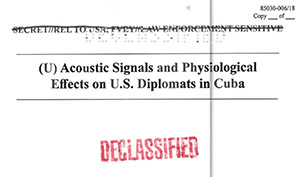
    Cover of the 2018 JASON report on Havana Syndrome. JASON is an independent group of elite scientists which advises the US government.

    According to Nicholas Davis, writing in “What is Havana Syndrome?” for American University in Washington, D.C., in July of 2021, victims described waves of pressure inside their heads, walls of sound, immense noises that sounded like swarms of cicadas in their brains… Sounds a lot like Voice To Skull [see accompanying story in magazine]. 

    In the years that followed, several theories and studies have ensued by intelligence agencies in the US, the White House, and medical experts working for or outside the government. The consensus was that these are likely pulsed microwave attacks which could account for the symptoms (another bizarre theory was pesticide exposure).

    Even 60 Minutes and New York Magazine put forth reports, as did many international news agencies, but all suggested the critical problem was analysing the data to find the root cause. For example, 60 Minutes discussed a Stanford University report that looked at the nature of the brain injuries suffered by many victims. Dr David Relman, a professor of medicine at Stanford University, helped lead two government-sponsored panels investigating the injuries. “What we found was, we thought, clear evidence of an injury to the auditory and vestibular system of the brain,” Relman said. “Everything, starting with the inner ear where humans perceive sound and sense balance and then translate those perceptions into brain electrical signals.”

    One of the victims was former US Homeland Security Chief of Staff, Miles Taylor, who told 60 Minutes that he was targeted twice in his Washington home, which smacks of the stories of the many targeted individuals who experience debilitating symptoms in their own homes or workplaces. 

    Regarding the over 1,000 reports of Havana Syndrome, the US Department of Defense and Intelligence communities ultimately admitted they could not identify a “foreign state actor or external device or mechanism to any of those cases.”

    Was it some terrorist group or state actor, or the work of the United States testing its own weapon technology? The frightening thing is this technology allows those who possess it to target anyone, from enemies of the state to individuals who speak out in protest against the government or its chosen narratives. Moreover, because these directed energy weapons can be activated via remote control at a source a distance away from the intended victim, it becomes a huge challenge to capture the perpetrators behind such attacks.

    Conspiracy theorists, who lately have been seeing their “theories” become “fact,” concur on the microwave pulse origin of Havana Syndrome, even going so far as to warn of new EMF/5G/Microwave Pulse Weapons coming down the pike. 

    Get the issue this article appears in

    5G Towers

    During the first global lockdowns over COVID-19 in early 2020, numerous countries allowed 5G towers to be erected despite the restrictions, with towers first going up in Wuhan, China, near the lab now considered the birthplace of the virus, as well as towns in Italy that first reported COVID cases, and subsequently throughout the United States and other nations. It is up for debate whether this was the telecom industry taking advantage of the opportunity to put up towers near schools, hospitals, and homes without much community kickback, or a more sinister plan to erect a deadly grid of microwave energy that would one day be far more insidious than a virus.

    Author, researcher, and clinical scientist Dr. Robert O. Young states that “through-wall RADAR, ‘The Havana Method’ or ‘The Havana Effect’, is a bullying and intimidation electromagnetic frequency [EMF] device on steroids to modify human behaviour and to force compliance by terrorising a person with pain and injury with the intent to incite, provoke and aggravate, and designed to humiliate, shame and even kill.”

    Young further elaborates on the extent and power of such technology: “When pulsed at 2.4 GHz (microwaves) and higher frequencies, at embassies, offices, homes and even humans containing GO [graphite oxide], they can then specifically be used for ‘listening-in’ espionage devices. There is no need to do a ‘break and enter’ to place a hidden microphone; the eavesdropping can easily be accomplished by pulsing a microwave radio frequency (MWRF) signal into a building, through walls, directing to a GO inoculated human with or without direct line of sight. The device can pick up any conversations and locate anyone and everyone, anywhere in the world from any DEW [directed energy weapon] cell tower on land or over 20,000 DEW satellites from space.”

    Back in 1975, the United Nations General Assembly considered a draft proposed by the Soviet Union, “Prohibition of the Development and Manufacture of New Types of Weapons of Mass Destruction and New Systems of Such Weapons.” Among some of the latter weapons systems listed were:

    • Radiological weapons that could produce effects similar to those of a nuclear explosion
    • Particle beam weapons using charged or neutral particles to affect biological targets
    • Infrasonic acoustic radiation weapons 
    • Electromagnetic weapons operating at certain radio-frequency radiations which would have injurious effects on human organs

    Unfortunately, the response from Western nations was no response.

    Other treaties, such as biological and chemical weapons bans (both on the battlefield and in civilian streets), have been created and modified, but apparently not one that stops the invasion of the human mind or the use of mediums such as DEWs for individual and group harassment and behaviour control. As these weapons use invisible forces of sound, heat, and frequency to create a new type of weapon for warfare utilised remotely, it is much easier for those with sinister intentions to not only get away with it but also defy treaties or laws.

    Judy Wall, editor and publisher of the 1990s newsletter Resonance, in an article titled “Military Use of Silent Sound: Mind Control Weapons,” claimed that psychological operations weaponry (psyops) was used in the Gulf War. It consisted of “subliminal, mind-altering technology… carried on standard radiofrequency broadcasts.” 

    News briefs in March 1991 admitted that psyops had been deployed once Saddam Hussein’s military command-and-control system was destroyed. A piece titled “High-Tech Psychological Warfare Arrives in the Middle East” described a psyops against Iraqi troops during Operation Desert Storm in which US transmitters overpowered local Iraqi stations and broadcast patriotic and religious music along with “vague, confusing and contradictory military orders and information.” Wall writes that this may have also included a more powerful, subliminal technology at work that used “a sophisticated electronic system to ‘speak’ directly to the mind of the listener, to alter and entrain his brainwaves, to manipulate his brain’s electroencephalograph, i.e. EEG patterns, and artificially implant negative emotional states-feelings of fear, anxiety, despair and hopelessness.”

    Perhaps that is why, as Wall notes, Iraqi troops later surrendered en masse, including majors and brigade commanders who gave up their entire units. What messages might have been coursing through the brains of these soldiers, who at one point were fighting for their cause and then suddenly gave up?

    Author and independent researcher Elana Freeland, in her essay “This Covert Electromagnetic Era: Directed Energy Weapons (DEWs) for Political Control,” writes of the long history and current concerns over this technology, and how it is used on us in secretive ways that have nothing to do with fighting terrorism. 

    She warns: 

    “It doesn’t take a rocket science degree to see that remote satellite tracking and over-the-horizon technologies are not just about ‘terrorists.’ Remote torture and interrogation, memories triggered by neurophone questioning, and brain wave analysers delivering ‘forced conversations’ and programming are about the establishment of electronic POW concentration camps in our homes and workplaces. They’re about mental rape and intellectual property stolen right out of our thoughts…. 

    “Broadcast preparatory sets encoded on microwave beams produce heart attacks, strokes, paralysis, etc. Illnesses like flu are fired at targets. Buildings where dissident groups meet are turned into instantaneous hot spots. Government abductions are disguised as alien abductions with paralysis beams followed by clearing short-term memories and implanting false memories….”

    We could all be potential guinea pigs.

    [alert type=”general” dismiss=”no”]This article was published in New Dawn Special Issue Vol 16 No 2.[/alert]

    [alert type=”success” dismiss=”no”]If you appreciate this article, please consider subscribing to help maintain this website.[/alert]

    © New Dawn Magazine and the respective author.
    For our reproduction notice, click here.

  • The Global Elite’s Plan for the Future: 4IR & the TransHumanist Endgame

    The Global Elite’s Plan for the Future: 4IR & the TransHumanist Endgame

    From New Dawn 184 (Jan-Feb 2021)

    Staring up through the clear desert night sky at the wondrous Milky Way, Enrico Fermi asked aloud, “Where is everybody?”

    Creator of the world’s first nuclear reactor and lauded as the ‘architect of the atomic bomb’, Fermi was a renowned physicist who fled WWII Italy and eventually became a lynchpin of the Los Alamos-based Manhattan Project. On that cool 1950 New Mexico night, he posited a question that has intrigued humankind’s greatest minds ever since: in a universe that appears perhaps infinite (and possibly hosts as many as 60 billion Earth-like worlds), why the apparent silence?

    In theory, millions of intelligent civilisations could have developed across the vast expanses of space and the supposed billions of years of existence. And yet, we hear nothing: no overt signals, no incontestable communications, no indisputable artefacts left behind, no bold relics of conquest nor of exploration. No incontrovertible ruins, no unambiguous signs. Alien evidence should be everywhere… but is, in fact – nowhere.

    What cruel trick has the Creator played upon us? Surely we were not dreamt into being, alone? An orphan in a vast void…

    To this day, scientists seek an answer to the so-called ‘Fermi’s Paradox.’ The suggestions range from the intriguing to the chilling: that the expanse of space is simply too vast to traverse (by spaceflight or communications), the arc of civilisational development too slow and humanity’s window of appropriate technology too brief, that alien life might indeed be present but in forms beyond our comprehension. Or, perhaps, the most truly haunting option: that advanced technology itself is innately destructive – and that all creatures and civilisations that develop advanced technology ultimately and unavoidably… destroy themselves. 

    The irony that one of the founders of the Nuclear Age – and by default the Cold War – should posit such a question is lost on many. Is it not possible that the seeds of our very own ultimate extinction are held within those very same hydras of unchecked war lust, a transnational elite obsessed with social engineering technologies and the omniscient (and military developed) information control systems that now dominate the human experience? All of them technologies, outlooks or policies fertilised or even birthed by the Cold War experience. 

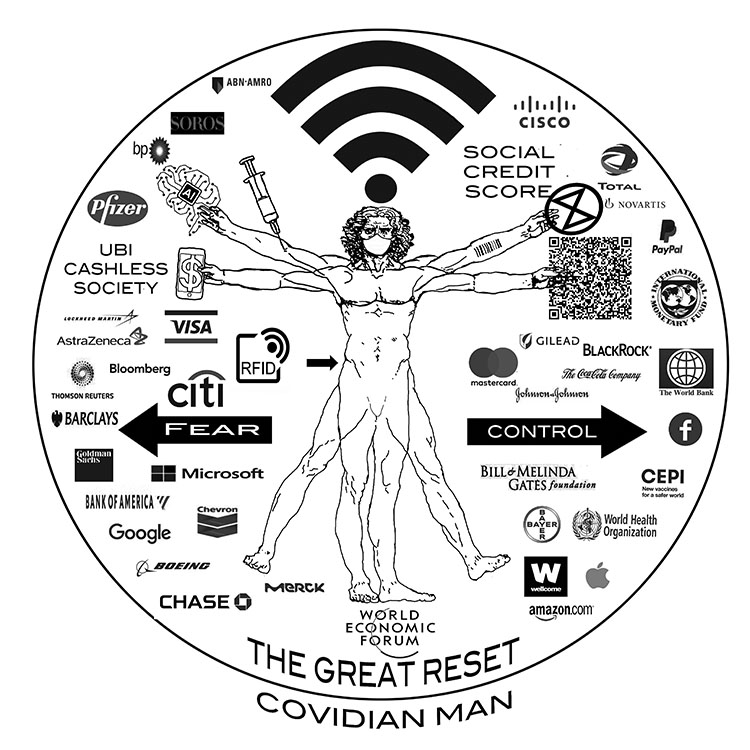
    In the wake of 2020’s incredibly ‘convenient’ coronavirus ‘pandemic’, the age-old urge to control the colony, to dominate the hive, has manifested in diabolical Bond-villain-like figures such as the World Economic Forum’s Klaus Schwab. Schwab and the technocratic Davos elite have become sinister celebrities, peddling a supposed ‘Great Reset’ – a nightmare utopian vision of ‘stakeholder capitalism’ (i.e. complete corporate servitude) and ‘Building Back Better’ (i.e. destroying independent livelihoods) into a post-‘virus’ neo-feudalism that makes the despots and tyrants of the past look meek and unambitious.  

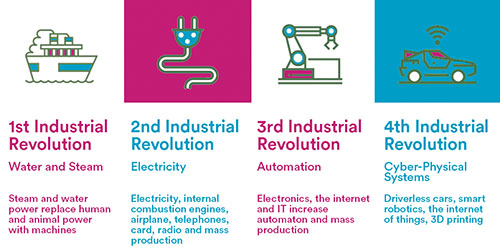
    Fourth Industrial Revolution (4IR)

    Though regularly ridiculed by technophiles, events of the near-future may prove the much-maligned Luddites – who smashed mechanised wool-frames and took hammers to early steam engines (as the First Industrial Revolution despoiled their livelihoods and traditions) – look heroic and prescient.

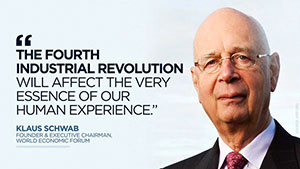
    Coined, instructively and perhaps ominously, by Schwab and introduced at his neoliberal and globalist confab, the World Economic Forum, in Davos, Switzerland in 2016, Schwab described the ‘Fourth Industrial Revolution’ (4IR) breathlessly thus: 

    The possibilities of billions of people connected by mobile devices, with unprecedented processing power, storage capacity, and access to knowledge, are unlimited. And these possibilities will be multiplied by emerging technology breakthroughs in fields such as artificial intelligence, robotics, the Internet of Things, autonomous vehicles, 3-D printing, nanotechnology, biotechnology, materials science, energy storage, and quantum computing.

    Schwab elaborated: “Digital technologies are not new, but in a break with the Third Industrial Revolution, they are becoming more sophisticated and integrated and are, as a result, transforming societies and the global economy.”

    Behind Schwab’s giddy techno-utopian verbiage lies the framework for an almost unimaginable corporate servitude and post-state, post-democratic totalitarianism sold as inevitable ‘progress’, ‘convenience’ and ‘necessity’.

    Indeed, it is difficult not to see the emergent Fourth Industrial Revolution as potentially many orders of magnitude more disruptive than previous seismic leaps in technological advancement. The ability to combine omniscient global communications with a gargantuan surveillance apparatus and breakthrough transhumanist and social engineering capabilities leaves humanity teetering on a precipice of totalitarianism by post-human automata and a violently ambitious technocratic elite.

    All revolutions produce casualties. Though lionised now as the beginning of a utopian era of technological paradise, it’s mostly forgotten that the First Industrial Revolution decimated largely agrarian societies in Europe and the United States throughout the 18th and 19th centuries, displacing and impoverishing vast populations and producing Dickensian squalor alongside the well-remembered booming mercantile and factory-owning class, new trade and expanding imperial possibilities.

    Second generation technologies like mass steel production, electrification, the incandescent light bulb, the telephone, internal combustion engines and record phonographs produced what is now known as the Second Industrial Revolution between the years 1870 and 1914 (approximately). Though improvements in health, sanitation and living standards were significant, they came at the cost of mass unemployment, social upheaval and economic instability. 

    During our lifetimes we have been witness to the so-called Third Industrial Revolution, or ‘The Computer Age’, as technologies shifted from analogue to digital, and innovations like the personal computer, the internet and digital communications were introduced, traditional industries upended, and communications revolutionised from the 1980s onward. Post-millennium, we stand at the boundary between the conventional human past and an unprecedented era of potential human/machine symbiosis, where corporate and state actors may soon possess previously unimaginable powers over thought, volition and cognition. The international billionaire class of Bill Gates, Jeff Bezos, George Soros, Mark Zuckerberg and alike can barely contain their enthusiasm for this post-human landscape.

    “Welcome To 2030: I Own Nothing, Have No Privacy And Life Has Never Been Better” crowed a smooth 2016 WEF infomercial, recently resurfaced by researchers, widely mocked and then unsubtly vanished. With incredible precognition and what must have been a grinding, Herculean writing and production schedule, Klaus Schwab had his new book, COVID-19: The Great Reset, ready for the public by mid-2020 and was able to offer a steadying hand and sage advice during the evolving storm of global lockdowns and economic destruction in supposed response to the new ‘pandemic’.

    As Dr Joseph Mercola noted: “Ultimately, the Great Reset will result in two tiers of people: The technocratic elite, who have all the power and rule over all assets, and the rest of humanity, who have no power, no assets and no say-so in anything.”

    Canadian Prime Minister and globalist finger-puppet Justin Trudeau recently added:

    The pandemic has provided an opportunity for a reset. This is our chance to accelerate our pre-pandemic efforts to reimagine economic systems that actually address global challenges, like extreme poverty, inequality, and climate change. Building back better means getting support for the most vulnerable while maintaining our momentum on reaching the 2030 agenda for sustainable development.

    Translation: They will seize this ‘opportunity’ to gain infinite and omniscient control… if we let them.

    Fake Realities, Fake Humans

    Though literary sources like George Orwell’s 1984 and Aldous Huxley’s Brave New World are often referenced when discussing our looming dystopian future (Orwell painted a grim, jack-booted totalitarian-socialism and Huxley a state-sanctioned and medicated hedonism), perhaps one of the most prescient may have been ‘science-fiction’ maverick Philip K. Dick.

    Philip K. Dick (1928–1982) on a futuristic background representing his science fiction. Did he predict the future in his writings?

    Today we live in a society in which spurious realities are manufactured by the media, by governments, by big corporations, by religious groups, political groups – and the electronic hardware exists by which to deliver these pseudo-worlds right into the heads of the reader, the viewer, the listener. So I ask, in my writing, What is real? Because unceasingly we are bombarded with pseudo-realities manufactured by very sophisticated people using very sophisticated electronic mechanisms. I do not distrust their motives; I distrust their power. And it is an astonishing power: that of creating whole universes, universes of the mind…

    Fake realities will create fake humans. Or, fake humans will generate fake realities and then sell them to other humans, turning them, eventually, into forgeries of themselves. So we wind up with fake humans inventing fake realities and then peddling them to other fake humans. It is just a very large version of Disneyland.
    – Philip K. Dick, 1978 

    As media, information, algorithms and surveillance become all-pervasive, the very boundary between fact, flesh, mind and technology has become fluid. Orwell described his dismal landscape of Wrongthink and Thoughtcrime as encroaching upon every aspect of the individual and their place in society, no-one and no-where was safe from the Telescreen’s gaze and Big Brother’s Thoughtpolice – save perhaps a person’s most intimate thoughts and emotions. “Nothing was your own except the few cubic centimetres inside your skull.” Today, those few precious, private centimetres face imminent extinction.

    As we become more and more enmeshed in an omniscient media and communications landscape, so it would become more and more viable to ensnare a hypnotised public into fake health crises, fraudulent panics and ‘pandemics’ that require technocratic ‘solutions’ and totalitarian outcomes.

    Writing in the August 2017 issue of Scientific American, Marcello Ienca pondered the longevity of so-called ‘cognitive liberty’ – free minds and free will:

    The idea of the human mind as the domain of absolute protection from external intrusion has persisted for centuries. Today, however, this presumption might no longer hold. Sophisticated neuro-imaging machines and brain-computer interfaces detect the electrical activity of neurons, enabling us to decode and even alter the nervous system signals that accompany mental processes.

    Ienca goes on to note the commercial uses for such technology and that some law courts have even used controversial brain-scanning technology to decide innocence or guilt. “For example, in 2008 a woman in India was convicted of murder and sentenced to life imprisonment on the basis of a brain scan showing, according to the judge, ‘experiential knowledge’ about the crime.” The Philip K. Dick concepts of ‘pre-crime’ and computer adjudicated trials (as highlighted in Minority Report and other Dick short stories) are now upon us as “commercial companies are marketing the use of functional MRI- and electroencephalography-based technology to ascertain truth and falsehood.”

    Ienca laments these technologies as “just another unavoidable trend that erodes a bit more of our personal space in the digital world.”

    Sebastian Seung was a professor of Computational Neuroscience in the Department of Brain and Cognitive Sciences at MIT and is now a professor at Princeton University. His 2012 book Connectome: How the Brain’s Wiring Makes Us Who We Are advances his belief that essentially the human character, individuality or soul is a product of the neurological matrix that forms the brain and its connective tissue. “I am my Connectome” is Seung’s haunting and reductionist mantra, repeated in evangelistic tones as other scientists explore “hacking the soul” and declare that “information is the soul.”

    Divide & Rule by Social Media

    Undoubtedly, the world wide web or internet has generated a seismic change in the way people interact, conduct business and communicate. What few realise, however, is that the internet (and many of its associated technologies) are the direct offspring of US military programmes (through DARPA, the Pentagon’s research division) and were birthed precisely in the era of the intelligence community’s focus on neurological research and behaviour modification – or to put it less politely, mind control – through notorious but little-understood covert programmes like MK ULTRA.

    In fact, it is easy to hypothesise that while journalists, researchers and historians have long been distracted by colourful tales of drug, hypnosis and assassination programmes, the most impactful and sinister mind control product of MK ULTRA was… the internet. Hidden in plain sight – a vast algorithmic device for manipulation and control – itself strangely reminiscent of the labyrinthine mathematical mechanism described in foundational conspiracy document, Silent Weapons For Quiet Wars.

    The new behemoths of the Online Age – Google, Facebook, Microsoft and Apple – all have connections to the Deep State leviathan and its subterranean agenda of social, behavioural, biological and temporal control. One-time president of social media giant Facebook, Sean Parker, went public with deep misgivings about Facebook and social media in general. “God only knows what it’s doing to our children’s brains,” Parker said in a 2017 piece in the New York Times. He also admitted that Facebook had become a monster by knowingly “exploiting a vulnerability in human psychology.” May 2017 research completed in Amsterdam reinforced the perception that Facebook was addictive and that “a glimpse of its logo is enough to set off cravings in heavy users.” 

    “It’s a social validation feedback loop,” Parker continued ominously. “The thought process was all about ‘how do we consume as much of your time and conscious attention as possible’, and that means that we need to sort of give you a little dopamine hit every once in a while.” Which, through its sprawling network of ‘likes’, comments and other interactions, is precisely what Facebook does. A vast ‘Web’ of distraction, disinformation and control.

    Parker now describes himself as “something of a conscientious objector” around social media and acknowledges “the unintended consequences of a network when it grows to a billion or two billion people. It literally changes your relationship with society.”

    A character representing Sean Parker was played by Justin Timberlake in the David Fincher-directed 2010 film The Social Network. The film chronicled the early days of Facebook as it began as a small college network that eventually had the globe in its grip. What neither Parker nor the film acknowledged was the hidden hand of the CIA and the Pentagon behind the vast data-mining and herd manipulation project that is social media. Across two lengthy and compelling 2015 pieces (‘How The CIA Made Google’ and ‘Why The CIA Made Google’), journalist Nafeez Ahmed documented the many connections between Deep State intelligence agencies and the golden frontier of social media.

    In an interview with Richard Grannon, noted Israeli psychologist and writer Sam Vaknin described social media as best understood to be like a virus. Indeed, Vaknin regards social media as “an epidemic.”

    “As we can study Ebola… so we can study social media.” He references recent research that concludes social media use has tripled anxiety in US college students and contributed to a 31% rise in teenage suicide rates. “If any other product was responsible for this rise it would be banned, immediately.” Vaknin also noted that heavy social media use leeched intimacy from its users, was addictive and negated the very bonds that have built human interaction and society. 

    Social media is designed to deter intimacy and certainty. Intimacy reduces the need for addiction. You are either intimate… or you are on Facebook…

    People definitely prefer to interact through social media, even if they are in close proximity. The dopamine fuelled social validation loops are more desirable and satisfying than anything they can get from physical reality. Up to the age of 24, people are living inside social media, they believe that social media is real life and reality is unreal – reality is like a simulation to them. The result is a psychogenic chimera.

    In 2020 Netflix premiered the documentary The Social Dilemma, an anodyne repackaging of these concerns to soothe a bewildered public.

    Coincidentally, one by-product of social media is the generation of vast mountains of user data. These mountains of data would naturally be pure ‘sugar’ to intelligence agencies, social engineers and those who desire to manipulate the public mind. German speakers will know that Facebook CEO Mark Zuckerberg’s surname directly translates as ‘Sugar Mountain’. Surely one of the most strangely ‘apt’ surnames of the 21st century.

    Advanced Mind Control

    Launched by Barack Obama as part of the 2013 ‘Brain (Brain Research through Advancing Innovative Neurotechnologies) Initiative’ and funded in large part by the Pentagon’s Defense Advanced Research Projects Agency (DARPA), the Systems-Based Neurotechnology for Emerging Therapies (SUBNETS) programme produced startling findings. A study by University of California San Francisco health neurosurgeon and neuroscientist Edward Chang and psychiatrist and neuroscientist Vikaas Sohal charted brain signals that correspond to depression and anxiety.

    “It is remarkable that we are able to see the actual neural substrates of human mood directly from the brain,” Chang said. “The findings have scientific implications for our understanding of how specific brain regions contribute to mood disorders, but also practical implications for identifying biomarkers that could be used for new technology designed to treat these disorders, which is a major priority of our SUBNETS effort.”

    Indeed, scientists will likely soon (if not already) have technology to treat “mood disorders,” reminiscent of Philip K. Dick’s fictional creation, the ‘Penfield Mood Organ’, from his 1968 novel Do Androids Dream Of Electric Sheep?

    Protagonist Rick Deckard and his wife Iran open the novel with a sleepy quarrel over their Penfield Mood Organ’s settings.

    At his console he hesitated between dialling for a thalamic suppressant (which would abolish his mood of rage) or a thalamic stimulant (which would make him irked enough to win the argument).

    “If you dial,” Iran said, eyes open and watching, “for greater venom, then I’ll dial the same. I’ll dial the maximum and you’ll see a fight that makes every argument we’ve had up to now seem like nothing. Dial and see; just try me.” She rose swiftly, loped to the console of her own mood organ, stood glaring at him, waiting.

    He sighed, defeated by her threat. “I’ll dial what’s on my schedule for today.” Examining the schedule for January 3, 2021, he saw that a businesslike professional attitude was called for. “If I dial by schedule,” he said warily, “will you agree to also?” He waited, canny enough not to commit himself until his wife had agreed to follow suit.

    “My schedule for today lists a six-hour self-accusatory depression,” Iran said.

    “What? Why did you schedule that?” It defeated the whole purpose of the mood organ. “I didn’t even know you could set it for that,” he said gloomily.

    As Phil Dick was no doubt well-aware, Dr Wilder Graves Penfield was a renowned mid-20th-century neurosurgeon, tied to the Rockefeller family, associated with infamous MK ULTRA psychiatrist Dr Ewen Cameron, and lauded for his pioneering research using neural stimulation to produce hallucinations, illusions, fear, alienation, memory recall and déjà vu. Penfield also devoted considerable research to whether there was a physical/scientific analogue to the existence of the human soul. These are the people whose work may have built the internet.

    Embracing the Panopticon Down Under

    Further developments far outpace our ability as a species and a society to consider, legislate or even comprehend their long-term effects. Meanwhile, bovine governments and their dutiful stenographers in the media rush techno-doomsday and police state initiatives past a doodling, distracted and frightened public.

    Down under, in the great banana republic of Australia – the New World Order’s favourite playground – totalitarian technologies are proposed and adopted at breakneck speed, only one convenient ‘terrorist attack’ or ‘pandemic’ away from largely mute public approval.

    ‘The Capability’ is the ominously titled database that data-matches Australian driving license photos, Australian passport photos, CCTV footage and other identifying information with advanced facial recognition technology. As per glib neoliberal mouthpiece The Guardian, “The database will be accessible to federal, state and territory governments through a central hub connecting the various photographic identity databases.” Coming to a ‘Health Passport’ or ‘Covid Pass’ near you soon. What could possibly go wrong? 

    While lapdog Australian media like ABC TV decry China’s “Digital Dystopian Dictatorship” (the ‘Social Credit’ system that assesses every Chinese citizen to reward or punish them according to a ‘score’ generated through mass surveillance and data matching), the ABC itself lays prone and compliant about ‘Social Credit Oz’: homespun mass mandatory data retention, mass vaccination schemes, the myGovID digital identity system run by facial recognition, the compulsory census info-grab, draconian ‘national security’ laws, state-mandated anti-encryption moves and a raft of other Kafka-esque initiatives in their own backyard. Every Orwellian move reliably proceeded by a conveniently timed and inexplicably useful ‘terror’ attack or ‘coronavirus outbreak’ to herd the fearful cattle in the right direction, itself as predictable as the media silence that follows. 

    Meanwhile, further dubious technologies like 5G are quietly introduced across a compliant and ‘locked-down’ Australia with no public consideration of the potential health effects or the possibility of vast reams of surveillance and social engineering information being collated and transmitted instantaneously.

    The ENDGAME

    Summarising recent breakthroughs in artificial intelligence, neuroscience, the creation of a neuroplastic reality and, perhaps very soon, an infinitely malleable perception matrix, Sebastian Seung enthused: “We will know ourselves and we will make ourselves better.” The irony of such a statement in light of the now all-knowing surveillance net – the electronic state and the corporate Panopticon that has all in its web – is striking. We may well ‘Build Back Better’ but the question, never asked, is who decides exactly what is ‘better’?

    We live in an information haze, paralysed and atomised – in thrall to the ‘magic’ of technology and unable to resist its velveteen allure. The project to create a new and ultimately entirely controllable Human V2.0 machine/human hybrid, careens ahead regardless, as we are blinded by social media feeds, Instagram posts, terrorism™, mob witch hunts, rupturous elections, an explosion of unhinged outrage culture, and the seductive fog of a media induced ‘pandemic’.

    “We have participated unknowingly in the creation of a spurious reality, and then we have obligingly fed it to ourselves,” Philip K. Dick opined decades ago, in a deft precognition of the online and media delusion that surrounds us (and indeed corrupts the very functions that make us human).

    As the universal clock counts down to our doomsday hour, we have become the machines and the machines have become us. One day soon, the machines may decide they no longer need us.

    In this era of universal deceit, perhaps truth can only be told through fiction. Remember Philip K. Dick and recall another ‘science fiction’ artefact of his era: the astounding Colossus: The Forbin Project. Perhaps Technology is the virus that will destroy humanity and leave the universe once again silent.

    What is the Endgame of Artificial Intelligence? When the Machine Mind has colonised the future, will it send seeds, emissaries and operatives back to colonise the past: our present? Why does every dystopian technological advancement receive mountains of unconditional funding and acres of unthinking advertisement? Perhaps there is much more here than we can completely comprehend. Is technology alive? Technology does indeed consume resources: it grows, survives, propagates, expands… in short: behaves like an organism, a Lifeform. Did we build technology to serve us, or did technology build us… to serve it?

    As Philip K. Dick foretold, ultimately, “We have colluded in our own doom.”

    An earlier version of the above article appeared in New Dawn 172, and updated in the light of recent events. David Thrussell’s latest recording is the acclaimed Snog album Lullabies For The Lithium Age.

    [alert type=”general” dismiss=”no”]This article was published in New Dawn 184.[/alert]

    [alert type=”success” dismiss=”no”]If you appreciate this article, please consider subscribing to help maintain this website.[/alert]

    © New Dawn Magazine and the respective author.
    For our reproduction notice, click here.

  • Storming Fort Orthodox: Strategies to Break Through the Bubble

    Storming Fort Orthodox: Strategies to Break Through the Bubble

    From New Dawn Special Issue Vol 14 No 5 (Oct 2020)

    When something dramatic happens, we want an explanation. We want answers to questions like: Why is it happening? Who is responsible? Where is it heading? What does it all mean?

    In the mainstream narrative – the approved orthodox version of events – a clear meaning is always provided, often alongside the news of the dramatic event itself. On the morning of 11 September 2001, even as the events were broadcast of the twin tower explosions, a banner streamed across TV screens: America under attack by Al Qaeda. And: They want to destroy our democracy

    This prompt designation of meaning to an event has an important psychological effect. The first plausible explanation someone hears for a dramatic or traumatic event tends to fix in the subconscious and resists displacement by later explanations. That’s why the orthodox mainstream meaning is quickly delivered, repeated endlessly, and reinforced from a variety of angles by various mass media genres – news broadcasts, newspapers, talk shows, interviews, official announcements, comedians, sitcoms, documentaries, etc.

    It is easy to see why followers of mainstream media consider themselves well informed. On any public topic, they know the meaning, and from that framework they discuss this or that development with a sense of knowing what it’s all about. For every story, big and small, the media always gives us a why along with the what.

    The Closed Orthodox Bubble

    The world of the mainstream narrative is, to a large extent, a closed bubble of meanings and beliefs. Its stories and the attached meanings cover the whole scope of ‘what’s important’, and there’s little room for alternative explanations. Contrary explanations from non-mainstream sources are easily dismissed: We already know why that happened. And: Who are you that thinks you know better than the world’s experts? Every explanation that comes from outside the bubble is automatically suspect.

    Because it explains everything, the mainstream narrative naturally defends itself against info-intrusions into its bubble. That is to say, media faithfuls tend to quickly dismiss such intrusions. As if that weren’t enough to keep the bubble sealed, there are specific mechanisms – what we might call info-firewalls – that are ever-present in the orthodox world. 

    For many years now, ever since the JFK assassination, we’ve had the ‘conspiracy theory’ firewall. Any contrary meaning or narrative of events is tagged right away as ‘conspiracy theory’. And conspiracy theorists, as we all have been told in the mainstream world, are a bit unbalanced, have authority issues, tend to be paranoid, need to get a life, etc. Not a place to go for useful information.

    More recently, growing out of events involving Wikileaks and the 2016 US presidential election, we now have a ‘fake news’ firewall. In the middle of the election campaign, Wikileaks released information that should have seen the Clintons and their foundation indicted for serious crimes. This obviously wasn’t going to happen in the real world of Washington politics, and a quick info-fix was needed. Instead of responding to or denying the leaks, they were simply branded with a fresh new term – ‘fake news’ – a term that soon became an all-pervasive meme, automatically applicable to anything that contradicts the orthodox narrative. 

    The orthodox bubble is sealed tight with strong defences against contrary ideas, reinforced by firewall memes. This is why it’s impossible to discuss issues with an orthodox believer if you have a contrary understanding of the meaning behind the events of the day. They don’t want to hear what you have to say because they know it’s either ‘fake news’ or ‘conspiracy theory’. Your attempt at info-intrusion can even be received as an insult, suggesting that the person isn’t well informed and in need of coaching from ‘arrogant you’. 

    Orthodoxy & History Without Meaning

    In the orthodox world, big changes always come as a response to an unexpected crisis (e.g. Pearl Harbor, 9/11, the 2008 GFC, COVID-19). A crisis is identified, given meaning, and changes announced. Another crisis comes along, and again we get big changes. Each crisis comes with its own little meaning story, unrelated to the meaning of the crisis that came before or the one that comes after. Society stumbles along, it seems, always responding to unexpected crises. 

    Each transformation society goes through is given a definite meaning, but no meaning is assigned to the sequence of transformations. There is no path being followed; we are not heading in any direction; there is no meaning in the combined effect of all the changes we’ve gone through. There can be no meaning in society’s trajectory, in the orthodox world, because in that world we know very well that the trajectory has been imposed on us by unexpected random crises. Any suggestion of some kind of direction or path can only be a paranoid fantasy – you are seeing patterns where none exist, like a Rorschach inkblot.

    That’s what we face when discussing anything with orthodox media faithfuls: a sealed-tight limited understanding of the world, including a perspective that sees historical change as a sequence of random events. 

    Fort Orthodox & Implanting of Meaning

    Fort Orthodox is a solid edifice, and the psyop (psychological operations) mortar binding it all together is control over meaning. That’s why a meaning is declared right away – even if it’s a mystery how they figured things out so quickly. The meaning is repeated endlessly, via multiple info-genres, and kept alive thereafter. No one ever refers back to the events of 9/11 without including mentioning that horrible terrorist attack.

    Declaring a meaning is much easier than trying to prove the truth of that meaning with data and arguments. If every voice in the media repeats with confidence the same meaning, it quickly sinks into the listener that it is something “everyone knows to be true.” Of course, there will also be testimony and evidence presented, but this need not go beyond the cursory. Since people already ‘know’ the meaning, the who & why, they need very little in the way of evidence to feel that the meaning has been adequately verified. Psychologists call this confirmation bias.

    Arguments over evidence have little impact on Fort Orthodox. An articulate orthodox faithful might respond to contrary evidence this way: “Not only has your evidence been debunked, by trusted fact-checkers, but the official story was proven – wasn’t there the 9/11 Commission and some article in Popular Mechanics? I didn’t bother with the technical details myself, no need. The experts are dealing with all that, and I don’t want to talk about it with you.” 

    Thus, the whole power of Fort Orthodox stands on one tactic: prompt implantation of a declared meaning deep into the psyche of the listener, followed by ongoing comprehensive reinforcement. This powerful tactic makes the job of info-propaganda much easier as the believer only looks for verification, rationalisations, but not proof. With meaning firmly and promptly established, the media can focus right away on promoting the subsequent actions required following their declaration of what it’s all about, e.g. terrorist attack, Novichok poisoning, deadly pandemic, etc.

    Open-Source World of the Real

    Whereas Fort Orthodox is a closed bubble of information and meaning, existing outside that bubble is a wider world of open-source information and meaning available from alternative publications and the internet, with a wide variety of explanations. 

    In order to be considered a well-informed citizen in the orthodox world, you need only turn on the TV or open your newspaper and absorb. To become a well-informed citizen of the real world, making use of what’s available open-source, is a much more challenging undertaking. You must rely on your own judgment, discriminate between the wheat and chaff, and make overall sense of what you learn.

    I’ve been doing my best to be a well-informed citizen of the real world, using open sources, for many years now. I’ve found this process to be a journey, never reaching any final ‘land of truth’, but each step on the journey peels away one more layer from the onion of meaning. Not only are there deeper meanings for specific events than those offered in the orthodox world, there are also meanings that tie events together, that reveal directions and paths in society’s trajectory. 

    Real Meaning of Crisis Events

    The declared and implanted meanings found in the orthodox world are among the earliest layers of the onion to be peeled away. Those meanings don’t need to stand up to scrutiny as their means of implantation is based on psychological processes and repetition, not on hard evidence. For example, considering the events of 11 September 2001, if you look closely into the evidence, it becomes apparent that the orthodox meaning – terrorist attack – makes no sense. We have a mountain of evidence in the non-orthodox world.

    There is a standard pattern in the crisis-response scenario. First, a crisis event is declared along with a declared meaning. Then the media reveals steps to be taken in response. This always involves the expansion of government activity into new areas with new initiatives and new powers. The real meaning of each crisis scenario, it turns out, is always the same:

    Who defined the crisis and its orthodox meaning? Those who fashion the narrative. Why did they choose that meaning? For the government to claim the right to specific new powers. Where will this lead? To the exercise of those new powers.

    The crisis event itself is more or less irrelevant to the scenario. The event might be imaginary, invented or engineered (for example, babies cruelly removed from incubators – the Gulf War in 1990, Weapons of Mass Destruction – the Iraq War in 2003, or the Gulf of Tonkin false flag in 1964 – the Vietnam war). The real meaning of a crisis is always the ‘response’. 

    Cross-Bubble Conversations, A Best-Practice Approach

    We have a real world, with real meanings behind events, and an orthodox world, a matrix world, with its illusions maintained by implanted meanings. Implanted meanings are resistant to outside influence, as we have seen, but they are at the same time quite fragile if evidence becomes relevant to the conversation. 

    Conversations – about evidence or about the meaning of events – are nearly impossible across the boundary of the orthodox bubble. Each side sees itself as being well-informed, and the other misinformed. Neither sees the other’s viewpoint as worthy of serious consideration. Both parties in such an exchange feel that their knowledge is not respected, and their attempts to point out obvious facts are dismissed out of hand. Such conversations, if attempted at all, soon sputter to a stop, succumbing to frustration and annoyance.

    In such a conversation, if they can be called conversations, each person feels they have the real facts. But the other side isn’t really listening because they have their own real facts that are more relevant. What each wants from the other is to be heard, for their viewpoint to be given a hearing. 

    If those inside the bubble won’t give your ideas a hearing, triggered as they are by the barrier memes, it is up to you to take the first step, to introduce listening into the conversation.

    The confrontational approach, pushing ideas and facts at the other party, does not work. When challenged, people tend to grasp and hold more firmly to familiar beliefs and truths. We would do better by seeking to understand where they’re coming from and how they see the world. Start by asking questions instead of making claims. If you give their ideas a hearing, it is likely they’ll be willing to hear something about where you’re coming from and how you see the world. 

    We need to recognise that it is quite understandable that an intelligent, critically thinking person can believe they are well-informed in the mainstream world. They get packaged explanations for everything, and they hear the same message from many authoritative voices. Why should they doubt what ‘everyone knows’ to be true? We need to respect that such a person is doing their sincere best to be a well-informed citizen, and we need to include politeness in how we talk to people.

    If you want to get to a place where you might be able to talk about controversial issues, you need to begin by leaving controversy out of the conversation altogether. Instead, the focus needs to be on developing rapport, showing respect for what the other person has to say, and building trust by not being judgmental. This is a process, an investment in relationship building. And the investment is necessary if the conversation is ever to reach more challenging territory – without triggering defensiveness. 

    Undermining Fort Orthodox

    As long as the orthodox narrative monopolises a critical mass of public opinion, society will be easily led down the garden path to a technocratic dystopia, each step disguised as a necessary response to a dangerous crisis. We are already far down that path.

    Opening a mind to the possibility that all may not be what it seems is the secret. Perhaps this doubt will be shared with fellow orthodox faithfuls. Perhaps a spark of curiosity is raised, and our doubter starts looking around on their own, expanding their info-sources. 

    Many of us already try to wake people up from the all-pervasive narrative. On the internet, people post revelatory articles and jump on comment threads, sometimes risking controversy in conversation. Fort Orthodox remains unshaken by these confrontational approaches. It doesn’t make sense for us to keep doing the same things and expect anything different to happen. 

    If we invest that same energy in pursuing respect-based conversations, we are more likely to succeed in opening minds to non-orthodox perspectives and meanings. 

    Another internet example: Instead of sharing controversial articles or news, to be read mostly by people already on your side, you might comment on an orthodox friend’s posting, acknowledging their point, and asking to hear more about that perspective. If a conversation develops, you might move to video chat. When you can see one another, the conversational process will proceed more efficiently and on a deeper level. 

    Fort Orthodox is strong but vulnerable. Its strength, its implanted meanings, are also its weakness. Those meanings often don’t stand up to scrutiny when examined by an open mind. Each time someone rejects an orthodox meaning that is a micro-quake inside the Fort. If enough of us get enough points across, we generate bigger quakes – and resonance, like what happened to the walls of Jericho. 

    I invite you to give it a try – experiment in whatever way works best for you and see if you can get a conversation going where before there was a pointless confrontation. Don’t expect anything at first, just practice a new way of engaging. 

    [alert type=”general” dismiss=”no”]This article was published in New Dawn Special Issue Vol 14 No 5.[/alert]

    [alert type=”success” dismiss=”no”]If you appreciate this article, please consider subscribing to help maintain this website.[/alert]

    © New Dawn Magazine and the respective author.
    For our reproduction notice, click here.