New Dawn – World's Most Unusual Magazine

Category: UFOs/Unexplained Phenomena

  • Exploring the Shamanism–Alien Abduction Connection – Part 2

    Exploring the Shamanism–Alien Abduction Connection – Part 2

    From New Dawn 189 (Nov-Dec 2021)

    A comparison of the two types of experiences – shamanic and alien abduction – is revealing. Folklorist Dr T.E. Bullard lists the following elements of UFO abduction narratives: 

    • capture

    • examination (which includes tales of specimen taking, reproductive examinations, implanting of small artefacts inside the abductees, and removal of organs)
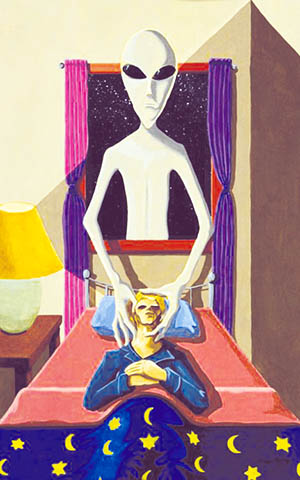
    • conference (the witness talks with abductors) 

    • tour

    • otherworldly journeys

    • theophany (the witness has a religious experience or receives a message from a divine being) 

    • return

    Michael Harner, Holger Kalweit and others list the following recurring elements of shamanic experiences:

    • selection or capture

    • initiation experiences (which include accounts of implanting artefacts, removal of organs, etc.)

    • ‘magical flights’ including ‘celestial ascents’ to strange realms dialogues with mythic personages or spirits 

    • return

    Consider the following. Disembowelment is undoubtedly one aspect you would not expect to find in contemporary UFO abduction accounts but astonishingly enough, such features do occasionally appear. 

    In the bizarre Apache Junction, Arizona case of 1971, the subject underwent a frightening examination in which he felt his chest opened and his heart briefly left his body. Sandy Larson, another abductee, reported that her abductors even removed her brain from her skull! Such experiences, on whatever level of reality or unreality they occur, are common fare in shamanic accounts.
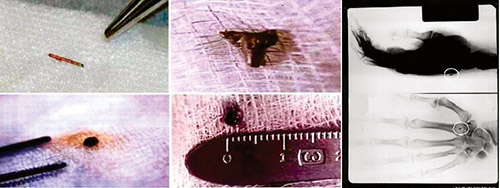
    Examples of implants, believed to be ‘alien’, surgically extracted by Dr Roger Leir, author of The Aliens and the Scalpel.

    Both classes of experiences talk about the placement of artefacts within the body. In shamanism, it is crystals and the like. With UFO abductions, it is ‘implants’. Celestial ascents are common to both genres. 

    Even the descents into ‘other realms’ – the underworld or under the sea – that occur in shaman stories also occasionally feature in UFO abduction stories. 

    In the strange Filiberto Cardenas abduction story, Cardenas spoke of being taken by three human-like entities to a beach where the aliens apparently worked a combination lock on a rock. The rock opened, revealing a tunnel, “and they rushed down into the sea at a ‘great velocity’.” Even the extraordinary Andreasson affair, the subject of books by UFO researcher Raymond Fowler, featured a journey down a tunnel into a strange subterranean realm. 

    Animals often feature in both experiences. In the case of shamanism, they take the form of ‘power animals’ or ‘spirit allies’. Jean Achterberg, in Shirley Nicholson’s Shamanism, states: “Deer are widely associated with shamanic work. In Siberia, real-life reindeer shared the fly-agaric journeys with the shaman… The deer spirit is believed to leave the sacred peyote buttons as tracks to guide the shamans on their supernatural course …Even in prehistoric times, the deer had healing significance, based on man/deer shaman art forms that have been found on caves and artefacts.” Harner describes how the shaman utilises deer, birds, fish, wolves, bears, and other animals.
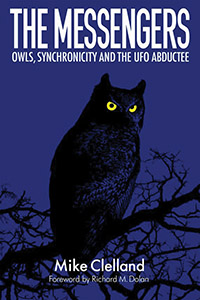
    In UFO abduction accounts, the presence of animals is rationalised as “screen memories” of aliens. In his book Missing Time, Budd Hopkins describes Virginia Horton’s magical encounter in a French wood with a talking deer! In Whitley Strieber’s books, owls and wolves are often referred to. He also refers to the experience of Barry Maddock, who had “the bizarre impression that an enormous grey owl with big, black eyes” was in a room with him. It took Maddock into “a large vaulted chamber that reminded him of the Sydney Opera House. There it turned into a bird of paradise.” And again, in the Andreasson affair, Betty Andreasson encountered the Phoenix bird during one of her abduction experiences. More recently, experiencer Mike Clelland has written The Messengers: Owls, Synchronicity and the UFO Abductee (2015) and Stories from the Messengers: Accounts of Owls, UFOs and a Deeper Reality (2020).

    Nevill Drury (1947–2013) explored the links between shamanism and contemporary Western occultism. In his book Vision Quest (1984), Drury gives a fascinating account of his introduction to shamanic tutelage under Dr Michael Harner at a transpersonal conference in Victoria in November 1980. His shamanic journey was complete with tunnel imagery, a palace of crystal, Phoenix imagery, having a crystal placed in his chest, and seeing saint-like figures rimming the tunnel he journeyed through. To him, “the shaman’s journey, in a very real and personal way, is a pathway to sacred space… our inner being.” 
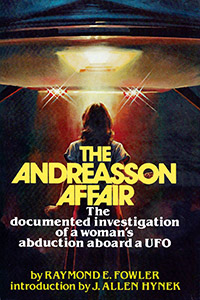
    Note, however, that the Andreasson affair – an “otherworldly journey” told from the perspective of a UFO abduction narrative – also featured tunnel imagery, a large crystalline structure, a “vision” of the Phoenix, and encountering saint-like figures. She also told of having an “implant” placed inside her, behind the eyes. The correspondences were fascinating! The first of the Andreasson series of books appeared in 1979 and 1982. Nevill Drury’s initial shamanic journey occurred in 1980. He had no awareness of the Andreasson books.
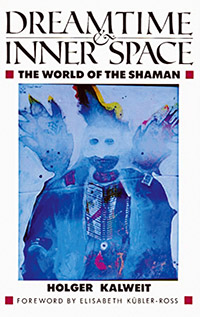
    The sexual/reproductive element also appears in both shaman and UFO abduction narratives. In shaman accounts, we even have stories of “spirit weddings” and “spirit children” off-spring  – the results of liaisons between shamans and the “spirits.” Holger Kalweit gives a fascinating account of such a situation in his book Dreamtime and Inner Space. The “shamaness” gave birth to a child by (a spirit) in the spirit world, and “he would bring it to her at night for her to breastfeed it. He came when everyone was asleep. The people in the village heard the child cry, but her own family slept as if they were dead.” It is fascinating to compare that sort of story with the accounts Budd Hopkins describes in his book Intruders – tales of ova sampling, baby presentation and baby bonding! 

    Shamanism, Abductions & Healing

    Finally, there appears to be a growing correspondence in UFO abduction accounts with one of the primary goals of shamanism – healing. 
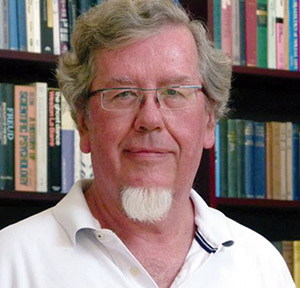
    Nevill Drury (1947–2013) explored the links between shamanism and contemporary Western occultism, primarily in his book Vision Quest (1984). 

    In Gary Doore’s compilation, Shaman’s Path: Healing, Personal Growth and Empowerment, Stanley Krippner writes: “Shamans were the world’s first healers, first diagnosticians, first psychotherapists, etc… There are shamanic healing methods that closely parallel contemporary behaviour therapy, chemotherapy, dream interpretation, family therapy, hypnotherapy, milieu therapy, and psychodrama. It is clear that shamans, psychotherapists, and physicians have more in common than is generally suspected. For the shaman, however, the spiritual dimension of healing is extremely important, whereas contemporary physicians and psychotherapists typically ignore it.” 
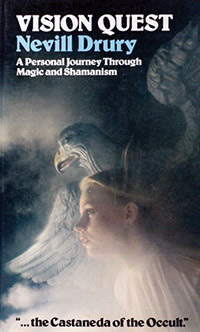
    Therapies have emerged with shamanic perspectives, including Stanislav Grof’s “Holotropic Therapy” and Michael Harner’s “Shamanic Counselling.” Many “close encounter” therapies, some with questionable efficacy, have emerged, with tenuous roots in early abduction experiences.

    In the classic watershed UFO abduction case – that of Betty and Barney Hill – as told in the 1966 best-selling book The Interrupted Journey, Dr Benjamin Simon, a Boston psychiatrist, investigating the cause of stress-related problems experienced by the couple, used hypnotherapy to explore the UFO abduction story and arrive at a therapeutic outcome. The complex abduction story that emerged under hypnosis had a positive psychological and cathartic effect on the couple. The psychotherapeutic benefits of confronting the abduction story were obvious.

    The growing number of health professionals who began to examine the UFO abduction mystery contributed to a therapeutic enrichment of the witness’s interaction with researchers. For example, Dr Rima Laibow, a New York psychiatrist, had been working with Budd Hopkins. More than half of the abductees she worked with were what she referred to as “dual victims.” They reported not only UFO abduction experiences but also child abuse. Some researchers suggest this aspect explains the origin of the abduction tales, i.e., the abduction story was a “screen memory” for child abuse. Dr Laibow rejected this hypothesis, pointing out the consistency of the accounts, the physical evidence in many cases, the emergence of many of the abduction narratives under hypnosis (“an uncommon mode of presentation for screen memories”) and the presence of similar abduction scenarios in the “unabused.” 

    Further still, she found in a number of cases, “following the abreaction of the abduction, therapeutic work could occur spontaneously about material which was not abreacted: the early physical and/or sexual abuse.” Elaboration of the abduction material often led to a reassessment of memories of abuse and a positive reintegration of the individual. Physiological symptoms were occasionally overcome, leading to a positive therapeutic outcome. 

    Dr Laibow concluded in an article in the International UFO Reporter that “the need for additional study, deeply intermeshed with, not separate from, the active therapy of those who have this set of realities in their lives, is a matter of urgent public health concern (whatever we now feel the locus of the reality to be).” Dr Laibow’s involvement tapered off with some controversy beyond the scope of this limited review.

    Budd Hopkins remarked in Intruders that the long-term effect of these complex abduction experiences is psychological. He stated: “Though some of the resulting behaviour may be similar, UFO abductees are not like people who’ve had a single traumatic experience, such as the victims of automobile accidents or brutal muggings. They are people who have been, at intervals over the years, involuntarily subjected to a frightening and invasive ‘secret life’…. The emotions this secret life engenders can include fear, dread, helplessness, profound maternal confusion and loss, the sense of physical – even sexual – vulnerability, and a thousand other things, ranging all the way up to basic uncertainty as to where one really belongs, where home really is. And all along this road lies a terrible sense of self-doubt, a questioning of one’s very sanity.” 

    Initially, very few of the people who allegedly experienced an abduction sought out publicity. Indeed, most were terrified of it. They were more like the victims of assault than starry-eyed seekers of a new world reality. They seemed to be haunted by their experiences, and most were seeking answers. Instead, they were confronted by shallow, ridiculing media reporting and a general public that had no awareness of the controversy. The inevitable response from a position of ignorance was to either ridicule or reject – “They must all be nuts.” Given the extent of the problem, this was a very unwise approach. Something was happening. While some thought the issue might turn out to be a quantum leap in the field of anomalistic psychology, others felt otherwise. 

    Opening Up New Avenues

    A full appreciation of UFO abduction and shaman experiences may also provide a quantum leap in understanding in another direction. 

    Whitley Strieber had viewed shamanism as “the shattered remnants of mankind’s early attempts to control this (visitor) phenomenon.” Perhaps the reverse may have been more likely? Shamanism involved individuals who seemed to have a strong measure of control over the set of realities they operated in. In UFO abduction experiences, the generally helpless victims have no control over the bizarre ‘reality’ that overwhelms them. It appeared a phenomenon operating on two opposite ends of a control continuum. Perhaps we, as a culture, had lost an ability that other cultures and generations may have had to some extent? 

    For abductees or experiencers, perhaps there are ‘rites of passage’ in achieving some level of understanding and control over the UFO abduction experience. Some experiencers or abductees have in recent times collectively developed communities of support. Many have gone “underground” to avoid connections. Others have become activists taking control of their experiences, resisting or avoiding those they did not see as understanding or embracing their realities. What the future holds for these changing dynamics remains to be seen.

    Alien abductions may yet prove to be remarkable testimony to the eccentricities of the human condition – that is, these experiences may spring from the realm of the hoaxer, the deluded, the alienated of our society, or may yet be about something truly extraordinary. This complexity demands we keep an open mind and keep the matter properly in question until we have enough information to determine what is going on. The range of intelligent and qualified people looking into the UFO abduction mystery grew over the decades. People who have these experiences are also contributing in substantial and fascinating ways to bringing understanding to these strange realities.

    Experiencers should not be unrealistically encouraged by advocates of alien presence nor, at the other extreme, should they be ridiculed by the sceptical among us. Instead, they should be helped to confront the reality of their experiences, whether or not it is eventually found to be prosaic, profound, or extraordinary. Only time will tell whether the search for answers will give us more insights into the human mind and the UFO phenomenon. Could it be that it will do both? 

    The Wandjina

    It is fascinating when sacred art and the UFO subject intersect. Such intersections occur in occasionally unusual ways that are controversial and yet potently rich in potential meaning. 

    In my 2005 book Hair of the Alien, I wrote: “For the woman, the most strikingly similar image to that of the beings [she encountered in an experience Whitley Strieber described as ‘the best description of the gray beings’ among the thousands of letters that were sent to him in the wake of the success of his book Communion] is the Wandjina – the haunting Australian aboriginal rock paintings that reveal figures with large dark eyes and no mouth.” 
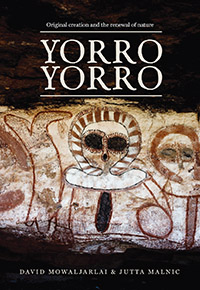
    The Wandjina (or Wanjina) are beautifully evoked in such works as Yorro Yorro: Everything Standing Up Alive by David Mowaljarlai and Jutta Malnic, Keeping the Wanjinas Fresh by Valda Blundell and Donny Woolagoodja, and most strikingly to a worldwide audience rising up from the floor of the Sydney Olympic stadium in 2000 during the opening ceremony. 

    Such striking resonances are hauntingly fascinating in their possibilities. I was pleased I had met David Mowaljarlai in the company of John Mack and Stephen Larsen (the co-author of Joseph Campbell: A Fire in the Mind: The Authorized Biography) a year before his passing in 1997. Donny Woolagoodja continues the tradition in his biography Yornadaiyan Woolagoodja, a wonderful exploration of his personal interaction and relationship with the Wandjina images. 
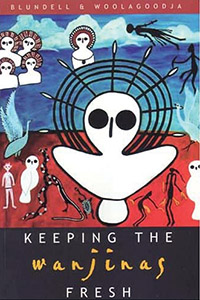
    Keeping the Wanjinas Fresh documented the Wanjina (Wandjina) rock paintings and the living tradition that are being kept “fresh” through “touching” up the old rock paintings and creating new “modern” expressions of the Wanjina – “eternal manifestations of the sacred life force… the supernatural ancestors” of the local aborigines (including the Worrorra, Ngarinyin and the Wunambal). Donny Woolagoodja has a direct linkage to the “retouching” tradition through his father, Sam Woolagoodja.

    The book highlighted that “the Wanjinas created the countries that their human descendants belong to and they made the laws that guide their everyday lives. Visible as paintings at hundreds of rock art sites throughout their countries, the Wanjinas remained sources of strength for Sam and his people during the tumultuous years of colonisation. Even after the Worrora were displaced from their countries, the Wanjinas continued to instruct them in their dreams.” Also: “Expressions of the Wanjinascan be seen in the night sky, for instance the Milky Way. They are also closely associated with clouds and water… Sam once told (Blundell) that the Wanjinas ‘came through clouds’. ‘That’s their home’, he said, ‘they come from rain’. People are ‘born in sunlight’, while Wanjinas are ‘born in the dark’.”

    Donny Woolagoodja and his biography Yornadaiyan Woolagoodja, which is subtitled ‘Wandjina has no mouth because the sound of beginning cannot be heard by human ears’. A range of Donny’s prints featuring the Wandjina are available from Mowanjum Arts at www.mowanjumarts.com.

    People around the world would have seen the Wanjina rising from the ground in the opening ceremony of the 2000 Sydney Olympics. Donny Woolagoodja was the traditional artist behind that extraordinary display. Most pivotal in the book, beyond the beautiful contemporary Wanjina artwork, is the “refreshing” tradition among chosen local people.“While most of the Wanjinas have lost their mouths, they are still able to instruct people in their dreams.” According to Donny, those aspects of recent paintings that appear to be ‘new’ are actually contemporary revelations of Lalai (“the primeval era of creation” or “the Dreaming” – an eternal sense of “living cosmology”). Donny explains: “When I paint, I follow the dream.”
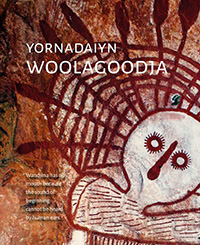
    Those tempted to speculate that the Wanjina (or Wandjinas – the original widespread spelling variant) are evidence of “extraterrestrials” visiting Earth should consider these works. I have been a cautious traveller in this context. On my website (www.theozfiles.com) and in my earlier book The OZ Files: The Australian UFO Story, I stated:

    “The legends and lore of the indigenous aborigines also provide material suggestive of interactions with anomalous aerial phenomena. Of course, in speculation about such data, it should be realised that the accounts are of historical and anthropological nature and therefore care should be taken not to interpolate too much into them. Aboriginal myths incorporate the idea of ‘sky-beings’, with the Wandjina being among the most interesting to consider. The Wandjina have been preserved in a fascinating oral tradition and in a large collection of rock paintings scattered throughout the Kimberley region of northern Australia. The paintings have received all manner of interpretations from stylised representations of a pervasive myth system to naive ‘ancient astronaut’ theories. It is however fascinating to see that the indigenous tribes viewed the Wanjina as ‘the spirit in the cloud’. Indeed, the unique painting style shows a logical sequence from human figures to stylised representations of clouds. This duality of anthropomorphic form and ‘clouds’ is widespread in primitive cultures and finds an interesting parallel in the biblical accounts in ‘Exodus’. While this line of thought is suggestive of superior ‘sky beings’ acting as cultural catalysts for primitive societies, I should point out that making mythological component comparisons can make for interesting exercises, full of emotive similarities, but are purely speculative.”

    Such speculations need to have their anchor points in the living and preserved traditions of the people who view the Wanjinas as their primary “religious” focus. To not do so is to ignore a primary and fascinating source of oral and pictorial knowledge about these extraordinary beings and risks disrespecting an extraordinary age-old and living tradition.

    Fourth Level of Meaning

    Another insightful book emerged in 2006. Treading Lightly: The Hidden Wisdom of the World’s Oldest People by Professor Karl-Erik Sveiby (a specialist in Knowledge Management) and Tex Skuthorpe (an aboriginal Nhunggabarra cultural custodian) described “a unique journey into traditional Aboriginal life and culture, and offers a powerful and original model for building sustainable organisations, communities and ecologies. It is a compelling message for today’s world.” 

    In 2004, Professor Sveiby approached researcher Steve Walters and me to get our opinions on a strange photographic anomaly – a possible aerial anomaly – he had recorded during April 2004 at Mount Oxley near Bourke, New South Wales, while in the company of Tex Skuthorpe and his partner. Karl-Erik presents the unusual photo in the book as a possible manifestation of the Fourth Level of meaning in aboriginal stories – the spiritual realm. Through the fascinating aboriginal story of How the Nhunggabarra got flowers, Mount Oxley (or Wubi-Wubi) was a focus of shamanic contact between aboriginal men of high degree (or wiringins) and the ancestral being Baiame (Baayami).

    Mount Oxley (Wubi-Wubi), near Bourke, New South Wales

    Mount Oxley had already become an interesting place for me. I visited it back in September 2003, exploring its fascinating sense of presence and its enigmatic lore of strange phenomena. I was already aware of the legend of the flowers through the renderings of K.Langloh Parker of local aboriginal tales she collected in the late 1890s. It was fascinating to see the story retold through the words of local custodian Tex Skuthorpe and its “Fourth Level” of meaning and beautiful evocation through Tex’s great paintings.

    While prosaic explanations may be evident for the photo anomaly Karl-Erik recorded (such as moisture condensation effects), it is fascinating to consider the context he and Tex explored in their important book. I certainly did not want to detract from the central message of Treading Lightly, given its significance as a potent intersection between a unique ancient culture and modern knowledge management theory.

    There may have been fascinating resonances between the concepts of “Fourth Level” (through Treading Lightly – shamanic spiritual interactions) and “Fourth Kind” (through “alien abductions”) – intersections I had been contemplating for some time. Treading Lightly describes powerful and important matters that need to be focused upon by our modern culture.
    Get the issue this article appears in

    Encounters Throughout Asia

    My trips in Thailand and China during 2005 and 2006, exploring the Asian UFO experience and evidence for an “alien DNA paradigm,” also yielded evidence possibly supportive of the shamanic alien abduction connection. I focused on genetic connections at a very specific and detailed level because of the unusual nature of the rare Asian mongoloid sequence, revealed in the Khoury sample described in my book Hair of the Alien. They occurred in the DNA signatures of an isolated group of people, the Lahu, who were limited to the region of the southern Chinese province of Yunnan, and the immediate region bordering that locality – northern Thailand, Myanmar (Burma), and Laos. The areas of Yunnan and northern Thailand yielded considerable data and research, particularly with fascinating UFO and unusual light phenomena connections in both regions.
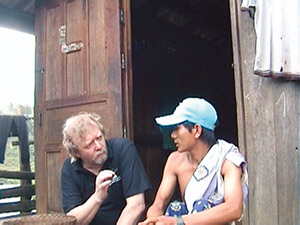
    Bill Chalker with a Lisu (Lahu) village member in the foothills north of Chang Mai, Thailand, in 2006.

    Strange light phenomena and possible UFO connections are found in the shamanic type elements of Lahu society. Dr Anthony Walker’s 907 page Lahu study Merit and the Millennium: Routine and Crisis in the Ritual Lives of the Lahu People revealsone of the more fascinating Lahu shaman-like contact experiences involving a leading Lahu figure, Ca Nu, who claimed the Sky beings/spirits visited him and gave him a mysterious glowing stone with inscriptions. He also reported seeing strange “hole” shapes crossing the sun, along with anomalous “stars.” Ca Nu connects his experiences with spiritual prophecy, a dynamic revealed on numerous occasions in not only shaman lore but in many contact and abduction situations.

    A ball of light was encountered by dissident Chinese writer Ma Jian in 1986 in Lahu territory in southern Yunnan China. Escaping from custody, he was trying to find his way through dangerous terrain. Suddenly,“a light appeared in the darkness. It was neither a torch nor a candle, nor a glow-worm shaking in the breeze. It seemed to come from another realm. It rose from a stream and floated through the trees then stopped by some branches ten meters away and slowly dropped to my eye level… I walked forward and the ball of fire followed me through the branches, guiding my way for twenty kilometres until the sky turned white.” 

    He described the encounter in his book Red Dust. I met Ma Jian during the 2003 Sydney Writers Festival. He confirmed that his account was not a literary metaphor for his sense of alienation with contemporary China. Instead, it was a real experience with a ball of light about the size of a rockmelon. This Lahu region phenomena near the Lancang (the Mekong) River echoes the intriguing Naga light phenomena that most prominently plays out near Nong Khai, on the Mekong, as the mighty river enters Thailand. I witnessed and filmed the Naga light balls coming out of the Mekong in 2006. My investigations resisted the straightforward explanation of hoaxing for tourism purposes.

    Yang Zheng of the Kunming UFO Research Association indicated his “most dramatic case” occurred in November 2006 (the month after my visit to Yunnan) when thousands of villagers in Zhenyuan Yi, Hani and Lahu Autonomous County of Yunnan Province witnessed seven white hemispherical shaped objects hovering directly above the property of a local CPC (Chinese Communist Party) cadre for nearly two hours. The objects appeared to keep changing shape. As it was a small village, word soon spread and many villagers arrived to witness the sighting. They started pursuing the objects, but the UFOs disappeared. I had been in the Lahu territory only a few weeks earlier. 

    All this seems a compelling confirmation of the potential breakthrough research focus provided by the alien DNA paradigm and the shamanic alien abduction perspective.

    Click here for Part One of this article.

    The above was originally published in Nature & Health (Australia), Vol. 11, No. 1, Autumn 1990, and has been revised and updated by the author.

    [alert type=”general” dismiss=”no”]This article was published in New Dawn 189.[/alert]

    [alert type=”success” dismiss=”no”]If you appreciate this article, please consider subscribing to help maintain this website.[/alert]

    © New Dawn Magazine and the respective author.
    For our reproduction notice, click here.
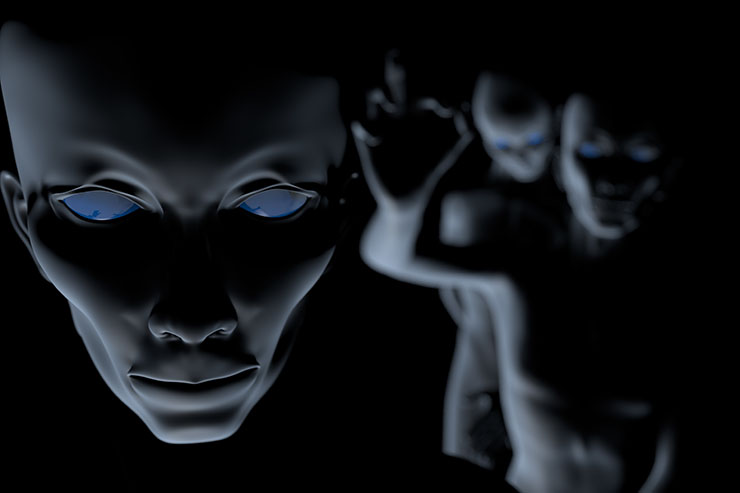
  • Aliens: Extra-Terrestrial or Trans-Dimensional?

    Aliens: Extra-Terrestrial or Trans-Dimensional?

    From New Dawn Special Issue Vol 12 No 2 (April 2018)

    Are aliens extra-terrestrial? Ufologists, contactees and abductees presume that they are. This presumption is based on the theory that alien-astronauts visited the Earth in ancient times to establish off-world colonies and engineer the process of human evolution. Since the aliens supposedly come from worlds other than our own, or so the theory goes, it follows they must be extra-terrestrial. 

    However, there is little evidence for believing this. To date, not a single ufologist, contactee or abductee can present credible evidence to support the view that aliens are extra-terrestrial. Evidence of a kind, however, does exist for an alternate theory about the ontological nature of alien entities. This is the view that aliens are trans-dimensional entities inhabiting the myriad layers of alternate dimensions that interpenetrate the Multiverse, ‘in’ the world as we know it and yet not really ‘of’ the world. 

    Kenneth Grant (1924–2011)

    The great 20th century magickal practitioner Aleister Crowley, in his own experiments, first postulated this view; he saw aliens, in fact, as humanity’s best chance for solving the problems of life, death, and achieving perfection. Similarly, Crowley’s disciple and protégé, Kenneth Grant, head of the UK branch of the OTO for many years and author of the monumental 9-volume Typhonian Trilogies series, also made the argument that aliens are trans-dimensional. Grant went a bit further than Crowley due to the fact that the UFO craze was gathering steam when Grant was starting his own career (Grant’s Typhonian New Isis Lodge was in active operation between the years 1955–1962). Studying the documents of the early contactees such as George Adamski, Betty and Barney Hill, and Howard Menger, Grant attempted to reconcile ufology, which he referred to as “ufologicks,” with mainstream occult theory & practice. 

    Aleister Crowley & LAM

    Aleister Crowley (1875–1945), poet, mountaineer, adventurer & philanderer, worked his way through most of the grade structure of the Hermetic Order of the Golden Dawn in the early 1900s, learning the theory and practice of Western magick from the bottom up. When the order was wracked with schism, Crowley left and founded his own more congenial magickal order, the Argenteum Astrum. Later, in 1912, Crowley became the Grand Master of the Ordo Templi Orientis (OTO) in the UK, where he developed his special, stylised brand of sex magick based on Tantric and Yezidis sources. 

    Aleister Crowley (1875–1947)

    Crowley defined magick as “the science and art of causing Change to occur in conformity with Will.” The “change” Crowley refers to is psychological and spiritual transformation. This is accomplished by utilising the latent, psychic powers of the mind and activating the psycho-sexual power zones that reside in key areas of the body and the brain, the areas known as the chakras. As a necessary preliminary step towards making the “magick” happen, so to speak, the magickal practitioner must achieve contact with a genuine alien entity, something not connected to the practitioner’s own mind or body. Crowley referred to this entity by the rather fanciful name “Holy Guardian Angel” (HGA), and he described the experience of contacting the HGA somewhat less fancifully as obtaining “Knowledge & Conversation.” Crowley insisted that contact with the HGA was absolutely required before the magickal practitioner could hope to utilise the powers and energies of lesser entities such as spirits, elementals, demons and so forth (none of which, it must be remembered, can be wholly disassociated from the mind of the practitioner). And finally, Crowley insisted that each and every person on Earth must achieve contact with his or her own HGA if humankind is expected to advance. As Crowley writes:

    My observation of the Universe convinces me that there are beings of intelligence and power of a far higher quality than anything we can conceive of as human; that they are not necessarily based on the cerebral and nervous structures that we know; and that the one and only chance for mankind to advance as a whole is for individuals to make contact with such Beings.

    Lam/Aiwaz

    This is one of the most important passages that Crowley ever wrote. Crowley offers a three-fold definition of an alien entity: (1) aliens are genuinely ‘alien’ since they exist apart from the physical and cerebral attributes of human beings; (2) aliens have a higher level of intellectual and cognitive ability than humans; and, most importantly, (3) aliens, being essentially magickal beings, are trans-dimensional, not extra-terrestrial. This last point is implicit in Crowley’s statement but it is there nonetheless. The magickal practitioner is expected to achieve the knowledge and conversation of the HGA via magickal or mystical methods; this entity can be summoned by magickal rites, whether evocations or invocations; it can be summoned by astral travelling or lucid dreaming; or the entity can be summoned in meditation and/or mystical trance. In contrast, extra-terrestrial entities cannot be reached by using any of these methods – they must be met face-to-face in real time, in a common, shared time-space continuum.

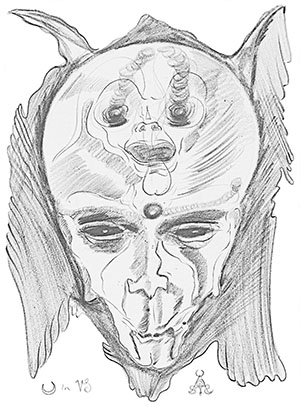
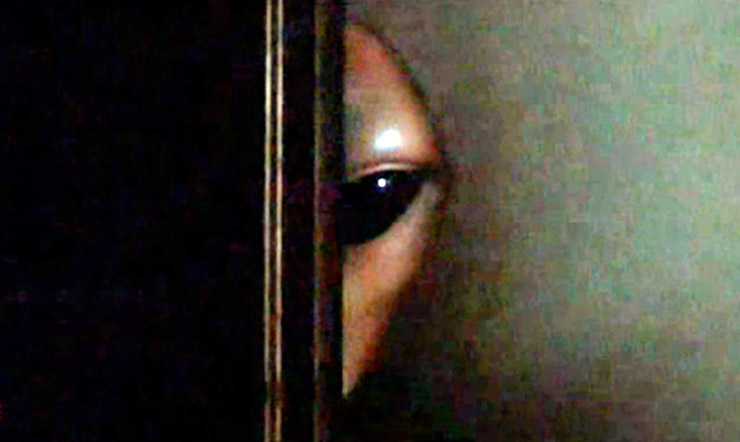
    In his lifetime Crowley achieved contact with only one alien entity of this nature, and that was the alien known as Lam or Aiwaz (the two are sometimes distinguished by occult scholars, but they were virtually synonymous in Crowley’s mind and I shall therefore speak of them as one entity in this essay). Lam was believed by Crowley to be an emissary of other aliens or “outer-ones”; Lam/Aiwaz was the entity that dictated the notorious Book of the Law, or Liber AL, to Crowley via the seer Rose Kelley in 1904. Crowley also had direct contact with Lam in America later in 1915 and 1919. Crowley drew a portrait of Lam and included it with some of his expressionist paintings in an exhibition held in Greenwich Village, New York City, 1919. This drawing was reproduced for the first time in The Equinox, Vol. III, No. 1 (1972); Kenneth Grant reproduced the same drawing in The Magical Revival (1972) and Outside the Circles of Time (1980). Lam has a small, diminutive body visible only from the chest on up, covered by a coarse, wool-textured robe. The area of the head above the eyebrows and the bridge of the nose is very high, bulbous and hairless; it is more than twice as long as the lower area. There is a faint, mushroom-cloud shape etched into the expansive forehead. The face itself is scrunched down low between the eyebrows and the chin; the eyes are narrow and slanted, the pupils tiny, the nose long, the mouth a mere slit. 

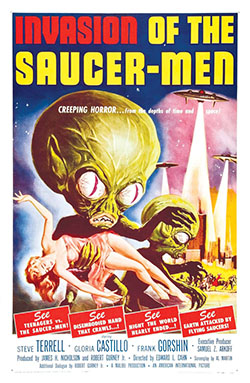
    When we compare the image of Lam with the descriptions of aliens given by contactees and abductees, there are striking similarities. Grey-skinned humanoids have been reported as being 3-4 feet tall with bald, elongated heads, black almond eyes and slits for mouths. There are descriptions of diminutive green humanoids, also bald with elongated heads, slanted eyes, slit-mouths. There are even accounts of small silvery creatures who resemble the other two types. Clearly, contactees and abductees are seeing the same sorts of entities that Crowley saw; the only difference is that Crowley’s entity was not coloured green, gray or silver. In this context, it is worth noting that all of these alien archetypes are virtually equivalent to the 1950s Hollywood Science Fiction versions of aliens – the big-brained, bug-eyed, little green or gray men that still crop up occasionally in SF films on TV and in the cinema today. 

    David J Skal, horror film scholar and author of The Monster Show: A Cultural History of Horror (1993), offers an interesting interpretation of the big-headed, bug-eyed alien stereotype. 

    Invasion of the Saucer Men (1957) boasted the most exaggerated eye-brain hypertrophy of all: aliens (played by dwarves) with heads shaped like gargantuan light bulbs, their bugging eyes the size of baseballs…. these new creatures anticipated not the violent rending of the body but its withering and atrophy. The future was about watching images and processing information; the eyes and brain were the only useful parts of the human form left…. ocular anxiety and depersonalization was reflected in films like The Beast with a Million Eyes (1955), The Crawling Eye (1958), and The Cyclops (1957).

    This is eerily applicable to our contemporary times where young millennials are addicted to their smartphones, cherishing them more, seemingly, than the hands that hold them, as they pump unceasing bits of social and entertainment data directly into their brains. Perhaps in the future, as our technologies advance and proliferate, we will see increasing levels of “ocular anxiety” and depersonalisation of the type mentioned by Skal. But this is more or less a human thing. Alien entities such as Lam do not have big heads because of information overload; they need the expanded cranial capacity to house their superior minds and apply their cognitive energy, enhanced as it is, to assist humankind in taking the next, necessary step towards enlightenment.

    Kenneth Grant & Ufologicks

    After Crowley’s death, his disciple Kenneth Grant (1924–2011) received a charter from Karl Germer, Crowley’s successor as Outer Head of the OTO, to set up a UK branch of the OTO. From its inception, Grant’s New Isis Lodge reflected Crowley’s hopes, which he articulated in his diaries during the last two years of his life, for a fundamentally different, re-structured OTO, focused less on initiation and more on promoting and fostering communication with alien entities.

    Elaborate ceremonial and the establishment of fixed Lodges in specific locales would be superseded by a fluid and far-flung web comprised of Thelemic power-zones. These power-zones would form a loosely-knit network of occult groups using the Ophidian Current to prepare human consciousness for intercourse with the denizens of other dimensions.

    Grant followed through on Crowley’s game-plan; he divided his “Typhonian” OTO as he called it into a series of disparate cells, each operated by either a single, dedicated magickal practitioner or by a small coven of practitioners. The main lodge facility was reserved for visiting magickal practitioners and performance artists who were allowed to stage their own creative rites on a first-come, first-serve basis, using lodge members occasionally for support and backup.

    Desmodus

    Grant, like Crowley, also contacted the HGA. Grant’s guardian angel was named Aossic-Aiwass, and not surprisingly it closely resembled LAM. Grant provides plates in the various volumes of his Typhonian Trilogies series that show the faces of the alien entities he communicated with over the course of his magickal experiments, both during his tenure as head of the New Isis Lodge and afterwards. These aliens also resemble Lam. An alien known only as Desmodus is shown in Plate 8 of Outer Gateways (1994); this was drawn by Grant. Desmodus’ face occupies only the lower half of the head; the rest is a high, bulbous forehead, with a small, weird face etched into the skin, smoke pouring out of its eyes. In Plate 29 of Beyond the Mauve Zone (1999) there is the drawing (also by Grant) of an alien priest. Like Aossic-Aiwass, the priest has a large, bulbous head, though the face is more normal looking. These examples are clear evidence the alien entities that haunted Grant’s magickal chambers and the chambers of his imagination are the same diminutive, big-brained creatures that appear to countless contactees and abductees. 

    Grant, likewise, accepted Crowley’s view that alien entities are trans-dimensional. In Outside the Circles of Time (1980), Grant calls into question the whole extra-terrestrial vs trans-dimensional dichotomy, seeing outer space as a form of inner space, especially when it comes to alien beings. This takes aliens out of their metal ships and plants them squarely in alternate dimensions. 

    Whether or not…. intrusion proceeds from actual entities in outer space is problematic; outer space may be another form of that inner space which comprises the mental or subjective universe.

    In a later, more penetrating analysis of the nature of aliens, in his Outer Gateways (1994), Grant rightly notes that the larger percentage of encounters involve aliens that are not flesh and blood but are actually magickal beings. Grant theorises that aliens are largely “etheric,” not quite astral-entities but closer in substance to the astral than they are to the physical. Grant extends this theory to include alien ships. These ships, according to Grant, are etheric – astral shells or capsules fabricated by the trans-dimensional aliens as a necessary by-product to assist in reification on the physical plane. 

    The substance of manifestation appears ….to be of an etheric as distinct from an astral nature. This supposition is suggested by the tangible quality of many of the objects observed. Sightings in this category appear to be far in excess of those in which the occupants of UFO’s are considered to be flesh-and-blood beings… that suggests that ufonauts are of a substance more subtle than their vehicles, as the astral body of man is more subtle, or less dense, than his physical body. Such might be the case, for example, if an astral entity fabricated for itself an etheric shell, or capsule, as in the practice known as the magickal assumption of god-forms.

    Grant coined the term “ufologicks,” which is phonetically similar to “magicks.” He defined ufologicks in obscure terms as “a suggested designation for the mantric vibrations associated with Gematria and with the power-wave impinging upon earth from Outside.” When we get past the over-inflated terminology, the meaning is rather simple: ufologicks is (or will be) a new magickal system focused primarily on rites that are specifically designed to enable magickal practitioners to contact alien entities like Lam, Aossic-Aiwass, or Desmodus. 

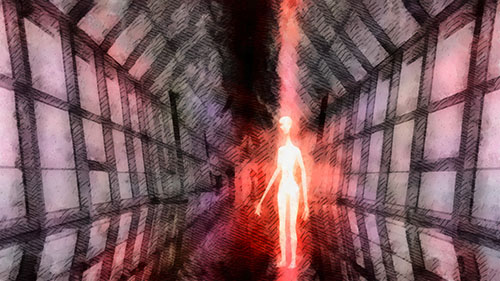
    Unfortunately, Grant died before he could take practical steps to implement this new system. But he did leave behind some notes on an improvised magickal rite which could be used to summon Lam. Grant instructs the magickal practitioner to gaze at the portrait of Lam, concentrating attention on the eyes. As concentration deepens, the eyes will start to enlarge, and they will suck you into the portrait so that you have the sensation of being inside the entity’s head. Then, Grant tells us, two paths are possible, either a “downward” or an “upward” path. Grant doesn’t elaborate on what might occur if the upward path is chosen, but he is very explicit about the downward option. The results are quite dramatic, and they deserve full quotation here. 

    If downward, the descent will be accompanied by a sensation of rushing air… A deep blackness will engulf the mind as one enters the dark tunnel beneath the mouth of Lam, and the wind will be replaced by the sound of rushing waters… [this] will awaken the image of an octopoid entity, the tentacles of which are the branchings of the tunnel below the mouth of Lam…. [A] fusion will occur between the eyes of Lam, in the region of the ajna chakra, and the flame will shoot aloft into the vast brilliance of a cranium that appears infinite in extent and dazzlingly lustrous. 

    This rite serves as an excellent example of what the formal rites for a ufologick lodge might have looked like if Grant had lived to establish his proposed magickal system. 

    Art by Raphael Terra © Esoterica Art Agency (esotericaartagency.com)

    As a parting concession to future ufologists, there is a curious and rather peculiar UFO-centric account of the creation of the world in one of Grant’s last books, Beyond the Mauve Zone (1999). Grant describes the appearance of an alien astronaut on Earth in ancient, pre-human times (the period is not specified). The alien presents itself in the guise of an eccentric, reclusive scientist. In his laboratory, the alien has set up a shrine to the goddess Nu-Isis, consisting of a statue of the goddess and an eternal flame burning in front of it. The statue is fashioned from a metal that cannot be found on Earth. She is a metallic, biomechanoid Earth-woman, reminiscent of the countless biomechanoid female aliens that proliferate in the canvasses of the Swiss artist H. R. Giger. The alien scientist feeds the statue with fluids drawn from elemental, astral entities. Eventually, the laboratory is destroyed by a massive explosion and the alien either perishes or escapes back to his own dimension. Much later a living human woman emerges from the ashes of the lab, born from the apocalypse of the explosion. She is Lura, daughter of the biomechanoid statue, who Grant describes as “the vitalised image worshipped and nourished by the scientist in the secrecy of his laboratory.” Along with the birth of Lura, humans begin to populate the Earth. Some of these humans are directly descended from Lura herself, the children of her sexual liaisons with Earth men, and these individuals are particularly suited to communicate with trans-dimensional alien entities. At the present day, the descendants of Lura are the magickal practitioners – magickians, mystics and psychonauts – who seek supra-human knowledge and power. 

    Get the issue this article appears in

    Real or Not Real?

    Previously, I mentioned there is scant empirical evidence for the existence of aliens. This is especially true when it comes to the extra-terrestrial alien. In all fairness, it must be noted that the evidence for the existence of the trans-dimensional alien is equally weak. We have examined the testimony of Crowley and Grant, but is this any more reliable than the testimony of ufologists, contactees or abductees? The issue here boils down to the distinction between the imaginary world and the so-called ‘real’ world. Which is true? Or are both true? Or neither? In the last few decades, quantum physics has eroded our views about reality, and the theories of contemporary scientists are beginning to sound a lot like the theories of the magickal practitioners, both past and present. The line between what is real and what is not is no longer distinct, and in the absence of certainty we are free to believe what we will. 

    In this regard, I am reminded of Harry Potter’s final meeting with his mentor Albus Dumbledore near the end of the 7th book in J. K. Rowling’s Harry Potter series, Harry Potter and the Deathly Hallows (2007). Potter finds himself in an alternate dimension that looks like King’s Cross station, except that it is empty – no trains, no passengers and full of bright mist. Initially, Potter is surprised to see Dumbledore, because Dumbledore died in the previous book. After they converse, Potter asks Dumbledore: “Is this real? Or has this been happening inside my head?”, to which Dumbledore replies: “Of course it is happening inside your head… but why on earth should that mean that it is not real?”   

    [alert type=”general” dismiss=”no”]This article was published in New Dawn Special Issue Vol 12 No 2.[/alert]

    [alert type=”success” dismiss=”no”]If you appreciate this article, please consider subscribing to help maintain this website.[/alert]

    © New Dawn Magazine and the respective author.
    For our reproduction notice, click here.
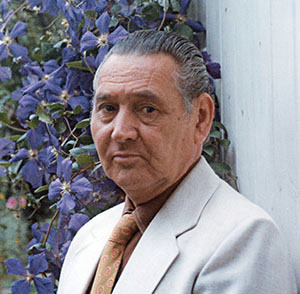
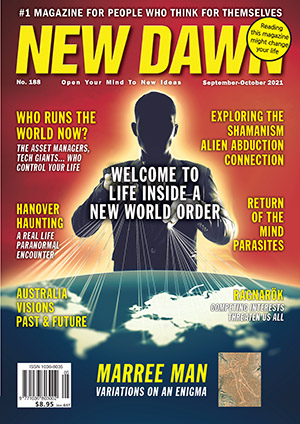
  • Exploring the Shamanism–Alien Abduction Connection – Part 1

    Exploring the Shamanism–Alien Abduction Connection – Part 1

    From New Dawn 188 (Sept-Oct 2021)

    Baldwin Spencer and Frank Gillen, in their book, The Northern Tribes of Central Australia (1904), provided a classic account of an extraordinary tradition. An Aborigine, Kurkutji, was set upon by two spirits, Mundadji and Munkaninji, in a cave:

    “Mundadji cut him open, right down the middle line, took out all of his insides and exchanged them for those of himself, which he placed in the body of Kurkutji. At the same time, he put a number of sacred stones in his body. After it was all over, the youngest spirit, Munkaninji, came up and restored him to life, told him that he was now a medicine man and showed him how to extract bones and other forms of evil magic out of them. Then he took him away up into the sky and brought him down to earth close to his own camp, where he heard the natives mourning for him, thinking that he was dead. For a long time, he remained in a more or less dazed condition, but gradually he recovered and the natives knew that he had been made into a medicine man. When he operates the spirit, Munkaninji is supposed to be near at hand watching him, unseen of course by ordinary people.”

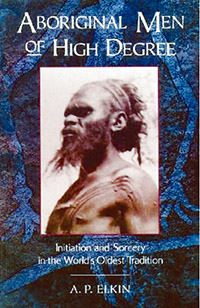
    This is a striking description of the initiatory experience of an Australian aboriginal shaman. A.P. Elkin aptly referred to these individuals as aboriginal men of high degree.

    There are numerous accounts of this kind from the past, from recent times, the present, and right around the world. In addition, there are many excellent works covering shamanism, like the classic study by Mircea Eliade, Shamanism: Archaic Techniques of Ecstasy and his analysis of the Australian tradition, Australian Religions; Carmen Blacker’s The Catalpa Bow: A Study of Shamanic Practices in Japan; Michael Harner’s The Way of the Shaman; Joan Halifax’s Shamanic Voices; Holger Kalweit’s Dreamtime & Inner Space: The World of the Shaman; Shamans Through Time edited by Jeremy Narby and Francis Huxley; Shamans of the World edited by Nancy Connor with Bradford Keeney; and The Beauty of the Primitive: Shamanism and the Western Imagination by Andrei Znamenski.

    Ritual death and resurrection, abduction by powerful beings, ritual disembowelment, implanting of artefacts, aerial ascents and journeys into strange realms, alien tutelage and enlightenment, personal empowerment, and transformation – these and many other phenomena are recurring elements of the extraordinary shamanic tradition.

    Incredibly, these worldwide native aboriginal experiences share an impressive connection with a bizarre complex of human experiences that have attracted a lot of attention since the late 1960s. 

    Whitley Strieber’s “visitors”

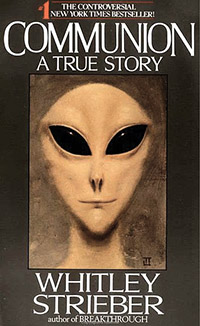
    One of the best-known accounts of this contemporary mirror of the shamanic tradition appeared in 1987 in a best-selling book that sold more than four million copies worldwide. The story behind it was made into a film by Australian director Philippe Mora. I am referring to Whitley Strieber’s book Communion. Its sequels, Transformation (1988), Breakthrough (1995), The Secret School (1996), The Communion Letters (with Anne Strieber, 1997), Confirmation (1998), Solving the Communion Enigma (2012), The Supernatural (with Jeffrey Kripal, 2016) and A New World (2020) continued Whitley Strieber’s story of a claimed “elaborate personal encounter with intelligent non-human beings” and his attempts to understand the mystery. Whitley Strieber’s story emerges from the perspective of the alien UFO abduction. Whatever its factual reality or physical basis, Strieber’s account of his experiences is one of the most potent personal expressions of the UFO abduction mystery.

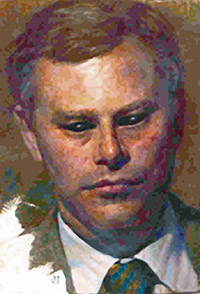
    Artwork of Whitley Strieber by Ted Seth Jacobs that appeared on the cover of Report on Communion by Ed Conroy. 

    Strieber describes how he was taken from his upstate New York cabin on 26 December 1985 by unknown “visitors.” From the nearby woods, he recollected being taken up into the air and suddenly finding himself in “a messy round room.” Strange beings were there. A needle-like thing was allegedly inserted behind his right ear. A grey and scaly object with a sort of network of wires on the end was briefly inserted into his rectum. An incision was made on his right forefinger. He had no further conscious recollections beyond that point. 

    The memory of what he thought happened came back to him over the next few days. The impact was shattering. He thought he was losing his mind. He even contemplated suicide. Instead, he was helped by UFO researcher Budd Hopkins who arranged for him to see a psychiatrist, Dr Donald Klein.

    Dr Klein’s hypnosis sessions provided further details of the 26 December 1985 episode and earlier experiences. As Strieber searched further into his past, he uncovered not explanations and certainty but instead more mysteries. He concluded: “I had a relationship with them, despite the fact that I could not even be sure they existed.”

    By the time the December 1985 experience overwhelmed him, Strieber may have had these sorts of encounters at least a dozen times. He embarked on an intellectual journey through the vast UFO and related literature, trying to grapple with the mystery that had enveloped him. 

    Strieber also describes how others around him were witnessing the “visitors.” Quite a number of people who stayed at his New York cabin allegedly witnessed the “visitors.” Is this baseless contagion or evidence of the paradoxical reality of the “visitors,” as seen by Whitley Strieber? As a highly successful novelist, Strieber has had to face claims that Communion and its sequels are works of clever fiction. He insists it is all true. Having met him and spoken at length with him on several occasions, I feel it is clear he is trying to convey the ‘impossible’ as best he can.

    Whitley Strieber felt that the “visitors” represented “the most powerful of all forces acting on human culture. They may be extraterrestrials managing the evolution of the human mind. Or they may represent the presence of mind on another level of being. Perhaps our fate is eventually to leave the physical world altogether and join them in that strange hyper-reality from which they seem to emerge.”

    Further, he wondered “if the shamanic language of symbol and myth would offer a better insight into the visitors’ motives”? In Transformation, Strieber contemplates, “Like the shamanic aspirants of old, I would be forced to confront death.” A friend of Strieber’s, Dora Ruffner, felt “the visitor experience was initiatory in nature – a journey into the underworld.” In an interview for Terror Australis magazine, Strieber suggested “that shamanism is the shattered remnants of mankind’s early attempts to control this (visitor) phenomenon.” 

    Budd Hopkins & ET Genetic Experiments 

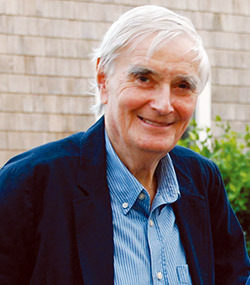
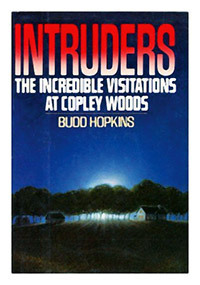
    Budd Hopkins (1931–2011), author of Intruders which established him as a major figure in the UFO movement.

    The field of Ufology has developed a range of positions on ‘alien abductions’, but the most popular view appeared to be that of the late researcher Budd Hopkins, author of Intruders, Missing Time, Witnessed, and (with Carol Rainey) Sight Unseen, and his memoir Art, Life and UFOs

    The “alien abductors,” in Hopkin’s view, were extraterrestrial and are involved in some sort of extraordinary genetic experiment. Human beings are first abducted when children. A cell sampling operation occurs. These lead to certain individuals being followed closely. After puberty, ova and sperm cells are taken during follow-up abductions. The goal of this activity is “the merging of human and ‘alien’ genetic material for the production of a hybrid race.” The hybrids are then apparently brought to term in laboratory “nurseries” inside large UFOs. The involuntary contributors are later abducted yet again and are shown the results – tiny hybrid infants or children. This bizarre “baby presentation” apparently involves the abductees being asked to pick and hold their “offspring” in a kind of binding experience!

    In the book Phenomenon (1988) edited by Hilary Evans and John Spencer, Hopkins concedes: “I am the first to admit the sheer outrageousness of such ideas, but outrageousness doesn’t mean untruth. I find the evidence, unfortunately, compelling. I have every reason to conclude that these ‘impossible’ breeding experiments are actually taking place… I am convinced that, for good or ill, these genetic procedures are at the heart of the UFO abduction phenomenon.”

    Hopkins is credited with bringing abductions into the central focus of UFO study and research in the 1980s. There was furious debate amongst many UFO researchers about the legitimacy of these developments. Not all accepted that the abduction claims were the key to the UFO mystery. Many saw the abduction stories as an inevitable outgrowth of a psychological response to the ostensibly more objective manifestations of mainstream UFO ‘reality’. Others saw such events in a more positive light, with a transformational aspect. Others argued that the richness of the human mind and dynamic interplay with UFO researchers spawned these accounts, not aliens. 

    However, the UFO abduction mystery was not simply an artefact of a few investigators. It’s seemingly worldwide in its dimensions. English researcher Jenny Randles’ book Abduction (1988) carries details from over 200 ‘abduction’ reports from some 35 countries, as diverse as Zimbabwe, Finland, China, USSR, Tibet and India.

    Reports occur in Australia. I have investigated many cases myself. My book Hair of the Alien: DNA and Other Forensic Evidence for Alien Abductions (2005) examined the experiences of Peter Khoury and the hair sample that yielded fascinating results. It led me to develop what I referred to as “the alien DNA paradigm,” focusing on the possibility of evidence for alien genetic “intelligent intervention” in various cultures (particularly indigenous cultures) around the world. It was driven by locations with high strangeness/breakthrough activities with UFOs, light phenomena, alien abductions, by cultures that feature claims of “sky beings,” diverse UFO phenomena, by possible unusual DNA markers within these cultures or present selectively or generically in human DNA, and by locations or regions which bring together each of these factors (UFO “haunted” location, alien mediated culture, DNA aspects). 

    John Mack & the Psychology of the ET Experience

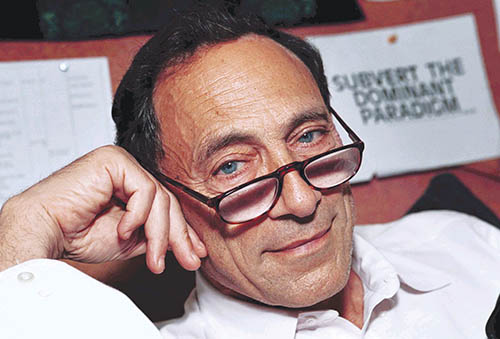
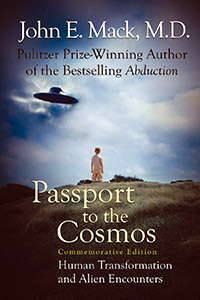
    In his book Passport to the Cosmos, John Mack (1929–2004) presented a shamanic envisioning of the alien abduction mystery. 

    Alien abduction narratives became a central focus for many researchers. The late John Mack was a potent and articulate spokesman for a transformational focus. With his 1994 book Abduction: Human Encounters with Aliens, and more particularly his 1999 book Passport to the Cosmos: Human Transformation and Alien Encounters, he signalled and mapped out his perspectives. In essence, Passport presented a shamanic envisioning of the whole alien abduction mystery. The transformative aspects of the phenomenon held sway for John Mack, and examination of the physical dimensions seemed secondary or even unimportant. 

    The kind of information I have focused on such as DNA, albeit not without ignoring the shamanic correlations, perhaps conflicted with the numinous dimensions of the hyper-reality John Mack speculated may be at the heart of the abduction phenomenon. It seemed that in alien abductions, Mack saw affirmations of important concerns and perspectives he had held for some time. They sat well with the transpersonal and environmental issues he had championed for some time, certainly long before the alien sirens beckoned him into their seductive embrace. 

    The Believer: Alien Encounters, Hard Science, and the Passion of John Mack (2021) by Ralph Blumenthal (co-author of the December 2017 New York Times UAP/UFO breakout story), for me, enhanced the contexts of his Australian visits and gives insights into John Mack’s conflicted dance with physical evidence of alien abduction claims. He was more interested in its ultimate meaning, nature and impact. When he was in Australia, I supported his research into indigenous aboriginal abduction and UFO experiences – an area we both had a strong interest, particularly its shamanic dimensions. 

    John Mack argued in Passport to the Cosmos: “There are problems with an entirely literal physical interpretation. To begin with, despite liberal use of words like genetic, DNA, and mitochondria, there is not solid material evidence of which I am aware to support the notion that any of this, including the creation of the hybrids themselves, is occurring on the material plane to the extent that detectable or measurable changes are happening at the molecular level. At best what we have in the physical domain are small lesions (which skeptics say could be self-inflicted, but I have found no evidence for this) and bodily symptoms that might be manifestations of subtle forces, real energies originating on another plane of reality.” 

    These statements puzzled me somewhat because during his research visits to Australia and afterwards, John Mack had become well acquainted with Peter Khoury and the fact that the hair sample related to his 1992 experience was being subjected to mitochondrial DNA sequence analysis. Our first report on the work, ‘Strange Evidence’, appeared in the Spring 1999 issue of the International UFO Reporter and information about it was widely reported in the UFO media from June 1999 onwards. Before that, we were circulating the preliminary results of the research. In addition, while the words genetic and DNA might have been liberally used in the abduction research field, I was not aware of similar usage of the term mitochondrial until the appearance of my ‘Strange Evidence’ report.

    Mary Rodwell champions the transformational perspective in her books, Awakening: How Extraterrestrial Contact Can Transform Your Life (2002) and The New Human: Awakening to our Cosmic Heritage (2016). The extensive study, ‘Beyond UFOs: The Science of Consciousness and Contact with Non Human Intelligence’, edited by Rey Hernandez, Jon Klimo, and Rudy Schild (2018), gives a framework for this viewpoint.

    Some critics argue that sufficient explanations for the UFO abduction mystery are found in the physiological or psychological domain, such as sleep paralysis, temporal lobe sensitivities, fantasy-prone personalities, and a host of other avenues bound by the human condition. 

    The Imaginal Realm

    Another interpretation of UFO abduction accounts also appears to strengthen the shamanic perspective of the abduction narratives. I refer here to the imaginal interpretation. Note that I wrote imaginal, not imaginary. There is a big difference if you believe the proponents of the idea.

    Dr. Kenneth Ring, the noted researcher within the field of near-death studies

    Dr Kenneth Ring of the Department of Psychology at the University of Connecticut, and author of the near-death experience studies Life at Death and Heading Toward Omega, described his theory of imaginal UFO abductions in the MUFON UFO Journal of May 1989, and incorporated these ideas into his 1992 book The Omega Project: Near-Death Experiences, UFO Encounters, and Mind at Large

    He included a quote from me: “Aboriginal shamans have a powerful and consistent tradition of ritualistic initiation, the elements of which bear amazing similarities to many modern-day UFO abductions and contact accounts.” This had come from a research paper I presented way back in 1977 at an Australian UFO conference. I stated that while, at least then, we appeared to lack contemporary cases which demonstratively show, among other things, the elements of abduction, “contact,” and “time-lapse,” Australia, unbeknown to most researchers, enjoyed a rich indigenous tradition of similar accounts – the tribal initiation accounts of aboriginal medicine men – men of “high degree” as A.P. Elkin aptly puts it.

    Kenneth Ring’s ideas struck a responsive chord with speculations I had been considering for more than a decade. By 1990 I had examined the works of the great French Islamic scholar Henry Corbin. In a paper first published in 1964 entitled ‘Mundus Imaginalis or the Imaginary and the Imaginal’, Corbin coined the term “imaginal” to account for the Islamic mystical notion of a hidden realm (“a third kingdom” – the Alam Al-mithal as contained in the Sufism of the Islamic mystic Ibn’ Arabi).

    According to proponents, the “imaginal realm” could be accessed in certain altered states of consciousness – for example, via “mythical consciousness” (to use James Hillman’s archetypal psychology term) or “shamanic states of consciousness” (to use western shamanic exponent Dr Michael Harner’s terminology).

    Kenneth Ring made the critical point that the imaginal realm was as real as everyday reality but usually separate and invisible to us. It apparently had form, dimension, and, he contends, “most important for us, persons.” 

    In this Islamic “imaginal” realm of Alam Al-mithal, there were claimed to be quite a number of strange denizens, some having characteristics that bear an extraordinary likeness to the entities that dominate UFO abduction stories. One species, the Jinn, was described in 1983 by veteran English UFO writer Gordon Creighton in a fascinating piece in the Flying Saucer Review, entitled ‘A brief account of the true nature of the “UFO entities”.’

    Ring highlights shamanism as one of the most potent expressions of the imaginal realm. He states: “The shaman is the prototypic ‘otherworld traveller’, a man (or woman) who is at home in both worlds, recognises the reality of each, and can easily journey between them.”

    Get the issue this article appears in

    Richard Noll succinctly states the critical issue in his essay, ‘The Presence of Spirits in Magic and Madness’ (in Shirley Nicholson’s compilation, Shamanism): “Humankind has traditionally consulted extra-mundane entities for expanded knowledge and empowerment, for they are traditionally considered ‘sources of wisdom’ that are transpersonal and able to convey crucial information beyond the normal constraints of space and time …The practitioner usually initiates dialogues with spiritual entities by first inducing an altered state of consciousness, which allows these ‘invisible guests’ to be seen and heard. However, in some instances it is they who knock first on the doors of imaginal perception. Called or not called, they offer symbolic potential for transformation, whether for oneself, for others, or for desired changes in the physical environment…” 

    These beings are not imaginary in the sense of being not real, pure fantasy, or artificially made up. They are imaginal, existing in a realm of experience in which they inhabit a reality of their own, a mundus imaginalis or “imaginal world,” as Henry Corbin deems it, which is co-existent with the mundane experiential world of our ordinary state of waking consciousness. Imaginal beings are part of our experienced reality and have probably been so since the birth of human consciousness.

    The concept of an imaginal realm sits very well with the paradoxical reality of the UFO abduction mystery, however, it is just as unprovable as the extraterrestrial hypothesis. Some proponents of the imaginal view argue that confirmation comes through experience. It is difficult to see how the idea can be substantiated. 

    Dr Ring’s suggestion that his theory could be easily disproved by the arrival and open contact of extraterrestrial abductors, falls short with the lack of explicit mainstream confirmation of such visits. He argued it was high time that we jettisoned “our out-worn cartesian habits of thought” and approach “these phenomena from an imaginal/folkloric perspective. This will necessarily take us down a psychological road that will lead not only into folkloric territory but into the realm of myth itself.” 

    That approach, while fascinating, asks us to abandon the scientific ethic and mainstream conventions of consensus reality. Given the extraordinary claims and uncertainties that attend this strange area of human experience, it may be premature to do that. More cautious and tested approaches would seem more worthwhile. Such approaches, led by collaborations with experiencers, may yet confirm we are dealing with extraterrestrials, imaginal entities, and other hitherto unfathomed explanations for this extraordinary phenomenon. An open mind would be our best council. 

    The second part of this article appears in New Dawn 189 and explores accounts of alien abductions that have shamanic elements; the Wandjinas of Australian aboriginal spirituality; and the author’s trip to Thailand and China which revealed connections between UFO sightings and local shamanic traditions. Click here to obtain that issue.

    [alert type=”general” dismiss=”no”]This article was published in New Dawn 188.[/alert]

    [alert type=”success” dismiss=”no”]If you appreciate this article, please consider subscribing to help maintain this website.[/alert]

    © New Dawn Magazine and the respective author.
    For our reproduction notice, click here.
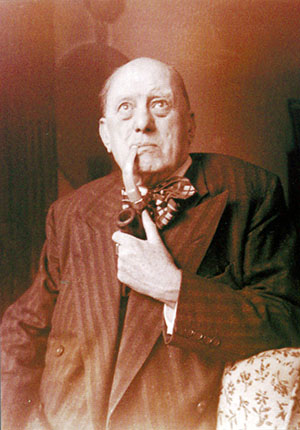
  • The Intriguing Life of Andrew Tomas: The Mystic Who Chased UFOs

    The Intriguing Life of Andrew Tomas: The Mystic Who Chased UFOs

    From New Dawn Special Issue Vol 12 No 2 (April 2018)

    ‘Ancient Aliens’ is the title of a popular show running on the History Channel, now in its 12th season, but the same title was used on a book published in 1973 by Andrew Tomas. It followed his 1971 bestseller – We Are Not the First – just a couple of years after the English version of Eric Von Däniken’s Chariots of the Gods attained worldwide success. In fact, Tomas had published a book titled The Planetary Doctrine as far back as 1935. While the modern TV namesake ‘Ancient Aliens’ takes pains to promote the idea that extra-terrestrials are made of flesh and blood, probably in deference to scientifically minded viewers, Tomas had no qualms about presenting his aliens as being otherworldly supra-humans, consisting of what was described as ‘mind-born’ bodies.

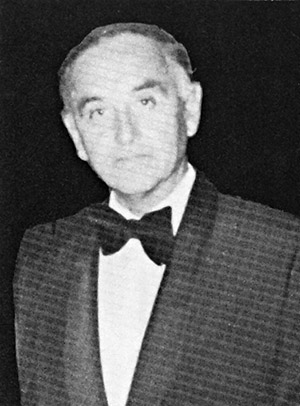
    Andrew Tomas (1906–2001)

    Some readers may hold the view that, just like science and religion, Ufology and spirituality are mutually exclusive. Not so if Andrew Tomas is any guide. He entwined both belief systems into a single coherent strand that yielded his impassioned advocacy for world peace.

    Born in Russia in 1906 and moving around as a result of his father’s work, Andrew left his homeland after the Bolshevik revolution and settled in China, where he completed his schooling and forged a career as an accountant. In 1948 he again fled social upheaval, this time when Mao Tse Tung forced the nationalists out of China. Tomas headed for Australia where he spent the best part of twenty years and dwelled successively in each of the mainland capitals. In the mid-1950s, at a time when he was involved in organising the NSW branch of the Australian Flying Saucer Research Society (AFSRS), he was viewed with suspicion by some other members and tarnished with the label ‘white Russian’.

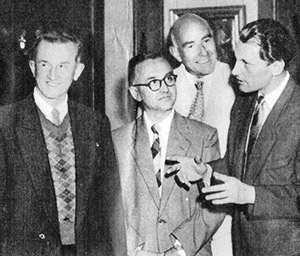
    Andrew Tomas (second from left) with fellow ufologists of the NSW UFO Investigation Centre, 1957.

    Well known ufologist and author Bill Chalker has recorded his recollections of that era: “I am well aware of the paranoia that existed during those years, but I do believe that any suspicion of the Victorian and Sydney groups by any individual, or body, could not have been further from the reality. While it is true that Andrew Tomas was indeed Russian, along with George Tararin (who I believe was from the region now known as Belarus), Dr Lindtner (Slovenia) and Joseph Gjerki (Croatia) and for all I know, maybe a few others also from Iron Curtain countries, the fact is that these people had all gone to Australia to get away from that sort of thing. George used to tell me he was ‘stateless’, having come more or less the same route as Andrew, which is to say, by way or Harbin or Shanghai. The latter two men had been educated by Americans – they had rather quaint accents with strong American overtones!”1

    The 1950s was the high point of McCarthyism in Australia, particularly with the Petrov affair. Unfortunately, even if you were not a communist sympathiser, the mentality of the era meant a ‘white Russian’ such as Andrew Tomas was probably under observation by intelligence agencies. This prompted him to request a name change from his Russian one, A. Boncza-Tomaszewski, under the ironically titled “Aliens Act 1947.” It was a further irony that Andrew Tomas should have drawn criticism because of his ethnic origins as he was a committed pacifist. Perhaps it was, in fact, his lobbying of politicians and other public figures with his peace agenda that drew attention. He had clung dearly to his Shambhala-inspired ‘peace doctrine’ ever since writing Planetary Doctrine two decades earlier.

    In 1954 Andrew Tomas met mystery writer Edgar Jarrold, the director of Australia’s first public flying saucer group. Tomas showed Jarrold his 1935 book The Planetary Doctrine, which had been published in Shanghai, China. He focused Jarrold’s attention on the passage: “Travellers and explorers often notice in the heights of the Himalayas strange shiny objects or creatures soaring high above the mountain crests, which are an eternal puzzle to Europeans. Whether these mysterious objects are vehicles belonging to supermen we dare not assert, though such an explanation is quite plausible. Cannot the reader believe that by such means, utilising unknown energies, communication is maintained from planet to planet?”2

    Books by Andrew Tomas

    The book Shambhala: Oasis of Light, written in 1977, was arguably Tomas’ most insightful and enduring legacy. In it, he describes how he ascended the snowy Himalayan slopes to a Tibetan monastery where he received spoken wisdom from a learned Lama, along with non-verbal illumination during a privileged initiation in a secret cave below the temple. Not only does Tomas assert the reality of the Bodhisattvas and Arhats, or Mahatmas, in this work he also draws together timeless mysteries from the East and West, Buddha and Jesus, Essenes and Templars, Hindu and ancient Greek; he connects Rosicrucianism, Masonry and Theosophy; the teachings of ancient philosophers flows through to unseen Guardians who continue to guide the planet today. 

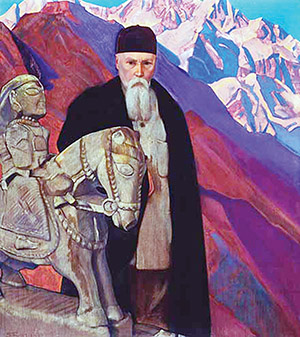
    He first met Nicholas Roerich in Shanghai during 1935 (the same year Tomas published The Planetary Doctrine). Roerich had just completed an expedition to Central Asia and talked about beings he called ‘Guardians’ who dwelt in the Gobi Desert. From that time onwards, Tomas would refer to Roerich reverently as his Master. For those unfamiliar with Roerich (1874–1947), he was a Russian painter, writer, archaeologist and theosophist, perceived as an ‘enlightener’, philosopher, and public figure, who in his youth was influenced by a spiritual movement in Russian society.

    Painting depicting the artist and mystic Nicholas Roerich. Tomas referred to Roerich as his ‘Master’.

    Trained as an artist and a lawyer, Nicholas Roerich was a dedicated activist for the cause of preserving art and architecture during times of war, earning several nominations for the Nobel Peace Prize. Among his most notable achievements was the Roerich Pact,3 which was signed into law by the United States and most nations of the Pan-American Union in April 1935. Andrew Tomas went on to devise a pact of his own. In March 1958, as secretary and organiser of the International Organising Committee of the Planetary Pact, he sent a draft of the pact to the world’s leading news agencies.

    Two years prior he published a 48-page booklet in Sydney titled Signs, Stars and Seers – An Experiment in Historical Prediction. In this book he stated he had already issued unheeded warnings to Hitler, Mussolini and Hirohito, through their embassies in China in 1935, regarding the folly of war. He also claimed to have approached a “responsible Soviet diplomat” four months after the defeat of Japan – well before the Cold War – with a project aimed at establishing friendly cultural relations between the USSR and the USA & UK. Although the project was not adopted, Tomas felt that his mission on behalf of world peace had been fulfilled. The booklet contained the ominous admonition: “If the national governments ignore this last warning, motivated by a desire to save this planet from destruction and mankind from self-annihilation, they will have to bear all responsibility for opposing the Cosmic Law of Unity.”4

    Not much was known in the West about the legendary Shambhala until revelations were made by Madame H.P. Blavatsky in the late nineteenth century. Andrew Tomas presented impressive evidence from Tibetan sources that this hidden kingdom really does exist and is the home base of higher beings who continue to guide us into the coming new age of Homo Noeticus. In that regard he issued warnings of coming calamities, while at the same time holding optimism for our long-term future. We will conclude with two of his predictions, one coming from his ‘Cosmic ET friends’, and the other from his Tibetan guides. 

    At the end of an article in the last issue of Jarrold’s Australian Flying Saucer Magazine, “Are you ready for a planetary crash?”, (page 7, February 1955), he wrote: “In the circles of the duly initiated Brethren of Space, fantastic stories are told of saucers, messages from space and cosmic decrees.… Anyway, my cosmic friends tell me not to worry about what other people say, but just place this information before the public. ‘It won’t be long now’, they say. Jokes aside, let us think more of the stars. Let us all become the children of Heaven. Let us dream of a Utopia where there is no hatred and no wars. But before we see that Utopia a red sign will flash in the skies, ‘Tighten your belts’. As Ripley says, ‘believe it or not’, but we are heading for a planetary crash.”5

    Get the issue this article appears in

    And finally, at the close of his book Shambhala: Oasis of Light, Andrew left us with predictions from the Tibetan Kalachakra tradition:

    “The twenty-first Ruler of the Land of Shambhala, Ma-gag-pa, is now enthroned on his lion-supported golden throne. He has ruled for forty-nine years before the present Fire Dragon year (1976). After another fifty-one years (2027), the twenty-second Holder of castes, Mi-yi Seng-ge, will ascend the throne and rule for one hundred years…

    “The twenty-fifth Holder of castes, Drag-po K’or-lo-chan, will ascend Shambhala’s golden lion-supported throne in the Fire Sheep year of the twenty-second cycle (twenty-fifth century) and propagate the Dharma teachings…

    “The La-lo king… will gather his legions west of India in a place called Tri-li… then the ministers will conduct an air surveillance. When they see numerous signs of wealth and happiness in the Land of Shambhala in the north, their jealousy will have no bounds and they will attack Shambhala. This will be in the Water Sheep year of the twenty-second cycle (2425)…

    “The Ruler of Shambhala will then assume command of the assembled forces of the twelve great gods – of the skyships flying faster than sound, fire- and steam-powered vehicles, armoured chariots, as well as the different types of atomic weapons…

    Tomas notes that these words were written down many centuries before the discovery of steam, aviation, nuclear physics or astronautics. He ends with these words:

    “Thus the evil forces will be destroyed by the might of the twelve gods. After that the precious Dharma will come under the direct protection of the Buddha. The King of Shambhala will change his residence and then the Perfect Age will dawn anew.”6   

    [alert type=”general” dismiss=”no”]This article was published in New Dawn Special Issue Vol 12 No 2.[/alert]

    [alert type=”success” dismiss=”no”]If you appreciate this article, please consider subscribing to help maintain this website.[/alert]

    Footnotes

    1. Bill Chalker, http://ufoicaustralia.blogspot.com.au/2007/09/ufologists-defiled-ufoic-asio-and-alien.html
    2. Ibid.
    3. For more on the Roerich Pact, see https://en.wikipedia.org/wiki/Roerich_Pact
    4. Ibid., Bill Chalker
    5. Ibid.
    6. Andrew Tomas, Shambhala: Oasis of Light, Sphere, 1977

    References & Further Reading

    Andrew Tomas, Beyond the Time Barrier, Sphere Books, 1974 
    Andrew Tomas, Chun’gang Wang, Xiangyang Xin, Xiaohong Zhang, Kua Yue shi kong di Qi ji, 1992
    Raymond De Becker, Las maquinaciones de la noche, 1973 
    Andrew Tomas, Mirage of the Ages: A Critique of Christianity, Exposition Pr of Florida, 1983
    Andrew Tomas, On the Shores of Endless Worlds – The Search for Cosmic Life, Bantam Books, 1974
    Andrew Tomas, Shambhala: Oasis of Light, Sphere, 1977 
    Andrew Tomas, The Home of the Gods: Atlantis from Legend to Discovery, Robert Hale & Co., 1972
    Andrew Tomas, We are Not the First: Riddles of Ancient Science, GP Putnam’s, 1971

    © New Dawn Magazine and the respective author.
    For our reproduction notice, click here.
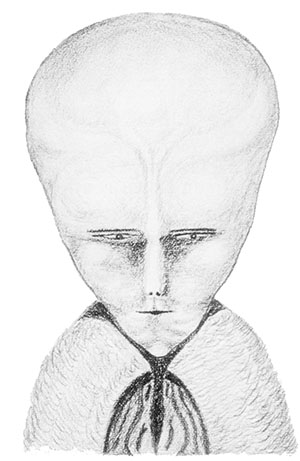
  • Australian UFO Mysteries: The Disappearance of Frederick Valentich

    Australian UFO Mysteries: The Disappearance of Frederick Valentich

    From New Dawn 173 (Mar-Apr 2019)
    Victorian pilot Frederick Valentich.

    Over 40 years ago, during the early evening of 21 October 1978, pilot Frederick Valentich reported in a radio communication with Steve Robey of Melbourne Flight Service that “a large aircraft” which had “a long shape” and “a green light,” appearing to have a bright metallic lustre and four bright lights, travelling variously at high speed, approached his Cessna 182L aircraft (registration VH-DSJ) and apparently hovered in a stationary manner and also orbited above him. 

    After six minutes Valentich reported his aircraft’s engine was rough idling, and the strange object was “hovering, and it’s not an aircraft.” Having indicated he intended to fly on to King Island, Valentich’s communication terminated after 17-seconds of “metallic” noises. 

    Valentich’s intended route from Moorabbin to King Island over Bass Strait.

    Neither Valentich or the Cessna were ever found. The event became one of Australia’s greatest aviation mysteries, and the apparent UFO connection remains unresolved. 

    The areas that feature prominently in the Valentich incident – Cape Otway (his last land call), Bass Strait (the apparent location of his disappearance) and King Island (his apparent destination) – all have extensive precedents for UFO activity. 

    During a two-month period centred around January 1978, holidaymakers, fishermen, school teachers, local police and lighthouse keepers in the Cape Otway area reported seeing UFOs. During July 1977, local residents and the lighthouse keeper at Cape Otway saw an inexplicable brilliant light source that hovered out to sea for half an hour. 

    The lost Cessna VH-DSJ photographed at Essendon Airport in 1974.

    Bass Strait figures in UFO mysteries particularly in 1920 and 1944. The Melbourne Argus newspaper even described many people seeing “cigar-shaped” objects flying over Bass Strait as far back as 1896. 

    King Island’s 425 square miles played host to a wave of unidentified nocturnal aerial lights for at least three months prior to Frederick Valentich’s disappearance. Oval shaped lights followed cars and mystified local residents. Strange lights or flares appeared off the north of the island. 

    One of the most spectacular close encounters with a UFO in the area occurred at a wild and uninhabited part of the King Island coast, near Whistler Point, just before dawn, on 10 April 1976. “A beam of light” emanating from “a cross-shaped object” approached a duck-shooter’s car, in a direct line. The light display eventually receded directly along its line of approach, ending a silent inspection when it disappeared over the distant skyline.

    Much suggests a UFO connection in the Valentich case, but unfortunately a final answer alludes us. Despite the provocative nature of the taped conversation between Valentich and Melbourne Flight Control before his disappearance, which refers to a possible UFO presence, the affair remains a mystery.

    Valentich’s mysterious disappearance made headlines in 1978. The Sun story on the right pictures Frederick’s father Guido and his brother Richard.

    The Valentich incident is punctuated with haunting, or rather more appropriately, taunting clues that set one off in all sorts of conflicting directions. Many have come up with solutions varying from the bizarre to the sublime. Did a UFO abduct Valentich? Did Valentich contrive the whole affair? Did he, as many think, crash into Bass Strait, leaving no trace? Or are other prosaic explanations involved? A multitude of various lines of enquiry radiate out in all sorts of directions. Most take us away from the facts of the matter, namely that no trace of pilot or plane have yet been found. 

    The mystery resonates in the Australian consciousness in a place reserved for more mythic episodes like the haunting fiction of ‘Picnic at Hanging Rock’. It has inspired dramatic works like the profound and confronting play ‘Sky’ and the bizarre and striking TV mini-series, ‘Locusts and Wild Honey’. We must remind ourselves that a family waits for an answer that so far has never come. I hope that someday they will find that answer.

    Department of Transport file V116/783/1047

    Due to the tenacious efforts of Adelaide-based researcher Keith Basterfield in 2012, we can now study the previously restricted Department of Transport file V116/783/1047, available in digital format at the National Archives of Australia website. I last saw this file back in late 1982 while sitting in front of Mr A. Woodward at the Melbourne office of the Bureau of Air Safety Investigation. He had the file open in front of him while answering my questions. I tried not to be too obvious in reading the file in its upside-down perspective. 

    The released Valentich files provide hints at some possible answers, and it may be that ultimately the answer does not involve UFOs. Reconciling a detailed analysis of the released data with the extensive research done on the case by researchers over the years might help us come up with a final answer. But for now Frederick Valentich and his Cessna plane are still missing, so final closure eludes those who want to know. 

    ‘The Unexplained Files’ series on the Discovery Science Channel in September 2013 featured an excellent recreation of the extraordinary 1978 Valentich mystery. My friend George Simpson (based in Melbourne, Victoria) was instrumental in the accounting of this story on the programme.

    Roy Manifold took some intriguing photos (including the above) at the time and locality of Valentich’s departure from the Australian mainland on route to King Island in Bass Strait.

    On the programme, Steve Robey of Melbourne Flight Service was clearly still distressed about the disappearance of Valentich. Frederick’s younger brother Richard gave the family’s dimension to the story. Both these elements remind us that a disturbing and tragic element still haunts this mystery. George Simpson interviewed Roy Manifold who took some intriguing photos at the time and locality of Valentich’s disappearance. 

    Dr Richard Haines investigated the case and authored a book on it, Melbourne Episode: Case Study of a Missing Pilot (1987). He facilitated the airing of the strange sound heard at the end of Valentich’s last radio conversation with Steve Robey. I listened to the tape back in 1984 when I stayed with Dr Haines in California. Haines’ comment in ‘The Unexplained Files’ programme that the sound might be from contact between the Cessna and the UFO Valentich had been describing in the six-minute conversation, caused me to suddenly reconsider a very strange story I came across back in early 1995.

    The Coonabarabran Times of Coonabarabran, north-west New South Wales, Australia, in its 17 November 1994 issue, carried brief details of an apparent close encounter with a diamond-shaped UFO near ground level on 15 November 1994, on the Mendooran road to the south of the town. 

    With the assistance of local police, I interviewed the four principal witnesses to this apparent close encounter.  One of the area witnesses told me that I should seek out Laurie, a local businessman, who had a lot of UFO stories to tell. 

    One story was utterly startling and unbelievable. It was apparently connected to the Valentich mystery and initially told to me by one of the Coonabarabran witnesses who heard it through Laurie. Others encouraged us to ask Laurie about other stories. We did both, but the story in question stood out.

    Laurie told us he had heard the story directly from a South Australian farmer who had bought a property in the north-west of New South Wales. The farmer had come into his business and the talk strayed onto UFOs. He shared with Laurie an experience he had on his South Australian property on the day following the disappearance of Frederick Valentich.

    The farmer said he was harvesting lucern when he heard a loud screeching sound coming from the harvester. He thought it might have been a bearing, so he uncoupled the harvester from the tractor’s power drive and jumped off and went back to have a look. The farmer was trying to work out the source of the continuing noise when he became aware that he was in a shadow. He looked up and saw he was directly underneath a large “saucer” shaped object, and going by the size of his harvester; he estimated it to be about 30 metres across. The loud screeching noise continued. 

    From directly underneath the object, the farmer reportedly could see two concentric outer rings or bands that were counter rotational and were operating at different speeds. One went very fast, so fast that you had to blink to see that it was moving. The other one was moving very slowly in the opposite direction. There were two small protuberances that the farmer took to be rudders, and two large holes, one had “shimmering heat” coming out, the other was shooting small flames.

    The farmer began to think there was something horribly wrong with this huge object and that it might crash down on him. He ran to get out from under it. He got the impression that one of the object’s engines had stopped working. 

    As he moved away the farmer looked back at the object which he could now see edge on. It had a large dome on top and what looked like a black weather seal along the base of the dome structure. He then noticed what looked like a “church door with a curved top, but no windows or handles were visible.”

    He told Laurie the most unusual thing was that the massive object had a Cessna stuck to the outside of it – “the whole aircraft.” It was flat up against the side of the object with its tail hanging down. Laurie said he was not sure whether the farmer said there was engine oil running down the outside of the Cessna, but he could clearly see the plane’s registration markings. He found a nail and scratched the plane’s registration number into the paint of his tractor. 

    According to Laurie, the farmer said the object – “the saucer” – still accompanied by the screeching sound, then flew away over a ridge in the direction of a nearby Army range.

    The farmer said to Laurie he told no one about what happened. He went into town later in the day. One of his neighbours saw him and apparently said, “I see you are doing some more crop spreading.” He said no, why do you say that. The neighbour said, “I saw the Cessna today up in your top paddock.” He replied to his neighbour, “There’s no Cessna in my top paddock.” The neighbour insisted, “Yes there is, I was up near there, I saw it there today.” The farmer said, “That’s interesting, I’ll have a look when I get home.”

    He went up to the top paddock and saw no plane, but he did see three tyre marks and some tracks from a plane. He followed the tracks to where they ended, and there was “a pool of ’flamin’ engine oil” on the ground. 

    I recorded the story from Laurie on two separate occasions, one over the phone in January 1995 and face to face in Coonabarabran one month later in the presence of my friend Robb Tilley. Laurie was impressed with the story. Robb and I simply did not know what to think. Getting further information proved elusive.

    As I had lived through the Valentich mystery unfolding at the time in 1978 and had written extensively about the research and investigation of the extraordinary events, I was acutely sensitive to the bizarre and strange aspects. I also had contact with Guido Valentich, Frederick’s father, and I knew that he had been exposed to various claims about what had happened to his son. He even helped me investigate one claim, which ultimately ended in no real resolution, just another unverifiable claim. Sadly, Guido passed away without a definitive answer to his son’s disappearance.

    With Laurie’s account from the farmer, I had yet another extraordinarily bizarre and unbelievable claim. Laurie told me the farmer returned on another occasion with the Cessna’s registration number. It was DSJ, the number of Valentich’s Cessna. This in itself was not convincing for me because that information was widely reported at the time of the plane’s disappearance.

    I did not want to burden the Valentich family or authorities with yet another unverified story. The biggest problem for me was that Laurie couldn’t recollect the farmer’s name. He told me he had written all this down in notes, but he had not been able to find them. I stayed in touch with Laurie for a while, but despite attempts to come up with a name, without his notes we couldn’t progress the investigation unless we had a vast amount time and resources available. 

    Get the issue this article appears in

    I circulated a brief account on Paranet (a favoured research Internet facility) at the time but nothing came of it. The story stayed a sleeper until Dr Haines’ comments on the Discovery Science programme. I immediately accessed my notes and tapes and began to evaluate whether the considerably improved resources of the Internet, social media and other resources would now allow another attempt at getting to the heart of the story. Sadly, I learnt that Laurie passed away about seven years ago.

    I contacted George Simpson and shared the story with him. We both agreed that despite the bizarre nature of the story, we should try to see if we could track down anyone who had knowledge of the story and see if we could get a name for the farmer. We have since tracked down all sorts of clues.

    I described the results of our investigation of this bizarre story in a report on my OZ Files blog entitled “Strange Days, Strange Tales – a Valentich connection” back in October 2013 (see http://the
    ozfiles.blogspot.com/2013/10/strange-days-strange-tales-valentich.html). 

    Victorian UFO Action (VUFOA) put on a 40th-anniversary event that featured a panel of people involved in the Valentich affair and its investigation including Steve Robey, Rhonda Rhuston and George Simpson. Videos of the event are available on VUFOA’s YouTube channel. The 3rd edition of Jerome Clark’s massive two-volume work The UFO Encyclopedia appeared in 2018 with my report on the Valentich disappearance.

    While there is now a wealth of data on the case, what happened to Frederick Valentich and the Cessna he was flying remains a mystery.

    For further information on this case, see my work: “The Missing Cessna and the UFO: a preliminary report on the Bass Strait-King Island Affair”, Flying Saucer Review, Volume 24, No. 5, March 1979, 3-5; “Vanished – A report on the Valentich – Bass Strait Affair”, Australian UFO Researcher (No. 56 & 57, No. 58 & 59, No. 60, January 1979 through to December 1979). This report included details on the widespread UFO activity on the same day as the incident, the precedent for UFO activity over Cape Otway, Bass Strait and King Island, precedents for UFO-related plane disappearances or crashes; “Valentich-Bass Strait (Australia) affair”, in Ronald Story’s The Encyclopedia of UFOs, 1980; “Vanished? The Valentich Affair re-examined”, Flying Saucer Review, Vol. 30, No. 2, 1984; “1978 and the RAAF” and “Frederick Valentich and Delta Sierra Juliet – Vanished?” in my lengthy online document “UFOs Sub Rosa Down Under” at www.theozfiles.com/ufos_subrosa4.html and www.theozfiles.com/ufos_subrosa6.html; I also describe the affair extensively in my 1996 book The OZ Files – the Australian UFO Story.

    [alert type=”general” dismiss=”no”]This article was published in New Dawn 173.[/alert]

    [alert type=”success” dismiss=”no”]If you appreciate this article, please consider subscribing to help maintain this website.[/alert]

    © New Dawn Magazine and the respective author.
    For our reproduction notice, click here.