New Dawn – World's Most Unusual Magazine

Author: Christopher McIntosh

  • Alexander Dugin & the Russian Tradition of the Starets

    Alexander Dugin & the Russian Tradition of the Starets

    From New Dawn 197 (Mar-Apr 2023)

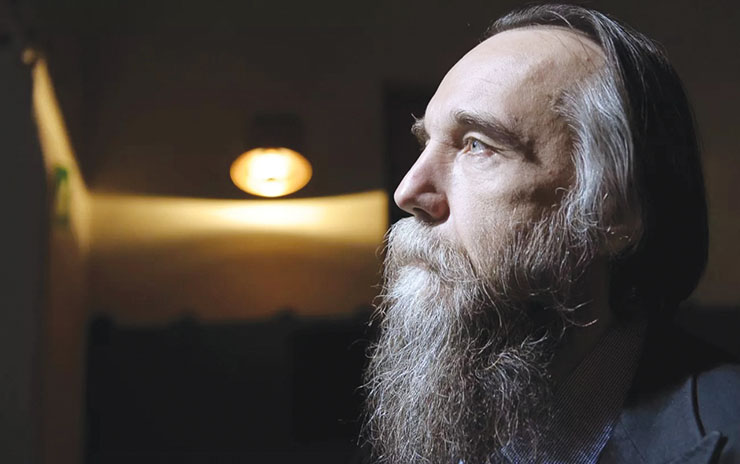
    In the Western media, the Russian philosopher and political analyst Alexander Dugin has been labelled variously as a modern Rasputin, a neo-fascist, a reactionary nationalist, an eminence grise of Putin’s Russia and much else. In order to understand where Dugin is coming from, one has to see him in the light of the time-honoured Russian tradition of the starets, the wise elder, a figure who repeatedly appears in Russian history and literature.

    In the run-up to elections for the Russian State Duma (parliament) in 1996, one of the contending parties was the relatively new National Bolshevik Party (NBP), whose emblem was a double-headed eagle clutching a wreath enclosing a hammer and sickle and bearing on its breast an image of Saint Michael spearing a dragon – a combination of symbols that, like the party itself, was calculated to defy all the usual political pigeon-holes.

    In one St. Petersburg constituency, a rock concert was organised to support the NBP candidate and at the same time to celebrate the memory of the English magus Aleister Crowley. The star performer was Sergei Kuryokhin (1954–1996), an avant-garde composer and virtuoso pianist. The candidate for the Duma was a young man from Moscow named Alexander Dugin (born 1962), who had been active in the Soviet counter-culture and then became a polemical journalist, publisher and political thinker and activist, achieving fame for his controversial writings on geopolitics. A memorable part of the proceedings was when a moment of silence was observed in honour of Crowley’s memory, after which Dugin read a passage from Crowley’s Book of the Law. Dugin won less than one per cent of the vote in the ballot, and he withdrew from the NBP two years later.
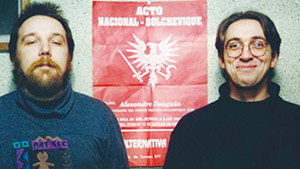
    Alexander Dugin & Sergei Kuryokhin in the mid-90s.

    Evidently, Crowley’s concept of magic appealed to Dugin and Kuryokhin because in the previous year they had issued a remarkable joint declaration entitled Manifesto of the New Magi, divided into 22 numbered paragraphs – 22 being the number of letters in the Hebrew alphabet and of the Tarot trumps. The manifesto called for a new impulse to overcome the fatigue and degeneracy that had overtaken culture and politics in the modern world. The manifesto declared:

    “Magic is not events, things and objects, but causes; magic does not simply describe but actively operates. Magic precedes art and politics. Art and politics became autonomous only upon being detached from their magical source. This source has not disappeared but merely slipped away to the periphery from where it exerts indirect influence. Secret societies, lodges and orders have governed history and inspired artists.… Indirect influence has not been sufficient as politics and art forgot the necessity of constantly appealing to magic. Only the direct, total replacement of art and politics with MAGIC can save the situation.”1

    Regardless of the somewhat messianic tone of the manifesto, the authors bring out an important point, namely that the way to influence and motivate large numbers of people is not through logic and reason but through symbols, rituals, drama, archetypes and mythical motifs – in other words through what many would call magic.

    Russian Egregores

    According to the 19th-century French occultist Eliphas Lévi, magic works through what he called the “astral light,” an invisible, subtle field or fluid that connects all things and can be manipulated by the magician to affect people’s thoughts and behaviour and bring about changes in the world. The concept is similar to akasha in traditional Indian thought as well as to Franz Anton Mesmer’s magnetic fluid, and to what Karl von Reichenbach termed the odic force. While the work of Mesmer and Reichenbach was rejected by the mainstream science of their time, certain of their findings have since gained wide acceptance. For example, the phenomenon of hypnotic trance is now generally recognised by the medical profession as an identifiable state that can be induced both in individuals and in groups, although the exact mechanism by which this works is still a matter of dispute. Several scientists, such as the Russian biologist Alexander Gurwitsch (1874–1954), the German biophysicist Fritz-Albert Popp (1938–2018) and the English biologist Rupert Sheldrake (born 1942), have opened up what has come to be termed a field-based approach, arguing that objects in the physical world, both animate and inanimate, possess fields of energy that give all objects their properties and interact with other energy fields. These interacting energy fields are surely consistent with the notion of an all-pervading etheric fluid, whether termed akasha, the astral light or the od.

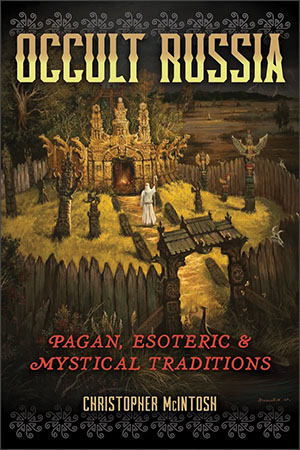
    I suggest that in this field – call it what you will – are stored the perennial mythical motifs, archetypes and egregores, or collective thought-forms, of a culture. I also suggest that in Russia the veil between this field and the ordinary, everyday world is unusually thin, with the result that these egregores are more vividly present to the Russian mind than they are in most other cultures. In my book Occult Russia, I have identified a number of these egregores, including the notion of Holy Russia, the legend of the faraway Never-Never Land, the figure of the rustic sage and that of the Woman Clothed with the Sun, as described in Revelation. To these I would add another typically Russian figure, that of the starets. In one sense, the word simply means “elder,” but used in the religious context, it means a revered sage, prophet, holy man and often a wandering pilgrim and preacher. Can we consider Alexander Dugin as exemplifying this tradition, and to what extent?

    Dugin as a Starets

    The starets is often, but not necessarily, a priest or monk attached to a monastery or religious community. Typically these individuals possess great charisma and attract large numbers of people seeking healing, solace, advice for their problems or forecasts for their future. The figure of the starets overlaps somewhat with the rustic sage and also with the holy fool (yurodiviy in Russian), a man or woman who adopts an apparently crazy manner of living and often blatantly ignores conventions but is intensely devout and has miraculous powers of healing and prophecy. Such a one was the 16th-century Saint Basil, who went about naked even in the coldest of weather. These holy fools were also truth-speakers who in certain ways fulfilled the function of the court jester. They were not afraid to speak unpalatable truths, even to a monarch.
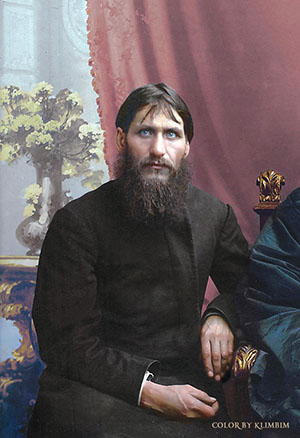
    Grigorii Rasputin (1869–1916)

    We frequently encounter the starets in the annals of Russian history and the pages of literature. One well-known example from history is Grigorii Rasputin (1869–1916). A whirlwind of a man, part pious visionary, part healer and prophet, part drunkard and reprobate, he is mainly remembered for the way in which he gained the confidence of the royal family, especially the Tsarina Alexandra, on account of his skill in treating the young Tsarevich Alexis, who suffered from haemophilia. On the eve of the revolution, he was murdered by a group of aristocrats, worried by what they saw as his dangerous influence at the court.

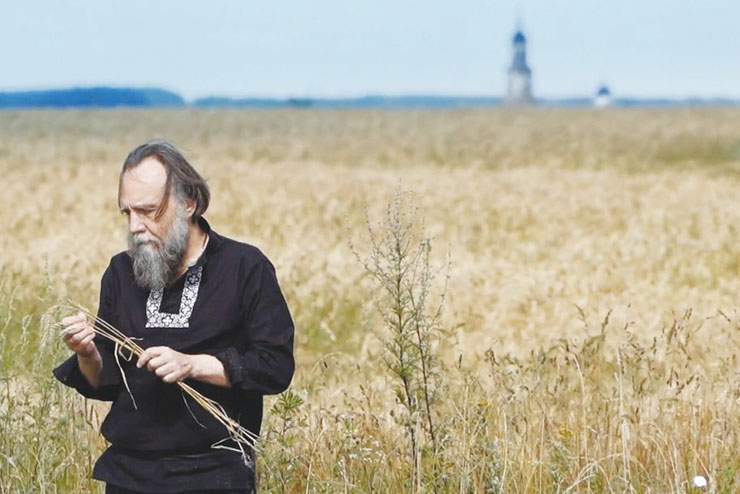
    Dugin has often been compared to Rasputin, but in fact there is little similarity between them apart from a high degree of charisma. Rasputin was from a peasant family in Siberia and remained illiterate until early adulthood. He was a man of religious fire and piety but not an intellectual. Dugin, by contrast, is a philosopher and a man of immense erudition who comes from a privileged family of the Soviet elite. He is perhaps more readily comparable to another starets, Grigorii Skoworoda (1722–1794), who was born into a Cossack family in a region of the Ukraine that was then part of the Russian empire. Known as the “Russian Socrates,” he was a polymath, philosopher, theologian, composer and much else. After a short teaching career, he became a kind of itinerant sage in the starets tradition.2

    In many cases, a person will become a starets after passing through a wild phase in the early years of their life. This was certainly true of the writer Tolstoy, who became a sort of rustic starets in his old age. It is also true of Dugin, who in the 1970s was a member of the Iuzhinsky circle in Moscow, a group of rebellious young intellectuals who went out of their way to defy convention. After perestroika, he explored a variety of different political movements, from the ultra-nationalist Pamyat to the National Bolsheviks. His spiritual path eventually led him to fully embrace the Orthodox religion in the form practised by the Old Believers, a sect that broke away from the main Orthodox Church in the 17th century over doctrinal issues. He also pursued a varied education, including a period of study by correspondence, obtaining a doctorate in sociology. Subsequently, he held a professorship for a time at Moscow State University. By then he had become a celebrated figure, a scholar who could speak with authority on philosophy, politics, culture and religion, and a charismatic public speaker. He had become, in a word, a starets.

    To become a starets is to step into a role that has all the force of the corresponding egregore and centuries of tradition behind it. The starets plays partly according to a collectively prepared scenario, but at the same time brings his own particular style and script to the role. Among the various types of starets, two categories stand out: those who care for the souls of individuals and those who address a large audience and proclaim a grand vision. Dugin belongs to the latter group.
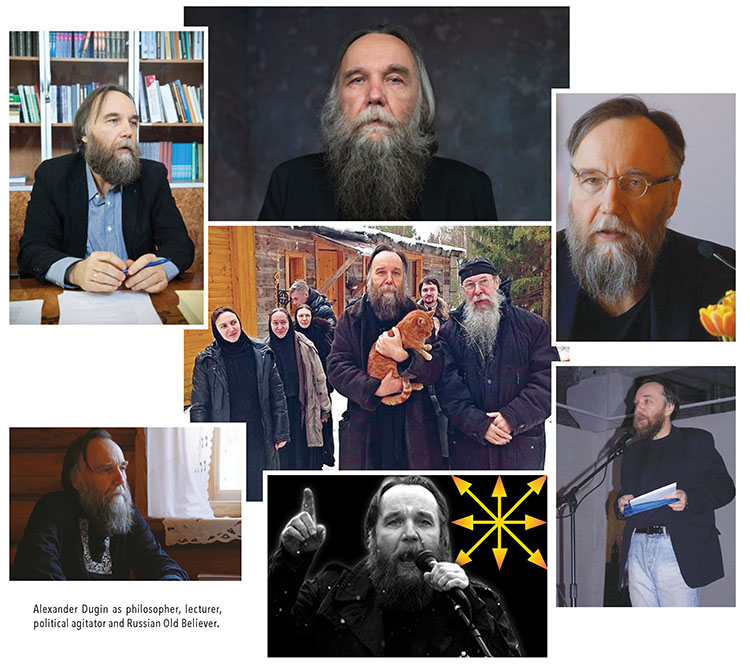
    He is unusually many-faceted and multi-lingual. One moment he is discussing Nietzsche, post-modernism or the traditionalism of René Guénon, the next he is talking about mythology, geopolitics or the Eurasian movement. He is also equally at home in an academic setting, in a television studio or on the platform at a political gathering. He can talk in the thoughtful, measured tones of a university professor or hold forth like a fiery Old Testament prophet. Highly eloquent, he can hold an audience spellbound. He is the voice of tradition, patriotism, Orthodox piety, profoundly held values and the time-honoured Russian way as opposed to what he sees as the decadent ways of the West.

    This is not the place to go into his ideas in detail – his concept of an emerging Eurasian realm, his notion of a perennial conflict between the land powers and sea powers of the world, and his plea for a fourth political theory to replace communism, fascism and liberal democracy. His words are often disquieting, and one may or may not agree with them, yet they can open up fascinating horizons, as when he talks about his concept of “noomachia” (the battle of minds). Here he amends Nietzsche’s dichotomy between Apollo and Dionysus by adding a third deity, namely the goddess Cybele. In a monumental series of some 27 volumes, he explores how these three types of logos, as he calls them, interact in various ways from one culture to another and can give rise to profound cultural differences.
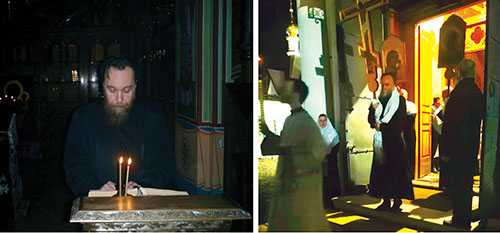
    Dugin, voice of tradition and Orthodox piety, opposes the decadent ways of the West.

    Dugin laments the fact that the wisdom of old age is no longer revered as it used to be. In an interview in 2011, he said:

    “In a traditional society an older person was considered to be a role model and a normative figure. Human life was seen to develop from an unreasoning and witless childhood through a foolish and not very focused youth to adulthood and, finally, to the ideal of a fully-fledged person, an elder… But a person was called an elder not so much according to their age, but rather according to their spiritual maturity. Everyone aspired to become an elder. Old age was a state of perfection – one grew towards consciousness, towards the spirit. In our time, we see a radical reversal of this. The role model for society is a young person… a teenager… Infantilism, juvenility, adolescence have become the social norm.”

    Dugin paints a bleak picture of a future in which the elderly will have lost all social status and there will be no place for a noble and worthy old age, whether religious, spiritual, or simply wise. “As we modernise, we humiliate and trample the old people more and more. The future takes the place of the past, and the past is scrapped.”3
    In a society that ceases to value old age, what is to become of the starets? Despite Dugin’s pessimism the tradition of the starets does not seem likely to disappear any time soon.

    One famous example from the cinema screen is the character of the monk Anatoly in the film Island, released in 2006. Anatoly is both a starets and a fool for Christ, who drives his fellow monks to despair through his strange behaviour, but in the end is recognised by them as a true holy man. The part of Anatoly was played by the former rock singer Pyotr Mamonov (1951–2021), who converted to Orthodoxy and became a kind of starets himself. His performance, which has been highly praised by Dugin, had an intensity that could only have been achieved by someone who closely identified with the role. It is a very Russian portrayal of a very Russian phenomenon that is still alive and well, as I believe Dugin himself demonstrates.

    The spiritual currents and esoteric traditions of Russia are explored in Christopher McIntosh’s new book Occult Russia: Pagan, Esoteric, and Mystical Traditions, available from Inner Traditions.

    [alert type=”general” dismiss=”no”]This article was published in New Dawn 197.[/alert]

    [alert type=”success” dismiss=”no”]If you appreciate this article, please consider subscribing to help maintain this website.[/alert]

    Footnotes

    1. Dugin, Alexander, and Sergei Kuryokhin, “Manifesto of the New Magi” in New Dawn Special Issue Vol. 15, No. 3 (2021), 70-71.
    2. See Michael Evdokimov, Russische Pilger. Salzburg: Otto Müller Verlag, 1990, 53-56.
    3. The text of the interview is posted on vz.ru/opinions/2011/7/21/508970.html, accessed 20 December, 2022.

    © New Dawn Magazine and the respective author.
    For our reproduction notice, click here.
  • Russia Through the Looking Glass

    Russia Through the Looking Glass

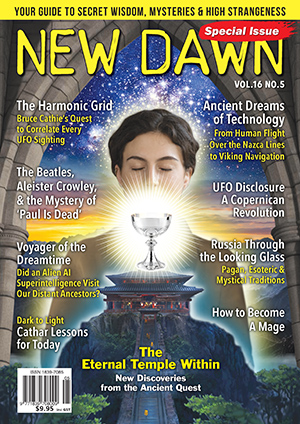
    From New Dawn Special Issue Vol 16 No 5 (Oct 2022)

    Russia gets into your blood. It got into mine when I studied Russian at the United Nations Language School in New York in the 1980s and 90s while working as a UN information officer, having already learned the basics when I was 19.

    I can still hear our teacher Alla coming into the classroom and saying: “Today, my dear students, we going to study our beautiful Russian verbs – first the imperfective and then the perfective verbs.” Who could fail to fall in love with Russian verbs with such a charming teacher? If you happen to read this, Alla, I send you a big wave.

    But it was not only the verbs. Other intricacies of Russian grammar intrigued me – rules like “don’t forget that if the verb is negative the noun has to be in the genitive.” And the beautiful Cyrillic alphabet would dance before my inner eyes. Then there was my Russian girlfriend around the same time, who told me that “to sound like a Russian you must smile inwardly when you speak.” Indeed, they do this even when they are conveying something sad or, more likely, sad and funny at the same time – a combination at which the Russians excel.

    Russian literature, too, captivated me. I became familiar with Dostoyevsky’s Idiot, Andrei Bely’s extraordinary novel Petersburg and the equally extraordinary Master and Margarita by Mikhail Bulgakov. Reading these works, one becomes aware of the deeply spiritual nature of the Russian soul. Furthermore, these last two authors revealed another side to Russia that intrigued me, namely a strong current of fascination for things magical, esoteric and other-worldly. I decided to go deeper into this domain, and my latest book Occult Russia was the result.

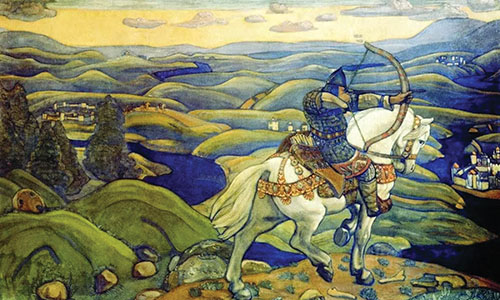
    ‘Ilya Muromets’ (1910) by Nicholas Roerich.

    Of course, I was devastated when the war in the Ukraine began, and I feel deeply for all my Russian and Ukrainian friends. As I write I can only pray that the conflict will not be prolonged. As a stop-press item, I must express my deep outrage and sadness at the death of Alexander Dugin’s daughter Darya who was killed on 20 August 2022 by a car bomb possibly intended for her father. Through this cowardly act, the life of a radiant human being has been tragically cut short. My deepest sympathy goes out to all her family.

    I offer the book Occult Russia in the hope that it will contribute to a deeper understanding of the Russian mind and soul. What follows is a foretaste of it, abridged and edited from the Introduction.

    • • •

    Upon hearing the word “Russia” you may think of military parades in Red Square, the war in the Ukraine, the annexation of the Crimea, gangsters, internet hackers, assassinations of journalists and imprisonment of opposition politicians. This book is not about those things but about a different Russia that is invisible to many people in the West – namely the inner Russia, the Russia of mysticism, myth, magic, the esoteric and the spiritual. Like a vast river, long ice-bound, the spiritual force deep in the Russian soul is moving again. In the wake of the collapse of communism, the Russian people are seeking new – or often old – ways of giving meaning to their lives. This search has given rise both to a revival of ancient spiritual traditions and to a plethora of new movements, cults, sects, -isms and -ologies, most of which would have been banned in the Soviet era. Out of this ferment exciting things are emerging.

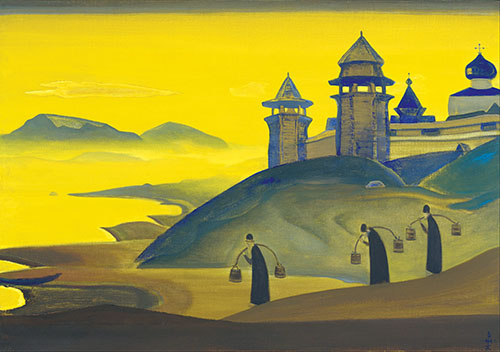
    ‘And We are Trying’ (1922) by Russian artist and Eurasian mystic Nicholas Roerich.

    Today’s spiritual quest in Russia covers an enormous spectrum. Millions are turning or returning to the Orthodox Church, and thousands of new churches are being built. As for alternative forms of spirituality, many people are turning to doctrines such as Theosophy, Anthroposophy and the teachings of Nikolai and Helena Roerich. Another group is turning back to the pre-Christian gods of Russia or to shamanism, often of the variety practiced by the urban intelligentsia. Meanwhile the indigenous pagan communities such as the Mari and the various shamanic peoples of Siberia are enjoying a new lease of life. In Russia the shamanic and pagan traditions have long existed side by side with the Orthodox religion – if not always in peaceful co-existence at least in a modus vivendi that the Russians call dvoeverie (dual faith).

    History can be driven by mythical motifs, and this perhaps applies particularly strongly to Russia. One useful term for such a motif is the word “meme,” coined by the British biologist Richard Dawkins in his 1976 book The Selfish Gene. Originally used in the biological context, it has come to mean an idea or notion that spreads like a message through a society, transmitted from person to person or through the media.

    A phenomenon with some similarities to the meme, but operating at a deeper level, is that of the egregore, a collective thought-form on the invisible plane, created by many people focusing on the same ideas and symbols. Deriving from a Greek word meaning “watcher,” an egregore can take an infinite variety of forms – an angel or demon, a god or goddess, a hero or heroine, an object of special veneration, a sacred place or a compelling narrative. The concept of the egregore overlaps to some extent with the notion, developed by the psychologist Carl Gustav Jung, of the archetype, an inherited motif in the collective unconscious of humanity. In exploring Russia’s mystical quest we find various powerful memes, egregores and archetypes at work. They include the following:

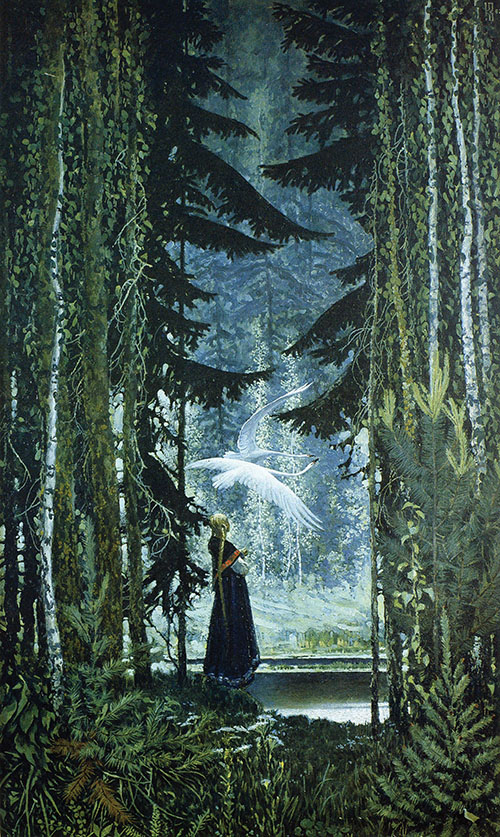
    Geese by Konstantin Vasilyev

    Holy Russia

    The notion of Holy Russia is searchingly explored by Gary Lachman in his book of that title. Deeply engrained in the Russian collective soul is the conviction that Russia has a special spiritual mission. This is reflected in the powerful mystique of the Orthodox Church and the concept of the “Third Rome” – the first Rome being the city on the Tiber, the second being Constantinople and the third and final one being Moscow. All of this has given rise to an egregore of enormous vitality, which has enabled the Orthodox religion to flourish anew after the communist era.

    The Warrior Hero

    An early example of this figure is the semi-legendary Ilya Muromets, who features in various Russian epics as well as in films, novels and art. Probably a composite of various different people, he appears as a defender of Kievan Rus in the 10th century and in later incarnations he fought the Mongols and saved the Byzantine Emperor from a monster. He eventually became a saint of the Orthodox Church. The role of the warrior hero has also been played by certain real historical figures such as Prince Alexander Nevsky who defeated the Teutonic Knights in the thirteenth century, Tsar Peter the Great, and even Joseph Stalin.

    The Never-Never Land

    This motif crops up repeatedly in Russian history in various forms and under various names: Byelovodye (Land of the White Waters); Opona, the utopia of peasant folklore; and Hyperborea, the vanished promised land in the north. The Never-Never Land is also thought of as the source of an ancient wisdom tradition that has the power to transform human life if one could only access it.

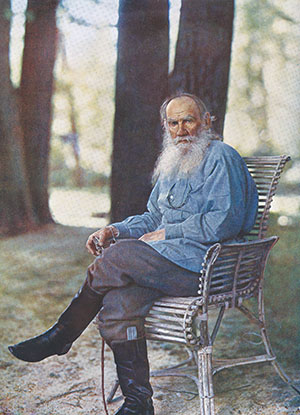
    The rustic sage, Lev Tolstoy, pictured  at Yasnaya Polyana, 1908, in the first colour photo portrait in Russia. 

    The Rustic Sage

    This figure is typified by Tolstoy’s character of Platon Karataev, the wise peasant who is a fellow prisoner of the hero Pierre Bezukhov in War and Peace. Tolstoy himself adopted this persona in his later years.

    The Holy Fool

    Alternatively “fool for Christ,” this term is applied to someone who adopts an apparently mad way of life, marked by great austerity and extreme piety. It can overlap with the concept of the starets, the independent, god-illuminated holy man or woman. It has been pointed out to me by my correspondent Dana Makaridina that there are two kinds of holy fool, namely the blazhennyi (“blessed”) and the yurodiviy (“foolish”). The distinction is subtle. The former are characterised by a state of saintly bliss, whereas the latter are conspicuous by their craziness and weird, antisocial behaviour. Both are associated with freedom, being unconstrained by any social norms and able to communicate directly with God. Dana Makaridina mentions a friend who has had the nickname blazhennyi since childhood because of his strange, otherworldly behaviour. She writes that “now he is an extravagant rock musician and performance artist dealing with topics of freedom and death.”

    The New Messiah

    Prophets and messiah figures have abounded in Russian history, overlapping somewhat with the starets and the fool for Christ, and they continue to appear in the present day. A typical example is the case of Sergei Anatoljewitsch Torop, an artist and jack-of-all-trades who, in 1991, proclaimed himself to be Jesus Christ returned. Adopting the name Vissarion, he founded a community called the Church of the Last Testament, gathered several thousand followers and established an ecospiritual settlement in Siberia. At the time of writing he is in prison facing a charge of extorting money from his followers and subjecting them to emotional abuse.

    The Woman Clothed with the Sun

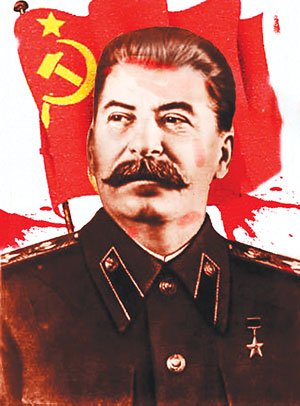
    Joseph Stalin led the Soviet Union from 1922 until his death in 1953

    This figure originates in a passage in chapter 12 of the book of Revelation in the New Testament. To quote the King James Bible:

    And there appeared a great wonder in heaven; a woman clothed with the sun, and the moon under her feet, and upon her head a crown of twelve stars.

    This image of the woman clothed with the sun crops up repeatedly in Russian prophetic writings.

    My own perception of Russia has been through different stages. As far as I can remember, the country meant little to me until 1953, when I was nine years old, and one morning at breakfast my father picked up the newspaper and remarked that Stalin had died. I may have asked who Stalin was and been told that he had been the leader of our powerful eastern ally during the Second World War.

    Later I absorbed the Cold War propaganda. Russia came to mean the suppression of the Hungarian uprising, defectors from the West like Burgess and Maclean, Khrushchev banging his shoe on the table at United Nations General Assembly, the Cuban missile crisis, the crushing of the Prague Spring, the persecution of dissidents.

    At the same time I was fascinated enough by Russia to start learning the language when I was nineteen years old, a process that I resumed in my fifties, by which time I had witnessed the advent of Gorbachev and perestroika, shortly to be followed by the break-up of the Soviet empire and the collapse of communism itself. While these tumultuous changes were going on I visited Russia for the first time in 1991 with an American contingent of very amiable born-again Christians, whose tour group I was able to join through the facilitation of an acquaintance.

    Get the issue this article appears in

    A particularly vivid memory of that trip was visiting a Russian Orthodox seminary near Saint Petersburg. On entering the building I found myself transported into another world, marked by candlelit icons, the fragrance of incense and an atmosphere of still reverence. There was a quiet dignity about the priests and seminarists moving about in the dim corridors. One of them, looking startling like the photographs I had seen of the wild-eyed prophet Rasputin, was a young man with long, black hair and a solemn expression, dressed all in black in a sort of peasant’s tunic, trousers, and boots. We were shown to the chapel of the seminary where a service was held, and I began to understand why Madame Blavatsky, non-Christian though she was, always vehemently defended the Orthodox Church.

    At the present time, in the wake of the collapse of communism, the Orthodox religion is once again playing a central role in the life of the nation. Churches are full, and thousands of new ones are being built, with the state playing a supporting role. But not everyone is happy with the current situation, and some of the initial post-perestroika religious enthusiasm is waning. Many believers oppose what they see as an increasing tendency towards a merger of state and Church, while people of other persuasions do not want Orthodox Christianity to be imposed on the population.

    Visiting Russia reinforced my view that it has a special destiny, as many prophets have predicted. One of them, the German writer Oswald Spengler, wrote in an essay entitled “The Two Faces of Russia” (1922):

    The bolshevism of the early years has thus had a double meaning. It has destroyed an artificial, foreign structure, leaving only itself as a remaining integral part. But beyond this, it has made the way clear for a new culture that will some day awaken between “Europe” and East Asia. It is more a beginning than an end.

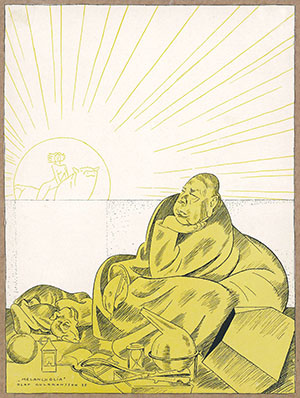
    A 1930s cartoon by Olaf Gulbransson, caricaturing the German historian Oswald Spengler. The woman in the background symbolises Spengler’s prediction that a new age will come out of Russia. Property of the Olaf Gulbransson Museum, Tegernsee. Photograph © VG
    Bild-Kunst, Bonn 2022.

    Thirteen years later Spengler’s vision for Russia was illustrated in a cartoon by the artist Olaf Gulbransson, which appeared in 1935 in a literary-satirical journal originally produced in Munich under the name Simplicissimus, but by then published in exile in Prague under the title Simpl. The cartoon, entitled Melancholia, is a parody of Albrecht Dürer’s famous engraving known under the same title.

    In the foreground sits a melancholy Spengler, quill pen in hand, beside an even more melancholy dog and various other objects including an obstetric forceps, perhaps indicating that the New Age in Russia will have a difficult birth. In the background is an image of the New Age itself in the form of a naked young woman riding a rather complacent-looking bear, both framed in a large rising sun. The woman in the background riding a bear symbolises Spengler’s prediction that a new culture will come out of Russia.

    Gulbransson’s cartoon appeared in 1935 during a troubled time. Germany had been through a military defeat, followed by the ravages of inflation and depression and then by the Nazi seizure of power in 1933. In Russia the Bolsheviks ruled. Another war was on the horizon. But Gulbransson pictured a bright future coming from the direction of Russia and symbolised by the maiden riding the bear. Between then and now there are certain parallels. The present era is overshadowed by war and by high tensions between Russia and the West. But I believe the maiden riding the bear still carries a hopeful message.  J

    Christopher McIntosh’s book, Occult Russia: Pagan, Esoteric, and Mystical Traditions, is available from Inner Traditions International (ISBN-13: 9781644114186).

    [alert type=”general” dismiss=”no”]This article was published in New Dawn Special Issue Vol 16 No 5.[/alert]

    [alert type=”success” dismiss=”no”]If you appreciate this article, please consider subscribing to help maintain this website.[/alert]

    © New Dawn Magazine and the respective author.
    For our reproduction notice, click here.
  • The Rosicrucian Vision

    The Rosicrucian Vision

    The word “Rosicrucian” is one that most readers will have heard many times. Yet if I were to ask for a definition of the word I would probably be given a wide variety of different answers. I might be told that it was something to do with esoteric Christianity, with alchemy, or with Cabala. All of these things are part of the answer, but not the whole answer.

    So what is Rosicrucianism? For the time being let us call it a current of thought and ideas which has been flowing through history for at least three and a half centuries and probably quite a bit longer, sometimes underground, sometimes coming to the surface, but always pushing human beings towards certain goals. I say that we can trace the current back three and a half centuries because that was when it first came to the surface. So let us go back to that moment in history.

    The opening scene is Germany at the beginning of the 17th century. The Reformation had taken place just over a hundred years earlier. Now part of Germany was Protestant, part was still Catholic. The two sides had not yet reached any proper modus vivendi, and the tension between them was soon to erupt into the Thirty Years War, which was to prove one of the most disastrous wars in European history. So there was an expectation of coming calamity. And there was a feeling that European civilisation in general had somehow gone wrong. Now it was at this time that strange things began to happen in a certain part of Germany.

    We now focus on the town of Kassel. It was here, in 1614 and 1615, that there appeared two mysterious manifestos of unknown authorship. The first was in German, but its title was a mixture of German and Latin. It was called Fama Fraternitatis dess Löblichen Ordens des Rosenkreutzes, which means: The Fame (or Proclamation) of the Praiseworthy Order of the Rosy Cross. The second was called the Confession Fraternitatis, the Confession of the Fraternity.

    These documents told a curious story. They told of somebody called Christian Rosenkreutz who was born in the year 1378. As a boy of 16 he travelled to the Middle East and spent some time at Damcar in Arabia where there evidently existed some kind of utopian community. As the Confessio puts it: “those who dwell in the City of Damcar in Arabia… have a far different political order from the other Arabians. For there do govern only wise and understanding men, who by the King’s permission make particular laws.”

    At Damcar Rosenkreutz learned Arabic and received scientific and occult teaching and came into contact with a mysterious book, referred to simply as “the Book M”, which he translated into Latin.

    After three years at Damcar he was directed to go, via Egypt, to Fez in Morocco, which was, and still is, one of the holy cities of Islam and the site of one of the oldest universities in the world. So at the time Rosenkreutz is said to have gone there it would already have been a great centre of learning for many centuries. This is how the Fama describes his experience at Fez:

    “At Fez he did get acquaintance with those which are commonly called the Elementary Inhabitants, who revealed to him many of their secrets…” (Possibly what is meant by Elementary Inhabitants are the “Elemental Spirits” of magic).

    After two years at Fez he went to Spain hoping to impart his new-found knowledge but met only with hostility and mockery. And this experience was evidently repeated in other countries. So he returned to Germany and eventually gathered about him a small group of men who shared his ideals, and this was the beginning of the Fraternity of the Rosy Cross. The Fraternity had, as its headquarters, a building called the House of the Holy Spirit. The brothers dedicated themselves to studying and spreading the ancient wisdom and also travelled around doing good work such as healing the sick. One of them, it is said, went to England where he cured the young Earl of Norfolk of leprosy. Christian Rosenkreutz himself lived for 106 years, dying in 1484.

    After his death the brotherhood was continued by his successors. Then in 1604 the brethren were carrying out some rebuilding in their headquarters when they came across a hidden door on which was written in Latin: “after 120 years I shall open.” Behind the door they found a seven-sided vault illuminated by an artificial Sun placed in the middle of the ceiling. The floor, walls and ceiling of the vault were covered in symbolic figures, and there were also chests containing books and ritual objects. In the middle of the vault was an altar, and beneath the altar was a coffin containing the perfectly preserved body of Christian Rosenkreutz.

    This description of the vault was to capture many people’s imaginations. Two and a half centuries later the English occult society, the Golden Dawn, actually made a vault corresponding to the description in the Fama. One of the key rituals of the order, the Adeptus Minor initiation ritual, was a re-enactment of the discovery of Rosenkreutz’ body.

    The discovery of the vault was taken by the brethren as a sign that the time was ripe for the society to declare its existence publicly and to invite people of learning and goodwill to participate in the society’s aims and ideals. What were those aims and ideals? We don’t get a very clear idea from the manifestos, but it appears that the brethren believed in a system of universal knowledge incorporating theology, philosophy, mathematics, astrology, and so on. They were firm believers in Christ and the Scriptures. Furthermore, they claimed to have access to an ancient and secret body of wisdom which enabled them to interpret the scriptures correctly. What they appear to be referring to here is Cabala, which is, among other things, a means of decoding the Bible. They talk about being able to understand certain characters and letters which form the basis of all creation. Again, this seems to refer to the cabalistic notion that the universe is actually made up of the letters of the Hebrew alphabet in different combinations.

    Their beliefs can perhaps best be summed up in the word Gnosticism. By Gnosticism I mean the ancient belief that man’s spirit is imprisoned in matter by a mischievous creator. Man is, as it were, living underwater, not realising that up above is light and air and that if only he could swim to the surface he could get back to his true element. In the Gnostic view this predicament is not entirely hopeless because there are some people who possess Gnosis, that is, knowledge or wisdom which enables them to swim up and to teach this to others. (This Gnosis, this lifebelt of wisdom, is very often represented by a female figure. The Greeks called her Sophia.) This is the essence of Gnosticism, and this is, I believe, what lies behind Rosicrucianism.

    The Rosicrucians also knew about alchemy, in the sense of a dual process, physical and spiritual, in which the spiritual part was the more important. The early Rosicrucians clearly belonged to the Protestant rather than the Catholic camp. (There are some very contemptuous references to the Pope in the manifestos.) But, they felt that all of Christendom was in need of a new impulse. They believed that Europe was on the threshold of a new age in which spiritual, intellectual and political enlightenment and brotherly love would flourish, and they saw their role as being able to help usher in this new age.

    That essentially was the message of the first two manifestos, but, of course, what is not clear is whether the brotherhood existed at all or whether it was a deliberately created myth.

    In 1616 appeared a third Rosicrucian document published at Strassbourg, in German, under the title of Die Chymische Hochzeit Christiani Rosenkreutz (The Chemical Wedding of Christian Rosenkreutz). The title is slightly misleading because it is not about the wedding of Rosenkreutz himself but purports to be an account by him of his experiences as a guest at the wedding of a King and Queen. The wedding takes place in a castle which Rosenkreutz reaches after an arduous journey.

    The story is full of occult imagery. For example, on the fifth day of the celebrations, the guests are taken to an island in seven ships flying flags bearing the symbols of the planets. On the island an alchemical operation is conducted in a seven-storied tower, in which two homunculi are created from the bodies of six people who have been killed. In the roof of the Tower is a hole through which two souls descend and enter the homunculi. Finally, the company returns to the castle, this time in twelve ships flying flags of the zodiacal signs.

    The author of this document was a 19-year old man, Johann Valentin Andreae. Andreae was in fact a very important figure. He was a Protestant pastor and theologian, immensely influential in the German Protestant movement – in fact almost a kind of Luther of his day. And the strange thing about him is that in some of his later writings he referred very contemptuously to the Rosicrucian movement. In his autobiography, for example, he called it a “jest” – and this had led some people to say that the Chemical Wedding was in fact an attempt to debunk Rosicrucianism. I don’t believe this myself. I believe Andreae was – at least when he wrote the Chemical Wedding – very deeply involved with the whole Rosicrucian movement. So these three manifestos are the basis of the Rosicrucian movement as we know it.

    The effect of the three manifestos was astonishing. They stirred up a tremendous controversy in Europe. Many people wrote to the brotherhood hoping to be admitted. If any received replies they remain unrecorded. Other people attacked the brotherhood. Others claimed to be members of it. And in due course many societies were set up imitating the one that is described in the original manifestos – which, as I say, may or may not have existed. So what you ended up with was a core of mystery with huge ramifications, emanating out from these publications.

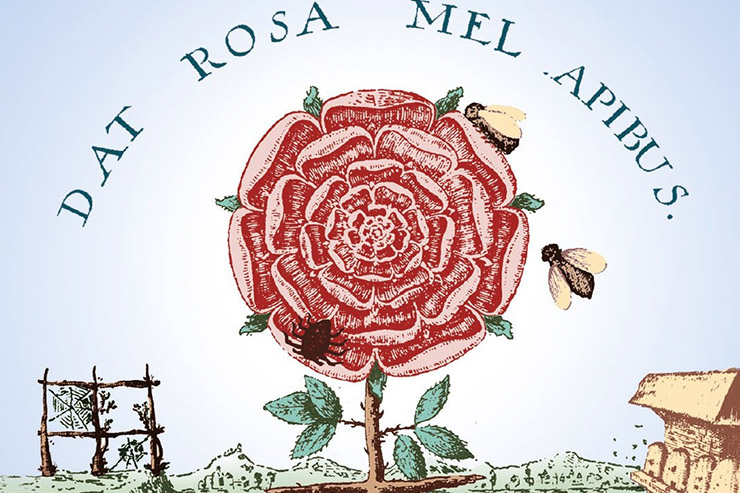
    Part of the appeal of the Rosicrucian movement lies in the richness of the Rose Cross symbol. It is possible to interpret this in all sorts of different ways. Both the cross and the rose are very ancient motifs. The cross appears in many religions and mythologies and seems to indicate a universal tendency for man’s inner consciousness to seek fourfold patterns: you have four points of the compass, four seasons, four elements, four worlds in the Cabala, and so on. The cross also suggests masculinity, and – in the Christian tradition – suffering, sacrifice and death.

    As for the rose, this can also be seen in many different ways. One of the things that the rose stands for is secrecy. The sign over Roman taverns signified that anything said in drunkenness would not be repeated – hence the expression sub rosa, meaning confidential. On another level the rose can be seen as the Western form of the lotus. Now the lotus, in Hindu mythology, represents the female life principle and is the symbol of the yoni or female sexual organs. So we have lotus/rose as female, cross as male.

    And if we look at ancient Egyptian mythology we find that Osiris, the god of the underworld who died and came to life again, is often shown wearing a crown of lotus flowers. So here we have another possible interpretation: lotus/rose = resurrection, cross = death. In other words, the Rose Cross represents the balance between a series of polarities: death and resurrection, male and female, sacrifice and the reward of sacrifice.

    It is an elusive symbol, but a very suggestive and powerful one. And it is typical of the great inner wisdom tradition of which Rosicrucianism is part, to use these shorthand emblems which carry deep layers of meaning. Many examples can be found in the emblem books of the 16th, 17th and 18th centuries – for example the famous image of the dolphin curled around an anchor, with the motto festina lente (“hasten slowly”). These emblems serve as a secret code through which those in touch with the inner traditions can communicate their ideas, but they also work at a deeper level than a message which is framed in straightforward words.

    So did the Rosicrucian plan misfire? I think not, because this is an interesting example of what happens when you plant a mystery in the collective mind of society. It’s like dropping a stone into a pond: the ripples go on and on. And, in this case, the initial impact was so strong that the ripples are still going today.

    And this, I believe, is exactly what the authors of the manifestos intended. They took the view that if you wanted to bring about a new age, the way to do it was to frame your ideals in the form of a legend, to cloak the legend in mystery and then to launch it in such a way that it was bound to create endless debate and controversy.

    How successful was this ploy? Did those men who launched the manifestos succeed in bringing about any of the reforms that they desired? You may well say – looking at the state of Western civilisation – that they failed. But before we judge, let’s look a bit more closely at some of the repercussions of the manifestos.

    Although the Rosicrucian philosophy was presented as a total package of religion, science, etc., it tended to divide into three different streams: first, there was the scientific, philosophical stream; secondly, the social and political stream; thirdly, the Hermetic-Cabalistic-Alchemical stream.

    There is evidence the first of these two streams gave rise to a number of learned institutions in various parts of Europe, including the Royal Society in England, which of course was, and still is, one of the most important scientific bodies in the world. Many of the inventions and discoveries that have shaped our environment have come out of the Royal Society. I shall not go in detail into the connection between the Rosicrucian movement and the Royal Society, but one link, for example, is through an interesting man called Comenius: a Bohemian refugee, a member of the Andreae circle, interested in Utopian ideas, who envisaged an ideal state in which science and religion would flourish side by side and in which men of all creeds and races would be respected. Comenius came to England in about the 1640’s and he knew the leading scientists of the time. And furthermore, it is clear that scientists such as Robert Boyle and John Wilkins knew all about the Rosicrucian movement. When the Royal Society was founded in 1660 it is very likely that it was in some sense an attempt to realise the scientific and philosophical side of the Rosicrucian ideal.

    It is also possible that Rosicrucian influences were behind the creation of speculative masonry. For example, there is a Scottish poem of the year 1638, which contains the lines:

    “For we be brethren of the Rosie Cross

    We have the Mason’s word and second sight”1

    So clearly there is at least some connection between Rosicrucianism and the early history of masonry. And in masonry we see really a combination of all three of the streams that I mentioned: the philosophical, the social and the esoteric. Here again there may be a link with Comenius, as he also knew many of the men who were behind the formation of the Grand Lodge of London.

    Think for a moment of the multifarious ways in which Masonry has influenced the world: its role in promoting the ideas of the Enlightenment, its influence on the French Revolution, the fact that a large proportion of the signatories of the American Declaration of Independence were Masons, the way in which it has impacted on literature, art, architecture and music, the famous figures who have been Freemasons, from Voltaire to Goethe and from Mozart to Churchill. It can be argued that all of this is indirectly part of the Rosicrucian heritage.

    Let me give you another example of the influence of Rosicrucianism in history. I mentioned earlier that many societies and fraternities have adopted the Rosicrucian label. One of the most important was a German fringe masonic group called the Order of the Golden and Rosy Cross. This Golden and Rosy Cross was a remarkable phenomenon. It was a kind of Golden Dawn of its day, bringing together many different elements and fusing them together in the same sort of way that the Golden Dawn did. In fact the Golden Dawn adopted the grade system used by the Golden and Rosy Cross.

    The aim of the order was described as follows: “to make effective the hidden forces of nature, to release nature’s light which has become deeply buried beneath the dross resulting from the curse, and thereby to light within every brother a torch by whose light he will be able better to recognise the hidden God… and thereby become more closely united with the original source of light.”2

    That passage is pure Gnosticism, and it confirms what I was saying earlier about the Gnostic character of the whole Rosicrucian movement.

    The Golden and Rosy Cross was founded in about 1757, and it soon had lodges all over the German-speaking world. There was, for example, a very active lodge in the duchy of Sulzbach. And it is no coincidence that Sulzbach at the time was a tremendous centre of Hermetic and Cabalistic studies. There was even a Hebrew press there.

    But the real heyday of the order came when one of its members became King of Prussia in 1786. This was King Frederick William II, successor to Frederick the Great. During his reign the court and government were dominated by a Rosicrucian clique led by the King’s two Rosicrucian mentors, Wöllner and Bischoffswerder. Wöllner was something of a fanatic, and there is a story that on one occasion he wrote to a fellow member of the order telling him to stop doubting that adepts of the 8th degree had the ability to hatch chickens out of hard-boiled eggs.

    Under Frederick William II Prussia became for a time virtually a Rosicrucian state. Unfortunately it all collapsed because Wöllner and Bischoffswerder pursued thoroughly reactionary policies, made themselves very unpopular, and were eventually turfed out when the King died and his son came to the throne. So the Rosicrucians – like any other body of men – sometimes failed.

    There are many other examples I could give you of the practical influence of Rosicrucianism. I could point to the mystical community of German settlers in Pennsylvania that was influenced by Rosicrucian ideas. I could point to the Golden Dawn and the enormous ramifications which that has had. I could point to the vast amount of literature, art, even music, inspired by Rosicrucianism.

    So it begins to look as though those early Rosicrucians did achieve something after all.

    When we look at something like Rosicrucianism, or at the Templars or at Freemasonry or at the legends of the Holy Grail, we are looking at the tip of an iceberg. I believe that behind these phenomena lies a very ancient current. What precise form it takes I know not, but I believe that every so often in human history this current comes to the surface. It can emerge in the obvious form of an esoteric movement. It can also come out in more subtle ways. It can come out in the arts or in science; in architecture, in garden design, in craftwork, in typography. But one usually recognises it when one sees it because it has a certain stamp of yearning for eternal beauty and truth.

    And at this point I should like to mention a piece of fiction that struck me as being a remarkable allegory of the Rosicrucian movement. It comes in a short story by Jorge Luis Borges called Tlön, Uqbar, Orbis Tertius. The essence of the story is this: you are asked to imagine a group of people who come together and decide that they will invent a fictitious country. They then decide that they cannot invent a country in isolation so they must invent an entire planet. And this is what they do. Furthermore they produce an encyclopedia of 40 volumes all about this planet, which they call Tlön. The encyclopedia contains minutely detailed descriptions of every aspect of this imaginary world: its geography, history, folklore, its religions, its languages and their grammar, its literature, and so on. Then they surreptitiously leak out clues about the imaginary world – at first just little things such as religious objects. Then they plant a copy of the encyclopedia in a library, and gradually this mysterious world starts to capture people’s imaginations to such an extent that the real world starts to imitate it. And towards the end of the story Borges writes: “A scattered dynasty of solitary men has changed the face of the world. Their task continues.” That could equally well describe the men who launched the Rosicrucian movement.

    In conclusion let me address the question: what is the relevance of all this to us today? In the first place, it is possible to draw certain parallels between the age of the Rosicrucian manifestos and the present day. There was the same feeling then, as there is today, that the world was in chaos and needed a change of direction. And there was the same expectation of a coming New Age. The Rosicrucians linked it with certain astrological indications. Likewise we link it with the Age of Aquarius.

    The Rosicrucian vision of the New Age is one that makes a lot of sense today. I mentioned the Rosicrucian emphasis on universality. One aspect of this is the need to draw together religion and science, so that the scientist always works in a spirit of service to God, as the alchemists did. Today we are seeing a renewed striving to reconcile science and spirituality. Furthermore this holistic vision has begun to embrace not just religion and science but many other areas of our culture including art, architecture, technology, politics and ecology.

    I think perhaps the most important thing about the relevance of the Rosicrucian path for us today is that it involves not only personal enlightenment but also service in the widest sense. We are talking about a complete vision, a dream of what humankind and the world could be like. If you want to have a dream, the Rosicrucian one is still alive.

    The above article is reprinted with permission from The Inner West: An Introduction to the Hidden Wisdom of the West, edited by Jay Kinney (published by Jeremy Tarcher/Penguin USA). It originally appeared in Gnosis 6 (winter 1987-88) under the title “The Rosicrucian Dream”.

    [alert type=”general” dismiss=”no”]This article was published in New Dawn 90.[/alert]

    [alert type=”success” dismiss=”no”]If you appreciate this article, please consider subscribing to help maintain this website.[/alert]

    Footnotes

    1. Henry Adamson, Muse’s Threnodia, quoted in Knoop, Jones and Hamer, Early Masonic Pamphlets (Manchester, 1945); p.30; cited in Frances A. Yates, The Rosicrucian Enlightenment (Boulder, Co: Shambhala, 1978), p. 211

    2. J.J. Bode, Starke Erweise (Leipzig: Goschen, 1788), p. 25.

    © New Dawn Magazine and the respective author.
    For our reproduction notice, click here.