New Dawn – World's Most Unusual Magazine

Author: Frank Joseph

  • Psychic Pets? The Cat: Walker Between Worlds

    Psychic Pets? The Cat: Walker Between Worlds

    From New Dawn 154 (Jan-Feb 2016)

    Following publication of my Nexus article, “The Shared Evolution of Dolphins and Humans,”1 reader response, as much as my own growing interest in the subject, urged me to pursue it much further by writing a book-length investigation slated for release by Bear and Company in March. But my quest for answers about interspecies’ relationships with a creature apparently so much different than us opened up even stranger digressions mostly left out of my book Our Dolphin Ancestors. These bizarre accounts and insights are instead presented here, in the same venue where my inquiry began, because they merit, I believe, further consideration.

    Among them is a one-minute, forty-nine-second home movie taken at the Theater of the Sea, a marine animal park in Islamorada, Florida, USA.2 Since it was posted in May 2012, the film clip has attracted an audience of some seven million viewers (see video image above, more images are in the magazine). It shows two bottlenose dolphins, named Shiloh and Thunder, engaging Arthur, a common domestic cat, which, to all appearances, is thoroughly enchanted with them. There is much chummy inter-play between feline and cetaceans, as the former continuously paws and nuzzles the latters’ snouts. Shiloh and Thunder respond by repeatedly offering their sensitive rostrums for affection, and gently tap the cat on the top of its head – remarkably, given physical disparities between a thirty-three-centimeter-long, four-kilogram, water-hating cat and aquatic, four-meter, one hundred eighty-two-kilogram dolphins.

    One might expect Arthur to have been utterly horrified by mere sight of such beasts, while the dolphins, for their part, should have little or no interest in the tiny landlubber. Their gentle care in petting the cat’s head – something most cats do not tolerate by anyone – is astonishing. When they suddenly vanish, Arthur nervously paces back and forth, attentively searching the surface of the water for his absent friends. When they reappear, he rushes back across the gangplank to greet them again with undiminished affection.

    Yet, the animals were less curious about exploring two different species, than interested in greeting each other, as though resuming a former acquaintance. They seemed to recognise each other from the start. The cat knew at once that the dolphins were not only harmless, but exceptionally desirable companions, while Shiloh and Thunder quite obviously loved Arthur. It is inexplicable that these wildly divergent species should find the least commonality between themselves, much less such intimate rapport. Throughout their extraordinary encounter, eye contact was virtually unbroken. Given dolphins’ renowned telepathic abilities, as discussed in my forthcoming book – many cat-owners experience telepathic connections with their pets – thought transference appears to have been the medium that fashioned their instantly amiable relationship.

    But what kind of information passed between them? Certainly, not words, but perhaps some form of emotional knowing illustrated by mental imagery. Nor was the video-recorded meeting between house-cat and wild dolphins a freak incident. Such unlikely get-togethers have been observed by sailors over thousands of years of sea-faring, whenever their feline shipmates were visited by dolphins. Fundamentally different from each other as these animals might seem, both are notable for their curiosity, acute perception and quick awareness, which may comprise at least the basis for their anomalous commonality. In any case, Arthur’s loving relationship with Shiloh and Thunder suggests an empathic bond between these widely divergent species.

    PET Telepathy

    Such enigmatic connections are more commonly observed between felines and humans. A 2012 Anglo-American study of households in England and the United States found that “a third of cat owners claim that their pets respond to their thoughts and silent commands.” The sample study additionally showed that, on average, thirty percent of pet owners claimed their cats usually wait at a door or window a few minutes before their loved ones come home, even when arrival times vary or are never the same. Many cats are reported to know the identity of particular callers before the telephone rings. The wife of a University of California professor at Berkeley told how she always knows when he is calling, because their cat interrupts its sleep or whatever activity in which it is engaged, and rushes to the telephone: “When I pick it up,” she says, “the cat meows. If someone else calls, the cat does not react. It meowed even when my husband called home from Africa or South America.”3

    The About.com website relates that an American housewife and her friend “were standing in the bathroom, talking, and the cat was there, too. I happened to mention a recent story I heard from another lady friend about her cat – that her cat always drank from her bathtub’s dripping faucet. Up until then, my friend never saw her kitty drink from anything other than her bowl. The next day, her cat was found in the tub, drinking from the faucet!”4

    Sammy, the Norwegian Forest Cat

    It is quite one thing to read about the personal experiences of strangers and another to have one yourself. When he was younger, Sammy, our Norwegian Forest cat, sometimes amused my wife and me by leaping on a tree, scooting straight up, fifteen feet or more above the ground. When he got as high as he wanted to go, he looked around from his lofty vantage point, then descended like a lumberjack, tail-first, in spurts. But as he grew older, he withdrew these athletic performances from his normal routine. During one of our strolls across the yard on some spring afternoon, I recalled his tree-climbing days of the past, and wished he would attempt at least one more demonstration. The thought had no sooner crossed my mind than Sammy sprang from my side to a nearby walnut tree, scampering up the first three-quarters of its height, before executing his lumberjack descent.

    His unbidden, wholly appropriate response seemed a clear example of telepathy, although it was entirely one-sided. Henceforward, all my attempts at mentally commanding him to jump on another tree failed. He had other paranormal tricks up his sleeve, however. On a single occasion only, after sundown one summer evening, he suddenly and excitedly demanded that the front door be opened. He flew outside without pausing, as usual, at the threshold, dashed down the front steps, and shot around the eastern side of the house. By the time I caught up with him, he was staring fixedly at something on the sidewalk. In the shadows, I could make out what appeared to be a small pile of writhing humps.

    On closer inspection, they belonged to a little snake never seen there before or since. Previously, back in the house, all his normal, physical senses had been cut off from the outside world. He could have neither seen nor smelled the creature, and even his superb hearing ability would not have likely detected the smooth motion of a serpent gliding slowly across the sidewalk. Sceptics may dismiss such anecdotal episodes as unrevealing, but anyone who lives on intimate terms with an animal for an extended period can integrate such events into the broader context of the pet’s personality. While these incidents do not pass muster for strict up-holders of the scientific method, it nevertheless depends upon accurate observations. I can only conclude, therefore, that Sammy accessed a form of extrasensory perception to determine the presence and whereabouts of the snake, which was otherwise unknown to him.

    Can a Cat Know the Time?

    More remarkable than Sammy’s talents at remote viewing is his concept of time, as demonstrated during our outdoor excursions. He is very sensible about them, does not run off, stays fairly close to me and mostly out of mischief, so does not require a leash. If I take along some writing that needs work, listen to music on my ‘walkman’, or read, we could spend hours together ‘outside’, a word he certainly knows. More often, my time is limited, and our walks may go on for ten or twenty minutes, though we usually take several each day.

    It was at the outset of one of our first outdoor jaunts that I glanced at my watch, and made a mental note to myself: “We’ll go back inside the house at 2:30.” For the next half hour, Sammy went about his usual business of sniffing the air, chomping grass, urinating on a territorial bush, exploring a suspicious hole in the yard, making his customary inspection of the back patio, chasing a squirrel, stalking a mole, or observing bugs and birds from a favourite vantage-point. In the midst of these commonplace feline pursuits, he paused for a moment, while a puzzled expression came over his face, as though he were trying to remember something, then bolted up the front steps and demanded to be let in the door. My watch read precisely 2:30.

    What first seemed a trifling coincidence progressively grew into something more significant. Over the subsequent years of our friendship, we shared and continue to share – weather permitting – daily kitty walks, which may take place from early morning to dusk, but never at the same hour. Usually, I do not think of a definite minute when we should go back inside, and either of us concludes our walk in a normal fashion. Any potential visual clues from me – conscious or not – Sammy may pick up seem unlikely, due to the entirely random nature of these outings. Yet, he abruptly terminates about sixty-five per cent of his walks at the explicit instant I mentally programmed before we set out. For example, in three, consecutive walks I counted, he concluded each one at the appointed minute.

    Engaged as I am in my own activity during our walks, I usually forget about the specific time I predetermined for their conclusion. Even so, Sammy still returns to the house at that preordained moment, often to the exact second. Moreover, whenever I mentally willed him to come in from the outdoors, without having scheduled any prior cut-off, he never responded. What could a cat possibly know about time? Even if Sammy does indeed read my mind, the hour or minute I set inside my head to end our walk is surely far beyond the limits of his feline intellect to grasp. Yet, the timeliness of his behaviour is repeatedly – if not invariably – demonstrable. What it suggests is just as certainly outside our current ability to understand inter-species communication.

    [alert type=”info” dismiss=”no”]If you appreciate this article, please consider a subscription to New Dawn magazine.[/alert]

    Morphic Resonance

    The famous British biologist, Rupert Sheldrake, proposes a broader basis than explanations for telepathy, although inclusive of extrasensory perception: “Natural systems, or morphic units, at all levels of complexity, are animated, organised, and coordinated by morphic fields, which contain an inherent memory. Natural systems inherit this collective memory from all previous things of their kind by a process called morphic resonance, with the result that patterns of development and behaviour become increasingly habitual through repetition.”5

    In other words, members of a particular group are linked by self-organising energy fields that contain a collective memory unique to themselves, and shape certain patterns of behaviour or adaptation. Applying his hypothesis to the animal kingdom, Sheldrake maintains that animals communicate telepathically among themselves and with us through emotional bonding. Hence, morphic fields are channels for extrasensory perception. But theoretical proposals are less capable of explaining how a common house cat born in the United States ten years ago is capable of regularly predicting the imminent death of his human companions with perfect accuracy.

    The Cat That Knows When Death Approaches

    While a kitten, Oscar was adopted from a local animal shelter to serve as a so-called ‘therapy cat’ at Providence, Rhode Island’s Steere House Nursing and Rehabilitation Center. He spends most his time in the facility’s third-floor, end-stage dementia section, a forty-one-bed unit for treating sufferers with Alzheimer’s, Parkinson’s disease and other illnesses. Most of the residents are terminally ill and generally unaware of their surroundings. Some months after Oscar settled in, staff members noticed that, like the doctors or nurses, he began making his own customary rounds, sniffing and observing patients, then curling up to sleep with certain convalescents. Those he slept with died within two hours of his arrival. He remains with an invalid until he or she passes away, then, post mortem, quietly leaves the room.

    “He seems to understand when patients are about to die,” observes David Dosa, a geriatrician, assistant professor at Rhode Island’s Brown University, and affiliate of Warren Alpert Medical School, both in Providence.6

    “It’s not that the cat is consistently there first,” says Dr. Joan Teno, who cares for Steere House residents and sees Oscar on a regular basis. “But the cat always does manage to make an appearance.”7

    Also, he is “not a cat that’s friendly to [living] people,” states Dr. Dosa. When, for example, an elderly woman with a walker passed him by during his rounds, Oscar “[let] out a gentle hiss, a rattlesnake-like warning that [said] ‘leave me alone’.”8

    He only shows consistent affection to terminally ill persons. In an early, typical instance, Oscar wrapped his body around the ice-cold calf of an old woman who had a serious blood clot in her leg, and stayed with her until she died. By the time Steere House staff members counted twelve persons in succession he had accurately prognosticated with impending death, his powers seemed to fail him. Having determined that another woman was about to die, an attending physician noticed that Oscar took no interest in the situation, and casually walked away. But the cat proved the doctor wrong, because she survived for another ten hours. Oscar dutifully returned to the patient, curling up in her lap and purring, until she died two hours later.

    According to Dr. Teno, “it always seems to be in the last two hours” that he makes his farewell visits.9 Since Oscar began his ministrations, he has correctly predicted an average of ten deaths per year, bringing his total number to more than one hundred. His accuracy persuaded Steere House directors to institute a unique protocol: when discovered sleeping with a patient, family members are notified of their loved one’s momentarily expected passing. Most of them do not object to a cat’s presence at the time of death, but on those rare occasions when relatives request Oscar’s removal from the room, he invariably shows his annoyance by pacing back and forth in front of the closed door and loudly meowing in protest.

    Dr. Dosa speculates that, “the cat might be picking up on specific odours surrounding death.”10 He is supported by Dr. Teno: “I think there are certain chemicals released when someone is dying, and he is smelling and sensing those.”11 Margie Scherk, a Vancouver, British Columbia veterinarian and president of the American Association of Feline Practitioners, suspects “he is smelling some chemical released just before dying” – ketones, bio-chemicals produced by decaying cells. “Cats can smell a lot of things we can’t.”12 While no one could disagree with her last statement, Scherk’s and her colleagues’ conclusions are not convincing.

    Although Oscar was one of six cats simultaneously delivered to Steere House in 2005, he alone comforts the dying in their last moments. Also, no other cat, anywhere, evidences such regularly attentive behaviour, so far as I have been able to determine. However, cats have long been known to ‘knead’ ailing or dying animals – feline and human – by slowly, rhythmically, gently pumping their front paws, back and forth, on a suffering creature, while purring with half-closed eyes in an apparent state of altered consciousness, an apparent effort at healing, somewhat like “the laying on of hands” practiced by spiritual healers. Since ketones are emitted by someone twenty-four hours, more or less, before expiring, they cannot be responsible for prompting Oscar, because he only visits the dying no sooner than one hundred twenty minutes prior to their deaths. More importantly, Scherk, et al, ignore the most important question posed by his actions: why does he perform them?

    The answer is obvious to observers unencumbered by materialism; namely, Oscar feels compassion for humans experiencing the last and probably greatest trauma of their lives, and voluntarily assists them in an otherwise lonely, difficult transition. He recognises a resident’s forthcoming demise in his or her diminishing aura, that metaphysical light source all living things emit until it declines with terminally ill health and is ultimately extinguished when the physical body ceases to function. While the accompanying release of ketones cannot account for Oscar’s fortuitous bedside manners, another set of bio-chemicals produced by a woman during pregnancy may at least partially explain why cats commonly become especially attentive and affectionate toward an expectant mother. They detect human female pheromones, which are similar to feline versions.

    Reverence for Cats in Ancient Egypt

    Ancient Egyptians knew less about pheromones but they observed the particular concern and care cats show human mothers-to-be. Bast, among the oldest-known deities in the Nile Valley, was venerated as the divine patroness of pregnant women. Worship of Bast dates as early as the Second Dynasty (circa 2890 BCE), although her cultic origins undoubtedly preceded Dynastic Civilisation in the mid-4th Millennium BCE. Translated as “She of the Ointment Jar,” her name was written with the hieroglyph for a container of protective ointments associated with the goddess. These receptacles, as well as her image, were usually made of a local stone Greek followers referred to, after Bast, as alabaster, a word that passed into our own language. An entire city – Busbastis – was founded in her honour.

    Busbastis, originally known in ancient Egypt as Per-Bast – “House of Bast” – was located on the Lower Nile. 20th century excavation of Bast’s temple there yielded in excess of three hundred thousand mummified cats. Previously, during 1888, a farmer accidentally uncovered seven hundred thousand in Beni Hasan, Middle Egypt. These million feline mummies testify to the high veneration with which the ancient Egyptians accorded the creature, which they protected with animal rights legislation. Killing a cat was a capital offense, punishable by death. Whenever a household cat passed away, mourning residents traditionally shaved their hair and eyebrows, as expressions of respect and grief. Not without cause. Nile Valley Civilisation owed its existence to cats, which saved storage granaries from rat infestation. Beyond any obvious, mundane boon they granted, however essential, cats – in the sacred personification of Bast – were regarded as walkers between worlds, this one and the next, natural emissaries to and from the Afterlife.
    Get the issue this article appears in

    Cats & Otherworldly Encounters

    Something of that ancient conception is borne out in modern accounts around the world describing feline behaviour, as exampled in Oscar, that feline Angel of Death, described above. An American woman recounted how a cat joined her family in reacting to a spectral appearance: “This incident occurred during my junior year of high school, in 1972. During a particularly hot and muggy July evening, my parents, sister and I were seated in the living room watching television. The house was unbearably hot and the windows were open with screens in them. All of this was to no avail that evening. There was no air moving, and I was wearing a light t-shirt and shorts, trying to keep cool. The chair I was sitting in was next to the doorway and the upstairs hallway. The hallway in the house divided the living room from the kitchen and was enclosed on both sides with a large curtain at the bottom of the steps. I looked to my left toward the stairway, just as our cat started up. The cat was a calico and was very even tempered.

    “Just as the cat climbed the first step, an icy blast of air rushed down the stairs. The cat hissed loudly and froze. The hair on its back and tail stood straight out, and in its frozen position it resembled a pointer. Simultaneously with the cat’s behaviour, the cold breeze continued to build to the extent that the curtains were almost blowing straight out. In 1972, we had no air conditioning or any other device in the house that could have created the icy air that we now felt. None of us said anything. I felt goose bumps form on my arms and back, and the temperature in the living room perceptibly cooled. Fifteen to twenty seconds had passed with no diminishment of the icy air or relief for our poor cat.

    “I got up from the chair and cautiously peered up the stairway. The light at the top of the steps was on and nothing was visible. The cat was still frozen in mid-stride, and the breeze was almost heavy and very cool on the face. Out of the corner of my eye, it appeared that a very faint, gold-tinted light could be seen shimmering. Yet, when I looked directly at the light, nothing could be seen. I continued to look up the stairs for the next few seconds, but could not discern any apparent reason for the arctic air. I sensed something, but could not see it. Suddenly, as quickly as it had occurred, the breeze stopped. The cat shook itself as if it had just recovered from an injury. Her fur relaxed and she proceeded up the stairs and went into the left bedroom.

    “The topic of discussion the rest of the evening concerned what had just happened. My father revealed to me that when he was less than three years old, two of his older brothers had been playing cowboys and Indians between the kitchen and the living room of this house. The brothers in question were Buell and Boyd. Boyd, who was a year senior to Buell, was playing the Indian. Buell, in the kitchen, was playing as the cowboy. An old, .22 calibre tube rifle was being used by Buell. Boyd was using an old toy bow. The rifle in question had no firing pin and had been used in this game for years.

    “Horribly, unknown to anyone, their older brother Joe had been working on the rifle and had replaced the firing pin. He had loaded and fired the rifle the previous day. One lone shell had been left in the tube. My grandmother, Hazel, had been sitting in the living room forty-one years earlier in approximately the same place I had been. Boyd jumped out from hiding beside his mother. Buell dodged and brought the rifle to bear. He squeezed the trigger and a loud bang echoed in the house. Boyd took the round in his heart. He turned to his mother and said, ‘Mom, I’m shot’. With those words, he collapsed into her arms and died.

    “Could what I witnessed twenty-nine years ago have been the spirit of that small boy, my uncle, who died in that same house forty-one years prior? I never felt fear, as I gazed up those stairs, but am absolutely certain that what happened was outside of our normal world. And our cat sensed it, too.”13

    Petadviser, an authoritative website consulted by ailurophiles everywhere, carried the following subscriber’s report: “Once upon a time, very long ago, I was visiting my parents’ home, and they had gone out for the evening. I was alone in their very large house, and, sitting with me, was my wonderful great big ginger cat, Gatito. After a while, I felt I could hear the footsteps and voice of my grandmother, who lived about fifty miles from us. It sounded like she was walking all over the place and calling the name, ‘Bill… Bill’. Bill was my father, her son. Ordinarily, I would have felt I was hearing things, but Gatito’s fur puffed up all over the place, and he got into a stalking position, and became uneasy in the house.

    “Later, my mother came home, and, while I didn’t tell her I thought I heard Grandma (because she [the mother] was never a believer), I did say I thought I heard noises in parts of the house. She opened doors and walked around to see if everything was in place, and as she did that, Gatito crept along with her – belly to the ground and fur still puffed up all over. The following morning, we heard the news that Grandma had died. It never occurred to mother that I truly had heard Grandma, but my father was always sensitive, and when I told him the story, he truly did believe me, and was very much comforted.”14

    On The Catsite, a pet owner recounted how she and her cat, “Toes,” both simultaneously observed the apparition of Penny, an older cat that had recently died: “I was in the kitchen and saw Penny cross the living room and go down the hall to the back of the house. Toes watched her walk by and then took off after her. He came back and looked all over before complaining to me. All I could do was say, ‘I know. I saw her, too’.”15

    These accounts are more than anecdotal, since at least one of them was captured on video in 1999.16 A simple laptop with webcam had been set up on the floor of a hallway at the Norton Hall Care Home, in Worchester, England, after repeated complaints from residents and staff about an unknown cat. No one had ever observed the animal, which nonetheless made its presence known by repeatedly meowing late at night. After several weeks of unsuccessful attempts to lure the elusive creature by laying out food and catnip over night, the caretaker positioned his computer camera where the feline fugitive was most often heard, in an effort to at least identify it. The resulting video showed the transparent, ghostly image of an otherwise ordinary, black-and-white cat materialise in a doorway, then saunter down the hall, beyond the webcam.

    Among the elderly residents was Mrs. Martha Mildred Jones, a devoted ailurophile, who, earlier in life, ran a stray cat shelter for many years. In an instance of remarkable synchronicity, she died at the Care Home in her ninety-ninth year on the ninth day of September – the ninth month – in 1999. Traditionally, cats are supposed to have nine lives. In any case, the ghost cat of Norton Hall was neither seen nor heard again after Mrs. Jones passed away.

    [alert type=”general” dismiss=”no”]This article was published in New Dawn 154.[/alert]

    [alert type=”success” dismiss=”no”]If you appreciate this article, please consider subscribing to help maintain this website.[/alert]

    Footnotes

    1. Nexus, Vol. 21, No. 3, April-May 2014
    2. “Cat and Dolphins playing together,” www.youtube.com/watch?v=rynvewVe21Y
    3. Anna Lemind, www.learning-mind.com/do-animals-have-telepathic-abilities
    4. http://paranormal.about.com/library/weekly/aa021201a.htm
    5. David Pratt, “Rupert Sheldrake: A Theosofical Appraisal,”
    www.bibliotecapleyades.net/esp_sheldrake_3.htm
    7-11. Ibid.
    12. www.inquisitr.com/1967618/psychic-cat-patrols-nursing-home-
    offering-comfort-to-patients-in-their-dying-days/
    13. Anna Lemind, op. cit.
    14. www.petsadviser.com/behaviors/can-cats-see-ghosts/
    15. www.thecatsite.com/a/can-cats-see-ghosts
    16. “Ghost Cat,” www.youtube.com/watch?v=i3gvHfD6ojA

    © New Dawn Magazine and the respective author.
    For our reproduction notice, click here.
  • Eternal Atlantis

    Eternal Atlantis

    From New Dawn 89 (Mar-Apr 2005)

    For more than one hundred years, mostly independent researchers who argued that Atlantis had in fact been destroyed by a great flood were ridiculed by mainstream scientists. Conventional scholars were convinced that Earth changes were incremental, requiring thousands and millions of years.

    They belittled Plato’s statement that Atlantis was engulfed by the sea “in a day and a night” as imaginative fantasy, and scoffed at any suggestion civilisations have ever succumbed to natural forces. These professional debunkers were in for a rude shock during late December, last year, however, when a relatively small-scale re-enactment of the Atlantis catastrophe was played out in the Indian Ocean.

    A single earthquake sent super-waves traveling at speeds of five hundred miles per hour across the sea to claim more than three hundred thousand lives in a dozen countries. The infra-structure of Sri Lanka, much of Indonesia and large parts of southern India were shattered beyond repair, without massive outside aid from the rest of the world. Multiply that disaster by a factor of ten and some appreciation may be had for the cataclysm that struck Atlantis. Had the Indian Ocean catastrophe been followed by just one more similarly destructive tsunami, the region would have been beyond reconstruction. Photographs and videos of the killer waves that came ashore resembled the last moments of Atlantis, before the geologically unstable island on which she perched so precariously was similarly overwhelmed.

    Exactly ten years before the Indian Ocean tsunami, two worlds changed forever. One of them was Earth. When Jupiter was struck by a barrage of meteors in the summer of 1994, their impact on the scientists of our planet was hardly less dramatic. Until then, most of them believed with the Larousse Encyclopedia of Astronomy that “the perfect timing and positioning required make the possibility of collision extremely slight.” Nonetheless, a comet six miles in diameter disintegrated in the Jovian gravitational field. Its pieces broke free and began a final pass, in tandem, around the Sun. During mid-July, stony remnants of the dead comet returned. A line of twenty one fragments, each about one-and-a-half miles across, hit the planet at more than thirty seven miles per second.

    Disbelieving observers watched, as columns of flame shot several thousand miles high into the atmosphere. Ejected fireballs larger than Earth itself exploded in full view of the Hubble Space Telescope. Impact of the cometary debris generated energy ten thousand times more powerful than mankind’s entire nuclear arsenal. For more than a year following these collisions, Jupiter was still pock-marked by their resultant super-heated gas-bubbles, one of which was large enough to have swallowed our planet whole. Centuries of calm assurance that Earth possessed some special immunity from outer space threats had been dramatically replaced by a more sober appreciation for our precarious position in the solar system.

    These two event-horizons of our time – one in outer space, the other from inner space – combined to provide some inkling of what happened to Atlantis, while underscoring the fragility of human civilisation, then and now. That is the great value in examining the Atlantean catastrophe: It is very up-to-date, because it is an eternal story. Numerous cultures around the world remembered four major floods followed by mass-migrations. This tradition was shared by such diverse peoples as the Incas of Peru, the Celtic Irish, Classical Greeks, the Aztecs of Mexico, and many others beside.

    The close fit results when we compare their folk memories with what science now recognises as a quartet of natural catastrophes that ravaged the Earth beginning more than five thousand years ago. But when physical archaeology was added to myth, astronomy and geology, a new light on the ancient past suddenly winked on. Its brightness uncovered the hitherto unseen causes that brought history into existence. And clearly exposed was a common theme that over and over again threaded together and made sense of all the diverse twists and turns in a vast human drama – Atlantis. The name was as inescapable as it was powerfully revealing.

    Applying that sunken realm to the four separate global calamities we now know occurred explains the beginning and development of civilisation, while simultaneously defining Atlantis within the credible parameters of real history, not speculative fantasy. It suffered not one but several different catastrophes, each one separated by many centuries, until a fourth destruction finally obliterated the kingdom.

    The Age of Atlantis

    My book, Survivors of Atlantis, describes these event-horizons for the first time, and elucidates them via traditions from Egypt, Mesopotamia, Morocco, the Canary Islands, Ireland, Wales, Scandinavia, pre-Columbian North America, Mesoamerica and pre-Conquest South America. Survivors of Atlantis relates another story yet to be told. This is the war Plato said the Atlanteans launched in a bold bid to conquer the world. Their hitherto neglected military adventure was intimately connected with and actually determined by the natural calamities which eventually overwhelmed them. The chaos men brought about on Earth was mirrored in the angry heavens.

    When the Atlantean Age suddenly ended around 1200 BCE, Pre-Classical Civilisation everywhere collapsed or went into irreversible decline, from Pharaonic Egypt and Homeric Greece to the Hittite Empire and China’s Shang Dynasty. Atlantis was one more victim of the worldwide catastrophe. And, like the others, it was an identifiably Bronze Age city, according to Plato’s description. Survivors of Atlantis describes each of the four global cataclysms, as uncovered by science and graphically related in the folk memories of peoples whose shores were washed by the Atlantic Ocean. In so doing, the lost empire comes into clearer focus than ever before. The legacy of its enduring influence on our current civilisation stands out for the first time in bold relief. And we come to realise that the story of Atlantis is the story of the world.

    In terms of power-politics, it was not much different from our own, tragically. By 1198 BCE, the day Atlantean militarists waited for so long finally arrived. The powerful Egyptian king, Merenptah, had died of old age. He was followed by no less than five rulers in quick succession, including the club-footed Siptah and Tewosret, a short-reigned queen. These prolonged political crises destabilised the XIXth Dynasty, and Atlantean strategists prepared to take advantage of the situation. Now the Egyptians were preoccupied with the accession of a new pharaoh and all the powerful implications, good and evil, a change of divine leadership inevitably brought. This time they had special cause for worry. A frightening omen appeared following the death of King Sethnahkt, who had just founded a new dynasty, the XXth. An immense, dark cloud began to cover the sky at unnatural speed from the west. The Sun turned blood red, then disappeared. Broad daylight was reduced to twilight, accompanied by a rain of black dust that fell for weeks over the entire land. “Men walk about like ravens,” the Egyptian scribe recorded. “No one can keep their garments clean anymore.”

    These ominous conditions boded ill for the Atlanteans, too. In the midst of organising an invasion of the Nile Delta, such signs and wonders in the heavens presaged disaster for someone. Having been born and raised on a geologically active island, they recognised the “black dust” as ash-fall blown in on the prevailing westerlies from some major volcanic event outside the Mediterranean. Naturally and anxiously, their thoughts turned to the ever-smoking mountain of their far-off homeland, Mt. Atlas.

    Their worst fears were confirmed when waves of human migration deluged through the Pillars of Heracles. Panicked refugees streamed by the hundreds of thousands along North African shores or in ragged flotillas of boats and ships overcrowded with dispossessed families traumatised by disaster. Most of them were fellow Atlanteans, and they had a report to make. “You can’t go home again,” they said, “because home is no longer there.” With hardly more than one day’s warning, the island of Atlantis had been torn by earthquake and sky-fire before the angry sea swallowed it whole. The accompanying devastation was so pronounced and widespread, that the entire region, including all foreign coastal areas raked by a series of ruinous tsunami waves, had been rendered uninhabitable. The occupied areas of Italy, Tripoli and the Mediterranean islands swelled with new populations of survivors, compromising living conditions everywhere.

    But the exiles brought with them more than tales of woe. Important sections of the home fleet escaped the catastrophe, carrying warriors and supplies, as well as crowds of displaced persons. The Sea People armada at Cyprus and Rhodes was appreciably reinforced by these new arrivals of warships and marines. More than before, the conquest of Egypt was needed to resettle the streams of refugees, their growing numbers making increasing demands on the limited resources of the occupied territories. Bolstered with fresh battle-cruisers, munitions and soldiers, the Atlantean commanders resolved to strike at once, while the Egyptians were still distracted by their royal interregnum and celestial portents. Nearly two thousand years before, the Atlanteans conquered Egypt for the first time as fugitives from a natural calamity. They would do so again. Let the fall of “black dust” be a sign of doom for the new pharaoh!

    The Fall of Atlantis

    Like other aggressors before and since, however, the Atlanteans would go down in defeat against a surprisingly capable leader, Rameses III. But the story of their military debacle and simultaneous destruction of their capital spread far beyond Egypt. In Ireland, there were tales of a “Sea People” known as the Tuatha de Danann. Their leader was Ogma, from Tir-nan-Og, the Irish Atlantis.

    According to a classic authority on early Ireland, Henry O’Brien, the Tuatha de Danann arrived at the south coast of Ireland in 1202 BCE. This date compares remarkably well with the final Atlantean catastrophe that occurred around the turn of the 12th century BCE. O’Brien, who wrote in 1834, knew nothing, of course, about the untranslated wall-texts at Egypt’s Medinet Habu or late 20th century oceanography and astrophysics confirming the ultimate destruction of Atlantis precisely in the same period he determined entirely from Irish folk tradition. His conclusions were supported in the next century by a fellow countryman, Michael Bailey, a leading dendrochronologist, whose investigation of Irish peat bogs revealed that a major climate change with disastrous ecological consequences took place around 1200 BCE. Bailey’s research contributed importantly to scientific understanding of the worldwide cataclysm that brought the curtain down on Bronze Age civilisation. O’Brien believed that the strange, obelisk-like towers still found in Ireland were erected by the Tuatha de Danann, citing the 10th century Book of Leccan, which tells of “the Tuathan tower”. Ruins of several such towers are found, appropriately enough, in County Roscommon, at Moy-tura, where the Tuatha de Danann decisively defeated their immediate enemies. Known more correctly as Moye-tureadh, the battle-area is translated as “the Field of Towers”.

    Hostilities among the various Atlantean groups in the midst of their disasters might in part be explained by their different origins, however related. The Tuatha de Danann told of four, great cities – Findias, Gorias, Murias and Falas – all simultaneously overtaken by a natural catastrophe and dragged to the bottom of the sea. They appear to have been located on separate islands in the Atlantean Empire, from which various groups contested each other for control of Ireland. Gorias, for example, was probably in the Gorgon Isles associated with the Canary Islands.

    The 16th century scholar William O’Flaherty recorded that the Milesians, the last of the pre-Celtic invaders, arrived before 1000 BCE. His general time-parameter, too, coincides with a Late Bronze Age Atlantis. Their leader was Eremon, a name synonymous for all Ireland. It appears to be a linguistic inflection on Euaemon, the fourth king of Atlantis in Plato’s dialogue, the Kritias. “The Book of Invasions” tells how Eremon established Tara as the capital of his new kingdom. Originally known as Tea-mhair, he named it after his wife, Tea. Together with her sister, Tephi, Queen Tea made Tara the spiritual centre of ancient Ireland. The women are described as daughters of the royal house in the Blessed Isles lost beneath the sea.

    The Milesians chief deity, Macannan Mac Lir, was a worldwide wanderer from Annwn famed throughout Celtic myth as “Land under Wave”, from the Brythonic an (“abyss”) and dwfn (“world”). Also known as the “Revolving Castle” (Caer Sidi), it was a fortified island of great natural beauty with fresh water streams and a circular-shaped city surrounded by concentric walls lavishly decorated with gleaming sheets of precious metal. The central palace was called Emahin Ablach, “Emhain of the Apple Trees”. His home-away-from-home, however, was at the Isle of Man, where Reel Castle allegedly covers his grave site.

    Although a god and supposedly immortal, he preferred death to eternity when Ireland went Christian. Before then, he traveled in a chariot as “the rider of the crested sea”, and was the divine patron of sailors. He founded Llyr-cestre, modern Leichester, and was head of the “three Chief Holy Families of the Isle of Britain”, known equally in Wales as “the Children of Llyr”. Today, he is better remembered as the figure of tragic disillusionment in Shakespeare’s King Lear.

    Resemblances between Macannan Mac Lir and Poseidon, the Atlantean sea-god, are unmistakable. Both crossed the waves in a chariot, were patrons of sailors, and progenitors of royal families. Their islands were identically configured into concentric walls sheeted in decorative metal, while “Emhain of the Apple Trees” echoes Atlas’ Garden of the Hesperides with its golden apple trees. The medieval Fate of the Children of Tursun likewise describes an island called “the Plain of Happiness”, where trees bearing golden apples grew in the “Garden of Hisberna”. In the lost “Druidic Books of Pheryllt” and “Writings of Pridian”, Ynys Avallach, or Avallenau were “more ancient than the Flood, when all the rest of mankind had been overwhelmed.”

    Avallenau was also the name of a Celtic goddess of orchards, reaffirming the Hesperides’ connection with Atlantis. Avalon was additionally referred to as Ynys-vitrius, the “Island of Glass Towers”, an isle of the dead, formerly the site of a great kingdom in the Atlantic Ocean, the same story embraced by Portuguese Gauls as their foundation-myth. Another Irish memory of Atlantis preserved in The Voyage of Maeldune, presented below, mentions the “Island of Apples”. Britain’s Geoffrey of Monmonth characterised an identically named place he additionally called “Fortunate” in his 12th century Vita Merlin. Atlantis was often referred to by Classical writers other than Plato (Strabo, Pliny, Aelian, etc.) as “the Fortunate Isle”.

    It was remembered in several other Irish epics, such as The Voyage of Bran. It told of “a distant isle, the plain on which the hosts hold games. Pillars of white bronze shine through eons of beauty. It is a lovely land through all the ages of the world, a silvery land on which dragon stone and crystal rain. Sweet music strikes the ear. The host races along Magh Mon, a beautiful sport. Coracle races against chariot.” Bran’s kingdom describes no other island than Atlantis, from its vast plain to horse races, similarly described by Plato.

    “Pillars of white bronze” suggest orichalcum, the high-grade, gold-alloy copper he reported was the extraordinary product of Atlantean metallurgy. It is mentioned again in other Irish accounts of Atlantis, such as the 9th century “Travels of O’Corra”, which told of a bright metal unlike any other, findrine, found at Formigas. The island “had a wall of copper all around it. In the centre stood a palace from which came a beautiful maiden wearing sandals of findrine on her feet, a gold-coloured jacket covered with bright, tinted metal, fastened at the neck with a broach of pure gold. In one hand she held a pitcher of copper, and in the other a silver goblet.” Here, again, is encountered the central palace surrounded by walls adorned by precious metals, together with typical mineral opulence, especially copper, described in the Kritias.

    The unique metal occurs again in “The Voyage of Maeldune”, where it is referred to as bath. The seafaring Maeldune lands at “a large, high island with terraces all around it, rising one behind one another; a shield-shaped island.” As he explored the island, he found “a broad, green race course”. But there were several other islands in the vicinity. The next one he visited was the “Island of the Apples” mentioned above. A third featured a city surrounded by a high wall, while a fourth was divided in two across its centre by a massive wall of gleaming brass. The last island had no less than four concentric walls arranged in rings encircling each other. The outer wall was decorated with gold, the second with silver, the third with copper and the innermost wall with crystal.

    It is clear that the four places Maeldune visits are not separate locations, but alternating rings of land and water on one, large island – a self-evident representation of Atlantis remarkably presented in an Old Irish account. But it was not the only one. Others recalled Rath-cruachain, a circular, stone fortification with walls thirteen feet thick at the base and surrounded by five concentric ramparts. Its bronze, golden and silver palace was the centre of the fortress-like city, which one day vanished under the sea. Even the Atlantean sacred numeral occurs in Rath-cruachain‘s five walls.

    Stonehenge’s Connection to Atlantis

    If Eremon-Euaemon was the Atlantean-Milesian monarch of Ireland, Late Bronze Age Britain was ruled by the eighth refugee king mentioned in Plato’s account of Atlantis. Mestor, whose name meant, “the Counselor”, may have been associated with Europe’s most famous megalithic site, which gave counsel, as it were, regarding the movements of the heavens. According to archeo-astronomers, Stonehenge was a kind of astronomical computer primarily oriented to the positions and phases of the moon. Indeed, it resembles the concentric city-plan of Atlantis itself, even to the inclusion of Atlantean sacred numerals, Five and Six, repeated throughout its design.

    Archaeologists believe the structure was first laid out by 3000 BCE, began to reach the apex of its construction 1,400 years later, and was suddenly discontinued around 1200 BCE. Its development, use and abandonment parallel Atlantean immigration at the close of the 4th millennium BCE, the zenith of Atlantis as the foremost Bronze Age civilisation, and final destruction in 1198 BCE. Not coincidentally, Atlas was depicted in Greek myth as the founder of astronomy; hence, his representation as a titan supporting the sphere of the heavens on his shoulders. He therefore signified the birth and florescence of astronomy at the city named after him – Atlantis.

    Its impact on Britain was no less dramatic than in Ireland, as suggested by native folk memories of foreigners arriving from an oceanic catastrophe in the deep past. Comparisons between Irish versions and their Welsh counterparts are often very close, suggesting a common event that was experienced independently by two different peoples. For example, the story of Murias, the Tuatha de Danann’s sunken homeland, was almost identically known in Wales as Morvo. But British renditions of Atlantis throw a new light on the fate of its survivors.

    Llyon Llion was the Lake of Waves, which overflowed its banks to inundate the entire Earth. Before this former kingdom was drowned, the great shipwright, Nefyed Nav Nevion, completed a vessel just in time to ride out the cataclysm. He was joined in it by twin brothers, Dwyvan and Dwyvach, who, landing safely on the coast of Wales, became the first Welsh kings. This myth is less the slight degeneration of an obviously earlier tradition than it is an example of the Celtic inclination toward whimsical exaggeration, making a mere lake responsible for the world flood. In all other respects, it conforms to other Atlantean deluge accounts, wherein surviving twins, like those listed in Plato’s Atlantis story, become the founding fathers of a new civilisation.

    Hu-Gadarn is mentioned in the Hanes Taliesan, the “Tale of Taliesan,” where he is known as Little Gwion. If this affectionate diminutive seems derivative of the Trojan capital, Ilios, (Wilion in Hittite and perhaps the Trojan language, as well), the impression is deepened when Hu-Gadarn says, “I am now come here to the remnant of Troia.” Troy was allied with Atlantis through common blood-ties. Hu-Gadarn is regarded as the first ancestor of the Cymry, the Welsh people.

    His Atlantean identity is no less apparent: “I have been fostered in the Ark,” he confesses. The Hanes Taliesan reports, “He had been fostered between the knees of Dylan and the Deluge,” arriving in Wales after a worldwide flood whipped up by a monstrous serpent.

    Llys Helig is a stony patch on the floor of Conway Bay, sometimes visible from the shore during moments of water clarity, and still locally regarded as the site of a kingdom formerly ruled by Helig ap Glannawg. He perished with Llys Helig when it abruptly sank to the bottom of the sea. The stones taken for the ruins of his drowned palace are part of a suggestive natural formation that recalls one of several Welsh versions of the Atlantis disaster. Others speak similarly of Llyn Llynclys. A large, dark pool of fathomless water in the town of Radnorshire is supposed to have swallowed an ancient castle known as Lyngwyn.

    In the Preiddu Annwn, “the Spoils of Annwn”, King Arthur and his men escape from Caer Wydyr, the “Fortress of Glass”, which sank beneath the waves soon after. A “Tower of Glass” appears in the Historium Britanum by medieval chronicler Nennius. Standing majestically in the midst of the sea, Turris Vitrea echoes only the voices of outsiders, and seems utterly abandoned – a Celtic device symbolising death. Similar Welsh tales told of Caer Feddwid, the “Court of Carousal”, and Caer Siddi, opulent island-kingdoms featuring fountains and curative fresh water springs, as similarly described in Plato’s Atlantis dialogue.

    The “Tale of the Lowland Hundred” tells of Cantref y Gwaelod, an island forty miles long and twenty miles across. It was filled with fruit trees, natural hot springs, forests and ringed by a great range of mountains. A system of sluices created alternating rings of land embankments and moats with canals bridged over by connecting walk-ways. The island had a capital, Caer Gwyddno, which extended political control over sixteen neighbouring islands and cities. But a disaster overtook the city, and it sank beneath the ocean, drowning most of its inhabitants. King Gwyddno Garanhir, along with a party of survivors, landed on the Welsh coast, and eventually became the first royal family of Wales. A rocky ridge running some seven or eight miles out to sea before its disappearance under water was said to mark the direction in which Caer Gwyddno lay at the bottom of the Atlantic.

    Remembered in some parts of Wales as Llyn Syfaddon, Llyn Savathan was the extensive kingdom of Helig Voel ap Glannog, whose great possessions, extending far into the sea from Priestholm, had been suddenly overwhelmed by the sea. His name is remarkable, because it contains the “og” derivative of Atlantean deluge-heroes in other parts of the world. Another Welsh flood tradition, Llys Elisap Clynog, not only repeats the “og” theme, but seems to include Plato’s second king of Atlantis, Elasippos.

    So many similar accounts deeply rooted in the folkish consciousness of both Ireland and Wales were never regarded by their peoples as mere fables, but revered instead as sacred traditions of ancestral beginnings. Myths such as these may not yield their truths to the archaeologist’s spade, but can disclose themselves to any honest mind, as they were intended.

    Folk memory of Atlantis is deeply rooted in the mythic traditions of numerous peoples impacted by the military adventures of its massive armed forces, the nuclear-like destruction of its homeland, and the migration of its survivors to numerous lands which formerly comprised their world empire.

    [alert type=”general” dismiss=”no”]This article was published in New Dawn No. 89 (Mar-Apr 2005).[/alert]

    [alert type=”success” dismiss=”no”]If you appreciate this article, please consider subscribing to help maintain this website.[/alert]

    © New Dawn Magazine and the respective author.
    For our reproduction notice, click here.
  • The Reality of ESP: An Interview With Russell Targ, Remote Viewing Pioneer

    The Reality of ESP: An Interview With Russell Targ, Remote Viewing Pioneer

    From New Dawn 133 (Jul-Aug 2012)

    Russell Targ is perhaps the best-known psychic investigator of our times, and certainly among the most academically prestigious. Born 11 April 1934 in Chicago, USA, he received a Bachelor of Science in physics from Queens College twenty years later, and did graduate work in physics at Columbia University (both in New York). He retired in 1997 as a project manager and senior staff scientist from Lockheed Martin, an American aerospace and advanced technology company, where he developed laser technology for airborne detection of wind shear and air turbulence. Wind shear, a difference in wind speed and direction over a relatively short distance in the atmosphere, is a potential aeronautical hazard. Targ’s inventions and contributions in lasers and laser communications won him two National Aeronautics and Space Administration awards.

    Beginning in the 1970s, he co-founded a twenty three-year program of research into psychic abilities and their operational use for the US intelligence community. Until 1995, it was classified “secret.” 

    His autobiography, Do You See What I See: Memoirs of a Blind Biker, tells of his life as a scientist and legally blind motorcyclist. The publishing arm of The Theosophical Society in the United States – Quest Books – recently released his latest book, The Reality of ESP: A Physicist’s Proof of Psychic Abilities.

    According to reviewer Eugene Bourgeois, “Russell Targ looks at the subject from the perspective of an experimental physicist and finds compelling scientific evidence to confirm that something very much like ESP can be demonstrated without fail under laboratory conditions. As any physicist would, he seeks to find a model that will help us describe just how it is that such experiences are possible.”

    In this pointed interview for New Dawn magazine, Targ offers his latest conclusions about the relationship between the demands of hard science and the paranormal potential of inner human experience.

    FRANK JOSEPH (FJ): Your work as a physicist in the early development of lasers and research into meteorological anomalies forms an unusual backdrop to the unrelated, unconventional field of psychic investigation. What caused your radical departure from mainstream science?

    RUSSELL TARG (RT): I had a childhood interest in magic and card tricks. I performed on the stage as a magician, as a teenager. In the course of doing mental magic on stage, I had numerous psychic experiences, leading me to get more interested in real magic than stage magic. At that point, as a young scientist, physics graduate student at Columbia, I began to read the professional parapsychology literature.

    FJ: What was your own, most significant psychic experience?

    RT: My own most significant public remote viewing experience was my very accurate description and drawing of my colleague Hal Puthoff’s location at an island airport off the coast of Columbia two thousand miles away. I have also had very powerful out-of-body experiences of a more personal nature.

    FJ: What, if anything, did Robert Monroe, the mid-20th century American New York radio-broadcasting executive who achieved worldwide recognition as an explorer of human consciousness, contribute to your understanding of psychic phenomena?

    RT: I knew Bob Monroe well. He brought the idea of out-of-body (OOB) experience to common usage. He helped us understand that there is a continuum from simple remote viewing, where one sees images on ones mental screen, to OOB experiences where one can bring emotional and sexual sensitivity to the fore. No one ever had a bad remote viewing experience. But one can indeed scare himself with a bad OOB trip – because of the increased emotional involvement. Aleister Crowley describes this as “sex on the astral plane.” Not for the timid. And we did not pursue this at SRI [Stanford Research Institute].

    FJ: Your latest book is supposed to distil your lifetime of paranormal research and latest conclusions. Can you give us a summary of The Reality of ESP?

    RT: It provides statistical proof of psychic phenomena as evidence so strong it would be logically or probabilistically unreasonable to deny. If facts alone can convince a skeptical investigator of the reality of ESP, this book should do it. It presents evidence from the research program I co-founded at Stanford Research Institute (SRI) in the 1970s, together with the Buddhist and Hindu origins of ESP. Some of the amazing feats of psychic ability include remote viewing for America’s Central Intelligence Agency and US Army Intelligence, when SRI psychics found a downed Russian bomber in Africa, reported on the health of American hostages in Iran, described Soviet weapons factories in Siberia, and forecasted a Chinese atomic-bomb test three days before it occurred.

    When San Francisco heiress Patricia Hearst was abducted from her home in Berkeley, a psychic with the SRI team was the first to identify the kidnapper and then accurately described and located the kidnap car.

    After leaving SRI, our group made $120,000 by psychically forecasting for nine weeks in a row the direction and amount of changes in the silver commodity futures market, without error. The odds against chance in many cases are staggering. Take the thirty-six outdoor remote viewing trials described with six US Army intelligence officers. Their overall statistical significance was at odds of three in a hundred thousand (3 x 10⁻⁵). If the officers had been baseball players, the expected six first-place matches would equal a batting average of one hundred sixty six. But they achieved nineteen matches – batting better than five hundred – while the great Joe DiMaggio had a lifetime average of only three hundred thirty five. Such numbers are what we mean by statistical proof.

    We achieved an effect size of 0.6, which is ten times greater than that claimed by America’s National Institute of Health for aspirin preventing heart attacks. I am convinced that most of us have psychic abilities we haven’t tapped, and conclude my book by describing how we can learn to develop our own ESP, at no cost, working at home using the SRI techniques with a friend. It involves a simple, meditative skill that eighth-century Buddhists called moving from conditioned to spacious or naked awareness. Who would not want to try that?

    FJ: In The Reality of ESP, you cite four kinds of psychic experiments, beginning with remote viewing, in which a person describes places and events independent of space and time. Professor Richard Wiseman, a British psychologist at the University of Hertfordshire, told the Daily Mail four years ago, “Because remote viewing is such an outlandish claim that will revolutionise the world, we need overwhelming evidence before we draw any conclusions. Right now we don’t have that evidence.” How do you respond to his conclusion?

    Pages from NewDawnMagazine133-2

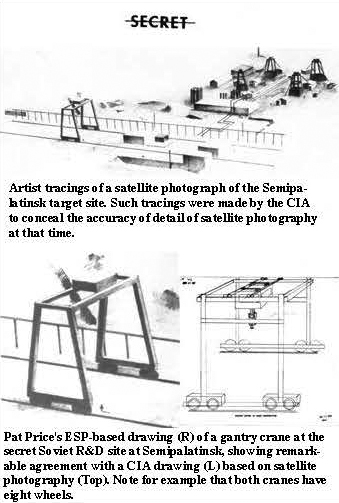
    RT: We published our formal experiments in the Proceedings of the Institute of Electronic and Electrical Engineers, and in Nature. In our first decade of work at Stanford Research Institute we did three highly significant experimental series. These comprised trials wherein a person in a shielded room with me had to describe what it looked like where my colleague Hal Puthoff and another witness were hiding in the San Francisco Bay area. In the first series of nine trials, a psychic policeman, Pat Price, achieved seven first place matches, where only one would be expected by chance.

    The probability of this is less than one in a hundred thousand. In the second series, a “control” subject photographer Hella Hammid, got five first place matches and four second place matches. The probability of this is approximately one in a million. In the third series, we taught six army intelligence officers how to do remote viewing, as part of the government’s program to set up an army psychic corps in Fort Meade, Maryland (USA). The six men each did six trials. Out of those thirty six trials, they got nineteen first place matches, where six would be expected by chance, again at odds of one in a hundred thousand. Our work had been replicated at Princeton and dozens of other labs worldwide.

    FJ: Can remote viewing be illustrated by the concept, in physics, of photon entanglement? If so, how do you define photon entanglement in relationship to psychic activity?

    RT: Photon entanglement is a consequence of space-time non-locality, wherein two photons that are created together (twin photons) travel on opposite directions at the speed of light, and the measurement on one affects the other. This non-locality, I believe, is the basis of ESP. Since remote viewing accuracy and reliability are independent of distance and time (up to a few days into the future) a physicist would say that the data for remote viewing appear to be non-local.

    FJ: During the Cold War, the US Government’s Central Intelligence Agency undertook a serious study of remote viewing, eventually terminating its $20 million dollar “Stargate Project” after David Goslin, of the American Institute for Research, declared, “There’s no documented evidence it had any value to the intelligence community.” Was he right after all?

    RT: The CIA, the Defense Intelligence Agency, and Army Intelligence Command would not have supported our program for twenty-three years and $25 million if we had not produced useful information. The program was secret. We successfully described Soviet submarines, a kidnapped US general in Italy, etc. That’s why they kept supporting us.

    FJ: According to psychologist David Marks, remote viewers are influenced by subjective validation, a process through which correspondences are perceived between stimuli that are in fact associated purely randomly. Couldn’t this be a real explanation for remote viewing?

    (Top) Remote viewing target site was Livermore Valley Foothills Windmill Farm. Below is sketch by Viewer a hundred miles away, showing poles, hills, “moving electricity in the form of a grid” and “halo probably not visible to the eye,” at the top of the poles. Remote Viewer: Joseph McMoneagle. Trial was carried out with Dr. Edwin C. May in 1987. Graphic courtesy of Russell Targ.
    (Top) Remote viewing target site was Livermore Valley Foothills Windmill Farm. Below is sketch by Viewer a hundred miles away, showing poles, hills, “moving electricity in the form of a grid” and “halo probably not visible to the eye,” at the top of the poles. Remote Viewer: Joseph McMoneagle. Trial was carried out with Dr. Edwin C. May in 1987. Graphic courtesy of Russell Targ.

    RT: The first published remote viewing experiment had some clues as to the order of some of the trials. These clues were removed, and the series was re-judged with exactly the same outstanding results. All other series were doubly randomised to remove this valid criticism. Transcript clues wouldn’t help us find the kidnapped US general or the downed Russian plane.

    FJ: Your book also discusses possibilities for distant mental influence, where the thoughts of the experimenter can positively or negatively affect the physiology – including heart rate or skin resistance – of someone far away. Can you cite any credible examples of this phenomenon?

    RT: William Braud wrote a book called Distant Mental Influence which presents twelve of his experiments showing that the thoughts of one person can affect the physiology of another person. This is also the basis of distant healing. My book describes my daughter psychiatrist Elisabeth Targ’s published experiment showing that the half of her AIDS patients who received distant prayer had significantly better health outcomes than the thirty controls. This paper was published in the Western Medical Journal in 1999.

    FJ: Our readers may be less familiar with Whole Field Isolation mentioned in The Reality of ESP. As I understand it, WFI applies to a “viewer” who accurately describes the visual experiences of someone else in another place. Does the “viewer” actually enter into the mind of another person, and how is this process achieved?

    RT: The person who is isolated in the “Ganzfeld” isolation chamber can obtain information seen by his/her distant friend either clairvoyantly or by telepathy – no way to tell.

    FJ: What exactly is the “Ganzfeld isolation chamber,” and how does it have any bearing on remote viewing?

    RT: The Ganzfeld isolation chamber has the purpose of removing all physical stimulation from a person’s awareness. The perceiver in the Ganzfeld is isolated from all electromagnetic radiation. He has white noise fed into his earphones, together with red light shown onto Ping-Pong ball halves fitted over his eyes. This isolation is thought to be a psi-conducive state, suited to daydreams and free association. Very good ESP results have been obtained with people in the Ganzfeld chamber. But not any better than a remote viewer sitting at a table in the lab.

    FJ: You write of Retrocausality, in which future events can allegedly affect history. But the future has not happened yet, so how can it influence the past?

    RT: When you have a dream on Sunday night of an elephant walking down your street and trampling your flowers, and then see the elephant doing exactly that the next morning, we would say that Monday morning’s experience of the elephant was the cause of Sunday night’s dream. That’s what we mean by retrocausality. In a non-local world, your consciousness is not separated from the future.

    FJ: Oral traditions from Tibet and Polynesia tell of large groups of persons who together entered into altered states of consciousness, then simultaneously focused all their individual thoughts on a single, common objective – i.e., to cure or kill someone, levitate a stone weighing several tons, etc. Were these credible examples of distant mental influence? If so, what do they say of possibilities for similar psycho-communal efforts undertaken today?

    RT: As a physicist, I am not involved with the claims of oral traditions. However, I am impressed with Buddhist and Hindu books describing techniques for remote viewing dating from the time of Christ, wherein the instruction are very similar to what we do in the lab.

    FJ: Exactly how does ESP work based on the Buddhist/Hindu view of our selves as non-local, eternal consciousness?

    RT: The Buddhists and Hindus didn’t know how ESP works, anymore than we do today. But they did believe that separation is an illusion; that our awareness transcends all of space and time. They taught that we can see into the distance and into the future; heal the sick and diagnosis illness – all psychically. The metaphor of Indra’s net describes a world in which every vertex of the net is a highly polished jewel, which reflects all others in the net. This is an early holographic model that is very suggestive of the non-local description we use today.

    FJ: Do you believe that psychic abilities are either inherited from a period earlier in our past, when they were more highly developed than today, but have since languished? Or do they represent a new development in human evolution?

    RT: I believe that psychic abilities are an evolutionary progressive ability. They helped the caveman become aware that a tiger was at the door of his cave, etc. They are definitely not new in any sense. Buddhists and Hindus described them exactly as we know them today.

    FJ: Archaeologists discovered that, some twelve centuries ago, Maya priests were ingesting 5-MeO-DMT, a psycho-active chemical excreted from the poison gland of Bufo alvarius, a local toad, because it engendered the “flight of the shaman” beyond space and time. The Bufo toad is depicted at the Mexican shrine of Izapa, where the 2012 Mayan calendar end date was inscribed. Could the Maya have thereby projected their consciousness into our time, then returned to theirs, where they composed their “prophecy”?

    RT: There is no convincing data showing that DMT or anything else will make you psychic. Too bad! It only makes you feel psychic.

    FJ: In Dogs That Know When Their Owners Are Coming Home, British biochemist Rupert Sheldrake describes what appears to be a telepathic bond between pet animals and their human owners. Do you believe his research is valid? And if so, can you suggest any method to strengthen or expand that bond to some degree of trans-species communication?

    RT: I am confident of trans-species communication. Any cat owner knows that all you have to do is think of taking your pet to the vet, or giving her a bath, to have the cat immediately disappear.

    FJ: What, if anything, has ESP got to do with questions concerning the survival of human consciousness after physical death? What might ESP teach us about the alleged immortality of the human soul?

    RT: If one believes that who we are is “non-local and timeless awareness,” then the idea that this awareness is eternal, is quite natural. Our awareness, whether alive of dead, is outside space and time. I believe that the evidence for survival of consciousness and personality is quite good.

    FJ: Parapsychologists argue that the greater development of remote viewing could lead to either the end of war or more deadly military applications. What is your opinion?

    RT: Remote viewing is definitely useful in wartime, since it provides intelligence information, which is frequently unavailable any other way. Human beings love to be at war. ESP is not going to end that. But it might encourage people to be more honest with one another, if they are aware that lies will be immediately detected.

    FJ: Larry Dossey, M.D., author of The Power of Premonitions, states that “the mind can function without limitation in space and time, and that this ability is widespread, teachable, and practical.” Should teaching psychic development become part of public education? If so, how might this be achieved?

    RT: I think it would be very important to encourage children to develop their psychic abilities – it is part of who they are. I taught my own children to be polite, intelligent and psychic as they were growing up. And it didn’t seem to hurt any of them (two doctors and a lawyer). Like many things, I think psychic abilities are better taught at home, rather than at school. But since it is an ability we all have naturally, it is very desirable that children be made aware of this gift before it is stifled and repressed by the larger society.

    FJ: What advice would you give anyone just beginning to explore their psychic potential?

    RT: I would suggest that a beginning remote viewer should find a partner to work with. The partner can bring you little objects in a bag, and encourage you to psychically describe them. You can then do the same for your partner. This is a surprisingly easy and enjoyable activity.

    FJ: Do you foresee a time when humanity in general will have developed its entire psychic potential, as described in your new book? If so, what kind of a world will that be?

    RT: I believe humanity will indeed make use of their psychic potential, with the result that people will quit lying to each other. They will also begin to notice that there is more to life than flesh and bones. That is, we have the capacity for timeless awareness, which, in fact, is what we are.

    The Reality of ESP: A Physicist’s Proof of Psychic Abilities (Quest Books, 2012) is available from all good bookstores and online retailers.

    [alert type=”general” dismiss=”no”]This article was published in New Dawn 133.[/alert]

    [alert type=”success” dismiss=”no”]If you appreciate this article, please consider subscribing to help maintain this website.[/alert]

    © New Dawn Magazine and the respective author.
    For our reproduction notice, click here.
  • Interview with a Time Traveller

    Interview with a Time Traveller

    As someone who has personally known the author of Seven Secrets of Time Travel: Mystic Voyages of the Energy Body for more than twenty years, I can vouch for Von Braschler’s really profound comprehension of practical spirituality. Nowhere is this more apparent than in his latest book, which is not some New Age, airy-fairy attempt at wish-fulfilment.

    Rather, from his grasp of classical philosophy and science, he has developed a convincing methodology for transcending time, not via a device or machine, but through the agency of human consciousness. It is not some futuristic technology, but present-day technique, Von Braschler demonstrates, that allows us to cross the time barrier.

    His conclusions are drawn from a lifetime of complimentary research, beginning as a faculty member at New York’s Omega Institute for Holistic Studies, where he led workshops throughout North America and Britain. A lifetime member of the Theosophical Society, he is today its regional head in the Upper Midwest of the US, and the author of Chakra Reading & Color Healing (2005), A Magical Journal: A Personal Journey Through the Seasons (2003), Conversations with the Dream Mentor (2003), and Perfect Timing: Mastering Time Perception for Personal Excellence (2002).

    A former newspaper and magazine editor, Von Braschler hosted his own weekly radio program, “Healing with Your Pet: Our Psychic, Spiritual Connection.” But it is his present effort that readers may find the most immediately engaging of all his singular achievements.

    I began by asking him an obvious question…

    Frank Joseph (FJ): What is time? Or, more to the point, what is your definition of time?

    Von Braschler (VB): Time is always now. As light intersects us each in turn, we experience an instant. This is our now. It energises you and fills you with opportunity of the moment. You are experiencing a different now than I am – miles away, as the sunlight strikes us at a different instant. Electromagnetic radiation that descends upon the earth from the heavens above in the form of light rays defines time. In truth, then, we only experience solar time on this physical earth plane in our mundane existence.

    While most people think of time as linear and progressing like a never-ending movie that unfolds in front of us, what we experience is an instant or a series of individual snapshots. The 17th-century rational philosopher Leibniz said that time doesn’t really exist, but is a conceptional order that our minds place on existence. Furthermore, there are two levels of creation – God above and our physical world of illusion below. Time and space as we conceive them are illusion. With guides such as Leibniz, Kant, Einstein and Barbour, we might say today that we live in the manifest or material realm that is fixed, frozen, and limited by laws of physics that allow little change or progress.

    On the other hand, the unmanifest realm of creation above us is unlimited in potential as filled with spirit and energy. The only way I know to leave the restrictions of the manifest level of creation and rise to the unmanifest level is by leaving our physical body in a consciousness body that can transcend time and space as we ordinarily experience things.

    FJ: How and why did you become interested in time travel?

    VB: I’ve always been fascinated by time, timelessness and time travel. It always occurred to me that each one of us experiences time differently and that most people have a funny idea how to control time or stretch time. We try to cheat time by burning the candle at both ends, getting less sleep, or better managing our time. Sadly, we are two-dimensional thinkers who live in a little box and cannot see outside our little compartment to a level of existence where multiple dimensions and multiple realities exist just beyond us.

    Personally, I have on occasion experienced timelessness where time seems to stand still or stretch at will in crisis situations where I had to get outside myself. For most people, these glimpses into expanded reality occur during an accident. These sorts of experiences piqued my interest in time and space and our potential to overcome our normal human condition. My first book was simply about the power in the present moment.

    Other books explored expanded human consciousness and ways to overcome the limits of our manifest world. Now I’m fully engaged in exploring the limits of time and space. Most people are introduced to this sort of exploration in their dreams. I’m interested in doing it with my eyes wide open.

    FJ: Since the publication of H.G. Wells’ The Time Machine in 1895, people interested in the subject have generally assumed that some kind of advanced technology will perhaps make time travel possible. How is your approach different?

    VB: Einstein pretty well convinced most of us that the universal speed limit was the speed of light and that matter such as our physical form would turn into pure energy if we were to reach the speed of light in attempts to time travel. And that’s how fast you would need to travel to move backward or forward in time.

    Time travel, therefore, remains the realm of energy (spirit). My approach to time travel accepts Einstein’s Special Theory of Relativity and focuses on leaving the limitations of the physical body in a consciousness body. This is your higher consciousness, that part of you that cannot be measured physically, but can exist and experience a broader reality outside your physical encasement. It is your spirit body or energy body. So my approach follows the reliable example of Native American dream walkers and Hindu Samadhi mystics who enter a state of higher consciousness and leave the body. In this way, they prove that a person’s higher self can transcend time and space.

    There are other shamanic and mystic traditions that transcend time and space in the same way, entering a very deep and active meditation with the focused intent to leave the body and go somewhere far away. Many other people have demonstrated prophetic dreams that prove an ability to transcend time and space out of body in higher consciousness, as well. This is a practical approach to time travel that is available to all us, without the amazing contraption of H.G. Wells.

    FJ: You write about the human “energy body.” What is it?

    VB: I believe in the Hindu and Theosophical model of the subtle energy bodies that surround and complete our dense, physical body of the material plane. Our subtle energy bodies include our astral plane or etheric double, our mental body, our causal body, our Buddha plane of individualised consciousness, our spiritual plane of energised conscious awareness, and our divine plane. So in order to move beyond the material plane at our physical core, we need to move with these subtle energy bodies that correspond to planes above the material plane.

    We commonly refer to these subtle bodies that surround our dense core as our energy body. It allows us to enter the planes of existence outside the physical restraints of our material world in a world of pure energy and spirit where change is more readily possible and can be realised in a flash. Now these planes are not normally visible to the physical eye, but can be seen by clairvoyants and anyone trained in aura reading. They have soft, pastel colouring that relate to the light energy vibrational rate of the various planes they represent. Another way to appreciate their very real existence is to put your hands out from the physical body at different intervals to feel their vibrational warmth and tingle.

    FJ: You mention “timelessness,” but how can anything be outside or without time?

    VB: I consider timelessness my fourth secret of time. Timelessness is just beyond time, as we commonly know it. We experience timelessness during deep meditation when time, as we commonly experience it, seems to stand still. We also experience it to a degree in profound, lucid dreams where you seem to live an entire lifetime in a flash with seemingly no time elapsing. This is where most people stop. It is like the eternal present moment that is pregnant with potential. It exists outside time and outside space as we normally experience life in our mundane, earthbound plane of manifest creation.

    We travel outside ordinary space and time of this world in a state of heightened consciousness as our higher self – a spirit body of pure energy. Most meditation ends with timelessness. Here you can listen to universal intelligence with your heightened awareness. It also can be a departure point for time travel, if you focus your higher consciousness on leaving the body and going somewhere else in time and space outside the room where you are meditating or dreaming.

    FJ: Indian mystics and Friedrich Nietzsche have written about the Eternal Now. How does it figure into your own research?

    VB: Ah, yes – the Eternal Now. My research has included the mystic East, as well as the West, both of which acknowledge it. The Eternal Now is the power of the present moment. We can embrace it by focusing our attention on the present moment and the potential that it holds for us. In truth, earthbound creatures only have the present moment or the now. Everything else is conjecture inside our little pocket calculator brains that attempt to run our lives by analysing and projecting everything in ways that make us feel comfortable about ourselves and where we think we are going. So our little brains are clogged, generally speaking, with worries about yesterday and concerns about tomorrow – moments that are not available to us, but only idle reflections on moments past and worries about an uncertain future beyond our immediate grasp.

    The Eternal Now is the universal truth of the power in the present moment. Everything is happening now, and potential change agents like us need to gain traction in the present moment to become heroes in our own lives.

    FJ: Many people today have a sense that time is speeding up. Are they somehow deluded, or experiencing a real phenomenon? If so, why is time speeding up?

    VB: It would seem so. Aside from the trajectory of the earth clipping a second or so off our annual clocks each year, there is a common human perception today that things are speeding up. Just about every philosopher and scientist who has ever seriously considered the meaning of time, however, has noted the importance of personal perception. There was Kant who said time and space are forms that the human mind projects on external things. Einstein said that the time interval between two events depends on the observer’s reference frame and that very reference body has its own particular time.

    Always remember, though, that time is measured in change. When change occurs, time has elapsed. We are living in an age of much change. As energised agents of change, we are fully aware of this. As energised agents of change, we find our own place on the wheel of life and make time spin with our attention. Fully engaged, we perceive time moving rapidly with changes that involve us.

    FJ: You state that travelling into the future is possible, but how can we move into a state or condition that does not yet exist?

    VB: Time is not really a linear progression, with us standing fixed at one point. This is the illusion of physical existence on this mud ball world of ours. In truth, time outside our inflexible, manifest world is fluid and looped. The unmanifested world of spirit and energy above us is fluid and flush with potential to move forward and backward at will. The trick is simply having enough conscious awareness to move forward and backward in time.

    With the right focused intent, a person in a state of heightened consciousness can leave the physical constraints of this manifest world and travel freely backward or forward in time. That involves your higher mind that can exist and function outside the physical body and independent of the brain or lower mind. Mystics and shamans have demonstrated this amazing potential to transcend time and space.

    FJ: Are there any real benefits to time travel, other than satisfying one’s curiosity?

    VB: Goodness, yes! Shamans experience reality outside normal time to bring back helpful insights to their people about dangers ahead or examination of past events that produced current situations. Eastern mystics visit worlds beyond worlds to understand the nature of cosmology and the potential of the human condition. On a personal level, one can go back into the past to better understand how you got to the point where you are today.

    There we more easily heal. There we can deal with buried recovery issues. We can gain better understanding. We suffer because we do not understand. But whether we go forward or backward in time for personal or broader reasons, we always go in an invisible conscious body or energy body without arms, legs, or vocal chords. We go as witnesses to bring back insight, much like the shaman.

    FJ: If we are able to move into the past or future, can we change history or alter what would otherwise occur? Is this what you mean by “an energised change agent”?

    VB: This is always a tricky question and probably one of the reasons why esoteric exercises have often been withheld from the masses. Are you ready to go forward or backward in time as a perfect witness for your own spiritual evolution and the betterment of your people? It’s an ethical concern. Fortunately, we do not time travel with the physical form necessary for us to interact outside our normal time. We travel in spirit body. The information that we retrieve, if we are able to fully comprehend it and recapitulate it upon return to normal consciousness represents tendencies of how things will turn out. There is not total certainty.

    In the case of personal information when you time travel for personal reasons, you become a witness to your own life. That life is totally yours to perfect. The greater concern would be for insights gathered outside personal observation and how it might affect the free will of others to determine their own destiny. I’m not totally concerned about that either, however, since free will of other people took them to the future you might have glimpsed. The future has already happened. We are just peeking into it.

    FJ: How does the ancient concept of karma appear into your work?

    VB: Quite a lot. Karma is a key component of my third secret of time, timelessness and time travel. I say that time=energy=karma=opportunity. Remember the story of the hero in The Bhagavad-Gita? Like Job in the Bible, he argues with a manifestation of God that his actions in a battle might have unforeseen, dire consequences and incur karma. His battle represents the life struggle that all of us live. The Lord tells him to get in the battle and take action, choosing the right action as best he can without concern for how things might turn out. It’s really about opportunity.

    People can be energised agents of change, but need to seize the opportunity. The moment at hand, the instant when light strikes you and energises you, is your opportunity to make a difference. We should not fear karma to the point we are reluctant to act, but recognise it as nature’s huge balancing act. It is nature’s unerring balancing act to measure cause and effect. Karma, as it affects all living things in orderly universe, acts as a moral law to restore order, balance, harmony, and opportunity for right action.

    FJ: Have you personally experienced any time travels you’re able to share with us?

    VB: Yes, I have. In a state of heightened consciousness, I have gone back and reviewed past lives pretty vividly. I know that all of it was very real, because I have been able to find people from past lives as a result of going back. This has helped me understand who I am in terms of my overall mission in life and what I’m all about. I have gone out of body and experienced timelessness, which has been great in “stretching” time when needed. I drove all across Montana one early morning in a blizzard on an empty tank of gas. (It does seem that during life-threatening situations our spirit evacuates the physical body and begins to function on its own, as others in emergency situations will attest.)

    I also remember an incident when I was wounded and trying to walk miles to my home without any concrete sense of direction and instantly found myself standing in front of my front door. All of that seemed pretty amazing then, but makes a little more sense to me now.

    FJ: What is the most important point you would like our readers to come away with after acquainting themselves with the Seven Secrets of Time Travel?

    VB: You can affect real change as an energised being who absorbs and processes electromagnetic radiation in the form of light rays that descend on us as waves. This energising process and the instant when light intersects you gives you a divine gift and the opportunity to make meaningful changes.

    We are part of the greater electromagnetic field and dynamic in that we can transform this light energy. We are light beings encased in physical forms that can be transcended in higher consciousness as pure energy that is unrestricted outside the laws of physics once outside the physical body.

    We can realise dimensions and realities beyond the mundane world of the flesh as pure energy travelling at the speed of light beyond ordinary time and space. Eastern mystics and shamans have demonstrated this is possible; and exercises in Seven Secrets of Time Travel explain how to practice this on your own.

    Seven Secrets of Time Travel: Mystic Voyages of the Energy Body (Destiny Books, 2012) is available from all good bookstores & online retailers.

    [alert type=”general” dismiss=”no”]This article was published in New Dawn 132.[/alert]

    [alert type=”success” dismiss=”no”]If you appreciate this article, please consider subscribing to help maintain this website.[/alert]

    © New Dawn Magazine and the respective author.
    For our reproduction notice, click here.
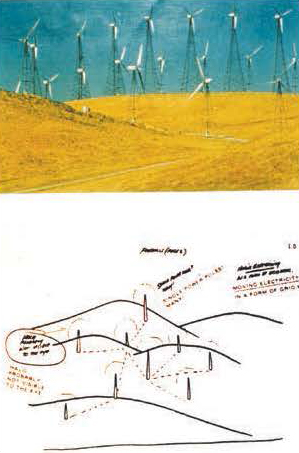
  • C.W. Leadbeater: Saint or Sinner?

    C.W. Leadbeater: Saint or Sinner?

    This article was published in New Dawn 96 (May-June 2006)

    Rare is the man or woman whose controversy in life outlives their death into the next century. But such were H.P. Blavatsky and C.W. Leadbeater, the founder and promoter, respectively, of Theosophy. Their legacy of notoriety and fame are generated less by the unorthodox, even heretical ideas they espoused with such unrepentant vigour during an era of Victorian sensibilities, than their outrageous personal behaviour which, even today, would have gotten them both into deep trouble. But of the two, Charles Webster Leadbeater was the most influential Theosophic spokesperson of the twentieth century, the man who some now regard as the true founding-father of the so-called “New Age” movement.

    At a time when Western civilisation was almost exclusively Christian, he boldly presented an alternative spirituality based on the psychic powers innate in all human beings, obviating the need for any priestly intermediaries in a direct (or virtually direct) personal relationship with the Compassionate Mind that organises all Creation. To best achieve that gnostic awareness, teachers like himself and an occult college of elusive (if mostly invisible) Masters from the higher planes of existence exist to serve the nobler spiritual aspirations of man. It was an unlikely stance taken by an established English clergyman locally renowned for his devotion to conventional religion.

    Born in 1854, Leadbeater was a twenty nine year-old Anglican priest when he was welcomed into the Theosophical Society by Helena Petrovna Blavatsky, who celebrated his membership as a personal triumph over mainstream churchmen, with whom she was at logger-heads. “I was revenged,” she later recalled. Leadbeater’s defection stemmed from his restless dissatisfaction with contemporary Christianity, particularly as it was preached in Britain. He felt it had ossified over the centuries into a meaningless repetition of traditional ceremonialism that extinguished the original enlightenment initiated two thousand years ago by Jesus.

    To India With Madame HPB

    In Theosophy, whose followers strove to penetrate the mystical truth they believed was at the core of every religion, he found the authentic mystical experience he sought. They convinced him that a synthesis of Buddhist and Hindu beliefs combined with exercise of mankind’s innate psychic powers could elevate our species to its godlike destiny. Madame Blavatsky warned him, however, that attaining the lofty spiritual illumination he desired was no easy matter. She urged him to address a personal letter to the Master Kuthumi, a usually invisible entity of great wisdom who chose to interact with mortal men of particular promise.

    In his missive to this profound spirit, Leadbeater asked if he should go to India for enlightenment. Madame Blavatsky alone knew how to put his request before the Master, so it was entrusted to her. A response was promptly received in the affirmative, and the former church official set out with Madame Blavatsky, who undoubtedly forged the letter, the envelope of which, in fact, had been stamped with a London postmark indicating the very neighbourhood where she resided at the time. Nonetheless impressed, Leadbeater and his dowdy mentor sailed across the Eastern Mediterranean, through Suez, and into the Indian Ocean.

    While on board, Madame Blavatsky put her enthusiastic follower through a series of exercises meant to humble his spirit, all the better to strengthen him for the transformation ahead. As part of this preparatory regimen, she had him walk around the deck of the steamer carrying a chamber-pot brimming with human waste, something the other passengers could never forget. Nor, apparently, did Madame Blavatsky. In later years, she alluded to his on-board performance by addressing him as “W.C. Leadbeater.”

    Once at Adyar, the Theosophical headquarters located outside Madras, his unquestionable abilities as a writer and speaker combined with his impressive physical appearance as a kind-eyed, wise-bearded teacher. Even so, years were to pass before he gained the clairvoyant insight that was later to make his fame. How he acquired it was recounted by Leadbeater after he became Theosophy’s most articulate spokesman. He recalled his stay in 1885 at the Adyar headquarters, which was virtually empty, the Society having fallen on hard times. Until then, he said:

    I possessed no clairvoyant faculty, nor had I ever regarded myself as at all sensitive. I remember that I had a conviction that a man must be born with some psychic powers and with a sensitive body before he could do anything in the way of that kind of development, so that I had never thought of progress of that sort as possible for me in this incarnation, but had some hope that if I worked as well as I knew how in this life I might be born next time with vehicles more suitable to that particular line of advancement.

    One day, however, when the Master Kuthumi honoured me with a visit, He asked me whether I had ever attempted a certain kind of meditation connected with the development of the mysterious power called kundalini. I had of course heard of that power, but knew very little about it, and at any rate supposed it to be absolutely out of reach for Western people. However, He recommended me to make a few efforts along certain lines, which He pledged me not to divulge to anyone else except with His direct authorisation, and told me that He would Himself watch over those efforts to see that no danger should ensue.

    I worked at it for forty-two days, and seemed to myself to be on the brink of the final victory, when the Master Himself intervened and performed the final act of breaking through which completed the process, and enabled me thereafter to use astral sight while still retaining full consciousness in the physical body — which is equivalent to saying that the astral consciousness and memory became continuous whether the physical body was awake or asleep. It must not for a moment be supposed, however, that the attainment of this particular power was the end of the occult training. On the contrary, it proved to be only the beginning of a year of the hardest work that I have ever known. He would make a vivid thought-form, and say to me: “What do you see?”

    And when I described it to the best of my ability, would come again and again the comment: “No, no, you are not seeing true; you are not seeing all; dig deeper into yourself, use your mental vision as well as your astral; press just a little further, a little higher.”

    The result achieved is assuredly far more than worth while, for it leads directly up to the union of the lower and the higher self and produces an utter certainty of knowledge based upon experience which no future happenings can ever shake.2

    Thus enlightened, Leadbeater was credited with discovering Jiddu Krishnamurti, who was staying at the Theosophical Society’s headquarters with his family for some months. They met while walking along the private beach that formed part of the Adyar complex. Leadbeater declared to his companion Ernest Wood that the boy would become a great spiritual teacher and speaker. He also told Wood that Krishnamurti was in all probability to become the “Vehicle” for the coming “World Teacher” in the incarnational pattern of Moses, Buddha, Zoroaster, Christ, and Muhammad. Leadbeater personally supervised the raising of Krishnamurti, under conditions occasionally less than tender. Annoyed at the young man’s habit of sometimes staring with a blank expression into vacant space, with mouth open, he reprimanded Krishnamurti by striking him violently on the chin, an act of violence that spoiled the hitherto “blessed relationship” between them.

    Australia

    Thereafter, the temperamental tutor departed for Australia, settling in Sydney in 1914, where he felt particularly called to fulfill some as yet ill-defined mission. His instinct was correct, judging from the profound public success he enjoyed there. Attendance at his lectures swelled with overflow crowds of people to whom the ancient principles he described so beautifully were entirely new. For all the accusations of his critics, it was chiefly Charles Leadbeater, in the tradition of his predecessor Madame Blavatsky, who introduced the contemporary Western world to the age-old spiritual ideas of the East.

    In Sydney, he became a leading member of the Liberal Catholic Church. A flurry of booklets, manuals, and full-length books flowed from him in a spate of creativity that brought the Theosophical Society much-needed prestige, income and membership in the tens of thousands.

    As his modern biographer, Gregory Tillett, writes in The Elder Brother:

    The range of his writings, and the wealth of material that flowed from his prolific pen, was vast. Some forty volumes, even more pamphlets, and for much of his life probably five or six journal articles a week constituted his literary output. The modern occult revival owes more to him than to anyone else; his concepts and ideas, his popularising of occult and Theosophical terms and principles, run through all modern works on these subjects.

    Leadbeater’s written words were as successful as those he spoke, and his readership was truly international. A sampling from his very many published materials provides a glimpse of his active mind: “The Astral Plane: Its Scenery, Inhabitants and Phenomena”; “The Aura: An Enquiry into the Nature and Functions of the Luminous Mist Seen about Human and Other Bodies”; “Invisible Helpers: A Story of Helping at Night the So-called ‘Dead’ by Those Who Are Still in the Land of the Living”; “Dreams: What They Are and How They Are Caused”; “Thought-Forms: A Record of Clairvoyant Investigation”; “Man Visible and Invisible: Examples of Different Types of Men Seen by Means of Trained Clairvoyance”; “The Other Side of Death: Scientifically Examined by Clairvoyant Observation and Carefully Described”; “Guardian Angels and Other Unseen Helpers”; “The Perfume of Egypt and Other Weird Stories”; “The Life After Death, and How Theosophy Unveils It”; “To Those Who Mourn: Solace for Bereaved Person based on Principles of Evolution and Reincarnation”; “Vegetarianism and Occultism: On the Effects of Meat Eating and Slaughter of Animals”; “Australia and New Zealand as the Home of a New Sub-race”; “The Hidden Side of Christian Festivals”.

    As author Alvin Boyd Kuhn observed in Theosophy: A Modern Revival of Ancient Wisdom:

    He wrote elaborate descriptions of these things in a style of simplicity and clearness. He asserted that such powers enabled one to review any event in the past history of the race, inasmuch as all that ever happened is imprinted indelibly on the substance of the Astral Light or the Akasha, and the psychic faculties of trained occultists permit them to bring these pictures under observation. With the same faculties he asserted his ability to investigate the facts of nature in both her realms of the infinite and the infinitesimal. For years he stood as perhaps the world’s greatest ‘seer,’ and in books dealing with Clairvoyance, Dreams, The Astral Plane, The Inner Life, The Hidden Side of Things, etc., he labored to particularise and complement Madame Blavatsky’s sweeping outline of cosmic evolution and human character, as given in The Secret Doctrine.

    Scandal and Seership

    At the height of Leadbeater’s renown, however, serious moral charges were brought against him. As Nevill Drury and Gregory Tillett explain in their authoritative study of the occult in Australia, “the police undertook an investigation into Leadbeater and his relationships with his pupils, although Leadbeater himself would not be interviewed.

    The official conclusions of the enquiry were that there was no evidence to sustain any charge, however the officers undertaking the investigation were satisfied Leadbeater did have a sexual relationship with at least some of his young male pupils, although he denied this. He did not deny habitually sleeping with his pupils, or sharing his bath with them. The precise details of Leadbeater’s sexual relationship with his pupils, and his occult teachings of these matters remain one of the mysteries in his life.3

    Many of Leadbeater’s public pronouncements were igniting no less heated controversy, both inside and outside the Society. He stated that mankind originated on the Moon, eventually came to Earth several hundred thousand years ago, and is destined to some day leave this world, resettling on the planet Mercury. Mars, he said, was a pleasant place inhabited by human beings not much unlike ourselves, though more spiritually and intellectually elevated, and go around like Buddhist monks, bare-footed and dressed in common robes. In the midst of this balderdash, there nevertheless appear flashes of apparent psychic insight. For example, Leadbeater stated that Mars,

    is a smaller planet than the Earth and more advanced in age, and was in much the same condition as is the Earth at the present time; that is to say, there was much more water than land on its surface. Now it has passed into comparative old age, and the water surface is far less than that of the land. Large areas of it are at present desert, covered with a bright orange sandwich giving the planet the peculiar hue by which we so readily recognise it.4

    In his book The Masters and the Path, Leadbeater told of a secluded ravine in Tibet, where ancient records documenting an otherwise forgotten prehistory were preserved at an occult “museum” staffed by initiates of the Great White Brotherhood. “The museum houses images of every type of man which has existed on the planet,” he wrote, “from gigantic, loose-jointed Lemurians to pygmy remains of even earlier and less human races.”

    More than sixty years after the publication of The Masters and the Path, American scientists found suggestions of unusual early human habitation at Liang Bua, a “cool cave” in the local Manggarai language, extending 130 feet into a hillside on Flores, a remote Indonesian island east of Java and northwest of Australia. They eventually revealed a virtually complete human skeleton unlike any they had ever seen. Beginning in September 2003, excavators undertook the laborious task of reassembling and identifying each of its bones in a Jakarta laboratory. Thirteen months later, the restored skeleton represented “a fundamentally new being,” according to Joseph B. Verrengia, science writer for the Associated Press, “a discovery that could rewrite the history of human evolution. It would be the eighth species in the Homo category.”

    Homo floresiensis, or Flores Man, declared George Washington University anthropologist Bernard Wood, “is arguably the most significant discovery concerning our own genus in my lifetime.” The proportionally formed adult female stood just three feet tall, weighed no more than fifty-five pounds, and had a brain less than a third the volume of a modern human’s, small even for a chimpanzee. Although far smaller than any member of the genus Homo, her brain was complexly convoluted, suggesting a higher level of intelligence that belied its grapefruit size.

    Dean Falk, a paleoneurologist at Florida State University, declared that the creature’s brain “has features I’ve not seen in anything this size.” She was not “some kind of ‘freak’ that we just happened to stumble across,” added Richard G. Roberts from Australia’s University of Wollongong, but an example of the first-known human dwarf species, as additionally confirmed by six other specimens found in the Liang Bua cave. They range in age from 9,500 to 12,000 years old, although the best-preserved skeleton belonged to a woman who lived 18,000 years ago. Nicknamed “Hobbit” after J.R.R. Tolkien’s Lord of the Rings trilogy, she inhabited a real-life Middle Earth populated by giant tortoises large enough to ride, midget elephants no bigger than ponies, and monster rats the size of full-grown black Labrador hunting dogs.

    Leadbeater’s “pygmies of even earlier and less human races” had become anthropological reality.

    But it was his outspoken views on World War One that most divided his audiences. He seemed to contradict the concepts of humanity and compassion forming the bedrock of their faith, so much so, members, particularly new recruits and originally sympathetic followers, left the Theosophical Society in droves. The stampede of the disaffected had been prompted by Leadbeater’s uncharacteristically brutal remarks:

    I am stating the facts based on knowledge and not on supposition when I say that it is actually a kindness to these ruffians [common German soldiers] to kill their bodies, for in that way we save their souls from this madness; we actually help in carrying out the training which will show them that they must not again let themselves be misled and hypnotised as they have been at this time. They are simply dangerous wild beasts who must be sent back into the savage tribes to which they belong.5

    Leadbeater’s listeners were utterly divided by such comments, unsure he was speaking from a higher compassion or from his own, deeply engrained Tory conservatism. In any case, it seems strange that the founder of today’s New Age movement should have been almost totally forgotten by its modern followers. Throughout the early twentieth century, he was a father figure of global reputation, despised and revered by millions. Routledge & Kegan Paul, the publisher of Leadbeater’s biography, asked:

    Is he the world’s greatest occultist and psychic? Or the worst sort of charlatan and con-man? These widely ranging views of Charles Leadbeater were current in his lifetime and even now, years after his death in 1934, he remains a controversial icon even for Theosophists. His disciples hailed him as the greatest seer of their age. His enemies attacked him as a fraud or worse. Yet, he has exerted great influence on modern ideas about the occult.6

    Clearly, the controversy his life set in motion has not yet abated.

    [alert type=”success” dismiss=”no”]If you appreciate this article, please consider subscribing to help maintain this website.[/alert]

    Footnotes

    1. Artist’s impression of C.W. Leadbeater which adorned the cover of a 1973 edition of his book The Inner Side of Christian Festivals published by the St Alban Press.
    2. “The Third Object of the Theosophical Society”, Adyar Pamphlet Number 184, Adyar, India, 1930.
    3. Other Temples, Other Gods: The Occult in Australia, Nevill Drury and Gregory Tillett, Hodder & Stoughton Australia Pty Ltd, 1982
    4. The Inner Life by C.W. Leadbeater, Madras, India:  Theosophical Pub. House, 1912.
    5. The Hidden Side of Christian Festivals by C.W. Leadbeater, as quoted in The Elder Brother: A Biography of Charles Webster Leadbeater by Gregory Tillett.
    6. The Elder Brother: A Biography of Charles Webster Leadbeater,  Routledge & Kegan Paul Books, 1982.

    © New Dawn Magazine and the respective author.
    For our reproduction notice, click here.