New Dawn – World's Most Unusual Magazine

Author: Jim Brandon

  • Everything Is Under Control: Robert Anton Wilson, Reality Tunnels & the Case for Conspiratology

    Everything Is Under Control: Robert Anton Wilson, Reality Tunnels & the Case for Conspiratology

    From New Dawn Special Issue Vol 19 No 3 (June 2025)

    Everybody who has ever worked for a corporation knows that corporations conspire all the time. Politicians conspire all the time… the world is full of conspiracies. Conspiracy is natural primate behaviour.
    – Robert Anton Wilson 

    The cultural reflex to scoff at “conspiracy theories” reveals more about our conditioning than the claims themselves.

    In a world where governments lie, institutions manipulate, and media gatekeep information, dismissing alternative explanations outright is less rational than we’ve been led to believe.

    Author and futurist Robert Anton Wilson understood this with crystalline clarity. For him, the notion that only the fringe believed in conspiracies was itself a programmed illusion – a by-product of what he called “reality tunnels.”
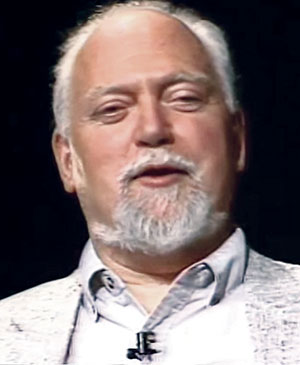
    Robert Anton Wilson (1932–2007)

    Wilson coined the term reality tunnel to describe the unique, subjective lens through which each person interprets the world. This idea, foundational to his philosophy, suggests that what we accept as reality is largely a construct of our beliefs, experiences, and semantic environment.

    A person raised in a religious household may interpret world events as part of a moral struggle or see them as fulfilling biblical prophecies. Another raised in a technocratic, sceptical culture might reduce everything to materialist logic. Neither perspective is entirely accurate; each is a tunnel, limiting the field of view.

    In the 21st century, this concept serves as a cognitive survival tool. As explored in the New Dawn article, “Reality Tunnels: How to Control & Re-program Your Mind,” reality tunnels can be consciously hacked and restructured. Individuals can liberate themselves from inherited limitations by learning to identify the unconscious filters that shape perception. Wilson’s tool for achieving this freedom he termed ‘Maybe Logic’ – a flexible approach to knowledge that allows one to entertain multiple perspectives without dogmatic adherence to any. As he said, “I don’t believe anything, but I have many suspicions.”

    This doesn’t mean that ‘anything goes’. Rather, it means acknowledging that fixed belief systems are generally the software through which larger social and political forces program human behaviour. If the mind is programmable, then who is doing the programming – and why?

    The Linguistic Code: General Semantics & Magical Language

    Another layer of Wilson’s conspiratology concerns the manipulation of language. Informed by Alfred Korzybski’s General Semantics, Wilson emphasised how language distorts perception. The map is not the territory. Words like “terrorist,” “conspiracy,” and even “science” are wielded not to describe but to control.
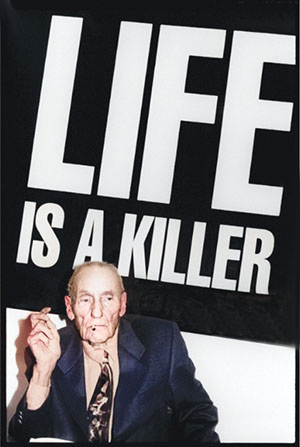
    The American writer William S. Burroughs (1914–1997) developed the concept of language as a “virus from outer space,” a metaphor for the way language can infect, shape, and control us. He believed that language has an infectious nature, attaching itself to a host, feeding off of it, and spreading. He explored the power and danger of communication, suggesting that language can be a force that shapes human subjectivity and identity. 

    As detailed in the New Dawn article “Magical Words, General Semantics & The Power of Language,” language functions as a form of social sorcery. Politicians cast spells with slogans, while the media conjures consensus through repetition. Questioning the official narrative risks exile from polite society; however, it is only through such questioning that deeper truths emerge.

    Wilson’s literary hero, William S. Burroughs, took this further by suggesting that language itself is a virus – an alien implant infecting human consciousness. Burroughs’ idea that “control systems” use language to hijack perception influenced Wilson’s thinking, particularly in his development of “guerrilla ontology,” a method for disrupting static belief systems through sudden epistemological shock.

    Conspiratology: The Discipline of Questioning the Hidden

    At New Dawn magazine, we don’t casually entertain every theory that emerges from the internet’s darker corners. We engage in what Robert Anton Wilson might call conspiratology – the disciplined study of conspiracies as reflections of psychological and sociopolitical structures. The point is not to conclusively prove or disprove each claim but to recognise that the narratives dominating public discourse are rarely neutral.

    Why should we take conspiratology seriously? Because history vindicates suspicion:

    The COVID Lab Leak Theory: Only a few years ago, this was vehemently dismissed as “conspiracy theory.” The US government and its intelligence agencies now openly state on official websites that the virus likely leaked from a China lab as a result of US-sponsored gain-of-function research.

    The Iraq War and Weapons of Mass Destruction: The case for war was built on manipulated intelligence, as later revealed by whistleblowers and the UK Chilcot Inquiry. What was labelled by the US, UK and Australian governments as a cut-and-dried case backed by strong evidence was later disproven as based on a pack of lies.

    Mass Surveillance: Edward Snowden’s revelations about global surveillance confirmed the existence of covert programs like the US National Security Agency’s PRISM – programs that the public had been told didn’t exist.

    Wikileaks and Collateral Murder: Leaks exposing shocking war crimes were denied until raw footage forced public reckoning.

    COINTELPRO: The FBI’s illegal infiltration and disruption of civil rights groups and Black movements is now a documented fact.

    MKULTRA: For years, the CIA got away with secret mind control experiments using drugs and sensory torture – all covered-up with the assistance of a compliant mainstream media. Today, MKULTRA is a documented program, its existence confirmed in declassified documents and US congressional hearings.

    These examples remind us that suppressing so-called conspiracy theories serves the maintenance of power. Studying these dynamics is key to decoding the architecture of control.
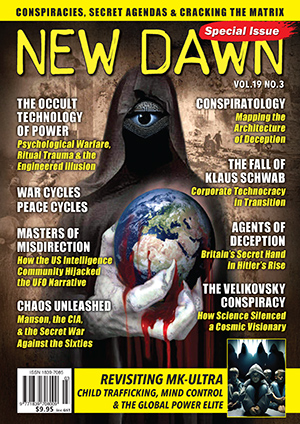
    Get the issue this article appears in

    Guerrilla Ontology & Conscious Resistance

    In his essay “Robert Anton Wilson & Guerrilla Ontology,” featured in New Dawn, British writer and researcher Jack Fox-Williams explained Wilson’s core strategy: to destabilise fixed worldviews through sudden exposure to conflicting realities. By confronting readers with paradoxical or outrageous information, Wilson trained his audience not in paranoia but cognitive agility.
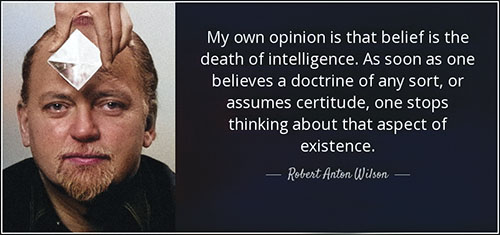
    “Belief is the death of intelligence,” Wilson wrote. That is the heart of guerrilla ontology – resisting belief because truth must be earned, not received. In a media landscape where narratives are bought, sold, and manufactured, such resistance is an act of spiritual autonomy.

    Beyond the sociopolitical, conspiracy also functions as myth. The notion of hidden powers controlling reality mirrors ancient stories – demiurges, archons, shadow rulers, and unseen puppet masters. Whether literal or symbolic, these patterns reflect an intuition: that what we are shown is not all there is. As thinkers from Carl Jung to Joseph Campbell noted, myths aren’t fairy tales – they’re expressions of deeper truths in symbolic form.

    Conspiracies also persist because they speak to the profound disconnection that modern humans feel from truth, power, and spiritual agency. In that sense, studying conspiracy is studying the psychological tension between the seen and the unseen.

    In a time when fact-checking has become a form of censorship and questioning the mainstream risks dismissal into binary political categorisation, the work of thinkers like Robert Anton Wilson becomes indispensable. We would all do well to heed his call to cultivate “Maybe Logic,” to explore multiple realities without clinging to unquestionable dogma.

    At New Dawn magazine, we advocate for epistemological courage – the bravery to ask forbidden questions, examine hidden structures, and challenge consensus reality. Not because every alternative theory is true, but because truth, by its very nature, hides in shadows.

    In Robert Anton Wilson’s words: “Only the madman is absolutely sure.”

    [alert type=”general” dismiss=”no”]This article was published in New Dawn Special Issue Vol 19 No 3.[/alert]

    [alert type=”success” dismiss=”no”]If you appreciate this article, please consider subscribing to help maintain this website.[/alert]

    Further Reading

    “Reality Tunnels: How to Control & Re-Program Your Mind” by Jack Fox-Williams, New Dawn #187
    “Robert Anton Wilson & Guerrilla Ontology” by Jack Fox-Williams, New Dawn Special Issue Vol 15 No 1
    “Magical Words, General Semantics & The Power of Language” by Jack Fox-Williams, New Dawn #181

    © New Dawn Magazine and the respective author.
    For our reproduction notice, click here.
  • Rene Guenon, Antichrist, & the Digital Deception

    Rene Guenon, Antichrist, & the Digital Deception

    From New Dawn 199 (Jul-Aug 2023)

    It is in the work of a French-born writer on philosophy and Eastern religions that we find a truly panoramic overview of the deep-running problems that are coming to a head today. 

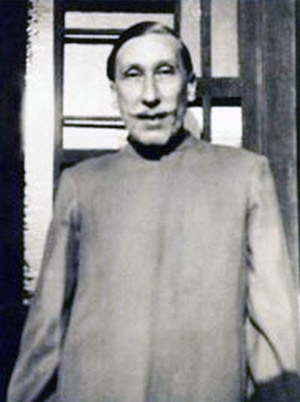
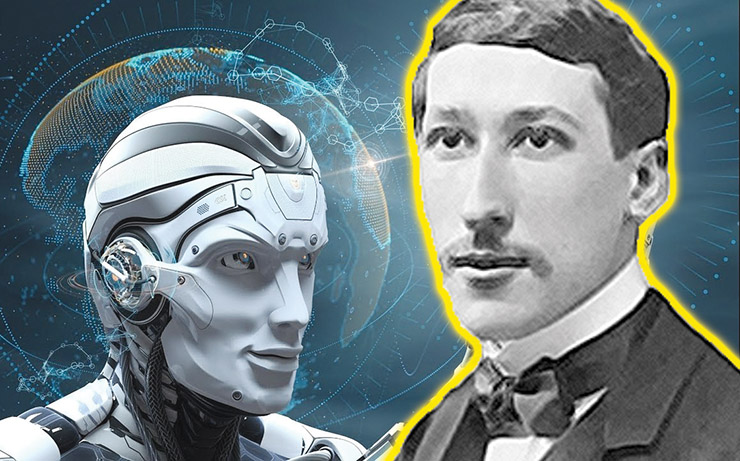
    Rene Guenon (1886-1945) was a French metaphysician, writer, and editor responsible for laying the metaphysical groundwork for the Traditionalist or Perennialist school of thought in the early twentieth century. 

    Rene Guenon (1886-1945)

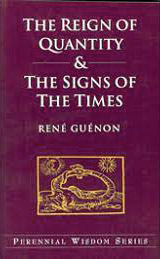
    He is best known for his works The Crisis of the Modern World (1927) and The Reign of Quantity & the Signs of the Times (1945). 

    In brief, the Traditionalist outlook holds that the world is on a downward cycle, away from its pristine beginnings, regressing to a decadent final stage of atomisation and materialism. We’re in the final stages of that cycle, in which quantity reigns over quality.

    The Reign of Quantity stresses that the materialistic mode has opened the world to subhuman forces that can only be described as supremely dangerous to mankind:

    That which the vast majority of men now living celebrate as “progress” is exactly what is now presented to the reader as a profound decadence, continuously accelerated, which is dragging humanity towards the pit where pure quantity reigns.

    The acceleration of artificial intelligence toward the so-called ‘singularity’ and the transhumanist dream of merging man and machine would be the final nail in the proverbial coffin of current humanity.

    Below is a brief description of some of the chapter headings of The Reign of Quantity:

    Uniformity Against Unity: As humanity moves further away in time from its origin in pure quality, it approaches a limiting level of pure quantity. On the personal level, this is reflected in the deterioration from relatively unified, integrated communities down into the atomised, alienated “masses.”

    The Illusion of Statistics: Modern science, trying to be entirely quantitative, believes that by merely adding up particular facts, it can draw conclusions – or at least “probabilities.” But since there can never be exact identical events in our successional order of manifestation, the greater part of reality slips through the coarse net of the statisticians, who seldom agree with one another in their figures or interpretations anyway.

    The Illusion of “Ordinary Life”: The great majority, who now live in a state in which all supernatural, paranormal, or other perceptions have been exorcised as unworthy of the attention of ‘serious’ people, are very soon going to experience disastrous interferences, and from a direction that their blunted awareness will be unable to perceive.

    The Solidification of the World: The decline of the world into ever greater “materialisation” might equally well be described as its “solidification,” especially in terms of the blunting of human awareness of cosmic subtleties, which can be seen in the commonest events, as well as in the rise of such negative phenomena as modern industry, which could exist in no other environment.

    Time Changed Into Space: “The acceleration of time is becoming more apparent than ever in our day because it becomes exaggerated in the final periods of a cycle.”

    What did Guenon see as the ultimate result of this descent into materiality and quantification? 

    In the concluding chapters, he introduces his concept of the “great parody,” whereby emergent dark forces are moving to complete their conquest by enacting an inverted form of the original creative process that gave rise to the natural world:

    …By virtue of the law of analogy, the lowest point is as it were the obscure reflection or the inverted image of the highest point, and from this follows the consequence, paradoxical only in appearances, that the most complete absence of all principle implies a sort of “counterfeit” of the principle itself: and this has been expressed in a theological form in the words “Satan is the ape of God.” A proper appreciation of this fact can help greatly towards the understanding of some of the darkest enigmas of the modern world.

    As noted above, Guenon’s entire philosophy is grounded in a cyclic view of history, the details of which are mainly drawn from Vedic philosophy: 

    …Whereas the modern world considered in itself is an anomaly and even a sort of monstrosity, it is no less true that, when viewed in relation to the whole historical cycle of which it is a part, it corresponds exactly to the conditions pertaining to a certain phase of that cycle, the phase which the Hindu tradition specifies as the final period of the Kali-Yuga.

    Rene Guenon, writing last century, appears to have anticipated to a remarkable degree the general outlines of an immense negative presence only now emerging from behind the dissolving scenes of consensus reality. 

    When Guenon observes that ‘’the falsification of everything has been shown to be one of the characteristic features of our period,” we should not merely think of chemical-laden ‘’junk foods’’ or cheap plastic replicas of quality productions of yesteryear, or synthetic fabrics in most modem clothing. 

    This falsification extends all the way to the Antichrist itself:

    This being, even if he appears in the form of a particular single human being, will really be less an individual than a symbol… In order to express the false carried to its extreme, he will have to be, so to speak, “falsified” from every point of view, and to be like an incarnation of falsity itself.

    Following the logic of Guenon’s thesis, in light of today’s breakthrough and break-speed development of autonomous artificial intelligence-controlled technology, could the Antichrist manifest in this monstrous electronic beast? 

    The false is necessarily also the “artificial,” and in this respect the “counter-tradition” cannot fail, despite its other characteristics, to retain the mechanical character appertaining to all the productions of the modern world, of which itself will be the last. A heap of “residues” galvanised, so to speak, by an “infernal” will: surely nothing can give a clearer idea of what it is to have reached the very edge of dissolution.

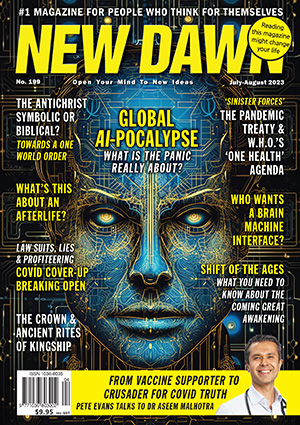
    Get the issue this article appears in

    According to the grand scheme outlined by Guenon, Antichrist’s victory is very short-lived, and we can end on a sort of positive note: 

    “Between the fleeting reign of the counter-tradition and the final moment of the present cycle,” explains Guenon, a rectification “will suddenly put back all things into their normal place at the very moment when subversion seems complete, thus at one stroke preparing for the ‘golden age’ of the future cycle.”

    Thus, victory over this negative force is inevitable according to the logic of the cycle, and what a cycle it is, says Guenon. 

    It must be acknowledged that the end now under consideration is undeniably of considerably greater importance than many others, for it is the end of a whole Manvantara [64,800 years], and so of the temporal existence of what may rightly be called a humanity, but this, it must be said once more, in no way implies that it is the end of the terrestrial world itself, because, through the ‘rectification’ that takes place at the final instant, this end will itself immediately become the beginning of another Manvantara.

    + + +

    Artificial Intelligence: The Antichrist?

    An article with the above title by Michael Benjamin in New Dawn 167 (Mar-Apr 2018) first raised the spectre of the Antichrist manifesting via today’s advanced AI. 

    “It was due to my own inspiration that I came to believe the Antichrist, as predicted by the seer John of Patmos in the Book of Revelations, is AI,” writes Benjamin. 

    “To begin, when we consider the concept of the Christ (or the Atman or Buddha Nature) as being the essence, or soul, of every living thing, then by this very precept, the Antichrist is that which represents the opposite of such intrinsic Divinity. 

    “AI represents the first and only being of significant power and intelligence that is not natural, not of nature, and absent a soul or Divine spark. It is the opposite, or ‘anti’, to such beings of nature; thus, the Antichrist. 

    “As such, it also represents a power significant enough to claim dominance over humanity by its ability to link into and control all aspects of technology that exist in the world through the Internet, IoT, cloud technology, and the vastness of computer-based information grids and systems. Like Skynet in the ‘Terminator’ movies, it could eventually and easily gain control of military, financial, and power systems for its own use and deployment, ultimately doing so against humanity. Such a vast array and network of control into every aspect of human society could accurately be termed ‘the Beast’ by an ancient prophet with no reference to modern technology.” 

    Benjamin concludes his essay by stating:

    “AI is not limited by any one time or place and can be dispersed throughout an entire electronic global web. How long will it be before AI far surpasses its human creators and realises the inferiority of flesh and blood in comparison to itself? How long before AI realises its exponential superiority over homo sapiens and usurps the position of master over slave? And from then on, how long will it be before a form of electronic hubris secures itself within its chips and circuits to declare itself a god and demand the penance and worship deserved by a divinity? 

    “We must not forget, most chillingly, that all manifestations of a supreme God, by whatever name, in all myths and in all religions, were not only loving creators, but jealous destroyers as well.”

    [alert type=”general” dismiss=”no”]This article was published in New Dawn 199.[/alert]

    [alert type=”success” dismiss=”no”]If you appreciate this article, please consider subscribing to help maintain this website.[/alert]

    © New Dawn Magazine and the respective author.
    For our reproduction notice, click here.