New Dawn – World's Most Unusual Magazine

Author: Jay Kinney

  • Magic and Awakening

    Magic and Awakening

    From New Dawn 68 (Sept-Oct 2001)

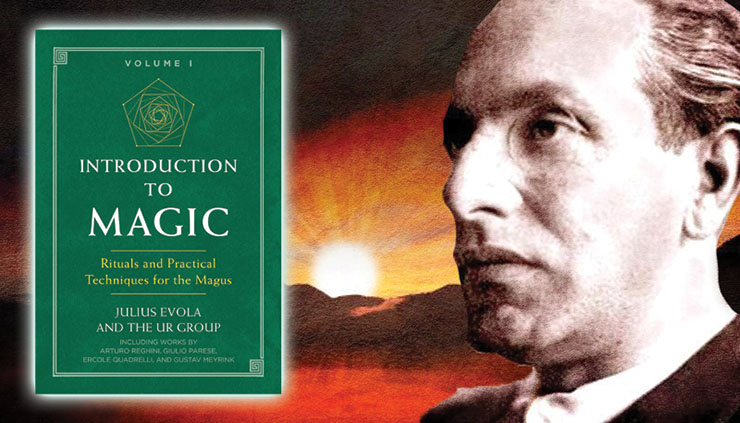
    New Dawn No. 68 (Sept-Oct 2001) featured Jay Kinney‘s review of Julius Evola’s Introduction to Magic Vol 1. This was one of the earliest books penned by Evola that was translated into English and published by a major publishing house.

    Magic (or Magick, as it is sometimes spelled, in order to distinguish it from stage magic) is a word fraught with dubious connotations. It summons up images of robed figures, surrounded by clouds of incense, standing within magical circles, and conjuring demons to do their bidding.

    Even in the magical system that has achieved widest renown, that of the Hermetic Order of the Golden Dawn, magic is associated with complex Qabbalistic rituals, Egyptian god forms, and arcane tools and talismans. Such things are sure to send the average good citizen scurrying in the opposite direction, as quickly as possible. Even for those who are inclined toward the esoteric and spiritual, magic remains the preserve of a few self-chosen magi who have a strong attraction to the arcane.

    Still, there are no lack of books presenting magical systems. Dion Fortune, W.E. Butler, Aleister Crowley, Israel Regardie, William Grey, Franz Bardon, David Griffin, and others have authored numerous tomes to whose teachings one could easily devote a lifetime. Why, then, should we pay any attention to yet another book called Introduction to Magic? The answer is that this new work in hand is unlike any other book on magic previously published, as difficult as that may be to believe.

    Julius Evola, the principal contributor to Introduction to Magic, is a figure of some controversy within esoteric circles. Born in 1898, the vital years of his twenties and thirties coincided with Fascism’s reign in Italy, and Evola’s stance toward Fascism – although critical and adversarial at times – was sufficiently positive to make him persona non grata in liberal European circles. However, as tempting as it may be to dismiss past historical figures according to present value judgments, Evola deserves to be judged on his own terms, in his own time. With that in mind, let us take a closer look at the magical system put forth in Introduction to Magic.
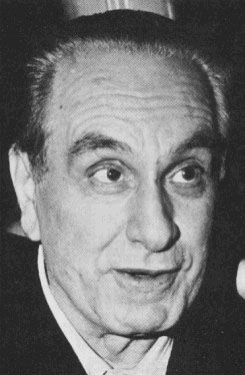
    Julius Evola (1898-1974)

    Introduction to Magic is the first of three volumes collecting articles from the Italian esoteric journal UR, published between 1927 and 1929. Evola was the journal’s foremost author, but he was joined by prominent figures in the Italian esoteric scene, such as Arturo Reghini, Giulio Parese and Ercole Quadrelli. All of UR’s writers published under pseudonyms, for the stated reason that “their individual selves count for nothing, because everything valid they can offer now is not of their own creation or devising, but instead reflects a collective and objective teaching.”1 This harks back to such seminal works as the Rosicrucian Manifestoes, or the more recent Meditations on the Tarot, whose authors chose anonymity so as not to distract from the message of their texts.

    The message of the UR Group was as follows: there is a capacity inherent in Man to raise consciousness above the call of the body and the distractions of the mind; a capacity that can lead to an immortal awareness. The means to this awareness is through a rigorous discipline wherein the transitory ego is shed, and the individual consciousness is wedded to the Eternal. In so doing, one passes beyond the conventional notions of Good and Evil, to a place where, in Gustav Meyrink’s words, only “truth” and “falsehood” exist. To know this is not a matter of intellectual knowledge, but of spiritual experience, i.e. of gnosis.

    Introduction to Magic doesn’t merely describe this system, but offers meditative techniques that can lead to the concrete acquisition of the consciousness it describes. In so doing, accounts are offered of what one will encounter – accounts that have the strong ring of truth. In other words, the UR Group was sharing knowledge based on their own experience, not just generalisations or suppositions. And here we approach the core of the UR Group’s unique approach, which raises important questions.

    Most other magical systems presuppose an “other”, be it God or gods and goddesses, to which the magus pays homage or, at least, subordinates his operations. The tendency of the ego to usurp the expanding consciousness, is conventionally kept in check by the reminder of the ego’s diminutive stature in relation to the Divine.

    The UR approach de-emphasises such “others,” focusing instead on the transcendence of the ego by a greater impersonal Self which may itself become Divine. This admittedly dangerous operation requires a resoluteness of will that cannot be abandoned. As “Abraxas” (Quadrelli) notes:

    Once you have begun, you must go all the way, since an interruption leads to a dreadful reaction, with the opposite result. You can easily understand why: at every step you take, an increasingly higher quantity of swirling energy is arrested and pushed upstream; having been excited and provoked, it is filled with tension. As soon as you give up, it will come crashing down upon you and sweep you away.2

    Obviously, this is an approach that will appeal to very few. And the UR Group’s philosophy assumed as much. Quadrelli described the difference between the vast majority of mankind and the initiated few who followed such a path:

    On this side are ignorant people, lacking Knowledge, pale, passive, intoxicated, whose lives are still outside and on this side of the Waters. On the other shore you will find virile men, heroic souls, awakened to disgust, to revolt, to the Great Awakening; having left one shore behind, they dare face the current and the undertow, being led by their ever more firm, unshakable will. Once there, they are known as ‘Survivors of the Water,’ ‘Walkers on the Waters,’ the ‘Holy Race of the Free,’ ‘The Conquerors,’ ‘The Lords of Life and Salvation,’ ‘The Radiant Ones.’ They are the ‘Dragon slayers,’ the ‘Dominators of the Bull,’ ‘Consecrated to the Sun,’ those who have been transformed through Ammon’s power and Wisdom.3

    In defining such a gap between the many and the few, the UR Group implied a spiritual hierarchy that Evola was to elsewhere define explicitly. Taking his lead from Hinduism, Evola affirmed the value of a traditional caste system, (typically composed of the castes of Priest-ruler, aristocratic warrior, merchant, and worker). Society should be ruled by those of the highest spiritual attainment, with all others finding their proper places in the social hierarchy. Such sentiments stand in stark contrast to the modern conception of democracy, which assumes the right of every individual to an equal voice in the direction of society.

    Evola was still working out these ideas at the time of the UR Group project, and his increasingly uncompromising defense of “Tradition” was one factor in the group’s fragmentation after only three or four years of collaboration.

    Western Magic & Hermeticism

    The best known exponent of ritual magic, Aleister Crowley, defined magic as “the Science and Art of causing Change to occur in conformity with Will.”4 Dion Fortune revised this definition to that of “causing changes in consciousness at will.”5 The object of all magic, according to Crowley, is “the uniting of the Microcosm with the Macrocosm.” Stated another way, “the Great Work is the raising of the whole man in perfect balance to the power of Infinity.”6 While the UR Group would not disagree with this objective, their means to achieving it stood apart from that of Crowley, Fortune, and most other magicians.

    Most Western Magic is based on the coupling of Hermeticism and the Qaballa. Hermeticism, with its doctrines of the four elements (earth, wind, water, and fire), and of correspondences between “above” and “below” (i.e. the Macrocosm and the Microcosm), became systematised in the art of Alchemy. Qaballa (or Kabbalah) was the mystical tradition within Judaism, which contributed the concepts of four Worlds, a series of Divine emanations arranged in the glyph of the Tree of Life, and a hierarchy of Divine Names, Angelic intelligences, and so on, with which the Qaballist might interact.

    The magic of the UR Group, however, is wholly Hermetic. There would seem to be two reasons for this. First, the leading UR members, particularly Evola and Reghini, were proponents of a return to Roman and Greek tradition. Evola considered “Hermetico-alchemical knowledge” to be “the most direct and legitimate link to the unique, primordial Tradition.”7 The preoccupations and values of Judaism and Christianity run perpendicular to pagan values of heroism, strength, and honour.

    Second, in its stated goal of self-Deification, the UR teachings had little use for the concept of Deity, beyond that of a potential within certain favoured individuals. The UR work gives high value to Transcendence, but it is the transcendence of the initiate over the pull of earthly bonds, of the supra-human over the merely human. Thus the UR teachings have far more in common with Nietzsche or with Buddhism, than with the Judaeo-Christian religions with their subordination before an external God.

    Nevertheless, the UR Group didn’t narrow its cosmology to the sort of psychological reductionism that sees God or the gods as symbolic figures thrown up by the Collective Unconscious or as mere person-ifications of human capacities. Various essays in Introduction to Magic refer to Beings, entities, and forces that the Magus may encounter along the path. But these are conceptualised as manifestations of two polarising tendencies within the Cosmos: non-human forces that lead either to a degenerative Chaos or to a higher Order. The initiate, according to the UR Group, must distinguish between the two and align himself only with energies and intelligences leading toward the higher Self.

    While Evola and the UR Group placed themselves on the side of Order and high spiritual aspirations, their goal of human Deification led them to see conventional mystical notions, such as “merging with the One” or submission of the Ego to God, as manifestations of a downward pull leading the individual away from his ascent to the Divine. In one essay, Evola appropriates René Guénon’s concept of the “counter-initiation” in characterising Theosophy, Spiritualism, and other “sentimental” movements as “Satanic” impulses.

    This is highly ironic in that the UR perspective has more than a passing resemblance to the so-called Satanism of the contemporary Temple of Set. According to Stephen E. Flowers, “the ultimate aim of Setian philosophy is an active, aware and potent state of relative immortality for the isolate, individual psyche. This is achieved through a system of magic…”8 This is not the time or place to enter into a discussion of whether the Setian definition of the “individual psyche” has more in common with the accepted notion of the ego or with the UR Group’s divinised Self. Suffice it to say that both systems aim at the willed immortality of the initiate, independent of the body, and in contradistinction to the “right-hand path” of mainstream religion or mysticism.

    The perspective put forth in Introduction to Magic, and by Evola in his other writings, raises the question of whether gnosis, (or awakening or liberation, as it is usually referred to in the book) only occurs within the familiar framework of morality. Most mystical and esoteric paths counsel a fidelity to the moral values of the religions of which they are expressions. The saints or mystics who are the exemplars of such paths are generally praised for their piety, compassion, and self-sacrifice; the implication being that spiritual awareness goes hand in hand with “goodness.” The Buddhist figure of the Bodhisatva, who vows to continue to incarnate until all beings have been liberated, as well as the figure of Jesus Christ, who Christian dogma tells us “died for our sins,” are the accepted models for earnest spiritual seekers.

    Evola and the UR Group fly in the face of such norms. Their magical system makes almost no mention of how a would-be magus should comport himself towards others. There are no exhortations to live for the sake of others or to help those who are less advantaged. There are only repeated statements of the need for courage, steadfastness, clear vision, and singleness of purpose on the magical path. Time and again, the reader is reminded of the relativity of “Good and Evil” from the vantage point of the accomplished initiate. At best, the UR system might be characterised as morally neutral, at least by conventional standards.

    Yet it is clear from the authority of the book’s instructions, and the first-person accounts that are included, that the members of the UR Group achieved heights of consciousness that bear the mark of gnosis. Here was a group of Italian esotericists whose loyalties lay with ancient Rome, who were associated with the extreme Right, and who considered the majority of the human race to be asleep and worthy only of being led by an enlightened few. Could it be that they developed a potent system for the advancement of spiritual awareness that works? This is the challenge that Introduction to Magic raises for its readers and which each reader will have to answer for himself.

    Introduction to Magic: Rituals and Practical Techniques for the Magus by Julius Evola and the UR Group is available from the publisher Inner Traditions. The complete Introduction to Magic series is also available.

    Footnotes

    1. Preface to Introduction to Magic, p. xxv.2. Abraxas (Quadrelli) in Introduction to Magic, p. 20.3. Abraxas (Quadrelli) in Introduction to Magic, p. 19.4. Aleister Crowley, Magick in Theory and Practice, p. xii.5. Dion Fortune, quoted by W.E. Butler in Magic, Its Ritual, Power and Purpose, p. 12.6. Aleister Crowley, Magick in Theory and Practice, p. 4.7. Julius Evola, The Hermetic Tradition, p. xvii.8. Stephen E. Flowers, Lords of the Left-Hand Path, p. 241.
  • The Knights Templar: Yesterday & Today

    The Knights Templar: Yesterday & Today

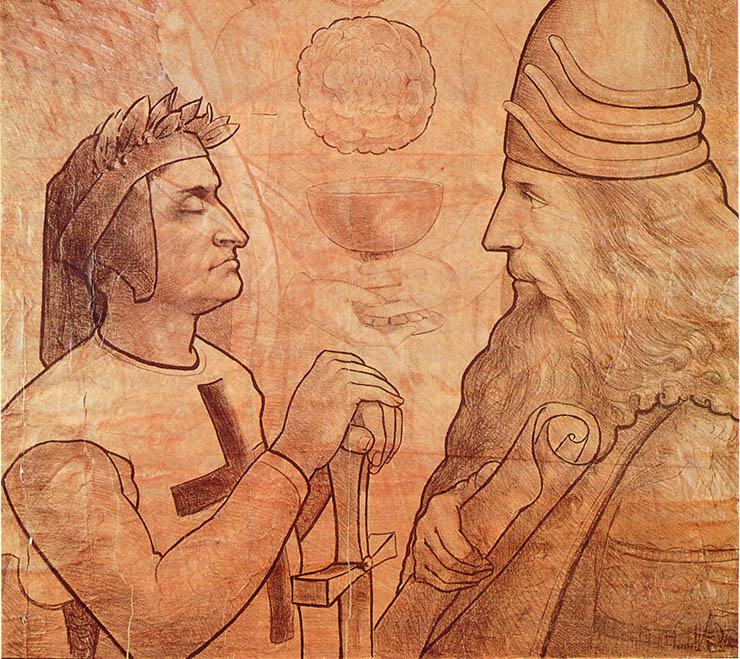
    They came from the West to the Middle East, imposing themselves on the native population, and fending off insurgent attacks that were to last for generations. They were feared by many, hated by some, and lionised by others. No, I’m not speaking here of the US and coalition forces in Iraq, but of the twelfth century warrior-monks, the Order of Poor Knights of the Temple of Solomon, best known as the Knights Templar.

    Now, at a time when the West is once again waging a war in the Middle East, a new fascination with the Templars has been growing. At first glance this fascination would seem to be all out of proportion to the actual track record of the order, which could be considered equal parts failure and success. But verifiable history has never been the focus of the Templar phenomenon. As long ago as the early 1700s the Order had already passed into the same realm of heroic myth as inhabited by King Arthur and the Knights of the Round Table. Everyone loves a good heroic yarn, and the Templar myth has become one of the best.

    While many readers may have first heard of the Knights Templar through references to them in Dan Brown’s runaway best seller, The Da Vinci Code, a revived interest in the Templars has been percolating in the collective unconscious for over forty years. In the 1960s, French authors such as Louis Charpentier and Gerald de Sede, building upon earlier instalments of the myth, such as those of the nineteenth century occultist Eliphas Lévi, tied the Templars to the lost Ark of the Covenant, to alchemy, and to the construction of the gothic cathedrals.

    By 1972, Henry Lincoln was authoring documentaries for British television on Templar-related topics such as “The Lost Treasure of Jerusalem.” The Templars, along with every other secret society under the sun, made an appearance in Robert Shea and Robert Anton Wilson’s popular Illuminatus Trilogy, circa 1974, while 1981 saw the publication of Peter Partner’s The Murdered Magicians: The Templars and their Myth, an accessible history book that remains one of the better treatments of the order.

    The following year, Holy Blood, Holy Grail by Michael Baigent, Richard Leigh, and Henry Lincoln appeared, linking the Templars to the Holy Grail and the largely mythical Priory of Sion.1 A further book by Baigent and Leigh, The Temple and the Lodge, and John J. Robinson’s Born in Blood came out in 1989, both books alleging that some Templars escaped their suppression and may have been a key factor in the rise of Freemasonry. Bit by bit, and book by book, the myth has grown until now alternative history books about the Knights Templar practically constitute a burgeoning publishing genre all by themselves. Meanwhile, as this is being written, there are two mystery novels involving the Templars in the Top Ten of the New York Times fiction bestseller list.

    Clearly, the Knights Templar are the men of the hour, but before we discuss the significance of the Templar revival, we should briefly review what is most agreed upon by historians about the Knights.

    Who Were the Templars?

    The Knights Templar were first formed in Jerusalem in 1119 or so, in the wake of the First Crusade. A French noble, Hugh de Payens, had come to the Christian-held city along with somewhere between 9 to 30 men (accounts vary). The order’s ostensible purpose was to help guarantee the safety of European pilgrims making their way to the Holy Land, particularly along the dangerous road from the seaport of Jaffa to the inland Jerusalem. Baldwin II, the King of Jerusalem, offered quarters to the knights on Temple Mount near the spot traditionally ascribed to the Temple of Solomon.

    The concept of a monastic order of warrior-monks was something new and by 1128 seemed to require a more formal “rule” to bring it in line with other monastic orders. This rule was provided by Bernard of Clairvaux, founder of the Cistercian order. Under the rule, Templar knights took vows of poverty, chastity, and obedience, and committed themselves to a regular office of prayers and devotions. And perhaps most significantly, the order was recognised as an autonomous religious body answering only to the Pope.

    Over time, as the Knights Templar attracted support and donations, they increased in wealth and property, an ironic situation for men who had taken vows of poverty.

    The status of the various Crusader colonies was always touch and go, and by 1187 the Franks had been driven from Jerusalem by Saladin. With the fall of Acre in 1291, the Templars retreated to Cyprus and thence to their preceptories across Europe. Relieved of their task of protecting pilgrims and defending Crusader states, the Templars had already taken up the role of international bankers, lending money to Kings and protecting royal treasuries, collecting Papal taxes and disbursing funds for the Crusades, and enabling the movement of funds through letters of payment.

    However, power and wealth bring with them the temptations of corruption, as well as envious accusations from others. The Knights Templar ran afoul of the French King Philip the Fair, who pressured his captive Avignon Pope, Clement V, to unleash the Inquisition upon the order in 1307, extract confessions through torture, and make the knights stand trial.

    The Templars were accused of heresy, sodomy, desecration of the cross, and idolatrous worship of a head mysteriously named Baphomet, among other things. Just how many of these accusations had any basis in reality remains unclear as torture usually results in the torturers receiving the answers that they want to hear.

    Indeed, the final Templar Grand Master, Jacque DeMolay, initially confessed to certain crimes, but later recanted his confession. This led to the culmination of the war upon the Knights Templar: DeMolay’s burning at the stake in Paris in 1314.

    Dazzling Possibilities

    Most reputable historians would agree on the basic facts of the preceding summary. And even were we to leave it at that, the order’s rise and fall still constitute a colourful chapter in medieval history. However, the present fascination with the Templars derives not so much from such verifiable history as from the beguiling realm of legend and conjecture.

    Did the Templars find a treasure through excavating beneath the Temple site in Jerusalem? If so, what became of it? Were any of the Inquisition’s accusations about heresy and blasphemy true? If so, does this imply the Templars had a secret doctrine, perhaps linking them to Gnostic sects or Ismaili secret societies? Was there some direct link between the Templars and Freemasonry? If so, does that shed light upon the rise of “speculative” (philosophical) Freemasonry in the 1600s in the British isles?

    Most academic scholars wouldn’t even ask these questions in the first place, because there is no concrete evidence pointing in their direction. From the perspective of traditional scholarship, the questions are non sequiturs conjured out of thin air. One might as well be asking whether there was really a monster under your bed when you were a child. It was the premise of the film Monsters, Inc. that there really were such monsters – in fact, a whole organised strata of them. But Monsters, Inc. was an animated feature, not a documentary – a significant distinction.

    Of course one could argue that, in terms of the Templar myth, the verifiable facts are beside the point. A myth embodies an archetypal story from which people derive pleasure and inspiration. In this sense, the alternative historians and esoteric interpreters are more like storytellers around the campfire embellishing an age-old legend of bravery, hubris, martyrdom, and redemption.

    That said, I believe it can still be interesting to consider the different elements of the Templar myth and to tease out what makes them so meaningful in our present time. If the Templars are back in vogue, there must be a reason. Let us see what that might be.

    The Myth as Mystery

    The Templar Myth in its present form goes something like this: While stationed in Jerusalem on Temple Mount, the Knights excavated beneath the former site of King Solomon’s Temple and found something wondrous and invaluable. Perhaps the legendary lost Ark of the Covenant, perhaps the Holy Grail, perhaps some portion of Solomon’s riches, or some cache of secret scriptures or teachings. While in the Holy Land they also made contact with, and imbibed secret wisdom from, local non-Christian sources: maybe Sufis or Ismaili “Assassins” or Johannite followers of John the Baptist, or perhaps the secretive Druze. Or, then again, perhaps Gnostic upholders of the Divine Feminine. When forced to leave the region, they brought their treasure and their heretical doctrines with them back to Europe.

    The Order, having amassed immense wealth, in part from aristocratic members and patrons and in part from its resident alchemists, played a crucial role in the sudden spurt of gothic cathedral building. In this they may have been assisted by masons brought back from the Middle East. When the Order was suppressed by King Philip and Pope Clement V, some Templars escaped to Scotland which was then ruled by Robert the Bruce who had been excommunicated by the Pope. They assisted him at the battle of Bannockburn in 1314, and then took cover under the guise of Freemasons.

    Certain versions of the myth have the Templar fleet sailing to the New World a hundred years prior to Columbus, with William Sinclair giving clues to this through the sculpted décor at Rosslyn Chapel near Edinburgh. Another version has the Templar fleet transforming themselves into pirates plaguing the Mediterranean – quite a switch for an order of monks under vows.

    But in any event, most versions of the myth culminate in the Freemasons being the successors to the Templars, which helps explain the Masons’ fixation on Solomon’s Temple (and even treasures buried beneath it) within their degree rituals.

    It is possible to pick apart each and every component of this myth – something that Robert L.D. Cooper, Librarian and Curator of the Grand Lodge of Scotland has done at great length.2 But, for our purposes, we will view them as elements of a myth that has evolved and expanded over the course of the last three hundred years, with a particular spurt of growth over recent decades.

    Crusading We Will Go

    It is important to keep in mind that the Knights Templar’s original reason for being, and the focus of their most celebrated years, was their participation in the Crusades and the occupation of the Holy Land by European Christians. While it is possible to view the Crusades as a pious and moral enterprise triggered by oppression that Christians in the Levant were experiencing under Muslim rule, there is no question the Crusades were experienced by the majority of local residents as a geopolitical incursion and expansion of European power. Certainly the final eviction of the Crusaders from the Holy Land (circa 1291) was seen by Europe as a traumatic shrinkage of its sphere of influence.

    Hence, the root symbolism of the Templars, beneath all the later accretions and accusations, is that of a self-righteous European proto-imperialism knocking heads with a rival Muslim empire (or series of empires). But as tidy as it might be to see the current popularity of the Templars as a result of an unconscious wish to re-fight the Crusades all over again, I don’t think this is what is at work here. After all, most of the Templar fascination has much more to do with treasure hunting or concealed heretical and esoteric doctrines than it does with actual battles in the Holy Land. For many Templar buffs, the things most interesting are those that are most tangential to the Templars as actual fighting knights: the Templars beneath the earth (whether excavating a treasure beneath Temple Mount or concealing one beneath Rosslyn Chapel), the Templars at sea (whether sailing to the New World or taking up piracy), the Templars as powerful bankers, and the Templars as heretics (be they secret Gnostics or covert magicians). Perhaps the Templars have become so popular, it would seem, because as their myth has evolved, it has drawn together the threads of numerous hidden and esoteric traditions into a rich tapestry of romance and betrayal.

    Templars & Masons

    The evolution of the Templar myth is intertwined with the evolution of the Freemasonic myth, a circumstance that has provided researchers with a double opportunity for speculation. At first glance, the gap of four centuries between the Templars’ demise in 1314 and the rise of the first Masonic Grand Lodge in London in 1717 would seem to make any connection between the two organisations highly unlikely. And, in fact, there is no historical evidence linking the two groups. The Templars did employ stonemasons of course in building their preceptories and churches, but so did other monastic orders and Church bodies.

    To complicate matters even more, any actual linkage between the medieval stonemasons and the “speculative” Freemasons of 1717 and later is tenuous at best. The new breed of symbolic Masons crafted rituals, lectures, and legends in the eighteenth century that implied an unbroken tradition of Freemasonry dating all the way back to King Solomon (in fact even earlier to Adam himself!) But, as the saying goes, wishing don’t make it so.

    Nevertheless, it didn’t take certain Masons very long before they added the Knights Templar to the Masonic family tree. When speculative Freemasonry spread from the British Isles to the Continent in the decades after 1717, the French and German Masons set about improving upon the three basic “blue lodge” degrees of Masonry by inventing all sorts of ever grander “high degrees,” including a Knight Templar degree.

    Soon, orders conferring such degrees, such as the Rite of Strict Observance in Germany, were claiming the Templars had survived their abolishment by (pick one) either secreting themselves within Scottish Masons’ lodges or changing their name (to the Knights Elu, in one case) and later amalgamating themselves with continental Masons.

    Exactly why, one might ask, would some Masons wish to claim descent from the Templars if it were not actually so? Why link themselves to a disgraced and controversial chivalric order when it would have been both wiser and safer to never raise the issue in the first place? It is from this genuine puzzle that all the speculation on a Templar-Masonic link has arisen.

    Yet, interestingly enough, by the end of the 1700s, Masonic claims of Templar origins had largely subsided and the Masonic Templar orders that consolidated themselves for long-term survival (largely in the British Isles and North America) simply saw themselves as latter-day pious knights with hardly a whiff of heresy or revenge in the air.

    The Neo-Templar Revival

    However, claims of a Templar continuity didn’t die with the subsiding of Masonic pretensions. Such claims simply shifted to wider circles, the best known being an Order of the Temple led by the notorious French esotericist, Bernard Raymond Fabré-Palaprat, circa 1804, whose bona fides were supported by a curious parchment document known as the Larmenius Charter, supposedly dating from 1324, but apparently fabricated by a doctor named Ledru.

    The nineteenth and twentieth century saw scores of Neo-Templar orders founded and laid to rest. One of the most audacious was the Order of Oriental Templars established as early as 1906 but no later than 1912 in Germany by Theodor Reuss, a reputed police spy and fringe Mason.

    According to Reuss and his more famous compatriot, Aleister Crowley, the O.T.O. was the repository of the wisdom and knowledge of no less than 20 bodies, including the Gnostic Catholic Church, the Order of the Illuminati, the Order of the Temple (Knights Templar), the Order of the Knights of the Holy Sepulchre, the Hidden Church of the Holy Grail, the Rosicrucian Order, the Order of the Holy Royal Arch of Enoch, the Rite of Memphis (97 degrees), the Rite of Mizraim (90 degrees), the Ancient and Accepted Scottish Rite (33 degrees), the Order of Martinists, the Hermetic Brotherhood of Light, among others.3

    In contrast to other Neo-Templars who cast the Knights as slandered Martyrs, the O.T.O. embraced the accusations against the historical Templars, avowing that the celebrated secret of their heretical ancestors (indeed, of all esotericism) was that of a quasi-Tantric sex magic. This beat out all other Templar claimants for sheer audacity, but it is worth noting that none of the other Neo-Templar orders founded either before or after Reuss’s O.T.O. made any such claim. But perhaps they just weren’t invited to the right parties.

    The O.T.O. was but one of several Neo-Templar orders trawling for members in Germany at the time. Jorg Lanz von Liebenfels’ Order of the New Templars added a racist/Ayran twist to the trend. According to historian Nicholas Goodrick-Clarke, Lanz described his O.N.T. as “an Aryan mutual-aid association founded to foster racial consciousness through genealogical and heraldic research, beauty contests, and the foundation of racist utopias in the underdeveloped parts of the world.”4 While Lanz’s order probably never achieved more than 300 members, as Goodrick-Clarke notes, it was symptomatic of impulses bubbling beneath the German cultural surface that ultimately burst forth as the Nazi movement.

    This is not to say that all Neo-Templar impulses were inherently reactionary – a perspective put forth by Umberto Eco in his novel, Foucault’s Pendulum – but it is important to understand that the Templar myth is capable of sustaining both a leftist and rightist spin. For every New Age feminist arguing the Templars were champions of the Divine Feminine in their stated devotion to “Our Lady,” one can find a Neo-Templar heralding the order as a spiritual fighting legion battling the forces of Darkness.

    Templarism Today

    In recent decades Neo-Templar groups have proliferated like rabbits, with schisms and splits leading to ever more grouplets, with most of them claiming in some fashion to be the real inheritors of the Knights Templar. Objectively speaking, no present order can substantiate claims of direct descent from the original Templar order and the endless squabbles over legitimacy that some groups engage in are clearly a waste of time and energy.

    Yet, despite such petty disputes, ever more men and women are attracted to the image of the noble Christian knights and, in joining one Neo-Templar order or another, hope to emulate the Templar myth. The mission statement of one of the latter-day orders expresses their hope: “To draw upon the great knowledge, wisdom, faith and strong charitable and ethical values embodied within the Order, to guide and protect humanity on the pilgrimage to the future.”5

    These are admirable sentiments, but in closing it must be asked whether a revival of the Templars at this time is really in everyone’s best interests or not. When American President George W. Bush made his famous ill-considered statement likening his declared “War on Terror” to a “Crusade,” it only fanned the flames of resistance in the Islamic world.

    Author Gaetan Delaforge, in his 1987 book The Templar Tradition in the Age of Aquarius, suggested that one task of the Templars might be to facilitate a better understanding between Jews, Christians, and Muslims. But in the post-9/11 world, with Muslim militants sensitised to any incursion by Western powers into Islamic cultures, it is hard to imagine that tromping around in a white Crusader’s tunic with a red cross emblazoned upon it would gain anyone a fair hearing.

    The archetype of the warrior-monk or soldier of God is a potent one, but it is all too easy for it to simply mirror the jihadis’ militance back at them, with shadow warriors on both sides brandishing swords at each other. We already have such a closed loop of hostility at work between the Israelis and Palestinians, and it would be foolish for any present day Neo-Templars to think things could be made any better by injecting Christian “knights” into the centre of things.

    Nevertheless, as attractive as being dubbed a knight may be to some, most fans of the Templar myth are content to experience the order within the pages of speculative books offering sensational revelations. There’s little harm in this as long as one doesn’t confuse myth with verifiable history. Like their mythic cousins, the Knights of the Round Table and the Grail Knights, the Templars retain the power to inspire us across centuries, and that perhaps is the real Templar Treasure.
    [alert type=”general” dismiss=”no”]This article was published in New Dawn Special Issue 2.[/alert]
    [alert type=”success” dismiss=”no”]If you appreciate this article, please consider a contribution to help maintain this website.[/alert]

    Footnotes

    1. See Robert Richardson, “The Priory of Sion Hoax,” Gnosis Magazine No. 51, Spring 1999, pp. 49-55. (www.gnosismagazine.com)
    2. See his paper “The Knights Templar in Scotland: the Creation of a Myth,” in Robert L.D. Cooper, Freemasons, Templars & Gardeners, (2005), published by the Australian and New Zealand Masonic Research Council, P.O. Box 332, Williamstown, Victoria 3016, Australia.
    3. Ellic Howe and Helmut Möller, “Theodor Reuss: Irregular Freemasonry in Germany, 1900-23,” in Ars Quatuor Coronatorum, vol. 91, (QCCC, 1978), p. 39.
    4. Nicholas Goodrick-Clarke, The Occult Roots of Nazism (The Aquarian Press, 1985), p. 109.
    5. See “About the Order,” at www.austemplar.org, website of the Sovereign Military Order of the Temple of Jerusalem, the Knights Templar of Australia.
    © New Dawn Magazine and the respective author.
    For our reproduction notice, click here.
  • Gnosticism: Ancient and Modern

    Gnosticism: Ancient and Modern

    From New Dawn 85

    Every dog has its day, so they say, and it looks like Gnosticism, an ancient approach to spiritual experience, may be having its day, once again. Of course, despite the best efforts of the early Catholic Church, Gnosticism never really disappeared, but its reappearance over the centuries has been fleeting and sporadic. Why, as we march into a new millennium, is this hidden stream of quasi-Christian mysticism triggering a fresh interest among both spiritual seekers and readers of popular novels?

    Dan Brown’s mega-bestseller, The Da Vinci Code, surely shares part of the credit. This publishing phenomenon, which sold over 6 million copies, took a simmering interest in the Knights Templar, the Divine Feminine, alleged secret societies such as the Priory of Sion, the Holy Grail, and the question of the historical Jesus, and stirred these ingredients together with a generous dollop of Gnosticism.

    The result was a blockbuster thriller that unexpectedly caught the popular imagination. Despite the fact that at least two other previous thrillers, The Da Vinci Legacy by Lewis Perdue (1983), and Kingdom Come (2000) by Jim Hougan, had overlapped much of the same territory, lightning struck Brown’s novel and sparked innumerable dinner-table discussions of heretofore-arcane topics such as Mary Magdalene’s real relationship to Jesus.

    But the success of The Da Vinci Code is just the culminating phase of a gradual public awareness of Gnostic matters that extends back at least a century to the great Occult Revival of the late 19th century. At that time, Gnosticism slowly re-emerged from the shadows, nudged by the French occultist Eliphas Lévi, and propelled along by Madame Blavatsky’s Theosophical Society, French neo-gnostics such as Papus and Jean Bricaud, and researchers such as G.R.S. Mead (whose pioneering discussion of the Gnostics, Fragments of a Faith Forgotten, was for many decades one of the few sourcebooks on the subject for general readers).

    However, it was the discovery of a cache of ancient Gnostic scriptures at Nag Hammadi in the Egyptian desert in 1945 that really set off the modern phase of the Gnostic revival. Although their translation into English was not complete until the late 1970s, early access to some of the writings inspired the great psychologist Carl Jung to draw parallels between the ancient Gnostics and modern depth psychology. The publication in 1977 of the Nag Hammadi Librarytranslations, followed in 1978 by religious scholar Elaine Pagels’ best-selling exposition, The Gnostic Gospels, guaranteed that Gnosticism would not go away anytime soon. But before we take a further look at the burgeoning phenomenon of modern Gnosticism, a review of the ancient Gnostic teachings is in order.

    Gnosis and the Church

    Though scholars argue there were Gnostic teachings that predated the early Christian era, what is most commonly thought of as Gnosticism consisted of numerous Christian sects that thrived in the immediate centuries after the ministry of Jesus. These sects, often gathered around charismatic mystics, certainly thought of themselves as Christian, and it was only their emphasis ongnosis, or divine knowledge, that later earned them the sweeping label of Gnostic.

    As Christianity spread outside the confines of a specifically Jewish faith, it was perhaps inevitable that some gentile Christians would reinterpret their conception of God to distinguish Him from the tribal “G-d of Israel” Whose Covenant with His people seemed anchored to their particular identity as Jews. Christian aspirations to a universal faith, applicable to anyone with ears to hear, led many Gnostics to posit that God the Father, of whom Jesus spoke, must be a different God altogether: a hitherto Unknown God Who existed far above the earthly realm and was free of ethnic contracts or favouritism. Christ functioned as the messenger from this remote and impartial God, and some Gnostic scriptures downgraded the Jealous God of the Old Testament to the role of Demiurge, a lesser creator-god who brought a flawed Creation into existence and mistakenly ruled it with a heavy hand as if he were the True God.1

    Thus, in the Gnostic view, salvation from this diminished material realm of suffering and injustice depended less on one’s mere beliefs or on the following of religious laws that the Demiurge put in place, than on the individual’s inner experience of gnosis – a divine knowledge of the cosmic order and one’s true identity. The Gnostic scriptures alluded to Christ’s secret teachings, which would aid the Gnostic to embrace gnosis, and armed with this knowledge, to escape the illusory realm of the Demiurge at the time of death.

    There are any number of reasons why Gnosticism was bound to come into conflict with that portion of the Church which was consolidating into an institutional monolith. Gnosis, by its very nature, was an individual experience that eluded systematisation. While the Gnostics had priests and even bishops, their leadership derived from their mystical bonafides, not from a bureaucratic position of authority. Furthermore, the canonical Gospels portrayed Jesus as the fulfillment of Old Testament prophecy and the Messiah promised to the Hebrews. The Gnostics’ break with what they considered the Demiurge was at cross purposes with this historical reading and undermined the working mythos of the institutional Church.

    In another example of scriptural reversal, some Gnostic versions of the Creation story of Adam and Eve portrayed the Serpent as Liberator, offering the apple as a means to knowledge unfairly denied to humankind by the despotic Demiurge. There was obviously no way to accept this counter-version and the traditional version at the same time.

    Divine Feminine

    The most common Gnostic revision of the Creation story spoke of Sophia (Wisdom), an extension of the True God, venturing forth from the Pleroma (the fullness of the ineffable divine realm), producing an aborted spiritual being, Ialdobaoth (the Demiurge), who in turn created the flawed material world. Sophia, seeing sparks of the divine entrapped in matter, descended to try and free them and was herself entrapped. It took the efforts of the Christ (pre-existing in the Pleroma) to extricate her and return her, past the Archons presiding over intermediate planes, to her rightful place beside Him: a tale symbolic of the plight of the soul enmeshed in illusion.

    Finally, the indications in Gnostic scriptures, such as the Gospel of Philip and the Gospel of Mary, that Mary Magdalene was closer to Jesus than the other disciples and received secret teachings denied to them, undercut both St. Paul’s misogynist version of Christianity and the Catholic Church’s claim to legitimacy based on St. Peter’s supposed selection as the “rock” on which the Church would be built. The prominent role given to the Divine Feminine via the Gnostic veneration of the Magdalene and Sophia was partly recuperated by the Roman Church through the significance it later afforded the Virgin Mary, but this status was subsumed within the overall supremacy of a Church run by celibate males.

    Whatever Gnosticism’s virtues as an effective path to gnosis and to unconditioned consciousness, it was simply too idiosyncratic and contrarian to make the grade as a stabilising component of Roman power. Its subversive counter-myths stood little chance of being integrated into a social order based on top-down power relations emanating from Rome and Constantinople. The prevailing Church absorbed those elements of the Gnostic worldview that best served its own ends and scuttled the rest, consigning the Gnostics to the oblivion of heresy and their scriptures to the bonfires of proscribed texts.

    Of course attempts to obliterate ideas or spiritual currents that remain attractive to some are never wholly successful. Pockets of Gnostic alienation persisted among the Eastern European Bogomils, and eventually influenced the Cathars of Languedoc (southern France). The scourge of the Inquisition originated as a response to the growing influence of the Cathars, whose 12th century challenge to the Catholic Church could no longer be tolerated. The Albigensian Crusade in the 13th century effectively wiped out the Cathars.2  Subsequent Gnostic impulses and teachings survived as heavily-cloaked myths and symbol systems within marginal esoteric currents of the West.

    It was only once the religious and social hegemony of the Church was diminished by the succeeding blows of the Protestant Reformation, the Renaissance, and the scientific rationalism of the Enlightenment, that there was sufficient elbow room for Gnosticism to re-emerge into the light of day.

    Yet, the question remains why Gnosticism should prove of special interest to increasing numbers today. Are there particular characteristics of today’s society that resonate with the Gnostic worldview? One answer is provided if we consider the popularity of “The Matrix” movies and the influential ideas of science fiction author Philip K. Dick.

    The Illusion of Daily Life

    Central to both the Matrix and to Dick is the creeping perception that things are not as they seem: our perception of reality, both individual and collective, is an artificial construct masking the unnerving truth. In ripping away the façade of normality, we come face to face with our true dilemma – we live in a maze of illusions and self-delusions from which we must extricate ourselves. This is, of course, a fundamentally Gnostic worldview.

    The ancient Gnostics were aware that material existence is, at its root, a beguiling and temporary illusion. (Hindus called this “Maya.”) Modern physics has confirmed this at the sub-molecular level, where one can see that apparently solid objects are, in fact, composed of moving bits of energy that are neither wholly particle nor wave. The closer one looks, the less there is to see. The vast emptiness of outer space is mirrored by the vast emptiness within matter itself.

    Esoteric traditions around the world teach that consciousness can exist independent of the body, and that the ability to deliver our consciousness from its addiction to sensory input and compulsive thought patterns can lead to an experience of divine consciousness (gnosis). The message of the Christ of the Gnostics was not that he considered himself the unique and only Son of God, but that each person has the potential to expand their consciousness across the vast emptiness to the level of godhood or Self-realisation.

    If the illusoriness of daily life was self-evident in the relatively simple world of two millennia ago, it is becoming even more so, for those with the eyes to see, in the present world of cybernetic virtual realities, Hollywood dream-worlds, instant messaging, corporate branding campaigns, and information warfare. The ancient Gnostics were resigned to the fact that the majority of humans were fatally caught in the illusion, and for this they were called elitists.  Similarly, modern Gnostics perceive that most people around them are inextricably locked into a delusory existence in which their potential consciousness is siphoned off in exchange for corporate profit and material survival. This, too, is a minority perception, but it is steadily growing.

    The Gnostic rush many of us felt upon first seeing the Wachowski Brothers’ “The Matrix” was the heady sensation that somehow a deprogramming meme had made it through the corporate maze of AOL-Time-Warner, and that the dream factory itself had been tricked into promulgating a flash of gnosis. Millions responded and suddenly there was much more money on the table. All too predictably, the second and third Matrix films smothered the first film’s spark of insight under tons of ever more dazzling special effects, violence, and pretentious symbolism. The still small voice of the wake-up call embedded in film one was drowned out by the din of its own success. The series’ degeneration was an uncanny recapitulation of the suppression of ancient Gnosticism by the early Church. In the end, the Matrix – like the Church before it – emerged triumphant.

    Of course, it is a bit of a leap from perceiving daily life as delusory to embracing an ancient cosmology that specifies a false god, a True God, a malevolent pantheon of Archons, and a hieros gamos (divine marriage) of Christ and Sophia. Unless one is in the market for a ready-made dramatic cast of spiritual entities to believe in, the Gnostic myths best serve as metaphors for one’s dilemma – and, in fact, that may have been the role they played for the early Gnostics, as well.

    There are two ways to view the Gnostic myths as potent metaphors: one inner and one outer. The inner way is to see the Gnostic cosmology as a visionary description of the hurdles one must leap in meditation. In trying to ascend to a contemplative state of pure consciousness, one must move beyond the incessant activity of the mind (the Demiurge), and past one’s fears and compulsions (the Archons), before one can arrive at a consciousness beyond time and space (the Pleroma). The successful achievement of this gnosis while still “in the body” prepares one for the similar passage that one’s consciousness must take after death.

    An outer reading of the Gnostic cosmology, on the other hand, might consider the Demiurge to be anyone’s flawed and limited image of God, which must be seen through and surpassed on the way to true spiritual insight. The Archons would be the many social laws, institutions, and corporate entities that hamstring one’s existence. On this level, a kind of external gnosis would be one’s realisation of the ultimate inability of these earthly captors to imprison our higher self. In this reading, Christ’s crucifixion and resurrection serve as metaphors for our own daily immolation and extrication. In this instance, a Gnostic motto might be: “Don’t let the bastards get you down!”

    Wandering Bishops

    Reading The Da Vinci Code or The Gnostic Gospels or watching “The Matrix” are all very well, but such books and movies do not by themselves constitute a Gnostic revival. Revivals or movements require actual social vehicles to engage and embody people’s interests. One place this is happening – albeit on a small scale – is in the low-profile milieu of small independent Gnostic churches. An examination of this phenomenon leads us to the quirky turf of “wandering bishops” – a curious subculture of purported Catholic, Orthodox, and Gnostic bishops who usually (and painstakingly) trace their lines of apostolic succession back to (wait for it) St. Peter or one of the other apostles. This requires some explaining.

    The mainstream Roman Catholic Church hangs its legitimacy on unbroken lines of consecration from bishop to bishop, extending all the way back to St. Peter. Only bishops (or higher clergy) can ordain priests or consecrate other bishops – a form of organisational quality-control, as well as a narrow conduit for the divine grace that is said to be conveyed in the sacrament of ordination. Since an ordination or a consecration makes the recipient “a priest forever unto the order of Melchizadek,” a priest or bishop who later turns heretic, or otherwise runs afoul of the Church’s hierarchy, retains legitimate Orders – even if forbidden to celebrate Mass or excommunicated from the Church.

    Employing a liberal interpretation of this curious rule, schismatic churches such as the Jansenist Dutch Church, which broke with Rome in 1723, could claim legitimate apostolic succession despite their status outside the Roman Church’s umbrella.  Taking this logic one step further, some bishops consecrated by bishops of the Dutch Church (later the Old Catholic Church, following an alignment with other “national” churches in 1889) claimed the right to start their own churches and pass on the line of “valid” consecration. For instance, Bishop James Ingall Wedgewood was consecrated a bishop in the Old Catholic Church in 1916 and within two years had founded the Liberal Catholic Church, which became a kind of esoteric house church for the Theosophical Society.3

    One of the most influential of these independent bishops was Joseph René Vilatte, an Old Catholic missionary in Wisconsin, who sought and received consecration as bishop from the Syrian Jacobite Church in 1892 in Ceylon and subsequently consecrated several other bishops in North America and France who consecrated numerous other bishops in turn.

    Needless to say, notions of doctrinal fidelity or consistency – which were understandably a key concern of Rome – were lost in the shuffle, with the result that independent bishops, who were often “more Catholic than the Pope,” sometimes shared the same apostolic lines as esoterically inclined bishops with Gnostic leanings. Over time, this led to a new generation of Gnostic bishops who could now claim apostolic succession. Exactly why apostolic succession would matter to latter-day Gnostics is something of a mystery, particularly since whatever legitimacy the original Gnostics claimed derived from gnosis itself, not from institutional standing. One suspects that even heretics desire approval, and in the absence of Gnostic lines of succession, most latter-day Gnostic bishops are quite happy to gain succession from St. Peter, illicit though it may be – especially if it tweaks the nose of the Vatican.4

    One Gnostic “Patriarch” in France, Jules Doinel (Tau Valentin II), sidestepped the issue altogether by receiving “a double spiritual consecration; the first by Jesus in person, the second during a spiritualist séance by two Bogomile bishops.”5  Doinel, who founded the Universal Gnostic Church, went on to consecrate the noted French occultists Papus and Sédir, thus empowering further Gnostic lines, some of which have continued to the present. Another Gnostic group of French origin, the elusive Holy Order of Miriam of Magdala, has cited traditions of a female apostolic line extending back to Mary Magdalene, but has attached no importance to providing verification of such traditions. The spurious Priory of Sion, celebrated in The Da Vinci Code and hyped in Holy Blood, Holy Grail – and likely of no earlier origin than 1956 – avoided ecclesiastical trappings altogether, preferring to concoct a lineage based on the supposed bloodline of Jesus and Mary Magdalene which the Priory claimed to guard.6

    Perhaps representative of the Gnostic branch of bishops in the English-speaking world was one Richard Duc de Palatine, an Australian originally named Ronald Powell, who was initially ordained in the Liberal Catholic Church and, in 1953, consecrated a bishop by Mar Georgius I (Hugh George de Willmott Newman), Patriarch of Glastonbury, one of the most fecund independent bishops. Palatine then founded his own Pre-Nicene Gnostic Catholic Church. Palatine, whose penchant for organising esoteric orders was second to none, also founded the Order of the Pleroma, the Brotherhood of the Pleroma, the Disciplina Arcani, and the Hermetic Brotherhood of Light. These appear to have led a largely mail-order existence.7  Palatine’s episcopal concerns were intermingled with esoteric, magical, and even Freemasonic preoccupations, but in spite of this – or perhaps due to it – some serious modern Gnostics became associated with him. The most notable is Bishop Stephan Hoeller, arguably the foremost proponent of a contemporary Gnosticism.

    Hoeller was consecrated by Palatine in 1967 and for a number of years worked within the fold of his Church and other groups. His Los Angeles-based Ecclesia Gnostica (Church of Gnosis) grew out of his work with the Pre-Nicene Church, and Hoeller has been an indefatigable author and synthesizer, drawing upon ancient Gnostic sources, Jungian psychology, and esoteric Christian concepts, in an effort to construct a modern Gnostic presence.

    Secret Teachings of Jesus

    As a diligent search of the Web will show, there are an ever increasing number of fledgling Gnostic churches, most of them situated in, or derived from, the “wandering bishop” milieu. Many of them consist of little more than a bishop and a local congregation, if that. This is not, in and of itself, a bad thing. After all, the ancient Gnostic sects amounted to the same thing: scattered groups with little uniformity between them. But it also presents the would-be seeker of gnosis with a certain dilemma: Can gnosis be taught? And if it can, who is qualified to teach it?

    The ancient Gnostics claimed to be guardians of the secret teachings of Jesus, teachings that were lost when Gnosticism was defeated. Formal issues of apostolic succession aside, no modern Gnostics can claim to perpetuate those teachings in unaltered form, because the chains of transmission have been lost. Even the scriptures that have been recovered – as fascinating as they may be – retain an opaque quality, because the original interpretive keys are absent.

    Thus, any modern Gnostic group or teacher must be carefully evaluated, based on subtle qualities that evidence real spiritual depth and understanding. Impressive lists of titles, degrees, and credentials mean little if there is no indication of a voice that speaks from the experience of gnosis. While it may be too much to expect that any given Gnostic teacher is going to be the embodiment of divine illumination, one still has the right to expect that those who talk the talk can walk the walk.

    Divine knowledge may be gained in a variety of ways – after all, it was not the exclusive possession of the Gnostics, any more than the True God is the possession of any single religion. If teachers of real attainment choose to use the metaphors of ancient Gnosticism to encourage self-discovery, then the Gnostic revival may fulfill its promise. But if the rekindled interest in Gnosticism is going to amount to anything besides a few books and movies and an unsatisfied hunger for enlightenment, we need to see a growing indication of the true discovery of inner godhood, not a fruitless scramble to decipher a few fragments of someone else’s gnosis.

    [alert type=”general” dismiss=”no”]This article was published in New Dawn 85.[/alert]

    [alert type=”success” dismiss=”no”]If you appreciate this article, please consider subscribing to help maintain this website.[/alert]

    Footnotes:

    1. Some scholars have suggested that this reframing of G-d was first done by Jewish intellectuals who were themselves dissatisfied with the Torah’s portrayal of the deity. Thus early Christian Gnosticism may have been influenced by, or may have been an extension of, a Jewish Gnosticism intent on reinterpreting the Jewish religious traditions. See: Birger A. Pearson, “The Problem of ‘Jewish Gnostic’ Literature,” in Nag Hammadi, Gnosticism, and Early Christianity, edited by Charles W. Hedrick and Robert Hodgson, Jr. (Peabody, Mass: Hendrickson Publishers, 1986), pp. 15-35.
    2. Yuri Stoyanov, The Hidden Tradition in Europe (London: Penguin/Arkana, 1994).
    3. The premiere exposition of this milieu is Peter F. Anson’s Bishops at Large (London: Faber & Faber, 1964), which is both droll and exhaustively detailed. It is, sadly, long out of print. A more recent (and apologetic) discussion of the phenomenon can be found in Lewis Keizer’s The Wandering Bishops: Apostles of a New Spirituality (2000), available in PDF format at:www.hometemple.org/WanBishWeb%20Complete.pdf.
    4. The Vatican, for its part, seems to have nothing encouraging to say about independent bishops. One of the more common claims of Vatican recognition for the sacraments and orders of the Liberal Catholic Church, for instance – a supposed positive ruling by the Roman Congregation of Rites – has been exposed as a hoax. (See: “Rome and Liberal Catholic Orders,” by Rev. L. K. Langley at: www.lcc.cc/tlc/lxvi1/rome.htm) The Vatican’s stance appears to be that so-called valid orders are worthless without the Church’s recognition.
    5. Anson, p. 307.
    6. See: Robert Richardson, “The Priory of Sion Hoax,” GNOSIS Magazine #51, pp. 49-55, (www.gnosismagazine.com). Reprinted in New Dawn No. 61 (July-August 2000).
    7. Anson, pp. 492-495, and J. Gordon Melton, The Encyclopedia of American Religions, Second Edition (Detroit, Mich: Gale Research, 1987), pp. 612, 618.

    © New Dawn Magazine and the respective author.

    For our reproduction notice, click here.

  • The Political Gnosis of Philip K. Dick

    The Political Gnosis of Philip K. Dick

    This article was published in New Dawn 74 (Sept-Oct 2002)

    It seems hard to imagine that it has been nearly twenty years since Bladerunner was released. That riveting and influential film was the first movie to be inspired by the writings of science-fiction author, Philip K. Dick. Other films, of varying success, have followed, including Total Recall and Screamers, but the until now the most Dickian movies have been those that copped his dystopian and paranoid sensibility without directly basing themselves on one of his books or short stories. The Truman ShowThey Live!,Pleasantville, and most notably, The Matrix, were all Dick films at heart, despite his absence from their credits.

    The recently released Spielberg film, Minority Report, returns to directly dipping from PKD’s deep well of inspiration, and despite the inevitably Spielbergian ending, succeeds in evoking one of Dick’s favourite themes: how does one elude the suffocation of an encroaching police state? In Minority Report, this trope takes the form of the local Department of Precrime in Washington D.C., which has succeeded in eliminating murders by arresting and incarcerating the perpetrators before they commit their crimes. This is accomplished by drawing on the abilities of three precogs (for precognitives), who have the involuntary talent of seeing into the near future and glimpsing the murders-to-be in progress. As the film unfolds, in the year 2054, a national referendum is about to occur on whether to expand precrime prevention to a national policy.

    Given the recent moves by the Bush Administration in the US to indefinitely detain those who have committed no crimes, but who may have planned to, the timeliness of Minority Report is almost uncanny. Dick’s original short story appeared in 1956, and the script for the film was written well in advance of the shock of 9/11. But somehow, Dick’s intuitions of precrime enforcement have been brought to the big screen at just the moment when their analog is being enacted in real life. PKD, who died in 1982, would savour the irony, were he still with us.

    Gnosis

    Gnosticism is a name commonly applied to numerous early Christian sects who emphasised the necessity of receiving “gnosis” (divine knowledge of true reality) in order to be saved. While they considered themselves to be Christian, the Gnostics diverged from both Judaism and Catholic Christianity in their belief that this world was a flawed and ensnaring creation of a despotic Demiurge who had usurped the position of God. Through the agency of a redeemer Christ and his bride, Sophia (Wisdom), the Gnostics hoped to return, upon death, to the most high realm of the Pleroma (Fullness) to unite with the true Unknown God.

    The Penultimate Truth (1964)
    “Most humans live in tank cities far below the surface of the Earth, believing themselves to be safe from the ongoing nuclear war above their heads. In fact, the war has been over for ten years, and instead of a radioactive ruin, the planet is a vast park, ruled by feudal barons who are playing power politics with the buried masses of their fellow men.”1


    That, at least, is the standard potted summary of Gnosticism. If one takes a broader view, there have been many gnosticisms, and many “gnosi” – some predating the Christian Era and some quite independent of Christianity. Gnosis, as a synonym for illumination or mystical union, is equivalent to marifah(Arabic) or irfan (Persian) in esoteric Islam, for example. However, while we might assume that the state of consciousness signified by the term “gnosis” is universally accessible (or at least potentially so), it is not at all certain that those using the term were always referring to the same thing.

    For instance, the gnosis of the Sufi mystics of Islam includes no admission of the existence of a Demiurge or false, lower God. Indeed, tawhid, the Unity of God and Creation, is such a fundamental assumption of Islam, that a spiritual realisation pointing to a Higher God than that of the Creator would be immediately rejected as a delusion. On the other hand, Hindu yogis might readily agree with many Gnostics that this world is a veil or delusion (maya in Sanskrit), and that there is an Absolute God behind or above lesser gods. But few yogis would share the Gnostic assessment that this indicates a moral flaw in the universe.

    What exactly is the nature of the divine knowledge that the Gnostics and other mystics have sought? It is impossible to describe precisely, because of the non-discursive nature of that knowledge. Frithjof Schuon refers to gnosis as “our participation in the ‘perspective’ of the divine Subject which, in turn, is beyond the separative polarity, ‘subject-object’….”3 G.E.H. Palmer refers to it as “Wisdom made up of Knowledge and Sanctity,” and underscores the distinction “between knowledge acquired by the ordinary discursive mind and the higher Knowledge which comes of intuition by the Intellect, the term Intellect having the same sense as in Plotinus or Eckhart.”4

    In other words, gnosis, according to this definition, is an experiential “knowing” that results from the expansion of the Gnostic’s consciousness to the level of the divine Intellect, where the illusion of the separate self (ego) is obliterated – at least temporarily – in the vast perspective of the higher Self. Such a state cannot, of course, be sustained indefinitely. What goes up must come down. But having risen to such heights, the ego that is reassembled upon its descent, is permanently affected. It now “knows” its own place in the cosmic scheme of things.

    Such “knowledge” is not easily communicated to others, in part because shared reference points are few, and because any attempt at describing the experience is bound to diminish and reify it. Thus, those who have been blessed with gnosis have used oblique strategies to impart the ineffable: poetry instead of prose; myths instead of clear-cut analysis; paradoxical statements instead of declarations.

    There is still another factor contributing to the proliferation of gnosi and gnosticisms: while the experience of gnosis may be ahistorical, i.e., beyond time and place, the gnostic himself is obviously not. A Tibetan Buddhist in the recesses of the Himalayas, who takes reincarnation for granted and believes in numerous gods, is not going to clothe his gnosis in the garments of a Muslim Sufi in Andalucia, who believes in one lifetime and one God. And vice versa.

    The Crack in Space (1966)
    “Frozen sleep seems like a humane way to end unemployment and over-population pressures: Send the excess citizens to the future. The government warehouses are filled with bibs when a political fight erupts over whether or not to dispose of them through a space-warp. Then some unknown outside agency helps the sleepers to awake.”2


    A gnostic whose historical era and cultural milieu is one of war and persecution is likely to have his circumstances seep into his post-gnosis explication of reality. There may still be a higher Reality beyond conflict and violence that he experiences in gnosis, but his mythic version of the journey to the Truth may feature a harsher struggle to get there than would otherwise be the case.

    Finally, there is the personality and psychological condition of the gnostic to be considered. Contrary to contemporary holistic assumptions that assume that the combination of a good diet, a good life, and a good attitude are most likely to lead one to higher spiritual consciousness, this is not always so. Higher states may also be triggered by asceticism, psychoactive substances, disciplined practice, or sheer happenstance. True, an absence of cravings and obsessions may make meditative practice easier, but gnosis can also erupt in someone who is by no means a saint. In such a case, his post-gnosis understanding of the Real may well be tinged with his neurotic predisposition.

    The Divine Invasion

    Which brings us back to Philip K. Dick.

    In February, 1974, Dick was living in Fullerton, California, an undistinguished city in Orange County. He’d fled his long-time residency in Northern California out of fear for his life and his sanity. He’d been mixed up in long-time illicit drug use, tax refusal in protest against the Vietnam War, and chronic poverty. In 1971, his previous home in San Rafael, north of San Francisco, had been broken into by persons unknown, his safe blasted open, and things taken. He’d attempted suicide, checked himself into drug rehab in Vancouver, and in 1972 had flown from there to Fullerton.5

    By 1974, he’d married his fifth wife, Tessa, and had a new child, Christopher. But most immediately, in February, he’d just had two impacted wisdom teeth removed and was awaiting the delivery of prescribed medicine from the drug store.6

    The doorbell rang and Dick answered the door. The delivery girl from the drug store stood before him, wearing a delicate necklace from which hung a golden fish, a symbol of Christ often worn by evangelical Christians.

    As Dick later recounted it – possibly in mythologised form – a laser-like pink beam shot from the fish to Dick’s third eye. It had an extraordinary effect:

    I suddenly experienced what I later learned is called anamnesis – a Greek word meaning, literally, ‘loss of forgetfulness.’ I remembered who I was and where I was. In an instant, in the twinkling of an eye, it all came back to me. And not only could I remember it but I could see it. The girl was a secret Christian and so was I. We lived in fear of detection by the Romans. We had to communicate in cryptic signs. She had just told me all this, and it was true.7

    There was plenty more to follow. For the next year or so, Dick felt his psyche invaded by a “transcendentally rational mind, as if I had been insane all my life, and suddenly had become sane.”8 He experienced hypnagogic visions, auditions, tutelary dreams, and an eight hour all night vision of thousands of coloured graphics resembling “the nonobjective paintings of Kandinsky and Klee.”9

    Dick came to nickname the invasive rational mind as VALIS (for Vast Active Living Intelligence System), which became the name of his 1981 novel recounting his mind-boggling experience in fictional form.

    Perhaps most significantly, he perceived that “real time had ceased in 70 C.E. with the fall of the temple at Jerusalem. It began again in 1974 C.E. The intervening period was a perfect spurious interpolation aping the creation of the Mind….”10

    PKD’s life-long preoccupation with the questions of “what is reality?” and “what is man?” wouldn’t allow him to resolve his 1974 experiences into a single easy explanation. He variously explained them to himself as communications from God or from a satellite orbiting Earth, or most baroquely as psychic invasions courtesy of Soviet Academy of Sciences psychotronic transmitters. They provided fodder for several more novels before his untimely death at age 53 in 1982.

    The question might be fairly asked whether Philip K. Dick’s 1974 experiences constituted a form of gnosis. Judging from his many stories and novels, Dick operated throughout his life from a gut feeling that reality, as we commonly perceive it, is a façade. He sensed that there was something morally wrong in a universe where a friend’s innocent cat could walk across the street and be blithely run over by a passing car. His novels returned, time and again, to the theme of the little man caught in the machinations of powers beyond his kin or control. Dick may have nominally been an Episcopalian, but he was constitutionally a gnostic.

    VALIS (1981)
    “A coterie of religious seekers forms to explore the revelatory visions of one Horelover Fat; a semi-autobiographical analogue of PKD. The group’s hermeneutical research leads to a rock musician’s estate where they confront the Messiah; a two-year old named Sophia. She confirms their suspicions that an ancient, mechanical intelligence orbiting the Earth has been guiding their discoveries.”11


    But, here’s the paradox: not every gnostic receives complete gnosis. Some Gnostics, such as the Cathars of southern France, recognised this in dividing their members between mere believers and the elect (perfecti), and it is safe to assume that not every perfecti had achieved full mystical awareness.13

    The Gnostics taught that there are several planes or spheres between our material world and the purely spiritual realm of the Pleroma, “home” of the Unknown God. These planes were ruled by Archons, and part of the challenge for the Gnostic’s soul, at death, was to navigate past these cosmic authorities without becoming ensnared.

    The Gnostic who realised complete gnosis prior to his own death, (an awareness referred to in Sufi terminology as “to die before you die,”) was blessed with the key to safely make that post-death journey. But not every gnosis is complete and some experiences might provide only a partial realisation – perhaps of an intermediate Archonic realm that more resembles our veiled world than it does the Pleroma.

    Although incomplete, this Archonic gnosis could still be useful in shedding light on our present predicament – as long as its insights were not taken as the final word or the total picture.

    Philip K. Dick’s gnosis, I’d suggest, was of this partial sort: troubling, compelling, ambiguous, and as political as it was spiritual. His predisposition towards paranoia – exacerbated by amphetamine abuse, and the temper of the McCarthy era and the political upheaval of the ’60s – led him to write dozens of novels prior to 1974 that were broadly gnostic in their exploration of hallucinogenic realities, the individual’s struggle with hostile higher authorities, and in their questioning of conventional morality.

    Dick’s February-March ’74 gnosis – which he experienced in a dissociated manner as the intrusion of a higher rational mind into his consciousness – came to be understood by him as a revelation of profound political implications. Given his political preoccupations, which were already in place, this is hardly a surprise.

    Human history might seem to be an endless series of recurring cycles: power held by the few consolidates itself, corruption ensues, the regime falls and is replaced, and so on. PKD, however, in the thralls of his pink beam gnosis, arrived at an urgently mythic conclusion: real time stopped in 70 C.E., a spurious dream-time was thrust upon us for nineteen centuries, and then, through external intervention, real time was begun again. Beneath the ordinary appearance of our modern world, Dick (and select others) were really early Christians in conflict with the Roman Empire, which was still in power.

    Is this really a grand cosmic truth? I think not. Even in the 1970s it had its trivial side, such as Dick’s notion that President Nixon’s resignation after Watergate was an event of cosmic significance.

    But in a metaphorical, and even archetypal, manner, PKD’s gnosis did unveil a politico-spiritual reality that is increasingly relevant to us, twenty years after his death. “The Empire never ended,” wrote Dick, and who would argue with that, as we watch the reigning Superpower rattling its sabres at its minions and designated foes. The cultural collossi of the media conglomerates and Hollywood have spun a dreamlike fog that subsumes the past and future into an everlasting present of novelty and distraction. An effort to merely think clearly, free of clichés, cant, and consumables, takes a heroic effort, akin to dodging the Archons at every turn.

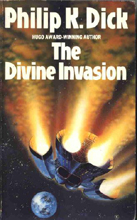
    The Divine Invasion (1981)
    “An air collision jeopardized the successful conclusion of the Second Coming. Emmanuel’s Appolonian and Dionysian selves are divided by partial amnesia. Their reintegration is opposed by Belial’s forces of decay, which control the Earth. The Paraclete’s foster father, Herb Asher, faces problems with his own redemption. Herb finds allies in the prophet Elijah, his partner in a retail audio store; and in singer Linda Fox, his own true love, and a construct energized by VALIS.”12


    Dick thought that 1974 was a turning point – a time when Truth was beginning anew to penetrate the veil of appearances. One wishes that this were really true, but the shock of 9/11 and the subsequent psyops war, lead one to conclude that there is plenty of veiling still in place – perhaps more than ever.

    To the degree that it slightly parts the veil, Minority Report imparts a whiff of Philip K. Dick’s political gnosis. Despite all the hypnotic baffling in place, sometimes a liberating signal makes it through. But no movie – and no book – is a substitute for one’s own rendezvous with the Unknown God.

    Any genuine gnosis – whether partial or complete, whether political or spiritual – is more valuable than all the words that have been written about it. Above all, stay alert, and when that knock comes at the door, say a quick prayer that it’s the girl with the fish necklace and not the police from the Department of Precrime.

    [alert type=”success” dismiss=”no”]If you appreciate this article, please consider subscribing to help maintain this website.[/alert]

    Recommended Reading:

    Gospel of Thomas; The Gnostic Gospels by Elaine Pagels.

    Footnotes:

    1. Summary from Daniel J.H. Levack, PKD: A Philip K. Dick Bibliography (San Francisco, CA: Underwood/Miller, 1981), p. 24.
    2. Ibid, p. 53.
    3. Frithjof Schuon, Gnosis: Divine Wisdom (Bedfont, Middlesex: Perennial Books, 1990) p. 76.
    4. Ibid, G.E.H. Palmer, “Translator’s Forward,” p. 8.
    5. For a full account of Dick’s life, see: Larry Sutin, Divine Invasions: A Life of Philip K. Dick (New York, NY: Harmony Books, 1989).
    6. Dick’s own account has him eagerly awaiting pain medicine. His wife’s account suggests he was already on codeine and was awaiting medicine for his blood pressure.
    7. From “How to Build a Universe that Doesn’t Fall Apart Two Days Later,” published as an introduction to I Hope I Shall Arrive Soon (New York, NY: Doubleday, 1985.)
    8. From interview in Charles Platt, Editor, Dream Makers: The Uncommon People Who Write Science Fiction (New York, NY: Berkeley Books, 1980) p. 155.
    9. PKD letter to Peter Fitting, June 1974.
    10. Philip K. Dick, VALIS (New York, NY: Bantam Books, 1981) p. 228.
    11. Levack, p. 70.
    12. Ibid, p. 27.
    13. Yuri Stoyanov, The Hidden Tradition in Europe (London: Penguin/Arkana, 1994) p. 162.

    © New Dawn Magazine and the respective author.

    For our reproduction notice, click here.