New Dawn – World's Most Unusual Magazine

Author: Bernardo Kastrup

  • UFOs – Even More Mysterious Than You’d Think 

    UFOs – Even More Mysterious Than You’d Think 

    From New Dawn Special Issue Vol 10 No 1 (Feb 2016)

    Reports of Unidentified Flying Objects (UFOs) have fascinated me since early childhood. I’ve spent many a night lying on the deck of my childhood home, staring at the sky and waiting – no, hoping – for something ‘strange’ to happen. As Jung wrote, UFOs are symbols of powerful processes in our obfuscated psyche, which explains people’s fascination with them.

    Later in life, what was a childhood fascination became a more serious, scholarly interest. I’ve read much of the literature on UFOs just to become highly disillusioned with what people make of the phenomenon and the evidence. Today, I am very critical – even cynical – of much of what takes place within ‘UFOlogy’. I hold the opinion that the field is riddled with fantasies, delusions and outright deception aimed at commercial gain or personal fame. So much so that, if not for the work of one man – a voice of reason and integrity in a morass of hysteria – I would have dismissed the whole affair once and for all. This man is French UFO investigator Jacques Vallée.

    What I find refreshing in Vallée’s work is his readiness to follow the evidence wherever it leads. Most ‘UFOlogists’ today seem to hold the opinion that UFOs are material spacecraft from another star system. This is the so-called ‘Extraterrestrial Hypothesis’ (ETH) and its motivations are clear: in a field already characterised by weirdness, the last thing investigators want is to compound the weirdness by proposing a hypothesis that doesn’t fit neatly into our mainstream materialist worldview. But the evidence doesn’t support the ETH at all. In Vallée’s own words:

    The accumulated data base exhibits several patterns tending to indicate that UFOs are real, represent a previously unrecognised phenomenon, and that the facts do not support the common concept of ‘space visitors’. Five specific arguments… contradict the ETH: (1) unexplained close encounters are far more numerous than required for any physical survey of the earth; (2) the humanoid body structure of the alleged ‘aliens’ is not likely to have originated on another planet and is not biologically adapted to space travel; (3) the reported behaviour in thousands of abduction reports contradicts the hypothesis of genetic or scientific experimentation on humans by an advanced race; (4) the extension of the phenomenon throughout recorded human history demonstrates that UFOs are not a contemporary phenomenon; and (5) the apparent ability of UFOs to manipulate space and time suggests radically different and richer alternatives.

    So if the ETH doesn’t hold up in view of the evidence, how else can we make sense of UFOs? I have extensively elaborated upon it in my earlier book Meaning in Absurdity. In this essay, I’d like to offer a different spin on my hypothesis.

    Before I can do that, however, I need to share with you my view of the fundamental nature of reality: I believe all reality – including our bodies – is in consciousness, not consciousness in our bodies. As such, consensus reality is an imagined story emerging from obfuscated, collective parts of our psyches, like a shared dream. Our individual psyches are thus dissociated ‘alters’ of a single consciousness – which I call ‘mind-at-large’ – underlying all known and unknown reality. Consensus reality is a particular ‘dream’ of mind-at-large. I am well aware that this view sounds peculiar at first sight, but essays 2.1 and 2.2 of this book [Brief Peeks Beyond] substantiate it in depth. Here, all I ask is that you temporarily suspend your disbelief and entertain this view for the sake of argument.

    If mind-at-large can dream an entire reality and also has the potential to split itself into dissociated alters, then nothing precludes the possibility that multiple dreams may be unfolding concurrently in mind-at-large. Allow me to unpack this: as mentioned above, each person is a dissociated alter of mind-at-large, partaking in a collective dream that we call consensus reality. Our individual psyches unite at a deep, obfuscated level, and the dream of consensus reality is imagined at that unified level. That’s why we are able to share the dream. But perhaps there are multiple, hierarchical, nested and parallel levels of dissociation and alter formation. Perhaps our individual psyches unite not at the ground level of mind-at-large, but at an intermediary level that is itself dissociated from other intermediary levels. We human beings may be alters of a meta-alter, and there may be multiple, parallel meta-alters in mind-at-large. As a matter of fact, there may be meta- meta-alters, and meta-meta-meta-alters, etc.

    So the hypothesis is that, as our consensus reality is the dream of a meta-alter in mind-at-large, other meta-alters are having other dreams in parallel to ours. Each of those dissociated dreams is a reality in its own merit. Multiple, perhaps countless dreams are unfolding in the hierarchy of dissociation of mind-at-large, somewhat analogously to the parallel universes that physicists like to talk about. Each of these dreams has its own storyline: its own internal logic, physics, history and living inhabitants.

    And here is where UFOs and ‘aliens’ come into the picture. Have you ever had a dream in which an event in the waking world penetrated the dream without waking you up immediately? For instance, I once went to sleep with the window of my hotel room open while on holidays abroad. In the middle of the night, while I lay asleep, there was a storm and some drops of rain began landing on my bare feet. The wind was also moving the curtains about, which caused some noise in the room. I was dreaming whilst this was happening. At some point in my dream, I found myself walking on a beach with my feet in the surf. The feeling of wetness on my real-life feet morphed seamlessly into the feeling of dragging my feet in the seawater. The sound of the wind and moving curtains inside my hotel room morphed seamlessly into the sound of waves breaking on the beach. I realised all this because I woke up in the middle of it and, for a few brief seconds, could simultaneously feel the surf and the raindrops landing on my feet; I could simultaneously hear the wind in the room and the waves on the beach. During those brief moments, I knew that these experiences, while different, were in a way also the same. The ‘dream’ of waking life had penetrated my nightly dream.

    This is the key: dissociated dreams can perhaps – under exceptional, delicate circumstances – penetrate each other. Separate storylines can momentarily overlap and cross-influence one another. When that happens, the protruding element from a source storyline – say, the raindrops in my hotel room – gets ‘dressed up’ in an image that is amenable to integration into the destination storyline – that is, the surf in my dream. Indeed, there were no raindrops in my dream; just surf. There was no perceptible wind in my dream; just waves. The protruding element isn’t perceived as it appears in its source storyline, but in an alternative form characteristic of the storyline it penetrates. In a sense, the protruding element gets ‘hijacked’, co-opted by the narrative it penetrates so to become an integral part of it. Yet, the underlying, intrinsic attributes of the protruding element remain the same and are accommodated by the form it acquires in the destination storyline: the wetness of the raindrops was preserved in the form of surf; the oscillating, flowing sound of the wind and curtains was preserved in the form of waves. Although the form these protruding elements acquired inside my dream was very different than their original form, their intrinsic, fundamental attributes were preserved.

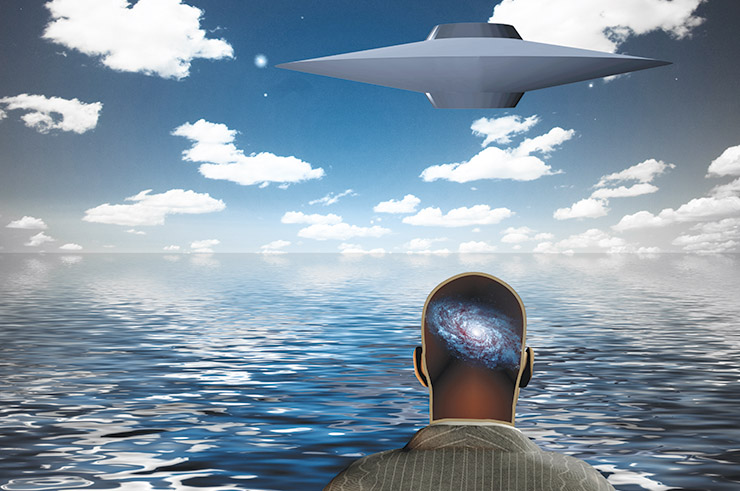
    By now, I’m sure you’ve already guessed where I am going with this: what if UFOs and aliens are protruding elements of parallel ‘dreams’ unfolding in mind-at-large, which penetrate our consensus reality and acquire a form amenable to integration within it? It isn’t then surprising that this acquired form should resemble advanced versions of concepts we are familiar with and can place within our storyline: spaceships, anthropoid life forms, medical procedures, computer technology, etc. These acquired forms often look internally inconsistent, cartoonish or even absurd simply because they aren’t the original forms of the protruding elements; instead, they reflect a rather precarious accommodation, in our own storyline, of the intrinsic attributes of something that fundamentally transcends our logic and physics. Here, I suggest, lies the reason for the ‘high strangeness’ of UFO and so-called ‘alien abduction’ phenomena.

    If even a very small percentage of reported UFO and ‘alien abduction’ cases are valid and accurate, we have no alternative but to envision rather unusual, speculative hypotheses for making sense of it. The high-strangeness character of the phenomenon demands no less and this is what I attempted to offer here. Alternatively, we can simply deem all the evidence to be invalid and sleep more easily at night.
    Get the issue this article appears in

    Extraterrestrial Life: Implications for the Materialist Paradigm

    There has been growing expectation among scientists that extraterrestrial microbial life will be discovered in our solar system within the next few decades, perhaps in one of the moons of Jupiter or Saturn. I’ve asked people close to me whether they thought this would be a paradigm-breaking event, and the response has been mostly in the ‘no’ camp. Such a reaction is completely understandable: scientists have been acknowledging for years that life may be common and widespread in the universe, so why would its discovery in a neighbouring celestial body break any paradigms? Nonetheless, I think we are overlooking something crucially important here, which has vast implications for how we look upon ourselves and reality at large.

    Our culture’s mainstream view is that life is a mechanistic process explainable entirely by the known laws of physics. In other words, life is merely an epiphenomenon of dead matter. There is supposedly nothing to life but the same movements of subatomic particles behind erosion, crystallization, combustion, the weather, etc. As such, life is allegedly no different than erosion or crystallization, except in that metabolism operates faster. Biological organisms are mere ‘robots’, entirely analogous to a computer. Life is believed to have arisen by mere chance, through the random collisions of atoms and molecules in a primordial chemical soup on primitive Earth. So the question is: if biology were discovered in a celestial body next door, would that raise new and difficult questions for such a mechanistic view of life? I think it would.

    Nobody knows today how life could emerge from dead matter. There are dozens of theories and even more loose avenues of speculation, but no one has ever managed to re-create life from dead matter – a process called ‘abiogenesis’ – in a laboratory. Therefore, there is just no proof that life could ever have arisen from non-life through purely mechanistic means. Yet, mechanistic abiogenesis is indispensible for materialism. Without it, materialism would fall apart, for it would fail to explain that which conceived materialism in the first place: human life.

    The problem is that, not only do the different structures necessary for metabolism need to arise concurrently in an organism, very complicated mechanisms for the replication of these structures – that is, reproduction – need to arise along with them. Otherwise, life would pop into existence just to disappear again. Francis Crick, the Nobel Prize laureate and co-discoverer of DNA, once thought it impossible for the self-replication mechanisms essential to life to arise spontaneously, mechanistically, from a chemical soup on primitive Earth. He thought the complexity required was just too great. Although Crick later felt that he had been a little too pessimistic in his original assessment, the key point still stands: mechanistic abiogenesis, if at all possible, is extraordinarily unlikely.

    Now, how does this tie in with the possible discovery of extraterrestrial microbial life? Well, if we were to find independently-arisen life in our immediate cosmic neighbourhood – right here, next door – the obvious implication would be that abiogenesis is a very common occurrence in the cosmos. After all, what are the chances that a rare event would happen, independently, twice within the same star system? But if it’s common, then life can’t be the kind of accidental, mechanistic phenomenon that it is purported to be by materialist science. Mechanistic abiogenesis, after all, can at best be extraordinarily rare; if at all possible. The discovery of a second instance of abiogenesis in our solar system would, therefore, force us to consider the possibility that life is the expression of yet-unrecognised but intrinsic organising principles in nature. It would force us to consider the possibility that nature is, in a way, meant to produce life. This, by any measure, would indeed be a paradigm-breaking conclusion.

    Reprinted with permission from Bernardo Kastrup’s book Brief Peeks Beyond: Critical essays on metaphysics, neuroscience, free will, skepticism and culture (Iff Books, 2015), and available from all good bookstores & online retailers. 

    [alert type=”general” dismiss=”no”]This article was published in New Dawn Special Issue Vol 10 No 1.[/alert]

    [alert type=”success” dismiss=”no”]If you appreciate this article, please consider subscribing to help maintain this website.[/alert]

    © New Dawn Magazine and the respective author.
    For our reproduction notice, click here.

  • The Fairytale of Materialism: How ‘Fundamentalists’ Hijacked Science

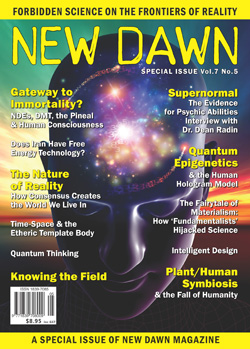
    The Fairytale of Materialism: How ‘Fundamentalists’ Hijacked Science

    From New Dawn Special Issue Vol 7 No 5 (Oct 2013)

    The theme of this special issue of New Dawn Magazine is important in more ways than meet the eye at first. The notion of forbidden ideas in science is intriguing for obvious reasons. After all, it is undeniable that the intellectual establishment has historically blacklisted some of the most important breakthroughs in science over the centuries. To mention only one example, for decades Isaac Newton’s then-revolutionary idea that an invisible force called gravity acted at a distance between bodies was considered magical woo-woo, unworthy of being taken seriously.1 What other revolutionary – and perhaps valid – ideas might have been recently proposed but continue to be snubbed today in scientific circles? Few questions are more interesting and relevant.

    Yet, the notion of forbidden science raises a less obvious but equally intriguing question: on what basis is something considered heretical in science? What are the underlying assumptions of the self-appointed police of scientific thought? After all, science is supposedly based on the neutral and objective comparison between theory and nature. Nature is the final arbiter of scientific debate and it can be queried directly through experiment. So, if that is the way to settle the questions, why do we so often witness the scientific community engaged in highly subjective and emotionally-charged debates regarding what theory is – or isn’t – reasonable or acceptable? Sir John Maddox, former editor of Nature, once called for nothing less than the burning of a book describing a new theory of biological inheritance, much in the tone of medieval inquisitors.2 Why all this fundamentalist hysteria?

    In this article, I will argue that, at the root of all this, is the fact that the intellectual establishment completely misinterprets and misrepresents what science is about. The fundamentalist hysteria we see in the culture today is the inevitable result of the consistent and outrageous abuse science has suffered, often at the hands of those who were supposed to be its guardians. These abusers – among which I count some of the biggest names in science today – have hijacked science for the benefit of their own philosophical and psychological needs, biases, prejudices, and interests. And you, dear reader, are on the receiving end of this charade. Allow me to elaborate.

    Science Isn’t Metaphysics

    The scientific method allows us to study and model the observable patterns and regularities of nature. For instance, the observation that objects consistently fall when dropped – a regularity observed anywhere on the surface of the planet – allows us to infer the law of gravity. The observation that crystals form according to symmetrical shapes allows us to infer specific patterns of crystallization for different materials. Modelling the observable patterns and regularities of nature is all that science is about, because it is all that it can be about. Nothing else can be falsified by direct comparison with nature, therefore nothing else can be considered scientific. By observing the consistency of these patterns and regularities, scientists can create mathematical models to capture them, run such models as computer simulations, and then predict how similar phenomena will unfold in the future. Such an ability to predict the phenomena of nature lies at the heart of the technological prowess of our civilisation and represents the main social value-add of science.

    But our ability to model the patterns and regularities of reality tells us little about the underlying nature of things. Scientific modelling is useful for informing us how one thing or phenomenon relates to another thing or phenomenon – this being precisely what mathematical equations do – but it cannot tell us what these things or phenomena fundamentally are in and by themselves. The reason is simple: science can only explain one thing in terms of another thing; it can only characterise a certain phenomenon in terms of its relative differences with respect to another phenomenon.3 For instance, it only makes sense to characterise a positive electric charge relative to a negative electric charge; positive charges are defined in terms of their differences of behaviour when compared to the behaviour of negative charges, and the other way around. Another example: science can explain a body in terms of tissues; tissues in terms of cells; cells in terms of molecules; molecules in terms of atoms; and atoms in terms of subatomic particles. But then it can only explain one subatomic particle in terms of another, by highlighting their relative differences. Science cannot explain the fundamental nature of what a subatomic particle is in itself, since all scientific explanations need a frame of reference to provide contrasts.4

    Capturing the observable patterns and regularities of the elements of reality, relative to each other, is an empirical and scientific question. But pondering about the fundamental nature of these elements is not; it is a metaphysical question. The problem is that, in recent decades, scientists who have little or no understanding of philosophy have begun to believe that science can be a metaphysics.5 This dangerous combination of ignorance and hubris has done our culture an enormous disservice. Childishly emboldened by the technological success achieved by our civilisation, many scientists have begun to believe that the scientific method suffices to provide us with a complete account of the nature of existence. In doing so, they have failed to see that they are simply assuming a certain metaphysics – namely, materialism – without giving it due thought. They have failed to see that the ability to predict how things behave with respect to one another says little about what things fundamentally are.

    The notion that technological prowess is proof of some deep scientific understanding of the underlying nature of reality is simply equivocated. Let us put this in context with an analogy: one needs to know nothing about computer architecture or software in order to play a computer game well and even win; just watch a five-year-old kid. Playing a computer game only requires an ability to understand and predict how the elements of the game behave relative to one another: if your character shoots that spot, it scores points; if your character touches that wall, it dies; etc. It requires no understanding whatsoever of the underlying machine and code upon which the game runs. You can be a champion player without having a clue about Central Processing Units (CPU), Random-Access Memories (RAM), Universal Serial Buses (USB), or any of the esoteric computer engineering that makes the game possible. All this engineering transcends the “reality” accessible empirically from within the game. Yet, the scientific method limits itself to what is empirically and ordinarily observed from within the “game” of reality. Scientific modelling requires little or no understanding of the underlying nature of reality in exactly the same way that a gamer needs little or no understanding of the computer’s underlying architecture in order to win the game. It only requires an understanding of how the elements of the “game,” accessed empirically from within the “game” itself, unfold relative to one another.

    On the other hand, to infer things about what underlies the “game” – in other words, to construct a metaphysics about the fundamental nature of reality – demands more than the empirical methods of science. Indeed, it demands a kind of disciplined introspection that critically assesses not only the elements observed, but also the observer, the process of observation, and the interplay between the three in a holistic manner; an introspection that, as such, seeks to see through the “game.”

    True science is metaphysically neutral and agnostic. Mistaking it for a particular metaphysical position is a profound disservice to science, because it makes it vulnerable to straw-man attacks. For instance, the materialist metaphysics is often peddled today as synonymous with science; a tragic disfigurement of the latter. Yet, as I will argue shortly, materialism is extraordinarily vulnerable to attack, which is construed by a growing number of people as evidence that science itself is failing. But this isn’t true. An attack on materialism as a metaphysical interpretation of science is not an attack on true science.

    To illustrate how true science, as we know it today, can be coherently interpreted according to a metaphysics entirely different from materialism, let us have a fresh look at the so-called “mind-body problem.”

    A Non-Materialist Take on the Mind-Body Problem

    There are undeniable correspondences between conscious experience and brain states. If you have ever been drunk, you know that the addition of alcohol to ordinary brain chemistry can severely affect how one feels subjectively. Anaesthesia and psychiatric drugs also alter consciousness by interfering with brain function. Functional MRI scans regularly reveal high-level correlations between the activation of certain areas in the brain and certain types of subjective experience. So the link between brain states and subjective experience is a scientifically observed pattern/regularity of reality. As such, it is an undeniable scientific fact, independent of metaphysics.

    The question, of course, is how to interpret the underlying nature of this link, which is not a question of science, but of philosophy. Many scientists simply assume that the materialist metaphysics explains the link by stating that the brain generates the mind. As such, the brain – and reality at large – supposedly exists fundamentally outside mind. When the brain is destroyed, mind can no longer exist. Indeed, such metaphysics does seem to explain the high-level correlations between brain states and subjective experience. But it does so at the enormous cost of, first, postulating an unprovable universe fundamentally outside subjective experience; and, second, requiring a magical step by means of which unconscious matter somehow lights up with awareness under particular circumstances – the so-called “hard problem of consciousness.”6 Since subjective experience is the only carrier of reality that anyone can ever know, and since nobody today has the faintest clue about how to solve the “hard problem of consciousness,” materialism suffers from a severe lack of parsimony, explanatory power, and provability.

    Nonetheless, many scientists still adopt materialism as the explanation for the mind-body problem. The reason is that they do not see any other reasonable metaphysical interpretation that fits the scientifically observed patterns and regularities linking brain and mind. As such, they end up making the classical error of conflating metaphysics with science itself. But there is at least another, much more parsimonious metaphysical interpretation that fits the data and has more explanatory power. I will discuss it below in order to illustrate my point that the patterns and regularities of nature can be interpreted in a variety of ways, and that true science is neutral and agnostic about which metaphysical interpretation is true.

    Here we go: think of a stream. Water can flow along the stream through its entire length; that is, water is not localised in the stream, but traverses it unhindered. Now imagine a small whirlpool in the stream: it has a visible and identifiable existence; one can locate a whirlpool and roughly delineate its boundaries; one can point at it and say “Here is a whirlpool!” There seems to be no question about how clear and concrete the whirlpool is as an identifiable object. Moreover, the whirlpool limits the flow: the water trapped in it can no longer traverse the entire stream freely but, instead, become locked in place, swirling around a specific and well-defined location. The whirlpool thus partially localises the flow of water in the stream. Yet, there is nothing to the whirlpool but water itself. The whirlpool is just a specific pattern of water movement that reflects a partial localisation of that water within the stream.

    Now here is my metaphysical interpretation of the mind-body problem: reality at large is the flow of the “stream” of mind. There is nothing to reality but subjective experience itself. The body-brain system is simply the image of a process of self-localisation of mind, just like the whirlpool is the image of a process of self-localisation of water. There is nothing to the brain but mind, yet it is a concrete and identifiable image of the partial localisation of mind, just like a whirlpool is a concrete and identifiable image of the partial localisation of water. You can point at the brain and say “Here is a brain!”

    As such, to say that the brain generates the mind is as absurd as to say that a whirlpool generates water! To say that the brain is the cause of consciousness is as absurd as to say that lightning is the cause of atmospheric electric discharge. After all, lightning is merely how atmospheric electric discharge looks, not the cause of it. Do you see what I mean? The brain is an image of the process of consciousness localisation, as viewed from a second-person perspective, in exactly the same way that flames are an image of the process of combustion, as viewed from the outside. In the same way that the patterns and colours of flames correlate well with the inner-workings of the process of combustion, measured brain activity correlates well with the first-person view of consciousness – that is, direct subjective experience.

    Notice that this eliminates the “hard problem of consciousness” entirely: the correlations between brain states and mind states are explained by understanding the former to be merely an image of the latter, as perceived from a second-person perspective. There is no attempt to reduce mind to objective brain activity outside mind, so there is no “hard problem” at all. The brain and its activity, as images in mind, are of exactly the same nature as any other subjective experience. There is no need to magically derive experience from something outside experience because there is no need to postulate anything outside experience to begin with. The brain is an experience, an image in mind of a certain process of mind.

    The whirlpool represents a partial localisation of the flow of experiences in the stream of mind. This localisation demarcates a centralised, local perspective: the very centre of the whirlpool, the vantage point from which each one of us witnesses our personal subset of the contents of mind-at-large. This is, after all, how we ordinarily experience reality: from a particular vantage point in the middle of the vortex of experiences swirling around us. Ordinarily, we are only aware of the flow of experiences captured in our respective whirlpools, not of the broader stream outside. This is a direct result of the localisation process that pins us to a particular space-time position.

    Clearly, we do not need to postulate an entire universe outside the only carrier of reality we can ever know – mind itself, the medium of all subjective experience – to make sense of the patterns and regularities of nature. We do not need to face the insoluble “hard problem of consciousness.” Instead, we just need to correct an old philosophical mistake made in the name of science: the spectacular mistake of taking the image of a process to be the cause of the process. For the same reason that lighting is simply the way atmospheric electric discharge looks – and not the cause of it – the body-brain system is simply the way consciousness localisation looks, and not the cause of it.

    The entire metaphysical interpretation I elaborated upon above is fully in accordance with the natural patterns and regularities observed and modelled by science today. None of what I said above contradicts any part of true science; perhaps only the assertions of those who hijack and misuse science. If you would like to know more about my metaphysical position, as briefly described above with the whirlpool metaphor, I refer you to my book Why Materialism Is Baloney.

    Conclusions

    The fundamentalist hysteria witnessed today stems from the fact that different factions involved in the so-called “culture war” attempt to make of science something it cannot be: a metaphysical position. In the process, they hijack and deface science, contributing to the general disorientation in our society regarding the nature of truth and the purpose of life. It is time we corrected this. It is time we understood that physics, while valuable and extremely important, just models the elements of the “game”: where to “shoot,” which “wall” to avoid, etc. The underlying nature of reality – the inner workings of the “computer running the game” – is an issue of metaphysics. It requires different methods to be properly assessed and understood. For as long as scientists like Stephen Hawking are allowed to make preposterous pseudo-philosophical pronouncements7 and not be either ignored or thoroughly ridiculed by the mainstream media – in exactly the same way that, say, a famous artist would be ridiculed or ignored for making pseudo-scientific statements – our culture will fail to understand its predicament. Part and parcel of this overdue correction in our culture is the need to see materialism not as synonymous with science, but simply as a particular metaphysical interpretation of science; one that happens to be highly inflationary and to lack sufficient explanatory power.

    Bernardo Kastrup’s book Why Materialism Is Baloney deconstructs materialism and offers a new coherent framework to help us make sense of the Universe. For full details, please visit his website www.bernardokastrup.com or go to www.amazon.com and look up “Bernardo Kastrup.”

    [alert type=”general” dismiss=”no”]This article was published in New Dawn Special Issue Vol 7 No 5.[/alert]

    [alert type=”success” dismiss=”no”]If you appreciate this article, please consider subscribing to help maintain this website.[/alert]

    Footnotes

    1. Kuhn, T. (1996). The Structure of Scientific Revolutions, Third Edition. Chicago: The University of Chicago Press, 105.

    2. Maddox, J. (1981). A book for burning? Nature, 293(5830), 245–246.

    3. Russell, B. (2007). The Analysis of Matter. Nottingham: Spokesman Books.

    4. Even in the case of String Theory, according to which subatomic particles can be explained in terms of vibrating strings, it is still the relative differences between the modes of vibration of these strings that explain reality. The fundamental nature of the strings themselves is left unaddressed. See: Davies, P. and Brown, J. eds. (1992). Superstrings: A Theory of Everything? Cambridge: Cambridge University Press.

    5. See, for instance: Hughes, A. L. (2012). The Folly of Scientism. The New Atlantis, 37, 32-50.

    6. Chalmers, D. (2003). Consciousness and its Place in Nature. In: Stich, S. and Warfield, F. eds. Blackwell Guide to the Philosophy of Mind. Malden, MA: Blackwell, 102-142.

    7. Hawking has made statements like this: “Because there is a law such as gravity, the universe can and will create itself from nothing” (Hawking, S. and Mlodinow, L. (2010). The Grand Design: New Answers to the Ultimate Questions of Life. London: Bantam Books, 227). This is incoherent, since the law of gravity is not nothing. There has been plenty of critical deconstruction of Hawking’s claims, as in: Davies, P. (2010). Stephen Hawking’s big bang gaps. The Guardian, 4 September 2010, London.

    © New Dawn Magazine and the respective author.
    For our reproduction notice, click here.
  • Transcending Our Brain Created Reality: A New Call to Lift Nature’s Veil

    Transcending Our Brain Created Reality: A New Call to Lift Nature’s Veil

    From New Dawn Special Issue Vol 6 No 4 (Aug 2012)

    The study of non-ordinary states of consciousness is quickly becoming an established area of scientific and philosophical inquiry. Yet, all the enthusiasm about finding out what these non-ordinary states are somehow obfuscates much bigger, important, and urgent questions: What as-of-yet unknown aspects of reality do they give us access to? And what significance do those hold for the human adventure in space-time?

    In this article, I’d like to make a call-to-arms of sorts: A call for a structured, systematic, and rational inquiry into nature through non-ordinary states of consciousness, next to the now established investigation of non-ordinary states of consciousness.

    What Can We Really Know?

    Our Western civilisation is justifiably proud of its cultural, social, scientific, and technological achievements. Western values now pervade nearly all cultures on Earth, and Western-created technology has become an integral part of human activity. We look back at our historical past with the patronising attitude of an adult looking at a child: We have absolutely no doubt that we now know a lot more than we knew then and smile, full of hubris, at the naiveté of our ancestors. Unlike them, we now understand what nature is all about; we know who we are and what is going on; we even acquired a large measure of control, through our Faustian technology, of the forces and mechanisms underlying nature. The present is seen as the highest point ever reached in the historical mountain humanity has been climbing for about two hundred thousand years. Kings of the hill, we see ourselves.

    But are we, really? Do we really know what is going on? Or have we been caught in an invisible web of self-referential epistemic trappings?

    Allow me to explain what I mean here. The currently accepted view in neuroscience is that the ordinary, waking reality we experience every day is in fact a brain-constructed ‘hallucination’ analogous in nearly every way to a dream. Indeed, the same neuronal mechanisms underlie our experience of dreams and of waking reality.

    The difference between the waking hallucination you live your daily life in, on the one hand, and your dreamed-up hallucination during sleep, on the other hand, is merely this: The former is believed to be modulated by electromagnetic signals emanating from a supposed external reality that we can never have direct access to, for we’re irremediably locked into our brain-generated hallucination.1 It is this abstract, assumed external reality that, supposedly, explains why our waking experiences seem to be shared with other individuals, while our nightly dreams are highly individual and idiosyncratic.

    There is, in my view, a better hypothesis to explain this synchronisation of our experiences during waking states, without the need to postulate an entire, forever inaccessible, external universe.2 But this is beyond the scope of this article, whose conclusions should hold anyway, whichever hypothesis is true. What I want to stress here is that, whichever the case, what we experience in our lives every day is not reality as such, but a kind of brain-constructed ‘copy’ of reality. The original is supposedly an amorphous, colourless, soundless, tasteless realm of abstract energy fields.

    The question, of course, is whether we have any reason to believe that the copy is perfect. Assuming that Darwin’s theory of evolution is correct in its more essential aspects, we have to ask ourselves whether evolution would have favoured a brain that created a complete internal copy of reality, capturing in it all aspects of relevance for our understanding of the fundamental mechanisms of nature. Furthermore, we have to ask ourselves whether evolution would have favoured a brain that, whatever part of reality it did capture in its internal copy, copied them without significant distortions that could throw us completely off track as far as putting together an accurate worldview. The answer to both questions is no.

    Evolution favours physical survival, not per se the accuracy or completeness of internal representations. It is reasonable to think that some matching between our brain-generated copy of reality and reality itself is favourable for survival of the physical body: If a tiger is approaching you, it is useful to see the actual tiger, and not some other non-modulated, dream-like hallucination. But most people, scientists included, far overestimate the survival usefulness of accurate, complete internal representations.

    My own research on artificial neuronal networks shows that, very often, it is useful precisely to distort certain parts, and cut out other parts, of the external stimuli when creating an internal representation of reality in an artificial nervous system.3 Complete information is often confusing, drowning out the small parts that really matter. Undistorted information is often hard to act upon in a timely manner, due to the subtlety of its nuances. Therefore, these artificial nervous systems perform much more efficiently – and would stand a much better chance of survival if they had to compete in an ecosystem – when their own internal copy of reality is largely incomplete and distorted.

    As such, this is what evolution would have favoured and there is absolutely no reason to believe that the copy of reality you and I live in comes even close to what is really going on. We’re intrinsically limited to watching an edited and biased version of the film we’re trying to make sense of.

    Even the scientific instruments that broaden the scope of our sensory perception – like microscopes that allow us to see beyond the smallest features our eyes can discern, or infrared and ultraviolet light sensors that detect frequency ranges beyond the colours we can see – are fundamentally limited to our narrow and distorted window into reality: They are constructed with materials and methods that are themselves constrained to the edited copy of reality in our brains.

    As such, all Western science and philosophy, ancient and modern, from Greek atomism to quantum mechanics, from Democritus and Aristotle to Bohr and Popper, have been and are fundamentally limited to the partial and distorted copy of reality in our brains. Western science is thus, from a certain point-of-view, a house of cards built on shaky foundations: The scientific worldview is the result of an internal model of reality whose unreliability is an inescapable implication of that very model; a self-referential epistemic contradiction.

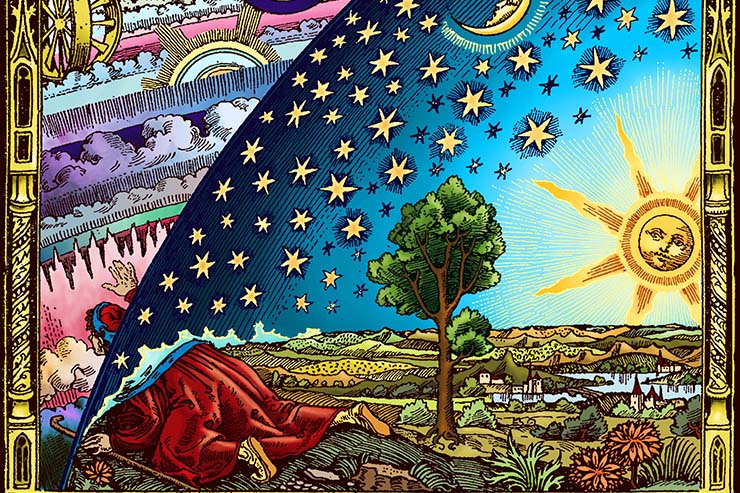
    For all we know, we may be locked in a small room trying to explain the entire universe outside by looking through a peephole on the door; availing ourselves only of its limited and distorted images. This, ironically enough, may be the situation we find ourselves in while naively celebrating our understanding of the cosmos and our place in it.

    Is there another alternative, or should we resign ourselves to the hopelessness of our ambition to understand reality? There is evidence to suggest that another alternative indeed exists. And, in that case, a new way to structure our inquiry into nature may offer unfathomable new possibilities.

    Looking Beyond the Veil

    Solid evidence has been accumulating that our minds cannot be explained solely by brain activity; the mind seems to transcend the brain.4 Yet, it is undeniable that the brain plays a significant role in our perceptions and behaviour, as, for instance, the effects of alcoholic drinks make plain and clear.

    In an earlier article in this magazine,5 I elaborated upon an alternative hypothesis for explaining the relationship between the mind and the brain; a hypothesis that, since the publication of that article, has gained increased scientific momentum: Consciousness is a fundamental aspect of nature, not depending on any material structure for its existence. The function of the body-brain system is to localise and restrict conscious perception to the space-time locus of the physical body. As such, the brain modulates and limits conscious perception, this being why, in ordinary states of consciousness, mental states correlate so well with brain states.

    As we’ve seen in the discussion above, such restriction and modulation of conscious perception – that is, the filtering and distortion of the copy of reality in our brains – can have a significant survival advantage, which explains why the brain evolved to perform such counterintuitive tasks.

    Now, because the brain works as a kind of filter of mind, restricting and distorting our view of reality for survival purposes, bypassing certain brain mechanisms could conceivably give one access to a broader, cleaner, crisper, and more reliable view of nature. Historically, most, if not all, methods for achieving non-ordinary states of consciousness seem to do precisely that: To enable expanded perception and understanding by reducing brain activity.

    The pattern here is so clear that it is surprising our culture seems to remain largely oblivious to it. For instance, many traditional Yogic breathing practices, as well as the more modern method of Holotropic Breathwork, reduce brain activity through the constriction of blood vessels that results from hyperventilation (which is precisely why you to get dizzy and ultimately faint when breathing too fast). Military pilots undergoing G-force induced loss of consciousness (G-LOC) – which forces blood out of the brain, thereby reducing its activity – are known to report transcendent narratives similar to near-death experiences. Teenagers worldwide play a dangerous, potentially fatal game involving partial strangulation in order to ‘trip’ without drugs.

    Even psychedelic substances, which have always been assumed to produce ‘hallucinations’ by stimulating brain activity, have recently been shown to actually reduce brain activity.6 At least two Nobel Prize laureates – Francis Crick and Kary Mullis – have attributed their prize-winning insights to such non-ordinary states of consciousness; a powerful corroboration for the notion that such states broaden understanding and increase insight, despite reduced brain activity. Even more subtle methods, like meditation, ritual prayer, and sensory deprivation (think of isolation tanks) are likely associated to decreased brain activity.

    The pattern here is as clear as it is ancient: Specific reductions in brain activity seem to consistently lead to a broadened and crisper perception and understanding of reality. The hypothesis that the brain is a mechanism to constrain and localise mind is entirely consistent with this: Reduction of brain activity impairs the filter/localisation mechanism, allowing one to temporarily and partially escape its entrapment and come closer to perceiving reality as it truly is.

    A tantalising possibility suggests itself, one that has been lost to Western culture perhaps since the extinction of the Eleusinian mysteries: An unfathomably broader and more authentic inquiry into the true nature of reality can be achieved through an expansion of the investigator’s own state of consciousness. That true inquiry involves not only the transcendence of physical limitations through the use of instrumentation, but – and more fundamentally – a transcendence of one’s own brain-based mental filters. To see and understand reality for what it truly is – to see the original, not the flawed copy – we need to temporarily escape the limitations imposed on us by biology and culture.

    A New Kind of Inquiry

    In my more hopeful moments, I envision the emergence of a ‘New Kind of Inquiry’ (NKI); one based fundamentally on the use of non-ordinary states of consciousness to access transcendent, yet natural ‘landscapes’ otherwise unavailable to our ordinarily filtered perceptions and cognition.

    Even though the use of such non-ordinary states is ancient, it has historically been restricted mostly to religious purposes and otherwise (semi-)dogmatic agendas. More recently – namely, in the 20th century – it has partly freed itself from such agendas, but become then a vehicle for purely personal, idiosyncratic insight. While valuable to the individual, the broader cultural impact of these personal insights has been extremely limited: Our culture is still dominated by the subjective belief-systems underlying the current scientific paradigm, which irrationally rejects the value of non-ordinary states.

    In the meantime, Western civilisation edges ever closer to a point of irreversible unsustainability, both environmentally and psychologically. To change the culture and safeguard a healthy and sane future, we need more than isolated, personal transcendence. Many of us, for fear of being foolish, need permission to allow our belief systems to change; permission that can only be gained through the institutionalised, collective validation of new hypotheses and worldviews.

    An effective NKI with contemporary appeal, capable of leading to a major paradigm shift in our modern relationship to reality, requires complete freedom from dogma and traditional symbolisms due to the baggage they carry. But such effective NKI must also entail more than personal, idiosyncratic excursions into transcendent landscapes if it is to have true cultural impact.

    As a first step in that direction, I envision an institutionalised NKI think-tank whose initial charter would be the study, creation, and refinement of methods for the achievement of non-ordinary states of consciousness. Even though countless such methods have traditionally been available, no systematic, structured, modern scientific study has been done for the very practical purpose of increasing their effectiveness (and safety). With modern scientific knowledge, we should be able to achieve a degree of success in enabling non-ordinary states of consciousness that traditional cultures could only dream of.

    For instance, while psychedelics have the advantage of nearly always delivering an unambiguous effect at sufficient doses, they are notoriously hard to control and the insights resulting from their use very difficult to interpret. In contrast, while meditation has historically proven to be the most fruitful method for the achievement of unfathomable but clear insights about the nature of reality, it is notoriously difficult to master to a point where truly transcendent, unambiguous experiences can be achieved. Could we synthesise the strengths of all these methods? Could new and more effective ones be invented, based on more modern technologies like, for instance, Transcranial Magnetic Stimulation (TMS)? The ultimate goal here would be the iterative refinement of a safe, reliable, effective, robust, best-in-class method for enabling any educated and healthy individual to pursue the exploration of landscapes otherwise unavailable to ordinary cognition.

    And here is where the second step of this vision comes in. Another, and more important, goal of the NKI think-tank would be to put the best-in-class method discussed above to practical and systematic use. Instead of adventurous individuals pursuing idiosyncratic exploration in isolation, without structure or suitable preparation, and unable to contribute their insights to a growing and coherent body of knowledge, the idea here is to organise structured and coordinated expeditions into transcendence involving various individuals; to have them collect data and compare notes upon returning; to build up and progressively refine compound maps based on reports from various explorers and their different perspectives; to find commonalities and consistencies, document them, and thereby reduce the unreliability of personal interpretations.

    The NKI think-tank would attempt to derive rational, coherent models for describing the underlying nature of reality; models that would take into account a broader set of data than that available to ordinary perception; models based on more than just the distorted and limited view through the peephole. Its explorers wouldn’t be random: They would be selected based on a broad skill-set. Like medieval explorers – who were selected based on their seamanship, as well as cartography, astronomy, and natural history skills – explorers in the staff of the NKI think-tank would be required to have a balanced skill-set encompassing knowledge of history, philosophy of science, epistemology, modern physics, neuroscience, psychology, mathematics, and, perhaps most fundamentally, the arts. Contemporary ‘renaissance men and women’, is what we’re talking about here.

    The think-tank would provide the entire infrastructure necessary for their voyages into transcendence: meditation spaces, isolation tanks, brain entrainment and TMS equipment, appropriate medical staff and facilities in case psychoactive substances would be used, etc. It would also host facilities required for journey preparation, as well as consolidation of results: Well-stocked libraries and network infrastructure for scholarly research; discussion rooms where explorers could debate and compare notes and ideas; conference facilities; data-processing facilities to enable the building of computer models inspired by transcendent insights; laboratory facilities for testing some of these models empirically; gardens for pondering, integration, and recuperation; etc.

    The NKI think-tank would also have its own publishing infrastructure: periodicals, book imprints, podcasts, video production facilities, websites, and all that is necessary for the dissemination of its results and ideas. Its independence from the currently established academic and commercial channels would initially be paramount, since the subjective values and belief systems underlying the current scientific paradigm, as discussed by Thomas Kuhn,7 would render these channels non-conducive to new, paradigm-breaking hypotheses.

    Through the respectability it would build up over time, the qualification of its staff, the quality of its results, as well as its communication and out-reach efforts, the NKI think-tank would insert itself powerfully into the collective mindset of the culture. It would give legitimacy to the New Kind of Inquiry it would embody and represent. It would broaden the horizons of civilisation through the generation of coherent, appealing hypotheses regarding the nature of reality and of our condition within it, free from tradition and dogma. It would give many intelligent, educated, and perhaps influential individuals permission – as well as a little more latitude – to seriously entertain worldviews that would otherwise be considered taboo. The NKI think-tank would become a significant catalyst for a shift of paradigm in the way our civilisation relates to reality and, as a bonus, re-introduce hope and meaning into the mainstream cultural dialogue.

    Get the issue this article appears in

    Concluding Remarks

    This is my dream for a New Kind of Inquiry. As a vision that aims at stimulating the imagination, it would be silly to restrict such a dream based on practical limitations or notions about what is ‘realistic’ to accomplish at this time. Therefore, I may have allowed myself to get a little carried away above. Still, I do believe that something along those lines is urgent and essential to the progress of our worldview as a civilisation. It may be essential even to our very physical or psychological survival.

    Our current materialistic worldview is self-contradictory, self-limiting, reduces humanity to a mere accident of probabilities, empties life of all meaning and telos, and manages to make no distinction between intellectual garbage and transcendent insight. Such is an unsustainable state of affairs; it translates itself into intellectual polarisation, alienation, and hysteria, all of which are plain to see in today’s society.

    A breakthrough is required, something I believe the collective unconscious is ‘cognizant’ of and which, therefore, becomes inevitable. With this article, I hope to have helped shape a mental image of how the breakthrough could begin to take place; a first of many steps required for the attainment of our true freedom.

    For more on this subject and related, see Bernardo Kastrup’s books Rationalist Spirituality (O-Books, 2011), Dreamed Up Reality (O-Books, 2011), and Meaning in Absurdity (Iff Books, 2011). 

    [alert type=”general” dismiss=”no”]This article was published in New Dawn Special Issue Vol 6 No 4.[/alert]

    [alert type=”success” dismiss=”no”]If you appreciate this article, please consider subscribing to help maintain this website.[/alert]

    Footnotes

    1. See, for instance: David Eagleman, Incognito: The Secret Lives of the Brain, Canongate, 2011, 44-51
    2. As elaborated upon in my books Dreamed Up Reality (O-Books, 2011) and Meaning in Absurdity (Iff Books, 2011), as well as in my YouTube video ‘Bernardo Kastrup – Real or Imagined? HD (Interview series, episode 3)’
    3. B. Kastrup and J. M. Seixas, ‘A Single-Neuron Weighting Technique for Classifiers,’ Proceedings of the ‘5th European Congress on Intelligent Techniques and Soft Computing,’ (EUFIT ‘97) Sept. 8-11, 1997, Vol. 1, 480-484. As well as: J. M. Seixas, L. P. Caloba, R. W. Santos, B. Kastrup, and F. S. Pereira, ‘Reducing Input Space Dimension for Real-Time Data Analysis in High-Event Rate Environment,’ Proceedings of the ‘International Conference on Artificial Neural Networks,’ (ICANN ‘95) Oct. 9-3, 1995, Paris, France, Vol. 2, 203-208
    4. Edward F. Kelly et al., Irreducible Mind: Toward a Psychology for the 21st Century, Rowman & Littlefield Publishers, 2007.
    5. Bernardo Kastrup, ‘Spirituality Is Not Flaky; Really,’ New Dawn, Nov-Dec 2011, 47-51.
    6. Robin L. Carhart-Harris et al., ‘Neural correlates of the psychedelic state as determined by fMRI studies with psilocybin’, Proceedings of the National Academy of Sciences of the United States of America, 17 January 2012, www.pnas.org/content/early/2012/01/17/1119598109
    7. Thomas Kuhn, The Structure of Scientific Revolutions, 3rd edition, The University of Chicago Press, 1996.

    © New Dawn Magazine and the respective author.
    For our reproduction notice, click here.