From New Dawn Special Issue Vol 11 No 6 (Dec 2018)
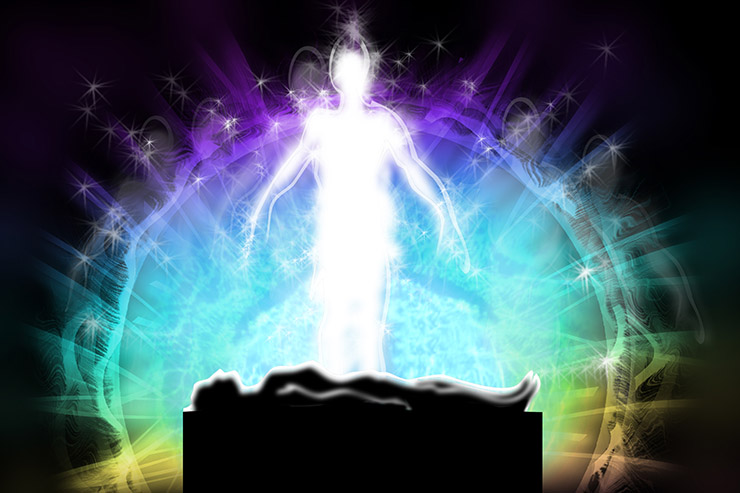
So you’ve had your first out-of-body experience (OBE) and found yourself spontaneously floating from your bed up to the ceiling. Or you’ve read everything you could get your hands on about OBEs, taken a course, joined a forum, traded techniques, and finally you’re standing by your bedside looking at your physical body lying on the bed, knowing that the self by your bedside is the real you, you haven’t died – and it’s true, you’re more than your physical body.
Or maybe you’ve joined a shamanic journeying circle. The leader of the group provides a slow, monotonous drumbeat to lull you into an altered state of consciousness while guiding you through an interior landscape. You see yourself dropping down into a world beneath the ground to locate a power animal, such as a bear or fox, to help you with healing yourself and others. Or maybe you’ve taken the lucid-dream route. You’ve learned to recognise that you’re dreaming while you’re actually experiencing a dream – and you now have unlimited powers of controlling the dream environment and shaping the plot as you wish. Or maybe you’ve had a near-death experience that took you through a tunnel of light, guided by angelic beings to meet dead relatives with a glimpse of the afterlife before being whisked back to your physical body, resuscitated after a medical emergency.
Though each of these experiences seems like a milestone and there are many fellow experiencers who discuss them in books, training, and blog posts, there’s not much information about what happens next. Some people hit a wall, get bored, lose interest. Others move from one to another of the techniques listed above. Then there are the one-time experiencers who’ve had a life-changing mystical revelation while climbing a mountain or listening to music or making love – the boundaries between people, nature, even physical objects were momentarily transcended, and they felt at one with the whole universe. How did that happen – and could it ever happen again?
The problem is that we don’t have a comprehensive map of the inner terrain we’re exploring in such adventures in consciousness. In the case of spontaneous OBEs or mystical experiences, we often don’t know how we got there and have no idea of how to get there again. In the case of better explored and more-travelled routes such as lucid dreaming, we may learn to achieve and sustain the targeted state of consciousness and then run out of ideas about what to do when we’re in it.
Anyone who has experienced or read about more than one of these routes naturally wonders how they relate to each other, intuitively sensing a connection between them. The Internet is full of speculation and theories on the relations between the subjective reality of such states of consciousness and the objective reality of the physical world, ranging from explanations based on quantum mechanics and string theory to the latest developments in neuroscience, which attempts to assign the origins of these states to specific portions of the brain. But none of this helps the one-time experiencer or the practiced-but-stuck explorer take the next step. We need a map that goes beyond the easily achievable milestones and we need goals that motivate us to cover the inner territory between where we are and where we want to be. We need an astral bucket list.
The phrase bucket list refers to things you want to do before you die (i.e., ‘kick the bucket’). For most people, it refers to performing an action long dreamed of and never attempted, possibly difficult to afford or achieve, but considered as the acme of physical, emotional, mental, or spiritual intensity and fulfilment. Skydiving or visiting a place of great natural beauty or spiritual significance such as the Grand Canyon or Machu Picchu would be examples of typical bucket list items. However, these items pertain purely to the physical body.
If we believe that we’re more than our physical body, then we could also create bucket lists for one or more nonphysical bodies. Most people have heard about one of these bodies – the astral (‘starry’) body – so called because it seems to shine with its own light. In the theosophical tradition I’ve researched for somewhat more than a decade, there are other such bodies, each associated with a particular level of being or reality called a plane. Even though this system was developed by clairvoyant members of the Theosophical Society in the late nineteenth and early twentieth centuries, I believe it still has some useful things to teach us – though it requires a bit of modernising before its relevance to such things as OBEs, shamanic journeys, and other adventures in consciousness can be perceived.
Following is a list of bodies discussed in theosophical literature. It’s not exhaustive – these are the ones we’re most likely to experience:
Physical body – the material body we act with on the physical plane.
Etheric body – the body of life force and health, sometimes called the model body since it’s said to be the energetic template from which the physical body is formed; correlated with the physical plane in its less material (‘higher’) aspects.
Astral body – the body we feel with, also called the emotional or desire body, correlated with the astral plane, which most of us experience while dreaming and in which the early stages of the afterlife occur (often cathartic or purgatorial, in that the deceased are shedding negative emotions and unfulfilled desires).
Mental body – the body we think with, correlated with the lower mental plane, where the more heavenly stages of the afterlife are experienced and where institutions of higher spiritual learning and expanded creativity in all areas of human culture may be found.
Causal body – the body we evolve with, our higher self or soul, correlated with the upper mental plane where we choose a location, body, family, and life plan for our next incarnation and where the so-called Akashic records, containing the history of our past lives, may be found.
Buddhic body – the body we intuit with (where intuition represents an instant apprehension of the true nature of things); also the body within which we experience unity consciousness, a mystical blissful oneness with all beings, physical and nonphysical.
Out-of-Body Experiences
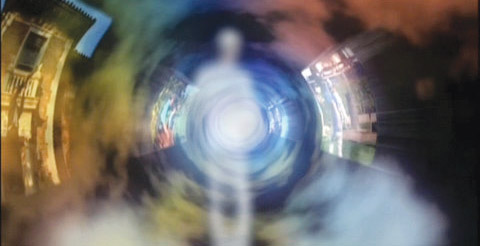
The traditional out-of-body experience that occurs in the vicinity of the physical body is often an indication that we’re in the etheric body. For some people, having such an OBE is a bucket list item. It might include sight without eyes, 360-degree vision, even seeing the fronts and backs of things simultaneously. Movement in the etheric body might be free of gravity, as in levitation. The body might be extendible in any direction, far beyond the reach of physical arms and hands. It might also be able to penetrate and move through physical substances such as wood, metal, or glass. However, its range of movement is usually limited to fifteen to twenty feet from the physical body. It is said that if the etheric body strays beyond that distance, the physical body is in danger of dying.
Etheric OBEs may occur as preludes to nonphysical adventures, in which we visit known or unknown people or locations on the physical plane. But such adventures take place in the astral body. They’re a variety of astral projection – the projection of the astral body away from the physical body so it can travel throughout the physical plane or the astral plane. The learning curve for use of the astral body is greater than that required for etheric body OBEs. Thus there’s often a training period in which we rehearse various skills of perception and movement in the astral body, usually in neutral, dreamlike environments that I call simulations.
A typical simulation environment is like a room that the projector can’t leave without waking up. Usually there’s a problem to solve. When it has been solved, the walls of the room disappear and we may find ourselves on the astral plane. When the problem hasn’t been solved, the simulation repeats itself during subsequent OBEs.
Many beginning projectors give up in frustration when they encounter simulations, not understanding that they are like gyms for the development of the astral body. Thus a useful astral bucket list item is getting into a nonphysical training program for the astral body, perhaps with a special type of spiritual guide that I call a personal trainer who acts as coach and cheerleader, explaining the purpose of each simulation (they often develop in a graded sequence) and suggesting possible solutions for the problems they pose.
Shamanic Journeys
In shamanistic practice, the technique of journeying usually involves three possible destinations:
Lower world – a realm of positive and negative forces and the beings that embody them, often perceived in animal form (power animals) and having to do with disease and health.
Middle world – a realm that closely resembles the physical earth, within which it’s possible to travel anywhere on the planet more or less instantly to see or hear information relevant to the shaman’s questions, as in remote viewing.
Upper world – a bright heavenly region in which it’s possible to contact dead relatives and more distant ancestors, including wise teaching elders.
In theosophical terms, the lower world would be the body consciousness of the physical body. This body consciousness is called the physical elemental. It’s a being in its own right, whose purpose is to hold the body together and ensure its health and survival. If we take care of it by providing the physical body with quality sense experience – nourishing, healthy, tasty food; beautiful sights and sounds; interesting smells and textures; neither too much nor too little sleep, pleasurable exercise, and sexual experience – then this physical elemental is like a well-trained horse and supports us in whatever we do. When we deny or deprive it of such things, it misbehaves, like a horse that wants to throw us off, drag us by the reins, wander off course to eat whatever it wants, or doing all it can to get back to the barn (bed, couch) and do nothing.
Many addictions, whether to food, sex, stress hormones (as in extreme sports), drugs, oversleeping and so on, are indications that the physical elemental needs attention. We’re giving it the wrong food or too much of the right food. If we’re rundown from lack of proper care of the physical elemental, our immune system may suffer and make us prone to illness. In shamanic journeys to the lower world, we can perceive and interact with the physical elemental, perceived as a power animal, to restore such imbalances, finding out what it needs from us so it supports rather than undermines us.
Each of our other bodies also has an elemental that holds it together and ensures its health and survival. Thus the astral body has its astral elemental which needs quality emotional experience such as heart-to-heart connection with others, including partners, family members, and close or best friends. If we get too little of that, we become hard and unsympathetic, inured to our own suffering or that of others. Or our emotional reactions build up until they explode into a dramatic meltdown of operatic proportions. Again, we can use shamanic journeying into the lower world to discover what the astral elemental needs from us to stay receptive to others and remain on an even keel.
The mental elemental holds together our mental body. To survive and thrive, it needs the experience of socialising with others who share our beliefs and values – friends, coworkers, a church-based or other spiritually focused group. If we get too little such social time, the elemental becomes addictively involved in the self-isolating pursuit of interesting information, such as computer searches, cell-phone or video games, and watching endless hours of TV. If we spend too much time among people who do not share our beliefs and values, the elemental causes us to become loudmouthed, bigoted, and argumentative advocates of our beliefs. Thus it could be said that the relative who rants about politics at family holiday gatherings without allowing others to express their own opinions is possessed by an out-of-control mental elemental.
Although I haven’t seen mention in theosophical texts of an elemental associated with the causal body, I’ve encountered this elemental in my own adventures in consciousness. The causal elemental needs the feeling of having a fulfilling purpose in life, of somehow being useful to others. Without a sense of life purpose and an arena within which to act on it – at one’s job, at home, as an avocation, or through volunteer work – the causal elemental shuts down, triggering depression so serious that we lose all interest in life and may not be able to get ourselves out of bed. We feel paralysed. The same effect can develop from pursuing our life purpose too zealously and neglecting our self-care, especially the needs of the other elementals. We experience burnout so severe we can do nothing.
Whether we do too much or too little to satisfy our life purpose and keep the causal elemental in line, if we lose interest in life, the physical, astral, and mental elementals are likely to run riot. It could be said that most of the personal and social problems of contemporary civilisation are the result of elementals on the rampage because we don’t know they exist or how to care for them. If we think of the elementals as power animals and can learn to interact with them through shamanic journeying or other guided imagery techniques, we’ll feel more purposive and peaceful. Since other people’s elementals and our own often influence each other (this is why bad moods or depression in family or office tends to spread), our peacefulness may encourage their restive elementals to settle down too.
The physical, astral, mental, and causal elementals are examples of a nonhuman type of consciousness that evolves in parallel with human consciousness. In theosophical teachings, this nonhuman evolution is called the deva realm – deva is a Sanskrit word meaning “shining ones” – a continuum that includes elementals at its lower end, nature spirits such as elves and fairies in its middle ranges, and angels and archangels at its upper end.
I recommend an astral bucket list item that involves learning to perceive and interact with our physical, astral, mental and causal elementals. When we learn to work with the elementals, we’re using our etheric body, and that may open our inner senses to perceiving other beings of the deva realm, such as nature spirits. By making friends with our elementals, we stabilise our subtle bodies, making our exploration of these bodies through astral projection much safer.
Shamanic journeys to the middle world are a species of astral projection on the physical plane, already discussed. Similarly, journeys to the upper world might involve projection to the areas of the astral plane in which the dead abide for a time; or those of the mental plane in which more highly developed souls of the dead or master teachers may be found (wise ancestors and elders).
Lucid Dreams
As mentioned, once the big event occurs – becoming aware that you’re dreaming while still in a dream – you can shape the dream environment and plot at will. The possibilities seem endless. You can slow down or speed up dream events. You can make objects or characters appear or disappear. You can completely transform the dream environment. You can will the dream characters to do whatever you wish. You can transform yourself, making yourself big or small, young or old, attractive or repellent, or shapeshifting into heroes, animals, mythical beings. You can alter the plot or create a completely new plotline. You can even pursue multiple endings as a means of creative problem-solving.
A popular scenario is shaping a dream along the lines of a sexual fantasy and experiencing one or more climaxes wherever, whenever, and with whomever you choose. But after a while these infinite possibilities may pall. You run out of ideas. You’ve done it all before. Even lucid sex dreams lose their appeal. What next?
Your lucid dream experiments probably took place on the astral plane where most dreams occur, and you were in your astral body. You were experiencing what I call the private areas of the astral plane Dream Zone, where dreams of a personal nature occur. There are also public areas of the Dream Zone where it’s possible to interact with astral beings and environments rather than those of your own creation. Next time you’re lucid, ask to see these public areas. You could even request an astral guide or teacher to take you there. One test of your readiness for such exploration is whether you can tell the difference between a dream character you’ve invented and an astral being such as a guide or teacher.
Your bucket list for exploring the astral plane Dream Zone might include the following areas:
Passive Learning Zone – movie theatres, often grouped in clusters by theme, in which dreamers watch the playing out of solutions to various typical human problems (family, romance, work, etc.); the plots are archetypal but the imagery is usually drawn from each viewer’s life.
Interactive Learning Zone – classrooms, seminars, or universities where higher spiritual beings act as teachers, not merely providing solutions to earth-plane problems but also teaching methods of problem-solving from a higher spiritual perspective.
Guided Learning Zone – meeting places for one-on-one guidance from a nonphysical spiritual guide or teacher, usually involving the realisation of creative and entrepreneurial projects.
Simulation Zone – a sequence of environments, perceived as rooms from inside and biodomes from outside, in which the already mentioned training program for the astral body occurs.
Similar areas exist in the mental plane Dream Zone, including a sequence of simulations for training the mental body.
Near-Death Experiences
NDEs may go through the following stages, though not every NDE includes all of them and some stages are rare:
- Serious medical crisis
- OBE on the physical plane, near the physical body, perceiving the actions of people on the scene of an accident, including paramedics or medical personnel in an emergency room or operating room
- Passage through a tunnel of light
- Meetings with dead relatives
- Review of the experiencer’s life
- Encounter with a being of light who acts as a judge of sorts, indicating what the experiencer has or has not learned in life and offering the choice or requirement of return to the physical body
- A tour of the afterlife, which might include hellish, purgatorial, and/or heavenly realms
- A tour of the universe, which might include encounters with god-like beings and information concerning the origin and purpose of creation
- Return to the physical body after resuscitation
Some NDE experiencers discover upon return that they can experience astral projection spontaneously or at will. Others cling to the ecstatic and transcendental aspects of the experience wishing they could return to the light or recall more about their tour of the afterlife or the universe. Those of us who read about NDEs might wish we could verify what they reveal about the afterlife through personal experience – without the medical crisis. Why not?
The NDE often begins with an etheric body OBE. The realms through which the experiencer passes may include locations on the astral or mental plane. Tours of the universe may require a higher body, perhaps the causal or buddhic. In other words, each stage of the NDE corresponds to a plane or body described in theosophical teachings. We don’t necessarily need a medical crisis to experience them. We just need to learn how to access and move about in our nonphysical bodies. Therefore, the NDE stages listed above are a bucket list for astral projectors who want to go beyond bedroom-based etheric body OBEs and explore astral and mental plane locations in the afterlife – especially the possibility of visiting deceased relatives or friends.
Other Gateways
Another means of accessing various bodies and planes is remote viewing, in which the practitioner enters a trance-like state, sometimes through meditation, sometimes through the use of sound technologies designed to produce altered states of consciousness through modifying brain waves. They are able to visit and report back on things seen and heard at a remote location known or unknown and confirm the accuracy of what was perceived. Like shamanic journeys in the middle world, this is a type of astral projection on the physical plane, though the experience of leaving the physical body, as in an OBE, may be absent.
It’s possible to extend this approach to visit any of the planes. The reason it works is that the nonphysical bodies surround the physical body in layers, making up our energy field or aura. If we can access any of these layers, we’re instantly in touch with and can use the body associated with it, and can perceive and move on the appropriate plane. Ultimately, it doesn’t matter whether we gain such access through OBEs, shamanic journeys, lucid dreams, NDEs, remote viewing, or meditation practices. Even the use of hallucinogens is simply another means of moving between the layers of the aura, accessing one or another subtle body, and experiencing the plane it belongs to, along with its scenes, dwellers, and phenomena.
How to Get There
In the 1920s, a theosophist by the name of Arthur Powell compiled a series of books about the subtle bodies, drawing upon dozens of books written by Annie Besant and Charles W. Leadbeater, the primary clairvoyant investigators of these bodies within the Theosophical Society from the mid-1890s to the early 1930s. (Besant died in 1933 and Leadbeater in 1934.)
The Etheric Double: The Health Aura of Man (1925) – Little in this book is of use to astral projectors; what might be of value is repeated in the next volume of the series, so you can skip it.
The Astral Body and Other Astral Phenomena (1927) – This book is a goldmine for projectors, perhaps the most complete study of the astral body and plane that has ever been attempted; the sometimes obscure theosophical terminology is clearly laid out, and the inhabitants and environments of various regions of the astral plane (here called subplanes) are described in detail, providing many possible astral bucket list destinations.
The Mental Body (1927) – This book, too, is a goldmine, but only for more advanced projectors; if you’ve thoroughly explored the dream and afterlife areas of the astral plane, you’ll get some hints of what to expect when visiting their mental plane equivalents – and more locations to add to your bucket list.
The Causal Body and the Ego (1928) – This is a very technical book, dealing with the upper mental plane, which is more abstract (i.e., less time and space oriented) than the lower mental plane described in the previous book; only the most advance projectors are likely to understand and make use of it, though it does provide rare descriptions of the buddhic plane and body to add to your bucket list.
Once you’ve made up your astral bucket list from reading books such as these, or ones by more contemporary adventurers, you’ll need to treat it just as you would a physical plane bucket list. Yearn to visit the nonphysical locations on the list, just as you would yearn to go to Machu Picchu or any other place on a physical plane bucket list. Be patient, since there are tasks you may need to accomplish before you can make the journey. On the physical plane, visiting Machu Picchu may require getting a passport and certain vaccinations, learning the language, acquiring the local currency; on other planes, you may need to demonstrate you can use the body associated with it and communicate with the beings you encounter. Just as you’re likely to record your trip to the Andes in photographs and videos, so you should record your adventures in consciousness in words in a journal. That’s the only way to see how the bodies are developing as you visit and cross off items on your astral bucket list.
I mentioned having a passport for physical plane journeys. There seems to be a passport for the higher planes as well. It’s the attitude of service – being willing to help those who suffer at any level of being through any means available to us. It could be the living, comforted through astral body visits; or the dead, shown the way in the afterlife when they’re disoriented after passing. It could be our own neglected elementals, or devas or master teachers who have missions for us to perform on various levels of being. In theosophical teachings, such service is called being an invisible helper. In New Age teachings, it’s called being a light worker. No matter what we call it, the desire to be of service on any plane marks our aura so we can be perceived by nonphysical beings as someone who needs and deserves instruction in how to navigate the bodies and planes.
[alert type=”general” dismiss=”no”]This article was published in New Dawn Special Issue Vol 11 No 6.[/alert]
[alert type=”success” dismiss=”no”]If you appreciate this article, please consider subscribing to help maintain this website.[/alert]
© New Dawn Magazine and the respective author.
For our reproduction notice, click here.