New Dawn – World's Most Unusual Magazine

Category: Afterlife

  • Helping Stuck Souls Crossover

    Helping Stuck Souls Crossover

    When I was twelve years old, my brother – a Funeral Director – began introducing me into the business. Over the next several years, he taught me anatomy and physiology, principles of mortuary science as well as other aspects of the profession. By the time I was twenty-one, I had completed my mortuary apprenticeship, but decided to leave the profession and pursue a degree in psychology.

    Working in the funeral business gave me a rich understanding of the dying process, people’s experiences at death and personal experiences preparing the body for burial. It was here that I became acquainted with a phenomenon I call “the watchers.” Both my brother and I, at times while preparing the body, would feel the soul of the departed watching us. It was as though there were three people in the preparation room rather than two.

    The other interesting phenomenon I became acquainted with during this time was the many stories of deathbed visions. Families would often talk about the last hours or days before their loved ones died. It was during these times that family or friends who had died would visit the dying person and within hours or days, and sometimes a week or so, the person would die. Some dying people would see a closed golden or brilliant white door, and later report the door had opened, and soon they would be dead.

    Working with the Dying

    These experiences and stories stayed with me as I completed my undergraduate and graduate degrees in both psychology and counselling. I eventually set up a counselling and psychotherapy practice in the state of Ohio and within six years I was in an internship at the Cincinnati Health Department’s STD Clinic. During the first year at the STD clinic, I began working with the first AIDS case in the Cincinnati area, and eventually worked with others who were diagnosed with the disease.

    At the time, there was no treatment for AIDS, so I began helping people with this disease go through the dying process. Working with those dying of AIDS, I encountered much fear and anxiety regarding dying, death and the afterlife. I immersed myself in Eastern and Western literature on death, and began attending a local near-death experience group to find a solution to my client’s fears and anxieties. After accumulating a large body of information, I created guided imagery to take my clients into the light. This imagery was targeted to reduce their fears and anxieties. However, what occurred on their inward journeys were profound mystical experiences, in which they encountered deceased relatives and loved ones. I was simply awe-struck by this outcome.

    Discovering Some Souls Do Not Cross Over

    The stories I heard in the local near-death experience group helped me craft the guided imagery, but I also learned all souls do not go into the light at death. One of the men in the group was Howard Storm, an atheist, who had a hellish negative near-death experience in which he was lost in an agonising darkness taunted by shadowy creatures. He came to realise he was dead and after saying prayers his mother taught him in childhood, he was immediately escorted into the light by a light being. According to P.M.H Atwater1 about 15% of adults have had near-death experiences similar to Howard Storm. It soon became obvious the guided imagery I created not only helped my clients reduce their fears and anxieties, but I was taking them on an inward journey directly into the light, avoiding the hellish experience Howard Storm encountered. Decades later, Howard published his near-death experience in the book My Descent into Death: A Second Chance at Life.2

    A few years later, while working with The Monroe Institute, an organisation using sound frequencies to produce out-of-body experiences, I learned that they had helped a confused soul move into the light. An Institute facilitator using this technology connected with a man whose ship had sank in the early 1800s. This man was still in the water holding onto a wooden part of the ship, but unlike Howard Storm this soul did not know he was dead. The facilitator eventually convinced the man he was dead. He was told to look up and he would see a light. He reported he did see the light. The facilitator then convinced the man to let go of the wood and go toward the light, which he finally did.

    During this period, I began teaching a course in parapsychology at the University of Cincinnati, and soon the Psychology Department was sending me referrals of people who were having unusual experiences, primarily hauntings. I set up a small research team and began investigating these phenomena. I discovered these hauntings were caused by souls who had not gone on into the light at death because of various reasons. Some of these souls died a violent death, some saw the light but decided not to go into it because of unfinished earthly business, while others appeared to be lost or addicted to earthly pleasures, and some were just astral shells.

    There were some souls that appeared to have gone into the light, but their astral image was left behind imbedded in what Eliphas Levi called astral light.3 Astral light is the spiritual substance emanating from the upper and lower astral planes that interpenetrates physical reality. Astral planes are areas in spiritual reality manifesting intense feelings and emotions. The upper astral plane expresses positive feeling and emotions and the lower expresses negative feeling and emotions. When souls die a violent death, or sudden death, their soul image is fused into the astral light with intense emotions coming from the lower astral plane. These ghostly images are astral shells and have no soul essence or spiritual identity. These astral shells, as in most ghostly encounters, re-enact over and over the drama the soul experienced at death, which is usually traumatic.

    A few years later I encountered a totally different soul experience called twin souls. In this case, a soul named George decided not to go into the light, but remain in the hinterlands between the earth plane and the light waiting for his twin soul named Jean to die.4,5 According to George, as twin souls they needed to merge back into one soul and that can only be possible after Jean dies. Once Jean dies, she will be like George in spirit form, and they can both go into the light together, and eventually merge back into one soul.

    Up until this point, working with these unusual cases, I found myself becoming more open and receptive to souls who had died. With George, I could feel his presence and energy at times all around me – he would come into my meditations, and I could see him clearly. These experiences were laying the foundation for what was to come, which would change my life forever.

    Messages from the Other Side

    The major shift happened when an old friend died, an Episcopal Priest, I had known for years. I was distraught for weeks after his death. My melancholy mood suddenly lifted when in the middle of his memorial service he spoke to me. He said in his voice as though he was speaking to me in life, “This is Wayland, thanks for coming, I’m okay, I’ll see you later.” I was stunned! This was the first time anything like that had happened to me. I was now spiritually open and could not go back to the way I was.

    A few years later my father was diagnosed with lung cancer and it had metastasized to the brain. I made a decision to set aside specific career goals and instead listened to his concerns about the dying process and his inevitable death. I eventually asked him if any of his loved ones, who had died, visited him. He said his mother visited him several times. I knew at that point he would be joining her soon, and he did two weeks later.

    That following Memorial Day, my life partner and I visited my mother, and we all went to the cemetery to decorate my father’s grave. I was alone looking at his gravesite, reflecting on the many things we had done together in life, then like the experience I had with Wayland, my father spoke to me. In life, when he wanted to get my attention, he would address me by my middle name, which is “Wayne.” In his voice, he said, “Wayne I’m not there. Wayne I’m not there.” After that day, I only visited the gravesite once, when my mother died. I will never visit it again because he told me he was not there.

    These afterlife encounters opened up a portal between the earth plane and the light, and the landscape in-between. This portal has allowed me to connect with the deceased in the afterlife, in ways I had never thought possible before. Realising the fullness of the afterlife has added richness to my life, and given me a direction for my own spiritual journey. The experiences with Wayland and my father have opened a vast horizon, working with other departed souls.
    [alert type=”info” dismiss=”no”]If you appreciate this article, please consider a subscription to New Dawn magazine.[/alert]

    Helping Souls Go Into the Light

    After the Memorial Day encounter with my father, my personal armour was shattered, leaving me open to other afterlife experiences. About a year later, my life partner and I were visiting my mother when another life expanding experience flooded into a nightly dream. I had read several biographies of the actor James Dean, and had visited his hometown in Indiana. While at my mother’s, I had a dream of the late actor. Suddenly, the dream motif shifted, and I found myself in a grayish sepia-tone room. The room looked like a concentration camp cell with dingy bunk beds, two beds high. On one of the beds was Paul, a childhood and adolescent friend who died of an overdose a few years earlier. Besides me, he was the only one in the room. He looked gaunt and dishevelled lying on the bed. He looked up at me and said, “Gary, where am I?” I told him he was dead and that surprised him.

    During meditations, I worked with Paul helping him move out of the place he was in. Together we created a new home for him that was bright and sunny, overlooking a beautiful green valley. Paul continued to be with me for the next several years. At times, I could feel his presence and he would come into my meditations, to work on earthly issues, primarily his drug and alcohol addictions. Then one day he told me he was moving on, and thanked me for helping him. I saw Paul in my inner world or inner vision walking toward the light and disappeared. I haven’t felt his presence, nor has he visited me in my meditations, since that day. I feel he is now in a better place in the afterlife.

    Shortly after Paul left, another experience came into my meditations; it was my mother. She died a few months previously, and I thought my father was there to welcome her into the light. However, this was not the case. My mother was a very religious woman who tried to help many people in need, but she thought she was doomed to hell because of certain thoughts she had. She never revealed what those thoughts were. In the meditation she said, “Gary Wayne, I’m lost.” She repeated that over and over. Like my father using my middle name, my mother always referred to me as Gary Wayne. I immediately came out of the meditation. I could not see her, but I felt her presence and heard her voice.

    Knowing she was lost in some darkness she had created out of guilt regarding her thoughts, I began helping her move on. Over the next several weeks during meditation, she would come to me. I told her my father and her mother was waiting for her in the light. I told her to look for a white door with light shining all around the edges. It took her a while to find the door and slowly over the next few weeks I helped her move closer and closer to the door as her fears slowly abated. I continued to reinforce that my father and her mother were just beyond the door, and all she had to do was to open it and go through. I finally convinced her to put her hand on the levered door handle, and that was the last time I heard her or felt her presence.

    Being open to the afterlife has allowed other souls who have died to contact me. During the 2009 Christmas holiday season, another old friend entered my awareness. While sitting watching the fire in the fireplace a shadowy figure crossed the living room, and then in my inner awareness an image of Greg popped in, with a strong feeling of his presence. Somewhere in the centre of my mind he spoke to me about our last encounter, which wasn’t pleasant. I had known Greg for thirteen years from the time he was fifteen. His brother and I were life-partners for nine years, and finally broke-up. After the break up, Greg and I remained friends. However, Greg’s wife was in contact with my ex, which created insurmountable problems. So, I decided the only way to deal with the issues was to cut off all communication with Greg and his wife.

    In spirit, Greg told me he was devastated by my decision to cut off all communication because he felt we were like brothers, and this caused him to go through a severe depression. In the afterlife, he could not move on until we dealt with this unfinished business. During meditation, Greg would come to me and we went through a process of forgiveness. After forgiveness, he told me it was time for him to move on. Like the experience with Paul, I saw Greg walking toward the light and disappeared. I have not felt his presence since that day.

    Growing up in the racist South, I was influence by racism all around me. One night in a house on our property adjacent to the main house, I was playing an old piano. The door unexpectedly opened and there stood a black man whom at first I didn’t recognise. After a few moments, I recognised him; it was James, a former high school basketball player that came to our school during integration. At the time, I had no black friends and felt very uncomfortable with him being in my presence.

    However, over the next few weeks, James would drop by at night, and we would play the piano together. I was still uncomfortable with him, but I tolerated the situation. One night, full of bourbon and a strong dose of racism from a white neighbour, I was drunk, and ready for a confrontation. When I came home, I heard the piano playing, opened the door and there sat James at the piano with a big smile. A horrible confrontation ensued, and I ran James off our property with a cacophony of racial slurs. Weeks later, I felt horrible guilt and shame over the encounter, but never saw James again.

    Then in November 2011, he returned. I was reflecting on various students I have taught over the years. I was thinking about an African American student, I had helped work through a bad divorce. Suddenly, another African American replaced his image, a man I had long forgotten: James. It was as though his energy was all around me. I simply couldn’t shake it. It felt like one of those experiences where you feel a person’s presence, or they pop into your mind, and shortly afterwards they call you on the phone.

    The feeling was so intense. I looked on the Internet to try to find him because I wanted to apologise for what I did over forty years ago. I had no luck, but the feeling persisted. For two days, I felt possessed to find him. Finally, on the third day, I located his sister. She told me he married a woman in Scotland, had two daughters and died there in 1986 of Lou Gehrig’s disease. I was stunned!

    Knowing he was dead, I decided to use imagery I had learned from my Theosophical training. In the imagery, I created a room in my inner world in what Henry Corbin6 would call the imaginal realm, between the physical and the spiritual world. I decorated the room to my personal taste and specifications. I focused on the last image I had of James, and asked him to knock on the door to the room. Suddenly, there was a knock, I opened the door and there stood James as I last remembered him. James and I sat facing each other in deep conversation in front of a burning fire in the fireplace. Over the next two years, we worked things out and ended with forgiveness. The last time I saw James, he was walking toward the light and disappeared.

    Reflections on These Soul Encounters

    Why did these souls come to me? It is apparent all these souls wanted me to know something specific about their situation. Wayland and my father wanted me to know they were okay. Paul and my mother wanted me to help them out of the dire situation they had created for themselves. Greg and James wanted to bring closure to unfinished business between us.

    My interaction with these souls has totally changed my life, and has confirmed all souls do not go into the light at death. There are many ways to contact the deceased. My experiences are just a sampling of the experiences people have. One thing I know without question is there is no death, just a passage from one world into another. Keep in mind that whatever we physically acquire during this lifetime remains in this lifetime. At death our souls disconnect from our physical bodies and move on, taking none of the things acquired in this lifetime. Remember, we are just passing through here, so think about the kind of impression of yourself you want to leave behind.

    [alert type=”general” dismiss=”no”]This article was published in New Dawn 143.[/alert]

    [alert type=”success” dismiss=”no”]If you appreciate this article, please consider subscribing to help maintain this website.[/alert]

    Footnotes

    1. P.M.H. Atwater, The Big Book of Near-Death Experiences, Hampton Roads, 2007, 26.
    2. Howard Storm, My Descent into Death: A Second Chance at Life, Harmony, 2005.
    3. Eliphas Levi, Transcendental Magic, Samuel Weiser, 1972, 63, 66-67.
    4. Gary W. Duncan, “Twin Souls Merging, Another Look”, New Dawn 142 (Jan-Feb 2014).
    5. Jean A. Cline, Gary W. Duncan & Daryl I. Coston, Twin Souls Merging, Jillett Publications, 2007.
    6. Henry Corbin, Mundus Imaginalis or the Imaginary and the Imaginal. An Annuel of Archetypal Psychology and Jungian Thought; http://hermetic.com/moorish/mundus-imaginalis.html

    © New Dawn Magazine and the respective author.
    For our reproduction notice, click here.

  • Embraced by the Light: Journeys to the ‘Other Side’

    Embraced by the Light: Journeys to the ‘Other Side’

    Ancient religions including the shamanic traditions are replete with myths regarding the dying and death process. It was believed within these traditions that when a person died their soul was escorted into the afterlife by a special being called a psychopomp. In Greek psycho means soul and pomp means guide, so a psychopomp is a guide of the soul. In our modern world, the psychopomp tradition has changed to not only helping the dying, but also helping people develop their own specific spiritual path while living.

    In 1983, I began a two-year internship at the Cincinnati Health Department’s Sexually Transmitted Disease (STD) Clinic. At the time, I had no idea what was in store for me regarding my own talents in creating guided imageries, which eventually led me to become an ordained Gnostic Catholic Priest as well as a modern day psychopomp.

    Within a few months into my internship, one of the counsellors informed me that the clinic had received the first AIDS case in Cincinnati. He asked if I was interested in working with him on the case, and I jumped at the opportunity. Throughout the internship and months following, we worked together on that case as well as other AIDS cases. I became a specialist in HIV and AIDS as well as other sexually transmitted diseases.

    Creating Journey Into The Light Imagery

    Working with HIV and AIDS afforded me the opportunity to begin working with the terminally ill. At the time, AIDS was a death sentence and it wasn’t long before I began counselling the dying. It soon became evident that several of my clients with AIDS had intense fears and anxieties around dying and death, so I decided to create imagery to help relieve their fears.

    I plunged myself into various types of meditation, Kabbalistic pathworking, imagery techniques, hypnosis, as well as rituals from a variety of religious traditions. I searched the esoteric, spiritual and scientific literature, and attended workshops and seminars on dying and death. But what brought all the information together was the local near-death experience group. It was here I heard personal stories that enabled me to craft the imagery that would help my clients reduce their fears and anxieties regarding dying and death.

    The imagery utilised various components of the near-death experience as well as the Tibetan Buddhist bardo journey. I also felt music along with mindfulness meditation would help my clients settle into a relaxed posture. I experimented with various types of music and found the perfect compositions by Marcey Hamm called Inward Harmony. The reason I chose this composition was the way it sounded, coupled with a profound testimonial. After one of Marcey’s concerts a man came up to her and told her several years ago he had a heart attack that was accompanied by a near-death experience. When he went through the tunnel into the light, the music he heard in the experience was the same as Inward Harmony.

    Once finalised, I began using the imagery. I had my clients relax in a recliner and helped them move into a mindfulness meditation, while Inward Harmony played in the background. Once relaxed, I told my clients they have two bodies, a physical body and a soul body. I incorporated the Eastern religious belief that at death the soul moves out of the body through the crown or seventh chakra at the top of the head. Once their souls were out of their bodies, two beings of light were waiting for them. The beings of light escorted their soul bodies through a tunnel of darkness toward a dot of light that expanded, as their souls got closer. Once in the light, I left their soul bodies there for thirty minutes, and then had the beings of light escort the soul bodies back. Once back, I brought their soul bodies into their physical bodies, and then counted them out of the experience.

    Although the imagery was designed to alleviate fears of dying and death, which it did, there was also an unexpected effect. At the time I assumed the imagery was just a made up drama occurring in the mind, similar to other imageries I used professionally. But all the clients I used this imagery with had profound mystical experiences when their soul bodies were out of their physical bodies and in the light.

    Experiences With The Imagery

    The first client I used the imagery with was Mark, and he was in extreme physical pain and going blind, complications from AIDS. He had a fear of dying based on his Roman Catholic upbringing around sin. When I first took Mark’s soul body out of his physical body with the imagery, his physical body became very calm and peaceful as I gently guided him into the light. When I brought him back into his physical body and into ordinary reality, I asked what had happened? He told me he met his sister. Your sister who lives in a nearby town, I queried? “No my sister who died before I was born,” he answered. I was startled and stunned by his answer.

    In a later journey, Mark told me he met his grandmother who raised him and had died several years before I started seeing him professionally. At the time I couldn’t figure out what was happening inside Mark’s mind. Mark was slowly going blind but with these inward journeys into the light he was becoming calmer and more peaceful and could see the inner experiences clearly. Mark’s experiences were so profound he asked if I would promise him that when his life partner James was ready to die, who also had AIDS, I would take him through the imagery as well. I promised him I would.

    Within a few weeks Mark was completely blind. The imagery worked so well that he wanted to know of any method I knew that would allow him to see the physical world with a different set of eyes. The only method I could come up with was the out-of-body experience method pioneered by Robert Monroe at The Monroe Institute. The Monroe method I practiced myself, and it works. So over the next few weeks, I taught Mark the method and he began practicing it with success. He finally related that he could see the physical world, but it was different.

    Shortly after teaching Mark the Monroe method, he was admitted to the hospital for the last time. As Mark lay dying on the hospital bed, his father told me Mark came out of a deep sleep and said he saw me and his mother in the room. His father asked the physician about Mark seeing them and was told it was just the morphine. Maybe yes, maybe no.

    I became more baffled with the information Mark shared with me. I could not understand what was happening in the imagery process. I had believed the imagery experience was only occurring in the mind. I could not explain his unusual stories. I definitely did not think I was actually escorting Mark’s soul into the light.

    I continued using the imagery with people who were dying and they all had similar results until I met Phyllis. Phyllis was not dying, but in deep grief over the death of her father resulting from a severe long-term illness. I took Phyllis’s soul body on the inward journey into the light and left her there for thirty minutes. When I brought her back into her physical body, out of the experience, she began crying. I allowed her time to regain her composure and asked what happened in the experience. She reported meeting her father in the light and he had his dog with him. She revealed her mother hated dogs, and would not allow her father to have one. Her father kept in his wallet a picture of the breed of dog he loved, and when she met him in the light the dog in the picture was with him. This experience with her father in the light lifted the severe grief she had over his death and she now knew he was in a better place.

    Hearing these experiences only confused me further because I didn’t know what to make of them. What was I doing? Was I actually taking their souls or consciousness out of their bodies on a journey into the light? I was at a loss to explain what I was doing until I began working with Mark’s life partner James whose experience put it all together for me.

    James was Roman Catholic and, like his life-partner Mark, had a deep terrifying fear of death because of the extreme guilt of having AIDS. His dying process was painful and fraught with many bouts of denial. At times he could not bring himself to discuss death and had the delusion he would be cured. Working with James had a major impact on me, both psychologically and spiritually.

    As I watched James deteriorate, it became evident he was running out of time. The promised I had made to Mark kept running through my mind to help James with the imagery when the time came, and the time had come. It took several months to prepare James for the imagery experience with much resistance on his part. Even discussing the imagery produced extreme anxiety and fear because it signalled his death. However, during the imagery preparation, James was diagnosed with a resistant strain of bacteria that was infecting the frontal lobe of his brain, a complication from AIDS. Within a week after the diagnosis, he was in a semi-comatose condition and placed in a hospice.

    I began visiting the hospice weekly along with my life-partner Daryl, who also knew James. During those visits I was hoping James would become conscious enough so I could take him on the journey into the light. I explained to the hospice nursing staff about the imagery and how it worked and they were very supportive. On every visit, James’s nurse would give me the gloomy prognosis as he slid deeper into a semi-comatose condition.

    I would stand beside James’ bed and talk to him as if he was fully conscious with Daryl standing on the other side of the bed just observing. After leaving the hospice on several occasions, Daryl and I discussed James’ condition and his lack of response to any verbal communication. We decided, although James was semi-comatose, I should still take him through the imagery experience as promised. James would be the first semi-comatose client to experience the imagery and I didn’t know if it would work.

    The following week Daryl and I visited James with the intention of taking him through the imagery. James lay in bed shaking and screaming as I began playing the musical composition Inward Harmony. In James’ semi-comatose condition, I did not know if he could experience the music but I continued anyway. As before, Daryl stood on one side of the bed and I on the other.

    With music playing, I began talking to James, guiding him into a mindfulness meditation as his body continued to shake. Then I told James he has a soul body connected to his physical body. His soul body is disconnecting from his physical body and moving toward and through the top of his head. When I told James his soul body was out of his physical body, his physical body stopped shaking and he went silent. I looked at Daryl and he looked at me with a questioning expression. I shrugged and shook my head indicating I had no idea what was going on inside James. This experience was unexpected.

    I continued guiding James’ soul body through the ceiling and up through the next three floors of the hospice facility. On the roof there were two beings of light. One took James’ right hand and the other took his left hand and escorted him through the darkened tunnel into the light. In the light I told James he would meet his loved ones who had died, especially Mark, and I would leave him with them for thirty minutes and then guide him back.

    After thirty minutes, I had the beings of light escort James back to the hospice roof. I brought James’ soul body back down through the three floors. When I told James his soul body was re-entering his physical body, James screamed and his body started shaking again. I had performed the imagery many times and heard many experiences, but nothing compared to this. At that moment my worldview was shattered and knew I had experienced something profound. A new insight flooded my awareness; I suddenly became uncomfortable performing the imagery as a psychotherapist and knew I had a spiritual and religious calling. Moreover, I knew the clergy and not a psychotherapist should conduct the imagery because we are not trained to work with the mystical experiences unfolding before my eyes.

    A week later, still trying to understand the ramifications of the experience, I received a call from James’ mother informing me he had died. She requested I go to the hospice, gather his belongings and bring them to her. I agreed, went to the hospice and it so happened the nurse who was with James when he died was on duty. Gathering James’ belongings the nurse and I talked about his death. She informed me she had seen many people in semi-comatose conditions die, but James’ death was different. She said she watched him for a long time and noticed a subtle comfortableness slowly settling over him. He became so serene and then he was gone. She indicated it was a beautiful death and attributed it to the imagery.

    Forgiveness & Comfort by Way of the Light

    I had now used the imagery with the dying, and those in grief and in a semi-comatose condition, but had not used it with people in preparation for death long before they died. I started working with Jack who is one of the longest survivors of AIDS. His viral load was non-detectable and he was living an ordinary life given his condition. Jack contacted me for spiritual direction with an emphasis on preparing him for his eventual death. It took about a year to get Jack ready for the imagery experience.

    In preparing Jack, one of the issues he had to address was his parents, who were deceased. Jack came from a highly dysfunctional alcoholic family. He grew up feeling unloved and rejected by both his parents. He knew his father hated him and was physically abusive. His mother was critical and condescending; he felt totally rejected and unloved. Jack hated his father for physically abusing him and disliked his mother for constantly telling him how stupid he was. There was a lot of unfinished business between Jack and his parents.

    After working with Jack’s issues around his parents and those related to AIDS in conjunction with his psychiatrist, he felt ready to journey into the light. He felt going into the light would create a sacred path when his earthy journey finally ended. He had no expectations as to what would happen or what he would see. He just felt he would be closer to God.

    I took Jack on the journey into the light and after thirty minutes brought him back and out of the experience. He sat for several minutes with tears streaming down his face. As usual, I had Kleenex on hand and waited for him to gain composure. Between emotional outbursts, he informed me he met both his father and mother in the light. Until that moment, he had hated his father and disliked his mother intensely. In the light, Jack was able to forgive them both and they accepted his forgiveness and told Jack they regretted how they treated him and they both deeply loved him. As Jack sat crying, he told me they all hugged each other and all experienced total forgiveness. The experience changed Jack’s feelings toward his parents. Jack now knows when he takes his final journey his parents will be waiting to welcome him into the light.

    After working with Jack, I began wondering what healthy people would experience with the imagery. Within a few months, I was asked to present a lecture and a workshop at a local annual spiritual conference. I decided to present a lecture on near-death experience and reincarnation and a workshop on the imagery. The lecture was a packed house and the workshop had about seven participants. This was fine with me because the journey into the light with healthy people was purely experimental. I had no idea what the participants would experience, if anything.

    The workshop was a two-day affair. The first day I gave a lecture and taught the small group how the imagery was to be done, and ran through a practice session. It all ended with questions and answers. The group was very lively with two of the woman very talkative and humorous.

    The next morning I took the group through the imagery and after thirty minutes I brought them back. The two women who had been very talkative were in tears and would not discuss what they had experienced. One of the women did say she met her husband who had died the previous year. The other woman made no comment, she just sat with a glazed look. Two participants, a man and a woman, decided to share their experience with the group.

    The man said his wife was very beautiful in life. She died three years previously of Alzheimer’s. They had a wonderful life together and he stressed they made love all through their marriage until the disease took over. He recalled how when I took him into the light there she was, as beautiful as ever. He said she was so beautiful he became sexually aroused and wanted to make love with her, then suddenly realised where he was and decided that was not the place to make love. He thanked me for uniting them once again.

    The woman had a totally different experience involving her pet cat. She said she was so attached to her cat that when it was time for the veterinarian to put it to sleep, she could not bring herself to be there when it happened. She left the vet’s office in tears, leaving her cat alone to its fate. Afterwards, she felt extreme guilt over her reaction, leaving her poor cat to be put to sleep all alone. While in the light, she met her cat and it forgave her. Meeting her cat once again allowed her to let go of her guilt.

    These experiences with healthy people are similar to those I had worked with up until that point. The question I continue to ask myself: am I actually taking these people’s soul bodies into the light? I have also taken myself into the experience and had a profound awakening. My experience was very different. I found myself in the light and in front of a screen of white light with silhouette figures behind it. Then aspects of my younger life began to unfold before my eyes on the screen. Questions about my life I had meditated on for years were answered. The experience was similar to a life review, but just answers to the questions I had and not my total life’s experiences. I also knew if I crossed the screen of white light I would not return into my physical body.

    Conclusion

    As a modern day psychopomp, I find these experiences uplifting; they have given me an intimate knowing of our next journey. These experiences are similar to what near-death experiencer’s have. I have taken people into the light and brought them back, and they now have an understanding of that final journey. Each journey is shaped by the life experiences of the journeyer. What needs to be addressed in the experience is addressed. In all the cases I have worked with, after the journey there is no fear of death.

    Check out Rev. Gary’s other articles published in New Dawn: “Helping Stuck Souls Crossover” in New Dawn 143 & “Twin Souls Merging” in New Dawn 142.

    [alert type=”general” dismiss=”no”]This article was published in New Dawn 144.[/alert]

    [alert type=”success” dismiss=”no”]If you appreciate this article, please consider subscribing to help maintain this website.[/alert]

    References

    Marcey Hamm, Inward Harmony (Musical composition), www.musicbymarcey.com

    Robert A. Monroe, Journeys Out Of The Body, Doubleday, 1971

    © New Dawn Magazine and the respective author.
    For our reproduction notice, click here.
  • Reincarnation: The Eastern View

    Reincarnation: The Eastern View

    Reincarnation has become an increasingly popular doctrine in the West. For example, polls taken in the US over the past couple of decades have shown that between 20 and 28 percent of the population believe in it. The figures for western Europe are similar.

    What explains the appeal of an idea that until recently was the province of a few occultists and eccentrics? Some of it can be explained by the appeal of Asian religions, such as Hinduism and Buddhism, to which reincarnation has always been integral. But this does not explain much: you could turn the argument around and say that Hinduism and Buddhism are so appealing because they teach reincarnation.

    The allure of the doctrine is easy to see, particularly when it is weighed against the conventional Christian view of heaven and hell. The latter is hard to defend in the light of any real sense of cosmic justice. It holds that the deeds of an individual’s life on earth will bring upon him either eternal reward or eternal damnation. And this is hard to swallow. Even the greatest monsters of history, no matter how many evil acts they committed, committed only a finite number of acts. How can even these extreme cases merit an infinite series of punishments?

    By contrast, the doctrine of reincarnation, along with the closely associated doctrine of karma, holds that evil acts do entail retribution – but only in proportion to the act. The punishment suits the crime. Nor do good deeds done in a single life win the individual an infinite life of bliss, merely a limited number of auspicious future lives.

    The idea of reincarnation has also spread because of the specific form in which it has been disseminated. Many of the ideas about reincarnation in New Age and other sectors of alternative spirituality can be traced back to the influence of Theosophy. During the 136 years of its history, the Theosophical Society, always a tiny organisation (worldwide membership in 2008 was under 21,000), has been influential out of all proportion to its numbers.

    The Theosophical view of reincarnation is fundamentally an optimistic one. There is a purpose to these nearly endless cycles of birth and death. It is the education of consciousness. The Self descends into the darkness of materiality through a process known as involution. Then it begins to reascend, through a process known as evolution. This is not the evolution of the Darwinists, which is essentially a blind and meaningless process. Rather it is a carefully structured series of lessons in identifying with, and then detaching oneself, from the material world. Each separate incarnation is a tiny phase of this process.

    Thus the trajectory of the journey of each human soul is an upward one. An evil or misspent life is only a delay or setback in a process that is ultimately going in a positive direction in any event.

    When it’s stated this way, one immediately sees why this idea is so appealing. Far more than the conventional Christian view – or the secular materialist view, which holds that death is final and nothing survives the body’s demise – the evolutionary picture of reincarnation speaks to the current age, with its deeply rooted belief in progress.

    This view of reincarnation, pioneered by the Theosophists, differs in some major ways from the pictures given by Hinduism and Buddhism. These portray the soul’s progress not as an ascent upward, where success is ultimately guaranteed no matter how many setbacks take place along the way, but as a merciless whirligig from which the only recourse is to escape. Indeed, they teach that we have lived through this cycle a virtually endless number of times already. In the Hindu Katha Upanishad, Death says:

    The passing-on [i.e., death] is not clear to him who is childish,

    Heedless, deluded with the delusion of wealth,

    Thinking “This is the world! There is no other!” –

    Again and again he comes under my control.

    And in one of the Buddha’s discourses we read, “What, monks, do you think is more: the water in the Four Great Oceans or the tears, which you have shed when roving, wandering, lamenting and weeping while on this long way, because you received what you hated and did not receive what you loved?”

    The fundamental cause of this cycle of rebirths, in both Hinduism and Buddhism, is ignorance or heedlessness. The remedy is enlightenment, which (in Hindu terms) leads to moksha or release, or (in Buddhist terms) to nirvana, or cessation. For the rest of this article, let us focus specifically on Buddhism.

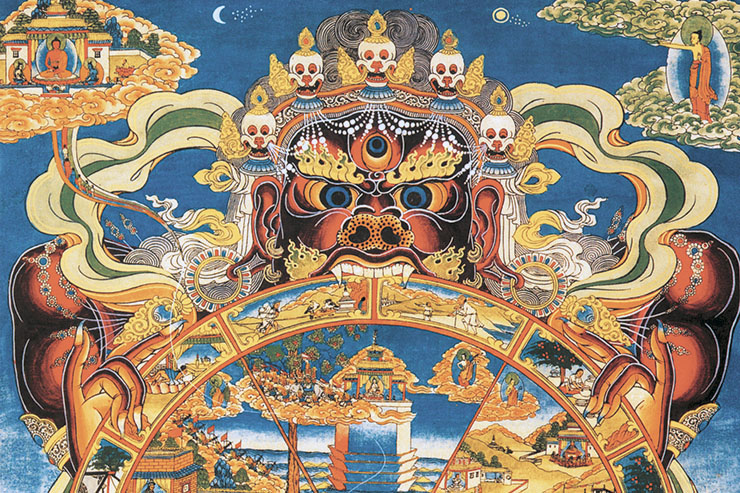
    One of the most elaborate pictures of the cycle of births and deaths can be found in the Tibetan Buddhist Wheel of Birth and Death. While the symbolism of this wheel is too intricate to describe in full here, one thing it depicts is the six realms of existence, three of which are bad, three of which are comparatively good. The three good realms are those of the gods, the asuras or demigods, and humans. The three bad realms are hell, the realm of the pretas or hungry ghosts, and the realm of animals.

    Beings are drawn to the hell realms through acts of violence and cruelty. As in Christian teaching, these are places of unimaginable suffering. The thirteenth-century Tibetan sage Longchenpa writes:

    All the tears you have shed would be more (than the water) in the four oceans,

    And the amount of molten metal, foul blood, and excrements

    You have consumed when your mind had become a denizen of hell or a spirit [i.e., a preta]

    Would not be matched by the rivers flowing to the end of the world.

    Longchenpa again emphasises the circularity of this process: his description of hell is not a warning of future punishment, but a reminder to the aspirant of what he has already undergone during many lifetimes in the immeasurable past. Buddhist teaching differs from that of Christianity by saying that since karma is finite, the suffering of hell beings and pretas, though enormous, is finite as well.

    The animal realm is less painful than the worlds of the hell beings and hungry ghosts but scarcely more desirable. Humans are drawn there by bestial behaviour – by obsession with food or sex, the cravings that we share with the animals. While animals do not suffer continually, they too are beset with pain and grief. Moreover, they do not have the mental capacity to achieve liberation, “not realising the natural misery of their state,” as Longchenpa puts it.

    The human realm, although it too is characterised by suffering, is the most auspicious. Buddhist texts emphasise the rarity and preciousness of a human birth. The sage Nagarjuna writes:

    More difficult is it to rise
    from birth as animal to man,

    Than for the turtle blind to see
    the yoke upon the ocean drift;

    Therefore, do you being a man
    practice Dhamma [the Buddhist teaching] and gain its fruits.

    Here lies the advantage of being born into the human realm. Individuals here are not so deeply immersed in suffering as they are in the realms of hell beings and hungry ghosts. Nor are they in such favourable circumstances as the gods, who enjoy so much pleasure and delight that they have no interest in liberation, or even the demigods, who have relatively enjoyable circumstances but are tormented by the jealousy of the gods, with whom they wage continual warfare. The human existence is an intermediate one, where beings are endowed with enough intelligence to follow the path to liberation but not so intoxicated with pleasure that they have no interest in it.

    Note that the gods and demigods, though their lives are pleasant compared to ours, are not immortal. Eventually their good karma is exhausted and they fall down into less favourable realms. This goes on endlessly. In one traditional text, a sage who is asked about the power and strength of Indra, king of the gods, points to a line of ants marching on the ground and says, “Each of those ants has been an Indra.”

    It would be mistaken, however, to conclude from all this that Buddhism is at its core a pessimistic, world-denying doctrine, as many have done. The German scholar of Buddhism Hans Wolfgang Schumann observes, “To assume that in their present life more than a few advanced seekers are able to conquer craving and ignorance would be to overrate man. Most men will need a long time, a whole series of rebirths in which by good deeds they gradually work themselves upward to better forms of existence. Finally, however, everyone will obtain an embodiment of such great ethical possibilities that he can destroy craving and ignorance in himself and escape the compulsion for further rebirth. It is regarded as certain that all who strive for emancipation will gain it sometime or other.”

    Schumann is referring to the attitude of the Theravada (“way of the elders”), one of the two primary divisions of Buddhism. The other sector, known as the Mahayana (or “great vehicle”), which includes such lines as Tibetan Buddhism and Zen, moves still further in a universalistic direction. It encourages its adherents to strive, not for nirvana per se, but for the condition of the bodhisattva – one who renounces or rather postpones enlightenment to work on behalf of the illumination of all sentient beings. In short, both sectors of the Buddhist tradition are ultimately positive in nature. If they do not teach evolution as such, they nevertheless hold that the gates of mercy are infinite and will eventually accommodate all beings, no matter how far they may seem from their goal.

    [alert type=”general” dismiss=”no”]This article was published in New Dawn Special Issue Vol 6 No 2.[/alert]

    [alert type=”success” dismiss=”no”]If you appreciate this article, please consider subscribing to help maintain this website.[/alert]

    SOURCES

    Robert Ernest Hume, ed. and trans., The Thirteen Principal Upanishads, 2d ed. Oxford: Oxford University Press, 1931.

    Klaus K. Klostermaier, A Survey of Hinduism, 3d ed., Albany, New York: State University of New York Press, 2007.

    Longchenpa, Kindly Bent to Ease Us, Part One: Mind, Translated by Herbert V. Guenther, Berkeley, California: Dharma Publishing, 1975.

    Hans Wolfgang Schumann, Buddhism: An Outline of Its Teaching and Schools, Translated by Georg Feuerstein, Wheaton, Illinois: Quest, 1974.

    © New Dawn Magazine and the respective author.
    For our reproduction notice, click here.

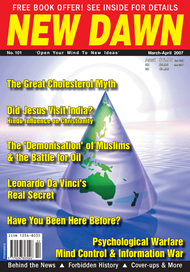
  • Have YOU Been Here Before?

    Have YOU Been Here Before?

    From New Dawn 101 (Mar-Apr 2007)

    Belief in reincarnation is one of the oldest and most durable of human traits, so old and persistent, in fact, that the psychologist C. G. Jung went so far as to call it an archetype. “Rebirth,” Jung wrote, “is an affirmation that must be counted among the primordial affirmations of mankind. These primordial affirmations are based on what I call archetypes.”1 This meant for Jung that regardless of its truth or falsity, the idea that we have lived previous lives and will, after our deaths, return in other lives, is somehow ingrained in our psyche. 

    We are, to use computer-speak, programmed to think it, and although not all of us accept the idea, it seems to share prominence with other fundamental ideas about the meaning of death and what, if anything, happens to us after it.

    These ideas seem to be surprisingly few. There’s the possibility of reincarnation or rebirth, as mentioned, with the belief that eventually one will have worked off one’s karmic debt and so have escaped the wheel of lives; one is then absorbed in some way into the all. There is also the idea of an afterlife in some “other” realm, whether the heaven of Christianity, the paradise of Islam, the Valhalla of Norse legend, or the Elysian fields of ancient Greece. I should point out that not all afterlives are desirable: fire and brimstone await the wicked in Christianity’s hell, and the Greeks, perhaps the greatest lovers of earthly life in history, regarded the idea of a shadowy eternity in the underworld with abhorrence. In any case, all these scenarios posit only one life on earth. Once we get through it, depending on how we conduct ourselves, we then go to our just reward or punishment, as the case may be.

    The pagans believe that once we die and our bodies decay, the matter they are made of returns to Nature along with the spirit or soul. We may then possibly enjoy a kind of afterlife as flowers, trees, or grass.

    There also is the belief that once we are dead, that’s the end. We no longer exist; our beliefs, ideas, feelings, values – everything important to us – are obliterated when the brain stops working. In this view, our present life is all there is, and after it is nothingness. Many associate this view with modern science, but its roots are in fact very old. The ancient Greek philosopher Democritus, who proposed an early version of the atom, argued that everything was made of little bits of matter that he called atoms (meaning “indivisible”). When we die, he suggested, the atoms that make up the self disperse.

    To these classic ideas about death we may be tempted to add one very new one: cryonics, the practice of freezing ones diseased body with the hope that in the future medical science will have discovered a cure for the illness. One can then be thawed, repaired, and brought back to life. On consideration, however, this seems to indicate less idea belief about what happens after death than a faith not only in modern medical science but in the robustness of the cryonics companies offering the service. Surely, as you lie in the freezer awaiting resurrection, the one pressing worry is whether the company keeping you on ice will stay in business. And if it doesn’t, what then? Unless you buy the notion that is hyped periodically that science will one day soon “conquer death,” this seems to me more of an attempt to put off facing death than any kind of engagement with it.

    My own feelings about death and what may possibly transpire after it fall into the camp of the agnostic. I simply don’t know – which isn’t to say that I don’t recognise the importance of having some idea about it. In truth, I’ve always been partial to the view presented by the playwright George Bernard Shaw in Back to Methuselah. Here Shaw argued that human beings die not from disease or old age but from discouragement, from loss of purpose and the will to live. Decades later, in his book Man’s Search for Meaning, the psychologist Victor Frankl corroborated this insight in the gruesome setting of a Nazi concentration camp, when he observed that the prisoners who had something to look forward to survived, while those who gave up hope were often the first to perish.

    Shaw argued that our present life span was far too short, because it is only toward the end of a long life that some people begin to have a glimpse of its value. To die at eighty just when you are beginning to have some insight into the whole affair seems pointless. Shaw envisioned the possibility that some people might learn how to live longer, so long that, barring accident, they might reach the age of three hundred. This, he thought, would allow them the time to put to some use the insights the rest of us take to the grave.

    I should point out that Shaw’s long livers – whom he calls the Ancients –  gain their longevity not through any technological or chemical means, nor through following a strict healthy regimen, although Shaw himself, who lived to be ninety-four, was a vegetarian. They accomplish this through their sheer will to live – and their willingness to fulfil the purposes of what Shaw calls “the life force,” a kind of evolutionary drive that compels life to understand and transcend itself. In his earlier play Man and Superman, Shaw spells out the philosophy of his “life force worshippers” in dramatic and comic detail, and for a time after reading Back to Methuselah I became fascinated by accounts of writers, artists, and thinkers who lived well into old age. There was Shaw himself. There was also the novelist John Cowper Powys, who died at ninety-one, the literary critic and philosopher Owen Barfield, who died at ninety-nine, the German novelist and essayist Ernst Jünger, who died at 101, and many others, including the composer Jean Sibelius, and the philosopher Bertrand Russell, whom lived into their nineties.

    In his science fiction novel The Philosopher’s Stone, Colin Wilson – a Shawian himself – suggested that there was some connection between the pursuit of ideas and longevity. His insight was that an interest in objective values – mathematics, philosophy, and, in a similar way, the kind of impersonal beauty that we find in, say, Sibelius’s symphonies, with their deep feeling for nature – is in line with the designs of “the life force,” which urges us to transcend our all too limited personal and subjective aims and goals. Someone who could perceive the objective beauty and “interestingness” of reality and sustain this would, Wilson argued, never be bored and hence have every reason to want to go on living.

    Now, whenever I’ve mentioned this idea to friends or acquaintances, the usual reply is something along the lines of “Three hundred? God, who would want to live that long? Wouldn’t you get tired and want to move on?” This is interesting, because I get a similar response whenever I bring up another idea that, for better or worse, has always had a strange appeal to me. Rather than reincarnation, which has us returning to earth again but in a different body and as a different person in a different time (though somehow with the same soul or spirit), ever since I first came upon it as a teenager in the writings of the philosopher Nietzsche, I’ve had an odd interest in the notion of “eternal recurrence.” This idea suggests that we have, as Rudolf Steiner calls them, “repeated earth lives,” but instead of different lives, we have the same one, over and over. This means that I have sat down in front of my computer an infinite number of times in the past to write this essay and that you also have read it an equally infinite number of times, and that both of us will continue to do so ad infinitum. I will be born to my parents again, go through the same childhood traumas and delights, leave home and have the same experiences, the same failures and successes, eventually die – and the whole wheel will turn around to the beginning and start again.

    Most of us on hearing this will reject the idea, wincing either at some past incident we would very much want to avoid or, more generally, at the prospect of eternal boredom such a notion offers. The idea of coming back to earth again as a different person seems much more appealing, and even the notion of complete annihilation seems preferable to going through the same round over and over again. I understand this perfectly, and I’m in no way arguing that eternal recurrence is true or preferable to reincarnation or to other ideas of what, if anything, happens after death. But I have to say that coming back to my books, friends, children, joys, and sorrows does strike me as more appealing than the eternity of blissful contentment spent floating amid cherubs and clouds that some forms of afterlife offer.

    I have to admit that one reason (and not the most important one) I’ve remained partial to this idea of eternal recurrence is precisely because of the reactions it elicits from others. Several years ago I worked at a metaphysical bookstore in Los Angeles. Among the fads and crazes of the time – crystals, the goddess, neuro-linguistic programming – one of the most popular was the idea of exploring one’s past lives. Among the many people interested in this who came to the store, I was surprised to discover that all of them seemed to have had infinitely more interesting lives before their present one. No one ever said, “God, how boring that past life was,” or “Gee, I’m glad I’m living this life now.” There were also a good number of people who, if not famous in their past lives, were still somehow important. Priestesses in Egypt, magicians in Atlantis, kings, queens. Not many tailors, butchers, or farmers. Sadly, whatever the truth about reincarnation, many of the people who spoke about it seemed to regard it as a way of making themselves more interesting in this life. So when I remarked that I was always more attracted to the idea that there is only this life and we live it countless numbers of times, I received looks implying that I was either crazy or lying. Despite the incredulous reactions it causes – or perhaps because of them – Nietzsche’s philosophy of recurrence deserves consideration.

    Far from some Machiavellian figure, Nietzsche was most troubled by the problem of human suffering, which I think he rightly saw as the central question from which the great religions emerged. Through poor translations and tragic appropriations by racist thugs like the Nazis, Nietzsche acquired a reputation as a philosopher of cruelty and tyranny, his übermensch or superman popularly depicted as a muscular fascist, lording it over the masses. In reality, however, Nietzsche was a very gentle, considerate, even timid man, so shy that he had to ask a friend to propose marriage for him to the woman he loved (not surprisingly, she declined). In fact, Nietzsche was burdened with an almost morbid sensitivity to suffering, whether human or animal. This fact is enshrined in a famous story of his final collapse, which occurred when he was already suffering from what scholars suppose was late-stage syphilis. In this story, Nietzsche saw a coachman whipping a horse. Tears in his eyes, he threw his arms around the neck of the poor creature, trying to comfort it. He then fell to the ground and when he awoke was no longer sane.

    Nietzsche didn’t believe in an afterlife in any form, and especially not the heaven of the hypocritical Christianity he attacked in one of his last books, The Antichrist. He did, though, have a powerful appreciation of the meaning and beauty of this life, a poignant, almost mystical sense of the value of our present world, an insight into its drama and mystery that most of us lack. In fact, Nietzsche believed that all ideas about an afterlife were really the product of an inability to face the uncertainty and sometimes terrifying facts of this life; they were, he felt, a kind of slander against life, a rejection of what, to him, was precious and almost painfully valuable. Rather than accept the conditions of life – which include pain, suffering, and tragedy along with beauty – and make something of it, Nietzsche believed that many preferred to consider it worthless, when compared to an ideal “other” world that we would enter after death. In many ways, ideas about an afterlife were, to him, a kind of sour grapes.

    In his notebooks – published after his death – Nietzsche did try to prove that recurrence was a fact, drawing on the science of the late nineteenth century and the enshrined law that matter can be neither created nor destroyed but only transformed. His arguments, however, are not very convincing. Given a limited amount of matter and energy but an eternity of time, he tells us, the universe will necessarily go through its astronomical but ultimately finite number of combinations. After this, it will start repeating itself, and the arrangement of forces that led to my writing this essay and you reading it will eventually recur. Subsequent philosophers have shown where Nietzsche confused things – he was never good at math – but the force of his ideas about recurrence doesn’t lie in these proofs, and, in any case, Nietzsche wasn’t really interested in devising some explanation for the mechanics of the cosmos. What appealed to him about recurrence was its poetry, the insight that such an idea invested life with a new and dramatic meaning. It was this sense that led the novelist Milan Kundera to draw upon Nietzsche’s ideas in his book The Unbearable Lightness of Being.

    The thought of recurrence, Kundera believed, gives weight to our existence, a gravity without which it is in danger of floating away in inconsequence. This is so because the idea that our actions will recur again prompts us to consider them differently. Is what I am doing now something I wish to do for eternity? Nietzsche believed that the thought of recurrence could act as a kind of test, a challenge to determine one’s attitude toward life. Think of your own life. How does the idea that it will return in all its details strike you? Are you, Nietzsche asks, crushed by the thought, meaning that your life has been such a burden that going through it again would seem the worse kind of punishment? Or have you instead experienced moments of such joy and fulfilment that you would accept the times of suffering, embarrassment, or just plain boredom in order to experience them again? Nietzsche’s view was holistic: everything was linked, part of the great chain of fate, and to say yes to one joy, he tells us, necessitates saying yes to all the pain and discontent that accompanied it.

    In The Gay Science, written in 1881 – the title refers to the kind of philosophy he proposed, light-footed and able to dance – Nietzsche summed up this idea in a motto. Amor fati, “love of fate,” was, for Nietzsche, the test of one’s character. “I want to learn more and more to see as beautiful what is necessary in things; then I shall be one of those who make things beautiful. Amor fati: let that be my love henceforth.” In his brilliant if unusual autobiography Ecce Homo, written just before his final mental breakdown, Nietzsche put it more forcefully. “My formula for greatness in a human being is amor fati: that one wants nothing other than it is, not in the future, not in the past, not in all eternity. Not merely to endure that which happens of necessity… but to love it.”

    For Nietzsche to arrive at such a philosophy was no small achievement. Throughout his life he suffered incessantly from an assortment of ailments: migraine, near blindness, and intolerant digestion are only a few. He also was one of the loneliest of men, living in poverty and forever moving from one cheap pension to another, constantly in search of the right climate, to possibly gain some brief respite from his condition. He was practically friendless and for the most part unread. Today he is one of the most discussed thinkers of the nineteenth century, on a par with Darwin or Marx, but during most of his lifetime he was unknown or ignored. That someone with such an experience of life should embrace the idea that it will be repeated eternally gives one pause.

    Other thinkers have taken up the idea of recurrence. The Russian writer P. D. Ouspensky, for example, made it the theme of his novel Strange Life of Ivan Osokin. Ouspensky looked at recurrence rather differently than did Nietzsche, and his ideas influenced another “time haunted man,” the writer and playwright J. B. Priestley. Priestley’s popular plays I Have Been Here Before and Time and the Conways are perhaps the most accessible treatments of the idea. Where Nietzsche argued that everything in our life recurs exactly as it did before, Ouspensky offered some hope of change, suggesting that in each life there are slight variations and that through these we have a chance to alter things for the better.

    In a sense, if we think about it, Nietzsche’s insistence on the exact recurrence of each detail actually leads to the conclusion that all we really have is this moment. If everything recurs exactly as it did – if it is, as he also called it, “the return of the same”  – then each recurrence is really only this moment. The next recurrence and the previous one were exactly like our present one, and so there is really no means of distinguishing one from the other. And so, in a practical sense, all we ever experience is now. Ouspensky’s version is somewhat closer to reincarnation, in that he posits the possibility that with each recurrence we have the chance to make some changes for the better and so can develop ourselves and eventually escape the treadmill.

    Nietzsche would have thought Ouspensky’s theory simply another attempt to escape the demands of life. My own feeling is that while it may be interesting to debate the two, in the end they really serve the same function. Personally, I don’t think we can ever prove recurrence one way or another. And in any case, if it is true, and if it ever was proven, then by necessity it always was. The real value of the idea for me is the meaning and significance it can give to our lives. Granted, a paranoid take on it could have us worrying about every little action, concerned that it may be the start of some infinite series of mistakes. But then, we could also say that if something is happening now, it must have already happened. In that case, we might fall prey to Kundera’s feeling of inconsequence: what does it matter what we do, if it has already been done countless times before?

    For myself, however, the idea that my life might not be merely so many years of meaningless activity but might instead have some connection to the vast eternal scheme of things is at times encouraging, even inspiring. I may or may not have been here before, but I can act as if I have. Recognising this, I can look forward to another visit.

    This article is reprinted with permission from Quest Magazine, Journal of the Theosophical Society, www.theosophical.org, March-April 2006, pages 57-60.

    [alert type=”general” dismiss=”no”]This article was published in New Dawn 101.[/alert]

    [alert type=”success” dismiss=”no”]If you appreciate this article, please consider subscribing to help maintain this website.[/alert]

    Footnote

    1. Cranston, Sylvia and Joseph Head. Reincarnation and World Thought. New York: Julian Press, 1967.

    © New Dawn Magazine and the respective author. For our reproduction notice, click here.
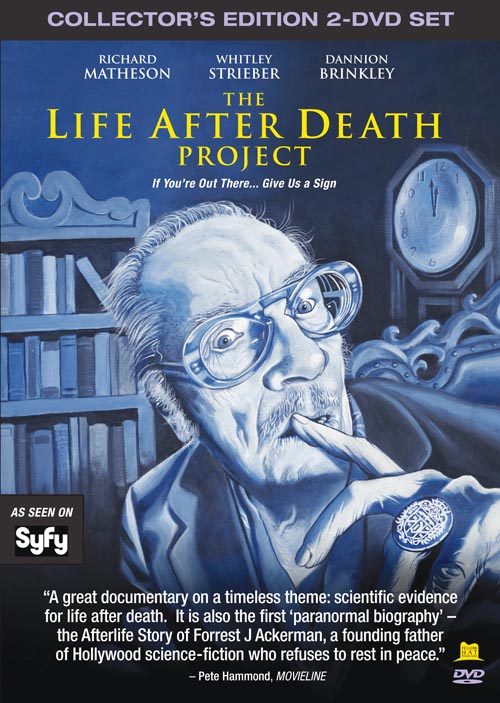
  • The Life After Death Project: Interview With Paul Davids

    The Life After Death Project: Interview With Paul Davids

    From New Dawn 139 (Jul-Aug 2013)

    PAUL DAVIDS is the author of widely-released books and acclaimed writer and director of highly original films including the controversial 2008 documentary film Jesus In India, discussed by Len Kasten in New Dawn Special Issue Vol 6 No 3.

    He is a leading expert on the history of science fiction cinema and the Hollywood connection to extraterrestrial-related phenomena. Davids was executive producer and co-writer of the Showtime film Roswell, starring Martin Sheen and Kyle MacLachlan.

    Paul earned a B.A. from Princeton University, where he won the university’s three top creative writing awards all in one year (including the F. Scott Fitzgerald Prize). Afterwards, he studied under full scholarship at the American Film Institute Center for Advanced Film Studies in Los Angeles.

    He is the noted author of six Star Wars books for Lucasfilm, was a producer of the popular Transformers animated TV series. Paul is also an accomplished artist and is generally well known and respected in Hollywood.

    We spoke to Paul about his latest film, The Life After Death Project, which recently aired on the SyFy Channel and is being made available on DVD.

    NEW DAWN (ND): In your films, you’ve taken on a lot of controversial issues – aliens in Roswell, LSD in Timothy Leary’s Dead, the high price of Van Gogh paintings in Starry Night – you even investigate Jesus’ missing years that aren’t mentioned at all in the New Testament, in your film Jesus In India. Now you take on one of the biggest controversial questions of all time – is there life after death? How did you end up there?

    PAUL DAVIDS (PD): I refer to The Life After Death Project as a personal confession. On March 7, 2009, the day of the large Hollywood tribute for science-fiction luminary Forrest J Ackerman at the Egyptian Theater, very strange things happened to two Canadian filmmakers who visited his crypt. The filmmakers had made a documentary about his life. Forry Ackerman, born in 1916, was the original editor of Famous Monsters of Filmland Magazine beginning in 1958, and his influence on the world of science-fiction (and horror and fantasy) and his impact on all the major filmmakers of that genre was huge – incalculable. I was one of the speakers at the tribute and the Canadians (Mike MacDonald and Ian Johnston) told me very sincerely why they were convinced they literally “heard from him” within an hour of Mike MacDonald knocking on his crypt to say “Hello Uncle Forry.” (All of his fans called him “Uncle Forry.”) I had known Forry and looked up to him since I was a teenager and became a winner in an amateur movie contest run by his magazine. He was a major influence in my decision to pursue a career in film and TV. In 1996 I made a film that was in part a tribute to him (The Sci-Fi Boys, which Universal released on DVD and which won the Saturn Award for Best DVD of that year.)

    I didn’t know what to make of the strange story of the Canadian filmmakers, and I wasn’t immersed in “the paranormal.” But about one week later, I was alone in my vacation house in Santa Fe, New Mexico when something simply impossible happened to me. It was a very precise inkblot that appeared on a document I was studying – it appeared while I was out of the room for just a few minutes. There had been nothing unusual at all about the document when I left the room. I want to say it again: What happened was IMPOSSIBLE in the world as we think we all know it. But it happened, and evidence in the form of ink was left behind. It took me awhile to catch on that it actually could have been a message to me from the late Forrest J Ackerman, done in his usual humorous style with a specific “word within a word” pun, his trademark. I realised it could have been a reference to the man who was his closest friend and caretaker for the last 10 years or more of his life… actually a sort of very personal “thank you” for the tribute to him. The detective work to figure that out was a long trail, and it took me first to the Chairman of the Chemistry Department of the University of Indiana, a world class expert in inks, paints and solvents. I brought my video camera along to document what he did in his lab. That was the beginning. I never knew then this would become a major documentary film that I would make. But it became a colossal adventure involving major authors and three universities, with repeating evidence that simply has to be seen to be believed. And it took me four very long years to make the film.

    ND: Recently there’s been quite a focus on life after death even in the mainstream media – particularly noteworthy is neurosurgeon Dr. Eben Alexander’s Near-Death Experience as documented in his book Proof Of Heaven. What makes your film unique?

    PD: It’s tough to take on subject matter that in a way has been “beaten to death.” Exploitation TV shows with dizzying fast cuts and irritating music and sound effects – a lot of those shows leave people thinking that all they need is an EMF meter and a creepy old house and they’ll be the next person to document a ghost. My film is not exploitation – it is a quiet and deliberate unfolding of a colossal mystery that unfolded from “one seed” – the inkblot.

    What really separates my film from the pack is that I am telling about a deceased man I had a personal relationship with that spanned decades. I knew his style, his humour – I had been “aboard” for many parts of the journey of his life. So there is a relationship to the departed who appears to have “dropped me a line.” It’s not about seeking out ghosts or spirits of people you never knew in creepy places. It is about evidence of a continuing relationship after death that was not just a single incident but was a long string of many incidents, continuing now for about four years. I never knew when these strange things would occur, but they kept happening – AND they started happening to people I involved in the case, including the scientists at the three universities. Things happened to them THEY couldn’t explain, many of which seemed to have Forry Ackerman’s “authorship.” He seems to be enjoying himself. I love him and welcome all this. I seem to have had extensive and continuing help from a “personality unseen” to enable me to build the very best case that there really is survival of consciousness and personality after a person dies. In this case it was an exceptional person who accomplished a lot in his lifetime and never seemed to be finished. I never would have taken this on even five years ago. Something had to happen to me first. What I have personally concluded, because no other explanation fits the data, is that I heard from Forry loud and clear, multiple times, after he had departed this world.

    ND: Life after death covers a lot of ground, from orthodox religious views of heaven and hell, to ghosts, spiritualism, reincarnation, poltergeists, mediums, angels, apparitions, materialisations and of course the Near Death Experience. How did you choose what to emphasise?

    PD: As I’ve said, I emphasised the Forry Ackerman case, which is a case of apparent After Death Communication, or ADC. Sometimes ADC is accomplished with ITC (Instrumental Transcommunication, which includes EVP, Electronic Voice Phenomena). So I get into all those topics, and I also deal with Sir Arthur Conan Doyle’s devotion to spiritualism, because there is a real history to this field. There have been impostors and phonies, but I think that science “threw out the baby with the bathwater.” I think there are real phenomena, there are mediums with genuine uncanny gifts. Many scientists apparently knew that over 100 years ago, but they have been drowned out by the modern skeptics and materialists who have dismissed this topic and think it’s dead and buried. I also deal with the phenomenon of aports or aportation (the appearance of objects in a way that cannot be explained) – and also there is one astonishing case involving photography which Dr. Lynne D. Kitei, M.D. brings to the film.

    I had so much material after years of interviews and research, it could not all go in one film. I did not want to leave lots of wonderful material “on the cutting room floor” as we say, so I created a sequel I call The Life After Death Project 2 – and that comes as a second DVD disc in the 2-DVD Set of The Life After Death Project available both at our website and at www.amazon.com The national release date for the US, where it will be available everywhere, was July 16, 2013. Our website (www.lifeafterdeathproject.com) will ship the all-region DVD all around the world.

    ND: Tell us more about the inexplicable inkblot incident which you personally experienced, and do you think you’ll be believed once people watch the film? (A photo of the inkblot can be seen in the magazine).

    PD: I think the incident of the inkblot is VERY important. Sometimes the answers to very big cosmic mysteries come in very small packages. Scientists deal at the level of individual atoms and sub-atomic particles. Others study photons or very faint astronomical phenomena from far off in space that has been traveling toward earth for billions of years. My first question was, does the blacking out of 4 words in my document, at 2 separate levels of opacity, contain clues as to its origin that can tell us how it was done or why it was done? Is there something “paranormal” about it that can be demonstrated? The 4 words on my document were clearly targeted and the ink obliteration was deliberate and done by “someone” or “something” other than me while I was out of the room, at a time when NO ONE else was physically present in the house. I knew this for a fact, but could I convince anyone else? It actually surprises me the overwhelming extent to which the two key chemists who worked on it (one of them, Dr. John Allison, continued the work for years) state categorically that it is still a huge mystery they cannot explain and cannot duplicate in any way they can conceive – and they have tried hundreds of ways to duplicate it. Both Dr. Allison and Dr. Jay Siegel are world class authorities on the chemistry of inks, paints and solvents. Dr. Siegel has testified in a massive number of court cases where someone was needed to testify about the chemistry of evidence.

    The other part of your question: Do I think I will be believed? I have learned that there are many hugely intolerant and bombastic closed-minded debunkers who, without leaving their armchair or educating themselves as to the real issues, will make horrifyingly stupid comments and declarations. As soon as the movie was announced, some declared that it had to be exploitation. It lends itself to a kind of tabloid slant, and interestingly the story was refused by Huffington Post’s Science Editors, but Huffington Post did have Lee Speigel, one of their best writers of stories for “Weird News,” do an article – and I must say his article was superb. He spent a lot of time digging out the scientific information and even linking to one of Professor Dr. Gary Schwartz’ peer-reviewed papers on scientific evidence of after death communication. But there is a taint in the fact that something with so much scientific basis usually is not treated as science because of the subject matter. Also I will say this, as to whether I will be believed, I will stand up to ANY debunker. I know this case is valid and true.

    ND: All of Forrest Ackerman’ bios online and in books emphasise the fact that he was a skeptic and an atheist who didn’t believe in an afterlife. Could you elaborate on that and – if it’s not giving away too much – do you know what type of afterlife he exists in?

    PD: He was an atheist and a skeptic about all things paranormal. At least that was his most public stance. But there were incidents in his life that showed his thinking was more complex than that. His grandfather, George Wyman, designed the famous Bradbury Building in Los Angeles (where they filmed some of Blade Runner). His grandfather was very hesitant to take the assignment until an incident with the Ouija Board where the message was: “Take the Bradbury Building and You Will Succeed.” Forry always kept that scrawled pencil Ouija message framed and on display in his home. He also once wrote a story called ‘Letter To An Angel’, about a hunchback boy who is thrilled when he gets to meet his hero, Lon Chaney (who played The Hunchback Of Notre Dame) in heaven – and the boy is equally thrilled to be alive in the afterlife without his debilitating body and its handicap. So Forry did imagine, at least as fiction, the possibility of us living in a non-physical form where we do not have the physical limitations we have in life. He occasionally said to close friends that he didn’t believe in an afterlife, but if he turned out to be wrong, if it were possible he’d try to “drop a line.” In my case, that’s exactly what I got. A line crossed out in a document which I could demonstrate had specific meaning related to the tribute for him.

    I surely do not have any knowledge of “what type of afterlife he exists in.” But it has been surprising to me that incidents that seem to “bear his signature” (I mean that metaphorically) have continued from March 7, 2009 to as recently as the last few weeks. Two of the oddest recent incidents are covered in the sequel The Life After Death Project 2 – Personal Encounters.

    At the end of that film I give an update on the Forry Ackerman case. First I have to tell you that I own a plastic mask that I obtained at his estate auction – it is his smiling face with his “trademark” moustache and thick glasses, and for decades it was in his 18-room Ackermansion along with 250,000 or more items of sci-fi and horror memorabilia. In that Ackermansion, which was both his home and his personal museum that he shared with the public, the mask was on top of a futuristic costume he wore at the First World Science-Fiction Convention in 1939. That mask has been in my home office for 4 years and had never moved for those years. It actually sits right on top of the case for the prop alien that we used in the Showtime film ROSWELL that I executive produced in 1993. The very day I learned that there would be a broadcast of THE LIFE AFTER DEATH PROJECT on Syfy, I went out to lunch for an hour and a half, and my home was locked with no one in it. When I returned, the Forry mask had moved – about 10 feet across the room, to the floor on top of a pile of wires for my many computer hard drives. I have no open windows, the door to my office was closed, the cat was outside the house, there was no breeze or known physical force that could cause the mask to move. (One friend speculates Forry was telling me that he’s going to be “getting his nose into my computer equipment,” which does seem to have been happening in many ways.) Another of several recent incidents was this: When I attempted to make the final computer Quicktime HD file from which the broadcast master of the film would be made, it inexplicably lost the soundtrack during the movie and became silent. This happened even though all the soundtrack info was there in the files, and it worked perfectly on another attempt without having to fix anything. The key was WHERE the film sell silent. EXACTLY at the moment that one of the people in the film discuses a painting of Forry where Forry is making a “Shush” gesture like the silence of death. Bingo. From that exact fraction of a second… all the way to the end of the film, total SILENCE.

    ND: A recent article in New Dawn Special Issue Vol 7 No 2 by Len Kasten was titled “Speaking to the Dead: The Pioneers Who Opened a Channel to the Other Side”. Len documented the incredible history of what is known as electronic voice communication (EVP) from the ‘other side’ or the afterlife. You and other people involved in making the film had some pretty amazing incidents of similar communication. Could you elaborate a little on what happened?

    PD: The incident of EVP in making my film is documented in the sequel, but the back-story is in the main movie. There was an actual tribal mask from Zimbabwe in a display case in the living room of my Santa Fe vacation house. I regarded it as an art object and it was on loan to me from a close friend who is a world traveller. The mask was right at the other side of the door from the bedroom where the inkblot appeared. The day after the inkblot incident, extensive EMF readings (electro-magnetic field readings) were made in various places in the house. Nothing unusual was found in the bedroom. But the mask, made entirely out of non-metal parts by natives in Zimbabwe, gave off EMF readings that were “off the charts.” The buzzing and beeping and lights on the meter were all at maximum. The camera was rolling when the testing was done to document it. The owner of the mask (Todd Mills) later promised he was going to locate the actual slides he took in 1983 when he bought the mask from natives – slides of it being danced in an African ceremony. To our astonishment, those slides have completely disappeared from the safe place he always kept them – they have not shown up even in four years since then. And he guarded those slides as precious keepsakes – no one had access to them. The Zimbabwe mask was the one object in my Santa Fe home that especially would have captured Forry’s attention. He was an avid collector of strange masks, and the Zimbabwe mask looked like something out of his favourite movie, KING KONG.

    Many months after the filming of the EMF reading of the mask I was doing post-production editing and I heard an EVP right at that point as the meter was being moved, between the beeping. There was no one there who ever actually said the word heard clearly on the videotape, but the voice was very clear: LENORE. One word said one time but very audible. (This is in the sequel.) What does Lenore make you think of? To me, it’s Edgar Allan Poe’s poem LENORE and also, Lenore is the lost love being mourned in his poem, THE RAVEN.

    Here is a synchronicity tying these very odd events together. Months later while going through memorabilia, I found the special delivery letter that Forrest J Ackerman sent to me notifying me that I was a winner in his Famous Monsters Magazine Amateur Movie Contest, when I was a teen. I was almost in shock when I saw the stamps on the envelope which had been sent to my childhood home in Maryland from Los Angeles over 40 years previously. There was a special delivery stamp, plus a stamp of EDGAR ALLAN POE plus 4 stamps of the Palace of the Governor of SANTA FE, New Mexico. The house with the inkblot incident and the Zimbabwe mask was in Santa Fe, and the EVP of “Lenore” was of one of the most famous names in Poe’s works. Forry was an incurable fan of Edgar Allan Poe. So here you see something specific from over 40 years ago (the selected stamps on the envelope from Forry) in a sense seemingly “predicting” that something significant would eventually happen to me involving both Santa Fe and Poe.

    The capper to this is that, soon after this incident happened, I began writing profuse amounts of rhyming poetry, which I had never done before – I created so much that these poems fill three published books (available at lulu.com) and some of the poems, especially in RIGHT BRAINED POEMS FOR LEFT BRAINED PEOPLE, are about Edgar Allan Poe. The other two books are humour: POEMS TO READ WHILE DRIVING ON FREEWAYS (AND OTHER WAYS TO DIE LAUGHING) and POEMS TO READ WHEN YOU RUN OUT OF WEED.

    ND: Your press release says there are four New York Times best‐selling authors in your film. Who are they, and what do they contribute?

    PD: Richard Matheson (Somewhere In Time, What Dreams May Come, I Am Legend) was a friend of Forrest J Ackerman. He offers his theories of communication with the deceased through dreams as sometimes being real cases of contact from the dead. He also says definitively that he has concluded that Forrest J Ackerman really did contact me after Forry died. Whitley Strieber (Communion, Transformation, Majestic and many other books) has an intense interest in life after death and mediums, as does his wife, Anne Strieber. My wife and I had lunch one day with the Striebers months after the inkblot incident happened to ask their opinions. They had much to say!

    The key thing was that they knew many experts in the field of life after death research, and Anne Strieber connected me to so many people who are in the film that she earned a credit as Executive Producer, along with my wife, Hollace Davids. Anne and Whitley appear in the film, and Whitley tells about the most astonishing “psychic hit” he ever experienced from a medium, Glennys MacKay of Australia.

    The third New York Times best-selling author is Dannion Brinkley (Saved By The Light, At Peace In The Light) who recounts his famous near death experience (NDE) of being struck by lightning and having been “clinically dead.” He insists there is life after death and his book tells of his experience during the time his heart had stopped, his breathing had stopped and he had no EKG. The fourth New York Times best-selling author in my film is Michael Shermer, President of the Skeptic Society and author of books such as Why People Believe Weird Things and The Believing Brain. He is also publisher of the magazine called Skeptic.

    ND: Everyone knows that Michael Shermer is an arch skeptic about all paranormal claims. He doesn’t usually show up in independent films – he’s sort of known as the hatchet man a network brings in when they need someone to contradict someone who has a claim. Did you choose him of your own free will to be in this film, and what does he add to the picture?

    PD: I did choose Michael Shermer “of my own free will” to be in my film, and he readily agreed and gave a very good interview. I chose him because I wanted someone “the Establishment” considers completely credible as a skeptic. He cannot and does not attempt to explain the events that are in my film. He does categorise most of it as “one-off” events that can’t be repeated in a lab and therefore of limited interest to him. Of course, in regard to the inkblot incident, lab scientists have spent hundreds of hours on it and are perplexed. And Dr. Gary E. Schwartz, who is in my film, performs university-sponsored experiments under laboratory conditions, but Michael Shermer never delves into that. He admits that weird things do happen to people that have not been explained, but he dismisses any possibility of a “paranormal” answer out of hand, conceding only that perhaps some of these phenomena will someday fall under theories covered by quantum physics.

    ND: The Life After Death Project builds to a pretty astonishing climax involving the research of Dr. Gary Schwartz, a psychology professor at the University of Arizona in Tucson. What is his research trying to show, and how does it apply to your apparent after death communication from Forrest Ackerman?

    PD: As far as I can see, Dr. Gary Schwartz is doing the most forward-thinking (and perhaps the most courageous) studies and experiments involving life after death today. There may be others whose work is of great importance with whom I’m not familiar, but I was fortunate to have Gary’s participation, and he gradually became more and more involved. Author and researcher Mark Macy in my film makes the statement that spirit life is not somewhere off in the distance, that it exists right here, right now, all around us, on different frequencies that we cannot see. He compares it to radio or TV transmission – you would need to be able to tune in the right frequency to be aware of it or attempt interaction with it. Gary Schwartz seems to accept that premise – that spirits are accessible, and that just as we can call someone on the phone, we can actually talk to spirits (of deceased people) and have them be aware we are thinking about them and talking to them. With that theory in mind, he asks, what would be necessary for them to communicate back in a way that could be measurable with our technology? To that end, he has developed computer software programs (and is developing more) to facilitate communication and actually measure “yes” and “no” responses to spirits when he asks questions. His experiments have been successful thus far, and he has published a peer-reviewed paper in a scientific journal on this. The climax of my film becomes so fascinating because Gary attempts actual communication with Forrest J Ackerman using his computer program – and we see it all unfold in real time – and there are very real and precise responses. He says that both my documentary, which he calls “historic,” and his research point to the fact that “Forrest is here.”

    ND: Synchronicities played an important role in the lead-up and production of The Life After Death Project. How do these ‘meaningful coincidences’ tie in with ‘Messages from the Other Side’?

    PD: Swiss psychiatrist Carl Jung first articulated the concept of synchronicity, describing it as a very improbable or unlikely coincidence that brings events together in a way that has meaning in the eye of the beholder. Statistics tells us that some synchronicities will and must occur by chance, because “almost all things are possible.” There is an old adage that says if a million monkeys typed on a million typewriters for a million years, by chance one of them would produce a perfect copy of Shakespeare’s “Hamlet.” No one has ever tested that theory! But we get the concept. One of the synchronicities I discuss here is the juxtaposition of stamps on an envelope from over 40 years ago, bringing Poe together with Santa Fe in a letter to me when I was a young teenager living in Maryland. (I had never been west of Virginia then!) Another synchronicity in The Life After Death Project is the wine bottle that just happened to be the same type as the wine served at Sean Fernald’s wedding, that Forry had attended, and the vintage of the wine was the same year as the wedding.

    I have experienced so many unusual synchronicities that the list would be long. Notably in The Celestine Prophecy and its sequels, synchronicities are extolled as having high spiritual significance as forms of guidance from spirit. Synchronicites make us think of an alternative reality that is sort of like the film, The Adjustment Bureau, but non-fiction!

    ND: Several of your films deal with life after death. In The Artist And The Shaman you speculate about whether a certain 3‐year old boy might be the reincarnation of your father. In Starry Night you bring Vincent van Gogh back from the dead for 100 days, a century after he died. In Jesus In India, there’s speculation about the accuracy of the reports of the disciples that Jesus died and rose from the dead. And now you have The Life After Death Project. Has this topic been a long time obsession for you?

    PD: The topic has not been an obsession, but it indirectly entered into those three other stories you mentioned. I do wonder about the theory of reincarnation. The studies of Ian Stevenson and others lend a lot of support for it, and great yogis, such as Paramahansa Yogananda, insist that it is true. But it would take at least a film to explore the evidence, and I have not produced such a film. There have been hundreds of books (or thousands) written about reincarnation, and I hope that someday I’ll read the best of them. As for Jesus In India, the claim of Jesus returning to life from the dead is central to Christianity. There is some exploration of that in my movie, which was covered in a previous issue of New Dawn in a Len Kasten article about Jesus’ purported travels in India. You can learn more about that at www.jesusinindiathemovie.com. Starry Night is strictly a fantasy. (www.starrynightmovie.com) When Vincent van Gogh’s ‘Sunflowers’ sold for 33 million dollars in the 1980’s, it made history. I thought to myself: If only Vincent could be here to know this happened and that he turned out to be one of the most successful artists in history. And so I created a fiction screenplay based on that premise and was fortunate to be able to make the movie (about 10 years after I wrote it!) Universal released it to DVD in around 2000, and it is still available.

    Get the issue this article appears in

    ND: Your films are known for creating controversy in a good way, and we at New Dawn wholeheartedly support your intentions. Some Christians thought you’d overstepped the line in Jesus In India, while the US Air Force took you over the coals for your film Roswell: The UFO Coverup about the so‐called alien UFO crash at Roswell. You also angered some atheists who think you were much too kind to Catholicism in Before We Say Goodbye, your movie about a Hispanic‐American family. And you made Timothy Leary’s Dead about the ‘Prophet of LSD’ who President Richard Nixon described as “the most dangerous man in America.” How do you handle criticism?

    PD: I have had to develop what they call a “thick skin” in response to criticism, as does every artist in every creative field. There are as many opinions about things as there are people on this planet. A big change in our world, from when I was a child, is that now everyone can make his or her opinion count. People can go on message boards, they blog, they post comments about books and movies online. The professional critic is no longer the only force the artist has to deal with. And you get comments at every level. Some are intelligent, others are personal attacks, and sometimes anonymous people post profanity and obscenities. That’s what they want to do, and currently there’s no way to stop them.

    One of the traits that some people have that probably bothers me the most is a tendency to be absolutely fixed in rigid beliefs: hard-headed, not open to discussion or alternative approaches, and sometimes to the point of being bitter, furious, argumentative or insulted that anyone could contradict them or have another opinion. These traits have taken over politics to a large extent in the US. We see this trait creeping into religion at the point where it becomes “Fundamentalist” – some religions are so convinced that they have the Truth as handed down from “On High” that all others are wrong or damned or are infidels to be disposed of even with violence. People now actually kill one another every day in the name of God – and not just a few people, they blow up 100 or more at a time. As if God is looking to them to help him out by destroying the lives of His children that He lovingly and painstakingly nurtured from their days in the womb.

    I have often chosen topics, quite deliberately, because they challenge some cherished beliefs. I think it’s most worthwhile and productive when I choose a topic that, by exploring it, can help the human race grow in its thinking capacity, stretch the mind a little. But when it comes to the topic of life after death, I always tell people, I never chose that topic…. It chose me!

    ND: Could you give a brief overview of the sequel film The Life After Death Project 2 – Personal Encounters?

    LIFE AFTER DEATH PROJECT - DVD COVER

    PD: In the sequel, I let witnesses to many other life after death cases tell their stories. These are people from all walks of life. We hear from them, with very little editing (except for length) – we learn what happened and why they felt that it relates to unseen spirits or survival of consciousness and personality after death. A few might be considered “ghost stories,” but most have physical phenomena attached and were seen by more than one person. I am interested in what palliative care doctors have to say – end of life physicians who witness a lot of people die. And nurses who work with people during their final weeks and moments. It is surprising to hear how committed some of these people are to the concept that there is evidence of a “spirit” that departs the physical body at death. And these are for the most part not religious people – they do not hold these convictions because they were taught them as part of a religion in which they believe. Three exceptional people in the film are Dr. John Lerma, M.D., Dr. Lynne D. Kitei, M.D., and John B. Alexander, a former military man and author about non-lethal weaponry. Dr. Alexander extensively studied the issue of life after death and was the president of a non-profit organisation dealing with this topic. Also of interest is Dr. Stanislav O’Jack. His extraordinary abilities to take unusual, unexplained photos, sometimes while the lens cap is still on the camera, have been studied at length by a Stanford physics professor (now emeritus), Dr. William Tiller, who was in What The Bleep Do We Know. Dr. Tiller’s assessment gives credibility to Dr. O’Jack’s claims. One of those claims is that Dr. O’Jack’s wife appeared to him and one other colleague in body, in full physical form, after she was dead… and she then disappeared. John Alexander also tells of an incident that happened that was just like the O’Jack story – it happened to one of John Alexander’s mentors, Dr. Elizabeth Kubler-Ross. One of her deceased students appeared to her in physical form, spoke to her, wrote her name down, and then vanished down a hallway. So although the sequel is somewhat different than The Life After Death Project in style, and is less devoted to scientific evidence, I think viewers will find it compelling. In any event, a complete list of the people in the sequel and description of it can be found at www.lifeafterdeathproject.com For those who order the Collector’s Edition 2-DVD Set of The Life After Death Project, the sequel is included on the 2nd DVD as part of the package. I also want your readers to know of my two websites: www.pauldavids-artist.com and www.pauldavids.com.

    ND: Thank you very much Paul Davids for taking the time to answer these questions. We are confident your new film will take us one step closer to understanding the mystery of consciousness and life after death.

    You can learn more and follow what Paul Davids is up to through his website www.pauldavids.com.

    [alert type=”general” dismiss=”no”]This article was published in New Dawn 139.[/alert]

    [alert type=”success” dismiss=”no”]If you appreciate this article, please consider subscribing to help maintain this website.[/alert]

    © New Dawn Magazine and the respective author.
    For our reproduction notice, click here.