New Dawn – World's Most Unusual Magazine

Category: Ancient Mysteries

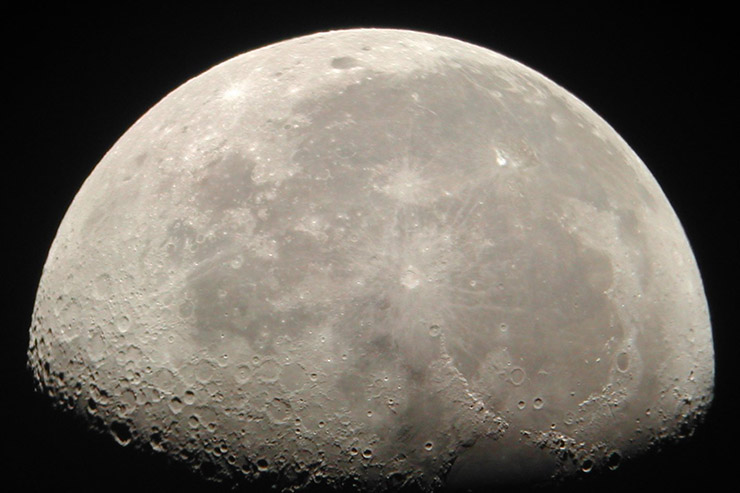
  • Are We Food for the Moon?

    Are We Food for the Moon?

    From New Dawn 96 (May-June 2006)

    If man is not affected in some way by the Moon, he is the only thing on Earth that isn’t.
    – Robert Millikan (1868-1953), US physicist & 1923 Nobel Prize winner

    Probably no heavenly body has received as much attention down through the ages as our Moon. The causes of this fascination are obvious: the Moon enlightens the night and appears as a remarkable and large object in the sky. As a regulator of Earth’s tides and life’s biological cycles, the Moon’s importance to our physical existence is second only to that of the Sun.

    Sacred scriptures, ancient myths, and even modern day pagans, all exalt the Moon in one way or another. Omens, spells, wishes, oracles, divination, and calendars cluster around it throughout history. Moon magic, the belief that working rituals at the time of different phases of the Moon brings about physical or psychological changes, is essential to various pagan and witchcraft systems. Witches in Greek and Roman literature were regularly accused of ‘drawing down the Moon’ by use of a magic spell.

    Nevill Drury, a respected authority on mystical and occult traditions, says “traditionally… the Moon has been regarded as a ‘funnel’ drawing on the light of the stars and constellations and transmitting their energies to the Earth.”1

    In Western astrology the Moon is said to represent the feeling intuitive nature of the individual as well our deepest personal needs, our basic habits and reactions, and our unconscious. In esoteric astrology the Moon represents attachment to form, and under certain circumstances a variety of limiting conditions are related to the Moon, ranging from blatant materialism to subtler forms of limitation such as debilitating nostalgia, sentiment and regret.

    The word “lunacy” – which derives from the Latin for Moon, “luna” – denotes the traditional link made in folklore between madness and the phases of the Moon. Several studies have tried to get to the bottom of this age-old belief. A 1976 report compared 34,318 crimes against lunar cycles. It found offences occurred more frequently during a full Moon. Other research, however, failed to find any firm link between the cycles of the Moon and irrational behaviour.

    England’s Lunacy Act of 1842 gave allowances for uncharacteristic crimes committed during the full and new Moon. This law distinguished between the chronically insane and the lunatic. It was argued the lunatic became deranged at these times because of the Moon’s power and thus could not be held accountable for his or her actions.

    Interestingly, a study of the Moon’s effect on mental health patients, conducted by the University of Liverpool in 2000, found a significant change at the time of the full Moon, but only in subjects with a diagnosis of schizophrenia.

    Whether we are conscious of it or not, the Moon exerts some sort of influence upon our biological and psychological states. But does it go any deeper than this?

    Gurdjieff and Ouspensky

    The Fourth Way philosophy claims to help individuals cease to be slaves of external and internal influences by building up a core of heightened consciousness. Its ultimate goal is the realisation of the full potential of human evolutionary possibilities. Its founder, George Gurdjieff (1872-1949), frequently spoke of the thoughtless mechanical behaviour of humanity, and was fond of commenting humans are “food for the Moon.”

    What did Gurdjieff mean by this phrase? Many interpreted “food for the Moon” as a figure of speech – perhaps Gurdjieff meant we are slave to our mechanical conditioning and feed our baser impulses. But while it can be interpreted in this fashion, Gurdjieff was primarily being literal.

    Peter Ouspensky, Gurdjieff’s most famous disciple, lectured at length concerning the Moon’s role in human affairs and its place in the cosmological scheme of things.

    Ouspensky said the Moon drives the individual’s mechanical aspects like a pendulum moves the gears of a clock. The degree to which one’s actions are driven by the Moon is proportional to one’s level of contact with higher influences. For people incapable of moving themselves through life by nobler spiritual impulses, the Moon provides a propulsive force. Without this force, mechanical individuals would be passive as puppets without a puppeteer.

    In the cosmological scheme proposed by Gurdjieff and Ouspensky, Earth is like a mother to the Moon which is still a fetus in the sense it cannot yet “breathe” on its own, hold an atmosphere, or support life. Someday, the Earth will evolve into a being like the Sun, while the Moon will transform into a second Earth. Humanity was simply a stage in this process.

    “The Moon is actually a fragment of this Earth, which must now constantly maintain the Moon’s existence,” Gurdjieff said.2 In that sense, the Moon is like a parasitic thought form. Nevertheless, the equation is balanced because in exchange for the Moon propelling our mechanical movement, we feed the Moon so that it may grow and one day be born as a living planet.

    As to how organic life feeds the Moon, Gurdjieff taught that most human beings are mere “slugs” with no souls and that following death their remaining psychic energy is “food for the Moon.” Like a magnet, the Moon draws the fine matter of human souls into it: “Everything living on the Earth, people, animals, plants, is food for the Moon. The Moon is a huge living being feeding upon all that lives and grows on the Earth.”

    Only through an intensive effort of conscious evolution – what he called “self-remembering” – was it possible for an individual to escape being eaten by the Moon. “The liberation that comes with the growth of mental powers and faculties is liberation from the Moon.” Gurdjieff always maintained Man is not truly conscious, and his actions are entirely mechanical: “Everything ‘happens,’ he cannot ‘do’ anything. He is a machine controlled by accidental shocks from outside.”

    To escape these deleterious lunar influences, Ouspensky said we must “create Moon within ourselves.”3 By this he meant we must develop within a driving mechanism that takes the place of the external lunar influence; in this way we can break free of the puppeteer.

    Boris Mouravieff, who was an associate of both Gurdjieff and Ouspensky, formulated an esoteric system for spiritual evolution founded upon the inner traditions of Eastern Orthodoxy and Fourth Way principles. His extensive three volume work, Gnosis, deals extensively with the question of lunar influences and spiritual development.

    He concurs with Gurdjieff and Ouspensky on the role of the Moon, but also warns “that organic life functions as a transmitter station sending refined energy to the Moon to assist its growth. Despite increases in the human population and thus an increase in quantity of energy transferred, times of peace do not produce sufficient energy and so catalysts for suffering such as wars and catastrophes arise to sustain the process.”4

    Mouravieff and Ouspensky emphasise that despite the hypnotic nature of the Moon and the urgent necessity for individuals to overcome its influence, there is still an important cosmological reason for its existence. If nothing else, the Moon’s unique position in relation to the Earth was paramount in making physical ‘conscious’ life possible.

    Theosophy

    Together with Henry Steel Olcott, Madame H.P. Blavatsky founded the Theosophical Society in 1875. Theosophy, the “grandmother” of today’s “New Age” movement, tells us the Moon was home to an earlier “life wave” which has since migrated to Earth.

    In The Secret Doctrine, Madame Blavatsky states the Moon served a dual purpose in religious rites: “Personified as a female goddess for exoteric purposes, or as a male god in allegory and symbol, in occult philosophy our satellite was regarded as a sexless Potency to be well studied, because it was to be dreaded… But whether male or female…, the Moon is the Occult mystery of mysteries, and more a symbol of evil than of good.”

    Perhaps the Moon is identified with evil rather than good because it is now what Madame Blavatsky calls “a dead planet.”

    How did this occur? An article by William Quan Judge elaborates: “in a remote period, when there was no Earth, the Moon existed as an inhabited globe, died, and at once threw out into space all her energies leaving nothing but the physical vehicle. Those energies revolved and condensed that matter in space nearby and produced our Earth; the Moon, its parent, proceeding towards disintegration but compelled to revolve around her child, this Earth.”5

    To fully appreciate why all this happened, a study of Theosophical cosmology is required, but space does not permit a full explanation here.

    Elsewhere in The Secret Doctrine, Madame Blavatsky’s view of the Moon’s relationship to the Earth is similar to Fourth Way thinking:

    “The moon is now the cold residual quantity, the shadow dragged after the new body, into which her living powers are transfused. She now is doomed for long ages to be ever pursuing the Earth, to be attracted by and to attract her progeny. Constantly vampirised by her child, she revenges herself on it, by soaking it through and through with the nefarious, invisible and poisonous influence which emanates from the occult side of her nature. For she is a dead, yet a living body. The particles of her decaying corpse are full of active and destructive life, although the body which they had formed, is soulless and lifeless.”

    Theosophy differs from the Fourth Way which holds the Moon is not yet ready to sustain life. But they both agree the Moon is vampirising the life forms of Earth.

    Are we food for the Moon, or are these warnings the ravings of lunatics? Although modern science tells us we have nothing to worry about, ancient wisdom and folklore paint a very different picture. Ignoring these dangers has perhaps left us wide open, more so when we do not recognise the signs or symptoms of the Moon’s ‘drawing up’ effect.

    Whatever the reality, the Fourth Way, Theosophy and all schools of esoteric philosophy have the solution. By overcoming our mechanical tendencies, we strengthen our resistance to the lunar effect, and for that matter all planetary influences. And by “creating Moon” within ourselves – that is, building up our essential self – we not only gain victory over the negative lunar influence, but awaken to a higher level of consciousness.

    [alert type=”general” dismiss=”no”]This article was published in New Dawn 96.[/alert]

    [alert type=”success” dismiss=”no”]If you appreciate this article, please consider subscribing to help maintain this website.[/alert]

    Footnotes

    1.  The Dictionary of the Esoteric by Nevill Drury, Watkins Publishing, London 2002
    2.  In Search of the Miraculous by P. Ouspensky, 1949
    3. The Fourth Way by P. Ouspensky, 1957
    4.  Gnosis II: Study And Commentaries On The Esoteric Tradition Of Eastern Orthodoxy, Book Two, Mesoteric Cycle, by Boris Mouravieff, Praxis Institute, 1992
    5.  “Moon’s Mystery and Fate”, Path, June, 1894

    © New Dawn Magazine and the respective author.
    For our reproduction notice, click here.

  • The Mystery of Göbekli Tepe and Its Message to Us

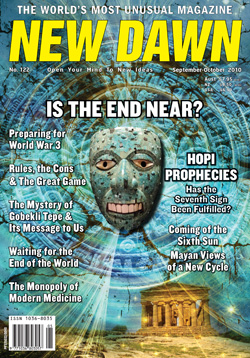
    The Mystery of Göbekli Tepe and Its Message to Us

    From New Dawn 122 (Sept-Oct 2010)

    What were our ancestors like 10,000 or more years ago? The most common image is one of small nomadic bands endlessly in pursuit of the next meal. Men hunted game while women and children gathered fruits, seeds, roots, shoots, insects, and other edibles.

    The height of technology was a finely worked stone knife blade or spear point; nets, baskets, and cordage were also put to good use. Permanent structures were superfluous, for the group never stayed in one place very long. Material goods were sparse as possessions had to be limited to those easily carried. Jewellery (perhaps beads, animal teeth, or shells strung on a cord) and personal decoration (body paint, tattoos) were prized. In colder climates appropriate clothing was fashioned from animal skins. Social institutions were minimal. Not until the Neolithic Revolution, beginning about 10,000 years ago, did agriculture and domestication appear. This in turn allowed permanent settlement, leading to specialisation of labour, the development of crafts (including pottery and metalworking), the building of substantial structures, long-distance trade, and the slow and gradual evolution of complex societies.

    None of this happened overnight. It took thousands of years, and it was not until around 4000 to 3000 BCE that true signs of high culture first appeared, such as fine artistry in decorative crafts, written records, scientific observations of the heavens, complex political organisations, and megalithic building projects. This level of achievement was reached in Mesopotamia, the Nile Valley, and the Indus Valley by the beginning of the third millennium BCE. A well-known example is the rise of dynastic Egypt about 3200 to 3100 BCE and the building of the Djoser pyramid circa 2630 BCE. Stonehenge in England dates from the same period.

    Although accepted as dogma by many, this nice neat scenario may be completely wrong.

    Questioning Accepted History

    Back in 1991, I had the temerity to announce that the Great Sphinx of Egypt, conventionally dated to 2500 BCE (the reign of Pharaoh Khafre), actually has its origins in the 7000 to 5000 BCE range, or possibly earlier.

    My announcement was done via a presentation at the October 1991 annual meeting of the Geological Society of America (this was allowed only after a formal abstract, submitted with my colleague John Anthony West, was accepted based on positive professional peer review).1 I made my case utilising scientific analyses, comparing erosion and weathering profiles around the Sphinx to the ancient climatic history of Egypt.

    In brief, the Sphinx sits on the edge of the Sahara Desert, a hyper-arid region for the past 5,000 years; yet the statue shows substantial rain-induced erosion. The original structure must date back thousands of years prior to 3000 BCE (the head was re-carved in dynastic times).

    I had pushed the Great Sphinx, arguably the grandest and most recognisable statue in the world, back into a period when humanity was supposedly just transitioning from a hunter-gatherer economy to a sedentary life. People 7,000 or more years ago were still brutish and unsavoury, at least by modern civilised standards. Certainly they were not carving giant statues (the Sphinx is about 20 meters tall by over 70 meters long) out of solid limestone bedrock. Immediately after my announcement of an older Sphinx, I was under attack. Archaeologist Carol Redmount (University of California, Berkeley) was quoted in the media, “There’s just no way that could be true.” The article continued, “The people of that region would not have had the technology, the governing institutions or even the will to build such a structure thousands of years before Khafre’s reign, she said.”2

    The initial hoopla peaked in February 1992 at a “debate” on the age of the Great Sphinx held at the Chicago meeting of the American Association for the Advancement of Science.3 As the New York Times put it, “The exchange was to last an hour, but it spilled over to a news conference and then a hallway confrontation in which voices were raised and words skated on the icy edge of scientific politeness.” Egyptologist Mark Lehner could not accept the notion of an older Sphinx, personally attacking me by labelling my research “pseudoscience.” Lehner argued, “If the Sphinx was built by an earlier culture, where is the evidence of that civilisation? Where are the pottery shards? People during that age were hunters and gatherers. They didn’t build cities.”4 

    At the time I lacked any pottery shards. But I was sure of my science, and I persisted. Two decades later, we have something better than pottery shards, and even earlier than my conservative Sphinx date of circa 5000 BCE to 7000 BCE (I now currently favour the older end of this range, or an even earlier date for the original Sphinx). Göbekli Tepe dates from over 10,000 years ago.

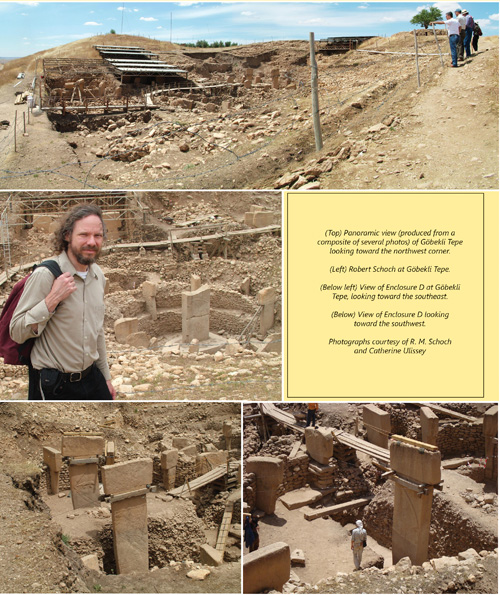
    Pages from ndmain122
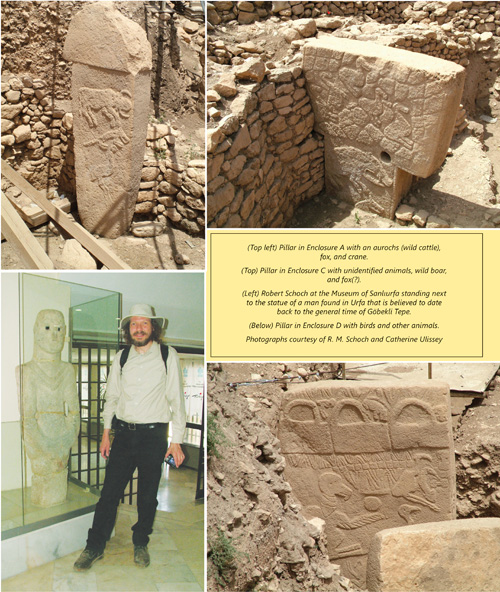
    Pages from ndmain122-2

    (Article Continues Below)

    Better than Pot Shards

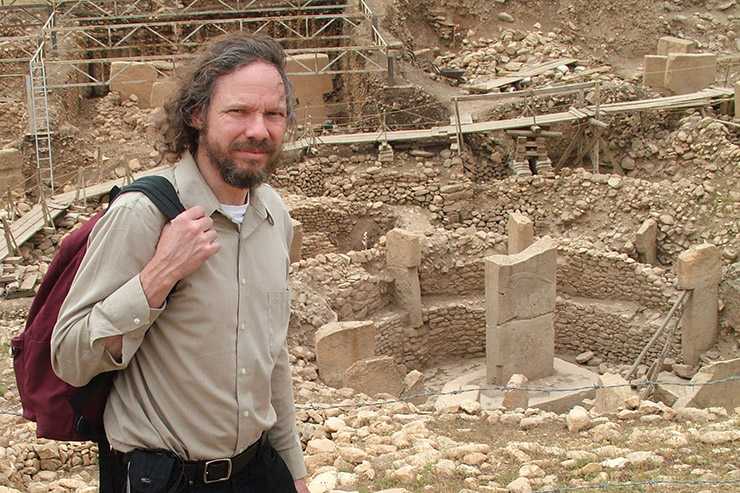
    A short drive from Urfa (alternatively Sanlıurfa), southeastern Turkey, atop a mountain north of the Harran Plain, sits Göbekli Tepe. Since 1995 Prof. Dr. Klaus Schmidt of the German Archaeological Institute has been excavating the site.5 Recently I visited it for myself. I was amazed.

    At Göbekli Tepe immense finely carved and decorated T-shaped limestone pillars, many in the range of two to five and a half meters tall and weighing up to an estimated 10 to 15 tons, stand in Stonehenge-like circles. The workmanship is extraordinary, with clear sharp edges that would do any modern mason proud. It may be a cliché, but I cannot help but think of the opening scene of the classic 1968 movie 2001: A Space Odyssey. A group of ape-like proto-humans discovers a giant monolith; influenced by it, they learn to use tools, leading to civilisation.6 

    Various pillars at Göbekli Tepe are decorated with bas-reliefs of animals, including foxes, boars, snakes, aurochs (wild cattle), Asiatic wild asses, wild sheep, birds (cranes, a vulture), a gazelle, and arthropods (scorpion, ants). The carvings are refined, sophisticated, and beautifully executed. Not only are there bas-reliefs, but also carvings in the round, including a carnivorous beast, possibly a lion or other feline, working its way down a column, apparently in pursuit of a boar carved in relief below. In the round, carvings of lions and boars have been uncovered, now housed in the Museum of Sanlıurfa, as is a life-sized statue of a man, which, though from Urfa, apparently dates to the Göbekli Tepe era.

    Also from Göbekli Tepe are perfectly drilled stone beads. And, according to Prof. Schmidt, while some of the stone pillars were set in the local bedrock, others were set into a concrete- or terrazzo-like floor. Looking only at style and quality of workmanship, one might easily suggest that Göbekli Tepe dates between 3000 and 1000 BCE. How wrong one would be. Based on radiocarbon analyses, the site goes back to the period of 9000 to 10,000 BCE, and was intentionally buried circa 8000 BCE.7 That is, the site dates back an astounding 10,000 to 12,000 years ago!

    This was supposedly the time of the brutish, nomadic, hunters and gatherers who, according to many academics, did not have the technology, governing institutions, or will to build structures such as those found at Göbekli Tepe. Clearly there is a disconnect between what conventional historians and archaeologists have been teaching all these years and the clear evidence on the ground.

    As Stanford University archaeologist Ian Hodder commented, Göbekli Tepe is “unbelievably big and amazing, at a ridiculously early date… huge great stones and fantastic, highly refined art… Many people think that it changes everythingIt overturns the whole apple cart. All our theories were wrong.”8 Like my redating of the Great Sphinx, Göbekli Tepe forces us to reconsider our antiquity.

    And like my work on the Sphinx, the specialists are perplexed by Göbekli Tepe. Patrick Symmes wrote in Newsweek, “But the real reason the ruins at Göbekli remain almost unknown, not yet incorporated in textbooks, is that the evidence is too strong, not too weak. ‘The problem with this discovery’, as [Glenn] Schwartz of Johns Hopkins puts it, ‘is that it is unique’. No other monumental sites from the era have been found. Before Göbekli, humans drew stick figures on cave walls, shaped clay into tiny dolls, and perhaps piled up small stones for shelter or worship. Even after Göbekli, there is little evidence of sophisticated building.”9

    In a nutshell, we have evidence of high culture and civilisation circa 10,000 to 8000 BCE, but then an apparent decline or hiatus for thousands of years, until the “rise” of civilisation once again in Mesopotamia, Egypt, and elsewhere. What happened?

    A Record of Precession at Göbekli Tepe

    A hallmark of civilisation is precise scientific observation. Astronomy is often considered the earliest yet most sophisticated of the sciences. A particularly subtle astronomical phenomenon, the discovery of which is generally credited to Hipparchus of Rhodes in the second century BCE,10 is the slow movement of the stars relative to the equatorial coordinate system. This is commonly referred to as the precession of the equinoxes. The entire cycle, with stars returning to their “starting points,” takes somewhat under 26,000 years. Some researchers suggest that precession was known to the ancient Egyptians and other early civilisations, and is reflected in myths worldwide.11 Others dispute such assertions. I found evidence of precession at Göbekli Tepe, adding another layer of sophistication to this remarkable site.

    The excavated portions of Göbekli Tepe lie on the southern slope of a hill looking out to the southern skies. Thus far, the better part of four stone circles (enclosures) has been excavated in an area measuring about 40 by 40 meters square. Additional, later and smaller, pillars and structures have been partially uncovered both 20 to 30 meters north and about 80 meters west of the major area of circles,12 and eighteen or more stone circles still under the earth have been identified. Enclosure D is located furthest north. To the southeast lies Enclosure C, and to the south of Enclosure D lies Enclosure B and finally A. The enclosures are very close to each other, almost abutting. Each enclosure possesses a pair of tall central parallel pillars ringed by a circle of shorter pillars with later stonewalls between the pillars. If at some point the enclosures were covered over, they may have been entered from above; indeed, possible carved stone “portals” have been found that may have been set in a roof.

    The central pairs of pillars are oriented generally toward the southeast, as if forming sighting tubes toward the sky. The central pillars of Enclosure D include arms and hands, with the hands holding the belly or navel area, and it is clear that the anthropomorphic pillars are facing south. The orientations vary from enclosure to enclosure, however. For Enclosure D the central pillars are oriented approximately 7º east of south. Those for Enclosures C, B, and A are approximately 13º east of south, 20º east of south, and 35º east of south respectively.13 These varying angles suggest the builders were observing stars and building new enclosures oriented progressively toward the east as they followed particular stars or star clusters over hundreds of years.

    What were the builders observing? This is a difficult question to answer, but we can hypothesise. On the morning of the Vernal Equinox of circa 10,000 BCE, before the Sun rose due east at Göbekli Tepe, the Pleiades, Taurus, and the top of Orion were in view in the direction indicated by the central stones of Enclosure D, with Orion’s belt not far above the horizon (as seen from the best vantage points in the area) as dawn broke.14 A similar scenario played out for the orientation of the central stones of Enclosure C in circa 9500 BCE and for Enclosure B in circa 9000 BCE. Enclosure A is oriented toward the Pleiades, Taurus, and Orion on the morning of the Vernal Equinox circa 8500 BCE, but due to precessional changes, the entire belt of Orion no longer rose above the horizon before dawn broke. By about 8150 BCE the belt of Orion remained below the horizon at dawn on the morning of the Vernal Equinox. These dates fit well the timeframe established for Göbekli Tepe on the basis of radiocarbon dating.

    The Vernal Equinox is easily observed and noted, and since the beginning of recorded history has been an important marker, celebrated with festivities. It marks the first day of the year in numerous calendars, and is tied to cosmological creation stories. I suspect that these traditions go back to Göbekli Tepe times, and even earlier.

    The Orion-Taurus region of the sky has been a focus of ancient humans for tens of thousands of years in Europe and the Middle East. Here are located the asterisms of Orion’s belt and the Hyades, as well as the Pleiades. Researchers such as Michael Rappenglueck, Frank Edge, and Luz Antequera Congregado have identified the constellation Taurus and the Pleiades among the paintings of Lascaux cave, France, dating back 16,500 years ago.15 Additionally, Rappenglueck asserts that a tiny tablet from Germany, carved of mammoth ivory and dating back at least 32,500 years, depicts the constellation Orion in the familiar guise of a narrow-waist male with outstretched arms and legs.16 

    Given such evidence, it is reasonable that the Göbekli Tepe people recognised Orion as a human figure, even as a hunter. The mammal remains found while excavating Göbekli Tepe (including numerous gazelle, aurochs or wild cattle, wild ass, fox, wild sheep/goat species, and boars), as well as the reliefs on the pillars, can be taken to indicate a hunting society. Indeed, studying the anthropomorphic pillars of Enclosure D, they may represent, in stylised form, Orion. Not only do they have arms (which could be interpreted as the arms of Orion brought down to the body), but also prominent belts (the belt stars of Orion) and fox pelt loincloths that may represent the Orion Nebula and associated features.

    My suggestion that the Göbekli Tepe people were observing the Orion-Taurus-Pleiades region of the sky on the morning of the Vernal Equinox is simply a hypothesis. If they were observing stars (versus the Sun, for instance), then they needed to readjust their observations over the centuries due to precessional changes. And maybe they were observing something more than just the Sun, Moon, planets, and stars.

    Göbekli Tepe, Easter Island, and the Plasma Connection

    Having returned from Easter Island (January 2010) not long before visiting Göbekli Tepe (May 2010), I was surprised to see numerous iconographic similarities between the two. I believe these similarities are real, but I might have missed them if I had not been to both sites in succession. Furthermore, both Easter Island and Göbekli Tepe may relate to powerful plasma events in the skies at the end of the last ice age.

    The outstanding feature of Easter Island is the moai, those huge stone heads and torsos that dot the island. In the case of Göbekli Tepe, stone pillars dominate the scene. Amazingly, both the moai and the anthropomorphic central pillars of Enclosure D at Göbekli Tepe have arms and hands positioned similarly against the body, with hands and fingers extended over the belly and navel region. The moai are looking up at the skies, and I believe the Göbekli Tepe pillars are also looking towards the skies. Are they looking to identical phenomena?

    As I have discussed elsewhere,17 the indigenous Easter Island rongorongo script may record a major plasma event in the skies thousands of years ago, at the end of the last ice age. Plasma consists of electrically charged particles. Familiar plasma phenomena on Earth today include lightning and auroras, the northern and southern lights. In the past, much more powerful plasma events may have taken place, perhaps due to coronal mass ejections from the Sun or emissions from other celestial objects. Powerful plasma phenomena could cause strong electrical discharges to hit Earth, burning and incinerating materials on the planet’s surface.

    Los Alamos plasma physicist Anthony L. Peratt and his associates have established that petroglyphs found worldwide record an intense plasma event (or events) in prehistory.18 Peratt has determined that powerful plasma phenomena observed in the skies would take on characteristic shapes resembling humanoid figures, humans with bird heads, sets of rings or donut shapes, and writhing snakes or serpents – shapes reflected in the ancient petroglyphs. Plasma events may be a dominant theme found among the ancient remains of Easter Island. Likewise, plasma may be important to understanding Göbekli Tepe.

    One of the strange and perplexing aspects of Göbekli Tepe is that it was not simply abandoned and left to oblivion, but intentionally buried around 8000 BCE. Furthermore, before its final burial, stonewalls were built between the finely wrought pillars. These walls are, in my opinion, clearly secondary as in many cases they cover over the fine relief carvings on the pillars. They are also much cruder than the pillars. Additionally, some pillars appear to have fallen over and broken, and were subsequently repaired or re-erected when the walls were built. In several cases the bases of the broken pillars are missing or lying horizontally under the tops of the broken pillars that were set to the correct height on a pile of stones. At this late stage the walls and pillars may have been roofed over.

    Among the oddities of Easter Island are the low-lying, solid, thick-walled stone buildings with narrow entrances that look like bunkers or fallout shelters. These stone “houses” of Easter Island are similar to the structures formed by the walls and pillars of Göbekli Tepe. Could they, in both cases, have been protection from some type of phenomena emanating from the skies, such as plasma strikes?

    Some might criticise comparisons between Easter Island and Göbekli Tepe not only on the basis that they are on opposite sides of the globe, but are also ostensibly separated by thousands of years (Göbekli Tepe dating from 8000 BCE and before, whereas according to standard chronologies Easter Island was not inhabited until a mere millennium and a half ago). In counterargument, I question whether we really know when Easter Island was first colonised. Even if surviving Easter Island antiquities and structures are from a relatively late period, they may reflect earlier traditions and styles, perhaps brought by settlers from elsewhere, that date back to a time of intense plasma outbursts. The rongorongo tablets may carefully preserve ancient texts that were copied over and over.

    Just as I have argued that the Easter Island rongorongo script records plasma events in the ancient skies, so too might certain carved motifs found at Göbekli Tepe. Peratt has made the connection between birdman petroglyphs and plasma phenomena around the world. On Easter Island we find birdman petroglyphs as well as birdmen and bird symbols among the rongorongo hieroglyphs. At Göbekli Tepe a very similar bird form was carved into one of the pillars. Peratt records many plasma phenomena that can be interpreted as having the appearance of snakes. An abundance of snakes are found on the pillars of Göbekli Tepe, slithering vertically up and down the ends of some of the columns. Could these represent huge bolts of plasma?

    Buried for Posterity

    Based on the evidence slowly being pieced together, it appears there may have been a major plasma event, or events, in antiquity. In a previous article (see New Dawn 121)19 I posited that a major plasma event, circa 9700 BCE, helped bring about the end of the last ice age. If the radiocarbon dating of Göbekli Tepe, to circa 10,000 to 8000 BCE is correct, perhaps the first-built stone circle was initiated in response to this plasma event of circa 9700 BCE.

    The plasma phenomena were observed originating from the south, the direction toward which the Göbekli Tepe complex is oriented. Plasma events may have continued for centuries, and they may correlate with the additions and elaborations – stonewalls and more stone circles – seen at Göbekli Tepe. Perhaps ultimately the plasma was too much for the Göbekli Tepe people to bear, and they abandoned the site, but not before carefully covering it over. Whether their intention was to return once the skies calmed down, or to preserve their work for posterity, we do not know.

    What happened at Göbekli Tepe? What were the people of that time doing? What were they experiencing? Why did they bury their creation and leave? Where did they go? These may be more than simple academic questions.  I suspect that the Göbekli Tepe people experienced something dramatic, something so important they felt compelled to memorialise it in a record of stone that could last for over ten thousand years. They expended enormous resources to leave a message, possibly a warning, for us. Now it is time to fully uncover it and decipher what they had to say.

    [alert type=”general” dismiss=”no”]This article was published in New Dawn 122.[/alert]

    [alert type=”success” dismiss=”no”]If you appreciate this article, please consider subscribing to help maintain this website.[/alert]

    Footnotes

    1. Robert M. Schoch and John Anthony West, “Redating the Great Sphinx of Giza, Egypt”, Geological Society of America abstracts with programs, vol. 23, no. 5, A253 (1991). For further discussion of the date of the Great Sphinx, see: Robert M. Schoch. “Redating the Great Sphinx of Giza”, KMT, A Modern Journal of Ancient Egypt, vol. 3, no. 2, 52-59, 66-70 (Summer 1992); Robert M. Schoch, “Geological Evidence Pertaining to the Age of the Great Sphinx”, in New Scenarios on the Evolution of the Solar System and Consequences on History of Earth and Man (Eds. Emilio Spedicato and Adalberto Notarpietro), Proceedings of the Conference, Milano and Bergamo, June 7-9th, 1999, Università degli Studi di Bergamo, Quaderni del Dipartmento di Matematica, Statistica, Informatica ed Applicazion, Serie Miscellanea, Anno 2002, N. 3, 171-203 (2002); Robert M. Schoch, “Life with the Great Sphinx: Some Personal Reflections”, Darklore, vol. 1, 38-55, 291 (2007); Robert M. Schoch with Robert Aquinas McNally, Voices of the Rocks: A Scientist Looks at Catastrophes and Ancient Civilizations, New York: Harmony Books, 1999; Robert M. Schoch with Robert Aquinas McNally, Voyages of the Pyramid Builders: The True Origins of the Pyramids from Lost Egypt to Ancient America, New York: Jeremy P. Tarcher/Penguin, 2003; Robert M. Schoch and Robert Aquinas McNally, Pyramid Quest: Secrets of the Great Pyramid and the Dawn of Civilization, New York: Jeremy P. Tarcher/Penguin, 2005; Robert M. Schoch and John Anthony West, “Further Evidence Supporting a Pre-2500 B.C. Date for the Great Sphinx of Giza, Egypt”, Geological Society of America abstracts with programs, v. 32, no. 7, A276 (2000); T. L. Dobecki and R. M. Schoch, “Seismic Investigations in the Vicinity of the Great Sphinx of Giza, Egypt”, Geoarchaeology, vol. 7, no. 6, 527-544 (1992).

    2. Lee Dye, “Sphinx’s New Riddle–Is It Older Than Experts Say? Archeology: Geologists cite study of weathering patterns. But Egyptologists say findings can’t be right”, Los Angeles Times, October 23, 1991. Posted at: http://articles.latimes.com/1991-10-23/news/mn-183_1_great-sphinx (Accessed 14 June 2010).

    3. Robert M. Schoch, “How old is the Sphinx?”, Abstracts for the 1992 Annual Meeting of the American Association for the Advancement of Science, Chicago, 202 (1992).

    4. Anonymous, “Scholars Dispute Claim That Sphinx Is Much Older”, New York Times, February 9, 1992. Posted at: www.nytimes.com/1992/02/09/us/scholars-dispute-claim-that-sphinx-is-much-older.html (Accessed 14 June 2010).

    5. Klaus Schmidt, Sie bauten die ersten Tempel: Das rätselhafte Heiligtum der Steinzeijäger, Die archäologische Entdeckung am Göbekli Tepe, München: Deutscher Taschenbuch Verlag, 2006/2008; Klaus Schmidt, Tas Çagi Avcılarının Gizemli Kutsal Alanı Göbekli Tepe En Eski Tapınagı Yapanlar, Istanbul: Arkeolojí ve Sanat Yayınları, 2007; K. Schmidt, “Göbekli Tepe, Southeastern Turkey: A Preliminary Report on the 1995-1999 Excavations,” Paléorient, vol. 26, no. 1, 45-54 (2001); Joris Peters and Klaus Schmidt, “Animals in the symbolic world of Pre-Pottery Neolithic Göbekli Tepe, south-eastern Turkey: a preliminary assessment”, Anthropozoologica, vol. 39, no. 1, 179-218 (2004). For popular discussions of Göbekli Tepe, see: Graham Chandler (photographs by Ergun Çagatay), “The Beginning of the End for Hunter-Gatherers”, Saudi ARAMCO World, vol. 60, no. 2, 2-9 (March/April 2009); Andrew Curry (photographs by Berthold Steinhilber), “The World’s First Temple? Predating Stonehenge by 6,000 years, Turkey’s Stunning Gobekli Tepe Upends the Conventional View of the Rise of Civilization”, Smithsonian, vol. 39, no. 8, 54-58, 60 (November 2008); Patrick Symmes, “History in the Remaking: A temple complex in Turkey that predates even the pyramids is rewriting the story of human evolution”, Newsweek, 1 March 2010, article published online 19 February 2010 at: www.newsweek.com/id/233844 (Accessed 29 April 2010).

    6. Stanley Kubrick and Arthur C. Clarke, directed by Stanley Kubrick, 2001: A Space Odyssey (film), Metro-Goldwyn-Mayer, 1968.

    7. I briefly discussed the dating of Göbekli Tepe on site with Prof. Schmidt. It is based not only on calibrated radiocarbon dates of circa 9000 BCE or earlier on organic remains found in the material used to fill the site (these dates would be later than the actual occupation of the site), but also dates of circa 8000-7500 BCE on pedogenic carbonate coatings and micro-stalactites on wall stones (see Peters and Schmidt, 2004, 182 [note 5.]). These carbonate coatings and micro-stalactites would have formed only after the burial of the site and after soil formation began, thus indicating that the site itself was buried by circa 8000 BCE. Taken together, I am convinced that the evidence indicates that the site was actively used in the tenth and ninth millennia BCE and intentionally buried (as indicated by the systematic layers of the fill material and the material the fill contains, including flint tools and waste, animal and plant remains) circa 8000 BCE. The older Enclosures (A, B, C, and D) belong to Schmidt’s “Layer III.” Overlying Layer III is the younger Layer II, which contains smaller pillars and structures, and may date to the same period as the Neolithic site of Nevali Çori, an area northwest of Göbekli Tepe and similar in many respects to the Layer II period at Göbekli Tepe. Nevali Çori was excavated in the 1990s, but has since been flooded as a result of the Atatürk Dam built on the Euphrates River. Nevali Çori and Layer II of Göbekli Tepe may date to the second half of the ninth millennium BCE. In the catalog to accompany a 2007 exhibit at the Badisches Landesmuseum Karlsruhe (Die ältesten Monumente der Menschheit. Vor 12.000 Jahren in Anatolien, Stuttgart: Konrad Theiss, 2007), the earlier material at Göbekli Tepe, that of Layer III, is referred to 9500-8800 BCE whereas the material from Layer II is referred to 8800-8000 BCE and material from Nevali Çori is dated to circa 8500-7900 BCE. Prof. Schmidt suggested that some of the carved depressions and gouges, for instance on the tops of pillars, may date to a time when the site was buried but still remembered as an important or holy site, and people came to partake of the energy of the site. As Veysí Yildiz, son of the local landowner, explained, even before the archaeological remains were discovered at Göbekli Tepe, the area was held in reverence (stone-covered graves are found on the top of the mound to this day).

    8. Quoted by Patrick Symmes in Newsweek [see note 5.].

    9. Patrick Symmes [see note 5.]

    10. Giulio Magli, “On the possible discovery of precessional effects in ancient astronomy,” article from 2004 posted at: http://arxiv.org/ftp/physics/papers/0407/0407108.pdf (Accessed 17 June 2010); Giulio Magli, Mysteries and Discoveries of Archaeoastronomy: From Giza to Easter Island, New York: Copernicus Books, 2009.

    11. See for instance, J. Norman Lockyer, The Dawn of Astronomy, New York: Macmillan, 1894 (reprinted, with a preface by Giorgio de Santillana, Cambridge, Mass.: MIT Press, 1964); Giorgio de Santillana and Hertha von Dechend, Hamlet’s Mill: An Essay on Myth and the Frame of Time, Boston: Gambit, 1969.

    12. The main, and older, portion of Göbekli Tepe under discussion in this article belongs to Schmidt’s Layer III; the younger and smaller pillars and structures belong to Schmidt’s Layer II [see note 7.].

    13. These measurements are only approximate, and are based on the plan of Göbekli Tepe on page 186 of Peters and Schmidt, 2004 [note 5.].

    14. Alignments discussed here were determined using the computer program “Starry Night Pro 4.5” (Toronto: Space Holding Company, 2003).

    15. Christopher Seddon, “Ice Age Star Maps?” article dated 1 January 2008, posted at www.christopherseddon.com/2008/01/ice-age-star-maps.html (Accessed 5 June 2010); Gary D. Thompson, “Paleolithic European Constellations – star maps in Lascaux cave in France 16,500-13,000 B.C.”, article dated 2001-2007, posted at: www.mazzaroth.com/ChapterOne/LascauxCave.htm (Accessed 5 June 2010); David Whitehouse, “Ice Age star map discovered”, article dated 9 August 2000, posted at: http://news.bbc.co.uk/2/hi/871930.stm (Accessed 5 June 2010).

    16. David Whitehouse, “ ‘Oldest star chart’ found”, article dated 21 January 2003, posted at: http://news.bbc.co.uk/2/hi/science/nature/2679675.stm (Accessed 5 June 2010).

    17. Robert M. Schoch, “An Ancient Warning, A Global Message, From the End of the Last Ice Age”, New Dawn 121, 15-22 (July-August 2010).

    18. Anthony L. Peratt, “Characteristics for the Occurrence of a High-Current, Z-Pinch Aurora as Recorded in Antiquity”, Institute of Electrical and Electronics Engineers Transactions on Plasma Science, vol. 31, no. 6, 1192-1214 (December 2003); Anthony L. Peratt, John McGovern, Alfred H. Qöyawayma, Marinus Anthony Van der Sluijs, and Mathias G. Peratt, “Characteristics for the Occurrence of a High-Current, Z-Pinch Aurora as Recorded in Antiquity Part II: Directionality and Source”, Institute of Electrical and Electronics Engineers Transactions on Plasma Science, vol. 35, no. 4, 778-807 (August 2007); A. L. Peratt and W. F. Yao, “Evidence for an Intense Solar Outburst in Prehistory”, Physica Scripta (The Royal Swedish Academy of Sciences), 13 pages (December 2008).

    19. See note 17.

    © New Dawn Magazine and the respective author.
    For our reproduction notice, click here.
  • The Mystery of the Crystal Skulls

    The Mystery of the Crystal Skulls

    From New Dawn Special Issue 8 (Winter 2009)

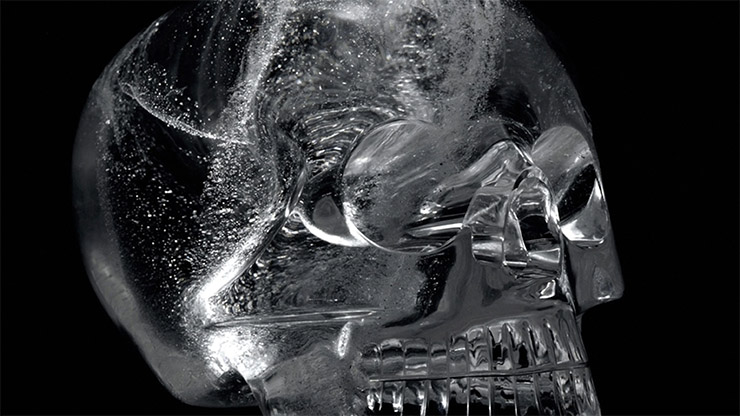
    An old native American legend describes the existence of thirteen ancient crystal skulls, the size of human skulls, with moveable jaws that were said to speak or sing. The legend tells that these crystal skulls contain important information about some of the great mysteries of life and the universe. They contain knowledge about the past history of our species on this planet, and information about mankind’s true purpose and future destiny.

    The Cherokee version of the legend says that there were originally twelve planets in the universe inhabited by human life and that there was one skull for each of these planets, together with a thirteenth skull which was vital to reconnecting all of these worlds.

    The legend also says that one day, at a time of great need, all of these crystal skulls will be rediscovered and brought back together to reveal their information vital to the very survival of the human race. But the legend also warns that when that time arrives mankind must first be sufficiently developed, suitably evolved both morally and spiritually, so as not to abuse this great knowledge.

    When we first heard this legend, whilst visiting the ancient Mayan ruins of Tikal in Guatemala, we considered it merely a colourful story, until we found out that a real crystal skull had actually been discovered on an archaeological dig in Central America, way back in the 1920’s.

    The Mitchell-Hedges Crystal Skull

    Frederick Mitchell-Hedges (1882-1959) was your archetypal British adventurer-explorer; a member of the Maya Committee of the British Museum and a real Indiana-Jones type character determined to make his mark in the twilight years of the British Empire. He was of the opinion that the cradle of civilisation lay not in the Middle East, as is commonly supposed, but instead he was convinced that Atlantis was a real civilisation which had disappeared after some natural catastrophe. He believed that the remnants of this Atlantean civilisation could still be found somewhere in Central America, and he was determined to prove it.

    To this end, he gathered together a party of explorers who set sail from Liverpool in 1924 bound for British Honduras (now Belize). One day, deep in the jungle, his party stumbled upon some mounds of stone overgrown with moss and foliage, and suffocated by roots and vines. So they set fire to the undergrowth. When the fire had subsided the ruins of a once great city emerged from the flames.

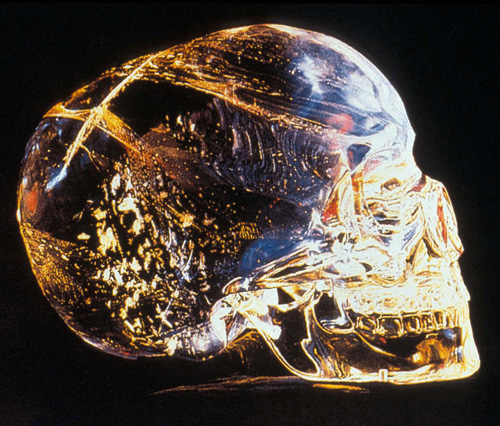
    It was a place known to the local Mayans as ‘Lubaantun’ or ‘The City of Fallen Stones’, and it was in this lost city that Mitchell Hedges’ adopted daughter Anna found a magnificent and perfect crystal skull, buried beneath an altar in the ruins of one of the great temple-pyramids. The Mayan helpers on the dig went wild with joy on the emergence of the skull. They seemed to recognise it. They kissed the ground crying, placed it on an altar, and performed ceremonial rituals and dances around it.

    But what was this mysterious object and did it have anything to do with the ancient legend?

    In a lost city in a remote jungle, located in what is now Belize, Central America, Anna Mitchell Hedge found this magnificent and perfect crystal skull, buried beneath an altar in the ruins of a great temple-pyramid.
    In a lost city in a remote jungle, located in what is now Belize, Central America, Anna Mitchell Hedge found this magnificent and perfect crystal skull, buried beneath an altar in the ruins of a great temple-pyramid.

    The crystal skull is a mystery as profound as the Pyramids of Egypt, the Sphinx, the Nasca Lines of Peru, or Stonehenge. Ever since its original discovery the crystal skull has been the source of much archaeological controversy – nobody seems to know quite how old it really is, how it was made, what it was used for, and where it originally came from. All that is known for sure is that ever since it emerged from the temple ruins, the most incredible claims have been made about the crystal skull and there have been a whole host of reports of strange and unusual phenomena surrounding the skull.

    As mentioned above, Anna Mitchell-Hedges is the woman who first uncovered the crystal skull as a teenager back in the 1920’s. Although the crystal skull was found on what most archaeologists consider to be a Mayan site, Anna Mitchell-Hedges and many others like her believe that it is actually much older than this, and that it belonged to some mysterious pre-Mayan civilisation that has now long since disappeared from this Earth.

    The crystal skull has been valued at several millions of dollars, but it is far more than just an expensive and exotic ancient artefact. For, over the years, people have reported all kinds of strange and unusual experiences in the skull’s presence. In particular, it is said to have incredible ‘psychic’ and ‘healing’ powers. According to Anna Mitchell-Hedges, who passed away at the age of 100 in 2007, it is thanks to the ‘healing power’ of the skull that kept her alive. She said that all through her life the skull kept her in good health and happiness. The skull, she said, ‘protected’ her and ‘communicated’ with her all through her long life, and she is not the only person to have reported such experiences.

    Anna allowed many visitors into her home and she accumulated hundreds of letters from the many people who came to her house to sit with the skull and who claim to have been ‘healed by the skull’ or that it somehow ‘communicated’ with them. Many of those who have spent time alone with the skull claim to have seen or heard things in its presence. Many say they have seen a gentle glow, like an aura, extending around the skull, or that they have heard sounds, like the soft chanting of human voices, emanating from it, such that it has now earned the title ‘the talking’ or ‘singing skull’, just as in the old legend.

    Others claim to have seen things inside the skull. When they have sat with the skull for a long time it has started to present them with images, almost like watching a bit of cinema film. Hundreds of visitors attest to having seen incredible images from the past or the future deep inside its crystalline structure. The reports include images of ancient sacred sites, with ceremonies being performed beneath great pyramids. Others say they have seen whole periods of planetary history with great shifting of continents, the rising of sea levels and destruction of land masses, and geological cataclysm on a global scale. One of the most commonly reported images is considered by many to be the holographic image of a UFO appearing within the crystal skull – and this has even been photographed! This image in particular has led many to suggest that perhaps the crystal skull has some kind of strange unearthly origin?

    But, just as the ancient legend suggests, this is not the only crystal skull to be discovered. Several other crystal skulls have since come to light. All are of mysterious origin and all are surrounded by claims of strange or unusual phenomena and tales of inexplicable, paranormal powers.

    Max, the ‘Talking’ Crystal Skull

    A woman named Joann Parks, who lives in Houston, Texas, also has a crystal skull. She, too, claims that her crystal skull has the power to heal and can communicate with her telepathically. The story of how Joann Parks came into possession of her crystal skull starts with a very sad story. In 1978 Joann’s eldest daughter, Diana, was diagnosed as having bone cancer and the conventional medical doctors gave her only three months to live. Joann turned to the help of a Tibetan Lama and healer named Norbu Chen. This man owned a crystal skull, and with the help of this healer and his crystal skull, her daughter managed to live for a further three years. When her daughter eventually died, the healer gave Joann the crystal skull, telling her nothing about it except that he had originally received it from a Guatemalan shaman and that one day Joann would understand it and know what it was for.

    Not knowing what to do with it, Joann put the crystal skull in a box in the bedroom closet. A few years later the skull started to appear in her dreams. Then it started “speaking to her,” saying that it wanted out of the closet. She tried to ignore this ‘voice’ but it started “talking to her” at all times of day, saying “You must let me out of this closet. I am important to mankind,” and “I will be remembered.” Joanne thought she was losing her mind and even spoke to her family doctor about it, but the voice just wouldn’t go away, and so she eventually found herself sitting in the bedroom closet “talking to this lump of rock” and telling it to go away, saying “Just leave me alone skull!” She slammed the skull away in a case and pushed it to the back of the wardrobe, but as she ran back down the stairs the skull kept talking to her. “It was very persistent,” explained Joann and it was determined that I take it out of the closet and “tell mankind” of its existence. It even added that, “By the way, my name isn’t skull, it’s Max!” And since that time Joann has been showing the skull all over the United States where she says “Max has now spoken to and healed many people.”

    The skull had also told Joanne that it came many thousands of years ago from a civilisation far in advance of our own, and from a dimension different from our own, and that one day soon this is something mankind would understand!

    What can we learn from the other crystal skulls that have now been discovered? Recently a massive crystal skull turned up at the Smithsonian Institution in Washington under very sad and mysterious circumstances. It had been sent through the post by an anonymous donor whom it transpired had taken his own life, apparently on account of the ‘curse’ the skull had brought on him since it came into his possession.

    The British Museum also has a crystal skull which is kept in The Museum of Mankind, just off Piccadilly Circus, in London. Like the Mitchell-Hedges specimen, this skull is made from highly transparent crystal and displays an incredible degree of anatomical accuracy. This skull has been in the museum’s possession since 1898 and is reported by staff to have been seen moving around by itself in its sealed glass case. The museum’s cleaners are said to be so frightened of this skull that it has to be covered by a cloth before they will go anywhere near it. Where did this skull come from?

    The British Museum have always considered their skull to be of Aztec origin. The note accompanying the Smithsonian skull also said that it had once belonged to the mighty Aztecs of Central America. Anna Mitchell-Hedges and Joann Parks said their skulls are at least as old as the ancient Mayan civilisation of Central America, if not far older and perhaps of extraterrestrial origin.

    The ancient Aztec and Mayan people built up highly developed civilisations in an incredibly short period of time. These civilisations appeared as if from nowhere and the Mayan civilisation, just as suddenly, mysteriously disappeared.

    Many archaeologists are baffled as to where they got their advanced knowledge from and why they suddenly disappeared. All the evidence that remains of this civilisation suggests they were great watchers of the skies and the heavenly bodies. They were great scientists, mathematicians and astronomers. They had a complex calendar based on the movements of the planets and the stars and which they used to predict the future. They were able to predict eclipses, even ones they could not see and that were happening elsewhere in the world. They even managed to accurately predict eclipses that have happened recently – over a thousand years after their own civilisation mysteriously disappeared.

    Some researchers claim the Mayan records say their people came from Atlantis and their ancestors before that ‘came from the stars’. The Mayan civilisation was also obsessed with the image of the skull, which made up an important part of their sacred, divinatory calendar.

    Get the issue this article appears in

    Modern Fakes?

    Many archaeologists, however, unable to explain the strange phenomena associated with the crystal skulls, claim they are simply ‘modern fakes’. So how old are the crystal skulls and where did they really come from? Are they modern, Aztec, Mayan, or did they come from some other civilisation altogether?

    In an attempt to try to answer these questions, Anna Mitchell-Hedges loaned her skull to one of the world’s leading computer companies, Hewlett-Packard, for rigorous scientific testing. The scientists in their crystal laboratories were completely unable to determine the age of the skull, as crystal cannot be carbon-dated. But what surprised the scientists was that both the skull and its detachable lower jawbone were made from the same massive piece of pure, natural rock crystal. As crystal is only slightly softer than diamond, this finding was truly incredible.

    The scientists concluded that even with modern diamond-tipped power tools, it would have been impossible to carve such an object without it shattering. At first they thought the skull must have been made by hand using sand and water to slowly abrade the material over several generations – a process they estimated must have taken around “300 man-years of effort!” But soon they were forced to revise even this conclusion. For when the skull was examined under intense magnification the scientists were in for an even bigger surprise – they were completely unable to find any evidence of tools having been used to make the skull at all! A fact which led one member of the team to comment: “This skull shouldn’t even exist!”

    The crystal skull challenged all conventional opinion. Here was an object that simply defied explanation. It showed no evidence of any existing technology used in its construction, no evidence of tool markings either ancient or modern. But the scientists at Hewlett-Packard said they were simply not prepared to countenance the only alternative explanation – that the skull had not even been made by humans.

    The scientists other interesting discovery was that the skull had been made from precisely the same type of quartz now used in modern electronic equipment. Modern science has established that among the unusual properties of quartz crystal is its ability to hold under control electrical energy and to oscillate at a constant and precise frequency. In other words, the crystal skull is able to hold electrical energy – potentially a form of information – and send out vibrating impulses – or waves of energy information. This is why quartz crystal is used for the ‘brain cells’ of electronic equipment such as watches and computers. The silicon crystal chip inside a computer, for instance, is where the information is actually stored. This finding raised the distinct possibility that the crystal skulls are in fact some kind of information storage system, just as the ancient legend suggests. But what might that information be, and where do the crystal skulls really come from?

    The Legend of the Crystal Skulls

    Native Americans have long believed in the power of quartz crystal. They refer to quartz crystals as “the brain cells of Mother Earth” and have traditionally used them for healing. The crystal skulls have long been a part of Native American teachings but until now they have been forbidden to speak about them. Now, they say, the time has come for them to speak out about these amazing artefacts and to reveal their secret knowledge.

    Professor Paula Gunn-Allen of the University of California is of Laguno Pueblo origin. She specialises in Native American literature and is well versed in the mythology and oral history of Native America. According to her the crystal skulls were created by beings “who are not humans like we are.” She says the crystal skulls were designed specifically for the purpose of communication with extraterrestrial life. As she explains, “What they are is transceivers – devices to help us communicate with the other quadrants of the galaxy.” She said that we might think of them “as like telephones” that get you connected with Galactic Central and enable you to stay in touch with “civilisations beyond our littie bitty modern world.”

    Native American medicine woman Jamie Sams says that “the crystal skulls contain information about our own ancestors, about our own past and our own future that will very soon change the whole way we see ourselves, our world, and our true place in the universe.”

    According to Metis Cherokee medicine man Harley Swiftdeer, the full version of the legend of the crystal skulls says that there were originally twelve planets in the universe inhabited by human life; that there was one skull for each of these planets, and a thirteenth skull which was vital to finally reconnecting all of these worlds. According to Harley Swiftdeer and other native Americans, the crystal skulls were brought to this Earth as “gifts from the gods” – brought long ago by these beings from elsewhere in the universe.

    These crystal skulls contained the wisdom necessary to found civilisation on this Earth and when all thirteen crystal skulls are brought back together again, we will have finally found the key to reconnecting with our brothers and sisters elsewhere in this beautiful universe.

    [alert type=”general” dismiss=”no”]This article was published in New Dawn Special Issue 8.[/alert]

    [alert type=”success” dismiss=”no”]If you appreciate this article, please consider subscribing to help maintain this website.[/alert]

    © New Dawn Magazine and the respective author.

  • Atlantis in Antarctica? Tracking the Myths of a Lost Island Paradise

    Atlantis in Antarctica? Tracking the Myths of a Lost Island Paradise

    From New Dawn Special Issue 8 (June 2009)

    Our exciting adventure tracking the history of the Ancients began in 1976. It was then that we read Plato’s account of an Egyptian priest’s description of the lost continent of Atlantis. We were intrigued when we realised that the account reflected a picture of the world as seen from Antarctica in 9600 BCE. That fascination culminated in the January 1995 publication of When the Sky Fell: In Search of Atlantis. 

    The idea that Antarctica was home to Atlantis has at its root a radical rethinking of the geological history of our planet. Formulated by our mentor, Charles H. Hapgood (1904–1982) the theory of an Earth crust displacement enjoyed the enthusiastic support of Albert Einstein (1879–1955). Hapgood and Einstein corresponded about Hapgood’s work for the last three years of the great physicist’s life.

    The essence of the theory that piqued his interest lay within the physical dynamics of the Earth’s inner structure. The bulk of our planet’s mass consists of an inner core of solid iron surrounded by liquid iron. This core is encircled by the thickest part of the Earth which is composed of two mantles of solid rock.

    Covering the upper mantle lies the asthenosphere or “weak zone.” It is the asthenosphere’s mobility that allows the Earth’s crust (lithosphere) to shift.

    An Earth crust displacement occurs when the entire outer shell of the planet moves leaving a devastating climatic legacy. Because the Earth’s tilt (axis) is not affected, the planet’s climatic zones (polar, temperate and tropical) don’t change. However, vast areas of the crust (which includes ocean basins) do experience a catastrophic change in climate. Before the last Earth crust displacement, part of Antarctica lay outside the polar zone. This is the area that could have been the site of Atlantis.

    The consequences of a crustal displacement are monumental. As the Earth’s crust ripples over its interior, the world is shaken by incredible earthquakes and floods. The sky seems to fall. The sun appears to rise and set over an altered horizon until finally the crust grinds to a halt. Beneath the ocean, earthquakes generate massive tidal waves that inundate coastlines. Some lands shift to warmer climates. Others, propelled into the polar zones, suffer the direst of winters. Melting ice caps, released from the polar areas, raise the ocean’s level ever higher. All living creatures must adapt, migrate or die.

    Solar Typhoons

    In 2000, Rand and Colin Wilson published The Atlantis Blueprint, a book that explored the idea that over 60 of the world’s most sacred sites fit into a global pattern that suggests that they were positioned by a long lost, yet extremely advanced, civilisation. In 2001, the book appeared in the United States and Rand began a correspondence with Jared Freedman who suggested an answer to the mystery of the missing mechanism of Earth crust displacements. Jared is a computer professional and inventor who worked extensively with electromagnets. He was aware that the Earth is in effect a gigantic magnet surrounding a metal core.

    When magnets pass through an electromagnetic field heat is generated. Jared wrote:

    If the Earth’s magnetic field received such a tremendous distortion of its magnetic field, over a prolonged period of time, it would generate immense amounts of heat within the Earth’s core as the Earth spun through the force that was causing the magnetic field disruption. The only force that can collapse the Earth’s magnetic field is the Sun’s magnetic field.

    Jared noted that the Sun also experiences climatic variations but because of its immense size they happen over longer periods of time. Solar storms can theoretically last for “days, weeks or even more.” If the Earth passes through electromagnetic waves coming from the Sun then force would be applied steadily at one of the poles. That energy would be carried into the Earth’s core. Metal flowing to the Earth’s surface could transform the asthenosphere from a sluggish tar into a liquid. Jared wrote:

    Perhaps it is not the disruptions of the Earth’s core that cause fluctuations in the Earth’s magnetic field, but rather disruptions of the Earth’s magnetic field cause fluctuations in the Earth’s core.

    Einstein had doubted that the weight of the Earth’s ice sheets would be sufficient to dislodge the crust. He also doubted that an abrupt shift of the entire axis was the explanation because any force that could accomplish that would probably shatter the planet. What he sought was a steady force applied to the crust for a sustained period.

    Jared Freedman’s theory not only addresses all these problems but also provides a mechanism for stopping the displacements.

    Once the Earth moves through the path of the electromagnetic storm, it cools, changing the liquid-like asthenosphere once again into a tarry substance which prevents the crust from shifting any further.

    Aztlan

    On April 21, 1519, the silence of Mexico’s Caribbean coast is broken by the clang of swords and the shuffle of boots through white sand. From his ship stepped a bearded conquistador named Hernando Cortes, his helmet adorned with “a plume of feathers.” The Spaniard pounded a great cross into the beach to honour his faith, little realising that the cross was also the symbol of the Plumed Serpent.

    Aztec spies watched in amazement and horror before hurrying back to their leader Montezuma. Montezuma’s astrology had told him to expect gods to appear from the Atlantic Ocean. Never in the course of human history has there been a greater case of mistaken identity. On that day, Cortes, with blind luck on his side, began a bloody march that would ultimately end in the annihilation of the Aztec empire.

    The Spanish conquerors believed that Mexico was once an Egyptian colony. It is little wonder, since the Aztecs shared several common mythological themes with the Egyptians. The Egyptians believed that the world was surrounded on all sides, including the heavens, with water. In Aztec mythology:

    The sea was thought to extend outward and upward until – like the walls of a cosmic house – it merged with the sky… The sky, therefore, was known to contain waters which might in perilous times descend in deluges, annihilating man.

    This empire, like that of the Egyptians, had built great pyramids that symbolised the land that saved their ancestors from the flood. And like those of Egypt the solar megaliths were aligned with the rising sun. It was atop the Temple of the Sun that Cortes met Montezuma. He recounted their conversation in a letter to the King of Spain. Montezuma told Cortes about the island homeland of the Aztecs’ ancestors: “Our fathers dwelt in that happy and prosperous place which they called Aztlan, which means whiteness.”

    Aztlan is described as “…a bright land of shining light and whiteness which contained seven cities surrounding a sacred mountain.”

    Perhaps the blazing lights of Aztlan were actually the southern lights of Antarctica before that land was thrust into the confines of the Antarctic Circle.

    Aztlan was said to be “…located beyond the waters, or as surrounded by waters; and the first stage of the migration is said to have been made by boat.”

    Once again we have the familiar story: They believed that two persons survived the deluge, a man, named Coxcox, and his wife. Their heads are represented in ancient paintings, together with a boat floating on the waters, at the foot of a mountain.

    Throughout America the myth of a lost island paradise haunts the memories of the native people. But they were not alone in their grief for the lost land. Across the ocean the tale was told in ancient India, Iran and Japan.

    Polar Paradise

    In 1922, Mahatma Gandhi, about to be sentenced to six years in prison, said to the judge:

    Since you have done me the honour of recalling the trial of the late Lokamaya Gangadhar Tilak, I just want to say that I consider it the proudest privilege and honour to be associated with his name.

    Bal Gangadhar Tilak forged the tactic of passive resistance as a means of overthrowing British rule in India. He was held in such esteem that Gandhi used the title “Lokamaya” (“Beloved Leader of the People”) when referring to him. Tilak earned his title while imprisoned in 1897 for seditious writings. The British hoped to curb his role in the rising tide of Indian nationalism by locking him up. The harsh conditions of his Bombay cell took their toll. Tilak’s health waned. Fearing that his death in custody might spark a general uprising, the British moved the “Beloved Leader of the People” to a safer prison in Poona. Helped by donations of fruit and vegetables Tilak partially recovered his health. But soon a new hunger overtook him – the need for intellectual stimulation. Relief came from an unlikely quarter: England.

    Tilak had published a respected work on India’s oldest texts, the Vedas, and Sanskrit scholars at Oxford and Cambridge were outraged by his imprisonment and treatment. Professor F. Max Muller, the world’s leading authority on the Vedas, was successful in having Tilak’s case reviewed by Queen Victoria. She shortened his sentence and granted him a reading light in his cell. Denied access to newspapers or any other current material, Tilak used this “privilege” to continue his studies of the Vedas.

    Upon his release Tilak retired to the mountains to rest at a favourite family retreat. In 1903 his great work, The Arctic Home in the Vedas, was published. In it he argued that the remains of an island paradise could be found beneath the Arctic Ocean: “It was the advent of the Ice Age that destroyed the mild climate of the original home and covered it into an ice-bound land unfit for the habitation of man.”

    Tilak summarised a key passage in the oldest saga of Iran, the Zend-Avesta:

    Ahura Mazda warns Yima, the first king of men, of the approach of a dire winter, which is to destroy every living creature by covering the land with a thick sheet of ice, and advises Yima to build a Vara, or an enclosure, to preserve the seeds of every kind of animal and plant. The meeting is said to have taken place in the Airyana Vaêjo, or Paradise of the Iranians. (Italics added)

    Tilak chose the Arctic Circle as the location of the lost continent of Airyana Vaêjo after reading Paradise Found: The Cradle of the Human Race at the North Pole (1885), written by the founder of Boston University, Dr. William Fairfield Warren. Warren had been impressed by how often the story of a falling sky and great flood was found intertwined with accounts of a lost island paradise. He also realised that the lost land had many polar features. In Warren’s view, the worldwide nature of these descriptions suggested a common physical explanation. The exciting idea of the Ice Ages provided part of his answer:

    Now if, during the prevalence of the Deluge, or later, in consequence of the on-coming of the Ice Age, the survivors of the Flood were translocated from their antediluvian home at the Pole to the great Central Asia “plateau of Pamir,” the probable starting-point of historic postdiluvian humanity, the new aspect presented by the heavens in this new latitude would have been precisely as if in the grand world-convulsion the sky itself had become displaced, its polar dome tilted over about one third of the distance from the zenith to the horizon. The astronomical knowledge of those survivors very likely enabled them to understand the true reason of the changed appearance, but their rude descendants, unfavoured with the treasures of antediluvian science, and born only to a savage or nomadic life in their new and inhospitable home, might easily have forgotten the explanation. In time such children’s children might easily have come to embody the strange story handed down from their fathers in strange myths, in which nothing of the original facts remained beyond an obscure account of some mysterious displacement of the sky, supposed to have occurred in a far-off age in connection with some appalling natural catastrophe or world-disaster.

    Warren conjectured that the island paradise myths and their dramatic accounts of a falling sky and worldwide flood were part of the actual history of traumatised populations who had lost their homeland in a geological upheaval. Again and again in the most ancient records Warren found evidence that the lost land was near the pole.

    For example, in 681 AD, the Japanese Emperor Temnu ordered that a written record be made of his people’s most ancient stories. The compilation was known as the Ko-ji-ki (“Records of Ancient Matters”) and appeared in 712. Warren believed that the earliest part of the book described an original island homeland located near the Earth’s axis.

    The Ko-ji-ki begins with the “Seven Generations of the Age of the Gods.” Each “generation” consisted of a brother and sister. After the seven generations had been created, two more gods, Izanagi and his sister/wife Izanami, were brought into being. They were charged with the task of creating the world out of the porridge-like chaos that was the primordial Earth. Warren summarises the moment when the two celestial deities create the first world.

    …standing on the bridge of heaven, pushed down a spear into the green plain of the sea, and stirred it round and round. When they drew it up the drops which fell from its end consolidated onto an island. The sun-born pair descended onto the island, and planting a spear in the ground, point downwards, built a palace round it, taking that for the central roof-pillar. The spear became the axis of the Earth, which had been caused to revolve by stirring round.

    Warren concluded that Onogorojima (“Island of the Congealed Drop”) was an island somewhere near the pole. The central “roof-pillar” represented, in his view, the Earth’s axis. A great palace was built on the island, a theme that reappears in the legend of Atlantis. (Later, Izanagi created other islands, including the eight main islands of Japan.)

    Warren believed that the polar paradise was destroyed when a critical temperature drop resulted in worldwide geological upheaval. A huge mass of the Earth’s interior collapsed inward, pulling sections of the planet’s crust with it. The ocean rushed to drown the sunken areas. The globe then cooled – suffocating the original island paradise in snow and ice.

    Because he believed that the entire island had disappeared beneath a polar ocean Warren dismissed the South Pole as a possible location since the Antarctic continent still existed as land. Instead, he focused his attention on the Arctic Ocean, which to him represented the true “Navel of the Earth”:

    Students of antiquity must often have marvelled that in nearly every ancient literature they should encounter the strange expression “the Navel of the Earth.” Still more unaccountable would it have seemed to them had they noticed how many ancient mythologies connect the cradle of the human race with this Earth-navel. The advocates of the different sites which have been assigned to Eden have seldom, if ever, recognised the fact that no hypothesis on this subject can be considered acceptable which cannot account for this peculiar association of man’s first home with some sort of natural centre of the Earth. (Italics in original.)

    Warren believed that the “Navel of the Earth” referred to the Arctic Ocean. His map of the location of the lost paradise depicts the Earth as it appears from the North Pole.

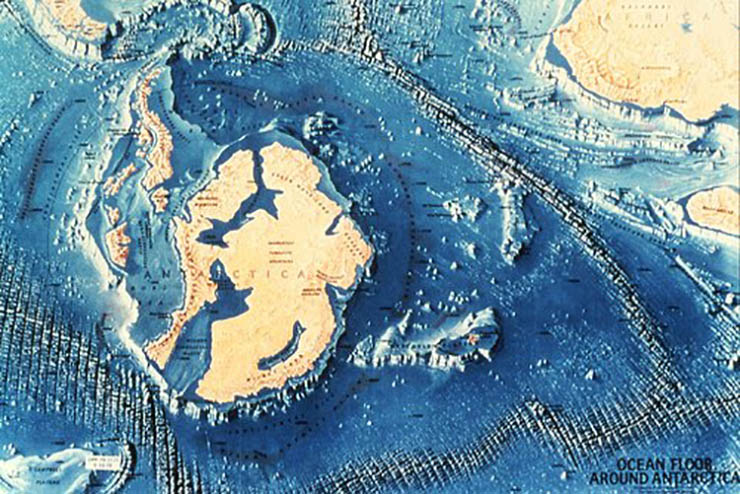
    If Warren hadn’t been fixed on the northern view and had instead looked south he would have seen that Antarctica represents a far more natural “Navel of the Earth,” as we can see in a US Navy map of the world as seen from Antarctica.

    Antarctica, like the Aztec’s “Aztlan” is “white.” Like Iran’s lost paradise, it is covered “with a thick sheet of ice.” And like the “first land” of Japanese mythology, it is close to one of the Earth’s poles.

    Even if Plato had never written about Atlantis, the mythology of the ancients has always cradled the memories that would have led us to Antarctica.

    Get the issue this article appears in

    Atlantis in Antarctica

    Most rewarding for us, since 1995, the idea that Antarctica could have been the home of Atlantis has entered the popular imagination in unexpected ways and triggered the talents of many artists and writers.

    Clive Cussler gave us Atlantis Found in which James-Bond-like-superhero Dirk Pitt travels to Antarctica and fights neo-Nazi villains over the remains of Atlantis. Later, Cussler teamed with Paul Kemprecos to write Pole Shift, a novel that envisioned terrorists hell bent on artificially displacing the Earth’s crust. Stel Pavlou created Decipher. Richard Scott, a linguist, travels around the world cracking ancient hieroglyphs including those found in the city of Atlantis two miles beneath the ice of Antarctica. Thomas Greanias wrote Raising Atlantis in which astro-archaeologist Conrad Yeats and Vatican linguist Serena Serghetti survive their quest to find Atlantis in Antarctica. In 2007, a Kindle book by Jeremy Robinson, Antarktos Rising, imagined a present-day Earth crust displacement that frees Antarctica from the polar zone, revealing the formerly iced continent and awakening the long hibernating civilisation that lies beneath.

    On television, the long running science fiction series Stargate SG1 (1997–2007) and its spinoff Stargate Atlantis (2004–2009) both assume a close connection between Atlantis and Antarctica. On the big screen, AVP: Alien vs Predator (2004) and AVPR: Alien vs Predator – Requiem (2007) are both predicated upon the idea that Antarctica was once the site of an advanced civilisation. In 2009 a film predicated on the idea of an Earth crust displacement corresponding with the end of the Mayan calendar carries the provocative title, 2012. 

    In music, Atlantis Blueprint, a rock band in Ontario is enjoying success. And in Australia the group When the Sky Fell is gathering fans.

    Tom Miller’s evocative painting of scientists retrieving artefacts from beneath Antarctica’s ice was inspired by When the Sky Fell and was featured on the cover of the US magazine Atlantis Rising.

    The authors invite you to visit the new, expanded and updated second edition of When the Sky Fell available as an eBook at www.flem-ath.com. Rand & Rose Flem-Ath continue the search and detail the breakthroughs in science over the past decade and include the compelling evidence that points to Lesser Antarctica as the site of the lost island continent of Atlantis.

    [alert type=”general” dismiss=”no”]This article was published in New Dawn Special Issue 8.[/alert]

    [alert type=”success” dismiss=”no”]If you appreciate this article, please consider subscribing to help maintain this website.[/alert]

    © New Dawn Magazine and the respective author.
    For our reproduction notice, click here.
  • Mysterious Celtic Mummies of the Gobi

    Mysterious Celtic Mummies of the Gobi

    The discovery of Caucasoid mummies in China shows that East and West have been meeting since the Bronze Age. Do they validate some of our most ancient legends?

    Christopher Columbus is said to have been the first to break down the barrier that was the Atlantic Ocean, that massive body of water separating two continents. But such a physical obstruction never existed between Europe and the East – one could always travel over land. The discovery of Caucasoid mummies in China provides not only indisputable evidence ‘Europeans’ travelled to the far East thousands of years before anyone imagined, it has also created controversy.

    At the beginning of the 20th century, the likes of Sven Hedin, Albert von Le Coq and Sir Aurel Stein travelled to the East in search of ancient civilisations, hoping to reach the then forbidden city of Lhasa, the capital of Tibet, and its ruler, the Dalai Lama. On their travels to this almost mythical region, they stumbled upon many ancient ruins and on occasion spoke about the discoveries of desiccated bodies.

    In 1907, the Russian explorer Pyotr Kuzmich Koslov (1863-1935) actually reached Lhasa and met the Dalai Lama. Afterwards, he organised further expeditions and excavated Khara Khoto, a Tangut city founded in 1032 that had been ruined by the Ming Chinese in 1372. Koslov unearthed a tomb fifty feet below the ruins and found the body of a woman, apparently a queen, accompanied by various sceptres, wrought in gold and other metals. Though Koslov took numerous photographs that were published in American Weekly, he was not allowed to disturb or remove anything from the tomb, which was sealed again. His last expedition to Mongolia and Tibet occurred from 1923 to 1926 and resulted in the discovery of Xiongnu royal burials at Noin-Ula.

    Mu & Lemuria

    When news of such discoveries were reported back in the West, it ignited a wide interest in the mysteries of the East, which even today remain largely beyond the reach of most tourists. It were in these remote regions that James Churchward (1851-1936) claimed he had found evidence of a lost civilisation: Mu. For Churchward, Mu was a lost civilisation and continent in the East, which he estimated was 50,000 years old and once the home of 64 million inhabitants. Though Mu once stretched from Micronesia in the West to Easter Island and Hawaii in the Pacific Ocean, knowledge – if not descendants – of Mankind’s original homeland could possibly be found in India and surrounding regions. Churchward believed that the primary colony of Mu was the Great Uyghur Empire, Khara Khoto being its ancient capital, and the civilisation was at its height around 15,000 BCE. Check any encyclopaedia and you will find Churchward ‘borrowed’ that name from the historical Uyghur, who today live primarily in the Xinjiang Uyghur Autonomous Region of China.

    Churchward’s Mu was not too different from Madame Blavatsky’s Lemuria, and it was the American Theosophist Gottfried de Purucker (1874-1942) who published his thoughts on Blavatsky’s doctrine in 1937. He argued that this region, this “enormous tract of country, most of it desert waste,” was once fertile and lush with cities, and that it was here one would “find the seat from which we came as a racial stock,” which was the “Fifth Root Race.” Blavatsky described the fifth root race as such:

    The Aryan races, for instance, now varying from dark brown, almost black, red-brown-yellow, down to the whitest creamy colour, are yet all of one and the same stock – the Fifth Root-Race – and spring from one single progenitor, […] who is said to have lived over 18,000,000 years ago, and also 850,000 years ago – at the time of the sinking of the last remnants of the great continent of Atlantis.

    Later, the French author Robert Charroux (1909-1978) wrote that the Gobi Desert had Magi, or sages of the East, surpassing in wisdom even those resident in Tibet. Stories go that these cities once had ocean ports, and Edgar Cayce even argued that a “City of Gold” will be discovered in the Gobi Desert, including a temple with elevators and electric cars. Others have seen this region as the homeland of those ancient UFOs, the vimanas.

    Taklamakan Desert Gives Up Its Secrets

    But whereas the Gobi Desert might still hold some secrets, it is the Taklamakan Desert that has provided us with revelations. The Taklamakan Desert is a large sandy expanse, part of the Tarim Basin, a region roughly between Tibet and Mongolia, in western China, and crossed at its northern and southern edge by the Silk Road. Conditions are so harsh that travellers avoided the desert as much as possible, but in millennia gone by the region was populated and habitable – very much like de Purucker argued.

    In recent decades, however, the south east section of the desert, on the edge of Gobi, has become an oasis for archaeologists and historians, as it is here that hundreds of Caucasoid mummies have been found. The most notable mummies are the tall, red-haired “Cherchen man” (dated to ca. 1000 BCE), the “Hami Mummy” (c. 1400-­800 BCE) and the “Witches of Subeshi” (4th or 3rd century BCE), who received their name because of the tall pointed hats they wore. However, the oldest mummy of all is the “Loulan Beauty” (1800 BCE).

    Though not the oldest, one of the most famous mummies of the Taklamakan Desert is that of “Cherchen Man” (see photo in PDF version). His body was placed in a poplar-wood box, lowered into narrow shaft grave, and left for eternity. The climatic circumstances that make this region so inhospitable today preserved these corpses over the millennia, turning them into mummies.

    Cherchen Man is six feet tall, was around fifty years old at the time of his death, has reddish brown hair, a long nose, full lips and a ginger beard. He was buried in a red twill tunic and tartan leggings, and his body is far better preserved than any Egyptian mummy. Most interestingly, Cherchen Man too was buried with no less than ten hats, one of which looks Roman, another looking like a beret, a cap, and even a conical “witch” hat – something commonly found with many of the mummies. His body dates back to 1000 BCE and he looks like a Bronze Age European. In fact, he’s every inch a Celt. Even his DNA says so.

    Next to him were found the mummies of three women and a baby. One of the women is dressed in a red gown, wearing tall boots, her hair brushed and braided. She has a red yarn through her ear lobes and – like the man – has several tattoos on her face. All mummies were painted with a yellow substance, believed to help in the preservation of the body. The baby, probably 3-4 months old, is wrapped in brown blankets, tied with blue and red cord, with a blue stone placed on each eye (see photo in PDF version).

    The oldest of the mummies is the 4,000 year old “Loulan Beauty,” (see photo in PDF version) a mummy discovered in 1980 in an ancient Chinese garrison town located by Sven Hedin in 1900. The town is near the Lop Nor marshes on the north-eastern edge of the Lop Desert. Hedin recovered many manuscripts that state the culture was wiped out by a large seismic occurrence which drastically changed the climate of the area and turned it into a desert. But that was several millennia after the Loulan Beauty lived. This female mummy has long, fair hair. Aged 45 when she died, the Loulan Beauty was buried with a basket of food containing domesticated wheat, combs and a feather. No doubt, these nourishments were for the afterlife.

    She is not the lone ‘European’ to have lived here in those days: the cemetery at Yanbulaq contained no less than 29 mummies that date from 1800-500 BCE, 21 of which are Caucasoid. Best preserved of all the corpses is “Yingpan Man,” who is also known as “the Handsome Man,” a two metres tall 2,000 year old Caucasian mummy discovered in 1995. His blond bearded face was covered with a gold foil death mask, which is a Greek tradition; he also wore elaborate golden embroidered red and maroon wool garments with images of fighting Greeks or Romans. His head rests on a pillow in the shape of a crowing cockerel.

    Elsewhere in the Tarim Basin, hundreds of other mummies have been found, with the earliest ones being genetically Caucausoid or Europoid. Some of the mummies are thought to have been sacrificial victims. A young woman was found partially dismembered, her eyes gouged out. A baby boy had apparently been buried alive. The question remains whether the latter was sacrificial, or he was merely buried with his dead mother.

    How did Europeans End up in the Tarim Basin over 4,000 years ago?

    Although their location is certainly an intriguing one, interest in these mummies exists largely because they are ‘out of place’ relics. Not only does DNA evidence show that the earliest arrivals were from Europe, analyses such as the weave of the cloth reveal it was identical to those found on the bodies of salt miners in Austria, dating from 1300 BCE. The wooden combs buried in Asia are also identical to those found in Celtic countries. So are the stone structures on top of their burial sites – similar to the dolmens of western Europe.

    Despite such certainties, archaeologists and historians have struggled to fill in the ‘soft evidence’ – which are nevertheless the most important questions: how did they get to China, and why did they go?

    We know about these early European visitors to the Tarim Basin largely thanks to the work of Dr. Victor Mair, a professor of Chinese Studies at the University of Pennsylvania. His fascination began when he toured the Urumchi Museum where some of the mummies are displayed. He then invited Dr. Elizabeth W. Barber of Occidental College (California) to visit the mummies and give her expert opinion on the weaving of their clothes.

    “From around 1800 BCE, the earliest mummies in the Tarim Basin were exclusively Caucausoid, or Europoid,” says Mair. East Asian migrants arrived in the eastern portions of the Tarim Basin about 3,000 years ago, while the Uyghur peoples arrived after the collapse of the Orkon Uyghur Kingdom, based in modern-day Mongolia, around the year 842.

    Mair has also stated:

    The new finds are also forcing a reexamination of old Chinese books that describe historical or legendary figures of great height, with deep-set blue or green eyes, long noses, full beards, and red or blond hair. Scholars have traditionally scoffed at these accounts, but it now seems that they may be accurate. (http://en.wikipedia.org/wiki/Tarim_mummies)

    In short, Mair leaves little doubt that we are confronted with a ‘lost civilisation’ of a group of European settlers in a region millennia before any historical accounts were recorded.

    Mair believes that early Europeans headed in different directions, some travelling west to become the Celts in Britain and Ireland, others taking a northern route to become the Germanic tribes, and then another offshoot heading east and ending up in Xinjiang. His team suggests they may have arrived in the region by way of the forbidding Pamir Mountains about 5,000 years ago.

    His opinions tally with those of textile expert Barber, who in her book The Mummies of Ürümchi examined the tartan-style cloth and concluded that the garments can be traced back to Anatolia and the Caucasus, the steppe area north of the Black Sea. She argues this group of people divided, starting in the Caucasus and then splitting, one group going west and another east – confirming Mair’s opinion.

    So, what do we know about these people? We know they were horsemen and herders using chariots, and may have invented the stirrup. We know they had arrived in this region by 1800 BCE. That around 1200 BCE, they were joined by another wave of Caucasoid immigrants from what is now Iran (the so-called Saka branch).

    In fact, the Saka nomads had high-pointed hats – like the ones found next to Cherchen Man – as displayed on the Persepolis reliefs in southern Iran. A bronze statue found in the Altai Mountains from the 5th century BCE has a similar hat. Most important is the fact that the statue has Caucasoid features, and shows similarities in dress to Cherchen Man. It is therefore clear that apart from ‘hard’ DNA evidence, there is other incontrovertible evidence of an early European presence in China. The discovery of the mummies indeed rewrites history.

    When Sir Thomas Douglas Forsyth reported on his 1875 mission to the region, he stated many of the people were tall, fair-faced, with light eyes, sandy whiskers and hair. He added they “only require to be put into coat and trousers to pass, so far as outward appearance goes, for the fairest Englishman.” Two millennia before, Pliny the Elder in “Taprobane” wrote about the Seres, which were described to the Roman Emperor Claudius by an embassy from Taprobane (Ceylon). He said they “exceeded the ordinary human height, had flaxen hair, and blue eyes,” a description which comes close to those people living in the Tarim Basin. Pliny the Elder also said they had an “uncouth sort of noise by way of talking, having no language of their own for the purpose of communicating their thoughts.”

    Political Controversy

    Though no texts have been found in relation to the Tarim mummies, it is now accepted these emigrants spoke a language known as Tocharian (the Chinese called them Yuezhi), that proved to be close to the languages of western Europe. Today, the region‘s inhabitants are the Uyghur people. With their light-coloured skin and hair, many Uyghur‘s are obviously of mixed genetic ancestry, and this fact has a political dimension.

    If one were to find evidence of a Bronze Age seafarer in America, it would obviously create controversy. The discovery of the ‘European’ mummies on Chinese soil also has major political implications. The region is rife with separatist movements and the government fears that promoting a truly unique archaeological find might result in serious social and political unrest. This is one of the main reasons why the Terracotta Army is far more famous than the Tarim mummies!

    Social unrest is greatest between the Uyghur and the Han Chinese. In their drive to lay claim to the region, the Loulan Beauty was even raised to the status of racial icon by the Uyghur, who call her “mother of the nation” – without little supporting evidence.

    The Chinese historian Ji Xianlin, writing a preface to Ancient Corpses of Xinjiang by Wang Binghua, says that China “supported and admired” research by foreign experts into the mummies – i.e. Mair and Barber.

    “However, within China a small group of ethnic separatists have taken advantage of this opportunity to stir up trouble and are acting like buffoons. Some of them have even styled themselves the descendants of these ancient ‘white people’ with the aim of dividing the motherland. But these perverse acts will not succeed,” Ji writes.

    In comparing the DNA of the mummies to that of the modern day Uyghur, Mair’s team found some genetic similarities with the mummies, but “no direct links.” The fact of the matter is that neither the Uyghur nor the Han Chinese seem to be directly related to these ancient settlers – and that both are modern additions to, and admixtures in, a region populated millennia earlier.

    What the discoveries suggest is that both immigrants and modern local Chinese are a mixture of races. “While it is clear that the early inhabitants of the Tarim Basin were primarily Caucasoids,” Mair has written, “it is equally clear that they did not all belong to a single homogeneous group. Rather, they represent a variety of peoples who seem to have connections with many far-flung parts of the Eurasian land mass for more than two millennia.”

    He adds: “Modern DNA and ancient DNA show that Uyghurs, Kazaks, Kyrgyzs, the peoples of central Asia are all mixed Caucasian and East Asian. The modern and ancient DNA tell the same story.”

    Furthermore, a National Geographic study of the DNA of the mummies suggests the Tarim Basin was continually inhabited from 2000 BCE to 300 BCE and preliminary results indicated the people, rather than having a single origin, originated from Europe, Mesopotamia, India and other regions yet to be determined.

    It underlines, once again, that ethnic groups, whether ancient or modern, are genetically a mixture of many races.

    The Formation of the Silk Road

    What brought ‘Europeans’ to the Tarim Basin over 3,800 years ago? The southern Taklamakan Desert is an area where the Silk Road once flourished and prosperous cities were built. In Khotan, two large rivers were channelled, creating an oasis that grew wheat, rice, corn, cotton, grapes, peaches and melons, and irrigated fields for the grazing of sheep. It is clear that life must have been good in those days, and our ancient adventurers had everything they could want. However, because of gradual climate change, the cities were eventually abandoned and subsequently eroded and buried by the dunes.

    The Silk Road was an ancient caravan route connecting China to the West. The Caucasoid mummies in this part of the world suggest the trade route is older than previously thought – very much like transoceanic contact might be several millennia older than Columbus’ first voyage to America.

    The Silk Road was not just a conduit for silk; many other products were transported and traded and the routes were not merely travelled by merchants, but anyone wanting to go East – or West. The routes should therefore be seen as the ancient ‘highways’ between China and the Mediterranean Sea.

    Trading between the East and West occurred from the dawn of civilisation – if not before. Between 6000 and 4000 BCE, people in the Sahara were already importing domesticated animals from Asia. By 3000 BCE, lapis lazuli – the only known source of which was Badakshan, in northeastern Afghanistan – was found in Egypt. Most specifically, the supply of Tarim Basin jade to China from ancient times is well established. Nephrite jade from mines in the region of Yarkand and Khotan – not too far from the lapis lazuli mines of Badakshan – was found in China. Xinru Liu writes:

    It is well known that ancient Chinese rulers had a strong attachment to jade. All of the jade items excavated from the tomb of Fuhao of the Shang dynasty, more than 750 pieces, were from Khotan in modern Xinjiang. As early as the mid-first millennium [BCE] the Yuezhi [Indo-European people] engaged in the jade trade, of which the major consumers were the rulers of agricultural China. (http://en.wikipedia.org/wiki/Tarim_mummies)

    The Tarim mummies overturn the idea that the West and the East developed independently and they only recently started to interact. As Dr. Mair notes,

    I do believe that there is a growing mountain of hard evidence which indicates indubitably that the whole of Eurasia was culturally and technologically interconnected.

    An interesting question is did the Celts go east – or did a Caucasoid group of people, perhaps native to the Tarim Basin, go to Europe? Turning the path of travel in the opposite direction could offer confirmation of speculation this region was an ancient ‘homeland’ that spread to other regions – specifically Europe.

    With so little known about Bronze Age Celts both in Europe and Asia, no firm conclusions can be drawn either way – and perhaps never will. However, the Book of Manu (also known as the Laws of Manu), one of the supplementary arms of the Vedas, states that the “Uyghurs had settlements on the northern and eastern shores of the Caspian Sea” and German anthropologist Max Muller (1823-1900) wrote that “the first Caucasians were a small company from the mountains of Central Asia.”

    These conclusions are obviously ‘old’ – but are they therefore erroneous? Written more than a century before the Tarim mummies were discovered, they actually speak of the presence of Caucasians in China. And if they got that right, is it possible they got other things right too?

    Only future discoveries are likely to tell. But at least it’s an undeniable fact there was contact between Bronze Age Caucasians and East Asians along the Silk Road. The evidence is for all to see in the Urumchi Museum.

    [alert type=”general” dismiss=”no”]This article was published in New Dawn 112.[/alert]

    [alert type=”success” dismiss=”no”]If you appreciate this article, please consider subscribing to help maintain this website.[/alert]

    © New Dawn Magazine and the respective author.
    For our reproduction notice, click here.