New Dawn – World's Most Unusual Magazine

Category: Ancient Mysteries

  • In a Darkened World, is the Sun Rising Over Central Asia?

    In a Darkened World, is the Sun Rising Over Central Asia?

    From New Dawn Special Issue Vol 6 No 1 (Feb 2012)

    In the light of the political upheavals and mass rebellions taking place almost everywhere in the world – in the north African and Near Eastern Muslim states, in Afghanistan and Pakistan, in Europe and America – all the international talk at present is on the clash of global geopolitical forces and how to resolve them. Can we ever expect world peace to materialise out of what amounts to a worldwide battlefield?

    Some observers believe not. They contend that competitive and warlike tensions are endemic to the geopolitical/economic level of the human enterprise, and that the resolution of the present state of chronic international conflict can come about only from above, from the cultural/religious sphere. Commenting on the great natural catastrophes of 2011, as well as the escalating rebel activities in north Africa, Wilhelm Augustat, Austrian president of the European office of the Peace Through Spiritual Culture Association International, said: “It has once again become obvious that solutions for problems of this size and type cannot be derived from the technical and sociopolitical levels of our civilisation, by excluding the spiritual-cultural sphere of human life.”1

    Those who hold to Augustat’s view and see the building of a peaceful worldwide commonwealth of nations as a possibility that must begin at the highest cultural and spiritual level, are turning their attention to Kazakhstan in Central Asia, whose new capital, Astana, hosted the above-mentioned World Forum of Peace through Spiritual Culture in October, 2010. In Kazakhstan they glimpse something immensely hopeful for the rest of the world taking place: the rebirth of principles of civilisation once considered essential for peace and mutual understanding between nations, but now long lost to the world, their very existence forgotten.

    Central Asia ceased to be a part of the Soviet Union in 1991, a large part of it becoming instead the independent nation of Kazakhstan. Now one of the largest countries in the world, this vast new state spreads across the heart of the Eurasian landmass from the shores of the Caspian sea to the Tien Shan mountains and the Altai, uniting East to West. Crisscrossed by ancient trade routes and revealing to archaeologists the ruins of long-buried civilisations, the whole region is now striving to reconstitute its shattered identity as guardian of the world’s oldest traditions of sacred knowledge.

    Tiberio Graziahni, president of the Institute of Advanced Studies in Geopolitics and Auxiliary Sciences, refers to the region that traverses central Asia from the Gobi to the Mediterranean basin as “the hinge of the whole Afro-Eurasian landmass” and as critical to its integration – and to world peace. Widely regarded as the crucible of civilisation, Central Asia is even more than that: it is the generative heart of the planet, a place of evolutionary birthing that has become active again and again throughout history, spawning religions, sciences and civilisations that have fanned out across the world. Here where the ancient Silk Road ran and invading hordes and new religious movements swept to and fro remaking civilisations, history reveals that the influence of a single powerful spiritual source has been radiating out under various names, promoting peace and righteousness to the ends of the Earth for countless millennia.

    From the Karakorum mountains at the western end of the Trans-Himalayas this same spiritual hierarchy gave birth to the Sun religion around five thousand years ago. It sent forth the Sons of the Sun or Sons of Heaven, sometimes known as the Sons of Light, to build a network of temples around the globe that brought knowledge both scientific and spiritual to the people and civilisation to the whole planet. Supplanting Ice age shamanism and the earlier worship of the Pole star in the constellation Draco for that of the Sun, the new faith nevertheless preserved a great deal of reverence for the lofty principles of its predecessor, as indeed is testified by the totemic masks of birds, animals and fish still worn by the neter gods in ancient Egyptian art. This mysterious hierarchy also lay behind the Sun religion of the Shang dynasty in China and the Kibieri of the Celts, and behind the Solar religion of the Egyptian kings of Heliopolis who, as Sons of the Sun, were closely allied to the original Asiatic order.

    Although still culturally devastated by the destructive materialism imposed on them by communist Russia, Kazakhstan’s people preserve the memory of their illustrious past and long for its return. Travellers say that the whole of Central Asia still rings with stories of Shambhala, a place of enlightenment and peace hidden among the most remote mountain valleys, and once known also as the Land of the Living Gods, the Forbidden Land and the Land of White Waters where the culture-bearing Sons of the Sun originated. Faced by the devastation of their ancient culture, the hopes of many of the Central Asian peoples are still high that soon this will be rectified; the king of Shambhala will lead his great band of warriors out to destroy his enemies and reclaim the kingdom as his own, as a Buddhist prophecy has long declared.

    Legend foretold the day when Rigden Jyepo, the king of Shambhala, would come with a great army to destroy the forces of evil and usher in a golden age: the Age of Maitreya. Shambhala, therefore, symbolised the great future, when the Panchen Lama would be reborn as Rigden Jyepo and the reign of Maitreya, the Coming One, would begin.2

    Provocatively, however, the former Library Congress historian and Professor Andrei Znamensky has a somewhat different and less spiritual take on the prophesied Buddhist war of Shambhala. Obviously, he says in his book Red Shambhala, the prophesy is actually directed against Islam and the mlecca – the Mecca people – who have invaded the land.3 However that may be, today there are signs in Kazakhstan of the birth of a Muslim reforming programme that owes nothing to the more combative Buddhist scenario, yet fulfils in every essential way the Shambhala prophecy, promising to usher in a new era and a new sacred society based on culturally enlightened principles.

    The young oil- and gas-rich nation of Kazakhstan, whose geography takes in a majestic panorama of seas, alpine forests, steppes, deserts and snowfields, is home to something like 140 ethnic groups of every possible cultural background and religious persuasion. As well as the indigenous Kazakhs, here are established Nestorian Christian and Sufi communities, indigenous Buddhist groups and shamanic nomads still roaming the steppes, as well as a large population of Jews who fled here after the Romans sacked Jerusalem in the second century CE; besides which there are Jewish converts known as Khazars who have migrated eastward and settled in their thousands in this foreign land.

    An ex-Communist with visionary ideals, the President of Kazakhstan Nursultan Nazarbayev seems determined to democratise Islam, although not perhaps in the western style. Breaking the traditional Muslim mould of power-driven dynastic autocracy that featured until very recently in all the Muslim caliphates, he recently rejected a referendum that would give him a further ten years in office, and showed readiness to actually shorten the term of presidential office. He has initiated the People’s Assembly of Kazakhstan, which gives every ethnic group the right to take part in the decision-making congresses associated with the political, cultural and social activities of the country. And his attitude to women is also modern. Schools for girls are a priority, with attention given to getting girls into science and technology.

    The main thrust of Nazarbayev’s initiatives is clearly to bring into international dialogue the various divisive issues that press most heavily on the global community at present. Astana hosts a number of world congresses, including the World Federation of Neurosurgical Societies and a World Conference on Disarmament, while the First Almaty Economic Business Forum may be held in Astana in 2012. But the President’s chief initiative remains one that first materialised in 1992, soon after Kazakhstan’s independence from the Soviet Union. In 2003 the Congress of the Leaders of World and Traditional Religions was held with great success in Astana, and again in 2006 and 2009. Emphasis was laid on the principles that bind religions together rather than those that separate them.

    In October 2010 the World Forum for Spiritual Culture, intended for a more general interdisciplinary gathering, was held in Astana, again chaired by the Kazakhstan President and imbued with the religious tolerance for which the ancient shamanic races of this region, such as the Mongols and also the Sufi orders, have long been famous.4 As the British scholar and philosopher Peter Kingsley notes, “It was no small practical achievement for the Mongol Khans to transform into a major institution the long-standing Central Asian custom of convening formal gatherings made up of representatives from different religions so they could openly discuss their beliefs on an equal footing instead of just killing each other.”5

    According to the same open principle, high-level representatives from about seventy-five countries, “from all cultures, ‘cults’ and worldviews,” attended the historic gathering in Astana. In his Conference report on the International Forum for Peace through Culture, Augustat stated that the world initiative launched by Kazakhstan’s President is based on non-violence, harmony and cooperation between nations. “The core problem of our present time is formed of lethargy, extreme egoism, greed, corruption, purely materialist thinking and so forth – all of which have to be exchanged for real human values.”6

    Similar world gatherings to those in Kazakhstan are of course being held elsewhere, for example in Turkey and Australia very recently. But the key objective of the Executive Committee of Spiritual Culture as proposed by President Nazarbayev strikes another new and even more revolutionary note. It aims at nothing less than the furtherance of an integration of science, socio-politics and religion in one overarching transcendental order. As Kingsley notes, from the very earliest times but now long lost, this idea of a comprehensive divine whole uniting all that exists was also a core principle of the philosophy of central Asian shamanism from which the Sun religion directly emerged, and in which there was a constant overlapping of “spirituality and science, mechanical ingenuity and philosophy, mysticism and military expertise,”7 as well as poetry, gnosis and politics.

    Consequently, one of the most important highlights that came out of the Kazakhstan World Forum, notes Augustat, is the awareness of the necessity of a synthesis of the political and spiritual-cultural as well as scientific spheres in society, and the gradual overcoming of their present entrenched separation. This very postmodern approach, which even today is entertained by only a minority of western thinkers as the necessary basis for a more enlightened world civilisation, characterises the Kazakhstan Executive and raises the interesting question: where is this intellectual initiative coming from? What hidden metaphysical influence is at work here?

    The Sacred Union of the East

    As we shall shortly see, President Nazarbayev’s is not the first attempt in modern times to reestablish in the Eurasian heartland a nation based on enlightened spiritual principles. Seventy years before the birth of the Kazakhstan nation a similar Buddhist attempt was essayed in the Altai in southern Siberia. Nazarbayev’s has been guided, it would seem, by a different star, a gnostic vision from a far more distant time; but nevertheless, the earlier attempt to establish a Buddhist New Country of New Russia in the Altai may well be seen as a rehearsal for Kazakhstan’s more ambitious Muslim experiment.

    After the 1917 Revolution in Russia, says Znamensky, Communism took on a religious quality “typical of religious revitalisation movements in tribal societies.”8 In his book Red Shambhala, he reveals the underground occult agenda of a visionary Russian clique working within the very core of the new Bolshevik State to bring about a political condition impregnated with the Buddhist wisdom of Shambhala. Inspired by Buddhist prophesies, this clandestine group active within the Soviet Secret Police believed that the social ideals of Communism were compatible with those foretold of the Buddha Maitreya, the One to Come, and that with the amalgamation of the two a glorious mystical era of Communism would result that would benefit the whole world. So persuasive was this vision that for a while the movement gathered many Communist adherents, and indeed was to be destroyed only by the later Stalinist purges. But not before a number of expeditions were either planned or actually sent forth from Russia and elsewhere in eastern Europe, with the intention of finding the fabled kingdom and embracing its immortal teachings.

    One of these expeditions – and the most celebrated – was launched from New York by the painter Nicholas Roerich and his wife Helena, White Russian emigres to America and passionate converts to the new Theosophical teachings promulgated by another Russian, Helena Blavatsky. Nicholas established a Master art school in New York and Helena, a mystical clairvoyant, channelled guidance from Masters Morya and Koot Hoomi, the same Mahatmas whom Blavatsky had claimed as her unseen Adepts and spiritual mentors a few decades earlier. (According to recent research, these two Masters were most probably Hindu and Sikh Indians, presumably high initiates in their respective religions.)9 The Roerichs were also strongly influenced by the shamanic teachings and legends of Shambhala that had been trickling into Russia from Russian expatriates in southern Siberia for the past hundred or so years; and in 1923, at the behest of the Master Morya and under his continual guidance, the Roerichs set out for central Asia on an arduous odyssey to find the wondrous kingdom.

    Behind the ostensible reason for the expedition was a hidden agenda of the greatest import, which Master Morya impressed on them was the additional meaning of the prophesy of Shambhala. Shambhala, he said, was “not only the abode of mystical Buddhist learning, it was the guiding principle of the coming cosmic age.”10 Its further meaning would unfold in the establishment of a sacred New Country, a New Russia in the Altai, a mountainous country in southern Siberia lying at the intersection of Mongolia, Kazakhstan and Tibet. There the Roerichs were to found the New Country on the highest Buddhist principles. It was to be governed at a spiritual level by the exiled Tibetan Panchen Lama – whom they were commissioned to find somewhere in Mongolia and bring back to the Altai – and on an administrative level by Nicholas himself, who sometimes wore the robes of the Tibetan Dalai Lama.

    According to Znamensky, the Roerichs envisaged in the Altai a utopian theocracy composed of “a commonwealth of people who would live a highly spiritual life and work as a cooperative – the economic foundation of this new state.”11 In fact the New Country was to be nothing less than a unification of all Inner Asian peoples into a spiritual kingdom. Thus would be established the Sacred Union of the East.

    The project failed. It was naïve, ill-conceived and geopolitically ignorant. The Panchen lama, at that time enjoying a profligate lifestyle in Mongolia, was not interested in the New Country. And visiting Soviet Russia to elicit support for their Great Plan, the Roerichs received only a cautious and limited response from the government while antagonising all the other great powers – Japan, America, Britain and China – at that time mutually competing to gain access to the riches of central Asia. Nicholas and his son George made a further attempt to materialise the Masters’ plans in 1937, but this attempt too failed, and having earned the fury of Franklin D. Roosevelt, the then president of the US who saw their endeavours as a betrayal of US interests, the Roerichs were obliged to retire to India for the rest of their lives.

    Nevertheless, we can glimpse in the Roerichs’ Altaic project a foreshadowing, a rehearsal or preliminary model of what is presently happening in neighbouring Kazakhstan. But there are significant differences. For one thing, and an important one, in the Buddhist venture Nicholas Roerich laid no discernible emphasis on interdisciplinary unification, a reform of the utmost importance to Kazakhstan’s President. Nor is there any indication that Nazarbayev draws to any degree on the mythology of Shambhala. Indeed the warlike outlook that lurks behind the Altaic venture and plays such a large part in the Buddhist prophecies of Shambhala – leading Nicholas and Helena to regard themselves as “Shambhala warriors” – is entirely absent from Nazarbayev’s idealistic programme. To trace the bond that does undoubtedly seem to exist between these two regional ventures seventy years apart, we must delve more deeply into the nature of the ancient spiritual hierarchy that lies at an even more hidden level beneath Shambhala’s folk mythology.
    The Rising Sun in Asian History

    What then is the source of Kazakhstan’s unusual and potentially revolutionary geopolitical objectives? To find a precedent for them we have only to turn back to the great days of the Sun religion that peaked during the third millennium BCE.

    As the Solar impulse spread globally into a honeycomb of separate national cults, each with its own sacerdotal hierarchy, the priesthoods of low rank, concerned mainly with ritual and dogma, separated out, everywhere dissolving into polycentric and insular attitudes towards each other, very much in the modern divisive manner. But in the higher prophetic ranks we find a counterbalancing trend of a quasi-clandestine nature that preserved the original unicentric Solar policy, even to maintaining an overseeing brotherhood with its headquarters remaining in Central Asia.

    In this way, by preserving their cohesion the prophets contributed an underlying unity and strength to society that universally balanced the equally divisive tendencies of popular religion. A hierarchic philosophy in the higher Solar echelons balanced a democratic one in the lower, leading to a spirit of accord and international harmony unprecedented to this day, yet at the same time allowing ideological differences to flourish creatively in the lower levels of the religion.

    Furthermore, these higher-ranking adepts were men and women of learning as well as spirituality; sages, but also astronomers, engineers, scientists, doctors and architects, who combined the various secular disciplines at all times with their metaphysical interests. Even as the Earth and the stars of the firmament were seen as related elements of one transcendental order, so that divine Whole was believed to be inclusive of, and to bring into relationship all areas of human knowledge, whether they be religious, psychosocial or physical. Two famous historical figures who fall into this category are Visvakarma of the Arunachala temple in India, a renowned expert in geometry and number, and Imhotep, ancient high priest of Heliopolis in Egypt, an engineer and architect who famously built the step pyramid at Saqqara. By means of this policy of multidisciplinary integration which brought together at all levels the opposite poles of human knowledge, those of the spiritual and natural orders, societies were unified at a high overall level, but without stifling the creative potential that lies in the challenges of diversity and opposition.

    Thus it was the operation of the two key principles of religious tolerance and multidisciplinary unity maintained in a high state of ideological tension that, while they lasted, rendered the Sun religion the greatest civilising force the world has ever known. But in time, as the initial impulse spread ever more widely throughout the Old and the New Worlds and discord inevitably increased, the religion increasingly found expression in various more esoteric orders bearing different names but inherently the same liberal principles. One of these orders was the international Order of Melchizedek, widely believed to be involved in the beginning of all three Semitic religions, Judaism and Christianity as well as Islam.

    Melchizedek, king of Righteousness, is a mysterious figure who threads his way through the Hebrew Bible as high priest in perpetuity of the Canaanite Sun God El-Elion. He is said within occult circles to head a Righteousness Order whose secret headquarters, even to the present day, preserve in the mountains of central Asia an organisation of great antiquity and influence in religious affairs with branches in many countries and throughout many epochs. Superior to any local cult or priesthood and steeped in the wisdom of shamanic gnosis, the order claims to be, like the Sun religion, an underground spiritual stream, itself invisible and timeless, from which all our disparate belief systems ultimately stem.

    In Genesis (14-18) Melchizedek initiates the prophet Abraham, the ancient ancestor of all the Semitic tribes, into the Solar worship of God Most High after Abraham had defeated a coalition of kings. “And Melchizedek, king of Salem, caused bread and wine to be brought; and he was priest of God Most High (El Elion). And he blessed Abram, saying: ‘Blessed be Abram, he of God Most High, possessor of Heaven and Earth; and blessed be God Most High who has delivered your enemies into your hands’. And Abram gave him the tithe of all he had taken.” As the esotericist René Guénon notes, “the whole episode enacts a true ‘investiture’, almost in the feudal sense of the word, but with the difference that it is a spiritual investiture, wherein is found the exact point of union between the Hebraic and the great primordial tradition.”12 As a consequence of the rite Abram acquired the new name of Abraham.

    Andrew Welburn, a Fellow of New College, Oxford, suggests a continuity throughout history of the rites of the Israelite kings and the older Mystery practices connected with the ancestral king and high priest of the Sun God El.13 Thus, Welburn says, since Judaism was primarily a lunar religion, these Solar initiations would have been strictly esoteric Mystery events. The Letter to the Hebrews (5-6) in the New Testament implies a similar distinction in Christianity, for the writer, Apollonius of Alexandria, declares that Jesus Christ too has been given the office of high priest of God Most High. Here, says Welburn, we meet again the old Canaanite priest-king Melchizedek, who was so central to Essene and Gnostic teachings and whose name is linked to the hidden Solar symbolism that runs through the lunar religion of Judaism.14

    In the case of Islam, although Muhammad’s Arabic Qraiysh clan was the only one to have abstained from polytheism and remain loyal to El, the traditional High God of the Arabs whom Muhammad called Allah,15 the connection with the Melchizedek Order is not as direct as in Judaism and Christianity: yet it is there. Although nowhere stated in the Koran, not only would Muhammad therefore have come automatically under the tutelage of El’s high priest Melchizedek, but also it is an Arabic tradition that Abraham, as the first of Islam’s prophetic lineage passed the wisdom he had received from Melchizedek down the line to the prophet Muhammad and his Islamic reformation. And there in Islam it was preserved by the Sufis, a spiritual order that had existed long before Islam.

    In The People of the Secret, the Sufi author Ernest Scott elaborates the idea that Sufism, which he says originated in northern Afghanistan, shares a common origin with other ancient religious forms.16 Like the Sons of the Sun and the Righteousness adepts, the Sufis were direct heirs of neolithic shamanism and more than any other religious system of the day carried forward the two key principles of the Sun religion. For a time Sufism became a powerful democratic influence wherever Islam spread, constellating especially along the Afro-Eurasian “hinge” referred to by Tiberio Grazianhi.

    As a consequence, by the eleventh century CE the Sufis had welded Islam into the greatest force for civilisation at that time known. Active behind the various national caliphates, they resurrected Greek knowledge at a time of calamitous cultural decline in the West and extended to western powers friendship and learning in equal measure. For centuries the Sufis ensured that Jews, Christians and Muslims lived at peace with each other, extending the boundaries of knowledge and together rebuilding the cultural wealth that had been lost after the demise of the Roman empire. And Sufism also ensured that in the Fatimid caliphate of the eleventh century a mosque became the first university in Islam in which theological expertise united with that of chemistry, astronomy and medicine, mathematics and geometry in an overall metaphysic of great intellectual force.

    There can be no doubt whatever that this underground Sufi input, even in a time of greatest Muslim intolerance towards it, still operates clandestinely along the Afro-Eurasian “hinge.” But it is in Kazakhstan that it is arguably causing what may well become a fully flowering Muslim cultural renaissance of the highest order, a rising of the Sun of gnosis which will affect the whole of Islam.

    In President Nazarbayev’s gatherings of eminent representatives of all the religions on Earth, and in his insistence on bringing together the various spiritual and scientific disciplines in one comprehensive embrace, something quite unique may be happening in Central Asia that will have important consequences for the peace and harmony not only of Islam but of the rest of the world.. This is a time of critical challenges and perhaps only time will tell.

    [alert type=”general” dismiss=”no”]This article was published in New Dawn Special Issue Vol 6 No 1.[/alert]

    [alert type=”success” dismiss=”no”]If you appreciate this article, please consider subscribing to help maintain this website.[/alert]

    Footnotes

    1. From Wilhelm Augustat’s Report on Astana World Forum of Spiritual Culture International for New Dawn 126, May-June 2011, 4.

    2. Ruth A. Drayer, Nicholas and Helena Roerich, Quest Books, Illinois, 2005, 84.

    3. A. Znamensky, Red Shambhala, Quest Books, Illinois, 2011, xii.

    4. Peter Kingsley, A Story Waiting to Pierce You, The Golden Sufi Center, California, 2010, Note 29, 162.; also J.G. Bennett, The Masters of Wisdom, London, 1977, 145, 150.

    5. Ibid., 163.

    6. Wilhelm Augustat, op. cit., 4.

    7. Kingsley, op. cit., 155.

    8. Ibid., 104.

    9. K. Paul Johnson, The Masters Revealed, State University of New York Press, 1994, 5-6.

    10. Drayer, op.cit., 84.

    11. Znamensky, op. cit., 166.

    12. René Guénon, The Lord of the World, Coombe Springs Press, London, 1983, 33.

    13. Ibid., 127.

    14. Ibid., 124.

    15. Jay Weidner & Vincent Bridges, The Mysteries of the Great Cross of Hendaye, Destiny Books, Vermont, USA, 2003, 102.

    16. Ernest Scott, The People of the Secret, Octogon Press, London, 1983, 191.

    © New Dawn Magazine and the respective author.
    For our reproduction notice, click here.
  • The Illuminati: Renegades of the Mystery Schools

    The Illuminati: Renegades of the Mystery Schools

    From New Dawn Special Issue 18 (Dec 2011)

    The word “Illuminati” has become a catch-all term for the defacto Rulers of Planet Earth. Definition is crucial because the words “Conspiracy” and “Illuminati” have themselves become code-words for the occult (hidden) machinations of the Powers That Be. With the advent of the internet and its rough cut of “news” and disinformation, what was once considered esoteric knowledge has been revealed for all to see. Even the cowans – a derogatory Masonic term for non-Masons – and the goys – a derogatory Yiddish term for non-Jews – are learning about the Illuminati black magic hoodoo that permeates the planetary matrix.

    Illuminati originally meant “the enlightened ones” in Latin, and it refers to those who control the political, economic and social infrastructures of the planet. By their reasoning, they believe they are the (self) designated rulers of Planet Earth.

    Also called “Olympians” and “Moriah Conquering Wind,” the Illuminati are a “network” of interconnected “bloodlines” who call themselves “The Family” or “The Circle.” Intergenerational satanism, or more accurately Luciferianism, is their primary Belief Structure (That’s BS to you, pardner).

    Also don’t forget their fatal flaw… The Illuminati consider themselves a tribe apart – Bande à part – a proud super-race who trace their genealogical origin back to the biblical Nimrod.

    To add to the confusion, people sometimes refer to the Illuminati as the Bavarian secret society which infiltrated Freemasonry – even as the term “Illuminatus” is an actual title in Freemasonry.

    Current understanding of the Illuminati comes from first-hand knowledge of mind control survivors like Arizona Wilder, Cathy O’Brien, author of Trance Formation of America, Brice Taylor, author of Thanks for the Memories, Kathleen Sullivan, author of MK, and Annie McKenna, author of Paperclip Dolls.

    Their accounts describe a parallel Illuminati “culture” whose primary goal is to keep the populace “productive” and under control, as their corporate motto promises to deliver, “Ordo ab Chao” (Order Out of Chaos).

    This parasitic Illuminati culture also uses mind control programming to keep its own members of the Family, as well as the rest of society, locked in a grid of compliance.

    Various authors have further introduced errors in their “exposés” of the Illuminati by interpreting history with a bias that reflects their own political and religious indoctrination.

    For example, the works of Fritz Springmeier and Cisco Wheeler, while informative about the Illuminati’s sociopathic “traditions” (no es mi costumbre) and psychopathic behaviour, which includes torture, human sacrifice and mind control, nevertheless belie a Christian programming which adds to the chaos and confusion of trying to untangle history from disinformation.

    Likewise even as the writings of John Coleman, author of The Committee of 300 and Eustace Mullins, author of The World Order, describe various Illuminati organisations which exercise political and religious control in pursuit of their oft-stated goal of establishing a New World Order (One World Government), their asides reveal a rigid Christian fundamentalist mindset which undermines their credibility.

    The greatest confusion, however, seems to lie in the connection between the Illuminati and the Gnostics. For example, authors like Nesta Webster in her book on Secret Societies claims the Illuminati can be traced back to the Gnostics. In other words, she frames her argument that Illuminati and the Gnostics are “bad” because they appear to be antithetical to Christianity.

    This conflict then refers to the perennial battle between the Gnostics, representing the Mystery Schools, and the Roman Catholic Church which fought fiercely against self-knowledge, mysticism and other metaphysical concepts, inimical to the mind control confabulations of the Vatican.

    Today this animosity is evident in the Belief Systems (BS) of Christian evangelicals, among others, who see all secret societies, Gnostics, New Agers, and the like as devil worshippers and ignorant (or conscious) agents of the Illuminati.

    Not so… The Mystery Schools were pre-Christian mystical communities that were in effect educational centres with libraries and workshops amid a vibrant cultural life.

    This just may be the scene of the crime, so to speak, and the origin of the current metaphysical confusion.

    Was this where the great ideological schism, or the Dividing of the Way, began?

    Gnostics vs. Illuminati

    Comparative mythologist John Lamb Lash, the world’s foremost authority on Gnosticism and esoteric traditions, is the author of the indispensable groundbreaking book Not In His Image: Gnostic Vision, Sacred Ecology and the Future of Belief.

    According to Lash, Mystery School adepts (so-called Gnostics) were originally members of the Magian order of shaman-initiates whose purpose was to guide humanity as teacher-mystics in pursuit of spiritual/ human evolution.

    The controversy began when certain initiates of the Mystery Schools began to abuse their mystical knowledge and redirect it into behavioural manipulation, psychological programming and mind control technology. In essence, the Illuminati gave up their role as teachers to become social engineers and advisors to the Ruling Class. This coincided with the rise of the patriarchal Abrahamic religions of Judaism, Islam and Christianity, which also required techniques of mind control to keep their followers (“believers”) in line.

    “Around 4000 BCE with the rise of urban civilisation in the Near East, some members of the Magian order chose to apply certain secrets of initiation to statecraft and social engineering,” writes Lash, describing the spiritual devolution of the Kali Yuga. “They became the advisors to the first theocrats of the patriarchal nation-states, but in fact the advisors were running the show.”

    “Their subjects were systematically programmed to believe they were descended from the gods,” continues Lash. “The Illuminati inaugurated elaborate rites of empowerment, or kingship rituals. These rituals were in fact methods of mind control exercised on the general populace through the collective symbology and mystique of royal authority.”

    Civilisation – the Civil Lie in Action – needed an iron fist in a velvet glove from the beginning, and the Illuminati were there to ensure compliance. “Kingship rituals were distinct from the rites of initiation that led to instruction by the Light and consecration to the Great Goddess,” writes Lash. “Their purpose was not education and enlightenment but social management.”

    The control freak tendencies of the Illuminati are evident everywhere now, as their failure in managing the world financial system is rushing the planet headlong into economic collapse.

    “Gnostics refrained from assuming any role in politics because their intention was not to change society, but to produce skilled, well-balanced, enlightened individuals who would create a society good enough that it did not need to be run by external management,” Lash continues. “The intention of the dissident Magians to run society by covert controls was based on their assumption that human beings are not innately good enough, or gifted enough, to create a humane world.”

    Of course Lash is being too “liberal” in labelling the Illuminati as “dissident” since their spiritual betrayal in the Mystery School was more of a bitch slap to Gaia, than the red flag of a covert rebellion.

    “The difference in views of human potential was the main force that precipitated the division of the Magians,” writes Lash, meaning that the judgmental arrogance of the Illuminati who believed they were indispensable, even as they think they’re nothing less than “God’s gift to mankind.”

    “It’s simple enough to see that this mind set would develop the hierarchal structures in society today,” Lash continues.

    True enough. The so-called Global Elite keep the planet under control utilising Illuminati Gofers known as politicians, military personnel, police officers, and religious leaders, whose function is to be the shepherds of society – guarding the sheep… until they’re ready for slaughter in their endless wars and intertribal rivalries.

    People who behave as sheep, or so-called “sheople,” are always the ones who suffer the most because of their programming. Meanwhile the Illuminati Gofers pretend that this is the way it’s supposed to be. This long-standing ideological disagreement in the Mystery Schools has, it appears, resulted in the gross inequities of life on Planet Earth.

    “The Illuminati program was (and still is) essential to patriarchy and its cover, perpetrator religion,” writes Lash, describing the global conspiracy which has conquered the world.

    “While it cannot be exactly said that the deviant adepts known as Illuminati created patriarchy, they certainly controlled it,” continues Lash. “And still do. The abuse of initiatory knowledge to induce schizophrenic states (‘entrainment’), manipulate multiple personalities in the same person (‘platforming’), and command behaviour through posthypnotic suggestion (The Manchurian Candidate technique) continues to this day, with truly evil consequences for the entire world.”

    Attempting to disentangle the erroneous idea that Gnostics and Illuminati refer to the same characters, Lash writes: “If we accept that the Mysteries were schools for Gaian co-evolution dedicated to the Goddess Sophia, they could not have been run by the Illuminati, as some contemporary writers (who believe they are exposing the Illuminati) have supposed. Everything the Gnostics did in the schools was intended to counterbalance and correct the machinations of the deviant adepts.”

    Right intent once again becomes critical and the radical difference in ideology between the Gnostics and the Illuminati become self-evident.

    “Initiation involved melting ego boundaries in preparation for deep rapport with nature, not lowering the ego consciousness, so that the subject could be behaviourally programmed using the power of suggestion, imprinting and other psychodramatic methods. These behavioural modification tools of the Illuminati were strictly forbidden in the Mysteries overseen by the Gnostics.”

    The metaphysical perverts known as the Illuminati have structured today’s society to reflect the manipulation of humankind through religious belief systems, political affiliations as well as the non-stop onslaught of media programming known as “news” and “entertainment.”

    The Defeat of the Illuminati

    As renegades from the Mystery Schools who betrayed the Mysteries and subverted Gnosis (“Knowledge”), the Illuminati plan to divide, conquer and rule the world has worked quite well because people are easily programmed into belief systems contrary to their own welfare.

    As Lash notes, “Skilled in theology and dialectical argument, the Gnostics were able to refute fanatical beliefs, but unable to protect themselves against the violence driven by those beliefs.”

    In other words Judeo-Christian Annihilation & Apocalyptic Theology sponsored by the Illuminati was responsible for the destruction of the Mystery Schools and the murder of the Gnostics, who were no match for those who perceived them as a threat to their planetary dominion.

    “Not only were the gnostokoi like [the female philosophy teacher] Hypatia [who was murdered by the Church] apolitical, they deliberately refrained from involvement in politics in order to dissociate themselves from the other type of initiates, the Illuminati who had been enmeshed in patriarchal and theocratic power games from their outset,” Lash concludes.

    The Illuminati may be considered to be apostate Gnostics who abandoned their role of enlightening humankind in order to reap the benefits and entitlements of the Ruling Class.

    Now as before the Illuminati continue to move towards their goal – a feverish dream of world domination culminating in the so-called New World Order (One World Government), which simply means Global Techno-Feudalism.

    This has always been Metaphysical Warfare. And humankind’s choice is once again – Freedom or Slavery.

    Maybe the “Know-It-Alls” – a derogatory term used by the Church against the Gnostics – might be able to help them out…

    [alert type=”general” dismiss=”no”]This article was published in New Dawn Special Issue 18.[/alert]

    [alert type=”success” dismiss=”no”]If you appreciate this article, please consider subscribing to help maintain this website.[/alert]

    © New Dawn Magazine and the respective author.
    For our reproduction notice, click here.
  • Stan Gooch & the Neanderthal Legacy

    Stan Gooch & the Neanderthal Legacy

    From New Dawn 125 (Mar-Apr 2011)

    On the 13th of September 2010, in a Swansea, South Wales hospital, an embittered and reclusive man, hailed as a genius by some, yet marginalised by many mainstream scientists and academics, passed away at the age of seventy-eight.1

    In his later years Stan Gooch lived “virtually destitute” in “a rented caravan in a nearly abandoned Welsh trailer park – with neither telephone nor computer, his correspondence inked on the backs of galley proofs, and scarce personal contact – wholly lacking family, right at life’s raw edge.”2

    This was the sad end for a man who made incredibly original contributions to our understanding of the origins and nature of our own humanity. Colin Wilson once wrote of Gooch, “It has seemed to me for many years that Stan Gooch is one of the most underrated writers of our time.”3 We agree with this assessment.

    Born in 1932 among the slums of southern London to working-class parents, Gooch raised himself from his dreary surroundings, ultimately earning a degree in Modern Languages at King’s College, London, and a degree in Psychology at Birkbeck College, London.4 After spending time, between earning his degrees, variously working in the scrap metal business, teaching in Coventry (English Midlands), and serving as “Head of Department” in a London grammar school, in 1964 Gooch was appointed a senior research psychologist at the National Children’s Bureau. He wrote scholarly articles and coauthored books on psychology.

    On the surface it seemed that Gooch was off to a respectable and potentially prosperous career.5 However, Gooch’s life would take a different turn, driven by his overwhelming interest in two subjects that on the surface might seem quite distinct, but for Gooch were intimately related: 1) psychical research (the paranormal, or what is now often referred to as parapsychology) and 2) understanding and reconstructing the mental and cultural world of Neanderthals and their bearing on modern humanity.

    Ultimately Gooch gave up his secure position, turning down both the directorship of the National Children’s Bureau, and a professorship of Psychology at Brunel University, London, to pursue his research and writing full-time.

    Unfortunately for Gooch, his books never had the mass appeal, with the concomitant income, he hoped for. Furthermore, psychical research is a subject that is viewed as fairly marginal at best by most academics, and Gooch’s conclusions concerning Neanderthal mentality and culture diverged so radically from the common conceptions of the time that mainstream scholars systematically ignored his work.

    At the time of his death Gooch was depressed, bitter, and even angry that his ideas had not garnered the recognition that he felt they rightfully deserved. Perhaps he was ahead of his time, as many of his ideas about Neanderthals in particular are now being independently confirmed (although still generally without citing or crediting Gooch).

    From the Paranormal to Neanderthals

    While teaching in Coventry in the late 1950s, Gooch began attending weekly séances, his introduction to the paranormal. This sparked a deep lifelong interest in psychic phenomena. Moreover, Gooch found that he personally had telepathic and mediumistic talents. At one séance Gooch and the other members of the circle became aware of “a crouching, ape-like shape” in the corner of the room that “approximated to most people’s idea of what an ancient cave-man would look like.”6 After a while the figure faded away and the séance continued.

    Nearly two decades later Gooch would write,

    As regards the figure of the cave-man, which so very much impressed and haunted me both then and afterwards (in a wholly agreeable way, I must add) – I had [not] and could not have had any inkling that one day I would write books about Neanderthal man.7

    Gooch summarised his own work during this period as

    Looking always for further knowledge about the human condition, I was at the same time prospecting for a framework which could accommodate all the information that was accumulating.8

    Ultimately Gooch developed a framework and theory of human personality in terms of dualities, such as unconscious versus consciousness, religion versus science, magic versus logic, dreaming versus waking. In his list are two key comparisons: psychic phenomena versus materialism, and Neanderthal man versus modern man.9

    Gooch’s great insight was that while modern humans might manifest occasional psychic phenomena,10 Neanderthals “certainly possessed abilities in respect of the purely paranormal that far exceeded our own.”11 According to Gooch, we modern humans are literally the result of the dualities coming together, the biological interbreeding of Neanderthals and Cro-Magnons (that is so-called “modern humans,” Homo sapiens) and the melding of Neanderthal religious beliefs and cultural practices with Cro-Magnon societal elements even as Cro-Magnons may have come to physically dominate, and even apparently exterminate, the earlier Neanderthals.

    The Neanderthal Question

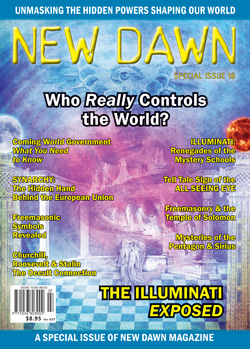
    Who, or what, the Neanderthals were has been a much discussed issue ever since their remains were first recognised in the middle nineteenth century.12 The popular conception of Neanderthals is that of big-browed, short, stocky, stooping, grunting, ape-like cave men (and women) eking out a meagre existence during the harsh conditions of ice age Europe, the Near East, and Southwest Asia.

    Classic Neanderthals in Europe date from around 130,000 years ago to perhaps as recently as 24,000 years ago in Gibraltar, but Neanderthal characteristics and antecedents are seen in fossil forms going back to perhaps half a million years ago or earlier.

    In many people’s minds Neanderthals are a primitive side branch of the human tree at best, a totally separate species from us, that was driven to extinction by the more intelligent and better armed “Cro-Magnon Man” group (archaic Homo sapiens, essentially the direct ancestors of living humans) who progressively migrated from East Africa into Eurasia during the period of about 60,000 to 30,000 years ago.13

    Stan Gooch had a very different view of the place and importance of Neanderthals – in Gooch’s view modern humanity is a result of the intermixing, both biologically and culturally, of Cro-Magnon and Neanderthal elements. In his words,

    A biological supernova occurred when Cro-Magnon and Neanderthal man met. We can, if we will listen, still clearly hear the echoes of that explosion and observe its after-effects… [B]ehind these echoes and tendrils we can also then detect the still fainter traces of Neanderthal civilisation itself, and hear the still fainter echoes of falling cities of dreams.14

    According to Gooch, Neanderthals possessed an intricate, psychically-charged, magical culture.15 Neanderthals built a long-lasting “high civilisation of dreams.”16 Neanderthal culture, more sophisticated than that of the Cro-Magnons when they first arrived in Europe, served as a primary source for much so-called ancient wisdom.

    Gooch argued that Neanderthals were the original creators, the innovators, of high culture, of symbolic values and religious sensibilities, which early modern humans (Cro-Magnons) copied and adopted without genuine understanding. Neanderthal culture was not a civilisation of high technologies, but one of the mind and spirit that survives today in our beliefs, myths, folklore, and religious practices.

    Neanderthal Culture

    Neanderthals developed in time a culture of the mind of a very high order, but also of a strangeness that is extremely difficult for us to imagine.

    Neanderthals, according to Gooch, worshipped the cave bear, the spider, and the serpent – animals with whom they shared their caves. Neanderthals were the first humans to fully develop religious cults, and cave bear worship was their most significant cult. Neanderthals worshipped the number 13, associated with the moon and the lunar calendar, a number that is still considered magical today. Neanderthals developed a profound knowledge of crystals and minerals. According to Gooch, Neanderthals developed their own unique symbols, signs, and sophisticated language systems.17

    Neanderthals weaved and sewed embroidery, wore jewellery, painted their faces and bodies, danced, had an elaborate mythology and cosmology, built stone circles, utilised sacred fires, and made ceremonial sacrifices. They had their own grand celebrations and feasts, which were spectacularly colourful and creative performances.

    They worshipped the moon and other celestial bodies including constellations still worshipped today worldwide such as The Big Bear, Little Bear, and Draco (the dragon or serpent in the sky). Gooch asserted that Neanderthals had a strong religious life, based on an earth-magic religion, and they believed in the afterlife, practicing complex burial rituals.18

    Neanderthals, as Gooch emphasised, were capable of great cultural innovations that included wearing jewellery and decorating their bodies and faces with colourful paints for special ceremonies. There is evidence that the sophisticated Chatelperronian culture of France belonged to the Neanderthals and not, as was formerly believed, to modern humans.19 This culture included symbolic artefacts, such as jewellery. The Uluzzian culture in Italy, also now attributed to Neanderthals, is another example – an innovative culture that included a variety of very sophisticated tools that were similar to modern humans’ tools.20 Neanderthals in Spain were painting perforated shells for decoration, using pigments, and engaged in other ritual behaviour.21 As archaeologist João Zilhão, has stated,

    The one thing these finds make clear is that Neanderthals were behaviourally modern. They were not like early modern humans anatomically, but they were cognitively as advanced or more so.22

    In many ways Neanderthal culture and Cro-Magnon culture were diametrically opposed. Gooch wrote,

    I believe the actuality of Neanderthal man – of whom archaeologists find only a handful of skeletons, a few altars, traces of ritualised burial, a range of flint tools, and an apparent knowledge of herbal remedies – was this: his was a moon-goddess-worshipping, matriarchal, food-gathering society, where women governed all matters. The only tasks delegated specifically to men were those where muscle power was directly and literally required, as in fighting, for example. The structure and nature of Cro-Magnon life was diametrically opposite. This was a patriarchal, hunter-warrior society, of which men governed all aspects, including religious life. Women were mere adjuncts in all things, whose main purpose was to bear sons and to comfort and care for the male. The supreme deity worshipped was the sun god.23

    Gooch believed that Neanderthals were a mostly nocturnal species, and came out at night. Observing the skies and the moon for thousands of generations, they had become experts in all phenomena of the stars, having a great understanding of cycles and time, equinoxes and solstices, the phases of the moon.

    Cro-Magnons would have come to know Neanderthal religion and knowledge initially through secret observation during 10,000 years (or more) of co-existence. When Cro-Magnons arrived in Europe they were shocked by the knowledgeable Neanderthals, and wanted the Neanderthal magic for themselves; so, they slowly and carefully spied on Neanderthals, copied them, and in the process stole all of their knowledge and wisdom, including writing systems and rituals.

    The meeting of Classic Neanderthals and Cro-Magnons in Europe some 35,000 years ago was an immense culture shock for both parties… The two species were culturally opposite to each other in every way.24 At the purely psychological/cultural level,… Neanderthal dealt Cro-Magnon a culture-shock of such magnitude that its consequences are still with us today. Though it left little physical trace, there is in fact… not one aspect of our present lives, our attitudes and our institutions which does not today bear that ancient [Neanderthal] culture’s stamp.25

    According to Gooch, Cro-Magnon was dazzled by the religious rituals, symbolism, cosmology, and deep intimate knowledge of the natural world the Neanderthals possessed.

    Cro-Magnon took over all the ‘magic’ and ritual of Neanderthal for his own. But he took it over without any real understanding of most of it, and also with certain appropriate changes to suit his own world view, his own existing social structure, his own biological imperatives. He took over essentially empty forms, while losing the priceless content.26

    The Cerebrum and Cerebellum

    The vertebrate brain includes the cerebrum and the cerebellum. In modern humans the cerebrum consists of the cerebral hemispheres that fill most of the skull. In humans the cerebellum is smaller than the cerebrum and situated at the back of the head tucked behind and under the cerebrum. Gooch points out that essentially the cerebrum and the cerebellum are two different brains (“we are each of us ‘in two minds’”27) that correspond to two different ways of approaching the world (“Two Brains – and Two Universes”28). The cerebrum is associated with “logical” and “rational” thinking, versus the cerebellum is associated with “dreaming” and “magic.”

    [T]he cerebellum… is responsible for trance states, for dreams, for telepathy, for psychic healing, for spontaneous wounds, for poltergeist phenomena, and all other such matters. It is also the source of and the impetus for religious belief.29

    Here we have the anatomical/physiological explanation for the duality of human personality. The Cro-Magnon and Neanderthal brains both consisted of larger cerebrums and smaller cerebellums, but the Neanderthal brain had a much larger and more powerful cerebellum than that found in Cro-Magnons. The more developed Neanderthal cerebellum gave rise to their “high civilisation of dreams.”30

    Neanderthals developed a deep understanding of the natural world, but they did not necessarily do so in the rational, logical, “scientific” manner that modern humans have come to expect and accept. “I think that they [the ancients, Neanderthals]” Gooch stated, “obtained their knowledge not logically and scientifically but intuitively.”31

    Hybridisation Between Neanderthals & Cro-Magnons

    The taxonomic status of Neanderthals has long been debated. Were they a species distinct from modern humans? Even if they were a distinct species, could they have interbred with our species, at least to a limited extent?32 Or were Neanderthals simply a subspecies or variety of our own species? Is the grouping of fossil forms currently labelled “Neanderthals” actually a collection of different types of humans, perhaps different species or varieties or races? Gooch believed there were several different varieties of Neanderthals, separated geographically and temporally, in Europe, Africa,33 the Middle East, and Asia. Furthermore, a key point of his thesis is that Neanderthals, at least some Neanderthals, could and did interbreed with our direct ancestors, the Cro-Magnons.

    In recent decades it has become apparent that human diversity tens of thousands of years ago was much more complex than previously believed. Some 50,000 to 30,000 years ago, for instance, there may have been half a dozen or more distinct species of humans inhabiting Earth. Besides Cro-Magnons (archaic Homo sapiens) and Neanderthals (Homo neanderthalensis) in Eurasia, in what is now modern Indonesia there was the diminutive “hobbit” form Homo floresiensis34 as well as apparently the last remnant populations of Homo erectus.35 In southern Africa were found the Boskop people, Homo capensis, reputedly with brains 25 to 35 percent larger than those of modern humans.36 In Siberia about the same time there was another population of humans, who may have been a species distinct from those listed above (though perhaps most closely related to Neanderthals), at present simply referred to as the “Denisovans.”37 To add to the list, the indigenous aboriginal Homo sapiens populations of Australia and New Guinea may have been relatively isolated for the last 50,000 years or more.38

    Leaving aside at this time the issue of the numerous other human species (how they interacted with one another, and what contributions they made to the modern human lineage, remain open questions), Gooch believed that aggressive and battle-skilled Cro-Magnons both massively exterminated some populations of Neanderthals and also interbred with them. He wrote,

    The genetic crossing of Cro-Magnon and Neanderthal produced not just (a) highly gifted individuals (‘the mighty men of old, the men of renown’) but (b) an entirely new species of human – ourselves…. [T]his new product was… either entirely or very largely due to Cro-Magnon men fertilising Neanderthal women – not the other way around. These offspring would have been accepted into Cro-Magnon groups…. And so Neanderthal genes were introduced into the Cro-Magnon gene pool…39

    This was a radical, unconventional view – to believe that Cro-Magnons and Neanderthals interbred and therefore Neanderthal genes should still be found among us. However, recent studies of the Neanderthal genome reveal that today an estimated 1% to 4% of the modern Eurasian genome appears to come from Neanderthals.40 That is, Neanderthals and Cro-Magnons must have interbred. Gooch’s ideas appear to be corroborated! (As an aside, we can also point out Gooch suggested that at least some Neanderthals may have been redheaded, another prediction since corroborated by modern science.41)

    Gooch also asserted that Neanderthals never fully went extinct, writing,

    [A]ctual Neanderthals at this very moment in time – that is, now, today – still survive and live at the edges of our civilisation…42

    Gooch cites, for instance, the research of anthropologist Myra Shackley, who tantalisingly suggests that the legendary Almas (“wildmen”) of the Caucasus and Outer Mongolia may in fact represent relict Neanderthals.43 In one famous account a female Almas was captured in the nineteenth century. She was described as having skin of “a grayish-black colour, covered with reddish hair, longer on her head than elsewhere… She had a large face with big cheek bones, muzzle-like prognathous jaw and large eyebrows, big white teeth and a ‘fierce expression’.”44 She sounds very much like a Neanderthal! First kept for some years in a stone enclosure, she later was kept in a cage, and finally in a house. She learned to obey simple orders and used branches and stones as tools. She became pregnant by her captors and while her first several infants died, she subsequently gave birth to two sons and two daughters who in turn produced children of their own via mating with other humans. This is all in line with Gooch’s hypotheses concerning Neanderthals. Note that the “primitive” state of the Almas may be because they are relict populations who have degenerated from the Neanderthal prime of 50,000 or so years ago.

    The Neanderthal Legacy

    The Neanderthals left us a lasting legacy, one that remains an undercurrent of modern human psychology, society, and culture. It is important, even critical, to understand this Neanderthal legacy – and the work of Stan Gooch may provide the fundamental key to unlocking the secrets of the Neanderthals.

    We are personally further exploring, testing, and developing Gooch’s ideas concerning Neanderthal culture, including through first-hand study of the evidence, such as sites visited and used by Neanderthals. Thus during the summer of 2010 we mounted a small expedition to Neanderthal territory, including caves where Neanderthal remains have been found, in the Bucegi Mountains region of Romania. Rather than hypothetically reconstruct Neanderthal lifestyles and modes of thinking purely intellectually, our aim is to actually experience (as much as possible) what it was like to have been a Neanderthal. Future potential research includes attempting to reconstruct Neanderthal rituals and cave usage, for instance. This may be a tall order, but we are sanguine about the prospects.

    We will close with a final tantalising note on the life and death of Stan Gooch. At the end of his last book, Gooch writes

    The number thirteen figures centrally in my work because it is the most important number of the moon religion [according to Gooch, the religion of the Neanderthals]. And it just so happens that I was born on June 13 [1932]. And the day, it just so happens, was a Monday. And Monday is, of course, Moon Day.45

    Gooch died on 13 September 2010, which also just happened to be a Moon Day. “Well, well, well…” (as Gooch himself might have written46).

    The above was co-authored by OANA R. GHIOCEL who received an M.A. in Documentary and Audio Production from Emerson College and she holds previous degrees in screenwriting and filmmaking. Born in Bucharest, Romania, she is an award-winning media producer, consultant, and screenwriter, and currently the Vice-President of Hyperion Media Inc. She has done extensive research on Neanderthals.

    [alert type=”general” dismiss=”no”]This article was published in New Dawn 125.[/alert]

    [alert type=”success” dismiss=”no”]If you appreciate this article, please consider subscribing to help maintain this website.[/alert]

    Books by Stan Gooch:

    Total Man, Allen Lane, 1972.

    Personality and Evolution, Wildwood House, 1973.

    The Neanderthal Question, Wildwood House, 1977.

    The Paranormal, Harper and Row, 1978.

    Cities of Dreams (subtitle on the cover of the 2001 paperback edition: When Women Ruled the Earth), Aulis Books, 1995, reprinted 2001.

    The Dream Culture of the Neanderthals: Guardians of the Ancient Wisdom, Inner Traditions, 2006.

    The Origins of Psychic Phenomena: Poltergeists, Incubi, Succubi, and the Unconscious Mind, Inner Traditions, 2007.

    The Neanderthal Legacy: Reawakening Our Genetic and Cultural Origins, Inner Traditions, 2008.

    Footnotes

    1. Anonymous, “Stan Gooch 1932-2010”, posted at www.aulis.com/index.html (Accessed 23 October 2010); Geoff Ward, “A Sad End for Reclusive Writer Stan Gooch”, posted 26 October 2010, www.suite101.com/content/a-sad-end-for-reclusive-writer-a301122 (Accessed 20 November 2010).

    2. Brent Logan, “An Urgent Appeal to Help the Acclaimed Author, Stan Gooch”, posted at www.brentlogan.net/sg/stan_gooch.htm (Accessed 8 June 2009).

    3. Colin Wilson, posted 11 September 2007 under the title “Colin Wilson writes about me”, posted on a Stan Gooch blog at www.myspace.com/stangooch/blog/308876837 (Accessed 9 June 2009); for other comments by Wilson on Gooch, see for instance: Colin Wilson, Atlantis and the Kingdom of the Neanderthals: 100,000 Years of Lost History, Rochester, Vermont: Bear and Company, 2006 (pp. 272-277, 281), and various remarks in Colin Wilson, Mysteries, New York: A Wideview/Perigee Book, G. P. Putnam’s Sons, 1978/1980.

    4. For biographical details, see: Brent Logan, “Stan Gooch, Biography”, posted at www.brentlogan.net/sg/bio.htm (Accessed 8 June 2009); “Colin Wilson writes about me” (note 3, above); and autobiographical comments in Stan Gooch, The Paranormal, New York: Harper and Row, 1978.

    5. Of the time around during which he was at the National Children’s Bureau, Gooch comments dryly, “I was also married and divorced. So there were events enough to take up my days.” (The Paranormal [note 4], 17)

    6. Gooch, The Paranormal, 7.

    7. Gooch, The Paranormal, 8.

    8. Gooch, The Paranormal, 17.

    9. Gooch, The Paranormal, 18; Gooch outlined his theory of human personality in the following trilogy: Stan Gooch, Total Man, London: Allen Lane, 1972; Stan Gooch, Personality and Evolution, London: Wildwood House, 1973; and Stan Gooch, The Neanderthal Question, London: Wildwood House, 1977.

    10. For a review of Gooch’s ideas on the paranormal, see Louis Proud, “Forces of the Unconscious Mind: Exploring the Work of Stan Gooch”, New Dawn 105 (November-December 2007), posted at www.newdawnmagazine.com/Article/Forces_of_the_Unconscious_Mind.html (Accessed 15 December 2008); see also Stan Gooch, The Origins of Psychic Phenomena: Poltergeists, Incubi, Succubi, and the Unconscious Mind, Rochester, Vermont: Inner Traditions, 2007 (Originally published under the title Creatures from Inner Space, London: Rider, 1984).

    11. Stan Gooch, The Dream Culture of the Neanderthals: Guardians of the Ancient Wisdom, Rochester, Vermont: Inner Traditions, 2006, 105 (Originally published under the title Guardians of the Ancient Wisdom, London: Wildwood House, 1979).

    12. Neanderthal is alternatively spelled Neandertal. The species Homo neanderthalensis was named in 1864 (see William King, “The Reputed Fossil Man of Neanderthal”, The Quarterly Journal of Science, 1, 88-97 with two lithographic plates [January 1864]) based on a skullcap found in the Neander Valley, Germany, in 1856 and first described in 1857, although remains subsequently recognized as Neanderthal had been found earlier in Belgium and Gibraltar. For general information on Neanderthals, see the following (and references cited therein): Clive Finlayson, The Humans Who Went Extinct: Why Neanderthals Died Out and We Survived, Oxford and New York: Oxford University Press, 2009; C. David Kreger, “Homo neanderthalensis”, posted at www.archaeologyinfo.com/homoneaderthalensis.htm (Accessed 5 January 2011); Dennis O’Neil, “Evolution of Modern Humans: Neandertals”, posted at anthro.palomar.edu/homo2/mod_homo_2.htm (Accessed 5 January 2011); James Shreeve, The Neanderthal Enigma: Solving the Mystery of Modern Human Origins, New York: Harper Perennial, 1996; Robert Munro, “The Rise and Progress of Anthropology” (Address delivered 7 May 1894), Proceedings of the Royal Society of Edinburgh, 20, 215-244 with a plate (1895).

    13. For background information, see discussion in Erik Trinkaus, “European early modern humans and the fate of the Neandertals”, Proceedings of the National Academy of Sciences of the United States of America, 104 (18), 7367-7372 (1 May 2007).

    14. Stan Gooch, Cities of Dreams (subtitle on the cover of the 2001 paperback edition: When Women Ruled the Earth), London: Aulis Books, 1995, reprinted 2001, 7 (first published as Cities of Dreams [subtitle on the dust jacket of the hardback edition: The rich legacy of Neanderthal Man which shaped our civilisation], London: Rider [An imprint of Century Hutchinson], 1989).

    15. Our summary of Gooch’s ideas concerning Neanderthals is based primarily on his books The Neanderthal Question (note 9), The Dream Culture of the Neanderthals (note 11), Cities of Dreams (note 14), and Stan Gooch, The Neanderthal Legacy: Reawakening Our Genetic and Cultural Origins, Rochester, Vermont: Inner Traditions, 2008.

    16. Gooch, Cities of Dreams, 242 (Chapter 16 title).

    17. Paleogeneticist Carles Lalueza-Fox discovered that modern humans and Neanderthals share a version of a gene called FOXP2, associated with language abilities. Most likely Neanderthals were able to speak their own languages, exactly as Gooch predicted. See Zach Zorich, “Should We Clone Neanderthals? The Scientific, Legal, and Ethical Obstacles”, Archaeology 63 (2) (March/ April 2010), available from www.archaeology.org/1003/etc/neanderthals.html (Accessed 6 January 2011).

    18. For instance, Neanderthal burials with flowers were discovered at Shanidar Cave in Northern Iraq, indicating complex mortuary rituals. See Ralph Solecki, Shanidar: The First Flower People, New York: Alfred A. Knopf, 1971; Owen Edwards, “Beyond Bones: A Rare Cache of Hominid Fossils Offers a Window on Neanderthal Culture”, Smithsonian (March 2010).

    19. See discussion in Paul Mellars,Brad Gravina,and Christopher Bronk Ramsey, “Confirmation of Neanderthal/modern human interstratification at the Chatelperronian type-site”, Proceedings of the National Academy of Sciences of the United States of America, 104 (9): 3657–3662 (27 February 2007), available from www.ncbi.nlm.nih.gov/pmc/articles/PMC1805566/ (Accessed 7 January 2011).

    20. Ann Wuyts, “Rehabilitating the Neanderthals – Accusations Uluzzian Man Took H. Sapiens Tools Prove False”, 22 September 2010, posted at heritage-key.com/blogs/ann/rehabilitating-neanderthals-accusations-uluzzian-man-took-h-sapiens-tools-prove-false (Accessed 7 January 2011); Julien Riel-Salvatore, “A Niche Construction Perspective on the Middle–Upper Paleolithic Transition in Italy”, Journal of Archaeological Method and Theory 17 (4), 323-355 (2010), available from www.springerlink.com/content/t6g625nx3744766x/ (Accessed 7 January 2011); Anonymous, “Neanderthals More Advanced Than Previously Thought: They Innovated, Adapted Like Modern Humans, Research Shows”, ScienceDaily (22 September 2010), posted at www.sciencedaily.com/releases/2010/09/100921171412.htm (Accessed 6 January 2011).

    21. João Zilhão, Diego E. Angelucci, Ernestina Badal-García, Francesco d’Errico,Floréal Daniel, Laure Dayet, Katerina Douka, Thomas F. G. Higham, María José Martínez-Sánchez, Ricardo Montes-Bernárdez, Sonia Murcia-Mascarós, Carmen Pérez-Sirvent, Clodoaldo Roldán-García, Marian Vanhaeren, Valentín Villaverde, Rachel Wood, and Josefina Zapata, “Symbolic use of marine shells and mineral pigments by Iberian Neandertals”, Proceedings of the National Academy of Sciences of the United States of America, Published online before print January 11, 2010, www.pnas.org/content/early/2010/01/06/0914088107 (Accessed 7 January 2011); see also supporting material posted at www.pnas.org/content/suppl/2010/01/07/0914088107.DCSupplemental/pnas.200914088SI.pdf (Accessed 7 January 2011).

    22. João Zilhão [interview with], “Did Neandertals Think Like Us?”, Scientific American, June 2010, pp. 72-75 (quotation from p. 75); for online version see www.scientificamerican.com/article.cfm?id=did-neandertals-think-like-us (Accessed 6 January 2011); PDF of the article available from www.bris.ac.uk/archanth/staff/zilhao/scientificamericanjune2010.pdf (Accessed 10 January 2011).

    23. Gooch, The Dream Culture of the Neanderthals, 56.

    24. Gooch, The Neanderthal Legacy, 59, italics in the original.

    25. Gooch, Cities of Dreams, 5, italics in the original.

    26. Gooch, Cities of Dreams, 37.

    27. Gooch, The Neanderthal Legacy, 118.

    28. Gooch, The Neanderthal Legacy, 118 (Chapter 11 title).

    29. Gooch, The Neanderthal Legacy, 131, italics in the original.

    30. Gooch, Cities of Dreams, 242 (Chapter 16 title).

    31. Gooch, The Dream Culture of the Neanderthals, 92.

    32. Note that in some cases well-established species can on occasion interbreed and produce fertile offspring, such as lions and tigers producing hybrids.

    33. Gooch considered “Rhodesian Man”, for instance, to be a Neanderthal representative (The Neanderthal Legacy, 11).

    34. P. Brown, T. Sutikna, M. J. Morwood, R. P. Soejono, Jatmiko, E. Wayhu Saptomo, and Rokus Awe Due, “A new small-bodied hominin from the Late Pleistocene of Flores, Indonesia,” Nature 431, 1055-1061 (28 October 2004); available from www-personal.une.edu.au/~pbrown3/nature02999.pdf (Accessed 11 January 2011); see http://www.nature.com/nature/journal/v431/n7012/full/nature02999.html (Accessed 29 July 2010).

    35. Mark Rose, “Homo erectus Survival”, Archaeology 50 (2) (March/April 1997), available from www.archaeology.org/9703/newsbriefs/h.erectus.html (Accessed 2 January 2011); Hillary Mayell, “Java Skull Raises Questions on Human Family Tree” (27 February 2003), posted at news.nationalgeographic.com/news/2003/02/0227_030227_javaskull.html (Accessed 6 January 2011); note that, as often used, Homo erectus may be a taxon that includes a collection of closely related species and subspecies.

    36. R. Broom, “The Evidence Afforded by the Boskop Skull of a New Species of Primitive Man (Homo capensis)”, Anthropological Papers of the American Museum of Natural History 23 (2): 63–79 (1918), available from digitallibrary.amnh.org/dspace/bitstream/2246/287/1/A023a02.pdf (Accessed 10 January 2011);  Gary Lynch and Richard Granger, Big Brain: The Origins and Future of Human Intelligence, New York: Palgrave Macmillan, 2008; note that there is disagreement as to whether or not Homo capensis represents a distinct species or variety.

    37. Anonymous, “Denisovans? Fossil Discovery Is Neither Modern Human Nor Neanderthal”, 22 December 2010, posted at www.science20.com/news_articles/denisovans_fossil_discovery_neither_modern_human_nor_neanderthal (Accessed 28 December 2010); Carl Zimmer, “Siberian Fossils Were Neanderthals’ Eastern Cousins, DNA Reveals”, New York Times, 22 December 2010, available from http://www.nytimes.com/2010/12/23/science/23ancestor.html (Accessed 28 December 2010).

    38. Hamish Clarke, “DNA confirms Aboriginal Australian origins”, Cosmos Magazine (8 May 2007), available from www.cosmosmagazine.com/news/1286/dna-confirms-aboriginal-australian-origins (Accessed 6 January 2011).

    39. Gooch, The Neanderthal Legacy, 72, italics in the original.

    40. Richard E. Green, Johannes Krause, Adrian W. Briggs, Tomislav Maricic, Udo Stenzel, Martin Kircher, Nick Patterson, Heng Li, Weiwei Zhai, Markus Hsi-Yang Fritz, Nancy F. Hansen, Eric Y. Durand, Anna-Sapfo Malaspinas, Jeffrey D. Jensen, Tomas Marques-Bonet, Can Alkan, Kay Prüfer, Matthias Meyer, Hernán A. Burbano, Jeffrey M. Good, Rigo Schultz, Ayinuer Aximu-Petri, Anne Butthof, Barbara Höber, Barbara Höffner, Madlen Siegemund, Antje Weihmann, Chad Nusbaum, Eric S. Lander, Carsten Russ, Nathaniel Novod, Jason Affourtit, Michael Egholm, Christine Verna, Pavao Rudan, Dejana Brajkovic, Zeljko Kucan, Ivan Gušic, Vladimir B. Doronichev, Liubov V. Golovanova, Carles Lalueza-Fox, Marco de la Rasilla, Javier Fortea, Antonio Rosas, Ralf W. Schmitz, Philip L. F. Johnson, Evan E. Eichler, Daniel Falush, Ewan Birney, James C. Mullikin, Montgomery Slatkin, Rasmus Nielsen, Janet Kelso, Michael Lachmann, David Reich, and Svante Pääbo, “A Draft Sequence of the Neandertal Genome,” Science 328 (5979), 710-722 (7 May 2010), available from www.sciencemag.org/cgi/reprint/328/5979/710.pdf (Accessed 7 January 2011); Paul Rincon, “Neanderthal genes ‘survive in us’ ”, BBC News (6 May 2010), posted at news.bbc.co.uk/2/hi/science/nature/8660940.stm (Accessed 6 January 2011).

    41. Paul Rincon, “Neanderthals ‘were flame-haired’ ”, BBC News (25 October 2007), posted at news.bbc.co.uk/2/hi/7062415.stm (Accessed 7 January 2011); Anonymous, “Ancient DNA Reveals That Some Neanderthals Were Redheads”, ScienceDaily (26 October 2010), posted at www.sciencedaily.com/releases/2007/10/071025143311.htm (Accessed 7 January 2011).

    42. Gooch, The Neanderthal Legacy, 33, italics in the original.

    43. Myra Shackley, Still Living? Yeti, Sasquatch and the Neanderthal Enigma, New York: Thames and Hudson, 1983 [Paperback edition, 1986], 161-164.

    44. Shackley, Still Living?, 112; this particular Almas, also referred to as an abnauayu, was named Zana and she is further described in: Igor Bourtsev, “A Skeleton Still Buried and a Skull Unearthed: The Story of Zana” (From: In the Footsteps of the Russian Snowman by Dmitri Bayanov, 1996, Moscow, Russia: Crypto-Logos, pp. 46-52), available from www.bigfootencounters.com/articles/zana.htm (Accessed 10 January 2011).

    45. Gooch, The Neanderthal Legacy, 132.

    46. Gooch’s last three closing words (before the appendices) of The Neanderthal Legacy (page 132). Besides his work on Neanderthals, Gooch made other contributions to the study of ancient history, such as his quite rational suggestion that the ancients could have figured out, based on its approximately 50-year “wobble” (and possibly using simple lenses), that Sirius has a small, dark, heavy companion star (The Dream Culture of the Neanderthals, 227-240). This information was passed down, for instance to the Dogon tribe of Africa, and despite various sensational claims (see Robert Temple, The Sirius Mystery: New Scientific Evidence of Alien Contact 5,000 Years Ago, Rochester, Vermont: Destiny Books, 1998; see also Blair MacKenzie Blake, “Dark Seed: The ABCs of the Sirius Mystery”, Darklore 5, 117-133 [2010]) no alien contact was required.

    © New Dawn Magazine and the respective author.
    For our reproduction notice, click here.
  • The Bible: Myth or History?

    The Bible: Myth or History?

    From New Dawn 123 (Nov-Dec 2010)

    Every civilisation needs a myth; but woe to the civilisation whose myth has been found wanting. That is the position of Christianity today. It came to ascendance at a time when the myths of Greece and Rome had lost their credibility. The pagans themselves laughed at the stories of their gods; Plato sought to censor them. Christianity triumphed because it offered its sacred scriptures not as myth but as fact. Mystical adepts had always known that the stories in the Bible were not meant to be taken entirely at face, but as the religion degenerated into priestcraft, these insights were forgotten or suppressed.

    Today we have come full circle. Over the last two centuries a staggering number of scholars – the vast majority Christians themselves, many of them clergymen – have laboured on the great project of seeing how much of the Bible is historically valid. The verdict has not, in general, gone in the Bible’s favour. Little by little its validity as a plausible source for the facts it claims to recount has been eroded. In the nineteenth century, scientists such as Charles Lyell and Charles Darwin showed that the epochal changes in geology and biology could not have happened in the six thousand years allotted to them by Genesis, while the German scholar David Friedrich Strauss (who was a Lutheran pastor) showed that much that the Gospels said about Jesus was probably not accurate in any factual sense, but consisted of stories and legends that had accumulated around him after his life.

    But the inquiry did not end there. Much of the Hebrew Bible consists of history – the history of Israel from primeval times to around 500 BCE. It tells of patriarchs such as Abraham, Isaac, and Jacob; of the bondage of the Israelites and their miraculous liberation by the hand of God; and of David and Solomon and their successors to the thrones of Israel and Judah.

    Until fairly recently scholars took much of this account at face value. But as our knowledge of the first millennium BCE in the Near East has improved, it has become more and more obvious that the Bible cannot be entirely trusted even in these areas.

    I must digress here to make an important point. Many of the articles in New Dawn present what is called “alternative history” – views of the past that run counter to what conventional scholars believe. This approach is valuable and refreshing, if only because academics tend to operate like a team of horses with blinders on. Nevertheless, what I am going to be saying in this article (and in the following article, “God’s Forgotten Wife”) is not alternative history. It is conventional scholarship, and it consists of things that anyone would learn at a mainstream seminary or divinity school, although these findings have not always trickled down to the public at large.

    To take one fairly simple example, two hundred years ago nearly everyone in the Judeo-Christian world believed that the first five books of the Bible (known to the Jews as the Torah, to the Christians as the Pentateuch) were written by Moses. Today practically no scholar who is not a fundamentalist believes this. Many scholars do not even believe that a person such as Moses ever lived, or that an exodus from Egypt ever occurred in anything like the way it is described. Moreover, a generation ago it was generally accepted that the accounts of David and Solomon in the books of Samuel and Kings were reasonably accurate – even contemporary – accounts. But today it is agreed that these histories were written centuries later, and the glories ascribed to these two monarchs were vastly overstated.

    To summarise all these findings, an article of this length cannot hope to be complete. All the same, it is possible to sketch out some of the major findings along with their implications.

    Israel in History: The Archaeological Evidence

    The history of Israel begins with the patriarchs Abraham, Isaac, and Jacob. The general setting for their lives is best placed in the early second millennium BCE. The original texts (there were several) that make up what today we call Genesis were not written until around the seventh century BCE. Consequently, what we have about these patriarchs is a collection of legends with an interval of a millennium between the events and the written accounts. It would be hard to find anything here that could be called real history.

    As we come closer to the present, the picture becomes clearer, although it does not necessarily validate the Bible as a source. The descent of Jacob and his twelve sons into Egypt to escape a famine in Canaan does resonate with a well-documented period (in the seventeenth and sixteenth centuries BCE) in which Egypt was ruled by the Hyksos, Semitic “foreign kings” that came from the northeast. But here too it is very hard to reconcile the biblical account (again written almost a thousand years later) with the Egyptian documents. They portray the Hyksos not as slaves but as rulers; indeed an Egyptian king list includes one “Yaqub” – identical to “Jacob.”1 They did not flee a tyrannical Pharaoh but were thrown out by the Egyptians themselves – an almost complete reversal of the biblical account.

    As for the flight of the Israel to the land of Canaan to escape their Egyptian taskmasters, this too is hard to accept, because in the period in which this is supposed to have happened – the thirteenth century BCE – Canaan was an Egyptian province, complete with governors and forts and garrisons. Egypt would retain control over Canaan until around 1160 BCE.

    In fact the first mention of Israel in any contemporary text comes from a stele from the reign of Pharaoh Merneptah, the son of Rameses II (often portrayed as the pharaoh of the Exodus), and it dates to 1207 BCE. It tells of an Egyptian campaign into Canaan, and in it Merneptah boasts, “Israel is laid waste; his seed is not.”2 Obviously this is an exaggeration, but it suggests that at this time the people of Israel were an already well-established population at a time when Pharaoh still ruled the land.

    Scholars generally agree that there was no conquest of Canaan by the Israelites as described in the book of Joshua. How, then, did Israel come to be? To understand this, we have to grasp something about the geography of Palestine. The country can be roughly divided into three north-south strips. The first is a fertile coastal plain parallel to the Mediterranean shore. The second is a band of hill country east of the plain. The third and easternmost is the Jordan River valley. It was the second of these regions, the hill country, that was the Israelite homeland. In the Late Bronze Age (1500-1200 BCE), it was sparsely populated. But at the beginning of the Iron Age in the thirteenth century, its population rose dramatically. And it is these Iron Age settlements that scholars believe were the homes of the proto-Israelites. There was very little in their material culture (alphabet, pottery, and so on) that differentiated them from the Canaanites of the coastal plain, except that the proto-Israelites’ culture was more primitive – the pottery was crude and poorly ornamented, for example – and, strangely, the bones of pigs are almost completely absent from the animal remains that are found at these sites, indicating that these people, whoever they were, had a taboo against eating pork even in the earliest times.

    Where did these hill people come from? Scholars do not agree entirely, but they are more or less unanimous in stating that most of them were not freed slaves coming up from Egypt. In all likelihood, they were people fleeing the social breakdown in the Bronze Age culture of the Palestinian coastal plain – itself only a localised version of the end of Bronze Age civilisation that was taking place all around the eastern Mediterranean. They were probably augmented by a small number of nomads who adopted sedentary ways of life. These hill people were not city dwellers; their social units were extended families that were themselves organised into tribes, which in turn formed a loose confederation that resembles the one described in the book of Judges.

    Myth Made History: Moses, David & Solomon

    Did Moses live? There is no reference to him in any contemporary source. The name Moses is a curious one; it is Egyptian, and it literally means “son,” as we see in some Egyptian names: Thutmosis (or Thutmose), the name of several pharaohs, means “son of Thoth,” the god of learning. It would be odd if Moses had been the prophet’s original name, just as in the English-speaking world there are many Johnsons and Williamsons, but practically nobody with the surname “Son.” Possibly his name originally included the name of an Egyptian god that Moses himself – or later chroniclers – chose to remove.

    Scholars thus have stopped believing in any great migration that resembles the biblical account. To the extent that they lend any credence to the story of Exodus at all, they grant the possibility that a charismatic leader led a small band of former Semitic slaves to the hill country of Palestine and that as Egyptian power began to wane in that area, this people, along with the hill people that had already settled there, was able to shake off its chains.

    To move on to the late eleventh and tenth centuries BCE, the period that biblical historians call “the united monarchy,” when Israel was supposedly ruled by a single king – Saul, followed by David and David’s son Solomon. According to the Bible, this was the zenith of Israel’s power and influence. David supposedly ruled over a territory that stretched from the Euphrates to Gaza (1 Kings 4:24), while Solomon accumulated vast riches and a thousand wives. But the archaeological remains and extrabiblical texts say virtually nothing about these rulers; some scholars go so far as to doubt whether there ever was a united monarchy at all. Richard A. Freund, professor of Jewish history at the University of Hartford, Connecticut, in the US, sums up the situation:

    If… David was so prominently involved in the lives of so many different peoples in the region, it stands to reason that he would be mentioned in one of these different non-Israelite literatures. If… Solomon conducted international relations with Egypt, marrying into the royal family and importing horses, why wouldn’t there be a record somewhere in Egypt that would corroborate this relationship?…. But no independent corroboration of these events exists from archaeological evidence or source not influenced by biblical tradition, save perhaps an early medieval collection called the Kebra Nagast, the national epic of Ethiopia.3

    The earliest extrabiblical reference to David comes from an inscription found at Tel Dan in northern Galilee in 1993. Dated to the ninth century BCE, it contains a claim by Hazael, king of Aram, that he has killed Ahaziah, king of Israel, and Jehoram, “king of the house of David.”4 Hazael, Ahaziah, and Jehoram are all mentioned in the Bible, so this inscription confirms these men lived and ruled and that there was a house of David in the ninth century BCE. Nevertheless, this inscription dates more than a hundred years later than David is supposed to have lived, so it confirms nothing more about him.

    Nor is there much archaeological evidence for the existence of Solomon’s Temple, which would have been built around 940 BCE.5 Indeed the archaeologist Israel Finkelstein contends that Jerusalem, supposedly Solomon’s magnificent capital, was actually a rather humble place. “Digging in Jerusalem has failed to produce evidence that it was a great city in David or Solomon’s time,” he argues. “Tenth century Jerusalem was rather limited in extent, perhaps not more than a typical hill village.”6

    There is archaeological evidence for a highly prosperous and centralised monarchy in Israel, but, Finkelstein contends, it was in the ninth century BCE and not the tenth. Remains include palaces, storage centres, and even stables. They are centred around Samaria, the capital of the northern kingdom of Israel (the ten tribes that seceded from the house of David after Solomon’s death, ending the united monarchy). They were the work of the Israelite king Omri and his heirs – every last one of whom, according to the Bible, “wrought evil in the eyes of the Lord” (1 Kings 16:25).7 The most notorious of the Omrid dynasty was Ahab, whose queen was the proverbially wicked Jezebel.8

    It is thus really only in the ninth century BCE that biblical history and the extrabiblical evidence begin to converge, and in the eighth century the picture becomes still clearer. The Bible tells of the destruction of the northern kingdom of Israel at the hands of the king of Assyria in 722 BCE (2 Kings 17:3-23); this is confirmed by an Assyrian stele. The Bible also says that Hezekiah, king of the southern kingdom of Judah, was able to save his tiny nation from destruction by the Assyrians. This too has a parallel in the surviving Assyrian records – although these happen to mention the huge tribute of gold and silver that Hezekiah had to pay in return. The Bible, by contrast, credits the survival of Judah to the miraculous intervention of Yahweh, whose angel “smote in the camp of the Assyrians an hundred fourscore and five thousand” (2 Kings 19:35-36).

    Yahweh’s Companions?

    But it is when we turn to the religious history of ancient Israel that the picture becomes truly astonishing. After all, the intense interest in the Bible has a great deal to do with the part that is said to be played by God in history: specifically the revelation of the one true God, Yahweh, to the nation of Israel, and his granting of the land of Canaan to them in perpetuity on condition that they obey his law and worship him alone. But here, too, the extrabiblical sources create a much more checkered picture. Egyptian texts of the Late Bronze Age do show some familiarity with a god called “Yhw” (Egyptian, like Hebrew, did not employ vowels in its script) in connection with some nomads located in the southern part of Jordan.9 This resonates with the biblical account, which has Moses learning about Yahweh in Midian (see Exodus 3), which is in the same area. And it is possible, as we have seen, that a charismatic leader like Moses could have led a small band to Canaan and used this god as a rallying-cry to unify the hill folk and create a national identity for them. But even so, the reality would be very different from the story narrated in the Pentateuch.

    Scholars today generally agree that the revelation of a monotheistic Yahweh to Moses and his spiritual heirs is not an accurate picture of what happened. Instead, they contend, Yahweh only gradually – over the course of several centuries – came to be seen as the sole god of Israel and as the supreme god of the universe. Frank Moore Cross, one of the most distinguished Old Testament scholars of his generation, has argued that originally Yahweh was an epithet of El, the high god of the Canaanite pantheon, in his function as patron deity of a confederation of tribes known as the Midianite League. Cross says that Yahweh later became differentiated from El among the proto-Israelites, and eventually came to displace him.10

    Margaret Barker, another biblical scholar, has an even more radical suggestion. She contends that throughout most of the era of the First Temple (c.940-586 BCE), both El and Yahweh were worshipped in the Temple in Jerusalem as separate deities, forming a trinity with Asherah, Yahweh’s divine consort (see the next article). El retained his position as the high god – the lord of the universe – whereas Yahweh was the national god of Israel alone. It was only with the “reforms” of the religion of Judah that took place under King Josiah in 621 BCE (2 Kings 23) that Asherah was discarded and Yahweh was conflated with El. In fact, Barker claims, the Josianic “reform” was actually a radical restructuring of the faith. The Bible portrays it differently, as a purge of alien elements, but that is because the Bible was written by the party that instigated the purge. It was this party that created the Deuteronomic history in the Bible (comprising Deuteronomy, Joshua, Judges, 1 and 2 Samuel, and 1 and 2 Kings), which has shaped our historical understanding of this period to this day. Nearly all the biblical texts I have mentioned above are taken from the Deuteronomic account.

    Obviously there is a great deal more to say about these matters, and endless numbers of books have been written about them. I have limited my discussion here to the Hebrew Bible simply because of space. The New Testament is problematic as well, but for different reasons. Here it is not archaeology or the larger historical context that is the question: there is ample extrabiblical evidence for the existence of the Second Temple, which was still being completed at the time of Christ and was sacked by the Romans in 70 CE. Indeed the Temple’s western wall, today called the Wailing Wall, still survives. There is also ample extrabiblical documentation of figures such as Herod the Great and Pontius Pilate. There is no such documentation for Jesus, but this is not in itself problematic. We might reasonably expect some archaeological evidence for the existence of David and Solomon, who were supposedly great monarchs, but Jesus was comparatively obscure in his own day. It is only when we ask who Jesus was and what his earliest followers thought him to be that the controversies arise.

    In any event, we have seen a strange reversal over the last two hundred years. At the beginning of the nineteenth century, the educated world in the West took the Bible as history while the Homeric epics, the Iliad and the Odyssey, were written off as legend. Then in the early 1870s, the pioneering archaeologist Heinrich Schliemann unearthed the ruins of Troy in Asia Minor, and scholars realised that the Homeric poems – whether or not their specific characters ever lived – were firmly grounded in the world of Late Bronze Age Greece. Ironically, when scholars examined the Bible in the same fashion, they came up with little more than a few isolated inscriptions and the stables of the wicked King Ahab.

    Get the issue this article appears in

    Literal Truth of the Bible Under Attack

    Does this all matter? Does the Bible have to be true in a historical sense? Not necessarily. As I noted at the outset, esotericists have long acknowledged that these stories are in many ways symbolic of higher truths. The book of Exodus, with its ten plagues and miraculously gushing stones, is in all likelihood not true historically. But the British Kabbalist Warren Kenton, writing under the pen name Z’ev ben Shimon Halevi, gives an intricate and profound analysis of the mystical dimensions of this saga in his book Kabbalah and Exodus.

    What the original authors of the biblical texts may have intended is a difficult question to answer, since we do not even really know who they were. Nevertheless, Christianity has often proselytised on the premise that the stories in the Bible are literally true. It is reasonable to assess the Bible in terms of the claims that its proponents have made for it, and those claims have been found wanting.

    All this said, the scholars who have delved so deeply into the historicity of the Bible over the last two hundred years have shown tremendous moral and intellectual courage. They have not, for the most part, been debunkers but have been serious scholars of Judaism and Christianity who are often profoundly committed to their faith. Some have turned to archaeology to validate this faith and have had to admit they were wrong. Joseph Callaway, an American professor of biblical archaeology, tried to find the city of Ai, supposedly destroyed by Joshua (Joshua 7-8), but he concluded that the city did not exist in Joshua’s time. He wrote: “For many years, the primary source for the understanding of the settlement of the first Israelites was the Hebrew Bible, but every reconstruction based on the biblical traditions has floundered on the evidence from the archaeological remains.”11 Callaway took early retirement from his very conservative seminary rather than cause any embarrassment on this count.

    Many journalists have lacked Callaway’s integrity, so you can pick up an American newsmagazine such as Time and read an account of Moses that treats him as if he were Churchill or John F. Kennedy.12 To bring the far more elusive truth to light would no doubt cause many readers to cancel their subscriptions. Sometimes the weaker a myth is, the more stridently it is defended.

    [alert type=”general” dismiss=”no”]This article was published in New Dawn 123.[/alert]

    [alert type=”success” dismiss=”no”]If you appreciate this article, please consider subscribing to help maintain this website.[/alert]

    Sources:

    Margaret Barker, The Great Angel: A Study of Israel’s Second God, Louisville, Kentucky: Westminster John Knox Press, 1992.
    Frank Moore Cross, Canaanite Myth and Hebrew Epic: Essays in the History of Religion of Israel, Cambridge, Massachusetts: Harvard University Press, 1973.
    William G. Dever, What Did the Biblical Writers Know and When Did They Know It? What Archaeology Can Tell Us about the History of Ancient Israel, Grand Rapids, Michigan: Eerdmans, 2001.
    –  – . Who Were the Ancient Israelites and Where Did They Come From?, Grand Rapids, Michigan: Eerdmans, 2003.
    Israel Finkelstein and Neil Asher Silberman, The Bible Unearthed: Archaeology’s New Vision of Israel and the Origin of Its Sacred Texts, New York: Simon & Schuster, 2001.
    Richard A. Freund, Digging through the Bible: Modern Archaeology and the Ancient Bible, Plymouth, U.K.: Rowman & Littlefield, 2010.
    Simon Goldhill, The Temple of Jerusalem, Cambridge, Massachusetts: Harvard University Press, 2004.
    Z’ev ben Shimon Halevi, Kabbalah and Exodus, London: Rider, 1980.
    Hershel Shanks, et al., The Rise of Ancient Israel, Washington: Biblical Archaeology Society, 1992.
    D. Winton Thomas, ed., Archaeology and Old Testament Study, Oxford: Oxford at the Clarendon Press, 1967.

    Footnotes:

    1. Dever, Who Were the Early Israelites?, 10.
    2. Finkelstein and Silberman, 57; see also Dever, Who Were the Early Israelites?, 202.
    3. Freund, 117.
    4. Freund, 117–18.
    5. Goldhill, 31.
    6. Finkelstein and Silberman, 124, 133.
    7. Biblical quotations are taken from the Authorised (King James) Version.
    8. For an account of the archaeological findings and their relation to the house of Omri, see Finkelstein and Silberman, ch. 7.
    9. Dever, Who Were the Early Israelites?, 128.
    10. Cross, 44, 71.
    11. Quoted in Dever, 47–48.
    12. A good example is Emily Mitchell and David Van Biema, “In Search of Moses,” Time, Dec. 14, 1998; www.time.com/time/magazine/article/0,9171,989815-7,00.html; accessed Sept. 21, 2010. The article is worth careful deconstruction. It does, for example, ask “Did Moses even exist?” and mentions such evidence as the Merneptah inscription. But the vast bulk of it is devoted to a retelling, in Time-style prose, of the biblical account as literally true. The reader is subtly led to believe that somehow, in the end, all these things did happen. The article is a cover story, timed to the release of the film The Prince of Egypt. A more recent article, “How Moses Shaped America,” by Bruce Feiler (Time, Oct. 12, 2009; www.time.com/time/magazine/article/0,9171,1927303-3,00.html; accessed Sept. 21, 2010) discusses the political uses made of the Moses story by American politicians without attempting to touch the historical issue of whether this figure actually lived.

    © New Dawn Magazine and the respective author.
    For our reproduction notice, click here.
  • A New Theory for the Great Pyramid: How Science is Changing Our View of the Past

    A New Theory for the Great Pyramid: How Science is Changing Our View of the Past

    This article was published in New Dawn Special Issue 13 (Sept 2010)

    Of all the chambers in the Great Pyramid, the subterranean chamber is the largest, as well as the most mysterious. It is 46 feet long, 27 feet wide, hewn into the limestone bedrock, and difficult to describe. The descending passageway’s entrance to the subterranean chamber is near the floor at the northeast corner. A six-foot-wide square pit shaped like a funnel has been tunnelled in the middle of the floor, near the east wall. This square-shaped pit is actually the mouth of a shaft that is eleven feet deep, although in 1816 the Italian explorer Count Caviglia drilled into the pit another thirty feet.

    The western half of the chamber has been carved nearly six feet higher than the eastern half and sculpted into several large finlike protrusions. All these finlike protrusions are situated east to west and are nearly as tall as the ceiling. Between the large protrusions, a stepped channel starts at the floor and flows toward the back of the chamber. In its centre there is a channel leading to the western wall. In the southeastern corner, a tunnel known as the “dead end shaft,” thirty inches in height and width, runs south fifty-seven feet, then ends at a wall. There are two other features in the design of the Great Pyramid that appear to be part of the work performed in the bedrock, the well shaft and the “grotto” (see figures 1 & 2)

    Figure 1. © Edward Malkowski
    Figure 2. © Edward Malkowski

    If the subterranean chamber was nothing more than a mistake, and was originally designed to be a burial vault, an enormous amount of resources was wasted. On the other hand, if the chamber was an integral part of the overall design of the Great Pyramid and performed a function, then what could that function possibly be?

    Everything from a tomb to temple of initiation to a device of some kind, there’s never been a lack of theories over the years describing what the Great Pyramid of Giza and the other pyramids was originally designed for. What has been lacking, though, is a theory describing why all the ancient Egypt pyramids were built. More importantly, what’s been lacking in any theory is scientific experimentation.

    To the best of my knowledge no one has built a scale model of the Great Pyramid. However, without any idea of what the Great Pyramid was, assuming it was a device, there would be no theory to test. Marine engineer, John Cadman, saw something that had been passed over for decades. In 1962, in a book entitled The Pharaoh’s Pump, a man named Edward Kunkel put forth the theory that the Great Pyramid was in its entirety a water pump. Cadman ran across the book one day browsing titles in a used bookstore. Intrigued, he purchased Kunkel’s book and after reading it realised that Kunkel was not far off the mark with his water pump theory. Being familiar with hydraulics and machines that rely on hydraulics, Cadman noticed that the design of the Great Pyramid’s subterranean chamber and its associated tunnels looked familiar.

    Cadman’s Experiment

    Figure 3. © Edward Malkowski

    Before the invention of the electric water pump the ram pump was used to move water from a reservoir to another location through a simple system that had only two moving parts, a weight loaded waste valve and check valve. Under the force of gravity, water in a reservoir flows down the input pipe and forces the waste value closed (see figure 3). With the waste valve closed, water continues to flow down the input pipe increasing the pressure inside the pump. The increased pressure opens the delivery valve forcing water into the output pipe. Since the water is being forced to a higher elevation faster than the water flowing down the input pipe the flow of water reverses which closes the check valve and the process begins again.

    Inspired by Kunkel’s work, Cadman learned as much as he could about the Great Pyramid’s subterranean chamber and associated tunnels, and in June of 1999 he made his first model. It leaked then cracked, neither would it function. Several months later he began work on a second model and connected a new line to the bottom of the pit shaft, believing this new line had to be the pressurised output. But the pump still didn’t operate the way he thought it should so he began building a third model which he completed on April 3, 2000, and it worked flawlessly.

    What Cadman discovered was that the subterranean chamber absorbed much of the reverse pulse. He also observed that without the subterranean chamber, the reverse pulse was large and the output flow was more erratic, confirming for him that the output in the Great Pyramid’s subterranean chamber travelled through what is called the dead end shaft. It also confirmed his suspicion that the ancient oral tradition that a tunnel exists connecting the subterranean chamber’s pit to the Nile River.

    A few weeks later Cadman moved the model to a seasonal creek with a pond serving as a reservoir, and experimented further. To simulate the effect of being underground he encased the pump assembly in concrete (see figures 4 and 5). Interestingly, the action of the pump, which was now embedded in concrete, created a vertical compression wave. This, according to Cadman, meant that the Great Pyramid’s subterranean ram pump also had an acoustical element. So, he built two more models to study the acoustics and fluid dynamics.

    The acoustic model, which was made of fibreglass and epoxy and encased in concrete, weighed five hundred pounds. When operating, the characteristic heartbeat-like thump of the pump could be felt through the ground twenty feet away and heard nearly a hundred feet away. Because of the powerful pulses it generated, Cadman named it the “pulse generator.”

    Figure 4. © Edward Malkowski
    Figure 5. © Edward Malkowski

    Cadman constructed a fourth model to study how water moved through the subterranean chamber and could operate in two different modes. This model was fitted with twenty-five individual ink injection locations and a glass top (see figure 6). It had a glass wall on its east side to view water flow, although Cadman discovered that the glass top quickly shattered when the model was operating in pump/pulse mode. Nevertheless, when not in pump/pulse mode, it was clear by studying the movement of water within the modelled subterranean chamber that the flow was complex and precise.

    What he discovered was that the sound wave striking the perpendicular surface reflects the majority of the pulse back toward the source. He also discovered that when the fluid jet strikes a perpendicular surface, it spreads in a 360° pattern perpendicular to the jet. Thus, he concluded that the design of the subterranean chamber incorporated fluid dynamics as well as acoustical dynamics. In his own words, “The dynamics are on par with that of computerised storm analysis: somewhere between hurricane dynamics and tornado dynamics.”

    Cadman’s model also revealed some performance issues that were built into the Great Pyramid’s subterranean pump. An additional “assist” line, from the compression chamber to a secondary location, speeds the movement of water through the output pipe. It also focuses the shock wave in the line leading to the compression chamber. The result is that a pulse is transmitted through the ceiling of the compression chamber. Thus, the line that connects the waste valve to the compression chamber acts as a waveguide, forcing the shock wave into a pulse. Therefore, the pulse is transmitted vertically (through the ceiling) as well as down the waste-valve line.

    Figure 6. © Edward Malkowski

    Cadman’s modelling of the subterranean chamber and its tunnels provides a better understanding of the Great Pyramid, as well as the Giza Plateau. In its completed state the Great Pyramid required a moat, which was fed by a system of aqueducts from the Western Nile (the Ur Nile); an ideal source for a gravity-fed water system, since the Western Nile was at a higher elevation than the plateau. It also explains the remains of a retaining wall that once surrounded the pyramid. The wall served as an embankment for an onsite reservoir, which in appearance was a moat. Tunnels, such as the “well” at the pyramid’s entrance, connected the Great Pyramid complex to an ancient lake, Lake Moeris, and the Western Nile.

    Lake Moeris (Egyptian Mer-Wer, meaning “Great Lake”) was an ancient lake fifty miles southwest of Cairo. At one time it was very large and occupied the entire Faiyum depression. It was also called the Pure Lake and the Lake of Osiris by the ancient Egyptians. During prehistoric times the waters of Lake Moeris stood nearly 120 feet above sea level, but by 10,000 BCE they had dropped to nearly twenty-five feet below sea level, possibly as a result of the Nile channel being naturally diverted. With increases from rain, between 9000 BCE and 4000 BCE the lake rose again, but gradually subsided. And as the climate became increasingly more arid, a canal connected Lake Moeris to the Nile; over the years it slowly silted. During the Middle Kingdom, 2000 BCE to 1600 BCE, dynastic Egyptians widened and deepened the channel, thereby restoring its flow. At that time the lake was believed to be fifty-five feet above sea level.

    There is little doubt that the lake served as a means of flood control as well as a reservoir for irrigation. Egypt’s Ptolemaic kings of the third century BCE partially drained Lake Moeris to make available 450 square miles of rich alluvial soil, which was irrigated by canals and extensive cultivation. Since then the water level of Lake Moeris has continually declined, and it is now the small, shallow saltwater Lake Qārūn.

    When the Great Pyramid pulse pump was functioning, the descending passage, subterranean chamber, dead end shaft, pit, well shaft, and grotto made up the components (see figure 7). According to Cadman, it could be operational today if all the tunnels associated with the pyramid could be cleared. Besides the well shaft that connects the descending passage to the middle chamber of the pyramid, there are two other tunnels that would need to be cleared. Clearing the pit associated with the dead end shaft (where the check-valve exists) would expose the horizontal shaft. If these shafts were cleared, the moat reservoir was in place, and the well in front of the pyramid connected to a Lake Moeris substitute, the pump could be operational.

    Figure 7. © Edward Malkowski

    One of the most important results from Cadman’s experiments was discovering the significance of the well shaft and its effect on the pump’s pulse rate. This specific design issue leads to the intent of the Great Pyramid’s designer. The well shaft begins near the bottom of the descending passageway and extends upward 170 feet. In the water-pump assembly, the well shaft functions as a standpipe, providing a shortcut for the reverse shock wave to reach air. In essence, it maximises the pulse rate of the pump.

    Although standpipes are typically twice the diameter of the input (drive) pipe, in the Giza assembly the standpipe (well shaft) is actually 25 percent smaller than the input pipe (descending passageway), which has a peculiar effect on the system. It lowers the elevation of the pulsing water below the water level of the moat reservoir. Interestingly, this specific elevation correlates to the height of the grotto, which serves as a reservoir, allowing for stabilisation and regulation of the reverse pulse. A block of granite, existing within the grotto that fits within the pipe, is believed to function as some type of choke or regulator.

    According to Cadman, the well shaft was part of the original design of the pyramid, and as a standpipe in the pump assembly, it served to maximise the pulse rate of the pump. The standpipe also reduced the reverse surge out of the descending passage, as well as reduced pumping efficiency and pulse intensity.

    The Importance of Pump Efficiency

    Cadman tested four different pump configurations, two circulating and two elevating, to gauge the well shaft’s affect efficiency. When in a circulating-pump mode, the well shaft reduced the efficiency by 29 percent. And, in an elevating-pump mode, the well shaft reduced the efficiency by 68 percent. The increase in efficiency of the well shaft provided an extra twenty pulses per minute, from sixty to eighty. Since the Giza configuration of the subterranean chamber included a well shaft, for the builders of the pyramid, pumping efficiency did not appear to be of primary importance. So if pumping efficiency was not of primary importance then what was?

    One way to approach this question is to review the general layout of the subterranean chamber. The subterranean chamber pit is offset by 45° in relation to the general configuration of the chamber and is aligned northwest to southeast. According to Cadman, this is so because a plane placed at a 45° angle will maintain the unidirectionality and consistency of the compression wave. In other words, this reflective elbow ensures the consistency of the compression wave. Any other type of elbow at the pit’s bottom would diffract (scatter) the compression wave. So the pit’s alignment is strictly for acoustical dynamics and for creating a standing wave in the waste line and subterranean chamber.

    Figure 8. © Edward Malkowski

    To create the standing wave in the waste gate line and subterranean chamber, it would be imperative to have the reflective elbow. The pit’s offset is exactly aligned with the tunnel (see figure 8, right; the red arrow is aligned with the exit tunnel). Not only does the reflective elbow completely explain the pit’s diagonal offset, but it also confirms that the compression wave is a major design consideration. The designers thoroughly understood complex fluid dynamics as well as complex acoustics (see figure 8, right; the red arrow shows the direction of the tunnel at the bottom of the pit; the ink injection photo shows some of the flows in the step area).

    Another way to approach the question is to review the engineering significance of the dead end shaft. It allows for a pressure change, which in turn changes the frequency of the compression wave. A gate valve at the end of the dead end shaft provides a means for accomplishing this. Adjusting the back pressure by adjusting the gate valve allows for changes in timing. In essence, this is a simple method to compensate for different water temperatures and atmospheric pressure, which are factors that affect the velocity of the compression wave.

    Cadman’s testing demonstrated that the pulse rate can be altered by at least 30 percent, between sixty and eighty pulses per minute. He also discovered that adjusting the back pressure changed the water’s density and, as a consequence, altered the compression wave’s velocity and frequency. In essence, such an assembly allows for easy fine tuning of the lower portion of the Great Pyramid to create the standing wave in the subterranean chamber and waste gate shaft.

    These experimental results confirm that the compression wave was a major design consideration. Also, according to Cadman, the square pit carved into the subterranean chamber created a whirlpool as water moved through the system of tunnels – apparently another design feature to efficiently move water to the chamber and out the waste line.

    If pump efficiency – in other words, pumping water – was not of prime importance to the ancient Egyptians, then what was? According to the experimental evidence, the answer is a compression wave, which, of course, creates another question. Why was a compression wave of primary interest to the Great Pyramid’s builders?

    A New Theory

    The question I have always had in the back of my mind concerning the pyramids is one of economics. Resources are resources whether a construction project occurs today or thousands of years ago. Man-hours and tools are required, so is pay for the management team, supervisors, and workers. If it cost 35 billion dollars to build a large structure today it would also cost that much in resources to build the same structure many thousands of years ago, the only difference being the nominal value of money used. In the case of the Great Pyramid that’s 380 billion dollars, according to engineer Markus Schulte of the global design and business consulting firm Arup.1 The limestone blocks for the Great Pyramid, alone, would cost today 18 billion dollars. With such a high dollar amount for a single pyramid, and more than ten were built comparable in size, then there had to be a very good reason why the Great Pyramid and the other pyramids were built, a reason that would benefit the whole of society.

    If the Great Pyramid was exclusively a water pump as John Cadman demonstrated in his experiments, then there wouldn’t be a need for another chamber located in the middle of the pyramid and a third chamber located in its upper regions. These chambers as well as the shafts in these two chambers need to be explained.

    Assuming Cadman is correct that the compression wave was what the pump was designed for, then the middle and upper chamber would likely have been designed to somehow react with the vibrations emanating from the pump. The upper chamber, known as the King’s Chamber, in its entirety was built from slabs of granite – the floor, walls, and ceiling – and located just above the chamber the builders of the Great Pyramid placed five rows of granite beams. So, it is obvious that granite was of primary importance in the uppermost chamber. The question is why.

    The high-fidelity stereo industry uses granite not only to provide a stable base for equipment but also because of its resonance qualities. All materials have a natural resonance frequency meaning that all materials will vibrate at certain frequencies. In the world of high-fidelity, the resonance of other materials in a room distorts the stereo’s sound, including the rack where the components of the sound system are housed. However, with granite as a base for stereo components not only are extraneous sounds dampened, but full sound is produced through the granite’s resonance. And by further isolating the granite base from the stereo rack with rubber washers or other polymer fixtures, the granite’s resonance properties can be further controlled. With this in mind, it might be the case that the purpose of building a granite chamber in the Great Pyramid was to create resonance.

    According to Tom Danley, the sound engineer featured in the documentary film The Mystery of the Sphinx, the Great Pyramid makes strange sounds because the granite chamber resonates from the rigidity of the stone. What he also discovered was that a number of low-frequency components existed even without a test signal present in the pyramid implying that the chamber was constructed for its resonance, and that it naturally creates a frequency. Most likely, he added, the low frequencies were a result of “Helmholtz resonances caused by the wind blowing across the entry tunnel.”2

    However, a compression wave emanating from the subterranean chamber would likely have a marginal effect on the granite in the upper chamber. What would be needed to localise the granite is a way to transform the compression wave into sound. This would create enough vibration to activate the granite beams and create a standing wave of resonance. With devices such as Helmholtz resonators built into the Grand Gallery those vibrations would become sound and cause the granite to resonate or ‘sing’. The question is ‘why’, to what effect? With shafts leading to the Great Pyramid’s exterior, the ‘singing’ granite would project its sound into the atmosphere. This, in turn, would create an electrical field in the atmosphere according to physics research.

    Again, we are left with the question ‘why’? The subtle electrical field created by the Great Pyramid would be of little use for means of powering equipment. However, such a field would deflect very low frequencies (VLF) and extremely low frequencies (ELF), frequencies that exist at all times in the atmosphere as a result of thunderstorms around the world. In agricultural experiments, VLF and ELF have been shown to promote plant growth. With the Great Pyramid operating as the engine, all of the pyramids could be connected by a subtle electrical field to create a canopy of sorts thereby deflecting VLF and ELF into the surrounding fields.

    In might sound mundane that the pyramids were agricultural devices, but it provides the best of reasoning for a civilisation to spend an immense amount of resources on any given project. Without food society would gradually fall into anarchy and civilisation would cease to exist.

    Illustrations courtesy of © Edward Malkowski. Further information on the above theory and a whole lot more can be found in Edward Malkowski’s new book Ancient Egypt 39,000 BCE: The History, Technology, and Philosophy of Civilization X (Bear & Company, 2010), available from all good bookstores.

    [alert type=”general” dismiss=”no”]This article was published in New Dawn Special Issue 13.[/alert]

    [alert type=”success” dismiss=”no”]If you appreciate this article, please consider subscribing to help maintain this website.[/alert]

    Footnotes

    1. ‘Where Did It Come From? Ancient Egypt: Iconic Structures’, Popular Arts Entertainment, The History Channel, September 21, 2006.

    2. “ProSoundWeb Live Chat with Tom Danley,” March 12, 2002, transcript, at www.prosoundweb.com/chat_psw/transcripts/danley3.shtml (Accessed September 29, 2009).

    © New Dawn Magazine and the respective author.
    For our reproduction notice, click here.