New Dawn – World's Most Unusual Magazine

Category: Behind the News

  • Suppressed Economic Systems

    Suppressed Economic Systems

    From New Dawn Special Issue Vol 17 No 4 (Aug 2023)

    Listen to debates about economic systems in today’s corporate media and you can count on hearing that the only possible options are capitalism, socialism, or some ungainly hybrid of the two.

    You have to pay close attention to figure out that by “capitalism” and “socialism,” the media’s talking heads mean something much more specific than the dictionary definition of these words. There are many kinds of capitalism and many kinds of socialism, but you won’t hear that mentioned these days. Nor will any of the approved voices in schools or the media admit for a moment that there might be other choices outside the two officially approved options.

    Gimmicks like this are standard practice in today’s disinformation-rich mental environment. The strategy is always the same. From an entire alphabet of options, the talking heads insist that L and M are the only two that matter and then tell half the population about all the problems with L while the other half hears all about how bad M is. Before long, the people who are afraid of L will rally around M, the people who are afraid of M will rally around L, and nobody will notice there’s a whole world of options from A to Z that they could choose instead. Meanwhile, the people who profit just as easily from L as from M are laughing all the way to the bank.

    That’s the delusion that has our economic life in its grip. The only kind of capitalism that gets talked about in the media, the schools and the conventional wisdom is corporate capitalism – a system in which vast corporate bureaucracies control the economy. The only kind of socialism you can expect to hear about, in turn, is state socialism – a system in which vast government bureaucracies control the economy. Since elite insiders circulate freely from corporate to government bureaucracies and back again, it’s a distinction without a difference.

    Genuine alternatives would take economic activity out of the hands of both sets of bureaucrats and put it back into the hands of individuals where it belongs. Does that seem hopelessly utopian? For most of human history, that’s how economic affairs were managed. The Tweedledum and Tweedledee of corporate capitalism and state socialism is a very recent creation. Less than a hundred years ago, most people knew there were other possibilities. It’s past time for a reminder that things can be different.

    In the paragraphs below I’ll discuss a few of the alternatives.

    Three Alternative Systems

    Cooperativism. This approach has already been put to work over much of the world with excellent results. The only reason you haven’t heard about it is that the people who profit from society as it is don’t want you to. As the name suggests, cooperativism is a system in which cooperatives – voluntary associations of individuals – own and control the mainsprings of economic life. There are two categories of cooperatives in a cooperativist system, worker cooperatives and consumer cooperatives, and they each deserve a few words of explanation.

    Worker cooperatives are already found all through the world’s industrial nations; most worker-owned companies (and there are a lot of those) are run this way. In a worker cooperative, the employees own the business and elect a board of directors that hires and fires the people who fill corner-office roles. There are many ways to run a worker cooperative, each with its own strong and weak points. If you look into the print and online literature on cooperative organisation you can find ample information on the options, and many countries have associations of cooperatives that are eager to help new co-ops get started.

    Consumer cooperatives are less common than they used to be, but you can still find them, and you can also start them. The simplest form of consumer cooperative is a buyers club, in which a group of people buy groceries and other wholesale products and split the cost, cutting out as many middlemen as possible. Once a consumer co-op gets going, if its members want it to expand, it can add members, raise the money to open a storefront and mutate into a consumer-owned store. Again, the members elect the board of directors, which does the hiring and firing.

    A cooperativist system would look almost identical to what we see in the industrial world today, except that it would be run for the benefit of everybody. There would still be factories, stores, and the rest of it – but the profits would go to the people who work in the factories and shop in the stores, not to a kleptocratic elite, and management would be answerable to the workers and shoppers, not to the same elite class. The result? Economic democracy.

    Distributism. This system was created by Christian thinkers who paid attention to the way that centralisation of the means of production leads to economic problems. Distributists recognised that Marx was right to criticise the idea of putting ownership of the economy in the hands of a tiny minority of rich people but wrong in thinking that things would improve by handing control of economic assets to a tiny minority of well-connected government officials. The distributist idea is that the best way to get the engines of economic activity into the hands of workers is to see to it that each worker owns his or her own means of production.

    The main focus of distributism is using public policy to maximise the number of small businesses in the economy. In a distributist system, farming is in the hand of small-scale family farms, and most businesses are sole proprietorships or small partnerships. That spares businesses the need to pay for the corporate bureaucracies that eat up so much value these days, and it also maximises job creation – small businesses on average are far better engines of job creation than big ones. All this may sound thoroughly retro, but these days there’s a movement of technodistributists who argue that modern technology makes factories an anachronism and propose a radical decentralisation of work empowered by the latest technology.

    How best to encourage the distribution of the means of production is a topic that’s generated a great deal of debate in distributist circles. E.F. Schumacher, the dissident economist whose book Small is Beautiful was a central guide to economic alternatives before it got memory-holed by the system, pointed out that much of the problem lies in the deliberate production of excess complexity, which keeps small businesses from competing with the big corporate players. A focus on simpler technologies, less bureaucratic regulation (which always favours big firms over small ones), and an end to government subsidies for big firms – these steps can tilt the playing field in favour of small firms and distribute the means of production to the producers.

    Social Credit. This has nothing to do with the Chinese “social credit” system, and it wouldn’t surprise me if the Chinese system was given its English name to keep people from looking into the original. A century ago, everyone knew about social credit. It was the most promising alternative economic system being discussed at the time, and its fans ranged across the political spectrum from Catholic socialist Dorothy Day on the left to arch-conservative author J.R.R. Tolkien on the right.

    Social credit was worked out by a British economist and engineer, C.H. Douglas, who paid attention to the role of debt and credit in driving the wildly unbalanced distribution of wealth in capitalist societies. He showed that businesses under corporate capitalism inevitably pay out less in wages, salaries, and dividends than the value of the goods and services they produce. Add that up across the board, and it’s mathematically impossible for consumers to buy everything the economy produces without running up unpayable debt. That’s what drives economic crises and makes corporate capitalism hopelessly unstable.

    There’s a great deal more to the system, but a rough sketch of the practical consequences is that under social credit, banking is a public utility rather than a for-profit industry; banks are publicly owned, and they provide money the way public utilities provide water and electricity, without generating debt in the process. (Do we really want the government to pay rich people for the privilege of issuing currency? That’s what today’s system of money creation amounts to.) Under social credit, there’s also a national dividend paid out annually in equal shares to every citizen to make up for the imbalance in purchasing power so that consumers can afford to consume everything that producers produce.

    Are cooperativism, distributism, and social credit the only alternatives to the mess we have now? Not at all. There are many others. Put a little time into researching alternative economic systems and you’ll find plenty of options other than corporate capitalism and state socialism. The sooner that fact starts to filter through the crawlspaces of today’s society, the sooner the momentum for change will start to build.

    Worlds Beyond Money

    The systems we’ve discussed all assume a money-based economy like the one we have today. A more radical option starts with recognising that too much economic activity depends on money. At most other points in history, the majority of people produced much of what they consumed by their own labour, using resources and tools they owned and controlled, and so most economic activities went on without money being involved. The household economy is one good example of this. If you cook for yourself, grow your own vegetables, and do your own home repairs, for example, that contributes mightily to your welfare but it doesn’t involve money changing hands.

    That’s why industrial nations have done everything they can think of to convince people to abandon the household economy. If a transaction involves money, after all, the government can demand its share, and plenty of corporations have a chance to extract a profit from it as well. If you produce goods and services for your own use, by contrast, nobody profits from your labour but you. If you do the same thing for your family, again, government and corporate grifters are cut out of the loop. In most economically healthy societies, something like half of all value is produced in the household economy: that’s a lot of production freed from the grip of a corrupt and abusive bureaucratic system.

    We can take things further than this, however. In The Wealth of Nations, Adam Smith criticises the notion – as common in his time as in ours – that money is the same thing as wealth. He points out that a country’s wealth consists of the product of its natural resources and collective labour. In another place, though, he defines wealth as anything that can be valued in money. These definitions don’t conflict with one another; rather, they make the crucial point that money is not wealth. It’s the yardstick by which modern cultures measure wealth. This ought to be the first thing we teach children about money, though of course it isn’t.

    One major problem we face in today’s industrial economies is that the yardstick has been fiddled with to prop up the power of a bureaucratic elite. It may well be possible to come up with a yardstick less vulnerable to fiddling – that’s what the cryptocurrency movement is trying to do. It’s also possible, however, to carry on a great deal of economic activity without bringing money into the picture at all.

    This is something that every economic textbook in print tries to trick you out of realising. That’s what lies behind the explanation for why we use money, which appears in textbooks somewhere near page 6. It runs like this. There’s a plumber and a pig farmer who want to do business with one another, see, but the plumber’s Muslim and the pig farmer has nothing to trade but pork. Add money, and voila! The farmer sells his pork to other people and uses the proceeds to pay the plumber, who uses it to buy halal meat. Everyone’s happy – well, except for the pigs.

    It all seems very logical until you think about it for ten seconds. Notice how the explanation assumes that the plumber, the pig farmer, and everyone else only have a single economic function. The plumber doesn’t, as most people did a century ago, grow some of his own food in his own back garden. The pig farmer doesn’t, as most people did until even more recently, do most of his household repairs himself. Both of them are defined by a single function: the pig farmer can only produce pork, the plumber only plumbing. That’s why the pig farmer somehow never thinks of raising lambs in a spare pasture so that he has something to trade to the local Muslim community, and the plumber never thinks of having his share of pork sent to a non-Muslim doctor, say, to pay for his family’s medical care.

    All the textbook explanation proves, in other words, is that if you have a money economy, it probably does need some kind of money to make it work. It’s not surprising that this isn’t the explanation textbooks draw from it, of course. Whenever you use money, you pay rent for the privilege; some of the rent is called interest, some is called taxation, and there are plenty of other forms that the rent takes, but it all amounts to the elites and their bureaucracies taking an unearned cut of every economic transaction, and getting rich on the proceeds. Thus the schools and media have every reason to try to convince people that there are no alternatives.
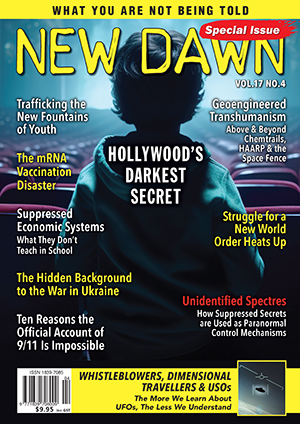
    Get the issue this article appears in

    From Here to There

    Corporate capitalism, state socialism, and the uneasy mix of the two that’s standard in most industrial countries these days have a tight grip on most economic activity. Getting free of them won’t be a quick or easy process. However, most of us can take some steps away from the current system right now, and many of those have an immediate payoff.

    The first and most important of these is to pay attention to your own economic choices and notice how often you’re being tricked into spending money. Remember that when you do something for yourself, you get all the value produced by your labour; if you spend money for it instead, other people extract a cut. Put a few minutes into calculating how much time you spend working to earn a dollar, and then ask yourself – is what they’re trying to talk you into buying worth that many minutes or hours at your job? Most of the time, no, it’s not.

    It’s also worth finding out what skills your friends, family members, and other people you know have, and see if it’s possible to barter with them for goods and services. In healthy societies, a huge amount of economic activity takes place by exactly this sort of informal exchange – person A does garden work for person B in exchange for a haircut, person C cleans person D’s house once a week in exchange for bottles of homebrewed beer, and so on. While you’re at it, if you’re short on skills that will give you something to barter, learn one and get good at it.

    Many people are convinced they can’t do this sort of thing because they have so little free time outside of work. I’ll give you a hint: working for an employer isn’t your best bet since employers profit by giving you as tiny a share of the value of your labour as they can get away with. If you work for yourself, you’ve got a much better chance of keeping the value of your labour. During the Covid shutdowns, many people figured this out, which is why the authorities in so many countries are yelling about labour shortages right now. Contribute to the labour shortage by finding a way to make a living without being somebody’s employee, and you’ll also be contributing to a better world.

    You can also use your own choices to help support alternative economics. There are plenty of worker-owned cooperatives these days; you can buy from one instead of handing over your money to their corporate rivals. There are plenty of sole proprietorships and small businesses along the distributist model, too; support those instead of big corporations and everyone but the kleptocrats benefit. For that matter, a buyers club can enable you, your family, friends, and neighbours to get things at wholesale prices, cutting another batch of corporate grifters out of your life. Social credit isn’t scalable in the same way, but it and the other alternatives can be pursued in another way: by getting the word out.

    The most important step, after all, is to help other people find alternatives to the mindless drudgery and exploitation that the current economic system provides to its inmates. Corporate capitalism and state socialism aren’t the only possible economies; they’re the options that allow today’s elites to rake in the most unearned wealth, but that’s only an advantage to the elites. Look into other options, learn about them, and spread the word. That way lies a less abusive, more creative, and more humane form of economic life.

    [alert type=”general” dismiss=”no”]This article was published in New Dawn Special Issue Vol 17 No 4.[/alert]

    [alert type=”success” dismiss=”no”]If you appreciate this article, please consider subscribing to help maintain this website.[/alert]

    © New Dawn Magazine and the respective author.
    For our reproduction notice, click here.

  • Geoengineered Transhumanism: Above & Beyond Chemtrails, HAARP & the Space Fence

    Geoengineered Transhumanism: Above & Beyond Chemtrails, HAARP & the Space Fence

    From New Dawn Special Issue Vol 17 No 4 (Aug 2023)

    While Elana Freeland is widely known for her books related to geoengineering, in order to understand her orientation to that research, it is important to recognise that she is also the author of a four-volume work entitled Sub Rosa America: A Deep State History.

    Freeland classes Sub Rosa America less as a work of fiction than as a history of the United States since President John F. Kennedy’s assassination. She said she was “not obsessed but possessed” by such an inspiration that the words flew out of her pencil.

    In a recent interview, Freeland said: “When I was beginning to write Sub Rosa America in the early 1990s, I had an intense dream in which I saw the numbers 2019 towering above me to a great height, and they were on fire.”

    “I don’t know if you noticed,” she added, “but I begin the novel with a flashback from 2019 because of that vision in my dream. I had a sense that something terribly big and important was going to happen in 2019, and it certainly did!”

    Sub Rosa America is nothing less than a literary epic, a journey by a motley crew of young truth seekers (aided by the constantly reincarnating Count St. Germain) to “Look for America” in the aftermath of the three major assassinations in the US in the 1960s, which devastated Freeland’s generation. Full of references to covert government operations such as the MK-ULTRA mind control program and replete with intimations of advanced technologies yet to come, the text cannot help but make the reader wonder how much the work may be a thinly disguised autobiography of Elana Freeland.

    In its opening scene set in 2019, its female central character, a mature woman hiking alone into the Rocky Mountains, experiences UN troops in black helicopters and finds refuge when they pass overhead by utilising an “invisibility cloak” and other tools given her by her lover, a brilliant scientist whose twin brother was a captive of MK-ULTRA programming.

    It is an image that resonates deeply with Freeland’s current work, in which she sees herself in a battle against “powers and principalities” opposed to the development of human free will – a battle for the very future of humanity.

    For the past decade, Elana Freeland has completely devoted herself to the task of researching, describing, and interpreting, often in painstaking detail, the destruction descending upon the Earth and humanity by the intentional abuse of chemicals, electromagnetics, and the new science of nanotechnology.

    HAARP / Chemtrails

    Elana Freeland has been a Waldorf school pioneer, teacher, lecturer, storyteller, ghost-writer, and author of nonfiction books that grapple with National Security State issues. She has written for alternative publications, edited the stories of MK-ULTRA and ritual abuse survivors, and has ghost-written books on a host of diverse topics. Elana majored in biology in college. She was awarded a Master of Arts in Great Books in 1996 and received honors for her thesis on historiography at St. John’s College in Santa Fe, New Mexico. Elana is the author of the four part series Sub Rosa America, Chemtrails, HAARP, and the Full Spectrum Dominance of Planet Earth, Geoengineered Transhumanism, and Under An Ionized Sky. Website: elanafreeland.com.

    In her first geoengineering book, Chemtrails, HAARP and the Full Spectrum Dominance of Planet Earth (Feral House, 2014), she introduced the subject to the reader with the assertion that “HAARP technology with its ionized chemtrails constitutes a global-scale DEW (Directed Energy Weapon) system.” She also asserted that “All of planet Earth will be militarized under the policy of full spectrum dominance.”

    How was it, then, that Freeland began to arrive at such bold conclusions?

    “I first began by concentrating on the engineering feat of actually obtaining full spectrum dominance over the Earth,” Freeland said in our interview. “For that, I depended mainly on Bernard Eastlund’s 1987 HAARP patent, in which he describes exactly what would be needed in order to control the ionosphere and pull ions down into the Earth’s atmosphere.”

    Eastlund’s patent for a “Method and Apparatus for Altering a Region in the Earth‘s Atmosphere, Ionosphere and/or Magnetosphere” led Freeland to learn about the High-frequency Active Auroral Research Project (HAARP), which adapted Nikola Tesla’s electrical transmission discoveries for the purpose of creating ionospheric heater technology, capable of sending, via phased array antenna systems, high-powered beams of electrons into the ionosphere to influence the flow of ions.

    As Nick Begich, Jr. and Jeanne Manning reported in their pioneering book Angels Don’t Play this HAARP: Advances in Tesla Technology (Earthpulse Press, 1997): “The $30 million project euphemistically named HAARP (High-frequency Active Auroral Research Program) is made to beam more than 1.7 gigawatts (billion watts) of radiated power into the ionosphere – the electrically-charged layer above Earth’s atmosphere. Put simply, the apparatus is a reversal of a radio telescope – just transmitting instead of receiving. It will boil the upper atmosphere. After disturbing the ionosphere, the radiations will bounce back onto the earth in the form of long waves which penetrate our bodies, the ground and the oceans.”

    By reporting on “how cloud seeding goes electromagnetic” through the spraying of strontium, aluminium, and barium into the atmosphere, which was then ionized through HAARP and other transmissions, Freeland demonstrated in her first book that chemtrails are “not your average contrails.” She also reported on the ways in which geoengineering and environmental warfare are “profit and force multipliers.” She also provided deep background into the anomalous substances derived from chemtrail spraying residues now known as Morgellons by introducing her readers to the extensive research of independent scientist Clifford E. Carnicom (carnicominstitute.org).

    “I didn’t know at all in my first book on chemtrails, though, how far geoengineering went,” Freeland said. “I was just following the direction each book indicated.”

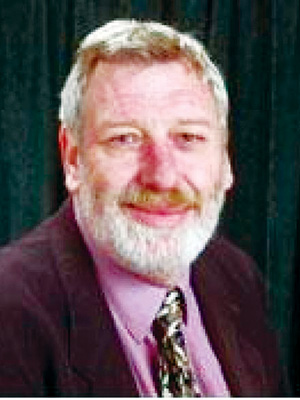
    Clifford E. Carnicom

    Freeland’s intuition seems to have an aptitude for connecting her with people who can inform and amplify her research. Carnicom, noted for his years of research into material evidence derived from the examination of residues from geoengineering atmospheric spraying, is one such person.

    Clifford E. Carnicom

    “In the early 2000s, I became friends with Clifford, which seemed to me like destiny,” she said. “After I moved to Santa Fe, through a friend of a friend of mine I met Clifford and his wife Carol at a breakfast. I was writing Sub Rosa America and had a file on the chemtrails thing. In the mid-to-late nineties, Clifford was collecting the condensation from northern New Mexico skies after the jets with the long trails came overhead. As a scientist, he immediately recognised that they were not contrails due to the chemical signatures of the trails that did not fit with water content. He also was collecting debris with his HEPA filter, and that is when he began to discover the Morgellons fibres.”

    Freeland described the Morgellons phenomenon in detail in her first book, complete with photos. It appears as a skin infection but with strange wire-like protuberances.

    “Biology was my second undergrad major. What I didn’t know yet was that I was not going to be able to really return to what I had studied so many years ago because molecular biology is being transformed into digital biology.”

    Asked if she’d discovered through her early studies with Carnicom that Morgellons was nanotechnology, Freeland replied, “I didn’t know that part yet. What I did learn was that Morgellons had been genetically engineered.”

    Bioengineering and nanotechnology – two fields of human endeavour about which the general public still knows relatively little for lack of investigative reporting about them in the mainstream media – figure prominently in Freeland’s next two books.

    In Under an Ionized Sky: From Chemtrails to Space Fence Lockdown (Feral House, 2018), Freeland expanded greatly upon her initial research. She wrote: “Now that phase two of the ionospheric heater technology is being instituted – the Space Fence – I have reconfigured (Clifford Carnicom’s) list (from his 2005 film Cloud Cover) to reflect some of the detail behind each operation.”

    The list she presents provides an overview of the content of her second book: Weather Engineering/Geoengineering; Planetary/Geophysical Operations; Electromagnetic Operations; Directed Energy Warfare Operations (C4); Surveillance/Neural Operations; Biological/Transhumanism Operations.

    The bullet points Freeland provides under that last category are worth noting: “Hive Mind Morgellons delivery; Nanoparticle delivery: sensors, microprocessors and other electro-optical technology; Remote genetic engineering of DNA; Replace Nature with virtual reality.”

    In his introduction to Under an Ionized Sky, Carnicom wrote: “The book is meticulously researched and documented… The morass of controlling systems spoken of here does indeed exist, and they are of purpose and agenda. It is up to us to maintain our spiritual integrity in the clash that is before us…”

    The “Space Fence” to which Freeland refers is the second phase of the “Star Wars” missile defence system begun during the Reagan administration. That effort, which slumbered after the collapse of the Soviet Union, has been reborn, she reports, through a global network of both ground and sky-based installations, including ionospheric heaters, missile defence radar, SuperDARN radar, high-powered lasers, satellites and even the International Space Station.

    Freeland was also one of the first writers to report on the proliferation of cell phone towers and the dangers inherent in the development and dispersion of 5G technology.

    Above all, though, the thrust of Under and Ionized Sky is to develop and document the argument that geoengineering technology, which first manifested as simply “chemtrails,” is ramifying and developing increasingly toward the complete transformation of the human race – changing what it means to be human.

    Freeland summarised that key point in the title and subtitle of her latest book, which was released in October 2021: Geoengineered Transhumanism: How the Environment Has Been Weaponized by Chemicals, Electromagnetism, & Nanotechnology for Synthetic Biology.

    “All of this is one long epigenetic story of preparation for what we’re seeing now, the environmental process,” Freeland said. “It’s amazing, if you think about it, the scale of using the entire environment to assault the human being. It’s all under the secret space program, for full spectrum dominance of planet Earth, step number one to dominating the solar system.”

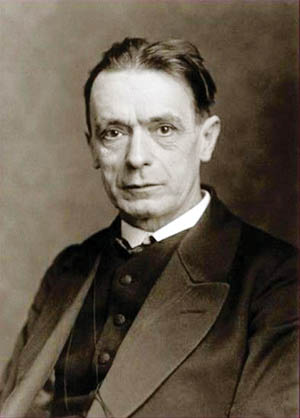
    Rudolf Steiner

    Freeland also conscientiously objects to mind control nanotech interwoven with chemtrails, the new generation of “vaccines,” and GMO “food.”

    “It’s a time of great experimentation,” she said. “The problem is that they’re using people without their consent, despite people being freewill beings. Rudolf Steiner said that the human being is the religion of the gods because we are spiritual beings living in material bodies, having a material experience on the Earth, spirits in matter. We’re very special beings, and we’re treated like lab rats.”

    Steiner, widely known for establishing what he called “spiritual science” based on Goethe’s scientific research, as well as for creating the Waldorf school movement and Biodynamic agriculture, has been a major teacher for Freeland.

    “I am a student of Rudolf Steiner,” she added, “I was a Waldorf teacher for about 16 years, having been trained at the Rudolf Steiner Institute in Detroit, Michigan.”

    During the COVID-19 global crisis, authors such as David O’Hagan (see option3.co.uk) have cited statements made by Steiner in the early 20th century that appear relevant to contemporary concerns over the new generation of mRNA “vaccines.” 

    For example, in a statement recorded in “Rudolf Steiner Supersensible Knowledge, Lecture 2” entitled “Blood is a Very Special Fluid,” O’Hagan quotes Steiner as saying: “Whatever power wishes to subjugate a person will have to exert an influence that imprints itself in his blood… That which possesses a person’s blood possesses that person, and possesses the human ‘I’.”

    “Human 2.0”

    Chemical trails, the new “vaccines,” and GMO foods, Freeland asserts in her new book, are the three primary delivery systems for nanotechnologies designed to turn our bodies into receivers and transmitters of pulsed electromagnetic frequencies allied with artificial intelligence in “Clouds.” The intended end product is nothing less than a completely modified transhuman being – “Human 2.0.”

    These are the new technologies, Freeland asserts, of the Fourth Industrial Revolution, harbingers of a totalitarian, completely surveilled and controlled society – and assaults upon the blood. As is her standard procedure, Freeland provides the sceptical reader with a wealth of source material from other authors writing about matters related to the transhumanist agenda and the Fourth Industrial Revolution in her extensive footnotes.

    Freeland has organised the book’s fourteen chapters into three sections that immerse the reader in Freeland’s worldview, which derives from her deep dives into her scientific source materials. It is a worldview so different from the mainstream media’s depictions of our world and its crises as to seriously challenge the assumptions of readers accustomed to standard ways of thinking about the subjects she addresses. Freeland, however, makes no apologies for taking her readers into stark new intellectual territories.

    “We cannot solve our problems with the same thinking that created them,” she told me, as she has said to other interviewers, as well.

    In the first section of her new book, “As above, So Below,” Freeland describes our still-ionized sky and the phenomena of geoengineered forest fires; the three delivery systems and advances in nanotechnologies they deliver; the harnessing of magnetism in the new technologies; 5G and the Internet of Things; the secret space program and the “eyes in the sky” satellite control under which we live.

    In the second section, “Surviving the Smart City,” Freeland describes the various “dual use” and invasive, weaponised systems installed now in “sustainable development” cities. She asserts that “A Smart City is an Armed City,” with its ongoing urban experiments manifesting in new technologies in lighting, surveillance, crowd control and high-tech hospitals.

    In the third section, “The Transhumanist Trojan Horse,” Freeland alludes to the tragedy of giving over the human being to “the advent of BCI – brain-computer interface” through “BCI implants in body, brain and environment.” She then surveys “the drama around the human genome” in “Transhumanist Eugenics/Newgenics,” and finally arrives at the drama of the day, “The COVID-19 ‘Vaccine’ Event.”

    Freeland’s comprehensive and highly detailed information on the new generation of mRNA “vaccines” in that last section is the best description of the complexity of those new technologies – including nanotechnology – and their effects on the human organism and genome that this writer has yet read.

    Her conclusion, “Remaining Human,” constitutes her meditation on what she considers the practices most essential for human beings to incorporate into our daily lives in the face of all the onslaughts she describes in such detail. She begins with the quantum nature of human consciousness and thinking, then shifts to suggesting ways of keeping the human immune system strong by following nature, not technology, to maintain “a state of balance.”

    The idea our very bodies are becoming transceivers of pulsed frequencies through tiny, phased array antennas of DNA and nanoparticles, which we receive via these new vaccines, in addition to the nanoparticles we breathe in through chemtrails and consume through GMO food to facilitate our conversion into transhuman cyborgs – wild and impossible as it sounds – is central to Freeland’s new book.

    Morgellons / 6G / mRNA “Vaccines”

    In order to gain perspective on the background to that assertion, we must return to Freeland’s collaborations over the years with Clifford Carnicom.

    “Carnicom has made another very significant scientific contribution,” Freeland said.

    “Clifford will be remembered in history – if they don’t completely erase him from history, which has been done to many inventors and scientists – for discovering the CDB or cross-domain bacteria inside the Morgellons fibres.

    Close-up of a Morgellons fibre. Image courtesy of the Morgellons Research Foundation.

    “The fibre itself is a protective polymer,” she said. “Inside are three other parts, including the cross-domain bacteria which has to do with the reproduction of this genetically engineered creature crossing all three domains of life. Some of what was endemic to Morgellons appears to be in the hydrogels, being injected into people now in the so-called vaccines.”

    “The graphene oxide and nanoparticles [in the vaccines] really correlate with Morgellons,” she added. “I explain this in the new book, how Morgellons was a precursor system.”

    Freeland then referred to videos that came out about facemasks under magnification.

    “When people were looking closely at the masks, they saw little wormy-looking things that look a lot like Morgellons fibres, and they move like Morgellons when you bring an electromagnetic field near them. They rise up and move. They’re alive.”

    Asked to give more information on this matter relative to the new mRNA “vaccines,” Freeland brought in references to activation by pulsed electrical frequency transmissions.

    “The vaccine is loaded with various diseases that can now be remotely activated because we’ve gone from molecular to digital biology,” she said. “The various diseases can be called out by the 5G/6G frequencies, all done very quietly. Most people don’t even know that 6G is already a done deal. 6G penetrates our brains and our bodies and is already pretty much in place, just as the 5G system was already in place with the 4G Plus system because of the phased array antennas. This is the key to why 5G works so well for so many purposes of control.”

    Moreover, Freeland says, what is now happening at the level of nanotechnology has its very roots in the HAARP technologies going back to the 1980s.

    “If you want to see a phased array antenna, just look at HAARP,” she said. “All these other phased arrays are essentially the same system. They can focus. They become beams, splay out over an area. Once these nanoparticles are in us, they form scaffolds for networking.”

    Freeland said everyone has breathed in Morgellons filaments, but some infected people are particularly aware of the peculiar nanobot qualities, such as “swarming,” the subcutaneous sensation.

    “When they come together as a swarm,” she explained, “you have an opportunity to see them, along with the nanowires from Morgellons sores. Get near a cell phone or toaster oven and the little wires just go nuts. Yum, yum, yum, they love electromagnetism! So, scaffolding in our bodies is intended to cyborg us as they take the place of our blood vessels and our nerves.”

    “A lot of people have died of Morgellons,” she said. “Only recently has the CDC [US Centers for Disease Control] recognised it as an illness, and even then, they falsely claim it’s a skin ailment. It’s a blood ailment, an assault on the blood. That’s what we’re seeing with this ‘vaccine’ and with the spike protein – it is an assault on the cell.”

    The new “vaccines,” chemtrails and GMO foods are all an “assault on the blood,” designed, as Rudolf Steiner put it, by a power that “wishes to subjugate a person” by an “influence that imprints itself in his blood.”

    Whether such insights make their way into public discourse, schools, universities, and halls of government, only time will tell.

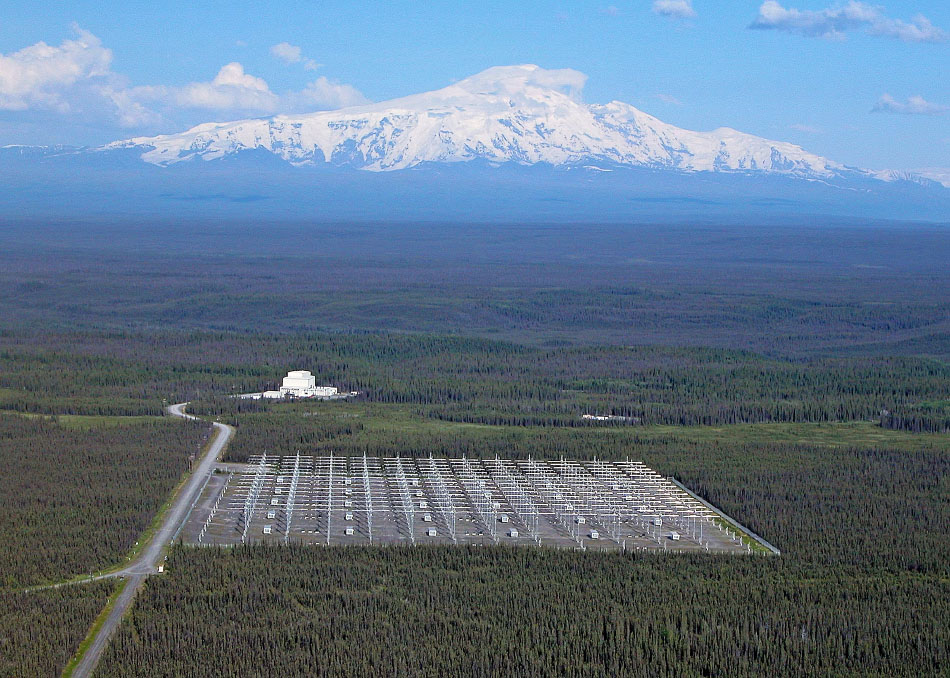
    The Alaska-based HAARP facility, now run by the University of Alaska Fairbanks. 

    “Conspiracy Theory”

    It is important to note for readers new to this topic that Freeland is by no means working in isolation. She is one of an increasing number of independent researchers seeking to explore the real dimensions of the geoengineering phenomenon and increase public awareness about it. Consensus among researchers, however, is difficult to achieve in this realm of inquiry due to the size of the elephant in the living room and dismissive terms like “conspiracy theory.”

    Despite the fact that in all of her books Freeland provides extensive documentation in her footnotes to substantiate the information she presents and analyses, the fact remains that some people who share her concerns about the future of humanity and the misuse of technology – particularly satellites – do not recognise assertions by Freeland and other researchers that “chemtrails” are delivering toxic chemicals, electromagnetic pulses, and nanotechnology for military-industrial-intelligence agendas.

    One such person is Arthur Firstenberg, founder of the anti-5G rollout Cell Phone Task Force and author of The Invisible Rainbow: A History of Electricity and Life. Firstenberg has been calling public attention to the increasing radiation hitting the Earth from the thousands of new commercial satellites now in orbit around the planet.

    “‘Chemtrails’ are a hoax,” he wrote this writer. “They are condensation trails, and they have formed behind airplanes since air travel began. They are seen everywhere today because there is so much air traffic everywhere. Airplane exhaust contains water vapour and particulates and will persist and form clouds when the temperature in the air lanes is below the dew point. That is how clouds form. If you believe this does not happen, then you believe that clouds do not exist. Or that water vapour in airplane exhaust is different from water vapour evaporating from the oceans. Water vapour is water vapour.”

    Anti-Geoengineering Movement

    In contrast, Ian Baldwin, founder of Chelsea Green Publishing (which published Firstenberg’s Invisible Rainbow), is also an environmental activist in his own right and sees chemtrails as a serious problem worthy of rigorous, independent scientific study and informed public dialogue. Indeed, he is interested in supporting the anti-geoengineering movement that is developing around the world.

    To that end, Baldwin and Rob Williams, PhD, publisher of The Vermont Independent (vermontindependent.net), have created the website ourgeoengineeringage.org, which they describe as “an evidence-based exploration of our planet’s most pressing yet underreported global environmental issue.” Williams has also been interviewing Freeland and others involved in geoengineering research on the Vermont Independent YouTube Channel.

    As Freeland, Baldwin and other writers point out, there are two kinds of public discourse about “geoengineering.” One form addresses, as Baldwin puts it in one of the essays he has authored on the subject, “the ongoing military kind that is secret, discussion of which is repressed,” while the other addresses “the future-based, overt kind, openly discussed in the media,” primarily solar radiation management (SRM) to allegedly diminish the effects of global warming.

    For justifiably sceptical readers interested in evidence-based information about covert forms of geoengineering, the scientific papers written by J. Marvin Herndon, PhD and Mark Whiteside M.D., M.P.H. (some of which Freeland cites in her own work) posted at ourgeoengineeringage.org provide a unique resource and emphasise the gravity of the geoengineering phenomenon.

    For example, Herndon’s 2021 paper “Ancient Giant Sequoias Are Dying: Scientists Refuse to Acknowledge the Cause” (published in Advances in Social Sciences Research Journal, co-authored with Dale D. Williams and Mark Whiteside) and his 2020 paper “True Science for Government Leaders and Educators: The Main Cause for Global Warming” (also published in Advances in Social Sciences Research Journal) are good starting points.

    In response to this writer’s request for a statement describing Freeland’s influence on his own research and writing, Ian Baldwin wrote:

    “Elana is a brave pioneer in the anti-geoengineering movement. She picked up where the famous, now deceased epidemiologist activist-nun Rosalie Bertell PhD left off with her book Planet Earth: The Latest Weapon of War, published in 2000. Bertell founded the International Institute of Concern for Public Health in Toronto in 1984.

    “When I started to research and write about geoengineering in 2015, collaborating with Marvin Herndon, and later Rob Williams and Mark Whiteside, Elana’s first book – Chemtrails, HAARP, and the Full-Spectrum Dominance of Planet Earth – was a year old. It proved a comprehensive, eye-opening guide to the depth of the military’s long-term involvement in geoengineering operations. 

    “Three years later, in 2018, when Elana published her second book Under an Ionized Sky, I was again struck by her fearless willingness to go where few others dared. One learned many things. For instance, the US Air Force had two weather/climate agencies – the Air Force Weather Agency and the Meteorological and Space Environmental Services – both of which reported to the ‘Director of Weather’. One also learned that NASA, at least from Elana’s highly educated point of view, is a ‘psychological intelligence operation tasked with confusing public knowledge of covert space defence, space weapons, unmanned satellite and rocket launches, and plasma research’. As well as other, even more labyrinthine and nefarious ‘security’ operations.

    “It was Bertell who made me understand that two sources of energy – ‘chemical’ and electromagnetic ‘wave’ – were both fundamental to secret geoengineering operations, and it was Elana who made this important distinction come to life for me, so I could begin to grasp the complexity of the technological infrastructure being deployed on land, at sea, and in the atmosphere itself to moderate, and even control, major natural phenomena such as the weather, earthquakes, vulcanism, tsunamis, and of course, the climate itself.”

    There are, of course, other distinguished writers and online activists who are endeavouring to research and raise awareness about the secret variety of geoengineering. In addition to pioneering authors Nick Begich, Jr. and Jeanne Manning, they include William Thomas, author of Chemtrails Confirmed, Peter A. Kirby, author of Chemtrails Exposed: A New Manhattan Project, plus Nick Rogers and Rosalind Peterson (whose writings are featured at ourgeoengineeringage.org), not to mention activists such as Lucretia Smith who regularly corresponds with Freeland, and Mike Morales (Above Ground World News aka “The Real Weather Channel”) whose regular geoengineered weather reports are stunning.

    Lucretia Smith kindly gave this writer an introduction to how to read the NASA website showing real-time weather patterns based on satellite imagery around the globe, together with a day-by-day history of weather patterns so that one can watch, for example, the progress of a hurricane.

    Elana Freeland has dedicated over a decade to researching and writing highly documented books about geoengineering and the other technologies that actually fall under that umbrella term.

    Get the issue this article appears in

    Inspiration & Influences: A Calling

    What would make Freeland invest so much time into doing the research required for such books?

    One of the strongest motivations in her research, she said, was the life of her father.

    “My father was a scientist, a PhD in inorganic chemistry,” she said. “I found out late in life in a serendipitous discovery that he had been in US Navy intelligence all along and that his entire war career was spent in the South Pacific. My guess is they had him building bombs, but he was terribly used by them and ended up being a very sick man. I think that his history played a large part in my desire to get to the bottom of military mysteries like geoengineering.”

    At the end of our interview, Freeland shared that her work, requiring a solitary life as an independent researcher and writer, has deeply spiritual as well as personal roots.

    “When I was twenty-five, I had an experience in a college classroom in Hilo, Hawaii. I was depressed that day, having realised that my great desire to encounter God might not occur. The possibility was too much for me. I didn’t have the word ‘Gnostic’ then, but I was looking for a gnosis, a living experience of the Divine.

    “I remember putting my head down on my desk as emotion overwhelmed me, and then a full-blown vision occurred: a shaft of light came through the ceiling of the classroom and penetrated my chest to shatter the wall around my heart, and then a Being of dazzling light kneeled over me, probably all in a matter of seconds.

    “Three nights later, as energy shot up my spine, I heard the words, I am the Way, the Truth, and the Life, a phrase I had never heard. I admit to not being thrilled when I first learned that Jesus Christ had thus identified himself, but I eventually learned that churchianity and Christianity are not the same thing.

    Rudolf Steiner

    “For me, every day is Sunday, and everywhere is church. That’s what I came to, and that this Christ I experienced was actually what Rudolf Steiner called the Etheric Christ. When Christ resurrected and left, he said to His disciples, ‘As you see me go, so shall I return’, and he went up into the clouds.”

    While studying to be a Waldorf school teacher a few years later, Freeland learned that Steiner had given several lectures about how starting in 1933 – when Hitler took power – the Etheric Christ would become more and more evident to more and more people who would see Christ in the ether of the Earth.

    That experience is central to Freeland’s understanding of her work. Strangely, geoengineering is about clouds, and clouds are about what Rudolf Steiner would have called the Earth’s etheric body.

    As Freeland says, “To me, it is not a coincidence at all that I’ve ended up writing three books about the geoengineering assault. It has been a vocation, a calling, definitely a calling.”

    The Geoengineered Transhuman: The Hidden Technologies of HAARP, Chemtrails, 5G/6G, Nanotechnology, Synthetic Biology, and the Scientific Effort to Transform Humanity by Elana Freeland is available from the publisher here. This article was first published in Phenomena Magazine No 160, a free e-zine available from phenomenamagazine.co.uk.

    [alert type=”general” dismiss=”no”]This article was published in New Dawn Special Issue Vol 17 No 4.[/alert]

    [alert type=”success” dismiss=”no”]If you appreciate this article, please consider subscribing to help maintain this website.[/alert]

    © New Dawn Magazine and the respective author.
    For our reproduction notice, click here.
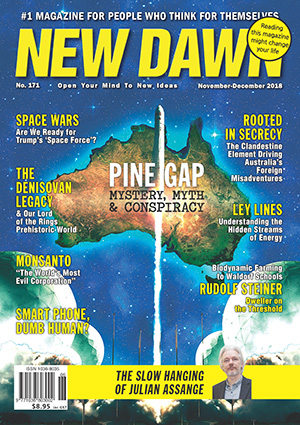
  • Pine Gap: Mystery, Myth & Conspiracy

    Pine Gap: Mystery, Myth & Conspiracy

    From New Dawn 171 (Nov-Dec 2018)

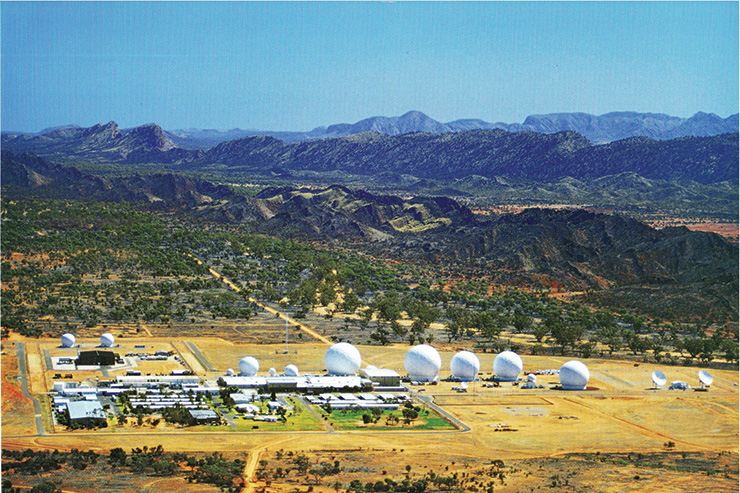
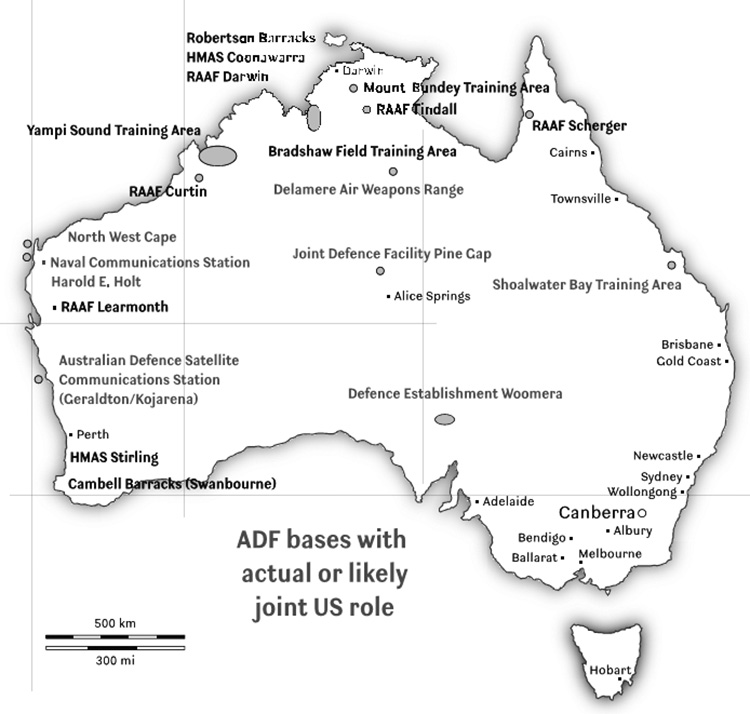
    The Joint Defence Facility at Pine Gap near Alice Springs has had a troubling, if discrete history in the Australian political landscape. It is, more than anything, a sign of the pressing inequalities of the Australian-US relationship, a salient reminder of Australia as a distant but valuable satrap to the ever stubborn imperium based in Washington. 

    “Joint” command is a teasingly deceptive misnomer, given that the facility in the Northern Territory is under US control. What persists is a certain errand boy element fronted by Australian personnel. They supply the territory, the space and the hospitality. The US, boasting its protective umbrella, does the rest.

    The Pine Gap facility, established in 1970 as one of the world’s largest satellite ground installations, has been responsible for feeding intelligence to American military missions for decades, with, or without the knowledge of the wallahs in Canberra. Over the years, revelations about what the facility is actually being used for have seeped into the media. 

    Pine Gap plays a crucial role in the United States military’s drone assassination program. The ‘collateral damage’ of the program in the form of hundreds of innocent civilian deaths has led to continued protests in countries such as Pakistan.

    The Australian revealed in April 2014 that two Australian citizens – Christopher Havard from Queensland and New Zealand dual national “Muslim bin John” (Darryl Jones) – had been killed in a drone strike in Yemen on 19 November 2013. Both men, supposedly members of the group al-Qa’ida in the Arabian Peninsula, were travelling in a convoy of vehicles with Abu Habib al Yemeni, a key AQAP figure. (The Australian did not bother with the term “alleged militants” in describing the fate of the slain.) 

    Australia’s then Foreign Minister, Julie Bishop, was only informed of the strike after it was revealed that Australian citizens might have been killed. A spokesman claimed that, “There was no Australian involvement in, or prior awareness of, the operation.” It certainly did not concern those at The Australian, who feel that pre-empting guilt by way of execution in an undeclared war without any suitable standard of evidence has “done much to stop the terrorists committing even more atrocities.” 

    This has not been the view of others. The late Professor Des Ball of the Australian National University, when asked about the strikes in May 2014, reiterated the claims to the same paper that Pine Gap was essentially being used to aid assassination. “I’ve no doubt that intercepts of phone calls and things like that are being intercepted at Pine Gap and used in drone operations.” According to Ball, intercepted signals obtained at Pine Gap were used in a strike against an al-Qa’ida target in Yemen on 3 November 2002. “It was one of the first uses of a drone against targets in Yemen.”

    Australian academic Desmond Ball (1947–2016).

    The Australian was a rather late arrival to the party, given that Philip Dorling of Fairfax Media was already reporting that intercepts obtained from Pine Gap were being used in conducting extra-judicial killings in the Middle East. The facility’s “primary function” was to identify radio signals throughout the “eastern hemisphere, from the Middle East across Asia and China, North Korea and the Russian far east.” As one former Pine Gap operator told Fairfax Media: “We track them [the combatants], we combine the signals intelligence with imagery, and once we’ve passed the geolocation intell[igence] on, our job is done. When drones do their job we don’t need to track that target anymore.” Such is the desensitised, amoral world of the signals tracker operating in remote locations.

    None of this was new to American investigative journalist Jeremy Scahill, who has been enlightening Australian and New Zealand audiences about the extent of knowledge and complicity in the dirty business of drone strikes. Pine Gap remains the remote sin of Washington’s reach. It also fundamentally inculpates Australia in the same mission, one that extends to its Trans-Tasman neighbour. On 17 May 2014 Scahill told New Zealand’s TV3’s The Nation that he had seen “dozens of top secret documents” provided by US authorities to the NZ government showing effectively “that New Zealand, through signal intercepts, is directly involved with what is effectively an American assassination program.” This barely troubled then New Zealand Prime Minister John Key, who openly suggested that the killings were “legitimate… given that three of the people killed were known al-Qai’da operatives.” 

    The Purpose of Pine Gap

    Robert Cooksey of the Australian National University was one of the first who took an interest in the nature of this “unlisted base” back in 1970. Writing for Dissent, he speculated whether the “weather station” in Alice Springs manned by Detachment 421 of the US Air Force might be powered by nuclear power. The Australian Minister for Supply had been rather oblique about the approval for a US research project at Alice Springs “to conduct long term geological and geophysical studies, including studies of earthquakes and attendant phenomena.” Northern Territory officials simply presumed it to monitor atomic tests, though Cooksey found it curious that this function should be shrouded in secrecy. 

    It was Desmond Ball who injected a note of unease in the discussion on the base, noting the multifarious military, scientific, intelligence and space facilities connected with Washington’s interests. “The precise number,” claimed Ball on the facilities, “is difficult to determine – there are problems of official obfuscation and of technical definition – but it is more than twenty.” Along with Richard Tanter, Ball did more work on the subject of drumming up awareness of the secret base’s role on Australian soil than most. A Suitable Piece of Real Estate: American Installations in Australia (1980) drove interest on how Australian territory had become an imperial domain for Washington’s strategic push. His assertion that Australia reclaim sovereignty was deemed “temper democratic, bias Australian.”

    The Nautilus Institute for Security and Instability has furthered Ball’s work, keeping a keen eye on the evolution of Pine Gap’s role in security. In an introductory overview on Pine Gap, the Nautilus Institute’s ongoing, updated report on the base notes the following: 

    “Pine Gap is perhaps the most important United States intelligence facility outside that country, playing a vital role in the collection of a very wide range of signals intelligence, providing early warning ballistic missile launches, targeting of nuclear weapons, providing battlefield intelligence data for United States armed forces operating in Afghanistan and elsewhere (including previously in Iraq), critically supporting United States and Japanese missile defence, supporting arms control verification, and contributing targeting data to United States drone attacks.”

    The report pegs Pine Gap’s role to three operational functions, with the original one still being primary: a station for geosynchronous signals intelligence (SIGINT) satellites developed under the auspices of the Central Intelligence Agency. Originally, these were intended to focus on the testing of Soviet missiles. One estimate puts the number of radomes and satellite dishes at Pine Gap at 38.

    The second features a function acquired in late 1999 when the base became a Relay Ground Station for detecting missile launches, including Overhead Persistent Infrared (OPIR) which now includes a Space-Based Infrared System (SBIRS).

    The third is its interception function (foreign satellite/communications satellite), acquired in the first decade of 2000. The Nautilus report notes that two 23-metre dishes appropriate for COMSAT SIGINT Development (Sigdev) were installed within the 30-metre radomes at the end of 1999 and early 2000.

    To Peter Cronau of ABC Radio National, the Nautilus Institute’s Richard Tanter was convinced about the ensconced nature of the base in the plans of US security:

    “Pine Gap literally hardwires us into the activities of the American military… So whether or not the Australian government thinks that an attack on North Korea is either justified, or a wise and sensible move, we will be part of that… We’ll be culpable in the terms of the consequences.”

    Other sources have added to the jigsaw. David Rosenberg, a US employee at the base, supplied a valuable portrait of the functions of the base in 2011. In 1990, Matthew Denholm subjected the strategic base argument to broader discussion.

    All this cut and dried material conveys the relevance of Australia’s continued geographical role as a dry goods merchant for Washington, its haberdasher of the Pacific. Not only does it supply the data required for drone strikes, it also served as a useful tool in directing US air operations over Vietnam and Cambodia. This troubled Prime Minister Gough Whitlam in the 1970s, who became a subject of deep distrust in Washington with his threat not to continue the lease connected with the base. This supplied an ample pretext for a flurry of communications between Washington and the opposition leader, Malcolm Fraser, who became the celebrated usurper in the fall of the Whitlam government in 1975. 

    Australia remains America’s glorified dogsbody and, in any future war, a conspicuous target. Enormous latitude is permitted for US personnel at Pine Gap. 

    Prosecution & Protest

    In 1952, when the Defence (Special Undertakings) Bill became law, it did so without opposition. There was, however, one note of warning from an otherwise unquestioning Dr Herbert Evatt of the Australian Labor Party. For one thing, the danger of legislative overreach was apparent: “the bill contains very important provisions which extend beyond that particular subject. They may be open to some criticism on analysis but, after consideration, the Opposition believes that the bill should be passed.”

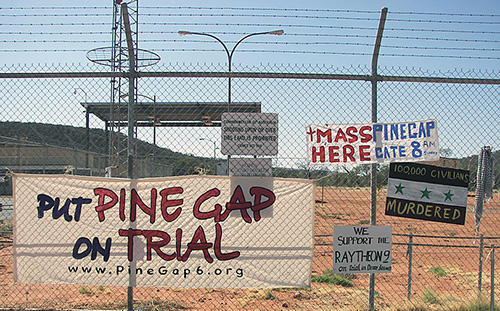
    There have been protests against Pine Gap since the 1970s. The above is from a 2006 protest.

    Protests and prosecutions have followed. A strong streak of feminist and female activism against the base has characterised dissent and an attempt to breach the veil of secrecy. On 11 November 1983, a Boston Tea Party style gathering was held on the green lawns on the Base. 111 women were arrested for trespass, all giving their name as Karen Silkwood, a renowned anti-nuclear protester. Some 700 women gathered, being described by the Alice Spring News as “Karen Silkwoods.” Support, albeit indirectly, was also offered by twelve female parliamentarians from the Labor Party, including Senator Susan Ryan, then Minister for Education.

    At various stages, prosecutions on charges of trespass under the Defence (Special Undertakings) Act 1952 have also been mounted, though the prosecution effort in 2007 against protestors was laughed out of court by the presiding judge, Daynor Trigg, who deemed the statute “a bit of nonsense.” The defendants were duly acquitted by the Northern Territory Criminal Appeals Court, who quashed attempts by prosecutors to seek a retrial. 

    Australians have a long history of protesting US military bases in Australia. Left:  Poster from 1976 campaign, and protest badges from the 1970s & 80s.

    As late as last year [2017], six self-proclaimed “peace pilgrims” received the attention of authorities for sporting musical instruments and pictures depicting war casualties onto the base. The prosecution of Margaret Pestorius, Paul Christie, Jim Dowling, Franz Dowling, Andy Paine and Tim Webb centred on their entering of the clandestine base in September 2016 had been obstinate and typical.

    The grounds advanced by Michael McHugh SC for the government made weak reference to the history of peaceful protest that had marked the practice of Australian democracy. He even drew a curious precedent from the archives about how the Suffragettes had, in their day, shown the way on civil disobedience. They, it should be noted, were deemed to have acted illegally, though ultimately successfully, in their cause. The defence argued that the Commonwealth Criminal Code legitimised their protest because it was necessary to prevent a loss of life. As Pine Gap supplied targeting information for drone strikes, its disruption would purportedly save lives.

    Justice John Reeves found no merit in the argument of extraordinary emergency, but nor did he prove entirely cooperative to the prosecutors. On 4 December 2017, the court refused to impose prison sentences, despite the guilty jury verdict. “I do not accept the Crown’s submission,” said the judge dismissively, “that your offences potentially struck at the heart of national security.” All six were fined for unlawful entry to the tune of $1,250 to $5,000, and Paine was found guilty of the additional charge of carrying a photographic device on the base.

    During the course of trial, testimony was elicited by various figures which formed the public record. Former Greens Senator Scott Ludlam spoke with conviction from the stand. “There are moral and ethical questions,” he charged; “there are also deep legal questions about the authorities relied upon by the United States Government to undertake drone assassinations in at least six countries that I am aware.” Ludlam’s points are sound in their logic: complicity expands rather than contracts, and Australian funding and hosting of the base invariably places risks to Australian citizens from the perspective of drone strikes, and, in another sense, the vantage point of future prosecutions for crimes against humanity.

    Get the issue this article appears in

    A Blot on Sovereignty

    Australia, for Ball, seemed gripped by a near infantile fear about its security, a requirement almost Freudian in its search for a protective paternal power. “There is a residual fear in Australia that we can’t defend this huge territory and only the Americans can really save us. We always have been a fearful country. We’ve always needed great and powerful friends.” 

    In a tone similar to the late Malcolm Fraser with his resentment of Australia’s “Star Spangled manner” (despite being an initial enthusiast of US power, Fraser did change his tune), Ball felt that the base over time exemplified the worst in the US-Australian alliance. As he told the ABC in 2014, he had reached a point where he could “no longer stand up and provide the verbal, conceptual justification for the facility that I was able to do in the past.”

    The joint US-Australian facility functions in a defiant administrative limbo, one resistant to Australian sovereignty, despite its proclaimed collaborative status. It remains hostile to the inquiries of Australian citizens on what role the base plays. Pine Gap has had a singularly corrosive effect on Australian public life. It has whittled away rights of protest and entrenched secrecy. It has attacked basic civil liberties, with US authorities co-opting Australian personnel to do the work of the US military. With each provocation by daring protesters, with each exposure of the ludicrousness of secrecy surrounding the base, crumbs are filling the gaps, data filling the files. 

    “Since our action,” claimed Paine, “more evidence has emerged detailing the role of Pine Gap in extrajudicial assassinations, in nuclear weapons targeting and in illegal mass surveillance.” The most troubling aspect of this is whether Australia’s general citizenry cares.

    [alert type=”general” dismiss=”no”]This article was published in New Dawn 171.[/alert]

    [alert type=”success” dismiss=”no”]If you appreciate this article, please consider subscribing to help maintain this website.[/alert]

    Footnotes

    1. www.theaustralian.com.au/opinion/editorials/heavy-price-of-jihad-hits-home/story-e6frg71x-1226887014723 
    2. www.theaustralian.com.au/national-affairs/policy/pine-gap-supports-us-drone-hits/story-e6frg8yo-1226923350422# 
    3. www.smh.com.au/national/pine-gap-drives-us-drone-kills-20130720-2qbsa.html
    4. www.smh.com.au/national/pine-gap-drives-us-drone-kills-20130720-2qbsa.html 
    5. www.abc.net.au/radionational/programs/breakfast/dirty-wars—the-world-is-a-battleground/5472612 
    6. www.wsws.org/en/articles/2014/05/24/dron-m24.html 
    7. Bruce Juddery, “Hint of Work at Pine Gap,” The Canberra Times, Sep 17, 1970, 14.
    8. Desmond Ball, A Suitable Piece of Real Estate, 19.
    9. http://nautilus.org/wp-content/uploads/2012/12/The-_Joint-Facilities_-
    revisited-1000-8-December-2012-2.pdf 
    10. http://nautilus.org/publications/books/australian-forces-abroad/defence-facilities/pine-gap/pine-gap-intro/
    11. www.abc.net.au/news/2017-08-20/leaked-documents-reveal-pine-gaps-crucial-role-in-us-drone-war/8815472 
    12. David Rosenberg, Inside Pine Gap: The Spy Who Came in From the Desert Hardie Grant Books, 2011.
    13. Matthew, Denholm, “The advantages and disadvantages of allowing United States military/strategic bases to be maintained in Australia,” Cabbages and Kings 18 (1990): 45-71.
    14. Women For Survival, founded during the Pine Gap Women’s Peace Camp in 1983. For more, see the record: https://trove.nla.gov.au/people/1477462 and www.womenaustralia.info/biogs/PR00097b.htm. See also Melbourne University Archives (Victorian Women’s Liberation and Lesbian Feminist Archive) and James Cook University Library (Trewern Collection). See Women for Survival, Pine Gap camp – 11 November 1983 (Haymarket, NSW, 1983).
    15. Noted by Bryan Law, “Entering the ‘gap’ between what’s right and what’s legal’,” Webdiary, Oct 17, 2005 and noted in Nautilus Institute for Security and Sustainability, “Pine Gap protests- historical,” https://nautilus.org/publications/books/australian-forces-abroad/defence-facilities/pine-gap/pine-gap-protests/protests-hist/
    16. https://closepinegap.org/media/
    17. www.smh.com.au/national/des-ball-the-man-who-saved-the-world-20121220-2bpdd.html
    18. www.abc.net.au/7.30/content/2014/s4066678.htm

    © New Dawn Magazine and the respective author.
    For our reproduction notice, click here.

  • America at the Crossroads: Trump’s High-Stakes Battle Against Systemic Collapse

    America at the Crossroads: Trump’s High-Stakes Battle Against Systemic Collapse

    From New Dawn Special Issue Vol 19 No 2 (April 2025)

    As I write these words, Donald Trump has been President of the United States for just over a month. Most of the voters who put him into office are delighted by what his administration has accomplished so far. The exceptions are those who don’t think he’s done enough to slash the permanent bureaucracy of Washington, D.C., or those who are disappointed that arrests and trials haven’t happened yet.

    His opponents in the bureaucracy, the corporate media, and the classes that support the former status quo in the United States are yelling in predictable outrage, but the sound and fury has so far signified very little. Trump’s quick action against USAID, which funded most of the protests and legal challenges that made his first term so difficult, seems to have dealt a body blow to the opposing side.

    Outside the circles of Trump’s supporters and opponents, however, a great many people seem to be baffled by the speed at which Trump’s administration is moving and the unexpected nature of some of his initial targets. Even among his supporters and opponents, not many people seem to have grasped the logic of his moves or the agenda that lies behind them. Now, of course, quite a bit of that lack of comprehension comes from the bad habit, common on all sides of today’s politics, of treating complex struggles as though they were third-rate Star Wars knockoffs.

    Most of us are wearily familiar with this habit. No matter who’s speaking and how much privilege they have, the side they favour is always supposed to be the heroic rebel alliance and the side they detest is just as inevitably the evil empire. Approaching anything from so simple-minded and cartoonish a perspective as this is a good way to be blindsided by the obvious.

    Donald Trump is no more the Emperor Palpatine than he is Luke Skywalker. Instead, he’s a smart and ambitious member of the American ruling elite who saw an opportunity, took advantage of it, and – like so many people in the last decade – was radicalised by the dysfunctional and abusive behaviour of a system in terminal crisis.

    Most people recognise that the industrial nations of the West are in trouble. Few have grasped just how deep that crisis goes, much less come to terms with the consequences. Donald Trump appears to be one of the exceptions. Whether he’s had the necessary insights or simply listens to people who have done so, he’s taking actions that only make sense if the predicament of our time is understood clearly. To grasp that, however, we’ll need to glance over some theory.

    The Threat of Catabolic Collapse

    As I explained two decades ago in my paper “How Civilizations Fall: A Theory of Catabolic Collapse,” the reason civilisations fall is a direct consequence of the process through which they rise. Societies of every kind grow by building up what economists call “capital.” This simple word embraces every product of economic activity that can be used to foster more economic activity. Obviously, a factory building is capital, and so are the tools inside it, whether hand tools on workbenches or industrial robots and the computer system that runs them. Roads are capital, so are the vehicles that drive on them, and so are the oil wells, refineries, pipelines, and petrol stations that keep those vehicles fuelled.

    Capital also takes less concrete forms. A trained workforce is capital, and so are the hospitals where children are born, the schools where they become productive members of society, and all the other things they need to reach adulthood and join the labour force. Scientific laboratories are capital, so is the knowledge that comes out of them, and so are the libraries, journals, and websites that make that knowledge available. Markets are forms of capital, and so are the practices and ways of thinking that make them work. So, it bears noting, are bureaucracies.

    Anything can be capital as long as it can be used directly or indirectly to produce more wealth. Of course, capital can be used efficiently or inefficiently. It can even fail to produce any wealth at all if it’s poorly managed. It remains capital as long as it can be used to produce wealth. Again, bureaucracies come to mind here.

    The downside of capital is that it has to be maintained, and maintaining it requires the same inputs as the production of new capital. In this way, the cost of maintaining existing capital competes with all the other requirements of economic life, from putting food on tables to research that might open up new possibilities for the future. When the burden of maintaining existing capital becomes heavy enough, societies face a stark choice between abandoning some of their existing capital and going under.

    This choice becomes even more difficult when economic activity depends on something other than capital: in the terms I used in my essay, resources. Like the word “capital,” the word “resources” here covers a lot of territory. It includes everything that comes into the economic process from outside. Fossil fuels and metal ores belong in this category, obviously enough. In addition, and crucially, the resource base for a society includes things produced by economic activity in other societies if those things are brought into the resource base by some means other than fair trade. The plunder seized by conquering armies becomes part of their nations’ resource base. So does wealth seized by less obvious means – for example, the transfer of wealth from client states to an imperial nation through the latter’s control of the global reserve currency.

    What makes resource dependence a trap is that most resources are unsustainable, and the more concentrated and valuable they are, the more unsustainable they tend to be. Conquering armies can only plunder a kingdom so many times before there’s nothing left to loot. An imperial nation that uses its currency to extract wealth from client states will find itself in the same predicament, though it takes a little longer. Fossil fuels and metal ores deplete as they are extracted, and the costs of continued extraction climb steadily while the output falls.

    Steady economic growth thus requires the replacement of resources with capital. Farmers found this out centuries ago when they discovered that they had to maintain their soil to keep it fertile; in terms of the model we’re using, they turned a resource into capital and got sustained yields in exchange for paying the maintenance costs of the soil. In exactly the same way, we provide tax credits for families with children rather than importing slaves from conquered nations; the workforce of a nation is a form of capital and has to be maintained.

    Relying on capital rather than resources is thus a strategy with a long shelf life, but it has costs. Relying on resources is cheaper in the short run, but once the resource base is depleted, the society that takes that route is in deep trouble. It can only maintain economic activity by treating its capital as resources, cannibalising it in order to keep the economy going a little longer. The result is catabolic collapse – the process by which falling societies consume their capital in the process of going under.

    That’s what the United States is facing today.

    On the Brink of Catabolic Collapse

    A society that has become dependent on extracting resources from outside itself rather than using its own carefully managed capital to drive economic activity has few options once the limits to resource extraction start to bite.

    The first thing almost every society tries in this situation is to find new resources to exploit. That attempt can be made through territorial expansion as when an empire that has drained all the portable wealth from its existing provinces conquers a neighbouring kingdom not yet stripped of wealth. It can be made through technological innovation, as when the invention of the steam engine turned coal from a mildly useful fuel to the essential energy source of an age.

    The quest for new resources can be pursued in other ways, but all of them have a fatal drawback: the law of diminishing returns. Sooner or later, the empire conquers and loots every kingdom within reach – which was what happened to the Roman Empire. Sooner or later, for that matter, the scientific thought of every civilisation runs up against its own limits and those of its environment, and it becomes harder and harder to replace natural resources as fast as they’re being used. This is an important part of what’s happening to industrial society today. Each of the other options has similar drawbacks.

    When the quest for new resources fails, catabolic collapse comes within sight. The next step failing societies take, once resource intake starts falling off, is to neglect to pay the maintenance costs for whatever existing capital is considered expendable. That frees up wealth for more crucial needs, but it always brings costs of its own. Nor is the leadership of a failing society necessarily a good judge of what capital is actually expendable.

    Crisis arrives when declining resource inputs and malign neglect of capital maintenance combine to send the economy into a crash dive. Facing disaster, few elites can resist the temptation to cannibalise existing capital as though it were a resource base. This simply postpones the inevitable for a little while at the cost of making the decline more severe.

    As crisis follows crisis, more and more of the society’s capital gets used up in the struggle for survival, leaving a dwindling capital stock to support all other economic activity. This is the process that turns thriving societies into small communities of shell-shocked survivors huddled in the ruins of an earlier age. It’s the process that turned the Roman Forum into a goat pasture and left the great Mayan cities to be overgrown by the jungle.

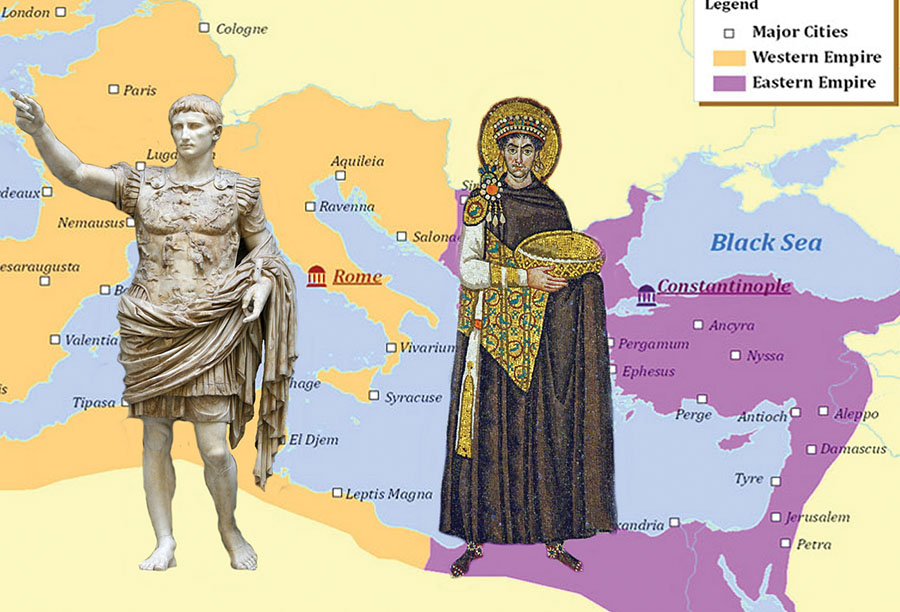
    The eastern half of the Roman Empire survived the crisis that overwhelmed its western half by cutting it loose, abandoning all the capital in that half of the empire, including the city of Rome itself. It survived for a thousand years after Rome fell.

    As a society approaches catabolic collapse, only one strategy works to pull out of the dive before it’s too late. A very large amount of capital has to be abandoned as quickly as possible, slashing maintenance costs and freeing up the remaining capital for productive uses. This is how the eastern half of the Roman Empire survived the crisis that overwhelmed the western half. By cutting loose the western Empire, which had most of Rome’s threatened borders, and abandoning all the capital in that half of the empire – including the city of Rome itself! – the eastern half, which accounted for most of the economic production, freed up enough of its own capital to survive for a thousand years after Rome fell.

    This, in turn, is what Donald Trump and his administration are trying to do in the last inglorious days of America’s imperial adventure.

    The End of American Empire

    The United States came out of the Second World War in a position of unique global power. Unlike any of the other major combatants, it had kept its homeland secure from bombing raids or outright invasion; its industries accordingly dominated the global economy, and its abundant natural resources gave it even more economic clout; in 1950, it bears remembering, the United States produced more crude oil than the rest of the world put together. That position of power made it easy for American elites to use the wartime Bretton Woods agreements to make the dollar central to global trade and impose a form of “stealth imperialism” on most of the rest of the planet. So vast was the flood of resources this brought into the American economy that for most of the second half of the 20th century, the 5% of the global population that lived in the United States consumed one-quarter of the world’s energy input and natural resources and one-third of its manufactured products.

    The history of the last fifty years has been shaped by the unravelling of those arrangements. The reasons for that unravelling would have been painfully familiar to any Roman statesman. Attempts to get more resources for the US by invading Iraq, for example, worked no better than the Roman attempt to get more resources by invading Parthia. Malign neglect accordingly spread through the American economy as maintenance costs of capital were neglected: the dismal state of US roads and bridges, the shameful condition of its educational system, and the ragged but ongoing declines in measures of public health are among the symptoms of this process.

    As the third decade of this century began, the only viable option for the long term was for the United States to get out of the empire business, jettison its imperial commitments overseas, cut the gargantuan bureaucracy that had grown up around its imperial project, and retool its economy to live within the means of its still bountiful territory. Unfortunately, this was not something the elite groups in control of the US political system were willing to consider. Even more unfortunately, they thought they had an alternative: the conquest of Russia.

    That has been the subtext to American and European elite manoeuvrings in eastern Europe for decades, especially since 2014 when the US and its allies staged a coup in Ukraine, overthrew its elected government, and put in a new government hostile to Russia. Look at the publications of American and European defence think tanks and you find the plans for all this, complete with maps showing the weak and vulnerable successor states into which Russia was to be partitioned. Those successor states would then be absorbed one after another by the European Union so that Russia’s lavish natural resources could be plundered efficiently by Western multinational corporations and used to prop up the failing American imperium.

    Western defense think tanks envisioned the Ukraine war as a pathway to Russia’s collapse, with its territory fragmented into weak successor states. Instead, their miscalculation strengthened Russia, bringing it closer to victory. This geopolitical failure set the stage for Donald Trump’s inevitable triumph in the 2024 US election.

    The fatal weakness of the plan became clear in the months after the Russo-Ukrainian war broke out in 2022. Western elites assumed that they were still dealing with the brittle mess that Russia had become in the immediate wake of the Soviet Union’s fall. Their expectations were fatally past their pull date. After initial fumbles, the Russian military found its feet and settled into a war of attrition, the kind of conflict at which Russian forces have always excelled. Meanwhile, even with lavish subsidies from the West, the Ukrainian forces failed to mount strategically effective counteroffensives and were driven back across the Donbass by the Russian onslaught.

    That, more than anything else, made Donald Trump’s victory in the 2024 election inevitable. The policies set in motion by the Washington establishment under Obama and pursued with increasing desperation under Biden have failed. Accordingly, a substantial faction of American elites turned to the one remaining alternative and rallied around Trump. The changes now underway in Washington, D.C., and around the world are the first steps in the massive realignment that such a change, of course, requires.

    Get the issue this article appears in

    The Struggles Ahead

    The task facing the Trump administration in the months ahead is roughly twofold. The first and easiest half consists of trimming the US federal government to a size that can be sustained by the more limited budget of a post-imperial America. To some extent, this is made easy by the sheer scale of fraud, corruption, and misuse of funds in Washington, D.C., and also by the metastatic growth of administrative staff in federal bureaucracies, most of which can be cut without the least impact on the actual functions of government.

    What the political slang of an earlier time called by the endearing label of “pork” – that is, expenditures that benefit politicians and their cronies rather than serving any useful purpose – also make up a huge share of the federal budget. Eliminating pork from the budget altogether is almost certainly out of reach, but it can be trimmed substantially. All of this will free up wealth that can be used to maintain and rebuild the nation’s neglected capital.

    The more challenging half of the work consists of the retreat from overseas empire. The most obvious target for cutting here is out of reach for reasons rooted in domestic politics. The nation of Israel only survives because it is propped up by lavish US subsidies, but the United States has a larger Jewish population than any other country on earth, and the American Jewish community is well-organised enough to have an outsized effect on elections. Until and unless that changes, subsidies for Israel will remain sacrosanct in Washington, D.C.

    America’s other erstwhile allies lack that protection. Western Europe is especially vulnerable, partly because its nations no longer have large émigré communities in the United States that identify with the “old country,” partly because the elites of the western European nations remain overcommitted to the failed project in Ukraine, but also because of those same elites’ shrill hostility to Trump and his policies. At a time when the EU no longer has access to cheap Russian resources and is losing its neocolonial grip on sub-Saharan Africa, alienating the leadership of the US is not exactly a smart move for the EU, but no law of nature requires politicians to make good decisions.

    One way or another, the age of the US global empire is ending. If the Trump administration succeeds in its project, that end may be much less traumatic for American citizens than it would otherwise be. At the same time, that project faces robust opposition in the United States and abroad, and its success is not guaranteed. Therefore, the next few years are guaranteed to be a tumultuous time with an uncertain outcome for America and the world.

    [alert type=”general” dismiss=”no”]This article was published in New Dawn Special Issue Vol 19 No 2.[/alert]

    [alert type=”success” dismiss=”no”]If you appreciate this article, please consider subscribing to help maintain this website.[/alert]

    © New Dawn Magazine and the respective author.
    For our reproduction notice, click here.
  • Deep State Deception

    Deep State Deception

    From New Dawn 206 (Sept-Oct 2024)

    Behind the scenes, puppet masters of the so-called deep state have become so self-assured of an impending global triumph that they no longer thoroughly camouflage their crimes against humanity with multi-layered disinformation and the propaganda of illusion. Instead, uncritical, dumbed-down majorities everywhere are more easily gulled than past generations by today’s perfunctory attempts at concealment. Such translucent cover-ups allow investigators unprecedented access to the truth simply because our over-confident rulers, less intimidated by it, have let their guard down. 

    A recent case in point is the attempted assassination of former US president and (at the time of writing) current presidential Republican candidate, Donald Trump, at a mid-summer rally near the city of Butler, in western Pennsylvania. 

    That it was, in gangster vernacular, “an inside job,” is self-evident, if only because every chief-of-state from Julius Caesar to John Fitzgerald Kennedy and beyond could have only been killed by persons with immediate access to the human target, given the otherwise impenetrable, state-of-the-art protection surrounding the victim, from Rome’s Pretorian Guard to America’s Secret Service. Assassination is impossible without their complicity, as most recently and clearly demonstrated by the Trump incident. 

    Although the Organisation armée secrete (OAS) – the “Secret Army Organisation” – attracted leading French armed forces’ officers and trained sharpshooters, repeated attempts by the OAS to kill the President of France, Charles de Gaulle, were consistently thwarted by the government-sponsored expertise, numbers and surveillance of his Gendarmerie nationale.

    So, too, the US Secret Service is considered among the world’s foremost federal agencies entrusted with the life of a Chief Executive. Its professional reputation was sharply contrasted on 13 July 2024, stemming from untypical incompetence almost beyond belief. Or due to something else. 

    For example, the gunman fired from a position only 100 paces from Trump. This close range was well within the security parameters otherwise invariably and previously staked out by Secret Service agents assigned to such events. How could the assassin have escaped their attention, especially when members of the public saw him with a firearm on the roof of a nearby building just north of the Butler Farm Show grounds where Trump’s rally was held? These same eyewitnesses urgently pointed out the rifleman to the attending police, who did nothing. They refrained from even notifying their fellow officers.1

    ABOVE LEFT: This photo captured one of the bullets whizzing past Trump’s head. RIGHT:  A split-second move saved Donald Trump’s life when an assassin fired at him. Trump turned his head (bottom image) to look at a jumbotron. The top image shows his head position before he turned and the path of the bullet. This turn of the head ensured he was not killed. His action is being interpreted by Trump and many of his supporters as proof of “divine intervention.” 

    For the past several years, standard Secret Security practice includes reconnoitering (mapping) each public meeting to which agents are assigned with remotely operated drones before, during and after the event, in real-time and digitally recorded. If so, how did aerial photography fail to alert the authorities on 13 July? Were drones even used on that day? If not, their absence suggests something darker than ineptitude. 

    TOP:   Map of the scene of the 13 July Pennsylvania rally where a gunman attempted to assassinate Donald Trump.   ABOVE RIGHT:   Screen grab from a video shot by a bystander shows the shooter on the roof taking shots at Donald Trump. BBC Breakfast’s Gary O’Donog­hue was at the scene and interviewed a witness (ABOVE LEFT) who tried to alert Secret Service agents. “We’re pointing at the guy crawling up the roof,” the witness, identified only as Greg, told BBC. “We could clearly see him with a rifle. I’m standing there pointing at him for two to three minutes,” he continued. “Secret Service is looking at us from the top of the barn, I’m pointing at the roof… and next thing you know, five shots rang out.” The ensuing scandal over the failure forced Secret Service Director Kimberly Cheatle to step down. Most independent observers say more than incompetence was to blame, suggesting a high level conspiracy, because Crooks was observed scouting the area a full 90 minutes prior to the incident.

    Revealingly, the accused assassin fired an AR-15, the civilian version of the military M-16. To qualify on an M-16, US Army recruits must score a shot on a human-sized silhouette at the end of a nine-week training period from 150 metres – the same distance from which the right temple of Trump’s head was missed by one centimetre.2 This narrow escape implies that his hitman was a qualified marksman trained in the US armed forces.

    Mainstream media news outlets immediately downplayed the seriousness of the situation, revealing their bias. USA Today and The Washington Post both reported that Trump was escorted off stage after hearing “loud noises” at the rally. CNN published a headline claiming that Trump had to be rushed off stage after a “fall” as if to imply that he had tripped over. Another CNN headline claimed that Trump’s speech was “interrupted by secret service” instead of describing it as an assassination attempt.

    An easier mark was the target’s larger, relatively stable upper torso, but hitting the chest area is less lethal than a more difficult headshot, even for a professional rifleman, whose assignment was to score a death blow. As such, the apparent expertise of the Butler County assassin casts serious doubt on the alleged Pennsylvania shooter. According to current and former Bethel Park High School students, Thomas Matthew Crooks tried out for his school’s rifle team but was disqualified due to poor aim during tryouts.3 The nursing home dietician was never a member of any American military organisation, and his sub-standard shooting skills were at variance with the skilful headshot that so narrowly missed the former president. It seems clear that Crooks was not the likely shooter, although he may have randomly shot into the crowd of “deplorables” (Hillary Clinton’s snobbish derogation of Trump’s followers) to take the life of an attendee and wound two others.

    This image was taken by a Secret Service agent at around 5:30pm and sent to law enforcement to report the suspicious sighting. Thomas Matthew Crooks, 20, is seen sporting long brown hair and glasses while wearing a gray T-shirt. Then, at 6:11pm, Crooks supposedly fired the first shot at Trump from about 147 yards away, grazing his ear and killing one rally attendee. This photo was taken from the very building on which Crooks later climbed to shoot at Trump. Secret Service agents stayed inside the building – from where they took this photo – when they were supposed to be stationed on the roof. 

    What was Crooks, then? A “patsy,” the same term used by another improbable assassin to self-describe his role in an earlier presidential murder. Just as Lee Harvey Oswald was himself gunned down after having been set up as the fall guy to deflect attention from the actual killers of sixty-one years ago, so Crooks was conveniently silenced to take full blame for the attempt on Trump’s life. Both men were and are continuously categorised as “the lone gunman,” a historical “lone ranger,” and just as fictitious; a characterisation necessarily applied to every high-level assassin as cover for the real murderers, whose identity, if exposed, could threaten the sham democracy covering their tracks.

    Although multiple crowd members independently observed a second shooter from a water tower4 at the rally site outside Butler, such a line of inquiry diverts from more essential issues, such as Bethel Park School District officials, who claimed no record exists of Crooks trying out for the rifle team.5 It has vanished along with Facebook, Twitter and YouTube accounts, all of which disappeared down an Orwellian memory hole within hours after his death. He left no digital footprint and virtually no social media trace, which is remarkable for a young adult in these cyber-days. His only prior claim to fame – and an uncredited one, at that – was his brief appearance on a television commercial for BlackRock, Inc., the largest investment firm in the world, with more than $10 trillion in assets.6 It owns or is a major shareholder of CBS, MSN, CNN, FOX, NBC, ABC, YouTube, Disney, Walmart, Google, Facebook, Amazon, Twitter, and a great deal more. 

    Thomas Matthew Crooks in a scene from last year’s BlackRock television commercial. What are the chances of innocent coincidence?

    BlackRock, Inc. controls 90% of the world news and entertainment media, including China’s US congressionally black-listed companies that manufacture facial recognition software for government spying on its own citizens. Some of BlackRock’s top holdings include Coca-Cola, Microsoft and Apple, together with large positions in Broadcom and Nvidia, two of the largest semiconductor companies in the United States. BlackRock’s founder and CEO, Larry Fink, sits on the board of the Council on Foreign Relations (CFR). BlackRock acts as the financial powerhouse for the globalist CFR and World Economic Forum, adjuncts of the New World Order, with its genocidal scamdemics and attacks on freedom.

    Despite Crooks’ apparently studied anonymity, a chronology of events culminating on 13 July begins to emerge from the facts available. A perfect storm of disparate but at least fundamentally complementary interests had been swirling around each other at least since 2017 when self-styled comedienne Kathy Griffin held up a mock-severed head of President Trump. They coalesced on 27 June with Joseph Biden’s positively calamitous performance during an internationally televised debate with the Republican candidate, whose long-desired liquidation seemed a viable option to at least some of his Democratic opponents.

    Days later, a Democrat Congressman from Mississippi, Bennie Thompson, called for removing Trump’s personal security by cancelling the former president’s Secret Service protection, a measure still under consideration up until the assassination attempt.7 On 8 July, Biden exclaimed at a meeting of his donors, “it’s time to put Trump in the bullseye.”8 Had the order been given? In any case, five days later, Trump was shot. For the last eight years, he has been consistently demonised and hysterically blamed by most news media spokespersons for everything from runaway inflation and violent street crime to “climate change” and Covid-19. When this relentless campaign of vilification could not undermine his popular support, Congress impeached him, and he was indicted on minor charges. Again, without effect.

    Having failed to stop him by public methods, some of his most hate-crazed enemies in high places may have decided upon the final argument to which tyrants traditionally resort. Many others would certainly cheer a successful outcome, as indicated by an article written for The Atlantic by David Frum, “The Gunman and the Would-Be Dictator. Violence stalks the president who has rejoiced in violence to others,” one day after the assassination attempt.9

    But why Donald Trump? He has threatened, if re-elected, to suspend all further aid to Ukraine, both economic and military, unless Kyiv immediately negotiates with Russia for a cease-fire. Such an armistice might save thousands of lives, but it would most definitely negate Larry Fink’s plans to rebuild Ukraine after the current war has reduced the entire country to ashes. Therein may lie the connection between BlackRock, Inc. and Thomas Matthew Crooks. It certainly explains Fink’s close ties with the Democrat Party, which has given (as of this writing) $175 billion of US taxpayer money to Ukraine. Many American politicians like Lindsay Graham openly encourage the subsequent military defeat and destruction of Russia. BlackRock’s prospects for rebuilding the warring nations offer far greater profits.

    Domestically, Trump is mostly hated and feared not for what he is but for how he is perceived by millions of mostly white, middle-class Americans. They want to see in him the embodiment of effective resistance to the disgraceful condition of their country. To people like Lindsay Graham or David Frum, Trump followers are “deplorable” racists and nationalists, comprising the growing vanguard of a looming fascist dictatorship. To circumvent such an existential threat to democracy, when all else fails, you cut off the snake’s head and the serpent dies. This was the analogy that culminated on 13 July.

    Had Trump been killed, Biden would have stayed on as the Democrat nominee to handily win the presidential election because the Republican Party, not unlike the ‘Jack Ass Party’, is made up entirely of inept non-entities. Instead, Trump’s survival in good health instantly gave him more political influence than any candidate for the White House could ever hope for. The shooting that was supposed to take him out of the running and clear a direct path to the presidency for the Democrat hopeful resulted in its precise opposite. Biden had no choice but to nod out of the race. His comparison with Trump was too humiliating.

    As the deep state puppet masters undoubtedly had pre-arranged contingencies in place before the attempted assassination, allowing them to profit from the event – regardless of the outcome – they must just as surely lock and load acceptable alternatives to the November election, certainly where their most important interests lie. 

    Meanwhile, the masses of naïve voters, encouraged in their folly by a complicit news media, will yet again imagine they are saving democracy or determining the destiny of their country when they are actually nothing more than unwitting performers in a stage play produced for the ulterior purpose of deceiving them into innocuous passivity while lending counterfeit legitimacy to a criminal syndicate of profiteers insatiably obsessed with unbridled power.

    In Act III, Scene 7 of Major Barbara, by the great Irish playwright Bernard Shaw, an early 20th century version of Larry Fink confronts a democratic politician ambitious for government office: 

    “The government of your country? I am the government of your country: I, and Lazarus [his corporate partner]. You will do what pays us. You will make war when it suits us and keep peace when it doesn’t. You will find out that trade requires certain measures when we have decided on those measures. When I want anything to keep my dividends up, you will discover that my want is a national need. When other people want something to keep my dividends down, you will call out the police and military. And in return you shall have the support and applause of my newspapers and the delight of imagining that you are a great statesman. Government of your country? Be off with you, my boy, and play with your caucuses and leading articles and historic parties and great leaders and burning questions and the rest of your toys! I am going back to my counting house to pay the piper and call the tune.”

    [alert type=”general” dismiss=”no”]This article was published in New Dawn 206.[/alert]

    [alert type=”success” dismiss=”no”]If you appreciate this article, please consider subscribing to help maintain this website.[/alert]

    Footnotes

    1. Clear Signs Pres Trump’s Butler Pennsylvania Rally Assassination Attempt Was A Set Up, bitchute.com/video/7npoG2G2VSvl
    2. Boot Camp Training Manual, U.S. Army. Revised Edition. U.S. Army Printing Office, 2016.
    3. Thomas Matthew Crooks, en.wikipedia.org/wiki/Thomas_Matthew_Crooks
    4. Multiple Eyewitnesses At The Trump Rally Says There Was Another Shooter At The Water Tower, bitchute.com/video/LkGg71Q9K0z9. While Crooks was allowed to get off as many as five or eight shots into the crowd before he himself perished in a barrage of anti-sniper bullets, this noisy gunfire allowed the second and professional shooter in the water tower to make good his escape under cover of the ensuing chaos. Crooks had unknowingly served the assassin’s purpose as a sacrificial distraction.
    5. bpsd.org/apps/news/article/1942738
    6. What Are The Odds Of Blackrock Putting Out A Commercial That Has Donald Trumps Shooter Thomas Crooks, bitchute.com/video/vBDxNqhl0JrX
    7. newsweek.com/trump-assassination-attempt-bennie-thompson-secret-service-security-1924954
    8. bbc.com/news/articles/cw0y9xljv2yo
    9. theatlantic.com/ideas/archive/2024/07/donald-trump-democracy-dictator/679006/

    © New Dawn Magazine and the respective author.
    For our reproduction notice, click here.