New Dawn – World's Most Unusual Magazine

Category: Health/Wellness

  • The Miracle of Water: The Yin & the Yang

    The Miracle of Water: The Yin & the Yang

    From New Dawn 130 (Jan-Feb 2012)

    We all have the experience of rejuvenation and joy on a vibrant spring day when the sap is rising in the plants and the tree buds are bursting with new life. Water is at the very heart of life creation. Sitting by a waterfall or on the rocks at the edge of the ocean on a sunny day, one can feel the energy of the water in our body. Water is closely linked to the emotions. There is a strong resonance of water with humans. Our ancestors were fascinated by its magic and there is a vast mythology linked to water.

    Water carries all life. But water is beyond time, for it bears in its flow the seeds of future life, as well as the memory of past life. Water mediates between life and death, between being and not being, between health and sickness. We have lost touch with the magic of water, the freshness of the mountain spring, the reflection in a mountain lake, the mystery of the sacred well. We just take for granted that water will come at the turn of a tap.

    We have allowed water to spread illness and disease. Much is spoken these days of the destructive nature of water. Such water is Nature on the rampage, perhaps showing who is boss, at a time when humanity has wrought so much reckless damage to Earth’s ecosystems and to the natural environment.

    Our bodies are composed of about 70% water, a similar percentage to that of the ocean surface compared to land. Blood and sap are really variations of water. Earth is known as the planet of water; astronauts wondered at Earth’s blue, shimmering, watery aura seen from space. It seems as if water was intended for life; certainly life could not have come without it. Water is found throughout the Universe, though seldom as a liquid, which requires the relatively narrow temperature band which our Earth provides.

    Without doubt water is the most important substance on Earth. It drives everything, from the most delicate metabolic processes in our bodies, to creating environments favourable to life, to weather patterns and climate change.

    The poet, philosopher and scientist, Johann Wolfgang von Goethe (1749-1832) was, more than anyone, a bridge between pre-and post-Enlightenment thinking. He sensed a profound difference in outlook between the new rational, mechanistic and more exclusive worldview, and the more traditional inclusive, Nature-centred view. He called the latter ‘holistic’ science in contrast to ‘reductionist’ science. Goethe understood that all life is one, closely interconnected and interrelated, with water as the very symbol of holism, with its role in the sustenance of life.

    Goethe referred to water as “the ground of all being.” Thales of Miletus (640-546 BCE) also believed water to be infused with Being, believing it was the original substance of the Cosmos. The Austrian ‘Water Wizard’, Viktor Schauberger (1885-1958), held a similar view, saying that water is the product of the subtle energies that brought the Earth into being and is itself a living substance.

    Sacred Knowledge

    Until quite modern times, water was generally regarded as sacred. This precious substance used to require a great deal of effort to collect for domestic use (and still does in some parts of the world). It was treated with reverence and believed to be protected by divine beings.

    One of the principal cultural ceremonies of the Pacific Northwest indigenous tribes in British Columbia was the ‘potlatch’, believed to have been practised for thousands of years. Usually a part of this complex ceremony was given to the recitation of the spiritual traditions of the tribe. The ‘speaker’, a position often handed down in one of the chief families, performed this important role.

    The training of future speakers was a long-observed ritual, involving teaching the young person to listen to the wind from mountaintops, to the sound of the ocean waves on the rocky shore, and to the music of the rushing stream. They would in this way learn to incorporate Nature’s sounds and cadences in the telling of the stories of the tribe’s wisdom. To these people, water was a sacred medium of communication and they felt its sounds should be the vehicle for teaching their traditions.

    How water informs language is hinted by many of the ancient scripts which employ flowing lines like water in their characters (for instance Hebrew). Greek became more regular, but it was Latin with its angular, straight characters that forgot the memory of water. Latin script initiated the estrangement from Nature, forming the basis for Euclidean geometry with its circle, straight line and point which are not to be found in Nature.

    There are esoteric uses for water. Nostradamus used a bowl of water as a skrying tool for seeing future events. Viktor Schauberger had a remarkable experience while sitting by a rushing stream in his pristine Alpine refuge. Listening to its vivacious music, he intuited how water needs to move and behave in order to stay healthy, which was to inform his ground breaking research.

    Our attitude toward water has changed enormously in recent centuries. With the advent of rationalism and the denial of spiritual influences on humanity came the great explosion of technology that loudly proclaimed human supremacy over Nature. Since we decided we were not part of Nature and we devised our own self-centred laws, we have lost touch with the magic of water. We have forgotten its true nature and the meaning of its pulsating movements.

    Our biology and physics textbooks tell us that water is merely an inorganic compound through which various chemical processes take place. One of the reasons why mainstream science knows so little about water may be its obsession with the physical nature of life. Older cultures did not suffer from this limited worldview and consequently appreciated water’s special qualities better than we do today.

    Holism

    The key to understanding water and living more in tune with our environment is to learn to see and feel holistically as part of a community of beings – human, animal, microbial, and botanical – united by a common bond of water. It is through the medium of water that we all share a common heritage – we are all One.

    Ancient mystical systems, especially Hindu, Taoist and Buddhist, held water in particular reverence and understood some of its quantum qualities, even if they did not describe them in the terms of quantum science. Neils Bohr and Robert Oppenheimer, pioneers of quantum physics, and more recently David Bohm, Einstein’s protégé, found remarkable similarities between their new worldview and the concept of the oneness of all creation held by those mystical systems.1

    Water is the epitome of holism. It connects all of life; and life cannot exist without it. Spiritual and mystical experiences have a strong link with holism.

    Dynamic water, when it is alive and energised, performs the roles of initiating and operating all the processes of life. The most important function of biological water is to facilitate rapid inter-communication between cells and connective tissues, so that the organism can function as a coordinated whole. Though not recognised by mainstream science, living water in fact performs this intercommunication function between all organisms, groups of organisms, populations, natural kingdoms and the world, creating a network of sensitivity throughout all of life, even between life on Earth and the Cosmos, so that nothing can happen without affecting other processes; all are linked together by water. In this way, it drives evolution.2

    The story needs to be told simply of how water is the stage manager of life, communicating to our bodies’ cells how to be part of a vast orchestra; how it distributes energy to make the landscape balanced and productive. Indeed the very laws which govern the harmonious movement of the planets also determined the form and behaviour of our organic life, through water. This extraordinary picture of water’s part in the evolution of life derives from the discovery of the quantum field that interconnects all of creation in a vast web of energy. Rudolf Steiner and his interpreter Theodor Schwenk believed that the quantum field (also known as the etheric field) contains the encoded data bank of the information required for evolution to proceed.

    Yin Yang Balance

    Viktor Schauberger demonstrated how life, both at the maintenance level and in evolutionary processes depends on the subtle balancing between energy polarities, shown at its best in the unstable balancing between positive and negative polarities in water’s behaviour. These have not been well described in scientific writing, therefore a summary of their importance would seem desirable.

    The Sun is our main source of energy. In Chinese tradition, it emits a positive, yang (masculine) energy. The Earth balances this with a yin, or feminine (negative) energy. Without this interplay, there would be no water, plants, nor chemical compounds. Yin and yang are dynamic in the sense that their energy fluctuates – when one expands, the other diminishes. The concentration of energy is a yin process, while that to move and disperse is yang. Western thought holds them as fixed states, but in the Chinese tradition they are constantly shifting. Thus, in every man there is feminine energy and in every woman there is masculine energy, these tendencies varying in different situations. It is the same in Nature. Mornings tend to have yang energy and evenings yin.3

    As Fritjof Capra comments: “Chinese sages seem to have recognised the basic polarity that is characteristic of living systems. Self-assertion is achieved by displaying yang behaviour; by being demanding, aggressive, competitive, expanding, and – as far as human behaviour is concerned – by using linear, analytical political thinking. Integration is furthered by yin behaviour; by being responsive, cooperative, intuitive, and aware of one’s environment. Both yin and yang, integrative and self-assertive tendencies, are necessary for harmonious social and ecological relationships.”4

    One can see that our society has favoured yang over yin – rational knowledge over intuitive wisdom, science over religion, competition over cooperation, and exploitation over conservation.

    All processes depend on an unstable reciprocity between extremes. As soon as a process becomes stable, it stagnates. It’s the same with water. Moving, circulating water is energised; still water is effectively dead. Water is the ideal medium for processes because it is an unstable and dynamic medium and, and without water, nothing in Earth’s environment can change.

    Nature is founded far more on cooperation than on competition, because it is only through harmonious interplay of energy that physical formation can occur and structures can be built up. At the heart of the creative process in Nature are negative and positive polarities, such as chaos and order, quantity and quality, gravitation and levitation, electricity and magnetism. (The last polarities Schauberger studied as complementary qualities.) In every case, for any natural process to be harmonious, one polarity cannot be present without the other, and each needs the other to make up the whole.

    Natural law, as Viktor Schauberger describes, requires that, for creative evolution to be maintained, the polarities are not 50/50, which would result in atrophy, but are unevenly balanced towards the yin or negative. Water’s principal quality is to bring balance to life. For this reason, you would expect it to be very stable; in fact, the reverse is true. The water molecule is made up of two small positively charged hydrogen atoms and one very large negatively charged oxygen atom; the strong bifurcated hydrogen bonds are unsymmetrical, which make water unstable and unpredictable. This instability belongs not only to the aquatic sphere; it is the guiding law of the Universe since its inception. Instability and unpredictability are the secret of matter’s very existence, and the impulse for creativity. As we all know, predictability is the recipe for a boring existence. It is the restlessness of water that stimulates its pulsation and constant swinging between the yin and the yang.

    The dance of creation is the harmonious interplay through attraction and repulsion of polarised atoms. The mutual attraction of 2x H and 1x O gives birth to the marvel of water. The catalytic role of dual polarity is initiated by the positive charge of the Sun, the inseminator of life, which melds with the Earth’s receptive and feminine energy. Together they are essential components for all biological processes.

    We don’t normally think of water carrying an electric charge, but its bioelectrical sensitivity is one of the most important qualities in its importance for life. The electromagnetic qualities of mineral-rich or saline water allow it to steer processes and evolution by constantly shifting the energy reciprocally between positive and negative charges. Schauberger showed that a natural river flowing sinuously across the landscape recharges its energy towards the positive or yang on right-hand bend and towards the negative or yin on a left-hand bend. This constant accumulation of yin and yang charges raises the energy level of the water so that it can perform its true role in nurturing the landscape. The same happens with our biological water.

    Through spiralising movement, water maintains its energy as ‘living water’. In its most dynamic state, water develops the structure of a vortex which raises its energy level – more quickly if the direction of the spin alternates between left and right (e.g. www.sulis-health.co.uk/water.html#eggvortex).

    Because the quantum or etheric field is universal and water is common in the Universe, associated with life or potential life, it seems natural to view them as complementary, working together. In esoteric terms the etheric (sometimes called “the God field”) may be seen as the masculine (yang), initiating polarity; while the water medium has the receptive, feminine (yin) role. What I propose is that the water medium and the quantum field are two complementary aspects in the balanced mediation, sustenance and evolution of life. You might call this a candidate for the ‘Unified Field Theory’.

    If we say that water builds the physical structures of living organisms, this begs the question of where are the templates? We believe they are held in the etheric or quantum field, often encoded in sacred geometry.5 For example the indispensable container for the emergence of new life is the egg shape, the only shape in which water can circulate spontaneously: the egg and similar shapes like the pine cone, or spiral structures such as seashells or leaf designs have a symmetry defined by phi (Φ) or ‘The Golden Section’. These symmetries have a yin/yang ratio which can be defined mathematically by the number 1:1.618033988, which seems always to be associated in Nature with the transmutation of energy into form.6

    Communication

    What is the scientific evidence for water as a communication medium? An exciting discovery in recent years has been the strange role that water plays in biological communication. It has come to light that collagen, the connective tissue that makes up the bulk of all multicellular animals, is crucial to the integrity of the organism. It is composed of a crystalline matrix of collagen proteins embedded in water, compromising 60-70% by weight. This water is specially structured in chains along the collagen fibres and has the ability to self-organise.

    Dr. Mae-Wan Ho, co-founder of the Institute for Science in Society, and one of the most prominent holistic biophysicists, has specialised in the role of biological water. She believes that the collagen chains enable water to become superconductive, an ideal medium for instantaneous communication for coordination of all cellular activities. She believes that this liquid crystal continuum constitutes our “body consciousness” that may well have evolved before the nervous system, but which today works both in partnership with, and also independently of, the nervous system.

    “This body consciousness is the basis of sentience, the prerequisite for conscious experience that involves the participation of the intercommunicating whole of the energy storage domain.”7

    We hear increasingly of water being described as a “conscious organism.” It is an organism in the sense that it has integrity, independence, cohesion, and particular qualities that allow it to be the driver of life and evolution. The quality of consciousness may also seem a strange term to apply to water. But if it’s the medium of communication, it could also be the medium of consciousness. Viktor Schauberger and Theodor Schwenk demonstrated that the water medium also has intelligence. Water has the quality of restlessness which gives living systems the ability to become ever more complex and to strive forward toward perfection.

    We use the term ‘intelligence’ in connection with water because it optimises the conditions for life by regulating environmental processes. At a temperature of 37°C (98.4°F), water requires a very large input or removal of kinetic energy in order for its temperature to rise, allowing it to keep the blood in the human body at a constant temperature of 37°C, any deviation from which indicates illness. Another of the intelligences of water is that it takes a lot of energy to freeze and, once frozen to melt; and a huge amount of energy to vaporise water which stops the air from excessive heating. This makes water a very effective balancer of climatic extremes. The warmer the air, the more water vapour it can hold, and the longer the temperature can remain constant.

    The interaction of these three properties of water has created a temperate climate zone on Earth with optimum conditions for evolution of the human species. Certainly complex civilisations could not have evolved without the stability of moderate, stable climates. Without these self-regulating systems, life could never have developed beyond the simplest forms.8

    Water’s Memory

    Much has been written about water’s memory. Does it have a memory? Masaru Emoto studied the structure of ice crystals to determine the quality of their liquid water origin. He demonstrates how poor quality water cannot build good structures, while high quality water produces the most beautiful crystalline designs. Amazingly, water that has been exposed to harmonious music or exalted human energies can produce pure beautiful crystals, while when it is exposed to disruptive energies it cannot produce well structured crystals.

    When water is flowing as its nature dictates, energetically in spirals and vortices, and continually changing its state, the molecules, if conditions permit, organise themselves into structures, layers or clusters of vibrating energy centres which carry constructive information, constantly receiving and transmitting energy from every contact the water body makes.

    These clusters or layers can store vibrational energy impressions or imprints, rather like a magnetic tape. If these are beneficial, they may be able to restore healthy resonance in the human body, as in homoeopathy. On the other hand if there are the imprints of toxins or pollutants in the drinking water, they may be carriers of disharmony and disease.

    Water does have a memory. When we think we have ‘purified’ water of the chemicals and hormones we have mindlessly thrown in, in order to make it drinkable, the energy of these contaminants remains, polluting our energy bodies in the same way that chemicals affect our physical bodies. Because of its nature, water sacrifices itself entirely to the environment, for good or for bad.

    How can we experience water’s spiritual qualities? My water epiphany came spontaneously when I had the realisation that I am embedded in water. I saw water as the infinite continuum of life in which all living creatures are contained. This experience was much more powerful than the intellectual idea of being connected. “We are all one,” because of water.

    I find being close to horses a bit scary. One day, the field where I walk regularly had three mares with their growing foals. I liked to take them apples as a treat, but when all six surrounded me, they felt a bit threatening. When I tried to visualise these lovely, powerful animals as part of my family through the water link, they seemed to become more like family and they were much less scary. This is what you might call a ‘holistic connection’. Try it yourself; it can even work with people!

    In Eastern tradition, when you greet someone, you bow your head to them or palm your hands together in front of your heart in recognition of that person’s Divine nature, because our biological water (or blood) is a sacred link to the Divine in all of us.

    Water as Teacher

    Water can teach us many things:

    The most important lesson is that Nature will not tolerate gross inequalities: Water’s role is to bring down to size, to level, to stimulate fertility and productivity of the whole, not individuals in isolation.

    Through water, quantum coherent organisms invariably become entangled with one another. A quantum world is a world of universal mutual entanglement, the prerequisite for universal love and ethics. Because we are all entangled, and each being is implicit in every other, the best way to benefit oneself is to benefit the other.9

    It is the restlessness of water that gives living systems the ability to become ever more complex and to strive towards the perfection they can never reach. As a driver of evolution, water is a model for our own striving, allowing us to evolve through our own mistakes. This is the self-empowerment process of holistic biology.

    Water raises its dynamic energy through turbulence and chaos which, in the bigger picture, mirrors the turbulence of change in human society.

    The dynamic way that water creates energy shows up our technology’s way of generating energy as wasteful, dangerous, and harmful to the environment.

    You might call these “Natural or Spiritual Laws” as opposed to the anthropocentric laws that we construct.

    If we could personally experience and truly understand the miraculous properties of water for life, our lives would become more meaningful and, (if it is not too late) we could become responsible custodians of Nature.

    Alick Bartholomew’s book The Spiritual Life of Water: Its Power and Purpose (Park Street Press, 2011) is available from all good bookstores.

    [alert type=”general” dismiss=”no”]This article was published in New Dawn 130.[/alert]

    [alert type=”success” dismiss=”no”]If you appreciate this article, please consider subscribing to help maintain this website.[/alert]

    Footnotes

    1. Fritjof Capra, The Tao of Physics, Wildwood House, London, 1975

    2. Mae-Wan Ho, “Quantum Coherence and Life”, Water in the Organism series, Inst. of Science in Society, London, 2011

    3. Fritjof Capra, “The Yin Yang Balance”, Resurgence, May 1981

    4. Fritjof Capra, The Turning Point, Simon & Schuster, New York, 1982

    5. Theodor Schwenk, Sensitive Chaos, Steiner, Forest Row, 1965

    6. Callum Coats, Living Energies, Gateway, Bath, 1996

    7. Mae-Wan Ho, Ibid.

    8. Alick Bartholomew, The Story of Water, Floris, Edinburgh, 2010

    9. Mae-Wan Ho, Ibid.

    © New Dawn Magazine and the respective author.
    For our reproduction notice, click here.
  • Increasing Your Life Expectancy: Modern Medicine’s Impact on the Extension of Life

    Increasing Your Life Expectancy: Modern Medicine’s Impact on the Extension of Life

    All too often, we hear that the reason life expectancy has been increased is thanks to the marvellous developments in modern medicine. This is a message that is repeated many times and promoted by the medical industry – with little or no evidence.

    In fact, the opposite may be the truth. A combination of not understanding the concept of life expectancy, ignoring scientific facts, plus a willingness to take credit when it is not due has seen the medical industry promote itself as the reason we live longer. Behind the scenes, this is little more than a marketing strategy for the big pharmaceutical companies.

    Don’t get me wrong; this does not undermine the fantastic role medical doctors play in acute life-saving events. These make a huge contribution to an individual’s life expectancy but make an insignificant contribution to life expectancy for all of us.

    The overemphasis of modern medicine on the pharmaceutical model and “silver bullet” approach has led to a disempowerment of individuals over their own health during the past few decades, during which we have seen a huge rise in chronic illness. The more specialists and the bigger the medical budget, the poorer the health of the public.

    Let’s take an example: the US uses 50% of the world’s pharmaceuticals and spends more per person on medicine than any other nation, yet has one of the poorest health outcomes in the developed world.

    Modern medicine tends to focus on prescriptive treatment of disease, rather than health promotion, prevention and management.1,2 It is likely that everyday medical care provides little contribution to increased life expectancy of a population.3,4

    Gains in life expectancy worldwide have been greater during lastcentury than at any other time in recorded history.5,6 Statistical analyses show that since the early 1800s life expectancy at birth has seen a linear rate of increase.7

    Within this time, it has been human advances in sanitation, increased food supply, improved access to water, and basic preventative medicine that have helped drive these steady increases in the developed world – not pharmaceuticals. The majority of life expectancy gains were made before pharmaceuticals to treat heart attack, stroke and other forms of chronic illness were even developed.

    However, it is important to understand the concept of life expectancy. It is the average number of years of life remaining at a given age for a selected population. Life expectancy at birth is commonly used as the main indicator of human health and well-being. It is said to give an indication of the overall mortality of a population.5 However, it is a poor indicator of population health.8

    Life expectancy is poorly understood. Most people think it is increasing the age to which they can live; for example, people at 50 think that they are going to live longer because of an increase in life expectancy. This is not the case. Life expectancy is a statistical anomaly, which takes the average of the age of a person’s death. It includes everyone: infants, children, teenagers right through to those in their old age. This means that if the rates of infant mortality are reduced, the average life expectancy is dramatically increased overall.

    A simple example will highlight this. If 50% of the population died before one year of age and 50% of the population died at 80 years of age, the average age of life expectancy is around 40 years even though 50% lived to 80 years of age. If you eliminate the infant mortality the life expectancy goes up to 80 years of age. This does not mean people are living longer, they are still dying at 80 years of age but the statistical average, the “life expectancy,” has increased.

    This reduction of child mortality skews the life expectancy.9 Statistical analysis has revealed that the trends in cohort geriatric mortality follow those of reducing childhood mortality.10 This means that benefits from improvements in mortality rates of younger generations provide a false impression of the benefits to older generations. Furthermore, life expectancy at birth can only predict life expectancy with 95% confidence to within a fourteen-year range.9

    That is, we may live to 80 years of age plus or minus 14 years. Therefore it cannot be trusted as a reliable base to measure contribution of health interventions for whole population life expectancy. Reduced child mortality positively skews life expectancy statistics and gives the misconception of increased population lifespan.11,9,6

    To highlight the problems with this approach even further, the high rate of infant mortality in the 1900s was a result of the advent of pathological anatomy in the 1820s, and consequently the increase in number of conducted autopsies, is correlated to the incidence of fatal childbed fever. The decline in the 1840s and 1850s was a result of hygiene practices that the medical profession battled against for two decades. Why did it take so long?

    Research now also shows the supply of doctors has an insignificant relationship within infant mortality,11 that is, the number of doctors has no bearing on infant mortality rates. This becomes apparent when you look at non-medical home birthing rates in the Netherlands of up to 30% and 1% in Australia and the two countries have virtually identical infant mortality rates. But we have significantly higher wheeze, asthma, allergies and eczema, which are associated with interventionist births, in Australia.

    Life expectancy at birth does not provide adequate information as to the health or morbidity of a population prior to death.5,9 Better statistical analyses should be used that incorporate both morbidity and mortality measurements of population health. That is, continued increases in life expectancy in the future should only be considered worthwhile if accompanied by longer periods of good health.12 More consistent measures like the “potential years of life lost” should be used.9

    Modern medicine tends to focus on prescriptive treatment of disease rather than preventative avoidance and health management.13 We need to re-establish the balance between disease prevention for a population, as opposed to only treating consequences of disease to prolong individual life.14

    Billions of dollars are spentinventing and testing new drugs that only marginally extendthe benefits of those they replace, instead of using existing resourcesto better deliver effective services.15 Despite the billions of dollars spent, there is no population-based data to allow the direct connection of prescriptive medical care to the extension of life.4 In fact, numerous studies have shown the opposite.

    A major Australian study found an association between increasing mortality and an increase in the doctor supply,11 which is attributed to increasing adversities or complications caused by or resulting from medical treatment within society.11 This is known as autogenesis and has been the subject of much study. Depending upon how one uses statistics, autogenesis is now considered either first, second or third in comparison to cancer and cardiovascular rates. It is one of the biggest killers; most iatrogenic deaths are due to undesired effects of drugs when taken at a normal dose. In Australia alone, thousands of people die prematurely every year as a result of prescription drugs.

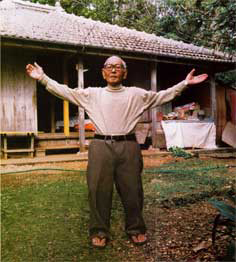
    There is no evidence to link increased medical spending and health outcomes, with many lower-spending nations such as Cuba tending to have better outcomes than higher-spending nations such as America.16 It is fascinating to consider that despite having one of the lowest doctor-to-patient ratios in the developed world, Okinawans and the Seventh Day Adventists living in California can expect one of the highest life expectancies.17

    Modern medicine cannot be given credit for increasing life expectancy at birth. Theory suggests that with increasing doctor supply, a population becomes increasingly dependent on their services to maintain health and ultimately neglects the more important lifestyle factors that contribute to longer, healthier life.18

    To the peril of preventative health care, there is often more short-term political capital to be gained from the construction of hospitals and investments in curative technology than from alleviating the causes of ill health.16,17

    With obesity and heart disease emerging as leading causes of mortality in the developed world, we must ask where life expectancy is headed in the future and give more political weight to preventative care. Theories of a time lag effect suggest a possible regression of life expectancy in the future, even with better health outcomes during infancy, which may very well be a result of contemporary approaches to healthcare.19,20

    Nowadays few people are ignorant of the dangers of smoking, drug and alcohol misuse, driving while intoxicated, risky sexual behaviour, fatty diets and so on.16 Reduction in these contributors to premature mortality must be considered significant for life expectancy gains.11 The cost of smoking cessation to save a life, not to mention the reduction in suffering and morbidity, is in the hundreds to a few thousand dollars per person21 and a recent Australian study reported favourable cost-effectiveness for smoking interventions, physicalactivity interventions and multiple behaviour interventionsin high-risk groups.22

    Okinawa, Japan boasts one of the longest life expectancies for its population in the world.23,17 There are also a significantly large population of centenarians living within the region.1 Despite being one of the poorest regions in Japan and being the bottom ranked in socioeconomic indicators for the country, Okinawa ranks at the top for its populations health and life expectancy.24 Okinawan people tend to live long and, most importantly, healthy lives. This is attributed to diet, high levels of physical activity, and strong cultural values that include good stress-coping abilities.17

    It just so happens that Okinawa culture embraces Hara Hachi Bu, which means to eat only until 80% full.25 Caloric restriction is the only consistently reproducible experimental means of extending mean and maximum lifespan. Laboratory experiments show markedly decreased morbidity in laboratory mammals that are fed to only 80% full.25,26 Much of the developed world stands to learn from this, as obesity linked to poor eating habits is an ever-increasing epidemic.

    Studies on populations with Okinawan ancestry living in Hawaii have supported claims that epigenetics are more influential to longevity than genetics.24 That is, Okinawans who leave the island do not live as long as those who live on the island. Furthermore, studies on the oldest living natural population in the world, the Seventh Day Adventists living in California, support these findings.12

    Any gains in life expectancy have to be seen in the context of the healthy habits in which a population engages. Those living longer – 80 years or more – right now were born in the 1920s and 1930s. They developed healthy eating and lifestyle habits that many of them still practice. It is unlikely that the next generation will enjoy these longer and healthier years due to poor habits.

    Our reliance on doctors and prescription medicine to ensure population longevity appears to be very narrow in light of its historical contribution to health. Starting down the right path with appropriatenutrition and lifestyle are important componentsof healthy aging and increasing your life expectancy.

    Acknowledgements: Thanks to Sean Allen for contributing to the research in this article.

    Professor Peter Dingle’s book on the truth about cholesterol and cholesterol lowering medication, The Great Cholesterol Deception, is available from all good bookstores or order at www.drdingle.com.

    [alert type=”general” dismiss=”no”]This article was published in New Dawn 125.[/alert]

    [alert type=”success” dismiss=”no”]If you appreciate this article, please consider a contribution to help maintain this website.[/alert]

    FOOTNOTES

    1. Raskin and Ripoll 2004
    2. Riley 2001
    3. Kamerow 2007
    4. Bunker 2001
    5. Michaud 2001
    6. Yin et al. 1985
    7. Oeppen and Vaupel 2002
    8. Robine 1999
    9. Murray 1988
    10. Cramming 2006
    11. Richarson and Peacock 2003
    12. Fraser 2001
    13. Riley 2001
    14. Dyer 2002
    15. Kamerow 2007
    16. Hunter 2003
    17. WHO 2008
    18. Illich 1975
    19. Terry et al. 2008
    20. Olshansky 2005
    21. Cummings et al. 1987
    22. Gordon et al 2007
    23. Oeppen and Vaupel 2002
    24. Cockerham 2008
    25. Willcox et al. 2006
    26. Bryant 2004
    Steven R. Cummings, MD; Susan M. Rubin, MPH; Gerry Oster, The Cost-effectiveness of Counseling Smokers to Quit. JAMA. 1989;261(1):75-79.
    Gordon L, N. Graves ,A. Hawkes, and E. Eakin A review of the cost-effectiveness of face-to-face behavioural interventions for smoking, physical activity, diet and alcohol. Chronic Illness, Vol. 3, No. 2, 101-129 (2007)
    Aaron, S, Ferguson, D. 2008. Exaggeration of treatment benefits using the “event-based” number needed to treat. Canadian medical association journal (Online) Vol 179, iss. 7, accessed: 12/01/09 via Google Scholar.
    Australian Institute of Health and Welfare, 2008. Australia’s national agency for health and welfare statistics and information, Australian Government http://www.aihw.gov.au/
    Bryant, R, 2004. Live longer: cut calories, exercise more. Dermatology Times: Clarifying Cosmetic Dermatology, International journal of epidemiology (Online) Vol 25, accessed : 09/12/09 via ProQuest.
    Bunker, J, 2001. The role of health care in contributing to health improvements within societies, International epidemiological association, (Online) Vol 30, accessed : 12/01/09 via Oxford Journals Online.
    Cockerham, W, Yamori, Y, 2008. Okinawa: an exception to the social gradient of life expectancy in Japan, (Online), accessed: 09/12/09 via Google Scholar.
    Crimmins, E, Finch, C, 2006. Commentary: Do older men and women gain equally from improving childhood conditions?, (Online) Vol. 35, accessed: 12/01/09 via Google Scholar.
    Dyer, O, 2002. Simple measures could increase life expectancy by 5-10 years. British Medical Journal (Online) Vol. 985, iss. 325, accessed: 17/01/09 via ProQuest.
    Fogel, W, 2004. The escape from hunger and premature death, 1700-2100. Europe America and the third world. University of Chicago, Cambridge University Press, New York.
    Fraser, G, Shavlik, D, 2001. ten years of life, is it a matter of choice?, (Online) Vol. 161, accessed: 11/01/09 via Google scholar.
    Halvorsen, P, Selmer, R, Kristiansen, I, 2007. Different Ways to Describe the Benefits of Risk-Reducing Treatments: A Randomized Trial. Annals of Internal Medicine, Vol. 12, 848-856, accessed: 19/01/09 via ProQuest.
    Hunter, D, 2003. Public health policy, Blackwell publishing, Oxford, UK.
    Illich, 1975. Medical Nemesis, Calder and Boyars, London. (Online Book) Vol. 161, accessed: 11/01/09 via Google scholar.
    Kamerow, D, 2007. Today’s doctor’s dilemma. British Medical Journal, Vol. 12, 848-856, accessed: 19/01/09 via Oxford Journals Online.
    Lubson, J, Hoes, A, Grobbee, D, 2000. Implications of trial results: The potentially misleading notions of number, (Online) Vol. 356, accessed: 04/01/09 via Google scholar.
    Martien, P, 2007. Who wants to live forever? Three arguments against extending the human lifespan. Journal of Medical Ethics (Online) Vol. 585, Iss. 33 accessed: 09/12/09 via ProQuest.
    Murray, C, 1988. The Infant Mortality Rate, Life Expectancy at Birth, and a Linear Index of Mortality as Measures of General Health Status, International Journal of Epidemiology (Online) Vol. 17, Iss. 1 accessed: 09/12/09 via ProQuest.
    Michaud, C, Murray, C, Bloom, B, 2001.Burden of Disease – Implications for Future Research, Vol. 285, accessed: 07/01/09 via Oxford Journals Online.
    Nakaji, S, Domhnall, M, O’Neill, S, McNally, O, Baxter, D, Sugawara, K, 2003.
    Life expectancies in the United Kingdom and Japan, Journal of Public Health Medicine (Online) Vol. 25, Iss. 2 accessed: 15/12/09 via ProQuest.
    Oeppen, J, Vaupel, J, 2002. Broken limits to life expectancy, Academic research library, Vol 296. accessed: 15/12/09 via Sciencemag.
    Olshansky, J, Passaro, J, Hershow, R, Layden, J, Carnes, B, Brody, J; Hayflick, L Butler, R, Allison, Ludwig, D, 2005. A Potential Decline in Life Expectancy in the United States in the 21st Century. Obstetrical & Gynecological Survey. Vol. 60 Iss. 7, accessed: 09/01/09 via Oxford Journals Online.
    Raskin, I, Ripoll, C, 2004. Can an Apple a Day Keep the Doctor Away? Current Pharmaceutical Design (Online) Vol. 27, Iss. 10 accessed: 09/12/09 via ProQuest.
    Richarson, J, Peacock, S, 2003. Will More Doctors Increase or Decrease Death Rates?, An econometric analysis of Australian mortality statistics, Centre for health programme evaluation, Working paper 137, Monash University, Australia.
    Riley, J, 2001. Rising life expectancy: a global history, Cambridge University Press, New York, (Online book) accessed : 20/12/08 via Google Scholar.
    Robine, J, Romieu, I, Cambois, E, 1999. Health expectancy indicators, World Health Organization, Bulletin of the World Health Organization, (Online) Vol 77, Iss 2 accessed : 11/01/09 via Google Scholar.
    WHO, 1999. Making a difference, World Health Report, World Health Organisation, http://www.who.int/whr/1999/en/index.html
    WHO 2002. Reducing risks, promoting healthy life. World Health Report, World Health Organisation,http://www.who.int/whr/2002/chapter1/en/index.html
    WHO 2008. Statitstical information system. World Health Organisation, http://www.who.int/whosis/data/Search.jsp
    Willcox, C, Willcox, B, Hidemi, T, Curb, D, Suzuki, M, 2006. Caloric restriction and human longevity: what can we learn from the Okinawans? (Online) accessed: 15/12/09 via ProQuest.
    Yin, P, Shine M, 1985. Misinterpretations of Increases in Life Expectancy in Gerontology Textbooks, The Cerontological Society of America (Online) Vol. 25, Iss.1 accessed : 15/12/09 via ProQuest.

    © New Dawn Magazine and the respective author.
    For our reproduction notice, click here.
  • The Great  Cholesterol Deception

    The Great Cholesterol Deception

    From New Dawn 123 (Nov-Dec 2010)

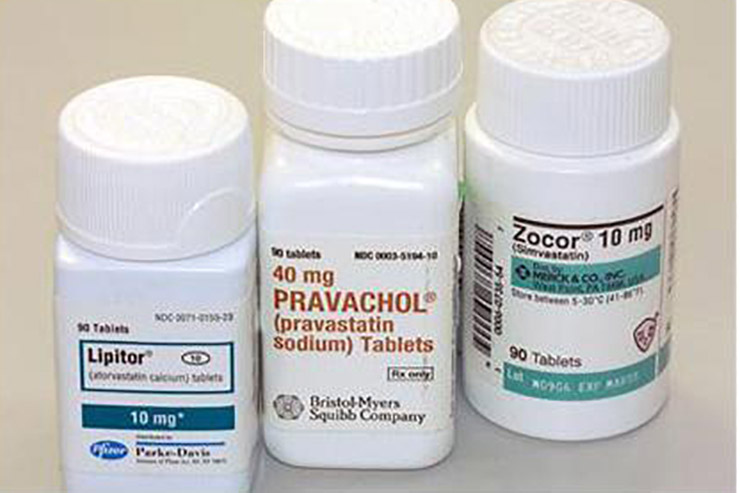
    Millions of Australians are prescribed cholesterol-lowering drugs – statins like Pravachol®, Zocor® and Lipitor® – each year at a cost of more than $1 billion dollars with very little, if any, benefit. In the US, some 40 million people currently take statins at a cost of more than $3.00 per pill, more than $1,000 per year, totalling more than $40 billion a year.

    While there are many exaggerated claims and a lot of hype about the benefits of statins, there are also many studies showing no benefits at all. The pro-statin hype is based on the misuse and abuse of statistics.

    Various independent studies in prestigious, peer-reviewed journals have shown that statin use in primary prevention – that is, to save lives – has minimal or no value in reducing mortality and certainly nothing that is considered anywhere near clinically significant to warrant their widespread use. It does not matter how one manipulates the statistics, the results just aren’t there.

    In data gathered in 2009 from six trials, a review of the efficacy in lowering the risk of death with statins found virtually no difference between the treatment group and the control group.1 There are many more of these studies.

    In an independent meta-analysis (when a number of studies are put together to achieve more statistical power) of randomised controlled trials in patients without CVD, statin therapy decreased the incidence of major coronary and cerebrovascular events and revascularisations but not coronary heart disease or overall mortality.2

    Taking statins for a number of years will not reduce mortality: “Primary prevention with statins provides only small and clinically hardly relevant improvement of cardiovascular morbidity/mortality.”3 “Hardly relevant” means there is virtually no clinical benefit; as the authors of these particular studies are independent, they gain nothing by stating this.

    Another review found that “current clinical evidence does not demonstrate that titrating lipid therapy (trying to lower cholesterol with statins) to achieve proposed low LDL cholesterol levels is beneficial or safe.”4 In other words, lowering lipids has no real benefit and has the potential for adverse effects.

    Following up on this, in a major independent review of studies funded by the Ministry of Health of British Columbia (Canada) on statins and primary prevention, researchers reported that “statins have not been shown to provide an overall health benefit in primary prevention trials.”5 This is a government report carried out by an independent university yet its findings are still ignored.

    The problem really comes down to vested interests and the abuse of statistics. To overcome the limitations of small studies, vested parties combine many studies into a meta-analysis. The researchers themselves select the studies used in the meta-analysis. A fundamental problem is that researchers with direct links to drug companies have the authority to select the most positive studies and ignore the rest – including independent studies not funded by pharmaceutical companies. Despite this, they have still not been able to show any clinically significant findings.

    As readers of the scientific journals, we should not be confused between statistical significance and clinical significance. For an outcome to be “statistically significant” means that the outcome was likely a result of the treatment – whether the result was 100% effective or less than 0.1% effective. That is, if you treat 1,000 people to save one life (0.1%) it may be statistically significant but it is not clinically significant. “Clinical significance” means 20% to 30% or more. The drug companies’ most positive studies on statins for prevention of CVD report statistical significance, mostly 1% or less, and none have found any clinical significance.

    Busy medical professionals don’t have time to review the statistics; few of them may be aware of the different ways the statistics are manipulated. So if the experienced professionals don’t understand the results of these studies, how do we expect the media or public to understand?

    More Deception

    The studies on statins also report “relative risk,” not “absolute risk” or “real risk.” The relative risk reduction is highly misleading6,7,8,9,10if not deceptive. An example of relative risk is: if you have four people in a study who die in the placebo group (no drug) compared to three people who die in the drug treatment group – that is, four were expected to die but with the drug only three did – then there is a 25% relative risk reduction. However, to get this effect of saving one life you would have to treat 1,000 people and the real risk reduction is 0.1%. Relative risk is like adding 1+1 to get 11 or 2+5 to get 25 or more. How can the pharmaceutical companies and the researchers working for them get away with this? This is probably because (at least in my experience) most people are afraid of statistics.

    In studies by the Medical Research Council dating back to the late 1980s, researchers found that of 1,000 men ranging in age from 35 to 64 who received treatment for mild hypertension over five years, there were six fewer strokes and two fewer cardiovascular events than would be expected.11,12 The real risk reduction over five years was 0.9%.

    Ten years later, a study of Pravachol® was released in the media, with much fanfare, as having a 22% drop (relative risk, not real risk) in mortality. However, when one looks at the numbers and statistics behind the calculations, treating 1,000 middle-aged men who had hypercholesterolemia (high cholesterol) and no evidence of a previous myocardial infarction with pravastatin for five years resulted in seven fewer deaths from cardiovascular causes, and two fewer deaths from other causes than would be expected in the absence of treatment.13 The real risk reduction, however, was a mere 0.9%, less than 1% or nine lives out of 1,000 when treated for five years. The research was sponsored by Bristol-Myers Squibb Pharmaceutical (West of Scotland Coronary Prevention Study).

    Conservatively, put another way, researchers treated 1,000 people for five years at a total cost of over $5 million to save seven people from CVD. One might wish to compare this to the cost and efficacy of adopting healthy lifestyle choices.

    In the Heart Protection Study in the United Kingdom, more than 20,000 participants aged 40 to 80 years with high risk of cardiovascular disease but average-to-low levels of total cholesterol and LDL cholesterol were treated with 40mg daily of simvastatin (marketed under several trade names including Zocor). Of 20,500+ study participants, 577 on statins died from a heart attack, 701 not treated died from a heart attack. That is a 25% relative risk reduction over five years.14 Sounds good, doesn’t it? The real percentage improvement is actually 1.7%. Over the five-year study, they saved 25 people per year in a high-risk population with previous cerebrovascular disease, peripheral artery disease, renal impairment or diabetes. These are seriously ill people and the researchers still achieved a benefit of only 1.7%. Researchers neglected to mention that around 30,000 people were not allowed in or dropped from the study and not counted in the percentage of people with side effects. There were 10,269 people on statins and 10,267 people on a placebo.15

    A study of 90,056 participants combining 14 randomised trials looked at the best outcome for people who had pre-existing conditions: 47% had pre-existing chronic heart disease, 21% had a history of diabetes and 55% a history of hypertension. The death rate was 8.5% among the statin group compared to 9.7% in the control group. This difference represents 1.2%.16

    The well-known JUPITER study compared a placebo group to a statin-taking group. The study found that there were 68 heart attacks in the placebo group and 31 heart attacks in the drug treatment group – a 58% relative risk reduction. There were 64 strokes in the placebo group, compared to 33 strokes in the treatment group, a relative risk reduction of 48%.17Sounds good, doesn’t it? However, the drug treatment group had 8,901 participants in it. In real terms, the heart attack risk went from a very low 0.76% to 0.35% and the risk of stroke went from 0.72% to 0.37%.

    Effectively, if you treat 300 people with expensive and dangerous drugs you might save one life. Under the best possible scenario, the real risk reduction was well under one half of one percent. The real risk reduction of consuming a handful of raw mixed nuts is much higher. It is interesting to note that one of the risk factors used to select the participants in the study was C-Reactive Protein (CRP) an indicator of inflammation, the real cause of CVD.

    In an independent assessment of the same statistics in 2010 titled “Cholesterol Lowering, Cardiovascular Diseases, and the Rosuvastatin-JUPITER Controversy. A Critical Reappraisal” by Michel de Lorgeril and her 8 colleagues found that “the JUPITER Study” was severely flawed.18 This recent analysis did a careful and independent review of both results and methods used in the JUPITER Study and reported that the “trial was flawed.”

    In an unprecedented attack on the study they (scientists other than myself usually don’t say boo even when it is serious) stated that, “The possibility that bias entered the trial is particularly concerning because of the strong commercial interest in the study.” In other words, the big pharmaceutical money influenced the study. And concluded, “The results of the trial do not support the use of statin treatment for primary prevention of cardiovascular diseases and raise troubling questions concerning the role of commercial sponsors.”

    This is a scathing attack in scientific terms of the earlier drug company sponsored study. Scientist do not go out of their way to create waves but these ones have not just found different results but also criticised the earlier studies link with pharmaceutical industry. It highlights not only that the studies don’t show any significant results but these studies and the education of our doctors is strongly influenced by the drug companies.19

    More recently, a study reported in the BMJ was a meta-analysis of 10 randomised clinical trials of about 70,000 people followed for an average of four years.20 In these trials, people with risk factors for cardiovascular disease but no history of existing disease were randomised to receive statins or no treatment. The relative risk reduction was 12% for total mortality, 30% for coronary event and 19% for a cerebrovascular event (stroke). However, the real risk reduction was 0.6%, 1.3% and 0.4% respectively. The actual number needed to treat to save one life was 167. Despite this outcome the authors of the study concluded, “In patients without established cardiovascular disease but with cardiovascular risk factors, statin use was associated with significantly (statistical not clinical) improved survival and large (statistical) reductions in the risk of major cardiovascular events.” (emphasis added.).

    In fact, the authors had significant associations with the drug companies and failed to mention it was statistically significant but not clinically significant. Again, busy medical professionals tend to read only the abstracts; claims like this are pretty convincing, though very misleading.

    More telling however, is the latest findings in June 2010 where two major independent studies, one the re-analysis of the Jupiter Study reported above and the other “A Meta-analysis of 11 Randomised Controlled Trials Involving 65,229 Participants” (don’t worry about the title) by Ray Kausik and 6 other independent researchers. The study, wait for it, found the use of statins in high-risk individuals was not associated with a statistically significant reduction in mortality. That is, they don’t save lives. Their data combined from 11 studies with 65,229 participants followed for approximately 244,000 person-years, a very big study, reported that this “meta-analysis did not find evidence for the benefit of statin therapy on all-cause mortality in a high-risk primary prevention set-up.” In other words they don’t save lives even in a high risk group. Even if you have all the elevated risk factors these drugs don’t work.

    How many more studies to we need to do to show these drugs don’t work?

    Professor Peter Dingle’s book on the truth about cholesterol and cholesterol lowering medication, The Great Cholesterol Deception, is available. To order, visit www.drdingle.com.

    [alert type=”general” dismiss=”no”]This article was published in New Dawn 123.[/alert]

    [alert type=”success” dismiss=”no”]If you appreciate this article, please consider subscribing to help maintain this website.[/alert]

    Footnotes

    1 Bartolucci, A.A., S. Bae, et al. (2009). A Bayesian meta-analysis approach to address the effectiveness of statins in preventing death after an initial myocardial infarction. 18th World IMACS/MODSIM Congress. Cairns, Australia. 2009. Cairns, Australia. http://mssanz.org.au/modsim09
    2 Thavendiranathan, P., A. Bagai, et al. (2006). “Primary prevention of cardiovascular diseases with statin therapy: A meta-analysis of randomized controlled trials.” Archives of Internal Medicine 166: 2307-2313.
    3 Vrecer, M., S. Turk, et al. (2003). “Use of statins in primary and secondary prevention of coronary heart disease and ischemic stroke. Meta-analysis of randomized trials.” International Journal of Clinical Pharmacology and Therapeutics 41(12): 567-577. M.Turk, S.Drinovec, J.Mrhar, A.International Journal of Clinical Pharmacology and Therapeutics. International Journal of Clinical Pharmacology and Therapeutics 567-57741122003
    4 Hayward, R.A., T.P. Hofer, et al. (2006). “Narrative review: Lack of evidence for recommended low-density lipoprotein treatment targets: A solvable problem.” Annals of Internal Medicine 145(7): 520-530.
    5 University of British Columbia (2003). “Do statins have a role in primary prevention? A review by the Therapeutics Initiative of the Department of Pharmacology & Therapeutics of the University of British Columbia.” Therapeutics Letter (48).
    6 Fidan, D., B. Unal, et al. (2007). “Economic analysis of treatments reducing coronary heart disease mortality in England and Wales, 2000–2010.” QJM 100: 277-289.
    7 Franco, O.H., A. Peeters, et al. (2005). “Cost effectiveness of statins in coronary heart disease.” Journal of Epidemiology and Community Health 59: 927-933. O.H.
    8 Franco, O.H., E.W. Steyerberg, et al. (2006). “Effectiveness calculation in economic analysis: the case of statins for cardiovascular disease prevention.” Journal of Epidemiology & Community Health 60: 839-845.
    9 Capewell, S. (2008). “Will screening individuals at high risk of cardiovascular events deliver large benefits? No.” British Medical Journal 337: a1395. S. British Medical Journal Capewell200816161617
    10 Nuovo, J., J. Melnikow, et al. (2002). “Reporting number needed to treat and absolute risk reduction in randomized controlled trials.” Journal of American Medical Association 287: 2813-2814.
    11 Medical Research Council Working Party (1985). “MRC trial of treatment of mild hypertension: principal results.” British Medical Journal 291: 97-104.
    12 Miall, W.E. and G. Greenberg (1987). Mild Hypertension: Is There Pressure to Treat? An account of the MRC trial. New York, Cambridge University Press.
    13 Shepherd, J., S.M. Cobbe, et al. (1996). “Prevention of coronary heart disease with Pravastatin in men with hypercholesterolemia.” New England Journal of Medicine 333: 1301-1307. P.W.McKillop, J.H.Packard, C.J.New England Journal of Medicine. New England Journal of Medicine 1301-13073331996
    14 Heart Protection Study Collaborative Group (2002). “MRC/BHF Heart Protection Study of cholesterol lowering with simvastatin in 20,536 high-risk individuals: A randomised placebo-controlled trial.” Lancet 360: 7-22.
    15 Ibid.
    16 Cholesterol Treatment Trialists’ Collaborators, C. Baigent, et al. (2005). “Efficacy and safety of cholesterol lowering treatment: Prospective meta-analysis of data from 90,056 participants in 14 randomised trials of statins.” Lancet 366: 1267-1278. L.Buck, G.Pollicino, C.Kirby, A.Sourjina, T.Peto, R.Collins, R.Simes, R.Lancet, Lancet 1267-12783662005
    17 Ridker, P.M., E. Danielson, et al. (2008). “Rosuvastatin to prevent vascular events in men and women with elevated C-reactive protein.” New England Journal of Medicine 359(21): 2195-2207. J.G.Nordestgaard, B.G.Shepherd, J.Willerson, J.T.Glynn, R.J.JUPITER Study Group, New England Journal of Medicine 2195-2207359212008
    18 Ray, K.K., S.R.K. Seshasai, et al. (2010). “Statins and all-cause mortality in high-risk primary prevention: A meta-analysis of 11 randomized controlled trials involving 65 229 participants.” Archives of Internal Medicine 170(12): 1024-1031.
    19 de Lorgeril, M., P. Salen, et al. (2010). “Cholesterol lowering, cardiovascular diseases, and the Rosuvastatin-JUPITER controversy: A critical reappraisal.” Archives of Internal Medicine 170(12): 1032-1036.
    20 Brugts, J.J., T. Yetgin, et al. (2009). “The benefits of statins in people without established cardiovascular disease but with cardiovascular risk factors: meta-analysis of randomised controlled trials.” British Medical Journal 338: b2376.

    .

    © New Dawn Magazine and the respective author.
    For our reproduction notice, click here.

  • Restoring Your I-sight: How the Soul Unites the Senses in Healthy Seeing

    Restoring Your I-sight: How the Soul Unites the Senses in Healthy Seeing

    Much of medical science deals strictly with the body, while denying – or at least largely relegating to the background – our inner soul essence. This view is particularly prevalent in conventional vision treatment where eyesight is considered to be a camera-like process which creates an image that’s either in or out of focus. Such a one-tiered approach results in a lopsided notion of what is normal. Eyeglasses are so commonplace in our culture, they’re considered virtually natural extensions of the human anatomy. People seeing clearly with their own eyes are becoming a rare breed.

    In more recent years, the quest for a novel approach to vision treatment took a technological leap with the advent of refractive eye surgery, also known as laser eye surgery, or by the acronym of LASIK, a popular procedure. In a way, this technology is turning full circle back to Mother Nature’s design, touting 20/20 vision (or very close to it) with a natural appearance and no fuss. According to the industry, these purported outcomes involve minimal risk and have high patient satisfaction rates.

    However, more cases of patients with negative outcomes – ranging in scale from continual annoying symptoms to disabling complications and worsening eyesight – are coming to the forefront in the media and on the Internet. Tragically, a few cases have ended in suicides.The furore prompted the US Federal Drug Administration (FDA) last year to publicly hear statements from affected patients. The FDA panel reiterated that refractive eye surgery, like any surgery, has its risks but has an excellent overall track record. Nevertheless, to bolster the safeguards, they recommended enhanced patient screening methods and further post-operative studies by the industry. (Interestingly, the eye doctor who chaired the FDA panel wears glasses. Although she regularly performs refractive eye surgery, she chooses not to undergo the procedure herself, citing one of the reasons as an aversion to any level of risk.)

    Lost amid the allure and debates over technological treatments is an obscure alternative called natural vision improvement (NVI). As the name implies, it’s a more nature-centred approach, a holistic mind-body method that seeks to reverse an imbalance induced by a response to stress. It introduces a psychological component, counter to most prevailing notions that the physical eyes somehow just “go bad” with no hope of improving. For those attuned to esoteric traditions – or the “Perennial Philosophy” as writer Aldous Huxley put it – the psyche is simply a secular name for the soul.

    To understand how NVI succeeds on the personal soul level, the work of spiritual scientist Rudolf Steiner offers some insights. While embodied within a physical form, our soul is said to be a link between the “lower” physical world and the “higher” world of the spirit in which we simultaneously participate. Steiner further suggested that a portion called the sentient soul is responsible for our experience of sensation. He also distinguished between the terms perception and sensation; perception comes first and is fleeting, but the sensation which follows lasts.

    When external light reaches us, the eyes initially register myriad perceptions from our environment. Then something lights up in the sentient soul when certain perceptions are filtered and sensations come alive with personal vividness and quality. For example, when you behold a red object with your eyes, you initially perceive the colour. However, this colour perception ceases once you look away, but the sensation that it makes upon you continues to linger in your soul. It’s a lasting impression that may be later recalled, whether to ponder its meaning and significance or to rekindle nostalgic sentiments and feelings.

    Because our sensations illuminate internally in a unique and private way, Steiner contended that this soul activity is not a mere brain process. Science can describe the various light, chemical and nerve stimuli along the chain from the eye retina to the brain, but he noted that nowhere can our actual sensations be found in this chain. The sentient soul is said to also partake in the intrinsically private activities of feelings, emotions, drives and instincts, as well as willing, where our soul flows outward through actions.

    Such a perspective of soul activity aligns with other researchers’ distinctions of mind and brain. Neurophysiologist Wilder Penfield once determined that no amount of electronic probing in the various areas of the brain would elicit a person to believe or decide. He concluded that the mind seems to work independently of the brain, analogous to a computer programmer acting independently of the firings within the computer. Penfield suggested that the mind has its own energy that is different from the neurons that travel the pathways within the brain.

    Michael Polanyi, philosopher of science and social science, arrived at the same conclusion when he stated that thoughts and neural processes are two completely different things.

    Religious author Huston Smith concurs, suggesting “the brain breathes mind like the lungs breathe air.”

    We typically think of having five senses – sight, hearing, smell, taste and touch – with sight generally considered to be the most important in its ability to perceive shades of lightness and different colours. However, Steiner recognised that we have at least seven more than these basic senses. By the term sense, he meant a perception which provides us with immediate information without the involvement of a thought process. One of the additional senses he noted was what he called movement, what is nowadays termed proprioception. Movement is that special sense which indicates whether we’re still or moving, providing direct feedback where our joints, tendons and muscles are in space.

    Steiner also recognised how the various senses work together, not in isolation. Although each sense may be categorised for the sake of definitions, our soul reunites the separate perceptions into a unified whole that provides coherent inner meaning. Of particular note, he was well aware that vision encompasses more than the sense of sight. In 1919, he knew the important role that the sense of movement plays in visual sensation:

    We nearly always see things so that when they give the colours to us, they also show us the boundaries of colours, namely, lines and forms. We are not normally aware of how we perceive when we perceive colour and form at the same time…. At first you see only the colour through the specific activity of the eye [sense of sight]. You see the circular form when you subconsciously use the sense of movement and unconsciously make a circular movement… When the circle you have apprehended through your sense of movement rises to cognition, it is then joined with the perceived colour. You take the form out of your entire body when you appeal to the sense of movement spread out over your entire body…. Today, official science is not at all interested in such a refined way of observation, so it does not distinguish between seeing colour and perceiving form with the help of the sense of movement… In the future, however, we will not be able to educate with such confusion. How will it be possible to educate human seeing if we do not know that the whole human being participates in seeing through the sense of movement?

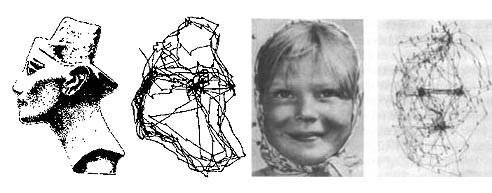
    Decades later, Steiner’s comments appear to have been validated by Alfred Yarbus, a psychologist who studied the eye movements of people looking at natural objects and scenes. In the 1950s and 1960s, he recorded the rapid saccadic eye movements that occur within milliseconds and demonstrated with remarkable images how the eyes subconsciously scan forms and outlines with incredible speed. Figure 2 has examples from Yarbus’ work.

    image006 copy
    Figure 2 – The sense of movement in vision. Rapid eye tracing movements corresponding to images viewed (Yarbus, 1967).

    Steiner’s observations are also quite extraordinary when related to NVI fundamentals of proper vision. William Bates was an eye doctor who broke from the mold of orthodox teachings and single-handedly established the field of NVI back in the early 1900s. Two of Bates’ guiding fundamentals are what he called shifting and apparent movement (also called the swing), both which involve our sense of movement.

    The eyes, which move by different sets of surrounding muscles, must continually shift from point to point to prevent the strain of fixation. Otherwise, the subconscious saccadic movements become sluggish and vision begins to blur within seconds. It’s analogous to grasping a heavy object in your hand and holding it tightly in an extended arm position. The muscle strain cannot be held long before you lose your hold and drop the object. If we fixate for too long in an attempt to “hold” a point in our sight with intense concentration, the effort backfires and we lose the clarity of sight.

    As for oppositional movement, stationary objects in our peripheral field of vision must have the appearance of moving in an opposing direction. This swing is a natural consequence of the first fundamental, the shift.

    Bates explains the illusion of the swing: “Your head and eyes are moving all day long. Imagine that stationary objects are moving in the direction opposite to the movement of your head and eyes. When you walk about the room or on the street, notice that the floor or pavement seems to come toward you, while objects on either side appear to move in the direction opposite to the movement of your body.”

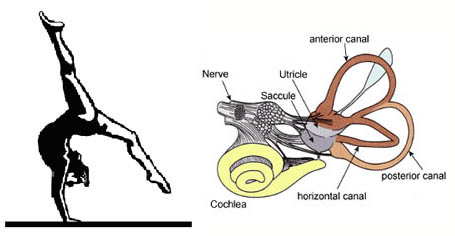
    If one attempts to stop this illusion of oppositional movement, Bates claimed it caused vertigo or dizziness. That’s because our sense of balance also comes into play for effective vision. Coordinated body movements and eye movements depend on good balance, controlled by the organs in the inner ears.

    In more recent years, the role of movement and balance in visual perception has been recognised in a speciality field called developmental or behavioural optometry. They have made the connection between visual difficulties, mental development, and emotional behaviour, with such problems as dyslexia, slow reading and poor comprehension, ADHD and juvenile delinquency. Some children have difficulty reuniting the individual senses as a unified whole, causing a jumbled imbalance of sensations, thoughts and emotions.

    The importance of training which integrates the senses with whole-body movements is a hallmark of this specialised field of optometry. The training typically incorporates bouncing on the trampoline with rhythmic arm and hand movements and visual interaction with special wall charts. Or the child could be instructed to call out answers to rapid-fire mental tasks – like mathematics or spelling – while jumping on the trampoline. Balance beams are also used in combination with sensory, physical and mental tasks.

    In a separate field of study, psychiatrist Harold Levinson treated thousands of cases of learning disabilities and phobias and discovered a common physical correlation. Over 90 percent of his patients who were dyslexic or phobic had a malfunction of the inner-ear system. These more recent findings validate what Steiner suggested back in his day: mental disorders are linked to physiological disorders.

    “But one will find over and again,” he wrote, “that especially in so-called mental illness – which actually has been, as such, incorrectly named – physical processes of illness are present in a hidden way somewhere. Before one wants to meddle. . . with mental illness, one ought actually, with the proper diagnosis, to determine which physical organ is involved in the illness.” Thinking, feeling, and willing – soul activities which follow from our senses – are all interrelated and interdependent.

    image009 copy
    Figure 3 – The sense of balance in vision. The inner ear regulates balanced eye movements.

    In our highly technological era, we are intently centred on the physical realm, bombarded with sense data from the external environment. Such sensory overload may induce responses in an individual’s soul, such as fear and anxiety, while causing overconcentration and staring. The net result can lead to a habitual strain pattern that restricts movement and negatively impacts the healthy functioning of the eye-focusing muscles. School age children are especially prone to such problems and begin to develop vision problems early as a result.

    One of the most fascinating aspects of improving eyesight naturally is a “flash” of near perfect vision that spontaneously occurs from time to time. I experienced flashes several times prior to having any knowledge of the phenomenon. They appear very early in the vision improvement process for many people, even for those with a high degree of initial blur. I liken the experience to a flash of inspiration or intuition from the spiritual realm, a Divine Perfection pouring into the soul, reminding the eyes how to see clearly again without strain. It’s also a reminder to step back from the stressful demands of a society fixated on material ends and become more in touch with our higher spiritual nature.

    Quantum physicist Arthur Zajonc chronicled the scientific study of light and visual optics from the time of the early Greek philosophers to our current age and laments at the gradual demise of artistic and spiritual insights in the endeavour. Throughout the centuries, Plato’s light of the soul in visual perception was eventually excised by science to the point we are today – a pure neurophysical model – even though the nature of light is as enigmatic as ever.

    We’ve become so steeped in material pursuits that we’ve “lost sight” of the spiritual side. If physical light is the counterpart of spiritual light, perhaps the visual blur that’s endemic to modern culture is a manifestation of spiritual myopia?

    Observe the symmetry in the word “eye” itself. I view it as a symbol of our threefold nature. One “e” represents the exoteric, or physical realm, while the other “e” represents the esoteric, or spiritual realm. The “y” in between is the soul with three branches, two linking body and spirit, while the third points to the “I” (pronounced the same as “eye”) that is the centre of our soul. Window of the soul, indeed!
    [alert type=”general” dismiss=”no”]This article was published in New Dawn 114.[/alert]

    [alert type=”success” dismiss=”no”]If you appreciate this article, please consider a contribution to help maintain this website.[/alert]

    Bibliography

    William H. Bates, The Cure of Imperfect Sight by Treatment Without Glasses, New York: Central Fixation Publishing, 1920. Reprint, Pomeroy, Wash.: Health Research Books, n.d.
    William H. Bates, “Perfect Sight,” Better Eyesight, September 1927
    Aldous Huxley, The Perennial Philosophy, New York: Harper and Brothers, 1945
    LASIK Complications website, www.lasikcomplications.com
    Harold N. Levinson, Phobia Free, with Stephen Carter, New York: M. Evans and Company, 1986
    Wilder Penfield, The Mystery of the Mind: A Critical Study of Consciousness and the Human Brain, Princeton: Princeton University Press, 1975. Quoted in Huston Smith, Forgotten Truth: The Common Vision of the World’s Religions (New York: Harper Collins, 1992), 64-65
    Michael Polanyi, Personal Knowledge, Chicago: The University of Chicago Press, 1958. Quoted in Huston Smith, Forgotten Truth: The Common Vision of the World’s Religions (New York: Harper Collins, 1992), 63
    Huston Smith, Forgotten Truth: The Common Vision of the World’s Religions, New York: Harper Collins, 1992
    Rudolf Steiner, A Psychology of Body, Soul, and Spirit: Anthroposophy, Psychosophy, & Pneumatosophy, Translated by Marjorie Spock, Herndon, Va.: Anthroposophic Press, 1999
    Rudolf Steiner, Polarities in Health, Illness and Therapy, Lecture, Pennmenmawr, N. Wales, August 28, 1923. Spring Valley, NY: Mercury Press, 1987. Rudolf Steiner Archive. wn.rsarchive.org/Lectures/Polart_index.html
    Rudolf Steiner, The Foundations of Human Experience, Translated by Robert F. Lathe and Nancy Parsons Whittaker, Herndon, Va.: Anthroposophic Press, 1996
    Rudolf Steiner, Theosophy: An Introduction to the Spiritual Processes in Human Life and in the Cosmos, Translated by Catherine E. Creeger. Herndon, Va.: Anthroposophic Press, 1994
    Alfred Yarbus, Eye Movements and Vision, New York: Plenum Press, 1967
    Arthur Zajonc, Catching the Light: The Entwined History of Light and Mind, New York: Bantam Books, 1993

    © New Dawn Magazine and the respective author.
    For our reproduction notice, click here.
     

  • Water Fluoridation: Facts & Fallacies

    Water Fluoridation: Facts & Fallacies

    From New Dawn 107 (Mar-Apr 2008)

    Water fluoridation has been around for just over 60 years and whilst the practice has become widespread, particularly in Western nations, it’s always been a controversial and often passionately argued one.

    My formative moment in the fluoride ‘debate’, one that cathartically shunted me into the anti-fluoride lobby’s arms, came many years ago when I was sitting in a dentist’s chair in Cambridge, UK.

    I knew very little about fluoride at the time, so it was with an open mind and calm disposition that I opened my mouth in order for my dentist to pour in some fluoride solution which he said would give my teeth a strong protective coating. The problems started immediately after having dispensed the liquid into my mouth when he stammered, “…but don’t whatever you do swallow it!” “Why?” I gurgled, “Because it’s poisonous and could kill you,” came his reply.

    The swill, which was supposed to have lasted about one minute actually lasted about 10 seconds and ended up all over my lap and the surgery floor. The incident was funny. We laughed about it at the time, but I had learned something new and very disturbing about fluoride that has remained with me. It matured into an understanding and appreciation of matters concerning fluoride that, whether you have any concerns about ingesting this chemical or not, I feel compelled to share with you.

    The pro-fluoridation lobby, notably the dental and medical associations in several countries, together with armies of practitioners tethered to them, will tell you that fluoride is a naturally occurring substance,1 that it is safe and effective at preventing tooth decay when used in designated dosages, and that its use is strongly supported by credible scientific evidence. It has, they say, improved the quality of life and well being of millions of people around the world for decades.

    They will also say that because it is generally added to water supplies at less than 1 part per million, that it is extremely safe, but that ‘if’ young children get too much fluoride they may develop a condition called dental fluorosis which is mostly detectable by dentists and involves a mild discolouration of teeth enamel. All sounds pretty harmless and reassuring don’t you think?

    However, if you were to take a quick peek at even a small amount of the arguments that are levied against the use of fluoride by the anti-fluoride lobbyists, you might be in for a nasty, albeit rather compelling, surprise.

    Let me just pick off a few of them and in no particular order.

    On the history of fluoridation, despite what is written on the Australian Dental Association’s website2 – which states that interest began in the US more than 100 years ago when a Colorado dentist noticed that some of his patients were displaying mottled yet decay free teeth which he deducted was due to their drinking of local spring water that was naturally high in fluoride – the real and well documented origins of water fluoridation actually sprang from a pre-emptive public relations campaign commissioned by US military interests.3 They were attempting to stave off litigation arising out of the Manhattan Project, the one that was set up to produce the world’s first atomic bomb.

    Apparently atomic bomb production required enormous amounts of fluoride, which inevitably resulted in large amounts of fluoridated (not radioactive) effluent spewing out over the US countryside. People, animals and crops that were downwind began to get diseased causing the US government to become concerned (for its precious bomb project, not the people who were sick).

    For the US, with plans to use the A-Bomb as a defensive deterrent after WWII, it was a strategic imperative that bomb production be allowed to continue without the threat of massive class actions hanging over it, and that therefore the exposure of humans to ‘low’ levels of atmospheric fluoride be demonstrated to be biologically safe.

    Human studies developed and administered by institutions associated with the A-Bomb project were mainly focused on the town of Newburgh,4 New York from 1946-56 where the effects on health were observed following the addition of fluoride to the town’s drinking water supplies.

    Whilst the results of the research were heavily censored, the intended purpose of the findings had been to serve as evidence in favour of the safety of continued low, long term exposure of humans to fluoride.5

    The litigants, mainly farmers, were bought off and the results of the research will therefore probably never be dragged into the public spotlight. However, following incidental observations made during the water fluoridation research program, it was floated by one of the team leaders that it “might help to counteract a local fear of fluoride… through lectures on… fluoride toxicology and perhaps the usefulness of fluoride in tooth health.”6

    The rest is history! That the development of water fluoridation was motivated by a benevolent move to prevent dental caries was almost a total myth and it gets a lot worse than that.

    Fluoride production increased significantly since the immediate post-war years and is now a toxic by-product of the chemical industry that is produced in massive quantities. Most of the early research presented to support the notion that fluoride is both safe and effective for use in the prevention of tooth decay was conducted or funded by the very same interests7 that stood to benefit most from its use in the public domain. It was also done when there was a lot less environmental fluoride around too.

    That fluoride is toxic and dangerously so is not in doubt or contention, but the fact that it is poured into the water supply of any local council that so wishes to do so is nothing short of criminal, given the facts that are now available.

    Most European countries including Denmark, France, Germany, Italy, Holland and the whole of Scandinavia, have (in many cases after having embraced it) now rejected water fluoridation outright.8 As of today Europe is reportedly 90%+ free9 of fluoridated water. Indeed there have never been any transparently conducted scientific studies anywhere in the world,10 including Australia, that unequivocally demonstrated the safety of water fluoridation on human health, most of the research having been focused on the chemical’s dubious impact on oral health.

    Fluoride is a cumulative toxin, it gets stored mostly in bone tissue and has now found its way into dental products, food, soft drinks, polluted air and in fact it’s just about in anything manufactured using treated mains water.

    Although it varies from place to place, it is added to water in concentrations of around 1 part per million, a level deemed safe,11 yet is added to toothpaste products in concentrations as high as 1,500 p.p.m., easily enough to kill a small child if it swallowed a whole tube.

    Fluoride does indeed occur in nature in trace amounts, but the fluoride that we have in our water supplies is not the same thing at all. What we put into our mains water is, without exception, an industrial toxic waste product. Neither is fluoride in any of its forms essential for good nutrition.12 Tooth decay (contrary to what is implied by the likes of the Australian Dental Association and the Australian Medical Association) is not a symptom of fluoride deficiency. There is no such thing.

    The forms of fluoride placed into our water systems and then into our bodies are usually calcium fluoride, sodium fluoride or hydrofluorosilicic acid. They are all either industrial or pharmaceutical grades of fluoride compounds which, in the instance of the latter, is scraped from the inside of smokestack scrubbers during the production of phosphate fertilisers. If it were not dumped into our drinking water it would be considered a highly dangerous and toxic chemical to be disposed of at considerable expense and with significant health and safety precautions. Yet we happily consume it when we’re told to.

    Another way of looking at water fluoridation is as a form of forced mass medication not by doctors, but, effectively by dentists. We should remember that these are the same body of professionals who are still lodging tons of mercury in our mouths each year in the form of amalgam fillings. If I lived in an area where 25% of people suffered from headaches I’d be unhappy, to put it mildly, if my local council put paracetamol in my water supply as a preventive measure and on the advice of some doctor. I fail to see the difference with what they are doing with fluoride (except that fluoride is a toxic waste and not an approved medicine).

    If you absolutely do not want to take fluoride when it’s forced on you the only way to resist is to purchase a water filter that is good enough to filter the stuff out. Even if you did this, what about the water you bath and shower in, or those who live in places too small to accommodate an extra tank, or in institutions where you just don’t get the choice. It’s sometimes simply impossible to take evasive action.

    With mass medication there is no such thing as a safe nominated dose. Even if we did need extra fluoride, just like everything else in this world everyone’s needs are totally individual, as are indeed our levels of exposure to fluoride natural and otherwise. We’d do well to remember that early research into fluoride was done before it was widely dispersed into the atmosphere, our food, drinks and personal care products.

    Further, there are those amongst us who tend to drink more than others, sportspeople, the sick or the very young. What level of choice do they get if they don’t want to overdose on fluoride? Water fluoridation will give you the same dose per litre whether you drink a lot of water or not.

    I don’t trust any authority when, as the Australian Dental Association (ADA) does, it continues to claim that the side effects of fluoridation are limited to fluorosis13 and little else. Fluorosis is, in itself, evidence of excessive ingestion of fluoride and shouldn’t be tolerated at all – period. In order for the ADA to say this with any integrity and honesty it has to be ignoring, at the public’s expense, a large body of accumulating evidence that strongly indicates fluoride is neither as effective, nor as safe as it was once cracked up to be.

    New research indicates that the benefits of fluoride are equivalent to an average difference of less than one filling in baby teeth of younger children and “no significant difference” in the permanent teeth of older children,14 yet the pro-lobbyists are still claiming the outdated figure of between a 15-25% reduction in tooth caries in fluoridated areas! They’re having us on!

    Perhaps more to the point, the reduction in dental caries that we have seen (credit for which has been claimed by the pro-lobby) were in line with similar reductions in areas that were not fluoridated. In fact in fluoridated areas that were monitored after they had ceased fluoridation caries reduction was seen to peak immediately after cessation.15

    Other research tells us that for fluoride to be effective as a preventive measure against tooth decay it has to be used topically.16 This means that forced ingestion via the water supply is ineffective. The same research also indicates that fluoride works least well down among the crevasses and fissures of the teeth, where most decay occurs anyway.

    Coming closer to home and Australian research has recently debunked the myth that Australians living in fluoridated areas have healthier teeth and significantly lower levels of tooth decay than the rest of the nation. They don’t.

    Recent claims17 by the Queensland government that Townsville (fluoridated for 50 years or more) has 65% less decay is based on data from 1991 (!) and relates to a tiny 0.2% of a single tooth surface (there are 128 tooth surfaces in the average fully grown adult mouth). Therefore the claims and many others that it is using to support fluoridation, and the same goes for every other state, are misleading and unjustified.

    More recent surveys done between 2000-2002 clearly show that Townsville children have more decay in their permanent teeth than children in North Brisbane, the Gold Coast and several other Queensland Health Districts that do not have water fluoridation. Townsville, for all its decades of fluoridation, is smack in the middle, no better and no worse than any other area of Queensland. Do these sorts of results justify the continued dumping of a toxic waste into our drinking water?

    As the award-winning investigative reporter Christopher Bryson says in his book The Fluoride Conspiracy, “Fluoride science is corporate science, fluoride science is DDT science, it’s asbestos science, its tobacco science.”

    It’s happened in Europe, but when are our politicians going to stop this fluoride nonsense here in Australia?

    2006 was a good year for anti-fluoride lobbies. The National Research Council in the US, a highly reputable scientific organisation, issued a report called ‘Fluoride in Drinking Water: A Scientific Review of EPA’s Standards’.18 It is a lengthy report that was not commissioned to judge the safety or benefits of water fluoridation per se, but rather to assess the safety of the “maximum contaminant level goal,” which incidentally the report recommended should be lowered.

    But the report, despite keeping rigidly to the initial brief, gave strong support to the notion that US citizens are being constantly over-dosed with harmful levels of fluoride and that whilst bones and teeth were most affected, these were not the sole targets of the report’s concern.

    The report threw up a growing body of research linking fluoride exposure to crippling skeletal fluorosis (similar in effect to arthritis), bone fracture, joint pain and damaged teeth. It also pointed to fluoride’s disruption of the nervous and endocrine (hormone) systems with specific focus on the brain, the thyroid and the pineal glands. There is also evidence linking fluoride to behavioural disorders, clinical depression, dementia, lowered levels of I.Q. and migraines, and finally to osteosarcoma (a type of bone cancer that particularly affects young males).

    So, bad news is good news, but does it make you feel like taking a glass of tap water with added fluoride, or what? Small wonder then that there is this world wide phenomenon whereby whenever there is a publicised public debate on the merits or otherwise of the fluoridation of water, no one from the pro-lobby ever shows up.
    By way of reinforcing the reasons why this is so, it’s worth remembering that back in 1965 when fluoridation was well underway in the US, it was Joseph Flanagan of the American Medical Association which openly endorsed the use of fluoride for dental caries prevention. He wrote:

    “The AMA is not prepared to state that ‘no harm will be done to any person by water fluoridation’. The AMA has not carried out any research work, either long-term or short-term, regarding the possibility of any side-effects.”19

    Which brings me to the extraordinary turn of events that appears to be taking place in Queensland at the time of writing.

    Given all the evidence currently available which throws such extreme doubt and serious concerns on the practice of water fluoridation, the State government in Queensland has chosen 2008 to go open slather on water fluoridation.20

    Up until now Queenslanders had been given a choice on whether or not to fluoridate its local water supplies. Only 5% of Queensland has elected to do so, although some previously had done so and subsequently discontinued the practice. Yet according to the latest National Children’s Dental Survey (published in Dec. 2007),21 75.1% of Queensland children aged 5-12 years have no decayed teeth. This compares with figures of 76.9% for the national average and 72.9% and 79.7% in the ACT and South Australia respectively (both fluoridated and the ACT 100%). So why the sudden and urgent need to fluoridate Queensland’s water supply?

    This provides clear and irrefutable proof that fluoridation neither creates good dental health, nor performs any better at doing so than areas that do not have water fluoridation.

    No one is saying there is no problem with standards of dental health and that something really ought to be done about it. The key issue is that overwhelmingly water fluoridation is not the answer, and when it is mistakenly introduced as the answer it presents a plethora of serious new risks to the health of the people who drink it. The ADA doesn’t believe these risks exist and if you don’t believe me go and have a look at the FAQ section of its website.22

    Take any region of Australia whether it is fluoridated or not and compare the figures. The statistics,23 when carefully and thoroughly studied, strongly suggest that fluoridation makes only insignificant improvements to dental health in the early years (in all likelihood only because one of the effects of fluoride is to delay the eruption of first teeth) and none at all once kids reach 12 years or so. After drinking fluoridated water for 12 years, Townsville children have the same or more decay as children who never consumed fluoridated water!

    It isn’t all about the likes of Townsville either. Some of the other problems that water fluoridation hasn’t solved are: a) nursing bottle tooth decay, a problem affecting all areas in Australia, b) lower income groups which tend to have higher levels of tooth decay, yet still drink the same water as higher income groups, c) rural and remote areas where tooth decay is reportedly consistently worse, and finally d) Aboriginal and Islander communities where oral health has declined to levels well below the national average and have been headed in that direction ever since they stopped eating traditional, healthy diets.

    So where is all this going? Well, if Queensland is anything to go by, back to the dark ages. Will someone please tell the Queensland government this is not a good time to take the highly questionable step of forcing water fluoridation onto the rest of the State. It flies directly in the face of common sense, current wisdom, people’s rights and is not in the best interests of everyone’s long term health.

    As a spokesperson for Queenslanders Against Water Fluoridation recently articulated in an open letter to State Premier Anna Bligh,24 “If fluoride ingested water made a real difference to decay, the longer it was consumed, the more difference there would be.”

    So here, for what it is worth, are a few humble suggestions for the way forward from here. My first and number one priority would be to stop water fluoridation now. The evidence is very much against it and has already convinced most of Western Europe.

    My second would be that if you don’t accept the first point, then before anyone with sufficient power and totally lacking an enquiring mind makes a decision that could make us all ill, would someone please fund some good, objective and independent research so that the matter can once and for all be decided.

    Thirdly, whilst I’m not sure where everybody else stands on this issue, if you are quietly and rock solidly convinced that you as an individual need fluoride, especially if you have any affiliation with the ADA, then be my guest and go buy yourself a tube of fluoride toothpaste, but remember to spit it out when you’ve done brushing your teeth as it’s not too good for you if you swallow it.

    Finally, and just in case the whole nasty issue of poor dental health could even remotely have anything to do with poor diet, nutrition and generally poor standards of personal oral hygiene, perhaps we might be better off investing some money on trying to improve these things.

    The ADA can rubbish the anti-fluoridation lobby as unscientific all it likes, but for me I think that the US National Research Council in its 2006 report; theLancet,25 one of the medical world’s most pre-eminent journals, which published an article on fluoride as an emerging neurotoxin; Chinese studies linking fluoride to lowered I.Q.26Cancer, Causes & Control journal which linked osteosarcoma to water fluoridation27; the American Dental Association & Centre for Disease Control 2006 advising that infants under 12 months old not consume fluoridated water28; should all be given bravery awards for finally providing us with good evidence that links adverse health impacts to the practice of water fluoridation.

    Don’t expect the chemical industry to stop producing fluoride any time soon either. It’s a big industry and would probably come to a grinding halt if they found they couldn’t produce it any more. But please, can we make them take it away and store it somewhere safe at their own expense and not at ours?

    Ah well, these are just some thoughts and only mine at that!

    [alert type=”general” dismiss=”no”]This article was published in New Dawn 107.[/alert]

    [alert type=”success” dismiss=”no”]If you appreciate this article, please consider a contribution to help maintain this website.[/alert]

    Footnotes

    1. www.health.qld.gov.au/fluoride/default.asp
    2. Ibid.
    3. Australian Fluoridation News, ‘The Authentic Original History of Fluoridation’ by Glen S.R. Walker, Sept/Oct 2007, p.2.
    4. Ibid., p.6.
    5. Ibid., p.7.
    6. ‘Declassified documents, studies showing lower IQ bolster voter rejection of fluoridation’,Business Wire, 29 November 1996, www.mind-trek.com/arti-int/961202d.txt
    7. Australian Fluoridation News, ‘The Authentic Original History of Fluoridation’ by Glen S.R. Walker, Sept/Oct 2007, p.7.
    8. www.whocollab.od.mah.se/euro.html
    9. Ibid.
    10. ‘Scientists and Professionals Lash Out Against Water Fluoridation’ by Adam Miller, www.naturalnews.com/022008.html
    11. www.health.qld.gov.au/fluoride/q_and_a.asp
    12. ‘50 Reasons to Oppose Fluoridation’ by Paul Connett, Ph.D Prof. of Chemistry, St. Lawrence University, NY, USA, www.fluoridealert.org/50-reasons.htm
    13. www.health.qld.gov.au/fluoride/q_and_a.asp
    14. ‘Caries Experience Among Children in Fluoridated Townsville and Unfluoridated Brisbane’, by Gary D. Slale; John Spencer; Michael J Davies; Judy F. Stewart, Australian and New Zealand Journal of Public Health 1996 Dec; 20(6): 623-9.
    15. Olsson ’79; Retief ’79; Mann ’87 & ’90; Steelink ’92; Diesendorf ’86 and Colquhoun ’97, www.fluorideawareballarat.com/what_the_experts_say.htm
    16. Centers for Disease Control and Prevention (CDC ’99, 2001); http://bmj.bmjjournals.com/cgi/content/full/321/7265/904/a
    17. Water Fluoridation & Children’s Dental Health. The Child Dental Health Survey. Aust. 2002.
    18. National Research Council ‘Fluoride in Drinking Water: A Scientific Review of EPA’s Standards’, 2006, www.fluoridealert.org/health/epa/nrc/
    19. Letter dated 13.5.1965, J.E. Flanagan Jnr. (Assist.Dir. Dept. of Environmental Health, USA).
    20. www.health.qld.gov.au/fluoride/whats_new.asp
    21. National Children’s Dental Survey, Australia, published 17 December 2007.
    22. www.fluoridationqld.com
    23. National Children’s Dental Survey, Australia, published 17 December 2007 & Public Water Fluoridation & Dental Health in NSW (Australian and New Zealand Journal of Public Health 2005. Vol. 9 No.5).
    24. www.gawf.org
    25. ‘Developmental Neurotoxicity in Industrial Chemicals’, Lancet 368.
    26. Wang ’97; Guan ’98; Varner ’98; Zhang’99; Lu 2000; Shao 2000; Sun 2000; Bhatnagar 2002; Chen 2002
    27. Bassin B; Wypi D; David RB; ‘Age Specific Fluoride Exposure in Drinking Water and Osteosarcoma (US), 2006.
    28. www.ada.org/prof/resources/pubs/adanews/adanewsarticle.asp?articleid=2212

    © New Dawn Magazine and the respective author.
    For our reproduction notice, click here.