New Dawn – World's Most Unusual Magazine

Category: Articles

  • The Dual Search for the Philosophers’ Stone

    The Dual Search for the Philosophers’ Stone

    To say what the Philosophers’ Stone – the great goal of alchemy – is, one has to know. And to know, one must have attained it. I cannot claim to have done this, so what follows must be speculation.

    The mystery grows deeper the closer one attempts to look. Even to say what alchemy itself is proves difficult. Of course, everyone knows what alchemy is – or thinks he knows: it is an outmoded form of science in which men in conical hats cooked and mixed various strange substances trying to make gold out of base elements. Or they sought to make the Philosophers’ Stone, a substance that was supposed also to produce gold – and to confer physical immortality besides. This project was totally deluded, but somehow gave rise to modern chemistry with all its wonders and curses.

    However cartoonish it may be, this picture has some truth to it. Or so the stories suggest. According to one, the seventeenth-century Flemish scientist Jean-Baptiste van Helmont once received a curious visitor to his laboratory. The stranger did not identify himself, but offered to give his host a piece of the Philosophers’ Stone. Van Helmont accepted on the condition that he be allowed to conduct his own experiments on it in the stranger’s absence. His guest readily agreed, asking nothing in return for the substance; the scientist’s conversion, he said, would be reward enough. The stranger left, never to be seen again.

    “I saw and handled the Philosophers’ Stone,” van Helmont wrote. “It was a saffron-coloured powder, very heavy, and it glittered like splinters of glass.”

    Van Helmont had his assistants melt eight ounces of mercury in a crucible. He then added the powder and sealed the vessel. Fifteen minutes later he opened it and was astounded to find a lump of gold.

    In 1666, the Dutch scientist Helvetius had a similar experience. Given the Philosophers’ Stone by a stranger, he was able to transmute a piece of lead pipe into gold that an assayer called the finest he had ever seen. Later, when the gold was melted down, mixed with silver, and separated out again, there was more gold than there had been at the beginning. Evidently some of the silver had been transformed by contact with this alchemical gold.

    Such stories abound in the literature of the early modern era. We read not only of mysterious strangers visiting early scientists, but of such figures as the fifteenth-century French alchemist Nicolas Flamel, who, having learned the secret of the Great Art (as alchemists call their practice), amassed a tremendous personal fortune and endowed many churches and hospitals. Another Frenchman, Jacques Coeur, allegedly used his alchemically created wealth to bail out his bankrupt nation after the Hundred Years’ War. Alchemists were particularly welcome at the Hapsburg court of Austria in the seventeenth century, where they would commemorate their feats by striking their transmuted gold into elaborate medallions, at least one of which still exists.

    Alchemy, then, appears to resemble chemistry to some degree. In fact one of the few practicing alchemists that I know in the US is a former chemistry professor who abandoned the conventional form of the science because he found it boring. But both the Stone and alchemy itself may offer greater mysteries still.

    A completely different perspective on the subject appears in a book called The Hermetic Tradition by the Italian esotericist Julius Evola (1898-1974). For Evola, alchemy is not about gold and metals and stones. These expressions are just blinds to cover the alchemist’s real goal – immortality in the true sense of the word.

    Evola distinguishes between immortality and mere survival after death. The latter is the lot of ordinary men. They go on to a shadowy netherworld like the Greek Hades or the Sheol of the Old Testament and lose all sense of personal consciousness. “In the eternal sleep, in the larval existence of Hades, in the dissolution – which is thought to be the destiny of all those for whom this life and the forms it takes constitute the beginning and end of everything human – in all this only those will escape who, while still in life, have learned how to focus their consciousness upon the higher world.” Evola goes on to criticise the conventional belief that “immortality is a certainty, not a problematical possibility.”

    It was, Evola contends, the goal of initiation in the mystery schools of antiquity to confer this immortality. He quotes Plotinus, the philosopher of the third century CE, who wrote, “As the gods must one be, not as good men. It is not that one must free oneself from sin, but that one must transform oneself into a god.” After the decline of paganism and the triumph of Christianity, which did not support this effort in the slightest, the alchemical path was created as a means of concealing it. From this point of view, Evola claims, it was “much better then to speak of Mercury and Sulfur, of metals and puzzling things and impossible operations” than to allow the pure teaching to be desecrated by religion.

    What, then, is the real alchemy? For Evola, it is the transformation of the body, especially in relationship to the spirit, to the life force. By this process the body goes from imprisoning the spirit to expressing it in a perfect way. “The corporeal principles are elevated to a higher plane, and ‘the two are made one’ in a spiritual corporeality; and the word that serves… to express that corporeality will be… the Philosopher’s Stone.” The symbol of the Stone is chosen because at this point “the body, as a completed, organised, and stable Nature is a ‘fixed’ thing as opposed to the instability of psychic principles and the volatility attributed to ‘spirits’.” This image evokes Christ’s parable that speaks of a man building his house upon rock rather than sand.

    This state, Evola emphasises, is the true goal of alchemy. Its attainment is difficult and uncertain, and particularly in its later stages is hard to grasp. But that is not surprising: one cannot be expected to grasp something that one has not experienced for oneself, particularly something that is so deeply at odds with ordinary understanding.

    In any event, much of Evola’s discussion, although it is far more lucid than we find in traditional alchemical texts, remains mysterious and puzzling. But there is one part of the process that is reasonably clear – the journey to the gates of death. By some process (which Evola does not describe) the candidate is brought into a kind of catatonic state that resembles death – except that he remains conscious during this process and then returns to life. This confrontation confers immortality – a stage that Evola equates with the alchemical term albedo or “whitening.”

    Evola does not talk much, or at all, about the actual experience that the candidate undergoes during this initiation. Indeed the only first-hand account of such a process that I know of can be found in a book called Opening the Dragon Gate, in which a Chinese wizard named Wang Liping tells of his initiation into Taoist alchemy under the guidance of two masters in the almost unimaginable setting of Mao’s Cultural Revolution of the 1960s. Wang undergoes a death and rebirth process that matches Evola’s description.

    There are other steps to the alchemical process as well. After the whitening stage, there is the rubedo, or “reddening,” in which the now-immortal spirit is reunited and reintegrated with the physical body. Does this confer physical immortality? The alchemical legends suggest that it does. Nicolas Flamel was reported to be seen hundreds of years after his lifetime in the fourteenth century; the eighteenth-century savant the Comte de St.-Germain, another heir to the alchemical legacy, was similarly said to be centuries old; and the Taoists have their legends of the Eight Immortals, whom author Victor H. Mair describes thus: “They are immune to heat and cold, untouched by the elements, and can fly, mounting upward with a fluttering motion. They dwell apart from the chaotic world of man, subsist on air and dew, are not anxious like ordinary people, and have the smooth skin and innocent faces of children.”

    Like practically all legends, these tales are unverifiable, although by the same tack, they are impossible to refute: we cannot go through all seven billion people on earth one by one and prove that none of them has lived for hundreds of years. The physical immortality to which alchemy points remains, as Evola says, a “problematical possibility,” waiting for us around a corner that may or may not exist.

    All this said, it is hard to entirely dismiss the more familiar version of alchemy. There are practicing alchemists who do work with metals, and, as we saw at the beginning of this article, there were even some who claimed to have attained the summit of this work. Again, these achievements remain elusive and legendary, but again negative proof is impossible.

    Thus we are left with a dual alchemy. One path attempts to transform the essence of a metal so that it reaches its most perfect form (which was always held to be gold). The other path is aimed at transforming human nature. In the end, do these goals converge? They can only do so if the principle of consciousness that dwells within us is fundamentally the same as that which dwells in all of nature, animate and supposedly inanimate. In that case the two would in the end be one.

    [alert type=”general” dismiss=”no”]This article was published in New Dawn Special Issue Vol 7 No 3.[/alert]

    [alert type=”success” dismiss=”no”]If you appreciate this article, please consider subscribing to help maintain this website.[/alert]

    Sources

    Titus Burckhardt, Alchemy: Science of the Cosmos, Science of the Soul, Translated by William Stoddart, Penguin, 1971

    Chen Kaiguo & Zheng Shunchan, Opening the Dragon Gate: The Making of a Modern Taoist Wizard, Translated by Thomas Cleary, Tuttle, 1998

    Julius Evola, The Hermetic Tradition: Symbols and Teachings of the Royal Art, Translated by E.E. Rehmes, Inner Traditions, 1985

    Fulcanelli, The Dwellings of the Philosophers, Translated by Brigitte Donvez and Lionel Perrin, Archive Press, 1999

    Cherry Gilchrist, Everyday Alchemy: How to Use the Power of Alchemy for Daily Change and Transformation, Rider, 2002

    Stanislas Klossowski de Rola, Alchemy: The Secret Art, Thames & Hudson, 1973

    Victor H. Mair, Wandering on the Way: Early Taoist Tales and Parables of Chuang Tzu, Bantam, 1994

    Mark Stavish, The Path of Alchemy: Energetic Healing and the World of Natural Magic, Llewellyn, 2006

    David Goddard, The Tower of Alchemy: An Advanced Guide to the Great Work, Samuel Weiser, 1999

    © New Dawn Magazine and the respective author.
    For our reproduction notice, click here.

  • Ritual Magic in Theory & Practice

    Ritual Magic in Theory & Practice

    Several years ago I decided to do an evening-long introduction to ritual magic at the New York Open Center, one of the city’s best-known gathering places for mind, body, and spirit activities. Soon before it was about to start I told myself, with some surprise, “My God! I’m about to do ritual magic with a bunch of people who have walked in off the streets of New York!”

    Despite my apprehensions, the evening went off well. Power was raised, channelled in a certain direction, and then the ritual was closed. The only negative result was a comment I got back on a feedback sheet from a participant, who said she was shocked that I did not begin the ritual by invoking the holy archangels of the four directions (usually given as Michael, Gabriel, Raphael, and Uriel).

    The person who complained was both right and wrong. In ritual magic, it is essential to create a sacred space to work in. But it is not essential to do this by invoking the four archangels specifically. In fact there are many ways to do it. Invoking the archangels is part of the Western tradition of high magic, particularly as handed down by the extremely influential Victorian occult society known as the Hermetic Order of the Golden Dawn. Here is another, quite different way to create a sacred space, from the Native American medicine man Rolling Thunder (known as “RT” to his friends), as described by one of his students:

    We started a fire in the fire pit and formed a circle around it, warming ourselves in the chilly weather. RT pulled out a pouch of Five Brothers Tobacco, pure tobacco with no artificial ingredients. He passed the pouch around, each of us taking a little bit of tobacco in our hands. RT then led us in a prayer, starting out with Father Sun, Mother Earth, Grandmother Moon, and All Our Relations. He would include “the East where the Sun rises, to the South where the heat comes from, to the North where the cold comes from, and to the West where the sun sets.” RT would vary the order and the wording from time to time, just to maintain our attention.1

    This is somewhat simpler than a lengthy invocation and visualisation of archangels. The version I used in the ritual in New York was simpler still; at the outset I simply asked the participants to visualise a pillar of light in each corner of the room.

    This anecdote illustrates two basic concepts of ritual magic: (1) it is important to create a sacred space in which to work; and (2) there are many methods for accomplishing the same purpose. While many people associate the word “ritual” with something rigid and formalised, ritual magic, practiced at its best, is neither. Rather it’s a flexible system, with enough structure to give form to one’s intention, and with enough pliability to give the practitioner a great deal of leeway in actual practice.

    In my brief description of the New York ritual, I mentioned another important part about ritual magic – raising power. No one knows what power is (used in this sense), and at the same time everyone knows what it is. We cannot say whether it is a form of electromagnetic energy, the life force known as chi, or something quite different from either of these. But all of us have experienced its effects, and, moreover, all of us have raised it ourselves, usually without knowing what we are doing.

    Remember the last time you entered a room in which an argument was about to break out. Although probably nothing was different about the air or the lighting or any of the physical aspects of the room, you undoubtedly noticed a feeling of tension and perhaps danger in the atmosphere. This tension becomes even more palpable if the room is silent, and the pressure that you feel to dispel it becomes extremely intense. One way of dispelling it is to express it somehow, and if the tension is not too strong, it can be broken when someone simply speaks. At other times, it erupts in an argument or even a physical fight.

    Another example is the classic situation of the teenage dance. At the outset the boys are ranged at one end of the hall, the girls at the other. Everybody is too shy to begin dancing, and again an extreme amount of tension accumulates in the room. Finally one courageous couple breaks the tension and begins to dance. The energy starts to flow. It is expressed through dancing (and perhaps later on, sexually).

    Most of the time this raising of power is completely unintentional and undesired. Its presence causes a great deal of discomfort, and depending upon an individual’s personality type, he may try to get rid of it by giving in, arguing, or simply leaving. The magician, by contrast, wants to raise this power. But he (or she) chooses to do it only in certain circumstances and for specific results.

    The raising of power partially explains another feature we have seen in ritual magic – the creation of a sacred space of some kind. It can be done, as we have seen, by marking out the four directions; traditional magicians have also done it by drawing a geometric figure, such as a circle or a pentagram, with the point of a wand or a sword in the space around them. The actual shape does not matter as much as building an invisible sanctuary where certain forces are kept in and stray influences are kept out.

    I’ve said that the magician raises power for specific intention, and in this context it’s important to note that power in this sense, like the Force in the Star Wars films, is morally neutral. It can be used for good or evil or for that matter mixed ends. Using it for good purposes – such as healing or blessing or cleansing – is known as white magic. Using it for harmful purposes, such as cursing or coercion, is black magic. These terms are well-known; a less familiar one is grey magic, which is done for mixed motives. In all likelihood few magicians probably practice grey magic intentionally, although most have probably done so without entirely realising it. I personally would characterise doing a magical ritual to find a lover as grey magic; doing a ritual to make a specific person fall in love with you would be closer to black magic, since it intentionally interferes with the free will of another person.

    All these reflections lead to some questions: Does ritual magic work? If so, how? And since practicing magic for selfish ends is at best morally ambiguous, why do it at all?

    The Astral Light

    To look at how magic works, it’s helpful to understand a concept that has fallen into disuse in recent years but still occupies a central place in Western magic: the astral light. Esoteric texts from the Renaissance and early modern era often refer to it as the anima mundi, or “the soul of the world.”

    “God is light,” the Bible tells us (1 John 1:5). Esotericism regards this image as a specific and accurate picture of reality. This light pervades the universe; there is nowhere and nothing it is not, but it is modified, its purity and intensity are filtered and diluted, as it proceeds through various levels of manifestation. Esoteric theory holds that this light reaches us on earth only after passing through the zones of the stars and planets, whose influences it absorbs; hence its name.

    Astral light must not be confused with physical starlight. It is a subtle matter, imperceptible to the five senses and to the implements of science. “It is the common mirror of all thoughts and forms,” writes the nineteenth-century French magus Éliphas Lévi, “the images of all that has been are preserved therein and sketches of things to come, for which reason it is the instrument of thaumaturgy and divination.”2

    To form a more or less accurate picture of this light, one need only ask, what is the substance of a thought? Neurochemical responses, a scientist may say. While that may be true up to a point, we don’t experience these images as neurochemical events; we experience them subjectively as images and forms. In this latter form, they can be said to be made up of astral light.

    A more topical analogy comes from the world of computers. Hardware, software, and networks together form cyberspace, a dimension that, while in no way separate from the workings of computers, seems to obey its own laws and possess its own reality. This resemblance between the apparently outmoded world of the occult and the sophisticated ideas of cutting-edge science has not gone unnoticed: Silicon Valley is a hotbed of interest in the esoteric, and computer aficionados sometimes speak of cyberspace as a kind of bardo – a term used in The Tibetan Book of the Dead to designate the astral plane.

    The fine matter of the astral light is also believed to form the subtle or “astral body” of humans, giving literal force to the words of Shakespeare’s Prospero: we are indeed “such stuff as dreams are made on.” Shakespeare probably meant these words metaphorically; he was saying that we are frail, transitory, ephemeral. But then so are dreams and mental images.

    This is not to say that the astral light is itself a frail substance; occultists consider it indestructible. But this subtle matter does not hold shapes well. Dream figures constantly shift form, and even before our waking eyes mental images rise and fall like waves. For this reason some esoteric teachings figuratively refer to this substance as “water.” Under most circumstances, practically none of the thoughts or images formed in this “water” ever come into physical manifestation; there is not enough force behind them to make that happen. Hence, the central aspects of occult magic has to do with forming, holding, and energising a shape composed of astral light. If enough power and skill are used in its creation, the image will sooner or later manifest in the physical world.
    [alert type=”info” dismiss=”no”]If you appreciate this article, please consider a subscription to New Dawn magazine.[/alert]

    Manifestation

    In theory the process sounds simple enough, and in a way it is, but it is not so easy to accomplish. To begin with, in order to manifest in the physical world, an image must have a steady, consistent form in the mind’s eye. In practice, however, few things are more difficult to achieve, since it is notoriously hard to hold an image in one’s mind for all but the briefest time. This may be partly due to a lack of mental discipline, but it also reflects the nature of the astral light itself. It is fluid and slippery; trying to hold it is like trying to grab water with one’s bare hands. Much of magical practice consists of moulding this elusive substance. Hence magical training emphasises, above all else, mental concentration and will.

    Look at some object near you. Now close your eyes and try to visualise it. Then open your eyes again, and compare your mental picture of the object with the object itself.

    If you’re like most people, you’ll find some discrepancy between the object and your picture of it. You may find that you were able to imagine some parts of it better than others, or that you could imagine it as seen from one angle but not from another. You’ll probably find not only that it’s hard to keep your mind on the same picture, but that it’s difficult to create an entirely accurate image even of an everyday object right in front of you.

    One part of magical training is intended to hone the skill of visualisation. The magician may begin by taking extremely simple objects or forms – geometric shapes, for example, like triangles and circles – and attempting to visualise them. Later on, the aspirant may be able to proceed to more complicated things like three-dimensional objects. A piece of fruit, an orange, for example, is a good thing to use, since one can imagine not only its appearance, but also its taste, smell, and texture.

    Visualisation and imagination form only one aspect of the discipline. The second and equally important part is the conditioning of the will. The mind is not likely to enjoy concentrated imagination at first; it will probably rebel and drift on to its ordinary worries and fantasies. The only way to train it is to constantly bring it back to the object.

    Such work is often tedious, and the beginner may be able to practice for only a few minutes a day before concentration gives out. Gradually, however, these practices will achieve their end. The act of constantly bringing the mind back to the object, despite boredom or frustration, begins to form a small core around which the will can constellate. And the will is the magician’s principal tool.

    So far this procedure resembles the “creative visualisation” described in many books. Creative visualisation, however, generally doesn’t go past this point. Nothing more may be needed: sometimes the greatest hurdle lies in simply formulating a clear goal. But often the enterprise requires some sacrifice: an additional investment of vital energy to literally give life to the desired image.

    This brings us back to the need to raise power. For a process of ritual magic to be complete, it must have a clear and specific form in the mind of the practitioner – and enough power must be directed toward it to ensure it manifests.

    This does not always happen. To cite another personal experience, about fifteen years ago I was on a retreat with a group holed up in a country house in Derbyshire, England, learning to practice magical techniques. One of the chief things taught was raising power, which was done by having the group (of about a dozen people) channel mental energy in a certain direction. Throughout most of the retreat this power was directed to an actual sink – a drain in the floor of one of the utility rooms. The reason for doing this was quite clear. We were learning to raise power, but this power could not be allowed to float around in the atmosphere. It would create enormous tension (and there was tension enough anyway); given enough momentum, it would start to cause mayhem. So for training purposes the power was directed to the ground – it was literally “earthed.”

    Such was the practice for most of the retreat, but toward the end each of us was allowed to raise power and direct it toward whatever we wished. We all took turns: we sat in a room on our own while the other members of the group directed power toward us. When it came to be my turn, I decided to channel this power toward realising a particular project I had in mind at the time.

    But it was no good. I could not focus the power in the direction I wanted; it felt as if it kept slipping and sliding away from me. I tried to recoup my efforts more than once, but soon the time was up. The whole experience had the depressing quality of a premature ejaculation.

    Where did the failure lie? I certainly felt power being sent in my direction; that was not the problem. And the project I was developing was clear enough in purpose and intent. Rather the failure came from my own will. Although I did my best to work with the power through the exercise, there was some level at which I was not interested enough in this project to make it manifest.

    It was, as a matter of fact, a book project, and it came as no surprise to me a few weeks later when I learned that all the publishers to whom my agent had submitted the project rejected it. None of this was especially tragic; all writers have projects that they come up with and never manage to materialise; in fact, these generally far outnumber the successful ones. But the whole experience taught me something about the nature of will.

    Will, as I’ve said, is a chief characteristic of the ritual magician, and from my experience, I would say that the will is in many ways as subtle and elusive as the astral light itself. Where exactly is my will? In my superficial wishes and desires? In my gut? In the deep and inaccessible reaches of my heart? I would say that for the will to be truly effective, it must lie in, and encompass, all these parts of one’s being; if one is conflicted or ambivalent, the results will be nil.

    All this helps to answer a question that was posed earlier: Does ritual magic work? It does work, but it is a subtle and difficult process that requires a great deal of training and mastery – and especially self-knowledge – in order to succeed.

    The Importance of Ritual

    Ritual magic, as practiced in the West, is an elaborate and somewhat cumbersome discipline. Fully devoted practitioners devote an enormous amount of effort to making and obtaining robes, wands, swords, cups, talismans, incense, and other appurtenances of the magician’s craft. Are these necessary? They are – nearly every ritual of any kind requires some kind of paraphernalia – but the complexity and elaborateness of these things can vary greatly. Purists among magicians tend to say that tools that the practitioner makes himself, from scratch, are the ones that have most power. And from what we’ve already seen in this article, we can understand why. Power follows attention. And something that has had a great deal of effort and attention directed toward it, even if it is crudely executed, is likely to have more power than a more polished object that has been manufactured.

    Is ritual necessary in order to make one’s will manifest? After all, if it’s simply a matter of raising power and focusing it on an image, what need is there for a ritual at all? Can’t it be done by thought power alone?

    In fact, it can; and that is the theory behind creative visualisation and what some portions of the New Age world call “manifesting.” In these techniques it’s enough to work exclusively through thought power – if the will is strong enough. These practices differ from prayer in that they don’t necessarily invoke the favour of God or a god in order to operate; rather it is a matter of simply using certain universal (though little-known) occult laws. They differ from ritual magic in that no physical operation is necessary.

    Given all this, the reason for practicing ritual magic is twofold: in the first place, ritual magicians are drawn to this kind of activity. For them the more inward and sedentary acts of prayer and meditation may seem a little bloodless. There is a certain satisfaction to be gained from making and wielding magical implements in a way that’s perhaps not very different from the reasons people sometimes prefer to build their own bookcases or brew their own beer. This may seem fairly obvious, but it is not trivial. There is a part of the mind that will not take anything seriously that it cannot see or touch, and ritual magic is meant to address – and involve – this part of the mind.

    The second reason is both grander and more abstract. Man, it is said, is a bridge between worlds. He is the only creature that we know of who is capable both of extending his mind to sublime and mystical levels of experience and of doing and acting in physical reality. Some esoteric teachings would go so far as to say that this is our function as human beings, and that many of our sufferings and discontents occur because we have forgotten it. In light of this idea, we can see how ritual magic can be valuable and effective in its own right, quite apart from whatever apparent results it might achieve. It enables the magician to serve as a conduit between the higher and lower worlds, and to assist in the work of unifying them.

    There is a great deal about ritual magic that I haven’t been able to discuss in an article of this length – divination, for example, which in its many forms attempts to take a kind of reading of the patterns in the astral light in order to find out what is likely to happen in the physical world. (The Tarot and the I Ching are two common methods used by magicians today to do this.) Nor have I been able to explore the issue of raising and interacting with spirits – invisible entities that, under the right circumstances, can communicate with us and can also have an effect in the physical world. These are large and important subjects in their own right, and serve to indicate that ritual magic, practiced in the West for centuries, retains its fascination and its power.
    [alert type=”general” dismiss=”no”]This article was published in New Dawn Special Issue Vol 7 No 2.[/alert]

    [alert type=”success” dismiss=”no”]If you appreciate this article, please consider subscribing to help maintain this website.[/alert]

    Footnotes

    1. Sidian Morning Star Jones and Stanley Krippner, Ph.D., The Voice of Rolling Thunder: A Medicine Man’s Wisdom for Walking the Red Road, Bear & Co., 2012, 6.
    2. Éliphas Lévi, Transcendental Magic: Its Doctrine and Ritual, trans. A.E. Waite, 1896; repr., Bracken Books, 1995, 15.

    © New Dawn Magazine and the respective author.
    For our reproduction notice, click here.

  • Sean Stone Speaks Out

    Sean Stone Speaks Out

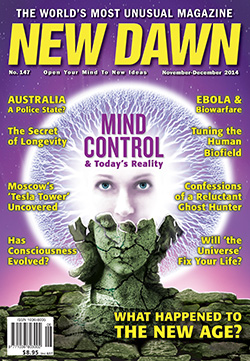
    From New Dawn 147 (Nov-Dec 2014)

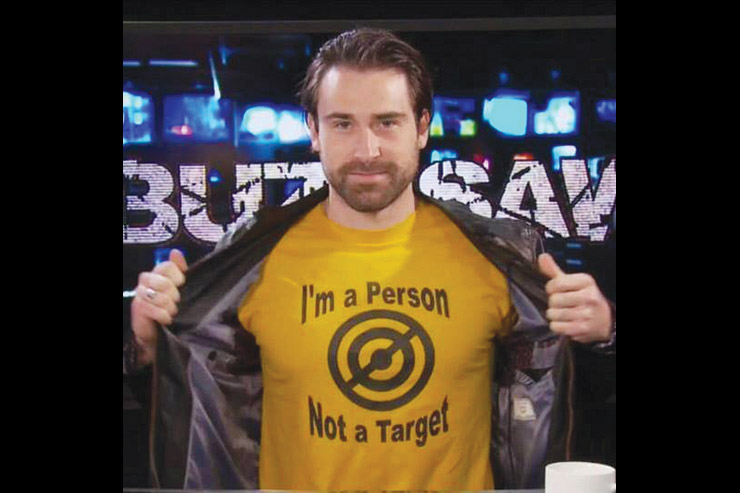
    As a post-2012 digitally-networked generation rushes headlong into a juncture between an ever-growing global corporatocracy, an ever-worsening financial barometer, never-ending military adventures and the drumbeats of World War III, an alternative dialogue on the Internet continues to grow thanks to ardent truthseekers like, among others, Luke Radkowski of We Are Change, Mel Fabregas of Veritas Radio, Alex Jones of InfoWars, and Sean Stone, the host of Buzzsaw, a weekly interview program broadcast on TheLip.TV.

    Buzzsaw’s library of guests cover a broad range of topics that strike at the heart of our current human predicament – former World Bank lawyer and whistleblower Karen Hudes, Public Enemy’s Professor Griff (on Illuminati influence in the music industry), former Mossad agent Juval Aviv, Kerry Cassidy of Project Camelot, economic ‘hitman’ John Perkins, and Bilderberg exposer Daniel Estulin, among many others. In his Buzzsaw interviews, Mr. Stone takes the conversation to spaces the mainstream media dare not tread.

    Some may be familiar with Mr. Stone as an actor, writer, producer and director of a number of Hollywood films, like his latest, Greystone Park, a horror film based on his true life experiences searching for the supernatural in an abandoned psychiatric hospital. Others may know him as the son of controversial filmmaker Oliver Stone, or as the co-host during the final season of Jesse Ventura’s ‘Conspiracy Theory’ on TruTV. For some, their first exposure to Sean Stone may have been on Fox’s ‘O’Reilly Factor’ where he elaborated on Iranian President Mahmoud Ahmedinejad’s stance on Israel and the Holocaust, intending to give more depth to a man that the mainstream media tends to paint one-dimensionally as a ‘fanatic’. At a young 29 years of age, Mr. Stone is not only accomplished in the public arena, he’s also developed a deep spiritual foundation to his character that is well beyond his years.

    Mr. Stone, like his father, is obviously not one to back down from controversy. Rather, he is one of the few to take a stand in a clearly whitewashed media climate. While it might be no surprise that TV shows are referred to as programs, Mr. Stone and Buzzsaw are doing their part to de-program.

    – Marc Star

    MARC STAR (MS): All of us truth seekers have experienced some process of awakening. What was yours?

    SEAN STONE (SS): In one capacity, I started to awaken at 10-years-old when my father took me to India and Tibet on a vacation, and he taught me about the third eye. He showed me these monks who were meditating in Tibet and taught me about levels of patience and the principles of meditation. We were confronted with the extreme poverty of a place like India, where we saw a child die, literally, in the street. The mother just couldn’t feed the child anymore and it died, right there. In India, it feels like a million people within a square mile – the city blocks are filled with squalor and filth. There’s some wealth, but a lot of misery. On one level I awakened to the extreme material contradictions on our planet, along with the spiritual possibilities of existence.

    But what does the third eye mean to a 10-year-old? The idea that you have a spiritual life, that you’re open to a higher power, or a higher meaning, despite all of these random, mundane acts of existence – you live, you suffer, you die. But what is it about?

    I’ve always been on that trajectory of seeking out deeper meanings and deeper understandings. In junior high and high school, I was interested in history – and questioning the official accounts of history because my father had helped introduce these topics. When you’re 13 or 14 and you start watching a film like JFK… I would re-watch it and watch it again because there are so many things about how our country is really run and how people are manipulated to believe these fairy tales by the media and by the mainstream way of thinking.

    So you start to take that awakening into politics and history and eventually you come across the deeper questions in history that intersect with secret societies – the banking cartels, the masonic groups, for example. Masonry is obviously a very broad range of people, although many of the most influential people in history have been Masons – but then there are obviously more secretive orders.

    Then you look at the spiritual teachings and you come across the Gnostic sects within Christianity, the Sufis in Islam, the Kabbalists in Judaism, and you start to wonder, okay if there is this lineage of secret teachings in the spiritual sense, then what do I need to understand on this planet that is deeper than what the eyes and ears tell you.

    That, I think, is the general journey of awakening. It went from the historical and intellectual sense of researching and doing my thesis at Princeton on the New World Order to an actual confrontation into the mystical and magical – because you can study the magical, you can study these sects of Illuminati, there’s all sorts of reports and accounts of them practicing rituals and magic. Then you actually confront these mystical, fantastic things – and that’s what happened when I went to Greystone Park, which is the basis of my recent film.

    I started to seek out these haunted locations and once you’ve entered these places, once you’ve entered that realm, you start to hear things that are not meant to be there – phantom voices and screams. You get phone calls. And you get all these things along the way of your journey that make you realise, okay, there is more going on than what you can read in a book to understand.

    MS: How was your thesis on the New World Order received at Princeton?

    SS: At Princeton you have a thesis advisor and a secondary reader. My advisor was cool with my approach throughout the process because the approach was very rational. It was all predicated on either primary or secondary sources. The topic of the thesis was to research Henry Kissinger’s mentor, William Yandell Elliott, who was the Professor Emeritus of Politics at Harvard for about 40 years. He had trained all these guys from the Bundys, to Kissinger, to [Zbigniew] Brzezinski, to [Samuel] Huntington. Even [John F] Kennedy was in his class. This guy is obviously a tremendous figure and I was looking at his intellectual trajectory – he was basically recruited into the Round Table circles at Oxford.

    The Round Table goes back to the Rhodes/Milner plan which, Cecil Rhodes stated in his will, was to re-incorporate America back into the British Empire. And that’s pretty much what the New World Order was about. It was about transcending the old formation of the British Empire into a new multinational system of power whereby you ultimately move toward one-world consolidation of government, of finance, of legal controls, and even the worldview becomes increasingly consolidated by Anglo-American morality.

    That’s something you can trace. People like Carroll Quigley have done the work, in Tragedy and Hope, to lay out for us what was going on. Quigley was a professor at Georgetown who had the credentials and the reputation that he could say it and people either absorbed it and understood it, like [Bill] Clinton, or were not intellectual enough to have read it, or they tried to ignore him.

    So when it came to my thesis, I was relying on people like him and the primary sources I came across, even digging into William Yandell Elliott’s correspondence and his own writings to understand how they envisioned this empire that was predicated on controlling the resources of the planet, and using these organisations like the United Nations and other formations to control those resources without putting too much of an American hand into the equation. It’s the idea of the informal empire. It’s the idea you don’t want to make your position too well known. It’s like creating the invisible hand in world affairs.

    The British Empire is to my mind that invisible hand that people don’t want to talk about to this day. They think it’s over, and yet no, there’s a reason why the City of London is still the centre of finance and the pound sterling is still the strongest currency in the world. This empire still exists. It’s a commonwealth now with tremendous influence. The Queen is probably one of the biggest landholders in the world. The Crown holdings are immense. They have assets in all of these major corporations that own the resources of the planet.

    It’s not a trivial thing to talk about the British Empire. You see the continuance of the influence of people like Tony Blair in the creation of the second Iraq war, for example, with the Niger documents. Or the British policy regarding, as Blair stated, the end of nation states. Around ‘99 or 2000 in Chicago he said there would be an end to the Treaty of Westphalia; there will be no more nation states. That’s exactly what we’re talking about. The destruction of the nation state and the preference of the empire, which is now corporate – or a corporate structure – to the idea of a sovereign nation state.

    MS: This is an agenda that many out there aren’t yet ready to accept as true. Do you find yourself surrounded by awakened people, or by brick walls?

    SS: I feel like in life, the interesting thing is, when you start to take a stand, and you send out signals to the universe of who you are and what you’re doing here, you tend to attract people that are on your wavelength. The universe intersects you with those who are basically on the level that you’re on. I’m always shocked by the level of ignorance that I find when I turn on the TV or when I do go outside of where I operate, and recognise there are a lot of sleepwalkers on the planet. But within myself and the circles I keep, I find that I tend to attract those who are more open minded.

    MS: You seem to be a perfect fit as the host of Buzzsaw – with a well-versed background on politics, spirituality and the conspiracy. How did you end up in that seat?

    SS: As I was completing my film, I met Tyrel Ventura, Jesse’s son. Tyrel had been a producer on ‘Conspiracy Theory’. They were about to shoot their final season and Jesse was dealing with this lawsuit against the TSA [Transportation Security Administration]. The TSA had been harassing him because of the metal in his body, and he felt there should be a more respectful way of treating a governor when going through these searches at the airport. So he was suing TSA and he couldn’t fly. As a result, Tyrel became a main point person for the show, and I met with Tyrel about coming on the show as his cohort. We would become the two main co-hosts doing the research, travel and investigation on camera. Based on my experience with ghost hunting and exploring these haunted places, and having researched on my own all the different theories regarding the alien presence on the planet and my familiarity with that world, they hired me. Tyrel and I became the two chief hosts of ‘Conspiracy Theory’ for season three.

    That season was delayed a year because it was pretty controversial. Even though it doesn’t get into the topics of the political conspiracy, it did get into the topics of time travel, reptilians, the agenda of weapons in space – all these things that people might find more ‘far out’. Yet I think it struck a nerve to the point where, as opposed to the first two seasons of ‘Conspiracy Theory’ where you had buses and billboards promoting the show, the third season was delayed a year, and then they didn’t even put up any advertising for it. It felt to me like TruTV wanted the show to go away. And sure enough, after the third season it was over.

    I was contacted by Will Gibson, Mel Gibson’s son, who works for The Lip, an online TV station. They were looking for content, so Tyrel and I came up with Buzzsaw, as a spin-off of ‘Conspiracy Theory’, where Tyrel and Tabetha Wallace would do the news on a weekly basis and I would do the interviews. I felt it was an elaboration of what we did on ‘Conspiracy Theory’, because when you’re doing a show like ‘Conspiracy Theory’, which is reality TV, you go in there with the intention of doing an interview and you come away with something that’s cut up and sensationalised to keep your audience hooked into the idea of some kind of imminent threat. There were a lot of stories I wanted to recount, from people like David Icke or Anthony Sanchez, about Dulce, but I didn’t have the time on ‘Conspiracy Theory’ to do it. Buzzsaw gives me a platform to actually go deeper into those interviews and conduct the long form discussions we now have.

    Buzzsaw is now an archive of these 30-to-60 minute shows that people can look at and listen to at their own leisure. As long as the Internet is around, people will be able to go back and see what Sean Stone interviewed David Icke about in 2013. What did all these people have to say at that time in history. If you look at it as a whole, we have amassed a great wealth of knowledge on topics from everything from economics to the alien agenda to spiritual issues like what are we doing on Earth, to politics and history.

    MS: All of these topics meet at a very important place right now – that is, the suppression and control of information in order to keep humanity fenced within carefully guarded reality. It makes it even harder to get at the truth when those who have the most influence over the information flow are disseminating disinformation. On a path of inquiry such as this, how does one discern?

    SS: That’s an issue that even scientists deal with, this issue of empirical knowledge based on senses – and our senses are inherently flawed. They are designed to give us a very limited understanding of this universe. Which reality do you want to believe? Do you want to believe in a relativistic understanding of the universe? But even that has its limitations. Do you want to understand what’s going on in the realm of antimatter, dark matter and dark energy – the invisible forces? Do you want to hypothesise about that? Do you want to hypothesise about string theory and how many different dimensions are interacting with our own reality at any moment? Quantum theory and how that affects fantastic experiences that people have in this life – this relationship between consciousness to reality, that we are actually creating reality as we go through it, which, philosophically, is an old Kabbalistic/Gnostic understanding of the universe, that man is actually creating the universe as we go along.

    It goes back really to who you are and what you choose to believe – who you are as a person. That’s what I went through with Greystone Park, my film. The film was an expression of the experiences I had in places like Greystone, the mental hospital, where I’m breaking into these haunted places and trying to decipher for myself, what did I see? Did I really see something fly by itself? Did a piece of wood really fly by itself? Or was that a gust of wind that I didn’t account for? Were those really voices and screams I heard or was it something planted to scare me? Was this a government psy-op to fuck with my mind?

    That’s what the film tries to go towards, this notion of… is this an expression of the mind or is it something external? I believe that it’s a mixture of both. I believe our minds are actually creating the external reality. But not everybody can understand that. So people go back to their safe zone where there is an external reality, it’s quantifiable, it’s based on cause and effect, you can measure it and account for everything that occurs. Then there’s the more spiritual, quantum sense of reality in which reality is internal, we are creating/manifesting it and miracles can occur. There are things that are inexplicable to human understanding – but not to say that within a universal science they can’t be accounted for. But within our realm of understanding, we don’t have the knowledge to understand everything that occurs. It really boils down to who you are. I can’t answer that for anyone else.

    MS: What you’re doing is potentially a threat to the established system. Do you feel you are stepping into dangerous territory? Do you feel observed?

    SS: I feel I’ve been observed probably my whole life, before I even realised it. But again, the real question is, who actually runs this system? There are people who think they run the system – and there are certain tools and access to finance, for example. But I believe there is a higher order of powers on this planet. I don’t think humans are ultimately in control. When it comes to what is considered extraterrestrial, or extrahuman, in its origin that actually could exist interdimensionally, for example, then you’re talking about a higher level of consciousness that actually may find it necessary for people like me to play my role.

    I believe very much what Shakespeare wrote. Shakespeare, whoever he was, was a Rosicrucian. He indicated a lot of esoteric knowledge through the plays. When he talks about all the world is a stage, the idea that we’re each just actors in this play, it’s very true. I don’t believe that anything happens without our higher Self, our higher Soul, knowing what we’re getting ourselves into and allowing it to occur.

    To me there is no real danger or threat. It’s just a performance. This is just a film. This timeline is just one reel of the film. When it comes to an end, we’re not done. We go somewhere else. We’ll play our role somewhere else. So it’s really most important for us to be true and honest to who we are and to serve our mission here. And that’s, I think, the best thing you can do – not to run and hide or be afraid of these powers, or believe that money or materialism is going to save you because you’re not going to last here regardless. You’re not going to last more than maybe a hundred years on this planet. So really what you’re doing is affecting eternity, it’s not affecting just this moment.

    MS: Why all of the secrecy at the top of this potentially non-human control structure?

    SS: While there are certain nefarious agendas, at the same time there are certain agendas that are beyond human understanding. The universe is structured around order, geometrically, around the nature of light. Where the stars are in alignment to the Earth creates a certain hologram, a certain type of reality. That’s constantly shifting.

    When the age comes to an end, as it did with Pisces, and we enter Aquarius, there is going to be a different shift and awakening with consciousness even if people don’t believe it – look technologically what is occurring because of the access phones and computers give us to each other, allowing us to connect physically in ways that historically maybe sorcerers or wizards or witches could possibly do with astral projection and remote viewing. The consciousness of the planet is connecting. What will occur is not necessarily for me to predict, but I do believe there are many reasons for secrecy, one being if you know the ending it will affect the way you play the game. You might get lazy. You might want to almost check yourself out of your actions because, in a sense, you want to feel like you have free will. And free will is a very important premise for this whole thing to occur. So there has to be a certain level of secrecy.

    But again, when it comes to the more nefarious powers, say like the banking side of things, it’s not necessarily a secret anymore. People know things like the Federal Reserve system is a private operation by certain bankers, but we’re going along with it because at the end of the day we feel safer within the system as it is now created than the potential system that will come about from its dissolution. Sometimes you have to wait for the actual collapse to occur before you can actually introduce the solution. There are very few people who are strong and brave enough to take the leap into another possible reality or another future without being forced to do so.

    MS: Earlier this year on your program Buzzsaw you did a somewhat ‘prophetic’ interview with former Mossad operative Juval Aviv in which he stated we’re heading “toward a third world war.” In recent months we’ve witnessed civil war in eastern Ukraine, the downing of MH17, the merciless Israeli bombardment of Gaza, and an escalation of conflict in the Middle East with the rise of the “Islamic State.” Where do you think we’re heading and what forces are driving current events? Are we on the road to World War III?

    SS: Some people will say that we’ve been on the road to World War III as soon as World War II came to an end, because if you believe that the Albert Pike letters to [Giusseppe] Mazzini in the 19th century were actual letters and not apocryphal, then he talks about three world wars, and the third world war being predicated on the State of Israel-Middle East clash of religions and the end of the Judeo-Christian worldview and the entry of Luciferianism.

        I didn’t do anything prophetic with the Juval interview. We just talked about what we can see occurring. People are not very astute sometimes. They get so caught up in the moment, they don’t actually watch the overall shape of the geopolitical climate. You know that a collapse is imminent because the financial structure is predicated on derivatives that far exceeds the productivity of all the nations on the planet. Sooner or later that financial system is going to come to an end. The banks have become so large, they’re too large to collapse. But at the end of the day, if they don’t collapse, then something has to occur to shift them into a new order.

    During the Juval interview I mentioned I had been told directly by people in the military, high level intelligence people, to inform people you know in Israel to leave, Israel’s about to get hit, war is coming. This was in April. So when they have this incident with the kids who get kidnapped, and they turn that incident into a war against Gaza, against Hamas, people think this is just a random act. No, these things are created. These events are created because there is a plan. Unfortunately, people are not planners, they’re not conspirators themselves. When you’re a filmmaker, for example, you know how things are planned because you work on it, you write scripts. I have a script that was written in 2009 that dealt with what occurred in St. Louis just a few months ago with the Ferguson incident. My story had to do with rioting in the suburbs of St. Louis, predicated on racial violence and the black community feeling repressed and offended by police actions in the killing of a young black kid.

    These kind of things are not difficult to understand if you have an imagination to create it. But the problem is, most people are so caught up in their momentary activities they don’t have the imagination to see a different future. When you are in a position of power and you have money and influence, as leaders of countries and their associates – people that go to conferences like Bilderberg, the Bohemian Club, that belong to the Trilateral Commission and read and write their reports – they have time to imagine, they have time to create, they have time to formulate scenarios.

    Whether or not World War III is coming is impossible to say because you could also say Obama has missed certain marks in that regard. Maybe he didn’t escalate the crisis with Russia quick enough over the Ukraine; maybe they didn’t utilise the Israel situation to escalate into a full on war between Hezbollah and Israel; maybe this Islamic State is actually bringing the United States, Iran and Russia together against a common enemy. I can’t tell you what’s coming because, again, I believe we’re all involved in creating our own reality and I believe that whatever occurs is ultimately going to be for the best spiritual interest of mankind.

    MS: What are your feelings on the BRICS alliance and its impact on the rest of the world?

    SS: I look at it as a welcome divestment from a US dollar based hegemony in the world. And what the BRICS states have been talking about. For example, China and Russia talking about an Earth defence shield, going back to Star Wars, talking about nuclear fusion based technologies. I’m shocked at the eventual impoverishment coming to this country because of the collapse of our industry and infrastructure. We don’t have any sensibility when it comes to the idea of high tech industries that require not just computer skills, but also industrial skills. Let’s do Mag-Lev rail, let’s go do fission and fusion processes to generate energy, let’s orient ourselves towards exploring space and terraforming other planets, let alone this one. All of these endeavours will help us better understand our own situation in the cosmos.

    I do think there is a private sector that is heavily involved in space exploration, in the stargates, in Tesla-type technologies, and that’s being hidden and suppressed. That’s a crime against humanity to have that level of technology and understanding and not share, not educate your people, and let them fall into this level of ignorance where they’re only focused on the newest reality TV show, the next award ceremony, and they’re not actually endeavouring and wanting to be scientists. Kids are not growing up wanting to be scientists and presidents and astronauts anymore. They just want to be basketball players or a celebrity of some kind. That’s all they see, as far as someone to emulate. There’s a quote from Prince Ea’s rap song recently. He says the people we are imitating now, sixty years ago we would have said were an embarrassment. You would have called them out as examples of what not to be. And that’s the problem. We’ve flipped our society, our cultural intelligence, our social instinct to educate our young. We’ve flipped it all on its head.

    When I see the BRICS nations talking about fusion, talking about investments in nuclear-based technologies, talking about missions to the Moon, Mars and beyond, and defending the Earth from comets and things like this, more power to them, because someone has to do it. The United States and the Western hemisphere have fallen off the map in that regard.

    MS: Ultimately, though, doesn’t this breakaway civilisation that is behind every one of these topics have its influence, not just in the West, but in Russia and China as well?

    SS: Of course. But again, we’re dealing with an issue we don’t quite understand. We’re dealing with cultures that are influenced by various parties. The Western world has been influenced by the Roman/Babylonian empire. That’s our cultural heritage here in the West. Russia has a slightly different cultural heritage, also splintered from Rome. The East Roman empire became basically what is Russian, but there is also something Slavic in the soul, in the spirit. The Chinese also have a mixture of Mongol, Khan and Hun blood. So there are different spiritual traditions in every part of the world. And that has something to do with the non-human entities that I’m talking about.

    In regard to the idea that non-human entities are only some kind of Draco reptilians that rule the entire planet, I don’t think that’s quite accurate. I think there are different aliens, or what would be considered alien beings on this planet from different worlds. But again they tie into the various bloodlines. And so the white, Aryan Western world is of a different blood group and spiritual orientation than the Russians, than the Chinese, than the Africans. Maybe that’s what some of this warring has to do with – the fact of different soul groupings and different motivations for what is desired by different species.

    MS: It’s a difficult puzzle to piece together once you go beyond physical reality.

    SS: Even within physical reality because you start to deal with psyches. One of the things that fascinated me about studying history was trying to actually determine someone’s action. You think that person’s predictable, they’re a machine. They’re not a machine, they have a psyche. What’s actually going through their mind when they make a decision? Is it the interest of the council to take certain actions and they’re just following their duty? Or did they have a fight with their wife that morning and they’re in a bad mood when they make a decision? Or do they just really want to screw somebody over, somebody they’re pissed off with, so they make a decision against what the other person is saying. It’s always difficult to understand because whether it’s non-human or it’s psychic, we don’t know exactly what’s in someone else’s mind. Could it be a so-called alien influence in that person’s mind? Just as well as saying it’s their brain that’s functioning. What is a brain? It’s not a computer. People think it’s a computer. And yet what’s going on in the mind is much more complex than what a computer can imagine, because you’re dealing with emotions, you’re dealing with instincts, you’re dealing with intellect, memory and possible visions of the future.

    MS: Have any of your guests on Buzzsaw blown your mind, or shattered any beliefs?

    SS: I’ve never had that experience of having someone I talked to shatter my belief. I think that people can challenge the things you believe and make you go back and re-assess. But I think I’m too open minded to not have at least heard a point of view. I think there is very little that can be told to me that would completely shock me. I feel like I’ve heard just about every possible thesis of history and reality at this point, believe it or not. The only issue is what is provable. So for a show like Buzzsaw, it’s very hard for a guest to prove something. Unless a guest were to transform into an alien being on the program, I would not be shocked by what they tell me.

    What we’ve done is compile a nice assembly of material that you can look at this post-2012 time period, let’s say, as a historical moment and we’ve touched upon most of the major events from the world historical stage. When people look back at the show’s archive of interviewees, you’d have a certain picture of what was going on here on Earth.

    MS: What is the heart of matter?

    SS: The heart of the matter is the human heart. The heart of the matter really is you, as a human being, your consciousness is affecting this reality. You’re creating this reality. You’re part of it. I think the trouble is many times we’re walking through life as though it were a rehearsal, as though we are conforming to the laws, rules and behaviours that we’ve either been told or have absorbed into us, as opposed to feeling a way through a situation, walking into a room and feeling the energy in that room, facing someone and feeling the energy that they’re giving you. I think the more we connect to the heart, that heart chakra, that place of our emotional knowledge and intelligence, I think the more we’ll have an authentic existence.

    [alert type=”general” dismiss=”no”]This article was published in New Dawn 147.[/alert]

    [alert type=”success” dismiss=”no”]If you appreciate this article, please consider subscribing to help maintain this website.[/alert]

    © New Dawn Magazine and the respective author.
    For our reproduction notice, click here.
  • Spaceship Earth: The Visionary Ideas of the Russian Cosmists

    Spaceship Earth: The Visionary Ideas of the Russian Cosmists

    From New Dawn 140 (Sept-Oct 2014)

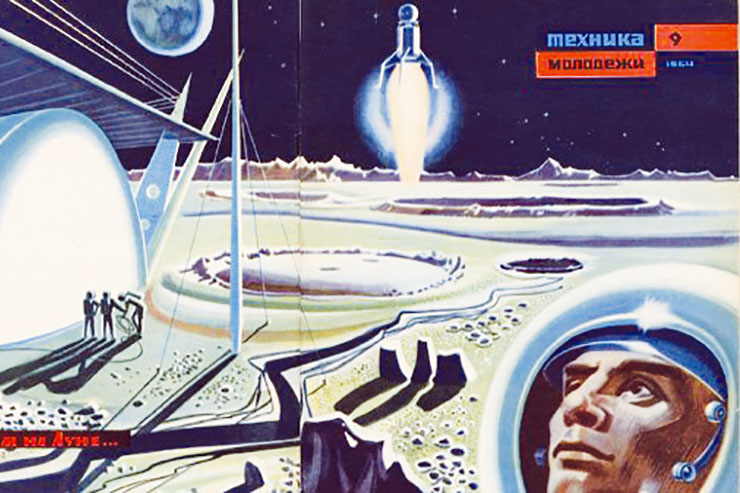
    Winston Churchill famously characterised Russia as “a riddle, wrapped in a mystery, inside an enigma.” It’s apt, then, that the father of the Russian space program – perhaps of all space programs – was an ascetic librarian who taught that humanity should work for the physical resurrection of all the dead. Nikolai Fyodorov (whose name is also transliterated as Fedorov; 1829–1903) was the first man to seriously theorise about interplanetary travel. He also coined the term “spaceship Earth” to convey a sense of humanity’s interconnection with the cosmos.

    Fyodorov, little-known in his lifetime, served as mentor and inspiration for an entire philosophical school known as the Russian Cosmists. These visionaries, often neglected, sometimes persecuted by the Soviet state, conceived of such advanced ideas as rocket travel, a prolonged human lifespan, and the use of electromagnetic energy to enhance vitality. And in many cases they produced the models and formulas that would make these far-fetched ideas a concrete reality.

    The ideas of the Cosmists, always visionary, sometimes fantastic, seem closer to reality now than they did a hundred years ago, and the school of the Cosmists continues to this day in Russia, with conferences and papers dedicated to the propagation of these ideas and activities. It is time that their work became better-known.

    The foremost authority on the Cosmists in the English-speaking world is George M. Young, author of The Russian Cosmists: The Esoteric Futurism of Nikolai Fedorov and His Followers (published by Oxford University Press in 2012). Young grew up in Madison, Indiana, in the US and received a B.A. in English from Duke University and a Ph.D. in Slavic languages and literatures from Yale University. He has taught Russian and general humanities at Grinnell College, Dartmouth College, and the University of New England, and for many years between academic positions directed a fine arts and auction business specialising in nineteenth- and early twentieth-century American and European paintings. He is currently a research fellow at the University of New England’s Center for Global Humanities.

    Young is the author of Nikolai F. Fedorov: An Introduction, published in 1979, and has published many essays and reviews on Russian literature and thought in academic and general magazines, journals, and edited collections. Other books include Hermotimus’ Voyages, a collection of poems, and Force through Delicacy: The Life and Art of Charles H. Woodbury, N.A. George and his wife, Patricia, live in rural southern Maine and are the parents of two grown children.

    Richard Smoley (RS): The Russian Cosmists aren’t familiar to most English-speaking readers. Maybe you could begin by telling us a bit about who they were and why they’re important.

    George M. Young (GY): In a recent issue of Quest magazine, Richard, you observed that over the centuries at crucial moments in history, small groups of people have emerged who were working from a higher plane of consciousness. Among these groups you mention the Pythagoreans, the Chartres school of cathedral builders, the late medieval Brethren of the Common Life, the Rosicrucians, and H.P. Blavatsky’s circle of Theosophists.

    I think the Russian Cosmists, working in the late nineteenth and early twentieth centuries, may be another such group. They did not consider themselves a group, or even a school of thought, but individually addressed similar profound, cosmic problems, treating subjects usually considered esoteric or occult as matters suitable for serious scientific and philosophical investigation. The major Cosmists include the religious thinkers Nikolai Fyodorov, Vladimir Solovyov, Nikolai Berdyaev, Sergei Bulgakov, and Pavel Florensky; the philosophical scientists Konstantin Tsiolkovsky, Vladimir Vernadsky, Alexander Chizhevsky, Valerian Muravyov, and Vladimir Kuprevich, each of whom was a broad, polymath genius, in no way able to be pigeonholed as simply “religious” or “scientific.”

    Florensky, for example, wrote seminal papers in mathematics, developed crucial processes for the electrification of Russian industry, taught in revolutionary schools for workers while wearing his priest’s cassock, and wrote The Pillar and Ground of Truth, one of the great classics of Russian Orthodox contemplative spirituality.

    Others were similarly multitalented. They addressed topics such as the infinite extension of the human life span, the overcoming of death, the physical resurrection of the dead, the reconstitution of the human organism, the recreation of whole human individuals from particles of identity, the exploration and colonisation of cosmic space, the reversal of time, and the practical realisation of universal human brother-sisterhood.

    The Cosmists show us today how it is possible to overcome dichotomies and bridge gaps. Theory and practice, science and religion, esoteric and exoteric, ideal and real – the Cosmists found ways to unify apparent opposites. Another quality of theirs that we might take note of is the confidence with which they addressed the most enormous, apparently insoluble questions. Can we, should we attempt to overcome death? Can we, should we attempt to remake humanity? Explore and colonise space? Yes, the Cosmists said, with a conviction not much in evidence elsewhere today, we can and should, and here is how to start!

    RS: Could you talk a little bit about Nikolai Fyodorov and his work? If I understand it correctly, he coined the term “spaceship Earth” back in the nineteenth century.

    GY: Nikolai Fyodorov was the prime exemplar and source of Russian Cosmism. Born in southern Russia, the illegitimate son of a Russian prince and an unknown local woman, Fyodorov led an ascetic, eccentric life, first as a rural elementary school teacher, and then as a Moscow librarian of legendary erudition. That he was also a highly original thinker was known to only a few contemporaries, but this handful included Fyodor Dostoevsky, Leo Tolstoy, and Russia’s leading philosopher, Vladimir Solovyov.

    Fyodorov’s central idea was that everything we now do leads toward division, destruction, and death. Our “common task” as humans is join together in a grand “project” to use all our god-given intelligence to counter nature’s force of division and death, leading eventually to universal immortality and the resurrection of all the dead. Individual parts of the “common task” included travel beyond earth to collect the dispersed particles of our ancestors (“dust of the fathers”) in order to restore them to wholeness and life, the reconstitution of the human organism to allow us to survive in space under conditions now unable to support human life, and human control over gravity, allowing us to liberate our planet from its natural orbit and guide it through space on courses of our own choosing. More than a century before Buckminster Fuller, Fyodorov argued that we should no longer ride as idle passengers but must become “captain and crew of spaceship Earth.”

    Fyodorov did not know exactly how the spiritual-scientific workers of the future would solve the technical problems of biological engineering and interplanetary voyage, but he knew what the goals should be and he believed that if humanity undertook the “common task,” future expertise would be able to find solutions.

    For Fyodorov, as early as the 1860s, space colonisation was not an optional fantasy, but a necessary human step toward fulfilment of a divine plan. Dust of our ancestors is dispersed throughout the universe. The human task is to gather and revive this dust, to find homes beyond Earth for the resurrected multitudes that otherwise would overcrowd our planet, to populate the uninhabited and currently uninhabitable places in the universe, to spiritualise all the currently dead matter in the cosmos. In a sense, Fyodorov was the ultimate alchemist, attempting to turn all human knowledge and labour, all science, religion, and art, into a single task of transmuting currently dead or dying matter into eternal, universal life. His posthumously published writings seemed ridiculous to most of his early readers – perhaps less so today.

    RS: I gather that Konstantin Edouardovich Tsiolkovsky, a pupil of Fyodorov’s, laid some of the groundwork for what became the Russian space program. Could you tell us a little bit about him and what he accomplished?

    GY: Even before Fyodorov’s writings were published, a handful of listeners and readers recognised in him a mind far ahead of his time. Tolstoy wrote that he was proud to have lived in the same century as Fyodorov. And Solovyov wrote that since the appearance of Christianity Fyodorov’s “project” was the first forward movement of the human spirit along the path of Christ.

    But the follower who did most to realise a portion of Fyodorov’s “project” was Konstantin Tsiolkovsky (1857–1935), a mostly deaf but precocious seventeen-year-old boy from a small village who moved to Moscow to educate himself and came under Fyodorov’s tutelage at the library. As Tsiolkovsky would later write, Fyodorov guided his readings, taught him to take notes, and served as his one-man university. After a few years studying with Fyodorov, Tsiolkovsky returned to his village to teach. After school hours he built wooden model rockets and spaceships, and developed and published the mathematical formulas that eventually led to the launching of the world’s first artificial satellites. In addition to his seminal scientific papers, for which he received recognition as the grandfather of the Russian space program, Tsiolkovsky published science fiction tales about space exploration that inspired generations of young Russian readers to dream of becoming cosmonauts. And though he could not publish them through official Soviet outlets, he wrote and sometimes printed and circulated numerous esoteric and theosophical speculations concerning higher sentient beings and energies alive throughout the cosmos.

    RS: What does it mean to be a “Cosmist” in this context?

    GY: I think one of the main features of Cosmist thought is what Fyodorov called the shift from a Ptolemaic to a Copernican comprehension of the universe. Intellectually, we have long realised that our planet is not the centre of the universe, but emotionally, culturally, aesthetically, and in almost every other way, we cling to a Ptolemaic cosmology. The Cosmists urge us not only to think but to feel and in every way realise that we are citizens of the entire universe. Not only the planet, but the cosmos is our home, and our lives are meant to span not merely seventy-odd years, but forever. The Cosmists propose that we are not the end product, but are still in the early stages of evolution. We are still children, or at best, adolescents, with all the characteristics and problems of that age, and have a long way to go to attain maturity. The insecurities, appetites, and needs – sexual, gustatory, etc. – that now drive and dominate our lives will eventually subside. We will be greatly changed from what we now are. As Fyodorov wrote, we need to realise – to make real in every way – that we are already “heaven dwellers.”

    RS: How did the Cosmists conceive of interplanetary travel?

    GY: Tsiolkovsky developed formulas and designed rockets for human beings as we are today. But he, Fyodorov, and others also imagined possible interplanetary, even intergalactic travel for more advanced levels of humanity. A step in that direction would be the cessation of what Fyodorov called “cannibalism” (i.e., that we stop eating organic matter, all of which he believed is made up of particles of our ancestors), and the attainment of an autotrophic way of life, in which, like certain plants and other organisms, we would feed on air, sunlight, and other elements. In Cosmist thought, we must direct our own evolution. Instead of taller, heavier bodies, we should choose to develop smaller, lighter bodies, and eventually perhaps eliminate all our mass and become bodiless minds, free from gravity, god-men able to be anywhere and everywhere in the cosmos. At that stage, interplanetary travel would be automatic and instantaneous: decide to go to Jupiter and you’re there.

    RS: It seems that the Cosmists were among the first thinkers to conceive of human possibilities beyond the limits of the physical earth. What do you think were some of their most important contributions in this regard?

    GY: Fyodorov and the other Cosmists tried to make literal sense of ideas such as “resurrection of the dead,” “heaven on earth,” “eternal life,” “oneness with God,” “manna from heaven,” etc. They believed that we should not merely dream and pray for “heavenly peace,” but could and should take the actualisation of such concepts as our human duty and task. So the first step for them was a shift in consciousness, changing speculations about things “not of this world,” into tasks to be realised in this world, turning metaphysics into engineering projects. Writers like Jules Verne, Prince Vladimir Odoyevsky, and others had written entertaining speculative fiction about a future with space travel, but the Cosmists said: “Let’s not just talk about these things, let’s do them.”

    As far as results are concerned, Tsiolkovsky published the formulas enabling man-made objects to escape Earth’s gravity. Solovyov developed a philosophy of active love pointing humanity toward a higher, spiritually mature, androgynous level of existence. Bulgakov countered Marx’s earthly, materialist philosophy of economics with a Cosmist, spiritual “Philosophy of Economy” that casts man as responsible owner and regulator of the universe. Vernadsky developed the idea of the noösphere, a sheath of mental energy as real and influential as the stratosphere, ionosphere, and other spheres of energy surrounding our planet. Muravyov proposed new socioeconomic structures that would facilitate mass human control over time. Chizhevsky invented devices that focused electromagnetic energy to invigorate workers and increase animal productivity, and further discovered correlations between periodic solar storms and cycles of mass human activity. And Kuprevich laid the foundation for remarkable Russian advances in gerontology and human longevity research that is now being conducted. I think, then, that one of the major contributions the Russian Cosmists have made is to take seriously the idea that humans are made for infinite space and infinite time.

    RS: Tsiolkovsky held not only that life is distributed throughout the universe, but that the most advanced forms of life are not to be found on Earth. How did he conceive of, and portray, these forms of life?

    GY: Tsiolkovsky was a panpsychist, recognising life and sensitivity throughout the universe. He believed that a spiritual atom (atom dukh) inhered in every particle of the material universe. Tsiolkovsky’s cosmos, moreover, is teleological, rationally organised, and hierarchical. Lower life forms, consisting mainly of matter in which spirit is dormant, evolve into higher ones, in which spirit is awakened and more dominant, and eventually as we approach perfection we will outgrow our material envelopes and join the rays of cosmic energy that constitute something like the pleroma of the Gnostics.

    For Tsiolkovsky, integral life is distributed throughout the universe, and the most advanced, most highly developed life forms are not to be found on earth. In cosmic evolution, higher life forms move on, leaving lower forms behind, and the higher life forms guide and shape the evolutionary paths of the lower forms. So in Tsiolkovsky’s view, we are being guided and shaped by higher life forms from somewhere beyond our planet. The past is endless, and many universes have come and gone before the present one, and the processes and forces that guide and shape our paths are real and intuited, but beyond our present rational understanding.

    RS: There has been an enormous amount of interest in extraterrestrials and UFOs over the past two generations. Do the Cosmists have anything to contribute to this conversation?

    GY: Most Cosmist speculation focuses on our human role in and toward the cosmos, but some attention has also been given to how cosmic beings or forces interact with us. Tsiolkovsky, as noted above, thought that higher life forms beyond Earth guide and shape our evolution. And his younger colleague Alexander Chizhevsky (1897–1964), who lived and worked in the same town as Tsiolkovsky, devoted most of his scientific research (he was also an artist and a poet) to the influence of solar and other cosmic waves and particles of energy on earthly life. He won recognition and honours for his “Chizhevsky Chandelier” – an electromagnetic device that produced negatively charged aero-ions for curative and therapeutic uses and to stimulate more productive animal and human output in henhouses. But his best-known work today is his discovery of correlations between solar and human cycles of activity. In a series of charts and graphs covering two millennia of human history, he demonstrated – though not entirely convincingly – that wars, revolutions, and other examples of mass upheaval coincided almost perfectly with the eleven-year cycle of solar eruptions, and that during the middle, less active years of the solar cycle, peace, prosperity, and creative mass movements flourished.

    Chizhevsky’s argument might make sense in a general way: human life and history may well be influenced more than we now recognise by unseen, unmeasured forces from the sun and from other sources beyond our planet. But Chizhevsky’s charted and graphed correlations seem too neat for the little we actually know about “universal” mass activity in remote places and eras. A more nuanced presentation of the same overall data might be more convincing.

    As for UFOs, Cosmist thinkers have little to contribute, perhaps assuming that entities wishing to interact with us and our planet would probably have passed beyond physical planes of existence, and if they did appear to us as visible entities, it would only be as illusions – adaptations dumbed down for our convenience.

    RS: Could you say something about Vladimir Vernadsky (1863–1945) and his ideas of the noösphere?

    GY: Of all the Cosmists, Vernadsky had the most conventionally productive life. Others were exiled, imprisoned, even executed for their Cosmist ideas, considered heretical at the time. Vernadsky, thanks in part to his international reputation and to his apolitical devotion to pure science, but perhaps mainly because of the economic and military value of his work in atomic energy, was permitted to conduct and publish his research through even the worst periods of Stalinist repression.

    He is best known today for his formulation of the “biosphere” as the planet’s sheath of “living matter,” and the emergence of the “noösphere” (from nous, the Greek word for “mind”) as the biosphere’s sheath of “thinking matter.” Though better known in the West through the writings of his French colleagues Pierre Teilhard de Chardin and Edouard Le Roy, who probably developed their ideas while attending seminars taught by Vernadsky at the Sorbonne, the idea of the noösphere is most extensively developed by Vernadsky in Russian. Like Chizhevsky, Vernadsky emphasised the importance of cosmic forces on the shaping and development of our planet. The biosphere serves as a transformer converting cosmic radiation into active energy in electrical, chemical, mechanical, thermal, and other forms. Radiation from all stars affects the biosphere, but we measure and are aware of only a small portion, mainly from the sun. The noösphere, emerging through the biosphere, is a new geological phenomenon, as important as the earlier emergence of the biosphere on our inert planetary rock.

    Humanity, for the first time, becomes a major geological force, and thinking matter will change the planet as thoroughly as did the emergence of living matter. Vernadsky insists that we can and must alter our habitat by labour and thought. Like other Cosmists, he is confident that our efforts are more likely to improve than destroy our environment. The noösphere is not the final, but merely the latest stage of biological evolution in geological history. He writes that many stages have preceded and many will follow but this is our present stage, and its course is only beginning to be apparent to us.

    Get the issue this article appears in

    RS: Where do you think the ideas of the Cosmists can take us in the twenty-first century?

    GY: The ideas of the early Cosmists have been further developed in the late twentieth and early twenty-first century. In Moscow, the Nikolai Fyodorov Museum and Library sponsors seminars, publications, research presentations, and other activities for today’s Cosmists. In Kaluga, the town where Tsiolkovsky and Chizhevsky lived and worked, the Tsiolkovsky Museum of Cosmonautics also sponsors wide ranging research and publishing projects. Other centres in St. Petersburg, Novosibirsk, and elsewhere engage in studies and activities related to but not directly linked to the Fyodorovian tradition of Cosmism.

    Some of the most intense activity related to Cosmism is in the field of human longevity and immortology – the science of immortality. One scientist, Igor Vishev, has predicted that technology is advancing so rapidly that there are already people alive today who will never die. Others, of a transhumanist orientation, emphasise the coming union of man and computer, human and artificial intelligence. Other researchers have investigated alternative realities, developing mechanical devices to induce states of altered, perhaps higher, consciousness.

    In remote areas of Russia and Siberia, utopian groups have emerged, attempting, as Fyodorov and Florensky did, to create an alternative human communal future by looking deeply into the Russian past. For Fyodorov and Florensky, the spiritual past with a future lay in pre-Petrine Russian Orthodox Christianity. For the communal Cosmists of today, the spiritual past with a future lies for the most part in pre-Christian Slavic paganism. At academic conferences on Cosmism, a feature of many presentations and discussions is the interdisciplinary character of the research. Since Fyodorov’s day, the division of knowledge into narrow specialties, along with the separation of thought from action, has been viewed as an example of modern intellectual decline and death. Today’s Cosmists follow their classic predecessors in fearlessly addressing the big questions and proposing bold, active, comprehensive solutions. The Cosmists are aware that the problems and solutions they discuss today may not be the ones they will be discussing tomorrow. But they are also aware that Cosmists past and present have made an important start, and the discussion will continue.

    The Russian Cosmists: The Esoteric Futurism of Nikolai Fedorov and His Followers by George M. Young (Oxford University Press, 2012) is available from all good bookstores and online retailers.

    [alert type=”general” dismiss=”no”]This article was published in New Dawn 140.[/alert]

    [alert type=”success” dismiss=”no”]If you appreciate this article, please consider subscribing to help maintain this website.[/alert]

    © New Dawn Magazine and the respective author.
    For our reproduction notice, click here.
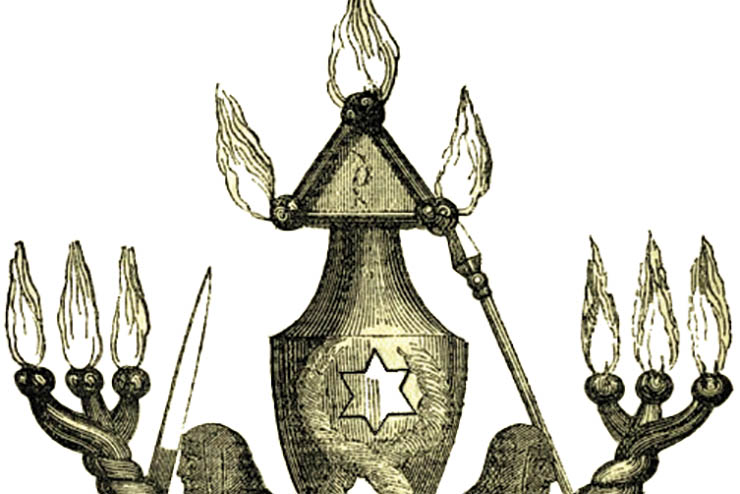
  • Libya Then & Now: An Overview of NATO’s Handiwork

    Libya Then & Now: An Overview of NATO’s Handiwork

    From New Dawn Special Issue Vol 8 No 5 (Oct 2014)

    In 2011, as the entire world watched the Arab Spring in amazement, the US and its allies, predominately working under the banner of the North Atlantic Treaty Organization (NATO) and the Gulf Cooperation Council (GCC), militarily overran the Libyan Arab Jamahiriya.

    The peaceful civilian protesters they claimed to be intervening to protect were not really what the US and its cohorts presented to the world. Many of these so-called “protesters” were armed, and when this became apparent they eventually began to portray themselves as “rebel forces.” These so-called “rebels” in Libya were not a military force that emerged spontaneously for the most part, but an insurgency movement cultivated and organised before any opposition activities were even reported in Libya.

    After Libya’s rapprochement with the US and the European Union, it was unthinkable to many that Washington and any of its allies could even have been preparing to topple the Libyan government. Business and trade ties between Libya and the US, Britain, Italy, France, Spain, and Turkey had bloomed since 2003 after Colonel Muammar Qadhafi opted for cooperation with Washington. No one imagined that Saif Al-Islam Qadhafi’s “New Libya” with its neo-liberalism could be on a collision course with NATO.

    Yet, the US and its EU partners for several years made preparations for taking over Libya. They had infiltrated the Jamahiriya’s government, security and intelligence sectors. Longstanding imperialist objectives existing since the Second World War, aimed at dividing Libya into three colonial territories, were taken out of government filing cabinets in Washington, London, Paris and Rome, and circulated at NATO Headquarters in Brussels.

    In league with these colonial plans, the US and its allies had been cultivating ties with different members of the Libyan opposition and had always reserved the option of using these opposition figures for regime change in Tripoli. Putting together their colonial designs and mobilising their agents, the US and its allies began organising the stage for establishing the Transitional National Council (TNC) – simply called the Transitional Council – and similar bodies to govern Libya as its new puppet leadership. The British and French even held joint invasion exercises months before the Libyan conflict erupted with the Arab Spring in 2011, while various intelligence services and foreign military commandos from NATO and GCC countries were also on the ground in Libya helping to prepare for the destabilisation of the North African country and the toppling of the Jamahiriya’s government and institutions.

    Realities have been turned upside down and the victims were grossly portrayed as the aggressors in the conflict. While the Transitional Council’s forces, augmented by mercenaries and foreign fighters, were torturing, raping, and murdering civilians and those that were standing in their way with the aid of NATO and the GCC, Muammar Qadhafi was inflexibly and exclusively blamed for all the violence inside Libya. Nor were the atrocities an exclusively Libyan versus Libyan matter. During the conflict, NATO committed serious war crimes and crimes against humanity in its effort to overrun and control the North African country. Not only did foreign journalists help justify and sustain the war, but they played major roles in assisting NATO’s war effort by passing on information about Libyan targets and checkpoint locations to the Jamahiriya’s enemies. The war, however, did not go as planned and Libyan resistance proved far stronger than the Pentagon and NATO initially imagined.

    In the course of the confrontation and at the international level, a series of human rights organisations and think-tanks were utilised for preparing the stage for the conflict in Libya and the toppling of its government. These organisations were mostly part of a network that had been working to establish the mechanisms for justifying interventionism and creating the net of individuals and public faces needed for creating a proxy government in Libya in the false name of “democracy.” When the time came, these bodies coordinated with the NATO powers and the mainstream media in the project to isolate, castrate, and subjugate the Libyan Arab Jamahiriya. These so-called human rights organisations and the mainstream media networks worked together to propagate lies about African mercenaries, Libyan military jet attacks on civilians, and civilian massacres by Muammar Qadhafi’s regime. International news networks extensively quoted these human rights organisations in what would amount to a self-fuelled cycle of misinformation, while the same human rights organisations continued to make claims on the basis of the media’s reports. In other words, each side fed the other. It was this web of lies that was presented at the Human Rights Council in the United Nations Office at Geneva and then handed to the United Nations Security Council in New York City as the basis for the war in Libya. These lies were accepted without any investigation being launched by the United Nations or any other international bodies. Any Libyan requests for international investigation teams were ignored. It was from this point onward that NATO used the UN Security Council to launch its war of aggression against Libya under the pretext of protecting civilians and enforcing a no-fly zone over the Arab country. Although not officially accepted by the United Nations Security Council, the “Responsibility to Protect” (R2P) doctrine was being showcased as a new paradigm for military intervention by NATO.

    All known advocates of Pentagon militarism and global empire demanded this war take place, including Paul Wolfowitz, John McCain, Joseph Lieberman, Elliott Abrahams, Leon Wieseltier, John Hannah, Robert Kagan, and William Kristol. The Project for the New American Century (PNAC) and the neo-conservative crowd was the realist foreign policy camp in Washington. The entire US establishment lined up to pick off Tripoli and reduce it a weak and divided African protectorate.

    Libya & the New “Scramble” for Africa

    To put NATO’s war in Libya within the framework of historic analysis, one only needs to be reminded that the main thrust of the sudden physical European colonisation of Africa, called the “Scramble for Africa,” started when an economic recession originally called the “Great Depression,” but in retrospect renamed as the “Long Depression,” hit much of Europe and North America from roughly 1873 to 1893. In this period the entire tempo of Western European contact with African nations transformed.

    Prior to this economic recession, Western European companies and enterprises were content dealing with African leaders and recognising their authority. Few Western European colonies in Africa had existed aside from a few coastal strips based on strategically-placed trading posts in Sierra Leone and Lagos in the possession of Britain; Mozambique and Angola in the possession of Portugal; and Senegal in the possession of France. At this time the biggest external force in Africa was the Ottoman Empire, which was beginning its long decline as a great power.

    Even with Western European colonial incursions into Africa by Britain, France, and Portugal, most of the African continent was still free of external or alien control. Intensified European economic rivalries and the recession in Western Europe, however, would change this. Britain would lose its edge as the world’s most industrialised nation as the industrial sectors of the USA, France and Germany all began to increasingly challenge British manufacturers. As a result of the recession and increased business rivalries, the corporations of Western European countries began to push their respective governments to adopt protectionist practices and to directly intervene in Africa to protect the commercial interests of these corporations. The logic behind this colonial push or “scramble” was that these Western European governments would secure large portions of Africa as export markets and for resource imports for these corporations alone, while these African territories would effectively be closed off to economic rivals. Thus, a whole string of Western European conquest began in Africa to secure ivory, fruits, copal (gum), cloves, beeswax, honey, coffee, peanuts, cotton, precious metals, and rubber.

    Although appropriating Libya’s financial and material wealth were objectives of the NATO war in 2011, the broader objectives of the criminal war were part of the struggle to control the African continent and its vast wealth. The “Scramble for Africa” was repeating itself. Just like the first time, recession and economic rivalries were tied to this new round of colonial conquest in the African continent.

    The emergence of Asia as the new global centre of gravity, at the expense of the nations of the North Atlantic in North America and Western Europe, has also primed the United States and its allies to start an endeavour to close Africa off from the People’s Republic of China and the emerging centres of power in Russia, India, Brazil, and Iran. This is why the Pentagon’s United States Africa Command (USAFRICOM/AFRICOM) played a major role in the war.

    The London Conference on Libya, where the Libya Contact Group was formed on 29 March 2011, was a modern version of the Berlin Conference of 1884, which attempted to solidify the gains made by European colonial powers in their first rush to control African societies and territory. The Istanbul Conference on Libya, where the Libya Contact Group met for the fourth time on 15 July 2011, was virtually a declaration of the intentions of the US and these countries to appropriate Libya’s vast wealth. This is a template for usurping the wealth of other countries in Africa and beyond. In this regard, the Transitional Council has served as nothing more than a proxy that was designed to help embezzle Libya’s vast wealth.

    Moreover, Libya had to be neutralised in line with the intentions of this project to reclaim Africa, because of Qadhafi’s pan-African ambitions to unify the African continent under Libyan leadership. Libya and its development and political projects were effectively erecting a barrier to the re-colonisation of the African continent. In this regard, the war was launched by “Operation Odyssey Dawn.” This name is very revealing. It identifies the strategic intent and direction of the campaign in Libya. ‘The Odyssey’ is an ancient Greek epic by the poet Homer that recounts the voyage and trails of the hero Odysseus of Ithaca on his voyage home. The main theme here is the ‘return home’. In other words, the military assault’s codename meant that countries like the US, Britain, France, Italy, Germany, Belgium, and Turkey were on their own odyssey of ‘return’ into Africa.

    [alert type=”info” dismiss=”no”]If you appreciate this article, please consider a subscription to New Dawn magazine.[/alert]

    The Crown of Africa

    Libya is a lucrative prize of massive economic value. It has immense oil and gas resources, vast amounts of underground water from the Nubian Sandstone Aquifer System, important trade routes, substantial foreign investments, and large amounts of liquid capital. Up until 2011, Libya was blessed with a rare gift in regard to its national revenue in that it saved a significant amount. In fact Libya possessed more than US$150 billion in overseas financial assets and had one of the largest sovereign investment funds in the world at the start of 2011.

    Until the conflict in Libya ignited, there was a very large foreign work force in the Jamahiriya. Thousands of foreign workers from every corner of the globe went to Libya for employment. This included nationals from places like the Philippines, Turkey, sub-Saharan Africa, China, Latin America, Belarus, Italy, France, Bulgaria, Romania, Canada, Russia, Ukraine, Serbia, and every corner of the Arab world. For years, these jobs inside Libya were an important source of economic remittances in the cases of some African economies, such as Niger. Moreover, many foreign workers from places like the Philippines and Italy even chose to make their lives in Libya and open their own local businesses.

    Before the NATO war, Libyan society had come a long way since 1951 when it became an independent African country. In 1975, the political scientist Henri Habib described Libya on the dawn of its independence as a backward country saying:

    When Libya was granted its independence by the United Nations on December 24, 1951, it was described as one of the poorest and most backward nations of the world. The population at the time was not more than 1.5 million, was over 90% illiterate, and had no political experience or knowhow. There were no universities, and only a limited number of high schools which had been established seven years before independence.

    According to Habib, the state of poverty in Libya was the result of the yoke of Ottoman domination followed by an era of European imperialism in Libya that started with the Italians. He explained that, “[e]very effort was made to keep the Arab inhabitants [of Libya] in a servile position rendering them unable to make any progress for themselves or their nation.” This colonial yoke, however, began its decline in 1943 after Italy and Germany were defeated in North Africa during the Second World War.

    In 1959 Libya’s oil reserves were discovered. Despite political mismanagement and corruption, since 1969 these Libyan oil reserves were used to improve the standard of living for the country’s population. In addition to the revenue from Libyan energy reserves, the Libyan government played an important role in maintaining Libya’s high living standards. Although never fully nationalised, Libya’s oil would only, in progressive steps, fall under the control of Libyans after the 1969 coup against the Libyan monarchy by Qadhafi and a group of young military officers. Before 1969 most of the country’s oil wealth was actually not being used to serve the general public. Under Qadhafi’s leadership this changed and the National Oil Company was founded on 12 November 1970.

    To a certain extent the isolation of Libya in the past as a pariah state played a role in insulating Libya economically and maintaining its standards of living. From an economic standpoint, most of the Arab world and Africa have become globalised as components of an integrated network of regional economies tied to the United States and the European Union. Libyan integration into this global economic system was delayed because of the past political isolation of the Libyan Arab Jamahiriya when Washington, London, and Paris were openly at odds with Tripoli.

    Despite having vast sums of money stolen and squandered by Qadhafi’s family and their officials, social services and benefits, such as government housing and numerous subsidies, were available to the Libyan population. It has to be cautioned too that the apparatus of a modern welfare state does not mean that neo-liberal restructuring and poverty were not afoot in Libya, because they very much were. What this means is that economics was not the driving force for the internal dimension of the fighting in Libya. For years, up until 2011, Libya had the highest standards of living in Africa and one of the highest in the Arab world. There is an old Libyan proverb, “if your pocket becomes empty, your faults will be many.” In this regard, Libya’s faults were not many in economic terms.

    In 2008, Libya had protests that were reportedly caused by unemployment. Most protests in Libya from 2003 to 2011, however, did not have any real economic dimension dominated by breadbasket issues. This set the Jamahiriya apart from Arab countries like Tunisia, Egypt, and Jordan where breadbasket issues were important factors behind the protests that erupted during the same period in 2011. This, of course, does not mean the protest movements in the latter Arab countries were strictly the result of breadbasket issues and economics either. Demands for personal freedoms and backlashes against corruption were major motivating factors behind the fuelling of public anger in all these Arab states. In Libya, if anything, the frustration tied to the rampant corruption rooted amongst Jamahiriya authorities and officials had created shifting tides of resentment towards the government.

    As briefly mentioned, Libya also has vast amounts of underground water stored in the ancient Nubian Sandstone Aquifer System, which is situated under the territories of Chad, Egypt, Libya, and Sudan. Libya and Egypt hold the largest shares of this water source. In a joint initiative, called the Nubian Aquifer Project, the International Atomic Energy Agency (IAEA), the United Nations Development Programme (UNDP), and the financial organisation Global Environment Facility (GEF), have all worked with the governments of these four African countries to study this vast source of underground water beneath the Sahara Desert. Using isotopes, the IAEA three-dimensionally mapped the Nubian Sandstone Aquifer System.

    In the Jamahiriya, the Great Man-Made River Project was initiated under the orders of Colonel Qadhafi followed by the establishment of the Great Man-Made River Authority in 1983 to exploit the Nubian Sandstone Aquifer System for the benefit of Libya and the other regional countries in the Sahara and the Sahel regions. The project was domestically funded mostly by taxes on fuel, tobacco, and international travel, with the remainder of funding provided directly by the Libyan state. Up until 2008 the Libyan government had spent about US$19.6 billion dollars on the water project.

    According to the Isotope Hydrology Section of the IAEA, the Nubian Sandstone Aquifer System is the world’s largest fossil aquifer system and will be “the biggest and in some cases the only future source of water to meet growing demands and development” amongst Chad, Egypt, Libya, and Sudan. As fresh water supplies become limited globally, it was forecast Libya’s water supplies will be of greater value domestically and regionally. Huge water multinationals in the US, France and elsewhere were salivating at the idea of privatising Libyan fresh water and controlling the Nubian Sandstone Aquifer System.

    The Libyan Investment Authority (LIA) had shares and invested in major international corporations such as oil giant British Petroleum (BP), the world’s largest aluminium producer United Company RUSAL in Russia, the US conglomerate General Electric (GE), the Italian bank and financial giant UniCredit, the Italian oil corporation Ente Nazionale Idrocarburi (ENI), the German engineering and electronic conglomerate Siemens, the German electricity and gas company Rheinisch-Westfälisches Elektrizitätswerk (RWE), British publishing giant Pearson, and British telecommunications giant Vodafone (UK). Libya had purchased Exxon Mobil’s subsidiary in the Kingdom of Morocco, Mobil Oil Maroc, and bought half of Kenya’s oil refinery. The LIA bought all of Royal Dutch Shell’s service stations in Djibouti, Ethiopia, and Sudan in 2008. Tripoli announced in the same year that it was buying a major share of Circle Oil, an international hydrocarbon exploration company with operations in Egypt, Morocco and Tunisia. A Libyan agreement was also made with the Democratic Republic of Congo (DRC) to build a pipeline in the western part of its territory. Large investments were made by Libya in agricultural, industrial and service projects in Africa from Egypt and Niger to Mali and Tunisia.

    In 2008 Goldman Sachs was given US$1.3 billion dollars by the Libyan Investment Authority. In unfathomable terms, Goldman Sachs told the Libyans that 98% of their investment was lost overnight, which means the Libyans lost almost all the money they gave Goldman Sachs. To Tripoli and other observers it was clear Goldman Sachs had merely appropriated the Libyan investment as a cash injection, because it needed the funds due to the global financial crisis. Afterwards, Jamahiriya officials and Goldman Sachs executives tried negotiating a settlement under which Goldman Sachs would give Tripoli huge shares in the Wall Street financial giant. These negotiations between Libya and Goldman Sachs for a settlement finally ended in 2009 with both sides failing to agree on a formula to replace the Libyan money that Goldman Sachs had effectively appropriated from Tripoli.

    Goldman Sachs was not alone in filching Libyan investment funds: Société Générale S.A., Carlyle Group, J.P. Morgan Chase, Och-Ziff Capital Management Group, and Lehman Brothers Holdings were also all in possession of vast Libyan investments and funds. In one way or another, NATO’s war on Libya and the freeze of Libyan financial assets profited them all. They and their governments were also not happy with Qadhafi’s ideas and proposal to the United Nations that the former colonial powers owed Africa almost US$800 trillion dollars.

    The fact that Libya happened to be a rich country was one of its crimes in 2011. Oil, finance, economics, and Libyan natural resources were always tempting prizes for the United States and its allies. These things were the spoils of war in Libya. While Libyan energy reserves and geopolitics played major roles in launching the 2011 war, it was also waged in part to appropriate Tripoli’s vast financial holdings and to supplement and maintain the crumbling financial hegemony of Wall Street and other financial centres. Wall Street could not allow Tripoli to be debt-free, to continue accumulating international financial possessions, and to be a creditor nation giving international loans and investing funds in other countries, particularly in Africa. Thus, major banks in the United States and the European Union, like the giant multinational oil conglomerates, had major roles and interests in the NATO war on Tripoli.

    An Overview of the African Geopolitics of the War on Libya

    NATO’s operations in the Libyan Arab Jamahiriya have helped erode Libyan political unity, which has had clear implications for the North African country’s spatial unity and all the nations bordering Libya. Libya and its region have been destabilised. The domino effect can clearly be seen at work in Niger, Mali, and the Central African Republic where there has been fighting as a result, at least in part, of the NATO war on Libya.

    Within a strictly African context, Libya sits at an important geographic point. The country is a geographic gateway into Africa and connects the northeast and northwest sections of the continent. Libya’s national territory falls within the Sahara and Sahel regions and events in Libya directly influence Sudan, Egypt and the regions of the Maghreb, West Africa, and Central Africa. Libya is also one of the states that provide access to the open sea for landlocked Chad and Niger. Aside from Tunisia, all of the countries on Libya’s borders touch and connect the bulk of Africa’s regions with the exception of the southern region of the continent. Casting out the Tunisian Republic, these bordering African states are Egypt, Sudan, Chad, Niger, and Algeria. Libya’s position is very special in this regard and this territorial embrace with these other large African states bordering multiple countries and regions is very important and would be pivotal if the Libyan project to connect the continent through a north to south and east to west transportation and trade corridor were to be developed fully.

    From a socio-cultural standpoint, Libya has tribal and cultural ties to all of the bordering countries. Ethnic differences in Libya exist too, but are minor in degree. Libyans predominately consider themselves to be Arabs. The largest Libyan minority are the Berbers, which can roughly be divided into northern groups and southern groups. There was always awareness that tribalism in Libya, if given antagonistic political connotations, could be a very dangerous thing for Libya and the bordering countries. The tribes that Libyans belong go beyond Libyan borders and form a chain in an overlapping tribal network extending all the way from Niger into Burkina Faso and Mauritania. Tribal fighting in Libya could destabilise countries like Senegal and Mali in West Africa, Chad in Central Africa, Algeria in North Africa, and Sudan in East Africa. It is in this context that NATO powers began speaking about an Arab-Berber divide in North Africa in 2011. Regime change in Tripoli has left a political vacuum where politics has fuelled tribalism and regionalism in Libya, which is now warily watched by all of the countries bordering Libya and affecting them.

    “A New Beginning” in Cairo: Obama’s attempts to Manipulate Islam

    Identity politics and faith have also wound up as factors in the competing exchange of geopolitical currents governing the sea of events surrounding Libya. The questions of what is a Libyan and what is an ethnic Arab have been superimposed as factors in the war on the Jamahiriya as a means of attacking the pan-African movement and separating Libya, and North Africa in broader terms, from the rest of Africa. Faith and religiosity have also been mounted as dynamics that are being sought as geopolitical tools and weapons of influence.

    President Barack Hussein Obama was elected by tapping into the hopes of the US public and presenting himself as a “prince of peace” and “messiah of hope.” Amongst his elegant speeches, he claimed to have a desire to reengage with the so-called Muslim World. Since 2009 Obama has consistently tried to utilise what he sees as both his African and Muslim credentials on the basis of having a Kenyan father who was a Muslim, to present himself as a “Son of Africa” and as someone sympathetic to Muslims. As part of his outreach to Muslims, President Obama gave a highly promoted speech at Cairo University on 4 June 2009. Obama’s presidential speech was named “A New Beginning” and was supposedly meant to repair the damages in the relationship between the US and the so-called Muslim World. The speech is described as such by the White House:

    On June 4, 2009 in Cairo, Egypt, President Obama proposed a new beginning between the United States and Muslims around the world, based upon mutual interest and mutual respect. Specifically, the President said that the U.S. would seek a more comprehensive engagement with Muslim-majority countries, countries with significant Muslim populations, and their people by expanding partnerships in areas like education, economic development, science and technology, and health, among others, while continuing to work together to address issues of common concern.

    Many people in predominantly Muslim states were fooled by his pledges of peace and mutual respect. In his actions, Barack Obama proved to be no less of a war hawk than his predecessors in the Oval Office. His Cairo speech was significant because it actually marked the start of a new campaign by the US to geopolitically use Muslims and their hopes and aspirations. In the same timeframe as his speech, the US State Department began to engage with the Muslim Brotherhood and even prior to the speech asked for members to attend Cairo University to hear him.Almost as if foreshadowing the coming of the so-called Arab Spring, the speech in Cairo’s fourth point was about the rise of democracy and the instability of regimes suppressing democratic values. Many of the organisations and figures that became involved in the Arab Spring and supportive of the war in Libya would all hasten to Obama’s calls for a “New Beginning.” Amongst them was Aly (Ali) Abuzaakouk, who helped found the Transitional Council.

    From Jakarta, Indonesia, in late-2010, Obama would go on with his themes of engagement with the Muslim World and speak about democracy, faith, and economic development in his second speech addressing Muslims. From that point on Al-Qaeda faded from the spotlight of US foreign policy and, well into the upheavals of the Arab Spring, the US worked to put the ghost of Osama bin Laden to rest by declaring in statements that were altered several times that the Al-Qaeda leader was killed in Pakistan by a team of CIA agents and US Navy commandos on 2 May 2010. What this all amounted to was the preparations for the fielding of US agents amongst opposition groups in the predominately Muslim countries of the Arab world and an attempt to subordinate the faith of Islam as a tool of US foreign policy by using fighters and proxy political parties that used the banner of Islam. Thus, Washington’s alliance with deviant militant groups claiming to fight under the banner of Islam was rekindled in 2011. This alliance manifested itself in the fighting in Libya and later further east on the shores of the Mediterranean in Syria and Lebanon.

    Get the issue this article appears in

    Libya Now: Destitute, Divided, & in Conflict

    The historic project to divide Libya dates back to 1943 and 1951. It started with failed attempts to establish a trusteeship over Libya after the defeat of Italy and Germany in North Africa during the Second World War. The attempts to divide Libya then eventually resulted in a strategy that forced a monarchical federal system onto the Libyans similar to that established over Iraq following the illegal 2003 Anglo-American invasion. If the Libyans had not accepted federalism in their relatively homogenous society they could have forfeited their independence in 1951.

    During the Second World War the Libyans aided and allowed Britain to enter their country to fight the Italians and the Germans. Benghazi fell to British military control on 20 November 1942, and Tripoli on 23 January 1943. Despite its promises to allow Libya to become an independent country, London intended to administer the two Libyan provinces of Tripolitania and Cyrenaica separately as colonies, with Paris to be given control over the region of Fezzan, which is roughly one-third of Libya, the area to the southwest of the country bordering Algeria, Niger, and Chad (see map on page 60). Following the end of the Second World War, the victors and Italy attempted to partition Libya into territories that they would govern as trust territories. The American, British, French, and Soviet governments referred the matter to the UN General Assembly on 15 September 1945. There, the British and the Italians made a last-ditch proposal on 10 May 1949, called the Bevin-Sfora Plan for Libya, to have Libyan territory divided into an Italian-controlled Tripolitania, a British-controlled Cyrenaica, and a French-ruled Fezzan. This failed because of the crucial single vote of Haiti, which opposed the partition of Libya.

    The British then turned to King Idris to softly balkanise Libya through the establishment of a federal emirate. A National Assembly controlled by King Idris and an unelected small circle of Libyan chieftains was to be imposed. This type of federalist system was unacceptable to most Libyans as it was intended to be a means of sidestepping the will of the Libyan people. The elected representatives from the heavily populated region of Tripolitania would be outweighed by the unelected chieftains from Cyrenaica and Fezzan.

    This did not sit well with many Arab nationalists. Cairo was extremely critical of what the US and its allies were trying to do and called it diplomatic deceit. Nevertheless, even with the opposition of most Libyans, federalism was imposed on Libya in 1951 by Idris. Libyans popularly viewed this as Anglo-French treachery. Idris was forced to abolish the federalist system for a unitary system on 27 April 1963.

    The imperialist project to divide Libya was never abandoned; it was just temporarily shelved by different foreign ministries in the Western bloc and NATO capitals. In March 2011, US Director of National Intelligence James Clapper, Jr. testified to the US Senate Armed Services Committee that at the end of the conflict in Libya, the North African country would revert to its previous monarchical federalist divisions and that it would have two or three different administrations. NATO’s Supreme Commander, Admiral Stravridis, also told the US Senate Armed Services Committee in the same month that Libyan tribal differences would be amplified as the NATO war carried on. There were even multilateral discussions held about dividing the country, but the exact lines were never completely agreed upon and negotiations kept on waxing and waning with the frontlines in the desert and mountains.

    US plans to topple the Libyan government that were put together in 1982 by the US National Security Council under the Reagan Administration were also revised or renovated for NATO’s war in 2011. One can clearly see how these plans played out through the dual use of an insurgency and military attack. According to Joseph Stanik, the US plans involved simultaneous war and support for CIA-controlled opposition groups that would entail “a number of visible and covert actions designed to bring significant pressure to bear on Qadhafi.” To execute the US plan, Washington would first have to encourage a conflict using the countries around Libya “to seek a casus belli for military action” while they would take care of the logistical needs of CIA-controlled opposition groups that would launch a sabotage campaign against the economy, infrastructure, and government of Libya. The code name for these secret plans was “Flower.” In the words of Stanik:

    The NSC restricted access to the top-secret plans to about two-dozen officials. Flower contained two subcomponents: “Tulip” and “Rose.” Tulip was the code name for the CIA covert operation designed to overthrow Qadhafi by supporting anti-Qadhafi exile groups and countries, such as Egypt, that wanted Qadhafi removed from power. Rose was the code name for a surprise attack on Libya to be carried out by an allied country, most likely Egypt, and supported by American air power. If Qadhafi was killed as a result of Flower, Reagan said he would take the blame for it.

    It also just so happened that the Obama Administration’s US Secretary of Defence Robert Gates, who was the deputy director for intelligence at the time, endorsed Rose, the military subcomponent of Flower.

    Since NATO toppled the Jamahiriya government, this is exactly what has happened in Libya. A free for all has come about, which has spilled over into neighbouring states such as Niger. There are multiple factions and different administrations including the Transitional Council in the District of Tripoli, the Misrata Military Council in the District of Misrata, several self-styled Emirates in Cyrenaica, and Jamahiriya loyalist and tribal governments in the Western Mountains and Fezzan. There have even been fusions where Jamahiriya loyalists and anti-Jamahiriya militias have joined to fight all others. The end product has been lawlessness and Somali-style civil war. The state has basically been “failed” by the US and its allies. Post-Jamahiriya governmental authority is only exercised by those in power outside of their offices and a few spaces. Violent crime has proliferated. Tripoli and other major cities are being fought for by different factions and Libyan weapons are being smuggled into different countries. Even US officials, which helped midwife the groups running rampant in Libya, have not been safe from the turmoil they helped create; the murder of US Ambassador John Christopher Stevens in Benghazi on 12 September 2012 is testimony to this.

    Oil and gas production has been stopping. National assets have been sold off to foreign corporations and privatised. Libya is no longer a competitive economic power in Africa anymore. Nor is Libya a growing financial power. Tripoli virtually transformed from a debtless country to an indebted one overnight.

    There is also a great irony to all this. The warplanes of the US-supported Libyan regime that has replaced the Jamahiriya began bombing Libyan citizens in 2014 as battles for control of Tripoli raged. The US, European Union, and NATO have said nothing about this whereas in 2011 they started a bombing campaign and war on the basis of false accusations the Jamahiriya government was doing exactly this. The deceit of these players is more than evident.

    [alert type=”general” dismiss=”no”]This article was published in New Dawn Special Issue Vol 8 No 5.[/alert]

    [alert type=”success” dismiss=”no”]If you appreciate this article, please consider subscribing to help maintain this website.[/alert]

    © New Dawn Magazine and the respective author.
    For our reproduction notice, click here.