New Dawn – World's Most Unusual Magazine

Category: Articles

  • The Real Men in Black: Government Agents or Visitors from Beyond?

    The Real Men in Black: Government Agents or Visitors from Beyond?

    From New Dawn Special Issue 17 (Sept 2011)

    Who are the “Men in Black”? In the blockbuster Hollywood movie of the same name, they were fictional characters. In real life, they are fearsome individuals who attempt to silence the witnesses of UFO and other paranormal phenomena.

    In his latest book, The Real Men in Black: Evidence, Famous Cases, and True Stories of These Mysterious Men and Their Connection to the UFO Phenomena, the popular, bestselling author Nick Redfern delves deep into the strange world of these mysterious operatives. Originally from England, Nick Redfern lives in Arlington, Texas with his wife, Dana, and his website is www.nickredfern.com.

    New Dawn magazine spoke to Nick about the Men in Black – their origins, some classic cases, previously unknown reports, secret government files, and the many theories that have been presented to explain the mystery.

    NEW DAWN (ND): What prompted you to write about the Men in Black (MIB)?

    NICK REDFERN (NR): In speaking to people about the MIB phenomenon, two things became clear to me. The first was that, even in the UFO research community, many people assumed that the mystery of the Men in Black was one that was mainly set in the 1950s and 1960s. In other words, many people assumed the MIB had gone away and aren’t active today. However, I had in my files cases as late as 2009. So, that was one reason to write the book – to demonstrate that the phenomenon is still very much ongoing, and not just a mystery of the past. The second reason was because many people’s views on the MIB were kind of based on the Hollywood Men in Black movies starring Will Smith and Tommy Lee Jones. The films are good fun, and entertaining. But, they only portray the MIB as agents of a secret arm of the government. The reality, however, is that most MIB are described as being far stranger than that – they sound almost alien, creepy, weird, and not even human in many respects. So, that was the other, main purpose in writing the book: to reveal that while the government secret-agent angle is certainly valid, it doesn’t tell the whole story.

    ND: The Men in Black first appeared in the early 1950s, to a UFO investigator named Albert Bender. Can you tell us about his encounters with the MIB?

    NR: Albert Bender was a man who, in the early 1950s, established a UFO research group – called the International Flying Saucer Bureau – in his home-town of Bridgeport, Connecticut, USA. Bender was an unusual character, who lived in the attic of his step-father’s home, and who was deeply interested in not just UFOs, but also the world of the occult, and was very knowledgeable in both areas. Bender’s IFSB attracted a huge amount of attention, and created links with UFO groups and researchers all around the world, including Australia and England. In other words, the group became very successful, very quickly. Then something strange happened: without warning Bender suddenly shut down the IFSB and quit Ufology. The rumour-mill – based on what Bender had quietly told a few friends and colleagues, albeit in a brief, enigmatic fashion – was that he had been silenced by three men in black-suits who warned him to leave UFO research, which he did until 1962 when he briefly resurfaced with his own book on the events in question, Flying Saucers and the Three Men.

    ND: Gray Barker was a legendary UFO researcher and writer from the 1950s onwards who chronicled the exploits of the MIB. Can you tell us about Barker and what he uncovered?

    NR: Barker was a man who, like Bender, was heavily into both UFOs and the occult, and also horror movies, gothic horror stories and things like that. So they kind of gravitated to each other and became friends. Barker was also an excellent, atmospheric writer who quickly and astutely realised there was a fascinating story to be told about Bender’s silencing by the three men, and Barker told the story in his 1956 book, They Knew Too Much about Flying Saucers. In that book, Barker relates the silencing of Bender, but alludes to the theory the MIB were from the US Government. However, in 1962, Barker – who was a publisher as well as an author – published Bender’s very own book, the aforementioned Flying Saucers and the Three Men. Bender portrays the MIB as very different from anything that might surface out of the Pentagon! In Bender’s book, the MIB come across as definitively supernatural entities. He talks about them materialising in his bedroom, along with accompanying overpowering odours of brimstone – which is a classic facet of supernatural encounters. They have weirdly glowing, or self-illuminated, eyes. And they have the ability to render Bender unconscious or place him into an altered state of mind. So, it’s very ironic that the man who arguably started the MIB mystery – which many people assume is all about government agents – actually described the MIB as nothing like CIA or FBI people. They were much, much stranger.

    ND: The Men in Black turned up during the famous “Mothman” sightings at Point Pleasant, West Virginia, in the 1960s – which became the subject of the Hollywood movie, The Mothman Prophecies, starring Richard Gere. What is the story behind the Mothman‐MIB connection?

    NR: The link between Mothman and the MIB is just as weird as the saga of Albert Bender a decade earlier. The Mothman Prophecies movie was based on the book of the same title written by legendary Fortean author, John Keel, and told the story of this ominous, glowing-eyed, winged creature seen in and around Point Pleasant in the mid-to-late 1960s. Despite its cartoon-style name, Mothman was a very unsettling, shadowy thing that haunted the town’s old TNT plant and hung around in the shadows, like some grim-reaper-style thing. And, on this latter point, sightings of Mothman culminated in the collapse of the town’s Silver Bridge that spanned the Ohio River, and which led to the deaths of dozens of people who were on the bridge and drowned. Some researchers saw Mothman as the cause of the disaster. But, today, more seem to take the view that Mothman is some form of warning phenomenon; that it tries to warn people of impending disaster, rather than actually causing it. And when the Mothman encounters were at their height, UFOs were buzzing about, and the Men in Black were seen roaming all around Point Pleasant, making veiled threats to Mothman witnesses and local journalists, and even plaguing people like Keel and Gray Barker, who also wrote a book on the affair called The Silver Bridge. It’s almost as if the MIB were trying to prevent people from learning the truth about both the UFO presence and the true nature of Mothman.

    ND: John Keel had his own face‐to‐face encounter with the MIB. Will you tell us about that?

    NR: Yes, this is an extremely bizarre story that was provided to me by the well-known author on all-things paranormal, Brad Steiger. Steiger said to me: “I’ve never put this in any of my books, and I feel a little awkward, but on the other hand, what I am about to tell you really happened.” Steiger added that Keel “…began to tell me of the visitations he’d had with three men who had not knocked, but had entered, his apartment. They literally came through the door. He told me of an evening when they were challenging him to lay off the whole Mothman thing; to lay off UFOs, if he knew what was good for him.” Well, having heard that astounding aspect of the story – which sounds astonishingly like Albert Bender’s experiences with the three MIB that materialised in his attic – you might think: could it get any stranger? Yes, it could; and it certainly does, as Steiger added to me: “John was the sort of person who responded to threats like the red flag to the bull. But, he said to me that, on this occasion, they reached under his sink and took out a jug of Clorox. They said: ‘What is this?’ and John said: ‘That’s disinfectant, it’s very powerful.’ They brought it over to him, took the cap off, and gave him a smell. John wrinkled his nose, and when they asked if it was Clorox, he said ‘Yes, that’s what it is. Now put it back before you spill it.’ Whereupon, the three of them – in front of him – put it to their lips one at a time and took large gulps of it. Now, by the time John had finished the evening, telling me stories like this, I decided that maybe I wouldn’t be quite so brave and quite so powerful. I began thinking: we’re not dealing with FBI agents or the Air Force.”

    ND: Some people have suggested the MIB are government agents. Does evidence exist to support this theory?

    NR: There’s absolutely no doubt at all that at least some Men in Black do originate with official agencies. For example, in the book I cite several significant cases from the 1960s – including one from England and one from the United States – where people had classic encounters of the MIB variety, with the MIB turning up in a black car, wearing black suit and hat, and making a veiled comment to the witness about not speaking publicly on their encounter. However, the significant thing is that thanks to the Freedom of Information Acts in each country, we now have the files on both events. In the English case, the documents identify the Man in Black as being attached to the British Royal Air Force’s Provost & Security Services. The P&SS get involved in cases ranging from espionage and counter-intelligence, to national security issues. In the US case, the files identify the MIB as agents of the FBI. So, clearly some cases of MIB are indeed government-originated. But these incidents are far outweighed by the weirder, Albert Bender-type encounters with the MIB.

    ND: Another scenario suggests the Men in Black are aliens themselves. What do you think about that?

    NR: Well, as bizarre as that may sound, the fact is that most of the Men in Black do look very, very odd, and they act equally as odd, too! For example, many of the MIB are described as only being about five-feet-tall. They have either olive-coloured skin or almost completely white-coloured skin. They have oddly shaped, and strangely spaced, eyes and are painfully thin, almost to the point of looking practically anorexic. On top of that, they don’t seem accustomed to our ways, customs and languages to the degree they should if they’re from the government. They also seem to have the ability to literally appear and disappear – and I do mean literally! This has all led to the theory that perhaps the MIB are human-alien hybrids. In other words, creatures that – with a bit of camouflage, such as pulled-down hats, large wrap-around sunglasses, turned-up trench-coat collars, and largely only surfacing at night and keeping in the shadows – look enough like us to where they can move among us, and perhaps even infiltrate us, if they’re careful about how they do it. The imagery is kind of like an underground alien army working its way into our lives, slowly and subtly, in other words.

    ND: In the 1960s, a number of UFO researchers and authors actually managed to photograph the Men in Black. Can you tell us about their experiences?

    NR: Yes, there are at least two cases on record where the MIB have been captured on film. The first story comes from two long-time UFO researchers/authors: Tim Green Beckley and Jim Moseley. Back in the 1960s there was a UFO investigator in Jersey City, USA named Jack Robinson. Jack was married to Mary, and in 1968 they began to experience weird activity – when they would return home at night, after maybe going out for dinner, it looked like someone had been in their apartment and had been rummaging through Jack’s UFO files. Then, during the day when she was at home, Mary started seeing a Man in Black staring up at the apartment from a ground-floor doorway in the building directly opposite them. Mary said he had an unsettling look on his face, kind of unemotional and zombie-like. Mary happened to mention this to Tim and Jim, and because the guy appeared three days in a row, they decided to drive over early one morning and see if they could see the Man in Black for themselves. Sure enough, he was there, staring ahead, with the black sunglasses, long black coat, and enigmatic stare. Tim, in the busy morning traffic, managed to get a photo of the MIB, and which he believes is one of the few authentic photos of a genuine Man in Black.

    ND: In your book, you discuss a weird MIB experience reported by a notable author in London, England, in the early‐1980s. What is that story about?

    NR: This is the story of Colin Bennett, who has written a number of acclaimed biographies on such people as Charles Fort and George Adamski. Back in the early 1980s, Colin had a very unusual experience in London. He was walking home late one night, and saw a UFO in the sky. Even stranger, it began to shape-shift, from a bright-light in the sky, to an old Second World War bomber, and finally to a large, black, triangular-shaped craft. He raced home to tell his girlfriend, and as he entered the apartment, there was this MIB sitting on the couch! The man had claimed to Colin’s girlfriend that he was due to meet someone who lived on the floor above, and as the person was out, asked if he could wait. Mary, Colin’s girlfriend, said yes. Although, it’s clear that as the evening progressed, the MIB was far more interested in learning about Colin’s UFO experience than he was waiting on a friend. This is made more likely by the fact that as soon as Colin finished relating the account, the MIB stood up, seemingly satisfied, and walked out into the London night, as mysteriously as he first arrived!

    ND: Marie Jones is a best‐selling author of books on mysteries of this world and beyond. What is the story concerning how she was terrorised by the MIB?

    NR: Marie is a respected author and a very credible one, too. In the mid-1990s she was deeply involved in alien abduction research, which seems to have led her to be targeted by the Men in Black. She allowed me to interview her for the book, and told me some very disturbing things, such as how the MIB would make intimidating phone-calls to her home, even telling her what she was wearing, and what book was on the bedside table. It disturbed her to such an extent that she walked away from the abduction phenomenon, which may very well have been the goal of the MIB.

    ND: Will you discuss the theories of paranormal author Joshua P. Warren, who has speculated that the Men in Black may be time‐travellers from our very own future?

    NR: This is a very intriguing theory. Granted, it’s speculative to a degree. But Josh asks the question: why are the MIB always seen in old-style clothes? Why, even in the 1980s, 1990s and 2000s do they always wear the 1940s/1950s-type Fedora hats and skinny black ties? Why do they drive old-style black cars? In other words, everything about the MIB seems to be out of time. Josh speculates that perhaps the MIB are, in simple terms, time-cops, whose role it is to guard the timelines, to prevent time-paradoxes from occurring, and to ensure that the past, present and future don’t fall into disarray. It’s a fascinating scenario to think about.
    Get the issue this article appears in

    ND: What surprised you most while you were researching the book?

    NR: That’s an easy one: it was without doubt the fact that MIB encounters are occurring on a scale that easily parallels – if not even exceeds – the number of reports from the 50s and 60s. Even I was amazed at how active the MIB still are.

    ND: What is your personal opinion on who the Men in Black are?

    NR: My personal conclusion is that there are at least two things going on. There are the government-originated MIB, and there are the weirder MIB. As for the former, I prove in the book that some can be traced back to official agencies of at least several governments. As for those stranger MIB, my personal view is that they are paranormal. Of course, much of this depends on how we define the paranormal! My personal view is that the MIB may be the inhabitants of multi-dimensions or extra-dimensions that co-exist with ours, and whose role it is to keep us away from the truth about not just UFOs, but a whole range of strange phenomena too. But as for why, that is the big question still eluding us!

    ND: What do you hope the publication of your new book, The Real Men in Black, will achieve?

    NR: I hope it will help people to realise that the MIB mystery is very much an ongoing one, that the MIB are not just the stuff of Hollywood fiction, fantasy or hoaxing, and that they are a very real, menacing and disturbing phenomenon not to be treated lightly. In fact, I have already received dozens of new reports since publication of the book.

    [alert type=”general” dismiss=”no”]This article was published in New Dawn Special Issue 17.[/alert]

    [alert type=”success” dismiss=”no”]If you appreciate this article, please consider subscribing to help maintain this website.[/alert]

    © New Dawn Magazine and the respective author.
    For our reproduction notice, click here.

  • The Elite Plan for a New World Social Order

    The Elite Plan for a New World Social Order

    From New Dawn 128 (Sept-Oct 2011)

    When the Industrial Revolution began in Britain, in the late 1700s, there was lots of money to be made by investing in factories and mills, by opening up new markets, and by gaining control of sources of raw materials. The folks who had the most money to invest, however, were not so much in Britain but more in Holland. Holland had been the leading Western power in the 1600s, and its bankers were the leading capitalists. In pursuit of profit, Dutch capital flowed to the British stock market, and thus the Dutch funded the rise of Britain, who subsequently eclipsed Holland both economically and geopolitically.

    In this way British industrialism came to be dominated by wealthy investors, and capitalism became the dominant economic system. This led to a major social transformation. Britain had been essentially an aristocratic society, dominated by landholding families. As capitalism became dominant economically, capitalists became dominant politically. Tax structures and import-export policies were gradually changed to favour investors over landowners.

    It was no longer economically viable to simply maintain an estate in the countryside: one needed to develop it, turn it to more productive use. Victorian dramas are filled with stories of aristocratic families who fall on hard times, and are forced to sell off their properties. For dramatic purposes, this decline is typically attributed to a failure in some character, a weak eldest son perhaps. But in fact the decline of aristocracy was part of a larger social transformation brought on by the rise of capitalism.

    The business of the capitalist is the management of capital, and this management is generally handled through the mediation of banks and brokerage houses. It should not be surprising that investment bankers came to occupy the top of the hierarchy of capitalist wealth and power. And in fact, there are a handful of banking families, including the Rothschilds and the Rockefellers, who have come to dominate economic and political affairs in the Western world.

    Unlike aristocrats, capitalists are not tied to a place, or to the maintenance of a place. Capital is disloyal and mobile – it flows to where the most growth can be found, as it flowed from Holland to Britain, then from Britain to the USA, and most recently from everywhere to China. Just as a copper mine might be exploited and then abandoned, so under capitalism a whole nation can be exploited and then abandoned, as we see in the rusting industrial areas of America and Britain.

    This detachment from place leads to a different kind of geopolitics under capitalism, as compared to aristocracy. A king goes to war when he sees an advantage to his nation in doing so. Historians can ‘explain’ the wars of pre-capitalist days, in terms of the aggrandisement of monarchs and nations.

    A capitalist stirs up a war in order to make profits, and in fact our elite banking families have financed both sides of most military conflicts since at least World War 1. Hence historians have a hard time ‘explaining’ World War 1 in terms of national motivations and objectives.

    In pre-capitalist days warfare was like chess, each side trying to win. Under capitalism warfare is more like a casino, where the players battle it out as long as they can get credit for more chips, and the real winner always turns out to be the house – the bankers who finance the war and decide who will be the last man standing. Not only are wars the most profitable of all capitalist ventures, but by choosing the winners, and managing the reconstruction, the elite banking families are able, over time, to tune the geopolitical configuration to suit their own interests.

    Nations and populations are but pawns in their games. Millions die in wars, infrastructures are destroyed, and while the world mourns, the bankers are counting their winnings and making plans for their postwar reconstruction investments.

    From their position of power, as the financiers of governments, the banking elite have over time perfected their methods of control. Staying always behind the scenes, they pull the strings controlling the media, the political parties, the intelligence agencies, the stock markets, and the offices of government. And perhaps their greatest lever of power is their control over currencies. By means of their central-bank scam, they engineer boom and bust cycles, and they print money from nothing and then loan it at interest to governments. The power of the elite banking gang (the ‘banksters’) is both absolute and subtle…

    Some of the biggest men in the United States are afraid of something. They know there is a power somewhere, so organised, so subtle, so watchful, so interlocked, so complete, so pervasive that they had better not speak above their breath when they speak in condemnation of it.
    – President Woodrow Wilson

    The End of Growth – Banksters vs. Capitalism

    It was always inevitable, on a finite planet, that there would be a limit to economic growth. Industrialisation has enabled us to rush headlong toward that limit over the past two centuries. Production has become ever more efficient, markets have become ever more global, and finally the paradigm of perpetual growth has reached the point of diminishing returns.

    Indeed, that point was actually reached by about 1970. Since then capital has not so much sought growth through increased production, but rather by extracting greater returns from relatively flat production levels. Hence globalisation, which moved production to low-waged areas, providing greater profit margins. Hence privatisation, which transfers revenue streams to investors that formerly went to national treasuries. Hence derivative and currency markets, which create the electronic illusion of economic growth, without actually producing anything in the real world.

    For almost forty years, the capitalist system was kept going by these various mechanisms, none of which were productive in any real sense. And then in September 2008 this house of cards collapsed, all of a sudden, bringing the global financial system to its knees.

    If one studies the collapse of civilisations, one learns that failure-to-adapt is fatal. Is our civilisation falling into that trap? We had two centuries of real growth, where the growth-dynamic of capitalism was in harmony with the reality of industrial growth. Then we had four decades of artificial growth – capitalism being sustained by a house of cards. And now, after the house of cards has collapsed, every effort is apparently being made to bring about ‘a recovery’ – of growth! It is very easy to get the impression that our civilisation is in the process of collapse, based on the failure-to-adapt principle.

    Such an impression would be partly right and partly wrong. In order to understand the real situation we need to make a clear distinction between the capitalist elite and capitalism itself. Capitalism is an economic system driven by growth; the capitalist elite are the folks who have managed to gain control of the Western world while capitalism has operated over the past two centuries. The capitalist system is past its sell-by date, the bankster elite are well aware of that fact – and they are adapting.

    Capitalism is a vehicle that helped bring the banksters to absolute power, but they have no more loyalty to that system than they have to place, or to anything or anyone. As mentioned earlier, they think on a global scale, with nations and populations as pawns. They define what money is and they issue it, just like the banker in a game of Monopoly. They can also make up a new game with a new kind of money. They have long outgrown any need to rely on any particular economic system in order to maintain their power. Capitalism was handy in an era of rapid growth. For an era of non-growth, a different game is being prepared.

    Thus, capitalism was not allowed to die a natural death. Instead it was brought down by a controlled demolition. First it was put on a life-support system, as mentioned above, with globalisation, privatisation, currency markets, etc. Then it was injected with a euthanasia death-drug, in the form of real-estate bubbles and toxic derivatives. Finally, the Bank of International Settlements in Basel – the central bank of central banks – pulled the plug on the life-support system: they declared the ‘mark-to-market rule’, which made all the risk-holding banks instantly insolvent, although it took a while for this to become apparent. Every step in this process was carefully planned and managed by the central-banking clique.

    The End of Sovereignty – Restoring the Ancien Régime

    Just as the financial collapse was carefully managed, so was the post-collapse scenario, with its suicidal bailout programs. National budgets were already stretched; they certainly did not have reserves available to salvage the insolvent banks. Thus the bailout commitments amounted to nothing more than the taking on of astronomical new debts by governments. In order to service the bailout commitments, the money would need to be borrowed from the same financial system that was being bailed out!

    It’s not that the banks were too big to fail, rather the banksters were too powerful to fail: they made politicians an offer they couldn’t refuse. In the USA, Congress was told that without bailouts there would be martial law the next morning. In Ireland, the Ministers were told there would be financial chaos and rioting in the streets. In fact, as Iceland demonstrated, the sensible way to deal with the insolvent banks was with an orderly process of receivership.

    The effect of the coerced bailouts was to transfer insolvency from the banks to the national treasuries. Banking debts were transformed into sovereign debts and budget deficits. Now, quite predictably, it is the nations that are seeking bailouts, and those bailouts come with conditions attached. Instead of the banks going into receivership, the nations are going into receivership.

    In his book, Confessions of an Economic Hit Man, John Perkins explains how the third world has been coerced over the past several decades – through pressure and trickery of various kinds – into perpetual debt bondage. By design, the debts can never be repaid. Instead, the debts must be periodically refinanced, and each round of refinancing buries the nation deeper in debt – and compels the nation to submit to even more drastic IMF diktats. With the orchestrated financial collapse, and the ‘too big to fail’ scam, the banksters have now crossed the Rubicon: the hit-man agenda is now operating here in the first world.

    In the EU, the first round of nations to go down will be the so-called PIGS – Portugal, Ireland, Greece, and Spain. The fiction, that the PIGS can deal with the bailouts, is based on the assumption that the era of limitless growth will resume. As the banksters themselves know full well, that just isn’t going to happen. Eventually the PIGS will be forced to default, and then the rest of the EU will go down as well, all part of a controlled-demolition project.

    When a nation succumbs to debt bondage, it ceases to be a sovereign nation, governed by some kind of internal political process. Instead it comes under the control of IMF diktats. As we have seen in the third world, and is happening now in Europe, these diktats are all about austerity and privatisation. Government functions are eliminated or privatised, and national assets are sold off. Little by little – again a controlled demolition – the nation state is dismantled. In the end, the primary functions left to government are police suppression of its own population, and the collection of taxes to be handed over to the banksters.

    In fact, the dismantling of the nation state began long before the financial collapse of 2008. In the USA and Britain, it began in 1980, with Reagan and Thatcher. In Europe, it began in 1988, with the Maastricht Treaty. Globalisation accelerated the dismantling process, with the exporting of jobs and industry, privatisation programs, ‘free trade’ agreements, and the establishment of the regulation-busting World Trade Organisation (WTO). Events since 2008 have enabled the rapid acceleration of a process that was already well underway.

    With the collapse, the bailouts, and the total failure to pursue any kind of effective recovery program, the signals are very clear: the system will be allowed to collapse totally, thus clearing the ground for a pre-architected ‘solution’. As the nation state is being dismantled, a new regime of global governance is being established to replace it. As we can see with the WTO, IMF, World Bank, and the other pieces of the embryonic world government, the new global system will make no pretensions about popular representation or democratic process. Rule will be by means of autocratic global bureaucracies, which will take their orders, directly or indirectly, from the bankster clique.

    In his book, The Globalization of Poverty, Michel Chossudovsky explains how globalisation, and the actions of the IMF, created massive poverty throughout the third world over the past several decades. As we can see, with the dramatic emphasis on austerity following the collapse and bailouts, this poverty-creation project has now crossed the Rubicon. In this new world system there will be no prosperous middle class. Indeed, the new regime will very much resemble the old days of royalty and serfdom (the ancien régime). The banksters are the new royal family, with the whole world as their dominion. The technocrats who run the global bureaucracies, and the mandarins who pose as politicians in the residual nations, are the privileged upper class. The rest of us, the overwhelming majority, will find ourselves in the role of impoverished serfs – if we are lucky enough to be one of the survivors of the collapse process.

    Today Americans would be outraged if UN troops entered Los Angeles to restore order; tomorrow they will be grateful. This is especially true if they were told there was an outside threat from beyond, whether real or promulgated, that threatened our very existence. It is then that all peoples of the world will plead with world leaders to deliver them from this evil. The one thing every man fears is the unknown. When presented with this scenario, individual rights will be willingly relinquished for the guarantee of their well being granted to them by their world government.
    – Henry Kissinger speaking at Evian, France, May 21, 1992 Bilderbergers meeting

    The End of Liberty – The Global Police State

    For the past four decades, since about 1970, we’ve been experiencing a regime-change process, from an old global system to a new global system. In the old system, first world nations were relatively democratic and prosperous, while the third world suffered under police state tyranny, mass poverty, and imperialism (exploitation by external powers). As discussed above, the transition process has been characterised by ‘crossing the Rubicon’ – the introduction of policies and practices into the first world, that were formerly limited, for the most part, to the third world.

    Thus debt bondage to the IMF crossed the Rubicon, enabled by the collapse-bailout scam. In turn, mass poverty is crossing that same Rubicon, due to austerity measures imposed by the IMF, with its new bond-holding powers. Imperialism is also crossing the Rubicon, as the first world comes under the exploitative control of banksters and their bureaucracies, a power nexus that is external to all national identities. Unsurprisingly, police state tyranny is also crossing the Rubicon: the imposition of third world poverty levels requires third world methods of repression.

    The anti-globalisation movement can be taken as the beginning of popular resistance to the process of regime change. Similarly, the police response to the Seattle anti-globalisation demonstrations, in November 1999, can be taken as the ‘crossing of the Rubicon’ for police state tyranny. The excessive and arbitrary violence of that response – including such things as holding people’s eyes open and spraying pepper into them – was unprecedented against non-violent demonstrators in a first world nation.

    Ironically, that police response, particularly as it was so widely publicised, actually strengthened the anti-globalisation movement. As demonstrations grew in size and strength, the police response grew still more violent. A climax of sorts was reached in Genoa, in July 2001, when the levels of violence on both sides began to resemble almost a guerilla war.

    In those days the anti-globalisation movement was dominating the international news pages, and opposition to globalisation was reaching massive proportions. The visible movement was only the tip of an anti-systemic iceberg. In a very real sense, general popular sentiment in the first world was beginning to take a radical turn. Movement leaders were now thinking in terms of an anti-capitalist movement. There was a political volatility in the air, a sense that, just maybe possibly, enlightened popular sentiment might succeed in shifting the course of events.

    All of that changed on September 11, 2001, the day the towers came down. The anti-globalisation movement, along with globalisation itself, disappeared almost totally from public consciousness on that fateful day. Suddenly it was a whole new global scenario, a whole new media circus – with a new enemy, and a new kind of war, a war without end, a war against phantoms, a war against ‘terrorism’.

    Earlier we saw how the orchestrated financial collapse of September 2008 enabled certain ongoing projects to be rapidly accelerated, such as the dismantlement of sovereignty, and the imposition of austerity. Similarly, the events of September 2001 enabled certain ongoing projects to be greatly accelerated, such as the abandonment of civil liberties and international law.

    Before the towers had even come down, the ‘Patriot Act’ had already been drafted, proclaiming in no uncertain terms that the police state was here (in the USA) in force and here to stay – the Bill of Rights was null and void. Before long, similar ‘anti-terrorist’ legislation had been adopted throughout the first world. If any anti-systemic movement were to again raise its head in the first world (as it did, for example, recently in Greece), arbitrary police powers could be brought to bear – as much as might be necessary – to put the resistance down. No popular movement would be allowed to derail the banksters’ regime-change designs. The anti-globalisation movement had been shouting, ‘This is what real democracy looks like’. With 9/11, the banksters replied: ‘This is what real oppression looks like’.

    The events of 9/11 led directly to the invasions of Iraq and Afghanistan, and in general helped create a climate where invasions of sovereign nations could be readily justified, with one excuse or another. International law was to be as thoroughly abandoned as was civil liberties. Just as all restraint was removed from domestic police interventions, so was all restraint being removed from geopolitical military interventions. Nothing was to stand in the way of the banksters’ regime-change agenda.

    The technetronic era involves the gradual appearance of a more controlled society… dominated by an elite, unrestrained by traditional values… this elite would not hesitate to achieve its political ends by using the latest modern techniques for influencing public behaviour… Persisting social crisis, the emergence of a charismatic personality, and the exploitation of mass media to obtain public confidence would be the stepping-stones in the piecemeal transformation of the United States into a highly controlled society… In addition, it may be possible – and tempting – to exploit for strategic political purposes the fruits of research on the brain and on human behaviour.
    – Zbigniew Brzezinski, Between Two Ages: America’s Role in the Technetronic Era, 1970

    Get the issue this article appears in

    The Post-Capitalist Era – New Myths for a New Culture

    2012 might not be the exact year, but it’s difficult to see the endgame lasting much beyond that – and the masters of the universe love symbolism, as with 911 (both in Chile and in Manhattan), KLA 007, and others. 2012 is loaded with symbolism, eg. the Mayan Calendar, and the Internet is buzzing with various 2012-related prophecies, survival strategies, anticipated alien interventions, etc. And then there is the Hollywood film, 2012, which explicitly portrays the demise of most of humanity, and the pre-planned salvation of a select few. One never knows with Hollywood productions, what is escapist fantasy, and what is aimed at preparing the public mind symbolically for what is to come.

    Whatever the exact date, all the threads will come together, geopolitically and domestically, and the world will change. It will be a new era, just as capitalism was a new era after aristocracy, and the Dark Ages followed the era of the Roman Empire. Each era has its own structure, its own economics, its own social forms, and its own mythology. These things must relate to one another coherently, and their nature follows from the fundamental power relationships and economic circumstances of the system.

    Whenever there is a change of era, the previous era is always demonised in a new mythology. In the Garden of Eden story the serpent is demonised – a revered symbol in paganism, the predecessor to monotheism. With the rise of European nation states, the Catholic Church was demonised, and Protestantism introduced. When republics came along, the demonisation of monarchs was an important part of the process. In the post-2012 world, democracy and national sovereignty will be demonised. This will be very important, in getting people to accept arbitrary totalitarian rule…

    In those terrible dark days, before the blessed unification of humanity, anarchy reigned in the world. One nation would attack another, no better than predators in the wild. Nations had no long-term coherence; voters would swing from one party to another, keeping governments always in transition and confusion. How did anyone ever think that masses of semi-educated people could govern themselves, and run a complex society? Democracy was an ill-conceived experiment that led only to corruption and chaotic governance. How lucky we are to be in this well-ordered world, where humanity has finally grown up, and those with the best expertise make the decisions for the whole globe.

    Capitalism is about growth, progress, and change. Under capitalism the virtues of ambition, initiative, and competitiveness are praised, because those virtues serve the dynamics of capitalism. People are encouraged to always accumulate more, and never be satisfied with what they have. Under capitalism, people need to have a bit of liberty, and a bit of prosperity, so that the dynamics of capitalism can operate. Without some liberty, ambition cannot be pursued; without some prosperity, how could accumulation be pursued? In the post-capitalist world, the capitalist virtues will be demonised. This will be very important, in getting people to accept poverty and regimentation…

    The pursuit of money is the root of all evil, and the capitalist system was inherently corrupt and wasteful. Anarchy reined in the marketplace, as corporations blindly pursued profit, with no concern for human needs or for the Earth. How much more sensible are our production brigades, producing only what is needed, and using only what is sustainable. Capitalism encouraged greed and consumption; people struggled to compete with one another, to ‘get ahead’ in the rat race. How much wiser we are now, to live within our ration quotas, and to accept our assigned duties, whatever they might be, in service to humanity.

    In this regime change, ushering in the post-capitalist era, we’re seeing a conscious orchestration of economics, politics, geopolitics, and mythology – as one coordinated project. A whole new reality is being created, a whole new global culture. When it comes down to it, the ability to transform culture is the ultimate form of power. In only a single generation, a new culture becomes ‘the way things are’. And what, we might inquire, might stand in the way of any future manipulations of the cultural regime that the bankster royal family might contemplate?

    Ever since public education was introduced, the state and the family have competed to control childhood conditioning – and it is in childhood that culture is transmitted to the next generation. In the micromanaged post-capitalist future, we’ll most likely see the ‘final solution’ of social control, which is for the state to monopolise child raising. This would eliminate from society the parent-child bond, and hence family-related bonds in general. No longer is there a concept of relatives, just fellow members of the hive. The family must be demonised. Already, here in Ireland, there are daily TV spots dramatising the plight of children who are being abused or neglected by their parents…

    How scary were the old days, when unlicensed, untrained couples had total control over vulnerable children, behind closed doors, with whatever neuroses, addictions, or perversions the parents happened to possess. How did this vestige of patriarchal slavery, this safe-house den of child abuse, continue so long to exist, and not be recognised for what it was? How much better off we are now, with children being raised scientifically, by trained staff, where they are taught discipline and healthy values.

    [alert type=”general” dismiss=”no”]This article was published in New Dawn 128.[/alert]

    [alert type=”success” dismiss=”no”]If you appreciate this article, please consider subscribing to help maintain this website.[/alert]

    © New Dawn Magazine and the respective author.
    For our reproduction notice, click here.
  • The Money Masters: Behind the Global Debt Crisis

    The Money Masters: Behind the Global Debt Crisis

    In the US, we see untold millions suffering from the impact of mass foreclosures and unemployment; in Greece, Spain, Portugal, Ireland, and Italy, stringent austerity measures are imposed upon the whole population; all coupled with major banking collapses in Iceland, the UK and the US, and indecent bail-outs of “too-big-to-fail” bankers (Newspeak for too powerful to fail).

    No doubt, the bulk of the responsibility for these debacles falls squarely on the shoulders of caretaker governments in these countries that are subordinated to Money Power interests and objectives. In country after country, that comes together with embedded corruption, particularly evident today in the UK, Italy and the US.

    As we assess some of the key components of today’s Global Financial, Currency and Banking Model in this article, readers will hopefully get a better understanding as to why we are all in such a crisis, and that it will tend to get much worse in the months and years to come.

    Foundations of a Failed and False Model

    Hiding behind the mask of false “laws” allegedly governing “globalised markets and economies,” this Financial Model has allowed a small group of people to amass and wield huge and overwhelming power over markets, corporations, industries, governments and the global media. The irresponsible and criminal consequences of their actions are now clear for all to see.

    The “Model” we will briefly describe, falls within the framework of a much vaster Global Power System that is grossly unjust and was conceived and designed from the lofty heights of private geopolitical and geo-economic1 planning centres that function to promote the Global Power Elite’s agenda as they prepare their “New World Order” – again, Newspeak for a Coming World Government.2

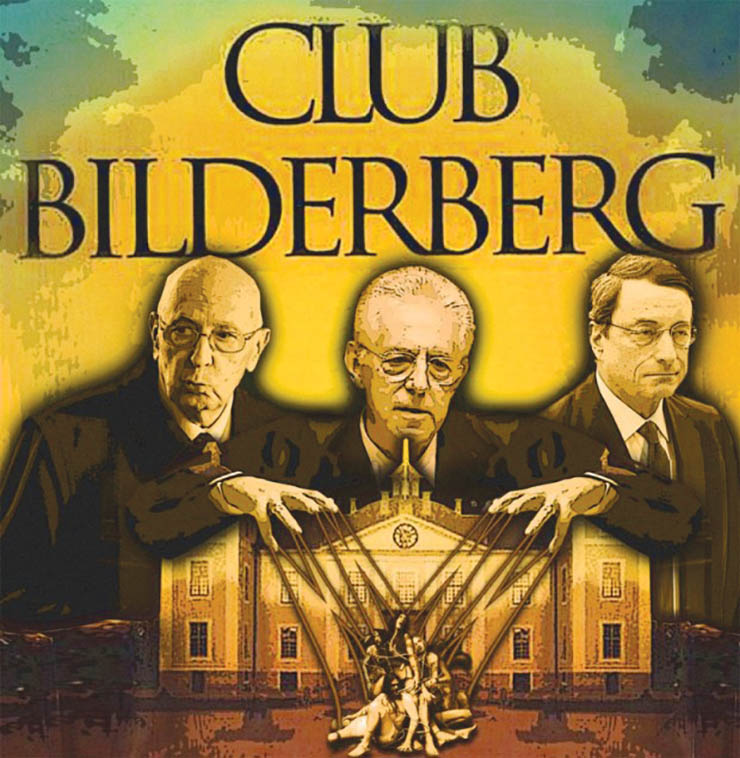
    Specifically, we are talking about key think tanks like the Council on Foreign Relations, the Trilateral Commission, the Bilderberg Group, and other similar entities such as the Cato Institute (Monetary Issues), American Enterprise Institute and the Project for a New American Century that conform an intricate, solid, tight and very powerful network, engineering and managing New World Order interests, goals and objectives.

    Writing from the stance of an Argentine citizen, I admit we have some “advantages” over the citizens of industrialised countries as the US, UK, European Union, Japan or Australia, in that over the last few decades we have had direct experience of successive catastrophic national crises emanating from inflation, hyper-inflation, systemic banking collapse, currency revamps, sovereign debt bond mega-swaps, military coups and lost wars…

    Finance vs the Economy

    The Financial system (i.e., a basically unreal Virtual, symbolic and parasitic world), increasingly functions in a direction that is contrary to the interest of the Real Economy (i.e., the Real and concrete world of work, production, manufacturing, creativity, toil, effort and sacrifice done by real people). Over the past decades, Finance and the Economy have gone their totally separate and antagonistic ways, and no longer function in a healthy and balanced relationship that prioritises the Common Good of We the People. This huge conflict between the two can be seen, amongst other places, in today’s Financial and Economic System, whose main support lies in the Debt Paradigm, i.e., that nothing can be done unless you first have credit, financing and loans to do it. Thus, the Real Economy becomes dependent on and distorted by the objectives, interests and fluctuations of Virtual Finance.3

    Debt-Based System

    The Real Economy should be financed with genuine funds; however with time, the Global Banking Elite succeeded in getting one Sovereign Nation-State after another to give up its inalienable function of supplying the correct quantity of National Currency as the primary financial instrument to finance the Real Economy. That requires decided action through Policies centred on promoting the Common Good of We The People in each country, and securing the National Interest against the perils posed by internal and external adversaries.

    Thus, we can better understand why the financial “law” that requires central banks to always be totally “independent” of Government and the State has become a veritable dogma. This is just another way of ensuring that central banking should always be fully subordinated to the interests of the private banking over-world – both locally in each country, as well as globally.

    We find this to prevail in all countries: Argentina, Brazil, Japan, Mexico, the European Union and in just about every other country that adopts so-called “Western” financial practice. Perhaps the best (or rather, the worst) example of this is the United States where the Federal Reserve System is a privately controlled institution outright, with around 97% of its shares being owned by the member banks themselves (admittedly, it does have a very special stock scheme), even though the bankers running “Fed” do everything they can to make it appear as if it is a “public” entity operated by Government, something that it is definitely not.

    One of the Global Banking Over-world’s permanent goals is – and has been – to maintain full control over all central banks in just about every country, in order to be able to control their public currencies.4 This, in turn, allows them to impose a fundamental (for them) condition whereby there is never the right quantity of public currency to satisfy the true demand and needs of the Real Economy. That is when those very same private banks that control central banking come on scene to “satisfy the demand for money” of the Real Economy by artificially generating private bank money out of nothing. They call it “credits and loans” and offer to supply it to the Real Economy, but with an “added value” (for them): (a) they will charge interest for them (often at usury levels) and, (b) they will create most of that private bank money out of thin air through the fractional lending system.

    At a Geo-economic level, this has also served to generate huge and unnecessary public sovereign debts in country after country all over the world. Argentina is a good example, whose Caretaker Governments are systematically ignorant and unwilling to use one of the sovereign state’s key powers: the issuance of high power non-interest generating Public Money (see below for a more detailed definition). Instead, Argentina has allowed IMF (International Monetary Fund) so-called “recipes” that reflect the global banking cartel’s own interests to be imposed upon it in fundamental matters like what are the proper functions of its Central Bank, sovereign debt, fiscal policy, and other monetary, banking and financial mechanisms, that are thus systematically used against the Common Good of the Argentine People and against the National Interest of the country.

    This system and its dreadful results, now and in the past, are so similar in so many other countries – Brazil, Mexico, Greece, Ireland, Iceland, UK, Portugal, Spain, Italy, Indonesia, Hungary, Russia, Ukraine… that it can only reflect a well thought-out and engineered plan, emanating from the highest planning echelons of the Global Power Elite.

    Fractional Bank Lending

    This banking concept is in use throughout the world’s financial markets, and allows private banks to generate “virtual” Money out of thin air (i.e., scriptural annotations and electronic entries into current and savings accounts, and a vast array of lines of credit), in a ratio that is 8, 10, 30, 50 times or more larger than the actual amount of cash (i.e., public money) held by the bank in its vaults. In exchange for lending this private “money” created out of nothing, bankers collect interest, demand collateral with intrinsic value and if the debtor defaults they can then foreclose on their property or other assets.

    The ratio that exists between the amount of Dollars or Pesos in its vaults and the amount of credit private banks generate is determined by the central banking authority which fixes the fractional lending leverage level (which is why controlling the central bank is so vital strategically for private banker cartels). This leverage level is a statistical reserve based on actuarial calculations of the portion of account holders who in normal time go to their banks or ATM machines to withdraw their money in cash (i.e., in public money notes). The key factor here is that this works fine in “normal” times, however “normal” is basically a collective psychology concept intimately linked to what those account holders, and the population at large, perceive regarding the financial system in general and each bank in particular.

    So, when for whatever reason, “abnormal” times hit – i.e., every time there are (subtly predictable) periodic crises, bank runs, collapses and panics, which seem to suddenly explode as happened in Argentina in 2001 and as is now happening in the US, UK, Ireland, Greece, Iceland, Portugal, Spain, Italy and a growing number of countries – we see all bank account holders running to their banks to try to get their money out in cash. That’s when they discover that there is not enough cash in their banks to pay, save for a small fraction of account holders (usually insiders “in the know” or “friends of the bankers”).

    For the rest of us mortals “there is no more money left,” which means that they must resort to whatever public insurance scheme may or may not be in place (e.g., in the US, the state-owned Federal Deposit Insurance Corporation that “insures” up to US$250,000 per account holder with taxpayer money). In countries like Argentina, however, there is no other option but to go out on the streets banging pots and pans against those ominous, solid and firmly closed bronze bank gates and doors. All thanks to the fraudulent fractional bank lending system.

    Investment Banking

    In the US, so called “Commercial Banks” are those that have large portfolios of checking, savings and fixed deposit accounts for people and companies (e.g., such main street names as CitiBank, Bank of America, JPMorganChase, etc.; in Argentina, we have Standard Bank, BBVA, Galicia, HSBC and others). Commercial Banks operate with fractional lending leverage levels that allow them to lend out “virtual” dollars or pesos for amounts equal to 6, 8 or 10 times the cash actually held in their vaults; these banks are usually more closely supervised by the local monetary authorities of the country.

    A different story, however, we had in the US (and still have elsewhere) with so-called global “Investment Banks” (those that make the mega-loans to corporations, major clients and sovereign states), over which there is much less control, so that their leveraging fractional lending ratios are far, far higher. This greater flexibility is what allowed investment banks in the US to “make loans” by, for example, creating out of thin air 26 “virtual” Dollars for every real Dollar in cash they held in their vaults (i.e., Goldman Sachs), or 30 virtual Dollars (Morgan Stanley), or more than 60 virtual Dollars (Merrill Lynch until just before it folded on 15 Sept 2008), or more than 100 virtual Dollars in the cases of collapsed banks Bear Stearns and Lehman Brothers.5

    Private Money vs Public Money

    At this point in our review, it is essential to very clearly distinguish between two types of Money or Currency:

    Private Money – This is “Virtual” Money created out of thin air by the private banking system. It generates interests on loans, which increases the amount of Private money in (electronic) circulation, and spreads and expands throughout the entire economy. We then perceive this as “inflation.” In actual fact, the main cause of inflation in the economy is structural to the interest-bearing fractional lending banking system, even among industrialised countries. The cause of inflation nowadays is not so much the excessive issuance of Public Money by Government as all so-called banking experts would have us believe but, rather, the combined effect of fractional lending and interest on private banking money.

    Public Money – This is the only Real Money there is. It is the actual notes issued by the national currency entity holding a monopoly (i.e., the central bank or some such government agency) and, as Public Money, it does not generate interest, and should not be created by anyone other than the State. Anybody else doing this is a counterfeiter and should end up in jail because counterfeiting Public Money is equivalent to robbing the Real Economy (i.e., “we, the working people”) of their work, toil and production capabilities without contributing anything in return in terms of socially productive work. The same should apply to private bankers under the present fractional lending system: counterfeiting money (i.e., creating it out of thin air as a ledger entry or electronic blip on a computer screen) is equivalent to robbing the Real Economy of its work and production capacity without contributing any counter-value in terms of work.

    Why We Have Financial Crises

    A fundamental concept that lies at the very heart of the present Financial Model can be found in the way huge parasitic profits on the one hand, and catastrophic systemic losses on the other, are effectively transferred to specific sectors of the economy, throughout the entire system, beyond borders and public control.

    As with all models, the one we suffer today has its own internal logic which, once properly understood, makes that model predictable. The people who designed it know full well that it is governed by grand cycles having specific expansion and contraction stages, and specific timelines. Thus, they can ensure that in bull market times of growth and gigantic profits (i.e., whilst the system, grows and grows, is relatively stable and generates tons of money out of nothing), all profits are privatised making them flow towards specific institutions, economic sectors, shareholders, speculators, CEO and top management & trader bonuses, “investors”, etc who operate the gears and maintain the whole system properly tuned and working.

    However, they also know that – like all roller coaster rides – when you reach the very top, the system turns into a bear market that destabilises, spins out of control, contracts and irremediably collapses, as happened to Argentina in 2001 and to the better part of the world since 2008, then all losses are socialised by making Governments absorb them through the most varied transference mechanisms that dump these huge losses onto the population at large (whether in the form of generalised inflation, catastrophic hyperinflation, banking collapses, bail-outs, tax hikes, debt defaults, forced nationalisations, extreme austerity measures, etc).

    The Four-sided Global “Ponzi” Pyramid Scheme

    As we know, all good pyramids have four sides, and since the Global Financial System is based on a “Ponzi” Pyramid Scheme, there’s no reason why this particular pyramid should not have four sides as well.

    Below is a summary of the Four-side Global “Ponzi” Pyramid Scheme that lies at the core of today’s Financial Model, indicating how these four “sides” function in a coordinated, consistent, and sequential manner.

    Side One – Create Public Money Insufficiency. This is achieved, as we explained above, by controlling the National Public entity that issues public money. Its goal is to demonetise the Real Economy so that the latter is forced to seek “alternative funding” for its needs (i.e., so that it has no choice but to resort to private bank loans).

    Side Two – Impose Private Banking Fractional Lending Loans. This, as we said, is virtual private money created out of thin air on which bankers charge interest – often at usury levels – thus generating enormous profit for “investors,” creditors and all sorts of entities and individuals who operate as parasites living off other people’s work. This would never have been the case if each local central bank were to flexibly generate the correct quantity of Public Money necessary to satisfy the needs of the Real Economy in each country and region.

    Side Three – Promote a Debt-Based Economic System. In fact, the whole Pyramid Model is based on being able to promote this generalised paradigm that falsely states that what really “moves” the private and public economy is not so much work, creativity, toil and effort of workers, but rather “private investors,” “bank loans” and “credit” – i.e., indebtedness. With time, this paradigm has replaced the infinitely wiser, sounder, more balanced and solid concept of corporate profit being reinvested and genuine personal savings being the foundation for future prosperity and security. Pretty much the way Henry Ford, Sr. originally grew his most successful company.

    Today, however, Debt reigns supreme and this paradigm has become entrenched and embedded into people’s minds thanks to the mainstream media and specialised journals and publications, combined with Ivy League universities’ Economics Departments that have all succeeded in imposing such “politically correct” thinking with respect to financial matters, especially those relating to the proper nature and function of Public Money.

    The facts are that this Model generates unnecessary loans so that banking creditors can receive huge profits, which includes promoting uncontrolled, unwarranted and often pathological consumerism, which goes hand in hand with the increasing abandonment of the traditional value of “saving for a rainy day.”

    Such debts having political and strategic goals rather than merely financial ones, are usually given a thin layer of “legality” so that they may be imposed by the creditor on the debtor (i.e., in the case of The Merchant of Venice, the bond entered into between Antonio and Shylock giving the latter the legal right to a pound of the former’s flesh; in the case of chronically indebted countries like Argentina, such “legality” is achieved through a complex public debt laundering6 mechanism carried out by successive formally “democratic” Caretaker Governments to this very day).

    Side Four – Privatisation of Profits/Socialisation of Losses. Lastly, and knowing full well that, in the long run, the numbers of the entire Cycle of this Model never add up, and that the whole system will inevitably come crashing down, the Model imposes a highly complex and often subtle financial, legal and media engineering that allows privatising profits and socialising losses. In Argentina, this cycle has become increasingly visible for those who want to see it, because in our country the local “Ponzi” Pyramid Cycle lasts on average 15 to 17 years, i.e., we’ve had successive collapses involving brutal devaluation (1975), hyperinflation (1989) and systemic banking collapse (2001), however in the industrialised world, that cycle was made to last almost 80 years (i.e., three generations spanning from 1929 to 2008).

    Conclusions

    The fundamental cause of today’s on-going global financial collapse that exerts massive distortions over the Real Economy – and the ensuing social hardship, suffering and violence – is clear: Virtual Finance has usurped a pedestal of supremacy over the Real Economy, which does not legitimately belong to it. Finance must always be subordinated to, and in the service of, the Real Economy just as the Economy must heed the law and social needs of the Political Model executed by a Sovereign Nation-State (as we back-engineer this entire system, we thus understand why it is necessary for the Global Power Elite to first erode the sovereign Nation-State and to eventually do away with it altogether, in order to achieve its monetary, financial and political ends).

    In fact, if we look at matters in their proper perspective, we will see that most national economies are pretty much intact, in spite of having been badly bruised by the financial collapse. It is Finance that is in the midst of a massive global collapse, as this Model of “Ponzi” Finance has grown into a sort of malignant “cancerous tumour” that has now “metastasised,” threatening to kill the whole economy and social body politic, in just about every country in the world, and certainly in the industrialised countries.

    The above comparison of today’s financial system with a malignant tumour is more than a mere metaphor. If we look at the figures, we will immediately be able to see signs of this financial “metastasis.” For example, The New York Times in their 22 September 2008 edition explains that the main trigger of the financial collapse that had exploded just one week earlier on 15 September was, as we all know, mismanagement and lack of supervision over the “Derivatives” market. The Times then went on to explain that twenty years earlier, in 1988, there was no derivatives market; by 2002 however, Derivatives had grown into a global 102 trillion Dollar market (that’s 50% more than the Gross Domestic Product of all the countries in the world, the US, EU, Japan and BRICS nations included), and by September 2008, Derivatives had ballooned into a global 531 trillion Dollar market. That’s eight times the GDP of the entire planet! “Financial Metastasis” at its very worst. Since then, some have estimated this Derivatives global market figure to be in the region of One-Quadrillion Dollars…

    Naturally, when that collapse began, the caretaker governments in the US, European Union and elsewhere, immediately sprang into action and implemented “Operation Bail-out” of all the mega-banks, insurance companies, stock exchanges and speculation markets, and their respective operators, controllers and “friends.” Thus, trillions upon trillions of Dollars, Euros and Pounds were given to Goldman Sachs, Citicorp, Morgan Stanley, AIG, HSBC and other “too big to fail” financial institutions… which is newspeak for “too powerful to fail”, because they hold politicians, political parties and governments in their steel grip.

    All of this was paid with taxpayer dollars or, even worse, with uncontrolled and irresponsible issuance of Public Money bank notes and treasury bonds, especially by the Federal Reserve Bank which has, in practice, technically hyper-inflated the US Dollar: “Quantitative Easing” they call it, which is Newspeak for hyperinflation.

    So far, however, like the proverbial Naked Emperor, nobody dares to state this openly. At least not until some “uncontrolled” event triggers or unmasks what should by now be obvious to all: Emperor Dollar is totally and completely naked.7 When that happens, we will then see bloody social and civil wars throughout the world and not just in Greece and Argentina.

    By then, however, and as always happens, the powerful bankster clique and their well-paid financial and media operators, will be watching the whole hellish spectacle perched in the safety and comfort of their plush boardrooms atop the skyscrapers of New York, London, Frankfurt, Buenos Aires and Sao Paulo…
    [alert type=”general” dismiss=”no”]This article was published in New Dawn 128.[/alert]

    [alert type=”success” dismiss=”no”]If you appreciate this article, please consider subscribing to help maintain this website.[/alert]

    Footnotes

    1. The concept of “Geoeconomics” was coined by the New York-based Council on Foreign Relations, through a studies group honouring Maurice Greenberg, the financier who was for decades CEO of American International Group (AIG) which collapsed in 2008 and had strong conflict-of-interest ties with major insurance and reinsurance broker Marsh Group whose CEO was his son Jeffrey. Both father and son were indicted for fraud by then New York Attorney General Elliot Spitzer. Spitzer would later pay a very heavy price for this after becoming Governor of New York State when someone “discovered” his sex escapades which were quickly blown up into a major scandal by The New York Times

    2. We have described the basic Global Power Elite structure, model and objectives in our e-Book The Coming World Government: Tragedy & Hope?, available through www.asalbuchi.com.ar.

    3. For more information, see the Third Pillar of the Second Republic Project “Reject the Debt-Based Economy” on www.secondrepublicproject.com.

    4. Some notable exceptions: Today: Libya, Iran, Syria, China; In the past: Peron’s Argentina, Germany and Italy in the 30’s and 40’s….  Are we seeing a pattern here?

    5. See The New York Times, 22 September 2008

    6. See White Paper comparing Debt Laundering mechanisms to Money Laundering mechanisms, lodged under Pillar No 3 “Reject the Debt-Based Economy” of Second Republic Project in www.secondrepublicproject.com.

    7. This is more fully described in the author’s book The Coming World Government: Tragedy & Hope?, in the chapter “Death & Resurrection of the US Dollar”. Details on www.asalbuchi.com.ar. Also available upon request by E-mail: salbuchi@fibertel.com.ar.

    © New Dawn Magazine and the respective author.
    For our reproduction notice, click here.

  • Understanding the Ruling Elite

    Understanding the Ruling Elite

    From New Dawn 127 (Jul-Aug 2011)

    Intense speculation on the ‘ruling elite’ many believe is running the world from behind the scenes can lead to the presumption that it is all-powerful and infallible. But is it? Identifying the human foibles and underlying desires of those who may be planning centralised domination could lead to a greater chance to offset their agendas.

    In my book The Truth Agenda, I explore a widely-held hypothesis in certain quarters: that the world might be controlled by a powerful ruling elite, which puts its own narrow interests and convictions above ours through manipulation and engineered global crises to help bring about an Orwellian-style ‘One World Government’.

    However, if all that the most extreme speculation achieves is to help prevent such a grim picture from reaching full fruition, then it will have served a useful purpose. It is also crucial that a note of optimism is struck.

    An often valid criticism of conspiracy theorists, or ‘truthseekers’, is that their fevered investigations into humankind’s worst nightmares can leave some listeners feeling more fearful, and risks driving them into a state of disempowered paralysis, putting up the shutters when what is needed is engagement. Yet the unavoidable truth is that looking a potentially tough situation in the eye does mean facing up to disturbing realities that may have been swept under the carpet, for they might require urgent action.

    Lifting the blindfold even just a little means that we might not run into the approaching wall at such a great velocity. If the idea of a secretive but all-pervading cabal running the world leaves some feeling shocked, the act of simply contemplating such an idea may in itself spark a new awakening of consciousness.

    What psychologically motivates this elite, however? What kind of minds are we really dealing with? How can we attempt to understand them, so that solutions and strategies for dealing with their actions may become clearer?

    The Elite and its Motivations

    Something too often missed in all the conspiracy speculation is the realisation that if we are being governed by a powerful cabal trying to twist the world to its own ends, then we are still essentially dealing with fellow human beings (putting ET/reptilian bloodline theories aside for a moment).

    Like every other person on the planet, they must have physical, social and emotional needs, even if the latter faculty may be too easily set aside in the kind of mind that would plan 9/11-type scenarios (an event widely suspected to have been deliberately staged by Western sources as part of a march towards the ‘New World Order’). The personalities involved must have loved ones of their own, and experience thoughts, feelings and cares in at least some directions. They also, like most of us in our lives, probably think they are doing the right thing, however much we may see their schemes as misguided.

    This is an important point. We all have reasons for doing what we do, and can often justify actions to ourselves in the face of serious challenges from the outside. Hard though it may be to comprehend, the motivation of those who might think that wiping out their own people would be a positive move, or who believe that planning wars and economic breakdowns to effect the creation of a unifying world government is an acceptable strategy, the fact is that many seemingly well-intentioned visionaries throughout history have voiced the need for such approaches. This does not make them right, of course, but there is plainly a significant, if small, seam of humanity that believes a bigger picture should be put before the needs of the masses. Those who have expressed support for eugenics and depopulation strategies, for instance, often have deep-seated environmental concerns or feel strongly that we have lost our balance with nature and must put the planet’s future ahead of the requirements of the common people.

    One of the most prominent promoters of the term ‘New World Order’ was the famous and much revered writer H G Wells, who believed passionately that the only answer to global strife would be the creation of the eponymous hierarchy, actively proposing it in his 1940 book The New World Order. This is clearly not a modern concept, and has roots going back even further than Wells’ idealistic vision of it. Some believe both World Wars were deliberately coordinated, or at least used, to help bring about a mandate for world government. As early as 1913, writing in his book The New Freedom, President Woodrow Wilson made clear that some formidable force already underpinned the commercial, and probably political, infrastructure of the USA:

    Some of the biggest men in the US, in the field of commerce and manufacturing, are afraid of somebody, are afraid of something. They know that there is a power somewhere so organised, so subtle, so watchful, so interlocked, so complete, so pervasive, that they had better not speak above their breath when they speak in condemnation of it.

    What is striking in H G Wells’ writings, however, is his sense of excitement and enthusiasm for the idea of a dominating collective that would put all to rights and avert “the disastrous extinction of Mankind.” There is no sense of negative intention nor a Malthusian dislike for humanity. Yet at the same time Wells was an advocate of eugenics. Many find this concept entirely repugnant, but here is the paradox – the very kinds of people truth-seekers tend to single out as the enemies of humanity very likely see themselves as its saviours. It is all a matter of perspective and of where one chooses to draw the moral line.

    The philosopher Bertrand Russell openly accepted the inevitability of a controlling One World Government, founded on the basis of hard scientific values, and was disturbingly frank about the culture that would result. Writing in his 1953 book The Impact of Science on Society, he states:

    Diet, injections, and injunctions will combine, from a very early age, to produce the sort of character and the sort of beliefs that the authorities consider desirable, and any serious criticism of the powers that be will become psychologically impossible…

    …Gradually, by selective breeding, the congenital differences between rulers and ruled will increase until they become almost different species. A revolt of the plebs would become as unthinkable as an organised insurrection of sheep against the practice of eating mutton.

    On the surface, Russell’s thoughts appear to encourage such a world, rather than condemn it, and such thinking seems outrageous, even if it does come close to identifying the very philosophy that may now be actively shaping our society. However, although it seems difficult, almost distasteful, for some to contemplate, there is a thought to be considered here: What if such thinking were definitively shown to be right? What if humankind’s very survival did rest on the notion of more control, not less? What if the choice were demonstrated to be between total destruction through over-population, pollution and over-stretched resources, or a selectively-bred, closely-monitored world that regulated itself and continued on? What if an anarchy-ridden post-2012 apocalypse society could be shown to stand no real chance of survival, whereas a tightly-controlled disciplinarian civilisation would?

    Uncomfortably, in the light of the world’s current challenging issues, it can be seen, at least to a small extent, how arguments could be made in these directions when looked at from a certain viewpoint. The problem comes, as ever, with the massive issue of who gets to decide. Those in comfortable circumstances looking down from on high must inevitably see things rather differently to those scraping an existence lower down the rungs, at their mercy.

    We already hold the power of genetic manipulation in our hands, and it will not be too long before required characteristics of children will be able to be routinely selected and engineered. Also, with life spans ever increasing, and our understanding of tissue and brain cell regeneration growing by the year, how long will it be before life can be sustained indefinitely? When that occurs, the population problem will clearly explode if unlimited access to such power is allowed (that is, if the majority of humankind is permitted to survive in the first place – depopulation conspiracy theories are rife). A world of immortals would risk stagnation, but also domination from those who attained the status of immortality first. They would effectively decide who would be offered the gift from thereon. In the end, the gene pool would almost certainly be controlled by such authorities, the new eugenics having arrived through the back door.

    These issues are already reality, not dystopian fiction. The power of genetic engineering, which is currently changing our food, both animal and vegetable – and thus our entire ecosystem, as spliced and altered genes make their way into nature through pollination and cross-breeding – means that humankind has already taken the entire planet’s evolutionary destiny into its own hands, and there is no going back. Do those calling the shots have the moral compass to carry such a huge responsibility? Can they serve as the gods they are setting themselves up to be?

    In a society of angels, perhaps a charter of rigid regulation, surveillance and genetic population control could be applied with compassion and the wide agreement of a common consensus – but we are nowhere near such a state of being. With the motivation of those governing our world today clearly in question, it seems impossible that the kinds of agendas many feel the ruling elite is implementing could work in any way other than being a simple attack on the larger percentage of humankind. Without common consensus, whatever the supposedly good intentions that might exist somewhere behind the plans, any attempt to regulate the world by coercion and draconian measures remains an immoral one.

    Inherent Deception

    The problem with global cover-ups is that they arrive and build up – as deception does so often for all of us – through a lack of honesty largely sparked by the fear of what people might think or do if they were to perceive the true vulnerability within. The elite appears to fear us and our reactions as much as we may fear it – otherwise it would not need to manipulate and control. Many disingenuous actions are borne of inner psychosis; a lack of trust that other people will understand. Our leaders appear to have got so used to playing deceptive games that they cannot now operate any other strategy. Everything from the banking system to Parliamentary administration appears to be based on subterfuge. Right now we are clearly not trusted by those affecting our lives so strongly and as a result we do not trust them.

    Not that some of the elite would be remotely bothered about what any of us thinks of their actions. For those who may feel that caveats to explain such motivation is too generous to people who maim, kill and deceive to get their way, for whatever reason, it should be noted that there do also appear to be those pulling the strings who simply seek power for power’s sake. The lessons of history tell us that selfishness, greed and excited bloodlust cannot be ruled out as prime movers in some cases, at least. And, to acknowledge the not-insubstantial suspicion of a ‘reptilian agenda’, if it were to turn out that this highly exclusive club was indeed the result of a dominating extra-terrestrial gene seeded aeons ago (as some believe, based on ancient myths) and being exploited and/or activated by celestial visitors today, then it admittedly might explain why concern for the needs of humanity appears to be as low down the list of its priorities as our general concern for the welfare of livestock is today.

    As for what kind of people may comprise the global elite, the well-intentioned and the not-so well-intentioned, most likely we are largely dealing with high-ranking politicians, academics, intellectuals (as with Wells and Russell), monarchies, and very rich and influential families – with a mixture of political, religious and occult undercurrents. In other words, all the obvious candidates. Numerous books and websites go into the detail, so there is little need to explore it here. How much of the grand plan all of them know, however, and whether there are pyramids-within-pyramids amongst even the power structures near the top, is another matter.

    Factions Within Factions

    The presumption is often made that the very existence of a ruling elite means that those involved must be all-powerful and of one mind, accurately manipulating domino events that hit the required spot every time, all to a predetermined agenda. But this may apportion them an unwarranted infallibility.

    There is evidence to show that there are factions and disputes within the echelons of those with great influence over our lives. After all, the world is a big and complex place. Even with a general agreement on how it should move forward, the pressures of regional needs and personal biases are almost certain to blur the clarity of purpose from time to time. Going on the word that does sneak out from Bilderberg meetings and the suchlike, it seems that as many disagreements, compromises and negotiations arise there as within any supposedly democratic Parliament. If this weren’t the case, the meetings would not presumably need to take place, so pre-orchestrated would the scheming be.

    As with Masonic and other secret society structures, there is also a pecking order to consider. It is doubtful that all those ‘in’ on a global conspiracy seeking centralised control would be party to every machination, and certain players may themselves be manipulated from within without realising it. From the outside, for example, it appears that British ex-prime minister Gordon Brown, for all his many references to creating a ‘New World Order,’ seemed destined to be a fall-guy from the start, set up to come to power just as the world economy took a tumble. The question is, did Brown know the full plan? Was he someone faithfully playing a game with a known outcome of outward failure, while secretly ensuring success in an agenda of weakening the UK on the world stage to quicken a move towards One World Government? Or did he cling on in the genuine belief that all would come right and that he would one day be hailed as a political hero?

    Likewise, when Bill Clinton found himself under threat of impeachment following the Monica Lewinsky sex scandal, was this all part of a contrived drama, or a sign of factions within factions very genuinely trying to remove him after an unplanned gaffe? And did Richard Nixon go rogue or was he just playing a pre-auditioned role? On a smaller level, when a man in the crowd died after being pushed to the ground by a policeman during the 2009 G20 protests in London, it took all the seemingly contrived focus away from images of a few people smashing a bank window, and suddenly all the headlines became howls about police brutality. Was this an ongoing twist to deliberately stir civil unrest or was it (as many suspect) something going unexpectedly wrong and changing the script? Does every war and false-flag terror attack really go to plan, or is there as much ‘cock-up’ involved as conspiracy?

    How organised, then, is this global elite, and is it really as united as some truth seekers give credit for? The evidence suggests that there are chinks in the armour and disagreements within, and weaknesses and unpredictable elements always arise in any grand plan. This offers hope. The foibles of human nature and the sheer universality of chaos theory may ensure that unexpected events and peculiar side tracks undermine the apparent solidity of the control agenda just when they are least expected. We could therefore be dealing with something far less coordinated than feared – indeed, the wide truth seeker presumption of the elite’s potency may make it seem more of a problem than it really is. But can we take the chance of becoming complacent?

    It is clear that certain events and trends do seem to be part of an unfolding pattern that suggests an attempt to engineer a mandate for centralised power. Whilst we must not become petrified into inaction by this, nor, however, should we take the opposite risk of assuming there is no real threat, even if the conspirators are found to be less competent than some believe. Either way, it is important at the very least to call attention to the appalling deeds committed by those at least trying to be an all-powerful force.

    Consent by Apathy

    If plans for world domination are being laid on any level, a simple fact needs to be recognised – that it only goes on because we collectively allow it. Even with obvious governmental deceptions such as the weapons of mass destruction debacle in Iraq, such things only continue to occur as widely as they do because too few people stand solidly against them or fully call their leaders to account. We have allowed apathy and the distractions of (apparent) comfort, trivia and entertainment to hold us in our armchairs in the hope that anything dark ‘out there’ will remedy itself in due course, without our input, energetically or even electorally (voter turnouts for Western elections, whatever they are worth, are generally perilously low).

    By having become so disconnected with what goes on around us in our names, we have not stood up in our collective power – and are therefore as responsible as any global elite for having created the world we live in today. With the consent granted by our passivity, we have watched obvious lies and manipulations take away our strength, resolve and liberty, and have done little or nothing about it. As such, we have given away our personal responsibility. The energy spent complaining loudly but emptily in the pub or bus queue about the shortcomings of today’s society, if applied in more proactive and positive directions, could be used to offset the very things being complained about. The problem is that we have been trained to think that we cannot make a difference – when, in truth, we can, especially when we match the tangible power of the collective mind with the practical rewards of direct action, as I explore more in The Truth Agenda.

    Speaking out

    Much of the awakening process that HAS begun has come from the kind of people drawn to be part of the truth seeking community. Unfortunately, their often unseen efforts are generally rewarded by undeserved ridicule and sidelining by a culture that has shut its eyes and ears to anything but the skewed vision it is fed by those who prefer to keep us dumb. People who question the status quo are easily neutered in the mainstream by being branded with false ‘wacko’ stereotypes created by a media that is all too often either itself controlled, fearful or just lazily stupid. Truth seeker enthusiasm does allow things to spill over into fanaticism and lack of discernment sometimes, no doubt, but the fact is that there are also absolutely vital questions and observations being raised by very reasonable, normal people, which could make a real and positive difference to people’s lives – if ever given a chance.

    It doesn’t take long for the average person to see through manipulation once obvious anomalies are pointed out. Assuming the masses will always be dumb may be an arrogant and huge mistake on the part of our masters. When discussed in an accessible and objective way, the concept of a ruling global elite, which believes that some kind of catastrophic cosmological or climatic change may be imminent and has thus been implementing a regime of draconian restrictions by nefarious means to ensure it retains control during and after the chaos, is nowhere near as far-fetched as it may at first seem. It can all be made to sound credible when expressed in balanced tones, and when sensible evidence is presented.

    Tones are important. Extreme conspiracy dogma, passionately but indiscriminately shouted, can repel potential support and plays into the hands of the mainstream’s characterisation of all alternative thinkers as uneducated fanatics. Those with the power of insight who can rise above this have a responsibility to convey a user-friendly overview of the control agenda. Successful outreach requires initial moderation – and compassion. Newcomers can be confused by all the many complex sources of information out there, and may shrink from the at-first disturbing idea of a manipulative ruling elite if not properly approached. The uncertain era we live in now, with glimpses of the truth shining in through the cracks, provides a unique opportunity for those with the insights to offer another view of the world – while they can.

    There may be more than one reason why a world of centralised control would be desired by a ruling elite, and we cannot fully presume to understand from the outside. But no strategy that imposes an undeclared agenda without transparency or choice can be right, and any regime of underhand manipulation must be resisted. To resist successfully, however, those with awareness must hold on to optimism and strike an appropriate tone if they are to be listened to and people awakened so that a self-elected and questionable minority’s vision for the world is not allowed to ride roughshod over the needs of everyday people.

    No elite, of any kind, can be infallible, and this offers true hope for the future – if enough people can rise above their fears and speak out, loudly and clearly.

    Adapted from The Truth Agenda by Andy Thomas (Vital Signs Publishing 2009, revised 2011)
    [alert type=”general” dismiss=”no”]This article was published in New Dawn 127.[/alert]

    [alert type=”success” dismiss=”no”]If you appreciate this article, please consider subscribing to help maintain this website.[/alert]

    © New Dawn Magazine and the respective author.
    For our reproduction notice, click here.
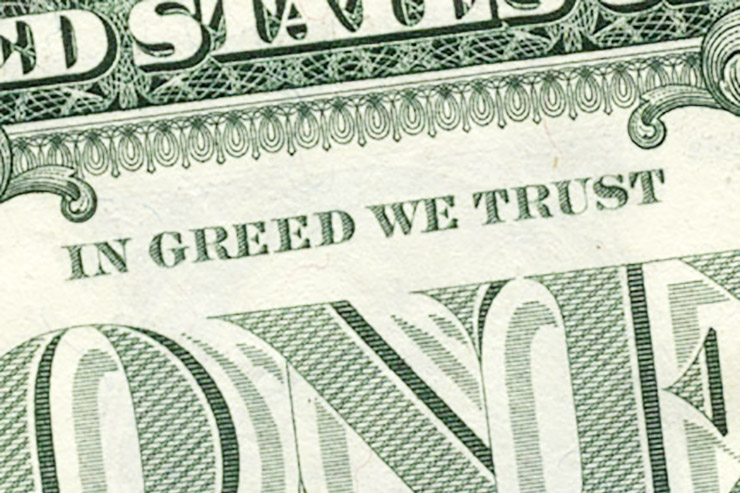
  • India’s Science of Light

    India’s Science of Light

    From New Dawn 127 (Jul-Aug 2011)

    While most people in the Western world are aware of astrology, comparatively few know that other cultures have other systems of astrology. There are Chinese and Tibetan horoscopes, with their cycles of twelve signs going through years rather than months, so that the key to your character is the year, not the month, you were born in: the Year of the Dog, Dragon, Tiger, and so on.

    But the nation that probably has the oldest and richest astrological tradition is India. Indian astrology bears some strong resemblances to its Western counterpart: the signs of the zodiac are more or less the same, as is the significance of the planets. (Indian astrology, however, uses only the planets Mercury, Venus, Mars, Jupiter, and Saturn, as well as the Sun and the Moon, in its analysis.) In India, however, astrology is taken much more seriously than in the West. Few Indian parents would seek marriage partners for their children without having an astrologer evaluate their horoscopes; a wedding in India may take place at a strange hour of the night because the astrologer has chosen it as the most auspicious time; and some affluent Indian women are choosing to have childbirth by cesarean section so that they can time the births and their children can be born under auspicious stars.

    Indian astrology is often called Vedic astrology because it is rooted in the ancient sacred texts called the Vedas, the oldest of which are dated to c.1500 BCE by conventional academics and to 2000 or 3000 BCE by alternative scholars. A Sanskrit name for Vedic astrology is Jyotish or Jyotisha, meaning “science of light.”

    One of the most striking ways in which Vedic astrology differs from its Western counterpart is that it is sidereal rather than tropical. The tropical signs remain fixed throughout the centuries, whereas the constellations revolve in a long cycle sometimes called a Platonic year, lasting nearly 26,000 ordinary years. In c.2000 BCE, when the current Western astrological system was first devised by the Babylonians, the constellation of Aries was in the tropical sign of Aries, and, moreover, the spring equinox took place when the Sun was at 0 degrees of Aries (March 21 in our calendar). But because the cycle of the Platonic year produces a phenomenon called the precession of the equinoxes, the spring equinox took place in the sign of Pisces for approximately the last 2,000 years and is now beginning to move into the sign of Aquarius – hence the coming of the Age of Aquarius.

    Vedic astrologers do not use this tropical system; their horoscopes are based on the actual current positions of the zodiac constellations in the sky. Hence there is a discrepancy between the Vedic and Western systems, amounting to approximately 23 degrees. That is, if the Sun in your natal chart is at 24 degrees of Sagittarius in Western terms, it will be at 1 degree of Sagittarius in your Vedic chart; and so on. Because this is almost equivalent to the number of degrees that a whole sign occupies (30 degrees), chances are your astrological birth sign will be different in your Vedic chart. Say you have your Sun at 13 degrees of Virgo, Western style; in that case it will be at (approximately) 20 degrees of Leo in the Vedic system.

    While this may sound complex, with a computer a Vedic chart is no more difficult to compute than a Western one. Interpretation is another story. Vedic astrology is not necessarily more complex than Western astrology, but it is probably fair to say that the typical Vedic astrologer feels the need to look at the extended implications of the chart than the typical Western practitioner, who usually focuses on the birth chart and the current position of the planets in regard to it. Vedic astrology, by contrast, has over twenty subcharts called amshas or vargas, which provide insights into the subject’s chances of marriage, likely career, and degree of success in life. One amsha indicates the subject’s spiritual inclination and capacity, while another, particularly important one called the navamsha addresses marriage, general life themes, and the second half of life. Yet another amsha is said to cast light on past lives and incarnations.

    While the intricacies of Vedic astrology would be difficult to fit even into a substantial book, much less a short article, some key things about it are worth noting. One important feature of Jyotish is the system of nakshatras. This is a series of 27 lunar houses that, much like the Sun sign in Western astrology, gives crucial indications about character and fate. If your nakshatra is Rohini, for example, it is said that you will have an affectionate and truthful disposition as well as an affinity for the arts, beauty, and culture. Bharani, by contrast, is favourable for competition and for activities regarding bold or aggressive action. Each day is also governed by a nakshatra, making it favourable for certain types of activity (or inactivity).

    Birth nakshatras are also important because they form the basis for computing dashas, planetary cycles in life. The complete cycle of the dashas is 120 years; within this, there are individual dashas of varying length. Each of these is ruled by a planet or luminary: Venus, the Sun, the Moon, Mars, Jupiter, Saturn, and Mercury, as well as Rahu, the north node of the Moon, and Ketu, the south node of the Moon. (These last two are not planets, but have many of the same functions as planets in the Vedic system.) The particular dasha that you are running at a given period in your life is likely to give a strong clue of your key concerns at that time. If you are in a Venus dasha, you may be occupied with relationships and marriage; a Saturn dasha may indicate a time of sober responsibility. Whether these are fortunate or unfortunate will depend on the place of the planets in your chart; for most people most of the time, the influence of a dasha is likely to be mixed.

    These emphases mark another difference between Vedic and Western astrology. Particularly since the twentieth century, Western astrology has become reluctant to speak in terms of fate or destiny, preferring to describe a chart in terms of character tendencies and hesitating to make firm predictions about what will or will not happen to the subject. Vedic astrology has no such inhibitions. It is focused on what will happen to you in your life in very specific terms, and it purports to tell you when these things will come about. As such it can sound extremely fatalistic to the typical Westerner, and in truth Jyotish probably is more deterministic than the types of astrology that are most in vogue in the English-speaking world.

    But Vedic astrology is not fatalistic in the most negative sense. It does not encourage people to sit back in quietude and allow events to happen to them. Because it is rooted in the Vedic tradition, which is a whole system of knowledge that encompasses all fields, it also points toward remedies. Someone in a highly unfavourable dasha may, for example, be told to chant certain mantras as a way of counteracting its influence. Other remedies include ayurvedic medicine as well as certain religious rituals. Subjects have reported uncanny reversals in fortune (including cures of life-threatening diseases) as a result of carrying out these instructions.

    Gemstones are another popular way of countering unfavourable planetary influences. David Frawley, an American practitioner of Jyotish, advises strengthening a weak Sun in your chart by wearing a ruby. The remedy won’t be cheap, though: the ruby “should be a minimum of two carats in size, set in gold of fourteen carats or more…. As a substitute, a good-quality garnet can be used, but it should be of at least three carats in size, preferably five.” Gemstones for other planets include pearls for the Moon, red coral for Mars, emeralds for Mercury, and diamonds for Venus.

    As with most forms of divination, there are dangers associated with Jyotish, especially if it is practiced with impure motivation. Ammachi (pictured top left), one of contemporary India’s most beloved gurus, has said that the coming of Jyotish to the West, while generally a positive development, has a dark side. The American Vedic astrologer Linda Johnsen quotes Ammachi as saying, “When a powerful predictive system falls into the hand of a materialistic culture, the potential for abuse is enormous…. Astrologers concerned only with making money or gaining fame will not succeed. This is because it is not possible to do Vedic astrology properly without tapas (spiritual self-discipline). Real astrology lies beyond the calculations.”

    [alert type=”general” dismiss=”no”]This article was published in New Dawn 127.[/alert]

    [alert type=”success” dismiss=”no”]If you appreciate this article, please consider subscribing to help maintain this website.[/alert]

    SOURCES

    David Frawley, Astrology of the Seers: A Guide to Vedic/Hindu Astrology, Twin Lakes, Wisc., U.S.: Lotus Press, 2000.
    Linda Johnsen, A Thousand Suns: Designing Your Future with Vedic Astrology, St. Paul, Minn., U.S.: Yes International, 2004.

    © New Dawn Magazine and the respective author.
    For our reproduction notice, click here.