New Dawn – World's Most Unusual Magazine

Category: Articles

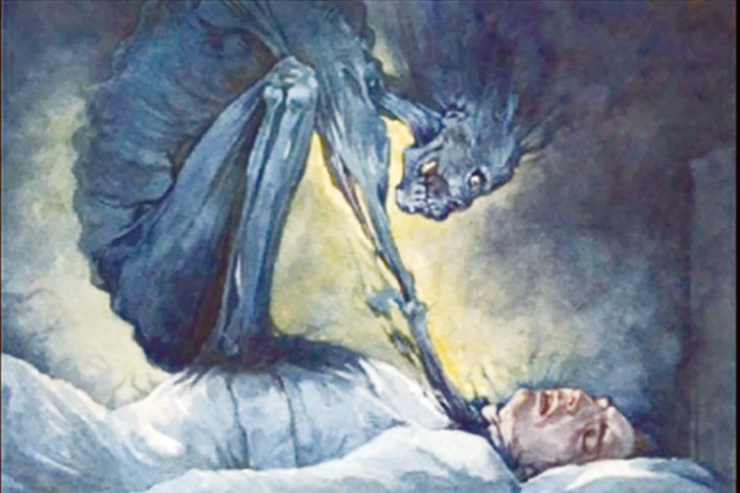
  • The Nightmare World of Austin Osman Spare

    The Nightmare World of Austin Osman Spare

    From New Dawn Special Issue Vol 9 No 2 (April 2015)

    If you were an art student in Britain in the last decades of the 20th century, you would have been extremely fortunate to learn of the existence of Austin Osman Spare (1886-1956), “one of the greatest living draughtsmen” as he was described within his lifetime, and certainly “the greatest artist you’ve never heard of,” as the cliché goes.

    In an item on the BBC’s ‘The Culture Show’ aired to coincide with a major retrospective of Spare’s work in 2010, no less a commentator than Andrew Graham Dixon introduced him as:

    An intriguing Edwardian artist of the magical, the otherworldly and the grotesque, whose claims that mystical practices lay behind his disturbing imagery brought him admirers and detractors in equal measure.

    As the subtitle of a recent highly acclaimed biography of Spare described him, he was truly “London’s Lost Artist” – or perhaps even England’s… But Austin Spare, the ‘lost’ artist, is apparently lost no more, judging by the fact that his popularity is on the increase, and his work fetches ever-higher prices these days.

    If you had a talent for drawing and were deeply interested in representing the human figure – not just by itself, but also within a meaningful, erotic and maybe esoteric context – you would not have had the inspiring and stimulating example of this ‘lost’ artist at your disposal. And you certainly would not have known about Spare’s later years, when he led an almost liminal existence but still created amazing images.

    There are the now well-known pictures of him in his dingy basement flat, which doubled as his studio, surrounded by stray cats and his drawings and paintings, looking like an old vagrant, which by all accounts he had almost become. You would most likely have been greatly moved by it, and perhaps shocked.

    Maybe you had a friend who knew someone in the occult-inspired underground bands of the 1980s, like Psychic TV or Coil, or the subculture that sprung up around them. In these circles Spare was celebrated, rightly or wrongly, as an ‘outsider’ hero for apparently turning his back on the mainstream and embracing a life of poverty, like some sort of Cockney ascetic.

    You might have heard he was admired and collected by such unlikely figures as Barry Humphries, or guitarist Chris Stein from Blondie. You may have caught wind of the emerging Chaos Magic movement that claimed Spare as a kind of spiritual forebear: an artist shaman, a spiritual currency with ever-increasing status.

    The near-mythic image of Spare – the arch-individualist who thumbed his nose at authority and worldly success to go his own way, living only for his visions and his art – had something for everybody.

    Kenneth & Steffi Grant

    Most people caught wind of Austin Spare through the books of Kenneth Grant, former acolyte of the ‘Great Beast’ Aleister Crowley, and tireless documenter of the 20th century ‘magical revival’. Grant and his wife Steffi, herself a talented artist, had personally known Spare in the last years of his life, and were instrumental in supporting and promoting his work from the 1970s onward.

    Acclaimed author, graphic novelist, and self-confessed magician Alan Moore acknowledges Grant’s contribution in his Introduction to Phil Baker’s fine biography Austin Osman Spare: The Life and Legend of London’s Lost Artist (Strange Attractor, 2011):

    … without the tireless championing of Kenneth Grant the vast majority of us would, in all likelihood, have never heard of Austin Osman Spare.

    Kenneth and Steffi were both magicians themselves, she working more with magic in her art, he in his writing: the nine volumes of “The Typhonian Trilogies,” which Grant wrote from the early 1970s up to the Millennium, and for which Steffi provided illustrations, nearly all featured artwork by, and information on, Spare. Additionally, the Grants produced two fine volumes dedicated solely to him: the now-classic Images & Oracles of Austin Osman Spare (originally published in 1975, but reissued by Fulgur in 2003), and a lavishly illustrated volume – Zos Speaks! (Fulgur, 1998) – reproducing much of their correspondence with Spare, that gives a moving and insightful account of their friendship.

    In her Introduction to Zos Speaks!, Steffi writes a vivid account of her first meeting Spare at his address off Brixton Road, a run-down Victorian terrace house that narrowly escaped the Blitz. The old man in front of her was “bent and decrepit looking.” He was unkempt and wore tattered clothes he had probably slept in, and his hands trembled. The contrast could hardly have been greater to the precocious boy star who wooed the Royal College of Art many years before. Herbert Budd, an art teacher, in whose classes Steffi sometimes posed, told her that back in the day, Spare was considered:

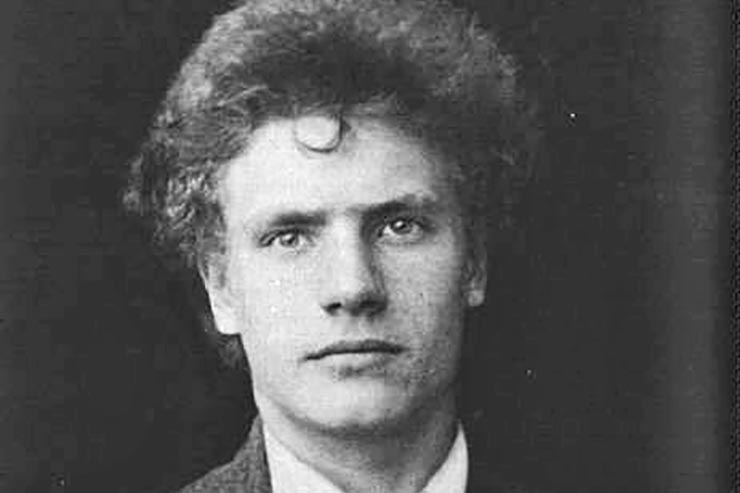
    A god-like figure of whom the other students stood in awe, a fair creature like a Greek God, curly headed, proud, self-willed, practising the black arts, taking drugs, disdainfully apart from the crowd.

    In Australia, the late Nevill Drury (1947-2013) wrote about Spare in his 1972 book The Search for Abraxas (co-written with Stephen Skinner, reissued by Salamander & Sons, 2013). Drury was also keenly interested in Rosaleen Norton, the notorious artist and “Witch Queen of King’s Cross” (in Sydney), and he may have regarded Spare as being her occult cousin. He would come back to them both, separately or together, a number of times, and one of his last books was the lavish Dark Spirits: The Magical Art of Rosaleen Norton and Austin Osman Spare, again produced in collaboration with Salamander & Sons in 2012.

    An Unsual Muse

    An important part of the Austin Spare story is that he had a very unusual Muse. Apparently, she was a local witch, Mrs. Patterson: an elderly woman, ugly but vigorous, who is said to have seduced him at a young age – though, of course, we shall never be able to ascertain how much, if anything, of the story is true. She was not his only Muse, but she played a vital role, introducing him to magic and witchcraft. She gave him his ‘ugly ecstasies’. The impression given is that she ravished him, her special trick being the ability to ‘project a glamour’ (the original meaning of the word ‘glamour’ being a kind of spell or enchantment), in which she could transform herself into an alluring young woman. She could also project visualisations for fortune telling, and make forms originating in your mind appear as if they were tangible and real.

    Austin Spare certainly had developed the ability to make shapes and figures visible in front of your eyes through his extraordinary ‘witchy’ creative gifts. Even if there was no flesh-and-blood ‘Witch Patterson’, Spare unquestionably ravishes us with his artistry. When the prospect of a full-blown artistic career had disappeared below the horizon, She would still vividly materialise, if not in front of him then certainly in his imagination, to inspire him, as revealed in his later splendid artwork.

    As his resources and health dwindled, he “carried everything into his art,” as the poet Rainer Maria Rilke once wrote of great men who “let their lives get overgrown like an old path…”

    That his Muse was ancient and ugly gains significance in the light of a largely forgotten chapter in British history. Centuries before, during the iconoclasm or smashing of religious images – which the fanaticism of the Protestant Reformation visited upon Britain (and a few other countries in north-western Europe) – the country lost a great deal of its artistic and spiritual legacy. It is estimated close to eighty percent of religious images were destroyed. Up until that time of image destruction, an artist with Spare’s gifts and occult tastes, even without being a devout Christian – which he certainly wasn’t – might still have found visual inspiration and ideas in the iconic painting and sculpture found in churches and cathedrals.

    The intervening centuries were lost spiritual territory to visionary artists like Austin Spare and William Blake – a fellow artist-visionary with whom Spare strongly identified. He was probably only half-joking when he remarked he had been Blake in a former life, and he surely could have claimed as his own Blake’s words:

    I must create a system or be enslaved by another mans; I will not reason and compare: my business is to create.

    Being both fiercely individualistic personalities and visionaries, they insisted on creating their own cosmologies. In a way, they had to.

    Early Life

    For a while as a young man, before the Great War, flushed with success and newly married to a dancing-girl called Eily Shaw, Spare played at being a Mayfair artist, courted by wealthy patrons. But it wasn’t to last. He would spend most of his adult life south of the River Thames, an area he came to strongly identify with.

    Till age seven he had lived with his family – his father was a City of London policeman, his mother the daughter of a Royal Marine from Devonshire, and he had three siblings. The place of residence was in Bloomfield Place, near Smithfield meat market, where he would have seen thousands of animal carcasses and a great toing and froing of animals – alive and dead. This, no doubt, left a powerful and abiding impression on him, giving him a strong sense of flesh, of life and death. In modern terminology, he’d say the place had a ‘bad vibe’. At the same time, as was not uncommon in that age of rapid technological development, the meat market was overarched by ironwork of an almost ecclesiastical magnificence (it’s still there.) The Central Avenue has been described as being “like a cathedral nave,” hinting at a subliminal connection between the slaughterhouse and religion. One major symbol in Spare’s work, the totemic vulture, almost certainly was conceived in this landscape of death and animal suffering.

    The family moved south of the Thames, to Kennington, when he was seven. In those early years, as a strong vigorous child, Austin liked physical activities such as boxing and wrestling, swimming and cycling. He went to school at St. Agnes Church, which had been re-modelled by Gilbert Scott, the Gothic-revival architect.

    A neighbour remembers the young Spare being impressed by the ceremonial and ritual side of religion at the Anglo-Catholic High Church. He saw cowled and robed figures, which would later appear in his work, though hardly in a flattering light; he liked the incense and the rituals. At the opening of the church the priest wore a garment with a white stole, and there was a hymn to Mary. The Protestants were infuriated: burning incense and an act of devotion to Mary virtually amounted to “the drunken bliss of the strumpet kiss of the Jezebel of Rome.”

    Development of a Style & Cosmology

    In Spare’s art you often see “things in their natural state,” in the words of Steffi Grant. Spare excelled at female nudes, and many are, you might say, women in their natural state. They don’t conform to any particular idea or ideal, except when they follow the form and style of Ancient Egypt. The creatures of the natural world, from rats and toads to snakes, lions and birds, make regular appearances, often juxtaposed with his nudes. But as much as he “cared for growth and movement in the plant and tree world” – preferring them to flowers in vases, for instance – he also loved artifice and style, shaping Mother Nature for his own creative ends. He developed a unique kind of anamorphism, which he called ‘siderealism’, which strikes you with its clean and fluid handling of line and colour, conjuring the elusive Fourth Dimension and offering the suggestion of fresh perspectives. He mostly used it for portraits of film stars – after all, were they not the new gods and goddesses of his (and our) time!?

    Austin Spare was a tremendous magpie when it came to what images and visual ideas he borrowed to then make inimitably his own – which is what every great artist does. Apart from his astounding flair and skill to make images, he also wrote and largely self-published books, which he naturally illustrated himself. It was all part of the creation of the Great Work, to build his own cosmology. He did not have a great formal education, but he did have the potential to be a scholar.

    In his in-depth study of the five books that Spare published, Austin Osman Spare: The Artist’s Books, 1905-1927 (IHO, 1995; reprinted Mandrake, 2005), Dr. William Wallace does an admirable job unearthing Spare’s sources of inspiration, interests and influences, such as Dante’s The Divine Comedy, The Revelation of Saint John the Divine, The Rubàiyàt by Omar Khayyám, the Egyptian Book of the Dead, Kabbalah, the Works of William Blake and Albrecht Dürer, and various texts of Eastern mysticism.

    The Many Different Spares

    There was Spare the Cockney with his Cockney portraits of market traders and characters from the local pub, which would not have been out of place in Rembrandt’s time. They made him a quick buck when he badly needed it, especially when down on his luck towards the end. He was brilliant at it, and no doubt had genuine affection for the characters he portrayed.

    There was Spare the pornographer: pornographic material does exist, for example in Spare’s original folio for his 1905 book, The Focus of Life, which is far more explicit than the published version and only came to light when a copy previously owned by novelist E. M. Forster made it to auction.

    There was Spare who made exquisite Egyptian pictures, such as the magical stele – created to bring luck, good health and blessings to his friends – or the fine altar-piece of a voluptuous Isis, now in the collection of former Led Zeppelin guitarist Jimmy Page.

    There was Spare the Borough Satyr, eyeing his women – one of whom liked his work “because it was dirty” – as Spare later told the young Kenneth Grant, no doubt chuckling over a pint in a South London pub.

    There was Spare the maker of exquisite books, mostly self-published. They’ve become legendary among his admirers, like The Book of Pleasure (Self-Love): The Psychology of Ecstacy (1913) – in which he set out his “Alphabet of Desire” and theory of “Sigil Magic” later hijacked and popularised by the Chaos Magicians.

    There was Spare hermaphroditising men into women, or himself – at least in his drawings – posing as a woman.

    There was Spare the Visionary who could only partly achieve his visual ideas because poverty, lack of patrons and status prevented their realisation.

    And there is Spare the Magician, the Sorcerer, the Witch, an incarnation that appealed deeply to a generation who would encounter him in the most unlikely places: in twilight worlds of black magic, books on resurging paganism and the occult, and weird music, corners where the culture is “murkier, livelier and more unusual” as Alan Moore says.

    After his initial fame during the tail-end of a Decadent age (when he could have been “the new Aubrey Beardsley”), Spare was cast out and set adrift on the troubling and troubled tides of the 20th century. In part he himself chose this fate, which made him beloved of his late 20th and now early 21st century audience – turning his back on “all that.” But there is more, much more. The fullness of Spare’s creative universe is impossible to cover here.

    The last word on his Art surely belongs to the artist himself:

    I AM THE LIVING TRUTH. Heaven is ecstasy; my consciousness changing and acquiring association. May I have courage to take from my own superabundance.
    – Austin Osman Spare, The Anathema of Zos (1927)

    [alert type=”general” dismiss=”no”]This article was published in New Dawn Special Issue Vol 9 No 2.[/alert]

    [alert type=”success” dismiss=”no”]If you appreciate this article, please consider subscribing to help maintain this website.[/alert]

    BOOKS BY AUSTIN OSMAN SPARE

    Earth Inferno (1905)

    A Book of Satyrs (1907, republished by John Lane, 1909)

    The Book of Pleasure (1913)

    The Focus of Life (The Morland Press, 1921)

    The Anathema of Zos (1927)

    BOOKS ABOUT AUSTIN OSMAN SPARE

    Kenneth & Steffi Grant, Zos Speaks! (Fulgur, 1998)

    Kenneth Grant, Images & Oracles of Austin Osman Spare (Fulgur, 2003)

    Frank Letchford, Michelangelo in a teacup: Austin Osman Spare (Mandrake Press Ltd, 2005)

    Dr. William Wallace, Austin Osman Spare: The Artist’s Books, 1905-1927 (Mandrake Press Ltd, 2005)

    Phil Baker, Austin Osman Spare: The Life and Legend of London’s Lost Artist (Strange Attractor, 2011)

    Neville Drury, Dark Spirits: The Magical Art of Rosaleen Norton and Austin Osman Spare (Salamander & Sons, 2012)

    © New Dawn Magazine and the respective author.
    For our reproduction notice, click here.

  • What is Alchemy?

    What is Alchemy?

    From New Dawn Special Issue Vol 9 No 2 (June 2015)

    It is a remote location in China in the early 1960s. A young man, Wang Liping, is studying with three Taoist masters. After preliminary training, they give him a grain of “gold elixir.”

    Wang sits in a cross-legged position. The masters tie up his legs so that he will stay seated. He then goes into a deep state of trance. On the first day, he feels as if his insides are burning, and he passes out. But thanks to the ropes, he remains immovable in the cross-legged position.

    On the second day, Wang’s skin changes colour from sallow to ruddy to dark. The masters judge that the toxins in his body have been pushed to the surface.

    At this point he has been pushed to the limits of his endurance, but he keeps on meditating. His skin experiences all kinds of sensations from burning to itching and aching.

    Finally on the third day, Wang’s body becomes comfortable again. His skin colour has changed to a healthy rosy white and glistens. The gold elixir has been completely expelled from his body. The operation is a success.

    This account, taken from a book called Opening the Dragon Gate, describes Wang Liping’s training as a Taoist master. Its mention of a gold elixir – which the text does not otherwise describe – evokes images of alchemy. It leads one to wonder exactly what alchemy is.

    Superficially, everyone knows what alchemy is. It is an outmoded practice for changing base metal to gold. Although it was in its way an important precursor to present-day chemistry, today it is little more than a discarded superstition.

    Accounts like Wang’s tell another story. They suggest there are other dimensions to alchemy than simply heating and cooling metals in the hope they turn into gold. And of course the old alchemists themselves said, “Our gold is not the gold of the vulgar.”

    Moreover, to say alchemy is outmoded may be jumping to conclusions. One of the few practicing alchemists I know in the US is a former chemistry professor. At one point he found conventional chemistry too boring, gave it up, and turned to alchemy. Even so, I see from his website that he does metallurgic consulting for the Smithsonian Institution in Washington.

    To understand alchemy in more than a simplistic way, one needs to take into account several strands of the alchemical tradition. They interconnect and interpenetrate, and to the outsider, the noninitiate (such as me), their relations are impossible to sort out in any kind of complete way.

    The first is the best-known kind: practical transformation of natural substances. Metals are not necessarily the best place to start. One of the best-known alchemical schools of the twentieth century, the Paracelsus Research Society, was operated by the German magus Albert Riedel, known as Frater Albertus, in Salt Lake City, Utah, in the US, until his death in 1984. (Some of his students continued his work in Australia as Paracelsus College: http://homepages.ihug.com.au/%7Epanopus/).

    Frater Albertus’s students started out by making a “plant stone” – taking a plant and subjecting it to certain operations to crystallise its essential nature. Plant stones apparently have any number of uses, including healing. Hans Nintzel, a pupil of Frater Albertus, writes:

    So, we have killed the plant to enable it to give up its soul and spirit. Then we have reunited them and thus resurrected them in a new and glorified body. This product is the highest form of the plant attainable. Philosophically speaking, note that the plant could not do it for itself. It needed a “higher power” (in this case, man) to accomplish this highest transmutation. The plant stone can not only perform interesting physical phenomena, but is an extremely powerful medicine. Depending on what plant or herb it was made from, it can provide a variety of cures.

    Working with metals is a later, more advanced process. But Nintzel adds, “metals, having long absorbed planetary influences, are far more powerful than herbs in healing.”

    Nintzel’s description casts some light on the meaning and purpose of making gold. Alchemy considers gold to be the highest form of metal, just as the plant stone is considered to be the highest form of the plant. Gold is, alchemically, the part of the mineral kingdom that has evolved to the highest stage possible for it. By making gold, the alchemist is helping the mineral kingdom to evolve.

    Nintzel also says that according to alchemy, all things are composed of three essential substances: sulphur, mercury, and salt. “These are consciousness (sulphur), a vivifying life force (mercury), and the vehicle in which the latter two are housed (salt).” Clearly these substances are defined differently than they are in ordinary language.

    And of course if sulphur, in this sense, is present in everything, it naturally follows that consciousness too is present in everything. It is this consciousness even in apparently inanimate matter that the alchemist is trying to develop.

    Unlike conventional chemistry, this is not a practice that takes place entirely outside the operator. The French alchemist François Trojani says:

    The physical world is shown to be far more malleable than science imagines. But this malleability is not some power attained by the alchemist as a separate being, a human subject, to be then replicated on equivalent material objects by other human subjects. The separation of subject and object is revealed as illusion. The Work accomplishes the worker: experiment and experimenter are an inseparable whole.

    Here we can see how this first type of alchemy may intersect with the second kind. This is the kind we glimpsed in the story of Wang Liping. It is not a matter of transforming metals, but of transforming certain substances and energies in the human body. One occasionally hears mention of “Taoist inner alchemy,” which often involves certain visualisation practices as well as the circulation of chi energy within the body (something that can be done with a small amount of training and practice).

    Curiously, sometimes this process seems to involve ingesting certain types of metal preparations. It’s hard to say what the Chinese gold elixir was made of, but very likely it did include gold. Cinnabar (mercury sulfide) is also sometimes ingested, and supposedly has therapeutic properties – when taken the right way. Mercury itself, as is well known, is poisonous.

    The third type of alchemy is a twentieth-century innovation, created by the Swiss psychologist Carl Jung. It involves an engagement with certain energies called archetypes as manifested in symbols. Jung himself called it active imagination. It is a type of visualisation in which the practitioner engages with images and characters taken from dreams. Because these can resemble the bizarre and mysterious figures in alchemical art, Jung saw this as a form of inner alchemy. He himself collected alchemical books, and much of his impenetrable late work Mysterium Conjunctionis deals with alchemical symbols.

    But Jung’s alchemy is not held in the highest regard by at least some practicing alchemists. François Trojani says:

    Jung was not a real alchemist because he attempted to reduce alchemy to its psychological aspect. His understanding of that aspect was excellent as far as it went, but there is much more to alchemy than psychology. It was reductionistic of him to treat laboratory work as a collection of symbols of psychological work. Of course it is rich in symbols, but true symbols are much more powerful and alive than they are considered to be in modern thought, even Jung’s.

    In any case, there are these three versions of alchemy – one involving materials such as minerals, the second having to do with the subtle energies of the body, the third having to do with energies and symbols in the psyche. And although these practices overlap to a certain degree – after all, you would need to do alchemy with metals to make a gold elixir for the body – it would seem to be a mistake to confuse one with another. Or to assume that an alchemical practitioner of one kind necessarily has knowledge of the others.

    If there is any single thread connecting all of these practices, it has to do with consciousness. Alchemy is an attempt to make practical use of the fact that consciousness, in some form and to some degree, is present in all things. One form seeks to refine the consciousness of plants and minerals to the highest degree possible. Another seeks to do the same with the processes of the human body. The third, Jung’s, tries to bring unconscious parts of the mind to awareness, where they can be integrated.

    Maybe we could go still further and say that consciousness is the true gold of the alchemists. As they said, it is not the gold of the vulgar.

    [alert type=”general” dismiss=”no”]This article was published in New Dawn Special Issue Vol 9 No 2.[/alert]

    [alert type=”success” dismiss=”no”]If you appreciate this article, please consider subscribing to help maintain this website.[/alert]

    Sources

    Opening the Dragon Gate: The Making of a Modern Taoist Master by Chen Kaiguo and Zheng Shunchao, Translated by Thomas Cleary, Tuttle, 1996

    The Hermetic Tradition: Symbols and Teachings of the Royal Art by Julius Evola, Translated by E.E. Rehmus, Inner Traditions, 1995

    “Alchemy Is Alive and Well” by Hans Nintzel, Gnosis 8 (summer 1988), 11–15

    “The Quintessence of Alchemy: The Gnosis Interview with François Trojani” by Joseph Rowe, Gnosis 40 (summer 1996), 34–40

    © New Dawn Magazine and the respective author.
    For our reproduction notice, click here.

  • The Mystery of Christian Origins: Hail the Solar Kristos

    The Mystery of Christian Origins: Hail the Solar Kristos

    An innate knowledge of the Gods is coexistent with our very existence; and this knowledge is superior to all judgement and deliberate choice, and subsists prior to reason and demonstration.
    –  Iamblichus, 4th Century Neoplatonist, On the Mysteries of the Egyptians, Chaldeans and Assyrians

    The first Nazarene communities established in the first centuries C.E. by Jesus’ own disciples and inspired Master Teachers knew no birthday for their saviour. Only with the triumph of the Constantinian (Christian) church in the 4th century did the adoption of a date become an issue. The Roman Church Fathers pushed for the adoption of the Mithraic winter-solstice festival called Dies Natalis Solis Invictus, Birthday of the Unconquered Sun.

    In fact most of the ancient Mysteries celebrated the nativity of the solar deities Attis, Osiris, and Dionysus, in the form of the Divine Child, at the northern hemisphere’s winter solstice on or near 25 December. As Charles King explains:

    the old festival held on the 25th day of December in honour of the ‘Birth-day of the Invincible One,’ and celebrated by the Great Games of the Circus… was afterwards transferred to the commemoration of the Birth of Christ, of which the real day was, as the Fathers confess, totally unknown: Chrysostom, for example, declares that the Birthday of Christ had then lately been fixed at Rome upon that day, in order that whilst the heathen were busied with their own profane ceremonies, the Christians might perform their holy rites without molestation.1

    The Roman church adopted 25 December as the nativity of Jesus the Christ because the people were used to celebrating it as the birthday of a solar deity, the Son of Man who bore such titles as Light of the World, Sun of Righteousness, Liberator and Saviour.

    The Eastern branch of the Christian church, still influenced by the earliest Nazarene precepts, placed no significance on a fixed date for the birth of Jesus the Christ. For them the birthday of the Galilean Master Jesus was of little importance compared with his life and sacrifice on the tree of matter. Only late in the 4th century did they agree to honour it. The church of Jerusalem continued to ignore the Roman date of 25 December until the 7th century. Within the Eastern Orthodox churches holy Easter, the commemoration of Jesus’ sacrifice and resurrection, is held to be the high point of the Orthodox calendar and is celebrated with more pomp than Christmas.

    The distinguished Orientalist Alain Danielou says that in India the winter solstice is celebrated as the birth of the god Shiva, who was worshipped in Greece under the name Dionysus. Danielou remarks that the birth of Shiva’s son Skanda (the god of transcendent Knowledge or Gnosis) and Krishna (held to embody the supreme personality of the Absolute) are also celebrated at the winter solstice. Krishna and Skandar, both portrayed as the Divine Child, share numerous similarities with Dionysus.

    In the words of one scholar:

    In the fixing of the dates for the feasts of the Christian year… it is possible to glimpse the memory of many of the ceremonies belonging to a previous era. At Delphi in Winter, the Thyades, the Bacchantes of Parnassus, used to awaken a baby in a cradle, the liknites, or infant Dionysus, whose reappearance was celebrated about the time of the Winter solstice [25 December]… The establishing of the feast of the Christian Nativity (starting from the fourth century of our era) on a date close to it in the calendar… accounts for the mechanism by virtue of which a new god is inserted at a liturgical period which existed before the spread of his own cult.2

    Mystery of the Solar Kristos

    Essene communities in the Holy Land and other pre-Christian, Jewish, and Pagan Gnostics welcomed the Christian revelation, finding in its teachings a familiar echo of their own ideas. Christian Gnostics became part of the rich religious tapestry of the area, which was also influenced by the growth of the Mithraic religion throughout the Roma Empire. The Neoplatonists were the first to protest the exclusivity and increasing militancy of Christianity. Intolerance of other beliefs was introduced largely by St. Paul and grew progressively worse as Christianity assumed greater political power in the Roman Empire. Constantine declared it the state religion in 325.3

    The Ancient Tradition, upheld by all the Secret Schools since the dawn of time, finds its outward expression in the universal message of a past Golden Age when Man was free from care and evil non-existent; to the subsequent ‘fall’ of Man and the loss of oneness with the Divine; and finally to a revelation received from heaven foretelling the reparation of this loss and the coming of a Redeemer who should save humanity. We find this message, in a multitude of forms, within the great pre-Christian pagan traditions.

    Everywhere, in Persia, as in Egypt, in Sumeria as in Greece, all the legends associated with divine saviours told of the voluntary sacrifice of a youthful deity, embodying the Solar Kristos or Logos, the manifested emanation from the one omnipotent, ever concealed, infinite and unknown Father. Each of these saviours may be compared to a ray of the Solar Kristos incarnate in human form.

    The triumph of the Roman church as a political power witnessed the corruption and debasing of many of these venerable motifs, myths, legends and principles, as well as their absorption into what became Christianity. At the same time in its dogmatic form the Church portrayed itself as the sole repository of truth, slandering the noble pre-Christian traditions as the ‘work of the devil.’ Driven on by their need to discredit the entire true and good in the previous religions, Christian zealots sacked the temples of other saviours, burned ancient sacred books, and attacked initiates of the Mystery Schools. Their crimes knew no bounds as they built their own churches on the same foundations as the old ‘pagan’ temples. In 415, an enraged Christian mob, incited by the Church bishop, captured Hypatia, the famed female leader of the Alexandrian Neoplatonic school. She was then tortured, killed, and dismembered.

    When confronted with the remarkable similarity between the Christian Jesus and the saviour deities of the ancient world, the Church Fathers retorted that the devil himself had – centuries before – caused the pagans to adopt certain beliefs and practices. Justin Martyr for instance describes the institution of the Lord’s Supper as narrated in the Gospels, and then goes on to say: “Which the wicked devils have imitated in the mysteries of Mithra, commanding the same thing to be done.” Tertullian also says:

    the devil by the mysteries of his idols imitates even the main part of the divine mysteries… He baptises his worshippers in water and makes them believe that this purifies them from their crimes… Mithra sets his mark on the forehead of his soldiers; he celebrates the oblation of bread; he offers an image of the resurrection, and presents at once the crown and the sword; he limits his chief priest to a single marriage; he even has his virgins and ascetics.

    The Spanish explorer Cortez, too, it will be remembered, complained that the devil had positively taught to the indigenous peoples of the Americas the same things the Christ had taught to Christendom.

    The Master Teachers of the Gnostic Secret Schools maintained that throughout history Saviours, Avatars, Messiahs and Christs appeared in all lands and to diverse peoples. These Kristed-beings brought a message of liberation to mortals trapped in the darkness of mundane existence. As a modern scholar of Gnosticism, Professor Hans Jonas, explains:

    The savior does not come just once into the world but that from the beginning of time he wanders in different forms through history, himself exiled in the world, and revealing himself ever anew until, with his gathering-in complete, he can be released from his cosmic mission.4

    Examining ancient history we discover these Kristed ones, embodiments of the First Emanation (Logos) of the Heavenly Father, described in a number of ways. Of nearly all these saviours it was widely believed:

    (1) They were born on or very near the winter solstice (Christmas day).

    (2) They were born of a Virgin-Mother.

    (3) And in a Cave or Underground chamber.

    (4) They led a life of toil for Mankind.

    (5) And were called by the names of Light-bringer, Healer, Mediator, Saviour, Deliverer, Shepherd.

    (6) They were however temporarily vanquished by the Powers of Darkness.

    (7) And descended into Hell or the Underworld.

    (8) They rose again from the dead, and became the pioneers of mankind to the Heavenly world, the Realm of the Father.

    (9) They founded communities of believers, and Orders into which disciples were received by baptism.

    (10) And they were commemorated by sacrificial Eucharistic meals.

    Jesus the Christ can be said to be the last in a long line of Avatars and Christs who came to earth to bring humanity knowledge of the True God. Let us briefly review the similarities between some of these saviours and the Gospel Jesus.

    Mithra

    The French scholar Renan once wrote: “If Christianity had succumbed to some deadly ‘disease’, the world would have become Mithracized.” In other words, it would have adopted the religion of Mithra. Mithraism arrived in Rome during the first half of the first century B.C.E. By 307 the Roman emperor officially designated Mithra “Protector of the Empire.”

    The Christian Church Fathers incorporated many details of the Mithraic mystery religion into their Church ceremonies and doctrine. The influence of Mithraism on the emerging Christian church is obvious in the Church’s adoption of the Mithraic feast of 25 December. Some resemblances between Christianity and Mithraism were so close that even St. Augustine had to grudgingly confess that the priests of Mithra worshipped the same deity as he did. Dr. Martin Larson says:

    The fact is that the parallel between Mithraism and apostolic Christianity was actually far more extensive than any of the early Fathers implied. Both taught almost identical doctrines concerning heaven and hell, the last judgement, and the immortality of the soul. Both practiced the same sacraments, those of baptism and the communion of bread and wine. Regeneration through the second birth was a basic doctrine of both, and each had the same conception concerning the inter-relationship of their members – that all were mystical brethren. Each believed that its founder was mediator between God and Man, that through him alone was salvation possible, and that he would be the final judge of all. Both taught the doctrine of primitive revelation. Both emphasised the constant warfare between good and evil, required abstinence and self-control, and accorded the highest honour to celibacy. We need not be surprised at these similarities, since we know that Mithraism and Christianity were alike based upon ubiquitous doctrines and practices already hoary with age before these cults appeared.5

    The Persian saviour deity Mithra embodied the Solar Kristos, the Maintainer of the Universe. The Zoroastrian holy scripture the Zendavesta declares Mithra to be the First Emanation of Ahura Mazda, the Supreme Lord of Wisdom and Goodness, and the manifestation of Himself unto the world. From Ahura Mazda emanated a number of hierarchies of good and beautiful divine beings (angels and archangels).

    It is worth recalling the admission of the Judean historian Josephus that the highest principles of the Jewish religion, in the time of Jesus, were all drawn from the Zoroastrian scheme.

    The apostle Paul, who came from Tarsus a stronghold of Mithraism, uses the language of the Mithraic mysteries in explaining that Jesus the Christ is the “Brightness (or reflection) of his glory, the express image of his person, upholding all things by the word of his power.” Thereby testifying to the truth that Jesus the Christ is a reflection of the Invisible Supreme One in his First Emanation (as the Kristos or Logos).

    Horus & Osiris

    Osiris, you have gone away, but you have returned; you were asleep, but you have been wakened. You died, but you live again.6

    Horus, the son of the Egyptian deities Isis and Osiris, was born at the winter solstice. To the ancient Egyptians the visible terrestrial sun was a mere representation of the invisible spiritual Central Sun of Divine Wisdom. The solar deity Osiris manifests as the infant Horus in the hearts of mankind; becoming “regenerated” within the souls of the pure by the power of the eternal Mother, Isis, the ever immaculate virgin, the blessed Queen of Heaven. By his own power Horus, son of Osiris, vanquished Set the Evil Principle, just as Jesus the Christ overcame Satan. In the words of the 19th century author Gerald Massey:

    The Christian dispensation is believed to have been ushered in by the birth of a child, and the portrait of that child in the Roman catacombs as the child of Mary is the youthful Sun-God in the mummy image of the child-king, the Egyptian Karast, or Christ. The alleged facts of our Lord’s life as Jesus the Christ, were equally the alleged facts of our Lord’s life as the Horus of Egypt.

    Images of the goddess Isis and her infant son Horus were sacred objects in every Egyptian home, resembling Mary and the Christ-child, both in appearance and in veneration.

    Osiris, the father of Horus, was human, like us, and thus able to take upon himself all our sorrow, but also divine, and therefore able to confer divinity upon mortals. He brought the divine bread from heaven for humanity; he taught justice and practiced mercy; he died, was buried, and rose from the grave; he gave to all who became members of his mystical body his flesh to eat and his blood to drink so that this divine sacrament might then transfigure them into celestial gods; he went before to prepare mansions for his initiates.7

    Of all the saviour deities worshipped by the ancients as personifications of the First Emanation of the Father, it is Osiris with whom Jesus the Christ is most associated. Osiris was called Lord of Lords, King of Kings, and God of Gods. He was the Resurrection and the Life, the Good Shepherd, Eternity and Everlastingness, the god who “made men and women to be born again.” The renowned Egyptologist Budge says, “From first to last, Osiris was to the Egyptians the god-man who suffered, and died, and rose again, and reigned eternally in heaven. They believed that they would inherit eternal life, just as he had done.”

    According to Egyptian scriptures, “As truly as Osiris lives, so truly shall his follower live; as truly as Osiris is not dead he shall die no more; as truly as Osiris is not annihilated he shall not be annihilated.” The flesh of Osiris was eaten in the form of communion cakes of wheat, the “plant of Truth.” Osiris was Truth, and those who ate him became Truth also, each of them another Osiris, a Son of God, a “Light-god, a dweller in the Light-god.”

    At death, every Egyptian had to appear before the judgment tribunal presided over by Osiris himself, and receive a new life. Osiris could search out the secret places of the heart, and before him no one could be perfect in his own right. Every aspirant to “Osiris-ship” (Khrist-hood) knew that if the law was enforced, he could never enter eternal life. Therefore he exclaimed: “Do ye away with my evil deeds, and put ye away my sin which deserved stripes on earth, and destroy ye any evil whatsoever that belongeth unto me.” Centuries before the Sermon on the Mount, the Egyptian suppliant implored: “bring ye not forward my wickedness… [for] I have given bread to the hungry man, and water to the thirsty man, and apparel to the naked man, and a boat to the shipwrecked mariner. I have made holy offerings to the gods… Be ye then my deliverers, be ye then my protectors… I am clean of mouth and clean of hands; therefore, let it be said unto me…’Come in peace; come in peace.’”

    Budge remarks that the Egyptians believed in “the resurrection of the body in a changed and glorified form, which would live to all eternity in the company of the spirits and souls of the righteous in a kingdom ruled by a being who was of divine origin, but who had lived upon the earth, and had suffered a cruel death at the hands of his enemies, and had risen from the dead, and had become the God and king of the world which is beyond the grave.”

    Many of the expressions and stories found in the Bible are drawn from the older ‘pagan’ traditions of Egypt and Sumeria. Sir Charles Marston concludes in The New Knowledge about the Old Testament:

    Before the time of Abraham, then, before any book of the Old Testament was written, and right down through the centuries after every book in the Old Testament had been written, there existed this belief in a Future Life and the presence of the bread and water of Eternal Life in Heaven. The possession of this knowledge enhances the significance of Christ’s statements in the New Testament: “I am the Bread of Life (John 6:35) and “I am the Living Bread which came down out of Heaven, if any man eat this Bread he shall live forever” (John 6:51) and again “The water that I shall give him shall become in him a well of water springing up in Everlasting Life (John 4:14).

    The 23rd Psalm in the Old Testament is taken from an Egyptian text appealing to Osiris the Good Shepherd to lead the deceased to the “green pastures” and “still waters”, to restore the soul to the body, and to give protection in the valley of the shadow of death. The Lord’s Prayer was prefigured by an Egyptian hymn to Osiris-Amen beginning “O Amen, O Amen, who art in heaven.” Amen was also invoked at the end of every prayer by the devotees of Osiris. The priests of Osiris, like the later Christian priests and Gnostic Elect, were celibates.

    Jesus’ words, “Except a corn of wheat fall into the ground and die, it abideth alone; but if it die, it bringeth forth much fruit” (John 12:24), reflect an Osirian doctrine that a dying man is like a corn of wheat “which falls into the earth in order to draw from its bosom a new life.” Jesus’ words, “In my Father’s house are many mansions” (John 14:2) is very similar to an Egyptian text telling of numerous Arits (“mansions”) in the blessed land of Father Osiris. Ancient legends about Osiris were ascribed by Christians to Jesus.

    Dionysus

    In ancient Greece Dionysus was the god-begotten, virgin-born Anointed One (Kristos). Some writers see the young god as a prototype of Jesus the Christ. Portrayed as seated on the Heavenly Father’s throne, brandishing his lightning-scepter, Dionysus was hailed as King of Kings and God of Gods, titles later applied to the resurrected Jesus. The crucified Jesus was referred to as hanging on a tree, in the same way the sacrificial Dionysus was titled the “Young Man of the Tree.”

    The Roman historian Tacitus said Dionysus had been the god of Jerusalem in an earlier period, but a different god had replaced him, a god with less attractive characteristics. Dionysus “established a festive and cheerful worship, while the Jewish religion is tasteless and mean.” According to Tacitus some of the old Israelite customs “were founded in honour of Dionysus”. Coins found near Gaza, dating from the 5th century B.C.E. show Dionysus on one side, and on the other his opposite the bearded figure labeled YHWH – Yahweh.

    Alain Danielou notes the numerous similarities between Dionysus and Jesus:

    The Christian myths appear to be closely linked to those of Dionysus. Jesus, like Skanda or Dionysus, is the son of the Father, of Zeus. He has no wife. The goddess-mother alone finds her place next to him. He is surrounded by his faithful, his bhaktas, who are of the people, fishermen. His teaching is addressed to the humble and the outcast. He welcomes prostitutes and those who are persecuted. His rite is sacrifice. It is in the Orphic tradition that the passion and resurrection of Dionysus occupy a central position. It is through Orphism that many of Dionysus’ “miracles” were attributed to Jesus. Several aspects of the Orphic legend of Dionysus are to be found in the life of Jesus. The parallel between the death and resurrection of the god and of Christ is self-evident.

    The myths and symbols tied to the birth of Christ, to his baptism, his following, his entry into Jerusalem on an ass, the Last Supper (banquet and sacrificial rite), his Passion, death and resurrection, the dates and nature of the various feast days, his power of healing and of changing water into wine, inevitably evoke Dionysiac precedents.8

    Tammuz

    The self-sacrifice of Christ has often been compared to that of Tammuz or Adonis but most resembles the young man, the fairest and the best, who sacrificed himself to absolve his people of their sins. This was part of the earliest sun-worship.9

    We find the same inner message in the stories of the Egyptian Osiris and the Greek Dionysos, in the saga of Tammuz of Mesopotamia. Elements of which are later reflected in the Gospel accounts of Jesus.

    Tammuz is the Babylonian version of the ancient Sumerian saviour-god Dumuzi, the “only-begotten Son”. Tammuz is a beautiful youth whose cyclical death and rebirth are associated with the cycles of nature. During summer Tammuz is united in love with his sister/mother Ishtar, the Queen of Heaven. At the end of summer Tammuz dies, and the heart-broken Ishtar goes down to Hades to rescue him. With his rescue he is reborn in the upper Realm of Light. He is called Healer, Saviour, and Heavenly Shepherd.

    Tammuz’s death and descent into Hades symbolises his fall into the spiritual darkness of the physical world. He is rescued from this gloomy realm by Ishtar, Heavenly Wisdom, symbolising his spiritual self or True Being. When Tammuz dies, he falls into a pit (Hades), and Ishtar (representing both the Divine Spirit and his spirit) mourns his fall and entrapment:

    The lord is exposed to the woe in the pit…
    My heart is sending wailing of flute to the steppe,
    to the place where the strong one is chained,
    to the place of the chains of Tammuz,
    to the lamb which is given in the power of the nether world…

    The Gospels relate the women coming to Jesus’ tomb were the first to see the risen Lord. Centuries before, women lamented the slain Tammuz, the sacrificial lamb, with the cry:

    Why have they slain him, him of the plains?
    The Shepherd, the Man of Wisdom,
    the Man of Sorrow why have they slain?
    The Lord, the Shepherd of the fold lives no more,
    the spouse of the Queen of Heaven lives no more.

    The women of Jerusalem still wept for Tammuz at the Feast of Unleavened Bread in Isaiah’s day and according to the Church Father Jerome he had a sacred grove at Bethlehem. The Hebrew prophets, in their preaching of the worship of Yahweh, condemned the popular cult of Tammuz. But this did not stop elements of the older tradition being incorporated into Israelite religion and later Christianity.

    Attis

    Happy is the man who is beloved of the gods. Happy is he who, instructed in the divine rites, sanctifies his life, whose soul makes its way to the mountains, for he will experience raptures by virtue of the holy purification.10

    Dr. Martin A. Larson says that “Attis became one of the most potent saviour gods of the ancient world, and left his heavy imprint upon Christianity.” Attis, like Jesus the Christ, was a personification of the Solar Kristos. The early Christian theologian Arnobius writes, “When we name Attis… we mean and speak of the sun.” An ancient Roman inscription declared: “To Attis the Most High God who holds the universe together.”

    The ancient Greeks envisioned the youthful virgin-born Attis as a solar saviour deity holding within himself “the incorporeal cause of the forms that are embodied in matter.” Attis had descended “even unto our earth… from the stars” so that he might, through self-sacrifice, teach mortals to prepare themselves for that spiritual journey that would bring them to the celestial throne. It was the purpose and destiny of Attis to demonstrate that “in all things the conversion to what is higher [spiritual development] produces more power… than the inclination to what is lower [carnal reproduction].” Following his act of self-sacrifice, Attis was “led upwards as though from our earth” to resume again “his ancient scepter.” The Roman Emperor Julian (332-363) wrote “the trumpet sounds for Attis and for all of us who flew down from heaven and fell to earth.” Attis, the Solar Kristos, is “the leader of all the tribes of divine beings”.

    The Gnostic Secret School known as the Naassenes identified Attis with Jesus the Christ, whose mission it was to show the way to pass “from the material condition… to the eternal essence.” The Naassenes insisted that if an individual wished to become enlightened and return to the Realm of Light at death (rather than be reincarnated) he or she must undergo a process by which they might become “neither male nor female, but a new creature… who reunites the two sexes [the primal androgynous Adamic state].” A Naassene poem praising Attis shows how the ancients envisioned the Solar Kristos embodied in numerous local deities and represented in an array of forms:

    Whether [Thou art of] the race of Saturn or happy Jupiter, or mighty Rhea, Hail Attis, gloomy mutilation of Rhea. Assyrians style thee thrice-longed-for Adonis, and the whole of Egypt [calls thee] Osiris, celestial horn of the Moon; Greeks denominate [thee] Wisdom; Samothracians, venerable Adam; Haemonians, Corybas; and the Phrygians [name thee] at one time Papa, at another time Corpse, or God… or green Ear of Corn that has been reaped.

    Jesus the Christ

    That the Christos represents the solar power reverenced by every nation of antiquity cannot be controverted. If Jesus revealed the nature and purpose of this solar power under the name and personality of Christos, thereby giving to this abstract power the attributes of a god-man, He but followed a precedent set by all previous World-Teachers. This god-man, thus endowed with all the qualities of Deity, signifies the latent divinity in every man. Mortal man achieves deification only through at-one-ment with this divine Self. Union with the immortal Self constitutes immortality, and he who finds his true Self is therefore “saved.” This Christos, or divine man in man, is man’s real hope of salvation – the living Mediator between abstract Deity and mortal humankind. As Atys, Adonis, Bacchus, and Orpheus in all likelihood were originally illumined men who later were confused with the symbolic personages whom they created as personifications of this divine power, so Jesus has been confused with the Christos, or god-man, whose wonders He preached. Since the Christos was the god-man imprisoned in every creature, it was the first duty of the initiate to liberate, or “resurrect” this Eternal One within himself. He who attained reunion with his Christos was consequently termed a Christian, or Christened, man.11

    Among the Essenes, a Kristos/Christos (Anointed One) was a priest, specifically designated as the Redeemer. Among the Slavic peoples, Kristos or Krstnik meant a sacrificial hero. The Khlysts, a 17th century Russian Gnostic community, taught that every man and woman was potentially capable of embodying the Krist/Christos, the Divine Word (Logos) of the Father.

    The true “Christ Principle,” the glorified Spirit of Supreme Truth, is universal. The Solar Kristos, embodied in Jesus and all the saviours and Avatars of the past, cannot be monopolised by any one person or group. The Kristos, the only genuine Christ, cannot be confined to any one creed or sect. The name “Christ” has been used in a manner so intolerant and dogmatic that Christianity is the religion of arrogance and ignorance. This is why many Gnostic Teachers prefer to use the spelling Kristos as opposed to the popular title Christ that is today applied to a fictionalised, corporal, carnalised Jesus of the Churches.

    Few Christians understand the ageless Mystery of the Kristos. The real truth of Krist is revealed by Divine Wisdom or Gnosis, which concerns itself with the essential reality behind the fleeting appearances of objects in nature.

    The Christian sacred books, especially the Gospels, Acts and Epistles contain fragments of Gnostic wisdom, very similar to the pre-Christian Mysteries of initiation. It is the corrupted, interpolated passages and distorted literalist presentation that makes of the Bible a book of falsehoods. The New Testament Gospels were not written in the time of the Galilean Master Jesus, some of the books compiled as late as the 2nd century C.E. The Nazarene writers of the Sayings or Logia of Jesus the Christ, of which the Gospels are a corrupted later compilation, knew the Truth, but those who came after them had only dogma and a quest for power. The Gnostic Nazarenes experienced the living spirit of the teachings of Jesus the Christ. The Church Fathers, lacking the guidance of the Spirit of Truth, could only grasp a very materialised and disfigured version of the story of Jesus.

    The early Gnostics viewed the drama of the New Testament crucifixion – regardless of history – as fundamentally an allegorical and philosophical symbol. As always the Gnostics look beyond mere words to connect with the timeless inner message. Read in their literal, dead letter meaning, the four gospels appear to the honest inquirer as simply slightly altered versions of the pre-Christian pagan Mysteries. This is because the Gospel accounts of Jesus’ birth, death and resurrection reflect the stories associated with previous manifestations of the Solar Kristos such Attis, Adonis, Tammuz, Osiris, Mithra and Dionysus.

    The early Gnostic Christians saw the Christ of the Gospels as a Manifestor and Revealer of the Unknown Father. A dozen times, according to Matthew, Jesus the Christ calls the Supreme Lord, “My Father.” In St. John’s Gospel, the Christ says, “I and my Father are one.” “I am come in my Father’s name.” “My Father hath sent me.” “I am in my Father.” Etc.

    The Galilean Master Yeshua (Jesus/Jason/Joshua) the Essene, who studied the Ancient Mysteries in Egypt, became one with the heavenly Logos or Solar Kristos at his baptism. This is why within the Gospels we find a mixture of Essene sayings, including direct quotations from Essene scriptures, together with a retelling in exoteric language of age old mysteries. Along the way we also encounter numerous interpolations and revisions, the work of later Church scribes. It is this Jesus the Christ, the Essene Master, who is credited as the inspirer of the first Nazarene communities that existed long before the era called ‘Christian’. They are the only original Christ-ians.

    But these separated communities, who were in the world but definitely not of the world, had their roots in the ancient Mystery schools, in the Mystic Brotherhoods of Egypt, and in the Essene Order. Many of the virtues associated with the Gospel Jesus and His followers were already present in the Essene communities. According to Philo Judaeus:

    Three things regulate all they learn and do – viz., love to God, love of virtue, love for man. A proof of the first is the matchless sanctity of their entire life, their fear of oaths and lies, and the conviction that God is only the originator of good, never of evil. They show their love of virtue by their indifference to gain, glory, and pleasure; by their temperance, perseverance, simplicity, absence of wants, humility, faithfulness, and straightforwardness. They exemplify their love for their fellow-creatures by kindness, absence of pretensions, and lastly by the community of goods.

    This helps us to appreciate the environment that gave birth to and nurtured the Nazarene communities and Gnostic schools. It is worth noting that in the Gospel of Matthew there are references to a widespread secret network that supported the disciples of the Master Jesus. Wherever they went in the land of Palestine they encountered the ‘worthy’, the ‘faithful’, or the ‘Brethren of the Lord’. “Peace be with you!” appears to have been the greeting or pass-word of the Essenes, the disciples of Jesus, and also of the Nazarenes.

    The mystery of the Kristos, presented in the life and words of Jesus, was identical with that which had been communicated to those who are ‘worthy’ since the dawn of time. From the Gospel according to Luke, we learn that the worthy are those who were initiated into the Mysteries or Truths of the Gnosis, and who were accounted worthy to attain that resurrection from the dead in this life. They were those who knew they could die no more. In other words, they are those initiates who strive to live the higher life and to attain spiritual illumination. Such individuals seek to realise the Krist within. This resurrection is the birthright of every human being endowed with soul and spirit. Such an individual becomes, and is a Christ-Man, a Kristed One, and a true Christ-ian.

    The Church Father Clement of Alexandria was familiar with the Mysteries of the kingdom preserved by the Nazarenes. He wrote:

    That man with whom the Logos dwells… is made like God and is beautiful… [T]hat man becomes God, for God so wills it…. [T]he Logos of God became man that from man you might learn how man may become God.

    This doctrine of deification was at the core of the pre-Christian Mysteries. The distinction between men and gods was that men died and gods did not. Thus, the object of the Mysteries was to become immortal, to become one with the Solar Krist. The initiates of Mithra declared, “I am thou and thou art I,” that is the same as Christ’s admonition, “Abide in me, and I in you” (John 15:4).

    The Christians later perverted this sacred truth by declaring the Man Jesus to be the only Christ, the only expression of the Divine Logos, the one Son of the Father, and even the eternal God in the flesh. Belief in the Man Jesus as the Messiah and Anointed One was taught by His first disciples, but adoration of Jesus as the one eternal God come in the flesh was not taught at all. Even in the heavily edited New Testament Gospels the words ascribed to Jesus are plain. Whenever occasion arose, the Man Jesus asserted his inferiority to the Eternal Father.

    He made himself inferior in knowledge when he said that of the day and hour of the day of judgment no one knew, neither the angels in heaven nor the Son; no one except the Father (Mark 13:32). He made himself inferior in power when he said that seats on his right hand and on his left in the kingdom of heaven were not his to give (Mark 10). He made himself inferior in virtue when he requested a certain man not to address him as “Good Master,” for there was none good but God (Mark 10:18).

    Should there be any further doubt about the nature of the Man Jesus, one only has to contemplate the words of his prayer at Gethsemane. “All things are possible unto thee,” imply that all things were not possible to him, while its conclusion “not what I will, but what thou wilt,” indicates submission to a superior power (Mark 14:36).

    The Gospel of Mark says not a word about Bethlehem or a miraculous birth. The Nazarene community at Jerusalem to which Mary and the brothers of Jesus belonged (Acts 1:14), and over which, James presided, knew nothing of the much-later Church doctrine of Jesus as “the one God come in human form”.

    The Nazarenes, faithful to the tradition of the apostles, saw Jesus as a Man, like other men, but that he was good and virtuous. The Gnostic Nazarene community established by the Master Teacher Cerinthus said Jesus was born altogether as other men are, but he excelled all men in virtue, knowledge and wisdom. At the time of his baptism, the Divine Word, the eternal Christ – Kristos – came upon him symbolised by a dove, and left him at the time of his crucifixion. This was also the position of St. Paul when he wrote how the heavenly Christ “made himself of no reputation” in coming to earth. The Christ as the Divine Word was far more significant to the disciples than Jesus as a flesh and blood being.

    The virulently anti-Gnostic Catholic Church Father Irenaeus, speaking of the Nazarene doctrine taught by Cerinthus, says:

    He represents Jesus as the son of Joseph and Mary, according to the ordinary course of human generation, and not as having been born of a virgin. He believed nevertheless that he was more righteous, prudent and wise than most men, and that the Christ descended upon, and entered into him, at the time of his baptism.

    The Nazarene doctrine, as propounded by Cerinthus, was that Jesus was a mortal, but as the best and wisest of the human race, he was selected as the worthy instrument to restore upon earth the authentic knowledge of the true and supreme Deity. When he was baptised – an outward symbol of inner transformation – in the Jordan, and not till then, he became more than man. At that time, the Solar Kristos, the Logos (Word) of the Father, the First Emanation from the Throne of Light, the Crown Prince of God, descended on Jesus symbolised by a dove, to inhabit his mind, and direct his actions during the allotted period of his ministry.

    The Solar Kristos has been made known by various Anointed Ones and Avatars since the dawn of time. In His earthly ministry Jesus the Christ taught the Path of Transformation, the way to self-mastery and spiritual enlightenment. At the crucifixion, the spirit and blood of Jesus were envisioned by the Nazarenes as having enlivened the earth, permeating it with His consciousness and the energy of His Being. Jesus’ life-experience became fused with the soul of the planet. They believed that through the communion rite they were imbued with the transcendent abilities of the Solar Krist, following in the footsteps of the Elder Brother. Jesus’ sacrifice made possible and guaranteed limitless potential attainment to the true Christ-ian disciple. When he was delivered into the hands of his enemies, the Kristos departed him and returned to the Realm of Light.

    Jesus the Christ declares in the Gospel of John, “Verily, verily, I say unto thee, except a man be born again he cannot see the Kingdom of God.” Here the Christ is referring to the birth from above, spiritual illumination. He who finds Kristos within himself and recognises it as his only Way becomes a follower of the Solar Krist/Christ. Kristos or the Christ consciousness is the realisation of the divine spirit within. To achieve the Kristos condition, one has to live in Christ, to obliterate one’s limited, conditioned personality and it’s separateness from the Eternal Father, the Absolute. Only by realising the divine spark within can one be united with the Life and Light of the Solar Kristos. In the words of Dr. Martin Larson:

    Each man is torn between the two contrary natures in his members, which always strive for mastery. But this conflict cannot end in victory for the higher without direct aid from the God of Light. The advent of Christ is the historic fact which makes the triumph for the spiritual aspect possible. God’s Nous descended upon the entirely human Jesus at His baptism; and He therefore proclaimed salvation to all those who are spiritual or will strive to become so.12

    Clearly there is a difference between the Man Jesus and the transcendent Christ/Krist revealed in the Gospels and in all the legends of the great Avatars and Saviours. Today, not possessing the key of Divine Wisdom, the Christian churches worship a man-made, carnalised Jesus. One early Gnostic school masterly illustrated the difference between the Cosmic Christ and the Man Jesus in the following account:

    Many of his [Jesus’] disciples did not recognise the descent of Christ into him; but when Christ descended into Jesus, then he began to work miracles and to heal and to proclaim the unknown Father and to confess himself openly as the Son of the First Man.

    At the crucifixion the Christ left Jesus but we are told:

    Christ did not forget what was his own, but from above sent into him a certain power which raised him in a body which was both psychic and spiritual; the worldly elements remained in the world. When the disciples saw that the transformed Jesus had risen again, they did not recognise him [Luke 24:34], nor did they recognise the Christ by whose grace he rose from the dead. And the greatest error of the disciples was this, that they thought he rose in a worldly [material] body, and did not know that “flesh and blood do not attain to the kingdom of God” [1 Cor. 15:50]. The descent and ascent of the Christ is confirmed by the fact that the disciples say that Jesus did nothing remarkable either before the baptism or after the resurrection. They are ignorant of the union of Jesus with the Christ… Jesus remained for eighteen months after the resurrection and from the perception which descended into him learned this teaching which is manifest. He taught these things to a few of his disciples who, he knew, could receive [Matt. 19:11] such great mysteries [Matt. 13:11], and thus was taken up into Heaven.

    The Gnostic Master Teacher Marcion (C.E. 85-160), in response to the corruption being advanced in the name of the Christ, established his own community early in the 2nd century. He denounced as fraudulent the notion that the Christ referred exclusively to a Man of flesh and blood. The Solar Krist has no genealogy or Jewish line of descent, no earthly mother, no mundane birthplace or human birth. Marcion preached that throughout human history the Supreme God, the Lord of Light and Love, sent His Word (Logos) to every tribe and nation. Thus the Solar Kristos manifested in the Messengers of Light who brought suffering humanity saving knowledge of their true origin, revealing the Heavenly Father. Marcion exposed the materialist – later Catholic – Christians who imagined that the Christ had risen in a physical body, not knowing that “flesh and blood do not attain to the kingdom of God.”

    Gerald Massey offers the following thoughts on the gulf between ‘Historic Christianity’ (from which modern day Christianity arose, be it Protestant or Catholic) and the Gnostic Nazarenes:

    Historic Christianity originated with turning the Gnostic and Esoteric teachings inside out and externalising the mythical allegory in a personal human history. All that was interior with the knowers [Gnostics] was made objective; all that was spiritual in significance was embodied to be made palpable for the ignorant. A corporeal Christ was substituted for the trans-corporeal man – a Christ whose advent was without, instead of the one that must be evolved within – a personal Saviour who died for all, instead of the Christ that was the living spirit working within all. It was remarked by Augustine that the Gnostics “promised eternal life to anybody” – that is, with the soul of man was an eternal principle, and the resurrection was not cunningly reserved for the elect who accepted the Historic belief. The Gnostic claimed to be illuminated by the presence of the Christ within; the Christian, according to Justin, by the name of the Christ without.13

    The story of the Christ, the Solar Kristos, is not limited to physical or historical events. The story of Jesus the Christ in the Gospels, complete with its miracles, is not to be understood as mere mundane history. It is a humanised retelling of a spiritual reality of the interior life.

    The cosmic message in the legends of Attis, Osiris, Dionysus, Tammuz, Mithra – indeed all the saviours of antiquity – find a dramatic restatement and fulfillment in the Gnostic Revealer Jesus the Christ. What counts in the various stories of divine incarnations are the inherent principles and not the legends with which they are surrounded in order to make them more readily understood. It is of no importance that these stories are legion, differing from one region to another. We should not lose sight of the fact that such accounts are only there to make abstract ideas and universal realities more comprehensible. To attribute to Jesus the Christ the miracles and legends of the saviour deity Dionysus does not distract from His message, but serves to make His divine nature more easily understood. A cosmic reality, an eternal symbol, is behind all the historical facts and the legends associated with Jesus the Christ. Jesus embodied the Solar Kristos and came to rescue the sparks of Light and show the way back home. He taught man how to resurrect the Krist within and be reunited with the unknown Father.

    A Gnostic scripture, the Apocryphon of John, compiled in the 2nd century and discovered in 1945 near the Egyptian town of Nag Hammadi, offers a revelation of the cosmic Christ. The writer tells how the Christ appeared to the disciples in multiple forms:

    Behold, the [heavens opened and the whole creation [which is] below heaven shone and [the world] was shaken. [I was afraid, and behold I] saw in the light [a youth who stood] by me. While I looked [at him he became] like an old man. And he [changed his] likeness (again) becoming like a servant. There was [not a plurality] before me, but there was a [likeness] with multiple forms in the light, and the [likeness] appeared through each other, [and] the likeness had three forms.

    He said to me, John, John, why do you doubt, or why [are you] afraid? You are not unfamiliar with this image, are you? – that is, do not [be] timid! – I am the one who is [with you] always. I [am the Father], I am the Mother, I am the Son. I am the undefiled and incorruptible one.14

    In celebrating the birth of Jesus the Christ we worship the Solar Kristos who has come to earth in numerous embodiments to deliver the eternal message of liberation. Hail the Solar Krist!

    Contributed by Universal Life Gnostic Fellowship (Australia), an extended version of the original article that appeared in New Dawn 22 (Nov-Dec-Jan 1993/1994) entitled “The Mystery of Christian Origins”. For further information visit www.gnostic.info.

    [alert type=”success” dismiss=”no”]If you appreciate this article, please consider subscribing to help maintain this website.[/alert]

    .

    Footnotes

    1. C.W. King, Gnostics & Their Remains

    2. H. Jeanmaire, Dionysos

    3. James Wasserman, Art and Symbols of the Occult

    4. Hans Jonas, The Gnostic Religion

    5. Dr. Martin A. Larson, The Story of Christian Origins

    6. Pyramid Texts, 1004

    7. Martin A. Larson, The Story of Christian Origins

    8. Alain Danielou, Gods of Love and Ecstasy

    9. James Bailey, The God-Kings & The Titans

    10. Euripedes, The Suppliants, 72

    11. Manly P. Hall, The Secret Teachings of All Ages

    12. Dr. Martin Larson, The Story of Christian Origins

    13. Gerald Massey’s Lectures

    14. Apocryphon of John

    © New Dawn Magazine and the respective author. For our reproduction notice, click here.
  • Erik Jan Hanussen: Hitler’s Jewish Psychic

    Erik Jan Hanussen: Hitler’s Jewish Psychic

    From New Dawn Special Issue Vol 8 No 3 (June 2014)

    On the morning of 7 April 1933, south of Berlin, workmen came upon a grisly discovery. Near the road that linked the German capital to the town of Baruth was the bullet-riddled body of a man, dressed in evening clothes. Death had come, execution-style, from two shots to the head. Beyond that, it was hard to tell much. The corpse was maggot-ridden, and animals had gnawed the face making it practically unrecognisable. Investigation by Berlin police Kriminalrat Hermann Albrecht quickly determined that the deceased was Erik Jan Hanussen, a well-known Berlin clairvoyant, astrologer and public figure who had gone missing two weeks earlier.

    The critical questions, of course, were who killed Hanussen and why. It seemed the dead man had many enemies. Rival psychics, embittered ex-employees, jilted lovers, cuckolded husbands, blackmailed victims, and underworld denizens all had reasons to wish him dead. Albrecht perhaps wisely concluded that the psychic had been “taken for a ride” by Berlin gangsters.1 The case remained unsolved.

    As Albrecht certainly knew, Hanussen’s real assassins were members of the Nazi Brownshirts (SA) organisation in Berlin. This was odd, because up to his demise, Hanussen was a conspicuous friend of many Nazis, not to mention a Party member and an honorary member of the SA. He knew Adolf Hitler himself and his accurate, pro-Nazi predictions had earned Hanussen the nicknames “The Prophet of the Third Reich,” “The Nazi Rasputin,” “Hitler’s Nostradamus,” and others. Odder still was the fact that Hanussen was a Jew.

    Hanussen’s story is fascinating, improbable and perplexing and has been dissected in various biographies, perhaps most notably Mel Gordon’s Erik Jan Hanussen: Hitler’s Jewish Clairvoyant (2001) and Arthur J. Magida’s The Nazi Séance: The Strange Story of the Jewish Psychic in Hitler’s Circle (2011).2

    This article will offer a brief overview of Hanussen’s career, but focus attention on a few questions that merit closer examination. First, are there any clues to Hanussen’s talents and behaviour to be found in his family background? Was Hanussen involved in espionage, or did he have any connection to intelligence services? Finally, what was the nature of his relationship with the future Fuhrer?

    Who Was “Erik Jan Hanussen”?

    Hanussen wasn’t Hanussen at all. His true name was Hershmann Chaim (later Hermann) Steinschneider. He was born in Vienna in 1889, the son of Siegfried Steinschneider, a ne’er-do-well Jewish vaudevillian and travelling salesman. Herschmann’s birth was registered in Prossnitz (today Prostejov in the Czech Republic), the Moravian town which was the traditional home of the Steinschneiders. The family and the place have interesting histories.

    In the 18th century, Prossnitz had a thriving Jewish community which produced an impressive array of rabbis and Talmudic scholars. Among these were Rabbis Daniel Prossnitz the Younger and his son Aaron Daniel Prossnitz, who adopted the surname Steinschneider. Both were vunder-rebbes reputed to have “magical and curative” powers.3 Mel Gordon speculates that Steinschneider, meaning “stone-cutter” or “stone tailor,” derived from Aaron Daniel’s practice of making Kabbalistic paper amulets from carved stone blocks.4

    But all was not as it seemed in Prossnitz. The town’s Jewish community was a hotbed of the Sabbatian heresy, a secretive sect which revered the 17th century “Messiah” Sabbatai Zevi.5 Sabbatians not only regarded Zevi as the Messiah, but also followed his antinomian teachings that advocated the deliberate transgression of Jewish Law and a Gnostic-like idea of “redemption through sin.”6 Moreover, Prossnitz was infiltrated by the even more radical and occultic Frankist sect whose practices included orgiastic rituals.7 In the opinion of Gershom Scholem, Sabbatian influence completely subverted Orthodox rabbinic culture in Prossnitz.8 One infamous proselytizer of Sabbatian beliefs was Judah Leib (Loebele) Prossnitz who claimed to be able to invoke the Shekinah (the Divine Presence), a stunt he pulled off with a back-lit set that made magical letters appear on his chest.9

    The trick sounds very much like something Hanussen might have tried two centuries later. But, given that he never lived in Prossnitz, how much could he have been influenced by its sectarian culture? Rabbi Marvin Antelman alleges that the Steinschneiders were a “Sabbatian family” and singles out Hanussen’s great uncle Moritz Steinschneider as a prime example.10 Hanussen doubtless learned something about Prossnitz from his father. He did visit, and amazed locals by performing an exorcism on a milk maid.11 Consciously or not, Hanussen’s later behaviour, from his denial of his Jewish roots, to his rejection of sexual and other mores, obsession with mysticism, and even his association with virulent anti-Semites, all more or less conformed to the Sabbatian-Frankist mould.

    A fundamental problem in dealing with Hanussen pre-1920s is that most of what is known about him comes from a single source, his 1930 autobiography, Meine Lebenslinie (“My Lifeline”). To call it self-aggrandising is an understatement, though it seems accurate enough as regards time and place. The author dances around the matter of ethnic origins, stating that he was born in Vienna (true), not in Denmark, Sicily or Tarnopol, the latter a largely Jewish town in the far reaches of the old Empire.12 If he is to be believed, his psychic powers first manifested in the womb, when he willed his unwed parents to marry.13

    Hermann “Harry” Steinschneider followed in his father’s footsteps and spent his youth travelling around Central Europe with circuses and vaudeville shows where he rubbed-elbows with fortune-tellers, strongmen, hypnotists, magicians and faith-healers. He picked up many of their tricks, invented a few his own, and put together a stage act based on mind-reading and hypnotism. He also ventured into journalism. In the years before WWI, he worked for a notorious Viennese scandal-sheet, Der Blitz, which earned most of its income by taking money to keep stories out of its pages.14 Steinschneider would apply this lesson well in his subsequent career.

    During the war, Harry served in the Austro-Hungarian Army where his evident talents as a mind-reader and dowser got him out of the trenches and into cushy duty in the rear. He even organised a séance or two. Whether this was proof of genuine extra-sensory ability or just clever trickery was, as always, a matter of opinion.

    Steinschneider played around with several aliases, among them Siegfried Krakauer and Saul Absolom Herschwitter, which still carried a strong hint of Semitic ancestry.15 Around 1919, he finally latched onto Erik Jan Hanussen, claiming to be a Dane of noble background whose telepathic powers led him to become a showman, psychic investigator and student of the occult. There was, of course, nothing Danish about him, and no one seems to have taken the role too seriously, least of all Hanussen. On a 1919 visit to Prague, he openly boasted of his “Czech-Jewish” heritage.16 Hanussen was whatever the circumstances best suited he should be.

    In postwar Vienna, he earned notoriety as a stage mentalist and hypnotist. He even tried his hand at movie star in the low-budget Hypnose (“Hypnosis”) in which he portrayed a clairvoyant gumshoe battling the evil schemes of a Svengali swami. He earned more attention, and money, playing psychic detective in real life. His most famous case involved mysterious thefts from the printing bureau of the Austrian State Bank. Newly-printed bills were vanishing and authorities were at a loss to explain how. Hanussen solved the case by the simple deduction that the caper had to be an inside job. He correctly fingered the culprits which led to the recovery of most of the purloined notes.17

    His crime-solving exploits, however, earned him the enmity of Vienna’s Polizeidirektion who suspected him, not without reason, of either setting-up crimes he purported to solve or being privy to inside information. But Hanussen found at least one champion among the police. Dr. Leopold Thoma was a psychoanalyst, paranormal researcher, and chief of the Psychologische Abteilung of the Viennese police. In 1921 he formed his own Institut fur Kriminal Telepatische Forschung (“Criminal Telepathic Research”). His and Hanussen’s paths would cross again a few years later.

    When Viennese authorities cracked down on the exhibition of hypnotism, Hanussen looked for greener pastures. With Austrian tobacco magnate Hans Hauser, Hanussen became part of a scheme to sell surplus military equipment to the Greeks who at the time were engaged in a bitter war against the nascent Turkish Republic. The affair reeks of international intrigue, though Hanussen’s job, supposedly, was to use his hypnotic power as added leverage in negotiations.18

    It may be significant that in the Balkan tobacco trade, Hauser almost certainly dealt with the Tobacco Company Ltd, a British firm which also happened to “provide cover in Europe for S.I.S [MI6] agents and ex-employees of the secret service.”19 Moreover, the British backed the Greeks, while the French, Italians and Soviets quietly supplied weapons to the Turks. Hanussen recalled that he and a companion were refused landing on the Italian controlled island of Rhodes on suspicion that they were Greek spies.20 His subsequent wanderings through the Levant and North Africa added much to his knowledge of Eastern mysticism but also provided ample opportunity for spying. He claimed to have aided Egyptian police in combating a ring of hashish smugglers, though one has to wonder if it wasn’t Hanussen doing the smuggling.21

    In 1924, Hanussen crossed the Atlantic for an American tour but found Yankee audiences largely unresponsive to his act. In Europe, however, especially in Germany, Hanussen became a big draw and by 1928 billed himself as the “Wizard of the Ages” and expanded his repertoire to include, palmistry, graphology and astrology.22 His bread and butter, however, remained mind-reading. Typically, audience members handed written questions to an assistant and the Amazing Hanussen divined the query and the answer through his mental powers – plus a secret code between him and the assistant. He continued to consult in criminal cases, among them the “Vampire of Düsseldorf,” a serial murderer who terrorised the city during 1929-30. He also offered private readings to rich clients and allegedly became an “adviser to European royalty.”23

    Fame, however, drew opposition. In 1928, a prosecutor in the Czechoslovak town of Leitmeritz charged Hanussen with fraud and larceny, basing his case on the fact that clairvoyance did not exist. In a long, public trial Hanussen won acquittal by successfully demonstrating his “powers” to the judge, or by faking them so well no one could catch him.24

    [alert type=”info” dismiss=”no”]If you appreciate this article, please consider a subscription to New Dawn magazine.[/alert]

    Berlin & Hanussen’s Rise to Power

    By 1930, Hanussen pitched his tent more or less permanently in Berlin where he became a celebrity of the first order and a symbol of the decadent hedonism of the dying Weimar Republic. His ability to gain such recognition is all the more remarkable given the competition. The German Capital was home to thousands of seers, hypnotists, faith-healers, and mystics of one variety or another.25 His lavish performances at the La Scala and other theatres were attended by the likes of Marlene Dietrich, Sigmund Freud, Peter Lorre, Fritz Lang – and Hermann Goering. Hanussen acquired fancy cars, a yacht, and an airplane, as well as a small publishing empire of books, magazines and newspapers which tirelessly promoted him, his products and his predictions.

    His wealth was enhanced through blackmail (harkening back to his Blitz days) and influence peddling. Dubbed by Mel Gordon the “Magister Ludi of Sex,” Hanussen hosted, and secretly filmed, private séances that attracted a heady mix of politicians, aristocrats, movie stars and industrialists.26 The affairs catered to all sexual persuasions, and some guests wound up in compromising positions which they were willing to pay to keep quiet.27 He also extended private loans to “special friends,” among them prominent Nazis such as Wolf Heinrich Graf von Helldorf, chief of the SA organisation in Berlin, a libertine, degenerate gambler and reputed connoisseur of the “black arts.”28

    Whatever his occult abilities, Hanussen was a clever, unscrupulous and venal character who insinuated himself into the confidence of important people in Germany, and elsewhere. He clearly had a talent, one way or another, for obtaining secret information. His currency as an informant only increased when he gained access to Hitler. All this made the phony Dane an asset that any intelligence agency would have been anxious to exploit.

    Interestingly, another occultist making his home in Berlin during 1930-32 was the notorious Aleister Crowley. Crowley had a long connection to British intelligence, and part of his purpose in Germany was watching and reporting on certain individuals.29 Given Hanussen’s prominence and his proclaimed expertise in hypnotism and tantric sex, there is no way the Great Beast would have ignored him. Oddly, there is no discernible mention in Crowley’s period diaries of Hanussen or anything relating to him.30

    However, they were not without indirect connections. By 1930, the aforementioned Dr. Leopold Thoma had again cropped up in Hanussen’s life and become one of his closest collaborators. Thoma was well-acquainted with fellow Austrian psychoanalyst Alfred Adler, a man Crowley claimed to know personally and to work with in Berlin.31 Moreover, Thoma became pals with Dr. Alexander Cannon, another psychiatrist, paranormal researcher and friend of Crowley who crossed paths with Hanussen.32 Cannon, sometimes dubbed the “Yorkshire Yogi” or the “leader of black magic in England,” would later face accusations of being a Nazi sympathiser and German spy.33 Last, but not least, the phony Dane was a confidant of Hanns Heinz Ewers, a German writer and occultist who was at the time a fervent Nazi with access to Hitler plus an old associate of Crowley.34 Thus, the latter had a number of channels through which he could have gleaned information from or about Hanussen.

    The Crowley-Hanussen connection may be at the root of René Guénon’s later assertion that the Beast infiltrated Hitler’s circle and made himself a “secret counsellor” of the Nazi leader.35 There is no indication that Crowley got anywhere near the future Fuhrer, but Hanussen certainly did.

    There is also the possibility that Thoma was working for Austrian intelligence. The Vienna Polizeidirektion, with which he remained connected, was involved in intelligence and counterintelligence activity.36 Finding out what was on the mind of native son Adolf Hitler would have been a high priority. Hanussen, again, could have been a very valuable source of information.

    In 1933, Pierre Mariel, a writer with ties to French intelligence, authored (as “Teddy Legrand”) a curious book, Les Sept Tetes du Dragon Vert (“The Seven Heads of the Green Dragon”). It claimed to reveal the machinations of an international conspiracy which, among others things, was behind Hitler’s rise to power. Hanussen appears thinly disguised as the “Man with the green gloves,” an agent of the conspiracy.37 Years later, in a book on Nazi occultism, Mariel, writing as “Werner Gerson,” claimed that “Hanussen was a spy for Britain” based on the alleged admission of ex-British agent John Goldsmith.38 If there were no spy agencies exploiting Hanussen, there certainly should have been.

    Hanussen & Hitler

    Exactly when and how Hanussen met Hitler is a matter of uncertainty and debate. Writer Juri Lina asserts, improbably, that their association began in 1920.39 Gordon argues that the pair met, via Helldorf, in late June or early July 1932. Palacios thinks the intermediary may have been Ewers and that the meeting occurred towards the end of 1932, while Magida wonders if the two ever met at all.40 In 1943, Walter Langer compiled a “Psychological Profile” of Hitler for the American OSS. One of his sources was dissident Nazi Otto Strasser, himself a former admirer of Hanussen, who reported that “during the early 1920’s Hitler took regular lessons in speaking and in mass psychology from a man named Hamissen [sic] who was also a practicing astrologer and fortune teller.”41 In his own writing, Strasser simply puts the meeting in the “post-war period” and describes Hanussen as a “super-clairvoyant” who acted as Hitler’s “medium.”42 In World Diary, contemporary American journalist Quincy Howe identifies 1930 as the year in which Hitler “constantly consulted a Jewish hypnotist who had changed his name from Steinschneider to Hanussen.”43

    By 1932, however, what Adolf wanted from the psychic wasn’t elocution lessons but glimpses into the future. As early as 1930, Hanussen had prophesied that Germany would receive a dictator of radical-socialist stripe, though his publications satirised politicians, including Hitler. That changed in early 1932. Hitler was running for president against the incumbent, Paul von Hindenburg. Hanussen predicted that Hindenburg would win (he did) but that Hitler would become chancellor within a year. From this point on, Hanussen and his publications took a decidedly pro-Nazi stance.

    However, the incident that may most have attracted Hitler’s notice, as it did other’s, had nothing to do with politics. In May 1932 racers gathered in Berlin for the AVUS Grand Prix. One of them was young Czech nobleman Georg Christian von Lobkowicz. A few days before the race, Hanussen prophesied that Lobkowicz would have a fiery accident. A few minutes into the event, his Mercedes racer crashed, killing him instantly.44 Investigation showed the tragedy was the result of a freak mechanical failure. Even Hanussen’s most stubborn doubters were hard-pressed to explain how he could have faked this. Enemies were not above suggesting that the psychic connived to sabotage Lobkowicz’s car, possibly in league with gamblers. The young Czech also had caught the fancy of a woman Hanussen desired, so jealously was another possible motive. To most, though, the crash was proof positive that the Dane really was a seer. Arthur Magida wonders if through years of mental discipline, Hanussen had actually developed some psychic ability.45

    A meeting with Hitler followed soon after and Hanussen assured jittery Adolf he need not worry about the upcoming elections. Sure enough, the Nazis scored a huge success in the July balloting, doubling their seats to become the biggest party in the Reichstag. On New Years Day 1933, Hanussen cast a horoscope and declared Hitler would be Chancellor by months end. That, too, came to pass.

    Palace of the Occult & The Reichstag Fire

    Hanussen seemed at the peak of his power. He wasn’t just associating with Nazis, he was one. Even his trusted secretary, Ismet Dzino, was a Party and SA man. In addition to being the favoured soothsayer of the new regime, he was about to open his opulent Palace of the Occult. The Capital’s elite clamoured for invitations. But there was trouble brewing. His tilt to the Nazis earned Hanussen the enmity of the Communist press which had published proof of his Jewish ancestry. Hanussen did his best to brush off the matter and his Nazi pals like Helldorf remained steadfast, for the time being anyway.

    The Palace of the Occult opened its doors on the evening of 26 February. In a semi-private séance, one of Hanussen’s mediums, a former actress, Maria Paudler, had a fateful vision. In a trance, she claimed to see a “great building” on fire.46 The press attributed the prediction to Hanussen himself. Less than 20 hours later, the Reichstag was ablaze. The Nazis blamed the fire on a Communist plot and rammed through emergency powers that gave Hitler dictatorial control. Berlin police arrested Marinus van der Lubbe, a Dutchman with Communist connections and a history of arson. The general assumption is that the Nazis were behind the blaze and used van der Lubbe as a patsy. Kugel suggests that the hypnotic puppet master controlling the Dutchman was Hanussen.47 Gerson/Mariel suggests another possibility: that the psychic instigated the fire at the behest of someone who wanted to discredit Hitler. If so, the plot backfired badly.48

    By mid-March, most of Hanussen’s Nazi friends, including Helldorf, found themselves ousted or re-assigned. On 24 March, a brace of SA dragged the psychic to Gestapo headquarters for questioning. They cut him loose, but the next evening three men snatched him off the street, and he was never seen alive again. The easiest guess is that the Nazis killed Hanussen because they discovered he was a Jew, but it really makes no sense. Evidence of his Hebraic origins had been available for months, and his Party comrades had not rejected him. There was no compelling reason for them to do so now. Another theory, that Helldorf and others murdered him to escape their debts, ignores the fact that they would be killing the golden goose. There is no indication Hanussen made any attempt to collect his debts or that he was unwilling to loan more.

    Hanussen’s demise is almost certainly tied to the Reichstag Fire, but there could be more to it. Most of Hanussen’s Nazi contacts were linked to the SA, and most of them to Ernst Roehm, Hitler’s only remaining serious rival. Just over a year later, Hitler and the SS would kill Roehm and dozens more SA leaders in the so-called Night of the Long Knives. Several, including Roehm, were ex-associates of Hanussen. Helldorf escaped, but took part in anti-Hitler intrigues and died for his part in the failed 1944 assassination attempt on the Fuehrer. In contrast the three SA men later identified as Hanussen’s killers all survived to perish in WWII and one of them, Rudolf Steinle, rose to become an officer of the Gestapo and the SS. Hanussen, therefore, may have been an early casualty of intra-Nazi intrigues.

    An interesting epilogue to the story involves Hanussen’s secretary, Ismet Dzino. Variously described as a Bosnian, Turk or Lebanese, he married a young Englishwoman, Grace Cameron, against his master’s advice. Hanussen warned him that if they married, she would die and Dzino would become a murderer and suicide.49 The Gestapo arrested Dzino immediately after Hanussen’s death, but Grace, using her contacts at the British Embassy, secured his release. According to a report in a Swiss paper, they later appeared in London where Dzino told friends that the Gestapo was after him because he possessed “important documents about the friendship of his master with certain Nazi leaders.”50 The documents remained in London, but Dzino and wife took up residence in Vienna. Did Dzino or his wife have links to British intelligence? Who took charge of the documents? Did Crowley or Cannon play any part in this?

    In Austria, Dzino fell on hard times and eked out a living as croupier. He became possessed by jealously which drove Grace to flee. In September 1937, he talked her into a reunion where he shot her, their four-year-old son and then turned the gun on himself. Hanussen’s prediction came true.

    There was the inevitable rumour that the corpse wasn’t Hanussen, that the Trickster avoided his enemies by again changing form and disappearing. It’s another doubtful, but intriguing, possibility.

    [alert type=”general” dismiss=”no”]This article was published in New Dawn Special Issue Vol 8 No 3.[/alert]

    [alert type=”success” dismiss=”no”]If you appreciate this article, please consider subscribing to help maintain this website.[/alert]

    Footnotes

    1. “Seer Who Foretold Hitler’s Rise Found Slain,” New York Times (9 April 1933), 12, and “Hellseher-Leiche im Wald – Vor 80 Jahren wurde Erik Jan Hanussen von einem SA-Kommando nahe Zossen erschossen,” Maerkische Allgemeine (Online), 21 March 2013 (accessed 10 April 2014).
    2. German readers should also consult Wilfried Kugel’s Hanussen: Die wahre Geschichte des Hermann Steinschneider (1998), and for Spanish readers there is also Jesus Palacios, Erik Jan Hanussen, la vida y los tiempos del mago de Hitler (2005).
    3. Mel Gordon, Erik Jan Hanussen: Hitler’s Jewish Clairvoyant. Los Angeles: Feral House, 2001, 4.
    4. Ibid.
    5. “Prossnitz,” The Jewish Encyclopedia (1906), www.jewishencyclopedia.com/articles/12394-prossnitz (10 April 2014). The sect name is also commonly rendered Sabbatean.
    6. Gershom Scholem, “Redemption Through Sin,” The Messianic Idea in Judaism. New York: Schocken, 1971, 78-141.
    7. Ibid. and Jay Michaelson, “Heretic of the Month: Jacob Frank.” American Jewish Life Magazine (March/April 2007), www.ajlmagazine.com/content/032007/heretic.html (28 March 2014).
    8. Scholem, 141.
    9. “Prossnitz, Loebele (Prostiz),” The Jewish Encyclopedia (1906), www.jewishencyclopedia.com/articles/12395-prossnitz-lobele-prostiz (10 April 2014).
    10. Marvin S. Antelman, To Eliminate the Opiate, Vol. 1. Jerusalem, 1974, 137.
    11. Gordon, 40-41.
    12. Hanussen, Meine Lebenslinie (orig. 1930), Kindle edition, Frankfurt a. M.: Wunderkammer Verlag, 2012, location 74.
    13. Ibid.
    14. Markus Kompa (with Wilfried Kugel), “Erik Jan Hanussen – Hokus-Pokus-Tausendsassa.” Telepolis Magazin, www.heise.de/tp/artikel/27/27562/1.html (10 April 2014).
    15. Hanussen, Ibid.
    16. Gordon, 77.
    17. Hanussen, loc. 2359-2434.
    18. Hanussen, loc. 2447-2482.
    19. Robin Lockhart, Reilly: Ace of Spies. New York: Penguin Books, 1984, 136n.
    20. Hanussen, loc. 2977.
    21. Kugel, 60.
    22. Kompa. Ibid.
    23. New York Times, Ibid.
    24. “Clairvoyant Proves Power in Czech Court,” New York Times (29 May 1930), 8.
    25. Gordon, 181.
    26. Mel Gordon, Voluptuous Panic: The Erotic World of Weimar Berlin. Los Angeles: Feral House, 2008, 216.
    27. Kompa, Ibid.
    28. Gordon, Hanussen, 213, and Kompa, Ibid.
    29. Richard B Spence, Secret Agent 666: Aleister Crowley, British Intelligence and the Occult. Los Angeles: Feral House, 2008, 210-213.
    30. My thanks to William Breeze and the OTO Archives for this information.
    31. Spence, 214-215.
    32. Gordon, Hanussen, 252. After the Nazis came to power, Cannon (and maybe Crowley) helped Thoma emigrate to Britain.
    33. “Edward VIII’s Links to a Mystic,” BBC News (6 Dec. 2008). http://news.bbc.co.uk/2/hi/uk_news/7767919.stm.
    34. Werner Gerson (Pierre Mariel), “Mage ou Espion?,” in Le Nazisme: societe secrete. Paris: J’ai Lu, 1972, http://humanisme.canalblog.com/archives/2010/08/22/18871564.html (10 April 2014) and Gordon, Hanussen, 195. Like most of Hanussen’s Nazi associates, Ewers later was an outcast from the Party.
    35. Guénon to Marcelo Motta, 1949, as quoted in Giorgio Galli, Hitler e il nazismo magico. Milan: Rizzoli, 1989, 129.
    36. Mario Muigg, “Geheim-und-Nachrichten-Dienste in und aus Oesterriech, 1918-1938.” SIAK-Journal, #3 (2007), 64-72.
    37. Richard B. Spence, “Behold the Green Dragon: The Myth and Reality of an Asian Secret Society.” New Dawn 112 (Jan-Feb 2009), 69.
    38. Gerson, Ibid.
    39. Juri Lina, Architects of Deception. Stockholm: Referent, 2004, 422.
    40. “Jesus Palacios nos habla sobre el mago de Hitler.” Akasico (1 April 2006), www.akasico.com/noticia/492/Ano/Cero-Entrevistas/Jesus-Palacios-nos-habla-sobre-el-mago-de-Hitler.html (19 April 2014); Arthur J. Magida, The Nazi Séance: The Strange Story of the Jewish Psychic in Hitler’s Circle. New York: Palgrave Macmillan, 2011, 169-170.
    41. Walter C. Langer, A Psychological Profile of Adolf Hitler: His Life and Legend. Washington, DC: Office of Strategic Services [1943], 9. www.nizkor.org/hweb/people/h/hitler-adolf/oss-papers/text/profile-index.html (3 April 2014).
    42. Otto Strasser, Hitler and I. London: Jonathan Cape, 1940, 37.
    43. Quincy Howe, World Diary, 1929-1934. New York: McBride, 1934, 54.
    44. “Motor Race Tragedy,” Singapore Free Press and Mercantile Advertiser (24 May 1932), 9.
    45. Magida, 138.
    46. Geoffrey Ashe, Encyclopedia of Prophecy. Santa Barbara: ABC-Clio, 2001. 99.
    47. Kugel, 231-234.
    48. Gerson, Ibid.
    49. Gordon, Hanussen, 254.
    50. “Après avoir tue sa femme et sa fils, l’ancien secretarie du mage Hanussen se suicide a Vienne,” L’Impartiale (29 Sept. 1937), 3.

    © New Dawn Magazine and the respective author.
    For our reproduction notice, click here.
  • Confessions of a Reluctant Ghost Hunter: Encounters with Malevolent Entities & Other Disembodied Spirits

    Confessions of a Reluctant Ghost Hunter: Encounters with Malevolent Entities & Other Disembodied Spirits

    From New Dawn 147 (Nov-Dec 2014)

    A dark, brooding spirit that disguised itself as a child and strangled people asleep in a mobile home in the woods changed my attitude about haunted houses forever. That was the last time I tried to remove a spirit for someone and the last of my three difficult, dangerous hauntings on Mount Hood in Oregon, USA.

    Before I was trained to remove ghosts, I used to think that all spirits who haunted houses and other buildings were simply the reluctant, confused, or stubborn spirits of deceased people who refused to move on. Perhaps they were surprised and disoriented by their death. Perhaps they were afraid to fully leave the physical world behind. Or maybe they felt attached to a place or person.

    I’ve always been able to sense spirits in rooms when they would come out to play. I wouldn’t see them all of the time, but sometimes I would ‘hear’ them or sense them on another level. I would sense an unusual coldness in one corner of a room or feel something amiss in that space. Often, I would see something out of the corner of my eye, if I shifted my gaze slightly left and out of focus. Then there are times when spirits just don’t want to be discovered and hide.

    It’s important to remember that disembodied spirits have no physical form and cannot actually speak, make footsteps, or appear to us in a solid form. What they do is project thought forms whenever they want to be noticed. And they project very specifically who receives the thought projection and the message that person receives. They can be cunning and deceptive. You might believe that you are witnessing your dear, departed grandmother, only because that’s what the spirit wants you to perceive. So I never have put much stock in the value of recording equipment or everyone being able to see and hear the same unearthly spirits at once. Some spirits don’t play fair and don’t want to be bothered. When bothered, they can become dangerous.

    Consequently, the recent outcropping of movies, books, and television programs that glorify ghost hunting worries me. What makes people think that spirits who haunt buildings are merely ghosts of dead people and what makes people think that stalking spirits who hide in buildings is a fun and safe sport? And why don’t we respect the dead enough to help them fully move on beyond this earthly plan and leave the rest of these spirits at peace?

    My formal training as a ghost hunter was one-on-one instruction by an experienced psychic who would remove ghosts by establishing contact and encouraging them to move on. Moving on, she maintained, was a natural transition that every deceased person should be able to do. The shell of troubled people that sometimes remains behind is only a dim memory of the personality, emotional body, and lower mental body. The higher spiritual side of them would evolve spiritually beyond this physical plane, taking the soul or essential life force with them. The empty half-life that remained behind is stuck in time and place, walking through the same troubled events daily in mindless rituals, often oblivious of any physical forms or living people.

    My teacher knew how to help troubled ghosts move on spiritually, which is the greatest gift that any ethical ghost hunter could give. Unfortunately, my teacher did not prepare me for the other things that go bump in the night – unearthly spirits that never lived a human life and never did belong here.

    Actually nobody sees them in the normal sense with eyes or hears them in the normal sense with ears. Keep in mind that spirits have no material form and, hence, cannot make a sound or appear physically. They cannot make footsteps or shout out anything to you in the normal manner. Instead, they project thought forms using consciousness that remains with us beyond our physical demise. And we receive these conscious thought forms in much the same manner we ‘read’ people on a daily basis, often knowing what they are thinking long before they utter a sound.

    As a result, phantom spirits can project just about any thought they want to imprint on us. They can make us believe they are shouting our names or posing as your dearly departed aunt. They can manipulate and trick you. Consequently, attempts to stalk them down and record them can prove deceiving. They have no mouths to speak or bodies for us to photograph in a physical sense, but will project onto your consciousness or recording equipment only what they want you to know about them. It’s questionable if we can ever truly trust what we think we see or hear.

    Ghost Hunting in Oregon

    Take, for example, my experience in attempting to remove a spirit who haunted a mobile home parked in dense woods in a national forest in Oregon. The old travel trailer sat in a dense thicket of old-growth trees that towered all around it. The owner of the trailer had been unable to rent, lease or sell it. So he offered it to a Native American herbalist, her husband, and teenage daughter to live there without payment, as long as they maintained it and kept a good eye on the property for the owner. In front of the mobile home was an old tree with many dog names and dates carved on it. In the back was a storage shed with many jars of carefully labelled and stacked preserves that had somehow been left behind, as though people had left hastily.

    I met the herbalist and her daughter while mushroom hunting in the national forest near their home. She took my son and me on herbal walks and taught us how to identify eatable foliage while foraging in the old forest. Her daughter drew pictures of herbs we encountered for later study.

    Unfortunately, the herbalist and her daughter both believed their mobile home was haunted. The daughter liked the little girl with golden curls who would sit with her on her bed while she sketched – something only she could see, apparently. Her mother and stepfather, on the other hand, reported an invisible spirit who choked them in their sleep. The daughter explained that her invisible friend did not like adults or dogs.

    Knowing that I had been trained to remove ghosts from haunted houses, the family asked me to go into their home to see what I could do. I believed that I was dealing with the spirit of a deceased person, perhaps a small girl who had died in that trailer home.

    I wandered through the trailer home and sat on the daughter’s bed, holding her sketch pad to attract the spirit. I grounded myself and got very still deep inside myself to receive an impression or message. Then I walked the length of the trailer and sat for a while, waiting for communication of some sort in the parent’s back bedroom. Particularly frightening was the dog’s gate that I had to remove before I could walk down a narrow, dim hallway with a washer and dryer jammed in there so that you needed to slip past them in the dark.

    I went back outside where I had asked the family to wait on the front porch to ask the herbalist’s husband for a flashlight. I knew that he’d recently worked as a night watchman and had one of those big, long flashlights in his car. Armed with the flashlight, I entered the trailer home once again to walk in the dark with the flashlight.

    On my second pass through the narrow hallway, I kept the light on the floor below to guide my feet. Halfway through the corridor, however, I bumped into the washer and dryer and then looked up at them.

    To my amazement, a distorted, dark creature sat perched there! He glared down at me with contempt in red, brooding eyes. I was so startled by what I saw that I blurted out the first thing that came to mind.

    “YOU are no little girl with golden curls!” I said.

    Its lips curled into a sort of snarl, followed by a sort of twinkling of its eyes. Then to my surprise, it turned into a little girl with golden curls. I ran out of the hallway.

    My teacher Helen had taught me certain tricks to encourage a reluctant ghost to move on, only I was not dealing with any ghost that I ever imagined. I didn’t know whether the bag of tricks Helen had taught me to bring would have much effect upon this spirit in the trailer.

    Nonetheless, I tried. I sat on the daughter’s bed and called to it. I sensed it hovering and moving about the small area, upset with me.

    At last, I remembered the mirror that Helen had instructed me to bring. I set the mirror against the back of the front door. I could see my face in the mirror faintly and smiled halfheartedly into the mirror.

    “Wouldn’t you like to see yourself in the mirror, too?” I taunted the spirit. “You cannot do that, because you have no physical form. But I could help you. I could help you see yourself in the mirror. Then you would be whole and have form like me and the girl. Would you like that?”

    I began playfully running the light from the flashlight around the area of the room in a sort of teasing manner. I was forming a pattern or labyrinth path that seemed to capture the attention of the spirit. I talked to it about wanting to be in the light, to possess the light, to feel the glow and energy of light all around it and inside it, as only a living being in the physical world could realise.

    “Follow the light,” I urged it. At last, I brought the light of the flashlight to the base of the mirror. “Go ahead,” I urged. “Go into the mirror. Become whole. Become manifest.”

    Then I flashed the light directly onto the mirror, causing a bright and garish glare of intense, distorted light on glass shining backward.

    I sensed the spirit had wrapped itself around the mirror in an attempt to possess it. Immediately, I jumped up to grab the mirror and carry it outdoors.

    I smashed the mirror on the front porch and stomped on it.

    “Dispose of this, and I think your troubles will be over,” I told the herbalist.

    From my bag of tricks I removed a box of kosher salt and spread an unbroken light of salt around the house. Then I staked out the four cardinal corners to the house with spikes and called on the four archangels with domain over the four corners to form a watchtower over the house. I ordered the spirit to stay outside the house and ordered it to be gone.

    But asking for something doesn’t always make it happen. And some spirits are devilishly hard to chase away.

    When I climbed into my little Triumph roadster and headed down the gravel logging trail from their home, I assumed that the spirit was now roaming the woods somewhere outside the trailer home. Suddenly the lights went out on my car. When I stopped to checked under the bonnet, the windshield wipers started working when I tried the lights again. Then I couldn’t get the car to start.

    At last, I was heading home down the mountain road again and all seemed to be running well. Only then I felt something touch my back and then tickle my neck. Something grabbed my neck and started to strangle me. I slammed on the brakes and jumped out of the car to avoid the grasp. A car going the other direction came around the bend out of nowhere and nearly hit me in the narrow, gravel roadway.

    I decided that I probably had two choices. Either I could try to drive down the mountain again, hoping that something dangerous didn’t happen to me in my descent homeward, or else I could return whatever was in my car to the herbalist’s camp. That’s where I sensed it wanted to be left alone. I thought about possibly surviving the drive home and then having a spirit in my own home. I wondered whether the spirit would stay outside the trailer home, if I brought it back to that small clearing in the forest. I am not proud of my decision.

    After I pulled up to the trailer home, I knocked on the door and explained what had happened. I told them that I had little choice, really, and that the spirit would probably stay outside the trailer home now, content to roam the woods.

    The herbalist and I agreed to give it a day to see whether the spirit had returned to their home. We talked about going mushroom hunting that weekend.

    The next day I was busy catching up with work at our community newspaper. So I didn’t visit the family in the trailer house the very next day. The second day, a Sunday, I was also working late at the newspaper. I felt guilty about not making it back earlier and made myself a vow to do it soon.

    Later that night the fire and police scanners in our newspaper office came alive with response calls to a fire. Since I had my camera and strobe nearby, I decided to trail the emergency responders and possibly get some news photographs.

    The cars all headed up the mountain with me in the rear. They would occasionally stop, as though lost. After all, these were rural logging trails, and it was hard to see where they needed to go to find the spot on the mountain that was ablaze.

    They got higher and higher up the mountain and I began to fear that the fire might spread through the dry timber to the herbalist’s home. Then they reached their final turnout and I could see the results of the fire myself.

    The herbalist’s family trailer had burned to a crisp. Outside mother and daughter were crying in an embrace. A captain from the regional fire department was trying to question them.

    They reported that nobody had been cooking, running the heat, or burning candles inside the home. They had no idea how the trailer suddenly burned. Stranger still, their dog which they never tethered had died under the trailer home. It was tied there with some chain which they didn’t recognise.

    Then I remembered all of the dog names and dates carved on the tree in front of their home and understood. This mayhem had been going on for some time. It explained why the trailer couldn’t be rented or sold and why carefully stacked and labelled preserves had been hastily abandoned.

    Understanding Spirits

    I used to tell people that spirits could not harm us because they have no physical form. I no longer say that because I know differently now. I used to think of haunted buildings as places where deceased people and pets were stuck in time and space, unwilling or reluctant to fully move on. I feel now that some spirits have never lived what we might term a normal, physical life among us on this earth. Some are unearthly and too dangerous to handle. If they prove bothersome, it’s probably wisest to walk around them or vacate the premises.

    Nor do I encourage people to communicate with ghosts of deceased people. The dead deserve some respect and some peace. If some aspects of their lower selves have lingered here – confused or disturbed by their physical demise – then it should be the work of psychics trained to communicate and counsel them to leave on their own accord, which should be natural for them to accomplish once their reluctance, fear, or confusion has been removed.

    It is natural for all people and animals in this earthly plane of existence to die physically, at which time their essential life force, soul, or higher spirit ascends or evolves. In the case of some deaths, however, people or pets might die suddenly and in a confused, startled state. So the lower self remains here, trying to grapple with the transition. What’s left is a shell of the total person or animal. We see in such a ghost the lower personality, emotional body, astral body, and dim memories of the deceased.

    Spirits of deceased people who stay earthbound too long become entrenched and bitter. They live out ritualistic patterns of behaviour, based on dim memories and confusion. They often hide from view and often resent being stalked by so-called ghost hunters who try to taunt and expose them. Such entrenched ghosts might cluster with other ghosts who lived in other time periods but now form spirit communities that hide in buildings, disoriented and bitter. They will project their consciousness to resemble the way they once looked as they recall, including the clothes they once wore. But, when provoked, they can distort the way they appear to someone else, as well.

    This sad situation with disoriented spirits of former family members and other loved ones brings to mind the importance of preparing ourselves to die without confusion or attachments. As suggested in The Tibetan Book of the Dead, we must prepare throughout all of our physical lives for the moment of death, so that we enter this transition seamlessly and without confusion or reservation. People who work with haunted buildings often encounter phantom fragments of deceased people who were startled or reluctant to die and had not prepare themselves on all levels to make a complete transition from this material plane.

    Perhaps the only safe and ethical contact most people should have with ghosts of deceased people are cases when the recently departed come to visit us to say goodbye. The cat that pounces on your bed after death might do so only for a few days before fully moving on. Your relatives or loved ones might visit you shortly after death to say goodbye. Then we should leave them in peace.

    The other spirits that go bump in the night might not be so friendly and should be avoided.

    Read more on the above in Von Braschler’s book Confessions of a Reluctant Ghost Hunter: A Cautionary Tale of Encounters with Malevolent Entities and Other Disembodied Spirits, available from all good bookstores and online retailers.

    [alert type=”general” dismiss=”no”]This article was published in New Dawn 147.[/alert]

    [alert type=”success” dismiss=”no”]If you appreciate this article, please consider subscribing to help maintain this website.[/alert]

    Suggested Reading

    Von Braschler, Confessions of a Reluctant Ghost Hunter, Destiny Books, 2014
    Louis Gittner, There Is a Rainbow, Louis Foundation, 1981
    Anton Gross, Letters to a Dying Friend: What Comes Next Based on the Tibetan Book of the Dead, Quest Books, 1989
    Elisabeth Kubler-Ross, On Death and Dying, Scribners, 2014
    Elisabeth Kubler-Ross & Caroline Myss, On Life after Death, Revised, Celestial Arts, 2008
    Brad Steiger, Words from the Source, Prentice Hall, 1975

    © New Dawn Magazine and the respective author.
    For our reproduction notice, click here.