New Dawn – World's Most Unusual Magazine

Category: Articles

  • Celebrities & the Art of Distraction

    Celebrities & the Art of Distraction

    From New Dawn 144 (May-June 2014)

    When you flip through your daily newspaper, or watch the nightly news, chances are you have noticed a steady increase in celebrity news, fashion, and gossip filling up the column inches, and crowding out the news.

    This has been going on for centuries. In Latin it’s called panem et circenses. Translated, it means ‘bread and circuses’, a phrase made famous by the Roman poet Juvenal circa CE 100. In Roman terms, this phrase refers to the creation of public approval by the ruling class, not by any altruistic or progressive means, but through the use of wonderful distractions and entertainment.

    It’s a tried and tested template for keeping the commoners’ point of focus off politics and the economy, and onto the distraction de jour.

    Mainstream media has become incredibly adept at reporting the mindless, and the worthless, while completely ignoring the real news.

    Celebrity is now a commodity, which means it has some value as a means of exchange. In this case, what is being exchanged is your point of attention. On mass, it’s a fairly cheap commodity.

    There are different layers of 21st century celebrity. The new ‘stealth layer’ of celebrity is comprised of Politician, ex-Presidents and Royals, all of whom are permanently plastered on the news because they are unique hybrids – half politician, half celebrity. The Obamas, the Clintons, the Windsors, and the Sarkozys are all hybrids.

    Below the top ruling class echelon you find the garden variety celebrity. Pick your poison. Gwenyth Paltrow has broken up with Chris Martin, Kim Kardashian is pregnant with Kanye’s child, Kourtney Kardashian is partying in the Hamptons, Miley Cyrus is doing a striptease at the Grammys, Rihanna spotted wearing Timberland boots, Hunter Parish is baking brownies and David Beckham is getting his legs waxed again. If ‘A-listers’ aren’t your thing, you can spend your time following children of rock stars (rock ‘n roll royalty), children of wealthy people, or go down market and enjoy the steady stream of Reality TV quasi-celebrities, or young women who have slept with a footballer.

    What the public fail to realise is these people’s faces do not appear in newspapers, magazines and on news websites because they are unusually talented, or because they have something important to offer society. They appear constantly because their face is actually being used to sell something else, like a film, a new TV show, or a retail product. Their appearances are carefully stage-managed media segments, usually organised (for a fee) by PR companies, entertainment managers and agents.

    The saddest part about this PR merry-go-round is that many mainstream media outlets rely on it for a substantial portion of their income – so may feel they have to play the celebrity game simply to survive.

    The biggest victims in this game are the public, who, aside from important news being crowded out by celebs and professional athletes, believe they’re getting something authentic, when in fact it’s nothing near.

    23 January 2014 was an interesting day in world news – or at least it was supposed to be. Top of all major news outlets worldwide was pop star Justin Bieber, who we were told was arrested on DUI and drag racing charges. In addition to mainstream coverage of Bieber’s big day out, Hollywood’s premier gutter gossip outfit, TMZ, began to tweet intensely the arrest, coupled with the Twitter hashtag #FreeBieber. One can only wonder whether or not the event was completely staged. CNN also joined the party, airing a one hour-long special on the 19 year old, “live at ten.”

    The real tragedy of the Bieber PR event was what else happened in the world while Bieber dominated the headlines: Ukrainian protests took a violent turn in Kiev (a prelude to a major geopolitical standoff between the United States and Russia), crucial rounds of Syrian Peace Talks were due to begin in Switzerland, Israeli forces laid siege to Ramallah, and four were killed and 50 were injured as a car bomb ripped through government headquarters in Cairo.

    Still, CNN just couldn’t get enough of the Bieber story, coupling it alongside a full-page Toyota advert on CNN.com with a heart-felt message urging parents to “teach teenagers how to drive during their first years on the road.”

    In two years time it will be Bieber gets married, in 3 years, Bieber gets divorced, in 4 years, Bieber in rehab, and in 5 years – “Bieber finally comes out.” The publicity machine rolls on, while the public suffer the mushroom treatment.

    With celebrities come corporate products. Oscar presenter Ellen DeGeneres dominated global media after the awards ceremony because of her ‘celebrity-selfie’ packed full of Hollywood’s finest. It broke all records on Twitter and stayed on mainstream media heavy rotation for nearly a week. What was sold to the public as an authentic Kodak moment, one where celebrities appeared to be ‘just like us’ – was actually a planned corporate sponsorship stunt. Unknown to a naïve public, DeGeneres just happened to use a Samsung Galaxy Note 3, which she had handed to Bradley Cooper for the group selfie, which was nothing more than an extended commercial for Samsung. Indeed, Samsung has spent millions of dollars to sponsor the Oscars for the last five years.

    Back in the old days, less was more. Rare public appearances actually increased a star’s pulling power, and kept their intrinsic media value from suffering ‘over exposure’. The age of the Internet has flipped that equation on its head unfortunately.

    If a celeb is not trending on Twitter or Facebook, then their stock is dropping and everyone is losing – the celebrity, their manager, their publicist, and their agent – all losing. So the Internet pump must stay on 365 days per year, chronicling what time they left the gym, walking the dog, what they had for breakfast, who they met for lunch and which night club they stumbled out of at 3am. Going offline is not an option because the signal can never go dark – legions of fans and paid fans reside 24/7 on social networks, blogs, forums, in a crowd-sourced effort to disseminate an endless conveyor belt of vapid gossip, be it boring or salacious.

    Social network managers really believe they are offering “a deeper experience” for fans to engage with celebrities. In a 19 February 2012 article published in Forbes, this deeper engagement is explained as follows, “We’re looking for celebrities who will acknowledge their dependence on us and their engagement with us. We want celebrities in fact who will admit that they are like us and… will also show us how they are different, bolder, more outspoken, funnier but not distant.” Really? Like Ellen DeGeneres, her friends and their $1 million “one of us” moment at the Oscars?

    It’s no secret that online publications and social networks generate reams of data these days, and celebrity management have already invested vast sums of money in order to both monitor and analyse the number of hits each celebrity article or image gets. Publicity management then takes this data and presents it back to corporate sponsors in order to prove how many unique views, or millions of media impressions, their celebrity clients attract – thus proving their value as a bona fide media commodity.

    Navigating the alternative media landscape is itself a full-time job, and as enthusiastic and as driven as you might be in searching out and finding the truth, be cognizant of the fact there are celebrity sycophants out there who are even more determined to find out what brand of sunglasses Beyoncé wears. If you find that thought disturbing on a deep level, then that’s a good sign you care deeply about your neighbour indeed.

    Hollywood is the land of illusion, and this faux reality is now amplified through all media channels, not just through TVs and magazines, but in your web browsers and in your palm on your smart phone – all day, every day. Some are completely infatuated with celebrity culture, and sadly for society, some feel that celebrity news is more important than the real news. For these people, show them any real news and their natural self-defensive reaction is to dismiss it, or revert into a form of denial that psychologists commonly refer to as cognitive dissonance.

    If you see this condition present in your celebrity obsessed neighbour, it’s incumbent upon you as an enlightened and awakened soldier of the truth to reach out and try to help them engage with the important issues, and explain how these issues affect all of us, and most importantly – that we’re all in this fight together!

    [alert type=”general” dismiss=”no”]This article was published in New Dawn 144.[/alert]

    [alert type=”success” dismiss=”no”]If you appreciate this article, please consider subscribing to help maintain this website.[/alert]

    © New Dawn Magazine and the respective author.
    For our reproduction notice, click here.

  • The Emerging ‘Mark of the Beast’ System: Sleepwalking into the Surveillance Society

    The Emerging ‘Mark of the Beast’ System: Sleepwalking into the Surveillance Society

    From New Dawn 145 (Jul-Aug 2014)

    Modern technology has created a brave new electronic and borderless world. Surveillance and biometric capturing technologies have advanced significantly in recent years. ID programs have modernised with the likes of ID smartcards linked to huge databases enabling fast and secure electronic authentication among other surveillance functions.

    Advances in digital technologies have made it possible now to construct an identification system capable of monitoring just about every human transaction. The surveillance society is no longer a future probability but a very present reality.

    As Martin Hirst, Associate Professor at Deakin University observes: “…we are clearly living in a well-established surveillance society.”1 This surveillance society has at least several disturbing implications as Hirst proceeds to explain:

    Everything you do is subject to surveillance… We are under constant watch, both physically and electronically. Surveillance is the new normal. It’s everywhere and this ubiquity makes us take it for granted.2

    That ubiquitous surveillance has achieved an almost imperceptible presence in our lives is captured in remarks by Julian Assange in an interview with Global:

    The web accelerated the network’s proliferation into every aspect of modern daily life in advanced societies. The speed of that transformation has left global society unaware of the political and societal implications of using a one-world network as the central nervous system of humanity. Foremost among those implications was the globalisation and totalisation of surveillance.3

    Indeed it’s a profound transformation unfolding as advanced surveillance technologies become smaller, faster and far more powerful and effective. But more, it reveals an eerie dimension to modern surveillance in that while it has become pervasive, it is also now largely invisible. Accordingly, the erosion of freedoms and privacy, and the impacts on social inclusion and exclusion go almost unquestioned. We’ve become preoccupied with the need for high-tech solutions to everything, whether it’s ensuring robust security and safety or prevention of identity fraud and crime.

    Few surveillance instruments are as effective for monitoring the movements of individuals as smart ID cards, particularly when empowered by modern technology and infrastructure. The Secretary General of Interpol and the EDAPS Consortium clearly know this when in an intriguing announcement in 2011, called for development of an electronic “Globally Verifiable Identity Card.” The card was envisaged to be embedded with a contactless microchip and integrated biometric technologies providing “automation of border and migration control at all levels” and verifiable “through national and international databases.”4

    Taking the globally verifiable identification card to a new level is this curious proposal by science fiction writer Elizabeth Moon, who told BBC in 2012 that to change the world everyone should be issued a unique ID barcode or implantable chip:

    … I would insist on every individual having a unique ID permanently attached – a barcode if you will; an implanted chip to provide an easy, fast inexpensive way to identify individuals…5

    Moving forward to 2014, is this chorus of calls for ubiquitous surveillance, global ID systems and universal human chip implants merely the paranoid fantasies of spirited imaginations?

    Renewed calls for the beefing up of the world’s surveillance systems appear to come on the heels of nearly every major breach of security. Malaysia’s missing airliner MH370 on 8 March 2014 is a good case in point. Given the frustration with the search for the missing aircraft, China announced at the end of March a curious plan involving “massively increasing its network of surveillance and observation satellites so it can monitor the entire planet.”6

    Audacious proposals for high-tech surveillance should give anyone pause for concern. However, it seldom does. As a UK public discussion report notes, the surveillance society is widely “seen as the stuff of science fiction, not everyday life.”7

    ‘Receive a Mark in Their Right Hand or in Their Foreheads…’

    It may seem like the stuff of science fiction but a world in transformation driven by the technology of the age also signals a biblical prediction coming into view. Referring to a mark embedded at the right hand or forehead of every individual, we turn to consider a fascinating verse from the New Testament that describes a centralised world financial order.

    Revelation 13:16-17 reads:

    He causes all, both small and great, rich and poor, free and slave, to receive a mark in their right hand or in their foreheads, and that no one may buy or sell except one who has the mark or the name of the beast, or the number of his name. (King James Version)

    These verses come from the book of Revelation written in the latter part of the first century CE. The author is traditionally known as John, the book’s original Greek title is ‘Apocalypse’ which means a prophetic disclosure or ‘Revelation’ from where the latter title of the book originated.

    While the ‘mark’ has been a topic of debate for many years, its concept remains to be seen. Will the mark be a symbolic representation or a functioning hardware device? Will it be a visible inscription or concealed subcutaneous implant? Could it be a hybrid of any of these? Current technologies and techniques already have potential to meet any one or more of these adaptations with variations of scannable tattoos, implantable chips and a growing range of innovative wearable devices.

    Looking at the passage more broadly, scholars of eschatology generally interpret the verses with view of a world dictator (“He”) who exercises global authority and control (“causes all to receive”) using a specialised instrument (“a mark”) to enforce a draconian compliance policy (“that no one may buy or sell except one who has the mark”).

    A crucially important detail in this passage is the mark embedded at the right hand or forehead, suggesting an indispensable device in a newly established opt-in economy in order to buy and sell, with profound implications for surveillance and control. Surveillance of one’s consumer activities was until recent times a cumbersome process, but with the explosion of a new generation of cashless payment technologies, that has all radically changed.

    Indeed, the shopper of today who prefers cashless methods of payment already leaves a trail of digital records that can be tracked and monitored with ease through their daily online and offline shopping activities. The reason for raising an alarm here is that we can already demonstrate the technical capacity to engineer a completely cashless and paperless economy, outfitted with a centralised global digital currency and embeddable device to replace all existing methods of payment. There would be no means or avenue of escape from this horrendous tightly controlled surveillance complex.

    This seems to be the economic model that the passage is describing, and the narrative this analysis will explore, as we look at a few samples among many emerging innovations and developments to affirm that this is the direction the world is heading. It is also important to consider what these technologies and innovations portend with regard to their possible precursor to the mark, and how they may be familiarising users to be more receptive of an embedded bodily device through exposure and usage.

    [alert type=”info” dismiss=”no”]If you appreciate this article, please consider a subscription to New Dawn magazine.[/alert]

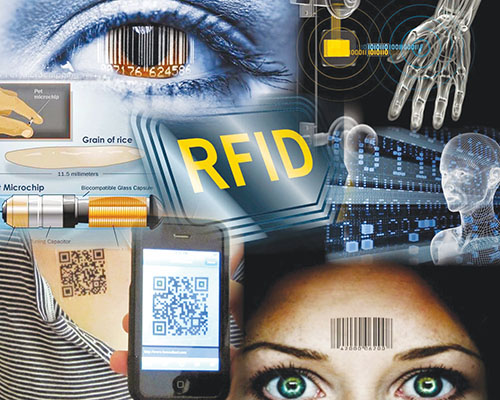
    RFID Technology & Chip Implants

    Radio Frequency Identification (RFID) chips have been the object of a great deal of sensationalist commentary over the years.

    So what are RFID chips? RFID chips are basically an automatic data capture technology that contains unique identification codes that are readable at varying distances with special reader devices. The tiny size of the chips, about that of a small grain of rice, and their widening deployment over the years, has generated broad publicised concerns about potential privacy invasion.

    These fears are not unfounded. It’s already a mandatory requirement in six states of Australia8 and other parts of the world that domestic animals be implanted with a microchip containing identity data linked to a microchip registry. What starts out voluntary often becomes mandatory.

    While deployment of human chip implants in the mainstream has not materialised, it has in no way dampened the spectre of what could be.

    As Time magazine opined back in 1998:

    Your daughter can store the money any way she wants – on her laptop, on a debit card, even (in the not too distant future) on a chip implanted under her skin.9

    Similarly, CNET News 2003, where we read about MasterCard testing RFID technology for the PayPass credit card to be fitted with a chip, states:

    It could be in a pen or a pair of earrings. Ultimately, it could be embedded in anything – someday, maybe even under the skin.10

    A more recent article on BBC sought to inform readers that “it’s the same exact technology as the card in your wallet” to allay fears of “surveillance and totalitarian control” toward microchip implants. Unlike cards that can be lost or stolen, “you’ll never lose the chip,” assured the advocate of the technology. In remarks that read like a glowing endorsement of microchip implant techniques:

    An implanted chip, by contrast, could act as our universal identity token for navigating the machine-regulated world. Yet to work, such a chip would need to be truly universal and account for potential obsolescence…. It marks the beginnings of a slow move toward a world where everything will be accessed from a single RFID microchip. If that day comes, I can’t think of a safer place to keep it than inside my own body.11

    Promoting mainstream use of human chip implants through the health care industry was a curious television commercial for VeriChip Corp in 2008. Featuring a sequence of patients holding forth a tiny microchip, the ad wastes no time enticing audiences with these apparent assurances:

    To think something so small can connect you to everything that matters. When your life and all you love are on the line, Health Link is always with you. When every second counts in the emergency room, providing immediate access to your medical records….12

    Cybernetics scientist Dr. Mark Gasson of the University of Reading in Britain foresees human chip implants becoming one of life’s necessities in the near future, according to citations in the Sydney Morning Herald in April 2014:

    It’s not possible to interact in society today in any meaningful way, without having a mobile phone. I think human implants will go along a similar route. It will be such a disadvantage not to have the implant that it will essentially not be optional.13

    Are these remarks the creative plot for a sci-fi thriller or do they foreshadow biblical mark realities?

    By contrast, it was fears of RFID chip implants “becoming widespread in humans” that prompt this warning in the same Sydney Morning Herald article, citing Dr. Katina Michael, an associate professor at the University of Wollongong:

    They point to an uber-surveillance society that is big brother on the inside looking out. Governments or large corporations would have the ability to track people’s actions and movements, categorise them into different socio-economic, political, racial, religious or consumer groups and ultimately even control them.14

    The spectre of human microchip implants looms.

    Smart Chips & Contactless Payments

    Contactless payment processes have opened a new chapter in fast, convenient and cost effective methods of payment. Many readers of New Dawn would be familiar with the contactless payment services available in many retail stores.

    MasterCard® PayPass™ and Visa payWave are two established contactless payment services on offer throughout Australia. These services provide contactless payment point-of-sale readers that utilise sophisticated smart chip technology to enable users to make payments with little more than a simple wave of a card. No swiping or inserting the card at the terminal, nor a PIN or signature required for purchases under $100.00.

    Unlike the standard RFID chip, the smart chips in cards contain an antenna loop embedded in the plastic. The far more sophisticated modern chip and their variations still use radio frequency technologies but incorporate a microprocessor and internal memory for read/write and secure data storage and management. Contactless smartcards exchange information with payment terminals using short-range wireless communications and conform to the international standard ISO/IEC 14443 that limits the ability to read and write to the contactless device at a distance less than 10 centimetres.

    The significance of these developments cannot be overstated considering the rapid deployment of converging contactless payments and chip card enabled payment innovations in recent years. It could be said that there’s little experiential difference between making a contactless payment with a wave of a card and a contactless payment with a wave of the right hand. If exposure and repetitive use breeds familiarity, then user sensitivities toward an embedded device-enabled payment paradigm are certainly being numbed.

    Quick Response (QR) Codes

    Could scannable tattoos become what is the mark that enables those who receive it to buy and sell?

    QR codes are two-dimensional machine-readable graphics which consist of a matrix of black modules arranged in a square on a white background. QR Codes are similar to standard barcodes except QR Codes can contain much more information than traditional barcodes.

    QR Codes link the physical with the digital world. They are often displayed on brochures, business cards, posters, clothing and other print advertising. When scanned by a smartphone or device, the QR Code directs the user to a website, phone number or other information.

    Incidentally, QR codes also enable payments by linking the user’s bank account or credit card information to their unique QR Code. Depending on the app, users can either pay by scanning a QR code, displayed on a bill for example, with their smartphone or merchants can accept a mobile payment by scanning a customer’s unique QR Code on their smartphone.15

    While QR codes have been around since the 1990s, it’s only with recent technology we see their extraordinary versatility with enabling a variety of mobile payment methods.16 There’s also been a strange twist to this technology with claims of scannable QR Code tattoos.17 It may be a futuristic and bizarre claim to make that one day such tattoos could enable payments much like the passage describes the mark, but it just goes to show the technology and technical capability is here.

    Wearables, Smartphones & Mobile Devices

    Software applications and near field communications (NFC) among other innovations are rapidly transforming payment processing ecosystems, creating a new era of convenient and fast payment services, with converting phones and other mobile devices into full digital wallets.

    It’s claimed the new digital wallet will soon eliminate any need to carry cash and cards, allowing users to link their debit and credit cards to conduct financial transactions all at the press of a few buttons on a device.18 Once the user has established an account, users can ‘tap’ their phone to pay for shopping at the checkout or pay a friend by transferring money from mobile to mobile.

    Enterprising Australian banks and financial service organisations are pressing onward with trials and roll outs of their infrastructure across the country.19 Trials are even being conducted on a payment microchip embedded in the sleeve of suits at the cuff for easy and convenient payments.20 There’s also digital payment bracelets, wristwatches and other wearable payment devices now commercially available.21

    It seems the acceleration toward a cashless society is becoming like one of an amusement arcade amid the range of novel payment devices coming onto the market. These innovative payment devices are yet another novelty enticing customers toward fully traceable and trackable digital transactions, indeed cultivating user familiarity with a variety of cashless and contactless methods of payment.

    Biometric Enabled Payment Devices

    Biometric payment innovations add yet another range of options for the customer to pay, with biometric scanning devices enabling methods of payment typically with finger, hand or face. A familiar range of benefits are advanced including simplicity, speed, convenience and security of payment.

    PayTouch22 and MyTouch23 are two services that allow users to link their payment cards to their fingerprint for method of payment.

    PayPal, a global payment company, has partnered with Samsung to launch a biometric fingerprint authentication payment option enabled by the Fast Identity Online (FIDO) Alliance ready software. The collaboration allows Samsung Galaxy S5 users to be able to login and shop at any merchant that accepts PayPal on mobile with their fingerprint.24

    If there exist any payment technique that could be said to simulate conducting payments with an embedded mark at the right hand or forehead, that would surely belong to emerging hand and face biometric methods of payment.

    Biyo is touted as a revolutionary biometric digital wallet that allows users to pay with their hand by scanning the unique vein patterns in the palm to create a secure password. The point-of-sale system requires users to register their palm and link it to a credit card of choice. Once registered, the user can make payments simply with their hand at any store where the Biyo terminal is available.25

    It’s trumpeted as the world’s first face recognition payment system and comes from a Finnish start-up company called Uniqul. Uniqul are developing real-time facial recognition payment technology to replace cash, cards and phones and aspire to “revolutionise the world of payments with new paradigms to create amazing payment experiences for users.”26

    There is little presence of biometric payments in Australia, however in a recent move toward this initiative, digital banking tech provider The Systems Work Group have taken on eye-print recognition technology for authenticating mobile banking app users.27

    Accelerating Social & Economic Transformation

    Africa and India offer compelling evidence of the radical transformative impacts of cashless technologies on societies and economies.

    The African experience is an amazing transformation, a continent exhibiting by far the fastest growth in mobile money economics in the world amid deep and broad social disadvantage. Mobile money enables users through payment schemes such as SnapScan and M-Pesa to make a variety of financial transactions with just their phone, even where conventional payment infrastructure is unavailable.28

    An extraordinary feature of Africa’s mobile money implementation is that they have leapfrogged over vital infrastructure otherwise necessary for consumers to engage a modern economy:

    The lack of financial and technology infrastructure could have been perceived as a massive barrier, but instead Africa has managed to leapfrog over a world of credit cards, ATMs, bank managers and branches.29

    Evidently the absence or lack of infrastructure is accelerating the transition to a viable cashless society in this instance.

    A similar technological marvel is unfolding in India with the ambitious rollout of a 12-digit unique ID number known as an Aadhaar to all 1.2 billion residents across the country.30

    The Aadhaar number is stored in a centralised database and links to the basic demographics and biometric information of each individual. It is the largest biometric database in the world. The mission is to empower all residents of the country with a unique identity and a digital platform to authenticate anytime and anywhere.

    The program enables millions of rural and poor people through financial inclusion to participate in the modern cashless economy.31 Of important note here is the aim of the ID, as with all sophisticated ID schemes around the world: To create a detailed digital record of everywhere the ID holder goes.

    It’s a fascinating spectacle of technological revolution and accelerating social and economic transformation on a scale seldom if ever seen. Interestingly, when we compare the systems of the mark and Aadhaar, we note a similar layout where both models utilise a unique ID mechanism to enable access to the financial system of the day. To restate in part:

    He causes all, both small and great, rich and poor, free and slave, to receive a mark….  and that no one may buy or sell except one who has the mark.

    En Route to the Global System of the Mark

    Global citizenship and mobility, international trade, global financial markets and high speed technologies have connected individuals and communities beyond our national borders. Increasingly we’re all part of a connected globalised economy in an era of normalising the digital way of life.

    It would have taken some penetrating foresight in decades past to have envisioned the role technology would play today with enabling almost the entire world’s population access to an advancing modern economy, including the world’s poor: “He causes all… rich and poor… to receive a mark…” Yet, here we witness today this incredible transformation unfolding in places such as Africa and India and elsewhere.

    In an interesting note, the Center for Financial Inclusion, citing a convergence of financial inclusion elements including convenient payment systems and the mobile money revolution, envisions global financial inclusion now within reach.32 Cashless technologies are seen contributing to this “profound demographic shift.”33

    Indeed, it’s these cashless technologies that signal an approaching mark-based enabled buy and sell system with each passing day. It wasn’t many years ago that a global cashless society was even technologically feasible, but we now have the computing capacity and power to make it all happen, and very quickly if need be.

    When we look carefully at what the passage is saying, we can actually see described in this ancient text today’s landscape of cashless and embeddable technologies, which is the system of the mark in its embryonic stage development. As such, the pace at which the world is approaching this prophecy may well be synced to the quickening technological progress taking place around us.

    Engineering the Global Surveillance Society

    The cashless society adds a vast new dimension to the surveillance society. Further to being tracked using conventional surveillance techniques, any user of the Internet, credit card or mobile device can now be monitored by their computer and consumer activities.

    As was earlier outlined, the surveillance society had already arrived with little public awareness of, and appreciation for, its pervasive presence in our lives. A similar phenomenon is confronting us today with the cashless society and fewer still are alert to its encroaching consequence.

    We now embrace surveillance like a dangerous liaison with our preoccupation for everything digital and mobile. As journalist and author Pratap Chatterjee observes:

    Today, the surveillance state is so deeply enmeshed in our data devices that we don’t even scream back because technology companies have convinced us that we need to be connected to them to be happy.34

    Exclusive use of cash in the new surveillance economy provides some level of anonymity but even these efforts will be futile when the day arrives that cash is made obsolete.

    What could it take to galvanise governments into establishing a purely closed digital economy incorporating a device embedded in every individual to buy and sell?

    ID cards, payment cards and mobile devices can be lost, stolen and broken. Accordingly, precursor technologies would converge to create the mark, reconstructed as a hybrid of a unique ID and digital wallet device, embedded in the right hand or forehead for a fully integrated security solution.

    How about a crisis of such consequence that threatens world security and social order? With looming global threats and ongoing instabilities, countries teetering on catastrophic financial collapse amid increasing terrorist activity and conflicts abroad, the shifting sands of the current fragile world order would seem to be signalling its systemic breakdown.

    Perhaps in the midst of such turmoil or following a worldwide economic meltdown, comes a momentous shift to a cashless society with an embedded device compulsory for every individual to participate in the new global financial order. However, the newly hatched revolutionary system will be one that ensnares humanity in a totalitarian global surveillance society unlike the modern world has ever seen given such advanced technology in place. We have already crossed the Rubicon.

    [alert type=”general” dismiss=”no”]This article was published in New Dawn 145.[/alert]

    [alert type=”success” dismiss=”no”]If you appreciate this article, please consider subscribing to help maintain this website.[/alert]

    Footnotes

    Note: All links and web pages accessible at time of publication

    1. M. Hirst, ‘Someone’s looking at you: welcome to the surveillance economy’, 26 July 2013, at http://theconversation.com/someones-looking-at-you-welcome-to-the-surveillance-economy-16357
    2. Ibid
    3. ‘Global mass surveillance should be discontinued immediately’, Global: the international briefing, 2014, at www.global-briefing.org/current-issue/
    4. Y. Shostak, ‘Global Identity Verification and Migration Mobility Control’, MRTDs, Biometrics and Security Standards (2011) Montreal ICAO, 12 September 2011 at www.icao.int/Security/mrtd/7th/Documents/12_am_edaps.pdf and ‘Interpol chief calls for global electronic identity card system’, 6 April 2011 at www.net-security.org/secworld.php?id=10860
    5. ‘Barcode everyone at birth’, BBC Future, 22 May 2012 at www.bbc.com/future/story/20120522-barcode-everyone-at-birth
    6. See S. Chen, ‘China mulls global satellite surveillance after flight 370 riddle’, 30 March 2014 at www.scmp.com/news/china/article/1460652/china-mulls-global-satellite-surveillance-after-flight-370-riddle
    7. D. Murakami & K. Ball, et al (Eds) ‘A Report on the Surveillance Society’, September 2006 at www.dataprotection.ie/docs/A-Report-on-the-Surveillance-Society-For-the-Information-Commissioner/386.htm
    8. ‘Is microchipping mandatory for cats and dogs?’ at http://kb.rspca.org.au/Is-microchipping-mandatory-for-cats-and-dogs_287.html
    9. J.C. Ramo, ‘The Big Bank Theory’, TIME, 27 April 1998 at http://content.time.com/time/magazine/article/0,9171,988228,00.html and for full published version see http://content.time.com/time/magazine/article/0,9171,139035,00.html
    10. D. McCullagh, ‘Chip implant gets cash under your skin’, CNET news, 25 November 2003 at http://news.cnet.com/2100-1041-5111637.html
    11. F. Swain, ‘Why I want a microchip implant’, BBC Future, 10 February 2014 at www.bbc.com/future/story/20140209-why-i-want-a-microchip-implant
    12. See www.youtube.com/watch?v=wW_eAQN7oks
    13. I. Gillespie, ‘Human microchipping: I’ve got you under my skin’, Sydney Morning Herald, 16 April 2014 at www.smh.com.au/digital-life/digital-life-news/human-microchipping-ive-got-you-under-my-skin-20140416-zqvho.html
    14. Ibid
    15. ‘Hot issues in payment: QR code and NFC payment’, Payworks, 30 September 2013 at http://payworksmobile.com/blog/2013/09/30/hot-issues-in-payment-qr-code-nfc-payment/ and ‘QR Codes for Marketing: A Unique Way to Bridge Offline and Online Media’, Human Service Solutions, at www.hswsolutions.com/services/mobile-web-development/qr-code-marketing/ and ‘QR Code’ at http://en.wikipedia.org/wiki/QR_code#cite_note-26
    16. See www.youtube.com/watch?v=dAywQ6spop4
    17. ‘Brave hipster gets animated tattoo using a QR code’, Relaxnews, 11 August 2011 at www.news.com.au/technology/brave-hipster-gets-animated-tattoo-using-a-qr-code/story-e6frfro0-1226113101876
    18. B. Voo, ‘Digital Wallets – 10 Mobile Payment Systems To Take You There’, Hongkiat at www.hongkiat.com/blog/digital-wallets/
    19. A. Bender, ‘Mobile payments in Australia: state of the banks’, Computerworld, 29 January 2014 at www.computerworld.com.au/article/536949/mobile_payments_australia_state_banks/
    20. S. Colqhoun, ‘The world’s first payWave suit’, The Age, 23 April 2014 at www.theage.com.au/executive-style/style/the-worlds-first-paywave-suit-20140422-371xp.html
    21. L. McQuarrie, ‘From Digital Payment Jewelry to Credit Card Timepieces’, 14 August 2013 at www.trendhunter.com/slideshow/payment-devices
    22. See www.pay-touch.com/en/home
    23. See www.mytouchpayments.com/default.aspx
    24. A. Vrankli, ‘PayPal and Samsung launch FIDO authentication and fingerprint payments for Samsung Galaxy S5’, Biometric Update, 25 February 2014 at www.biometricupdate.com/201402/paypal-and-samsung-launch-fido-authentication-and-fingerprint-payments-for-samsung-galaxy-s5
    25. See http://biyowallet.com/
    26. See http://uniqul.com/
    27. ‘Eyeprints To Protect Mobile Banking Transactions’, Find Biometrics, 28 April 2014 at http://findbiometrics.com/eyeprints-to-protect-mobile-banking-transactions/
    28. L. Erasmus, T. Kermeliotis, ‘No cash, no cards: Mobile app lets you pay with just your smartphone’, CNN Marketplace Africa, 20 February 2014 at http://edition.cnn.com/2014/02/20/business/no-cash-no-cards-just-smartphone/index.html?hpt=hp_bn1
    29. R. Botsman, ‘Mobile money: The African lesson we can learn’, Financial Review, 14 February 2014 at www.afr.com/p/boss/mobile_money_the_african_lesson_CwCeQ00CdCxlpFijNamvgM
    30. ‘AadHaar’ at http://en.wikipedia.org/wiki/Aadhaar
    31. Ibid and see ‘From Exclusion to Inclusion with Micropayments’, UIDAI Planning Commission, April 2010 at http://uidai.gov.in/UID_PDF/Front_Page_Articles/Strategy/Exclusion_to_Inclusion_with_Micropayments.pdf and ‘Aadhaar: Financial Inclusion through online authentication’, Aaadaarh UIDAI at www.youtube.com/watch?v=3aQJztNif94
    32. ‘Seizing the Moment: On the Road to Financial Inclusion’ by the Center for Financial Inclusion, October 2013 at http://centerforfinancialinclusionblog.files.wordpress.com/2013/11/seizing-the-moment-fi2020-synthesis-report.pdf
    33. E. Zuehlke, ‘Cashless Technology One Piece of the Financial Inclusion Puzzle’, MasterCard, 4 February 2013 at http://newsroom.mastercard.com/2013/02/04/cashless-technology-one-piece-of-the-financial-inclusion-puzzle/
    34. P. Chatterjee, ‘Mining your information for big brother’, Asia Times Online, 15 October 2013 at www.atimes.com/atimes/World/WOR-01-151013.html

    © New Dawn Magazine and the respective author.
    For our reproduction notice, click here.

  • Manifesting Your Will

    Manifesting Your Will

    From New Dawn 103 (Jul-Aug 2007)

    Much of New Thought is about manifesting your will. It’s far more helpful to do this if your will is in alignment with your own higher nature. This exercise is designed to help you accomplish this aim. It may be read aloud and recorded, or one person may read it to another or to a group if that is helpful.

    Sit in a comfortable but erect position, free from disturbances, so that you can be as relaxed and alert as possible. You may want to begin with a prayer to God or to whatever Higher Power you find suitable for guidance in this particular situation (e.g., work, love, finances, etc.). Close your eyes and allow your attention to come to the breath. Simply let it flow in and out, without any desire to change it in any way.

    As the breath relaxes into a steady rhythm, allow your attention to come to the sensations of the body. Feel your feet on the floor, your back against the chair, your hands and arms – whatever part of the body presents itself to your attention. You may start to feel sensation as a kind of subtle current that flows where it wills throughout your body. (If not, however, that’s also fine.)

    Then allow yourself to sense your body as a whole, in a single moment. (This may require some concentration if you’re not an experienced meditator.) Let your attention rest for a moment on the solar plexus – the point at the centre of the body just below the rib cage.

    Now bring your attention to the heart. You may feel it beating, or you may not. What’s important is that you centre your attention there. As you continue to feel the heart, some emotions may come up. Allow your attention to come to these, and do your best to watch them attentively but dispassionately, even if they are somewhat intense. (Emotions, by the way, aren’t thoughts or physical sensations; they’re feelings like love or hate or fear or joy.) You may be surprised to see that pleasant and unpleasant emotions can follow one another quite quickly, without any apparent reason. Watch them but do not cling to them or push them away.

    Let your attention now come to the thoughts and images that are passing across the screen of the mind. Again, watch them alertly without either clinging to them or pushing them away. Whether they’re pleasant or unpleasant, simply let them come and go. After a few minutes of watching the thoughts, become aware of the watcher, the silent witness in you that is observing all this experience. Ask yourself where in you it is. For many people, this witness feels as if it is in the centre of the head, a couple of centimetres behind the eyes (which is why this is called the Third Eye). But you may have a sense of it elsewhere, such as in the heart or solar plexus.

    Pretend that this silent watcher is looking up through the crown of your head almost as if it were peering through the opening of an astronomical observatory. In your mind’s eye visualise a point of light, like a star in the night sky, say some four metres directly overhead. This point of light represents your higher Self. Rest your attention on this point of light for at least two or three minutes.

    Now turn your attention to the situation that concerns you. Ask, ‘What is my will in this situation?’ You can also look up (in your mind’s eye) at the point of light and ask, ‘What is thy will?’ Make a firm resolution in your mind to see the truth in the situation, not what you want or what you imagine it to be. If you’re feeling great fear or anxiety, breathe it out.

    Allow the answer to come as it will. Note your responses precisely and objectively. (You may find it helpful to make notes after the exercise is finished.) When you have received the information you need, let the exercise drop and return your attention to the sensations of the body for a minute or two. Then let the exercise drop completely and return to your ordinary state of consciousness. You may find it helpful to stamp your feet a little to ground yourself again. If you feel disoriented or ‘out of it’ as a result of the exercise, a bite of food or a beverage may be helpful.

    Make a conscious decision to remember what you have willed at least once daily, and also at least once daily take some action, large or small, to bring this will into realisation. You will know for yourself what the actions are to be.

    For more on this subject, read the author’s accompanying article The Real Secret of The Secret.

    [alert type=”general” dismiss=”no”]This article was published in New Dawn 103.[/alert]

    [alert type=”success” dismiss=”no”]If you appreciate this article, please consider subscribing to help maintain this website.[/alert]

    © New Dawn Magazine and the respective author.
    For our reproduction notice, click here.

  • The Bogomils: Europe’s Forgotten Gnostics

    The Bogomils: Europe’s Forgotten Gnostics

    From New Dawn 106 (Jan-Feb 2008)

    Few people in the modern world have heard of the Bogomils, who existed during a seven-century time span in and around Bulgaria. Although almost forgotten, they represent an important movement that should be studied by anyone interested in Gnosticism, spiritual freedom, the Cathars of France (who succeeded them), and the history of religions.

    For most of their existence, from the mid 900’s to the late 1400’s CE, the Bogomils sought to restore the earliest and purest form of Christianity. Since their beliefs were considered a threat to the Church they experienced intense persecution.

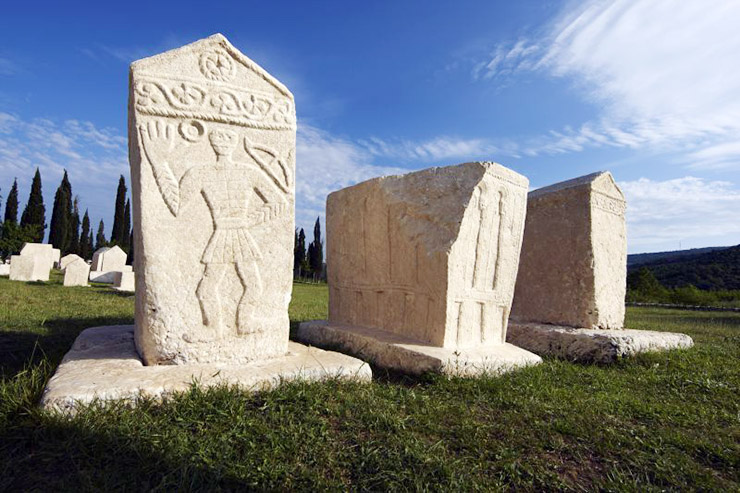
    Their original home was probably in Macedonia and from there they spread throughout the Byzantine Empire, ultimately flourishing in Bulgaria, Serbia, and Bosnia. Their spiritual descendants were the better-known Cathars, so the extent of their influence reached as far as Italy and into southern France.1 Attacked over the centuries with both fire and sword by Catholic and Orthodox Christians, they finally surrendered – but to Islam rather than Christianity.2

    Origins

    Bogomilism was named after its founder, Bogomil, whose name means “friend of God” or “beloved of God.” He was a village priest who lived in the Macedonian mountains during the reign of Peter (927-968), a fact confirmed by two early Bulgarian manuscripts that are still extant.3

    The Bogomils’ long history had actually begun in the previous century. When Khan Boris I accepted a Christian baptism in 864, Greek missionaries soon arrived. Christianity spread rapidly, but many resisted and dissent began to spread.

    The Byzantine Empire was familiar with large groups of dissenters and usually deported them. As historian Donald M. Nicol explains, “Where heresy was widespread in a district, State officials would come and forcibly remove the population of whole villages to other parts of the Empire, where they would be swamped, or, it was rather hoped, converted by their new neighbours.”4 Instead of deporting recalcitrant Bulgarians, however, the Byzantines chose to resettle a group of Armenian heretics known as Paulicians on the Bulgarian frontier in 872. This was a mistake. Instead of adopting Orthodoxy, the Paulicians spread their Manichaean doctrines, which espoused a dualistic struggle between the forces of good and evil in the cosmos. Their beliefs strongly influenced the formation of the Bogomils and by about 950 Bogomilism had been born.

    Rituals and Beliefs

    Instead of having priests a group of elders were chosen by lot to lead each Bogomil service. Therefore, all interested believers had the potential to lead. Their meetings were held in any home or structure, or even outside, as they believed that God did not confine Himself to stone buildings designated by humans. The spirit of God, indwelling in every human heart, could be brought anywhere and recognised as such. This was a clear threat to the Church. Its popularity was also a threat. Bogomilism spread rapidly because a portion of the brethren’s earnings went to the poor, the sick, and toward the support of those who travelled and spread the Gospel.

    The early Bogomils rejected the Old Testament, relying primarily on the New Testament. The later Byzantine Bogomils accepted the Psalms and the sixteen books of the Prophets. Their version of worship was an effort to exemplify the beliefs of the Primitive Church in its purest form, before Christianity added to it. The Trinity was considered to be an illusion and rejected (overwhelming scriptural evidence shows this is a false doctrine; the concept never appears in the earliest Christian teachings). The cross was considered evil, having been the instrument used to kill Christ. They asked, “If someone killed the king’s son with a piece of wood, do you think the king would regard the weapon as holy?” Using the Sign of the Cross was also rejected; they preferred the Lord’s Prayer because it fails to support or glorify the murder of a spiritual leader.

    They rejected beliefs in the Second Coming, the Last Judgment, and the resurrection of the dead. They all relate to the redemption of the material body, and the Bogomils viewed matter as the principle of evil. Like the older Gnostics before them, they believed that the godly “spark” or spirit of man has been trapped in this evil, material world. To be united with God, man must avoid contact with the world of flesh. Therefore the “elect” abstained from sexual intercourse, meat, and wine, a practice that was successfully maintained throughout the greater part of Bogomil history.

    While the elect practiced such austerities, they accused the Orthodox clergy of idleness, drinking, and robbery – which in large part was probably true. The Bogomils contended that the Orthodox had forfeited the right to be called Christians because of their behaviour, and saw themselves as the true Christians of the time.

    To become a Bogomil required a simple two-part initiation, known as “the Baptism of Christ through the Spirit” in contrast to the Orthodox baptism, which the Bogomils rejected as being of St. John and by water only.5 The candidate was prepared through prayer, fasting, and confession of sins. At the ceremony the presiding authority laid the Gospel of John on the candidate’s head; then they invoked the Holy Spirit and said the Lord’s Prayer together. A probationary period of abstinence from sex, wine, red meats, and food with blood (except for fish) followed. Once completed, the initiate returned for the second part of the process by coming before the assembly. He faced the east, at which point the Gospel of John and the hands of the brethren present were laid on his head and a hymn of thanksgiving was sung. According to at least one scholar, it is possible that an initiate was declared a Bogomil upon completion of the first part, and completing part two moved him up from the rank of “believer” to that of the “perfect” or “chosen.”

    One of the major differences between the Bogomils and the Orthodox concerned their views of evil:

    The church teaches that God is the source of all perfection and that the whole world, visible and invisible, is His creation. Yet one does not need to be a philosopher to observe that in this world of ours moral and physical evil – suffering, cruelty, decay, death – is abundantly present. How then can God, the Supreme Good, be the cause of suffering and evil? Must He be held responsible for wars, epidemics, the oppression of the poor by the rich?… The Bogomils had an answer which was at least logical and consistent: evil and pain are inherent in this world because this world is the creation of the Evil One.6

    [alert type=”info” dismiss=”no”]If you appreciate this article, please consider a subscription to New Dawn magazine.[/alert]

    History and Persecutions

    Constantinople

    By 1050 the Bogomils had spread to the Byzantine Empire. Euthymius Zigabenus, a favourite monk of the emperor, returned from a journey and found the heresy had infested his monastery. Euthymius set out to uncover the heresy.

    One captured Bogomil, Diblatius, revealed under torture the names of high-ranking Bogomils, including their supreme leader, Basil, who had taught for over 50 years. Basil was approached through underhanded means. The Emperor Alexius and his brother pretended to be interested in converting to Bogomilism. As Basil was questioned in the palace, a secretary hid behind a curtain and took notes, documenting all that was said. When a full confession had been made, Alexius threw back the curtain and arrested him.

    Basil’s core followers and twelve main disciples were caught. Many refused to recant, so Alexius announced that all Bogomils would be burnt alive, but had a choice between being burnt on a pyre with a cross or on a pyre without one. Those who chose the cross were released as having proven their orthodoxy. The others were returned to prison, where they were subjected to daily exhortations to convert. Those who persisted in their beliefs stayed imprisoned for life, but, Anna adds, “were amply supplied with food and clothing.”7

    Basil was arrested in 1111 and burnt in either 1118 or 1119. A huge pyre was built in the Hippodrome where large crowds attended events. He had the choice of walking to a large wooden cross instead of the fire. Refusing the cross, he was thrown into the fire. Basil’s death ended Bogomil influence in Constantinople.

    With all the years of conflict between the Bogomils and the Orthodox Byzantines, it is amazing that there was only one public execution of Bogomils in the Byzantine Empire. As Obolensky observes, “It is to Alexius’s everlasting credit that in his dealings with heretics he used the weapon of persuasion in preference to any other.”8

    Bosnia

    In the late 1100’s the Bogomils were badly persecuted in Serbia, but Bosnia was a safe haven. The first great ruler in Bosnia was Kulin, the “Great Ban” (ban was the title given to local representatives of the Hungarian kings). His reign, from 1180 to 1204, was known for its prosperity. Bogomilism was hugely prevalent, involving many nobles and landowners. They formed a “Bosnian Church” of their own, headed by a “bishop” and served by a semi-monastic body of devotees who acted as missionaries.9 The biggest surprise was when Kulin himself and the Roman Catholic Bishop of Bosnia became Bogomils, shocking the Roman church. The papacy and the Catholic king of Hungary pressured Kulin to recant (under threat of war), which he did in 1203. In spite of Kulin’s “change of heart,” Bogomilism continued to grow and flourish.

    When Kulin died in 1204 the worried Pope appointed a Roman Catholic Ban. A group of missionaries arrived to convert the Bosnians. The result? The Roman Catholic Ban converted to Bogomilism and Bogomil churches spread like wildfire – not only in Bosnia, but in Slavonia, Croatia, Istria, Dalmatia and Carniola. As for the papal missionaries, by 1221 there were no other priests in Bosnia except for Bogomils.

    In 1222 Hungary invaded in what was to be the first of at least three crusades against the Bogomils, fashioned after the Albigensian Crusades in France. The Bosnians immediately threw the Roman Catholic Ban out of the country and appointed a Bogomil leader named Ninoslav. The war continued for years as a stalemate. Ninoslav received the same pressure to convert to Catholicism as Kulin did and complied, but the entire country saw through the same façade from before and continued being Bogomils without batting an eye. The warfare smashed up the countryside but whenever the invaders withdrew, the Bogomils went back to their faith, backed by the strength and prosperity of the people.

    By the late 1200’s, after more failed attempts, Hungary chose not to invade Bosnia. Frustrated voices in Rome began grumbling that Hungary herself should be the object of a crusade.

    In 1322, the powerful Subic family was toppled and Stephen Kotromanic, a Bogomil, was elected as ban. He successfully acquired the principality of Hum (later called Herzegovina) in 1326, foiling Serbian and Hungarian attempts and giving Bosnia access to the sea for the first time in its history. Its prosperous farms and mining operations now had a direct sea route for export. This was a hugely successful country, teeming with heretics. It was only a year earlier that the Pope had written to Kotromanic saying, “Knowing that thou art a faithful son of the Church, we therefore charge thee to exterminate the heretics in thy dominions,… their speech crawleth like a crab, and they creep in with humility, but in secret they kill, and are wolves in sheep’s clothing,” etc.

    Let’s read this again. Who was, in actuality, the one trying to “kill in secret,” by sending a letter to the king, asking that he “exterminate” his own people? A close study of the papacy and its history will expose almost as much corruption as the mafia. Those familiar with papal history will not find these tactics to be of any great surprise.

    Bulgaria

    The Bulgarian Tsar Boril, who ruled from 1207-1218, detested the Bogomils. He had usurped the throne, having driven the rightful heir, John Asen II, out of the country and into Russia. Anti-heretical laws were issued and carried out in 1211, making these events almost simultaneous with the Crusade against the Cathars in the West. 10 Many heretics were tried and went to prison.

    Followers of John Asen II dethroned Boril in 1218 and blinded him, restoring the rightful heir to the throne. Asen, who ruled from 1218-1241, is considered the greatest of all Bulgarian monarchs, and under his reign Bulgarian civilisation reached its peak.

    During Boril’s reign the Bogomils had supported the absent Asen, and John never forgot it. They now enjoyed complete protection and freedom under him, suggesting a link between Bulgaria’s greatness and the protection and support of the Bogomils. Pope Gregory IX complained to the king of Hungary (of which Bulgaria was a satellite) about the kind treatment the heretics were receiving. A crusade was attempted in 1235, but failed miserably.

    It was no coincidence that under the rule of John Asen II Bulgarian civilisation reached its peak. Bosnia achieved similar greatness while allowing the Bogomils to flourish. These were immensely successful nations that were Gnostic in character and belief. What gives any foreign country or pope the right to dictate what a certain nation’s beliefs should be when they are at the height of their civilisation and quite happy internally?

    The Cathar Legacy

    Bogomilism entered Russia, but its biggest influence was on the Cathars of southern France. Cathar origins have been traced to Bogomil missionaries who are believed to have passed through the Dalmatian coast and northern Italy to reach France in the tenth and eleventh centuries.11 Most serious researchers consider Catharism a direct legacy of the Bogomils. A lesser camp contends that the Cathars were formed independently by long-established Manichaean schools in France, then connected with the Bogomils at the end of the eleventh century.

    According to the late Romanian scholar Ioan Couliano, this difference stems from two distinct Cathar groups that existed, “…one that was simply Bogomil, and another one that preached a radical dualism of intellectual origin, made up of a concoction of Origenism and Manichaeism…. The two types of Catharism may not share common doctrines but they have similar ethics, stemming from Bogomilism.”12 Couliano reveals how this second Cathar group, in his view, also originated in the Balkans.

    Bogomilism directly influenced the Cathars by the twelfth century. In his book Aion, C.G. Jung mentions a heretical document that was found in the Archives of the Inquisition at Carcassonne, France. This work, he says, “concerns an alleged revelation which Christ’s favourite disciple John was vouchsafed as he ‘rested in the Lord’s bosom’.” Jung notes that this Latin text contained the Old Bulgarian word osob, which means something like “individuality” or “personality.” He also mentions how the Cathars, like the author of this text (hinting at two distinct persuasions), regarded the Devil as creator of this world and of man.13

    Jung’s account clearly resembles Obolensky’s description of the Cathar Secret Book, also known as the Liber Sancti Johannis or the Faux Evangile. It is “…a dialogue between Jesus Christ and His favourite disciple John the Evangelist. At the Last Supper St. John leans on the breast of his Master and questions Him on the origin of the world, the spiritual life, and the end of all things.”14 To the Bogomils, the books of John have always been the most revered. Moreover, on the Carcassonne manuscript the Inquisitors had written, “This is the Secret Book of the Heretics of Concoresso, brought from Bulgaria by Nazarius, their bishop, full of errors.”15

    The Cathar Secret Book thus is a Latin translation of a Slavonic work (only parts of which survive in the original) brought to the West by a high-ranking Bogomil named Nazarius. Hence the Bogomils, if not directly responsible for the Cathars’ teachings, at least provided a strong influence on them.

    This resemblance extends to similar initiatory prayer ceremonies and a number of doctrines, including an exclusive preference for the Lord’s Prayer, the disavowal of marriage, a rejection of the doctrine of the physical Incarnation, an emphasis on asceticism, opposition to the instituted church, and belief in the Devil as a son of God who is the unjust ruler of this world, and more.

    During the Albigensian crusades many Cathars reportedly found refuge in Bosnia. Reniero Sacconi, an Italian Inquisitor, stated that the Church of the Cathari extended from the Black Sea to the Atlantic. The Black Sea flanks the Balkans, where no official Cathar settlements had ever been established. He made this statement at least four years before the Cathar crusades began, so it reflects contact not only in time of need, but out of long-standing spiritual roots.

    The Cathars were brutally attacked in the Albigensian crusade starting 1208. By 1244 more than one million Cathars had been slaughtered in France. In 1209, for example, the Catholic bishop of Citeaux ordered the entire population of Beziers, a Cathar city of 20,000, put to death and their city destroyed. A minority of Catholics died because the papal legate ordered his soldiers, who wanted to save them, “Kill them all; God will sort them out.” In the Balkans murders did occur but the mass extermination of entire towns, including women and children, was not considered.

    The greatest time in the nations of Bosnia and Bulgaria was when this form of heresy was allowed to thrive, without outside interference. The Languedoc area of southern France, home of the Cathars, was equally prosperous before the Church launched its persecutions. This wealth and success may have been what drew their attention. Most of the nobles were Cathars, upper class children attended Cathar schools, literacy rates were the highest in Europe, citizens were the most educated in France, there was less class distinction, and Christians and Cathars lived peacefully together without considering themselves enemies before the Church cast its hawkish gaze upon them. This successful way of life was virtually the same blueprint, passed down from the Bogomils.

    Decline

    By the fourteenth century Bogomilism was in decline, partly because of what Obolensky calls the “general moral decline of the age,” partly because of the influence of Messalianism.16 The name comes from a Syriac word meaning “those who pray.” Their primary belief was that all are born with an indwelling demon that can be driven out only through prayer (rather than through baptism, as Orthodox Christians believed). For those who had expelled their demons, sin was no longer possible, so many Messalians indulged in sexual excesses that were frowned upon by their Orthodox opponents. They lived in strict poverty, did no manual labor, and women were allowed to teach among them.

    The Messalians entered Bulgaria during the eighth and ninth centuries and influenced Bogomilism strongly when it arose. The two sects existed separately up to and during the eleventh, but a fusion began to occur in the following century to the point where the two sects were fused completely together by the fourteenth century. The influence of the Messalians, with their extreme sexual indulgence, caused the Bogomils to lose their strongly puritanical streak.

    Hungary finally defeated Bosnia in 1408. 126 of Bosnia’s wealthiest and most influential noblemen were beheaded and thrown into the Bosna River from the rocks of Doboj. Remaining nobles like King Sigismund’s chief Bogomil opponent, Hrvoje, surrendered in early 1409.

    As a reward he was allowed to retain his former acquisitions, along with his title of Duke of Split, and he was appointed by Sigismund as his lieutenant in Bosnia. He also received possessions in Hungary, namely Pozega together with its county and its seigneury of Segesd in Somogy.17

    This arrangement didn’t last. In 1413 Hrvoje, whose outpost was in southern Bosnia, attacked Herzegovina, a neighbouring Hungarian protectorate. Sigismund immediately confiscated all of Hrvoje’s lands and declared him a rebel. The extensive lands of Hrvoje accepted their direct Hungarian seizure without a fuss, but Hrvoje did not. His protest to Hungarian barons went on deaf ears so Hrvoje, now an outcast, turned to the Turks.

    The Turks had made their first invasion into Bosnia in 1386 and from then on continued with raids and invasions. They took a permanent foothold in part of southern Bosnia around 1414, about the same time Hrvoje recruited them. In the winter of 1413-1414 combined forces of Bogomils and Turks took a number of castles back from the Hungarians. A larger merged force then went after the Hungarians. In 1415 they crushed the Hungarian army a few miles from the rocks of Dojob, in the battle of Usora. Most of the Hungarian soldiers were killed; those who survived were ransomed for a huge sum. This one battle devastated Hungary so badly that their influence in the region was reduced to almost nothing, and it took more than a decade for them to successfully return and restore some influence.

    Throughout the fifteenth century the Turks continued their expansion. Constantinople fell in 1453, Serbia, which had briefly regained its independence, was retaken in 1459, and a final invasion of Bosnia occurred in 1463. The last Bosnian king, Tomasevic, was the first and last to have been originally crowned with the approval of the Catholic Church. He was beheaded along with many of his supporting nobles in 1463.

    Many Bogomils welcomed the invasion. Having suffered continual persecution by both the Orthodox and Roman Catholic churches, “they preferred to be conquered by the Sultan than converted by the Pope.”18 The new rulers encouraged their subjects to convert to Islam; those who did were allowed to retain their land and feudal privileges. Some enjoyed even higher status: serfs who converted to Islam became free peasants. On the other hand, Christians who did not convert became serfs without rights of property or citizenship under Moslem law. As one source puts it, “In Bosnia and Herzegovina Christians were crushed and exploited both by Turks who became landowners and by their own converted upper classes.”19

    Who were these converted upper classes? Often they were Bogomil nobles. Retaining their own language, “they displayed the customary zeal of converts and out-Ottomaned the Ottomans in their religious fanaticism,” becoming, at times, “keener in the cause of Islam than the Commander of the Faithful himself.”20 By the end of the fifteenth century the Bogomils had merged into the general Muslim population.

    If the Church had made a deal with the Bogomils as had been done with Islam, allowing them spiritual freedom within the Christian fold, things might have been different. Hungary was continually manipulated as an invading force in Bosnia when everyone (Hungarians, Bosnians and Rome) could have fought against the Ottomans rather than fighting against each other. The spread of Islam could have been thwarted or diminished. Rebecca West summed it up well: “Had it not been for the intolerance of the Papacy we would not have had Turkey in Europe for five hundred years.”21

    Deunov and Aivanhov

    In more recent times we have had two Bulgarian-born mystics, Peter Deunov and his disciple Omraam Mikhael Aivanhov, who claim a spiritual descent from the Bogomils. They cannot be strictly classified as Bogomils, but could have been blood descendants, and their teachings clearly carry on in the same spirit.

    Peter Deunov (1864-1944) received a doctorate in theology in America before returning to Bulgaria, where he became a venerated saint. By the time of his death he had over 40,000 followers despite being accused by the Bulgarian clergy of corrupting the people. Deunov’s teachings are still practiced in at least 26 countries worldwide.

    Deunov’s student, Omraam Mikhael Aivanhov (1900-1986), left Bulgaria in 1938 to settle in France, but remained a devoted disciple for his entire life. Author Georg Feuerstein states, “Through Peter Deunov, who resuscitated the ancient gnostic heritage of his homeland, Aivanhov was in touch with a powerful lineage going back to the Bogomils of the tenth century A.D. and earlier gnostic schools.”22

    Aivanhov shared a similar interpretive style with the Bogomils, looking at the Bible in a deeper, more mystical sense. He spoke of many ancient truths, previously lost, that he felt were expressed in the Scriptures. Feuerstein calls him “a master at the task of interpreting the ancient esoteric lore to his contemporaries who have all but forgotten their own heritage of wisdom.”23

    The Bogomils are gone today. Their achievements have never been well known in the West, but remain an important part of Gnostic and religious history, showing us how one group with determination can not only survive, but flourish for hundreds of years in the midst of persecution.

    [alert type=”general” dismiss=”no”]This article was published in New Dawn 106.[/alert]

    [alert type=”success” dismiss=”no”]If you appreciate this article, please consider subscribing to help maintain this website.[/alert]

    Footnotes:

    1. Dmitri Obolensky, The Byzantine Commonwealth: Eastern Europe, 500-1453 (New York: Praeger, 1971), pp. 125-6.
    2. Will Durant, The Age of Faith (New York: Simon & Schuster, 1950), p. 769.
    3. James Hastings, ed., Encyclopedia of Religion and Ethics, vol. 1 (New York: Charles Scribner’s Sons, 1928), p. 784.
    4. Donald M. Nicol, Church and Society in the Last Centuries of Byzantium (London: Cambridge University Press, 1979), pp. 101-02.
    5. Dmitri Obolensky, The Bogomils (London: Cambridge University Press, 1948), p. 215.
    6. Obolensky, The Byzantine Commonwealth, p. 122.
    7. Quoted in Obolensky, The Bogomils, p. 203.
    8. Ibid., p. 205.
    9. H.C. Darby, R.W. Seton-Watson, et al., A Short History of Yugoslavia (London: Cambridge University Press, 1966), p. 59.
    10. Obolensky, The Bogomils, p. 234.
    11. Ioan P. Couliano, The Tree of Gnosis (New York: HarperCollins, 1992), p. 41.
    12. Ibid.
    13. C.G. Jung, Aion: Researches into the Phenomenology of the Self, trans. R.F.C. Hull (Princeton: Princeton University Press, 1959), pp. 145-48.
    14. Obolensky, The Bogomils, p. 227.
    15. Steven Runciman, The Medieval Manichee (Cambridge, England: Cambridge University Press, 1947), p. 108.
    16. The Bogomils, p. 264.
    17. Pal, Engel, The Realm of St. Stephen: A History of Medieval Hungary, 895-1526, trans. by Tamas Palosfalvi, (I.B. Tauris, Hungary, 2001), p. 234.
    18. Phyllis Auty, Yugoslavia (New York: Walker and Co., 1965), p. 50.
    19. Ibid.
    20. Darby, Seton-Watson, et al., p. 64.
    21. Rebecca West, Black Lamb and Grey Falcon: A Journey through Yugoslavia (MacMillan & Co., London, 1942), p. 301.
    22. Georg Feuerstein, The Mystery of Light: The Life and Teaching of Omraam Mikhael Aivanhov (Sandy, Utah: Passage Press, 1994), ms. p. 318.
    23. Ibid, p. 334.

    © New Dawn Magazine and the respective author.
    For our reproduction notice, click here.
  • Mr West, the Sphinx & Gurdjieff: “Only a gentleman fights for lost causes”

    Mr West, the Sphinx & Gurdjieff: “Only a gentleman fights for lost causes”

    From New Dawn Special Issue Vol 8 No 6 (Dec 2014)

    It has been thirty-five years since the first publication of John Anthony West’s revolutionary book Serpent in the Sky: The High Wisdom of Ancient Egypt. It was a courageous challenge to the academic blindness of mainstream Egyptology. Much has transpired since then and although the mainstream still desperately clings to its outdated attitudes toward the wisdom of the ancients, the knowledge that the real truth of our history and its origins have been denied to us is gaining a much greater acceptance.

    In this exclusive interview for New Dawn magazine [conducted in 2014], Darren Carville spoke to John about where he is currently at and what motivates him at the age of 82 to continue taking on the Establishment [Editor’s note: John Anthony West died in 2018]. The following are some highlights from that interview.

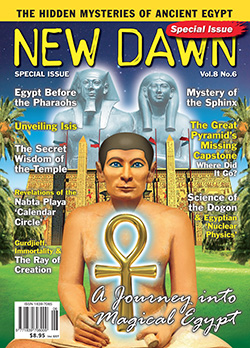
    DARREN CARVILLE (DC): John, Serpent in the Sky was originally published back in 1979 when the Internet was just a pipe dream. It’s amazing how many of these ideas are so widely disseminated online now. Just one example is this curious image of the ‘Sitting Scribe’ [see the front cover of this magazine] that in your book was originally in black & white, but now there are dozens of vivid colour copies of it online from every angle as people visiting Egypt take digital shots and upload the images themselves.

    JOHN ANTHONY WEST (JAW): Yes that’s true, and that particular image is also a great example of Egyptian technology going backwards, because those inlaid eyes, they’re made of four different kinds of quartz crystal and as R.A. Schwaller de Lubicz points out, not only is quartz a very difficult stone to work with, but in order to make a realistic eye that looks back at you, means having to understand the refractive and reflective indexes of the eye. So this is a very advanced knowledge of anatomy. By the New Kingdom, a thousand years later, they had lost the ability to be able do it anymore.

    DC: As an artist, even to paint something like that, is a very, very difficult thing to do.

    JAW: In terms of high art, once you’ve seen these Old Kingdom statues with the inlaid eyes, all other sculpture, including Michelangelo and Donatello and all the others, fade in comparison. They look blind, they don’t see, that’s the big difference.

    DC: You can read a saying that the ‘eyes are the window to the soul’, and here they have produced art where you can actually sense that. On the topic of lost knowledge, my son recently showed me a book that had a chart of all the different Egyptian crowns and headgear. It’s something that’s never spoken about is it? That famous picture of Yul Brynner in ‘Moses and the Ten Commandments’. He has that crown on his head that looks like a giant bowling pin, but they never actually found any of these hats in Egypt?

    JAW: No, that’s right. We have so much stuff out of Egypt now, that if it really was a crown, you’d have some instance of it and there’s not a sausage, they’ve never found any physical manifestations of them. Nobody up till now has been able to satisfactorily explain them. So this has always been a big mystery. Intuitively, I reckon that since it’s on their heads, which is the seat of consciousness, that in some way or another, symbolically it represents the consciousness of that particular principle. But that’s a ballpark observation, it doesn’t mean I can explain why one crown has a ram’s horn and the other kind of crown has a sheep’s horn. Or why one has a solar disc and the other one has a lunar disc. Well, okay, that’s sort of obvious. One is solar, and one is the lunar principle. But why this combination, I don’t know.

    DC: John it’s been over 20 years since your award-winning bombshell documentary about the Sphinx [‘The Mystery of the Sphinx’] with its ancient rainfall erosion and hence its age having to be thousands of years older than the ‘official’ date. The archaeologists produced their own documentary supposedly ‘debunking’ your claims, but it seems they were too late to sway the general public, and nothing has really been the same since has it?

    JAW: Right, well I love it. I have a certain advantage over most of my colleagues. Graham Hancock is a very good journalist but he’s not a satirist. I’m a scholar by default, but I see myself as more of a writer than a scholar. When we get attacked I have the tools to deal with them, so the harder they come at me, the more I enjoy it, particularly now we’ve got the Internet. Because before that you couldn’t retaliate.

    DC: What’s been your best achievment so far?

    JAW: People often ask me, “What do you think your legacy will be?” Well, I know this Sphinx theory – whatever the fate of symbolism – it isn’t going to go away and it’s all there. It’s not going to be long before the Establishment is obliged to accept it or get marginalised themselves. It’s really a lot like Galileo’s story actually, because I didn’t invent this Sphinx theory, I got it from a single line from Schwaller [de Lubicz] and he just glossed over it. He didn’t see it himself. Yet, it’s the key to the whole lost civilisation hypothesis… it’s quite clear from the way he talks about it. In English the book is called Sacred Science: The King of the Pharaonic Theocracy. That’s going to be around forever. Nobody’s going to get rid of that.

    Then it was Robert Schoch, my colleague, who stuck his tenured neck out to defend the whole water erosion hypothesis and it was his triple Ph.D in Geology, Geophysics and Palaeontology that did it. Nobody would have given me the time of day, even though I’d actually done my research pretty well. Schoch is very cautious and quite respectable – less so than he used to be. He’s an interesting guy, and very intelligent.

    The other thing I would like to be remembered for is being the one who drove the final nail into the coffin of Darwinian evolution. Robert Schoch and I have a book planned called ‘Darwin Debunked, Darwin De-clawed, Darwin Dethroned’, sub-titled, ‘A Scientist and a Scholar Deconstruct the Cargo Cult of the West’. We want to write the definitive anti-Darwin book, and it’s funny because there are lots of so called ‘definitive’ books that never managed to do it. Maybe the time wasn’t right or they’ve just not been written in a way to fire the public imagination. We think we can do that between us.

    DC: It may well be the right time because even five years ago if you tried to explain to most people that the world was run by a few private corporations they just laughed. But now because of what’s happening, and how it affects people personally, the attitude is changing and I think all of that global control couldn’t exist without this Darwinist world view – that there’s no greater purpose to living than being a consumer.

    JAW: Yes, it’s the foundation for it, if not explicitly, implicitly. It supports the whole rotten structure.

    DC: Is there anything else you’re currently working on that’s in the pipeline John?

    JAW: At the moment Schoch and I are working on another book called ‘Dancing Down the Bridge of Sirah’. It comes from Sufi literature and it’s described as this bridge that’s narrow as the razor’s edge, and on one side is the Chasm of Credulity and on the other is the Abyss of Scepticism. So the trick is to get down that bridge and this is not so easy. Schoch and I intend to do a really comprehensive account basically of the Sphinx theory – not going into the Symbolist realm so much – and now that we’ve got Göbekli Tepe, we’ve got a smoking gun [for more on Göbekli Tepe, see Robert Schoch’s articles in New Dawn Special Issue Vol.7 No.1 & New Dawn 122]. So not too long from now it’s going to be impossible for these jackasses to keep on insisting their old paradigm is right, and they will go under. The subtitle is ‘A Scholar and a Scientist Fend Off the Air-brushed Unicorns and Take on the Paradigm Police’. That’s an image coined by my composer step-son. He was once talking about the covers of New Age music and he complained that, “It’s all a bunch of air-brushed unicorns.” That’s a perfect totem for the woo-woo segment of the New Age movement. The paradigm police are of course the debunkers.

    The other thing we are trying to do is a ‘Magical Egypt 2.0’ documentary but we’ve got to figure out how we intend to make money from it. We didn’t make a bean out of all the work that went into the first ‘Magical Egypt’ series because people just pirated it in the end.

    [alert type=”info” dismiss=”no”]If you appreciate this article, please consider a subscription to New Dawn magazine.[/alert]

    DC: Great, we will certainly be looking forward to seeing this! One of the things I love most about Serpent in the Sky and the ‘Magical Egypt’ series is that you layout all these ideas and encourage people to follow them up and verify for themselves. I find they are something I keep coming back to, and each time it sparks me off into new research. This seems to be the way of the Egyptian Sacred Science – it makes you work for the understanding, you can’t just get it through a bunch of memorised facts in the way of academic learning. As you mentioned with Gurdjieff’s book Beelzebub’s Tales to his Grandson – it’s like Egypt makes you work for it and there is no start or finish, it’s about how far you can penetrate into the enigma.

    JAW: Yeah, sure.

    DC: A good example is the division of the head at the crown of the skull in the temple reliefs. Clearly it is a clue inviting people to have a look at this specific portion of the head as there is a deeper message hinted at. Schwaller and his team do all the research, look at the anatomy of the brain, look at all the esoteric traditions to do with that part of the head etc. He has to do a lot of research to be able to get to the truth or the understanding of what that is actually revealing. He had to work for it.

    JAW: It is impenetrable to 99% of people, even people who are highly literate and highly philosophical. There’s just something about the density of his thinking that people can’t or won’t go to the trouble to penetrate. For me it was not easy, and some of the things I didn’t have the maths to be able to follow him in certain instances. But otherwise I had a good grounding in Gurdjieff and a lot of esoteric studies so I could read it without too much trouble. It’s certainly not for everyone so it’s good to have something like Serpent in the Sky to help you open it up.

    DC: I really wanted to ask you about that Gurdjieff connection John, because I heard you on another interview say that if it hadn’t been for your understanding and experience with the Gurdjieff work, you would have never twigged to what Schwaller was on about in the first place.

    JAW: Well, I would never have even found him, for that matter.

    DC: Right, and I do wonder John – in what you’ve just said about the nature of Schwaller’s work and the level of his mind – do you think that’s really a factor of this whole idea that one’s level of ‘being’ determines what level of higher knowledge one can actually gain access to?

    JAW: That’s a good question. Well yes and no. Working on being – you’re thoroughly familiar with the Gurdjieff work?

    DC: Yes.

    JAW: Well, I would say in terms of levels of being, it’s impenetrable unless you’ve acquired what Gurdjieff calls the ‘Magnetic Centre’. That’s what opens you – it makes these kinds of things accessible. It’s one of the things that a lot of people don’t understand who haven’t been involved in this kind of work themselves, and are mostly working with their heads. They just can’t get it at all. As my Sensi used to say, “Don’t talk about moonbeams to the blind or about music to the deaf, and especially do not talk about sex to eunuchs – they will just get angry!” So once you understand that and stop getting frustrated by, let’s call it, the intolerable obduracy of the quackademic, because it looks as though it’s deliberate, but it isn’t. They just don’t get it.

    However, when they call their terrible disability ‘reason’ and take over the palace, the empire is doomed. This is what you’re dealing with. They’re basically wildly uncreative people. I mean, Schwaller appeals not necessarily to the intellectuals, although you have to be quite intellectual in order to penetrate it. You need more than intellect to be able to think in a certain way. The people who get it instantly, or at least they get the basic premise, are the artists and the architects, and sometimes the engineers, oddly enough. Rarely the hard-nosed scientist, never the sceptics of course, they’re totally out of it.

    So it’s going back to the magnetic centre, and the magnetic centre automatically means that you’ve done some sort of work on your own level of being. Some sort, even if it’s not been formal, otherwise you don’t have that magnetic centre that gets you to Gurdjieff and Schwaller in the first place.

    DC: Yes, and in relation to this battle with the academics, Gurdjieff also pointed out very clearly that this kind of ‘work’ is not for everyone. A person has to be genuinely seeking for the truth in the first place. Reading your argument with the Egyptologists in your open letter to Archaeology magazine [see www.jawest.net/anupadeshi.html], I get the sense that you have these different compartments at work in your life, because at one level you deal with the public, you do interviews, respond to all sorts of criticisms and arguments, but obviously at a deeper level you know that the issue for the human race’s future is a much deeper thing. It’s not really just about Egypt is it? Because no-one with any kind of awe and wonder about how difficult it is to make anything can ever look at the Darwinist idea that these chemicals get together accidentally and produce life. It’s a dead, non-resonating kind of thing. You could never swallow it. Yet millions do, quite happily, 24/7.

    JAW: More than millions. I mean, it’s the belief system that’s at the core of all science and all education.

    DC: Yes, I do wonder how long it’s actually going to take to replace that world view with something better. I did notice with your documentary series, ‘Magical Egypt’, looking at any of those episodes, the number of hits they have had, it’s in the hundreds of thousands. It’s quite extraordinary the popularity your work has gained since Serpent in the Sky – the message is getting out there. Of course the other side of the coin is that with the Internet all sorts of ideas have become popular and their popularity makes them seem like fact. For example, this whole Anunnaki/aliens making human slaves mine gold kind of thing – you don’t go for any of that do you John?

    JAW: No, and in our book ‘Dancing Down the Bridge of Sirah’ there will be a section in there called Zecharia and his Sitchininnies. Some of the other stuff, some of the ‘Airbrushed Unicorn’ stuff, is fairly harmless, but his work is seriously malignant.

    DC: It’s even turning up in romantic novels now.

    JAW: I always left the door open to Sitchin because his work was based upon his own translations of the Sumerian texts. No Assyriologist would look at his stuff. That’s not Sitchin’s fault. So I thought he could well be right about certain things. Who was I to argue those points? However, recently, a really solid biblical scholar who doesn’t have an axe to grind called Michael Heiser put up a website called ‘Sitchin is Wrong’ [www.sitchiniswrong.com]. This guy really knows what he’s talking about and goes through Sitchin line by line, and none of it tallies with the dictionaries created by the Sumerian scribes themselves. As far as I’m concerned, it’s completely false.

    DC: You have often given the analogy that where we are in the Kali Yuga cycle is very much like being in the ‘Winter’ stage of the four Seasons.

    JAW: Yes, that’s right. However, the big problem with these very long cycles is that you don’t have a Spring Equinox to set your clock by. You just can’t really know exactly. There’s a lot of very informed, interesting work done on the Yuga cycle, but they all have different ideas of where it starts and how it starts, and unfortunately there’s nothing scholarly or scientific that you can actually depend upon that is more plausible or less plausible analyses. There’s simply not enough history, it’s too short to tell. I mean real history only goes back about 2,500 years. In other words, history that you can document. It’s really not much more than that. Even the Egyptian history is, half the time, symbolism of some sort or another. There are very few ‘facts’. So we’re talking about cycles, at least precessional cycles, and maybe more than that, we just don’t know. You look around us today and intuition tells me that we’re in the thick of the Kali Yuga and it’s going to get a lot worse before it gets better.

    DC: John, how was it that you originally got involved in the Gurdjieff work?

    JAW: When I look back on my life I see I was psychologically precocious. Not a genius, but at the age of 12 or 13 I actually knew that I was living in a lunatic asylum, that the whole thing was insane, and it was very lonely living back then. Now lots of people sort of understand that. By the time I was 19 I knew what I wanted to do. I wanted to be the little boy who said, ‘The Emperor Has No Clothes!’

    It took another 20 years. I had published a lot of stuff by then, and the scholarship was starting with my The Case for Astrology book. There were also plays, a novel and stories. I was well published but not very well paid for it, and I realised I was now playing out my role as the little boy who said, ‘The Emperor Has No Clothes’. I finally came across the Gurdjieff work when I was living in a thriving artists colony at Ibiza in Spain during the late 50s and early 60s.

    Through a weird series of circumstances – again it’s the magnetic centre at work – one of the guys that I knew gave me a book called The Theory of Celestial Influence by Rodney Collin, a student of Ouspensky. I read it and that really interested me, and my friend, a very good painter, who had been in the Gurdjieff work himself, started feeding me Gurdjieff in very limited doses. He was right on course because I would have said, “Ah, what do I need this stuff for?” So one day he finally said, “Well, okay, here’s Beelzebub’s Tales to His Grandson.” He gives me a little fat book and I take it back and I read the first paragraph which is something to the effect of “Everything you know is completely wrong, and this book will make you understand that you don’t know anything.” I was furious. “Fuck you! who are you to tell me that, what have you ever written?”, but then I calmed down and thought, “Well I’ve had a lot published myself, and and I know how difficult it is to make your audience feel – not even think – but feel what you want them to feel.” Here was this guy, in one paragraph, getting me so angry that I was ready to throw his book against the wall. Suddenly I realised, “Oh… that’s not easy to do!”

    What Gurdjieff was doing, he was obliging me to work. You didn’t know what was true or false or even if he was pulling your leg. Could you follow those paragraphs? Those sentences that are two pages long with a thousand parentheses in the middle… he was forcing you to use your head in a way that you never dreamt of using it before.

    That was my introduction to Gurdjieff and I eventually left Ibiza to move to England to get into the Gurdjieff work, which was really important. Without that I would have spun off the rails long ago. Everything else stopped. Because at a certain point you can’t just read about these ideas anymore, you have to do them, and this is where the problem comes in because it’s not easy to do and it’s not fun.

    DC: The Gurdjieff work, no it isn’t.

    JAW: It’s not like rubbing crystals or hugging trees, it’s hard work. Gurdjieff was almost the only person I’d ever come across who was as contemptuous of all of Western civilisation as I was, but the difference was that he knew how to live in it and I didn’t. So after nine years of living in Ibiza, I finally moved to England to get into the ‘work’.

    What distinguishes Gurdjieff from anybody else is that it’s the ancient doctrine but put into a format designed to be practised in the middle of the lunatic asylum, not isolated from it in some monastery or whatever. It’s how to become sane when everybody around you is crazy, without removing yourself from ordinary life. You can’t practise Schwaller. It’s not a discipline. But Gurdjieff is.

    DC: Yes, I can certainly appreciate that.

    JAW: Without a return to the kind of principles that kept Egypt going, and other ancient cultures going, without this ancient doctrine being understood and taken up, the Church of Progress always wins, or everyone loses one way or another, so it’s very difficult. This is why Egypt is special because there’s so much of it left. You can’t go to China or India or anywhere else and have this thunder of esoteric wisdom coming at you all day long like you can in Egypt.

    Of course there’s a lot of bullshit out there as well, but at least in theory the work is designed for people to practise inside their daily lives. Not that many are doing it and I don’t really know why. On the other hand, if you just extract yourself from the world, it’s like you’re shirking your duty somehow or another. I mean, Tiger Woods’ mistresses don’t matter, and most of that stuff doesn’t matter. But some of it does matter. You watch the Scorpions of Wall Street raping our lives and these disgusting billionaires absolutely destroying the planet. That’s the sort of thing you have to keep on top of, it seems to me.

    Get the issue this article appears in

    DC: As you’ve said, the Egyptians lived their life in preparation for the next life, and of course some people say, “oh, morbid buggers, they’re obsessed with death.” But no, I think, as you’ve written about and as Schwaller pointed out, clearly they knew, unlike the Darwinists, that they were here for a reason. Something had gone to a lot of trouble to put them together, to put this planet together, and I can really relate to that balancing act you’re talking about… Because on the one hand, as far as we know, we only have the one chance to do what we need to do here and move on, and yet at the same time you would not be human to not feel a concern and want to do something to make the situation here better. Especially being that the dice is so loaded – to programme people from the time they are born – that there is no purpose to life except consumerism, that it doesn’t matter if we destroy the planet because it’s a giant chemical accident anyway.

    JAW: Well, you can only do your best. The Gurdjieff work got me understanding things pretty well and Gurdjieff has a lesson for everyone and everyone’s lesson is a bit different. But it was Gurdjieff who taught me – and this is a riff on what he says – that whoever and whatever presses your buttons is your master, and if you let your buttons get pressed, you’re a slave. I didn’t like that, so I worked pretty hard, reasonably successfully, to not get my buttons pressed most of the time. So enough people have to start doing their homework. If somebody asked me, which they probably won’t do, who I think are the most important people of the 20th century? I would put Gurdjieff first and Schwaller second. Certainly the last word has not yet been said about Gurdjieff.

    Anyway, I’m figuring on being here for a while yet. A friend of mine recently had the honour of briefly being the oldest man in the world. He was 110, and he really had his marbles together up until the last year or two. He did research into the paranormal. So if he could get to 110, there’s no reason why I can’t!

    There’s a wonderful author, the Argentinian writer Jorge Luis Borges. He wrote a short story book called Ficciones – magical Cabalistic stuff – and in one of the stories the last line is, “A gentleman only fights for lost causes.” It’s a great line. I don’t necessarily consider myself a gentleman, but it’s hard to do this – it’s hard not to get affected by the sort of stuff that’s happening around us every day.

    Books by John Anthony West – including Serpent in the Sky: The High Wisdom of Ancient Egypt and The Traveler’s Key to Ancient Egypt, as well as The Mystery of the Sphinx DVD, are available direct from John Anthony West’s website at www.jawest.net/books_vids.htm.

    [alert type=”general” dismiss=”no”]This article was published in New Dawn Special Issue Vol 8 No 6.[/alert]

    [alert type=”success” dismiss=”no”]If you appreciate this article, please consider subscribing to help maintain this website.[/alert]

    © New Dawn Magazine and the respective author.
    For our reproduction notice, click here.