New Dawn – World's Most Unusual Magazine

Category: Paranormal

  • Thoughts Have Wings

    Thoughts Have Wings

    From New Dawn 124 (Jan-Feb 2011)

    Telepathy is real. Thoughts have wings. Of this I am certain. It is a shame that telepathy, direct mind-to-mind interaction independent of the known senses (vision, hearing, smell, taste, touch, balance, and so on), is still shunned and mocked by many people. This despite the extensive studies of telepathy, precognition, and similar mental phenomena, carried out for more than a century by some of the best minds, including Ph.D. scientists and Nobel laureates.1

    The basic phenomena of telepathy have been demonstrated over and over again, and even put to practical use. A vast scientific literature on parapsychology (which encompasses the study of telepathy) exists, with specialised journals and societies.2

    There is strong laboratory evidence for telepathy, from classic card-calling studies to controlled experiments where an agent inserts material telepathically into a subject’s dreams, through more sophisticated tests for telepathic information transfer in the fully conscious state or at the threshold of consciousness between sleep and waking (hypnagogia).

    A large and compelling body of evidence from spontaneous cases supports the reality of telepathy, such as crisis events when a person has telepathic awareness, or even “sees” an apparition, of a loved one experiencing emotional turmoil, pain, suffering, or death. Telepathy and related parapsychological phenomena have been successfully applied to intelligence gathering. Jimmy Carter, 39th President of the United States (1977-1981), testified to their efficacy.

    The proven results of these exchanges between our intelligence services and parapsychologists raise some of the most intriguing and unanswerable questions of my presidency… They defy logic, but the facts are undeniable.3

    Recently Dr. Daryl J. Bem of Cornell University released the results of nine experiments, involving over a thousand participants, documenting consistently significant positive results for precognition and retroactive influences, important components of parapsychology.4 Despite the overwhelming evidence for telepathy and related phenomena, many scientists do not consider parapsychology a science and, knowing nothing about the subject, feel free to make disparaging statements concerning the field and its practitioners.

    At this point I believe it is time to move beyond assuaging the debunkers and scoffers, for no amount of evidence will ever convince some that telepathy is genuine. Let us concentrate on studying the phenomena and unravelling the secrets of telepathy. Thoughts may have wings, but how far can they fly?

    Telepathy is often considered independent of distance; that is, thoughts are free to fly as far as they desire. But, is this really the case? There are well-attested instances of telepathy occurring over thousands of kilometres, but to conclude that all telepathy is literally independent of distance is premature. It is extremely difficult to measure the strength of a telepathic signal apart from the delivery of the message (in analogy, an audible message may be received across a room whether yelled or whispered).

    A few controlled studies indicate that at least sometimes telepathy may attenuate with distance.5 Attenuation might be expected unless perhaps telepathy is a nonlocal quantum mechanical phenomenon. Possibly there are multiple forms of telepathy: information carried on extremely low frequency electromagnetic waves, information transferred by quantum mechanical means, and information propagated via some other mechanism.

    We must also consider the psychological aspects of telepathy. A person may preferentially focus telepathically on the thoughts and emotions of someone who is psychologically “near,” even if far removed in physical space.

    There is another, most curious, aspect of telepathy. Telepathic-type phenomena are not limited to the present, but transcend the boundaries of time. Telepathic information can be received from the future and the past, with the proviso that telepathic experiences drop off dramatically as one moves temporally further away from the present.6 Various forms of precognition, such as those confirmed by Dr. Bem, can be explained in terms of telepathic information received from the future, the future agent in some cases being the same person as the receiver (the percipient) in the present. You can receive telepathic information from your future self! Perhaps this sounds strange, but it may just be the way the world is. Indeed, if you think about it, who is closer emotionally and psychologically to you than yourself?

    [alert type=”general” dismiss=”no”]This article was published in New Dawn 124.[/alert]

    [alert type=”success” dismiss=”no”]If you appreciate this article, please consider subscribing to help maintain this website.[/alert]

    Footnotes

    1. For example, Charles Richet, Nobel Prize in Physiology/Medicine, 1913, and Brian Josephson, Nobel Prize in Physics, 1973.
    2. See articles reprinted in, and references cited in, Robert M. Schoch and Logan Yonavjak, compilers and commentators, The Parapsychology Revolution: A Concise Anthology of Paranormal and Psychical Research, New York: Jeremy P. Tarcher/Penguin, 2008.
    3. Jimmy Carter quoted in a Politico article, “Carter’s weird science” by Patrick Gavin, posted on the Internet 20 October 2010 at:  www.politico.com/click/stories/1010/carters_weird_science.html  (Accessed 20 October 2010).
    4. Daryl J Bem, “Feeling the Future: Experimental Evidence for Anomalous Retroactive Influences on Cognition and Affect”, Journal of Personality and Social Psychology, in press. Manuscript posted at: http://dbem.ws/FeelingFuture.pdf (Accessed 11 November 2010).
    5. See discussion in Schoch and Yonavjak (note 2), 346-347; William Braud, “Psi and Distance: Is a Conclusion of Distance Independence Premature?”, 2010, article posted at: http://inclusivepsychology.com/uploads/Psi_and_Distance_-_A_Premature_Conclusion.pdf (Accessed 20 November 2010).
    6.  See discussion in Schoch and Yonavjak (note 2), 345-346 & 347-349..

    © New Dawn Magazine and the respective author.
    For our reproduction notice, click here.

  • Magic & Mysticism in Java

    Magic & Mysticism in Java

    From New Dawn Special Issue 5 (May 2008)

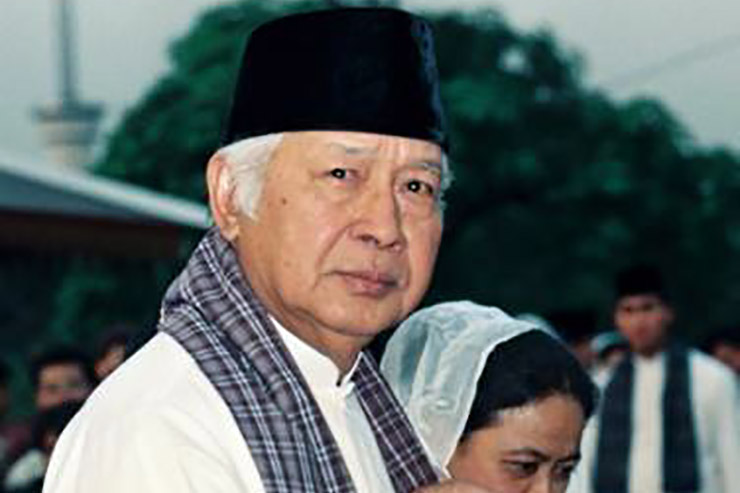
    The death of ex-President Soeharto of Indonesia at the age of 86 [in 2008]  reminded me that I was present in Jakarta in 1967 during the bloodbath in which the Communist Party was decimated and General Soeharto rose to political power, along with the minority modernist Muslim party that supported him.

    At that time Indonesia was only nominally Muslim: under the charismatic President Soekarno it was animistic, feudal, steeped in an other-worldly mysticism, and was infested with starving beggars, superstition and black magic practices. General Soeharto, of humble village origin, had risen high in the military apparatus and married into a family of the minor nobility in Solo. His marriage gave his political aspirations legitimacy in the eyes of Indonesians, who believed in the ancient tradition that links royal status to the right to rule.

    The General was well known to have a close affiliation with a Javanese magico-mystical school believed to give him great occult powers, yet from the time of his ascension to the presidency he appeared, unlike ex-President Soekarno, to deny the affiliation, at least publicly. The new pro-Western president donned the Islamist black pitje and publicly espoused and supported the political arm of orthodox Islam, which in the main was vehemently opposed to any and all occult practices. It proved to be the best thing that could have happened to the country.

    Whatever President Soeharto’s questionable legacy in other areas, in this respect he dragged Indonesia from the dreaming Middle Ages into the modern world. Today, Indonesia is officially a member of the great Muslim international fraternity, and Islam’s austere religious mores have increasingly infiltrated the national culture, modifying its more primitive animistic traits and greatly strengthening its influence in Asia-Pacific politics.

    Nevertheless, Pak Soeharto retained to the end of his life his private allegiance to Javanese mysticism. Doctors who attended him in the last weeks of his illness, during which he rallied more than once from heart, lungs and kidney failure, said they were amazed and baffled by his recuperative powers. It was commonly believed, however, that the power of spirits and the implantation of many lucky charms inside his body was the factor keeping him alive. Indeed, those who were close to Soeharto in his home town of Solo, the heartland of the Javanese culture, have attributed his resistance to death to his devotion to the powerful occult forces that resided in him throughout his life.

    According to a recent article in the New York Times, all six presidents of Indonesia “paid respects to the spirit world, visiting sites said to hold mystical powers, consulting with seers and collecting tokens of magic like the Indonesian dagger called a kris.”1 Among these leaders, Soeharto was outstanding as a devotee of the occult. He studied as a boy with a spiritual teacher and performed ritual acts throughout his presidency, continuing to do so even after a popular uprising deposed him in May 1998.

    According to his aides, over the years he made frequent visits to sacred places, including mountains, caves, tombs and ruins, and took ritual baths in oceans and rivers sacred to Nyai Loro Kidul, the mighty Queen of the South Seas. He also collected hundreds of sacred objects in order to absorb their magical power.

    The Javanese Science

    Despite the ascendancy of modernist Islam throughout the nation, Soeharto’s private loyalty to Java’s spiritual past is mirrored in Javanese society in general, though its allegiance now tends to run underground in the face of Islamic disapproval, especially that of the strict Wahhabi sect, which over the years has become extremely influential. To the outsider today all Indonesians are strict Muslims, but under the pitje or the headscarf there is likely to be concealed a mystic of quite a different stripe. The people of the island of Java in particular are very proud of their indigenous pre-Islamic spiritual tradition, which they refer to as the Javanese Science, and while few may actually practice it now in its pure occult form, most have a proprietorial understanding of at least some of its sacred principles. They are evasive about discussing this hidden dimension of their society, especially with Western foreigners, but one would be mistaken in not taking the Science very seriously indeed as the essence of the Javanese culture even to the present day.

    The Javanese Science is a syncretic blend of Hindu-Buddhist, Sufi, Taoist and ancient animist strands, and evolved in the royal courts of Solo and nearby Jogjakarta in Central Java as a system of self-transformation confined solely to the aristocracy. But since the Revolution that ejected the Dutch rulers from the country after the Second World War, the Science emerged into the popular culture in the form of hundreds of kebatinan (or inner-being) sects, each one of which celebrates some aspect of the royal mother tradition. These esoteric sects have drawn a very large minority of the Indonesian population into their sphere, forming an immensely creative and diverse subculture at the leading edge of national life, very much as happened in Japan after the Second World War.

    The Kebatinan movement has in many respects evolved into an inherently new form of mysticism. Syncretism raised to a religious principle is its dominant keynote, a drive towards pluralistic unity that echoes a prominent feature of the New Age spirituality appearing elsewhere in the world. But the Javanese approach to the universe and the human situation generally, though at its best of a high metaphysical order, is in many respects quite different from that of the West. It doesn’t involve religious theories and dogmas so much as a science of inner energies perceived directly with a highly sensitised intuition – one might say, clairvoyantly – and manipulated directly by the will.

    This shamanistic approach can lend a disconcerting ambiguity to those moral categories that the Western mind likes to regard as eternally fixed: Justice, Compassion, Truth, Altruism, Duty and so on. To the Javanese, mystic things in the moral sphere are not good or bad according to what we in the West would regard as an ethical judgment, but according to whether the personal energies concerned balance out in a manner beneficial to the whole. Do they bring harmony to the individual, do they stabilise him or her? For the Science all is dynamic, all is in ever-transformative and purposive flux: good is what works in the present moment to the spiritual benefit of the whole; bad is what fails to do so. This stance contributes a relativistic and unpredictable note to the Javanese outlook that Western diplomats and others have famously found difficult to deal with, yet its creative power is undeniable.

    Javanese adepts with access to this underlying realm of subtle forces are reputed to have diagnostic powers and techniques of psychic healing of extraordinary efficacy, and are believed to understand the dynamics of spiritual physiology better than any other race on earth. The Javanese Science has much in common with other shamanistic Eastern paths such as have been found in Tibet and Japan, where syncretism has similarly been raised almost to a spiritual principle. These too have dealt in patterns of shifting subtle energies rather than fixed doctrinal systems. But there is something different and mysterious about the Javanese Science, a depth, a quality of purity that most researchers are agreed sets it apart from any other form of mysticism. What makes it unique?

    The Invisible People

    In a visit to Indonesia some years later, I was able to put this question to Pak Joyo, at one time the Director of a Christian Theological College in Central Java and the pastor of one of the largest charismatic Lutheran churches in the Reformed Dutch Church of Indonesia. Pak Joyo was a fourth-generation Christian whose great-grandfather was converted to Christianity at the point of his Sultan’s kris (the Sultan himself having been similarly converted by Dutch missionaries), and Pak Joyo followed in his family’s footsteps in deciding to train for the ministry. But halfway through his theological training, he decided to quit the church and give all his allegiance to a contemporary mystical sect called Hardopusoro which interested him a great deal more.

    However, he told me that in a vision Christ asked him to remain in the church, where he could be more useful than anywhere else; and after an internal struggle he obeyed. Pak Joyo went on to become a multilingual international emissary for Christian ecumenicalism – but, with the blessing of his bishop, privately continued in Hardopusoro, in which he became a high initiate. Such dual religious allegiances are entirely natural to the Indonesian temperament.

    Pak Joyo’s answer to my question surprised me. The source of his country’s spirituality, he said, was not familiar to other races. It was unique because it stemmed from the Invisible People, the Badui, who grew no bigger than a ten-year-old child and who lived in an inaccessible part of the mountainous jungle in South Bantam, about a hundred miles west of Jakarta. The Badui were “closer to the soul” than other people, said Pak Joyo, and were the X factor in the background of the Javanese Science. Invisibly they had instructed the Javanese people for nearly three thousand years, helping to guide them from their original primitive state to their present civilisation.

    The Badui were not Indonesian and had no part in the country’s laws or economy, but lived apart in forest territory forbidden to outsiders and had great spiritual knowledge and strange magical powers. Although rarely seen by outsiders, they were held in awe in the marketplaces throughout Indonesia. When Indonesian spiritual and political leaders needed advice, said Pak Joyo, even the most illustrious of them went into the jungle alone to consult the Badui seers, for the understanding of the Invisible People on spiritual matters was a universal one that embodied a primordial tradition beyond factions or institutions.

    President Soeharto would undoubtedly have been one of those top leaders who was not too proud to seek enlightenment, possibly of a political as well as a spiritual kind, from these strange priestly people of the jungle. Leaving behind his aides, bodyguard and driver, he would have had to ascend alone the jungle forest track that led to the Badui colony, there to consult with its leading prophets.

    Inexplicably, although remote from the teeming civilisation surrounding them, the Badui knew everything that happened in it long before the news was heard on television. They had prophesied the Second World War and that the Dutch would leave the country soon after peace was declared. They knew the destiny of peoples worldwide. The Badui, it was said, planted sacred trees – living trees, as they called them – representing their tribal leaders in a hallowed grove called the Artjas Domas, which was visited once a year by the highest-ranking Badui priests. By studying the growth on the trees clairvoyantly, they were able to read the fortunes and destiny not only of people, but of nations and the world. From this yearly examination everything of value to their leading families was recorded in a script known only to them. The Badui were said to have telepathic powers and a magical way of keeping others away from their settlements, especially from the Artjas Domas.

    I have recently learned that the Badui people have now inexplicably disbanded and their old territory has been settled by Indonesian farmers. But when I revisited Java in 1980, their colony was still a great focus of mystery and unanswered questions. Why were these strange forest-dwellers so influential? What kind of special wisdom did they possess? Where had they come from? And why did they live apart, alien, feared, invisible – and yet, according to Pak Joyo, all-seeing? Sir Stamford Raffles referred to them in his eighteenth-century History of Java, yet since then no traveller from the West had succeeded any better than the Indonesians themselves in setting foot on the Badui’s inner territory or penetrating their secrets.

    Eventually I learned more about this remarkable people from Dr. Paul Stange, an American lecturer in Asian Studies who grew up in Indonesia and who obtained a doctorate from the Michigan University in the US for his study of Sumarah, an akebatinan sect that has become influential in Indonesia since the Revolution.2 In his thesis, Dr. Stange was able to relate the Badui indirectly to the growth of kebatinan sects such as Subud and Sumarah as constituting a cutting edge phenomenon in the evolution of mystical consciousness.

    Custodians of the Soul World

    It seems that the Badui are of the dark-skinned Tamil race that is believed to have spread from Africa long ago into southern India, and from thence into Southeast Asia and the Pacific Islands, where they lived unmolested for thousands of years. But about eight thousand years ago the Malays, at that time a mainly Caucasian race from the north, crossed the Sunda Strait and displaced the Badui culture in the Sunda Islands, with the consequence that most of the indigenous race withdrew into the mountainous interior of Java, far from the spreading communities of the newcomers, while a remainder migrated further east.

    Some time in the first millennium BCE the remnant of the aboriginal Tamil people in Java was joined by a large group of Indian initiates – probably, some authorities think, refugees from the defunct Indus valley culture in which holy trees also played an important part – and the two groups, each with its heritage of ancient racial wisdom, together formed the Badui priesthood.

    Forty Indian Hindu-Buddhist families, constituting a sacred nucleus, inhabited a central group of three villages served by an outer ring of vassal Badui communities: together the two clans built a spiritual power-centre in Java which, isolated though it was for nearly three thousand years and finally greatly diminished in numbers, preserved unchanged its sacerdotal structure and identity and its pivotal place in Javanese religious life. Those in the inner esoteric circle wore white sarongs and turbans, were called the White Ones, had strict rules of conduct and were forbidden by their laws to have any communication whatever with the outside world, while those in the outer villages wore blue sarongs and turbans and were called the Blue Ones. There was no intermarriage between the two clans.

    Although the use of money or of weapons was forbidden to all in the colony, the ascetic laws of the Blue Ones were less severe than those of the others, and enabled them occasionally to visit an Indonesian village to obtain by barter the very few items the farming colony needed (mainly smoked fish and salt), and to serve where necessary as liaison officers and spokespersons for the White Ones.

    Despite their harshly primitive way of life, it would be a mistake to suppose these jungle people were not, in their own way, highly civilised. Nina Epton, a British journalist who is the only known Westerner to have met the Blue Ones and a few of their holy White Ones (although many Dutch researchers tried before her), speaks in her book The Palace and the Jungle of their aloof dignity, their air of having “a destiny apart from other mortals,” and above all, of what she calls “the Tibetan look.” This was a wide-eyed all-seeing look common to many of the Badui, which she describes as staring beyond this world into the spiritual realm. It was a look she associates especially with pictures of seers like Guru Padma Sambhava, the great Indian initiate who brought Buddhism to Tibet.3

    Ms. Epton has described the Badui physiognomy as varied and clearly of an older ethnicity than that of the Indonesians. But the elderly leader of the White Ones, reputed to have been a saint and a sage and obviously of a superior caste to the others, was plainly more ethnically advanced. She noted in particular that he had a worn, patient and ascetic face which reminded her of that of a well-mannered European intellectual. In other clothes he would have passed unnoticed in an English crowd, for he had a very light complexion, a narrow face and the gentle bearing of a civilised person. Altogether, Epton says, the Badui were not what one expects from the jungle.

    This assertion is borne out by the personal history of a young runaway, the son of a pu’un or chief of the White Ones, who in the seventeenth century escaped the colony to become a stable boy in the then Sultan’s palace. Soon he became the Sultan’s counsellor and then his son-in-law, and today his descendants are the Jajadiningrat family, one of the most aristocratic and politically influential families surrounding the Indonesian presidency. Throughout the intervening three hundred years, the Badui continued to “read” the sacred tree of the stable boy’s line, to visit his Jajadiningrat descendants once a year with predictions and advice for the coming year, and where necessary protect the members of the family from danger.

    In fact, the sole reason for Nina Epton’s unprecedented interview with the leader of the White Ones was that, through the Sultan, she obtained an introduction to the Jajadiningrat family, who asked the White Ones as a special favour to grant her an interview. In no other way would the meeting have been possible.

    The Badui priests continued to follow the destiny of the Jajadiningrats, says Epton, because for the Invisible People once a holy lineage is laid down it is laid down forever, it belongs to the timeless realm of the soul world. The Badui in fact denied the reality of time. Their sages believed that the rules of life were laid down once and for all at the Beginning of things by an ancestral divinity called Batarratunggal, who will one day return to govern the Badui and the world. In the meantime, it was their sacred obligation to maintain everything exactly as it was at the beginning, without change, without innovation. Nothing concerning their customs or belief system must be disturbed from their state of primordial perfection: hence the necessity of isolation.

    To the modern Javanese mystic this Badui belief is merely the folk expression of a deeper spiritual reality. He sees the concept of a Beginning-time or Dreamtime to which so many early races look back with longing, believing it to be a cosmic paradise that must be ritually preserved for the future, as simply a metaphor for the inner soul plane, which is both cosmic and interior at one and the same time. That inner place, eternally omnipresent within each human being, is really the cornucopia from which all spiritual paths and religions flow forth in their season. As a race we have long ago lost contact with such a high level of soul-consciousness, and so it is called by other names: the Garden of Eden, the Dreamtime, Paradise, the Kingdom of Heaven. But according to the Javanese view, it is in truth a soul-world present in each one of us, a celestial headwaters from which the river of the spirit flows continually into our bodily spacetime. This higher/inner world must be kept purified, as it once was and will be again in the future, and it was the task of the Badui to help do this, since we as a race cannot.

    No one knows for certain why the Badui people have now dispersed. But it is evident that deep changes reflected in its politics have overtaken Indonesia within the last few decades. The erratic occult climate that pervaded the early years of independence has yielded not only to a stricter Islamist discipline but also to the growing apparatus of democratic government, a maturing judicial system and economic reform, all of which has brought stability and prosperity to the people. The nation has come of age. According to Dr. Stange, who received a wealth of Javanese lore from the Sumarah cognoscenti, there is a school of thought that believes the Badui have now fulfilled their mission in the South Pacific, and that is why they have at last dispersed into the Indonesian population.

    The reign of animism in this region under the sovereignty of Nyai Loro Kidul had long been prophesied to end during the twentieth century, giving way to a new and higher religious and cultural dispensation for the Pacific races – one perhaps best represented by the modern Kebatinan movement in Java. It is thought that the Badui understood well that this prophesy has now been fulfilled. They understood that their reign is no longer needed – or indeed tolerable under the new conditions. Having played a custodial role by preserving in secret the pure and unsullied soul-conditions necessary for such a surge of higher consciousness, they have now been able to die out as a separate society.

    Whether or not there is any truth in this theory, it is undoubtedly the case that around the Pacific Rim a new religious spirit is rising. Akin to kebatinan and to the Javanese Science in general, it is based on principles of high shamanism known to the Badui many thousands of years ago, but forgotten by modern humanity. Recognising that enormous healing powers are locked in the ancient soul-ways, seekers visiting Indonesia today find common ground with the synthesising mysticism of the new kebatinan sects and are forming part of a spiritual network that stretches from Findhorn in Scotland to the esoteric centres of California. This development in the Pacific zone has in it the potential for creating a new religious paradigm of global significance. But how much of it is indebted to the heroic patience of the Invisible People of the Javanese jungle, as mystics like Pak Joyo believe, we shall probably never know.

    [alert type=”general” dismiss=”no”]This article was published in New Dawn Special Issue 5.[/alert]

    [alert type=”success” dismiss=”no”]If you appreciate this article, please consider subscribing to help maintain this website.[/alert]

    Footnotes:

    1. ‘As Suharto Clings to Life, Mystics See Spirits’ Power’, Seth Mydans, The New York Times, Jan. 27, 2008.
    2. Paul D. Stange, The Sumarah Movement in Javanese Mysticism, UMI Dissertation Information Service, Ann Arbor, Michigan, 1980.
    3. Nina Epton, The Palace and the Jungle, Oldbourne Press, London, n.d., 55.

    © New Dawn Magazine and the respective author.
    For our reproduction notice, click here.

  • Monks & Magic: Buddhism and the Supernatural in Thailand

    Monks & Magic: Buddhism and the Supernatural in Thailand

    From New Dawn Special Issue 7 (Mar 2009)

    In August 2008 Bun Rany, the wife of the Cambodian Prime Minister Hun Sen, led Buddhist monks and soldiers to the site of the historic Hindu temple Preah Vihear to call upon their ancestors to protect the temple. The site of this temple is located on disputed land, perched atop a cliff on Cambodian soil but with the most accessible entrance to the site located on the Thai side of the border.

    This 11th century temple is located on the border between the two countries, but the borderline itself has never been clearly demarcated because the area is littered with landmines left over from decades of war. Ownership of the temple was originally awarded to Cambodia, but dispute between the two countries flared up when Preah Vihear was granted United Nations World Heritage status.

    Desperate to resolve the issue, both sides deployed military forces – but when they were unable to reach a solution to the conflict, Cambodia and Thailand resorted to supernatural means. Fearing that the magical abilities of Cambodia‘s Buddhist monks would weaken Thailand, residents throughout the province of Si Sa Ket wore yellow to help protect Thailand from Cambodian magic.

    Though Buddhism is not often thought of as a religion that practices magic, in such communities as those found in Thailand and Cambodia, there can be no doubt that Buddhism shares common ground with belief systems that are primarily associated with the use of magic.

    Both countries have a long history of engagement in spiritualist and animistic magical practices. When Buddhism first arrived in these areas it came into contact with pre-existent traditions that believed in spirits, both benevolent and malevolent, and a developed system of magic which was to be feared or revered, depending on whether or not it was used for good or ill.

    For Buddhism to flourish under such conditions in Thailand, it was necessary to develop a complex system of interaction between Buddhism and what has been called the Spirit religions. Debate still exists as to whether or not the two systems have become completely integrated or not, although the interaction of the two systems is sometimes referred to as an example of syncretism. On the subject of interaction between Buddhism and the Spirit religions in Thailand, the academician B.J. Terwiel says the following:

    When I interviewed villagers in Central Thailand on the relationship between Buddhist and non-Buddhist aspects of their religion, a variety of reactions were observed. The more sophisticated informants generally stated that the Lord Buddha had never forbidden rituals of ancient origin. Other persons hesitatingly made up their minds with regard to the orthodoxy of the ritual, but on subsequent occasions contradicted their own judgment. Many were at a loss to classify rituals or beliefs under rubrics such as ‘Buddhist’ and ‘non-Buddhist’.1

    It would appear from this statement that the boundary between the use of magic by the indigenous tradition of Thailand and the practice of Buddhism is not apparent to many of the inhabitants of Thailand themselves. This is most likely due to the fact that the people of rural Thailand are raised in a society where the two systems are found closely entwined together.

    The religious traditions of Thailand have always included the belief in spirits and the ability to manipulate them by means of magic. For example in Thailand preservation of the spirit of life (khwan) is considered to be of the utmost importance, as is ensuring that malevolent spirits (phii) do not enter the body. Control of these spirits is greatly emphasised in rural Thai culture, as the service of these spirits can be employed to improve the qualities of day to day existence.

    Magic and the Sangha

    In the lives of ordinary Thai people, more value is placed upon the improvement of their current existence than on transcending the cycle of rebirth, as is advocated by Buddhism. The relationship between the members of the Sangha (community of Buddhist monks) and the practitioners of magic in Thailand combine in a variety of ways, as one system (the Spirit religions) deals with the aspects of gain in this world (laukika), whilst the other (Buddhism) advocates the importance of salvation and ideas of transcendence (lokottara).

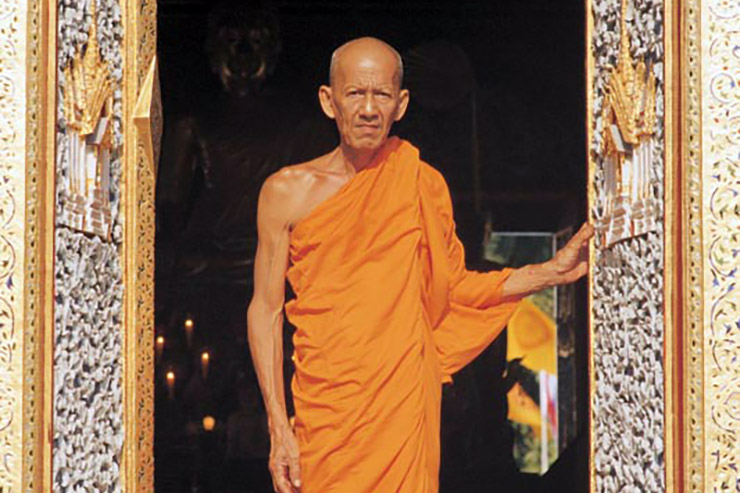
    This relationship is complicated even further by the fact that in Thailand almost every adult male will become a member of the Sangha at some stage in his life, for in rural areas the taking of vows is considered to be an essential element in preparation for adult life. Given the wide range of magic and animistic beliefs which operate within rural Thailand, these men will carry a variety of beliefs and practices with them into the Sangha, not all compatible with the ethics of Buddhism.

    In accordance with this, religious opinions are not questioned during ordination. As a direct result, villagers can be found entering the Sangha for a variety of reasons, as is reflected in the following Thai rhyme:

    Ordination to fulfil a promise to the Gods,

    Ordination to escape poverty,

    Ordination to flee from a wife,

    Ordination to save money,

    Ordination to eat better food than at home,

    Ordination to join one’s friends in the monastery.2

    Thai belief does not only consist of beneficial Gods and spirits. It also abounds with belief in ferocious spirits of pure malevolence, from who the villagers seek magical protection. Amongst these classes of malevolent spirits are such beings as the preed (a giant, looming shape with a small head that emits a sharp, piercing sound, as a reflection of its past sins), the phii krasy (a type of parasite which inhabits human bodies, feeds on excrement, and is shaped like a human head with entrails protruding from beneath), and the phii baan (the ghosts of ancestors that hover around their previous home and watch their descendants with malignant jealousy).

    Whilst it is possible for these spirits to be exorcised, Buddhism chooses to deal with their interfering presence in another way; the correct approach for a Buddhist to cause these spirits to cease meddling in the affairs of their human victims is to preach to them, thus converting the spirits involved to a more benign nature. There are certain canonical texts which serve this purpose of protection, which can also be recited at specific times in order to avert misfortune. These texts are known as the phraa parit. The source of the magical power of these texts has not yet been clearly identified, but Y. Ishii, author of Sangha, State & Society: Thai Buddhism in History, claims that whilst some possessed a magical content from the beginning, as modifications of Hindu rites, others such as the Mangalasutta originally had no magical connotations.3

    Indeed, for most people, including some who chant them, the parit are incomprehensible, being in Pāli. Rather, I believe, the magic of the parit stems from three factors: the social recognition that parit should be chanted for certain purposes (e.g. blessing); the existence of an established formula for their chanting; and the sanctity attributed to the chanter.4

    The use of parit is a means by which to ensure protection; it provides good luck and disperses misfortune whether caused by the presence of spirits or not. As is seen in the above passage the presence of magic being used by the Sangha is not overtly explicit in the parit texts, rather it is interpreted to be so by the lay audience. They do not understand the words the monks recite, but because of the respected state of the Sangha in Thailand, the lay community assumes that it must be not only beneficial, but also powerful.

    Amulets

    Another type of magic practiced by the Thai Sangha is the manufacture of amulets. These amulets are employed for a variety of reasons, including protection from diseases, black magic and accidents. Of these amulets the ones portraying the Buddha are the most popular, although some also are made in the likeness of famous monks and King Chulalongkorn (also known as Rama V, one of Thailand‘s most revered kings).

    The sanctity of the subjects portrayed upon the amulets is a reflection of the beneficial powers they are thought to contain. The Buddha images vary in size, from anywhere between two and eight centimetres, and can be manufactured from wood, metal, ivory or resin, although frequently they are made from a selected combination of these elements, pressed into a mould and baked.5 To create a pressed or printed image (phraaphim), a monk needs not only a mould, recipe and the proper ingredients; he also requires an advanced knowledge of spells and sacred script.6

    The inherent sanctity of the amulet is not always thought to be sufficient; hence its power needs to be enhanced by means of the correct recitation of spells and sacred scripts. The most simple of these sacralisation rites is known as plugseeg.7At the culmination of plugseeg the monk will either blow upon the Buddha image or draw over the amulet with the index finger of his right hand.8

    During the manufacture of amulets the Sangha is also invited to perform a consecration rite known as phutthaphisek.9The use of magic within the phuttaphisek is illustrated by the fact that it is desirable for at least one of the monks participating in the phutthaphiseek to be either advanced in meditative technique or in the Brahmanic rites known as saiyasat.10

    These rites are intimately entwined with another type of Thai ritual, namely the ceremony held to consecrate Buddha images which infuse the representation with the auspicious wisdom and power associated with Prince Siddhārtha’s victory over the demon Māra and the obtainment of enlightenment by Siddhārtha. During this ritual monks chant in Pāli or preach in Northern Thai several texts including the Buddha Abhiseka (Consecrating the Buddha [Image]).11 This text focuses on the powers of the mind attained by the Buddha that are associated with his enlightenment. Both the consecration of images and amulets draws their impetus from this core idea.

    One specific example of a text dealing with the extraordinary supernatural powers of the Buddha that occupies a position of prominence in Thailand is Bimbās Lament. (Bimbā is the Buddha’s wife, who he left to pursue the life of an ascetic.) 

    By his magical power he created a crystal path in the sky from the eastern boundary of the city of Kapilavastu to its western perimeter. Then, ascending into the air, the Tathāgata, surrounded by many previous Buddha’s, walked on the sky-bridge he had miraculously created… he also preformed other miracles, such as appearing to walk above the heads of the Śākyans.12

    Tattooing is another magical practice that is widespread throughout Thailand. At some stage in their adult life many Thai males will receive a tattoo of some description or another. This is of significance because in the culture of rural Thailand tattoos are representative of magical power. The magical power of these tattoos stems in part from the tattooist, for whilst both layman and monk may be a tattooist, there is vast difference in the scope of their work and the designs used.

    The types which may be employed by the monk are restricted. As a monk, he is limited to tattooing the upper parts of the body, for not only would it be seen as sexual misconduct on the part of the monk to tattoo the lower areas, the upper parts of the body represent the higher, more spiritual aspects of humanity, whereas the lower regions represent mankind’s more base, animalistic attributes. The tattoos done by the monk are also limited in application. The monk may bestow tattoos that are of a beneficial or protective nature. Other tattoos, such as those which bestow things such as sexual virility, can only be performed by members of the lay community.

    Another Thai rite involving magical skills of the members of the Sangha is the Wong Dai Sai (Encircling with Holy Thread).13 This is a type of consecration rite designed to protect a place from evil. It is believed that the consecrated place will be protected by the power of the Three Gems and the phraa parit.14 During this rite cotton is affixed to an image of the Buddha, stretched clockwise (as is the way of beneficial magic; anticlockwise is considered to be used for evil purposes) around the place to be consecrated, and finally wound back to its point of origin, at the Buddha image.15 If the thread should snap at any stage, it is considered to be an ill omen.

    The main doctrinal link between Buddhism and the Spirit religions is found in the incidences where magic is employed by the Sangha as a transfer of merit. The theory of the transference of merit is based upon the concept that when a member of the lay community performs a virtuous deed, such as making a donation or feeding a monk, the Gods witness the act and empathise with the process. The Sangha themselves are referred to as being a ‘field for merit’ (na bun), as is found in the Sanghnussati-bhavana.

    Well practiced is the Exalted One’s Order of Disciples, practiced in integrity, practiced in intellectual methods, in right lines of action – to wit the four pairs, the eight groups of persons – this is the Exalted One’s Order of Disciples, worthy of offerings, oblations, gifts, salutations, the world’s peerless field for merit.16

    Monk’s Superior Magical Status

    The greater the purity of the monk, the more magical power/merit he is said to generate. The sanctity of the monk himself is the source of belief in the efficacy of his magical power. The magical power that is generated by the monk is also classed as being superior to that of the layman, but by its very nature it is also more limited in its application. A monk is also deemed to be superior to a spirit, and thus a monk should never be seen to supplicate himself before a spirit. When a member of the Sangha addresses a spirit, he never raises his hands in supplication, in contrast to the layman who will raise his hands when requesting a favour from a spirit.

    The superior magical status of the monk stems from his purity; the monk must not do anything to compromise his superior position. Part of the magical power which results from the monks’ purity is derived from celibacy. A monk should never touch a female (human or animal), and is forbidden to even receive an object that is directly given to him by a woman.17 In order to receive an object given by a woman, the monk must first take a piece of cloth and place it upon the floor, upon which the woman will then place the gift in whilst the monk holds the edges of the cloth.18 The cloth is used as a medium by which to transfer merit since there can be no direct contact between a monk and a woman. The merit flows from the fingers of the monk holding the cloth, to the woman who has donated the cloth. The medium of cloth must be used so as not to deprive the female donor of the merit she would otherwise not receive. One of the reasons for which a monk may not have contact with women is not only due to the temptation of sexual misconduct, but also because women are believed to be associated with a type of magical power said to be diametrically opposed to that of the monk.19 This is due to the fact that menstruation is associated with dangerous magical power, and is classed as being capable of destroying some of the beneficial power of the Sangha.20

    Another aspect of magic in Thailand which needs to be considered is the import of magical systems via India. The branch of Buddhism found in Thailand is an older form known as Theravāda, and its links to Hinduism are much stronger than those of the later Buddhist schools. For example, in the book A Summary of the Seven Books of the Abhidhamma (Abhidhamma Chet Khamphi Ruam) there are elements of cosmology, cosmogony, buddhology, ethics, epistemology and language that are integrated into a yantric/mantric system.21 This system is very much similar to that found in Indian magic, and it is reasonable to assume that many of the formulas found within are directly based on the use of Hindu mantras. These are broken down into component syllables for recitation by the Buddhist practitioner. The mantra Namo Buddhāya (Homage to the Buddha), is correlated with the five vowels, symbolising the five elements (dhatū) – water, earth, fire, air and atmosphere.

    Furthermore, in the following passage from the Seven Books of Abhidahamma, we also find a formula which contains correlations with the Hindu Tantric Yoga techniques, dividing the body into a solar right and lunar left, and creating what appears to be Buddhist chakra centres. This integration of the occult, Tantra and Buddhism is by no means unique for it is prolific in Tibetan Buddhist texts and practices.

    Na = the Buddha Kakusandha at the right eye

    Mo = the Buddha Konagāmana at the left eye

    Bhud = the Buddha Kassapa at the back

    Dhā = the Buddha Gotama at the naval

    Ya = the Buddha Ariya Metteyya at the forehead22

    Get the issue this article appears in

    Transmission of Occult Techniques

    One possible explanation of how this similarity between Thai Buddhist and Hindu occult techniques occurred can be found by examining the magical history of a third South East Asian country – namely Myanmar (Burma).

    In the late eighteenth and early nineteenth centuries, Burmese kings imported large numbers of Sanskrit texts from India on topics such as medicine, alchemy, incantation and astrology.23 In Burma, these Buddhist wizards are practitioners of what is called the weikza-lam (path of occult knowledge). This tradition still exists today in Burma, and the largest of the groups practicing this occult path is based in the city of Pegy, and is called the Manosetopad Gaing. Like their Thai counterparts, this organisation bases an interest in the occult on the powers attained by the Buddha on the path to enlightenment. They also believe that the relics of the Buddha (Burmese dat-daw) (Pāli dhātu) are possessed of a kind of majestic power that he infused in them through the force of his samādhi.24 The similarity between this branch of Burmese magic with that of the Thai people is amply illustrated in the following extract from a magical treatise by the Manosetopad Gaing:

    A person wishing to practice the path must first suffuse his mind with thoughts of the Three Jewels, and cultivate loving kindness toward the various grades of nats… the nats referred to here include powerful nature spirits dwelling in trees, the earth, and mountains, minor deities who preside over the use of magical incantations and diagrams, and medicine spirits whose domain includes the well-known herbs and minerals of alchemical lore.25

    From this passage it is clear that the Manosetopad Gaing not only use Buddhist motifs, they are also drawing upon a much older tradition of Spirit religions and animistic world views. These Buddhist wizards, however, are also drawing upon Hindu texts on supernatural lore; and if such texts entered the Burmese magico-religious system then it is entirely possible that influences from India may help to explain what appears to be a yantric/mantric tradition within the Thai Seven Books of Abhidahamma.

    With their magical prowess and the protection of the Sangha, why do the Thai people fear the magic of the Cambodians? Cambodia is also a country with a long history of occult practices. For instance, in the Khmer book The Tale of Ancient History there is a legend of Prince Chey Ahca who led a ghost army against the Siamese – Siam being an earlier name for Thailand. More recently, we also find record of Po Kambo, who in 1866 protested against French colonial rule and was alleged to know a magical formula that deflected bullets. Even as recently as the 1970s and 1990s, Khmer soldiers utilised magical tattoos, in a similar manner to that of their Thai enemies, and used mantras written in Pāli and Sanskrit, the holy languages of Buddhism and Hinduism, to protect them in battle.

    All of the magic employed by the Sangha in Thailand is based on one important concept: the sanctity and purity of the Sangha themselves. The forms of magic the Sangha use is limited in scope by this fact, for they can use only what is generally referred to as ‘white’ magic: that which benefits another and causes no harm. Use of magic to harm another or for personal gain would result in expulsion from the Sangha. Similarly, a monk may not use magic that serves to improve the virility of a layman or create love charms, as this could severely impair the powers of the monk which stem from his sexual abstention. A monk may not request the spirit world for aid, for this would compromise the superior status of the monk who is deemed to be beyond the mundane affairs of this world.

    Whilst the power of the Sangha is more limited in application than that of laymen, it is also deemed as stronger for it stems from other worldly sources, as opposed to the spirits who remain bound to this world. As such, villagers come to the monk knowing that when they treat the monk with a proper attitude of respect, the cosmic forces shall share their merit and transfer it to demonstrate approval. The transfer of merit thus benefits not only the Sangha, but the laity as well – even providing protection in times of conflict.

    [alert type=”general” dismiss=”no”]This article was published in New Dawn Special Issue 7.[/alert]

    [alert type=”success” dismiss=”no”]If you appreciate this article, please consider subscribing to help maintain this website.[/alert]

    Footnotes:

    1. B.J. Terwiel, Monks and Magic: An Analysis of Religious Ceremonies in Central Thailand (Curzon Press, 1975), 3.
    2. Ibid., 20.
    3. Y. Ishii, Sangha, State & Society: Thai Buddhism in History (University of Hawaii Press, 1986), 21.
    4. Ibid., 21.
    5. B.J. Terwiel, Monks and Magic: An Analysis of Religious Ceremonies in Central Thailand, 74.
    6. Ibid., 75.
    7. Ibid., 77.
    8. Ibid., 78
    9. Y. Ishii, Sangha, State & Society: Thai Buddhism in History, 23.
    10. Ibid., 25.
    11. D. K. Swearer, Consecrating the Buddha, in ed. D. S. Lopez, Jr., Buddhism in Practice (Princeton University Press, 1995), 50.
    12. D. K. Swearer, Bimba’s Lament, in ed. D. S. Lopez, Jr., Buddhism in Practice (Princeton University Press, 1995), 543.
    13. Y. Ishii, Sangha, State and Society: Thai Buddhism in History, 22.
    14. Ibid., 22.
    15. Ibid., 22.
    16. Ibid., 14.
    17. B.J. Terwiel, Monks and Magic: An Analysis of Religious Ceremonies in Central Thailand, 114.
    18. Ibid., 114.
    19. Ibid., 115.
    20. Ibid., 115.
    21. D. K. Swearer, A Summary of the Seven Books of Abhidamma, in ed. D. S. Lopez, Jr., Buddhism in Practice (Princeton University Press, 1995), 336-7.
    22. Ibid., 340.
    23. P. Pranke, On Becoming a Buddhist Wizard, in ed. D. S. Lopez, Jr., Buddhism in Practice (Princeton University Press, 1995), 343.
    24. Ibid., 345.
    25. Ibid., 351.

    © New Dawn Magazine and the respective author.
    For our reproduction notice, click here.

  • Padre Pio Paranormal Man

    Padre Pio Paranormal Man

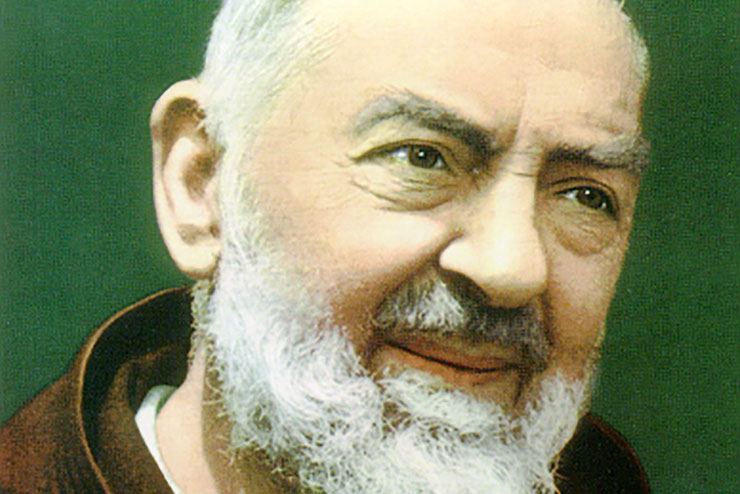
    During the Second World War the Americans had an airbase in Bari, about seventy-five miles from San Giovanni Rotondo, a village in Southern Italy that houses Capuchin friary. According to US intelligence, the Germans had a munitions facility in the hills nearby; an officer was assigned the job of bombing it. As the planes neared San Giovanni, the officer saw in the sky before him the figure of a monk waving him back.

    Dumbfounded by this spectacle, the officer ordered the planes to turn back. When the war ended, he went to the friary and met the monk who had appeared in the sky. His name was Padre Pio (1887 – 1968).On a trip to San Giovanni Rotondo in 1979, I was unable to learn the officer’s name or any details confirming this fantastic story. According to Father Joseph Pius Martin, an American friar in San Giovanni, the pilot lives in Florida – the only additional lead I obtained.

    Stories like the flyer’s are legion. The work of sorting out fact from fiction is still underway. Many incredible claims about Padre Pio are well-documented; but many are based on hearsay, part of the folklore growing around the monk. One extraordinary thing about Padre Pio was his ability to induce belief in the extraordinary. He had a gift for catapulting people into a fairyland of living mythic powers. In Padre Pio’s world, ideas of fantasy and creatures of mythology come to life: Madonnas, guardian angels, shapeshifting demons, bilocation, magical cures, time-travel, and a good deal more. However you rate the literal truth of particular claims, his story is bound to disturb our routine picture of what is possible. Around the Padre, the incredible became credible, the impossible became actual.

    And yet, no matter how extraordinary the feats of Padre Pio, he was a human being. I assume therefore that his “miraculous” powers are latent powers of all human beings. I underscore this with reason. Some people will resist the claims about Pio because they might see them as meant to ratify church dogma. (The truth is that miracles have been used for propaganda.) However, while I grant that you cannot fully understand Padre Pio’s miracles apart from the symbols and archetypes of his Christian world, I also think they transcend that world and point to a universal human potential. Moreover, comparable phenomena from other traditions bear this out, the best contemporary example being the case of Sai Baba.1

    These phenomena point to possibilities rejected by the custodians of the intellectual and moral establishment: by scientific materialists, who make up the rank and file of academia, and by liberal and fundamentalist Christians, who wear their own conceptual blinkers. Since, however, a critical review of evidence is impossible here, I will restrict myself to trying to give a rough idea of the man, the range of his unusual powers, and to noting their possible implications for human evolution.

    EXTRAORDINARY ACCESS TO THE INTERNAL ENVIRONMENT

    From early childhood Francesco Forgione lived in a world of visionary hyper realities. At five he cried so much, especially at night, that his father once lost his temper and hurled him to the ground. Recalling these early years, Padre Pio said: “My mother would turn off the light, and a lot of monsters would come up close to me, and I would cry.”2 Padre Pio said of these early experiences: “It was the devil who was tormenting me.” Terrifying visions continued throughout his life, inseparable from his higher visions. Raptures, ecstasies, often lasting hours, in which his senses were suspended, occurred frequently. We know of these from his letters3 and from observations of his spiritual directors such as Father Agostino4 who eavesdropped on the Padre’s conversations with invisible beings. These included Jesus, Mary, Francis of Assisi, and his guardian angel. One has to read Agostino’s Diary to get a sense of the intense reality of Padre Pio’s visionary encounters.

    Padre Pio’s internal environment was also infested with dark hostile forces. The higher visions were preceded by shapeshifting diabolic apparitions: huge black cats, naked women who danced lasciviously before him, an invisible entity that spat in his face and tortured him with deafening noises, an executioner who whipped him. According to one of his confreres: “Padre Pio was very alert to unexpected movements and sounds. He said that the devil appeared to him in all shapes. He had fear even of a mouse, because the devil would start out as a mouse and turn into a claw and go for his eyes.”5

    These encounters were physical. In Pietrelcina, you can still see claw marks and splattered inkspots made by the alleged demons. Once, the iron bars of the monk’s cell were found twisted out of shape after a night of grappling with invisible forces. Although no one beside the Padre ever saw the demons, the din they made was often heard by eavesdropping monks. Even more striking, Padre Pio was often found unconscious, sometimes on the floor beside his bed, covered with bruises from the uncanny assaults.

    A well-witnessed event occurred in July 1964. A possessed woman was dragged to San Giovanni. When she saw Pio, she cried out in an unnaturally deep voice: “Pio, we will see you tonight.” That night the friars thought the house was struck by an earthquake. The Superior rushed to Pio’s room and found him on the floor, bleeding from the head. Oddly, there was a pillow under his head. Pio explained that the Madonna put it there. In the morning, the possessed woman (undergoing exorcism from another priest) shrieked: “Last night I was up to see the old man. I hate him so much because he is a fountain of faith. I would have done more, except the Lady in white stopped me.” This taxes my boggle-threshold as much as it must the reader’s; nevertheless, Schug based his account on eyewitnesses not disposed to sensationalism. Pio’s face was so disfigured he was unable to appear in public for five days. On another occasion he was found with broken bones in his arms and legs.

    The attacks lasted throughout his long life. In 1918 he wrote: “I cannot describe to you how those wretched creatures were beating me! Several times I thought I was near death. Saturday it seemed as if they really wanted to finish me….” (Epistolario, III, p.311.) Sometimes his afflictors came to him under the disguise of his spiritual director, Father Agostino, or as an apparition of a saint or guardian angel. Padre Pio had a technique for exposing these sinister masquerades, but not without having to endure a good deal of anguish and uncertainty.

    The psychologically sophisticated reader is bound to be skeptical about these reports of demonic assault. One might turn to Wilhelm Reich for an explanation. Reich believed such experiences were the result of repressed orgone energy turning against oneself. Or we could invoke the pathology of poltergeist phenomena to explain Padre Pio’s demons. I am not certain how smoothly these explanations would fit.

    The point I want to make about “demons” and evolution is this: It does appear, as a matter of psychological fact, that the more one advances in higher states of consciousness, the greater the likelihood of attracting combative, destructive forces that try to drag you back down to ordinary reality. The story of the Buddha struggling to meditate on the Immovable Spot under the Bo Tree is a classic Eastern illustration. In Pio’s case, the combat occurred at two levels: Throughout his life he was molested by invisible “diabolic” forces; but throughout his life he was also persecuted by jealous, envious, and malicious human beings, often individuals within the church hierarchy. It has, in fact, been argued by Ennemond Boniface6 that certain individuals in the church were responsible for the priest’s death.

    If Padre Pio had to battle sinister forces, he also received supernormal favours. In Padre Pio’s world, for instance, higher help took the form of his “guardian angel.” The notion of guardian angels may amuse modern rationalists; still, new age enthusiasts show a keen interest in the functional equivalent of such helping entities. Carlos Castaneda, you may recall, fascinated us with his talk of “allies,” those unspecified forces out there ready to help us. The phenomenon of “channelling,” its invocation of inner guides and otherworldly helpers, echoes the ancient doctrine of guardian angels. Similar parallels are notable in the UFO contactee literature.

    Padre Pio’s guardian angel was no slouch. One of his most striking achievements was to serve as translator of French and Greek, languages Pio was unacquainted with. Paranormal comprehension of Greek is more impressive than French, the latter being in many ways similar to Latin and Italian. In 1912, Agostino, by way of experiment, wrote letters to Pio in French and Greek. When Pio received them he was at Pietrelcina for medical reasons, under care of a parish priest, don Salvatore Pannullo. Pannullo wrote on August 25, 1919: “I, the undersigned, testify under oath, that when Padre Pio received this letter (a letter in Greek and in the Greek alphabet), he explained its contents to me literally. When I asked him how he could read and explain it, as he did not know even the Greek alphabet, he replied: ‘My Guardian Angel explained it all to me’.”

    The virtue of this report (unfortunately scant in detail) is that we must assume either that both Pio and Pannullo conspired in an act of pure deception or that the story is true. I personally doubt a conspiracy; the records point to Pio’s lifelong scrupulous adherence to truth.

    Guardian angel aside, we can assume the translation occurred by telepathy. But this would be telepathy of a rare order; for the telepathic transmission of skills (such as understanding a language) between living persons is unknown in experimental parapsychology. I might add that Agostino confirmed Pio’s ability to comprehend the letters written in French and Greek. There are also stories of Pio hearing confessions in languages he did not know.

    Apparently, guardian angels are well-rounded in their education; the following story shows they know something about automobile mechanics. In 1959, a woman was driving with her husband from Rome to San Severo. (The couple prefer to remain anonymous.) En route their car broke down; for two hours cars sped by without stopping. Toward nightfall, the woman grew anxious and began to pray to Padre Pio. Within ten minutes a black car pulled up and an elegant young man dressed in blue stepped out. He lifted the hood and said: “Look, you lost all the water from the radiator, and it’s burnt out. Take your can and fill it up with water. Near here, there is a farmhouse, which has a well; take the water from there.”

    The husband took the can from the car trunk and did as the young man said. The man then took a black box from his car, produced a roll of adhesive tape, and sealed the radiator. He had beautiful hands with agile rapered fingers. The dog, who normally barked at strangers, sat in the car’s back seat, strangely calm. The husband returned with the water and filled the radiator.

    “You can return home safely; anyhow, you are quite near,” said the mysterious helper, who then got in his car and drove off.

    The couple watched the car pull away and looked for the license plate. There was none! Instead they saw a white strip marked with hieroglyphics. The car moved away slowly on Via Aurelia; suddenly it vanished.

    Arriving home in a “dreamy state,” they reflected on further oddities: The young man somehow knew there was an empty can in the trunk; also, that they lived “quite near.” Later they tried to relocate the well and farmhouse but despite diligent efforts were unable to. There was no farmhouse in the area where their car broke down.7

    Padre Pio’s extraordinary access to his internal worlds included access to other people’s internal worlds. Two well-attested examples were his ability to read minds, especially in the confessional, and his ability to change or convert minds.

    Like Saint John Vianney, the famous Curè of Ars, Padre Pio displayed supernormal powers of mind reading in the confessional. Hearing confessions was paramount in Pio’s long ministry. Hour after hour, day after day for over fifty years, he sat in a wooden booth and listened to people pour out their most intimate secrets.

    John Schug, who wrote one of the more critical books in English on Pio,8 tells of a confessor who had the intention to murder his wife. “Murderer!” Padre Pio roared in the church. The man skulked away and returned the next day, penitent and purged of his intention.

    Schug provides a detailed first-person account of Federico Abresch’s confessional encounter with Pio. According to Abresch, a Lutheran convert, Pio recalled actions and thoughts he had long forgotten. “He enumerated with precision and clarity all of my faults, even mentioning the number of times I had missed Mass.” Pio reminded Abresch of something he had forgotten years ago when he got married. In fact, it was only through Pio’s remarks that Abresch was able to reconstruct his past. Pio apparently had a more exact knowledge of Abresch’s unconscious mental history than Abresch.

    Abresch, by the way, regarded this as proof that something more than merely human “thought-transference” was involved. The fact that Pio could “read” the unconscious of another person seemed evidence of God’s action, something totally beyond human potential. But Abresch is mistaken. Evidence from mediumship and experimental parapsychology show that telepathic leakage from another person’ s unconscious does in fact occur. Once again I believe we are dealing with a general potential of the human mind, brilliantly manifest in exceptional beings such as Pio.

    Padre Pio’s access to internal environments enabled him not just to read but to change or convert minds. The Gospels portray Jesus as a man who took immediate psychic possession of his disciples. Pio too apparently had this ability; consider the following example from Schug.

    Unemployed Laurino Costa sent Padre Pio a telegram asking for prayer to help him find a job. The Padre telegrammed back: “Come to San Giovanni Rotondo at once.” The young man arrived penniless and was standing with a crowd of men in the sacristy. Padre Pio, who had never met Laurino, shouted at him: “Laurino, come here. I see you have arrived.” Bewildered, the youth approached. “Laurino, you will feed my sick.” (A cook was needed in the new hospital.) “But Padre,” Laurino protested, “I’ve never cooked an egg in my life.” The Padre insisted: “Go and feed my sick. I’Il always be near you.” Laurino went to the hospital and rang the doorbell. The Mother Superior answered: “You must be the experienced cook we’ve been waiting for.” Within three hours he was at work. Laurino admitted to Schug: “To this day (14 years later) I still don’t know what happened. All day long I found myself calmly working and telling others what to do, as though I was carrying out a routine I had been used to.”

    MASTERY OF TIME AND SPACE

    Reports abound of Pio’s double appearing everywhere, from the American midwest to China and Africa. The idea of bilocation blatantly contradicts the belief that a human being is a physical object occupying one space. The idea that Jack could be at 42nd Street and Fifth Avenue in New York and simultaneously at Main and Third in Shebogan, Wisconsin, is obviously absurd. Nevertheless, the annals of saints, yogis, and psychics are full of bilocation stories, sometimes well attested.

    Padre Pio bilocated by means of his voice, his presence, his aroma; he appeared in people’s dreams and sometimes he appeared fully materialised.

    Mary Pyle, one-time secretary to Maria Montessori, spent the last 45 years of her life in San Giovanni Rotondo. In her diary she wrote: “One day I went into the sacristy and said to Padre Pio: ‘Father, I believe my mother is in Florence today.’ His immediate answer, given with certainty was: ‘No, she is in Umbria.’ Surprised I said, ‘No Father, I do not believe she was supposed to go to Umbria.’ But he insisted, looking far into space. ‘She’s been in Umbria.’ A few days later I received a letter from my mother who told me: ‘Thank Padre Pio for the visit he paid me while I was sick in bed in Perugia (which is in Umbria). I did not see him with my eyes, nor did I hear him with my ears, but I felt his presence near my bed’.”9

    Padre Pio knew in advance he would be able to bilocate at a particular place. The Vicar General of Uruguay, Monsignor Damiani, a frequent visitor at San Giovanni, once told him he wanted to die in San Giovanni; he wanted Pio to assist at his death. Pio said the Vicar would die in Uruguay, but promised assistance anyway when the day of reckoning came. In 1941, the Vicar died in Uruguay. Cardinal Barbieri was in the house where Damiani resided the night he died. Someone knocked on his half-open door. He noticed a Capuchin pass, got up and went to Damiani’s room. The Vicar had just died of a heart attack, but left a note on his dresser: “Padre Pio was here.”10

    Many bilocation stories revolve around healings. A typical example: June 12, 1952. Lucia Bellodi, stricken with pernicious diabetes was on her death bed when she sat up and began to wave her hands. She cried out that Padre Pio had appeared to her, told her she was cured and that she should come to his monastery. By June 16 she regained her speech and stopped having to consume twenty-five quarts of water a day. When she visited the Padre he smiled and said: “I’ve been waiting for you.”

    A tantalising case is that of Cardinal Mindszenty. According to a reliable Vatican source he once received a “visit” from Pio while imprisoned in Communist Hungary. The monk of course was in San Giovanni, but his double turned up with water, wine, and altar breads, served Mass and vanished. When Schug wrote to confirm this from Mindszenty, he received back a one-sentence letter: “I cannot say anything about that.” If the story were false, it’s not clear why the Cardinal didn’t say so, unless he meant to perpetuate a pious myth.

    This form of bilocation, if it actually occurred, implies materialisation of the double and teleportation of objects. There are, in fact, many reports, some of them reasonably compelling, of other saints bilocating at great distances and teleporting physical objects. Two outstanding examples are Saint Martin of Porres and Sister Maria Agreda of Spain. Scott Rogo’s book, Miracles,11 documents the prodigies of these two saints.

    I want to note in passing another phenomenon related to Pio’s bilocatability. He was, on many occasions, said to disappear from the confessional, a structure in full view and always surrounded by crowds of devotees. He would reappear in the rectory or sacristy. Asked about these disappearances, which occurred when he had a hard time breathing, the Padre would casually remark, “I flew over your heads.”

    Perhaps the best authenticated type of Pio’s bilocation was via his characteristic odour. The odour of sanctity is linked with the phenomenon of bodily incorruption.12 The incorrupt bodies of saints are known to give off inexplicable fragrances, but with Pio the paranormal fragrance made his presence known to people at a distance. The scent emanated from his person and also, contrary to nature, from the blood that came from his stigmata. The first doctors who examined him actually complained that the monk was using perfume. Padre Pio’s brand of “perfume” however, was noticed by people far away from him, sometimes thousands of miles.

    Bernard Ruffin, whose book on Pio is the best in English,13 gives a detailed account of the fragrance occurring to a Lutheran seminarian, Robert Hopcke, in Plainfield, New Jersey in 1978, ten years after Pio’s death. William Carrigan, normally skeptical of miracle stories, reported to Ruffin his perception of the aroma at his desk at Foggia (about twenty miles from the monastery): “I had no trouble in identifying the aroma as that of Padre Pio. It wasn’t something you could confuse with any other odour.” Padre Alberto D’Apolito, Pio’s confrere for many years, wrote in 1978: “The reality is that hundreds of thousands of individuals, even unbelievers, have testified and continue to testify that they have suddenly and inexplicably perceived the perfume of Padre Pio.” Emilio Servadio, a Jew and leading Roman psychoanalyst, had a powerful experience of Pio’s scent during a visit to San Giovanni in 1937.

    If the Padre had a knack for “prolonging his personality”14 in space, he could also prolong it in time. Precognition, if a fact of nature, wrenches our normal view of time, cause and effect. (It seems impossible for something that hasn’t occurred to influence us in any way). Even so, there are countless claims of Pio’s paranormal forays into the future. These were usually done offhandedly, never as public pronouncements. Pio was unusually prescient about what Italian cities would be bombed during the war and what soldiers would return.

    Like spiritual masters in other traditions, Pio foretold the year of his death. He often had prevision of others’ deaths. A young priest, Father Dionisio, on his way to Venice for studies, said goodbye to Pio. “Studies! Studies!” Pio muttered, “think of death, instead, so that when it comes…. “ His voice trailed off. A confrere who overheard commented on Pio’s strange way of saying goodbye. Pio shrugged wistfully. Twenty days later the young priest was dead. In 1983 Pope John Paul was almost assassinated; I watched a Vatican official on TV say that Pio had told the Polish Cardinal years ago he would one day be Pope; he also said the Polish Pope would be brought down in blood early in his tenure. I hope Pio’s prophetic gift is flawed, for he once said a war was coming which would destroy two thirds of humanity.

    SYMBOLIC TRANSFORMATION OF PHYSICAL REALITY

    In my view, supernormal psychic phenomena reflect an evolutionary trend toward increasing porousness of matter to the goals of consciousness. It is as if some restless shapeshifting creative spirit were struggling to make matter plastic and permeable to human dreams and desires – especially the matter of the human body.

    Eastern, occult, and Christian traditions speak of the subtle, astral, pneumatic, or light bodies. The physical phenomena of mysticism reflect this trend toward the symbolic transformation of the body of flesh into a more expressive body of light. Incorruption, luminosity, inedia, the odour of sanctity, levitation, and other phenomena may be looked at from this perspective.

    The stigmata illustrate the malleability of the human body to the power of the spiritual imagination. Francis of Assisi was the first to reproduce the wounds of Christ in his own body, and since Francis hundreds of cases have been reported. The Church by and large takes a dim view of these often bizarre lesions, recognising they may be symptoms of hysteria as much as signs of heroic sanctity.

    But Padre Pio’s stigmata were unique. Visible for over fifty years, the apertures in his palms were perfectly circular, and were never inflamed, infected, or suppurated; the blood, which gushed from all five wounds, was copious and bright red. It effused an unnatural fragrance. At his death the wounds healed without a trace of scar tissue, a fact that is dermatologically inexplicable. While some cases of stigmata can reasonably be ascribed to hysteria, let me at least note that nobody adequately informed would dare to characterise this down-to-earth, often uncouth, ironical, and fanatic-despising man as hysterical.

    With Francis and Pio, the wounds arose from a passionate identification with the crucified Christ. Whether we think of the stigmata as miraculous or pathological, at the very least they say something about the physical power of the imagination; if imagination can produce such extraordinary lesions, it could be mobilised for healing purposes. The stigmata show the power of the imagination to mold the human body. Here life imitates art; both men, be it noted, were first stigmatised while contemplating artworks showing the crucifixion. The stigmatised body is a living sculpture.

    Padre Pio’s fame is also due to his reputation as a healer. Reports of extraordinary healings continue even after his death. Many, if not most, of the healings ascribed to Padre Pio were probably psychosomatic. Intense faith, expectation, contact with an authoritative figure like Padre Pio might well lead to improvement in many functional, psychogenic disorders.

    But many stories, if true, imply a radically higher type of healing. For example, there is the account of Vera Calandra’s dying child materialising a new bladder; of Gemma di Giorgio’s pupilless blind eyes being made to see; and of Giovanni Savino’s blown out eye (due to a dynamite accident) being rematerialised. So far, however, the medical documentation I’ve seen for these claims is less than compelling.

    Claims for medical clairvoyance also exist. In the early 1950s Padre Costantino Capobianco had a sinus problem. X-rays were taken; three doctors recommended surgery. “What are these things?” asked Pio about the X-rays. “They’re all wrong.” A fourth specialist was consulted; the X-rays were misinterpreted, the surgery unnecessary.15

    Padre Pio once said his real work would begin after his death. Moreover, the Church requires of her duly canonised saints evidence of postmortem miracles. This seems like a tough requirement, but a possible example may be the following: Teacher Alice Jones of Liverpool, England, suffered from neurofibroma, which paralysed her from the left hip to the toe. Alice, 50, a Protestant, was visited by a Catholic priest, Eric Fisher, who prayed over her. “As he knelt there,” said Alice, “there appeared another figure rising from his body. I was so frightened I couldn’t move. The figure had the face of an old man with a white beard. He spread his hands in front of me and I could see the holes in his palms. I seemed to hear the words, ‘Stand up and walk.’ So I did. And I suddenly felt whole again. Suddenly I was no longer crippled and the man was gone.” Later she recognised the face of the man who cured her in a photo of Padre Pio. Dr. Francis Mooney, a Liverpool physician, testified: “I have very often come across neurofibroma and have never heard of a single case where it has cleared up spontaneously…. I had her X-rayed. There is no medical explanation for the fact that she is completely cured.”16

    The healed body is a foretaste of the resurrected body. Supernormal healings are symbolic of the transformation of the corporeal body into a spiritual body. The odour of sanctity is another example of the symbolic transformation of natural bodily existence. The symbolism is clearest in bodily incorruption. Once the Christian imagination projected the vision of a new man – a new spiritual body – the dead bodies of Christian saints begin to behave oddly. They don’t decay like other corpses. Perversely, they stay intact, moist, flexible, for months, for decades, sometimes for hundreds of years. They exude mysterious oils, occasionally bleed, and often give off remarkable fragrances. It is as though an energy has been released that opposes bodily decay, something that holds entropy in contempt and wants to revise the symbolism of death.

    Another phenomenon expressing this symbolic modulation of matter is levitation. Levitation is not well-attested in Pio’s life (whose speciality seems to have been bilocation). However, the phenomenon has been well-documented among the saints, notably Teresa of Avila and that all-time great, mystical acrobat, Joseph Copertino. Numerous creditable witnesses observed Joseph’s aerial antics for decades.17 Levitation strikes against one of the fundamental forces of nature – the forces of gravity. Among the saints, it is a dramatic physical expression of the soul’s ecstatic flight. Levitation, as displayed by Joseph and Teresa, symbolises the ascent toward the Most High.

    It shows humanly formed matter shedding fundamental limitations; I think in the case of Joseph we are witnessing one of the creative prodigies of the symbolic imagination, a phenomenon that throws open the doors to new worlds of speculative possibilities. A careful study of Joseph’s aerial flights will show that they were occasioned by specific types of imagery of a) heavenly elevation and b) the Madonna or archetype of the feminine. The levitations were physical expressions of imaginal worlds, and I would put them on a continuum with the stigmata or other types of expressive imaginally-guided human products such as works of art.

    As for Paranormal Man, perhaps the ecstasy of the saints holds the secret to our escape from planet Earth, our entree to navigating the galaxies. Anyone acquainted with the literature of flying saucers knows how frequently levitation phenomena are reported. The phenomena take many forms. Gravity-suspending beams of light, for instance, seem to lift individuals into apparent spacecraft. The alien spaceships themselves make light of the rules of terrestrial flight dynamics. In the case of Joseph of Copertino, the greatest levitator in recorded history, passionate sublimated love, aimed toward the archetypal figure of Mary in Heaven was the fuel enabling him to suspend the geometry of the universe. In Joseph’s future space technology, ecstatic love is the power that suspends the law of gravity.

    The funny sky epiphanies we call UFOs might, for all we know, be dislocated dreams or ecstatic projections of alien visionaries from other worlds. The phenomena of bilocation and levitation may be clues to the secrets of hyperspace travel and the answer to the great UFO mystery. Other beings on other worlds are likely to have had millions, if not billions, of years to evolve these crudely and fleetingly manifested capacities of our terrestrial saints and shamans.

    Another item in Pio’s supernormal physiology was hyperthermia. Padre Pio produced abnormal amounts of bodily heat. Doctors had to use huge bathroom thermometers to take his temperature, which often shot up to 125 degrees; the mercury in ordinary thermometers broke the glass. Extreme irregularities in bodily function are well known among shamans18 and other ascetic types. Teresa Neumann19 who had the stigmata and who evidently neither ate nor drank for years, is a modern case of an ecstatic plagued by bizarre bodily symptoms. In the case of Padre Pio, supernormal heat production is definitely related to what’s going on inside the man. It seems clear to me that we are dealing with a case of symbolic transformation.

    From his letters and statements, we know one thing for sure: The Capuchin was literally burning with love for Jesus. Young Pio wrote a letter to Padre Benedetto on October 22, 1919, describing what happened to him just before acquiring his fully visible stigmata: “I cannot tell you what happened in that moment,” he wrote, “which was a moment of sheer martyrdom. On the evening of the 5th, I was hearing a boy’s confession (a seminarian at San Giovanni Rotondo) when all of a sudden I saw a most exalted heavenly person. I was plunged into extreme terror. He stood before the eye of my mind, holding some kind of special instrument in his hand, like a very long iron spear with a well-sharpened point. It seemed that fire shot out of its point.

    “Seeing this person and watching him plunge the instrument violently into my soul happened in an instant. I groaned with pain and felt as if I were dying. I told the boy to go away because I felt ill.

    “This agony lasted without interruption until the morning of August 7…. It seemed that even my viscera were being pulled out by that spear. Every fibre of my being was consumed by fire.” The heat effects, observed in saints known for their holy ardours, proceed from internal causes; they do not seem to be produced by normal physical forces.

    When I spoke with reliable informants at San Giovanni I was told of even stranger powers the Padre had over physical nature. For instance, Pio had the apparent ability to direct the behaviour of animals; in one story, a woman with problems getting up on time for Mass was sent a bird to awaken her and a troop of local stray dogs to escort her to the church on time. Francis of Assisi tamed the Wolf of Gubbio with soultalk and (in a practical vein) with the help of a decent meal. Linnets and lambs, hares and songbirds were said to obey the commands of Joseph of Copertino.

    The Gospels tell us that Jesus calmed a storm at sea. There are contemporary reports of shamans commanding the elements. For instance, John Neihardt witnessed Black Elk conjure rain from a cloudless afternoon sky “during a season of drought, one of the worst in the memory of the old men.”20 David Barker, an anthropologist, was in Dharamsala, India, on March 10, 1973, when he observed a Tibetan priest-shaman, Gunsang Rinzing, stop a rainstorm to permit a festival of mourning. The shaman had built a large fire and recited with intense concentration mantras for 20 hours. Barker writes: “ …the rain had diminished to a drizzle, and by 10 o’clock it had become only a cold fog over a circle with a radius of about 150 meters. Everywhere else in the area it continued to pour, but the crowd of six thousand refugees was never rained on…” Barker observed that the atmosphere had an “airless” quality and reports feeling disoriented for weeks after the experience.21

    In light of these observations it is easier to entertain accounts such as those of a Roman engineer Pasquale Todini who said Padre Pio sent him away from the monastery during a torrential rainstorm but arrived in town dry. In the course of the engineer’s walk, the rain around him was reduced to a sprinkle. (See Carty’s account of this, pp.57-58.)

    Enough has been said to indicate the range of Padre Pio’s curious capacities: special access to internal environments, mastery of time and space, symbolic transformation of physical reality. I offer no attempt to explain any of this, or for that matter to prove it rigorously. Padre Pio, though a unique spiritual personality, is only one example of extraordinary types from the world of Western and Eastern mysticism, mediumship and shamanism. The interesting thing is what all this might be saying about the possible future of humanity.

    Alfred Russell Wallace, it may not be too well known, was the co-founder along with Charles Darwin of the modern theory of evolution. What is even less well known is the fact that Wallace, a scientist of unquestioned genius, was a close student of psychic phenomena. Most mainstream scientists prefer to shove this embarrassing fact under the rug. In my opinion, however, Wallace’s openness to psychic phenomena prove him to be an even greater scientist than is supposed; for Wallace took a second giant step in trying to build a bridge between psychical research and the theory of evolution.

    Wallace did firsthand investigations into the physical phenomena of mediumship and, as he said, found himself “beaten by the facts.” Wallace took spiritualism quite seriously. “It would appear then,” he wrote in 1878, “that if my argument has any weight, that there is nothing self-contradictory… in the idea of intelligences unrecognisable directly by our senses, and yet capable of acting more or less powerfully on matter.”22 Wallace suggested that some principle of psychic intelligence was needed to round out the approach to the problem of evolution. He stated emphatically that Natural Selection “is not the all-powerful, all-sufficient, and only cause of the development of organic forms.”

    Modern biology has followed Darwin, who was not interested in the strange phenomena Wallace had taken the trouble to investigate. But in my opinion, Alfred Wallace laid the groundwork for the better evolutionary paradigm. Open to all the crucial data, it was a paradigm based on the hypothesis of a general intelligence at work in evolution, capable of transcending space and time, and geared toward the transformation of organic nature in accord with the creative imagination of the human spirit. Wallace opened new horizons in our thinking on human evolution; he would have found an ally in Padre Pio.
    [alert type=”general” dismiss=”no”]This article was published in New Dawn Special Issue 9.[/alert]

    [alert type=”success” dismiss=”no”]If you appreciate this article, please consider subscribing to help maintain this website.[/alert]

    REFERENCES

    1. E. Haraldsson, Miracles Are My Calling Cards: An Investigative Report on the Psychic Phenomena Associated With Sathya Baba, Rider: London, 1987.
    2. Padre Pio of Pietrelcina: Acts of the First Congress of Studies Padre Pio’s Spirituality, Ed. Gerado Di Flumeri, San Giovan: Rotondo, 1972.
    3. Epistolario of Padre Pio, Vol. 1, San Giovanni Rotondo: 1973.
    4. Diario, Agostino da S. Marco in Lamis, San Giovanni Rotondo: 1975.
    5. J. Schug, Padre Pio: He Bore the Stigmata, Huntington, Indiana: Our Sunday Visitor, p.55, 1975.
    6. E. Boniface, Padre Pio Le Crucifie, Nouvelles Editions Latines: Paris, 1971.
    7. A. Parente, Send Me Your Guardian Angel, Our Lady of Grace Friary: San Giovanni Rotondo, 1983.
    8. Ibid.
    9. The Voice of Padre Pio, Vol. 5, No.3, 1975, pp.14-15.
    10. C.M. Carty, Padre Pio the Stigmatist, Rockford, Illinois: Tan, 1973.
    11. D.S. Rogo, Miracles, The Dial Press, New York, 1982.
    12. C. Cruz, The Incorruptibles, Rockford, Illinois: Tan, 1977.
    13. B. Ruffin, Padre Pio: The True Story, Huntington, Indiana: Our Sunday Visitor, 1982.
    14. This was the expression Padre Pio used to explain how he bilocated when someone asked. Other times he just said God sent him places. The interesting point is he himself continually affirmed the reality of his excursions through hyperspace. For another angle on the evidence, his confreres often heard him giving absolution or otherwise conversing with invisible or far-off beings.
    15. See Ruffin, p.266.
    16. The Friends of Padre Pio (newsletter), Vo1. 2, 3, pp.14-16.
    17. A. Pastrovicchi, Saint Joseph of Copertino, Rockford, Illinois: Tan, 1980.
    18. M. Eliade, Shamanism: Archaic Techniques of Ecstasy, Princeton: Princeton University Press, 1970.
    19. C.M. Carty, Who is Teresa Neumann?, Rockford, Illinois: Tan, 1974.
    20. J. Neihardt, Black Elk Speaks, New York: Pocket Book, 1972. See the postscript.
    21. D. Barker, Psi phenomena in Tibetan culture, Research in Parapsychology, 1978, Metuchen, New Jersey: Scarecrow, 1979, pp.52-55.
    22. A.R. Wallace, Miracles and Modern Spiritualism, London: Spiritualist Press, 1878.

    © New Dawn Magazine and the respective author.
    For our reproduction notice, click here.
  • Forces of the Unconscious Mind: Exploring the Work of Stan Gooch

    Forces of the Unconscious Mind: Exploring the Work of Stan Gooch

    From New Dawn 105 (Nov-Dec 2007)

    In the first chapter of his fascinating book The Origins of Psychic Phenomena (1984), the British psychologist Stan Gooch explains that he used to smile when he heard, “for instance, stories of invisible ‘thought forms’ allegedly produced by Tibetan mystics and others.” He then adds: “I no longer smile at such stories. My own feeling, now, is that there may literally be no limit to what can be achieved by the human subjective mind manipulating and actualising itself in the external, objective universe around it.”

    According to Gooch, the workings of the unconscious mind – or subjective mind – can shed light on a whole host of paranormal phenomena, including poltergeist disturbances, mediumship, automatic writing, multiple-personality-disorder, succubi and incubi attacks, and even UFO sightings. The list goes on.

    Stan Gooch the Medium

    Gooch’s involvement with the paranormal began at age 26, when he was working as a school teacher in Coventry, England. Because he was new to the area and had few acquaintances, Gooch decided to enrol in three sets of evening classes, one of which was gymnastics. One evening at gymnastics class, while he was in the changing room, a member of the advanced class, named Peter, struck up a conversation with him. “He eventually told me that his ‘spirit guide’ had instructed him to do so,” explains Gooch. Peter, a spiritualist and medium, invited Gooch to a séance at his parent’s house.

    The séance comprised eight to ten people, seated on hardback chairs, facing the medium. Soon after it commenced, Gooch had an experience that was to change the direction of his life. At first he felt light-headed. “And then,” he explains in his book The Paranormal, “it seemed to me that a great wind was rushing through the room. In my ears was the deafening sound of roaring waters. Together these elements seized me and carried me irresistibly forward. As I felt myself swept away I became unconscious.”

    When he regained consciousness, Gooch was told that several entities had spoken through him while he was in a trance state. One of the entities identified himself as a cousin of Gooch’s who had been killed in the Second World War. Told by the presiding medium that he was a “strong natural medium” and that he ought to develop his “gift,” Gooch began attending her weekly circle, which consisted entirely of mediumistic individuals.

    Sometimes Gooch and the other mediums would channel “higher guides.” Other times they would hold what’s called a “rescue circle,” whereby they would channel the spirits of those who did not realise they were dead, their aim being to help them “move on.” In The Paranormal, Gooch explains what it’s like to be “possessed by one of these lost souls.” It feels, he says, “as if another being ‘materialises’ or arises within one’s body and pervades it… There is a very clear and definite sense of another person within you.”

    During one particularly memorable séance, a cave-man materialised in the corner of the room. “It stood half in shadow, watching us, breathing heavily as if nervous,” says Gooch. He later came to suspect that this figure “which so very much impressed and haunted me both then and afterwards” was a Neanderthal. Years later, in 1971, Gooch formulated the hybrid-origin theory, which basically posits that we – Homo sapiens – are a hybrid cross between the two early species of man, Neanderthal and Cro-Magnon. His Total Man trilogy is an exploration of this hypothesis.

    On another occasion, soon after the presiding medium said they would experience “a wondrous radiance,” Gooch and the others were illuminated by what appeared to be a bright light shining down from above. Gooch eventually reached the conclusion that this occurrence was a type of collective hallucination, in addition to all the other paranormal manifestation that took place in the séance room. They were, in other words, psychological in nature, not physical. “That is, I do not think that any of the happenings would have registered on a photograph of the scene,” he explains.

    In due course, Peter allowed Gooch to have a session with his spirit guide, an alleged American Indian named Grey Hawk. While Peter was channelling Grey Hawk, says Gooch, his face and profile took on the features of a “story-book Indian.” Grey Hawk gave Gooch a long lecture on “the nature of spirit,” which Gooch found moving and poetic, though also empty and unsatisfying. Gooch says he finds many talks by spirit guides, as well as books that have been dictated by them, “a kind of intellectual candy-floss… When you try to chew on these utterances, there is nothing there. The mouth is empty.”

    It is because of this reason, as well as numerous others, says Gooch, that “personalities” like Grey Hawk are nothing more than a product of the unconscious minds of the mediums who claim to channel them. “One is that the alleged spirits never tell us anything that is not already known to living persons on this planet – and, almost invariably, known to the bereaved person ‘sitting’ with the medium,” he explains.

    More on Mediumship

    In The Origins of Psychic Phenomena, Gooch mentions how the author and former Air Force officer Sir Victor Goddard once asked the British medium Ena Twigg to contact one of his friends who had died. Remarkably, Twigg managed to give an accurate description of this individual – his appearance and personality, etc – even though she hadn’t been told anything about him. In a later session, she went into a trance, apparently channelling Goddard’s friend. In a description of this event, Goddard mentions that Twigg adopted his friend’s mannerisms and personal figures of speech, and that he was thoroughly taken aback by what he had witnessed. “It wasn’t so much the information which was conveyed as the manner of its conveying in speech, in action, and in gesture that carried conviction…,” writes Goddard.

    Gooch uses this case to support his theory that mediumship has nothing to do with spirits. What is occurring instead, he says, is that the medium is unconsciously “tapping into” the mind of the sitter. “…There is nothing in what the ‘spirits’ narrate that persuades us that anything but a memory of that person is operating…,” he explains.

    In his book Afterlife (1985), the British author and paranormal expert Colin Wilson explores, among other things, the subject of mediumship, eventually reaching the conclusion that there are indeed such things as spirits. The “unconscious mind theory,” he says, falls short of explaining a great many number of mediumistic communications, as well as a large number of poltergeist disturbances. Most paranormal investigators, he says, “are finally driven to the conclusion that spirits almost certainly exist. They do this with the utmost reluctance. It would be far more convenient, and far more logically satisfying, if we could explain all the phenomena in terms of the unrecognised powers of the human mind.”

    Not surprisingly, Gooch gives the “spirit hypothesis” very little consideration. He does state, however, that it would be arrogant to rule out the possibility that some “spirits” have an independent existence, and are therefore not a product of one’s own mind.

    The unconscious mind, says Gooch, for which a better name would be “alternative consciousness,” is far more dynamic and powerful than we assume. It is, in a sense, an entity of its own, possessing its own logic and autonomy, and, when repressed, is capable of expressing itself in very odd and alien ways – mediumship being a perfect example.

    In Gooch’s opinion, as mentioned previously, ‘channelled’ information, as a general rule, leaves much to be desired. As an example – and a good one at that – Gooch mentions the numerous ‘Seth’ books that have been written through Jane Roberts. All of these books, says Gooch, “mean absolutely nothing.” Jane Roberts, by the way, who died in 1984, was a successful and prolific author before she became a ‘mouthpiece’ for Seth.

    In late-1963, as part of her research for a book on ESP, Roberts, who was then thirty-five, started experimenting with an Ouija board. Her husband, Robert Butts, took part in these activities. Before long, they began to receive coherent messages from a male personality who later identified himself as Seth. Before long, Roberts began to hear Seth’s voice inside her head. She then developed into a medium, regularly going into a trance state in which Seth would allegedly speak through her. Over the years, with Butts acting as stenographer, Seth’s deranged philosophical and spiritual ramblings were written down and compiled in book, after book, after book…

    However, some of this material was written automatically, whereby Roberts would enter a trance state and let her hand “take over.” Seth described himself as an “energy personality essence no longer in physical form.” He claimed, moreover, that he existed independently of Robert’s subconscious (or ‘unconscious’, as the two words basically have the same definition).

    Hypnosis and the Theories of Thomas Jay Hudson

    In the early-1880s, the subject of hypnosis attained a certain degree of scientific acceptance, and was being employed by leading psychologists to investigate the realm of the unconscious. After witnessing a remarkable display of hypnosis, conducted by the famous Professor Carpenter, a Detroit newspaper editor named Thomas Jay Hudson decided to formulate his own theories about such matters, later writing an influential book on the subject called The Law of Psychic Phenomena (1893). (By ‘psychic’ he means psychological.)

    The hypnosis presentation conducted by Carpenter, which so impressed Hudson, took place in Washington DC. One of the participants, a college graduate identified only as ‘C’, was placed under hypnosis and made to believe that he was in the presence of Socrate’s spirit, which he, but nobody else, was able to see. He was also told that Socrates would answer any question he desired. C and the imaginary Socrates then began to have a conversation, with C repeating everything ‘Socrates’ said, so that Carpenter and the audience could hear it. Apparently their conversation went on for two hours, and the answers ‘Socrates’ gave were so plausible and impressive that some members of the audience were firmly convinced of his being there in spirit form.

    C was then introduced to the ‘spirits’ of far more modern philosophers, and again, the conversations that took place left the audience spellbound. Each ‘philosopher’ he talked to had their own distinct style of speaking. The language they used, moreover, was also distinct, as were the comments they made. It should also be mentioned that the ideas and opinions they expressed were far different to those which C possessed. Had the entire discourse been printed word for word, says Hudson, it would have “former one of the grandest and most coherent systems of spiritual philosophy ever conceived by the brain of man.”

    There were, it turns out, a small number of spiritualists in the audience, some of whom believed that the presence of spirits could explain what they had witnessed. It’s fair to assume, however, that some of them began to question this notion when Carpenter managed to invoke the ‘spirit’ of a talking philosophical pig, which proved to be something of an expert on the Hindu doctrine of reincarnation.

    In an attempt to explain hypnosis and other phenomena of this nature – including genius, insanity and even the miracles of Jesus – Hudson formulated the theory that man has two minds, the subjective and the objective. The objective mind, which is practical in nature, allows us to function effectively in the real world. It operates, moreover, through the medium of the five senses.

    The subjective mind, on the other hand, is non-practical in nature, and allows us to deal with our inner problems. It prefers to use intuition, and is highly suggestible. “It is the seat of the emotions, and the storehouse of memory,” explains Hudson. “It preforms its highest functions when the objective senses are in abeyance. In a word, it is that intelligence which makes itself manifest in a hypnotic subject when he is in a state of somnambulism.”

    During hypnosis, says Hudson, the objective mind – the ‘you’ – is put to rest, allowing the subjective mind, which is a “separate and distinct entity,” to take charge of the brain and body. According to Hudson, when in control, the highly intuitive – in fact, psychic – subjective mind is able to perform all sorts of remarkable, almost supernatural, feats. Hudson knew of cases where hypnotised subjects, who had their eyes closed, were able to read a newspaper held by someone on the opposite side of the room. He had also heard stories of people, who, under hypnosis, were able to speak foreign languages they had never consciously learnt, later discovering that they had been exposed to the languages in early childhood, and had therefore managed to ‘absorb’ them unconsciously.

    If one were to compare Gooch’s theories with Hudson’s, they would obviously say that the objective mind is the same as the conscious, and the subjective mind is the same as the unconscious.

    Automatic Writing

    As explained in his book The Paranormal, Gooch not only developed mediumistic powers, he also developed the ability to write automatically. “After only one or two attempts my hand began to write vigorously and fluently,” he explains. To be successful in this endeavour, he says, one must be totally relaxed and in an environment free of distractions, paying as little attention to one’s “writing hand” as possible. “After a few sessions, perhaps even in the first, the hand will begin to twitch occasionally of itself. Marks and scribbles may be made. In time many people can progress to a hand that writes coherently by itself.”

    After much experimentation with automatic writing, Gooch reached the conclusion that his unconscious mind was producing the results. The types of ‘personalities’ that expressed themselves on paper, he says, were many and varied. He describes some of their comments as solemn and soulful. Others, he says, were “naughty remarks of the ‘impish spirit’. And occasionally the cursing and filth of the true demon or devil.”

    Gooch soon discovered that, simply by using mental commands, he was able to alter the tone and style of the material he wrote automatically. This process, he insists, was purely mental, in that no amount of deliberate, physical force was used. “I could also lead the conversation in any direction I chose,” he explains. “I could easily catch out the communicant by causing him or her to contradict something said earlier.”

    In The Origins of Psychic Phenomena, Gooch provides further evidence to suggest that one’s own unconscious mind is able to produce automatic writing. He mentions the work of a physician named Dr. Anita Mühl of the St. Elizabeth’s Hospital in Washington, who used automatic writing as a tool to treat hospitalised neurotics and psychotics. Mühl discovered that the material her patients wrote automatically – which consisted mainly of short poems, short stories, drawings and musical compositions – often contained elements that illuminated the problems they suffered from. She found, moreover, that discussing and exploring this material with her patients was of considerable therapeutic value.

    Mühl’s patients wrote in a variety of different ways, some of which were very odd indeed; as she explains in her own words: “The subject may display a sudden facility for using the opposite hand or for using both together and may even produce two personalities at once, each making use of a different hand and each representing a different sex. He may write mirrorwise with either or both hands and he may write backwards correctly and speedily…”

    One of Mühl’s patients, a woman “of such refinement and charming manner,” who suffered from various sexual difficulties, produced automatic writing that contained “the most obscene and filthy language.” Analysis of this material revealed that the patient had been repeatedly sexually assaulted as a child, and that this was the cause of her problems. Although she had only the vaguest recollections of these humiliating and distressing incidents, her unconscious mind had recorded it all in great detail.

    A Brief Note on the Poltergeist

    No article on the paranormal abilities of the unconscious mind would be complete without mentioning the poltergeist. Most experts on the poltergeist agree that these dramatic, frightening and often violent manifestations are created by the unconscious mind of a particular person around whom the disturbances take place. This individual – sometimes called the agent or focus – is often psychologically disturbed in some way. Many well-documented cases exist where the focus was a pubescent child.

    According to the parapsychologist Scott Rogo in his book The Poltergeist Experience, poltergeist disturbances occur when an individual creates a “PK-being from his inner guilt, hate and repression, which takes on a life of its own…” This “PK-being,” he says, “grows in force until it completely severs itself from the will or personality that gave it birth.” The disturbances cease, he says, once the PK-being has expended all its energy.

    The Cerebellum as the Unconscious

    So where in our brains is the unconscious located? After all, the cerebral cortex, the outer layers of the two hemispheres of the cerebrum, is widely considered to be the general, physical location of the conscious mind, as many of the functions it performs are those which take place in a fully awake state of consciousness.

    Gooch proposes that the cerebellum – or “little brain” – is the physical seat of the unconscious mind. He points out, for instance, that strong evidence exists to suggest that the cerebellum is directly responsible for the function of dreaming. He also points out that it is the headquarters of the autonomic nervous system, while the cerebrum – the conscious mind – is the headquarters of the central nervous system (CNS). Women, he says, who are generally more psychic than men, have larger cerebella than men, as confirmed by brain imaging techniques.

    Exploring the Realm of the Unconscious

    The fact that we dream, says Gooch, proves that we inhabit not one universe, but two – the world of the conscious, and the world of the unconscious. The latter of which – the “inner alternative world of the mind” – is open to extensive exploration, he says. Some people, including Gooch, reach it by sustaining a hypnopompic state, remaining in a semi-conscious condition – the one that precedes complete wakefulness (as opposed to the one that precedes sleep, knows as a hypnagogic state).

    Gooch says the “inner universe” can take on a variety of different forms, such as that of a town – with streets shops, cafes and people – or that of a beautiful countryside. In this universe, he says, one is able to talk to people, and even have sex. “The sex is not just as good as, but better than that obtained in the real world, because one’s own personal archetypal wishes and fantasies may be, and often are, lived out,” he explains.

    Gooch believes that the unconscious mind manifests paranormal phenomena in response to being repressed. In a “balanced” individual, he says, the two minds exist in harmony. But when an imbalance occurs, when the unconscious mind is not given its due, there is an externalisation of latent energies. It is then that we are haunted by creatures and forces from the mysterious universe of our other mind.

    [alert type=”general” dismiss=”no”]This article was published in New Dawn 105.[/alert]

    [alert type=”success” dismiss=”no”]If you appreciate this article, please consider subscribing to help maintain this website.[/alert]

    Bibliography

    Richard S. Broughton, Parapsychology – The Controversial Science (Ballantine Books, US, 1991)
    Stan Gooch, The Paranormal (Wildwood House Ltd., UK, London, 1978)
    Stan Gooch, The Origins of Psychic Phenomena (Rider & Co, UK, 1984)
    Brian Inglis, Trance – A Natural History of Altered States of Mind (Grafton Books, UK, 1989)
    D. Scott Rogo, The Poltergeist Experience – Investigations Into Ghostly Phenomena (Penguin Books Ltd., Middlesex, England, 1979)
    Colin Wilson, Afterlife (The Leisure Circle Ltd., UK, 1985)
    Colin Wilson, Beyond the Occult (Caxton Editions, London, UK, 1988)

    © New Dawn Magazine and the respective author.
    For our reproduction notice, click here.