New Dawn – World's Most Unusual Magazine

Author: Andrew Phillip Smith

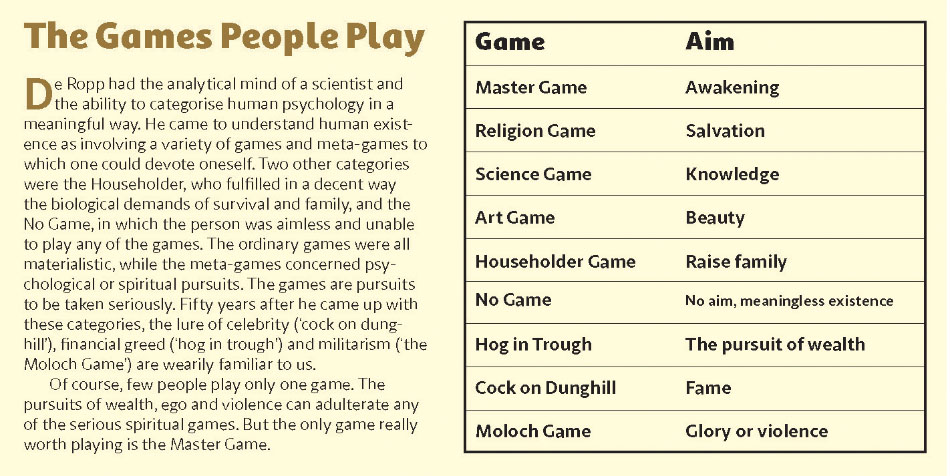
  • Mastering the Master Game: The Self-Completion of Robert de Ropp

    Mastering the Master Game: The Self-Completion of Robert de Ropp

    From New Dawn Special Issue Vol 10 No 4 (Aug 2016)

    Biochemist, author, spiritual teacher, kayaking fisherman, founder of an intentional community, misanthrope – Robert de Ropp was a complex man. Within him, the scientist, the magician, the missionary, the domestic oaf, hermit and warrior jostled for position. Practical and forthright, and distrustful of wide-eyed spirituality, he nevertheless became widely known to seekers in the 1960s. Books like Drugs and the Mind, The Master Game, Warrior’s Way and Self-Completion helped many to bridge the gap between drug experiences and disciplined spirituality. 

    Born in England in 1913, he came from an aristocratic background, but the early death of his mother in the post-WWI influenza epidemic and the subsequent lack of interest shown by his father resulted in a bizarre childhood. 
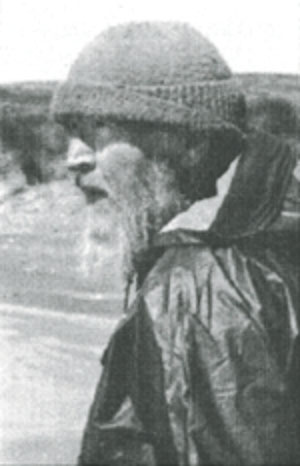
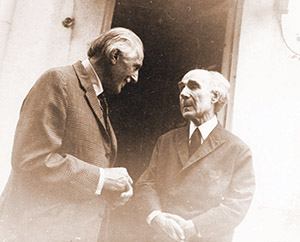
    Rare photo of Robert de Ropp

    His father was a Lithuanian Baron who in the 1920s lost most of his money in ill-advised financial ventures. At the age of 12, de Ropp, who had until that point been advancing through the elite English school system, found himself dumped for two years at the family seat in Lithuania. The mansion itself had not been maintained and, having been shelled in the war, was close to a ruin. Robert rattled around in a freezing cold, rat-infested great house that could accommodate fifty people. The neglected estate was run by the peasant families who had been there for generations, if not centuries. In place of his Oxbridge-oriented classical education the half-starving de Ropp found himself receiving a practical schooling in fishing and traditional agriculture from the old retainers. 

    With little warning he found himself extricated by his father only to be resettled once again, this time in the Australian outback, where he found himself working in a hopelessly misjudged farming venture. When this went bottoms up he made his way to Port Adelaide where he tried unsuccessfully to drown himself. Somehow, the fourteen-year-old managed to get back to England by himself with ten shillings in his pocket. Via a family connection he was taken in by the composer Ralph Vaughan Williams, whose pastoral pieces are now a mainstay of popular classic music radio programming. Finally achieving some stability, Robert studied science and became a molecular biologist. 

    Robert would only have occasional contact with his father, who lived until 1973. William de Ropp was a fascinating figure in his own right. A Germanic Lithuanian aristocrat, he became a confidante of Hitler and enjoyed close contact with him in the mid-1930s. William de Ropp had close connections with high-ranking British figures who were in favour of appeasing Hitler. He was actually being employed as a double agent who was able to obtain considerable intelligence for the British on Hitler’s ambitions and the state of the Luftwaffe. 

    Encountering Ouspensky & Gurdjieff
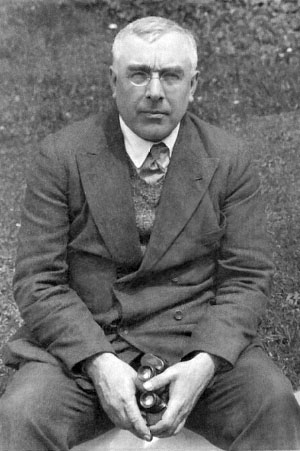
    P.D. Ouspensky (1878–1947) was a Russian mathematician and esotericist known for his expositions of the early work of the Greek-Armenian teacher of esoteric doctrine George Gurdjieff.

    In the 1930s Robert de Ropp got to know the novelist Aldous Huxley and his friend Gerald Heard who taught meditation. Heard was one of the first westerners to teach eastern meditation styles but de Ropp found his approach over-emotional. Not so P.D. Ouspensky, who seemed free from sentimentality and pretentiousness. After a hesitant start, de Ropp joined Ouspensky’s groups and began the work (based in the teachings of G.I. Gurdjieff), which, with development and adaptation, would dominate his inner spiritual life. 

    De Ropp was tough and well-prepared for the physical exertions that form part of the Gurdjieff work. G.I. Gurdjieff taught that man (humans) has no single indivisible ‘I’. Desires, thoughts, feelings, urges, pass constantly through us, each of them claiming the title of ‘I’ temporarily. Certain typical clusters of these ‘I’s form somewhat separate personalities. Each personality may have a separate set of concerns that collect together, representing the different aspects of one’s concerns or the separate contexts in which one must relate to other human beings. As an example, many adolescents experience a taste of this when they experience the discomfort of recognising that the way they behave with family may be very much at odds with the way they behave with friends.

    De Ropp found this to be a key to self-understanding. Obviously disposed to coming up with new categories, as we shall see in other areas of his writing, he analysed his own constituent personalities. What was unique in de Ropp’s approach was his use of the personalities in autobiography. Throughout Warrior’s Way – incidentally one of the most readable, honest, and varied of spiritual autobiographies – de Ropp characterises his behaviour according to the personality which was dominant. These included archetypes such as the Magician, who was able to feel the mystique of nature, and the Scientist, always applying rationality and looking for evidence. Yet others are more individual. The Missionary was that part of de Ropp who wanted to convert others to what he saw as the truth of the Gurdjieff-Ouspensky system. The Missionary was energetic and sincere but authoritarian, dogmatic and domineering. Opposed to the Missionary was the Domestic Oaf, desirous of family, children, a steady job, of house and land. (At times his personalities included the Recluse, the Cynic and others; this was a pragmatic rather than a systematic approach.) 
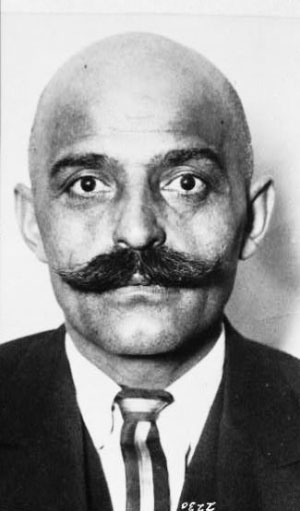
    George Gurdjieff 

    De Ropp worked every weekend at Lyne Place in England and then, after the end of the war, at Franklin Farms in New Jersey for over a decade. He was not alone in feeling that Ouspensky had lost his way and succumbed to a form of the guru trap, with a drinking problem and surrounded by followers who had become dogmatic and authoritarian. He was also not alone in feeling that in his last months Ouspensky had shrugged off this role and lived like a spiritual warrior at the end.

    After Ouspensky died de Ropp finally met Gurdjieff in New York in 1948. With some exceptions, the strict firewalls that Ouspensky erected against what he thought was the increasingly erratic influence of Gurdjieff had broken down. Long term students of Ouspensky encountered Gurdjieff in a series of vivid and pungent encounters. Gurdjieff struck de Ropp as a king in exile, perhaps the last Magus. He was the most impressive man de Ropp met in his entire life – a view to which he held 30 years later. Gurdjieff combined the Tarot archetypes of Magician, Hierophant, Emperor and Hanged Man. Yet, when Robert and his wife walked back with Gurdjieff after a movements class in New York, he wracked his brains trying to remember the question he should have asked Gurdjieff, but it just would not come and they continued in silence. Soon afterwards Gurdjieff would be in such demand that there was no chance for direct contact; De Ropp would have a long illness, and the master died the next year in 1949. In retrospect, de Ropp decided that although Gurdjieff represented unparalleled spiritual possibilities, he just wasn’t up to the challenge. “For the intelligent and the strong he [Gurdjieff] could provide the inspiration of a lifetime. But for the stupid and the weak he could be dangerous, even deadly. You have to be a pretty strong player to be able to play games with such a master.”1 

    The Domestic Oaf won out, eager for a job, a mate and a family, but life was not to be easy. Now on his second marriage and second family, de Ropp built himself a house from scratch for $3,500, and held down a good scientific post.

    Both de Ropp’s wives suffered from mental illness, his first wife to such an extent that she was institutionalised for decades. His scientific professional life would now intersect with his inner mental life to understand the influence of drugs on the mind. 

    Drugs & the Mind
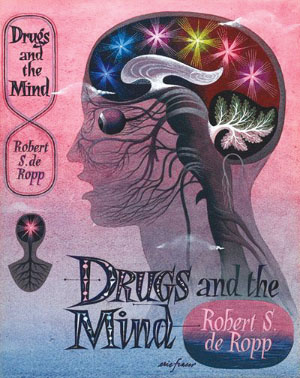
    De Ropp had a common sense attitude to drug use. He didn’t believe that psychoactive substances, whether modern pharmaceuticals or traditional plants, could lead one to anything like true awakening. Yet neither did he agree with the increasingly vociferous prohibition in response to the 1960s drug scene. Anyone who wished to experiment with drugs should be able to do so, preferably in a safe situation. Even though de Ropp had experimented with drug use and concluded that it was a “blind alley, a cul de sac, a dead end,”2 he still recommended that others should not take him for his word but try their own experiments – preferably in safe conditions. Legislation against psychedelics and other mind-altering drugs, he believed, “strikes at one of the most fundamental of all liberties, the liberty of the individual to explore his own inner world by means of his own choosing.”3

    His book Drugs and the Mind not only addressed issues such as the nature of addiction and the use of drugs to treat mental illness. Already in 1957 de Ropp had written: “The greatest public health problem at the present time is mental illness.”4 The book had entire chapters devoted to peyote and marijuana. Of the many mind-altering substances de Ropp personally experimented with, it was not the more dramatic and powerful hallucinogens like LSD or peyote that impressed him, but cannabis when taken as an extract in a sizeable dose. 
    Among the love and peace generation, de Ropp became, if not quite a household name, then certainly the author of one of the significant books of the period. Drugs and the Mind kept company on hippy bookshelves with Huxley’s The Doors of Perception and works by Timothy Leary and Alan Watts. The disciplined and scientific Englishman, now in his fifties, found himself fêted by young Americans who were tuning in, turning on, and dropping out. De Ropp was one of a small number of older people who could see the potential of the new movement. Leary’s message was turn on, tune in and drop out. But could these explorers of inner space turn up (on time), tune up their bodies, and drop unnecessary attachments?

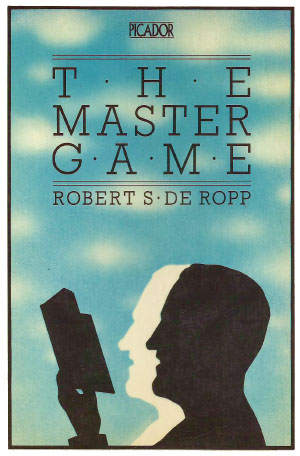
    Unlike Leary or Watts, each of whom de Ropp felt had succumbed to the temptations inherent in being a guru, de Ropp managed to navigate the rapids of the psychedelic tide. Although he could see that young people were in desperate need of self-discipline and grounding, he also felt that the Fourth Way of the Gurdjieff-Ouspensky teachings was somewhat authoritarian in its approach, and neither entirely successful in its methods or transmission. This line of thinking led to his next major book, released in 1968, The Master Game: Beyond the Drug Experience, which sold in the hundreds of thousands. 
    Spiritual Explorers & Teachers

    Throughout his life de Ropp encountered many spiritual explorers and teachers. By the time he moved to California in 1962 he had developed a knack of testing would-be teachers. It was not an infallible touchstone of soundness yet it worked well enough. He simply challenged them in his forthright manner. When he did this to Timothy Leary in 1962, after a long and inspiring talk from Leary on his plans to establish a utopian psychedelic community on the Pacific coast of Mexico, Leary simply turned off his hearing aid. It was a quirky response from Leary but didn’t bode well for the future of a co-operative enterprise. As is so often the case with spiritual teachers, the message was – my way or the highway. De Ropp saw Leary’s hallucinatory tropical utopia as impractical, and he was right – it was closed down by the police after just a few weeks.

    Of the flower power generation, de Ropp admired Ken Kesey but felt he hadn’t followed through successfully. Only Steve Gaskin, founder of the Farm community, met with his approval. 

    De Ropp may be accounted a teacher himself. How did he fare? He describes his hesitancy and self-questioning, but many teachers feel thus inwardly. Rather than displaying these to the pupil, spiritual teachers often overcompensate for their internal doubts. 

    Despite his love for describing life as a game, de Ropp certainly had something of the puritan about him. He detested alcohol and tobacco. City life was not for him and only country living seemed authentic. But most of us live in cities and towns, and they aren’t without their advantages. 

    De Ropp could see that the situation of humanity in the West was changing rapidly and he was able to negotiate the rapids produced by the flood of change. He began his own experimental community, the Church of the Earth, in Sonoma County, California. It was never intended to be a large group. A good portion of the group, with de Ropp’s blessing, started going to J.G. Bennett’s more ambitious International Academy for Continuous Education at Sherborne, England. De Ropp had reservations about those who came back from the accelerated ‘evolution’ of Sherborne House, dubbed by one wag the ‘Bennetron’. “I had expected well-trained, obedient, ready-for-service disciples,” de Ropp wrote, “I received rebellious, starry-eyed, self-opinionated ‘adepts’.”

    When they returned they were in no mood for serious teachers, or so de Ropp concluded, and the whole enterprise collapsed. The Church of the Earth was intended to have been built around the three pillars of garden, temple, and university, feeding the body, spirit and mind respectively. In a 1974 book of the same name, de Ropp describes their attempts at working together and setting up a rural community. The garden seems to have fared the best. The temple or dojo never seems to have got far beyond a wonky physical structure, and of the university there was little mention at all apart from a vague notion of seminars. Perhaps the project’s collapse was to de Ropp’s advantage after all. As a result he never was seduced by the guru trap.
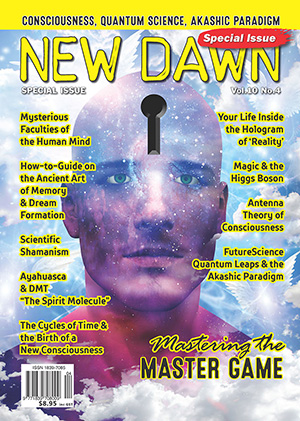
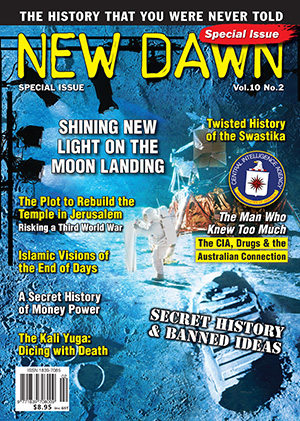
    Get the issue this article appears in

    Warrior’s Way & Self-Completion

    De Ropp seems to have been most stimulated by his attempts to harvest the garden of the sea. He designed and built his own kayaks and became a skilled fisherman. He found the sea a demanding teacher, unforgiving of lapses of attention, requiring the fisherman to successfully adapt to the rhythms of nature. At the end of his penultimate book, Warrior’s Way, de Ropp contemplates existence from his tiny boat in the Pacific Ocean on the northern Californian coast. He has somehow made contact with a Taoist spirit teacher named Fong, who has given him the gift of balance between yin and yang, receptiveness and relaxation balancing the austere demands of the Gurdjieff work; he was a Taoist hermit going with the flow. De Ropp seeks no ultimate answers, feels no need for any metaphysical belief, has no desire or faith in a survival of the personal ego. “My spirit will dance there as the shadow of that rock, among seagulls and pelicans, sea lions and starfish. I would like to give my flesh back to the ocean to feed the fish whose bodies have so often fed me.”5
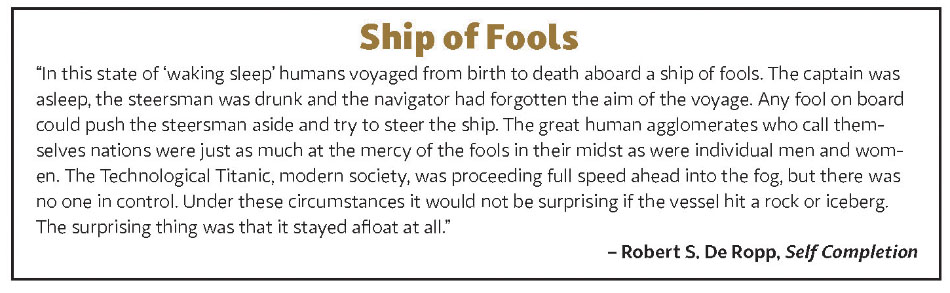
    Forty years ago de Ropp’s concern for the state of humanity and the planet was part of the emerging green movement. His view of modern westerners as “a spoiled, careless, pampered, town-bred manswarm” might seem harsh but we are already several stages down the road, oblivious of the warning signs. We do not even notice them as we wander towards oblivion, our sight focused on smartphones as we stagger towards the cliff. (This is metaphor but it seems that every week someone walks into a lamppost or off a cliff because they’re absorbed by their smartphones. There should be a word for the phenomenon.)
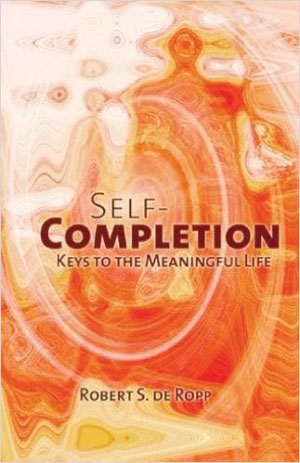
    In his final book, Self-Completion, in which he introduces himself as an elderly hermit, he included insights into Gnosticism and the latest developments in science. The Gurdjieff-Ouspensky work still provided the spine of his teaching but his pragmatic approach combined the work with aspects of Taoism, psychology, Sufism, Arthur Koestler’s holons, and his own bluff, no-nonsense assessment of western culture. 

    In 1987, at the age of 74, he died while kayaking in his beloved Pacific. Having pitted himself against the ocean for years, one suspects he knew that he could not win every time, and would have been content to have died in that manner, honourably, alone with nature, in the Warrior’s Way.

    [alert type=”general” dismiss=”no”]This article was published in New Dawn Special Issue Vol 10 No 4.[/alert]

    [alert type=”success” dismiss=”no”]If you appreciate this article, please consider subscribing to help maintain this website.[/alert]

    Footnotes

    1. Warrior’s Way, Dell Publishing, 1979, 192
    2. The Master Game: Beyond the Drug Experience, Delacorte Press, 1968, 23
    3. Ibid.
    4. Drugs and the Mind, Evergreen, 1957, 167
    5. Warrior’s Way, 351

    © New Dawn Magazine and the respective author.
    For our reproduction notice, click here.
  • J.G. Bennett: A Quest for the Masters of Wisdom

    J.G. Bennett: A Quest for the Masters of Wisdom

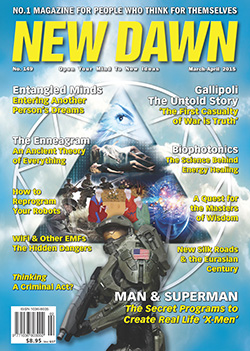
    From New Dawn 149 (Mar-Apr 2015)

    On 13 December 1974, just over forty years ago, a 77-year-old Englishman died unexpectedly, after digging a flower garden, on the grounds of Sherborne House, an impressive mansion in the Cotswalds of England. Formerly a private school, it was now the headquarters of the International Academy for Continuous Education. For years he had made demands on himself that would have exhausted most people half his age within weeks.

    A scientist by profession, he brought aspects of the experimental method to bear on spiritual technique and attempted a philosophical union of science and esotericism. He spoke many languages (eighteen, according to one count, including Italian, French, German, Russian, Turkish, modern and ancient Greek, Sanskrit, Pali, Persian and Indonesian) and had travelled widely, particularly in the Near East. His facility with languages allowed him access to Sufi teachers in a way that was difficult for Westerners of the period.

    Several inches above six foot tall, with a distinctively English, slightly equine face, the stray wisps of white hair only marginally wilder than his eyes, dressed in tweed and checks and corduroys, in clashing shirts and woollen ties, John Godolphin Bennett was one of the great spiritual explorers of the twentieth century. Probably best known as a pupil of the spiritual teacher G.I. Gurdjieff, he was an extraordinary, if largely forgotten, teacher in his own right. In terms of energy and creativity, he was second to none. By his final years he had developed compassion and wisdom too.

    Born in 1897 in Wimbledon to a middle class family, Bennett spent four years of his childhood in Italy, helping to lay the foundations of his linguistic ability. His father was a widely-travelled and rakish Englishman, his mother a puritanical, yet hardworking, American. Little is known publicly about his very early life. Bennett states in his autobiography Witness that his childhood seemed irrelevant in terms of the book as his boyhood was no different to any others.

    Out-of-Body Experience

    Bennett felt that in many ways his life truly began on 21 March 1918 when he was wounded by machine gun fire in the First World War on the western front. He woke up outside his body looking down on the beds of the army hospital. When he was taken to the operating theatre he heard medical staff commenting they would have to use coarse thread for his stitches as there was no fine thread left. After he had woken a nurse examining his stitches remarked they should have used fine thread, to which Bennett was able to explain there had been none left. The nurse was very surprised as there should have been no way that he would have known this as he had been in a coma for six days. This out-of-body near-death experience became a touchstone for Bennett’s understanding and he would later have similar experiences.

    After the war Bennett undertook an intensive course in the Turkish language and was posted to Constantinople, where he held a sensitive position in Anglo-Turkish relations. Rapidly acquiring fluency in a very difficult language, he found himself being consulted as an expert in international diplomacy at a young age. He was able to visit dervish communities before the new Turkish government suppressed them. It was in 1920 and 1921 that he first made contact with G.I Gurdjieff and P.D. Ouspensky, each of whom had fled the Russian Revolution with both temporarily living in Constantinople. He had been impressed with some of the dervishes but found in the teachings of the Armenian Gurdjieff’s, also explicated by the Russian Ouspensky, a weight and clarity he had not experienced elsewhere. The Gurdjieff Work cannot be summarised in a couple of sentences but includes practices of self-observation, self-remembering, work with sensation, sacred movements and other exercises, supported by an extensive psychological system and a cosmology.

    In 1923 he spent several weeks at Gurdjieff’s Institute for the Harmonious Development of Man at the Château Le Prieuré in Fontainebleau-Avon near Paris. Bennett is unusual in describing some of his many extraordinary inner and visionary experiences. Although there were expositions of Gurdjieff’s system and impromptu teaching by Gurdjieff, much of the time those at the Prieuré were involved in physical work, on various building projects or cleaning and cooking and other community needs.

    Bennett suffered from dysentery but forced himself to work in the summer heat digging ditches for an irrigation system. Day after day Bennett willed himself out of bed when he should have been resting and threw himself into demanding physical labour. One day Gurdjieff put his pupils through a particularly arduous session of his movements or sacred dances after the day’s work. Bennett was one of the few who kept going through increasingly complicated exercises. He promised himself he would stop at the next break but became aware of Gurdjieff paying particular attention to him. He persevered and found himself filled with an energy so limitless that he went on to do another hour of intense digging which would have been far beyond his capacity had he been healthy. Gurdjieff later found Bennett working in the forest and told him that he had tapped into a great reservoir or accumulator of energy that few people were able to reach. Despite an offer by Gurdjieff to take him further into the teachings, Bennett left the Prieuré, feeling he had to attend to his own affairs first (and he was obviously physically exhausted). He would not see Gurdjieff again until 1948, 25 years later.

    Bennett enthusiastically explored many spiritual teachings and followed a number of guides throughout his life, but it was the Gurdjieff Work he always returned to, and which most informed his own teachings.

    After his political consultancy and intelligence work, Bennett was involved in a series of somewhat dodgy business enterprises, including an unsuccessful attempt to claim the inheritance of dispossessed Turkish nobles. This culminated in a period of imprisonment in a Greek jail until he was acquitted. Bennett found a more respectable career as a scientist in coal research, at the time the most important fuel source in the world. Although he attended a good school, Bennett never went to university and it is remarkable he could advance so much in mathematics, science and linguistics with little formal training.

    He became part of Ouspensky’s groups in England, but had a chequered history with the brilliant, though somewhat authoritarian, Russian writer. Bennett hosted his own work groups which were acknowledged, if reluctantly, as being within Ouspensky’s orbit. In retrospect, Bennett seems not to have felt that he developed greatly during this period until he met Gurdjieff again in 1948. Ouspensky eventually banned Bennett from any contact with his groups on the basis of what seems to have been inaccurate gossip.

    Bennett was never a stranger to spiritual effort and discipline, to a degree unimaginable to most of us. For instance, on 1 January 1931 he started a 1,000 day regime with the purpose of obtaining inner freedom. For most people, the regime would have lasted as long as a New Year’s resolution. Bennett kept it up but found himself strangely frustrated by the lack of genuine transformation. For a period of two or three years he practised the prayer of the heart, a technique central to Eastern Orthodox hesychasm, continually repeating the Lord’s Prayer internally between 300 to 1,000 times a day.

    The return to Gurdjieff in Paris after the Second World War opened up an entirely new vista of spiritual techniques and teaching. Bennett’s diaries at the time have been published, along with his future wife’s, as Idiots in Paris (Samuel Weiser, 1991). They capture some of the contradictory aspects of his character, revealing the extraordinary efforts he made that were matched by similarly extraordinary states of consciousness. Yet they also paint a rather unpleasant picture of a man obsessed by his own salvation. He undoubtedly must have been very irritating at times. Later in his life he became considerably more understanding and compassionate.

    Coombe Springs & Subud

    In 1946 Bennett purchased a seven-acre estate at Coombe Springs in Surrey, England that developed into a community where people did practical work, movements and held meetings, with Bennett frequently demonstrating his brilliant lecturing ability. The first half of the 1950s saw Bennett travelling widely in Turkey, Syria, Jordan, Persia, and Iraq, meeting with various Sufis, many of whom struck him as very developed. In turn, he was often told by them that he had a major spiritual role to fulfil.

    John G. Bennett with Muhammad (Pak) Subuh, the Subud movement’s

    In 1956 Bennett was initiated into the latihan, the central technique of the Subud movement. This opened a flow of purifying energy described as a kind of instant mysticism but which was often accompanied in recipients by all sorts of spontaneous reactions, from bliss to horrifying emotional states and violent thrashing about. Bennett experienced what he described as a purgatorial state of conscience, vividly perceiving the affect he had on others, his many affairs with women, his fear of women, his unreliability and untruthfulness, his insensitivity, self-will, and on and on for a whole fortnight.

    Bennett had a naturally remarkable intellect that he developed through hard work, and he had trained his body to be strong and resilient. Yet he felt it had taken Subud to finally open his heart. He put aside the disciplines of the Gurdjieff Work, which seemed unnecessary in comparison to the efficacy of the latihan, and turned Coombe Springs over to the promotion of Subud, becoming a somewhat messianic spokesperson for the movement, which attracted much media attention.

    His enthusiasm for Subud eventually waned and by the early 1960s Bennett had once again performed an about turn, resumed Gurdjieff-style exercises and experimentation, and started work with a young group of brilliant scientific men on the final two volumes of The Dramatic Universe.

    The Dramatic Universe

    His magnum opus, The Dramatic Universe, was published in four volumes between 1956 and 1966, but Bennett had been working on the material for it since the 1940s. Bennett intended it as a synthesis of what he termed fact and value: fact being the province of science and value that of religion, philosophy, and esotericism. The Dramatic Universe is a work of serious philosophy by a genuine scientist who is the master of his materials, based on the principles of esoteric spirituality that he practised in his daily life. It is full of insights and extraordinary viewpoints. It is also very difficult reading. A selection of chapter titles from the first volume illustrate the difficulty: “The Existential Tract and the Cosmodesic,” “Pencils of Skew-Parallels,” “The Higher Gradations of Thinghood,” “Quinquepotence–Viruses” not to forget “Septempotence–Organism,” and so on.

    The combination of esoteric teaching, formal philosophical language and scientific rigour constituted a recipe for being ignored, and the proof is in the pudding. Few Gurdjieffans, and even many of those involved in the Gurdjieff-Bennett Work, let alone the general public, have read the entire Dramatic Universe (and I have to include myself in this category.) It is, however, a mine of possibilities where gems await determined diggers.

    The discipline of systematics is foundational to The Dramatic Universe. This is a method developed by Bennett of using number to describe “systems” and their progression. Gurdjieff’s Law of Three and Law of Seven offer important ways of understanding the Universe on all scales. The Law of Three describes how a triad of forces is necessary for every phenomenon to occur, while the Law of Seven, or law of octaves, using the musical scale, describes how any process changes through time and requires help from outside at certain places, known as intervals, to keep progressing in the original direction.

    Bennett saw that it was arbitrary to limit discussion to only these numbers and incorporated Gurdjieff’s laws of three and seven into the general scheme. A system with a single term has a unity in which there can be no development. Two-term systems are usually polar, containing opposition. When there are three terms, a system largely matches Gurdjieff’s triads with their active, passive and neutralising forces. Four term systems form a tetrad that has stability. These number systems use the natural properties of whole numbers. Different number-systems have different properties that seem contradictory but may be integrated into a grand scheme.

    As a tool of analysis, systematics allows the user to examine the elements of a situation and understand the relationships between them. As an esoteric technique, it also has the potential of explicating elements of sacred geometry and Pythagorean numerology. The application of systematics has gone beyond esotericism to management and industry.

    Spiritual Smorgasbord

    Just as his adoption of Subud had alienated a large number of people who practised the Gurdjieff Work, Bennett’s return to the latter alienated those who had become Subud enthusiasts. Never one to allow his spiritual smorgasbord to get too stodgy or lack variety, in the 1960s Bennett visited a Nepalese teacher named Shivapuri Baba and converted to the Roman Catholic faith. Bennett had had visions of Christ at various times in his life. He also held a correspondence with leading physicist David Bohm, who would later work with Krishnamurti.

    To cap it all, Bennett was approached by Idries Shah, the Western populariser of Sufism. Shah presented himself as a living representative of the same esoteric source as Gurdjieff. He persuaded Bennett to hand over Coombe Springs entirely to his own work, including the deeds of the property, with no conditions. Bennett and his close followers were eventually forbidden to enter the property and it was sold off for a considerable price. This event is a litmus test for one’s attitude to Bennett. Many see Shah as perpetrating a dishonest scam which the naive Bennett fell for. Yet Bennett seems to have been genuinely liberated by the experience and felt that Shah had given him the opportunity of moving forward.

    In 1969 Bennett had another near-death experience due to uric acid poisoning, during which for around 20 hours he was close to death or permanent brain damage. He experienced a continual joyful awareness which convinced him that he could survive both the loss of his body and mind yet retain a self. He mentions other out-of-body states, including one when he was reading for Gurdjieff in Paris, for which Gurdjieff scolded him and told him if he hadn’t been there Bennett might not have got back into his body.

    Academy for Continuous Education

    In 1971 he began the final phase of his life, setting up the Academy for Continuous Education at Sherborne House in the Cotswolds. Five experimental courses each of ten months duration were hosted at Sherborne House. These were mostly attended by people in their twenties, a large proportion of them American. (Bennett had attended the Isle of Wight Festival and was impressed by the energy of the counterculture.) The courses attempted to give a taste of the spiritual life and work on oneself to help orient people for the rest of their lives. True to form, other teachers visited the academy including Hasan Shushud, a Sufi, and Bhante, a Cambodian monk, who taught a form of meditation based on colour using coloured crepe paper and a lightbulb. Around 500 people experienced the courses over a period of five years, Bennett dying near the beginning of the fourth course. The teaching was founded on Bennett’s development of the Gurdjieff Work, including movements and work on sensation, as well as all sorts of techniques from the Sufi zikr repetition and latifa work (somewhat similar to chakras), to meditation and that old standby of digging the garden.

    Critics see Bennett as a butterfly, abandoning the Gurdjieff Work for Subud, Subud for Catholicism and Shivapuri Baba, then submitting Idries Shah, and so on, with dashes of contact with traditional Sufis drizzled regularly over the stew. At times it seemed a crazy pebbledash of mixed teachings. Those broadly sympathetic to Bennett – and I am one – may see these rather as correctives to the limitations of each tradition or influence. The instant mysticism of the latihan compensated for the exceedingly hard-won fruits of the Gurdjieff Work. The Sufis offered a connection to an ancient but living tradition that was most likely one of Gurdjieff’s sources. When Bennett became a Catholic it was likely he filled a gap in his overall spiritual and emotional make up, one that his native Anglicanism did not fill.

    Although The Dramatic Universe is a notably indigestible read, the dozens of other works published in Bennett’s name are quite approachable, even easy reading. Many of these are based on transcriptions of talks to his pupils. Audio recordings show his delivery to have been slow and measured, delivered in a melodious piping tenor in a particularly refined English accent. Deeper Man (Bennett Books, 1995) is perhaps a good place to begin, informally yet systematically laying out much of Bennett’s own teaching, drawing on Gurdjieff, Sufism and other sources, yet very much Bennett’s own.

    John G. Bennett with Sufi master Hasan Lutfi Shushud

    Bennett’s legacy perseveres in a variety of groups and individuals. Claymont Court in West Virginia, USA, purchased shortly before Bennett died, remains open as a centre for spiritual activity. George and Ben Bennett, J.G.’s sons, continue the Gurdjieff-Bennett work, now under the umbrella of the J.G. Bennett Foundation (www.jgbennett.org), holding occasional extended practical courses. They and other pupils of Bennett and those interested in his work meet for various international gatherings, which manage to bring together the various strands of Bennett’s heritage.

    Anthony Blake has held the flame of Bennett’s experimental approach and his principle of integration without rejection and gone on to develop several techniques in partnership with a variety of other seekers. Robert Fripp, guitarist and leader of the progressive rock band King Crimson, attended the final Sherborne course, the first after Bennett died, and went on to develop Guitar Craft, which uses guitar playing as a vehicle for development. Yet outside these small circles Bennett’s legacy waits to be rediscovered.

    Meals in Bennett’s groups at Coombe Springs and Sherborne were typically consumed in silence, but they began with a grace composed by Bennett that could serve comfortably as an epitaph:

    All Life is One, and everything that lives is holy.

    Plants, animals, and men, all must eat to live and nourish one another.

    We bless the lives which have died to give us our food.

    Let us eat consciously,

    Resolving by our work to pay the debt of our existence.

    [alert type=”general” dismiss=”no”]Read all the sidebars to this article, which appeared in New Dawn 149, by purchasing a copy.[/alert]

    [alert type=”success” dismiss=”no”]If you appreciate this article, please consider subscribing to help maintain this website.[/alert]

    © New Dawn Magazine and the respective author.
    For our reproduction notice, click here.
  • The Cathars & Their Modern Day Revival

    The Cathars & Their Modern Day Revival

    From New Dawn Special Issue Vol 10 No 2 (Apr 2016)

    Most forms of spirituality or religion look back to the past in some way. The past is a source of origin, tradition, revelation, and inspiration. For the medieval Cathars the most distant past was, as it is for most religions, the time in which the mythic foundation of the world was established. More recent developments, such as the coming of Jesus, brought the story forward to a new chapter. The Cathars believed that their initiation rite, the consolamentum, was the result of an unbroken tradition stretching back to Jesus himself.

    Aspiring modern Cathars look back to the myths of the original spiritual realm, the fall of Satan and the angels, and the creation of the material world in which souls reincarnate until they can escape. They also look back to the historical groups and individuals who were involved with the development of this worldview in the first place. Modern esoteric lineages typically derive not from antiquity but from revivals that occurred in the eighteenth, nineteenth and twentieth centuries. Thus when exploring movements like the Gnostics of antiquity or the Cathars of the Middle Ages, the modern spiritual seeker is often presented with a melange of spiritually-unsympathetic popular history, obtuse scholarly research, and a revivalist esoteric tradition that often has little to do with critical history.

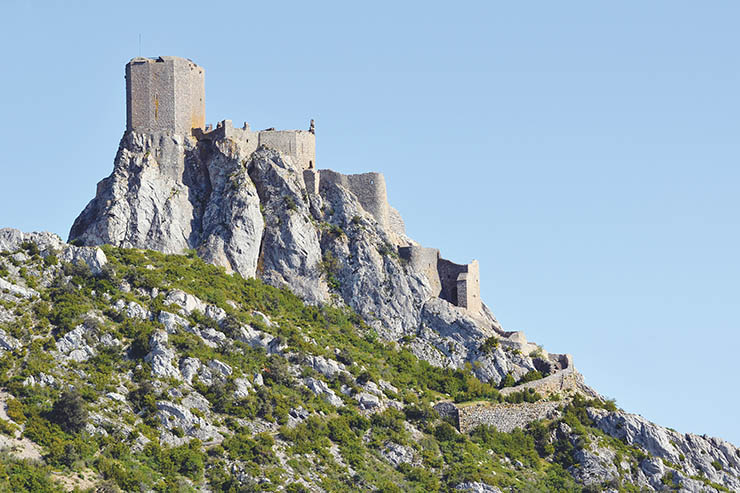
    The Cathars are best known not for what they did but for what was done to them. The Albigensian Crusade, launched in 1209 on the authority of Pope Innocent III, laid waste to the Languedoc in the south of France. The Inquisition was subsequently founded to root out and eradicate what remained of the Cathar heresy. Books on the Cathars focus on the relentless march of the crusading army as it moves from castle to castle, siege to siege, atrocity to atrocity. Or historians weigh up the influence of the Inquisition, a ruthless bureaucracy that survived into the nineteenth century. Tourists visit the Languedoc, now branded as Cathar country, for the fairytale citadel of Carcassonne, restored in the nineteenth century, for the wild ruins of medieval castles on challenging hilltops, and for the relaxed locals, good weather, cheap food and wine.

    The reader of a history of the Cathars encounters a list of atrocities so numbingly extensive she is at risk of experiencing compassion fatigue. After the crusaders ended the siege of the city of Bram, 99 men had their noses and upper lips cut off, were blinded, and were tied together with another one-eyed man at their head to lead them. This is perhaps the most colourfully brutal event of the crusade but it is merely one example and certainly did not have the highest body count. The Inquisition mopped up the survivors.

    The contrast between the Cathars themselves, with their high ethical standards, kindness and deep spirituality, and the crusaders and Inquisitors, reminds me of P.D. Ouspensky’s view of esotericism and history. The history we know, the history of war and temporal power, is the history of crime. But there is another history, the history of esotericism. It is that other history that interests me. Fragments of Cathar beliefs can be dug out of the writings of the Catholic intellectuals who opposed them, like shards of tile that make up a buried mosaic. We cannot reconstruct the inner lives of the Cathars by scholarship, yet knowledge of their beliefs and practices suggest to us by analogy what their inner experiences may have been.

    Although the Cathars were typically principled, enlightened and simple people, they by no means uniformly lived up to their high standards. The Italian Cathars were embroiled in turf wars and denominational disputes. William Bélibaste, the last Cathar Perfect in the Languedoc, was a murderer who bedded many women in violation of his vows and tried to cover up his shortcomings.

    To the Cathars, the material world was intrinsically evil, fashioned by the devil, the god of this world. The heavenly realm of the true God existed in spirit only. Catharism really was an esoteric religion. In a pattern still demonstrated by many of the minority religions of the Middle East, such as Mandaeans, Yazidis, Alawites, and Druze, a large community of lay people support the inner circle of priests or clerics or Perfect. The rite of the consolamentum dedicated the aspirant to the austere restrictions and responsibility of the Cathar Perfect. When the spirit is said to descend on the participant during the consolamentum or when the spirit is so much part of the Cathar myth, I cannot believe this was not accompanied by some sort of transcendent mystical experience.

    To some extent the Cathars have been treated by esotericists as a blank canvas onto which many different patterns are painted. Many of the extravagant claims of neo-Cathars have little to do with the remnants of the Cathars that history bequeaths us. I found myself in sympathy with these romantic esotericists but wanting to test their more fantastic claims.

    The Neo-Cathars

    The three most influential neo-Cathars of the twentieth century would be Antonin Gadal and Deodat Roché, both born in 1877 and from the Languedoc, and the German Otto Rahn. Both Gadal and Roché had eccentric opinions of the Cathars’ history. Gadal, in particular, became fascinated by the idea that cave systems in the Languedoc had been used as initiatory centres by the Cathars. Historically speaking, it is unlikely. But a whole system of ritual initiation was recreated and practised in the caves. To this day there are esoteric groups who use the caves for this purpose. Roché was a more reliable scholar, yet he believed the caves had connections with Mithraism. Roché lived into his 90s and was greatly respected by both esotericists and the local population.

    Otto Rahn is nearly as famous as the Cathars themselves. Often billed the real ‘Indiana Jones’, Rahn was a romantic and idealistic young German who came to the Languedoc in the 1930s. He is particularly associated with connecting the Cathars with the Holy Grail. Rahn’s classic Crusade Against the Grail is neither the most original nor the most well-researched book on the Cathars. Yet somehow it epitomises the essence of romantic esotericism. As does Rahn’s life. Fleeing the Languedoc in debt, having associated himself with several dubious characters, he found himself invited to an interview with an admirer of his recently published book. That person was Heinrich Himmler and Rahn found himself invited to join the SS, an offer he could not refuse.

    Rahn appreciated the resources set before him, facilitated by Himmler’s fascination with myth and the occult. He could now travel to ancient sites with a substantial budget at his disposal. Yet the impractical, romantic, raffish, homosexual Rahn was a poor fit for the SS. In 1939 he travelled to Austria, walked up a peak in the Tyrel Mountains, took sleeping pills and died of exposure.

    Another influential Cathar revivalist was Maurice Magre, a well-known French novelist who became convinced the Cathars represented a form of Buddhism. The French philosopher Simone Weil (pronounced ‘Vay’) is perhaps the most admirable figure of the Cathar revival. A superb writer who lived a short and difficult yet highly principled life, she found in the Cathars an example of how to live authentically. But her historical knowledge of them was no better than that of the Languedoc neo-Cathars such as Antonin Gadal and Déodat Roché with whom she had corresponded.

    Among all these eccentrics and romantics, Weil stands out in particular for the quality of her work. She was born into a middle-class secular Jewish family and attended the Sorbonne where she was in the same class as Simone de Beauvoir. Weil was a pacifist and trade unionist, fighting on the Republican side of the Spanish Civil War, with an anarchist militia in 1936. She worked in factories to experience the life of the working class, to the detriment of her health and her income. Often referred to as a Christian neoplatonist, Weil was in effect a Perennialist, believing that the ancients essentially shared a single esoteric tradition, Plato being its finest expression. She died in London in 1943 of turberculosis, though many considered her death an imitation of the Cathar endura, a fast to the end.

    Arthur Guirdham & the Transmigration of Souls

    It may surprise many people to discover that the medieval Cathars really did believe in reincarnation, and more specifically in the transmigration of souls from creature to creature, including animals as well as humans. One of the most charming stories surrounding this concerns a Cathar Perfect who remembered being a horse in a previous life, and was able to find the horseshoe that he had once shed. The Cathar understanding of reincarnation or transmigration is intimately connected with their myth of a fall from Heaven. Each spirit has fallen into the material world and is reincarnated constantly until it finds its way into a human who becomes a Cathar Perfect and, by following the Cathar path, is liberated at death and returns to the heavenly realm.

    Not only did the medieval Cathars believe in reincarnation, but there are many modern people who believe or feel they were Cathars in previous lifetimes. The granddaddy of modern Cathar reincarnation was Arthur Guirdham (1905–92), Senior Consultant Psychiatrist for the clinical area of Bath, UK, for over twenty years. Highly considered by his associates and friends, his legacy was not to be in the area of psychiatry but in a series of books detailing the past life knowledge of a patient known only as Mrs Smith, who he met in the 1960s. Later another local woman known as Miss Mills also became involved. Eventually an entire group of people emerged who had reincarnated together with Guirdham into different eras.

    Guirdham’s group reincarnation is commonly described as one of the most convincing cases. Yet does it survive closer scrutiny? In none of his books does Guirdham tell his story in a very methodical way. He is often very careful to state what is accurate in the past life memories and what isn’t, to reveal what facts were already known to him, and so on. But he can be so rambling in his accounts that the reader is left none the wiser.

    Mrs Smith, in her Cathar incarnation, was a Catholic named Puerilia. Guirdham was Roger de Grissolles, a Cathar. The two had been lovers in the thirteenth century. Puerilia was eventually condemned and burnt as a heretic herself. Mrs Smith’s memories of this past life were dramatic and seemingly accurate in strange details. She recalled, “I didn’t know when you were burnt to death you’d bleed. I thought the blood would all dry up in the terrible heat. But I was bleeding heavily. The blood was dripping and hissing in the flames. I wished I had enough blood to put the flames out. The worst part was my eyes. I hate the thought of going blind… I tried to close my eyelids but I couldn’t. They must have been burnt off, and now those flames were going to pluck my eyes out with their evil fingers.” (The Cathars and Reincarnation by Arthur Guirdham)

    Events developed rapidly as the scope of the reincarnations expanded. Miss Mills’ friend Jocelyn S. subsequently died and communicated to the group from beyond the grave as Braïda de Montserver. The group reincarnation expanded to 19, nearly all of whom were friends or relatives of Miss Mills. It is an extraordinary story.

    Objective evidence for previous lives can only be assessed by comparison with historical and archaeological information. The very nature of historical evidence itself muddies the waters. If a particular facet of history has been documented and published, anyone who subsequently claims to remember this from a previous life may actually have acquired the information from a book. And yet details not backed up by historical or archaeological evidence are of no help in determining authenticity.

    There is therefore a very narrow band of evidence that could constitute objective evidence (though not even proof) for reincarnation. As the stories given to Guirdham by the two women became more complex there were suggestions of fraud or that published information was being used. Yet there is an early example of evidence that might satisfy the criteria.

    Mrs Smith insisted the Cathars she saw in her dreams wore dark green and dark blue robes. This was inconsistent with published information on Catharism. French scholar Jean Duvernoy discovered in the Fournier Inquisition registers that during the time of the Inquisition some Perfect wore these dark colours rather than black. It seems these colours were adopted as a compromise between the traditional black and the need to disguise their status. Duvernoy only published this information in 1965, and only in French. This tiny detail suggests authenticity.

    Guirdham was a professional man of high standing. Although obviously intoxicated by the ‘far memories’ of Mrs Smith and Miss Mills, he was careful in his comparison of their statements with historical data. But it seems Guirdham was never able to successfully meet any of the reincarnation circle aside from Mrs Smith, Miss Mills and Miss Mills’ very ill father. Miss Mills, and then Guirdham, eventually channelled teachings from disembodied Cathar spirits. How convincing are these when compared to what we know historically about the Cathars? Did Guirdham have the wool pulled over his eyes, or did he knowingly suspend disbelief? If he was mistaken about the veracity of these past life memories, did this really matter if the entire process proved to be spiritually enlivening for him? Or was this strange fabric of experience, history and wool-gathering more or less what Guirdham claimed it was – the far memories of a group reincarnation?

    A worldview is different from history, yet esoteric or alternative worldviews often make historical claims. These are in tension with each other. I always have mixed feelings about these claims. As something of a romantic myself, I admire and somewhat envy those who can take the ball and run with it. On the other hand, claims which are insisted on as historical should be verifiable. Esotericism is often based on the scholarship of the time. When that scholarship makes further discoveries or changes the basic understanding of an historical phenomenon, the esoteric worldview based upon it often stays crystallised in its original form.

    Spirituality should be based on experience rather than on pure flights of fancy. Yet the historically fantastic has often been a better cocoon of the spiritual butterfly than the historically sound. In Lost Teachings of the Cathars I examine the teachings and the histories of both the Cathars and their aspiring modern successors.

    For more on the Cathars and its modern day revival, read Andrew Phillip Smith’s book Lost Teachings of the Cathars: Their Beliefs and Practices (Watkins 2016), available from all good bookstores & online retailers.

    [alert type=”general” dismiss=”no”]This article was published in New Dawn Special Issue Vol 10 No 2.[/alert]

    [alert type=”success” dismiss=”no”]If you appreciate this article, please consider subscribing to help maintain this website.[/alert]

    © New Dawn Magazine and the respective author.
    For our reproduction notice, click here.
  • Epoch & Aeon: Understanding Cosmic Cycles (Part 1)

    Epoch & Aeon: Understanding Cosmic Cycles (Part 1)

    From New Dawn 152 (Sept-Oct 2015)

    We may have entered a new epoch, or so some scientists are telling us. The Anthropocene is a geological epoch characterised by the noticeable impact of humanity on the surface of the Earth. The previous epoch was the interglacial Holocene, which began after the fourth ice age. The Anthropocene is said to have begun with the Industrial Revolution in the eighteenth century. Others argue that substantial human influence on the lithosphere began up to 15,000 BP (BP=Before Present, the scale used for large periods of time) when human activity left its first traces on the rock record. Others specify 1945 as a clear date, due to the sudden arrival of radioactive material in the rock strata from the explosion of atomic bombs.

    As a term, Anthropocene reminds me of esoteric concepts of humanity’s ages and cycles, aeons and epochs. A belief in cosmic cycles has been specified as one of the typical characteristics of esotericism. This categorising of history and prehistory is one of several examples where religious and esoteric ideas exist in a symbiosis with scientific and secular ideas. Scientific concepts such as the ages of stone, bronze and iron owe their existence to myth; modern esoteric ideas of human development, of cosmic ages and cycles, draw on the scientific knowledge of the period.

    The Anthropocene is partly a tool for highlighting the extent that humanity is currently influencing the global environment. Yet it is typical of materialist science that only mankind’s physical impact on the world is being assessed. Mankind appears in the geological picture mostly due to the damage we have done. In contrast to this, esoteric theories of aeons, epochs and cycles typically see in mankind a development towards an ever more spiritual form of consciousness, or a descent from a golden age into barbarism, or the repetition of cycles of a variety of divine or cosmic influences.

    The difference between scientific systems of ages and esoteric-religious systems is this: scientific systems are based on measurement, esoteric systems on value. The best esotericism incorporates scientific and practical knowledge into a worldview that has a cosmic significance and acknowledges human psychological and spiritual development. The technologies of esotericism are those of personal transformation and sacred science. Esotericism is concerned with the inner meaning of whatever phenomena it touches upon, whether those of religion, myth or science.

    It Was a Golden Age

    Probably the most familiar Western system of ages is that of the classical world. We are so used to the gold, silver and bronze medals of the modern Olympics that the combination and order of these medals barely seems strange to us. It was Hesiod in the eighth century BCE who first wrote of the ages of development associated with metals, and he was surely drawing on existing tradition. Hesiod’s account follows on from the story of Prometheus bringing fire to mankind and Zeus punishing humanity by fashioning Pandora with the aid of the other gods, whose infamous box unleashed evils and sufferings on the world, with Hope as the only positive quality. Hesiod describes five ages – gold, silver, bronze, the heroes, and finally iron, the age in which he lived and we still live.

    In the golden age, ruled by the titan Kronos, humanity was free from labour and ill-health, people lived long happy lives and died peacefully in their sleep. After death people lived on as good spirits of the earth who protect and bring wealth. The silver race was fashioned by and ruled by the Olympian gods. They were also long-lived as children but once they grew to adulthood they fought and were killed, forsaking the gods. These live on as spirits of the underworld.

    People of the bronze age were strong and powerful but hard-hearted, dying in wars. Our age is that of iron, to which Hesiod apportions a series of woes mixed in with only a little good meted out by the gods. Hesiod tells us he would rather that he had not been born than live in our age of iron. Between the ages of bronze and iron was the heroic age. Its anomalous status, not being associated with a metal, suggests it was added to the scheme later. The heroic age was the age of the heroes and demi-gods of Greek myth, from the Seven at Thebes to participants of the Trojan War. They live on in the blessed isles.

    Myths can encode social imperatives, taboos, justifications for ritual, and spiritual and psychological truths. They can also preserve ancient folk memories. Archaeological ages of materials technology, of course, show that bronze was used before iron was smelted. The modern scientific threefold scheme of stone, bronze and iron ages derives from Michele Mercati in the sixteenth century, with numerous subdivisions and refinements made as evidence accumulated and the scheme developed. The scientific understanding of archaeological ages of materials technology owes its inspiration to the Greek myth of the ages of metal.

    In Book V of The Nature of the Universe, Lucretius, the first century BCE Roman writer, describes a progress in the human use of stone then copper (and hence its amalgam, bronze) and then to iron. Lucretius was an Epicurean and in many ways a precursor of modern rationalism. His method was not based on experimentation and measurement but on assigning natural materialistic explanations to phenomena. Hence, Lucretius ascribes mankind’s knowledge of the use of fire not to Prometheus but from seeing forest fires caused by lightning. He surmises that humanity learned to smelt metals from seeing the results of a forest fire on ore. Lucretius sees mankind as developing in phases from primitive technologies to the advanced civilisations of his time, from using stone to copper or bronze, and latterly to iron. It is the myth of progress.

    Hesiod and Lucretius offer examples of the two opposing models of human development: a descent and an ascent, on the one hand a fall from grace and away from the perfection of the golden age and on the other a development from barbarism to civilisation.

    [alert type=”info” dismiss=”no”]If you appreciate this article, please consider a subscription to New Dawn magazine.[/alert]

    The Great Age & Yugas

    In the Western mind the four (or five) Greek ages, or at least the concept of a golden age, are part of the common culture. Astrological ages and the Indian Yugas (Hindu, though there are Buddhist and Jain adaptations too) are probably the next well known, the latter chiefly among those with spiritual, New Age or esoteric leanings.

    The Yugas, which are of course still current in Hindu culture, are the most ancient and massive cycles. The total length of a Great Age (Mahayuga) is 4,320,000 years. The four Yugas have durations of 4:3:2:1 proportions, running from the golden age Krita or Satya Yuga (Fortunate Age) at 4,000 divine years, amounting to 1,440,000 human years, on through Treta Yuga (Third Age, or of three parts, 3,000 divine years/1,080,000 human years), Dwapara Yuga (Second Age, or of two parts, 2,000/720,000) and our very own Kali Yuga (Age of Conflict, 1,000/360,000 years). There are additional periods that precede and follow each Yuga, each 1/10 of the length of the Yuga.

    Joscelyn Godwin cites midnight February 17 or 18, 3102 BCE as the beginning of the current Kali Yuga, according to Indian astronomers, and calculates its end in 427,000 CE.1 The Kali Yuga thus covers the period from more or less the dawn of civilisation to the extremely remote future. These vast periods are difficult to find meaningful.

    The vast time scale has prompted some more recent commentators to accommodate the lengths to a more human scale. René Guénon, the Traditionalist, suggested knocking off three zeros and multiplying by 15. The resulting periods mesh successfully with human affairs, with the current Kali Yuga conveniently ending in 1999. Despite Guénon’s erudition, this surely amounts to convenient adaptation of a difficult idea; on the other hand it is the duty of esotericism to concern itself with the meaningful. The best known resizing of the Yugas, possibly better known than the original periods, is that of Sri Yukteswar Giri, the guru of Paramahansa Yogananda, known widely for his Autobiography of a Yogi. In Yukteswar’s system of Yugas the Kali Yuga has already ended and we are now in an ascending era in which the Great Year runs in reverse. Thus the myths of descent and ascent are combined.

    Consonant with their vast lengths, the Yugas are associated with very broad characteristics of human life. As with the golden age of the Greeks, in the Krita Yuga humans have long lives (4,000 years), have no diseases and don’t need to work. Kali Yuga is characterised by the greed of mankind, by irresponsible rulers, wide use of drugs and drink, and continual migration of peoples. A distinctive Hindu characteristic of the ages is that they each have different numbers of avatars of the Lord Vishnu, with the Kali Yuga having only one, Kalki, who will return on a white horse to fight against the demon Kali (not to be confused with the goddess Kali) who is the ruler of the age.

    This is the dawning of the Age of Aquarius

    The astrological ages are widely known. In the official history of science it was Hipparchus in the 2nd century BCE who, on the island of Rhodes, computed the precession of the equinoxes (see graphic on page 62 in magazine). In the 2nd century CE Ptolemy, the great astronomer/astrologer, worked out that precession was due to a wobble of the starry sphere. Heliocentric science eventually determined that the wobble was in Earth’s orbit.

    The great year of astrological ages is computed at 25,770 years. This is usually rounded to 26,000 years although the figure has sometimes been lower and until the cycle was properly measured it was assumed that it matched Plato’s Great Year of 36,000 years. This number divided by 12 gives 2,147.5 years for an astrological age if the signs of the zodiac are equally spaced.

    The sign in which the Sun rises on the vernal (spring) equinox is believed to influence humanity as a whole in a similar way to the effect of the 12 signs on a human being. The ages of Leo, Cancer and Gemini show mankind emerging from prehistory, with Gemini, ruled by Mercury, associated with the development of writing, Leo emphasising the importance of the Sun, and Cancer that of the mother goddess. The age of Taurus began around 4000-4500 BCE, depending on the method of computation, and is associated with bull god cults such as those found in Egypt, Assyria and Crete. Around 2000 BCE, give or take a couple of centuries, the spring equinox Sun moved into fiery and warlike Aries. This was a time of empire building and heroic ages, of martial conquest and the use of iron for weapons. It also included the development of monotheism.

    From around 100 CE to the turn of the Christian era – about which, more in a moment – is the dawning of the age of Pisces. The fish associations of Christianity, the symbol of the vesica piscis, the fisherman disciples who become fishers of men, and several parables and miracles that include fish, are all consonant with Pisces. Pisces is also notable for its dreamy quality, hence the characterisation of the age of Pisces as a time of deception.

    We look with hope to the age of Aquarius but there are many views as to when it will come. We may have already gone over the cusp. Those who calculate the astrological ages according to the constellation boundaries rather than the equally spaced 30 degree zodiacal constellations, compute that it may take another 600 or 700 years before we enter Aquarius.

    Many fascinating investigations into archaeology and astronomy suggest that knowledge of the precession of the equinoxes is encoded in myths from a wide variety of sources and in the alignments of ancient sites all around the world. This would make the astrological ages the arbiters of epoch par excellence. In these ages the position of the zodiac at the spring equinox aligns with chronology, mathematics and a zeitgeist that lasts for two millennia. That zeitgeist manifests through large scale human endeavour such as empire, war and civilisation, through symbolism and religious forms.

    For us, who now stand two millennia away from the beginning of our Christian calendar, the astrological ages are extensive enough to carry a significance beyond the length of a single civilisation, yet not so long that they are incomprehensible on human terms. Although there is plenty of argument over the specific beginning and ends of ages (though their length is not so controversial), the scheme is admirable. It is like a tool of the right size and weight that fits comfortably in the hand.

    It also has a predictive value lacking in the Yugas and the metallic ages. The Greek system offers no development after the iron age. The Yugas offer an eventual return to the beginning of the cycle and a new golden age, which is a source of optimism. But the massive time scales and our place within the Kali Yuga can only allow us to sigh at the misery of mankind and its fall from grace. The astrological ages cycle through varying qualities but are not characterised by ascent or descent. When an age becomes tired and decadent, complementary qualities may be at hand in the influence of the forthcoming age.

    From Adam to Christ

    Astrology comes from Babylon and was formulated in its Western version in the pagan classical world. Although both Christianity and Judaism have at times had their own strong astrological traditions, astrology was vulnerable to criticism as a pagan science whose symbolism and terms of reference didn’t extol Yahweh or Christ as the foundation stones of the universe. According to the astrological ages, the bull and the fish are merely passing fads, albeit fads of 2,000 years duration. Thus it fell to Christians to come up with their own aeons and epochs that drew on their own mythologies and understanding of the world. From a Christian and Western standpoint, the Yugas and astrological ages are merely turning around in circles.

    The Christian view of time follows a line not a circle. It runs from creation to destruction, from Genesis to Revelation, from Fall to Apocalypse. Yet the line can still be divided into sections, marked out by the character of the times, by the stage in the process of the redemption of humankind. The Christian schemes take us out of the ancient world and into the Middle Ages.

    Our standard Western method of counting years is in fact a simple system of two epochs, BC, Before Christ, and AD, Anno Domini, the year of our Lord. The BC/AD system did not take root for several centuries after its invention in the 6th century. It reflected the basic Old Testament/New Testament divide of the Christian Bible but has no category for the Second Coming. It has no predictive quality built into it.

    It was that giant of influence, St Augustine, who formulated the most influential Christian scheme of ages. Augustine’s scheme utilised the seven days of creation. Inspired by Psalm 90:4 (quoted in II Peter 3:8), in which “one day with the Lord is as a thousand years,” each day was literally a millennium. The seventh age corresponded to the seventh day, the Sabbath, on which day God rested from his labours, and was outside of history.

    Each age of 1,000 years could approximately be matched with chronologies produced from the genealogies of the Bible. The six ages were:

    1. From Adam to Noah and the flood.
    2. From post-flood Noah to Abraham
    3. From Abraham to David
    4. From David to the captivity in Babylon
    5. From the return from Babylon to the birth of Jesus.
    6. From Jesus to the second coming.

    Thus we are living in the sixth age, which will continue until the Apocalypse. The sixth age is clearly and uniquely Christian; all of the preceding ages are defined by Jewish figures yet are claimed for Christianity. There is no accommodation of, for instance, the Greek philosophers who would have lived in the fifth age, or for Homer in the fourth age, no room to allow for the Greek heroes or the Gods of Egypt, Greece, Rome and other Mediterranean countries.

    What can this system of ages say about mankind and the world in general? The great civilisations of antiquity, the gods and goddesses and daemons, are all swept away in favour of the purloined traditions of a people (the Jews) who weren’t even included in the new religious dispensation unless they acknowledged Christ. There was little room for each age to have its own spiritual or psychological colouring or even for a straightforward cycle of progress or corruption.

    Those six ages did allow for a coming transformation into the seventh age, but Augustine placed the Christian Apocalypse conveniently far enough in the future to be of no concern for a few centuries.

    Augustine took over an existing Jewish scheme but may have been influenced by Gnostic ideas. In the Gnostic Second Treatise of the Great Seth, the history of the world is effectively divided into three stages. Barbelo, the divine feminine figure, visits Adam, then gives the seed to Seth, then later to the resurrected Christ. In the further reaches of Gnosticism we find similar demarcations of history based around important characters in the Bible. Bardaisan came up with a scheme that involved 6,000 year periods that made up a Great Year. The Manichaean religion is unusual in acknowledging both biblical figures from Adam and Seth down to Jesus and non-Abraham prophets including Zoroaster and Buddha.

    Father, Son & the Holy Spirit

    After the first Christian millennium ended, Augustine’s six ages still had some validity because the beginning of the sixth age and the literalness of the thousand year period could be disputed.

    Joachim of Fiore (c.1132-1202) first proposed that history was ascending through three stages ruled by each separate member of the Trinity. Hence, the period from Adam to the birth of Jesus was the Age of the Father, characterised by the Law; from Christ onwards was the Age of the Son, which was the age of the gospel; at some date in the near future would be the advent of the Age of the Spirit or Holy Ghost. Abbott Joachim, who was a devout Catholic, believed the third age would bring the kingdom of God on Earth. This third age would no longer require the Church (which was just an artefact of the second age) but would consist of celibate monks in direct communion with the Holy Spirit. Joachim believed the third age would dawn in 1200-1260 and so must have died believing it was imminent. Joachim’s influence on the development of Christianity would be indirect but considerable. His concept of the replacement of the Church by saintly individuals would be picked up by various Protestant movements and lend itself to use by later antinomian Christian sects. There was no compulsion to accept Joachim’s own estimate of the dawning of the Age of the Spirit, therefore interest in his three ages would re-emerge in aspects of twentieth century esotericism.

    Islam could take the same approach by delineating ages according to the six prophets mentioned in the Qur’an (Qur 19,21-22), while in Ismaili Islam a series of emanations from Allah determine the different characteristics of the ages. Minority Middle Eastern religions such as the Zoroastrians and the Yezidis also had their own schemes. That of the Druze is notable for a scheme of aeons that each last for an astonishing 343 million years. Other aspects of their little-known scheme include a series of 159 masters through history, in addition to the six prophets of Islam, with history deteriorating gradually until a final liberation takes place. These 159 masters are pre-existent but are somehow controlled by Christ and the four evangelists as cosmic figures. Outside of the scope of this article are the wide rage of mythic ages found around the world like the five Suns of the Aztec ages, or the Mayan calendar.

    The True Religion of Noah

    Isaac Newton (1642-1727) was the founder of modern science, but also a Christian, astrologer, alchemist and esotericist. He has sometimes been characterised as the last magician rather than the first modern scientist. Newton believed that the true religion was that of Noah. He also believed that the Sabaeans, Confucius, the Brahmins and Pythagoras all inherited this post-diluvian wisdom. As each of these figures and movements arose, the light of “true religion” renewed, only to decline steadily until the next renewal. Egypt, however, according to Newton, was responsible for much of the corruption and decline of this true religion, including the concept of the Christian Trinity, which Newton abhorred.

    All this resembles the familiar Abrahamic scheme of a succession of prophets periodically bringing law or religion or gnosis to humanity. But Newton has integrated figures like Pythagoras (and Hyram of Tyre, of Masonic fame) into the scheme. Newton believed that Pythagoras gave mathematics to the Greeks with one hand and the “true religion” with the other.

    It will become characteristic of esotericism to incorporate figures from many religions and cultures, not just Jewish and Christian ones, into the patterns of development. Esotericism is interested in the inner meaning and inner significance of traditions, usually sees religions and cultures as sharing fundamental principles (or often regarding as debased those that don’t fit in) and hence can accommodate almost any criteria. Given his scientific nature Newton saw these prophet figures as bringing sciences such as mathematics and astronomy with them. The purest and most ancient civilisation was that of Israel, from whom, with a hefty amount of chronological juggling, all others copied.

    All graphics for this article are viewable in the digital or print version of this issue.

    The second part of this article, published in New Dawn 153 (Nov-Dec 2015), looks at how the concept of race was related to esoteric history, as well as the cycle cosmology of Theosophy, the “gyres” of W.B. Yeats, Thelema aeons, spin offs from G.I. Gurdjieff including Rodney Collin & J.G. Bennett, and the work of Jean Gebser and Peter Carroll, plus more.

    [alert type=”general” dismiss=”no”]This article was published in New Dawn 152.[/alert]

    [alert type=”success” dismiss=”no”]If you appreciate this article, please consider subscribing to help maintain this website.[/alert]

    Footnote

    1. ‘When Does the Kali Yuga End?’ by Joscelyn Godwin, New Dawn 138 (May-June 2013)

    © New Dawn Magazine and the respective author.
    For our reproduction notice, click here.